

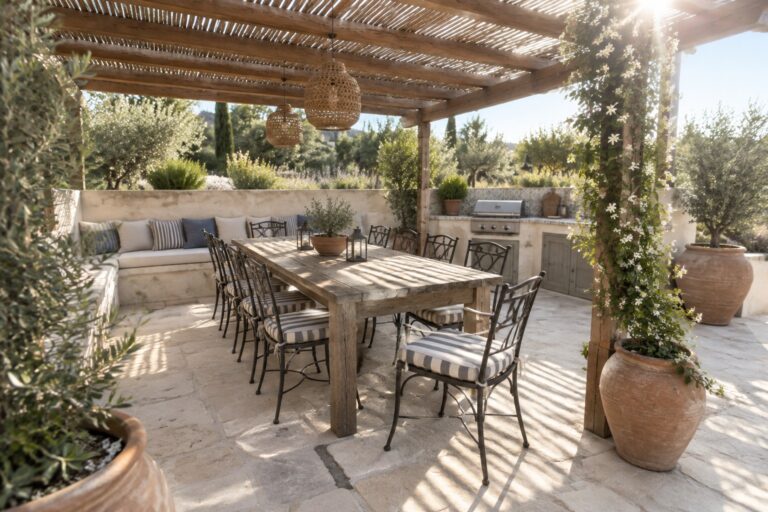
I have found that backyard patios tend to work better when the landscaping supports the way a dining table actually gets used day after day.
Planting structure and simple path choices often decide whether people linger outside or head back indoors after one meal.
Some ideas look better on paper than they do once the chairs are pulled out.
I keep coming back to layouts that leave enough room for movement around the table while still using plants to define the edges.
Over time those small decisions about edging and plant height seem to shape how often the space gets used without any extra effort.
Mixing Seating Around a Long Outdoor Table
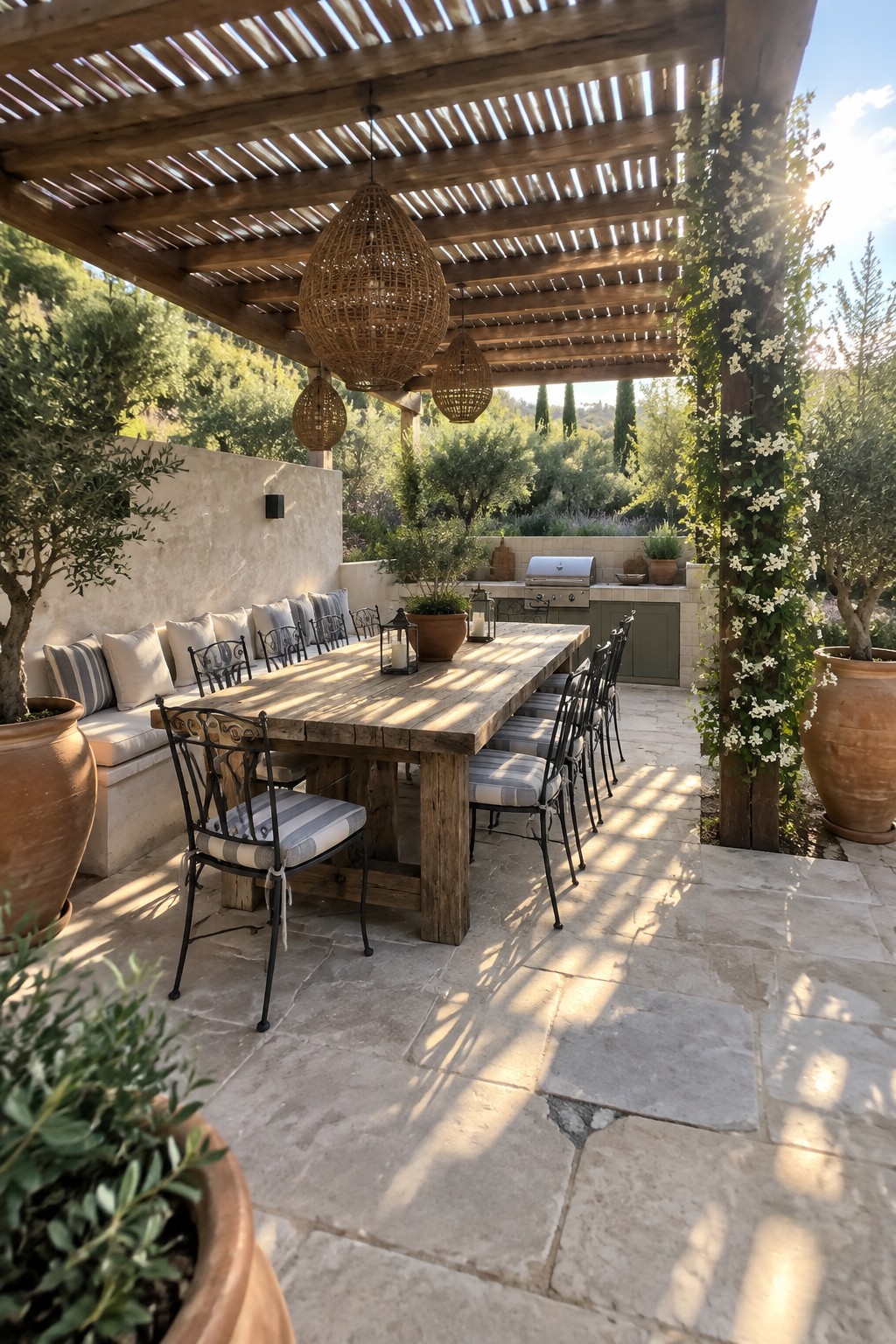
A long wooden table gives you room to seat more people without crowding the space. Pairing a built-in bench on one side with individual chairs on the other keeps things flexible and makes it easier to adjust for different group sizes.
This setup works best on patios that already have some structure like a wall or pergola overhead. It suits homes with moderate outdoor space where you want dining to feel casual rather than formal. Just make sure the bench cushions are weatherproof if you plan to leave them out year round.
Built-In Benches Along Planter Boxes
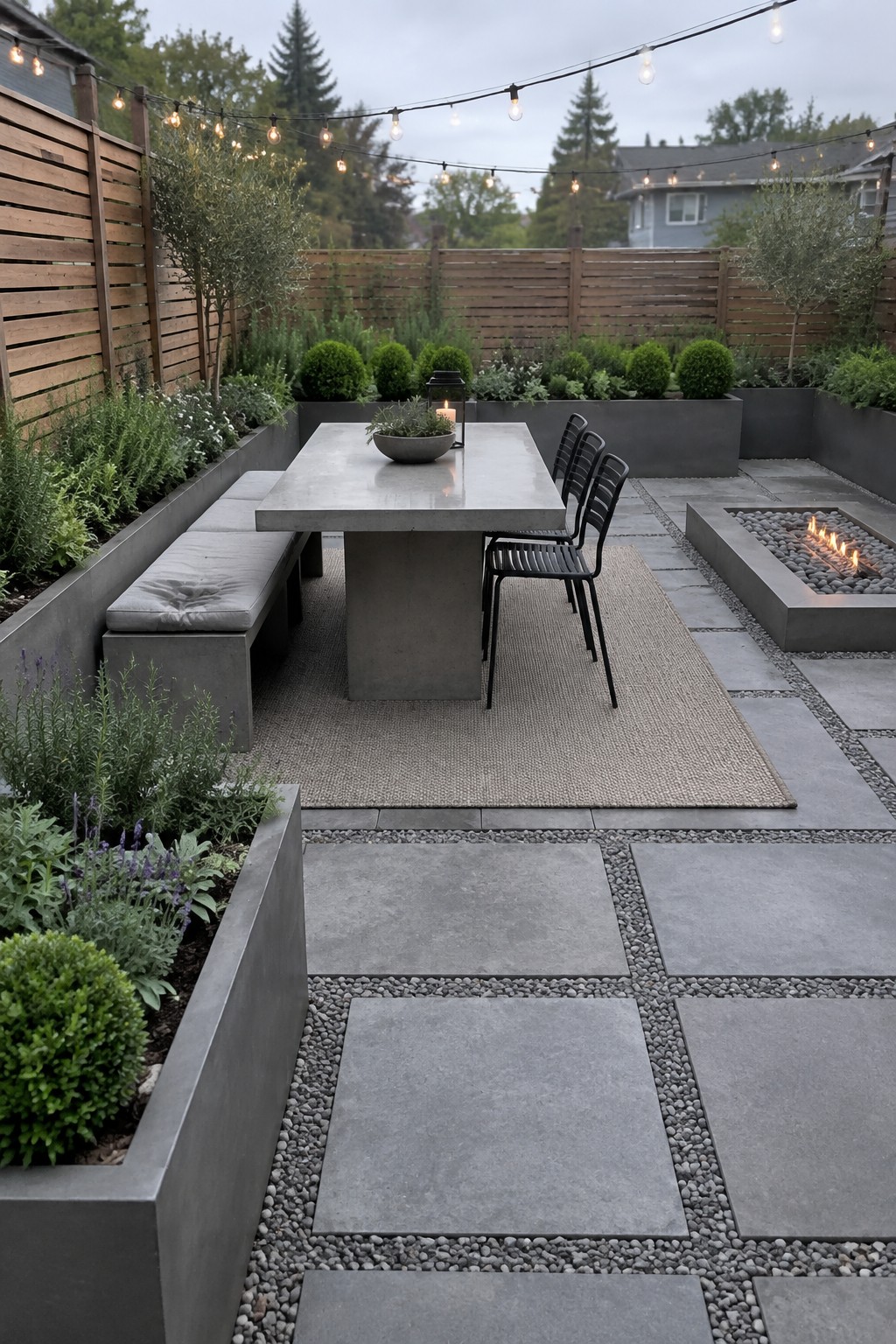
One way to keep an outdoor dining area feeling open and useful is to run a built-in bench along the side of a raised planter. It gives steady seating without crowding the table with too many loose chairs.
This works especially well on patios that already have concrete or stone edges. It suits smaller backyards where you want the garden beds to help define the space instead of adding more furniture.
Create Shade With a Simple Pergola Over the Table
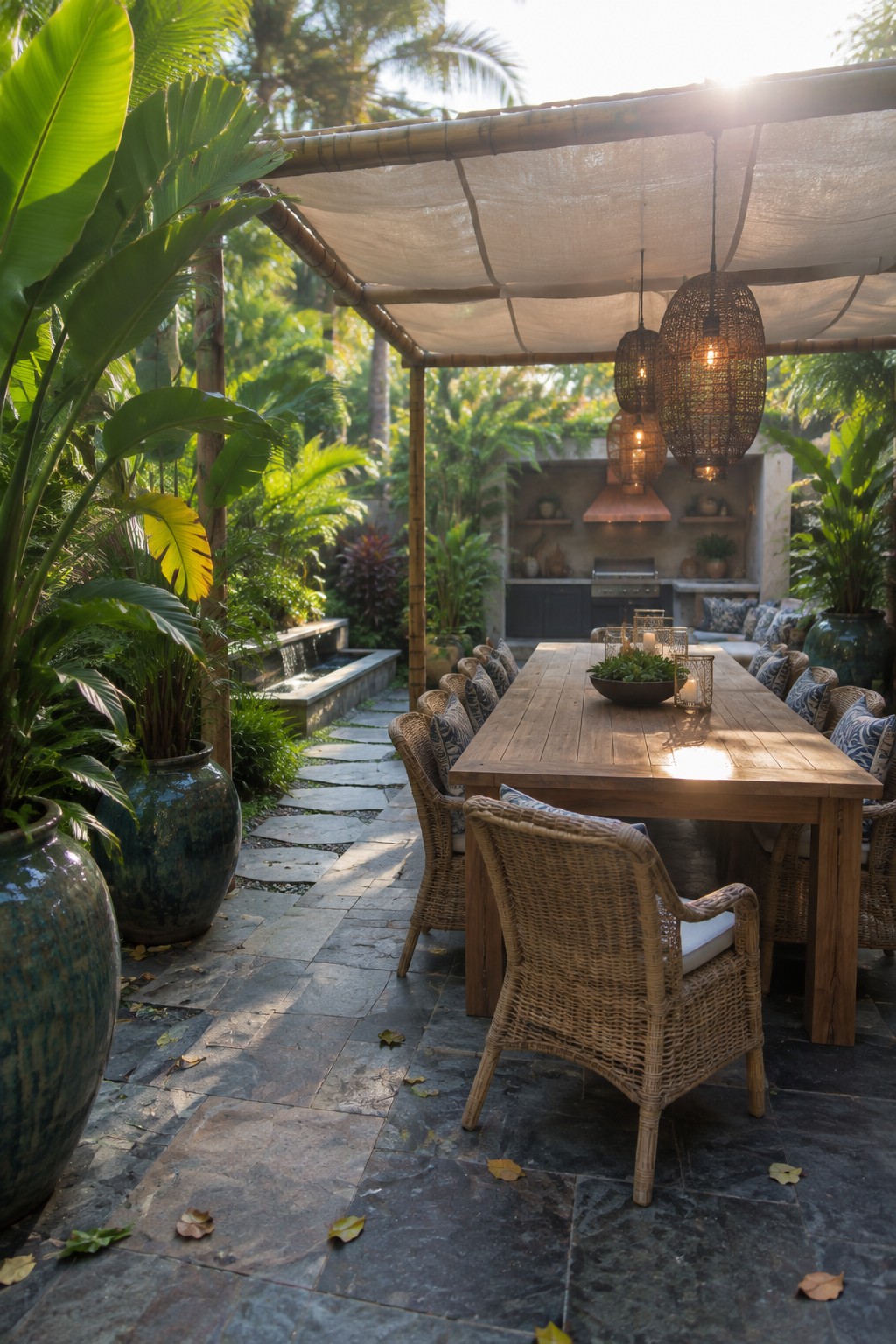
A pergola overhead makes an outdoor dining table feel more like a real room instead of just furniture set out in the yard. It blocks some sun during the day and gives a clear sense of where the seating area begins.
This setup works best in backyards that already have plenty of plants around the edges. Use natural materials for the frame so it blends with the garden rather than standing out as a separate structure.
Add Vines and Stone Details Around the Patio Table
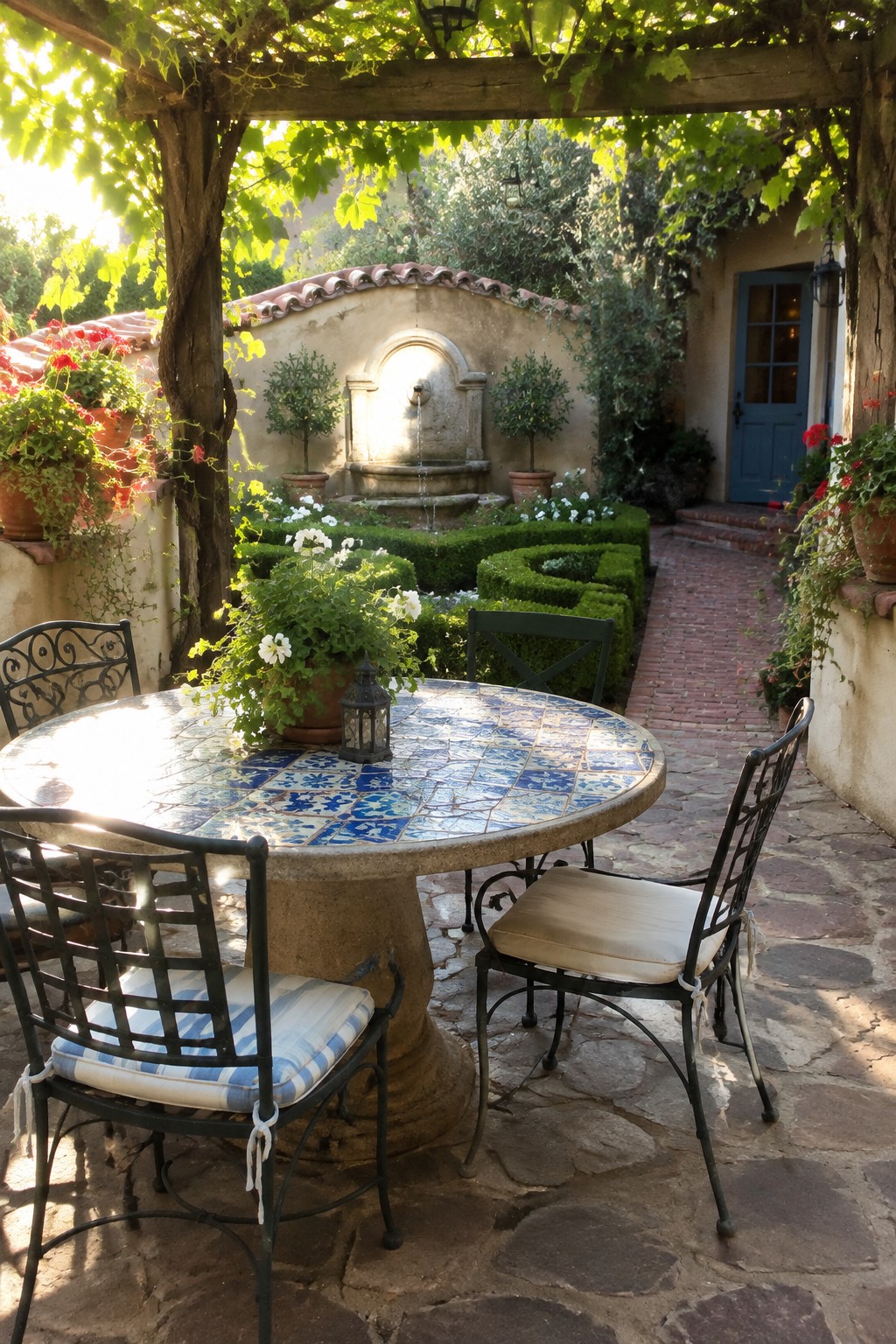
A pergola gives the dining area a clear sense of place without closing it in. Vines growing across the top add shade that changes with the seasons and keeps the space cooler on warm days. The stone floor and simple table setup underneath feel grounded and easy to use for regular meals outside.
This works best on patios that already have some garden around them. Keep the table size modest so the pergola does not overwhelm the space, and choose vines that do not drop too much debris on the seats. It suits older homes or any yard where you want the dining spot to blend into the planting rather than stand apart from it.
Position a Linear Fire Pit Beside the Outdoor Table
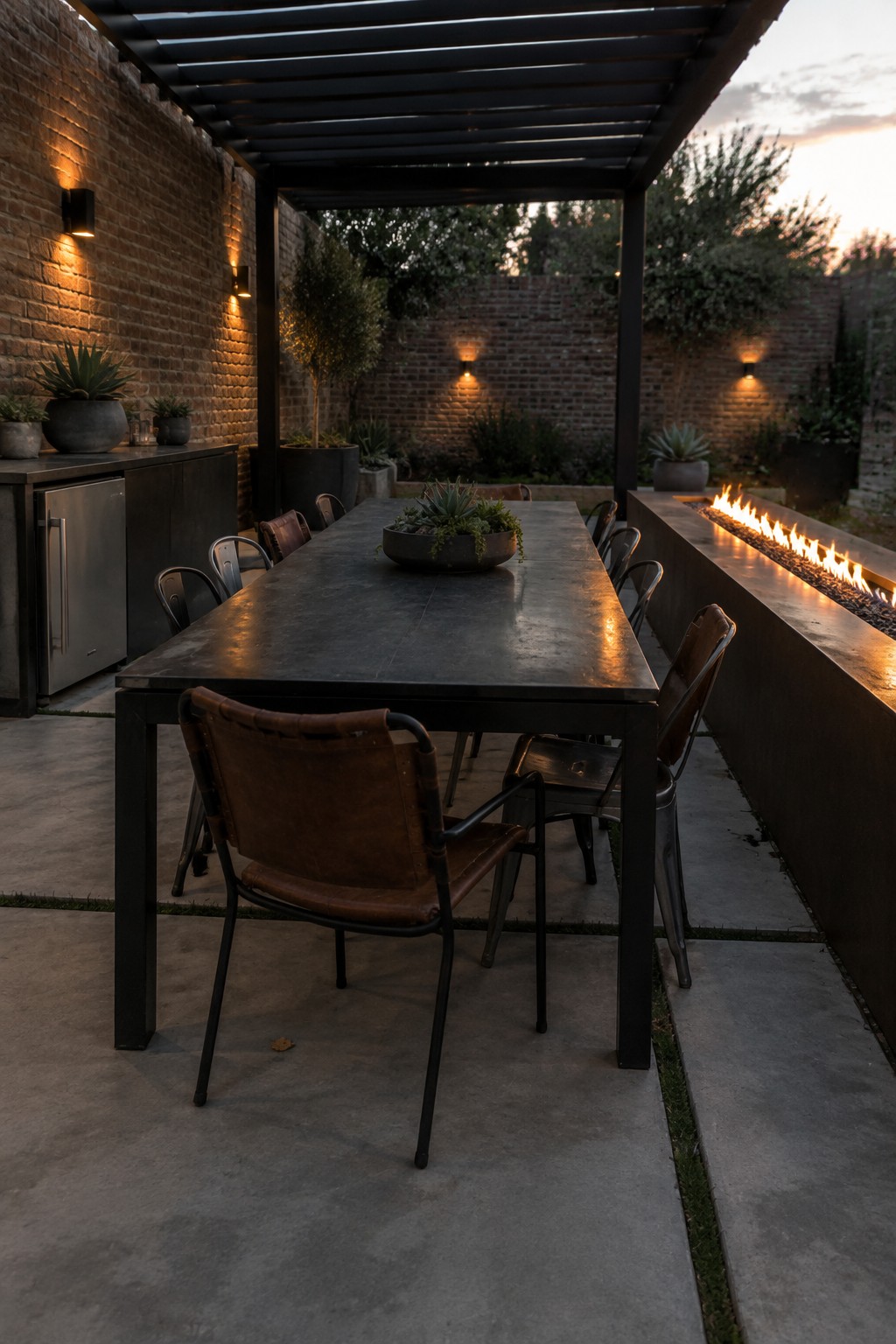
A long fire feature running right next to the dining table gives the whole area a steady source of warmth and light. It turns an ordinary patio meal into something that can stretch into the evening without anyone needing to move indoors.
This setup works best when the table sits under a solid overhead structure and the fire pit is built at a comfortable distance from the chairs. It suits homes that already have some enclosure from walls or fencing, and it keeps the focus on the table itself rather than scattering separate seating zones around the yard.
Round Tables Keep Outdoor Dining Easy
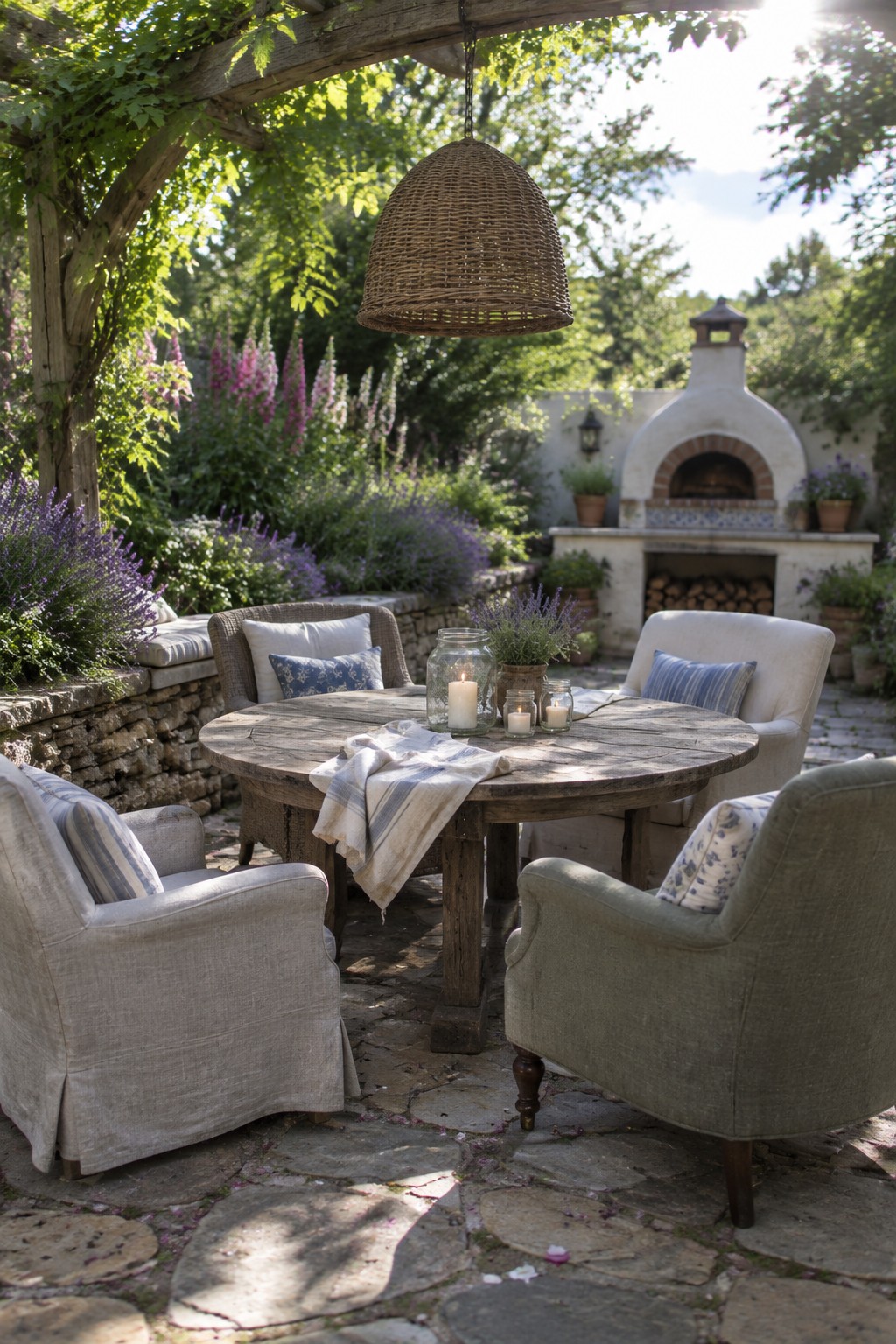
A round table works well on a patio because it lets everyone face each other without anyone stuck at the far end. It also takes up less visual space than a long rectangle, which helps the whole area feel open even when you add four or five chairs.
This layout suits smaller backyards or gardens where you want the focus on meals rather than a big formal setup. Use a weathered wood table like the one shown and mix in a few different chair styles so the space feels comfortable instead of stiff.
Use Low Planter Walls to Frame the Dining Area
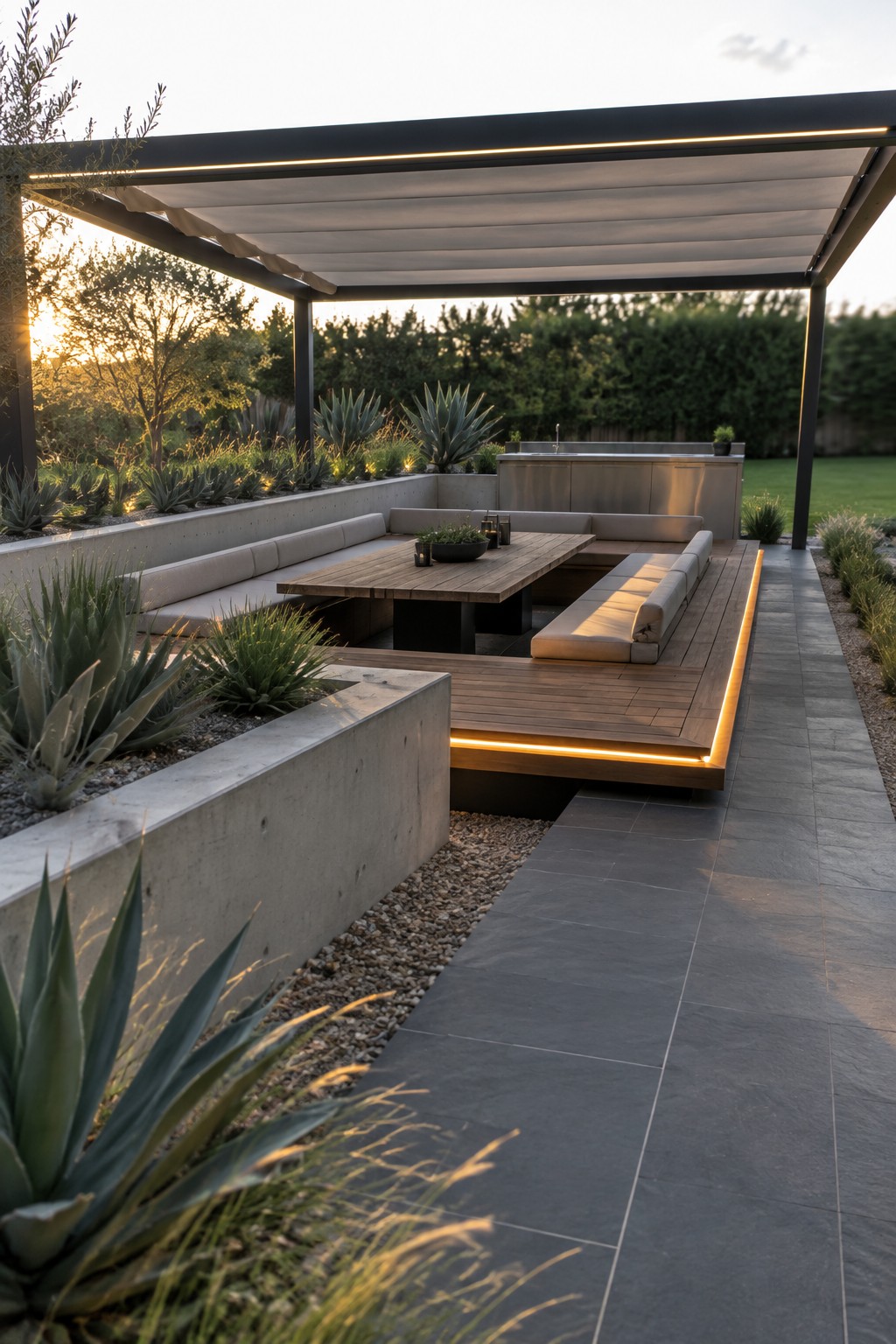
One simple way to make an outdoor dining area feel more settled is to let raised planters double as the back edge of the seating. The concrete gives a sturdy frame that holds cushions in place and keeps the whole setup from looking like loose furniture scattered around a table.
This approach works best on patios where you already have a clear edge to the space and want the plants to feel connected rather than added later. Keep the plantings low and structural so they do not block the view or drop leaves on the table.
Place the Table Among the Raised Beds
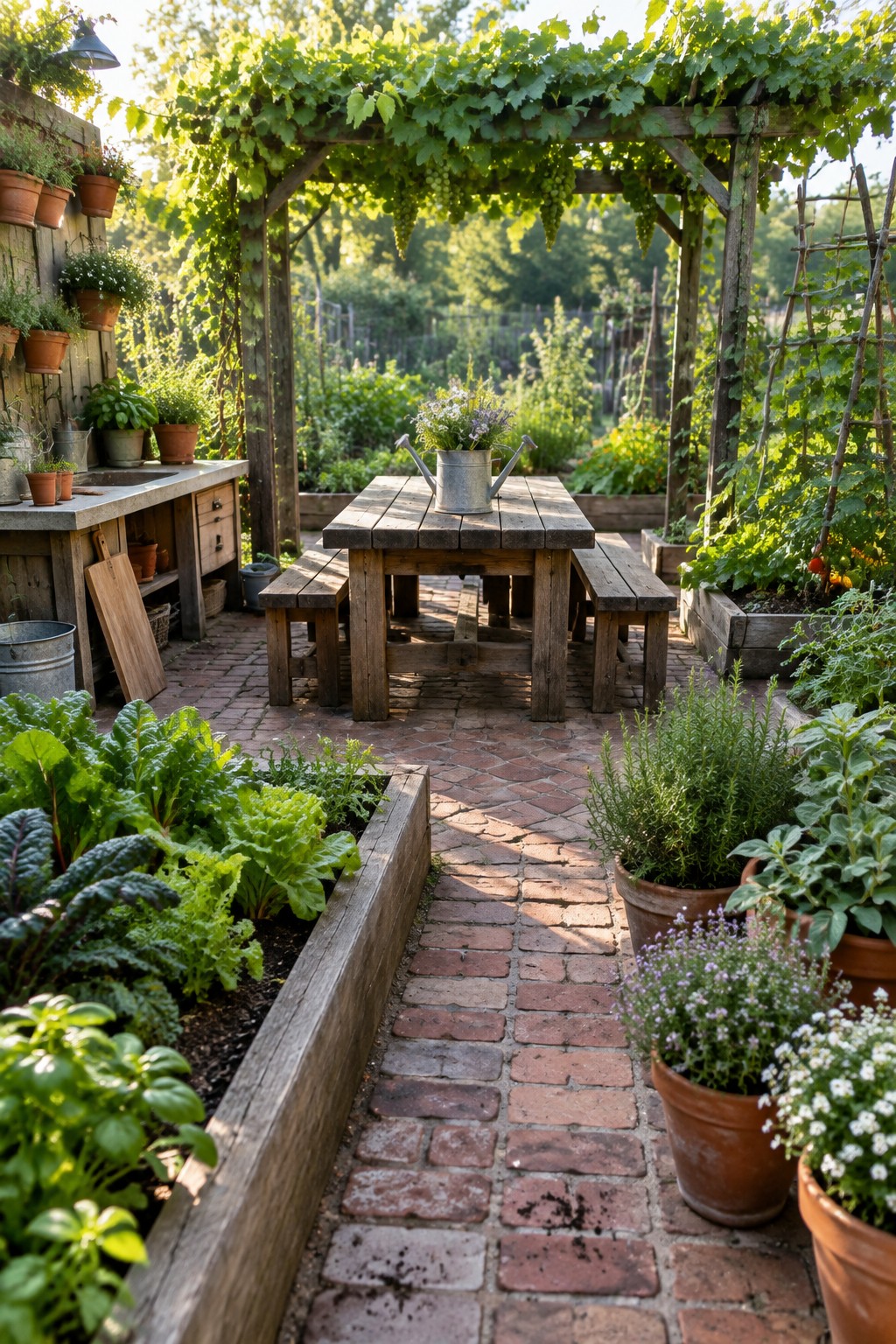
Putting the dining table right in the middle of the garden beds makes the whole space feel useful instead of just pretty. The table becomes part of the daily routine, close to the herbs and vegetables you are growing, and the surrounding plants give it a settled look without much extra styling.
This works best in a backyard that already has room for a few raised beds and a straight path. Keep the beds low so they do not block the seats, and use the same brick or gravel under the table that you use for the path. It suits smaller yards where you want one area to handle both growing and eating.
Create a Compact Courtyard Dining Area With Cushioned Seating
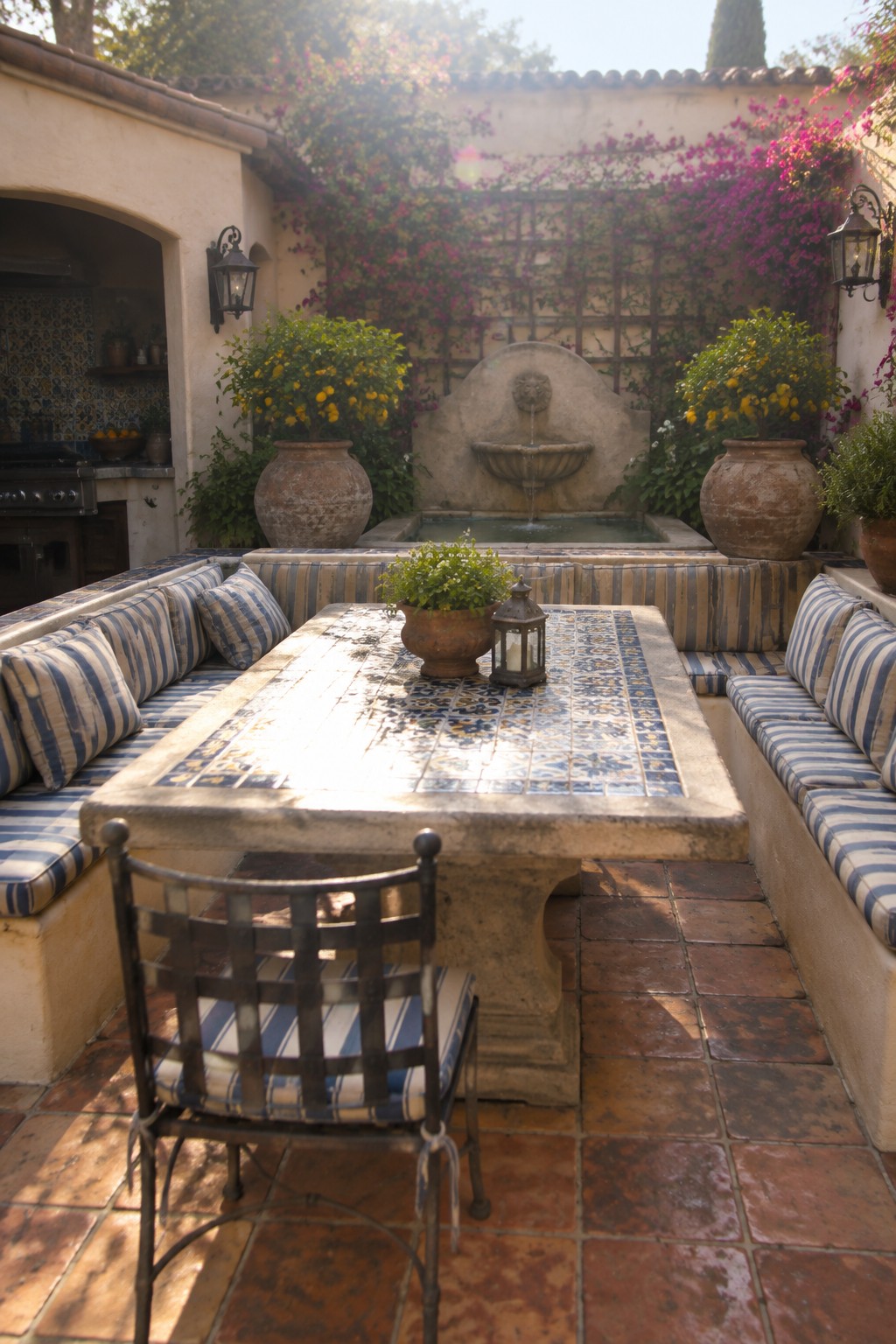
Built-in seating gives an outdoor dining table a more settled look without crowding the space with loose chairs. The cushions turn the benches into comfortable spots for meals that last longer than planned, and the whole arrangement keeps everything contained in one spot.
This works especially well in smaller courtyards or enclosed patios where you want to fit a good number of people without the furniture feeling scattered. It suits homes that already have stucco walls or tiled details, and the fabric on the cushions can be swapped out when it fades.
Save Patio Space With Benches That Slide Under the Table
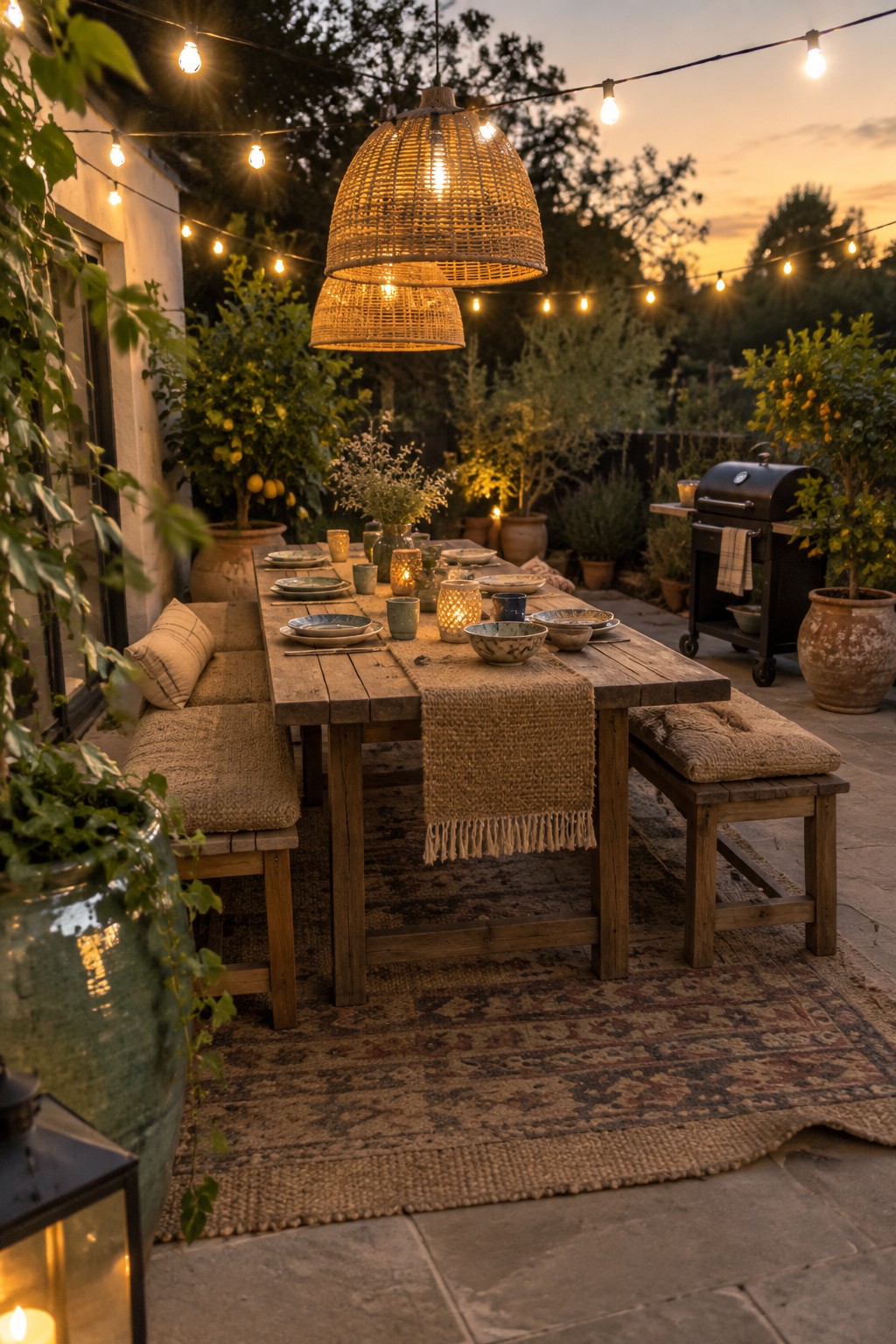
A long wooden table with benches works well for outdoor dining because it gives you plenty of seating without crowding the space. The benches slide right under the table when not in use, so the patio stays open for other things during the day.
This setup works best in a backyard with some garden around the edges. Place the table on a simple rug to define the area, and keep a few potted plants nearby so the dining spot feels connected to the rest of the yard.
Small Round Tables Work Well on Gravel
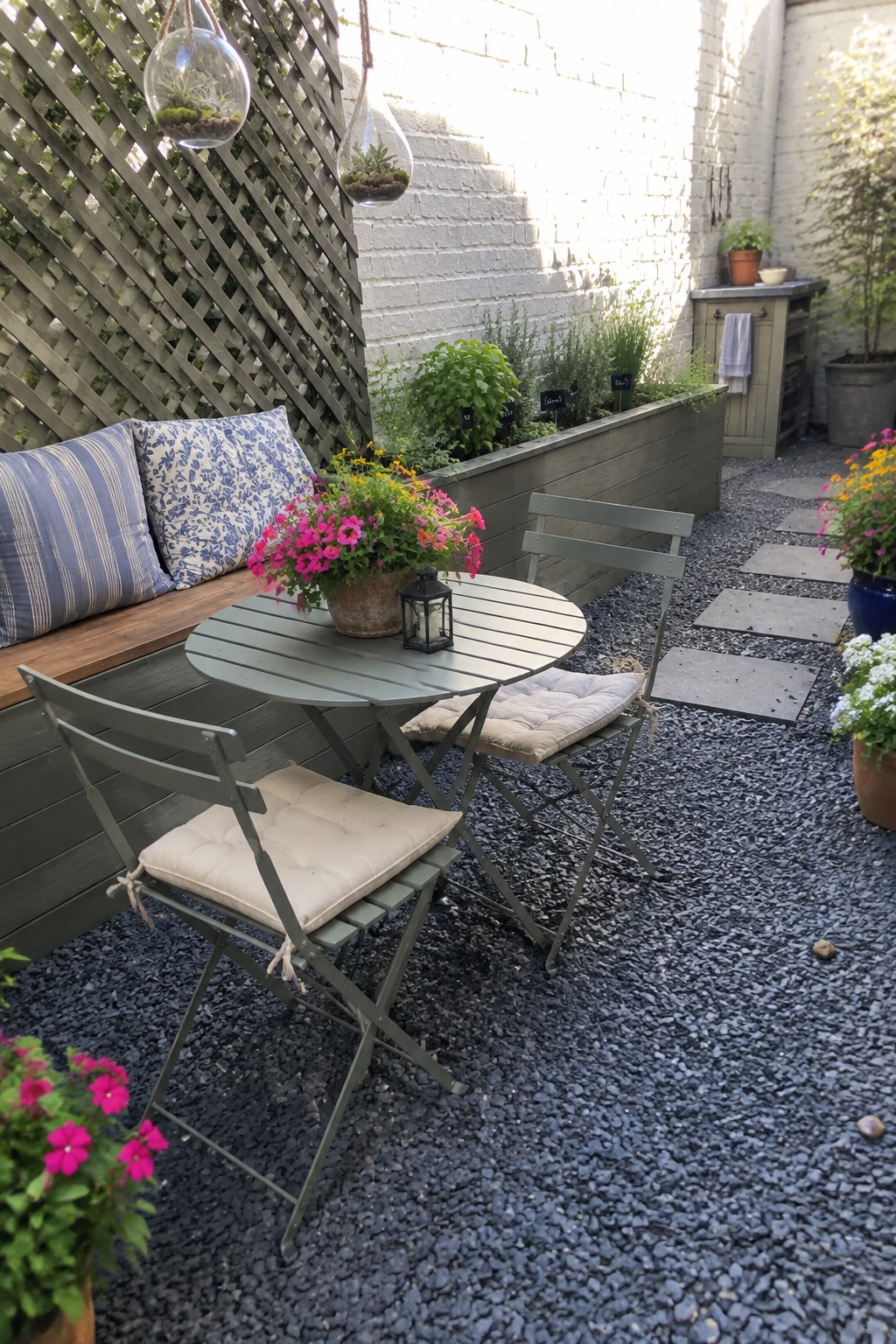
A small round table keeps outdoor dining simple and flexible. It takes up less room than a rectangle and lets people walk around easily on the gravel without crowding the space.
Pair it with folding chairs so the setup can be moved or stored when needed. This kind of arrangement works best in modest backyards where the patio needs to serve more than one purpose during the day.
A Long Table Beside the Outdoor Oven
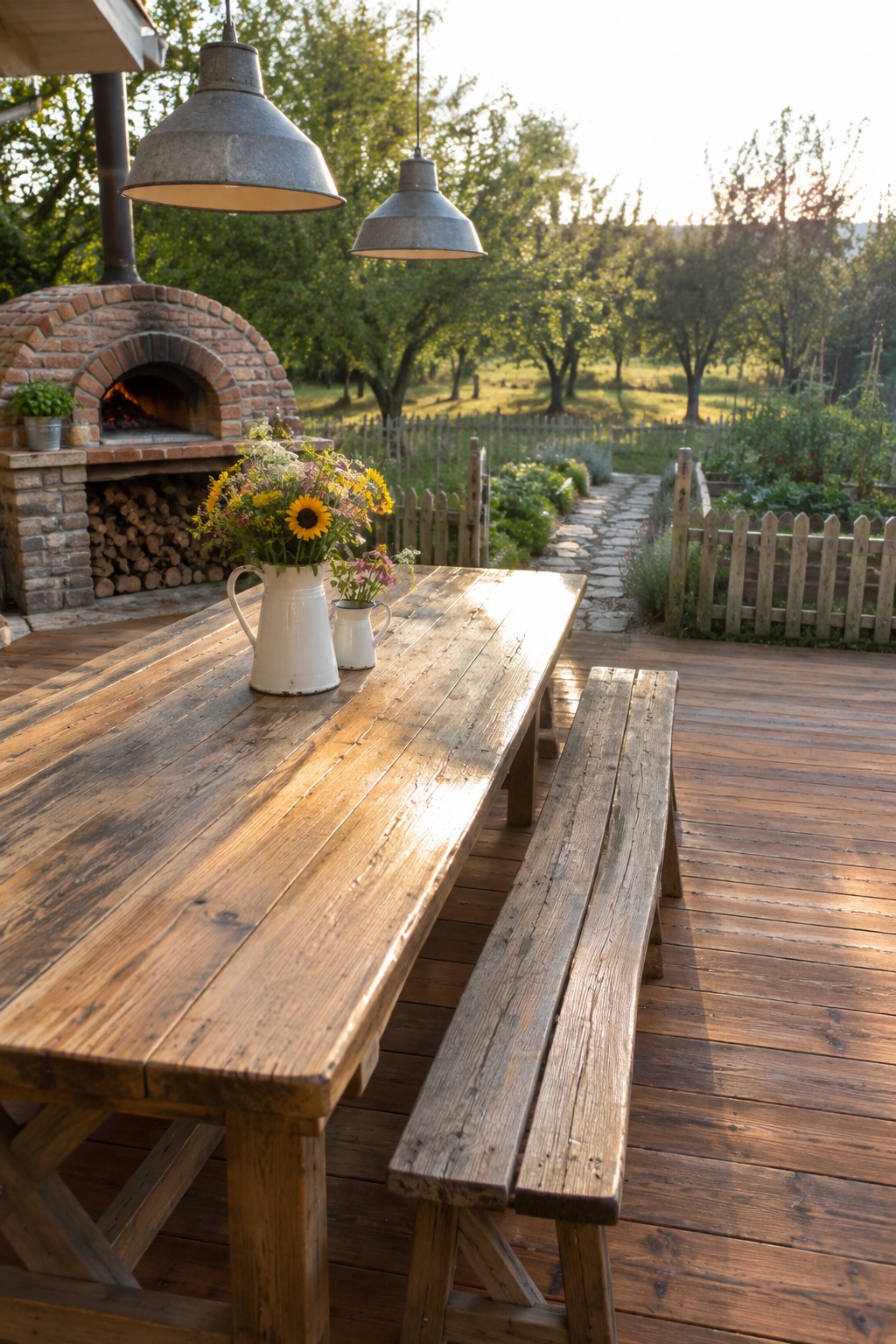
Placing a simple wooden table right next to the brick oven keeps the cooking and eating in one easy spot. Meals move straight from the fire to the table without extra trips across the yard.
This works best on a deck or patio where space allows for bench seating on both sides. Leave enough room around the oven so people can move safely when it is in use.
Use Stepping Stones Through Moss For Natural Paths
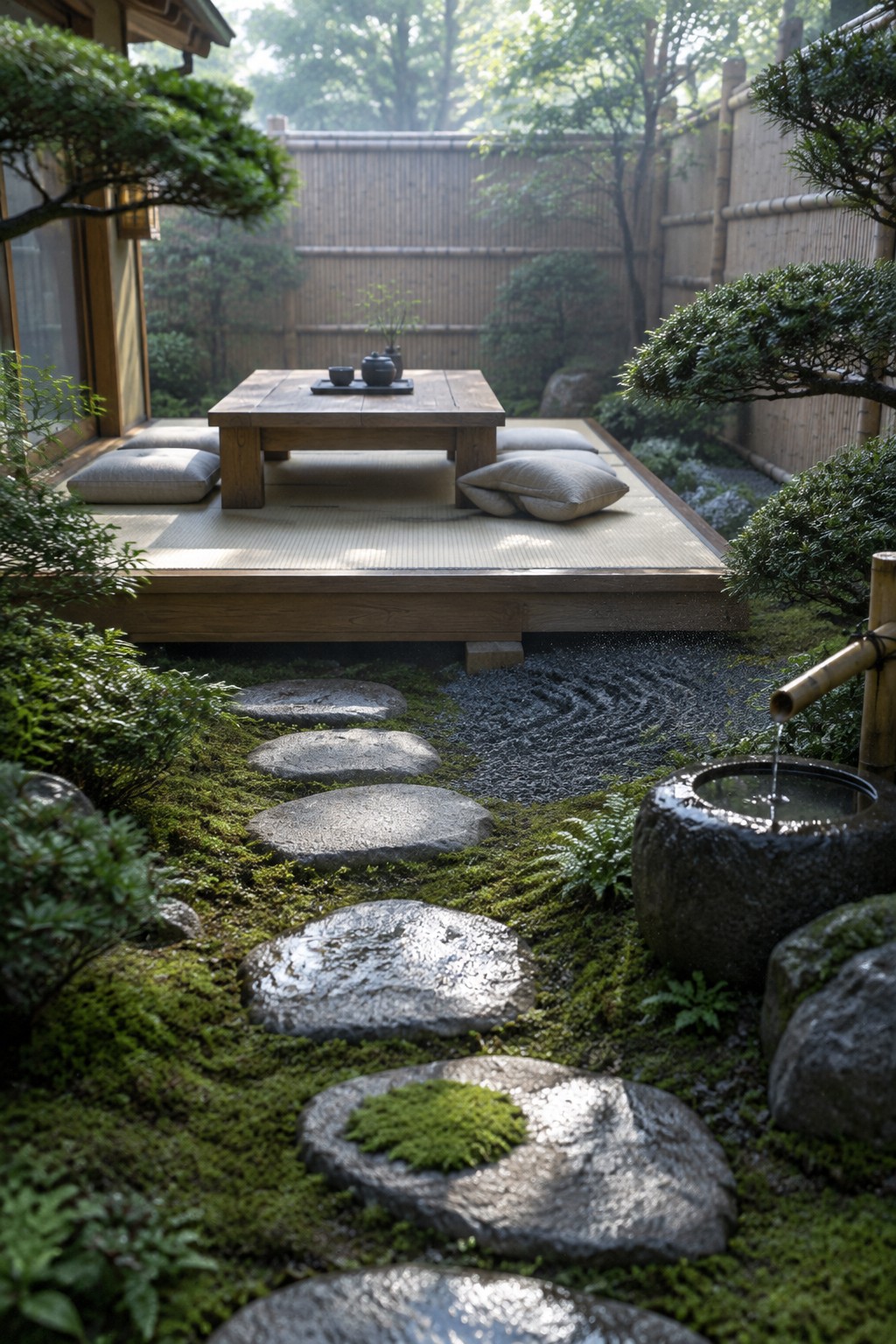
A raised wooden platform works nicely for outdoor dining when you keep the surrounding garden simple and grounded. Stepping stones set into moss create a clear route that feels calm and easy to follow without adding any hard edges.
This layout suits smaller yards where you want low upkeep and a bit of greenery right up to the seating area. Lay the stones in a loose line from the main path toward the platform, and let the moss fill in around them so the whole space stays soft underfoot.
Curved Banquettes For Outdoor Dining

A curved banquette makes an outdoor dining area feel more pulled together than a set of loose chairs ever could. It creates a natural boundary around the table so the whole setup reads as one dedicated spot for meals instead of just furniture scattered on the patio.
This approach works especially well on larger patios where you want to define the dining zone without adding walls or screens. It suits homes that already have a pergola or overhead structure, since the seating can tuck right under it and make the space feel finished.
Frame the Dining Area With Climbing Roses
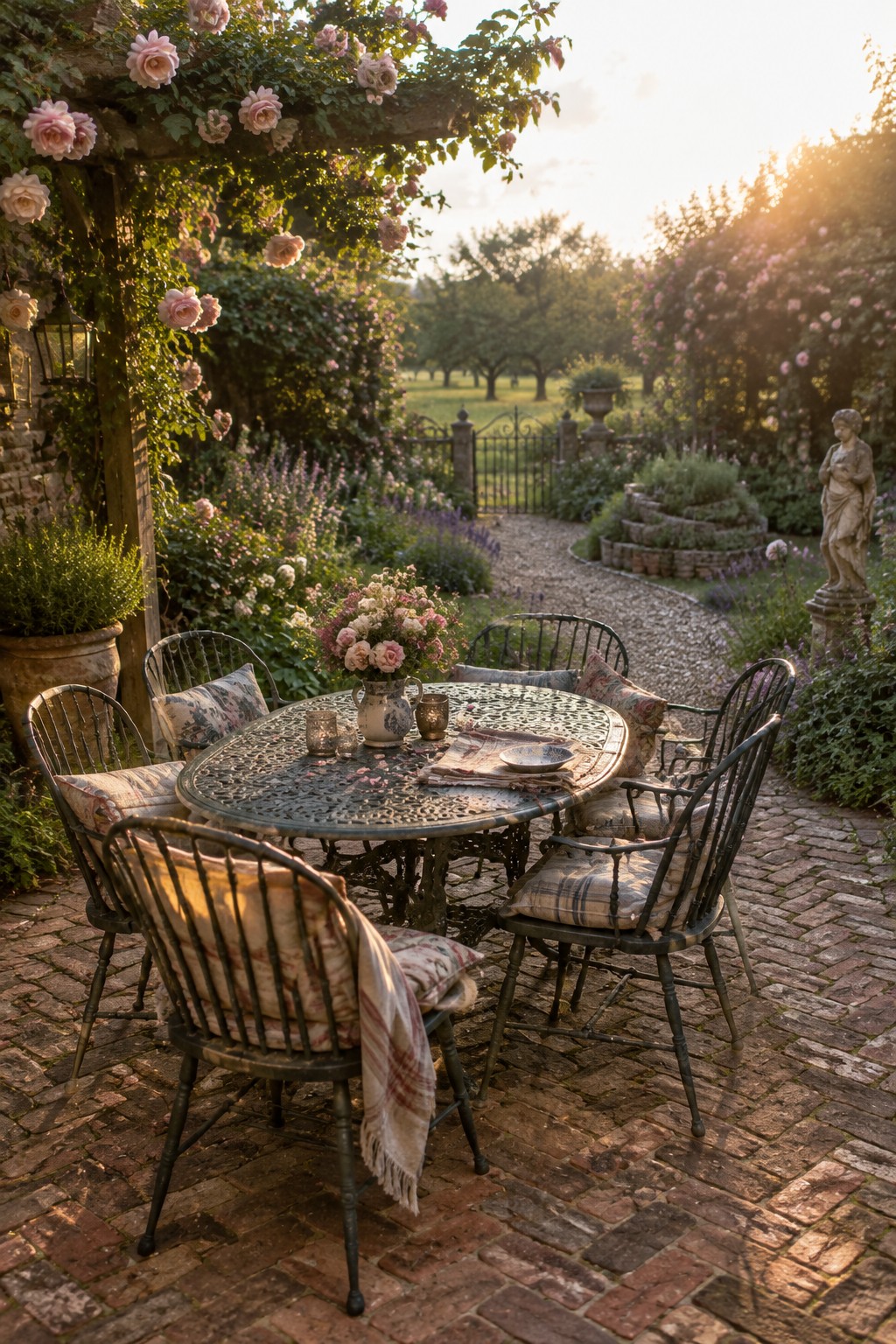
One idea worth trying is to let climbing roses grow over a simple pergola positioned right above the dining table. The flowers create a soft overhead layer that makes the seating area feel more enclosed and connected to the rest of the garden.
This works best in spaces where you already have vertical structures or room to add one. Place the table where the vines get good sun, and choose a durable surface like brick underneath so the area stays practical for regular meals.
Mix Poufs and Rugs for Flexible Outdoor Seating

Many backyard patios feel more inviting when you skip rigid chairs and use poufs and floor cushions instead. They let people shift around easily during meals or after-dinner talks, and the soft layers make the space feel finished without looking formal.
This approach suits smaller or medium patios where you want room for both dining and lounging. Start with one large rug to mark the zone, then add a few sturdy poufs so they can be pulled closer to the table or tucked aside when needed.
Place The Dining Table Right By The Pool
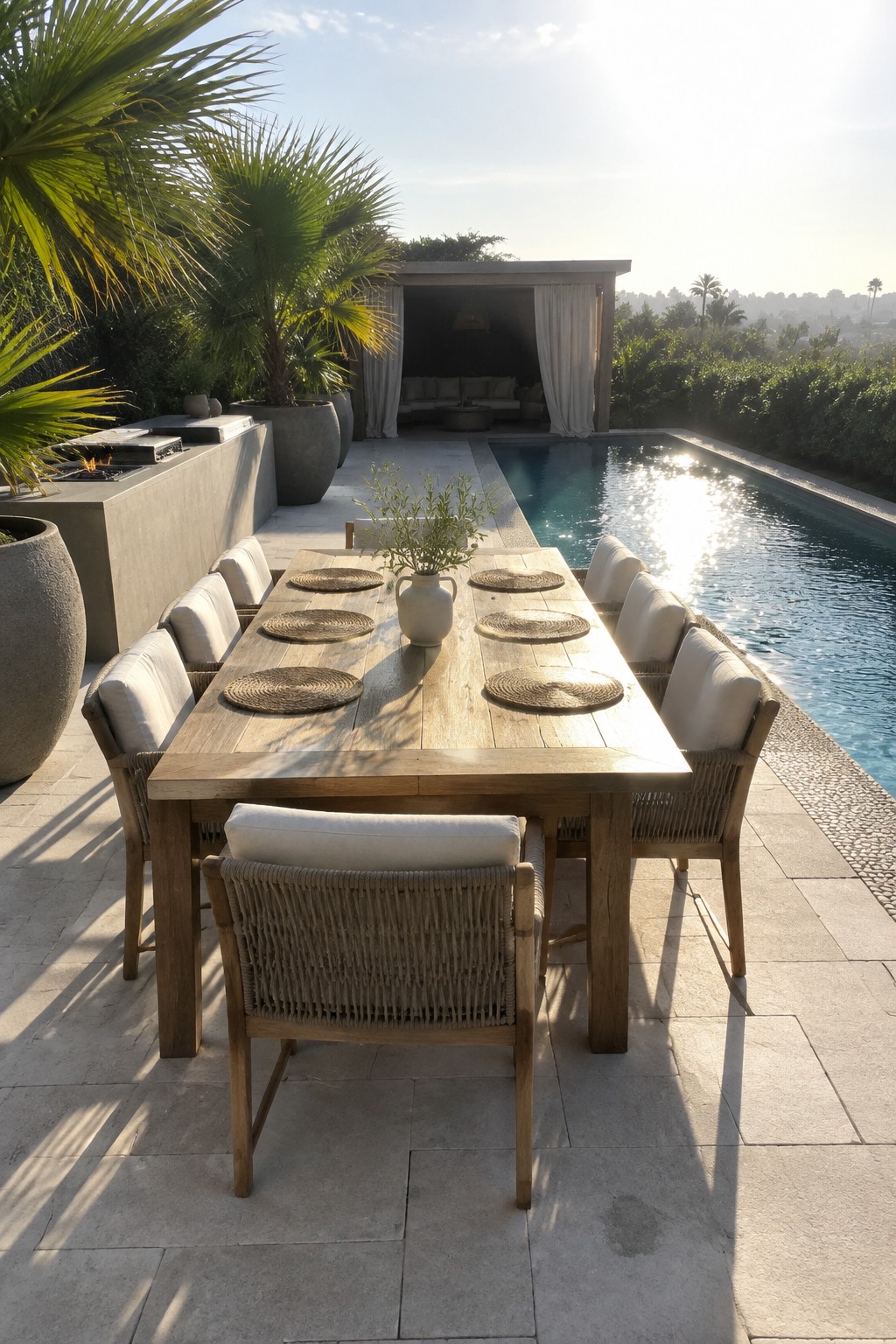
A long table set directly beside the water turns outdoor meals into something more relaxed and connected to the surroundings. The placement makes the pool feel like part of the dining experience rather than a separate feature.
This layout works best on larger patios where the table can run parallel to the water without blocking movement. Use durable wood and simple woven chairs that hold up to sun and moisture, and leave enough open space around the table so the area stays easy to use.
Fit a Round Dining Table Into a Flagstone Patio

A round table makes outdoor dining feel more relaxed because everyone can face the center without corners breaking up the conversation. The shape also helps the seating fit neatly into a smaller paved area while still leaving room to walk around.
This works especially well on flagstone or similar hard surfaces that stay level and drain well. It suits backyards where garden beds already curve around the edges, since the round form echoes the soft shapes of the plantings.
Center the Patio Around a Large Wooden Table
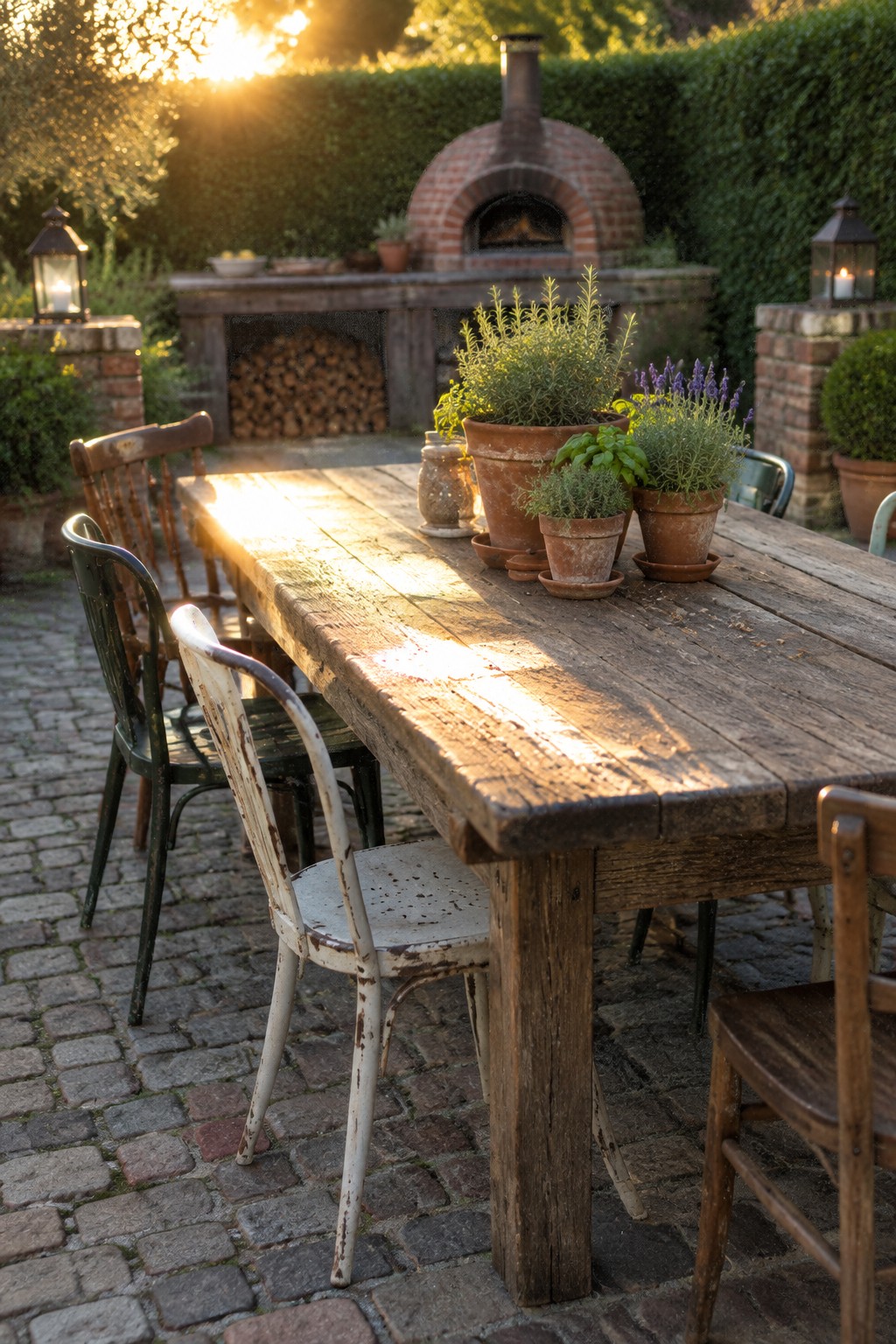
A large wooden table gives an outdoor dining area its main focus. It stands up to daily use and weather, and it leaves room for plates along with a few potted herbs that keep cooking ingredients close at hand.
Set the table on a simple paved surface and mix in chairs from different periods. This works best in backyards that already have some garden space, since the plants on the table help tie the dining spot to the rest of the yard.
Grow Wisteria Over a Garden Dining Table

A pergola overhead makes an outdoor dining table feel more settled in the garden. The vines add softness and some natural shade without blocking the view of the rest of the yard.
This works best on a patio that already has a clear spot for a table and chairs. Plant something vigorous like wisteria or another climber that can handle the structure, and keep the base simple so the focus stays on the table itself.
Build Your Patio Seating Around A Fire Pit
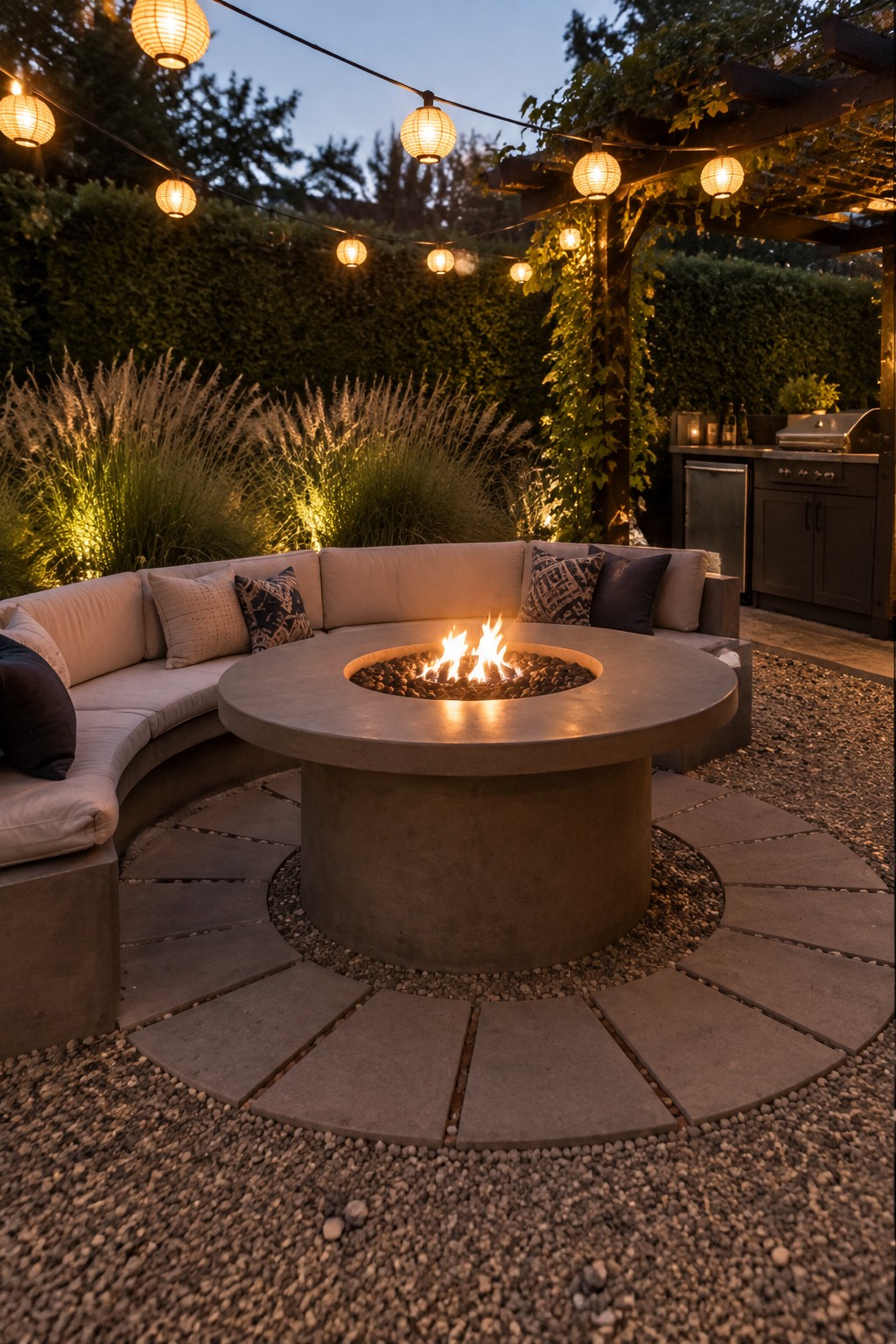
A central fire pit gives the whole patio a clear purpose. People naturally gather there for meals or just to sit outside after dark, and the curved seating keeps everyone close without needing a big table in the way.
This setup works best on patios that already have some room to move around the pit. It suits homes where the outdoor kitchen sits nearby so food stays close, but make sure the seating curve leaves enough space for people to walk behind the chairs.
Frequently Asked Questions
Q: How do I keep the table clear when leaves start falling? A: Sweep the area every few days with a soft broom. Place a low hedge of boxwood around the edges to catch most of the debris before it reaches the chairs.
Q: What works if the patio sits in full afternoon sun? A: Add a simple pergola overhead and let a fast vine like clematis cover the top. It cuts the glare right where you eat without turning the space into a cave.
Q: Can I plant anything tall without losing elbow room at dinner? A: Stick with narrow evergreens set back a few feet from the table. They give height and privacy while leaving plenty of space to pull out chairs.
Q: How do I handle bugs without spraying near the food? A: Set citronella plants in pots along the perimeter. They cut down on mosquitoes and look better than coils or traps.
