

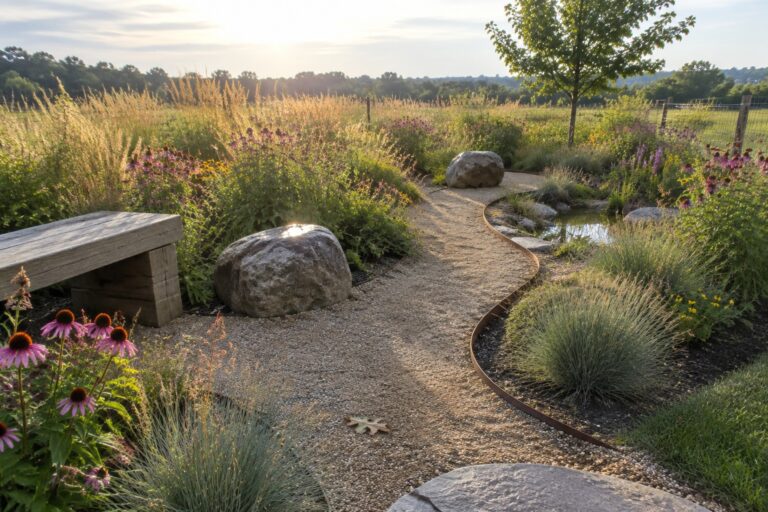
When I look at backyards that actually feel comfortable after a few seasons, the ones shaped around native plants usually hold together better because the layout grows out of what is already there.
Native plants let the beds and borders develop their own structure without constant replanting, and the paths start to follow the natural flow of how people move through the space.
I often find myself testing a small cluster first before committing to larger changes.
That approach shows which species will fill in the edges without crowding the main areas or leaving gaps that need filling later.
Over time the whole yard settles into something that matches the way it gets used rather than fighting the local conditions.
Curved Paths Through Native Beds
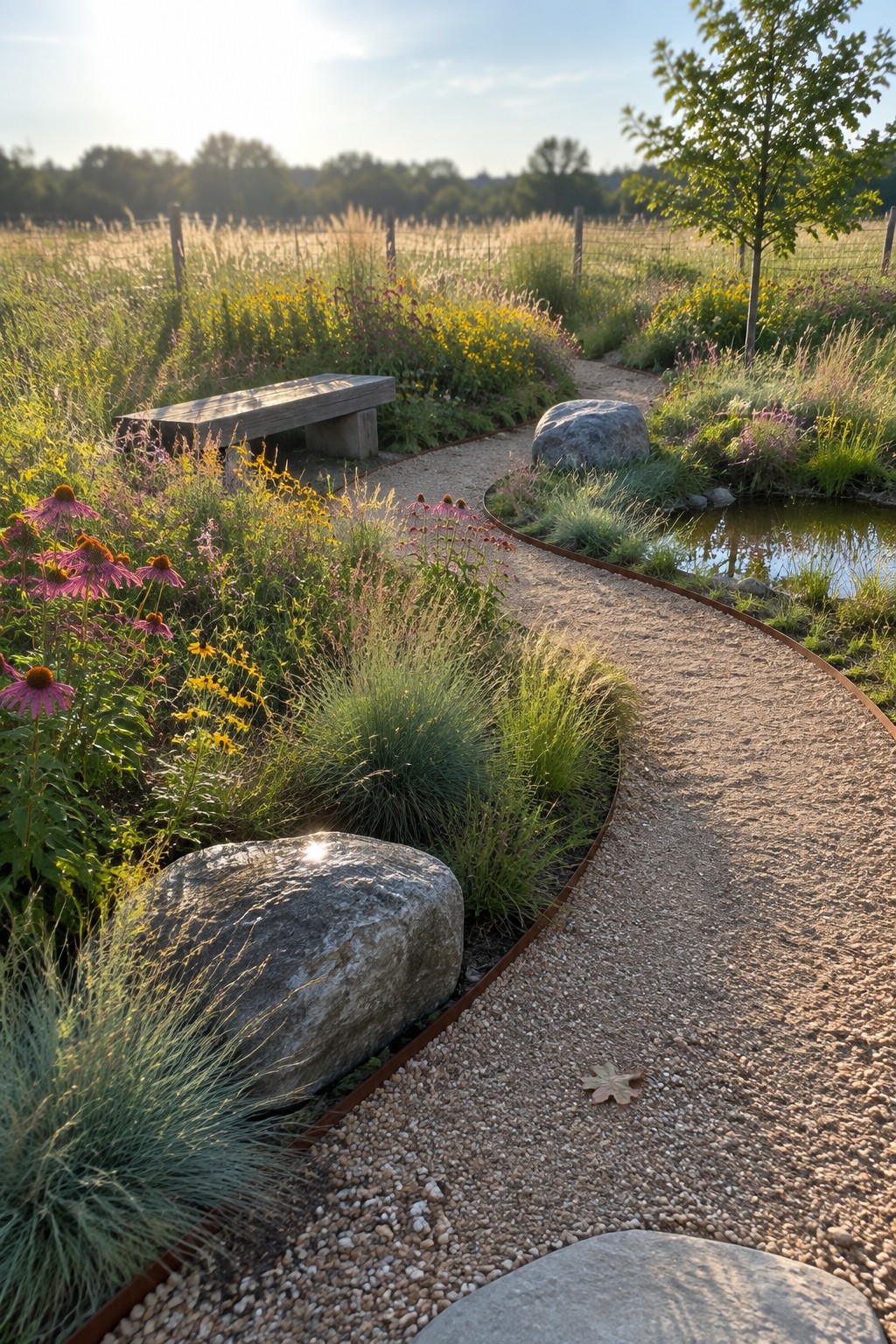
Curved gravel paths work well when you want the garden to feel relaxed instead of formal. They let the plants spill over the edges naturally and guide people through the space without forcing straight lines that fight the flow of the beds.
This layout suits larger yards where you can layer taller plants behind shorter ones along the route. Metal edging keeps the gravel in place while staying low enough to disappear behind the foliage, and the same curve can wrap around a small pond or bench area without looking planned.
Build A Rain Garden With Native Plants
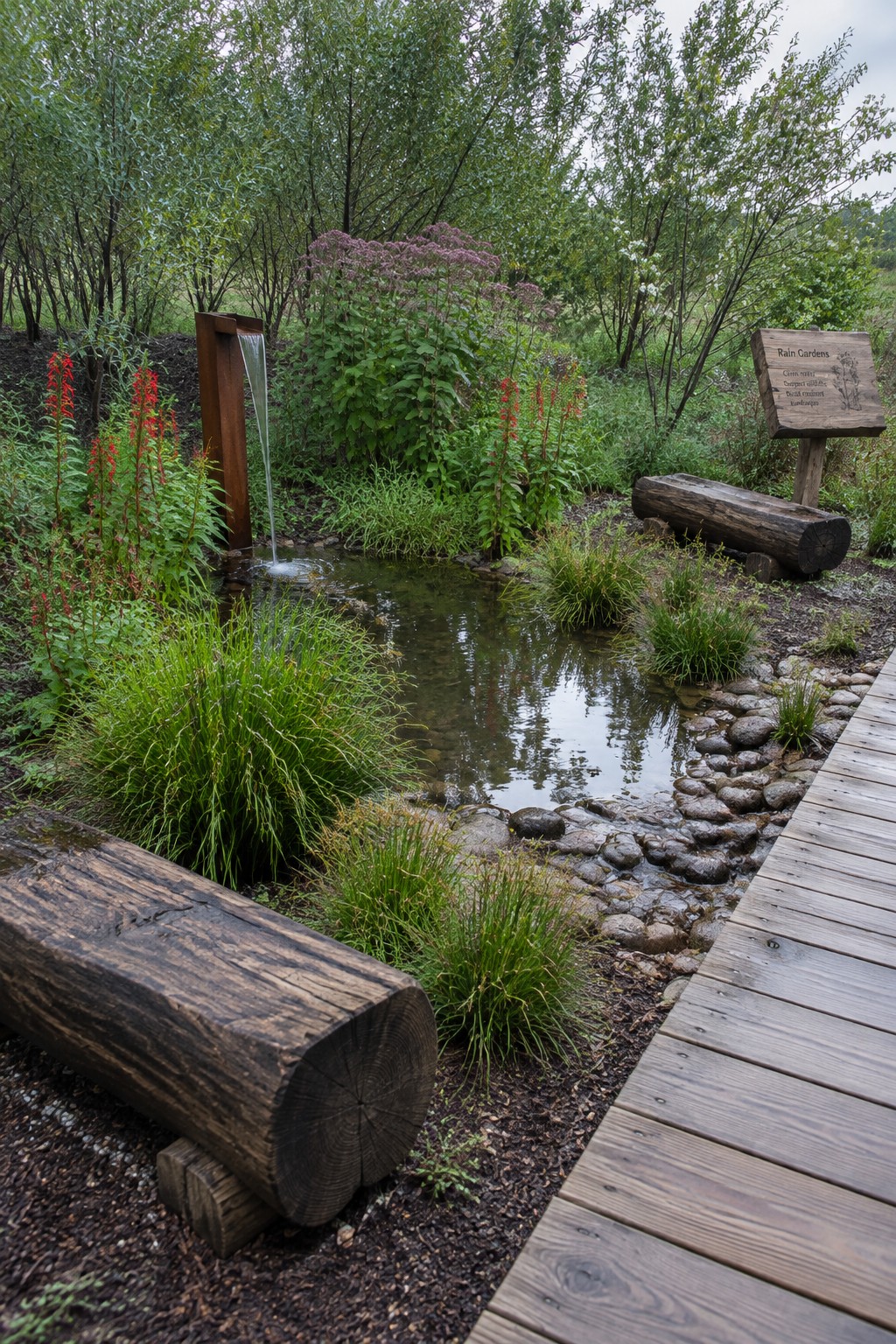
A rain garden gives you a simple way to handle extra water while bringing in plants that already grow well in your area. It creates a low spot where runoff can collect and soak in slowly instead of running off into the street.
Set one up near a downspout or in a natural low area of the yard. Use a mix of grasses and flowering perennials that like both wet and dry conditions so the garden stays full without constant work.
Layer Plants by Height for a Natural Border
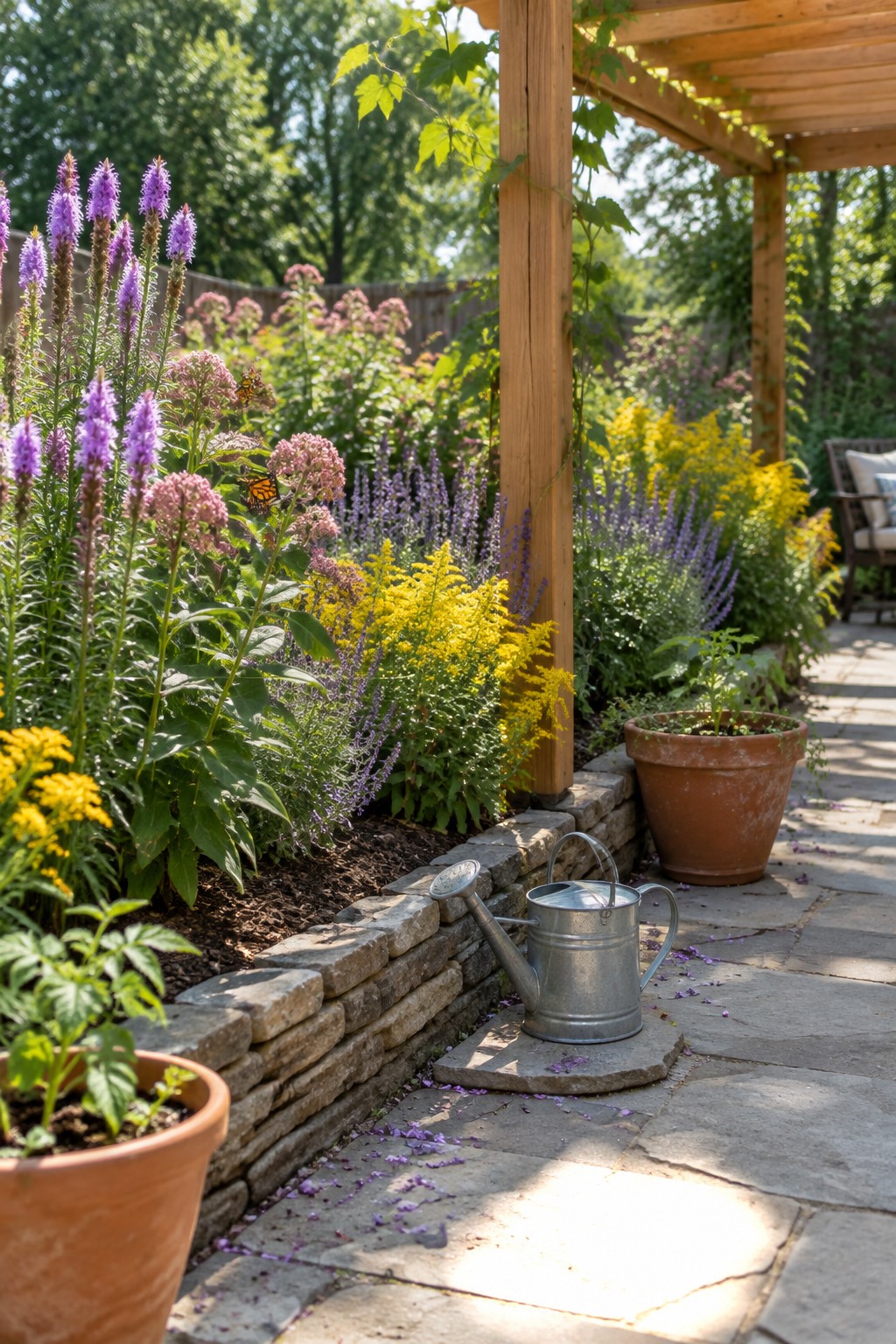
Mixing tall spikes with lower bushy plants creates a fuller look that feels more like a meadow than a formal border. The different heights let each plant get light and keep color going longer without constant replanting.
This works best along paths or near seating areas where the layers can be seen up close. Place taller natives toward the back and let shorter ones spill forward so the bed stays easy to maintain.
Metal Edging Shapes Naturalistic Garden Beds
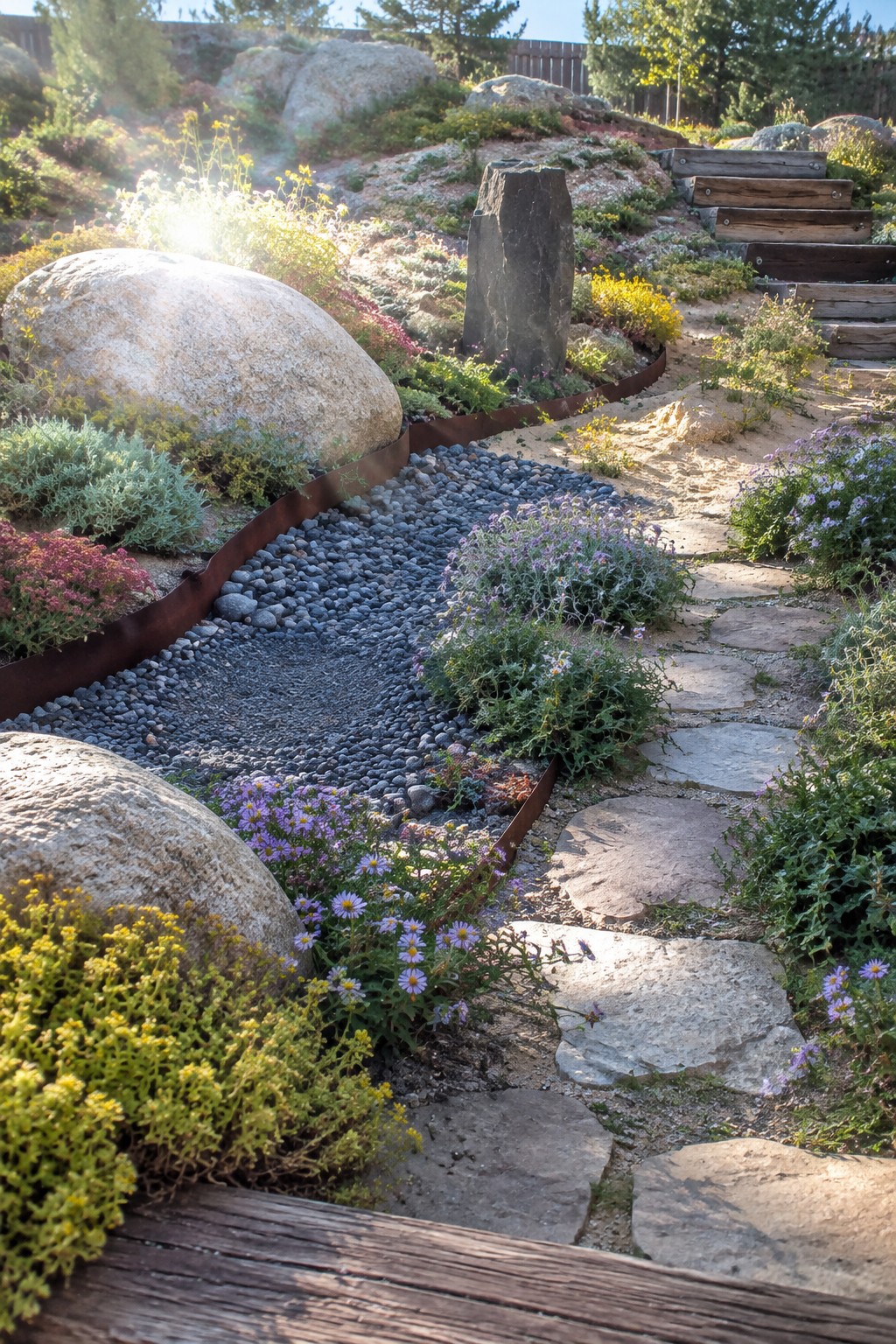
Metal edging lets you create soft curves that follow the land instead of forcing straight lines. It holds gravel in place while still letting plants spill over the edge, which keeps the whole area feeling relaxed and tied to the surrounding landscape.
This works best on slopes or in yards with odd shapes where boxy borders would fight the natural flow. Sink the edging a few inches into the soil so it stays put, and let the rusted finish weather into the scene rather than trying to hide it.
Edge A Pond With Native Plants
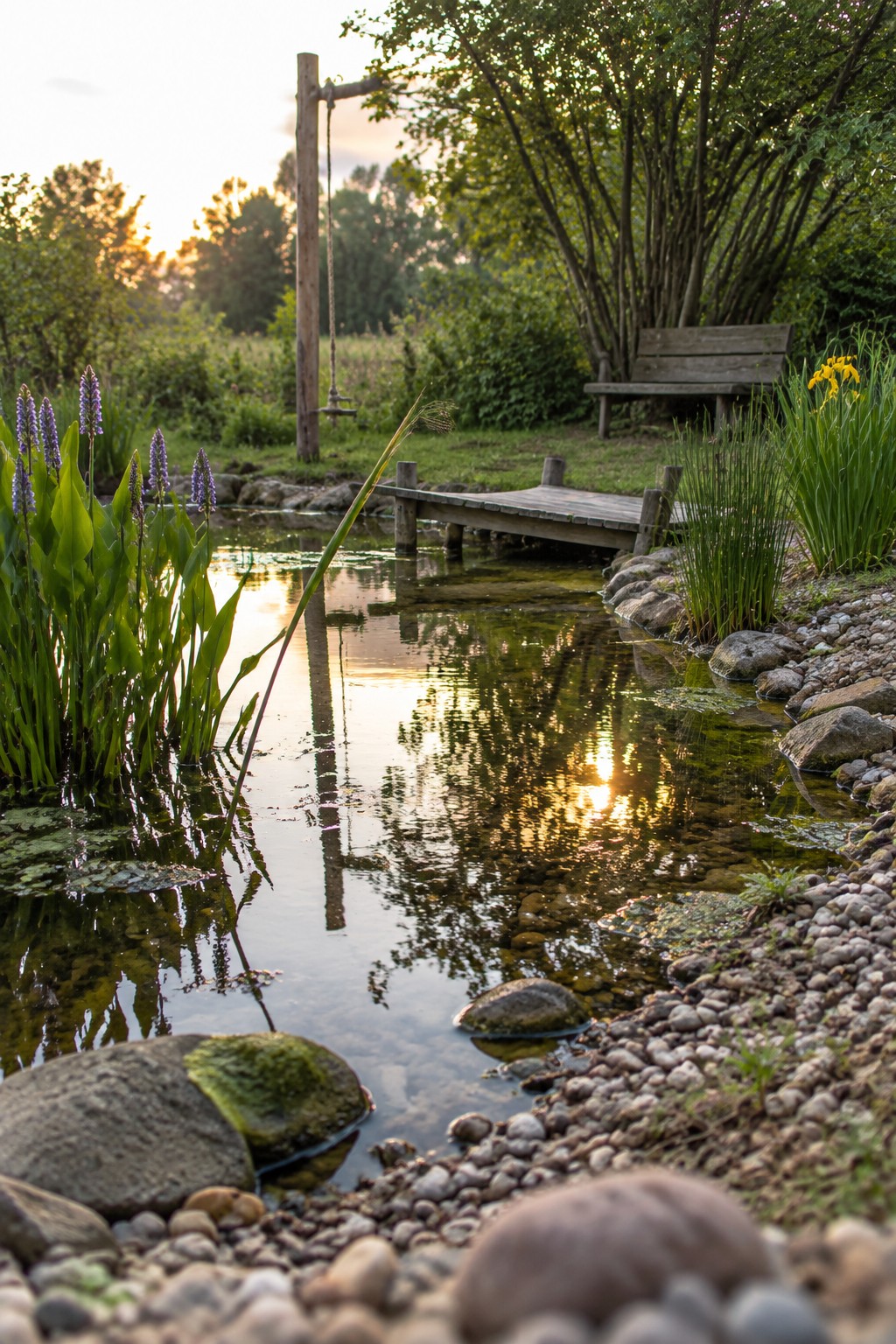
One simple way to make a backyard pond feel like it belongs is to plant native species right along the waterline. These plants soften the edges, support local wildlife, and keep the whole area looking natural instead of built.
Pick moisture-loving natives and set them in loose groups rather than neat rows. Let the stones and gravel already at the edge do most of the work so the planting stays easy to care for and blends with the rest of the yard.
Raised Beds For Mixed Plantings

Raised beds give a garden clear edges without making it feel too formal. They hold the soil in place and let different plants grow together at their own pace, which keeps things looking full and natural even in a smaller space.
Wood works well for this because it blends into the landscape over time and holds up in most climates. Try them along a wall or path where you want to grow a mix of edibles and natives without worrying about everything spreading into the gravel or lawn.
Native Grasses Along a Stone Path
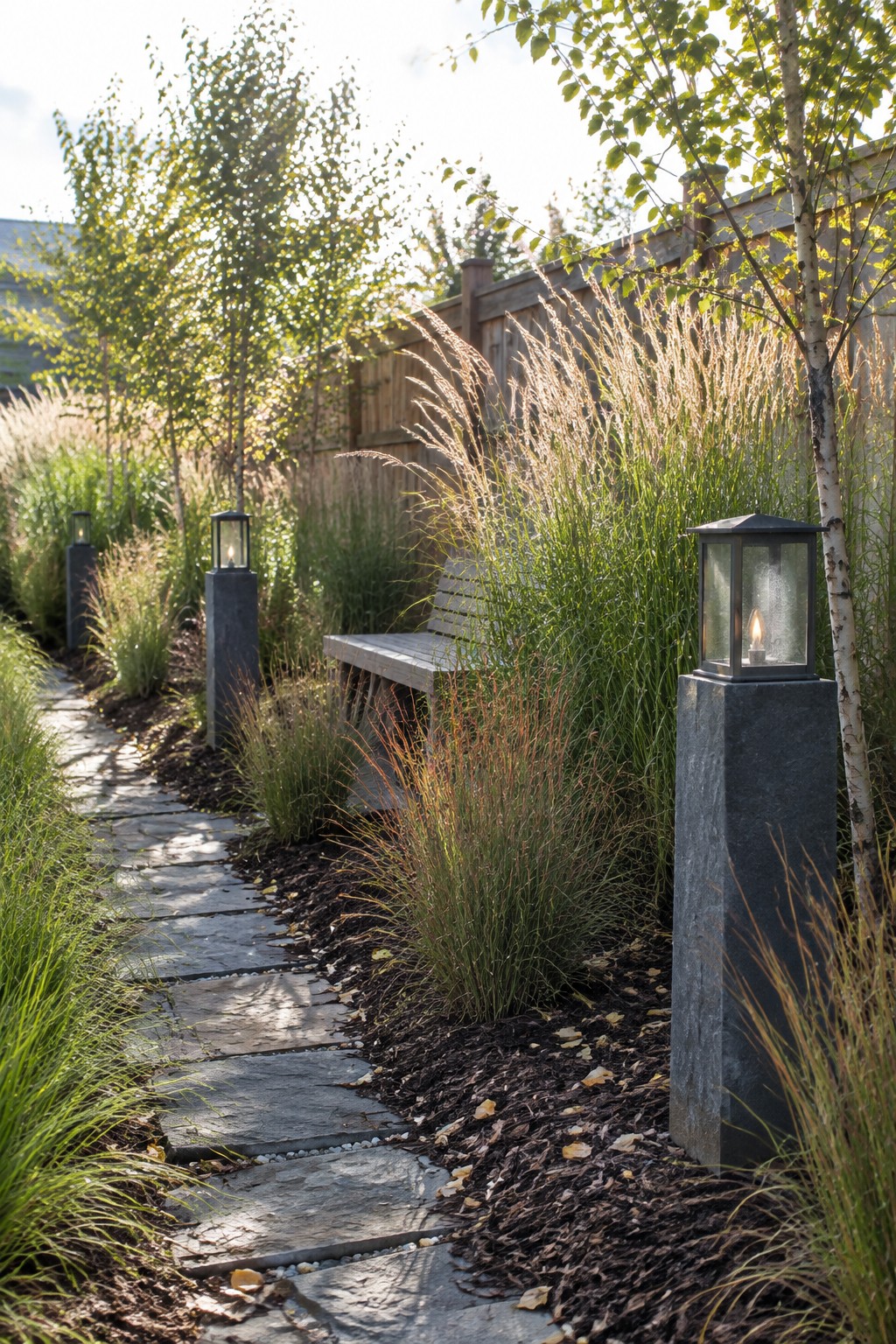
A simple stone path edged with native grasses gives the yard a relaxed flow without looking too planned. The grasses soften the edges of the path and keep the whole area feeling natural instead of formal.
This works especially well in narrow side yards or along a fence line. Pick grasses that stay upright and match your local conditions, and keep the path wide enough for easy walking so it stays practical as well as pretty.
Gravel Paths Pair Well With Native Plantings
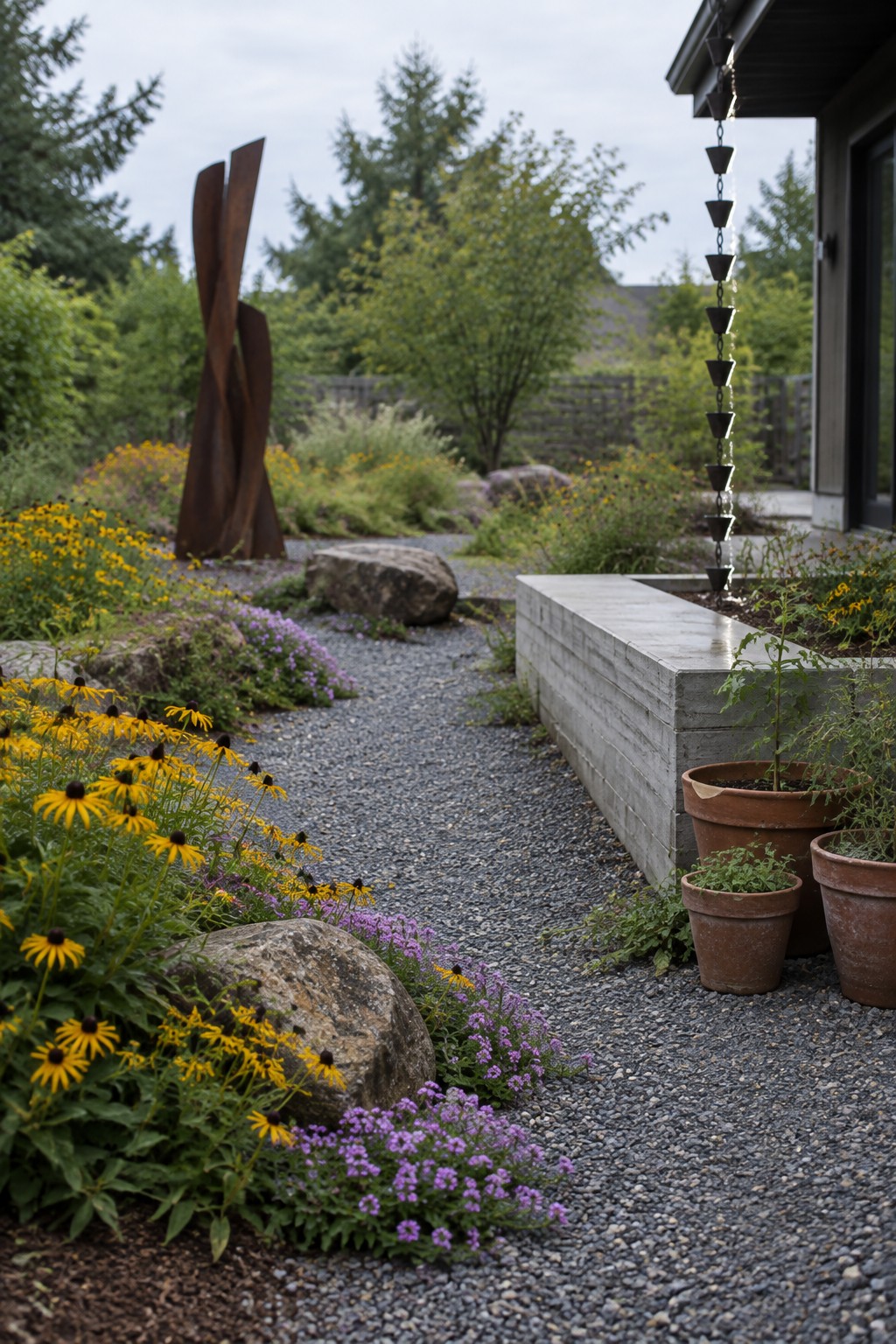
Gravel paths give a backyard an easy, natural feel that works especially well with native plants. They let flowers and ground covers spill over the edges without looking out of place, and the loose surface helps water drain right back into the beds.
This layout suits homes with open yards where you want to keep maintenance low. Use larger rocks or simple edging to hold the gravel in place, and stick with plants that already grow well in your region so the path stays looking settled over time.
Soften Pool Edges With Layered Native Plants

Native plants placed in loose layers can turn a plain pool into something that feels more like part of the garden. Grasses and flowering perennials spill over the paving and break up the hard lines without needing much fuss.
This works best in sunny yards where you want lower water use and fewer formal beds. Pick species that match your local conditions and let them grow in at different heights so the edge stays soft year after year.
Use Pots Of Native Plants To Frame A Patio
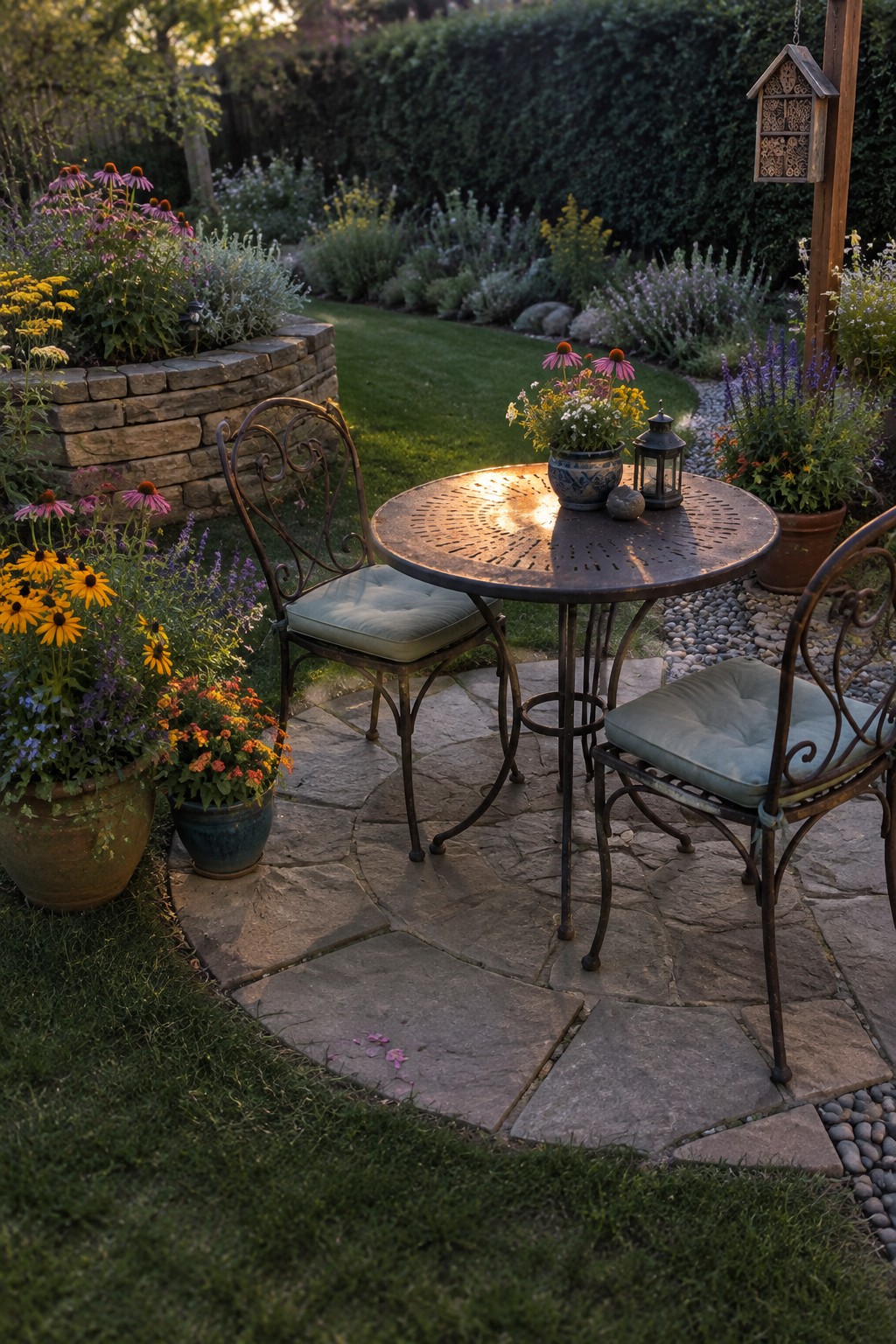
Placing a few pots of native flowers right next to an outdoor table makes the seating feel more connected to the garden. It brings color and movement close without needing a big planting bed, and the pots can be moved around as the seasons change.
This works well on stone or gravel patios where space is limited. Choose plants that match your local conditions so they stay healthy with less watering, and keep the pots in similar sizes or colors so the whole spot feels pulled together.
Stepping Stone Paths With Native Plants
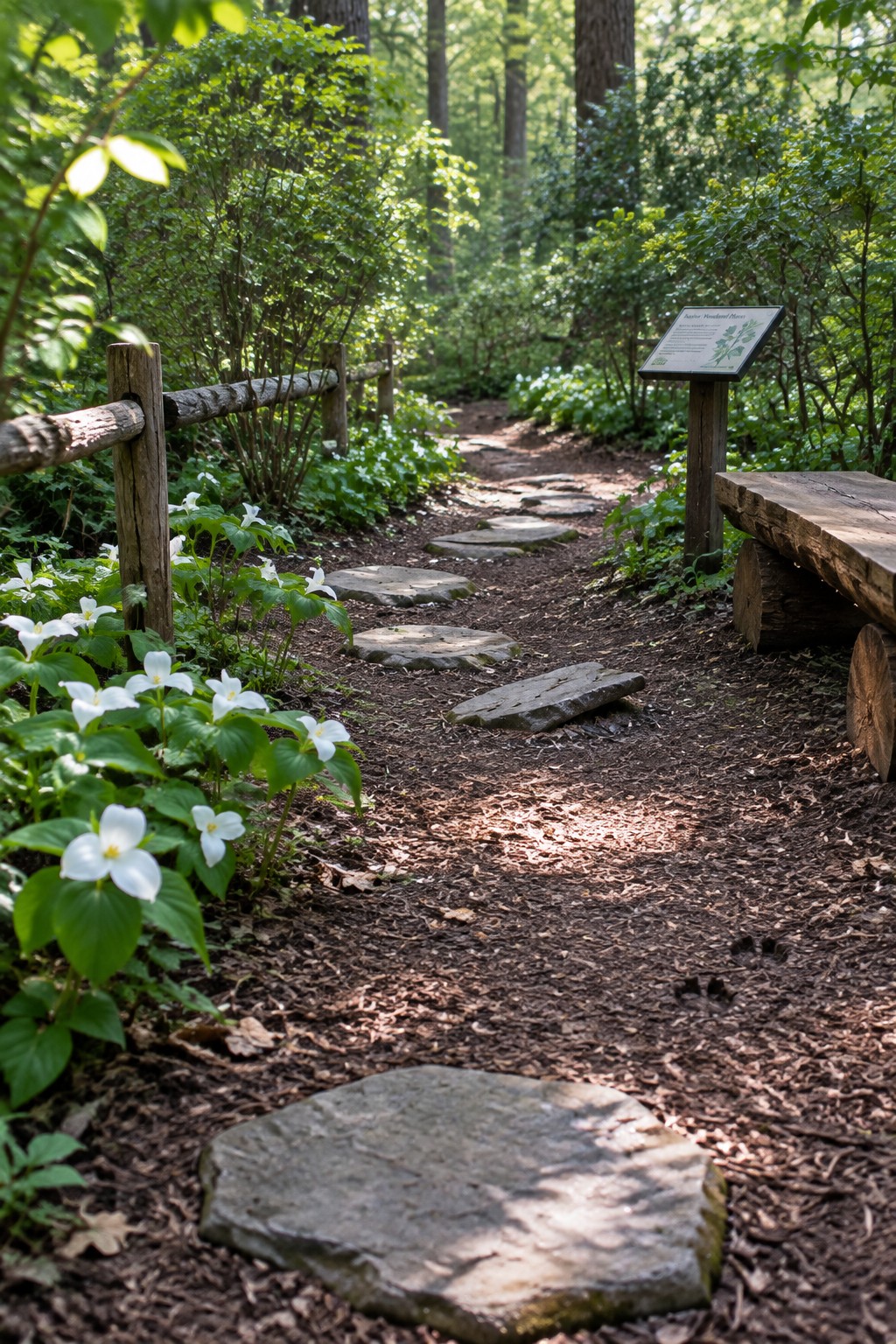
A stepping stone path lets you move through a garden without compacting the soil or disturbing the plants around it. The irregular stones sit right in the mulch and let native groundcovers and wildflowers fill in between them, which keeps the whole area feeling natural rather than manicured.
This layout works especially well in shady or wooded backyards where you want a light footprint. Use local stone that matches the scale of the space and choose plants that already grow in similar conditions so the path stays low maintenance over time.
Cover Slopes With Native Plants
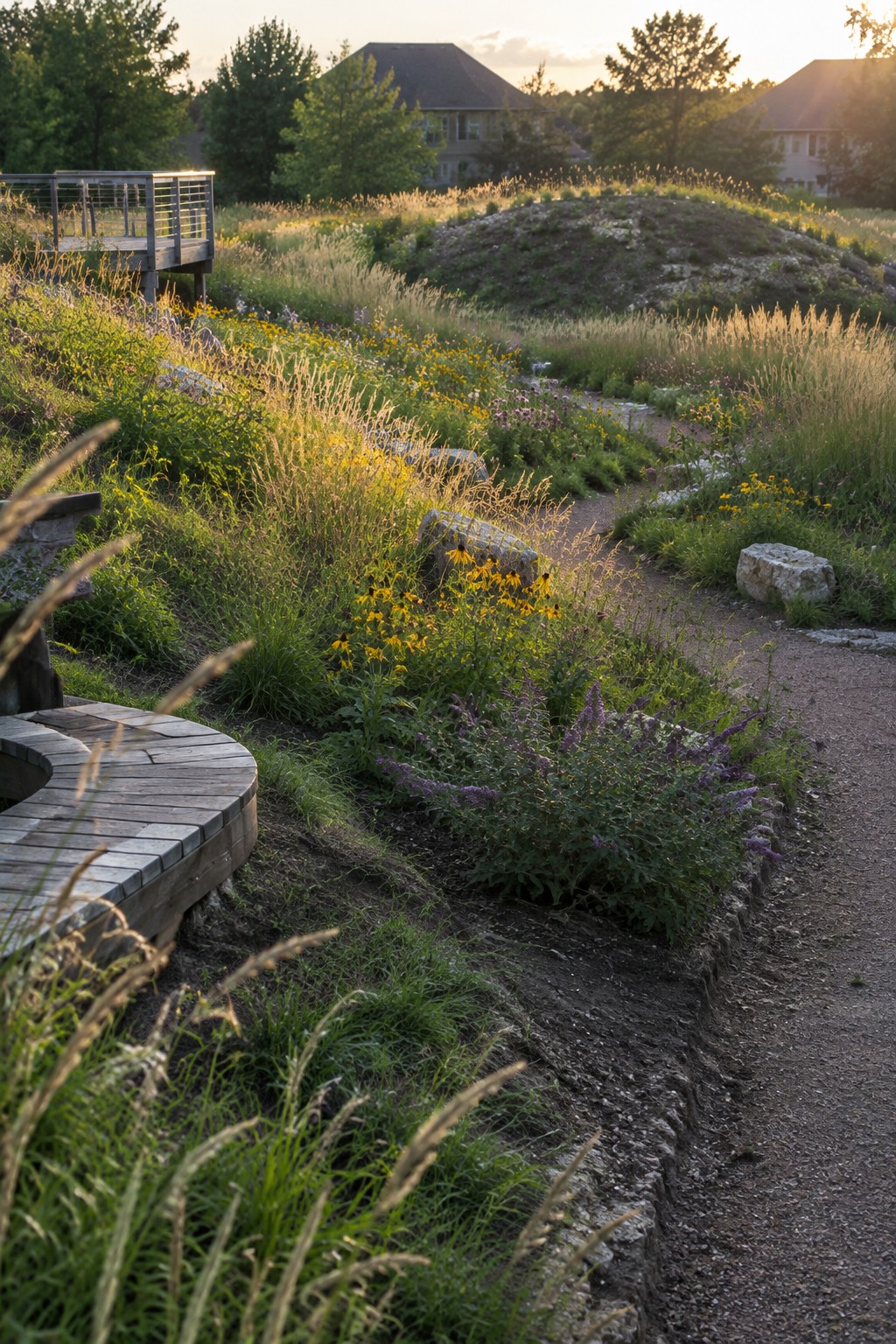
Sloped yards often get ignored because they are hard to mow and tricky to plant. Native plants solve that by rooting in on their own and filling the space with layers of grasses and flowers that stay green most of the year.
Mix taller grasses with shorter blooming plants so the slope looks full without looking planted by hand. Stone edges help hold the soil in place while still letting the beds feel loose and natural.
Winding Paths Through Layered Beds
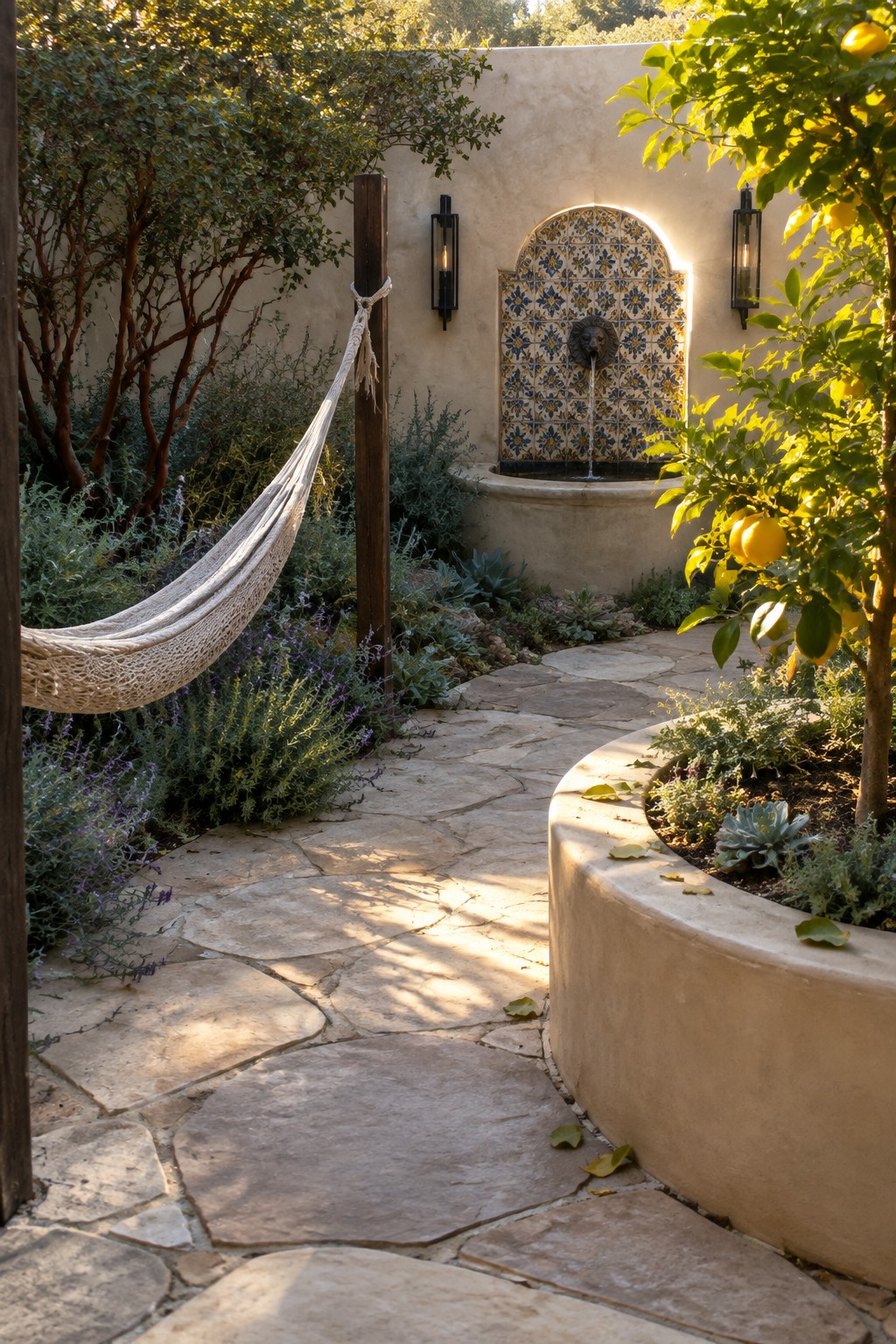
A simple stone path that curves instead of running straight can make a backyard feel more relaxed and connected to the plants around it. The irregular shapes let the edges soften over time as the surrounding shrubs and perennials grow in, so the walkway starts to feel like part of the planting rather than something laid on top.
This approach works best in smaller yards where you want to slow people down and show off different layers of native plants. Keep the beds fairly full on both sides so the path reads as a route through greenery instead of an open walkway.
Gravel Paths Through Native Plantings

Gravel paths give a backyard that relaxed, natural flow without looking too planned. They let native plants edge right up to the walkway so the whole garden feels connected rather than divided into separate beds.
This works best on sites with sandy or well-drained soil where the gravel can settle in over time. Keep the path width comfortable for walking and add a simple border of larger stones if you need to hold the gravel in place near heavier traffic areas.
Native Plants Along Stone Steps
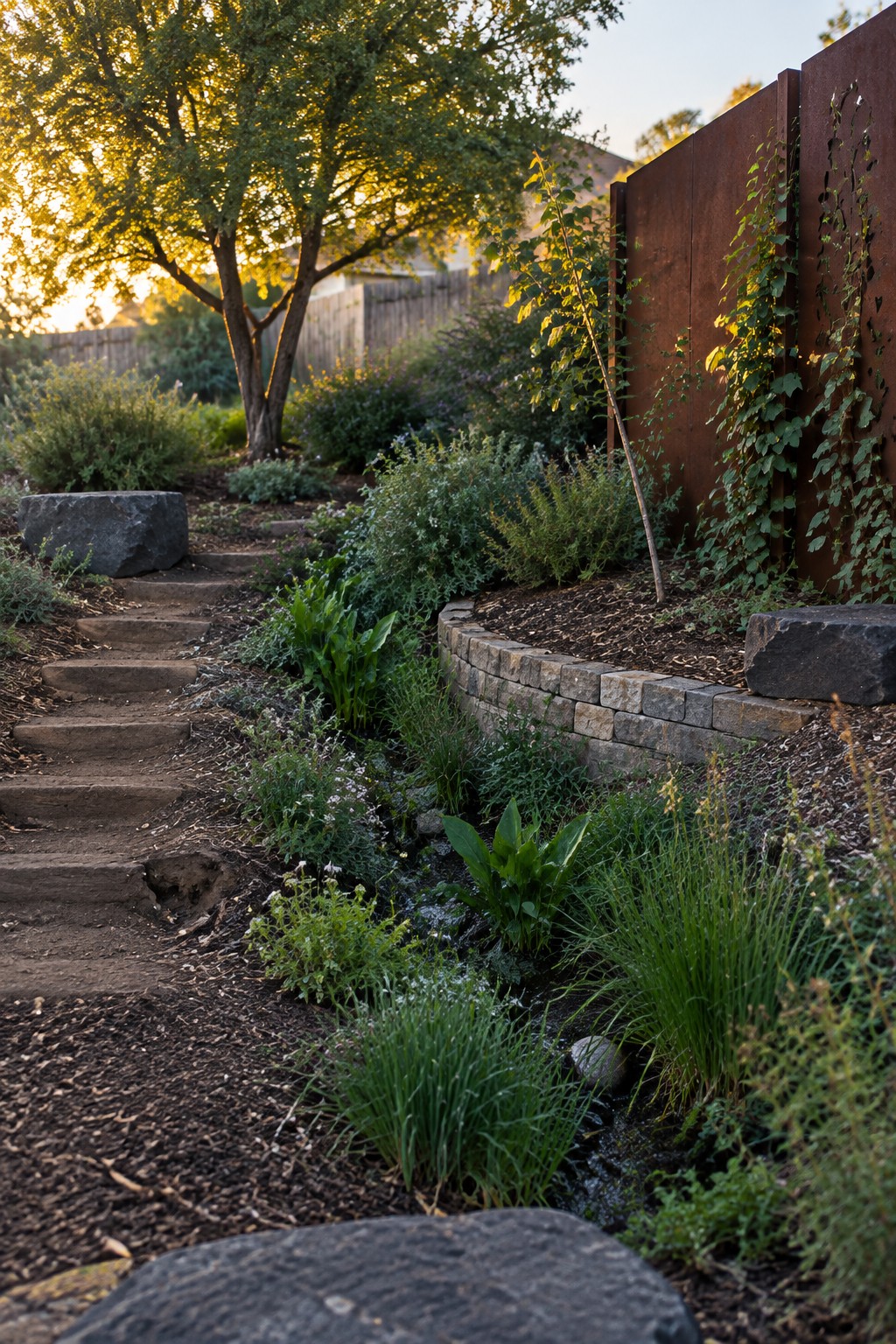
One simple way to make a backyard feel more natural is to let native plants grow right up against stone steps instead of keeping them neatly trimmed back. The mix of grasses, low perennials, and taller shrubs softens the hard edges and helps the path blend into the slope.
This approach works best on gentle grade changes where you can plant in loose drifts rather than straight lines. Choose species suited to your local soil and sun, and give them room to spread so the whole area looks settled after a season or two.
Let A Path Wind Through The Beds
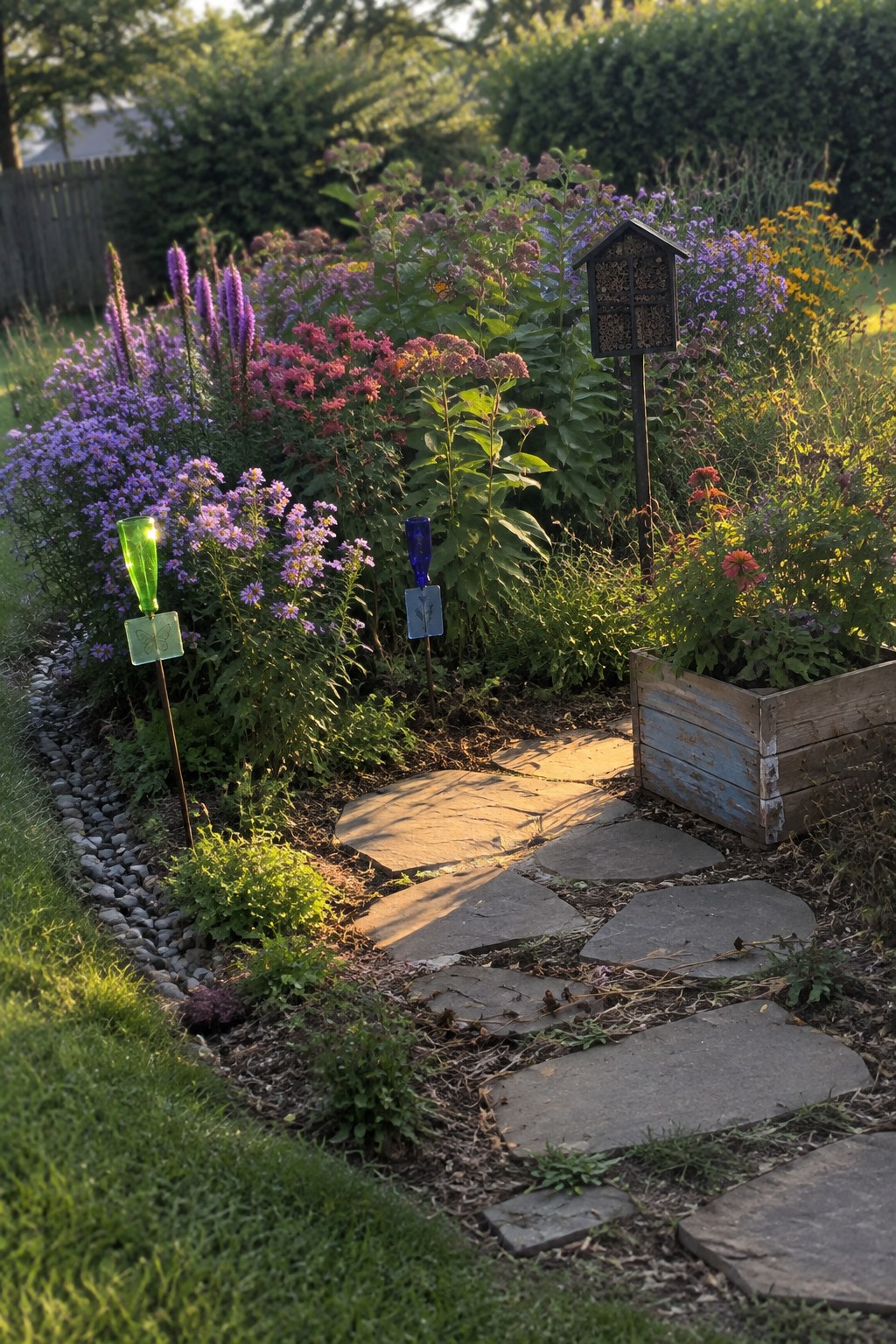
A simple stone path that curves through the plantings makes a garden feel more welcoming and easy to explore. It breaks up dense beds without making everything look too formal, and it gives you a way to get close to the flowers without stepping on them.
This works especially well in smaller backyards where you want to show off layers of native perennials. Keep the stones irregular and let the plants grow right up to the edges so the path feels like part of the garden rather than something laid on top of it.
Frequently Asked Questions
Q: How do I figure out which native plants will work in my backyard?
A: Walk around your neighborhood and see what grows without much help. Test a small patch of soil to match plants to it. Buy from a local nursery that carries natives.
Q: Do these native plants need constant weeding and fussing?
A: They settle in after the first season and crowd out most weeds on their own. Pull anything that looks out of place now and then. Water only during long dry spells.
Q: What if animals eat my new plants before they take hold?
A: Most natives handle some nibbling from deer or rabbits. Put up a simple fence around young plants for the first year. Choose tougher species like grasses if animals are a big problem in your area.
