

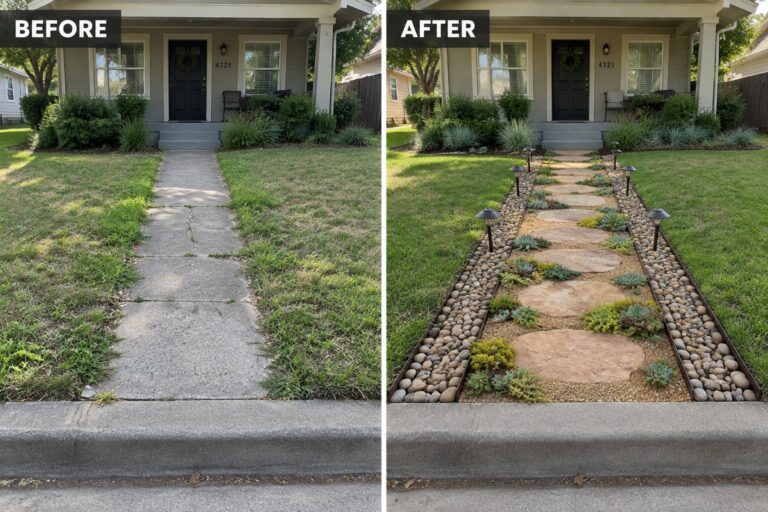
I often notice how a front walkway starts to look a bit lost once the original plants thin out and the edges blur.
Adding some low growing shrubs and a clearer path layout helps the whole front feel more settled without constant upkeep.
I would probably test the simplest plant groupings first in my own yard since they seem to hold up better through dry spells.
Over time those choices keep the walkway functional and easy to walk even when we are not out there every weekend.
It makes a difference.
Add Structure To A Front Walkway With Planting Beds
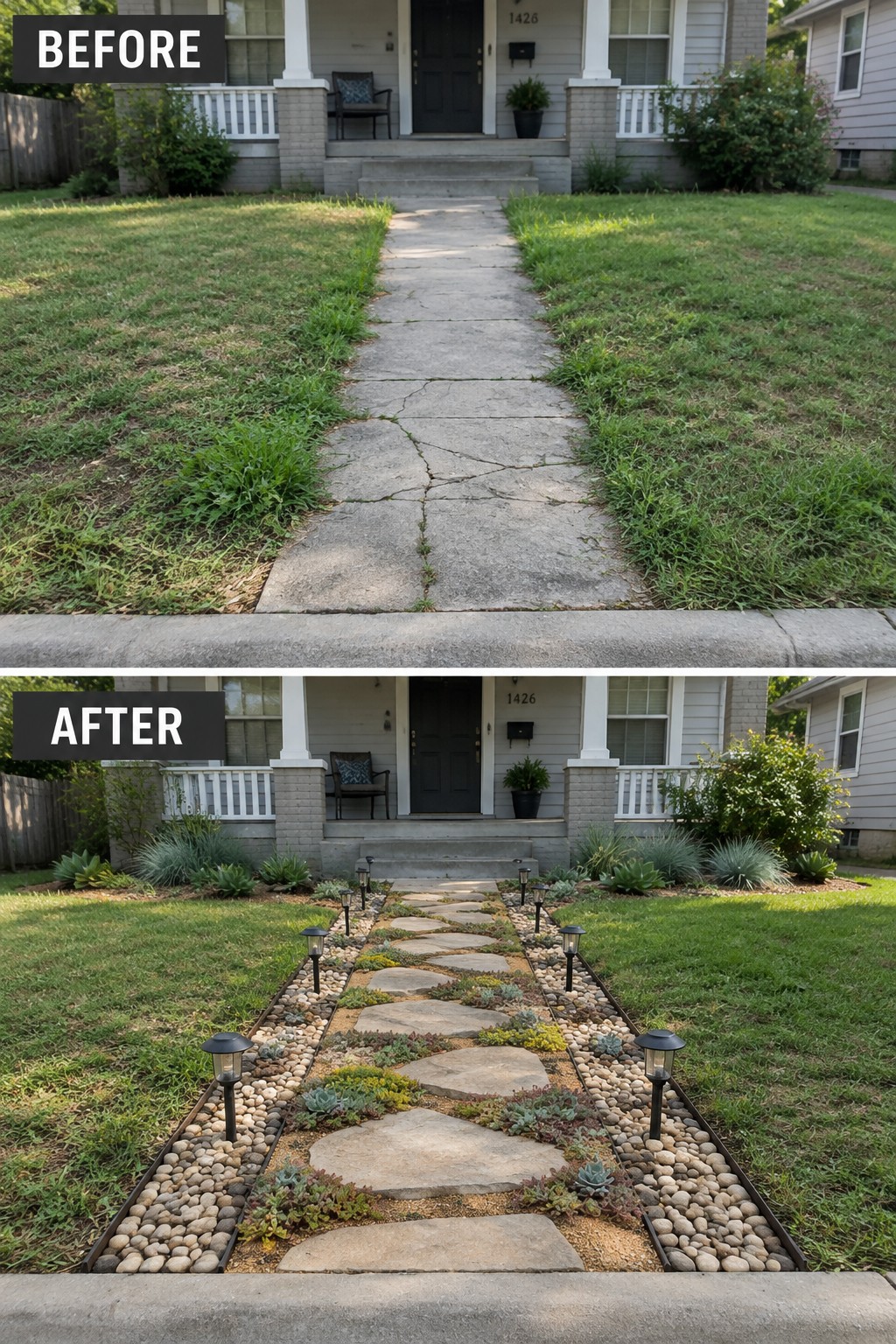
The old concrete path had no real edges and the grass just grew right up to the cracks. Adding metal borders, gravel, and a row of low plants on both sides gave the walkway a clear shape and made the front yard feel more finished without a big overhaul.
This idea works best on straight paths where you want less mowing and a tidy look year round. Keep the plants low, use a simple border material that can handle weather, and leave enough room on each side so the walk still feels open when you come up to the door.
Define A Front Walkway With Planting Beds And Lights

A plain walkway often feels unfinished when the edges stay bare or covered only in mulch. Adding narrow gravel beds on both sides with low grasses and a row of path lights gives the path clear shape and makes it easier to follow after dark.
This approach suits straight front walks on modest lots. Keep the beds about a foot wide so they do not crowd the path, and choose grasses that stay under two feet tall. The lights can be simple solar models placed every four or five feet.
Add Structure To An Overgrown Front Walkway
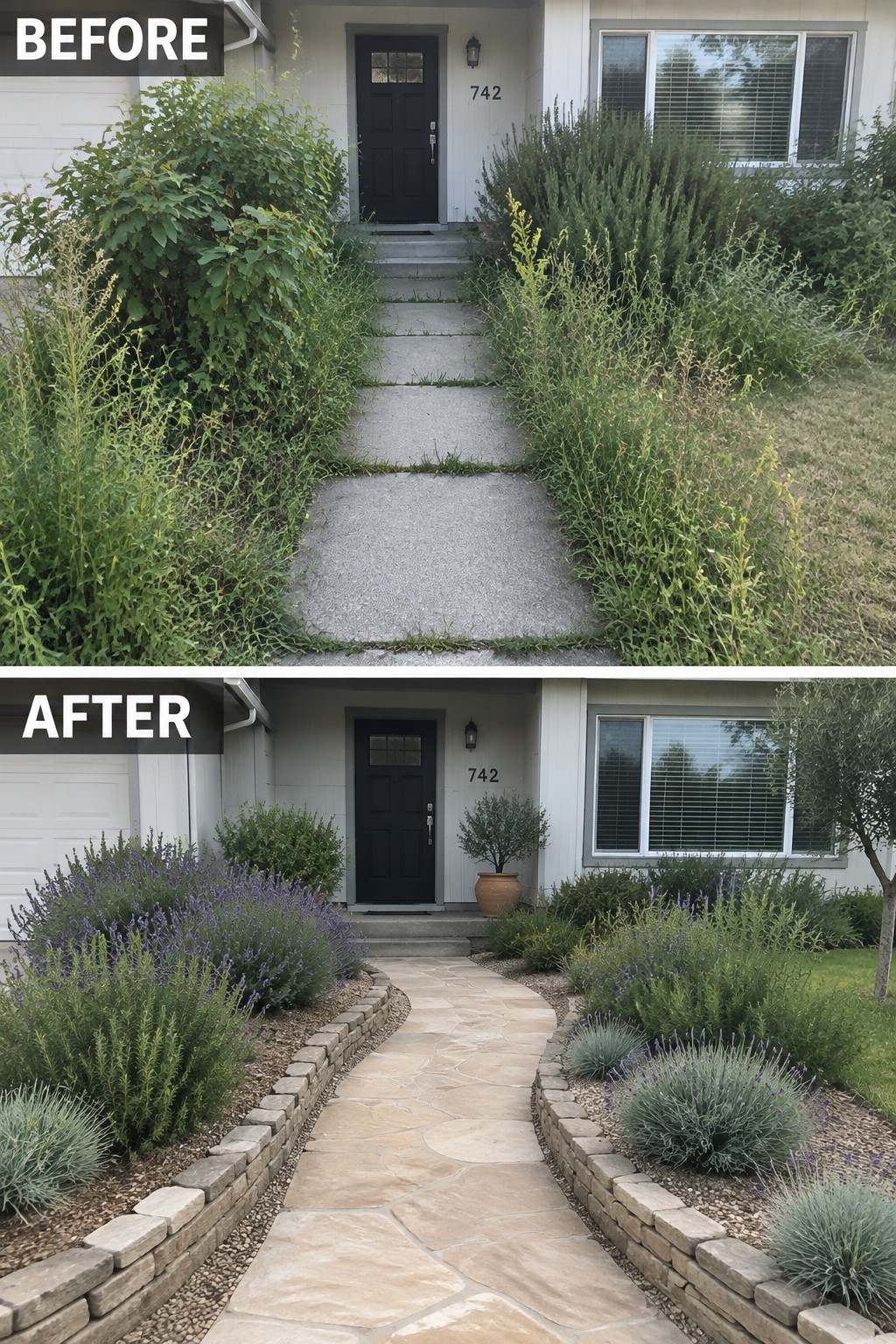
The main change here is the shift from messy, spilling plants that blurred the edges of the concrete path to clean, bordered beds that give the walkway a clear shape. Stone edging and a new paver path keep everything in place and make the space feel intentional instead of neglected.
This approach works well on narrow front yards where the walkway needs to stay usable. Start by clearing the overgrowth, then add simple edging before planting low-maintenance shrubs and perennials that stay within their borders. It keeps the look neat without constant trimming.
Define A Front Walkway With Pavers And Gravel Borders

A cracked asphalt path next to a driveway often looks neglected because it has no clear edges. Switching to pavers set in a simple grid with gravel on both sides gives the walkway shape and makes the whole front yard feel more cared for. The low shrubs and solar lights along the borders keep the planting easy while still guiding visitors straight to the door.
This approach works well on narrow side yards or homes where the walkway runs beside the garage. Start by removing the old surface and laying a solid base so the pavers stay level. Keep the plant choices small and repeat the same gravel and shrub pairing on both sides so the path feels balanced without needing constant upkeep.
Add Defined Borders Along A Front Walkway
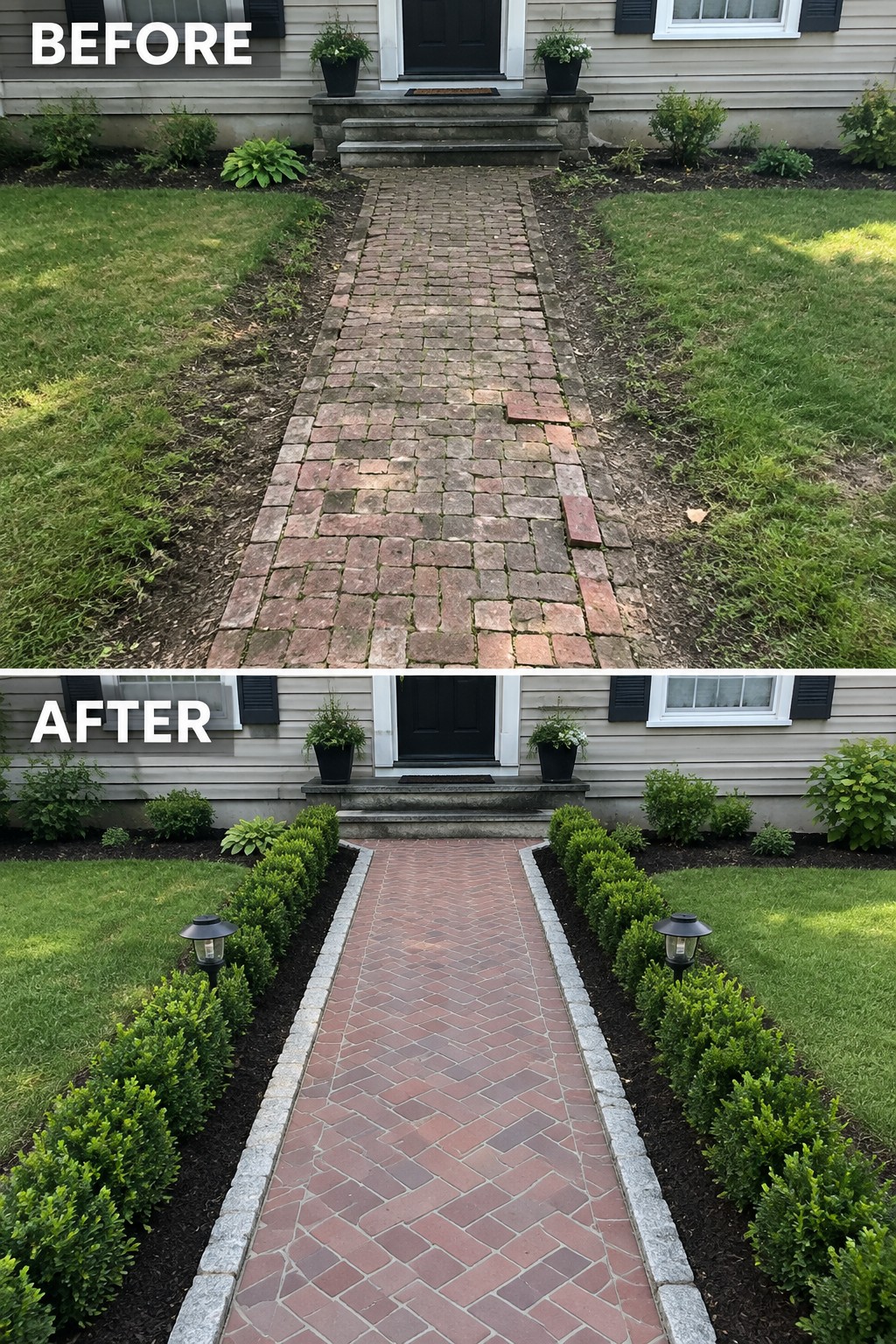
One of the simplest ways to improve a front walkway is to give it clear edges with planting. The before photo shows grass growing right up to the bricks with no real boundary, which makes the path feel unfinished. Adding low hedges and a stone border on both sides turns the walkway into a deliberate feature that looks planned rather than accidental.
This idea works best on homes with a straight path where you want low maintenance. Compact evergreen shrubs that stay under two feet tall keep the view open and cut down on trimming. Mulch the beds to hold back weeds and you end up with a walkway that stays tidy without constant work.
Add Pavers To Define A Gravel Path

A gravel path can start to look messy once weeds settle in and the edges blur. Laying down large pavers gives the walkway clear shape and turns the same space into something that feels planned rather than leftover.
This idea works best on homes that already have gravel in place but want more structure without starting over. Keep the pavers simple and rectangular, then add low plants between and along the sides so the path stays neat with little mowing or trimming.
Replace A Cracked Concrete Walkway With Decking
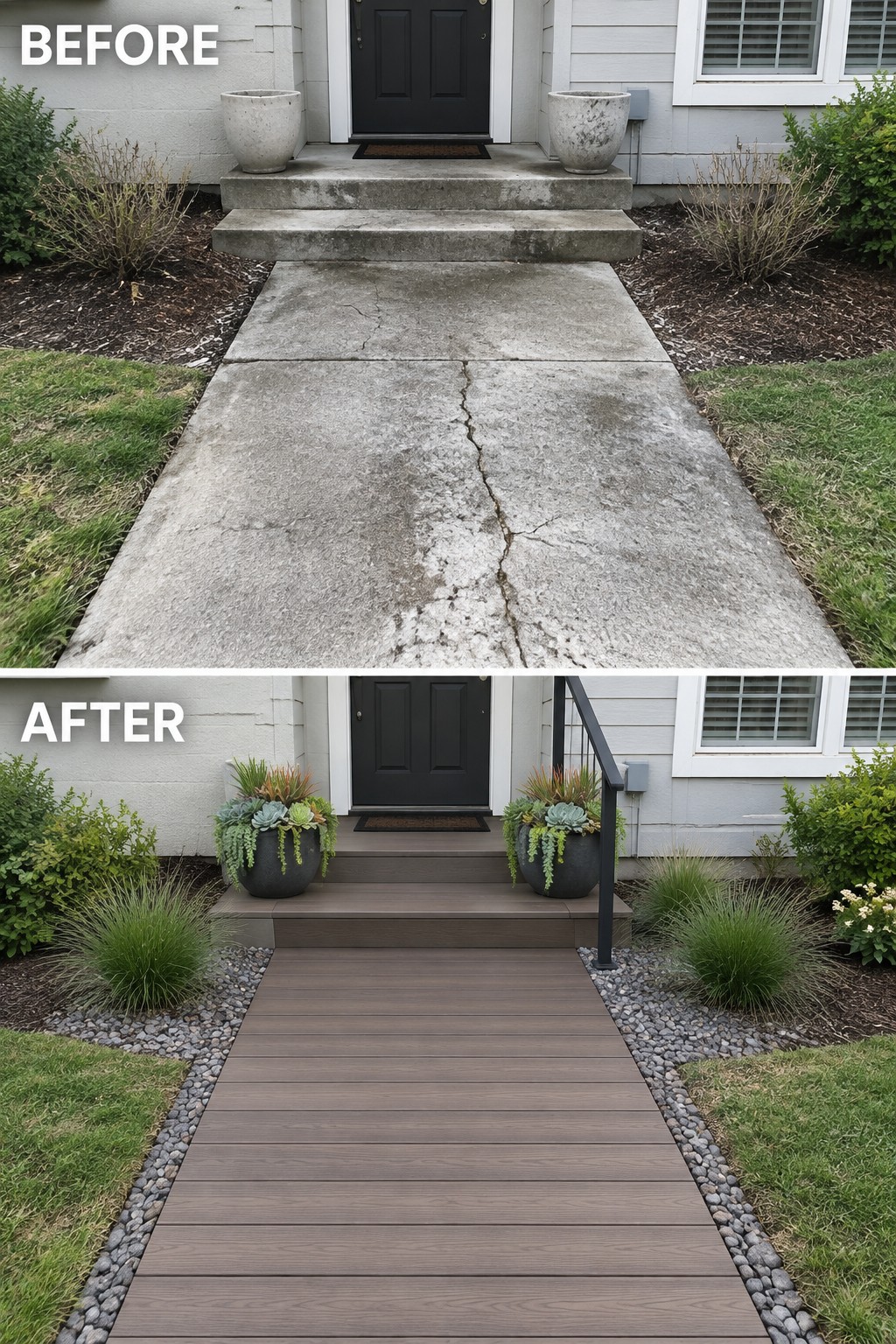
A cracked concrete path can make the whole front of a house feel neglected even when the rest of the yard is fine. Switching to a wood-look deck surface gives the walkway a fresh, solid appearance and removes the tripping hazard at the same time. The gravel edges also keep the lawn from spilling onto the path and make mowing easier.
This approach works best on straight, narrow walks where you want a clear route without adding a lot of new features. Keep the planting simple on either side so the decking stays the main focus, and choose a composite material that will hold up to weather and foot traffic.
Add Planting Borders To Frame The Front Walkway

The straight concrete path once sat between two wide strips of tall grass that grew right up to the edges. Adding low groundcover along both sides and switching the center to gravel gave the walkway a clear shape and made the whole front yard feel more put together.
This idea works best on homes where the lawn runs straight into the path with no separation. Keep the plants low and dense so they hold the edge without extra trimming, and use a simple material like gravel or mulch for the new surface. It keeps the walkway easy to maintain while giving the entrance a finished look.
Refresh An Overgrown Front Walkway With Pavers And Gravel
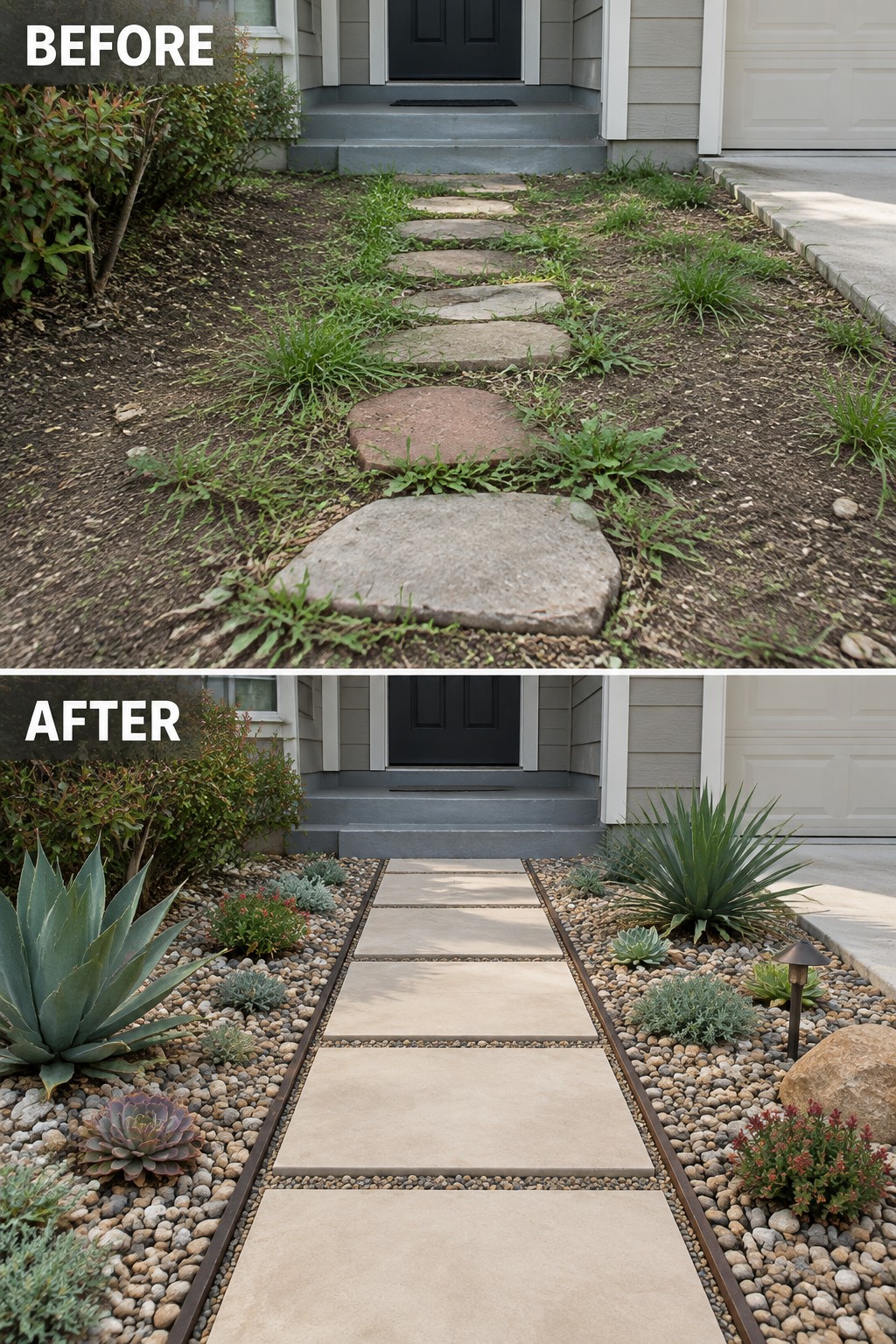
Replacing scattered stepping stones and weeds with a straight paver path and gravel borders makes the walkway feel intentional instead of neglected. The clean edges keep the gravel in place and give the planting room to stay neat without constant weeding.
This idea suits front entries that need to stay low maintenance. Clear the old surface first, lay the pavers on a level base, then fill the sides with gravel before adding a few tough plants along the edges so the path stays open and easy to walk.
Frame A Front Walkway With Gravel And Planting

The before photo shows a plain patterned path with messy dirt edges and scattered plants that never quite came together. In the after version the sides are cleaned up with gravel, low mounds of grasses, agaves, and small flowering plants that stay neat without much fuss. The gravel gives the whole walkway a finished edge and makes the path feel wider and more intentional.
This approach works well on any home with a straight front walk that feels bare or overgrown. Start by clearing the old growth and adding a simple gravel border on both sides. Then pick a few repeating plants that can handle your climate so the beds stay low maintenance instead of turning into another chore.
Add Defined Garden Beds Along A Front Walkway
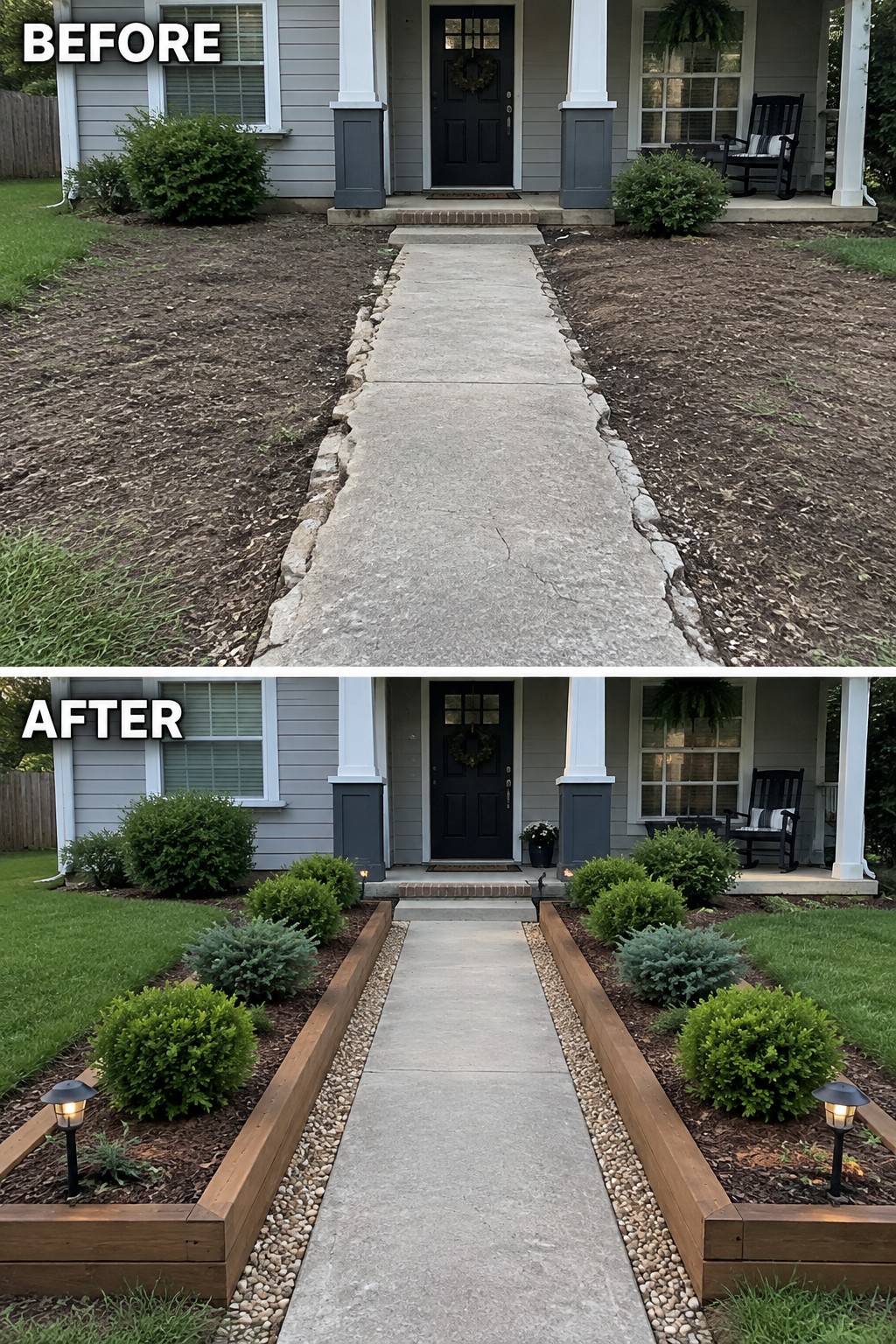
A straight concrete path often looks unfinished when grass and dirt run right up to the edges. Building simple raised beds on both sides with a gravel strip in between gives the walkway clear borders and turns the leftover space into something that feels intentional. The change from bare ground to neat beds makes the whole front entry look more put together without any big construction.
This idea works best on smaller lots where you want structure but still need to keep things easy to maintain. Use a few repeating shrubs that fill in quickly, and the wood edges plus gravel help control weeds and mud. It suits homes with a basic walkway that just needs better definition rather than a full redesign.
Define A Front Walkway With Stepping Stones
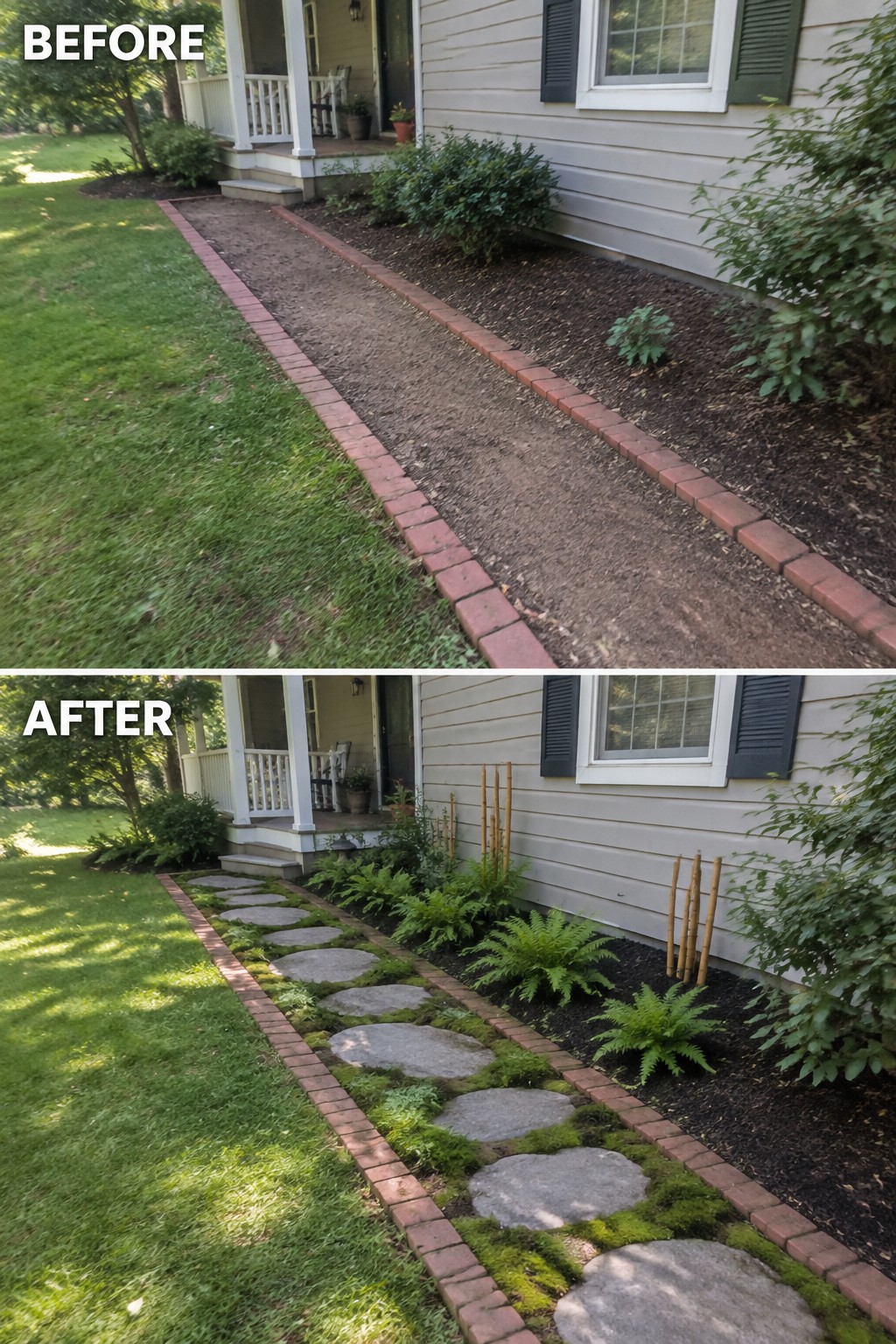
A bare dirt path next to the house often looks unfinished even when the brick edging is already in place. Placing stepping stones through low groundcover gives the walkway a clearer route and breaks up the long stretch of soil.
This idea works best on narrow side paths where you want something simple and low maintenance. Space the stones so they feel natural to walk on, then fill the gaps with moss or a similar groundcover. A few ferns planted along the edge help soften the line without crowding the space or requiring constant care.
Define A Front Walkway With Garden Beds
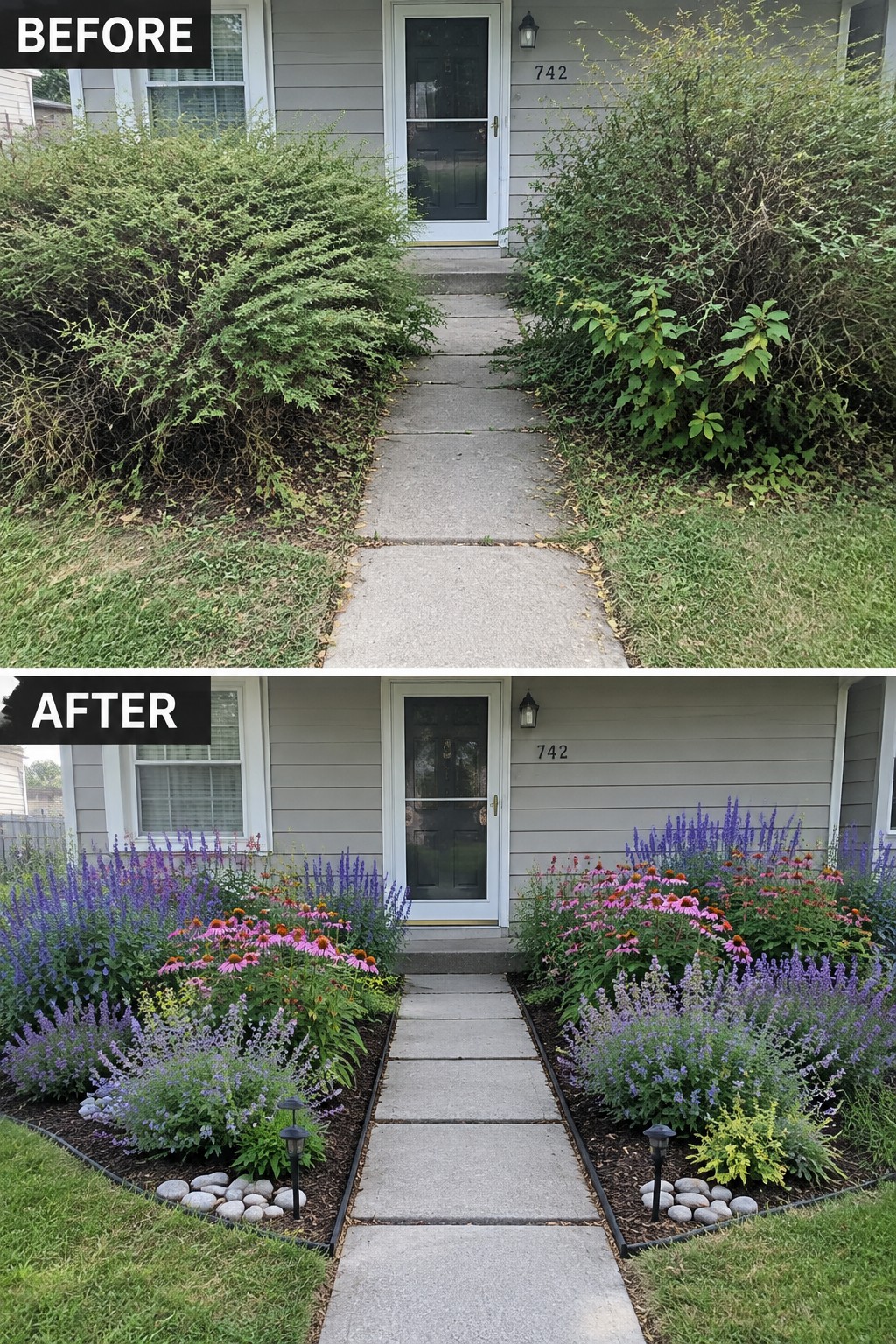
Clearing away the overgrown shrubs that once crowded the path made room for simple bordered beds filled with flowers and edged in black. The walkway now feels like a deliberate part of the yard instead of something squeezed between bushes.
This approach works best on narrow front walks where you want structure without adding hardscaping. Keep the beds narrow, use one or two repeating plants for color, and add mulch so the area stays neat with little upkeep.
Add Defined Borders To A Plain Front Walkway
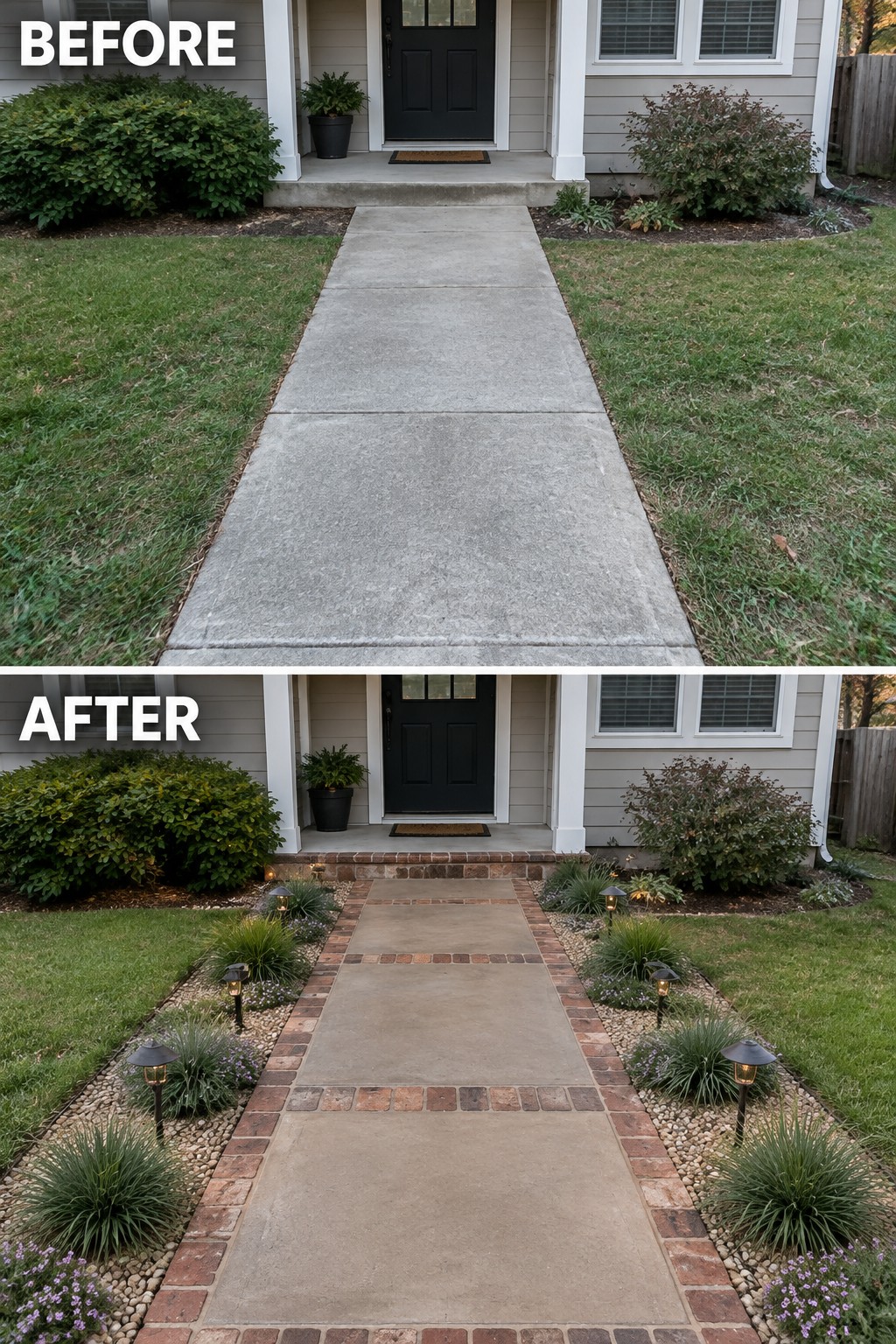
A straight concrete path can look unfinished when grass runs right up to the edges. Adding a simple brick border on both sides and creating narrow gravel beds turned the walkway into a clear feature instead of just a slab running through the lawn.
This idea works on any basic walkway that needs more structure. Lay the edging first so the beds stay neat, then fill them with gravel and a few low plants that will not spill onto the path. The small lights are easy to add later if you want the walkway to feel safer at night.
Add Stone Steps To Give A Front Path Clear Structure
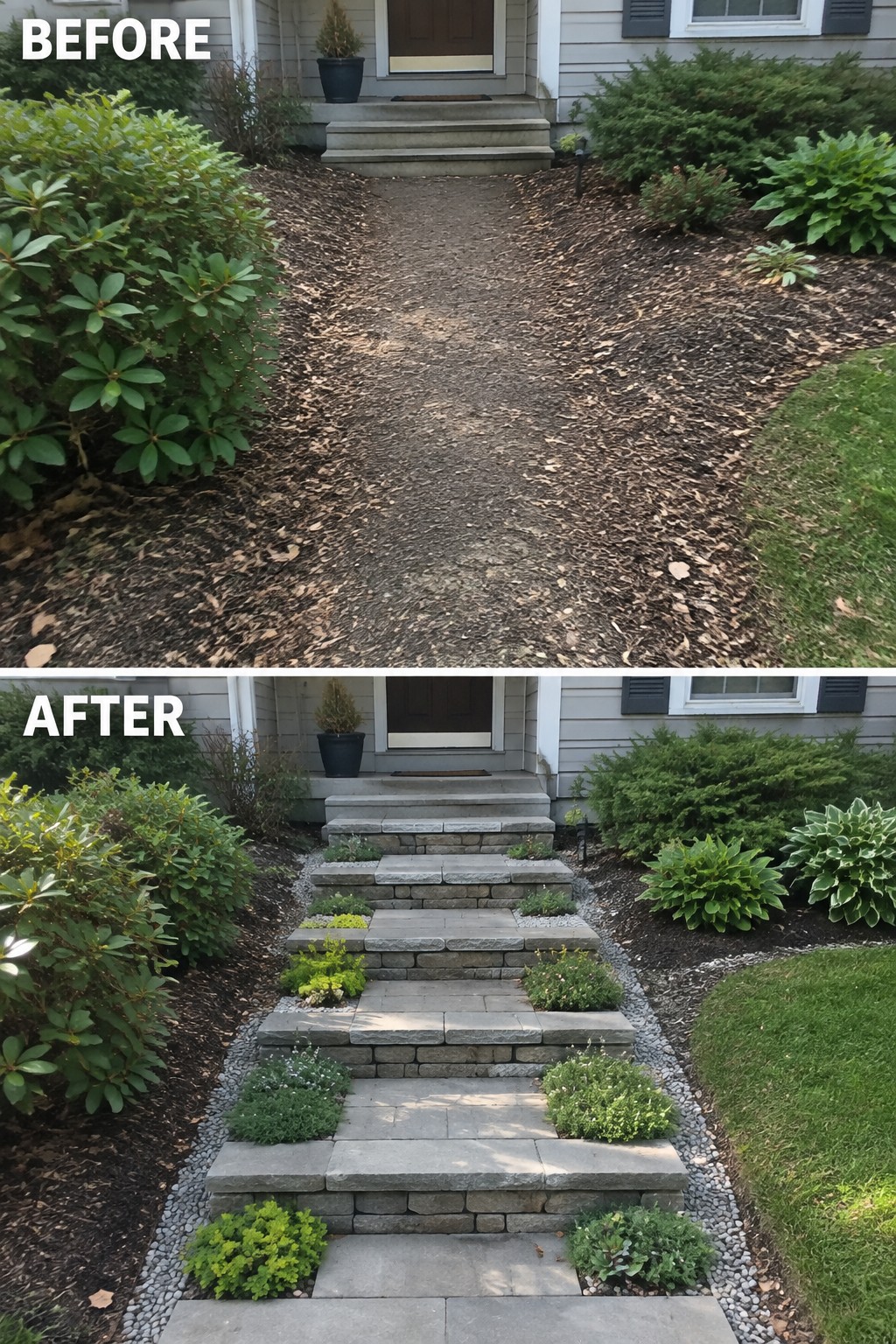
A sloped mulch path often looks unfinished because nothing holds the surface in place or guides feet toward the door. Adding a series of stone steps with gravel shoulders instantly creates that missing framework. The steps break the slope into easy risers, while the narrow planted strips on each side keep the hard surface from feeling too wide or stark.
This approach works well on any gentle grade leading to a front door. Start with the steps themselves, then fill the side beds with low, spreading plants that need little trimming. Keep the gravel narrow so the path still feels simple rather than overly built. The result is a walkway that looks intentional and stays easy to maintain.
Define A Front Walkway With Pavers And Gravel

The main change here was replacing a worn dirt path and thick weeds with a straight line of dark pavers set in gravel. This simple layout gives the narrow side yard a clear route to the door and keeps the planting from spilling over.
This idea works best on small lots or side yards where space is tight. Stick to low grasses and evergreen shrubs along the edges so the beds stay neat with minimal trimming. Make sure the gravel layer sits level so water drains away from the house.
Clean Up An Overgrown Path With Pavers And Planters

The main change here is replacing a mossy, uneven stone path and wild shrubs with a clean paver walkway and plants kept in large pots. This approach removes the constant trimming and weeding along the edges while still keeping some greenery right beside the walk.
This idea works well on narrow front paths where in-ground beds tend to sprawl. Use matching pots on both sides, keep the planting simple with a few repeated varieties, and add a gravel strip between the pots and the pavers so water drains and weeds stay down. It suits homes that want a tidy look without weekly garden work.
Use Pavers And Gravel To Refresh A Front Walkway

A straight concrete path with messy shrubs on both sides can make a front entry feel dull and overgrown. Switching to a gently curved paver walkway with gravel beds and simple plantings gives the space clear shape while cutting down on weeding and trimming.
This approach works best on small front yards where you want low upkeep without losing a welcoming feel. Clean out the old growth first, then lay the pavers in a running bond pattern and fill the edges with gravel so the beds stay neat through the seasons.
Give A Plain Walkway Structure With Pavers
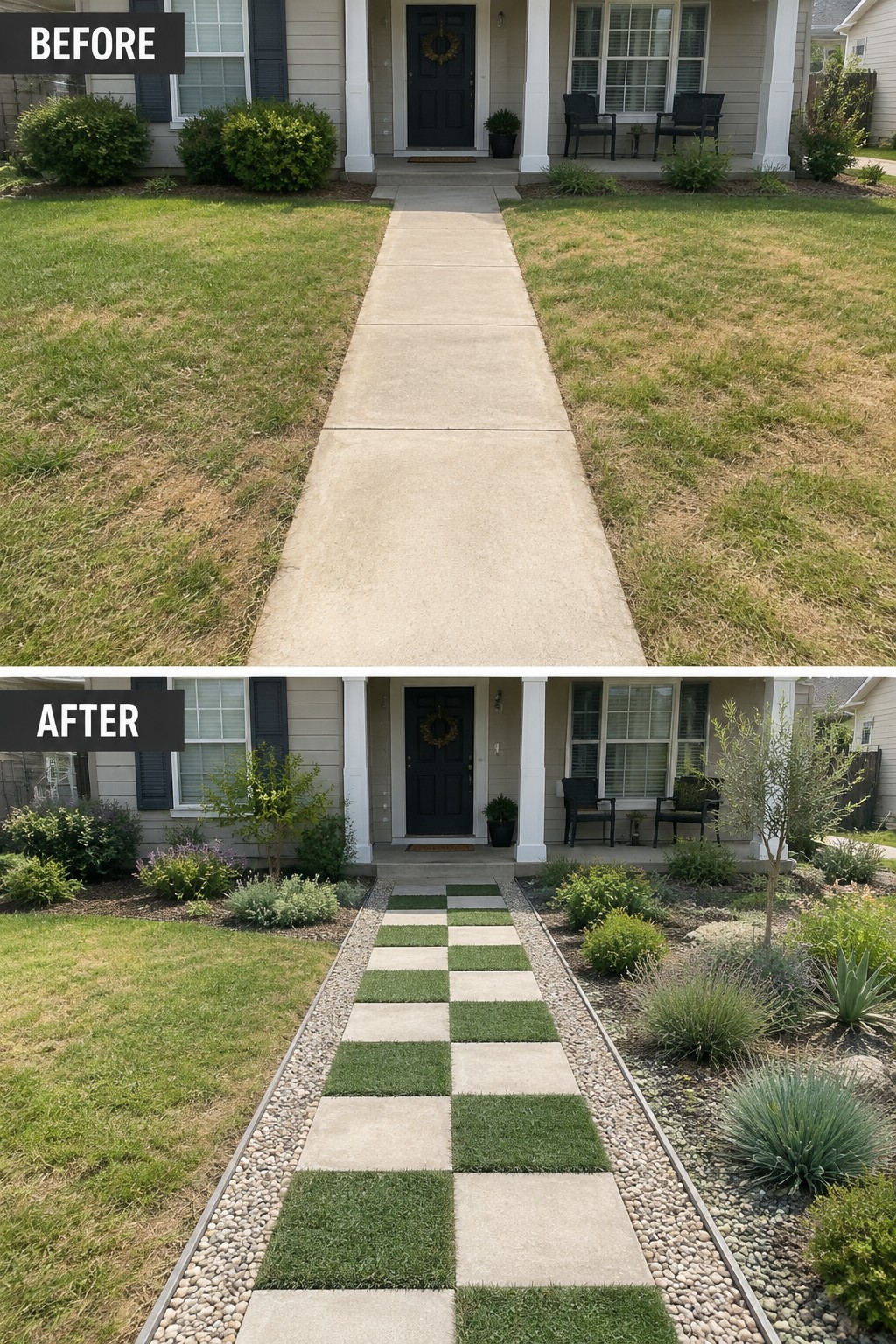
A straight concrete path with nothing but grass on either side can feel unfinished. Breaking the surface into a checkerboard of pavers and turf, then adding gravel borders, gives the walkway a clear shape and makes the front yard look more intentional without adding much work.
This idea suits homes with a simple front path where you want to keep some lawn but reduce mowing and edging. Start by laying out the paver pattern first, then plant the side beds with a few shrubs and grasses that stay neat on their own. The gravel strip helps keep the edges clean and stops grass from creeping into the beds.
Define A Front Path With Gravel And Simple Borders
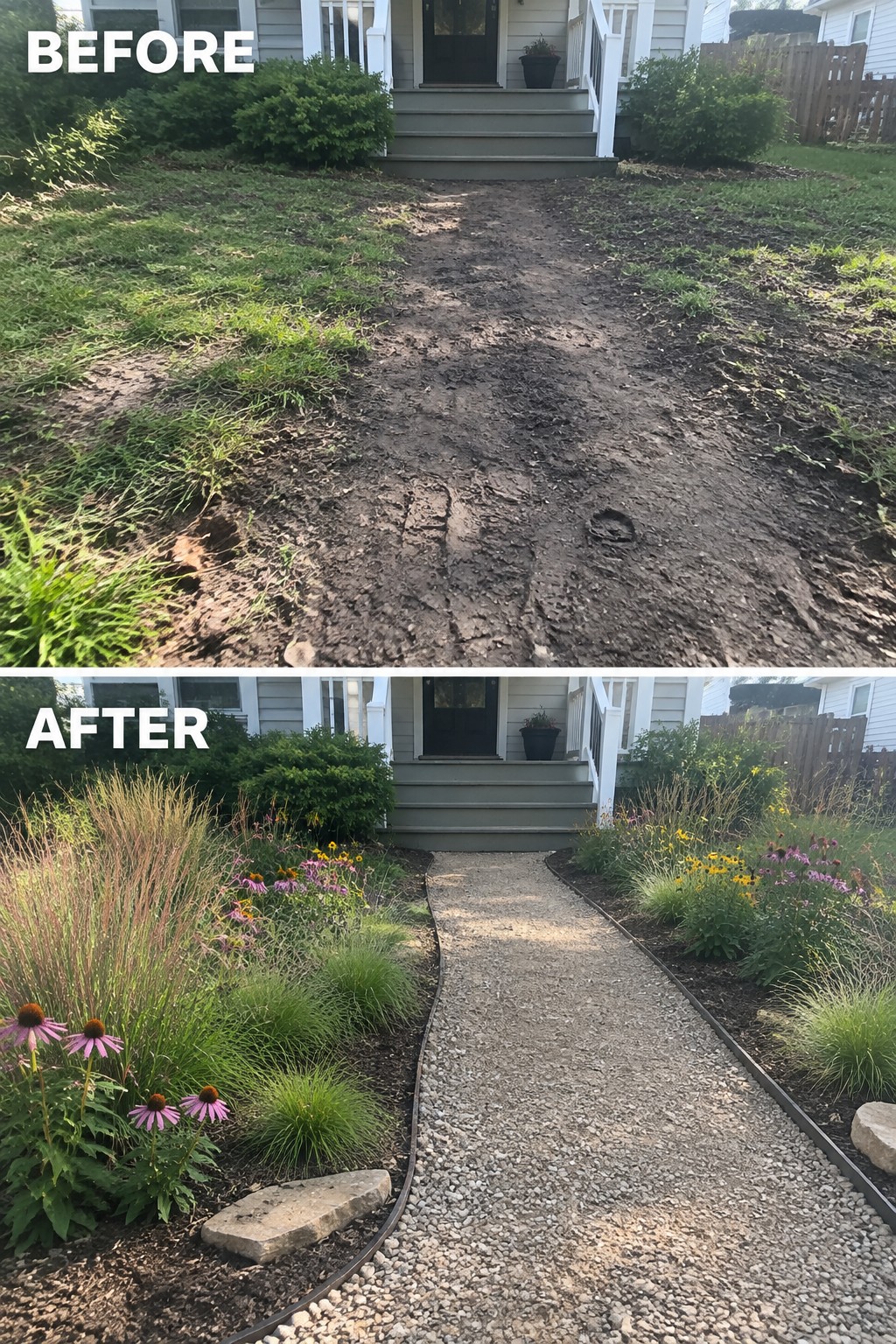
A worn dirt path that turns to mud is one of the quickest ways a front yard starts to look neglected. Laying down gravel creates a firm walking surface while the curved metal edging keeps the gravel contained and gives the beds a clean shape.
This approach suits homes where the walkway runs straight from the street to the door and the soil stays damp. Focus first on good edging and a few inches of gravel, then add a handful of low-care plants along the sides so the beds look finished without constant work.
Define A Front Walkway With Gravel Borders
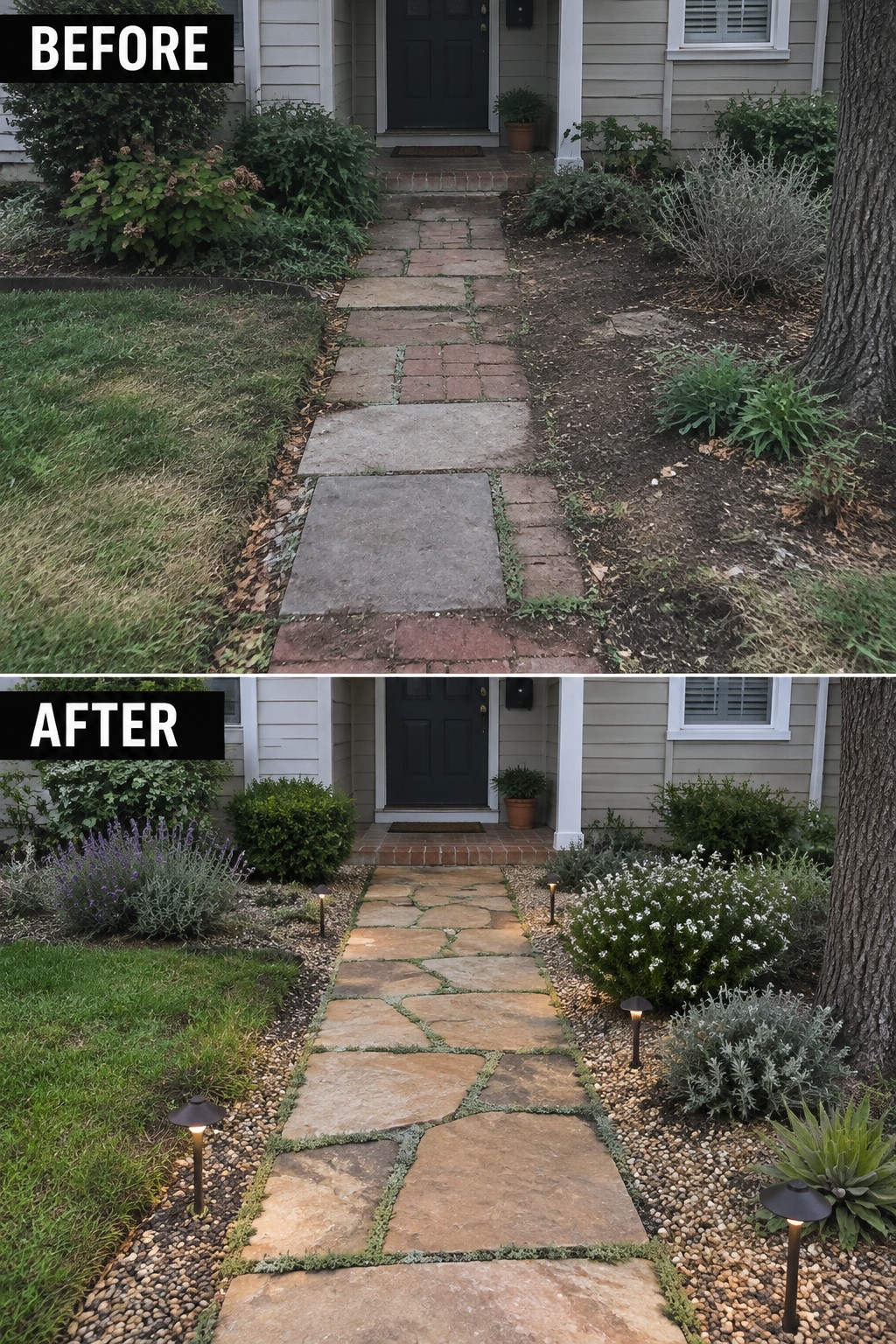
The before photo shows a walkway that feels lost between patchy grass and messy beds that spill onto the stones. In the after, gravel creates a clear edge on both sides, and a few repeated low plants keep everything looking neat without constant trimming. The path now reads as a deliberate feature instead of something that just happens to be there.
This approach works well on any front yard where the walkway feels undefined. Lay landscape fabric first, then add gravel to stop weeds and give the path a finished border. Pick two or three plants that stay compact and repeat them along the length. It keeps maintenance low and gives the entry a tidier look even on a small lot.
Define A Front Walkway With Border Plants And Lights
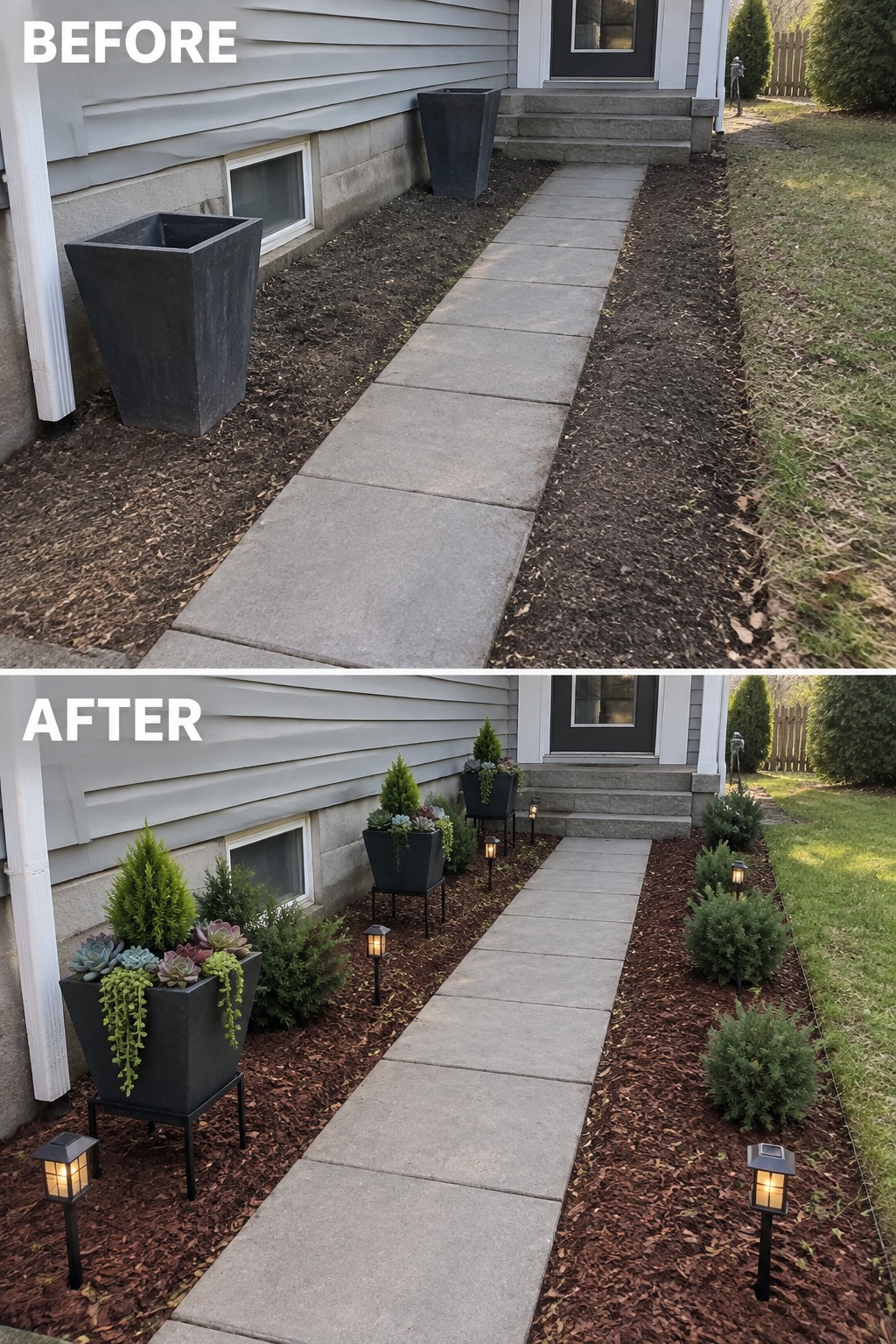
A bare strip of mulch next to a walkway often feels unfinished. Adding a simple row of shrubs and a few taller planters gives the path clear edges and makes the whole front area look more intentional. Solar lights tucked into the beds add a gentle glow at night without needing wiring.
This approach works best on narrow side strips where you want some planting but still need room to walk. Repeat the same planter style a couple of times and keep the plants low near the path so nothing blocks movement. Mulch keeps the beds looking neat with very little upkeep.
Replace A Cracked Concrete Path With Pavers And Planting Beds

A cracked concrete walkway with dirt on both sides looks unfinished and hard to maintain. Switching to pavers creates a solid, even surface that feels intentional, while the new garden beds on either side turn the bare dirt into a simple planted border. The change makes the whole front approach look planned instead of neglected.
This idea works well on houses with a straight front path and basic lawn. Start by removing the old concrete and laying pavers with a clear edge, then add a few low-maintenance perennials and mulch in the beds. Keep the planting simple so the walkway stays the main feature and the beds do not require constant care.
Frequently Asked Questions
Q: How do I pick plants that hold up without constant fuss along a sunny walkway? A: Go for tough choices like sedum or lavender that thrive in heat and need little water once they root in. These spread enough to fill gaps and block weeds on their own. Test a small spot first to match what already grows well in your yard.
Q: What works if the soil along my path stays pretty dry most of the time? A: Mix in gravel or sand to improve drainage before you plant. Then add drought-tolerant options such as yarrow that pull through dry spells without extra water. They settle in faster and stay healthy with less attention from you.
Q: How can I cut down on weeding after the first season? A: Lay down a simple layer of wood chips between the new plants right after you set them in. This blocks most weed seeds from sprouting while the plants fill out. Pull any stragglers by hand early on and the rest takes care of itself.
