

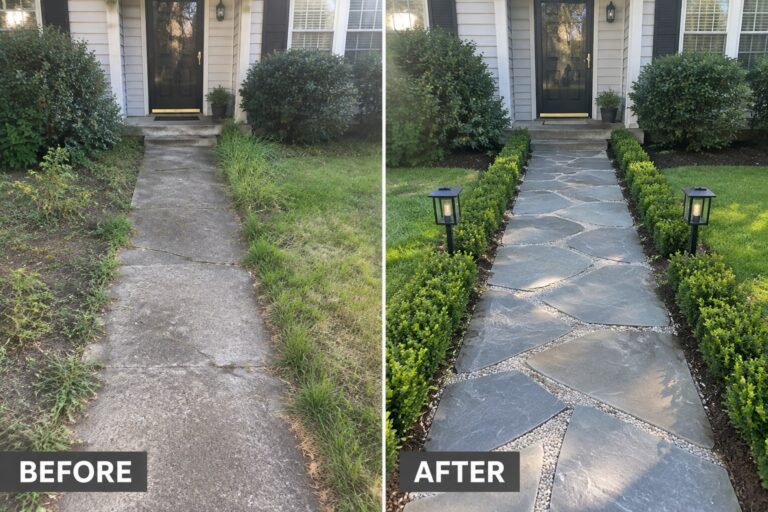
I have noticed that the front path often gets overlooked even when the rest of the house exterior looks decent.
It tends to stay plain or uneven until someone decides to address how people actually approach the door each day.
When I consider small exterior updates that make a home feel more looked after, a new path material ranks high because it changes the first impression without touching the whole facade.
Natural stone gives the surface a settled look while handling foot traffic better than many basic options.
Some of the layouts in this piece are worth testing against the actual slope and width of your own entry.
Replace A Cracked Concrete Path With Natural Stone
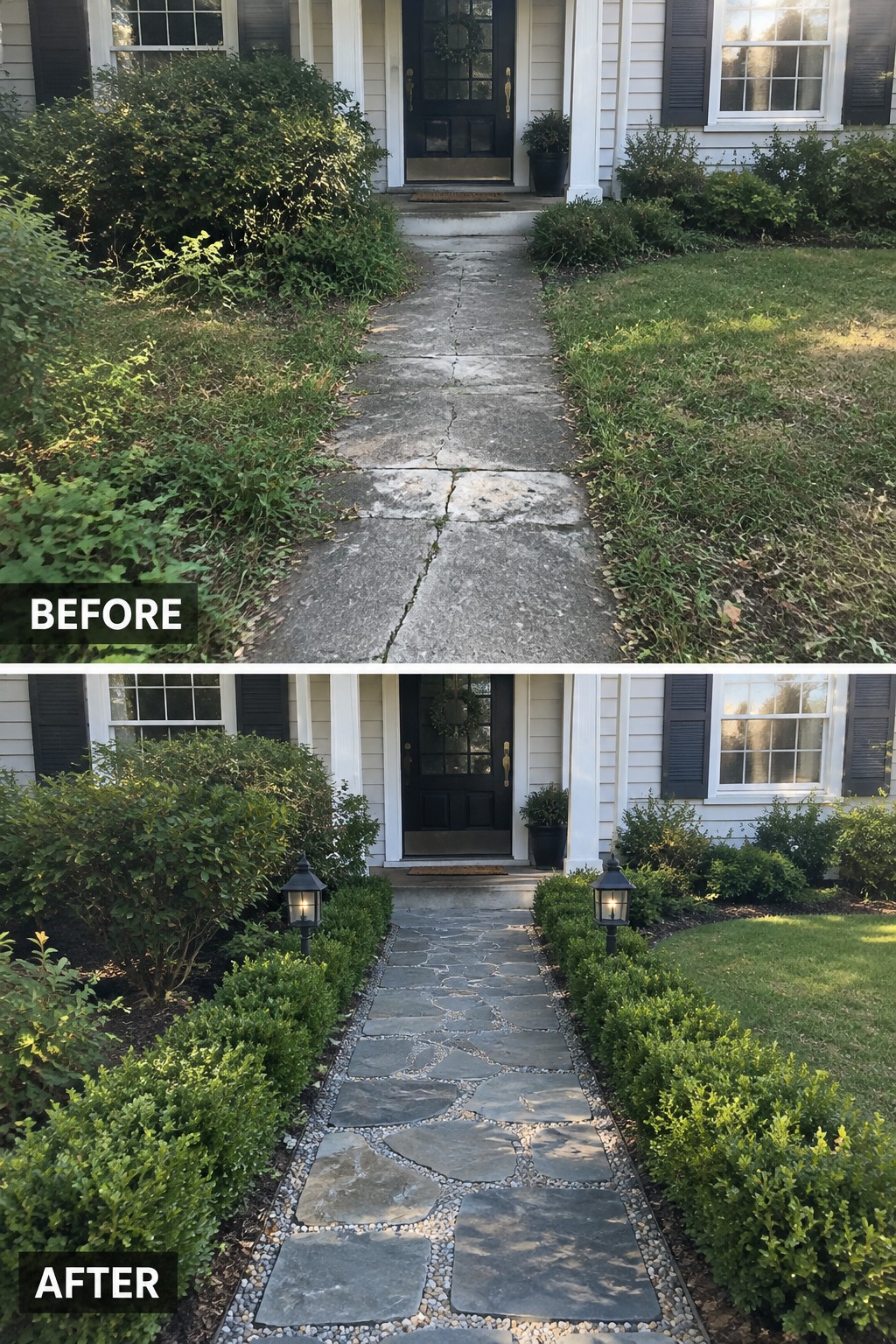
A cracked concrete walkway tends to make the whole front yard look tired. Switching to natural stone pavers gives the path a clear shape and a more finished look that leads straight to the door. The gravel borders help hold the stones in place and keep the grass from spilling onto the walkway.
This idea suits older homes where the original path has worn out. Remove the old concrete first, then set the stones with a simple gravel edge on both sides. Keep nearby shrubs trimmed so the path remains the main feature rather than getting lost in the planting.
Define A Front Path With Stone Borders
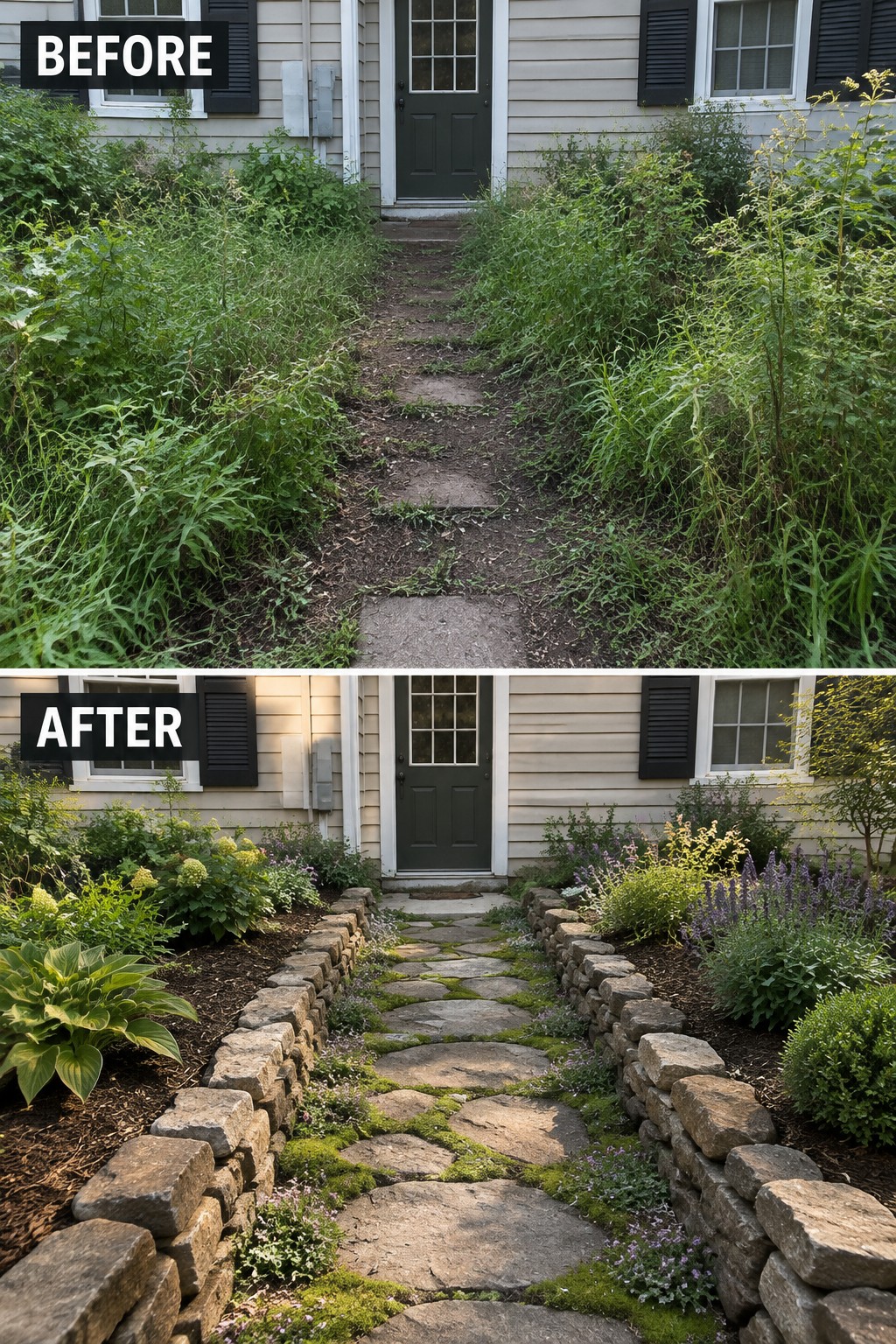
Adding low stone borders on both sides of the path turns a weedy, loose walkway into something that feels planned and easy to maintain. The flat stones set into the ground with a bit of moss between them keep the look natural while making the route clear and welcoming.
This approach works best on older homes or any front yard where the path needs more presence without looking too formal. Keep the borders low so they do not block the view of the house, and choose stones that match the local landscape. Start with the edging first, then fill in plants along the sides.
Replace A Concrete Path With Natural Stone Pavers
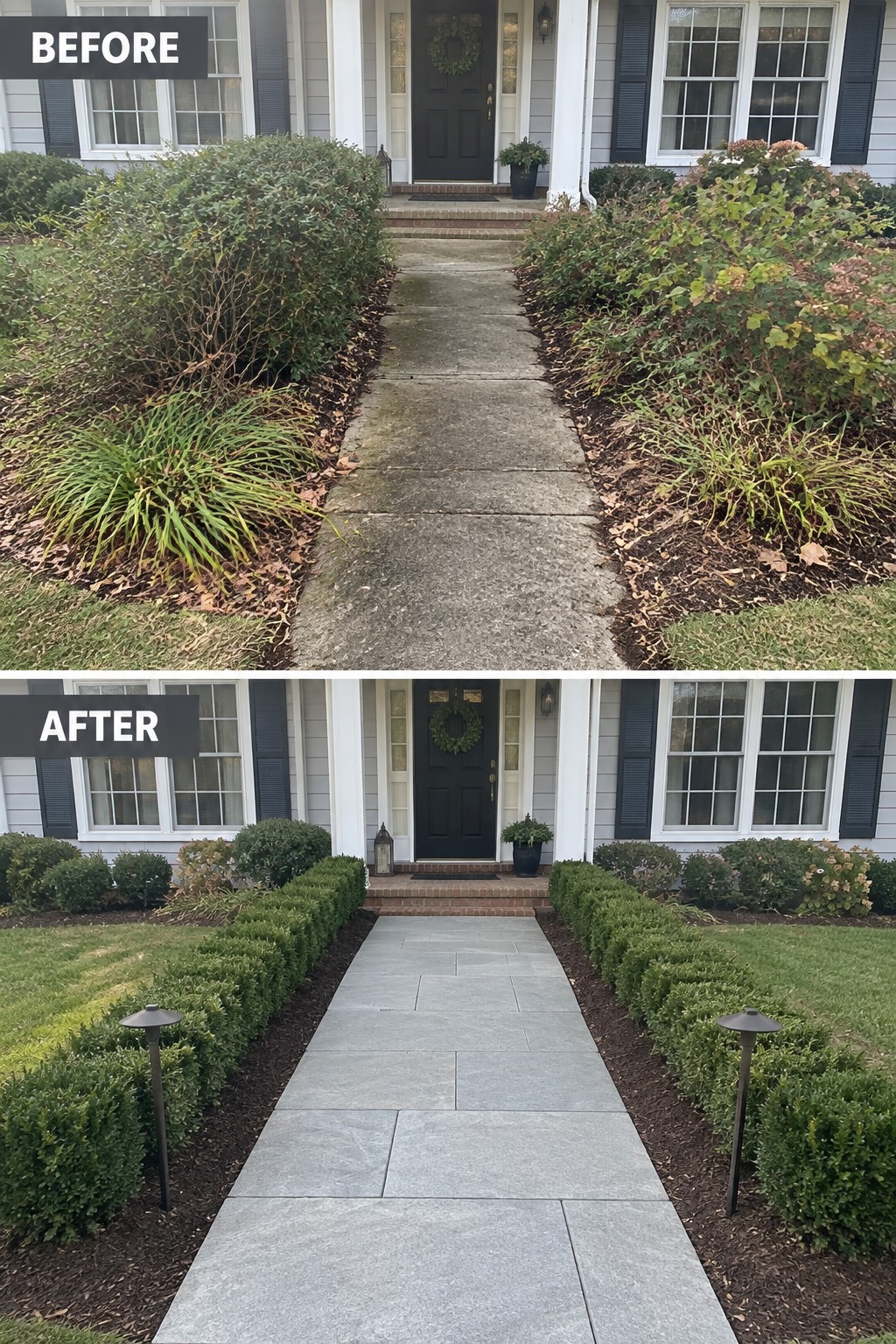
A straight concrete walkway often looks plain once the beds beside it get messy. Switching to natural stone pavers gives the path clear edges and a finished surface that holds up better over time. The stone also ties the walk to the house without needing extra trim or color changes.
This works best on homes with a direct front approach and simple beds on either side. Clear the old growth first, then set the pavers in a basic pattern with a narrow border of low shrubs. Keep the planting even so the path remains the main line through the yard.
Add Natural Stone Stepping Stones To Define A Gravel Path
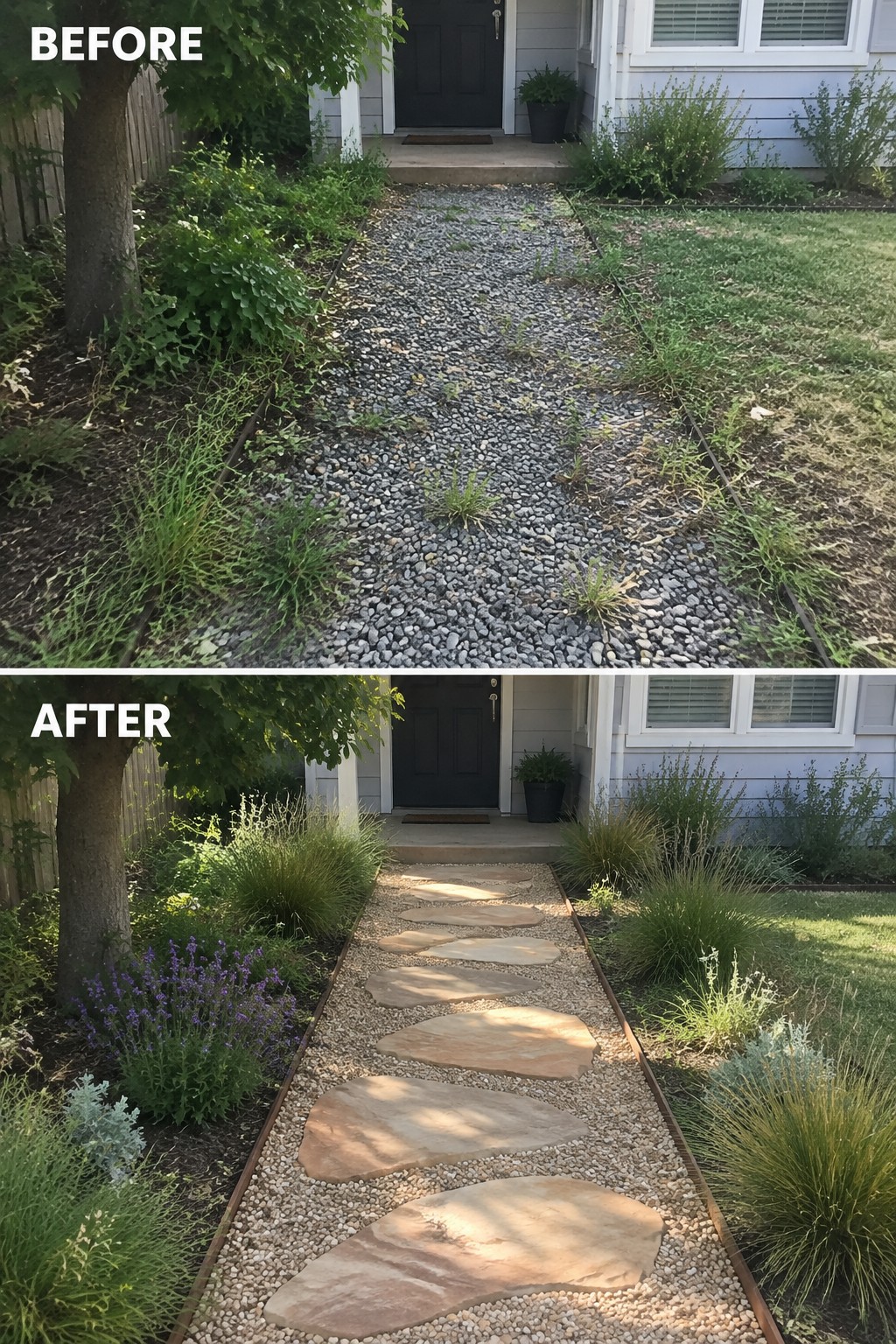
A gravel path can look unfinished when it has no clear walking surface. Laying large stepping stones down the center gives people a stable place to step while the gravel still fills in around them. The change turns a weedy, uneven strip into a path that feels intentional and easy to follow.
This idea suits homes that already have gravel along the front walk and want to improve it without removing everything. Choose stones that are wide enough for a comfortable step and space them so your natural stride lands on each one. Keep the gravel layer thin enough that the stones sit flat and do not shift underfoot.
Replace A Brick Path With Natural Stone Pavers
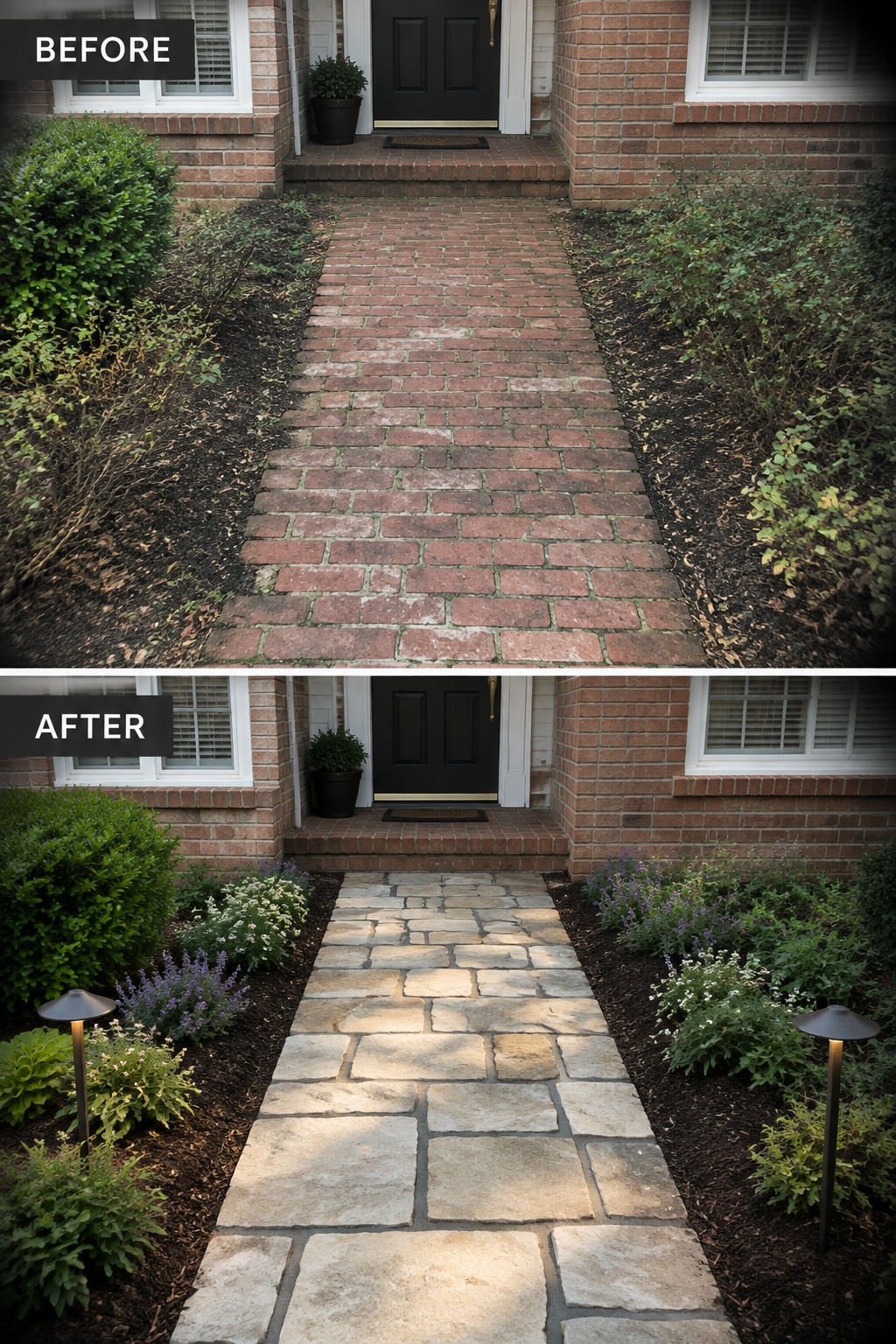
The old brick path had faded and collected dirt over time, which made the whole front look a little tired. Switching to natural stone pavers gave the walkway a cleaner surface and better shape while the fresh mulch and simple plantings on both sides kept the focus on the new path.
This approach works best on homes where the existing walkway is still level but needs a more durable and attractive finish. Choose stone that matches the color of your brick or siding, keep the beds narrow and neat, and add a couple of low lights if the path is used after dark.
Turn A Dirt Slope Into Stone Steps
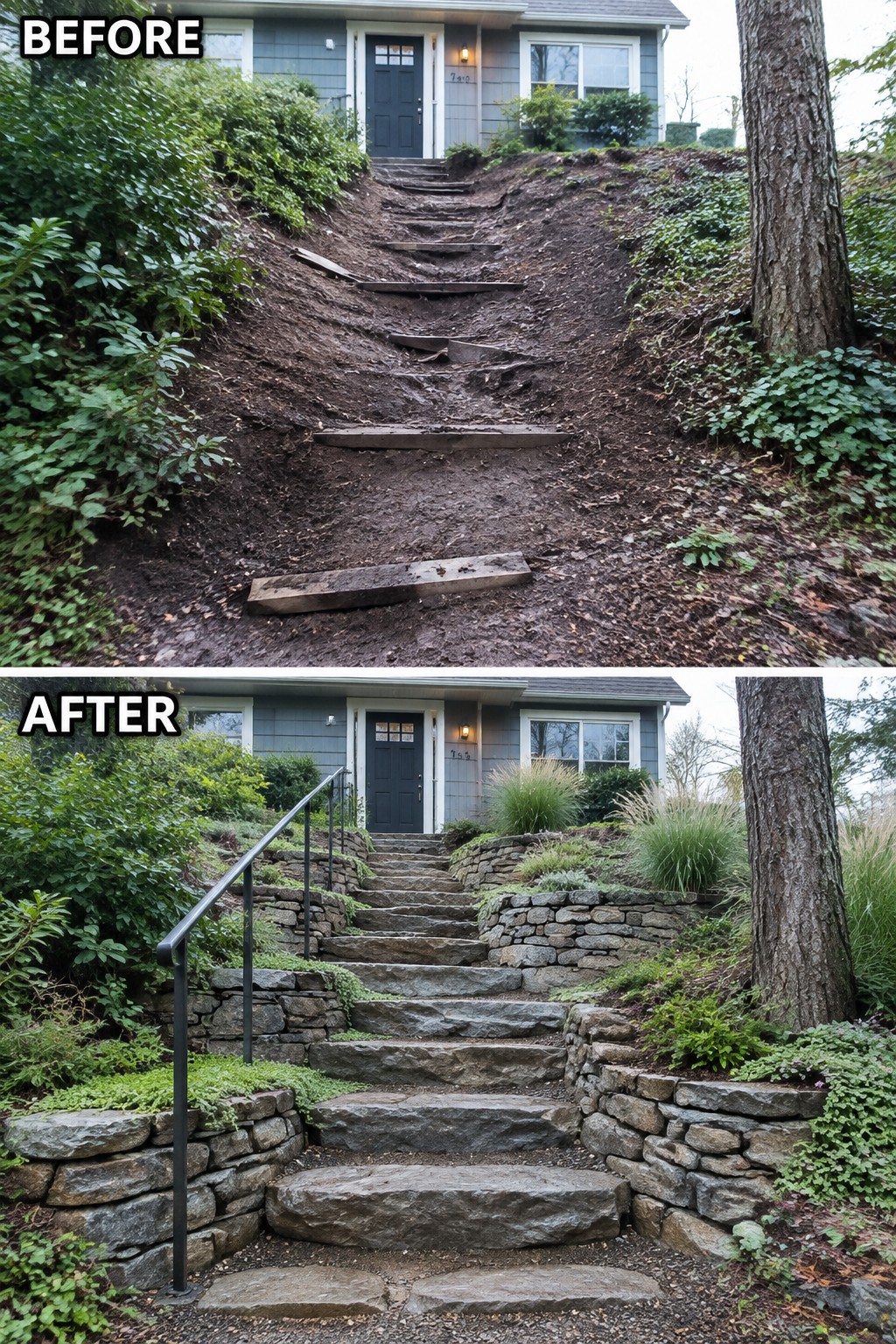
A steep front path with loose dirt and old wooden planks is hard to use and looks neglected. Replacing it with wide natural stone steps and low retaining walls creates a solid walkway that stays in place through rain and seasons. The stone gives the slope structure while the added handrail makes it safer for everyday use.
This approach works well for homes with uneven front yards where the entry feels more like a hike than a walk. Start with the hardscaping to define the path and hold the soil, then add planting around the edges. Keep the stone color simple so it blends with the house rather than competing with it.
Replace A Plain Concrete Path With Stone Pavers
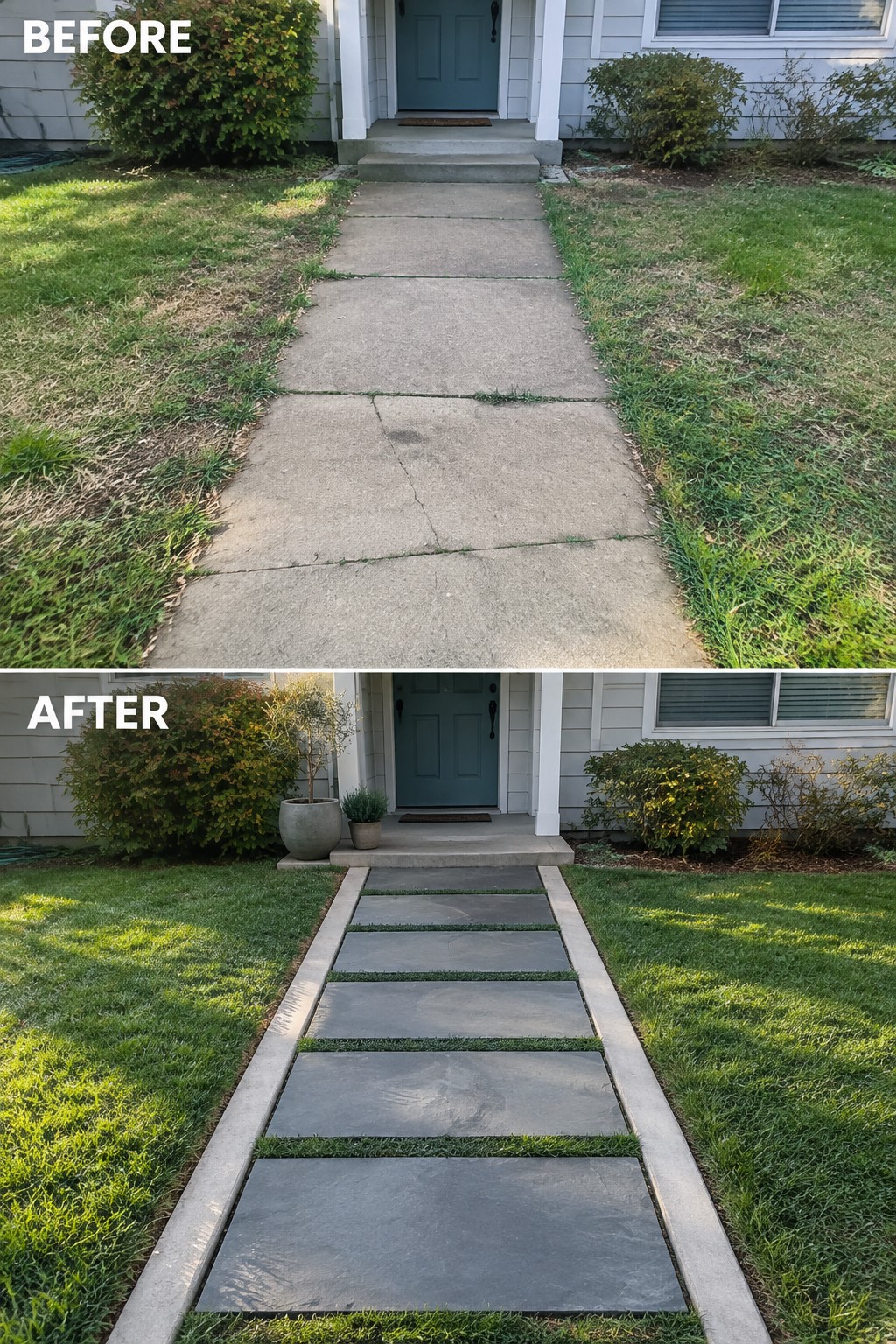
A long slab of cracked concrete makes a front walk feel flat and dated. Switching to rectangular stone pavers set in a simple border with narrow strips of grass between each slab gives the path clear shape and breaks up the surface without adding clutter.
This idea works best on straight walks that already have grass on both sides. Keep the pavers uniform in size and color, and make sure the concrete edging stays low so the mower can run right along it. The result feels finished but still simple enough to maintain.
Define A Front Path With Natural Stone
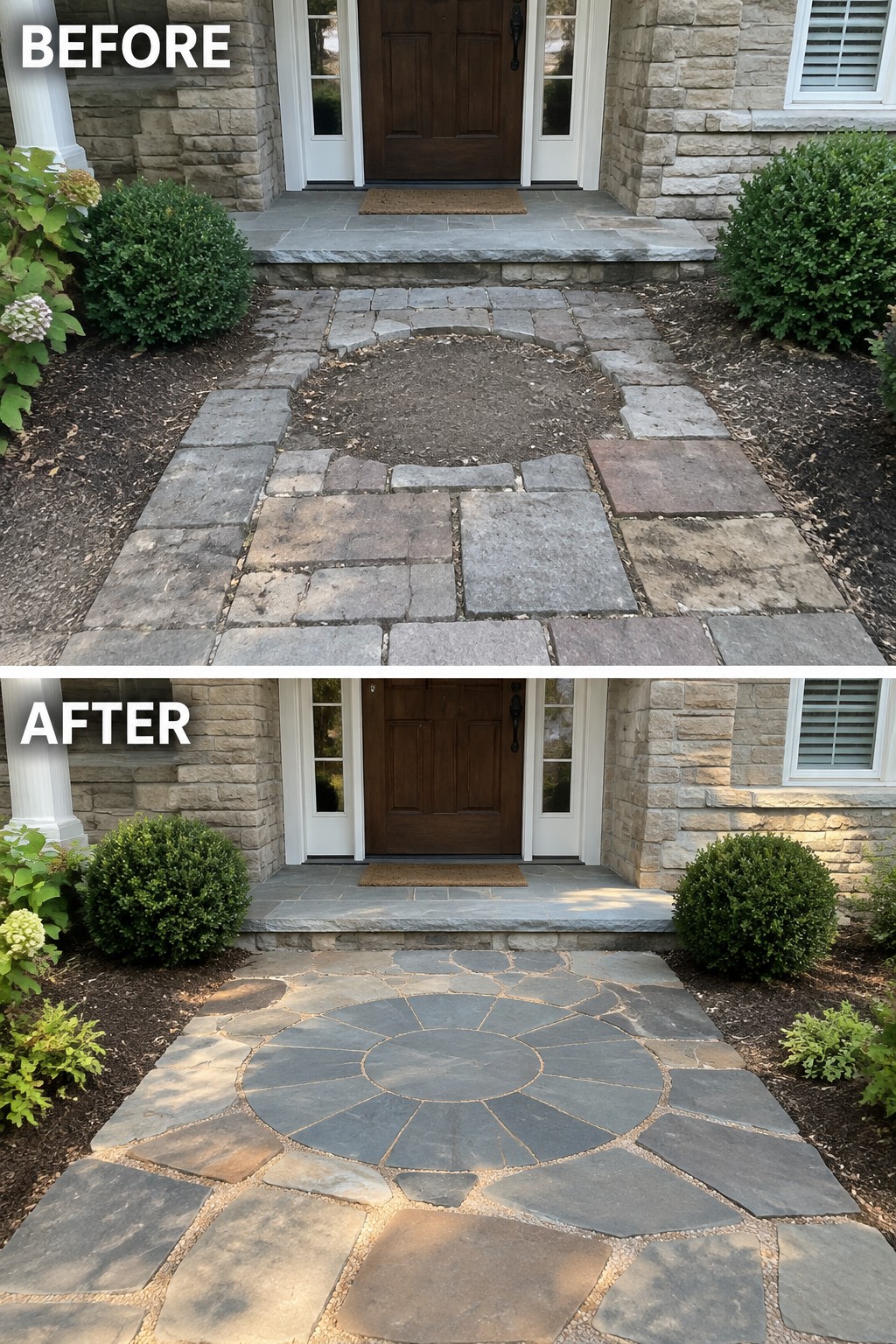
A patchy path with missing sections and exposed dirt makes the whole front of the house feel unfinished. Switching to a full natural stone layout, especially one with a clear circular pattern at the center, gives the walkway a solid structure and makes the entrance feel more intentional.
This approach works well on homes where the path is the main visual line from the street. Keep the stones in a similar color range so the pattern stands out without looking busy, and make sure the edges sit level with the surrounding ground so walking feels natural.
Define A Front Path With Natural Stone And Moss
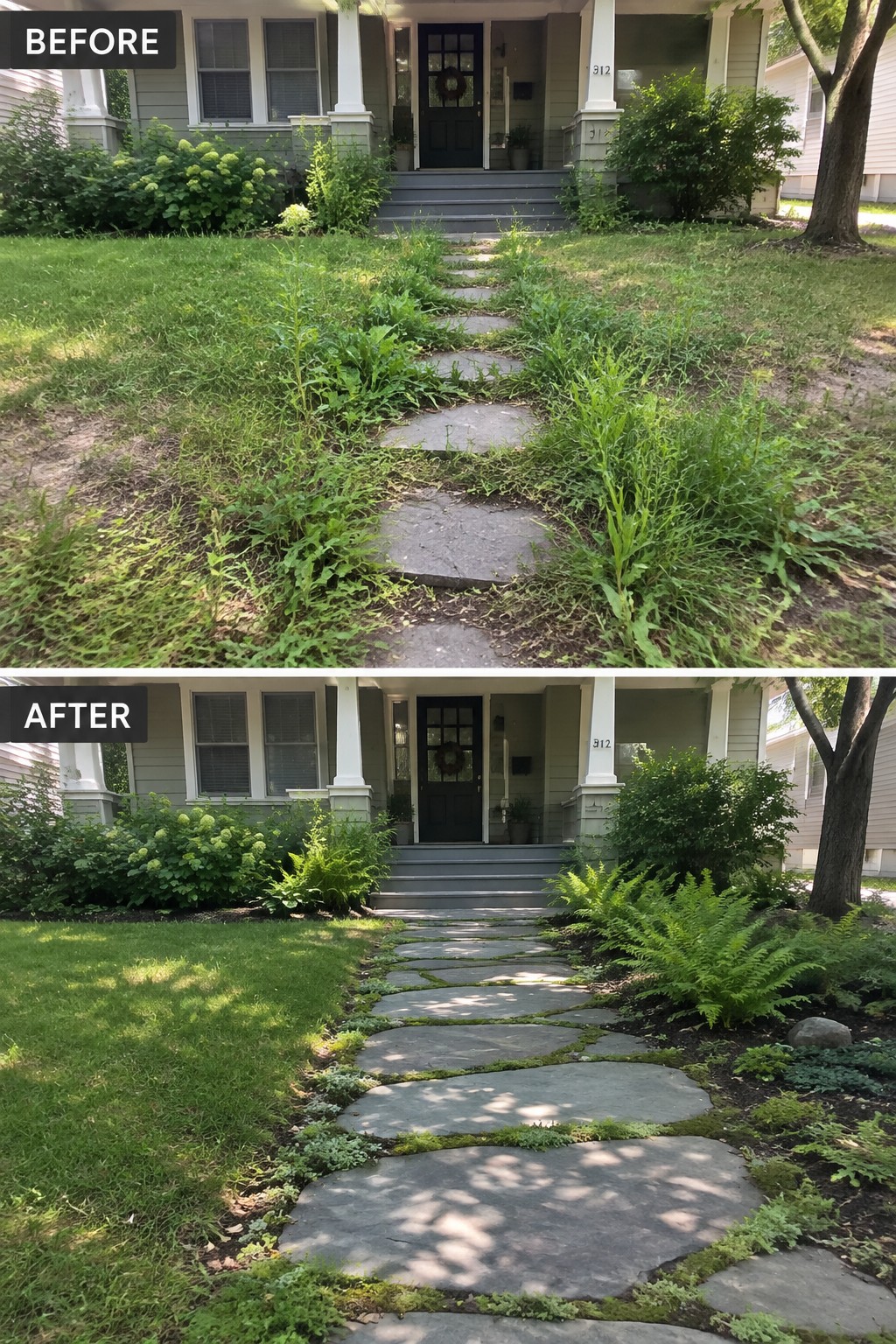
Clearing the weeds that had taken over the path made the biggest difference here. Once the overgrowth was removed, the existing stone pavers could be cleaned up and the gaps filled with moss, which gives the walkway a settled, finished look without needing constant weeding.
This approach works well on older homes where a path already exists but has been neglected. Start by cutting back the grass and weeds completely, then decide whether to add more stone or simply maintain what is there. Moss between the pavers keeps the surface stable and adds a soft touch that blends with the lawn on either side.
Lay Natural Stone Pavers To Define Your Front Path
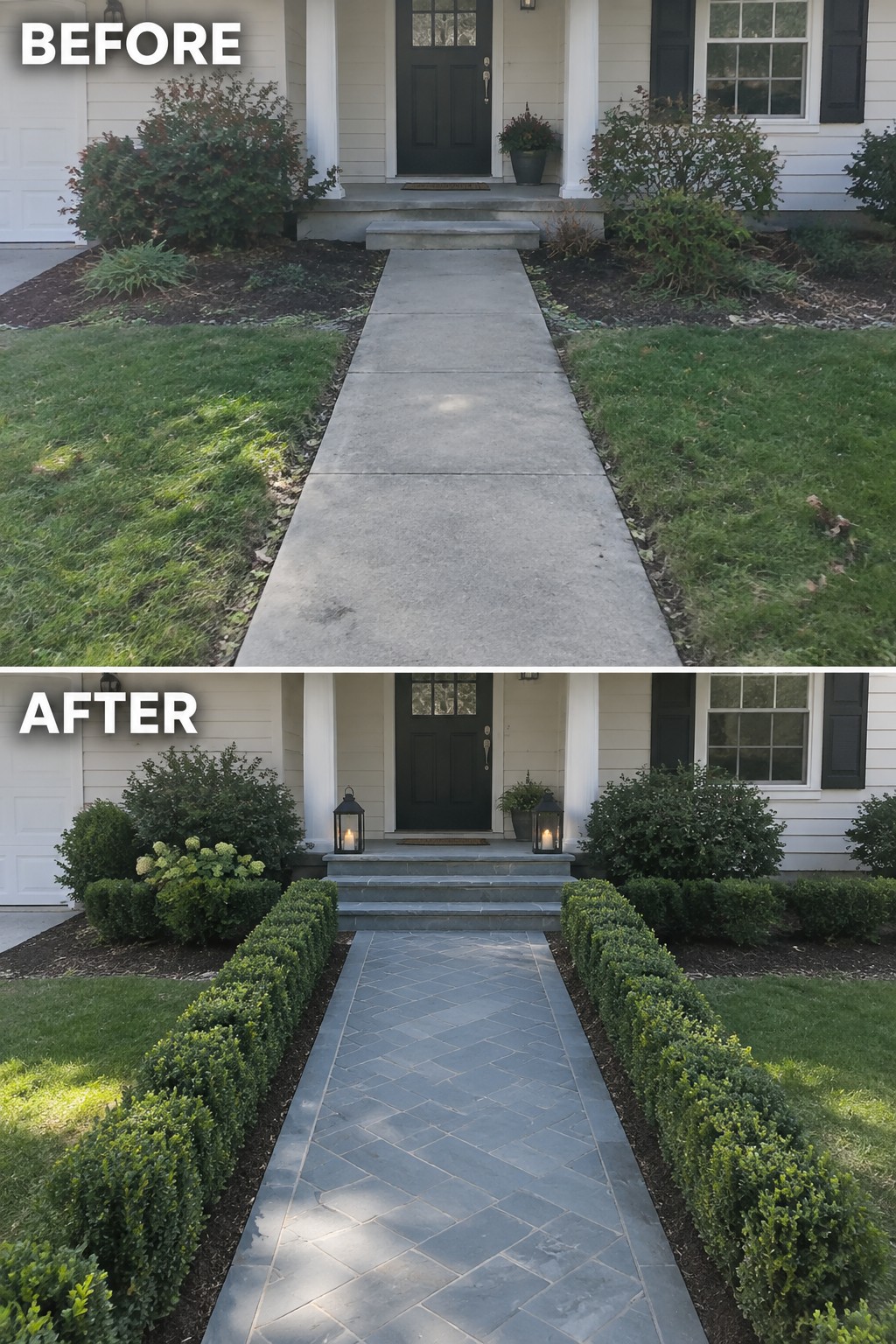
A straight concrete slab often makes a front walk feel flat and temporary. Switching to natural stone pavers in a simple repeating pattern gives the path weight and shape so it feels like part of the house rather than just a strip of pavement. Low, clipped hedges along both sides keep the edges clean and stop the lawn from spilling onto the walk.
This approach suits houses with a direct route from the street to the door. Choose a stone color that sits well with your steps and siding, then repeat one shrub variety on each side instead of mixing too many plants. The result stays easy to maintain and still leaves room to walk comfortably.
Create A Defined Front Path With Natural Stone
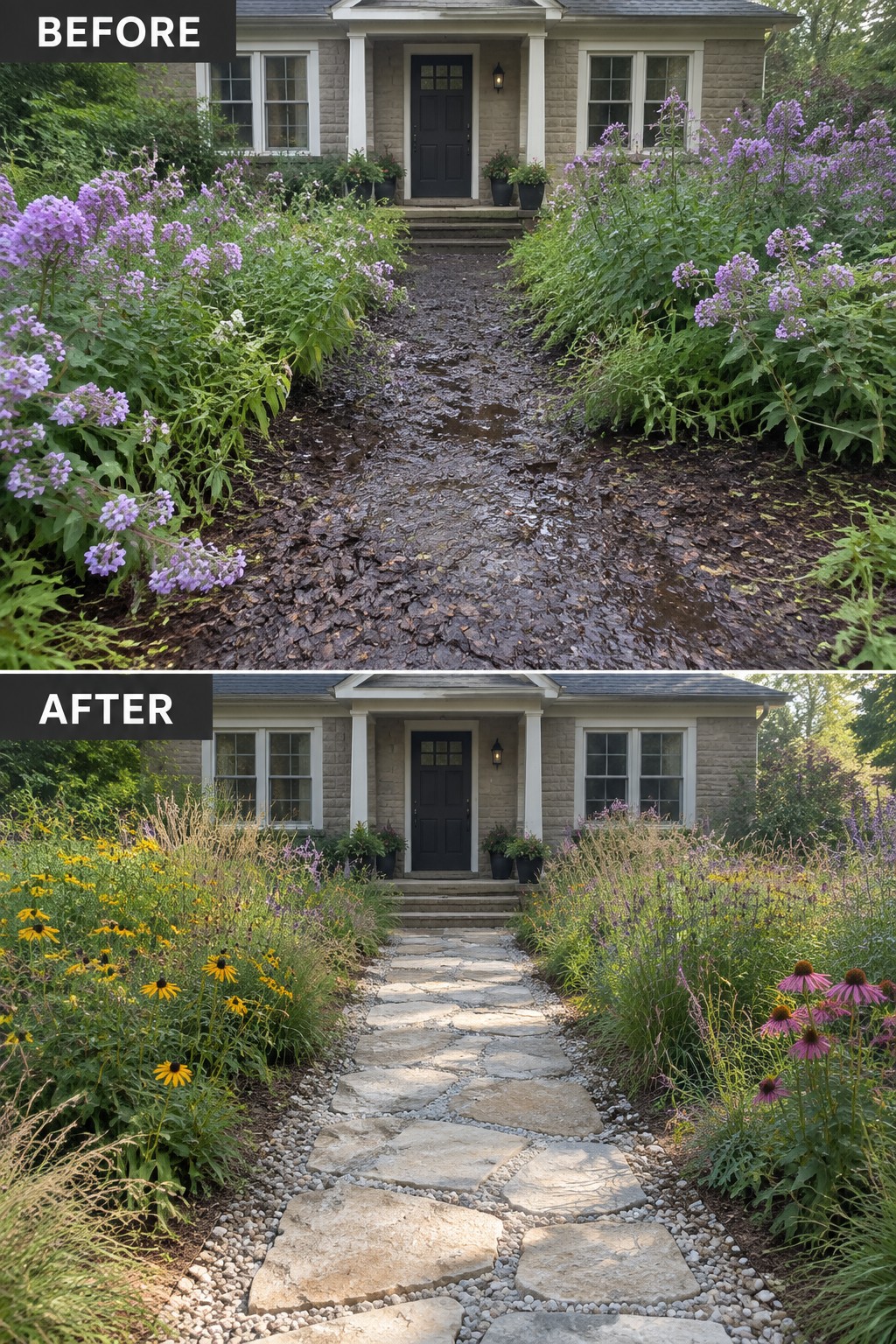
A muddy, leaf-covered walkway made the front of this house feel neglected and hard to navigate. Replacing it with a laid stone path and gravel edges gives the entry a clear line and makes the side plantings look purposeful instead of overgrown.
This approach suits homes with wide, informal yards where the path has no real shape. Clear the old surface first, then choose pavers wide enough for comfortable walking and set them in a simple running pattern. Keep nearby plants low so the stone stays visible and the path continues to guide visitors straight to the door.
Use Natural Stone Pavers To Upgrade A Plain Front Path
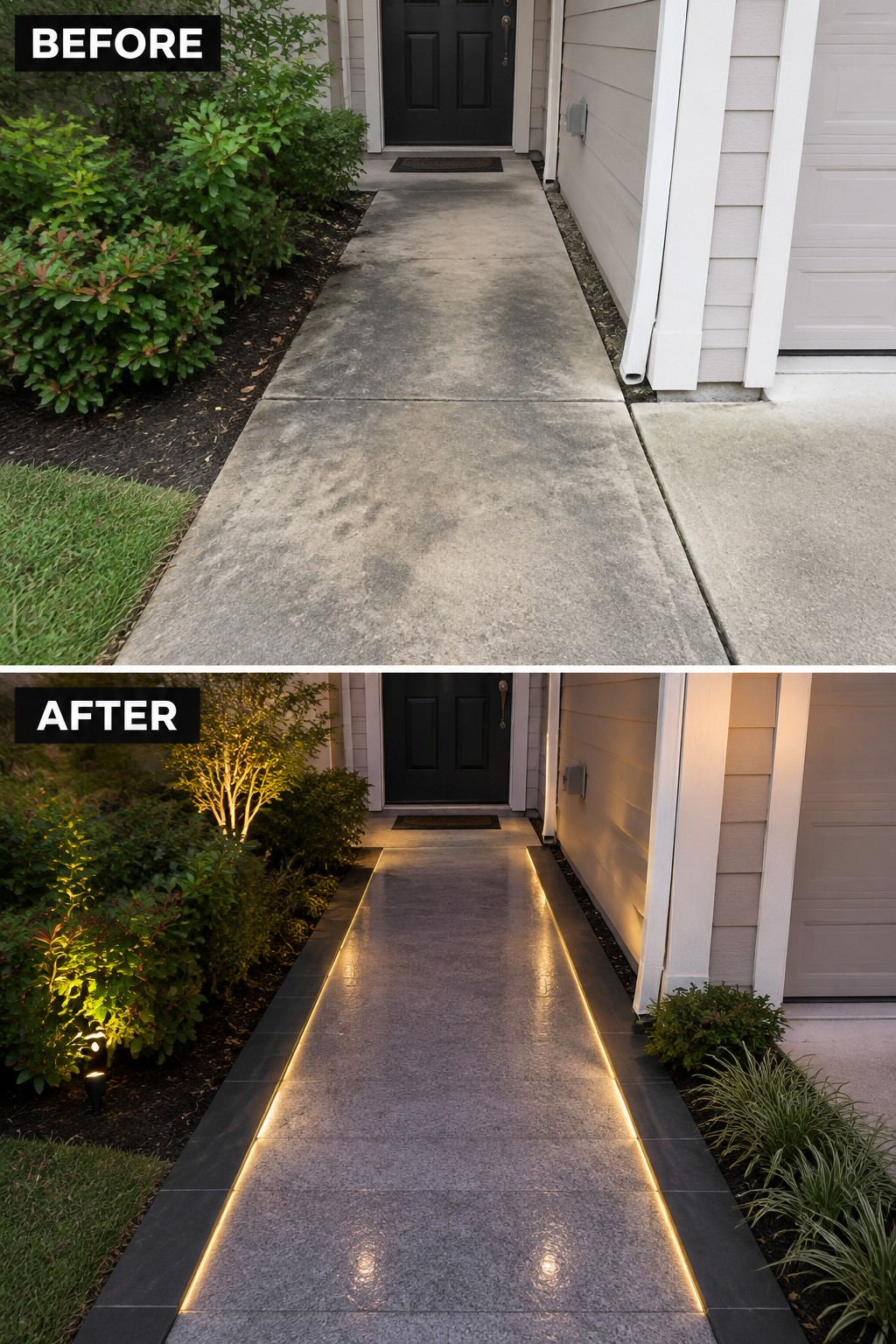
A basic concrete walkway often feels flat and unfinished next to a house. Switching to natural stone pavers gives the path clear edges and a more solid look, while the thin lights tucked along both sides make it easy to follow at night without needing extra fixtures.
This idea works best on straight or gently curved entries where you want the path to feel like part of the landscaping rather than just a strip of concrete. Keep the paver color simple so it blends with the house siding, and run the lighting on a timer so the effect stays practical instead of overwhelming the front yard.
Use Natural Stone Pavers To Define A Front Path
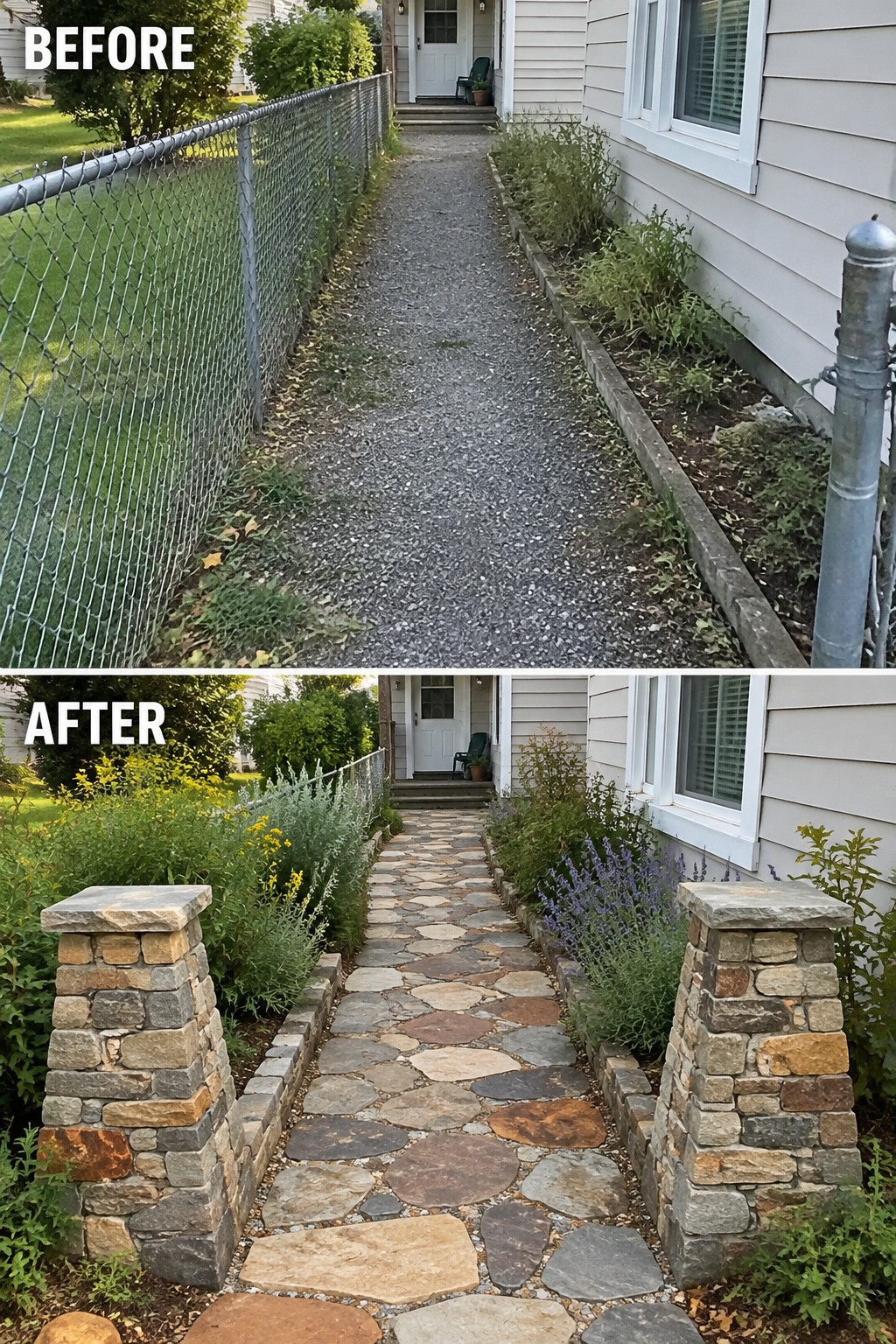
A gravel path tends to look loose and unfinished over time. Laying irregular stone pavers creates a firm, lasting surface that feels intentional and makes the walk to the door more direct. The simple addition of stone pillars at the start of the path gives the entry a clear beginning point.
This idea works best on straight or gently curving front paths where the goal is basic structure rather than a full redesign. Keep the paver layout simple, match the stone color to any existing hardscape, and add a narrow planted strip along each side so the path stays easy to maintain.
Give An Overgrown Front Path A Clean Stone Structure
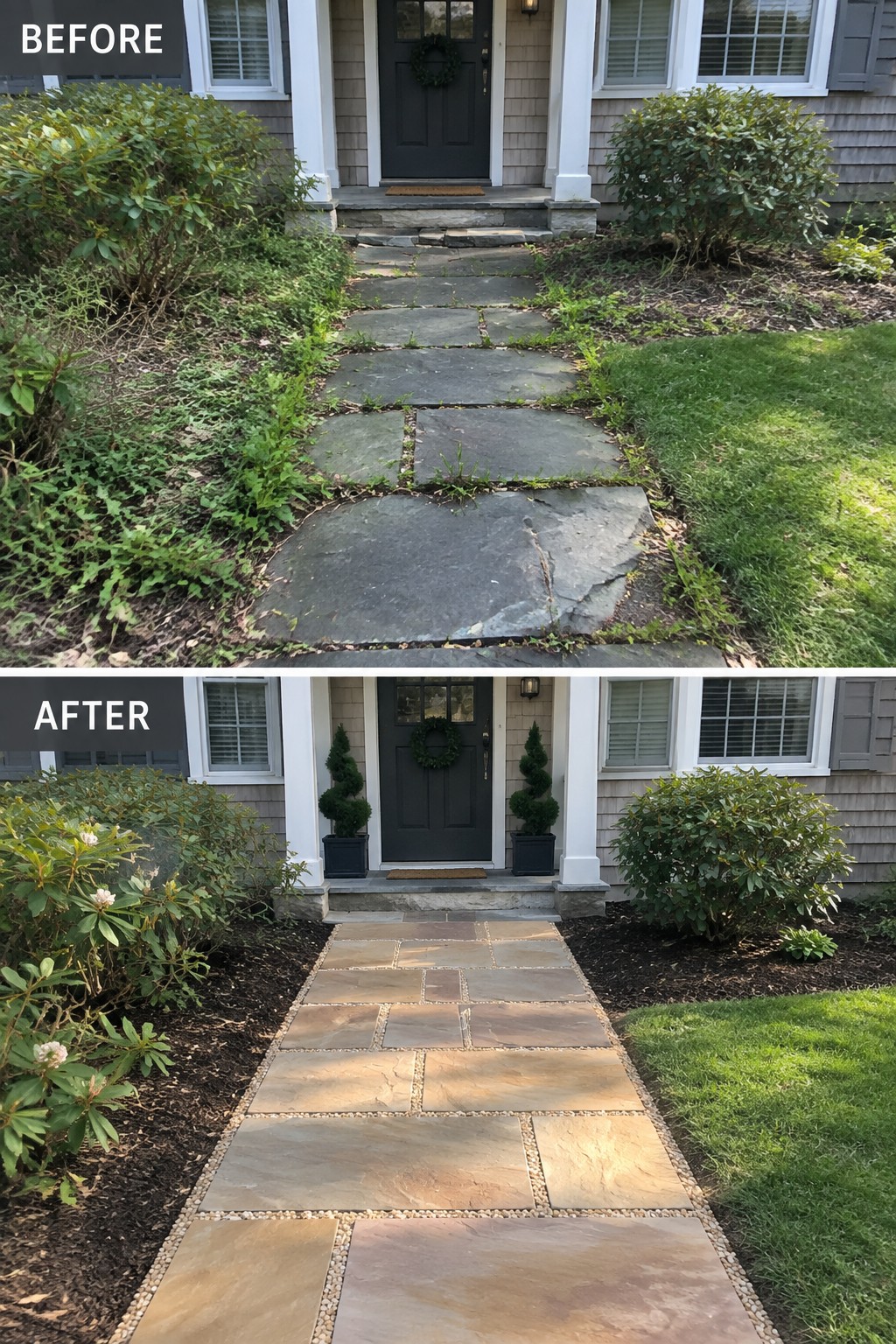
The main change here is replacing scattered, uneven stones with weeds growing between them with a laid-out path of uniform pavers and a simple pebble border. That single update turns a neglected walkway into something that feels planned and easy to follow. The new stones sit flat, stay in line, and keep the edges tidy without extra plants or decor.
This approach works best on older homes or properties where the original path has started to break apart. Clear the old stones first, then choose pavers in a similar color range so the new path still feels natural. A gravel edge helps control weeds and gives the walkway a finished border without adding height or cost.
Give A Front Path Clear Definition
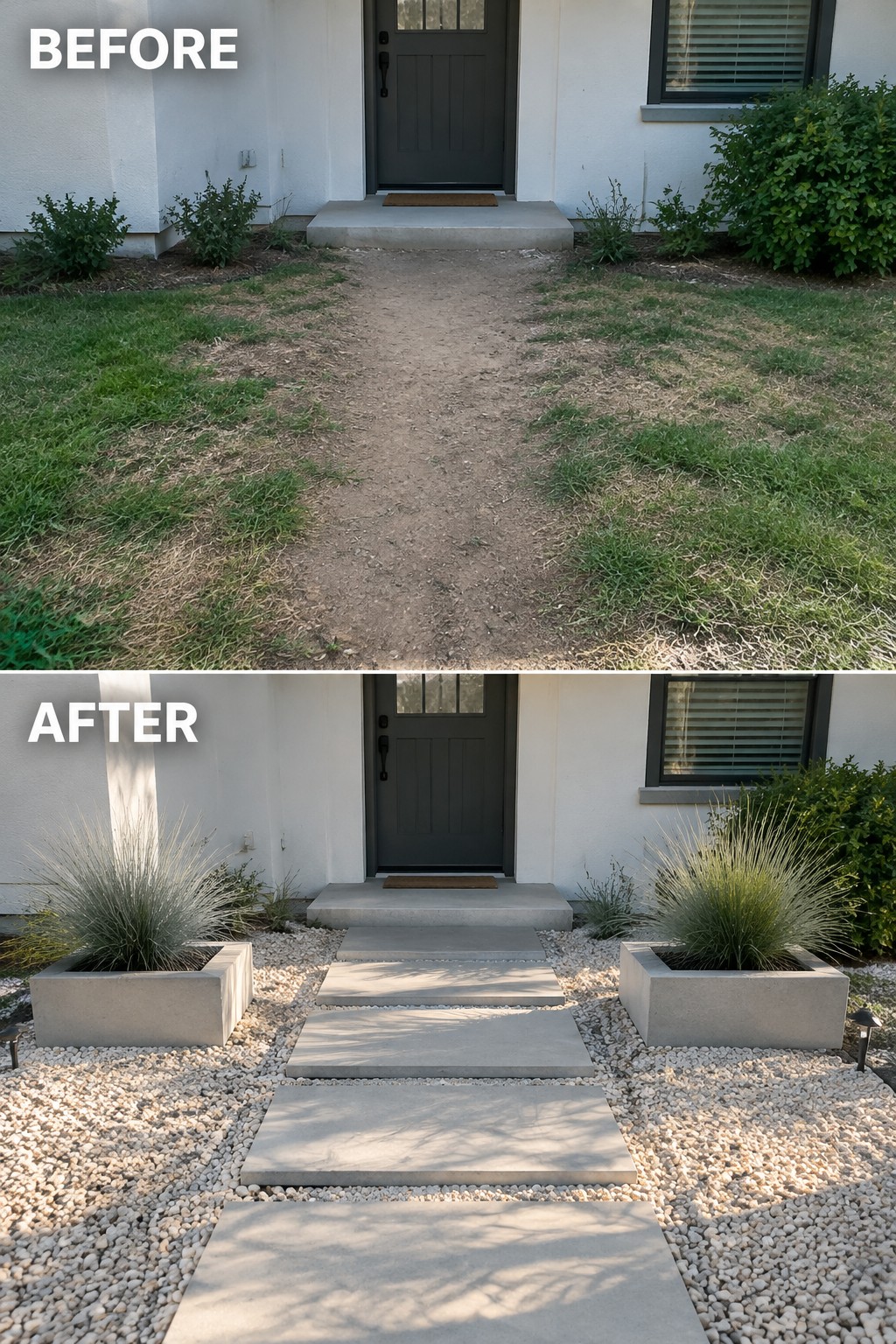
A dirt path that has worn down over time makes the whole entrance feel unplanned. Laying concrete pavers into a gravel base gives the walkway a solid shape that is easy to follow and keeps feet out of mud after rain. The two matching planters placed near the steps add just enough structure without blocking the way.
This idea works best on houses where the front approach has become compacted or patchy. Clear the old surface first, then set the pavers on a simple gravel bed so water can drain. Keep the layout straightforward and leave enough space on either side for people to pass each other comfortably.
Frame A Front Path With Garden Beds
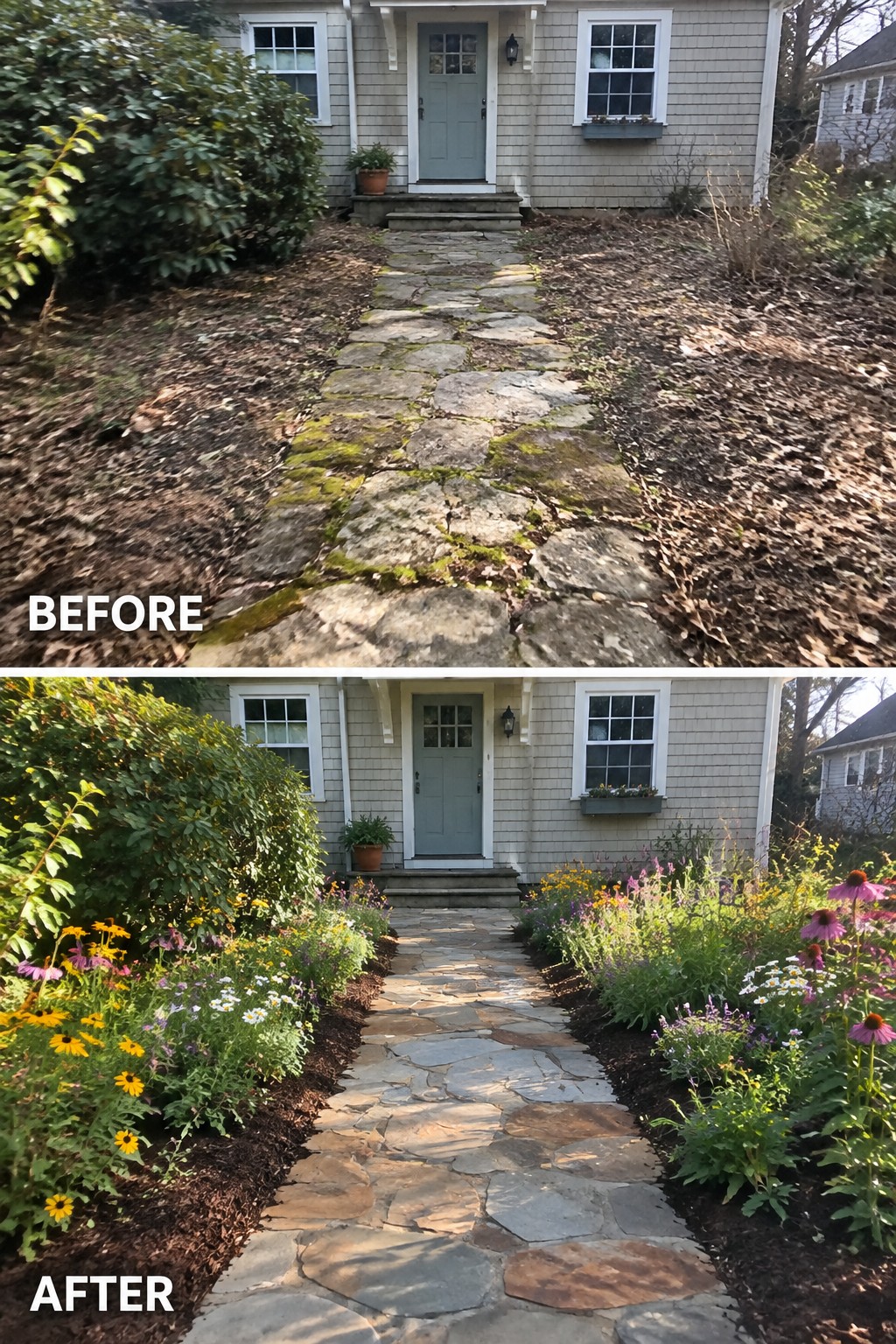
The path itself stayed the same, but the space around it changed completely. Adding planted borders on both sides turned a bare, leaf-covered walkway into something that feels intentional and connected to the house.
This approach works on any straight front path that feels too exposed. Start by clearing the edges and laying mulch, then fill the beds with a mix of perennials that bloom in sequence. Keep the beds narrow enough to leave room to walk and mow.
Use Stone Steps To Fix A Steep Front Path
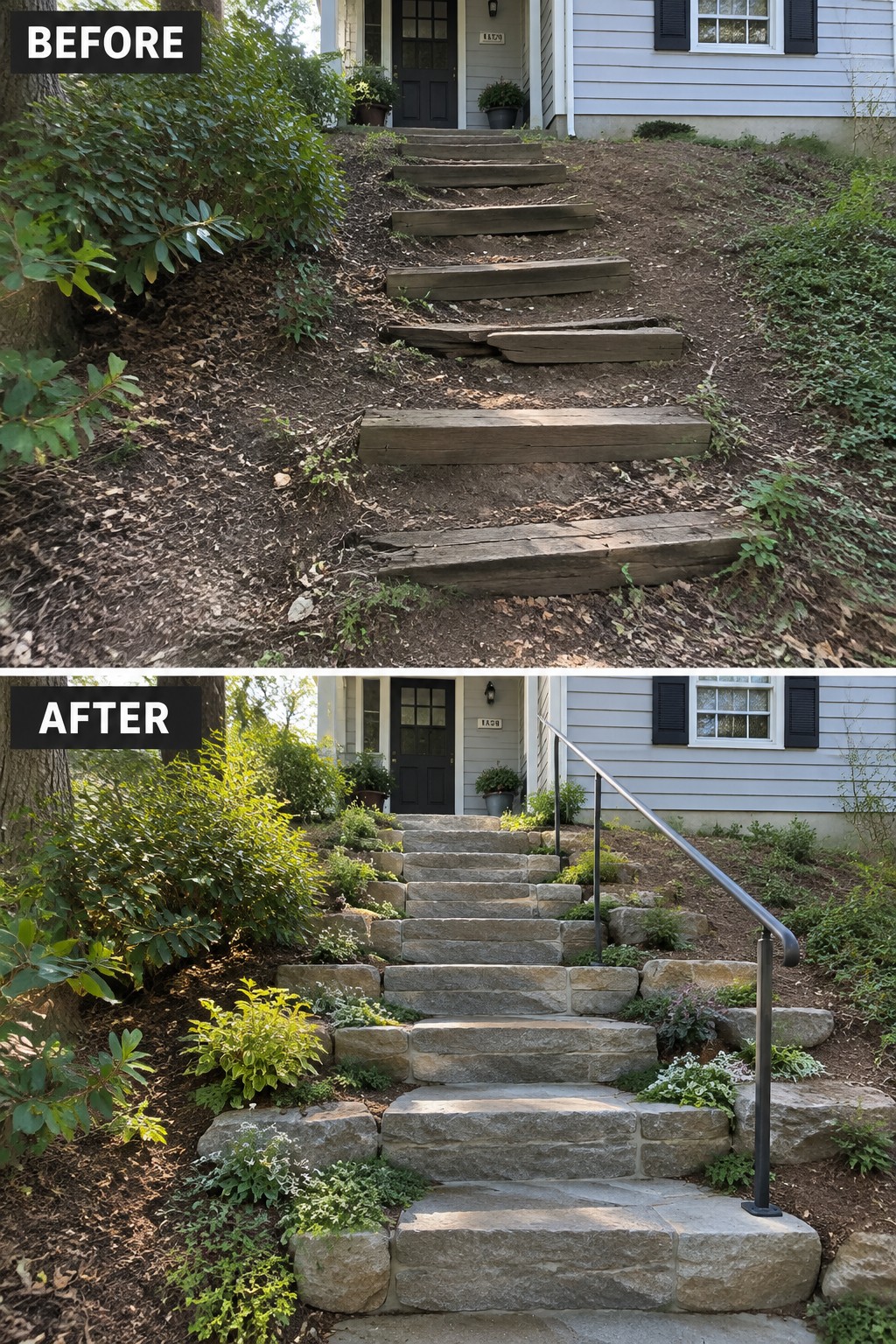
The old wooden steps had started to rot and shift, making the slope feel unsafe and unfinished. Switching to natural stone created solid, level treads that are much easier to walk on and hold up better over time. The added plants along the edges also help hold the soil in place and give the whole path a cleaner shape.
This approach works well on any house where the front yard slopes down from the street or sidewalk. Start by measuring the rise and run so the steps feel comfortable to climb, then choose stone that matches the house color. Keep the plantings simple at first so they do not crowd the path later.
Define A Side Path With Pavers And Lighting
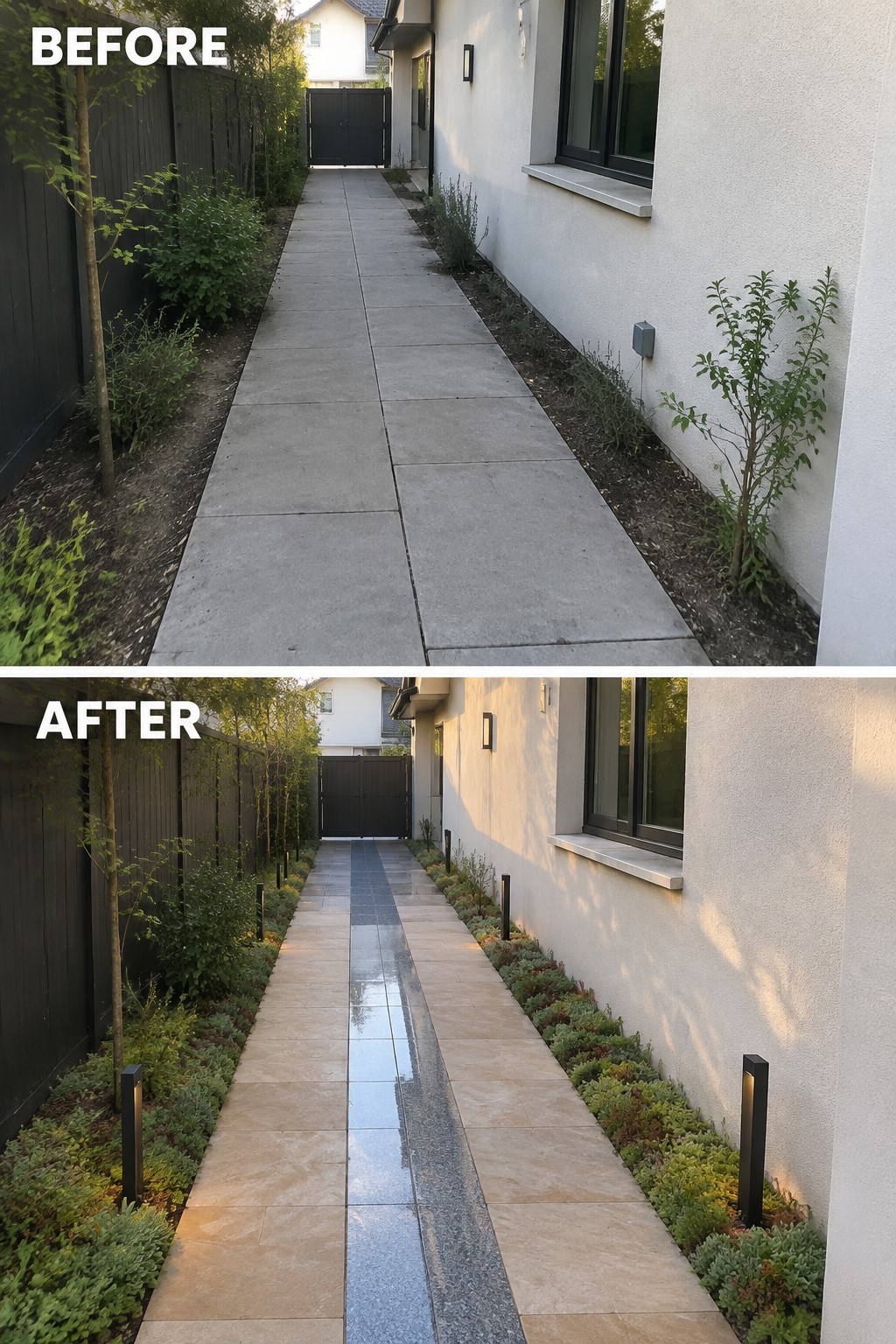
A plain concrete walkway next to the house often feels like leftover space. Switching to light stone pavers with a darker center strip, adding planted borders, and placing simple path lights turns the same narrow area into a clear, finished route that actually guides people through the yard.
This approach works best on long side passages where you need both function and a bit of presence. Start with durable pavers that can handle foot traffic and weather, keep the planting low so the path stays open, and space the lights evenly so they mark the way at night without creating glare. The result feels planned rather than just cleared.
Define A Front Path With Straight Pavers
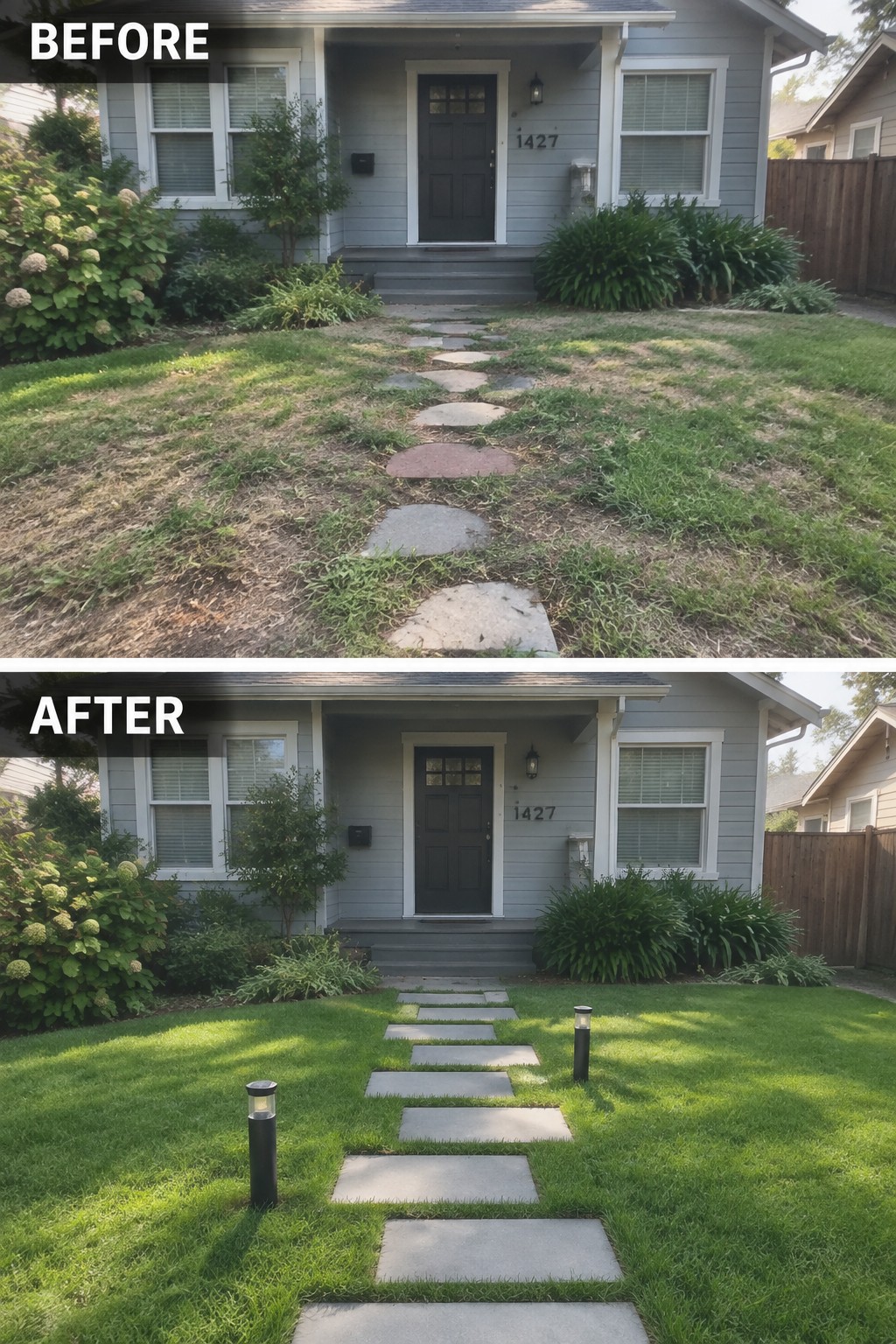
A scattered line of stepping stones makes any front yard feel unfinished. Replacing them with a straight run of rectangular pavers gives the entry a clear route and instantly makes the lawn look cared for on both sides.
This idea works best on a gentle slope where an uneven path would otherwise trip people or look messy. Clear the old stones first, then set the new pavers in one even line with grass growing right up to the edges. Keep the path narrow enough to leave room for lawn on either side.
Use Natural Stone To Give A Plain Entry More Shape
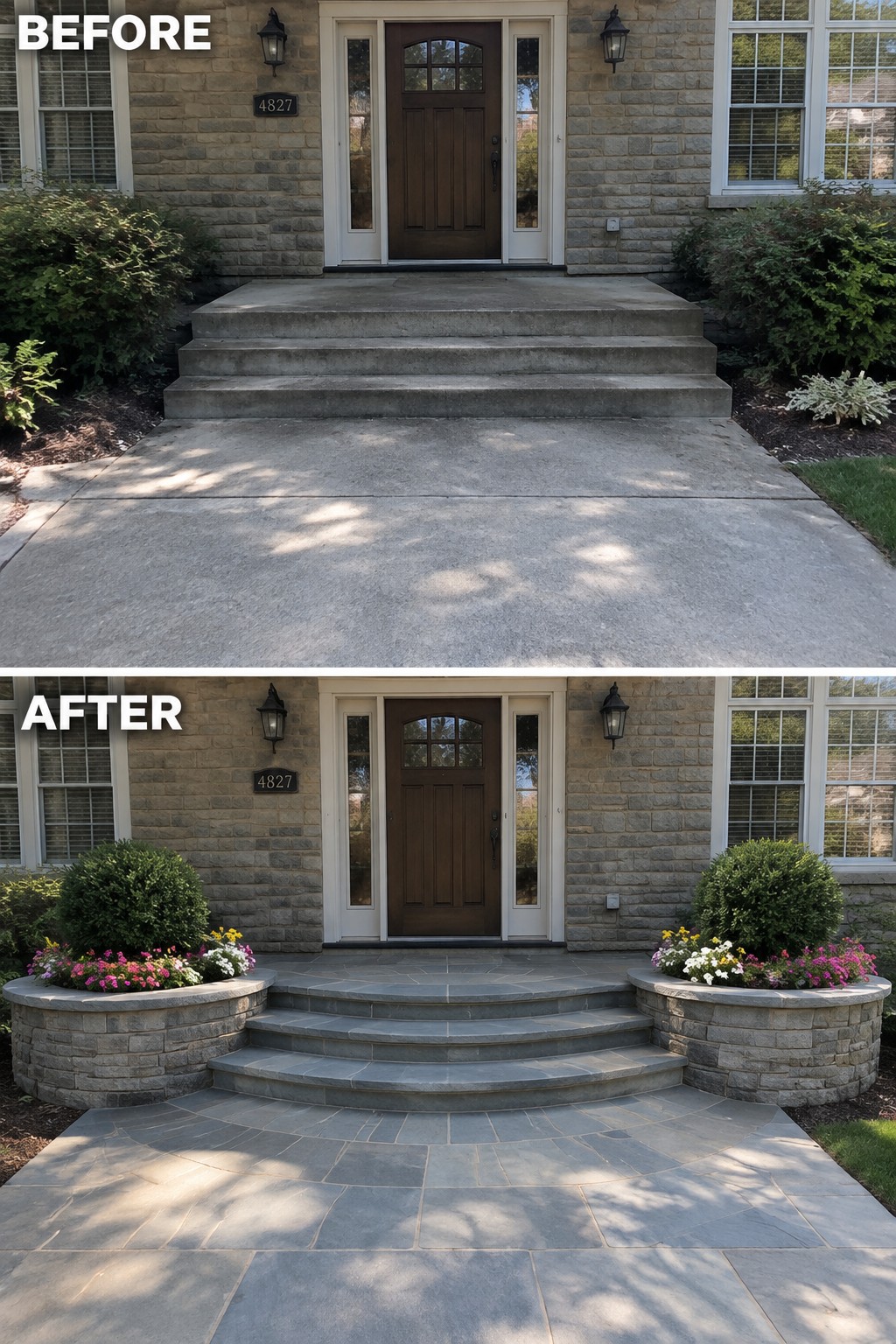
A wide slab of concrete can make a front entry feel flat and forgettable. Switching to natural stone pavers that curve around the steps and adding low stone planters on each side gives the path clear edges and a gentler approach. The change turns a straight, hard surface into something that feels more settled with the house.
This idea works best on homes where the original walkway is wide and plain. Start by deciding the new path width and shape before you choose the stone, so the curves actually lead the eye toward the door instead of spreading out too much. Keep the planters low so they frame the steps without blocking the view from the street.
Replace Concrete With Natural Stone On Your Front Path
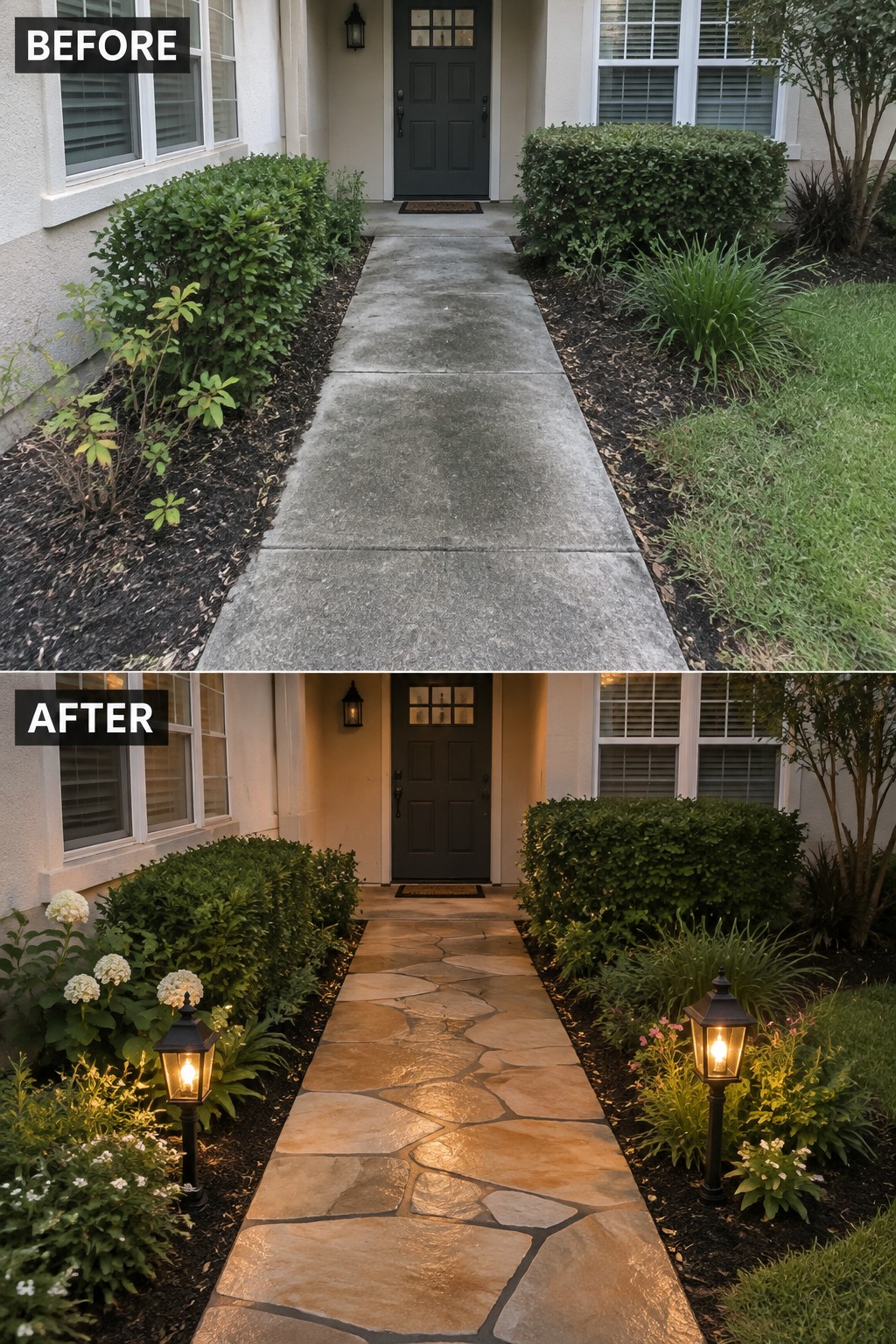
A plain concrete walkway often makes the front entry feel unfinished. Laying natural stone pavers in its place adds texture and a clear sense of direction that guides visitors to the door without any extra effort.
This idea suits homes where the path is the main line of sight from the street. Start with the pavers as the base layer, then add a few low lanterns along the edges so the route stays usable after dark. Keep nearby planting low and simple so the stone stays the focus.
Use Natural Stone Pavers To Refresh A Front Path
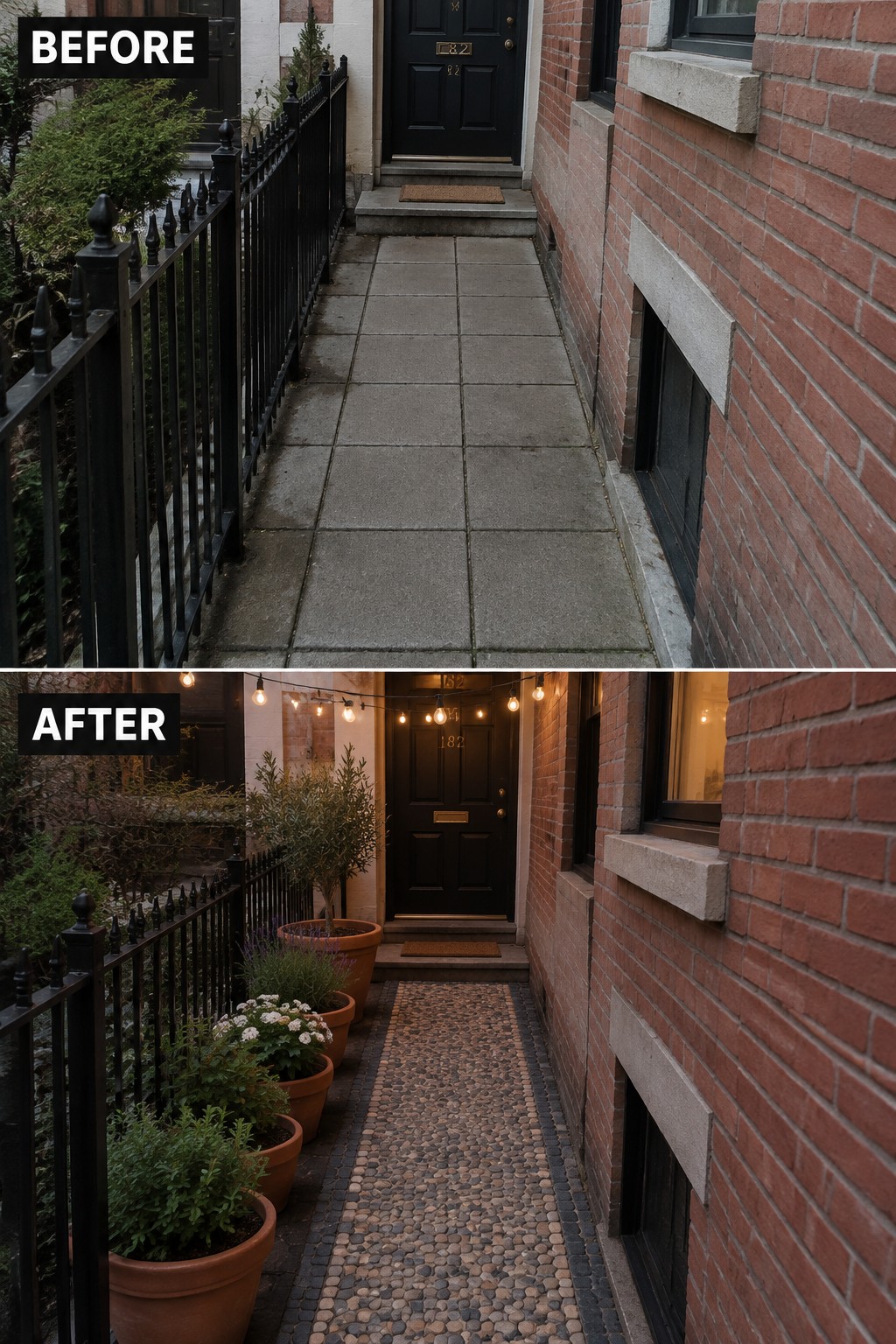
A plain concrete walkway often makes an entry feel flat and forgettable. Switching to natural stone pavers gives the path shape and texture while still keeping it practical for daily use. The change turns a narrow slab route into something that guides visitors clearly toward the door without needing a full redesign of the yard.
This idea works well on older homes or narrow side entries where you want to add character without spending heavily on new hardscaping. Keep the pavers in a simple running pattern, add a border of smaller stones for stability, and line the edges with a few pots rather than planting directly into the ground. That keeps maintenance low and leaves room to walk even on a tight lot.
Turn A Loose Gravel Path Into A Paved Walkway
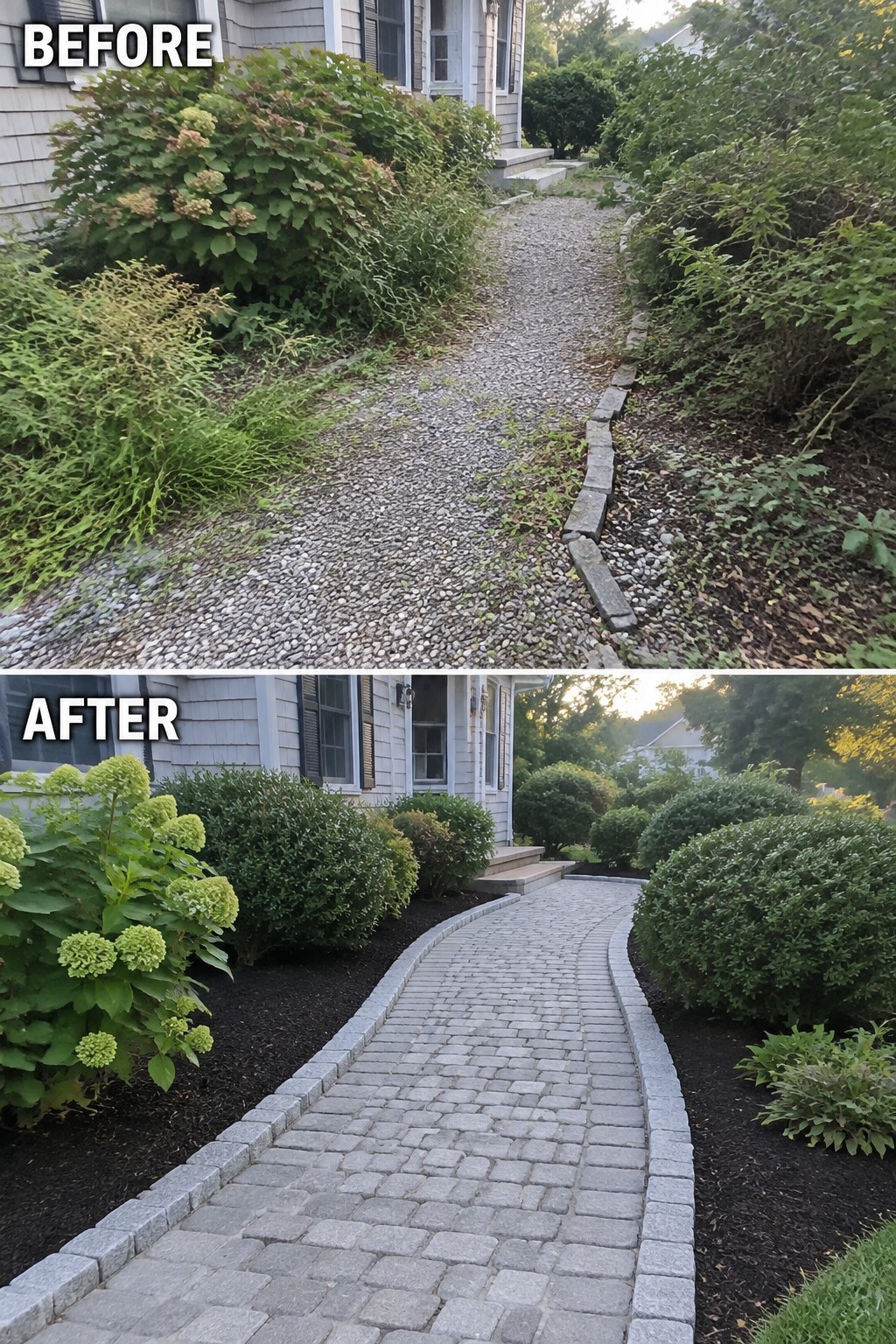
Replacing loose gravel with interlocking pavers and adding a low stone border gives the path a clear shape and makes it feel more permanent. The before photo shows how uneven gravel and sprawling plants made the walkway look neglected, while the after shows how the same route now reads as intentional and easy to follow.
This approach suits older homes where the original path has started to disappear into the lawn. Clear the overgrowth first, then build a solid base so the pavers stay level. Keep the edging low and simple so it guides visitors without competing with the planting on either side.
Use Large Pavers To Give A Front Path Clear Shape
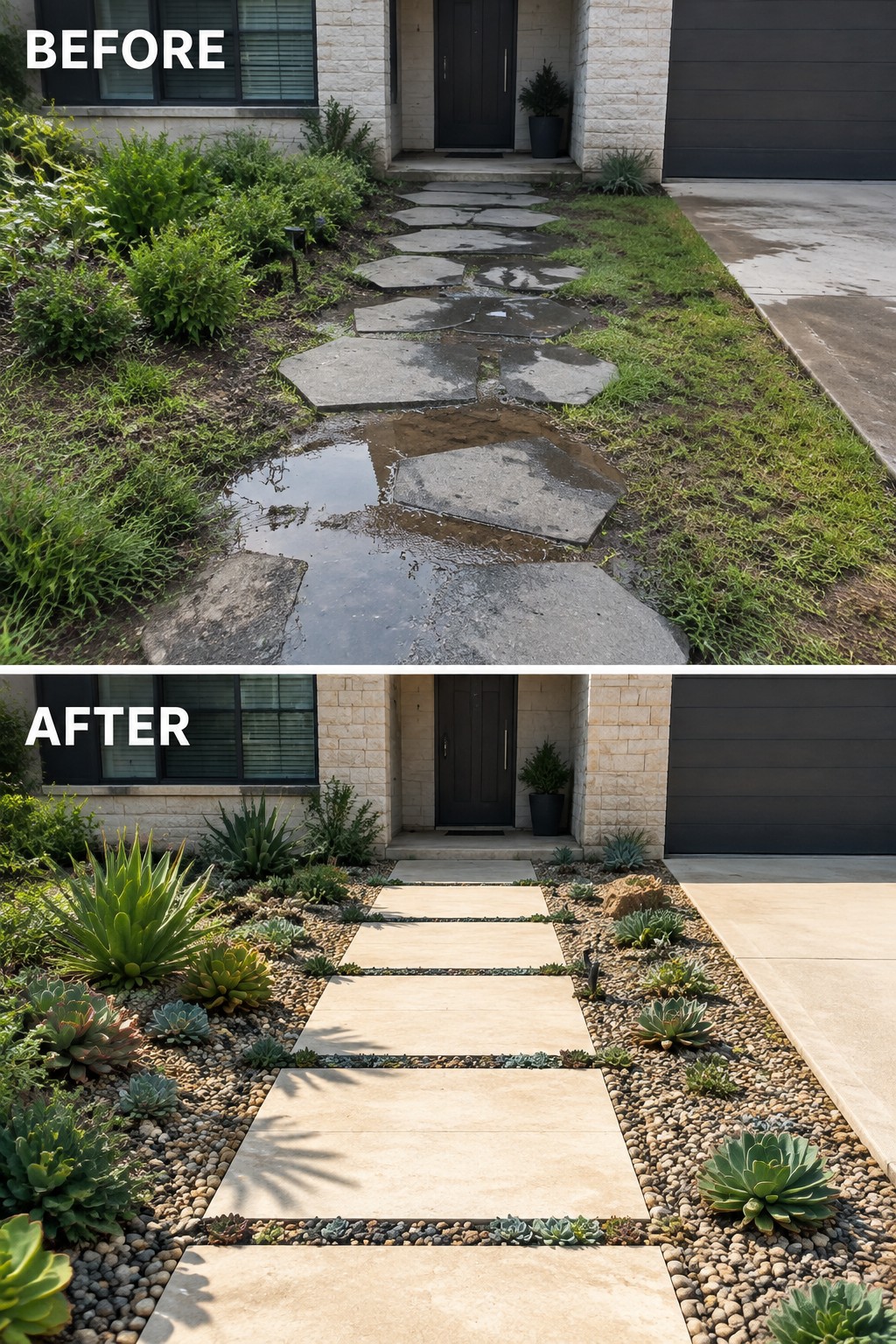
Replacing scattered stepping stones with larger rectangular pavers makes a front path feel finished and much easier to use. The before photo shows uneven stones sitting in wet grass with water pooling in the gaps. The after version uses straight, uniform pavers set into gravel with low succulents running along both sides, which keeps the walkway dry and gives it a tidy outline.
This idea works best on homes where the entry path has grown in too close to the lawn or has poor drainage. Clear the old path first, then lay pavers wide enough for comfortable walking and fill the edges with gravel so water can move away from the stones. Keep the planting simple and low so it stays neat without constant trimming.
Replace A Cracked Concrete Path With Natural Stone Pavers
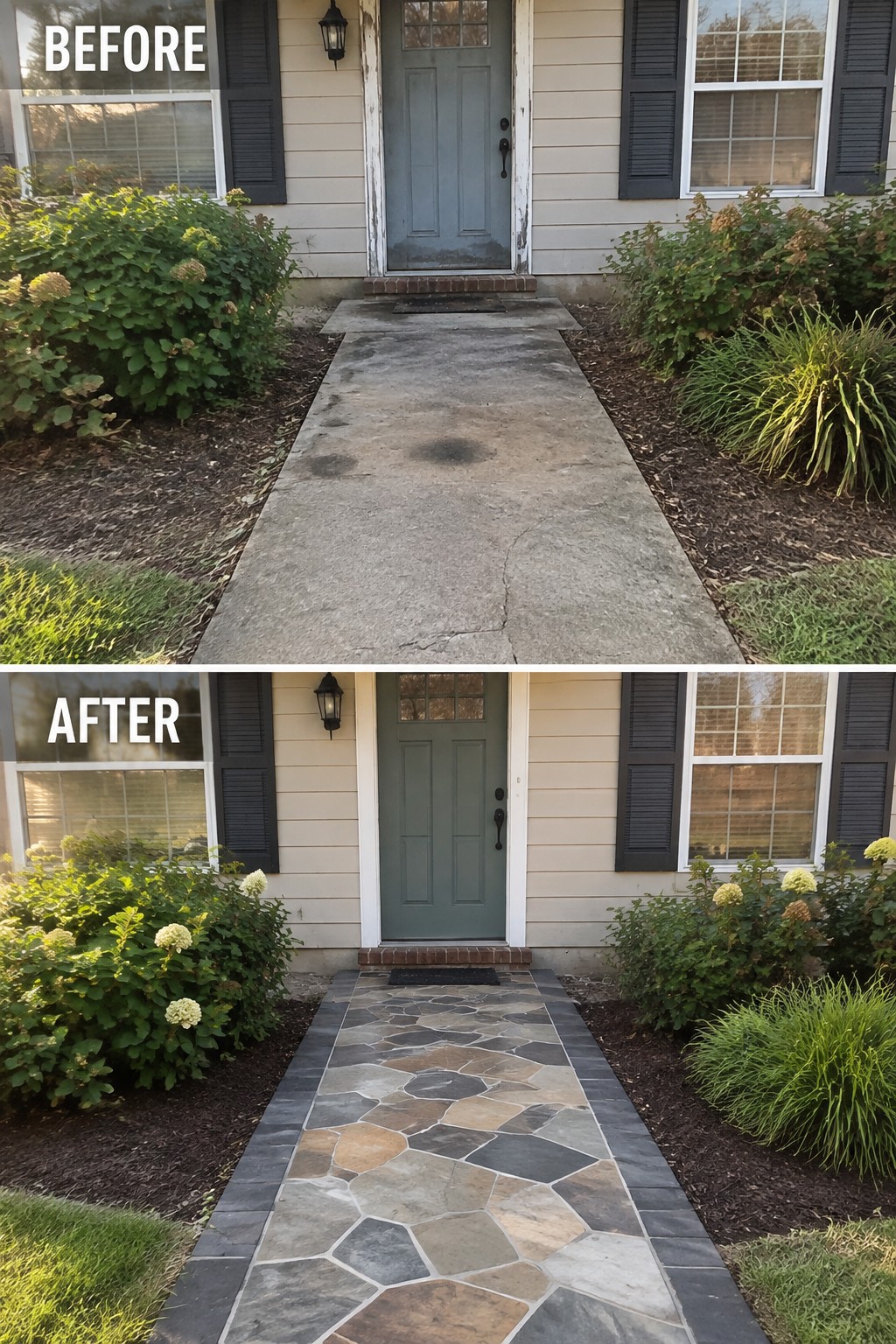
A plain concrete walkway that has cracked and stained over time can make the whole front of a house feel neglected. Switching to natural stone pavers gives the path a cleaner shape, better texture, and a more finished look that ties the entry to the surrounding beds.
This approach works well on older homes where the original concrete is still solid enough to build over. Start by choosing pavers in tones that echo the house trim or brick, then add a simple border to keep the edges neat. The result is a path that feels intentional without needing a full landscape overhaul.
Frequently Asked Questions
Q: How do I stop the path from shifting over time? A: Lay a solid gravel base first and tamp it down firmly. This keeps the stones locked in place even after heavy rain or foot traffic.
Q: Will the stones get slippery when it rains? A: Pick stones with a rough texture from the start. They give better grip without any extra treatments.
Q: How often do I need to clean a stone path? A: Sweep it weekly to clear leaves and dirt. A quick hose down once a month keeps the surface looking fresh.
Q: What if the ground freezes in winter? A: Dig down deep enough for a thick gravel layer before you lay the stone. That extra base stops heaving when the soil expands.
