

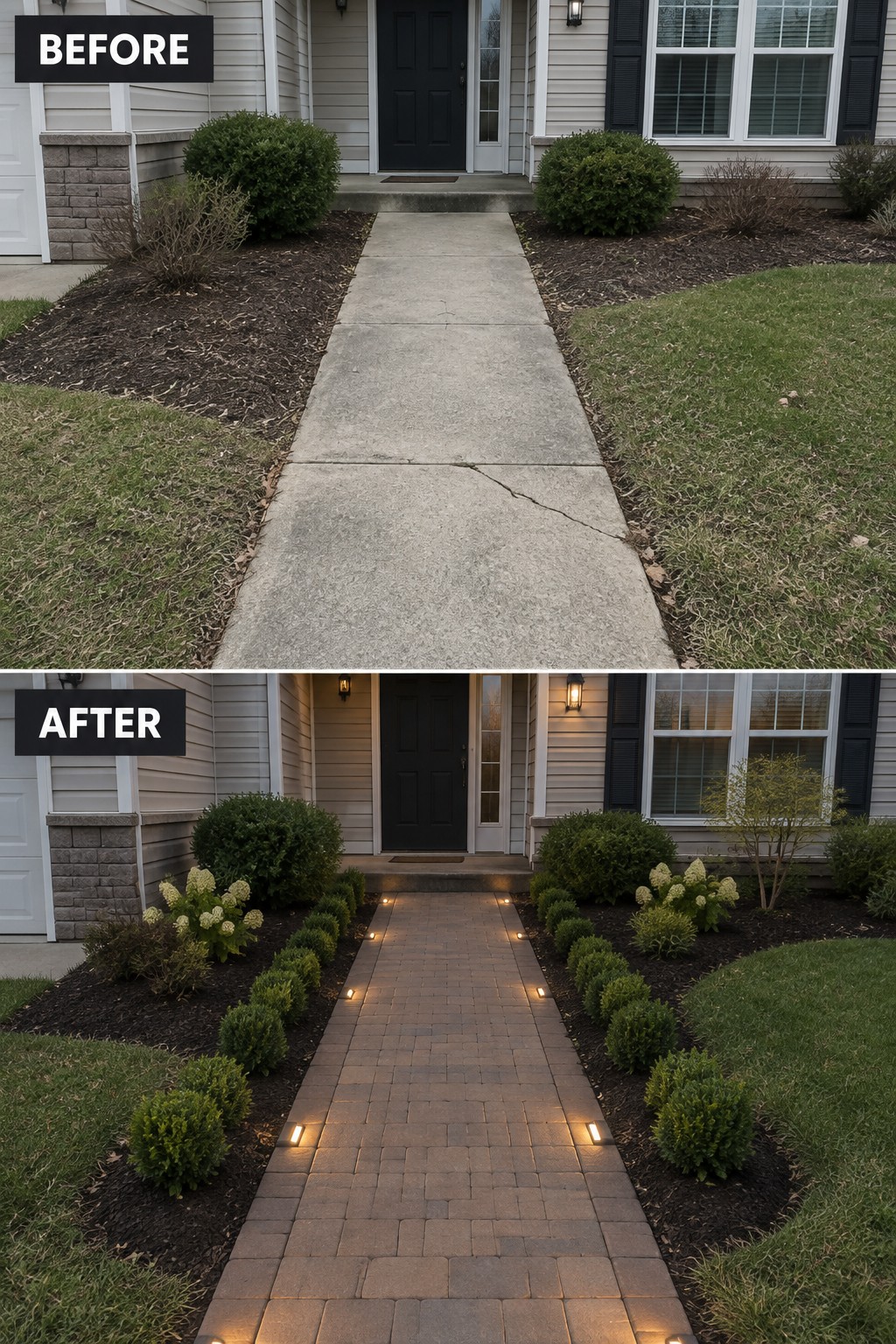
I often notice how paths through a yard can start to look a bit aimless once the surrounding beds fill out and the edges blur. Lighting placed low along the sides tends to give the route more definition while also making it easier to walk safely after dark. In my own yard I would want to check the actual foot traffic patterns first before adding any fixtures. Over time those adjustments to layout and light placement usually make the whole area feel more settled rather than just an afterthought between other features. Small changes like that often end up mattering more than people expect.
Define A Plain Walkway With Pavers And Path Lights
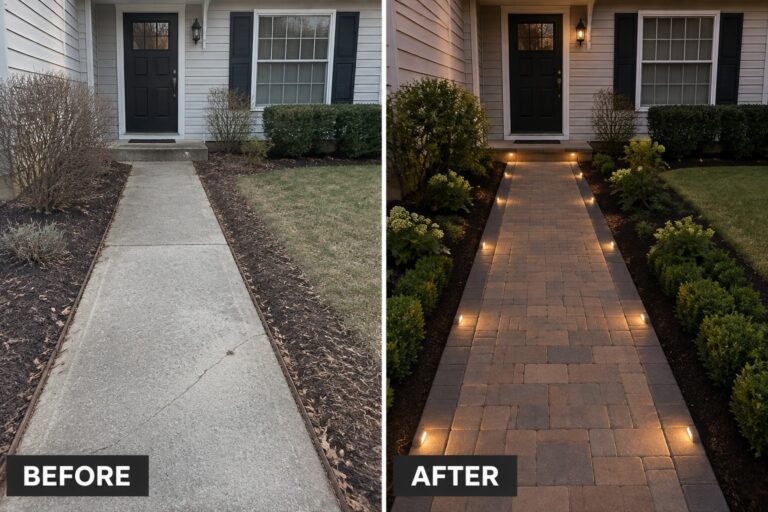
A cracked concrete path often makes the front of a house feel unfinished. Replacing it with pavers and adding low lights along the edges gives the walkway clear shape and makes it safer to use after dark.
This idea works best on homes where the front path is functional but forgettable. Keep the paver color simple so it blends with the house, and space the lights evenly so they mark the route without overwhelming the planting beds.
Add Landscape Lighting To A Narrow Side Path
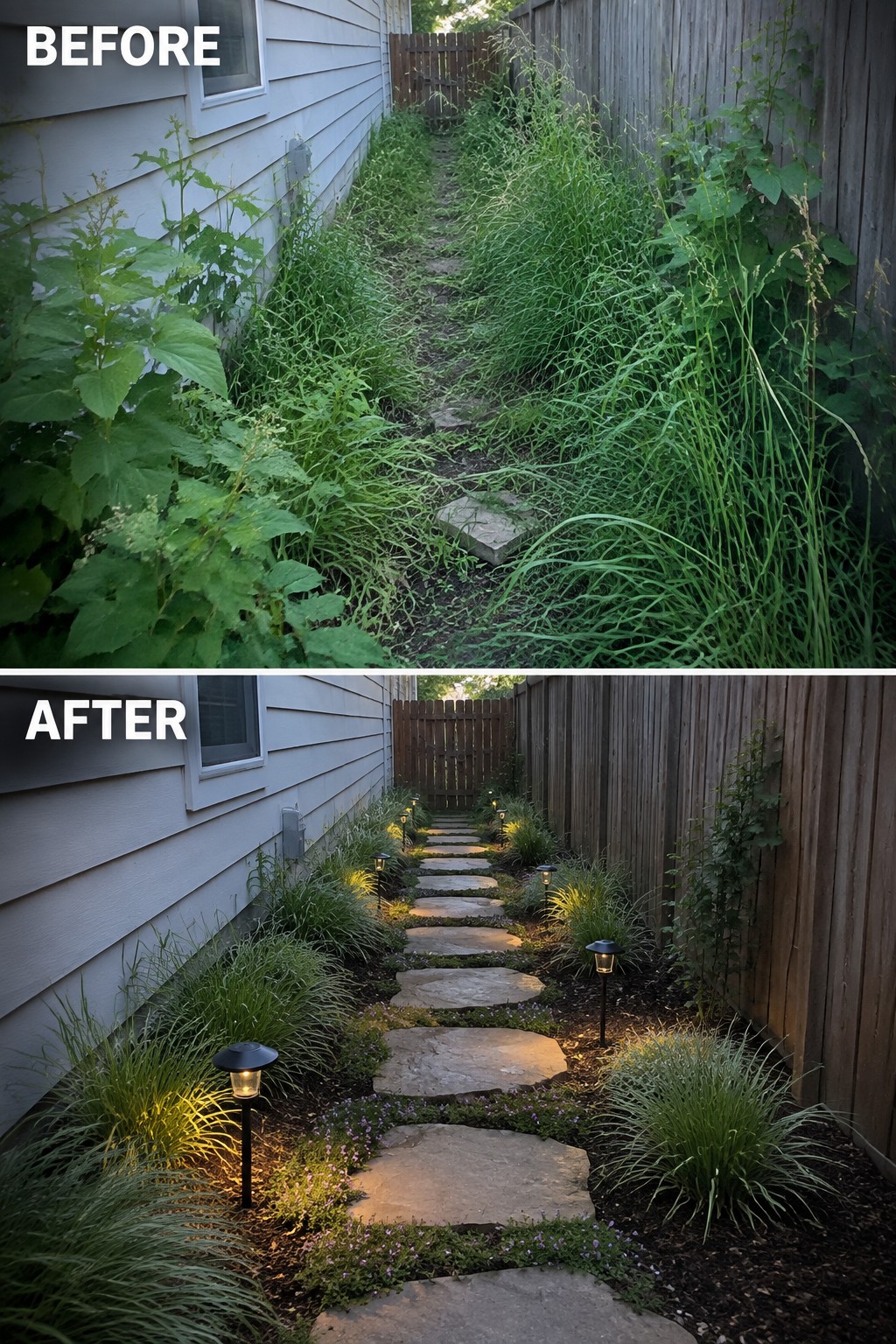
Clearing out tall weeds and adding a few well-placed lights can turn a forgotten side passage into something you actually want to use. The before photo shows how quickly grass and vines take over when nothing defines the route, while the after uses low path lights to mark each stone and keep the walkway visible after dark.
This idea works best in tight spaces between the house and a fence where you need both safety and simple order. Cut everything back first, lay or repair the stepping stones, then space the lights evenly so they guide feet without creating glare. It keeps the focus on the path itself and avoids trying to force a garden into a spot that is really just a connector.
Add Pathway Lighting To Define A Front Walkway
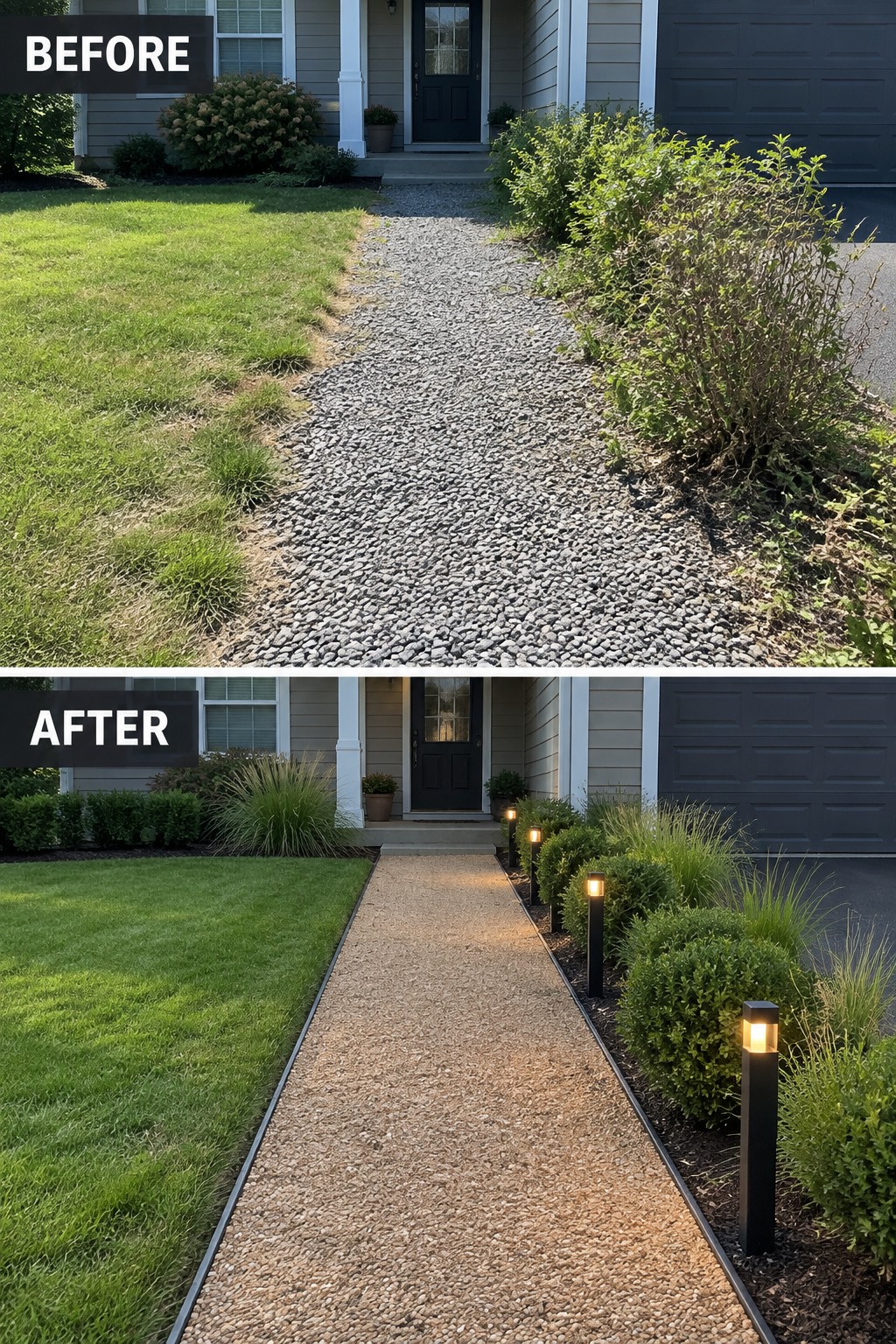
Adding a line of low lights along both sides of the path turns a plain gravel walk into one that feels more finished and easier to follow. The lights give the edges clear shape, and the simple cleanup of the beds on either side keeps the whole front looking neat instead of overgrown.
This idea works best on straight walks that lead to the door, especially on houses where the entry feels a bit bare. Put the lights in first after you fix the edging, then choose plants that stay low so the lights stay visible. It keeps the focus on the walkway without needing a full redesign.
Add Landscape Lighting Along Your Front Walkway
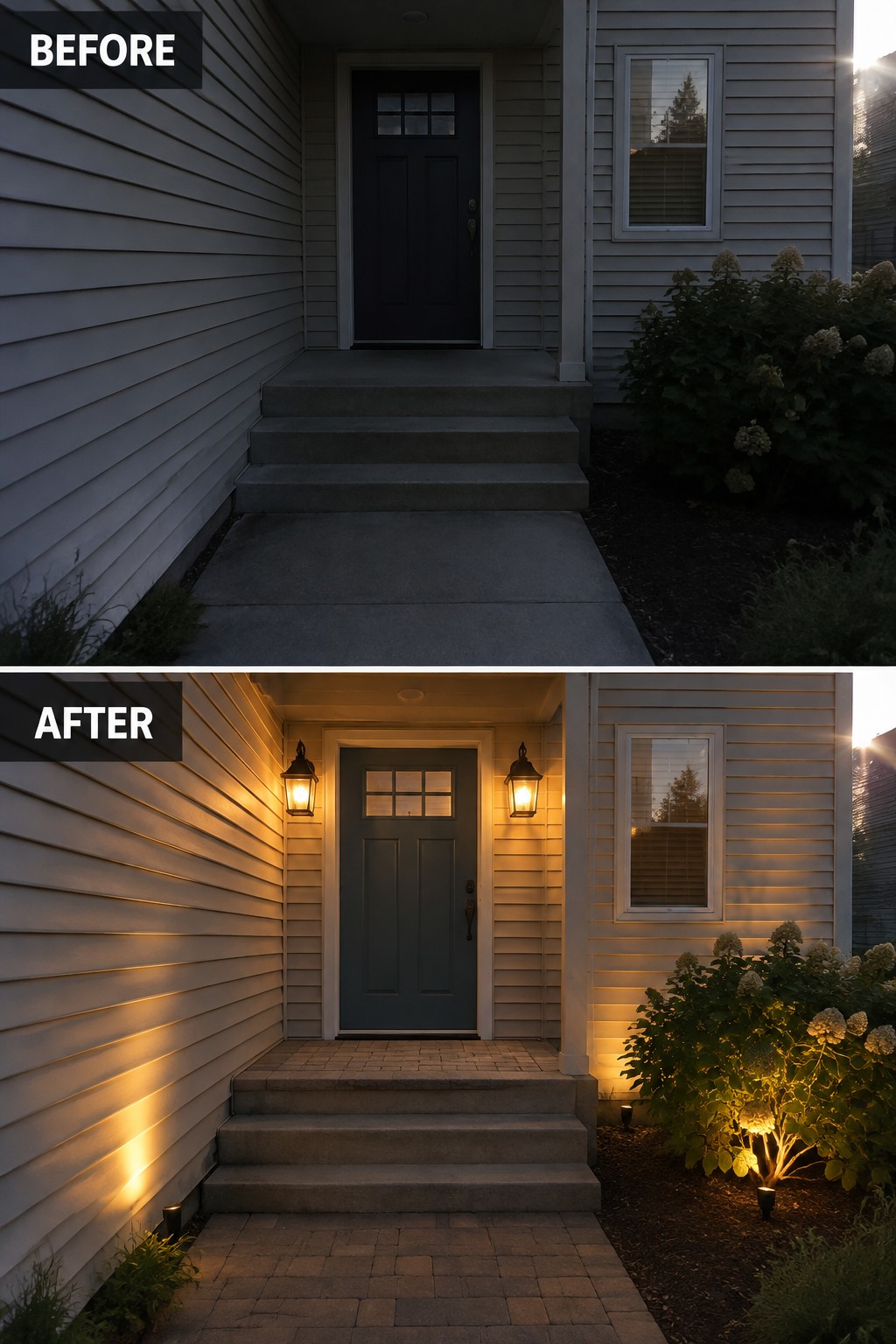
Many front entries look flat and unwelcoming at night simply because there is no light to guide people in. In this case the before photo shows a plain concrete path and dark porch with almost no illumination. The after photo adds a few wall sconces beside the door and low ground lights along the edges of the walkway and planting beds. The result is a clear path that feels safer and more inviting without any major construction.
This approach works well on most single-story homes where the entry sits close to the street. Start with one or two lights on the house itself to mark the door, then add a few low fixtures along the path edges. Keep the spacing even and aim the light downward so it does not glare into windows. The same idea can be used on a side path or driveway edge if you want to extend the effect.
Add Lighting And Planting To A Plain Walkway
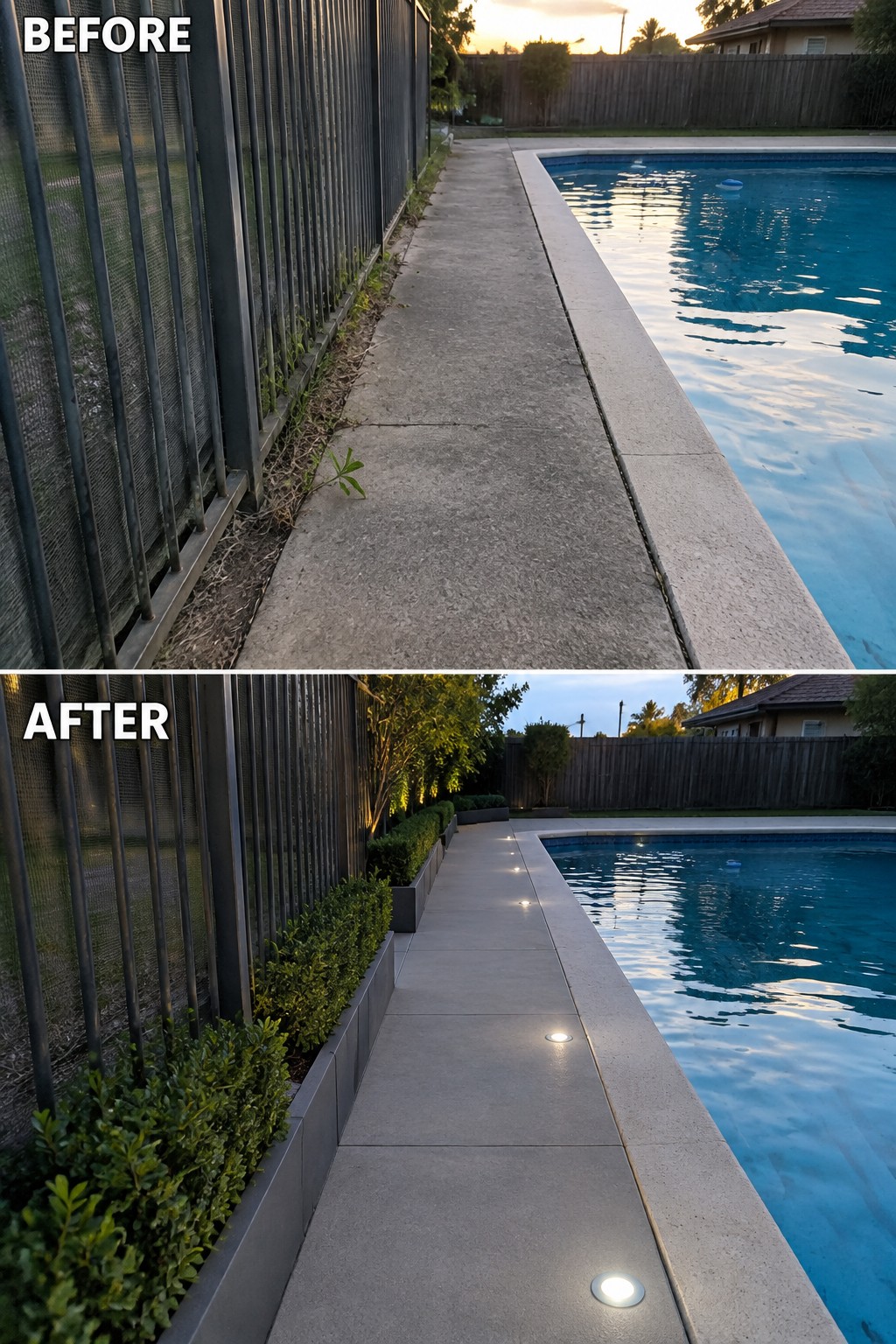
A bare concrete path next to a pool often feels unfinished and a little harsh. Adding a row of low planted boxes along the fence and a few simple in-ground lights gave the walkway clear edges and made it feel like an intentional part of the yard instead of just leftover space.
This idea works best on long, narrow paths where you want to keep the surface open but still add structure. Use matching planters or a low hedge to create the border first, then place lights every few feet so the route stays easy to follow at night without needing tall fixtures that crowd the space.
Add Landscape Lighting Along A Brick Walkway
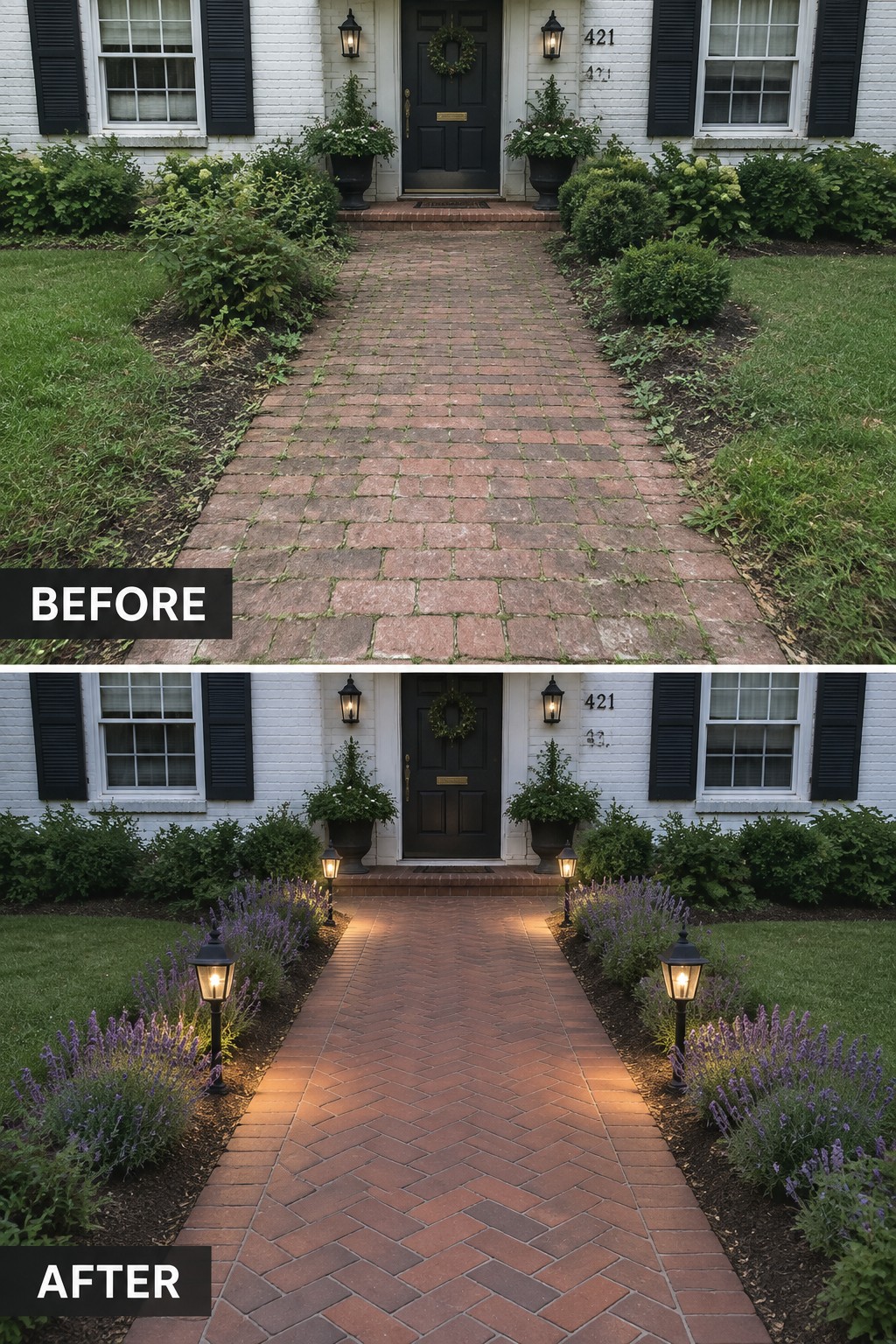
A simple brick path can look flat and uninviting once the sun goes down. In this makeover the straight-laid bricks were replaced with a herringbone pattern, and low path lights were added on both sides. The new lighting gives the walkway a clear line at night while the fresh lavender edging softens the edges.
This idea works well on any front walk that leads from the street or driveway to the door. Start with cleanup and a few well-placed lights rather than filling the beds with too many plants. Keep the fixtures low so they light the path without shining into windows, and choose bulbs that match the rest of your exterior lighting.
Add Landscape Lighting Along A Stone Path
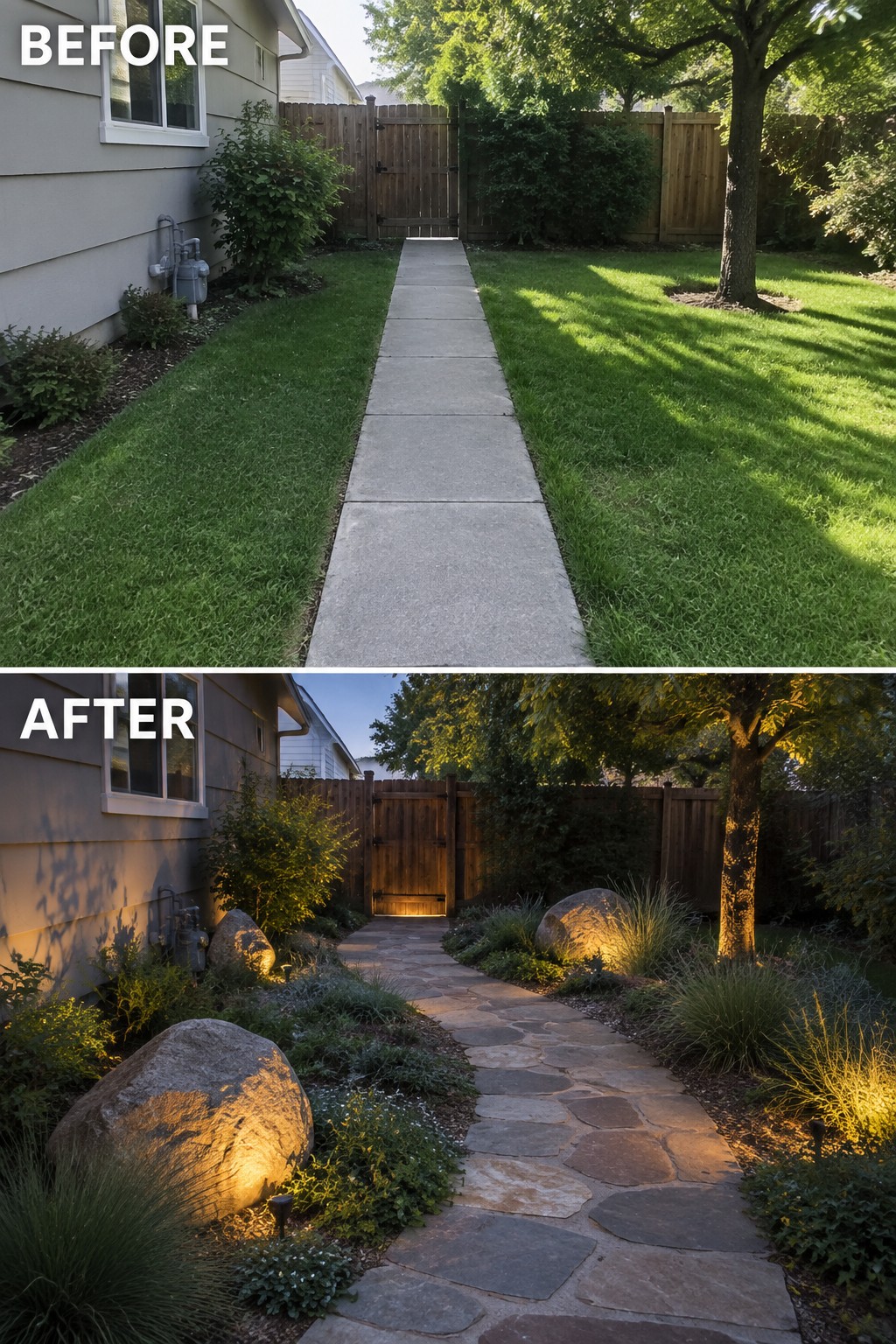
A straight concrete walkway often feels like an afterthought once the rest of the yard is planted. Switching to irregular flagstone and adding a few low lights among the new beds gives the path a clear purpose and makes it easy to use after dark without needing tall fixtures.
This works best in side yards or back garden routes where you want the walkway to feel like part of the landscape rather than a separate strip. Keep the lights close to the ground and aim them at rocks or taller plants so the light stays soft and the path stays the main focus.
Add Path Lights Along A Plain Walkway
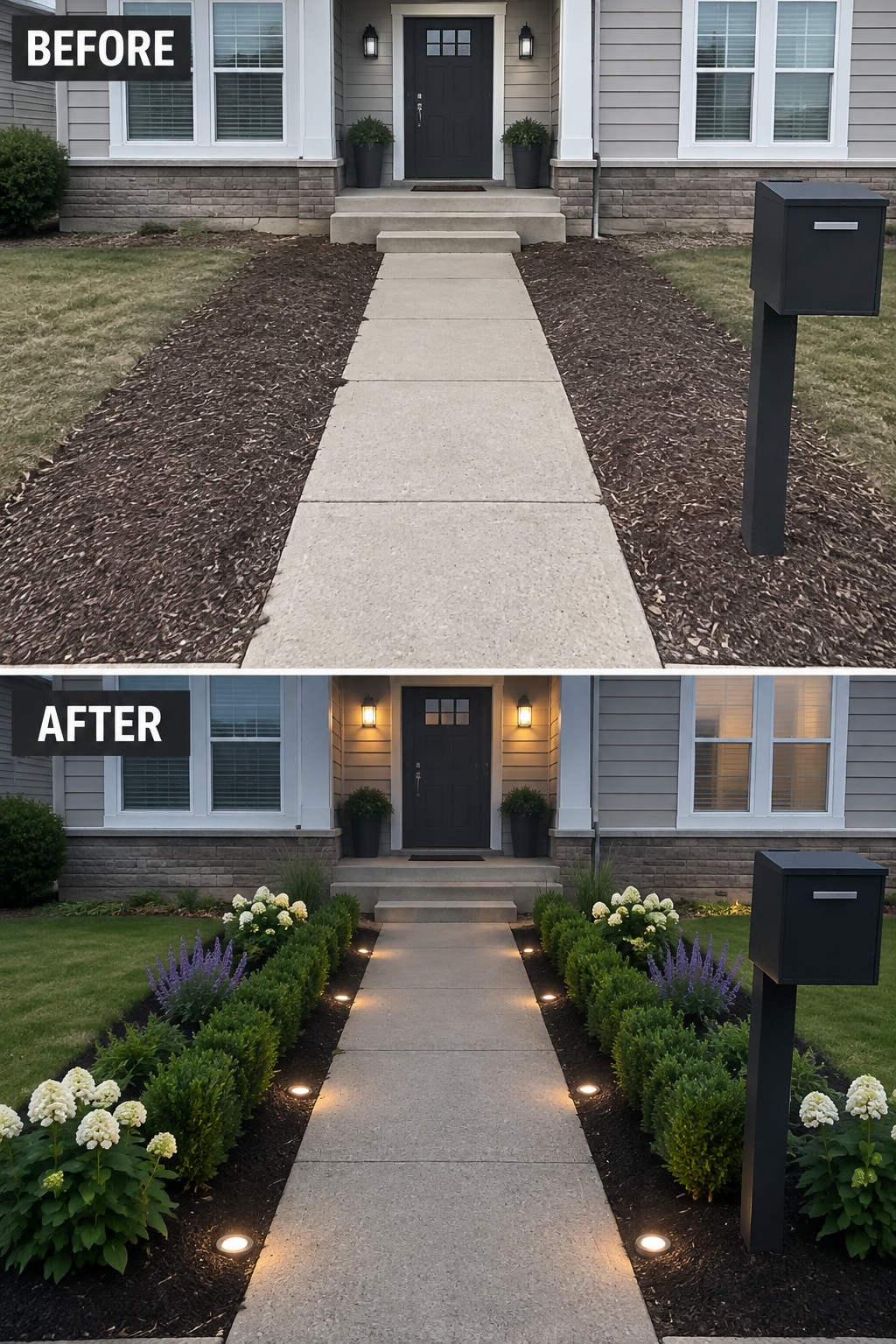
Adding a row of small path lights turns a basic concrete walkway into something that feels more finished and easier to use at night. The before photo shows just mulch and grass on either side with no clear edge or glow after dark. The after version adds low lights that mark the route and pairs them with simple planted borders that give the path some shape.
This idea works best on front walks that already have decent concrete but lack any evening presence. Keep the lights low and evenly spaced so they guide people without creating glare. Start with the lighting if you want quick impact, then fill in the beds with shrubs that stay low enough not to crowd the path. It suits most suburban homes where the goal is better curb appeal without changing the hardscape.
Define A Front Walkway With Patterned Pavers
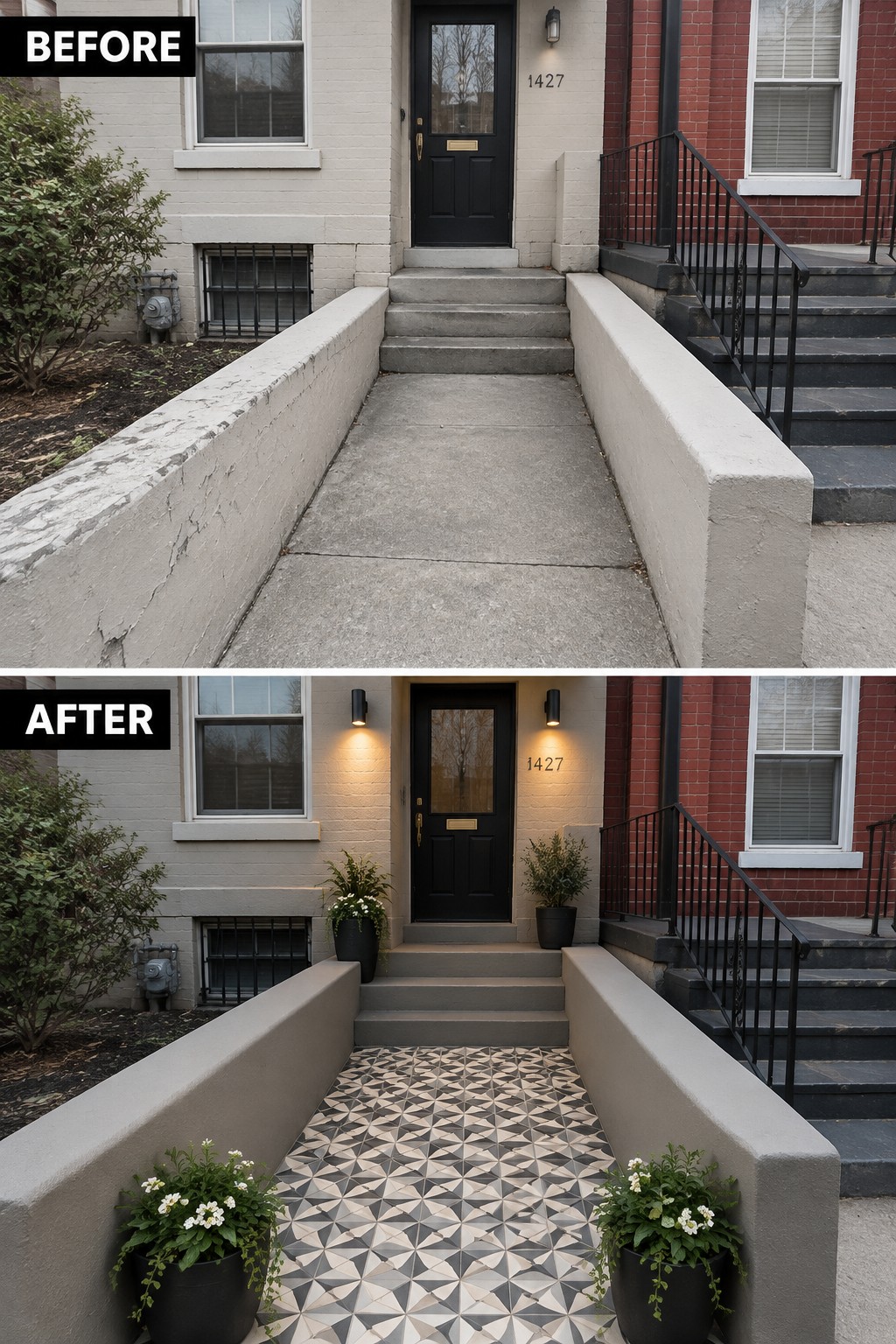
A plain concrete path can make an entry feel unfinished even when the house itself is in good shape. Replacing the flat surface with a simple geometric pattern and adding a couple of wall lights gives the walkway a clear structure and makes the door area feel more intentional at night.
This idea suits homes with narrow or straight entries where you want to add interest without changing the overall layout. Start with the flooring first, then place lights at eye level near the door so they actually light the path instead of just looking decorative. Keep the pattern scale moderate so it still feels like part of the house rather than a separate feature.
Use Landscape Lighting Along A Wooden Garden Path
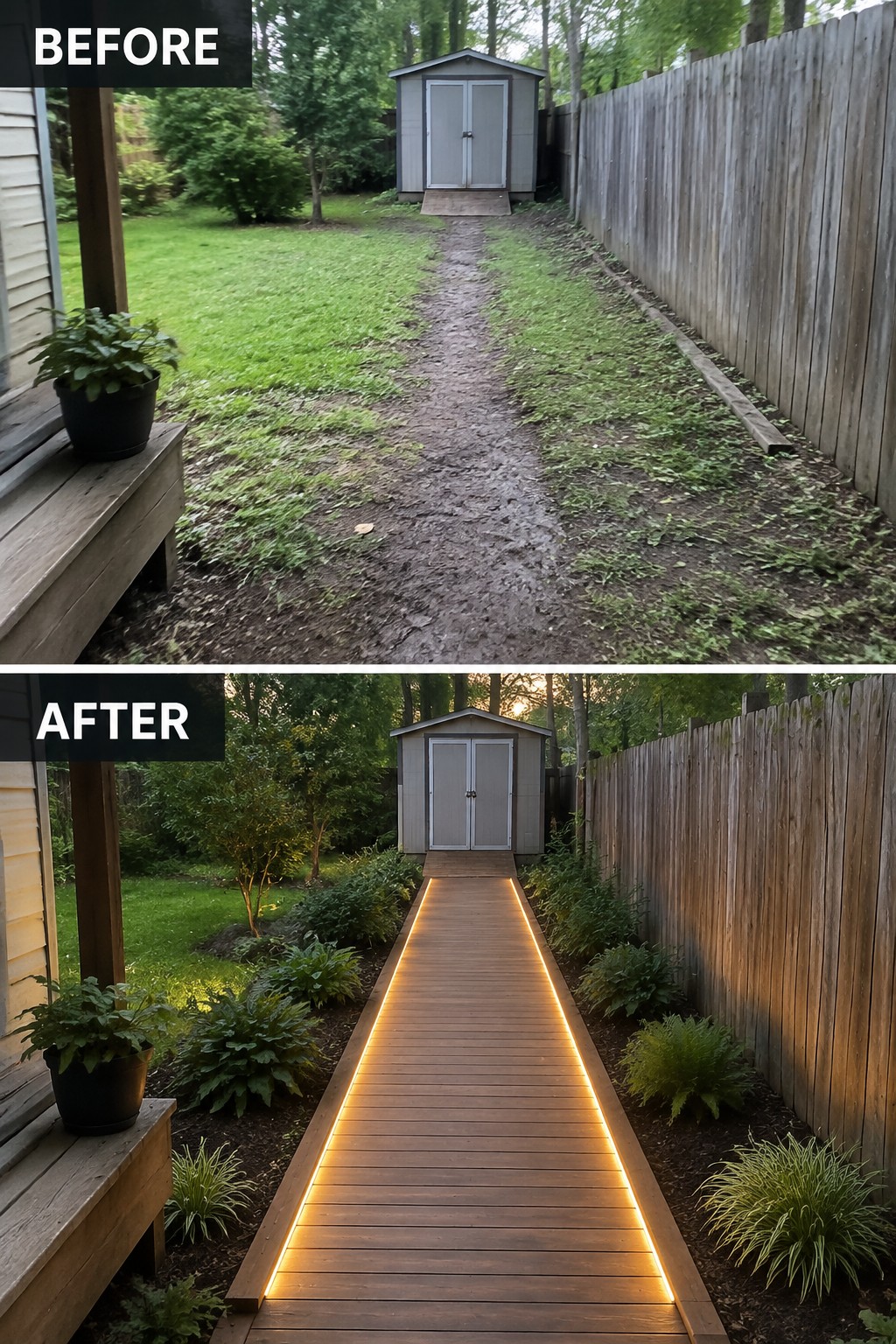
A muddy dirt path can make the backyard feel unfinished and hard to use after dark. Adding a raised wooden walkway with lights tucked under the edges turns the route into something you can actually walk on at night while also giving the yard a cleaner line from the house to the back structures.
This approach works best in side yards or long garden stretches where you need both function and a bit of evening interest. Keep the boards simple and weather-treated, run low-voltage lights close to the ground so they mark the edges without glare, and plant low shrubs or grasses along the sides to soften the look over time.
Add String Lights Along A Garden Path
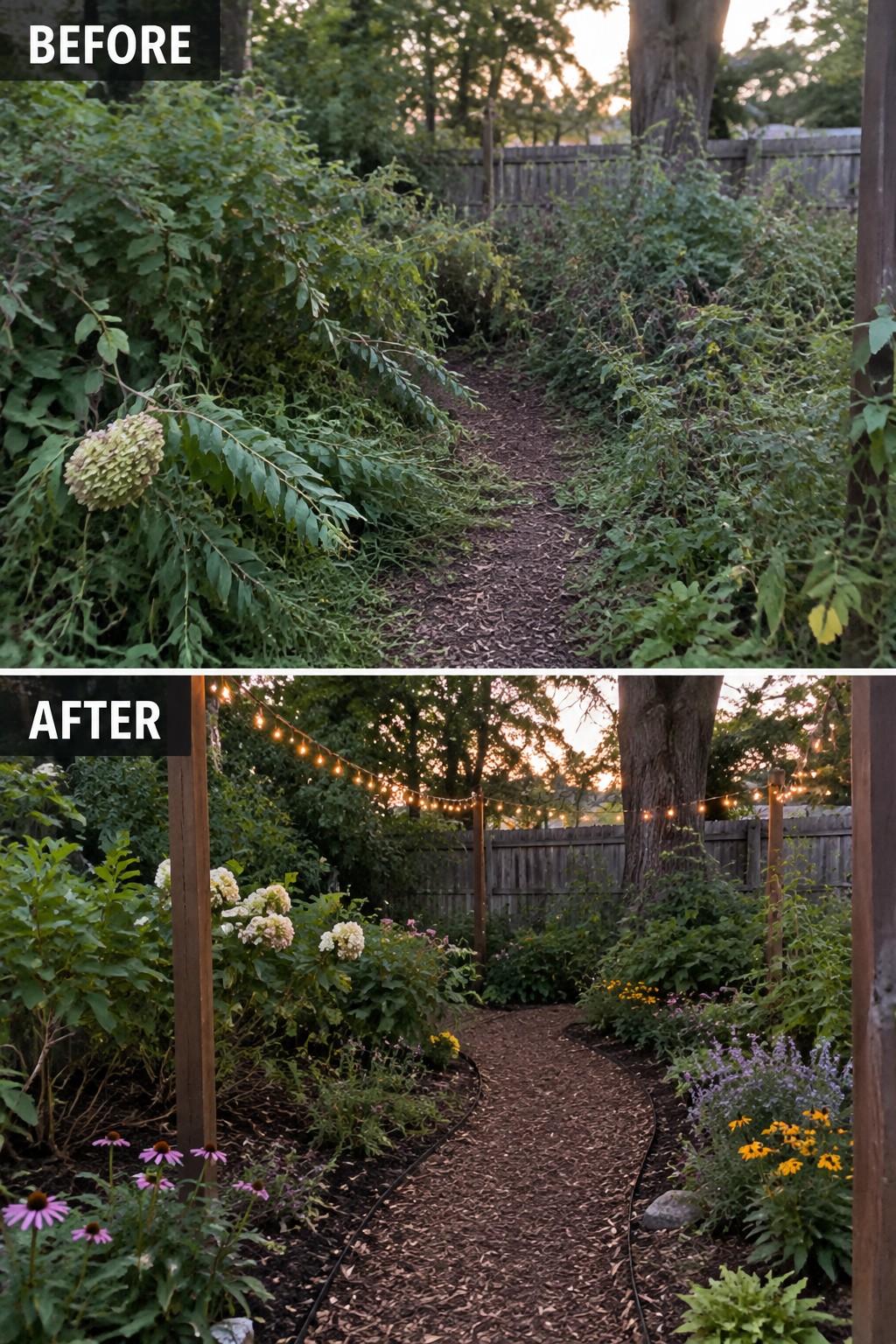
Clearing back the heavy overgrowth first made the biggest difference here. Once the path had room to breathe, a simple run of string lights between posts turned the space into something you could actually enjoy after dark.
This approach works best on narrow side paths or backyard routes where you already have trees or fence posts to hang from. Trim the plants enough to open the walkway, add a clean mulch edge, and keep the lights on a dimmer so they feel soft rather than bright. It is an easy way to make a garden path feel finished without needing a full redesign.
Add Structure With A Lit Paver Path
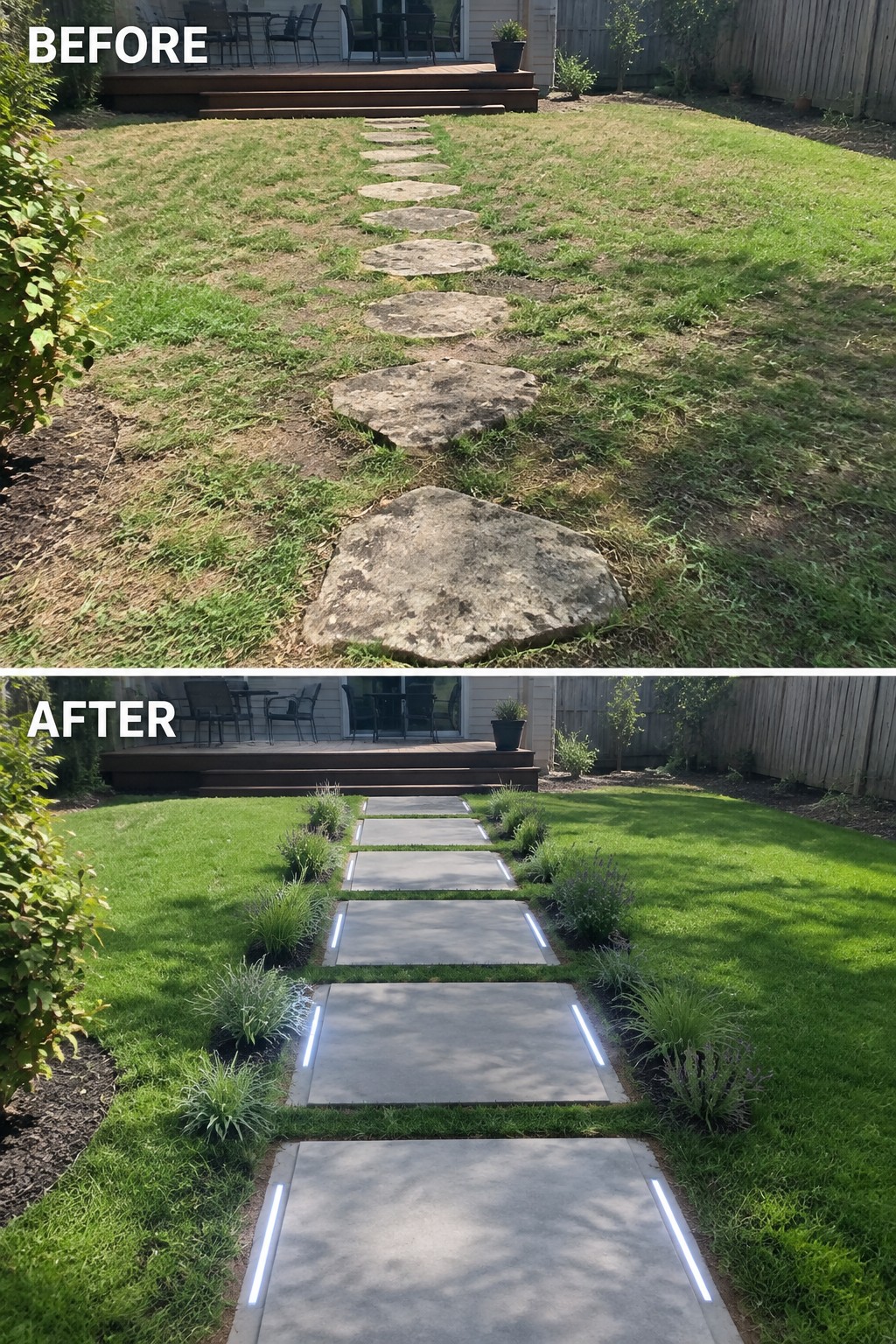
A worn path of uneven stepping stones often leaves a yard feeling scattered. Replacing it with a straight run of rectangular pavers and adding narrow lights along the edges gives the space a clear route and makes it usable after dark. The clean lines also help the surrounding lawn and planting beds look intentional instead of random.
This approach works well in medium to large yards where you need a simple way to connect the house to the back fence or garden. Keep the paver width comfortable for two people to walk side by side, and space the lights so they mark the path without overpowering the planting. Start with the path and lighting before adding more features.
Add Stone Steps And Landscape Lighting To A Sloped Path
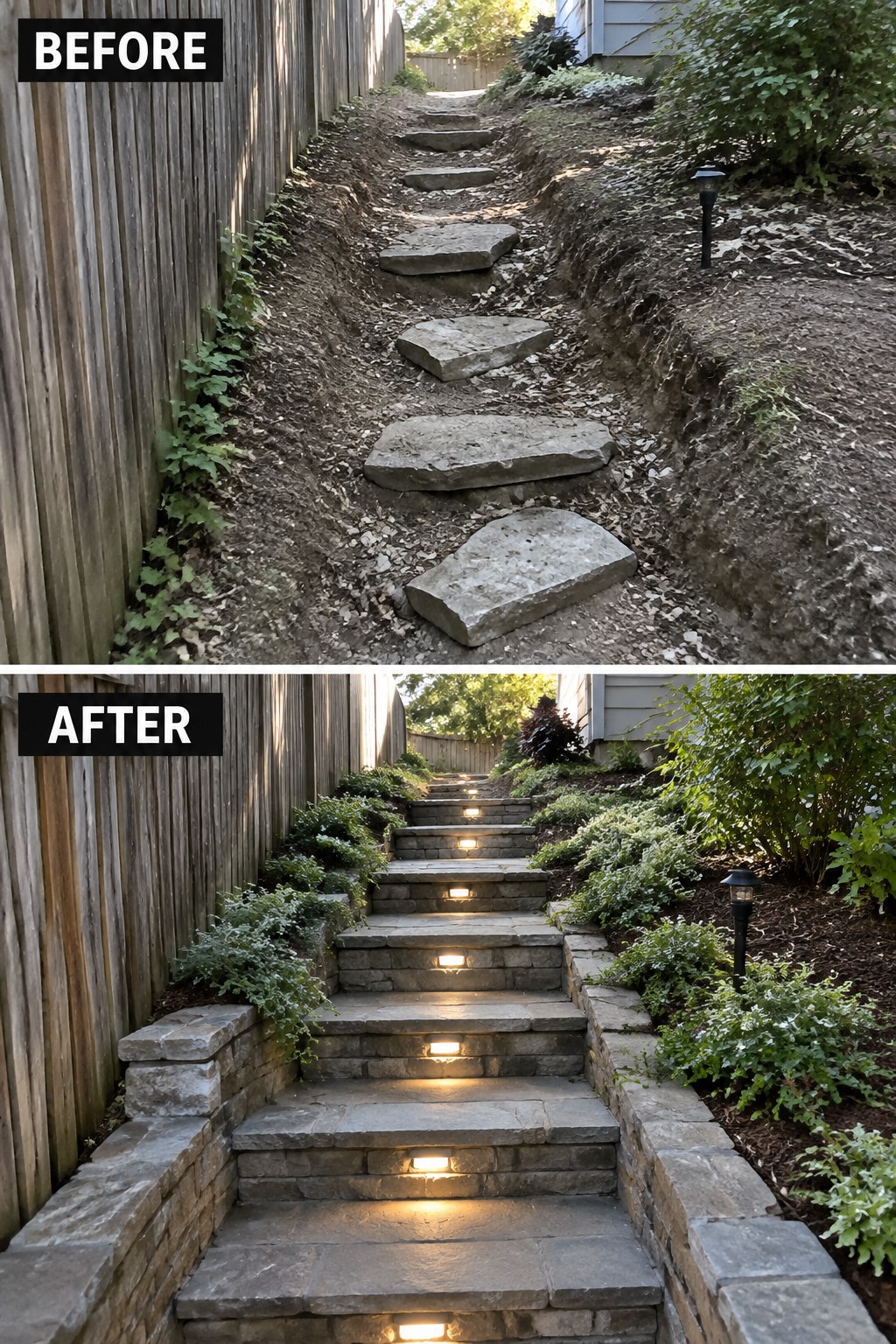
A rough dirt slope with scattered stones feels unfinished and hard to use after dark. Replacing it with solid stacked stone steps that have lights set into the risers gives the path real structure and makes it safe to walk at night without adding separate fixtures that clutter the space.
This approach works best on side yards or back slopes where you need a clear route between levels. Focus first on building the steps so they sit level and drain well, then add low-voltage lights that stay out of the way. It suits older homes with uneven lots that still need everyday access rather than a full redesign.
Refresh A Basic Walkway With Stepping Stones And Path Lights
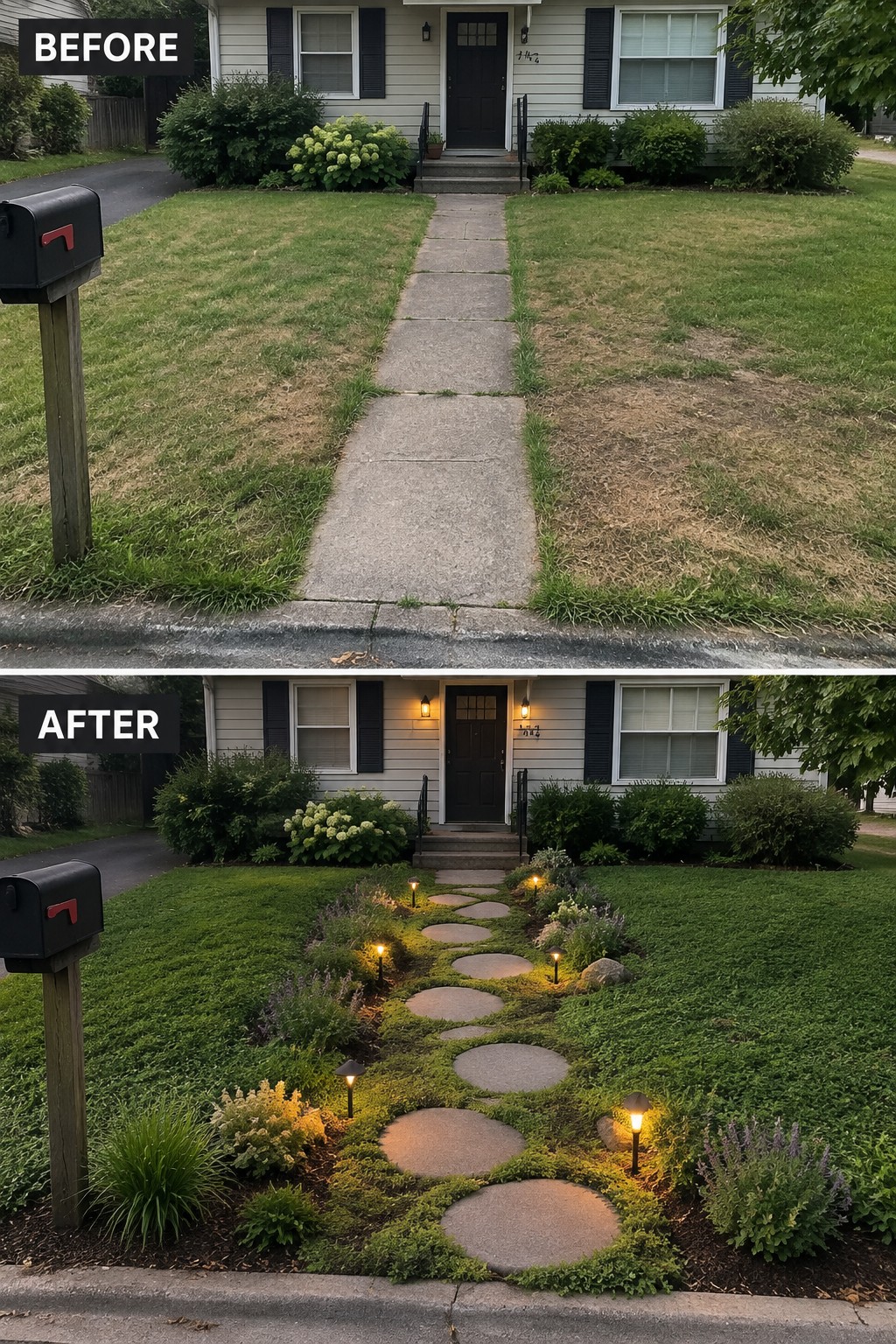
A straight concrete path can feel flat and forgettable next to a house. Switching to individual stepping stones set into the lawn breaks up the line and gives the front yard a softer, more garden-like feel. The low lights placed along the edges make the route clear at night without adding tall fixtures that would compete with the house.
This approach works best on modest front yards where you want the path to feel like part of the planting rather than a separate hard surface. Mark the stone placement first so the curve feels natural, then add simple solar or low-voltage lights that stay low to the ground. Keep the beds along the sides narrow enough that the lawn on either side still reads as open space.
Add Landscape Lighting Along A Garden Walkway
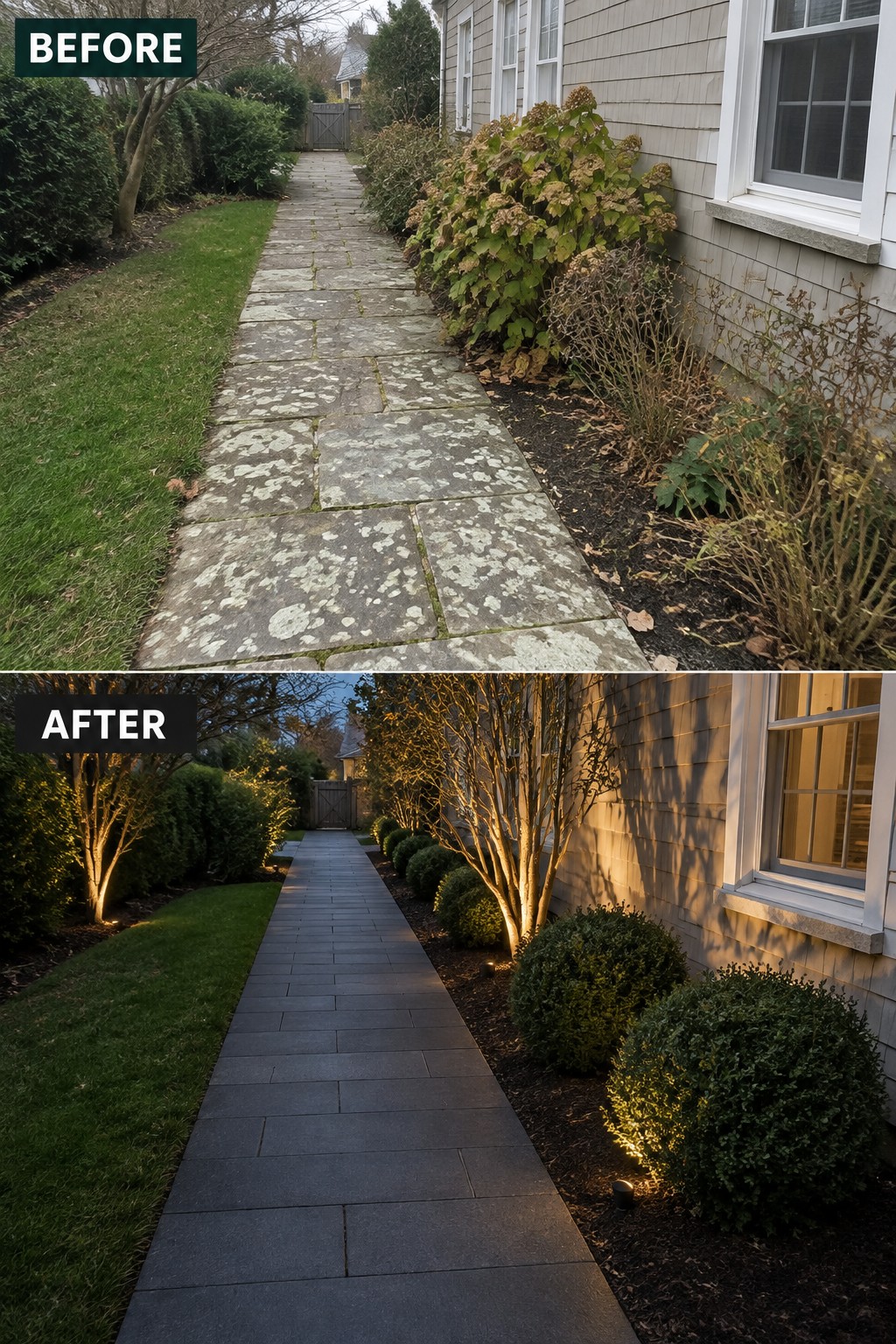
One of the simplest ways to improve a basic walkway is to add landscape lighting that highlights the plants beside it. In the before photo the path looked tired and the beds were messy. In the after photo the new dark pavers stay simple, but the real change comes from the lights tucked at the base of the trees and shrubs. The light draws attention to the greenery instead of the hard surface and makes the whole side of the house feel cared for after dark.
This idea works best on narrow side paths or front walkways where you want a little drama without adding furniture or big structures. Start with a few low-voltage uplights aimed at existing trees or taller shrubs, then add one or two smaller lights along the bed edge. Keep the fixtures close to the plants so the light stays soft and does not glare onto the path itself. The goal is to let the lighting do the work of making the walkway feel finished.
Add Path Lights To Make A Dark Walkway Usable
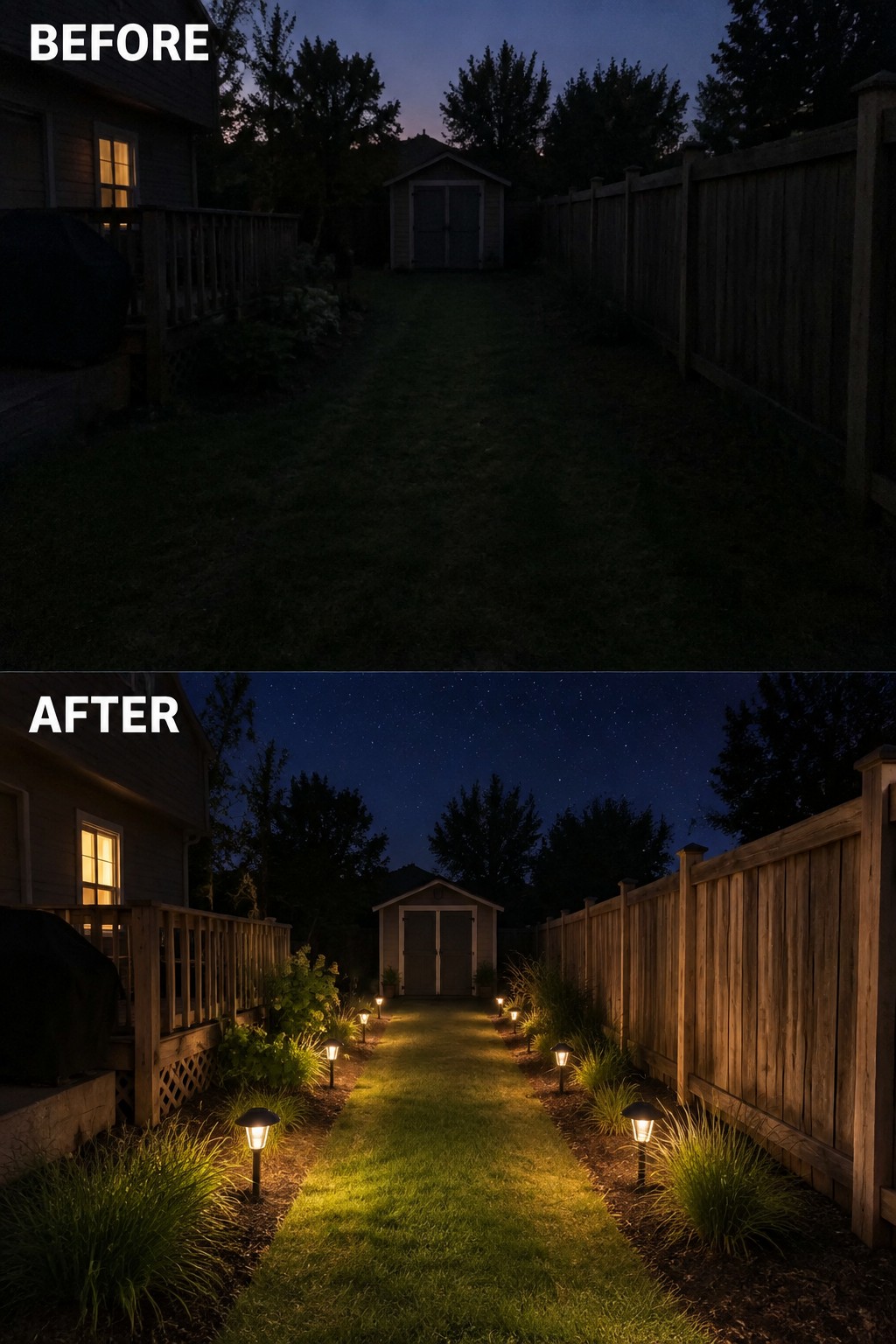
A backyard path that vanishes at night becomes much more practical once you add low landscape lights along the edges. The before photo shows how the grass walkway blends into the darkness, while the after version uses simple stake lights to mark the route clearly from the house toward the shed.
This idea works best on narrow side yards or modest back gardens where you need basic guidance rather than dramatic effects. Keep the fixtures low to the ground, space them evenly, and choose warm bulbs so the light feels soft instead of harsh. Start with cleanup along the path first, then add the lights before you think about any other features.
Add Landscape Lighting Along A Patterned Walkway
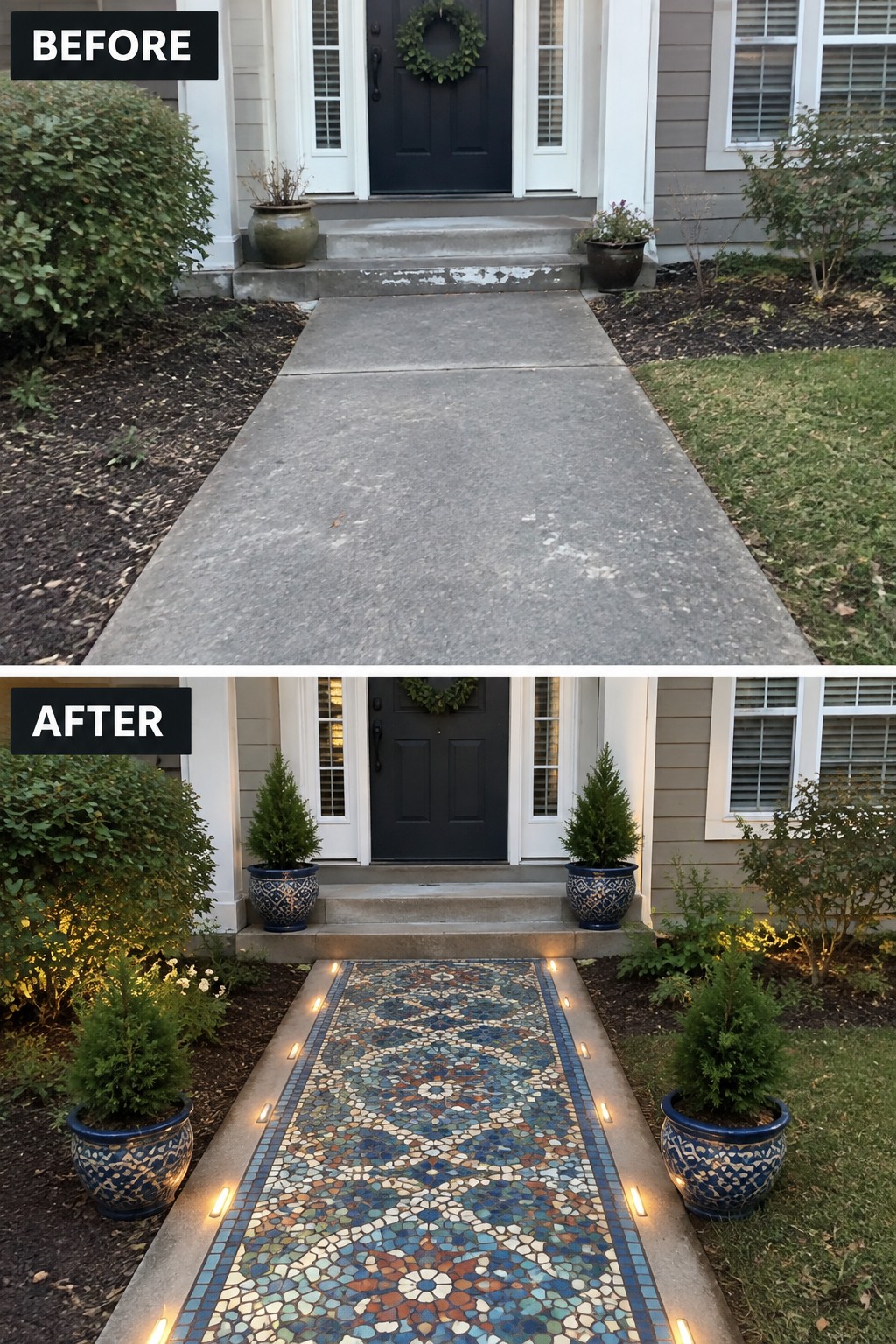
A plain concrete walkway often makes the front entry feel unfinished and hard to navigate after dark. Replacing the slab with a mosaic tile path and adding small lights along both edges turns the same space into a clear, welcoming route from the street to the door.
This approach suits homes with a straightforward front path that needs more presence. Choose a durable tile pattern that can handle weather, keep the border simple, and space the lights evenly so they mark the way without overwhelming the planting on either side.
Use Landscape Lighting To Highlight A Side Walkway
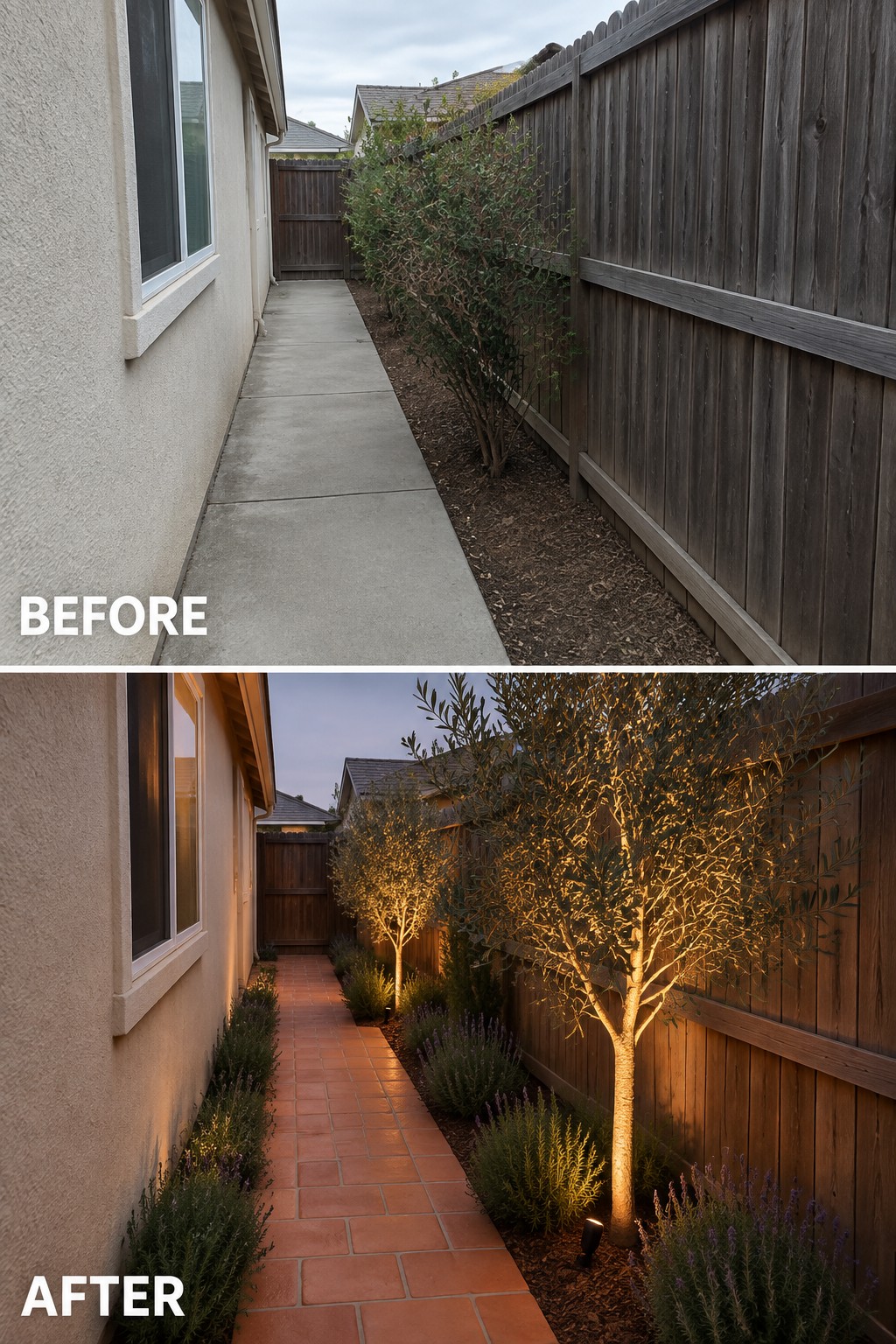
A plain concrete path next to the house often feels like nothing more than a route from one gate to another. Adding a few uplights at the base of new trees and shrubs changes that completely. The lights draw attention to the planting, make the path feel wider at night, and turn a functional space into something you actually notice.
This approach works best in narrow side yards where you cannot add much furniture or large structures. Clean up the beds first, choose a simple path material that fits your budget, then place a handful of low-voltage lights aimed at the tallest plants. Keep the fixtures small and tucked into the mulch so they do not become the main feature during the day.
Frequently Asked Questions
Q: How far apart should the lights go on a long walkway?
A: Space them roughly eight feet apart so the glow stays even. Walk the path once the lights are on and shift any that leave shadows. This keeps the look clean while lighting the way safely.
Q: Can I skip wiring and still get good results with solar lights?
A: Solar lights work well if your walkway gets sun during the day. Set them along the edges first and move them later if any spot stays dim. They save time and avoid digging trenches.
Q: What if my walkway has steps mixed in?
A: Add small step lights right into the risers so each tread shows up clearly. Keep the same warm tone as the path lights to tie everything together. Test the height at night before you mount them.
