

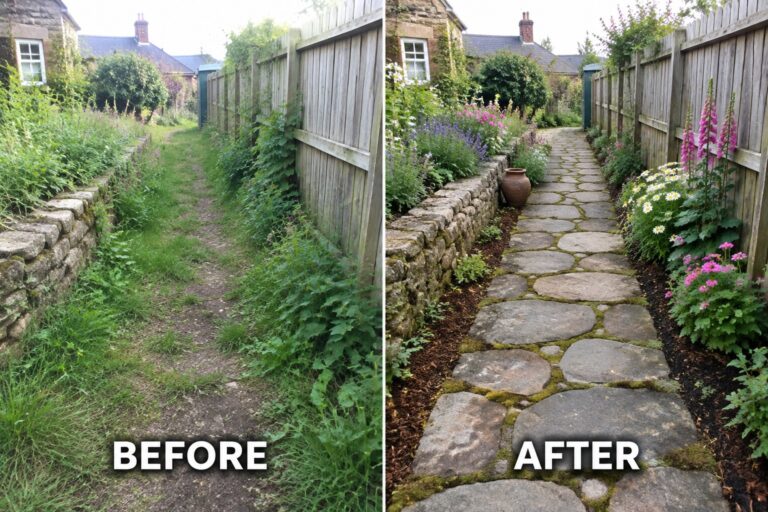
I used to overlook paths when working on my garden, thinking they were just practical additions rather than part of the overall look.
Once I started paying attention to how they shape the space, the layout started making more sense.
Simple changes here go a long way.
In my experience, a well placed path lets the cottage planting feel more settled without needing a complete overhaul.
It also encourages spending more time outside because the ground underfoot feels reliable.
Define An Overgrown Path With Stone Pavers
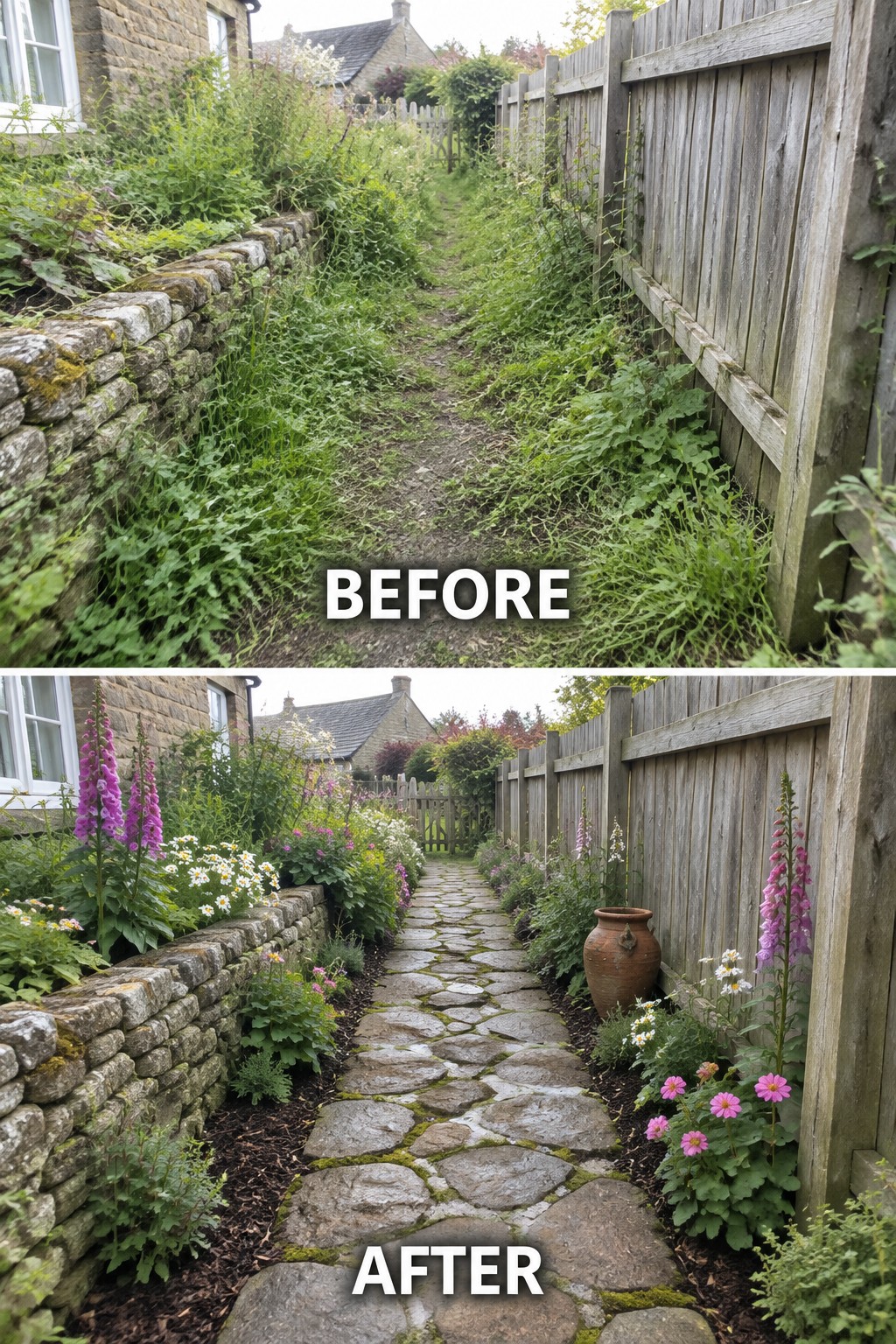
An overgrown garden path often feels more like a chore than a feature. Clearing the weeds and laying down stone pavers gives the space clear shape and makes the whole area feel intentional instead of neglected. The simple change from dirt and tall grass to a flat, walkable surface with planted edges turns a narrow passage into something you actually want to use.
This idea works best in cottage-style yards where the path already exists but lacks structure. Start with a thorough cleanup, then choose pavers that suit the scale of the space. Keep the planting simple on either side so the path stays the main focus and movement through the garden remains easy.
Replace A Straight Concrete Path With Brick Pavers
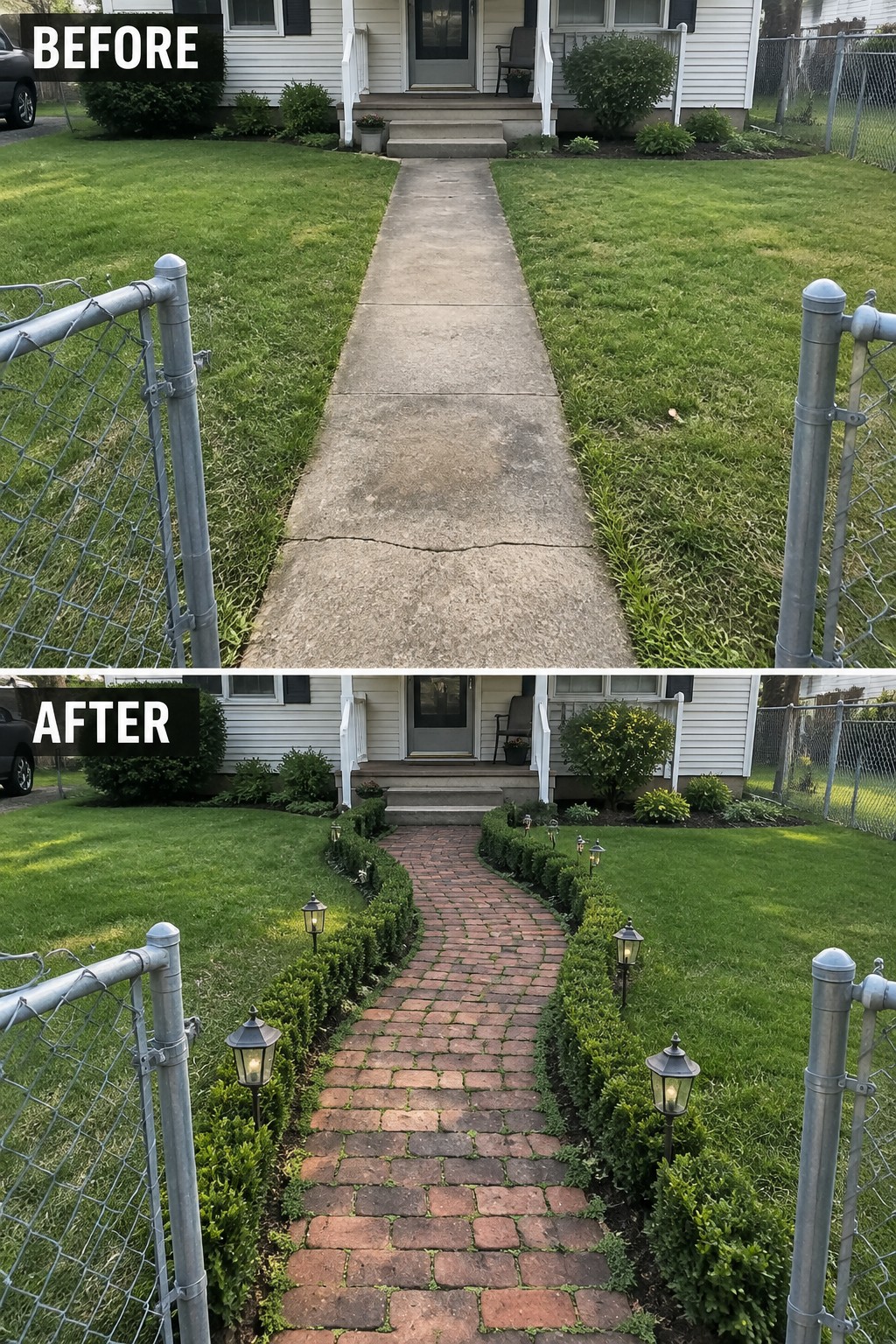
A straight concrete walk tends to make a front yard feel flat and purely functional. Switching to a curving brick path with low borders on both sides softens the approach and gives the lawn clearer shape. The change turns what was just a slab across the grass into something that feels more like part of the garden.
This idea works best on modest lots where the path needs to do more than get people from the sidewalk to the door. Keep the curve gentle so the lawn still reads as one space, and use a simple repeating border plant rather than a mix of everything. A few low lights along the edge are enough to make the route usable after dark.
Add Stepping Stones And Edging To A Narrow Side Yard
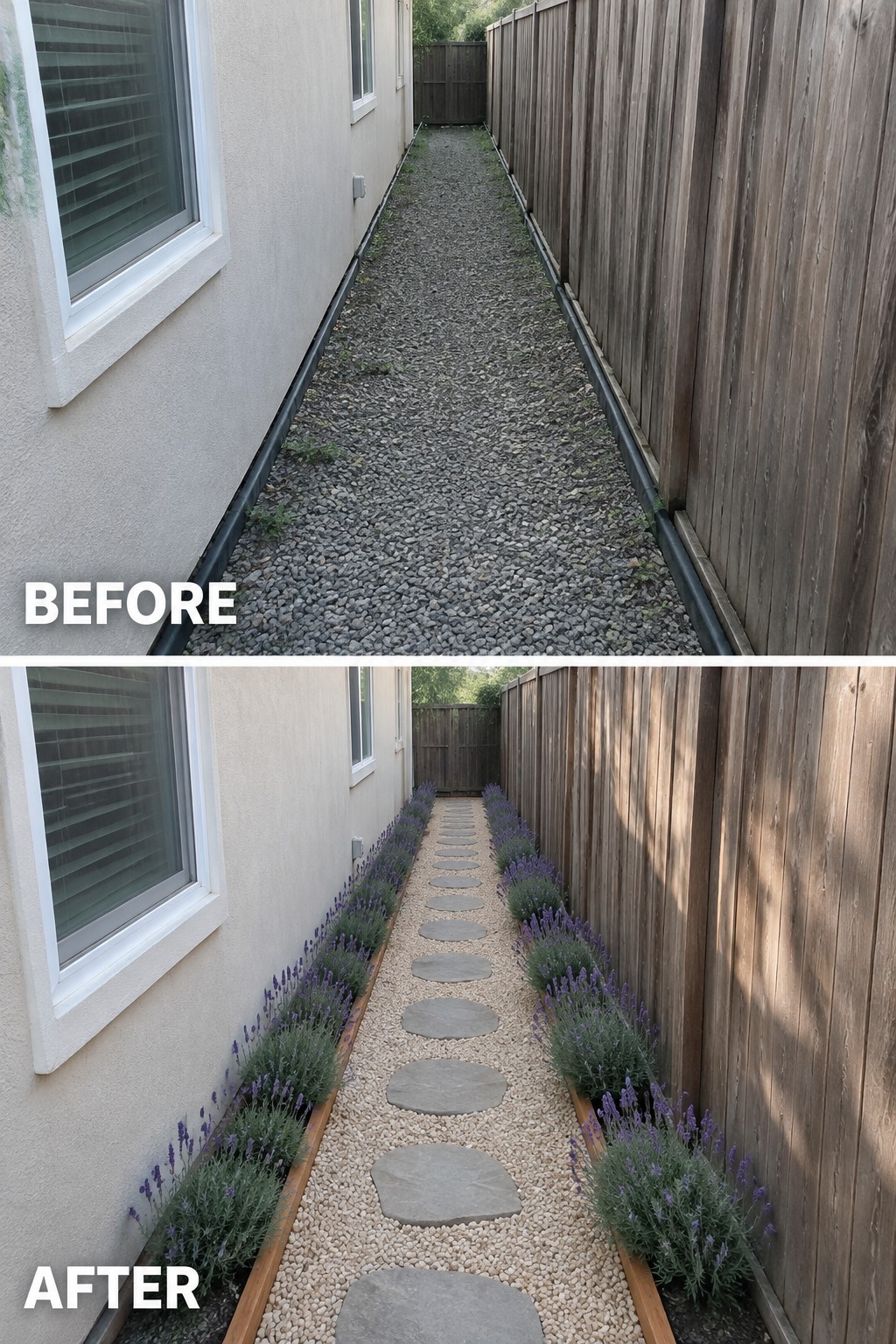
A plain gravel strip between the house and fence often ends up looking messy and unused. Laying down a row of stepping stones gives the space a clear walking path while the edging and lavender borders on each side turn the leftover gravel into something that feels planned instead of leftover.
This approach works well in tight side yards where there is little room for big changes. Keep the edging low and simple so it holds the gravel without crowding the walkway, and choose plants that stay compact and can handle the shade and reflected heat from nearby walls.
Add A Boardwalk To Fix A Muddy Garden Path
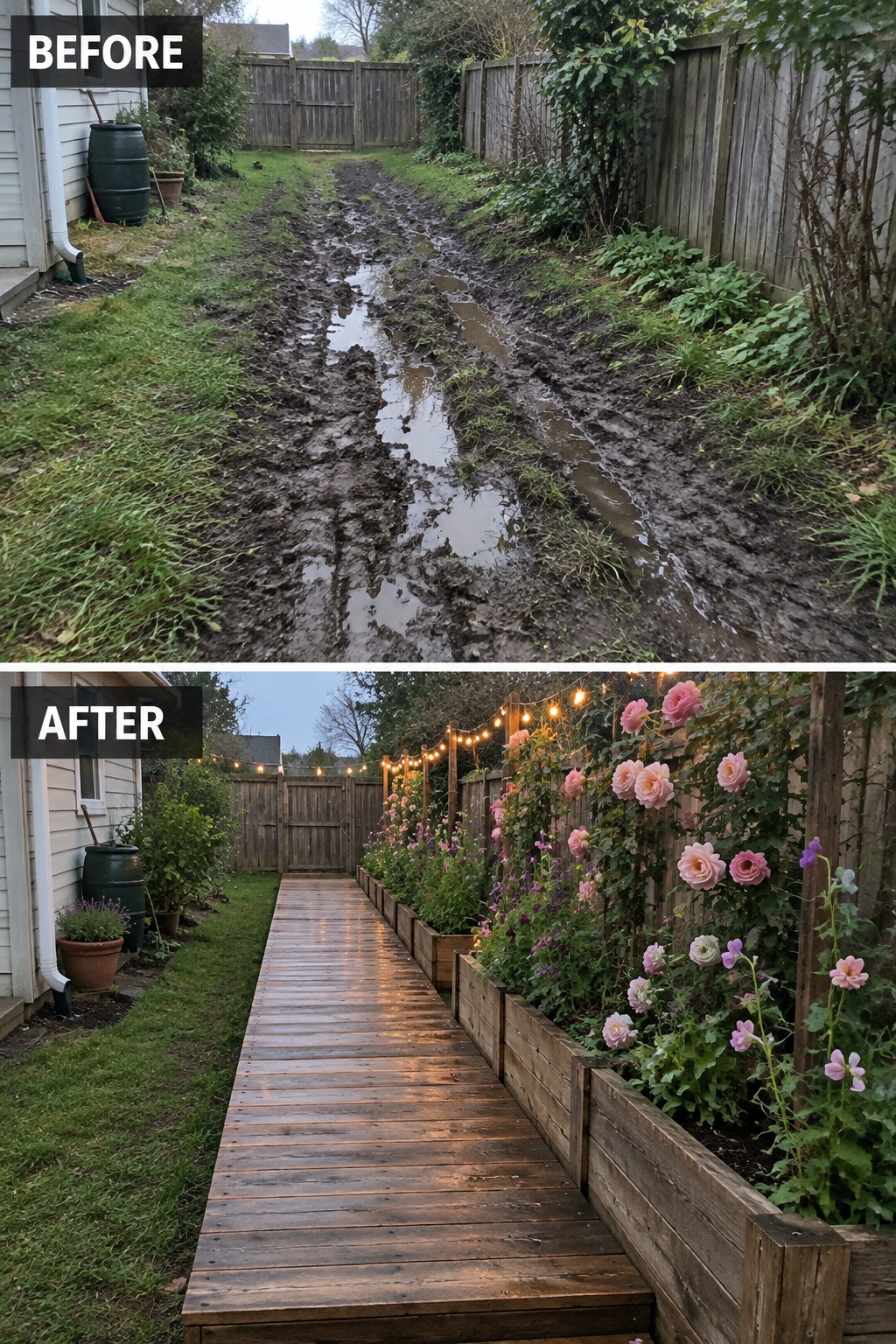
A soggy path that turns to mud after every rain makes the backyard hard to use. Raising a wooden walkway above the wet ground and adding raised beds along one side gives the space a clear route while keeping plants contained and the walking surface dry.
This works best in yards that stay damp or have poor drainage. Focus on the path first, then fill the beds with flowers and climbers that can handle the conditions. Keep the walkway narrow so the rest of the yard still has room to breathe.
Add Structure To An Overgrown Path
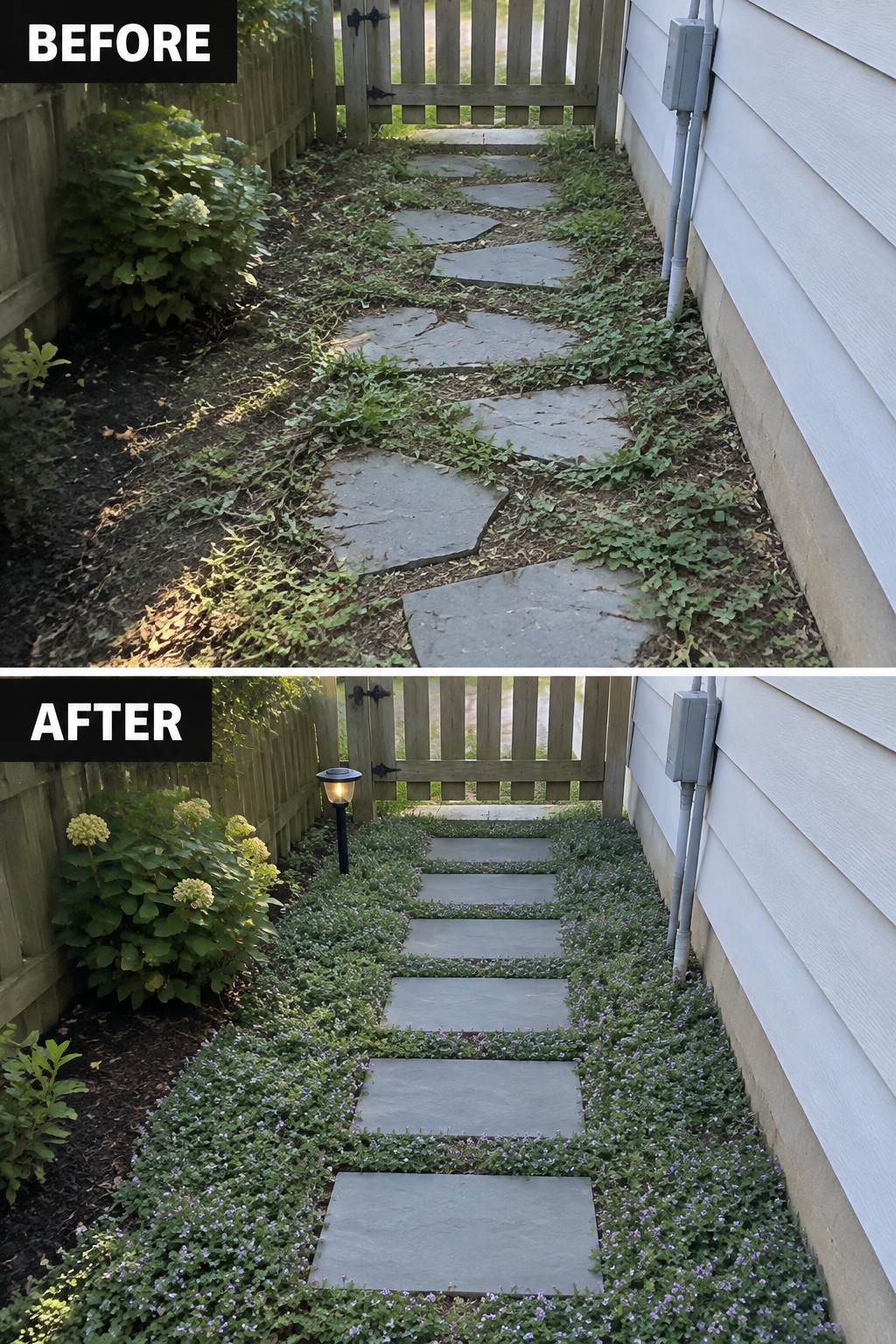
The biggest change here is replacing the messy weeds and bare dirt with a low, flowering ground cover that runs neatly along both sides of the stepping stones. This single planting decision turns a neglected walkway into something that feels intentional and cared for, without adding any new hardscaping.
This approach works well in small side yards or cottage-style gardens where you want the path to feel connected to the planting beds. Start by clearing the worst of the weeds first, then choose a tough, low-growing plant that can handle some foot traffic and shade from nearby shrubs. The result stays simple and easy to maintain over time.
Replace A Straight Path With A Winding Brick Walkway
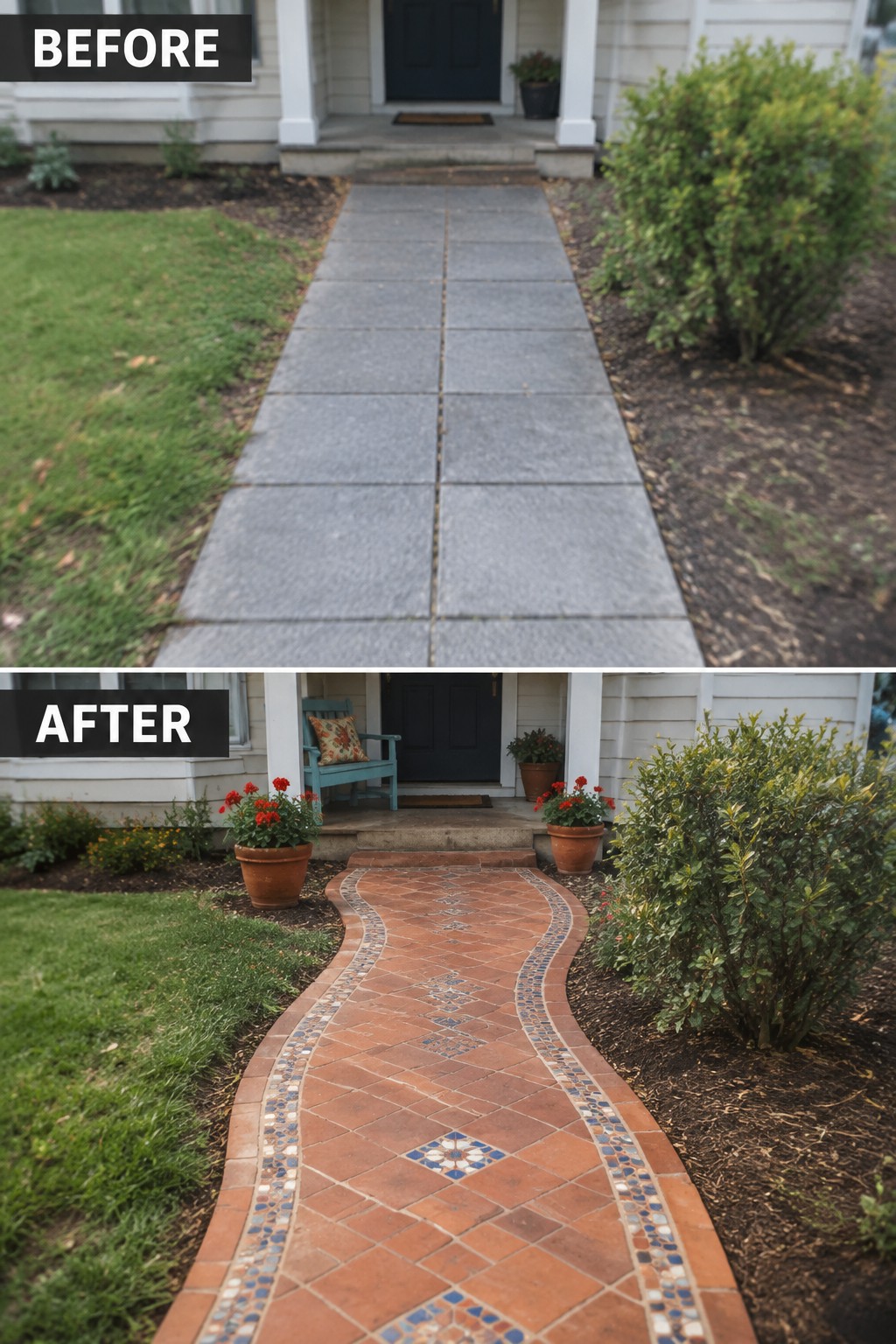
A straight concrete slab works fine for getting from the lawn to the door, but it does little for the look of a cottage yard. Swapping it for a gently curved brick path with a decorative tile border softens the whole front approach and makes the space feel more planned and welcoming. The change is mostly in the shape and material. The new path meanders just enough to slow the eye and tie the lawn, beds, and porch together.
This idea works best on smaller front yards or side gardens where a rigid line feels out of place. Keep the curve gentle so the path still feels practical, and use a simple repeating pattern in the bricks rather than too many colors. If your budget is tight, start with the edging and a single row of accent tiles, then fill in the field later.
Replace A Cracked Path With Cobblestone
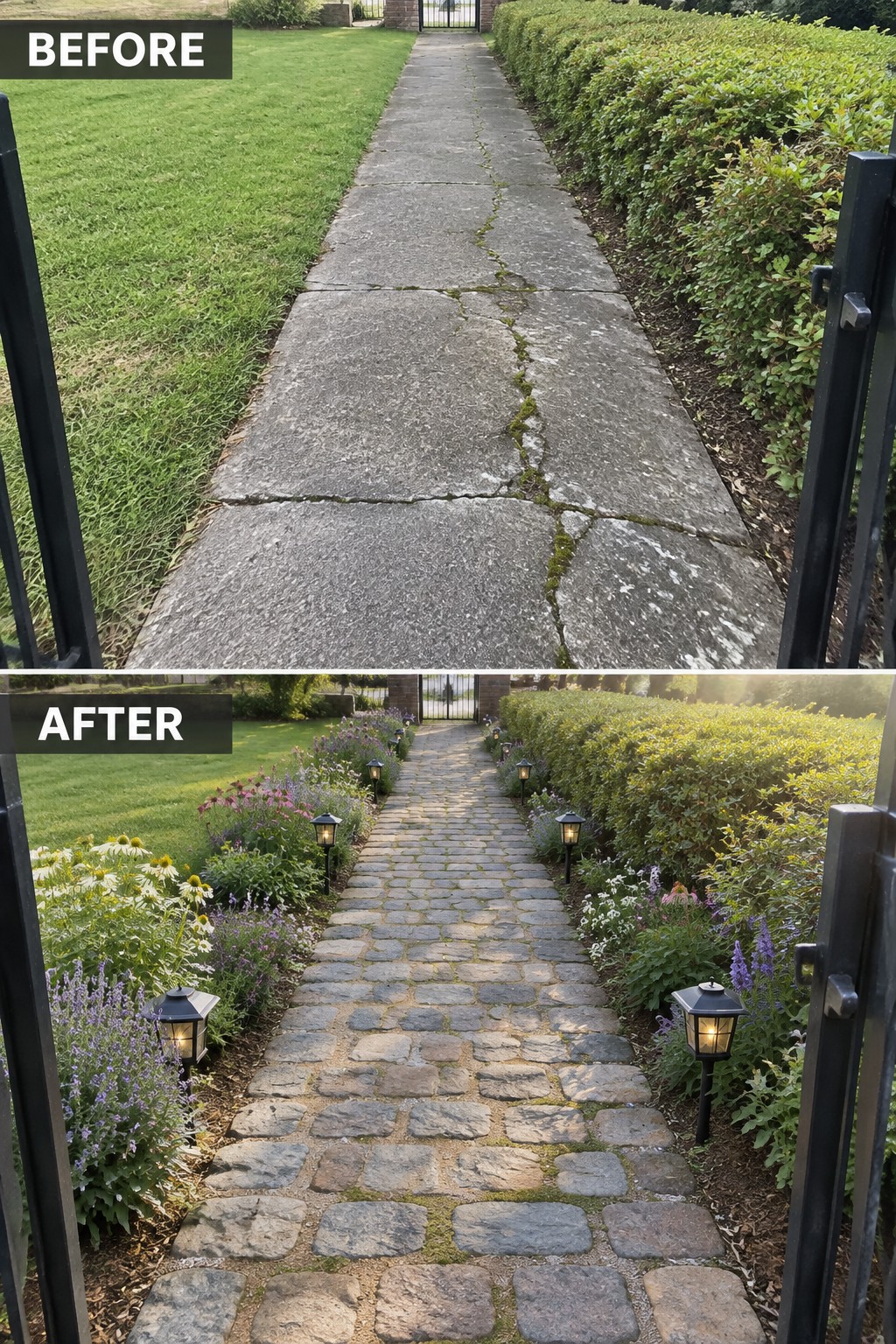
A cracked concrete path often makes the whole yard feel neglected. Switching to cobblestone gives the walkway shape and texture while the new flower borders on both sides turn it into a proper garden feature instead of just a route from gate to gate.
This idea suits older homes or cottage-style yards where the path needs to feel like part of the planting rather than separate from it. Clean up the edges first, then choose pavers that sit low to the ground so mowing stays simple. Add a few low lights along the sides if you use the path after dark.
Create A Garden Path With Stepping Stones
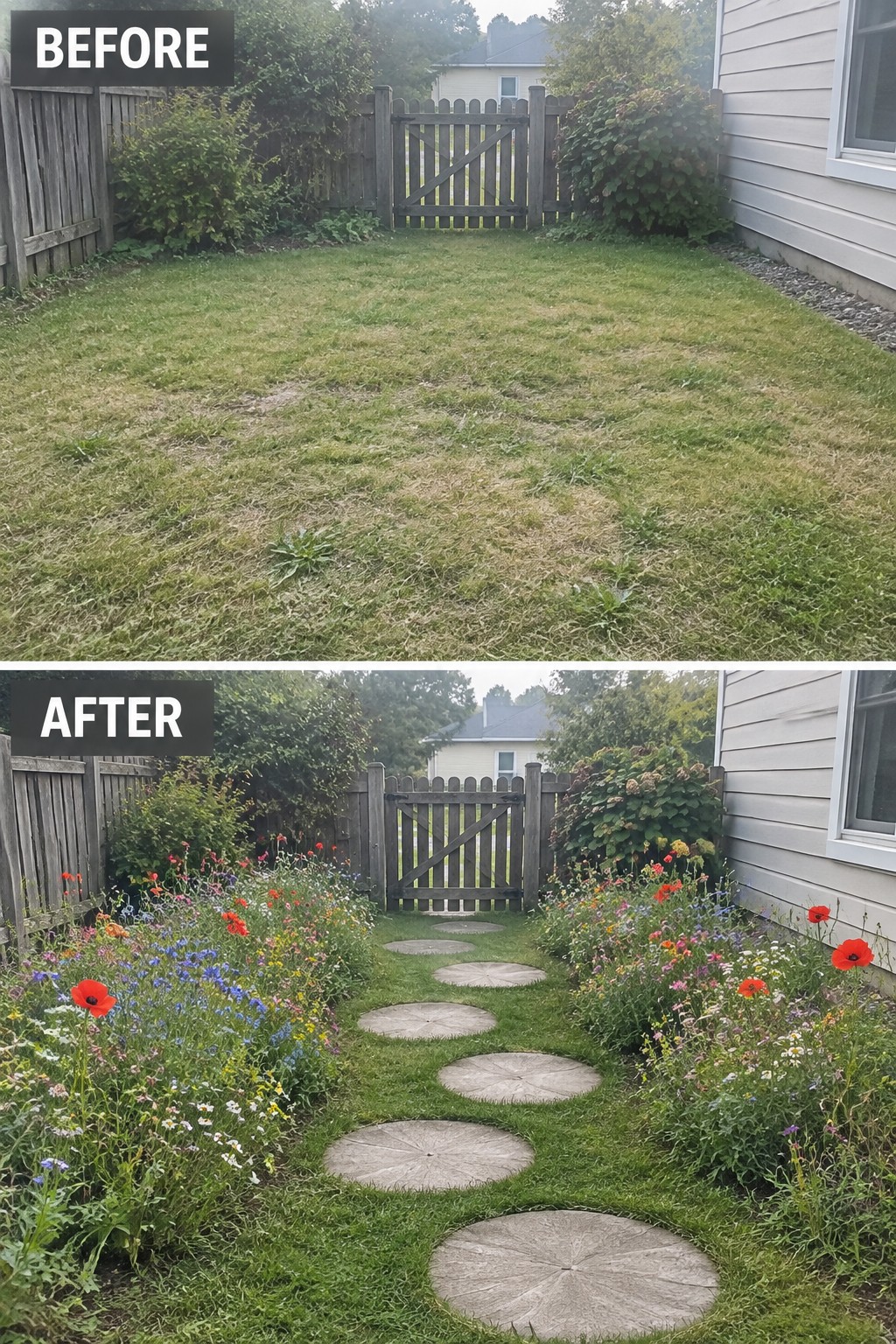
A flat lawn often feels unfinished because there is no clear way to walk through it. Adding a line of stepping stones gives the space direction and turns an open area into something more usable.
This idea works well in smaller yards or cottage gardens where you want to add interest without crowding the space. Keep the stones simple and let the flowers along the edges do the rest of the work.
Define A Narrow Side Path With Gravel And Borders
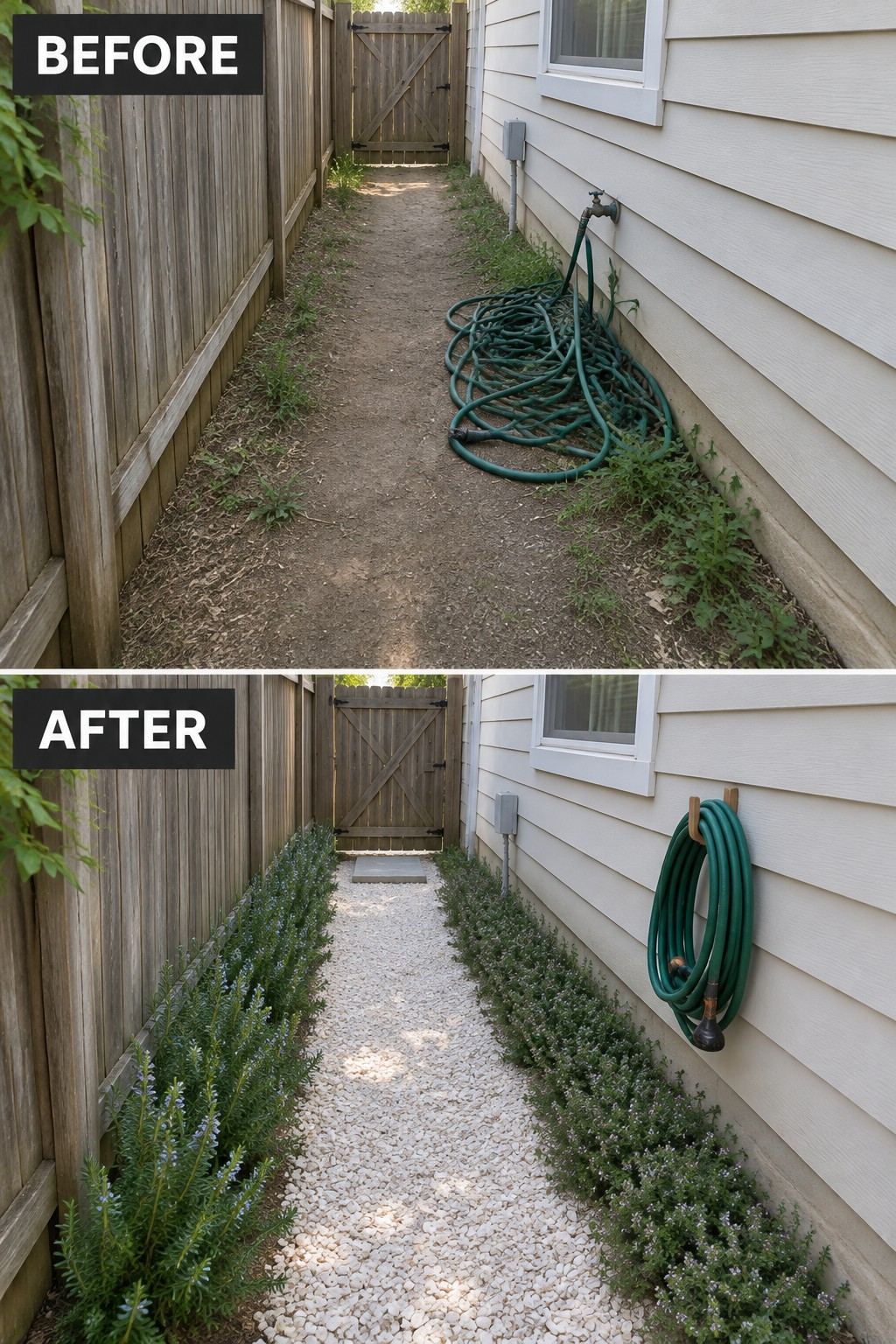
A dirt path next to the house often ends up as a weedy, muddy strip that feels unfinished. Laying down gravel creates a firm walking surface while low planting on both sides gives the space clear edges and keeps it from looking neglected.
This approach works well in tight areas between a fence and the house where there is little room for big features. Clear the ground first, add simple edging to hold the gravel in place, and choose compact border plants that will not overgrow the walkway. The result is a path that stays usable and looks intentional without needing much maintenance.
Replace An Overgrown Path With A Brick Walkway
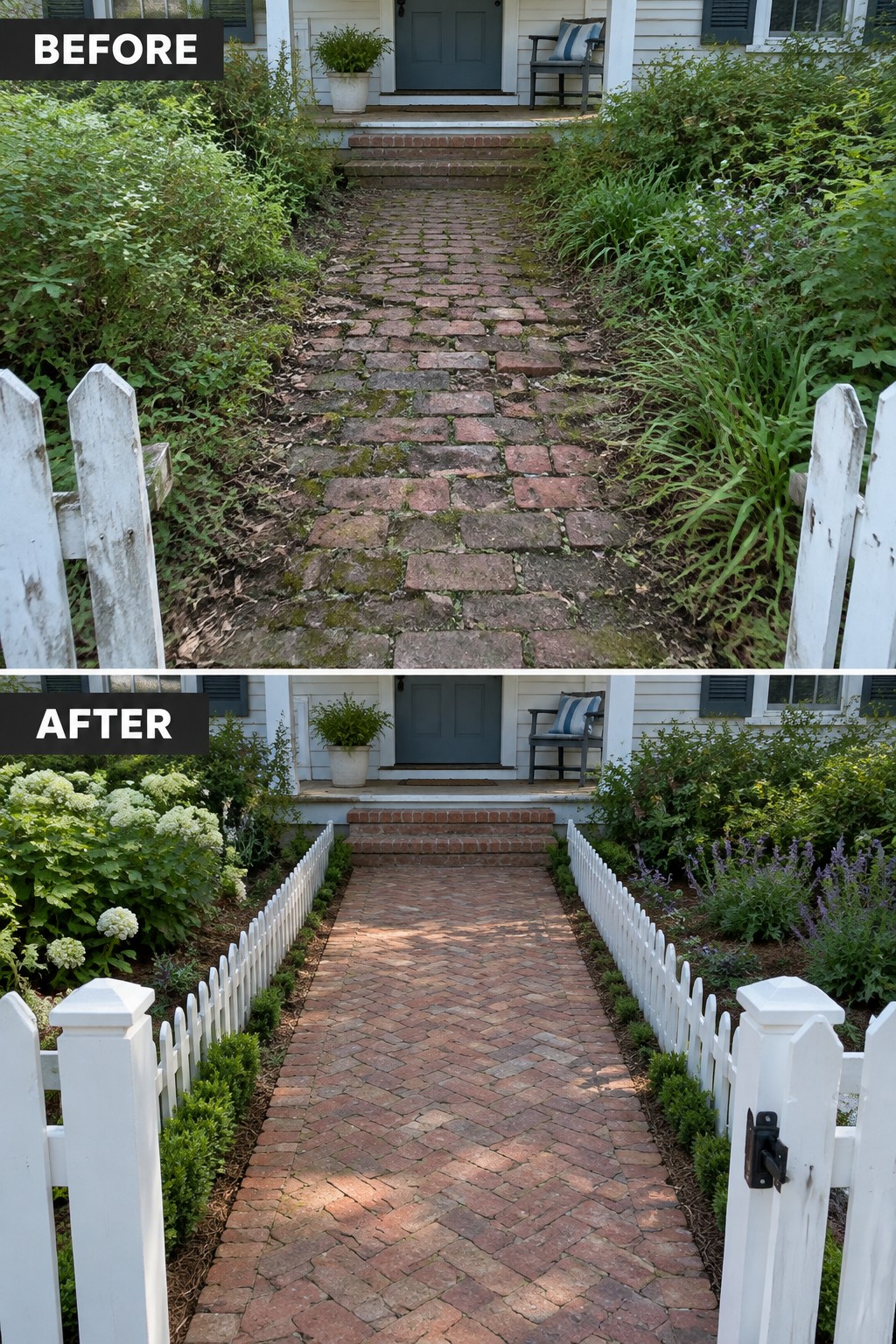
An overgrown walkway quickly starts to feel neglected. In this case the old bricks were still there but buried under weeds and moss, with no clear edges on either side. Laying them in a simple herringbone pattern and adding a white picket fence on both sides instantly made the path look intentional and kept the plants from spilling over.
This approach works well in small cottage yards where you want the path to feel like part of the garden rather than just a route to the door. Start by clearing everything back to the soil line, then set the pavers on a solid base so they stay level. Keep the planting low and simple along the fence so the walkway stays the main feature.
Add Stone Edging To Define A Garden Path
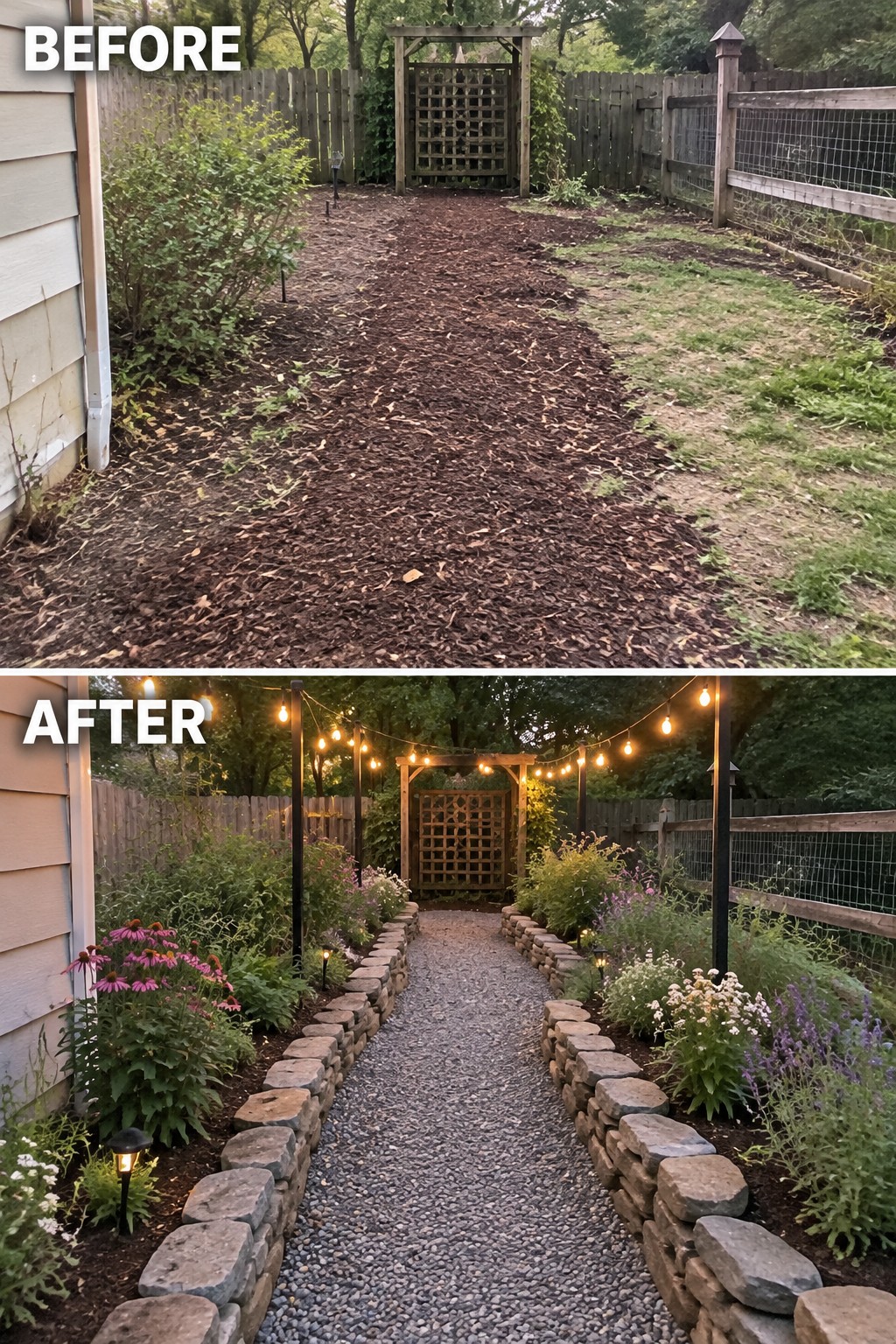
Switching from loose mulch to gravel and adding stacked stone borders gives the path a clear shape that feels more finished. The beds on either side now sit neatly within those edges, which makes the whole walkway look planned instead of just worn through the yard. A few lights along the borders help too, but the edging does most of the work.
This approach suits cottage yards where the path needs to connect different areas without looking too formal. Lay the edging first so you can adjust the width and curve before you bring in gravel or plants. It keeps the beds from spilling over and gives you an easy guide when you start adding flowers or low lighting.
Add An Arbor To Define A Narrow Garden Path
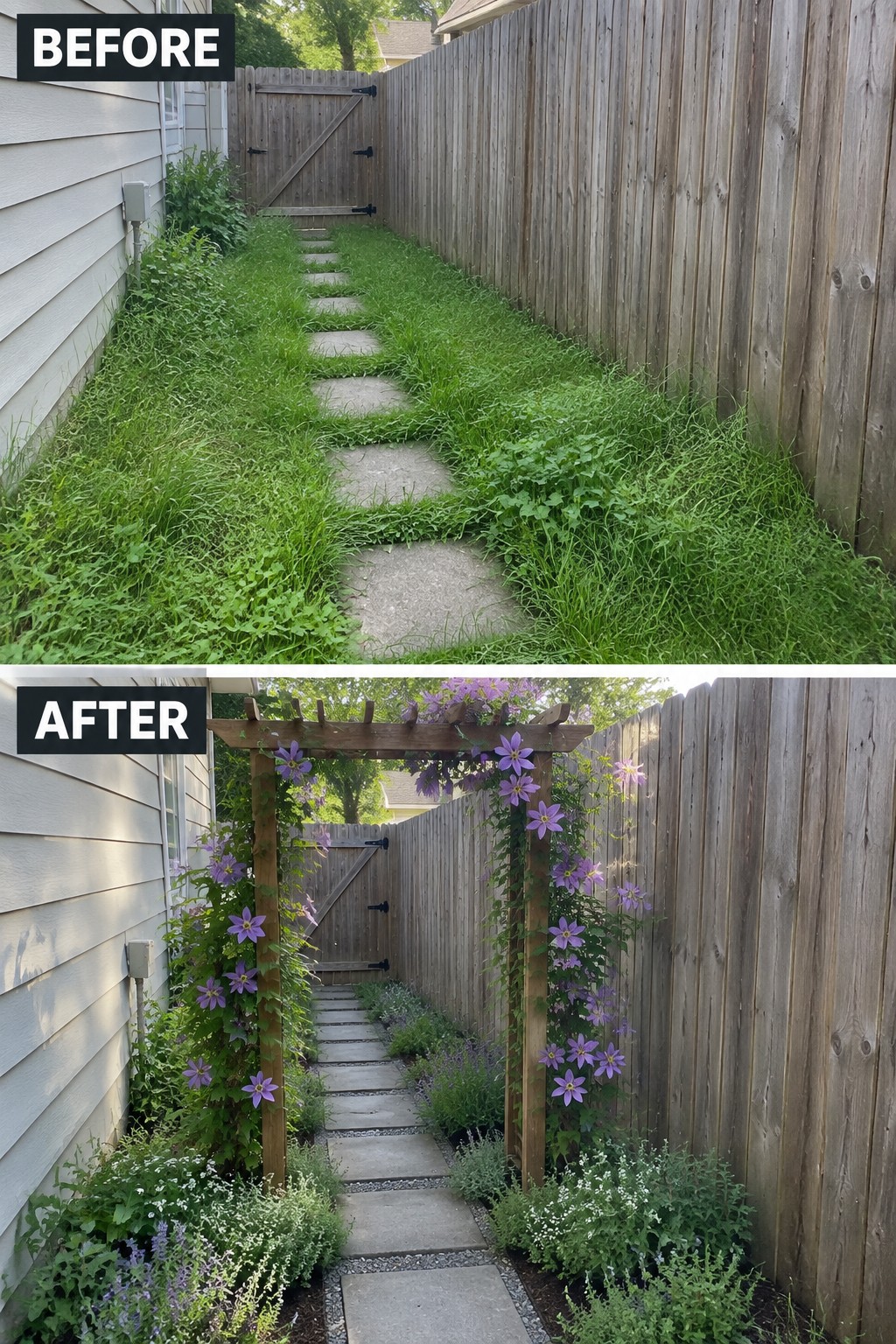
A narrow side path often gets ignored until the grass and weeds take over. Adding an arbor at the entrance gives the space a clear starting point and turns a simple walkway into something that feels planned. The overgrown edges were cleaned up first, then simple beds were added on both sides so the path stays open and easy to walk.
This works well in side yards or between a house and fence where space is tight. Keep the planting low along the edges so the path does not feel closed in, and choose one or two vines for the arbor that will cover it without constant trimming. The arbor does most of the work by marking the entrance and pulling the whole area together.
Define A Garden Path With Simple Edging
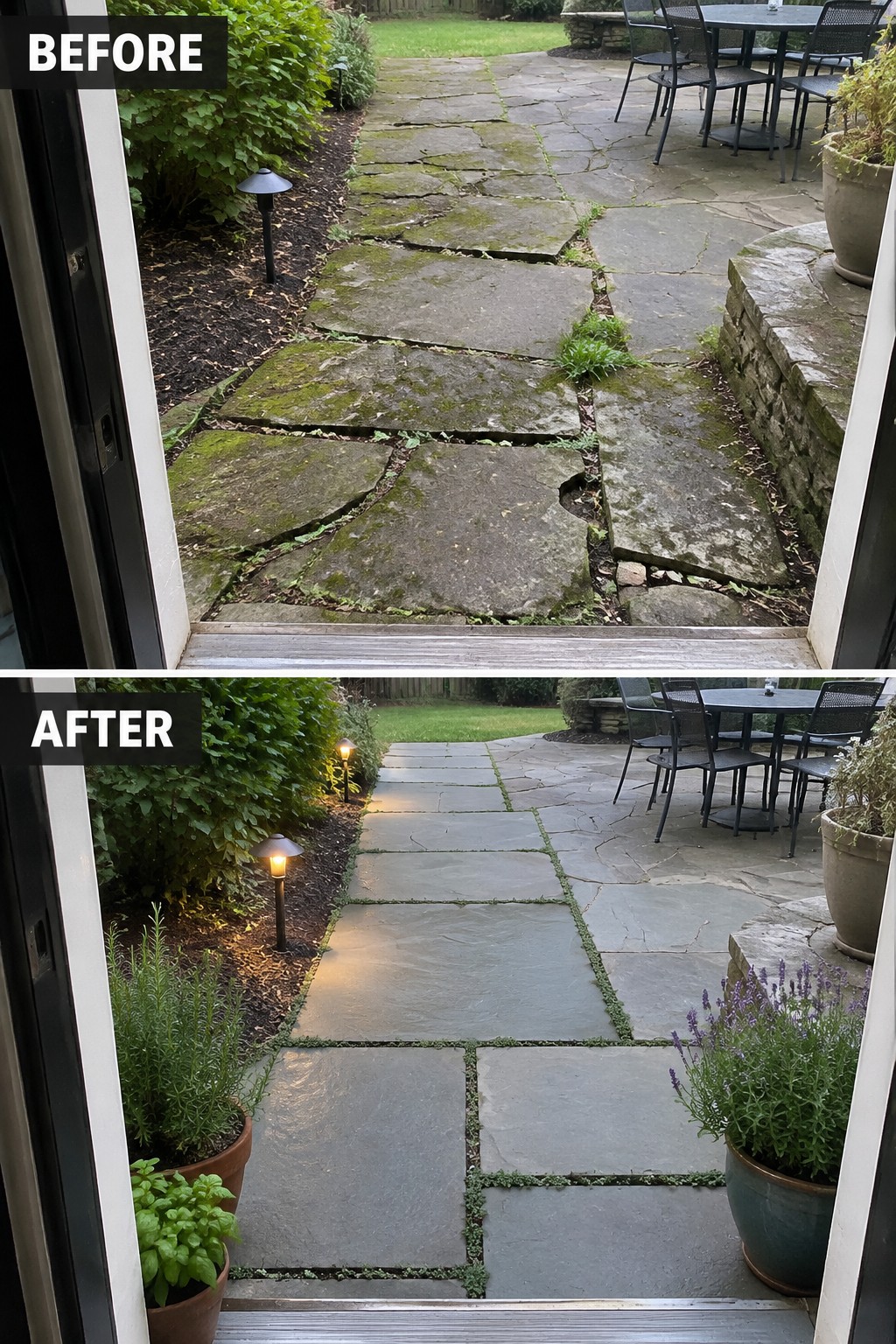
A mossy, uneven path quickly starts to feel neglected. Cleaning the stones, adding a crisp border of low plants, and placing a few path lights turns the same walkway into something that looks intentional and easy to follow. The change is mostly about structure rather than new materials.
This approach works well in smaller cottage yards where the path is the main route from the house to the patio or lawn. Start by removing the overgrowth, then keep the new planting low so it frames the stones without crowding them. One or two lights are usually enough if they sit close to the path itself.
Define An Overgrown Path With Stepping Stones
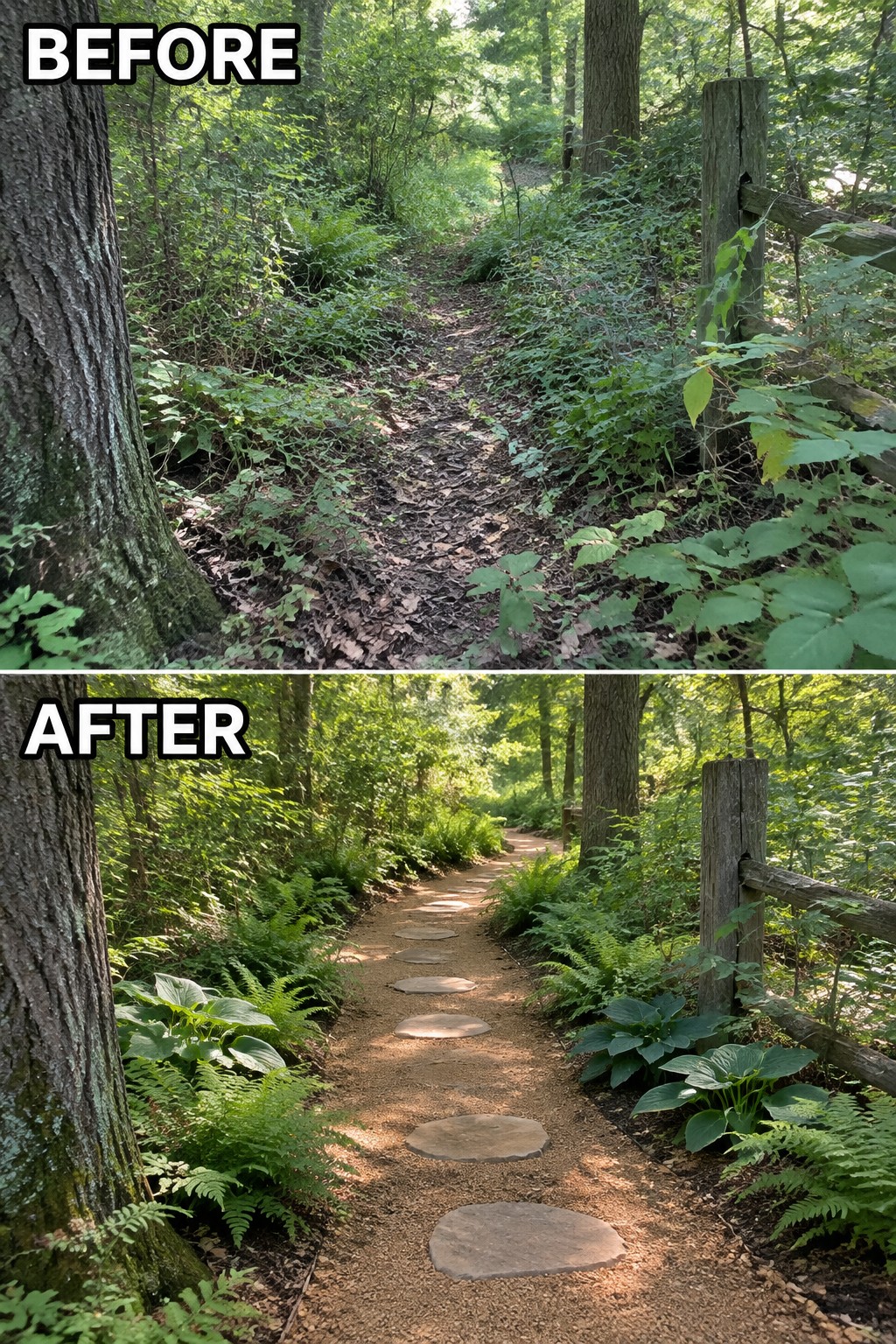
A dirt trail covered in leaves and hemmed in by unchecked growth became a clear route once stepping stones were set into fresh gravel. The stones give the path shape and make it feel intentional instead of accidental.
This idea suits cottage yards where the land already has trees and natural curves. Start by clearing debris and widening the route slightly, then lay stones far enough apart for comfortable steps. Keep the planting simple along the edges so the path stays the main feature.
Curve The Path And Add Flower Borders
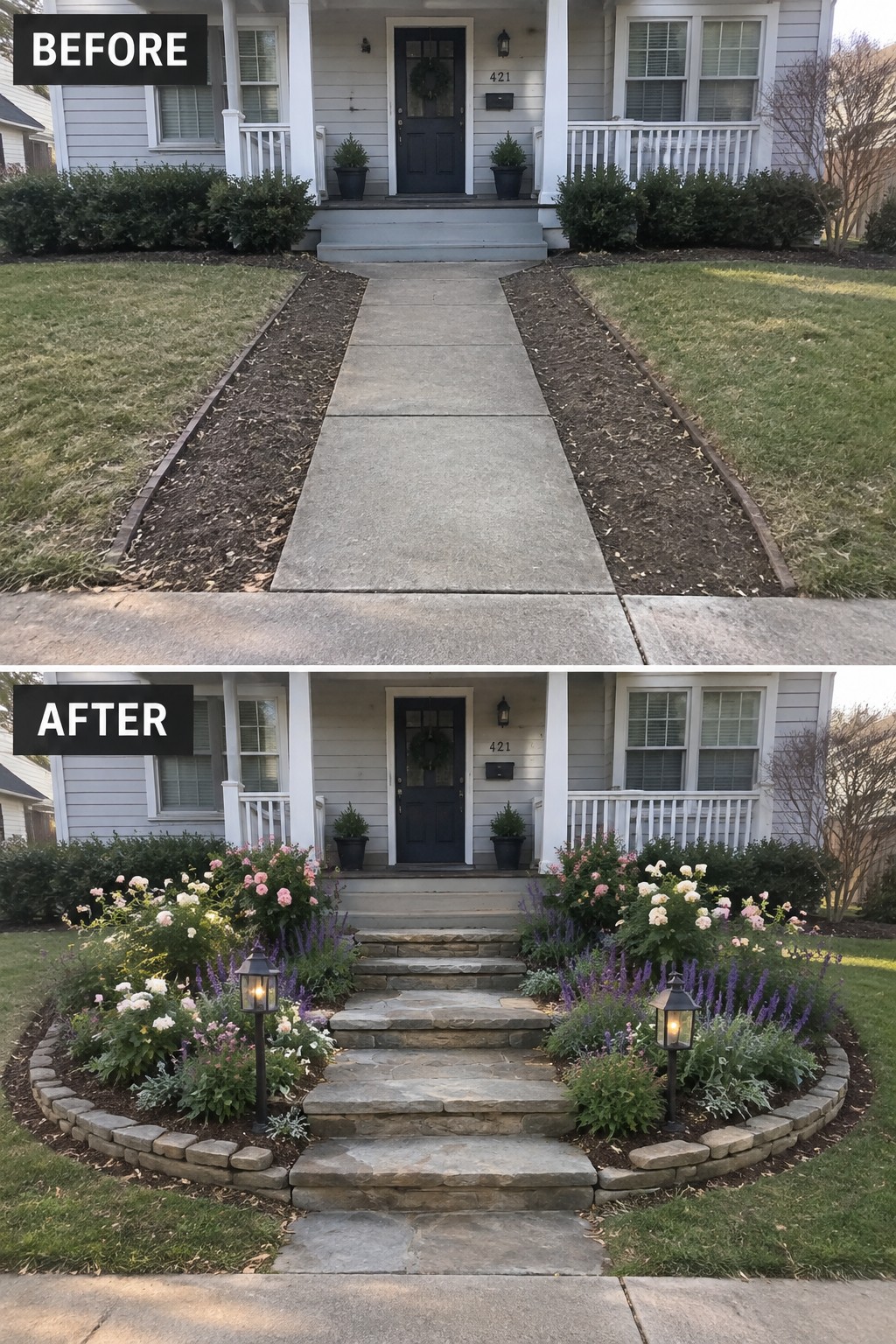
A straight concrete walk with plain mulch edges often feels flat and forgettable. Replacing it with a gentle curve and planting beds on both sides gives the front yard a clear shape and makes the house feel more connected to the garden. The new stone steps and path slow you down in a good way, while the flowers and low lights create a softer arrival.
This approach works well on smaller lots or cottage-style homes where you want the walk to feel like part of the landscape instead of just a line to the door. Start by laying out the curve with a hose so you can test the shape from the street, then keep the plantings simple and layered so the beds stay full without looking crowded.
Turn A Steep Dirt Path Into Stone Steps
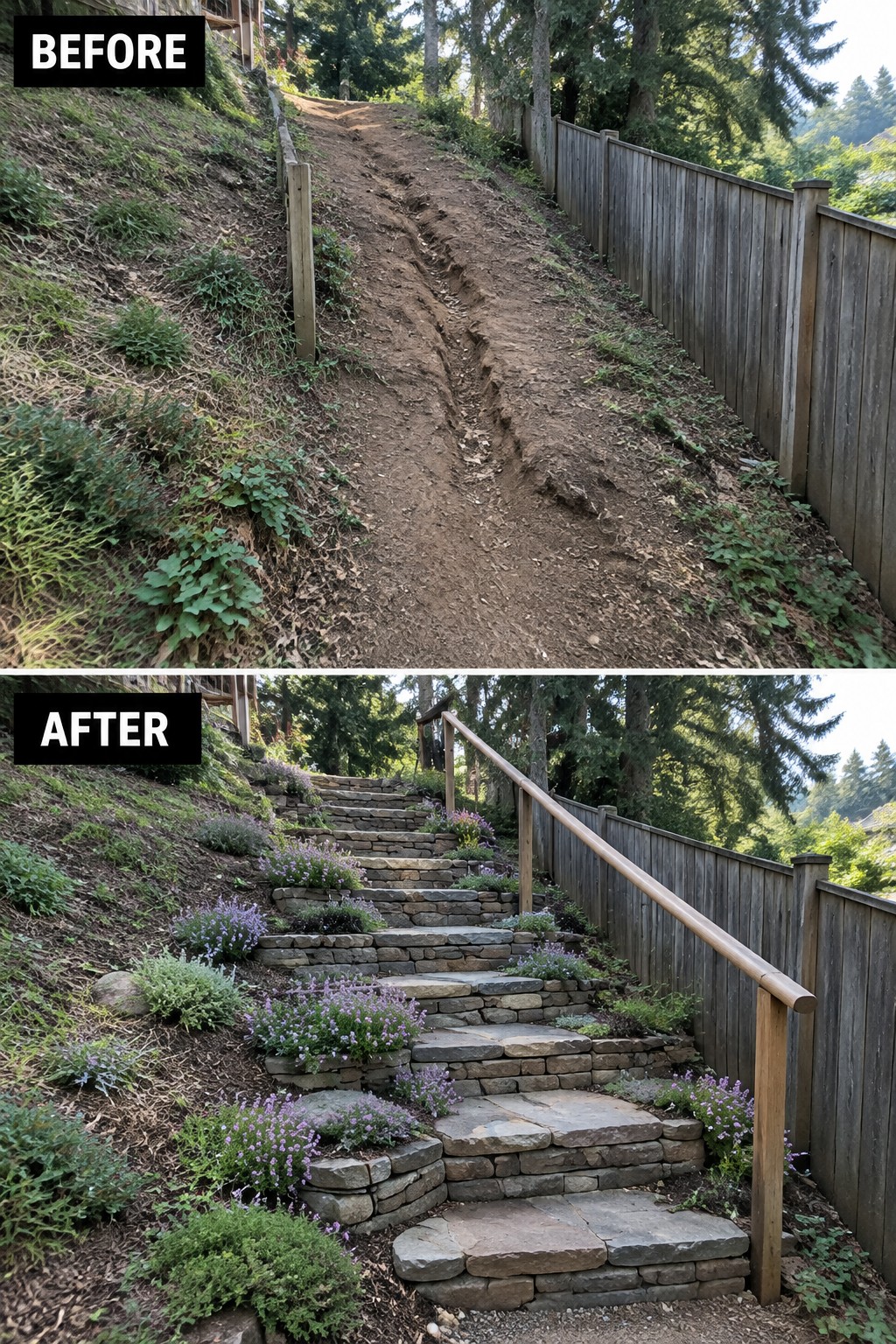
A steep dirt path wears down fast and becomes hard to use. Replacing it with stone steps and low retaining walls gives the slope real structure while keeping the walkable surface stable. The planting tucked into the edges softens the stone and helps hold the soil in place.
This approach works well on cottage-style properties where the yard has noticeable grade changes. Start with the steps and walls first, then add simple plantings along the sides rather than trying to decorate the slope all at once. Keep the path width comfortable for two people and choose materials that match the local stone or existing hardscaping.
Define A Muddy Path With Pavers And Drainage Planting
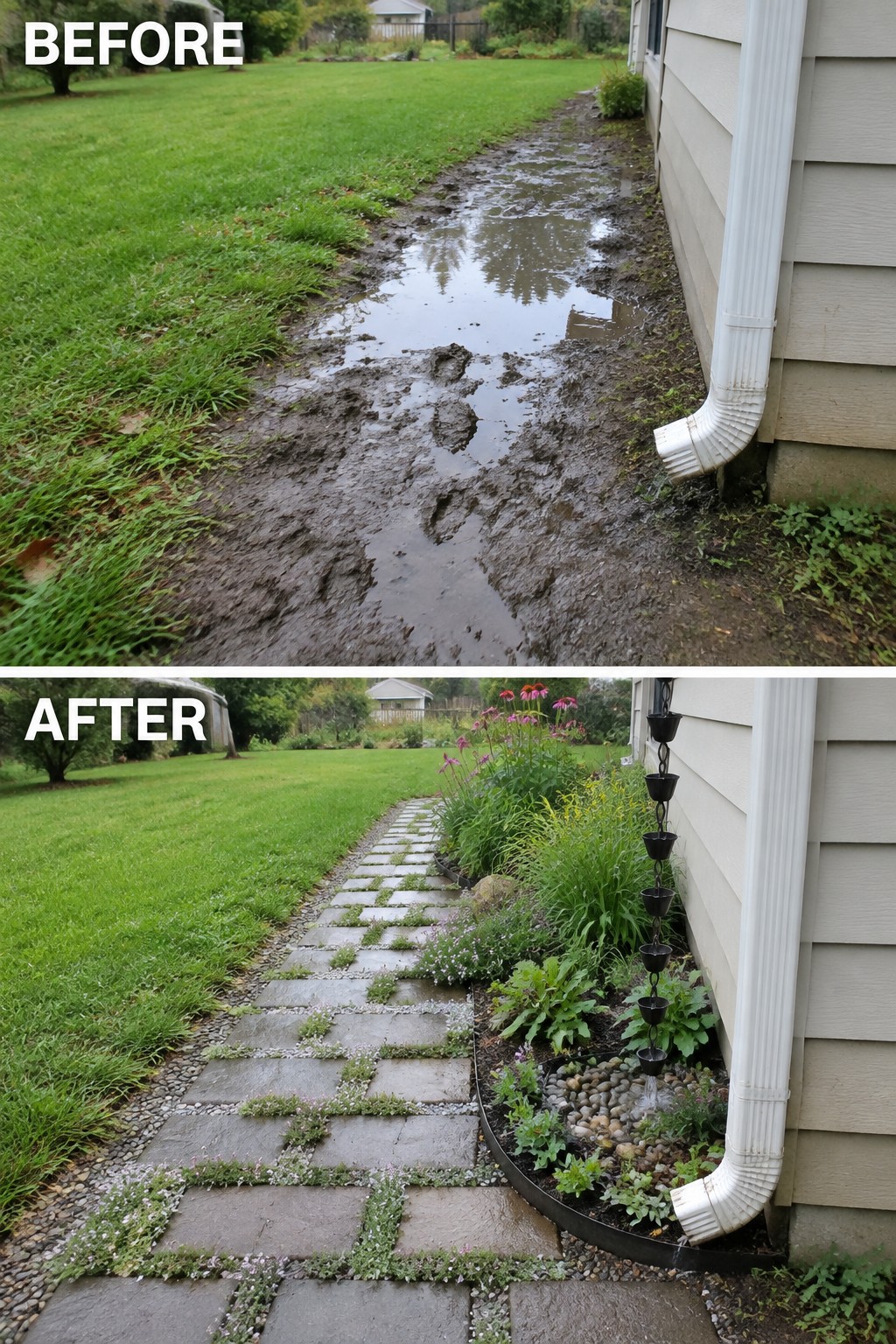
A soggy walkway along the side of the house is a common problem, especially when a downspout empties right onto the grass. Laying a simple grid of pavers gives the path a solid surface to walk on and stops the constant mud. Adding a curved bed with a rain chain and gravel at the base lets the water drain properly instead of pooling.
This approach works well along narrow side yards or any area where foot traffic and runoff overlap. Start by fixing how the water moves before adding plants or extra features. Keep the path width practical so it still leaves room to mow or reach the foundation if needed.
Replace A Concrete Path With Stone Pavers
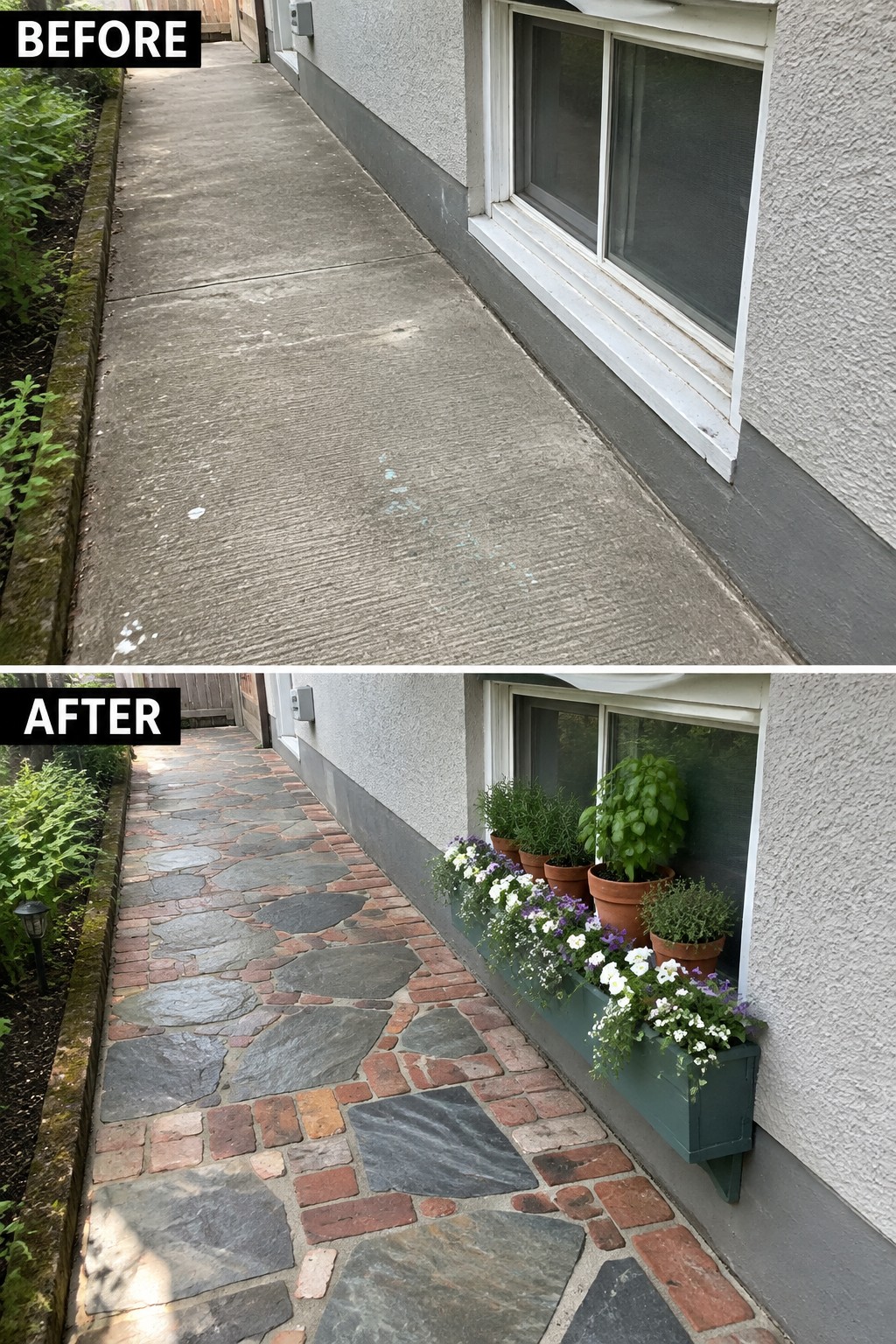
A plain concrete walkway next to the house tends to feel stark and purely functional. Swapping it for irregular stone pavers with brick accents softens the look and turns the path into part of the garden instead of just a strip of hard surface. The new materials add texture and a settled feel that works well with cottage style homes.
This approach suits narrow side yards where you want something durable underfoot but still charming. Lay the pavers in a loose, natural pattern rather than a tight grid, and keep the planting simple so the path remains the main feature. It helps the whole area feel more connected to the garden without needing a full redesign.
Define A Garden Path With Gravel And Stepping Stones
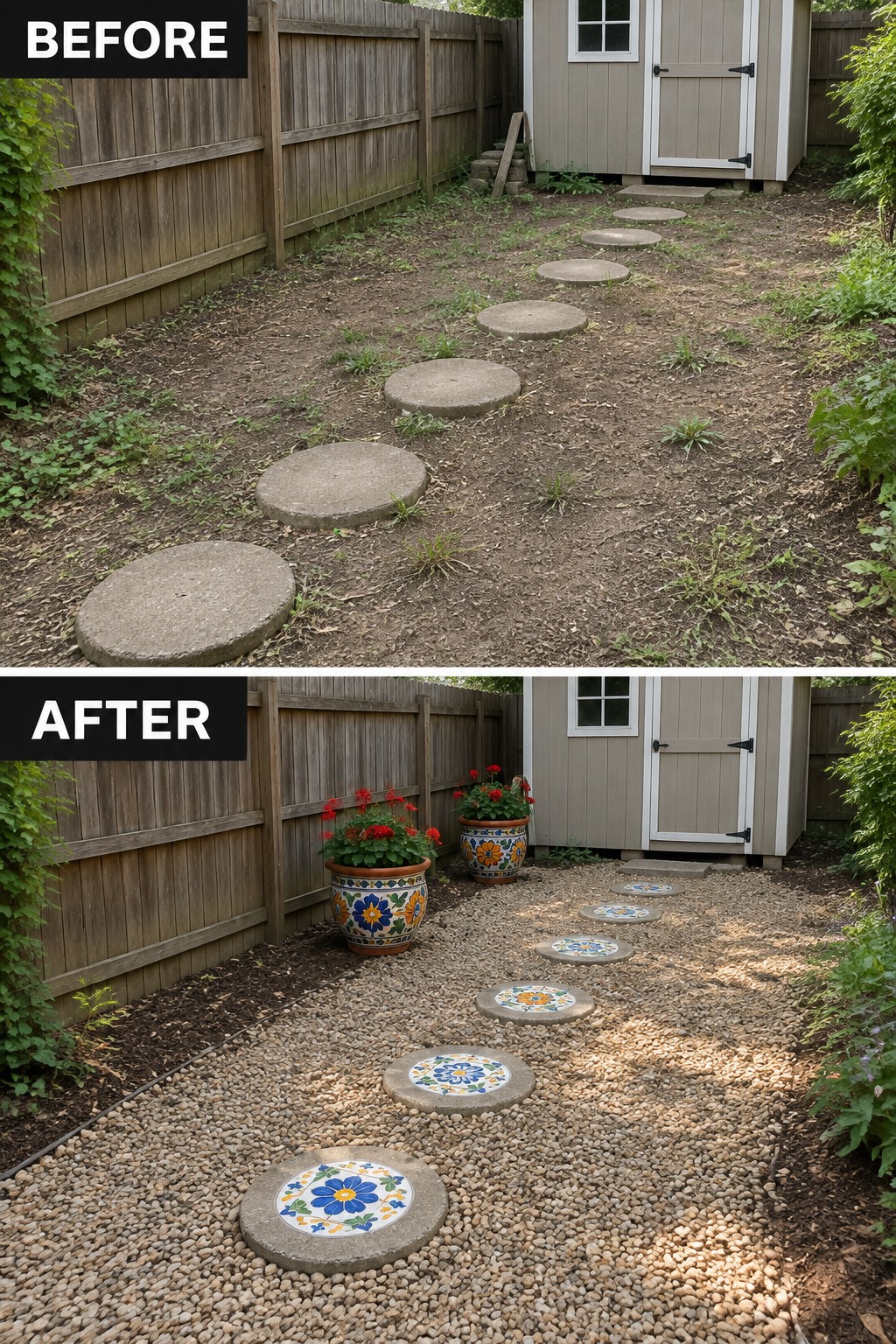
Covering bare dirt with gravel and swapping plain stepping stones for patterned ones gives a garden path a clear, finished look. The before photo shows scattered concrete circles sinking into weeds and mud. Once the gravel goes down and the stones get a decorative update, the path feels intentional and much easier to walk.
This idea suits cottage yards that need structure without looking too formal. Clear the weeds first, then lay landscape fabric before the gravel so the surface stays clean longer. Keep the stepping stones spaced for comfortable steps and repeat the same pattern or color to tie the whole path together.
Define A Garden Path With Stone Pavers
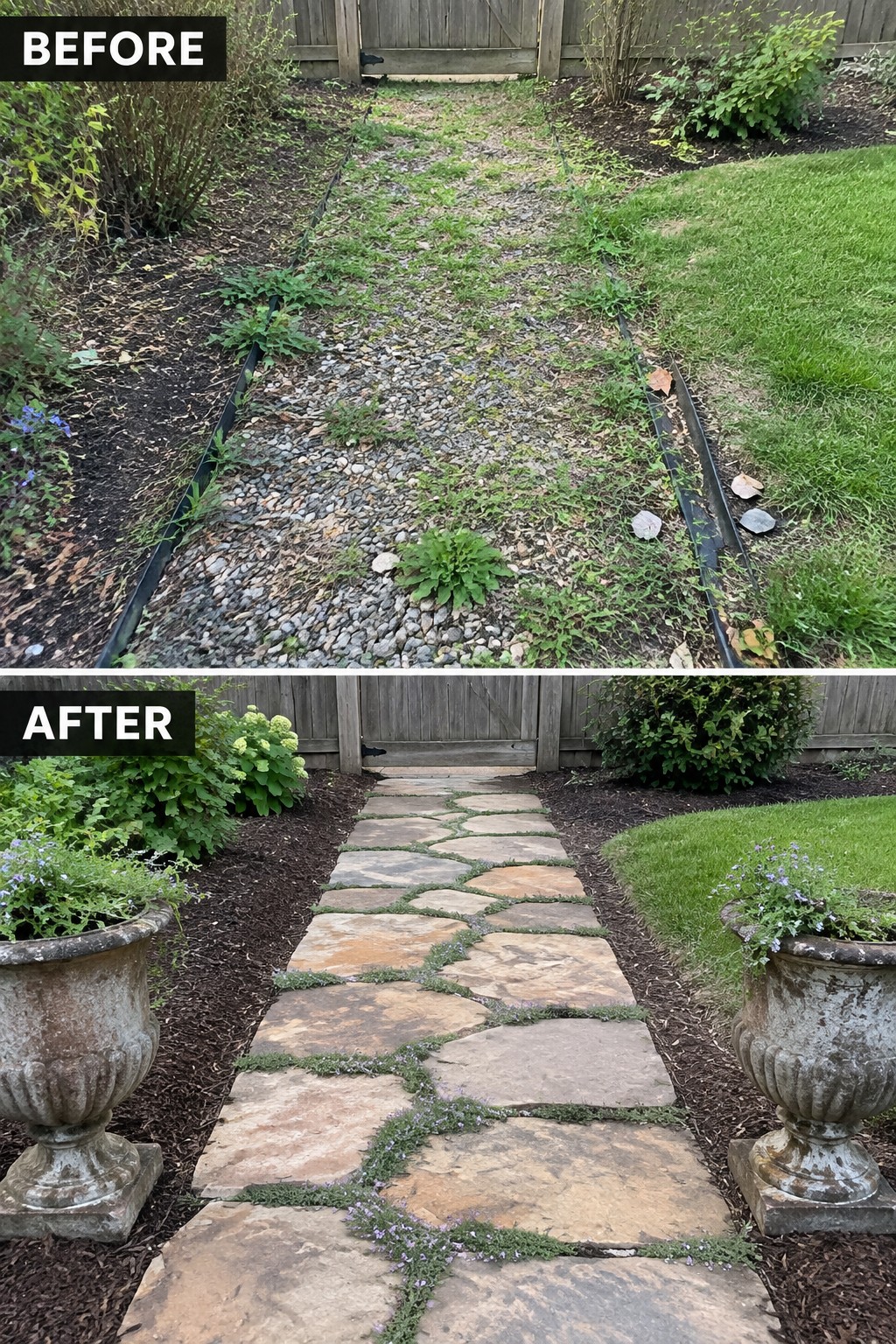
A gravel path that fills with weeds quickly starts to look messy and unplanned. Laying down irregular stone pavers creates a solid surface that keeps the walkway clear and gives the surrounding garden a more finished shape.
This idea suits cottage yards that already have some planting but need better structure. Start by removing the old gravel and weeds, then set the pavers with gaps for low ground cover to soften the edges. Placing a pair of large planters at the start of the path helps mark the entrance without adding clutter.
Use Pavers To Create A Garden Path
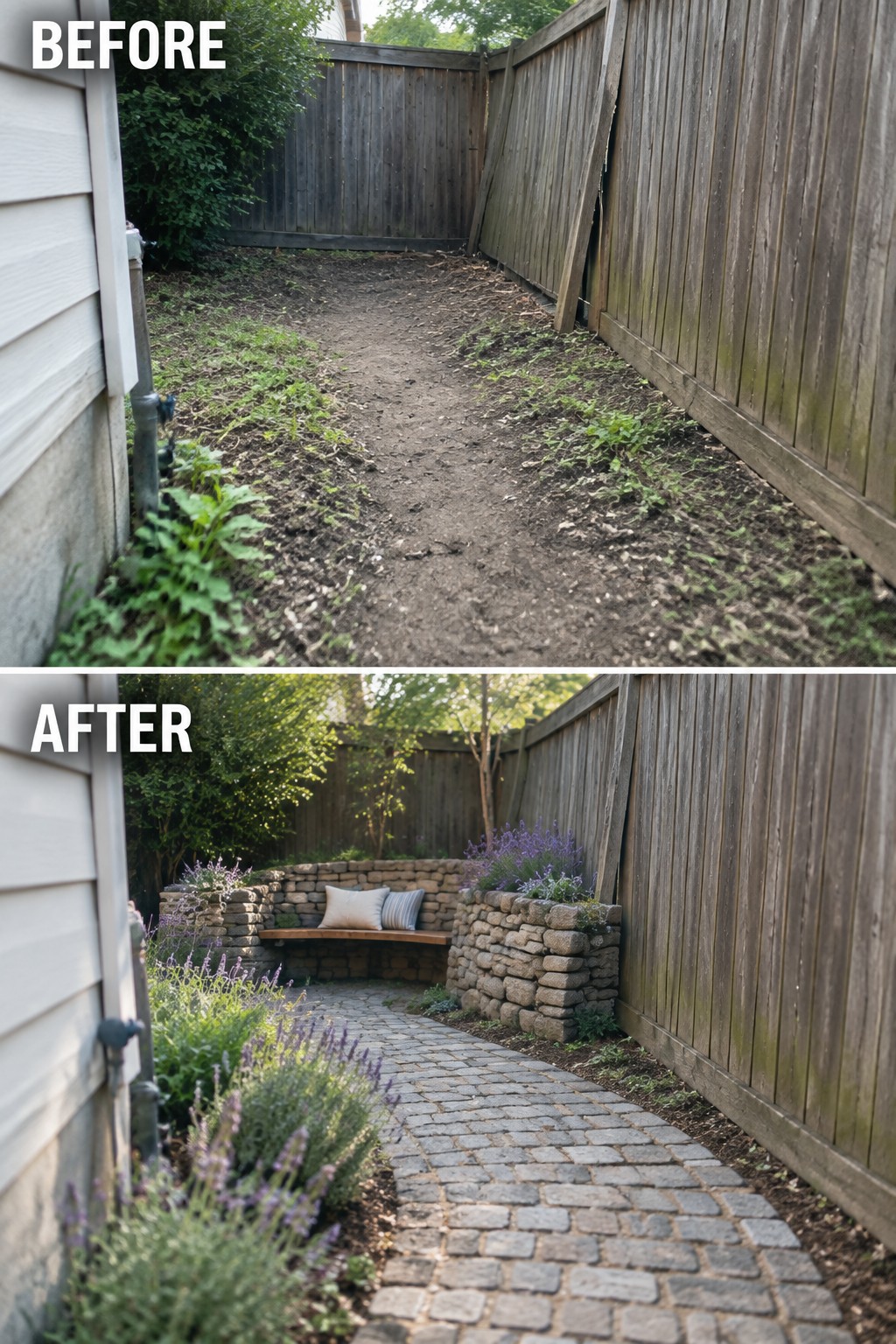
A bare dirt path along a fence usually feels like leftover space. Adding pavers gives the area a clear purpose and makes it easy to walk through without tracking mud. The change from loose soil to a solid walkway instantly organizes the whole side yard.
This works best in narrow spaces where you need a route but do not have room for much else. Lay the path first, then add low plantings along the edges. Keep the scale modest so the walkway still feels open rather than crowded.
Define A Plain Path With Garden Beds
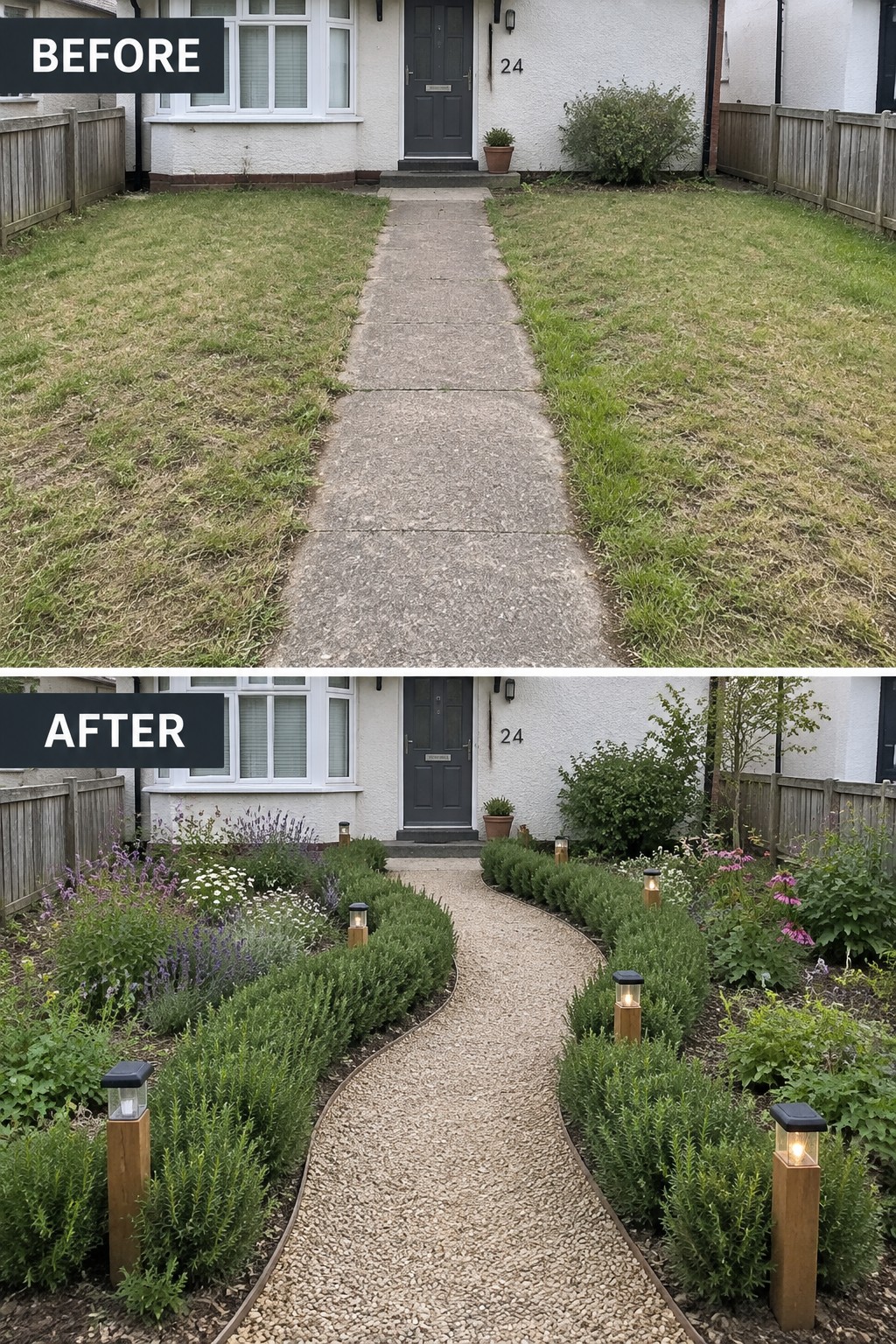
A straight concrete path through flat lawn often feels unfinished because there is nothing to mark the edges. Adding low borders and switching to gravel gives the walkway a clear shape and makes the whole front yard feel more intentional. The beds also pull attention toward the house instead of letting the eye wander across empty grass.
This approach works especially well on small or narrow front yards where you want structure without crowding the space. Start with simple edging to set the curve, then fill the beds with a mix of evergreen shrubs and seasonal flowers so the look holds up year-round. Keep the path width comfortable for walking and leave enough room on either side for plants to grow without spilling over.
Frequently Asked Questions
Q: What kind of base should I put under a gravel path so it stays level over time?
A: Dig out a few inches of soil first and pack down a layer of crushed rock. This gives the gravel something solid to rest on and stops it from sinking into mud after rain.
Q: How often will I need to rake or refill a mulch path in a shady cottage yard?
A: Check the path once a season and add a thin top layer where it thins out. Fallen leaves help keep it in place so you rarely start from scratch.
Q: Can I curve a brick path around existing flower beds without tearing up the plants?
A: Lay the bricks right on top of the grass edge first to test the shape. Then lift small sections at a time and set them in sand so the roots stay untouched.
