


I often notice how a narrow path in a small yard starts to feel neglected once the grass creeps in and the edges blur.
Adding simple edging and a clearer route tends to make the rest of the space look more intentional without much added cost.
Small changes like these matter more than I expected.
When I try a couple of the ideas from this list in my own yard I find they help the area feel less like leftover ground and more like part of the whole layout.
Over a season or two those layers of cleanup and structure usually add up to something I actually use instead of just walk past.
Stencil A Pattern On Your Concrete Walkway

A plain concrete walkway often looks tired after a few years, especially when cracks appear and grass creeps along the edges. Adding a stenciled pattern down the center and swapping the grass for gravel gives the path a cleaner, more finished look without tearing out the existing concrete.
This idea works best on narrow side paths or front walkways where a full paver replacement would be costly. Start with a good pressure wash and exterior concrete paint, then use a repeating stencil in two or three colors. Keep the pattern simple so it stays easy to maintain, and repeat the gravel edging elsewhere in the yard if you want the whole space to feel connected.
Define A Narrow Path With Gravel And Stepping Stones
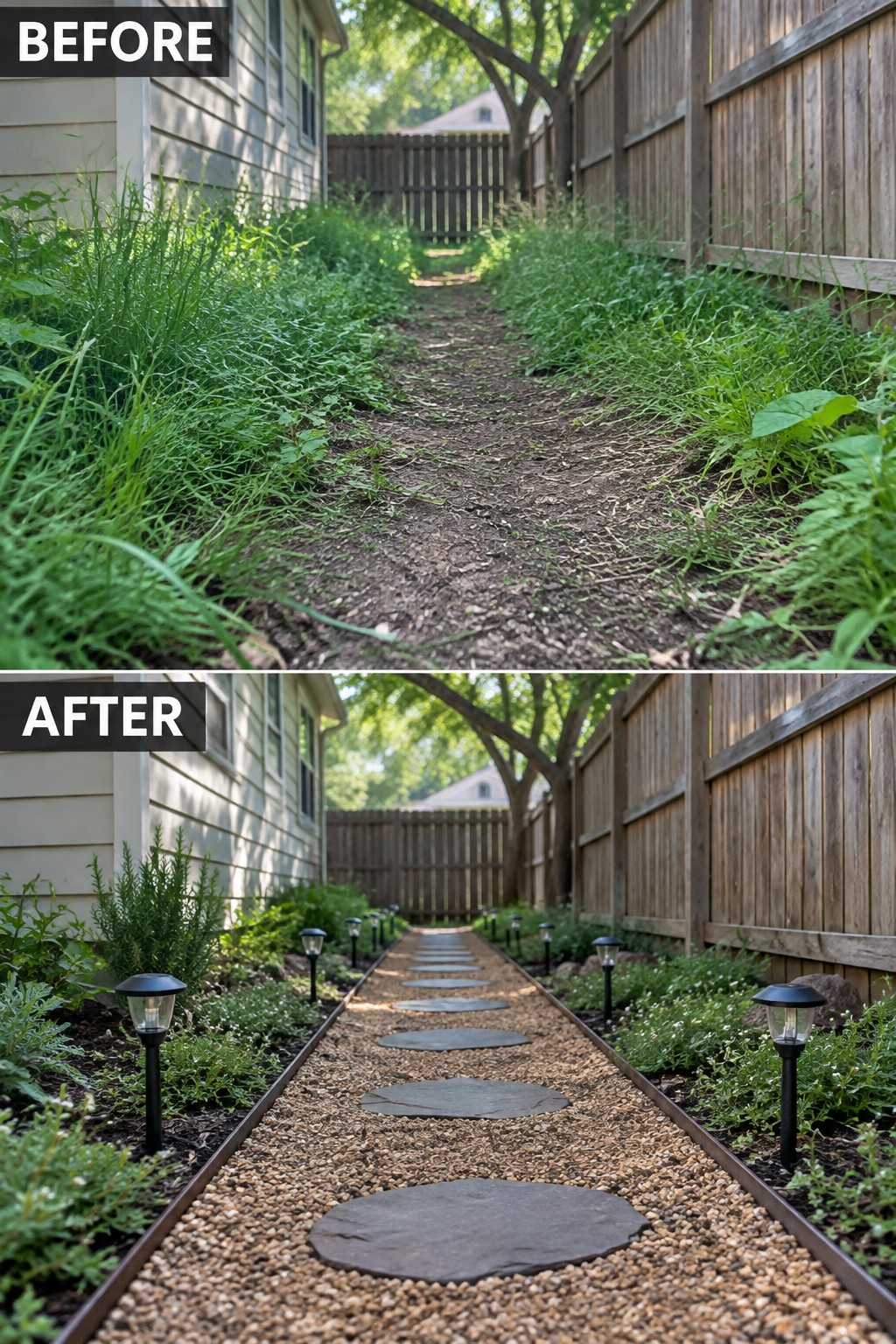
An overgrown dirt path can quickly become a problem in a small yard because the weeds take over and the ground stays muddy after rain. The change here comes from clearing that mess and laying down a simple gravel path edged with metal and filled with flat stepping stones. The gravel keeps the surface clean and walkable while the stones give it structure so it does not feel like a random strip of dirt.
This approach works best in tight side yards or along fences where you still need regular access. Clear the growth first, install edging to hold the gravel in place, and keep the planting low and simple on both sides. A few solar lights help mark the route at night without adding clutter. It is an easy way to make a narrow space feel planned instead of neglected.
Use Pavers To Shape A Simple Walkway
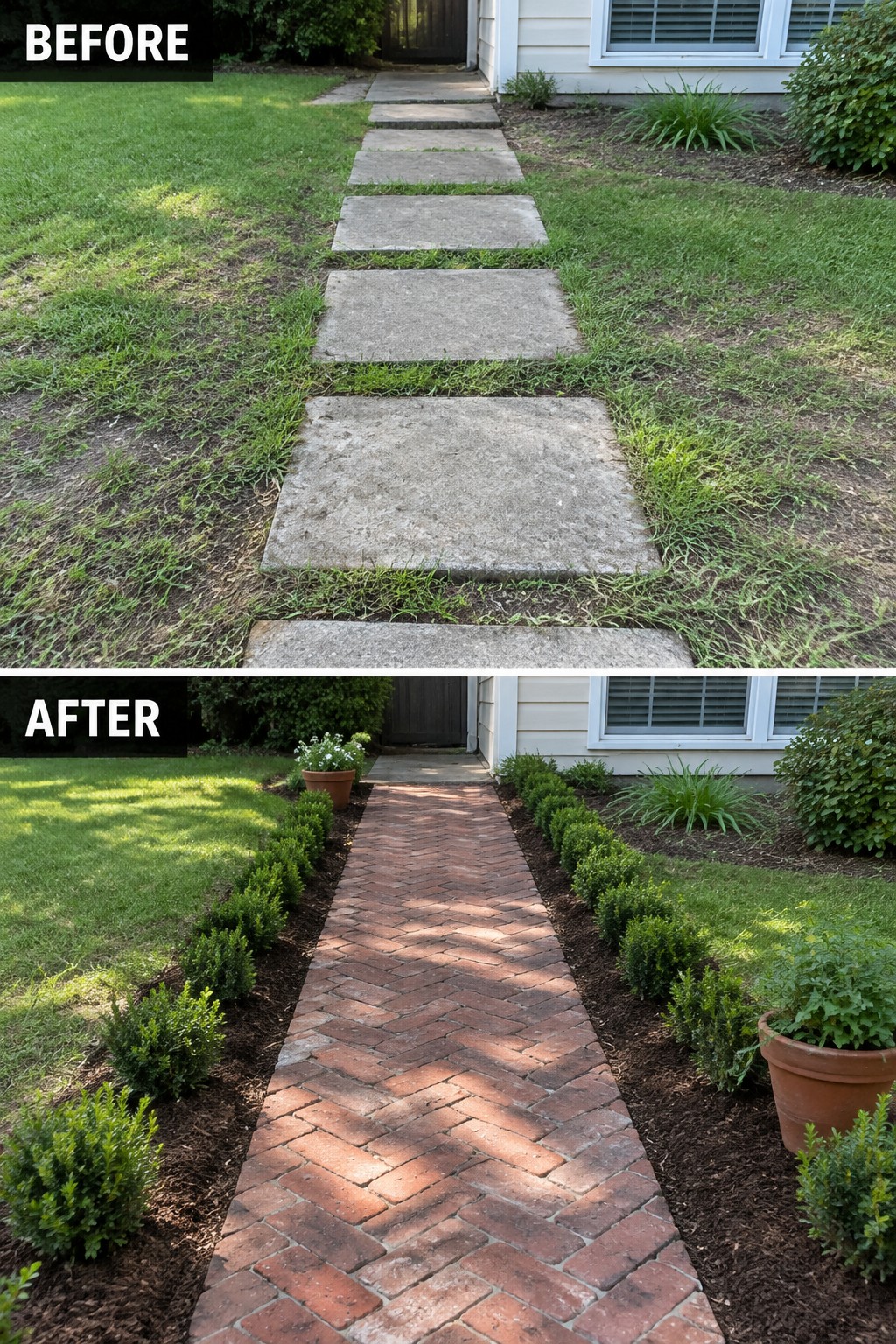
The old stepping stones sat in the grass with no real edge or direction. A solid brick path with a herringbone pattern and low shrubs planted on both sides makes the route feel planned and easy to follow. The borders also keep the lawn from spilling onto the walkway.
This approach suits narrow front yards or side entrances where space is tight. Lay the pavers first, then add compact shrubs and mulch so the beds stay defined without much work. Keep the path width comfortable for walking and leave enough room on the sides for the plants to grow a bit.
Build A Wooden Walkway In A Narrow Side Yard
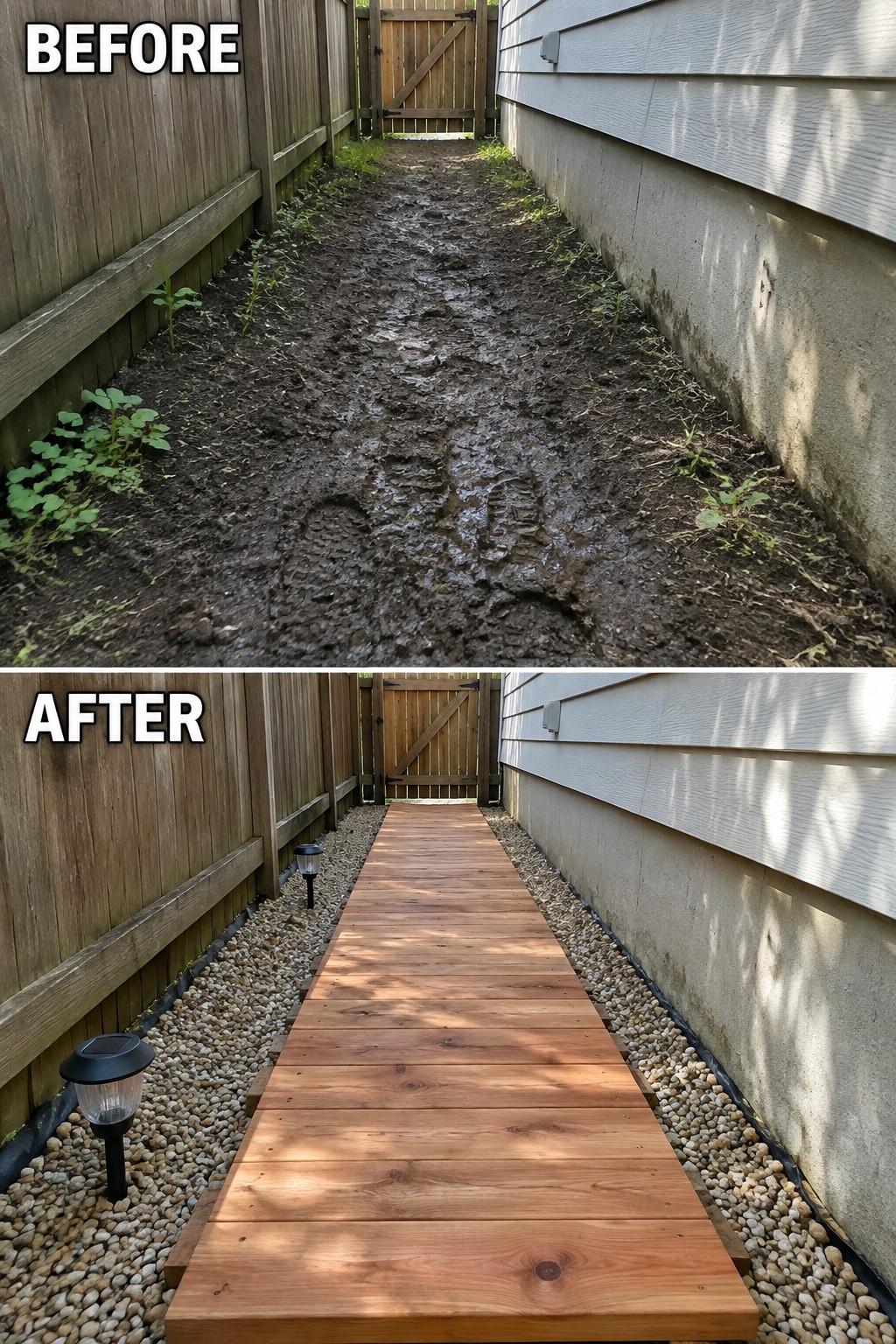
A muddy side path is one of the quickest things to fix in a small yard. Laying wood planks over gravel gives you a solid walking surface and stops the constant tracking of dirt and water into the house. The before shot shows how wet and slippery the ground got, while the after shows how the planks keep the route dry and easy to use.
This idea works best in tight spaces between a house and a fence where grass will not grow well. Use pressure-treated boards or decking scraps, add a layer of gravel for drainage, and keep the width narrow so it still leaves room to move. Solar lights along the edge help at night without needing wiring.
Clean Up Overgrowth To Refresh A Stone Walkway
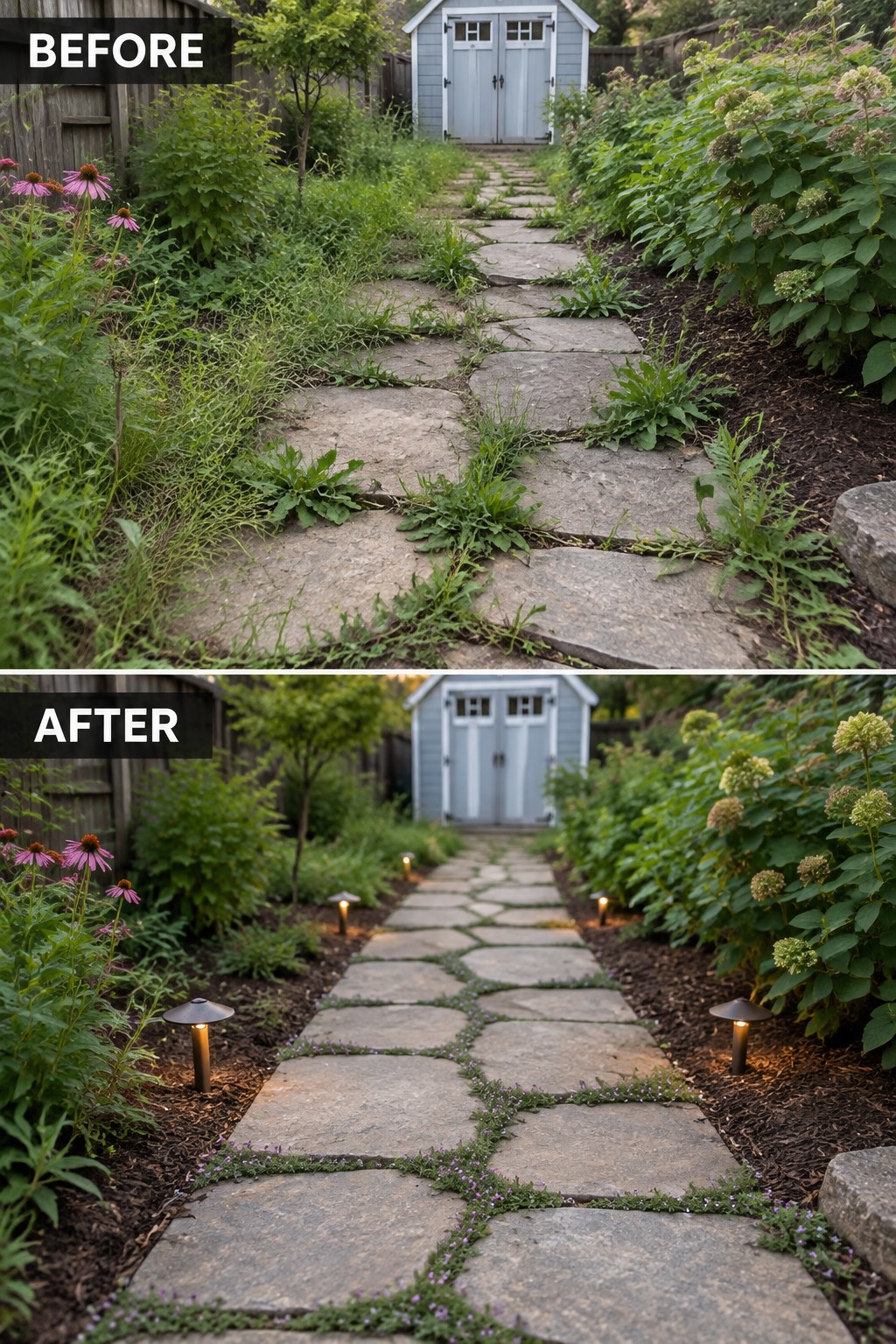
Many stone paths lose their shape when weeds and tall grass fill the gaps between pavers. Removing that growth and planting low groundcover in the joints brings back clear lines and makes the walkway feel planned instead of forgotten. A few simple path lights placed along the edges add both function and a finished look once the planting is done.
This idea suits small yards where the path connects the house to a shed or back garden. Start with a thorough weeding, then choose tough, low plants that stay under a few inches tall. Solar lights keep the project affordable and avoid any need for wiring.
Curve A Straight Walkway With Pavers And Borders

A straight concrete path often feels flat and narrow in a small side yard. Switching to curved pavers with a simple rock border softens the line and gives the space more movement without needing a lot of extra room.
This approach works well when you start with the path itself rather than adding plants first. Lay the pavers in a gentle bend, keep the beds narrow, and use a mix of low grasses and shrubs along the edges so the walkway stays clear and easy to walk.
Replace A Plain Concrete Walk With Pavers
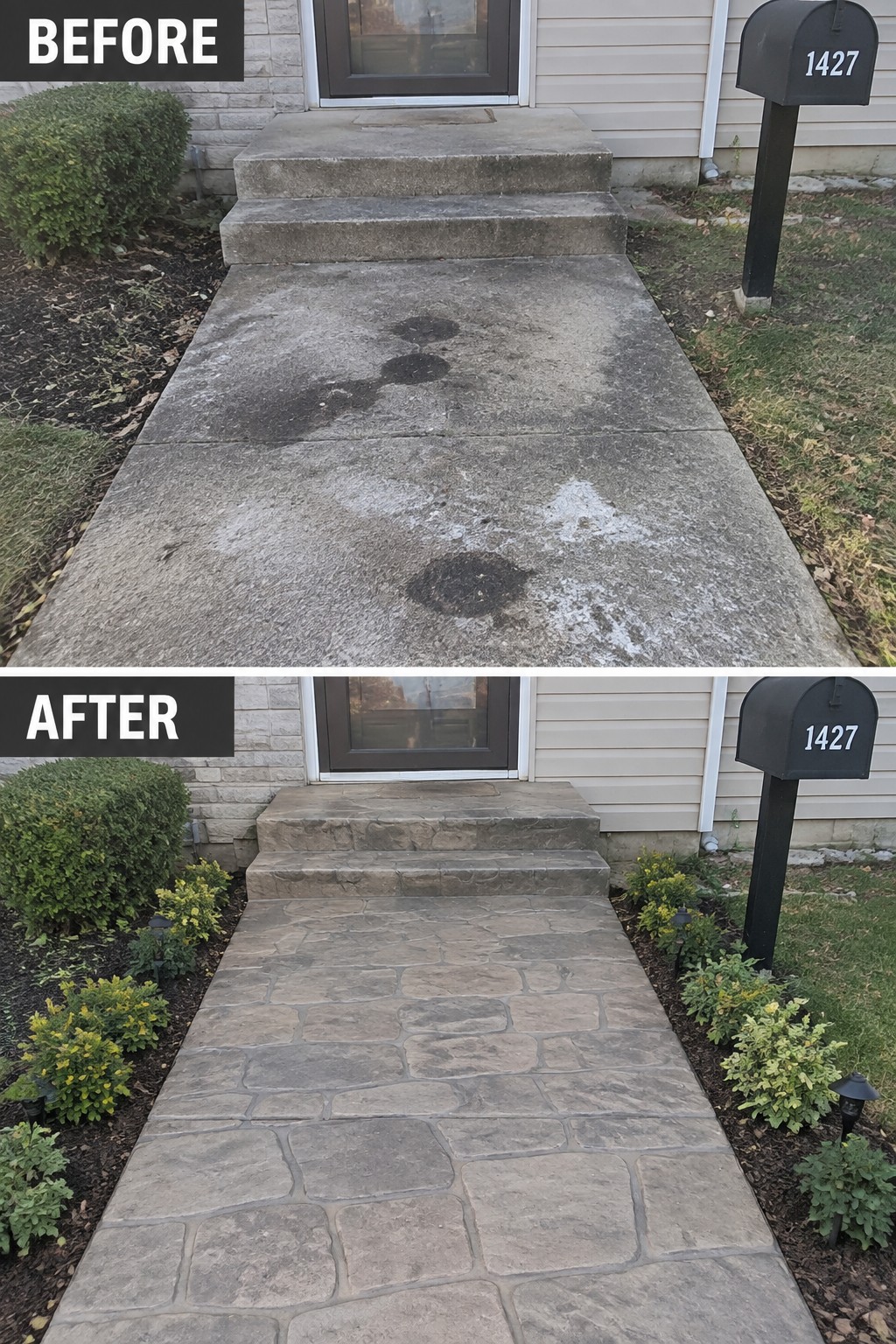
A stained concrete walkway often makes the front of a house feel unfinished. Switching to pavers gives the path a clear shape and texture that holds up better over time. The simple addition of low plants along the edges also softens the look and keeps the walkway from feeling like an afterthought.
This approach works well on small lots where you want to improve the entry without a full redesign. Start with the path itself, then add a few plants on each side to create a border. Keep the plantings low so the walkway stays easy to walk and the scale stays right for a modest front yard.
Define A Narrow Walkway With A Simple Grid

A plain gravel path often ends up looking scattered and weedy over time, especially in tight spaces between planters. Switching to a grid of turf squares and gravel gives the walkway clear lines and makes the whole area feel intentional instead of leftover space.
This approach works well in narrow side yards or entry paths where you want something low-maintenance but still green. Start with good edging to keep the pattern in place, then alternate the squares so the layout stays balanced. It keeps foot traffic on a stable surface while letting a bit of lawn survive in a spot that would otherwise stay bare gravel.
Lay Pavers To Fix A Muddy Walkway
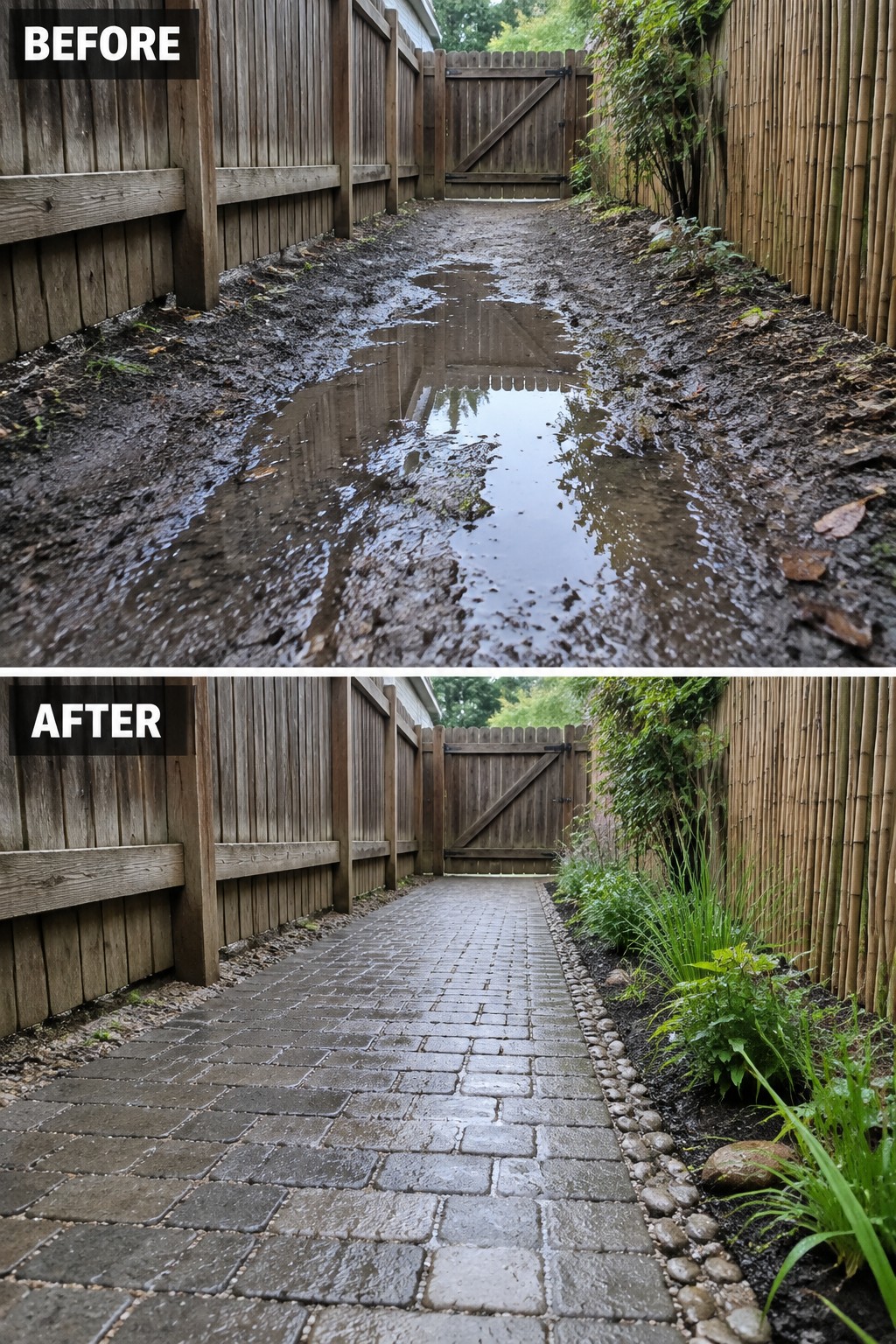
A path that turns into a puddle after rain makes the whole side yard feel neglected. Putting down pavers creates a firm, level surface that drains better and actually invites you to walk through the space. The shift from standing water and mud to a clean, solid path makes the narrow area feel more intentional and easier to maintain.
This idea suits tight passages between fences or along a house where space is limited. Focus first on proper base preparation so the pavers stay even, then keep any edging plants low and simple so they do not crowd the walkway.
Add Planters Along A Concrete Walkway

Placing matching planters on either side of a walkway gives the path a clear border and turns a plain strip of concrete into something more finished. The before photo shows grass growing right up to the edges with no real definition, while the after shows two wooden boxes filled with flowers set into fresh mulch beds. That simple change makes the walk feel more intentional without any major construction.
This idea works especially well on narrow front paths where you want structure but still need room to move. Choose planters in the same material and color so they read as a pair, and keep the plantings low enough that they do not crowd the walkway. Mulch between the boxes and the grass edge helps keep the look tidy through the seasons.
Add A Mosaic Runner To An Existing Brick Path
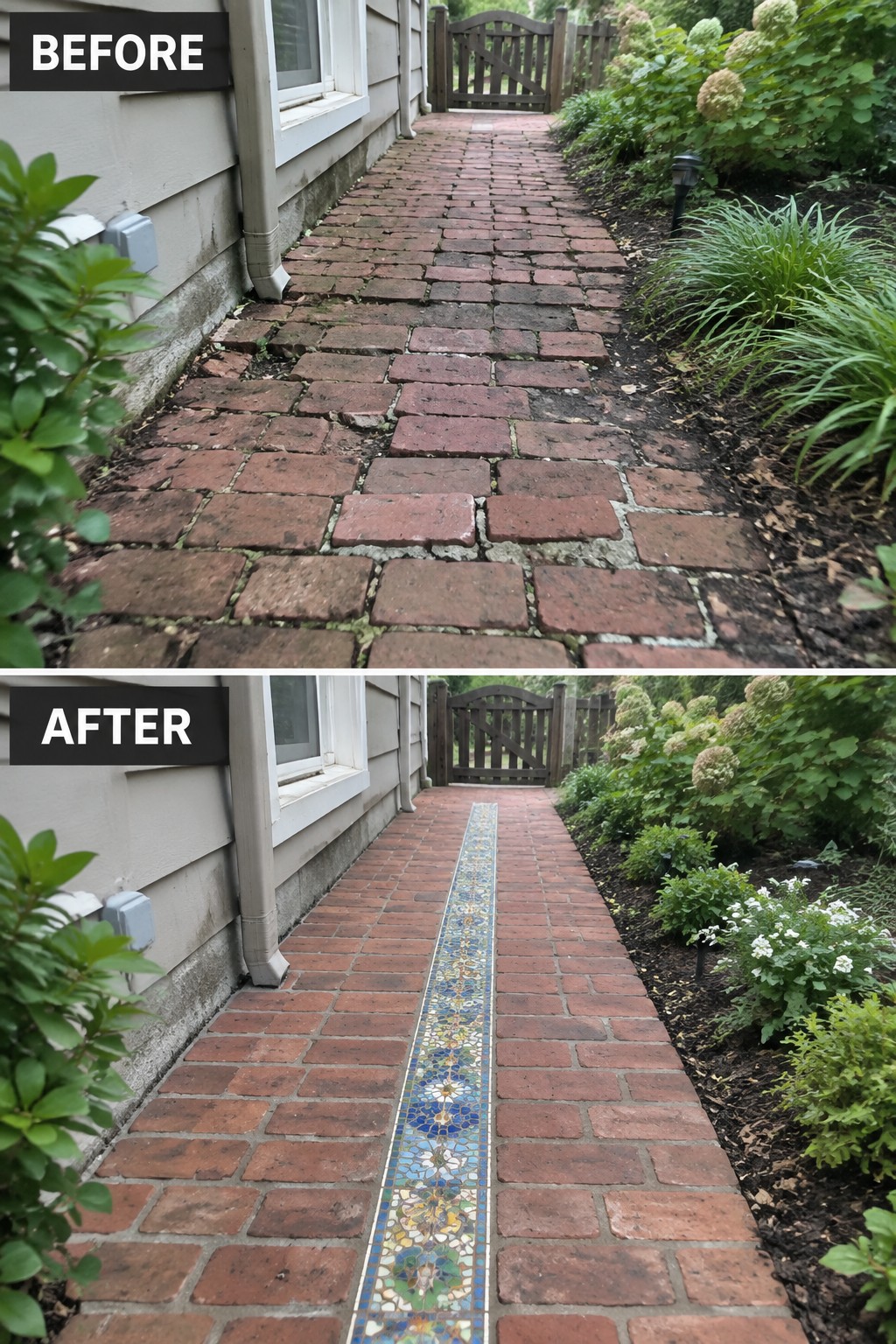
An old brick walkway often looks tired once the bricks settle and weeds start growing between them. Adding a narrow mosaic tile strip down the center gives the path a clear focal point and makes the whole thing feel more finished without tearing everything out. The before photo shows the uneven surface and scattered growth, while the after shows how the colorful runner pulls the eye forward and ties the walkway together.
This idea works well on narrow side paths or garden routes where a full redesign would be too much. Use outdoor-rated mosaic tiles that can handle weather and foot traffic, and keep the strip modest in width so it does not crowd the walking space. Start with a good cleaning and leveling of the existing bricks before adding the new accent.
Define A Narrow Walkway With Stepping Stones
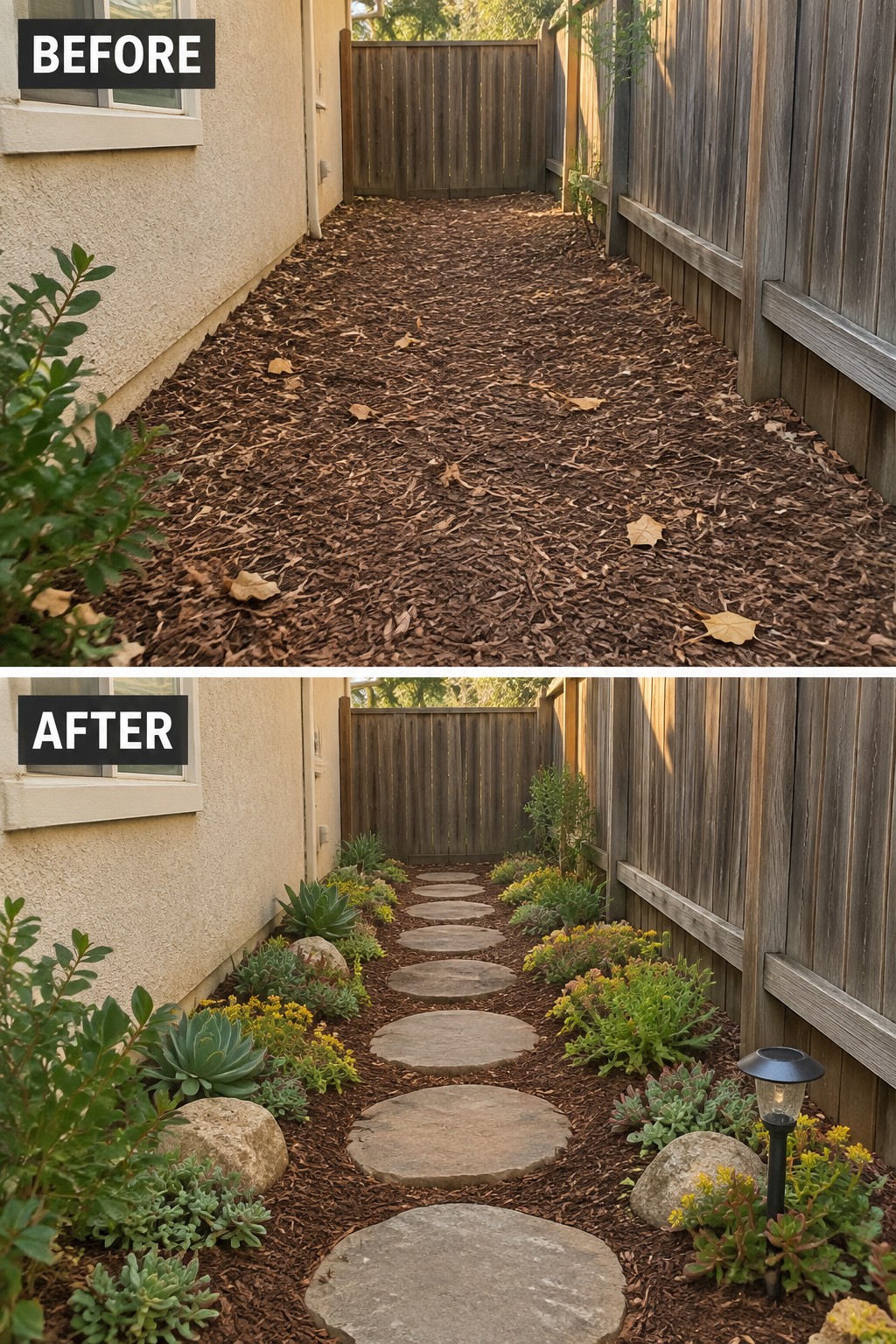
A plain mulch path often feels like wasted space because it lacks any clear direction. Adding a row of stepping stones gives the walkway purpose and makes it much easier to walk through without tracking mulch everywhere. The plants along the edges also help hold the mulch in place and keep the look tidy instead of scattered.
This idea works well in side yards, between a house and fence, or any tight strip where a full patio would not fit. Start with the stones first to set the route, then fill in low plants on both sides. Keep the plantings simple so the path stays the main feature and does not feel crowded.
Add Borders To Define A Concrete Walkway

A plain concrete path often looks unfinished when it runs straight from the street to the door with nothing to frame it. Adding a simple pebble border on both sides gave this walkway clear edges and helped it feel like a deliberate part of the yard rather than leftover space.
This approach works especially well on narrow lots or side entrances where the path takes up most of the view. Lay the border material first, then add a few low lights so the route stays easy to follow at night. Keep the rest of the planting minimal so the border stays the main feature.
Add Vertical Structure To A Narrow Walkway

A narrow side passage with bare dirt often feels like wasted space. Laying down gravel creates a clean, walkable surface that stays drier and looks intentional. Adding a row of tall wooden trellises in matching planters gives the fence line height and brings in climbing plants that soften the view without taking up much room.
This approach works well on tight lots where a full garden bed would crowd the path. Start with the gravel base to set the walkway, then place matching planters at even intervals along one side. Choose lightweight trellises that can support vines like ivy or jasmine, and keep the plantings simple so the path stays easy to maintain.
Define A Narrow Path With Gravel And Stone Edging

An overgrown yard often loses any sense of direction. Laying down a gravel path and bordering it with stones gives the space a clear route while keeping the rest of the yard manageable. The main change here is the shift from a weedy dirt track to a defined walkway that actually leads somewhere.
This idea works best in small backyards where you need a simple way to move through the space without paving the whole area. Clear the weeds first, then add a base layer before the gravel so it stays in place. Stone edging keeps the gravel contained and gives the beds on either side a finished look without much cost.
Frame A Plain Path With Planted Borders
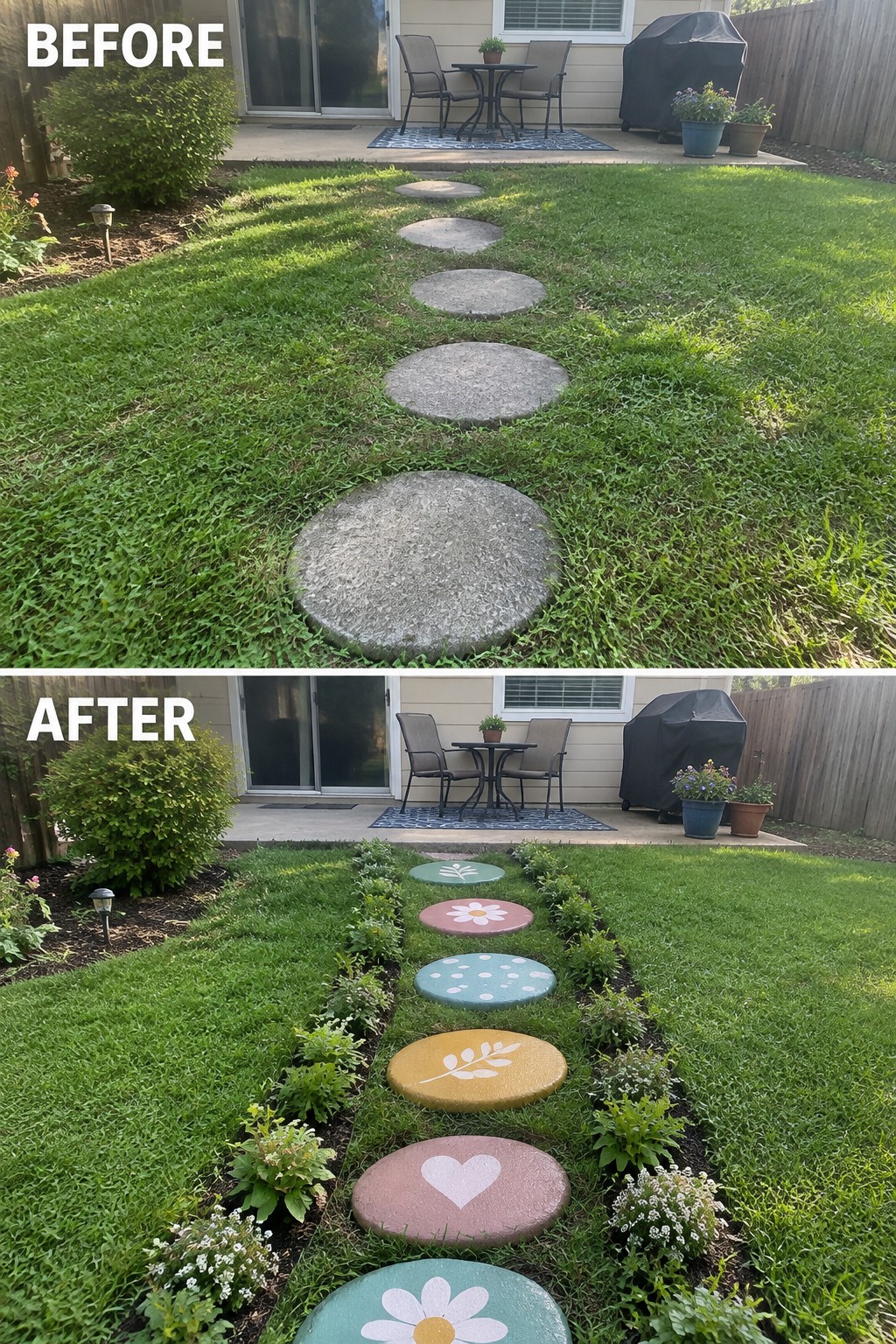
A basic line of stepping stones can feel lost in a lawn until you give it clear edges. In this case the stones stayed in place but the grass on either side was replaced with narrow planted strips, and the rounds themselves were painted with simple designs. That one change turned a scattered walkway into a defined route that leads the eye and keeps feet on the path.
This idea works best in small yards where you want structure without losing open lawn space. Keep the planted borders narrow so they do not crowd the walking area, and choose low plants that stay tidy along the edges. Painting the stones is optional but adds personality if you want the path to feel more finished.
Add Pathway Lighting To A Concrete Walkway

A plain concrete path often disappears into the dark once the sun goes down. Placing a simple line of low lights along each side makes the walkway visible from the street and turns a basic route into something that feels intentional.
This idea works best on small front yards where you want safety and curb appeal without a big budget. Use solar or plug-in path lights spaced evenly, keep the fixtures low so they do not glare, and make sure the lights point down toward the walking surface rather than out into the yard.
Add A Pebble Inlay To A Plain Concrete Walkway
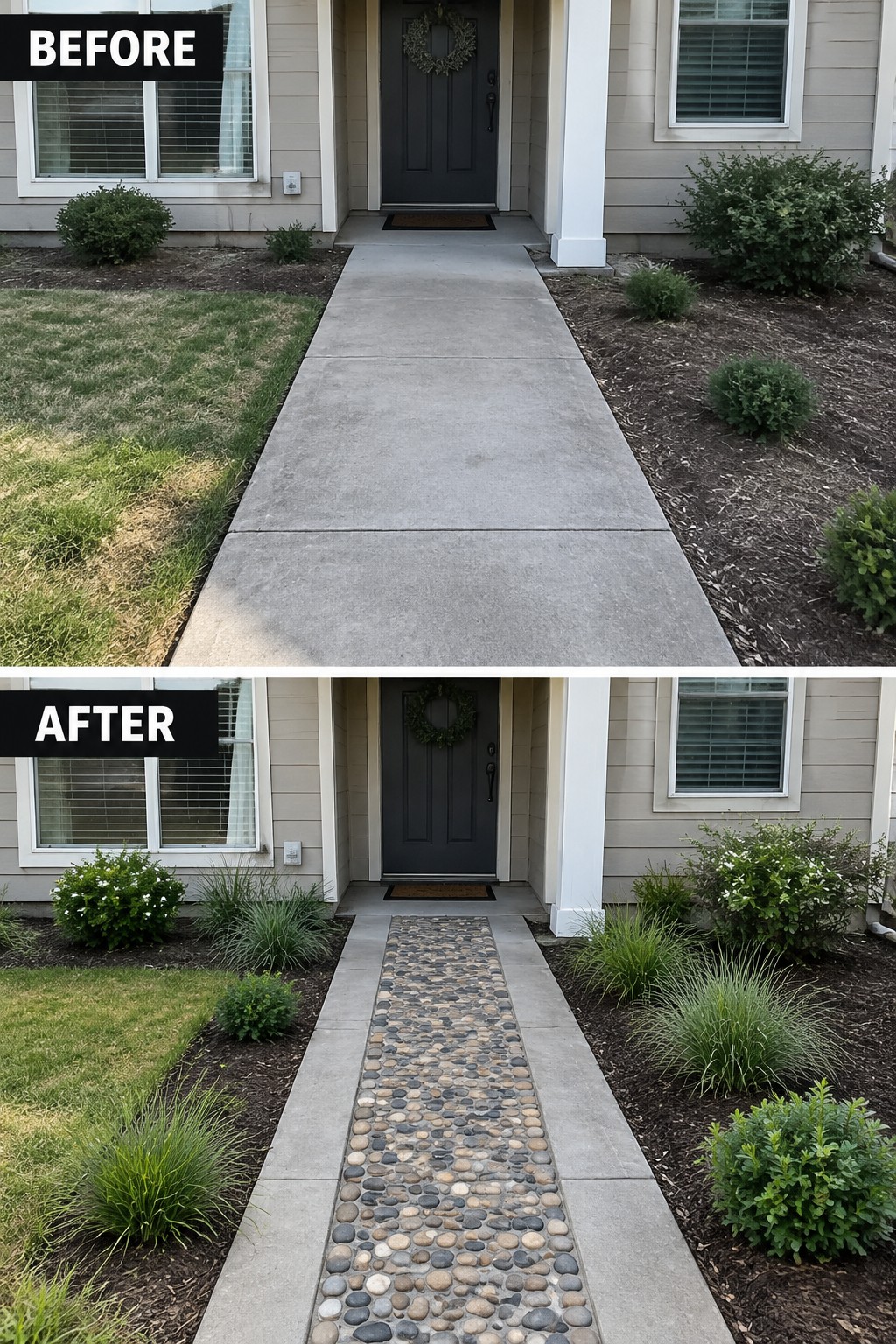
A wide stretch of plain concrete can make a front path feel dull and unfinished. Adding a center strip of river pebbles gives the walkway more texture and breaks up the flat surface without tearing out the whole thing. The side plantings also got fuller and more layered, which helps the path feel like it belongs with the rest of the yard.
This approach works well in small front yards where you want to keep the existing concrete but still make it look more intentional. Start by marking out a strip down the middle, then set the pebbles in a bed of mortar or gravel so they stay in place. Choose stones that pick up colors from your house or existing hardscape, and keep the planting simple on the edges so the walkway stays the main feature.
Add A Fence With Built-In Planters To Define A Narrow Walkway
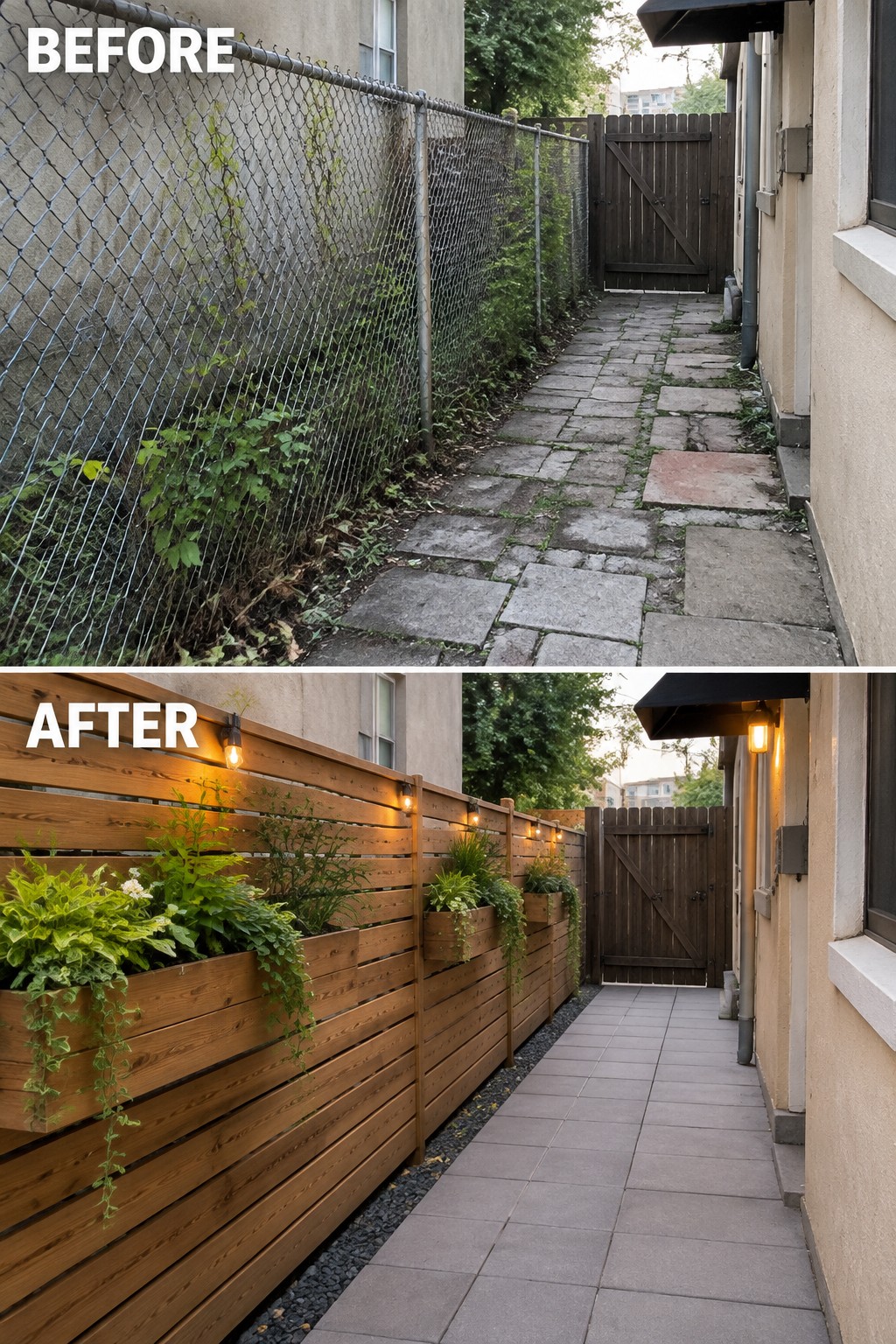
A chain-link fence and overgrown weeds made this walkway feel cramped and neglected. Replacing it with a horizontal slatted fence and built-in planters gave the space clear edges and a steadier look without crowding the path.
This approach suits tight side yards or passages between houses where you want privacy and planting but lack room for separate beds. Keep the fence height modest, space the planters at different levels, and use gravel along the base to keep the walkway feeling open and easy to maintain.
Frequently Asked Questions
Q: How do I keep gravel from washing away after a storm? A: Rake the gravel into a slight crown down the center so water runs off the sides. Edge the path with cheap landscape bricks to hold everything in place. Check the slope once a month and add a little more gravel where it thins out.
Q: Can I skip digging if the old concrete is still solid? A: Clean the surface well and lay rubber pavers right on top with construction adhesive. The pavers hide cracks and give you a softer step. Just make sure the old slab has no major dips first.
Q: What works if the space is mostly shade? A: Choose moss or creeping thyme between stepping stones instead of grass. These plants need less sun and fill gaps fast. Water them lightly for the first few weeks until they root.
