

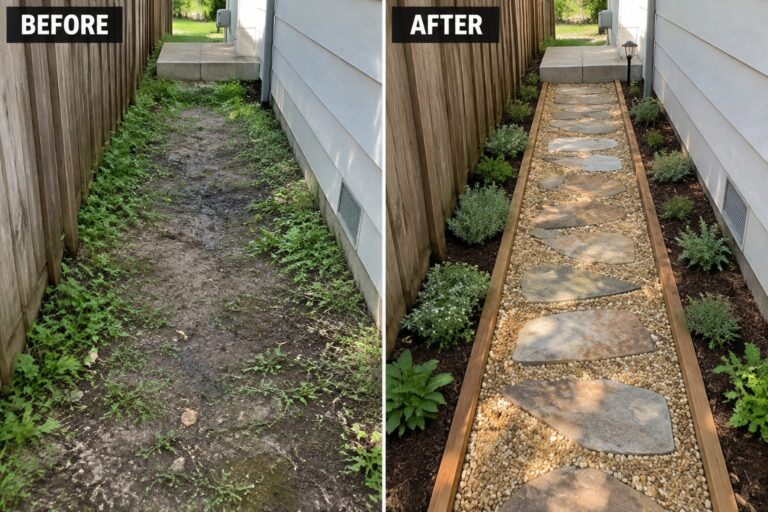
I have found that defining a walkway often makes the rest of the yard feel more organized without much extra work. The right path lets you move through the space comfortably while giving borders a place to grow along. Some yards just need that basic route sorted out first. I like to test a few materials in a small area to see how they hold up over a season. Over time those adjustments add up to an outdoor area that feels more complete.
Define A Narrow Side Yard With Gravel And Stepping Stones
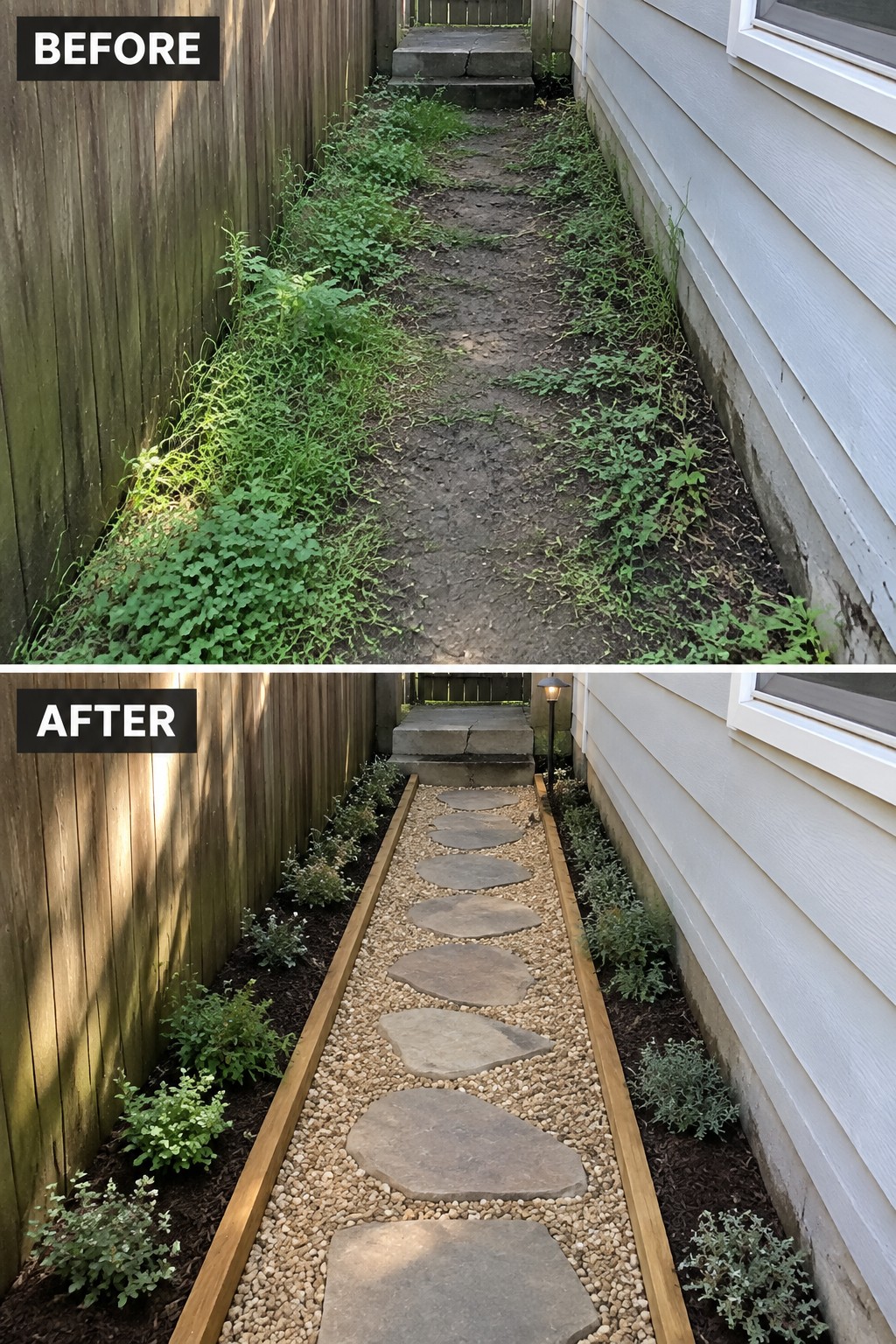
A dirt path full of weeds next to the house is hard to keep clean and even harder to walk through. Laying gravel with stepping stones and simple edging creates a clear, usable walkway that stays neat with very little work.
This idea suits narrow spaces between a house and fence where grass will not grow well. Start with wooden edging to hold the gravel, then add a few low plants along the sides for softness. The result feels finished without crowding the area or requiring constant weeding.
Add Stone Edging To Define A Concrete Walkway
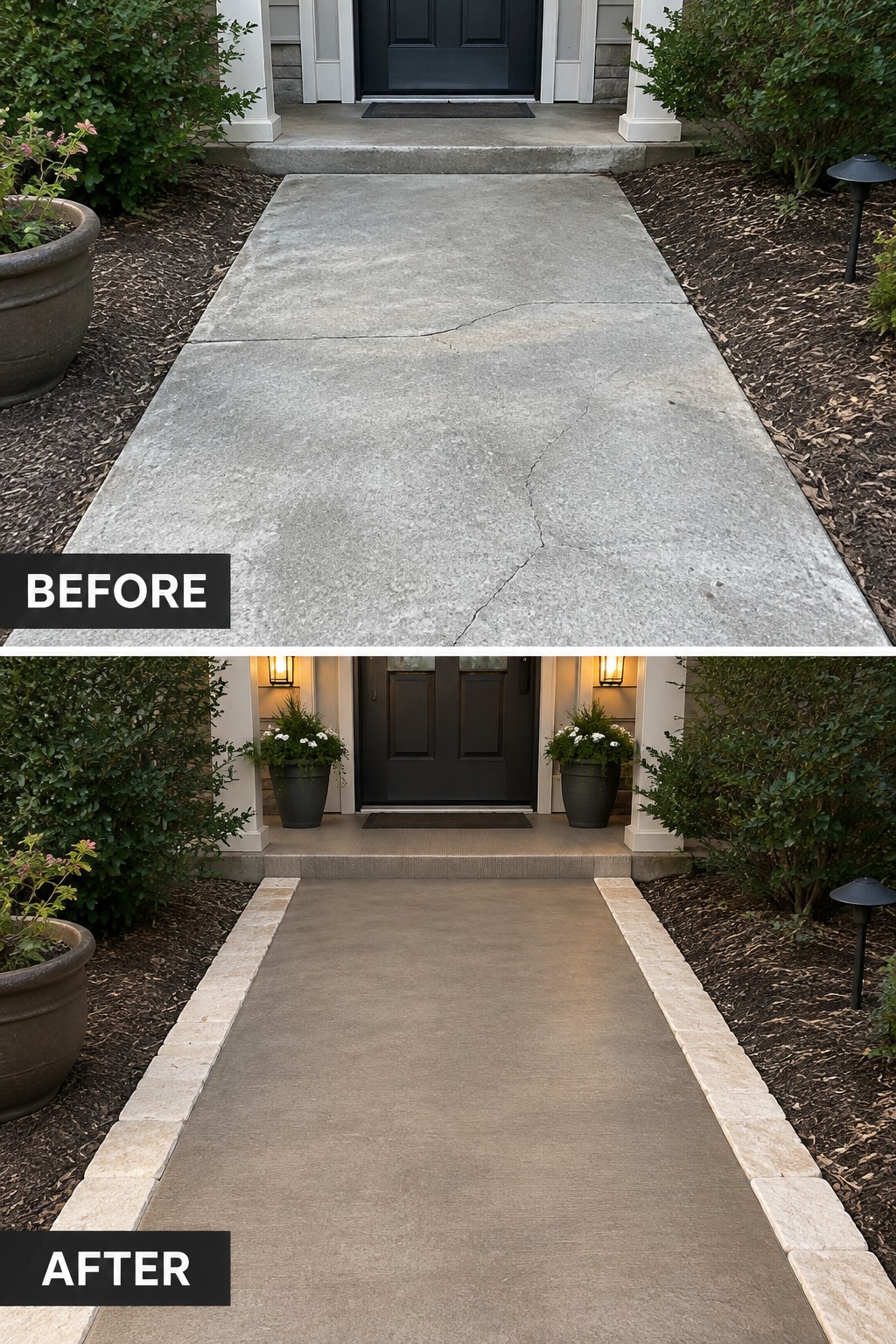
A plain concrete path often looks unfinished when it leads straight to the front door. Adding a simple stone border on both sides gives the walkway clear shape and makes the entry feel more intentional. The light edging in the after photo runs neatly along the concrete and turns a basic slab into something that looks planned.
This works best on homes with straight concrete approaches that already have decent width. Keep the edging low and use a material that matches your house or existing hardscaping. Start by marking straight lines and setting the stones level so the path still feels easy to walk.
Turn A Worn Grass Path Into A Paver Walkway
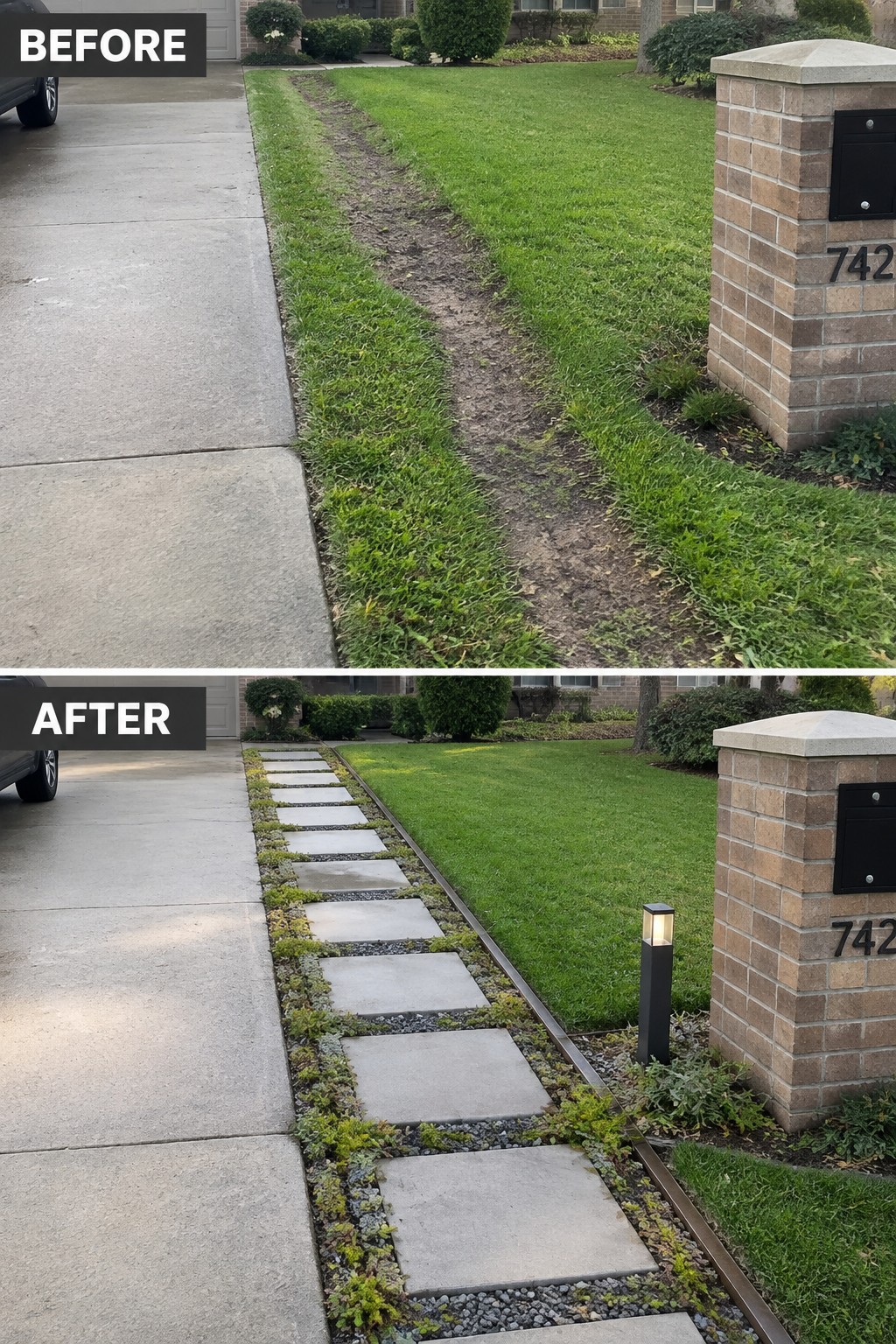
A trampled strip of grass and mud next to the driveway is common, and it makes the side of the house feel unfinished. Laying a straight row of pavers with gravel on both sides gives the path a clear purpose and keeps feet out of the wet lawn. The simple border plants soften the edges without crowding the walkway.
This approach works well along the side of a house or leading to a side door. Keep the pavers level with the lawn so mowing stays easy, and use gravel or low ground cover to fill the gaps. It is a straightforward weekend job that mainly needs good base preparation and a straight line.
Refresh An Old Brick Walkway With A Herringbone Pattern
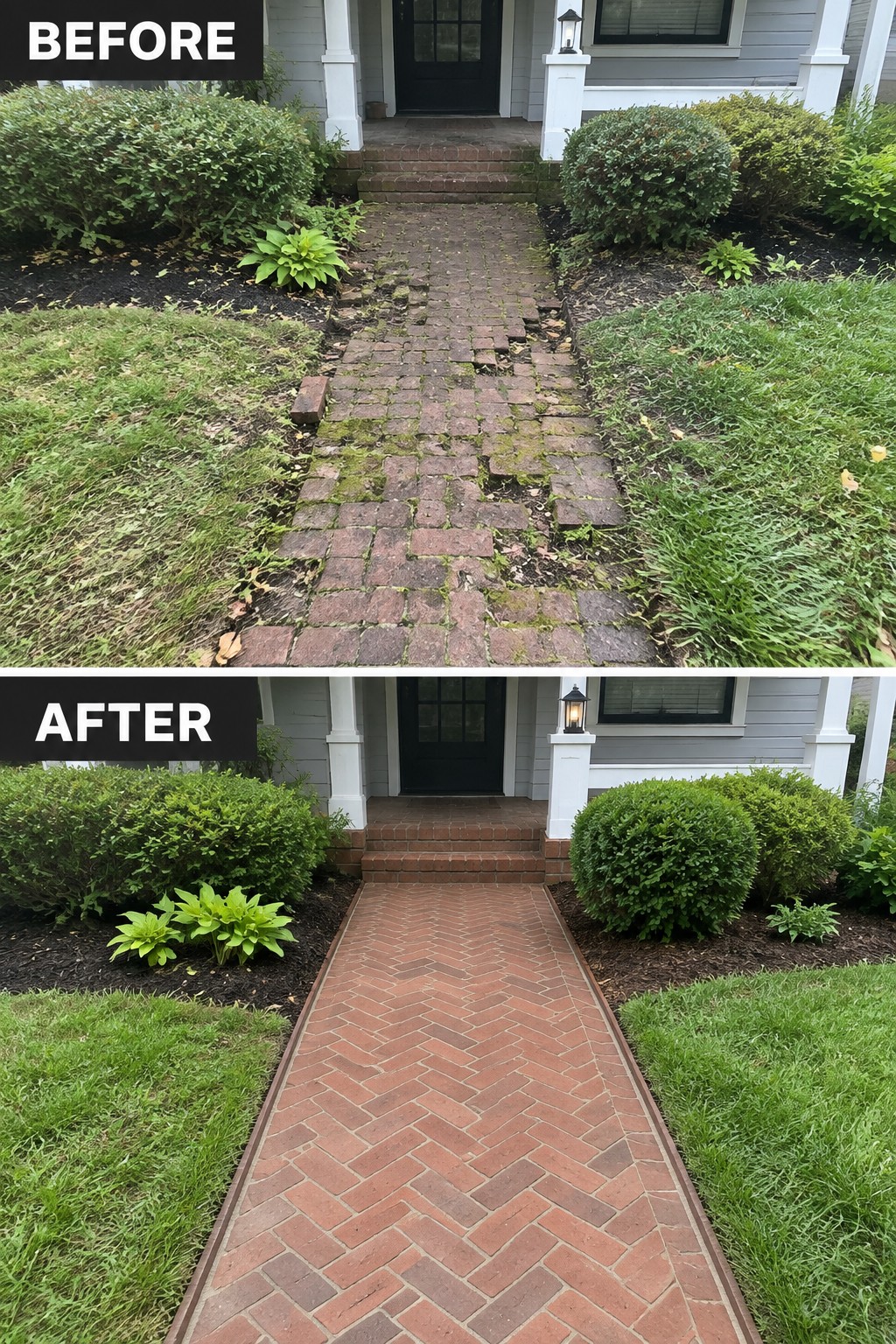
A worn, uneven path makes the whole front entry feel neglected even when the house itself is in good shape. Switching to a clean herringbone layout straightens the line, removes the tripping hazards, and gives the walkway a finished look that ties the lawn and planting beds together.
This approach works best on short front paths where the brick is still the main surface. Pull up the old bricks first, add a solid base, then lay the new pattern with clear edging so grass and mulch stay where they belong. Keep the design simple and let the pattern do the work.
Clean Up An Overgrown Walkway With Mulch
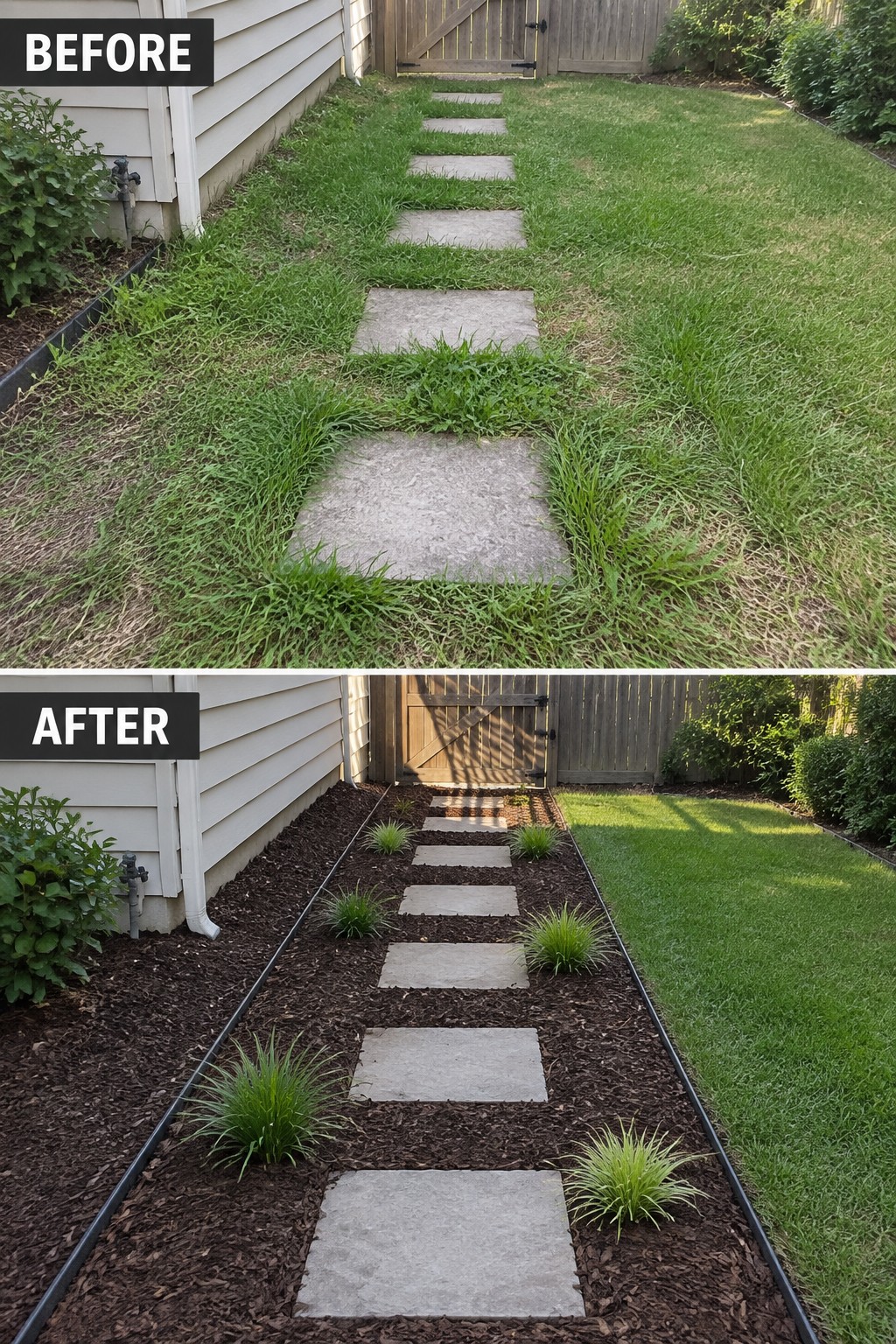
The stepping stones were nearly hidden by tall grass and weeds that made the path feel forgotten. A simple mulch border on both sides gives the walkway clear edges and turns it into something you actually want to use.
This idea works well along the side of a house or through a narrow yard where you need a straightforward route. Start by clearing the overgrowth, then add mulch to frame the stones and tuck in a few small plants for a finished look. It keeps maintenance low and leaves plenty of open lawn on either side.
Stencil Patterns On A Concrete Walkway
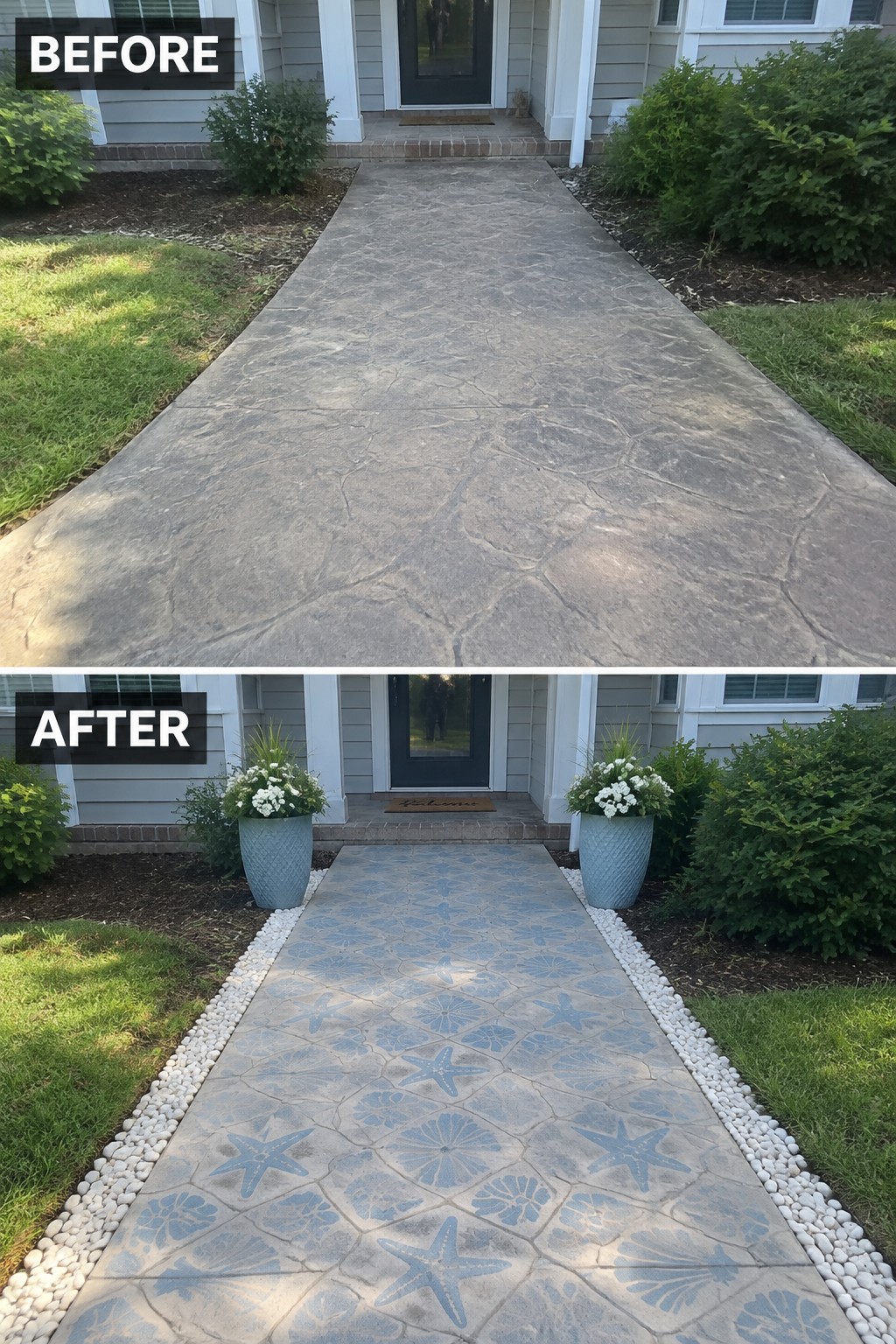
A plain concrete path often looks unfinished next to a house, even when the surface is in good shape. Adding a stenciled pattern and a simple border turns the same walkway into something that feels more intentional and welcoming without tearing anything out.
This approach suits any straight or gently curved concrete path that needs character on a budget. Pick an exterior-grade stencil and paint made for concrete, work in sections over a weekend, and finish the edges with pebbles or gravel so the path looks contained. Keep the design simple so it still reads well from the street.
Add Edging To Give Garden Paths Clear Shape
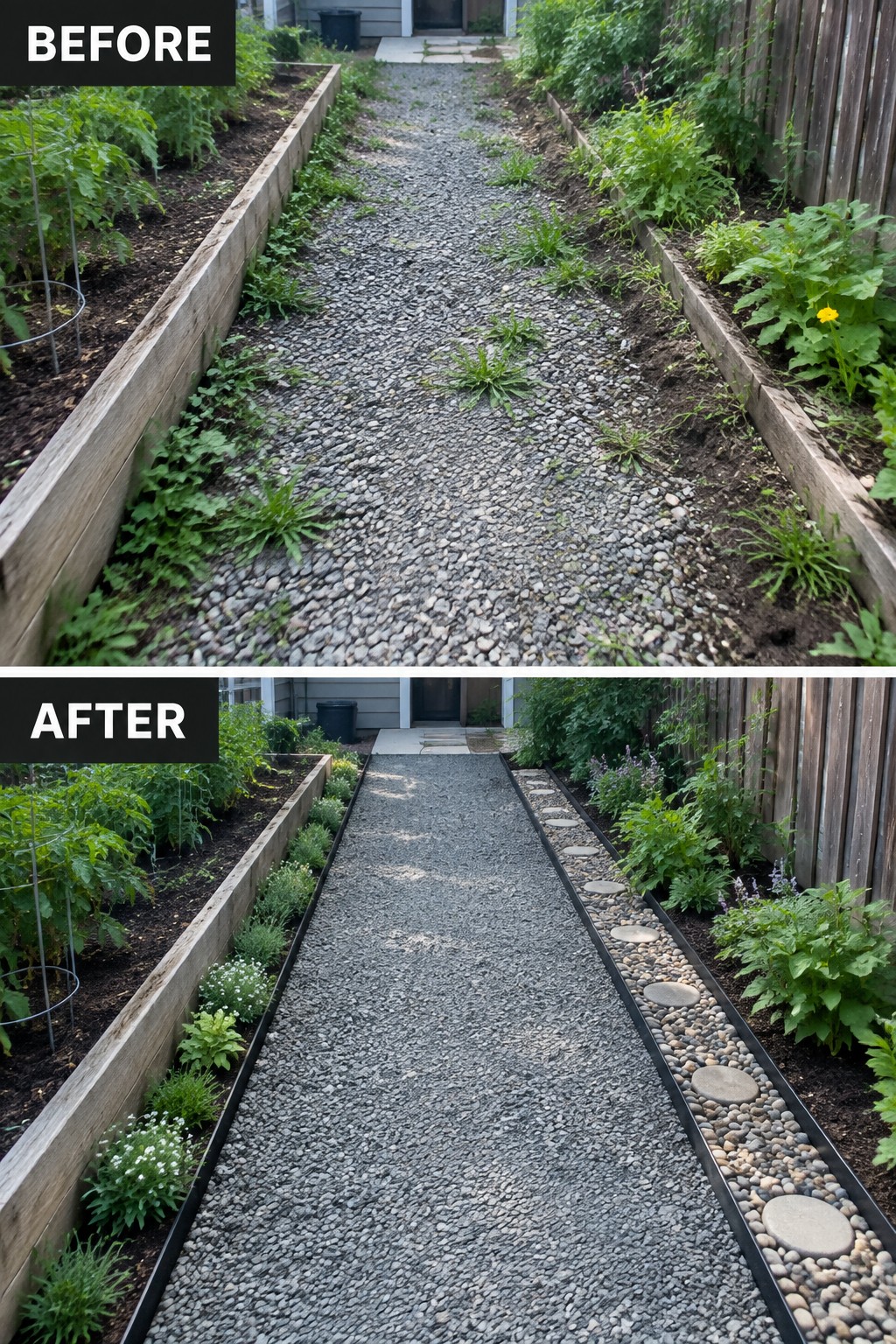
Adding a simple border is one of the quickest ways to make a garden path feel intentional instead of just a strip of gravel. The before photo shows loose gravel with weeds creeping in from the sides and no real separation between the path and the beds. Once a clean black edge was added the whole area looks more structured and much easier to maintain.
This works best in small to medium yards where the beds have started to blur together. Clean out the worst of the weeds first, then run edging along the path on both sides. It keeps the gravel from spreading and gives you a straight planting line so the beds stay neat without constant trimming.
Add Tile Edging To Define A Concrete Walkway
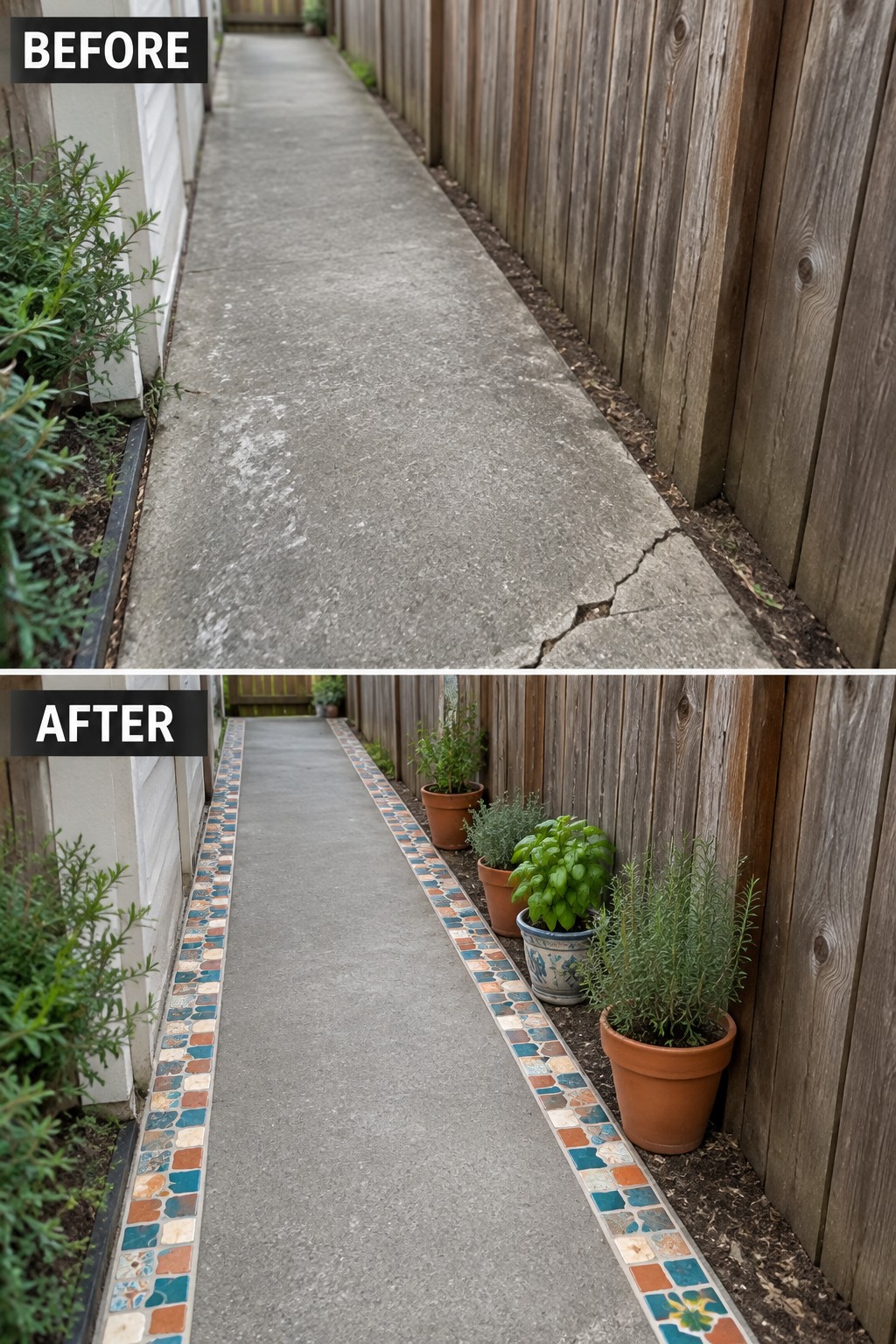
A plain concrete path often looks unfinished when it runs between fences or along the side of a house. Adding a tile border on both sides gives the walkway clear shape and breaks up the gray surface without needing to replace the concrete itself.
This approach suits narrow side yards or back paths where space is limited. Lay the tiles along the existing edges after a quick cleanup, keep the center open for walking, and add a few pots on one side if you want extra color. The border does most of the work and keeps the project manageable for a weekend.
Define A Worn Yard Path With Gravel And Stones
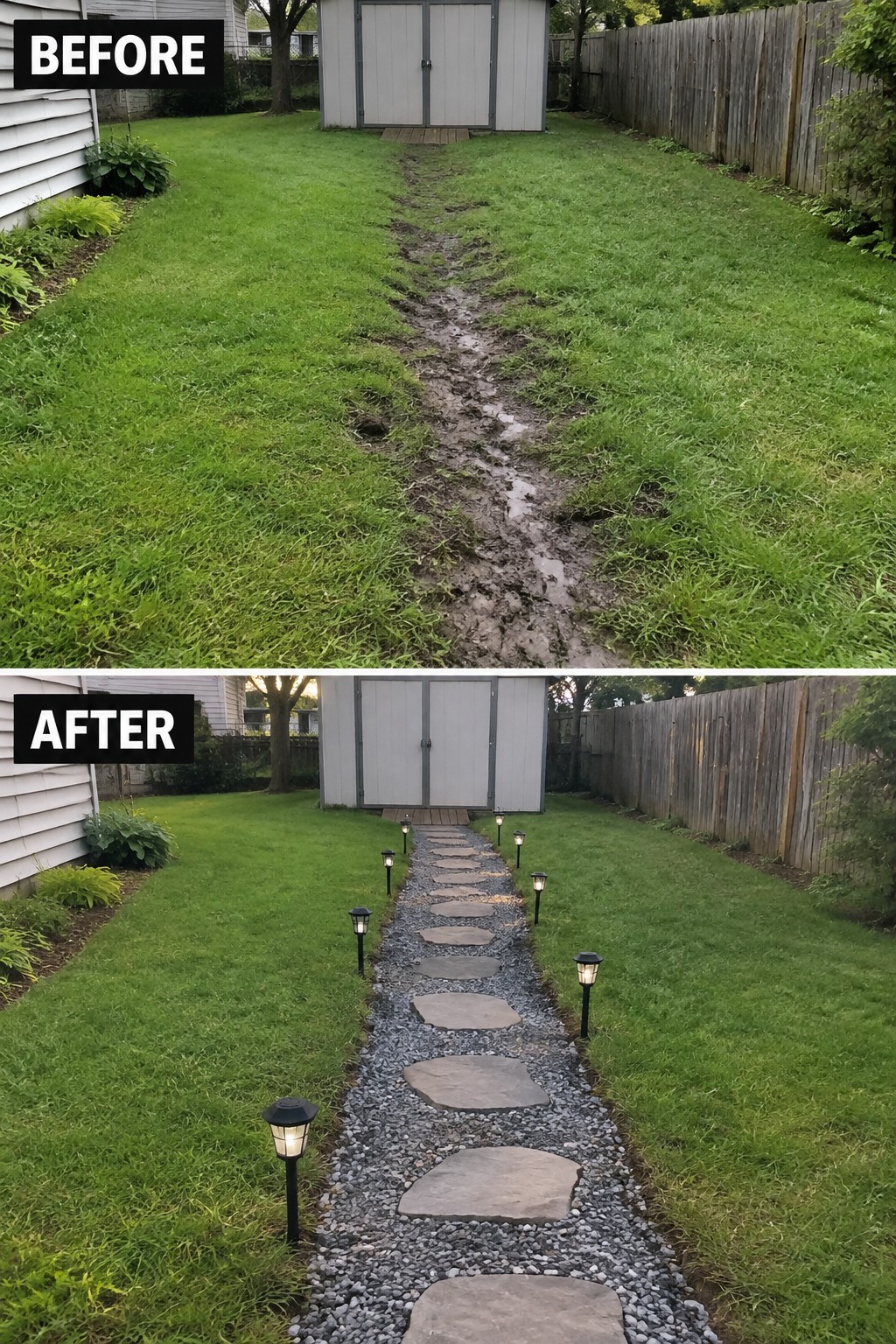
A gravel path with stepping stones solves the problem of a muddy trail that forms from regular foot traffic across the lawn. The before image shows how grass wears down into a soggy line that looks messy and gets worse after rain. Adding a layer of gravel with flat stones set into it turns the route into something that stays firm and drains well.
This idea works best in backyards where people already walk between the house and a shed or garden. Keep the path fairly narrow so it does not take over the lawn. Solar lights placed along the sides make the route easy to follow after dark and add a bit of structure without much extra work.
Add Structure To An Overgrown Walkway
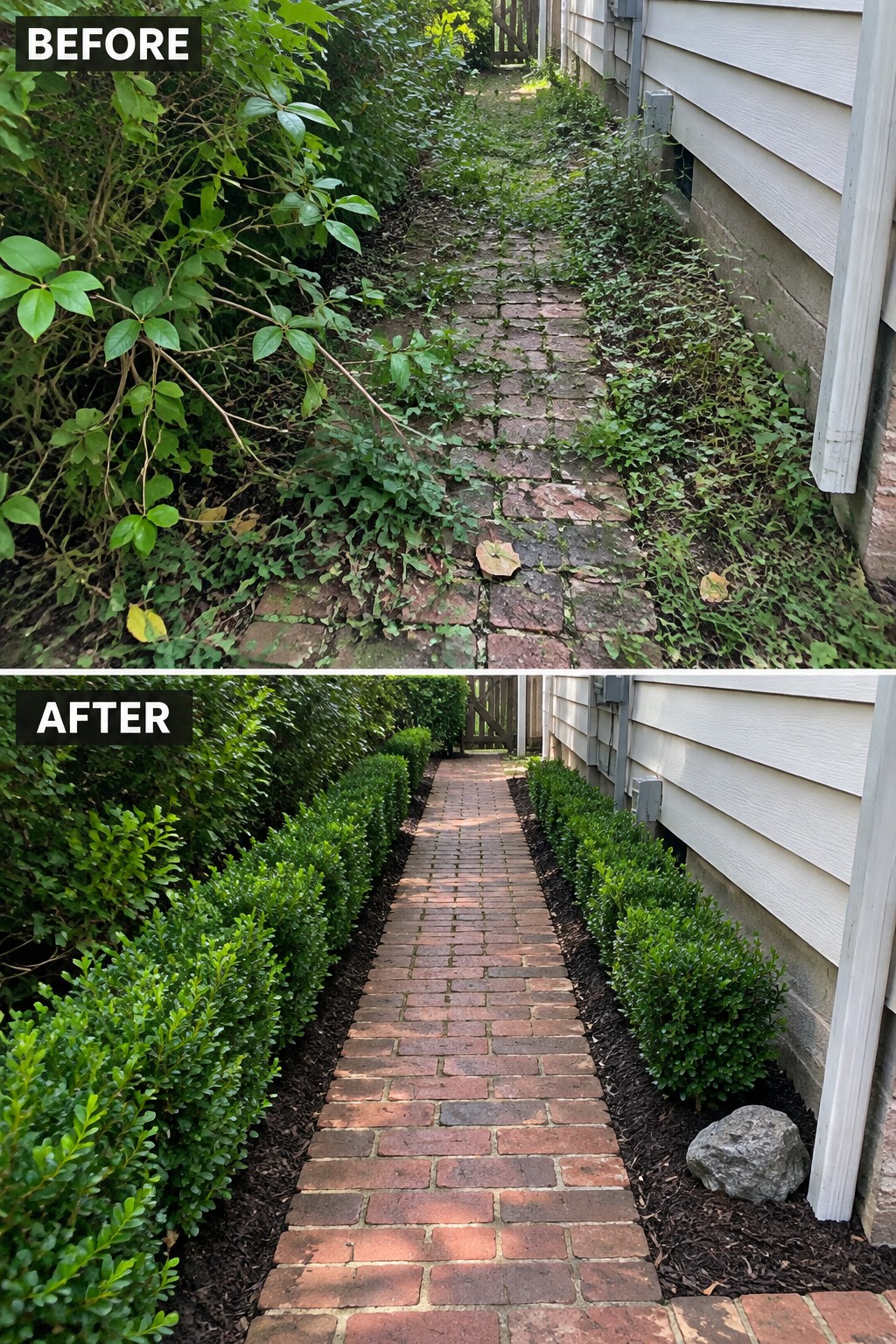
The brick path had disappeared under vines and weeds that grew right up to the house. Cutting everything back and planting low, even hedges on both sides turned the narrow space into a clear, usable walkway instead of a tangled mess.
This approach works best on side paths or narrow passages where you want to keep things simple. Clear the overgrowth first, then add compact shrubs that stay tidy with occasional trimming. It gives the path a finished look without needing a lot of new materials.
Paint A Pattern On Your Concrete Walkway
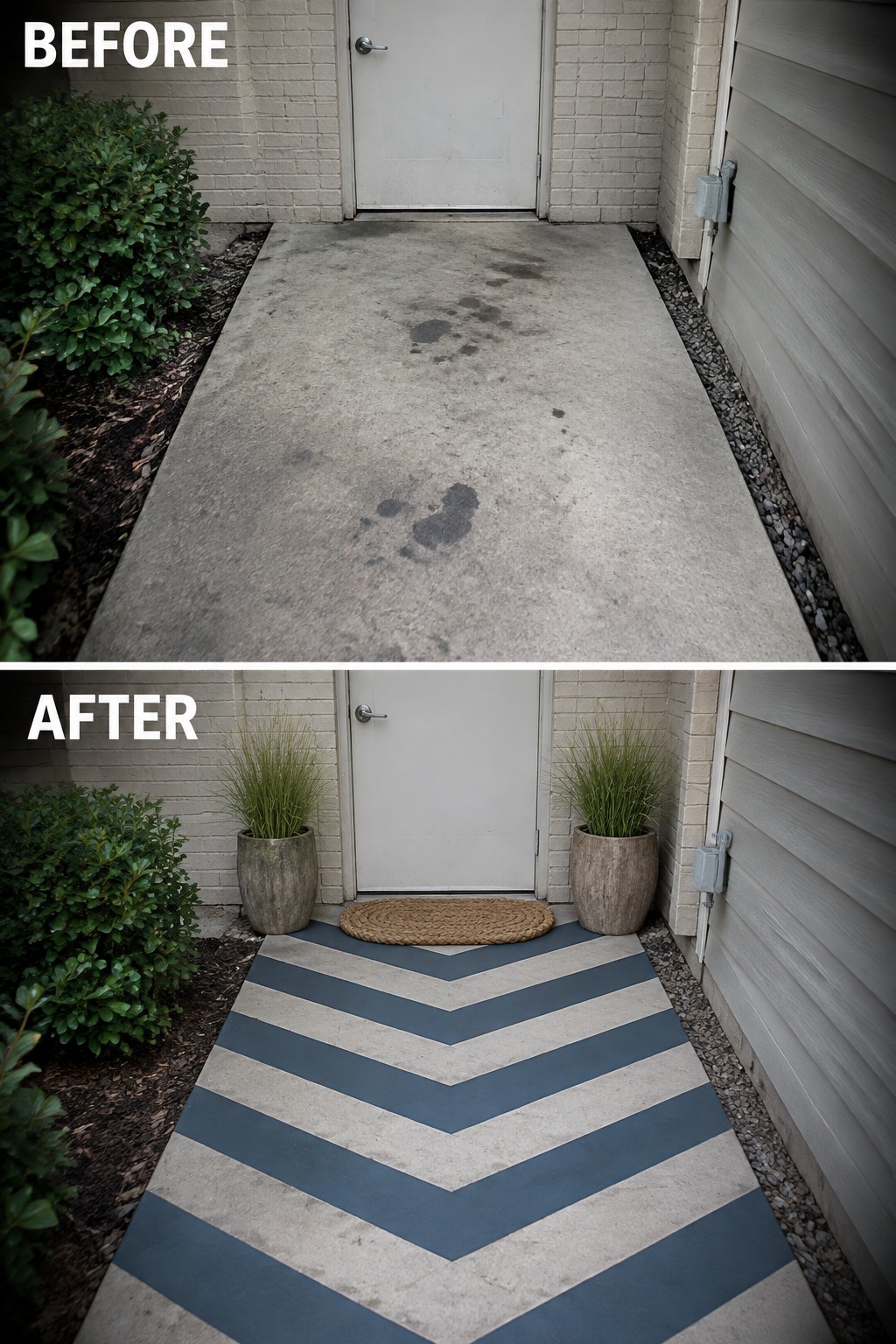
A plain concrete path leading to a side door often looks flat and forgotten after a few seasons. Painting a simple chevron pattern in two tones of gray-blue paint adds direction and breaks up the surface without any construction.
This idea suits narrow side entries or front walks where you want more interest than plain concrete can give. Clean the surface well first, tape off the stripes, and use exterior concrete paint so it holds up to weather. Add matching planters on either side of the door to frame the new pattern and keep the whole spot feeling pulled together.
Edge A Stone Path With Low Plants
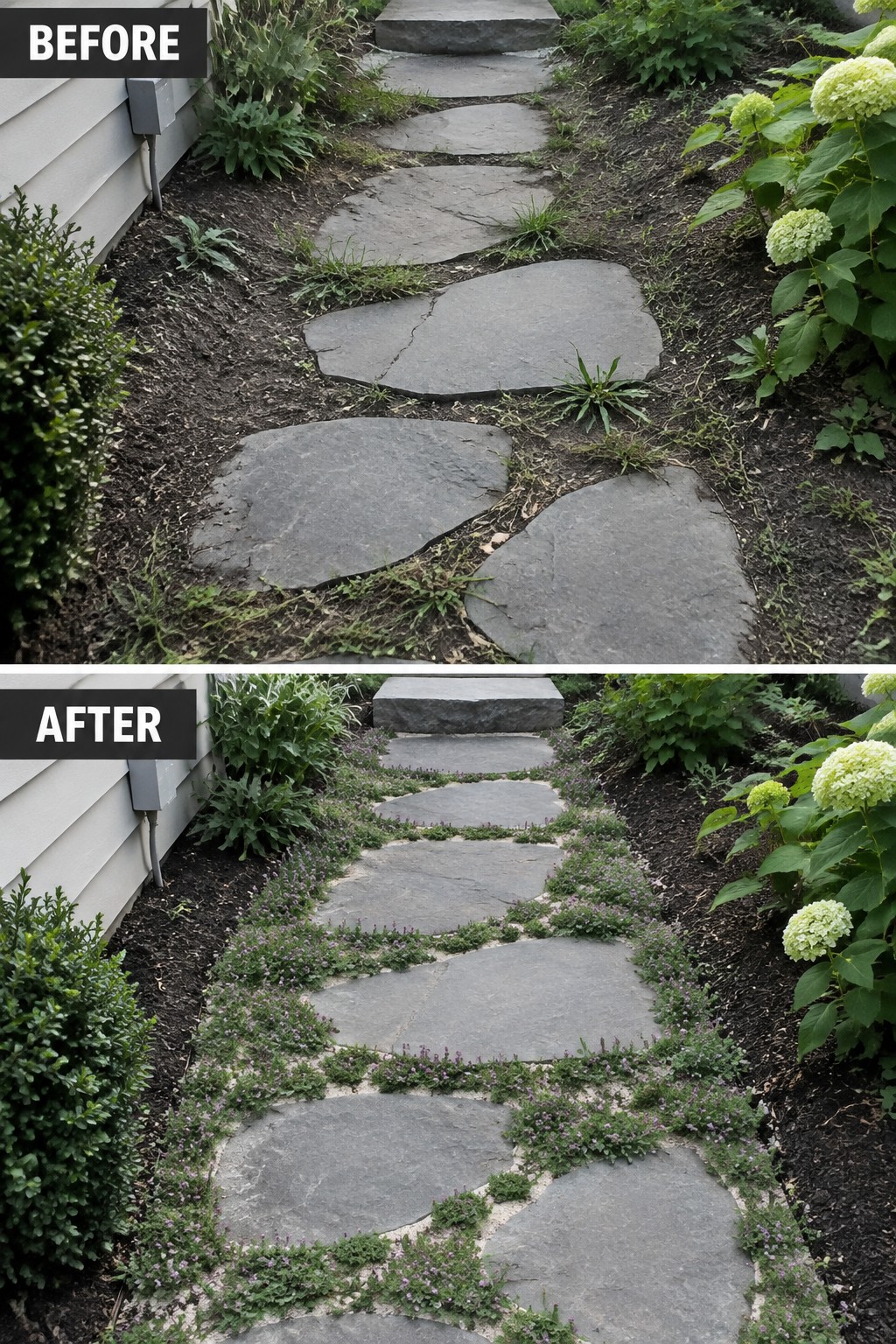
One of the easiest ways to improve an existing stone path is to add a narrow border of low plants along the edges. The before version shows stones sitting in bare dirt with grass and weeds filling the gaps. After, a clean line of small flowering plants runs along both sides and softens the spaces between the stones, which makes the path feel more finished without changing the stones themselves.
This idea works best on paths that already have decent stones but look a little lost in the surrounding yard. Pick a low spreading plant that stays under six inches and can take some foot traffic nearby. Keep the planted strip only about six to eight inches wide on each side so the walkway stays comfortable, then fill any remaining gaps with mulch to hold back weeds.
Define A Walkway With Brick Edging And Garden Beds
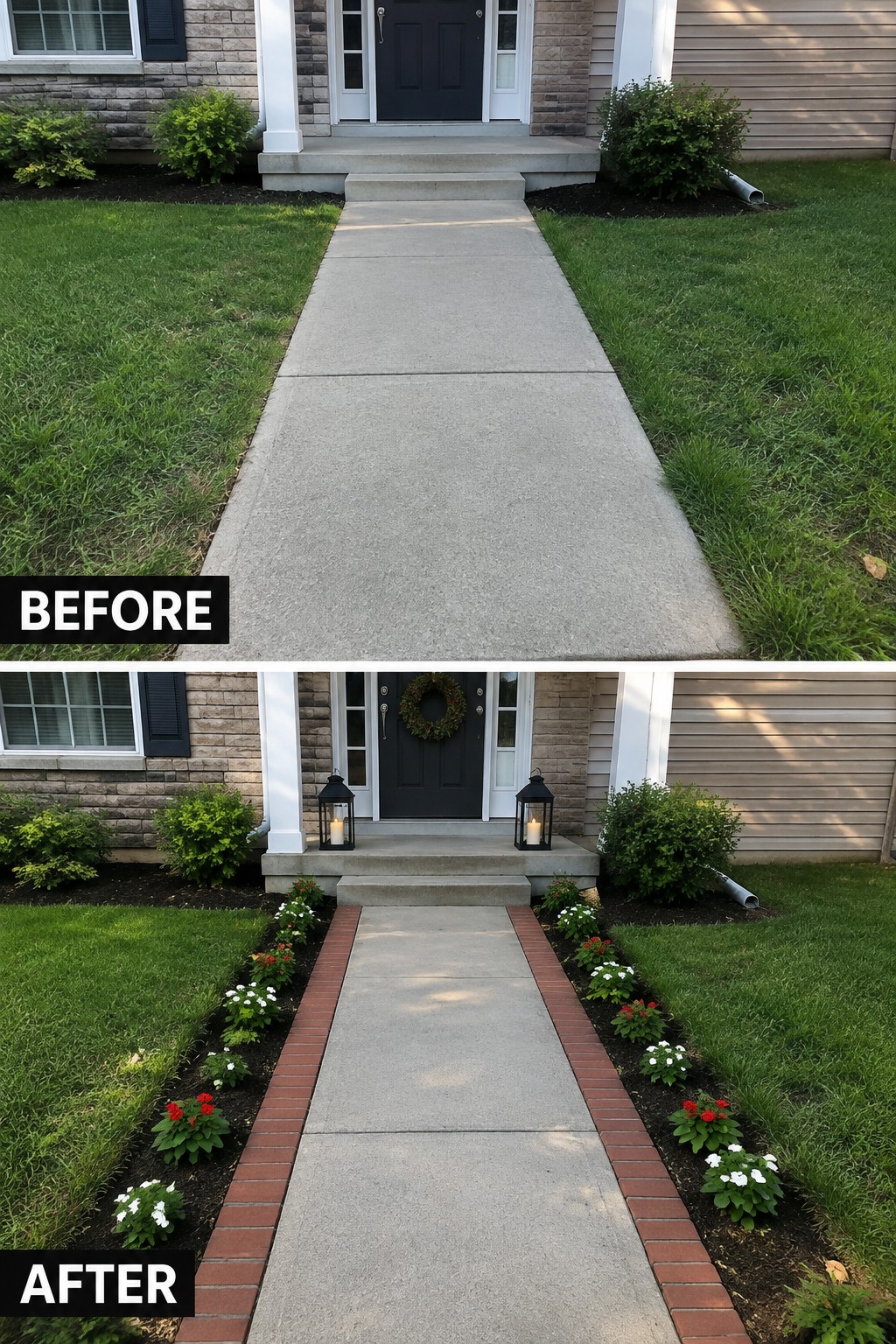
A plain concrete path often looks unfinished when it sits between two wide strips of grass. Adding brick edging on both sides creates a clear border and turns the walkway into a deliberate feature instead of just a slab of concrete. The garden beds that follow the new edges give the front yard a more organized look without requiring a lot of extra space.
This approach works best on straight or gently curved paths where you want to improve the view from the street. Keep the beds narrow enough that they do not crowd the walkway, and choose a mix of low plants that stay neat year after year. Start with the edging first so the beds have a clean line to follow.
Use Gravel To Frame A Garden Path
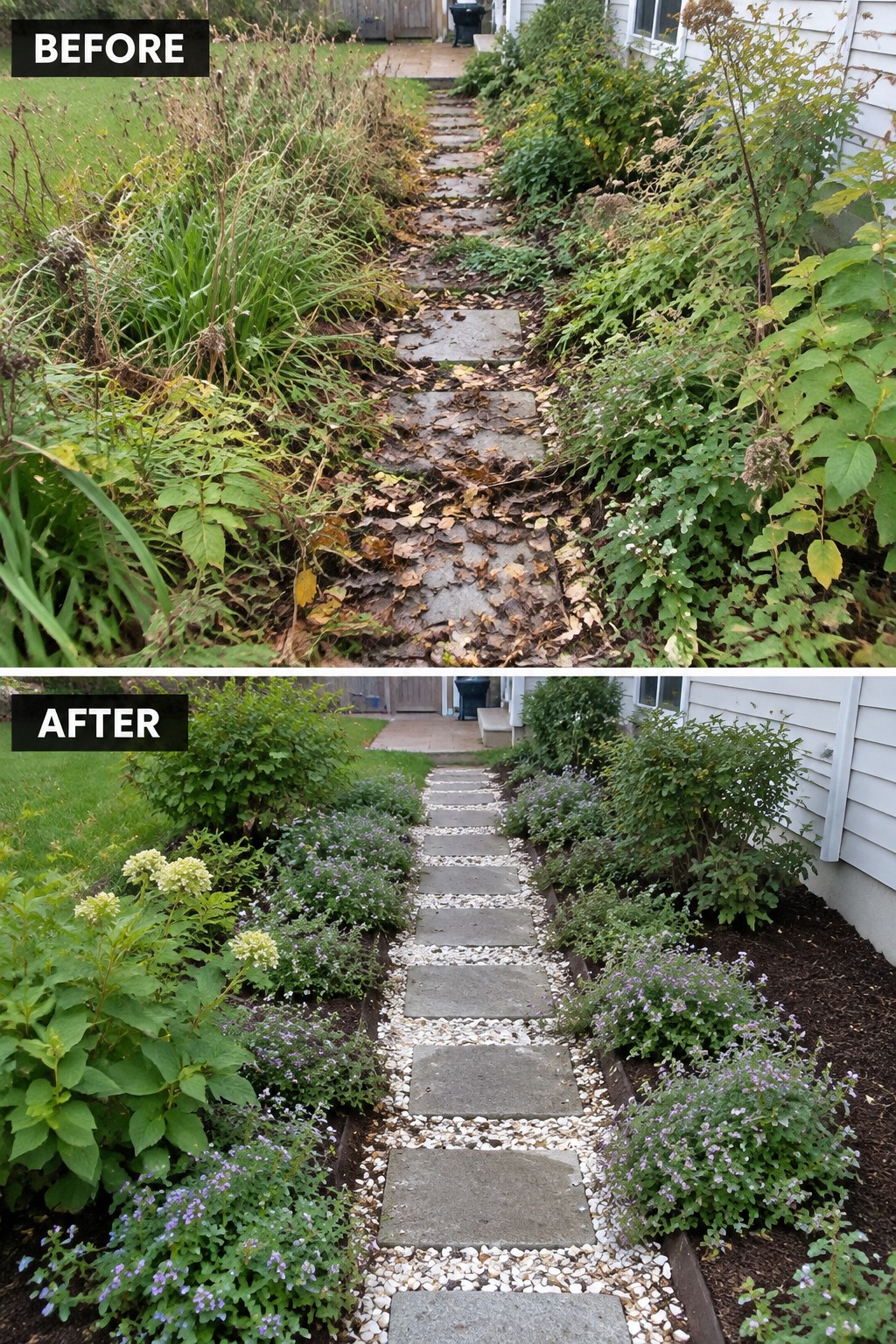
The before photo shows a walkway that had disappeared under leaves and tall weeds, while the after shows the same stepping stones now lined with white gravel and bordered by neat mulched beds. The gravel creates a clean edge that makes the path feel purposeful instead of forgotten. It also separates the walking surface from the planting areas, which keeps both looking tidier with less ongoing work.
This approach works well on any narrow side path or secondary walkway that has gotten lost in the landscape. Start by clearing the overgrowth and leaves completely, then add a simple gravel border on both sides of the existing stones. The contrast makes the path stand out and gives the surrounding beds a finished look without requiring new hardscaping or major planting changes.
Turn A Concrete Path Into A Wood Plank Walkway
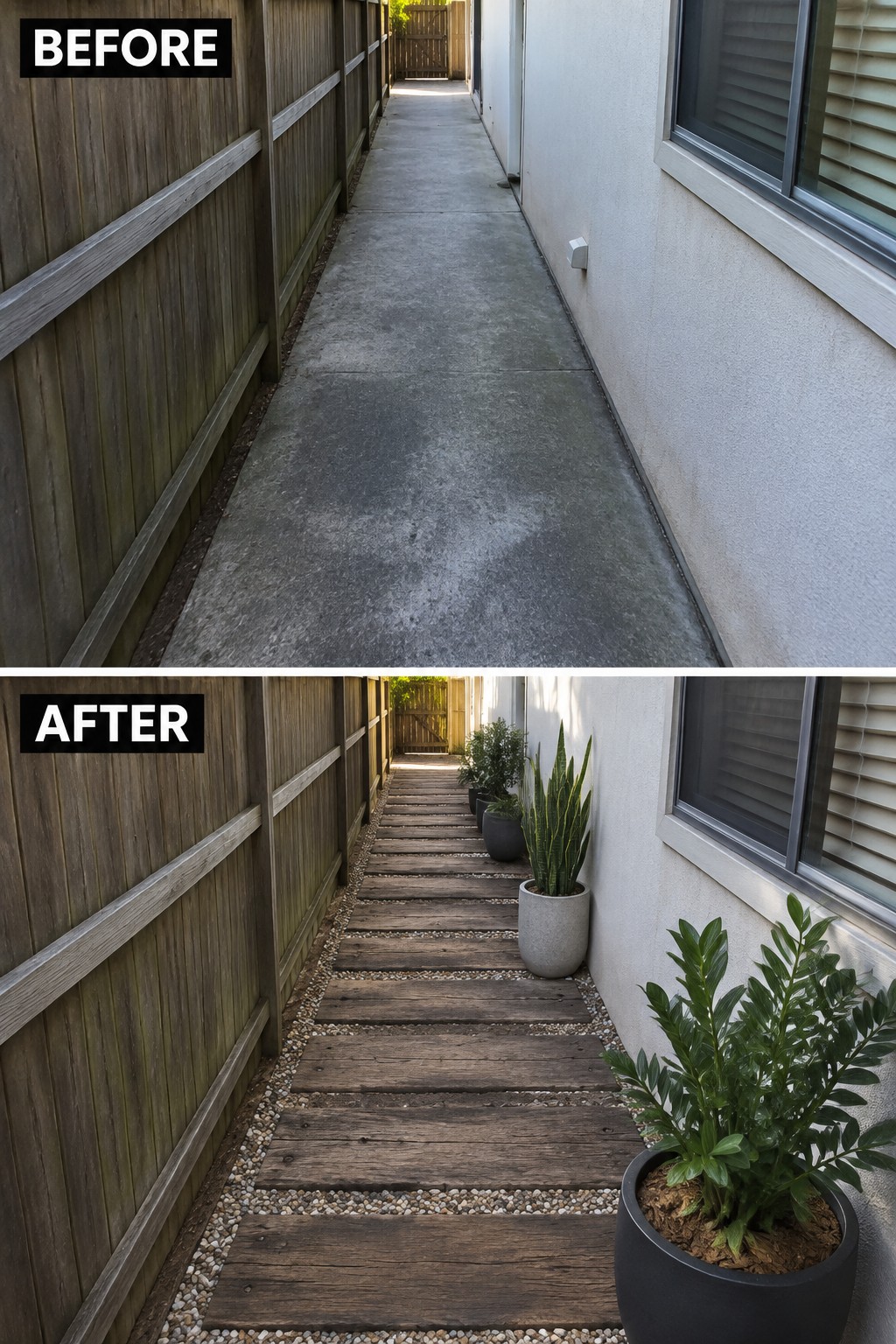
A plain concrete strip between the house and fence often feels like an afterthought. Laying wood planks across the path with gravel on the sides gives the space a clearer structure and a softer, more natural feel that works better with the surrounding wood fence.
This approach suits narrow side yards where full landscaping is hard to fit. Start with a simple base layer under the planks so water drains properly, keep the gravel edge narrow to avoid crowding the walkway, and use a few large pots along one wall if you want greenery without taking up floor space.
Add Pavers To Define A Garden Path
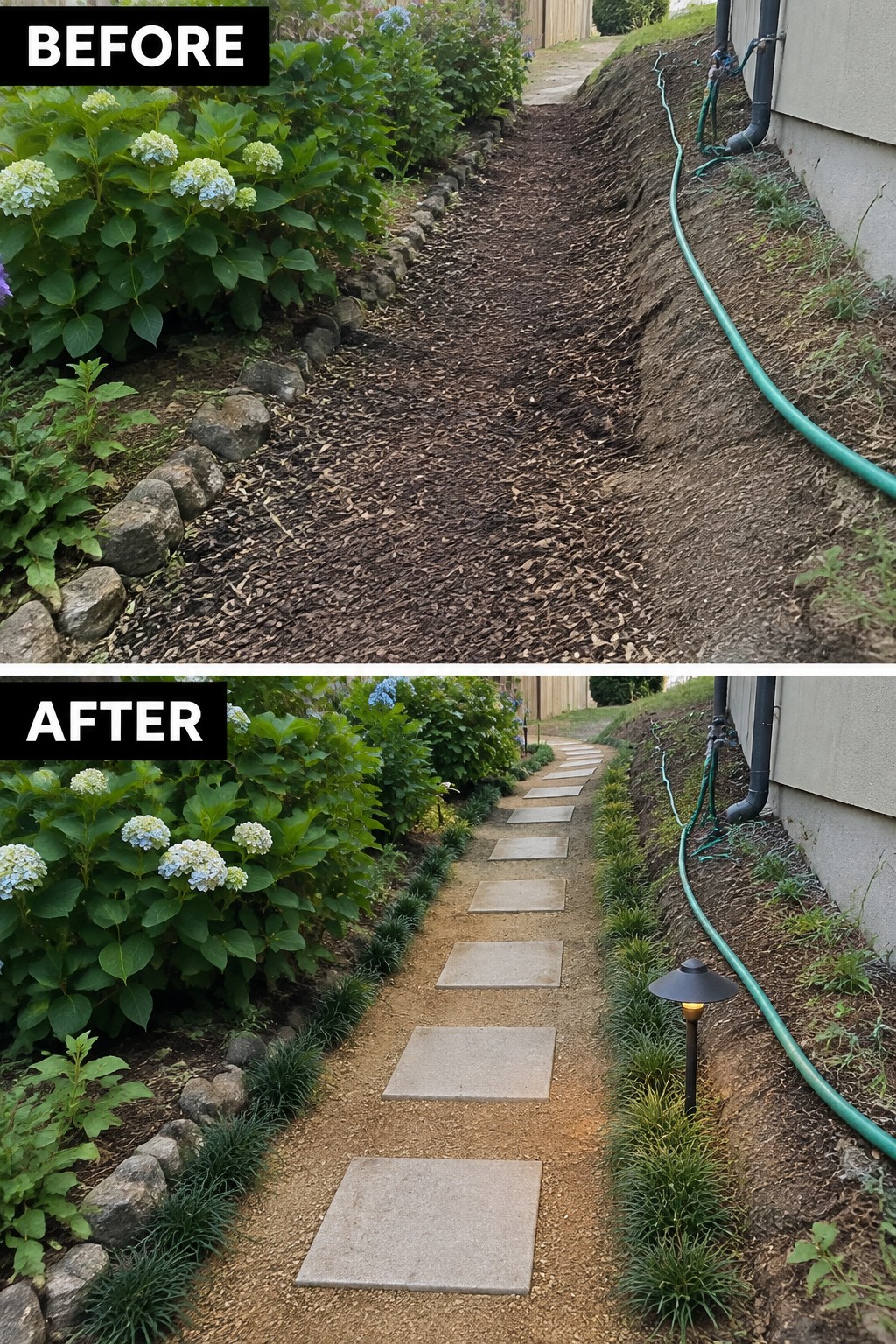
A loose mulch path can work for a while, but it tends to shift and get muddy after rain. Setting down concrete pavers creates a firm, level surface that stays in place and gives the eye a clear route through the garden.
This approach suits narrow side yards or sloped areas where a full concrete slab would feel too heavy. Clear the old mulch first, add a simple gravel base, then set the pavers with a bit of space between them so water can drain and low plants can fill in the gaps over time.
Add A Center Paver Strip To A Plain Concrete Walkway
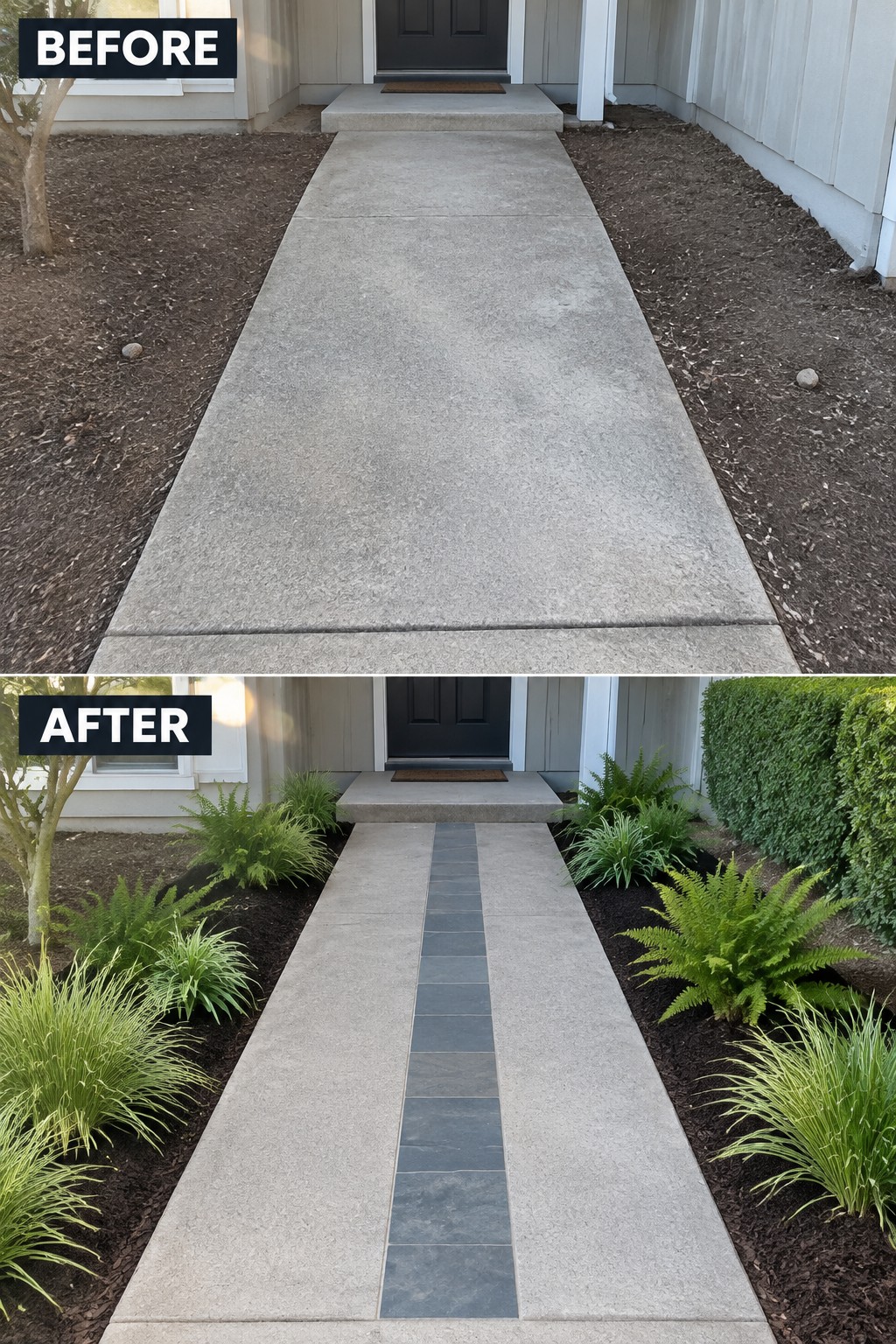
A wide concrete path can feel flat and unfinished when the sides are just bare dirt. Adding a narrow strip of darker pavers down the middle breaks up the surface and gives the walkway a clear sense of direction without needing to replace the whole slab.
This approach works best on long entry paths where you want more interest than plain concrete but still need a durable walking surface. Clean up the edges first, lay the pavers in a simple running pattern, then add planting beds on both sides with mulch to keep the look tidy and contained.
Turn A Muddy Path Into A Gravel Walkway
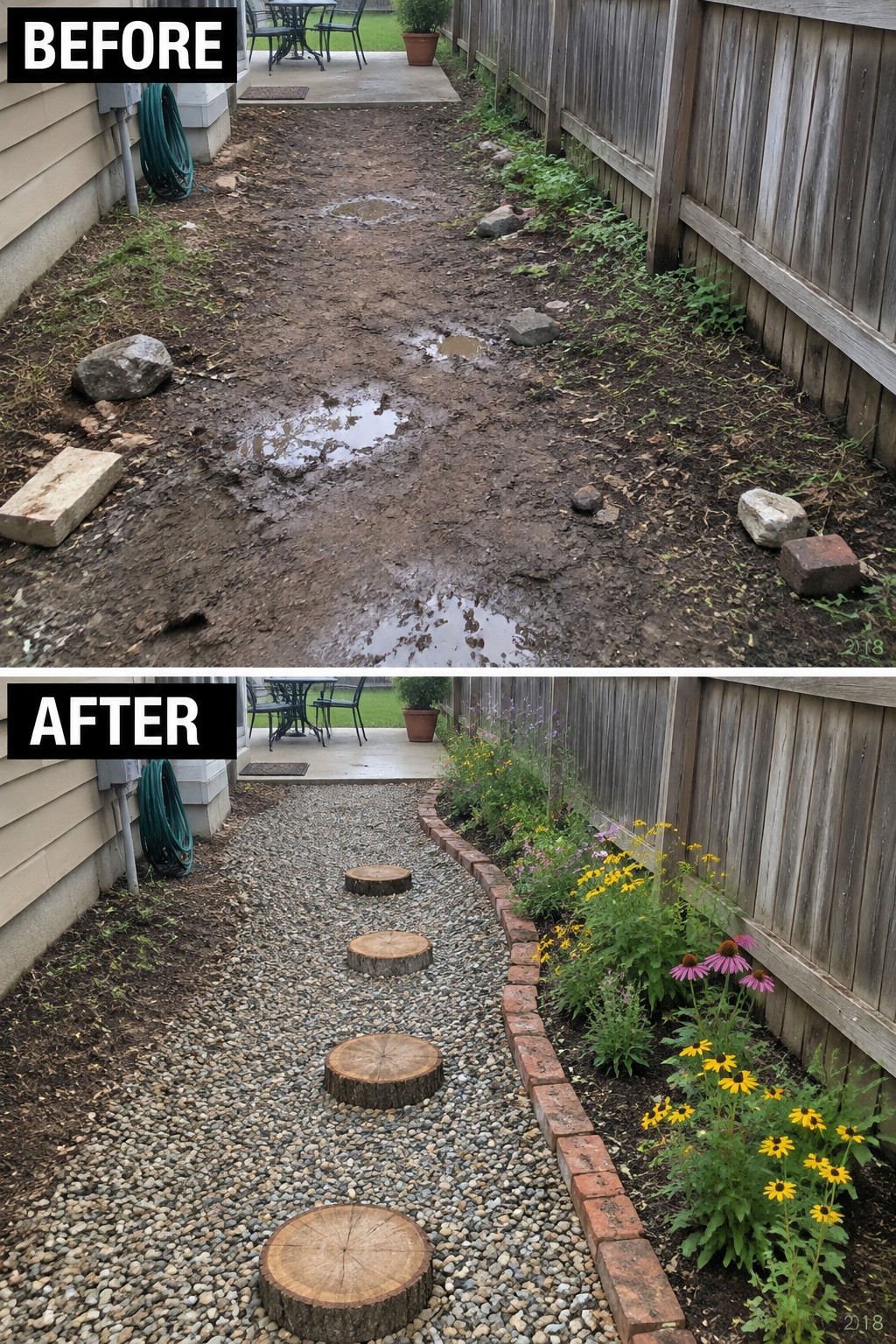
A dirt side path that turns into mud after rain is hard to use and looks neglected. Gravel solves the drainage problem while the wood slices give firm stepping points through the center. A simple brick edge keeps the planted border in place and stops the gravel from spreading.
This approach suits narrow side yards or areas between the house and fence. Start by clearing the mud and leveling the ground, then add fabric under the gravel so weeds stay down. The planting along the fence can come later once the path itself feels solid.
Add Structure To An Overgrown Walkway
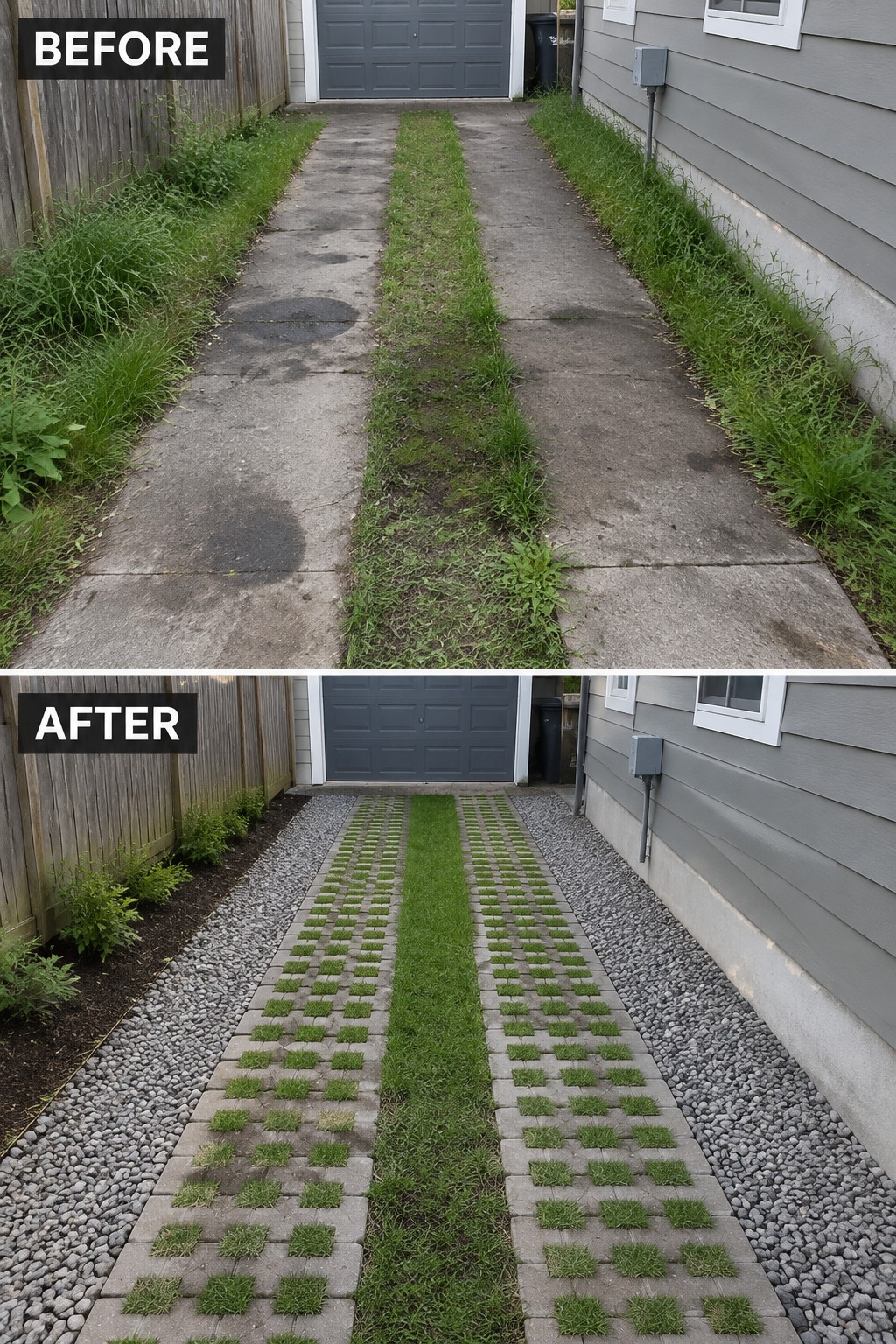
A plain concrete path can start to look neglected once the grass along the edges grows wild and uneven. Laying paver sections with grass in the openings and adding gravel borders gives the walkway clear lines and stops the overgrowth from creeping back in so quickly.
This idea works best on side paths or narrow areas next to the house where you still want some green but need easier maintenance. Clear the edges first, then choose a paver layout that matches how much foot traffic the path gets. Gravel helps with drainage and keeps the look simple without adding much cost.
Use String Lights To Turn A Narrow Side Yard Into A Usable Space
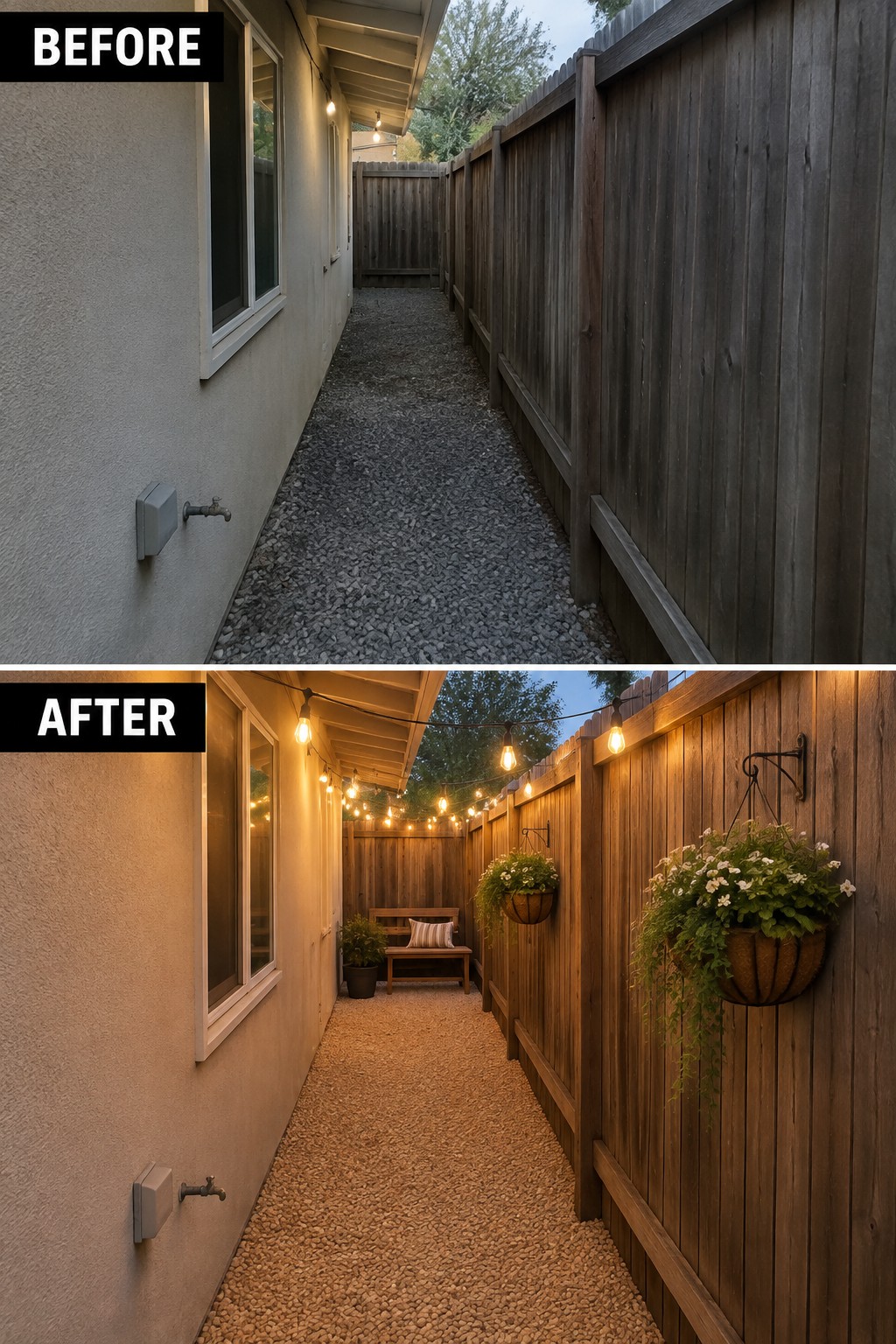
A narrow gravel path between the house and fence often feels like wasted space, especially at night when it stays dark and empty. Adding string lights overhead makes the area feel intentional and much more welcoming, while a simple bench and a few plants give people a reason to pause instead of just walking through.
This works best on side yards or slim passages where you want light without taking up floor space. Hang the lights from the house to the fence so they create a gentle overhead glow, and keep any seating low and compact so the path stays clear. Focus on weatherproof bulbs and sturdy hooks, since the area gets full exposure.
Add Edging To Define A Plain Walkway
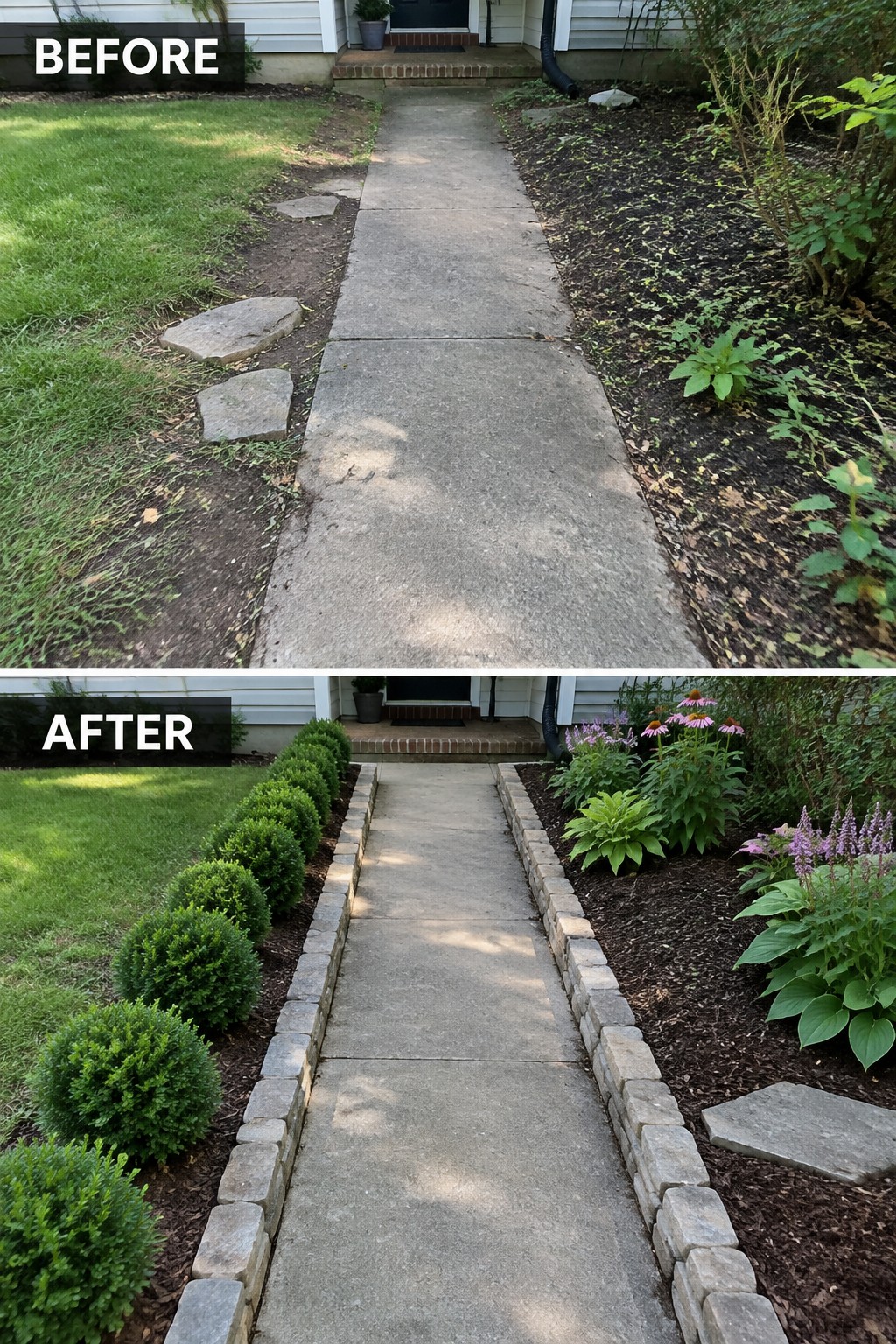
A straight concrete path often looks unfinished when grass and soil just run up to the edges. Adding a low stone border on both sides creates clear lines that keep everything in place and make the walkway feel like it belongs to the house. The simple change turns a basic slab into a more structured entrance without moving the concrete itself.
This idea works best on front paths or side entries where you want order but do not need a full patio. Lay the edging first so the beds stay neat, then add mulch and a few repeated shrubs or easy perennials. Keep the beds narrow enough that the path still feels open and easy to walk.
Frequently Asked Questions
Q: Do I need to rip out the old path before I start? A: You can often build right over it if the base feels solid. Just sweep away loose dirt and add a thin layer of sand to create a flat spot for the new stuff.
Q: What tools do I actually need for most of these ideas? A: Grab a shovel, a level, and a rubber mallet. Those three handle the bulk of the work without extra trips to the store.
Q: Will the new surface stay put if my dog cuts across it every day? A: Go with bricks or pavers in busy spots and press them firmly into the base. Softer choices like mulch suit quieter corners better.
Q: Can I really finish one of these in a weekend? A: Yes, the simpler designs take just a few hours.
