

I have noticed that garden paths often stay fairly plain until the planting along the sides gets some real attention.
When I started adjusting the edges and adding flower beds in layers, the whole area began to feel more settled and less like a leftover strip of lawn.
Small changes like these add up.
Choosing plants that suit the light and soil makes it easier for the beds to fill in without constant fuss, and the path starts to guide movement in a way that feels natural.
Over time I have found that focusing on structure first usually leads to spaces that hold up better through the seasons.
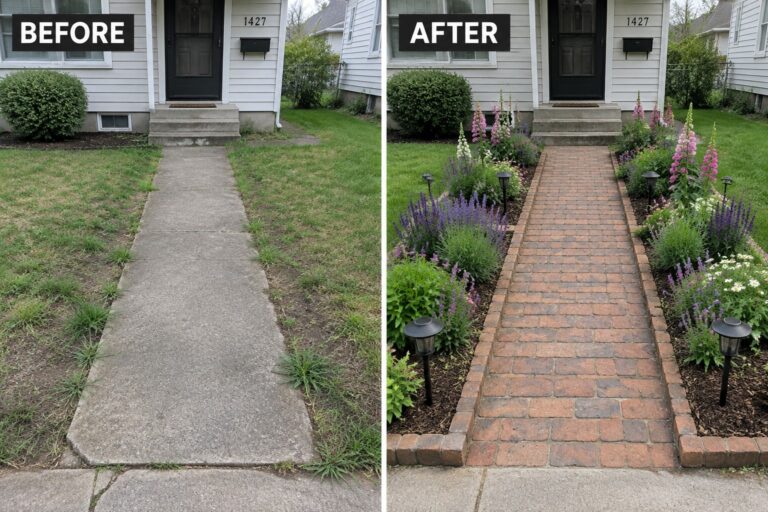
Frame A Plain Front Walkway With Brick And Flower Beds
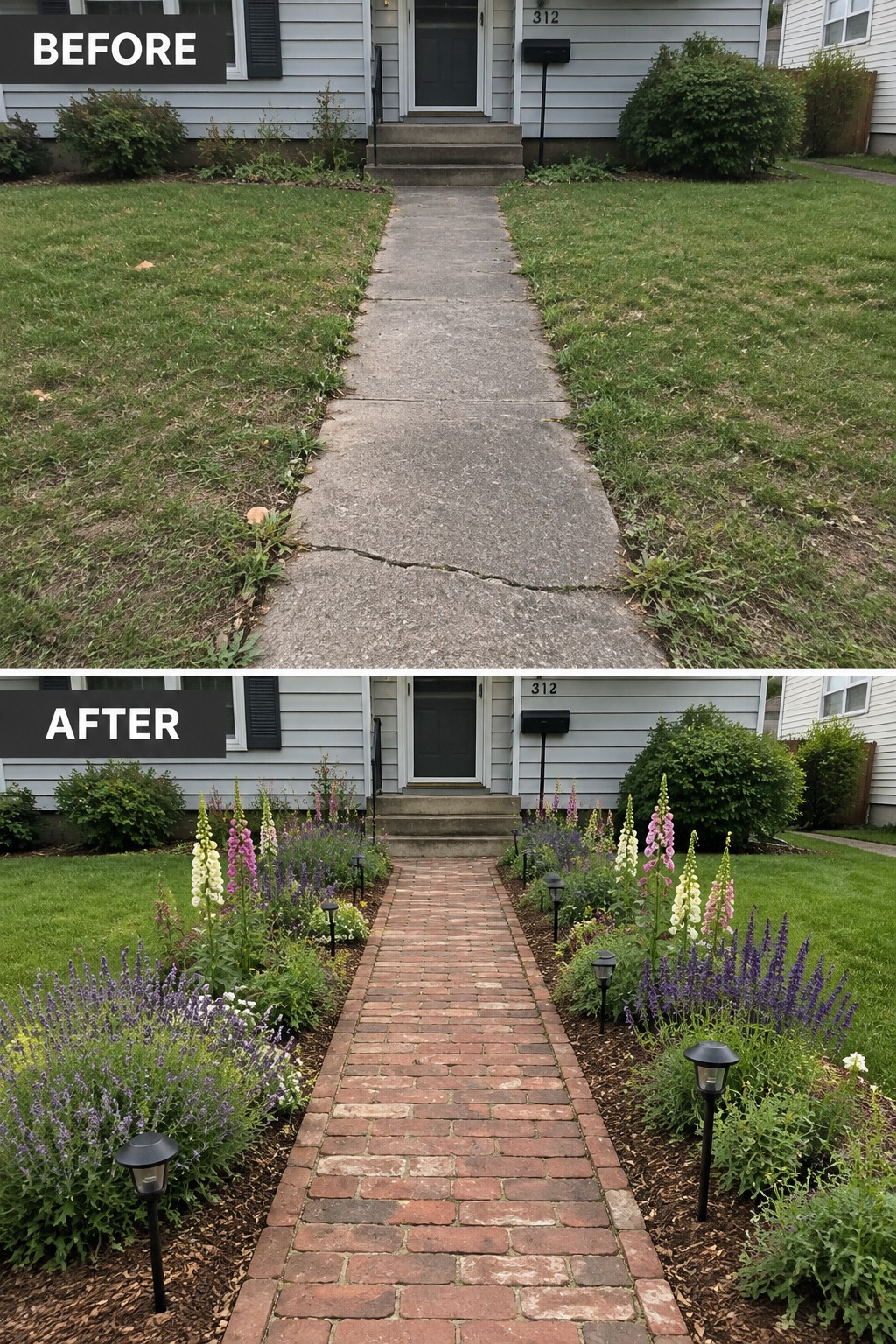
A cracked concrete path often makes the front yard feel unfinished even when the lawn is mowed. Switching to brick pavers gives the walkway a clear edge and a finished surface that holds up better over time. Adding garden beds on both sides then softens the hard lines and guides visitors straight to the door without any extra effort.
This approach works well on modest front yards where the path is the main feature. Keep the beds narrow enough for easy mowing and choose plants that stay in scale with the walkway so the space does not feel crowded. Start with the pavers and edging first, then fill in the beds with a simple mix of perennials and a few solar lights for evening use.
Define A Garden Path With Flower Beds And Stone Edging
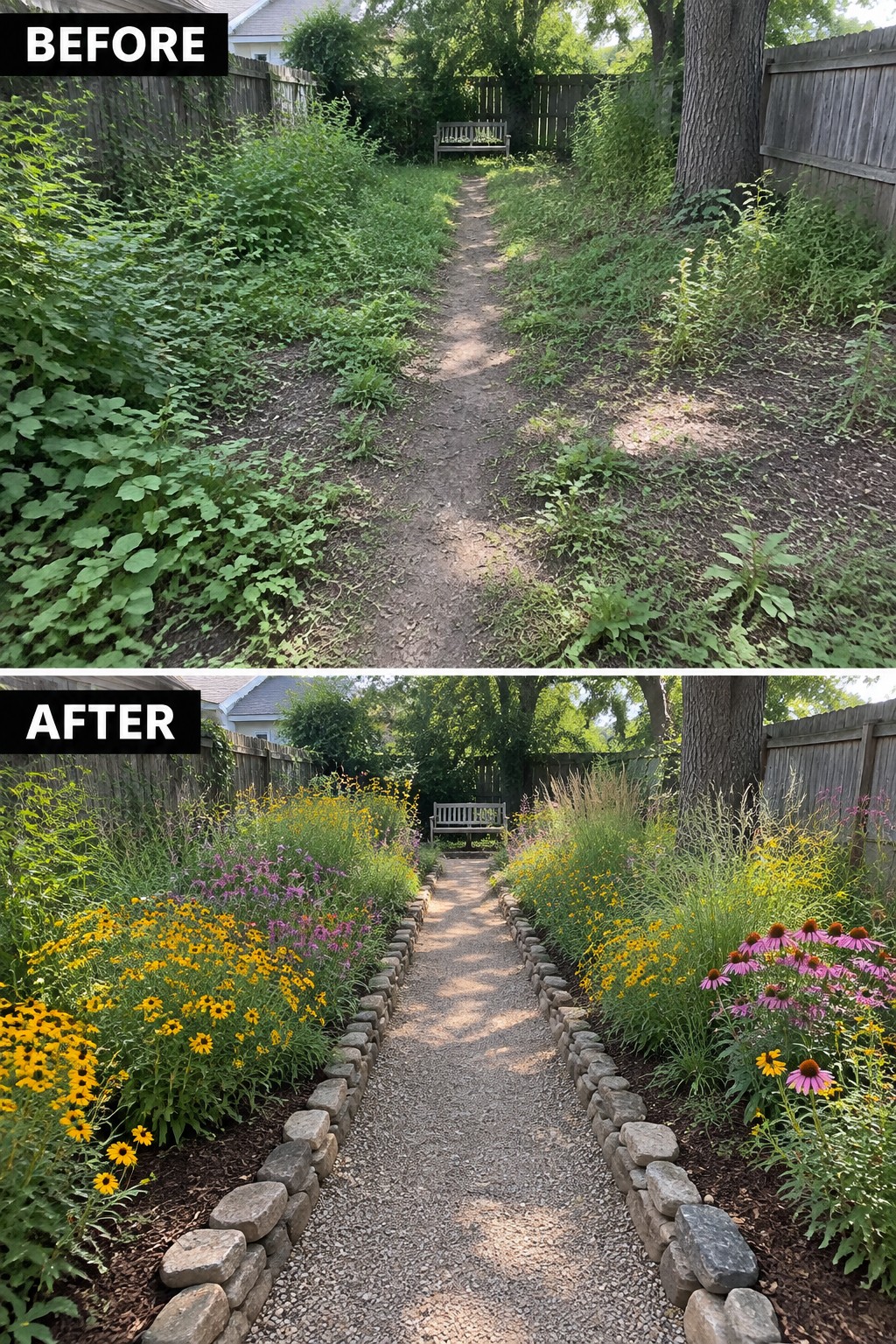
Clearing the weeds first made the biggest difference here. Once the overgrowth was pulled back, simple stone borders gave the beds a clear shape and kept the gravel path from looking like it was just cut through grass and dirt.
This idea works best on narrow side yards or back paths where you want planting without constant trimming. Lay the edging first to set the bed width, then choose a handful of perennials that spread nicely and bloom in sequence. The result feels intentional and stays manageable over time.
Add Garden Beds To Frame A Front Path
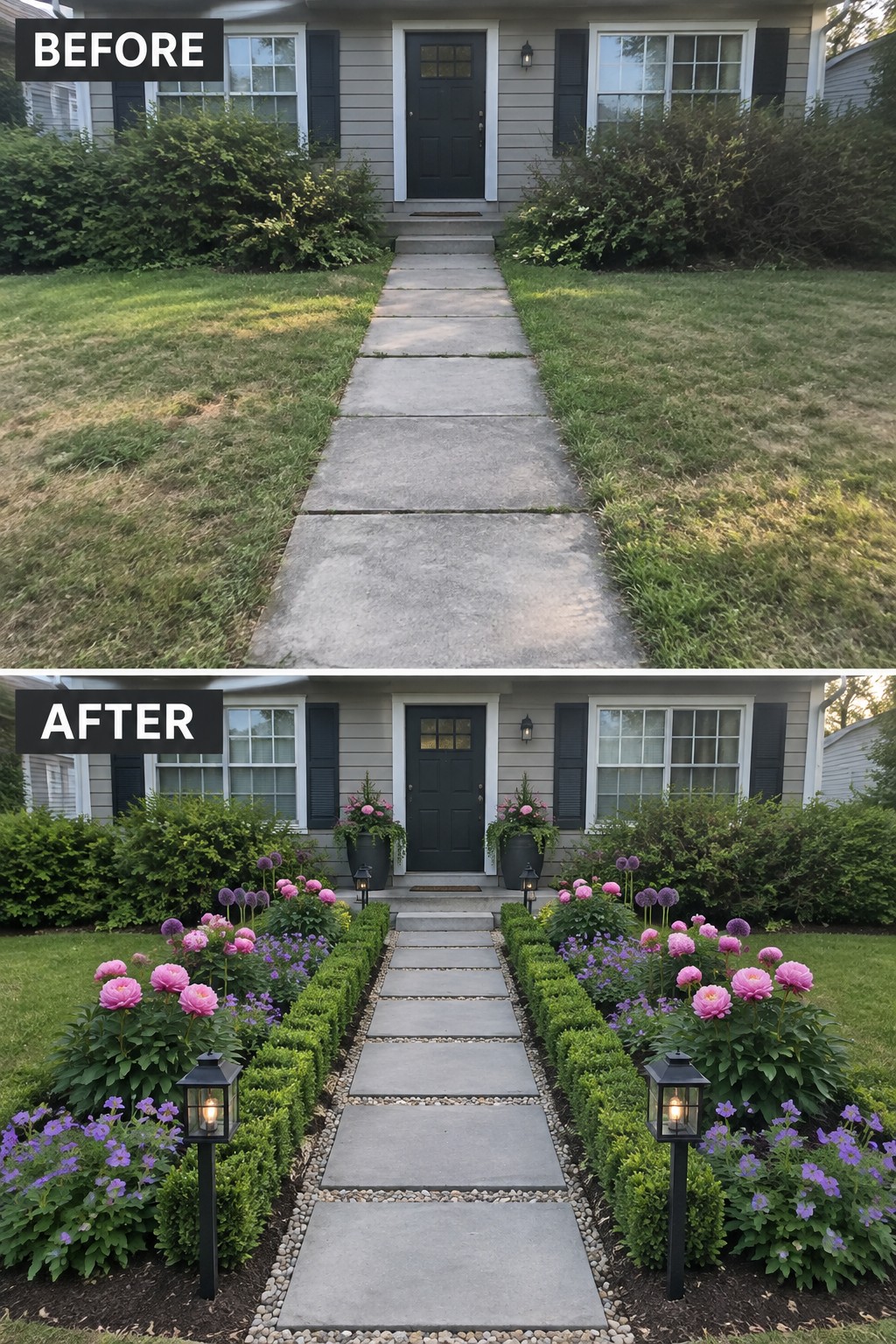
A plain concrete walkway often looks unfinished when the grass runs right up to the edges. Adding garden beds on both sides with a clear border of gravel and a mix of flowers gives the path shape and brings color all the way to the door.
This idea works best on straight front walks where you want more interest without changing the hardscape. Keep the beds narrow enough to leave room to walk, repeat a few plant colors for a tidy look, and add simple lights near the steps so the path feels welcoming after dark.
Create A Raised Flower Bed With Stone Edging Along A Side Path
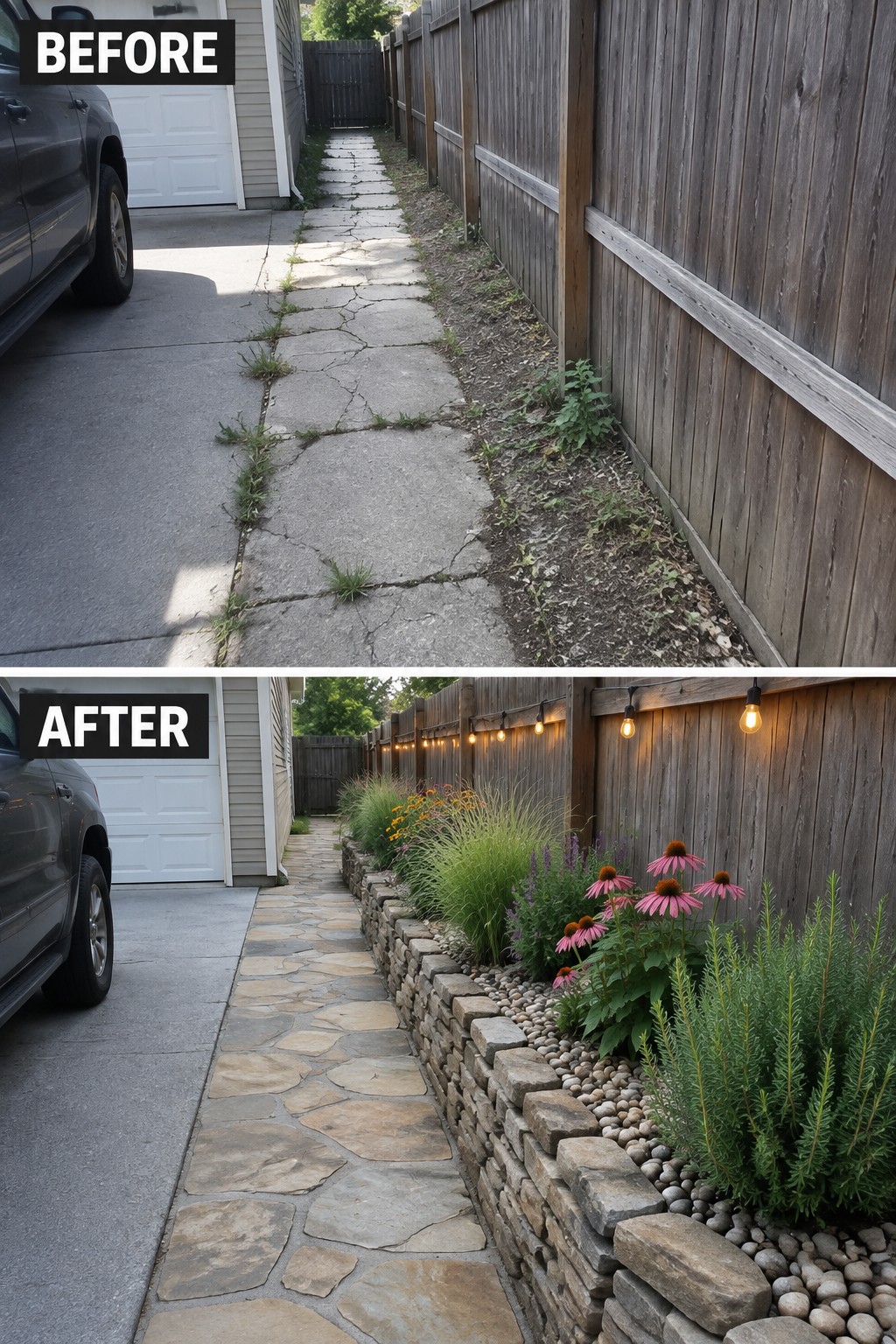
The main change here is how the bare dirt strip and cracked concrete were replaced with a low stacked stone wall that holds a proper planted bed. This gives the path a clear edge, keeps the soil and gravel in place, and turns what was just a weedy strip into something that actually looks intentional.
This idea works well on narrow side yards where you want planting without losing walkway space. Start with the wall or edging first so the bed has a firm border, then fill it with a mix of taller grasses, lower perennials, and a few evergreens. Keep the plants in scale with the width of the path so the walkway still feels open.
Define An Overgrown Path With Edging And Planting
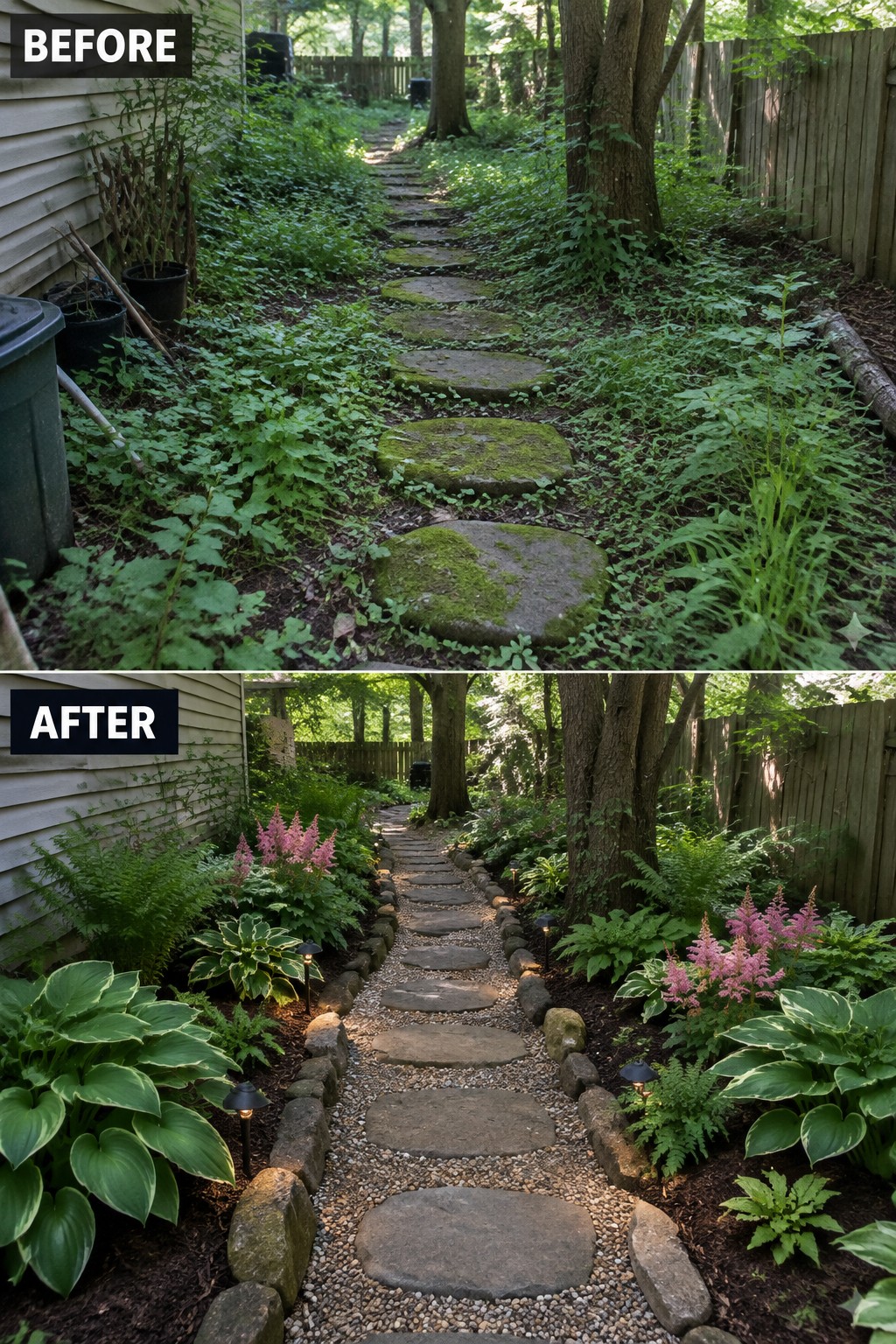
An overgrown path quickly starts to feel like part of the weeds instead of a real route through the yard. Adding a clear edge of rocks and filling the sides with gravel gives the stepping stones a frame so the walkway reads as intentional. Once the edges are set, planting along both sides with shade-loving perennials turns the leftover space into simple garden beds instead of leftover scrub.
This approach works well in narrow side yards or wooded back areas where the path needs to stay functional but the planting can stay low and textural. Start with cleanup and edging before you add plants, and keep the beds narrow enough that you can still reach across to maintain them. The result feels planned without requiring a full redesign of the whole yard.
Add Stone Edging To Shape A Gravel Pathway
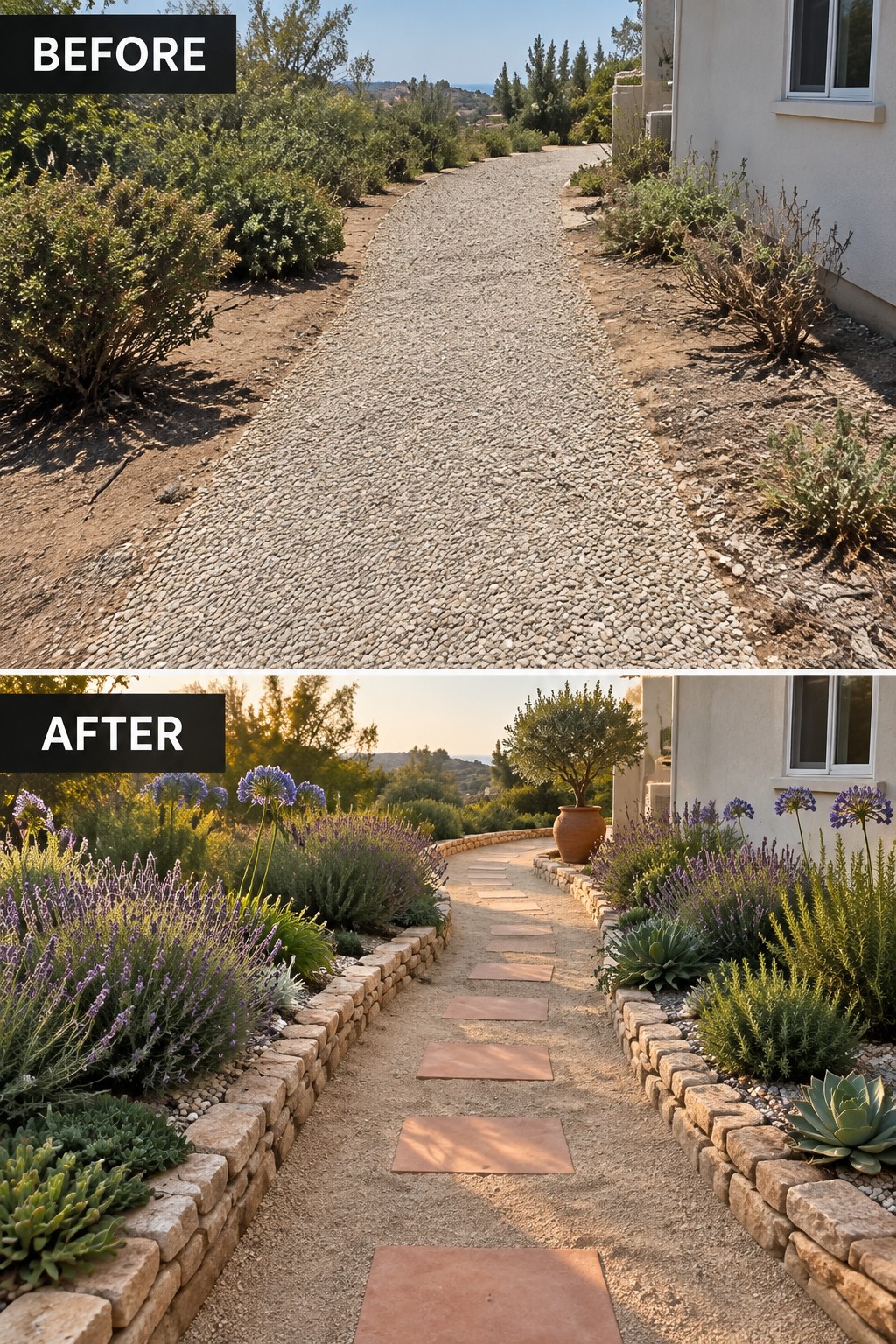
A plain gravel path often looks unfinished when the edges just fade into dirt and weeds. Low stone walls on both sides fix that by creating raised beds that hold the gravel in place and give the walkway a clear shape.
This idea suits long side paths or back garden routes where you want some planting without turning the space into a formal garden. Build the edging first so the beds stay tidy, then choose a few plant heights that stay mostly below eye level so the path still feels open as you walk through it.
Add Defined Flower Beds Along A Narrow Path
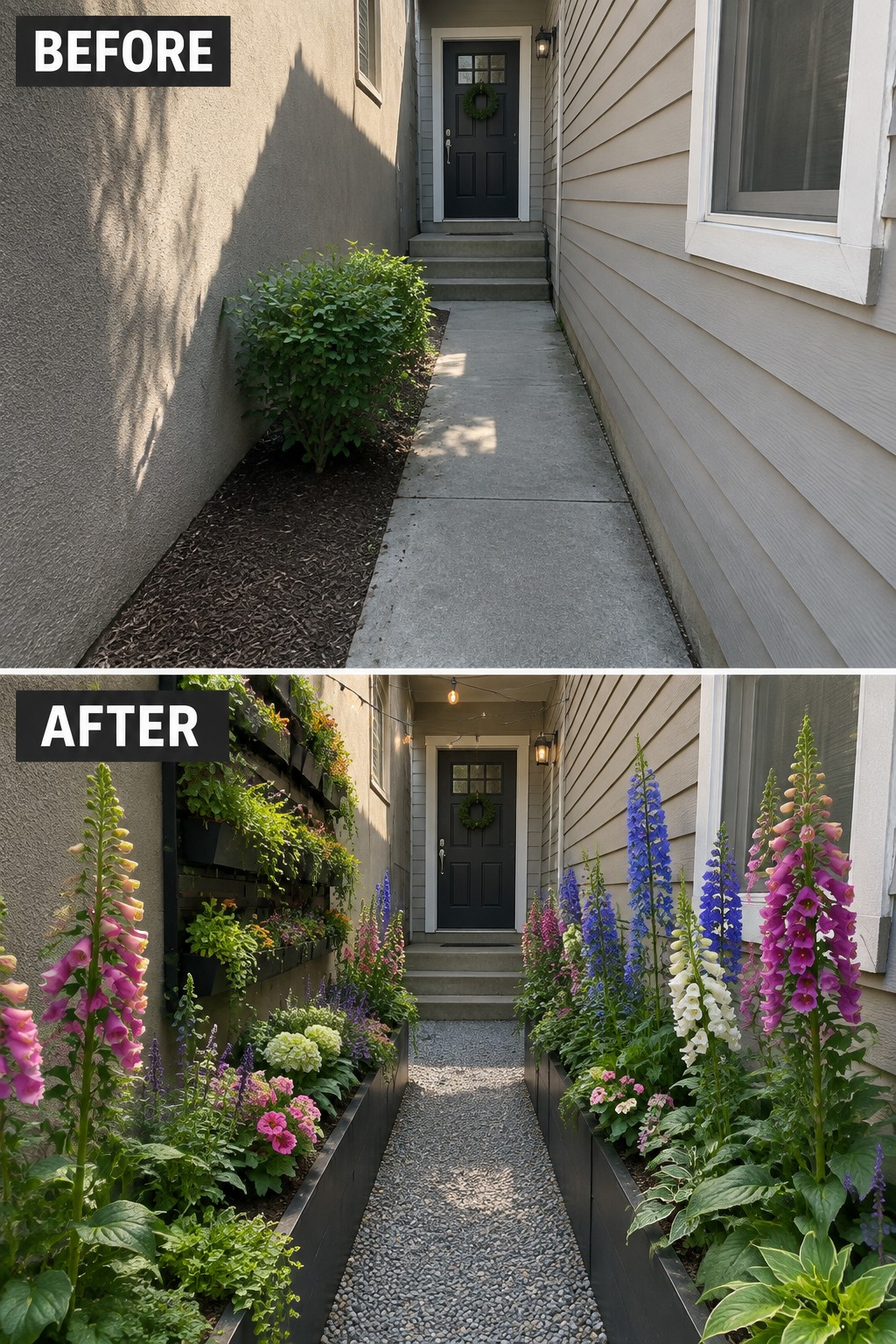
A narrow side path often stays plain because there is not much room to work with. Long planters placed along both edges give the space clear borders and let you add height and color without crowding the walkway. The concrete surface was swapped for gravel, which helps with drainage and keeps the focus on the planting.
This idea suits homes where the side entrance feels like an afterthought. Stick to one or two planter styles so the look stays simple, and choose flowers that bloom at different times so the beds stay interesting through the season. Leave enough room in the center for easy foot traffic.
Add Edging To Give A Backyard Path Better Shape
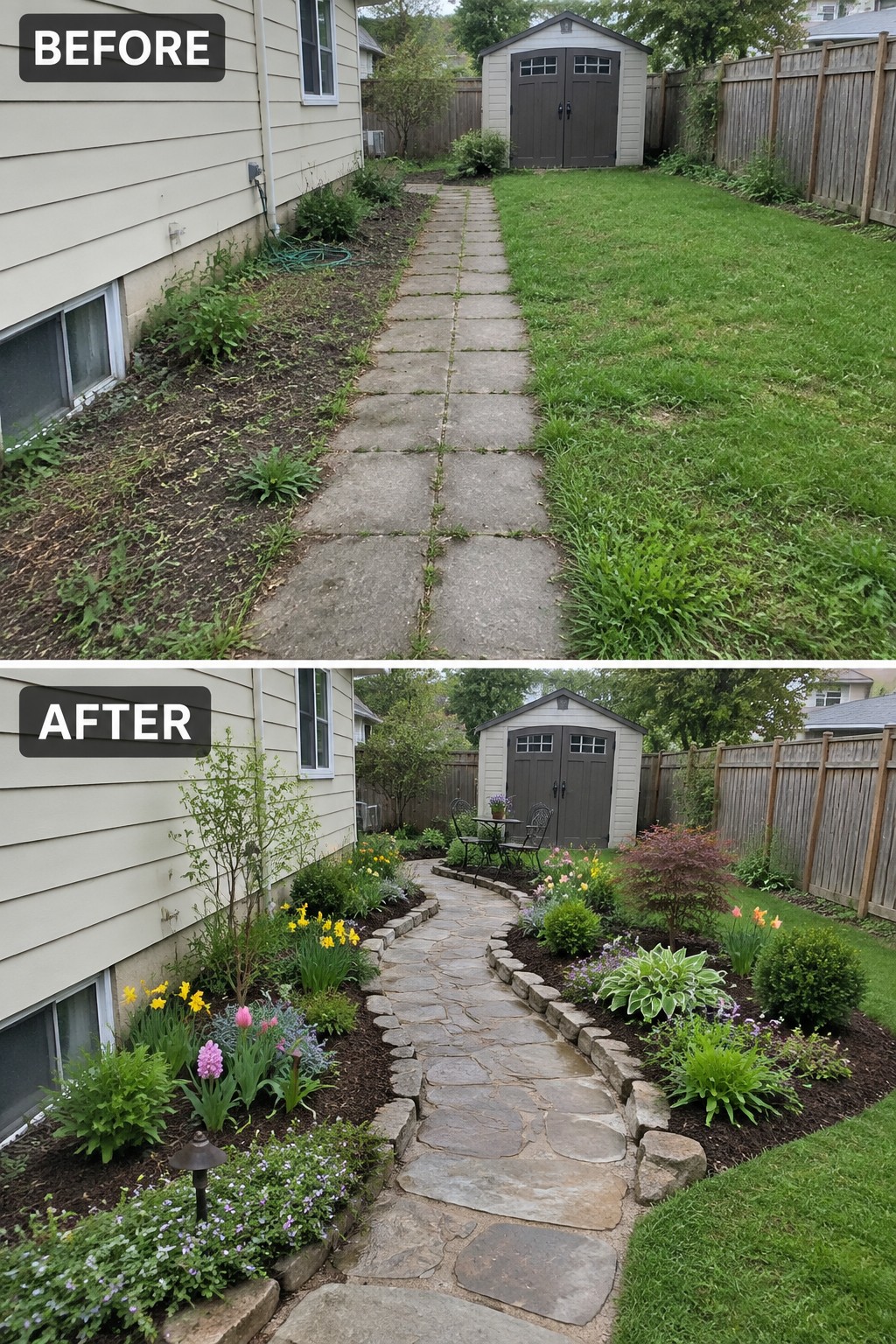
A straight concrete path with messy grass edges often feels like an afterthought. Replacing the slabs with irregular stones that curve gently through the yard and adding a clear stone border turns the same walkway into part of the garden instead of just a route to the shed.
This idea works best in smaller backyards where the path can become a feature rather than a divider. Lay out the new shape first, install solid edging to hold the mulch in place, then plant along the edges. Keep the beds a consistent width so the path still feels open and easy to walk.
Define A Front Path With Planted Borders
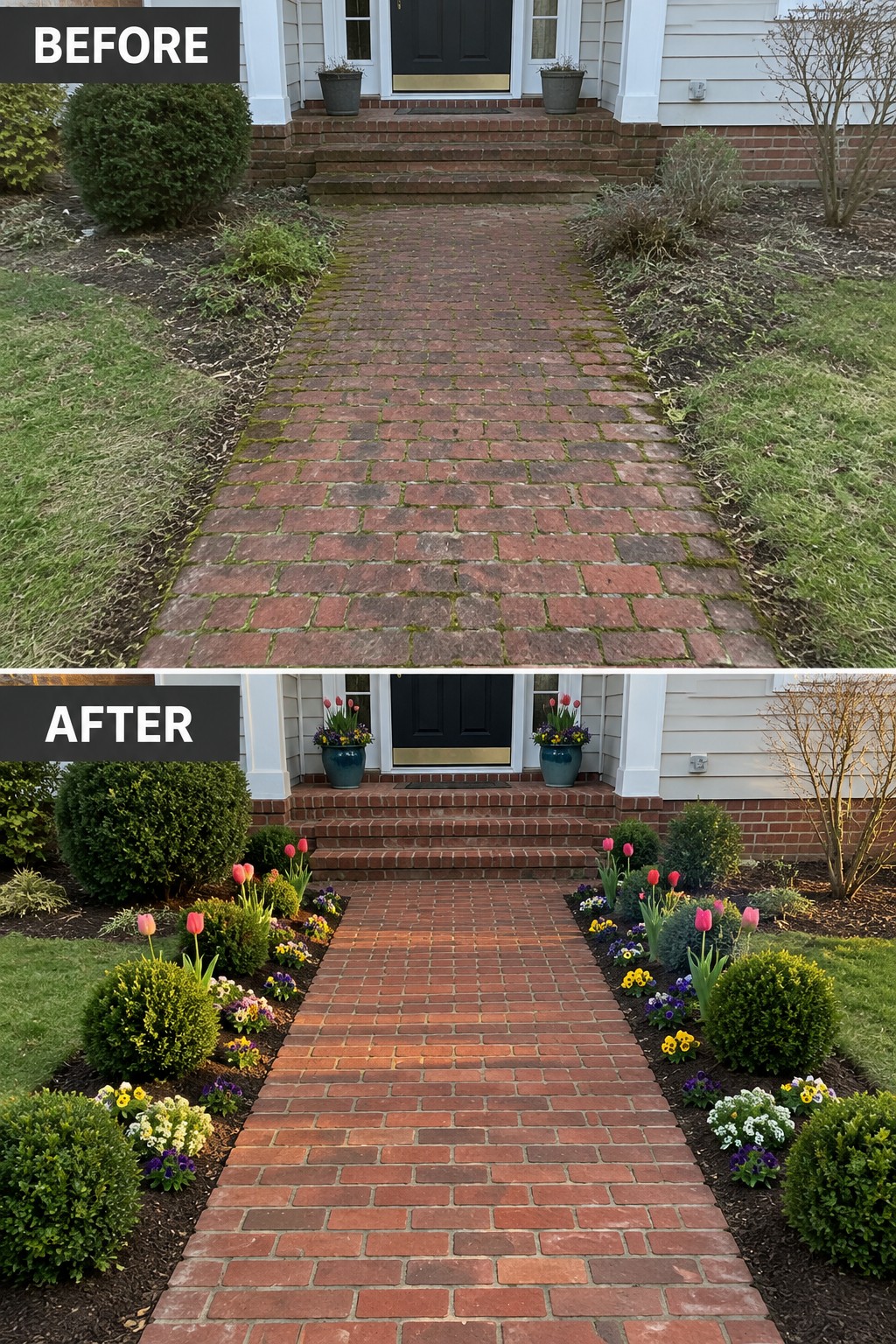
A simple brick path can look unfinished when the edges are left ragged. In this case the before photo shows mossy bricks and weedy strips along both sides. The after photo shows how adding low garden beds on each side gives the walk a clear frame and makes the whole approach feel more intentional.
The idea works best on straight or gently curving walks that lead to the door. Start by cutting a clean edge, lay down mulch, and choose a mix of low shrubs and seasonal flowers that stay under knee height so the path itself remains the main feature. Keep the plantings similar on both sides so the eye follows the walk rather than jumping around.
Add Flower Beds Along A Narrow Pathway
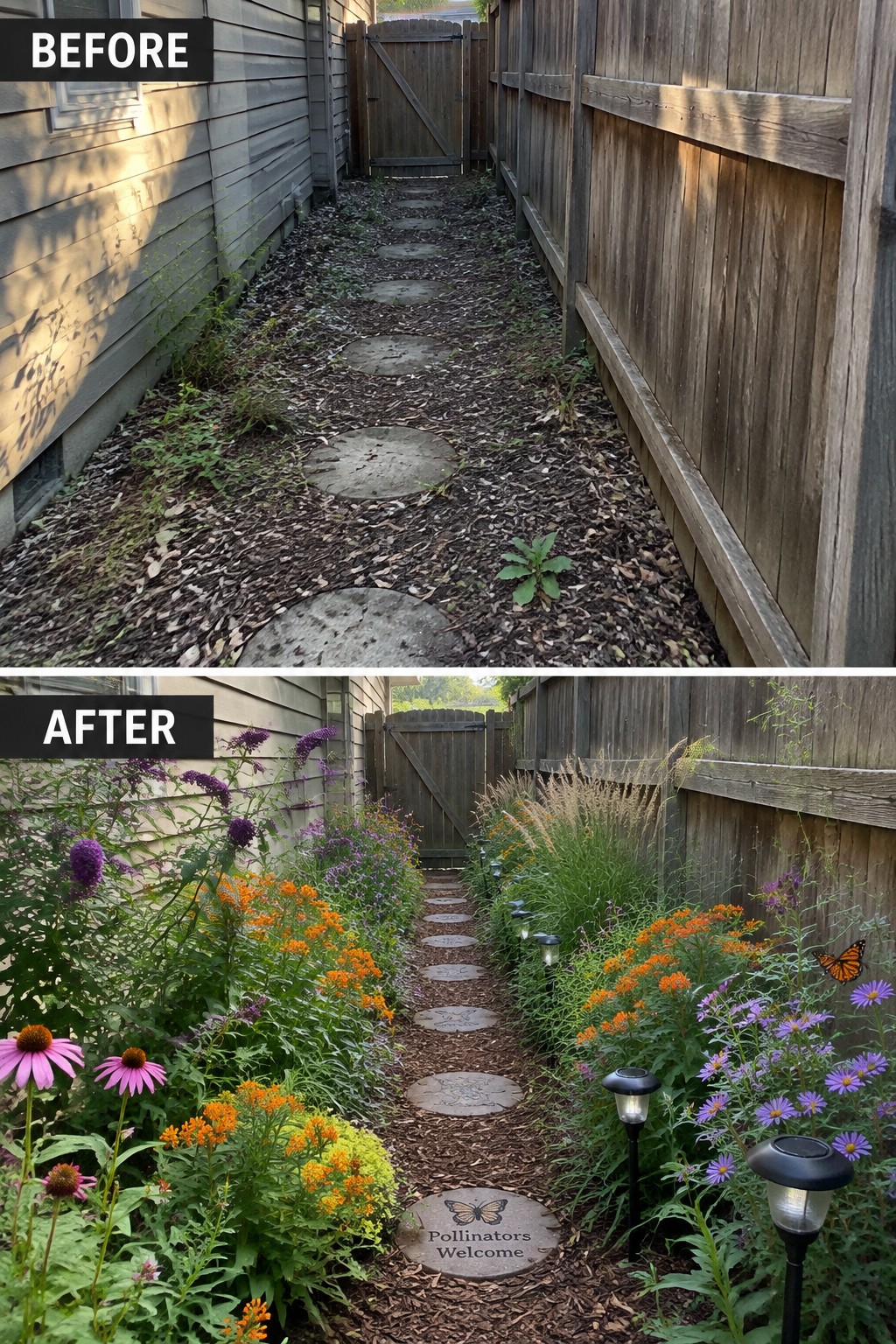
A narrow side path often ends up as just a strip of mulch and stepping stones because there is little room to work with. Adding flower beds on both sides gives the path a clear purpose and turns it into part of the garden instead of a leftover space. The simple change from bare ground to planted borders makes the walkway feel intentional and much more welcoming.
This idea works well on any long, tight passage between a house and a fence. Keep the beds fairly narrow so the path stays easy to walk, and choose a mix of heights and bloom times so the planting stays interesting without crowding the walkway. Start with good edging and mulch, then add the plants. The stepping stones already in place can stay as the main route.
Define A Front Walkway With Stepping Stones And Garden Beds
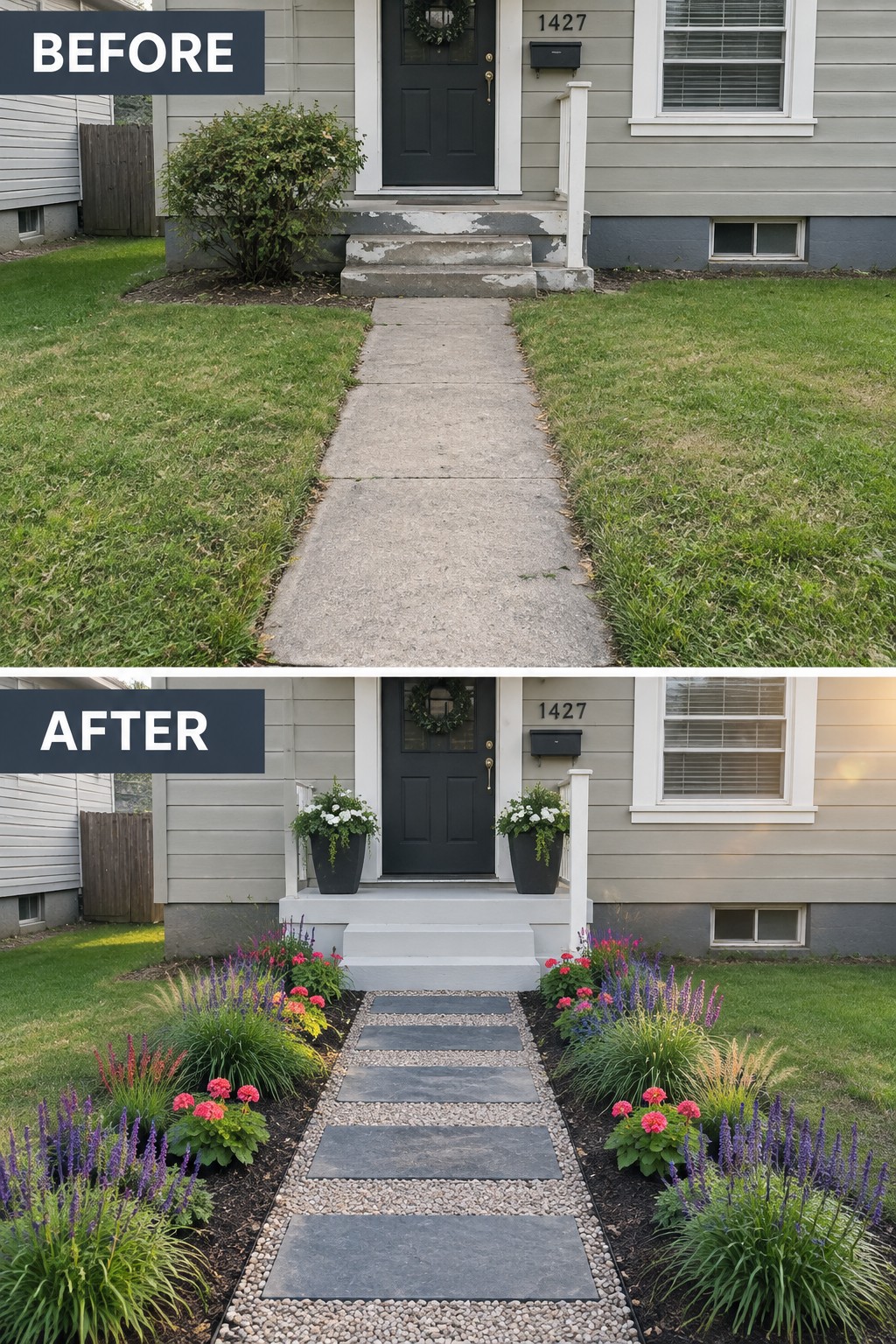
A plain concrete path often makes the front of a house feel unfinished. Replacing it with stepping stones set in gravel gives the walkway clear shape while the new garden beds on both sides add color and softness that leads visitors to the door.
This approach works well on narrow front yards where you want to keep the lawn open but still create a sense of arrival. Start with the path layout first, then plant the borders in layers so nothing blocks the walk. Keep the beds a consistent width and choose plants that stay mostly in their space so the path stays easy to use year after year.
Define A Straight Path With Curved Pavers And Flower Beds
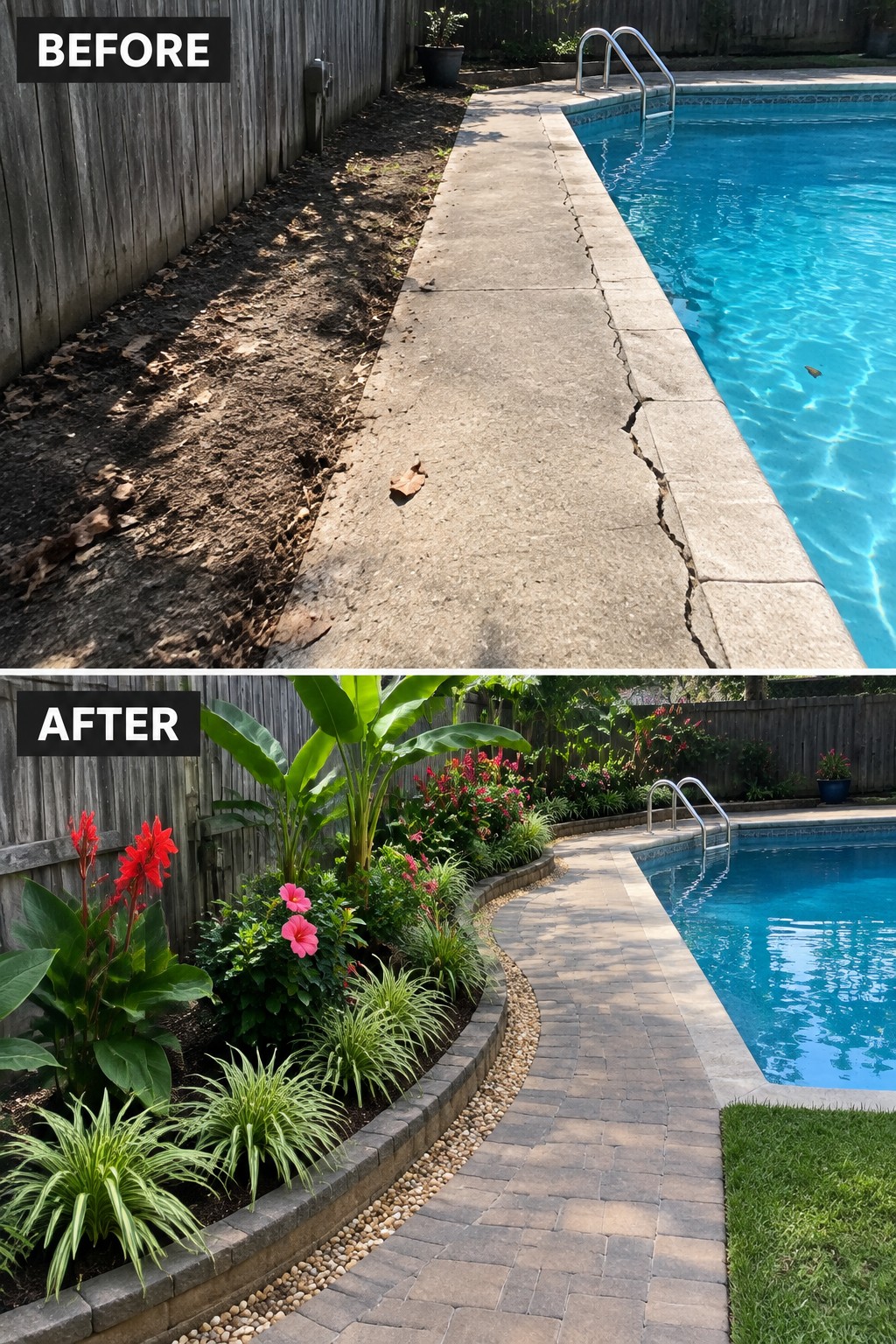
A bare dirt strip next to a pool path usually looks unfinished, especially once the concrete starts cracking. Switching to a curved paver walkway with planted beds along the inside edge turns the space into something that feels planned instead of leftover.
This idea works best in side yards or pool areas where you need a clear route but still want planting room. Lay out the curve first with a hose so the shape feels natural, then use simple edging to keep the beds tidy. Stick with plants that handle sun and occasional splash from the pool, and keep the bed width modest so the path still feels open.
Create A Defined Path With Gravel And Border Beds
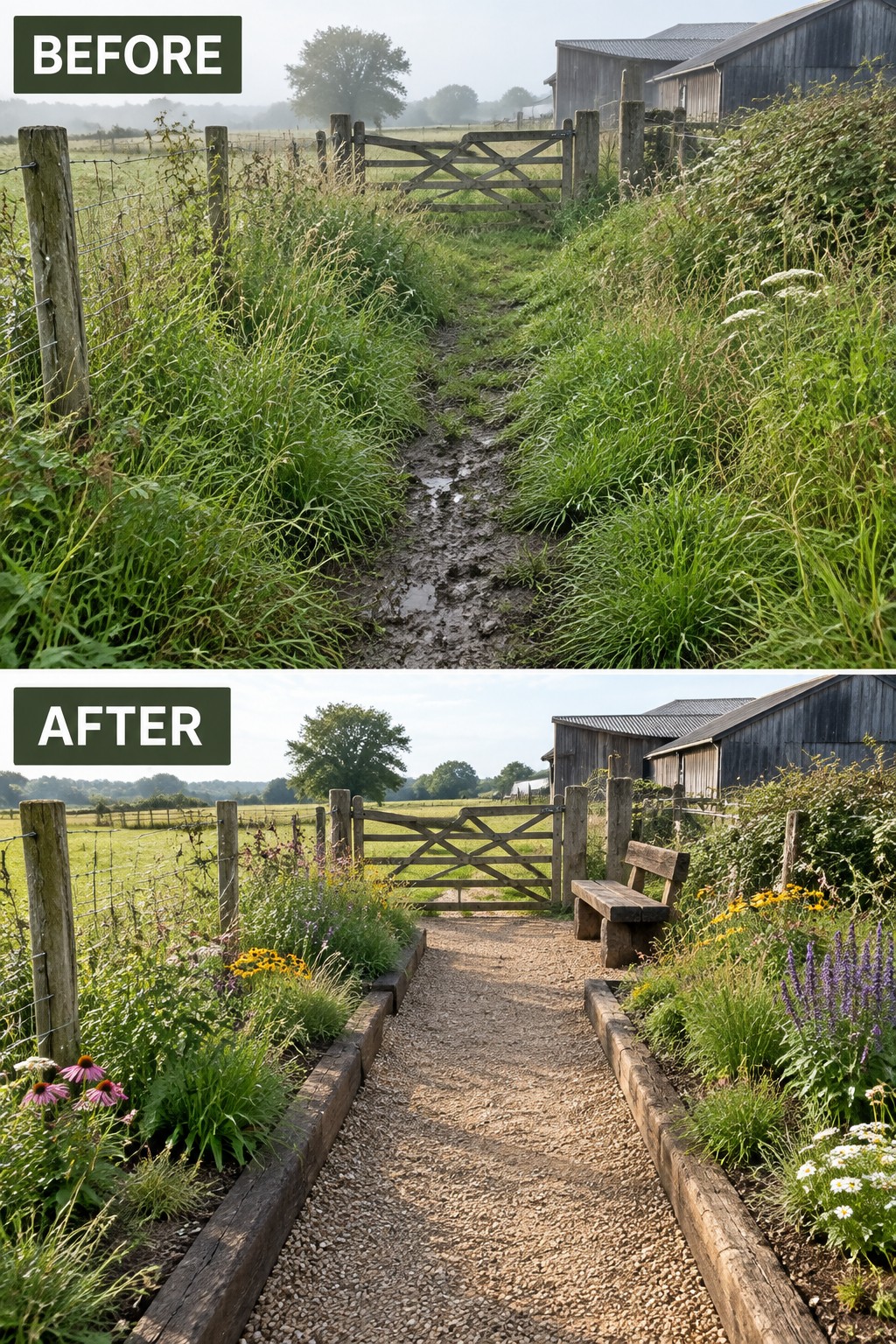
A muddy track through long grass becomes much more usable once it has clear edges and a solid surface. Gravel gives the path a firm, dry walking surface while the wooden borders keep everything in place and separate the walkway from the planting on each side.
This approach works best along field edges or beside sheds where foot traffic is regular but the ground gets soft. Put the edging in first so the gravel stays contained, then fill the beds with a mix of taller and lower plants that repeat a few colors. It suits larger yards that need practical routes without turning them into plain grass strips.
Turn A Narrow Side Passage Into A Small Seating Area
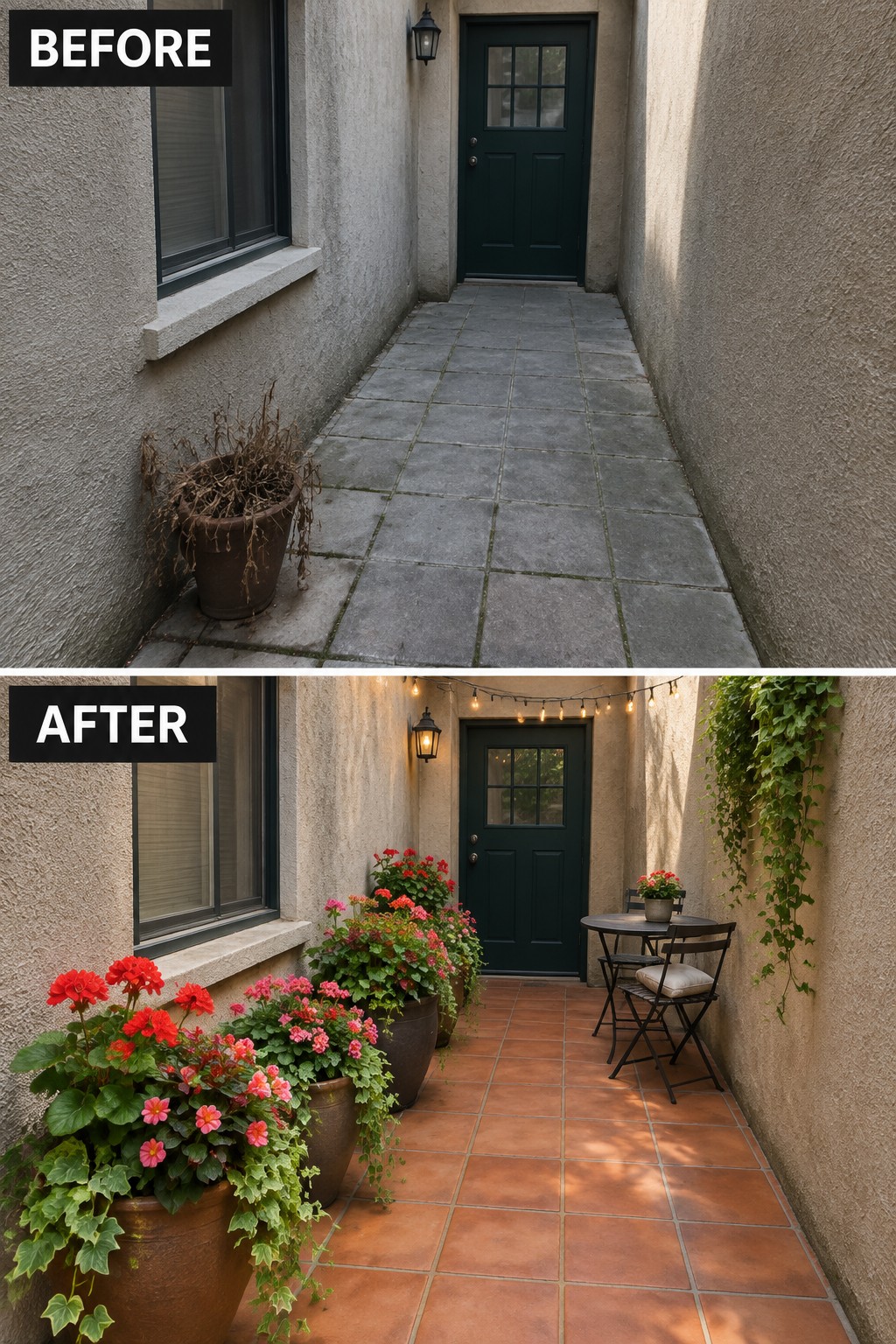
A long, plain walkway between two walls often ends up as wasted space. In this case the before photo shows cracked concrete pavers and one dead plant. The after version replaces the old surface with terracotta tiles, lines both walls with large pots of red geraniums and ivy, and adds a compact table and two chairs. The string lights overhead make the space feel finished and usable after dark.
This idea works well on any narrow side yard or passage that gets at least a few hours of sun. Start with a simple floor change so the area reads as a room instead of a corridor, then use oversized pots to bring in color without digging beds. Keep the furniture small and foldable so there is still room to walk through when needed.
Define A Garden Path With Edging And Flower Beds
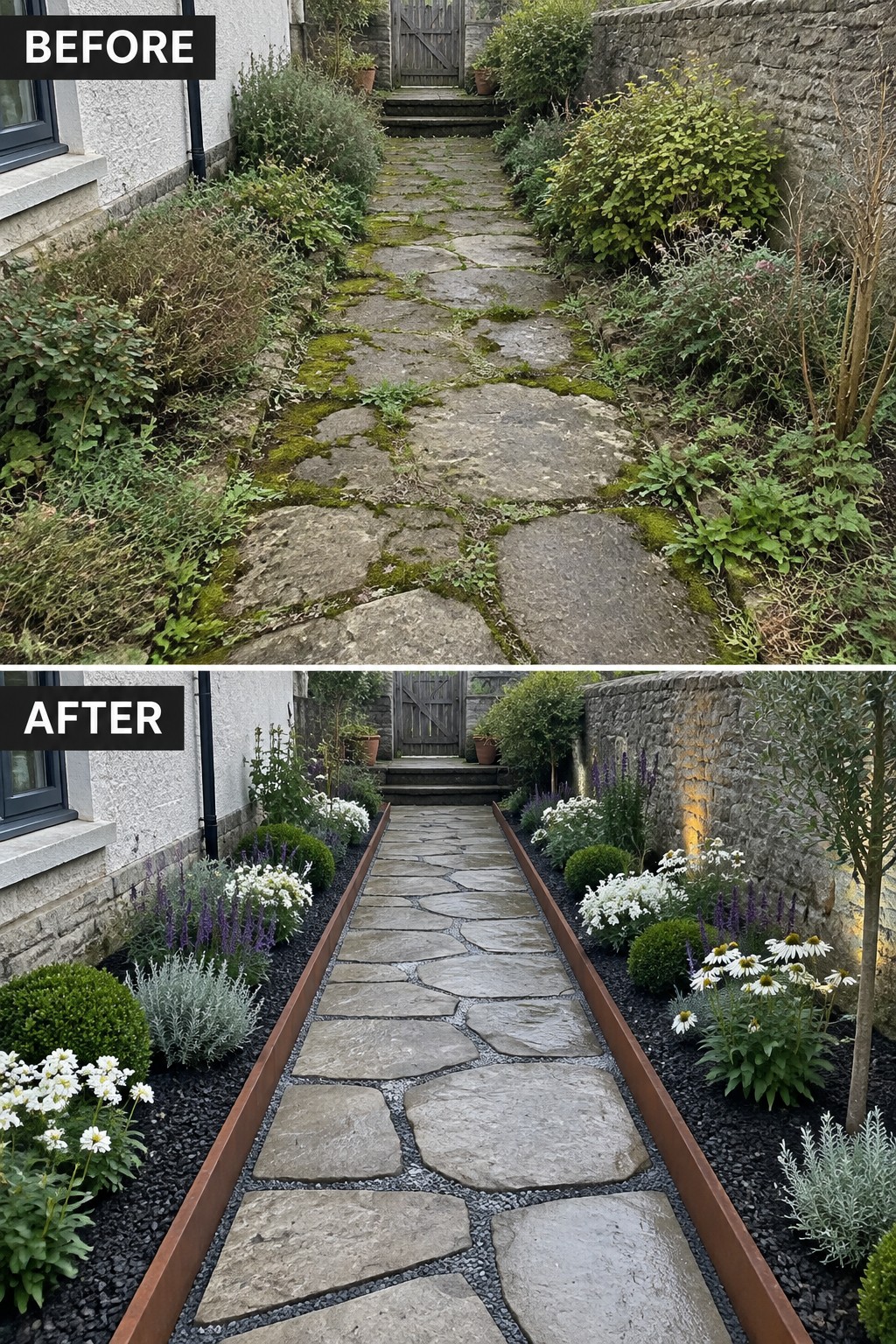
An overgrown path quickly starts to feel neglected when plants spill over the edges and moss takes over the stones. Adding metal edging on both sides creates a clear boundary, while fresh gravel between the stones and new planting beds keeps everything in place. The result is a path that looks intentional instead of forgotten.
This approach works well on narrow side passages or back garden routes where you want structure without crowding the walkway. Start by clearing the worst of the overgrowth, then install simple edging before choosing a few repeating plants that stay neat year after year. It keeps maintenance lower and makes the path feel like part of the garden rather than just a route through it.
Use Retaining Walls To Shape Flower Beds Along A Path
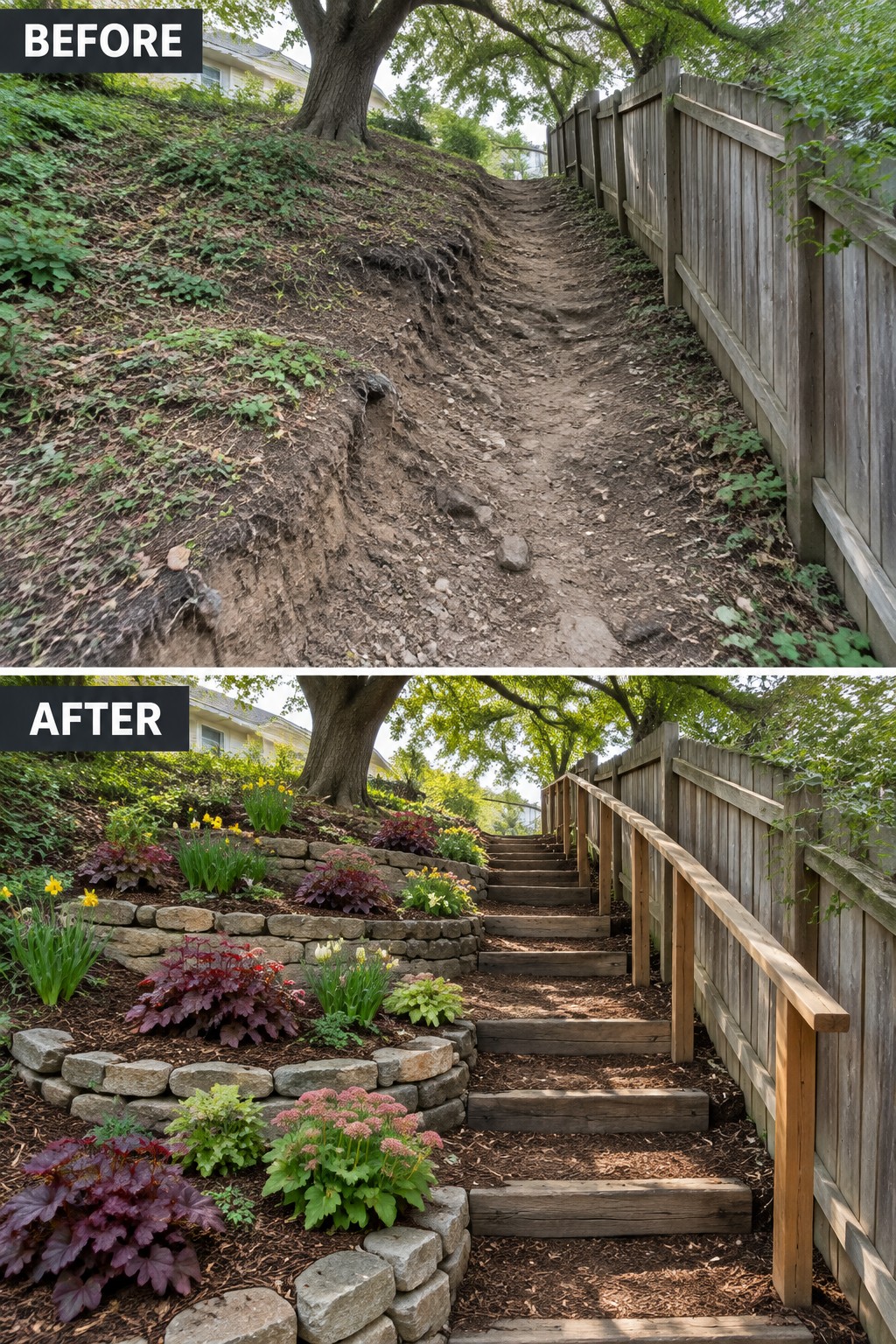
A steep dirt slope quickly turns into a muddy mess after rain, and walking it becomes difficult. Adding stone retaining walls and wooden steps creates flat planting areas while giving the path a solid, usable route down the hill.
This idea suits homes with sloped backyards or side yards where erosion is an issue. Build the walls first to hold the soil in place, then add mulch and plants suited to the light and drainage. Keep the beds narrow enough that they do not crowd the walkway.
Define A Front Path With Garden Beds
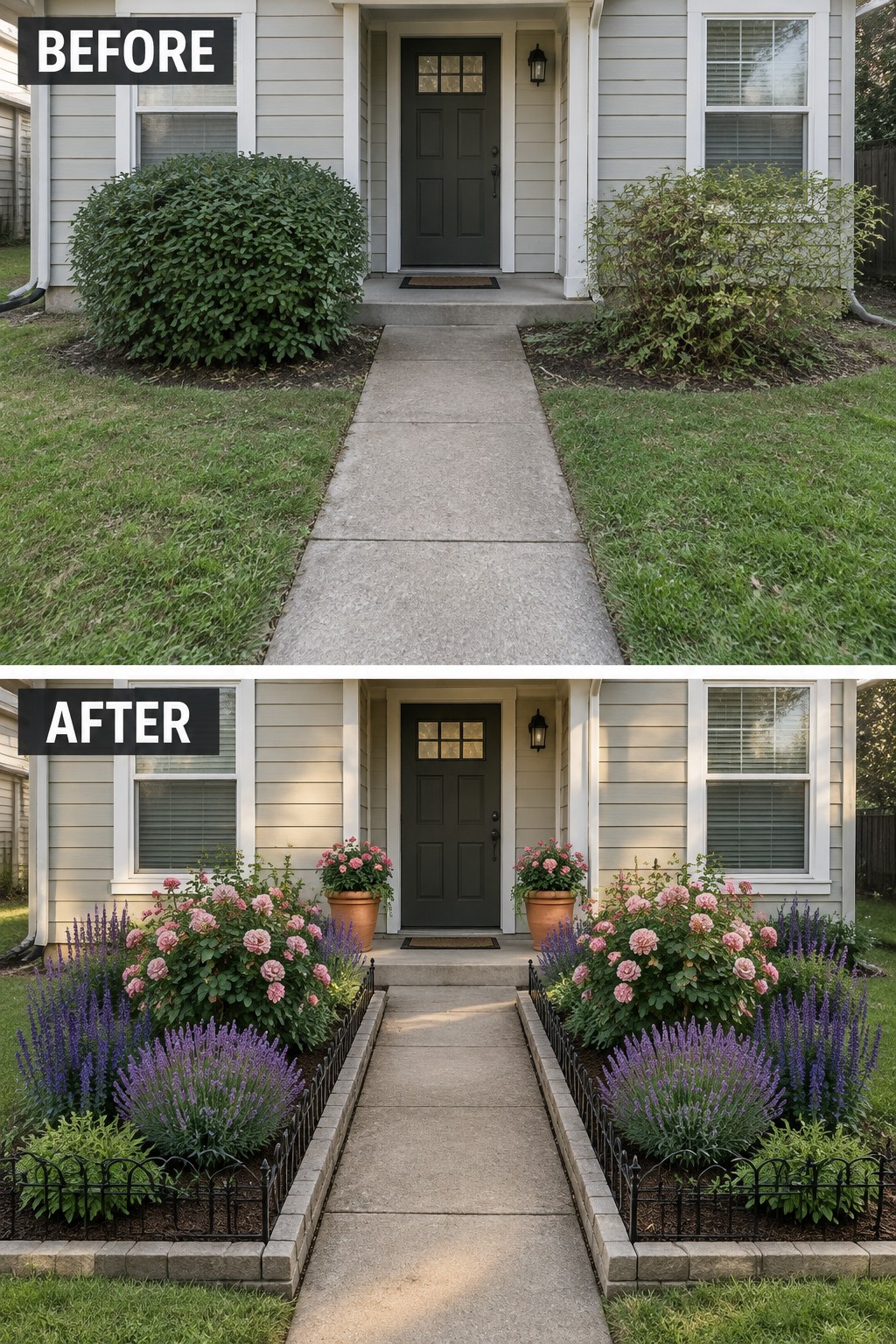
A simple front walkway often looks unfinished when the grass or shrubs run right up to the edges. Adding low borders and filling the new beds with layered plants gives the path a clear shape and makes the entrance feel more intentional. The main change here is the shift from loose plantings on both sides to straight, edged beds that guide the eye straight to the door.
This idea works best on modest front yards where the path is the main view from the street. Keep the beds fairly narrow so they do not crowd the walk, and choose edging that matches the style of the house. Once the beds are in place, repeat a few plant heights and colors rather than trying to fill every inch.
Define A Woodland Path With Flower Beds
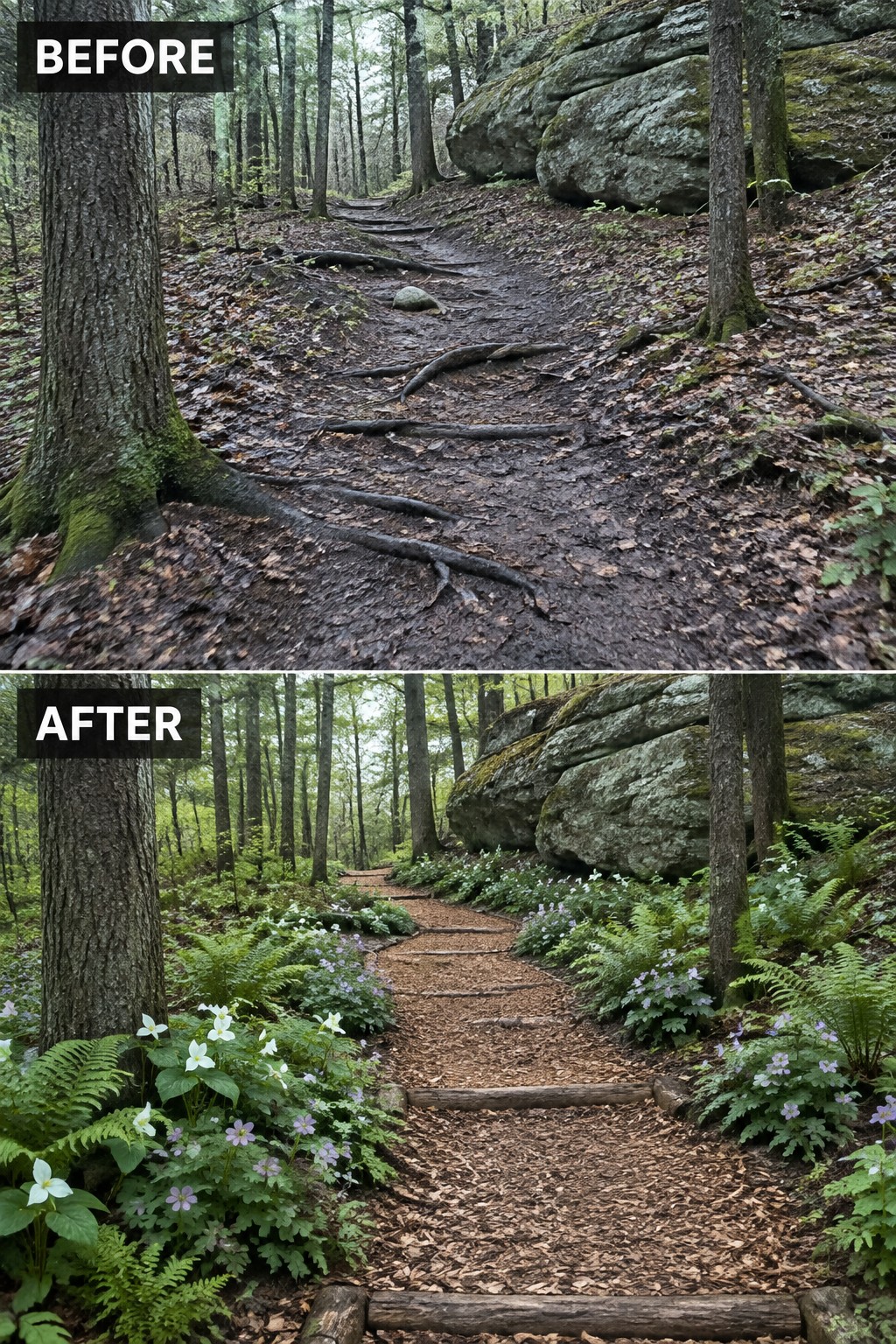
A rough path through the woods often feels hard to use when roots and leaves take over the surface. Adding wood chip mulch, simple log edging, and flower beds along both sides gives the path a clear shape and makes it much easier to follow. The planting also helps hold the soil in place and turns the walk into something more pleasant.
This idea works best on shaded trails or side paths where you want to keep a natural look without letting things get messy. Clear the main debris first, then lay mulch between low borders and choose shade plants that spread easily. It keeps the path usable after rain and gives you a place to add color without needing a full garden redesign.
Create Defined Flower Beds Along A Pathway
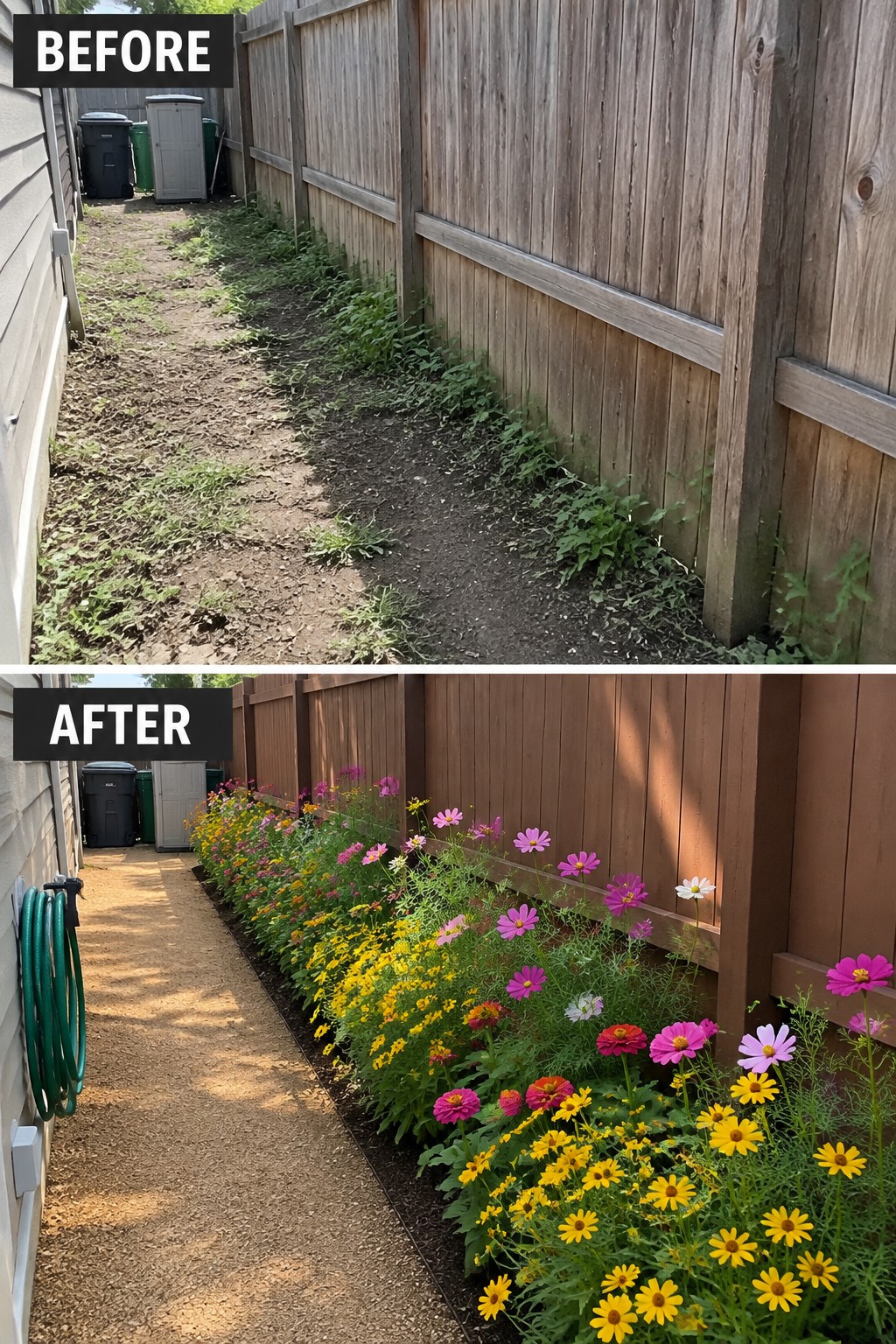
A bare dirt strip next to a fence often looks unfinished and hard to maintain. Adding a simple flower bed along the edge gives the path a clear boundary, cuts down on weeds, and brings steady color through the season. The shift from loose soil and scattered growth to a mulched bed filled with bright blooms makes the whole side yard feel intentional instead of neglected.
This idea works best on narrow side yards or along fence lines where you want structure without losing walking space. Start by clearing the weeds and laying down a clean edge, then fill the bed with a mix of taller and shorter flowers so the color stays interesting as the season changes. Keep the path itself wide enough for easy movement and choose plants that can handle the amount of sun the spot gets.
Add Defined Flower Beds Along A Straight Path
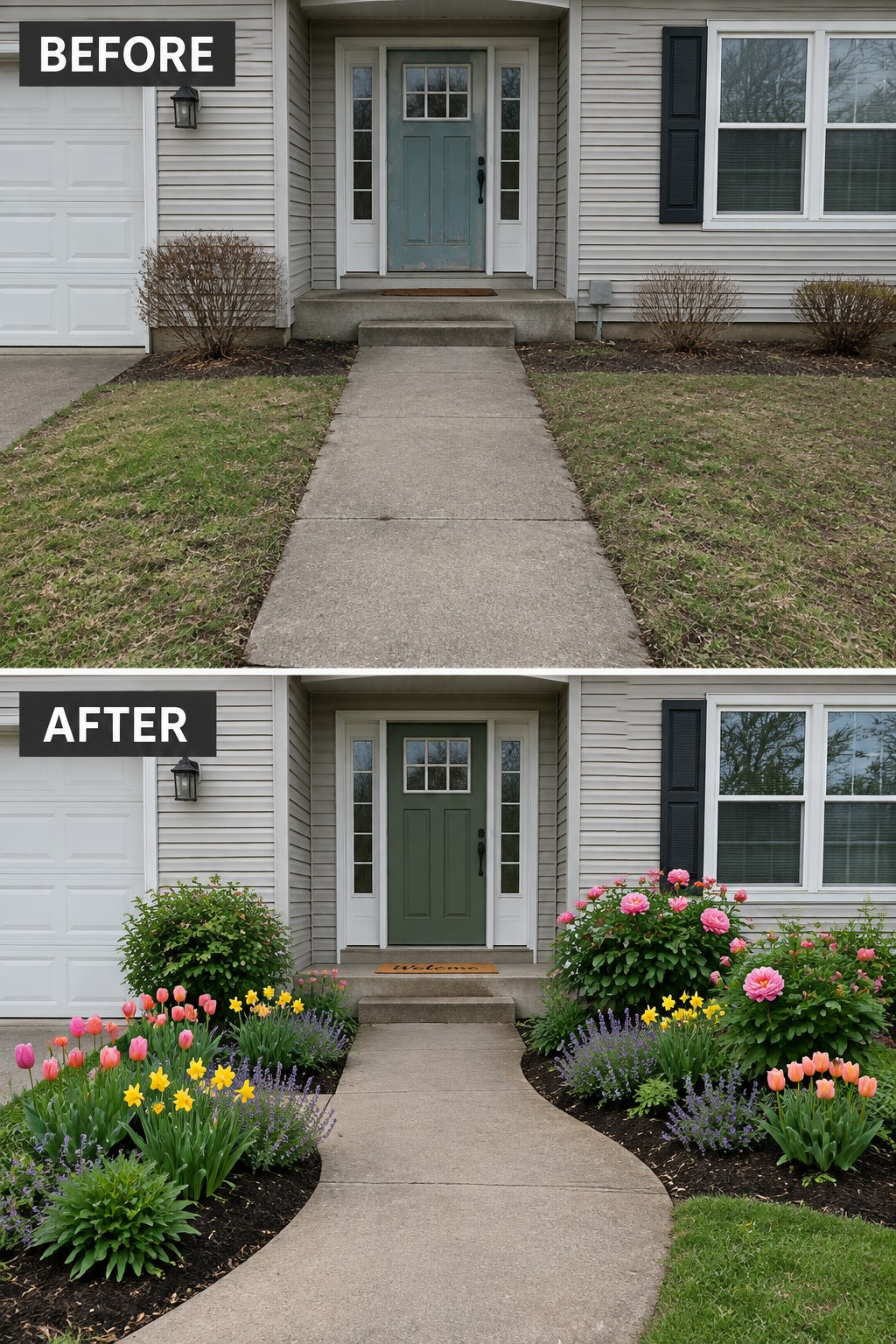
A straight concrete walkway can feel plain and a little harsh when it sits between bare grass and a few tired shrubs. Adding flower beds on both sides with a gentle curve softens the lines and gives the path a clearer purpose. The beds create a natural border that guides visitors toward the door while making the whole front look more cared for.
This idea works well on simple suburban entries where the path is functional but lacks interest. Start by marking a soft curve on each side, then edge the beds cleanly and fill them with a mix of taller and lower plants so the color stays visible from the street. Keep the center of the path wide enough for easy walking and choose flowers that match your climate so the beds stay full without constant work.
Define A Front Walkway With Planted Borders
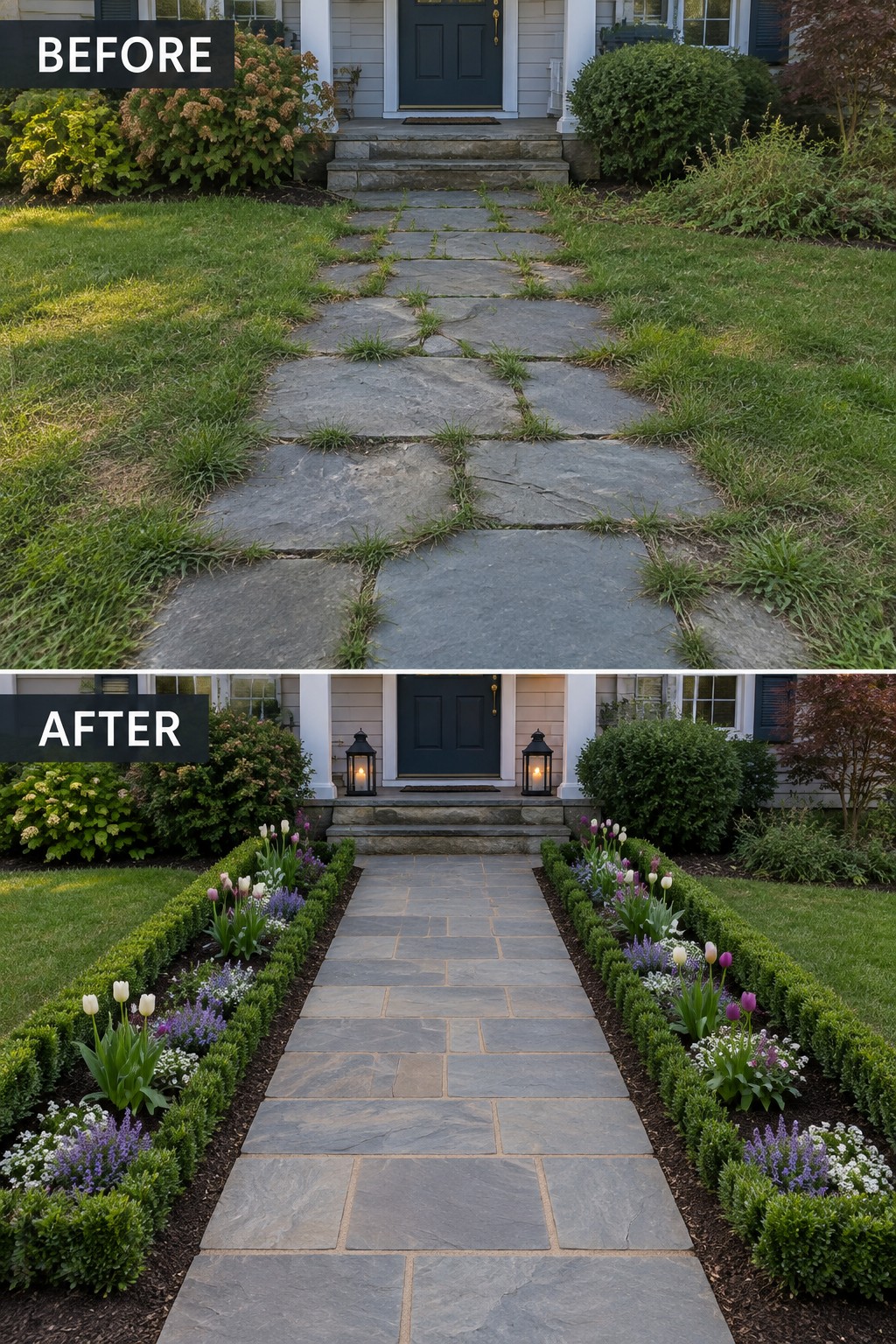
The before photo shows a stone path that had lost its shape. Grass and weeds had crept in between the pavers and along the edges, making the whole approach feel neglected. In the after photo, low hedges and flower beds now run along both sides of the path. The beds give the walkway clear lines and turn it into a proper feature instead of just a strip of stone across the lawn.
This idea works well on any home where the front path feels loose or unfinished. Start by cleaning up the edges of the existing path, then add simple borders with low shrubs or mixed perennials. Keep the beds narrow enough to leave room for walking and mowing, and choose plants that stay neat without constant trimming. The result is a front yard that feels planned instead of accidental.
Turn A Concrete Walkway Into A Garden Path
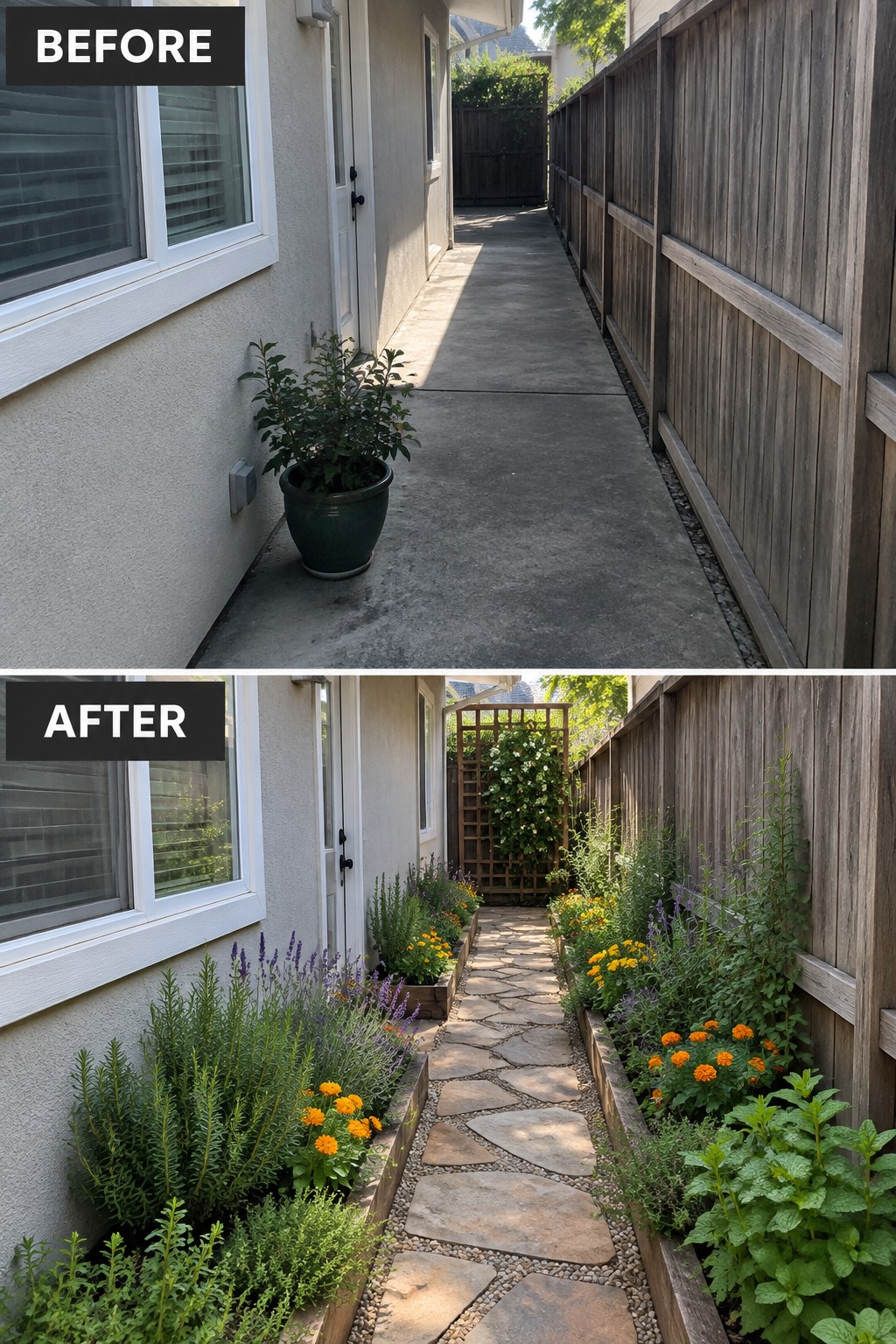
A long, narrow side yard often gets left as plain concrete because it feels too tight for much else. Switching to a stone path with raised wooden beds on both sides gives the space shape and turns it into something you actually want to walk through.
This idea works best in slim side yards or between the house and a fence where you still need clear access. Keep the beds narrow enough that plants do not crowd the path, and use the same edging material on both sides so the whole strip feels planned rather than added on later.
Define A Gravel Path With Raised Flower Beds
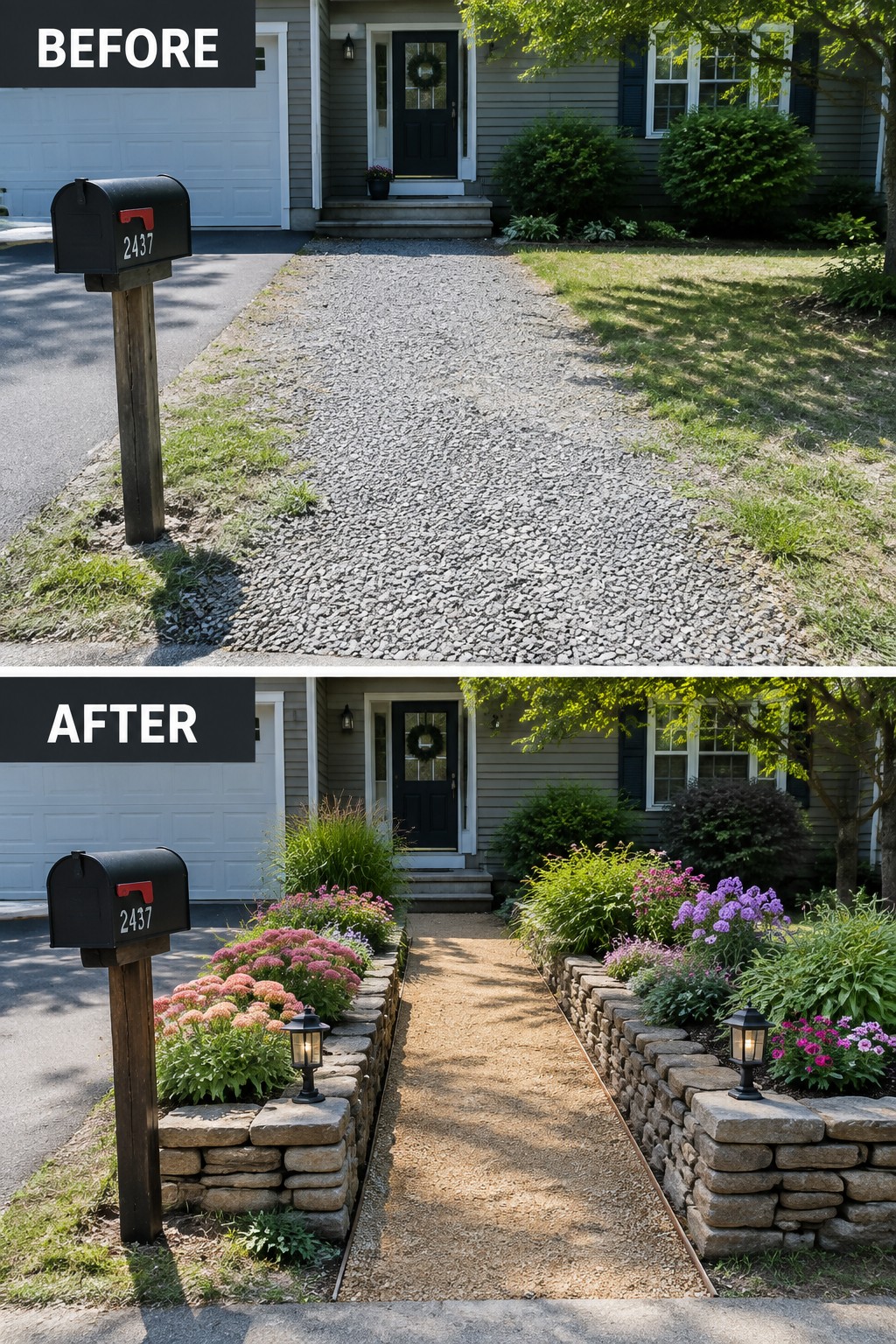
Adding raised stone beds along both sides of a gravel path gives the whole front approach a clearer shape. The beds turn what used to be loose edges and scattered grass into a simple, orderly walkway that feels more finished without losing the casual gravel surface.
This works especially well on long or narrow paths where you want color and structure but still need room to walk. Keep the beds low enough to maintain sight lines to the house, and choose plants that can handle the sun exposure on your side of the street.
Define A Plain Path With Edging And Flower Beds
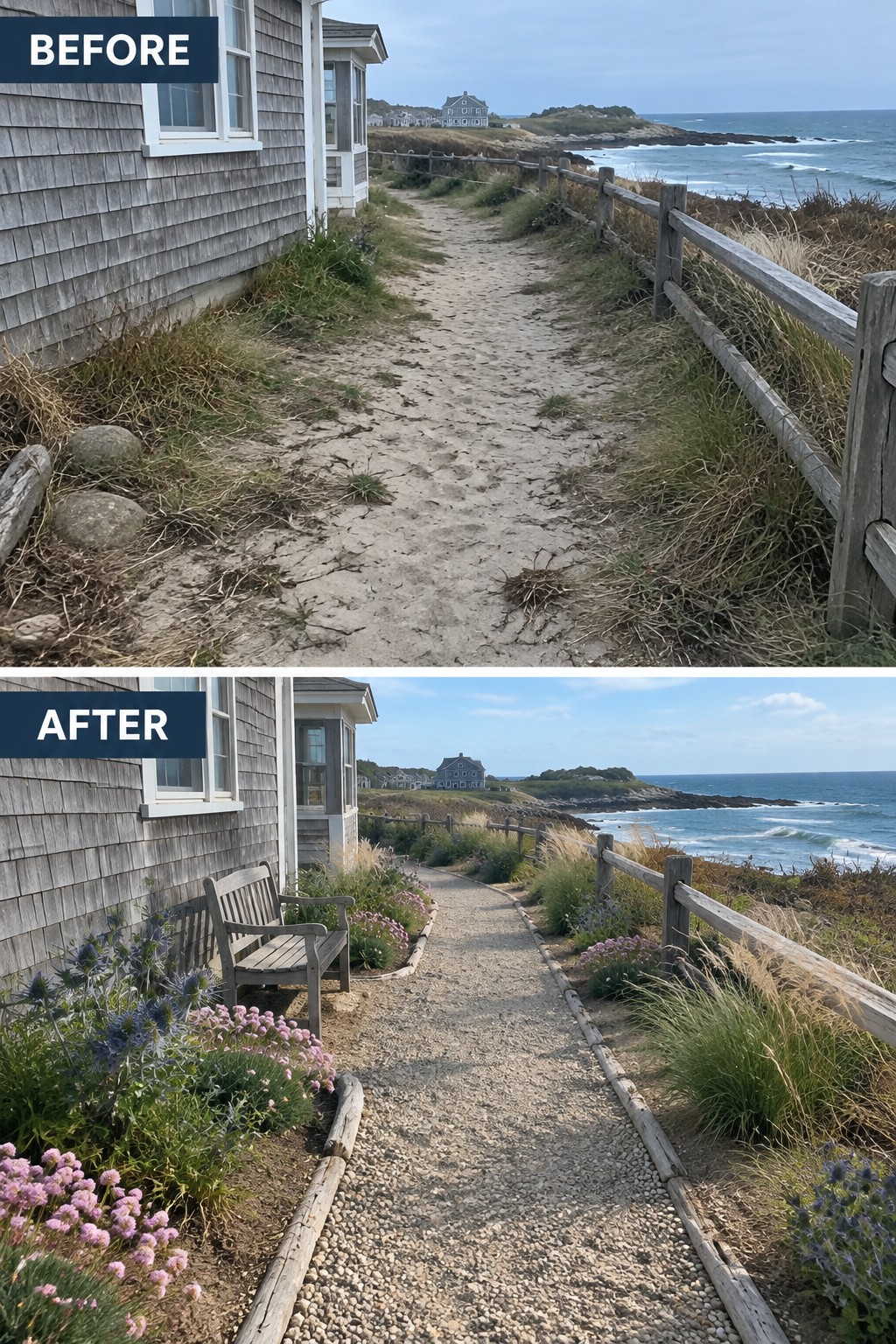
A loose sandy path next to a house often feels unfinished and hard to maintain. Adding wooden edging creates a clear boundary that holds gravel in place and forms narrow beds on both sides. The planting then softens the edges and gives the path a more settled look.
This idea works best along side yards or coastal homes where a natural path already exists. Lay the edging first to contain the surface material, then choose plants that suit the sun and soil. Keep the beds modest in width so the walkway stays practical for daily use.
Frequently Asked Questions
Q: Which flowers hold up best if the path gets a lot of foot traffic nearby? A: Stick with low growing perennials like creeping thyme or dwarf phlox right along the edges. They bounce back from light steps and keep the beds looking full without constant replanting.
Q: How often should I water new flower beds next to a pathway? A: Water deeply once a week for the first month or two. After that most established plants only need a soak during dry spells.
Q: What if the beds start to look patchy after a season or two? A: Divide and replant overcrowded clumps in early spring. This keeps the color steady and fills gaps without buying new plants.
