

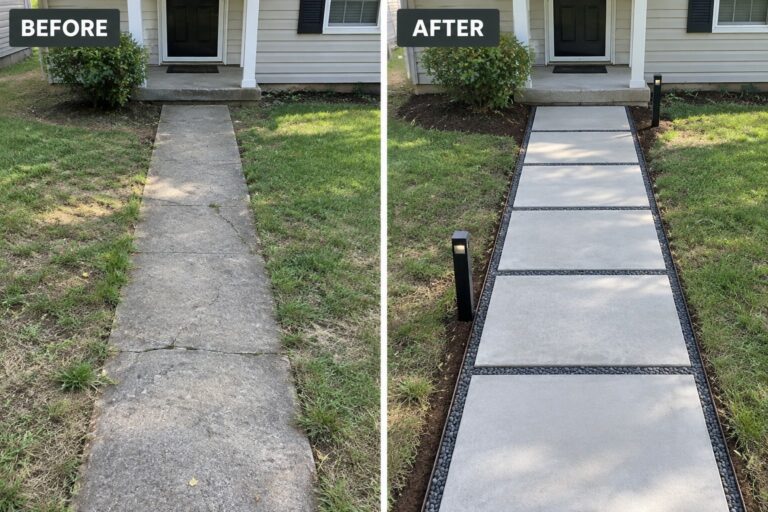
A walkway that has settled unevenly can make the whole side yard feel a bit overlooked.
Clean lined pavers fix that by giving the path a steady shape that holds up through seasons.
I find myself focusing on the ground plane first whenever I work on an outdoor space because it affects how everything else sits.
Some of the layouts shown work well even in smaller yards where space needs to stay open.
The result usually feels more settled without adding a lot of new elements around it.
Use Pavers To Create A Defined Walkway
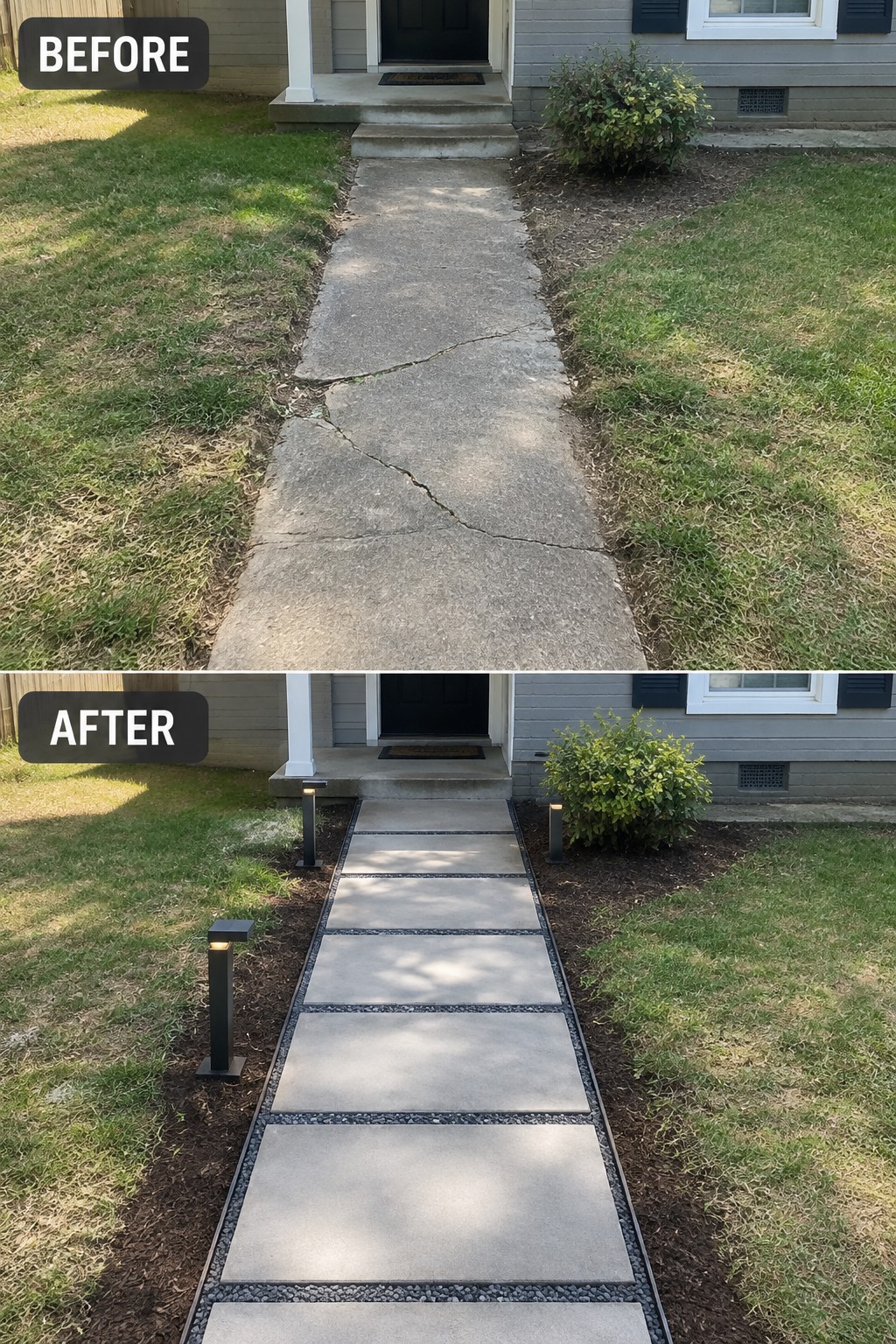
A cracked concrete path looks tired and can make the whole front yard feel neglected. Switching to large rectangular pavers with gravel borders gives the walkway clear shape and a much fresher look. The new layout also makes the path feel wider and more intentional without needing a full redesign of the yard.
This approach works well on straight front paths where you want a simple modern update. Start by removing or covering the old slab, then choose pavers that match the color of your house. Keep the gravel strip narrow so the path stays easy to walk and mow around.
Add Structure To An Overgrown Side Yard
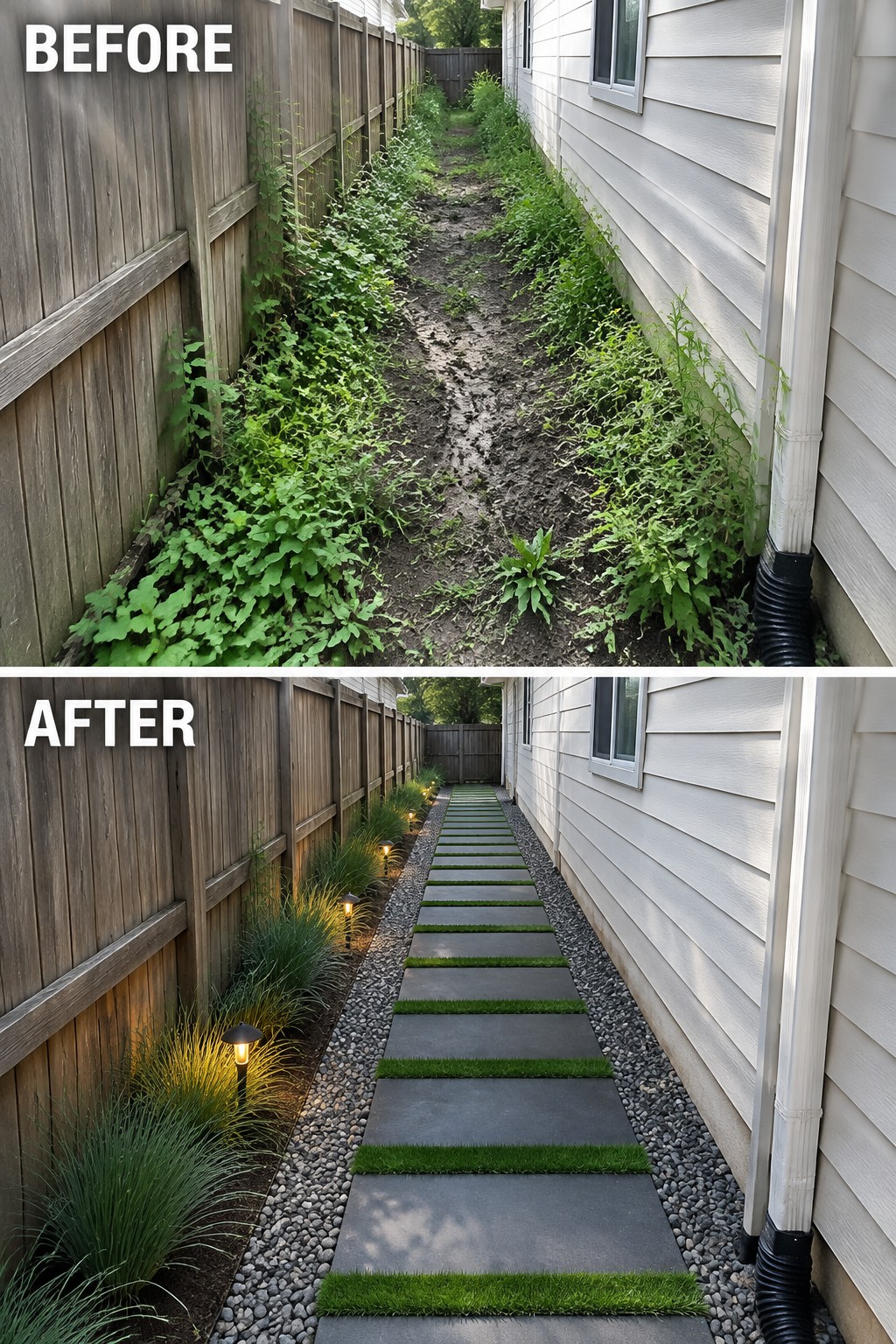
A narrow side yard often ends up ignored because it feels too tight and awkward to use. Clearing the weeds and mud first, then laying a simple paver path with gravel edges, turns the space into something purposeful instead of just a forgotten strip. The clean lines keep the walkway from feeling cramped and make the whole area look intentional.
This approach works best on homes where the side yard serves as the main route to a gate or backyard. Keep the path narrow enough to leave room for low plants along the fence, and add a few lights if people will walk it at night. Start with basic cleanup and a gravel base before choosing pavers so the finished path stays level and drains well.
Update A Dated Front Walkway Using Modern Pavers
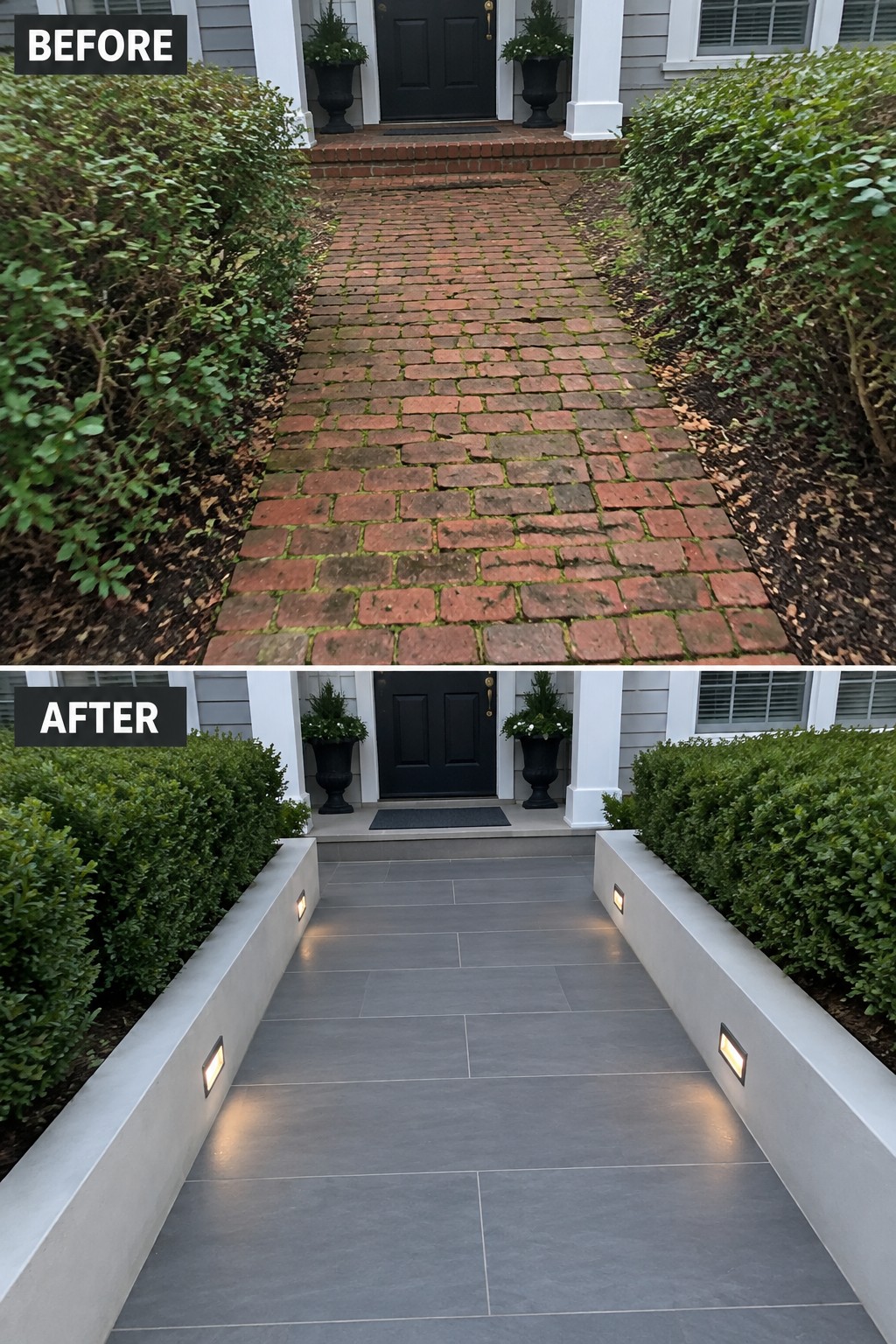
An old brick walkway often starts to look uneven and tired after years of wear. Switching to large, clean-lined pavers gives the path a smoother surface and a much more defined shape. The added concrete borders and small lights along the edges help keep the walkway clear at night and make the whole front entry feel more organized.
This approach works well on narrow paths that lead straight to the door. Keep the paver color simple so it does not compete with the house. Make sure the new borders sit low enough that they do not block water runoff, and test the spacing of the lights before you finish the installation.
Give A Narrow Side Path Clean Lines With Pavers
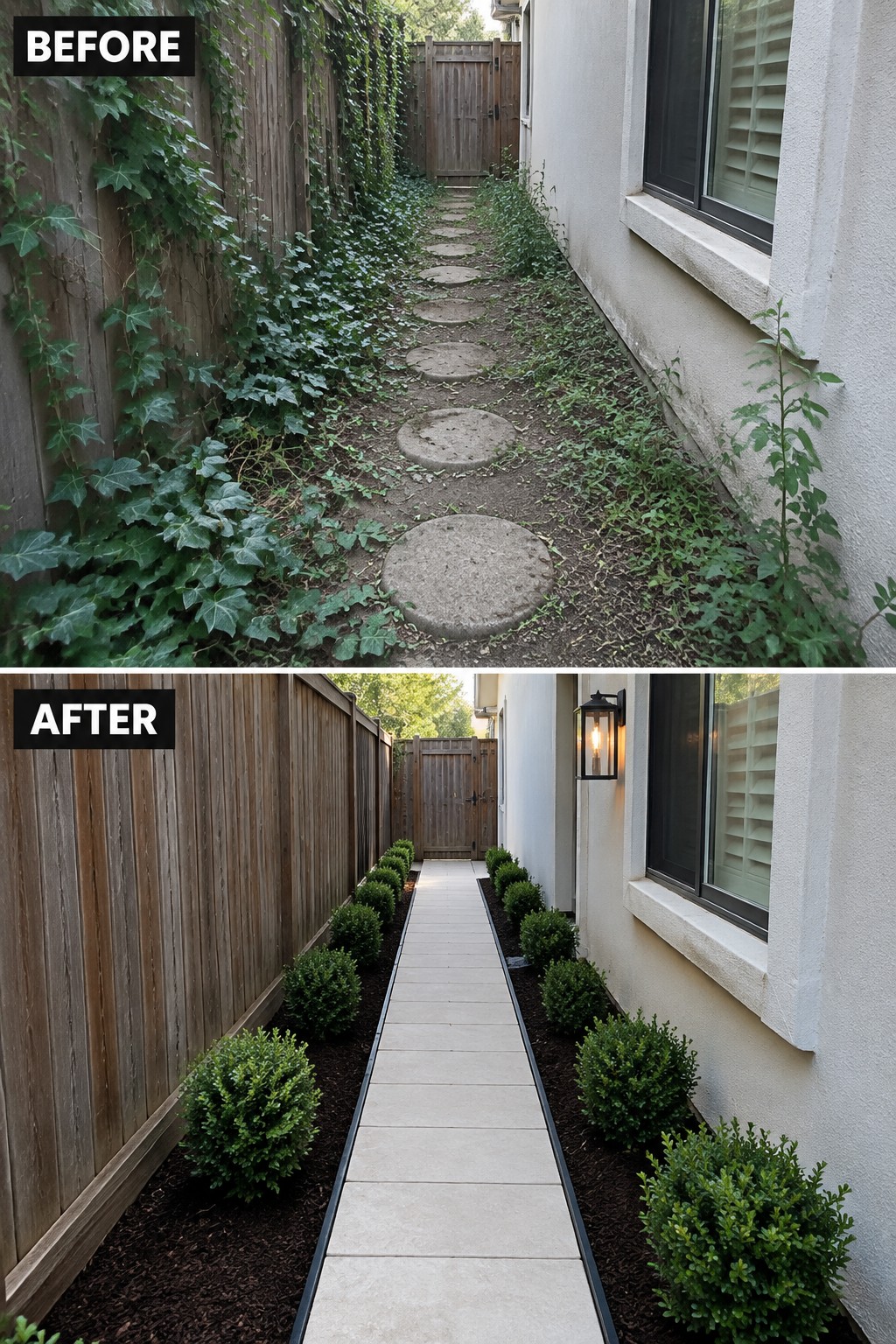
An overgrown side path usually feels messy because the plants creep across the ground and the old stepping stones sit uneven. Laying a straight run of light pavers creates a clear walking surface while the narrow mulch beds on each side keep the planting contained and easy to maintain.
This idea works best in tight passages between a house and a fence where space is limited. Start by clearing everything back to the edges, then install the pavers in a simple grid pattern and add a single row of low shrubs that stay compact. The result feels planned without crowding the walkway.
Define A Gravel Path With Clean-Lined Pavers
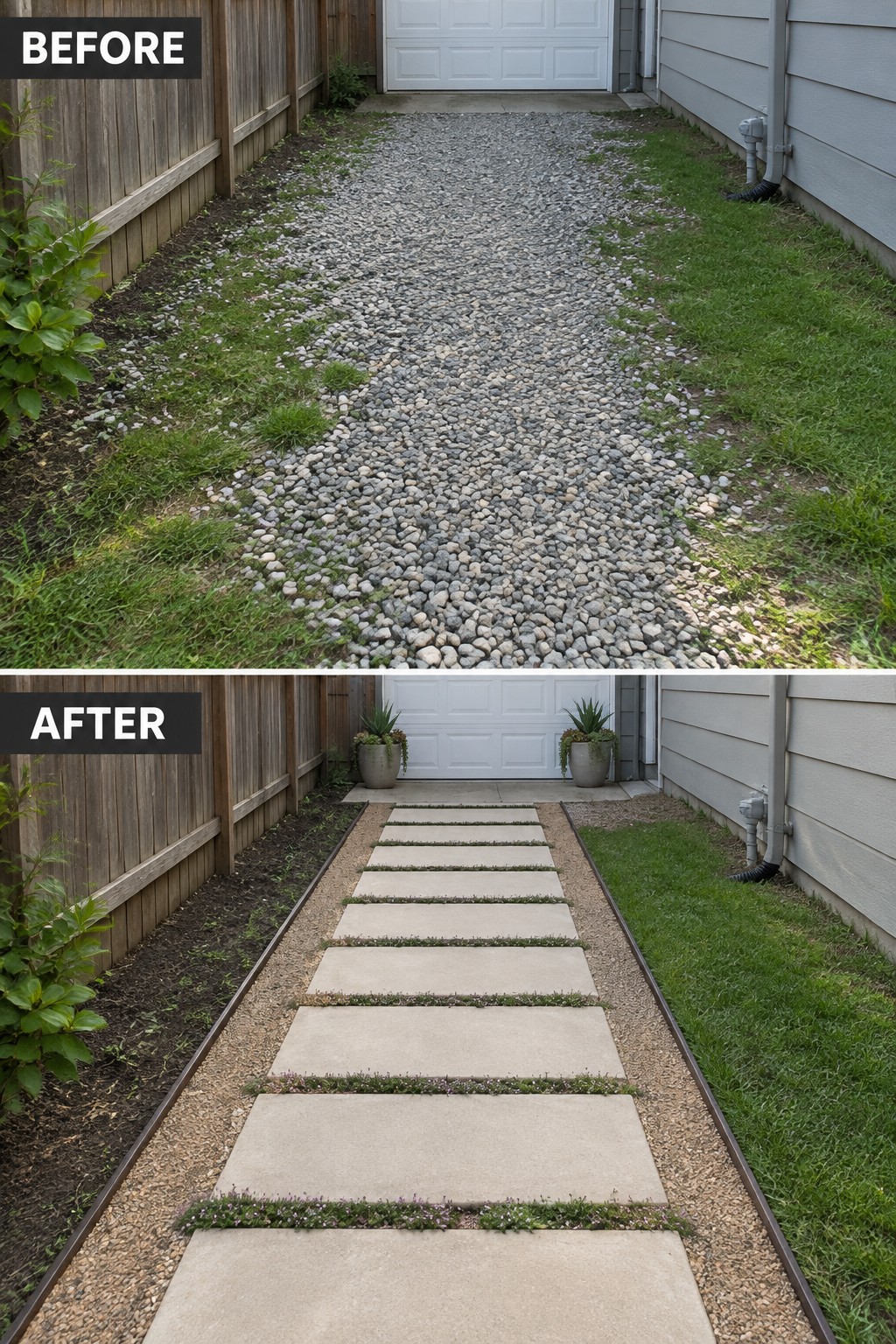
A loose gravel path often spreads over time and lacks a clear direction. Placing a straight row of rectangular pavers through the center gives the space a simple structure that feels intentional and easier to walk on.
This idea works best in narrow side yards or utility areas where a full paved surface would feel too heavy. Keep the pavers evenly spaced, use the same gravel on both sides to tie everything together, and add a few low plants only at the ends if you want a bit of softness.
Use Pavers To Give A Front Walkway More Structure
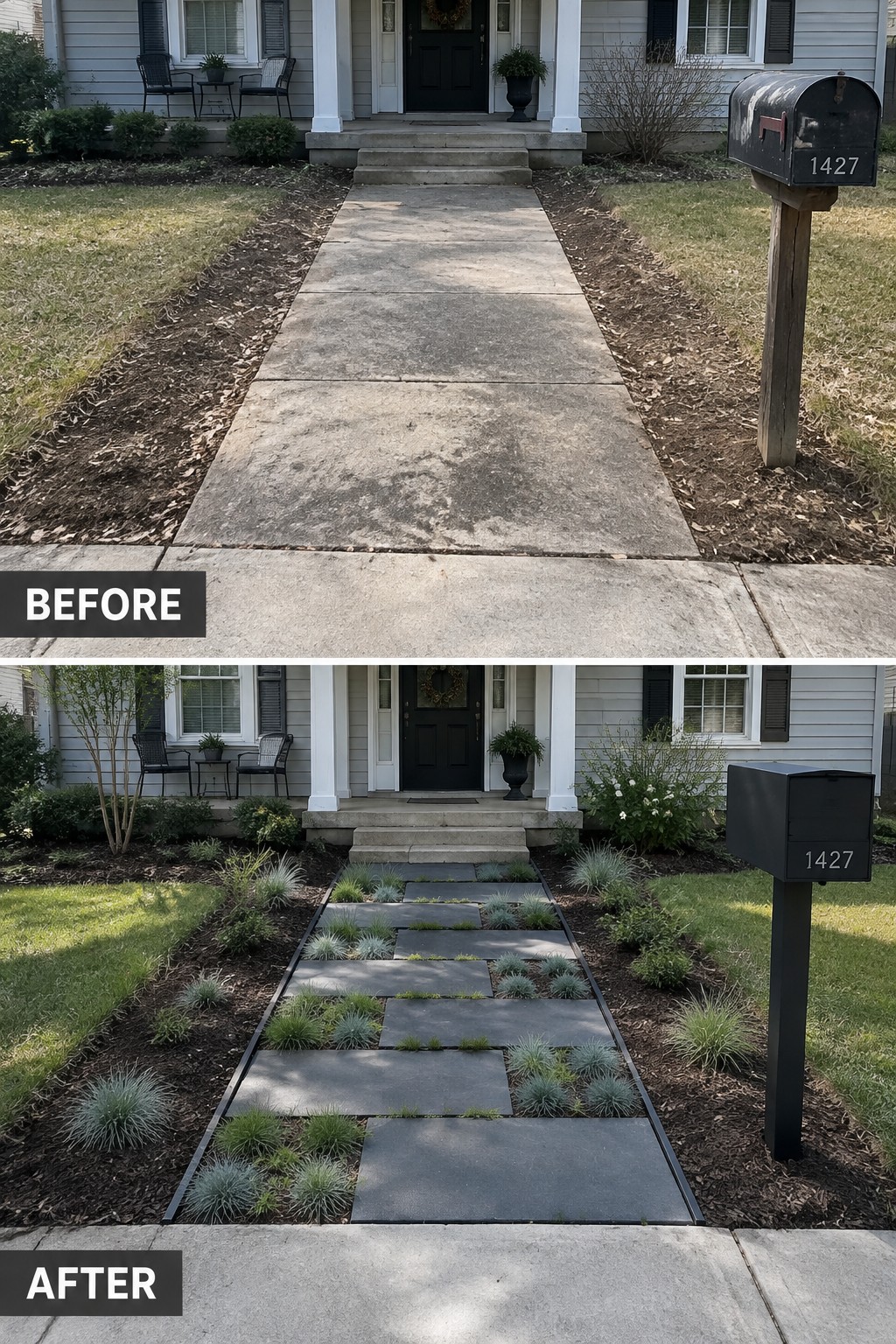
A solid concrete walkway often looks flat and unfinished next to a house. Switching to individual pavers with planted strips on both sides breaks up the surface and gives the path a clearer shape that feels more connected to the yard.
This idea works best on homes with wide front walks that currently feel too stark. Lay the pavers in a simple straight line, keep the surrounding beds narrow, and choose low plants that will not crowd the edges. The result is a walkway that looks planned without needing a full redesign of the front yard.
Use Clean Pavers To Shape An Overgrown Walkway
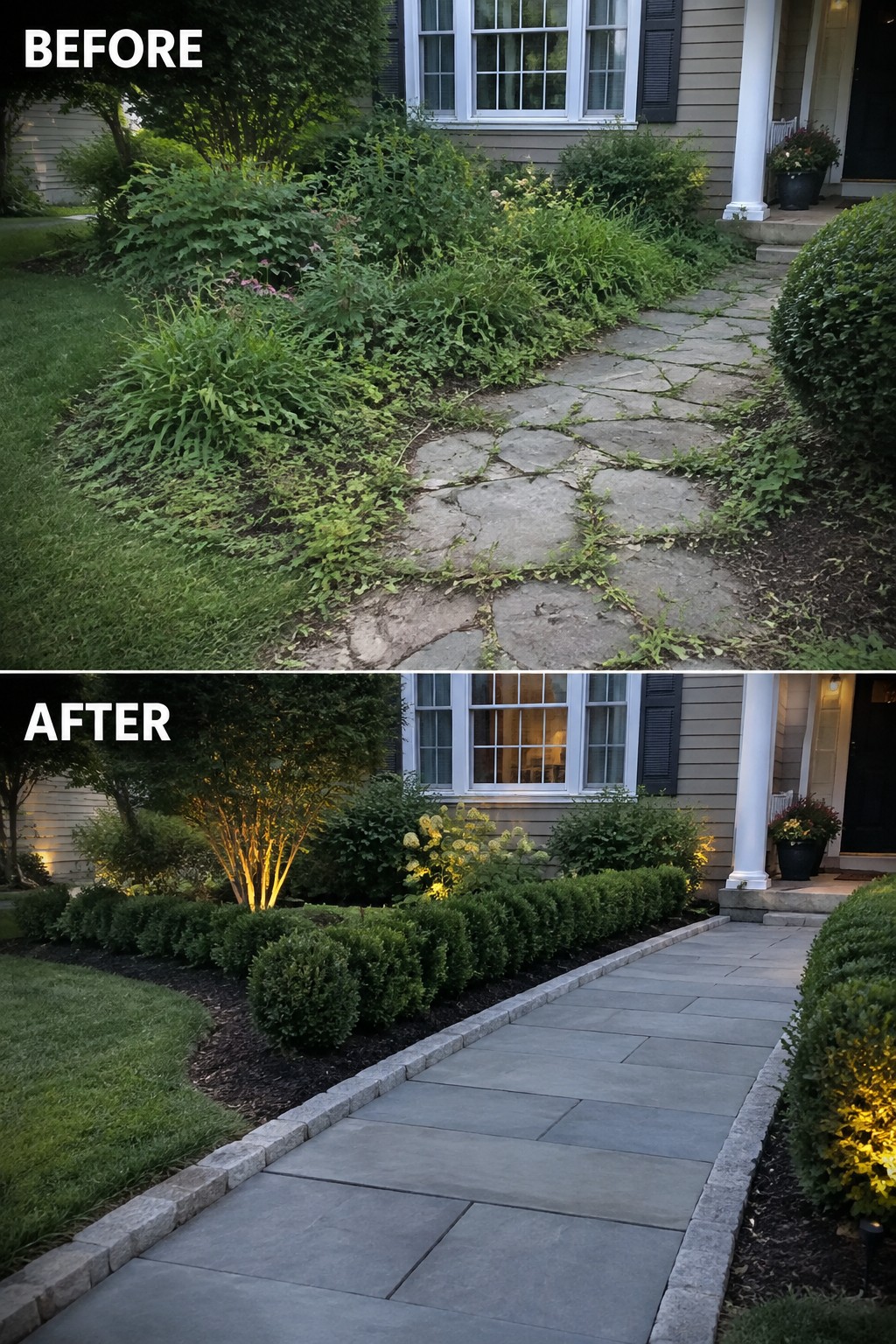
An overgrown path quickly starts to feel neglected when plants spill across the stones and the edges blur. In this case the fix was straightforward. The old irregular stones were replaced with wider, straight-cut pavers set in a simple run, then low boxwood hedges and a crisp mulch border were added to hold the planting back.
This approach works well on any front walk that has lost its shape. Clear the overgrowth first, then lay pavers that are wide enough for two people to pass comfortably. Keep the planting low and repeated so the path stays the main feature instead of fighting with the garden.
Use Pavers To Define A Backyard Path
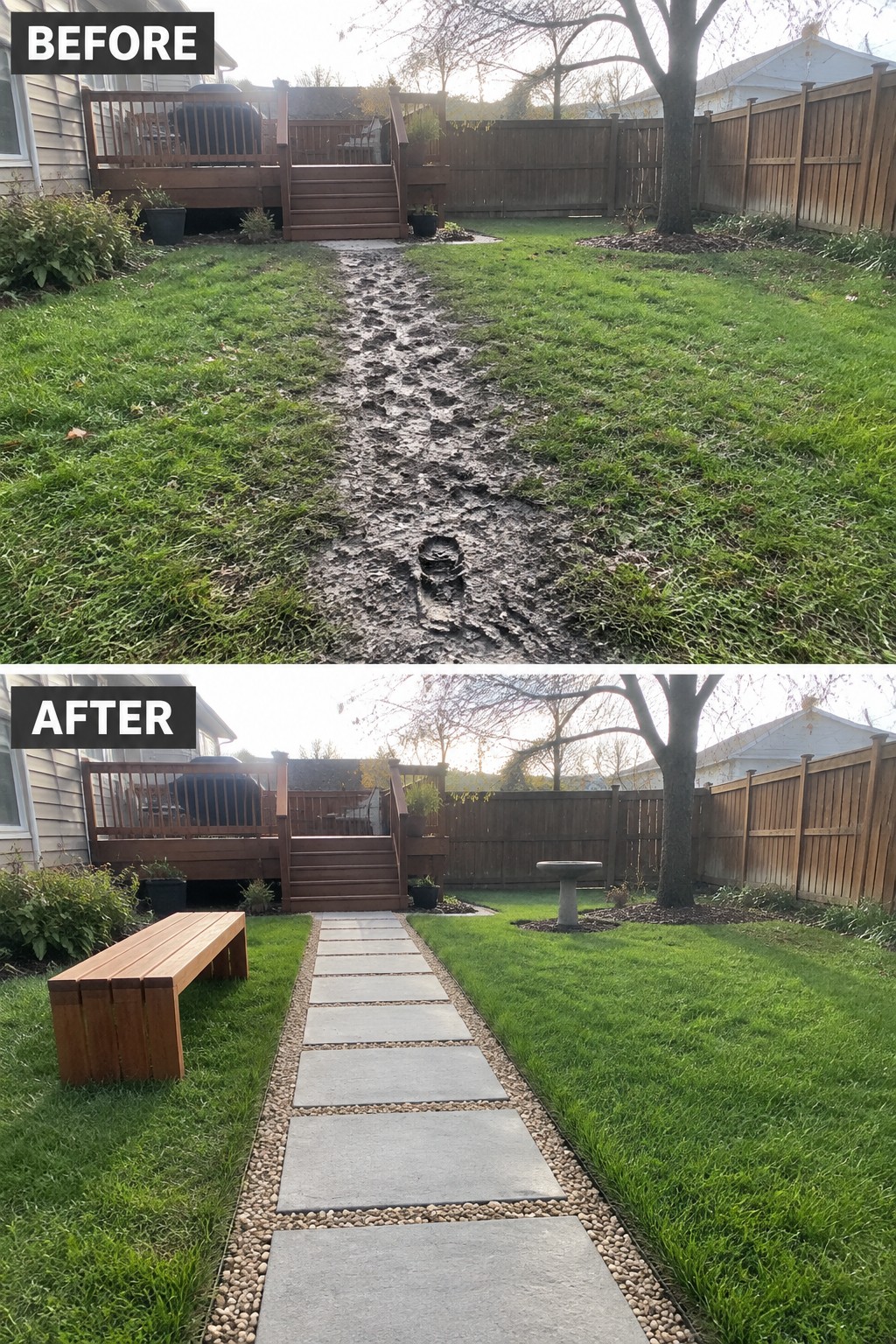
A worn trail across the lawn often makes the whole yard feel unfinished. Switching to a straight run of large pavers set in gravel gives the space clear lines, stops the mud, and turns a problem area into a simple walkway.
This idea works best in yards where people cross the grass every day. Keep the pavers wide enough for comfortable walking, use a neutral gravel to frame them, and add one bench or seat only if the path leads somewhere useful.
Use Pavers To Create A Clean Front Walkway
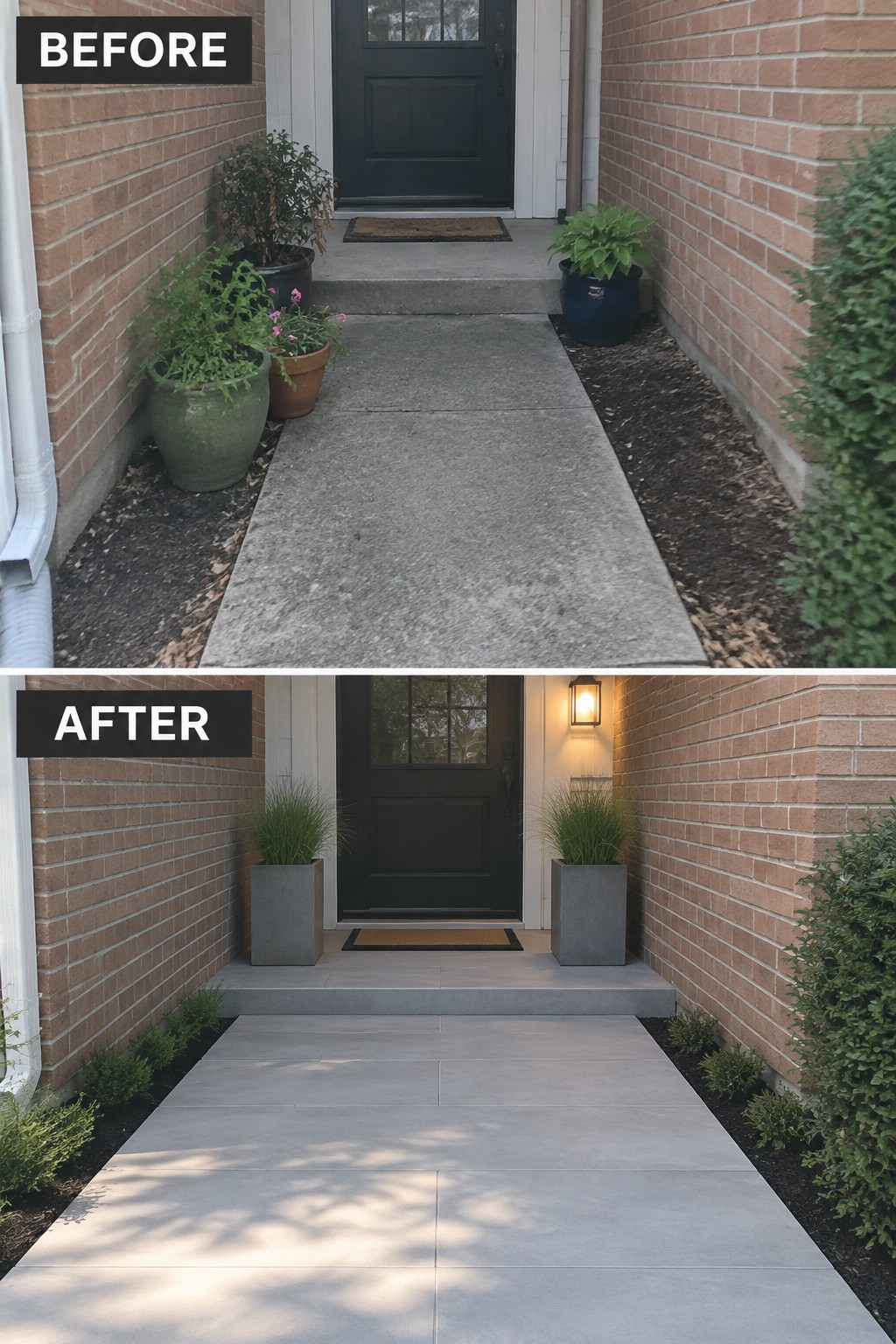
A basic concrete path can make an entry feel unfinished, especially when the surrounding planting looks scattered. Switching to large rectangular pavers gives the walkway clear edges and a more finished look right away. The new layout also uses matching gray planters on both sides, which keeps the space feeling balanced instead of crowded.
This approach works well on narrow side entries or front paths next to brick homes. Start with the paving first, then add just a few matching containers rather than lots of different pots. Keep the border planting low and simple so the walkway stays the main feature.
Use Pavers To Give An Old Path Clean Lines
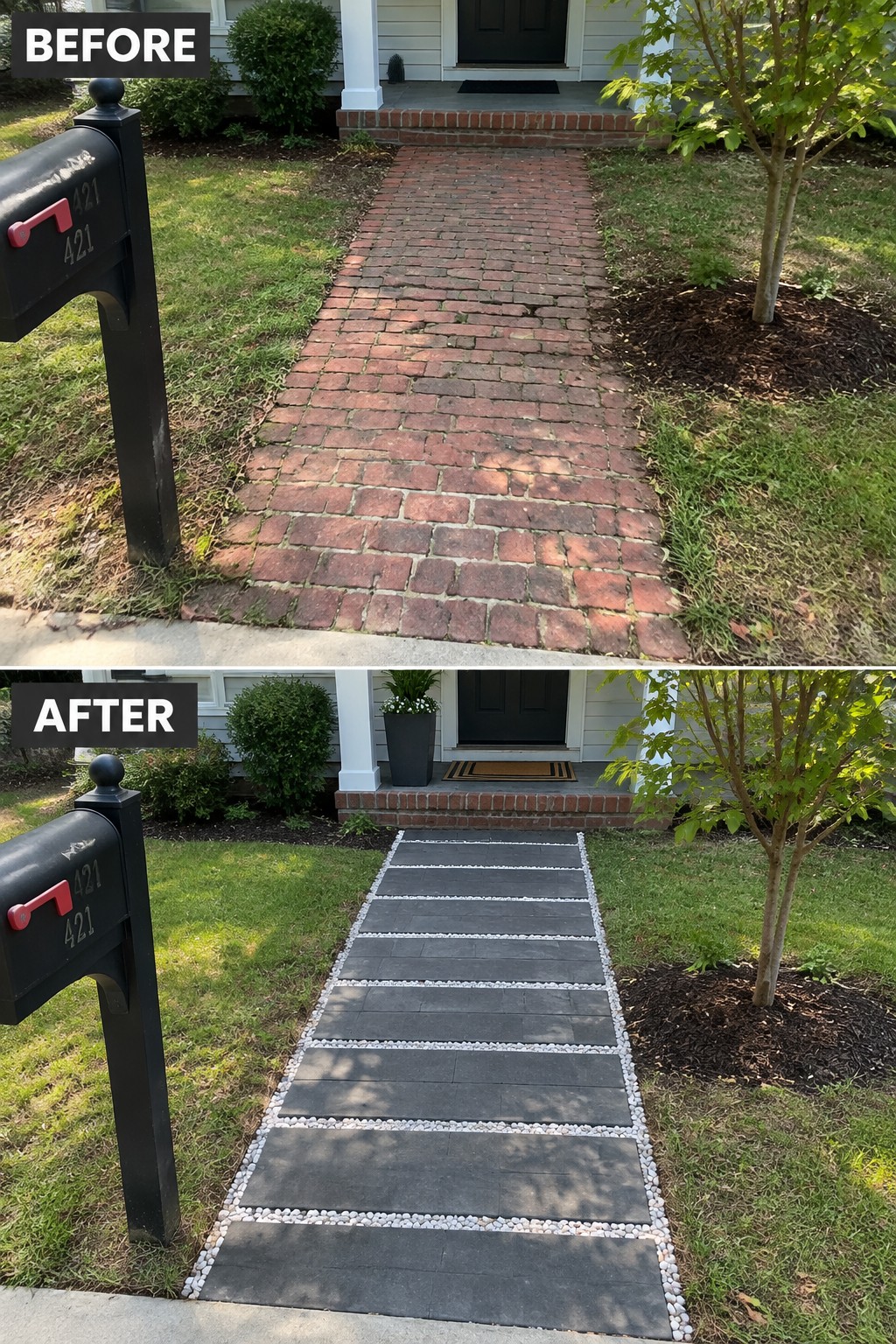
An old brick walkway often starts to look tired once the bricks settle and the surface turns uneven. Switching to dark rectangular pavers with a simple white pebble border straightens the whole line and makes the path feel intentional instead of leftover from an earlier time.
This approach works well on modest front yards where you want the walkway to guide visitors without adding clutter. Keep the paver color dark so it stays low key, and use the white stones only as a narrow edge so the path still feels open on both sides.
Give A Backyard Path Clean Lines With Rectangular Pavers
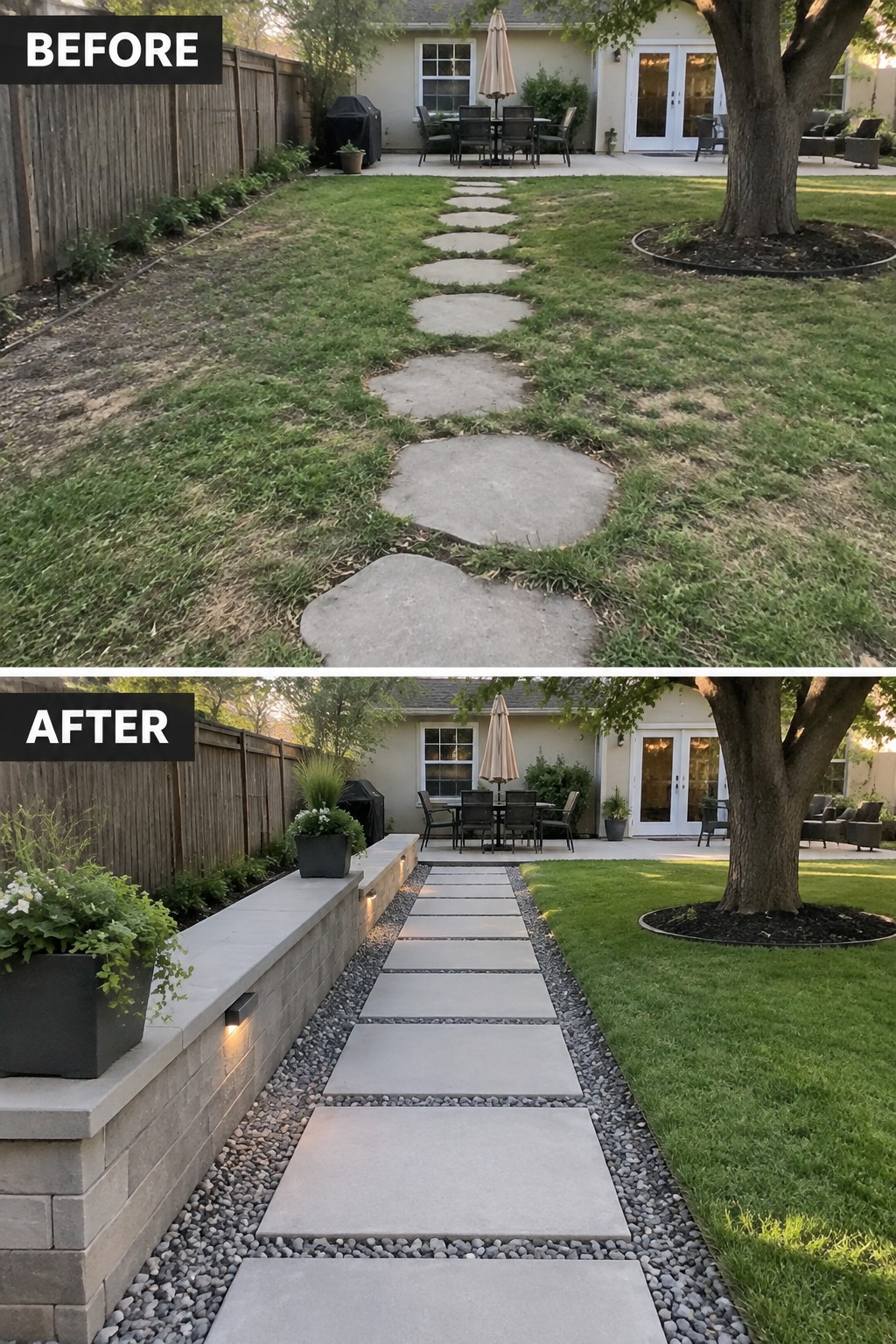
An uneven line of stepping stones set into patchy grass rarely feels intentional. Switching to large rectangular pavers laid in a straight run with gravel on both sides instantly organizes the space and makes the route feel like a deliberate part of the yard rather than an afterthought.
This approach works especially well in long, narrow backyards where you need a clear connection between the house and the lawn or seating area. Keep the pavers simple, use gravel to handle drainage and weeds, and add a low border or wall on one side only if you want extra definition without closing in the space.
Replace A Cracked Walkway With Structured Pavers
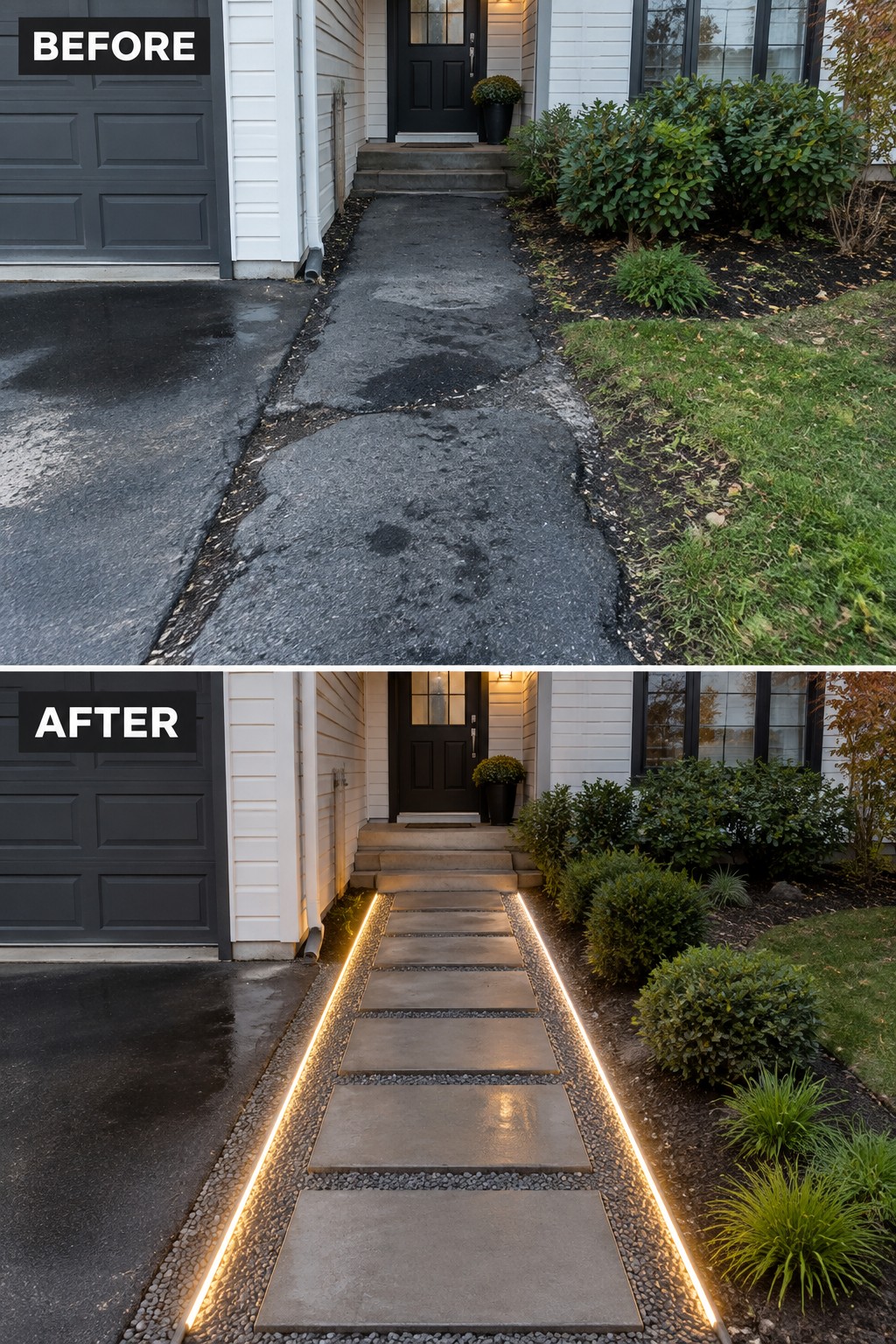
A cracked and uneven asphalt path makes the front approach look worn and dated. Switching to rectangular concrete pavers laid in a straight line with narrow gravel borders creates a clean, level surface that feels intentional. The linear lighting tucked along both edges adds visibility without extra fixtures.
This idea suits homes where the driveway and front walk share the same material. Remove the old surface first so the pavers sit flat and drain properly. Keep the layout simple with one paver style and a consistent gravel edge so the path stays easy to maintain over time.
Replace An Irregular Path With Straight Pavers
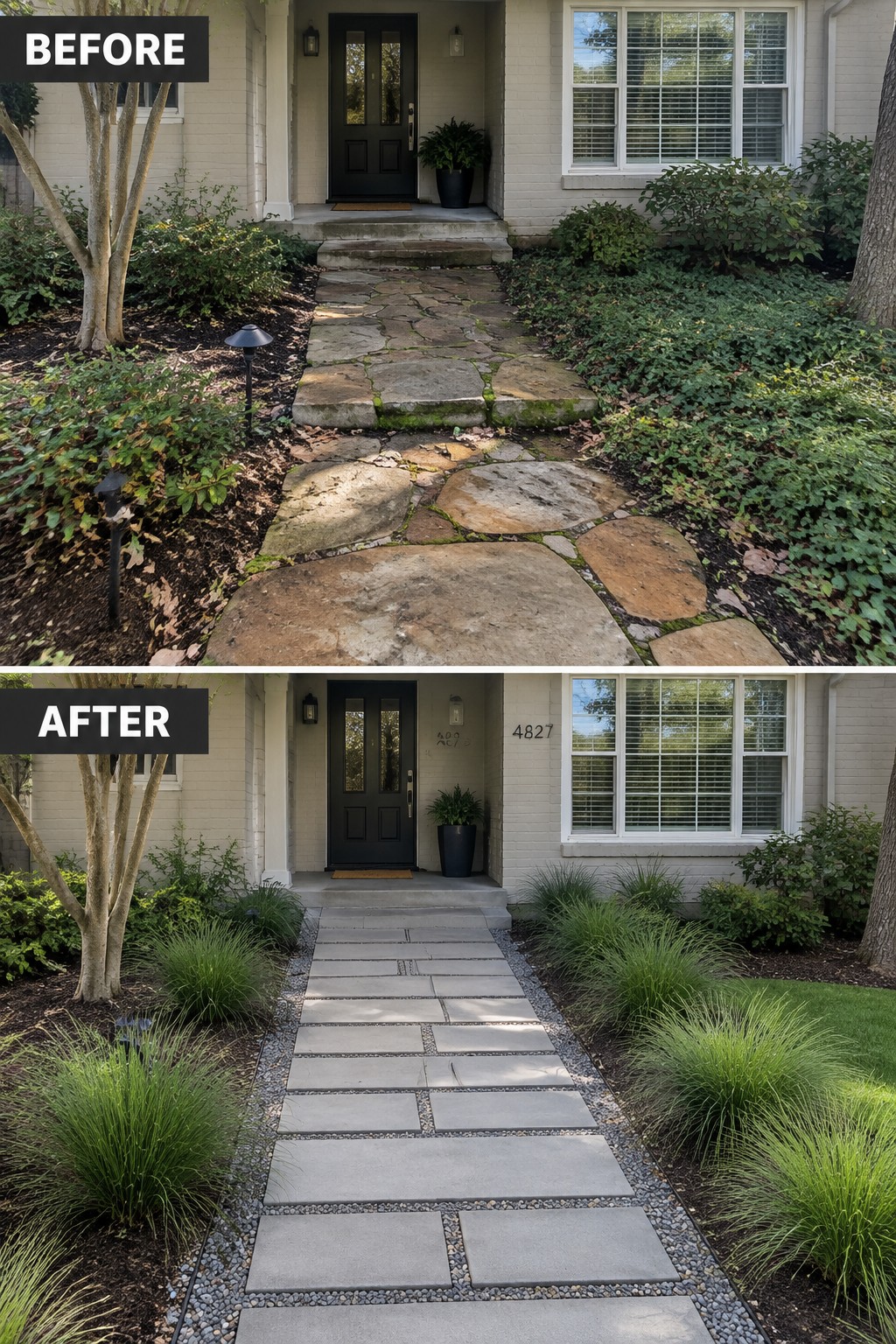
An uneven stone path can make the front of a house feel messy even when the rest of the yard is decent. Switching to rectangular pavers laid in a straight line gives the walkway a clear shape and makes the entry feel more intentional. The gravel border on each side keeps the edges tidy and stops grass and ground cover from creeping in.
This approach works best on smaller front yards where you want the path to look neat without adding a lot of extra features. Keep the pavers a simple color that matches the house and leave enough space on the sides for low plants or grass so the walk does not feel too narrow.
Use Pavers To Give A Narrow Path Clear Structure
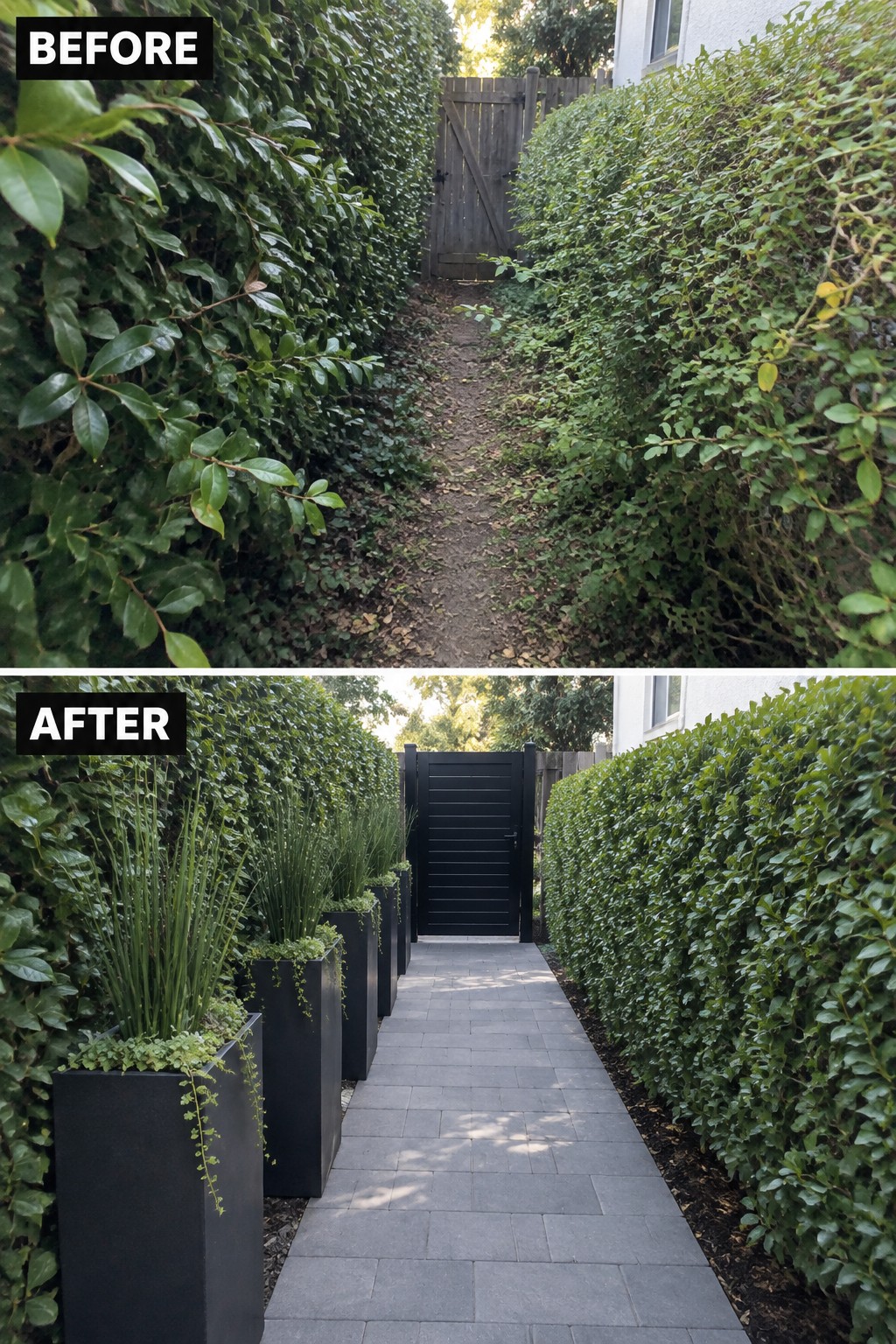
An overgrown side path usually feels neglected because there is no solid surface to follow. Adding clean-lined pavers turns the loose dirt into a defined walkway that makes the whole area feel purposeful and easier to use.
This idea works best in tight spaces between hedges or along the side of a house. Clear the overgrowth first, then lay simple pavers and add a few tall planters along one side to create height and keep the path from feeling closed in.
Replace Loose Gravel With Pavers For A Defined Walkway
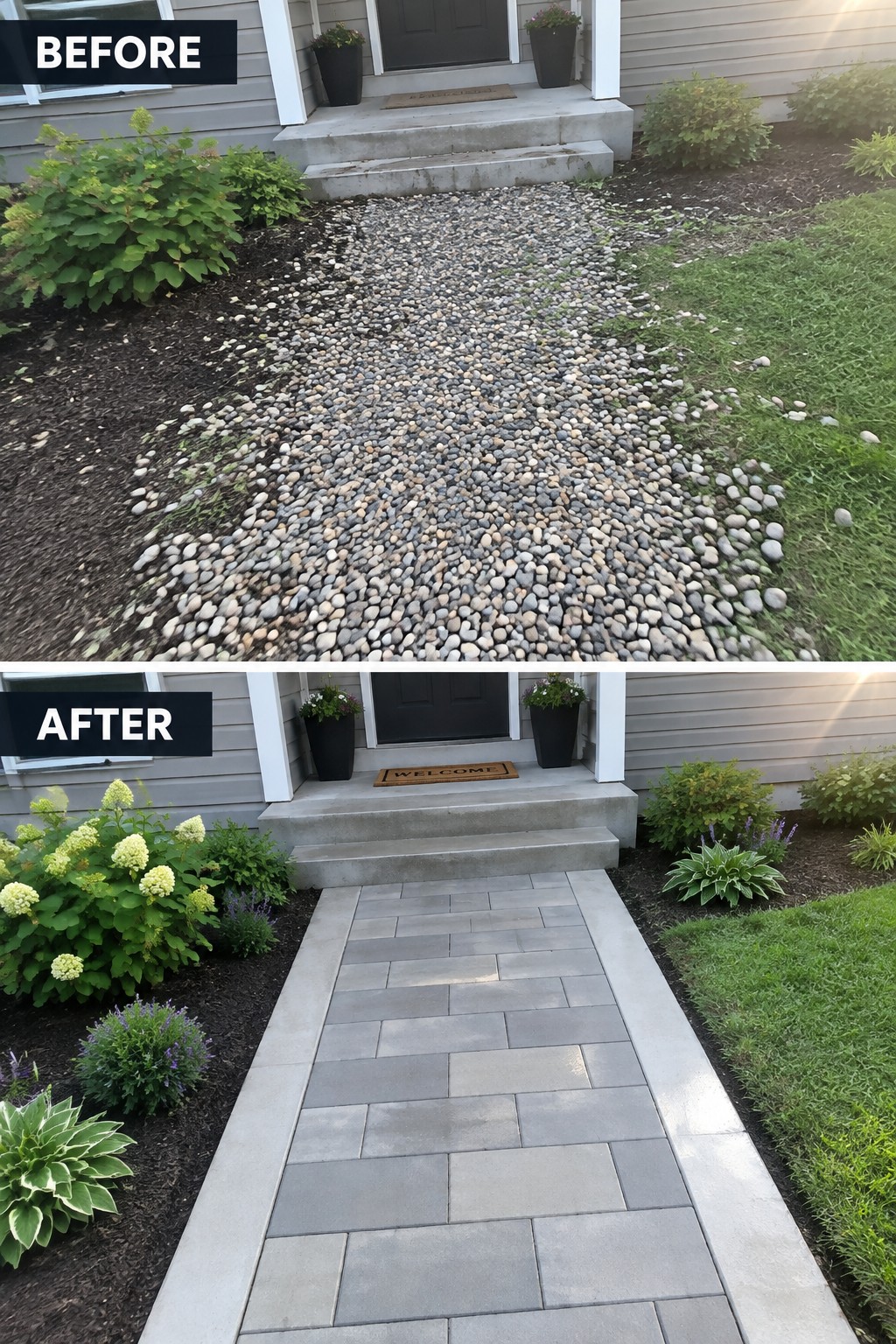
The original path spread out in every direction with loose stones that had no clear edge or shape. Laying rectangular pavers in a simple running pattern gave the walkway straight lines, a consistent width, and a much more finished look that leads straight to the steps.
This approach works best on small front yards where the path needs to feel intentional without taking up much space. Measure the route first so the pavers sit at a comfortable walking width, then keep the planting low and simple on both sides so the walkway remains the main feature.
Replace Irregular Stones With Clean Pavers
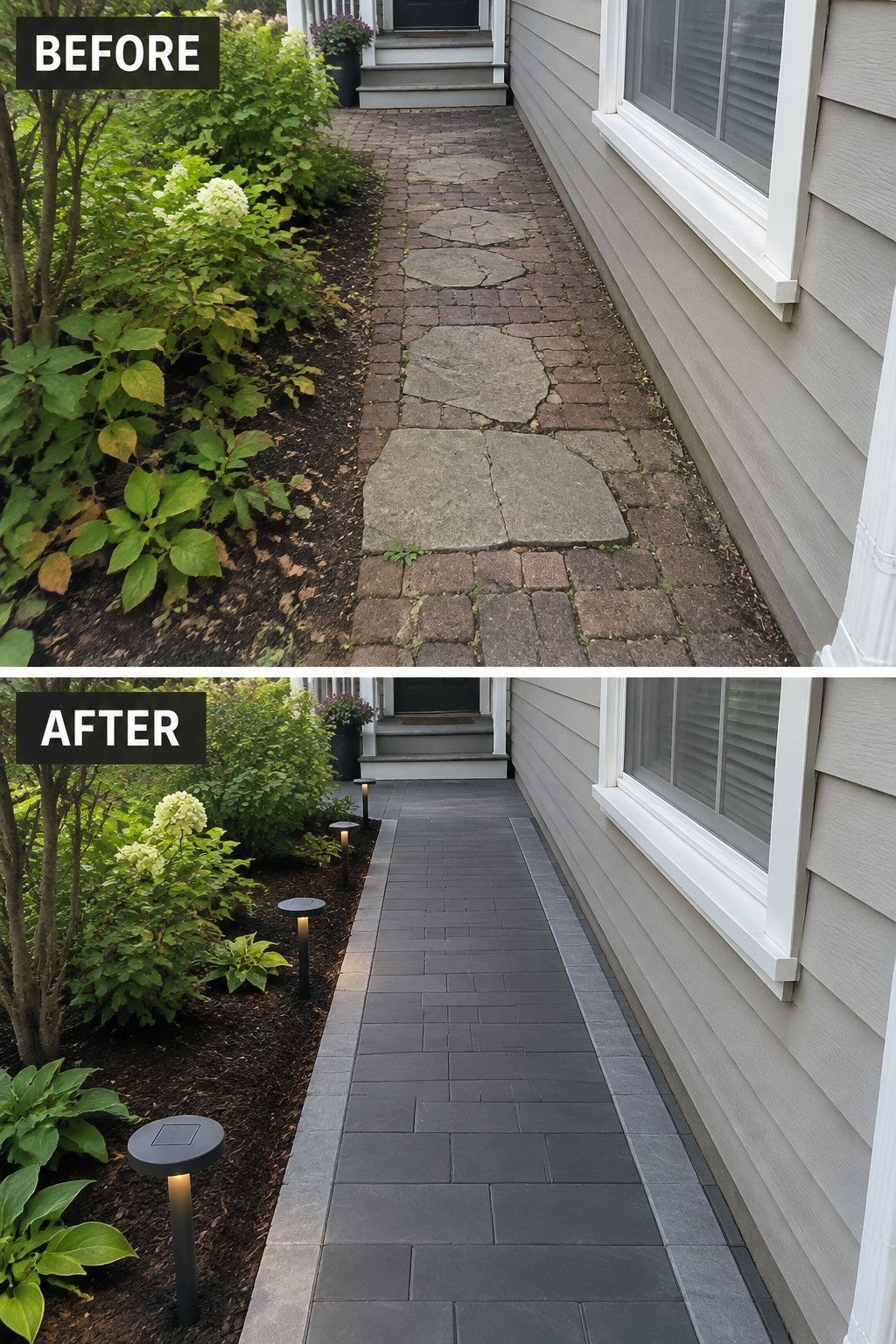
The old path mixed broken stones and bricks in uneven sizes, which made the side walkway feel messy and hard to walk on. Switching to straight, uniform dark gray pavers created a smooth, simple line that looks finished and ties the house to the garden edge without any fuss.
This approach works well on narrow side paths where you want structure without adding width. Start by pulling out the old material, then lay the new pavers in a running bond or grid pattern so the edges stay crisp. Keep the planting beds mulched and low so the clean lines stay visible.
Use Pavers To Define A Garden Path
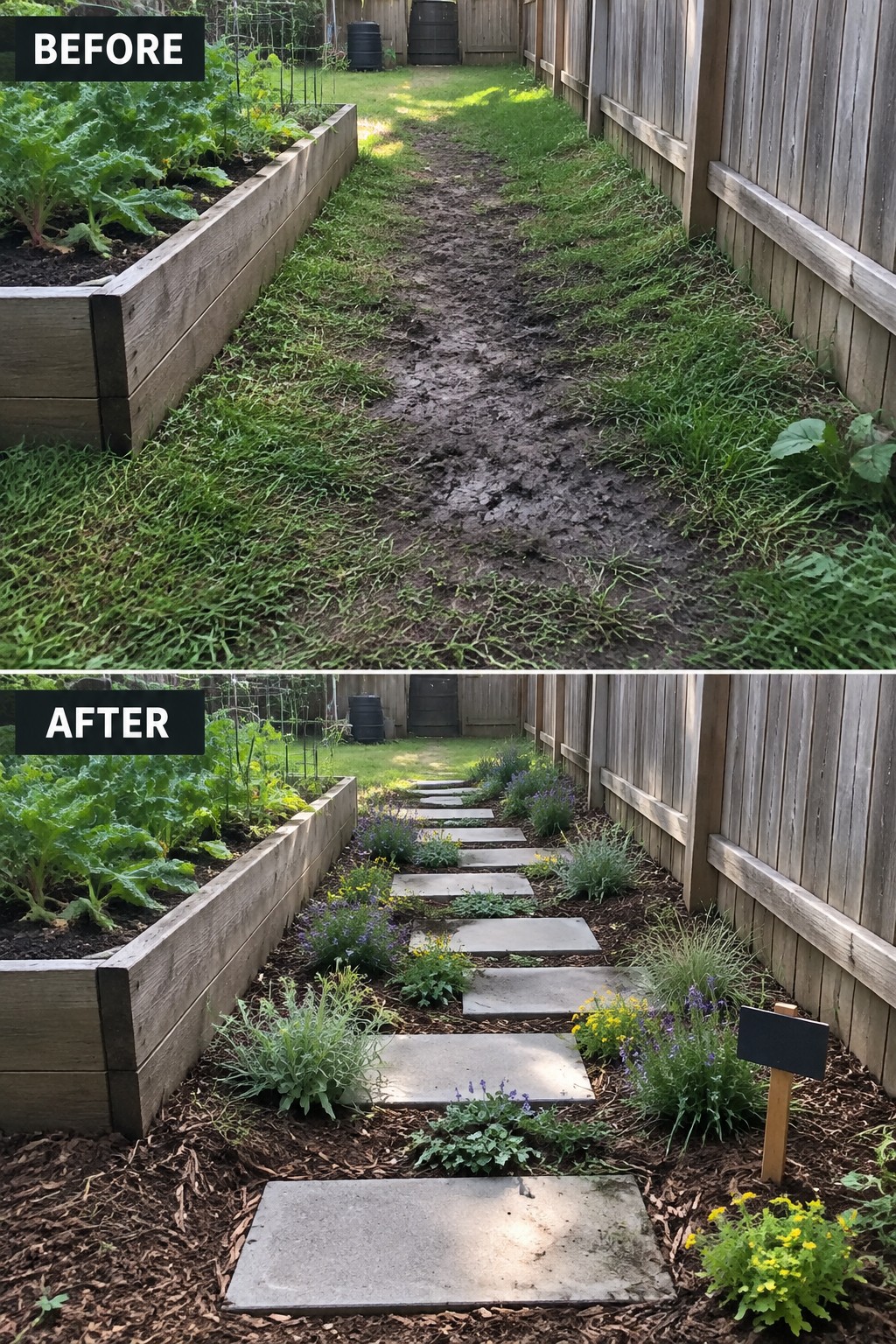
The main improvement here is replacing a worn, muddy trail with straight concrete pavers set into mulch. This simple change turns an awkward strip between the raised beds and fence into a clear, usable route instead of a spot people avoid when it rains.
This idea works best in narrow side yards or along garden edges where you need a path but do not want to cover everything in hardscape. Lay the pavers first on a level base, then fill around them with mulch and add low plants only along the sides so the walkway stays open and easy to walk.
Frame A Walkway With Structured Garden Beds
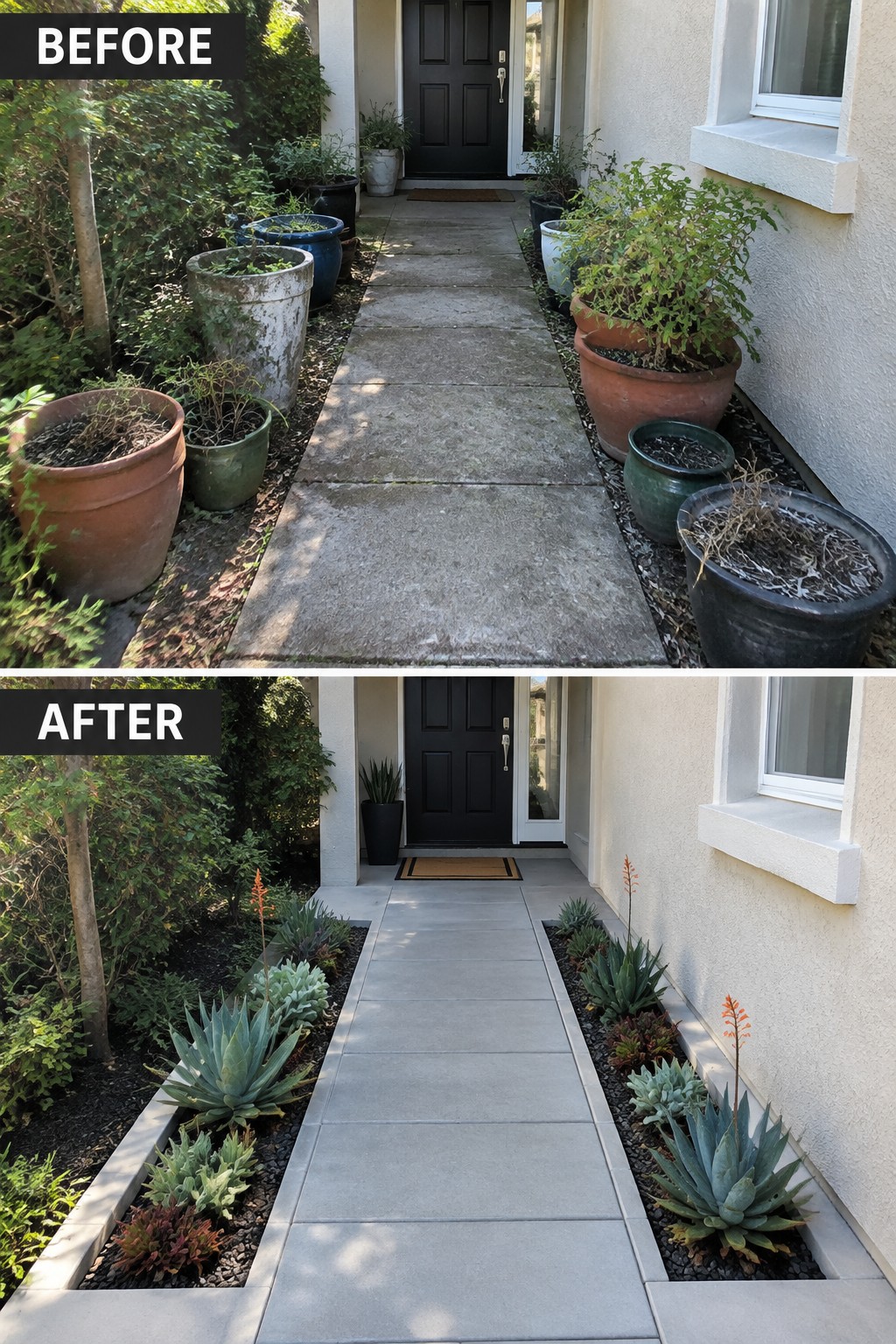
The before photo shows a walkway lined with mismatched pots that had grown messy and uneven over time. In the after, those pots are gone and replaced with long, narrow beds edged in concrete and filled with gravel. This single change gives the path clear borders and a much tidier appearance without widening the walkway itself.
This approach works well on narrow side paths or front entries where space is limited. Keep the beds only a foot or two wide, choose a few repeating plants that stay low, and use gravel or mulch to keep the look simple. The result feels intentional rather than crowded, and it is easier to maintain than a collection of individual pots.
Add A Linear Paver Path To Clean Up The Driveway Edge
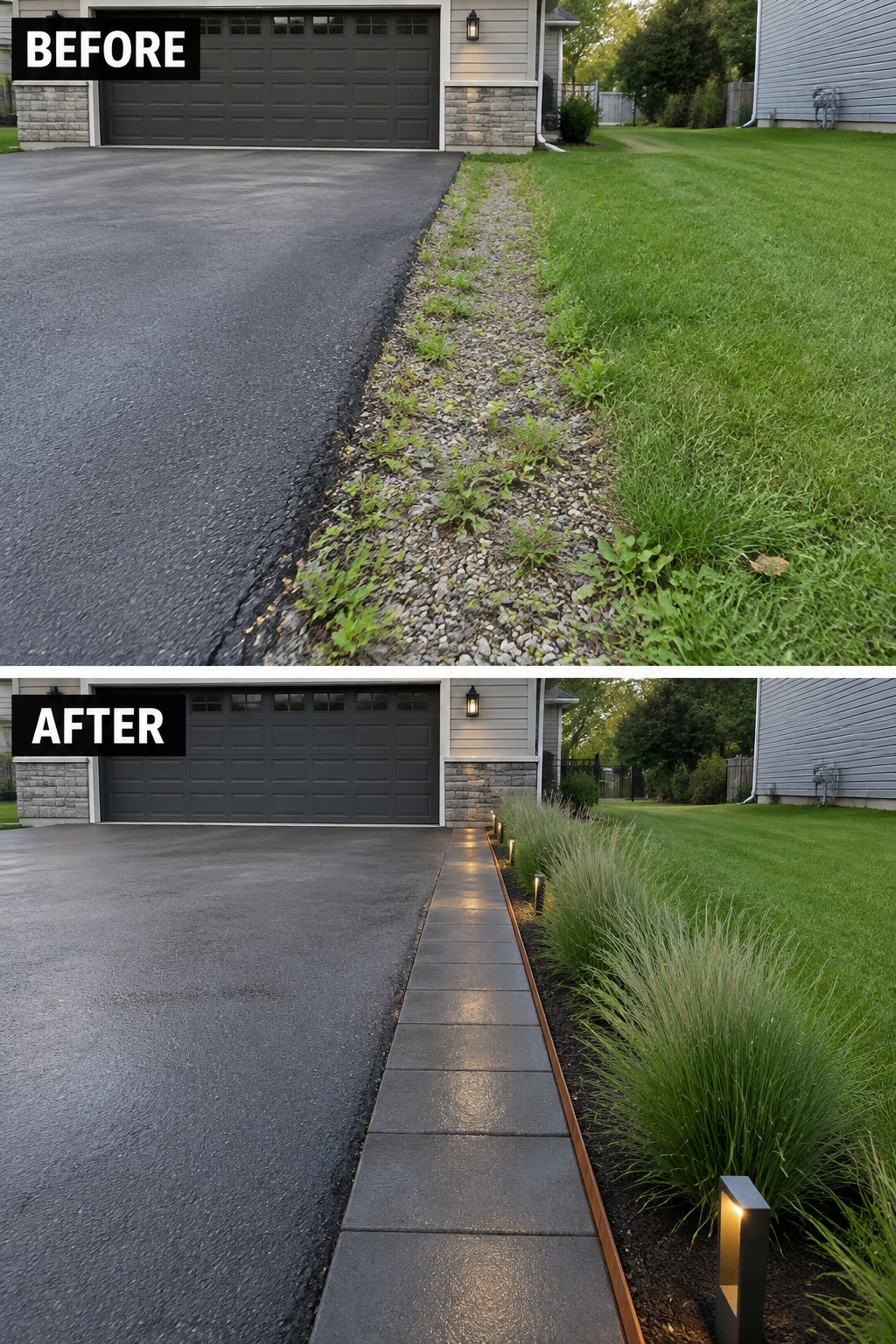
A narrow strip of gravel and weeds along the side of a driveway rarely stays neat on its own. Installing a straight run of large rectangular pavers creates a clear walking surface, stops the lawn from creeping inward, and gives the whole side yard a finished look without taking up much space.
This approach works well on homes where the driveway sits right next to the lawn and you want a simple way to separate the two. Keep the pavers in a single color that matches the house or garage door, add low pathway lights for evening use, and plant a narrow band of tall grasses on the lawn side so the path feels intentional rather than leftover.
Use Alternating Pavers To Give A Walkway Clean Lines
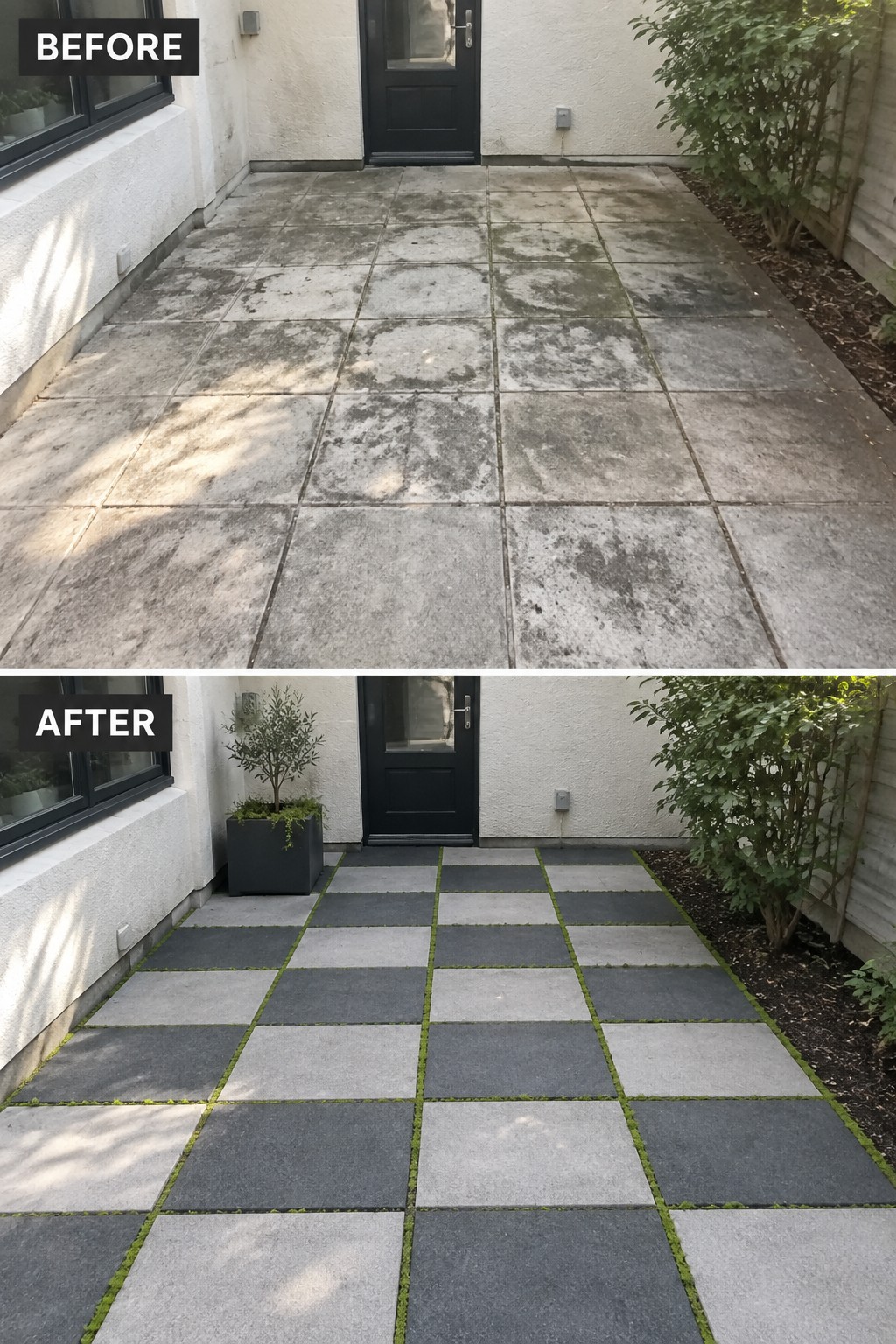
A plain stretch of pavers often ends up looking tired once dirt and weathering set in. Switching to a simple grid of light and dark pavers with grass in the joints brings order back to the space and makes the path feel intentional rather than leftover.
This layout works best on entry walks or side passages where the goal is structure without extra furniture or decor. Keep the pattern straightforward, choose pavers that contrast enough to read clearly, and let the grass soften the edges so the walkway stays practical for daily use.
Frequently Asked Questions
Q: Can I tackle this project myself if I have never laid pavers before?
A: Start with a small section to test your skills. Proper base preparation makes all the difference for a level surface that lasts. Watch a few videos on compacting gravel first.
Q: How do I stop weeds from popping up between the pavers later on?
A: Lay down a solid weed barrier fabric under the base layer. Sweep polymeric sand into the joints after installation. It hardens to block growth without looking obvious.
Q: What size pavers work best for a modern walkway?
A: Go for larger formats around 24 inches square. They create fewer lines and a sleeker feel underfoot.
Q: Will these pavers hold up in areas with freezing winters?
A: Choose ones rated for your climate zone. A good base that allows drainage prevents cracking when the ground shifts.
