

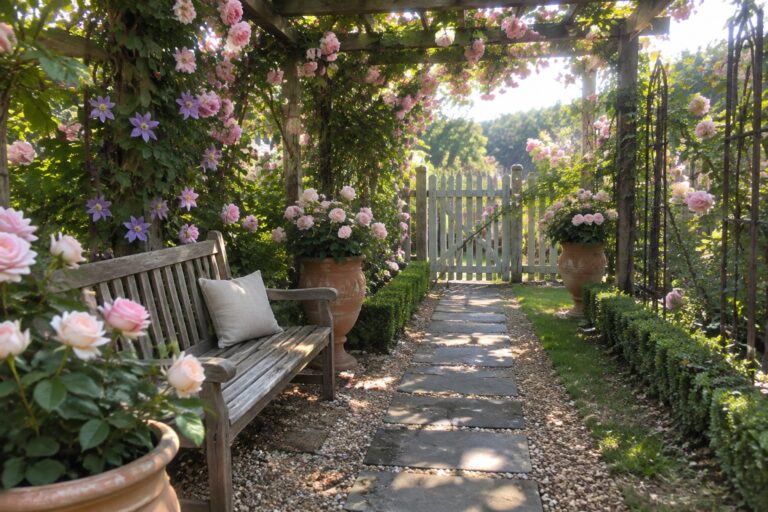
Pink roses can soften a garden, but they look best when they feel connected to the rest of the planting rather than scattered through the yard.
I pay attention to how paths, borders, and taller plants guide the eye, since those choices shape the garden as much as the flowers do.
A pale pink rose can feel quiet beside silvery foliage, while a deeper shade stands out against green shrubs or a simple fence.
It also helps to think about how the beds will fill in over time, so roses have room to grow without crowding walkways or nearby plants.
I’d save the layouts that suit your yard’s light and space, then adapt the details to make the garden feel like your own.
Use a Rose-Covered Pergola to Shape a Garden Path
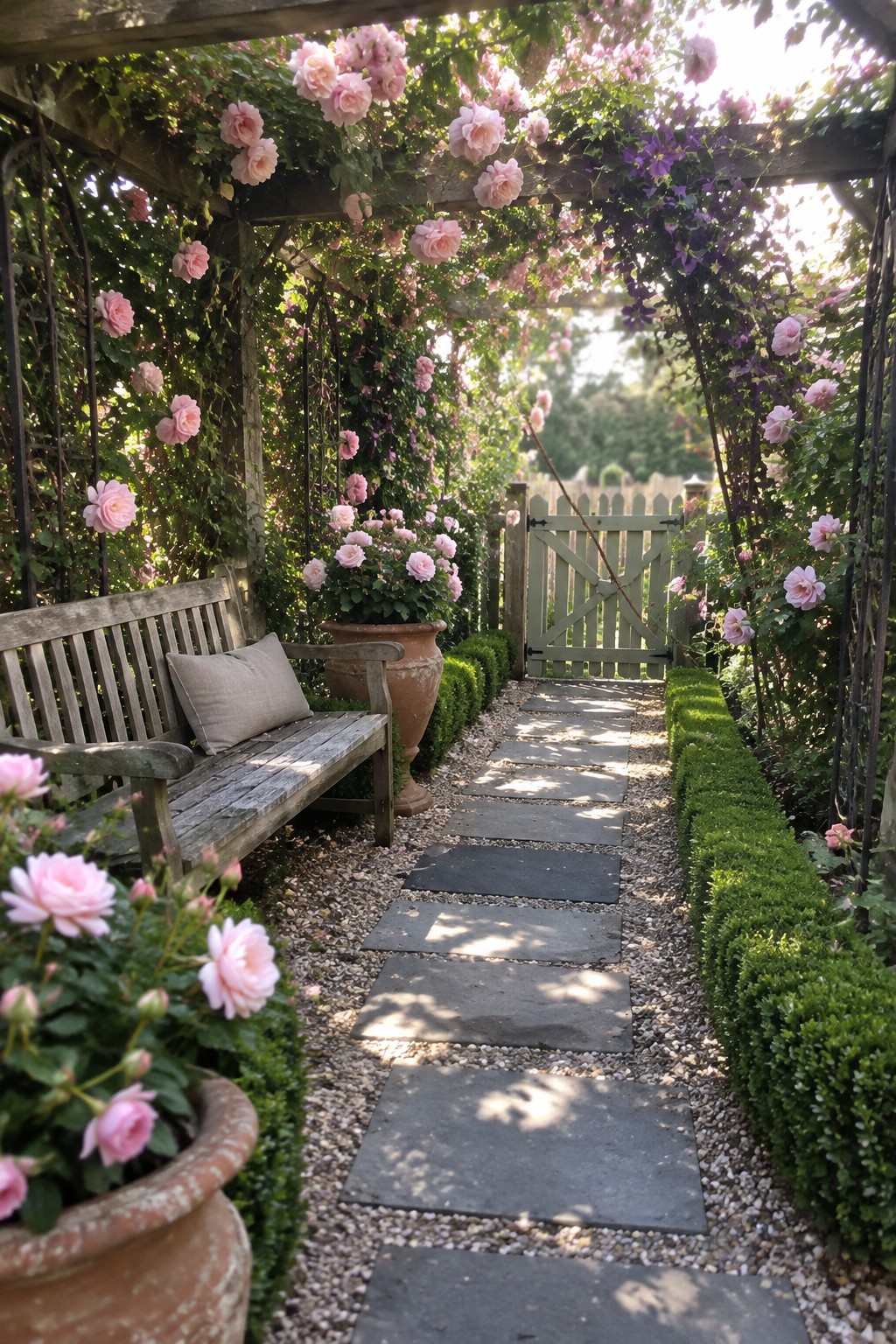
A pergola gives a garden path a clear route and a sense of enclosure, while climbing roses bring flowers overhead and along the sides. It’s a useful way to make a simple walkway feel like a garden feature without adding much hardscape.
Train roses along the pergola beams and posts, and leave enough room for the path below to stay easy to walk through. This works well in a narrow side garden or on the way to a gate. Keep up with pruning so the canes don’t crowd the walkway.
Use a Curved Bed for Pink Roses
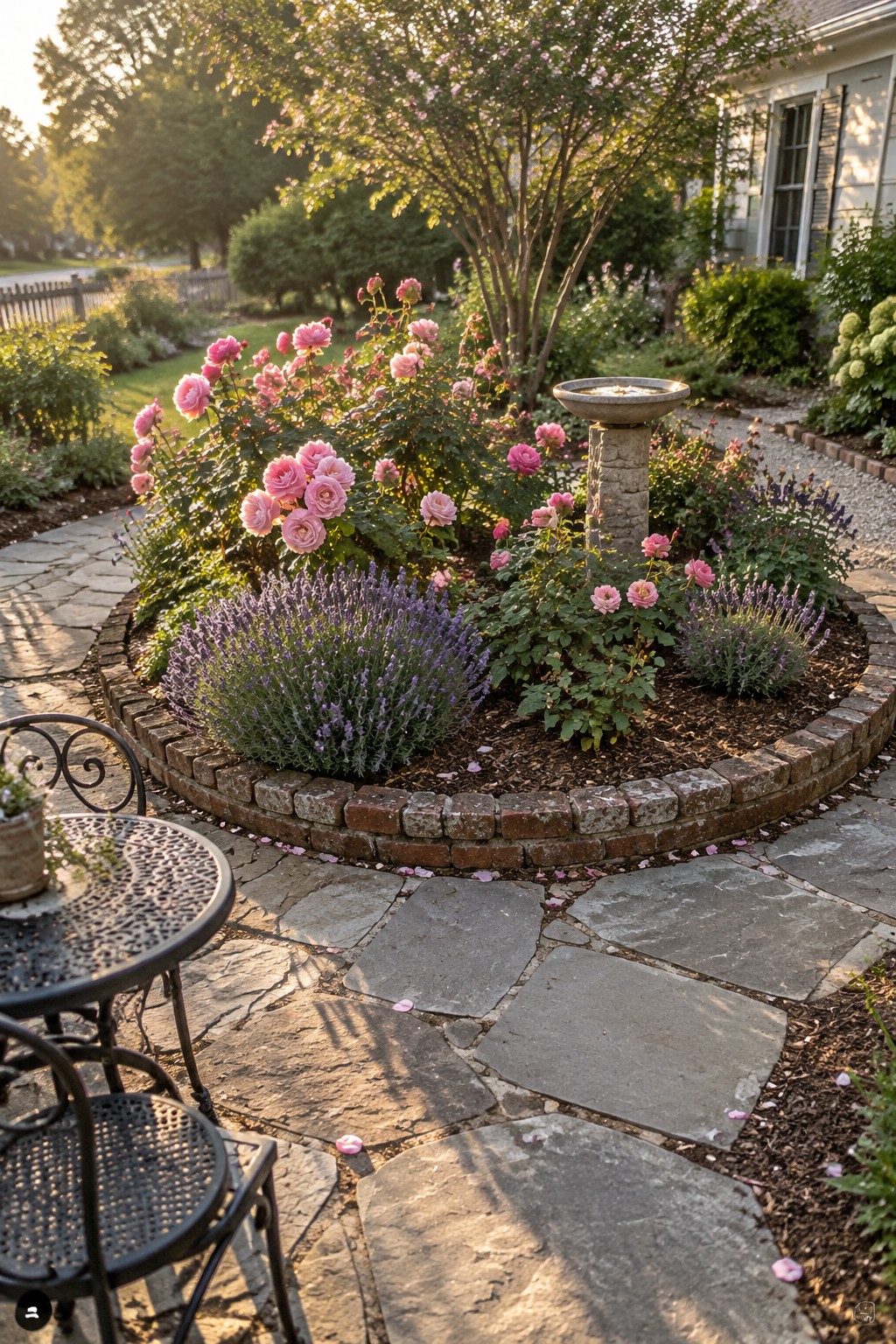
A curved garden bed gives pink roses room to spread while making the planting feel like part of the yard, not a row along its edge. A low brick border is a practical way to define the shape and keep mulch in place.
This layout works well beside a path or patio, where the flowers can be enjoyed up close. Keep the bed wide enough for roses and companion plants, and leave room to reach in for pruning.
Use A Straight Path Through A Narrow Garden

A straight path gives a narrow garden a clear layout and makes it easy to move from one end to the other. Large paving slabs keep the route simple, while pink roses along the walls bring flowers into view without taking up the walkway.
This approach works well in side yards and other long, tight spaces. Keep planting beds narrow enough to leave comfortable room to walk, and choose roses suited to the light and airflow in your garden.
Create a Rose-Covered Outdoor Dining Area
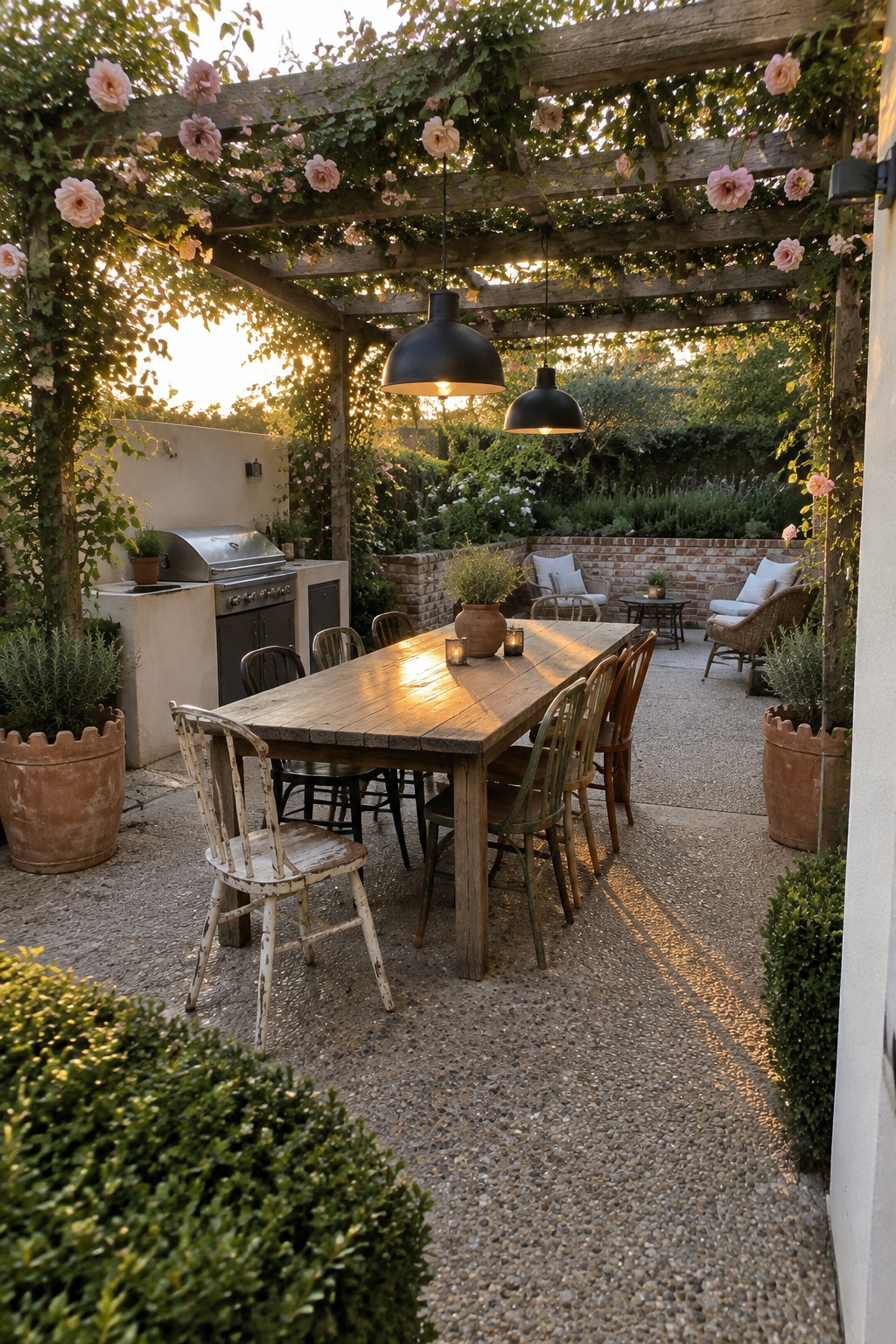
A pergola covered in climbing roses can make an outdoor dining spot feel tucked away without closing it off. The flowers bring color overhead, while the open structure still lets air and light through.
Train climbing roses along a sturdy pergola above a patio table, and leave enough space for chairs to move comfortably. This works especially well in a small courtyard where you want one clear place to gather. Choose a rose variety suited to your climate, and plan to prune it so branches do not crowd the seating.
Add Pink Roses Along a Gravel Garden Path

Pink roses planted beside a gravel path make a simple route through the garden feel more settled and welcoming. The loose stone keeps the path informal, while the flowers give it a clear edge.
This idea suits a cottage-style garden or the approach to a front porch. Let the roses grow in a generous bed beside the path, but leave enough room for people to walk comfortably and keep fallen petals from building up on the gravel.
Add a Curved Stone Wall Beside Pink Roses
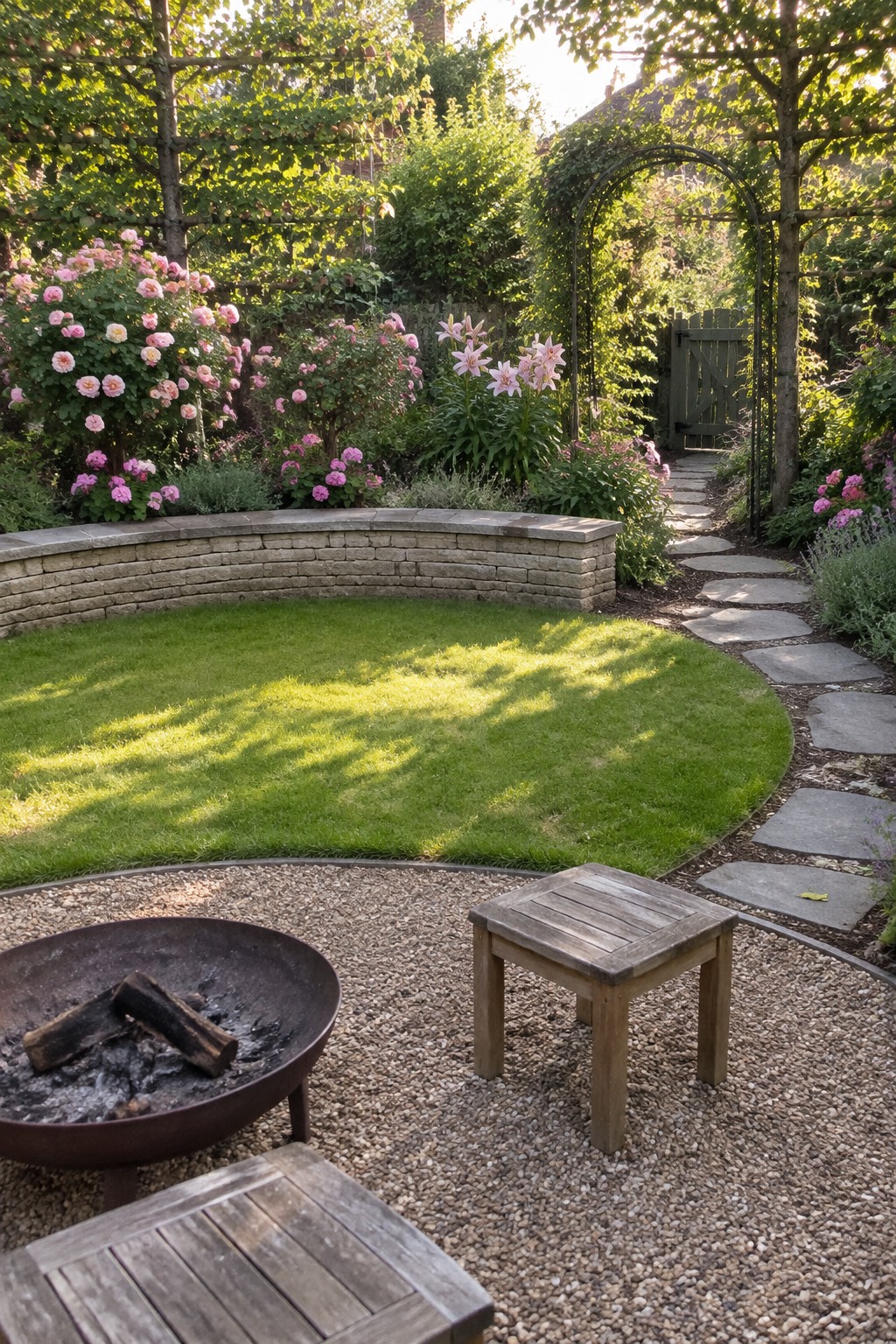
A low curved wall gives a rose bed a clear edge and makes the garden feel more organized without separating it from the lawn. Pink roses look especially at home along the top of the wall, where their loose growth can spill slightly over the stone.
This idea works well beside a small lawn or seating area. Keep the wall low enough to see over, and leave enough room behind it for the roses to grow without crowding a path.
Let Pink Roses Follow a Garden Fence
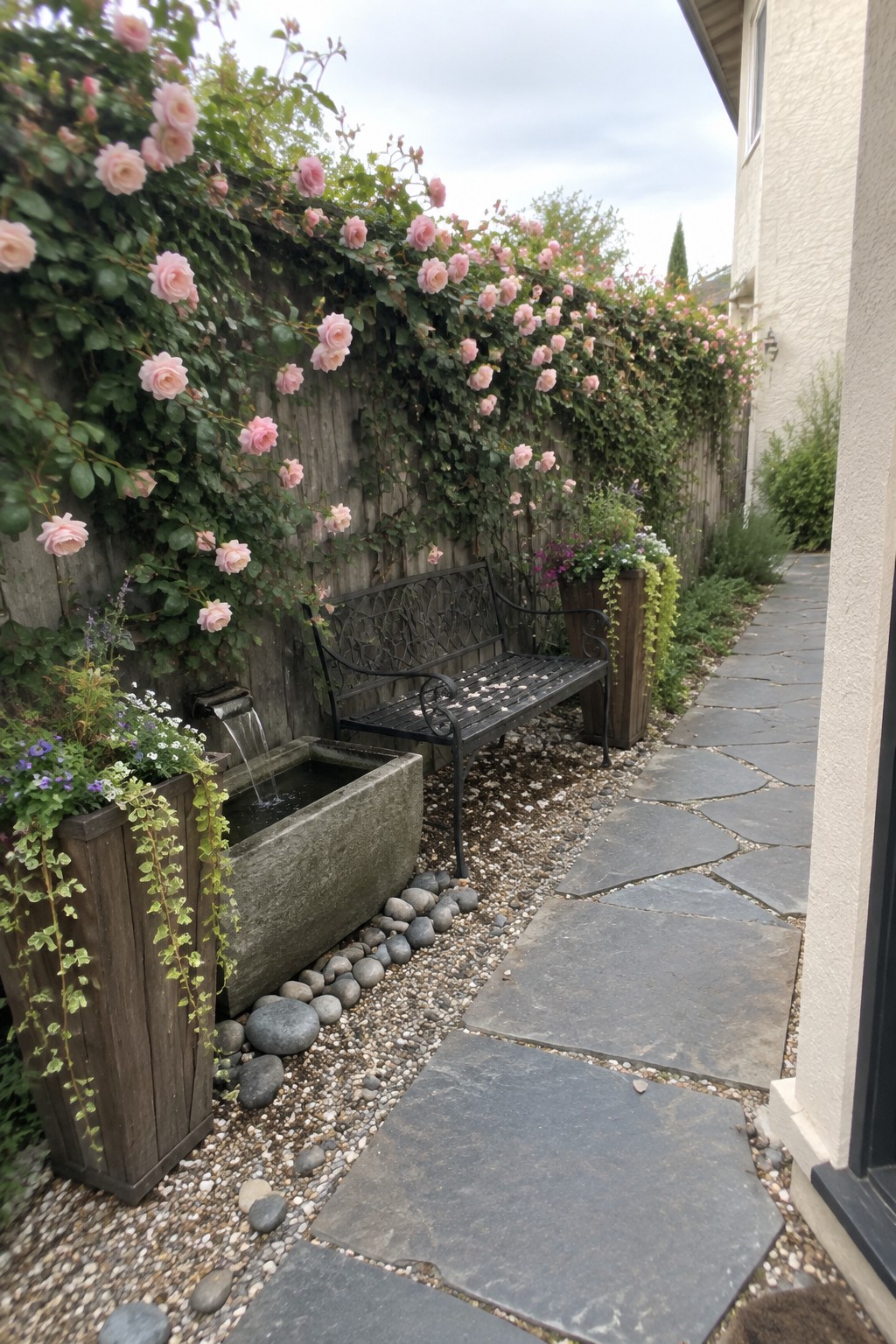
Training pink climbing roses along a fence is an easy way to add color and privacy to a narrow side garden. The long line of blooms makes the space feel more connected without taking up much room on the ground.
Use sturdy supports and tie new canes loosely as they grow. This approach works well beside a walkway, but leave enough clearance for people to pass and keep the path easy to maintain.
Use Stone Steps to Lead Through a Rose Garden
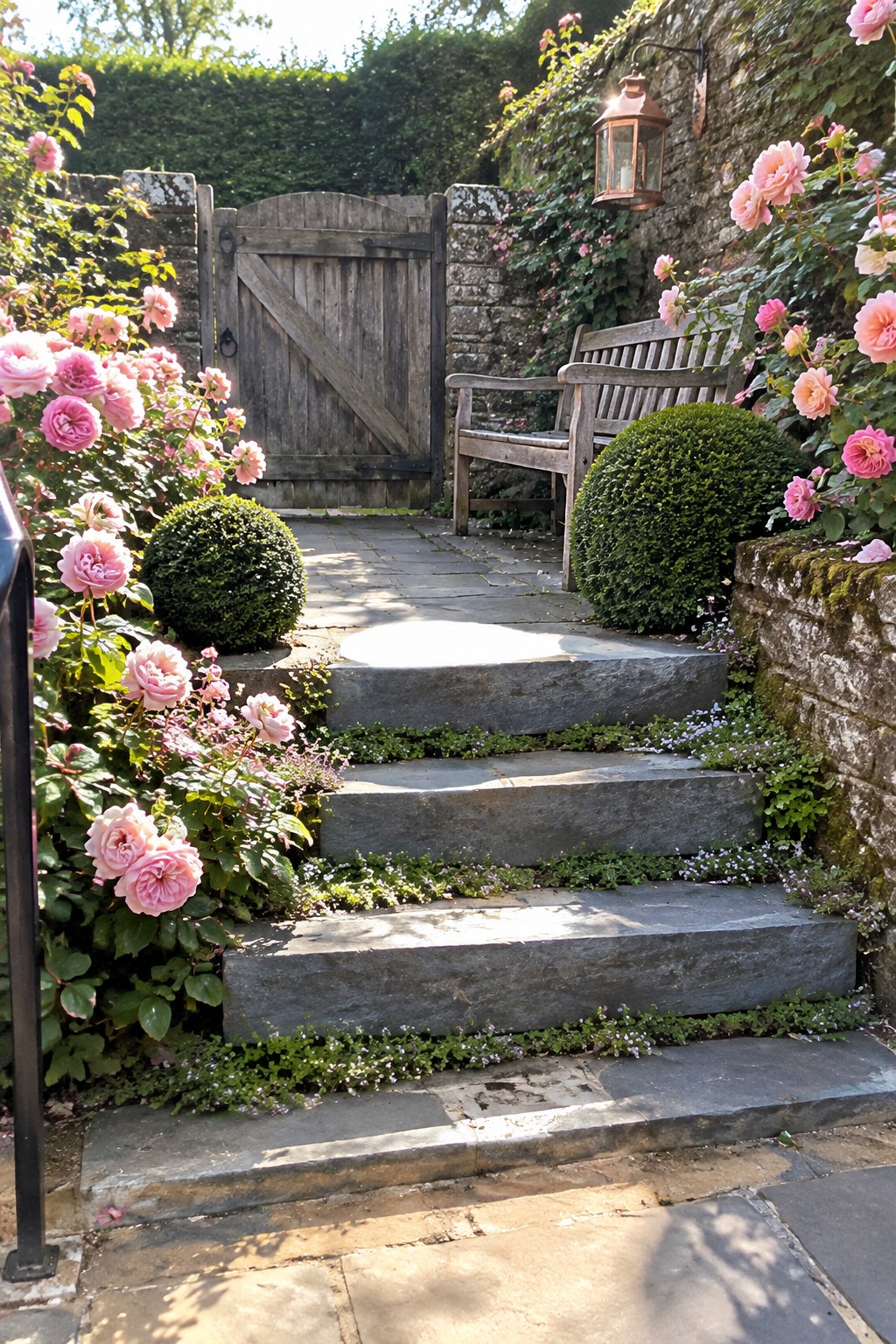
Stone steps make a sloping garden easier to walk through and give the planting a clear shape. Pink roses along the edges bring color close to the path without taking away from the simple stonework.
This approach works well in a compact garden with a noticeable change in level. Keep roses trimmed back from the steps, and leave enough clear space to walk comfortably, especially when the paving is damp.
Use Stepping Stones to Define a Garden Walk
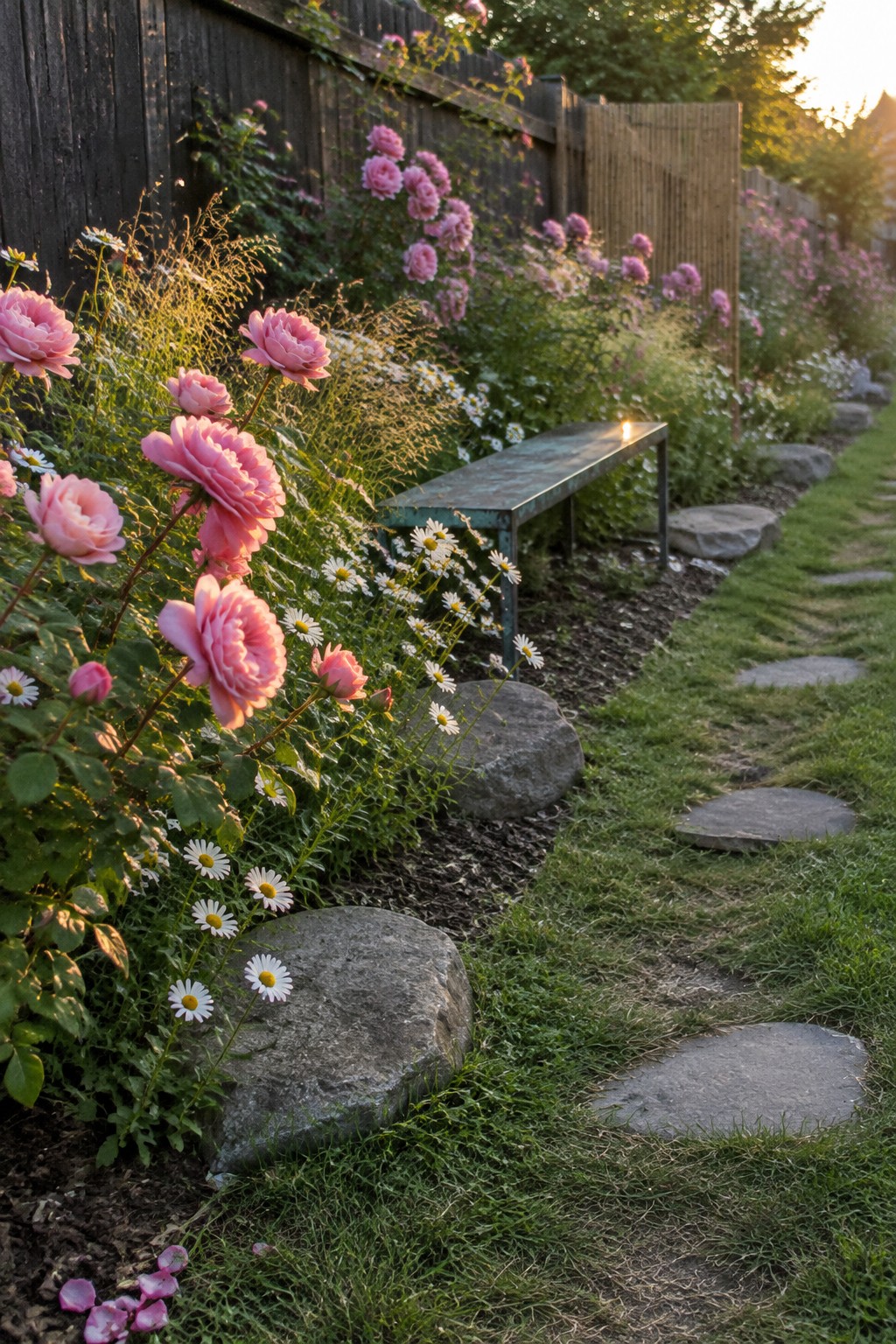
Scattered stepping stones give a garden path a relaxed shape and let the planting bed remain the main feature. Here, the stones run beside pink roses and daisies, making it easy to move through the garden without adding a wide, formal walkway.
This approach suits a narrow side garden or an informal border. Set the stones far enough apart for a comfortable stride, and keep their edges clear so grass and flowers do not make the route hard to follow.
Make a Small Garden Seating Spot Among Pink Roses
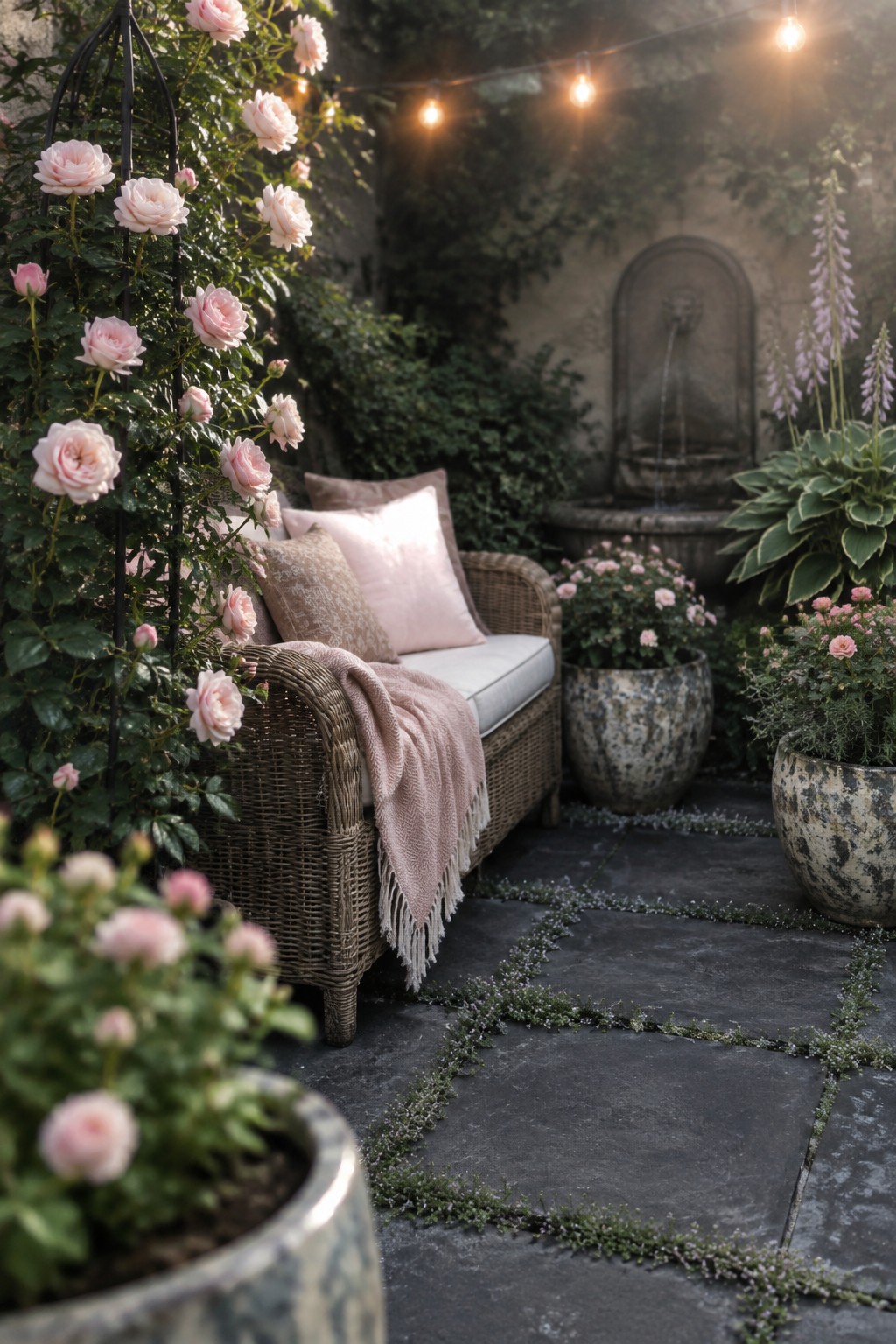
A simple seat can make a rose garden feel like a place to spend time, not just look at. Climbing pink roses around a small seating area give it a tucked-away feel without needing a large patio.
Try this idea in a courtyard or along a garden path where there is room for a compact bench or loveseat. Keep the planting close enough to feel sheltered, but leave a clear route through the space so the roses do not crowd the seating.
Use a Lawn to Divide Rose Beds

A simple strip of lawn between rose beds gives a garden a clear shape without taking attention away from the flowers. Pink roses along the edges make the green center feel like part of the design, rather than leftover space.
This layout works well in a formal or fairly spacious garden. Keep the bed edges easy to mow, and leave enough room for the roses to grow without spilling too far into the grass.
Use Timber Steps to Connect a Sloped Rose Garden

Wooden steps can make a sloping flower bed easier to navigate while giving the planting a clear structure. Here, pink roses spill beside broad timber treads, with stone retaining walls helping hold the hillside in place.
This approach works well where a front garden rises toward the house. Keep the steps wide enough for comfortable footing, and leave room beside them for roses to grow without narrowing the route.
Use Pink Roses to Bring Color to a Small Patio Garden
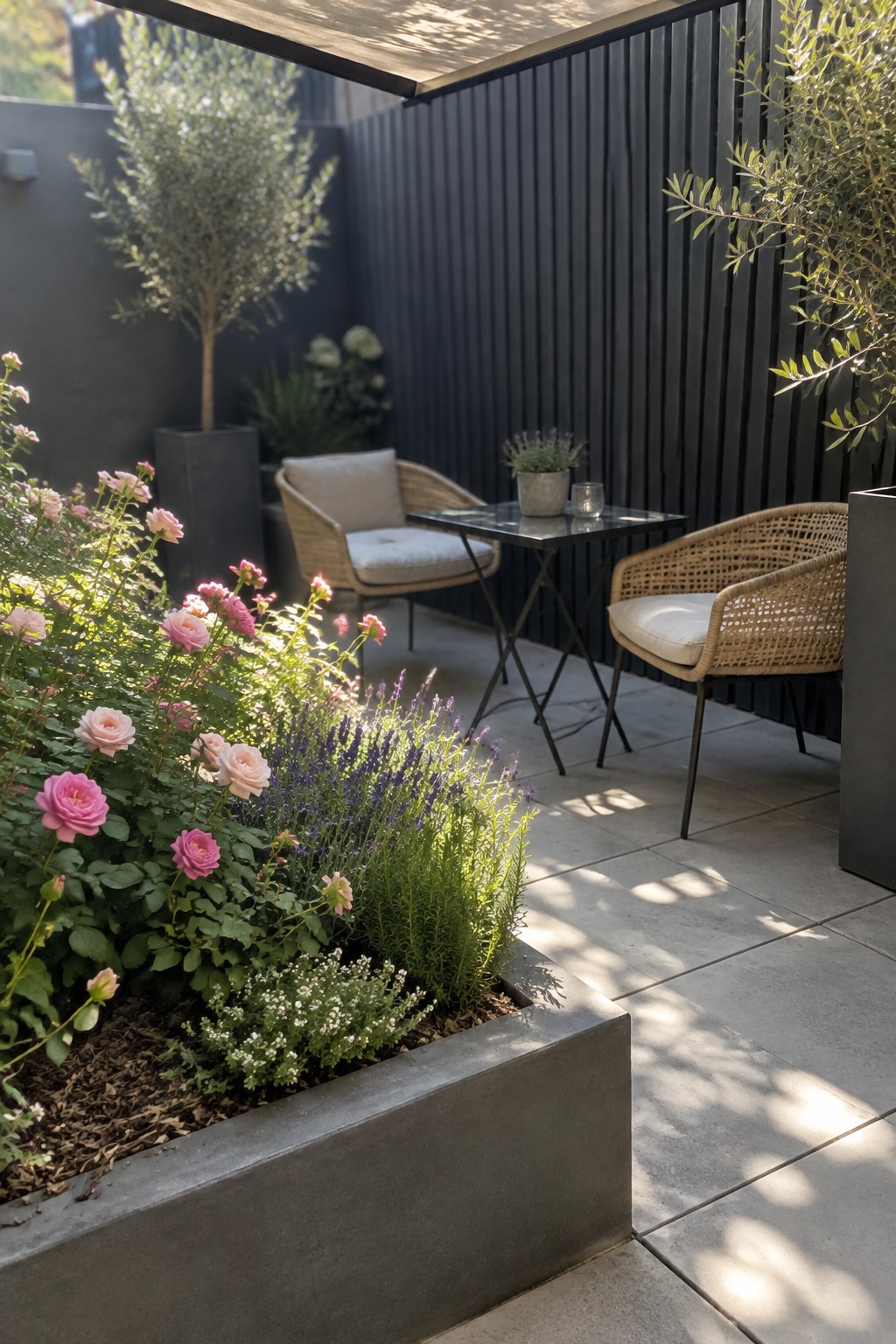
Pink roses can make a compact patio garden feel more like a garden than a paved sitting area. Planting them in a raised bed along the edge keeps the flowers close to the seating without taking up floor space.
This approach works well in a courtyard or narrow patio, especially when the bed has enough room for roses to grow without spilling onto the walkway. Pair them with lower flowering plants, and leave space between plants for airflow and easy care.
Use an Arbor to Guide a Garden Path
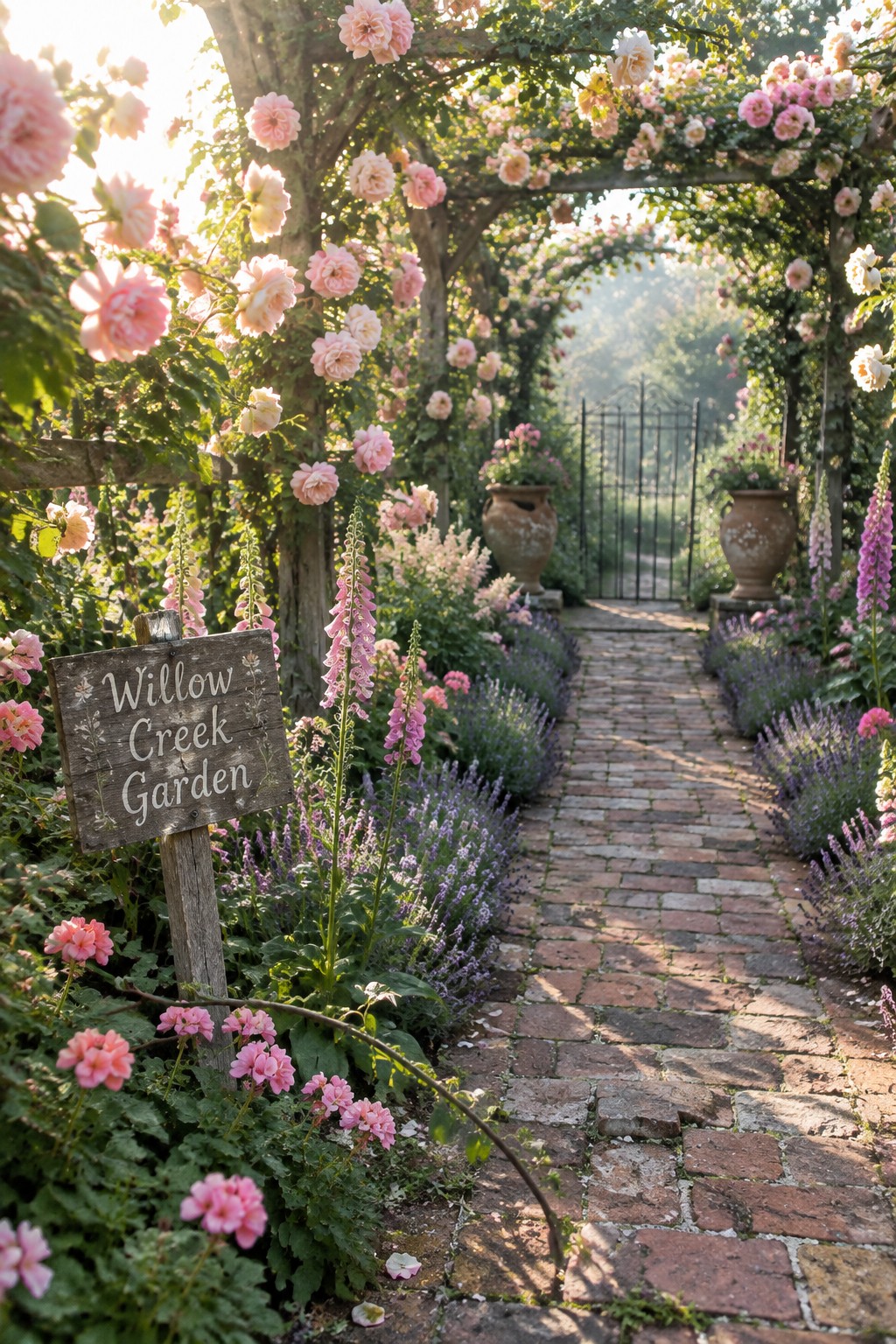
A rose-covered arbor gives a garden path a clear direction and makes the walk feel like part of the planting. Pink roses overhead help tie the path and flower beds together without needing a formal garden layout.
This idea suits a cottage garden or a narrow side yard. Train roses along a sturdy arbor, and leave enough room for the path to stay easy to walk through as the plants grow.
Add Pink Roses Along a Poolside Wall

Pink roses can make a plain pool edge feel like part of the garden. Letting them spill over a low stone wall brings flowers close to the water without taking up space on the deck.
This works best where the roses can trail along a sunny wall and still leave a clear path around the pool. Choose a variety suited to your climate, and prune it regularly so thorny stems stay away from swimmers.
Use Terraced Stone Beds for Pink Roses
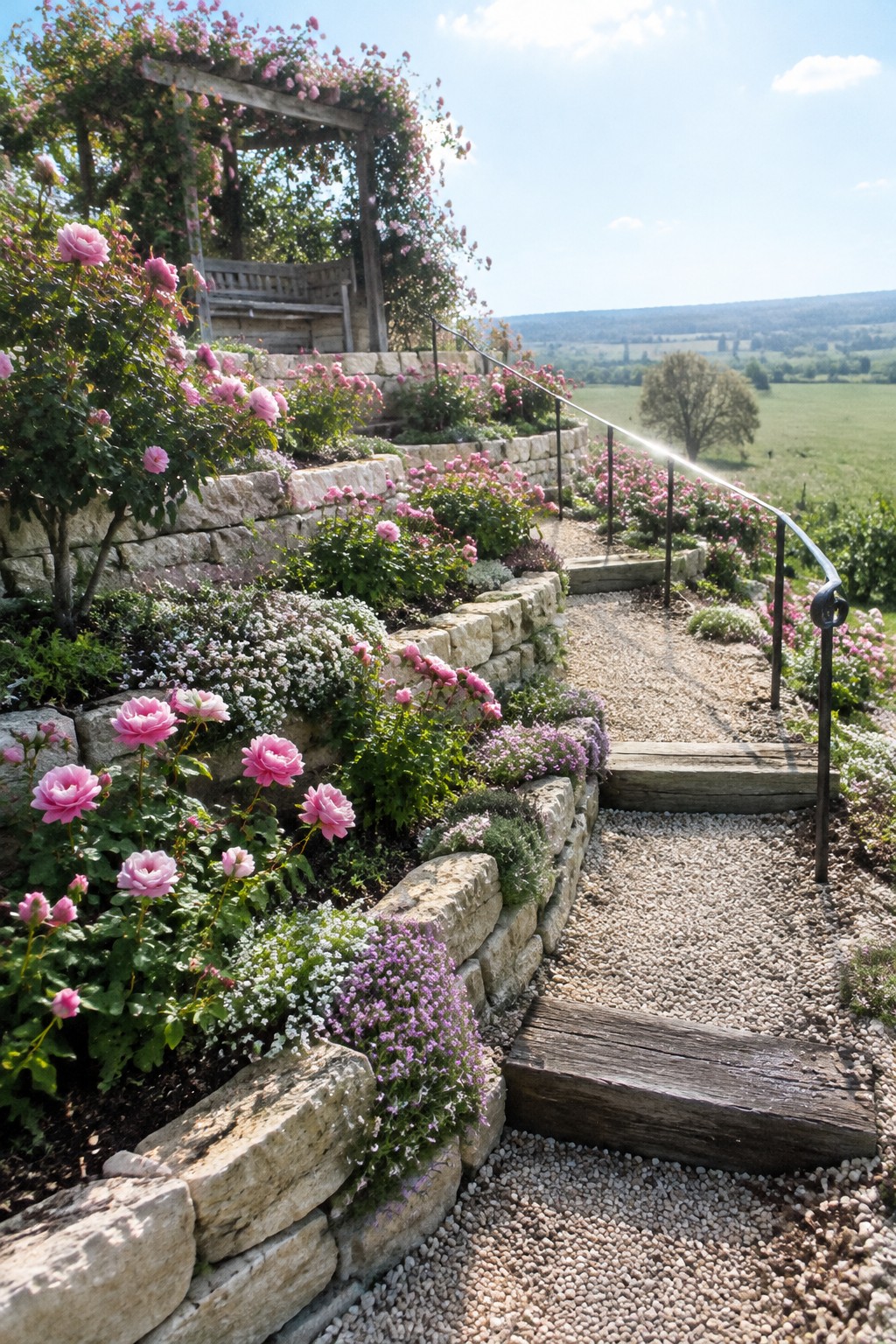
Stone retaining walls can turn a sloped garden into a series of planting areas instead of one hard-to-manage bank. Pink roses stand out along the tiers, while the stone gives each bed a clear edge.
This approach works well on a hillside where a level path is useful. Keep the walls low enough to reach the plants easily, and leave room beside them for gravel or another firm walking surface.
Build a Raised Rose Bed Along a Narrow Path
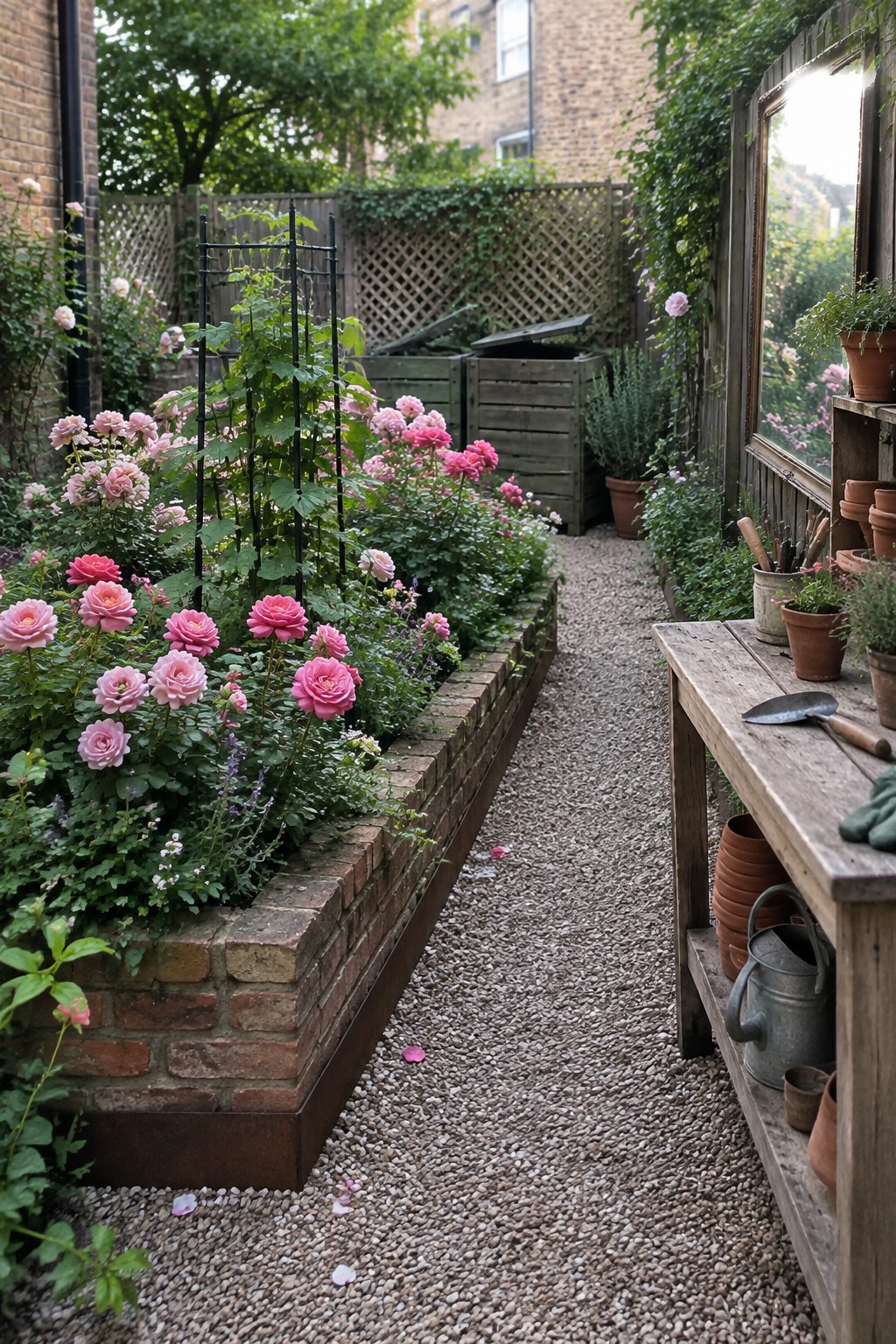
A raised bed is a practical way to give pink roses their own place in a small garden. The brick edge keeps the planting contained, while the gravel path leaves a clear route beside the flowers.
This layout works well in a narrow side garden or courtyard where ground space is limited. Keep the bed low enough to reach for pruning, and leave enough path width to walk through comfortably.
Plant Pink Roses Along a Seaside Gravel Path
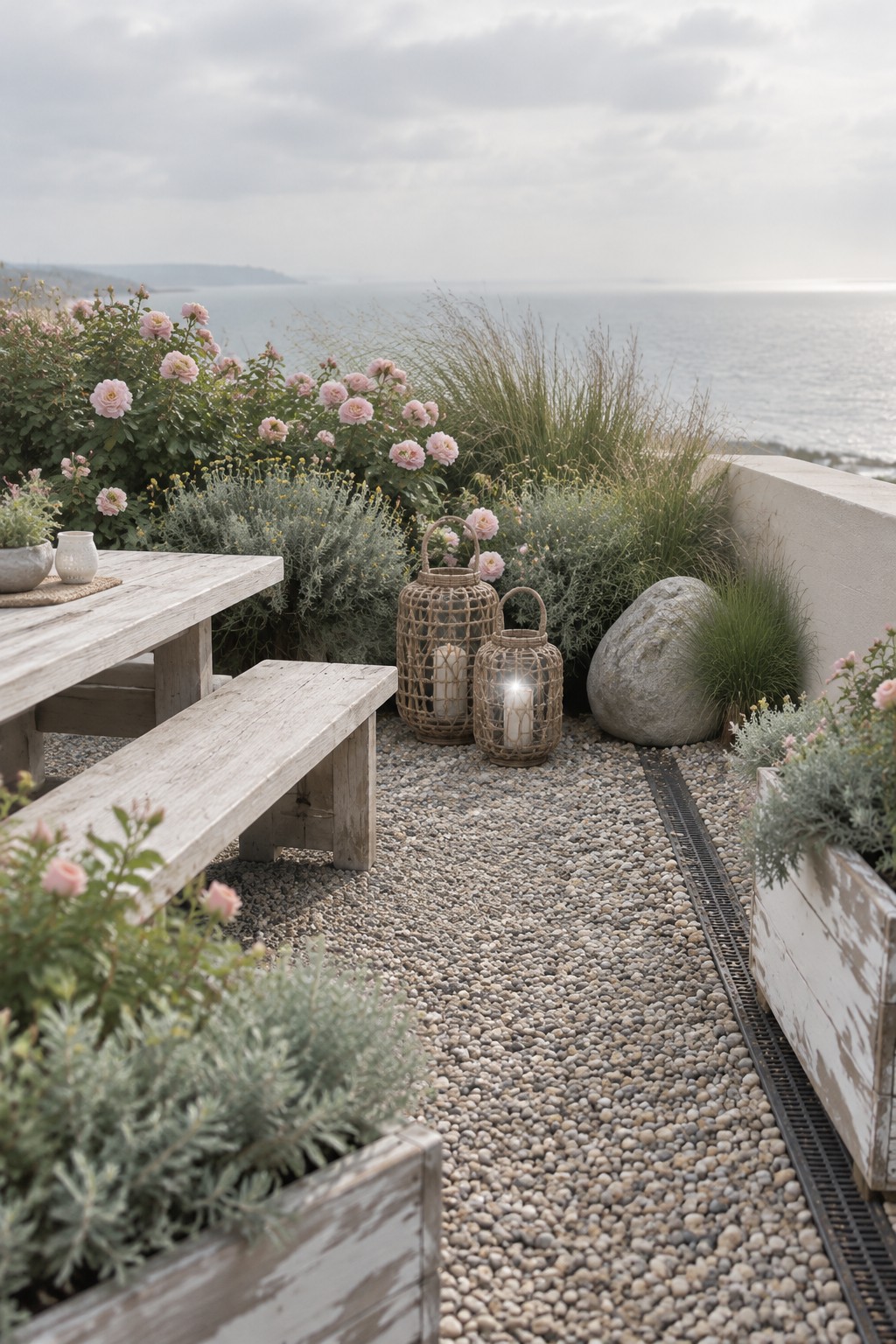
A gravel path can make a rose garden easier to walk through while keeping the planting beds as the main feature. Pink roses along the edge bring color to the route, and their loose growth suits a relaxed coastal garden.
Use compact roses beside the path so they do not crowd the walking space, then mix in grasses or low plants for a softer edge. A narrow drainage channel can help keep gravel paths tidy where rainwater tends to run.
Use Rose Arches to Create a Garden Walk

Rose-covered arches give a garden path a clear shape and make the walk feel like part of the planting, not just a way through it. Repeating the arches also creates a gentle rhythm that suits a cottage-style garden.
Use sturdy supports and train roses along the sides and top, leaving enough room to walk beneath them. This idea works especially well on a longer path leading to a garden entrance or seating spot. Prune regularly so the roses do not crowd the walkway.
Grow Pink Roses Along a Rooftop Dining Terrace
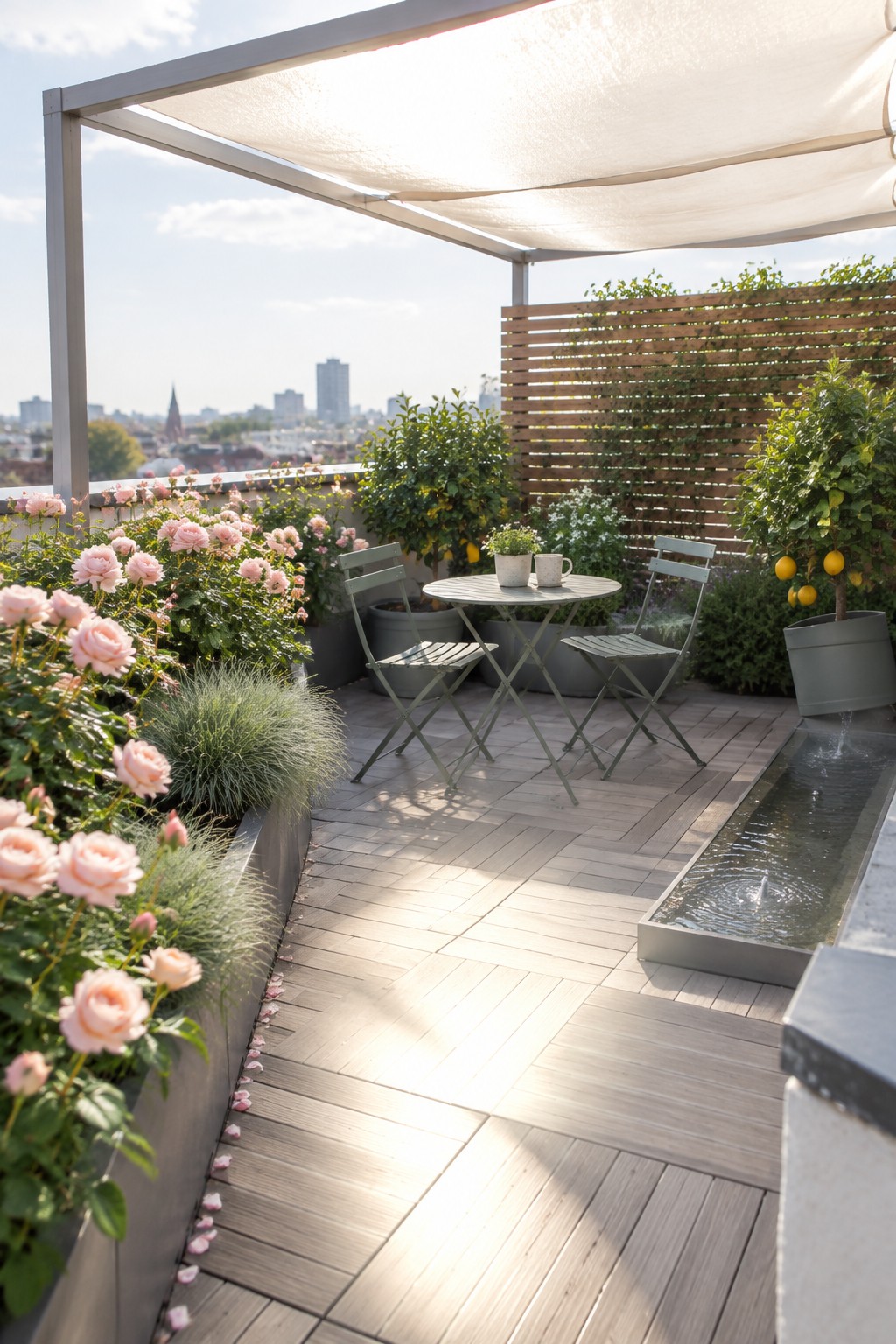
A small outdoor dining area can feel more like a garden when pink roses grow along its edges. They bring the flowers close to the seating without taking up the space needed for a table and chairs.
Use raised planters to define the terrace and keep the walking area clear. Roses suit a sunny rooftop, but choose varieties and containers that can handle wind, and leave enough room to reach the plants for pruning.
Plant Pink Roses Along a Garden Path
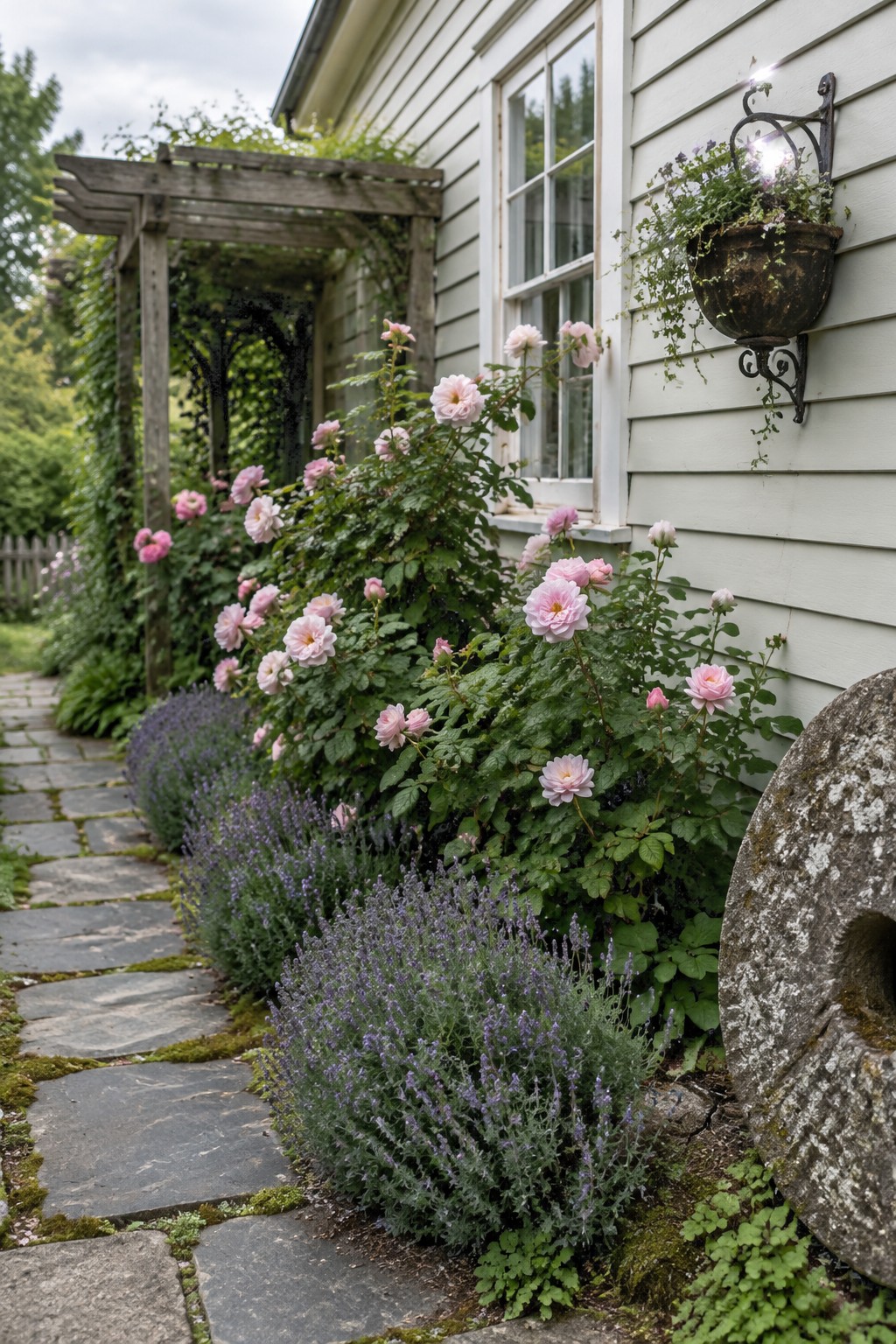
A narrow planting bed beside a stone path is a simple way to make a garden walk feel more colorful. Pink roses bring height and flowers near the house, while low purple plants fill the front edge without hiding the path.
Leave enough room for roses to spread, and keep their stems from leaning across the paving. This layout works well along a cottage wall or fence, especially where a path needs a soft border.
Frequently Asked Questions
Q: Which pink rose varieties are easiest to grow in a home garden?
A: Look for disease-resistant shrub roses suited to your climate, since they usually need less fuss than delicate hybrid teas. A local nursery can point you toward varieties that handle your winters and summers well.
Q: How much sun do pink roses need to bloom well?
A: Most roses bloom best with at least six hours of direct sun a day. In hot climates, a little afternoon shade can help keep flowers from wilting.
Q: What flowers look good planted beside pink roses?
A: Lavender, salvia, and catmint bring cool purple-blue tones that play nicely with pink blooms. Leave enough space for air to move around the roses, and avoid crowding them with thirsty plants.
Q: Can I grow pink roses in pots?
A: Yes, as long as you choose a roomy pot with drainage holes and a rose variety suited to containers. Check the soil often, because pots dry out faster than garden beds.
