

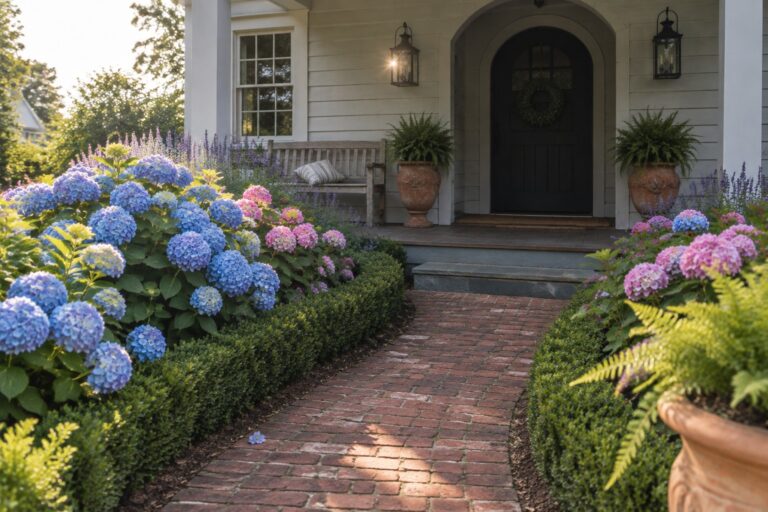
A walkway can feel bare when its edges have no shape, but a thoughtful planting plan makes the approach to a home feel more settled.
I like hydrangeas along a path because their broad leaves and rounded blooms soften hard paving without hiding the route.
The spacing matters, though, since plants that crowd the walkway can make it awkward to use, while gaps that are too wide leave the border looking unfinished.
Color, mature size, and the path’s sunlight all affect which varieties will thrive and how the planting will look through the seasons.
I’d save the ideas that suit your walkway’s width and growing conditions, then adapt the details to fit your home.
Let Hydrangeas Line a Curving Brick Walk
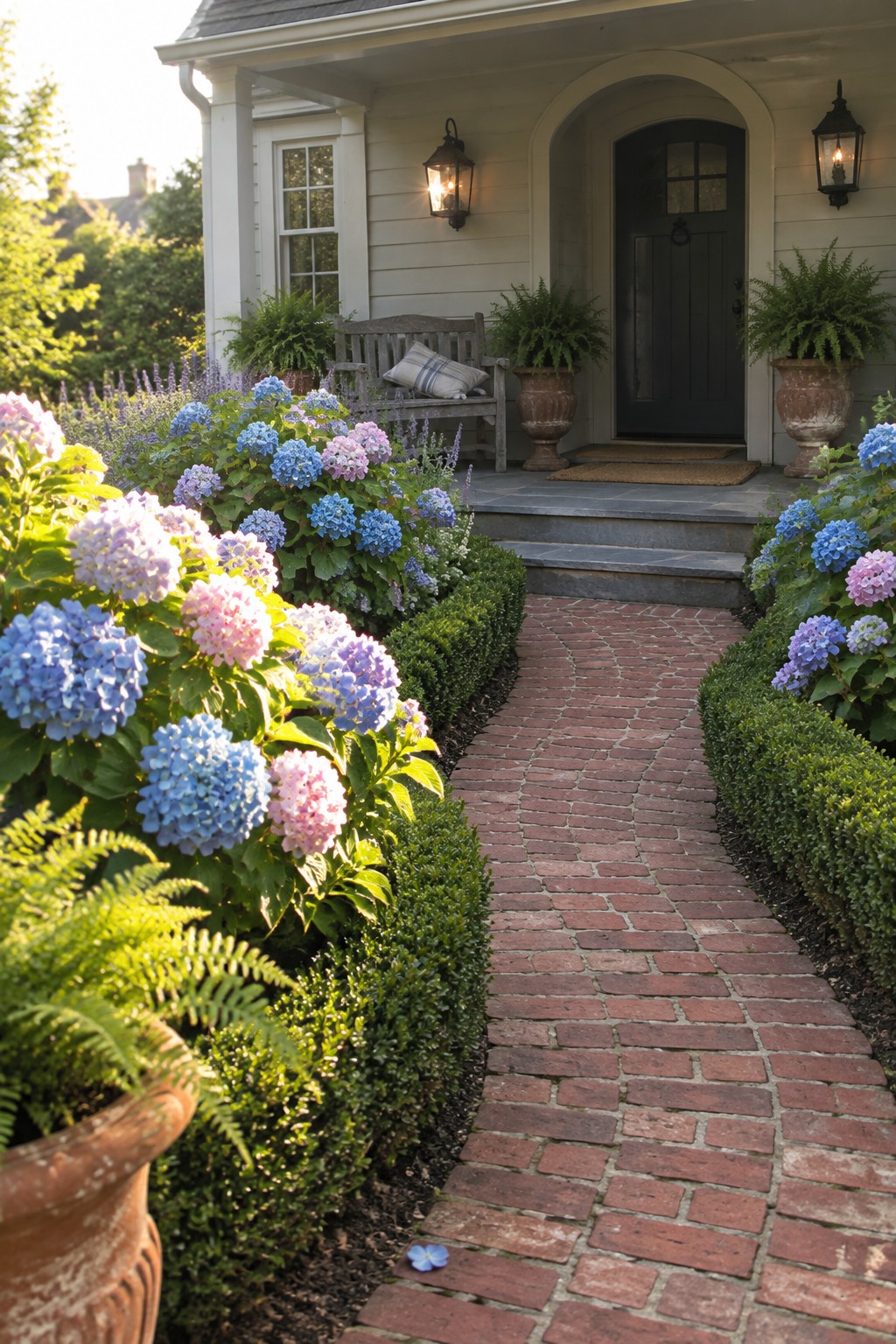
A brick path feels more settled when the planting follows its shape. Hydrangeas along the edge bring color close to the walkway, while clipped low shrubs keep the path’s outline easy to see.
This approach works well on a front walk that leads to a porch or entry. Leave enough room for the flowers to spread without crowding the bricks, and choose hydrangeas suited to the light and space in your yard.
Use Hydrangeas Along a Straight Walkway
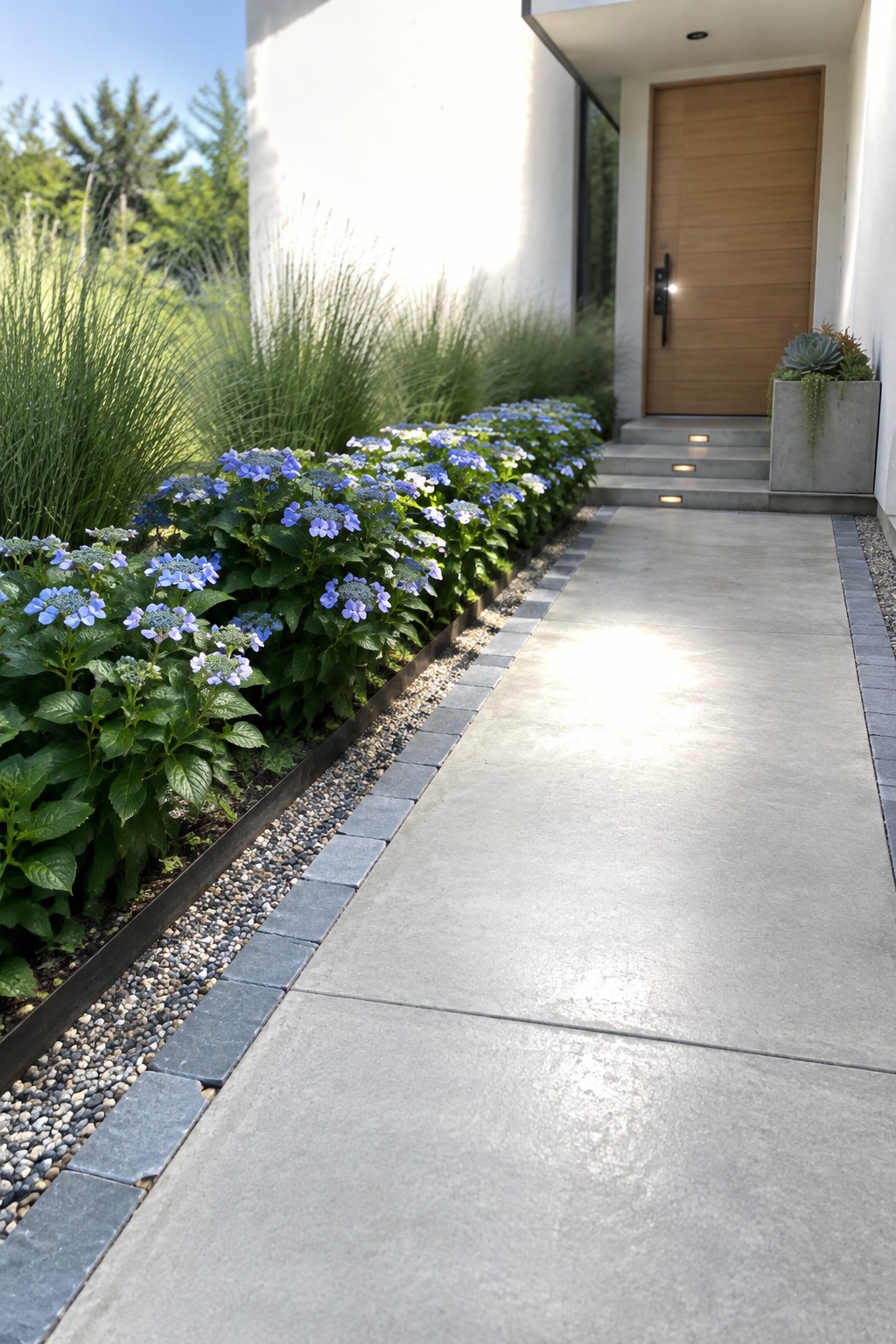
A neat planting bed beside a straight path gives hydrangeas room to make a strong, continuous display. The flowers bring color close to the entrance, while a simple stone edge keeps the bed separate from the walking surface.
This idea works well along a front walk where you want a clear route to the door. Leave enough space for hydrangeas to spread, and choose varieties that suit the amount of sun the bed receives.
Plant Hydrangeas Along a Curving Walkway
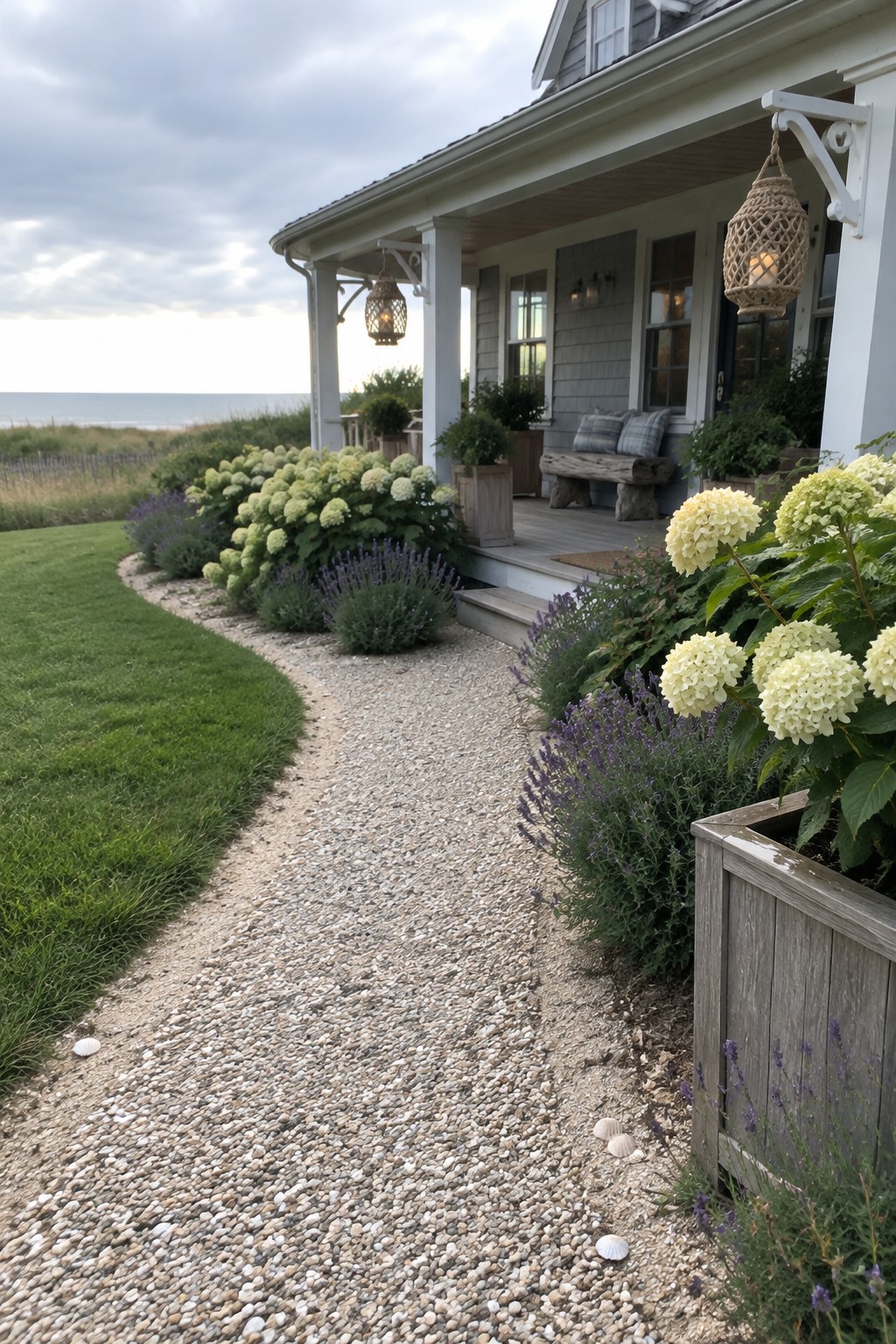
A gently curving path can make a flower bed feel like part of the walk instead of a separate strip along the lawn. Hydrangeas give the planting a steady shape, while smaller flowers near the path keep the edge from looking too bulky.
For a similar effect, follow the curve with a loose row of hydrangeas and leave enough room for them to spread as they mature. This works well beside a porch or front walk, especially when the path is wide enough to keep branches from crowding the way.
Use Hydrangeas Along a Garden Path
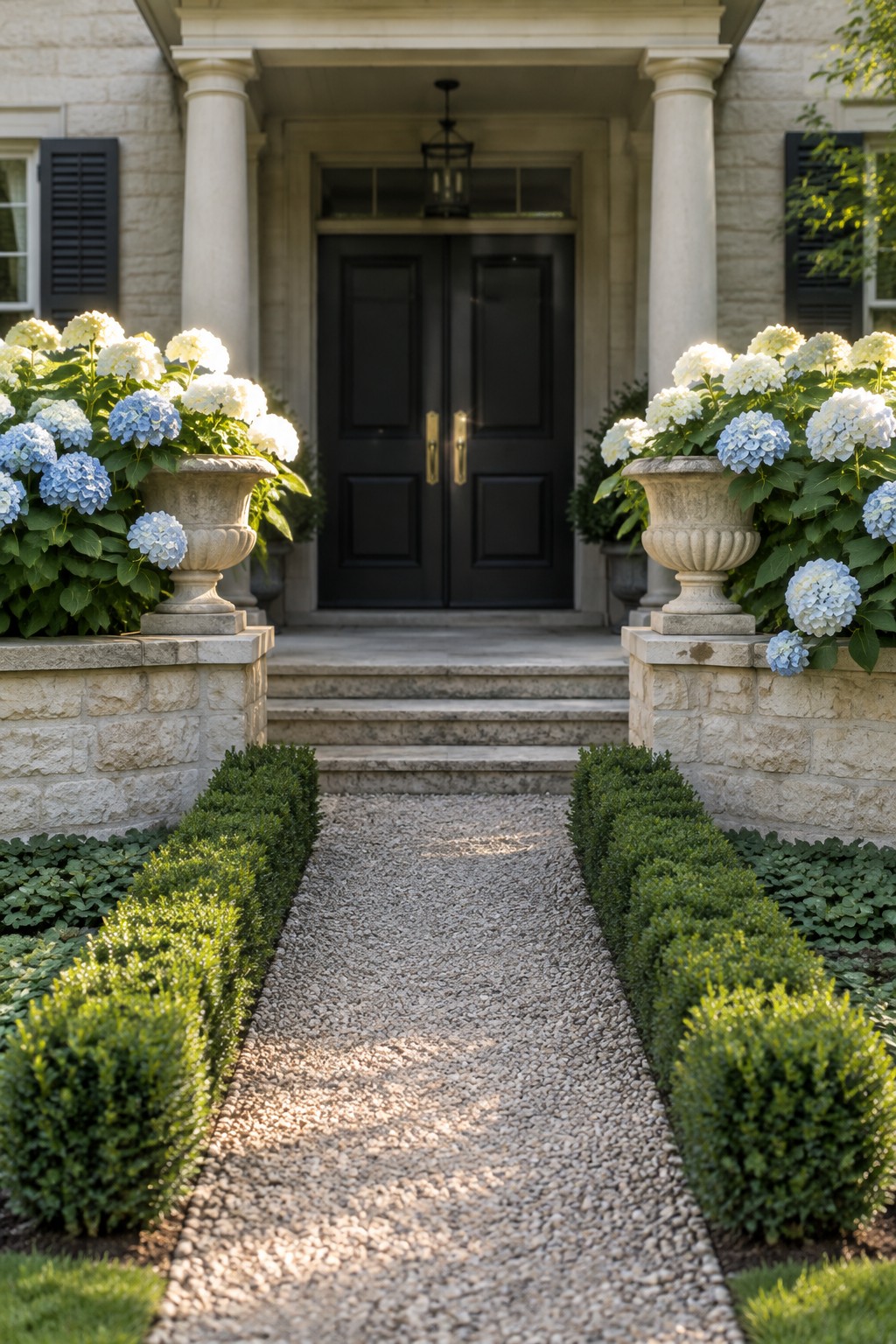
A gravel path feels more settled when the planting beside it has a clear edge. Hydrangeas bring a softer shape to the walkway, while clipped low hedges keep the route tidy and easy to follow.
For a similar look, plant hydrangeas in generous beds beside a straight or gently curving path, leaving enough room for them to spread. Choose varieties suited to your light and climate, and keep them trimmed back from the walking surface.
Use Hydrangeas to Layer a Garden Path
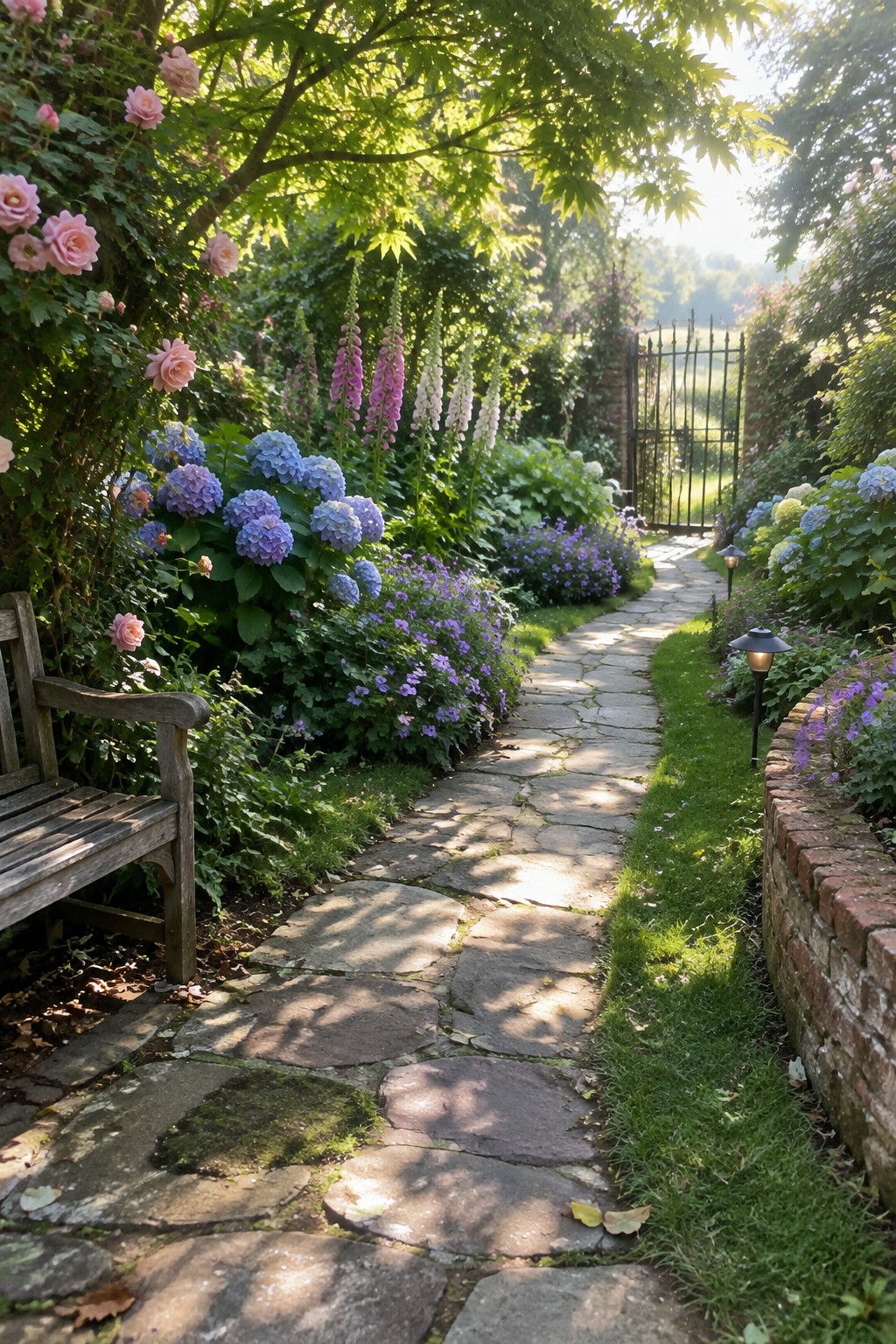
Hydrangeas work well along a walkway because their rounded blooms fill the lower part of the garden without hiding taller flowers behind them. Here, blue and lavender hydrangeas sit beside upright foxgloves, giving the path a layered, informal feel.
Leave enough room for hydrangeas to spread so they do not crowd the walking surface. This approach suits a garden path with planting beds on either side, especially where you want a full, cottage-style look.
Use Stepping Stones to Lead Through Hydrangeas
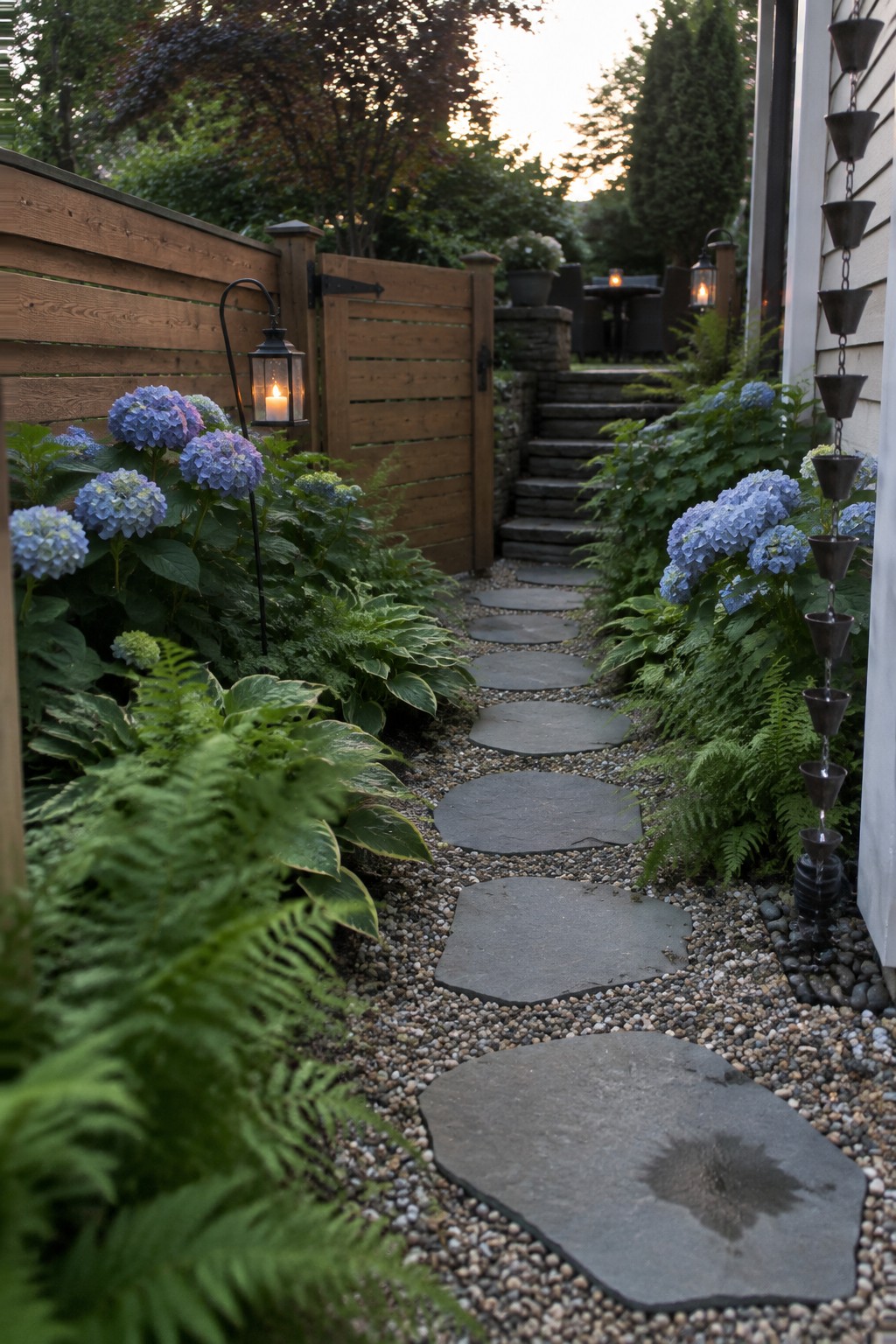
Large stepping stones set in gravel make a garden path easy to follow without taking over the planting. Hydrangeas along the edges bring color close to the walkway, while ferns fill in the lower spaces.
This approach works well in a narrow side yard where a solid paved path might feel too wide. Leave enough room between stones for comfortable steps, and choose a gravel size that stays put underfoot.
Use Hydrangeas to Edge a Stone Walkway
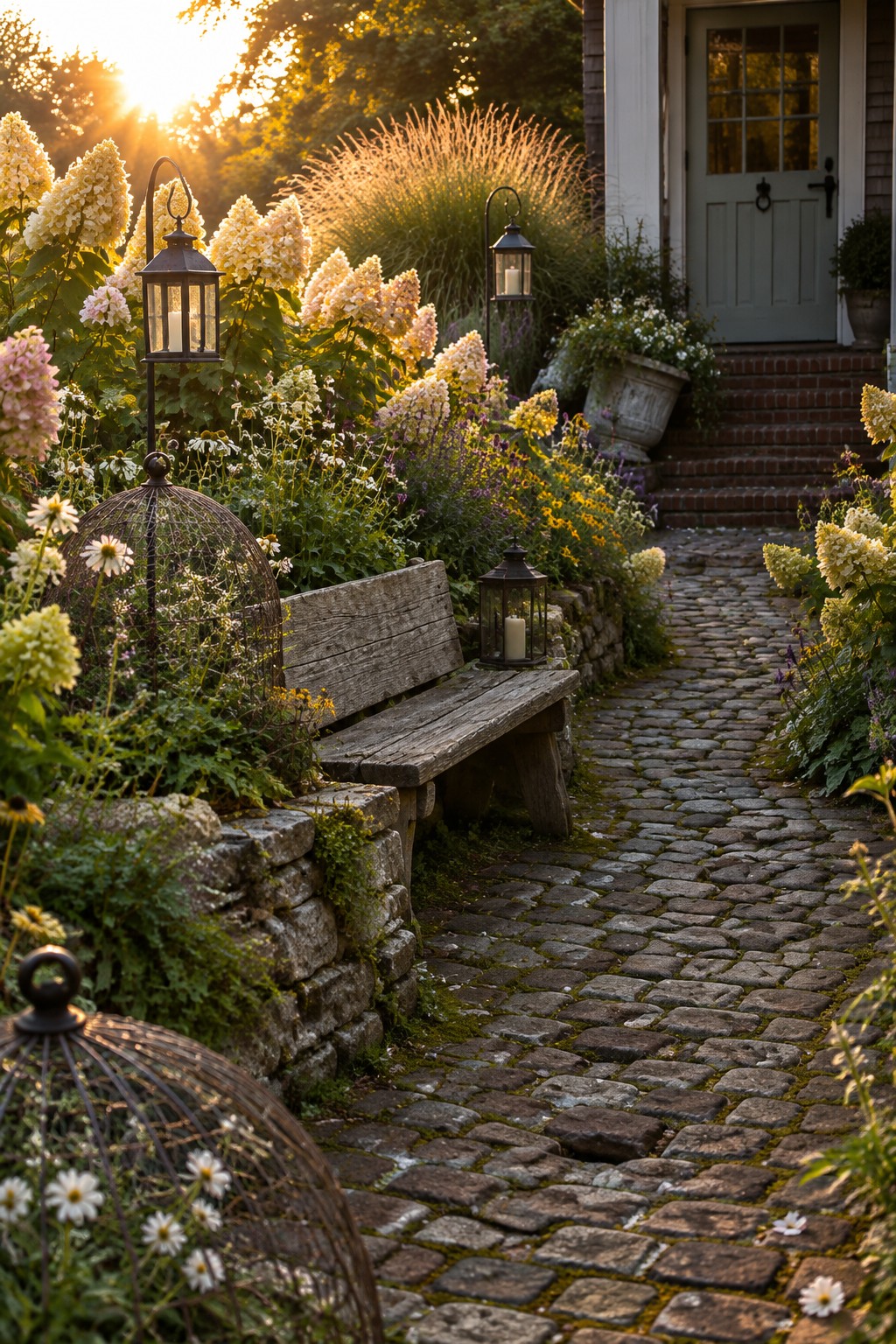
Hydrangeas can make a walkway feel settled into the garden instead of simply passing through it. Planting them along the path gives the route a soft, cottage-style edge, while the stone paving keeps the walk practical and easy to follow.
Use this approach beside an entry or through a deep flower bed, where the plants have room to spread without crowding the path. Leave enough space for mature growth, and mix in smaller flowers if you want more variety at the walkway’s edge.
Use Stone Stepping Pads Through a Hydrangea Border
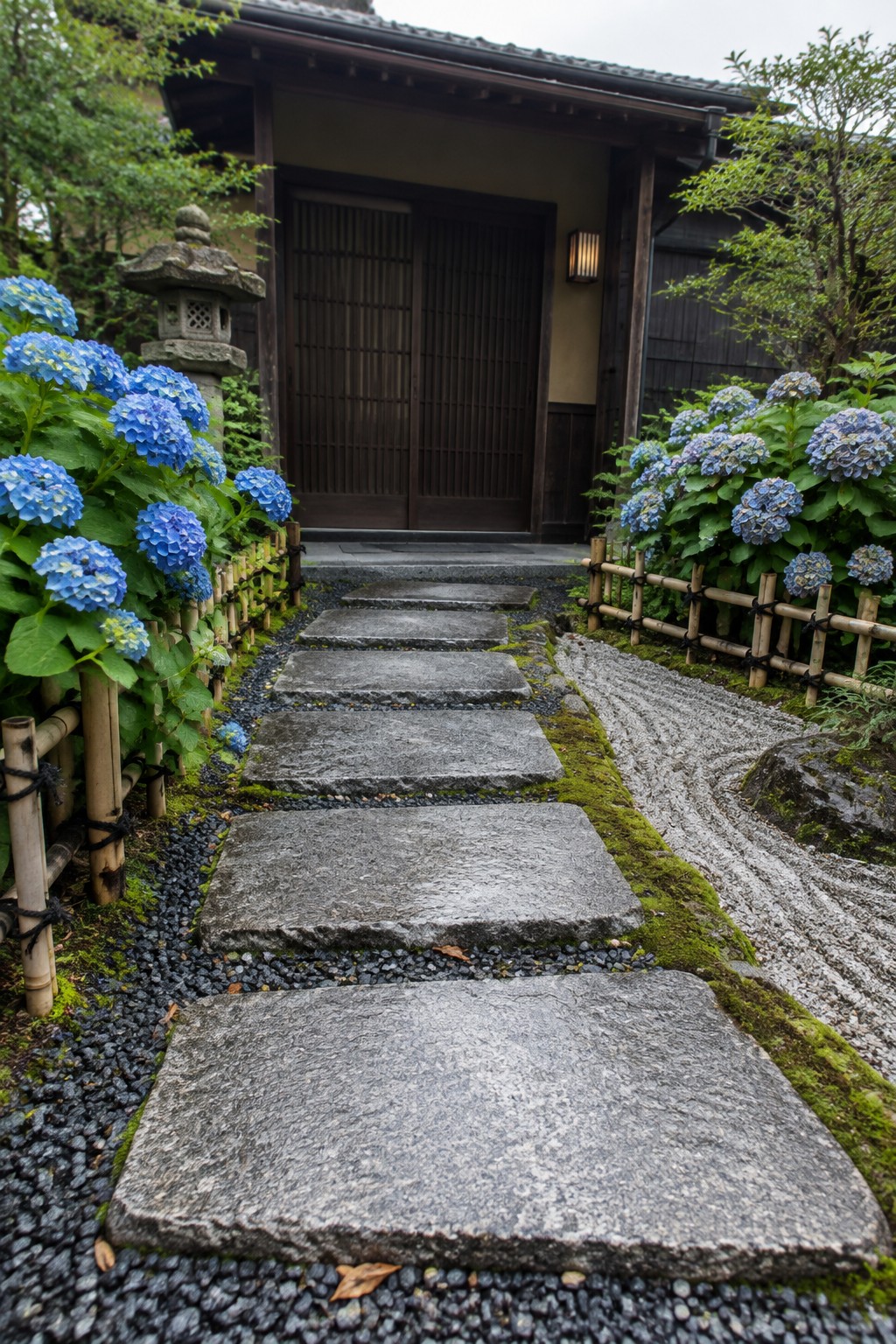
Large stone pads give a garden walkway a steady rhythm while leaving room for low groundcover to grow between them. Hydrangeas along the edges make the route feel like part of the garden rather than a path cut through it.
Set the stones firmly and keep the gaps even enough for comfortable walking. This approach suits a small entry garden, but choose textured stone and leave enough width for people to pass without brushing the plants.
Use Large Pavers to Define the Walkway
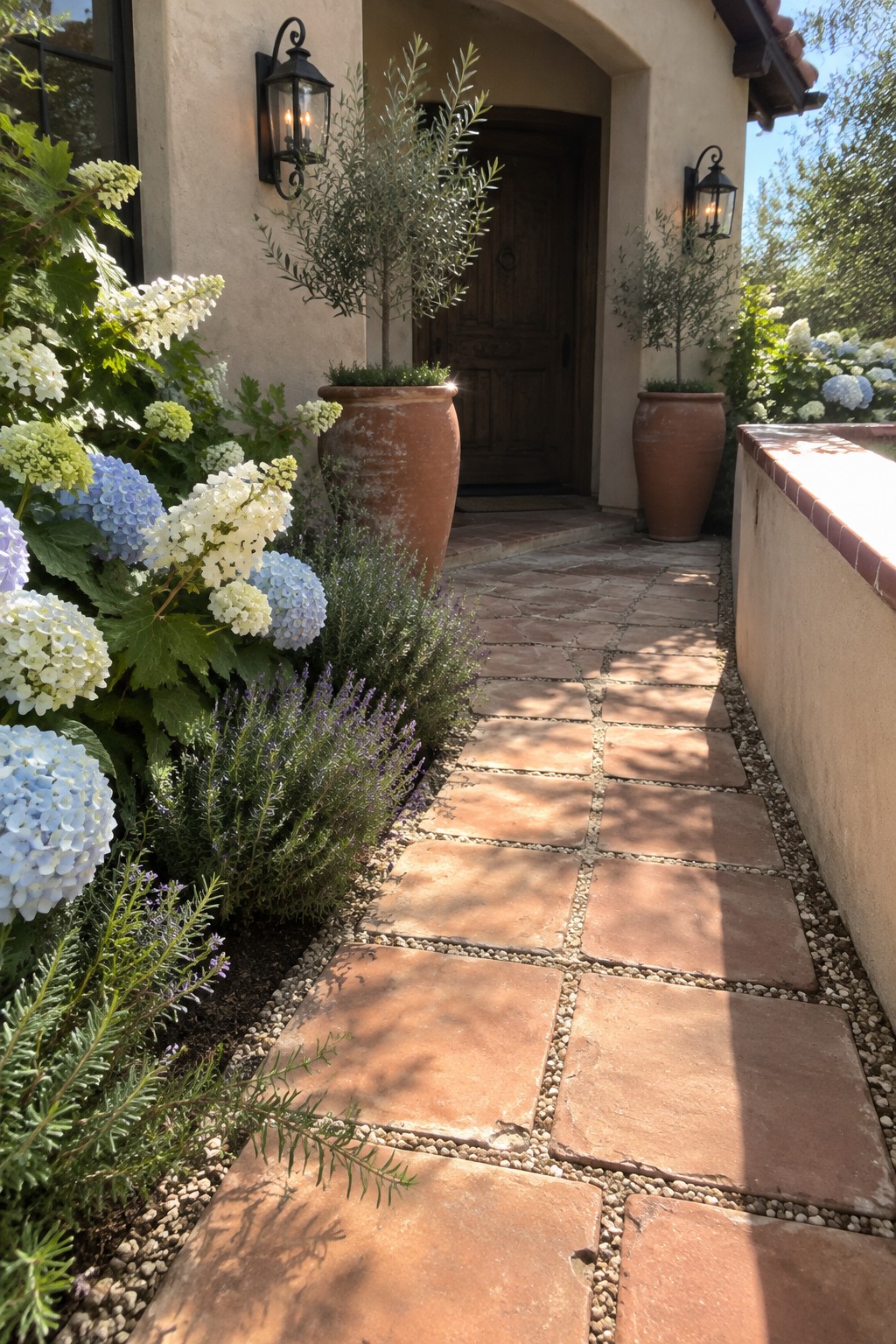
Large terracotta pavers make a clear path through the planting bed while leaving room for small gravel joints. The generous stones feel steady underfoot and give the garden a tidy layout without making the walkway look too formal.
This approach works well for an entry path where you want flowers close by but still need a practical route to the door. Leave enough space between the pavers for comfortable steps, and choose a surface with some texture so it is less slippery when damp.
Add Hydrangeas Beside a Modern Entry Walk
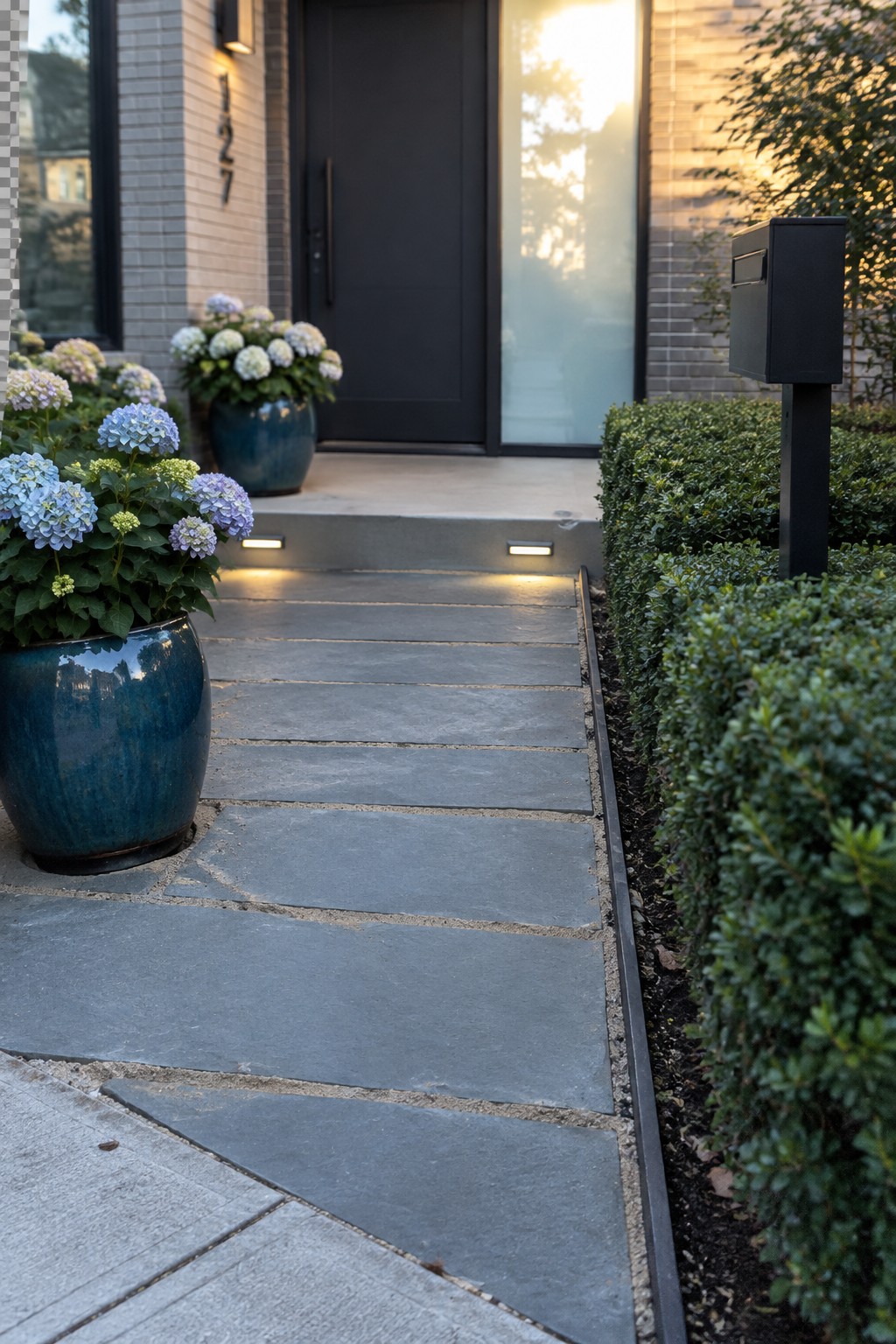
A stone walkway can make a front entry feel neat and easy to follow, while hydrangeas bring a softer edge beside the hard surface. This approach suits a modern home where a simple path could otherwise feel a little stark.
Plant hydrangeas along one side of the walk, leaving enough room for their mature spread and for people to pass comfortably. A few larger pots near the door can echo the garden planting without crowding the path.
Let a Stone Path Wind Through Hydrangeas
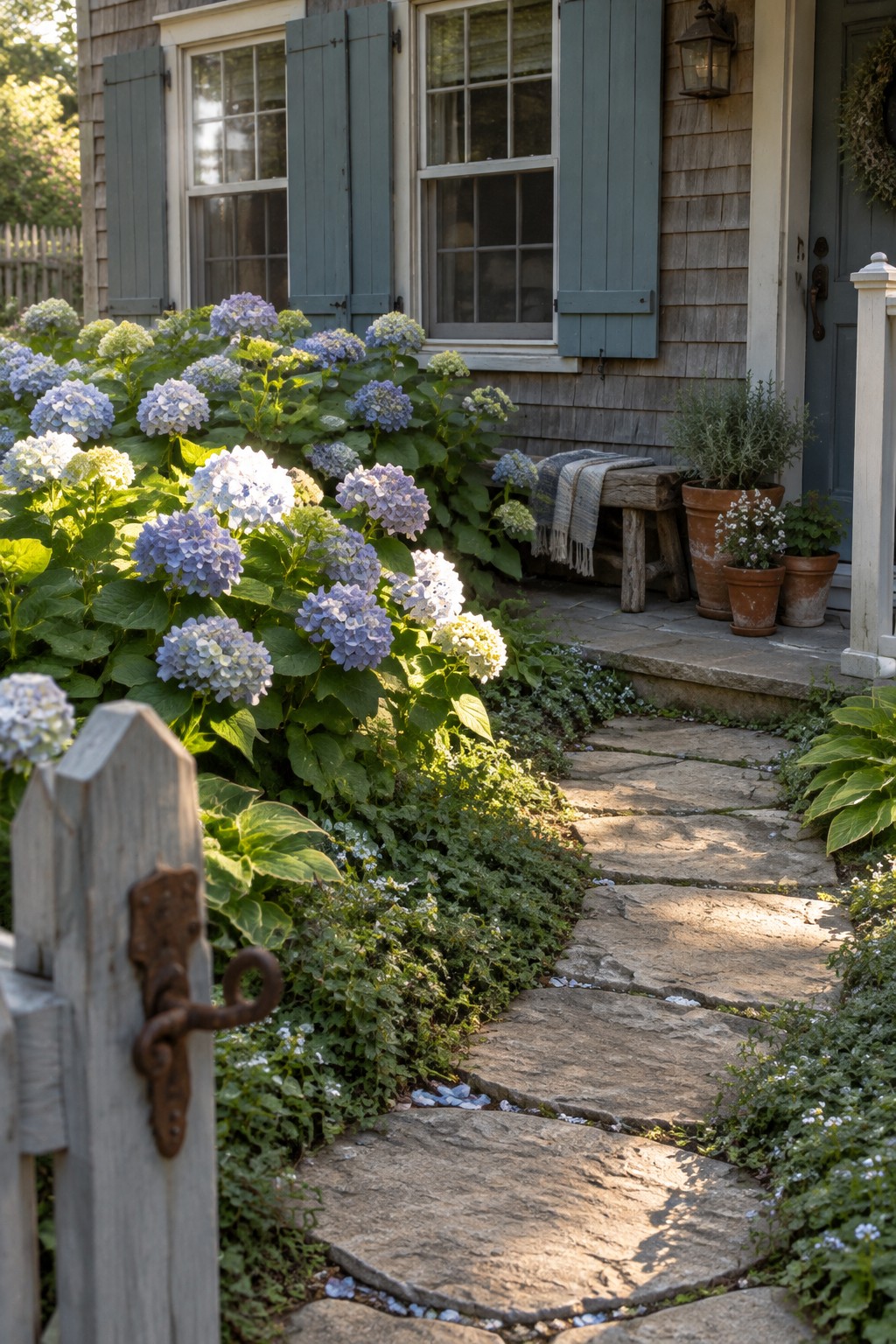
A gently winding stone path gives a hydrangea border an easy, garden-like feel. The broad stepping stones make the route clear while leaving room for flowers and low greenery to grow close along the edges.
This approach works well beside a cottage or other informal home, especially where a straight walkway would feel too rigid. Leave enough space between plants and stones so the path stays easy to use as the hydrangeas fill out.
Use Raised Beds to Shape a Hydrangea Walkway
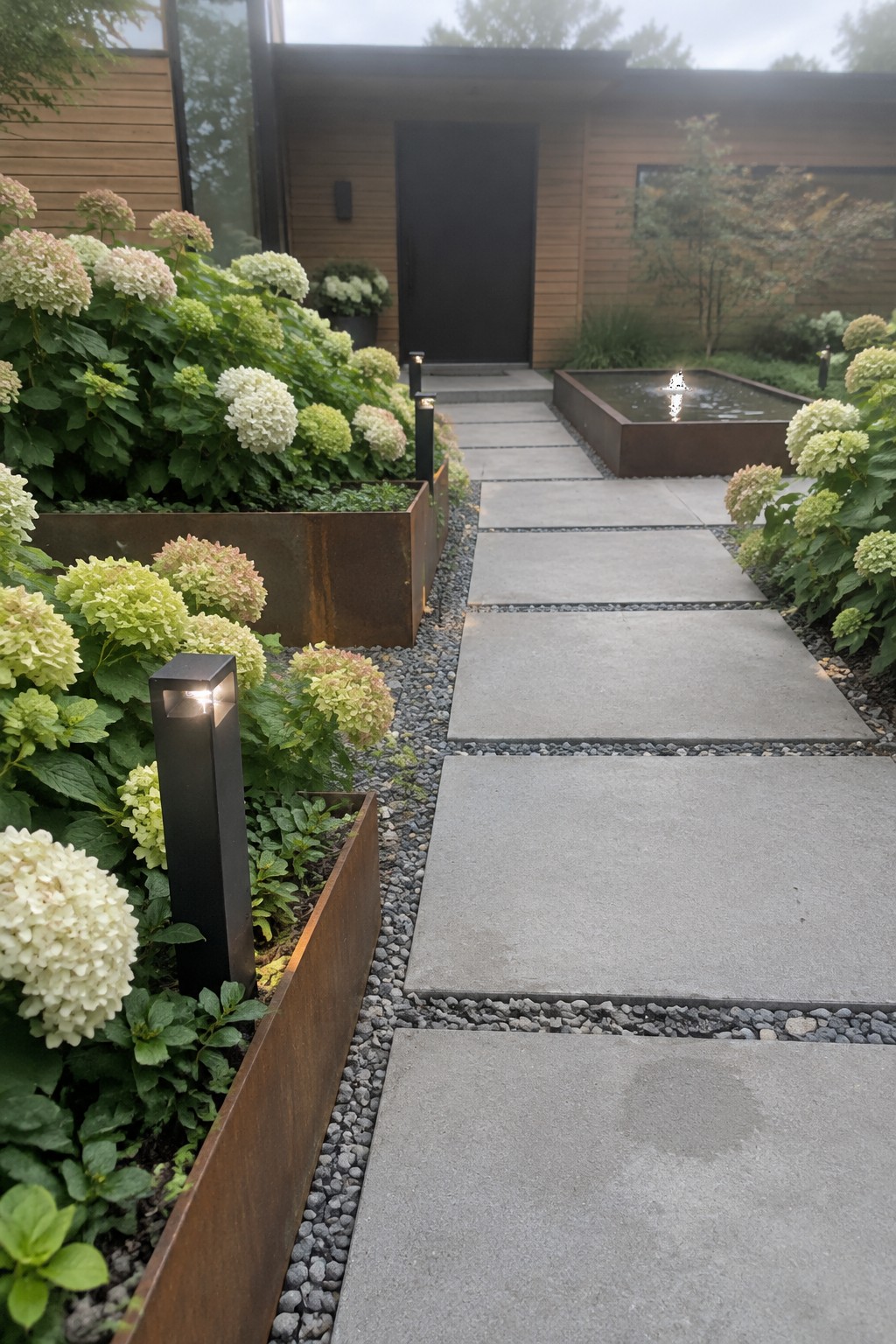
Raised beds give hydrangeas a clear place to grow beside a walkway, so the path feels organized without looking bare. The metal edging shown here holds the planting neatly along the large concrete stepping pads.
This approach works well in a narrow side yard or near a modern entry, where a defined bed can keep flowers from spilling onto the path. Leave enough room for mature hydrangeas, and keep the walkway wide enough to use comfortably.
Use Uneven Stone Steps on a Sloped Walkway
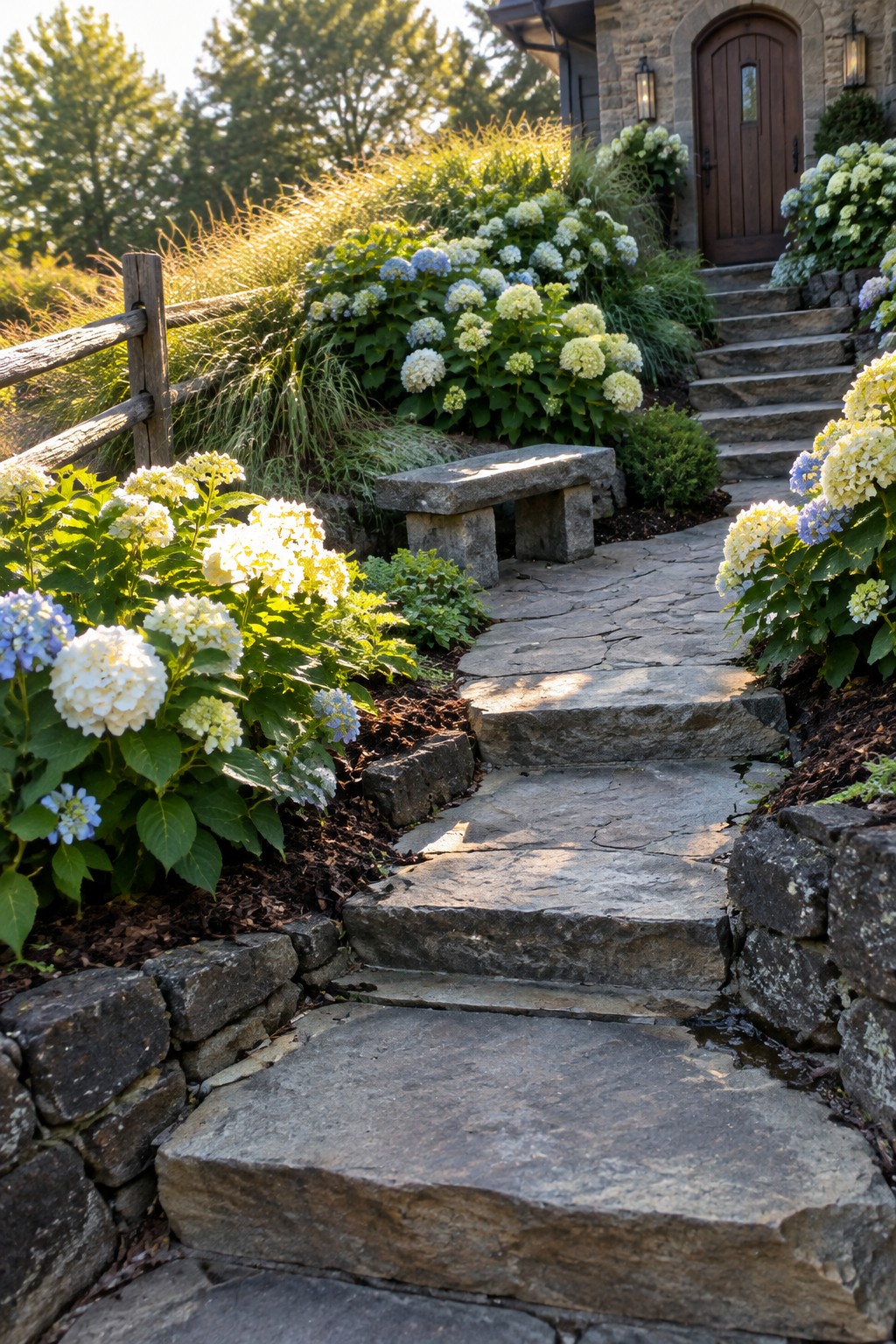
Large, irregular stone steps make a sloping garden path easier to walk while keeping it in tune with the landscape. Hydrangeas planted along the edges help the stone feel like part of the garden rather than a separate feature.
For a similar path, choose broad, stable stones and set them securely into the slope. Leave enough room for plants without letting them crowd the walking surface, especially where the path narrows near steps.
Use Hydrangeas to Make a Brick Walk Feel Established
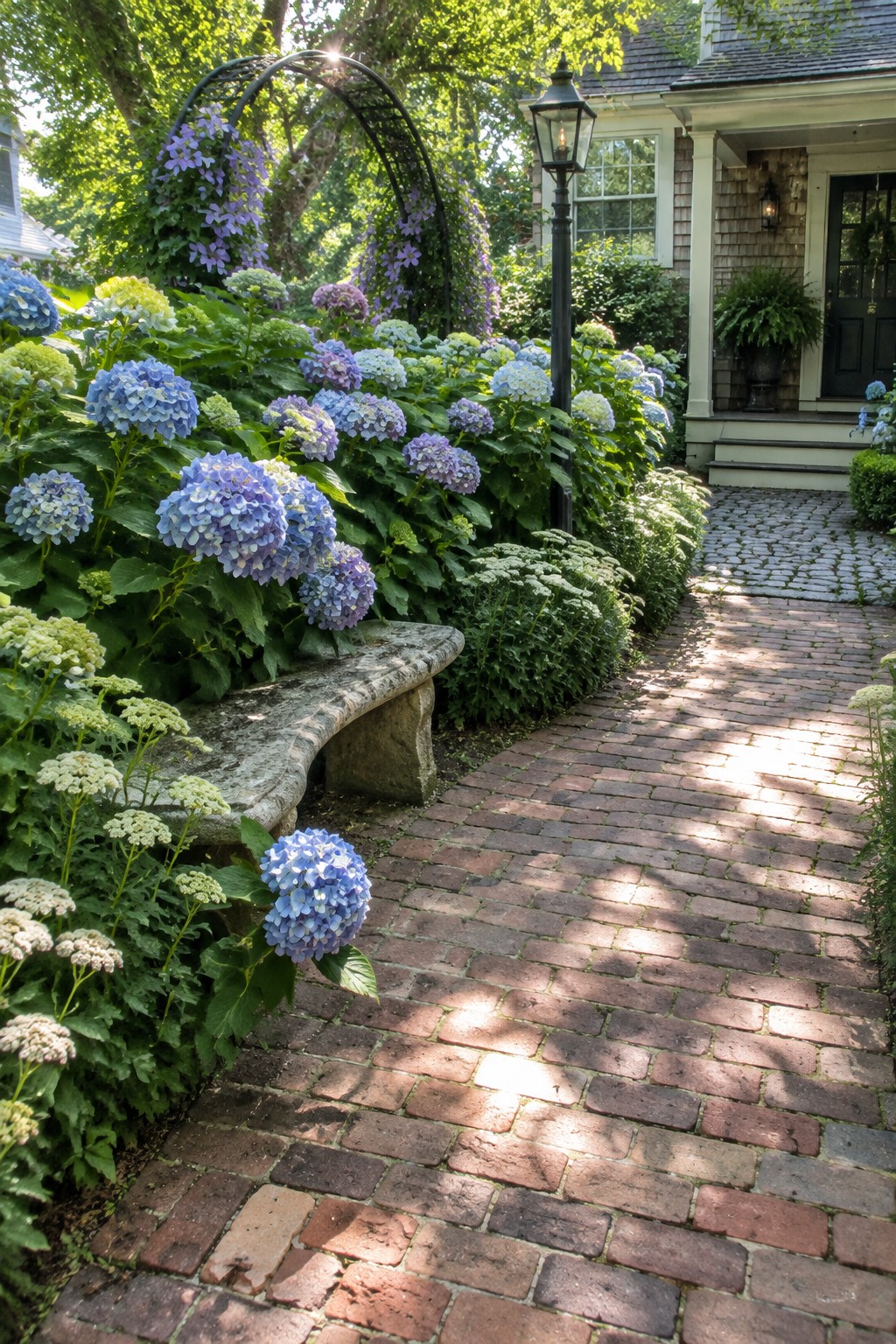
A brick walkway feels more settled when broad hydrangea beds run along its edge. The rounded flower heads bring a softer shape to the regular lines of the bricks, and the path still has room to feel easy to walk.
For a similar look, plant hydrangeas in generous groups rather than spacing them like individual accents. Check the mature spread before planting, especially near a narrow path, so the flowers and leaves do not crowd the walking space.
Use Large Stepping Stones Through Hydrangeas
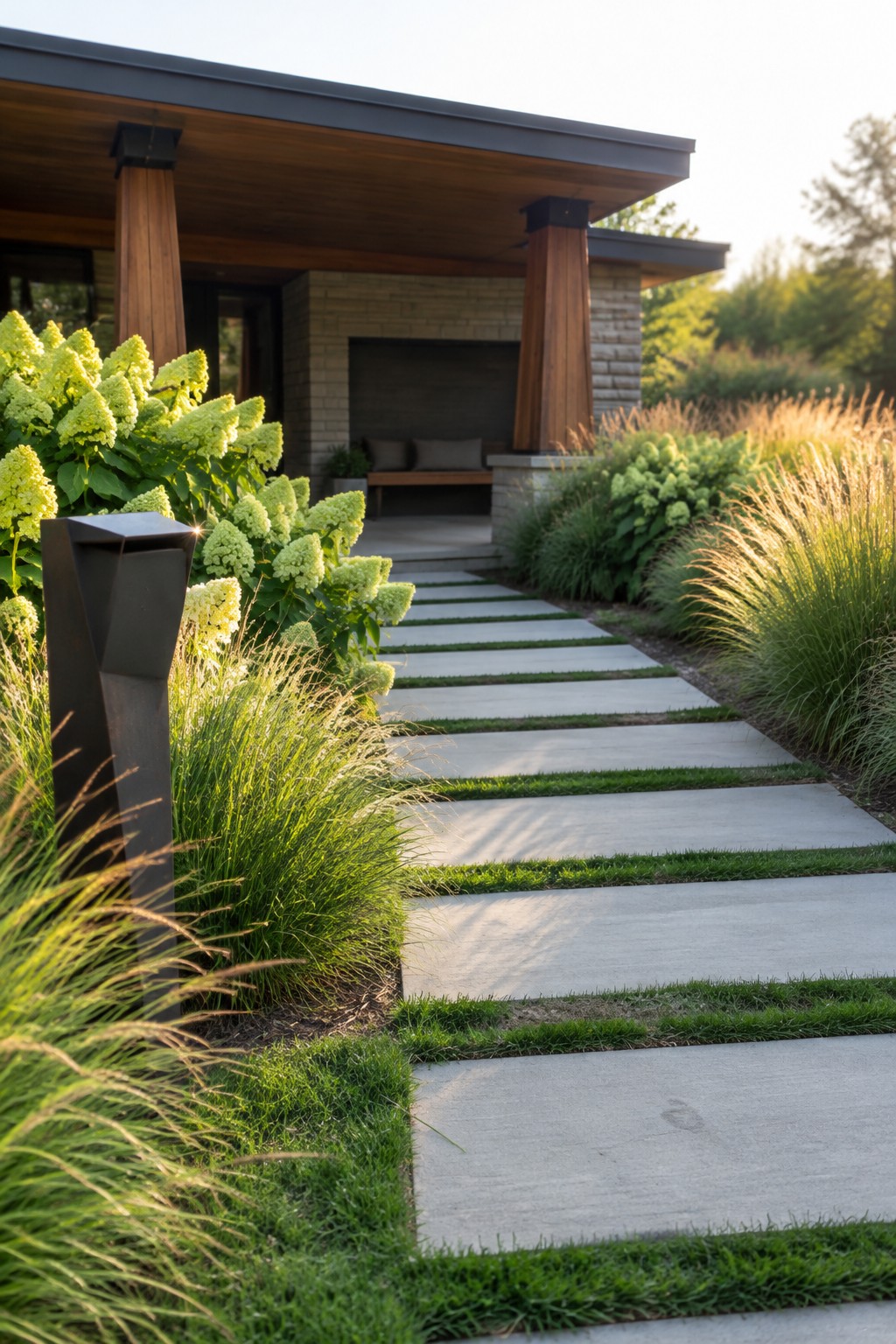
Large concrete pavers set into grass give a walkway an easy, open rhythm. Hydrangeas along the edge bring a softer garden feel without crowding the route.
Leave enough room between the pavers for comfortable, steady steps, and keep the planting low near the edges so it does not spill onto the path. This layout works well for a modern entry where a broad paved walk might feel too formal.
Use Mossy Stepping Stones Through Hydrangeas
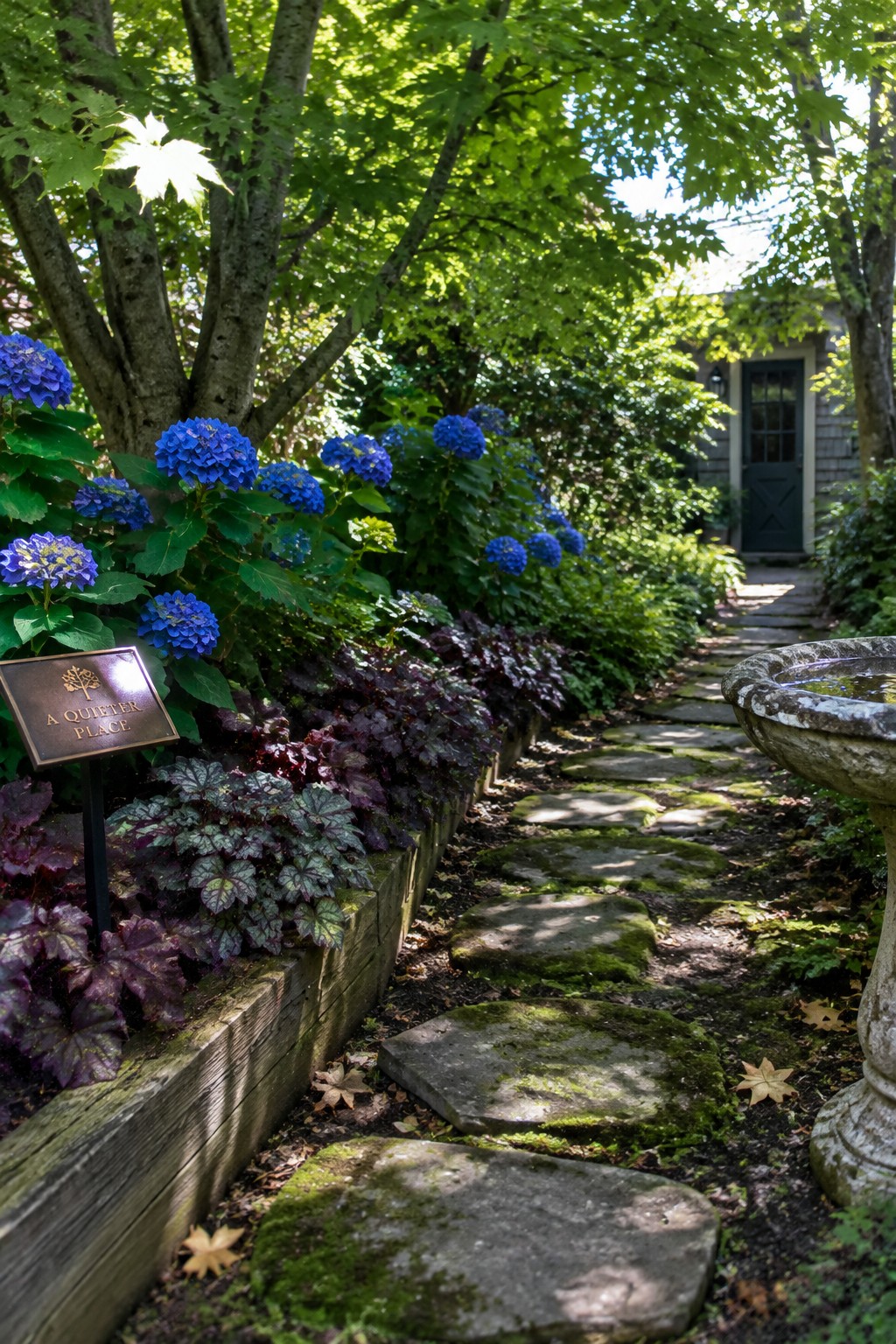
Large, irregular stepping stones make a garden path feel easygoing and natural. Moss growing along the edges helps the stones sit comfortably among the plants, while blue hydrangeas bring color to the walkway.
This approach works well on a shaded path where you want a softer look than a solid paved walk. Set the stones far enough apart for a comfortable stride, and keep the hydrangeas trimmed back so they do not crowd the route.
Edge a Walkway With Hydrangeas and Low Hedges
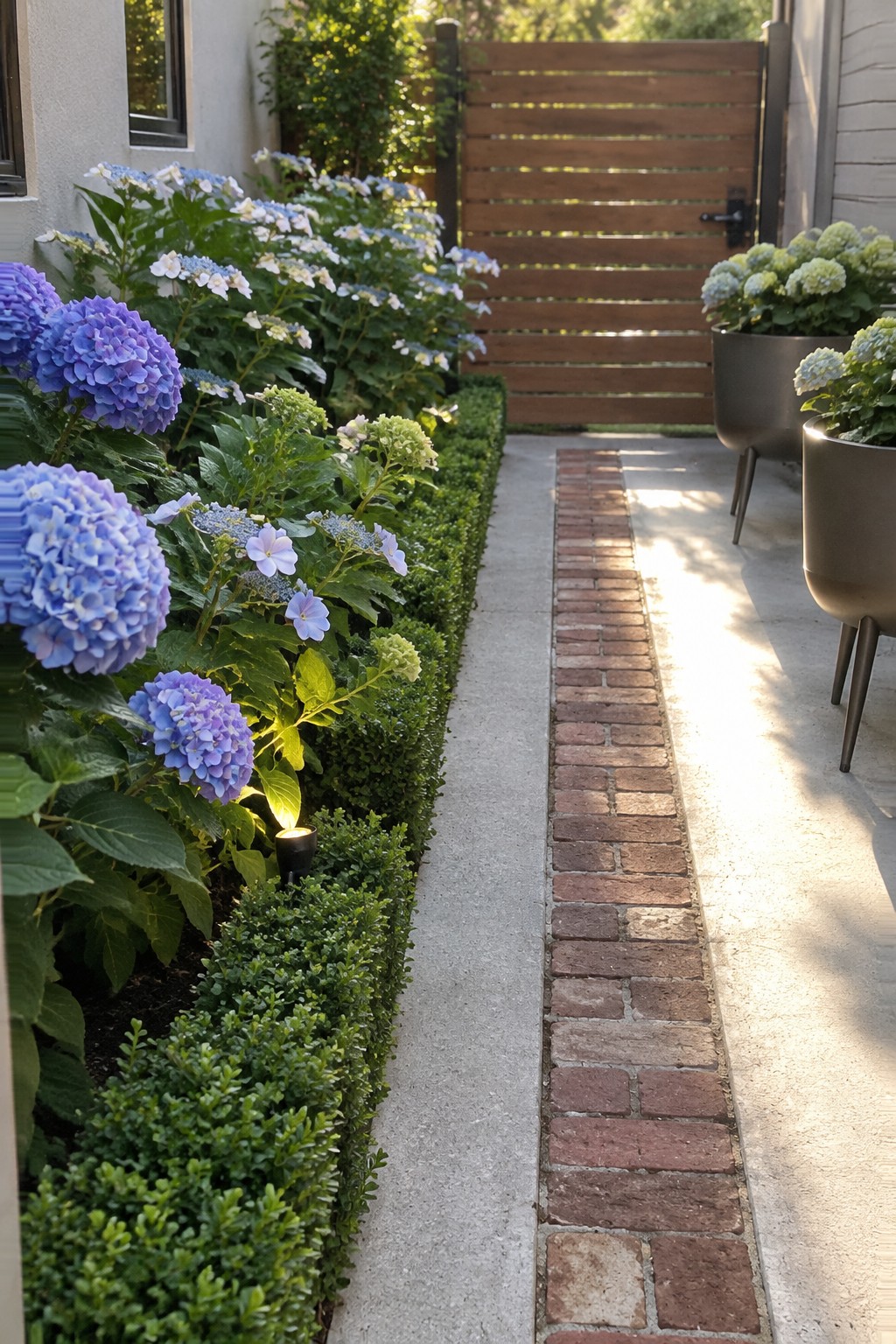
Hydrangeas look especially tidy along a walkway when a low hedge gives the planting bed a clear edge. The clipped greenery keeps the flowers from spilling into the path, while the blooms bring color close to the house.
Use this approach beside a narrow side-yard walk or an entry path, leaving enough room for people to pass comfortably. A single row of compact shrubs can define the edge without making the walkway feel crowded.
Build a Walkway With Broad Stone Steps
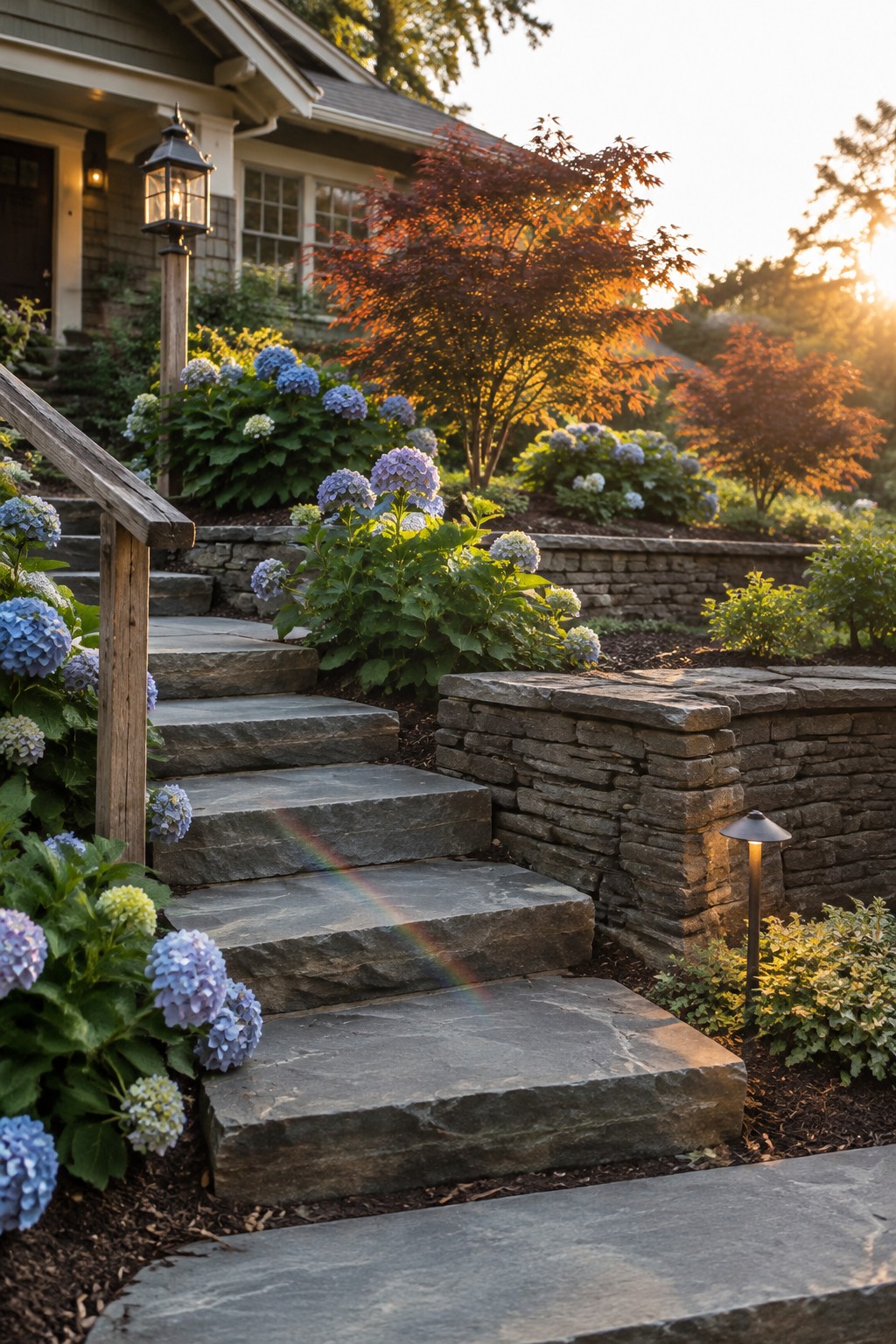
Wide stone steps make a sloped garden path easier to use and give it a solid, settled look. Hydrangeas planted along the edges bring color close to the path without hiding the stones.
This approach suits a sloped front garden or an entry walk with a change in level. Choose steps with deep treads, and leave enough room beside them for hydrangeas to grow without spilling into the walking space.
Light the Edges of a Hydrangea Walkway
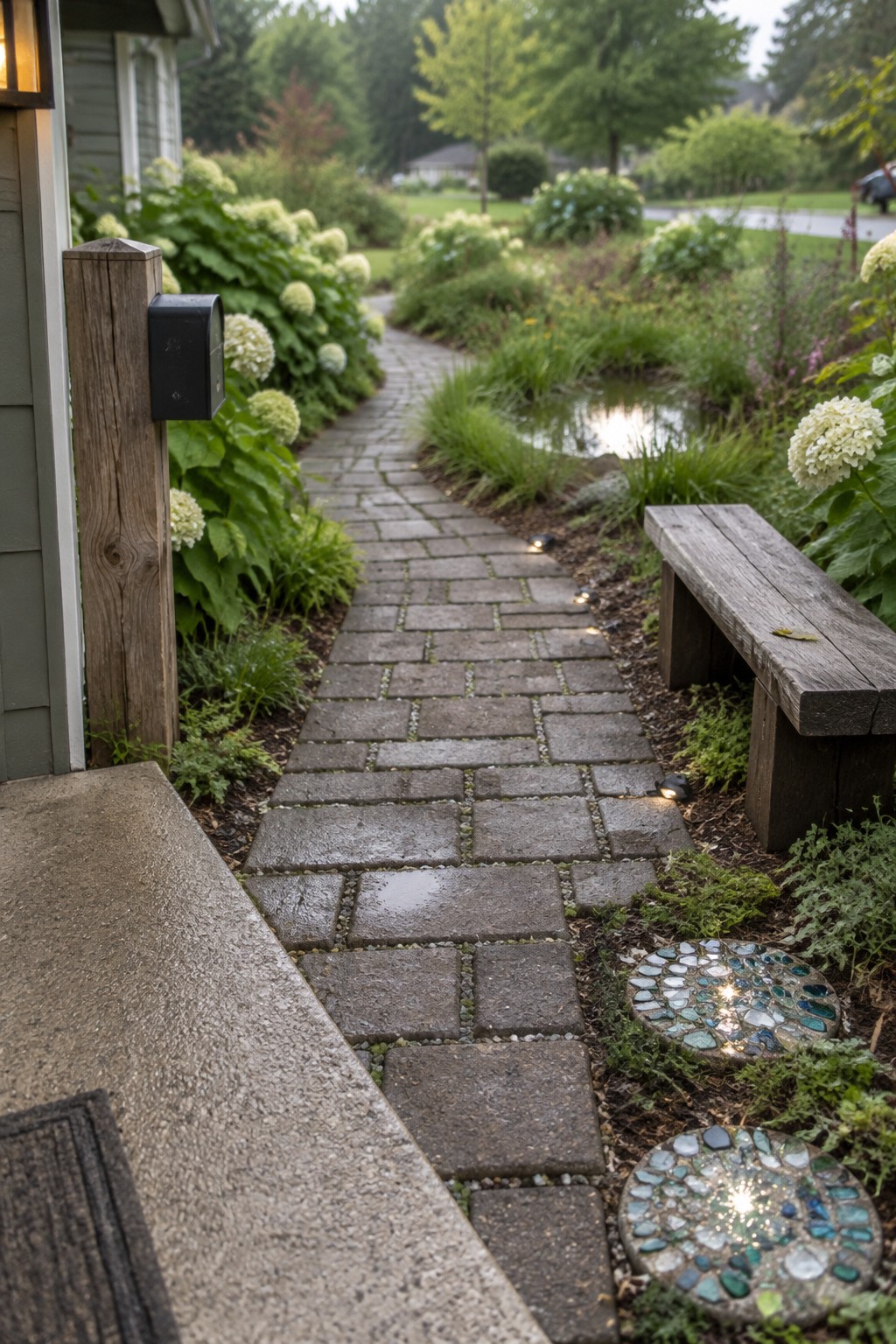
Small path lights tucked beside the pavers make a garden walkway easier to follow after dusk. They also let the planting stay the main feature instead of crowding the path with larger fixtures.
Place low, shielded lights along one or both edges, leaving enough space that they do not interfere with walking or yard work. In a hydrangea border, keep fixtures clear of stems so the plants can fill out without hiding them.
Plant Hydrangeas Beside a Brick Entry Walk
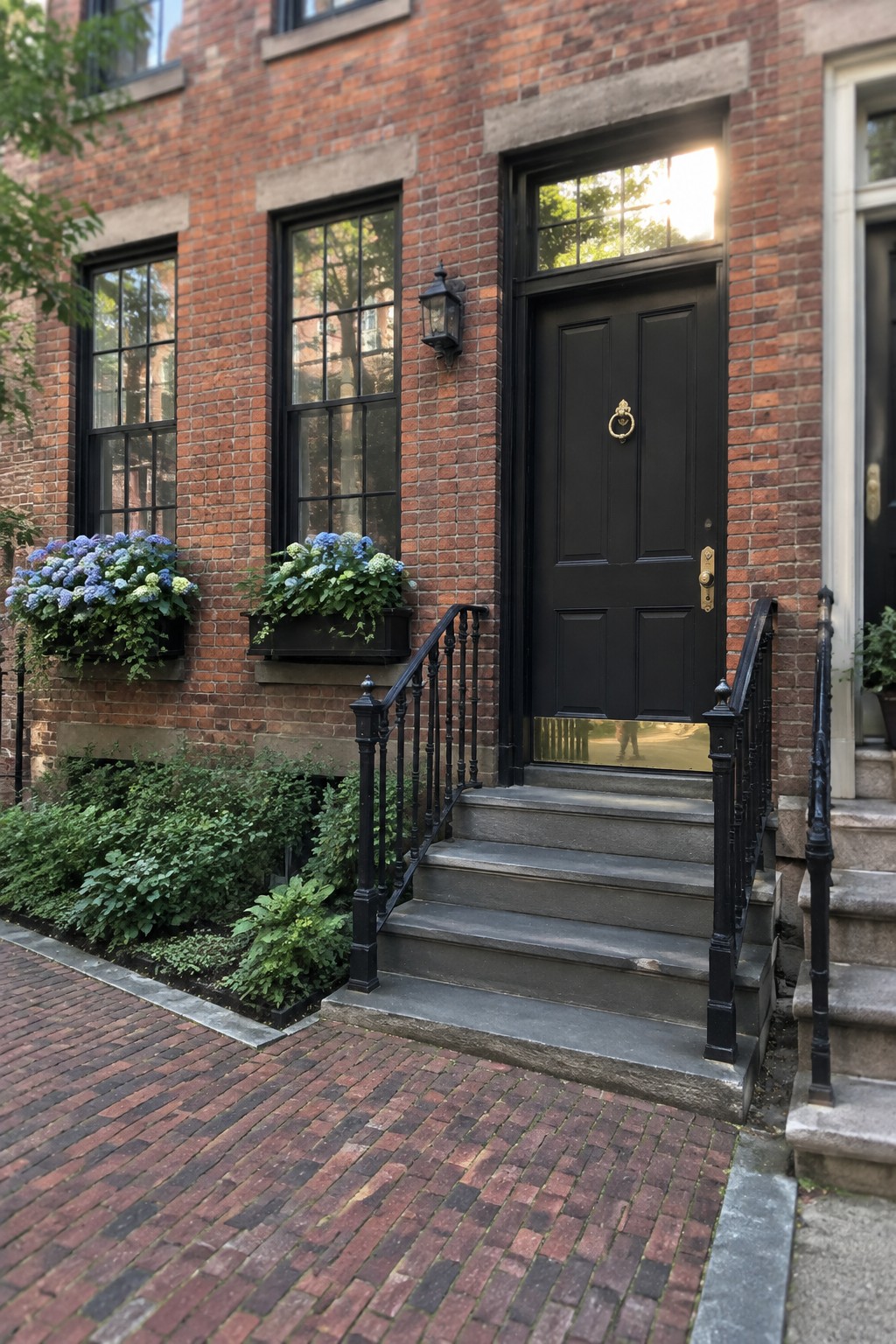
Hydrangeas along a brick walkway bring a softer garden edge to a traditional home. Their rounded blooms stand out against the hard lines of the brick and the dark entry steps, while the planting makes the approach feel established.
For a similar look, tuck hydrangeas into a bed beside the path rather than crowding the walking surface. Leave enough room for the plants to spread, especially near steps and narrow entries.
Use a Built-In Bench Along the Hydrangea Walk
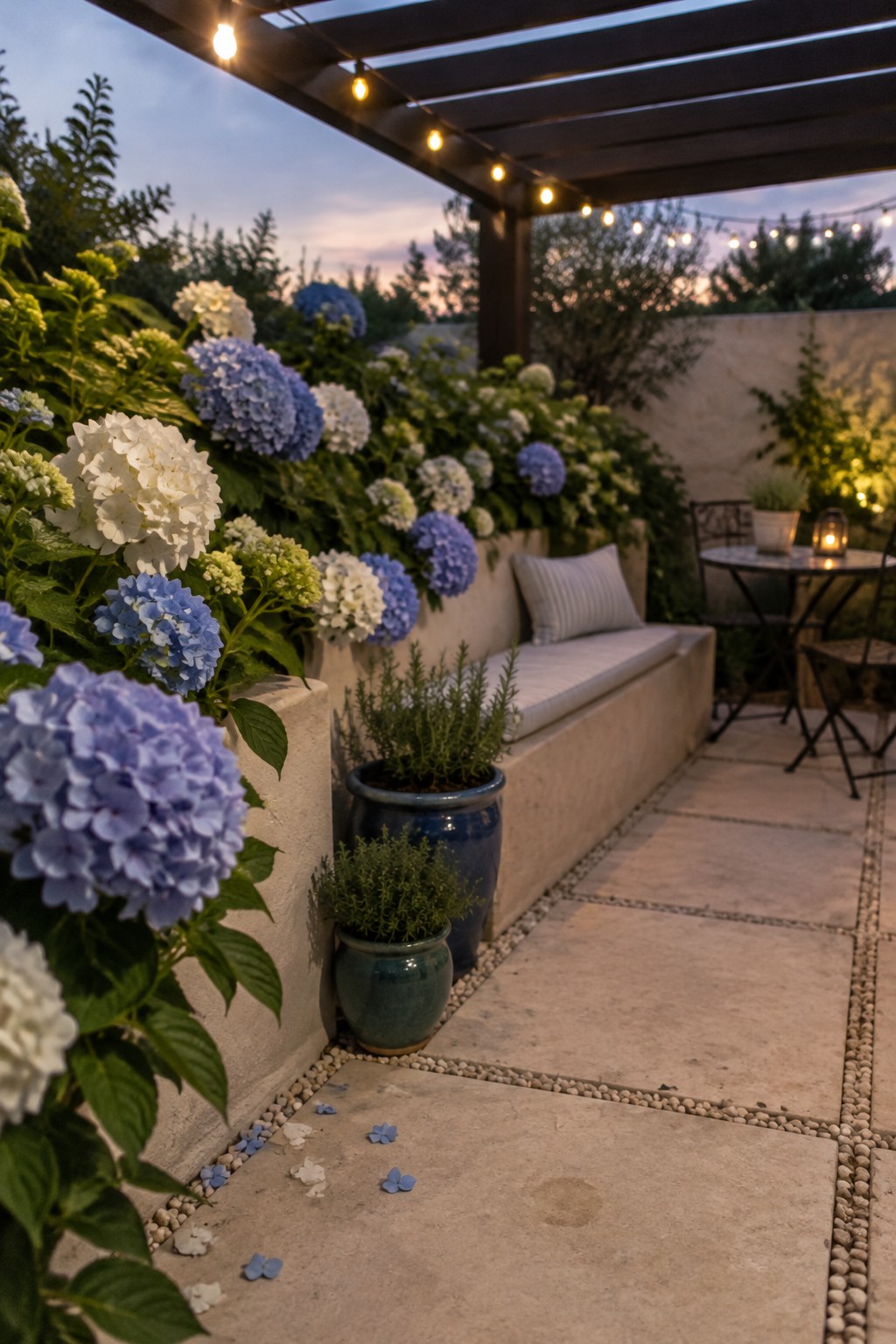
A low wall can do more than hold a row of hydrangeas. When it includes a built-in bench, it gives the walkway a useful place to pause without taking up extra room with separate seating.
This works well in a narrow garden or beside a patio, especially where you want flowers close to the path. Keep the bench deep enough to sit comfortably, and leave the walkway wide and clear.
Frequently Asked Questions
Q: How much space should I leave between hydrangeas along a walkway?
A: Check the mature width on the plant tag, then space each shrub so its foliage won’t crowd the path as it grows. If you want a fuller border sooner, you can plant a little closer, but leave enough room to walk and prune comfortably.
Q: Will hydrangeas grow well beside a sunny walkway?
A: Many hydrangeas appreciate morning sun and some afternoon shade, especially in hot climates. If the walkway gets strong afternoon sun, choose a sun-tolerant variety and keep the soil evenly moist.
Q: How can I keep hydrangea blooms from blocking the walkway?
A: Plant shrubs far enough back that their mature branches can spread without leaning into the path. A simple edging strip also helps define the walkway and makes it easier to spot when a plant needs trimming.
Q: What can I plant under hydrangeas along the path?
A: Low-growing groundcovers or shade-loving perennials can fill the space beneath the shrubs without competing for attention. Keep them a little away from the hydrangea stems so air can circulate and you can reach the base for watering.
