

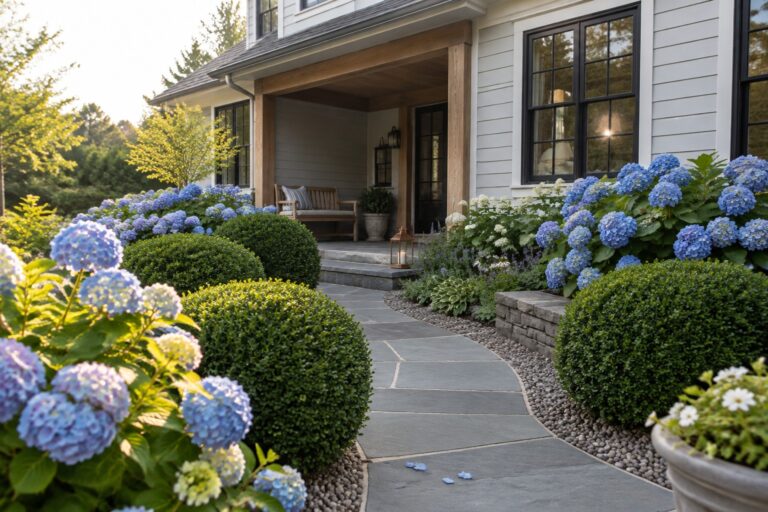
A front yard can feel balanced or crowded before I notice any individual plant, so I pay attention to how the beds, paths, and open space work together.
Hydrangeas bring broad leaves and seasonal color, while boxwoods add a steady shape that helps the planting look composed even when blooms fade.
I find the combination works best when shrubs frame the entry without blocking windows or narrowing the walk to the door.
Small choices, like repeating boxwood along an edge or leaving room for a hydrangea to mature, can make a yard easier to maintain over time.
The ideas ahead offer practical ways to adapt this pairing to different homes, planting beds, and styles of curb appeal.
Use a Curved Path to Shape the Front Garden
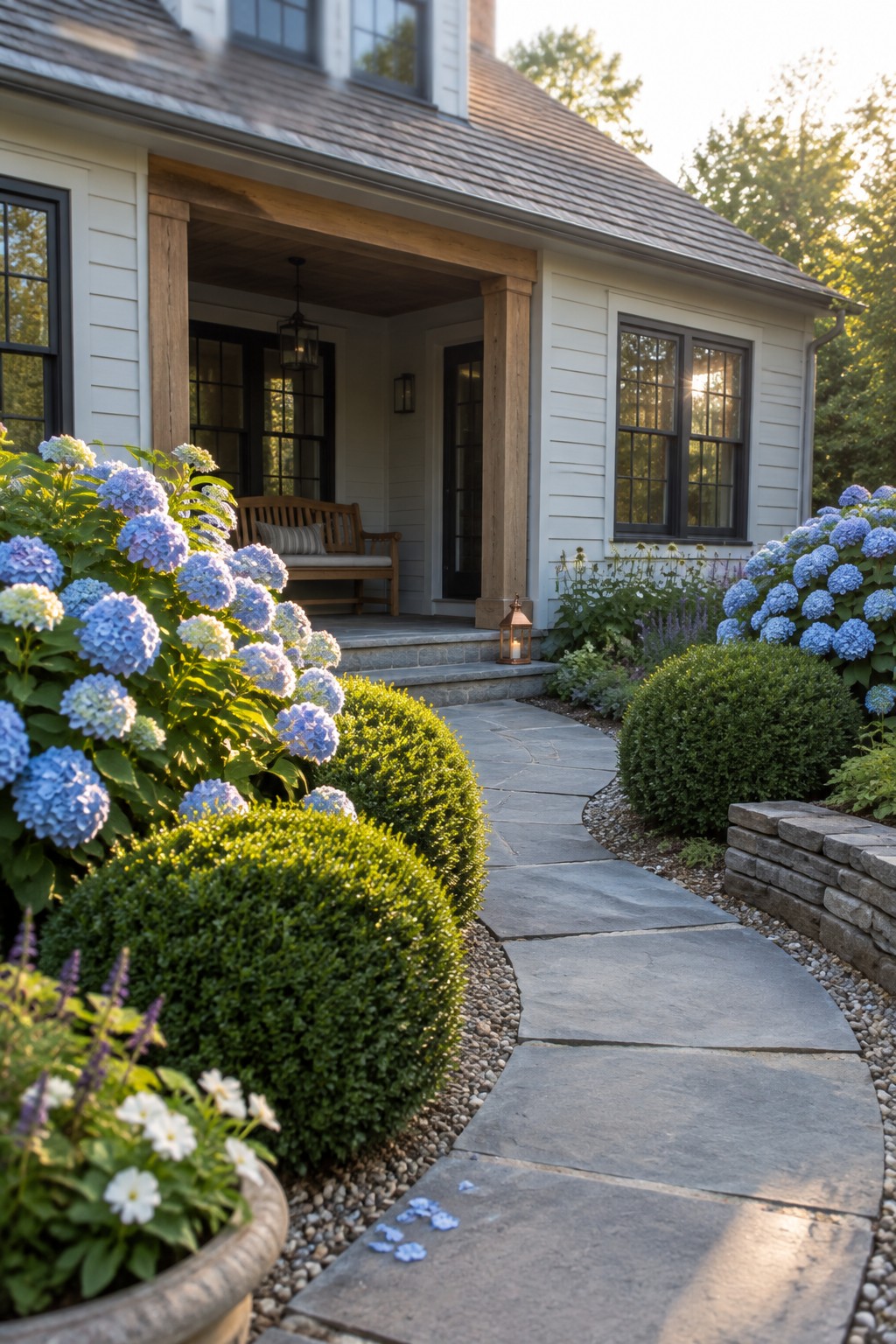
A gently curving path gives a front yard a more relaxed layout than a straight walk to the door. Broad stone slabs make the route easy to follow while leaving room for hydrangeas and clipped boxwood along the edges.
This approach works well when you want the planting beds to feel connected rather than lined up in a row. Keep the path wide enough for everyday use, and choose plants that won’t crowd the stones as they grow.
Use a Brick Path to Lead Through the Garden

A straight brick path gives a front yard a clear route to the door while keeping the planting beds neatly organized on either side. The small stone borders make a practical edge between the path and the boxwood, so the garden feels tidy without needing elaborate hardscaping.
This layout works well in a traditional front yard, especially where you want hydrangeas to line the approach without narrowing the walkway. Leave enough room for people to pass comfortably, and keep shrubs trimmed back from the path.
Use Stepping Stones to Guide the Front Walk
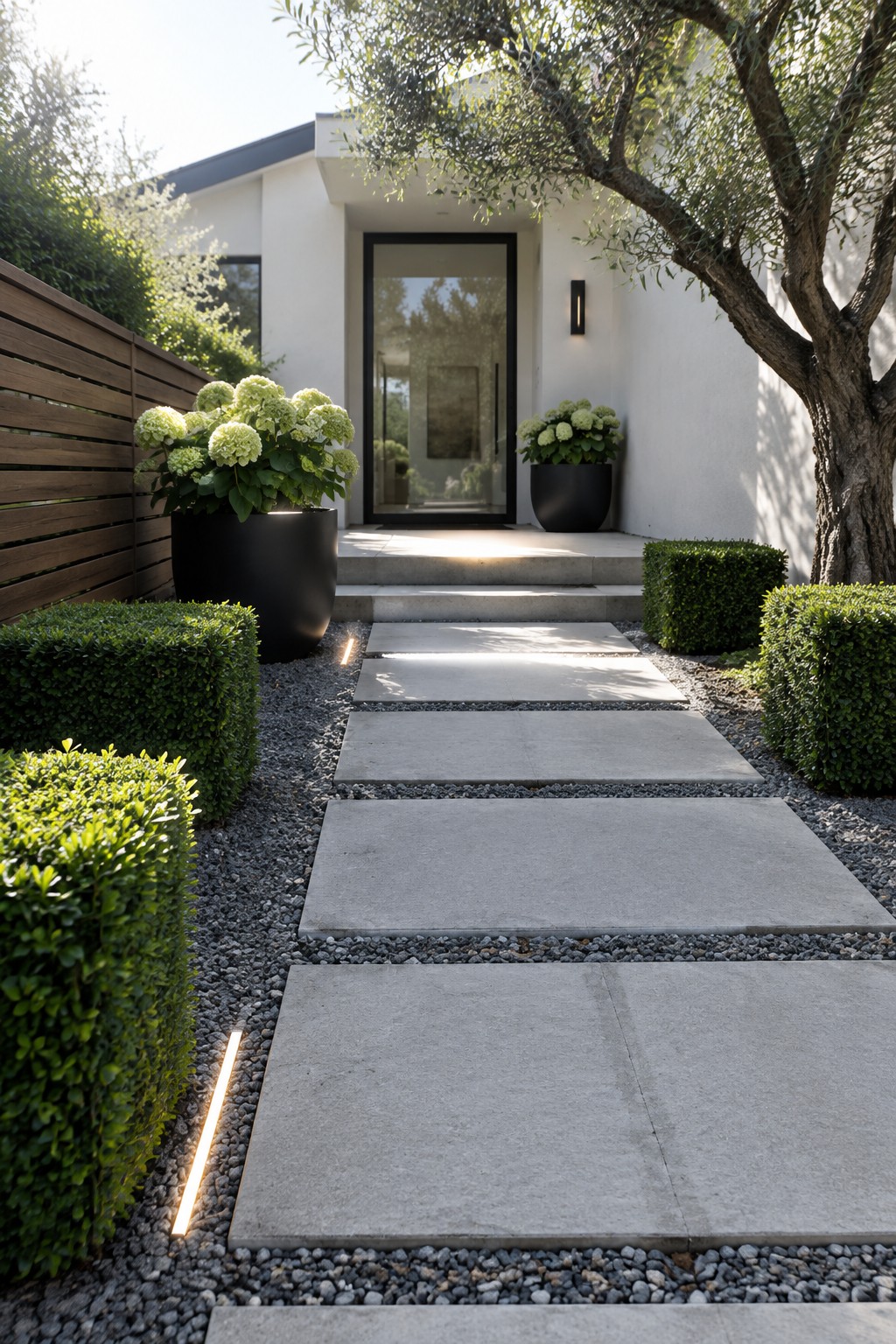
A path of large stepping stones gives a front yard a clear route to the door without covering the whole space in paving. The gravel between the slabs keeps the walkway looking open and gives the planting room to stand out.
This layout works well in a narrow entry garden, especially where clipped boxwood edges can keep the path tidy and hydrangeas can add color near the doorway. Leave comfortable, even gaps between the stones so the walk is easy to use.
Layer Hydrangeas Along a Boxwood Border
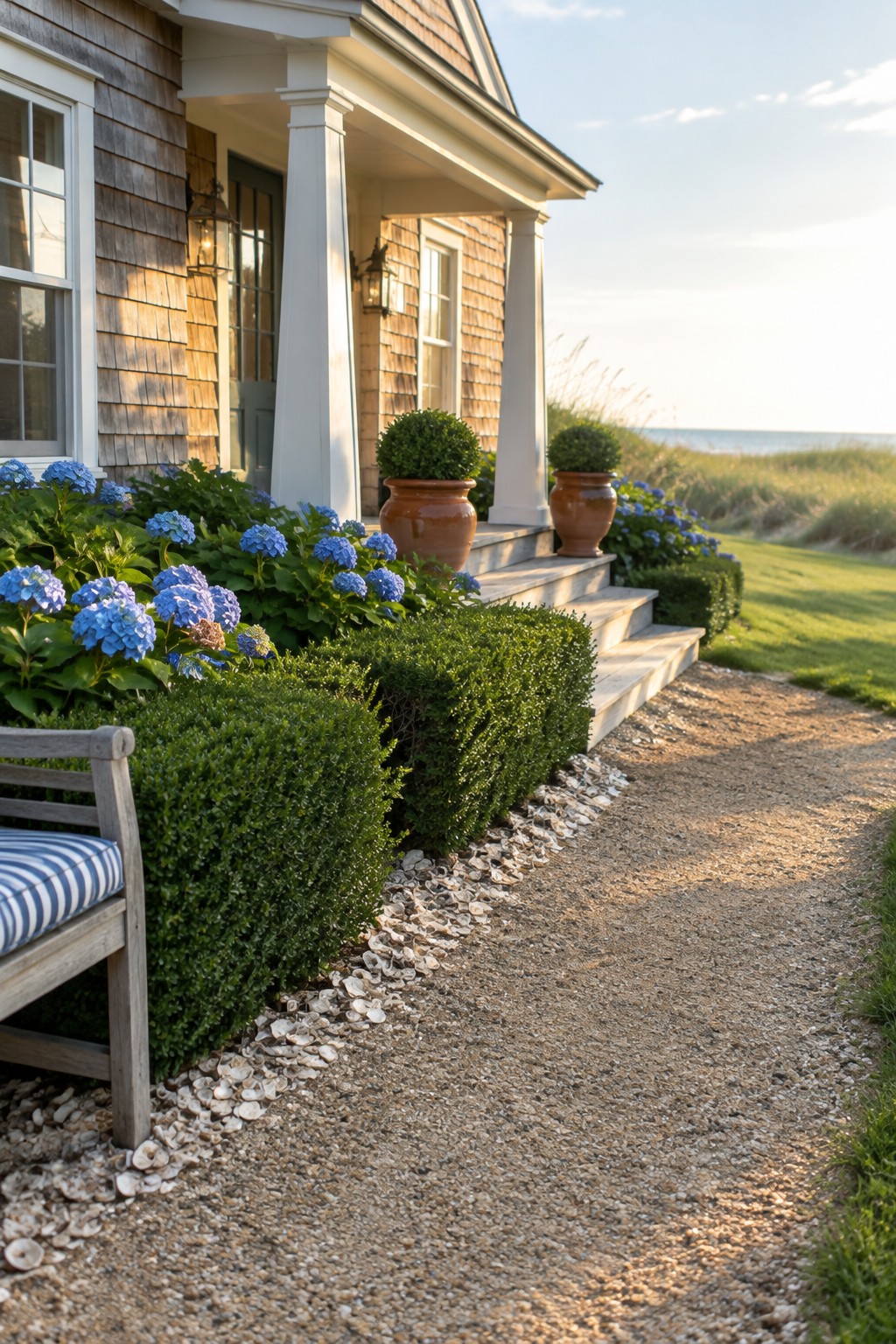
Hydrangeas planted in front of clipped boxwoods make a front garden feel full without losing its shape. The rounded shrubs give the planting a tidy edge, while the blue blooms bring color closer to the path.
Use this layered arrangement beside a front walk or porch, and leave enough room for the hydrangeas to spread. It suits cottage and coastal homes, but avoid crowding the plants against steps or walkways.
Use Planters to Line the Front Steps
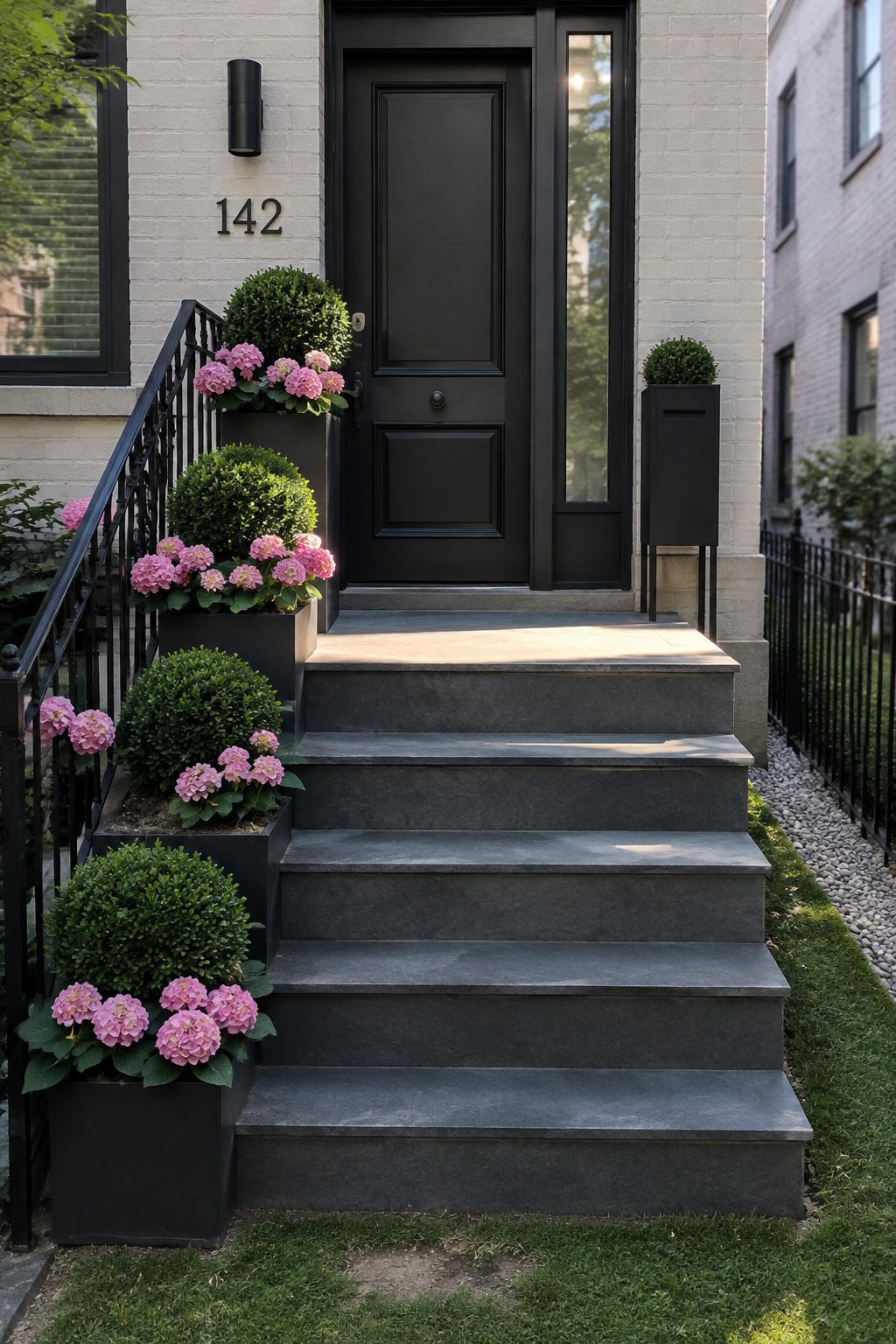
A row of planters can give a front entry a simple planting structure without needing a large garden bed. Here, rounded boxwoods and pink hydrangeas repeat along the steps, making the approach feel cared for and easy to follow.
Use this idea beside a narrow stairway or small entry where ground-level planting space is limited. Choose planters that leave enough room to walk, and keep their size consistent so the arrangement looks orderly.
Create a Layered Hydrangea and Boxwood Border
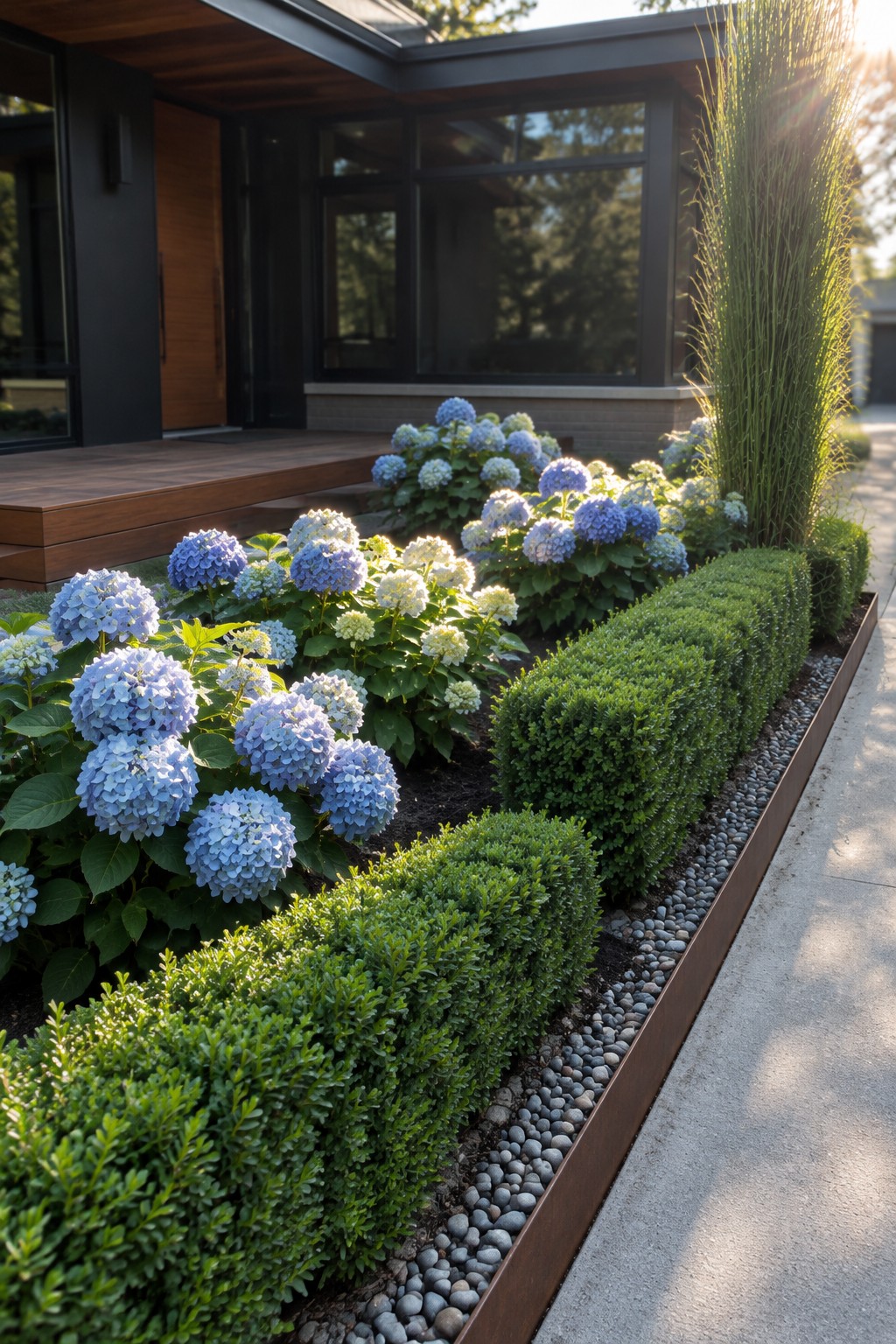
Planting hydrangeas behind a clipped boxwood edge gives a front garden a clear, tidy structure. The taller flowers bring color and fullness, while the low hedge keeps the bed looking neat.
This arrangement suits a modern home where a clean planting line can echo the simple architecture. Leave enough room for hydrangeas to spread, and keep the boxwoods trimmed so they do not crowd the flowers.
Use Potted Hydrangeas to Dress Up the Front Steps
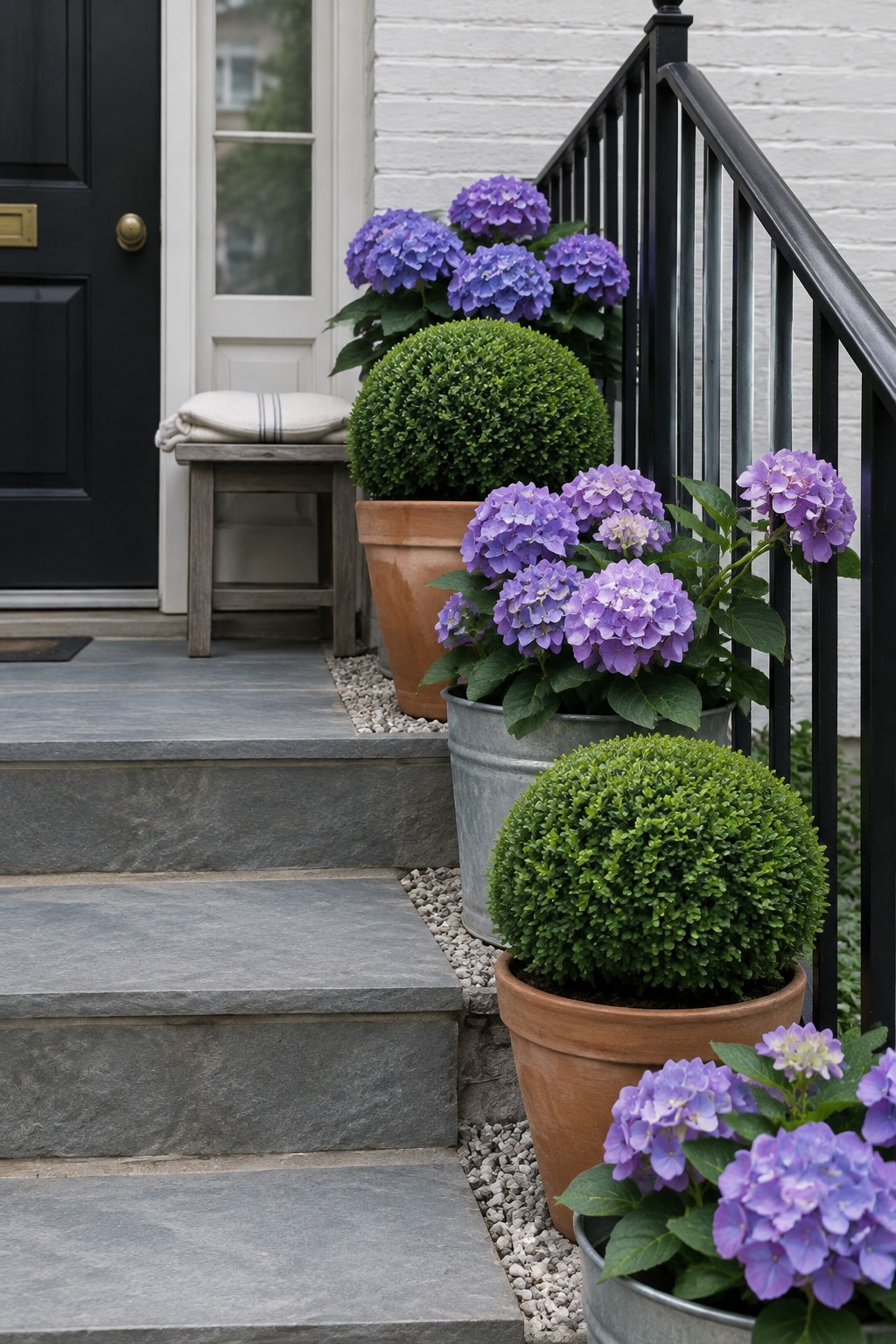
Large pots make it easy to bring hydrangeas and clipped boxwoods right up to the entry. The rounded shrubs give the planting a steady shape, while the flowers add color without needing a garden bed.
This approach works well beside steps or a narrow entry where there is little room for in-ground planting. Use sturdy pots with drainage, and leave enough space to walk comfortably around them.
Use Stone Steps to Set the Garden’s Level

Stone steps make a sloped front garden easier to walk through while giving the planting a clear shape. Here, hydrangeas and clipped boxwood sit beside the steps, so the route feels like part of the garden rather than a separate walkway.
Use broad, stable stones for a short rise to the front door, and leave enough room beside them for plants to grow without crowding the tread. This approach suits cottages and older homes, though the stones should be set securely to avoid uneven footing.
Plant Hydrangeas Along the Front Steps
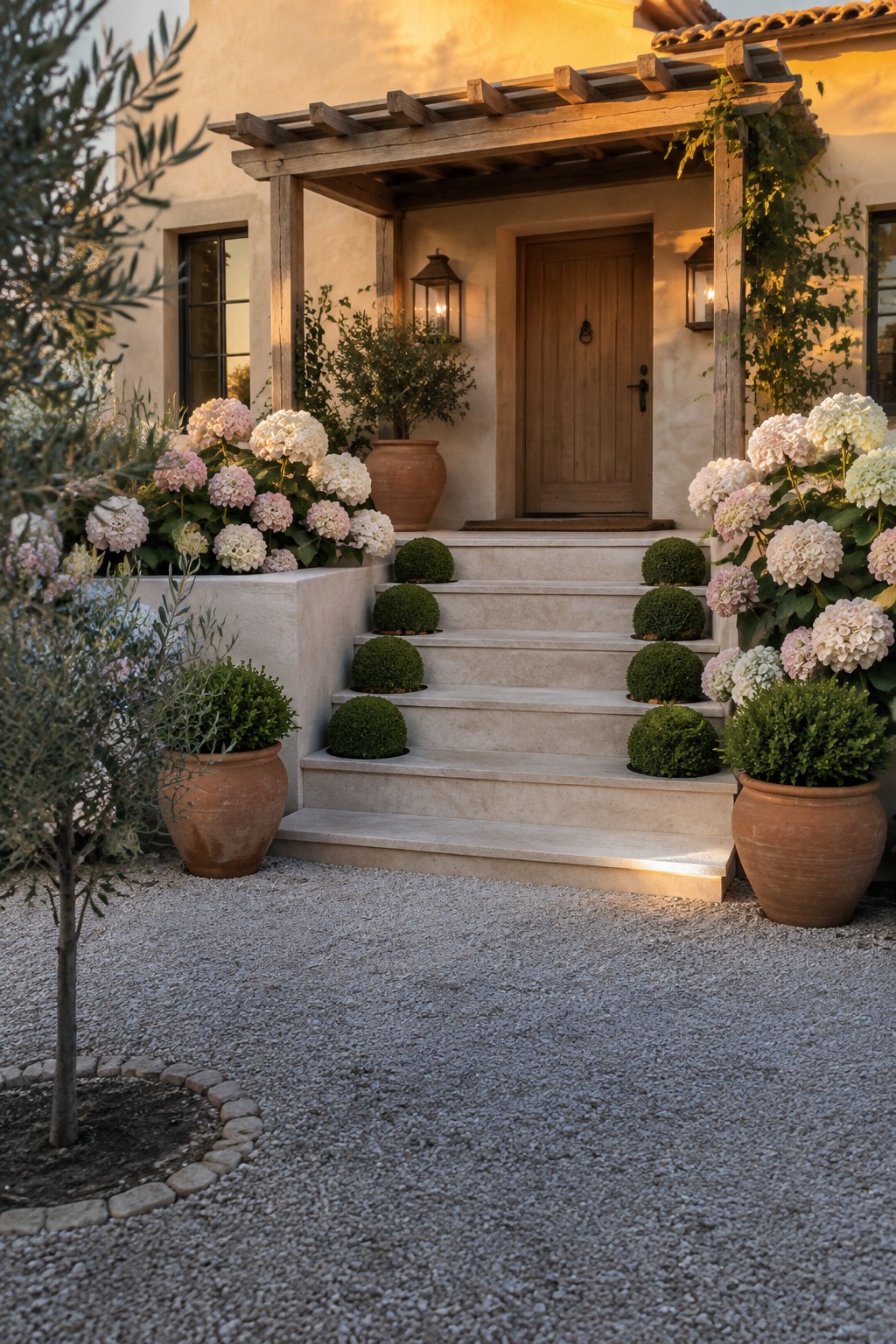
Hydrangeas planted beside the entry steps make a simple approach feel more finished. Their rounded flower clusters bring color close to the house, while the stone stairs keep the planting beds neat and defined.
This idea works well where the front door sits above the path. Leave enough room for people to use the steps comfortably, and place boxwood near the edges or in pots to give the flowers a tidy outline.
Use Boxwood Edging to Define a Brick Walk
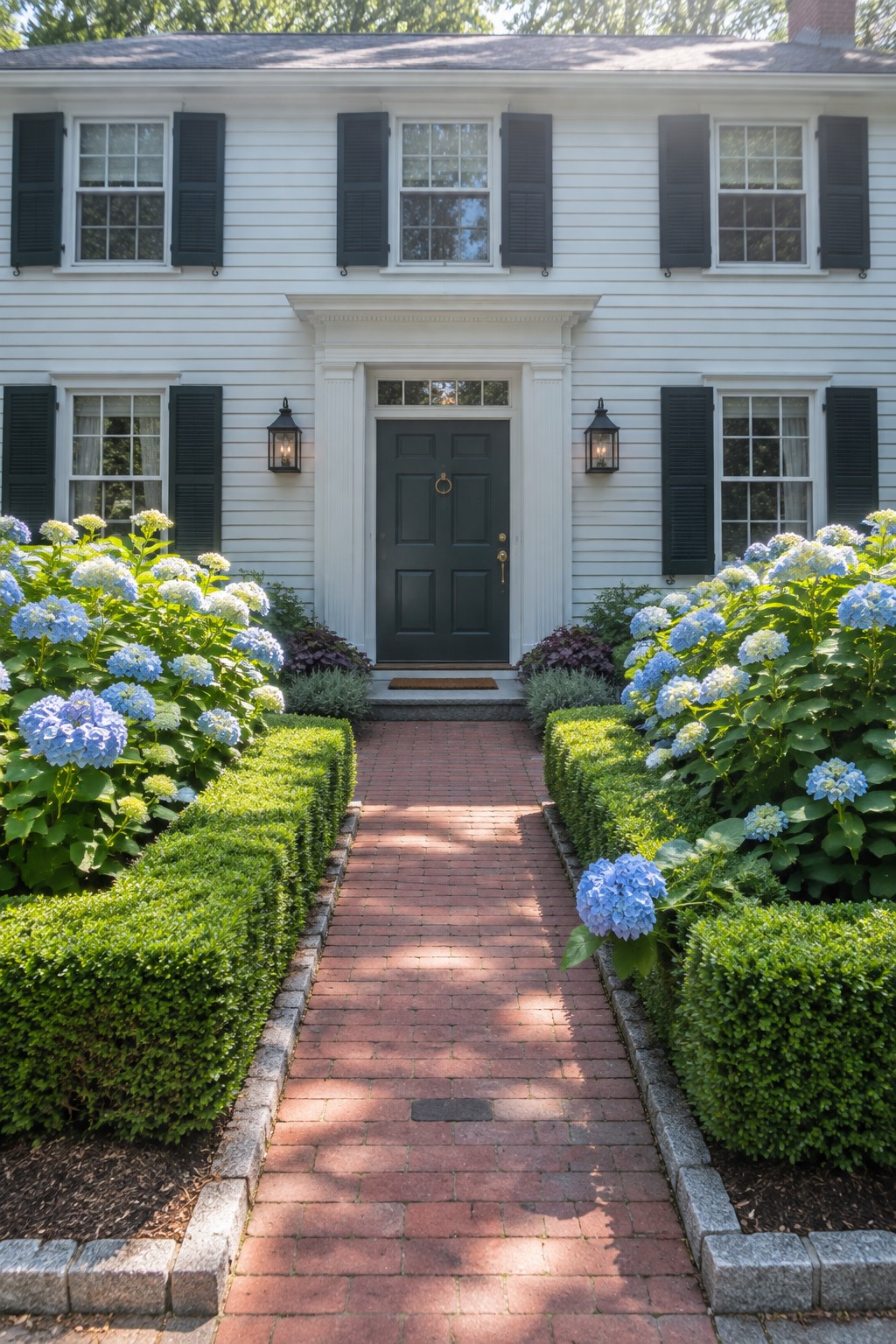
Boxwood edging gives a front path a neat shape and keeps the planting beds from spilling onto the walkway. Here, the clipped shrubs form a clear border beside the brick, while hydrangeas add fuller growth behind them.
This approach works well when you want a garden to look orderly without making the beds feel bare. Keep the boxwood trimmed to a manageable height, and leave enough room for hydrangeas to grow without crowding the path.
Use Low Garden Lights Along the Front Walk
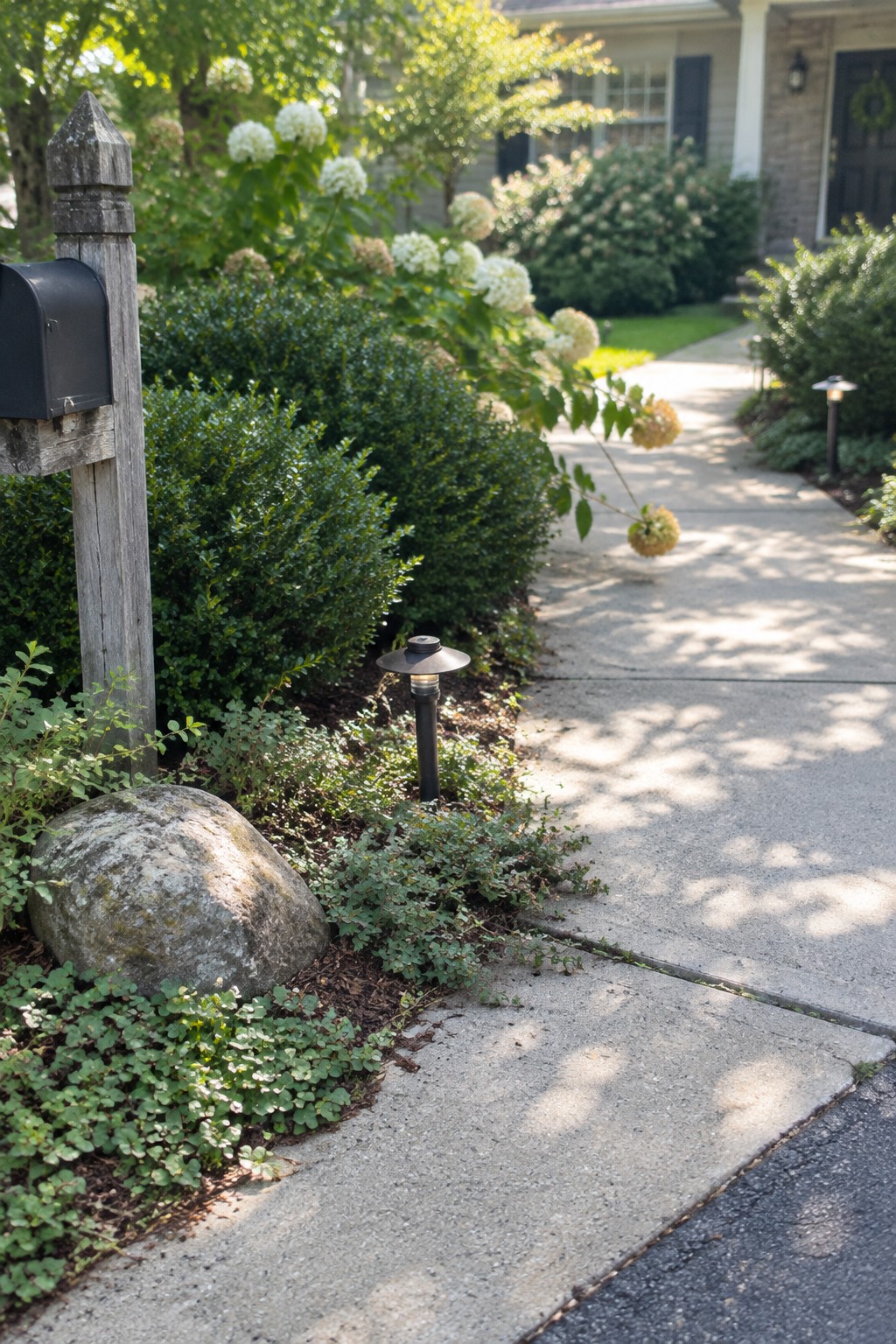
Low lights tucked beside a front path make the route easier to follow after dark without taking attention away from the planting. Their small scale works well alongside boxwood and hydrangeas, where taller fixtures could feel out of place.
Place them just off the edge of the walk and space them far enough apart to avoid a runway effect. A simple, consistent style is usually best, especially in a front garden with established shrubs.
Use Boxwood Edging to Shape a Formal Front Garden
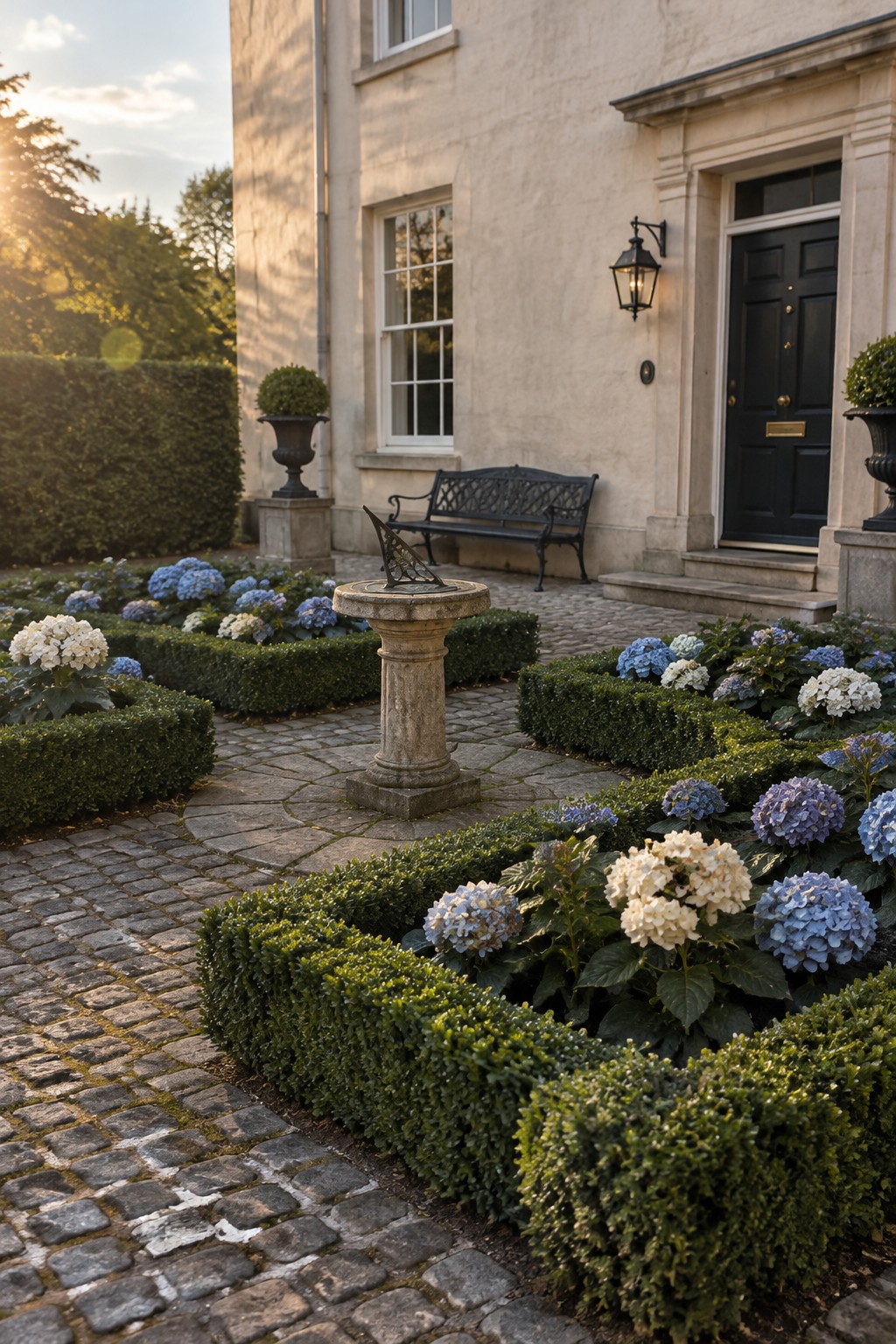
Boxwood edging gives a front garden a clear shape and keeps flower beds looking tidy. Here, low clipped hedges outline the planting beds and cobbled paths, so the hydrangeas have room to stand out without the garden feeling loose.
This approach suits a traditional home and works well in a small entry garden where the paths and beds need definition. Keep the boxwood low enough to see the flowers, and leave enough space between the edging and path for easy trimming.
Use Raised Beds to Organize the Front Garden
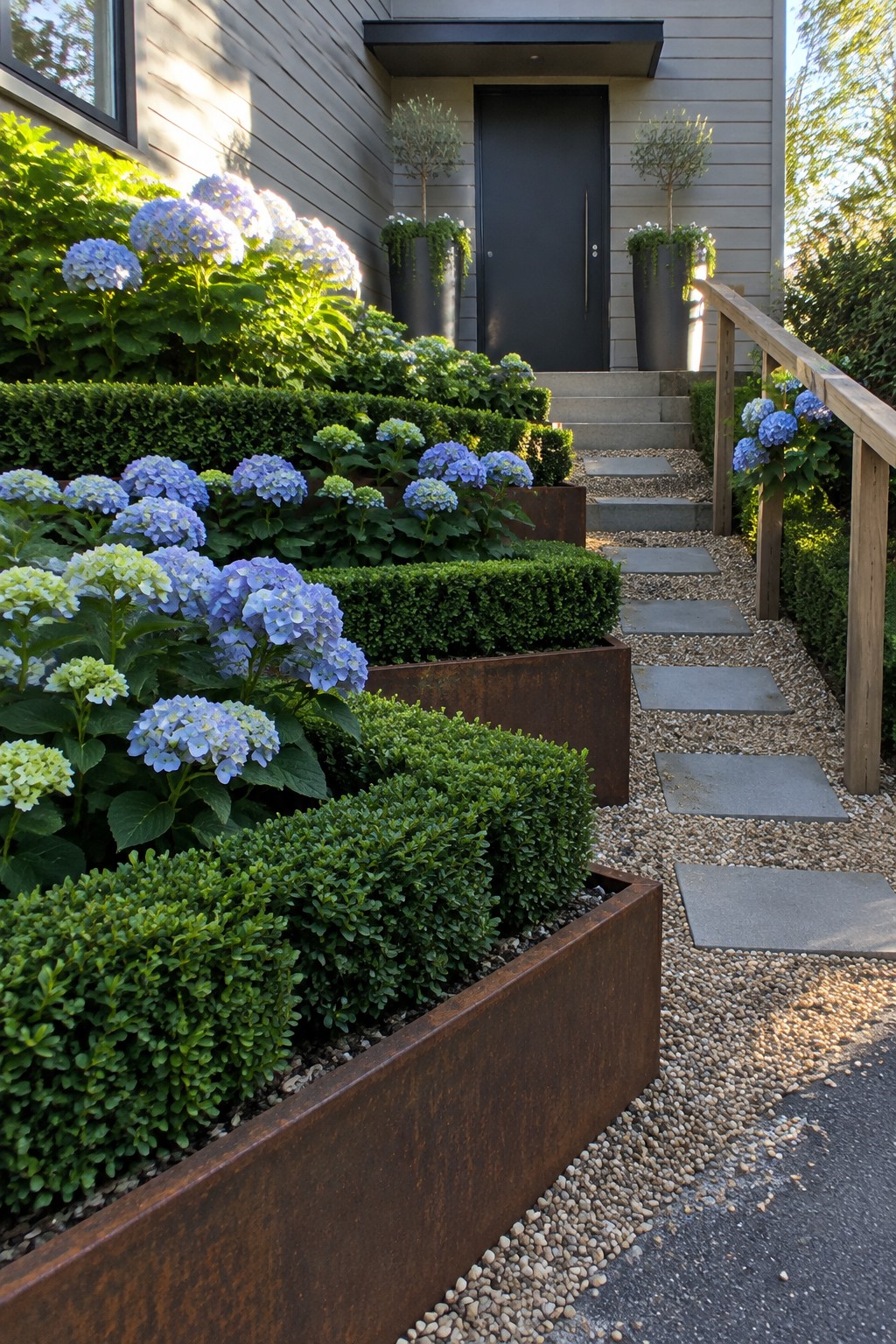
Raised beds give a front garden a clear structure, especially on a sloped approach. Here, rust-colored metal edges separate clipped boxwood from flowering hydrangeas, so the planting looks orderly without feeling too formal.
This setup works well beside a walkway where plants might otherwise spill into the path. Keep the beds wide enough for shrubs to grow comfortably, and choose edging that can handle soil contact and weather.
Use Broad Stone Steps to Connect the Garden to the Entry

Wide stone steps make a sloped front yard easier to walk through and give the planting beds a clear edge. Here, the straight run keeps the route to the door simple while leaving room for hydrangeas and boxwood alongside it.
For a similar effect, choose step treads wide enough to feel comfortable and use a surface that suits the house. Keep plants trimmed back from the edges so the steps stay clear, especially where the path narrows.
Use Boxwood Hedges to Shape the Front Garden

Low boxwood hedges give a front garden a clear structure without hiding the flowers behind them. Here, clipped rows sit in front of hydrangeas, making the planting feel tidy while still leaving room for generous blooms.
This approach works well beside a front walk or entry steps, especially when you want a garden that looks orderly year-round. Keep the hedges low enough to show off the plants behind them, and leave space for them to grow without spilling onto the path.
Use Hydrangeas Along a Gravel Front Walk
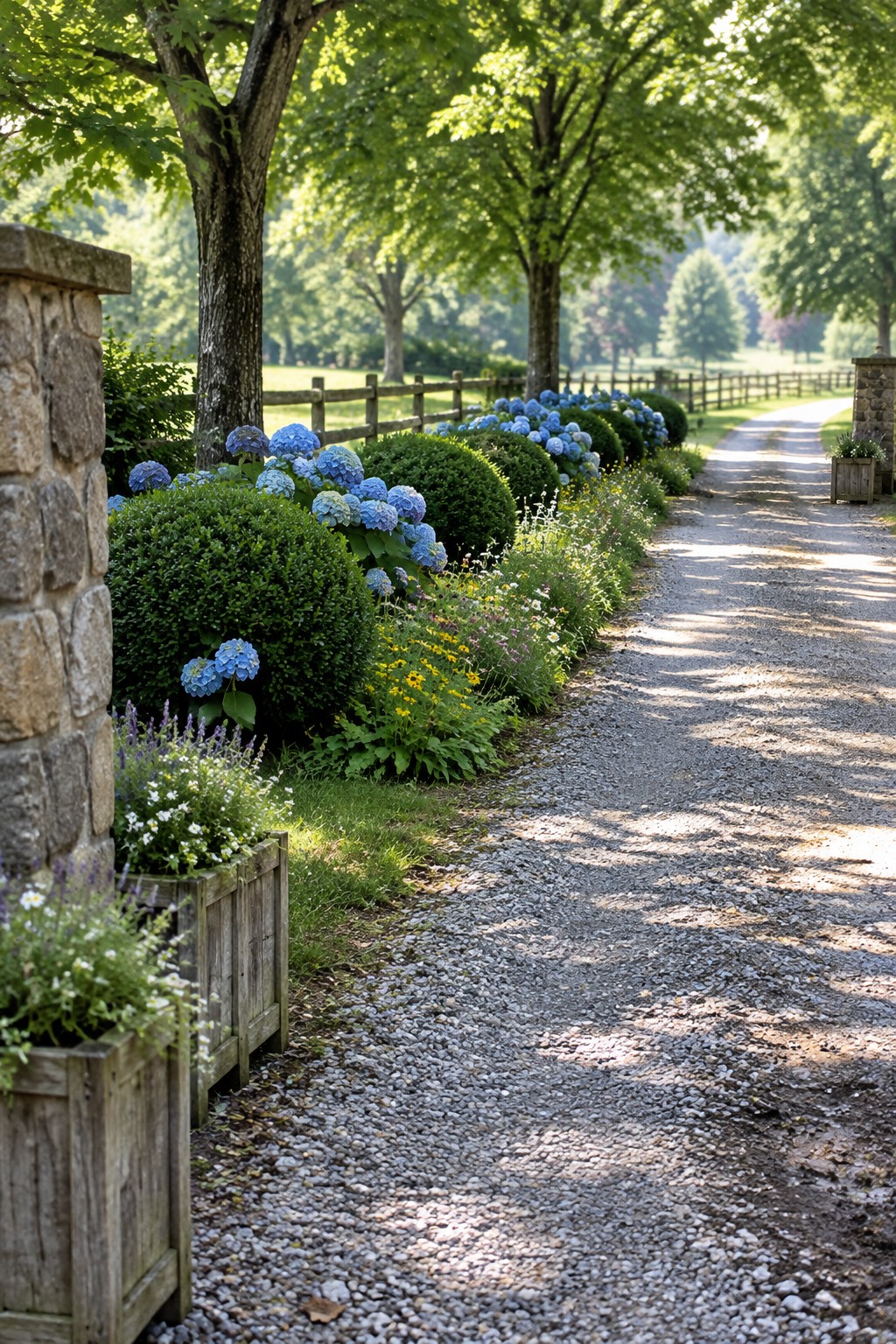
A gravel path can feel settled and welcoming when the planting beside it has a clear shape. Rounded boxwood shrubs give the border a tidy outline, while blue hydrangeas bring color without making the walkway feel crowded.
This approach suits a country-style home or a front yard with room for a generous garden bed. Keep the shrubs trimmed so they do not spill onto the path, and leave enough space for hydrangeas to grow.
Use Stone Pavers to Organize the Front Garden
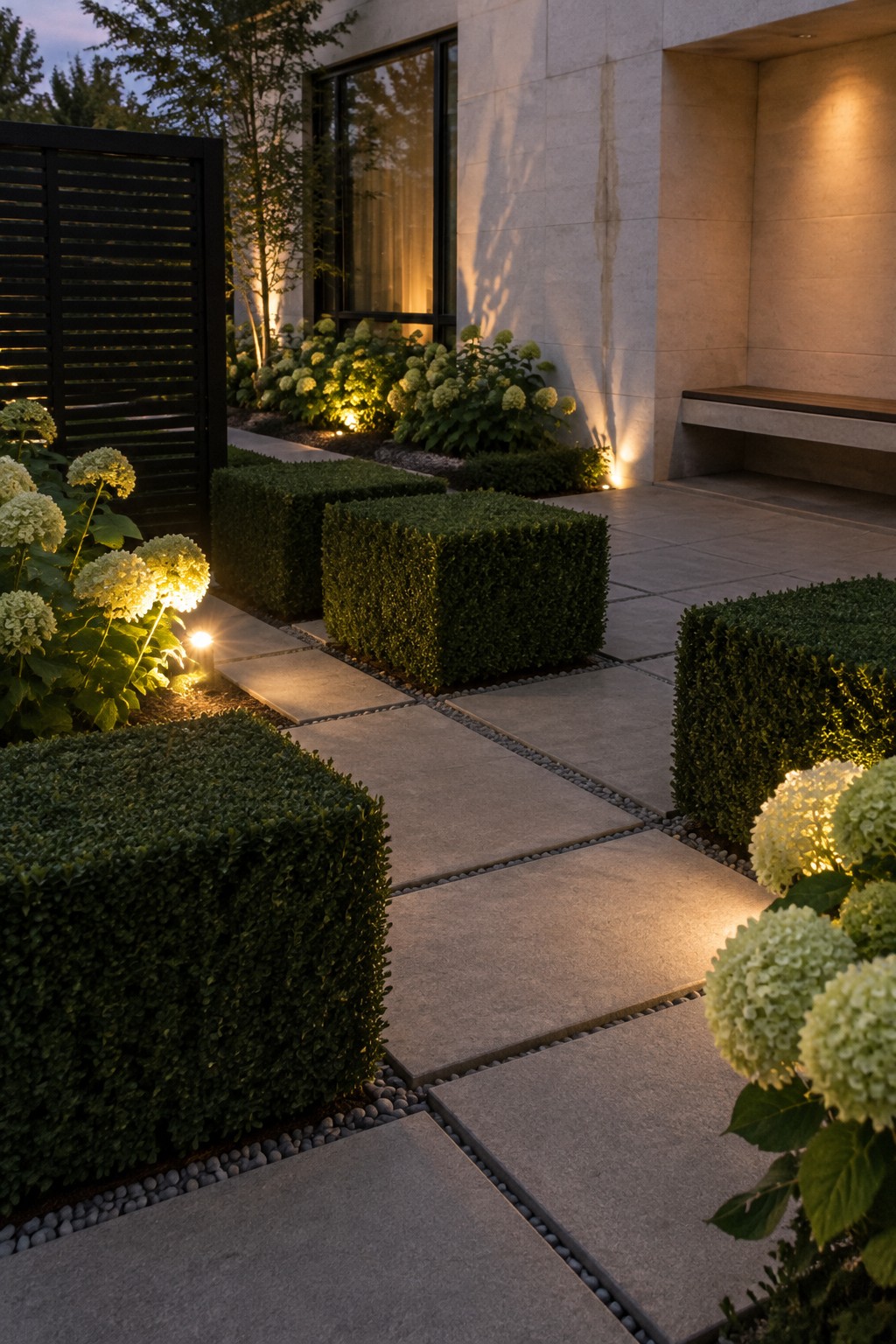
Large stone pavers give a front garden a clear route to the entry while keeping the planting beds connected. Here, the straight-edged slabs sit among clipped boxwoods and hydrangeas, so the walkway feels orderly without taking over the garden.
For a similar layout, leave narrow gravel joints between the pavers and choose a surface that suits the home’s exterior. This approach works especially well in a compact, modern front yard, where a defined path can make the space easier to navigate.
Use a Brick Walk to Divide the Planting
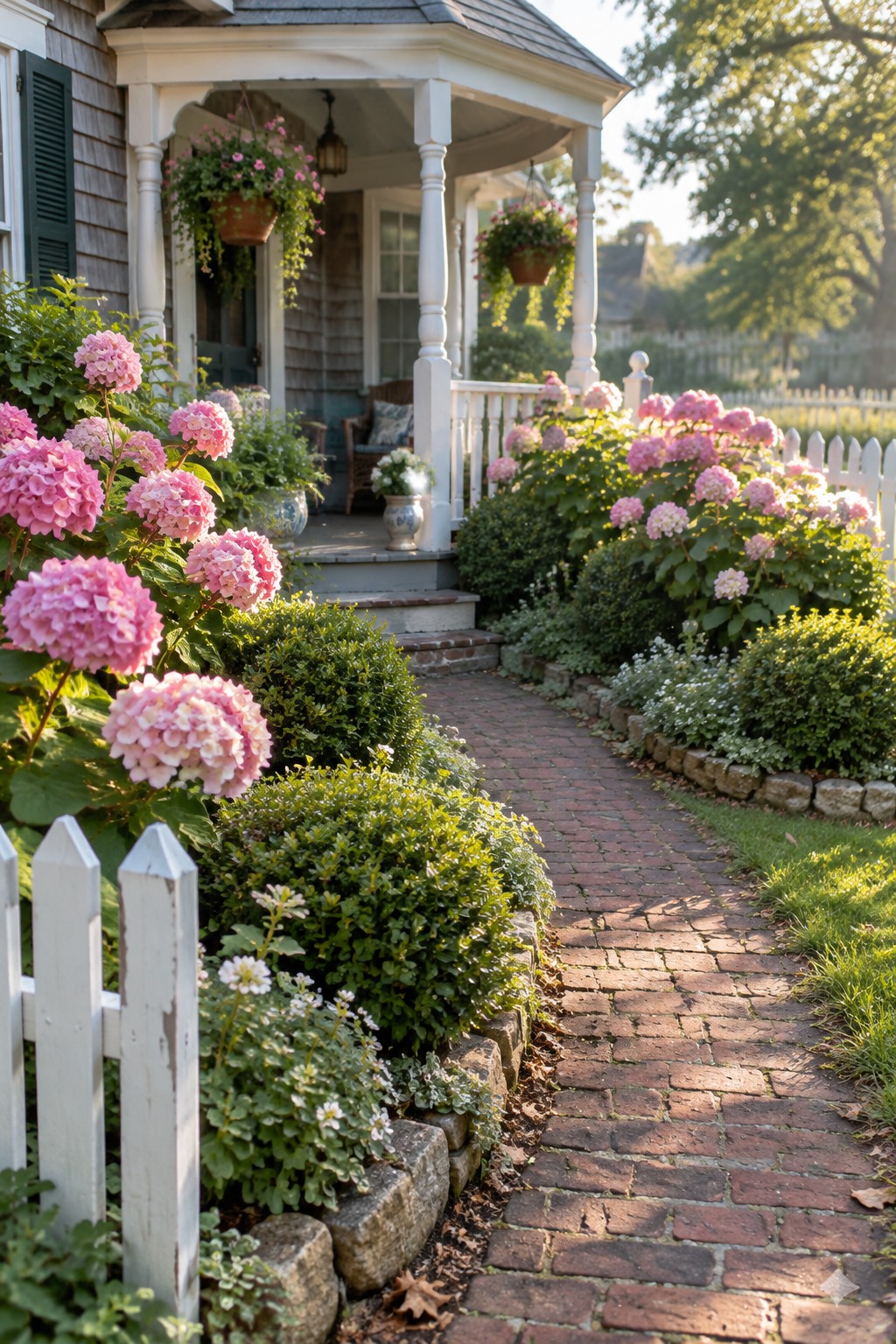
A brick path can give a flower-filled front garden a clear route to the entry without making the planting feel rigid. Here, the curved walk sits between dense green edging and hydrangeas, so the path feels like part of the garden rather than a separate strip.
This approach suits cottage-style homes and narrow front yards where a straight walkway might feel too formal. Keep the bricks level and use a restrained edge so plants do not spill across the walking surface.
Use Stone Stepping Stones Through the Garden

Stepping stones set into gravel make a front garden easier to cross while keeping the planting beds connected. Here, broad, irregular stones create a clear route through rounded boxwoods and hydrangeas without turning the yard into a solid paved walk.
This approach works well in a small entry garden where you want a defined path but still want plenty of room for planting. Leave enough space between stones for a comfortable stride, and keep the gravel level so the route is easy to use.
Frequently Asked Questions
Q: Can hydrangeas and boxwoods grow in the same planting bed?
A: Yes, as long as the spot suits both plants. Choose a location with well-drained soil and enough sun for your hydrangeas, then leave room between the shrubs so they can grow without crowding each other.
Q: Which hydrangeas work best beside a front walkway?
A: Compact varieties are easier to keep clear of the path, especially panicle or dwarf bigleaf hydrangeas. Check the mature width before planting so you won’t need to prune them back every time they bloom.
Q: How often should I prune boxwoods in a front yard design?
A: A light trim once or twice a year is usually enough to keep boxwoods neat. Avoid cutting them into tight shapes too often, since good airflow helps prevent problems inside the shrub.
Q: How can I keep hydrangeas blooming while the boxwoods stay green?
A: Give hydrangeas consistent moisture, especially during dry spells, and avoid heavy pruning unless you know which type you have. Boxwoods need less water once established, so water the hydrangea’s root area rather than soaking the whole bed.
