


A fence can make a garden feel more finished, but a bare stretch of boards can also draw the eye away from the plants around it.
I like how clematis softens that hard edge while adding height and color without taking up much ground space.
The best planting plans leave room for vines to climb, keep paths and gates clear, and give the flowers enough support as they grow.
Color matters, too, since a carefully placed bloom can brighten a plain fence without making the whole yard feel busy.
I’d save ideas that suit the fence’s light and structure, then adapt them to the way the garden changes through the seasons.
Let Clematis Cover a Garden Fence

Clematis can turn a plain fence into a colorful vertical garden without taking up much ground space. The white fence provides a clear backdrop, so the pink and purple blooms are easy to notice.
Plant clematis along a sturdy fence or trellis and guide the young stems onto its supports. Give each vine room to grow, and check that the structure can handle the weight as the plants fill in.
Let Clematis Climb a Garden Fence
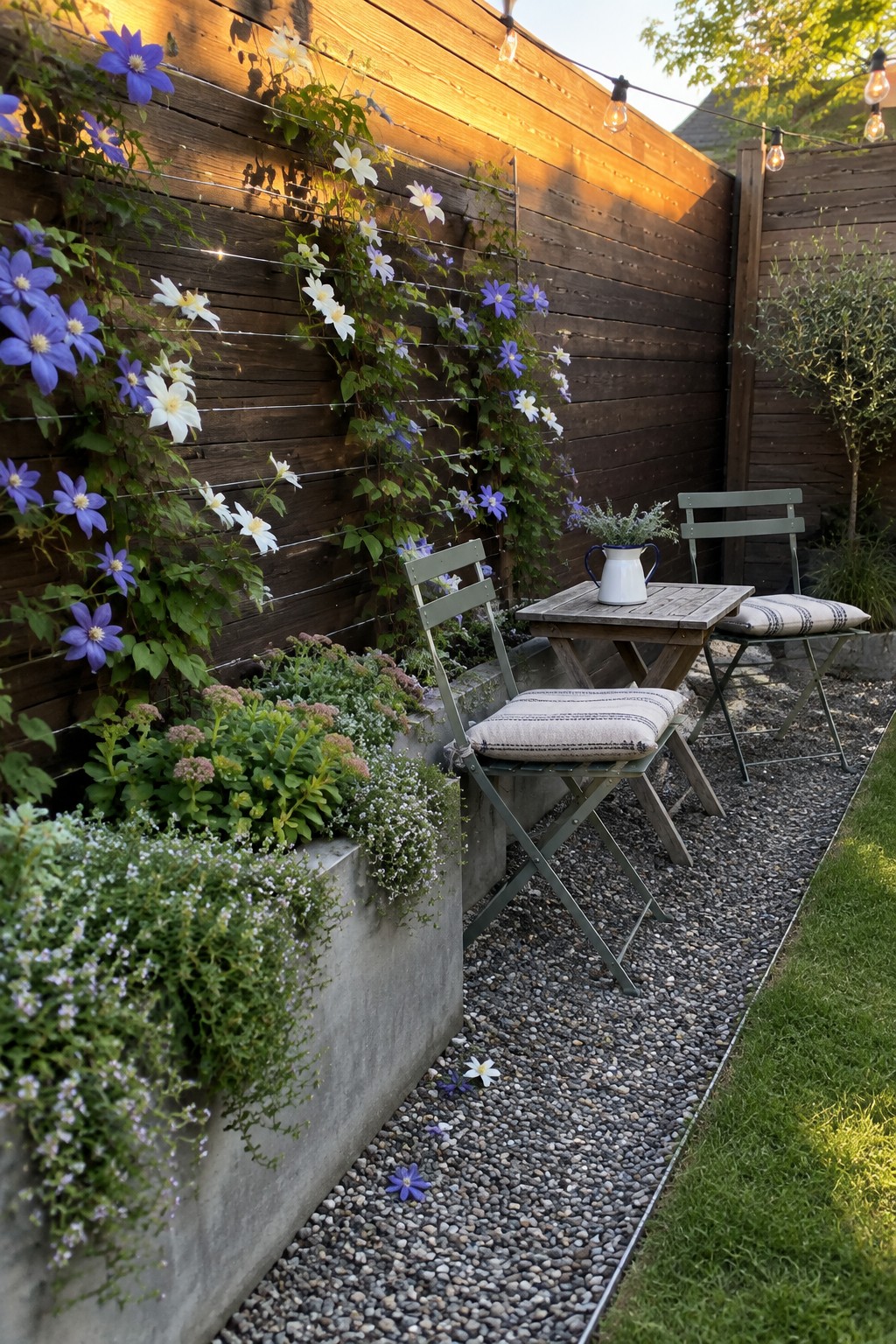
Clematis can turn a plain fence into a colorful garden backdrop without taking up much ground space. The flowers draw the eye upward, while the fence gives the vines a clear place to grow.
Add horizontal wires or a simple trellis so the stems have something to grip. This works especially well in a narrow garden, but leave room at the base for other plants and keep the clematis easy to reach for pruning.
Train Clematis Along a Garden Wall

Clematis can turn a plain brick wall into a vertical flower bed without taking up much ground space. A simple trellis gives the vines support and helps keep the flowers spread across the wall instead of crowded in one spot.
This approach works well beside a narrow path or in a small cottage garden. Choose a sturdy trellis and leave room for the clematis roots at the base; low flowers nearby can fill the edge without competing for the wall.
Use Clematis to Add Privacy Along a Fence
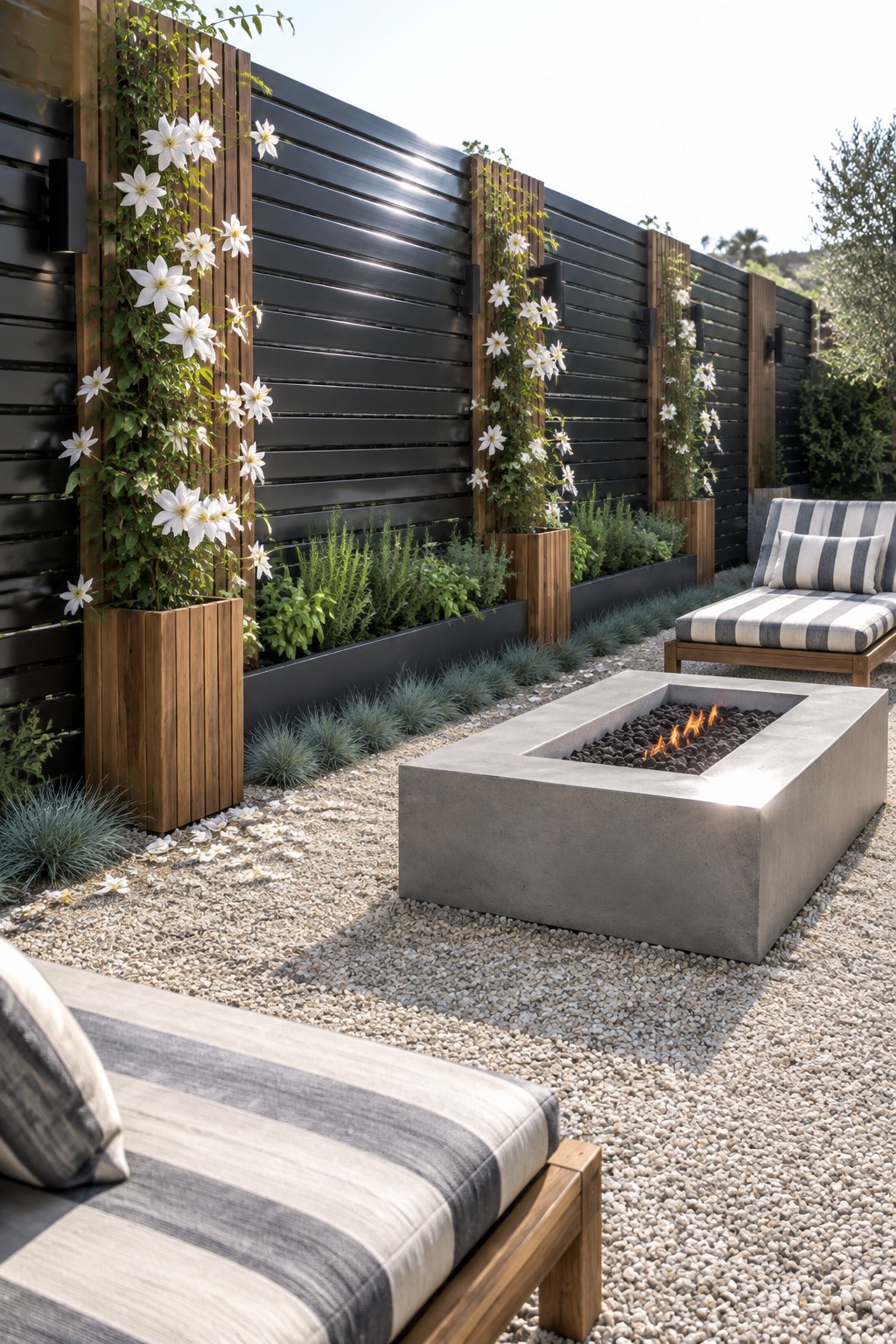
Clematis can turn a plain fence into a green, flowering backdrop while giving a patio a little more privacy. Repeating trellises along the fence helps the vines grow upward and gives the planting a steady rhythm.
Use sturdy supports attached securely to the fence, and leave enough room at the base for the roots and other plants. This approach suits a narrow side yard or seating area, but check the mature size of your clematis so it does not crowd nearby plants.
Add Clematis to a Courtyard Fence
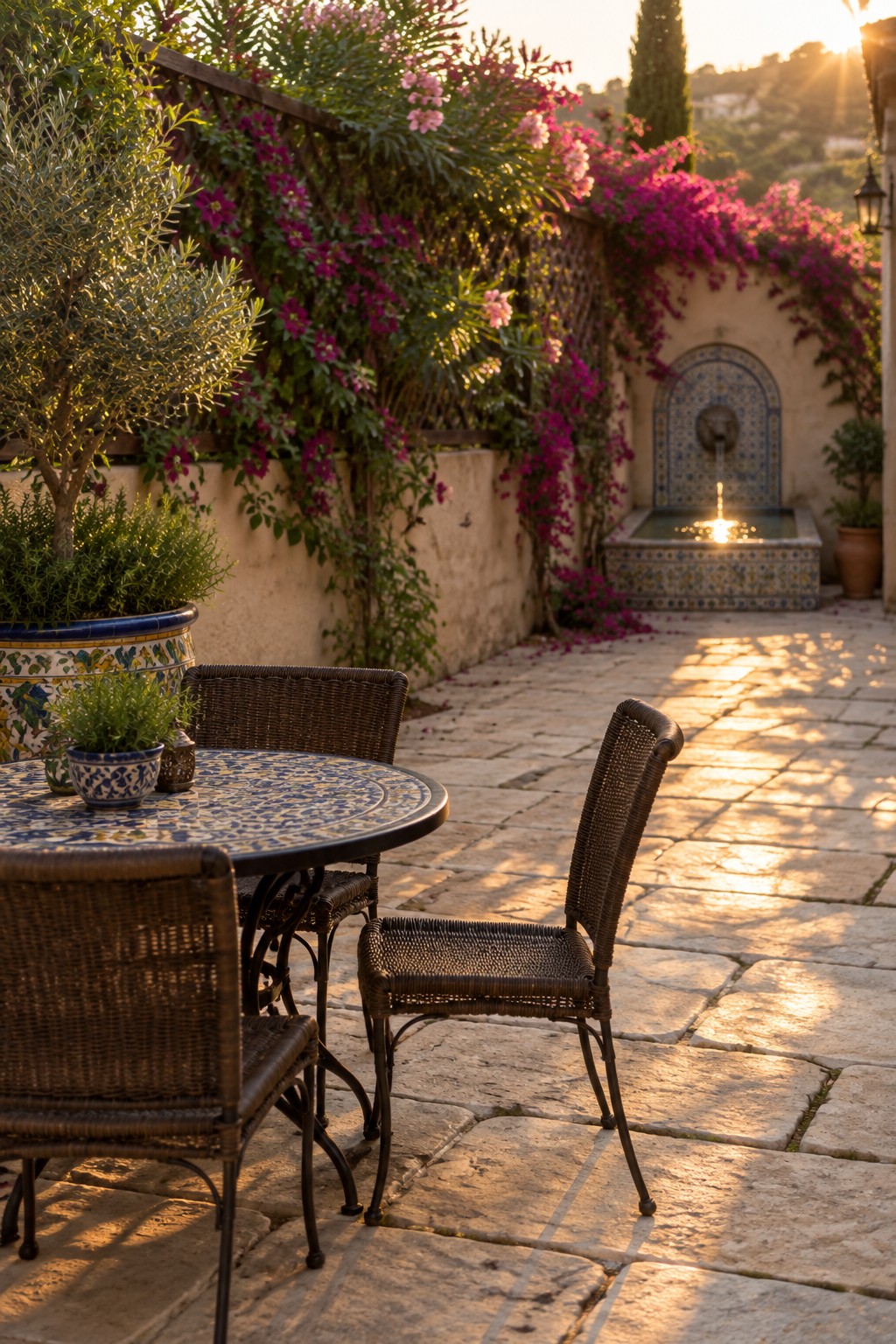
Clematis can bring color to a courtyard fence without taking up much ground space. Letting the vine grow along a wooden trellis or fence gives a plain boundary a softer, more established look.
Use a sturdy support and leave enough room to reach the fence for pruning. This idea suits a small patio or enclosed garden, where vertical growth adds flowers without crowding the seating area.
Grow Clematis Along a Trellis Fence
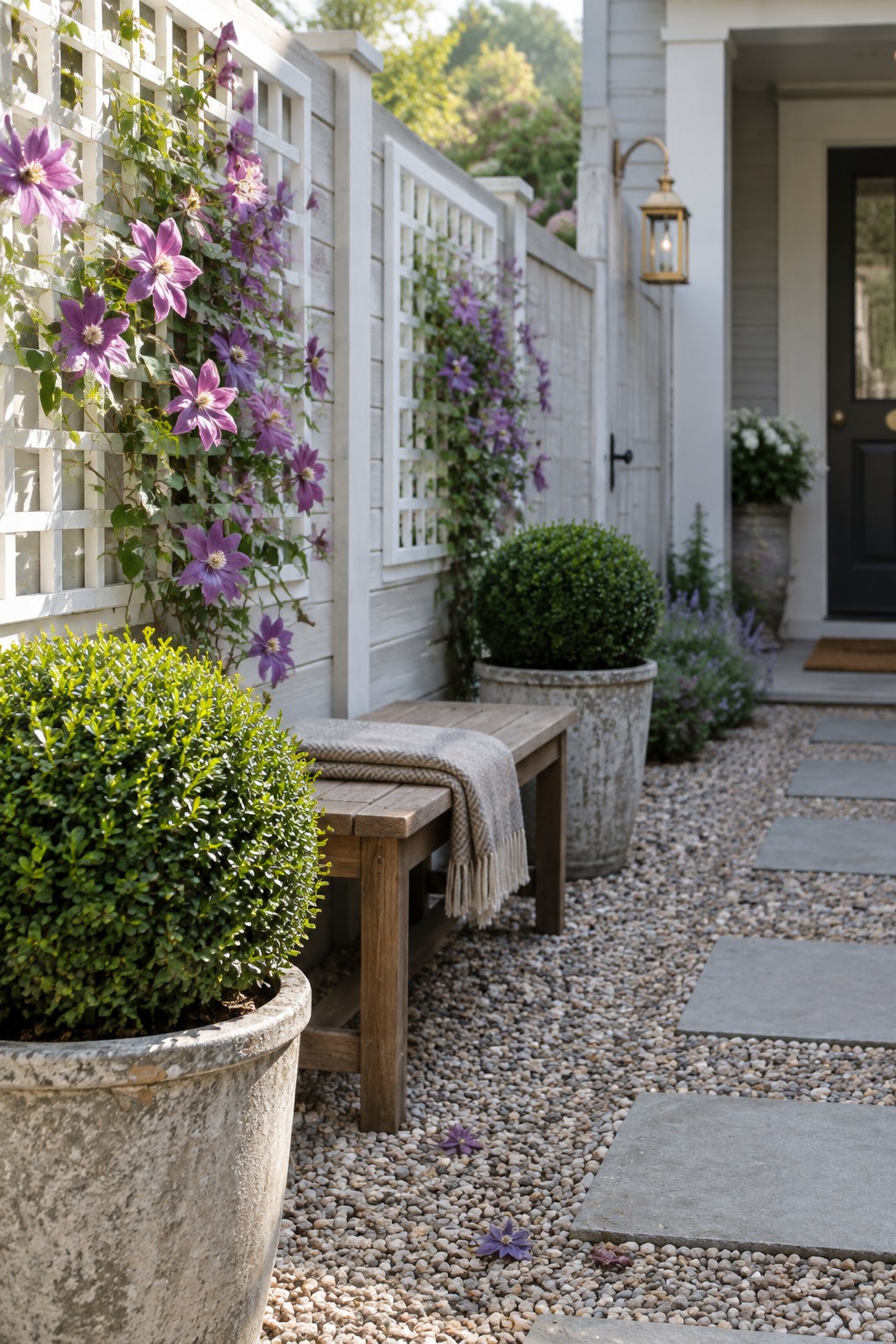
Clematis can turn a plain fence into a colorful vertical garden without taking up much ground space. A white trellis gives the vines room to climb and makes their purple blooms easy to notice.
Use this idea along a narrow walkway or beside an entry where a flower bed would be hard to fit. Train young stems onto the lattice and leave enough space for pruning and airflow.
Grow Clematis on a Trellis Along the Patio
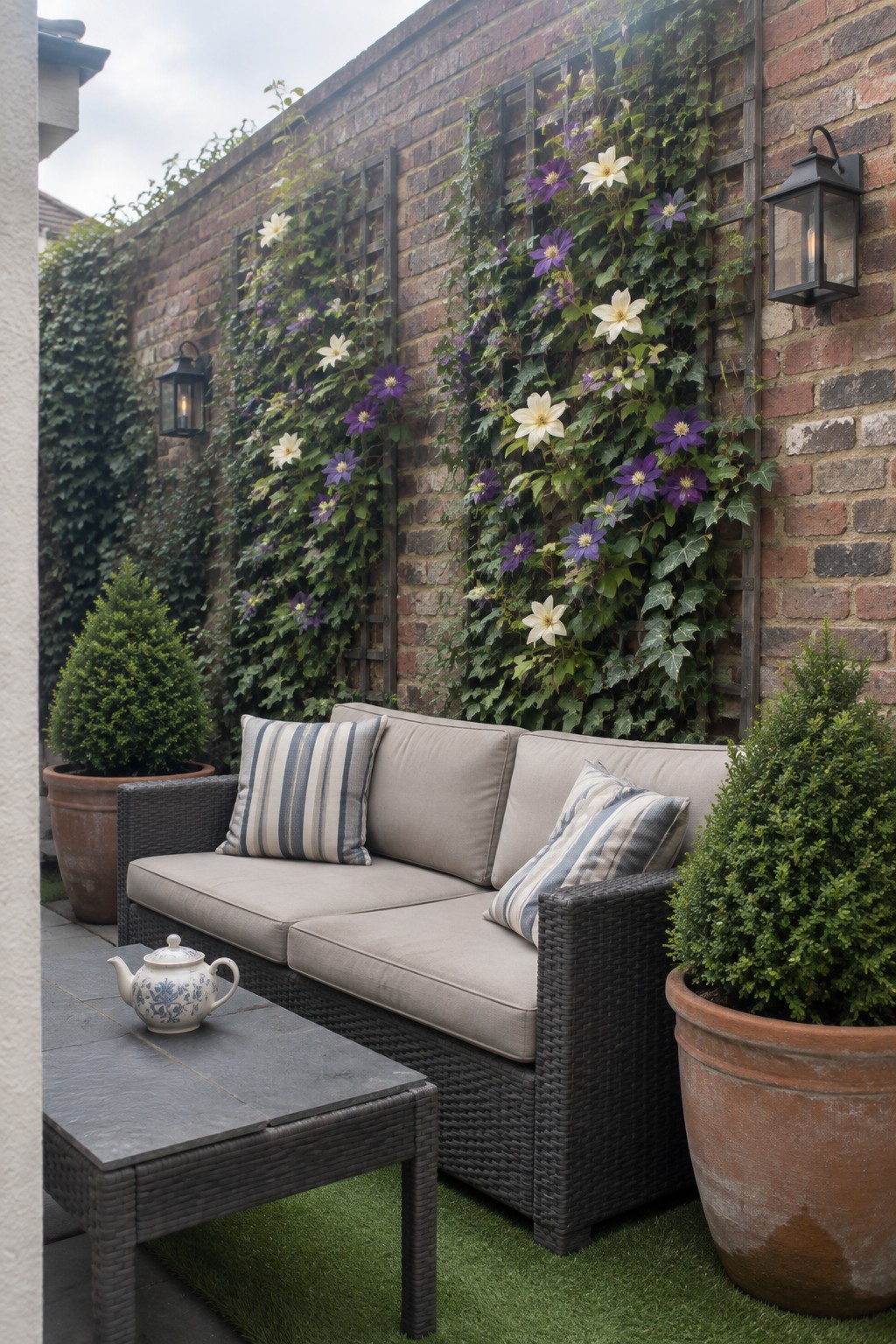
Training clematis up a fence trellis is a simple way to add flowers at eye level without taking up much patio space. The mix of purple and white blooms also breaks up a long brick wall.
Use sturdy supports fixed securely to the wall, and leave a little room behind them for air to circulate. This approach works well in a narrow seating area, but choose a clematis suited to the amount of sun the wall receives.
Use A Trellis To Guide Clematis Along A Fence

Clematis grows best when its stems have a light support to climb, so a simple trellis can help turn a plain fence into a vertical flower bed. A white slatted fence and blue clematis show how the flowers can bring color without taking over the whole garden.
Attach a sturdy trellis or narrow supports to a fence, then tie young stems loosely as they grow. This works well along a path or in a small garden where ground space is limited. Check that the supports are secure and leave enough room for air to move around the leaves.
Grow Clematis Along a Patio Trellis
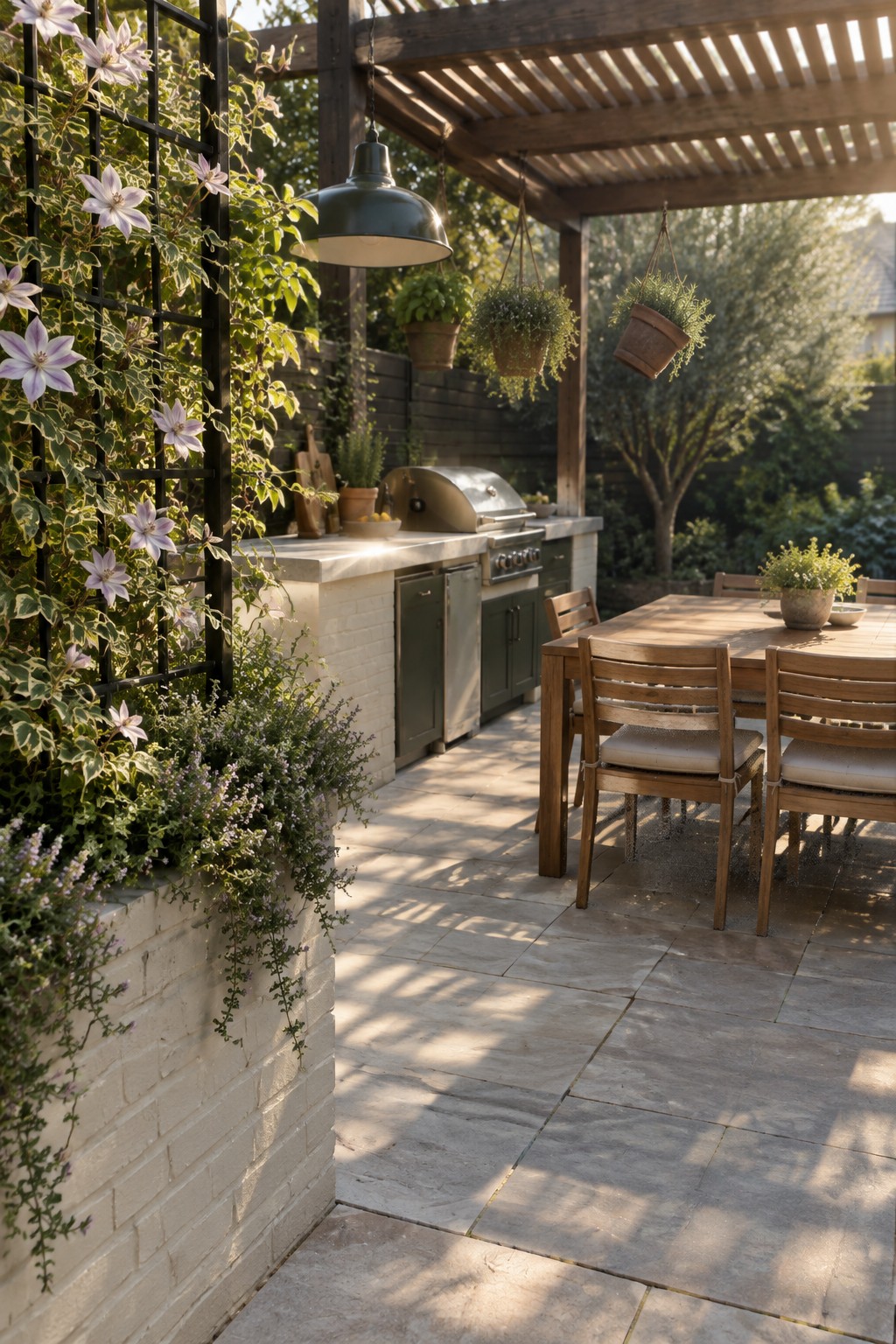
A trellis can bring flowering vines right into an outdoor dining area, making a plain fence or divider feel more like part of the garden. Clematis is a good fit because it grows upward without taking up much patio floor space.
Place the trellis where the vine can climb without blocking a path or brushing against chairs. This works especially well beside a dining area, where you can enjoy the flowers up close, but leave enough room to reach the plant for pruning and tying in new growth.
Use Planter Boxes to Support Clematis

Raised wooden planters can give clematis a place to grow when there is no garden bed beside a fence. The flowers climb vertically, while the boxes keep their roots contained and make it easier to arrange blooms at different heights.
Place the planters where the vines can reach a fence, post, or other sturdy support, and guide new stems as they grow. Leave enough room for the plants to spread, and check that the boxes drain well so the roots do not stay soggy.
Layer Clematis Along a Garden Fence
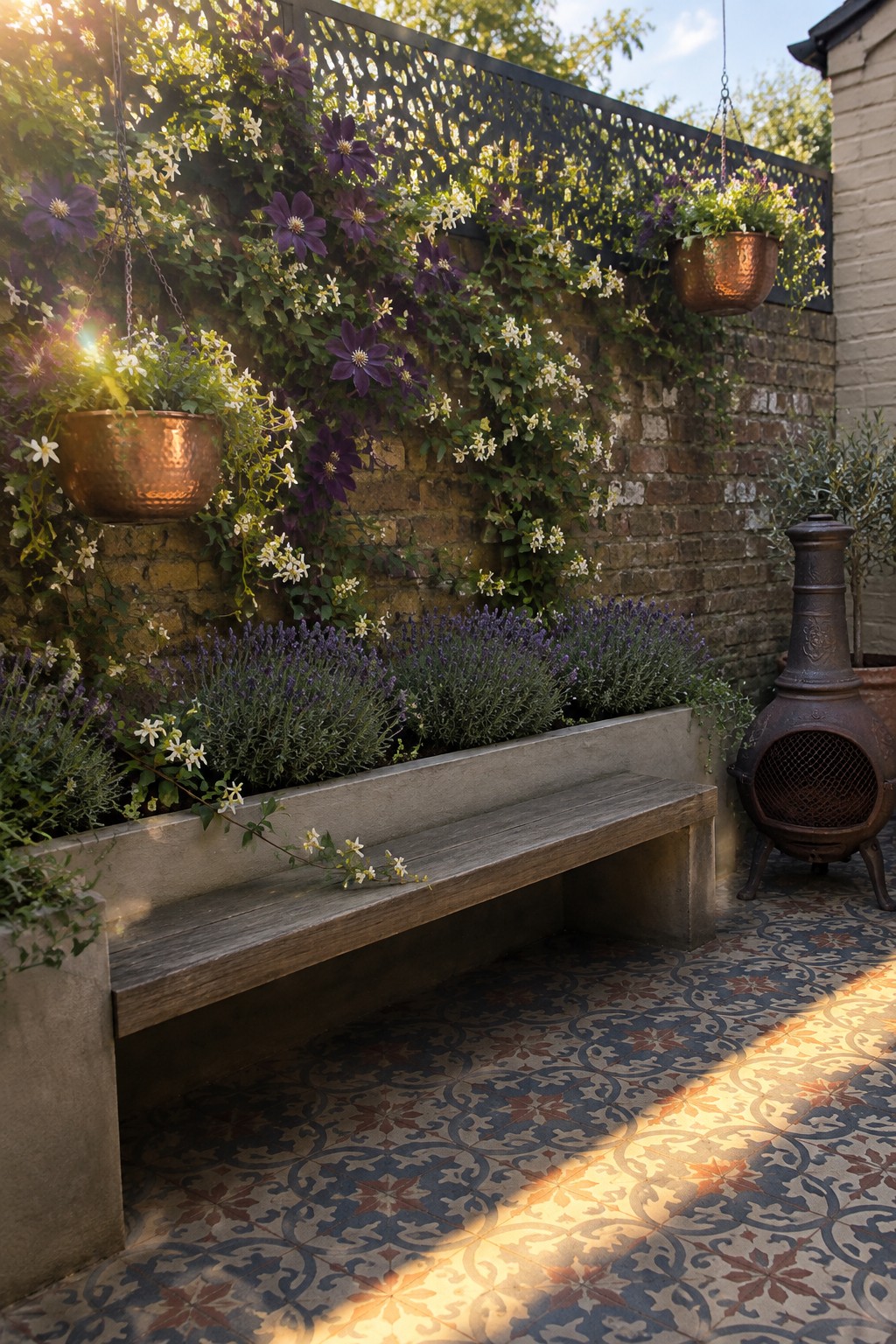
Clematis can turn a plain fence into a flowering backdrop while keeping the garden footprint small. Mixing large purple blooms with smaller white flowers gives the climbing growth a relaxed, varied look.
Train the vines along a sturdy fence or trellis, and leave room below for a low planting bed. This works especially well in a small courtyard, but make sure the clematis has support and enough space for airflow.
Add Clematis Along a Garden Path

A fence covered in clematis can give a garden path a more settled, leafy feel. The flowers bring color up to eye level, while the fence gives the vines a clear place to climb.
This works well beside steps or a narrow path where there isn’t much room for wide flower beds. Use a sturdy fence and leave enough space to keep the path clear as the plants fill in.
Grow Clematis on a Balcony Privacy Screen
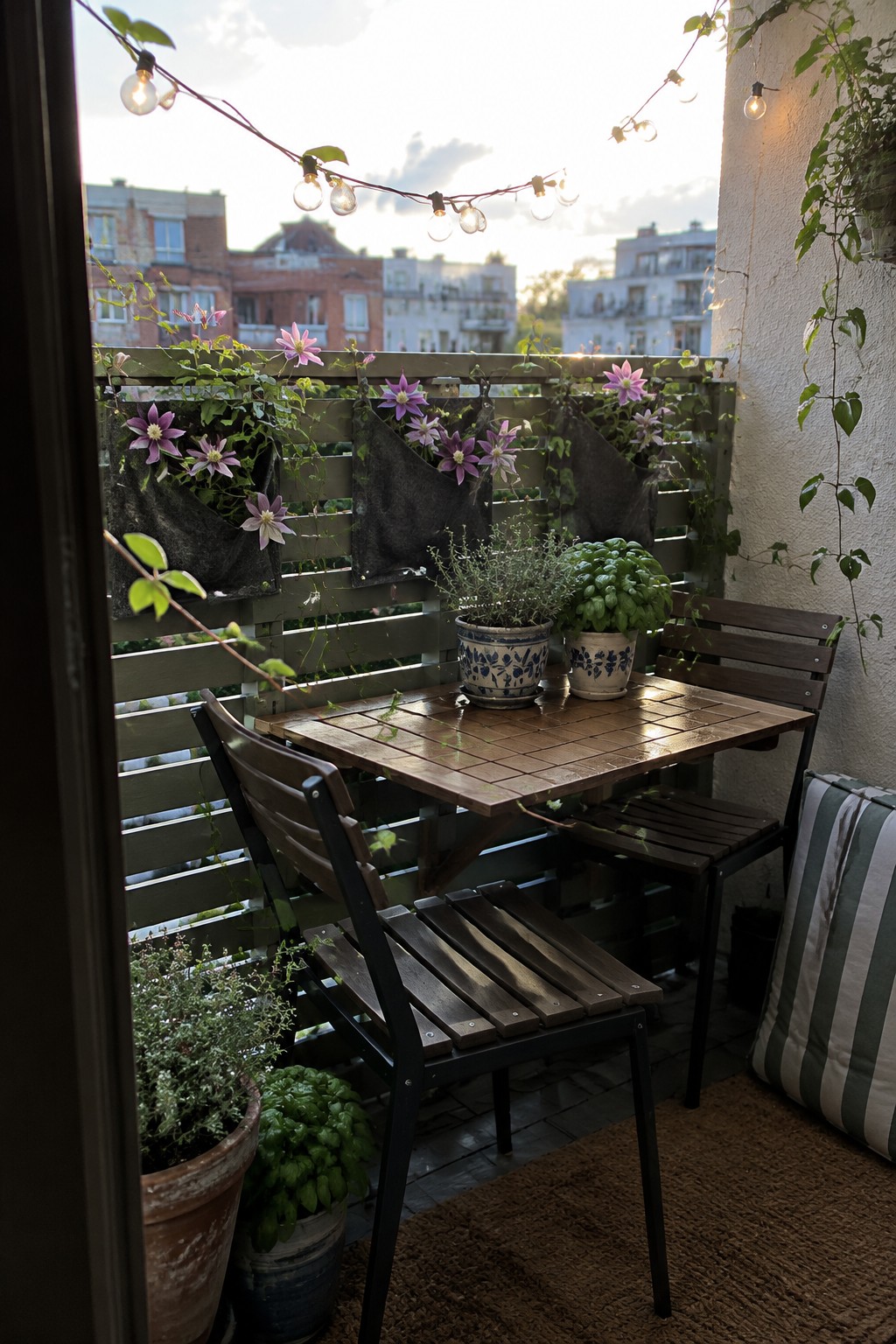
Clematis can turn a plain balcony screen into a flowering backdrop without taking up much floor space. Here, the vines climb across horizontal slats, so the flowers show up at different heights and the fence feels less bare.
Use a sturdy screen or add a simple trellis for the vines to grip. This works well on a small balcony or patio, but leave room to reach the plants for pruning and watering.
Use Clematis to Bring Color to a Garden Path
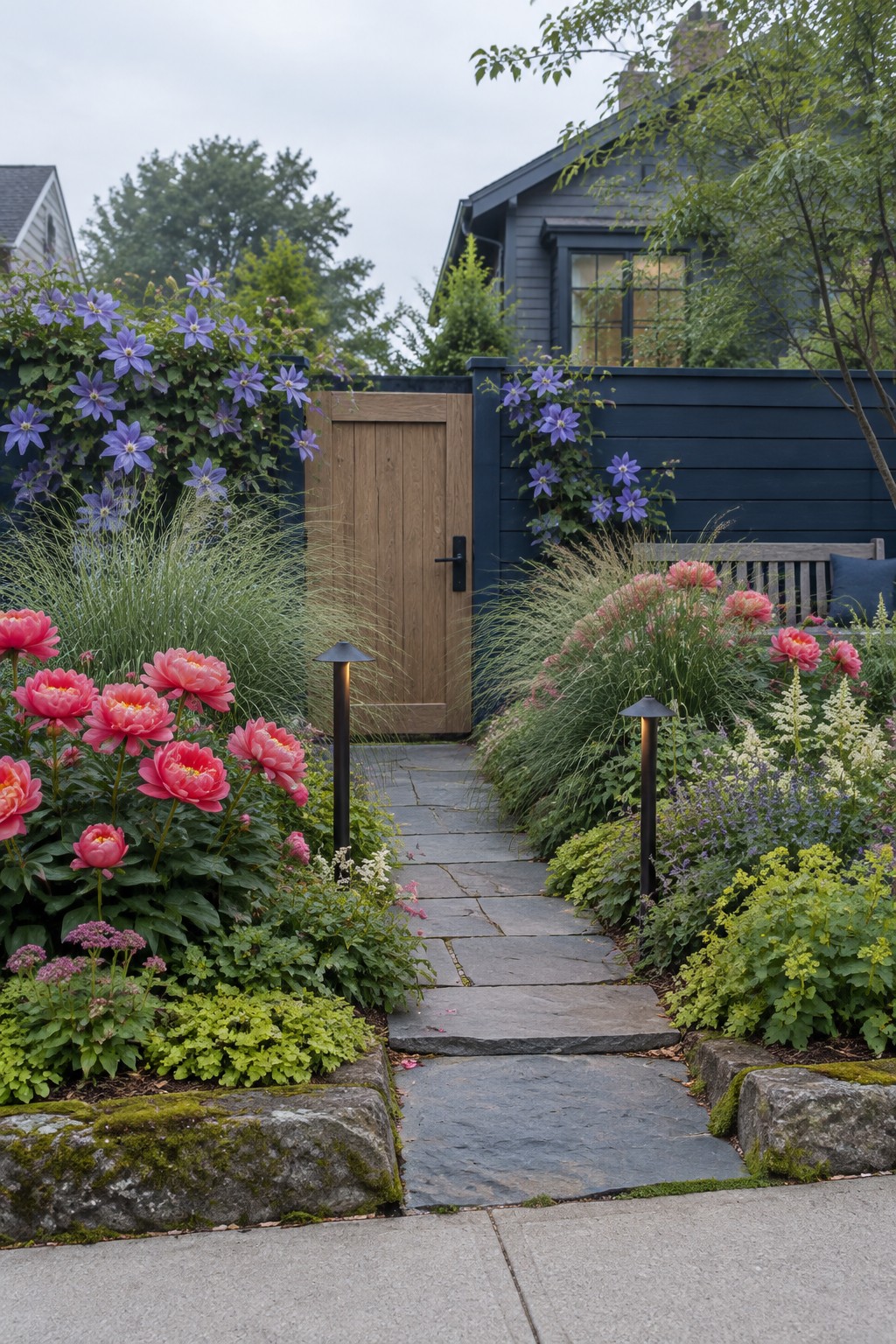
A narrow stone path feels more like part of the garden when clematis climbs nearby fencing. The flowers add color at eye level, while the open path still gives you a clear route through the planting.
Try this along a side yard or small entry path, training clematis on sturdy fence supports. Leave enough room for the plants to grow without spilling across the walking surface, and check that the fence can handle their weight.
Use Clematis to Bring Color to a Privacy Fence

A fence trellis gives clematis a place to climb, turning a plain boundary into a flowering backdrop. It’s a useful way to add color without taking up much garden space.
Attach sturdy trellis panels to the fence and leave enough room for air to circulate behind the vines. This approach works well in a narrow garden bed, where clematis can grow alongside low shrubs or other perennials.
Use Clematis to Bring Color to an Outdoor Seating Area

Clematis can make a small garden seating spot feel tucked among the flowers. Growing it up a fence adds height without taking up much patio space, and the mix of blooms keeps a plain boundary from feeling bare.
Use a sturdy trellis or wire support so the vines have somewhere to climb, and leave enough room for chairs and a clear walking path. This idea suits a narrow patio or courtyard, especially when you want a little privacy without adding a bulky screen.
Add Clematis to a Garden Fence

A garden fence can do more than mark the edge of a bed. Train clematis up a sturdy post or section of fencing, and its flowers bring color into the planting without taking up much ground space.
Give the vine a support it can grip, and tie in young stems as they grow. It suits cottage-style borders especially well, but leave enough room to reach the fence for pruning and upkeep.
Use Clematis in a Vertical Fence Garden

A fence can hold more than a climbing vine. Staggered planter boxes let you grow clematis at different heights, so flowers fill the fence instead of staying in one narrow band. It’s a useful way to add color when the ground along the fence is limited.
Secure the boxes firmly and give each plant room for its roots. Add a trellis or wire support for the stems, and check that the fence gets enough light for the clematis variety you choose. This setup works especially well in a narrow side yard or courtyard.
Use Clematis to Bring Color to a Courtyard Fence

A flowering fence can make a small courtyard feel more like a garden without taking up much floor space. Clematis is a good choice for this kind of vertical planting, and pale blooms stand out against a darker screen.
Train the vines across a sturdy trellis or open fence panels, leaving room for air to move through the foliage. This approach works well behind patio seating, but check the plant’s light needs and give its roots a cool, sheltered spot.
Grow Clematis in a Courtyard Vertical Garden

A courtyard wall can make good use of vertical space, and clematis brings color without taking up much room on the ground. Growing it among wall-mounted planters also lets the flowers mix naturally with ferns and other greenery.
Use sturdy supports so the vines have something to climb, and leave enough room to reach the plants for watering and pruning. This approach suits narrow courtyards where a full garden bed would be hard to fit.
Add Clematis to a Stone Courtyard Entrance
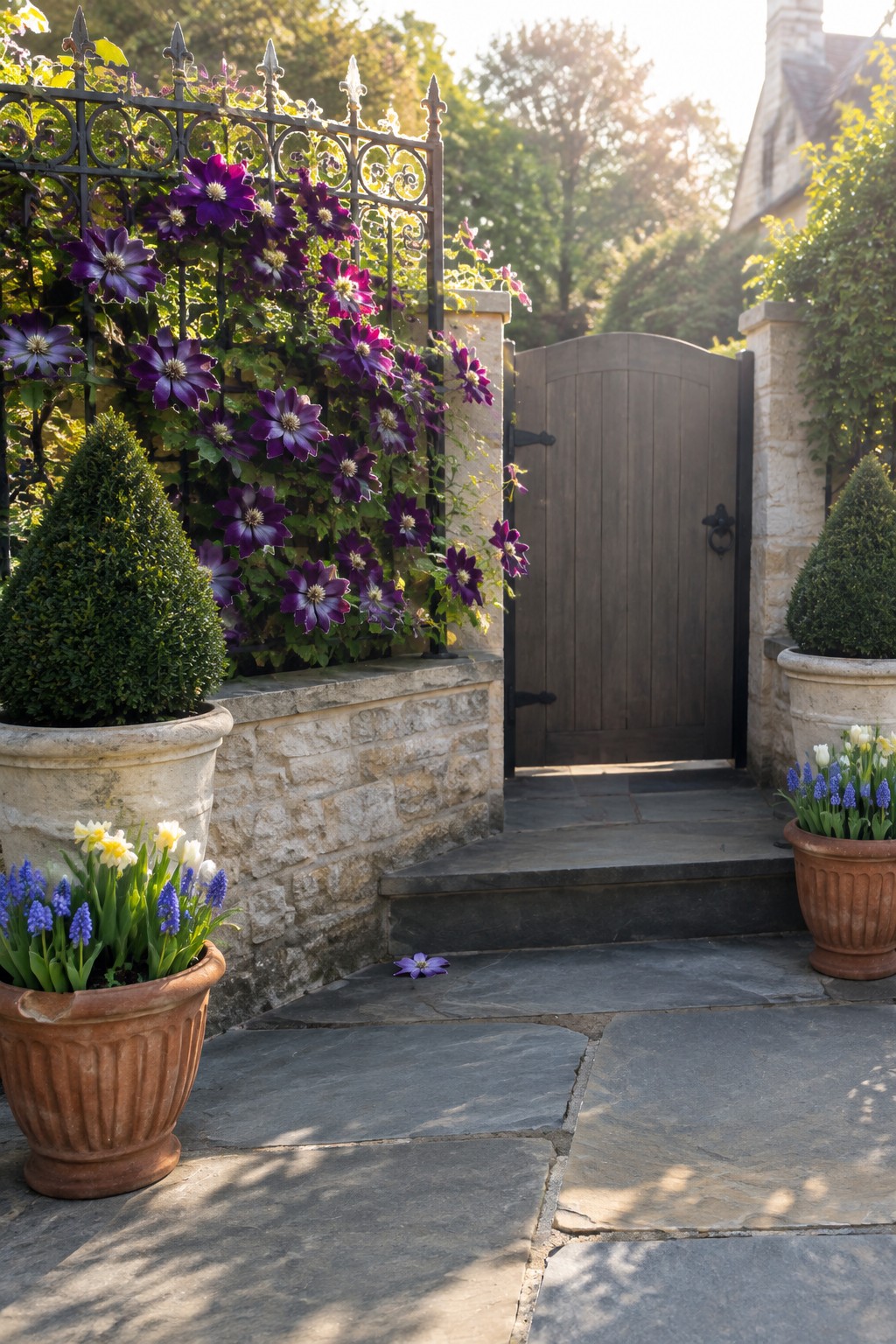
Clematis can turn a plain fence beside an entrance into a colorful garden feature. Growing it up a metal fence gives the vines room to spread vertically, while keeping the planting area fairly compact.
This approach suits a courtyard or narrow entry where there is not much room for a wide flower bed. Train the stems along the fence and trim them as needed to keep the gate clear and easy to use.
Frequently Asked Questions
Q: How do I get clematis to climb a wooden fence?
A: Add a simple trellis or wire supports with a little space between them and the fence. Clematis stems need something narrow to wrap around, since they can’t cling to a flat surface on their own.
Q: Can I plant clematis right beside the fence?
A: Leave a small gap so air can circulate and rain can reach the roots. Plant the vine where its roots get some shade, then guide the stems toward the sunnier fence.
Q: Why isn’t my clematis flowering much?
A: It may need more sunlight, or it may have been pruned at the wrong time. Check which pruning group your variety belongs to before cutting it back, since some bloom on old stems and others on new growth.
Q: What can I plant at the base of a clematis-covered fence?
A: Low-growing perennials or ground covers can shade the roots without hiding the flowers. Leave enough room around the stem to water easily and keep the base from getting crowded.
