


In a small garden, a clematis trellis can add height without taking up much of the ground, but its placement matters as much as its style.
I find these setups work best when they give the vine room to climb while keeping paths, doors, and nearby plants easy to reach.
A bare fence or narrow side yard can feel more considered once a climbing frame gives the space a clear vertical line.
The right support also needs to suit the mature plant, since a flimsy structure can buckle as the vine fills in.
Some options are simple enough to try against a wall, while others can help shape a small seating area or soften an awkward corner.
I’d save the designs that fit your garden’s light, available space, and the way you actually move through it.
Grow Clematis Up a Garden Arch

A clematis-covered arch gives a small garden a clear vertical feature without taking up much ground space. The flowers climb above the path, while the open structure still lets you walk through easily.
Choose a sturdy arch and guide the young vines along its sides as they grow. This works well over a narrow path or at a garden entrance, but leave enough room for the plant to spread without blocking the walkway.
Train Clematis Up a Narrow Wall Trellis

A slim trellis gives clematis room to climb without taking up much garden space. It also lets you bring flowers onto a plain boundary wall, where a climbing plant can add height without making the planting bed feel crowded.
Use a sturdy trellis fixed securely to a wall or fence, leaving a little space behind it for airflow and maintenance. This approach suits narrow patios and small beds; guide young stems onto the supports as they grow so the plant spreads instead of bunching in one spot.
Grow Clematis On a Balcony Trellis
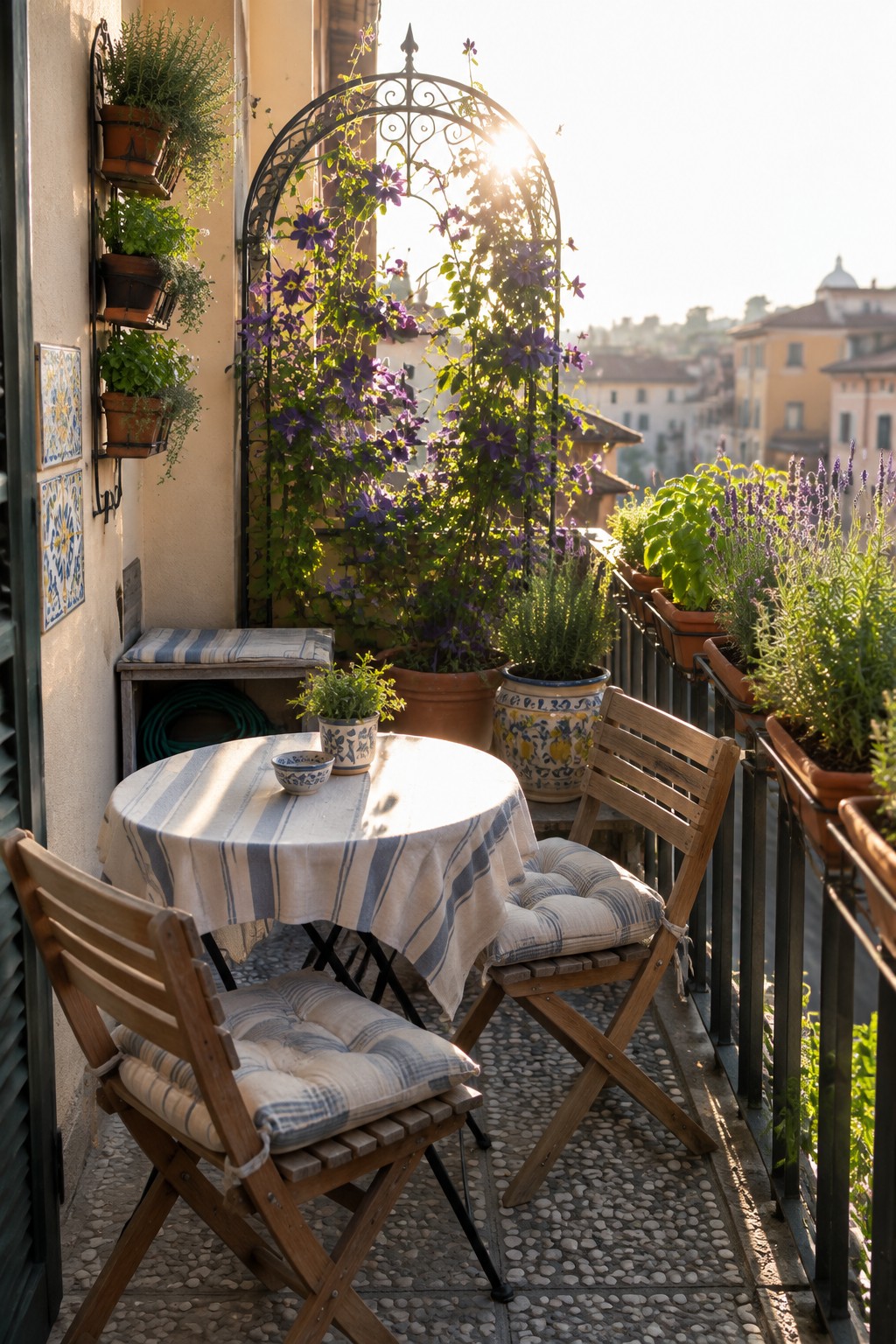
A tall trellis lets clematis grow upward instead of taking up much of a small balcony floor. It can also give a compact outdoor seating area a little more privacy without blocking it off completely.
Set the trellis in a sturdy planter or secure it to a wall, and choose a clematis suited to the light your balcony gets. Keep the base accessible for watering and pruning, especially if furniture sits close by.
Use A Trellis To Add Vertical Garden Space

A trellis lets clematis grow upward, so even a narrow garden can have room for flowering vines without giving up much planting or walking space. It also gives the garden a clear structure, especially when the plants climb along a fence or garden screen.
Choose a sturdy trellis that suits the space, and leave enough room behind it for air to circulate and for pruning. A lattice screen is a practical option beside a path or raised bed, where a spreading vine might otherwise get in the way.
Use Clematis To Mark A Garden Path

A clematis-covered arch gives a garden path a clear entrance without taking up much ground space. The flowering vine grows upward over a simple wooden structure, leaving the path open below.
This works well where a narrow walkway needs a little definition. Choose a sturdy arch and guide the clematis along its sides and top, trimming it back if it starts to crowd the passage.
Train Clematis Along a Courtyard Wall
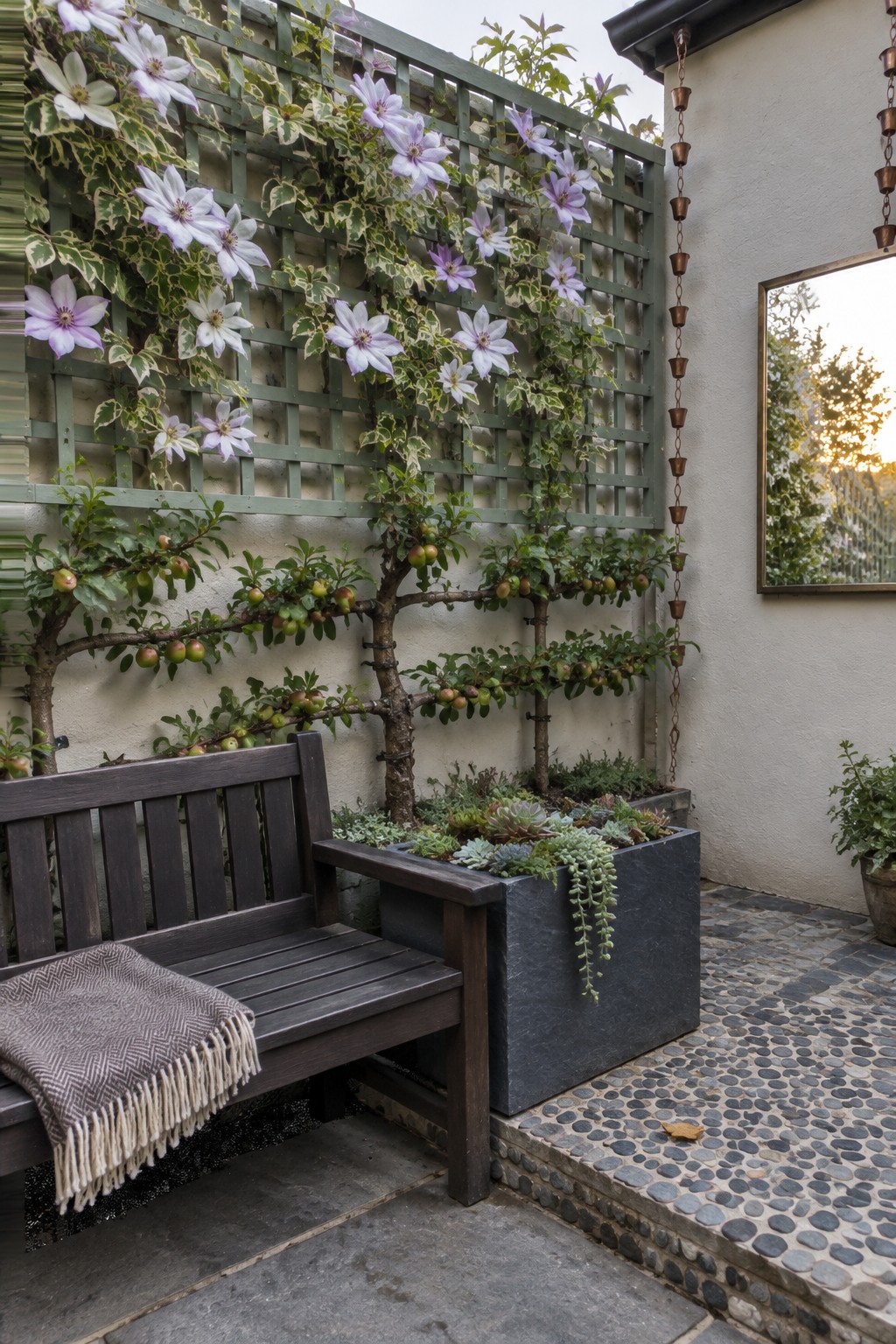
A wall trellis lets clematis grow upward without taking up much floor space. It works especially well in a small courtyard, where a flowering vine can make a plain boundary feel more like part of the garden.
Attach a sturdy trellis securely to the wall, leaving room behind it for air to circulate. Guide young stems across the lattice as they grow, and keep the base clear enough to reach for watering and pruning.
Make a Flowering Walkway With Overhead Trellises

A trellis-covered path gives clematis room to grow upward while keeping a small garden walkway open. The repeated wooden beams also make a simple gravel path feel like a defined garden feature.
Use sturdy posts and overhead supports, then guide clematis along the sides and across the top as it grows. This works best where there’s enough clearance for people to walk comfortably, and the supports need to be strong enough for mature vines.
Use Tall Supports In Raised Garden Beds

Tall, narrow trellises let clematis grow upward without taking much room from the planting bed. They also give a small garden a bit of height, which is useful when there isn’t space for a wide arbor.
Set a support securely in the bed and train the young stems onto it as they grow. This works well in raised beds along a path or wall, but leave enough room around the base for other plants and easy access.
Train Clematis on a Wall Trellis
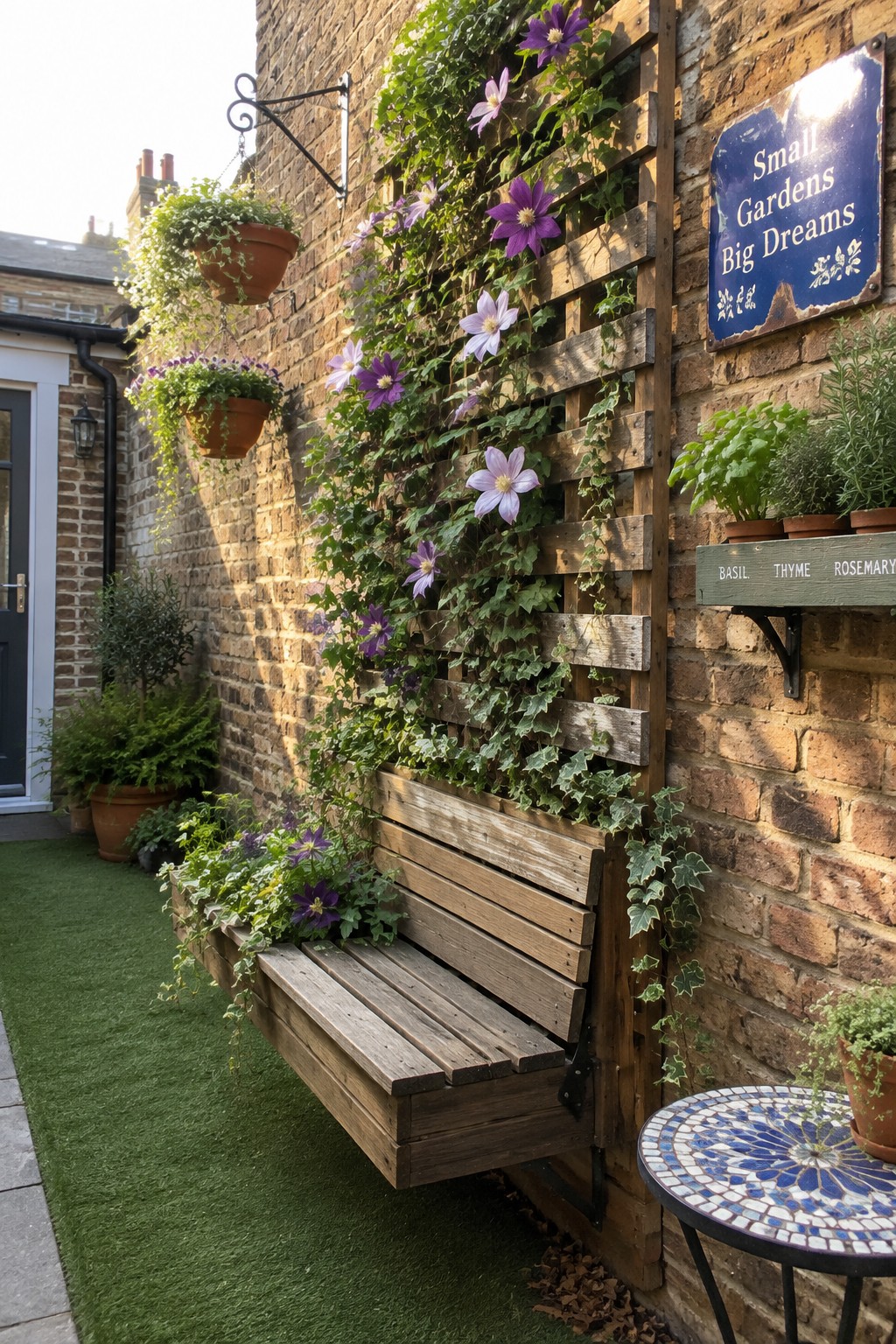
A wall trellis lets clematis grow upward when a small garden has little room for wide flower beds. The vines cover a plain wall with foliage and blooms, while the footprint stays narrow. Here, a wooden grid gives the plants plenty of places to climb.
Leave a little space between the trellis and the wall so air can move around the stems and you can reach behind it for pruning. This approach suits courtyards and narrow side yards, but check that the wall and trellis can support the mature vine.
Use a Trellis To Add Patio Privacy

A trellis can make a small patio feel more tucked away without closing it off. Here, clematis climbs a white slatted screen, adding greenery and flowers while leaving gaps for air and light.
This works well beside a seating area or along a property line where a solid fence would feel too heavy. Choose a sturdy trellis and give the vine room to grow, but keep it narrow enough that it does not crowd the patio.
Train Clematis On a Fan-Shaped Wall Trellis

A fan-shaped trellis gives clematis room to spread across a wall without taking up much garden space. The wide upper section helps the vine fill out as it grows, while keeping the planting area compact.
This style works well in a small courtyard or beside an entry. Secure the trellis firmly to the wall, and leave enough space behind it for air to circulate. A large round planter below can hold clematis where there is no garden bed.
Train Clematis on a Courtyard Wall
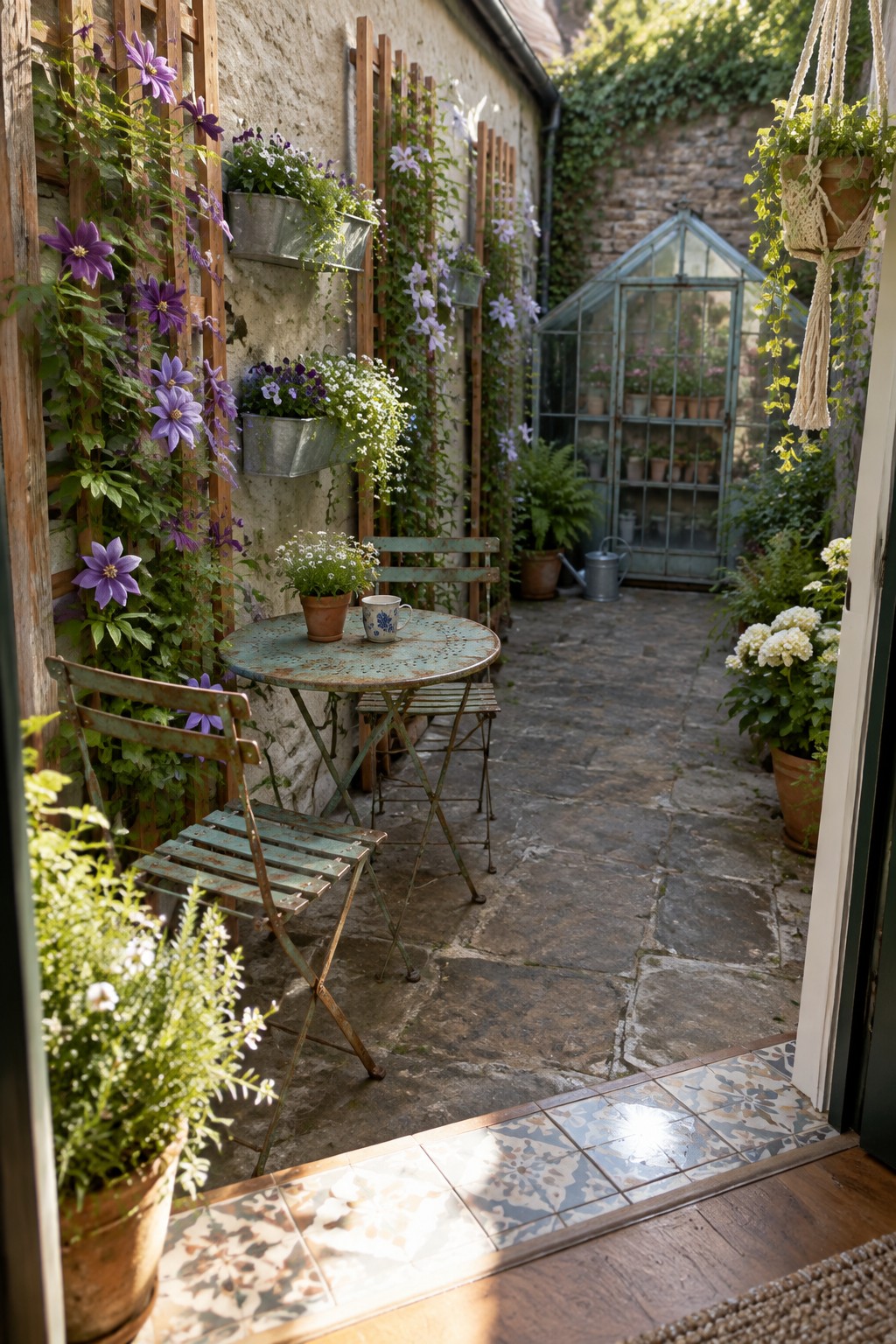
A narrow courtyard wall can be a useful place to grow clematis when there is little room for a garden bed. A simple trellis lets the vine climb upward, leaving more of the path and seating area open.
Attach sturdy supports to the wall and leave enough space behind them for air to circulate. This approach suits small enclosed gardens, but check that the clematis roots have a suitable planting spot at the base.
Use a Flowering Arch to Mark the Front Entry

A clematis-covered arch can make a small front garden feel like it has a clear entrance of its own. It gives the climbing flowers a defined place to grow and makes the walk to the door feel more intentional.
Set the arch around a path or at the foot of entry steps, leaving enough room to walk through comfortably. A metal support suits a narrow space, but check that it is firmly fixed and easy to prune around.
Grow Clematis Over a Small Patio

A pergola can turn a narrow patio into a useful outdoor room while giving clematis a place to climb. The overhead growth adds shade and makes the seating area feel more sheltered without taking up floor space.
Train the vines along the pergola beams and keep the supports sturdy enough for mature growth. This works well above a small dining nook, but leave enough open space for airflow and trim the vines before they crowd the seating.
Use Matching Trellises to Cover a Courtyard Wall
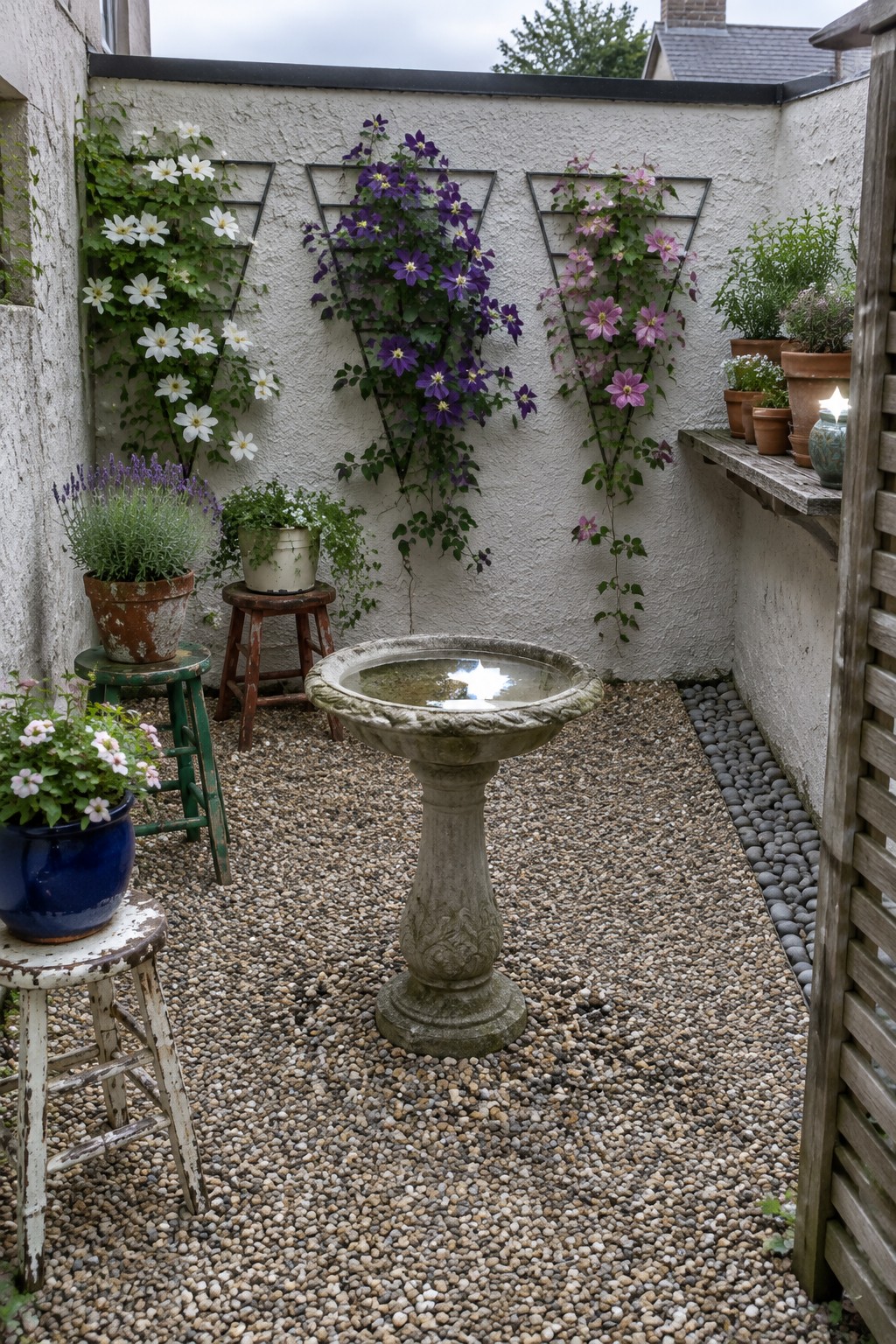
Repeating the same trellis shape across a wall gives clematis a clear place to climb and makes a small courtyard feel more organized. The flowers still bring plenty of variety, while the matching supports keep the planting from looking scattered.
Use a few slim trellises rather than one wide support, and leave enough space between them for each vine to spread. This works well on a narrow courtyard wall where planting space is limited, but make sure the supports are firmly fixed and easy to reach for pruning.
Train Clematis Along a Courtyard Wall
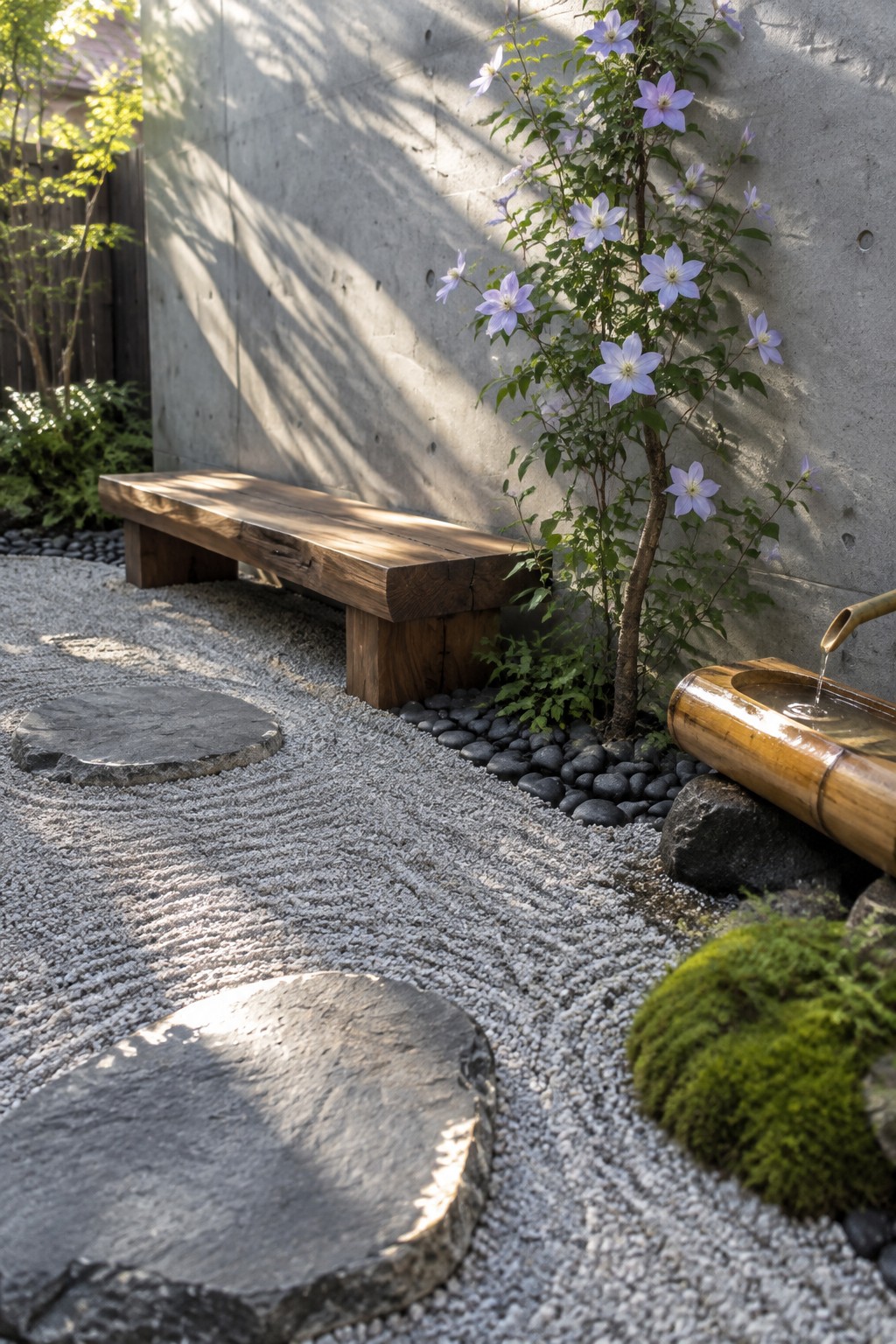
A wall can give clematis a place to climb without taking up much room in a small garden. The vine adds flowers to a plain vertical surface, while leaving the ground open for a path or sitting area.
Use a narrow trellis or discreet wires to guide the stems, and leave enough space behind the support for airflow. This works especially well in a courtyard with a sturdy wall and limited planting space.
Add Clematis to a Small Patio Seating Area

A flowering trellis can make a small patio feel more enclosed without taking up much floor space. Clematis is a good choice for this, since it grows upward and brings flowers close to the seating area.
Place a narrow trellis along a fence behind a sofa or beside a fire pit, leaving enough room to move around safely. Give the vine sturdy support and keep it clear of the fire and other hot surfaces.
Use a Spiral Trellis to Grow Clematis Upward

A spiral trellis gives clematis a narrow, vertical place to climb, which is handy when a small patio has little room for a wide support. It also keeps the flowers close to the seating area, where they can be enjoyed without taking over the floor space.
Set the support in a sturdy planter or secure it beside a garden bed, then guide new stems around the spiral as they grow. Leave enough room to reach the plant for watering and pruning, and choose a trellis that can handle the vine’s mature size.
Frequently Asked Questions
Q: What kind of trellis works best in a very small garden?
A: A flat trellis attached to a fence or wall gives clematis room to climb without taking up much floor space. Choose one with slim bars or mesh that the stems can grip, and leave a little space behind it for airflow.
Q: How do I get clematis to cover a trellis evenly?
A: Gently spread the young stems across the trellis instead of letting them all climb in one direction. Tie them loosely with soft garden ties, then guide new growth into any bare spots as the plant fills in.
Q: Can I use a freestanding trellis in a pot?
A: Yes. Pick a sturdy trellis and a deep, heavy pot so the plant and support won’t tip in the wind. Set the trellis in the pot before adding soil, which makes it easier to secure.
Q: Will clematis damage a fence or wall?
A: Clematis climbs by wrapping its leaf stems around narrow supports, so it usually won’t cling directly to a bare wall. Add a trellis or wires with a small gap from the surface, and check that the support can handle the plant as it grows.
