

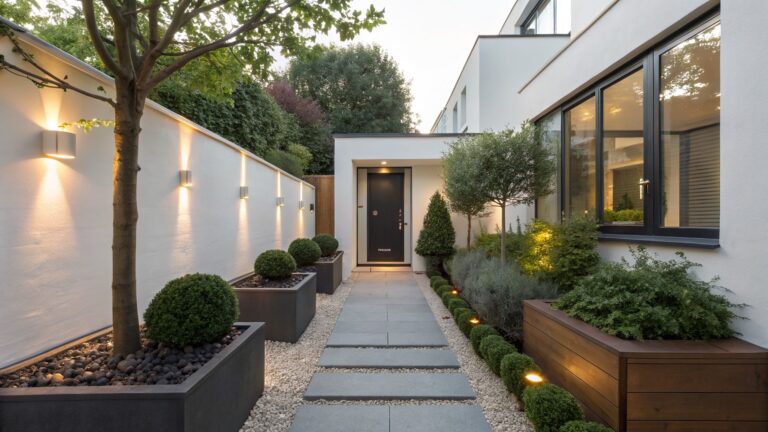
I’ve spent enough time reshaping my own yard to know that modern landscaping works best when flower beds create clear structure amid the growth. The sharp edging around them draws your eye first and keeps pathways feeling deliberate, even as seasons change. Clean finishes like that prevent the whole setup from blurring into chaos. In these designs, thoughtful layering of low growers against taller blooms holds the layout together over years, something I’ve seen fail when it’s all height and no base. A couple of these caught me thinking they’d adapt well to sloped spots like mine.
Wooden Planters Along a Lit Path
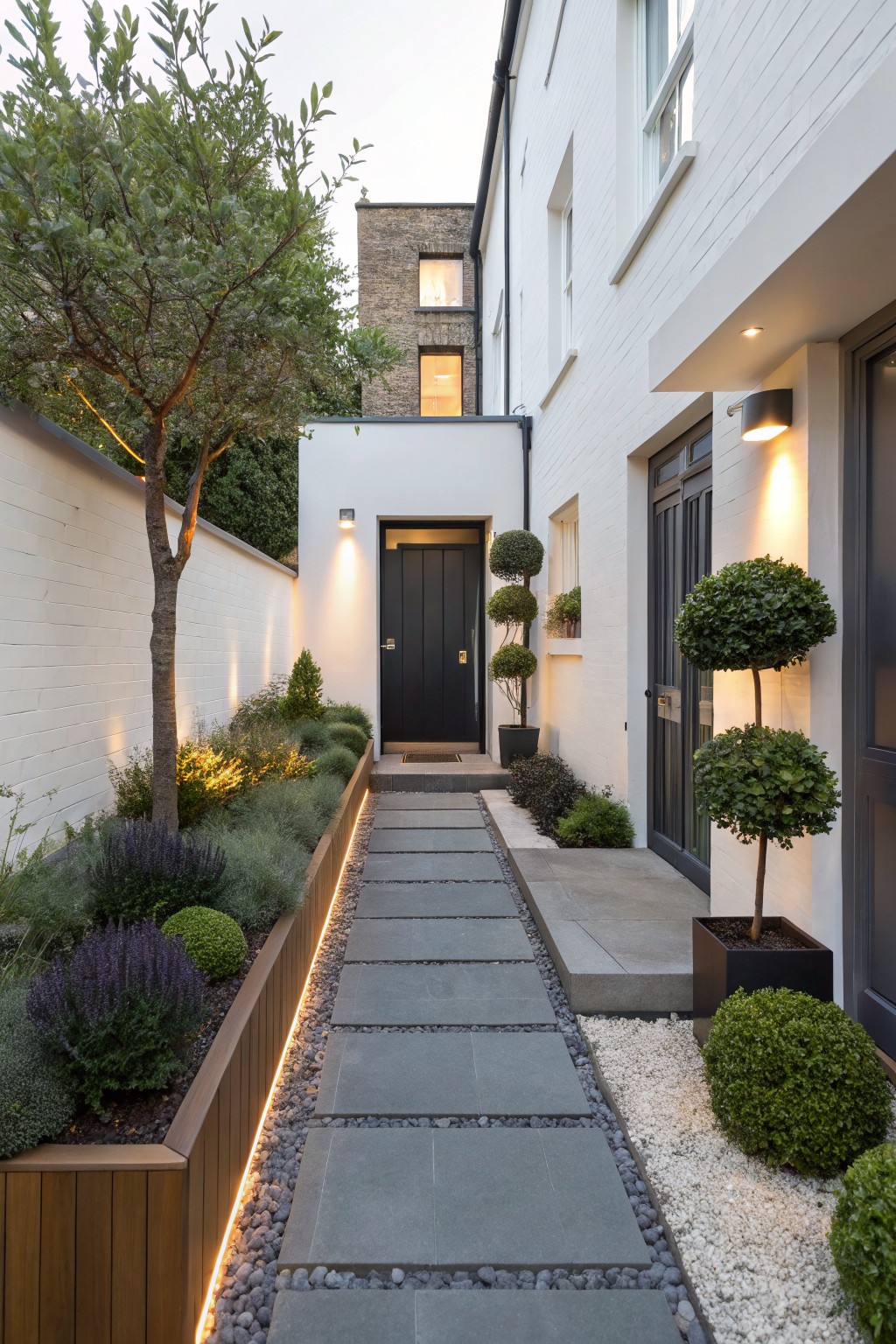
One clean way to handle a narrow garden space is lining the path with simple wooden planters. They hold low plants like lavender and grasses, keeping the bed edges sharp and contained. The LED strip lights running along the top edge light up the walk at night without extra fixtures. It makes the path feel welcoming and put-together.
This works best in side yards or back entries where space is tight. Pair it with dark stone pavers and gravel fill for drainage. Skip fussy flowers, stick to tidy evergreens or herbs. On a white-walled house, it adds just enough green without overwhelming.
Clean Paver Paths with Gravel Infill
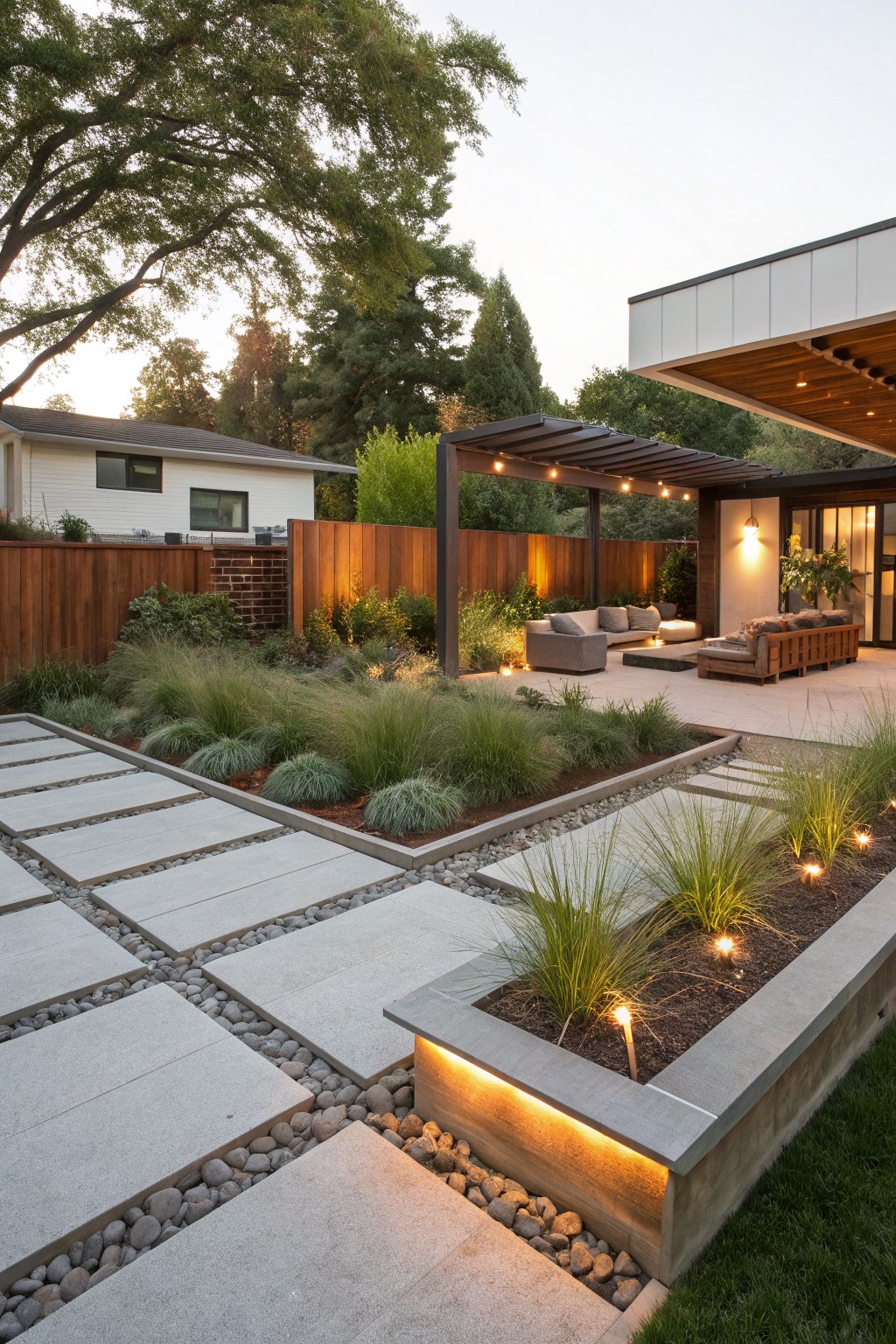
Big concrete slabs set with gravel between them make a path that cuts right through those tall grass beds. It’s straightforward and modern. The gravel keeps it from feeling too hard, and the grasses soften everything up around it. No busy patterns or tiny stones to mess it up.
You can pull this off in most backyards with some slope or flat space. Scale the slabs big for a clean stride, maybe 3 feet wide or so. Stick to drought-tolerant grasses in the beds nearby, and it stays low fuss year round. Just edge firm so weeds don’t creep in.
Terraced Retaining Walls for Sloped Yards

Sloped yards can be tough to work with, but terraced retaining walls make them workable and pretty. These concrete walls create flat beds for plants, with built-in steps that tie everything together. The setup looks clean and modern, especially with simple gravel paths between the pavers.
You can pull this off in any hilly backyard near a house. Go with smooth concrete blocks or poured walls, fill beds with low shrubs or perennials, and add path lights for evenings. It suits contemporary homes best… just make sure good drainage so walls stay solid.
Raised Beds Edging a Modern Patio
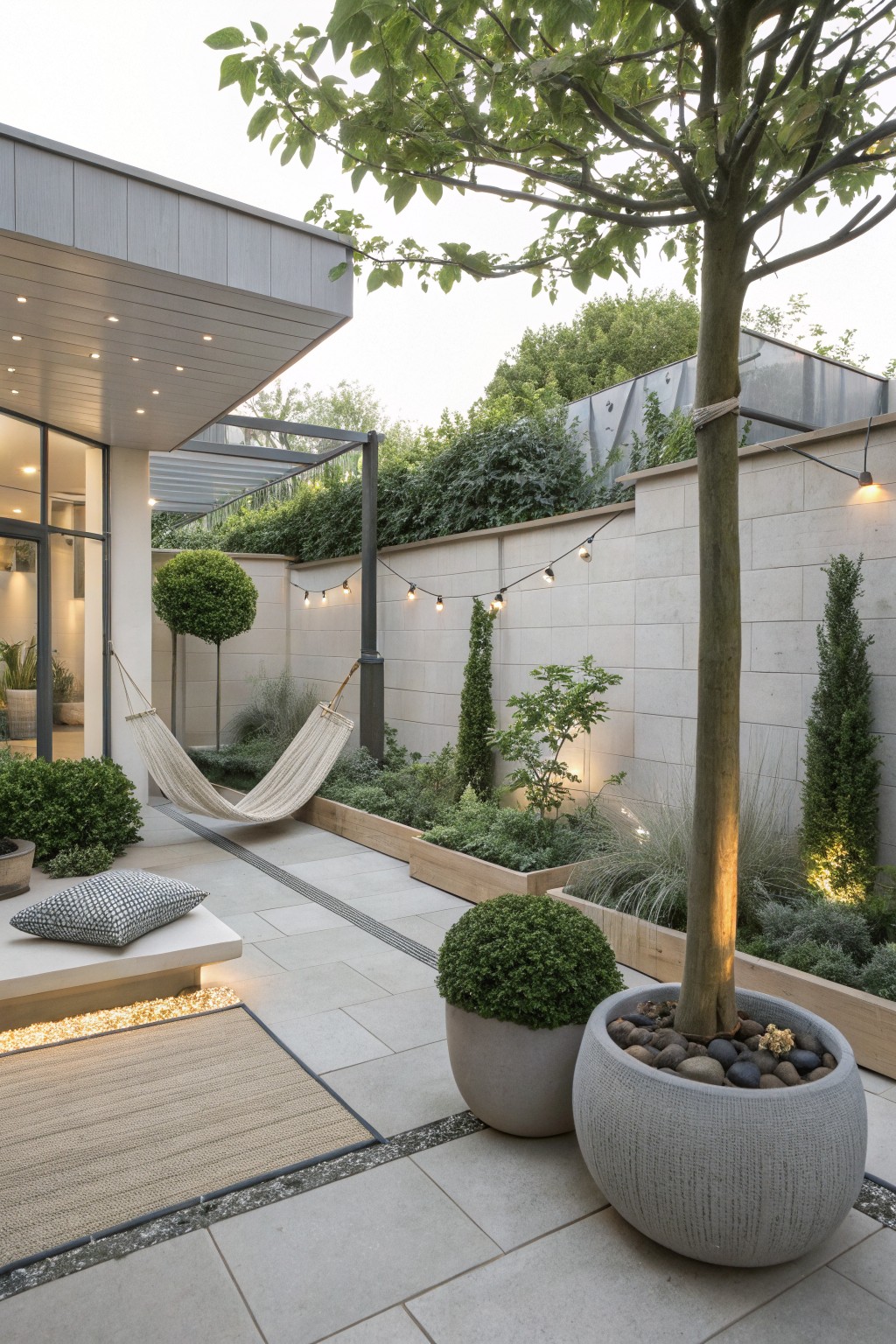
Raised beds like the wooden one running along this patio edge make a garden look finished and sharp. They hold back the plants neatly, so nothing spills onto the pavers. Grasses and low shrubs inside keep it simple and green all season. That clean border ties the hard patio surface to the softer planting without any mess.
You can add these in tight backyard spaces or next to a house extension. Use cedar or pine for the frame, keep it low at about a foot high, and fill with easy-care perennials. They suit contemporary homes best, especially where you want low upkeep. Just make sure good drainage so roots don’t rot.
Terraced Gardens with Boxwood Balls
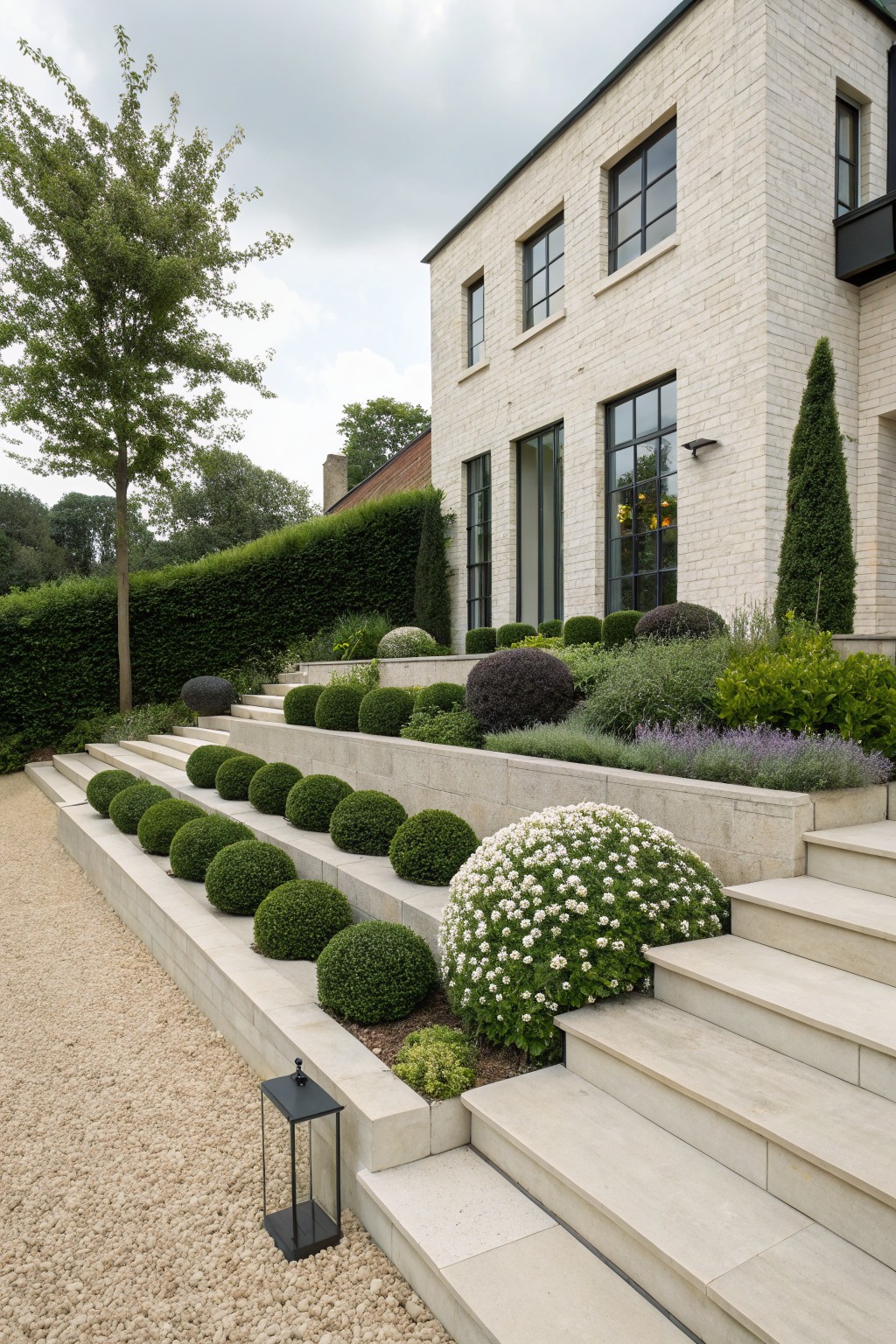
Rows of round boxwood shrubs line these stone terraces, creating a steady rhythm that pulls you up toward the house. The spheres sit neatly in raised beds along the steps, paired with soft white flower clusters for a bit of contrast. It’s a simple way to make a slope feel organized and welcoming, without much color fuss.
This works best on sloped sites where you want low upkeep. Pick compact evergreens that hold a ball shape, and space them evenly against clean stone walls. It suits modern homes with light brick or stucco. Just keep the clipping regular… or it loses that crisp look fast.
Straight Pathway Lined with Flower Beds
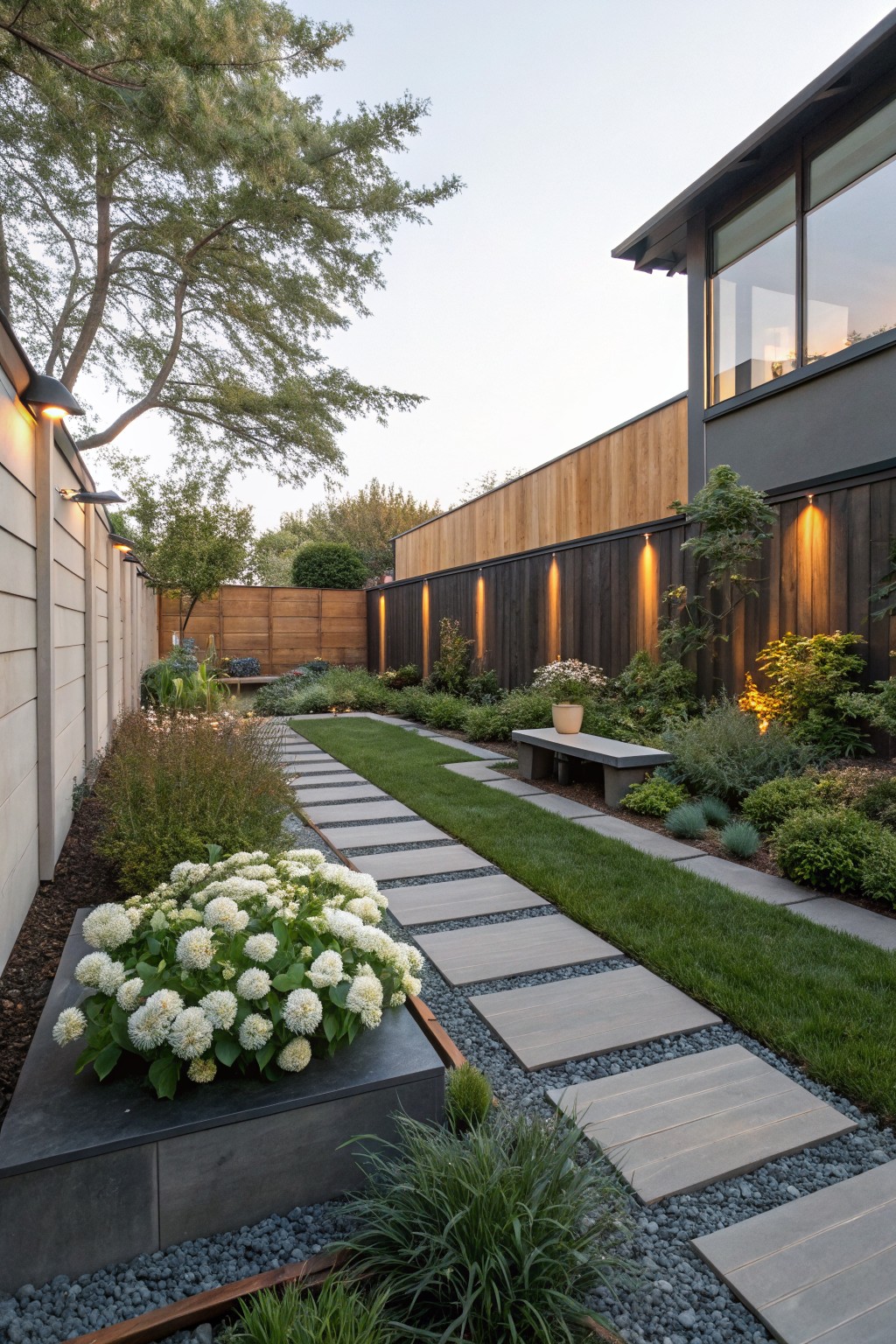
A straight path like this one keeps things simple and directs you right through the garden. Wide concrete slabs spaced out with a thin grass strip in between make walking easy, while low beds packed with plants like those big white blooms hug both sides. It pulls the eye forward without any fuss, and the mix of hard path and soft planting feels balanced and calm.
You can pull this off in a side yard or along the back of the house, especially where space is tight. Pick sturdy pavers that match your house, keep beds low so they don’t crowd the path, and plant for year-round interest. Watch the scale though. Too wide a path overwhelms a small spot.
Terraced Stone Steps in Sloped Yards
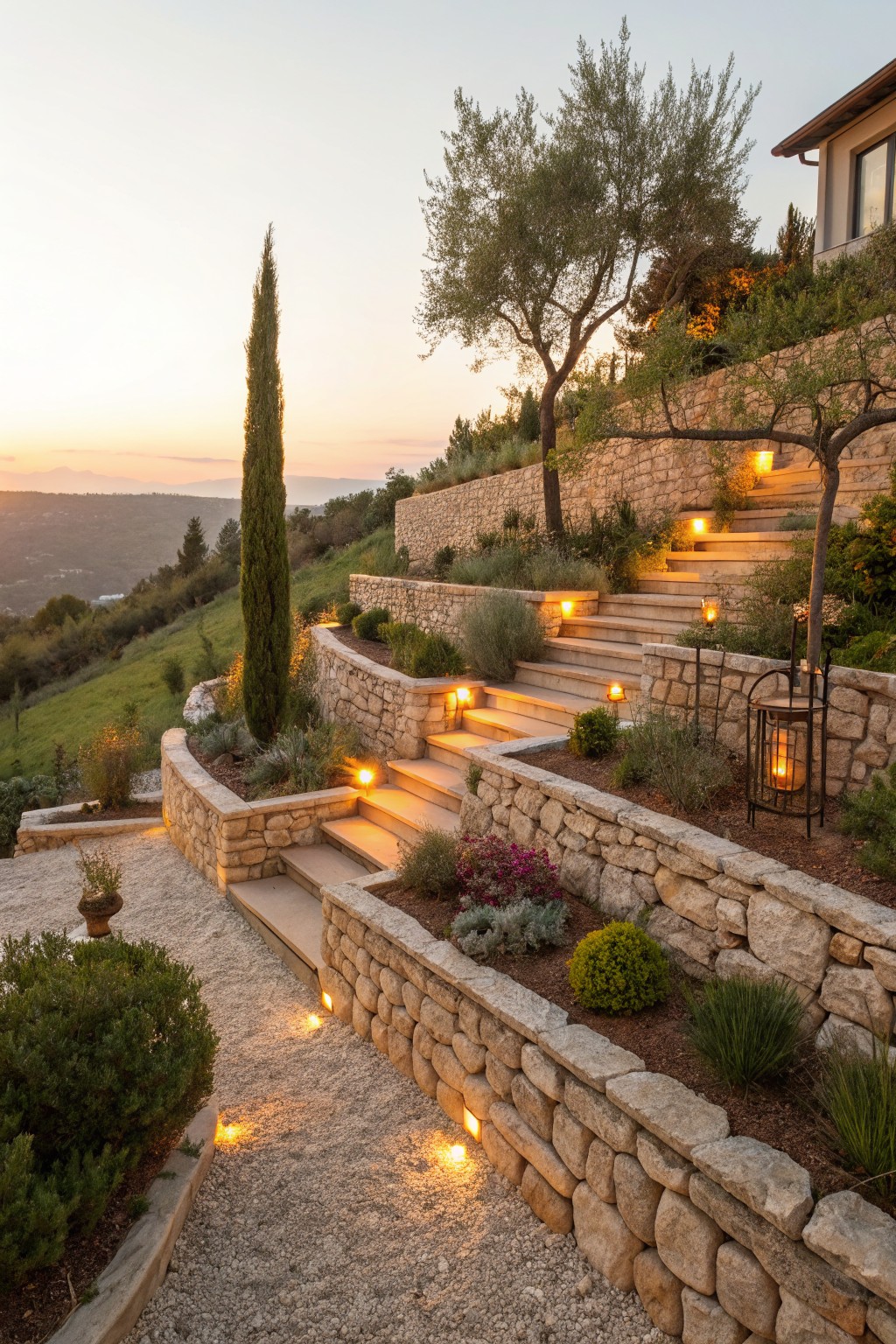
One smart way to handle a hillside is terraced steps built right into stone retaining walls. You get these clean, wide stone stairs that climb up gradually, with planting beds tucked along the edges. Little lanterns glow along the steps at dusk, and drought-tolerant plants like olive trees and grasses fill in the beds without spilling over. It keeps everything neat and walkable, turning a tricky slope into something you actually use.
This setup works best on moderate slopes where you want low upkeep. Stone like this blends with natural surroundings, and the beds let you add color without much fuss. Pair it with gravel paths at the base for easy access. Just make sure the walls are sturdy, especially if you’re in a rainy spot… engineer them right from the start.
Built-In Benches Along Garden Walls
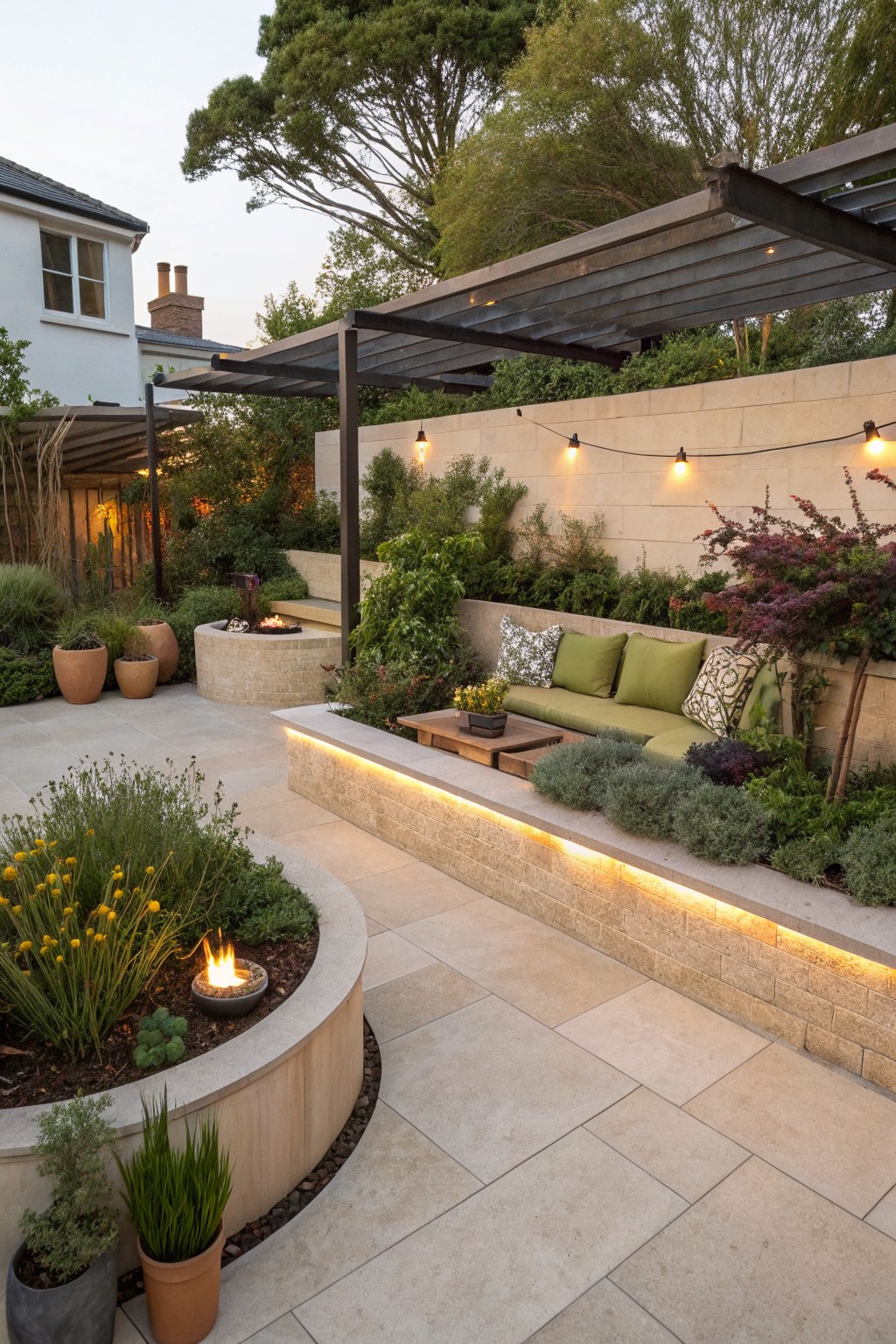
One nice touch here is the way the bench seats are tucked right into those raised stone walls. It keeps the patio open while giving spots to sit close to the plants. The soft LED strip along the edge lights it up at night without any fuss, and the cushions make it comfortable for hanging out.
This setup works great in yards with some slope or where you want to save space for walking around. Build them at standard seat height, about 18 inches, and add weatherproof pillows. It fits modern clean looks best, but leave room for plants to grow over the edge so it doesn’t feel too boxy.
Raised Beds Edging a Lit Path
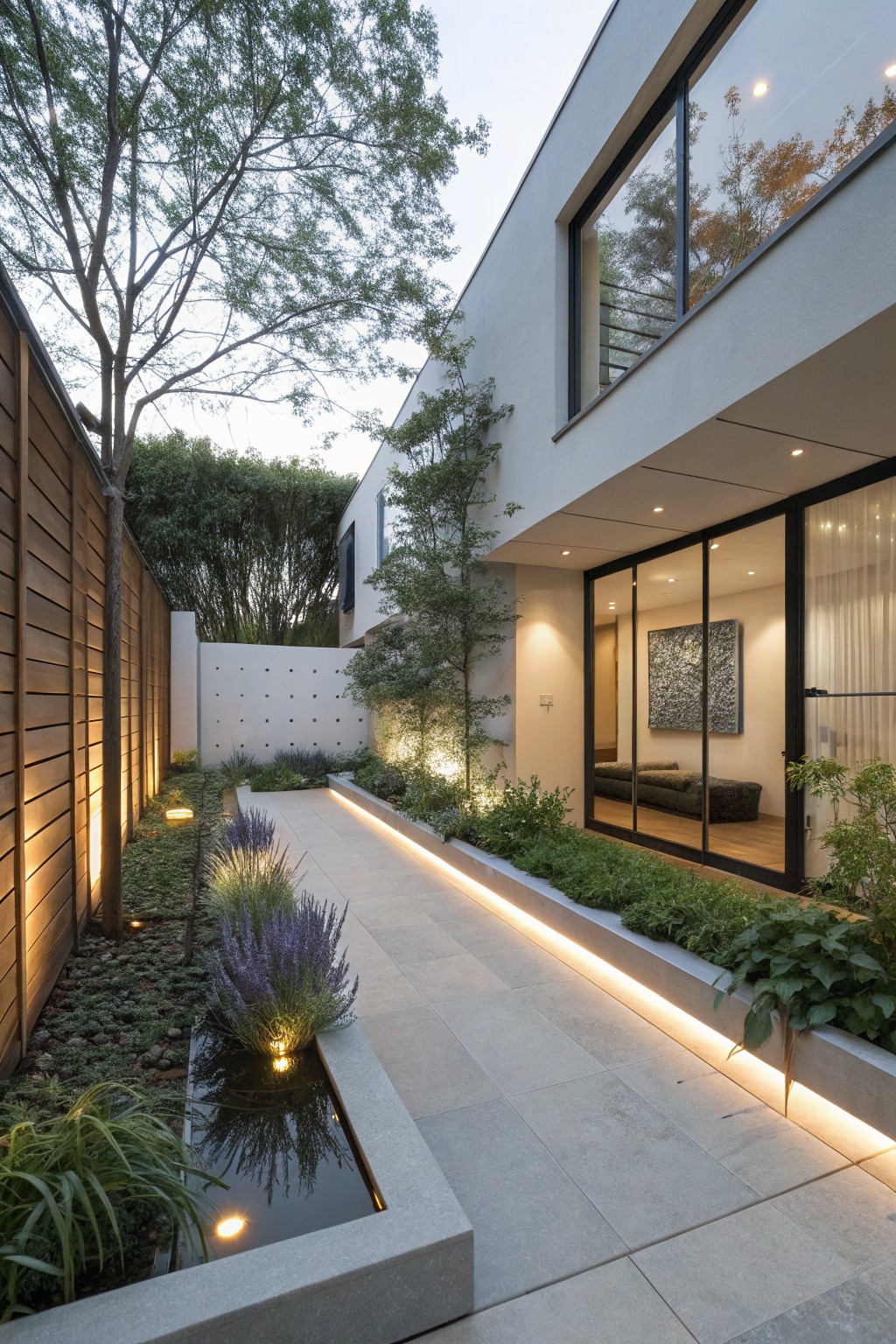
A simple stone walkway runs alongside a long raised concrete bed packed with lavender and grasses. Thin LED lights tucked into the edge make the whole thing glow softly at dusk. It pulls your eye straight to the house door and keeps everything looking sharp and contained.
This works best in skinny side yards or as an entry lead-in where space is tight. Pick tough, upright plants so they stay off the path. Concrete edging holds up well against modern homes, but softer stone could fit older places too. Just keep the bed low enough for easy trimming.
Poolside Flower Beds with Pebble Edges
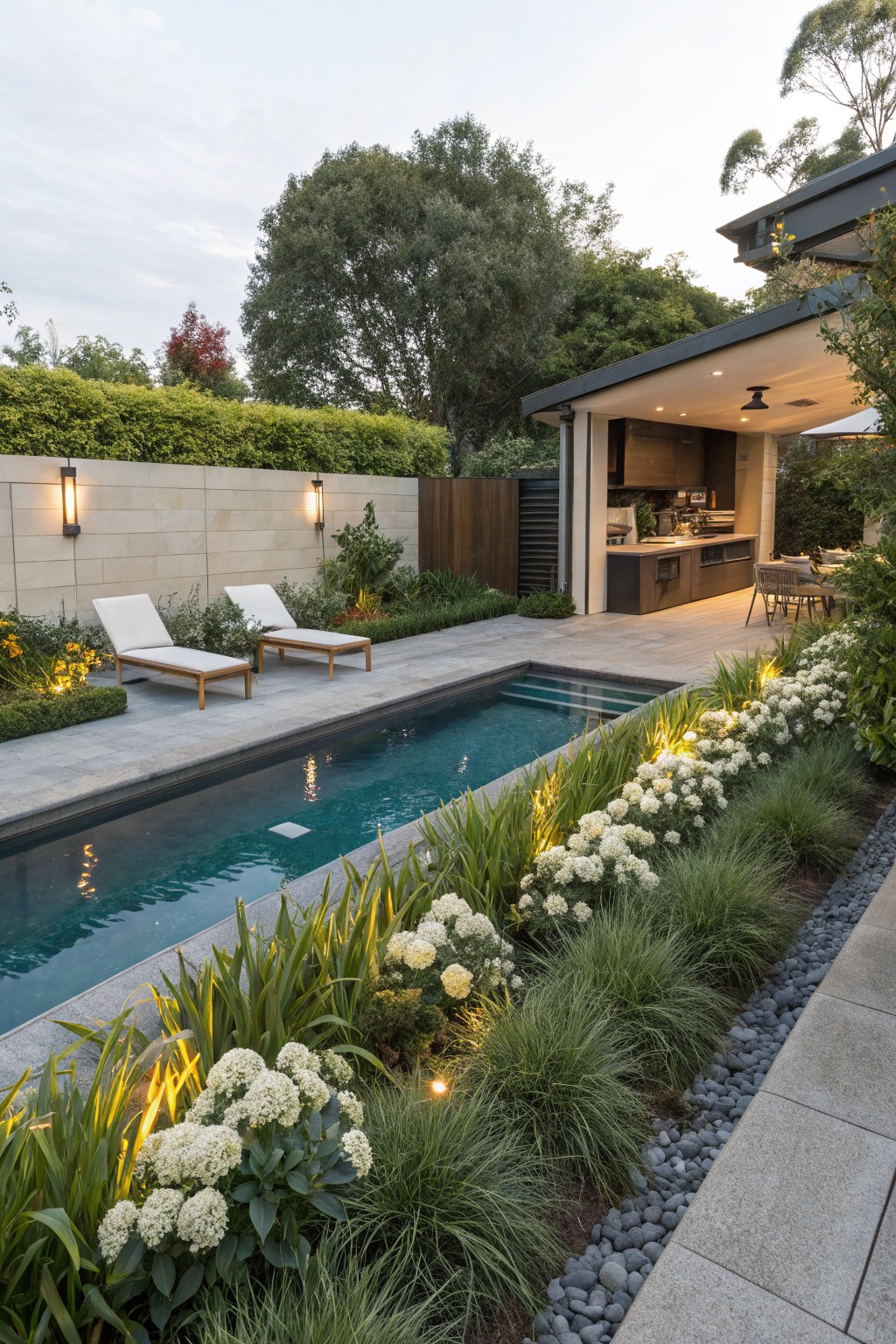
A narrow pool like this gets a fresh look from beds packed with white hydrangeas and tall grasses right along the edge. The pebbles in the mulch keep everything tidy without much upkeep, and the soft plants add some movement against the hard lines of the water and pavers. It’s a simple way to make a small pool area feel more like part of the garden.
You can pull this off in tighter yards where space is at a premium. Stick to these kinds of low-water plants along plunge pools or skinny patios, and edge with rounded pebbles to avoid sharp lines. Works best in modern setups, but watch the sun exposure so the whites stay bright.
Raised Concrete Planters Line Garden Paths
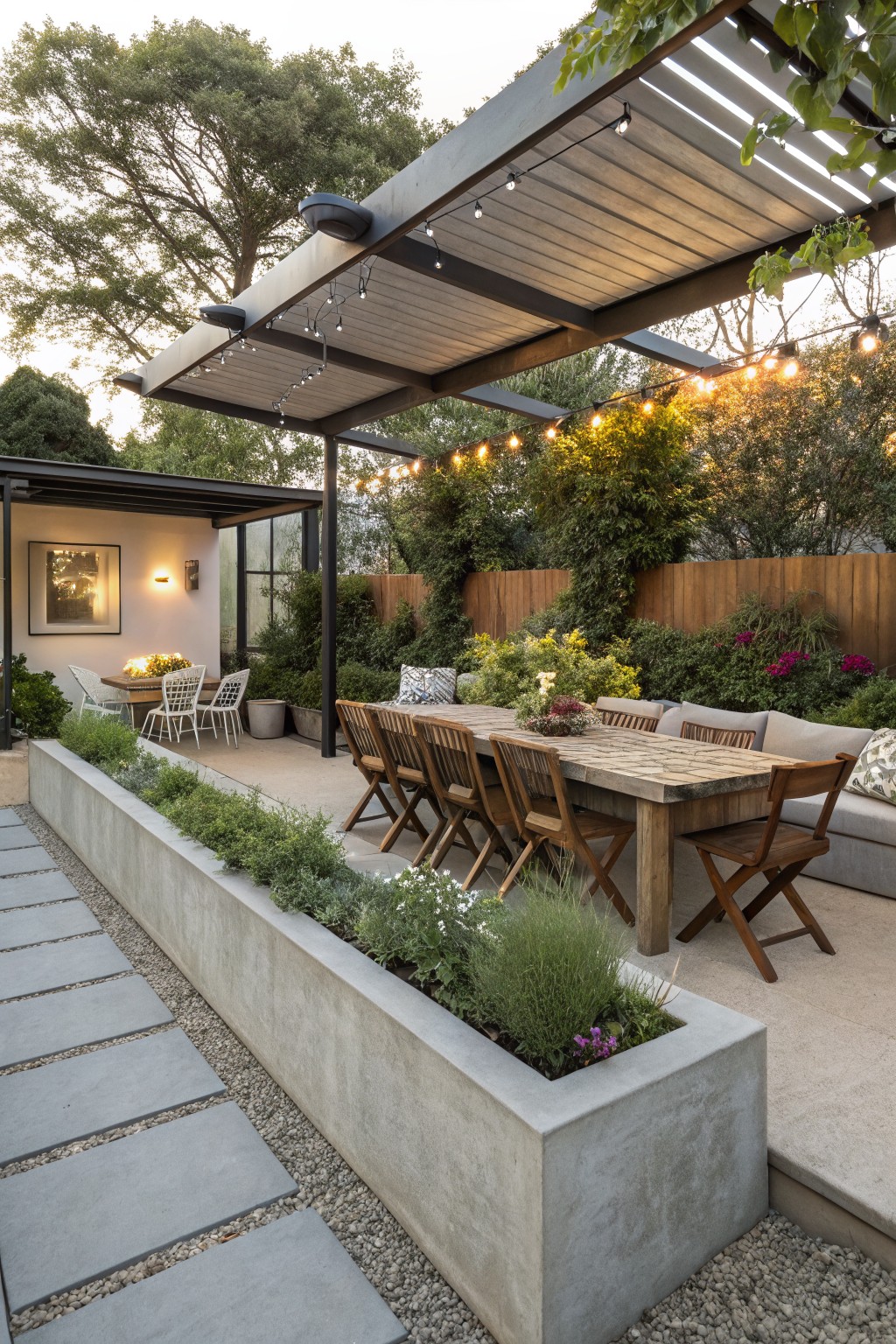
Tall raised concrete planters like these make a garden feel put together fast. Filled with wispy grasses and a few colorful flowers, they run right along the path, keeping everything neat and modern. The plain gray concrete fits right in with pavers and doesn’t distract from the plants.
You can use them to edge walkways or split up yard zones, especially around patios or seating spots. They work best in sunny backyards where low-water plants thrive. Just keep the beds narrow so they don’t crowd the space… and go for simple shapes to stay clean-looking.
Raised Succulent Beds Frame the Entry
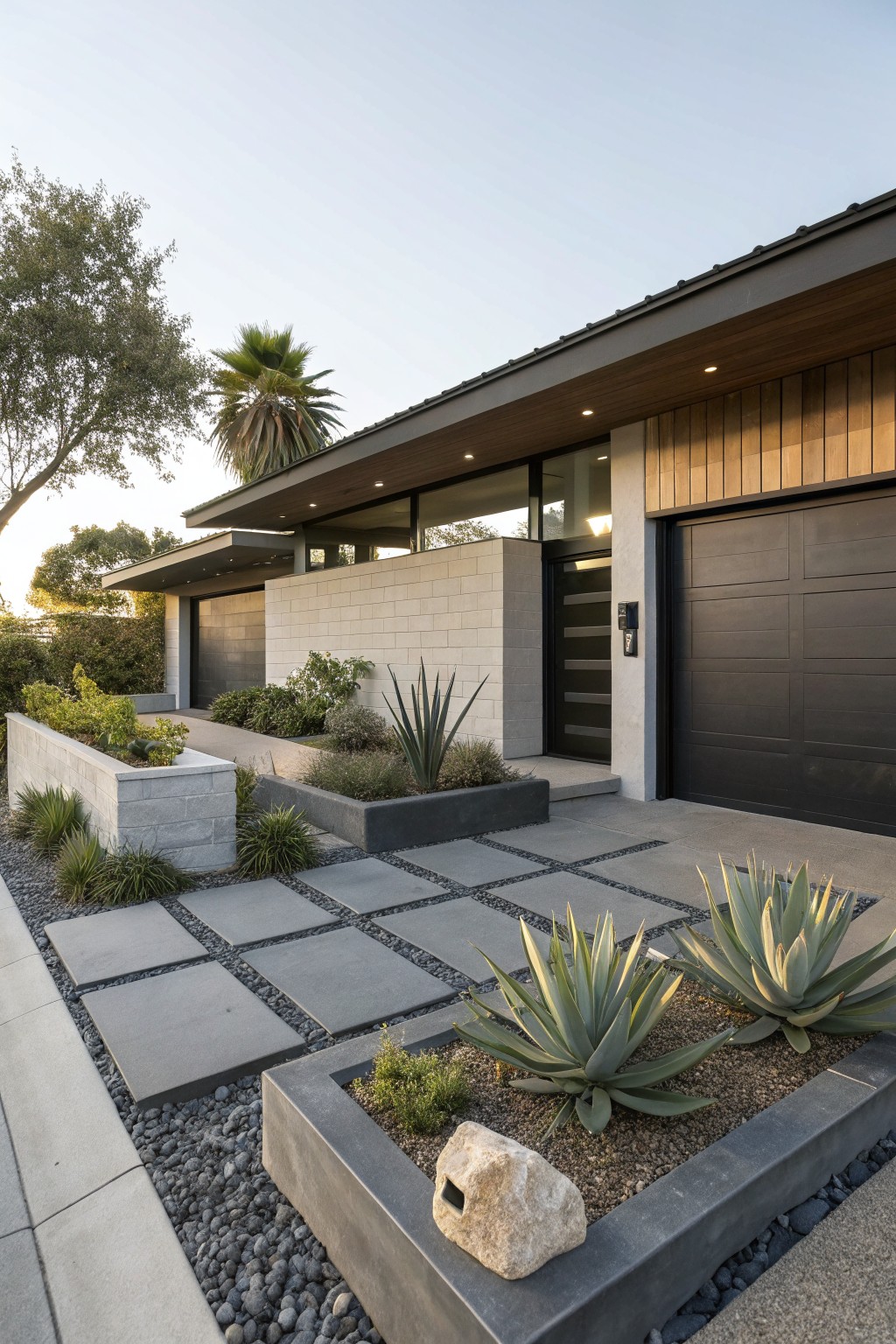
One simple way to give your front yard a modern edge is with raised concrete beds filled with bold agaves. These planters stand out because they add height and texture without much upkeep. The clean shapes echo the house lines, and the succulents give a sculptural feel that looks sharp year-round.
You can pull this off in sunny spots where water is at a premium. Line them along a path to the door, fill the gaps with pebbles, and keep the edges crisp. It suits flat lots or modern homes best… just pick tough plants that match your climate.
Raised Beds Shape Flower Gardens
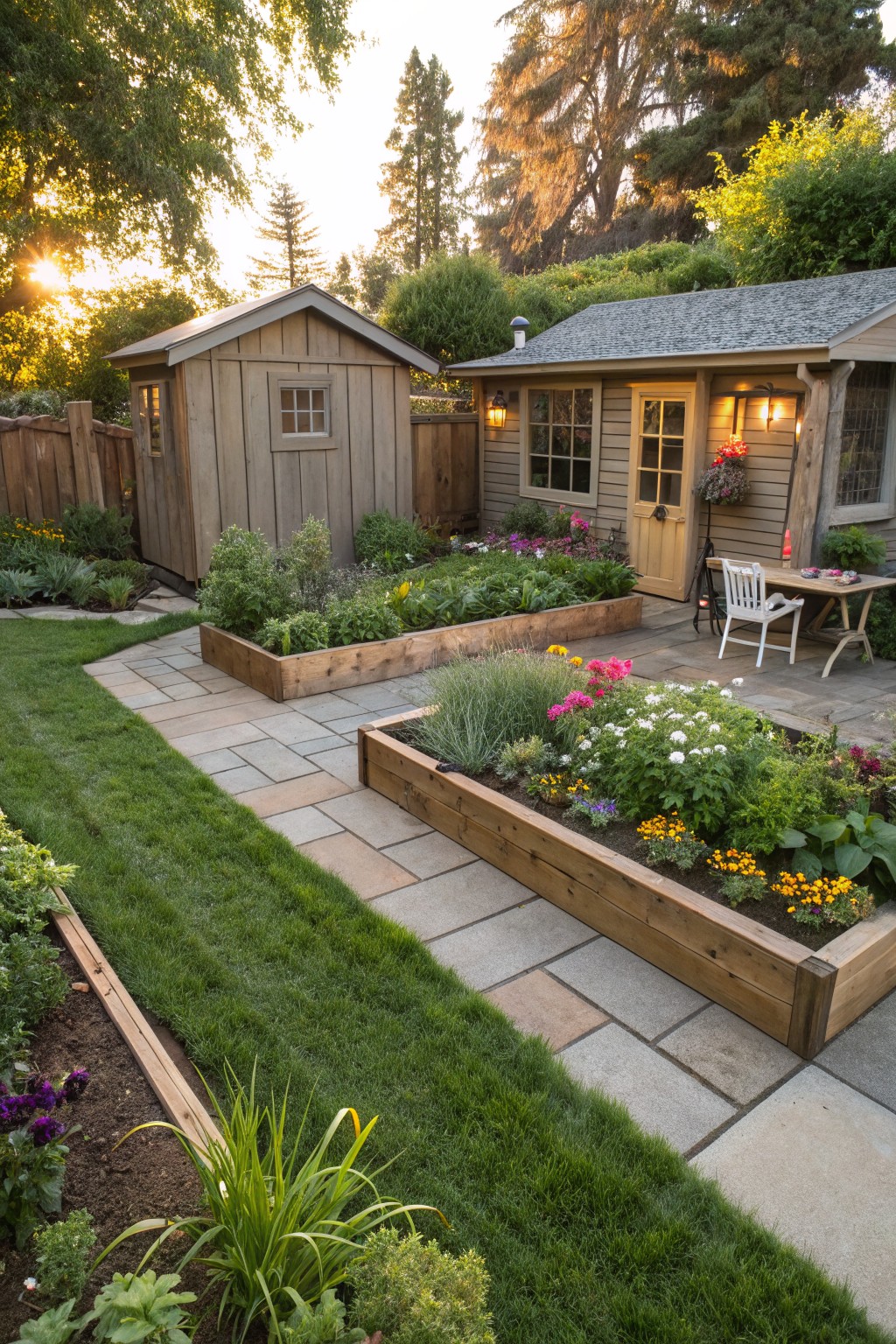
Raised wooden beds like these keep a backyard garden looking sharp and organized. They box in the plants nicely so flowers and herbs stay put, no mess creeping into the grass or paths. It’s a simple fix that adds real structure without feeling stiff.
Line them up along a stone walkway or tuck them by a shed for easy access. Fill with a mix of colors and heights, like the pinks and yellows here, and it works in most yards. Suits smaller spaces especially well, keeps weeding straightforward. Just make sure the wood is treated to last.
Raised Steel Planters Line a Formal Path
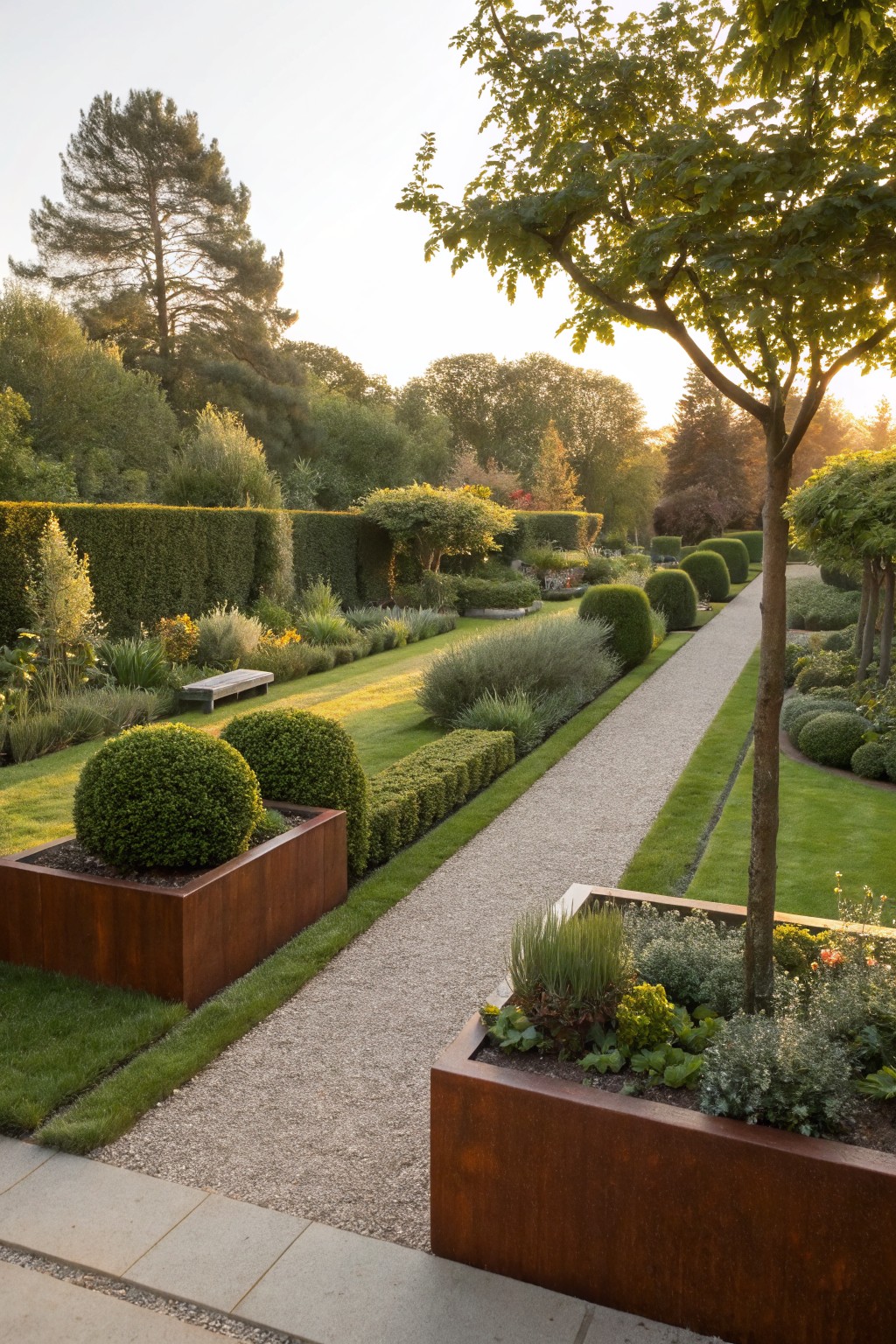
These raised Corten steel planters make flower beds look sharp and contained. They’re filled with round boxwoods up top and some trailing plants below, right along a gravel path. The rusty finish blends with the garden greens without overpowering them. It keeps everything tidy, especially in a structured layout like this.
You can use them to edge paths or define borders in any backyard garden. They work well for modern homes or even traditional ones wanting cleaner lines. Low maintenance too, since the metal holds soil back and weeds out. Pick sizes that fit your space… smaller for city yards, bigger for open lawns.
Winding Paths in Desert Gardens
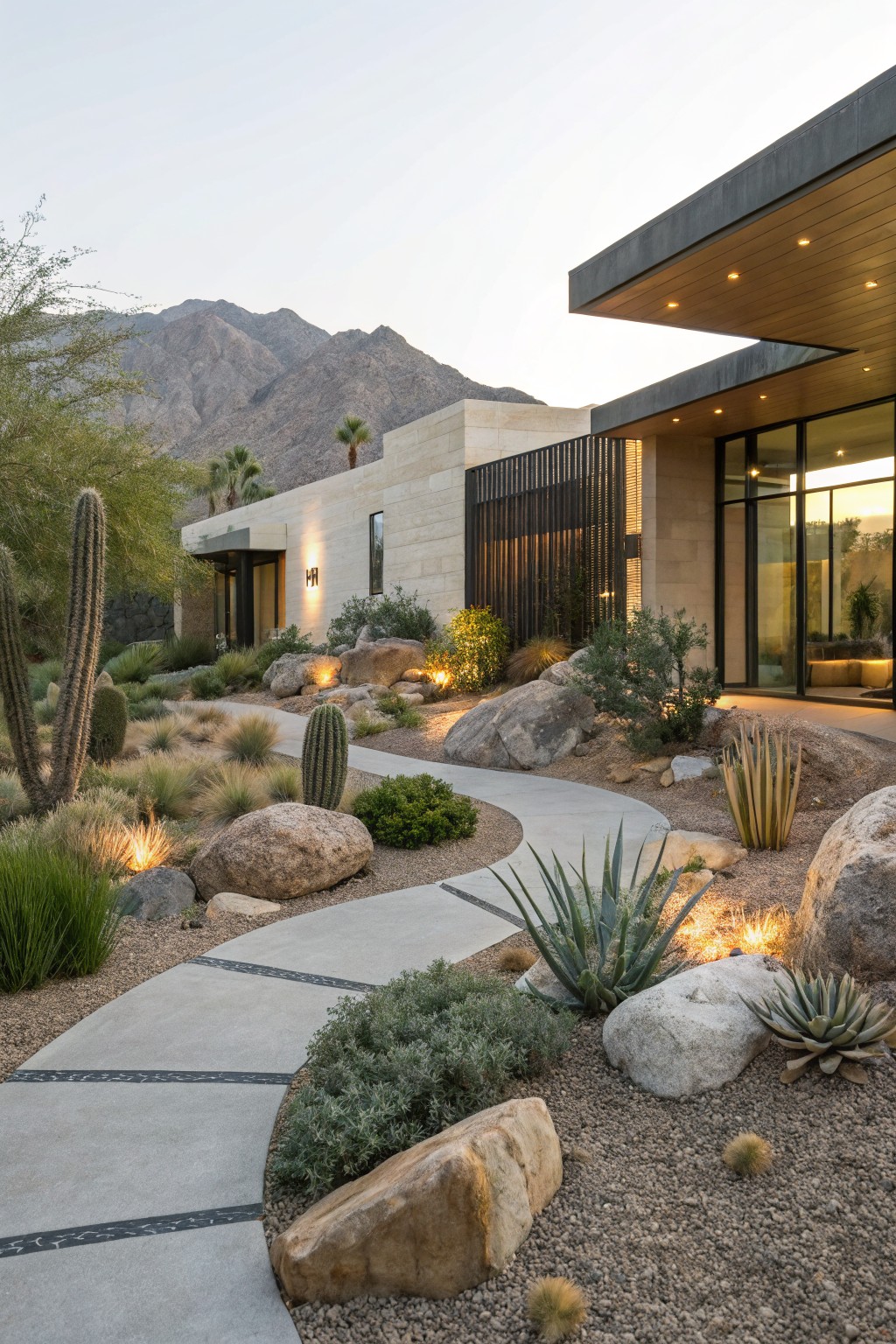
A gentle curving path like this one makes getting to your front door more interesting than a straight shot. Made from simple concrete with dark stone inlays, it weaves around big boulders and tough desert plants such as tall cacti and spiky agaves. The whole thing feels right at home against rocky mountains and a modern house facade. No fussy lawns or flowers needed.
You can pull this off in any sunny, dry yard where water saving matters. Stick to local succulents and grasses for low upkeep, and cluster rocks to guide the path naturally. It suits entry approaches best… especially if your home has clean lines already. Just keep curves wide enough so it does not feel cramped.
Tiered Metal Retaining Walls for Sloped Yards
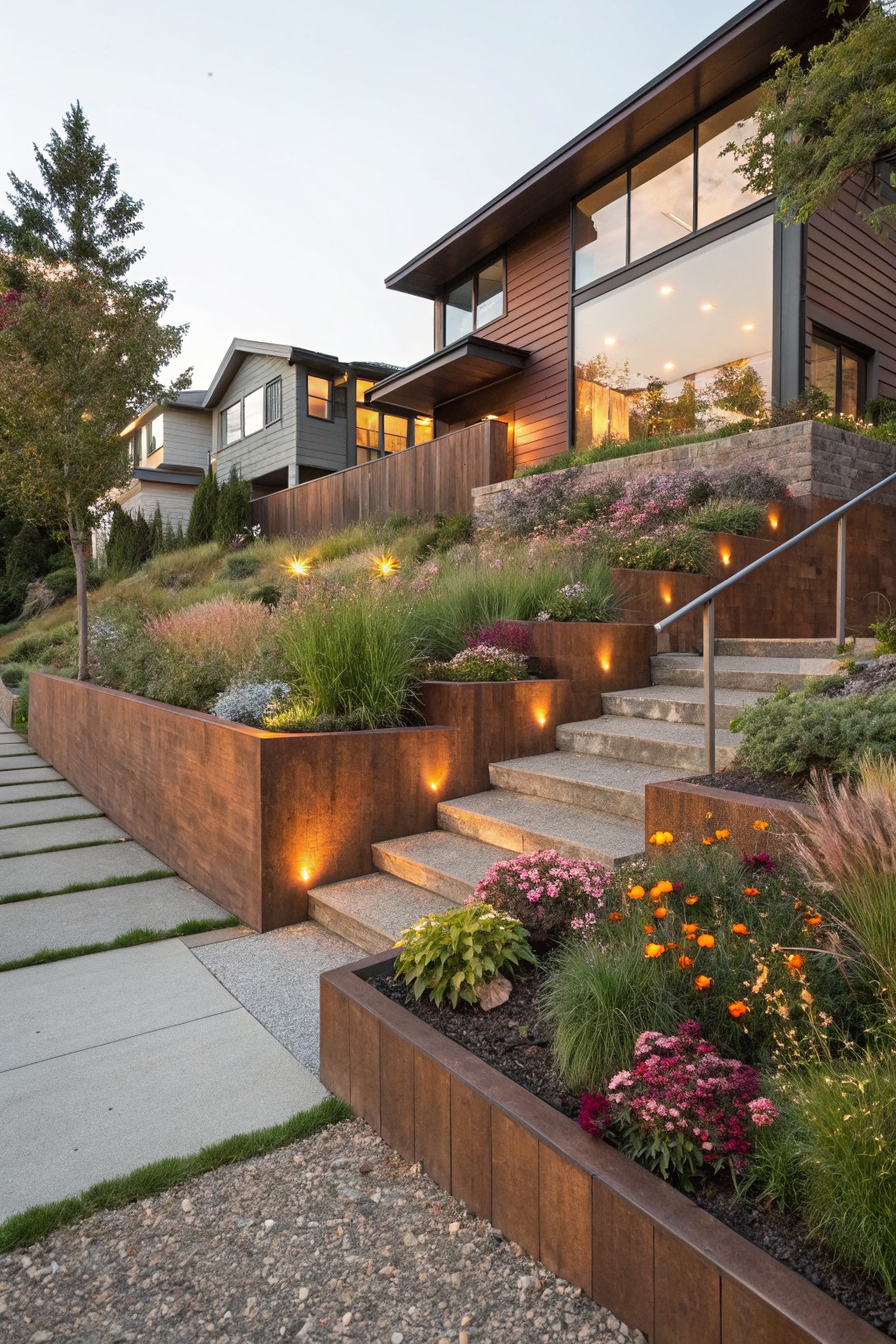
Sloped yards can be tough to work with. They often end up looking messy or hard to reach. But these tiered retaining walls made from rusted metal change that. They create flat planting zones right into the hillside. Flowers and tall grasses spill over the edges for a natural feel. The warm brown color blends with the soil and plants without standing out too much.
You can use this setup on any hillside leading to your house. Pick low-water grasses and perennials to keep it easy. Add those small recessed lights under each step for evenings. It works best with modern homes but could fit others too. Just make sure the metal is corten steel type so it doesn’t rust away fast.
Raised Beds for Clean Garden Lines

Raised beds like these make a garden feel put together without much fuss. The wooden frames hold soil neatly, keep plants from spilling over, and give everything a structured look that fits modern landscaping. Here, they’re filled with colorful marigolds and veggies, edged against gravel for that sharp finish.
You can build them from cedar or pine boards, keeping heights around 12 inches for easy reach. They work great in small backyards or along fences, where they turn patchy dirt into defined zones. Just treat the wood to last longer outdoors, and space paths wide enough to wheel a barrow through.
Raised Flower Beds Along Pool Edges
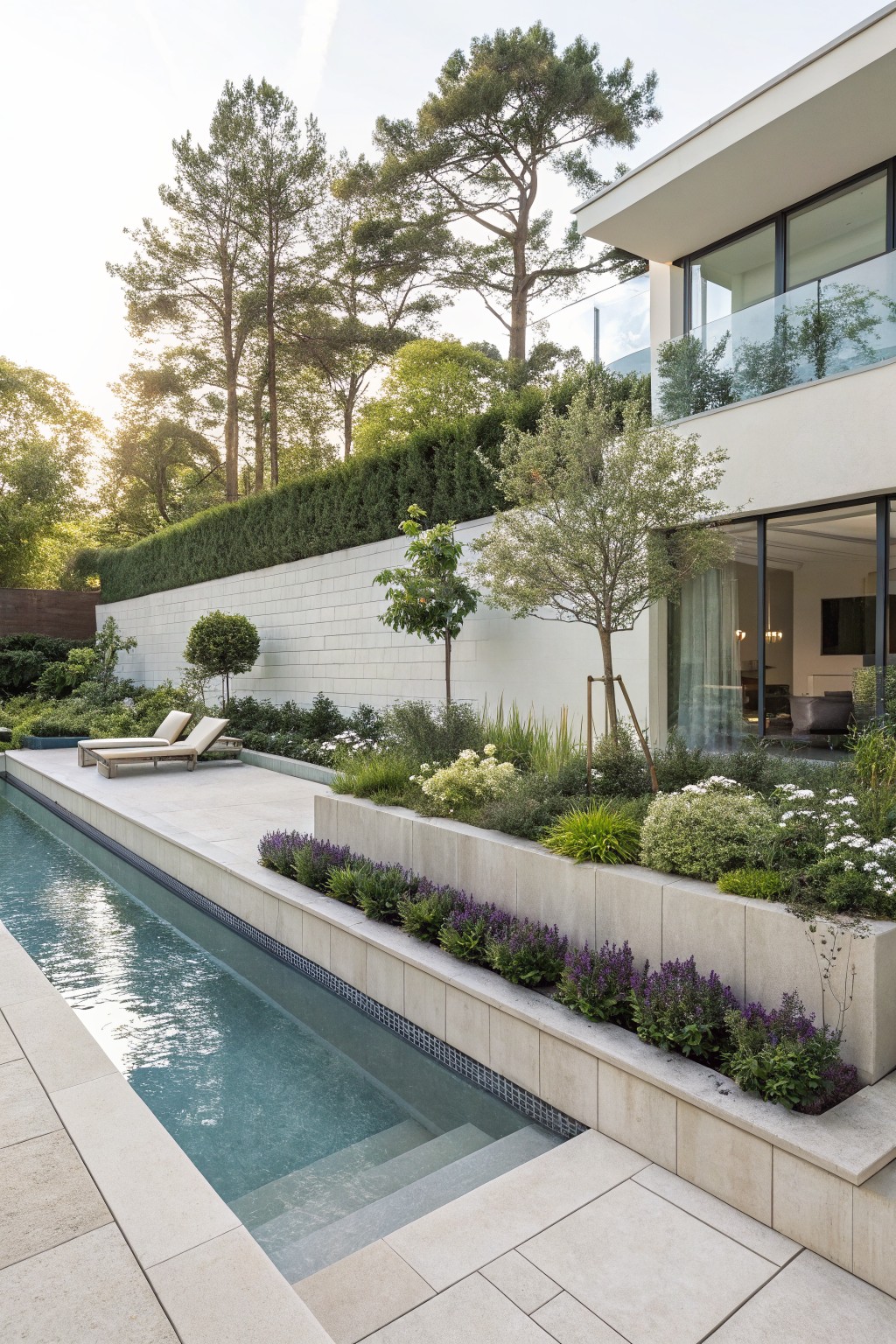
One clean way to finish off a modern pool area is with raised concrete beds right along the edge. Here, they’re packed with low lavender bushes and soft grasses that hug the water without spilling over. It keeps things tidy and adds just enough green to make the hard stone and water feel less stark. No messy lawn edges or wild growth. Simple.
These beds work great in smaller yards or where you want low upkeep. Plant perennials that stay compact, like salvias or sedums, and pair with pale stone for that crisp look. They suit contemporary homes best, especially with glass walls overlooking the space. Watch the scale though. Too tall, and it blocks the view.
Raised Beds with Pebble Mulch
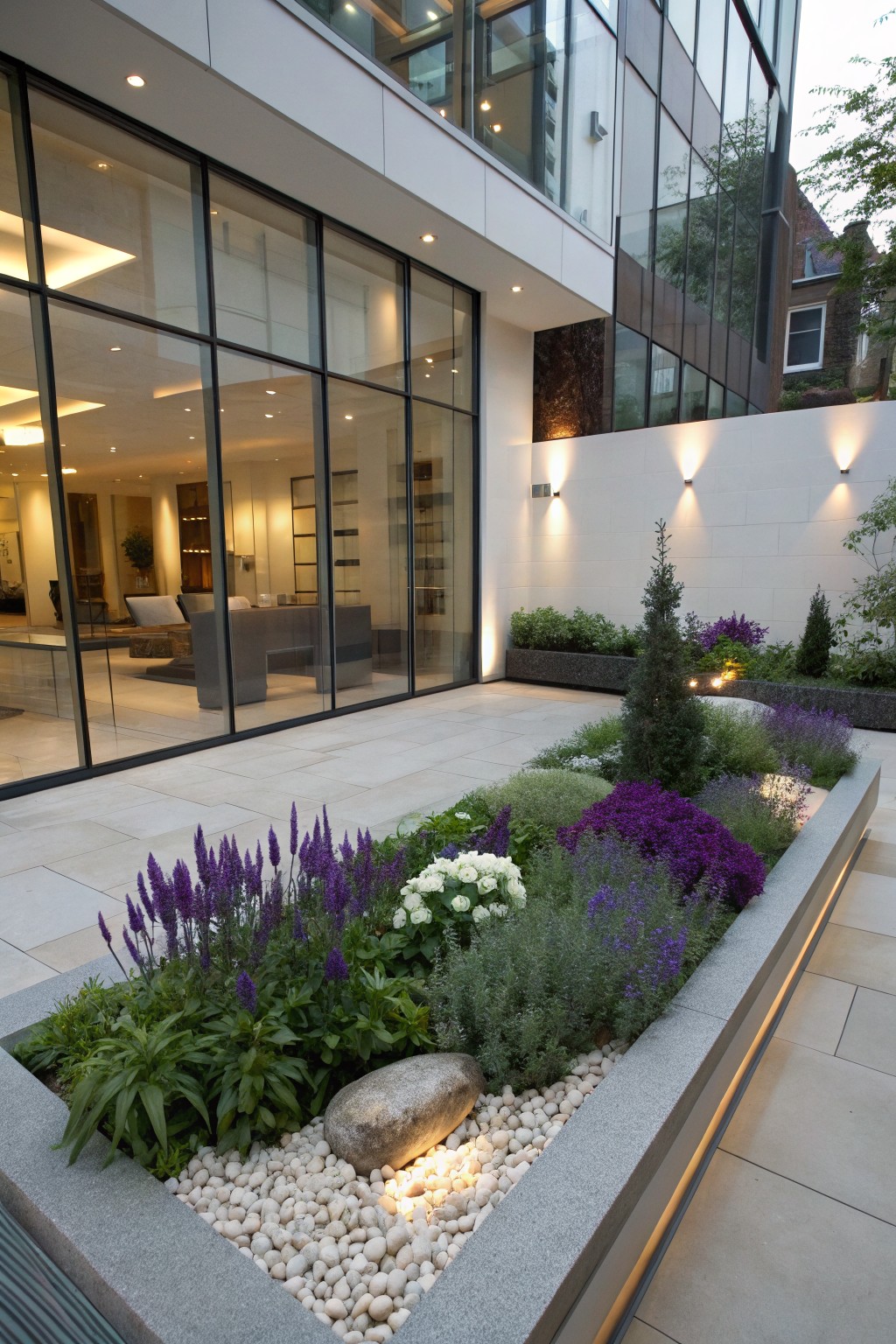
Raised beds like this one keep things neat and modern. The gray stone edging holds back the soil while white pebbles fill most of the space. Purple salvia and white flowers poke up through it all, along with a big rock for some natural weight. It makes the garden feel finished without much fuss.
These work best right up against a patio or terrace, especially in a city spot where space is tight. Pick tough plants that don’t need constant water, and layer heights like this for interest. Skip the pebbles if you want more soil for veggies, but for looks alone, it’s hard to beat.
Curved Stone Paths with Raised Beds
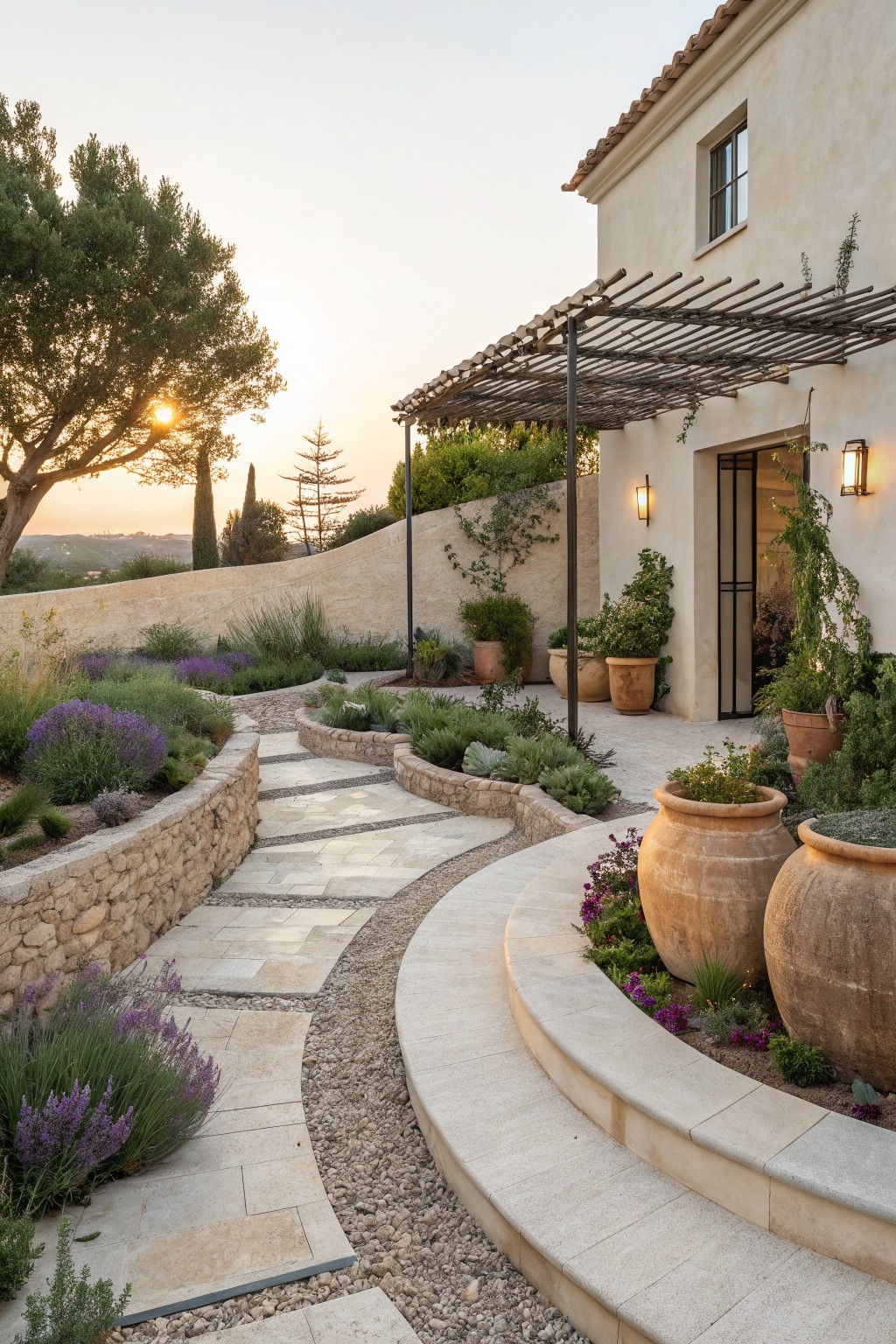
One simple way to make a garden path feel more natural is to curve it gently and build low stone retaining walls right along the edges. Fill those beds with tough plants like lavender and grasses that spill over a bit. It guides you toward the house without feeling too rigid. The stone matches the house walls here, so everything ties together nicely.
This works best in sloped yards where you need to handle levels anyway. Use it leading to a side entry or patio door. Pick local stone and plants that don’t need much water to keep it low fuss. Just watch the curve doesn’t get too tight or folks might trip.
Raised Beds Framing Curved Paths

A simple way to tidy up a garden is with raised beds hugging a winding stone path. Here the gray slabs curve gently through lush borders packed with pink blooms and soft grasses. Those low white stone walls keep everything neat. Plus ground lights along the edge make it pop at dusk. It pulls the yard together without feeling stiff.
This works best on uneven ground or where you want to zone things out. Build the beds about knee-high with local stone. Plant tough perennials that hang over the edge a little. Skip it if your space is dead flat. Might look too fussy then.
Frequently Asked Questions
Q: How do I get those super crisp edges on flower beds for a modern vibe? A: Dig a straight trench around your bed with a flat shovel. Fill it with mulch or gravel right to the line. Refresh the edge every few weeks to hold that sharp look.
Q: What plants fill these beds without turning into a full-time job? A: Go for lavender or black-eyed Susans. They bloom hard through summer and bounce back from dry spells. Just snip spent flowers to keep them neat.
Q: Can I pull off this clean look on a tight budget? A: Start with seeds instead of pricey starters. Reuse old bricks or stones for edging from yard sales. Layer in mulch thick to cut down on weeding costs.
Q: How do I keep beds looking fresh through fall? A: Plant ornamental grasses early. They add texture as flowers fade. Cut them back in spring for easy renewal.
