


The strip along a house foundation can look unfinished when bare soil, scattered plants, and awkward edges compete for attention.
I like how a well-planned rock garden brings order to that narrow space while giving the home a cleaner, more cared-for look.
Thoughtful stone placement, hardy plants, and clear edging can make the area easier to maintain without crowding the foundation.
Small changes in texture and layout often make the biggest difference, especially where the yard meets the house.
I’d save a few of these ideas to adapt to your soil, climate, and the shape of your own foundation.
Create A Defined Rock Garden Along The Foundation
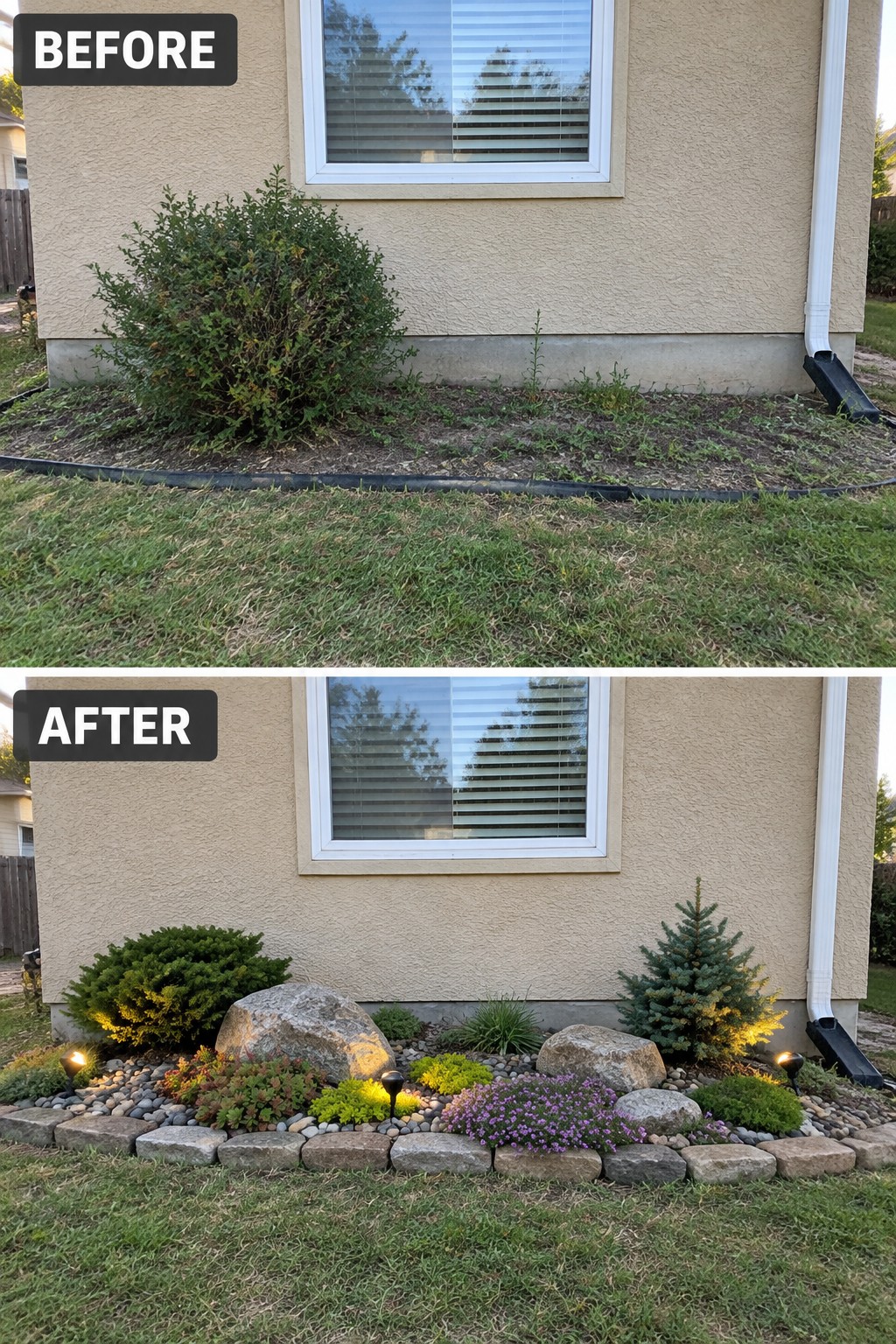
A bare, scruffy strip beside the house can look much neater when it becomes a defined rock garden. Here, a low stone border and a mix of rocks and plants replace the untidy bed, giving the foundation a clear edge without changing the house itself.
For a similar area, clear weeds first, then lay out a simple bed that leaves access to the wall and downspout. Use a few sturdy plants and stones suited to your climate, and leave enough room between them so the garden does not become crowded as it grows.
Replace Overgrown Foundation Beds With A Rock Garden
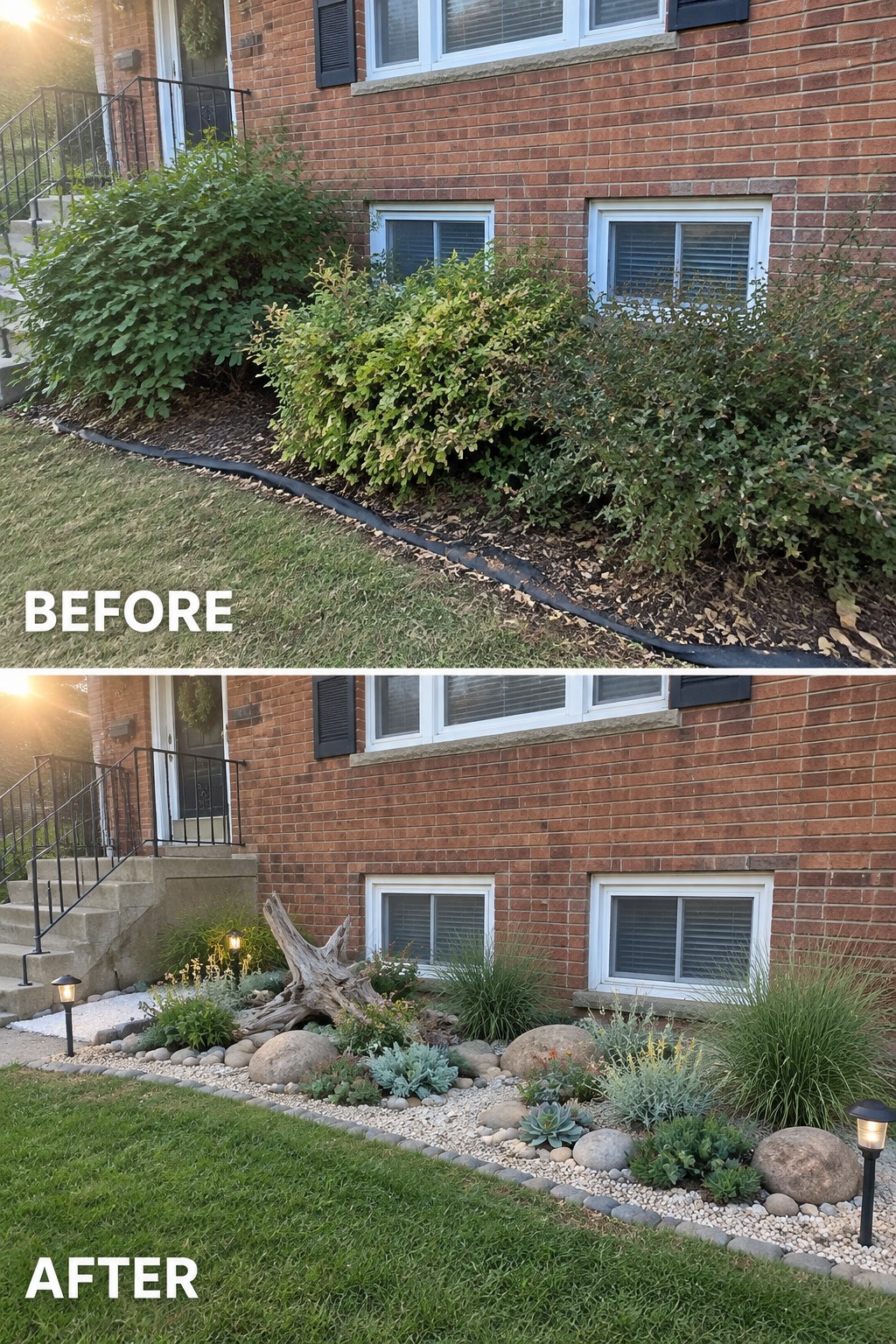
A simple rock garden can give an overgrown foundation bed a much clearer shape. Here, the dense shrubs give way to gravel, boulders, and low-growing plants, making the area look planned without needing a large lawn or elaborate planting scheme.
Start by clearing crowded growth, then lay out a defined bed and place a few larger stones before adding smaller gravel and plants. This approach works well along house foundations, but leave windows accessible and choose plants that suit the amount of sun and the space available.
Add Structure To A Foundation Bed
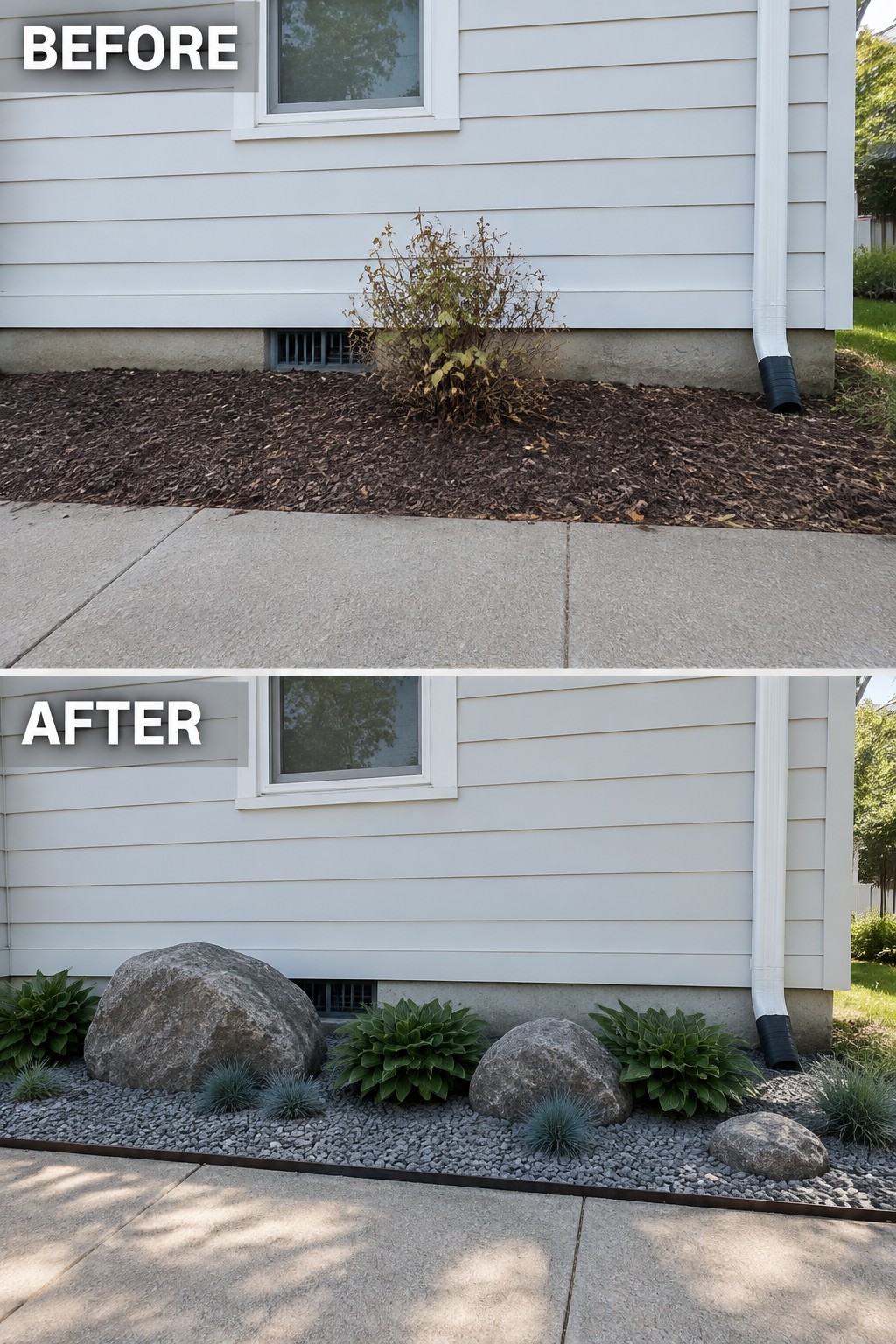
A bare strip of mulch can look unfinished, especially beside a long house wall. Replacing it with a defined gravel bed and a few well-spaced rocks gives the foundation a clearer shape without crowding the area.
This approach works well along narrow side yards where a lawn or large planting bed would be hard to maintain. Keep the layout simple, leave the foundation vent clear, and choose hardy plants that fit the available space.
Add A Defined Rock Garden Along The Foundation

Replacing a patchy strip of lawn with a shaped rock garden gives the area beside the house a clearer edge and a more cared-for look. A mix of stones and flowering plants makes the foundation bed feel intentional without needing a large lawn redesign.
Start by removing weeds and marking a bed that follows the house, leaving enough room for plants to mature and for water to drain away from the foundation. Use a few low-maintenance plants suited to your climate, and keep the rock border low enough that it does not spill onto the lawn.
Replace A Neglected Side Path With A Rock Garden

A narrow side yard can be hard to keep tidy when weeds take over the path and the space beside the foundation. Here, a gravel walkway and tiered rock garden replace the overgrown concrete, giving the area a clear shape and making it easier to move through.
This idea works well in a tight side yard where a lawn would be awkward to maintain. Clear the weeds first, then keep the path wide enough to use comfortably and choose plants suited to the light and drainage near the house.
Use River Rocks To Turn A Bare Foundation Bed Into A Garden
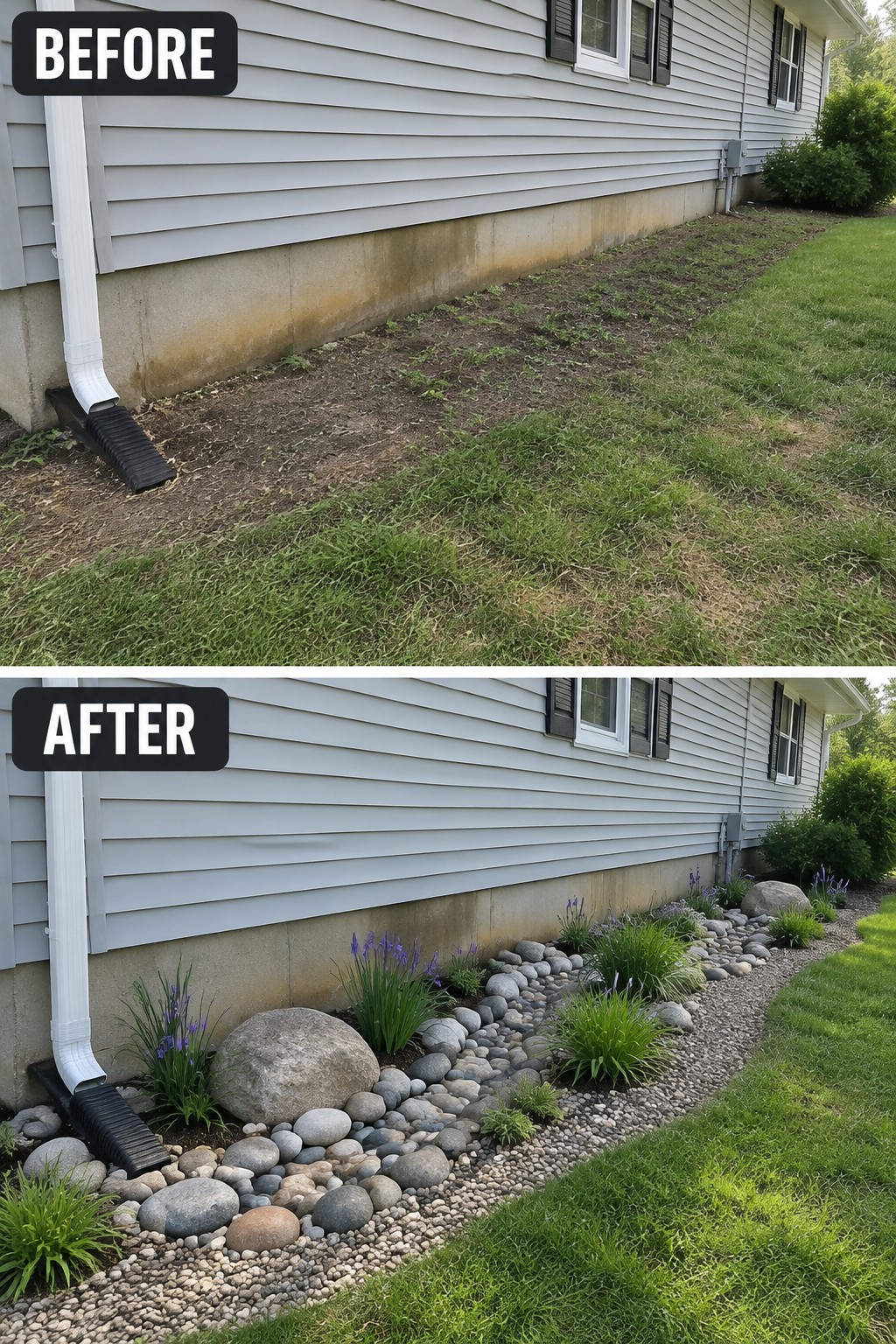
A strip of bare soil beside the house can look unfinished and leave the foundation exposed to splashing rain. In this makeover, river rocks create a clear bed, while a few plants break up the stone and give the area some color.
This idea works well along a house where grass is patchy or difficult to maintain. Lay landscape fabric beneath the stones if appropriate, keep the bed sloped away from the foundation, and make sure the downspout can still drain freely.
Replace Overgrown Shrubs With A Rock Garden

Dense shrubs can hide the house and make a foundation bed feel crowded. Replacing them with a defined rock garden opens up the area, while a few larger stones and low, varied plants give the planting bed a clear shape.
This idea works well along a brick or siding foundation where you want a tidier edge without filling the bed with high-maintenance plants. Remove unwanted shrubs first, then leave enough space between plants and stones for growth and upkeep.
Use Stepping Stones To Give A Foundation Bed Shape
A bare strip beside the house can look untidy and hard to maintain. Adding flat stepping stones through a small rock garden gives the bed a clear layout, while low plants fill the gaps without blocking the path.
This approach works well in narrow side yards where there isn’t room for a wide garden. Keep stones level and spaced for comfortable walking, and leave enough clearance around the foundation and downspout so water can drain properly.
Give A Narrow Foundation Bed A Clear Layout
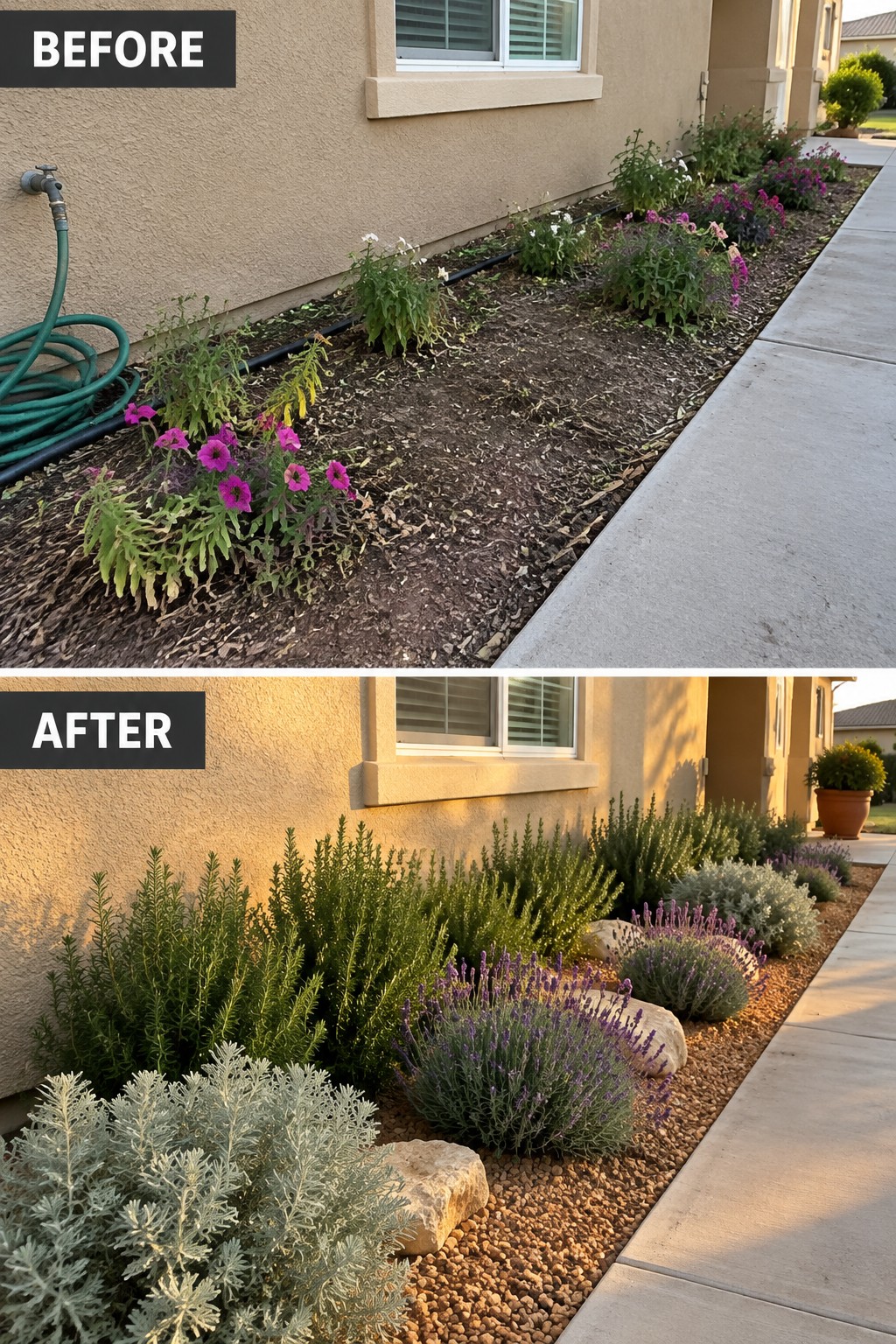
The scattered flowers and exposed soil made this foundation bed look unfinished. Replacing the patchy planting with repeated shrubs, lavender, and a gravel surface gives the long strip a more deliberate shape without changing the house.
For a similar bed, use a few repeating plants rather than adding lots of different varieties. Gravel can keep the surface tidy, but leave enough room between plants for mature growth and choose varieties that suit your climate and the light along the wall.
Build A Terraced Rock Garden On A Slope

A bare, sloping foundation bed can be hard to maintain, and rain may wash soil downhill. Large rocks arranged in low tiers help define planting pockets and hold the hillside in place, while turning the area into a garden with a clear shape.
Use this approach on a slope beside the house, keeping the rock tiers low and leaving enough room for plants to grow. Choose sturdy, site-appropriate rocks and make sure water can drain through the bed rather than toward the foundation.
Replace A Bare Foundation Strip With A Planted Rock Garden
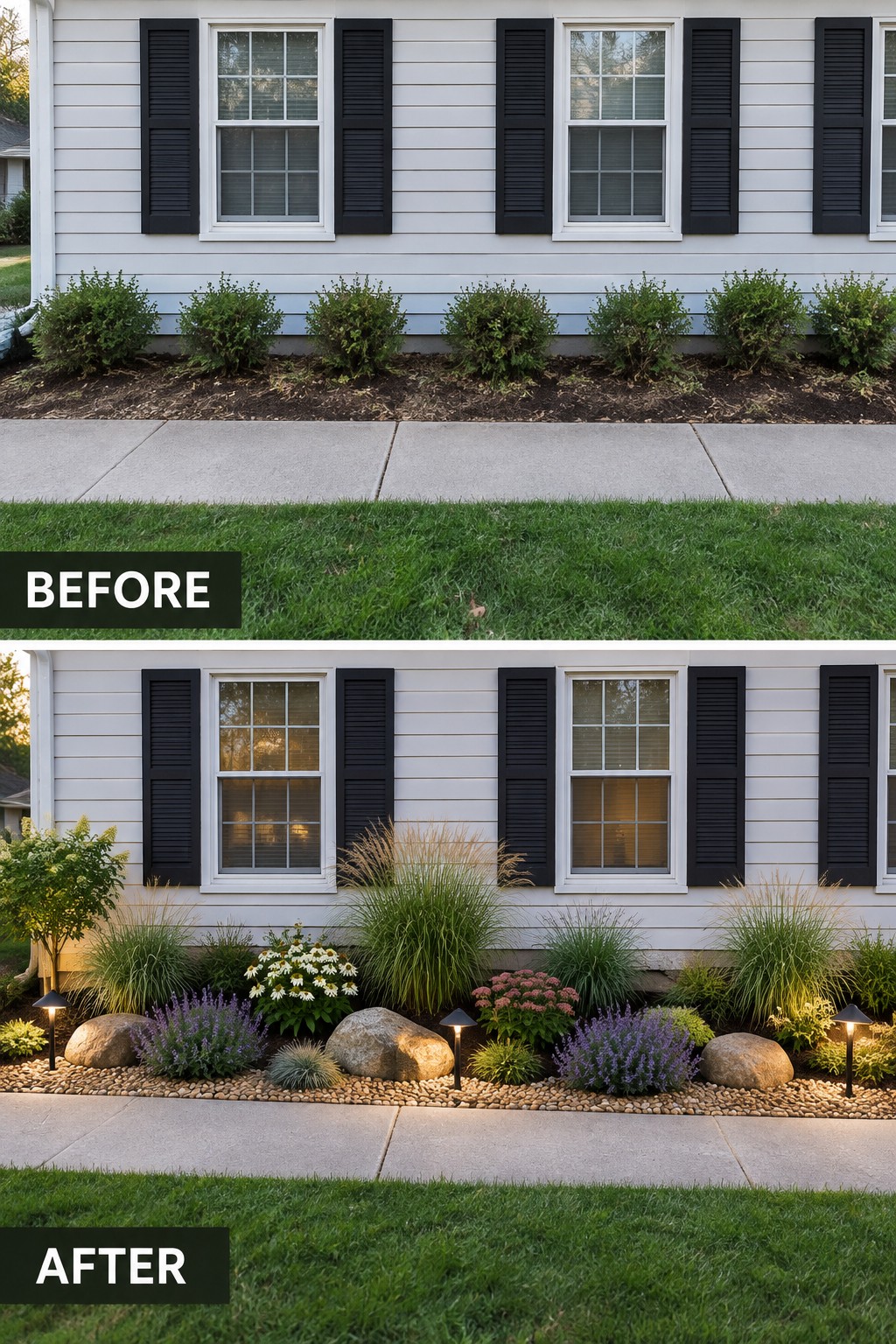
The plain strip beneath the windows becomes a more defined garden bed with layered plants and a river-rock edge. The change works because it gives the foundation a clear border and turns an overlooked stretch of yard into a planned part of the landscape.
For a similar bed, start by clearing weeds and deciding how much space to leave between the plants and the house. Use a few larger plants for structure, then fill gaps with lower flowers or groundcover, keeping enough room for maintenance and airflow.
Turn A Cracked Sidewalk Into A Rock Garden
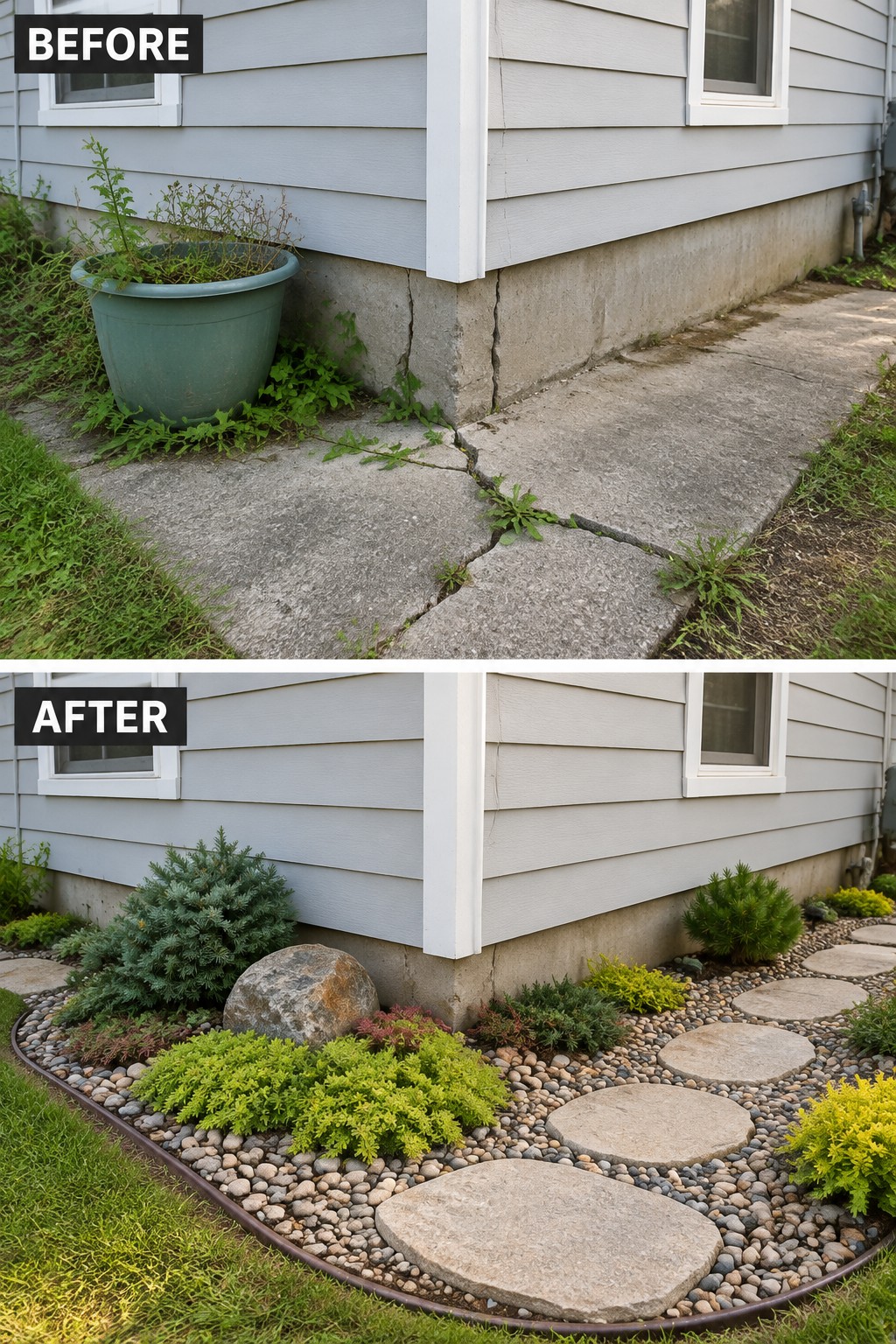
Replacing damaged concrete with a gravel garden makes the area beside a foundation look planned instead of neglected. Here, the stepping stones keep a clear route while the rocks and low plants give the bed a tidy outline.
This idea works well along a narrow side yard where a walkway is needed but a full concrete path feels too stark. Keep the stones spaced comfortably for walking, and leave enough room around the plants so they do not crowd the foundation.
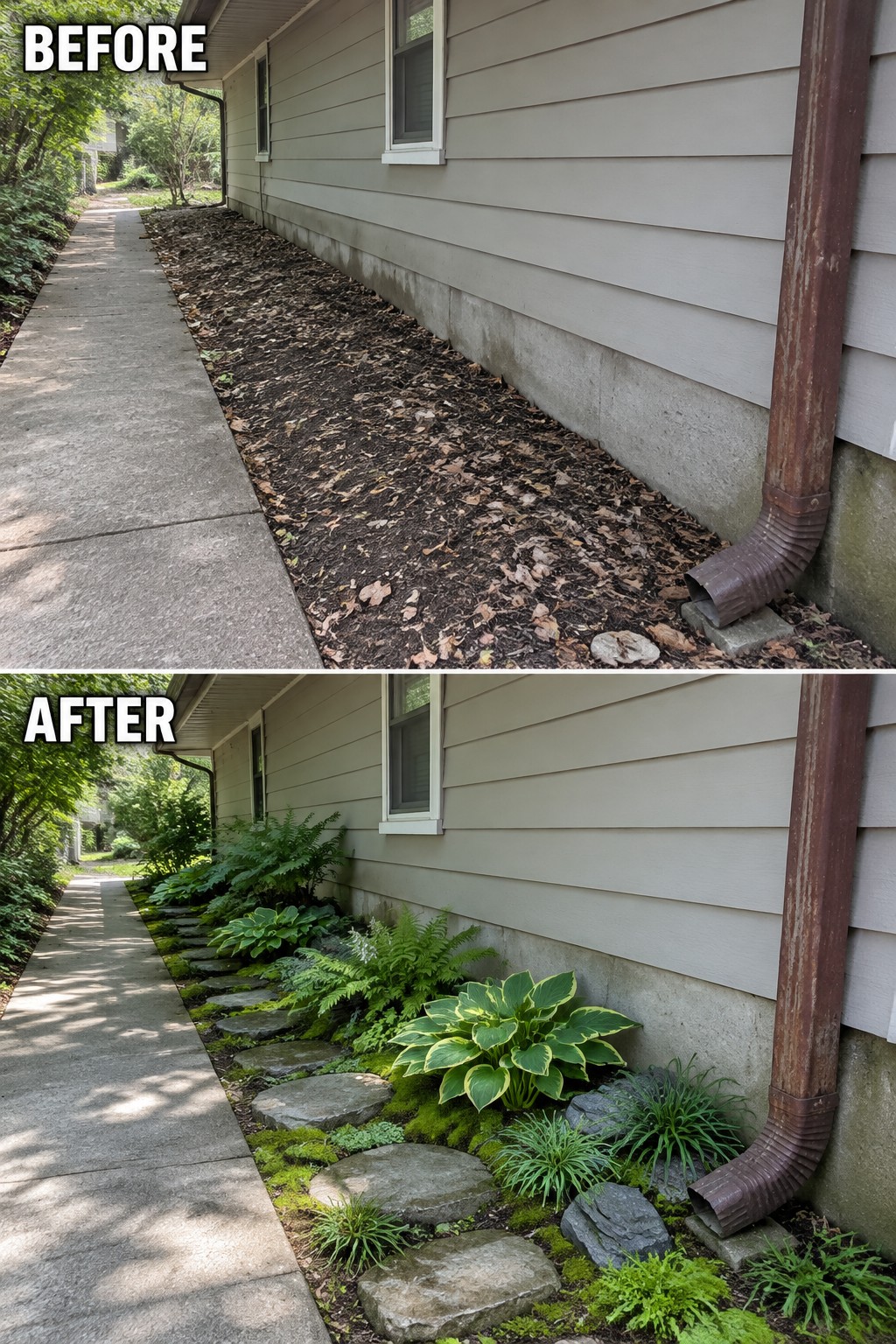
Create A Stepping-Stone Path Through A Foundation Garden
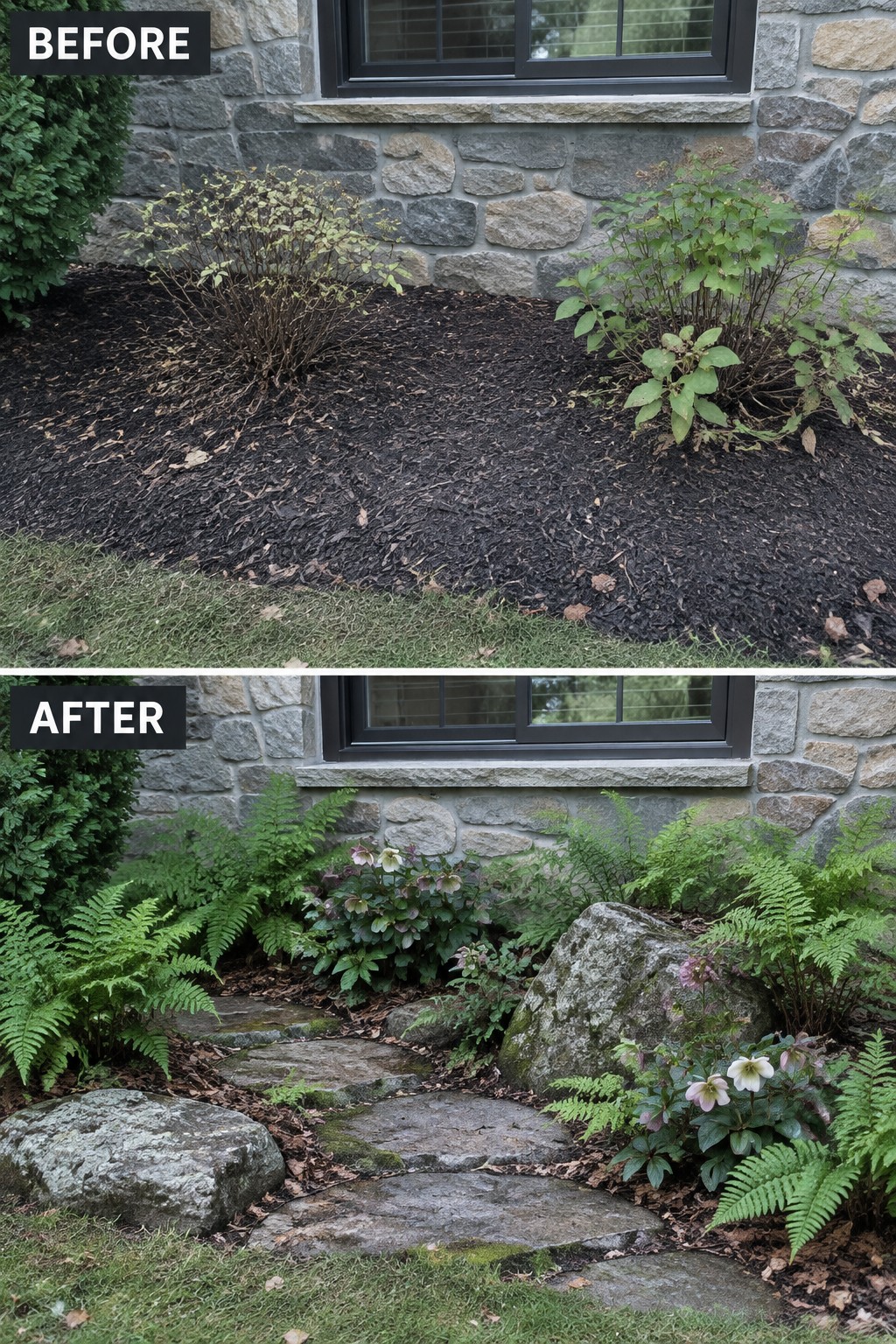
A bare mulch bed can feel like an unfinished strip beside the house. Here, irregular stepping stones give the planting area a clear route and make it more useful, while ferns and other shade-friendly plants fill the space around them.
This idea suits a narrow foundation bed where you still need easy access for weeding or maintenance. Set the stones firmly and leave enough room to walk comfortably, then choose plants that fit the light and won’t quickly spill over the path.
Replace Weeds With A Low-Maintenance Rock Garden
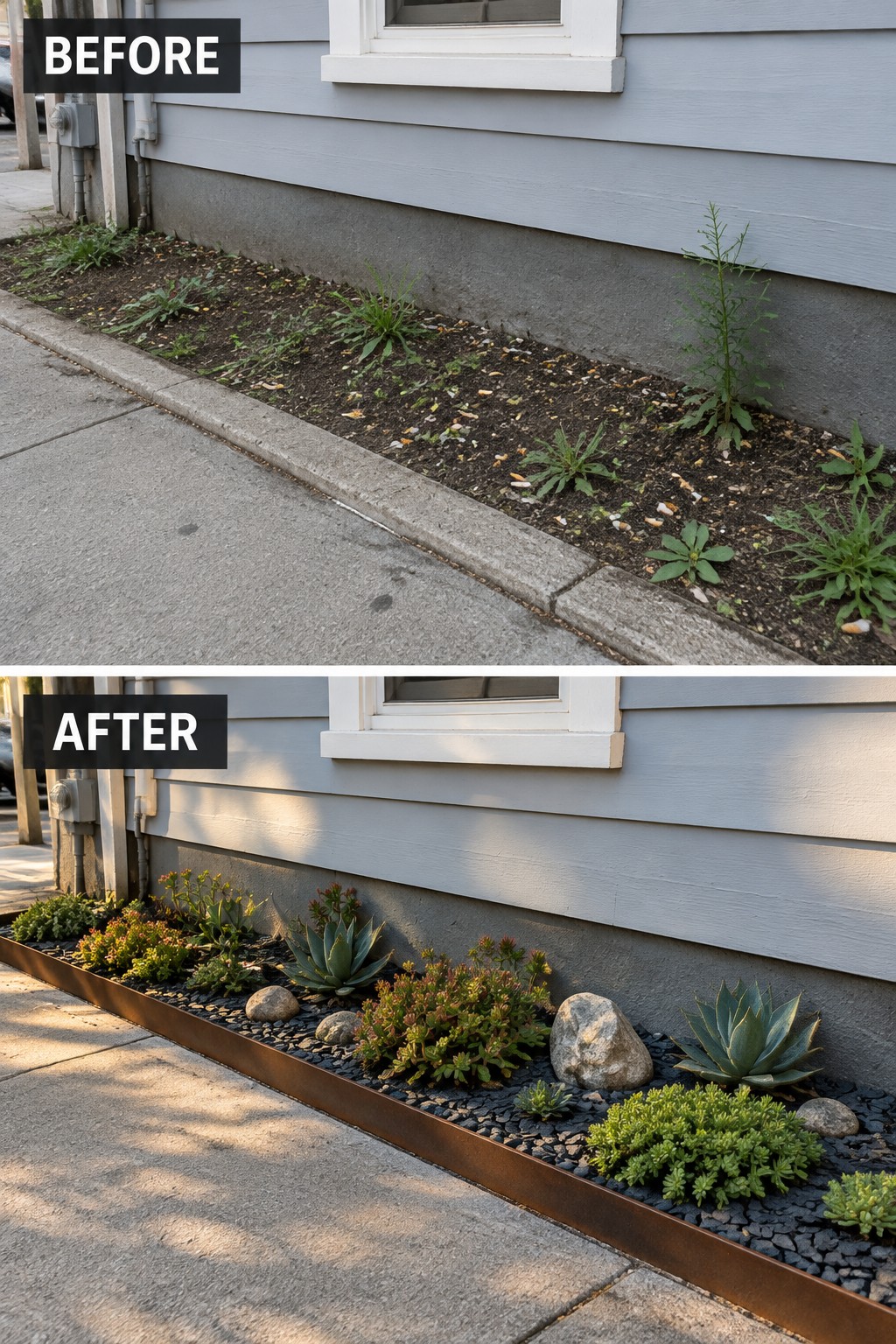
The bare foundation bed was dotted with weeds, so the main improvement is a cleaner, more intentional planting layout. Dark stone mulch and a few larger succulents give the narrow strip structure without making it feel crowded.
This approach works well beside a house where space is limited and regular weeding is a chore. Clear the bed first, then group plants with similar water needs and leave room for them to grow. Check that the stones and edging do not block drainage or access to utilities.
Replace Overgrown Foundation Planting With A Rock Garden
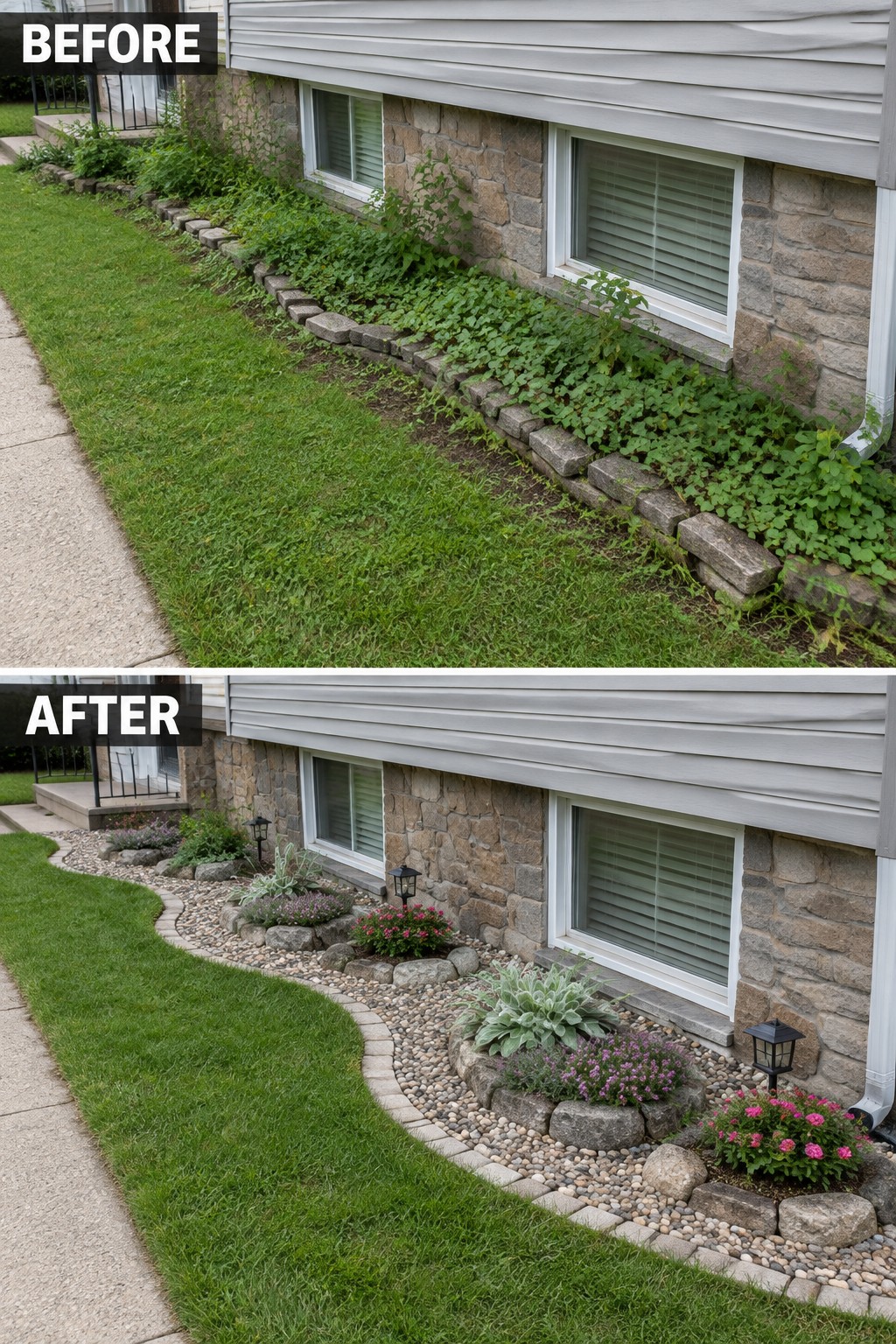
The overgrown planting along the house made the foundation bed look untidy. Replacing it with a curved stone edge and river rock gives the bed a clearer shape, while a few grouped plants keep it from looking bare.
This approach works well along a house where grass meets a narrow foundation bed. Clear out unwanted growth first, then choose rock sizes and plants that suit the space. Leave enough room around windows and downspouts so the finished bed stays easy to maintain.
Replace Overgrown Groundcover With A Rock Garden

When groundcover spreads across a foundation bed, it can hide the shape of the space and crowd the house. Here, clearing it back and adding rocks creates a more defined planting area, with room for low-growing plants to stand out.
This approach works well beside a house where you want a tidy bed without relying on a dense carpet of plants. Start by removing the overgrowth, then place larger stones with enough space between them for plants and access to the foundation vents.
Replace Tired Foundation Shrubs With A Rock Garden
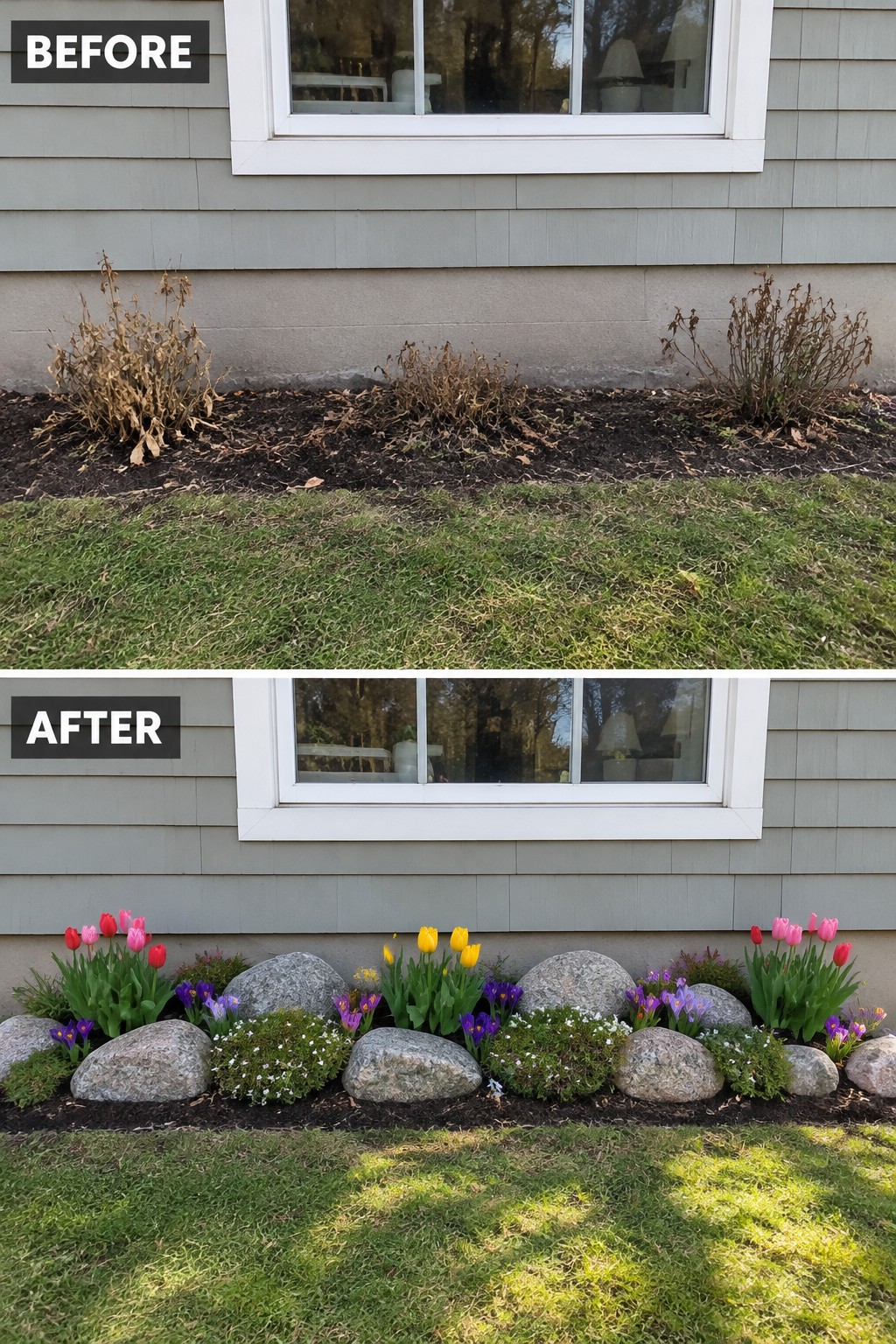
The dry shrubs left this foundation bed looking neglected. Replacing them with a defined rock garden gives the area a cleaner layout, while low-growing plants add color without filling the space with more bulky shrubs.
This idea suits a narrow bed along the house, especially where larger plants have become hard to maintain. Set the rocks in a loose, natural line and leave room for plants to spread; keep the stones clear of the siding and avoid crowding the foundation.
Define The Foundation Bed With Stone Edging

A narrow strip beside the house can look unfinished when it runs straight into the lawn. Adding a low stone border gives the bed a clear edge and makes the side path feel more planned, without changing the concrete walkway.
This works well along foundations where there is room for a shallow planting bed. Set the border so it does not narrow the path, then fill the bed with stones and a few plants suited to the site. Keeping the planting simple makes upkeep easier.
Replace A Sparse Foundation Bed With A Rock Garden

A few scattered flowers can leave the soil beside a house looking unfinished. Replacing them with a defined rock garden gives the foundation bed a clearer shape and makes it look more cared for, while drought-tolerant plants add greenery without filling every open spot.
Start by clearing weeds and deciding how much space the bed should take up. A layer of gravel or small stones can cover the soil, with a few larger rocks and well-spaced plants to give the area structure. Leave enough room around the plants for them to grow, and keep stones away from the house’s siding and drainage areas.
Replace An Overgrown Foundation Bed With A Rock Garden
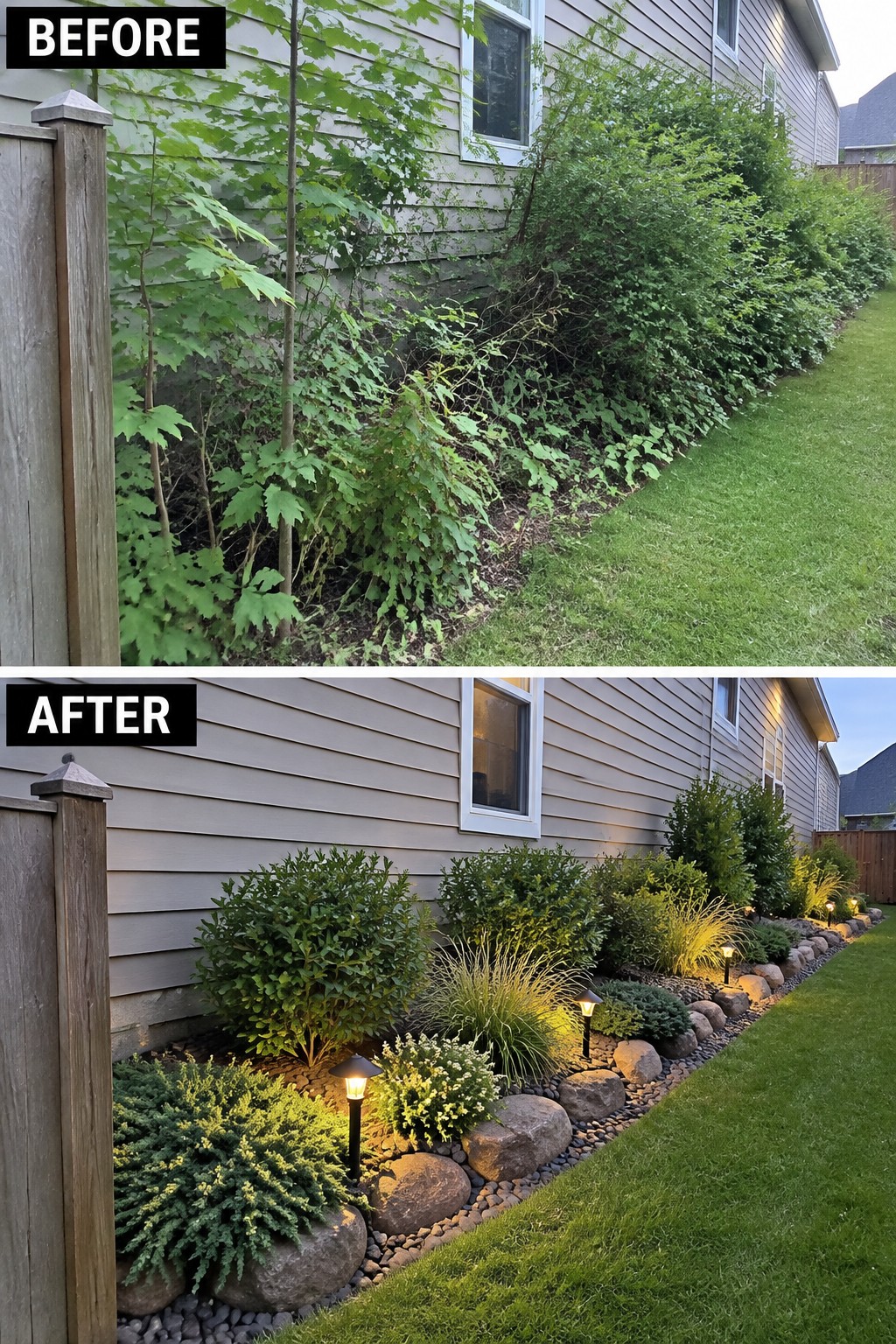
Overgrown shrubs and volunteer growth can hide the house and make a foundation bed look untended. Clearing the excess and adding a defined rock border gives the planting a cleaner shape, while selected shrubs and grasses keep it from looking bare.
This approach works well along a narrow side yard where lawn meets the house. Choose plants that suit the available light and leave room for mature growth, then use stones to mark the bed edge. Avoid packing in too many plants, or the space can quickly become overgrown again.
Create A Stepping-Stone Path Through A Foundation Garden
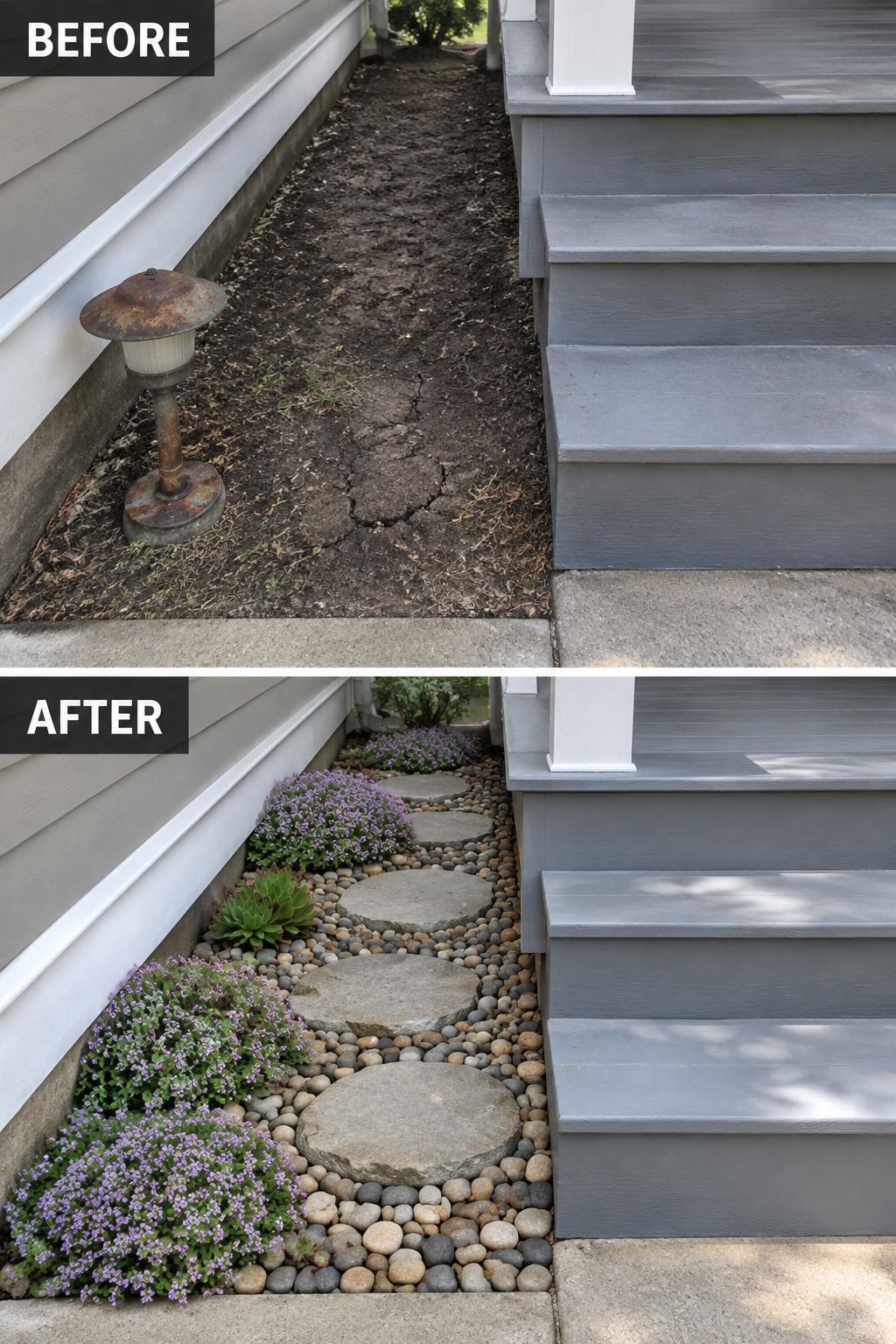
A narrow strip of bare, cracked soil is easier to use when it has a clear path. Large stepping stones set among river rocks turn the awkward space beside the steps into a tidy foundation garden, with low-growing flowers filling the edges.
This idea works well in a side yard where people need to pass through without walking on plants. Set the stones at comfortable intervals, then keep the surrounding plants low and leave enough room to move along the path.
Add Flowering Plants To A Rock Garden
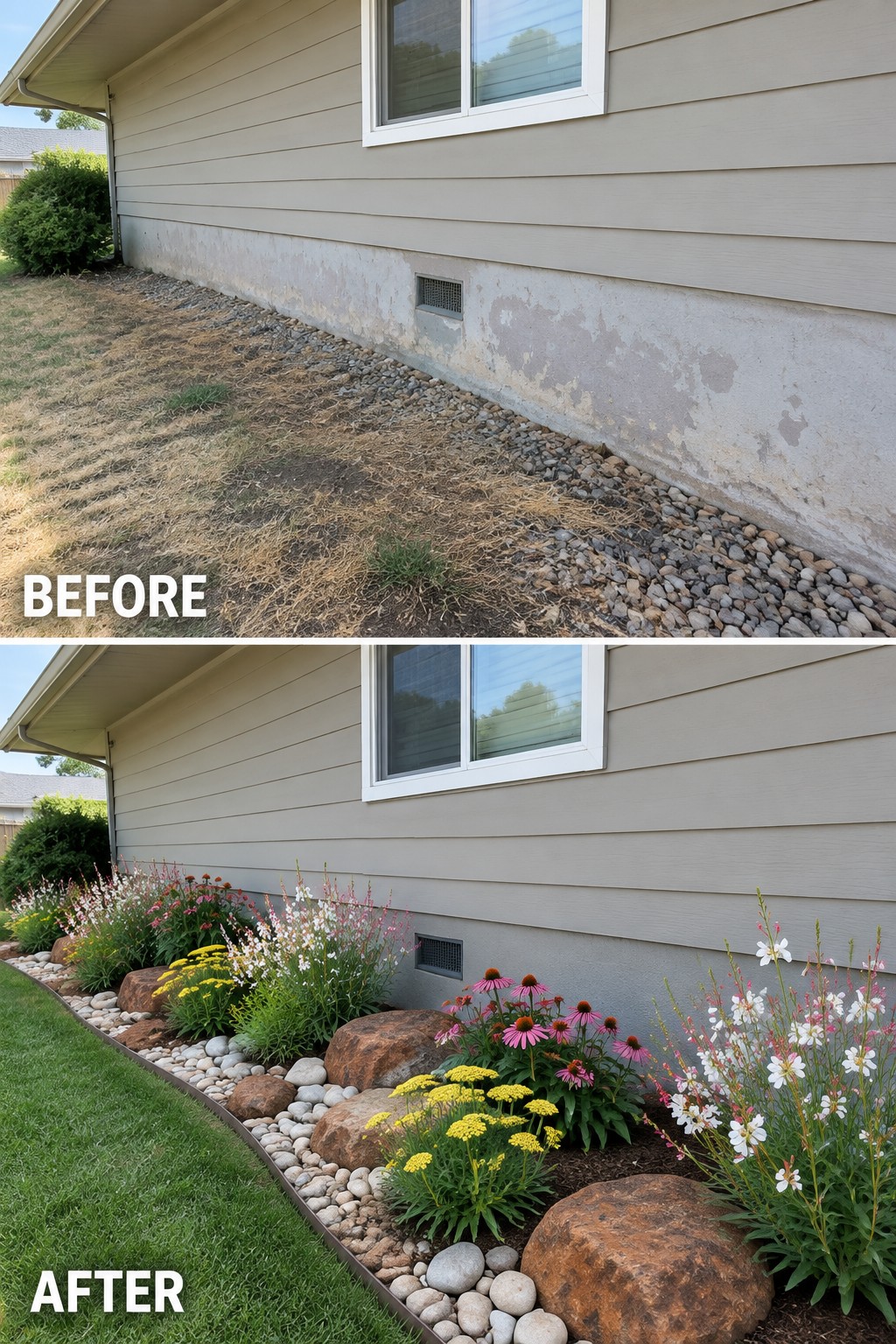
A bare foundation strip can look untidy even when it has a layer of rock. Adding a defined bed with flowering plants turns that space into a garden, while the river rocks keep the edge neat and help separate it from the lawn.
Use a few varieties suited to your sun and water conditions, and leave enough room for them to fill out without covering the foundation vent. This approach works well along a side wall where a larger garden bed would take up too much space.
Frequently Asked Questions
Q: Will a rock garden next to the house cause drainage problems?
A: It can if water gets trapped against the foundation. Shape the soil so it slopes away from the house, and keep downspouts clear so roof water doesn’t collect among the rocks.
Q: Do I need landscape fabric under the rocks?
A: Fabric can slow weeds, but it won’t stop them completely, and dirt that settles on top can still sprout seeds. A thick layer of cardboard under the rock is another option, especially when you’re building over an existing bed.
Q: Which plants work well between foundation rocks?
A: Choose compact plants that suit your sun and soil, such as creeping thyme for a sunny spot or ferns for shade. Leave room around siding and vents so the plants don’t trap moisture or block airflow.
Q: How do I keep the rocks from spreading into the lawn?
A: Add a sturdy edge along the garden’s outer border. It helps hold the stones in place and makes mowing around the bed much easier.
