


Boulders can give a garden a strong structure, but bare soil and scattered plants around them can leave the space looking unfinished.
I like how flowering ground covers soften the hard edges, fill gaps, and add color without hiding the shape of the stones.
The best results often come from pairing plants with the site’s sun, soil, and slope, then letting them spread in layers.
That kind of change can make a rocky corner feel cared for and connected to the rest of the yard.
I’d save a few of these planting combinations to adapt to the conditions in my own garden.
Give A Bare Garden Path More Structure
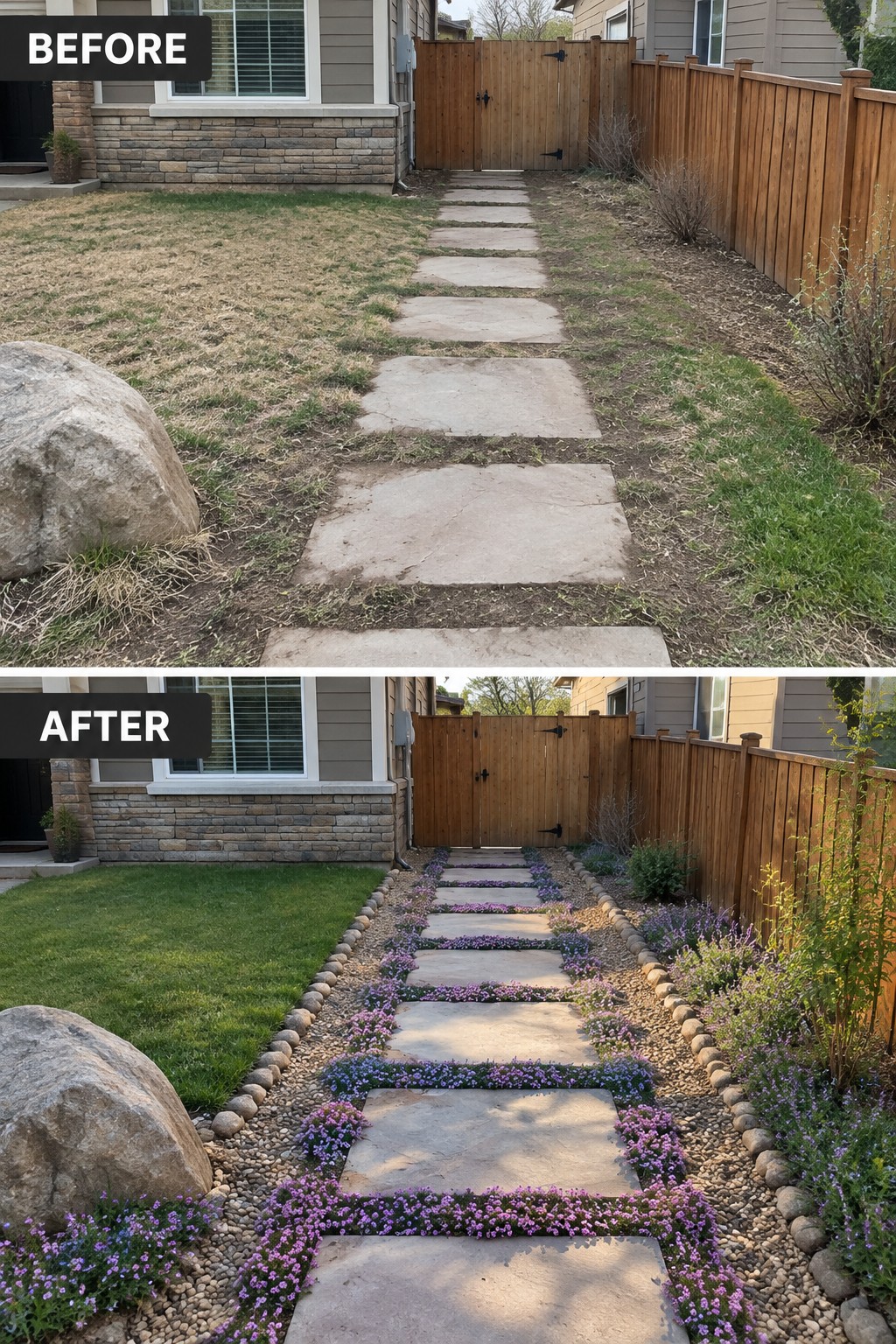
The old stepping stones looked disconnected from the yard. Adding gravel borders and flowering ground cover gives the path a clear shape and makes the space around it feel planned.
This idea works well in a narrow side yard where there isn’t room for a large garden bed. Keep the flowers low along the edges so they don’t crowd the walkway, and choose ground cover suited to the amount of sun the path gets.
Cover A Rocky Slope With Flowering Ground Covers

The rocky slope looks more cared for once flowering ground covers fill the bare spaces between the boulders. The plants add color while helping the large stones feel like part of a planned garden rather than obstacles in an unfinished area.
For a similar hillside, clear out dead growth first, then choose low-growing plants suited to the slope’s sun and soil. Leave enough space around the rocks to keep them visible, and check that new plants can establish without washing out during heavy rain.
Create A Clear, Planted Garden Path
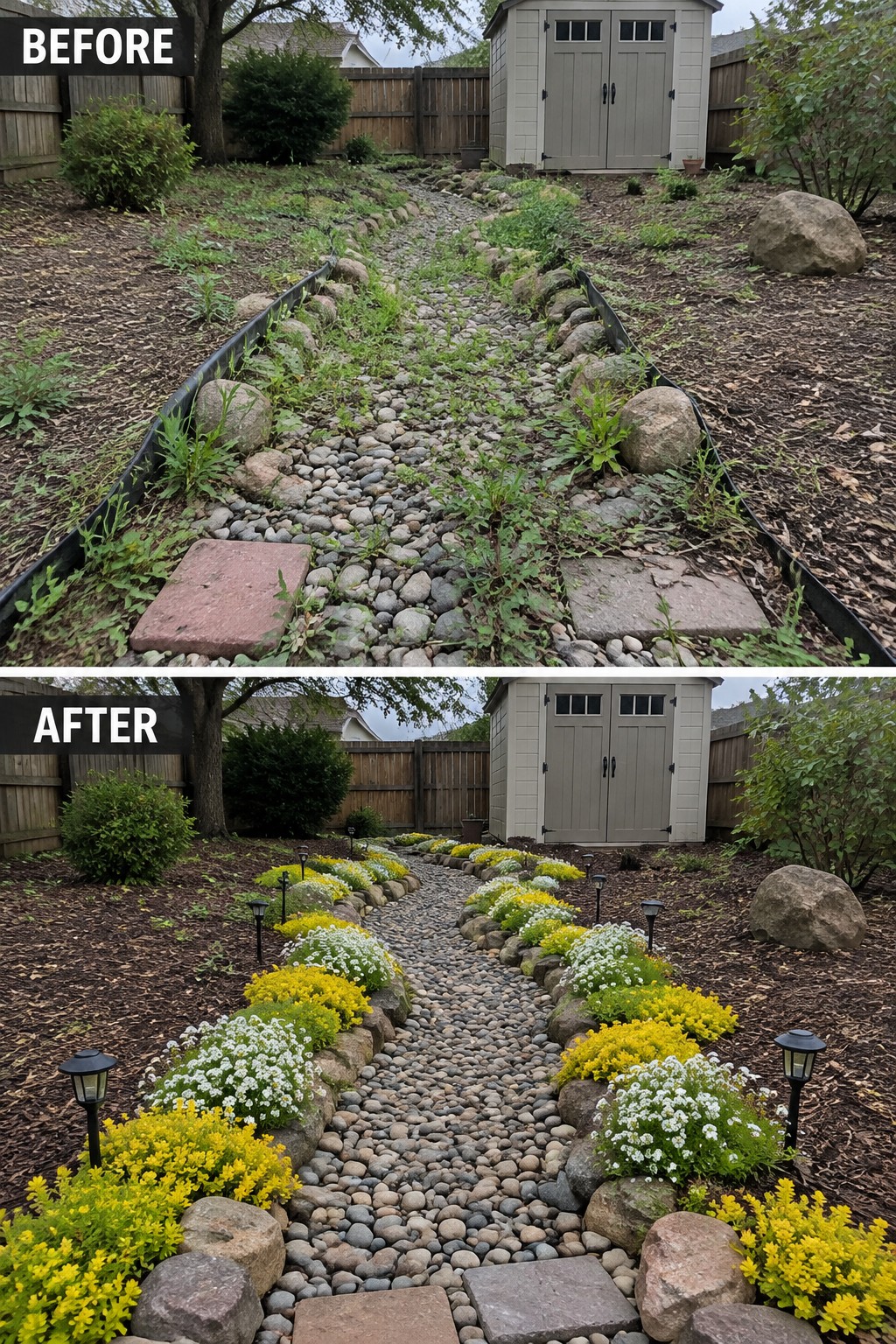
A stone path can give an untidy yard a simple layout to build around. Here, clearing the overgrowth and adding flowering ground covers along the edges makes the route to the shed look cared for without replacing the natural stone.
For a similar effect, keep plants low beside the path so they do not narrow the walking space. Choose ground covers suited to your sun and soil, and leave enough room between them for spreading.
Add Structure To A Narrow Planting Strip

A neglected strip beside a sidewalk can look much tidier when it has a clear planting plan. Here, flowering ground cover and a central ornamental grass replace bare soil and scattered growth, while stones help define the bed.
This idea works well in narrow spaces along a driveway or walkway. Clear weeds first, then choose low-growing plants suited to the amount of sun and room available, leaving enough space for them to spread without blocking the path.
Turn An Overgrown Side Yard Into A Clear Garden Path

A narrow side yard can become easier to use when you clear the weeds and give people a defined route through it. Here, stepping stones form the path, while flowering ground cover fills the space around them without blocking the way.
This approach works well between a fence and house, where there may not be room for a lawn or wide planting beds. Leave enough space around each stone for comfortable steps, and choose low-growing plants that suit the available sun and moisture.
Turn A Bare Mulch Bed Into A Flowering Border

The empty mulch bed beside the front steps looked unfinished. Adding low flowering plants and a few boulders gives it a clear shape and brings color to the entry without changing the hardscape.
This idea works well in a shallow bed along a porch or walkway. Leave enough room for plants to spread, and keep the path clear so the border stays easy to maintain.
Fill Rocky Garden Beds With Flowering Ground Covers

Replacing sparse weeds and exposed soil with low-growing flowers gives a rocky garden a fuller, more planned look. The boulders stay in place as natural focal points, while the ground covers fill the gaps between them.
This idea works well in uneven beds where mowing is difficult. Choose varieties suited to the site’s sun and soil, and leave enough space around the rocks so the plants do not become crowded.
Plant Flowering Ground Covers Along A Stone Wall

The stone wall was already in place, but the bare soil above it made the garden feel unfinished. Cascading purple flowers fill that space in the updated yard, adding color while helping the wall feel like part of the planting rather than a separate hard edge.
This approach works well on a raised bed or sloped garden where trailing plants can spill over the front. Choose ground covers that suit the site’s sun and soil, and leave room for them to spread without covering the wall completely.
Use Flowering Ground Covers To Fill The Gaps In A Stone Path
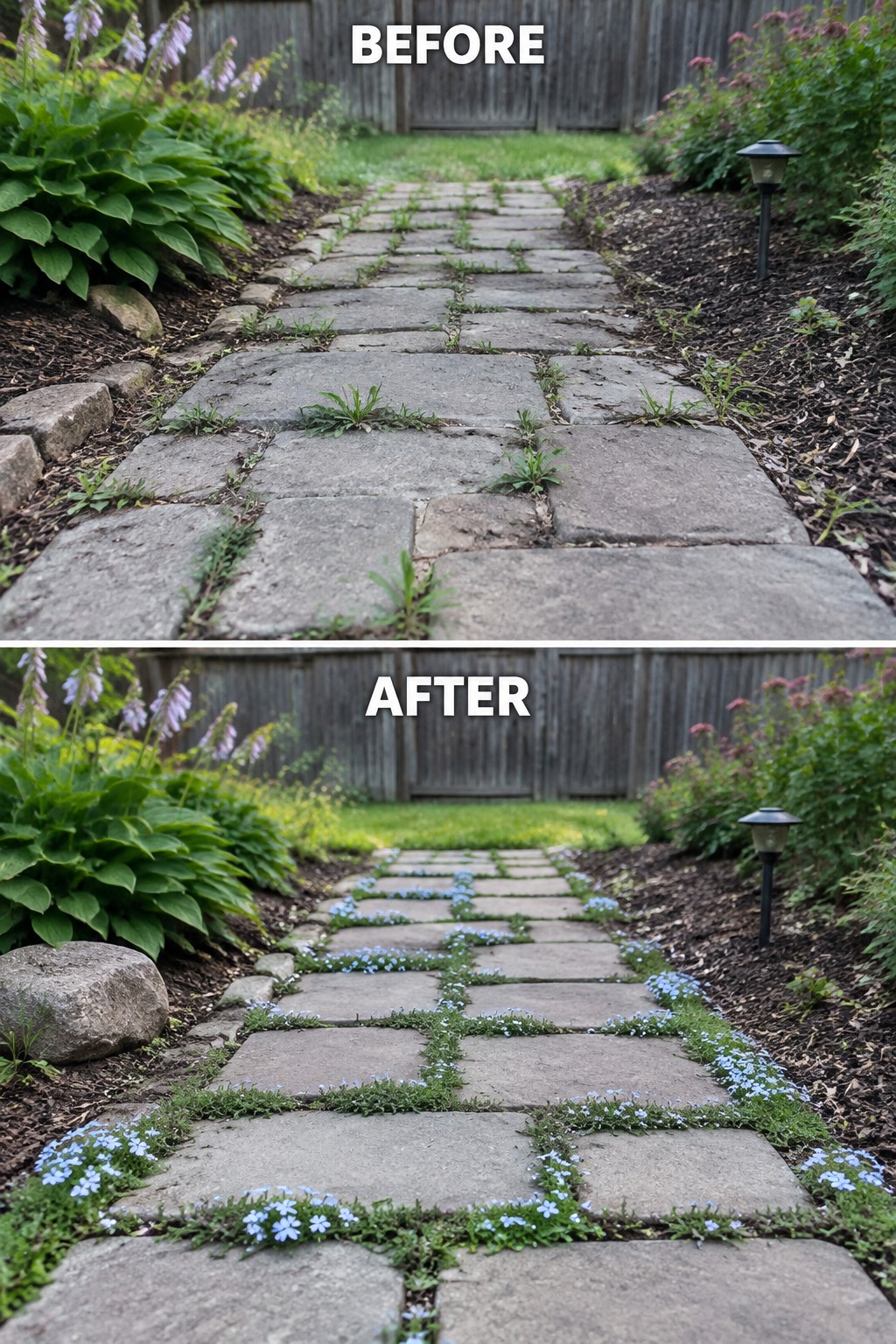
A stone path can feel neglected when weeds take over the joints and the edges look bare. Low flowering ground covers fill those spaces with a planned look, while the stones still provide a clear route through the garden.
Choose plants that stay low and suit the light and moisture conditions along the path. Leave enough room for the stones to remain easy to step on, and avoid varieties that spread too quickly for the space.
Cover A Bare Slope With Flowering Ground Covers

A bare slope can be difficult to make look finished, but flowering ground covers create a broad band of color and help the planting feel more planned. Here, low-growing flowers replace much of the exposed soil, while rocks define the beds.
For a similar hillside, choose ground covers suited to your sun, soil, and climate, then plant them in groups so they can spread. Keep some open space around larger stones, and avoid planting so densely that you cannot reach the area for upkeep.
Add A Flowering Border Along The Patio

A narrow flower bed can make a plain patio feel more connected to the yard. Here, a bare strip of soil becomes a defined border filled with flowering ground covers, adding color without taking away usable patio space.
This idea works well where a concrete patio meets a lawn. Mark out a shallow bed along the edge, choose low-growing plants suited to the sun and soil, and leave enough room for them to spread without spilling onto the lawn or patio.
Replace Weeds With A Flowering Garden Border

A weed-filled strip beside the fence can look much tidier when it becomes a defined bed of flowering ground covers. Here, dense bands of purple, yellow, and white blooms fill the bare mulch and make the lawn edge look more intentional.
Clear weeds and unwanted plants first, then group low-growing flowers in broad patches so they can fill in without crowding one another. This idea works well along fences or narrow side yards, but choose plants suited to your sun, soil, and water conditions.
Fill A Rocky Garden With Flowering Ground Covers

Flowering ground covers turn a weedy gravel bed into a planted garden while leaving the stone path in place. The flowers fill the open spaces around the boulders, so the area feels more planned without needing a major hardscaping project.
For a similar yard, clear weeds first, then choose low-growing plants suited to your sun and soil. Leave enough room around stepping stones for easy footing, and avoid planting so densely that the path disappears.
Create A Flower Bed Around A Tree
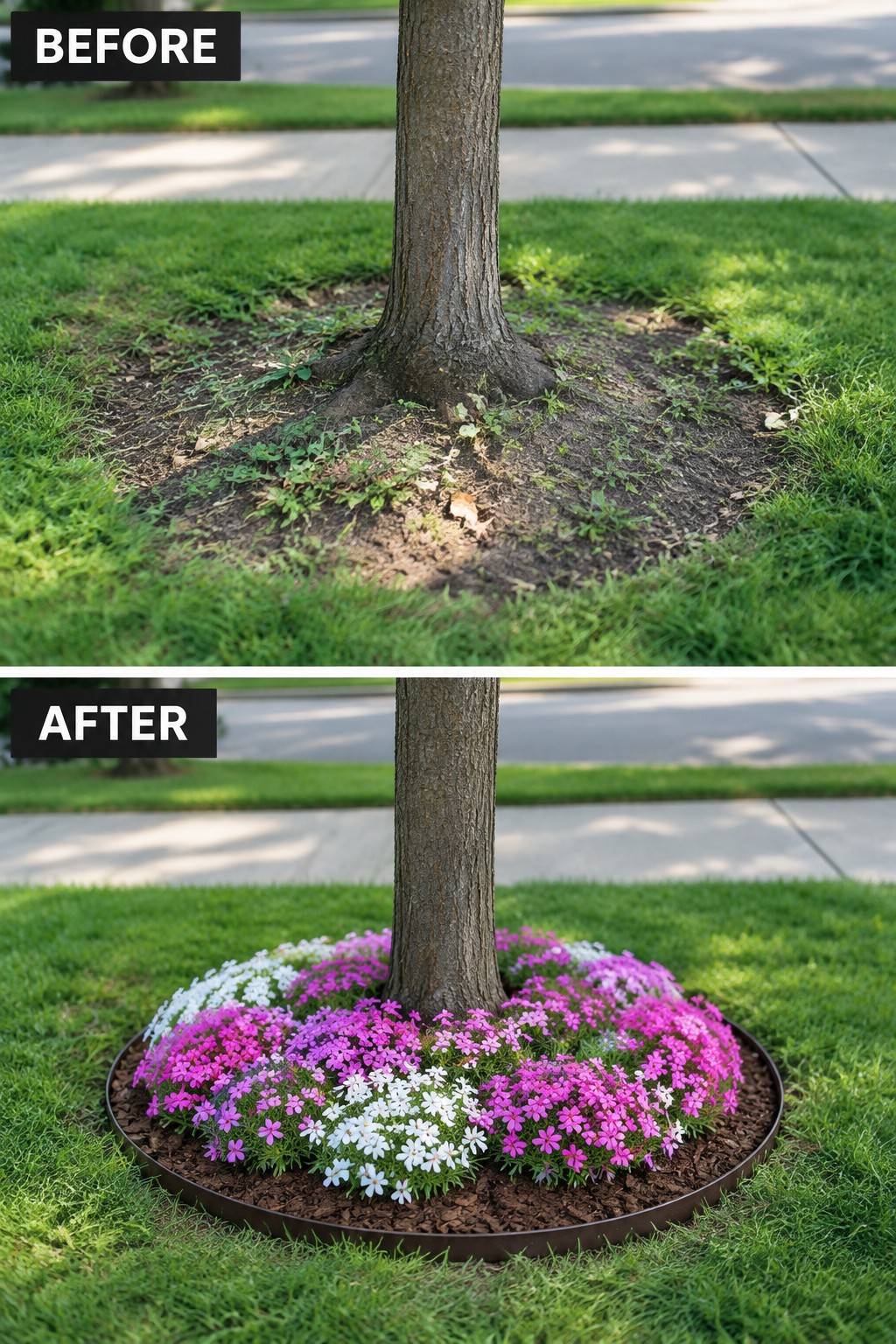
A bare patch around a tree can look untidy and be hard to mow. A simple circular bed gives the area a clear edge, while flowering ground cover fills the space with color.
Keep the bed wide enough for the plants to spread, and use a low border to hold the mulch in place. Leave open space around the trunk rather than piling soil or mulch against the bark.
Plant Flowering Ground Covers Across A Rocky Slope

A steep, mostly bare slope can be hard to maintain and leave the stone walls looking disconnected. Low-growing flowering plants fill the open soil and spread color across the hillside, while the existing rocks still show through.
Use ground covers suited to your sun, soil, and local climate, and check how quickly they spread before planting. On a slope, choose plants that can hold the soil and avoid leaving large bare patches between them.
Replace A Mulch Bed With A Gravel Garden

A broad mulch bed with only a few scattered plants can look unfinished. Replacing the mulch with light gravel and grouping flowering ground covers into fuller patches gives the bed a clearer plan without changing its basic shape.
This idea suits a small front-yard bed where you want less open soil and more color. Keep enough space between plants for them to spread, and choose varieties suited to your sun and soil so the gravel does not become a barrier to healthy growth.
Add A Stepping-Stone Path Through A Narrow Garden Bed

A rocky strip beside the pool can feel unfinished and awkward to walk through. Setting large pavers into the gravel gives the narrow bed a clear path, while flowering ground covers fill the spaces around it.
This idea works well in side yards or along fences where there isn’t room for a full walkway. Keep the pavers spaced for comfortable steps and choose low-growing plants that won’t spill over the walking surface.
Fill Raised Planters With Flowering Ground Covers

The raised beds beside this narrow walkway were sparse and patchy. Filling them with flowering ground covers turns the planting into a fuller, more continuous border while leaving the concrete path clear.
This idea suits small patios and entry paths where raised planters already define the edges. Choose low-growing flowers that fit the light and climate, and leave enough room for them to spread without spilling into the walking space.
Turn A Bare Entry Bed Into A Flowering Border

The entry bed looks neglected when it is mostly bare soil and struggling plants. Filling it with flowering ground covers gives the area a clearer shape and brings color right up to the steps.
For a similar spot, remove weeds and loosen the soil before planting, then choose low-growing flowers suited to the light and local conditions. Leave enough space for the plants to spread without blocking the steps or walkway.
Replace An Overgrown Median With Defined Flower Beds

An overgrown street median can look untidy and make the whole space feel neglected. Clearing the weeds and arranging flowering ground covers in distinct clumps turns it into a planted bed that looks cared for without needing a complicated design.
For a similar area, use gravel between the plants to keep the layout clear and help limit bare, weedy patches. Choose low-growing flowers suited to the sun and local conditions, and leave enough room for them to spread without crowding the curb.
Turn A Bare Fire Pit Area Into A Flowering Garden

A plain dirt yard around a fire pit can feel unfinished, even when the fire pit itself is in place. Here, flowering ground cover fills the open space, while stepping stones give people a clear way to reach the seating area.
This idea works well in a backyard with a simple central feature and room for low-growing plants to spread. Choose ground cover suited to your sun and soil, and leave enough space around the fire pit for safe access and maintenance.
Frequently Asked Questions
Q: What flowering ground covers work well around boulders?
A: Look for low-growing plants that suit your sun and soil, such as creeping thyme for sunny spots or creeping phlox for a spring display. Check how wide each plant spreads so it softens the stone without hiding it.
Q: How do I keep ground covers from taking over the whole yard?
A: Leave room between the planting area and lawns or paths, and trim plants back when they cross the edge. A clear border makes spreading varieties much easier to manage.
Q: Should I plant right up against a boulder?
A: Leave a little space so rain can reach the soil and you can get in to weed or trim. Plants can still spill toward the rock as they fill in.
Q: Do flowering ground covers need much watering?
A: Water regularly while new plants get established, especially during dry spells. Once settled, many need less attention, but check the soil near large boulders since it can dry out quickly.
