


A garden fence can make a yard feel neglected when its boards are worn, uneven, or offering little privacy.
I like how horizontal cedar boards bring a cleaner line to the boundary while adding warmth without making the space feel closed in.
The right layout can also help a fence sit naturally alongside planting beds, paths, and outdoor seating.
Small details make a difference.
I’d save the ideas that suit your yard’s shape and try them as a practical way to make the garden feel more cared for.
Add Privacy With A Horizontal Cedar Fence
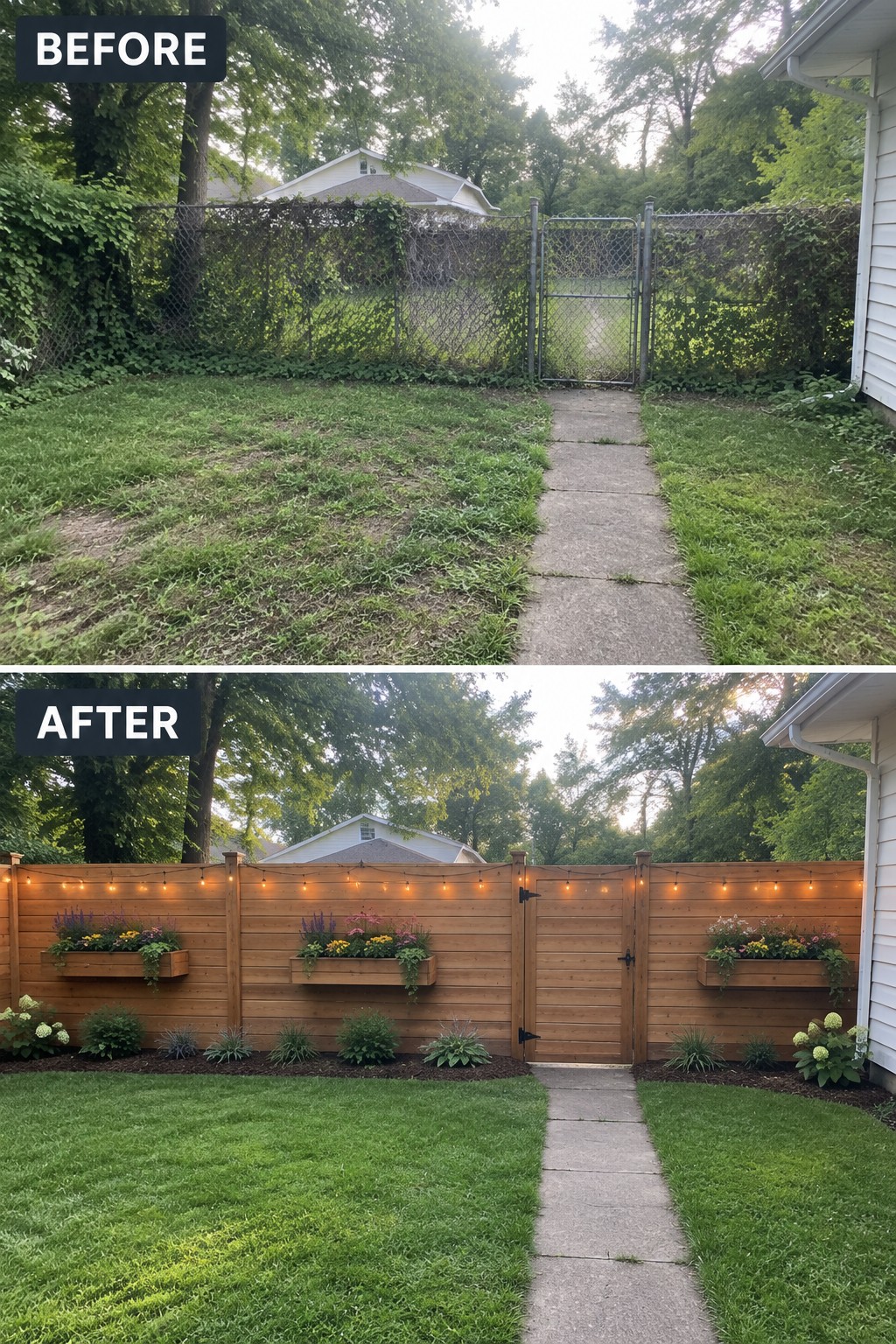
A horizontal cedar fence gives a plain backyard a clear edge and more privacy. Here, it replaces the overgrown chain-link boundary, while the matching gate makes it easy to keep the walkway in use.
This idea works well in small yards where a fence can make the space feel more orderly without taking up room. Keep the boards and gate in a consistent finish, and leave enough clearance around the path so it stays easy to walk through.
Replace A Failing Fence With Horizontal Cedar Boards
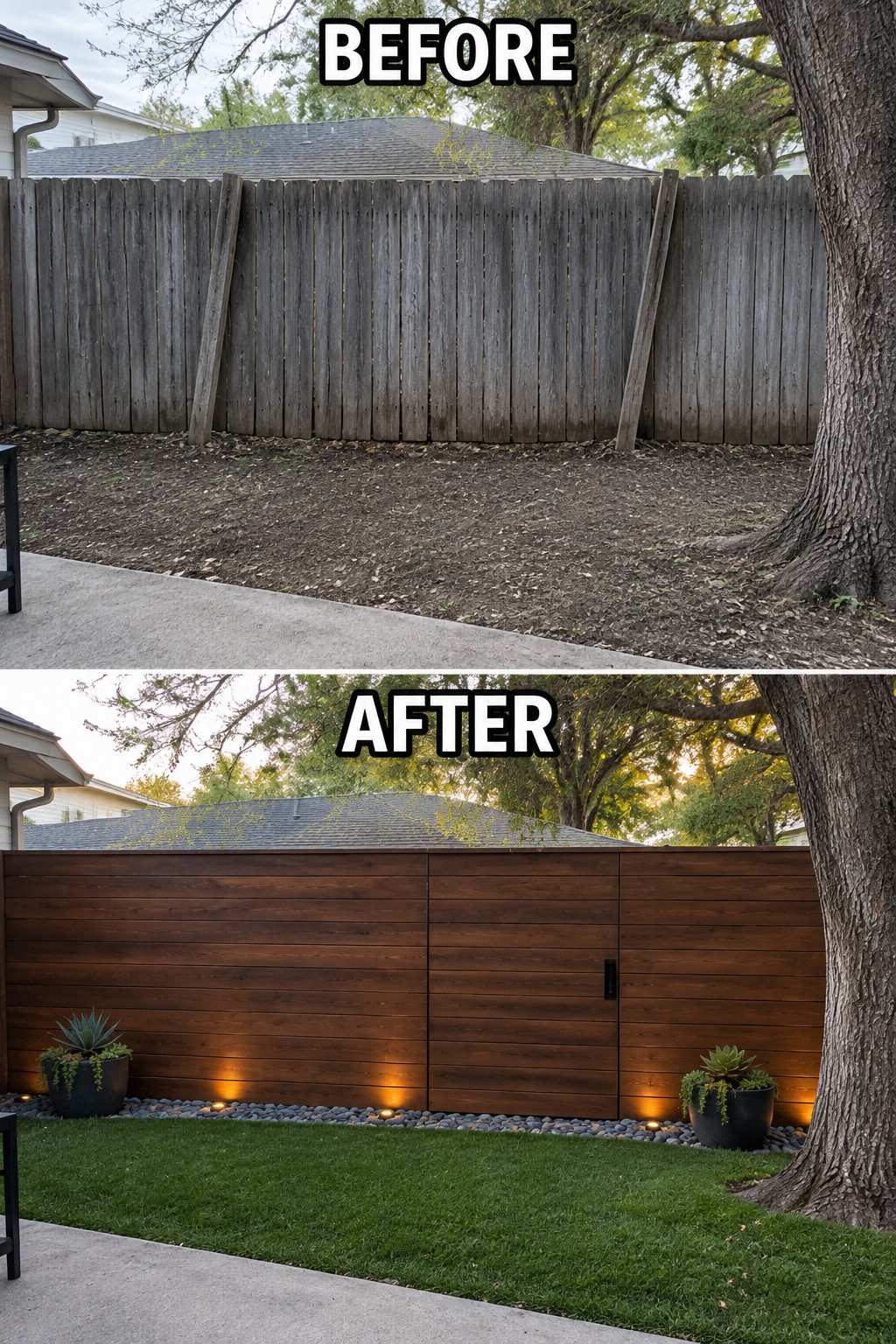
A leaning, weathered fence can make a backyard feel neglected. Replacing it with horizontal cedar boards gives the yard a cleaner, more finished edge, while a simple gate keeps the fence practical.
This idea works well when an old fence is the main thing making a yard feel worn out. Choose boards rated for outdoor use, and check the fence line and gate opening before building so the new fence fits the space.
Give A Small Front Yard More Structure
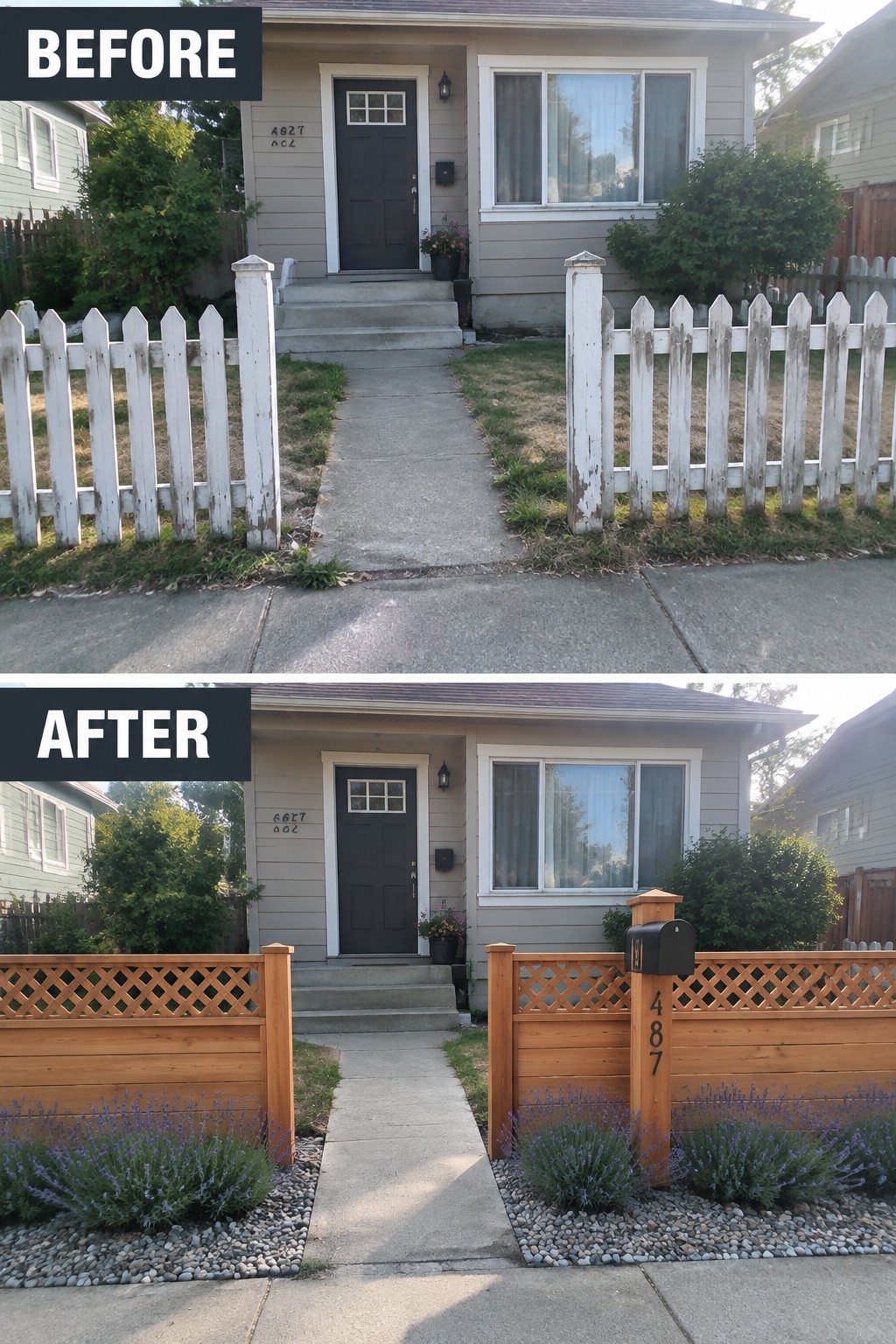
The old picket fence left the front yard feeling open and untidy. A low cedar fence with a lattice top gives the space a clear edge while keeping the entry path open, so the yard feels more planned without hiding the house.
This idea works well in a small front yard where you want a little definition without building a tall barrier. Keep the gate aligned with the walkway, and leave enough room beside the path for planting or easy upkeep.
Turn A Poolside Fence Into An Outdoor Seating Area
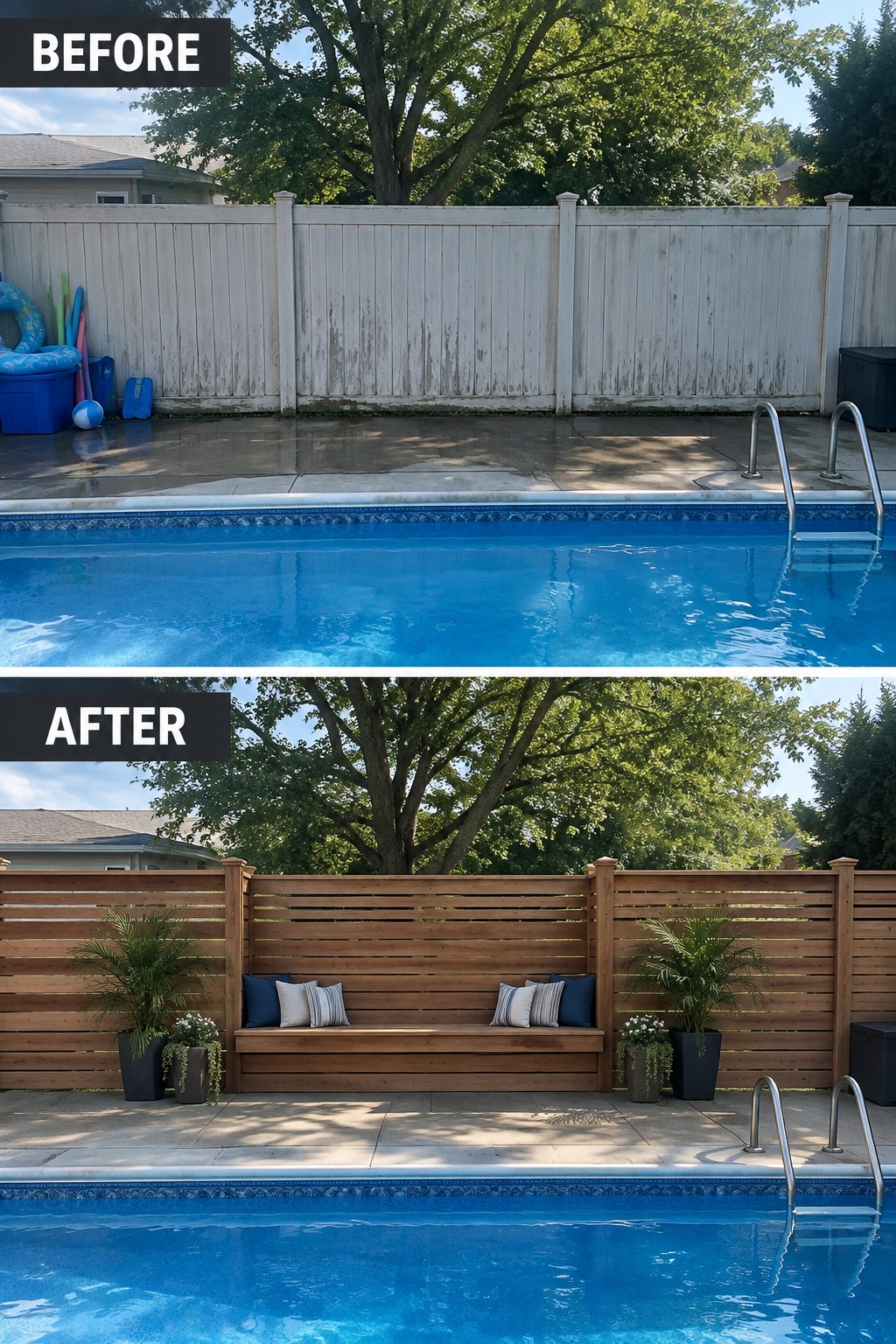
A plain fence can make the poolside feel unfinished, even when there’s plenty of room to sit. Replacing it with horizontal cedar boards and building a bench into the center gives the patio a clear place to pause and makes better use of the space.
This idea works well along a backyard fence where a freestanding seating set might crowd the walkway. Keep the bench deep enough to sit comfortably, but leave room to move around the pool, and choose cushions made for outdoor use.
Replace A Leaning Fence To Tidy The Garden

A sturdy horizontal cedar fence can bring order to a garden that feels overgrown. Here, replacing the leaning boards with a straight fence gives the flowering shrubs a neat backdrop and makes the planting bed look more intentional.
This idea works well in a narrow side yard where an old fence makes the space feel neglected. Clear away weeds first, then keep the bed simple so the fence and existing plants have room to show.
Make A Narrow Side Yard Easier To Use

A narrow side yard can feel like leftover space when the fence is patched and the concrete is worn. Replacing the mismatched boards with clean horizontal cedar and adding a simple paver path makes the passage feel planned and easier to walk through.
This idea works well beside a house where there isn’t room for a full patio. Keep the path clear, and use a slim planting strip along the fence if you want greenery without crowding the walkway.
Replace A Broken Fence With Horizontal Cedar Boards
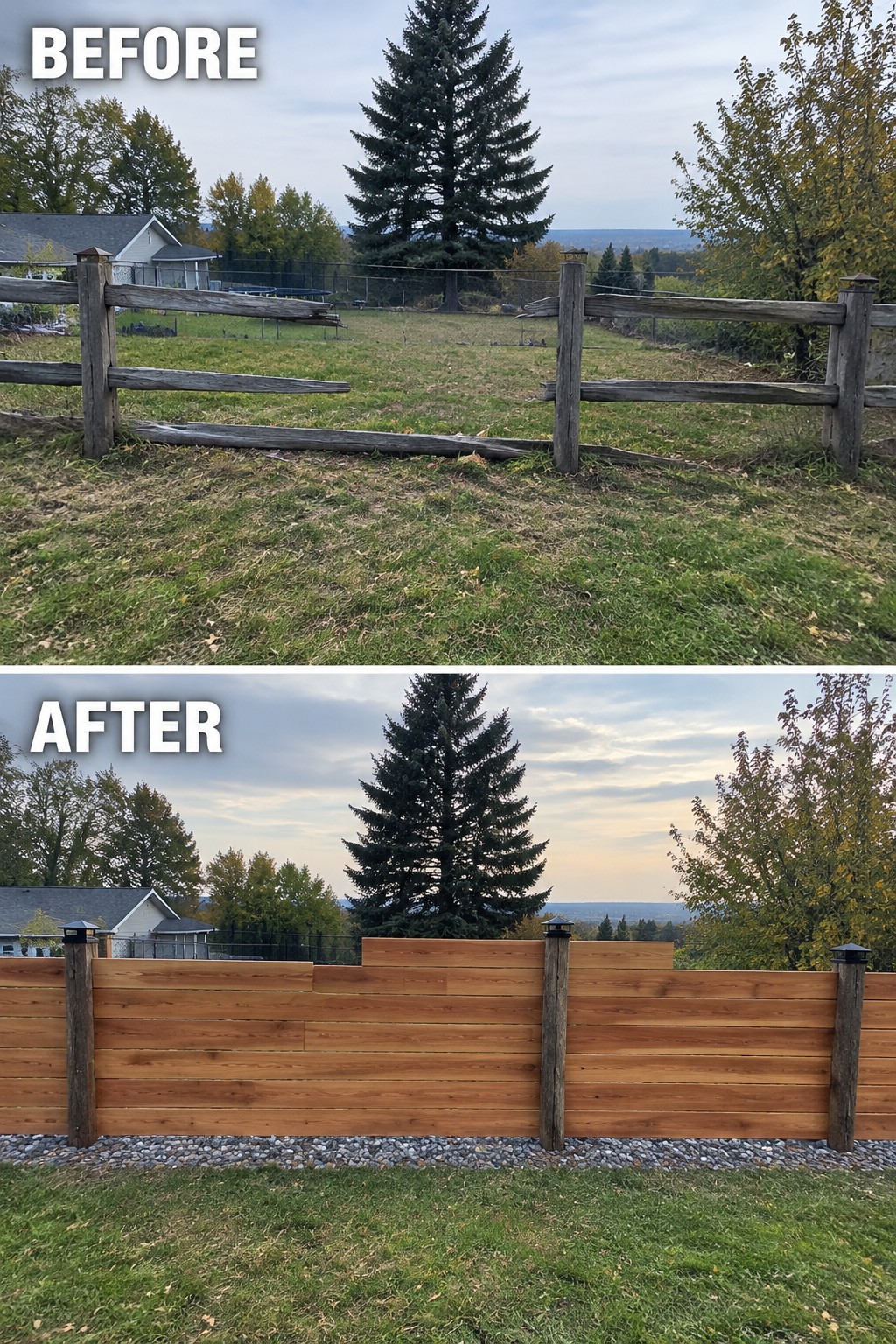
A damaged fence can make an otherwise usable yard feel neglected. Replacing the loose, broken rails with horizontal cedar boards gives the boundary a solid, orderly look while keeping the existing posts as supports.
This approach works well when the posts are still sturdy but the fence itself needs replacing. Choose boards rated for outdoor use, and leave a small gap beneath the fence so water and debris do not collect against the wood.
Make A Small Patio Feel More Private

A taller horizontal cedar fence turns this patio into a more sheltered seating area. The old fence left gaps and looked worn, while the new boards give the space a cleaner backdrop and block more of the view beyond the yard.
For a small patio, a solid fence can help the seating feel like its own outdoor room. Choose boards suited to outdoor use, and check local rules for fence height before building.
Give A Neglected Yard A Cleaner Layout

The worn fence and patchy ground made this yard feel untended. Replacing the fence with horizontal boards gives the garden a more orderly backdrop, while a simple row of stepping stones makes the gate easier to reach.
For a similar yard, start by clearing debris and deciding where people need to walk before adding new plants or features. Keep the path wide enough to use comfortably, and choose fence boards and posts that suit your budget and maintenance plans.
Give The Front Yard A Cleaner Edge

Replacing the worn picket fence with horizontal cedar boards gives this small front yard a more orderly look. The low hedge along the fence adds a neat border without blocking the view of the house.
This approach works well when you want a clear boundary but still want the yard to feel open. Keep the fence low and leave a gap at the walkway so the entrance stays easy to reach.
Give An Overgrown Garden A Clear Edge

The old lattice fence made the narrow garden feel cluttered. Replacing it with horizontal cedar boards gives the planting bed a cleaner backdrop and makes the garden look more orderly without removing the established plants.
This idea works well in a small side yard where the path and garden bed share limited space. Keep the bed edge clear and leave enough room on the path to walk comfortably.
Add Privacy To A Poolside Seating Area
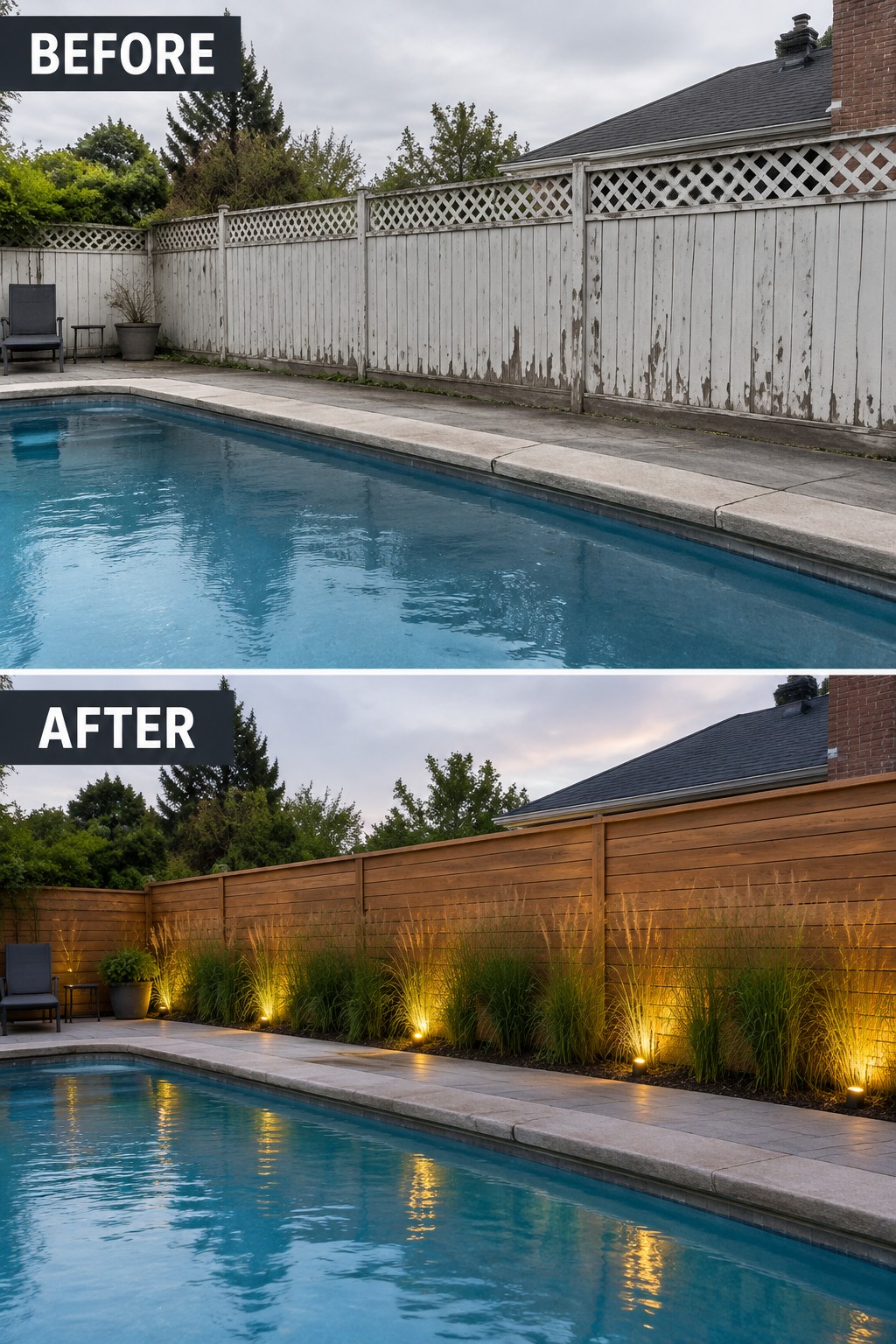
The peeling fence made the pool area feel unfinished. Replacing it with horizontal cedar boards gives the yard a cleaner backdrop and more privacy, while a row of grasses helps screen the lower edge.
This idea works well when a pool or patio sits close to neighboring homes. Keep plants low enough to leave the fence visible, and leave clear space around the pool deck for walking.
Make A Backyard Fence More Useful

Replacing the worn picket fence with horizontal cedar boards gives the yard a tidier, more private backdrop. The chalkboard panel also makes one section useful for kids without changing the main idea: a simple fence update can help a family yard feel more considered.
For a similar project, choose boards and a finish that suit the house, and keep the fence height within local rules. A chalkboard can be a practical extra in a play area, but leave enough clear fence space for privacy.
Replace An Overgrown Fence Line With A Cedar Screen

An overgrown chain-link fence can make a garden feel untidy and exposed. Replacing it with horizontal cedar boards and a lattice top gives the yard a clear boundary while still leaving room for climbing plants.
This approach works well along a property line where privacy matters but you do not want a solid wall from top to bottom. Clear the growth first, then plan the fence height and supports carefully so the new structure suits the space.
Replace A Weathered Fence To Tidy The Garden

A worn, uneven fence can make a narrow side yard feel neglected. Replacing it with horizontal cedar boards gives the garden a cleaner edge, while the open rails at the top keep the barrier from feeling too solid.
This idea works well beside a path or planting bed where a fence needs to provide privacy without taking over the yard. Keep the board layout consistent, and leave enough room along the path for easy access.
Make A Patio More Private With A New Fence

Replacing a weathered fence with horizontal cedar boards gives this patio a cleaner backdrop and makes the dining area feel more secluded. The fence does the main job here: it adds privacy without taking away the patio’s open feel.
This idea works well when a seating area faces a neighboring yard or a plain boundary fence. Choose boards and posts that suit the space, and leave enough room around the table for chairs to move comfortably.
Give A Garden Bed A Cleaner Structure

Replacing the broken, uneven fence with horizontal cedar boards makes the garden edge look more orderly and gives the planting a clear backdrop. The flowers and shrubs feel less scattered once the fence line is straight and consistent.
This idea works well where a garden bed meets a walkway or a neighboring yard. Keep the fence height suited to the space, and leave enough room along the path for easy access and maintenance.
Make A Balcony More Private
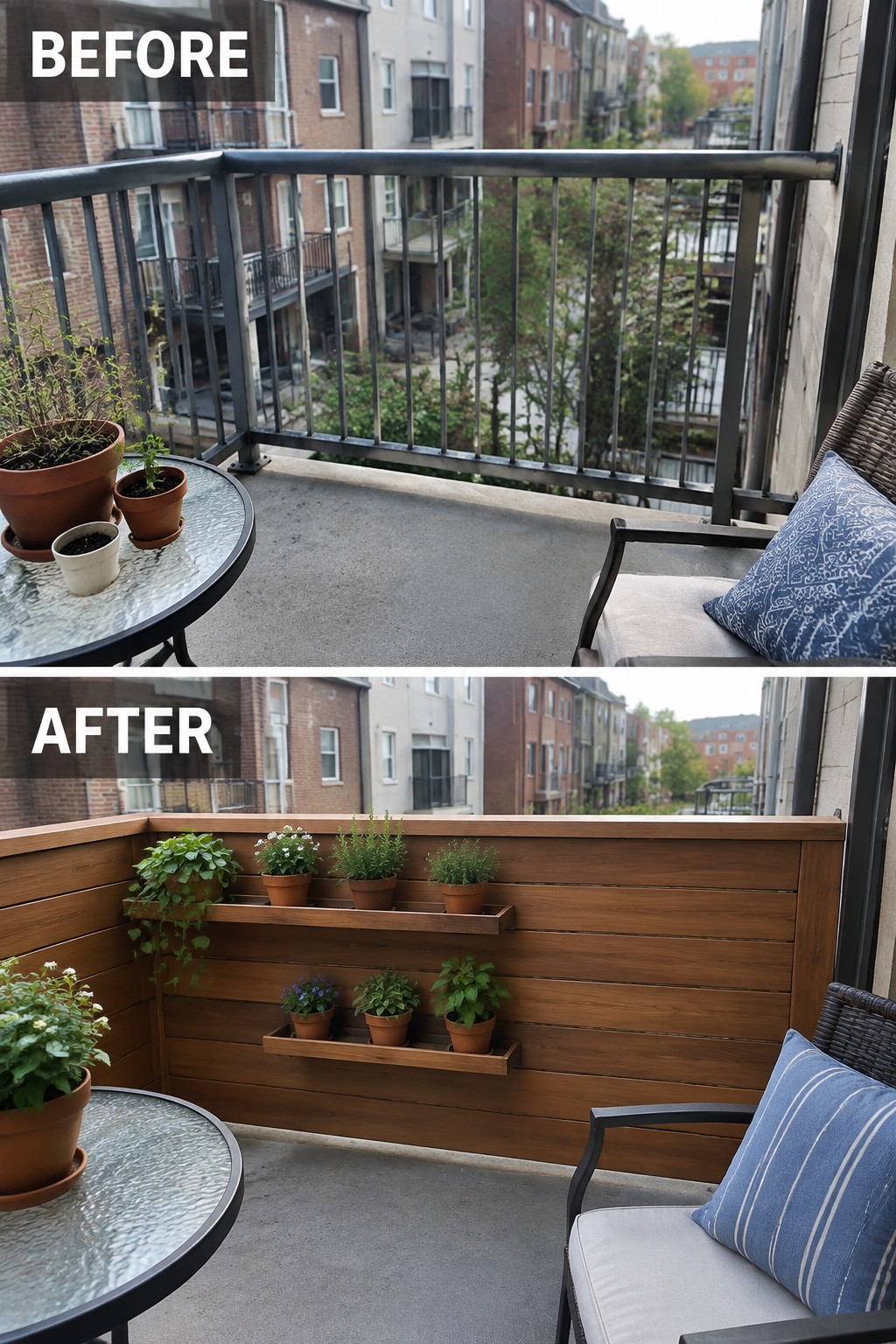
A horizontal cedar screen can turn an exposed balcony into a more comfortable place to sit. Here, the open metal railing is covered with cedar boards, giving the seating area a clear sense of privacy without changing its small footprint.
This idea works well on apartment balconies where neighbors are close by. Keep the screen low enough to preserve daylight and check building rules before attaching anything to the railing.
Give A Front Yard A Cleaner Fence Line

Replacing a weathered picket fence with horizontal cedar boards gives this front yard a more orderly edge and better privacy. The simple, continuous fence looks neater without changing the basic layout of the yard.
This approach works well along a sidewalk or driveway, where a clear boundary can make a small front yard feel more cared for. Keep the fence height and color in step with the house, and leave enough room along the street for easy access and visibility.
Turn An Unused Backyard Into A Fire Pit Seating Area
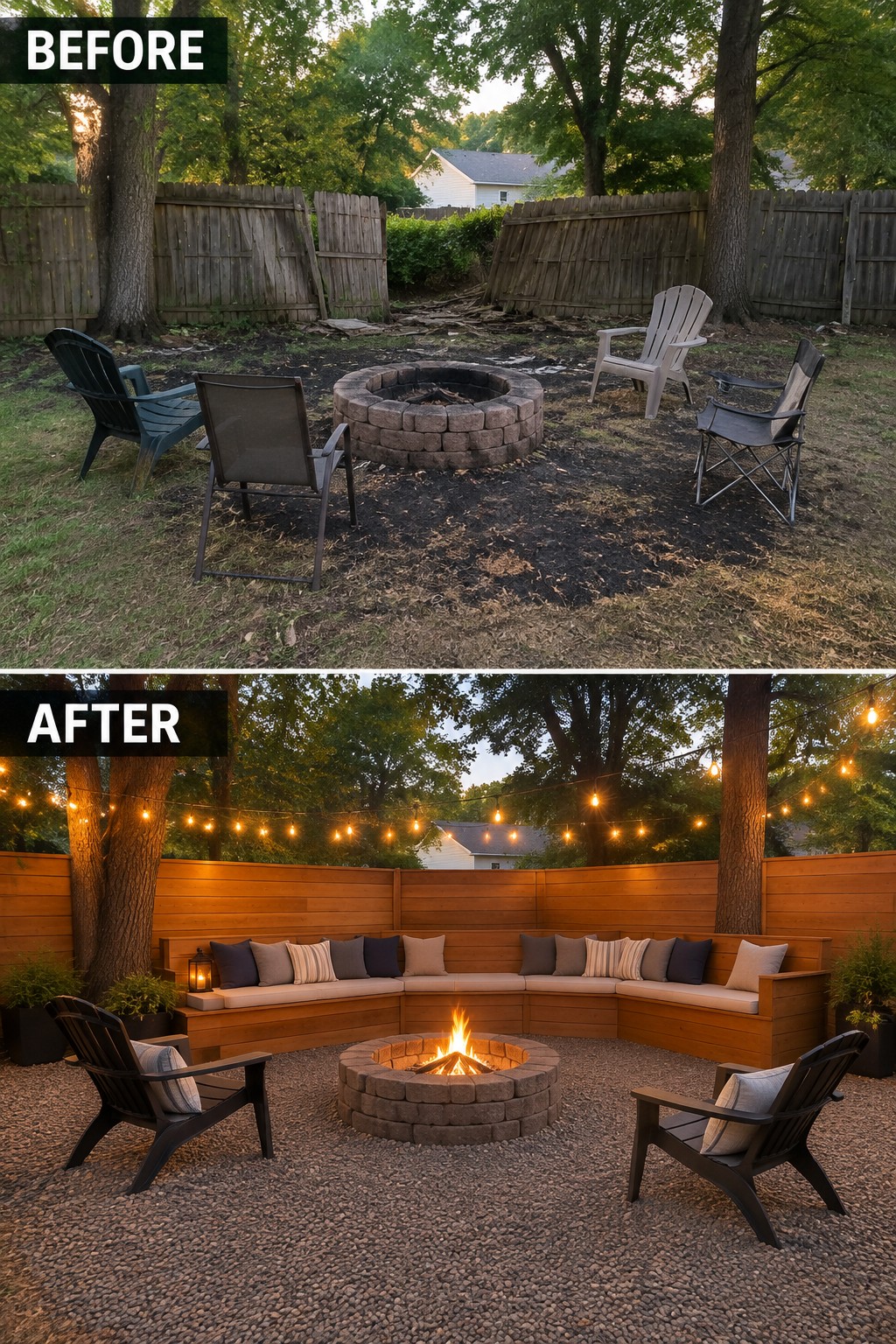
A fire pit gives an empty patch of yard a clear purpose. Here, the scattered chairs and bare ground become a more settled seating area, with a built-in bench arranged around the fire.
This idea works well in a fenced backyard where you want a spot for people to gather. Clear and level the area first, then leave enough room around the fire pit for comfortable seating and safe movement.
Add Planting Structure Along A Cedar Fence
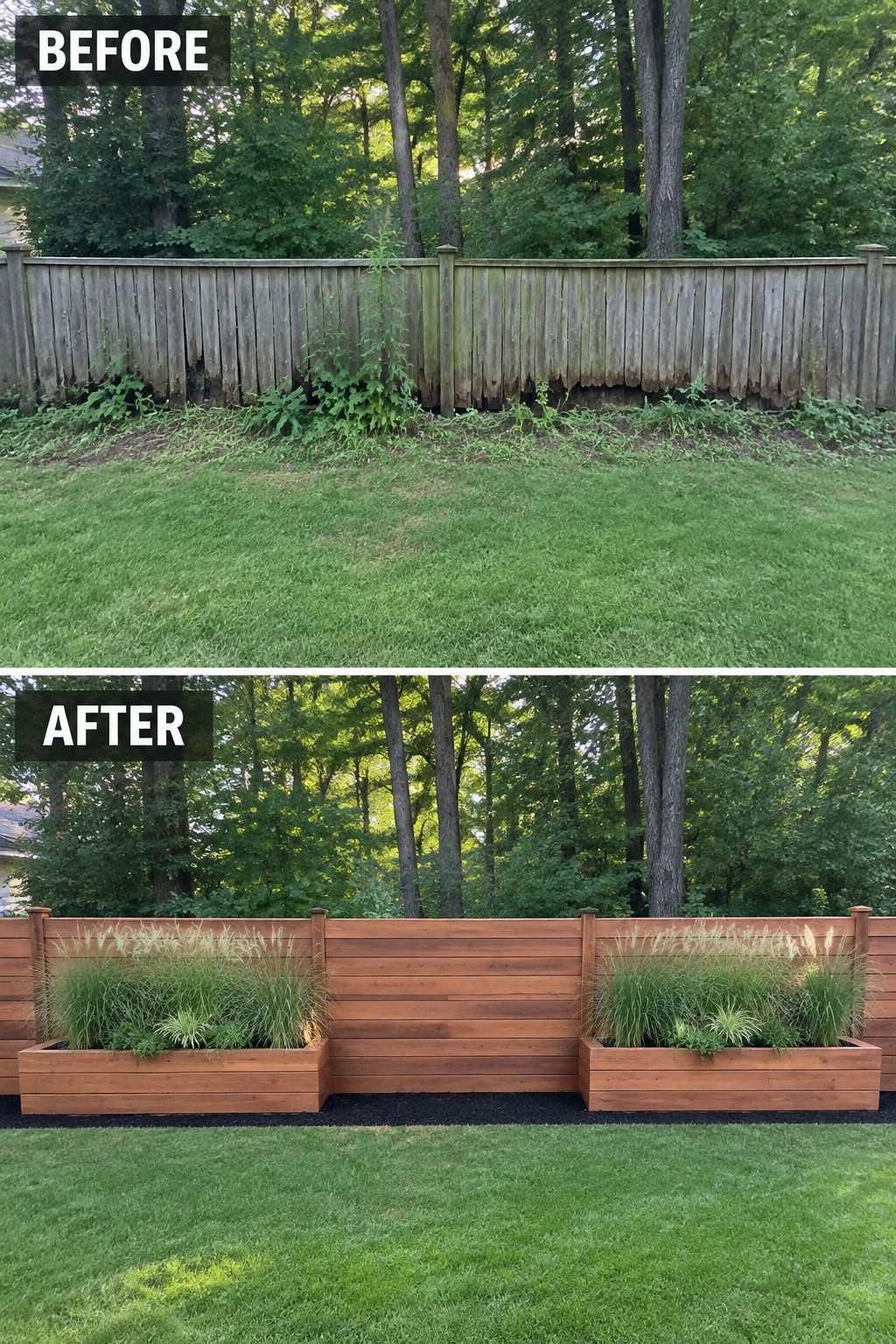
Replacing the failing fence with horizontal cedar boards gives the garden a clean backdrop, while raised beds make the overgrown fence line feel planned. The planting adds a useful border without hiding the fence itself.
This approach works well where a long fence meets an open lawn. Keep the beds low enough to leave the boards visible, and choose plants suited to the available sun so the border stays manageable.
Hide Utility Bins Behind A Horizontal Cedar Screen
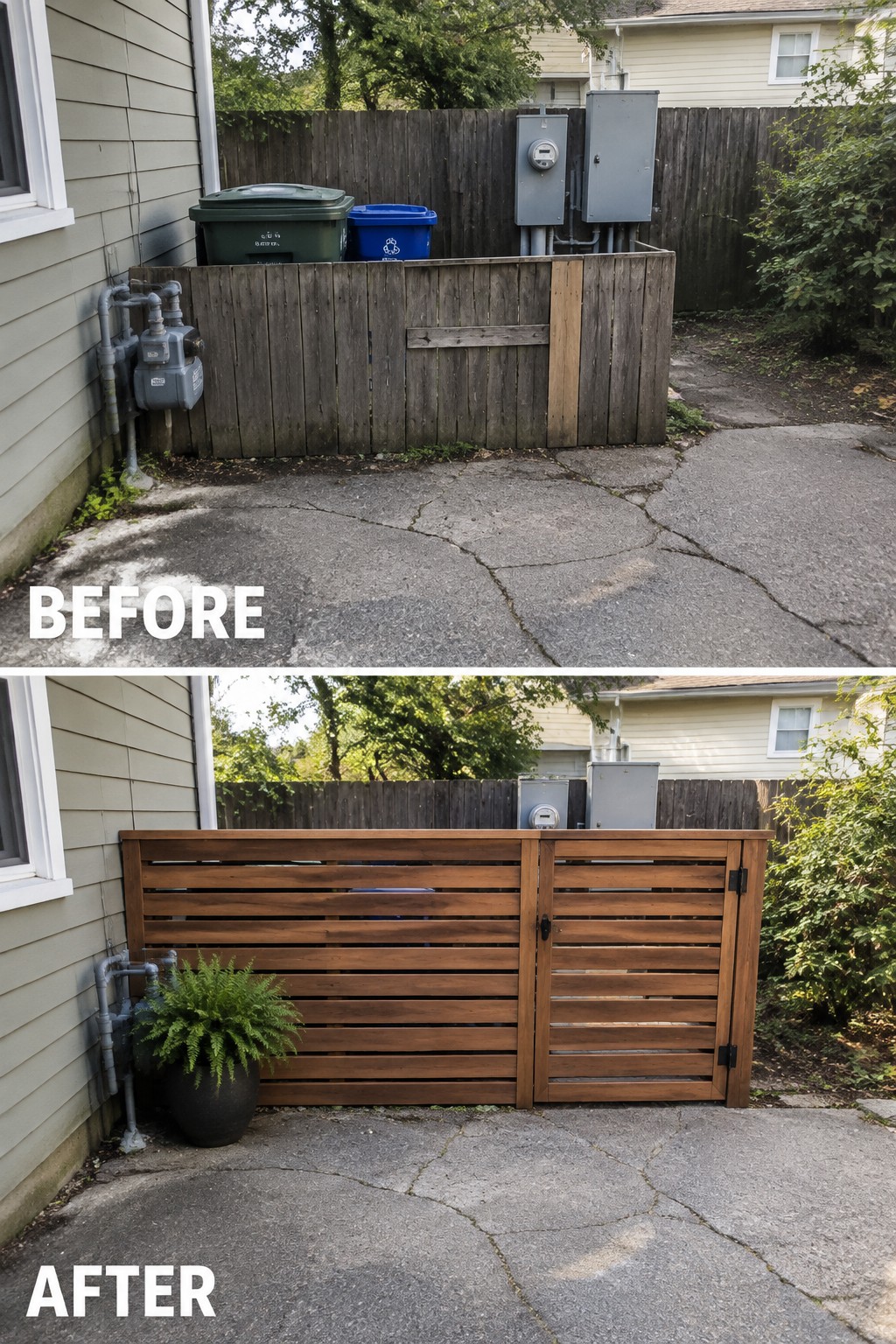
A horizontal cedar screen turns an exposed bin area into a tidier part of the yard. The old, weathered enclosure is replaced with clean, evenly spaced boards and a simple gate, so the bins stay accessible without being the first thing you notice.
This idea works well beside a house or along a narrow side yard where bins and equipment need a practical hiding place. Leave enough room to open the gate and move the bins, and check that utility meters and access panels remain reachable.
Give Overgrown Garden Beds A Clear Layout

The garden feels easier to manage once the fence line is no longer the main distraction. Replacing the mismatched boards with horizontal cedar gives the beds a clean backdrop, while leaving the planting areas intact keeps the yard practical.
For a similar garden, tidy the bed edges and clear the path before adding more plants or decor. A simple wood fence works especially well behind busy vegetable and herb beds, but leave enough room along the path to tend everything comfortably.
Frequently Asked Questions
Q: How do I keep horizontal cedar boards from sagging over time?
A: Use sturdy posts and attach each board securely at every post. For a long fence, a middle support helps keep the boards straight, especially if you’re using thinner cedar.
Q: Should I leave gaps between the boards?
A: A small gap lets air move through and gives rainwater a place to drain. Cedar can shift as it dries, so leave a little room rather than installing the boards tightly together.
Q: Do I need to seal cedar fence boards?
A: Cedar can weather naturally to a silvery gray, so sealing is optional. If you want to keep its warm color, use an exterior stain or clear finish made for cedar and follow the product’s upkeep directions.
Q: Can horizontal cedar boards work on a sloped yard?
A: Yes. You can step each fence section down with the slope or angle the boards to follow the ground. Stepped sections are usually simpler to build and keep the lines tidy.
