

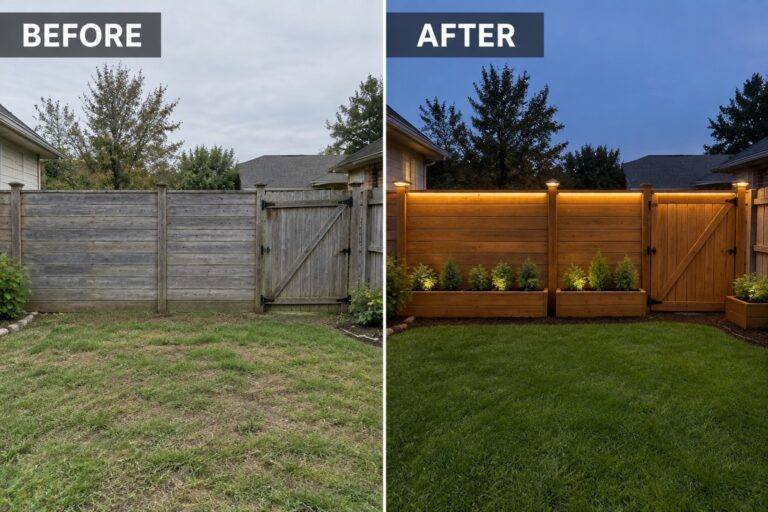
A fence can look plain or dated, and without good lighting it may disappear into the yard once evening comes.
I like how integrated LEDs add a practical layer while drawing attention to the fence’s lines, materials, and entry points.
The right placement can make a boundary feel more considered, improve visibility along a path, and give the yard a softer look at night.
Small changes in lighting and finish can make a noticeable difference without replacing the whole fence.
I’d save the ideas that suit your yard’s layout and test how a similar approach could make your own outdoor space feel more cared for.
Add Integrated Lighting To A Privacy Fence
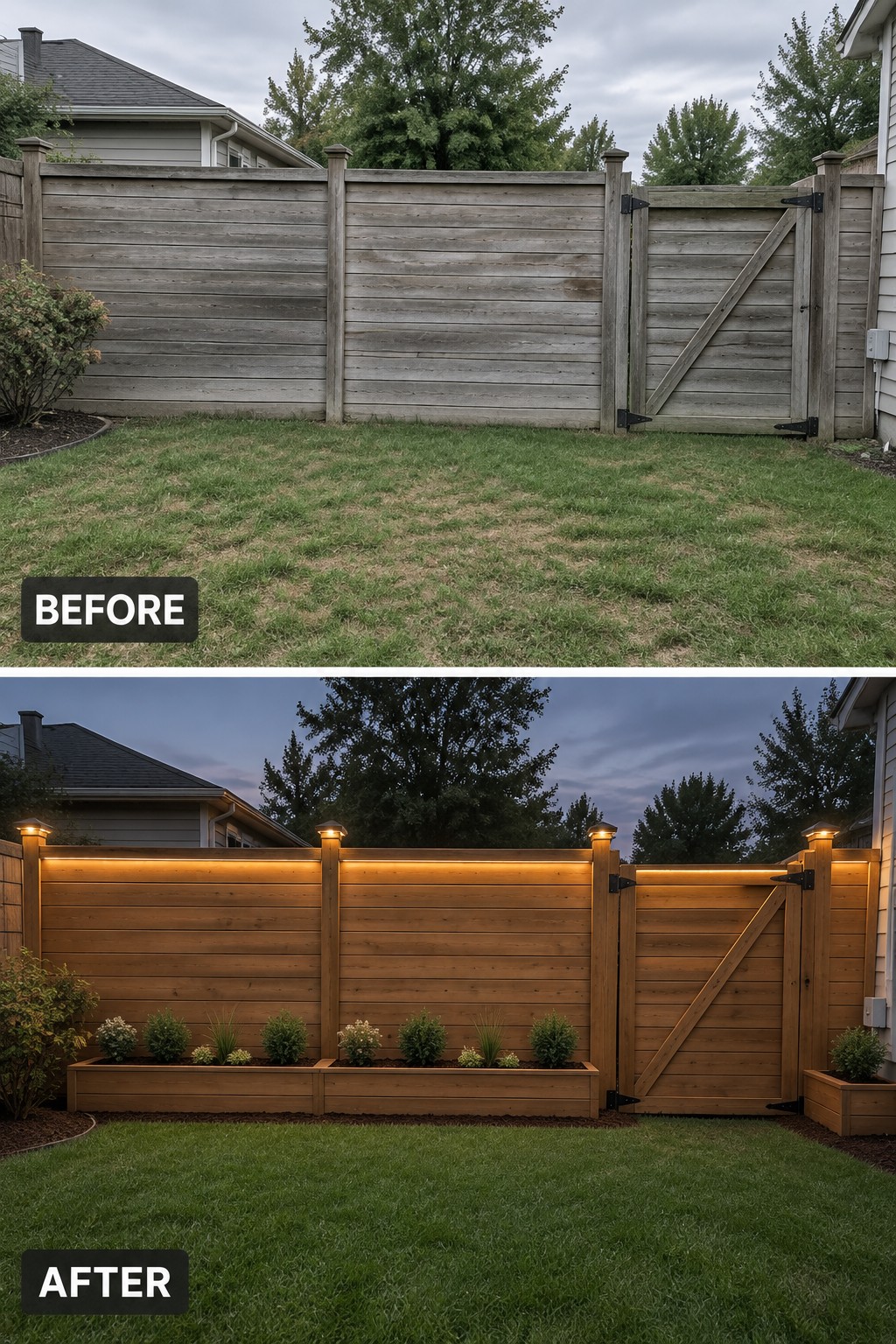
A plain fence can become a feature after dark with low-profile LED lights built into its posts and along the top rail. Here, the lights highlight the fence while giving the backyard a more finished look without changing its basic layout.
For a similar update, choose warm, weather-rated fixtures and space them evenly so the glow stays comfortable rather than harsh. This works especially well along a boundary fence, where the lighting can mark the yard’s edge without taking up room.
Use Integrated Lighting To Update A Front Fence
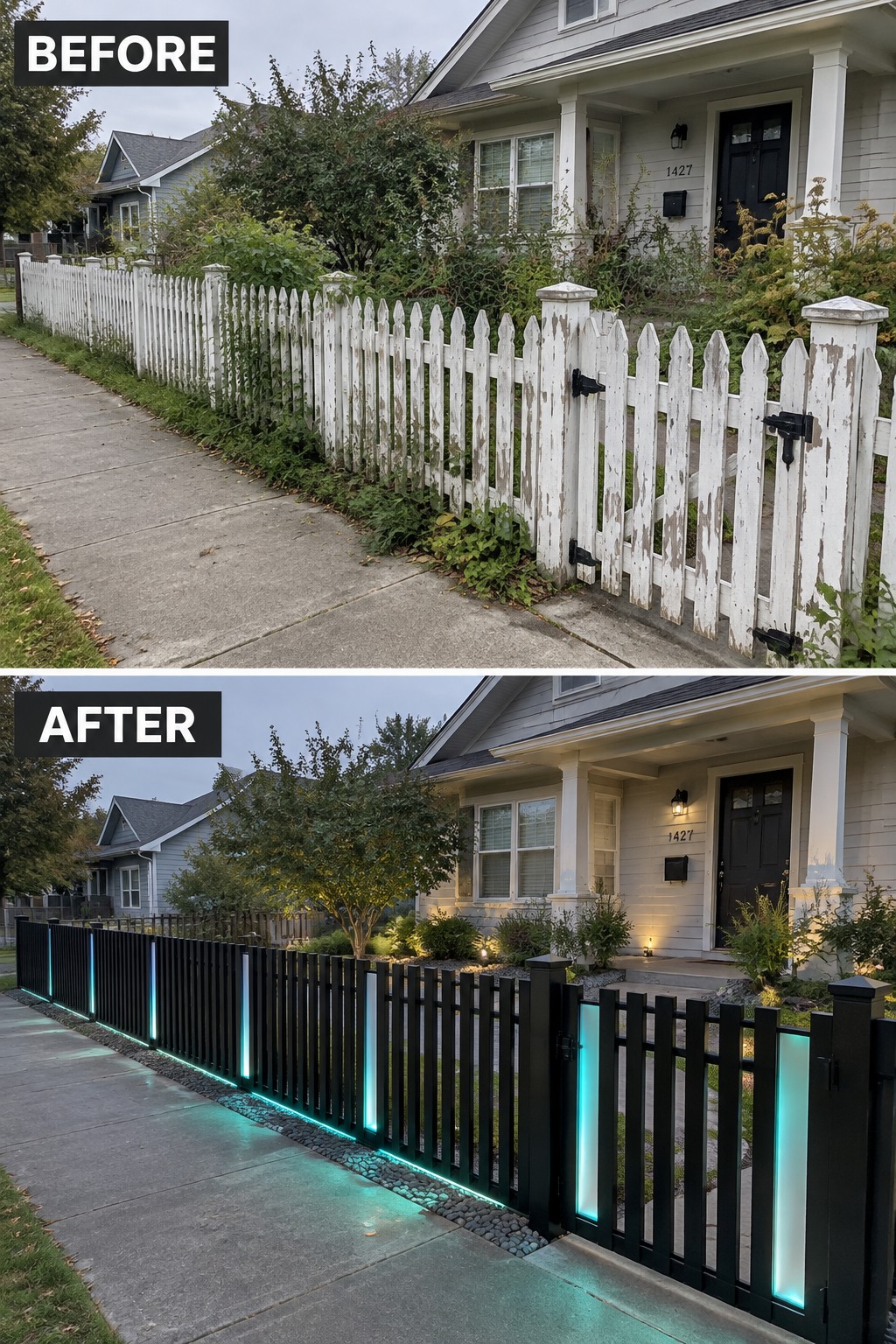
Replacing a worn picket fence with a clean-lined black fence gives the front yard a more orderly look. Slim LED strips built into the panels add a useful glow along the sidewalk without needing separate lights scattered through the yard.
This idea suits a front boundary where you want both privacy and clear nighttime visibility. Choose outdoor-rated lighting and keep it subtle, so the fence remains easy to see and the light does not shine into nearby windows.
Add Privacy With A Solid Fence
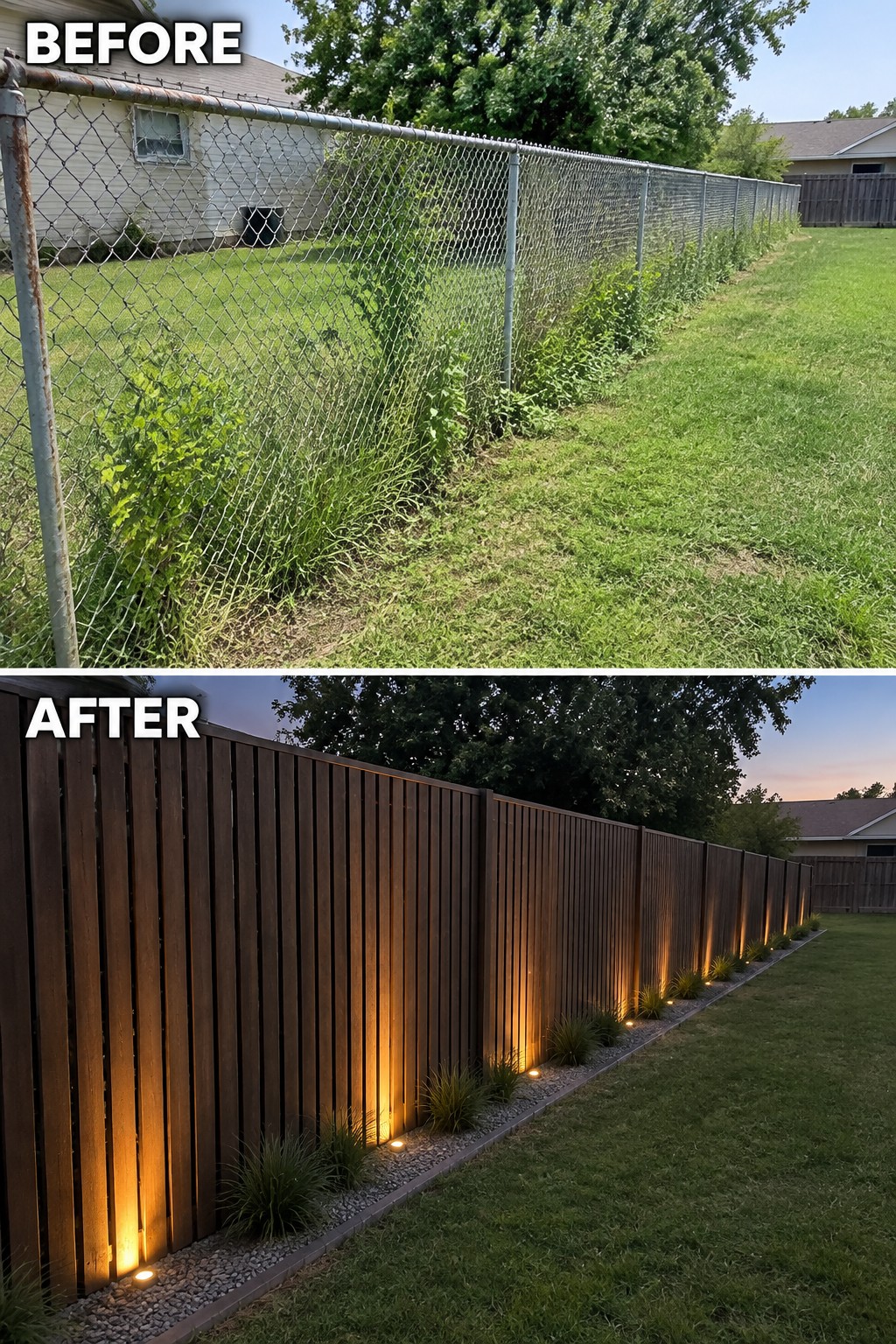
Replacing an overgrown chain-link fence with a tall wooden fence makes the yard feel more private and orderly. Low-mounted lights along the fence are a useful finishing touch, illuminating the edge of the lawn without relying on bright overhead lighting.
This idea works well in a narrow side yard where an exposed fence can make the space feel unfinished. Keep the planting strip simple, and place lights where they can highlight the fence without shining into nearby windows.
Use Integrated Lighting To Make A Patio Feel More Usable
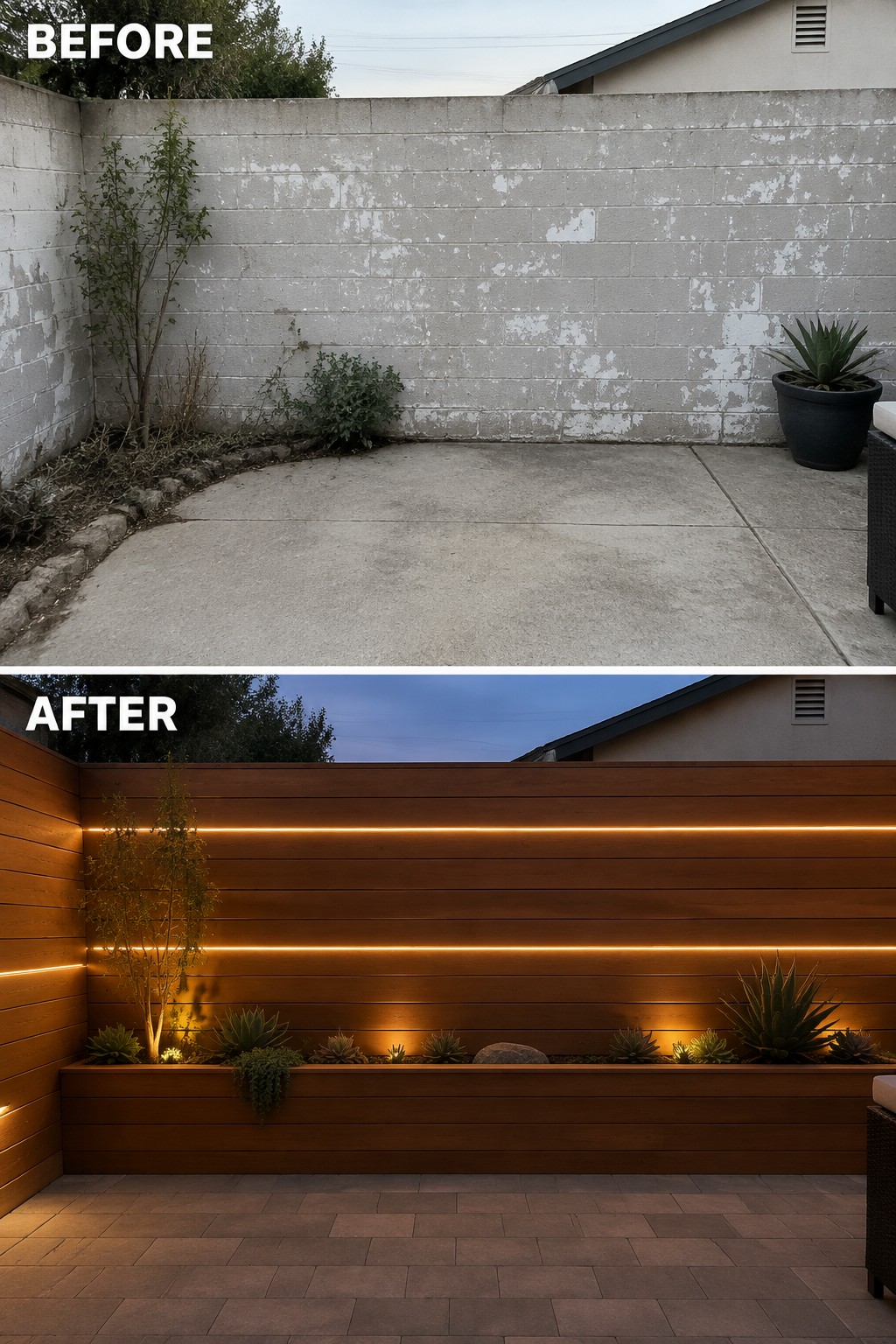
A plain concrete patio can feel unfinished, even when there is room to sit outside. Here, a horizontal wood fence and built-in planter turn the bare boundary into a more considered backdrop, while slim LED strips make the patio easier to use after dark.
For a similar look, add lighting along a fence or planter edge where it can gently light the seating area without shining into people’s eyes. Keep the planting simple and leave enough open space to move around, especially in a small patio.
Add Built-In Lights To A Plain Backyard Fence
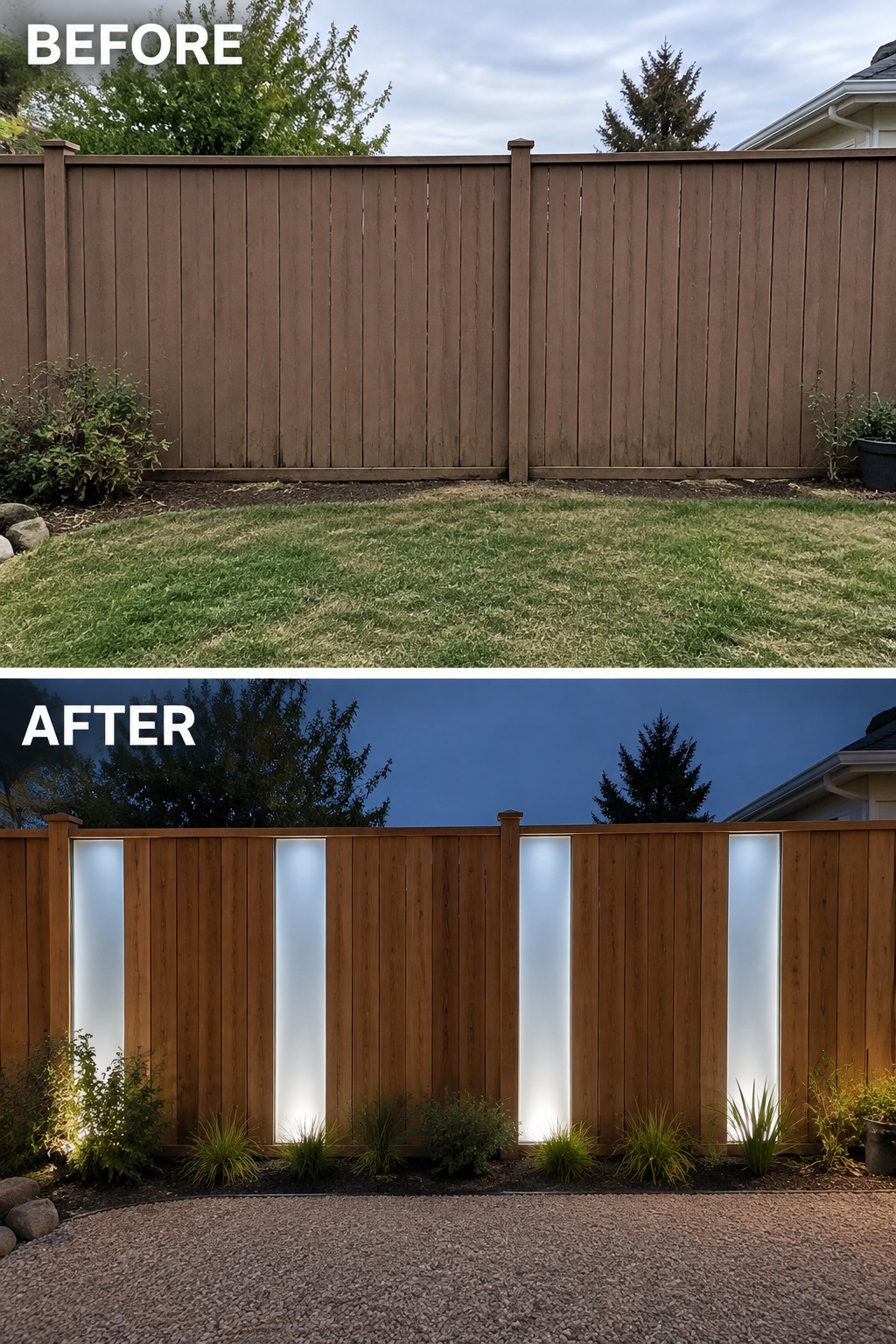
The solid fence provides privacy, but on its own it can make a yard feel a little bare. Tall light panels set into the fence turn it into a useful feature after dark, while the small planted border helps the area feel finished.
This idea works well when a fence is a main view from the yard or patio. Choose outdoor-rated lights and space them evenly, then keep planting low enough that it does not block the glow.
Replace A Worn Fence With A Clean, Lighted Border
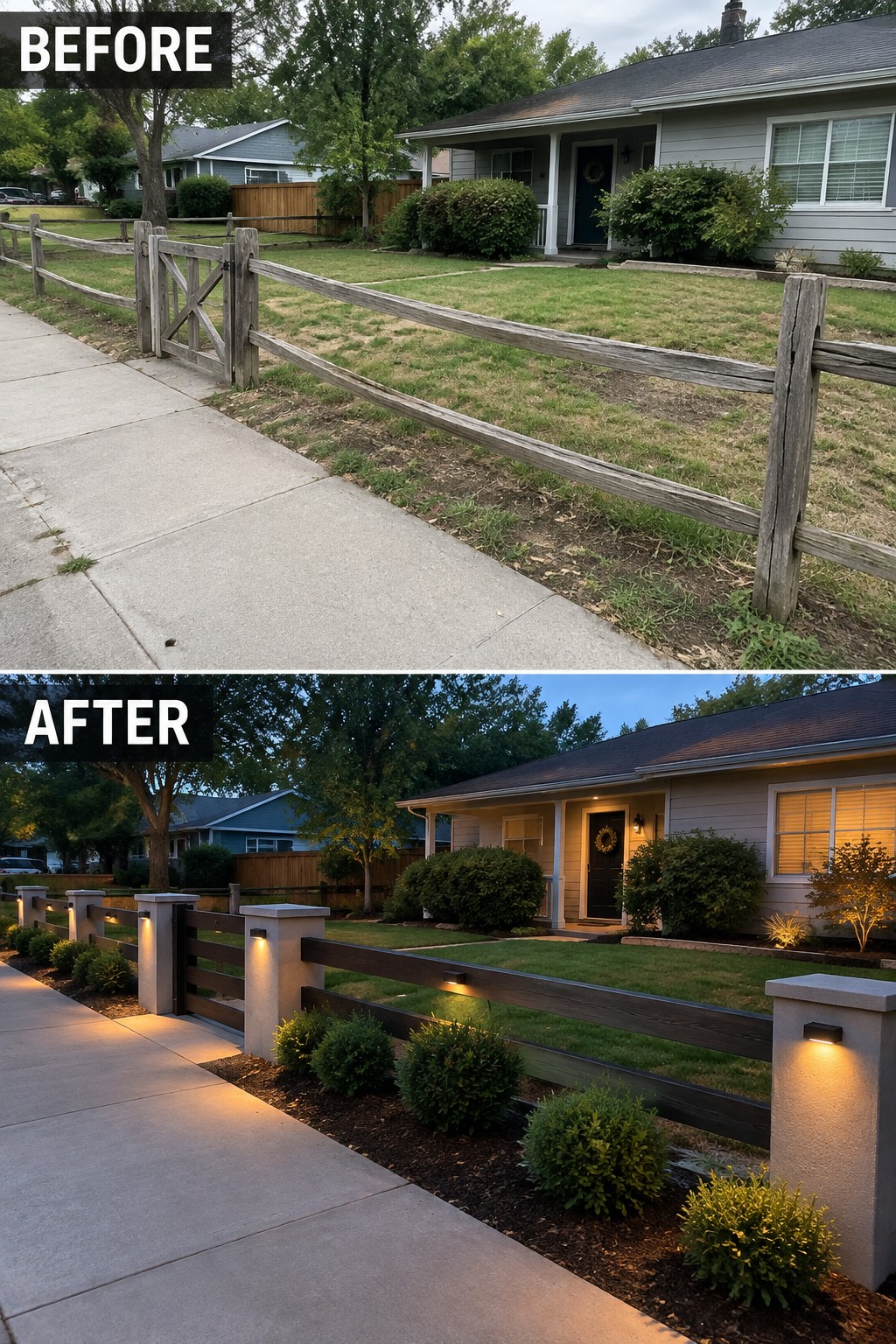
The old fence made the front yard look neglected, while the updated posts and dark rails give the boundary a tidier, more finished look. Built-in lights make the fence useful after dark too, without needing separate fixtures along the sidewalk.
For a similar update, choose durable materials that suit the house and place lights where they can brighten the path without shining into windows. A simple planting bed along the fence helps define the edge, but leave enough room to maintain it.
Use Lighting To Make A Poolside Fence More Inviting
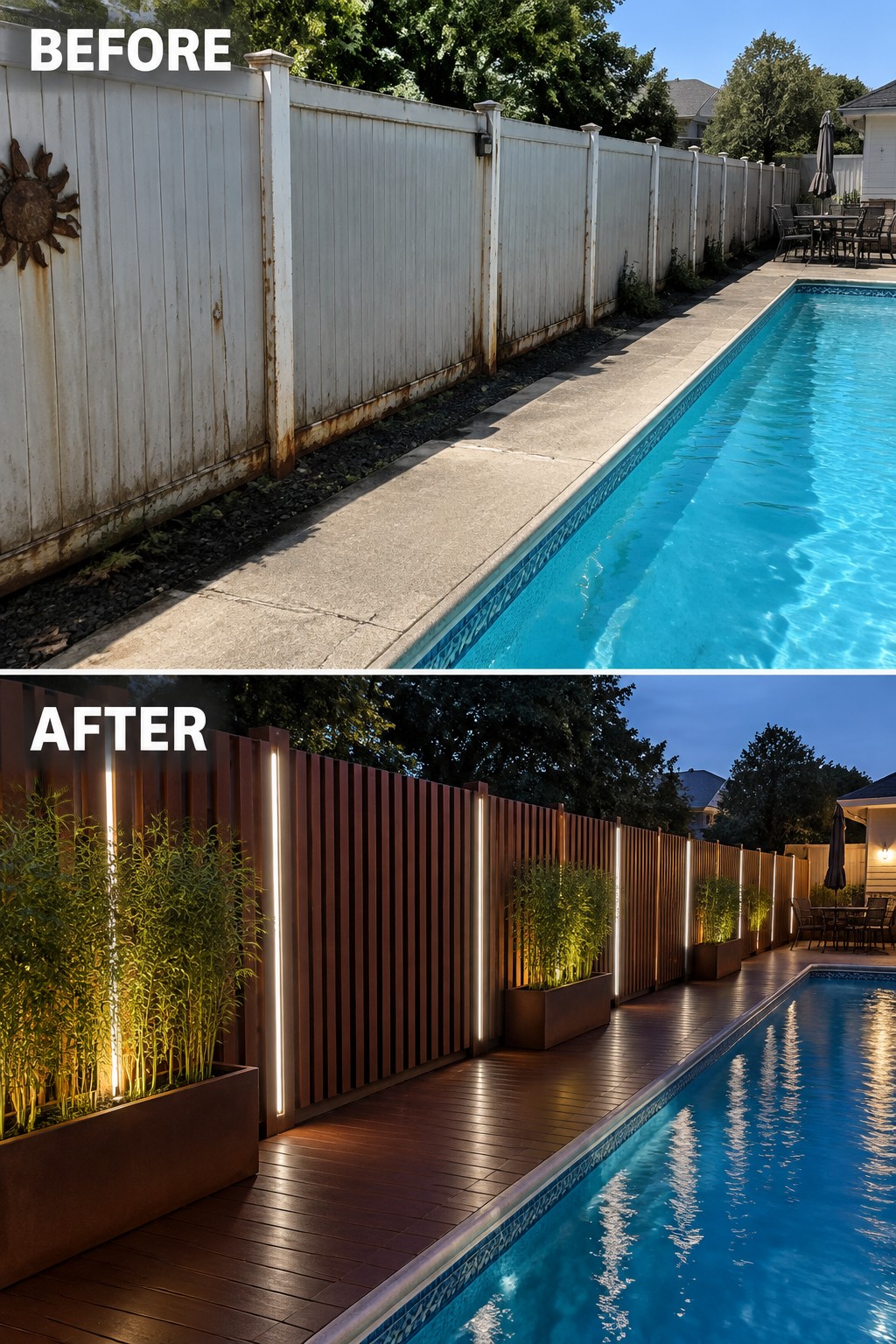
Replacing a stained fence with a slatted screen and built-in LED strips gives this pool area a cleaner, more finished edge. The lighting is part of the fence design, so it provides a soft glow without taking up space on the pool deck.
This idea works well along a fence beside a patio or pool, especially where there isn’t much room for extra fixtures. Use outdoor-rated lights and keep them spaced evenly; a few slim planter boxes can add greenery without crowding the walkway.
Turn A Narrow Side Yard Into An Outdoor Seating Area
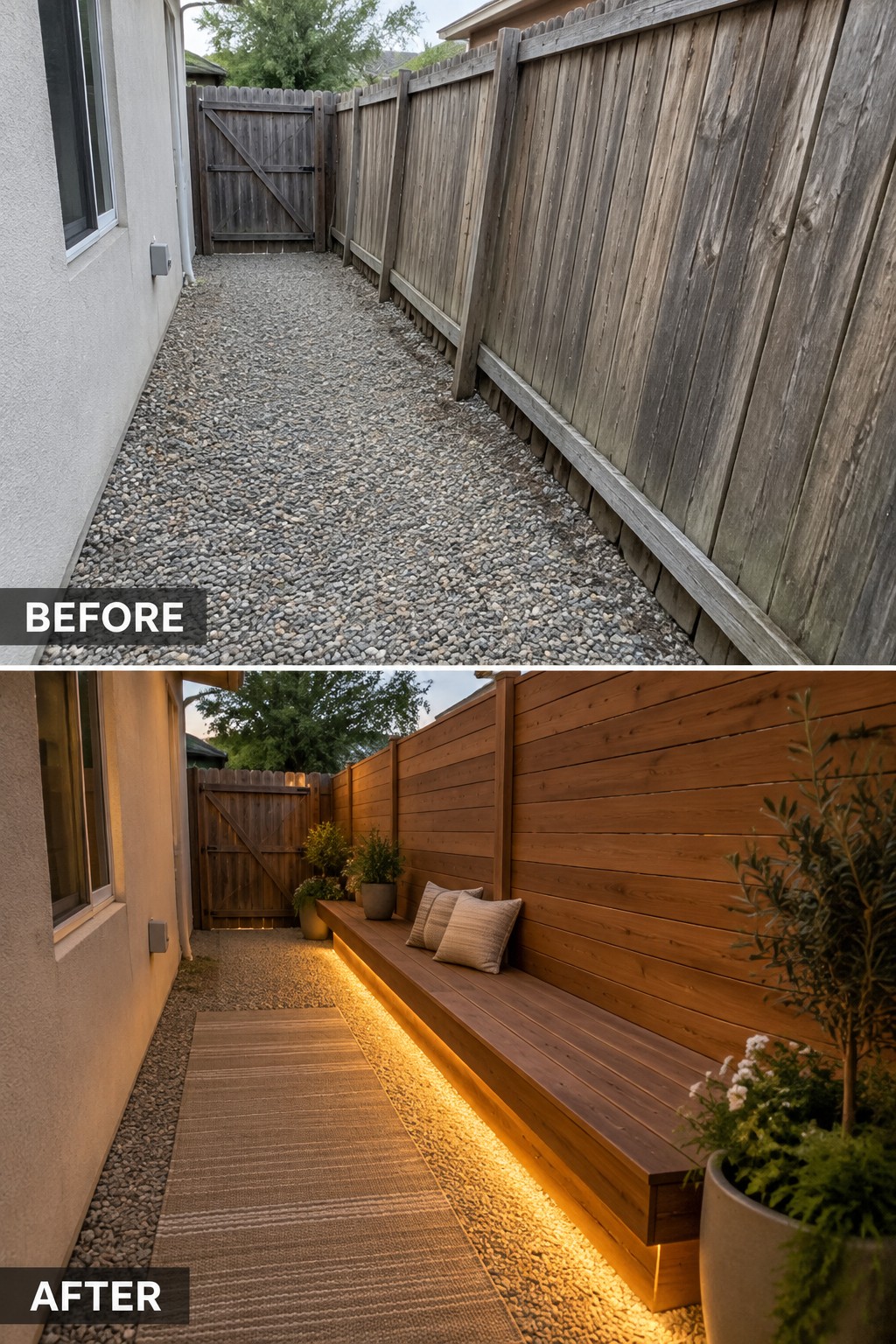
A narrow side yard can do more than provide a path between the house and fence. Here, a long built-in bench makes the space useful for sitting, while integrated lighting beneath it helps illuminate the gravel walkway.
This idea suits side yards where there’s room to keep a clear path alongside seating. Use a slim bench rather than bulky furniture, and place the lights where they’ll brighten the route without shining directly into the house.
Turn A Plain Fence Into A Garden Feature
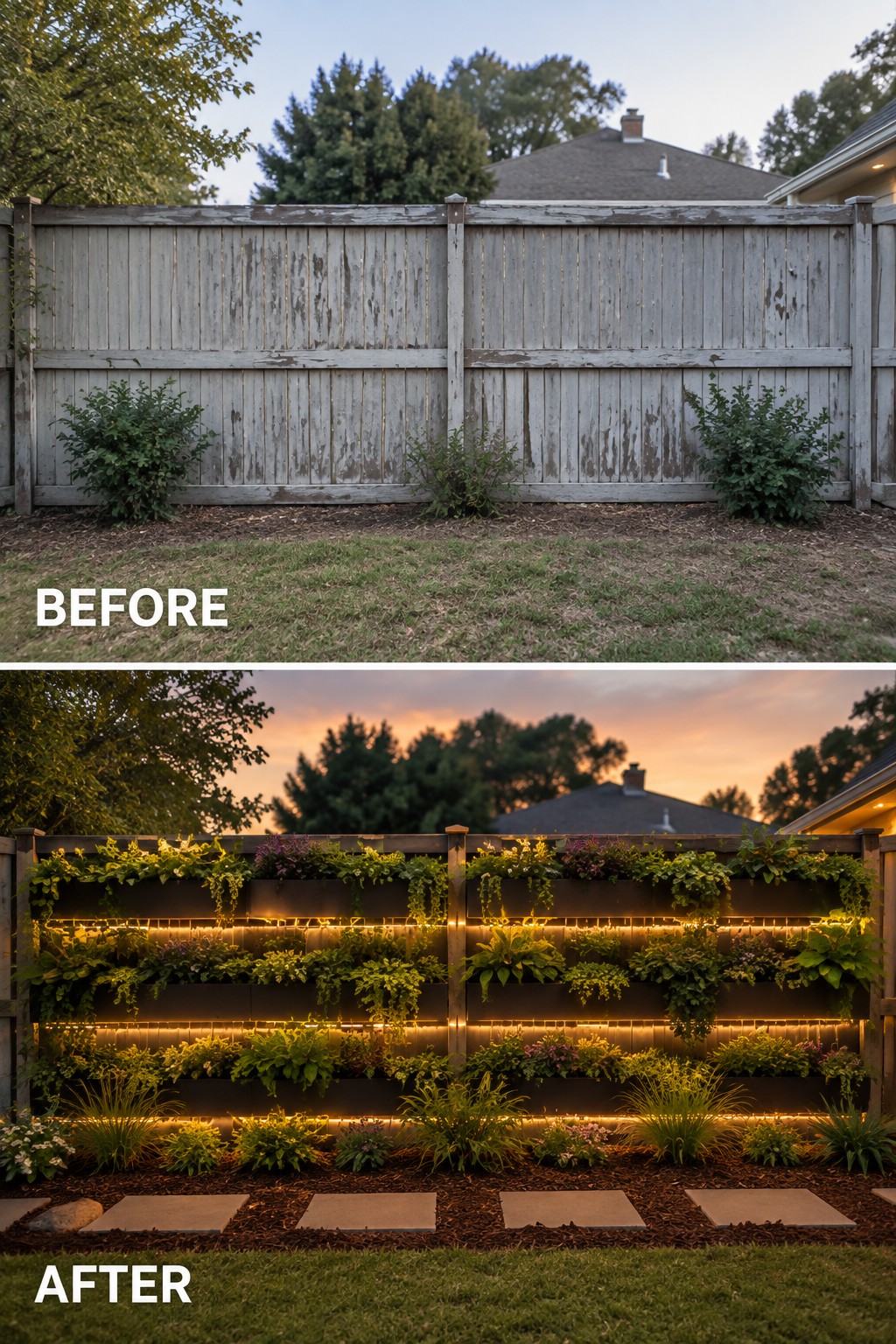
A weathered fence can feel like a backdrop you would rather ignore. Adding horizontal planter boxes and warm integrated LED strips gives it a clear purpose, while the plants help break up the long expanse of wood.
This idea works well in a backyard where the fence is the main view from the lawn or patio. Keep the planters securely attached and choose outdoor-rated lights, then leave enough space between plants for them to grow without hiding the glow.
Update A Front Fence With Integrated Lighting
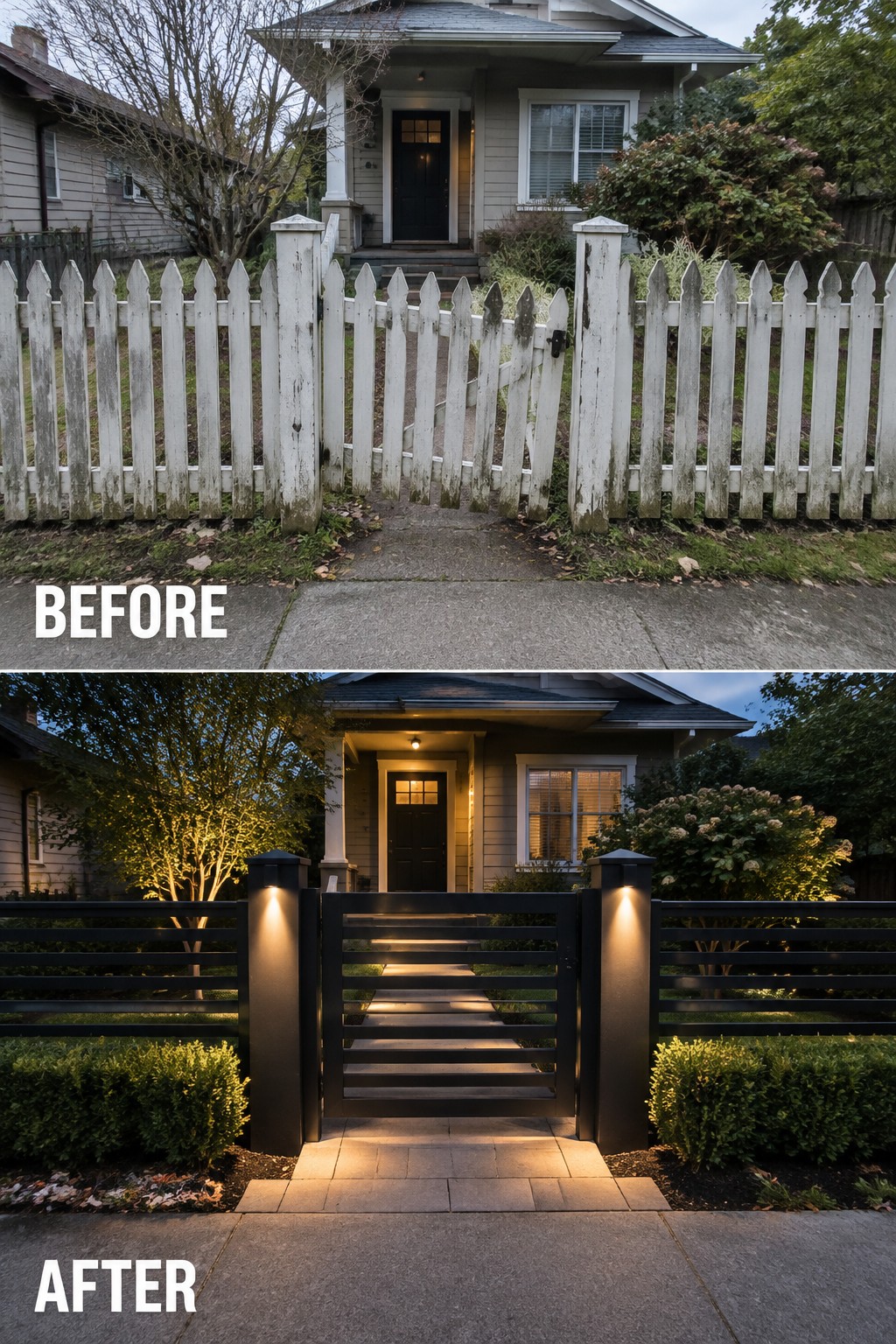
Replacing a worn picket fence with a clean, dark fence gives the entry a more finished look, and built-in lights make the gate easier to see after dark. The lighting is part of the fence structure, so it feels useful rather than added on as an afterthought.
This idea suits a front yard where the gate is used regularly. Choose weather-rated fixtures and place them to light the path and gate without shining into a neighbor’s windows. Keep the walkway clear so the improved entrance remains easy to use.
Make A Plain Patio Fence Part Of The Seating Area
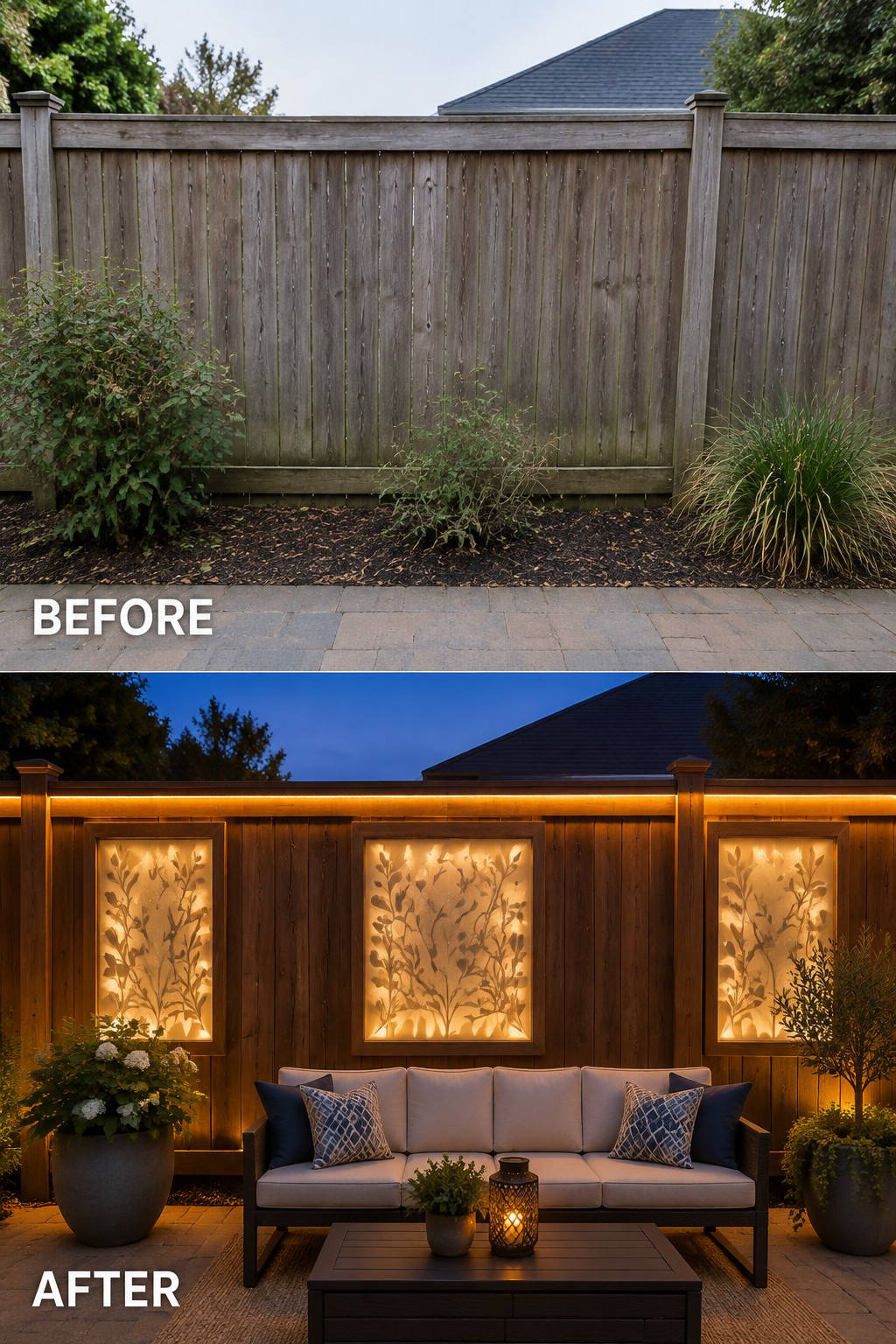
A bare fence can make a patio feel unfinished, even when there’s room to sit and relax. Here, framed panels with integrated lights turn the fence into a simple focal point and give the seating area a more settled feel.
This works well in a backyard patio where the fence is close to the chairs. Use warm, weather-rated lighting and keep it near the seating zone so it’s useful in the evening, not just decorative. A few illuminated panels can be enough.
Replace A Worn Terrace Railing With Integrated Lighting
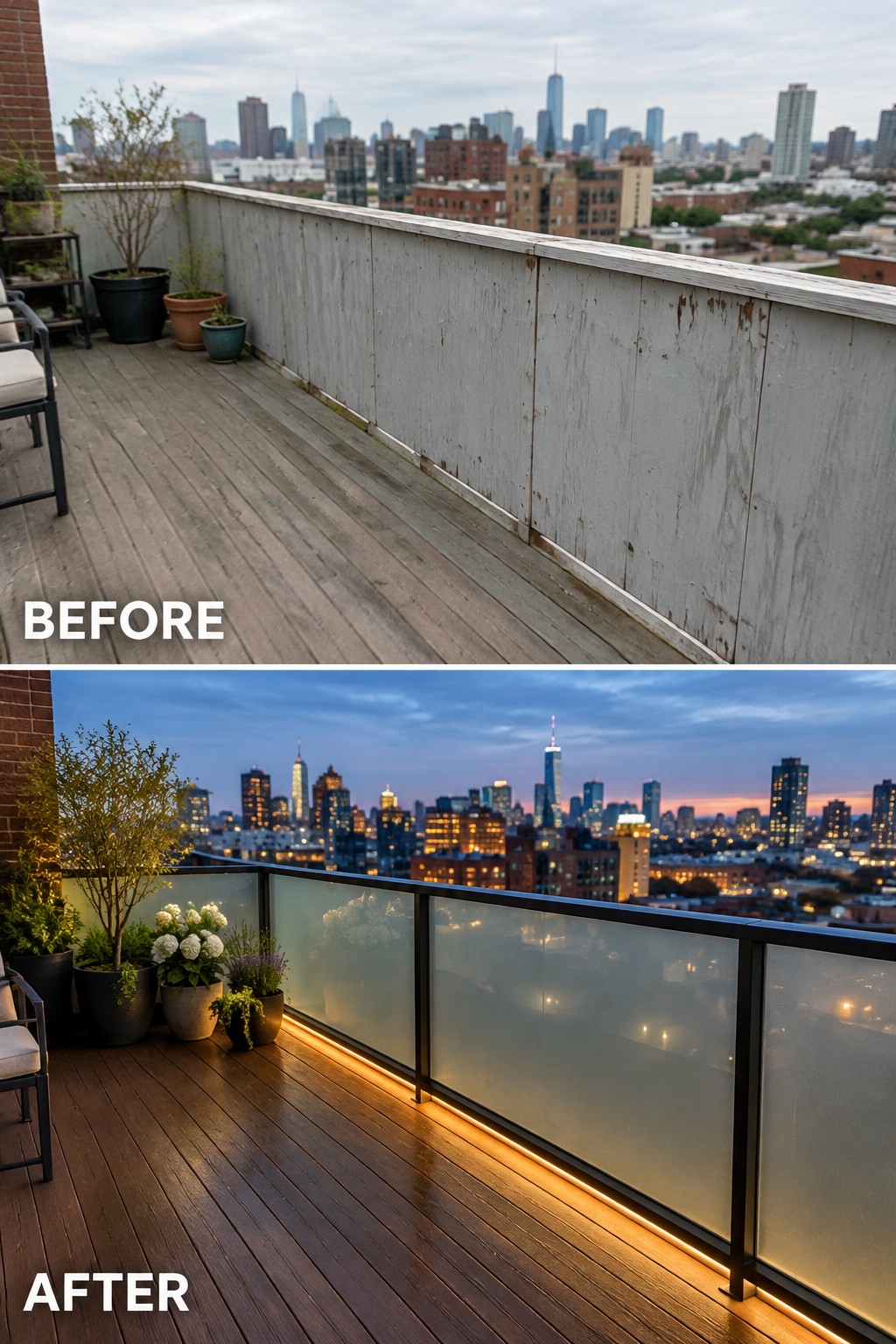
The old, weathered railing made this rooftop deck feel unfinished. Replacing it with frosted panels and built-in LED lighting gives the edge a cleaner look and makes the terrace easier to use after dark.
This idea suits a balcony or deck where the railing is a prominent feature. Choose outdoor-rated lights and keep them low along the base so they illuminate the walking area without shining directly into people’s eyes.
Replace An Aging Fence With A Clean, Lighted Border
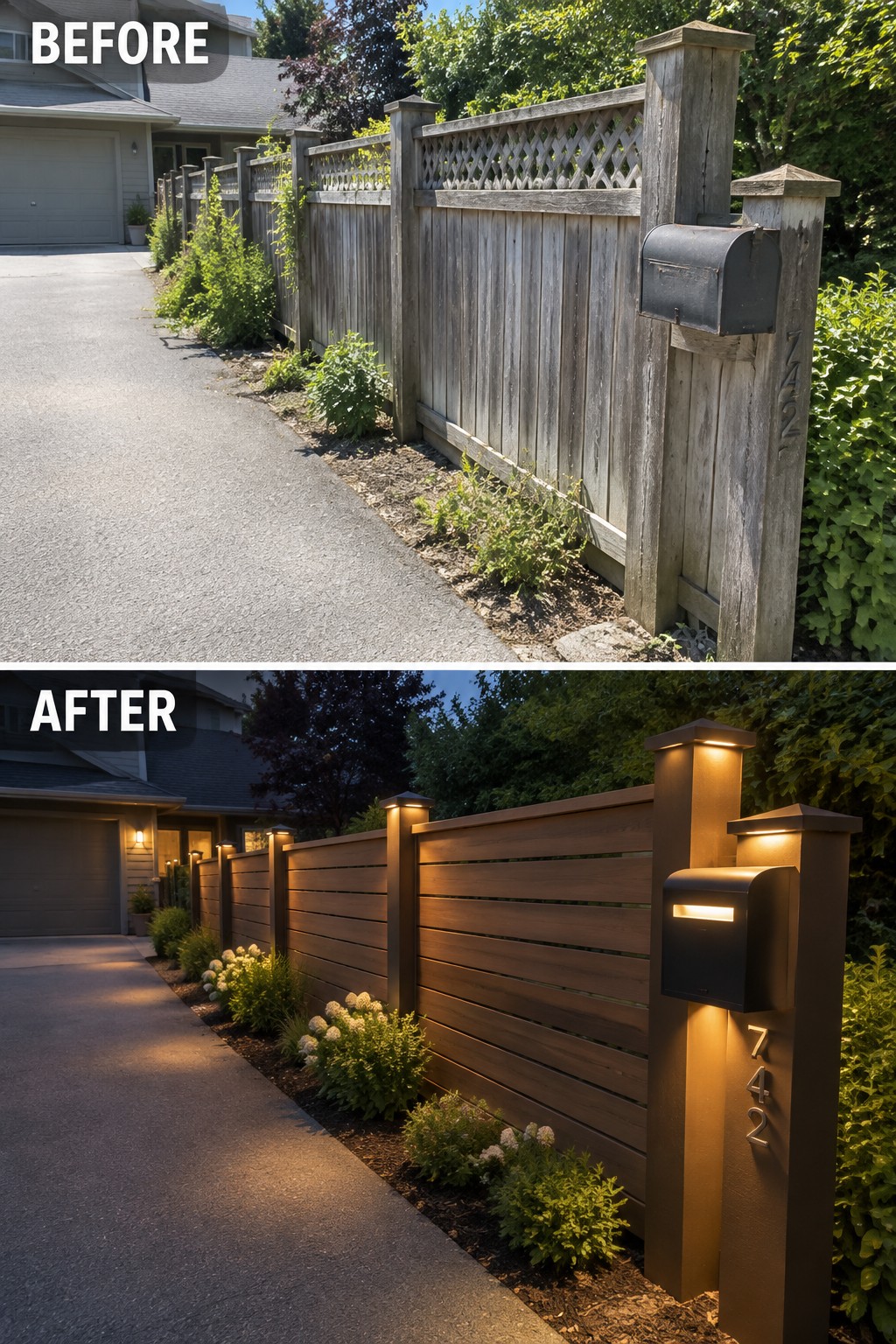
The old fence looks weathered and busy, while the replacement uses simple horizontal boards and built-in lights to give the driveway a neater edge. The lighting is part of the fence design, so it helps mark the entrance without needing separate fixtures along the path.
This idea works well beside a driveway or front walk, especially when privacy matters too. Choose outdoor-rated lights and space them where they can guide the way without shining into the house or a neighbor’s yard.
Add Integrated Lighting To A Side Yard Fence
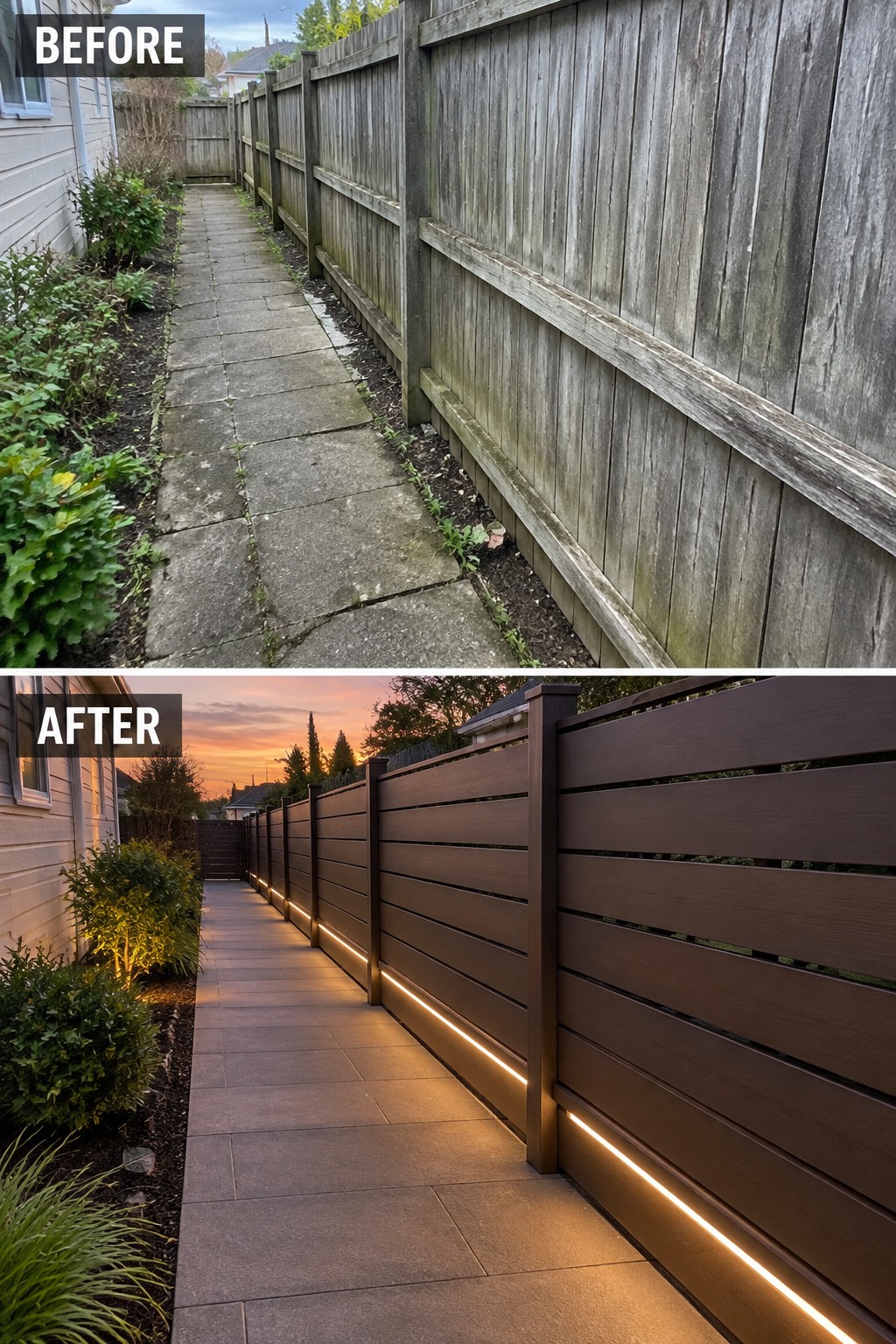
Replacing a weathered fence with a clean, modern design can make a narrow side yard feel much more finished. The built-in lights along the bottom brighten the path without taking up space, so the walkway stays clear and easy to use after dark.
This idea works well anywhere a fence borders a regularly used path. Choose outdoor-rated fixtures and keep the light low and even; that gives you useful visibility without glare. Pair them with simple paving, and the whole route feels more intentional.
Add Integrated Lights To A Backyard Fence
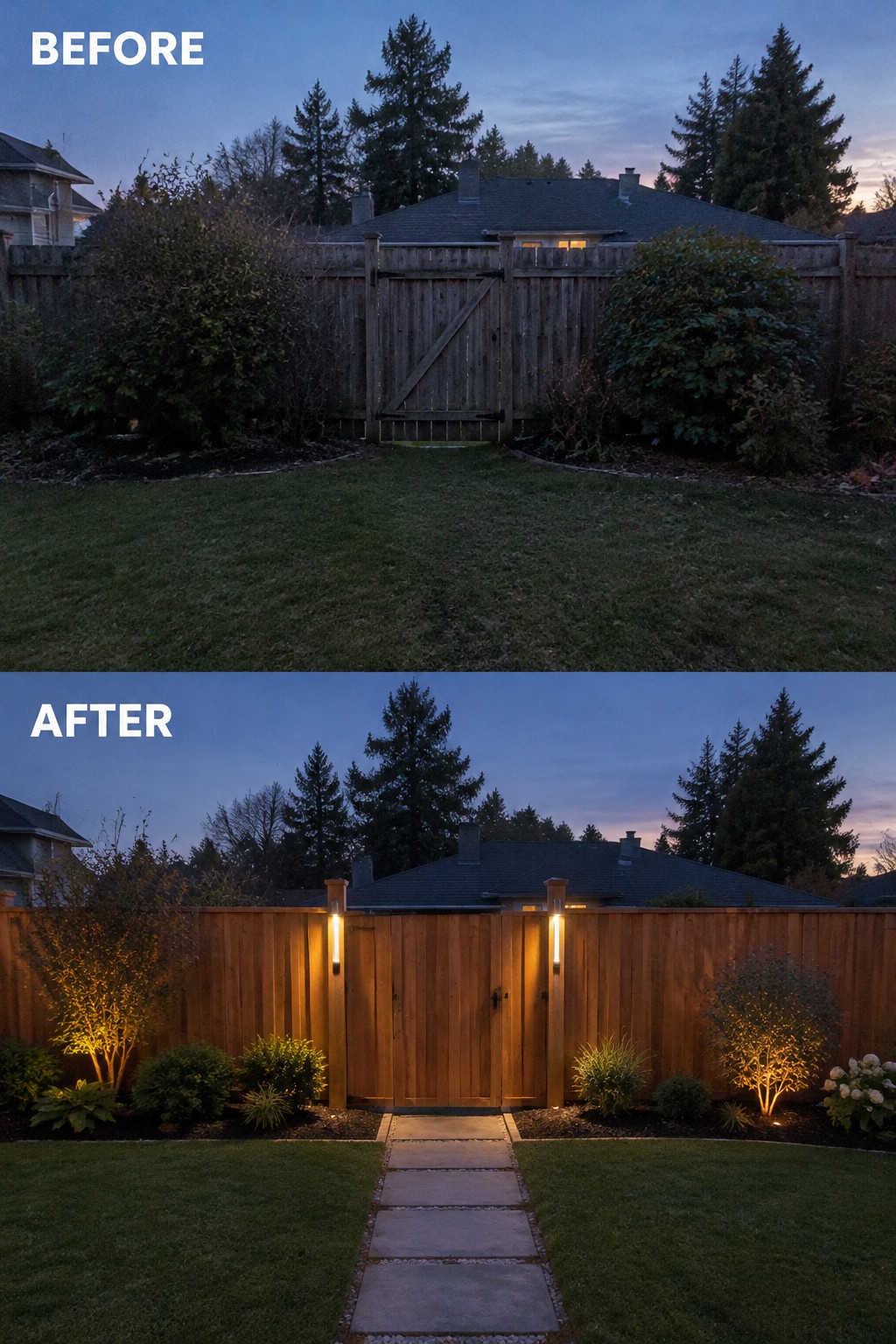
Replacing the weathered fence with a clean wooden one makes the yard feel more cared for, but the built-in lights are what make the entrance easier to see after dark. They bring light right to the gate without needing a separate fixture nearby.
This idea works well in a backyard where a gate is used in the evening. Place lights near the entry and choose warm, outdoor-rated fixtures. Keep the planting simple around them so the path stays clear and the fence remains the main feature.
Replace An Overgrown Fence With A Clean, Lighted Border
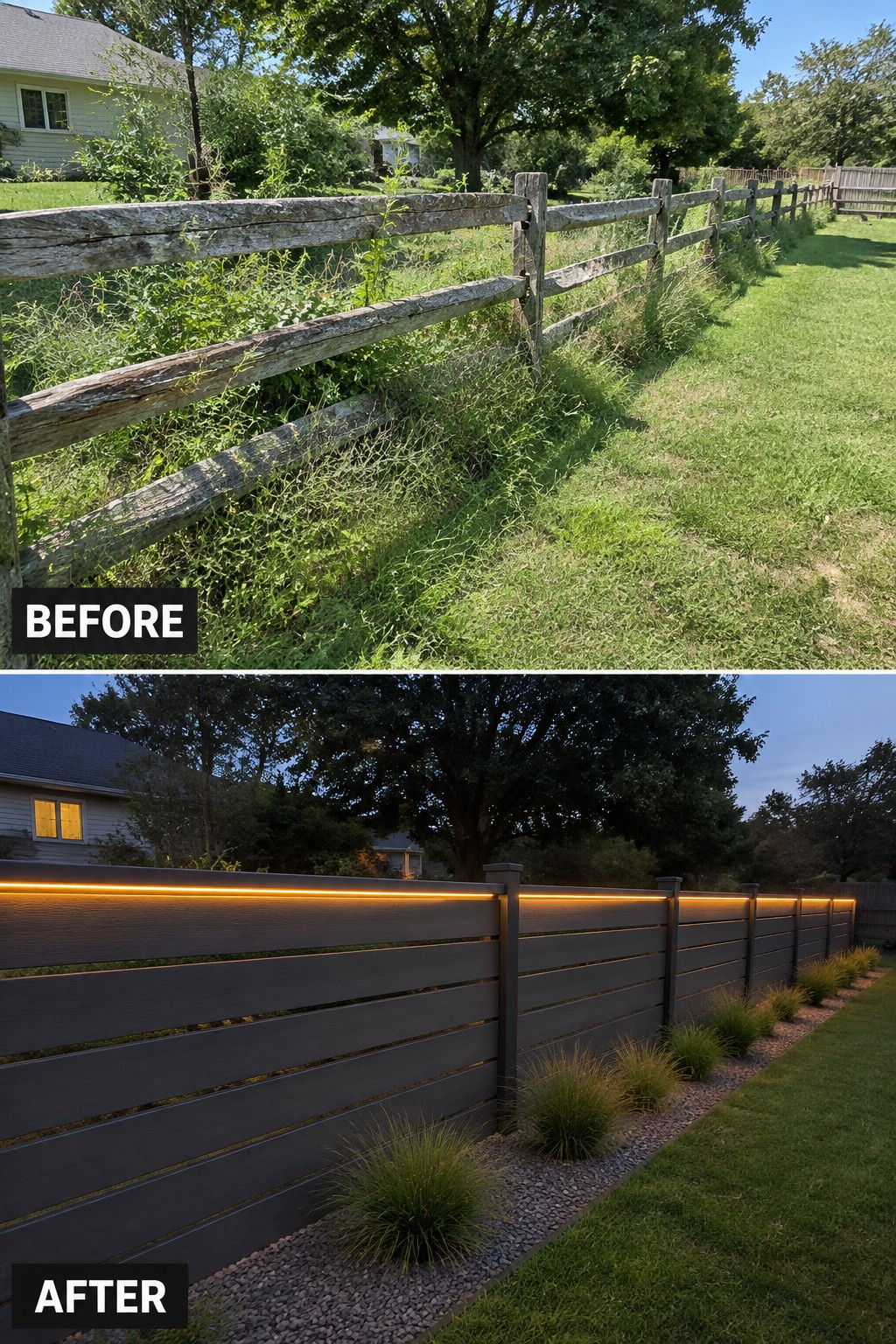
A worn fence can make an otherwise tidy yard feel neglected. Here, replacing rough, weathered rails with a solid modern fence gives the yard a clear edge, while a built-in LED strip makes the boundary useful after dark.
This idea suits a side or back yard where privacy matters. Choose weather-resistant fence materials and place the lighting where it can run continuously without shining into nearby windows. A simple gravel border can also help keep grass and weeds from crowding the fence.
Make A Backyard Fence More Useful At Night
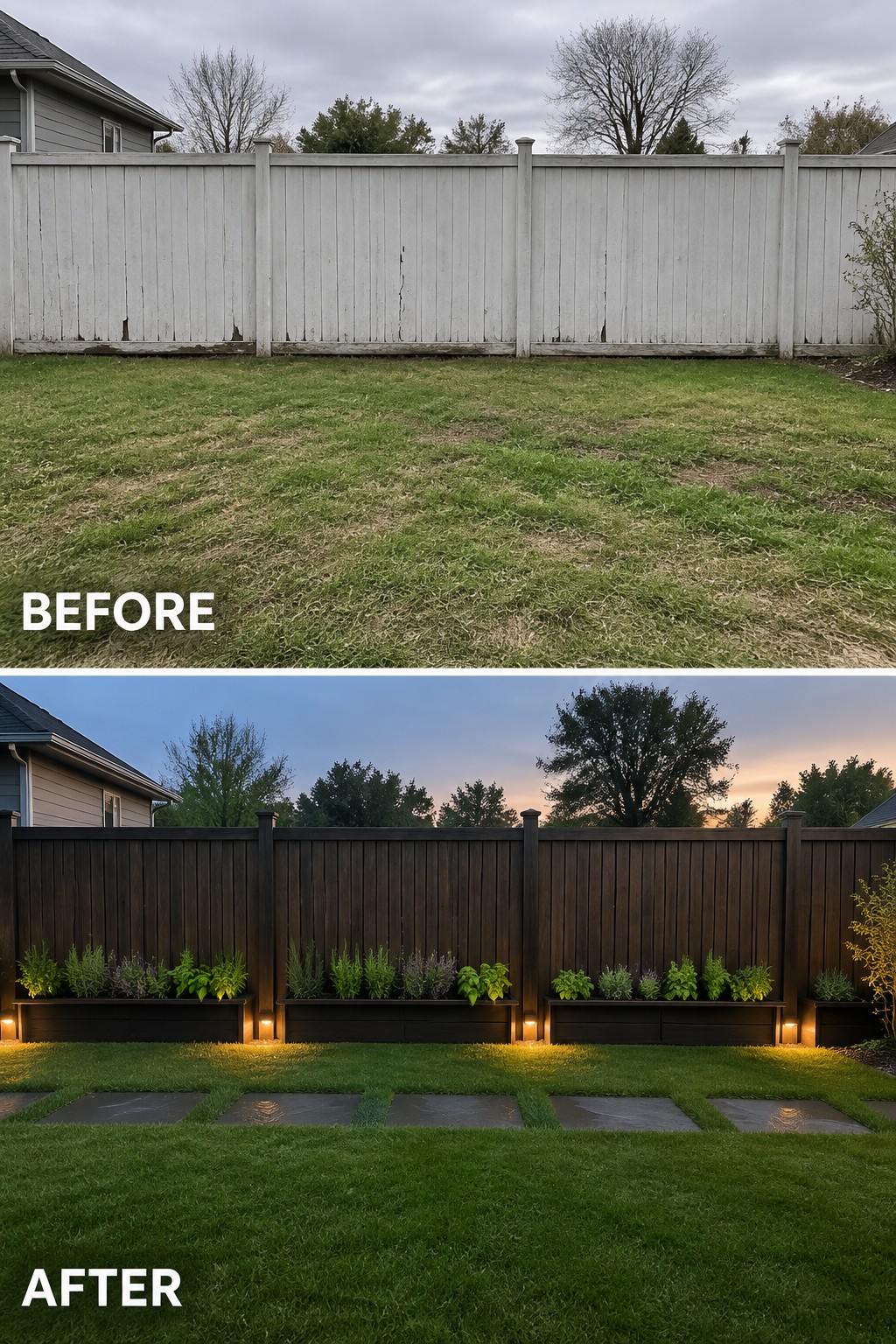
A dark, worn fence can make a backyard feel unfinished. Replacing it with a clean privacy fence and adding raised planting beds gives the yard a clearer edge, while built-in lights make that border useful after sunset.
For a similar update, choose low-voltage fixtures designed for outdoor use and place them where they can light the beds or nearby path without shining into neighbors’ windows. Keep the planting simple so the fence and lighting remain easy to maintain.
Use Fence Lighting To Define The Patio

The plain wooden fence made the outdoor kitchen feel exposed and unfinished. Adding a dark fence with a continuous strip of integrated lighting gives the patio a clear edge and makes the cooking area easier to use after sunset.
This idea works well when a fence sits behind a grill or seating area. Choose outdoor-rated fixtures and keep the light directed along the fence, rather than shining into neighbors’ yards.
Make A Deck Safer With Integrated Railing Lights
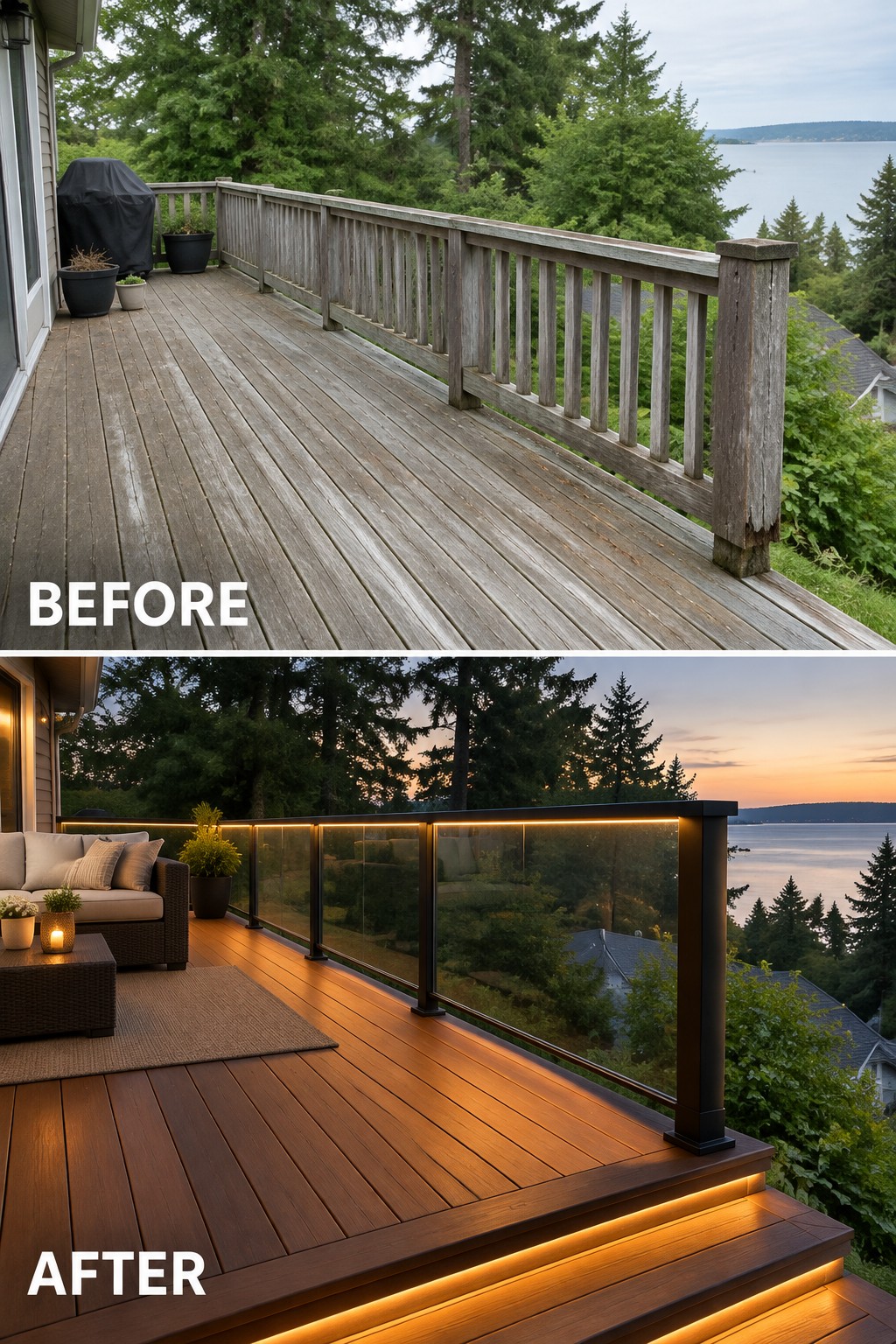
The worn wood railing and deck have been updated with a glass railing and lights built into the posts and steps. This keeps the deck’s open water view while making the edges easier to see after dark.
For a similar update, place lighting along the railing and on steps where people walk. It works especially well on elevated decks, where clear edges matter, but make sure the fixtures are rated for outdoor use.
Use A Lighted Fence To Define The Backyard
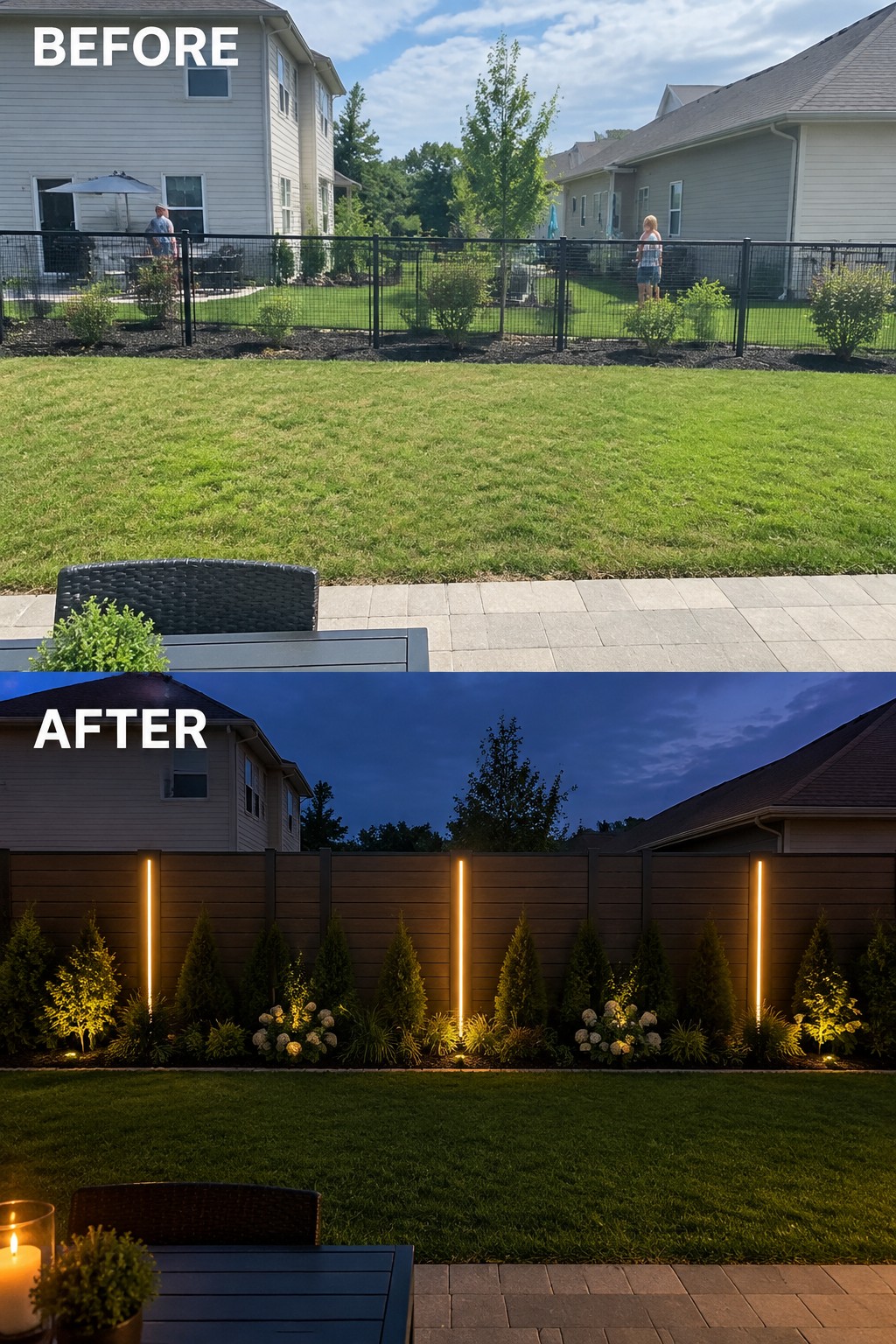
The open wire fence offered little privacy or visual structure. Replacing it with a solid fence and built-in vertical lights makes the yard feel more enclosed, while the lighting gives the fence a clear role after dark.
This idea works well when you want a backyard border to feel both useful and finished. Choose warm, weather-rated lights and space them evenly along the fence, then keep the planting simple so the lights remain visible.
Add Lighted Artwork To A Backyard Fence
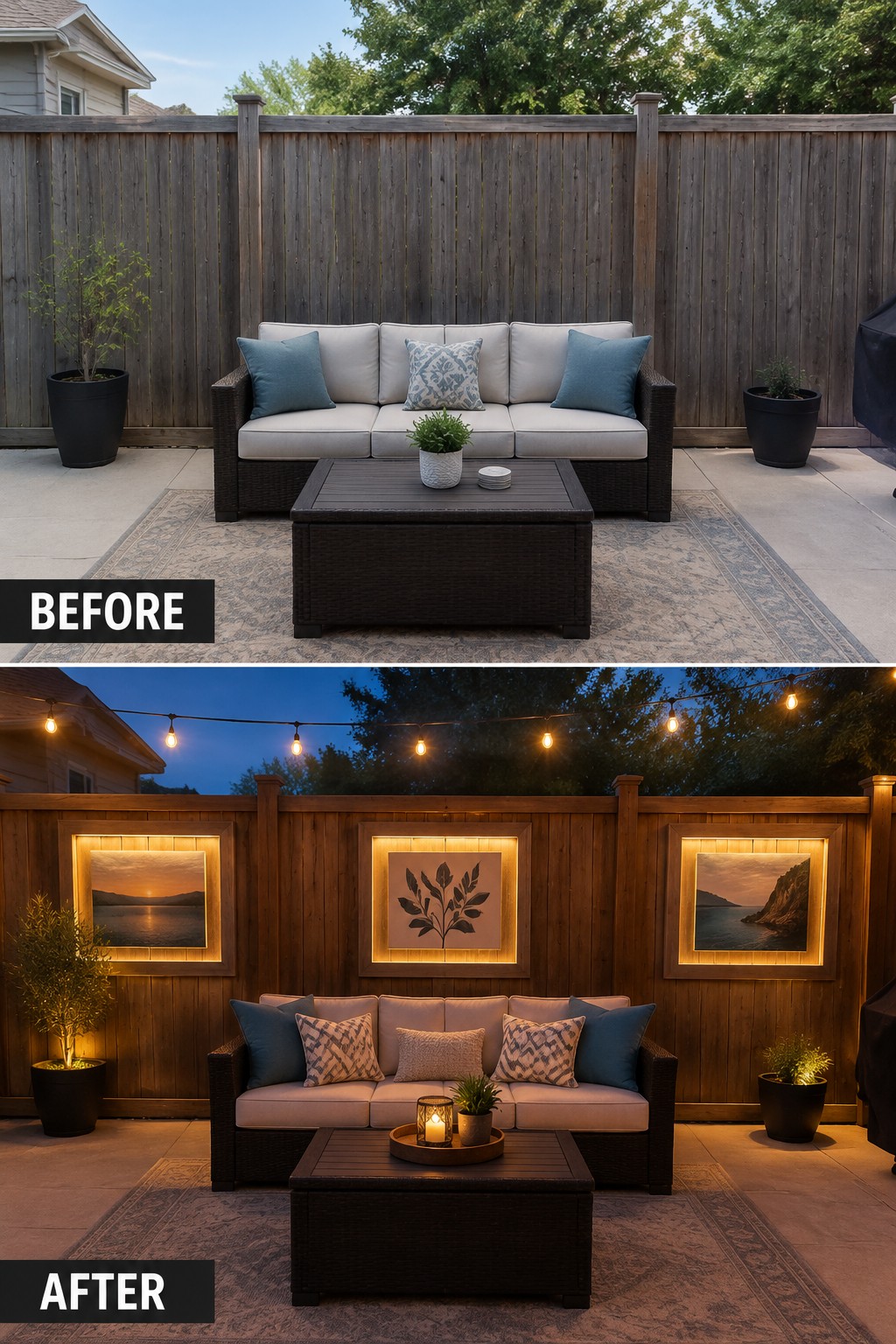
The patio already had a seating area, but the plain fence left it feeling unfinished after dark. Framed pieces with built-in lighting turn that blank backdrop into a useful focal point, while string lights help make the seating area comfortable to use in the evening.
This idea works well on a private patio where the fence is visible from the main seating spot. Choose weather-rated fixtures and artwork, and space them so the light reaches the fence without shining into people’s eyes.
Update A Plain Fence With Integrated Lighting
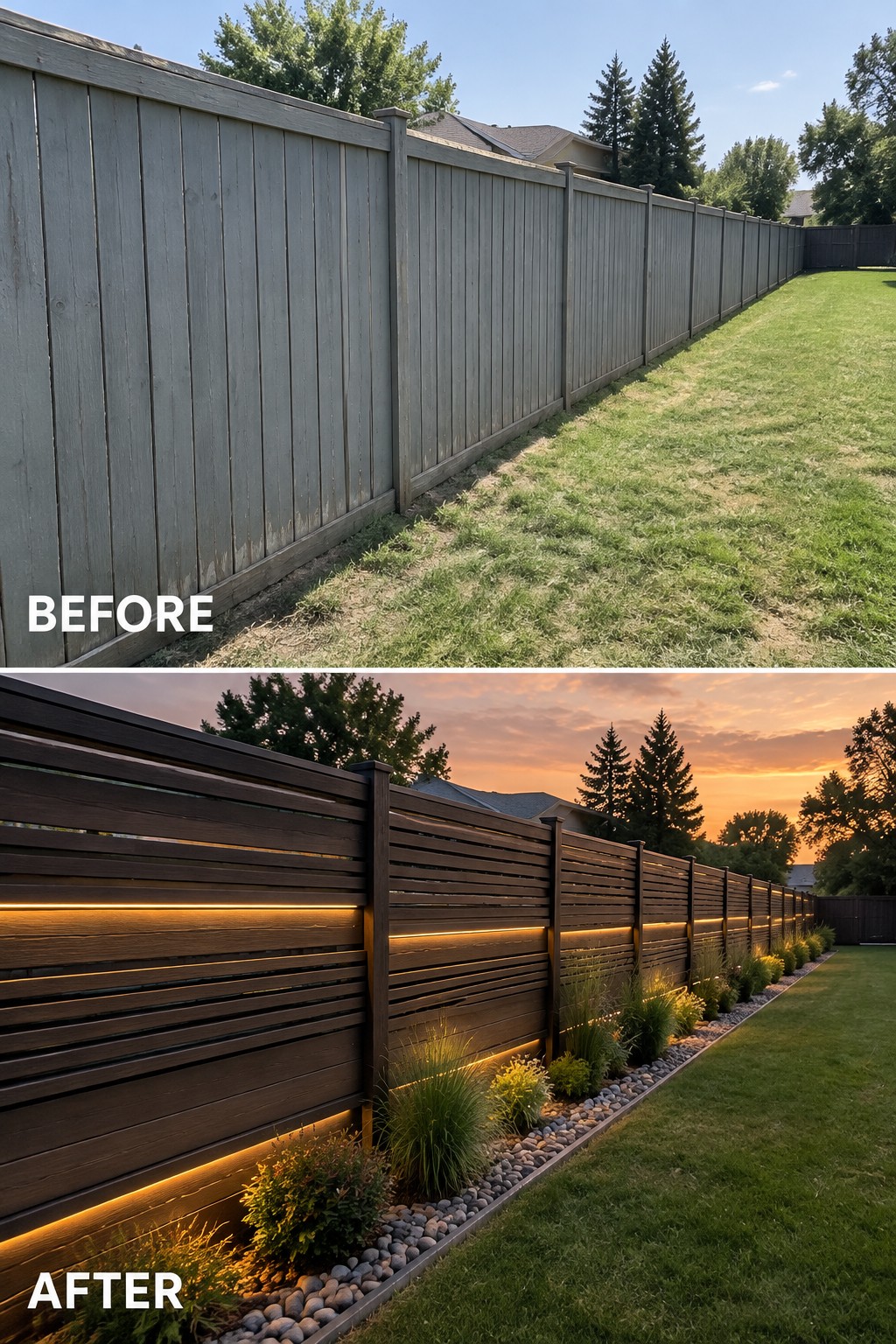
The solid, weathered fence is replaced with a horizontal-board design that has slim lights built into it. That lighting makes the fence useful after dark and gives the yard a clear edge without relying on separate fixtures.
This idea works well along a long property line where privacy matters, but the fence would otherwise feel like a blank wall. Keep the lights spaced consistently, and aim for a warm, even glow rather than bright spots that shine into the yard.
Turn An Overgrown Fence Corner Into Outdoor Seating
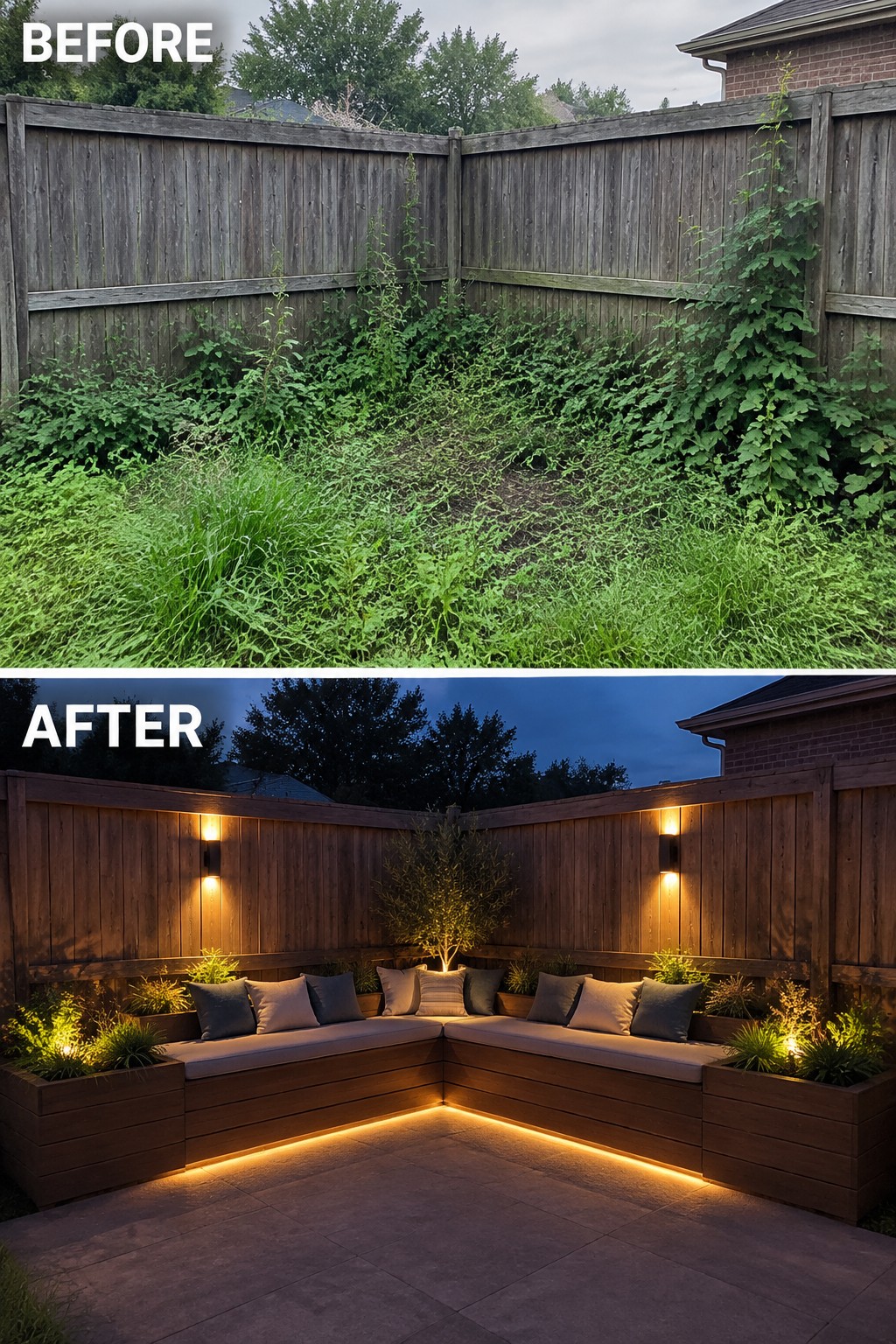
The overgrown corner becomes a place to sit once the weeds are cleared and a built-in bench is added along the fence. Integrated lights help the seating area stay useful after dark, while also making the fence part of the patio rather than just a boundary.
This idea suits a small backyard where a separate furniture setup would take up too much room. Keep the bench a comfortable depth and put the lights where they can illuminate the seat and nearby path without shining directly into people’s eyes.
Frequently Asked Questions
Q: Can I add LED lighting to a fence I already have?
A: Often, yes. Surface-mounted lights or low-voltage LED strips can work on an existing fence, as long as the boards are sturdy and there’s a safe route for the wiring. Plan where the cables will run before you start drilling.
Q: Will fence lights bother the neighbors?
A: They shouldn’t if you aim the light down toward your yard and choose a warm, low-glare glow. A shield or recessed fixture can help keep light from spilling over the fence.
Q: How do I power the lights if there’s no outlet nearby?
A: Solar fixtures are a simple option for sunny fence lines, while low-voltage systems usually need a transformer plugged into an outdoor outlet. If you want hardwired lighting, have an electrician handle the connection.
Q: Do LED fence lights need much upkeep?
A: Not much. Wipe the fixtures occasionally and check that leaves or dirt aren’t blocking them. For solar lights, keep the panels clear so they can charge properly.
