

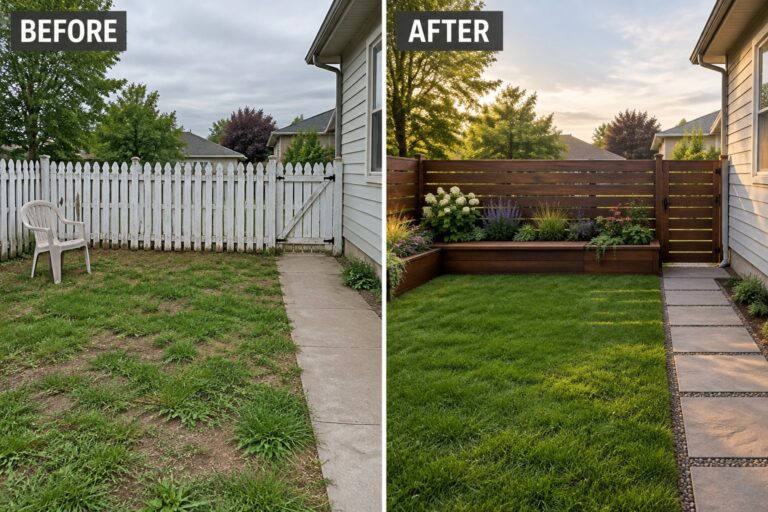
A fence can make a yard feel unfinished when its panels look heavy, dated, or closed off from the garden around them.
I like how floating panels create a lighter outline while still giving a property useful privacy and a sense of structure.
The open gaps can also let in more light and make planting beds, paths, and seating areas feel less boxed in.
Even small changes to panel spacing, materials, or placement can shift the whole feel of a yard without replacing every part of the fence.
I’d save the ideas that suit your space and adapt them to the privacy and upkeep you need.
Add Structure To A Small Backyard
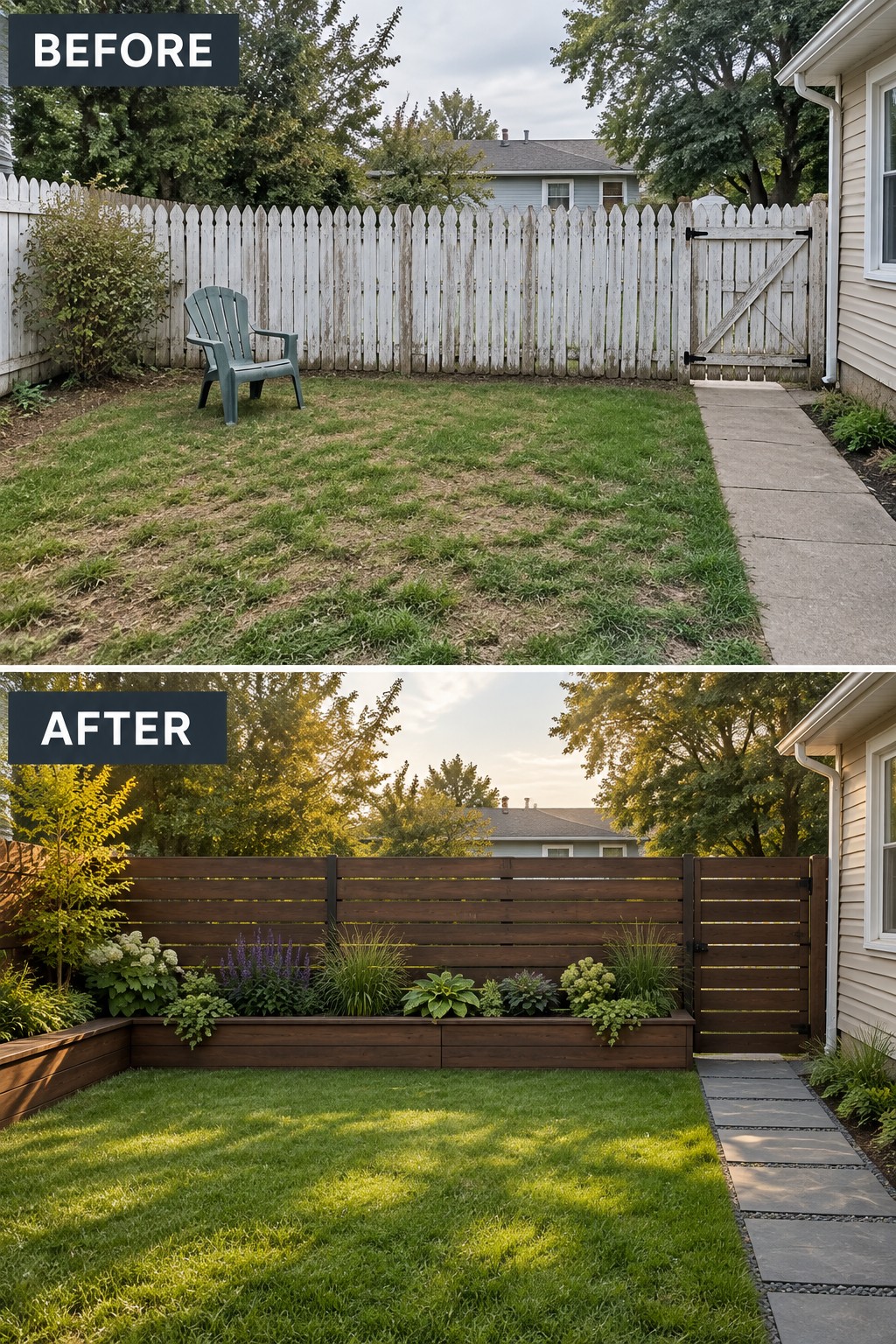
Replacing a worn fence with a horizontal privacy fence gives this yard a cleaner edge and a more planned feel. The built-in planting bed is the main idea to borrow: it defines the fence line while making room for a few shrubs and grasses.
This approach works well in a narrow or overlooked yard where privacy matters, but too many plants can make the space feel crowded. Keep the bed shallow and leave a clear route along the path.
Replace An Overgrown Fence With A Clean Privacy Screen
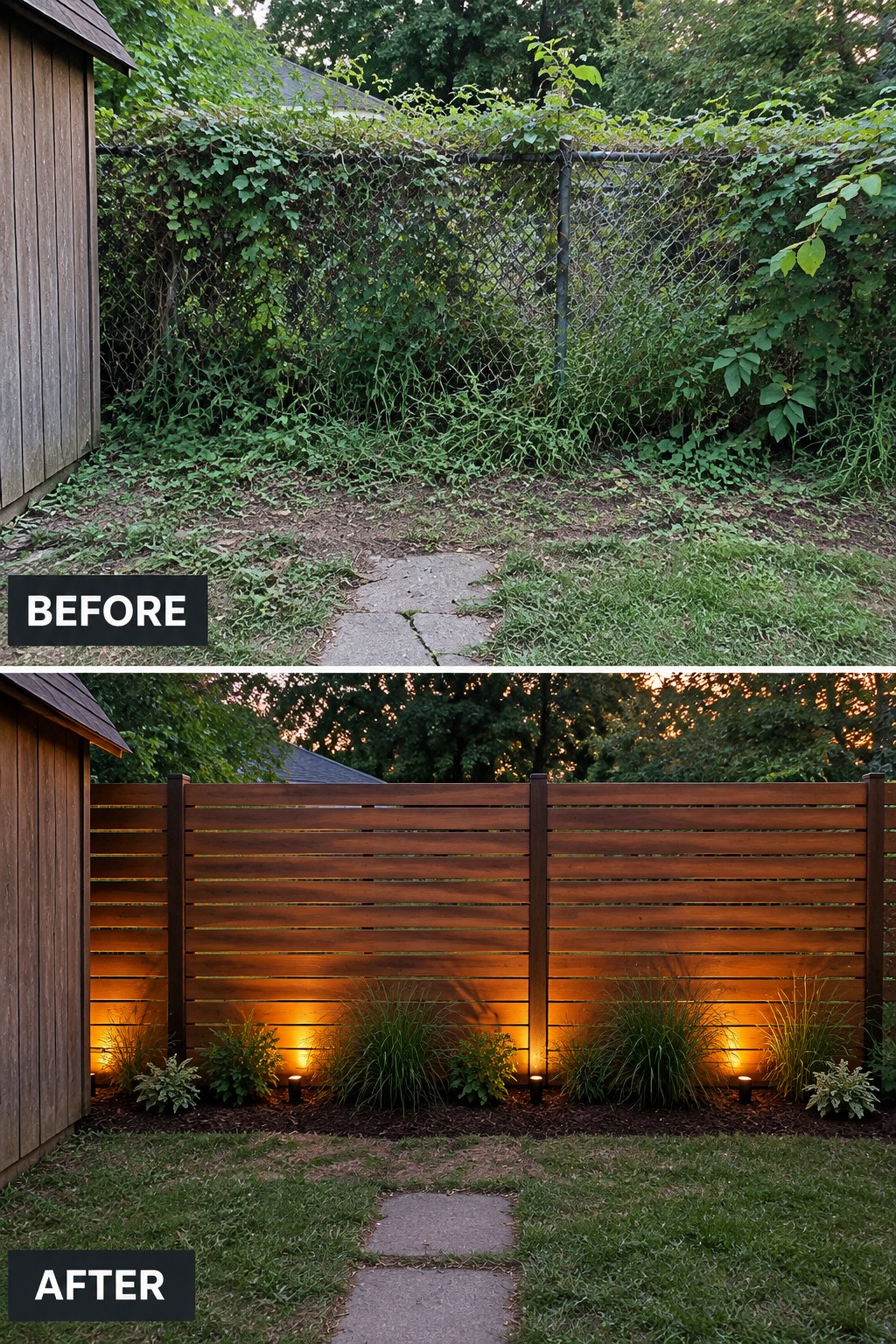
A tangled chain-link fence can make a small yard feel neglected. Replacing it with a solid horizontal wood screen gives the boundary a clear, tidy look and provides more privacy.
This idea works well in narrow side yards where the fence is the main backdrop. Clear away vines first, then keep the new screen’s lines simple so it doesn’t overwhelm the space. Low planting and a few ground lights can finish the edge without making it feel crowded.
Add Privacy With Floating Fence Panels
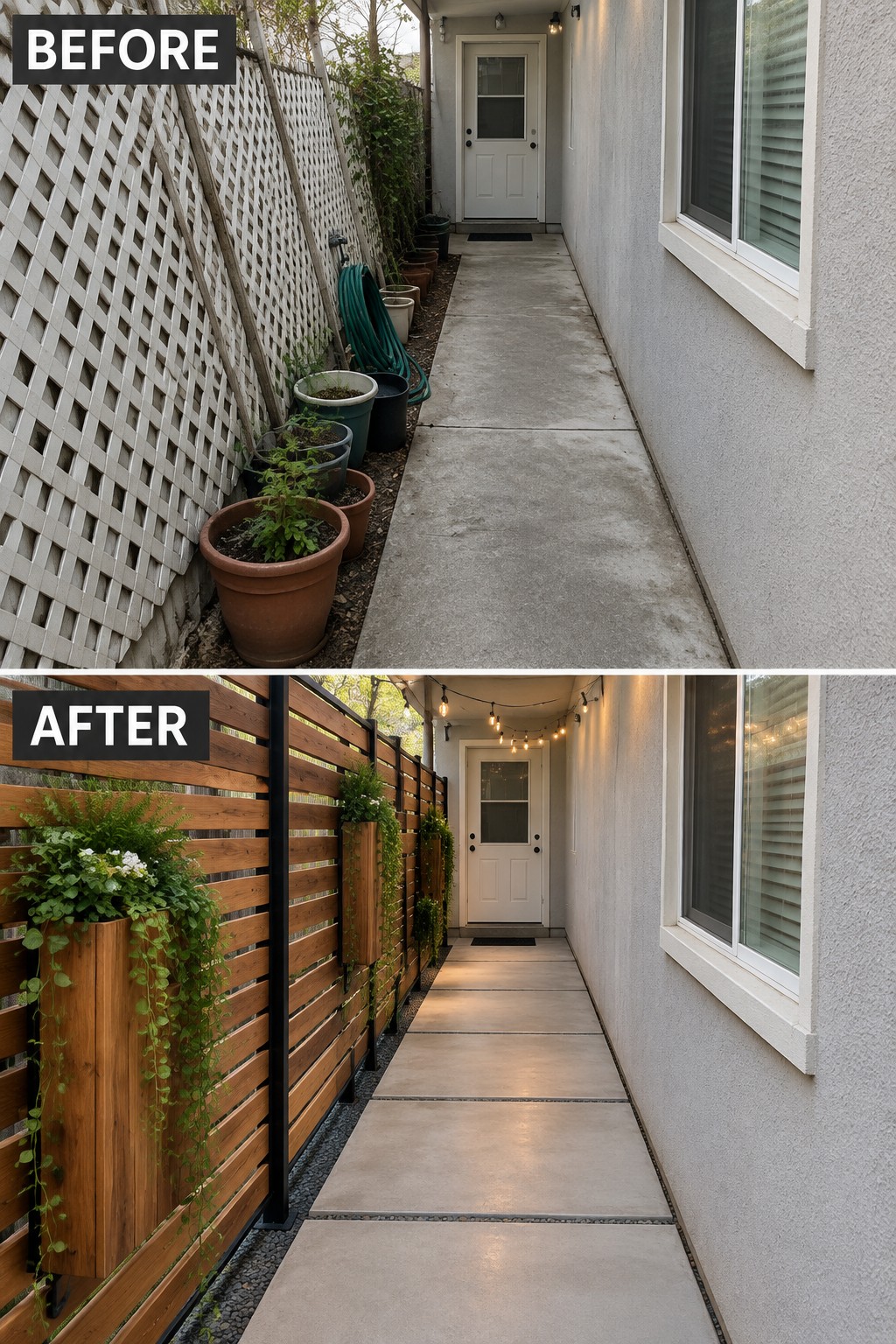
A narrow side passage can feel exposed and cluttered when the fence is worn and pots take up the walkway. Replacing the lattice with horizontal floating panels gives the space a cleaner boundary while letting some light and air pass through.
This approach suits side yards where a solid wall would feel too closed in. Keep the panels off the ground and leave the path clear, so the passage stays easy to use.
Replace A Worn Fence With Clean Horizontal Panels
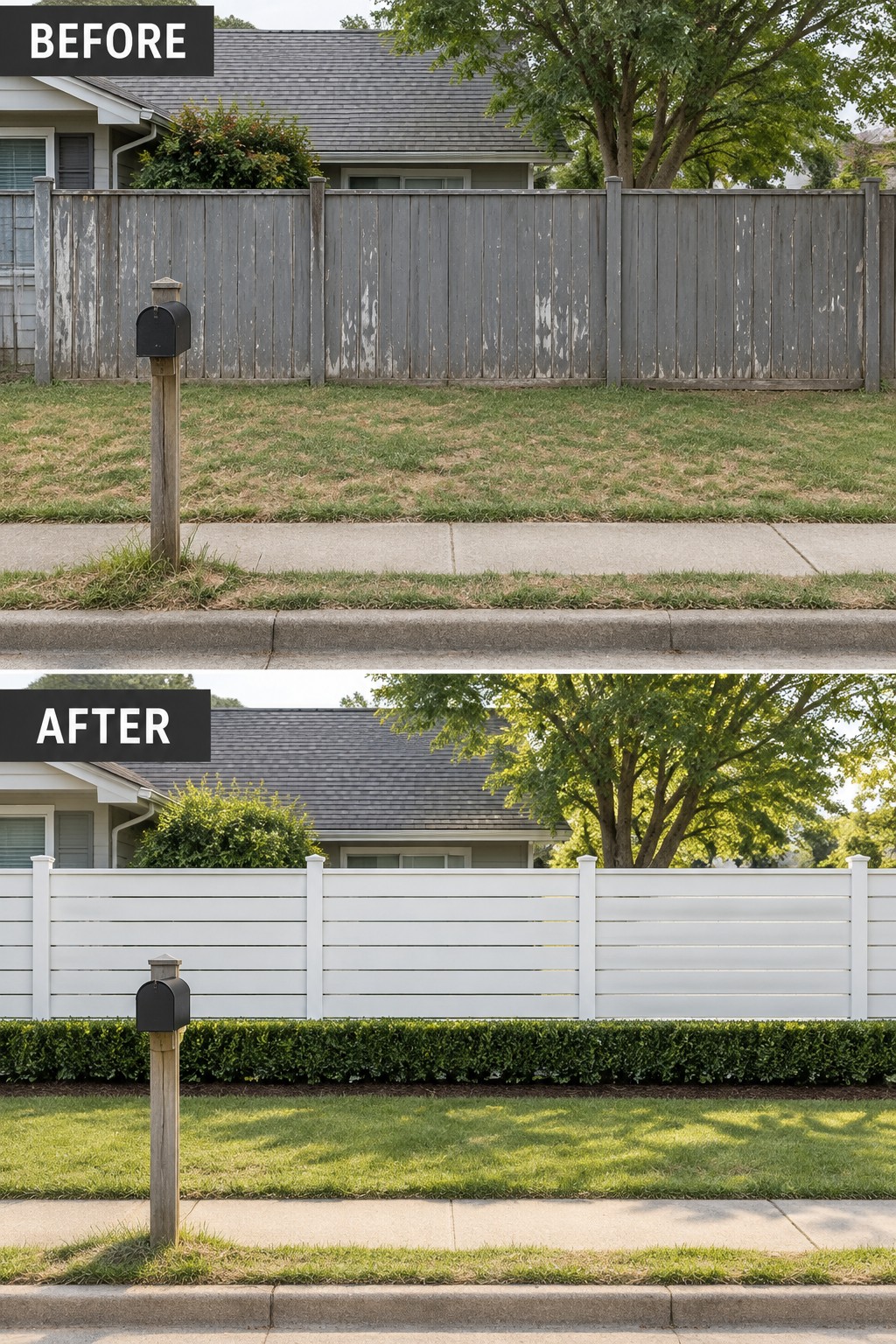
A weathered fence can make an otherwise tidy yard feel neglected. Replacing the peeling boards with crisp white horizontal panels gives the boundary a cleaner look, while the low hedge along its base makes the change feel settled into the yard.
This idea works well when an old fence is the main thing making a front or side yard look tired. Choose a simple panel style that suits the house, and keep plants low enough that they do not hide the fence or crowd the walkway.
Turn The Poolside Into A Seating Area
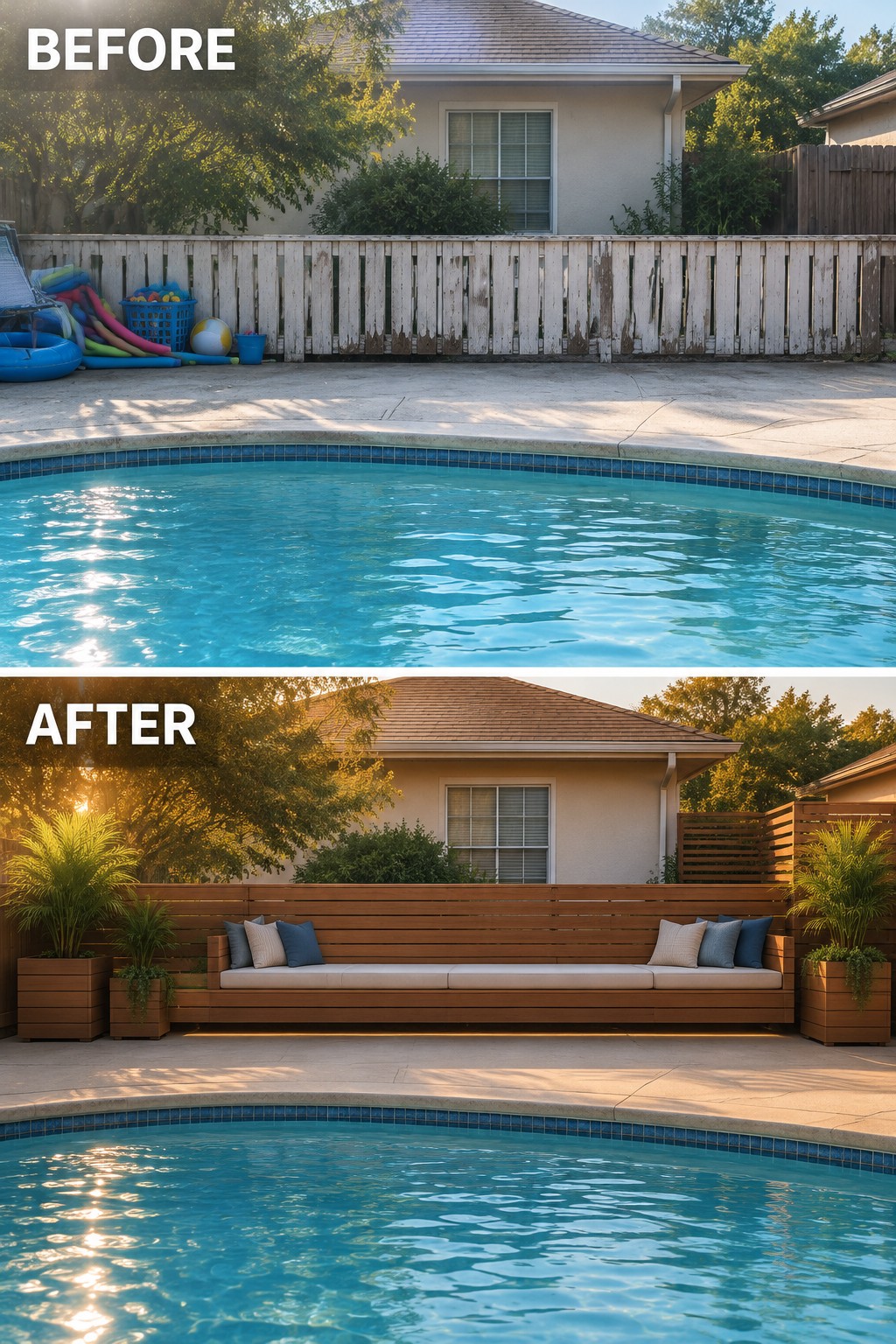
A worn fence can make a pool deck feel unfinished, even when there is plenty of room to use it. Replacing it with horizontal wood panels and building a long bench along the fence turns that bare edge into a practical place to sit.
This idea works well around pools where you want seating without crowding the deck. Keep the bench deep enough to use comfortably, but leave a clear path around it, and choose materials that can handle moisture and sun.
Give A Worn Fence A Fresh Start
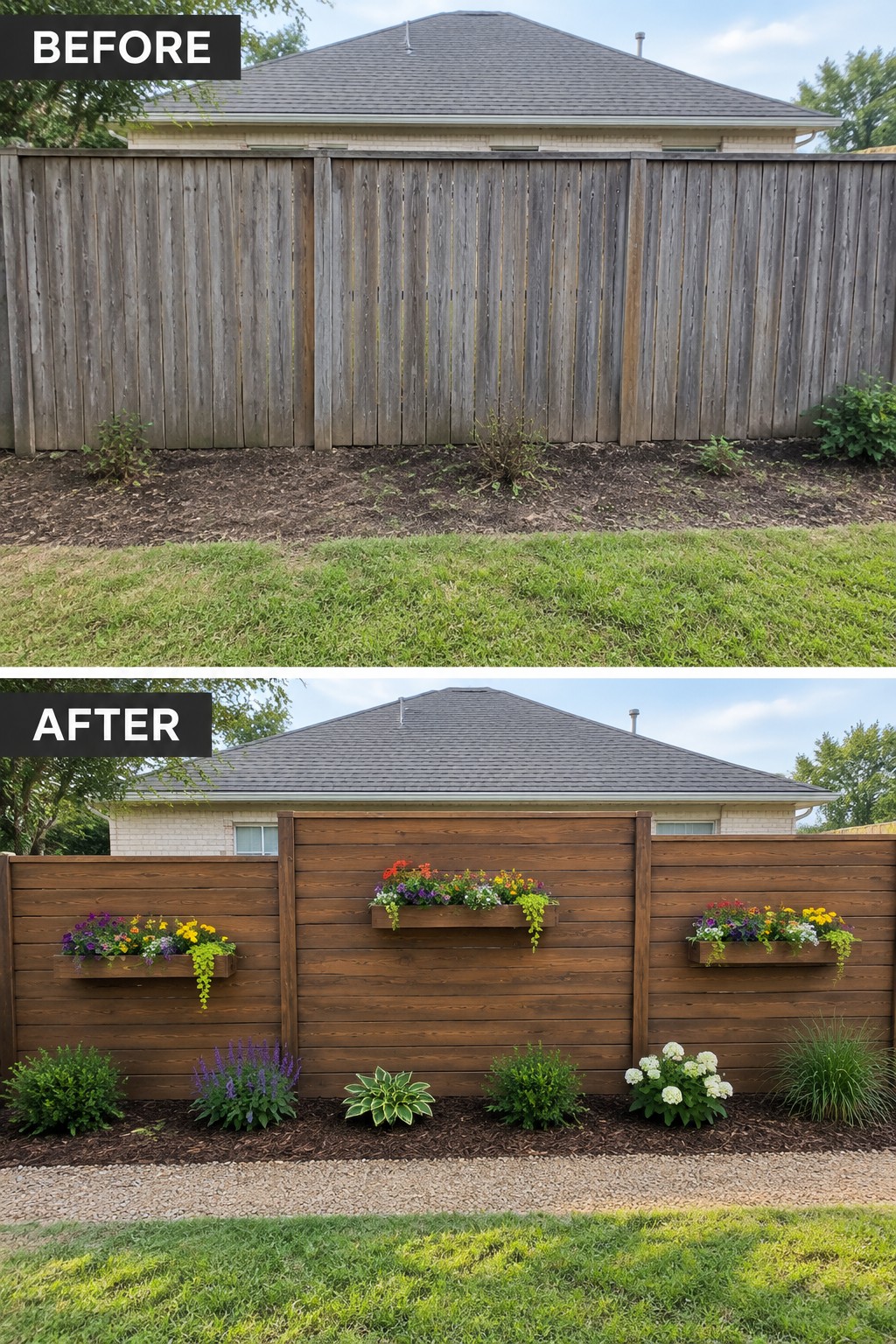
A tired fence can make the whole yard feel neglected. Replacing the weathered boards with clean horizontal panels gives the yard a neater backdrop, while the planter boxes make the fence useful as well as attractive.
This idea works well along a boundary that needs more privacy and a clearer finish. Keep the panel design simple, then use a few planters or low garden plants rather than trying to decorate every section.
Turn A Bare Patio Into An Outdoor Seating Area
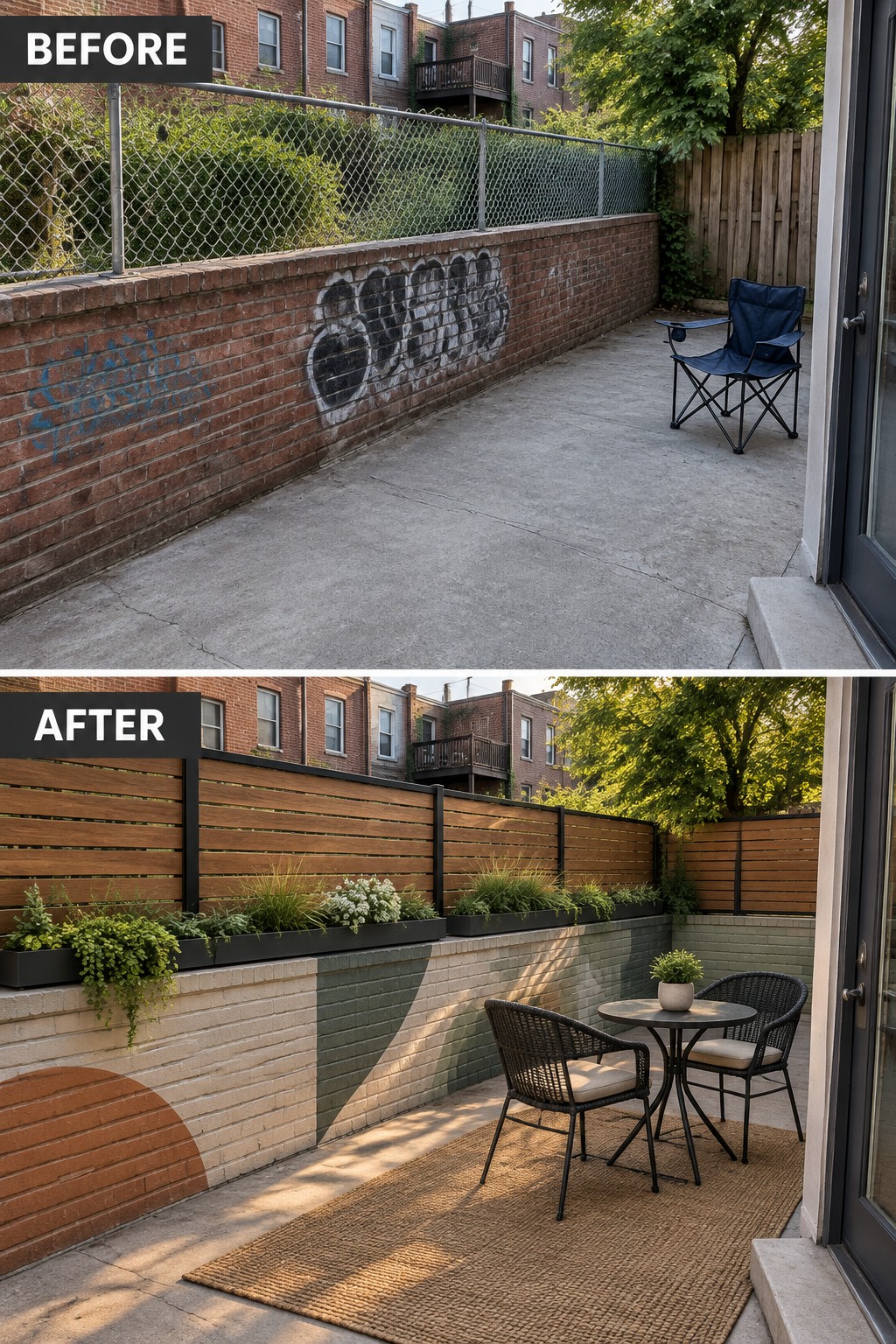
A privacy fence can make a small patio feel more usable, especially when the old chain-link fence is replaced with floating horizontal panels. Here, the slatted screen gives the seating area a clear boundary without making it feel boxed in.
This idea works well for narrow city patios where privacy is limited. Keep the furniture compact and leave enough room to walk through, then add a simple outdoor rug to mark the seating zone.
Add A Gate To Define The Garden Path
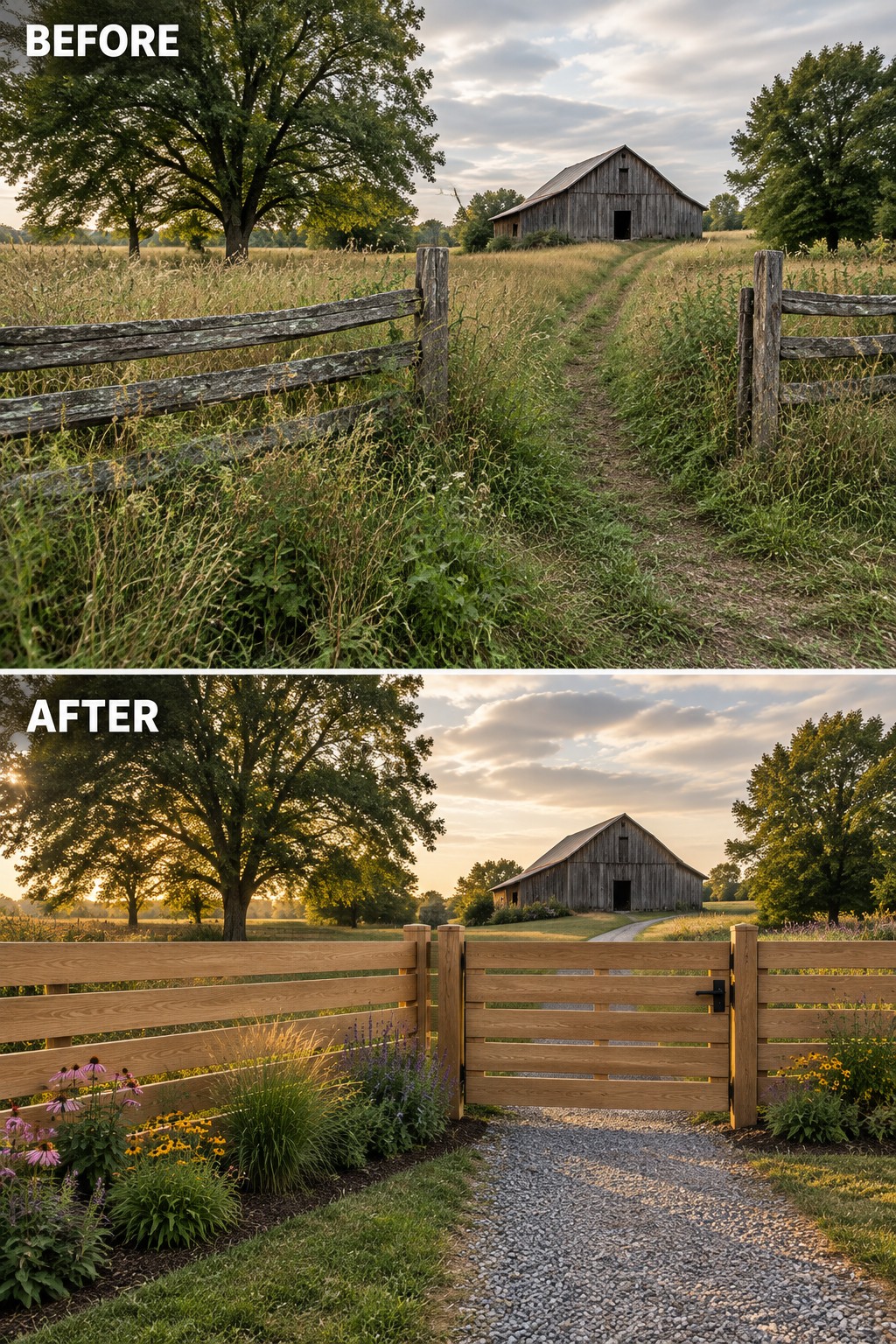
Replacing a weathered fence with a sturdy wooden gate gives a garden entrance a clear, finished look. Here, the gate sits across a gravel path, making the route to the barn feel more deliberate.
This idea works well where a path meets a yard, garden, or field. Keep the gate wide enough for easy access, and choose a style that suits the surrounding fence.
Turn A Small Balcony Into A Seating Area
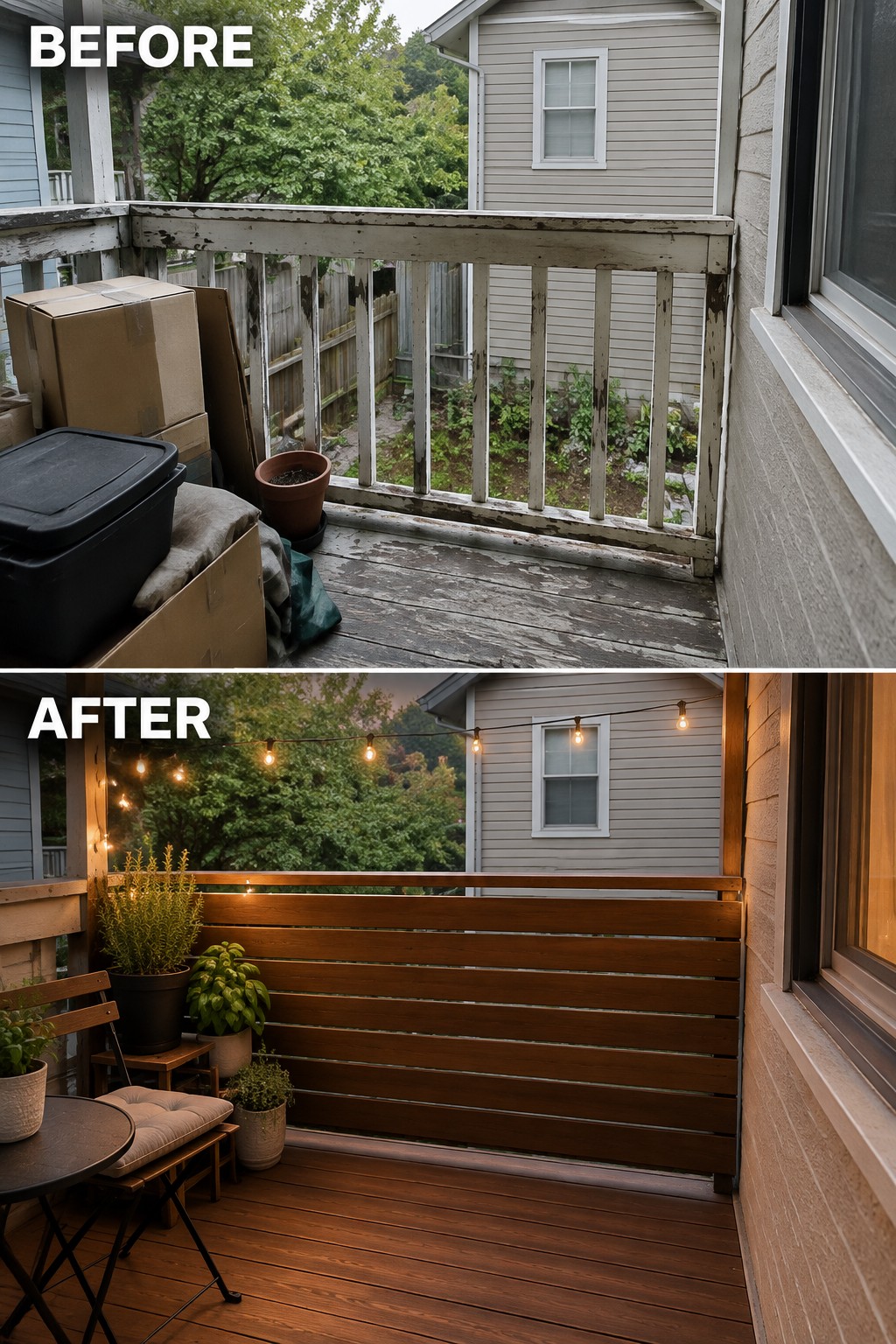
This narrow balcony works better as an outdoor room once the clutter is cleared and the worn railing is replaced with horizontal privacy panels. A small table and chairs make the space useful for sitting, while the panels give it a more finished feel without taking up floor space.
For a similar balcony or porch, choose compact furniture and leave a clear path to the door. Horizontal panels can offer privacy while keeping the area open above the railing, but check local safety rules before changing a balcony guardrail.
Make A Narrow Side Yard Easier To Use
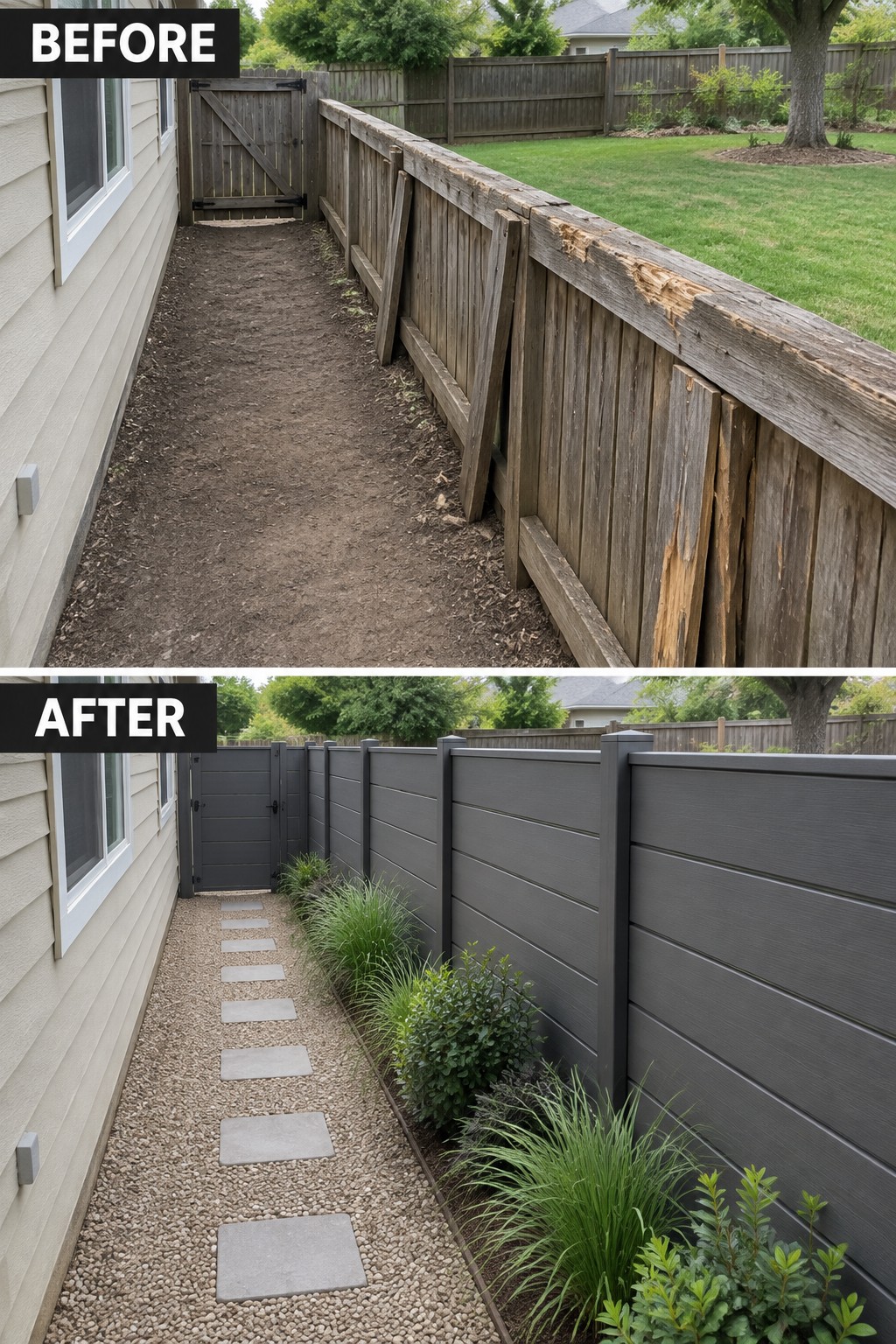
Replacing the worn fence with a clean, dark privacy screen gives this narrow side yard a more finished look. The gravel path and stepping stones also make it easier to walk through without tracking dirt indoors.
This idea works well in the unused strip between a house and fence. Keep the path clear and choose plants that fit the limited space so the route stays practical.
Add A Floating Fence To Clean Up A Small Yard
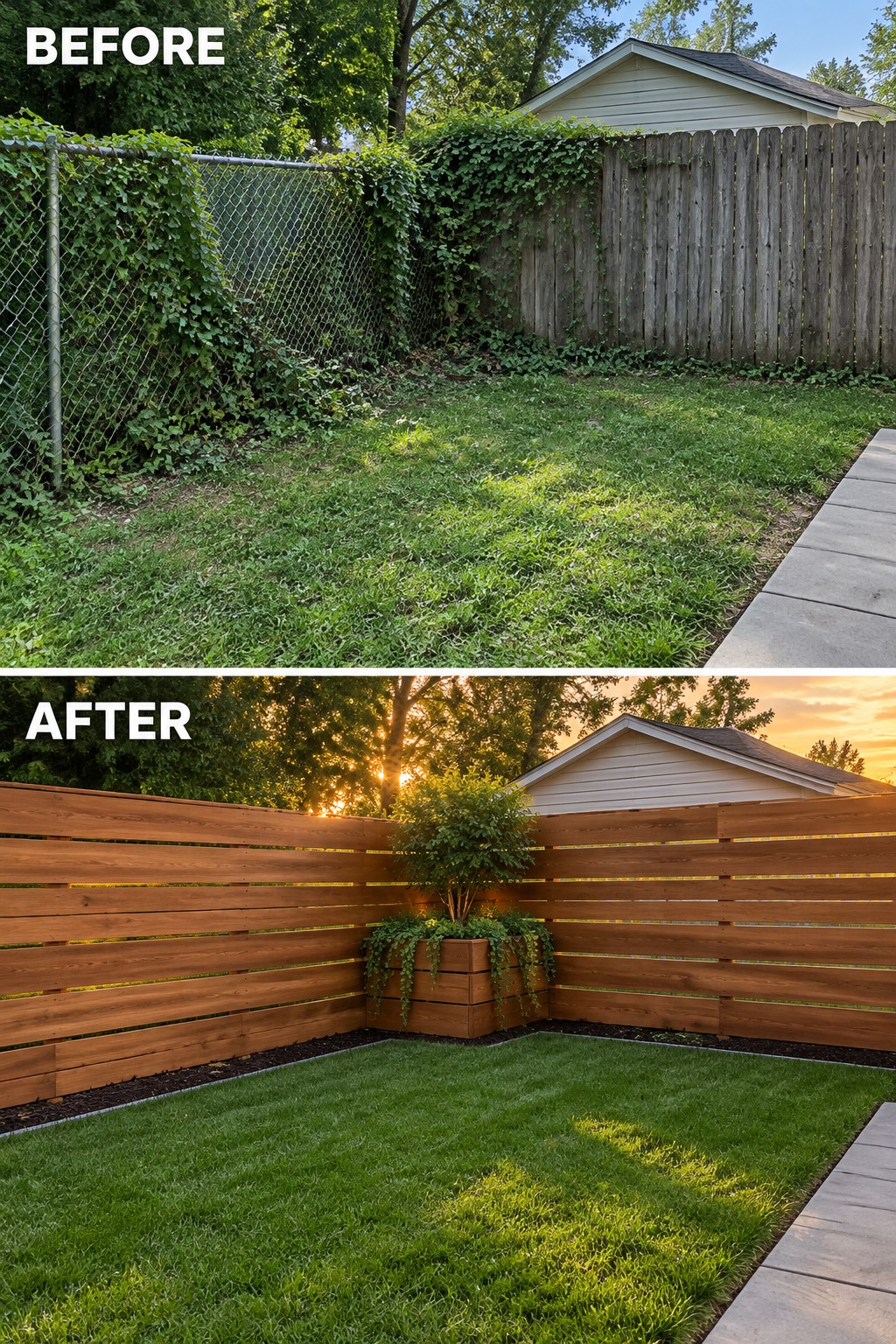
Replacing the tangled chain-link and weathered fence with simple horizontal panels gives this small yard a cleaner, more private edge. The open gaps between the boards keep the fence from feeling like a solid wall, while the corner planter makes the change feel connected to the garden.
This approach works well when a yard needs privacy but you still want an airy look. Keep the boards evenly spaced and use a planter or other simple feature at the corner, without crowding the lawn.
Make A Backyard Fence More Useful For Play
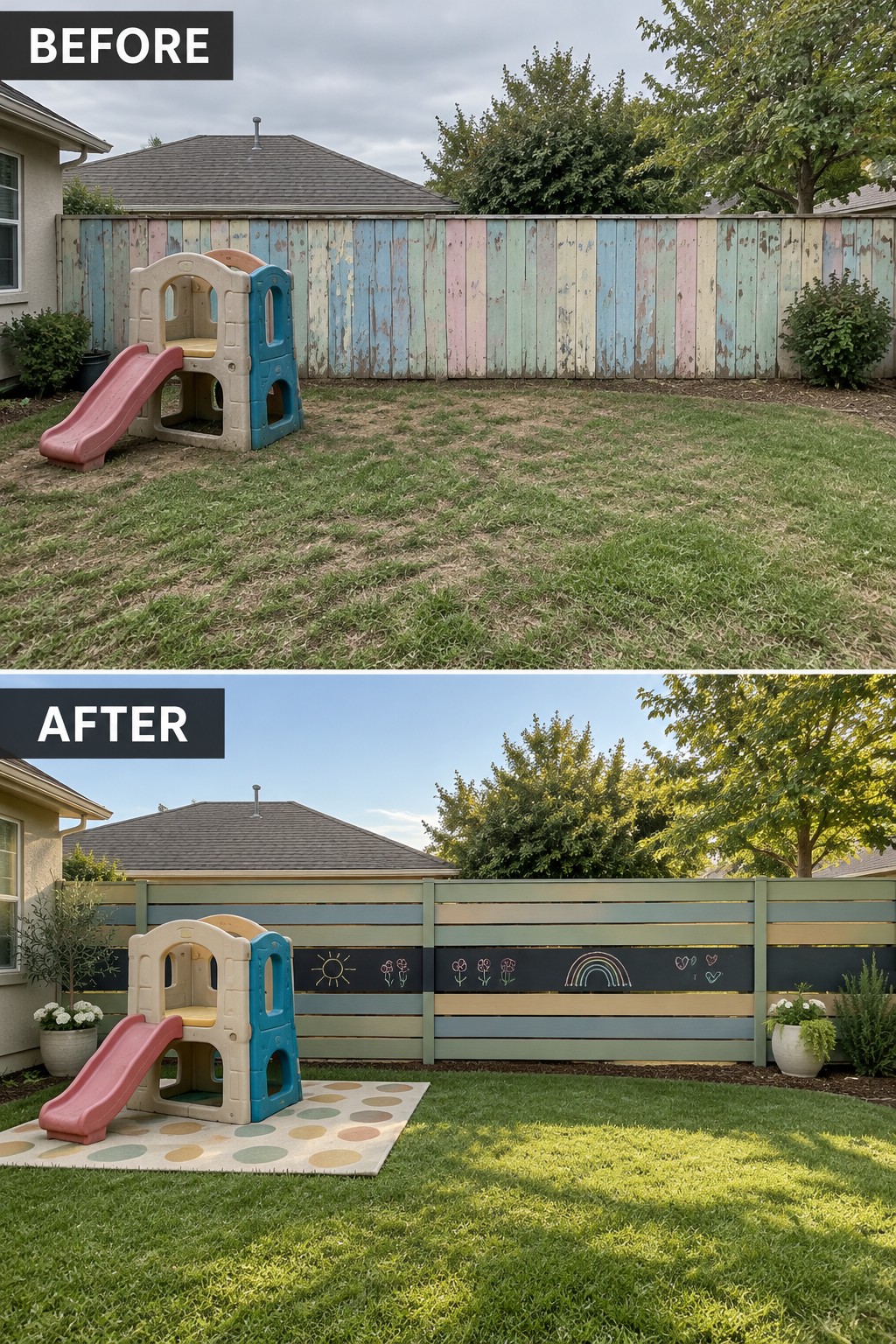
A faded fence can make a family yard feel unfinished. Replacing it with horizontal panels and a chalkboard strip turns the boundary into a more useful part of the play area, while keeping the fence as the main update.
This idea works well in a small backyard where there is not much room for extra play equipment. Choose weather-ready materials, and keep the chalkboard section low enough for children to use. A simple play mat nearby can help define the spot without crowding the lawn.
Replace An Overgrown Fence Border With A Neat Planting Bed
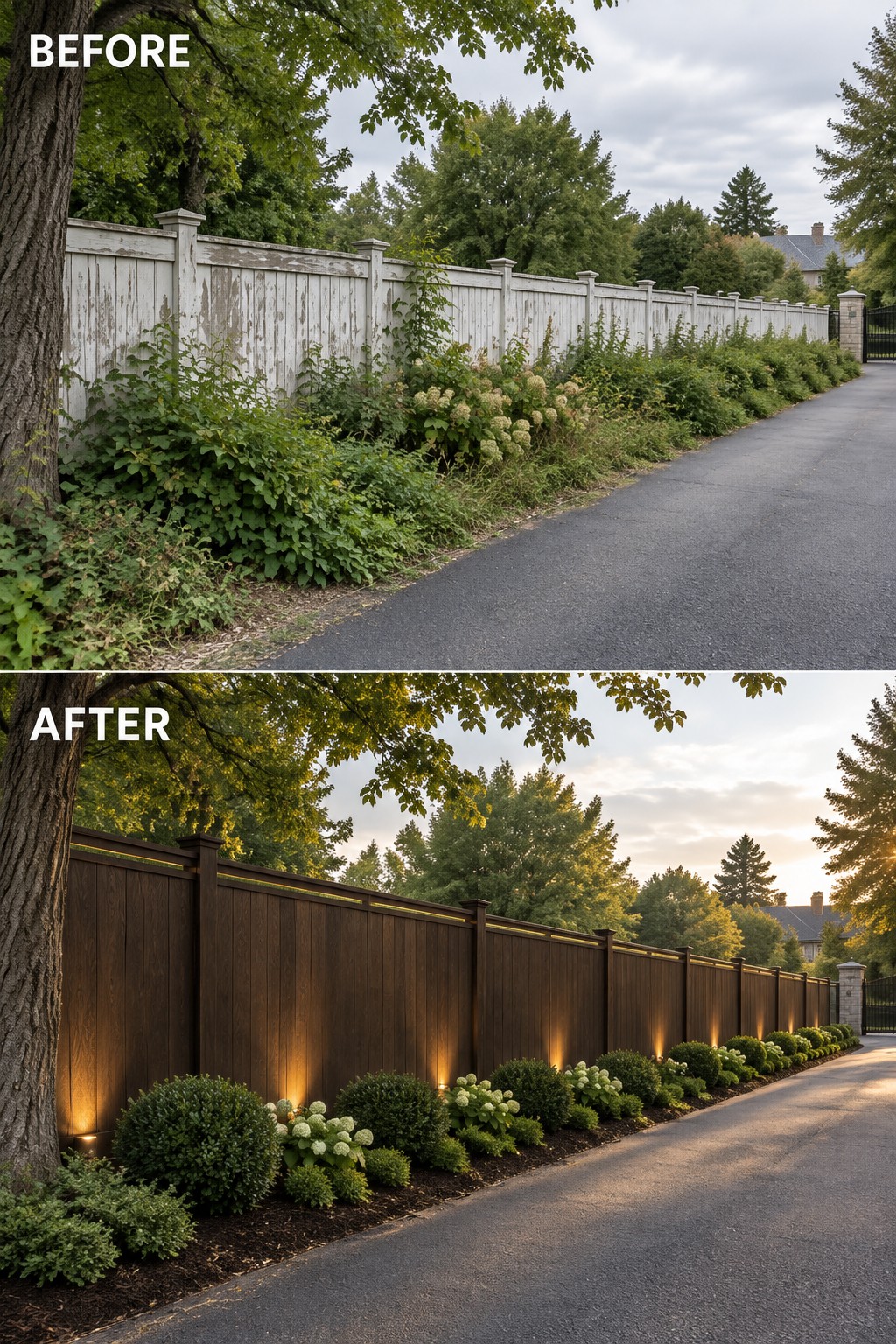
The fence looks much more finished once the tangled growth is cleared and the plants sit in a defined bed. The dark fence also gives the border a consistent backdrop, so the shrubs and flowers read as a planned edge rather than a patch of overgrowth.
For a similar result, start by trimming back weeds and shaping the bed before adding new plants. A simple row of shrubs and a layer of mulch can tidy a long fence line without crowding the path. Keep enough room between plants for them to grow and for the bed to stay easy to maintain.
Give A Patio More Privacy With A New Fence
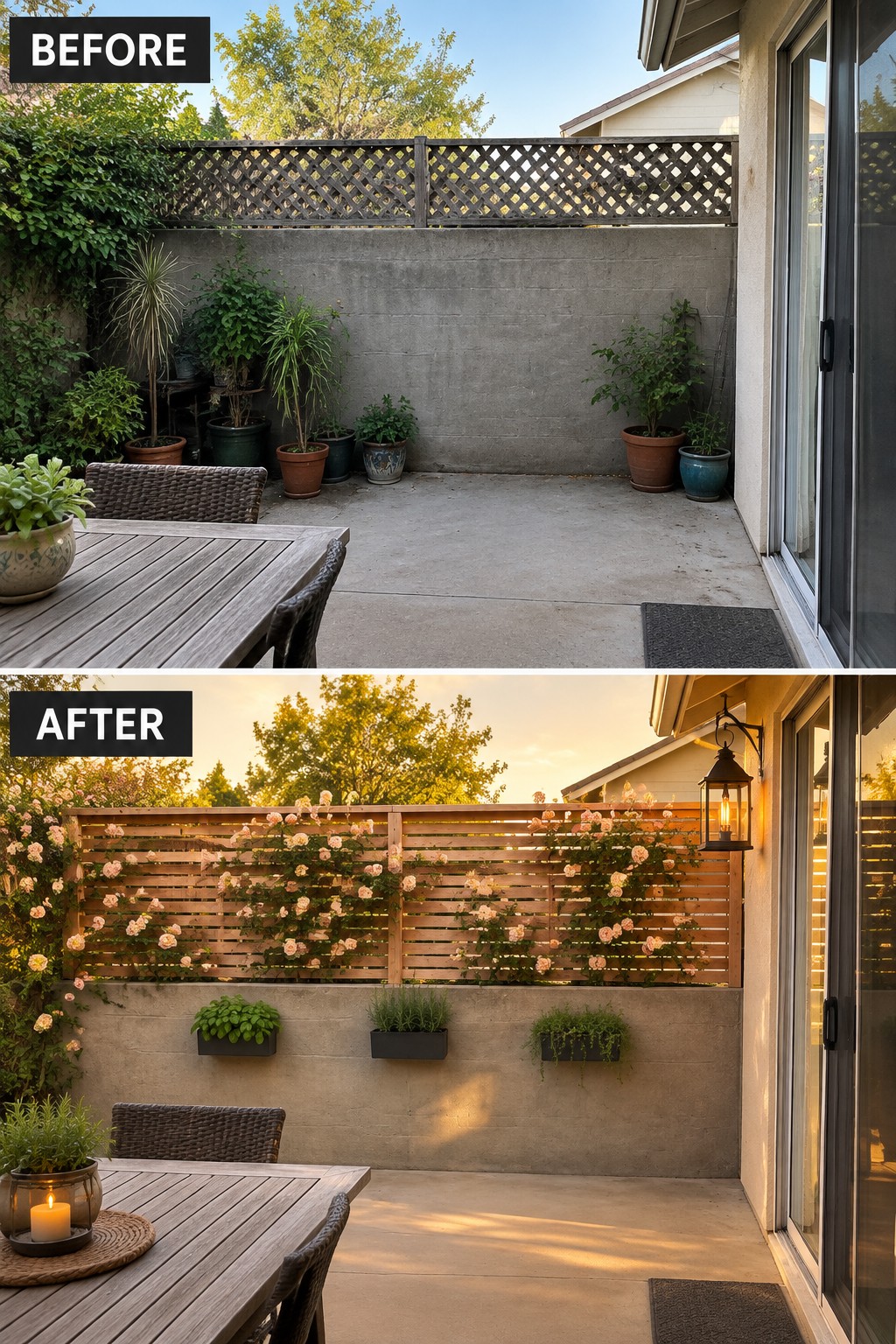
A plain concrete patio can feel exposed, even when there’s room to sit and eat outside. Replacing the old lattice-topped wall with horizontal wood panels and flowering vines gives this small seating area a more private backdrop without changing the patio itself.
This idea works well where a fence faces neighboring homes or feels too bare. Keep the panels open enough for airflow, and leave room for the plants to grow without crowding the seating area.
Turn A Bare Slope Into Tiered Garden Beds
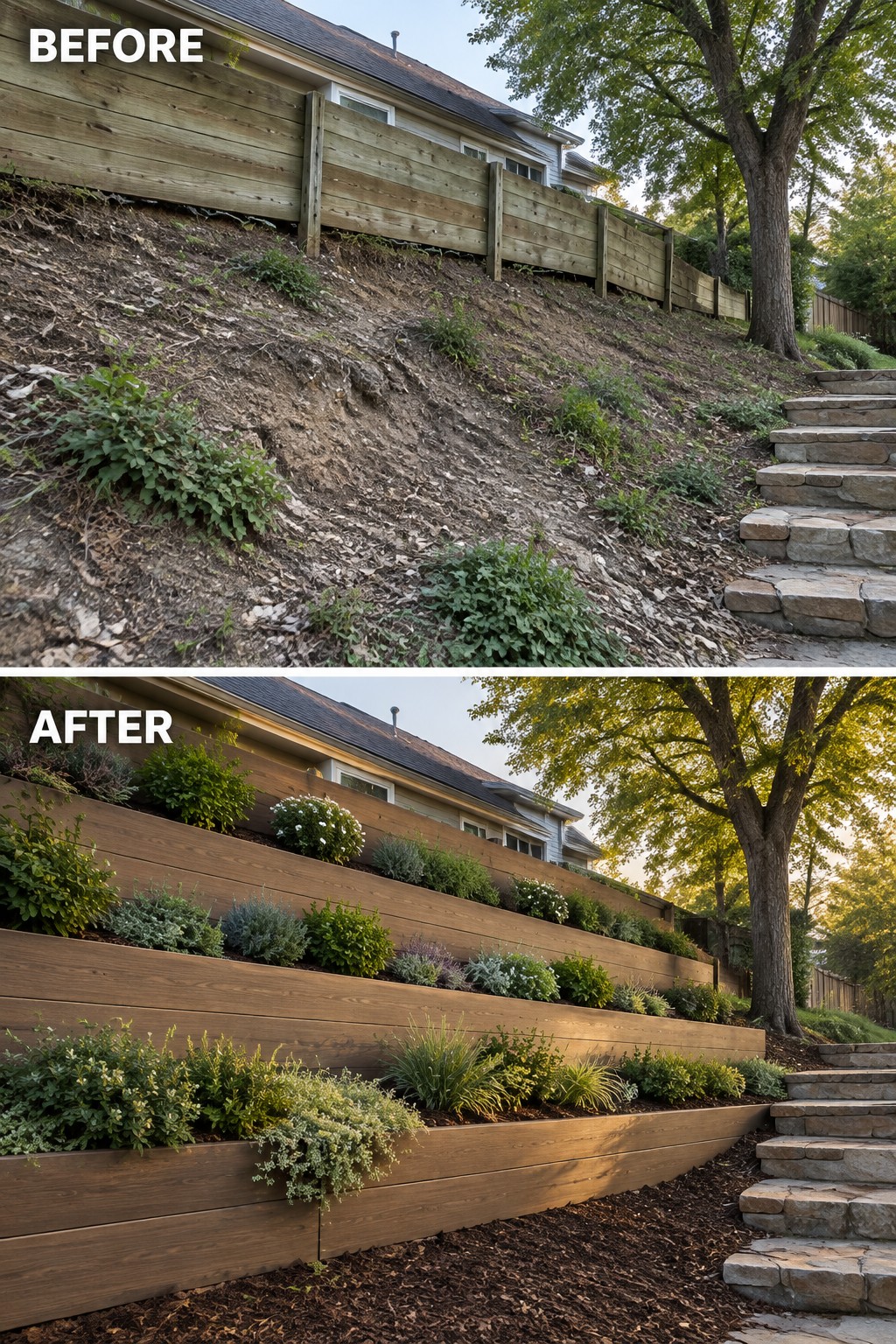
The steep, mostly bare slope is hard to plant and prone to washing out. Low retaining walls turn it into level garden beds, giving plants room to grow while making the yard look more orderly.
This approach can work along a fence or on a hillside where a single steep bed is difficult to maintain. Choose sturdy materials suited to the slope, and keep the tiers low enough to plant and care for safely.
Turn A Bare Patio Into A Seating Area
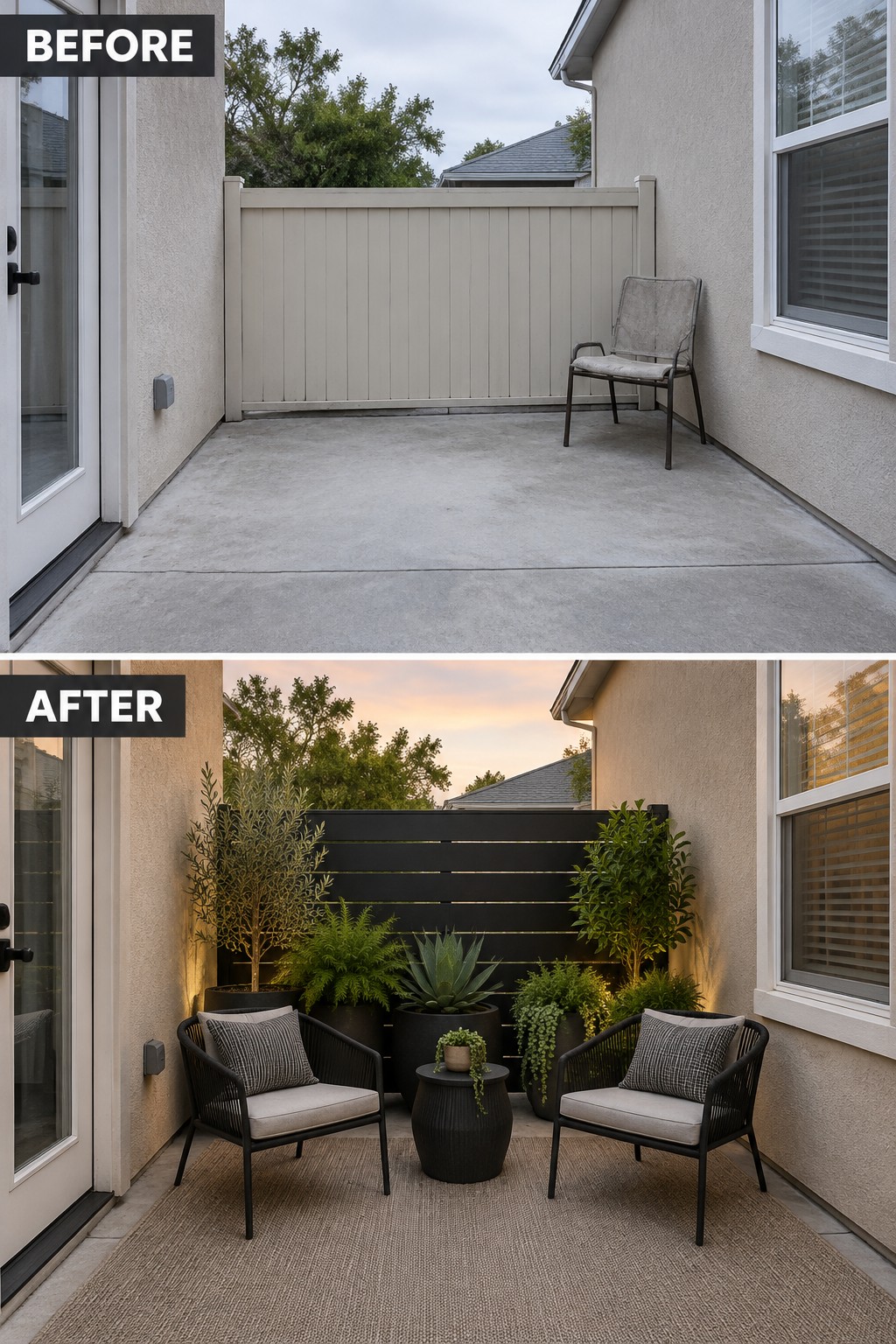
A small patio can feel much more useful once it has a clear place to sit. Here, a plain concrete space becomes a compact seating area, while the horizontal privacy screen gives the chairs a more sheltered backdrop.
For a similar patio, start with a pair of weather-ready chairs and leave enough room to move around them. A simple screen can help define the area, but keep the furniture scaled to the space so it does not feel crowded.
Replace A Weathered Lattice Fence With Floating Panels
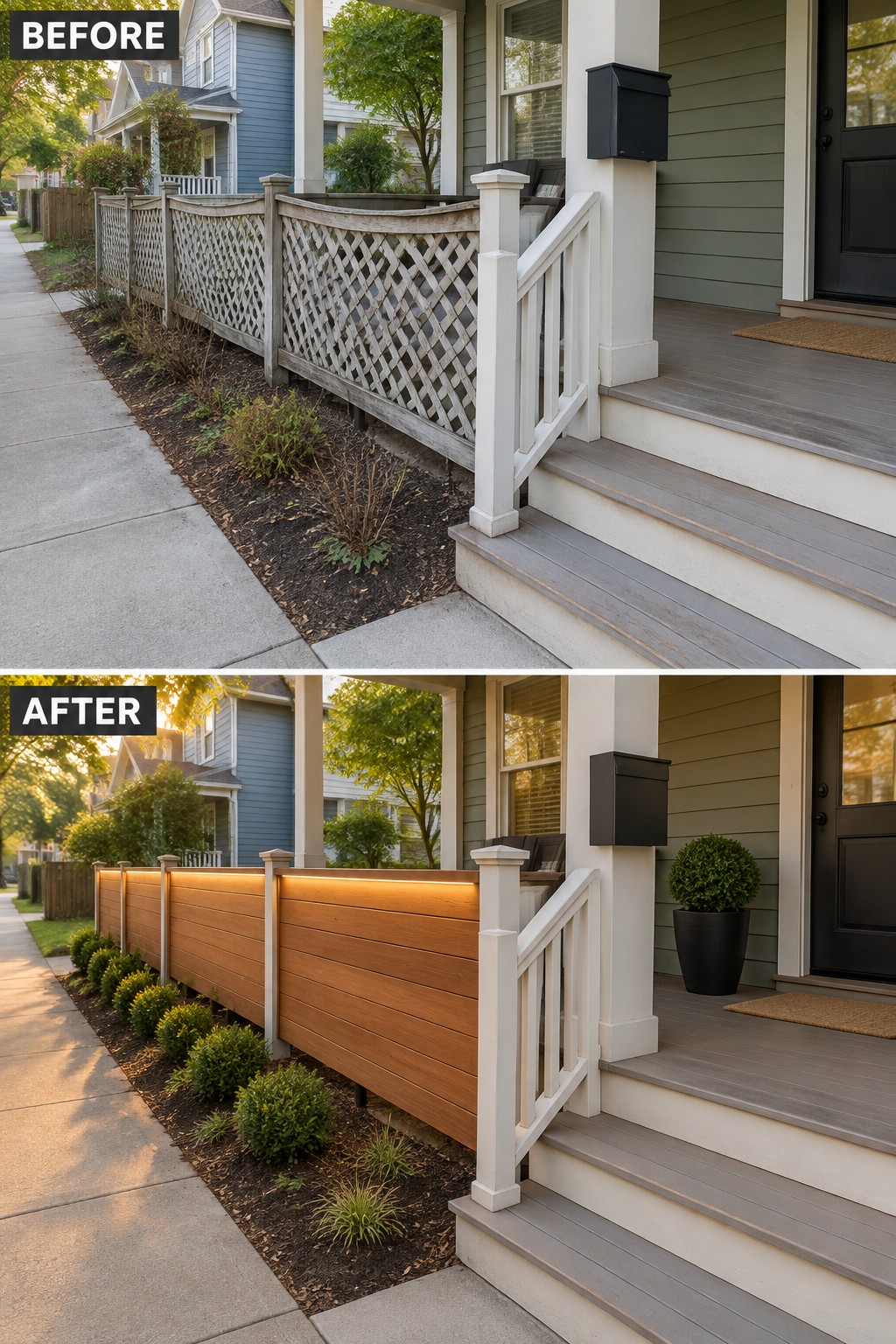
The old lattice fence made the narrow front planting bed look untidy. Replacing it with clean horizontal panels lifted slightly above the ground gives the border a neater, more finished edge while still letting the shrubs remain part of the view.
This approach works well along a front walk or beside a porch when you want more privacy without a bulky, solid wall. Keep the gap beneath the panels consistent, and leave enough room for plants and maintenance along the fence line.
Organize An Overgrown Garden With Raised Beds
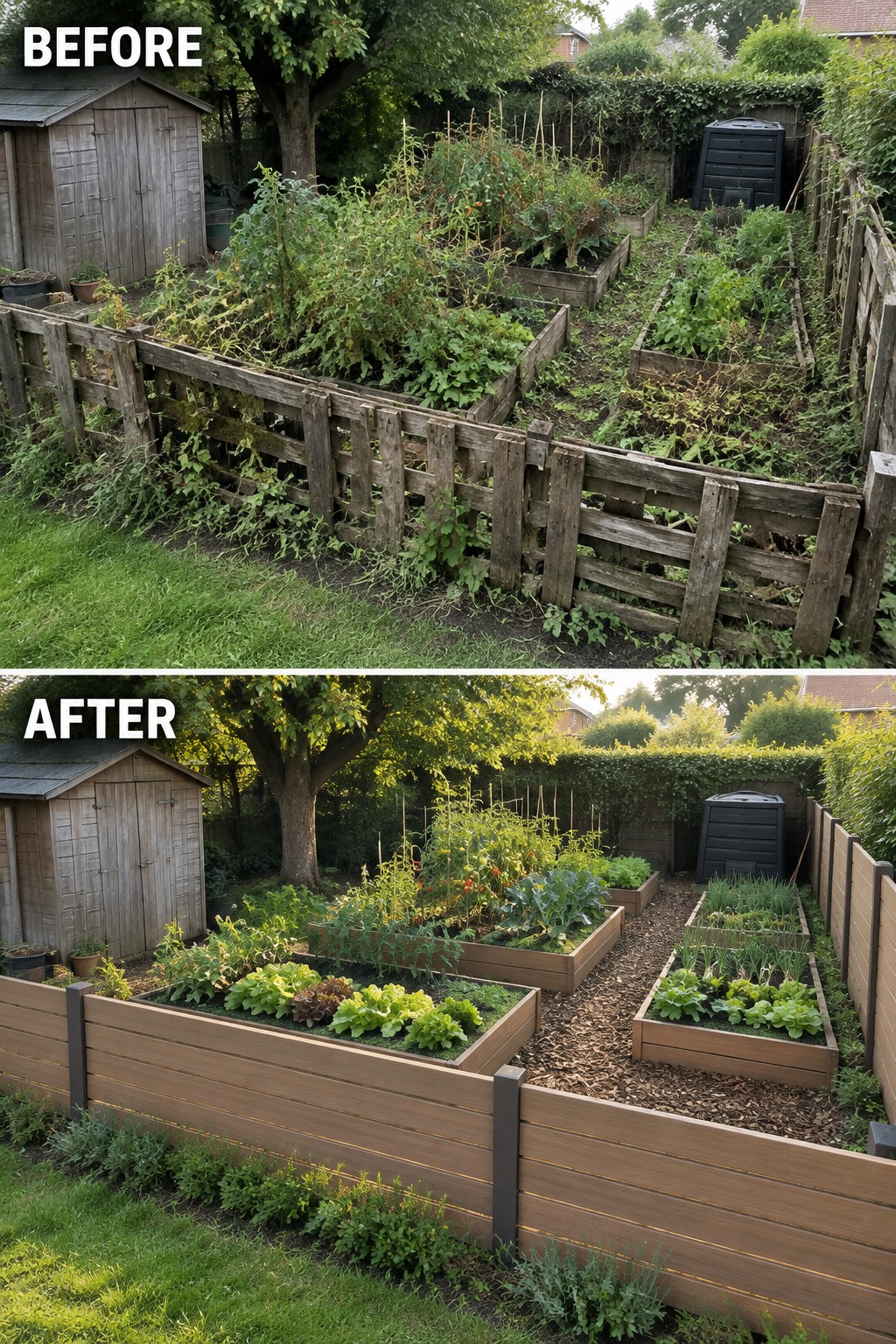
The garden works better once the planting has clear boundaries. Replacing the tangled, uneven beds with tidy raised beds makes it easier to see where to grow vegetables and where to walk.
For a similar yard, start by clearing weeds and choosing bed sizes that leave comfortable paths between them. This approach suits a small garden where you want useful planting space without letting growth spill across the whole area.
Turn A Rooftop Deck Into A Usable Seating Area
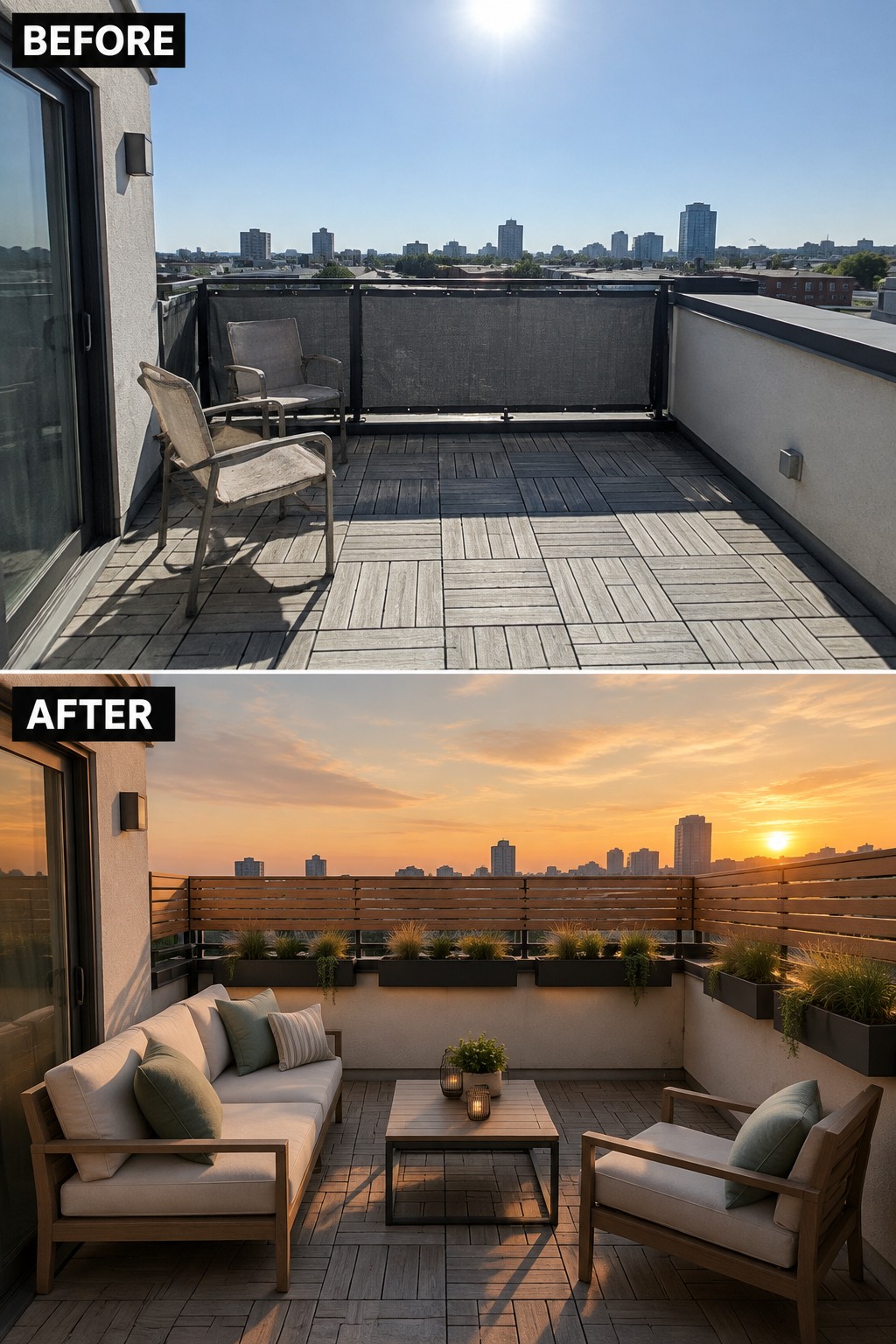
An empty rooftop deck can feel exposed and go unused. Here, the plain space becomes a place to sit by adding comfortable outdoor furniture and a horizontal privacy screen. The screen helps define the seating area without closing off the city view.
For a similar deck or balcony, start with seating that fits while leaving a clear path through the space. Choose weather-resistant cushions and furniture, and make sure the screen is secure and allowed by your building rules.
Replace A Worn Side Yard Fence With Floating Panels
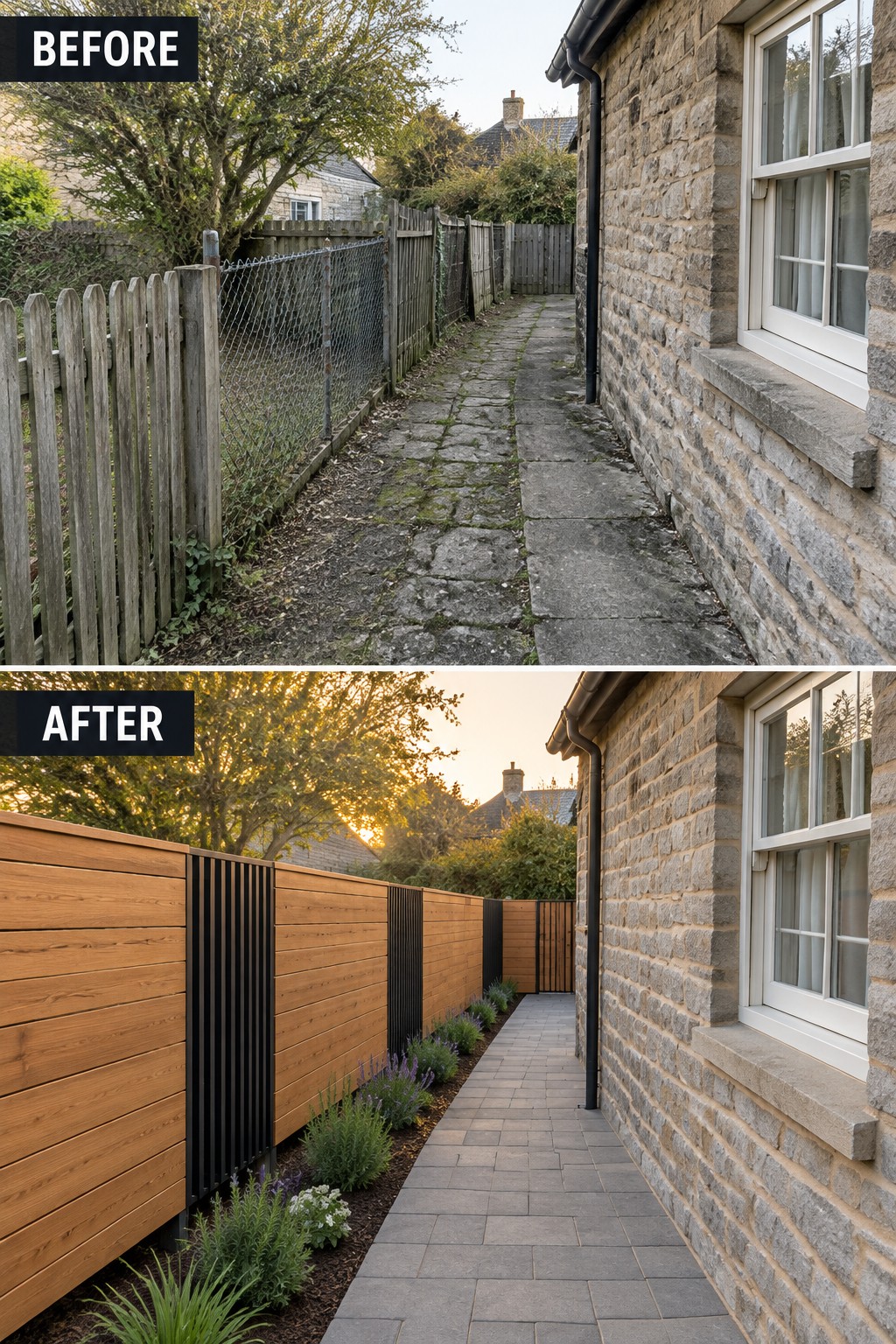
Replacing the patchy fence with horizontal wood panels and dark vertical supports gives this narrow side yard a cleaner, more private edge. The floating panel design breaks up a long fence without making it feel like one solid wall.
This idea works well beside a house where space is tight and the fence runs the length of a path. Keep the panels level and leave a small gap beneath them so they appear to float, while making sure the walkway stays wide enough to use comfortably.
Frequently Asked Questions
Q: Do floating fence panels need special posts?
A: They usually need sturdy posts set deep enough to keep the fence steady, especially in windy areas. The gaps make the panels look lighter, but they don’t reduce the weight or force the fence puts on its supports.
Q: Will the gaps between the boards still give me privacy?
A: You’ll get some privacy, but people may see through the gaps at an angle. If the fence faces a busy walkway or a close neighbor, use narrower gaps or add plants along the most exposed section.
Q: Can I build floating fence panels on a sloped yard?
A: Yes. You can step each panel down the slope or angle the panels to follow the ground. Stepped panels are easier to build and keep the floating effect clear.
Q: What should I do to keep the panels looking good?
A: Leave enough space between the boards for air to move and water to drain, then seal or stain the wood as needed. Check the fasteners and posts once a year, since loose supports can make the panels look uneven.
