

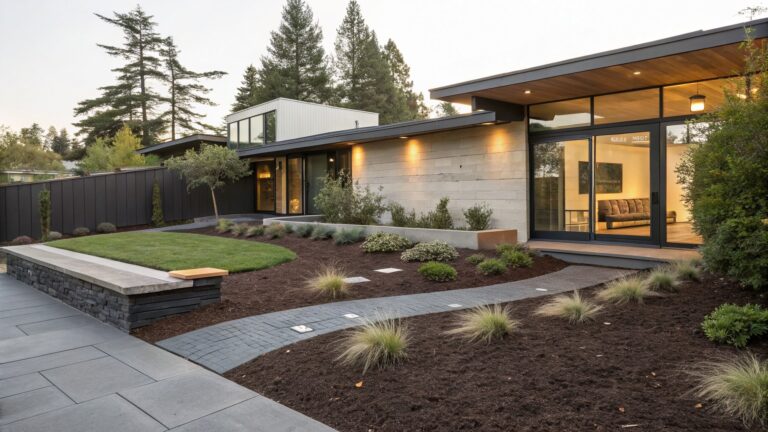
I’ve found that rocks and mulch bring a grounded texture to yards that plain grass or sod just can’t match, especially as plants fill in over time.
They work best when they outline pathways and beds clearly, shaping how you move through the space without it feeling forced.
What draws the eye first is usually that subtle layering of sizes and colors along the edges.
A couple years back, I edged my front beds with larger fieldstone topped by fine mulch, and it steadied the whole layout against weeds while adding unexpected depth.
These approaches prove you can build lasting structure in any yard size.
Gravel-Bordered Stone Pathways
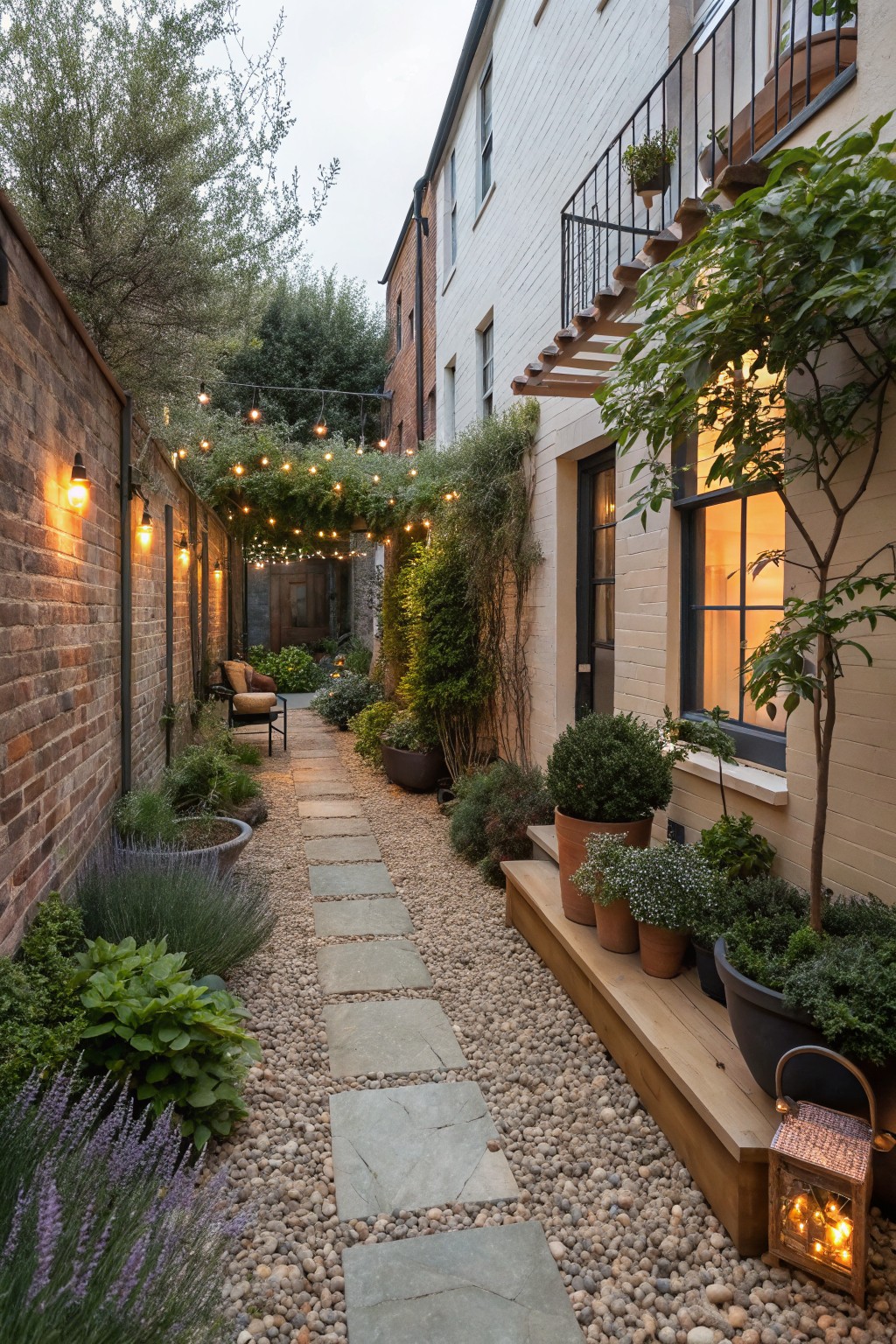
One easy way to add texture to a narrow garden path is to set rough stone slabs into a bed of loose gravel. The stones give you solid footing while the gravel softens the edges and lets water drain right through. Plants like lavender tuck in along the sides, making the whole thing feel layered without looking busy.
This setup shines in side yards or alleys where space is tight. It suits older homes with brick walls, keeping things low-maintenance and practical. Go for pale gravel to brighten shady spots, and keep the path at least three feet wide for easy walking.
Winding Gravel Paths with Rock Borders
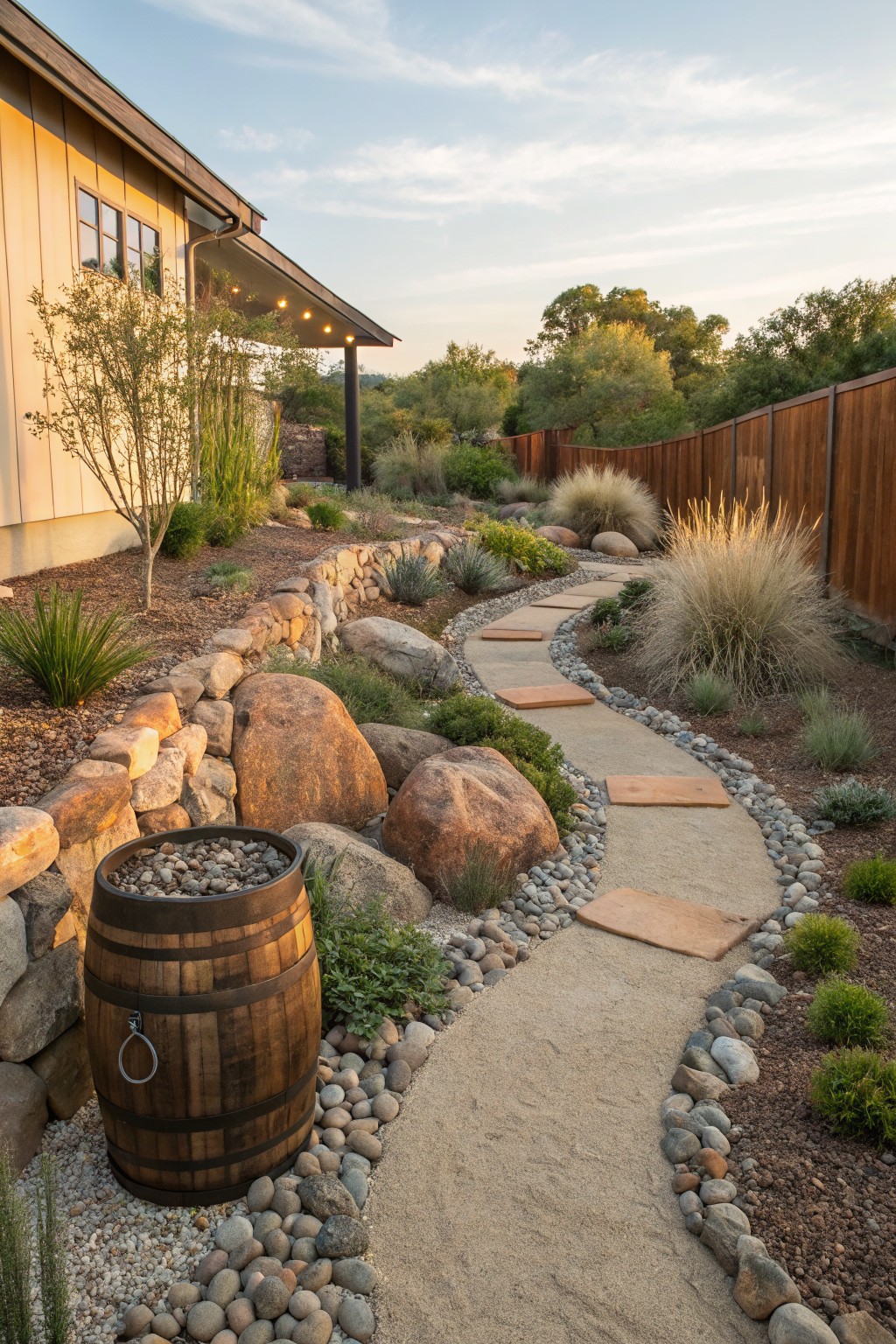
A gentle winding path like this one uses gravel filled between terracotta stepping stones, with edges lined in smooth pebbles and chunks of larger boulders. It pulls you through the garden without feeling rigid, and the rocks add real texture that makes flat ground more interesting. Those big boulders act like natural anchors too.
This works best in drier yards or on a slight slope, where you want low upkeep but some structure. Line it with tough plants that hug the ground, and drop in a simple fire barrel for sitting spots. Skip it if your space is too shady, since gravel can hold moisture there.
Winding Stone Path with Rock Edging
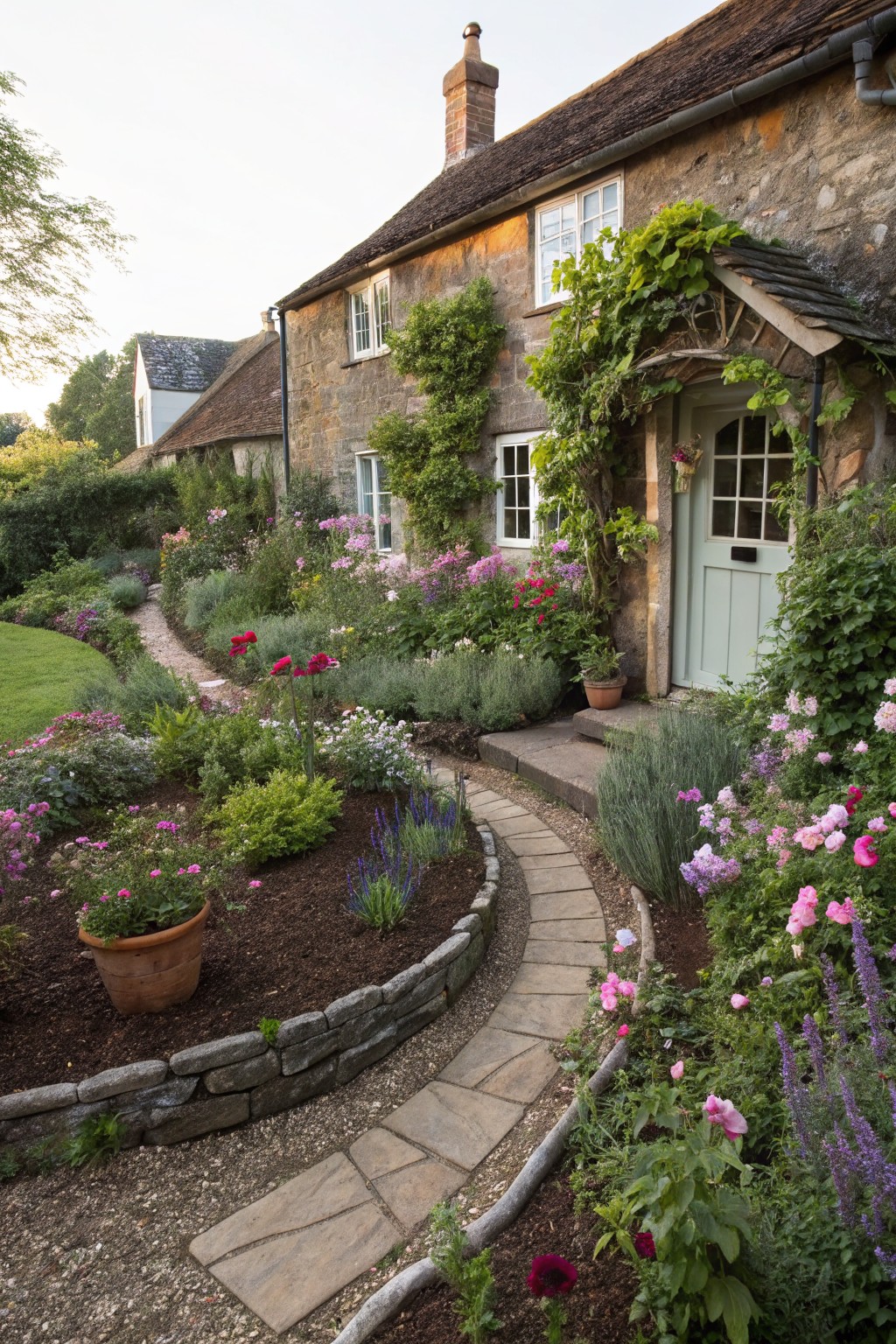
A simple winding path like this one pulls everything together in the front garden. Made from flat stone slabs, it curves gently toward the house door, with low dry-stone walls along one side and rich mulch holding back the flower beds. The rocks give a sturdy, natural edge that repeats the house’s own stone look, while the mulch keeps soil neat and lets plants like lavender and roses spill over just right. It adds that layered texture without much upkeep.
This works best leading up to a cottage-style entry or any home with a bit of character. Pick stones that match your local area for an easy fit, and fill beds with perennials that come back each year. Keep the path wide enough to walk two abreast… maybe four feet. Watch the scale so it doesn’t overwhelm a smaller yard.
Courtyard Gravel Paths Around a Fountain
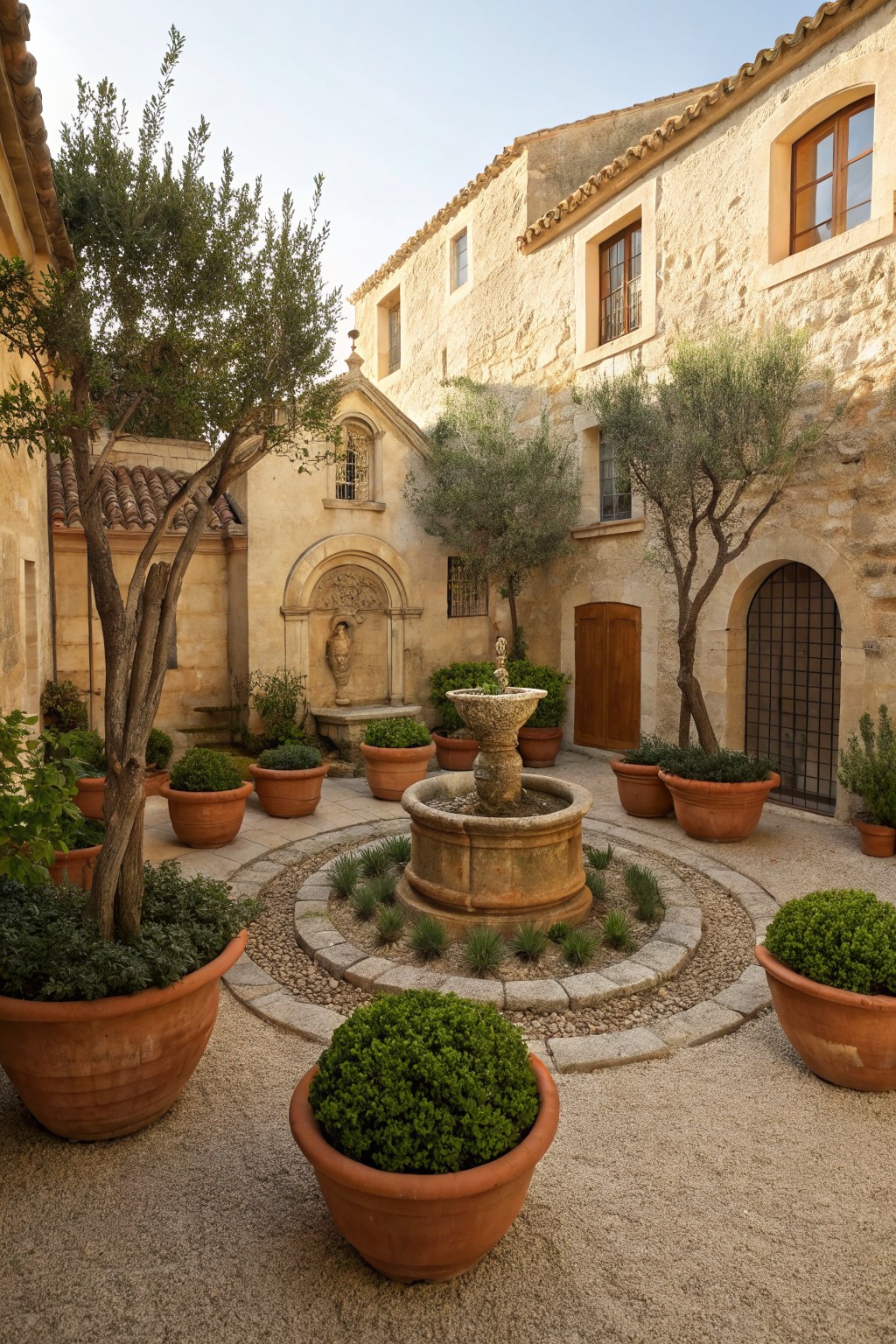
Gravel paths laid out in a loose circle around a central fountain make a simple way to add texture and pull a small garden together. The coarse rocks give that rough feel underfoot while letting water drain right through, and they set off the plants without much upkeep. In this spot, the gravel edges tie into the stone walls and fountain for a natural flow.
You can pull this off in any tight courtyard or patio where you want definition without paving everything over. Go for larger gravel sizes to avoid shifting, and keep plantings in big terracotta pots like the olives here so roots stay happy. It fits older stone homes best, but watch weeds popping up… a quick layer of landscape fabric underneath helps.
Gravel-Edged Stepping Stone Path
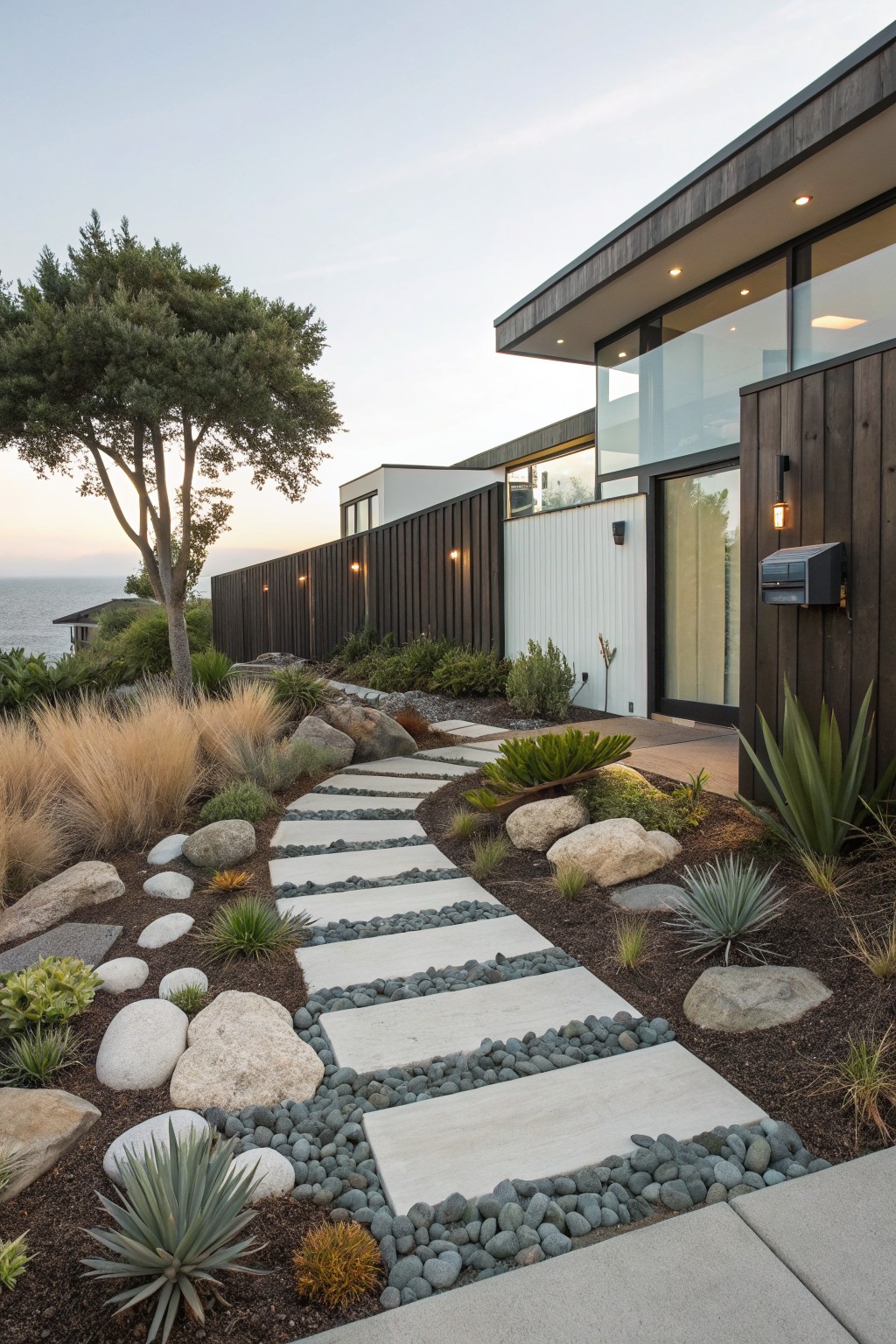
A simple way to guide folks right to your front door is with large pavers set in gravel. Here, wide concrete steps mix with smooth river rocks and boulders for a path that feels natural but structured. The dark gravel between the light stones adds that nice contrast, and drought-friendly plants like agave and grasses fill in around the edges without much fuss.
This setup works great on sloped lots or coastal spots where you want low upkeep. Lay it in front of a modern house to tie the yard to the entry, but make sure the gravel drains well so you avoid puddles after rain. It’s practical for everyday walking and gives your landscaping some real texture.
Pebble Beds Edged in Concrete
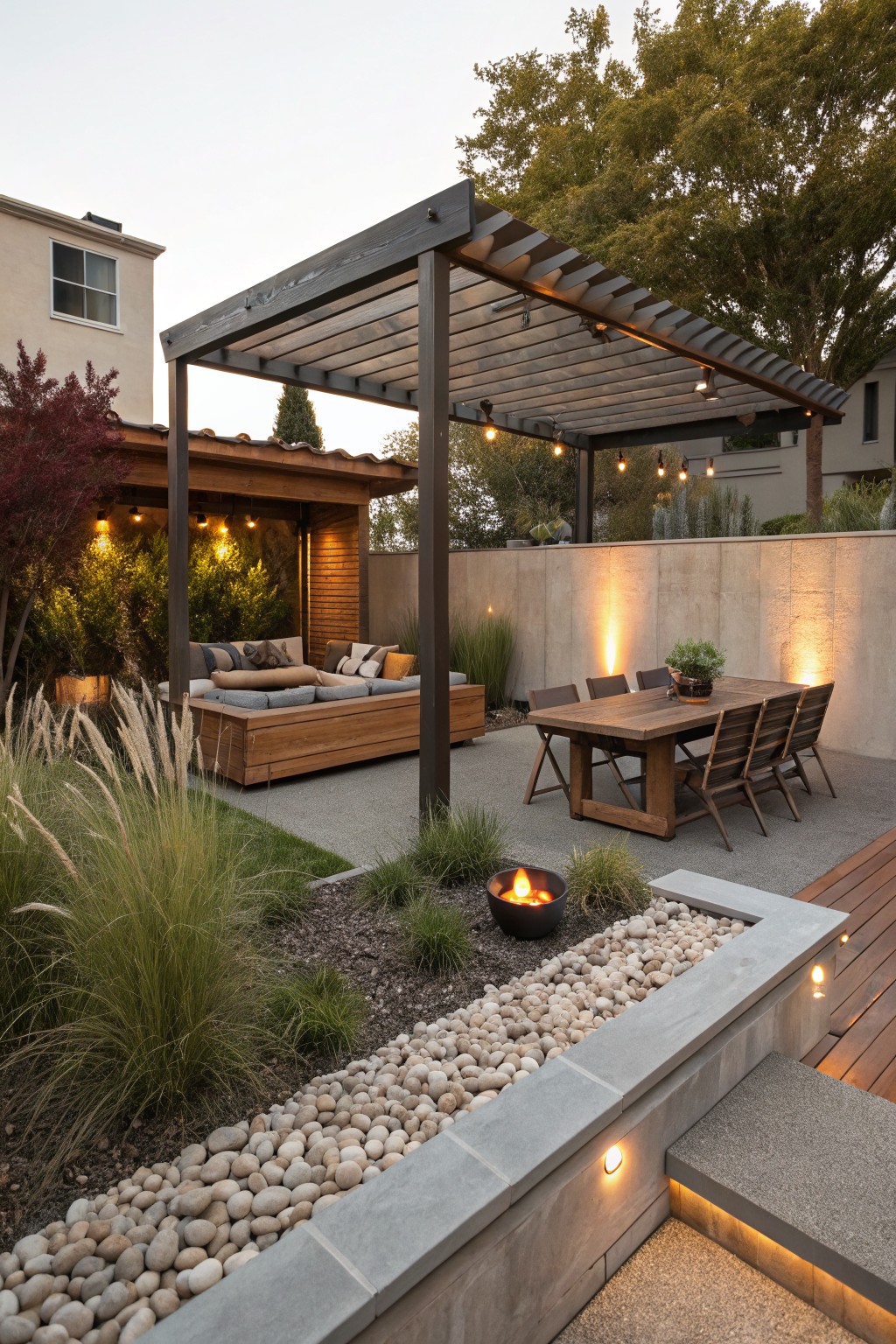
One straightforward way to add texture to a backyard patio area is filling concrete-edged beds with smooth white pebbles. Tall grasses poke up through them here, along with a few low plants, keeping things simple and not too fussy. It works because the pebbles stay clean and don’t wash away, while the grasses sway and add some movement without needing constant trimming.
You can use this around any outdoor seating spot or along a fence line. It suits modern homes or sloped yards best, since the concrete holds everything in place. Just watch the scale. too many pebbles might feel stark, so mix in a fire bowl or similar feature for a bit of warmth.
Stepping Stones in Gravel Gardens
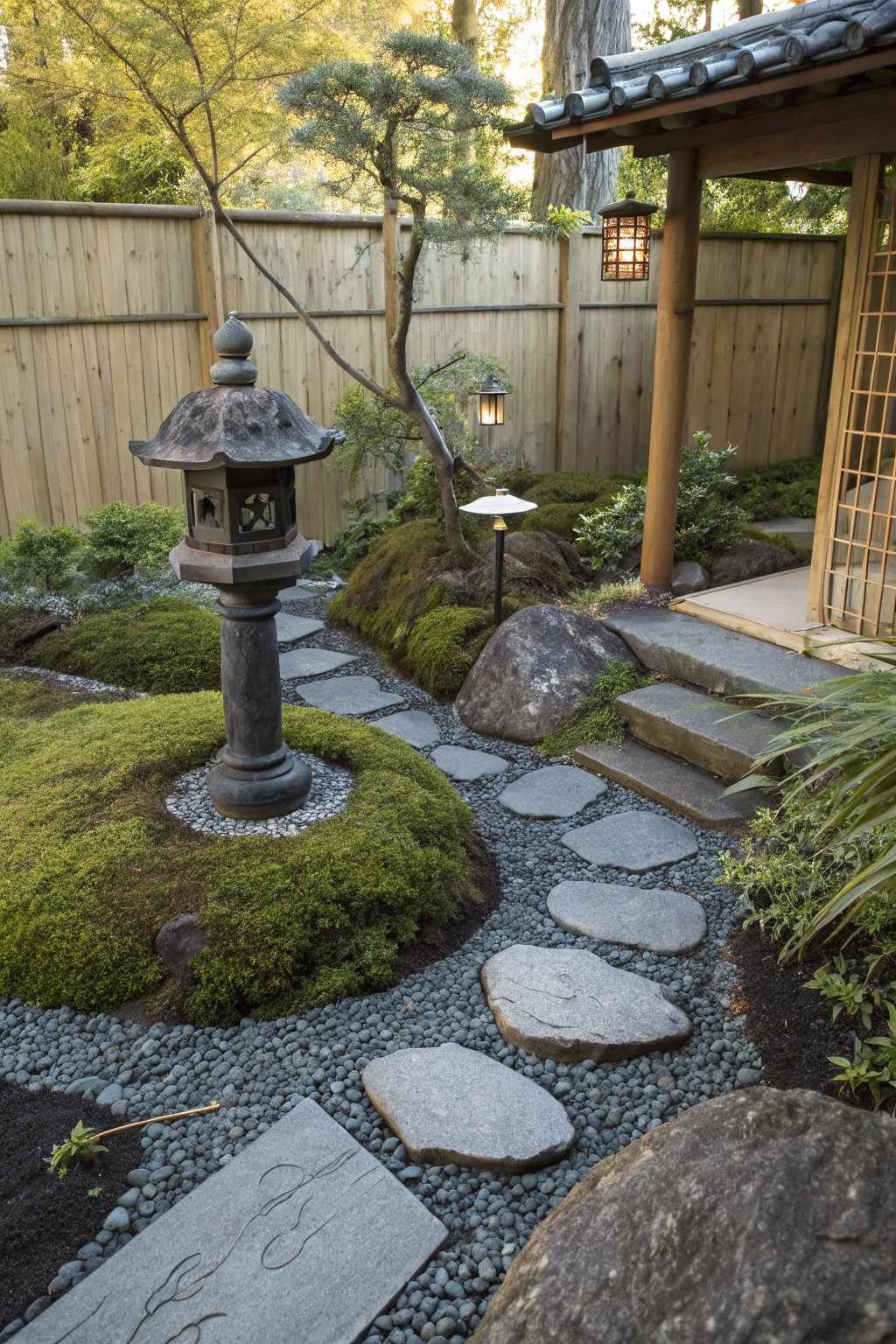
One simple way to add texture and depth to a yard is setting flat stepping stones into beds of smooth gravel. You see it here with irregular slate stones winding through dark pebbles, edged by low moss mounds and a few big rocks. It keeps things low-maintenance while guiding the eye along a natural path. The gravel fills in the gaps just right, so no weeding takes over.
This works best in smaller side yards or entry paths where you want a calm feel without much grass. Pair it with a stone lantern or lantern light for that extra touch. Skip it on steep slopes though. The stones need to sit stable on flat ground, and gravel drains well but can shift if it’s too wet often.
Winding Stone Steps on Slopes
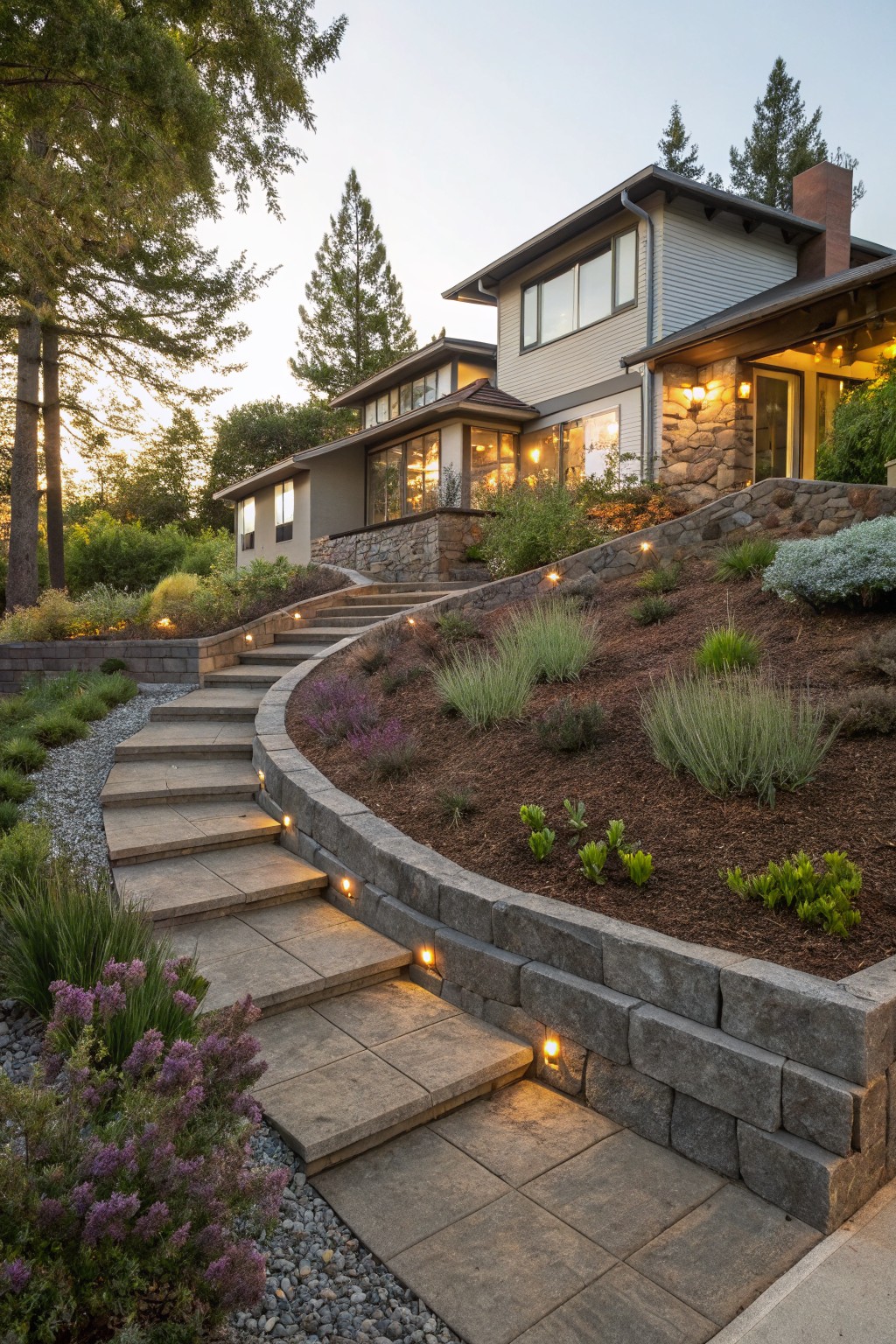
One simple way to handle a sloped yard is with curving stone steps like these. They wind gently up the hill, held in place by sturdy rock retaining walls. Mulch fills the beds around them, mixed with low grasses and shrubs that add texture without much upkeep. The low lights tucked into the walls make it safe and pretty at night. It’s practical for getting around, and the rocks give everything a grounded feel.
This setup works best on hillsides where straight paths won’t do. Use it leading to a backyard or side entry, on homes with some modern lines. Go for wide steps if you have kids or gear to carry. Skip it on super steep spots, though, or add more walls. Drought-friendly plants keep it low water once established.
River Rock Edges Along Pool Paths
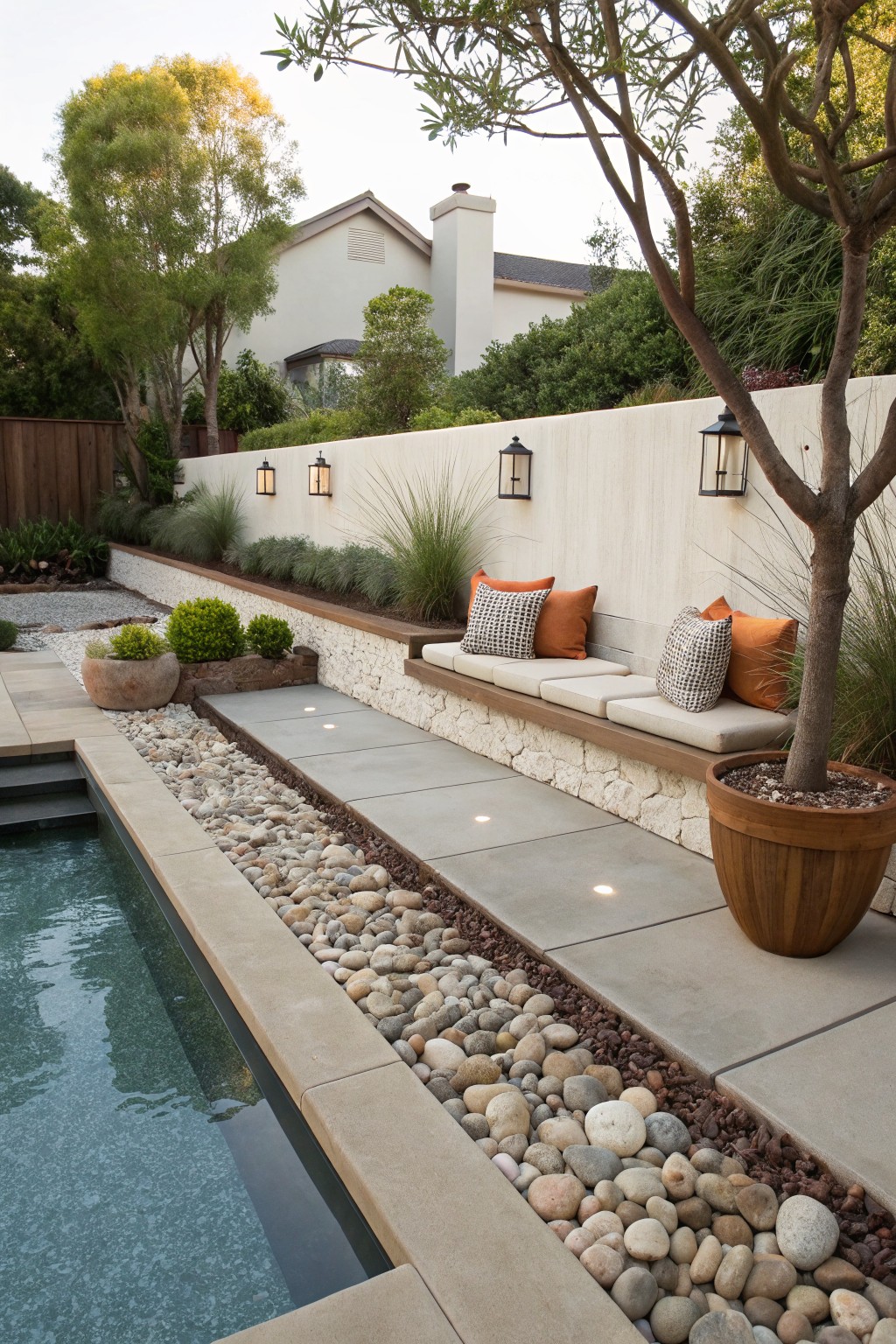
A simple strip of smooth river rocks runs right between the pool edge and a clean concrete path. It brings in that nice texture without much upkeep. The pebbles catch the light and add depth to what could be a plain hardscape area. Folks like how it ties the water to the landscaping in a natural way.
You can pull this off in smaller backyards or long skinny pool zones. Lay down landscape fabric first then fill with 1- to 2-inch rocks for easy drainage. It suits modern or minimalist yards best. Skip it if you have heavy foot traffic though. Might shift over time.
Winding Stone Path Through Shaded Gardens
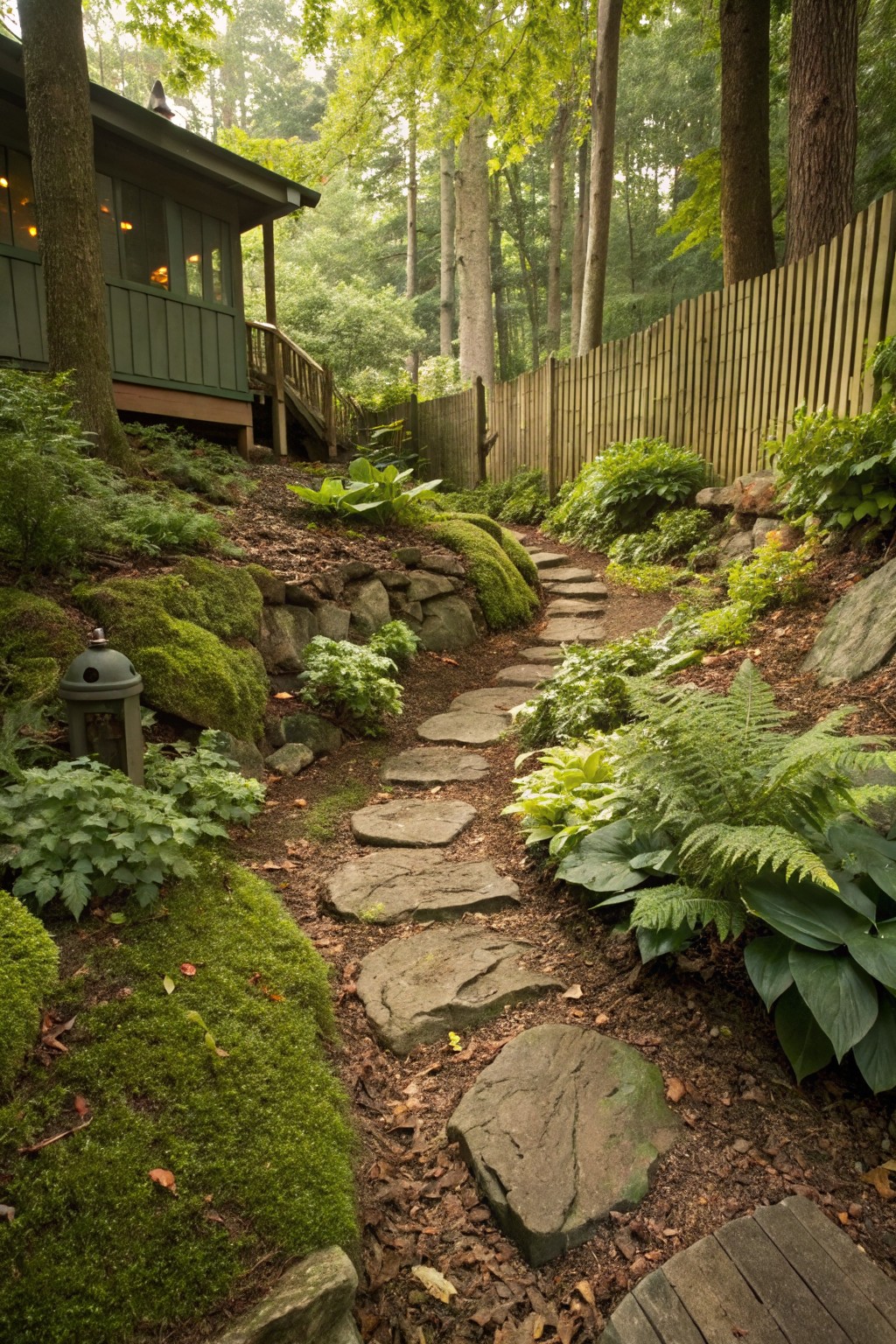
A simple winding path made from irregular flat stones works so well in wooded spots like this. The stones sit right into the soil with moss and low plants filling the gaps. That gives the whole area a natural feel without much upkeep. No straight lines here. Just a gentle curve that pulls you toward the house.
Try this on a slope or shady side yard where grass struggles. Pick stones from nearby if you can for that real local look. Plant ferns hostas or moss around them and let it grow in. It hides weeds too. Suits older homes or cabins best. Keep the path wide enough to walk easy.
Gravel Paths with Oversized Pavers
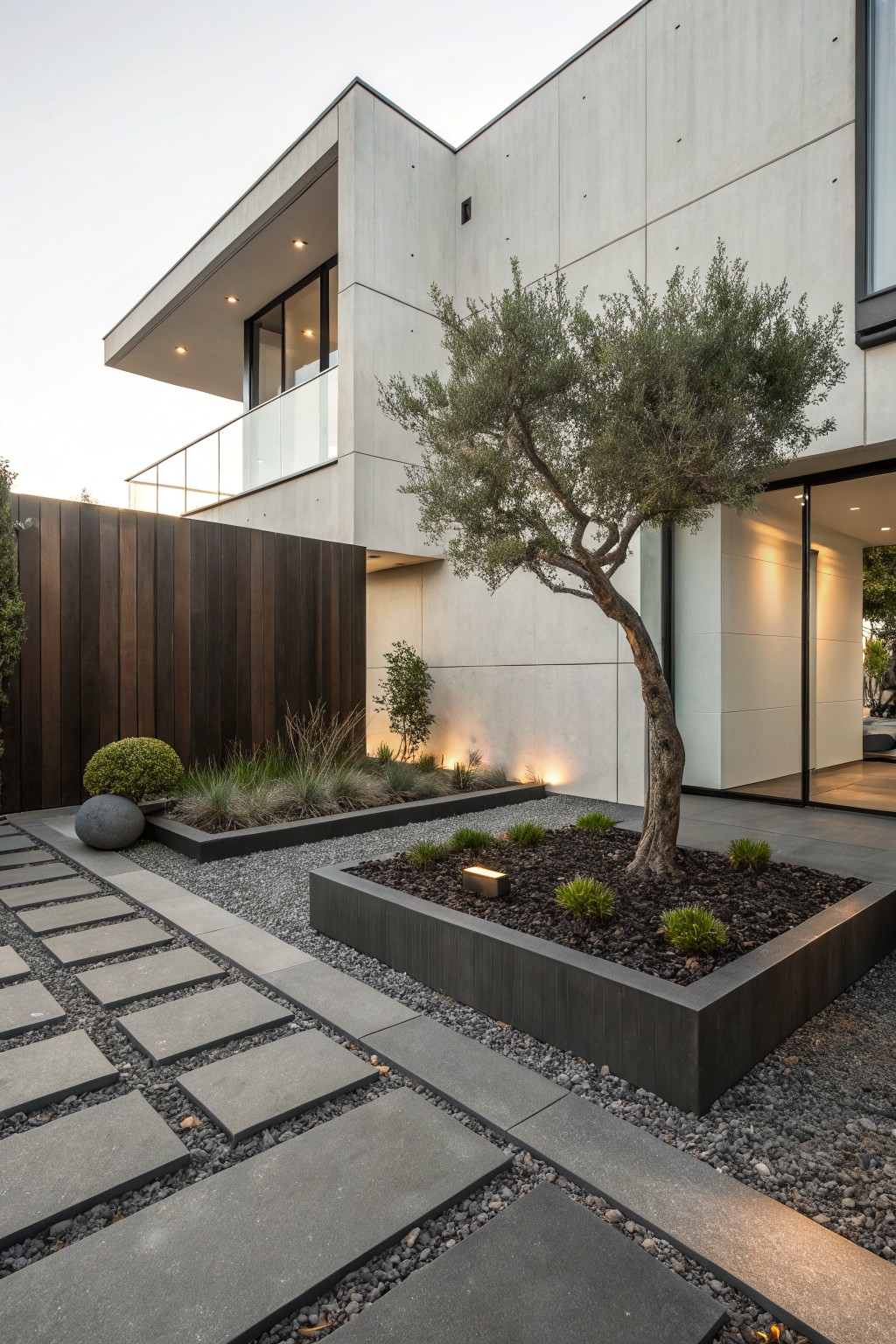
One straightforward way to add texture to a front yard is laying large rectangular pavers right into gravel. It gives you a clear path without needing a full slab of concrete or pavers everywhere. In this setup, the dark gravel fills the gaps and softens the look, while the pavers stay practical for walking. That mix keeps things low-maintenance too. No mowing along the edges.
You can use this in any entry area or side yard where you want definition but not fuss. Go for smooth river rock or pea gravel under the stones, and keep plants simple around the sides. It suits modern homes with clean lines, like this one backed by concrete walls. Just make sure the pavers are set firm so they don’t shift over time.
Winding Flagstone Path in Mulch Beds
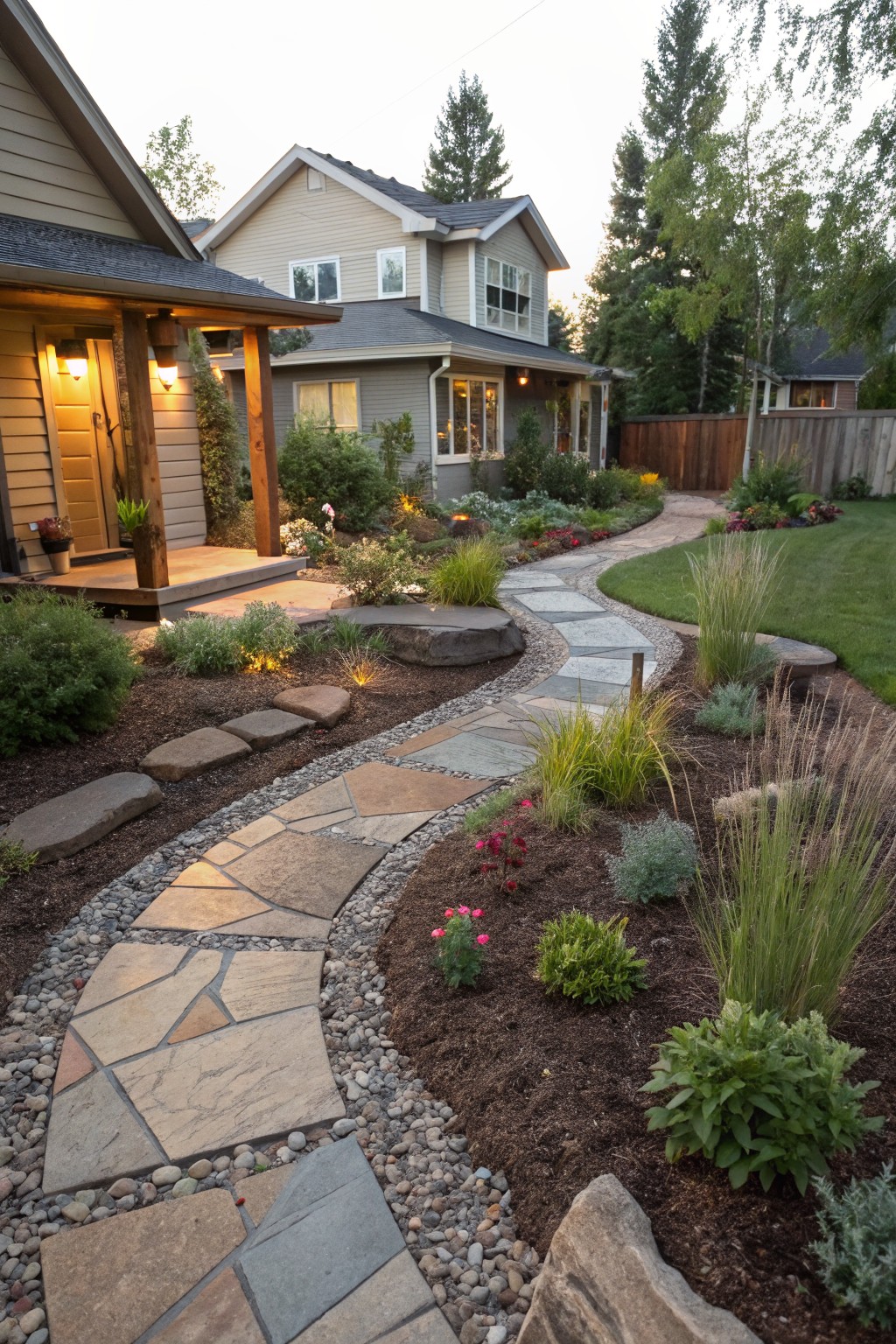
A good front path doesn’t have to be straight or fussy. This one uses rough-cut flagstones laid in a gentle curve through dark mulch beds, with gravel edges and clumps of ornamental grasses on both sides. The mix of stone sizes and textures makes the walk feel natural and layered, pulling your eye right to the house without looking overdone.
Try it where you want low-maintenance curb appeal, like along a driveway or to the porch. It suits most any house style, from craftsman to ranch. Keep plants drought-tolerant, space the stones unevenly, and watch for weeds in the gravel. Simple fix… hose it down now and then.
Terracotta Pots in Gravel Beds
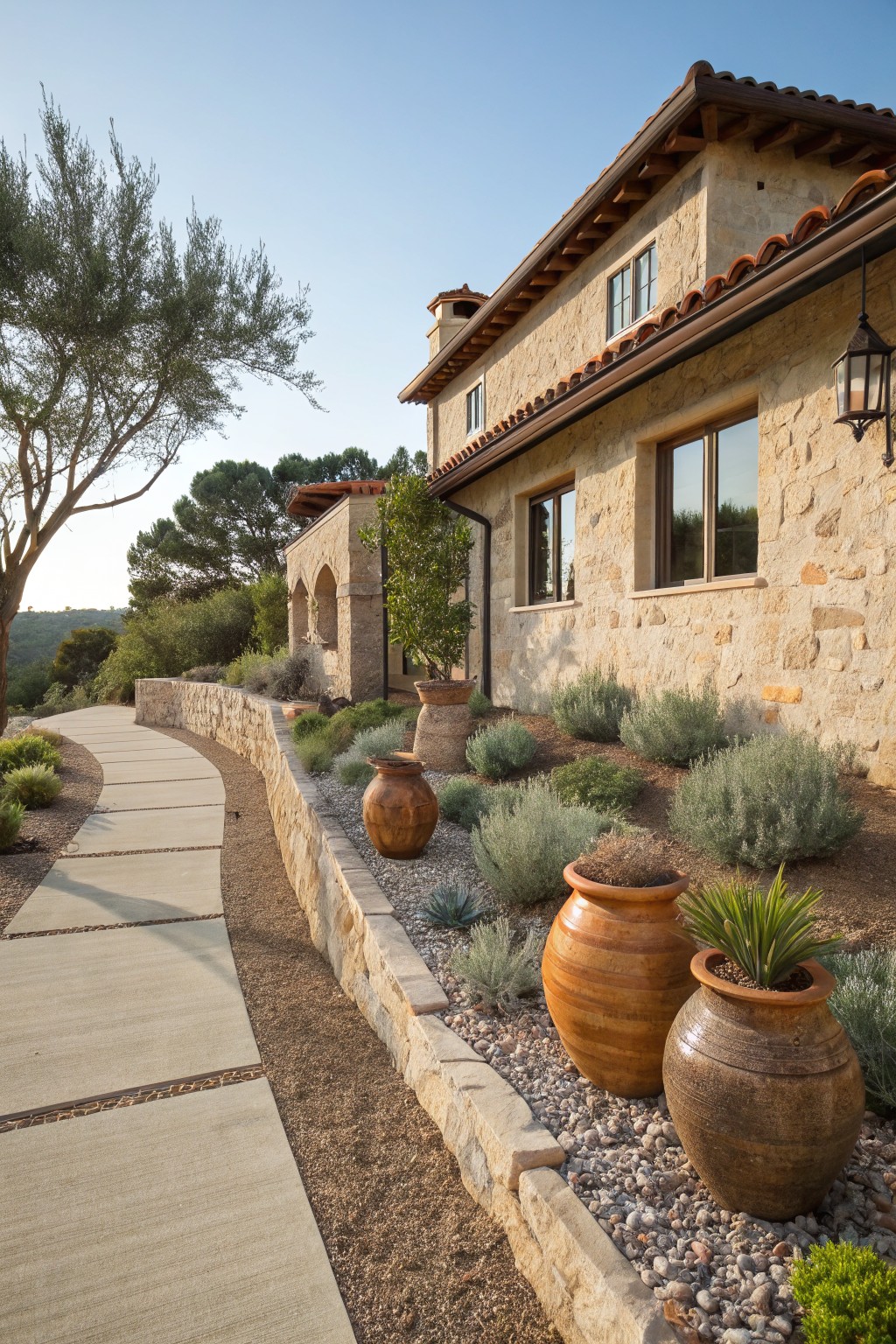
Big terracotta pots tucked into gravel beds like this give your landscape some real character fast. They bring in curves and warm color next to all that stone and gray rock, without needing fancy planting. Cluster a few different sizes along the edge, and it starts to feel settled and full.
Set this up along paths or walls where water is short. Go for aged pots that match your house stone, fill with tough plants like agave. It suits sloped yards or sunny spots best… keeps things low fuss. Skip tiny pots, they get lost.
Gravel Pathways with Stone Pavers
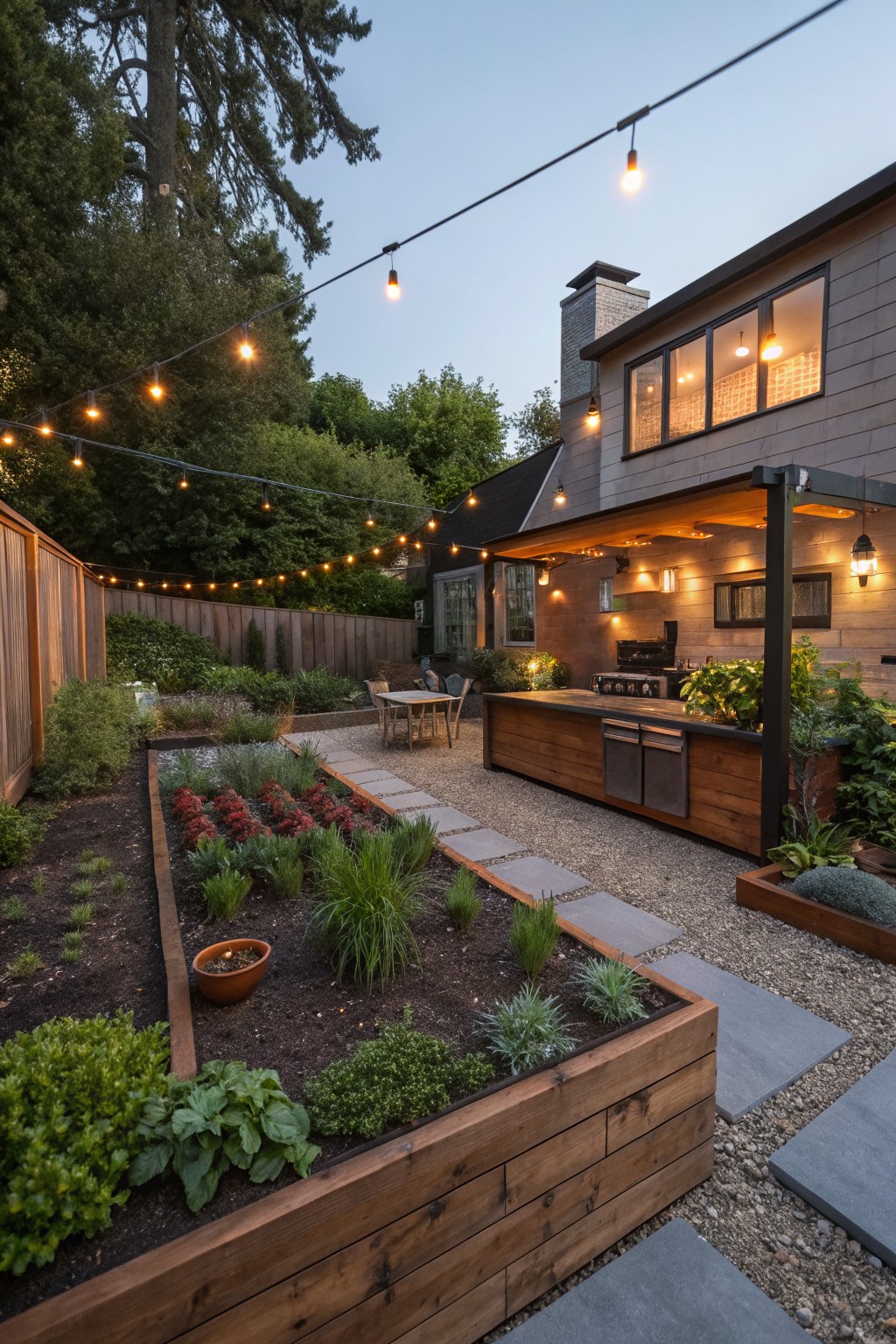
Gravel pathways like these give a backyard real texture and flow. The loose gravel fills in around big flat stone pavers that act as steps. It keeps things from feeling too hard or busy. Paired with those raised beds full of mulch and plants, it pulls the whole yard together without much upkeep.
These paths work best in yards with some slope or around patios and kitchens. Lay gravel two inches deep over landscape fabric, then set the stones level. They’re forgiving for bare feet and let water drain fast. Skip them if you have heavy foot traffic though. They suit casual homes more than formal ones.
Winding Stone Path with Mulch and Grass Borders
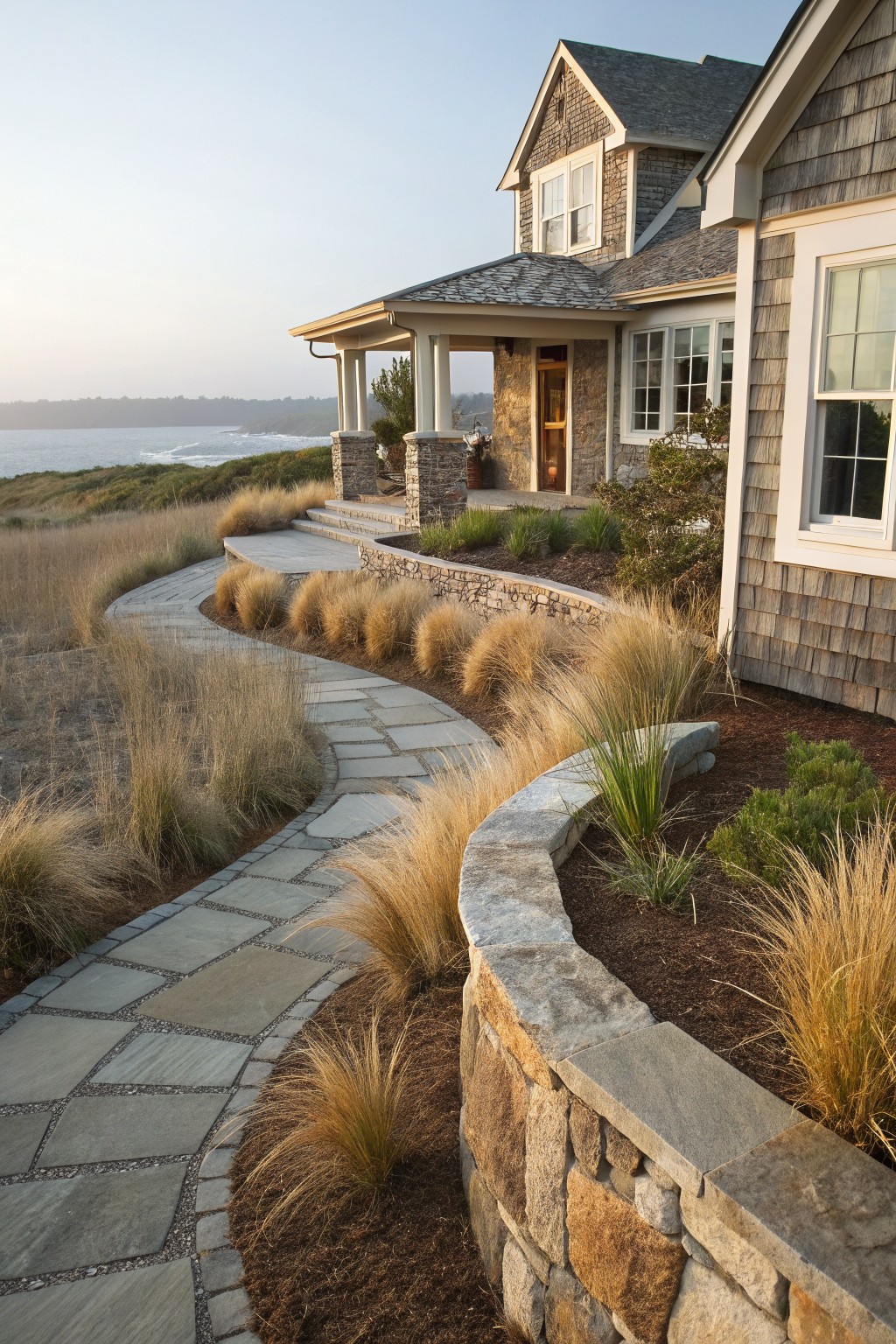
A winding stone path like this one makes the walk to your front door feel easy and natural. The irregular flagstone pavers curve gently through tall grasses planted in mulch beds, and a low rock wall keeps everything neat. It fits right into a beachy spot, blending with the dunes without trying too hard.
You can pull this off in coastal yards or any sloped lot where you want low upkeep. Lay the stones loose for drainage, fill beds with mulch and tough grasses, then add the wall for edging. Works best where the ground isn’t too flat. Just pick local plants so it stays simple year round.
Curved Gravel Paths with Wood Edging
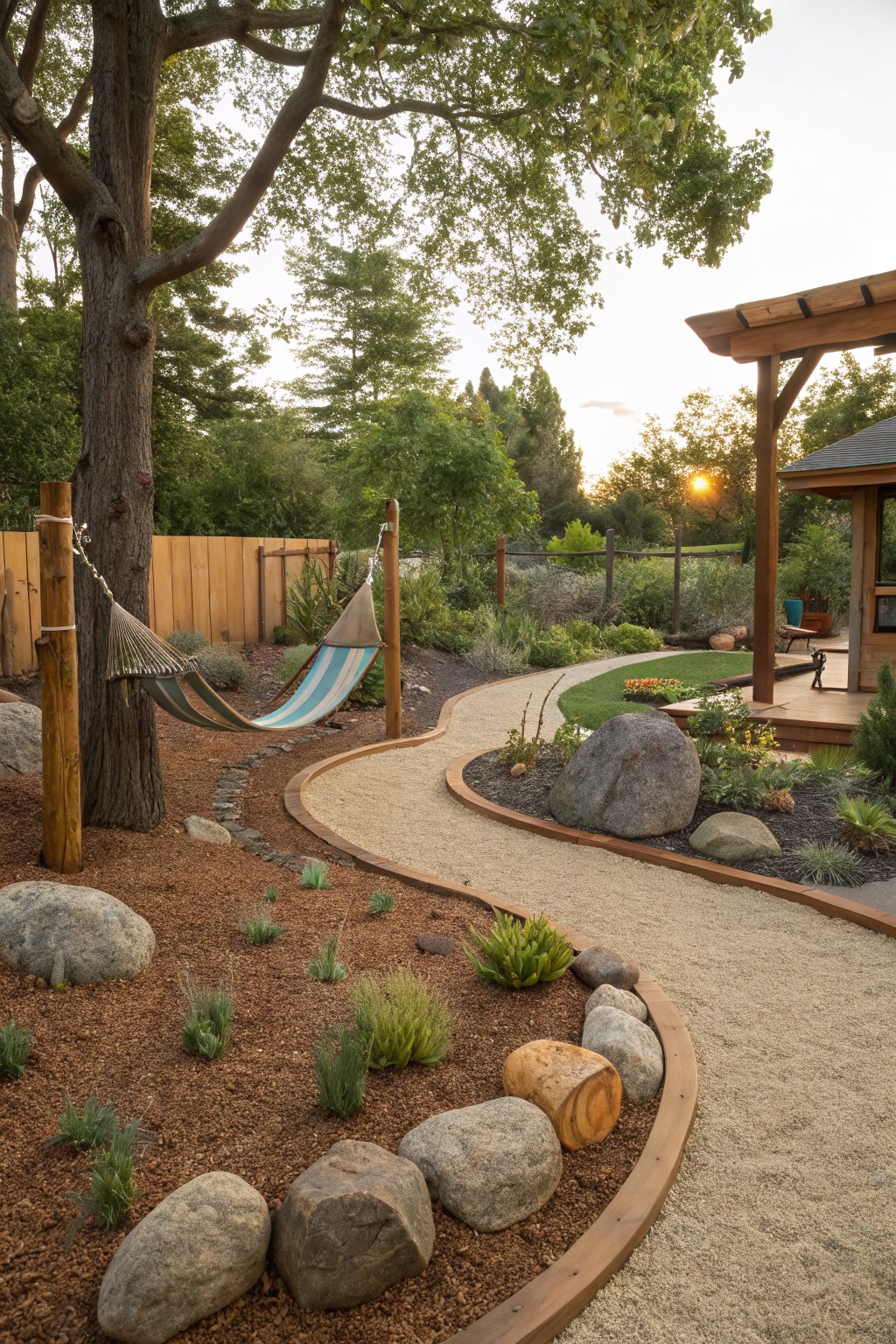
A simple gravel path that winds gently through the yard makes walking around the garden feel easy and natural. Here wood timbers form a clean edge along the curve, with big boulders tucked in for weight and interest. The mix of gravel, reddish mulch beds, and those rocks builds real texture without much upkeep. Folks like how it pulls your eye along without being too fussy.
You can drop this into most backyards, especially ones with mature trees or sloped spots. Keep the wood natural and unstained to blend with the landscape. Watch the boulders. too many can crowd things. A hammock nearby turns the path into a real destination. Works best where you want low-water plants filling in the edges.
Boulder-Lined Stepping Stone Path
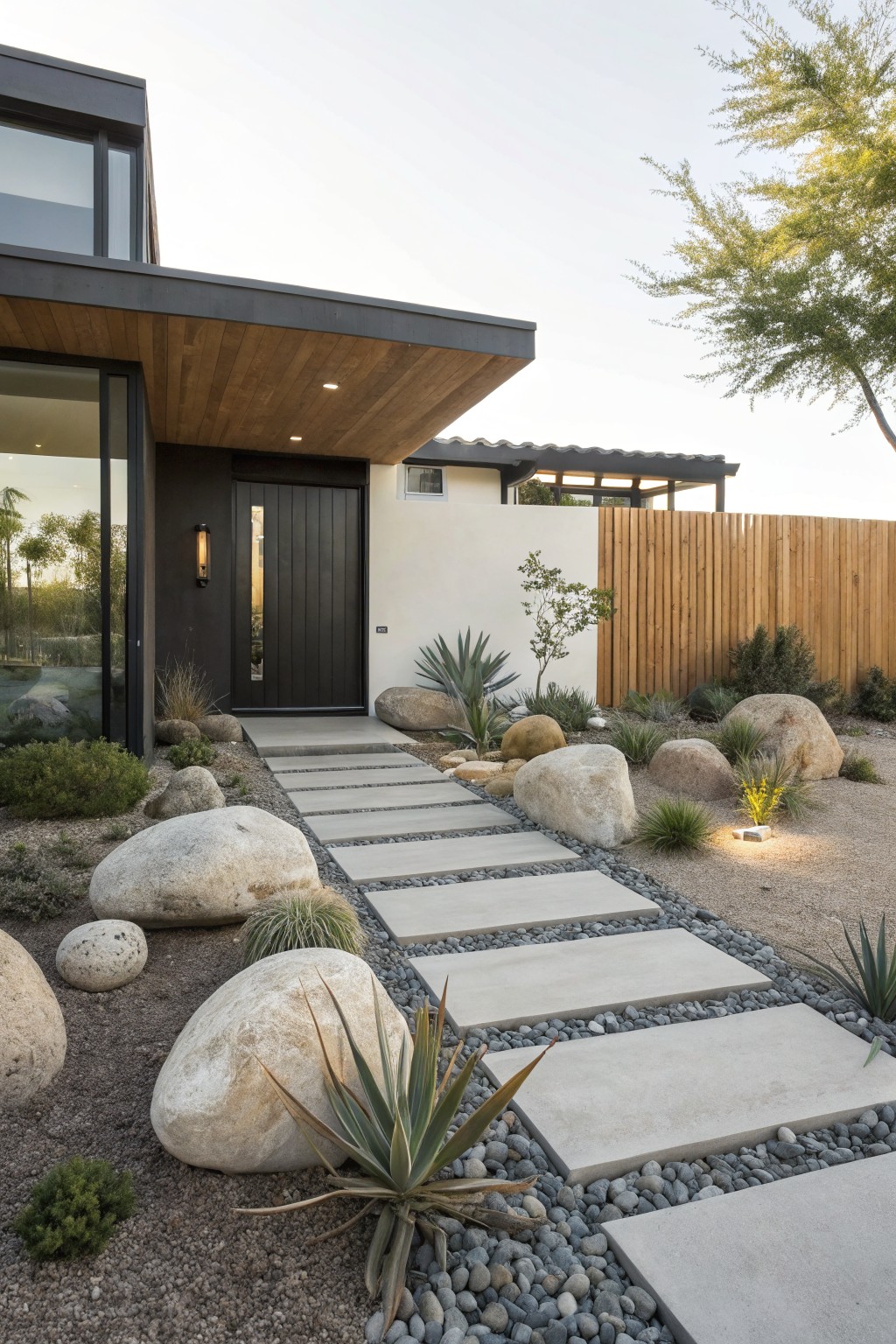
Big boulders along a gravel bed frame wide concrete slabs that lead right to the door. This path pulls in texture from the rocks and a bit of gravel crunch, while desert plants like agave add just enough green. It’s low fuss and makes the entry feel grounded in the yard.
Try it for front approaches in sunny, dry spots where you want no-mow upkeep. Go for pale stones to echo a light house, keep slabs evenly spaced at about three feet apart, and tuck in spiky plants that handle neglect. Suits modern homes best… weeds can sneak in if you skip edging now and then.
Winding Flagstone Paths in Gardens
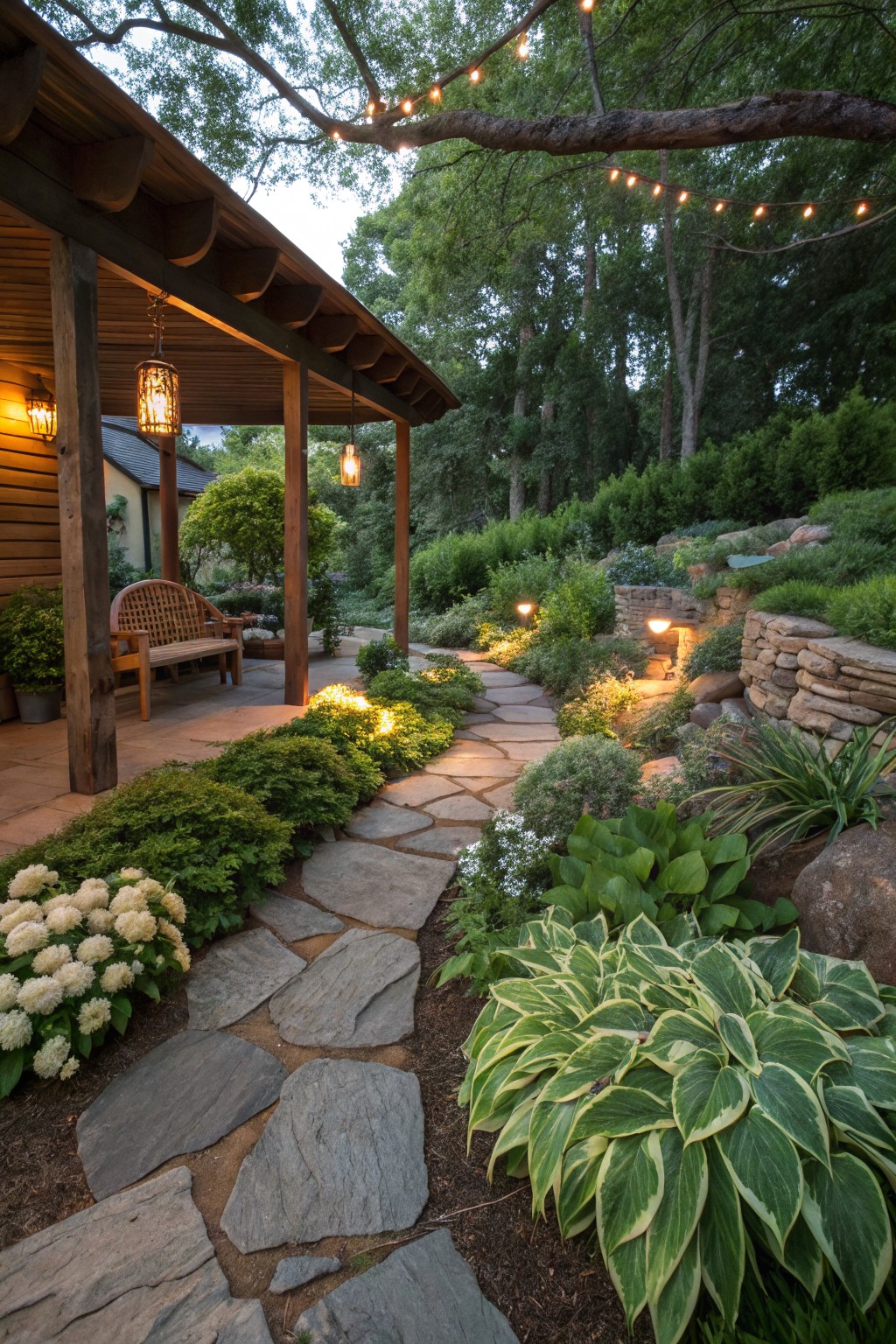
One simple way to add texture and depth to a backyard is with a winding path made from irregular flagstone slabs. These paths feel natural, like they’ve always been there, and they pull you right into the garden. The stones sit loosely in mulch or soil, edged by low plants and bigger rocks, which keeps everything from looking too stiff.
You can use this in any sloped yard or side garden where you want to connect a porch to deeper plantings. Lay the stones with gaps for creeping thyme or gravel, add low-voltage lights along the edges for evening walks, and flank with hostas or hydrangeas. It works best on smaller properties… avoids big open lawns and gives a cozy feel.
Frequently Asked Questions
Q: How do I pick rocks or mulch that match my home’s style?
A: Walk your yard and note the colors in your house siding or fence. Grab rocks with similar warm tones or cool grays to blend right in. Mulch in earthy browns or blacks grounds everything nicely.
Q: What’s the simplest way to edge beds for rocks and mulch?
A: Dig a shallow trench around the bed with a half-moon edger. Fill it with larger stones to lock everything in place. This keeps your design crisp through seasons.
Q: Do I really need landscape fabric underneath?
A: Skip it under rocks, they block weeds on their own. Use it with mulch to cut down on pulling duty later. Cut holes for plants so roots breathe easy.
Q: How do I keep mulch from fading too fast?
A: Choose high-quality, dyed mulch from a local supplier. Rake it smooth after rain to even out the color. And top it fresh each spring for that just-done vibe.
