

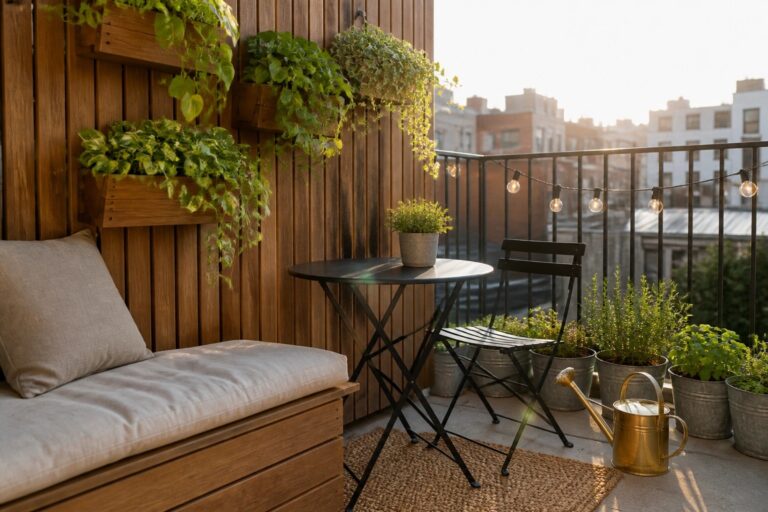
Balconies tend to feel more like extensions of the indoors when you can actually sit out there without tripping over pots.
I learned this the hard way after a few seasons of trying to squeeze in floor planters that just got in the way.
Vertical setups free up the walking area.
Hanging options let me add layers of green that move with the breeze and soften the railings over time.
Over time I started noticing which placements made the whole spot feel like a place to linger rather than just pass through.
Mount Wooden Planters On Your Balcony Wall
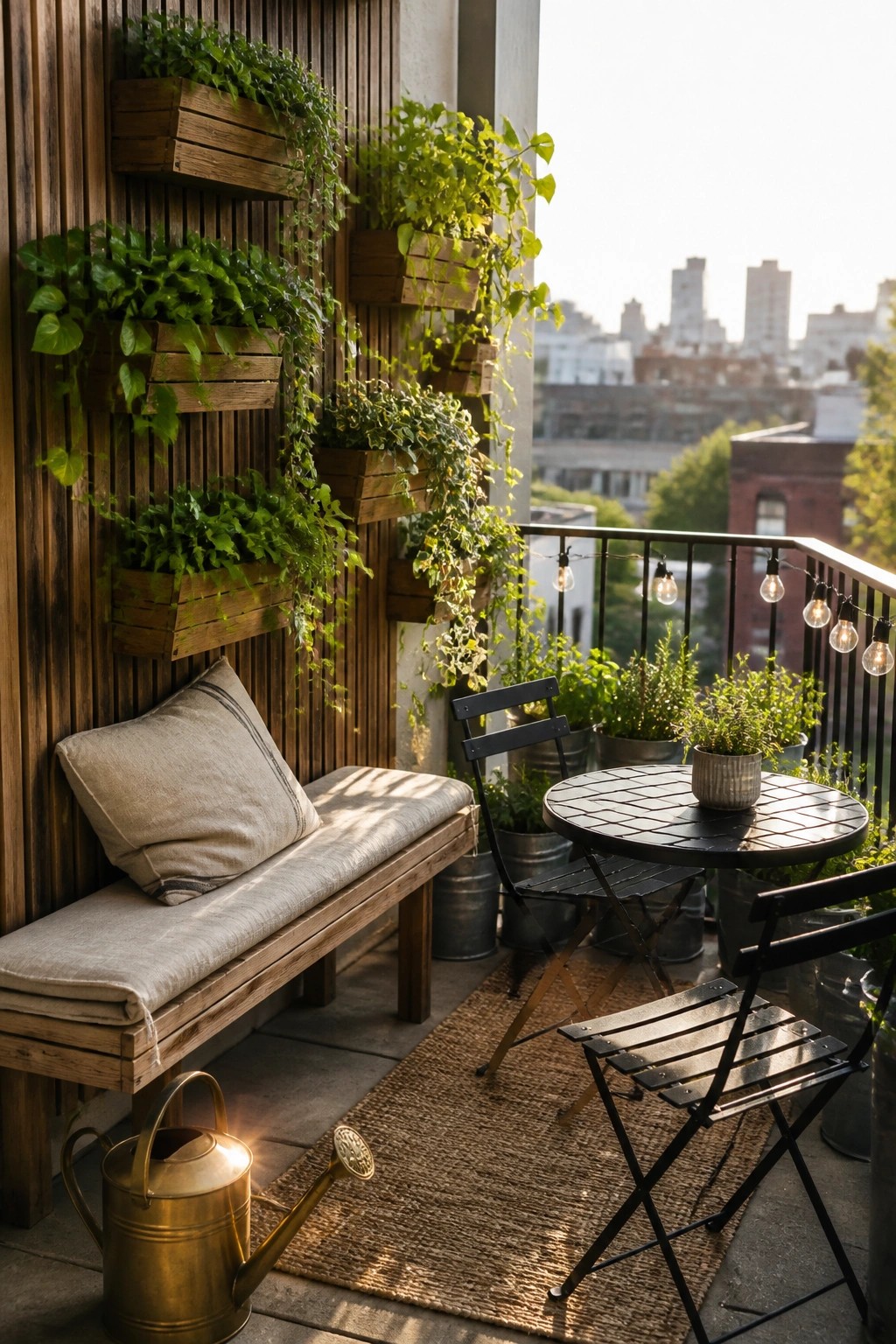
Many balconies feel cramped once you add a table and chairs, which makes it hard to fit many plants. Mounting simple wooden boxes on a vertical wood wall solves that by moving the greenery upward so the floor stays open for seating.
This setup works best on city balconies that get decent sun and already have a solid wall to attach to. Use boxes deep enough for soil and water, and check the mounting hardware each season since weather can loosen things over time.
Vertical Wall Planters For Balcony Gardens
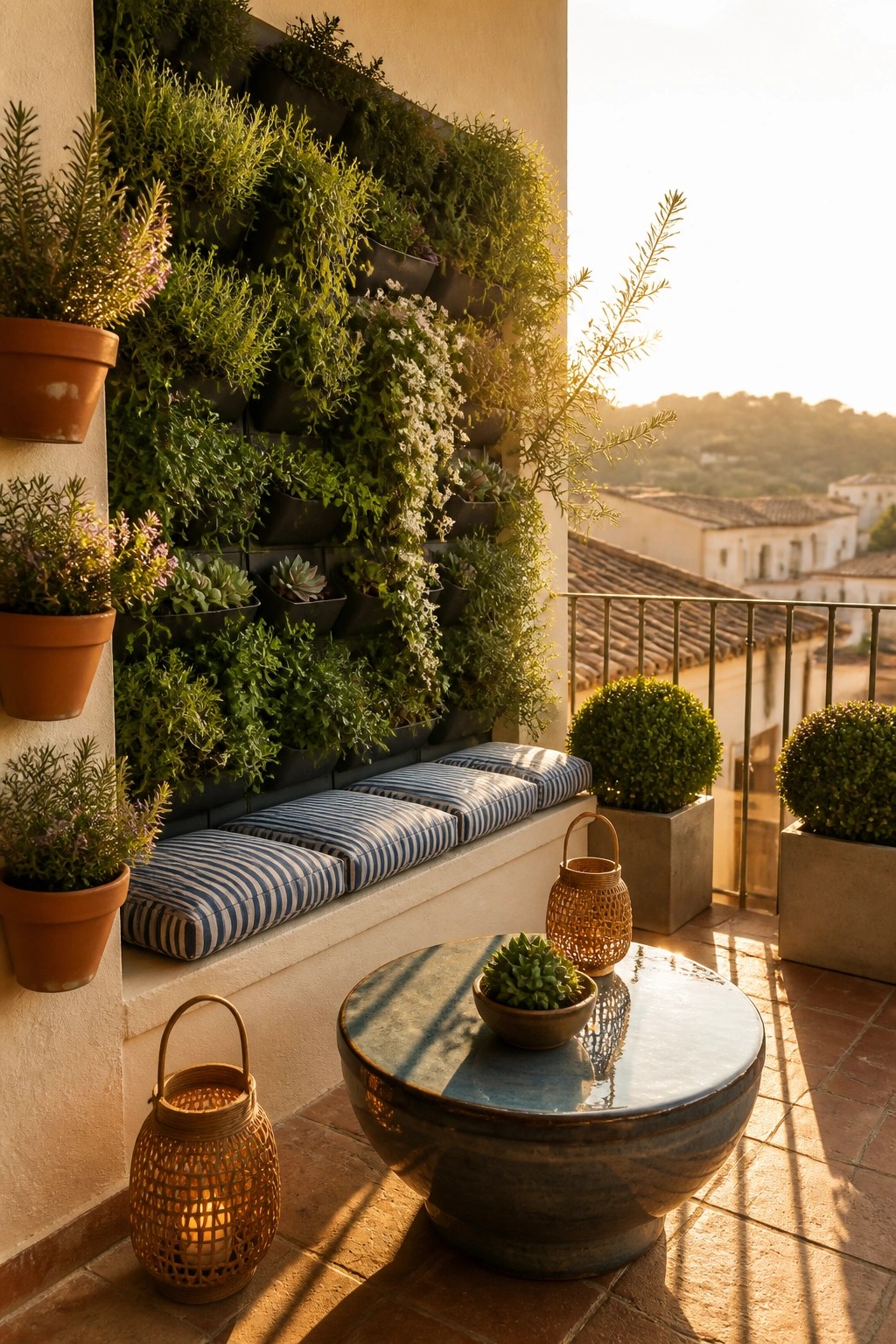
A wall of planters turns an otherwise bare balcony wall into usable growing space. It keeps the floor clear while still giving you a full garden feel right outside.
This works best on small balconies where room is tight. Mount the planters in rows, fill them with a mix of trailing and upright plants, and add a simple bench underneath for seating.
Hang Greenery From a Wall Lattice
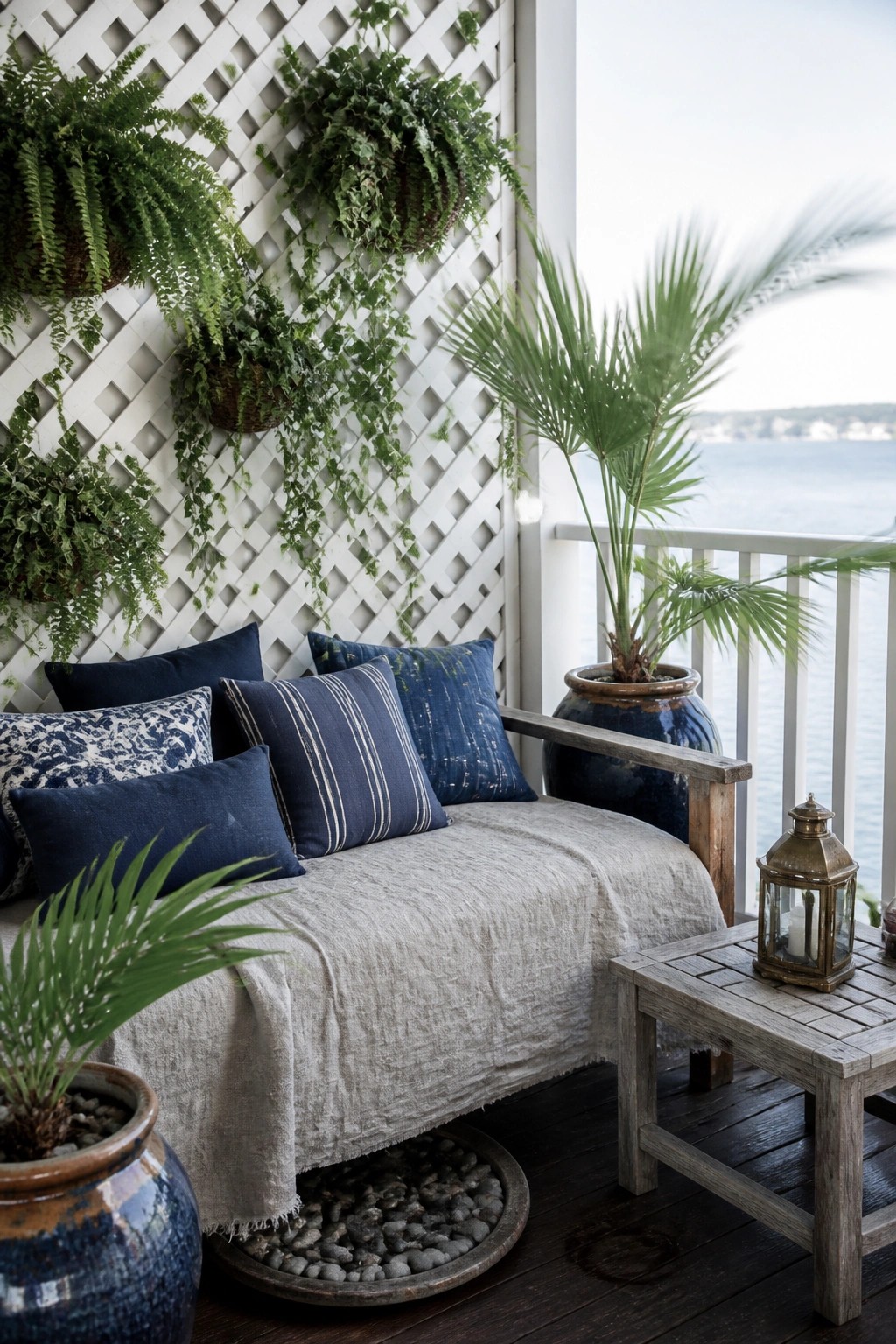
A simple lattice panel mounted on the balcony wall gives you an easy way to add lots of plants without taking up floor space. The open grid lets you hang baskets at different heights, and vines can trail down naturally over time. This setup works especially well when you want the area to feel enclosed and green without building anything permanent.
It suits small balconies or porches where wall space is the only spare room you have. Choose sturdy hooks and lighter pots so the lattice stays secure, and mix trailing ferns with a few fuller plants to keep the look balanced.
Mount A Grid For Vertical Planters
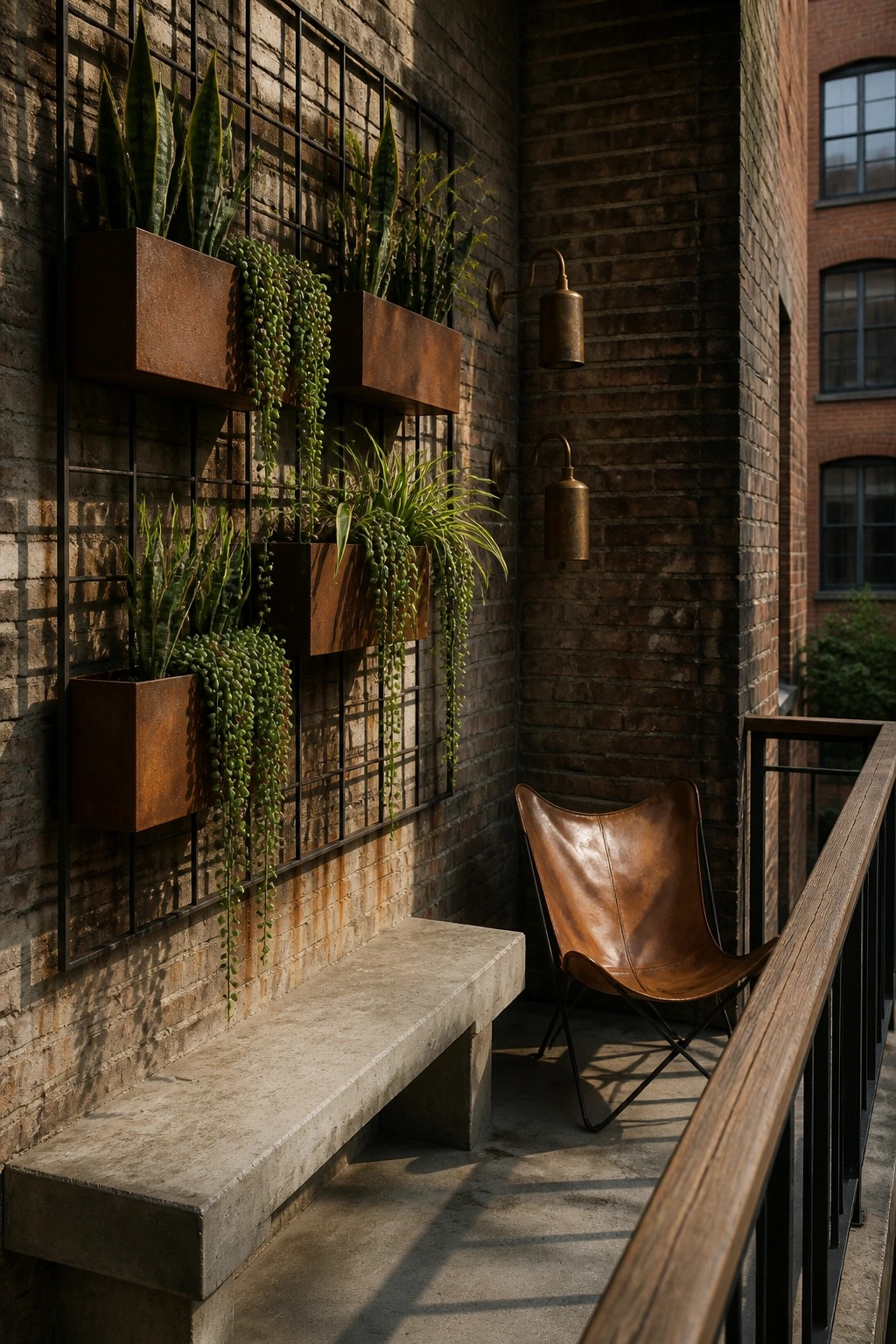
A grid mounted on the wall lets you hang multiple planters at different heights without taking up floor space. It works especially well on balconies where every inch counts and you still want a full wall of greenery.
This setup suits brick or concrete walls that can handle the weight. Just make sure the grid is secure and the planters are not too heavy once filled with soil and plants.
Turn a Balcony Wall into Vertical Garden Space
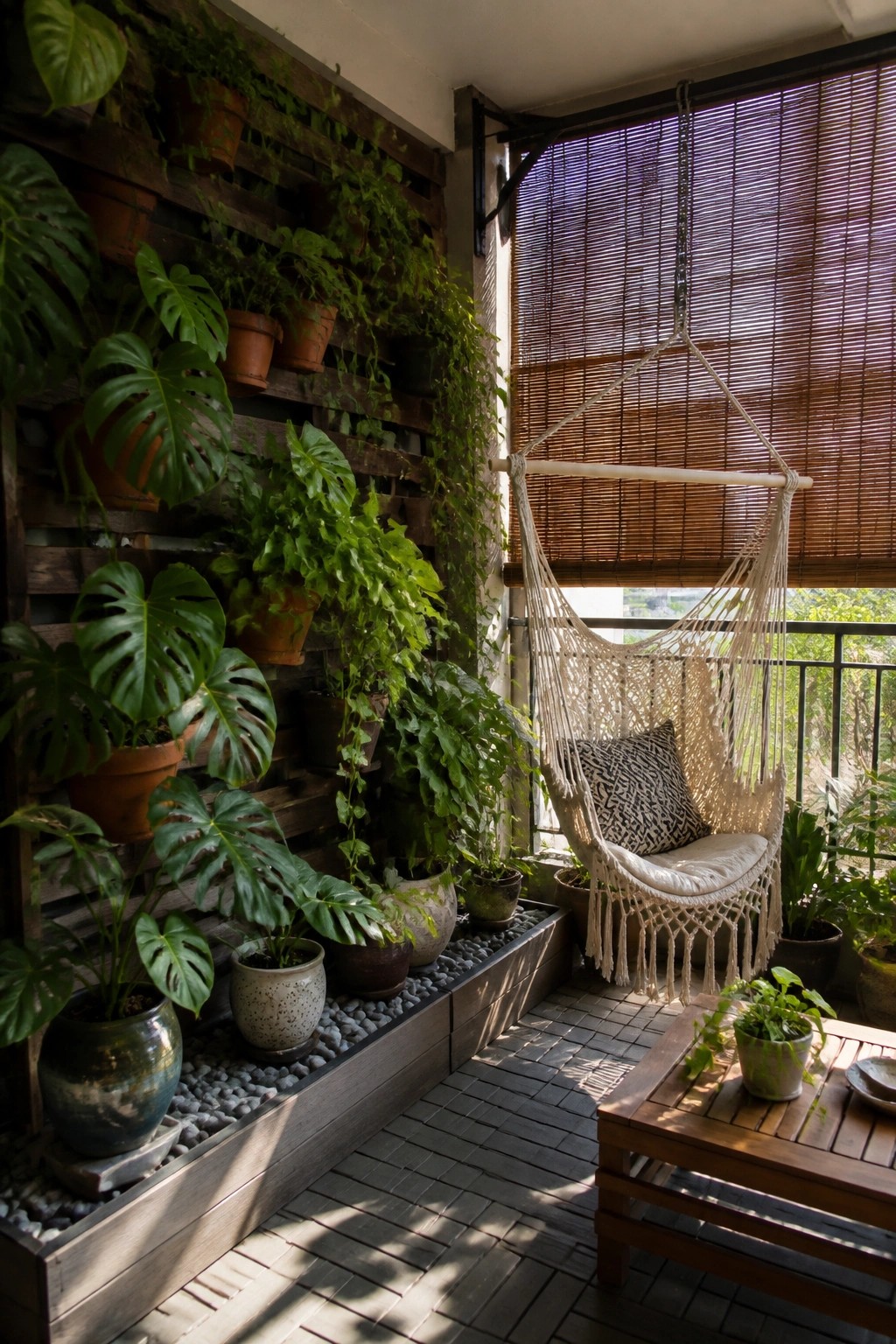
A vertical setup on the wall makes it easy to grow more plants when floor space is tight. Wooden boards or simple shelves let you arrange pots at different heights so everything gets light and stays easy to reach.
This approach suits apartments with solid railings and a bit of sun. Secure the boards well and choose lightweight pots to avoid straining the structure over time.
Mount Wall Planters Along the Balcony
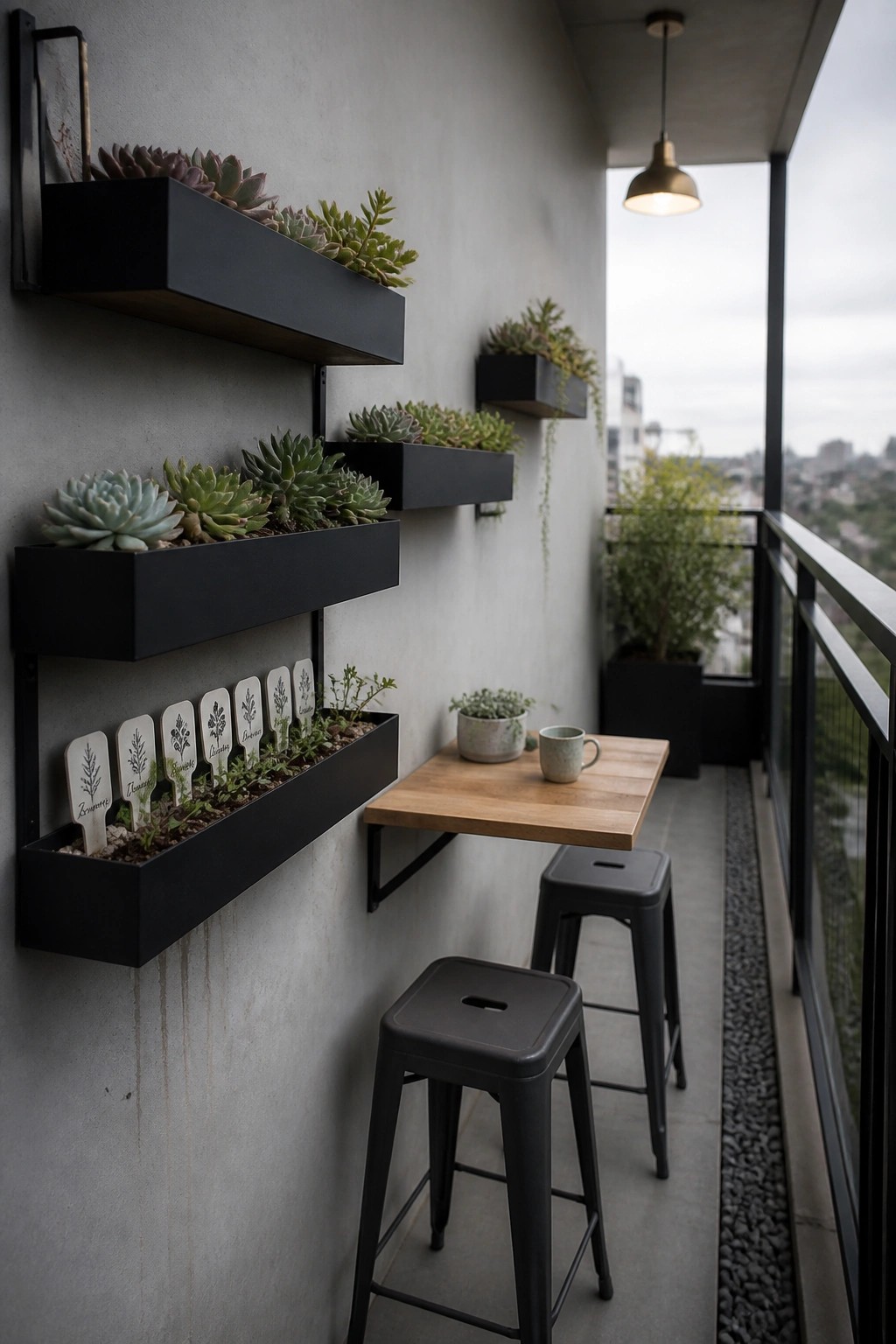
Wall planters let you grow a lot of plants without losing floor space on a small balcony. By mounting them in rows or staggered heights, you keep the area open for a table and stools while still filling the wall with greenery.
This setup works best on narrow urban balconies where every inch counts. Choose lightweight boxes that attach securely, and leave enough room between rows so the plants get light and stay simple to water.
Wall Planters Free Up Floor Space On Balconies
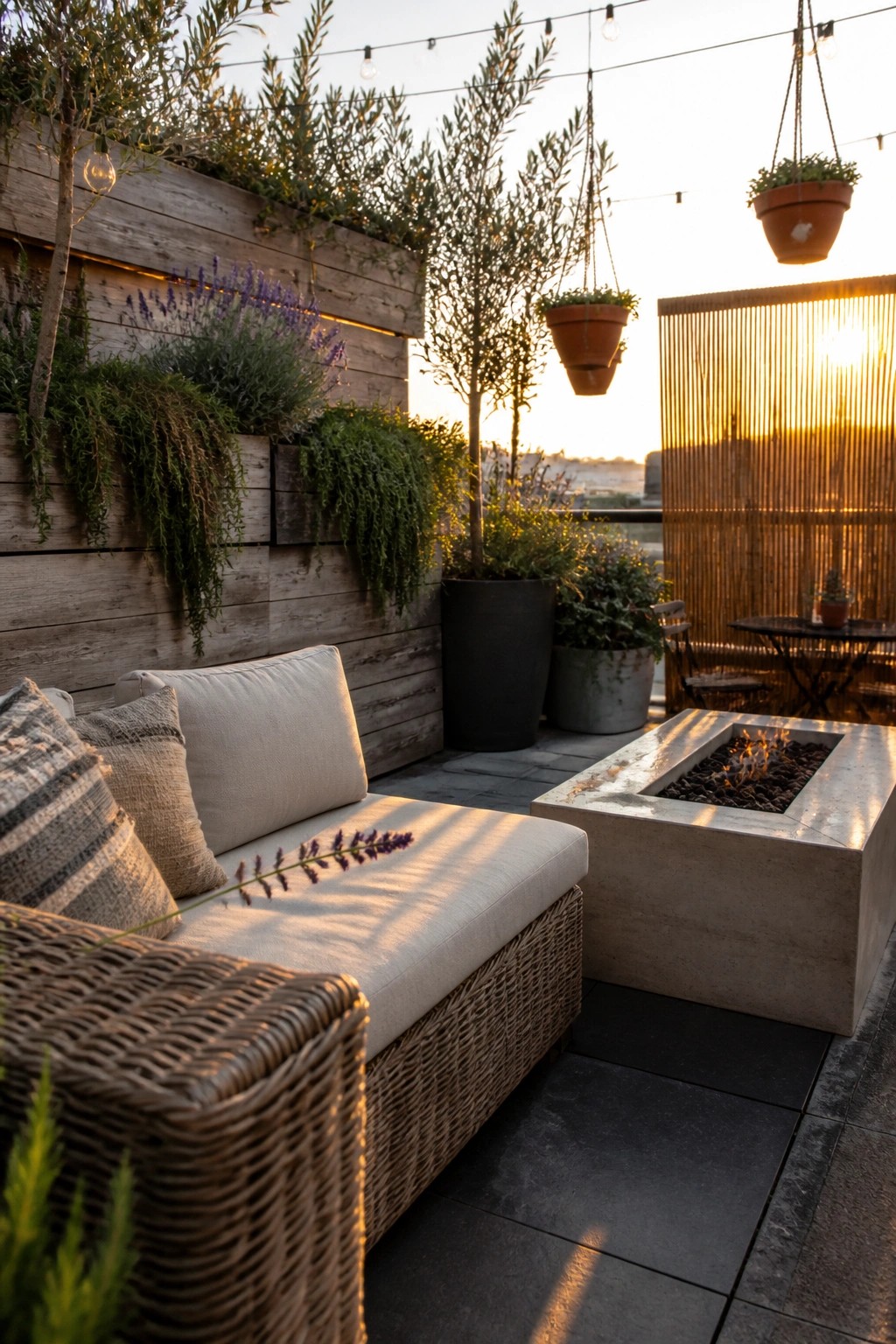
Wall planters let you add plenty of greenery to a balcony without losing room for seating or walking around. They keep the floor clear while still creating a full, layered look that feels more like a garden than a small outdoor spot.
Mount a few boxes at different heights along one wall and add hanging pots from above. This works best on apartments or homes where the balcony is narrow and you want to keep the main area open for furniture and movement.
Mount A Vertical Planter Wall To Free Up Floor Space
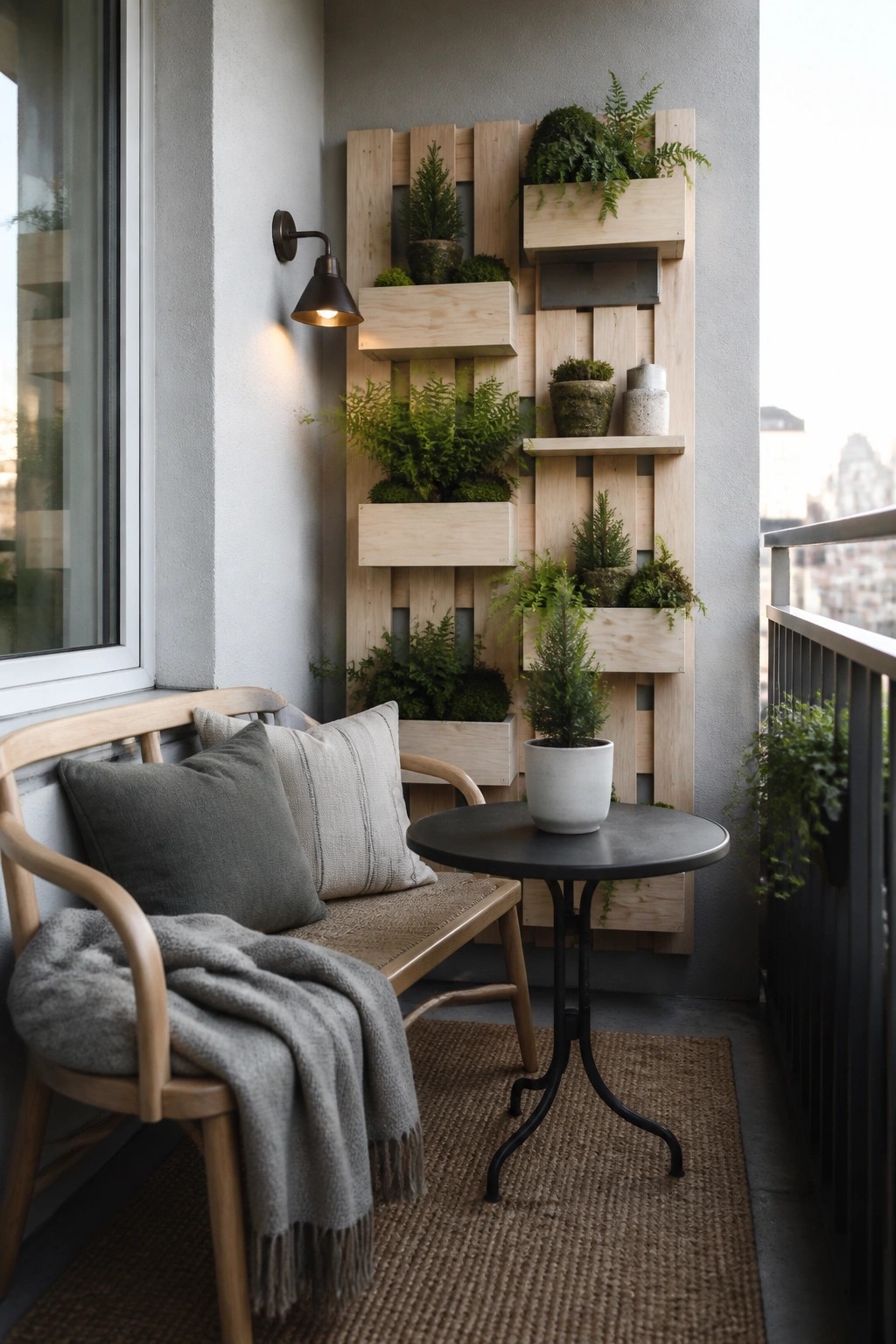
A vertical planter wall works well on balconies because it moves the greenery up and off the floor. This leaves room for seating and a small table without the space feeling crowded or hard to move around in.
You can put one together with basic wood framing and boxes attached at different heights. It suits apartments or any balcony that gets decent light, though it helps to check the wall strength before loading it with soil and plants.
Mount Rows Of Wall Planters On A Balcony Wall
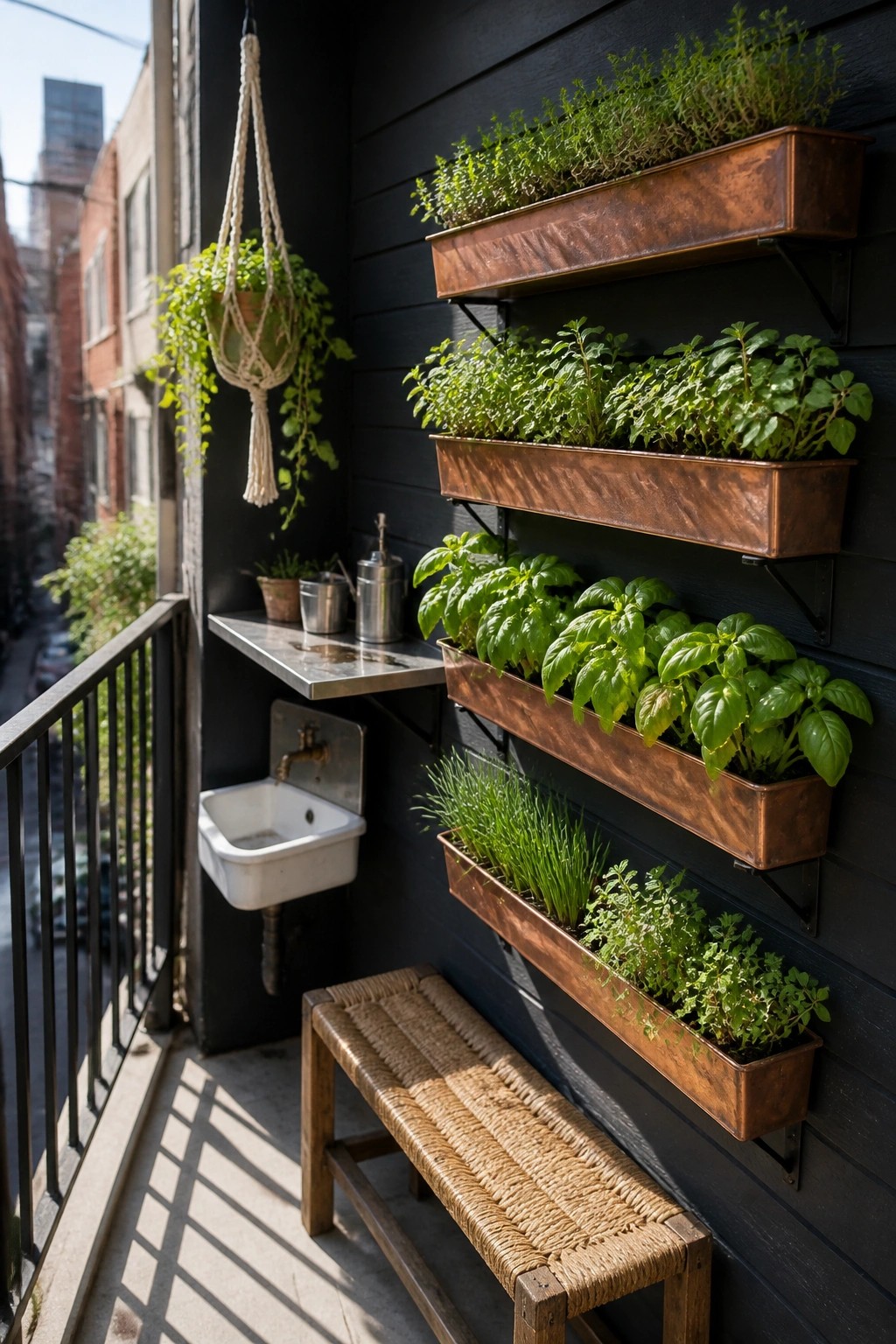
Wall planters let you grow a lot in a small space without crowding the floor. Stacking them in even rows keeps everything within reach and turns an empty wall into useful growing room. The setup works especially well when the planters match in size and material so the whole thing feels neat instead of scattered.
This approach suits narrow balconies or apartments where floor space is limited. Metal boxes hold up better than plastic in most climates, and spacing the rows a little apart gives plants room to fill out. Just check that the wall can handle the weight once the boxes are full of soil and water.
Hang Baskets At Different Heights
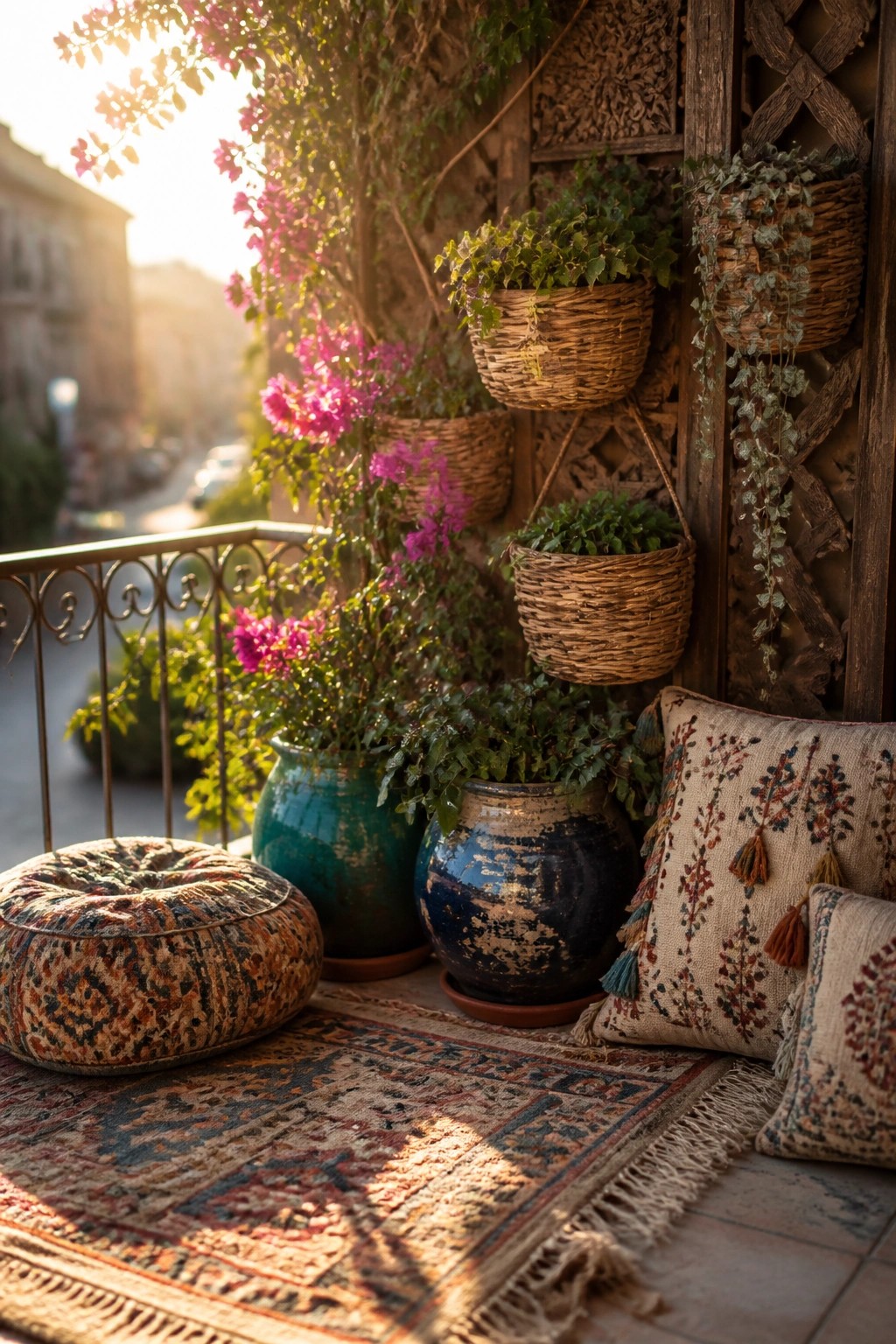
Hanging baskets solve the main problem on small balconies by moving plants off the floor. Placing them at staggered heights keeps the space open while still giving you a full wall of greenery.
This approach works best on balconies with a solid wall or railing you can attach to. Use lightweight baskets and check the weight limits so nothing strains the structure over time.
Install Vertical Planters Along One Wall
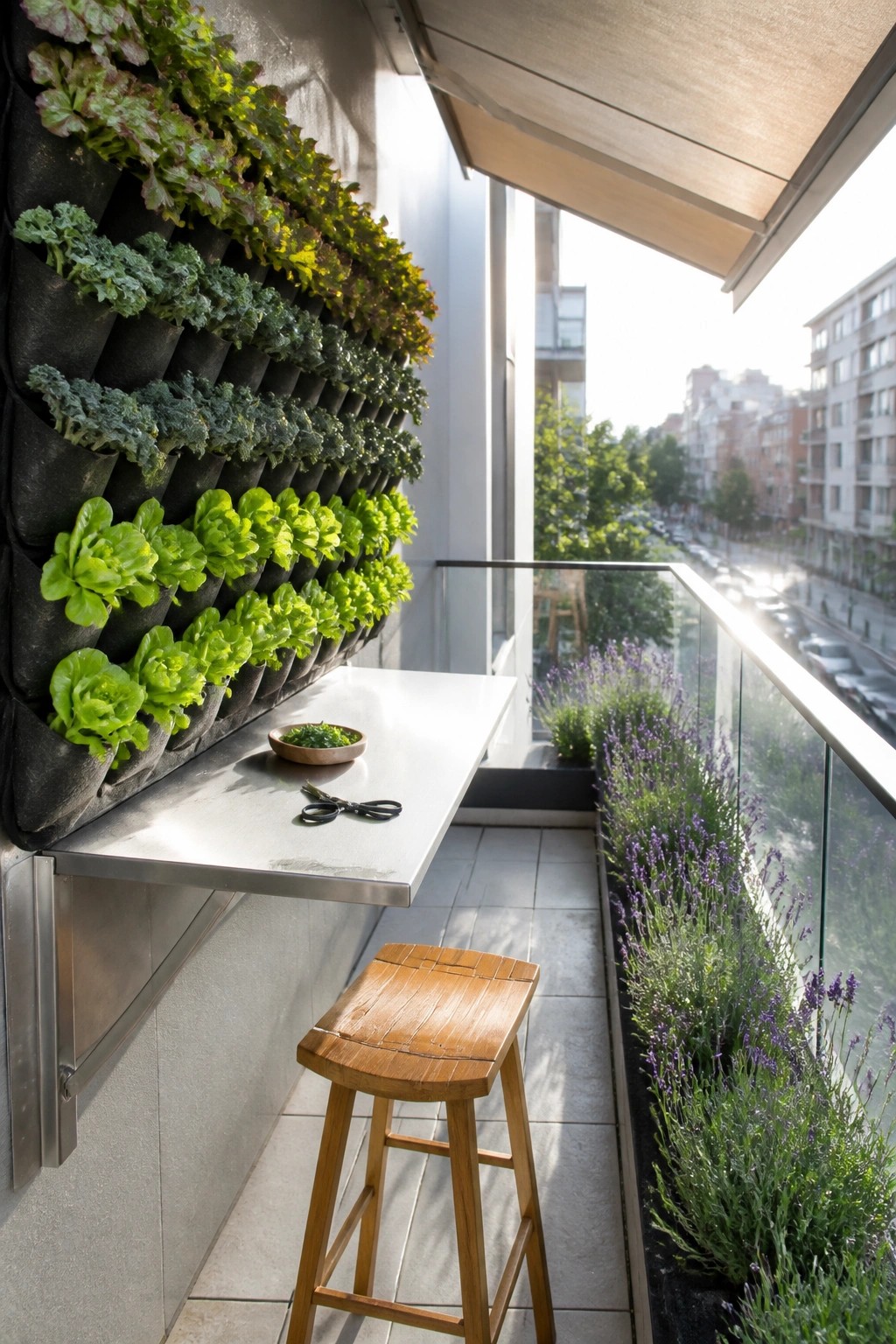
A simple way to add a lot of plants to a balcony is to cover one wall with vertical planters. This keeps the floor clear for a small table or stool while turning the wall into the main growing area. Many people like it because the plants stay at eye level and do not crowd the walking space.
This approach works best on narrow balconies or in apartments where floor room is tight. Choose a sturdy mounting system and plan for watering so the runoff does not drip onto the area below.
Mount Wall Planters for a Vertical Balcony Garden
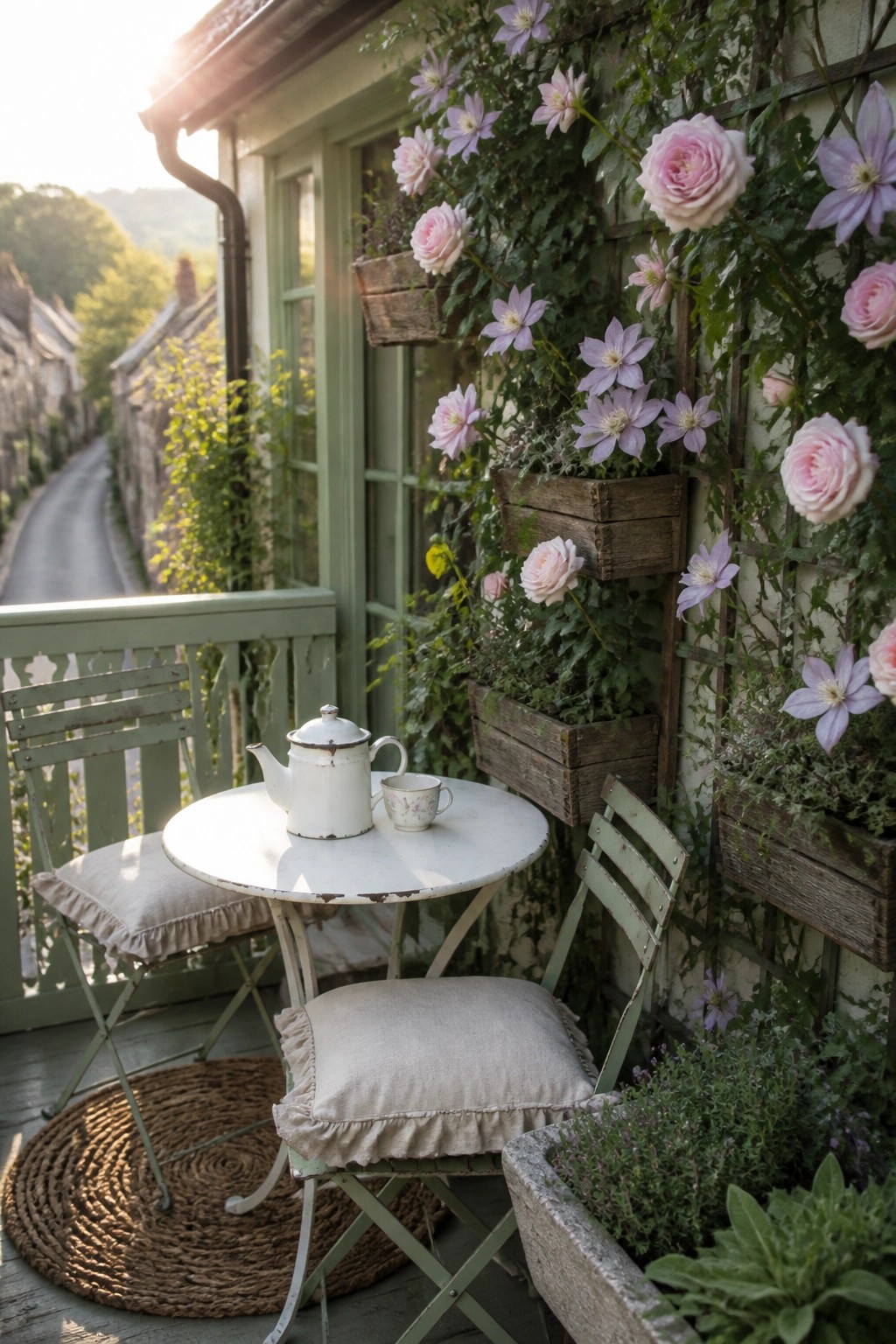
Mounting wooden boxes directly on the wall gives a balcony plenty of growing room without crowding the floor. It turns an otherwise plain surface into a place for roses and vines to climb, and it leaves the seating area open and easy to use.
This approach suits small balconies on older homes or cottages where the wall can take a few brackets. Choose sturdy boxes with drainage holes, space them evenly, and water them regularly so the plants fill in without dripping onto the floor below.
Use Wall Planters To Build A Green Backdrop On The Balcony
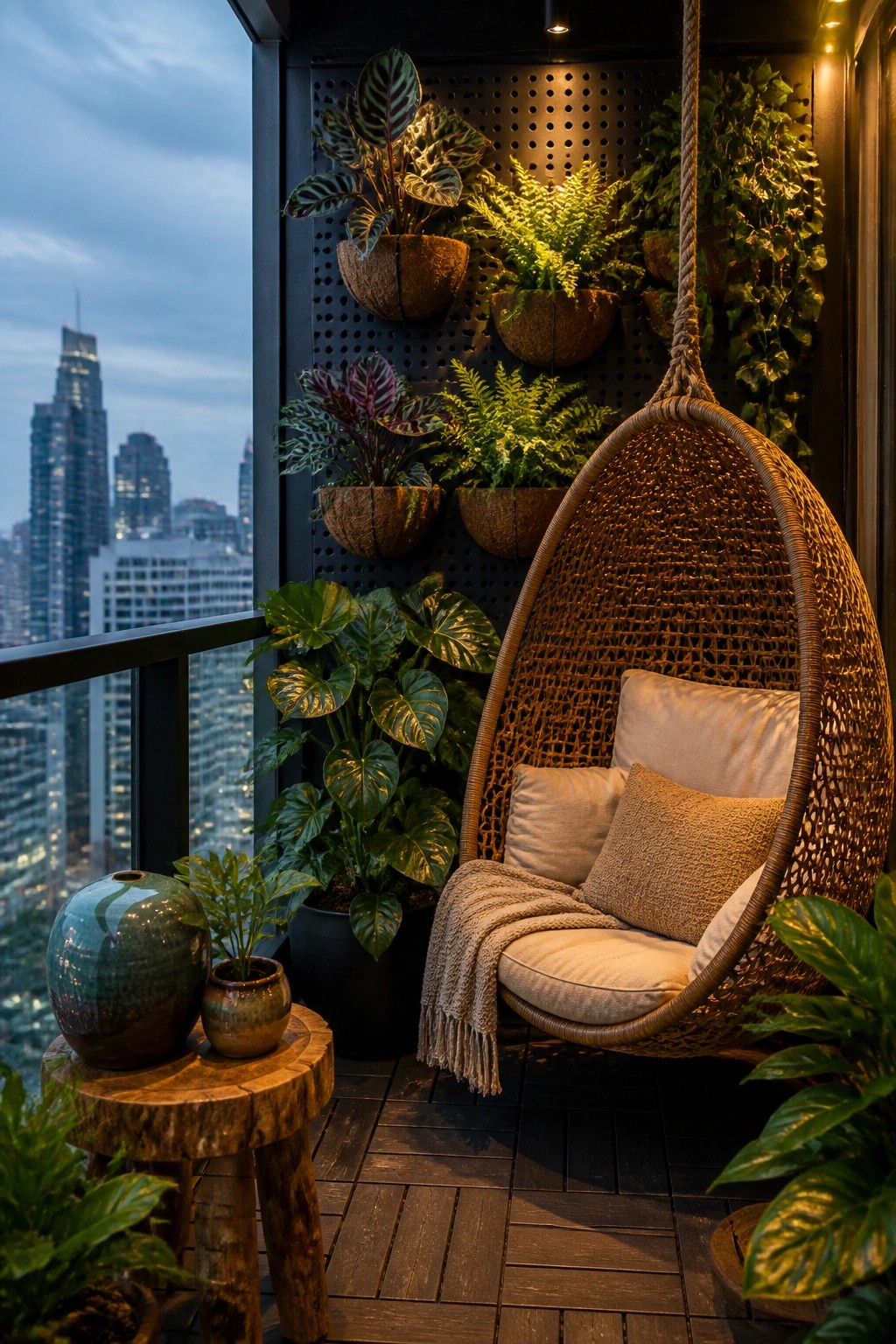
Mounting planters on a solid wall panel turns an empty vertical surface into the main garden area. This keeps the floor clear for seating while still giving you a full wall of greenery that feels established right away.
It suits apartment balconies that face other buildings or need a bit more privacy. Secure the panel first, then add a mix of pots at different heights so the plants fill in without crowding each other.
Mount a Living Wall Behind Terrace Seating
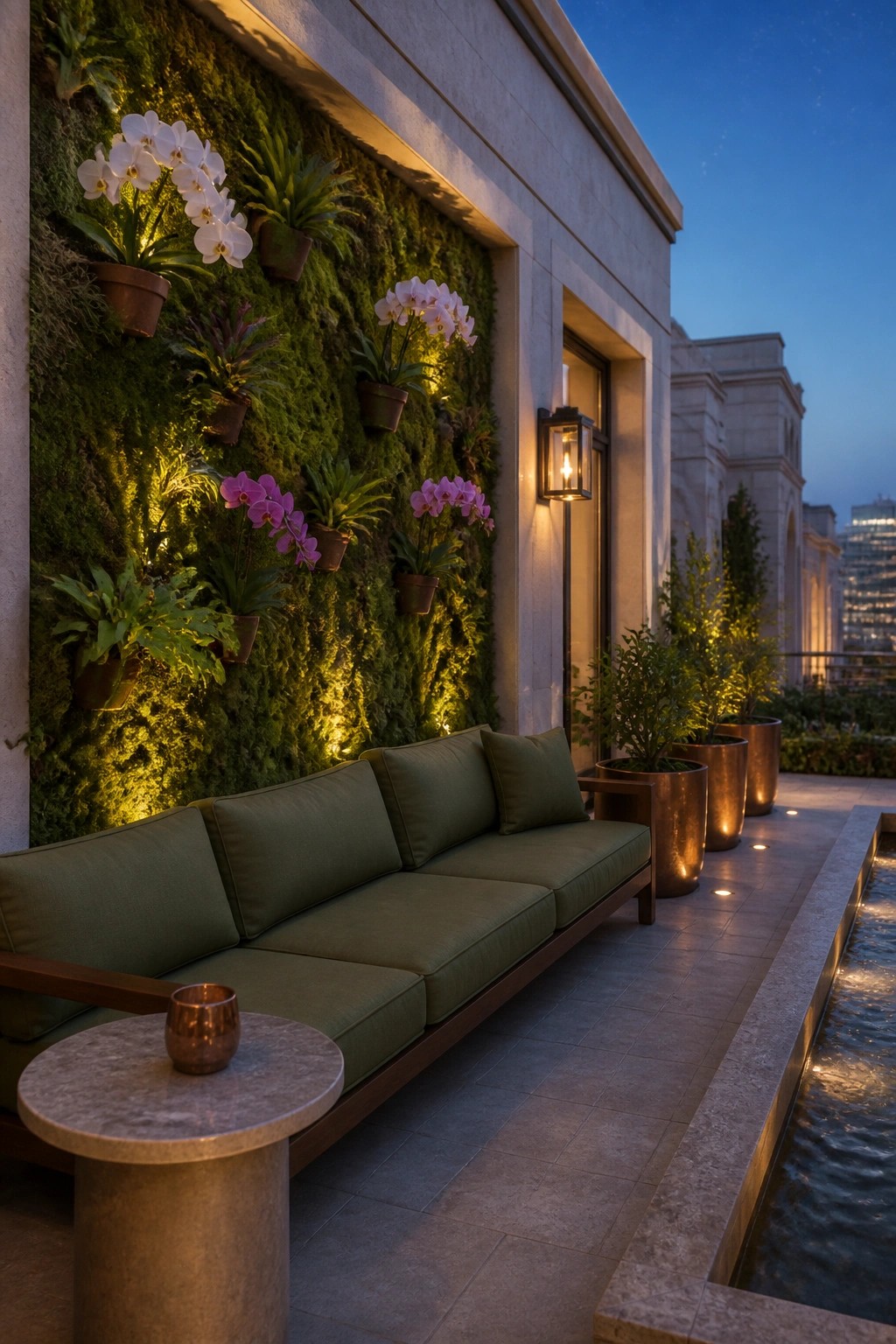
A moss-covered living wall with mounted planters turns a blank vertical surface into the main source of greenery on a balcony or terrace. It adds depth without crowding the floor, and the seating can sit right against it so the plants form a natural backdrop.
This approach suits rooftops or upper-level outdoor spaces where horizontal room is tight. Keep the plant choices varied but not too tall, and make sure the wall gets enough light or choose shade-tolerant varieties so the greenery stays full.
Modular Wall Planters for Balconies
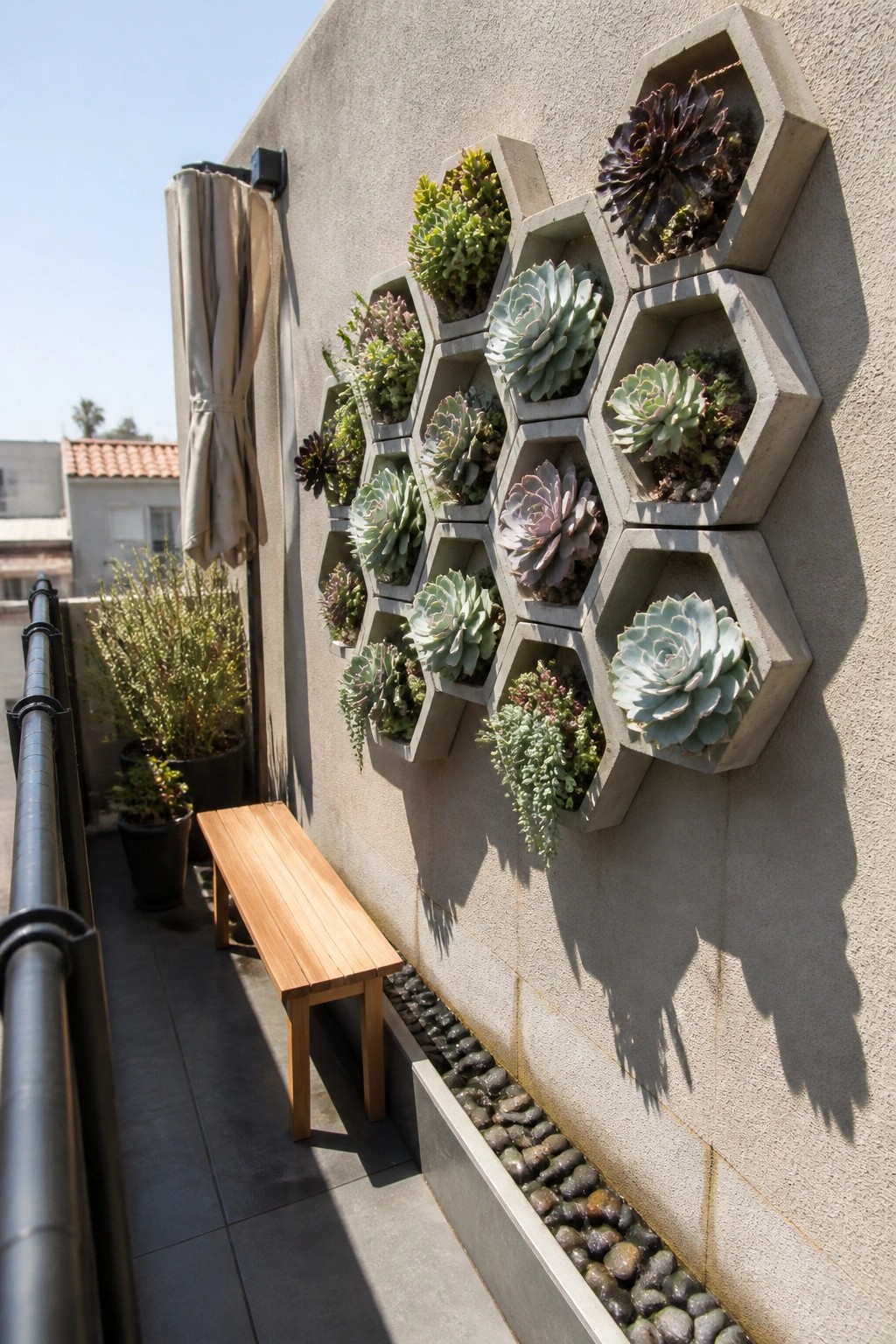
Many balconies have limited floor space, so mounting planters directly on the wall makes sense. These hexagonal concrete units lock together in a simple pattern and turn an empty wall into a full vertical garden.
They suit urban balconies especially well because succulents handle the exposure and need little care. Start with a small section and expand as you like, keeping the look neat without crowding the seating area.
Wall Planters Keep Balcony Floors Clear
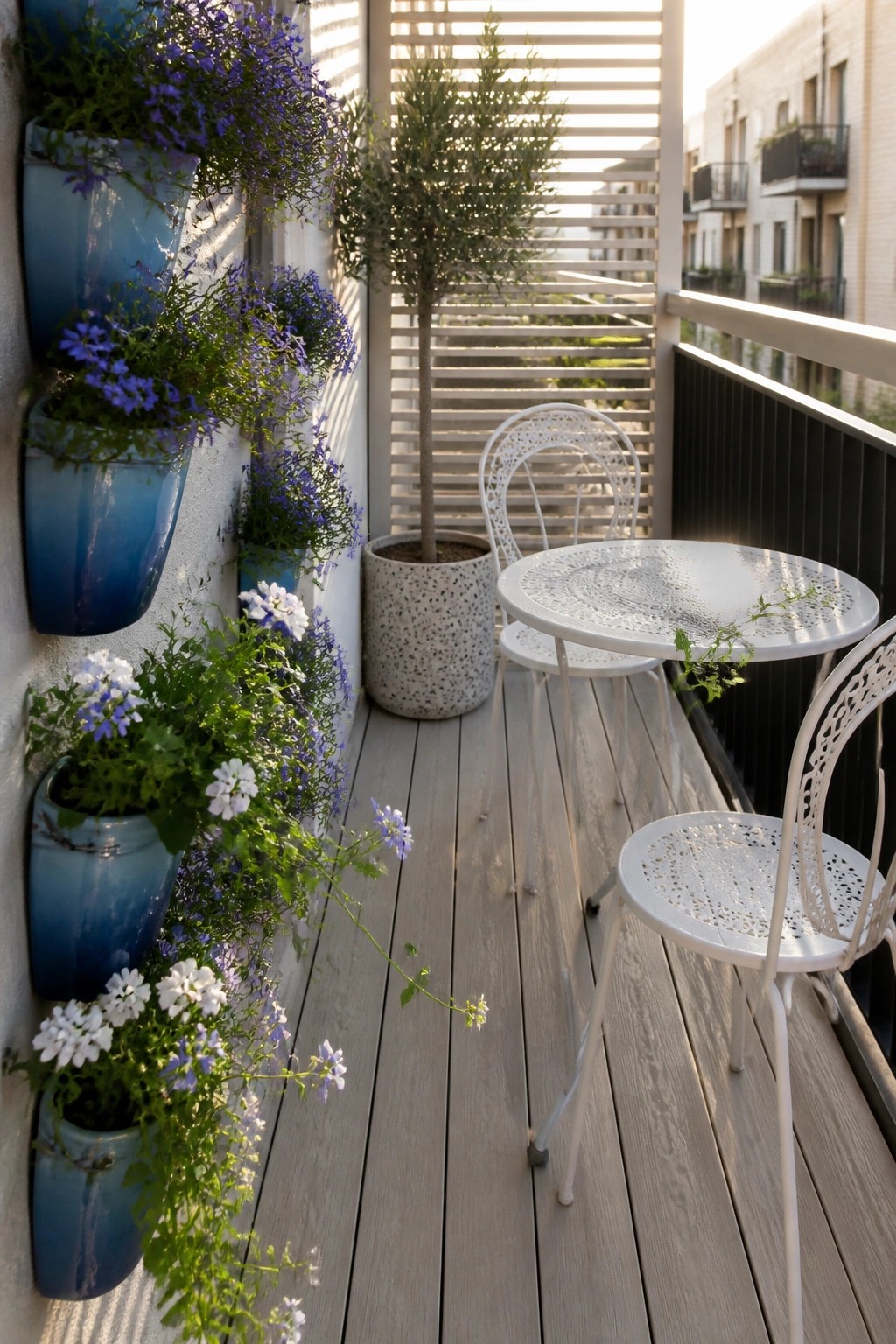
Many balconies feel cramped once you add seating. Wall mounted planters solve that by moving the plants up and off the deck boards so you still have room to sit and move around.
This works best on narrow urban balconies or rental spaces where drilling into the wall is allowed. Use sturdy brackets and pots with good drainage so the setup stays secure through wind and rain.
Add a Vertical Planter to Free Up Floor Space
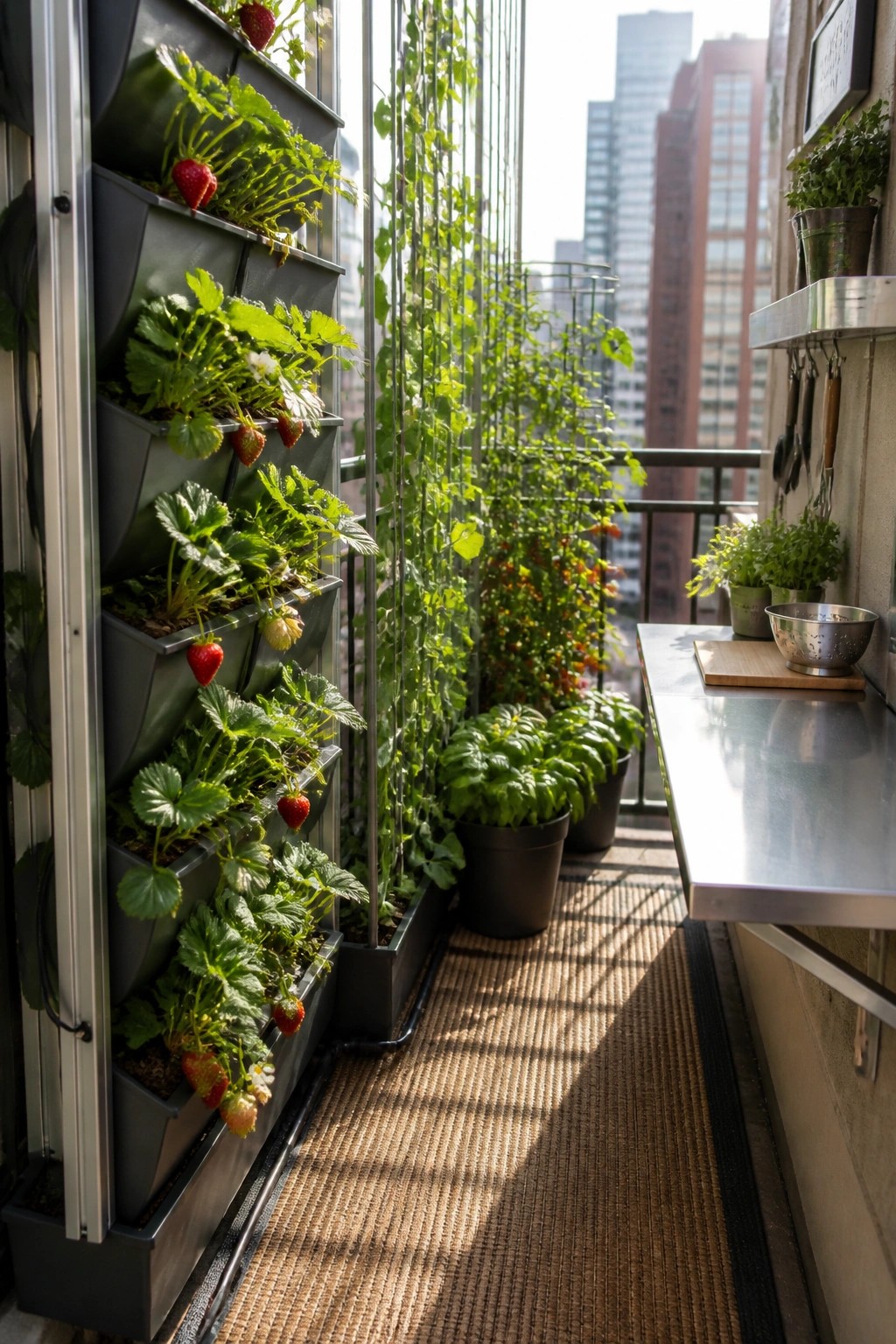
A tall wall-mounted planter lets you grow plenty of plants without crowding the walking area on a small balcony. The system holds multiple rows at once, so you can fit strawberries, herbs, and trailing vines in one narrow strip along the wall.
This setup works best on urban balconies that have limited floor space but plenty of wall height. Keep the planter in a sunny spot and choose lightweight soil so the unit stays secure.
Hang Planters from Above to Free Up Floor Space
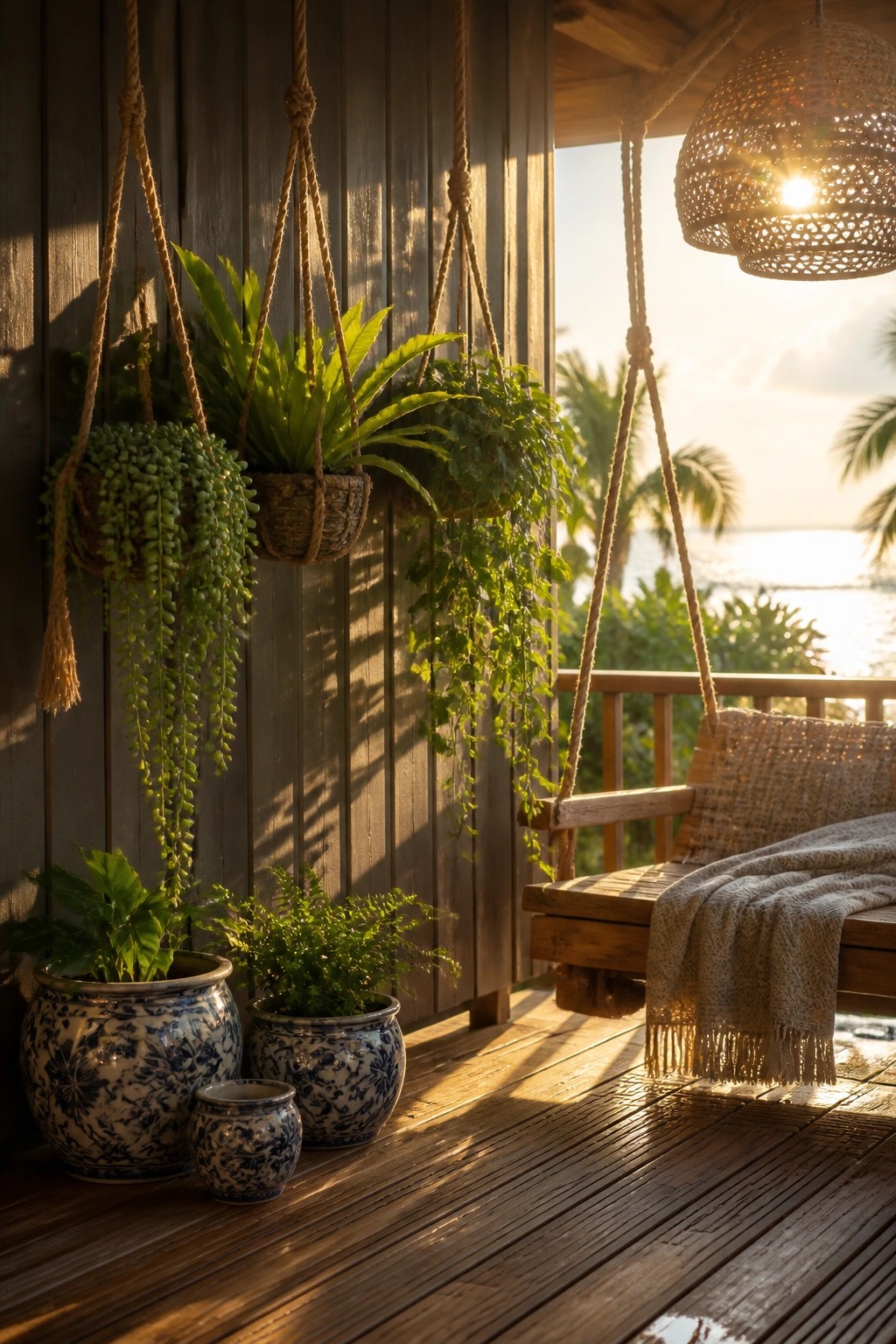
Hanging planters let you bring in plenty of greenery on a small balcony without crowding the walking area. The plants dangle at different heights so the wall feels full and the floor stays open for a chair or swing.
This setup works well on any balcony that gets decent light and has a solid overhead beam or rafter. Just make sure the hangers are sturdy and check the weight once the pots are watered.
Mount Wall Planters at Staggered Heights
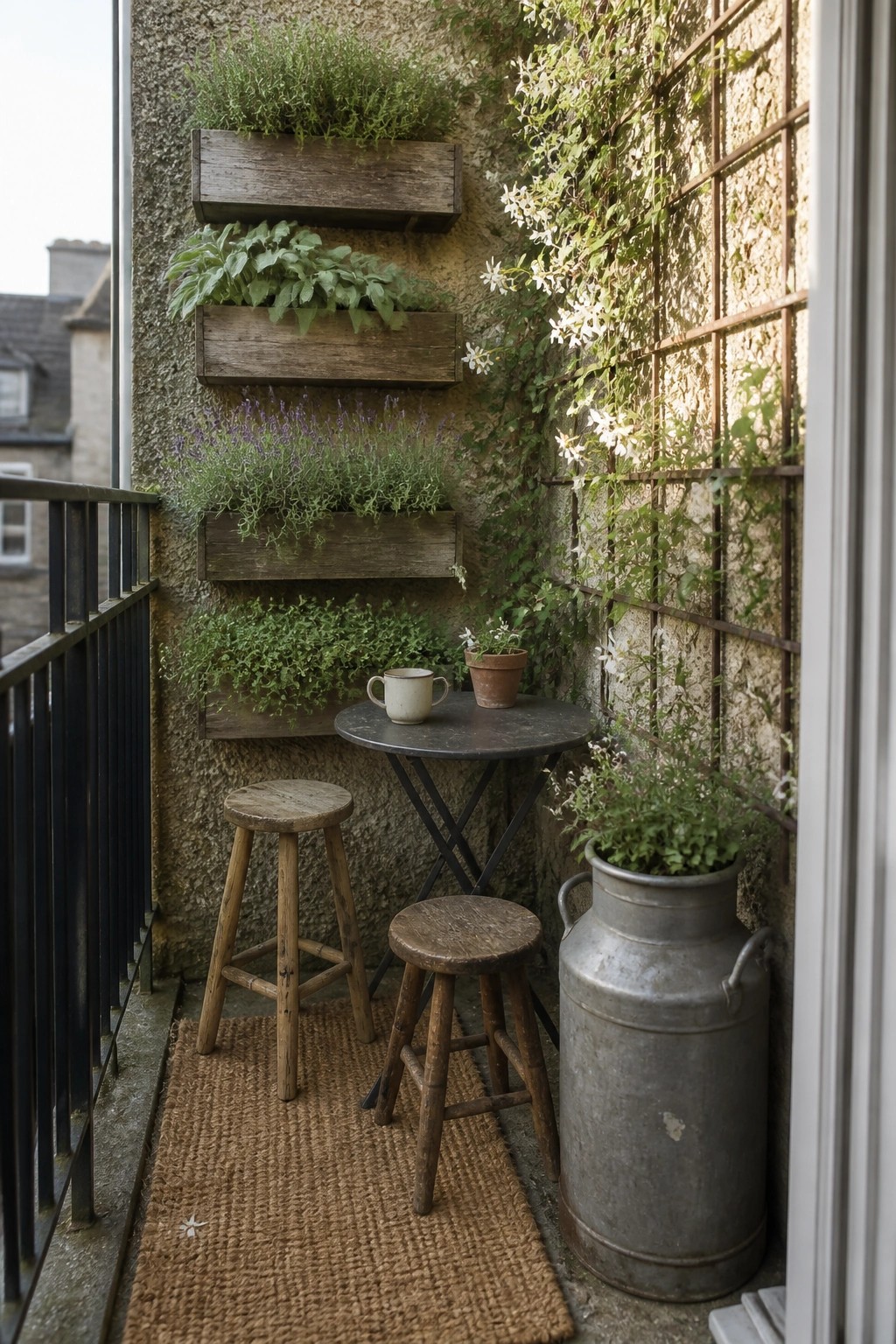
Wall planters work especially well when they are not all lined up in a single row. Setting them at different heights lets you fit more plants into a small balcony while keeping the wall from looking flat or crowded.
This approach suits narrow outdoor spaces where floor room is limited. It also makes watering and harvesting easier since each planter sits at a comfortable level. Just check that your wall can handle the weight once the planters are filled.
Wall Shelves Give You Room For More Plants
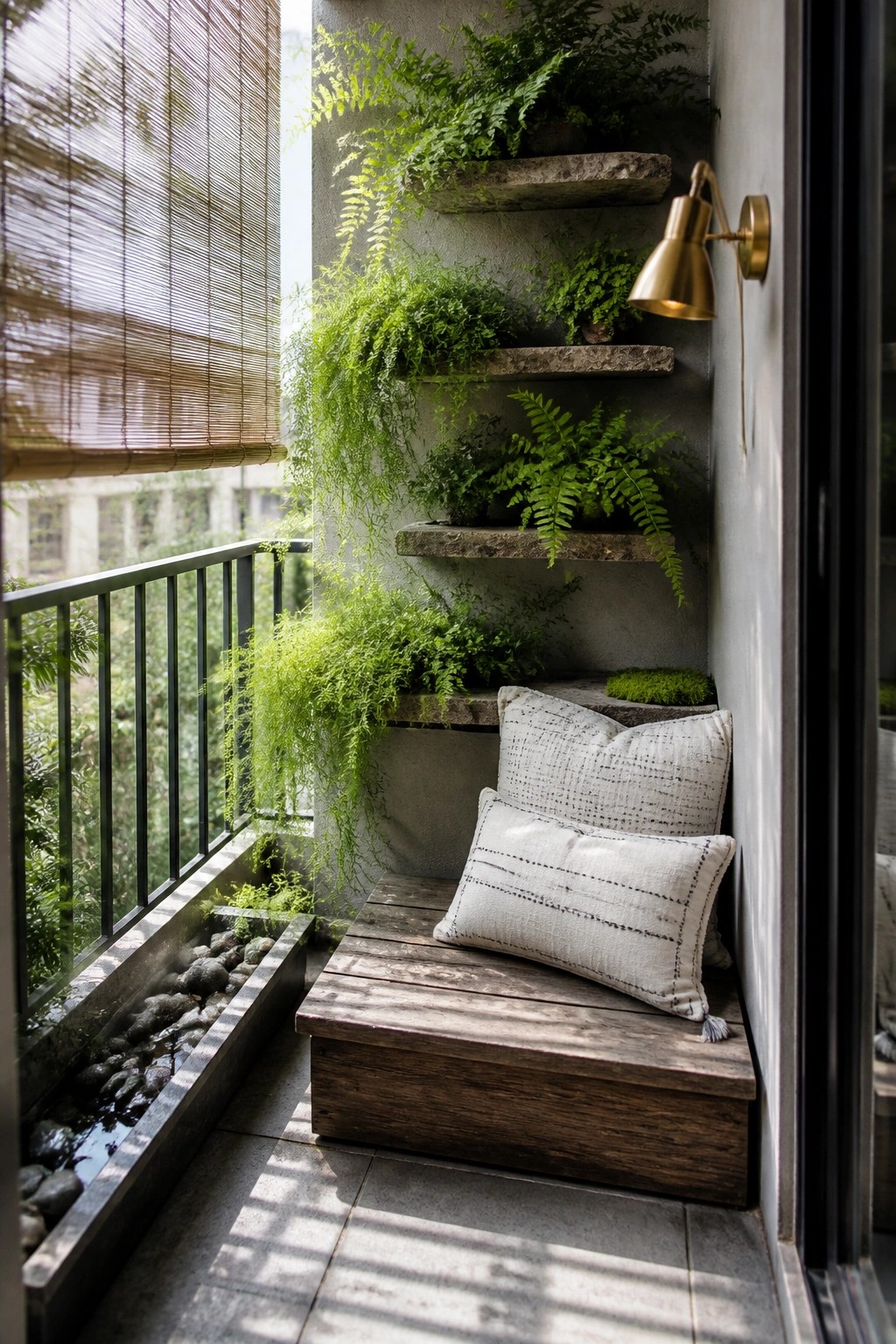
Many balconies feel too narrow for much planting, but adding a few shelves along one wall changes that fast. You can fit ferns, trailing vines, and smaller pots in layers without taking up floor space, and the plants help screen the wall at the same time.
This works best on balconies that already have a solid back wall and some sun. Keep the shelves narrow so they do not crowd the walkway, and choose plants that handle a bit of wind. Check the brackets now and then, since wet soil adds weight over time.
Frequently Asked Questions
Q: How can I stop water from dripping through my wall planters onto the floor below? A: Water your plants in the morning so excess moisture evaporates during the day. Line the bottom of each planter with a coffee filter or small rocks to hold the soil in place. This keeps drips to a minimum without much extra work.
Q: Which hanging plants will actually survive strong winds on a high balcony? A: Pick tough plants like ivy or ferns for windy spots since they hold on better than delicate flowers. Secure each hanger with an extra hook or zip tie to the railing. You will avoid losing plants during storms this way.
Q: Do I need to reinforce my balcony wall before adding lots of planters? A: Start with lightweight plastic or fabric planters instead of heavy ceramic ones. Test the weight by hanging one or two first before filling the whole wall. Your setup stays safe without any major changes to the structure.
