

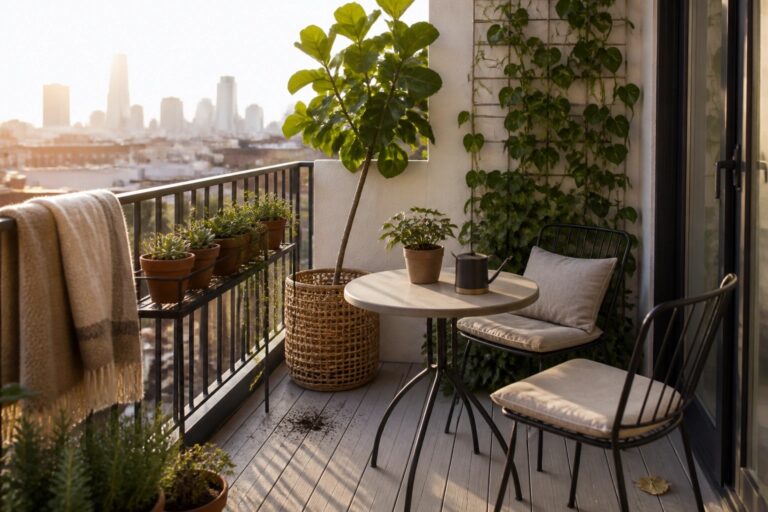
I have found that balconies tend to feel like wasted space unless the plants and layout actually support how people move through them day to day.
When I added a few containers to mine, the setups that held up were the ones that matched the real sunlight and wind instead of what looked good in photos.
Low care plants made the biggest difference because they did not require constant checks or special routines.
Start small.
Many of the approaches worth trying are the ones that let the balcony stay functional while still adding a bit of green without much upkeep.
Grow Climbing Plants on a Wall Trellis
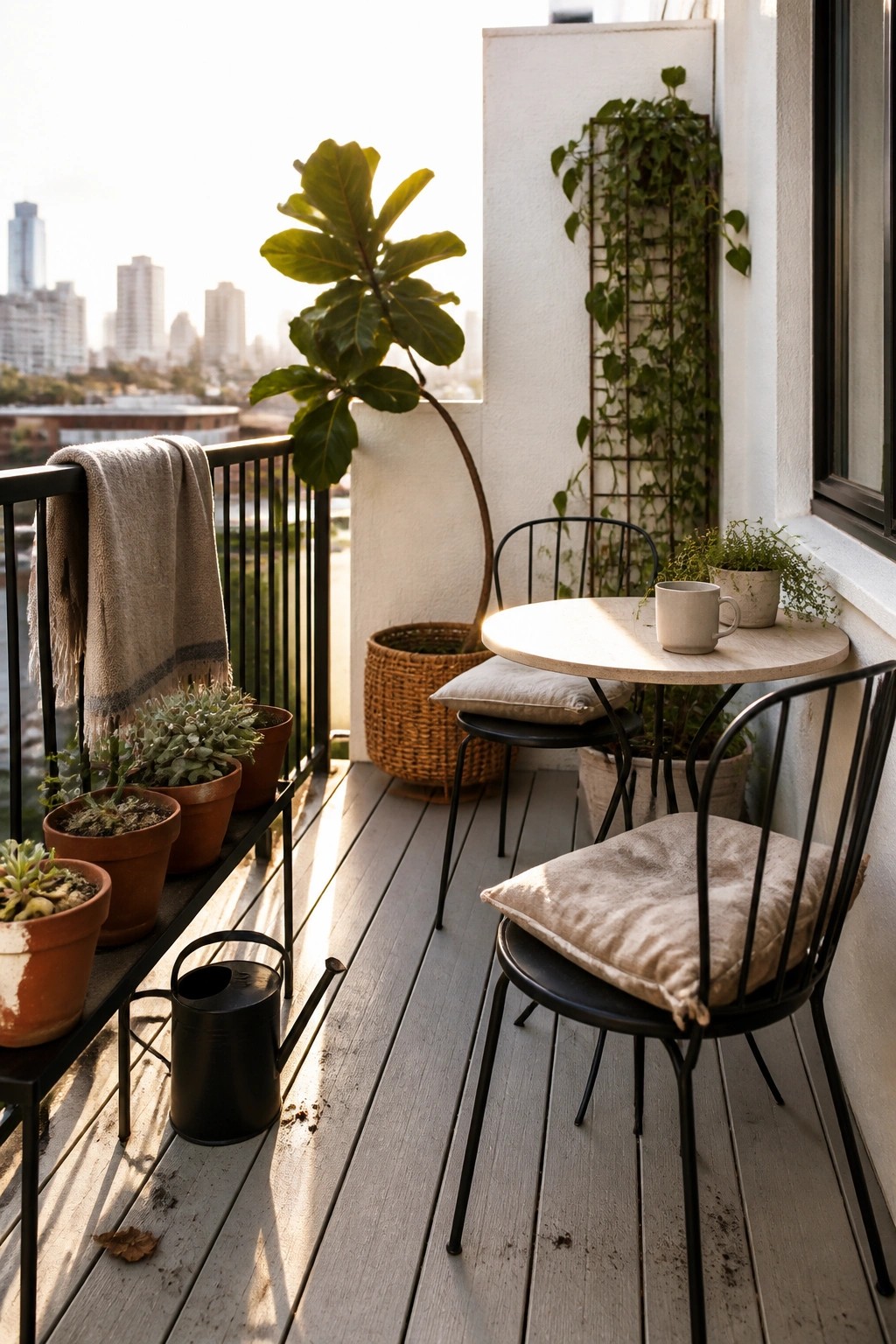
A small balcony can feel much larger when you move some of the planting upward. A wall-mounted grid gives vines a place to climb, which frees up floor space for seating and keeps the area from looking crowded with pots.
This approach suits beginners because many climbing plants need little more than regular watering and occasional trimming. Put the trellis on a sunny wall, set a few pots at the base, and let the plants fill in over time. It works on most rental balconies since the grid can be removed later if needed.
Terracotta Pots For Low Maintenance Balcony Gardens
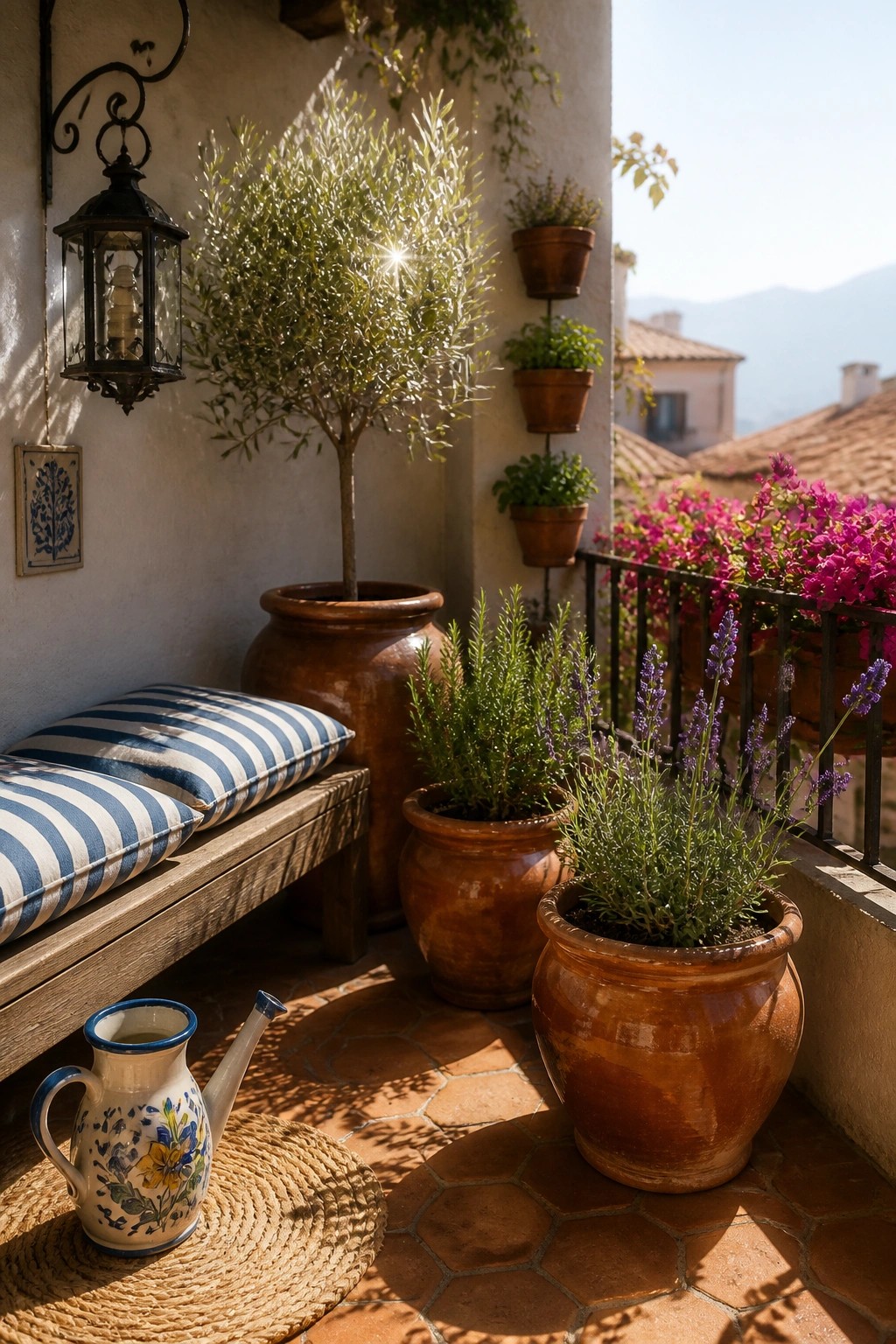
Terracotta pots work well for balcony gardens because they are simple, durable, and help keep plants healthy without much fuss. The warm color blends with many outdoor settings and the material lets soil breathe, which suits beginners who want to avoid overwatering issues.
Place a few larger pots together to create a small garden area and fill them with easy plants like olive trees or herbs. This setup works on most balconies since the pots are heavy enough to stay put and do not need special soil mixes or constant care.
Surround a Hanging Chair with Potted Plants
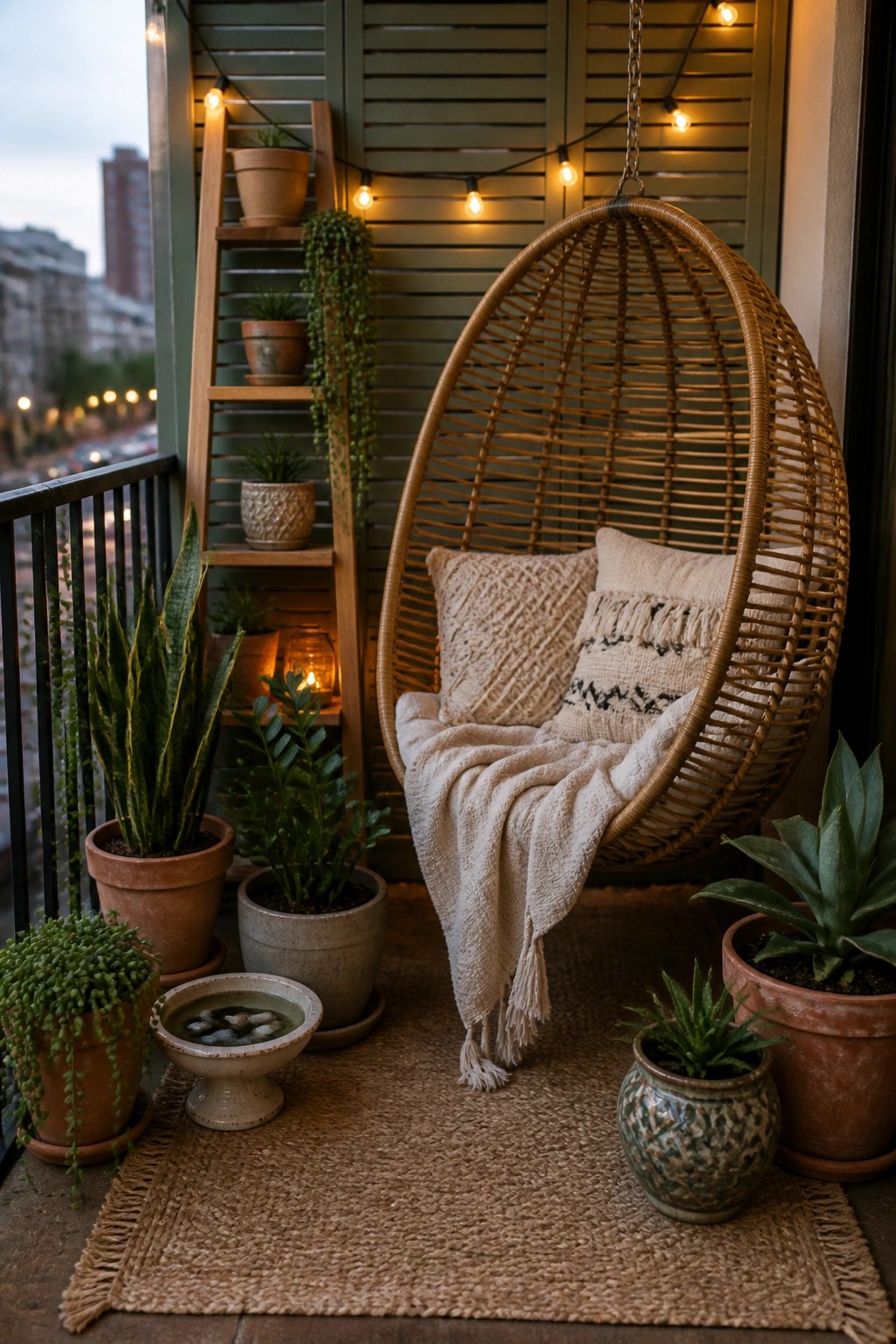
A hanging chair works well on a balcony because it takes up little floor space while still giving you a clear spot to sit. Placing pots of different sizes around the base helps fill the area without crowding the walkway, and it turns the chair into a natural center for the whole setup.
This approach suits small balconies or apartments where built-in seating is not an option. Stick with sturdy pots in similar tones and choose plants that handle varying light and irregular watering, like the snake plant and trailing varieties shown here. Keep the number of pots manageable so the space stays easy to clean and rearrange.
Hang Plants With a Trough Planter
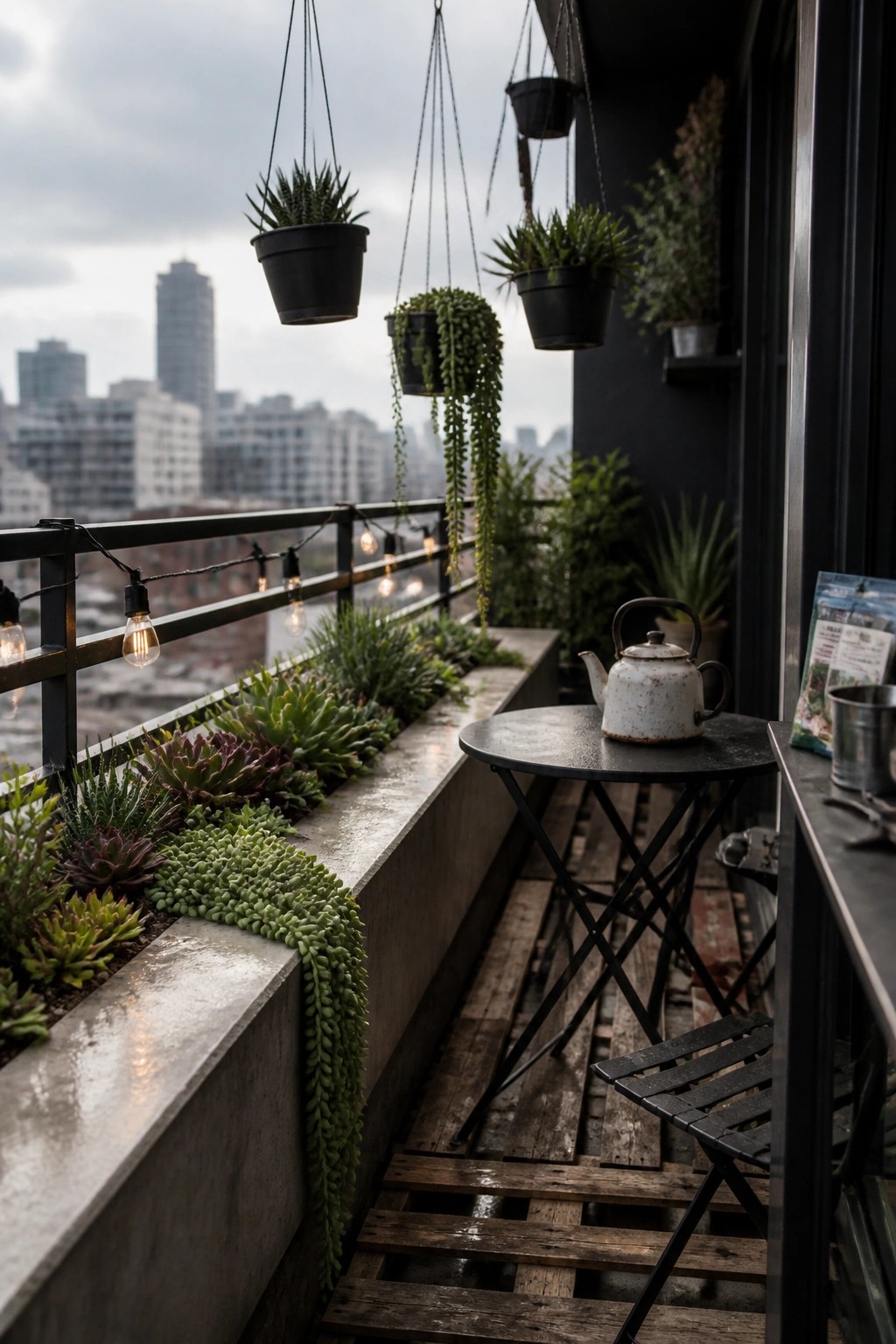
Many people run out of floor space on small balconies, so hanging pots paired with a long trough along the edge gives you extra planting room without crowding the deck. Succulents and trailing plants do well here because they need little watering and stay neat.
This approach works best on urban balconies where you can suspend pots from the ceiling or railing above. Check that your hardware holds weight and that water drains safely so it does not affect the space below.
Group Plants in Large Ceramic Pots
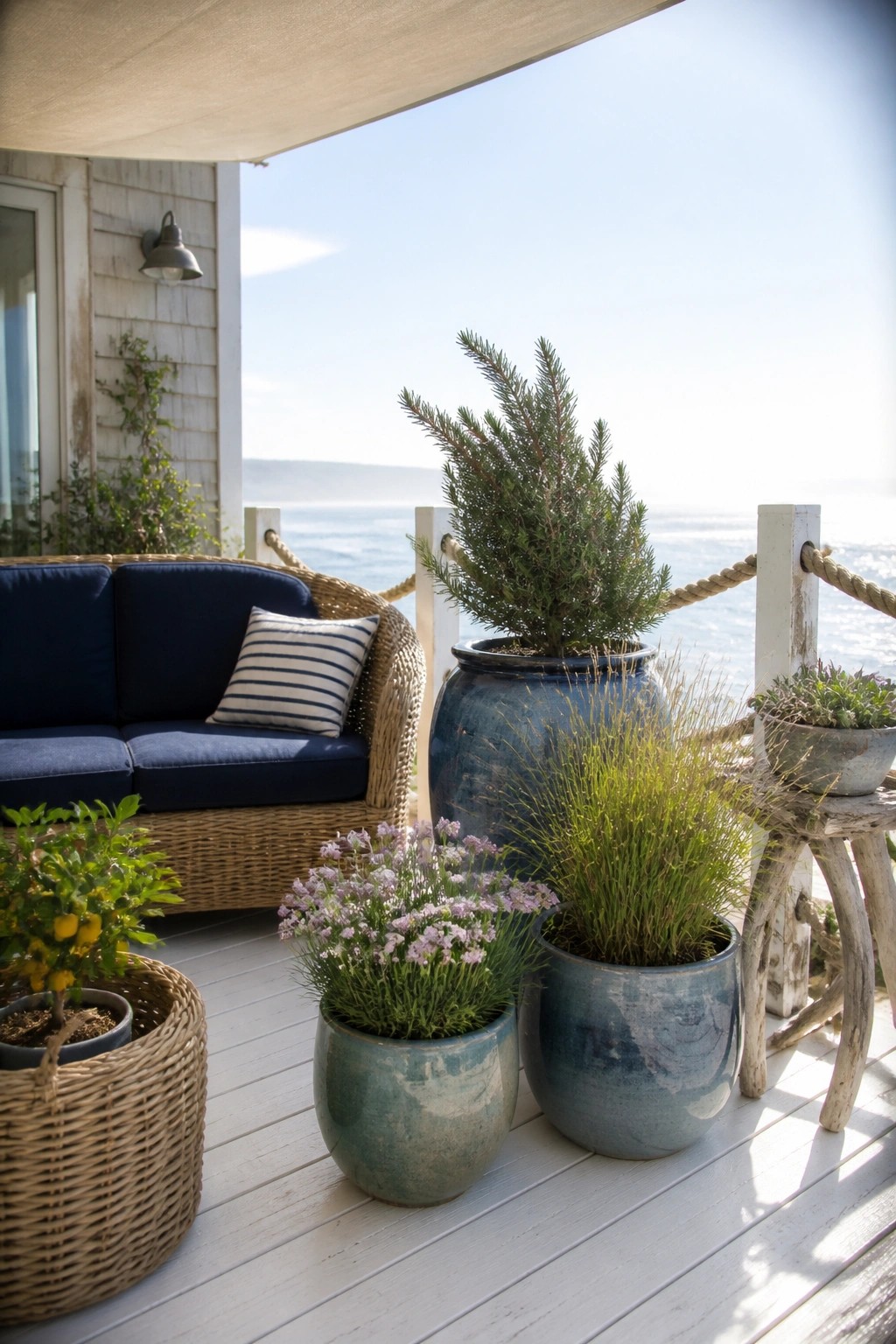
Large ceramic pots give you an easy way to bring a garden to a balcony without digging or permanent changes. They hold moisture longer than thin plastic ones and let you move plants around as seasons change.
Set two or three big pots together near seating so the plants feel like part of the living area. Choose tough evergreens and grasses like the ones in the photo, and you will have greenery that stays looking good with very little care.
Add a Small Water Feature
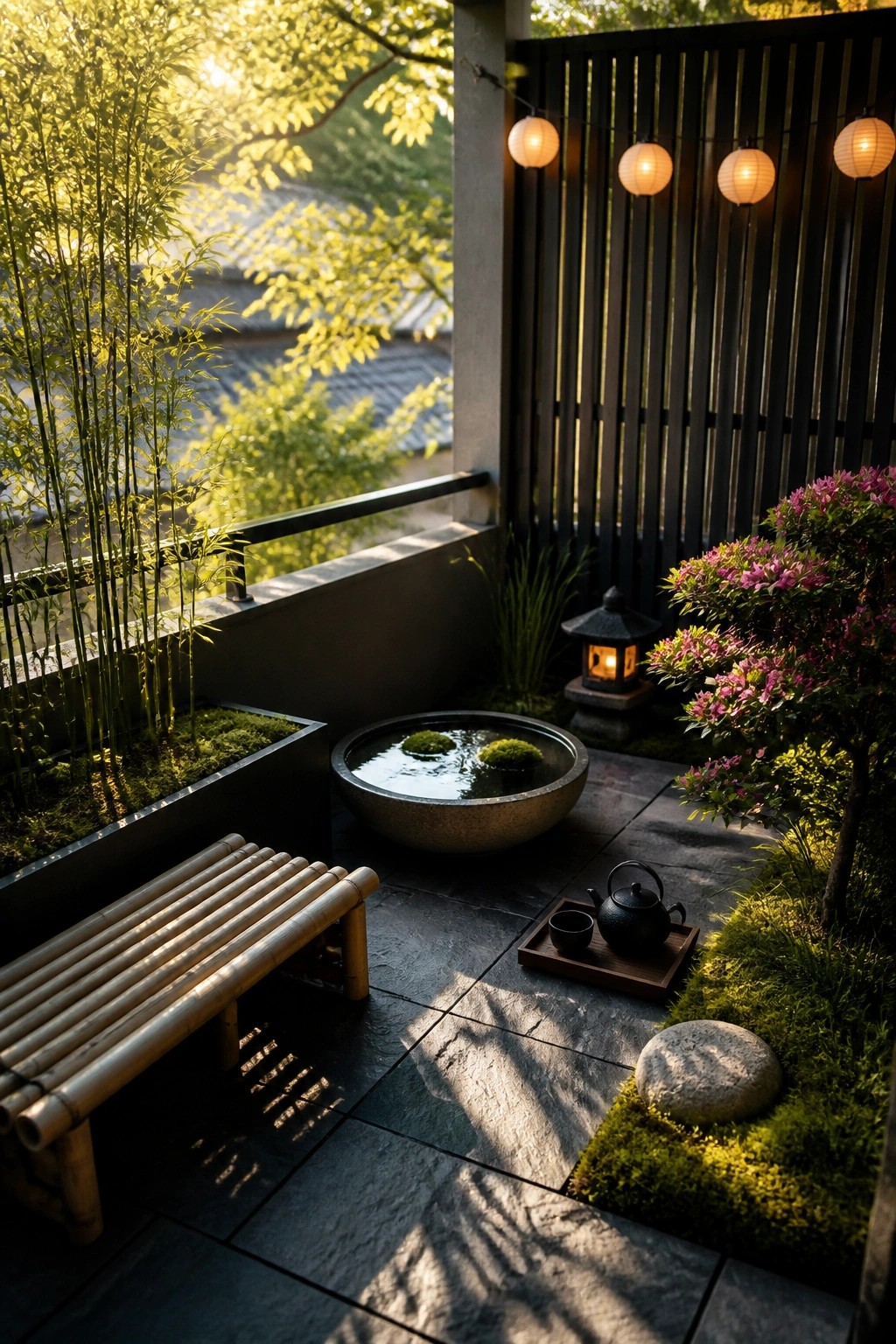
A small water basin works well in balcony gardens because it adds interest without needing constant care. The still water and a bit of moss create a quiet focal point that feels natural and settled.
This idea suits small spaces and beginners since the basin needs little beyond occasional topping up. It pairs easily with simple plants like bamboo and works best on balconies that already have a flat surface and good drainage.
Vertical Shelving Fits More Plants Into Small Spaces
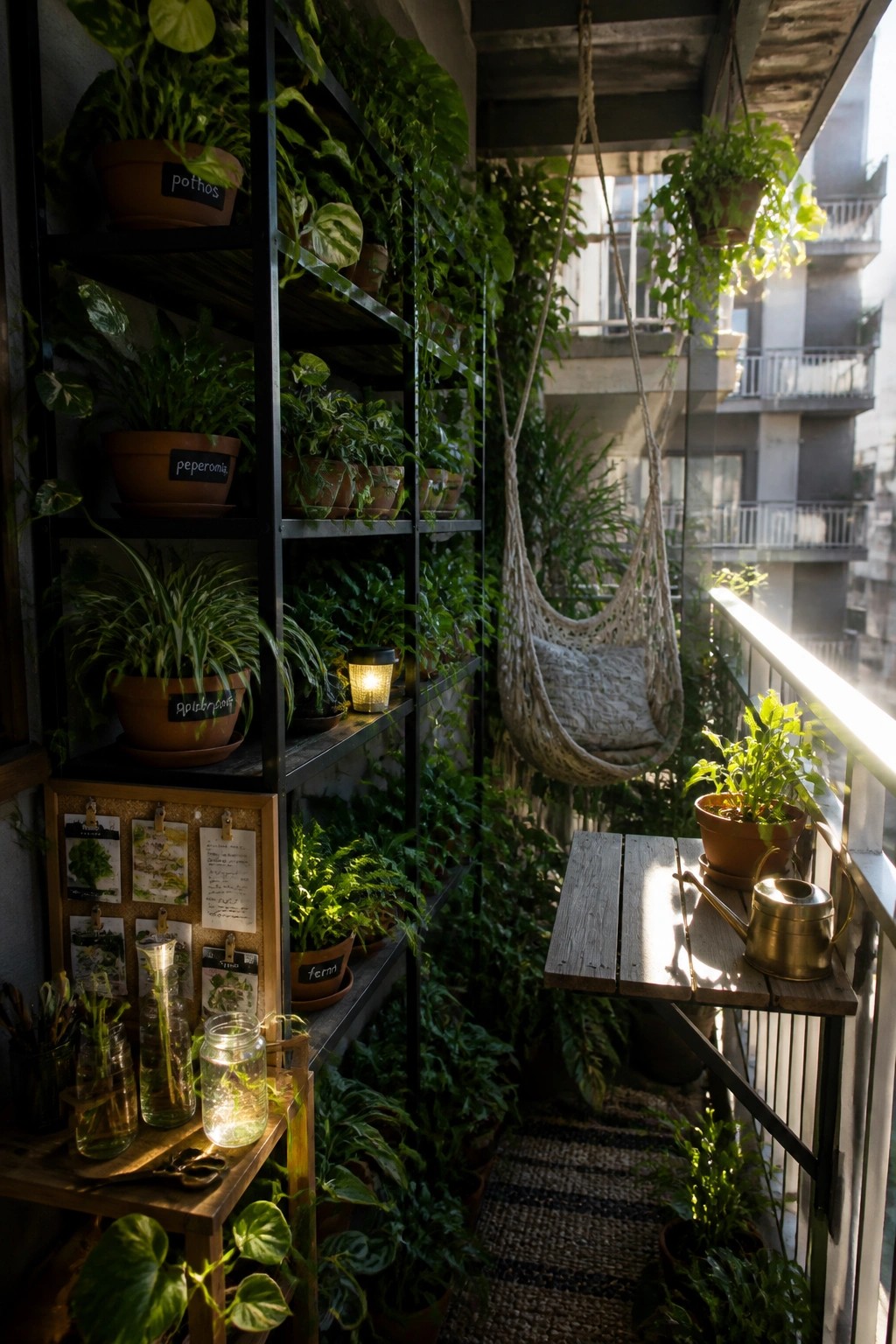
Many balconies feel too narrow for a real garden. Adding tall open shelves along one wall lets you stack plants upward and still leave room to walk or sit.
This setup works best on urban balconies with limited floor space. Pick sturdy shelves that can handle the weight of pots and water, and keep lower levels for plants that need less light while placing sun lovers higher up.
Organize Herbs with Simple Labels
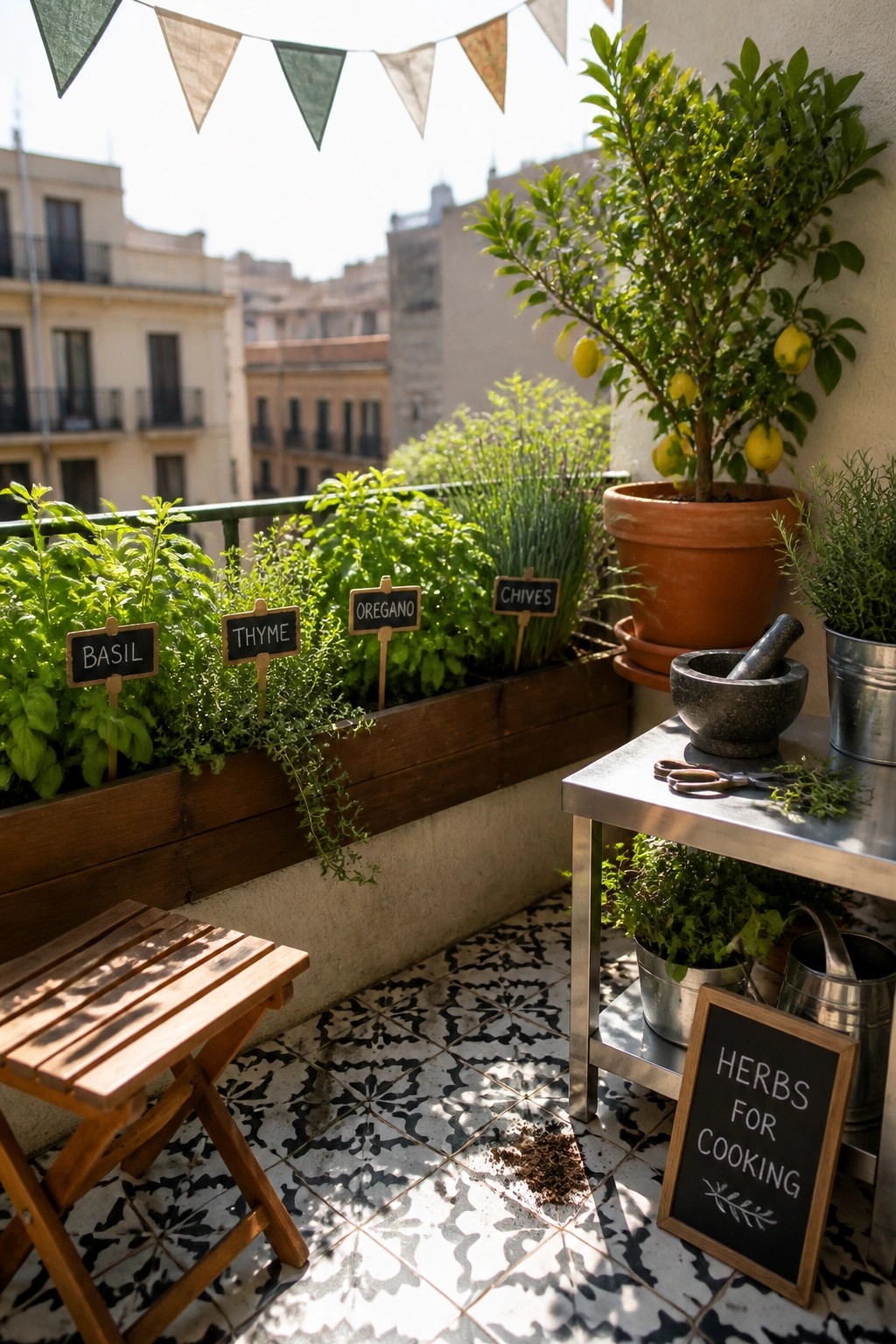
Many beginners like adding small signs to their herb planters so they can tell everything apart at a glance. It keeps the space looking neat and saves time when you want to grab something for cooking.
This works especially well on balconies with limited room. Stick to a few low-care herbs, use sturdy little markers, and place the planter where it gets good sun.
Layer Plants With Simple Stands
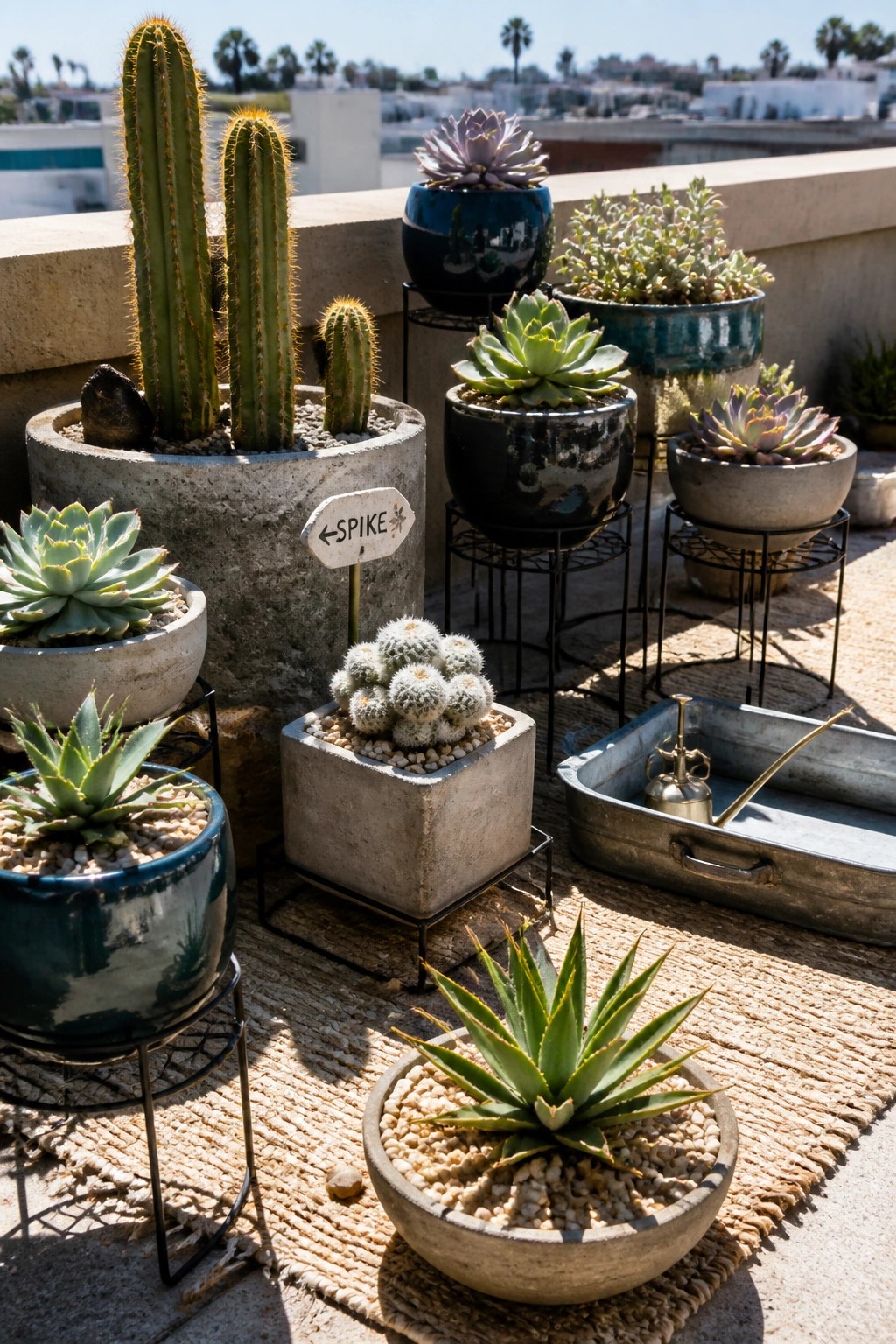
Raising some pots on stands helps a small balcony feel more filled out without taking up extra floor space. It also keeps plants at different heights so they do not all compete for the same view.
Stands work best with low-care plants like succulents and cacti because they improve airflow and make watering easier. They suit balconies of any size and can be moved around as needed.
Add a Small Table for More Planting Space
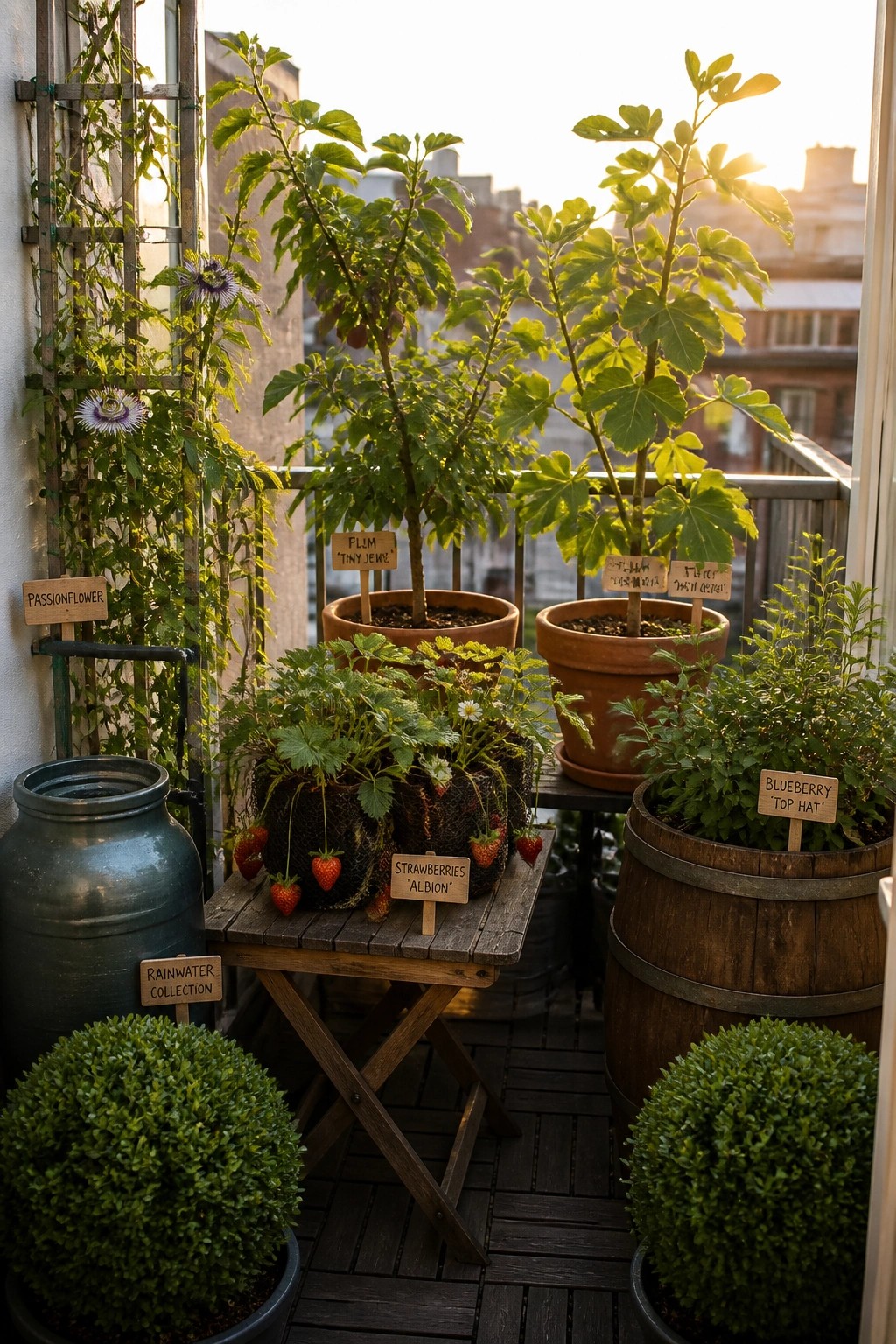
A small table gives you extra room for plants without taking over the whole balcony floor. It keeps things organized and makes it easier to reach everything when you need to water or check on growth.
This setup works well on narrow balconies where floor space is limited. Place the table against the railing or wall and use it for lower plants like strawberries while taller ones go in larger pots around it. Just make sure the table can handle the weight once the pots are full.
Group Ferns in Containers
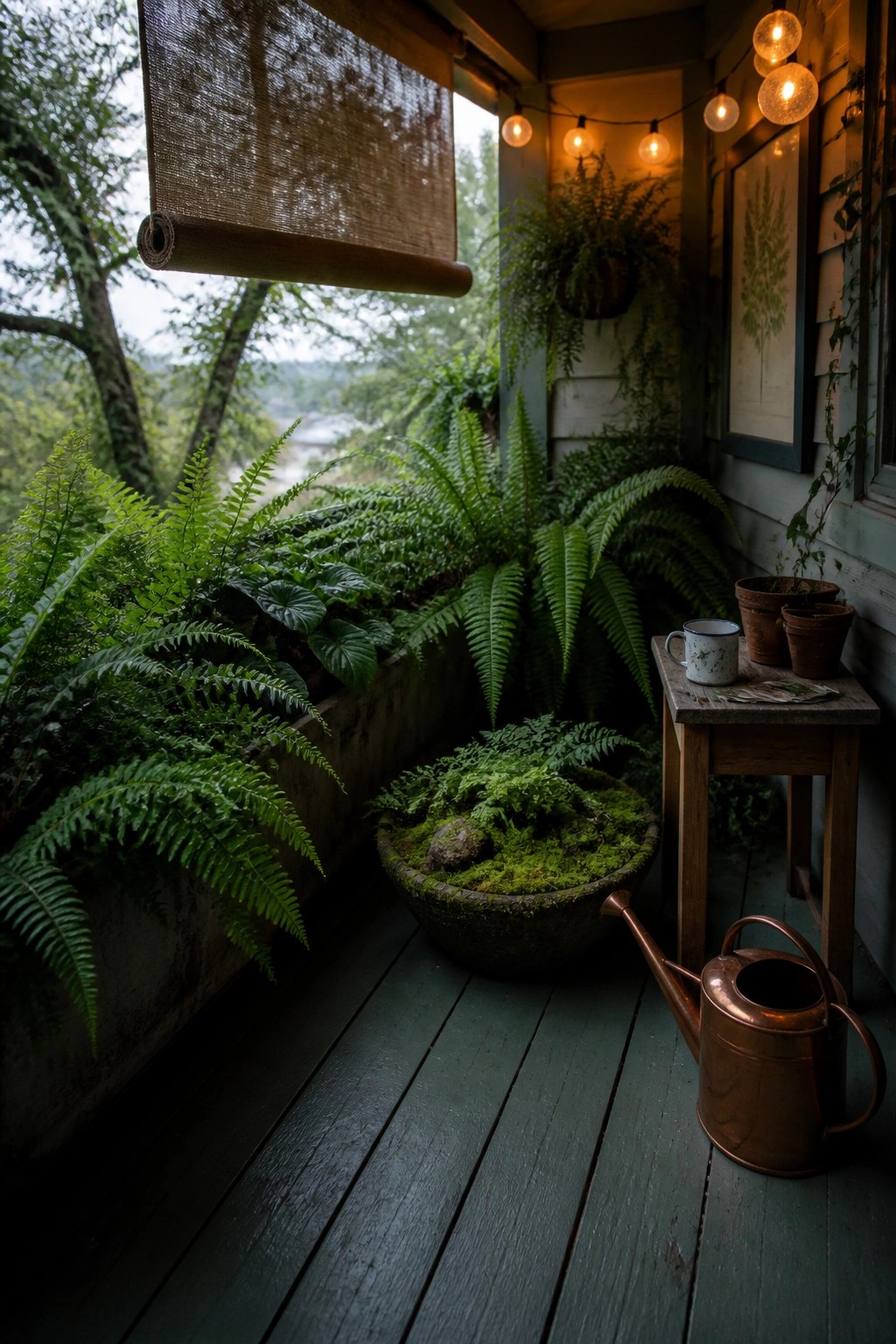
Ferns work well on balconies because they handle shade and need little beyond regular watering. A few large containers filled with different types can cover a lot of space and give that full green look without constant care.
This approach suits apartment balconies or covered porches where soil beds are not an option. Keep the containers near the edges and mix sizes so the plants overlap naturally. Watch for good drainage so the roots stay healthy over time.
Start With A Single Planter
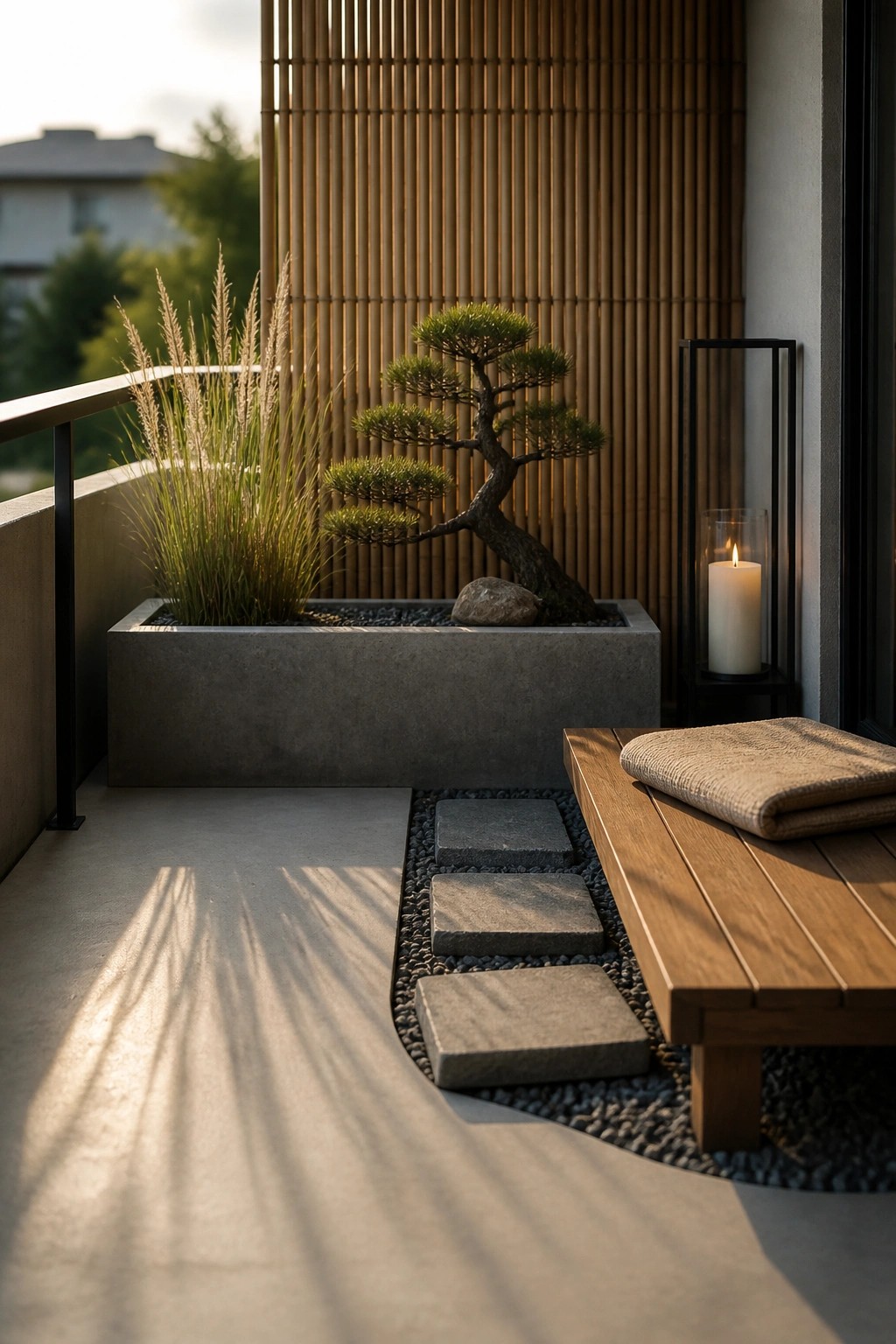
Many beginners find it easier to start with one large planter instead of scattering pots around the balcony. It keeps the space looking clean and gives the plants room to show off without much extra work.
This setup works well on small balconies where you want low care greenery that still feels intentional. A mix of a small tree and grasses needs little beyond occasional watering and fits many apartment layouts without taking over the floor.
Use Shelves to Add Layers of Plants
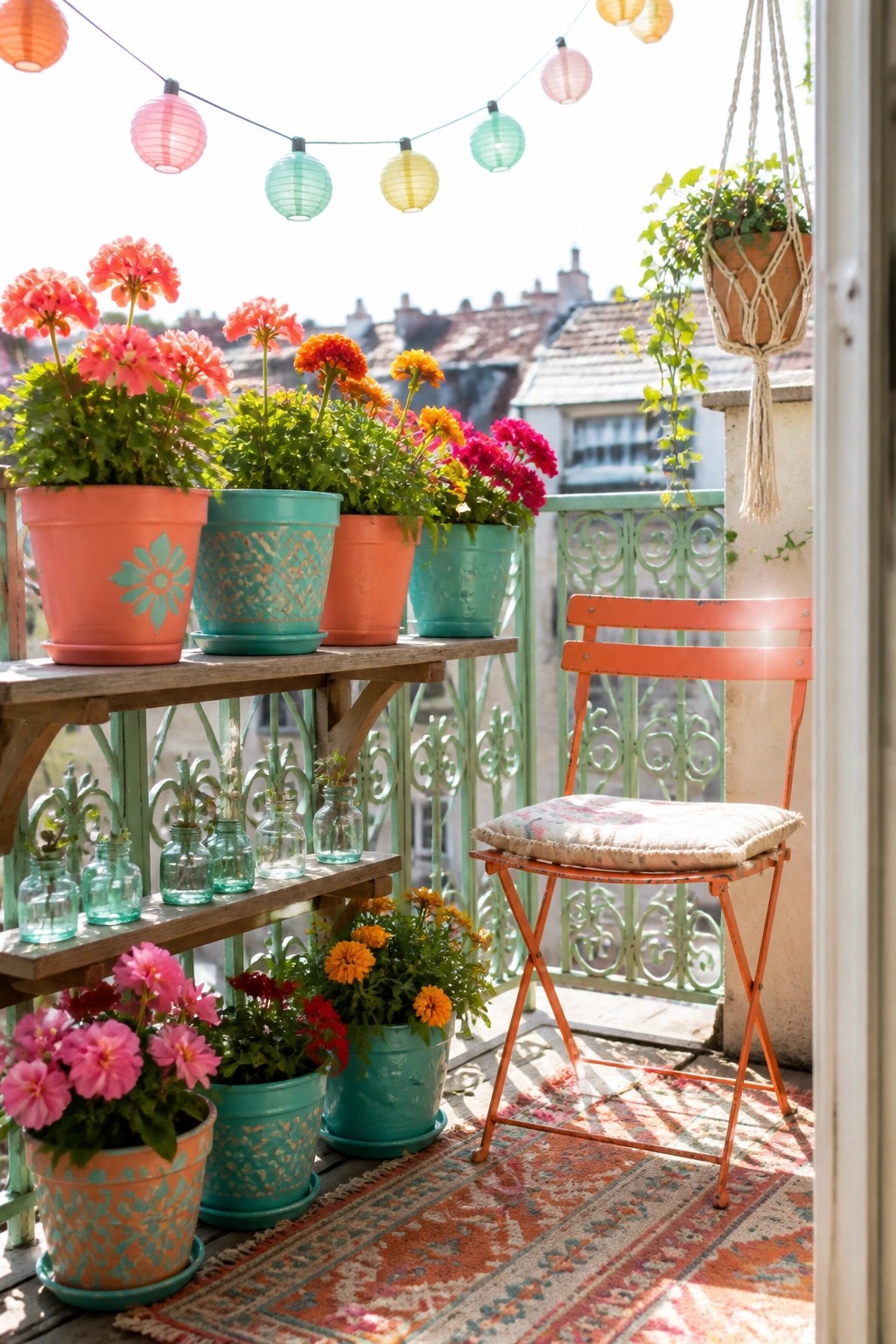
Many balconies stay small, so putting plants only on the floor limits how much you can grow. A few simple wooden shelves along the edge let you stack pots at different heights and keep everything easy to reach.
This setup works best on narrow spaces where you still want a full garden feel. Stick to low-care flowers in sturdy pots, and leave room for a chair so the balcony stays usable too.
Candlelight Turns Balconies Into Evening Spots
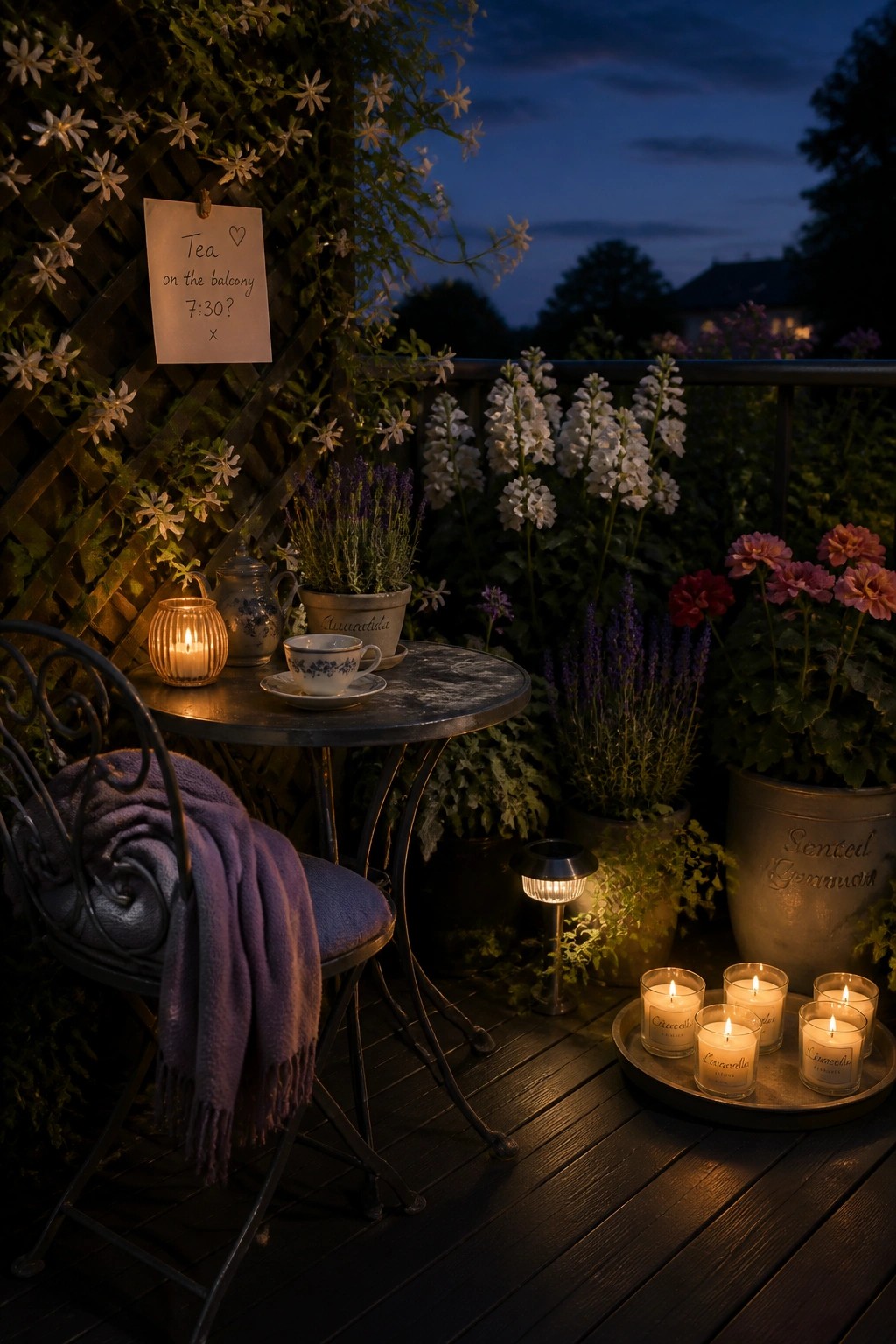
Candles give a balcony garden a soft glow that makes it nice to use after dark. They pair easily with a few pots of low-care plants and need no wiring or special fixtures.
Group several candles on a tray so you can move them around as needed. This works well on small balconies and suits anyone starting out with simple plants that do not demand much attention.
Add a Fold-Down Table for Everyday Gardening
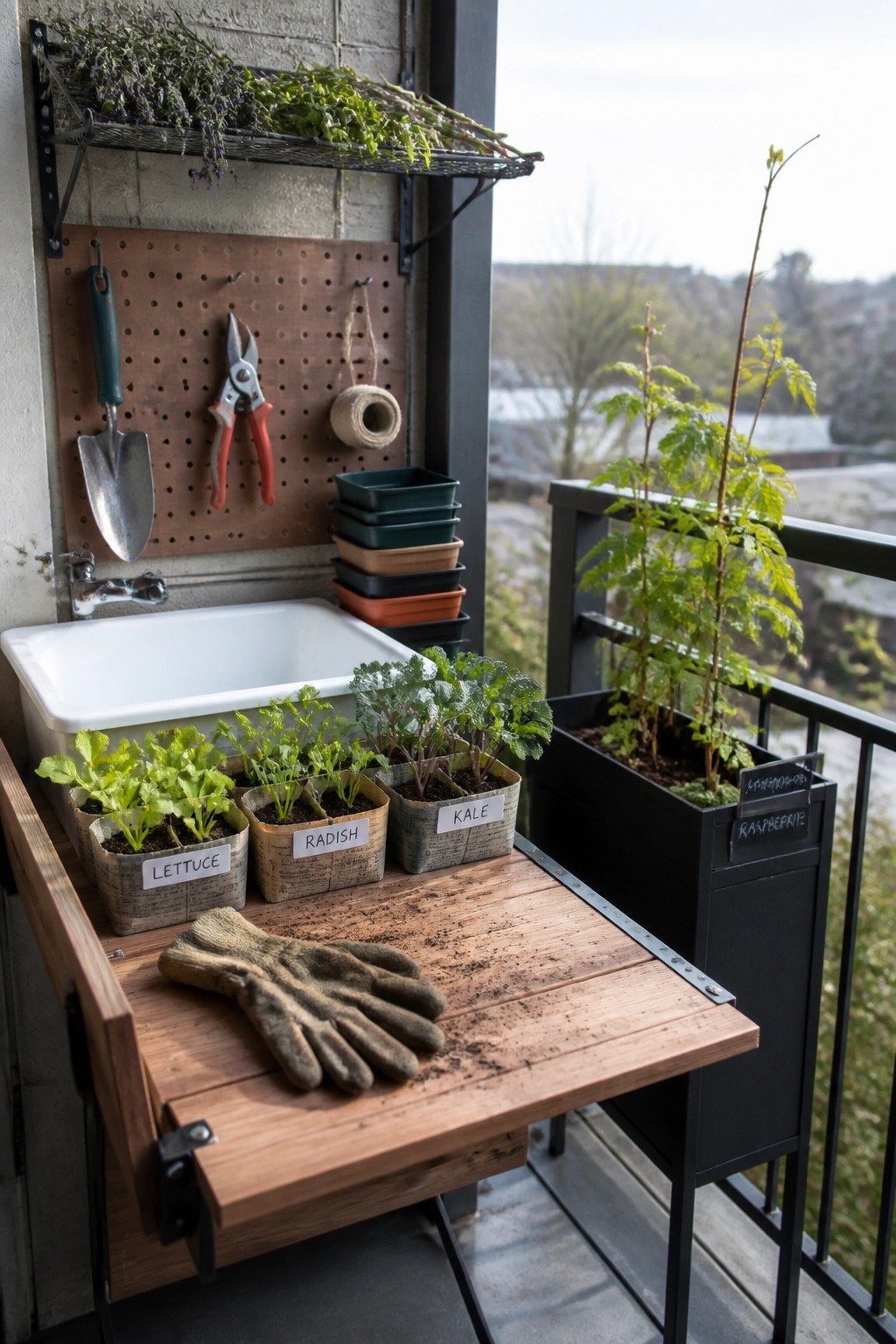
A fold-down table gives you a steady place to handle soil, pots, and seedlings without losing floor space on a small balcony. It keeps the work area separate from seating spots while still letting you stay close to your plants.
Mount it near a water source so cleanup stays quick and simple. This kind of setup works best on balconies that get regular use and need a practical spot for basic tasks like repotting or checking on young plants.
Use a Slim Console to Hold Your Plants
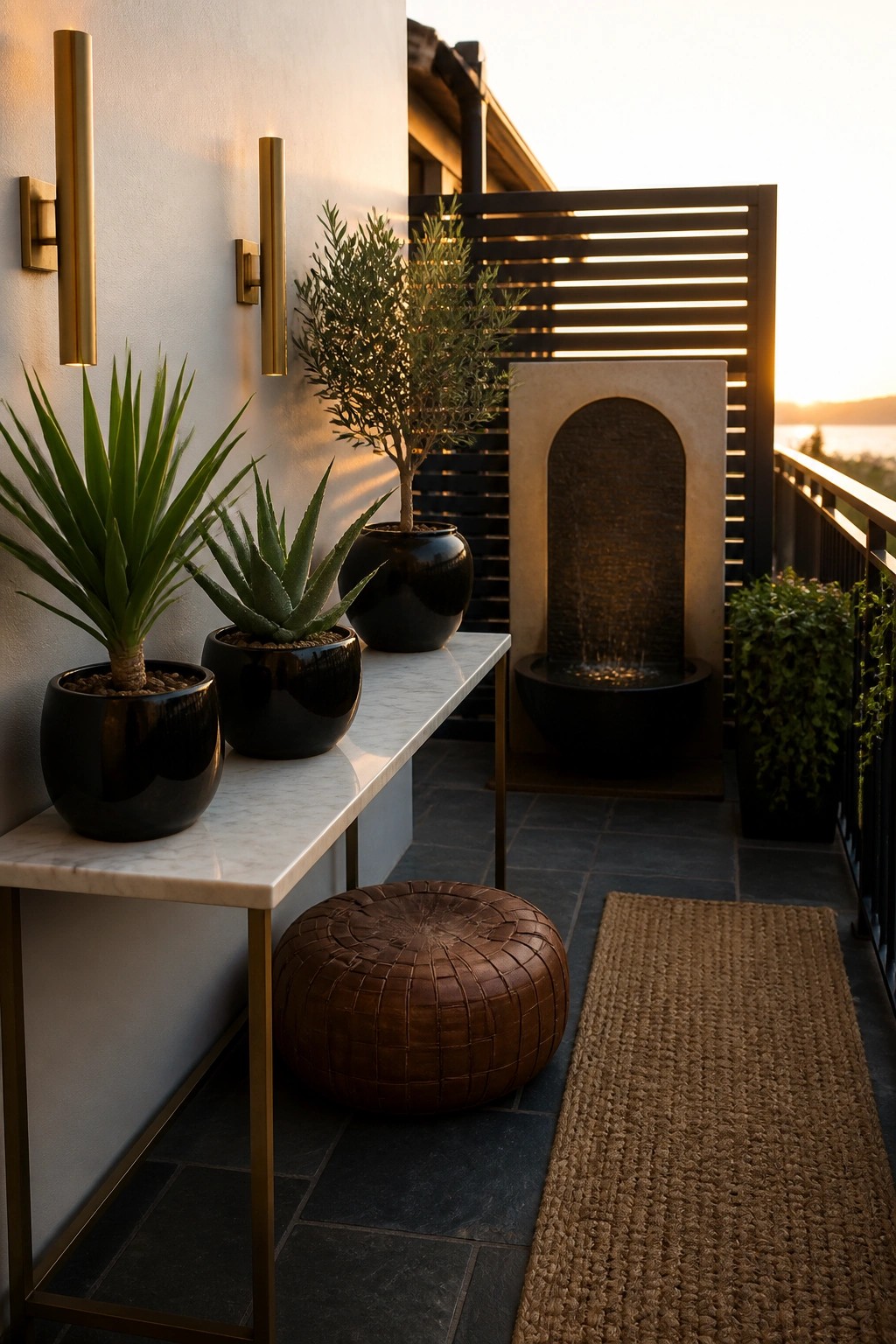
A narrow console table gives you a simple way to line up several potted plants without crowding the floor. It works well on small balconies because it stays flat against the wall and leaves walking space open. Low-care plants like aloe and small trees look neat when they sit at the same height.
Place the table where it gets the right light for the plants you choose. Keep the surface clear except for the pots so watering stays easy. This setup suits apartments or townhomes where floor space is limited and you want a low-maintenance garden look.
Metal Troughs for Easy Balcony Planting
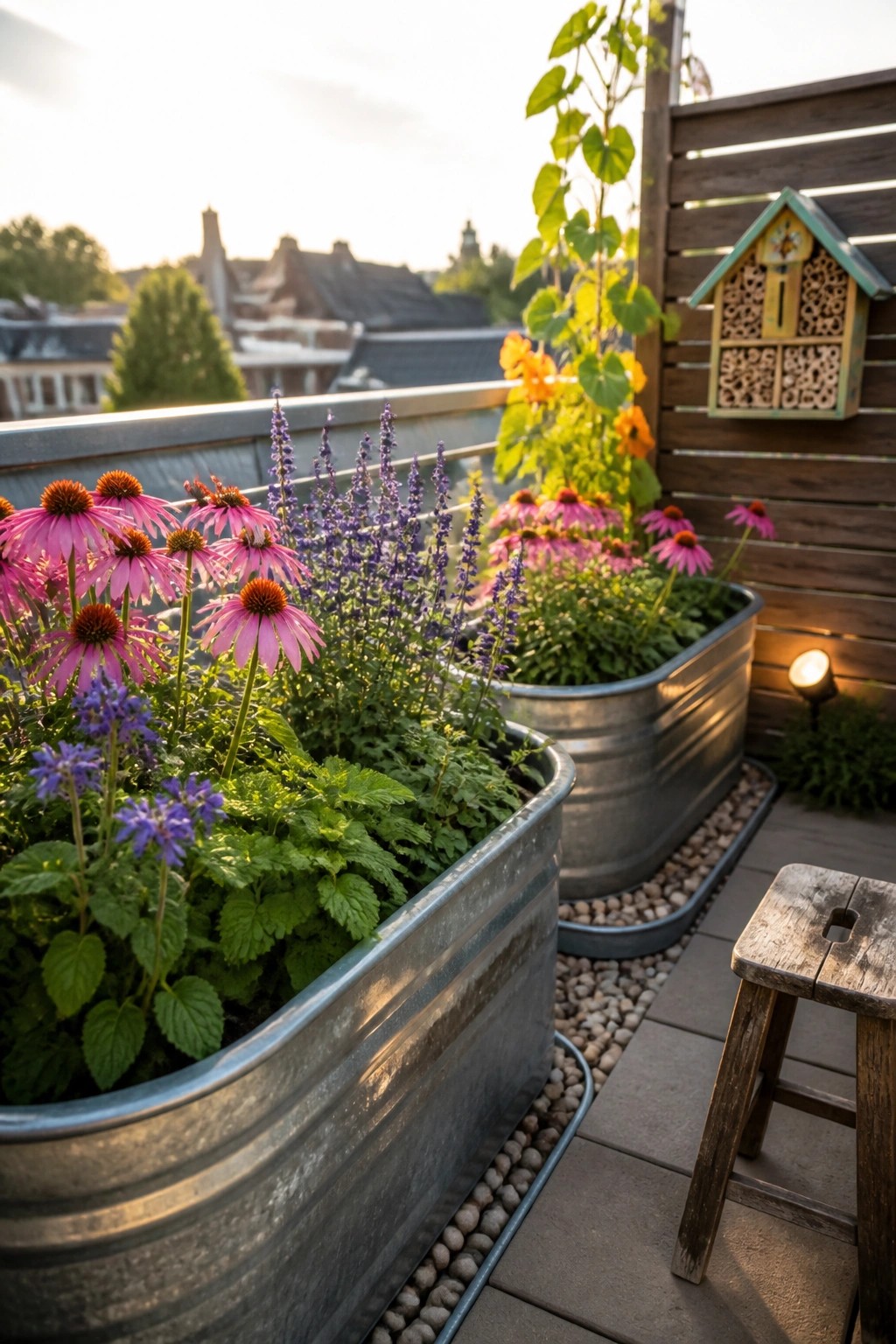
Metal troughs give you a simple way to grow flowers on a balcony without dealing with lots of small pots. They hold enough soil to keep plants stable and reduce how often you need to water. Many beginners like them because they are sturdy and last for years.
Set them along the railing or against a wall and fill them with low-care flowers that bloom for months. This works best on small urban balconies where space is tight and you want something practical rather than fussy.
Add Open Shelving for Extra Plants
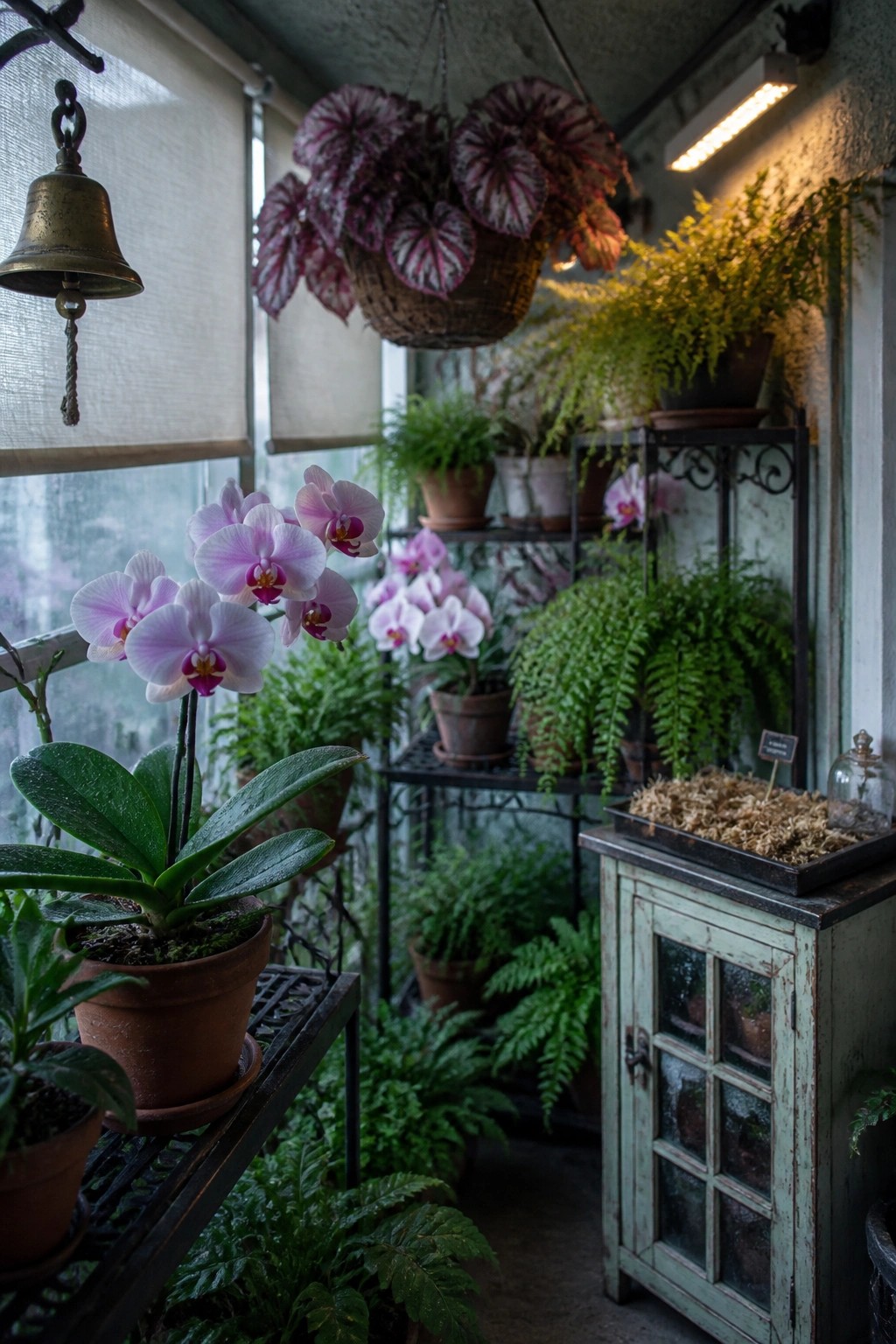
Open shelving gives you a simple way to fit more plants into a small space without crowding the floor. The black metal unit in this setup holds pots at different heights so each one gets decent light and stays easy to reach.
This approach works well in sunny rooms or enclosed balconies where beginners want variety but need low daily effort. Keep the shelves sturdy and group plants with similar water needs together so care stays quick.
Frequently Asked Questions
Q: My balcony gets almost no direct sun. Which plants from the list can handle that?
A: Go for shade lovers like ferns or certain herbs that thrive without much light. They still need good drainage in their pots though. Check the soil with your finger before watering to avoid root rot.
Q: How often should I water the low maintenance options once summer hits?
A: Most of these plants do fine with a thorough soak every few days. Feel the top inch of soil and water only when it feels dry.
Q: What if my balcony has strong winds that knock things over?
A: Choose heavier pots or add some stones at the bottom for stability. Low growing plants like succulents hold up better than tall ones.
