

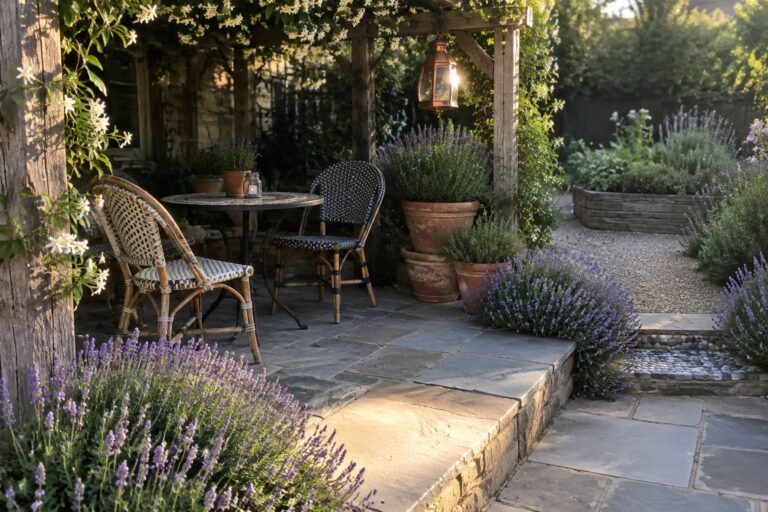
Lavender can soften the edges of a patio, but the planting needs to leave enough room for chairs, paths, and everyday use.
I find it works best when its shape and height relate to the patio layout rather than sitting in a crowded border.
A clear edge or simple path can make the plants feel intentional while keeping the space easy to move through.
Sun exposure and drainage matter too, since lavender tends to struggle in damp, shaded spots.
I’d start by testing one planting area and noticing how it looks from the seating before extending the design.
Use Lavender to Edge a Patio Path

Lavender planted along a patio path makes the route feel like part of the garden rather than just a way through it. Its purple blooms bring color close to the seating area, while the edging gives the path a clear shape.
Plant lavender in a sunny spot with well-drained soil, leaving enough room for each mound to spread. It suits gravel or stone paths, but avoid crowding the paving so the plants are easy to trim and the route stays open.
Use Lavender to Edge Patio Paving

Lavender planted in narrow strips between patio slabs gives the hard surface a softer, more garden-like feel. The repeated planting also helps define the edges of the paved area without adding bulky borders.
Use this approach along a main walkway or beside a seating area, where the plants can spill slightly into view without blocking the route. Choose a lavender variety that suits your climate, and leave enough room for mature plants so the gaps do not become crowded.
Make Room for Patio Dining

A simple dining area can make a patio more useful for everyday meals and relaxed gatherings. Here, the long wooden table leaves a clear path beside it, so the seating area feels practical rather than crowded.
This layout works well on a narrow terrace or in a courtyard. Leave enough space to pull chairs back comfortably, and use lavender in nearby planters or garden beds to bring fragrance close to the table without taking up walking space.
Make Room for Outdoor Dining
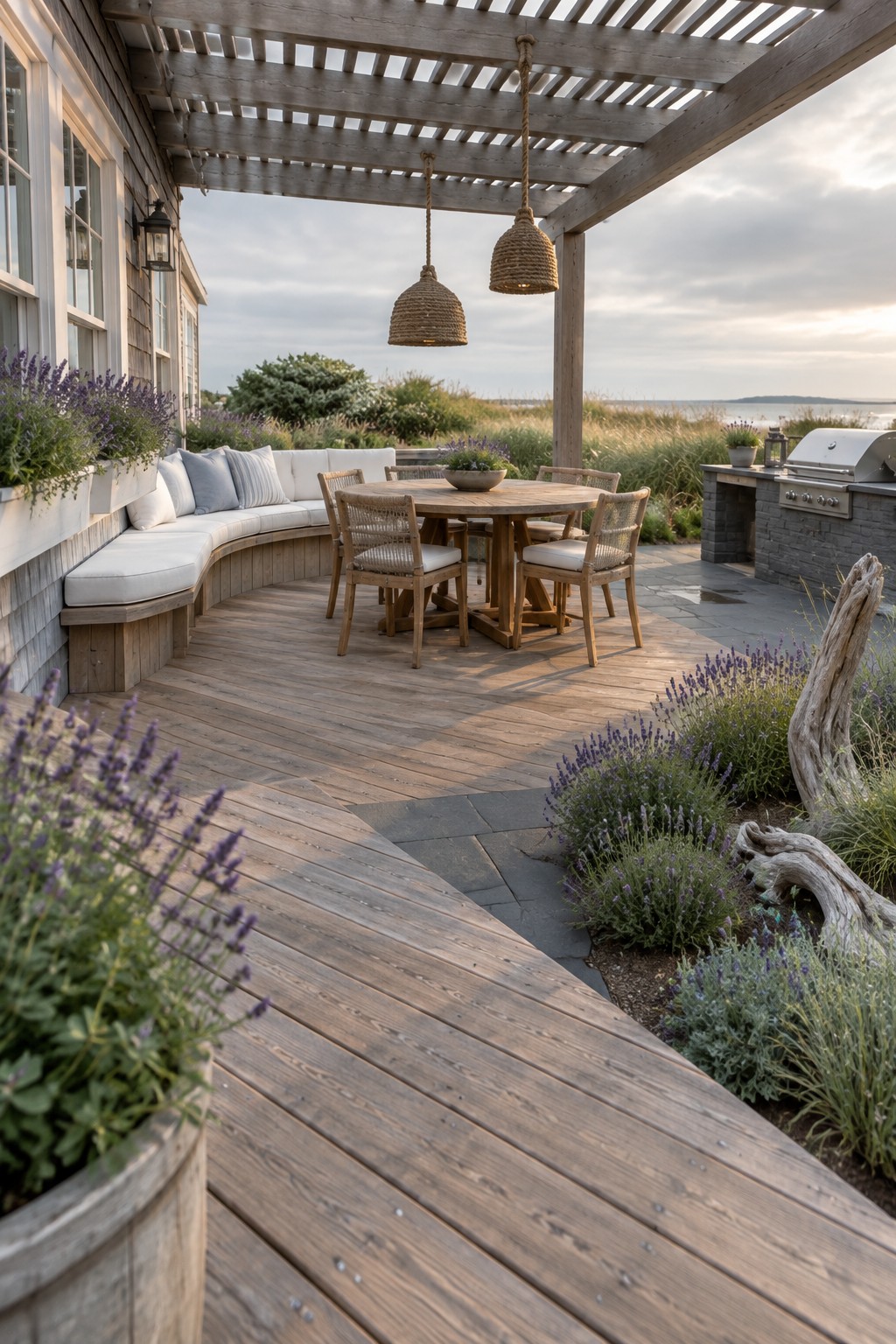
A dining area can make a patio feel more useful, especially when it sits close to the house and has a comfortable place to gather. Here, a round wooden table is set beside a curved built-in bench, so people have room to sit without crowding the deck.
This arrangement works well on a larger deck or patio where dining and lounging can share the space. Keep nearby lavender in defined beds or planters so it adds color without taking over the seating area.
Set Up a Patio for Outdoor Dining

A stone patio can make a comfortable spot for meals outside. A round table leaves room to pull up chairs, while nearby lavender gives the seating area a garden feel without taking over the space.
Leave enough clearance around the table for chairs to slide out and for people to walk past. This layout works well in a courtyard or on a smaller terrace, where a simple dining setup can make the patio more useful.
Arrange Patio Seating Beside a Lavender Garden

A seating area set right beside lavender plantings makes the garden feel like part of the patio, rather than something to look at from a distance. This layout also gives the plants a practical role: they define the edge of the sitting space without needing a formal border.
Leave enough room for chairs and foot traffic, and plant lavender where it gets plenty of sun and has well-drained soil. A brick patio and a simple outdoor rug suit this relaxed arrangement, but keep the main route through the seating area clear.
Use Lavender Along a Formal Garden Walk

Lavender works well beside a straight stone path because its loose purple blooms soften the hard edges without hiding the path’s clear layout. It’s a simple way to bring color and fragrance into a more structured garden.
Plant it in a sunny spot with well-drained soil, leaving enough room for the plants to spread without spilling over the paving. This approach suits a garden path leading to a patio or seating area, but avoid placing lavender where water tends to collect.
Make a Stone Patio Work for Dining

A stone patio gives an outdoor dining area a sturdy, natural-feeling base. Here, lavender and other flowering plants grow along the edge, so the seating area feels connected to the garden without losing its clear shape.
For a similar setup, leave enough level paving around the table for chairs to move easily. Lavender is useful along the border, but keep it trimmed back so stems don’t spill into the walking space.
Use a Screen to Add Privacy to Patio Seating
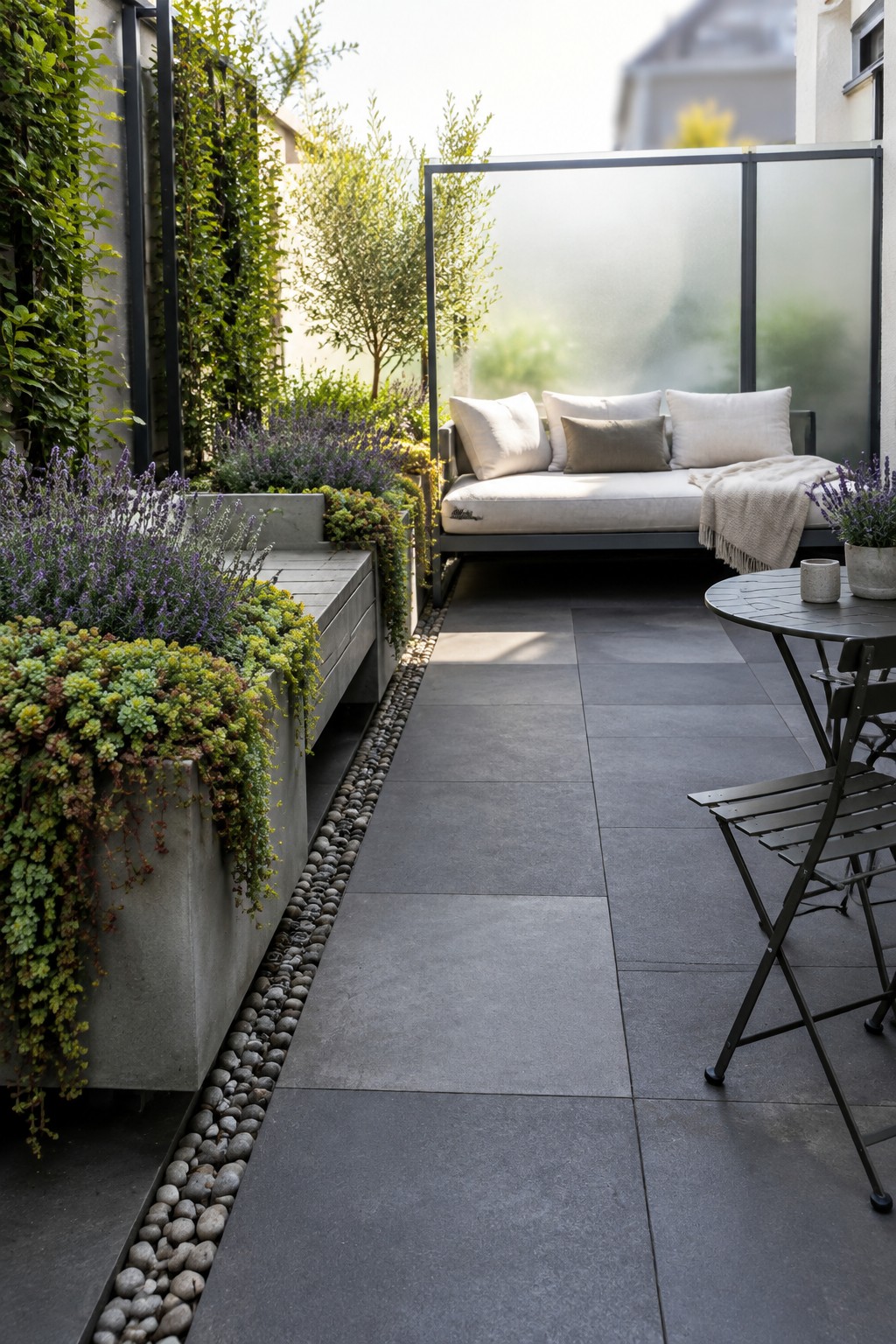
A privacy screen can make a small patio feel more like a separate place to sit. Here, frosted panels behind the sofa block views while still letting light through.
This approach works well on urban patios overlooked by nearby buildings. Leave room around the seating so the screen does not make the area feel cramped, and use lavender planters nearby to bring the planting into the sitting space.
Use Stepping Stones to Connect the Garden and Patio

A stepping-stone path makes a patio feel connected to the rest of the garden. The broad stones set into low groundcover create an easy route without covering the whole area in paving.
Use this approach where you want to lead visitors from a lawn or planting bed to a patio. Set the stones at a comfortable walking distance, and choose a groundcover that can handle some foot traffic.
Use Raised Lavender Beds to Shape a Poolside Patio

Raised planting beds can give a patio a clear layout without closing it off. Here, low stone walls hold lavender around the lounging area, helping define the space while keeping the planting tidy.
This approach works well beside a pool or on a broad terrace where you want separate spots for sitting and walking. Keep the beds low enough to preserve open views, and leave comfortable paths between them.
Use Wooden Steps to Connect a Sloped Garden

Wooden steps can make a sloping garden easier to move through while keeping the planting beds intact. Here, the steps climb beside a low stone wall and lavender, so the path feels like part of the garden rather than a separate route.
This approach works well where a patio sits above or below the main yard. Use sturdy outdoor timber and make each step broad enough for comfortable footing. Keep lavender trimmed back from the edges so it does not narrow the walking space.
Use Lavender Beds to Define a Patio Path
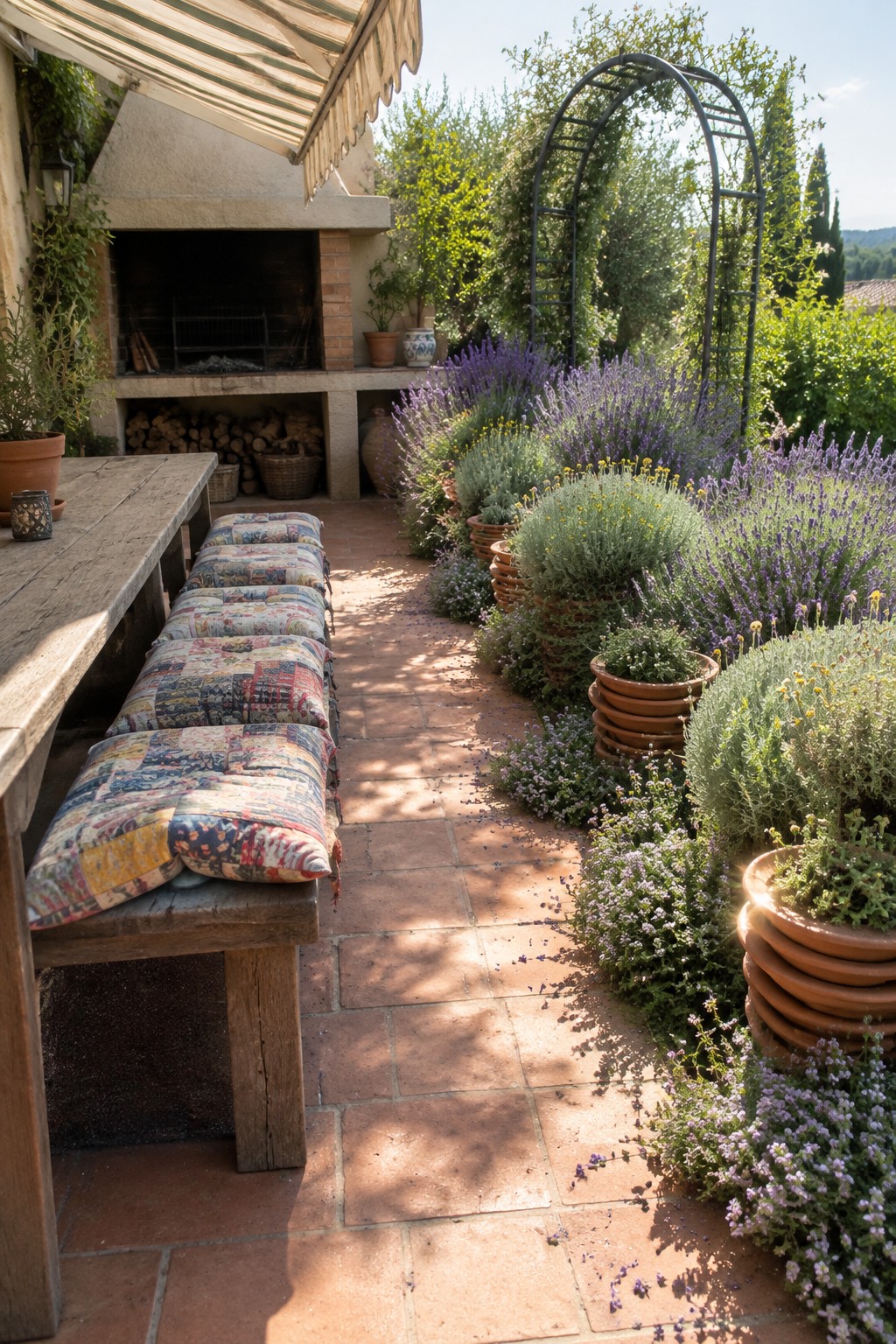
Lavender planted along a patio path gives the walkway a clear edge without making it feel boxed in. The loose, full beds keep the paving connected to the garden and make an ordinary route feel more pleasant to use.
For a similar layout, plant lavender in broad, curved borders beside a path that gets plenty of sun and drains well. Leave enough room for the plants to spread, and keep the paving wide enough to walk comfortably even when the lavender is in bloom.
Use a Large Planter as a Patio Focal Point

A generous planter filled with lavender can give a small patio a clear center without taking up the whole space. It makes the planting feel intentional, and the purple blooms bring color close to the seating area.
Choose a sturdy container that suits the patio’s scale, and leave enough room around it to walk comfortably. This works especially well in a gravel courtyard, where a central pot can help organize the open area.
Build Patio Seating Around a Fire Pit

A built-in bench arranged around a fire pit makes a patio feel like a place to gather, rather than just a spot to sit. The L-shaped seating keeps everyone close to the fire and makes good use of the patio’s edges.
This layout works well in a compact courtyard or on a larger terrace. Leave enough room to walk around the fire pit, and choose cushions made for outdoor use. Lavender planted along the patio edge can add a soft border without crowding the seating.
Use a Shade Structure to Make a Patio More Comfortable
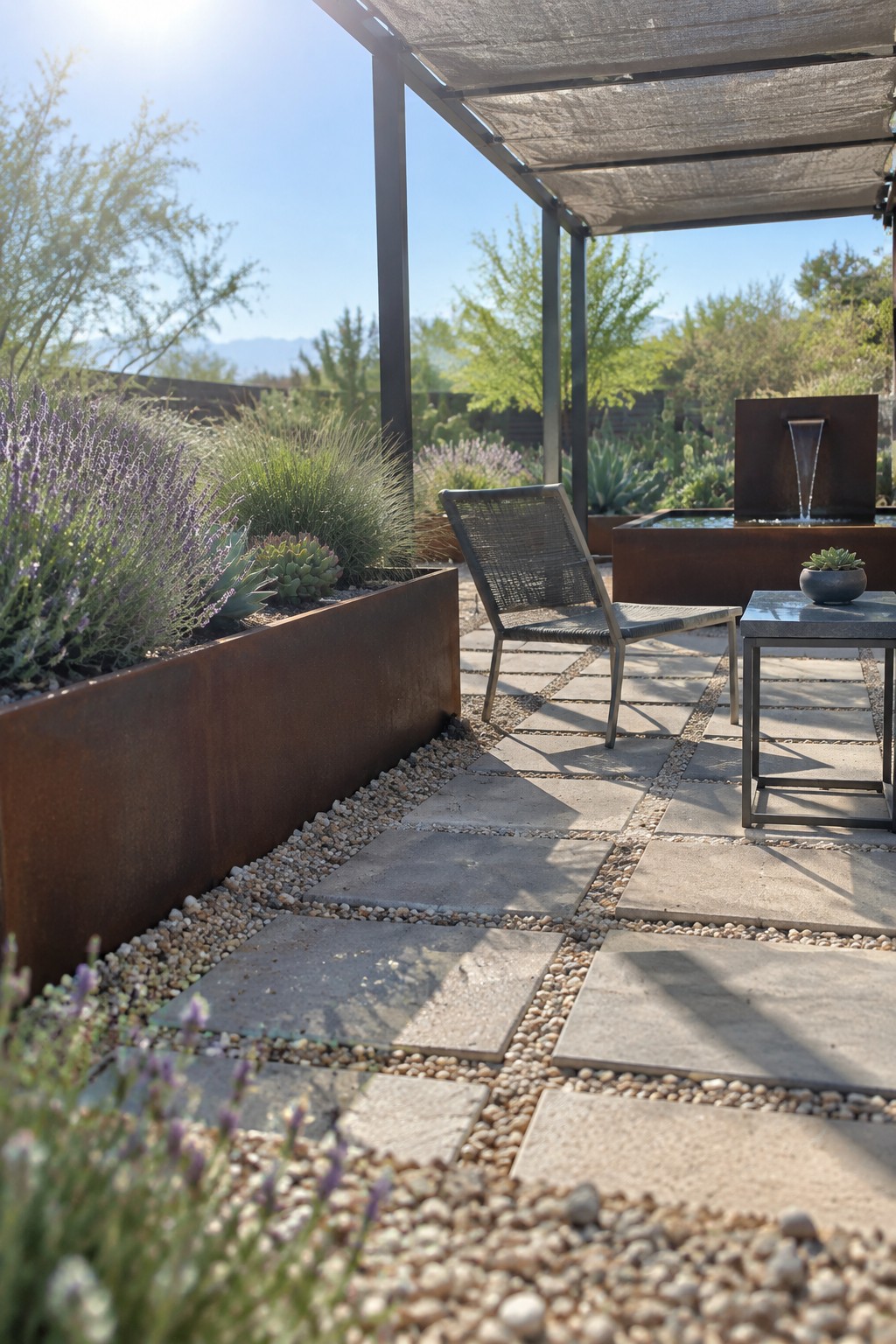
A simple overhead shade structure can make a patio easier to use during the day. Here, a dark pergola frame gives the seating area a clear boundary, while the fabric cover filters direct sun without closing off the space.
This approach works well over a small seating area beside a garden. Choose a cover that suits your climate, and leave enough open space around the edges so the patio still feels airy.
Make a Fire Pit the Center of Patio Seating

A fire pit can give patio seating a clear center and make the area useful after sunset. Here, the curved bench keeps seats close to the flames, so people can talk without having to arrange extra chairs.
This layout works well on a roomy stone patio, especially where the fire pit can sit a safe distance from plants and furniture. Leave enough space to walk around the seating, and check local rules for fire pits before choosing a fuel type.
Frequently Asked Questions
Q: How much sun does lavender need beside a patio?
A: Lavender grows best with at least six hours of direct sun each day. If the patio gets afternoon shade, place the plants along its sunnier edge rather than under a roof or dense tree canopy.
Q: Can I grow lavender in pots around my patio?
A: Yes. Choose a pot with drainage holes and use a free-draining potting mix, since lavender dislikes soggy roots. Pots also make it easy to move plants into more sun.
Q: What can I plant with lavender around the patio?
A: Pair it with plants that enjoy sun and fairly dry soil, such as rosemary or low-growing thyme. Avoid thirsty plants that need frequent watering right beside it.
Q: How do I stop lavender from getting woody and sprawling?
A: Prune it lightly after flowering, trimming back the soft green growth without cutting into the bare woody stems. Regular gentle shaping helps keep the plants compact and tidy.
