

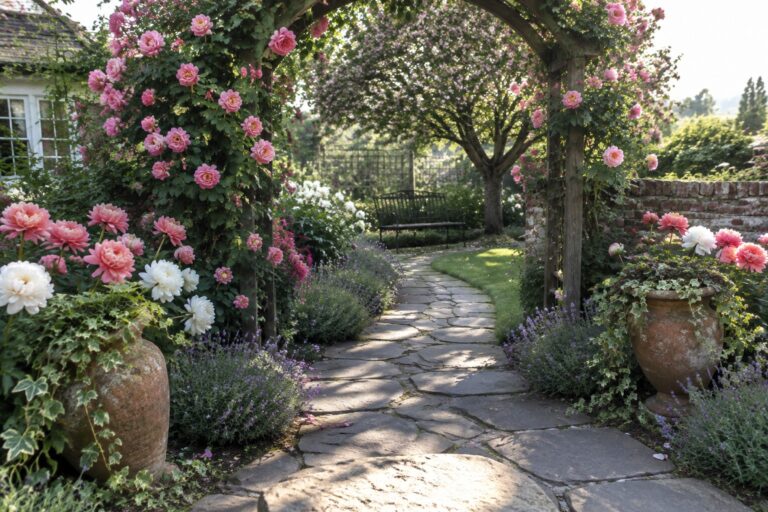
Roses and peonies can make a garden feel romantic, but the layout matters just as much as the flowers themselves.
I find these blooms work best when their heights, colors, and flowering times create a sense of rhythm rather than a crowded patch of color.
A clear path, a defined edge, or a simple change in planting height can help the garden feel considered while leaving room for the flowers to grow.
Some pairings are worth testing in a small bed first, especially if your soil, sunlight, or space differs from what you see in photos.
I’d save the ideas that suit your yard’s conditions and use them to shape a garden that feels lovely through the seasons.
Create a Romantic Garden Path
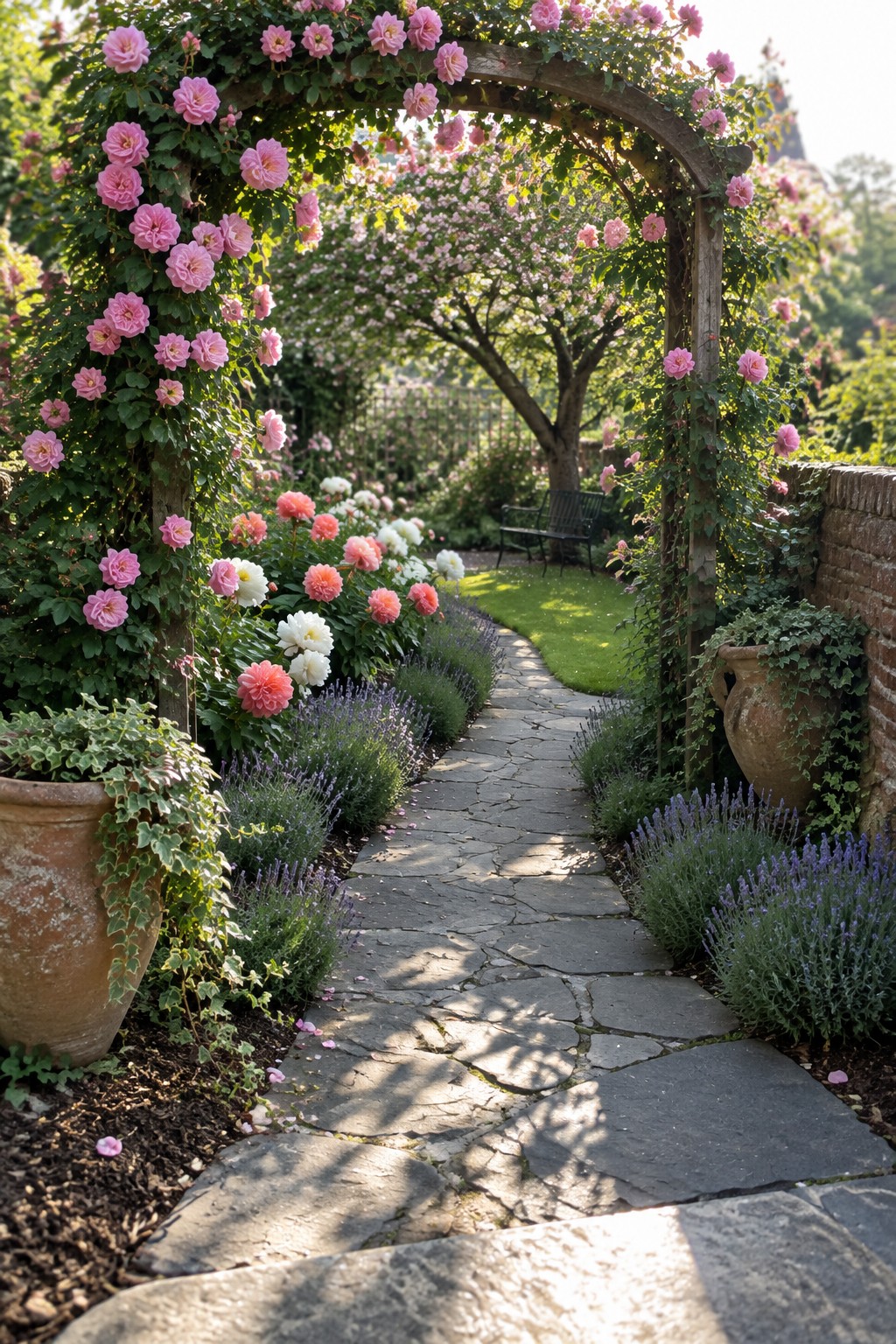
A stone path can give a rose garden a clear shape and make it easier to enjoy the flowers up close. It also brings a little order to a planting area without making the garden feel too formal.
Use irregular stepping stones for a relaxed look, and let flowers and low-growing plants edge the path without crowding it. This idea works well in a small garden, but leave enough room to walk comfortably and tend the plants.
Use a Gravel Path to Lead Through the Flower Garden

A gravel path gives a rose and peony garden a clear route while keeping the planting beds easy to reach. It also makes a simple, practical contrast with clipped green edging and abundant blooms.
Use a compacted gravel surface for a garden path that gets regular foot traffic, and keep the edges neat so stones stay in place. A gently curving route can suit a relaxed garden, while a straight path works well in a more formal layout.
Build A Romantic Garden In Terraces
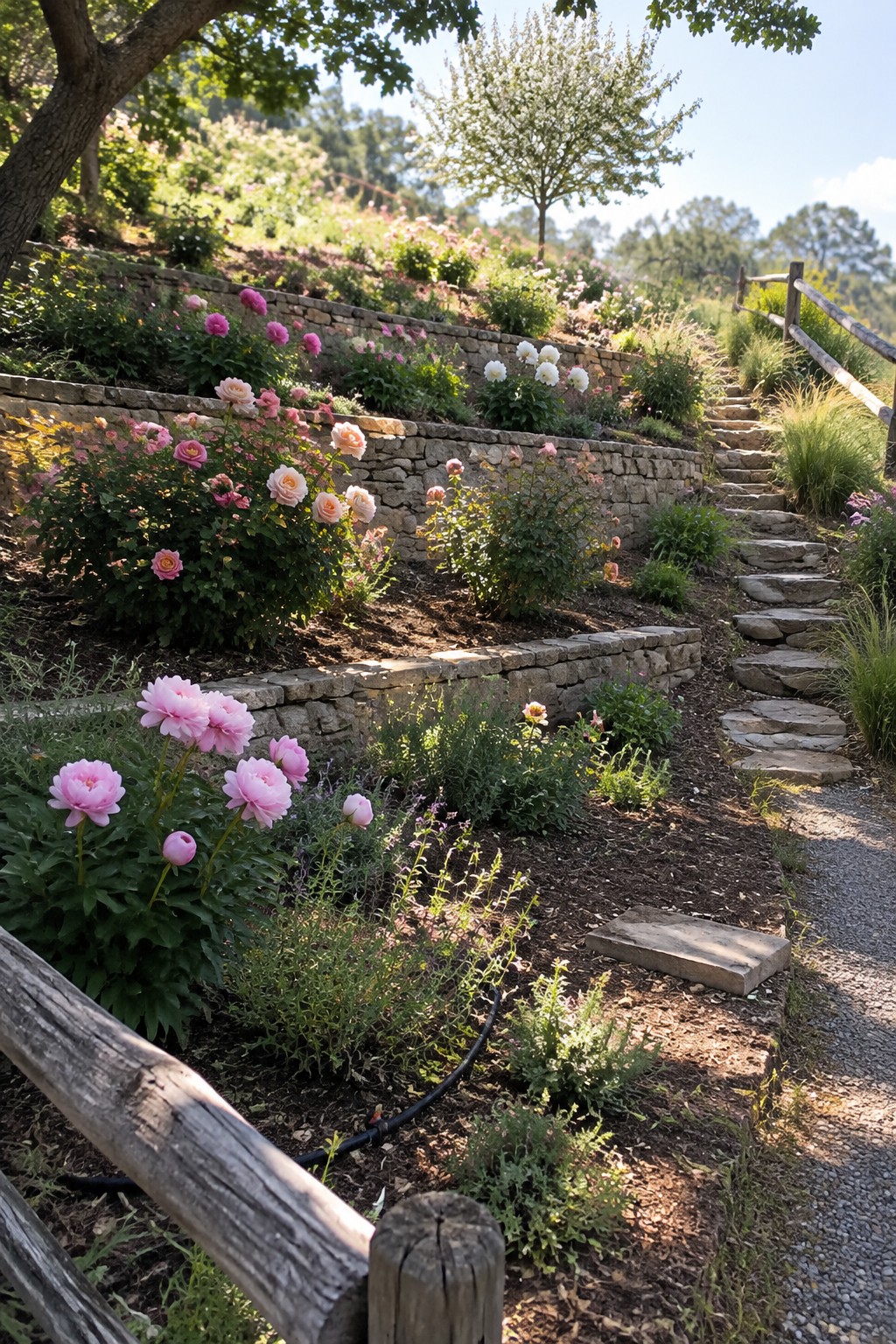
Terraced flower beds make a sloping yard easier to plant and enjoy. Low stone walls create level spaces for roses and peonies, so the flowers can grow in fuller groups instead of getting lost on the hillside.
Use this approach where a slope is difficult to mow or tends to wash out. Keep the walls low enough to preserve an open feel, and add steps that make it easy to reach each bed for pruning and watering.
Let Flowers Climb Over a Garden Path
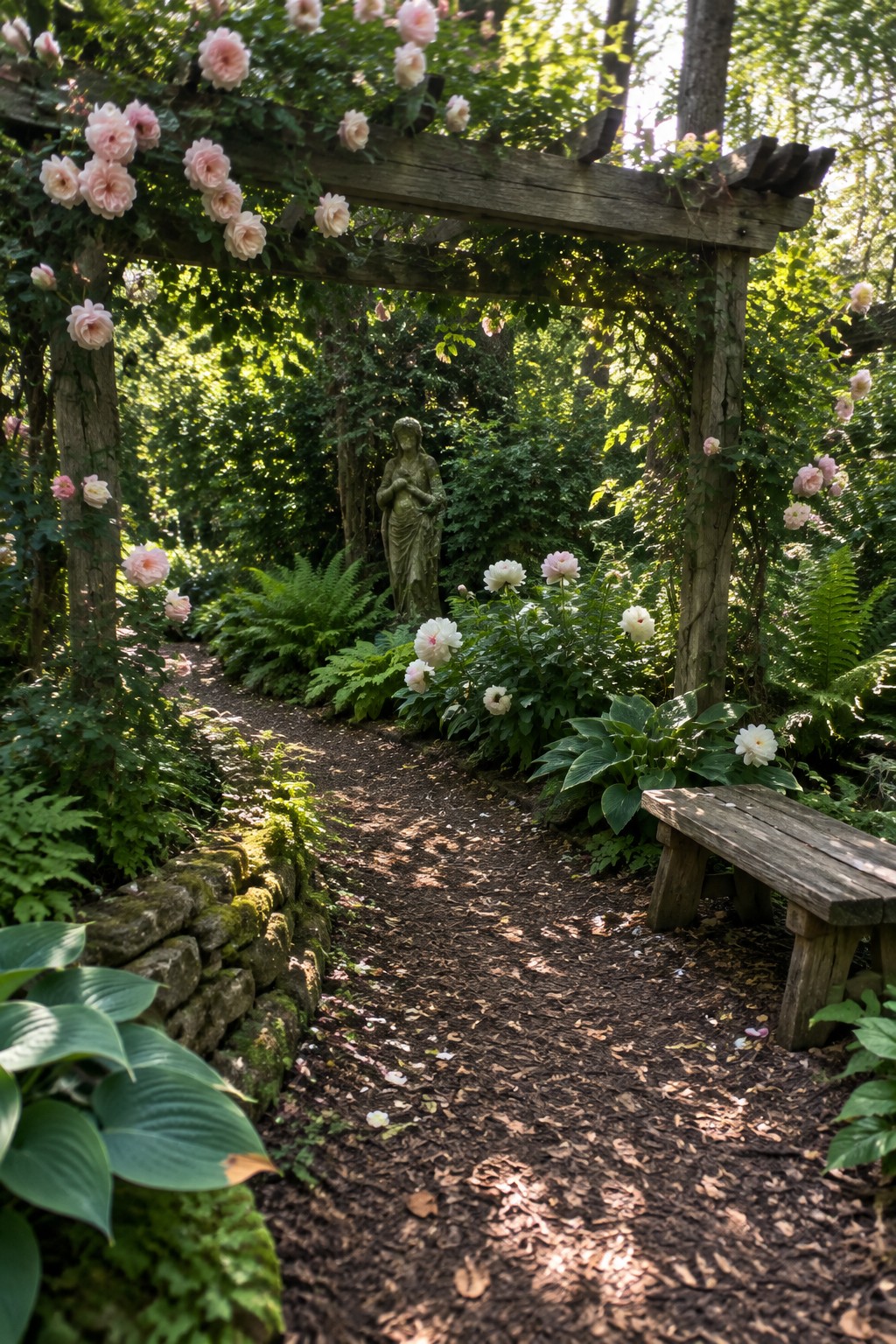
Roses trained across a simple wooden arbor make a garden path feel like a destination. The overhead planting adds structure, while flowers along the sides help the path feel connected to the rest of the garden.
Use an arbor to mark a route through a larger garden or lead to a quiet seating spot. Choose a sturdy structure and leave enough room for the roses to grow without crowding the walkway. Peonies can fill the nearby beds, but keep them back from the path so their foliage does not spill across it.
Add Roses Along a Garden Walkway
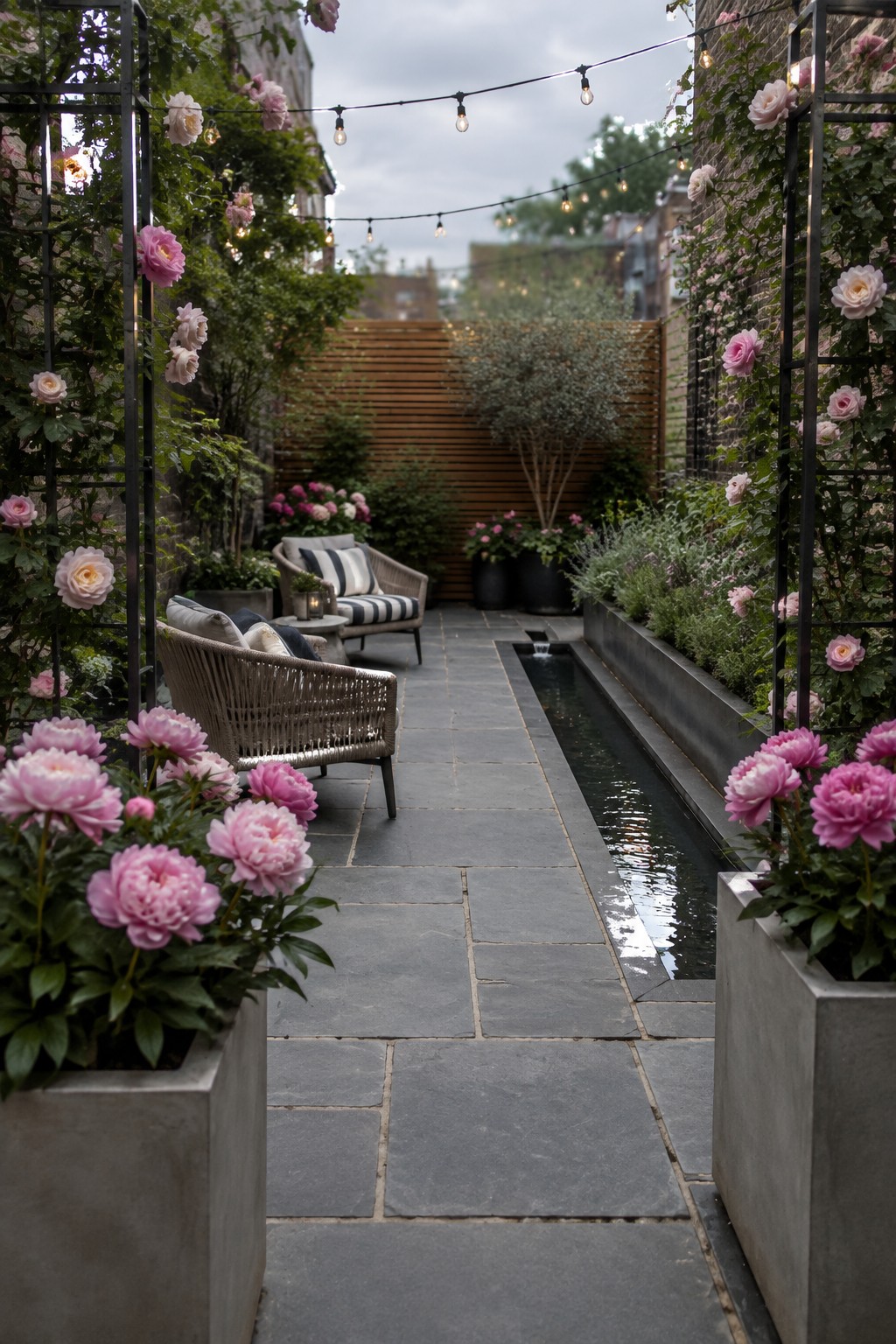
Roses can make a narrow garden path feel more tucked away without taking up the walking space. Here, climbing roses grow along trellises beside the stone walkway, giving the planting a clear structure.
Use a sturdy trellis along a wall or fence, and leave enough room for the path to stay easy to walk through. Add peonies near the front of the beds for fuller blooms, but keep them from crowding the roses.
Add Garden Lighting Along Flower Beds
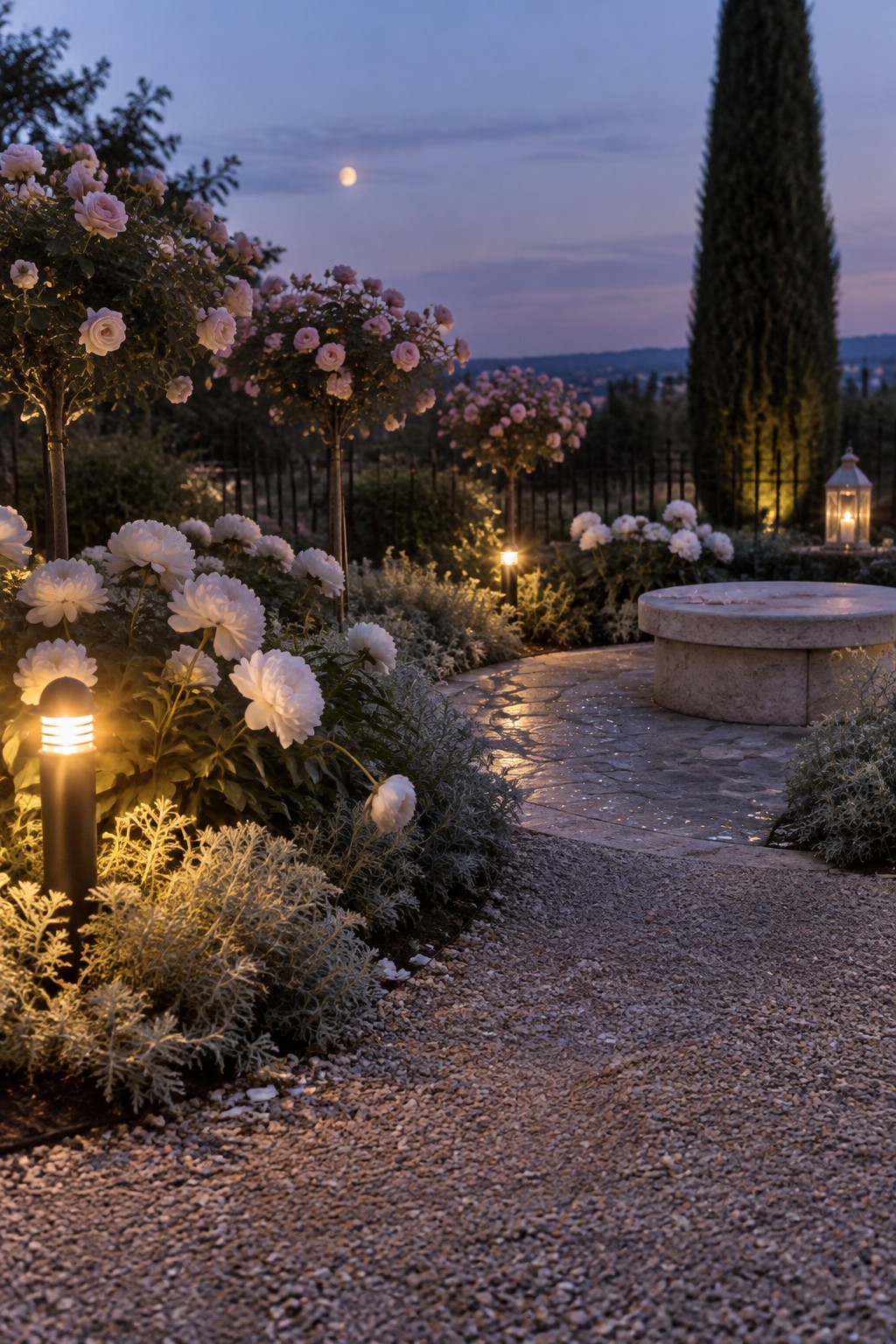
Garden lighting makes a flower path easier to use after dusk and lets the planting stay visible into the evening. Here, small low lights sit beside the beds, where they brighten the route without taking attention away from the flowers.
Place fixtures along the edge of a gravel or stone path, spacing them out rather than lining every inch. Low, shielded lights work well near roses and peonies because they guide the way without shining directly into the blooms.
Plant Roses Along a Stepping-Stone Path
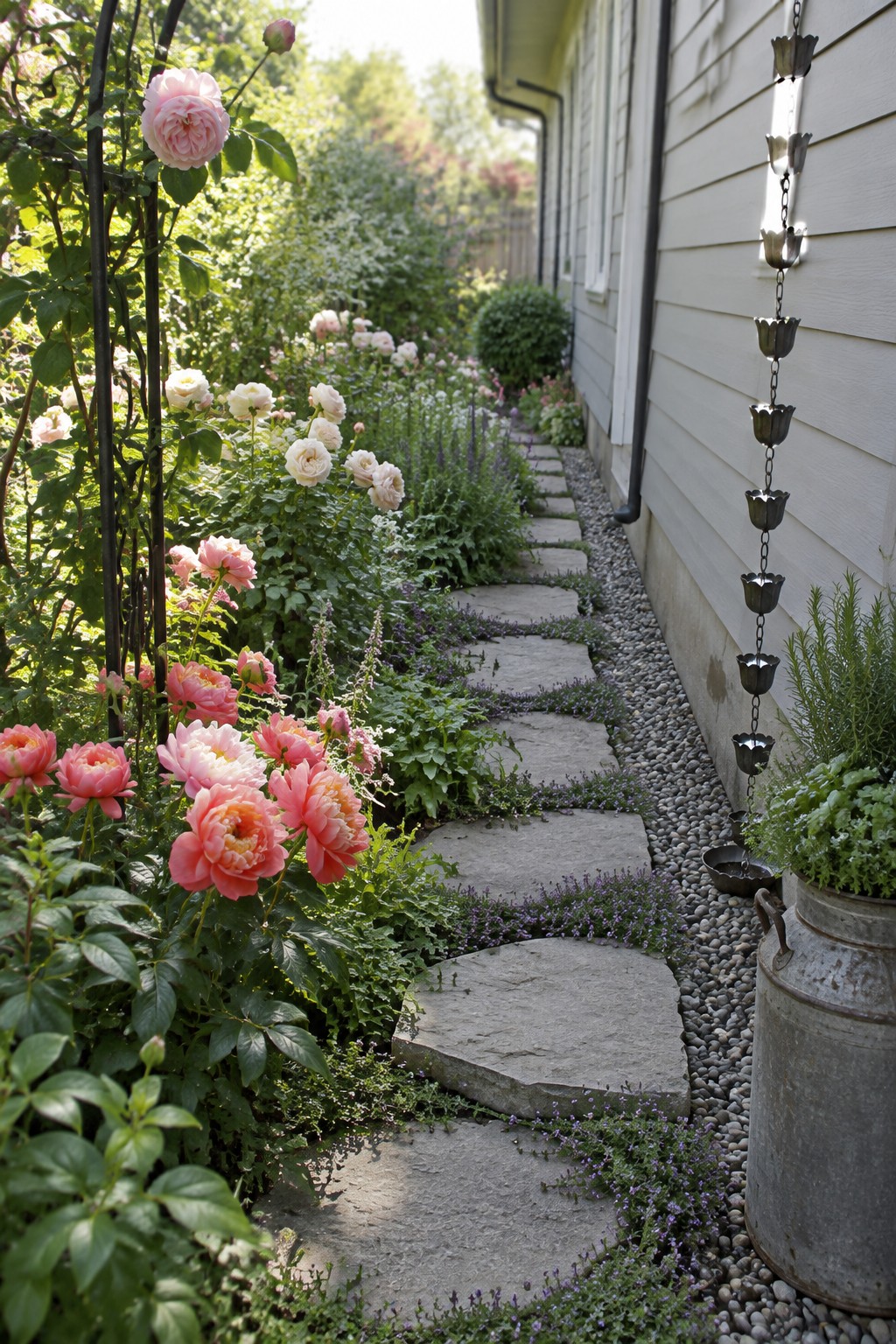
A stepping-stone path lets you move through a flower bed without cutting off the view of the roses. The irregular stones feel at home in a cottage-style garden, while low-growing flowers between them help the path blend into the planting.
Use this layout beside a house or along a narrow garden bed, leaving enough room to walk comfortably. Plant roses along one side or both, and keep groundcover around the stones trimmed so the walking surface stays clear.
Plant Roses and Peonies Along a Garden Path
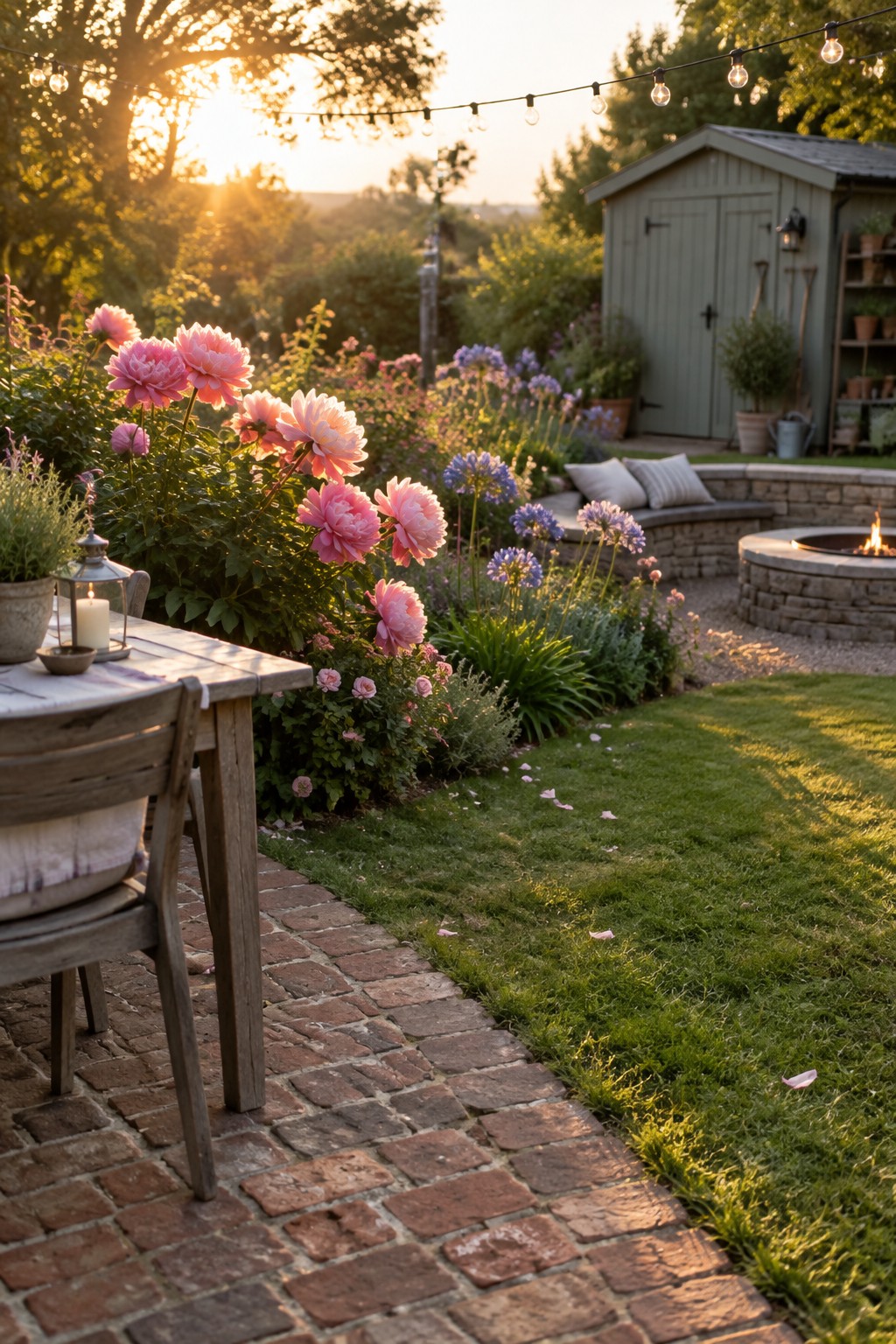
A brick path through a flower bed makes a garden easier to enjoy without taking attention away from the plants. Roses and peonies can spill along its edges, giving the path a relaxed, cottage-garden feel.
Use reclaimed or weathered brick for a less formal look, and leave enough room for blooms to grow without narrowing the walking space. This approach works well beside a patio or through a small garden, where a clear route helps keep the planting accessible.
Make Flower Beds Part of the Poolside
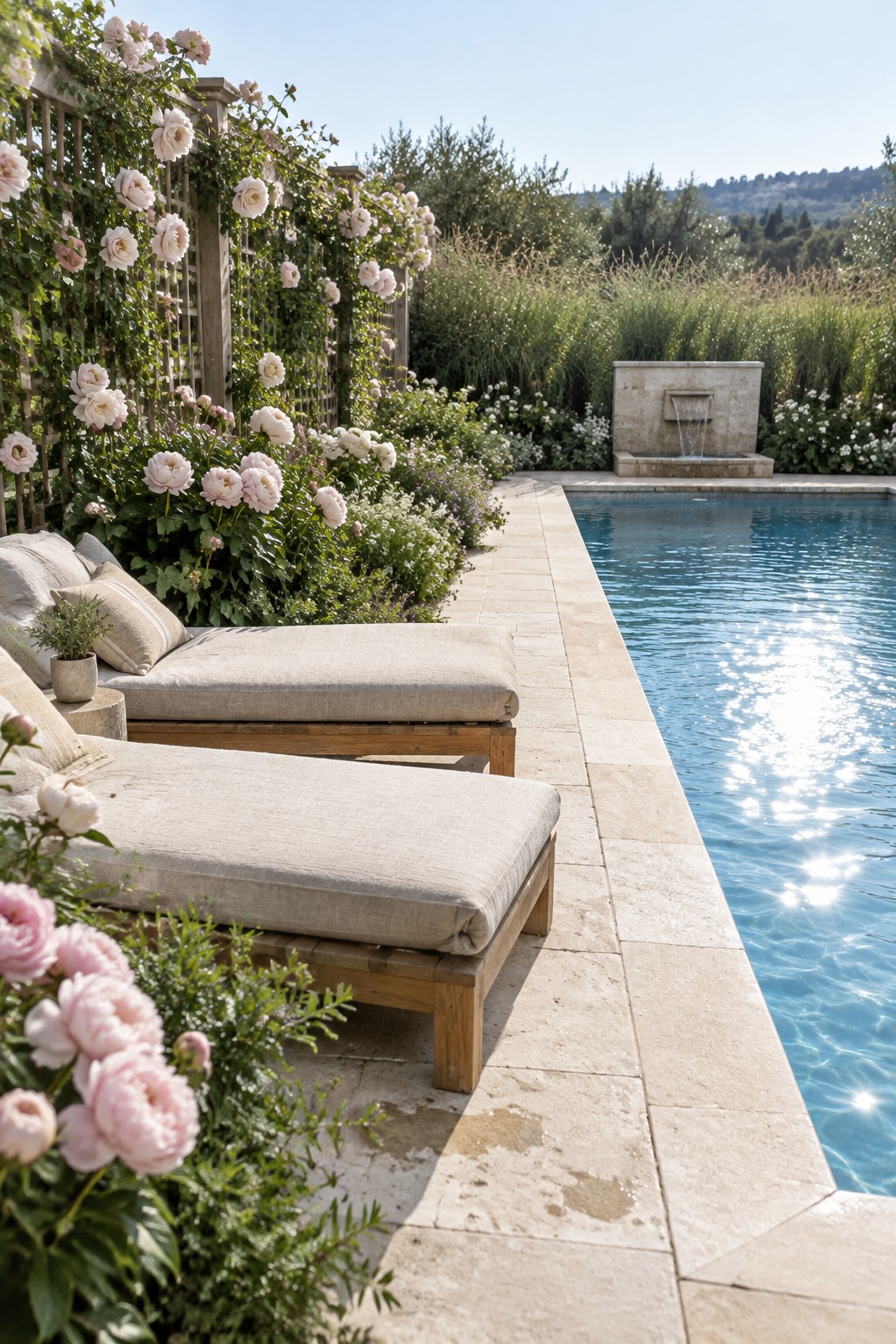
Planting roses and peonies along a pool patio makes the garden feel connected to the place where people sit and swim. A rose-covered trellis beside the loungers adds height and keeps the flowers close without taking over the paved area.
This approach works best where the flower bed has enough room to spread along the edge of the patio. Leave a clear path around the pool, and choose plants suited to the sun and any splashing they may get.
Use a Garden Gate to Welcome Visitors

A small gate gives a flower garden a clear entrance and makes the path feel like a place to wander, rather than just a way through the yard. Here, the white picket gate sits beside a curved cobbled path and abundant roses, a simple combination that suits a cottage garden.
Use this idea where a path meets a front garden or a tucked-away side yard. Keep the gate easy to open and leave enough room for plants so roses do not crowd the entrance.
Grow Roses and Peonies Along Garden Steps
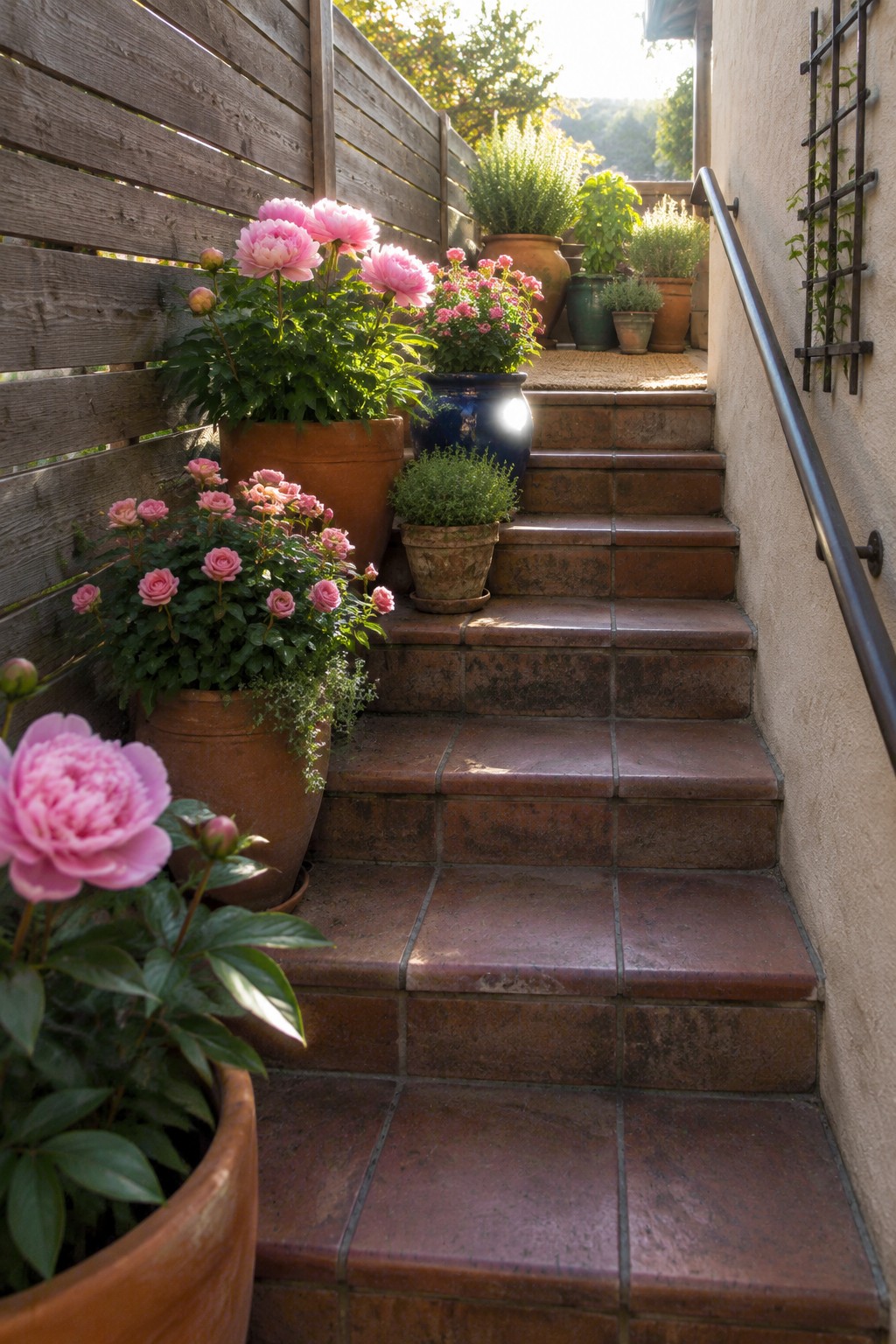
Terraced steps can make a small flower garden feel more layered and easier to explore. Planting roses and peonies along the sides brings flowers close to the route without taking up the walking space.
Choose compact varieties and leave enough room for people to use the steps comfortably. Pots can help define the edges, but keep them clear of the stair treads and handrail.
Plant Roses and Peonies in Raised Garden Beds

Raised beds make it easier to give roses and peonies their own space while keeping the planting organized. Here, a long wooden bed runs beside a gravel path, so flowers can fill the garden without closing off the walkway.
Use raised beds where the ground is difficult to work or where you want a clear edge along a path. Leave enough room for mature plants to spread, and make sure the beds have good drainage before planting.
Make a Rose-Covered Courtyard Feel Like a Garden Room
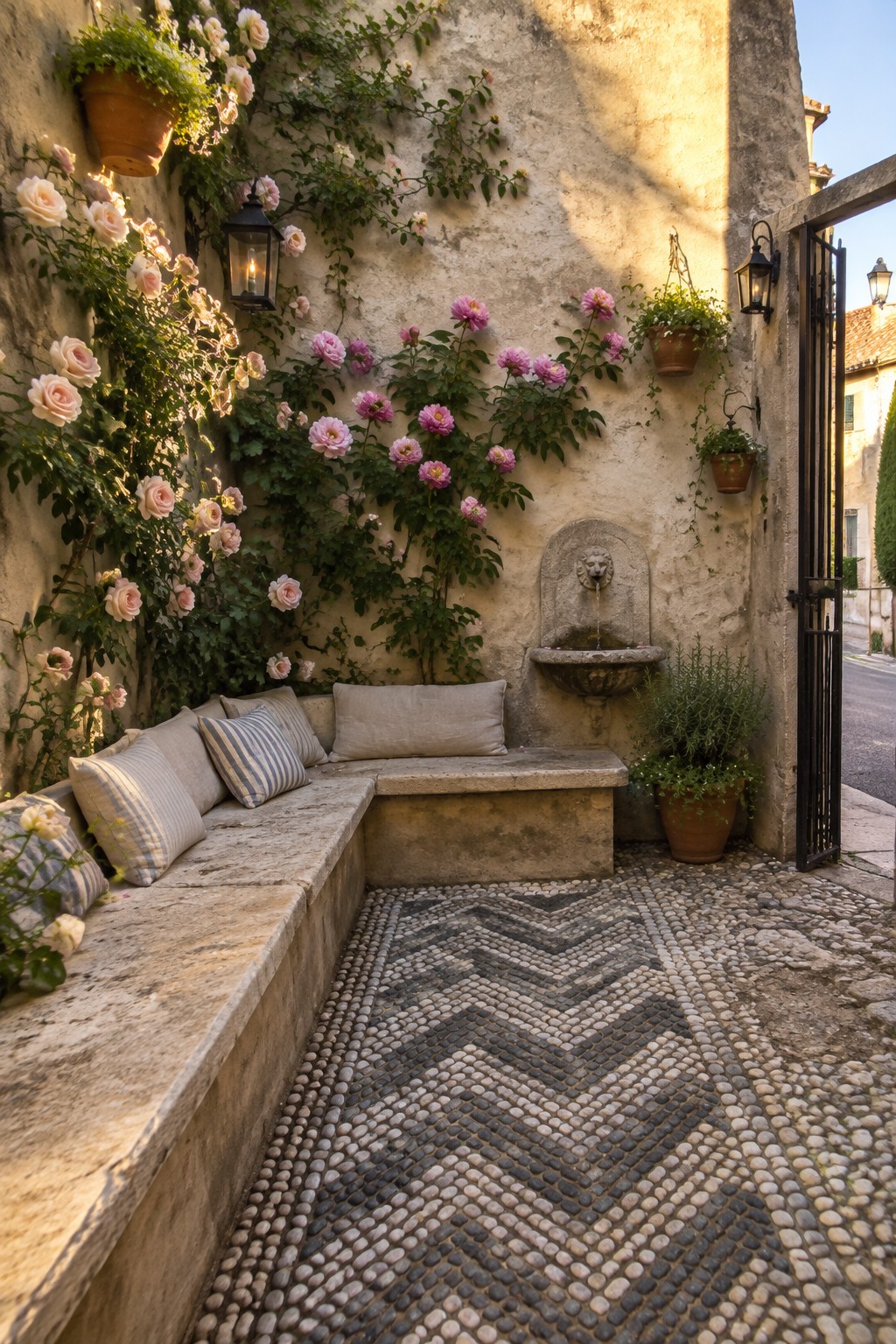
A built-in stone bench can make a small courtyard feel like a place to linger, rather than just a passage through the garden. Climbing roses bring the planting close to the seating, while the bench gives the flowers a practical purpose beyond their looks.
This setup suits a walled patio or narrow outdoor space where there isn’t room for much furniture. Let roses grow on a sturdy support near the seat, but leave enough space to sit comfortably and keep thorns away from cushions.
Use a Bench to Make a Flower Garden More Welcoming
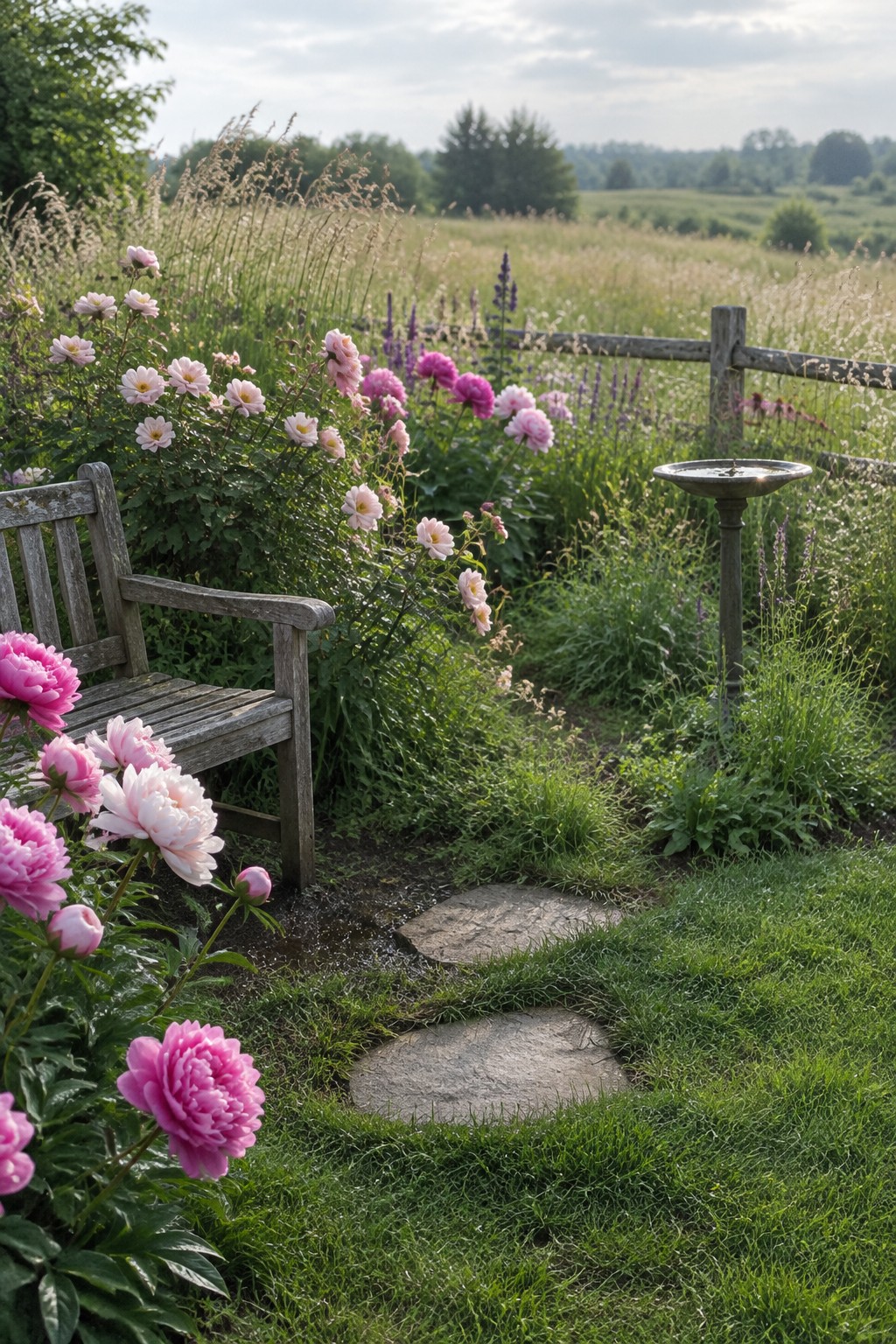
A simple bench gives a flower garden a place to pause and enjoy the planting. Set near a bed of roses or peonies, it can make the garden feel like a space to spend time in, not just walk through.
Choose a sturdy bench that can handle outdoor weather, and leave enough room around it for plants to grow without crowding the seat. A spot beside a stepping-stone path works well, especially in a garden where you want to stop and take in the flowers.
Create a Flower-Filled Outdoor Dining Area
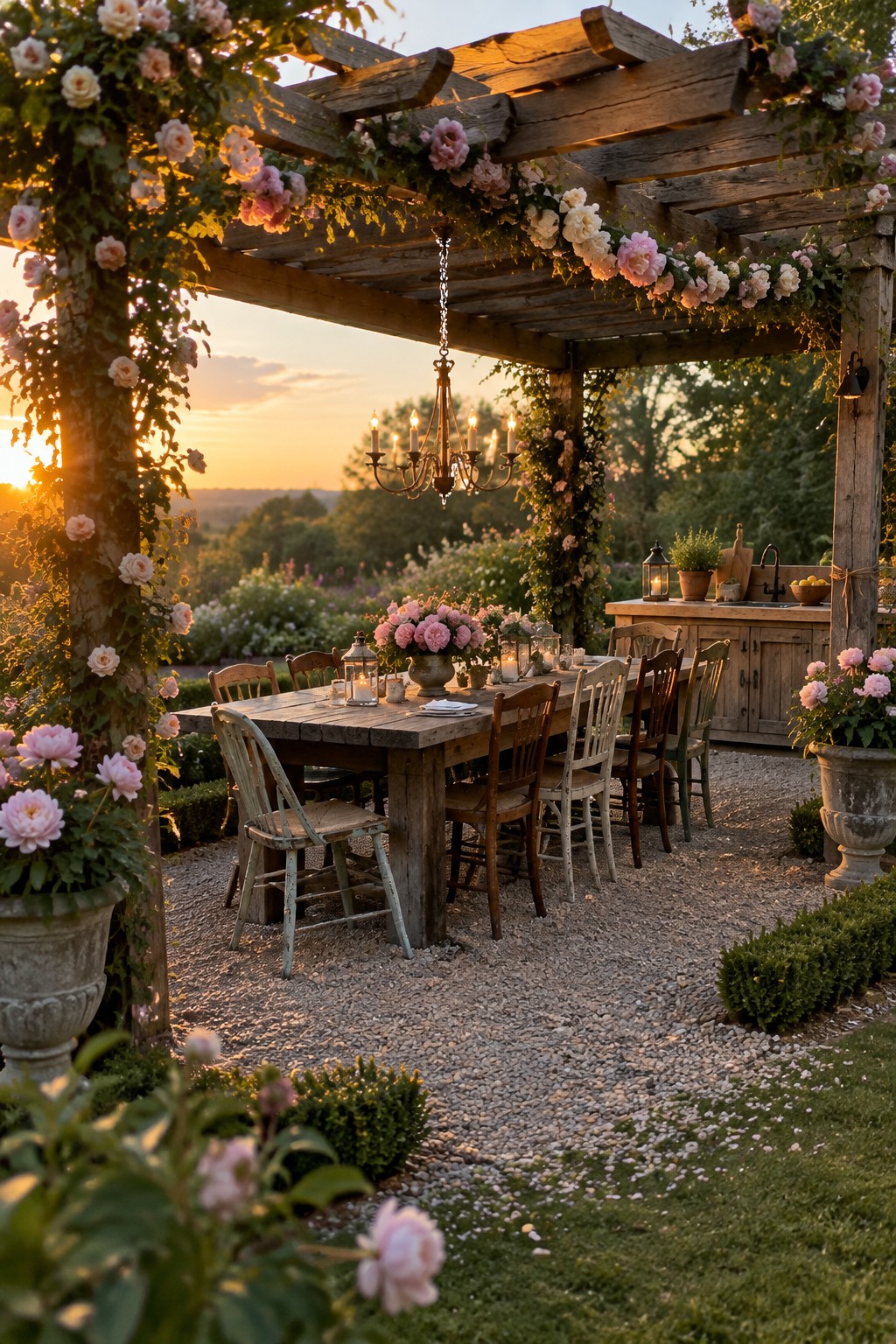
A pergola-covered dining spot can make a flower garden feel like part of everyday life. Roses and peonies growing along the posts and beams bring blooms close to the table without taking over the seating area.
This idea works well on a patio or in a roomy garden where there’s space to walk around the table. Keep the planting concentrated on the pergola, and leave enough clearance above the dining area so branches and flowers don’t get in the way.
Add a Gravel Path Through the Flower Garden
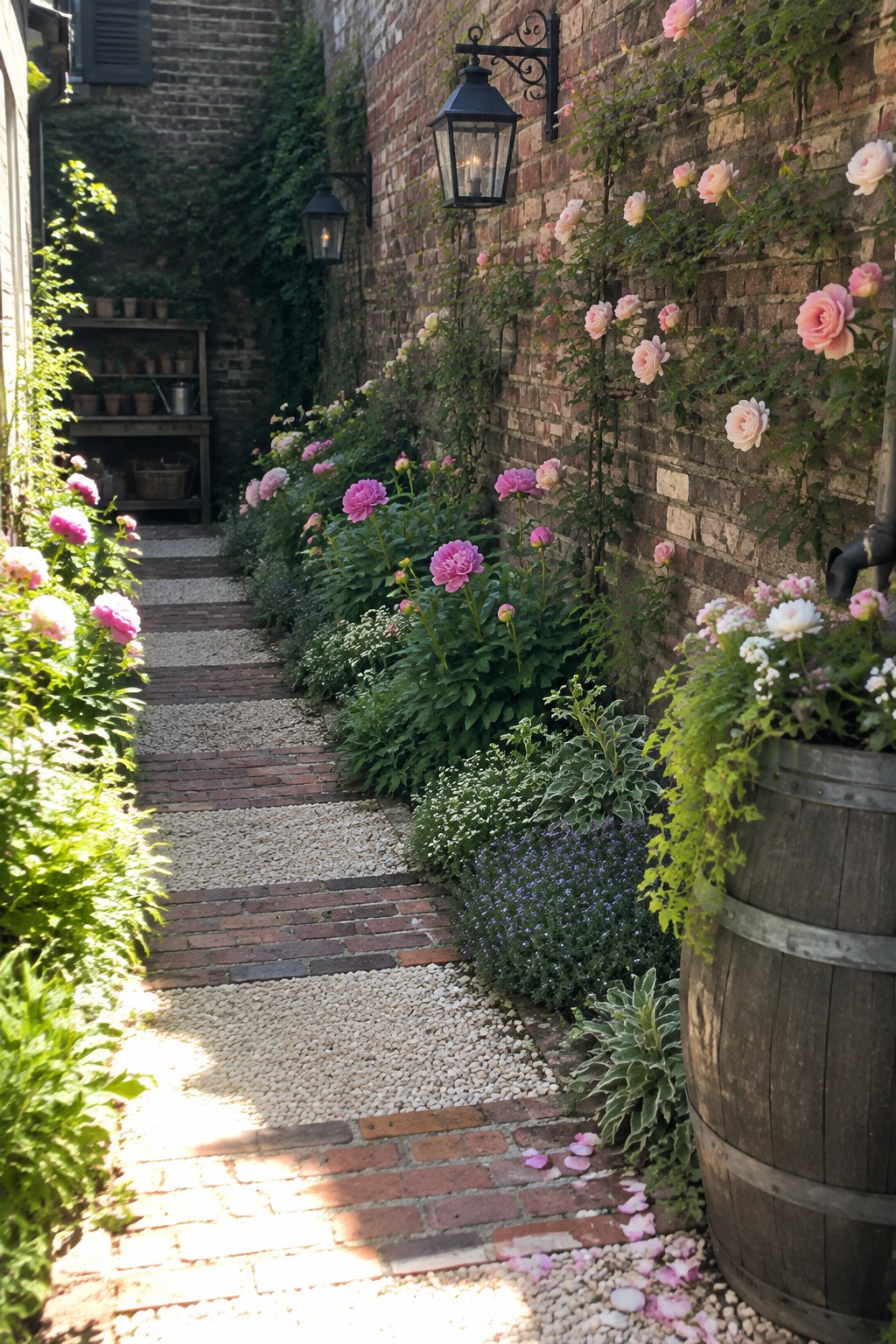
A narrow gravel path can make a flower garden easier to walk through while keeping the planting beds close by. Here, brick bands break up the pale gravel, giving the walkway a simple pattern that suits a cottage-style garden.
Use this approach in a side yard or other narrow space, and keep the path wide enough to carry a basket or pass another person. A firm, well-edged base helps keep the gravel in place, especially beside dense planting.
Use Stone Steps to Connect a Sloped Flower Garden

Stone steps make a sloping garden easier to reach and give flower beds a clear shape. Here, the broad steps lead up through roses and peonies toward the front door, so the garden feels connected to the house rather than tucked off to one side.
This approach suits an entry with a noticeable change in height. Keep the steps wide enough for comfortable footing, and leave room beside them for plants to spill naturally toward the path. A few sturdy groundcovers at the edges can help fill gaps without making the stairs hard to use.
Use a Straight Path to Organize Flower Beds

A straight garden path gives a flower garden a clear shape and makes it easy to walk through. Here, the gravel walkway runs between beds of roses and peonies, while the brick edging keeps the planting neatly contained.
This layout suits a formal garden or a long, narrow yard. Use a durable edging material to hold the path’s shape, and leave enough room for flowers to grow without spilling into the walking space.
Layer Roses and Peonies Along a Stone Garden Wall
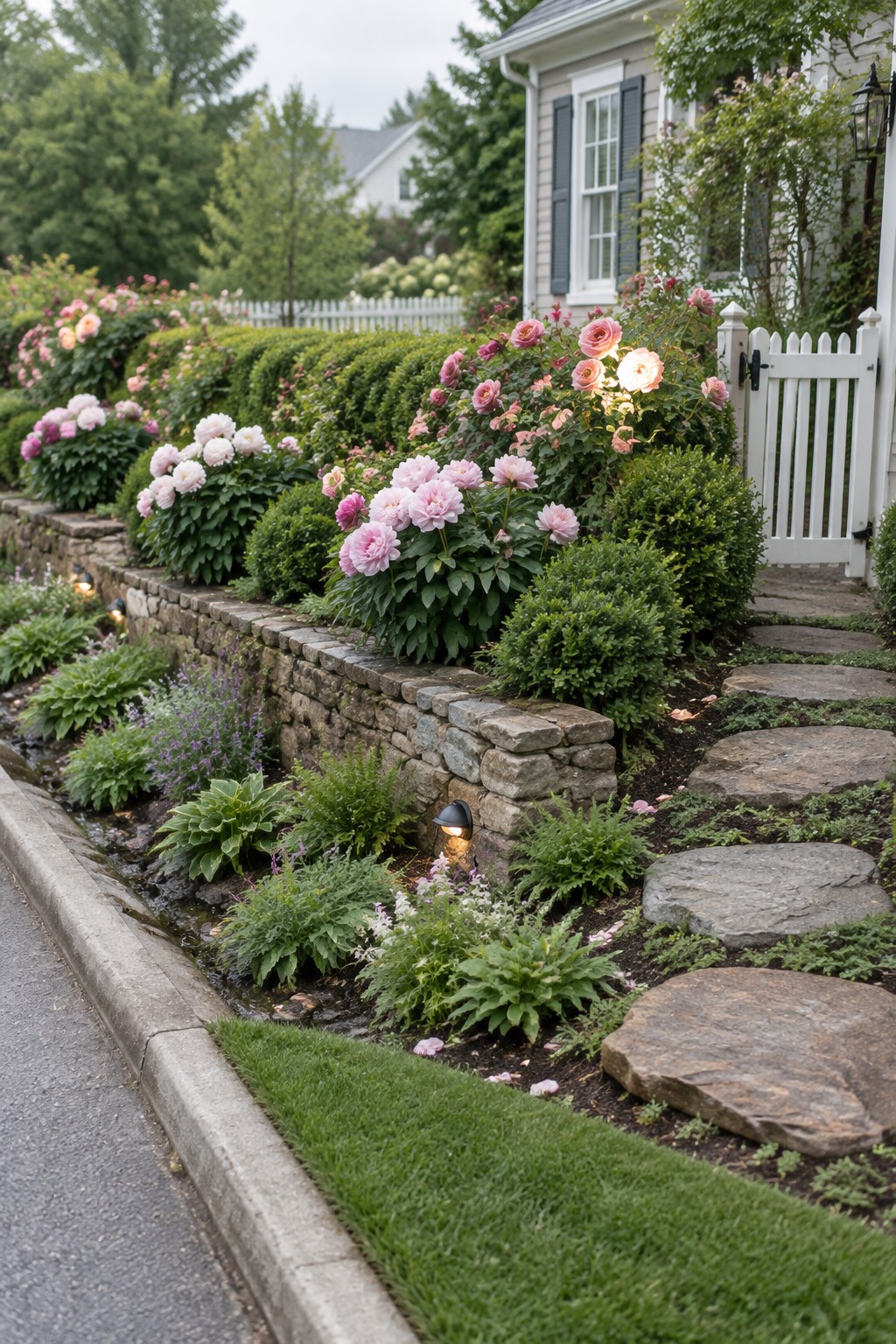
A low stone wall is a useful way to build a flower garden on a slope. It holds the bed in place while giving roses and peonies room to grow in a clear, layered arrangement.
Use shrubs or other compact plants near the wall, then place taller flowering plants behind them. Roses and peonies suit a cottage-style yard, but leave enough space between them for air to circulate and for regular pruning.
Grow Roses and Peonies in Rooftop Planters
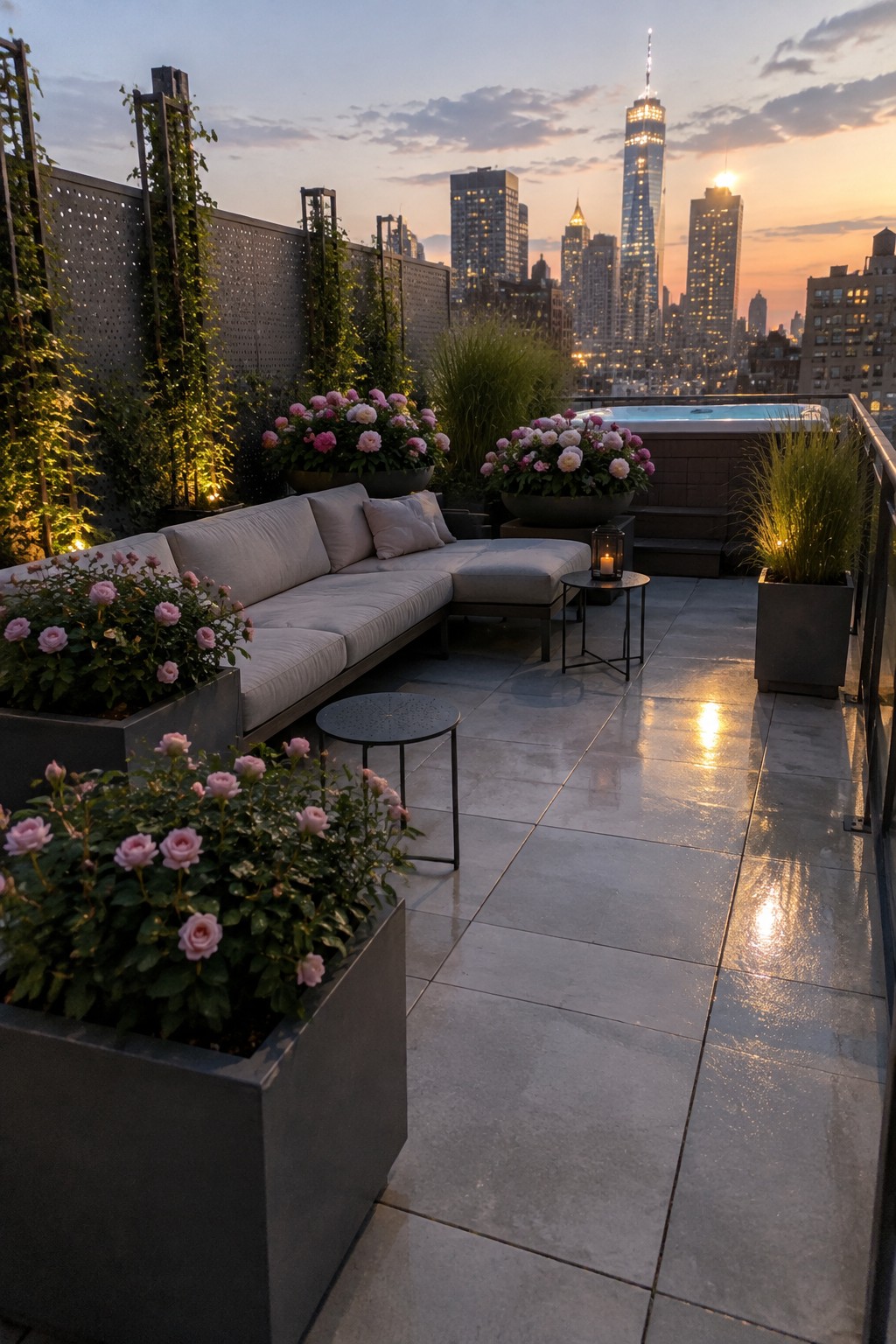
Large planters make it possible to bring flowering shrubs to a rooftop or terrace where there may be no garden bed. Roses and peonies add plenty of color, while grouped containers give the planting a clear place alongside the seating area.
Choose deep, sturdy planters with good drainage, since both plants need room for their roots. Check the terrace’s weight limits before filling large containers, and leave enough space around them for people to move comfortably.
Use a Pergola to Shape a Romantic Garden Walk
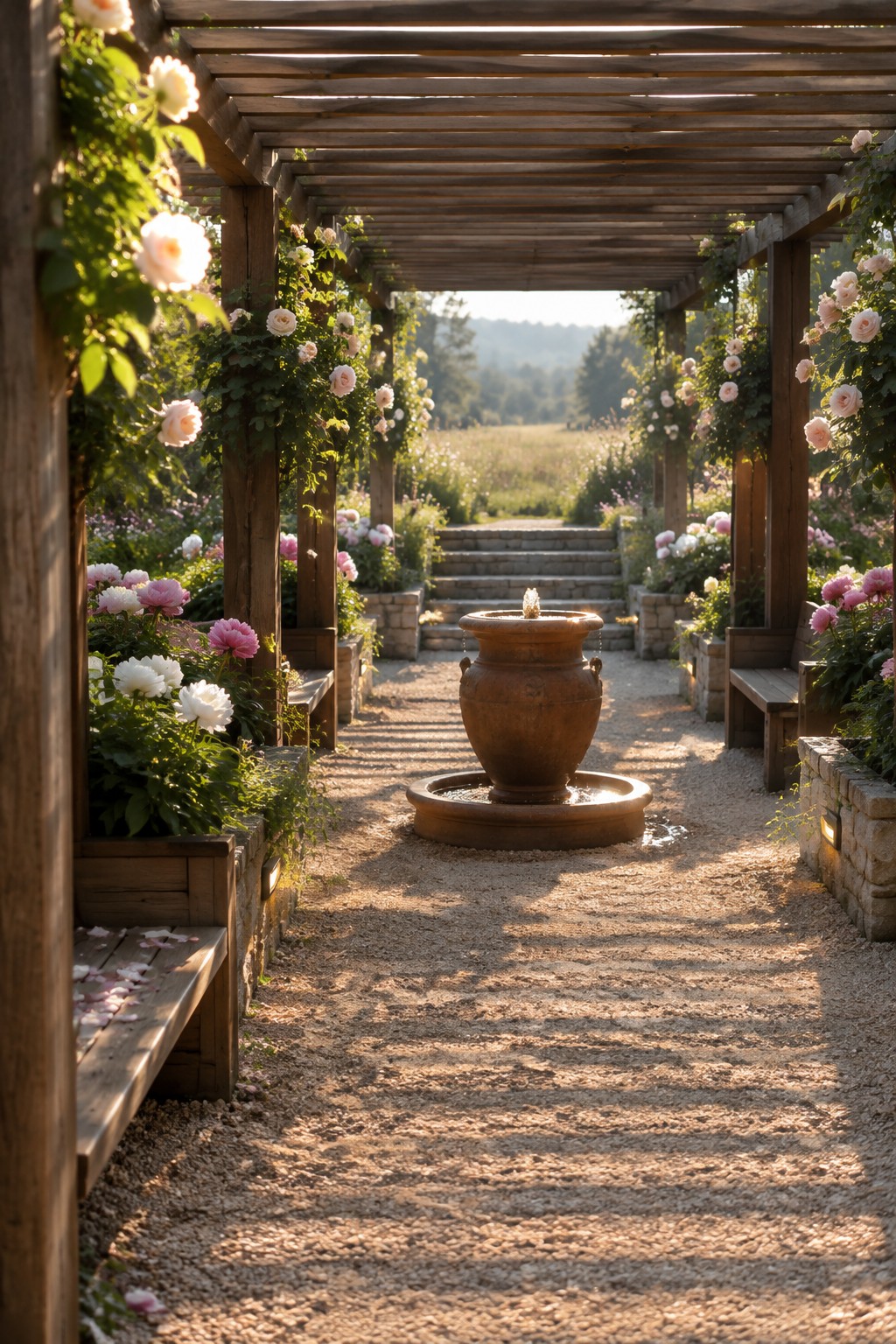
A pergola gives a flower garden a clear path to follow and a little structure as the planting grows. Here, roses climb along the wooden supports, making the walkway feel tucked into the garden without closing it off.
This idea works well along a gravel path that leads to a seating spot or a change in level. Train climbing roses along the posts and beams, but leave enough open space for easy walking and regular pruning.
Use a Garden Path to Set the Ceremony Layout
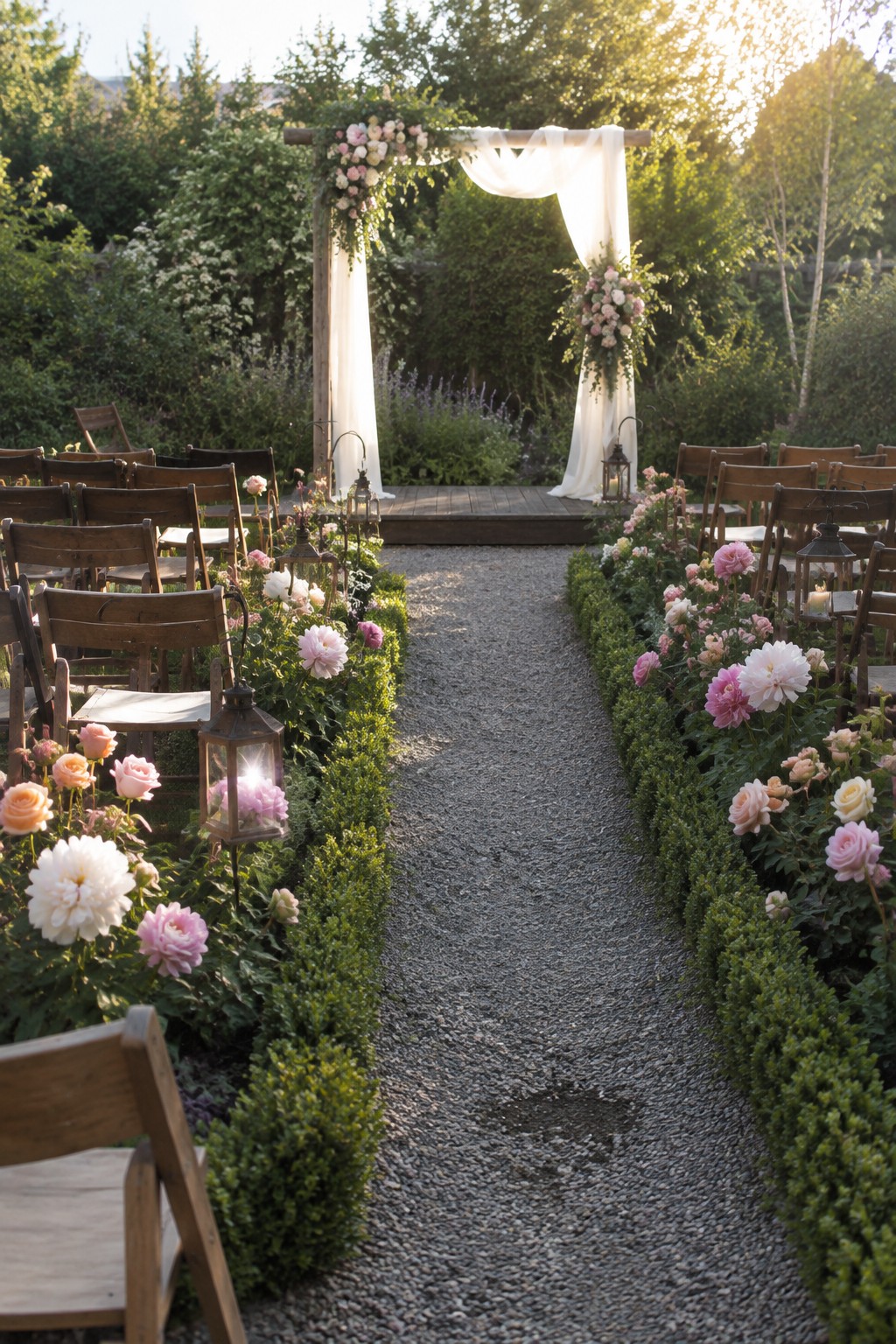
A straight gravel path gives a garden ceremony a clear center and a natural place for guests to look. Roses and peonies along the edges can make the route feel flower-filled without blocking the view of the arch.
This layout works well in a backyard or other open garden where there is room for chairs on both sides. Keep the flower beds low near the seating, and leave enough path width for people to walk comfortably.
Frequently Asked Questions
Q: How much sun do roses and peonies need in the same garden?
A: Both bloom best with plenty of sun, so choose a spot that gets about six hours or more each day. In hotter areas, a little afternoon shade can help keep blooms from fading too quickly.
Q: Can I plant roses and peonies close together?
A: Give them room for air to move between plants, rather than squeezing them into one crowded bed. Good spacing helps keep foliage healthier and makes it easier to prune roses or cut flowers.
Q: What can I plant between roses and peonies while they’re not blooming?
A: Try low-growing catmint, hardy geraniums, or soft ornamental grasses to fill gaps and keep the garden looking lively. Choose plants that won’t spread aggressively or crowd the roots.
Q: Why aren’t my peonies flowering?
A: Peonies planted too deep may grow leaves but produce few flowers. Make sure their eyes sit just below the soil surface, and give them time to settle if you recently moved them.
