

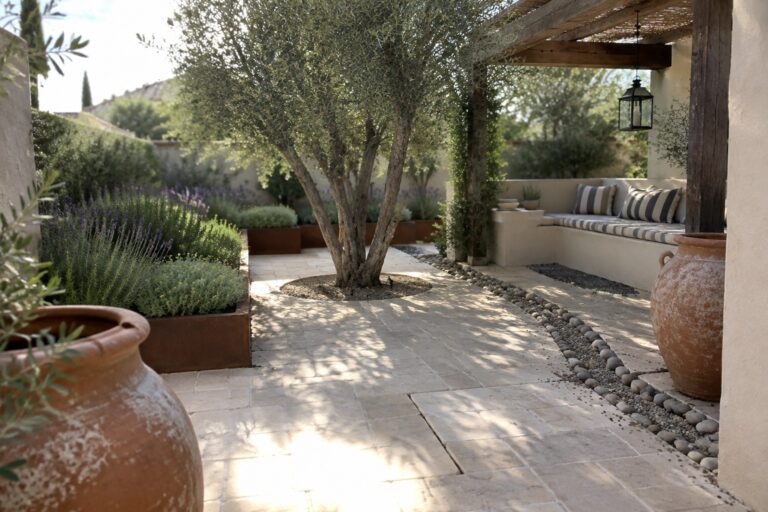
I have found that many backyards end up looking patchy after a season or two because the plants demand more water than the climate provides.
When I plan the beds around tougher plants the layout seems to hold its shape with far less intervention.
Plant choices matter more than people expect.
I keep coming back to certain low-water combinations because they let the pathways and edges stay clear without constant work.
Over time the yard starts to feel more like a steady part of the home rather than another task to manage.
Raised Metal Planters For Low Maintenance Beds
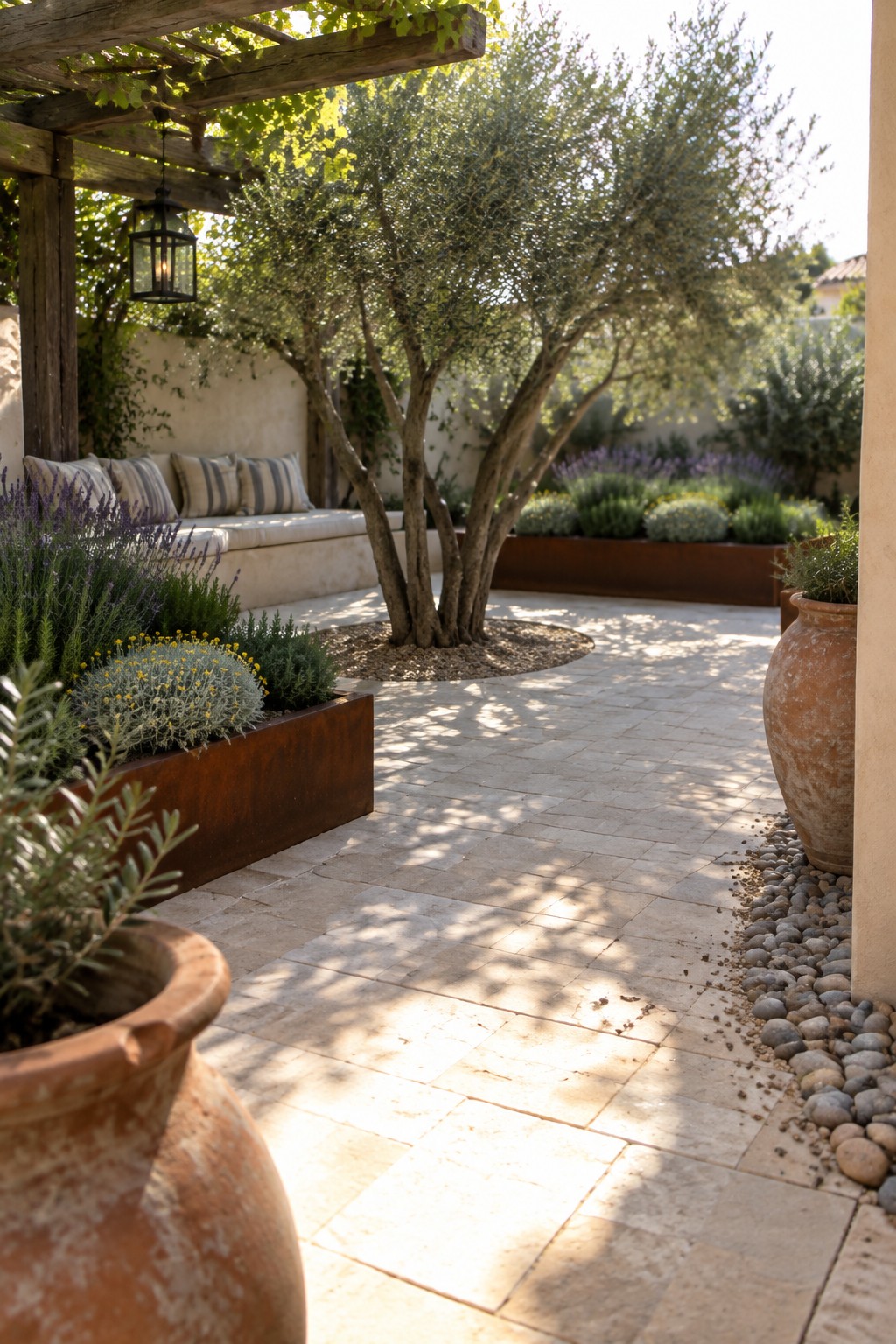
Raised metal planters give you clear boundaries for plants while cutting down on weeding and watering. They work especially well with drought tolerant choices because the soil stays contained and drains properly along a path.
You can line them up next to stone paving and add gravel around tree bases for extra weed control. This setup suits sunny backyards where you want structure without daily garden work.
Drought Tolerant Planting Along Stone Paths
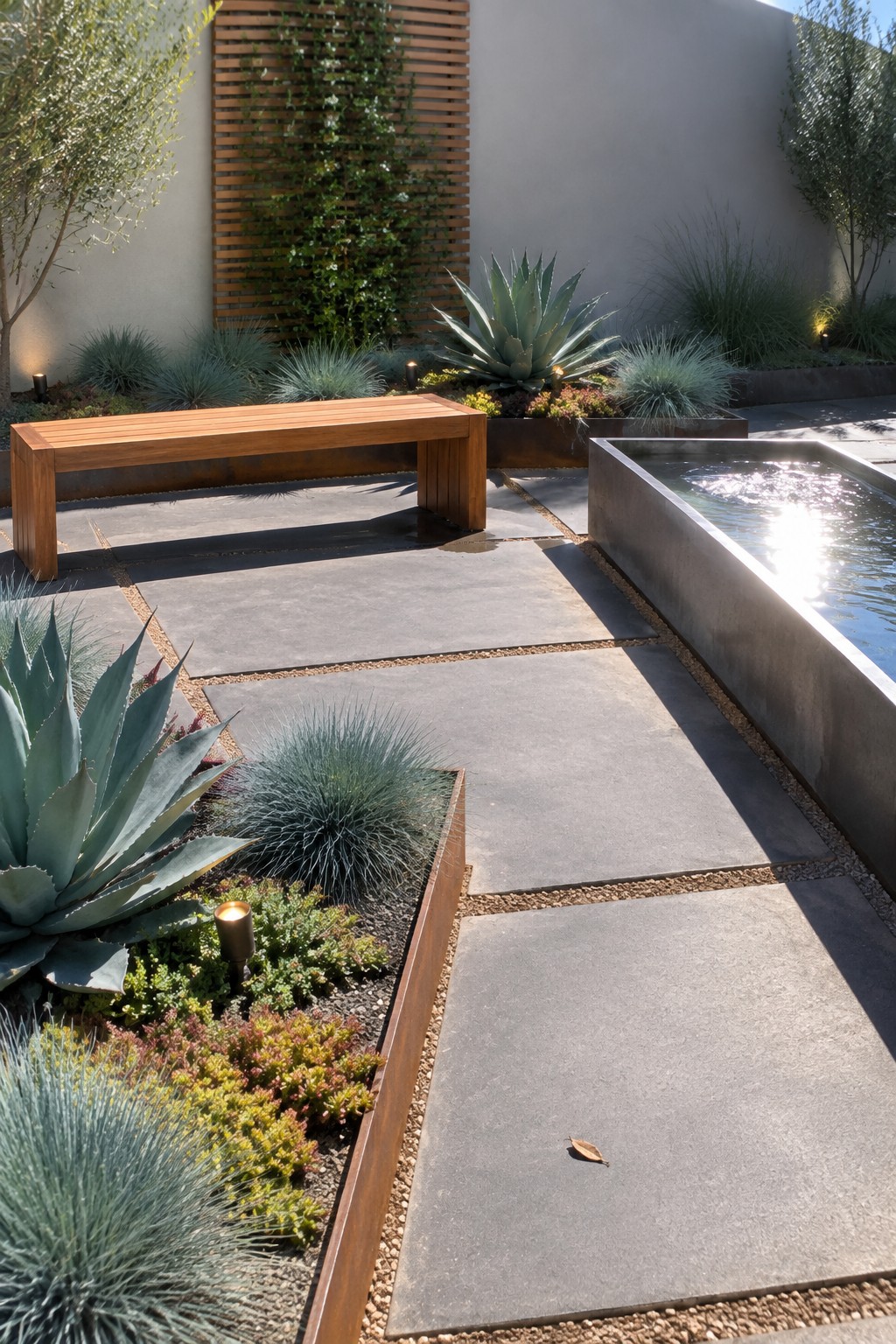
This setup works because it relies on tough plants that need little water once established. Wide stone pavers create clean walkways while the beds stay contained with simple metal edging so the whole area looks tidy without constant work.
It suits sunny backyards that get hot and dry. Group larger succulents with smaller grasses and low ground covers so the planting fills in and shades the soil. Keep the paths clear of debris and the beds will stay low maintenance for years.
Gravel Paths With Stepping Stones
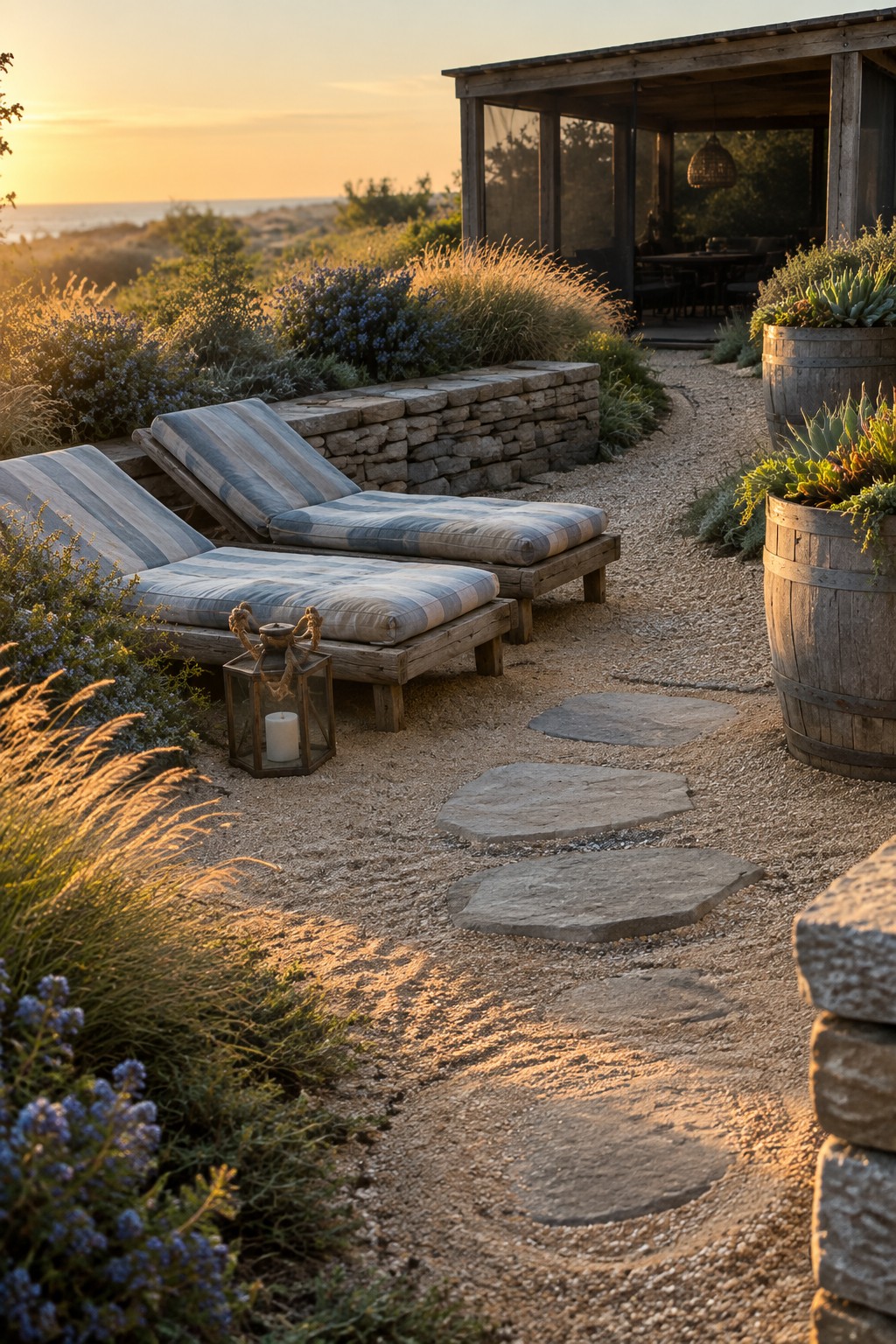
Gravel paths paired with large stepping stones work well in low-maintenance yards because they cut down on mowing and watering while still giving a clear route through the garden. The loose gravel drains quickly and lets you tuck drought-tolerant plants right up against the edges without much fuss.
This setup suits homes in dry climates or coastal areas where you want simple hardscaping that blends with native or low-water plants. Keep the stones spaced for easy walking and choose a gravel color that stays cooler underfoot.
Pebble Paths Keep Desert Gardens Low Maintenance
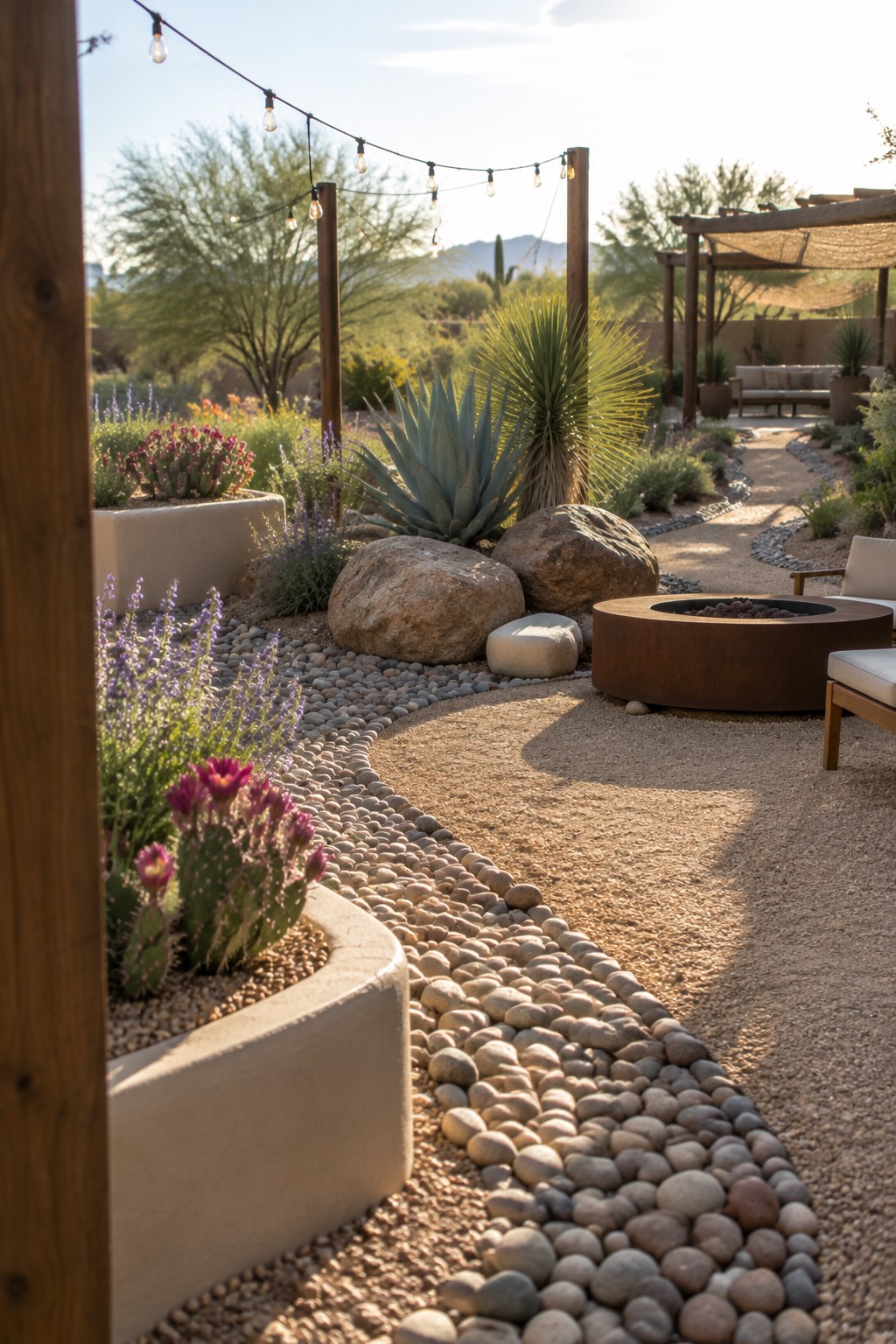
A simple path of river rock or pebbles gives structure to a dry garden without needing constant care. It drains quickly, holds up in heat, and creates clear walking routes between plantings so you do not have to step on soil or gravel beds.
This layout works best in hot, dry regions where water is limited. Keep the path a steady width, let the plants soften the edges over time, and use larger rocks to anchor the look in key spots.
Raised Metal Planters For Succulents
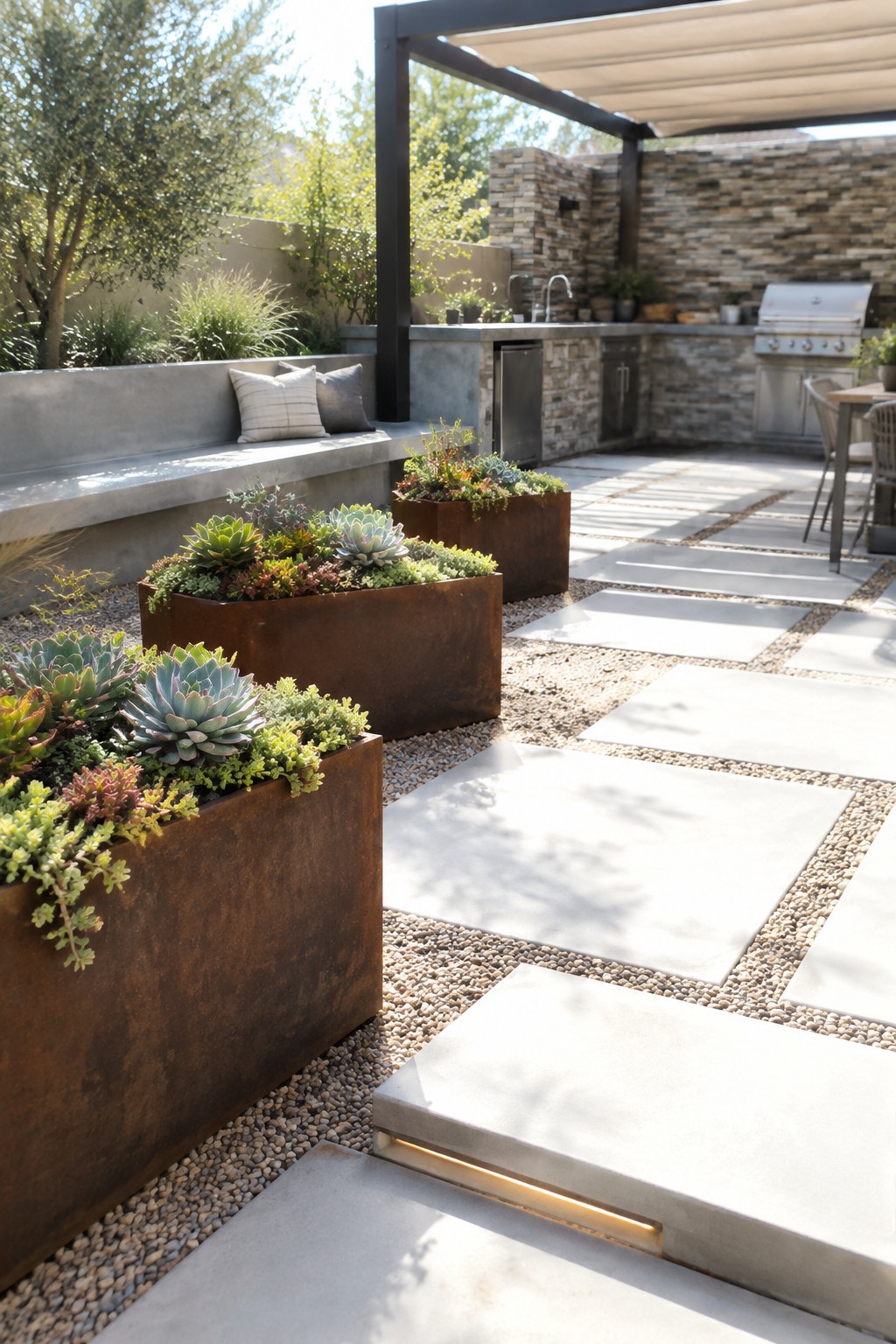
Raised metal planters give you a simple way to add drought tolerant plants without digging up the whole yard. They keep the soil contained, drain well, and let you group plants together in one spot so watering and weeding stay easy.
These planters suit patios or gravel areas where you want some greenery but do not want high upkeep. Place them along paths or near seating so the plants stay visible without needing constant care. Succulents and similar plants do best in full sun with minimal watering once they settle in.
Native Meadows Along Mulched Paths
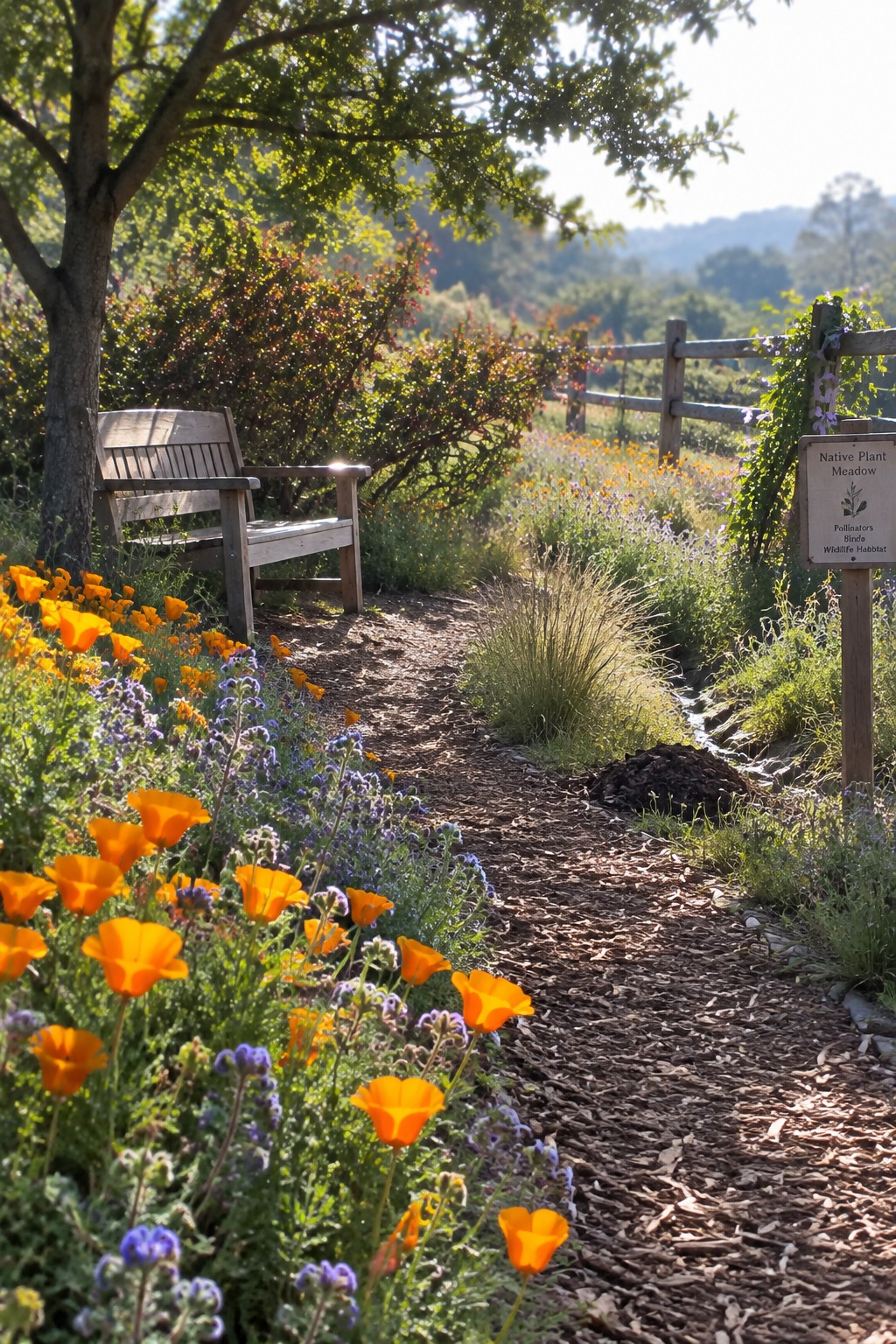
A native meadow next to a simple mulched path gives you color and movement without much upkeep. The plants handle dry spells on their own once established, and the path keeps things tidy while letting the flowers spill over naturally.
This works best in sunny yards where you can give the meadow a few feet of width on each side. Stick with a pollinator mix that includes grasses and wildflowers suited to your area, and refresh the mulch once a year to control weeds.
Raised Beds With Mediterranean Plants
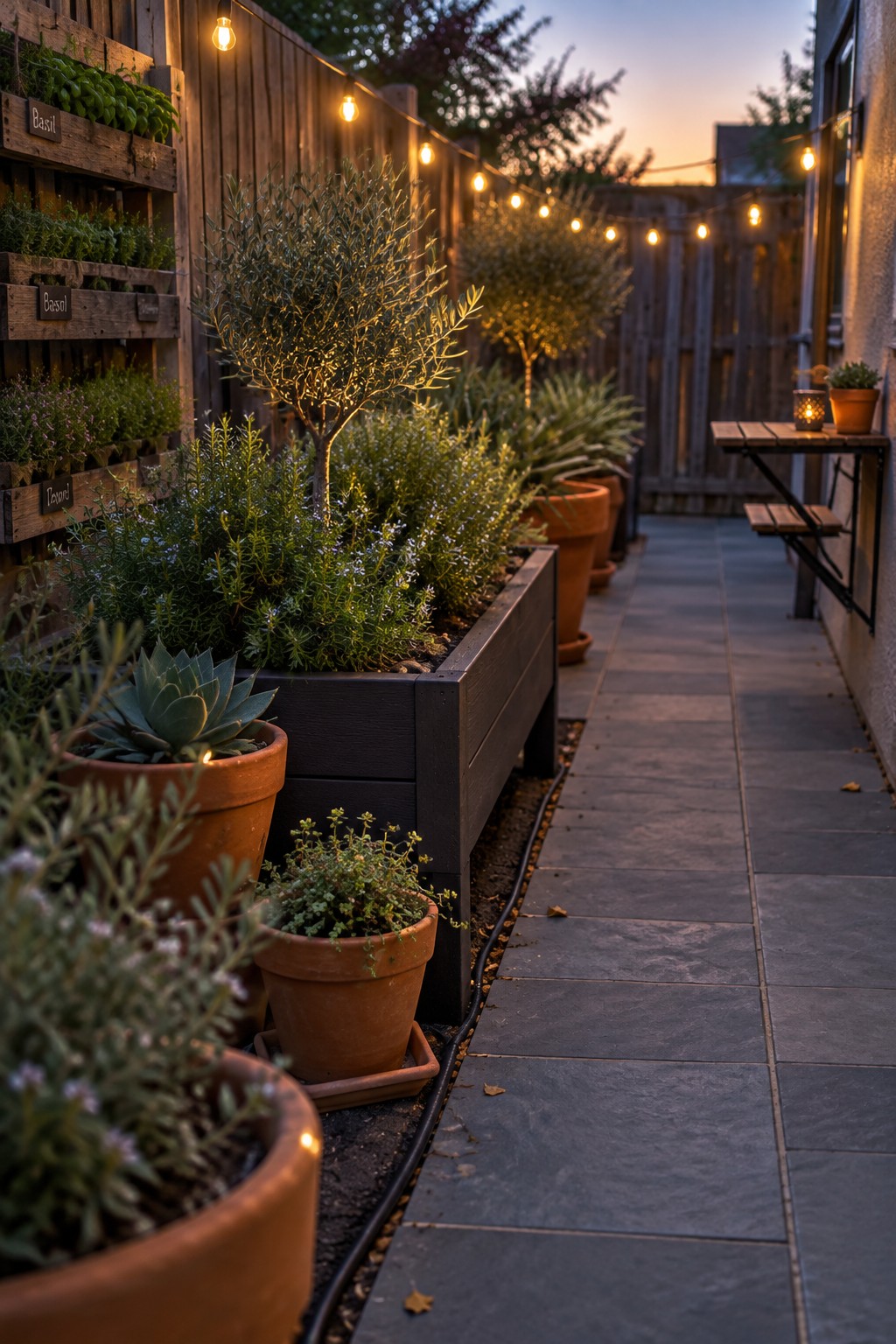
Raised beds make it simple to grow a mix of drought-tolerant plants without much fuss. They keep everything contained, improve drainage, and let you group herbs like rosemary and thyme with succulents and small trees that handle dry spells well. This setup works especially well in narrow side yards where soil might be poor.
Place the beds along a path so the plants stay easy to reach for occasional watering or trimming. Terracotta pots can fill in gaps and add a bit more flexibility if you want to move things around. The style suits most suburban homes and keeps the whole area looking full without constant upkeep.
Stone Paths Set In Gravel

Stone paths set in gravel work well in dry yards because they let water drain straight through and cut down on weeding. The plants along the edges stay healthy with little extra care, and the whole setup keeps a clean look without much effort once it is in place.
This approach suits sunny backyards in warmer regions where lawns are hard to keep. Use large flat stones for the main steps and fill the gaps with gravel so the path feels solid underfoot. Succulents and similar plants along the sides help tie everything together without needing regular watering.
Gravel Paths With Drought Tolerant Borders
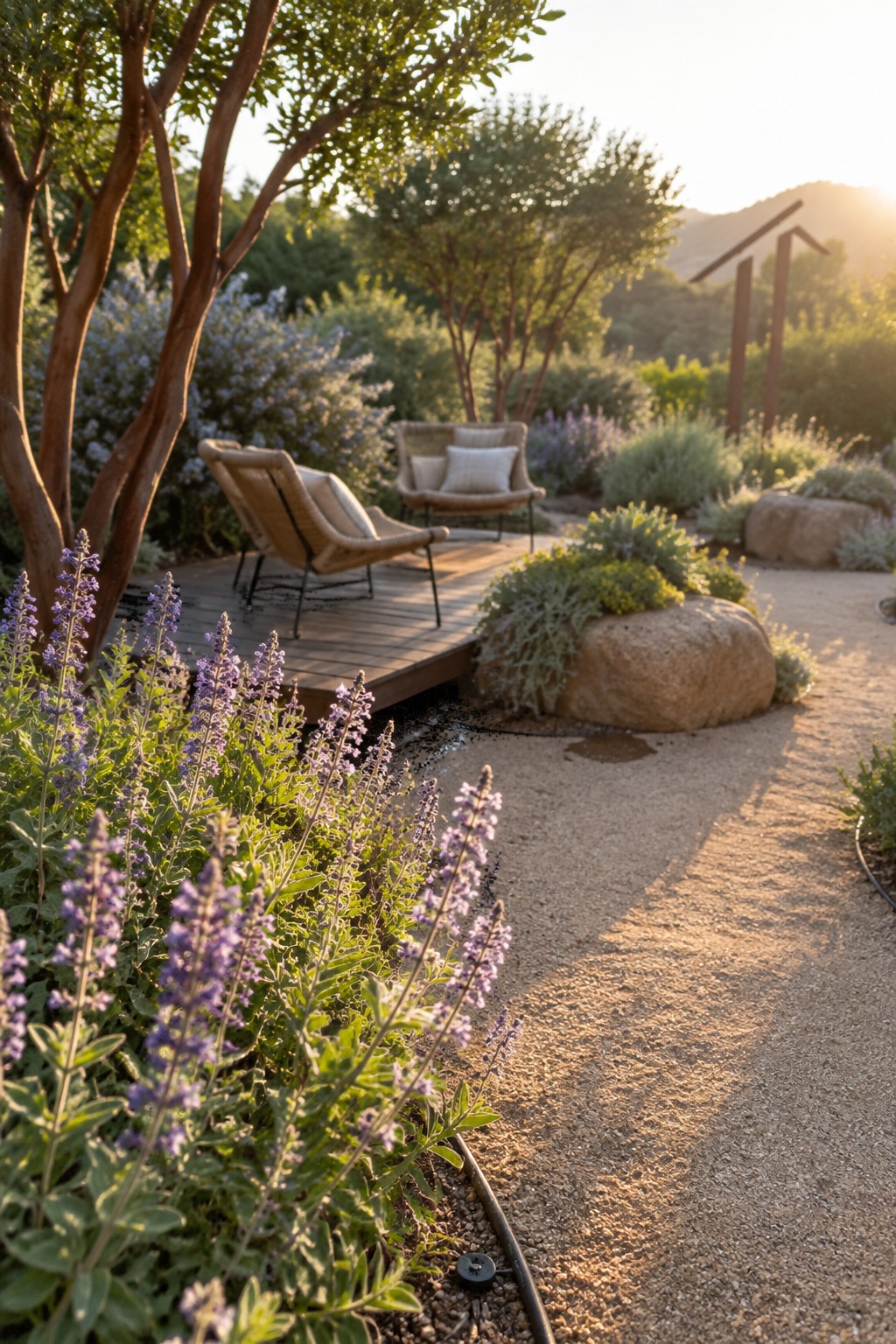
Gravel paths make sense in low water yards because they drain well and need almost no upkeep. Pairing them with tough perennials and shrubs along the edges keeps the whole area looking full without constant watering or mowing.
This works best in sunny spots where you want a simple walking route that still feels connected to the garden. Keep the beds slightly raised or edged with larger rocks so the gravel stays in place and the plants have room to spread on their own.
Gravel Beds For Low Maintenance Planting

Gravel mulch makes sense when you want drought tolerant plants without a lot of fuss. It cuts down on weeds, helps water drain away from the roots, and keeps the look neat even when things get dry.
This works best in sunny yards where you already have paving or paths in place. Keep the gravel layer a few inches deep and make sure the bed edges stay clean so the whole area stays easy to care for over time.
Flagstone Paths Edged With Lavender
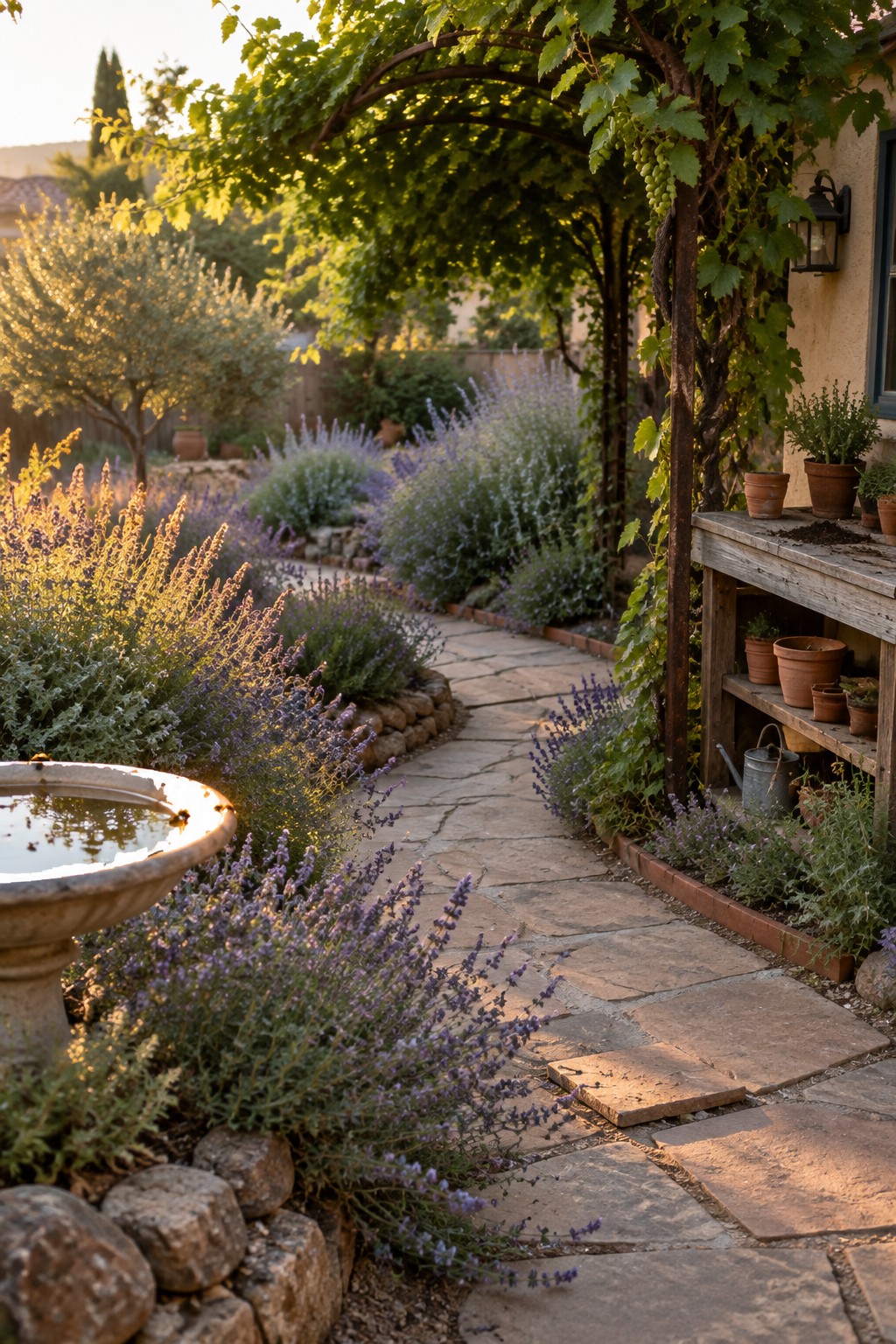
A stone path makes a garden feel more settled without adding much work. The flagstone here sits low and follows a gentle curve, letting the lavender and gray-green plants spill over the edges naturally. That soft border keeps the walkway looking intentional while cutting down on weeding and mowing.
This layout works well in full-sun yards where water is limited. Stick with tough perennials that handle dry spells, and let the path do the main organizing. Keep the beds fairly narrow so everything stays reachable for occasional trimming.
Run a Narrow Water Rill Beside Your Path

A long, straight water channel next to a paver path gives the garden a clear structure that stays neat with little work. The low plants tucked between the stones fill in naturally and need only occasional trimming, which helps the whole area feel settled without constant care.
This layout works best in sunny yards where drought-tolerant ground covers can thrive. Keep the channel simple and narrow so it does not compete with seating or larger beds, and make sure the paver spacing leaves enough room for the plants to spread without crowding the walkway.
Gravel Paths With Drought Tolerant Grasses
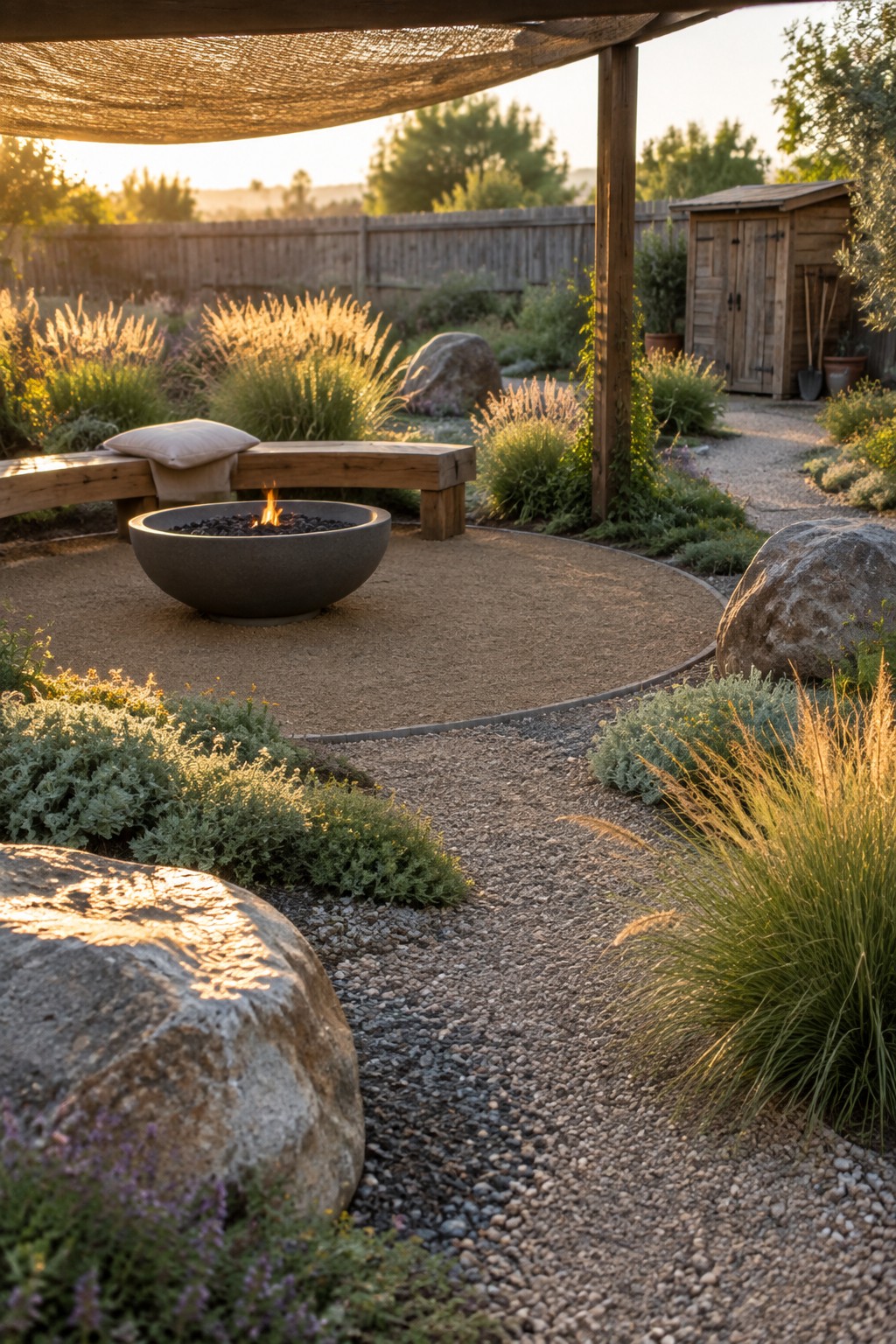
Gravel paths cut down on weeding and mowing in a backyard. They also let you use plants that handle dry spells without constant watering. The mix of fine gravel and tough grasses keeps the space looking full while staying simple to care for.
This works well in sunny yards where soil drains fast. Keep the beds wide so the grasses can spread a bit and soften the edges. Avoid tight curves that make mowing or raking harder later.
Stone Terraces For Sloped Yards
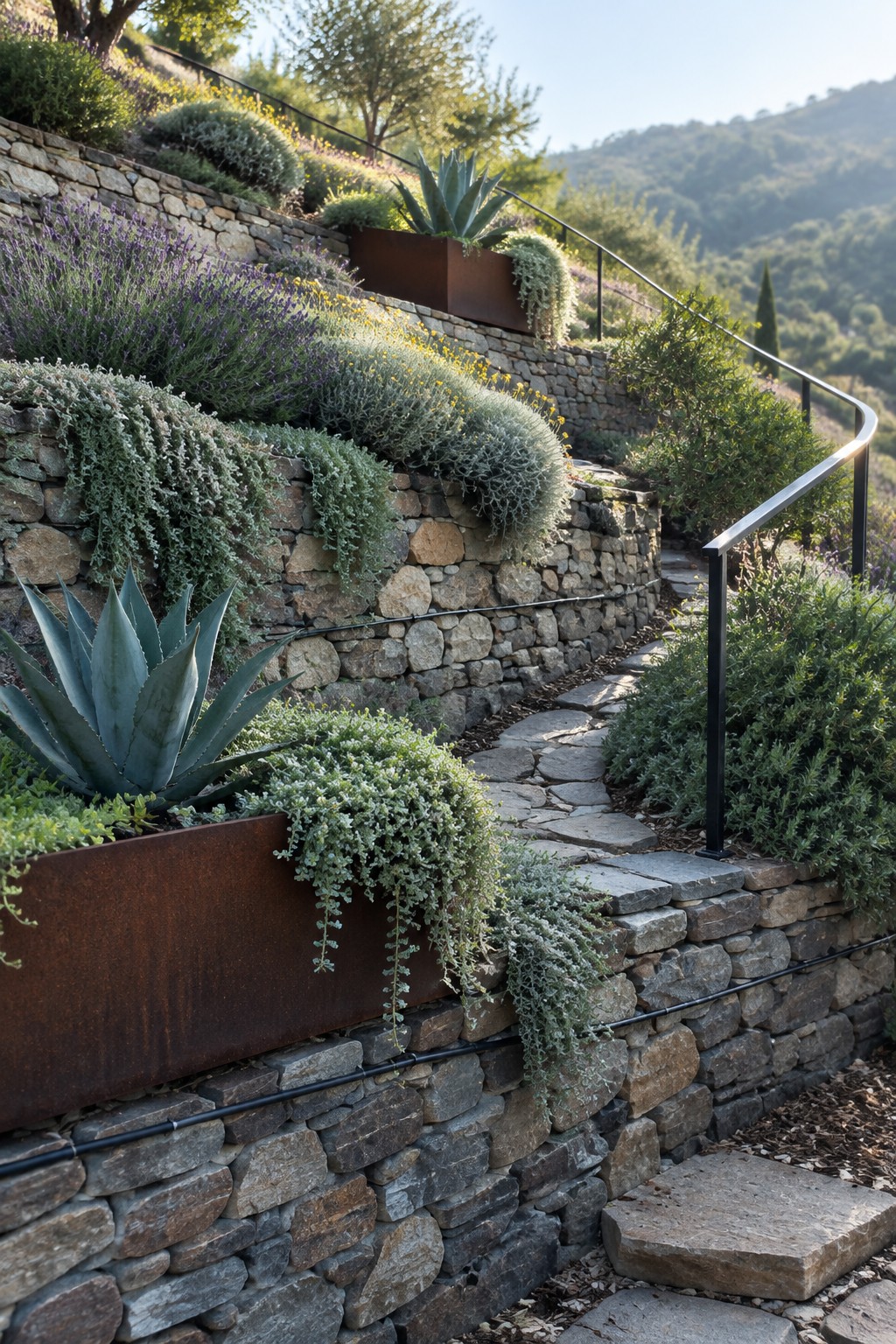
Stone walls let you turn a steep slope into flat planting areas that stay put without much upkeep. The terraces hold soil in place and give drought-tolerant plants room to spread without fighting gravity or washing away during rain.
This approach works best on hillsides where grass would be hard to maintain or water. Keep the walls modest in height and repeat the same stone so the levels feel like one garden instead of separate patches.
Gravel Beds With Potted Shrubs
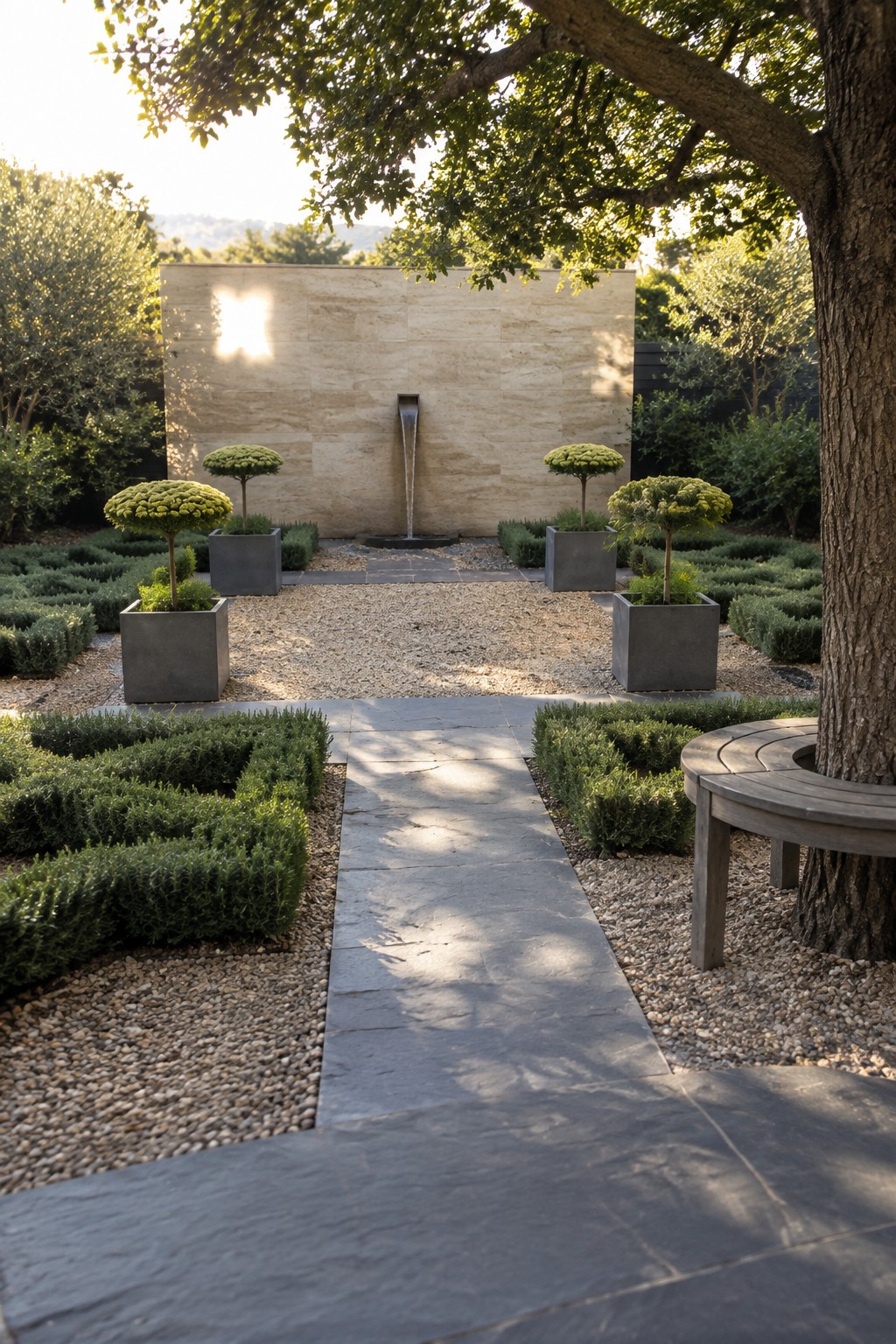
Gravel beds keep things simple in a dry yard. They cut down on watering, stop weeds from taking over, and give the garden a clean look without constant work. The pots add height and shape while letting you move plants around if the sun or season changes.
This approach works best in sunny backyards with good drainage. Stick to a few repeated shapes in the pots and let the gravel run between low hedges so the whole space stays easy to care for over time.
Use Drought-Tolerant Planting Along Stone Edges

Many people like this approach because it keeps the area around a pool looking full and colorful without constant watering or trimming. The plants sit right against the hard edge so they soften the stone while staying contained.
It suits sunny backyards with a simple layout and works best when you pick a few reliable varieties that bloom at different times. Keep the beds narrow so they do not interfere with walking paths or pool maintenance.
Raised Beds With Gravel For Low Maintenance Planting

A raised bed lined with gravel gives you a clean way to add plants along a deck without constant watering or weeding. Succulents and similar tough varieties stay healthy with very little care once they are in place.
This works best next to wooden decks or patios in sunny spots. Keep the bed narrow so it does not take up walking space and choose plants that match your local sun and soil conditions.
Stepping Stone Paths Over Gravel
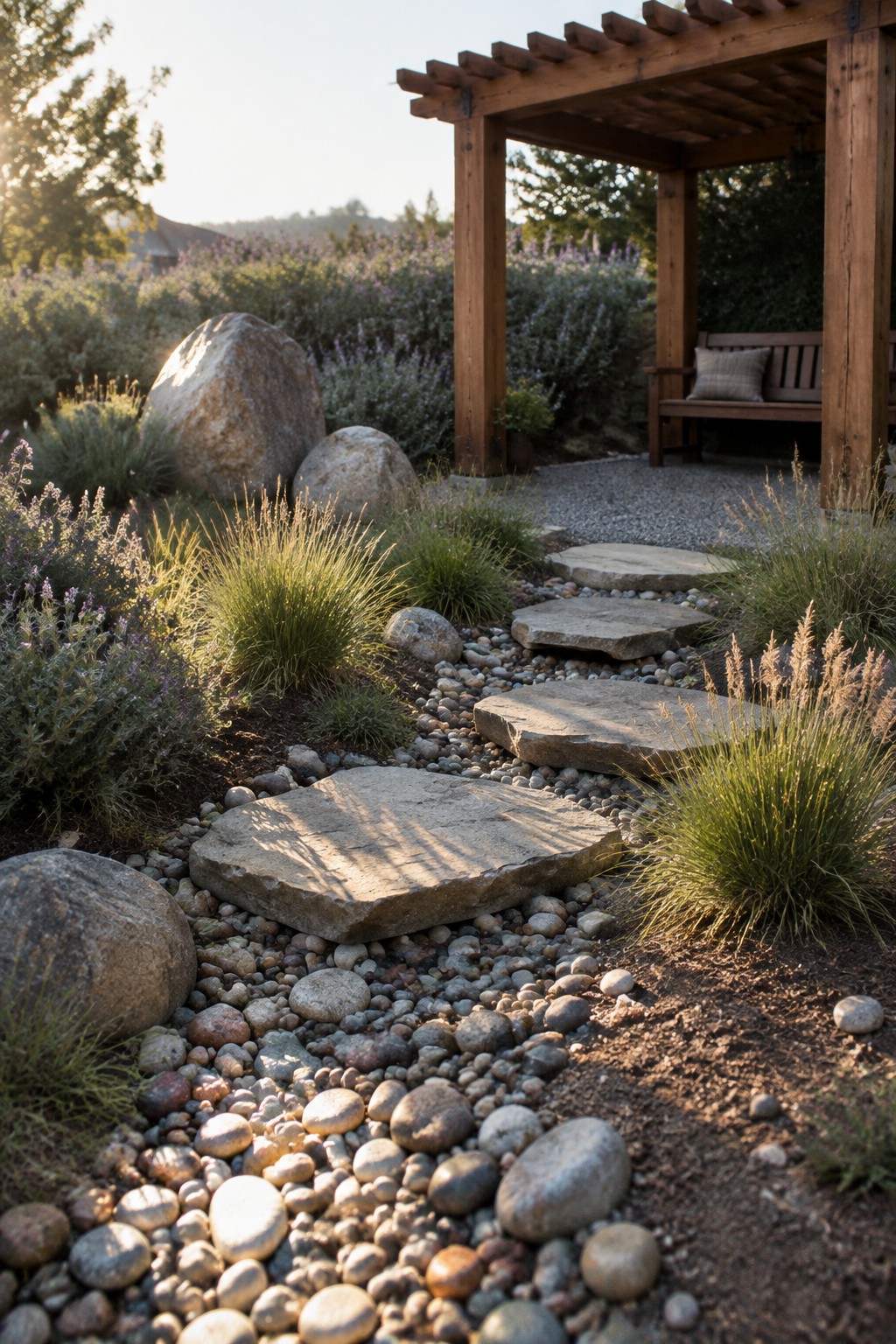
Stepping stones set into gravel make a simple path that stays neat without much work. The stones give solid footing while the gravel fills in around them, so there is no lawn to cut or edges to trim along the sides.
This layout suits dry climates and sunny yards where watering needs to stay low. Use larger stones for the main walk and fill with smaller pebbles, then add a few clumps of tough grasses or low shrubs on either side to keep the look full without constant care.
Gravel Beds For Drought Tolerant Planting
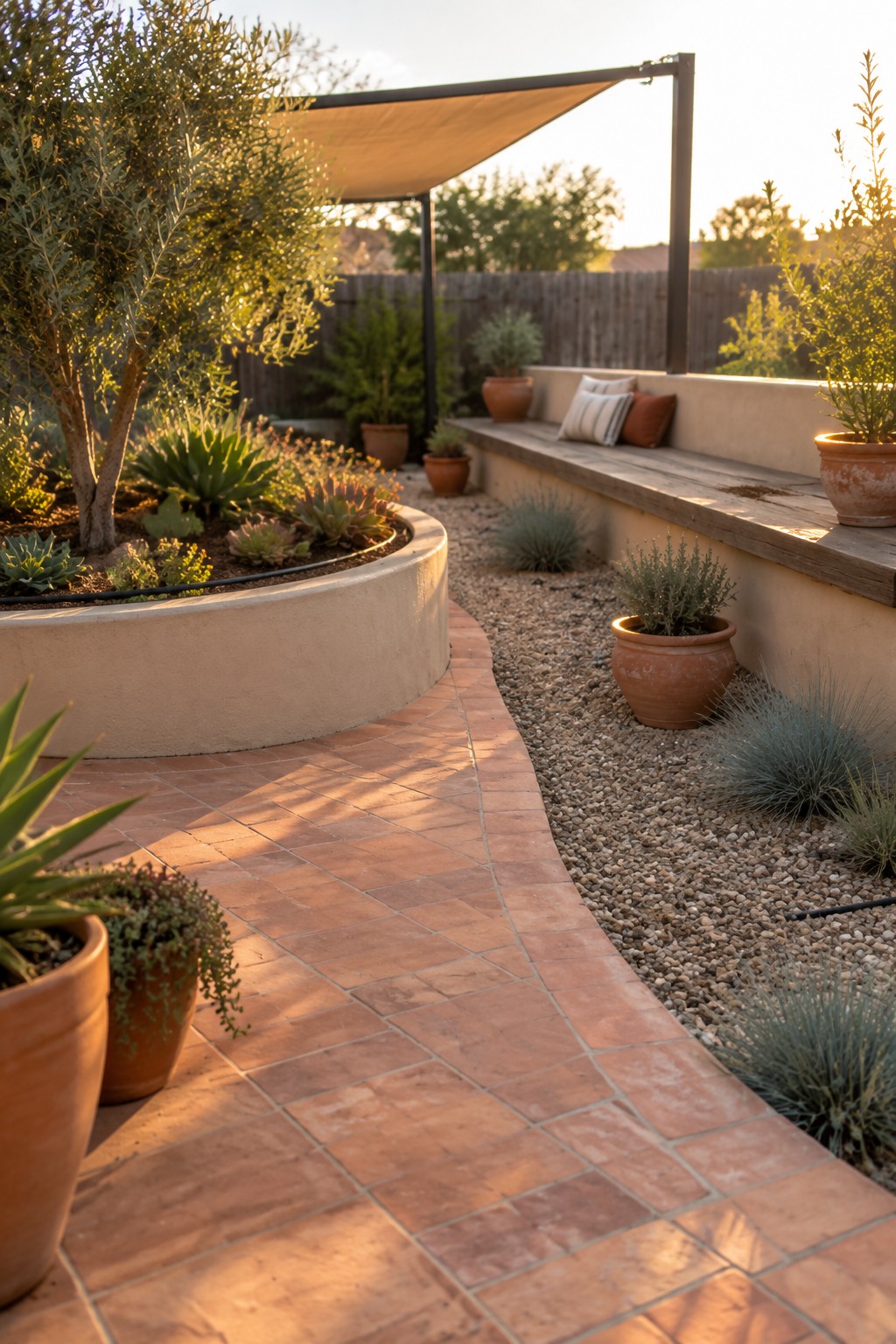
Gravel makes a good base for drought tolerant plants because it cuts down on weeds and holds in what little moisture the soil gets. It also keeps the area looking neat without constant raking or mulching.
Place larger pots of succulents and shrubs directly in the gravel and run a simple path alongside to keep foot traffic easy. This approach fits homes that want a clean backyard without a lot of weekly care.
Frequently Asked Questions
Q: How often should I water the plants once they settle in?
A: Water deeply once a week for the first few months. After that most drought-tolerant plants get by on natural rainfall alone. Check the soil with your finger before adding more.
Q: What if weeds start popping up in the beds?
A: Pull them by hand when the soil is moist. A thin layer of mulch helps block new ones from sprouting. Stay on top of it early and you won’t have much trouble later.
Q: Can I mix these ideas with my existing grass area?
A: Create borders around the lawn with the tougher plants. This keeps the grass contained and easier to mow.
