


Narrow side yards can easily become neglected strips, especially when patchy soil and awkward edges make them hard to maintain.
I like how a rock garden can give these spaces a clearer structure, with stones, hardy plants, and a simple path helping the layout feel intentional.
The best designs still leave room to move through the yard and make practical use of the area beside the house.
Small changes to edging, plant placement, or stone size can make a noticeable difference without requiring a major project.
I’d save the ideas that suit your light and drainage, then adapt them to make your side yard easier to care for.
Add Structure To A Narrow Side Yard
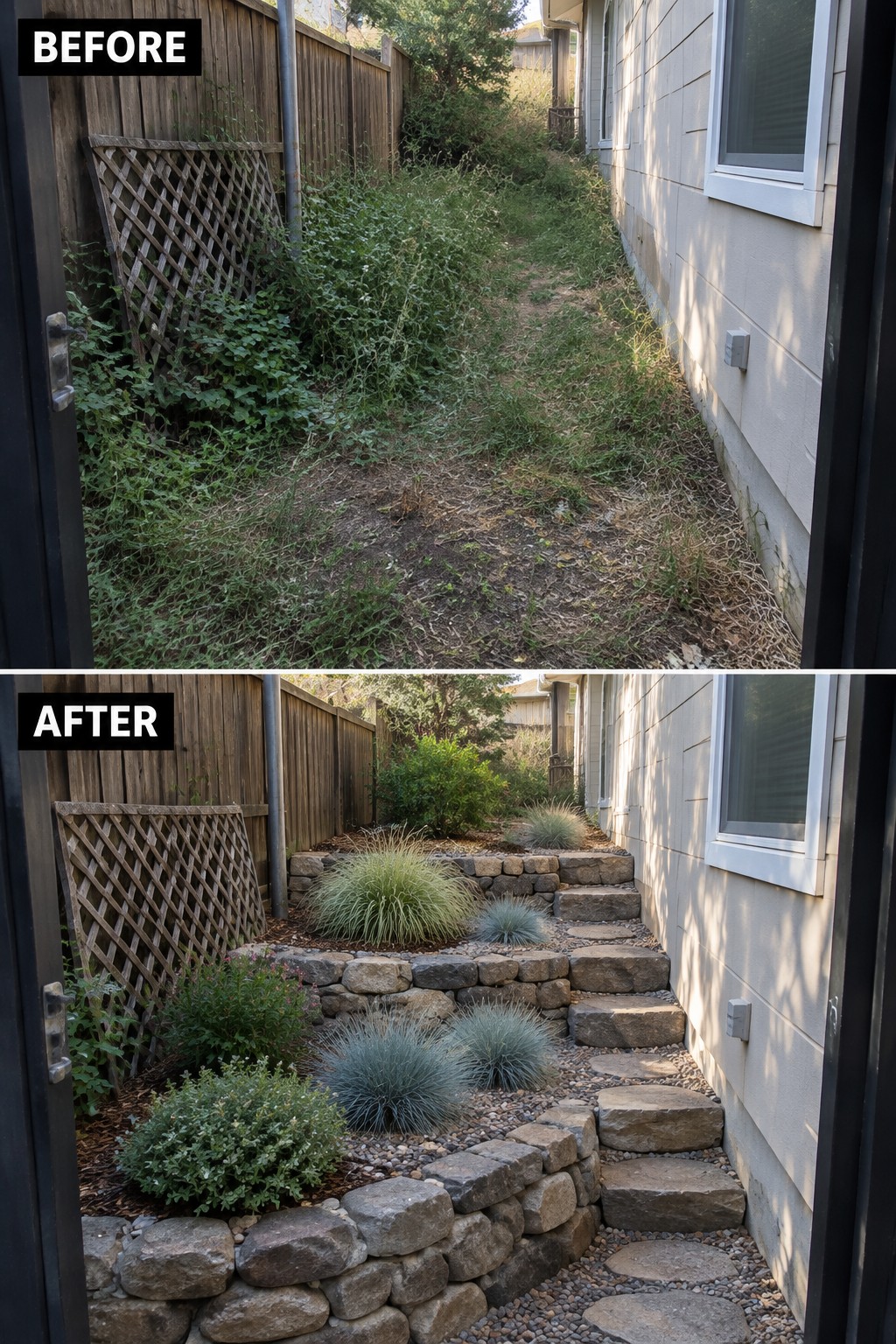
A narrow side yard can feel like a leftover space when weeds take over and there is no clear path. Here, clearing the overgrowth and adding low stone terraces turns the slope into a more organized rock garden.
For a similar yard, use stone borders to separate planting areas from a simple gravel path. Keep the path wide enough to walk comfortably, and choose compact plants so the side yard stays easy to maintain.
Replace A Concrete Side Yard With A Gravel Path
A narrow side yard can feel much more planned when the concrete gives way to a gravel path. Here, round stepping stones break up the pale gravel and make the long passage easier to walk through.
This idea works well where there isn’t room for a lawn or wide planting beds. Keep the stones spaced comfortably for walking, and leave enough clear width to move through the yard without crowding the path.
Use Gravel And Stepping Stones To Define A Side Yard
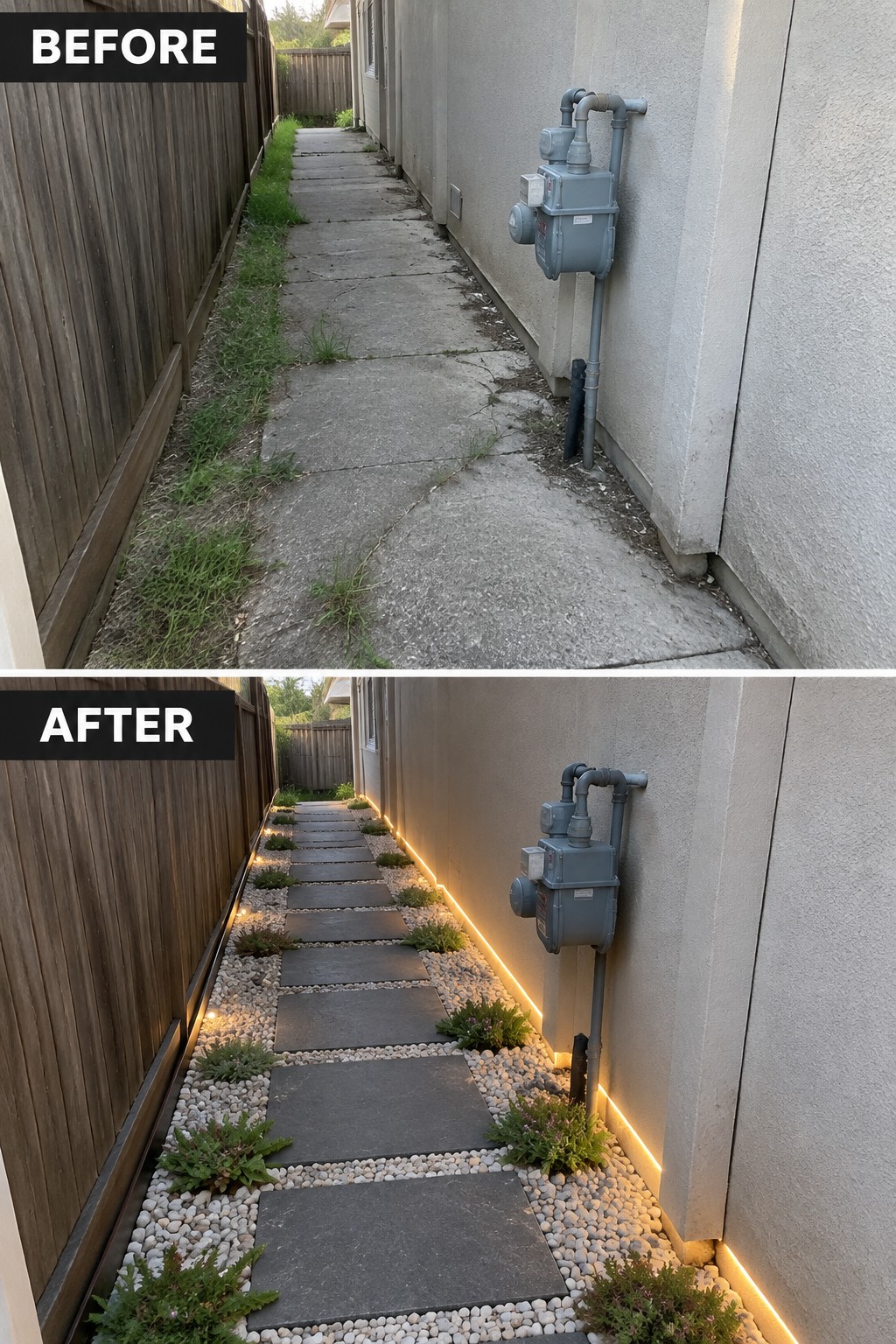
Replacing cracked concrete with spaced stepping stones and gravel gives a narrow side yard a clearer path and a tidier look. The simple layout works well where there isn’t room for a wide walkway or large planting beds.
For a similar space, leave enough room between stones for comfortable steps and use gravel to fill the gaps. Keep plants low and sparse so they don’t crowd the path or make it harder to maintain.
Create A Defined Garden Bed Along The Side Yard
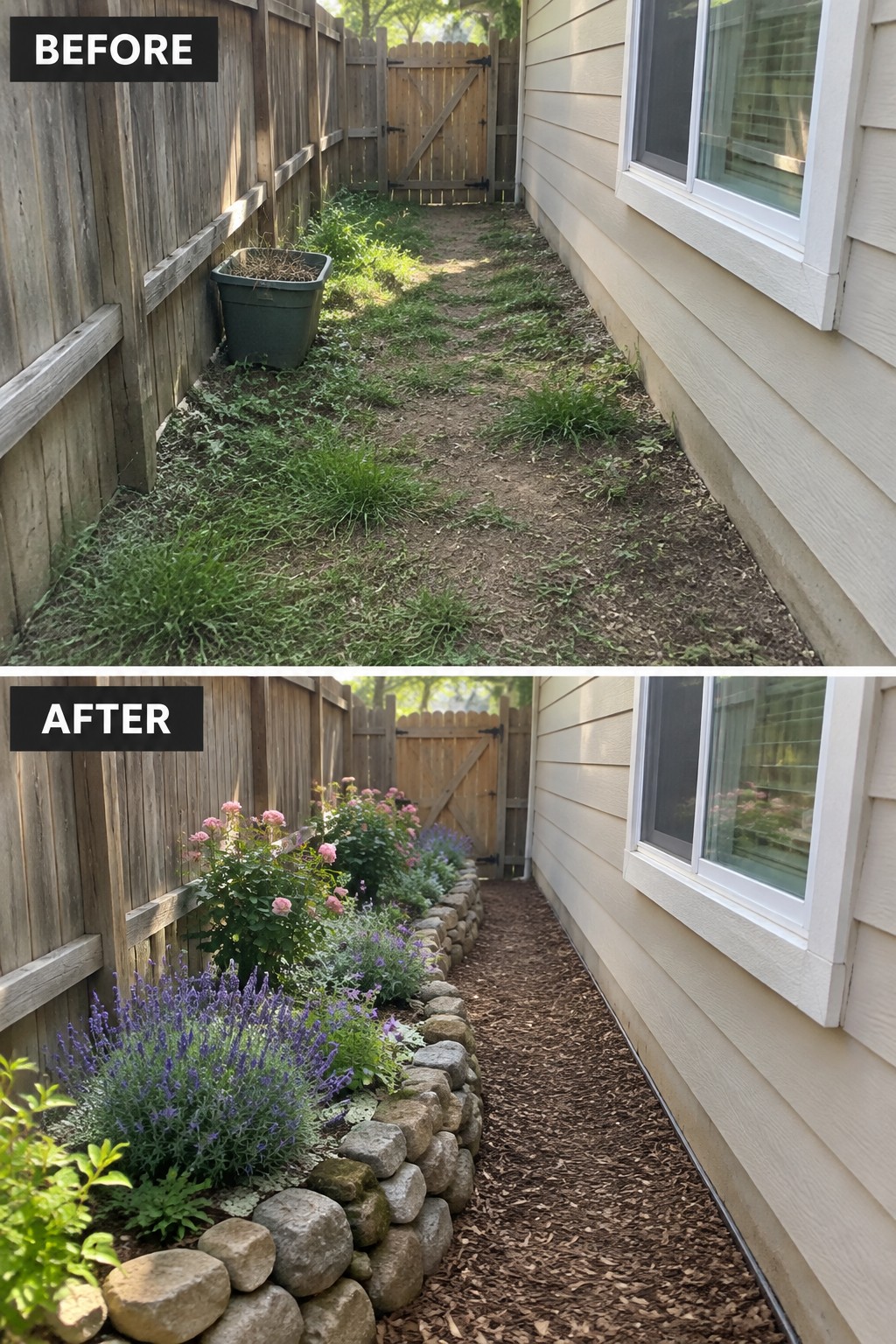
A narrow side yard can feel messy when weeds and bare soil spread across the whole space. A raised edge of natural stones gives the planting area a clear boundary, while a mulch path keeps the route beside the house tidy and easy to use.
Use this idea where you want flowers without giving up a practical walkway. Keep the bed narrow enough that plants and stones do not crowd the path, and choose mulch that is easy to refresh.
Use Gravel To Give A Narrow Side Yard Structure
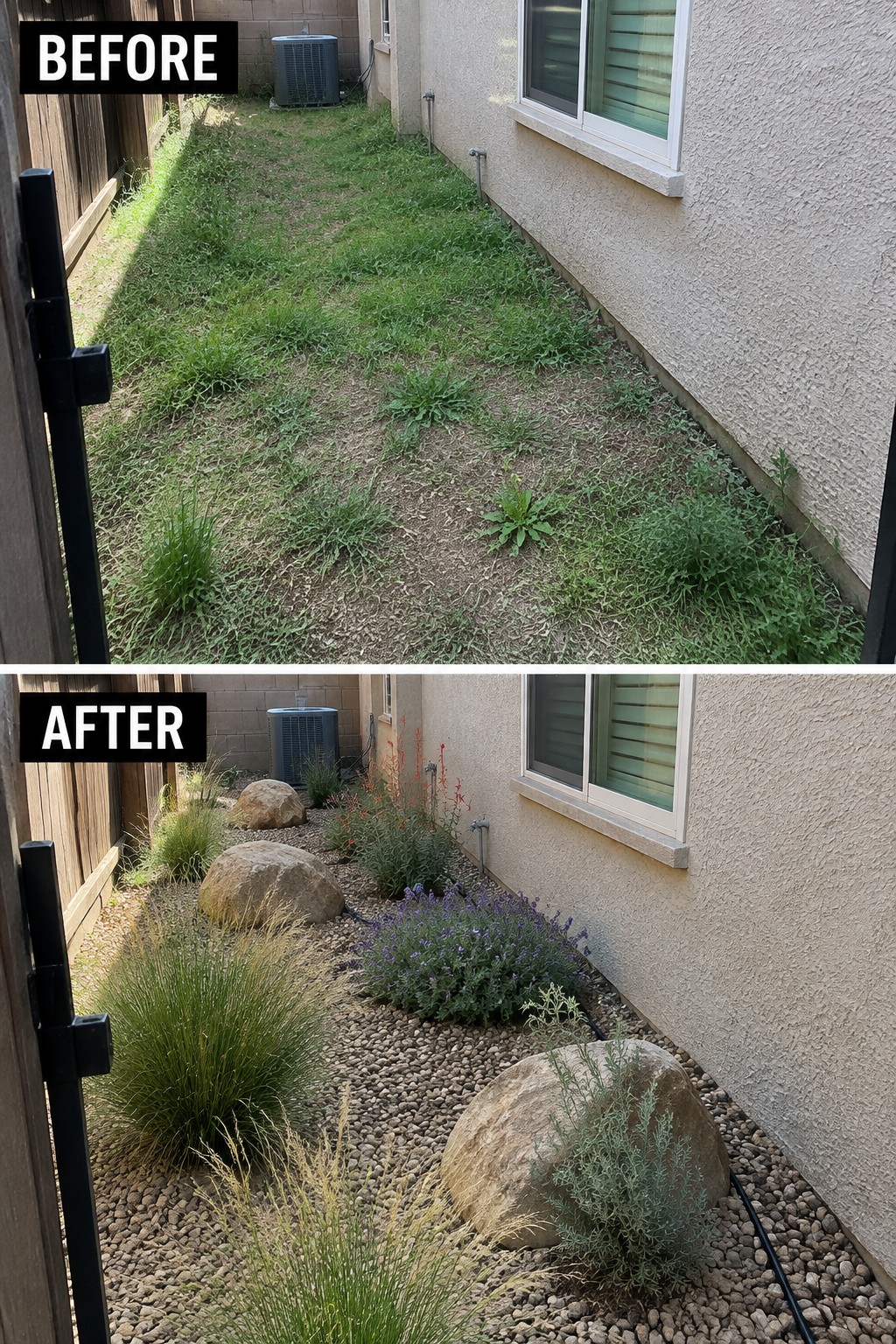
Replacing patchy grass with gravel makes this narrow side yard look more planned and easier to maintain. A few large rocks and grouped plants keep the gravel bed from feeling like a bare strip.
This idea works well where a side yard is too tight for a lawn or seating area. Clear the weeds first, then use gravel and drought-tolerant plants suited to the light and drainage there. Leave enough room to reach the house and maintain the plants.
Create A Stone Path Through A Narrow Side Yard

Replacing bare, weedy soil with gravel and large stepping stones gives this narrow side yard a clear route to follow. The stones make the space easier to walk through, while the gravel helps keep the path defined.
This idea works well between a house and fence, where there may not be room for a wide walkway. Keep the stones spaced comfortably for walking, and leave small planting areas along the edges rather than crowding the path.
Create A Simple Stone Path Through A Side Yard
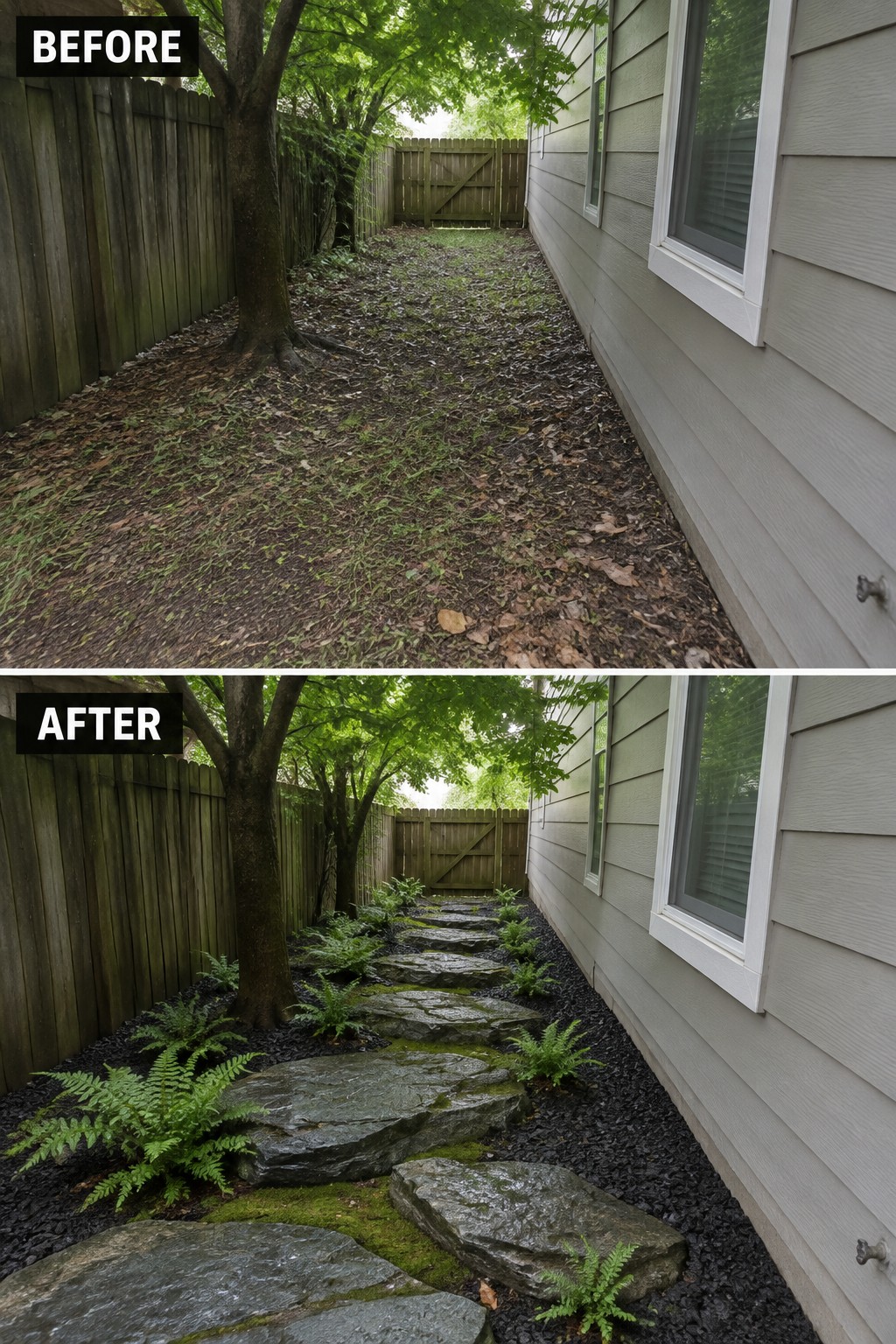
Replacing the leaf-covered ground with dark gravel and stepping stones gives this narrow side yard a clear route to the gate. The stones make the space easier to walk through, while the gravel gives the ground a neater, more finished surface.
This idea works well where a side yard is too narrow for a lawn or seating area. Choose stones with enough room between them for a comfortable stride, and keep plantings low so the path stays easy to use.
Build A Terraced Rock Garden Along A Side Yard
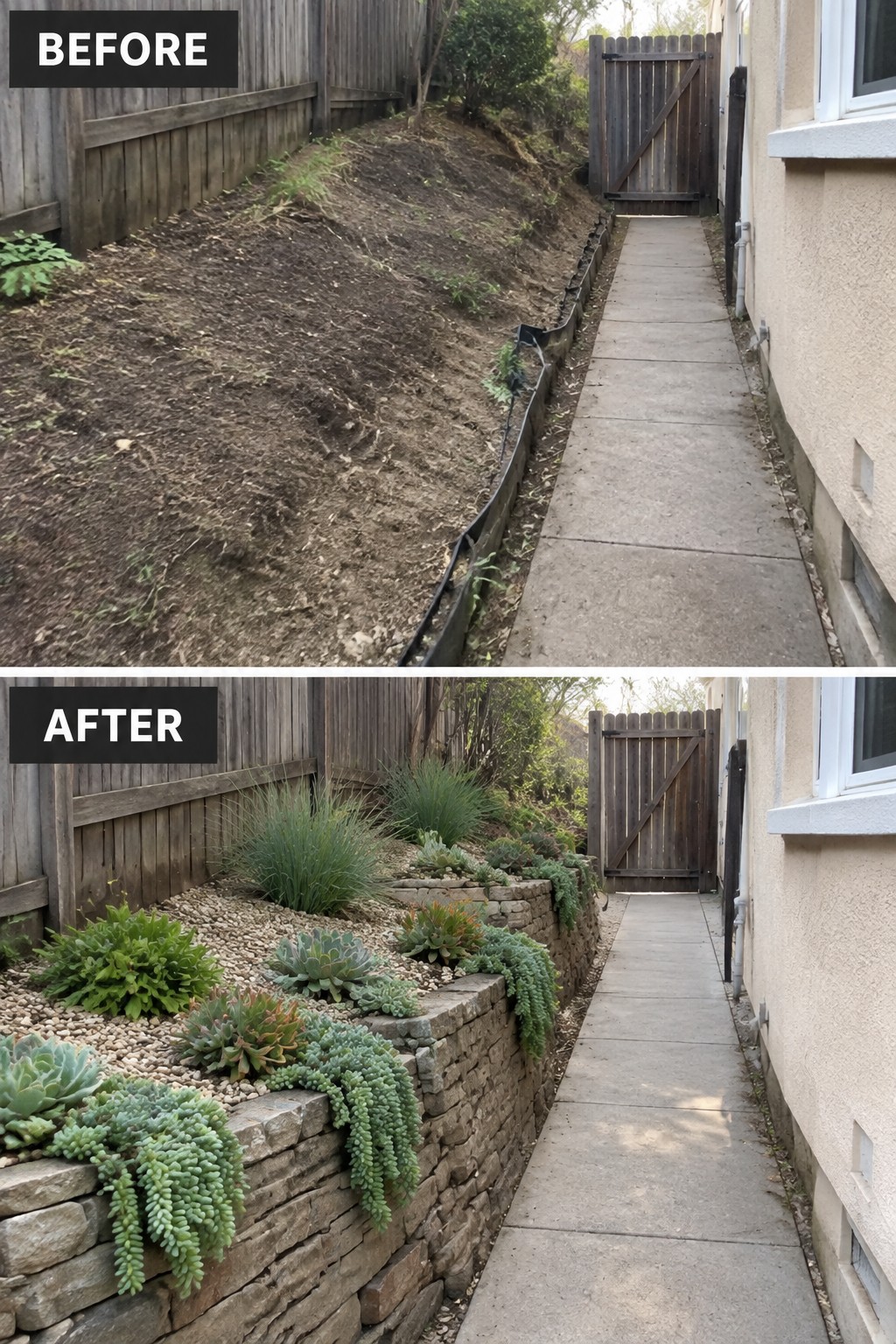
A steep, bare side yard can be hard to maintain and may leave soil washing toward the path. Low stacked-stone retaining walls create level planting areas, making the slope look more organized and giving rock garden plants a place to grow.
This approach works well in narrow yards where a path needs to stay clear. Keep the walls low and step them with the slope, then use gravel around drought-tolerant plants such as succulents. Make sure the path still has comfortable walking space.
Turn A Narrow Side Yard Into A Gravel Garden
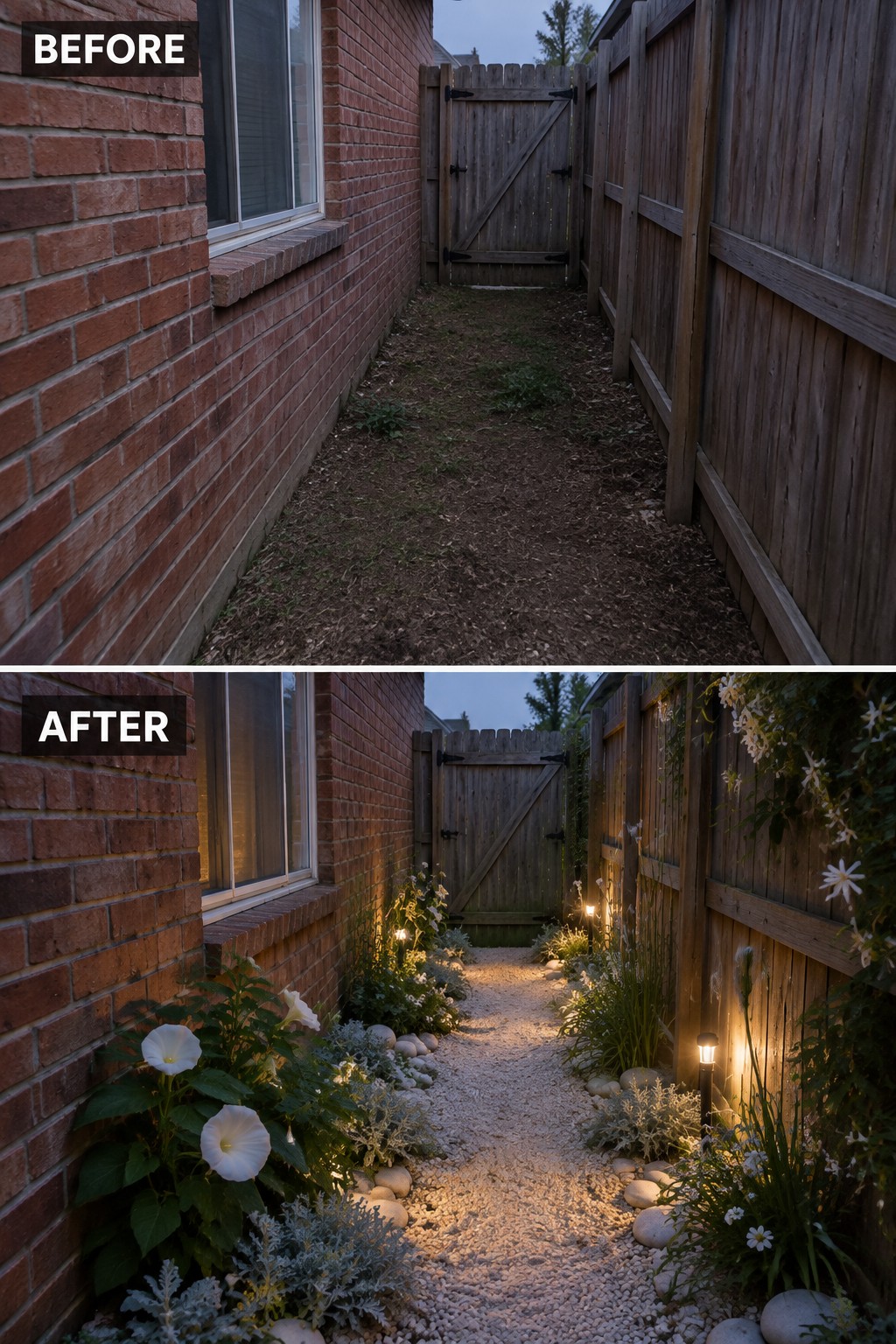
Replacing bare, muddy ground with a gravel path makes this tight side yard easier to walk through and gives it a clear shape. Low planting along the edges keeps the path defined without taking up much room.
For a similar yard, clear the ground first and keep the path wide enough for comfortable access to the gate. Choose plants that suit the light and won’t spill too far over the gravel; a narrow space can feel crowded quickly.
Turn A Bare Side Yard Into A Rock Garden

Replacing the bare dirt with a narrow gravel path and planted borders gives this side yard a clear layout. The rocks separate the path from the garden bed, so the space looks planned without losing room to walk.
For a similar yard, keep the path wide enough for easy access and use low-growing plants along the edges. Gravel is a practical choice for a tight side yard, but add a weed barrier and check that water can still drain away from the house.
Turn A Bare Side Yard Into A Garden Path
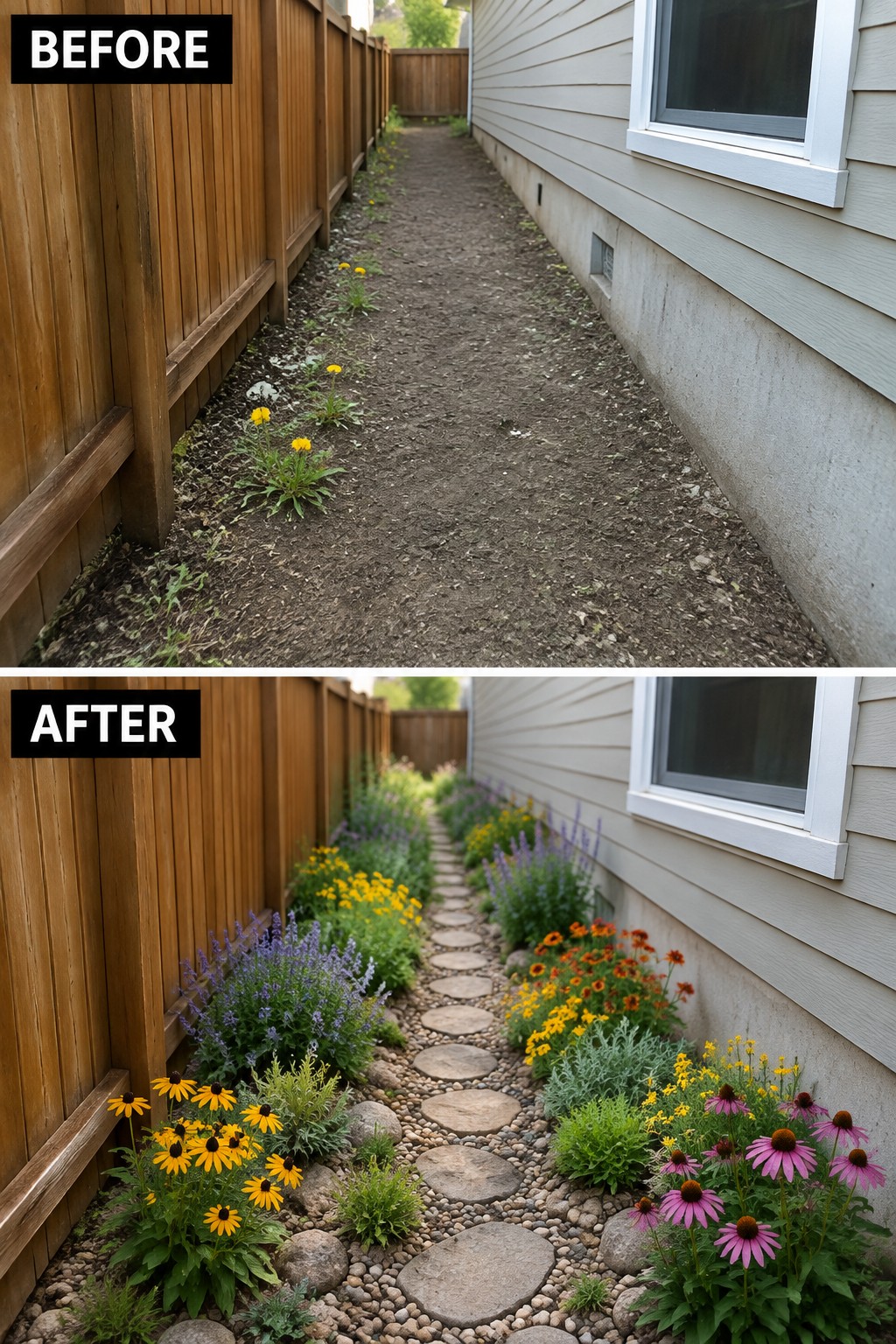
A narrow side yard can feel like leftover space when it is mostly bare soil. Here, a simple stone path gives the area a clear route, while gravel and planting beds fill in the edges without taking over the walkway.
Use this idea where you need to reach a gate or move along the side of the house. Choose stones with enough room to step comfortably, and keep plants trimmed back so the path stays easy to use.
Turn A Muddy Side Yard Into A Rock Garden
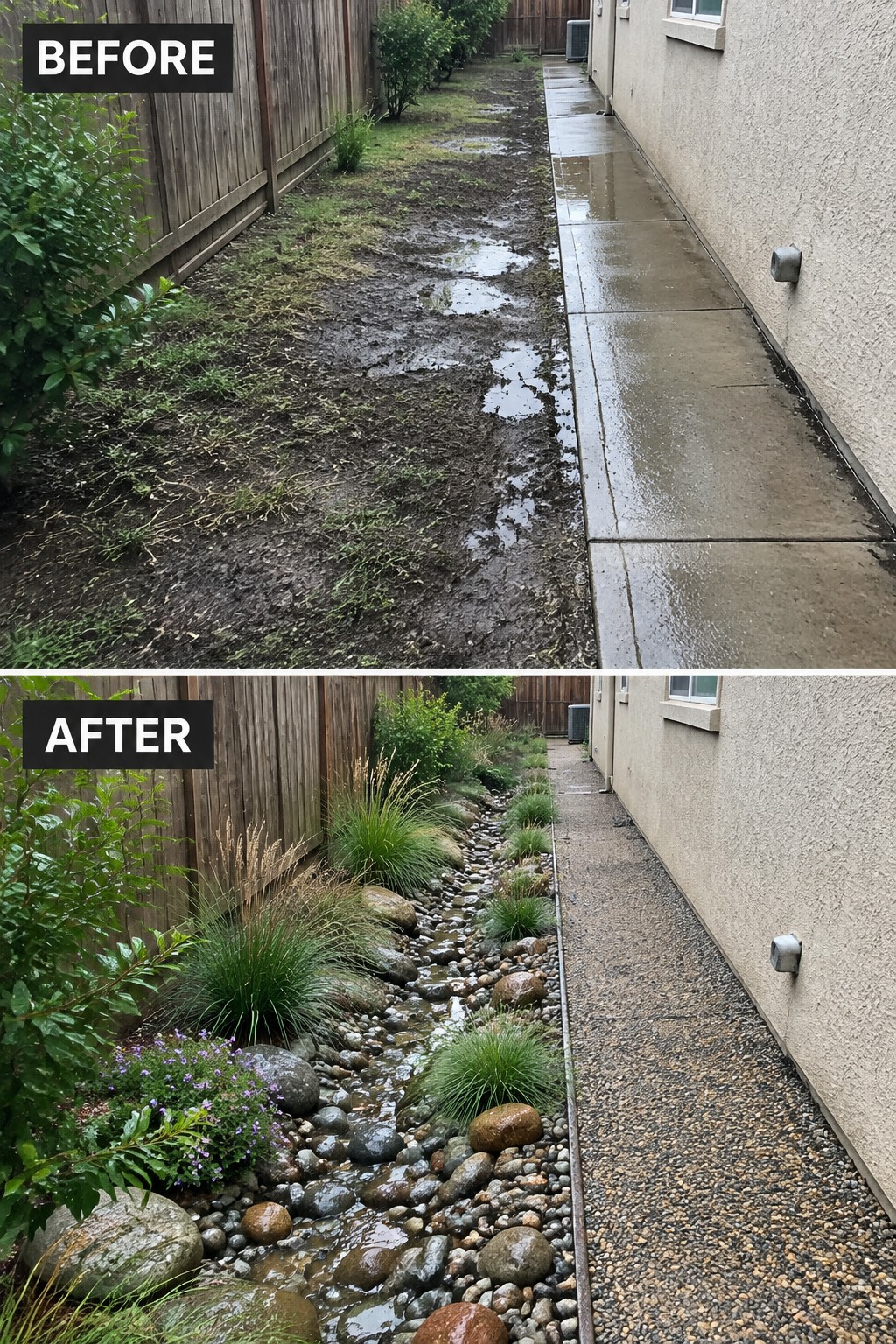
Replacing bare, waterlogged soil with a rock-lined dry creek gives a narrow side yard a clear shape and a way to manage runoff. The stones define the drainage area, while clumps of ornamental grass help it look like a planned garden rather than a ditch.
This idea works well where rain tends to collect between a house and fence. Start by addressing the water’s route, then choose stones sized to fit the channel and add plants along its edges. Keep the path beside the house clear and easy to walk.
Turn A Narrow Side Yard Into A Gravel Garden
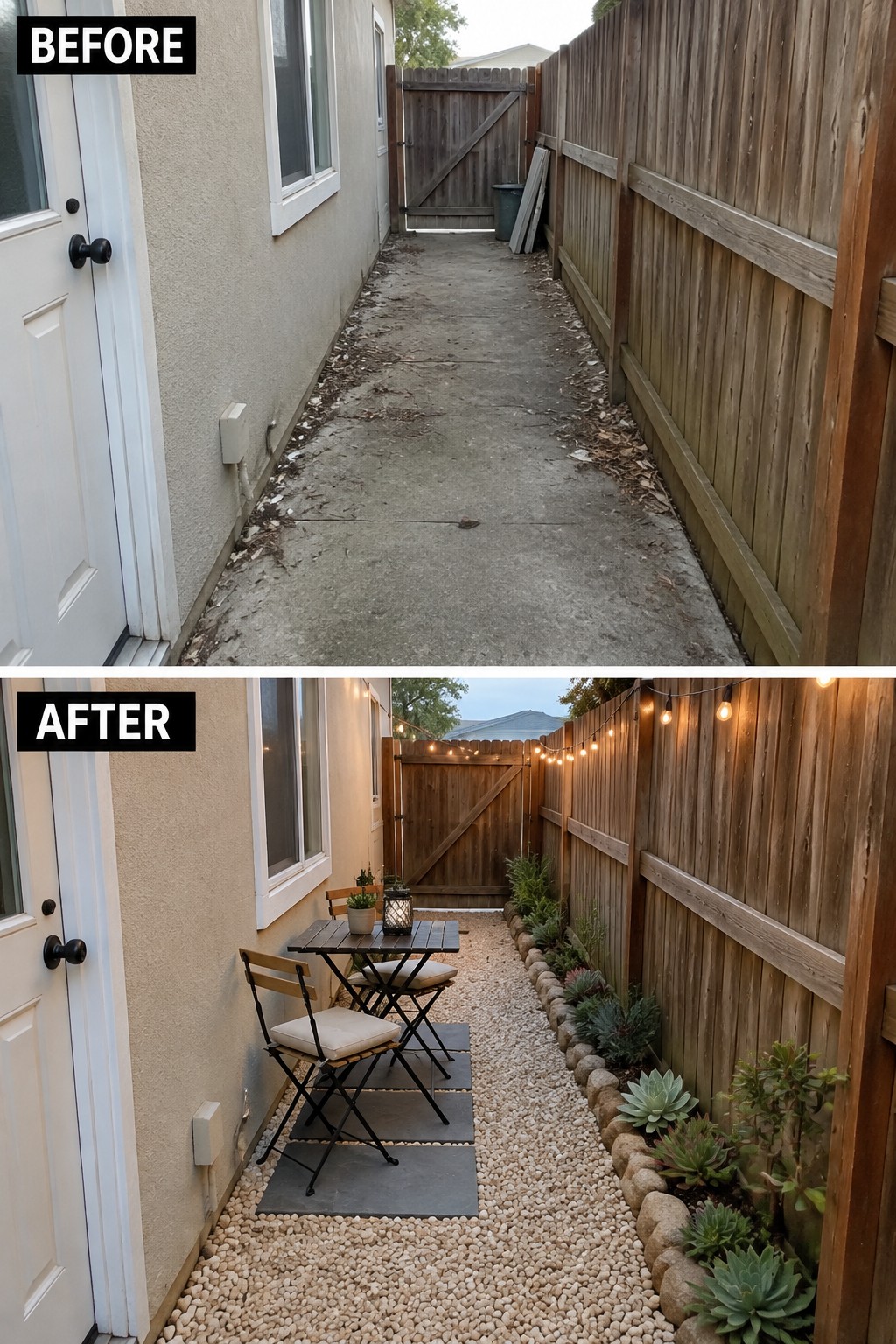
A narrow side yard can feel like a leftover space when it is mostly bare concrete. Replacing much of that hard surface with gravel and a simple planting border gives the area a clearer garden shape while leaving a practical route through.
This works well where there is little room for a lawn or large beds. Keep the gravel path wide enough to walk comfortably, and group low plants along one edge rather than spreading them across the walkway.
Build A Raised Rock Garden Along The Side Yard
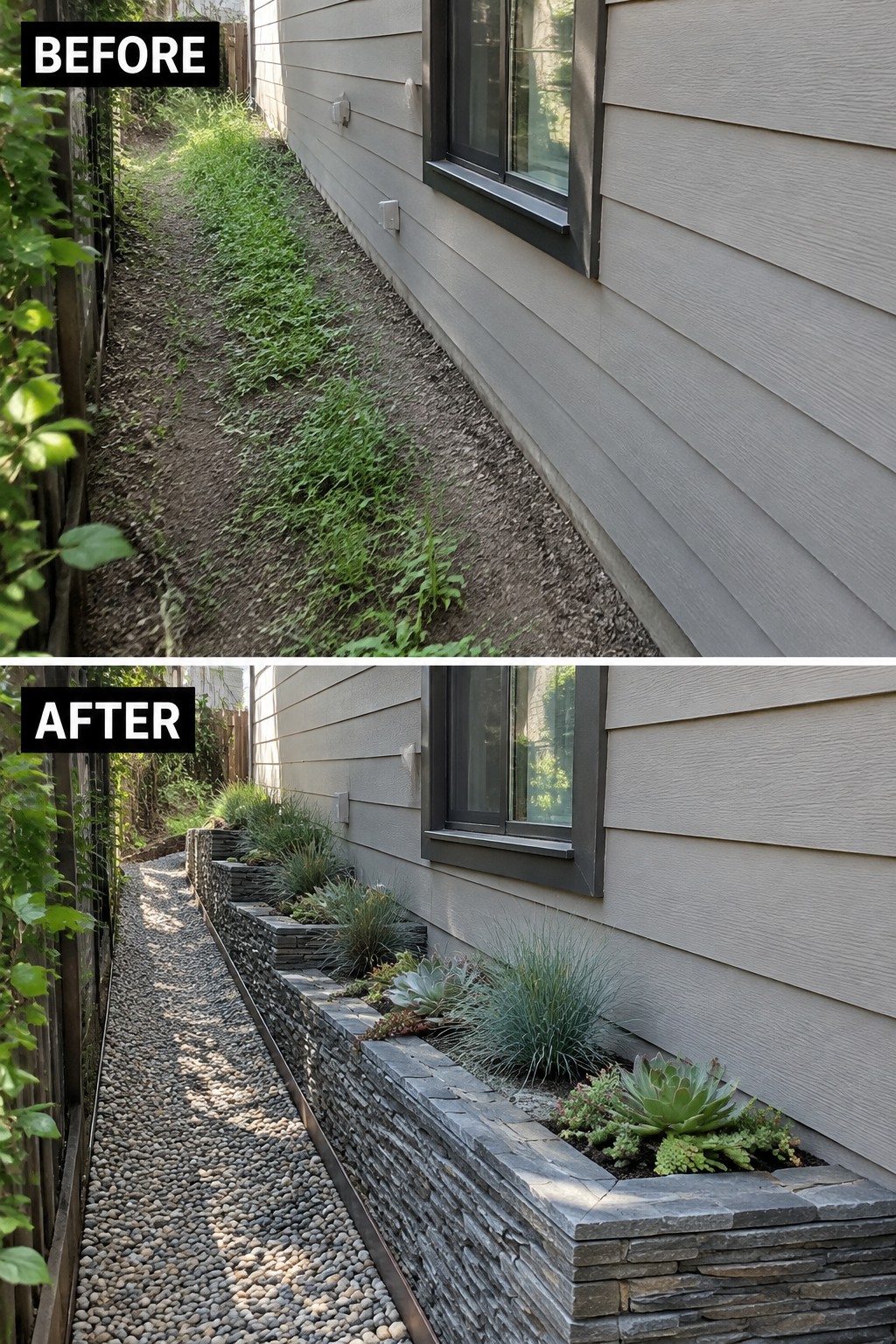
A narrow side yard can be hard to keep tidy when weeds take over bare ground. A low stone retaining wall gives the planting a clear boundary, while gravel keeps the walking path neat and easy to maintain.
This idea works well beside a house where there is little room for a wide garden bed. Keep the wall low enough for easy access to plants, and leave a comfortable gravel path so people can still pass through.
Replace A Leaf-Covered Side Yard With A Gravel Path
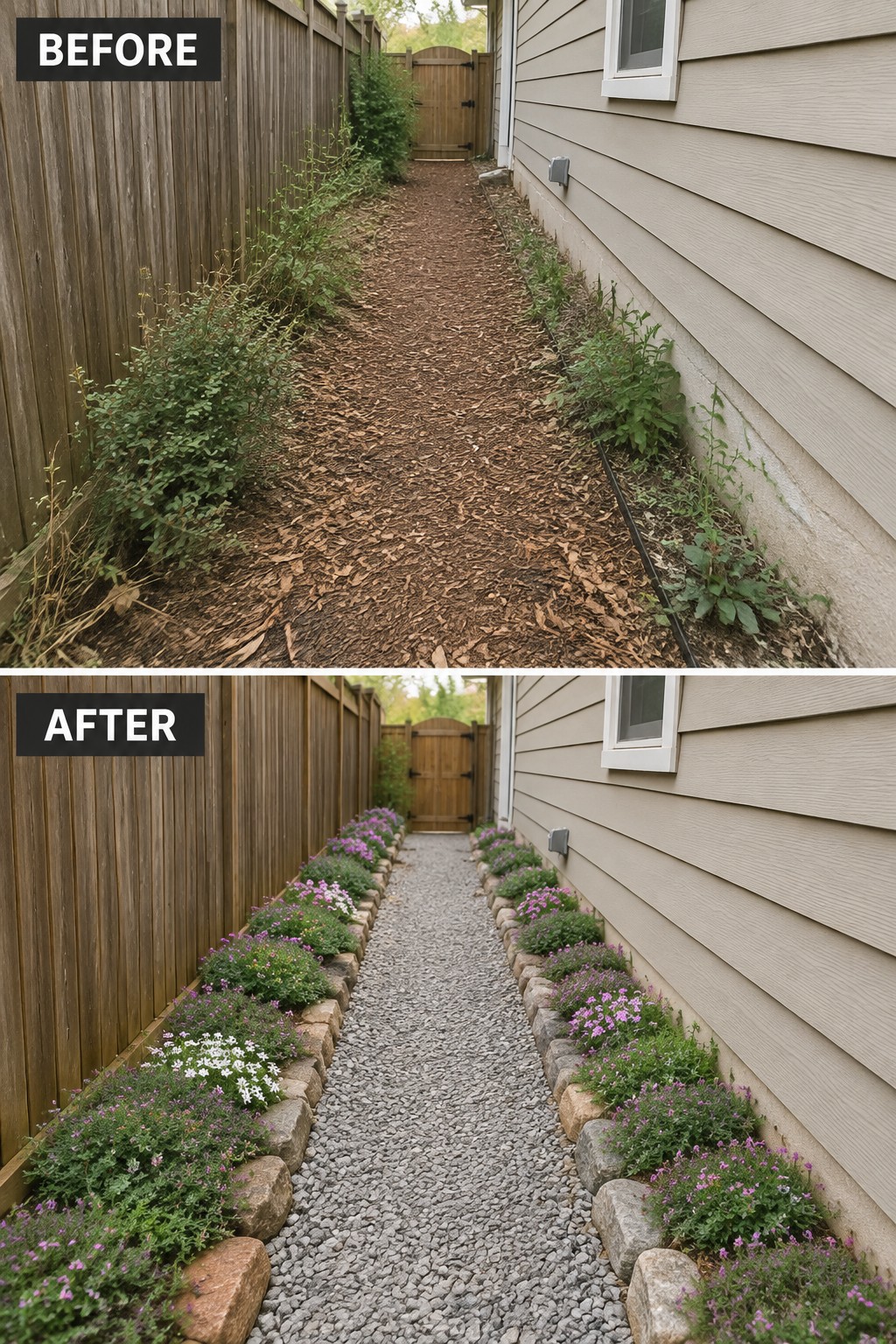
A narrow side yard is easier to use when the walking route is clear. Here, the leaf-covered ground becomes a gravel path, while low stone edging keeps the planting beds from spilling into the walkway.
For a similar space, clear weeds and debris first, then choose gravel that drains well and is comfortable to walk on. Keep the path wide enough for easy access to the gate, and use compact flower beds along the edges rather than letting plants crowd the route.
Replace An Overgrown Side Yard With A Stone Path

An overgrown side yard can feel hard to use, especially when weeds have spread across an uneven path. Clearing the growth and laying irregular stone pavers with gravel between them gives the narrow space a clear route and a tidier, planned look.
This works well where a side yard is too narrow for much beyond walking through. Keep the path wide enough to pass comfortably, and use small planted pockets along the edges rather than filling every gap with plants.
Create A Vertical Rock Garden In A Narrow Side Yard
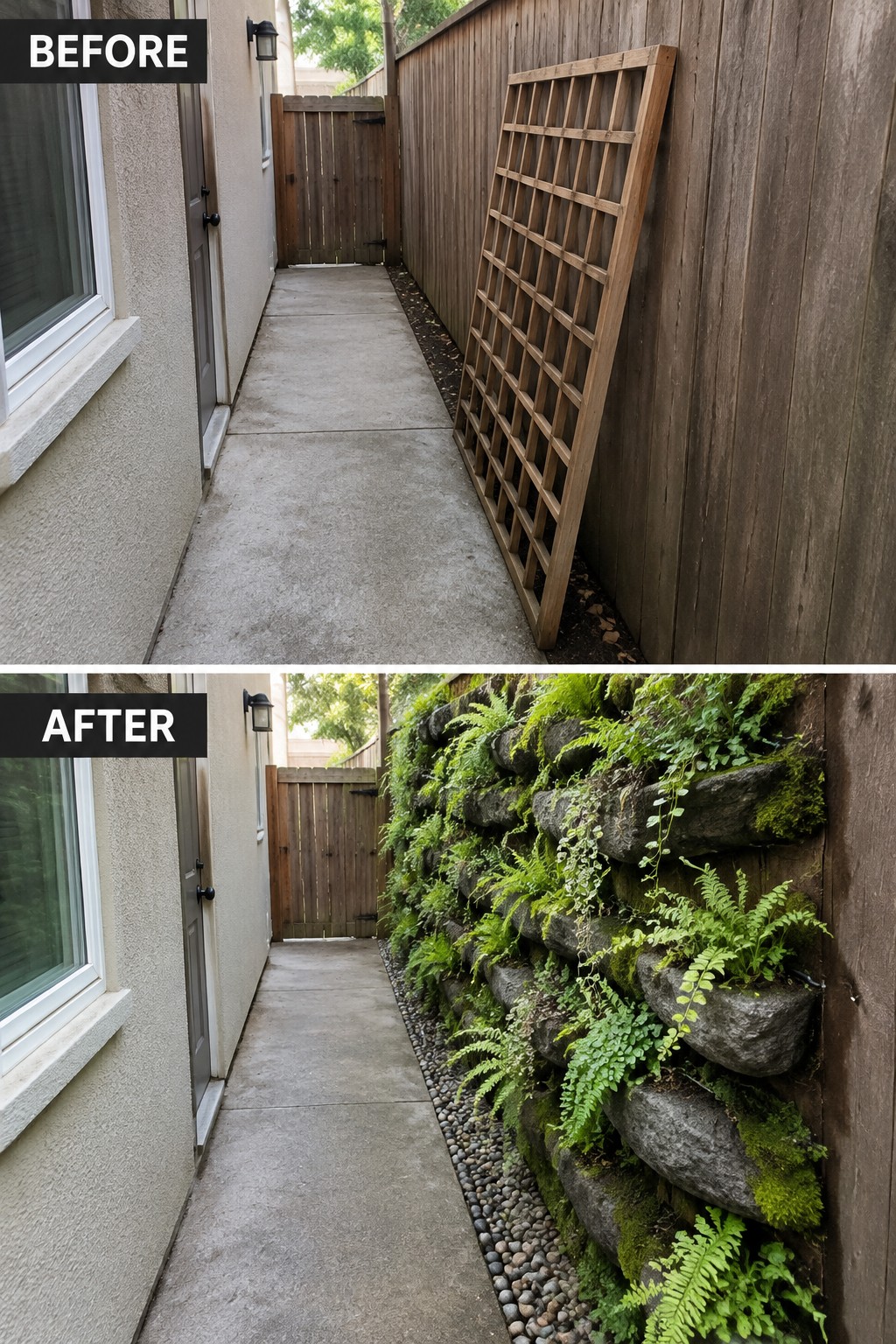
Replacing the bare fence-side strip with a planted rock wall gives this narrow passage a clear garden feature without taking up much floor space. Ferns and other greenery grow between the stones, while the existing concrete path stays open for walking.
This idea suits side yards where there is little room for wide planting beds. Keep the path clear, use stones secured for the wall, and choose plants that fit the light and moisture levels along your fence.
Add A Decorative Pebble Path To A Narrow Side Yard

A narrow side yard can feel more organized when the path is treated as a feature instead of leaving the whole space as bare dirt. Here, a patterned pebble walkway runs through the middle, giving the yard a clear route and a simple focal point.
For a similar look, keep the path narrow enough to leave room for planting along the edges, and choose stones that stay put underfoot. This works well in a long passage between a house and a wall, but avoid filling every inch with plants or decor so there’s still room to walk.
Create A Stone Path Through A Narrow Side Yard
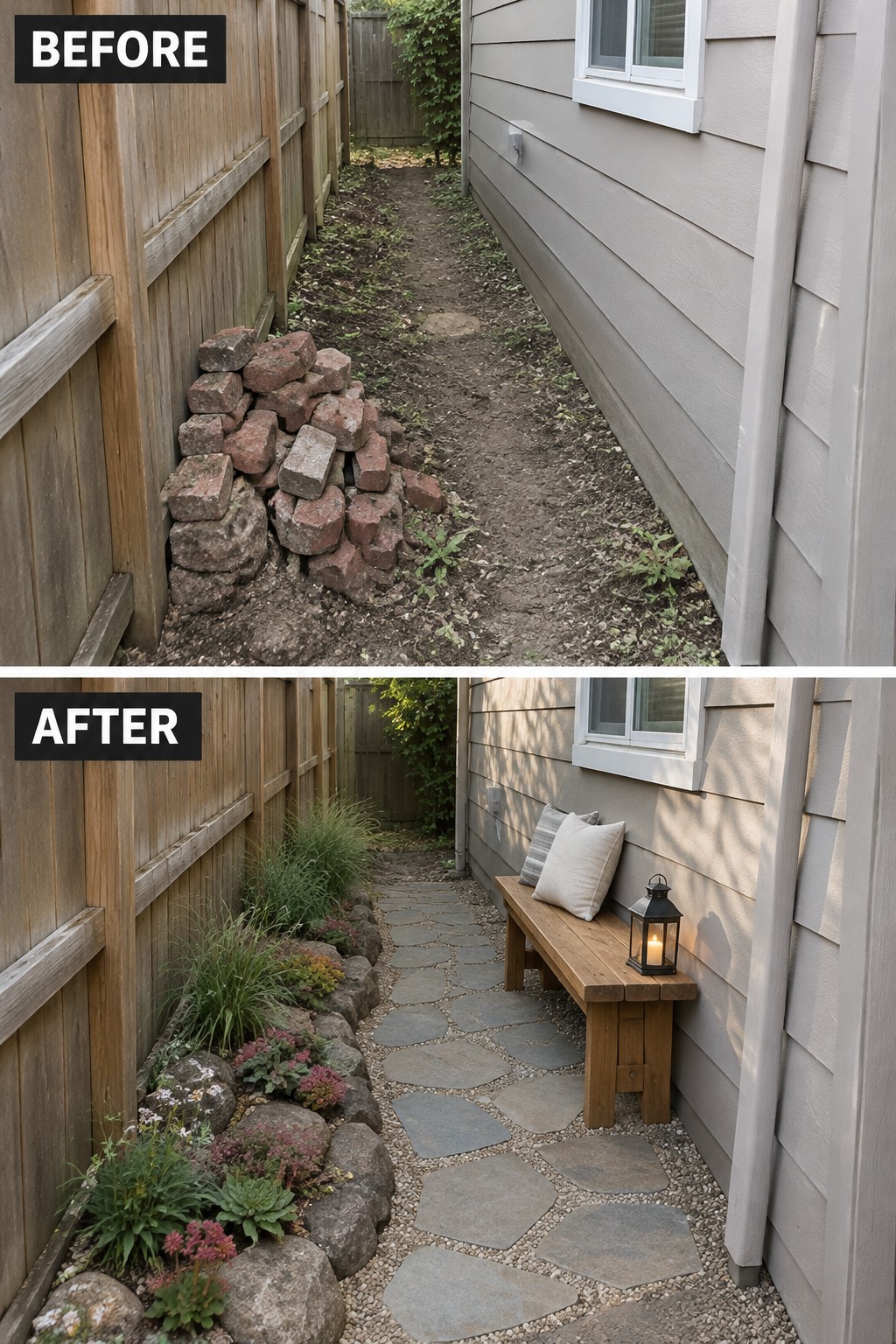
A simple stone path gives a narrow side yard a clear route and keeps it from being a muddy strip of bare ground. Here, stepping stones set into gravel replace the worn dirt, while a planted rock border gives the path a tidy edge.
For a similar space, keep the stones large enough to step on comfortably and leave room for water to drain around them. A narrow planting bed along the fence can add greenery without crowding the walkway.
Create A Rock Garden Border Along A Narrow Side Yard
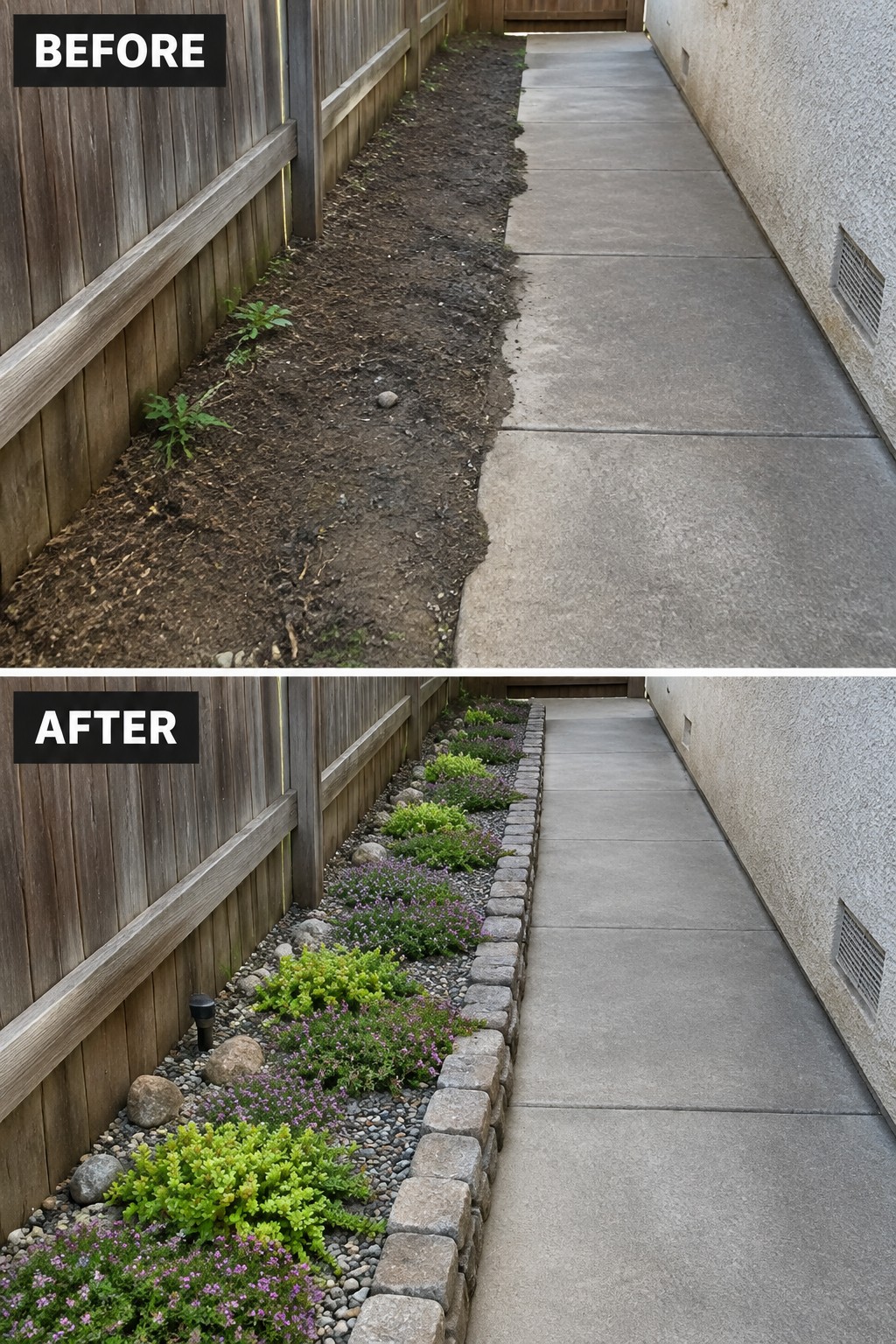
A simple rock garden border gives a narrow side yard a clear shape without taking space from the walkway. Here, a stone edge contains gravel and low plants where bare, uneven soil once collected along the fence.
This idea works well beside a house where the path needs to stay open. Clear the soil first, then keep the border fairly narrow and choose compact plants so they do not spill onto the concrete.
Build Terraced Garden Beds On A Side Yard Slope
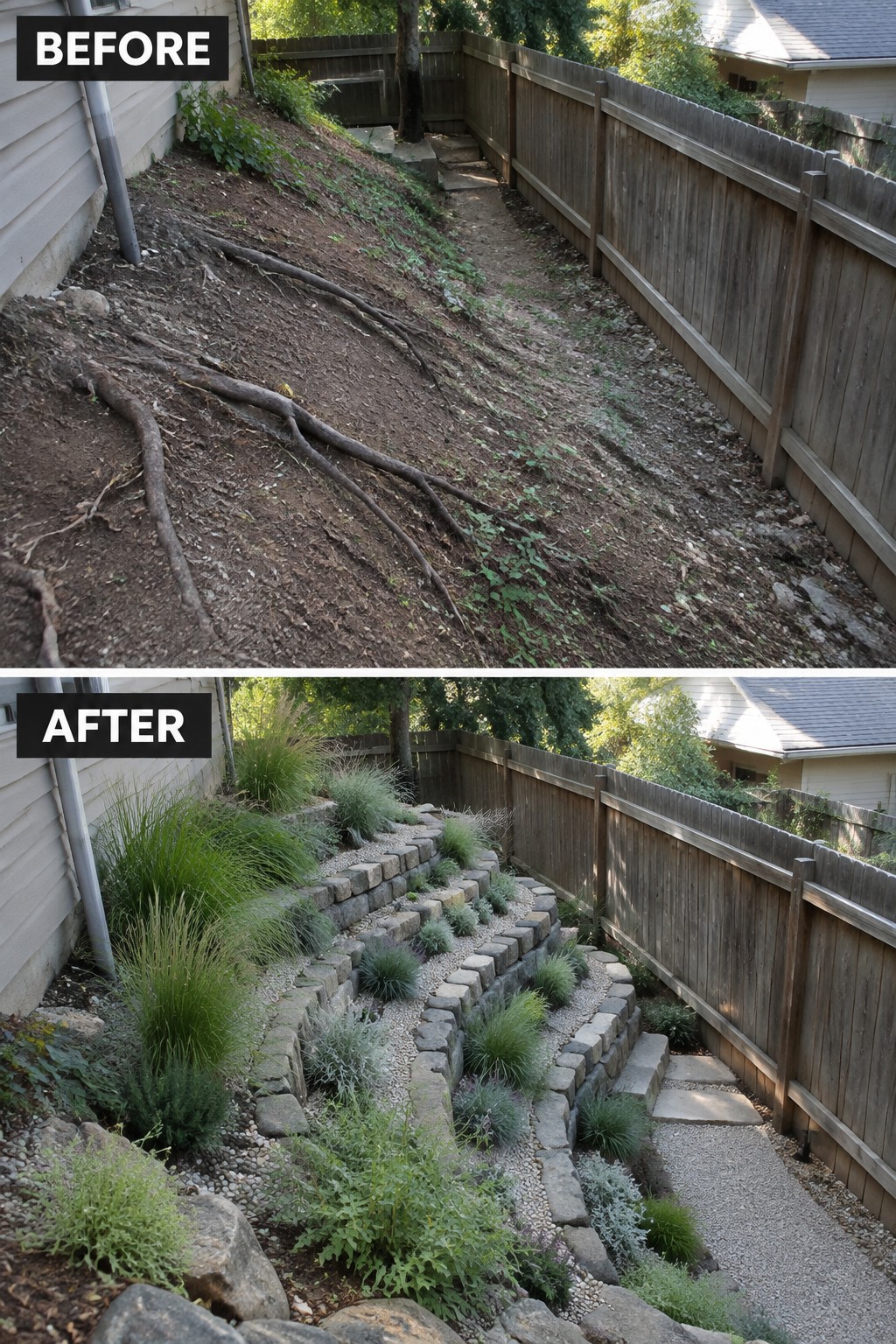
The bare slope is easier to manage once it has stone terraces to hold the soil in place. Gravel between the low retaining walls gives the planting areas a tidy finish, while the layered layout makes better use of a narrow side yard.
For a similar space, follow the slope rather than trying to level the whole yard. Keep the walls low and leave a clear route through the garden so it stays practical to maintain and easy to walk through.
Make A Narrow Side Yard Easier To Walk Through
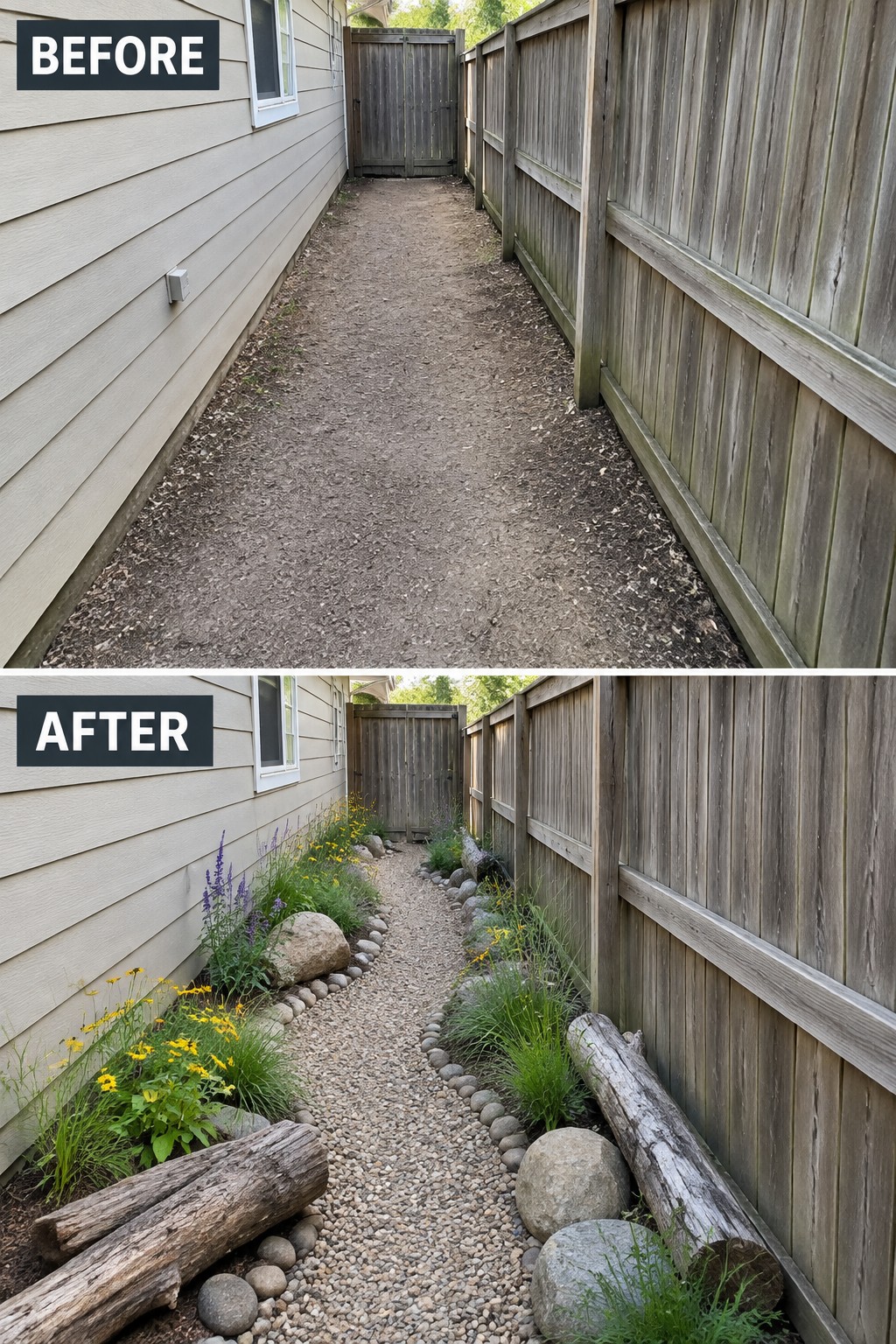
A simple gravel path gives a bare side yard a clear purpose and keeps foot traffic off the soil. In this makeover, a narrow stone walkway replaces the worn dirt, while rounded rocks mark its edges and separate it from the planting areas.
For a side yard like this, keep the path wide enough to pass through comfortably and use edging stones to stop the gravel from spreading. Plant in small groups along the sides so the walkway stays open.
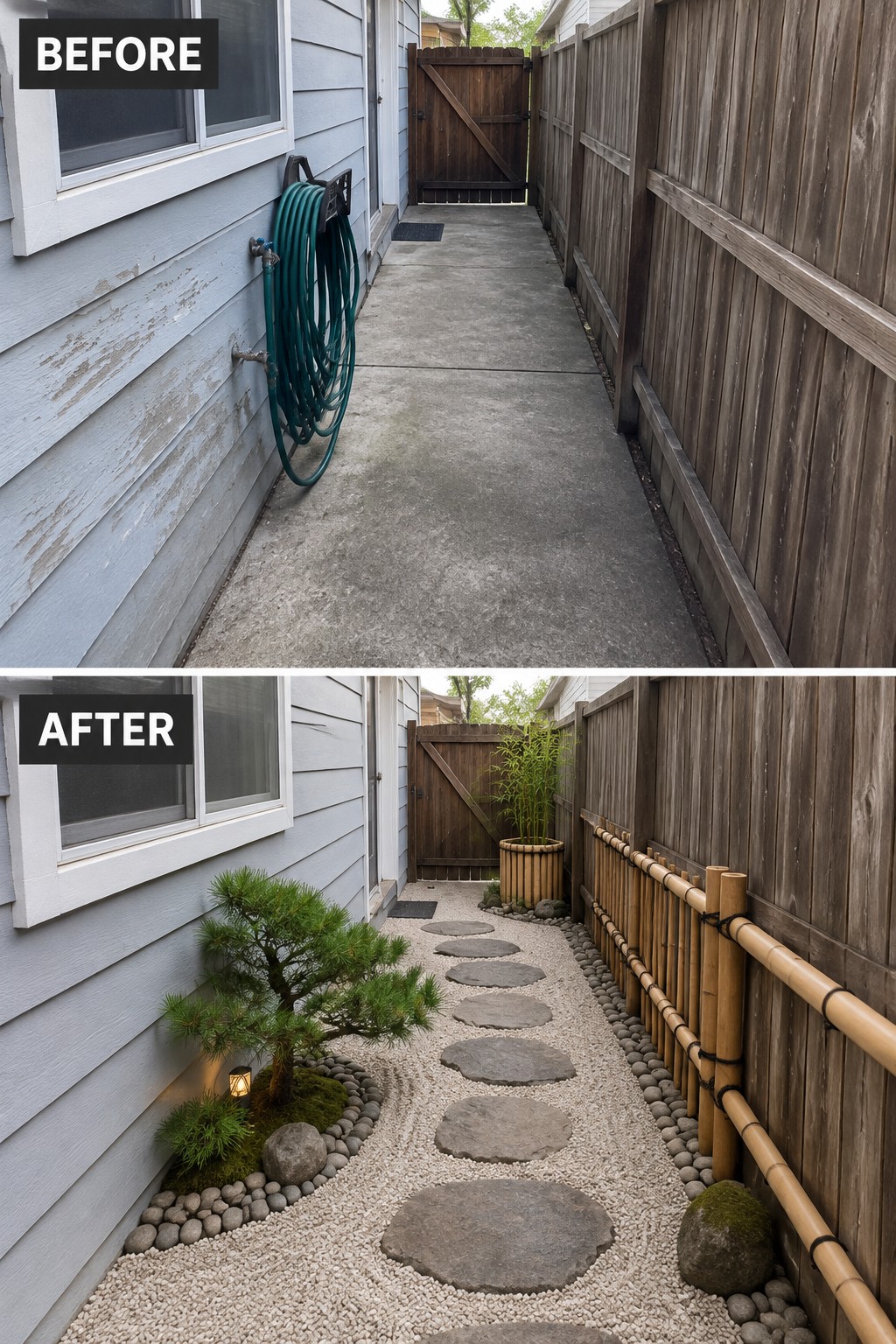
Add A Rock Garden Along The Fence
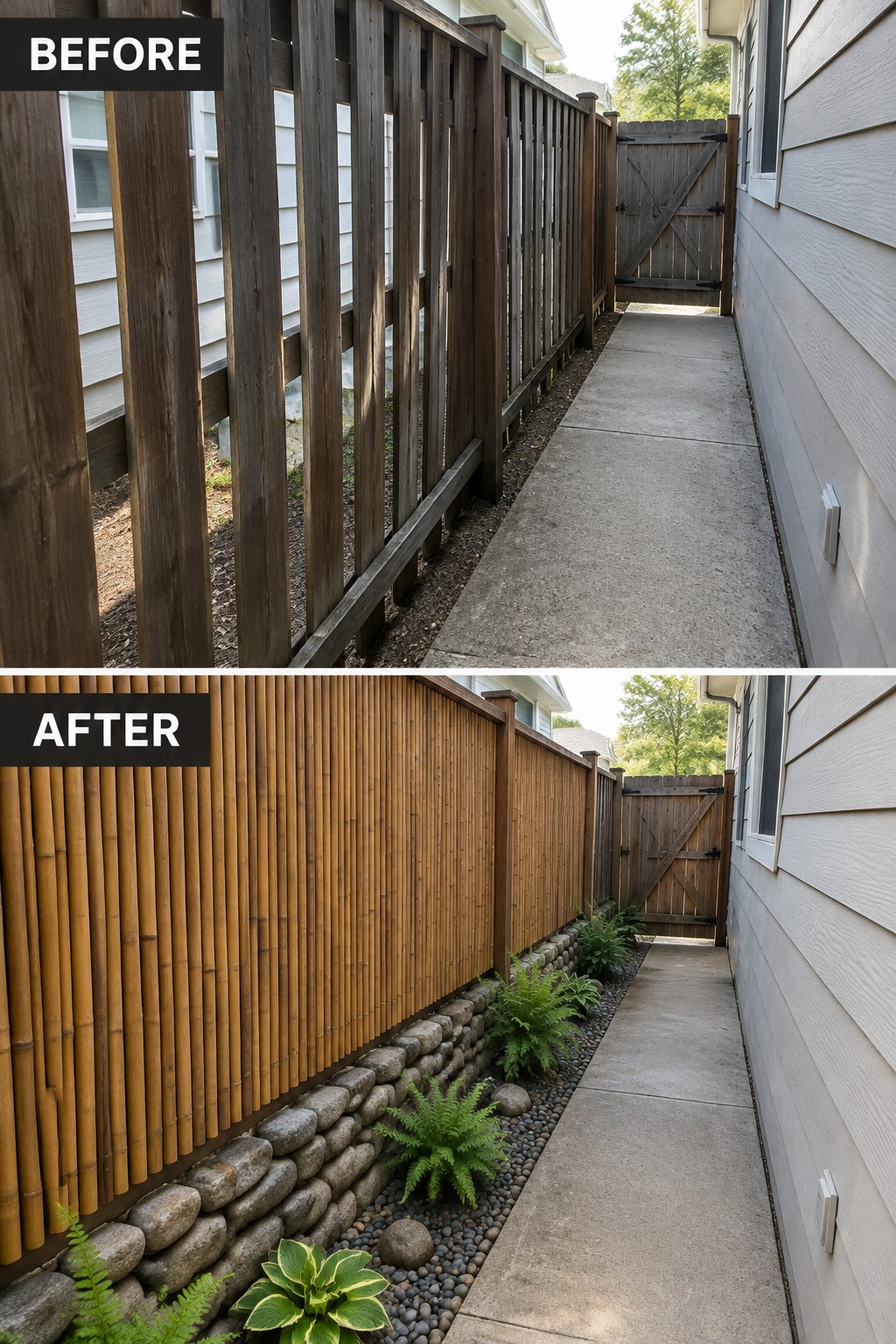
A narrow side yard can feel cramped when the fence is bare and the ground beside the path is left unfinished. Here, a bamboo screen and low stone border turn that strip into a simple rock garden, while keeping the concrete walkway clear.
Use a shallow planting bed beside the fence, with rounded stones and a few ferns or other shade-tolerant plants. Keep the planting sparse so it fits the tight space and does not crowd the path.
Build A Low-Maintenance Rock Garden
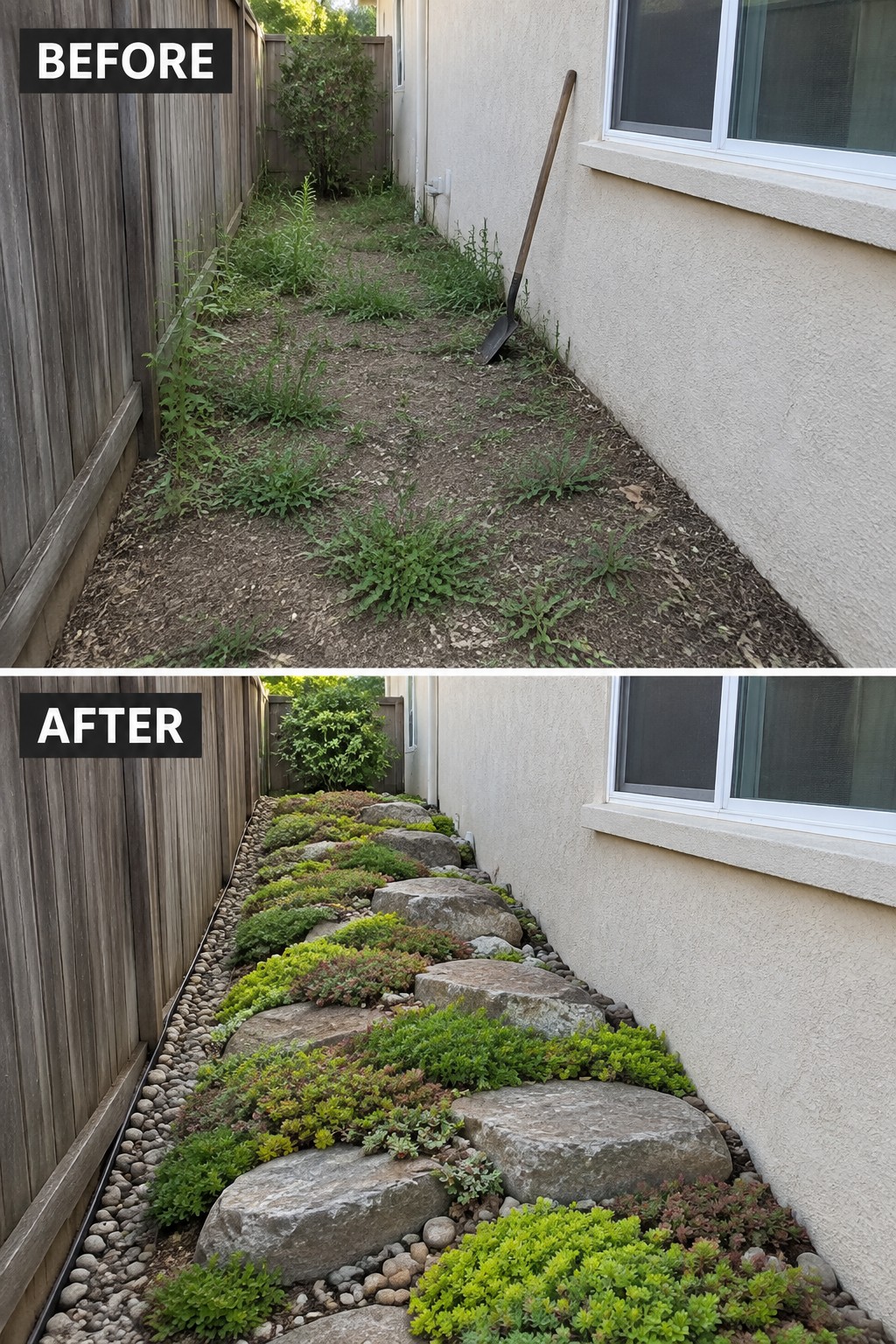
Replacing weedy, bare soil with gravel, large stones, and low-growing plants gives a narrow side yard a clear layout. The rocks provide structure, while the groundcover fills in around them without making the passage feel crowded.
Start by clearing weeds and deciding where water should drain before laying gravel. Choose plants suited to the amount of sun the side yard gets, and leave enough open space to move through or reach the house for maintenance.
Frequently Asked Questions
Q: How do I keep a narrow rock garden from looking cluttered?
A: Stick to a small mix of stone sizes and repeat the same plants along the length of the yard. Leaving a little open space around each plant helps the garden feel calm rather than crowded.
Q: What plants work well in a shady side yard with rocks?
A: Look for shade-loving plants that stay fairly compact, such as ferns, hostas, or heuchera. Check that the spot drains well, since shade and moisture can leave roots sitting in soggy soil.
Q: Do I need landscape fabric under the rocks?
A: You can use it to slow weeds, but it may also make it harder for water and soil to move naturally. A few inches of gravel over prepared soil is often easier to maintain, especially if you’re planting ground covers.
Q: How can I stop rocks from spilling onto the walkway?
A: Add a simple edging strip between the garden and the path. Keep loose gravel a few inches back from the edge, and use larger stones along the border to hold it in place.
