

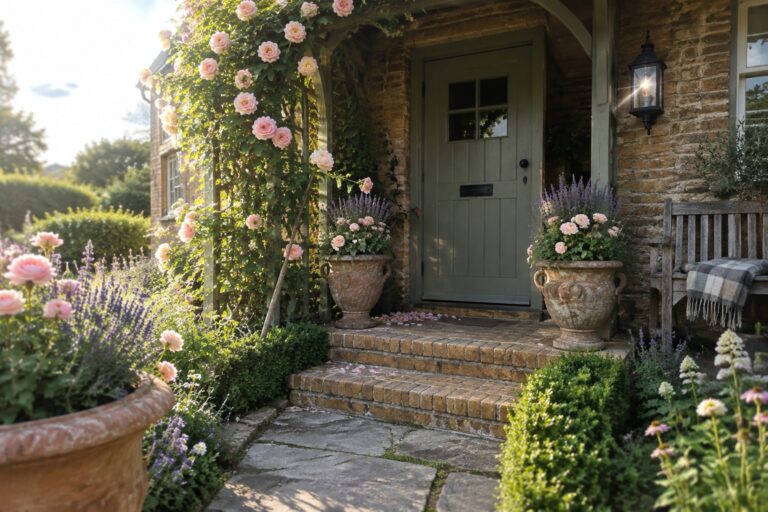
Roses can soften the straight lines of a porch, but they need room to grow without blocking the path or hiding the entry.
I find that the best front gardens balance their color with clear edges, sturdy paths, and plants that give the space shape beyond the blooming season.
The porch usually catches the eye first, so the height and placement of roses can change how the whole front of a home feels.
Climbing varieties suit a trellis or railing, while compact shrubs can frame steps without crowding them.
I’d start with ideas that fit the porch’s scale and the light the garden actually gets, then adapt the planting details to the home.
Let Roses Climb Around the Front Entry
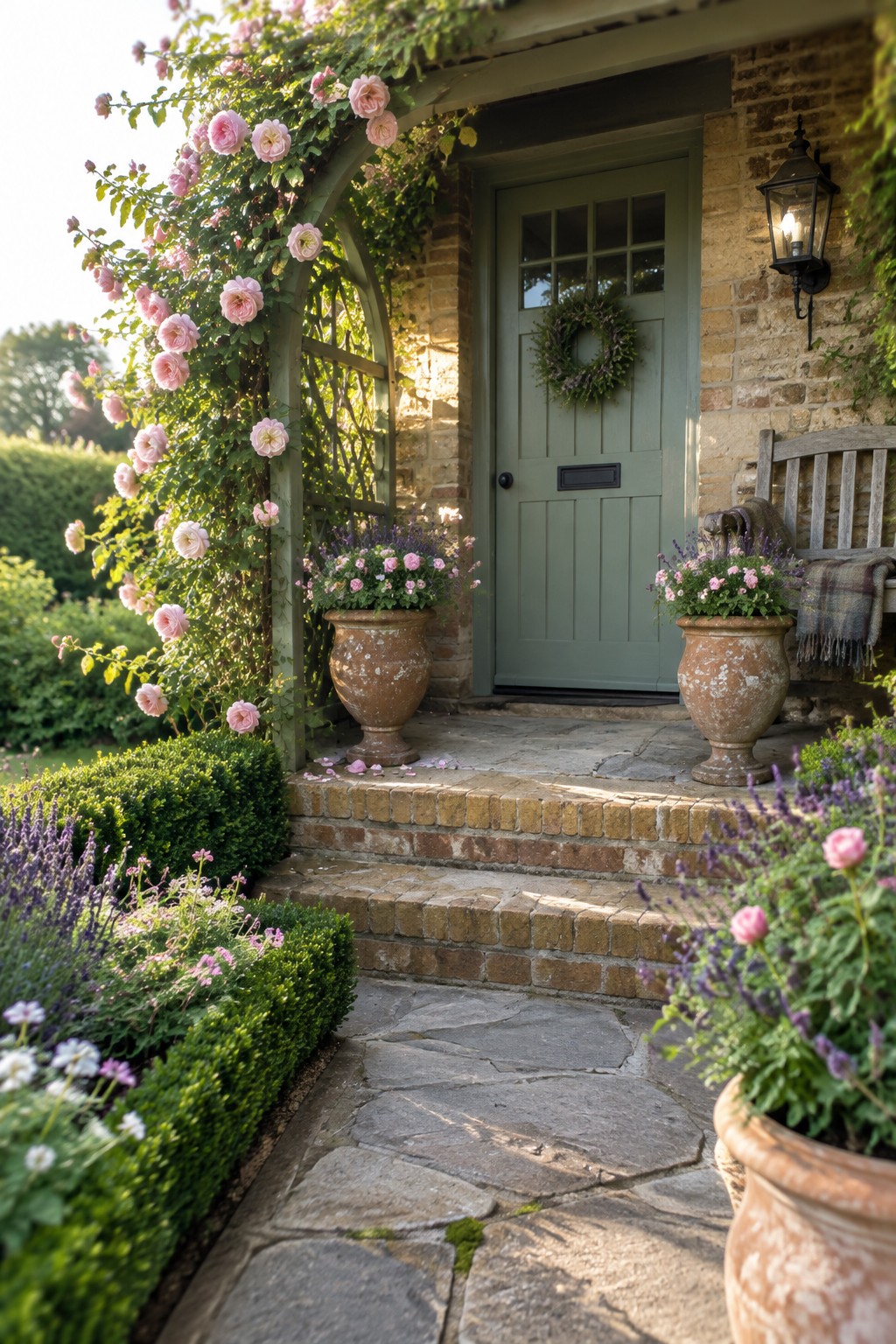
Climbing roses can make a front entrance feel established without changing the house itself. Letting them grow over a simple trellis beside the door gives the entry a softer, more garden-like look, and the flowers are easy to enjoy as you come and go.
Choose a sturdy support and train the canes as they grow, leaving enough room around the doorway and windows. This idea suits brick and stone homes especially well, but it works on other facades too if the trellis and rose color fit the house.
Grow Roses Around Porch Columns
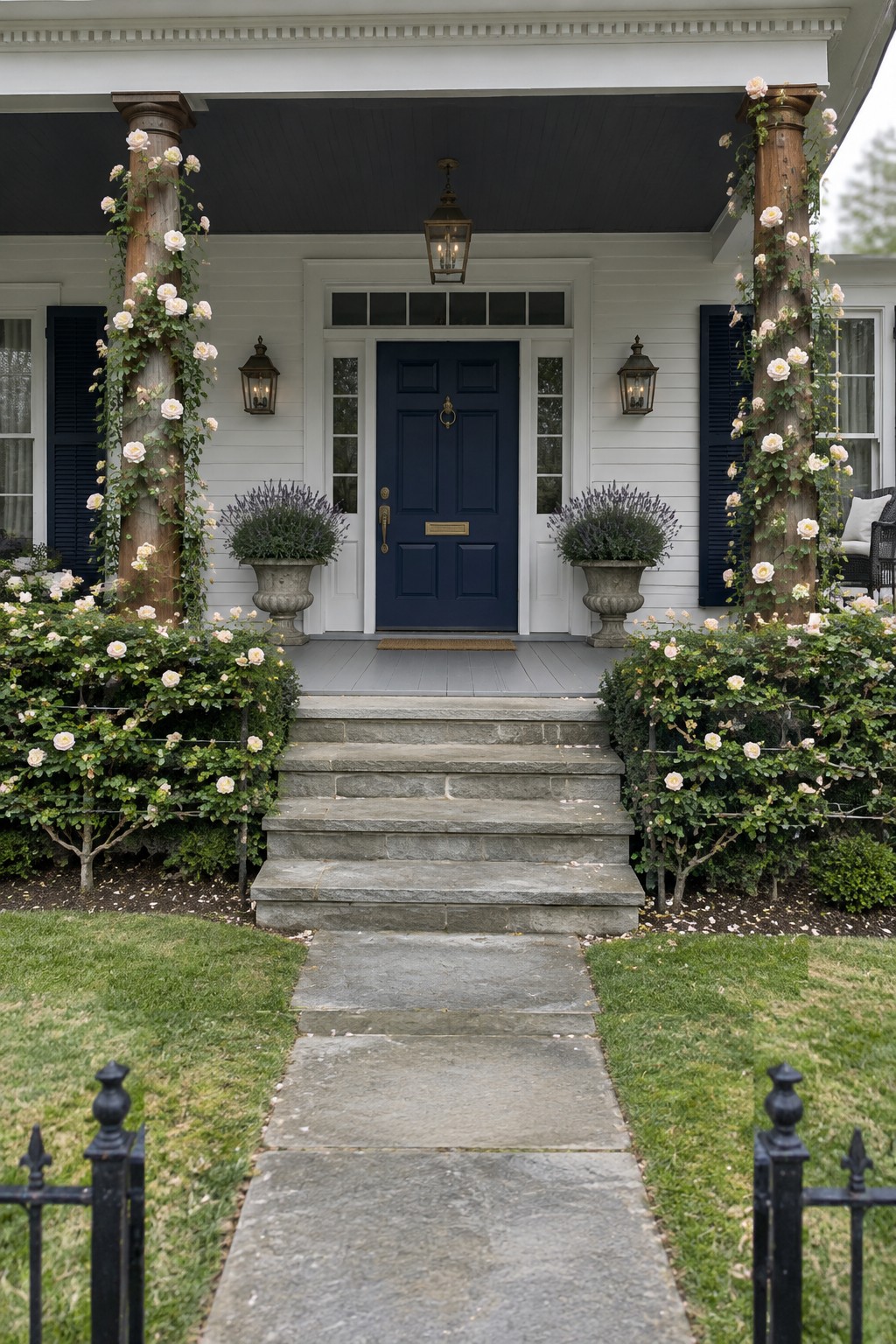
Climbing roses can make a front porch feel connected to the garden without changing the house itself. Training them up the columns adds height to the planting and gives the entry a softer, more established look.
Choose a climbing variety that suits your climate, and give it sturdy supports that won’t damage the columns. Prune it regularly so the walkway and porch stay clear, and leave enough room around doors and windows.
Let Roses Climb the Porch Posts
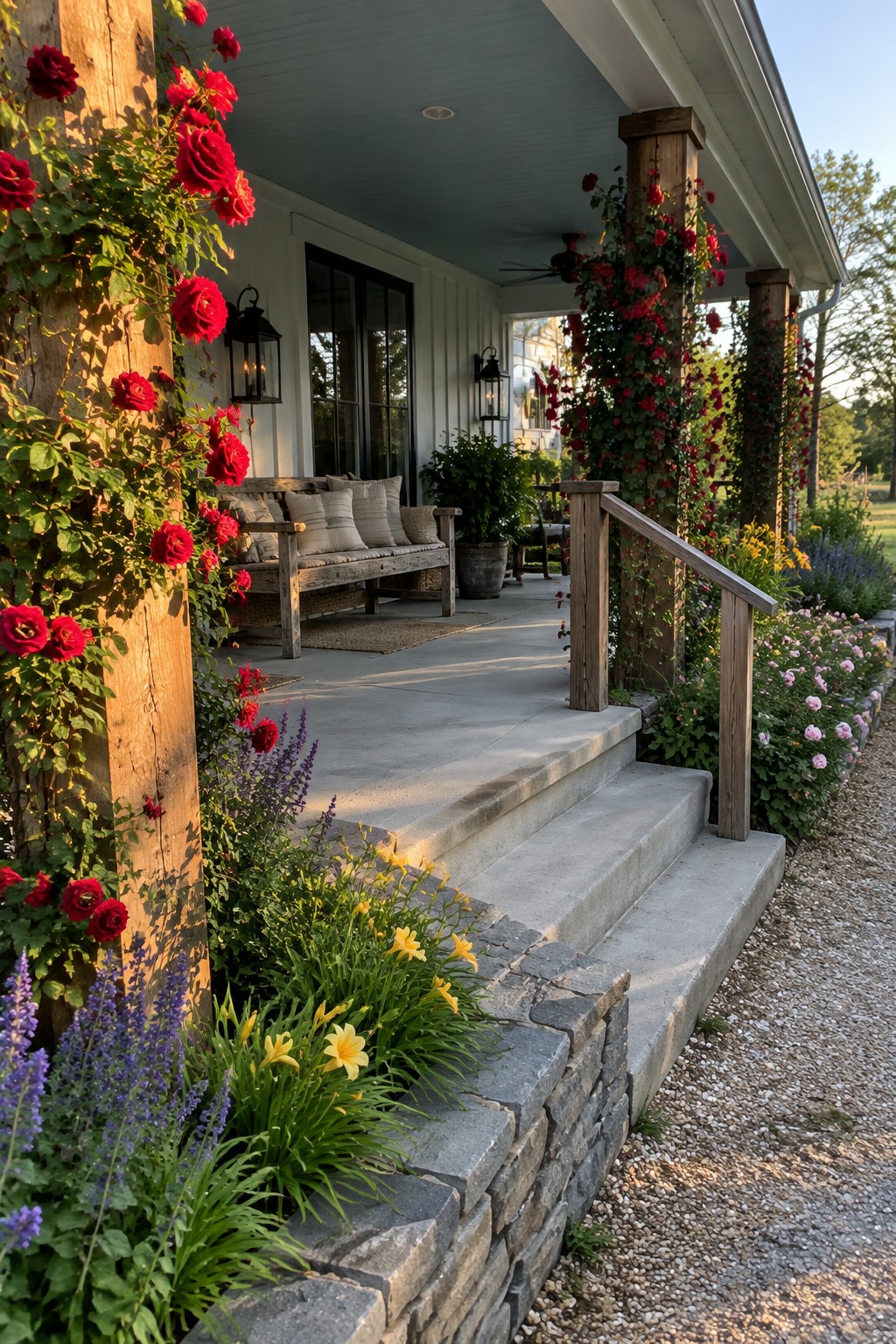
Climbing roses can make porch posts part of the garden instead of leaving them as plain supports. They bring flowers up to eye level and help connect the porch to the planting beds nearby.
Use sturdy posts or add a simple trellis, and guide the canes as they grow. Leave room for airflow and access, especially near steps and railings, so the roses stay easier to prune and the porch remains comfortable to use.
Layer Roses Along the Front Steps

Planting roses beside the front steps is a simple way to connect the entry with the rest of the garden. The flowers give the approach a welcoming, established look, while the steps keep the route to the door clear.
Use roses along one side of the steps or in a nearby bed, leaving enough room for people to pass and for the plants to grow. A few larger blooms near the entry can be enough, especially in a small front garden.
Add a Rose Arch Along the Entry Path

A rose-covered arch gives a front path a clear sense of arrival. It works especially well when the walkway leads straight to the front door, since the arch marks the entrance without changing the path itself.
Use a sturdy support and train the roses as they grow, leaving enough room to walk underneath. Deep red blooms suit a brick home nicely, but keep the arch open enough that it doesn’t block the doorway.
Use a Rose Trellis Beside the Porch
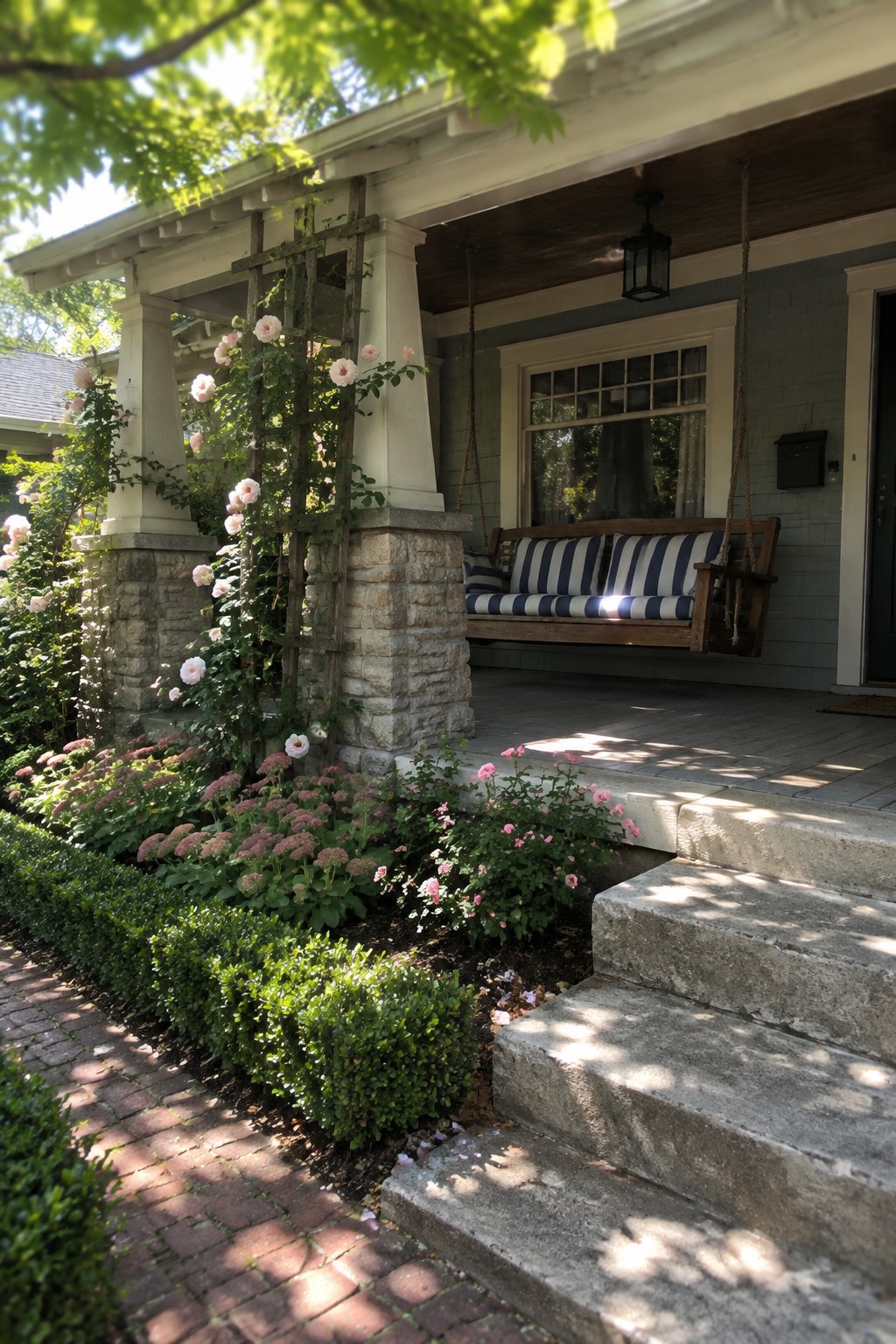
A trellis gives climbing roses a clear place to grow and brings flowers up near the porch, instead of keeping all the color at ground level. Here, the roses grow on a wooden support beside a porch column, making the planting feel connected to the house.
Set the trellis where the rose can get plenty of sun, and leave room to reach in for pruning and tying back new growth. This works well near a porch entrance or along a column, as long as the support is sturdy enough for mature vines.
Use Window Boxes To Bring Roses Onto The Porch
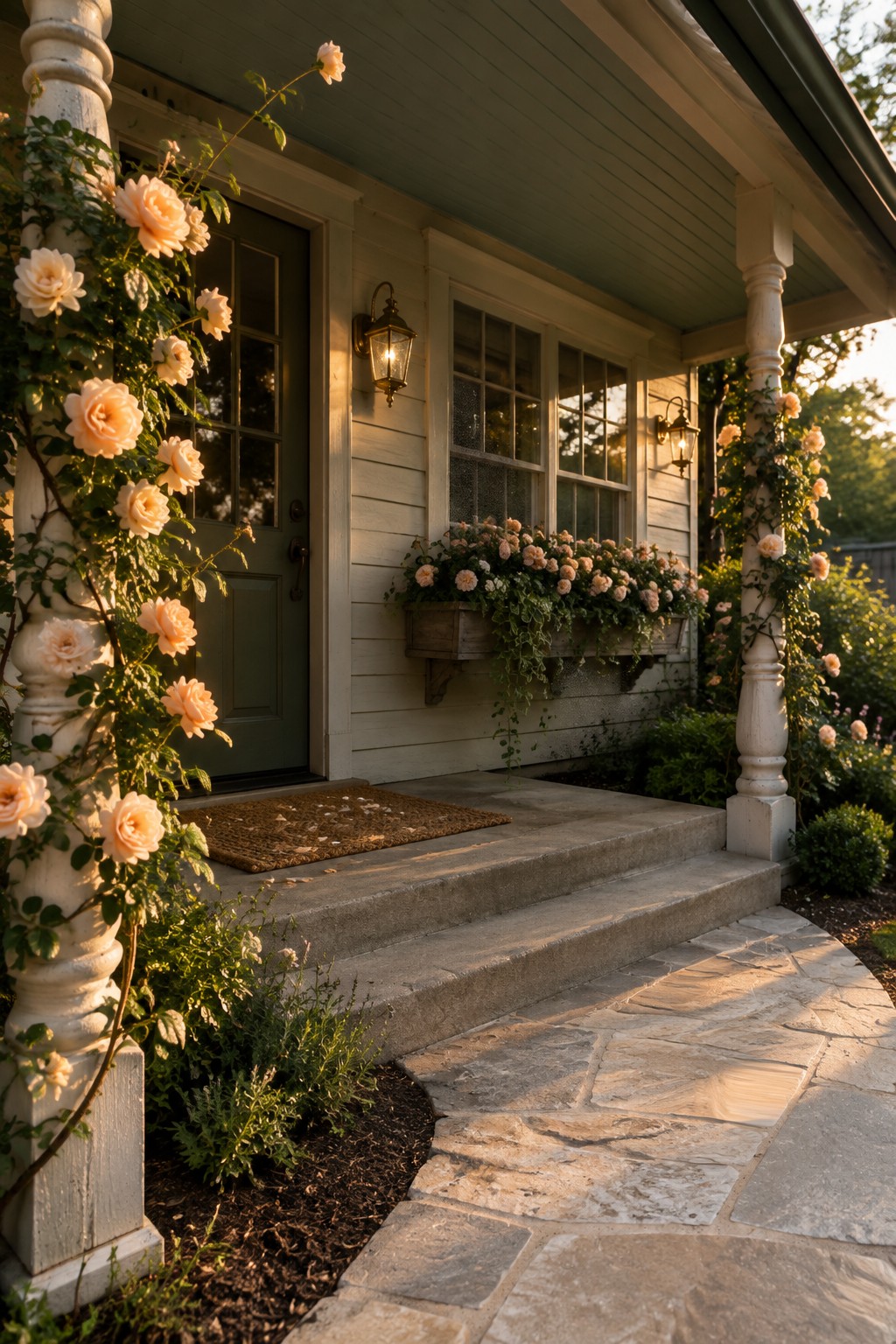
Window boxes make it easy to bring roses close to the front entry without taking up space in the garden beds. They suit a classic porch especially well, and trailing greenery can keep the boxes from looking too stiff.
Choose sturdy boxes that match the home’s trim, and make sure they have good drainage. Compact rose varieties work best in containers, since larger roses need more room for their roots.
Use Stone Steps to Lead to the Porch

Wide stone pavers make a simple front path feel more considered and give visitors a clear route to the porch. Their open spacing also leaves room for lawn between each step, so the path feels less formal than a solid walkway.
For a similar look, choose durable pavers with enough width for comfortable footing, and keep the gaps consistent. Low rose beds can sit alongside the path, but leave space for the plants to grow without narrowing the way.
Use Rose Planters to Mark the Entry

Large urn planters can give a front entry a clear focal point without changing the porch itself. Pink roses make a generous display, and matching containers on either side of the doorway help the entrance feel balanced.
Choose sturdy planters that suit the scale of the steps, and place them where they won’t narrow the path. If you want roses to thrive in containers, use pots with drainage and plan to water them more often than roses planted in the ground.
Train Roses Along Rope-Wrapped Porch Posts
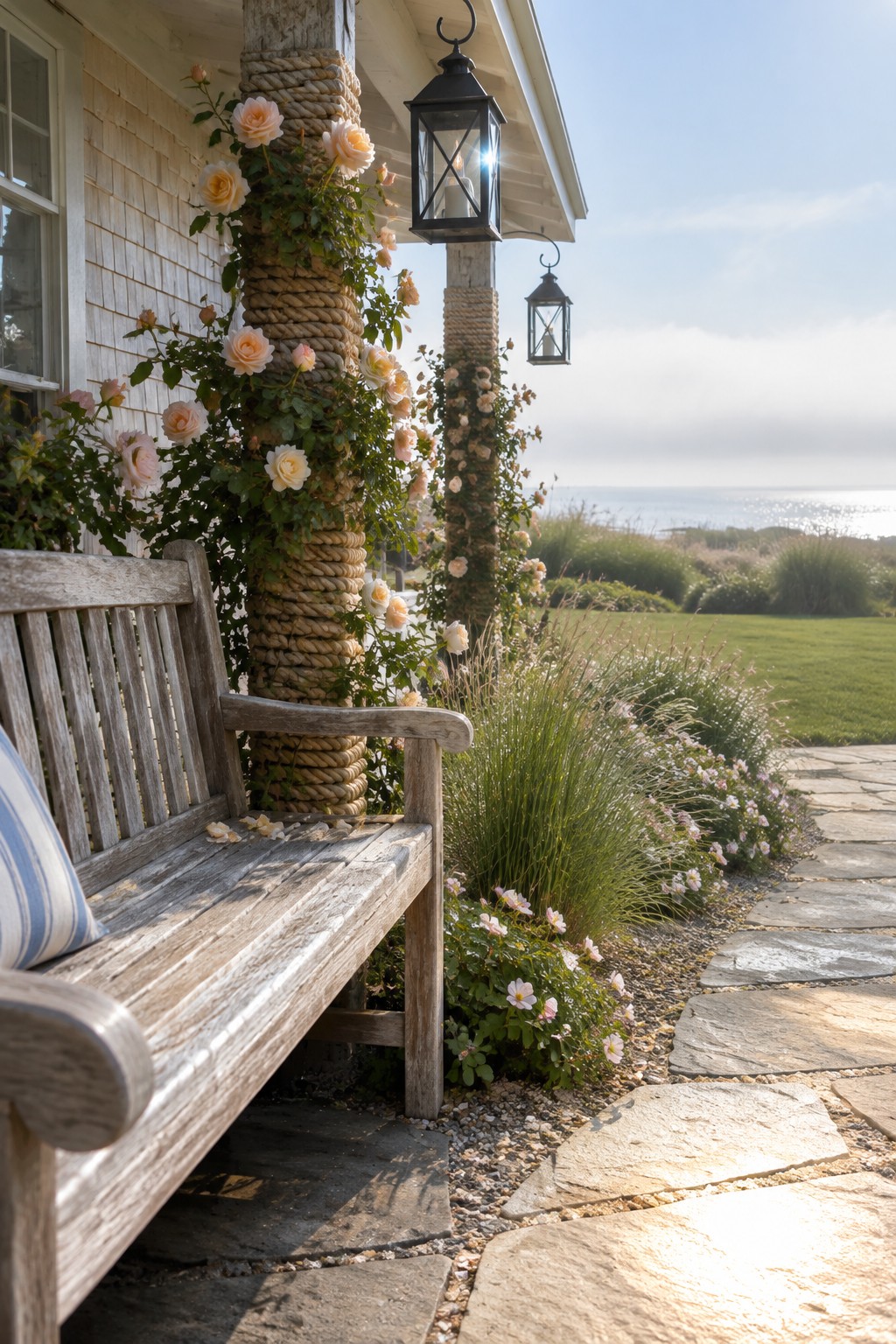
Roses can turn plain porch posts into part of the garden, giving the entry a softer, more settled look. Rope around the posts adds a simple coastal touch and gives climbing stems a textured surface to grow against.
Use sturdy posts and tie the canes loosely as they grow, leaving room for the stems to thicken. This works well on an open porch, but keep the growth trimmed so it does not crowd the walkway or block access to seating.
Grow Roses Along a Brick Entry Path
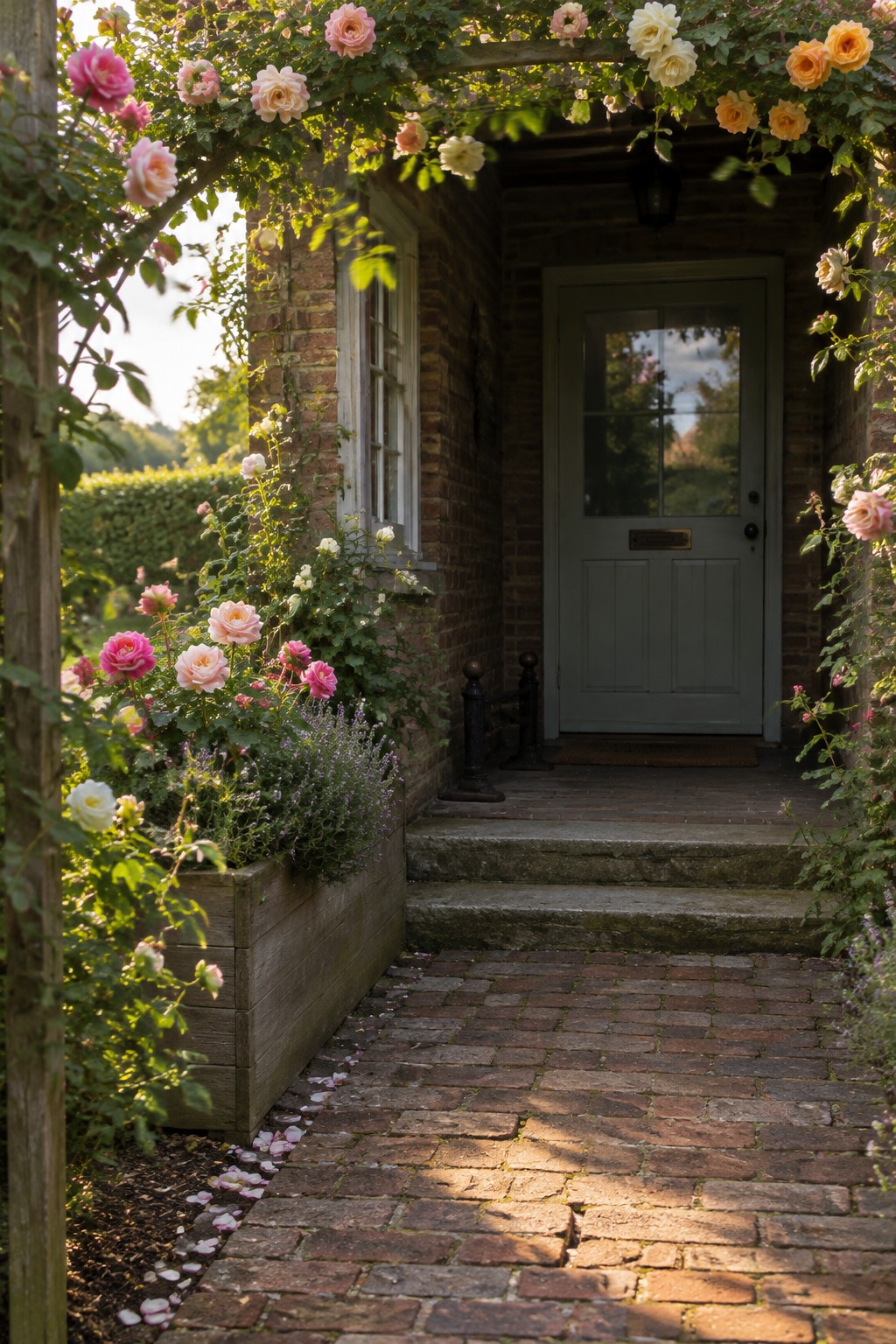
A brick path can make a front garden feel settled and easy to follow. Roses planted along its edges bring color close to the entry without blocking the walkway.
Keep the path wide enough for two people to walk comfortably, and leave space between rose stems and the paving so growth does not spill underfoot. This approach suits a cottage-style home especially well, but it can work with any brick entry that gets enough sun.
Create a Gravel Path Through Rose Beds
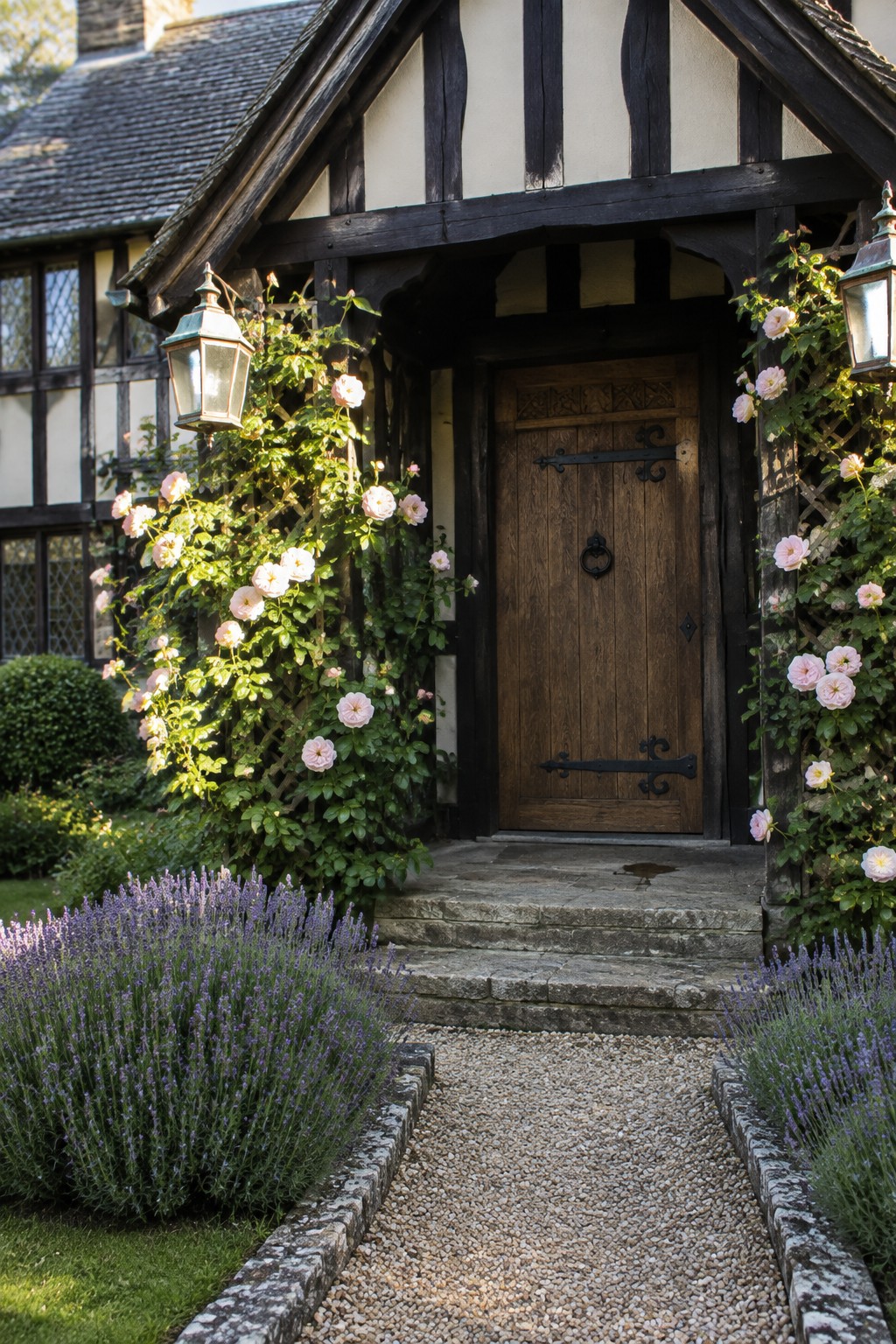
A simple gravel path gives a cottage-style entry a clear route to the front door. It also leaves room for roses to spill along the edges, so the garden feels connected to the house rather than set apart from it.
For a similar look, keep the path wide enough to walk comfortably and edge it with stone to hold the gravel in place. Roses suit this approach especially well beside older homes, but leave space to prune and reach the plants without stepping into the bed.
Layer Roses Along a Raised Front Entry
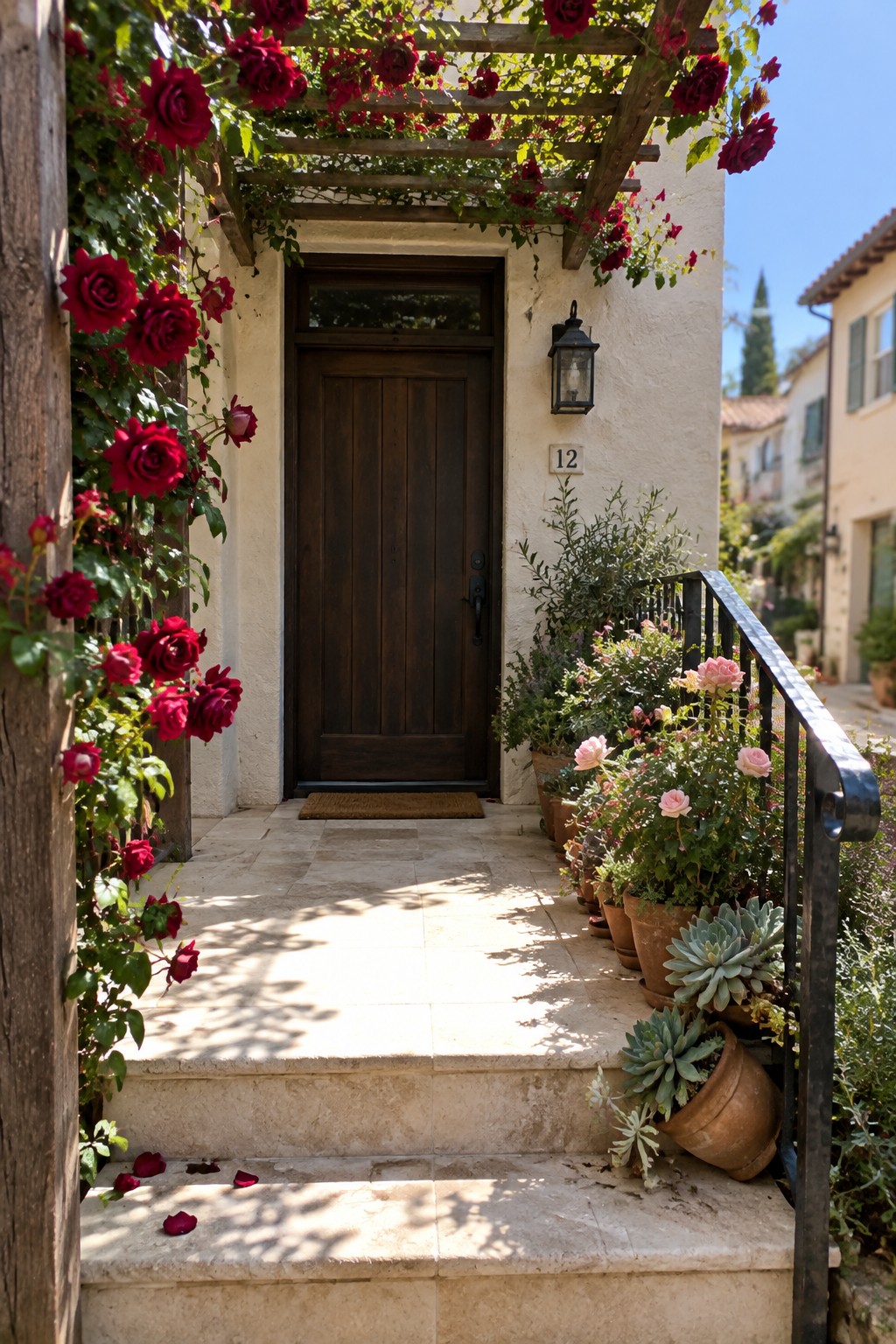
Roses can make a small front entry feel like part of the garden when they climb beside the steps and pergola. Here, the deep red blooms line the approach without hiding the doorway.
This works well when the porch sits slightly above the path, since the roses can follow the steps and bring color up to the door. Keep the walking space clear and leave room to prune the plants as they grow.
Use a Defined Border for Roses and Grasses
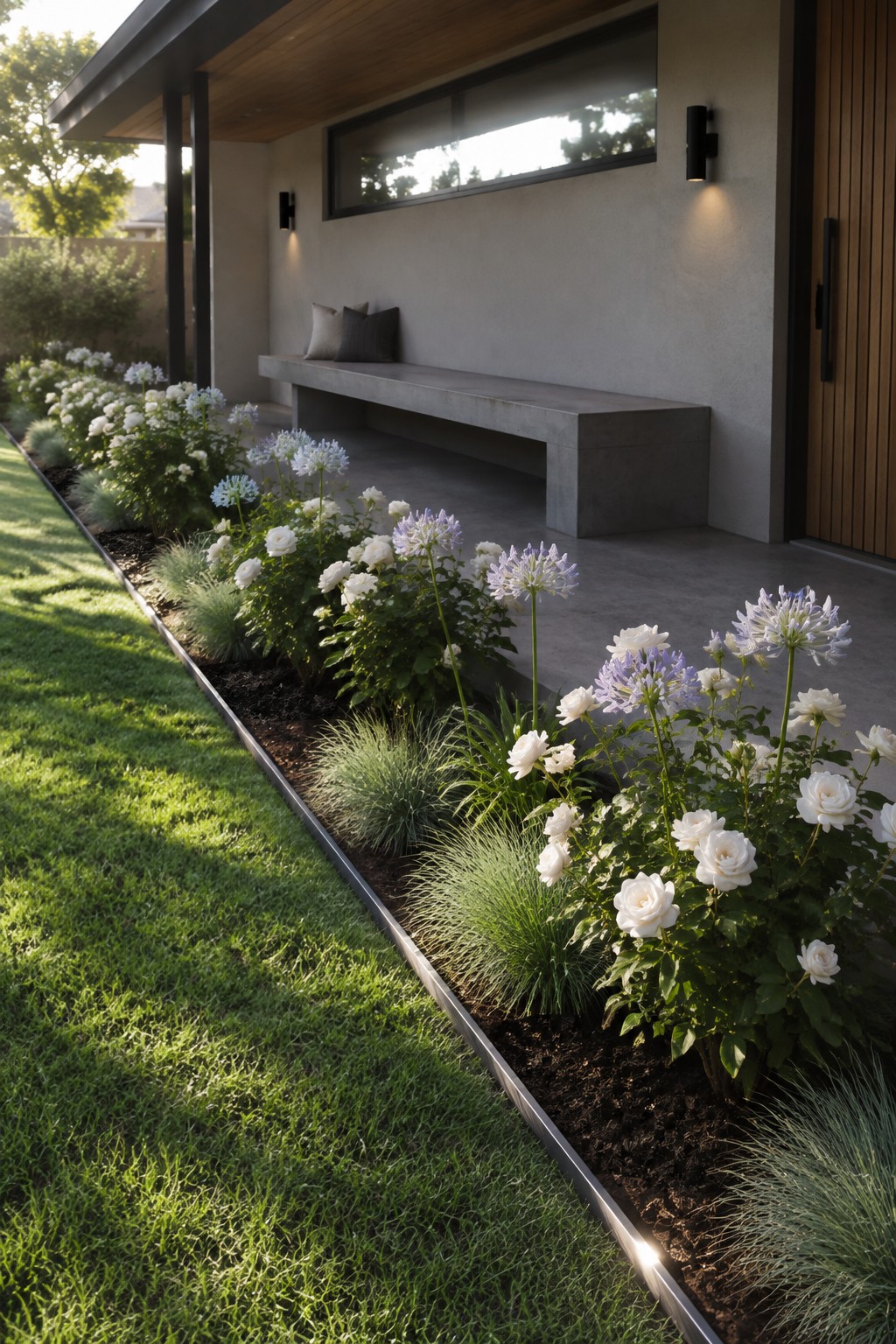
A clear edge helps a rose bed look tidy beside a front porch. Here, a narrow metal border separates the dark soil and flowers from the lawn, giving the planting a clean line without needing a formal path.
Use the same approach for a long bed along the porch or entry walk. Plant roses in small groups and leave room for low grasses between them. Keep the border easy to reach so trimming the lawn and tending the roses stays simple.
Let Roses Climb the Porch Trellis
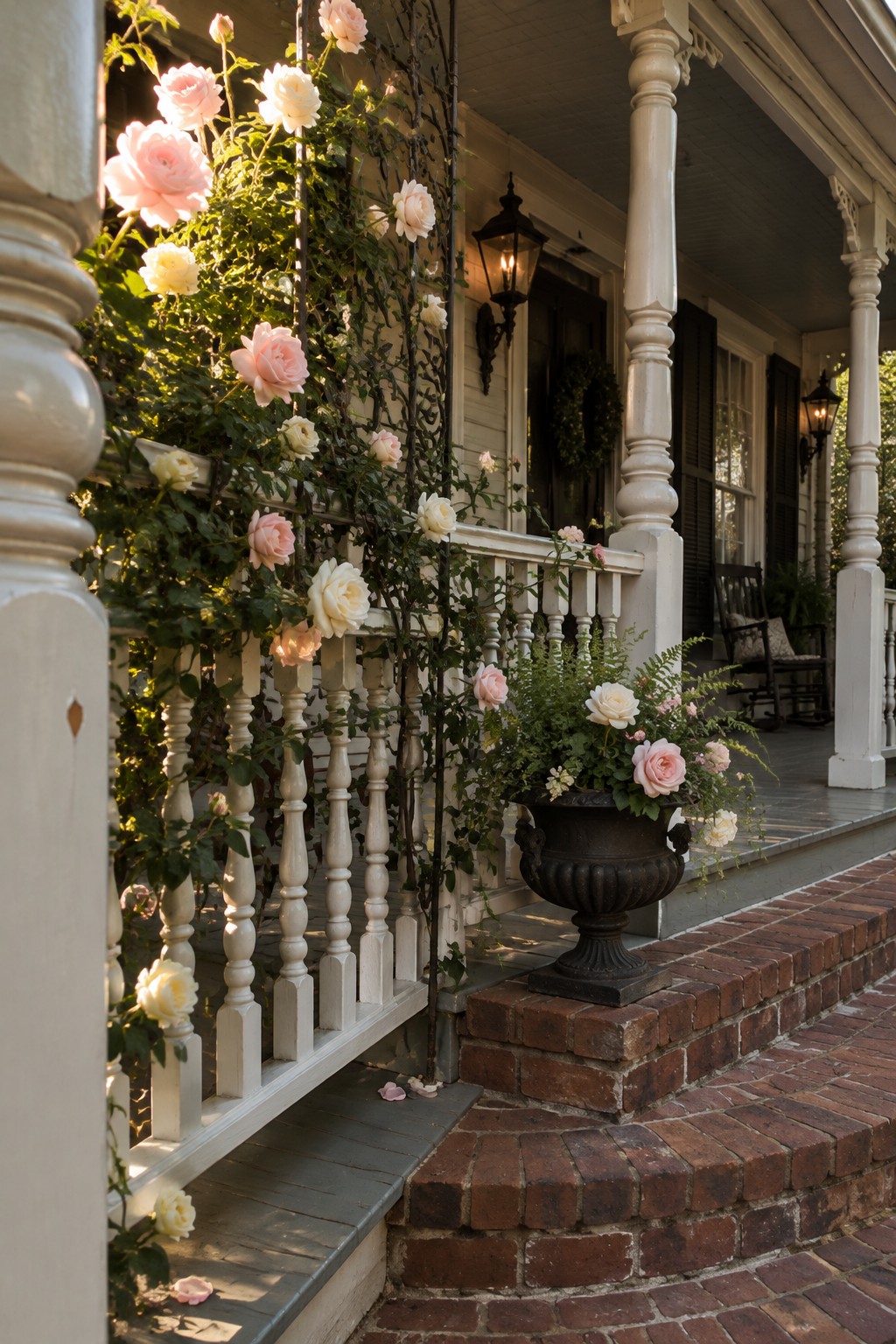
Climbing roses can turn a plain porch railing into a garden feature while keeping the porch itself open and usable. A simple trellis gives the canes support and lets the blooms grow upward instead of spreading across the walkway.
This works especially well on older homes with a deep porch or traditional trim. Train the canes along a sturdy trellis beside the railing, and leave enough room to reach the porch and prune the roses without a struggle.
Train Climbing Roses Beside the Front Door
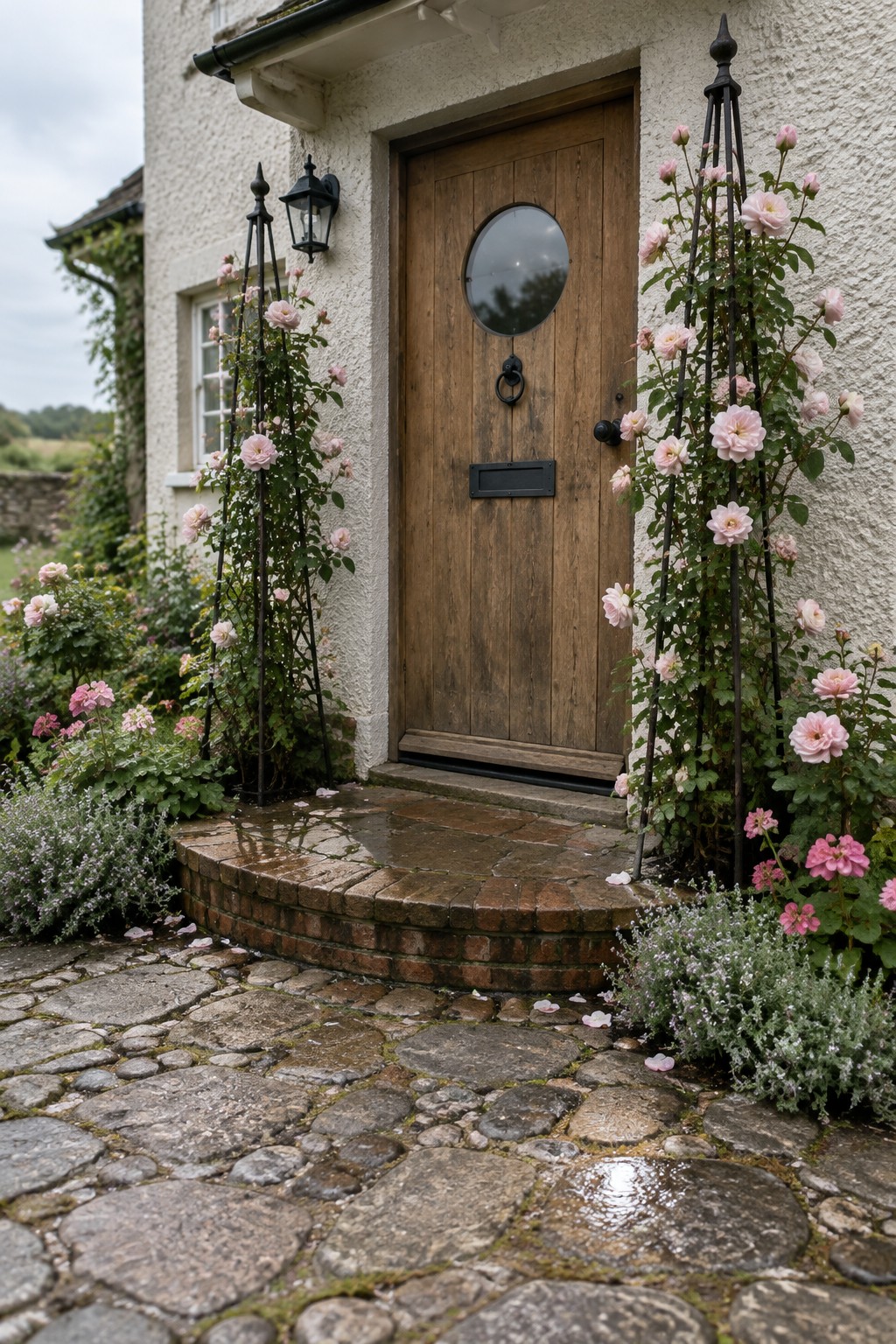
Climbing roses on slim supports can bring flowers right up to a front entry without taking up much ground space. This works especially well beside a cottage-style doorway, where the plants make the entrance feel connected to the garden.
Use a sturdy trellis on each side of the door and tie in the canes as they grow. Leave enough room for the supports and mature plants so the doorway stays easy to reach and the roses do not block windows or walkways.
Use a Brick Path to Lead to the Porch
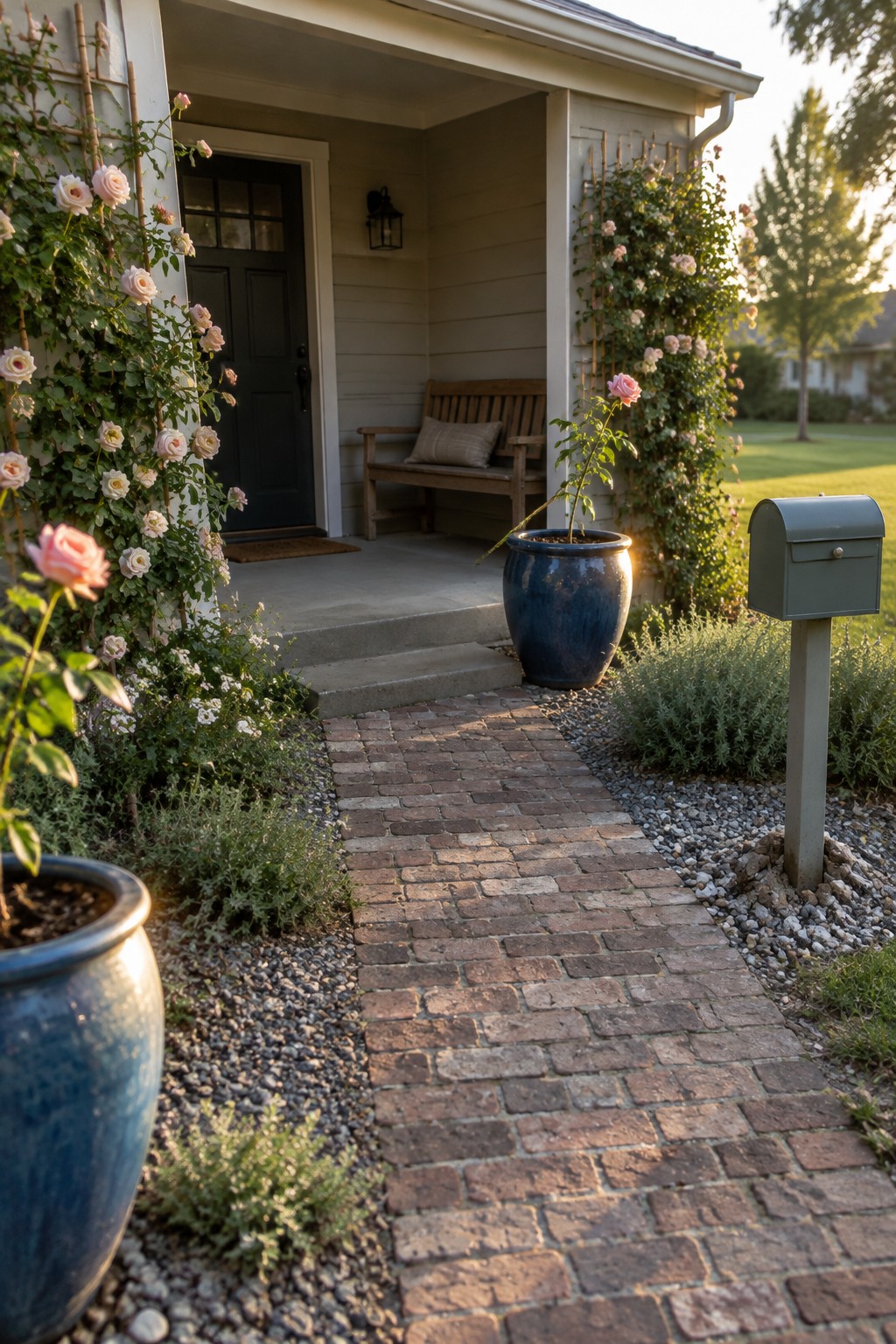
A brick walkway gives the front entry a clear route from the yard to the porch. It also suits a rose garden well, since the warm, varied pavers feel at home beside leafy planting rather than looking too formal.
Keep the path wide enough for two people to walk comfortably, and let the roses grow along the edges without spilling across the bricks. This approach works especially well for a cottage-style home, but it’s worth leaving room for pruning and regular foot traffic.
Use Rose Vines to Soften Porch Columns
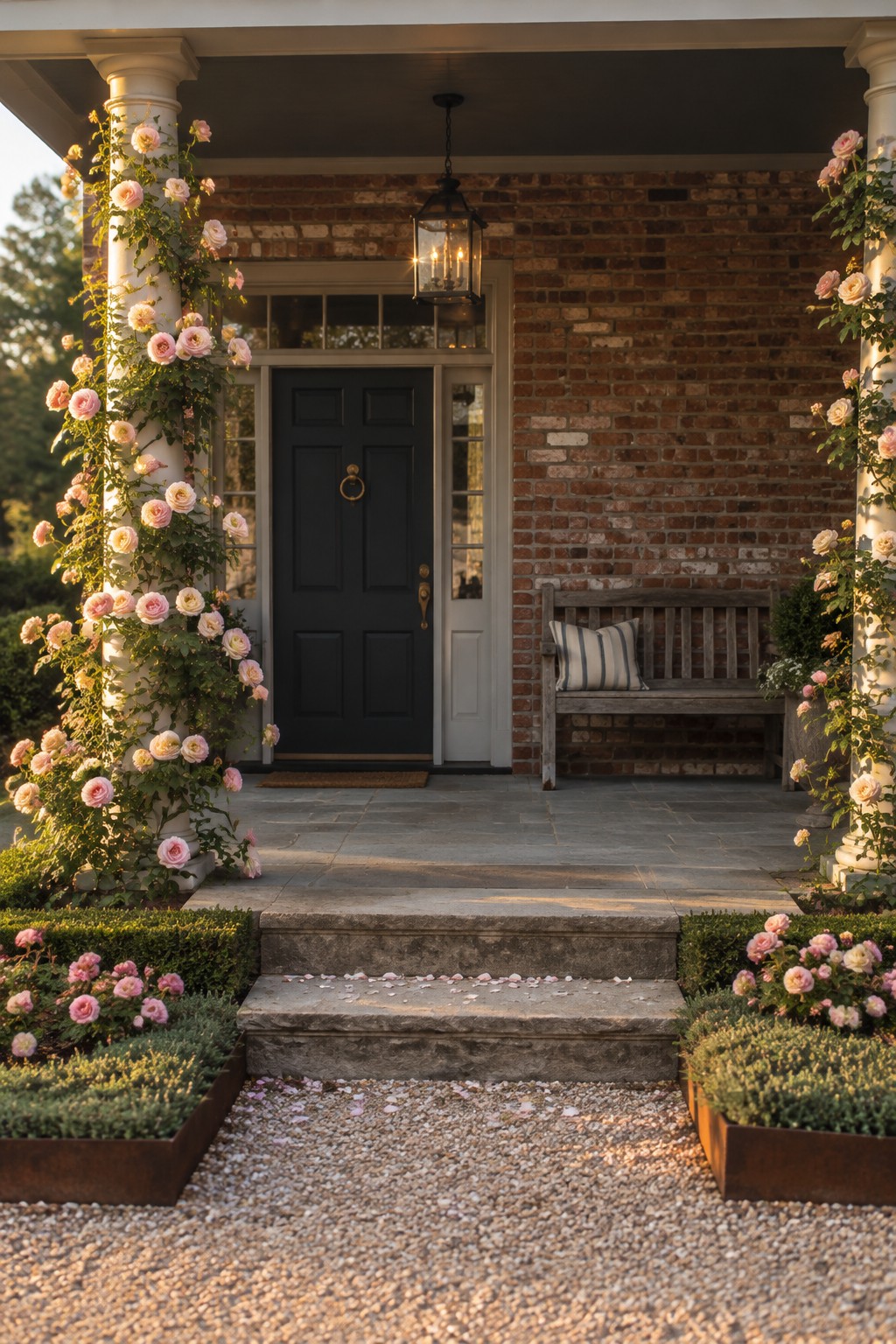
Training climbing roses up porch columns lets the planting become part of the entry rather than sit apart from it. The vertical growth makes good use of a small footprint, while the flowers bring color close to the front door.
Choose sturdy columns and give each vine a support that won’t damage the surface. Leave room for the roses to grow without blocking the walkway, and prune them regularly so the porch stays easy to use.
Frequently Asked Questions
Q: How far from the porch should I plant roses?
A: Leave enough room for the mature plant so branches don’t crowd the steps, walkway, or siding. Check the rose’s expected width, then give it a little extra space for airflow and easy pruning.
Q: Which roses work well beside a front porch?
A: Compact shrub roses are a good fit for smaller beds, while climbing roses can frame a porch post or trellis. Choose a variety suited to your sunlight and climate, and check whether it blooms once or repeatedly through the season.
Q: Can I grow roses on a shady porch?
A: Most roses bloom better with several hours of direct sun, so a deeply shaded spot may produce fewer flowers. If the porch casts shade for part of the day, try a disease-resistant rose in the sunniest section of the bed.
Q: What should I plant around roses without making the porch bed look crowded?
A: Use low-growing companions, such as catmint or edging plants, and leave clear space around the base of each rose. That keeps the flowers in the spotlight and makes watering and pruning easier.
