

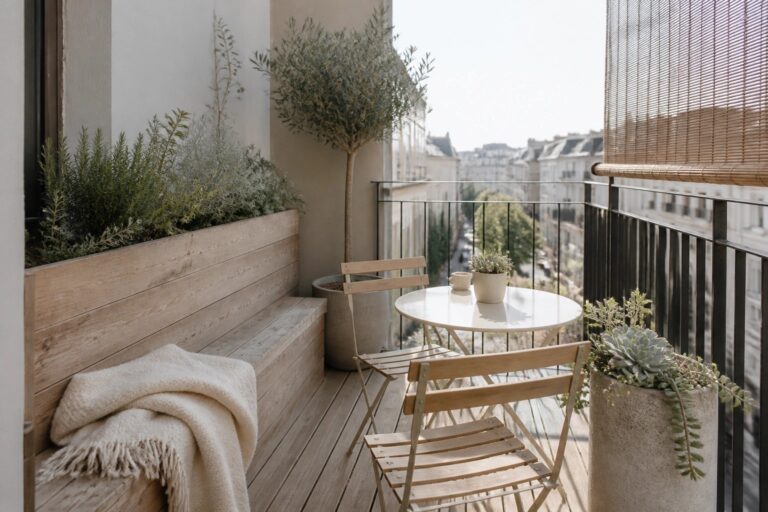
Balconies tend to feel more like part of the home when the layout leaves room to actually sit or move around without tripping over pots or hoses.
What stands out right away is whether the greenery stays within reach for watering and trimming on busy days rather than turning into extra work.
That part rarely sorts itself out on its own.
I usually try one or two simple container setups first to see how the light and foot traffic actually play out before committing to more.
Those early adjustments often decide if the space becomes a quiet spot to step out to or just something that looks nice from inside.
Stack Planters on One Wall
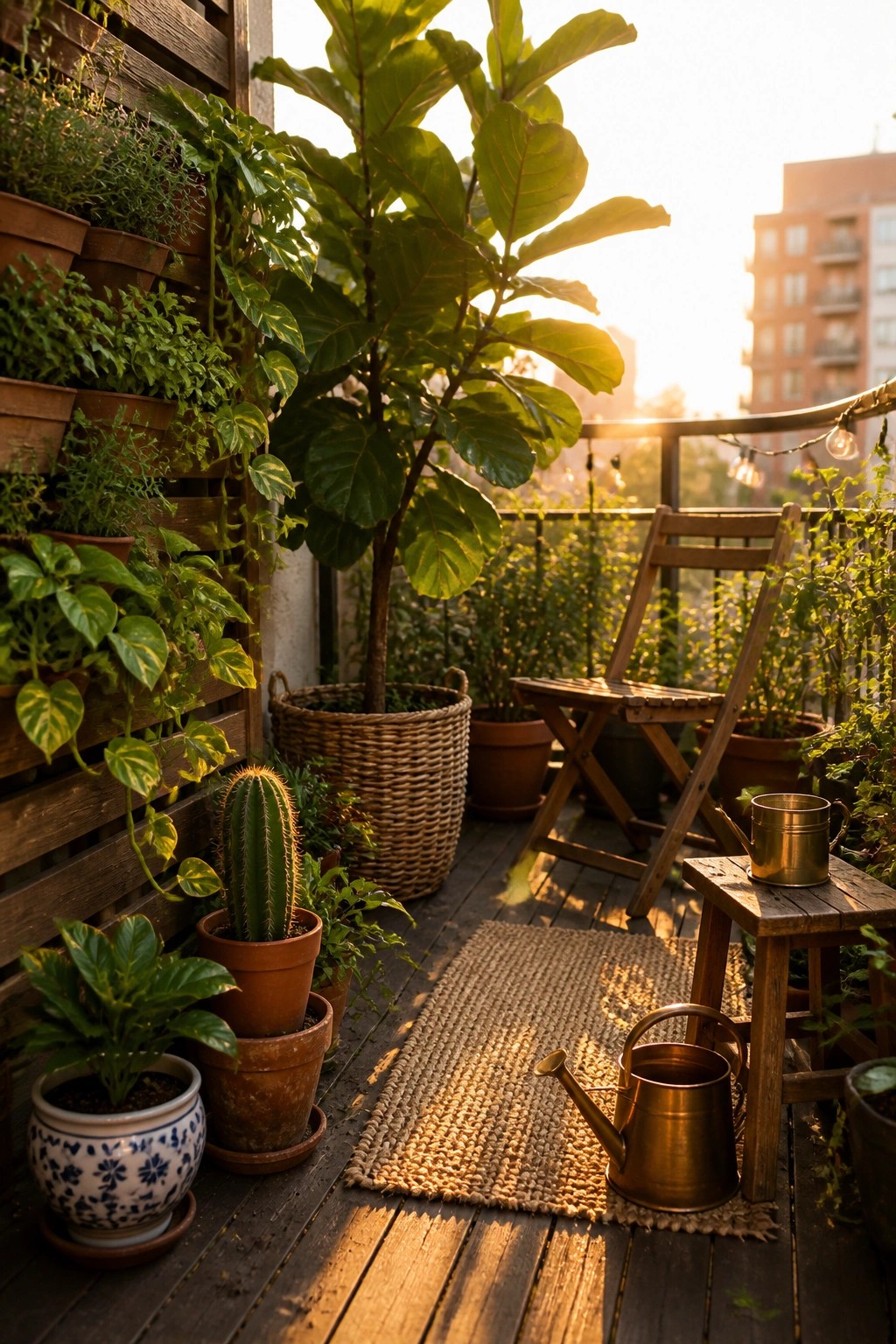
Putting plants on the wall instead of just the floor gives you room for a lot more greenery without making the space feel cramped. A simple wooden grid or set of brackets holds pots at different heights, so the plants fill in the view while leaving the deck clear for a chair or two.
This setup works best on balconies that get decent light and do not have much floor space to spare. Stick with hardy plants that can handle a bit of drying out between waterings, and check the brackets now and then to keep everything secure.
Cluster Pots Around a Small Table
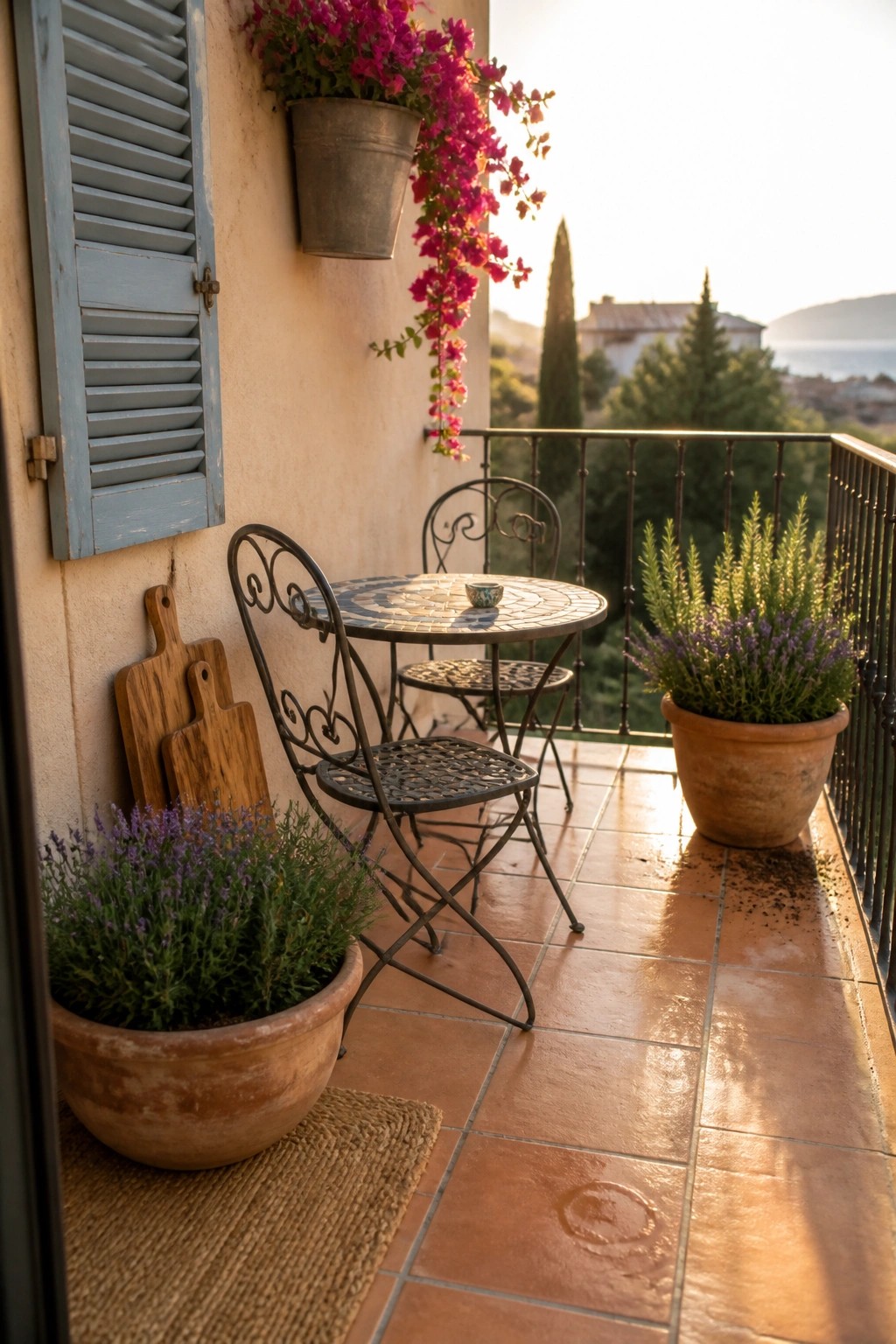
Potted plants work well on balconies because they let you add greenery without any permanent changes to the space. Placing several large pots near a table and chairs creates a natural border that feels calm and lived in. The terracotta containers and lavender plants in this setup show how simple materials keep the look relaxed while still giving plenty of color and scent.
This approach suits small balconies best since the pots can be moved around as needed. Choose sturdy containers that hold moisture well and stick to plants that do not need daily attention. Keep a few cuttings boards or tools nearby if you want to use the space for light outdoor prep too.
Organize Plants on a Wooden Pallet Shelf
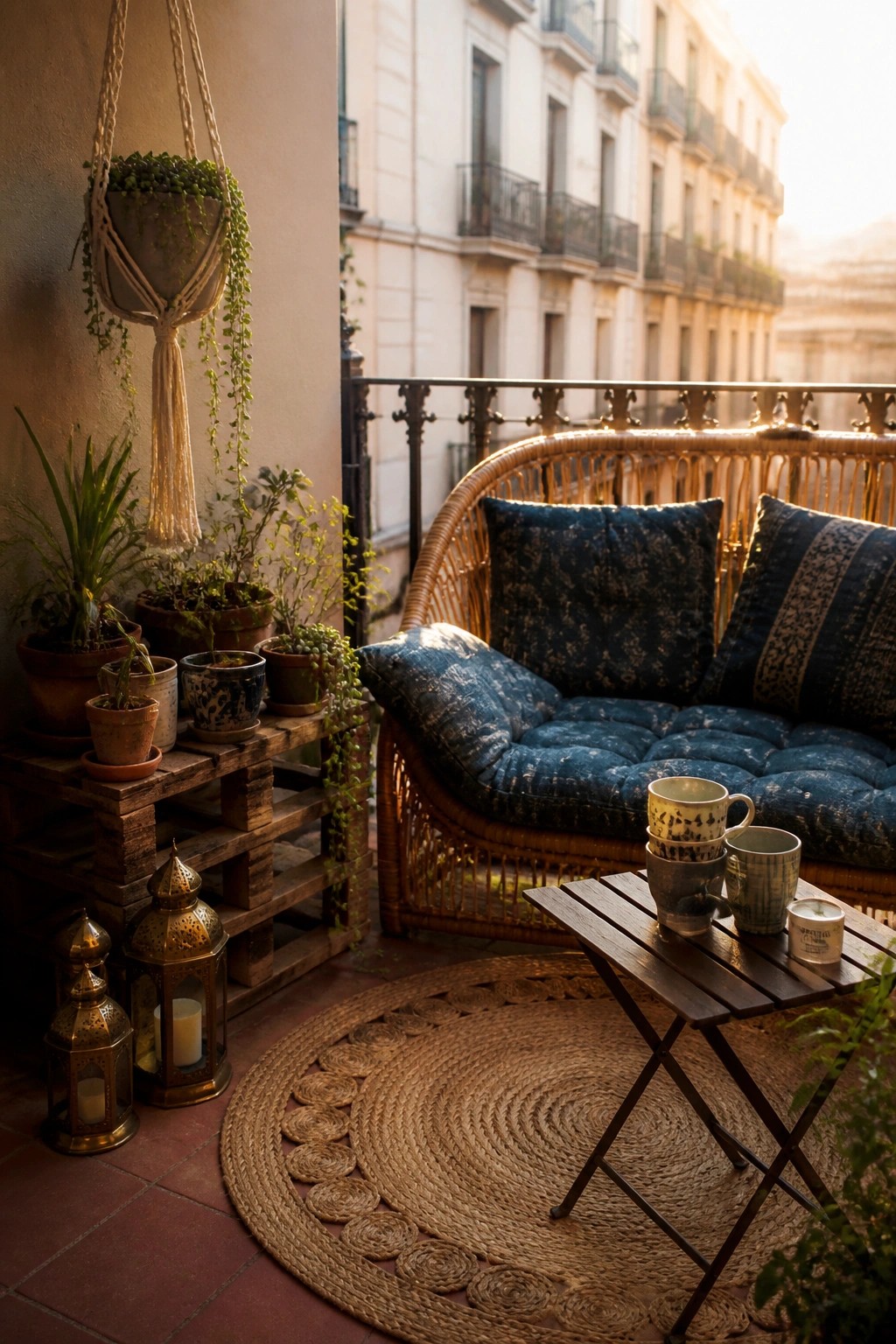
A wooden pallet turned into a low shelf gives you a simple way to keep multiple pots off the floor on a balcony. It creates a clear spot for smaller plants while leaving room for seating and walking around. The open slats also help with drainage and air flow, which keeps things from getting too damp.
This works well on small balconies where floor space is limited. Place the pallet against a wall or railing, arrange the pots in a single layer, and add a hanging plant or two above it if you want more height. Just check that the wood is treated for outdoor use so it holds up over time.
Group a Few Potted Trees Along One Side
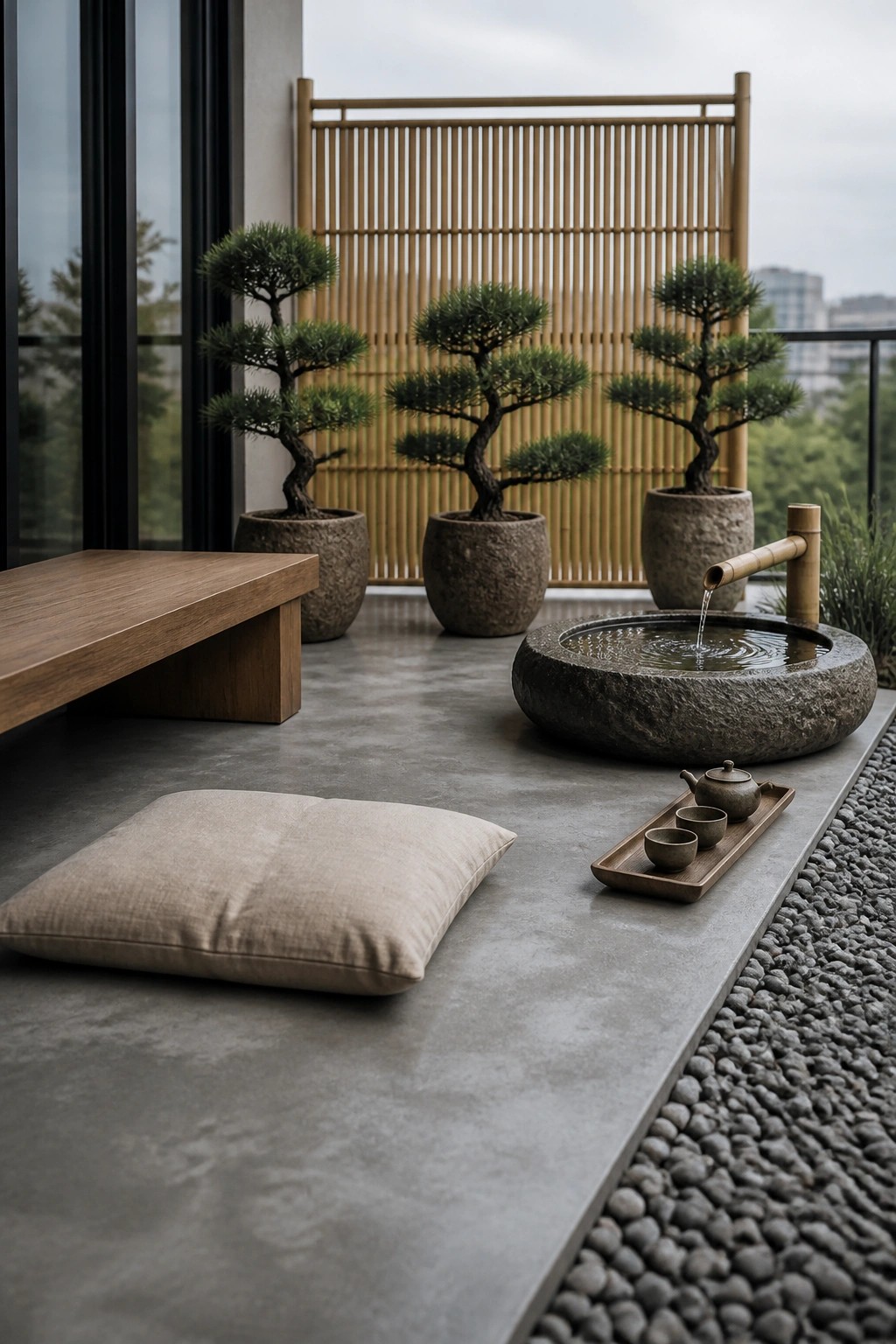
A small number of potted trees can turn a balcony into a calm spot without much daily effort. They bring steady greenery that stays neat on its own and do not need constant replanting or trimming. The simple pots and open spacing keep the area from feeling crowded.
This works best on balconies that get decent light and already have a solid floor surface. Set the pots in a loose row against a screen or rail, and add a basic water basin nearby if you want the sound of moving water. Keep the rest of the space open so the trees remain the main focus.
Large Planters Keep Balcony Greenery Simple
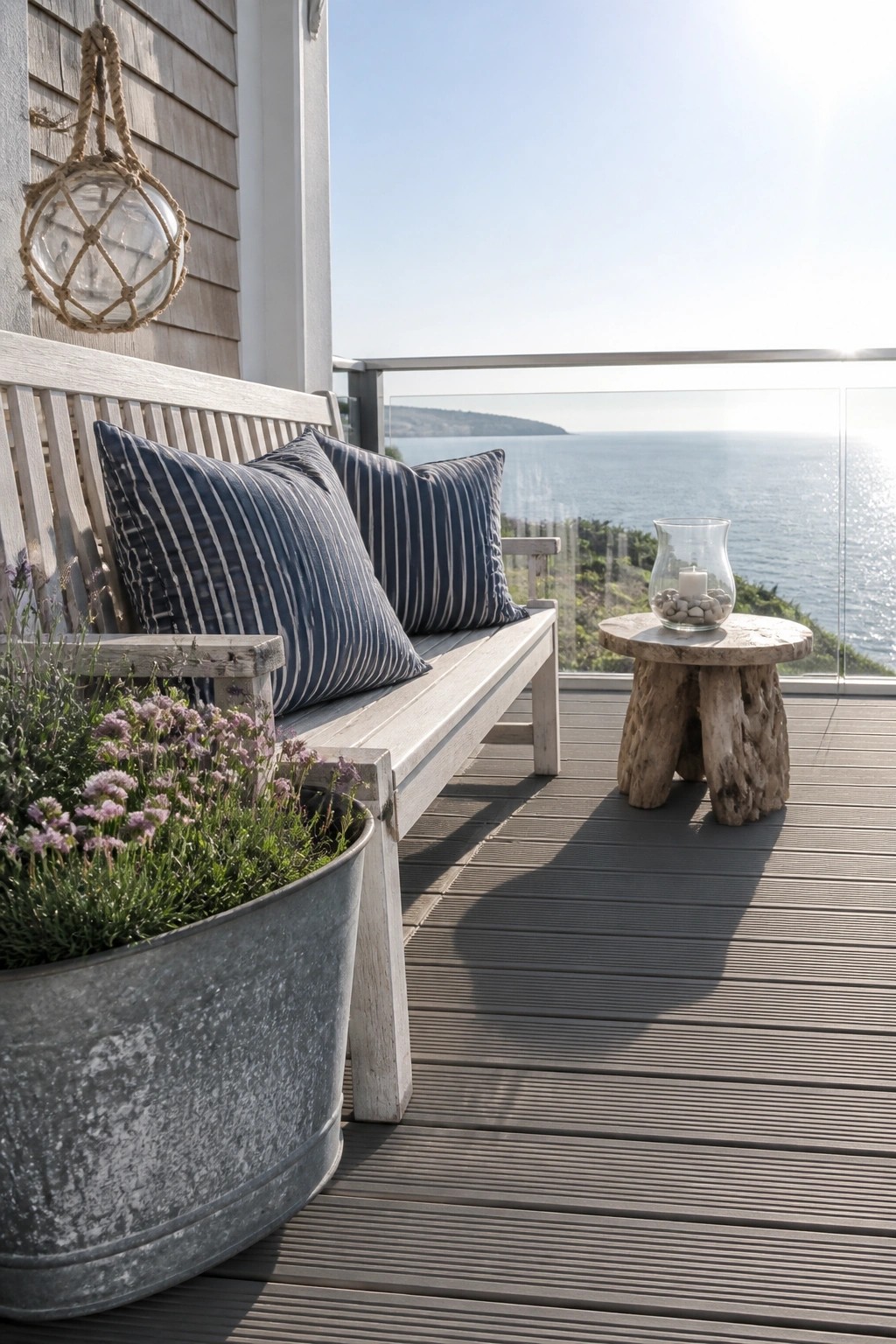
A big container like a metal tub gives you room to plant without needing built-in beds or lots of soil. It sits right on the deck boards, adds height, and keeps the space open while still bringing in flowers and green leaves.
This works well on balconies or decks where you want low upkeep and easy changes with the seasons. Just pick a tub with drainage, use good soil, and choose plants that handle sun and wind without daily fuss.
Repurpose Containers You Already Own
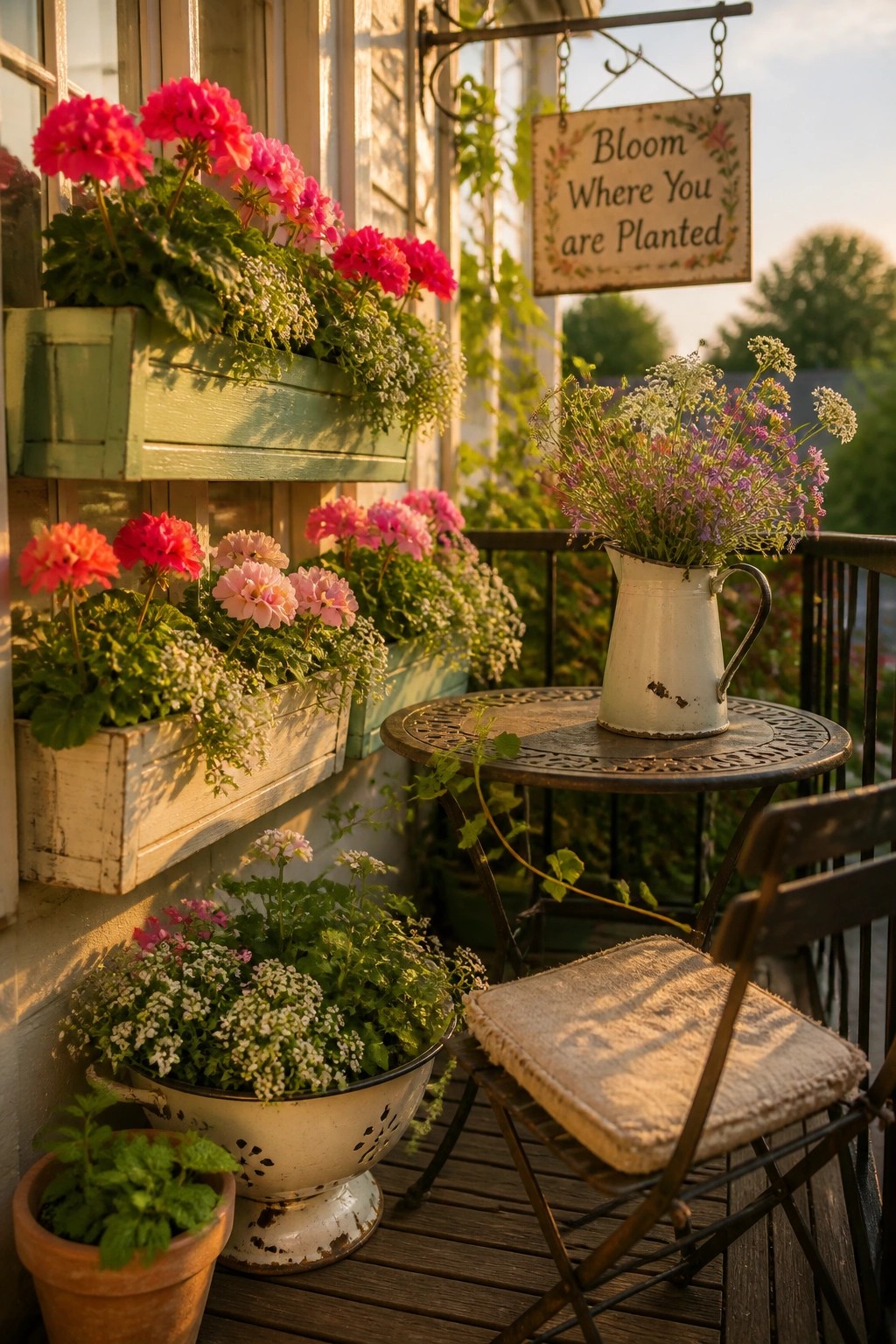
Many balconies stay simple when people use whatever containers they already have on hand. Old pitchers, colanders, and worn pots all work fine once you add soil and plants that match the size.
This approach suits small spaces best because it avoids extra purchases and lets you move things around easily. Just check that each container drains well and will not tip over in wind.
Add a Fold-Down Counter for Balcony Herbs
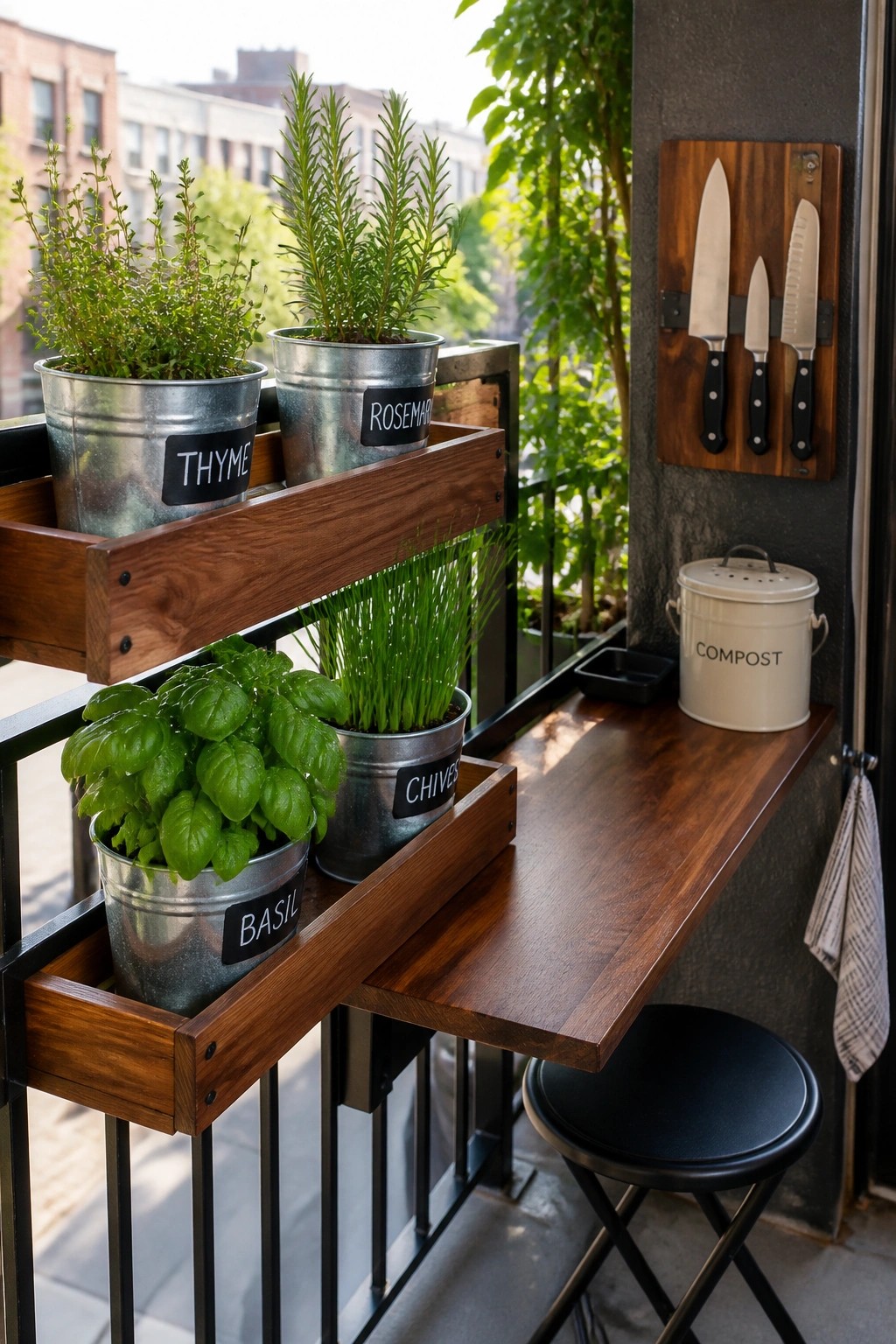
A railing-mounted wooden trough with a drop-down counter gives you a simple spot to tend herbs without taking over the whole balcony. The setup keeps plants at a good height for watering and picking while the counter provides a place to set tools or a small tray.
This works best on narrow balconies where floor space is limited. The counter can stay folded up most days and only drops down when you need it, which keeps the area from feeling crowded.
Try a Living Wall for Your Balcony
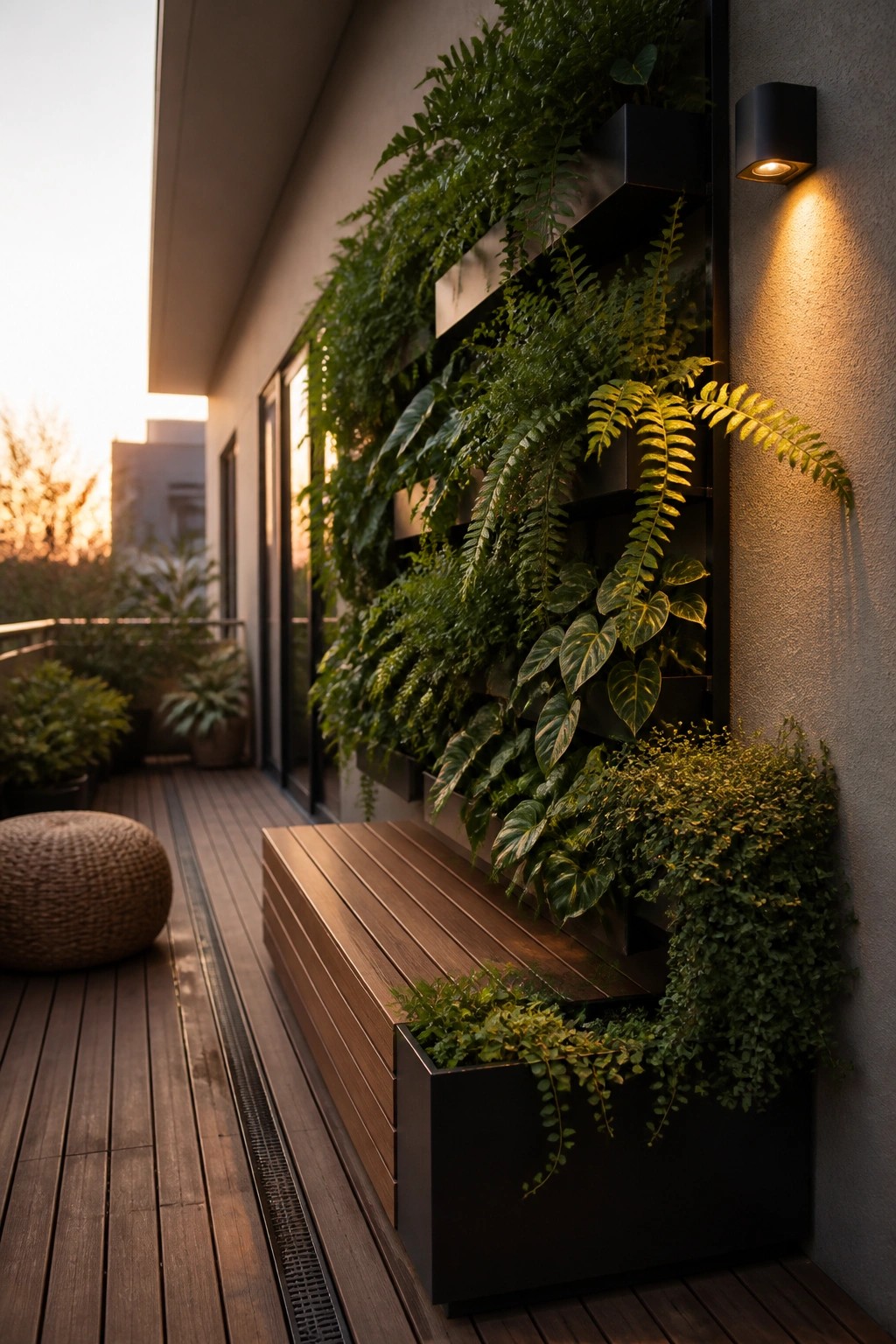
A living wall keeps a balcony feeling green without eating up floor space. The plants sit right on the wall in simple modular boxes, so you still have room to move around and sit.
This setup works best on smaller balconies where you want coverage but not clutter. Choose hardy ferns and trailing plants that handle partial shade, and keep the base simple with one long planter bench underneath.
Mix Different Pots for Succulents
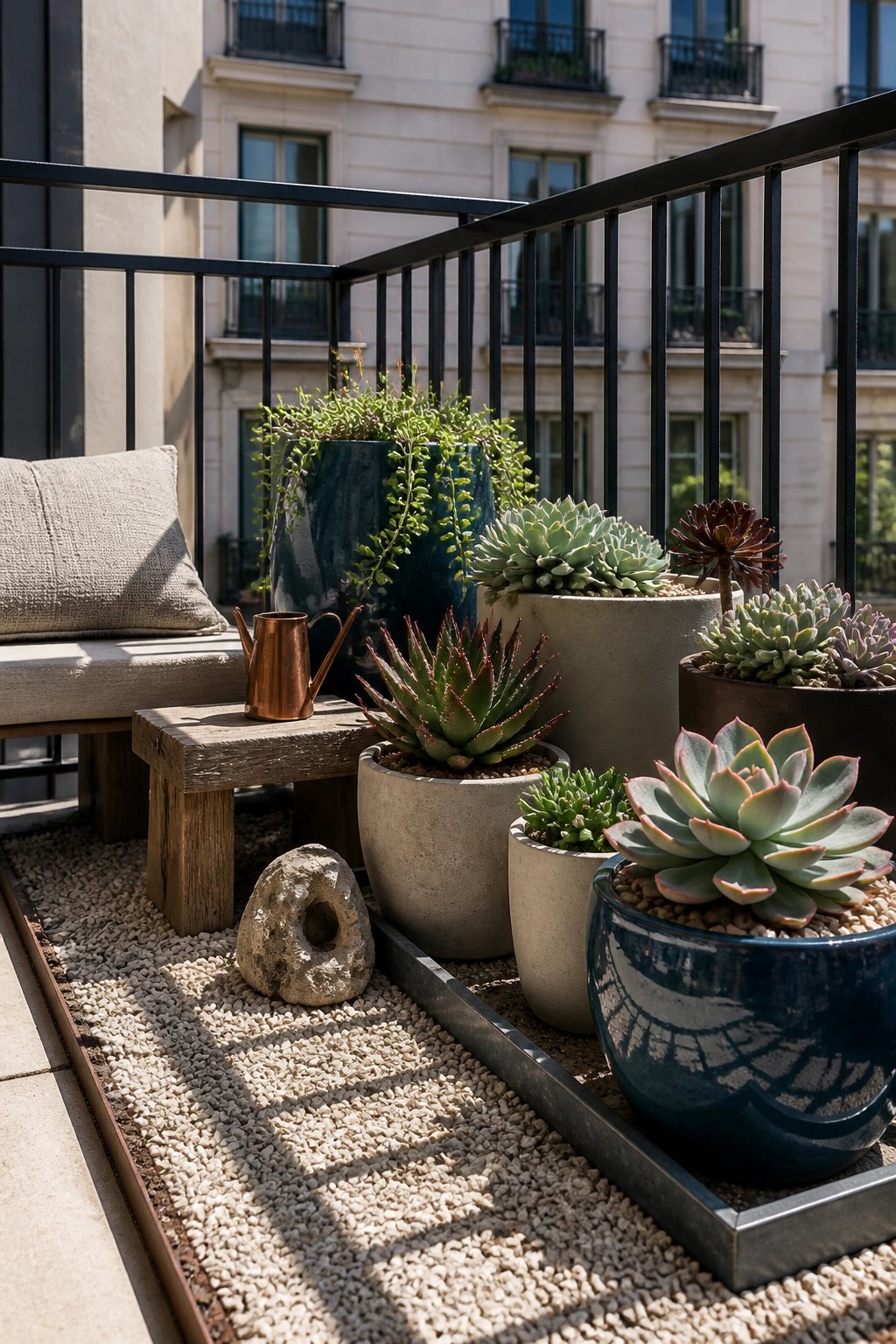
Succulents do well on balconies because they need little water and can handle sun. Putting them in a mix of concrete, ceramic, and metal pots adds some texture without extra effort. The different sizes also help the plants feel more natural together instead of lined up in matching rows. This setup works on small balconies where you cannot add soil beds. Set the pots on gravel or inside a shallow tray so water drains and the space stays tidy. It suits apartments or homes where you want a bit of green but do not have time for daily care.
Use Tall Potted Grasses for Easy Height
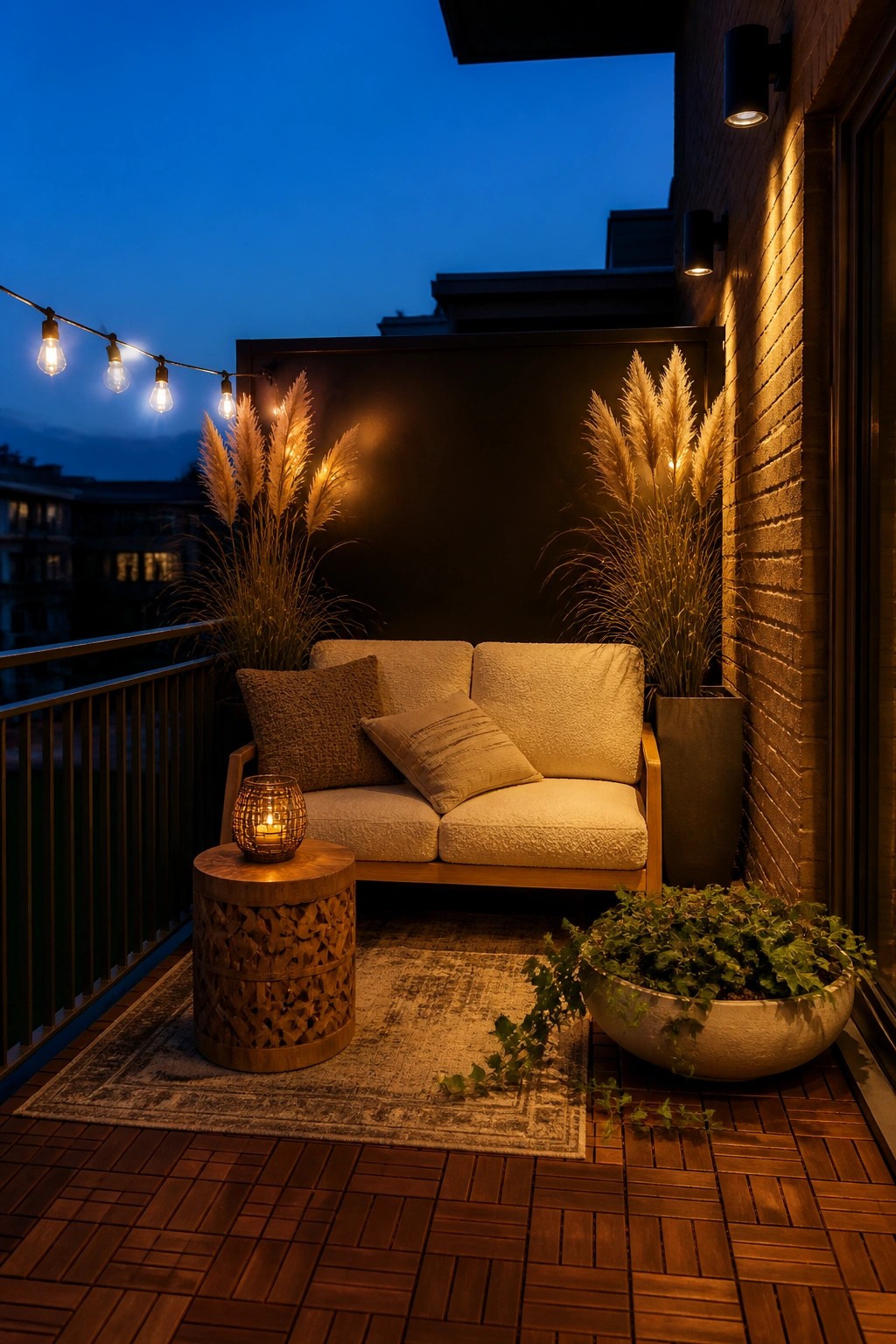
Tall grasses in large pots can quickly give a balcony some structure and softness without much work. They add height and texture that stays looking good through the seasons, and they do not require daily attention once they are settled in.
Set one or two pots at the edges of your seating area so the plants frame the space and create a bit of privacy. This approach suits small balconies especially well because it keeps the floor clear and limits the number of plants you need to water and trim.
Hanging Planters Along A Wall
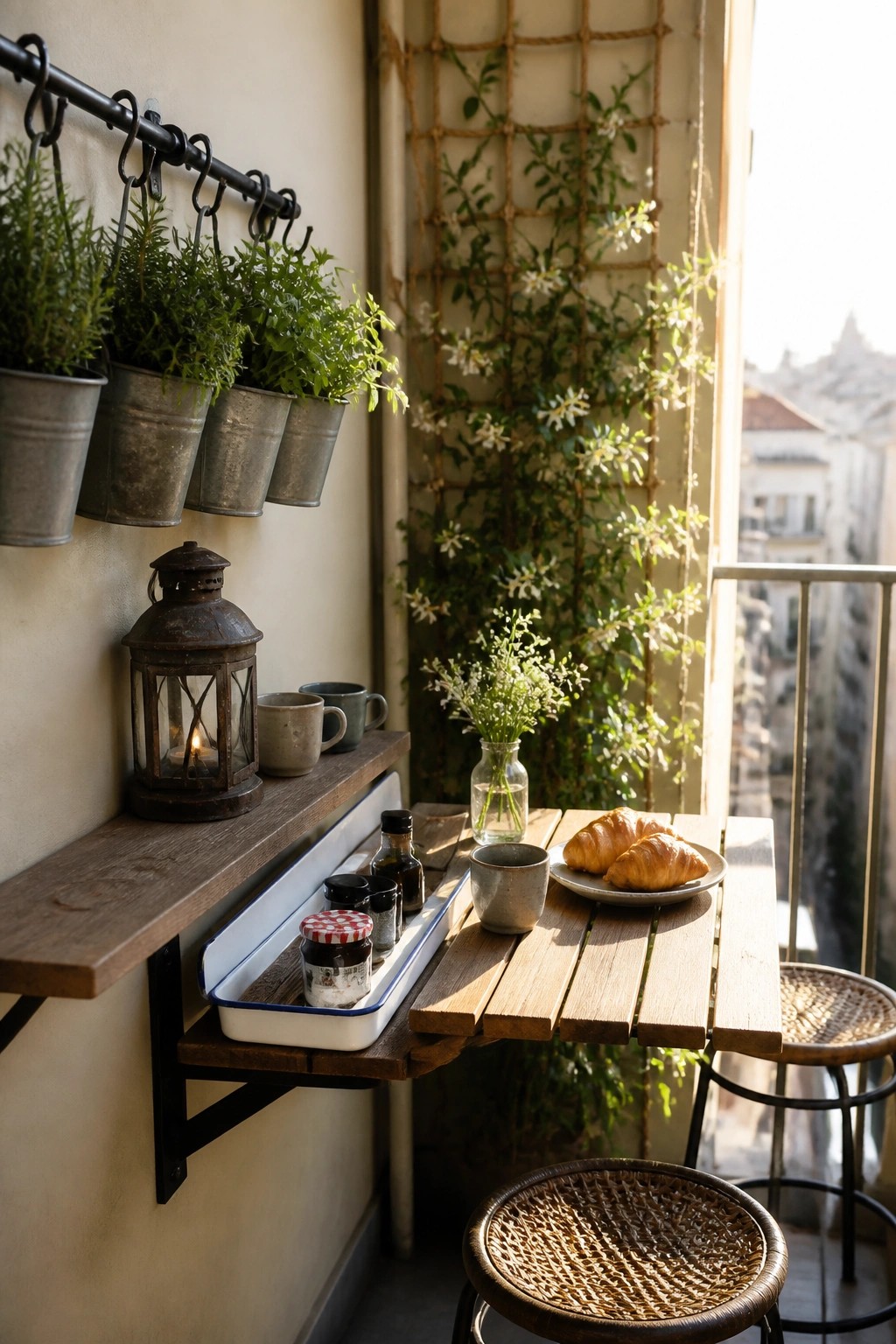
Hanging planters work well on balconies because they add plants without crowding the floor or blocking movement. A simple rail or row of hooks lets you line up several pots at once, and the plants stay out of the way while still giving the space some life.
This setup suits small balconies best, especially if you want room for a table and chairs. Choose lightweight pots and herbs or trailing plants that do not need much watering, and check the rail can hold the weight once the pots are full.
Large Planters With Tall Grasses
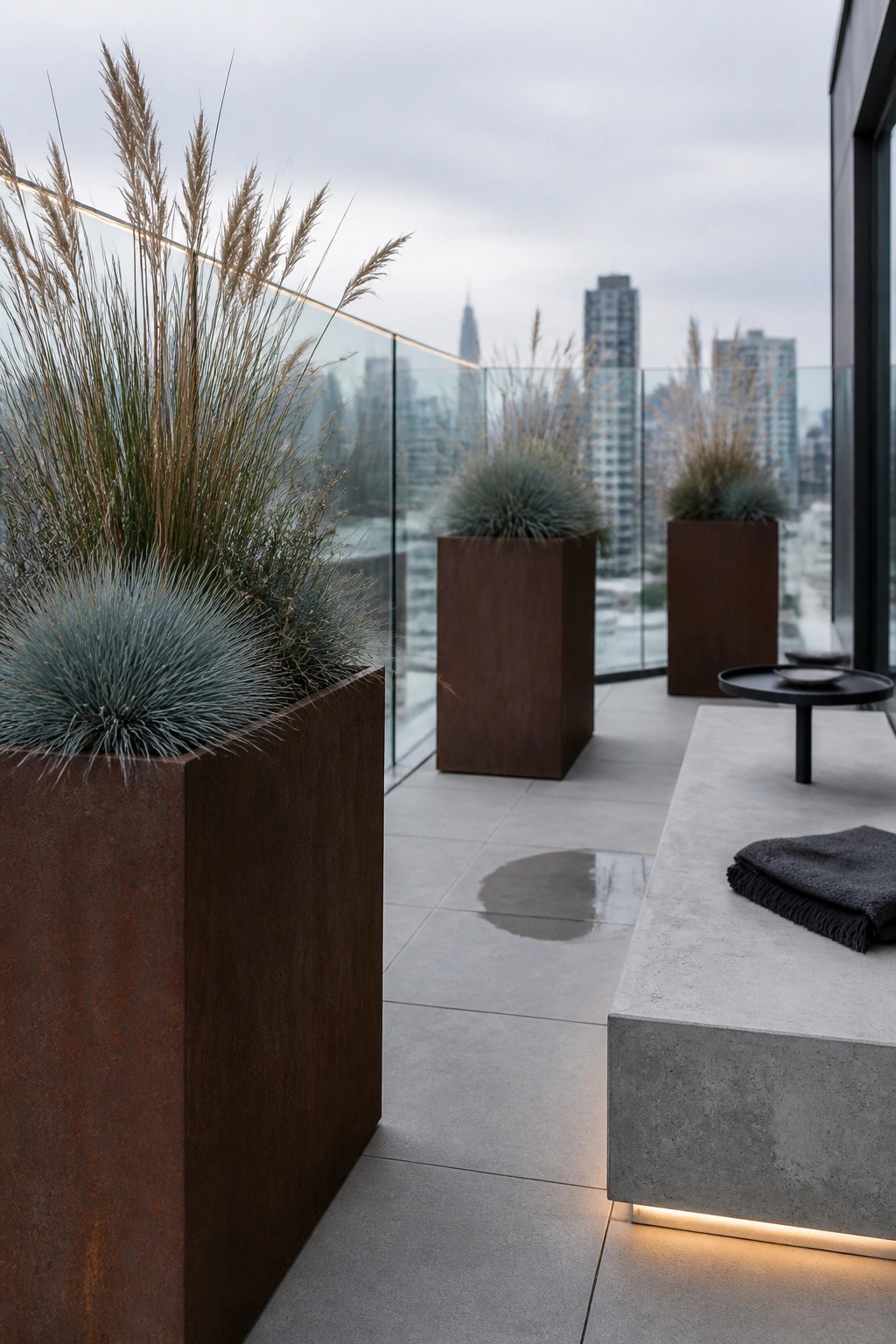
Many balcony gardens stay small because people default to tiny pots. Oversized planters change the scale and let grasses reach a height that actually softens the space.
This approach suits exposed balconies or rooftops where wind is common. Choose metal containers that can handle weather and pick grasses that stay upright with only occasional water.
A Rolling Cart Keeps Balcony Plants Easy to Manage
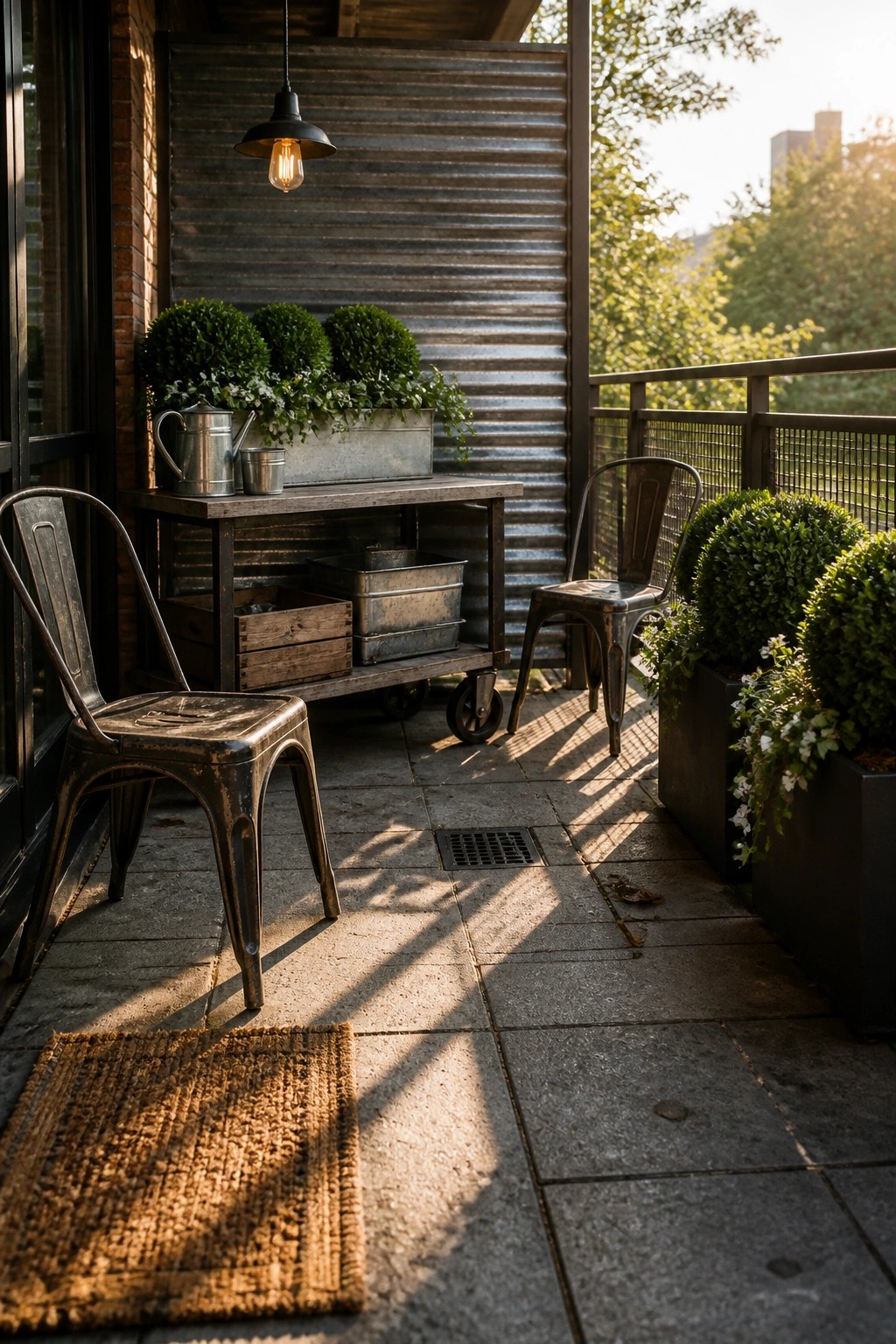
A rolling cart gives you a simple way to handle plants on a small balcony. You can shift everything into better light or roll it aside when you need the floor space, and the lower shelf holds extra pots or tools without taking up room.
This setup works best on balconies with uneven sun or limited floor area. Keep the cart on wheels that roll smoothly and choose one made of metal or wood that can handle weather.
Layering Plants Around Lounge Seating
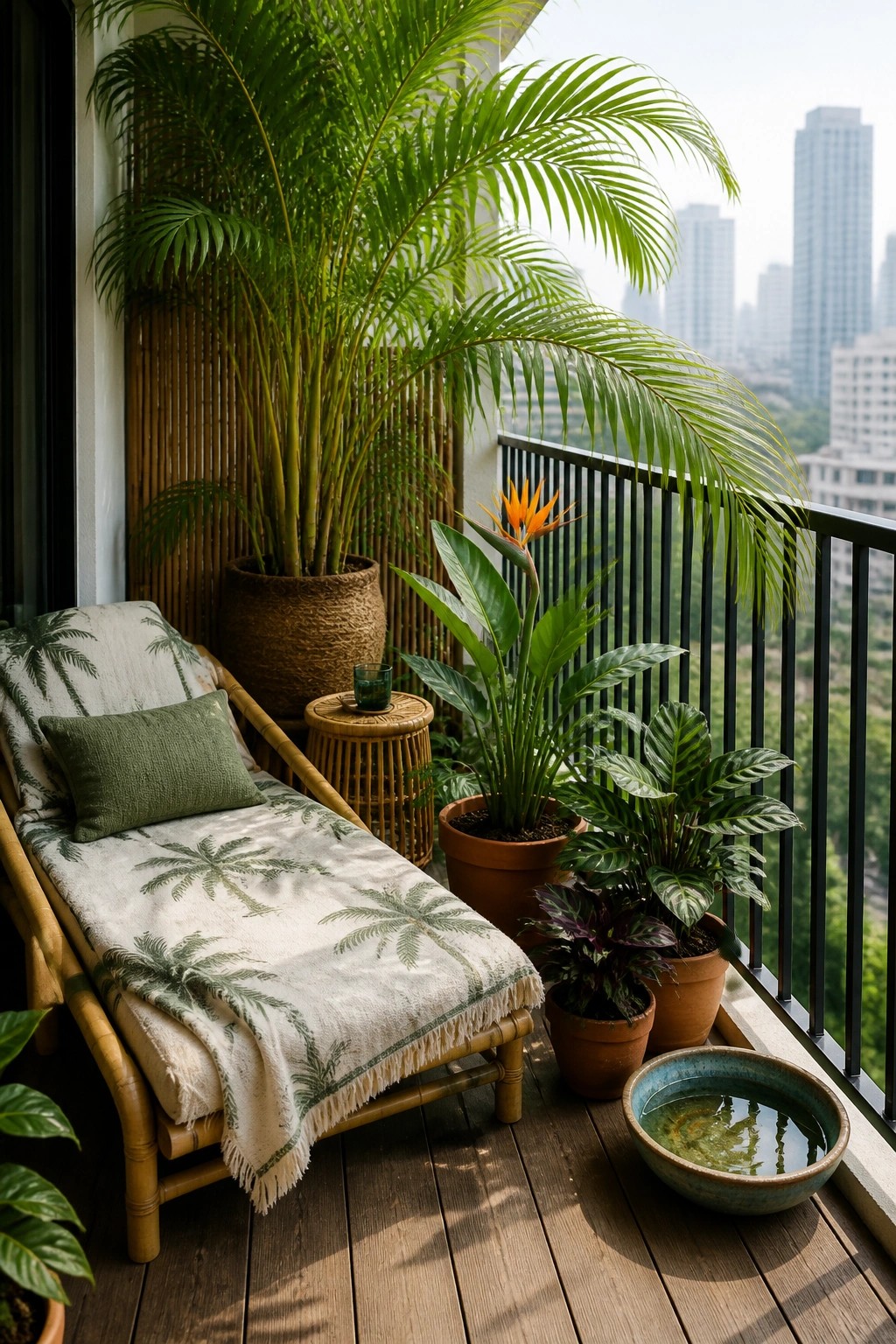
Many balconies feel more inviting when plants are grouped at different heights around a simple seat. The tall palms in back give some softness and shade while smaller pots sit closer to the chair, so the whole spot feels like a quiet corner rather than a row of pots.
This setup suits narrow city balconies where floor space is tight. Keep the tallest plants against the railing or wall and leave a clear path to the seat so daily watering stays easy and the area does not feel crowded.
Add a Bench with a Long Planter
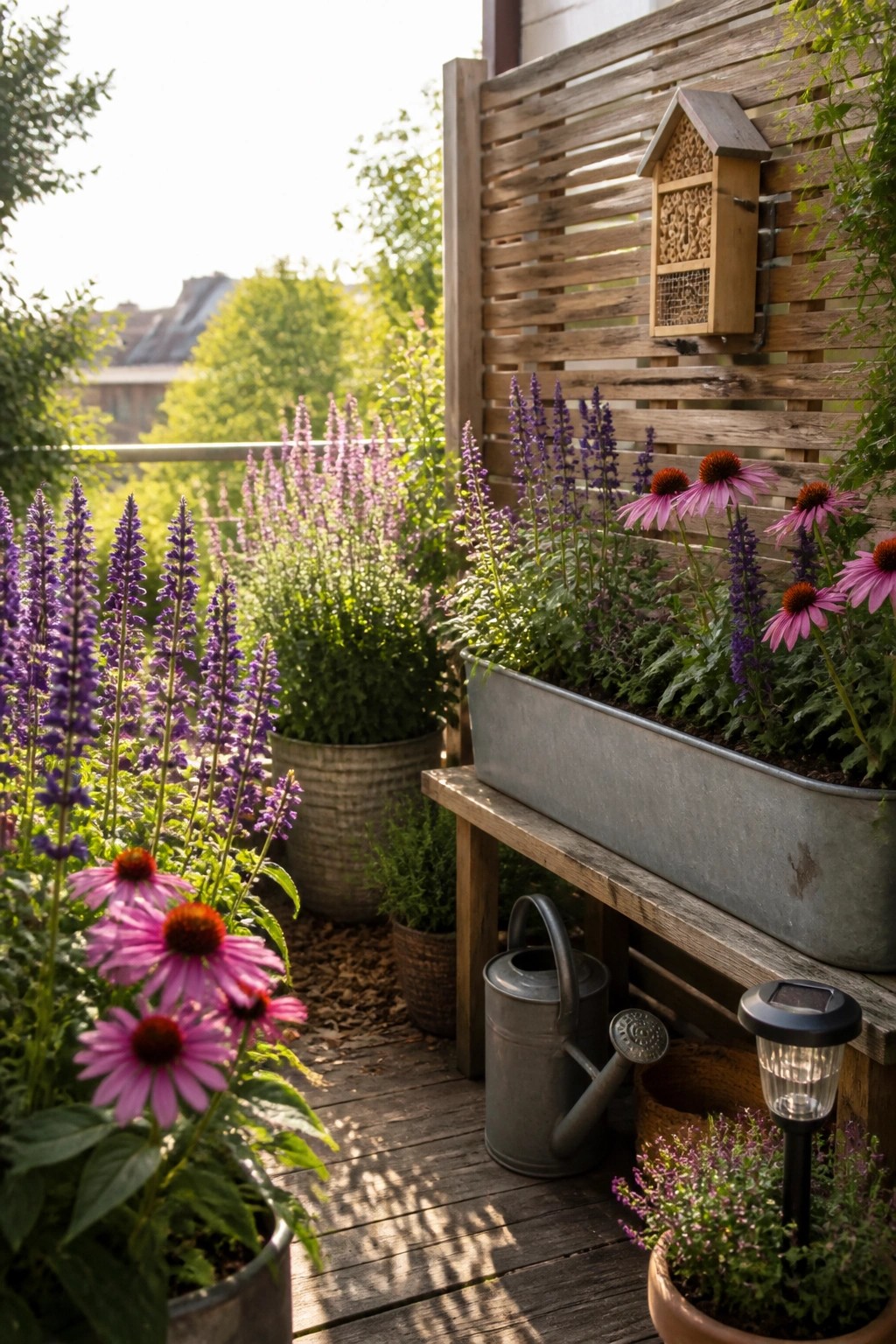
One easy way to fit more plants on a balcony without losing floor space is to set a long trough planter on a bench. This lifts some of the greenery to a comfortable height for watering and weeding. It also gives the area a bit more structure while still leaving room underneath for smaller pots.
This setup works best on balconies that get regular use. Choose a sturdy bench that can handle the weight of soil and water. Fill the trough with flowers or herbs that do not need constant attention, and keep the floor pots for anything that spreads or trails.
Cluster Pots Around Balcony Seating
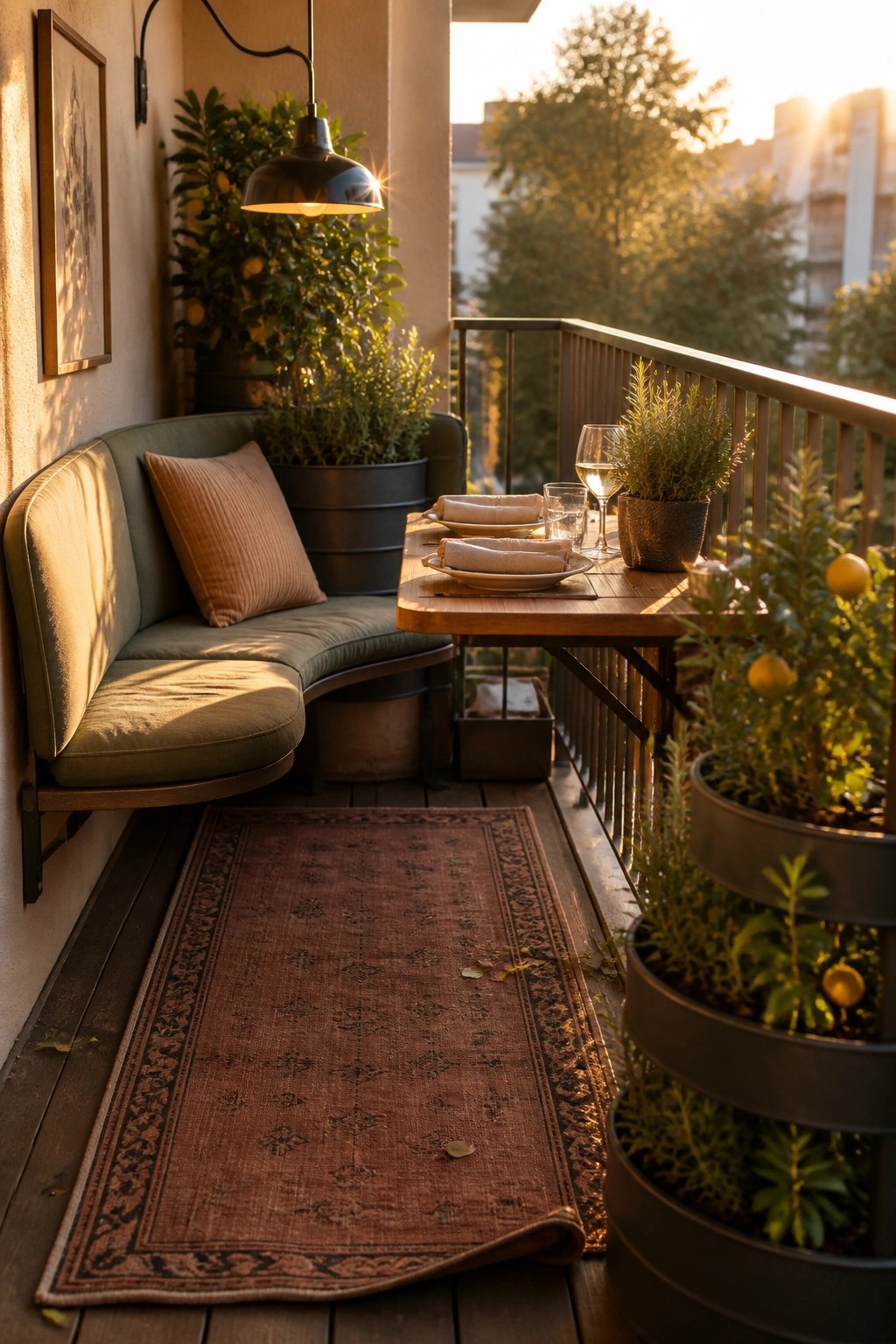
One simple way to bring greenery to a balcony is to place several pots of different heights right around the seating. This creates a soft border of plants without taking up much floor space or needing any permanent beds.
It works especially well on smaller balconies where you want both a place to sit and some growing space. Choose sturdy containers that can handle wind and stick to low-care plants so the setup stays easy to maintain over time.
Line the Balcony with Matching Planters
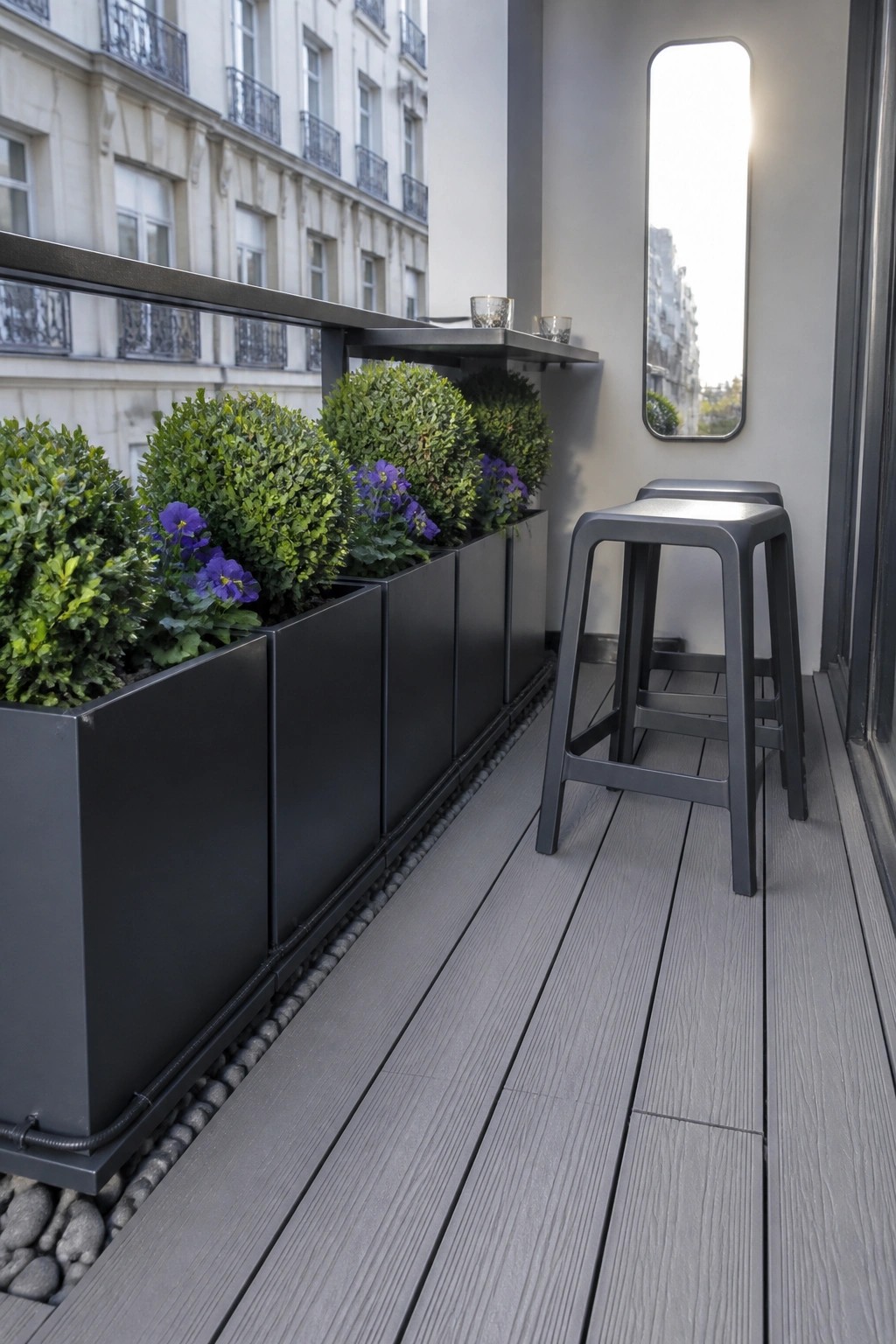
A row of identical planters set along the edge turns a balcony into a green border without eating into floor space. The uniform shape keeps the area looking tidy and lets the plants do the work of softening the view.
This setup suits narrow balconies best since everything stays pushed to the side. Stick to the same color and size for the containers so the arrangement feels calm and easy to maintain over time.
Frequently Asked Questions
Q: How do I keep water from dripping down to the balcony below mine? A: Set each pot inside a matching saucer before you water. Pour slowly until the soil feels moist, then lift the pot for a second to let extra drain back into the saucer. Empty the saucers the next morning so nothing sits and breeds mosquitoes.
Q: What plants still look full if I miss a watering or two? A: Go with succulents or hardy herbs such as rosemary and thyme. They store water in their leaves and only need a soak when the top inch of soil feels dry. One good check on weekends keeps them happy without daily fuss.
Q: My balcony rail is narrow. Can hanging planters really stay secure there? A: Use lightweight fabric or resin baskets with built-in hooks that clip over the rail. Add a small carabiner clip for extra hold on windy days. Water them in place so you never lift heavy wet soil over the edge.
