


Narrow lots often leave little room for the usual yard fixes, so the space ends up looking flat and overlooked.
I have noticed that sorting out the basic layout first tends to open up more options than adding plants at random.
For my own front area I would test a simple path or two before committing to larger beds.
Low edging and a few well placed shrubs can give the whole strip a steadier shape without crowding the walk.
Small steps like that usually make the yard feel more settled.
Add Defined Paths And Borders To A Narrow Front Yard

A plain concrete walkway with patchy grass on either side often makes a narrow front yard feel unfinished. Switching to a paver path with clear garden beds on both sides gives the space shape and makes it feel more intentional without needing a lot of extra room.
This approach works well on small lots because the path stays centered while the beds add planting without crowding the walkway. Start with the hardscaping first, then fill the beds with low shrubs and mulch so the whole front stays easy to maintain.
Add Gravel And Pavers To Give A Narrow Yard Structure

A plain lawn and basic path often leave a small front yard feeling empty and undefined. Adding gravel beds with stepping stones creates clear zones for plants and seating while keeping the space open enough to move through easily.
This approach works well on narrow lots because the materials stay low and do not crowd the house. Start by laying out the path and beds first, then fill in with simple plants that can handle the conditions. The bench and border plants show how the same idea can add a place to sit without taking over the whole area.
Add Vertical Planting To A Narrow Side Yard

A narrow side yard often ends up as a plain gravel strip that feels forgotten. Adding a trellis along the fence gives the space height and turns the fence into a green backdrop instead of a blank wall. The paved path also helps the area feel more intentional and easier to walk through.
This approach works well on tight lots where there is little room for wide beds. Start with a simple path to create structure, then add one or two trellises and climbing plants. Keep the planting light so the walkway stays clear and the space does not feel crowded.
Give A Bare Porch A Clear Purpose

A small front porch often ends up as just a set of steps with nowhere to sit. In this case the concrete surface and single plastic chair left the space feeling unfinished. Adding a built-in bench across the front and replacing the concrete with decking gave the porch a simple function and made the entry feel more complete.
This approach works well on narrow lots where space is limited. Keep the bench low and the cushion weatherproof, and choose one color for the door and trim so the changes read as one update rather than several small ones. The result is a porch that looks intentional without crowding the walkway.
Create Structure With Stepping Stones In A Narrow Yard

The patchy lawn along this narrow front strip had worn down from foot traffic, leaving an unclear path to the door. Adding a row of stepping stones gave the space a defined walkway while creating room for planted borders on either side.
This idea works best on small lots where you need to guide movement without crowding the area. Lay out the stones first to set the flow, then add plants along the edges. It keeps the yard looking organized even when space is limited.
Refresh The Entry With Paint And Simple Planting

A plain house color and sparse foundation planting often make a narrow front feel unfinished. Switching to a cooler gray tone and adding a darker door gives the facade more definition right away. The new hedges and matching planters then frame the steps without crowding the small space.
This idea suits tight lots because it focuses changes near the door and path. Pick a color that contrasts with the trim, then keep the planting low and symmetrical so the walkway stays clear. Start with the paint and basic beds before adding more features later.
Define A Small Front Yard With Edged Garden Beds

A patchy lawn and a plain concrete path can make a narrow front yard feel unfinished. Adding low stone edging creates clear beds on both sides of the walk, turns the space into planted zones, and keeps the center open for easy movement.
This approach works well on small lots because the beds stay narrow and the edging doubles as a border that separates gravel from the path. Start with simple stone or block edging, fill the beds with soil and a few repeated plants in pots, and run a soaker hose along the inside edge so watering stays tidy.
Create Defined Garden Beds Along The Driveway

A narrow strip of lawn next to a driveway often ends up weedy and hard to mow. Adding a simple garden bed with a clear edge turns that awkward space into something intentional. The rock border and fresh mulch keep the bed looking tidy while giving the plants room to grow without spilling onto the concrete.
This approach works well on narrow lots where every inch counts. Start by laying out the edge with stones or pavers, then add a layer of mulch before planting. Choose a mix of low perennials that can handle the sun exposure along the drive, and keep the bed narrow enough to leave walking room.
Add Structure To A Small Front Yard With A New Fence
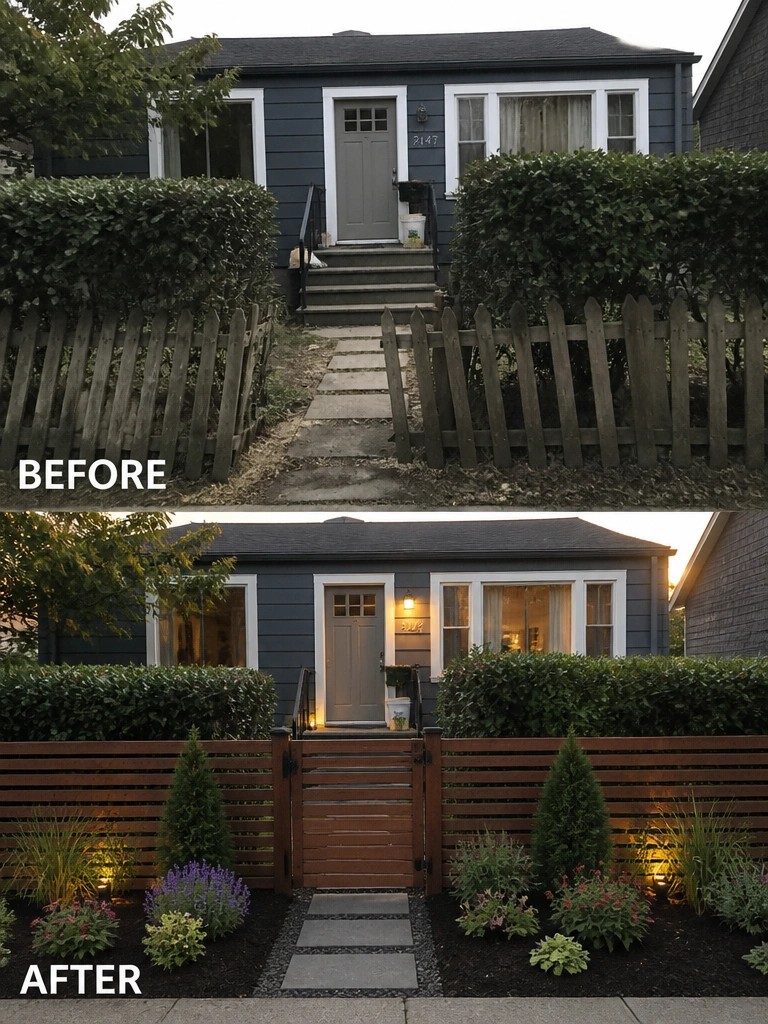
An old, uneven picket fence can make a narrow front yard feel messy and unfinished. Replacing it with a solid horizontal fence gives the space clear boundaries and makes the entry feel more intentional. Adding low garden beds along the base and simple path lighting helps tie everything together without crowding the small area.
This approach works well on narrow lots where the front yard has little depth. Start with the fence to set the new lines, then fill in with a few shrubs and perennials that stay low. Keep the path clear and use warm lights only where they guide feet, so the space stays easy to walk through at night.
Add Edging To Define Narrow Strips

A narrow strip of grass and weeds next to the sidewalk often ends up looking messy because it has no clear edges. Adding a simple stone border turns that same space into a contained garden bed that stays neat with far less work. The mulch and a few plants keep the area looking intentional instead of neglected.
This approach works well on small front lots where every inch counts. Start with the border first so the bed has a fixed shape, then fill it with low plants and mulch. It keeps the sidewalk clear while giving the mailbox a more finished look without crowding the walkway.
Add Defined Beds To A Plain Front Yard
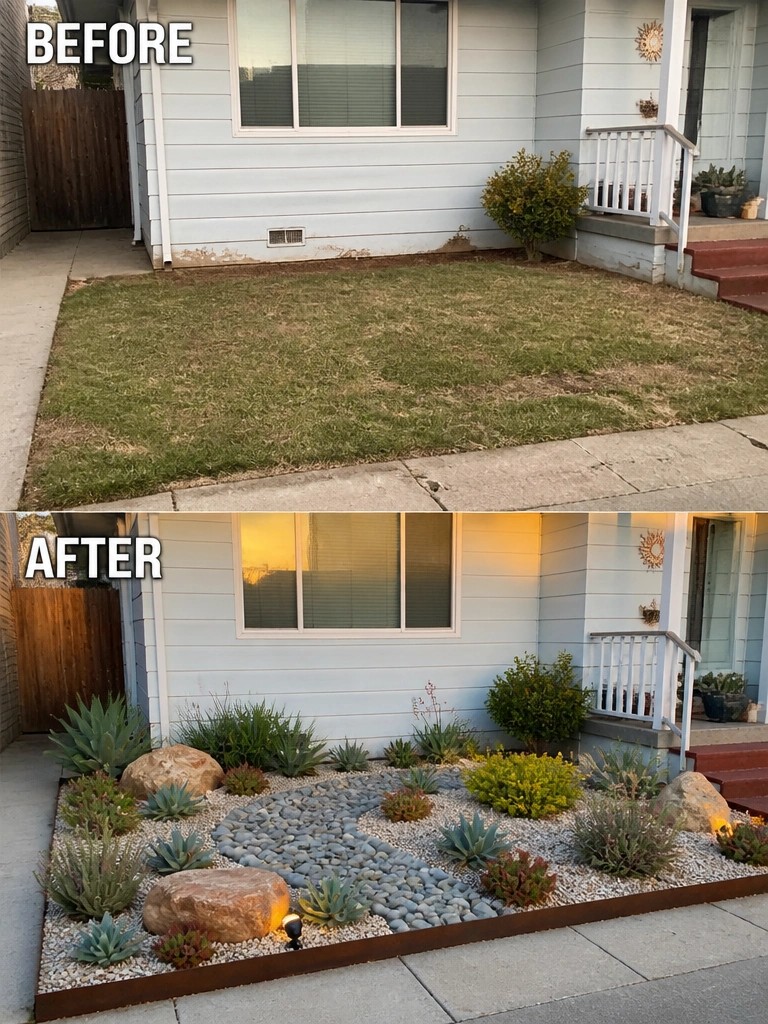
A patchy lawn often makes a small front yard feel neglected and hard to manage. Replacing it with a bordered bed of gravel, rocks, and low plants gives the space clear shape and cuts down on mowing while still looking intentional.
This approach works well on narrow lots because the edging keeps everything contained and easy to maintain. Start with a simple metal or wood border, add a base of gravel, then place a few larger rocks and repeat the same plants in groups rather than scattering many different ones.
Add Planter Boxes To Define A Small Front Bed
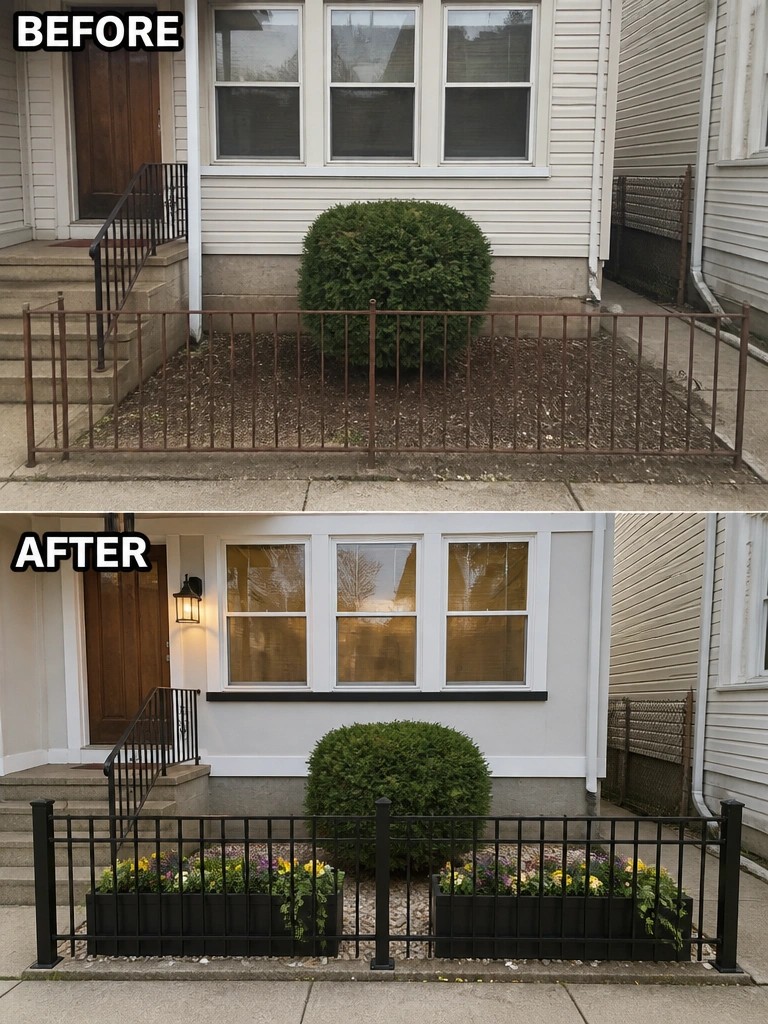
A plain fence around a strip of mulch often leaves the front of the house looking unfinished. Adding a few matching planter boxes along the fence turns that same strip into a clear garden bed and brings color right where it is most visible from the street.
This approach suits narrow lots because the boxes keep plants contained and off the ground, which reduces weeding and makes the bed look intentional rather than leftover space. Match the box color to the fence, use a simple soil mix, and plant a mix of low flowers so nothing blocks the walkway.
Shape A Narrow Front Walk With Pavers And Planting

A straight concrete path with nothing but grass on either side can make a small front yard feel flat. Switching to irregular pavers and adding planted borders on both sides gives the walkway a clear structure and makes the whole entry look more finished.
This approach works well on narrow lots because the beds stay close to the path and do not eat up much space. Start by choosing pavers that fit the width you need, then fill the edges with low shrubs and a few perennials so the planting feels balanced rather than crowded.
Add Outdoor Lighting To A Plain Front Yard

Many front yards look flat and uninviting once the sun goes down. Adding a few well-placed lights along the path and at the base of shrubs makes the whole entry feel safer and more finished without any major construction.
This approach works especially well on narrow lots where space is tight. Start with low path lights to mark the walkway, then add a couple of uplights on the house or larger plants. Keep the fixtures simple and the wiring minimal so the yard stays easy to maintain.
Define The Front Walk With Garden Beds

A narrow front yard often looks unfinished when the walkway sits alone in a plain lawn. Adding low garden beds on both sides gives the path a clear edge and makes the whole space feel more intentional. The before photo shows mostly bare grass and exposed soil, while the after shows simple curved beds filled with mulch and plants that follow the walk all the way to the steps.
This approach works well on small lots because it uses very little extra space yet adds order. Keep the beds narrow, repeat a few easy plants, and let the edging do most of the work. It also makes mowing simpler since the lawn now has a clean border on each side.
Frame A Narrow Entry With A Pergola

Overgrown shrubs often crowd the walk on narrow lots and make the front door feel hidden. A simple pergola built right over the steps pulls the eye forward, gives the entry a clear shape, and keeps planting from spilling onto the path.
This idea suits small front yards because the structure sits close to the house and does not eat up ground space. Set two matching planters at the base of the posts and let a vine climb each one so the greenery stays tidy and the walkway stays open.
Turn A Bare Front Yard Into A Small Seating Spot
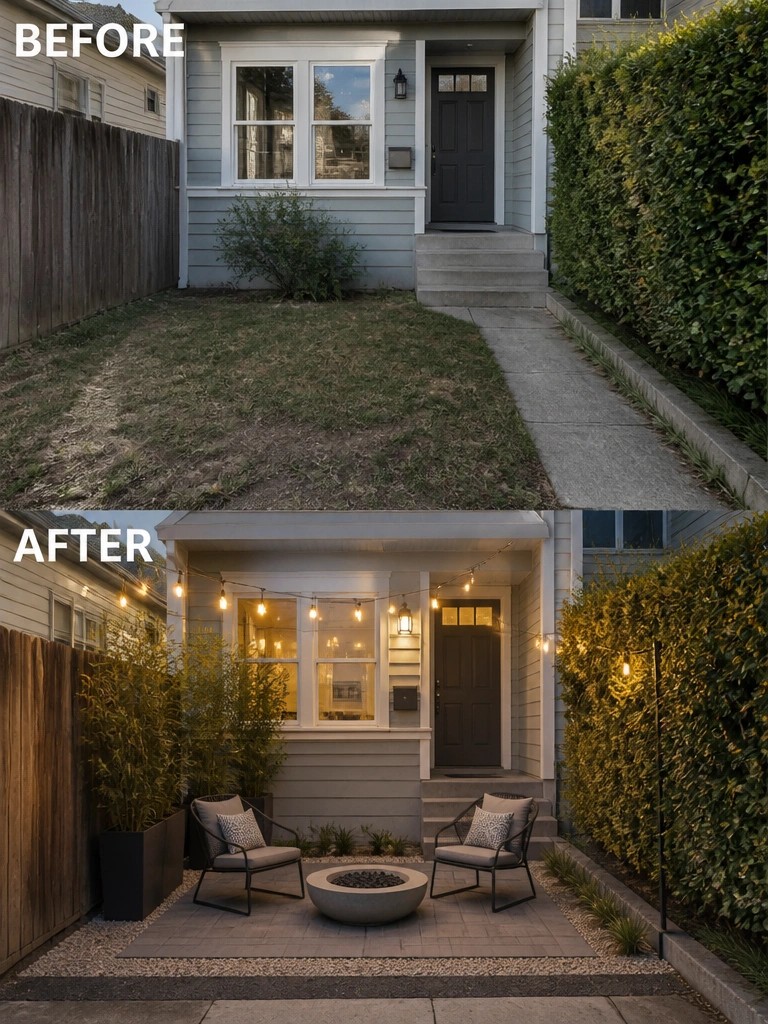
A narrow front yard often sits unused because there is no clear place to sit. Adding a simple paved area with two chairs and a fire pit gives the space a purpose without filling it up.
This idea works best when you keep the seating modest and place it near the house so the walkway stays open. Use durable outdoor pieces and add a few lights overhead so the area feels usable after dark.
Paint The Exterior To Open Up A Narrow Front Yard

Painting the front of the house can make a small lot feel much larger and brighter. In this case, covering the red brick with white paint and adding black shutters gave the facade a cleaner, lighter look that instantly changed how the whole yard reads from the street. The updated planting on either side of the steps also helps by keeping the beds low and balanced instead of letting shrubs block the view.
This approach works well on narrow lots where you cannot add much width. Start with the house color first, then keep the new planting simple and symmetrical so the entry stays the main focus. Avoid tall or wide plants right against the foundation, since they can make the space feel tighter.
Define A Small Front Yard With Planting Beds And A Path
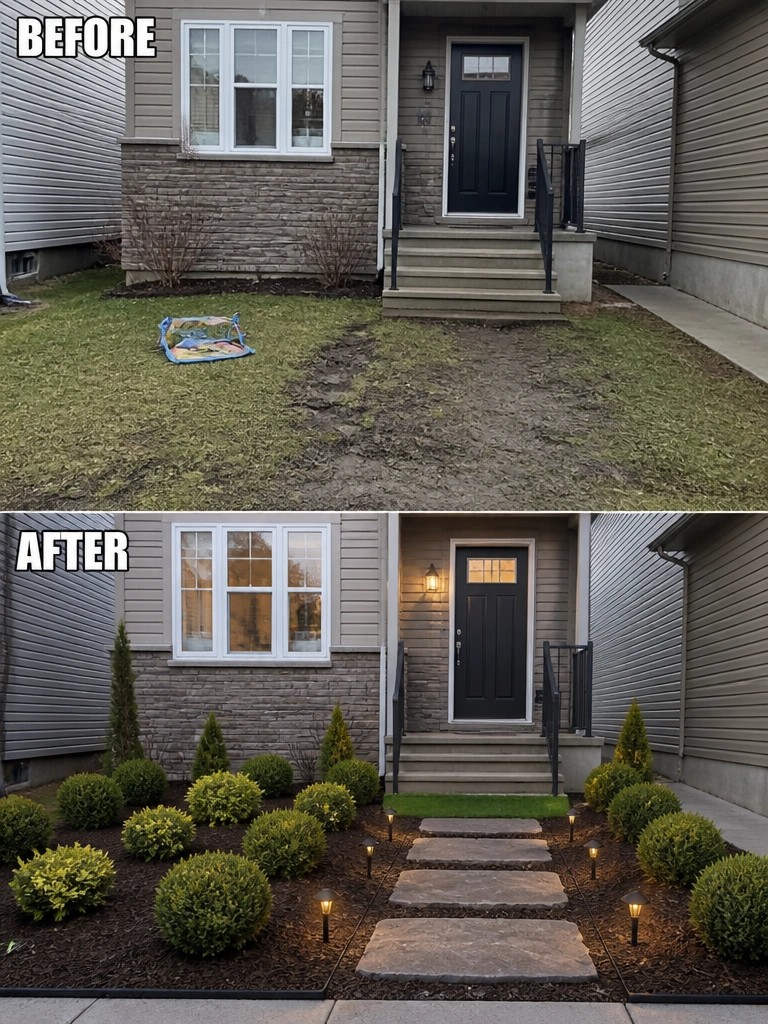
A bare patch of lawn with a worn dirt trail can make even a modest front yard feel unfinished. Adding low shrubs in mulched beds along the foundation and laying down a simple stone path gives the space clear lines and makes it look intentional instead of neglected.
This approach works well on narrow lots because it keeps the planting close to the house and leaves room to walk without crowding the sidewalk. Start by marking out bed edges that follow the shape of the house, then add a straight or gently curving path using pavers or stepping stones. The beds do most of the work, so you do not need many plants or extra features to see a real change.
Define A Small Front Yard With Gravel And Pavers

Small front yards often look messy when grass grows right up to the house with no clear edges. Adding gravel beds and a few pavers gives the space shape and keeps plants from spreading everywhere.
This approach works well on narrow lots because it stays low and contained. Clear the old growth first, then use gravel to mark the main areas and pavers to form a simple path. A built-in planter near the door can also help combine the mailbox with the new layout without crowding the space.
Frequently Asked Questions
Q: How can I make my narrow front yard feel bigger without spending much?
A: Start by clearing out any clutter and adding a few low shrubs along the edges. This opens up the view and draws the eye forward. Keep the middle open for a path or small patch of grass.
Q: What plants work best if I want color but hate constant trimming?
A: Go for slow growers like dwarf evergreens or ground covers that spread on their own. They fill in nicely over time without taking over the tight space.
Q: My lot sits right on the street. How do I add privacy?
A: Plant a row of tall grasses or a slim hedge near the sidewalk. It blocks the view without eating up width.
