

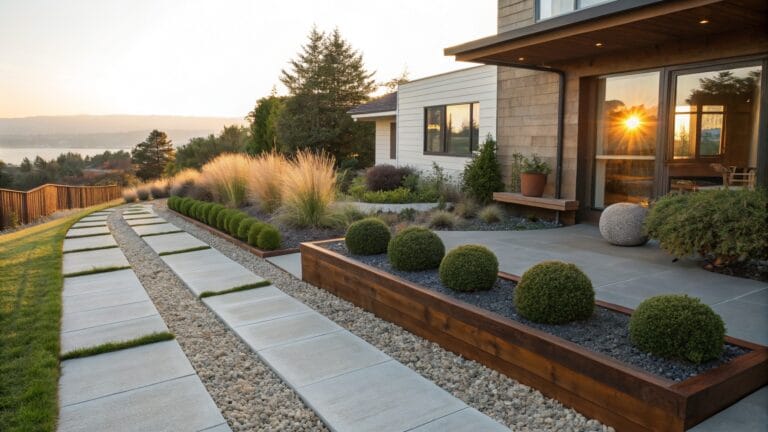
I’ve noticed in well-kept gardens that crisp borders around beds and paths are what first catch the eye and keep the whole layout feeling structured as plants fill out over the years.
Without them, soil erodes, grass invades, and the neat lines you planned blur into something messier.
I put in a low rock edging along my side yard path a couple summers back, and it still neatly contains the gravel while letting water drain right through.
These setups work because they respect how gardens shift with weather and growth, framing features without fighting nature.
A couple variations using mixed stone sizes would suit sloped areas like mine perfectly.
Clean White Gravel Borders
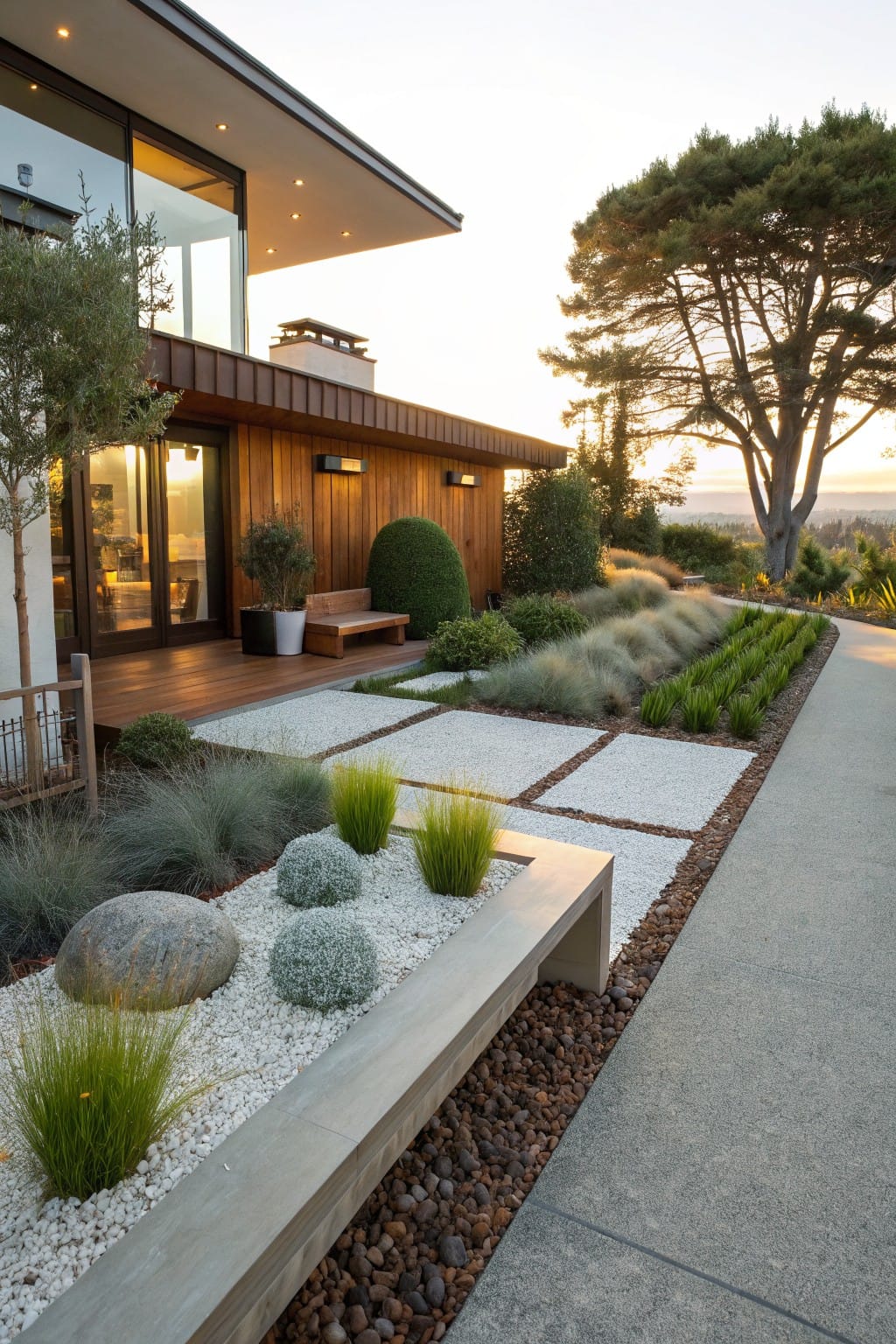
White gravel makes for some of the crispest garden borders around. Filled into low beds with a few larger boulders and tufts of fine grasses, it creates sharp edges that frame paths without much fuss. The light color pops against concrete or wood decking, keeping things neat even as plants grow in.
You can pull this off along driveways, walkways, or around patios in sunny spots. It suits modern houses or drier yards where low water use matters. Just lay landscape fabric down first to cut weeds, and add the rocks for stability. One thing. Bigger stones help hold the gravel in place over time.
Flagstone Garden Path with Lavender Borders
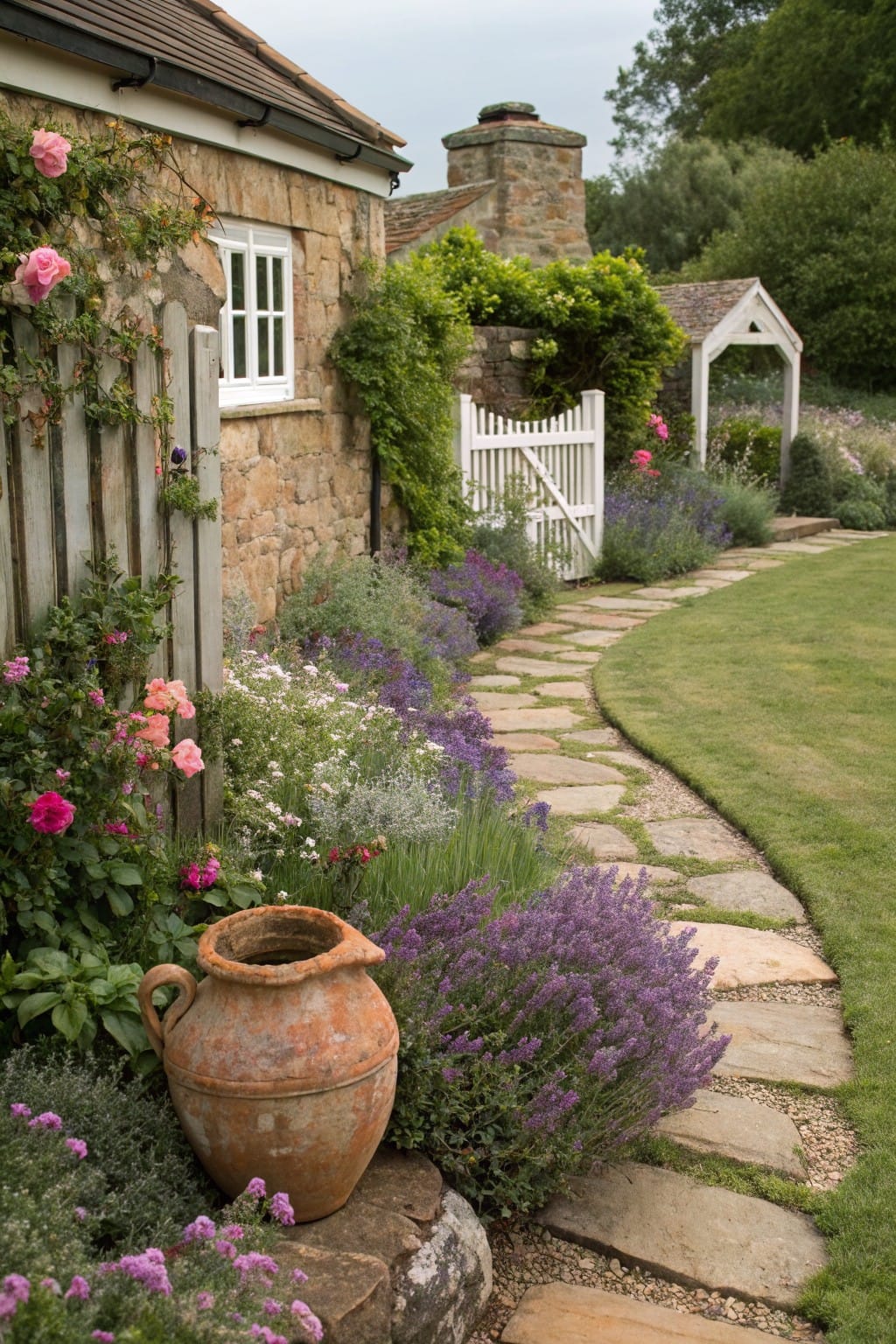
A flagstone path like this winds gently through the yard, using rough-cut stones set into the gravel for clean lines that don’t fight the plants. Lavender bushes line both sides, mixed with roses and low flowers that soften the edges without spilling onto the walking surface. It’s crisp yet lived-in.
This works best in cottage gardens or informal front yards where you want subtle direction without hard borders. Lay the stones loose for drainage, then plant drought-tough stuff like lavender to fill in. Skip it for super formal spots… too relaxed there.
Pebble Borders Along Stone Paths
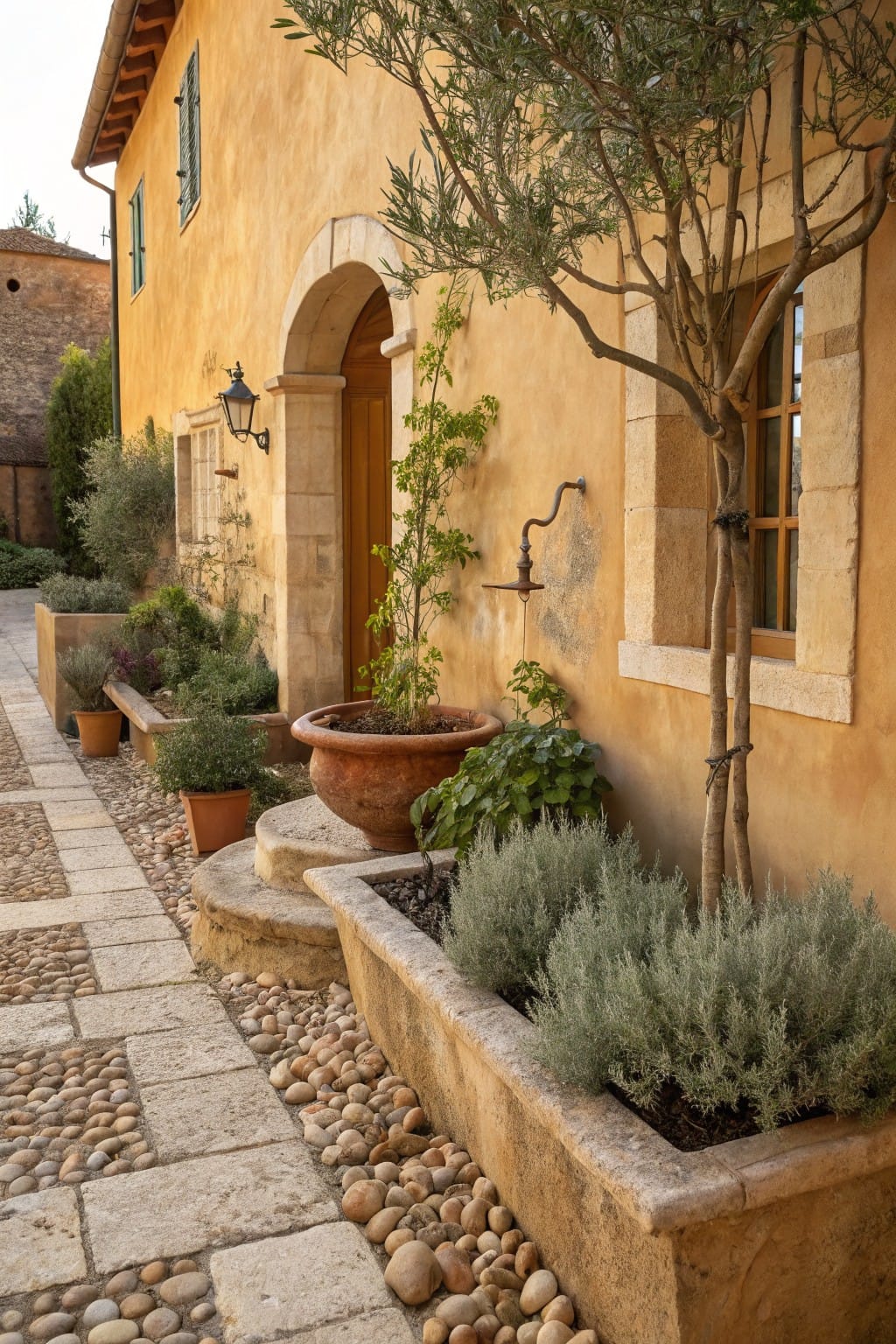
A straightforward way to edge garden beds is lining them with smooth pebbles next to stone pavers. In this setup, the pebbles fill the gaps between slabs and tuck right up to raised planters full of lavender and herbs. It keeps the lines sharp without much upkeep, and the gravel mulch inside the beds ties it all together neatly.
You can pull this off in any sunny yard with a walkway to an entry or patio. Go for rounded pebbles in earth tones to match local stone. They let water drain fast and stop weeds if you add landscape fabric underneath. Best for casual Mediterranean looks or drier spots where grass won’t grow anyway.
Stone Path Edged with Gravel and Moss
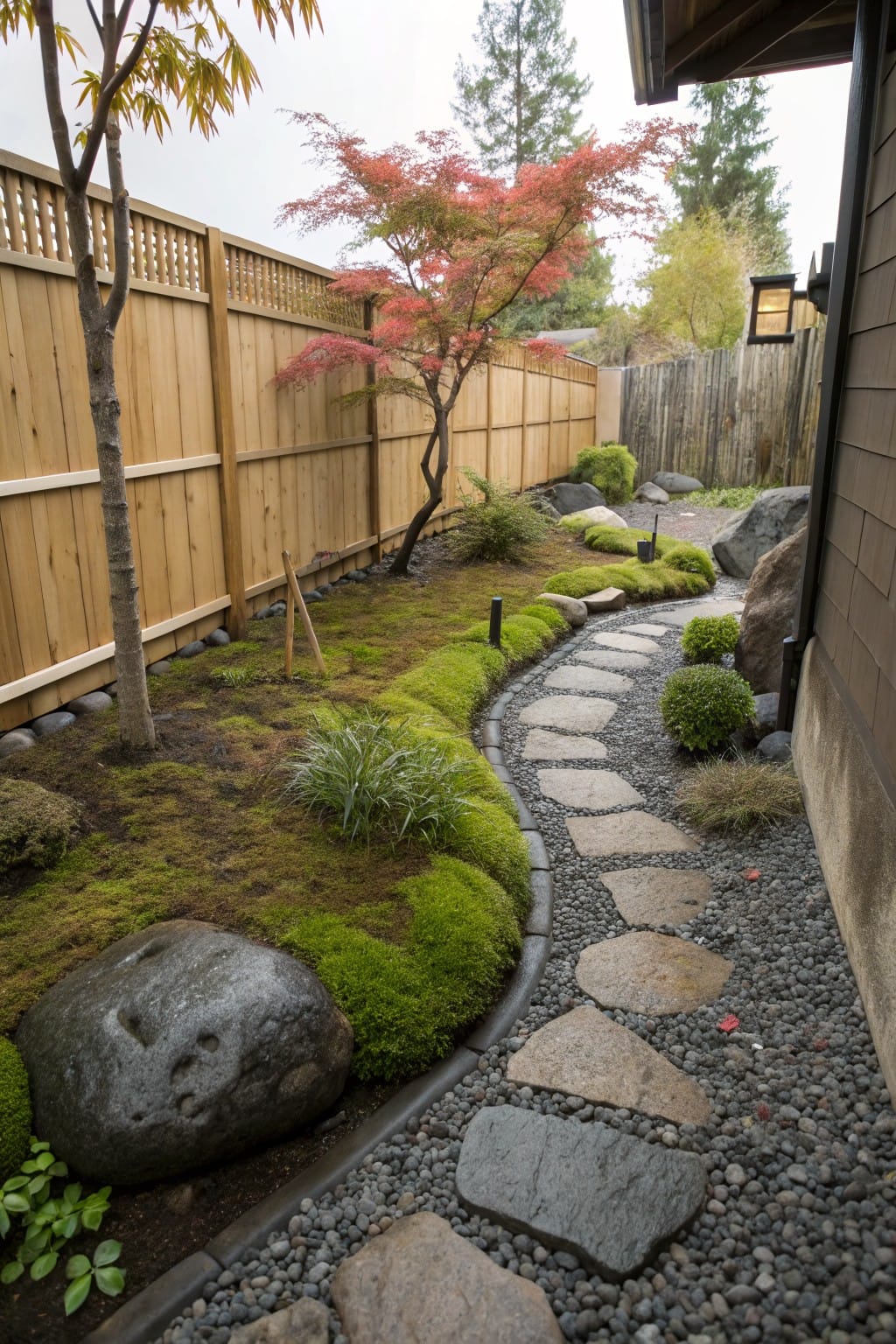
A simple winding path of flat stones works great when you edge it with gravel and low moss mounds. The rocks and pebbles keep everything crisp at the borders, while the moss softens things up. It frames the garden beds nicely without looking too rigid. You see larger boulders placed here and there to add some weight.
This kind of edging suits shady spots or narrow side yards best. It fits homes with a clean modern vibe or even a touch of Japanese garden style. Lay down landscape fabric first under the gravel to cut weeds, then add moss that likes moisture. Keep it simple… no need for fancy plants everywhere.
Clean Dark Stone Edging for Boxwood Beds
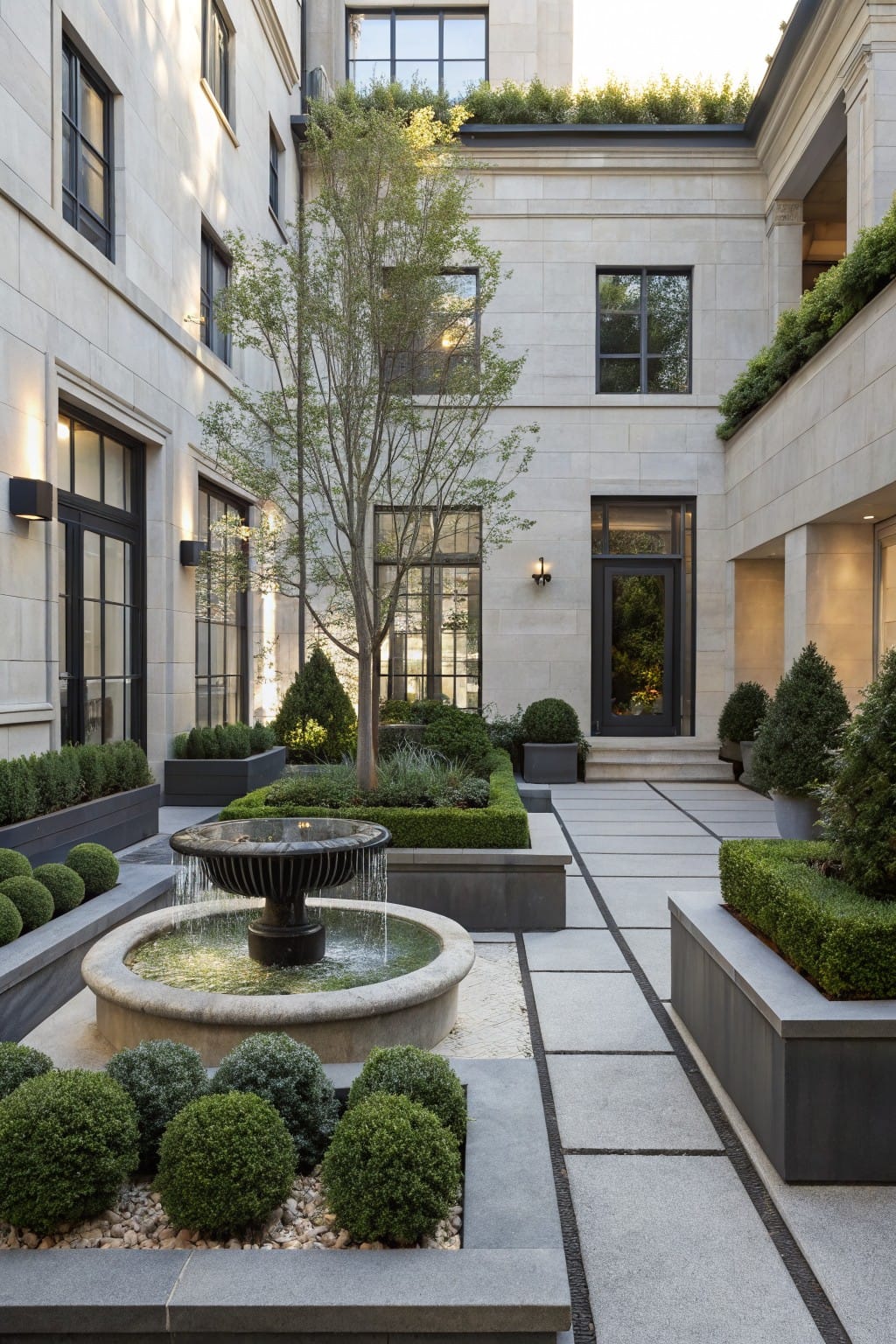
One simple way to give your garden beds a sharp, finished look is with dark stone edging like this. It holds back the soil and mulch while keeping everything in tight lines. Boxwoods trimmed into rounds fit right into those borders, and the contrast with the light gravel makes the whole setup pop without much fuss.
This edging works best in smaller courtyards or formal side yards where you want low upkeep. Use it around paths or near a fountain to tie hardscape to plantings. Skip it in wilder spots, though. It suits modern or classic stone houses… just scale the beds to your space so they don’t overwhelm.
Rock Edging Along the Driveway
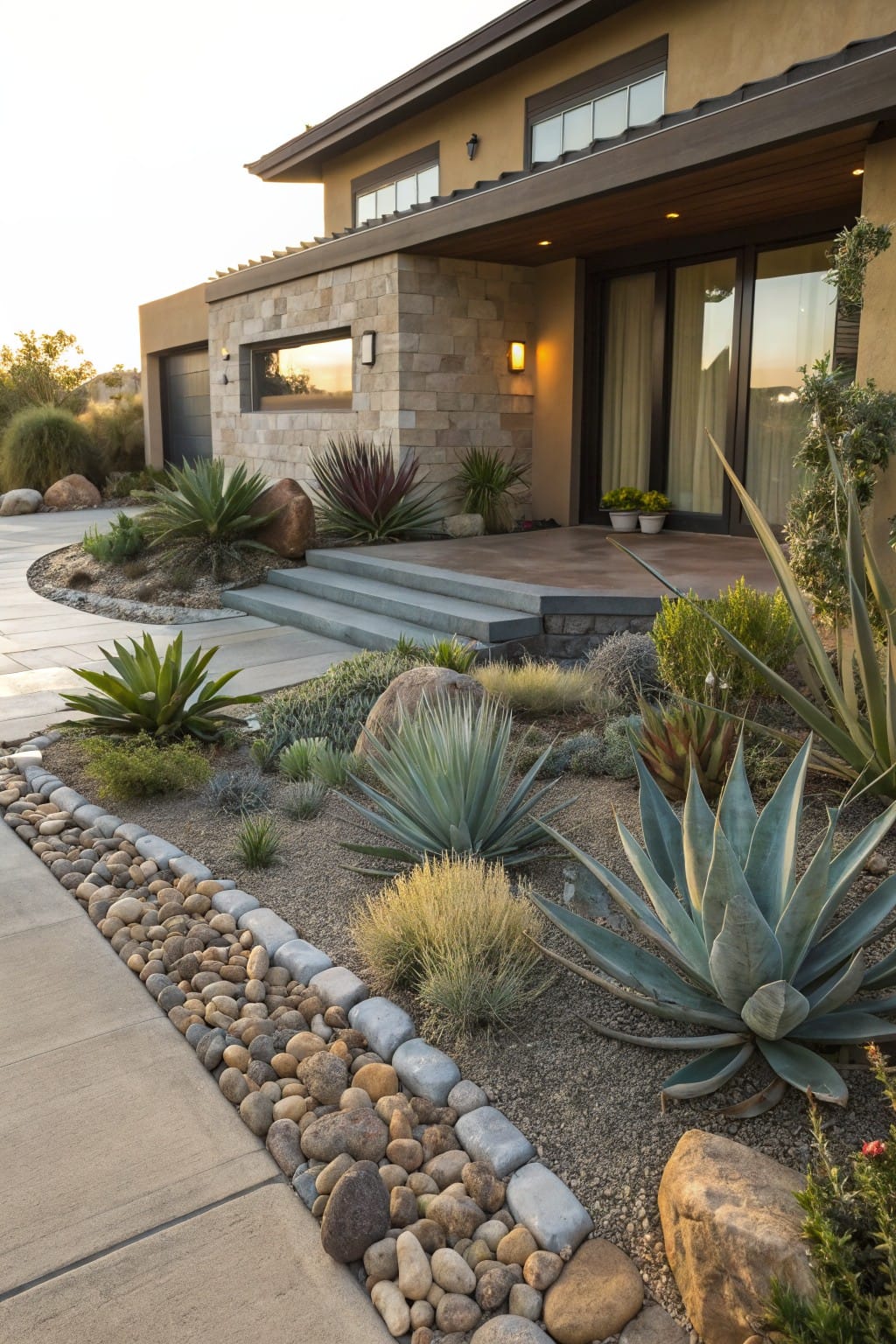
A simple band of smooth pebbles and larger rocks runs right next to the driveway here, holding back gravel mulch and succulent plantings. It keeps the beds tidy without grass or constant trimming. That mix of rock sizes looks natural, like it just happened that way, and ties into the desert feel around a modern house.
Try this where you have a straight or curved drive that butts up against yard space. It’s low-water perfect for sunny spots, suits any home style from new builds to older ones. Start with landscape fabric under the gravel, drop in the rocks two inches deep at least… and watch how it frames things clean.
Stone Edging Along a Sandy Path
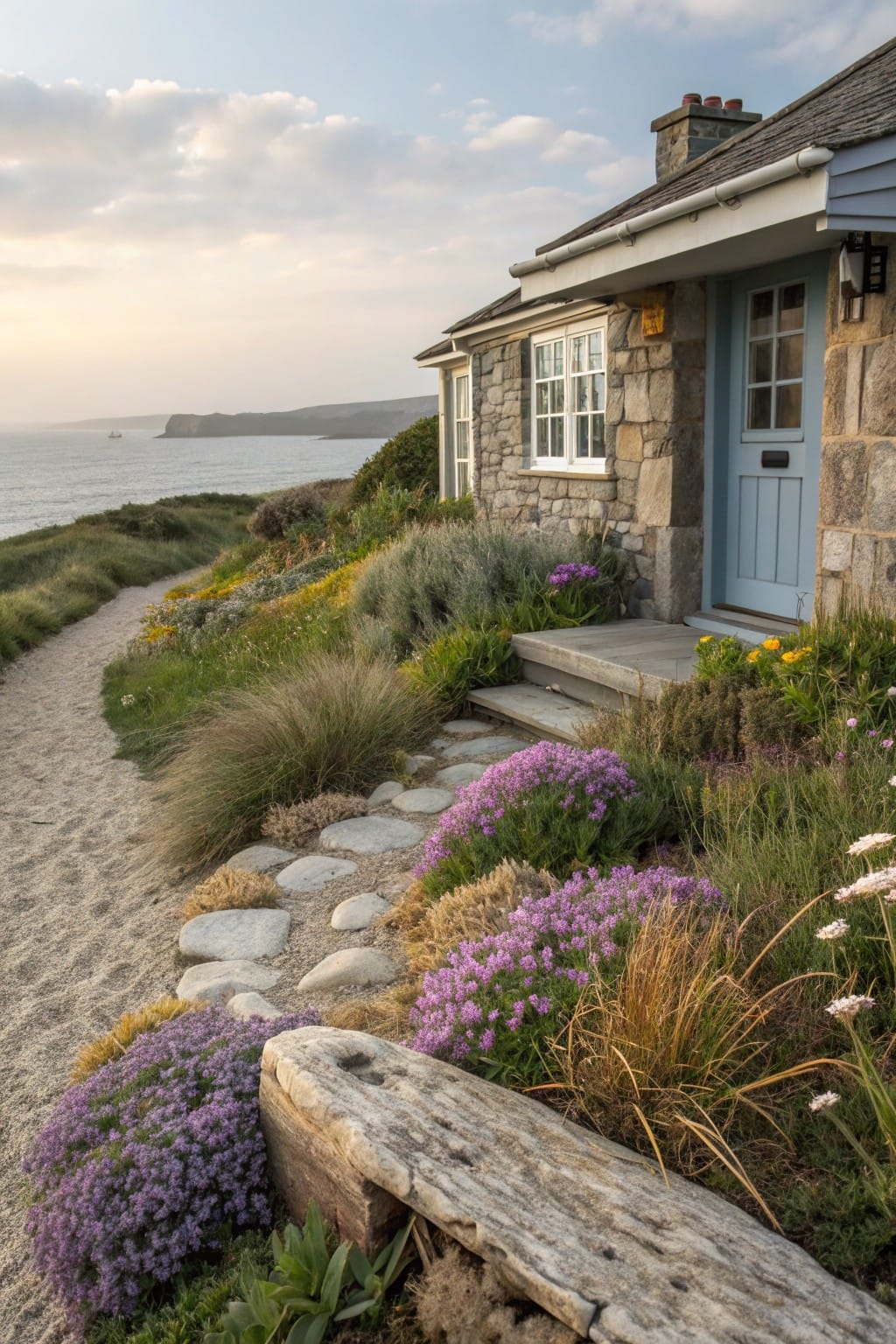
Flat stones set into a sandy walkway make a clean border that leads straight to the entry without overpowering the garden. Here, the large roundish stones sit low and simple, letting plants like those purple clusters spill right over the edges. It keeps the path defined but feels easygoing, especially with the sea air and coastal scrub around.
This works best in front yards or side paths where you want low upkeep. Use smooth beach stones or local field rocks in gravel or sand for drainage. Pick tough plants that hug the ground. Skip it on steep slopes, though. Stones might shift.
Stone Retaining Walls for Sloped Borders
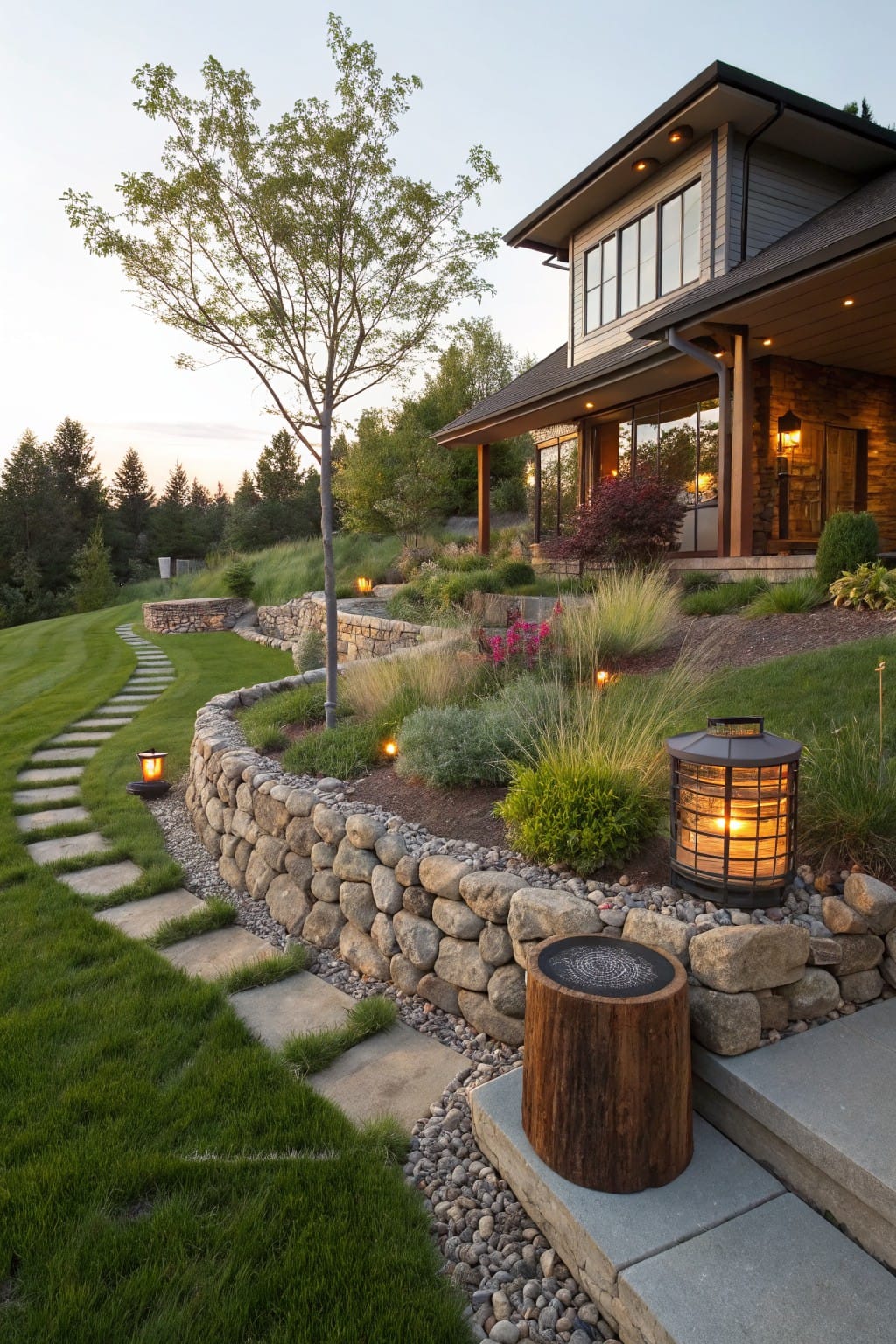
These stone walls make a simple border on a hillside. They’re stacked without mortar for a natural fit, holding back the soil while framing a grass path. Grasses and low shrubs tuck right along the base, and lanterns add light without fuss. It keeps the garden looking tidy on uneven ground.
Try this where your yard drops off or needs levels. Use local fieldstone so it blends with the area. It suits most homes, especially ones with wood siding or big windows. Just keep plantings low so the rocks stay the focus.
Poolside Rock Edging Boxes
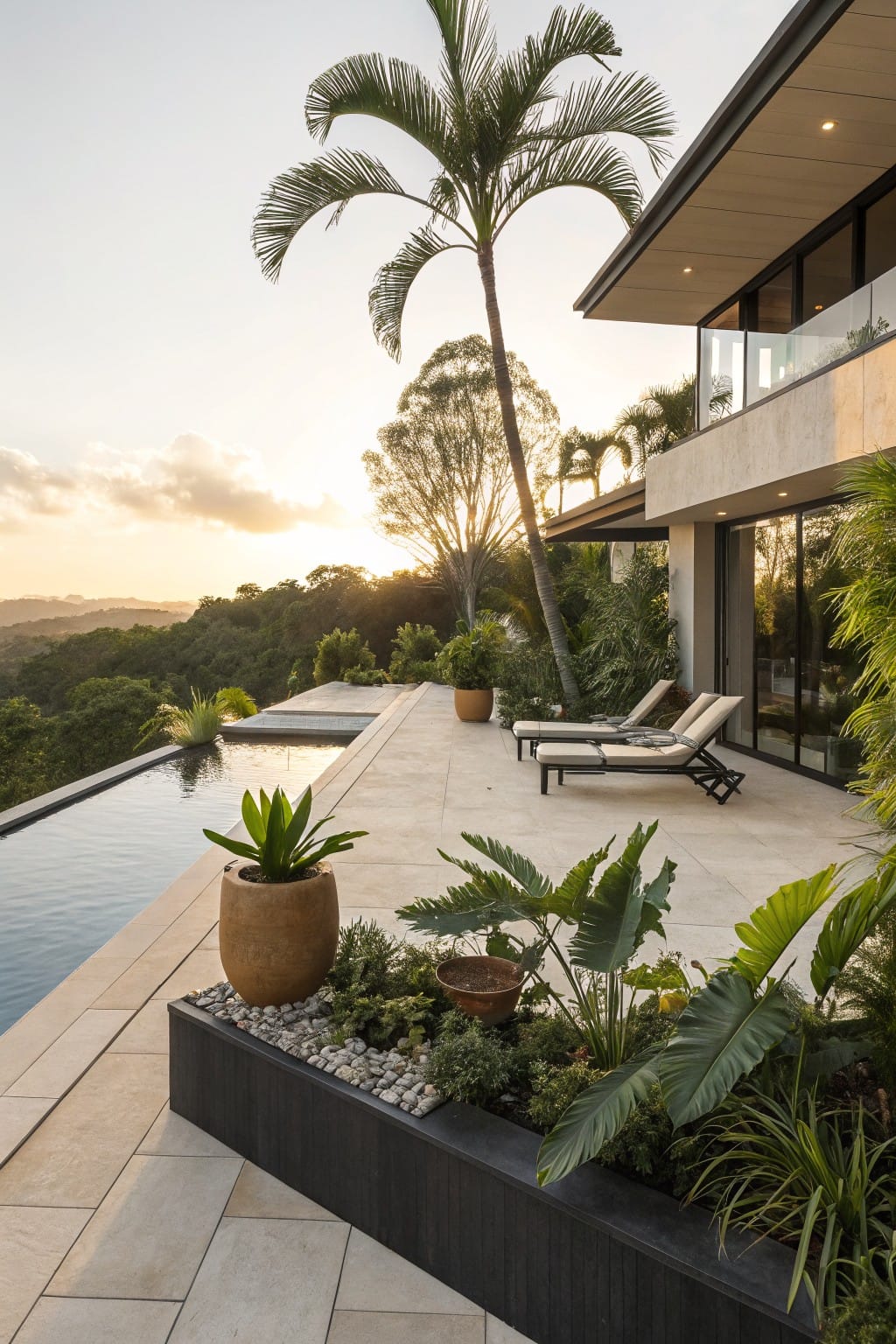
A simple raised box edged in dark metal makes a clean border right along the pool. Filled with white pebbles and a mix of low plants like agaves and ferns, it keeps dirt out of the deck area while adding texture. The straight line draws focus to the water without any fuss.
This works best on modern terraces or infinity pool setups where you want tidy separation between hard surfaces. Line it along edges or steps, keep plants sparse to avoid clutter. Suits sloped yards or warm climates, but scale it down for smaller patios.
Raised Stone Beds Edge Walkway Gardens
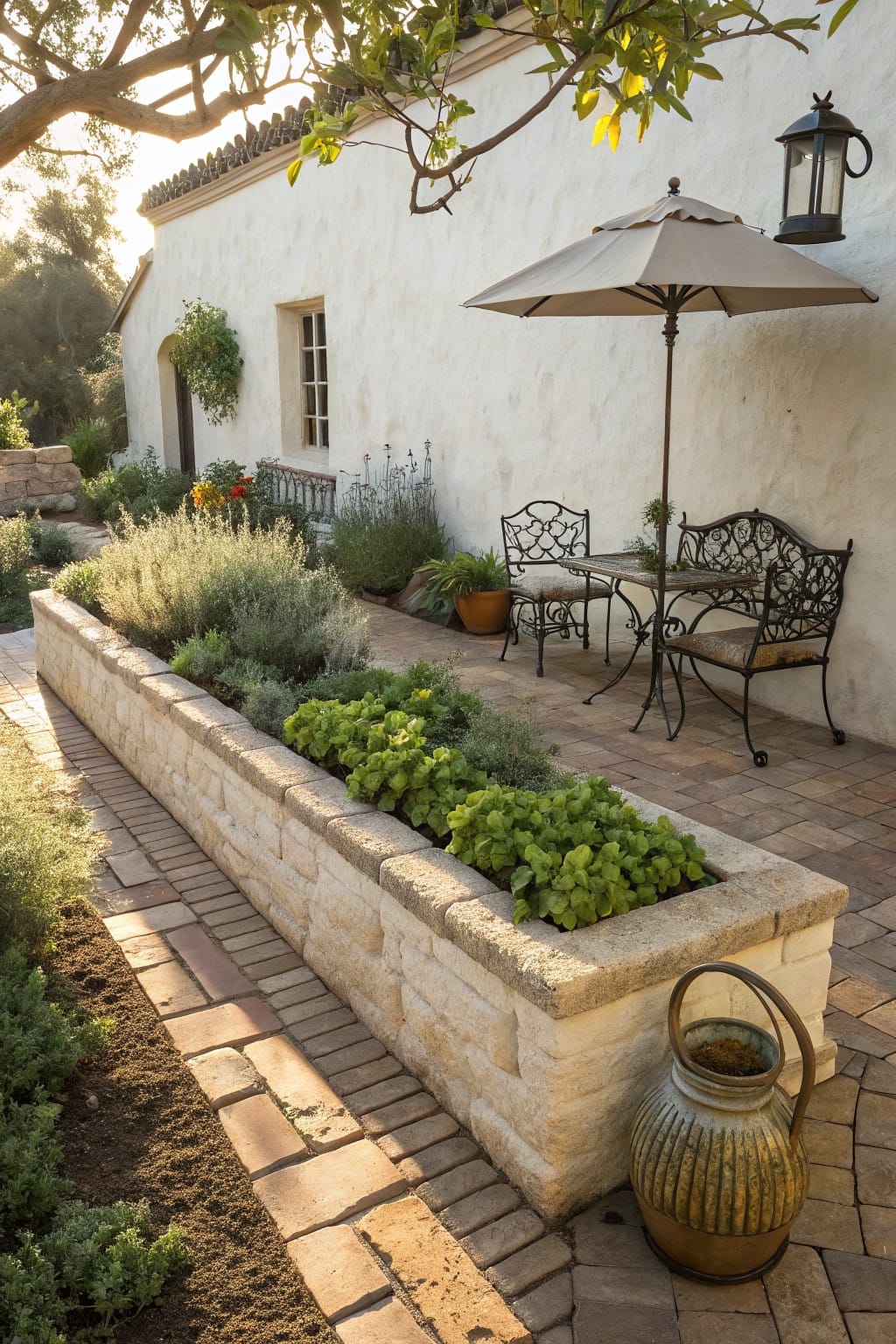
Raised stone beds like this one run right along the path, holding in herbs and low plants to keep everything tidy. The light limestone blocks give a clean, solid edge that ties into the house wall without overpowering it. You get that crisp border look while the plants spill over just enough for a lived-in feel.
These work best next to patios or side entries where you want easy access to fresh greens. Pair them with brick pavers for a simple path, and they’re low upkeep once planted with tough stuff like rosemary or basil. Skip them in super shady spots, though. Plants need sun to fill out.
Meandering Stone Paths in Wild Gardens
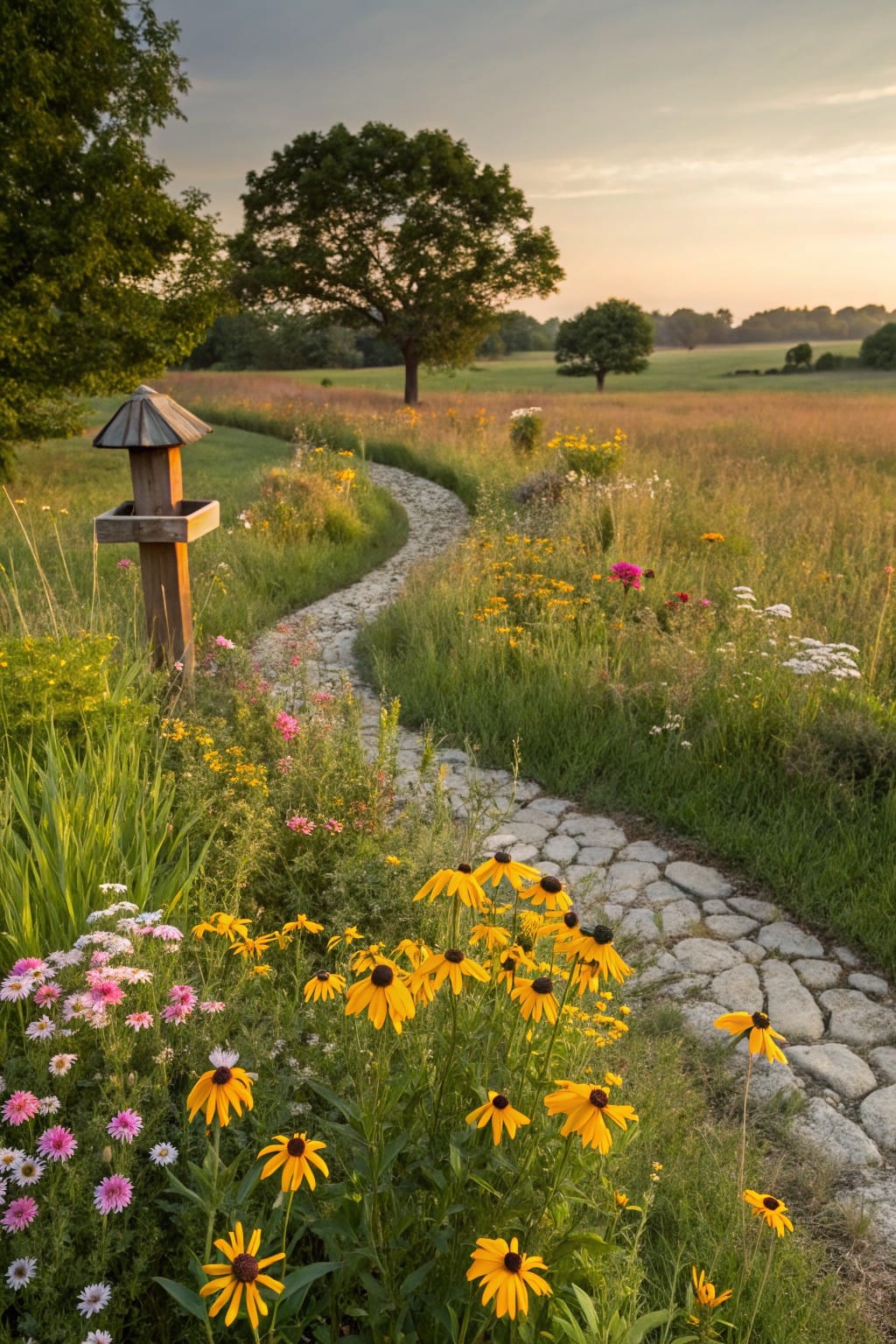
A curving path built from rough cobblestones like this one leads you right through a sea of wildflowers. What makes it work so well is how the rocks give a clean, sturdy edge to all the loose grasses and blooms. Black-eyed Susans and pinks spill right up to the stones without overwhelming the path.
You can pull this off in bigger backyards or open fields where formal landscaping feels out of place. Just set the stones in a natural S-curve, fill the borders with tough perennials that come back each year. It fits older country homes best. Skip it for tiny lots, though, since it needs room to breathe.
Pebble Edging Along Stone Paths
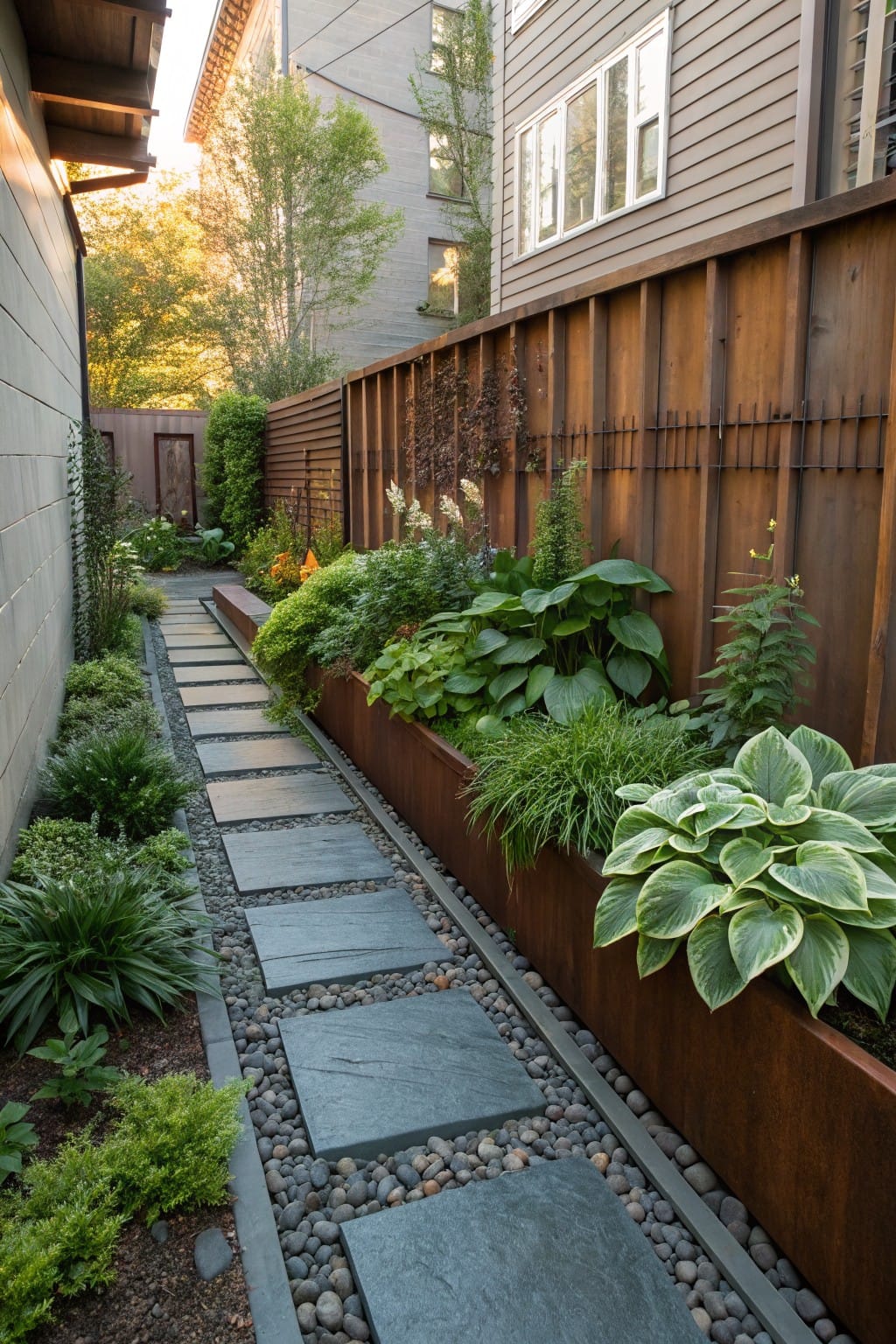
One clean way to frame a garden path is with a simple strip of pebbles or gravel right beside the stepping stones. Here, dark slate slabs are set into the ground with white pebbles filling the gaps and edges. It gives a sharp, modern line that separates the walking area from the plant beds without much fuss. The look stays tidy even as plants grow in.
This edging works best in narrow side yards or alleys where space is tight. Lay down landscape fabric first, then add 2 to 4 inches of pebbles in a 6-inch-wide band next to your stones. Pair it with metal planters to keep soil from spilling over. It’s low upkeep and lets you focus on the plants instead of weeding edges.
Low Stone Retaining Walls with Planted Borders
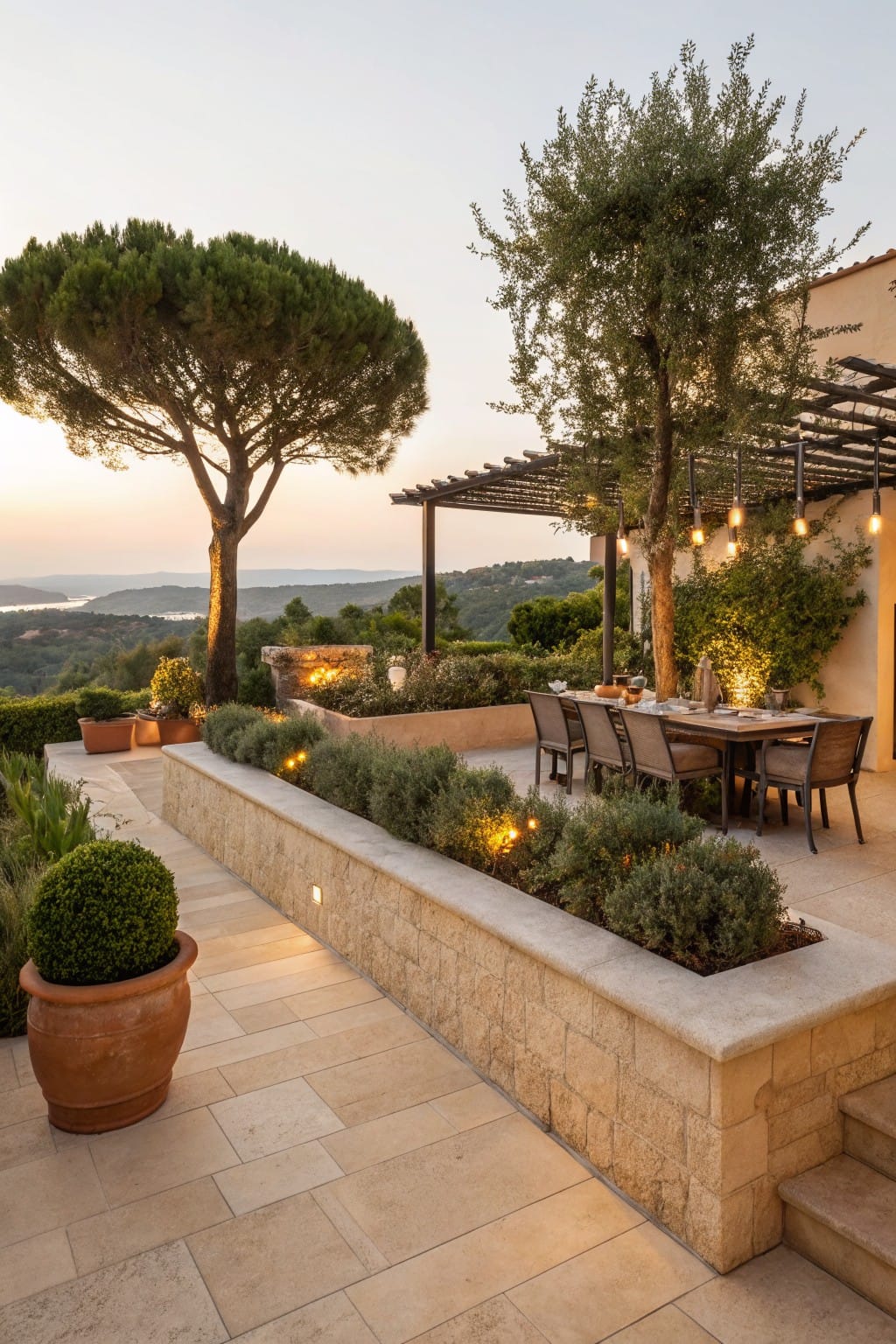
One simple way to frame a garden or patio is with a low stone retaining wall like this one. It’s built from beige rock blocks that hold back soil and plants without taking over the space. Here, it’s edged with low shrubs and dotted with small lights along the top. That keeps everything neat and ties the hard path right into the planting beds. It makes the whole area feel contained but open.
These walls work best on sloped yards or terraced spots where you need some height control. Fill the top with tough, mounding plants like lavender or boxwood that won’t flop over. Stone like this blends with natural settings, suits Mediterranean or rustic homes, and stays low-maintenance once set. Just make sure the base is solid to avoid shifting over time.
Rock Steps Retained by Boulders
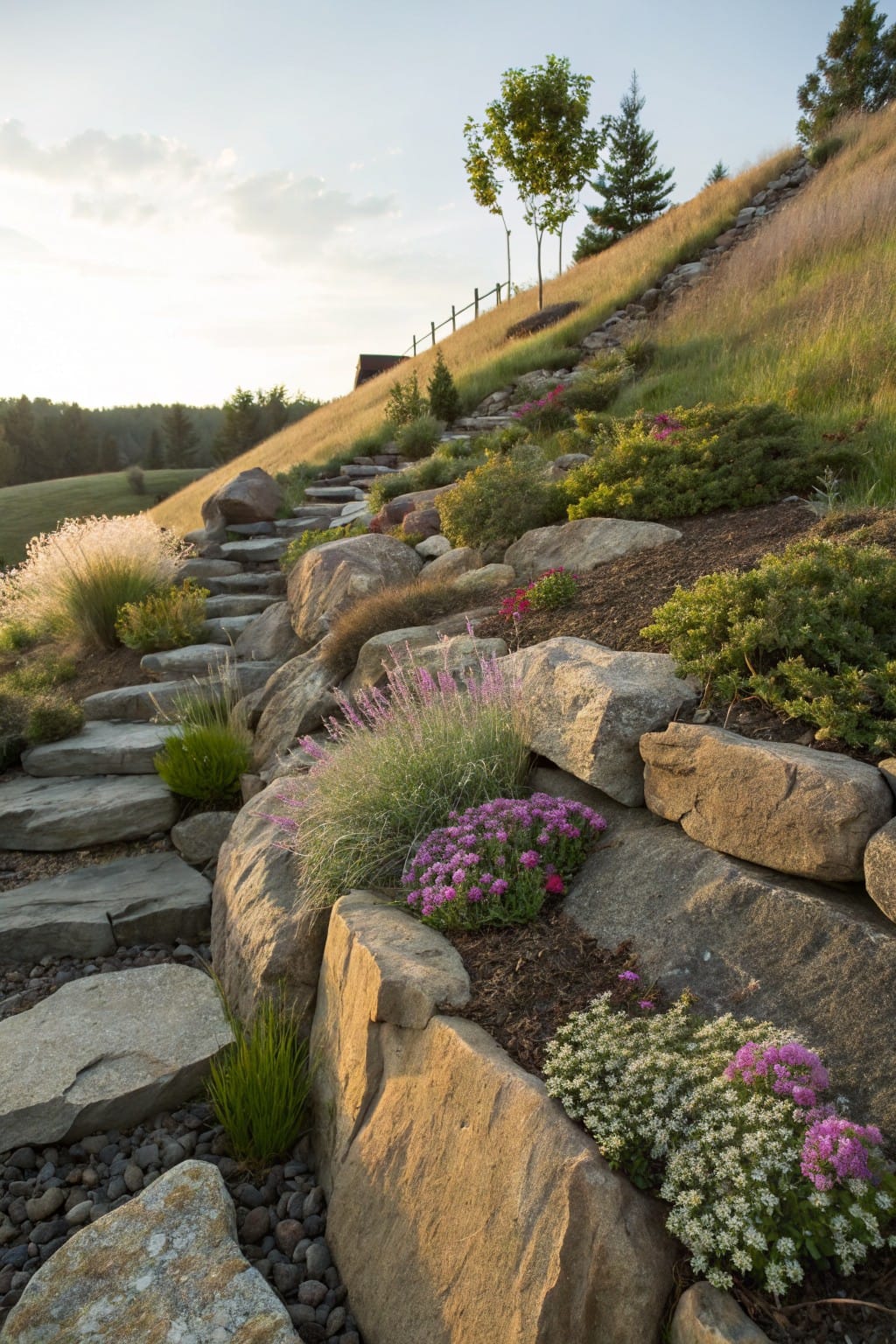
One solid way to handle a steep hillside is with wide stone steps tucked into big boulders. This setup keeps everything feeling natural, like the path just grew there. The rocks hold back the soil without looking forced, and a few grasses and flowers tucked in the crevices add color without much upkeep. It’s practical for getting around tough terrain.
You can pull this off on any sloped yard, especially where grass alone would wash out. Use local fieldstone or whatever boulders you have on site to match the area. Plant tough stuff like sedums or ornamental grasses in the pockets. Works best for country homes or spots with a wilder vibe… just make sure the steps are wide enough to walk comfortably.
Gravel Strips Edged in Stone
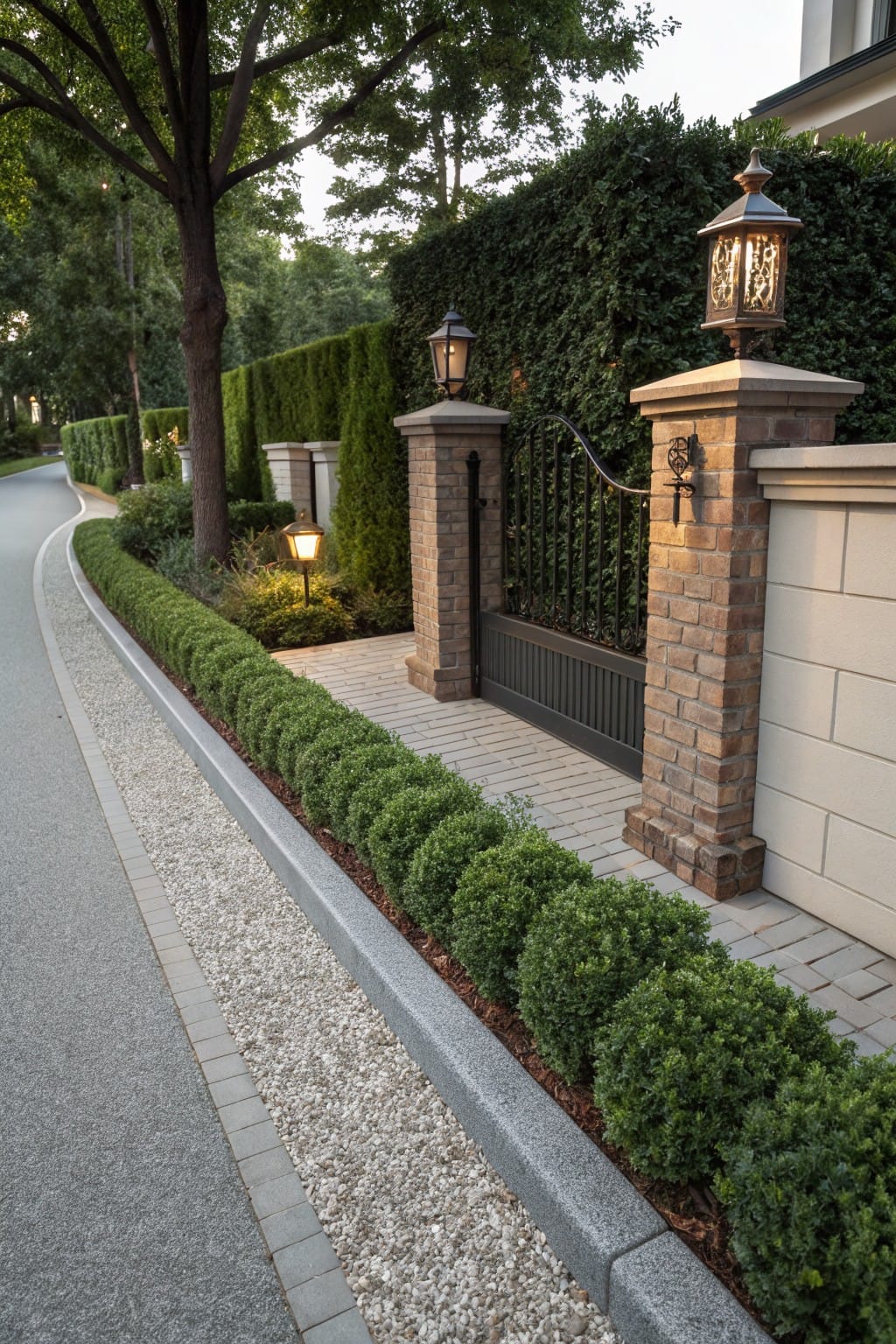
A narrow gravel strip runs right along the pavement, held back by a solid stone curb. Tight boxwood hedges fill the bed just beyond it. This keeps the edge super clean and stops plants from spilling onto the drive. Gravel lets water drain fast too. No fuss, just neat lines that make the whole yard look put together.
It’s perfect for curving driveways or walks where you need that sharp divide between hard surfaces and soft planting. Works on any home with a bit of formality, from traditional to updated. Set the curb deep enough so gravel stays put. Refresh the stones now and then… easy job.
Rock and Gravel Edging for Curved Paths
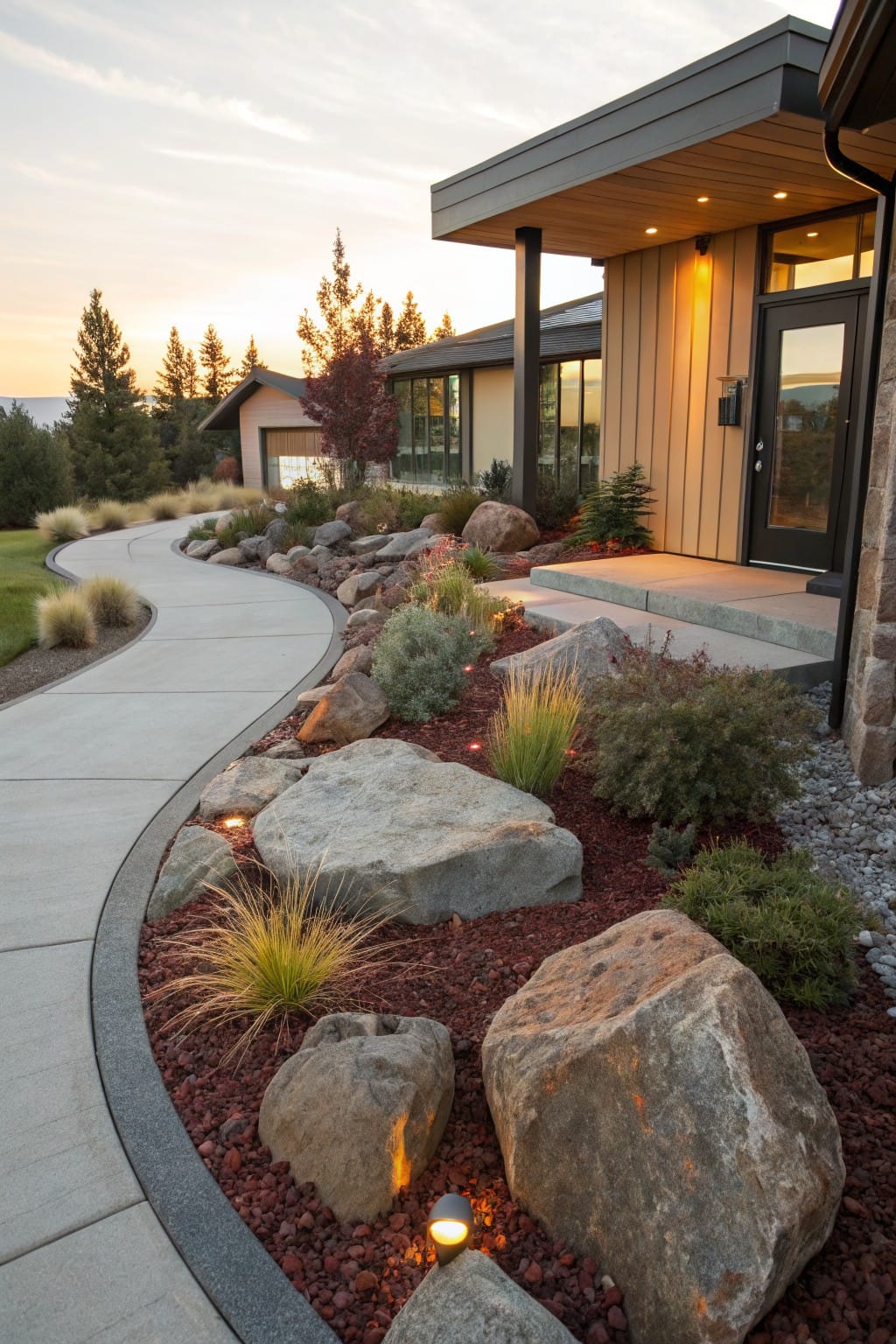
A simple way to frame a garden walkway is with large boulders set into red gravel mulch, like along this winding concrete path. The rocks add heft and keep the gravel in place, while the color pops against the gray path and green plants. It creates a natural border that looks intentional but not fussy.
This edging works well around modern homes in wooded or hilly spots. Use bigger stones on the outside curve for stability, tuck in low grasses for softness. Skip it on super narrow paths, though. Low maintenance once set, just top off the gravel now and then.
Frequently Asked Questions
Q: How deep should I dig the trench for rock borders? A: Aim for 4 to 6 inches deep across the whole line. Rocks settle right in there and stay put against foot traffic. Add a layer of sand at the bottom to level everything smooth.
Q: Can I mix different rocks in the same border? A: Go ahead and blend gravel with larger stones for interest. Match the colors loosely so it flows. Your garden gets that custom vibe without much fuss.
Q: How do I keep weeds from popping up in the rocks? A: Lay landscape fabric under the rocks before you fill in. Overlap the edges a bit and pin it down. Mulch on top seals the deal.
Q: What if heavy rain shifts my new rock edging? And pack crusher fines or soil tight behind the rocks right away. They lock everything stable after the first few storms. Check low spots next season and nudge rocks back.
