

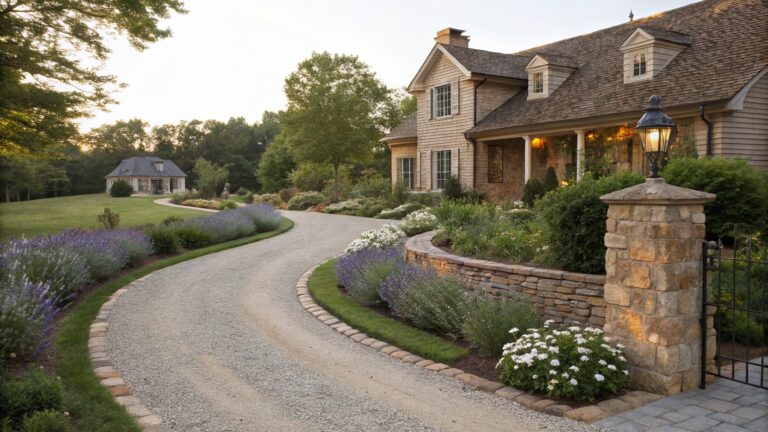
When you drive up to a home, the landscaping at the entrance catches your eye before anything else does.
I’ve noticed that flower beds work best there when they hug the driveway’s curves and use layered plantings that build structure over time.
The right edging keeps everything crisp, preventing that messy spillover you see in some yards.
Those details turn a plain approach into something that feels put-together and welcoming.
A couple of these setups are the kind I’d tweak for my sloped drive to see how they hold up year-round.
Driveway Flower Beds with Stone Edging
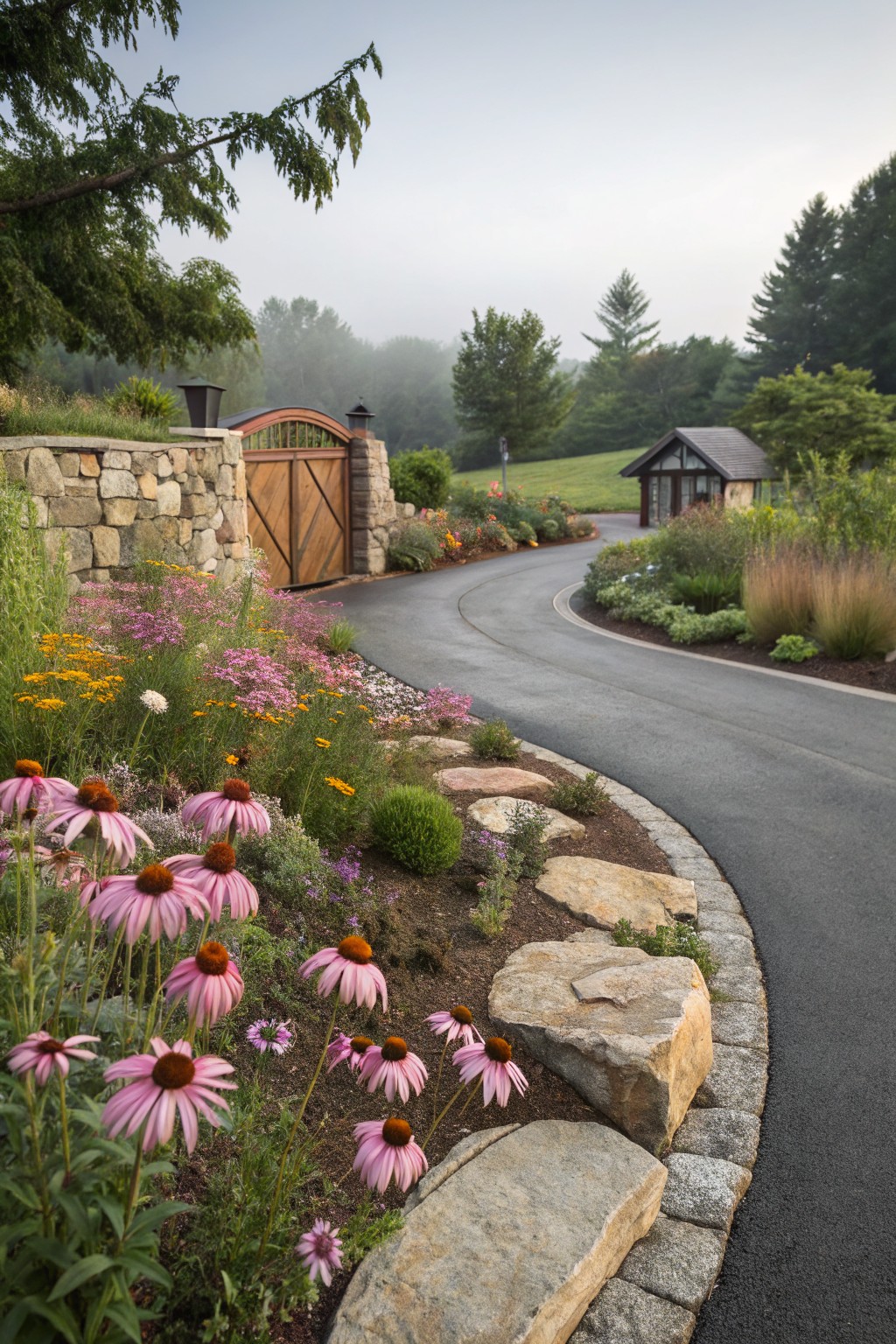
A simple way to make your driveway entrance pop is to build it up with stone edging and tuck in flower beds right alongside. Here, rough stone walls follow the curve of the road, and the beds are stuffed with perennials like coneflowers in pinks and oranges. That combo gives a natural, settled look that fits right into a wooded spot. It turns a plain drive into something with real character.
You can pull this off on most any home with some slope or trees nearby. Pick tough plants that bloom summer long and don’t need much fuss. Just watch the scale, the stone keeps it neat while the flowers add the color. Works best where you want low upkeep but high welcome.
Brick Path with Boxwood Borders
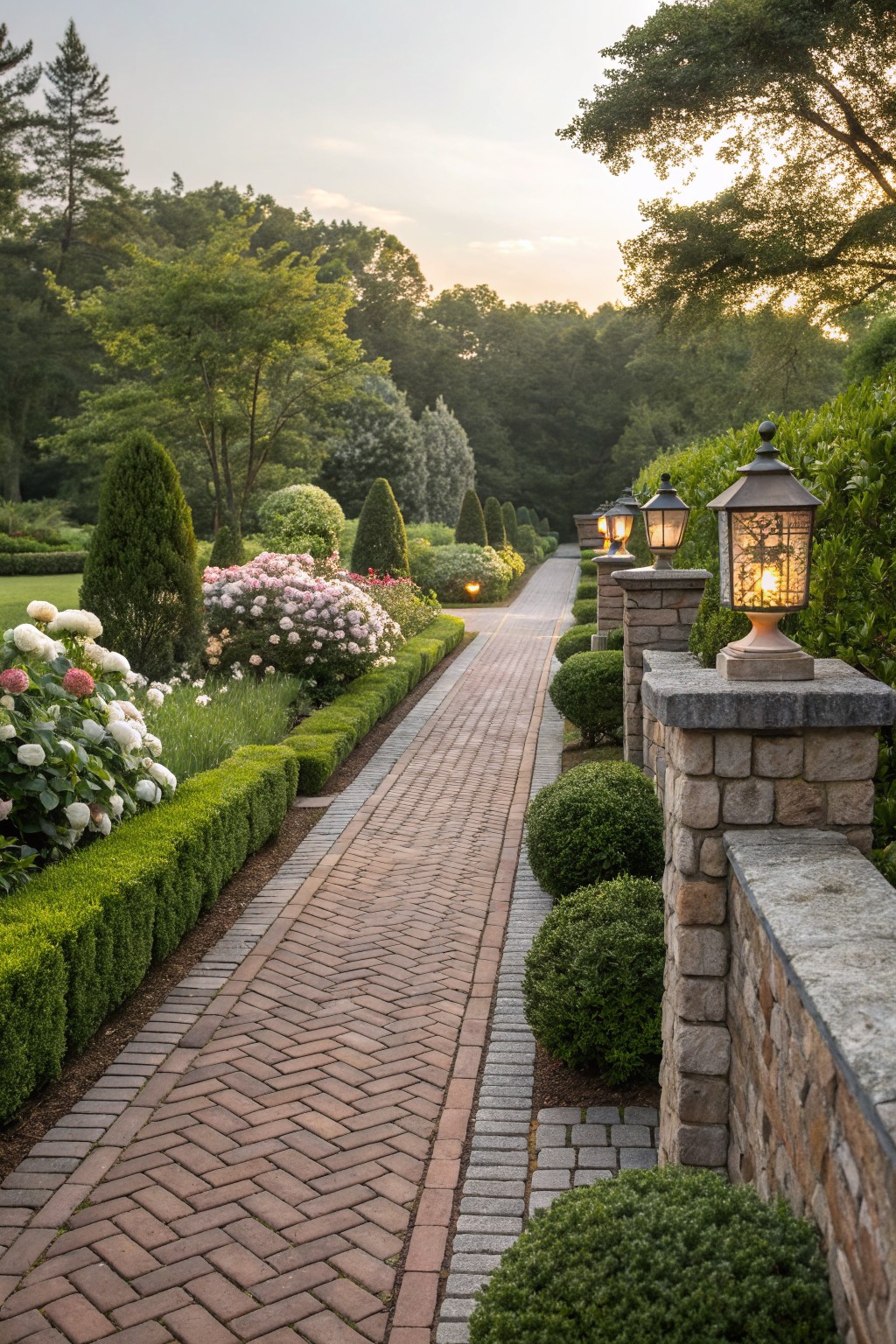
A simple brick walkway runs straight through the garden, edged by neat rows of boxwood hedges. Flower beds of hydrangeas and roses fill in behind them, with stone pillars and lanterns spaced along the way. It gives that classic formal look, guiding you right to the house in a calm, orderly way.
This works well for driveway entrances where you want structure without a lot of upkeep. Boxwoods stay green year-round and take clipping nicely, while the flowers add color in season. Try it on suburban lots or older homes with some land. Just keep the path wide enough for cars if needed.
Tall Grasses Frame a Stone Driveway Entrance
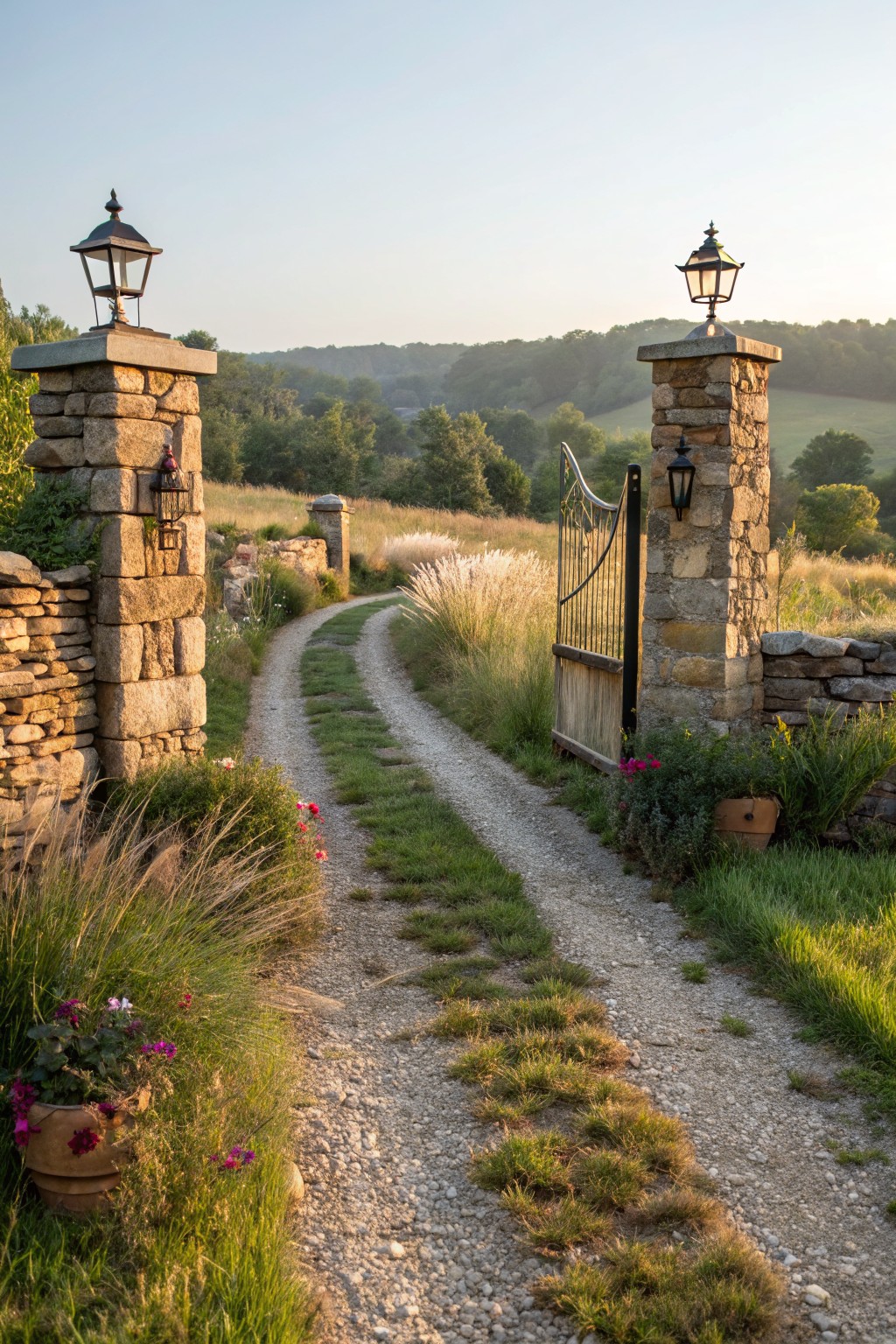
Stone pillars with old lantern lights hold up a wrought iron gate at this driveway start. Tall grasses lean in around the edges, mixed with simple flower beds that add color without fuss. It’s a clean way to mark your entry that feels settled into the land, not fussy or overdone.
This works best on country properties or spots with some hill or open view. Go for native tall grasses like switchgrass along the path, tuck in hardy flowers like coneflowers or phlox near the pillars. Gravel keeps it low care. Just watch the gate doesn’t swing into plants… trim back as needed.
Raised Beds Edge the Driveway
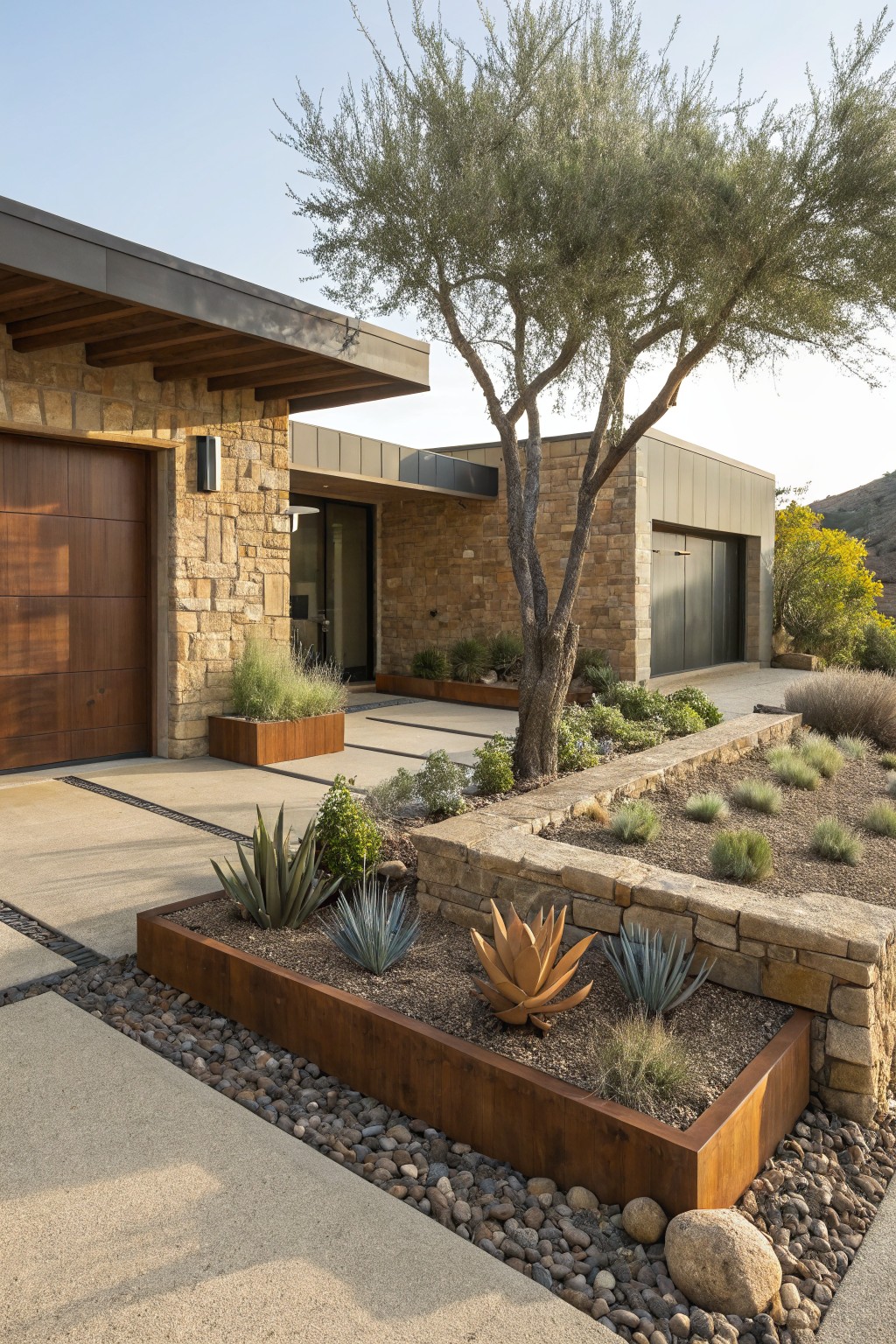
Raised beds like these work well to frame a driveway entrance. They’re built from corten steel with gravel mulch inside, planted thick with agaves, aloes, and grasses. That setup gives a sharp, organized look without much upkeep. It pulls the eye right to the house and matches stone walls nicely.
Put these along one side of the drive where you want some structure. They suit dry spots or modern homes best. Go for tough succulents that handle sun and need little water. Skip softer flowers unless you want more color changes over time.
Wooden Gate Driveway Entrance
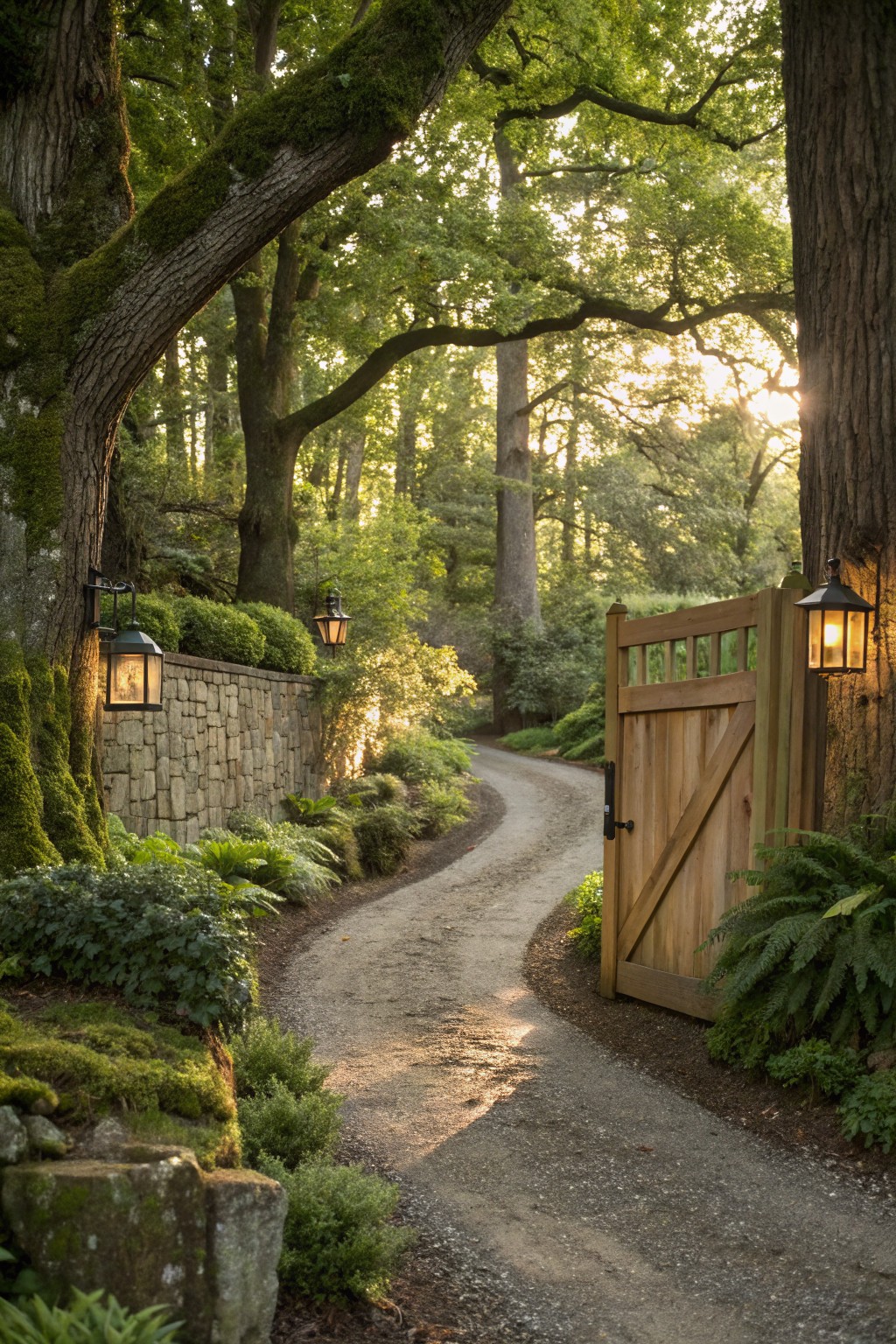
A wooden gate like this one marks the start of a gravel driveway in a simple, natural way. It sits between stone walls and big trees covered in moss, with hanging lanterns adding a soft glow. The curving path pulls you right in, and the ferns and green beds along the edges keep it all tied together without much fuss.
This works best on wooded lots or properties with a rustic feel. Pick cedar or reclaimed wood for the gate to age nicely, and mount lanterns on trees or walls for light at dusk. Skip it if your front is too open, since the gate needs some trees or walls to stand out. Easy to add layers of low plants around the base for that tucked-away look.
Tiered Retaining Walls for Sloped Driveways
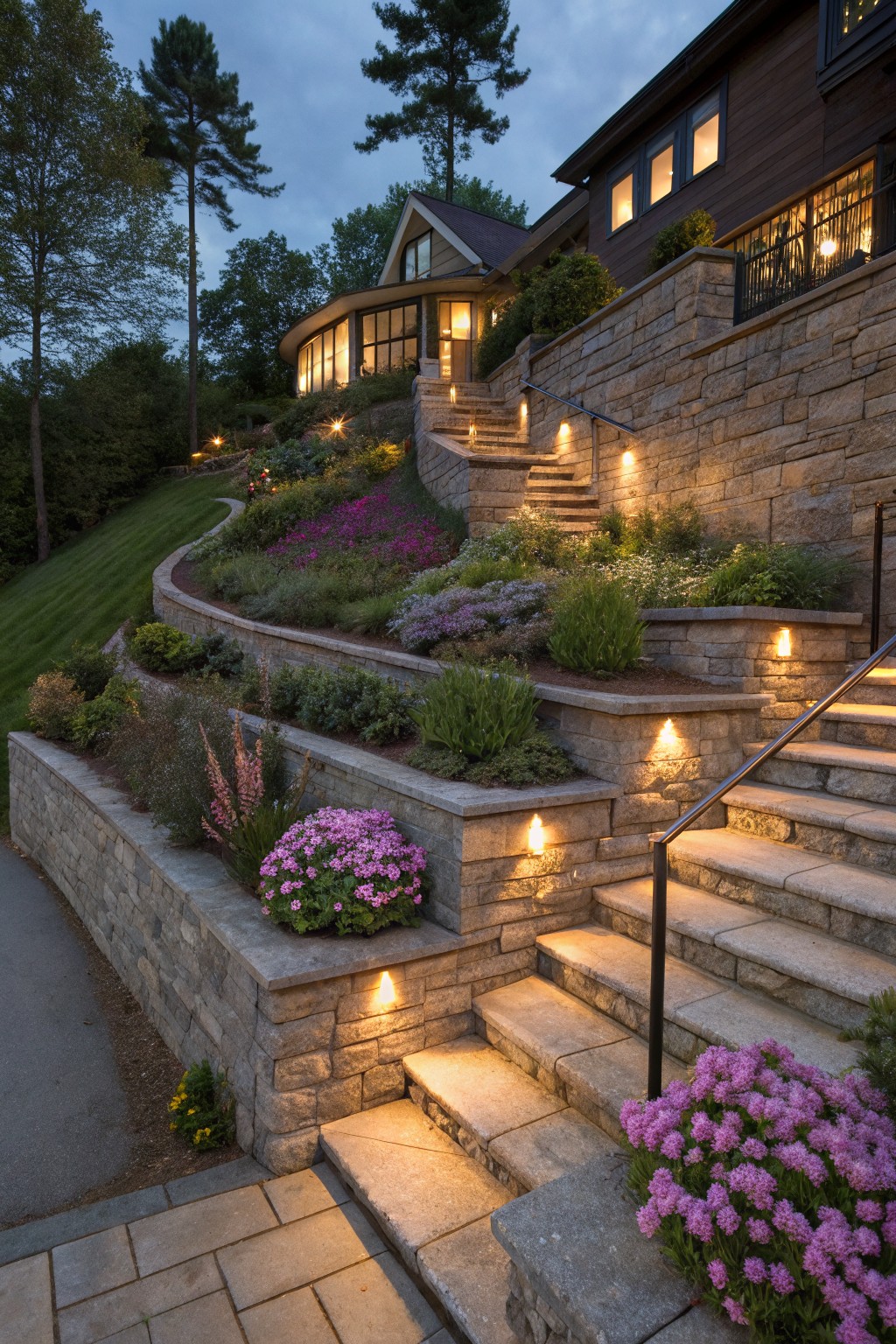
Sloped driveways can be tricky. But tiered stone retaining walls turn that challenge into neat levels of flower beds. Here pink blooms and low shrubs fill the pockets, softening the stone while steps weave right through. Low lights tucked into the walls make it all glow at dusk. It’s a practical way to hold soil and add color without flat ground.
This works best on hillsides where you need to manage runoff or just want more planting space. Pick durable local stone to match your house. Plant tough perennials that trail over edges…they hide any gaps. Skip it if your slope is gentle. Pair with simple grass below for clean lines.
Entry Walkway with Gravel and Stepping Stones
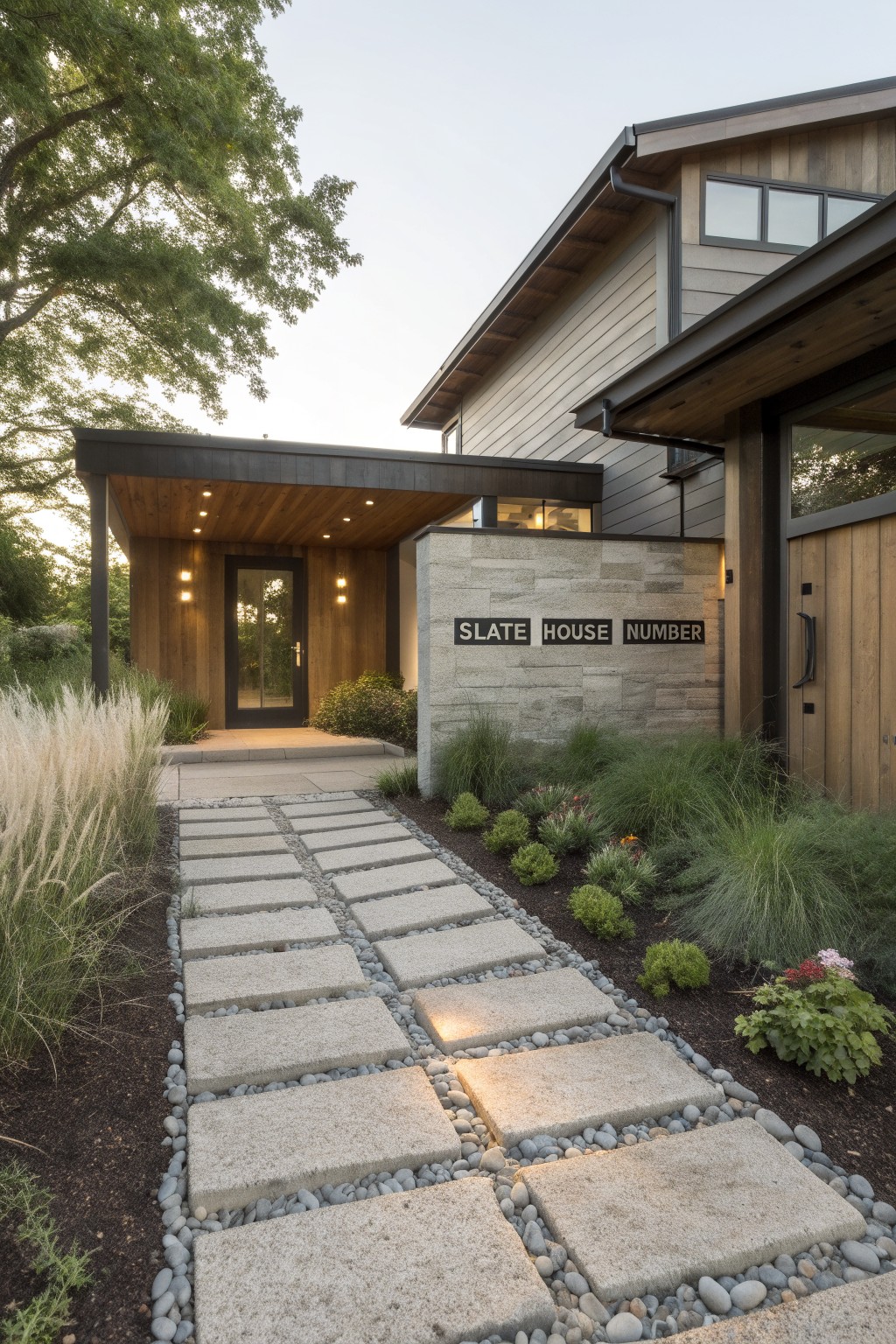
One clean way to handle the walk up to your front door is setting large concrete stepping stones right into gravel. It keeps things simple and modern. The path stays narrow, just wide enough for one or two people. Flanking grasses and low plants fill in the edges without crowding the way. No big slabs of poured concrete. Just enough structure to guide you in.
This setup works best for homes with a contemporary edge, especially if you want low upkeep. Pick drought-tolerant grasses like the tall ornamental types shown here, and add a few colorful perennials for pops. Make sure the gravel drains well so you don’t get puddles after rain. It fits sloped lots too, since the loose gravel shifts less than mulch.
Curved Driveway with Stone and Plant Edging
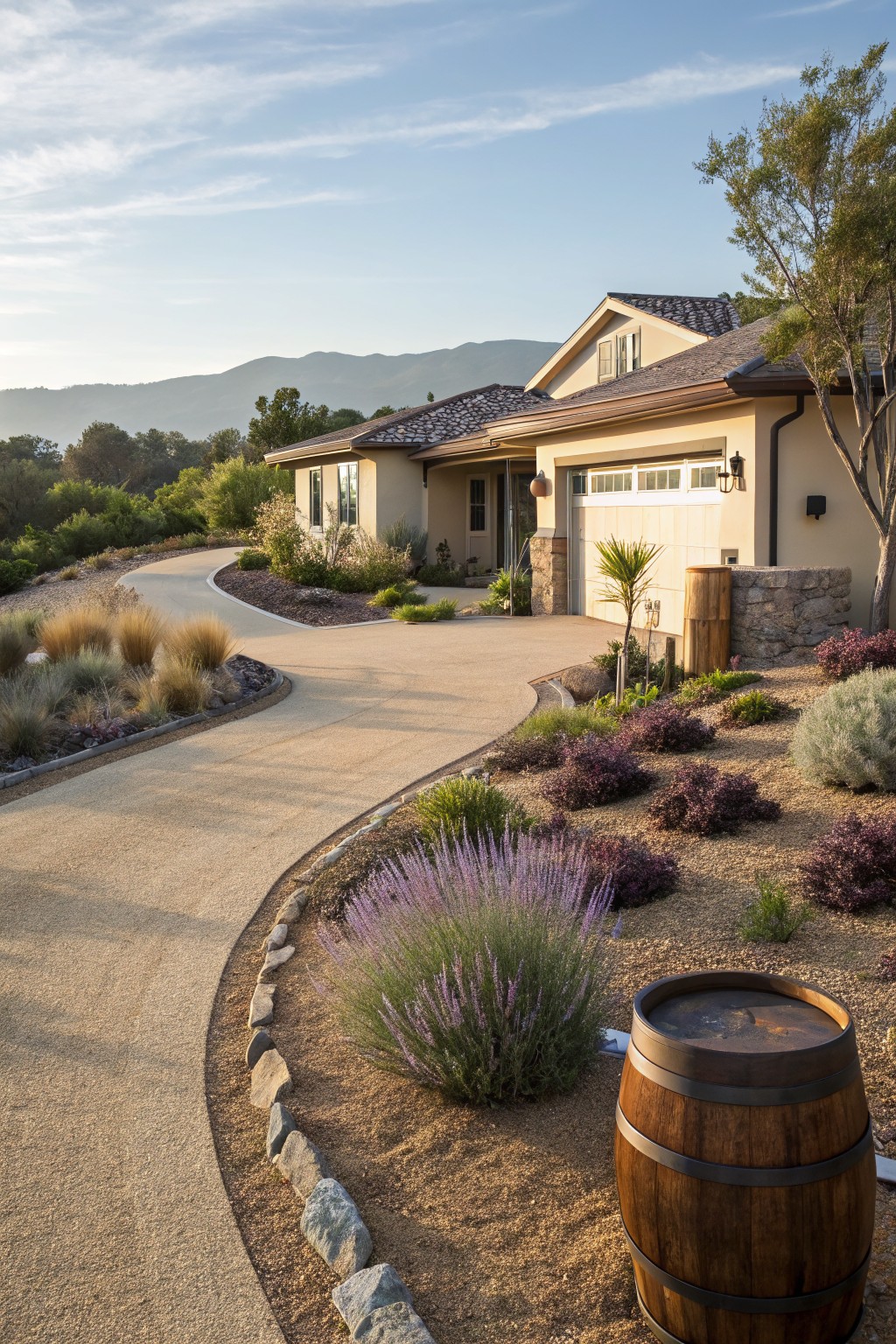
A curved driveway like this pulls you right in without feeling too fussy. The smooth decomposed granite path winds gently toward the house, edged by rough stones and low clumps of lavender, grasses, and succulents. It keeps things natural and easy on the eyes, especially in a dry spot like this with hills in the background. That soft bend makes the entrance feel longer and more welcoming than a straight shot.
You can pull this off in front of most homes, but it shines on sloped lots or places with a rustic or Mediterranean vibe. Start with gravel or decomposed granite for the drive, then layer in tough plants that match your climate, rocks for definition, and maybe a barrel planter for accent. Skip anything too needy on water. Just keep the beds mulched to cut down on weeds.
Symmetrical Boxwood Path to the Gate
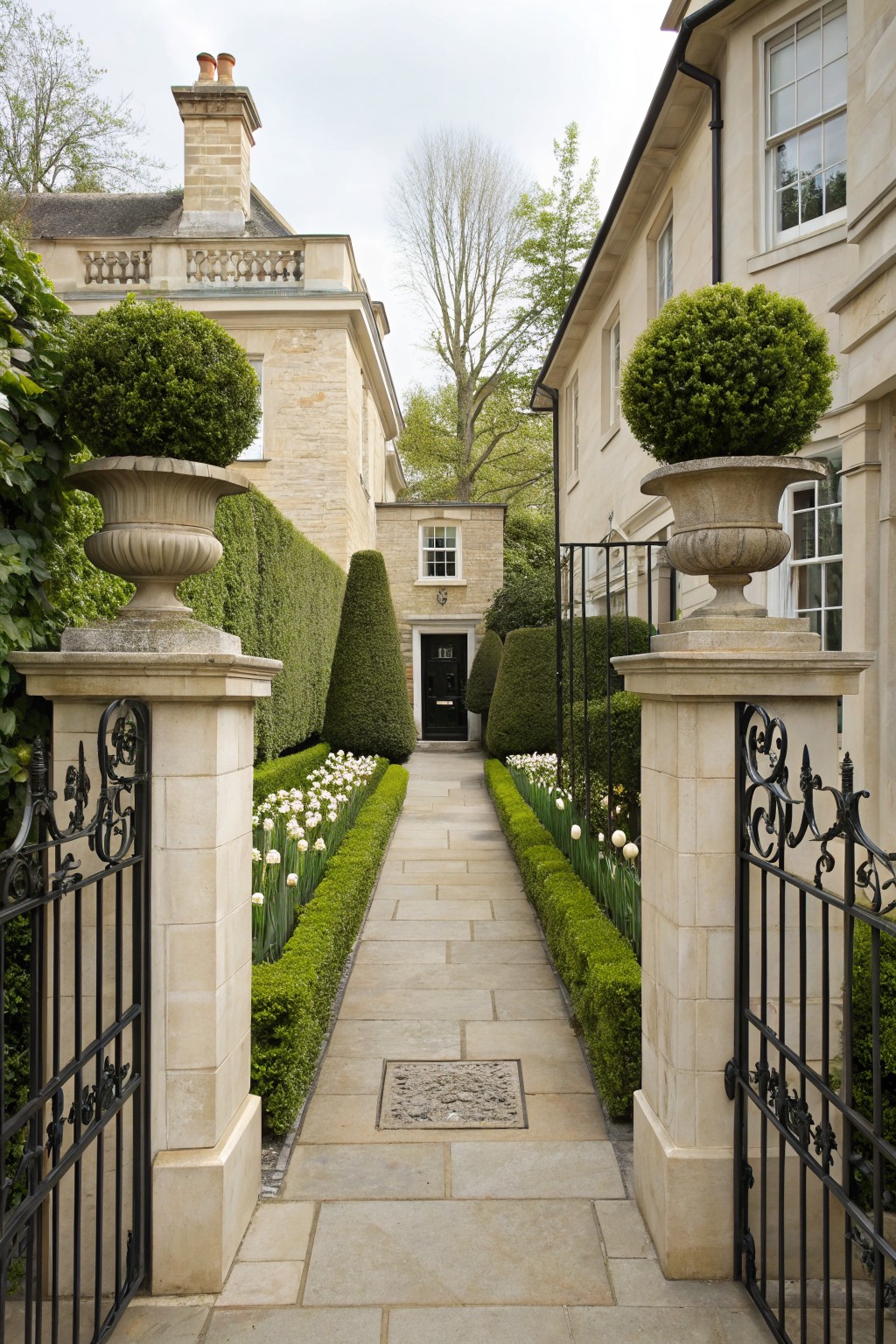
A straight stone path runs right up the middle here, edged with low boxwood hedges and beds of white tulips. Tall urns on stone pillars mark the wrought-iron gate, pulling everything together in a neat, formal way. It’s that classic garden look that makes the entrance feel special without being fussy.
This works best on smaller front yards where you want to guide people straight to the door. Trim the boxwoods a couple times a year to keep the lines sharp, and plant bulbs like tulips for spring color. Suits older stone houses… just make sure the path is wide enough for walking.
Tiled Walkway Leads Through Plant Beds
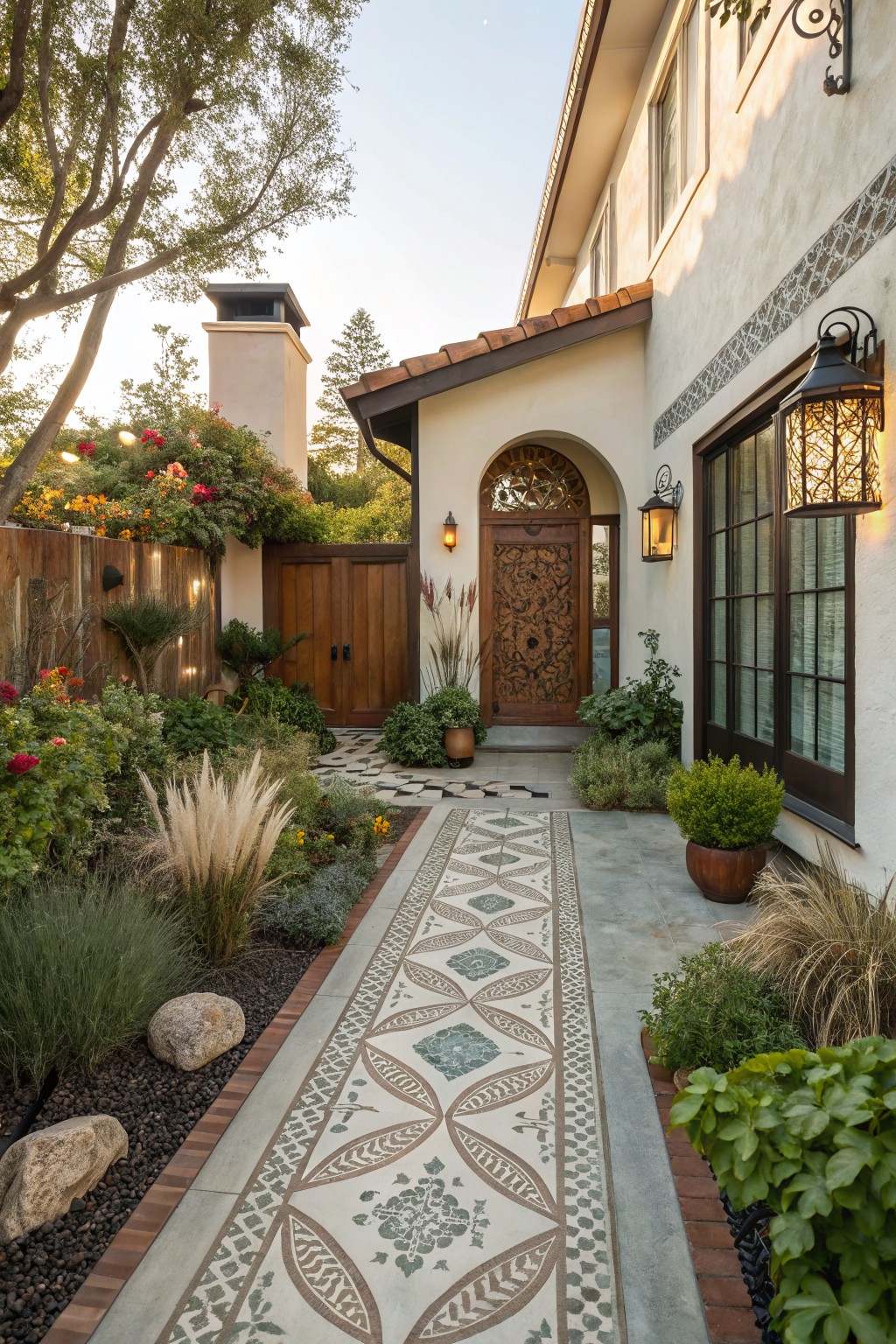
A simple walkway like this one uses geometric tiles in soft greens and creams to guide you right to the door. The pattern stands out against the plain gravel and rock edges, without overwhelming the space. It pulls everything together in a low-key way, especially with tall pampas grass and colorful flowers tucked along the sides.
This setup works great for homes in dry areas, since the plants stay green with little water. Line your path the same way on a driveway entrance or side yard. Just keep the beds narrow so they don’t crowd the walk, and pick tiles that match your house color a bit.
Formal Boxwood Hedges Line the Driveway Path
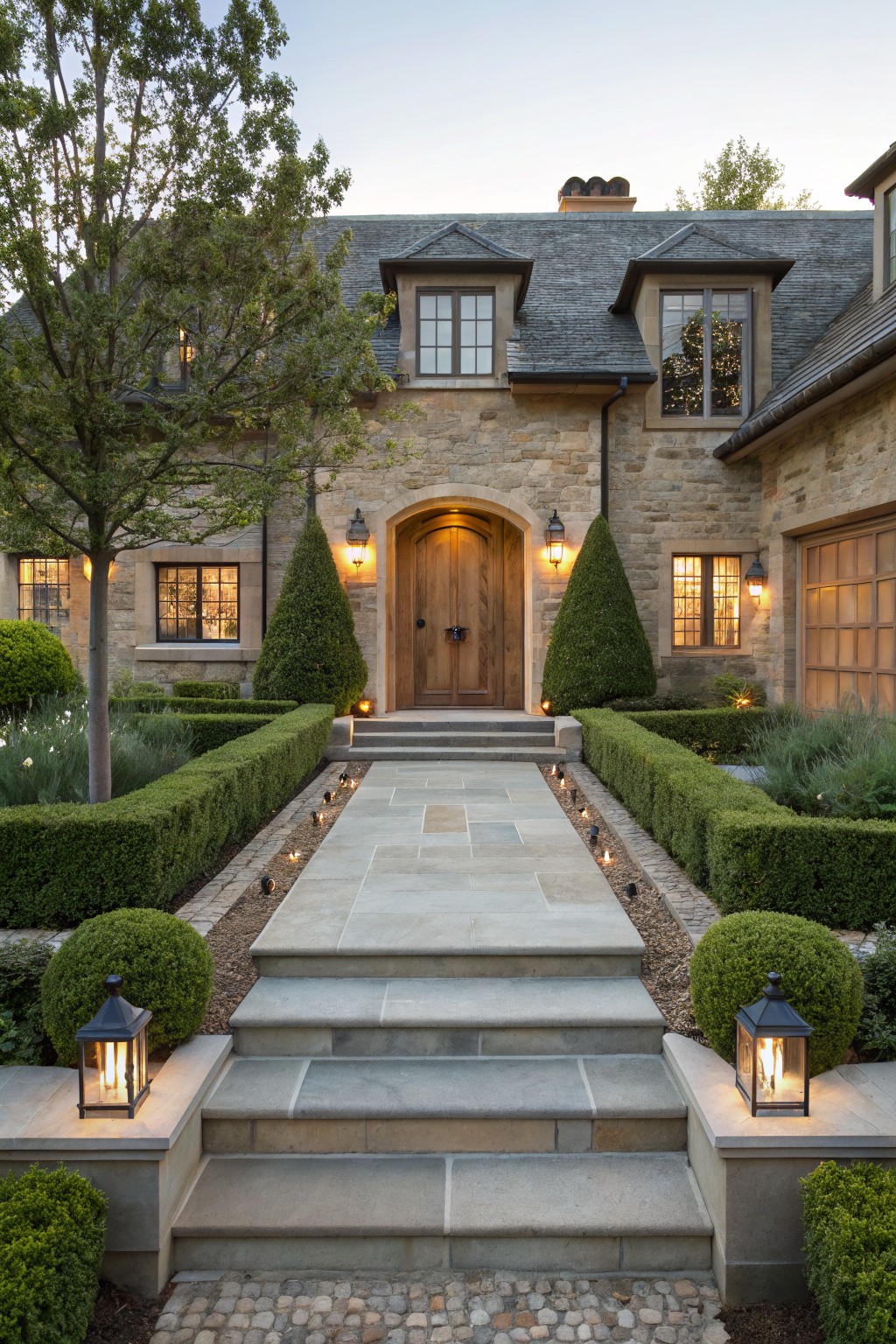
Boxwood hedges trimmed into neat shapes work great along a driveway path like this one. They run right beside the stone walkway, creating straight borders that lead straight to the front door. That formal touch fits with stone houses and keeps things looking sharp without much color changing through the seasons.
You can pull this off on most entry approaches with enough space for beds on both sides. Plant the boxwoods low and wide, then shear them a couple times a year. Pair with simple path lights set into the gravel edge to highlight it at night. It suits bigger homes aiming for classic curb appeal, but skip it if your yard stays too shady for healthy growth.
Curved Driveway with Flower Bed Edging
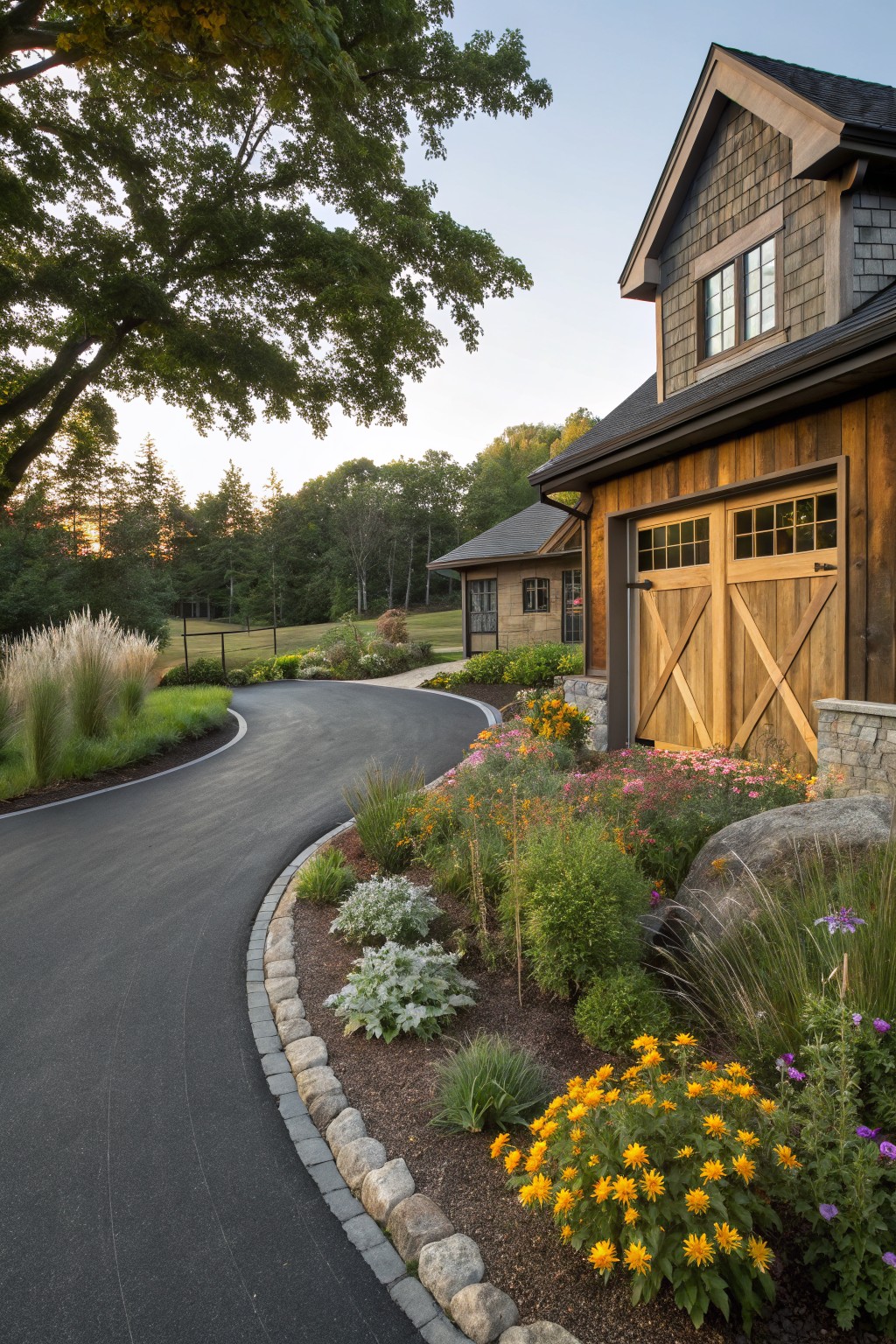
A winding blacktop driveway like this one gets its appeal from the tight stone border and the flower beds right along the edge. Those yellow clusters and tall grasses fill it out nicely, making the whole entrance pull you in without much fuss. It’s simple but it turns a plain drive into something with real character.
This works best on properties with a bit of slope or trees nearby, where you want to soften the hard lines of the pavement. Plant perennials and shrubs that come back each year, layer them by height, and use boulders for spots of weight. Keep the beds narrow if space is tight… just enough to frame the path.
Frequently Asked Questions
Q: How do I stop weeds from taking over my flower beds right away?
A: Layer on 2-3 inches of mulch as soon as you plant. It smothers weeds before they sprout and holds in moisture for your flowers.
Q: What plants stay colorful through fall for driveway beds?
A: Plant mums or asters in the front. They bloom late and shrug off cooler weather.
Q: How wide do these flower beds need to be?
A: Make them 3 feet across at least. Plants need space to spread without spilling onto your driveway.
Q: Can I handle the edging myself?
A: Grab a half-moon edger from any garden store. Slice a clean curve along the bed edge every few weeks to keep it sharp.
