

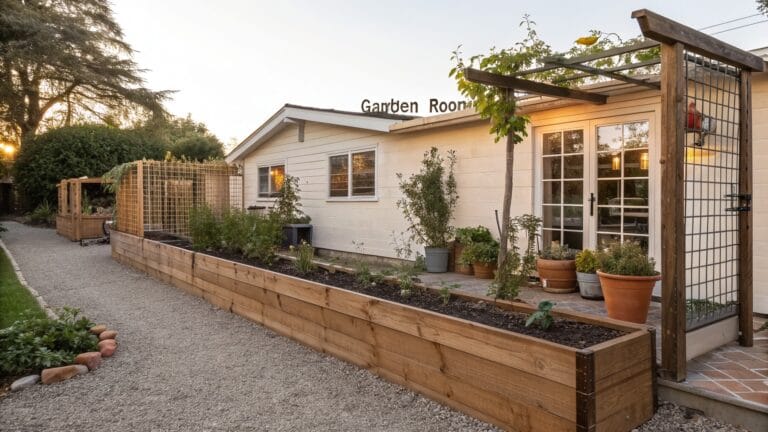
I’ve tinkered with all sorts of fences around my vegetable beds over the years. The good ones keep rabbits and deer at bay while letting sunlight hit every leaf. I go for designs with woven branches or scrap wood frames myself because they soften the edges and last through wet seasons. They fall flat when builders overload them with extras that warp or pull loose after the first storm. A few strike that practical charm I’ll borrow next spring.
Trellis Fencing Around Vegetable Beds
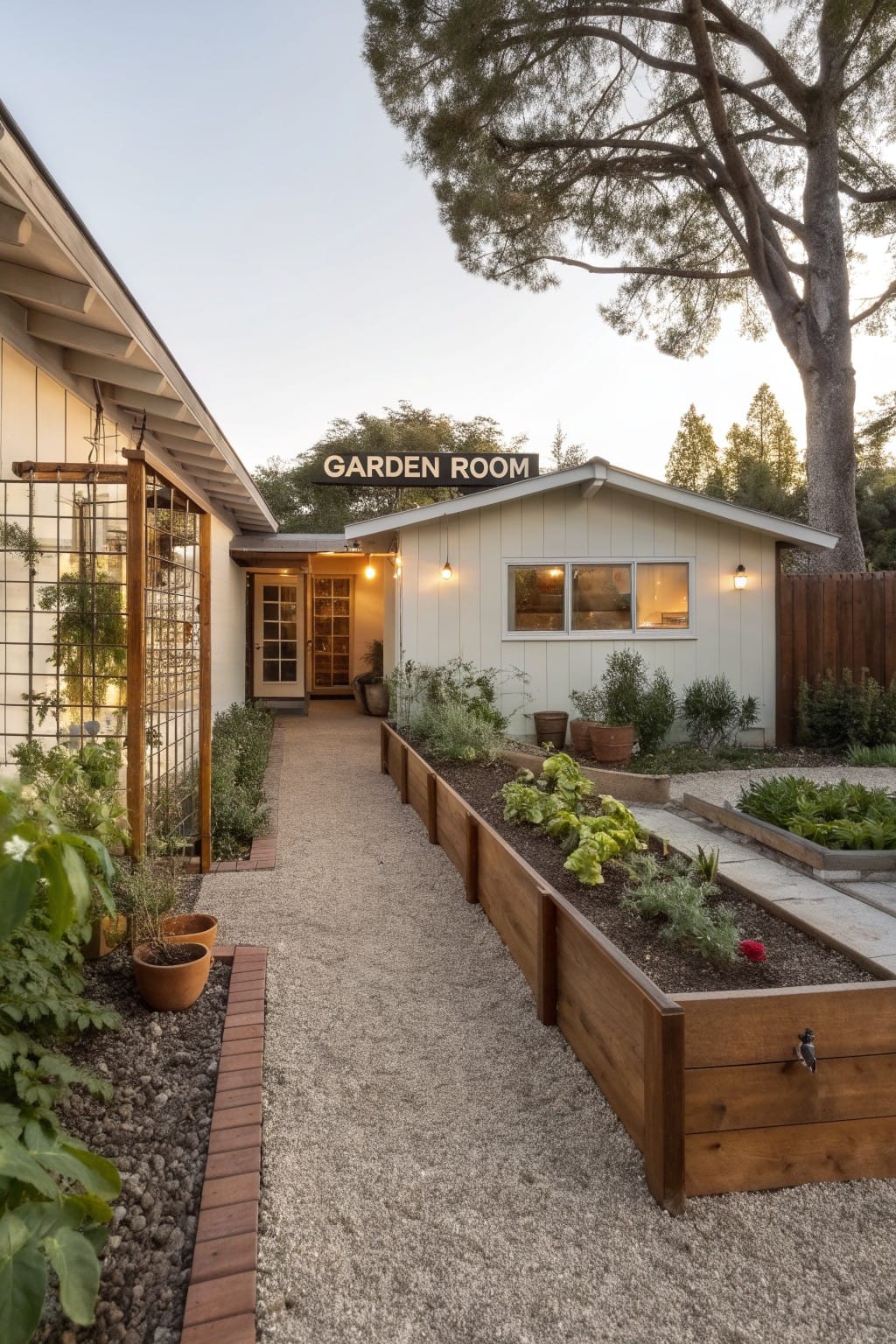
One simple way to keep pests out of your veggie patch is with open trellis panels like these. They let air and light through but block rabbits and deer pretty well once the climbers fill in. Here the metal grid holds back vining plants along the path to a garden shed, keeping the raised beds safe without feeling closed off.
You can set these up along a gravel walkway or yard edge, especially if you have a small backyard. They work best on milder sites where plants grow fast. Just anchor them sturdy and pick climbers that won’t overrun your tomatoes. Skip them in windy spots though.
Rustic Split-Rail Fences for Garden Beds
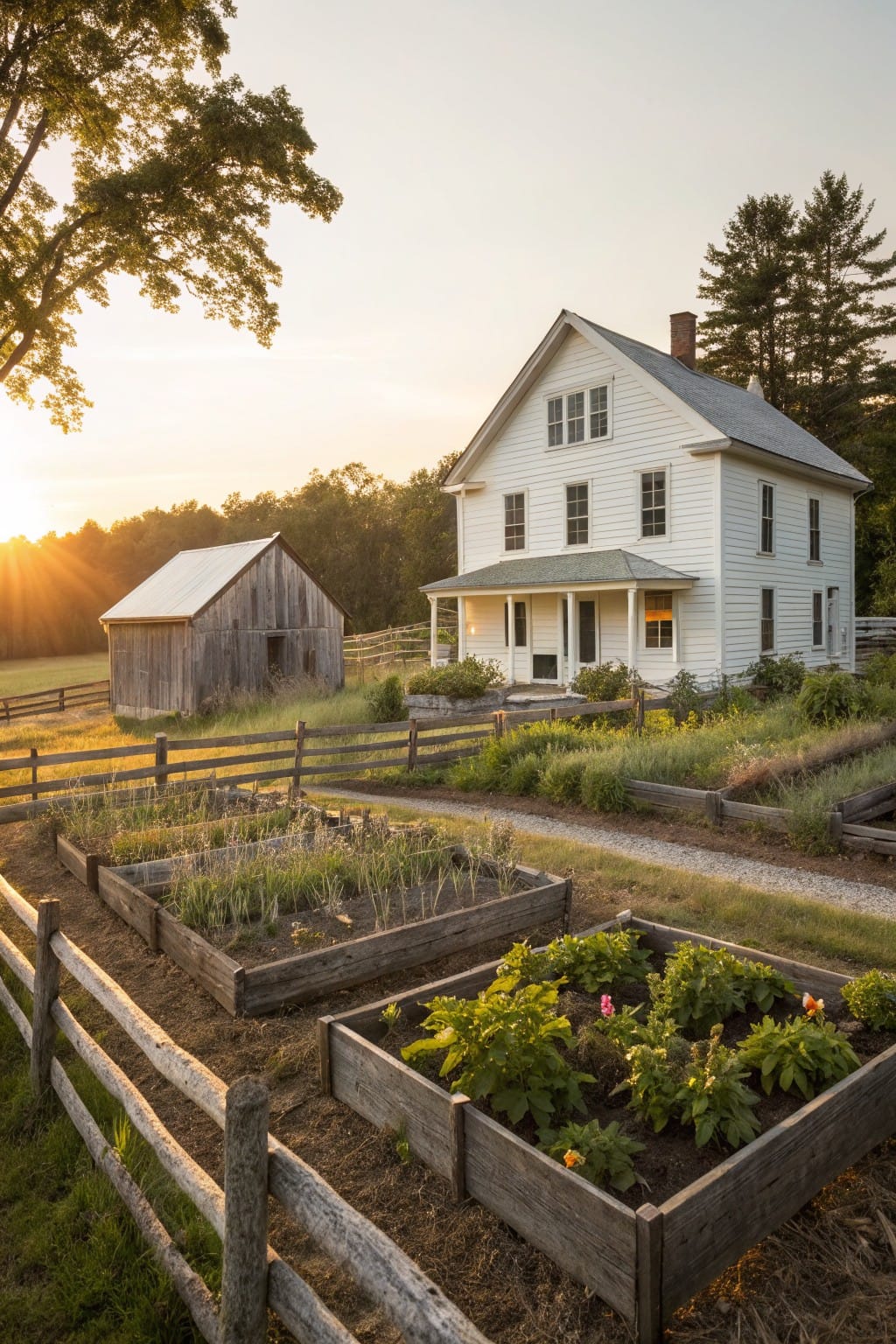
Split-rail fences work well around raised vegetable beds. The rough wood keeps out rabbits and deer without feeling too closed off. It has that simple farm style that matches wooden beds and lets you see the plants growing inside.
Put this setup in a side yard or near the house where you want some country charm. It suits bigger lots with room for paths between beds. Keep the fence low if you hop over it often, but check it’s tall enough for your area critters.
Rustic Picket Fence Around Vegetable Beds
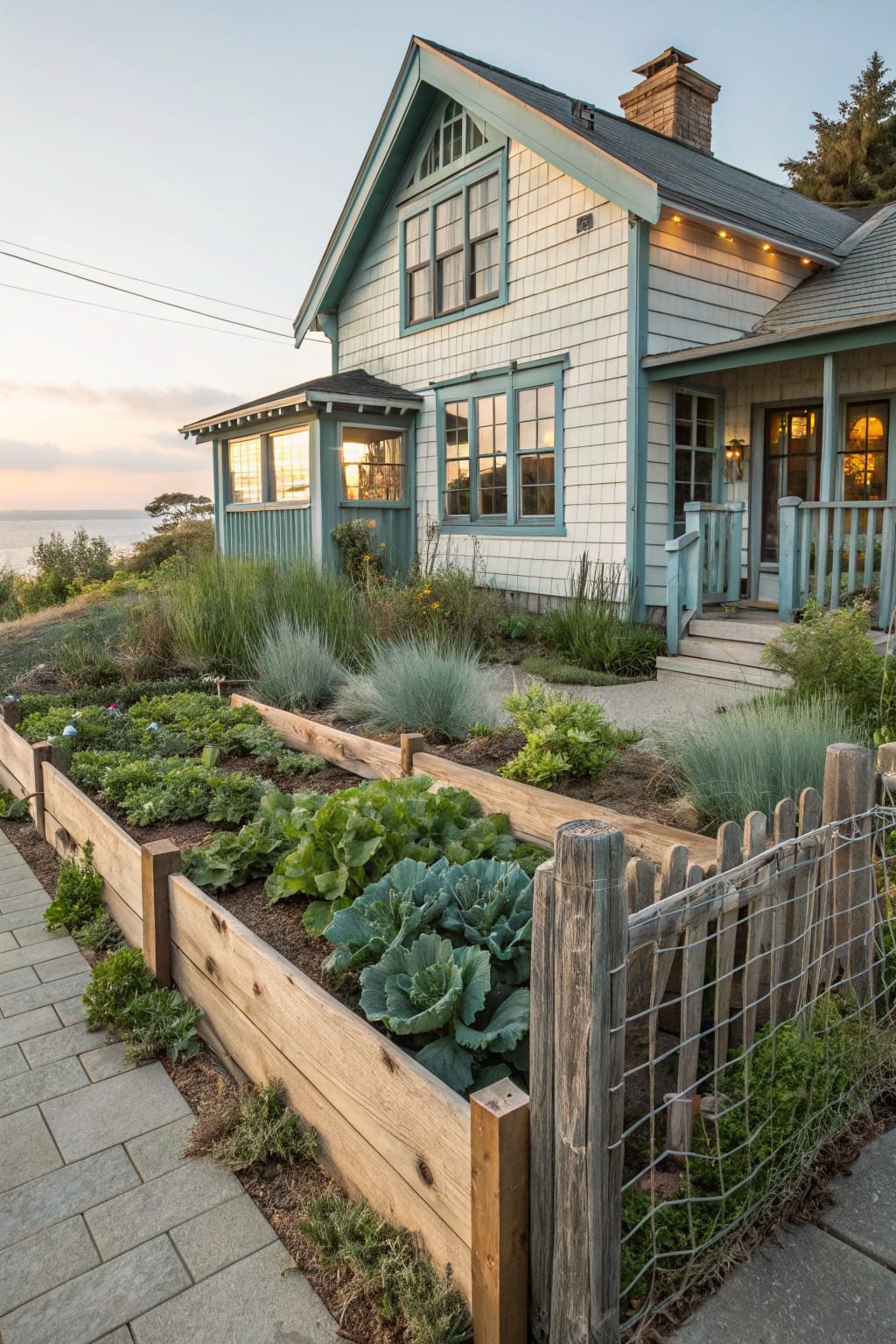
A low rustic picket fence like this one keeps pests away from your raised garden beds without blocking the view. The chicken wire stretched across the top stops rabbits and deer, but the wooden slats give it a folksy look that fits right in with a cottage or coastal house. It’s practical and pretty at the same time.
Put this fence setup along a walkway near your back door or side yard. It suits older homes with shingle siding or wood trim best. Go for weathered cedar or reclaimed lumber to match the garden’s natural feel, and keep the height under three feet so it doesn’t overwhelm small spaces.
Raised Planters for Balcony Vegetable Gardens
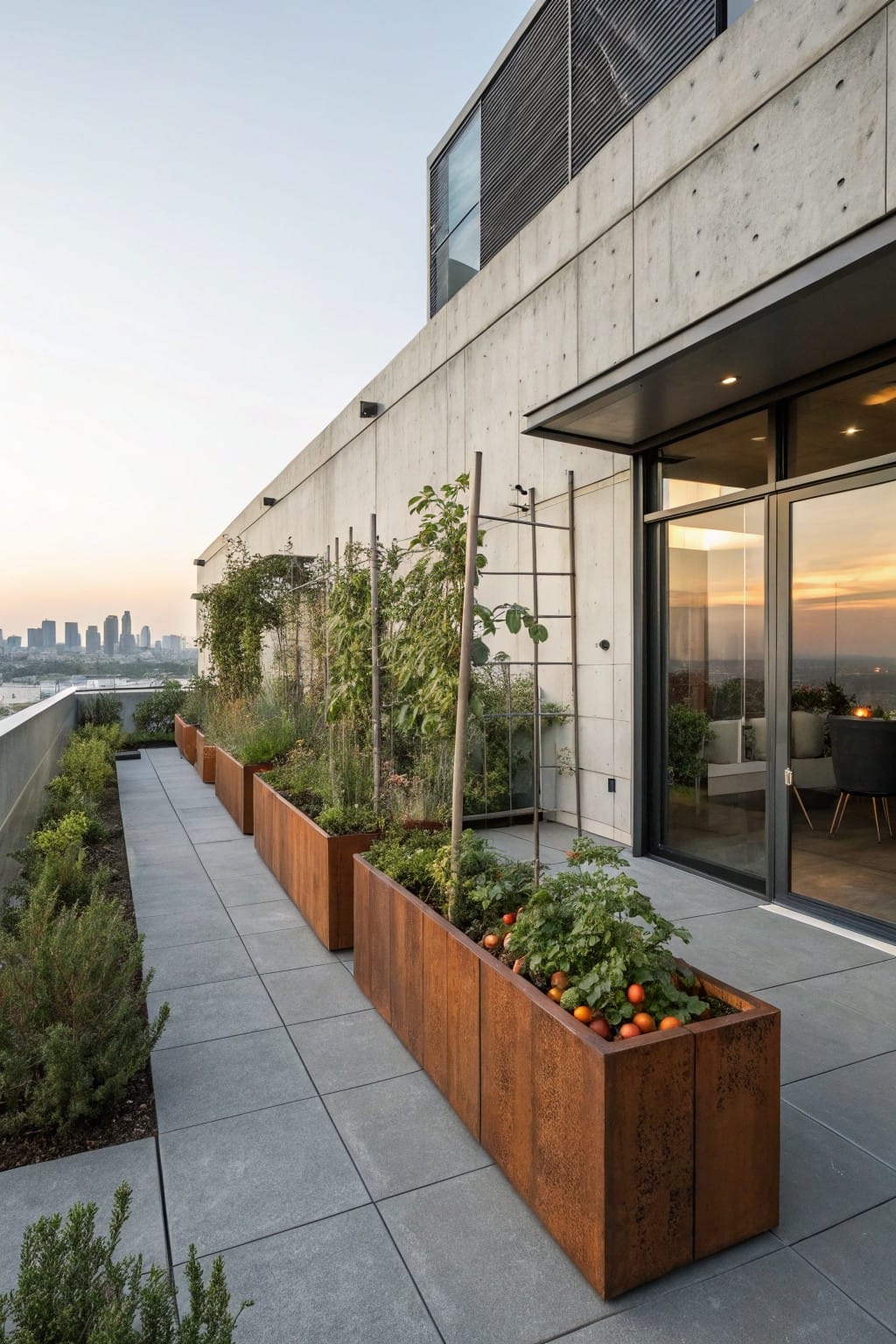
Raised planters like these work great on balconies or rooftops. They’re long metal beds lined up along the walkway, full of tomatoes, herbs, and beans climbing trellises. Being off the ground helps keep rabbits and ground pests away, and the sturdy sides act like a simple fence around your plants. Plus, they fit right into the space without taking up walking room.
You can set this up on any elevated deck or terrace, especially in city spots where yard space is tight. Go for corten steel beds that rust to a nice orange patina over time. They suit modern homes best, but watch drainage so roots don’t drown after rain. Easy to tend from the path, too.
Classic White Picket Fence for Veggie Protection
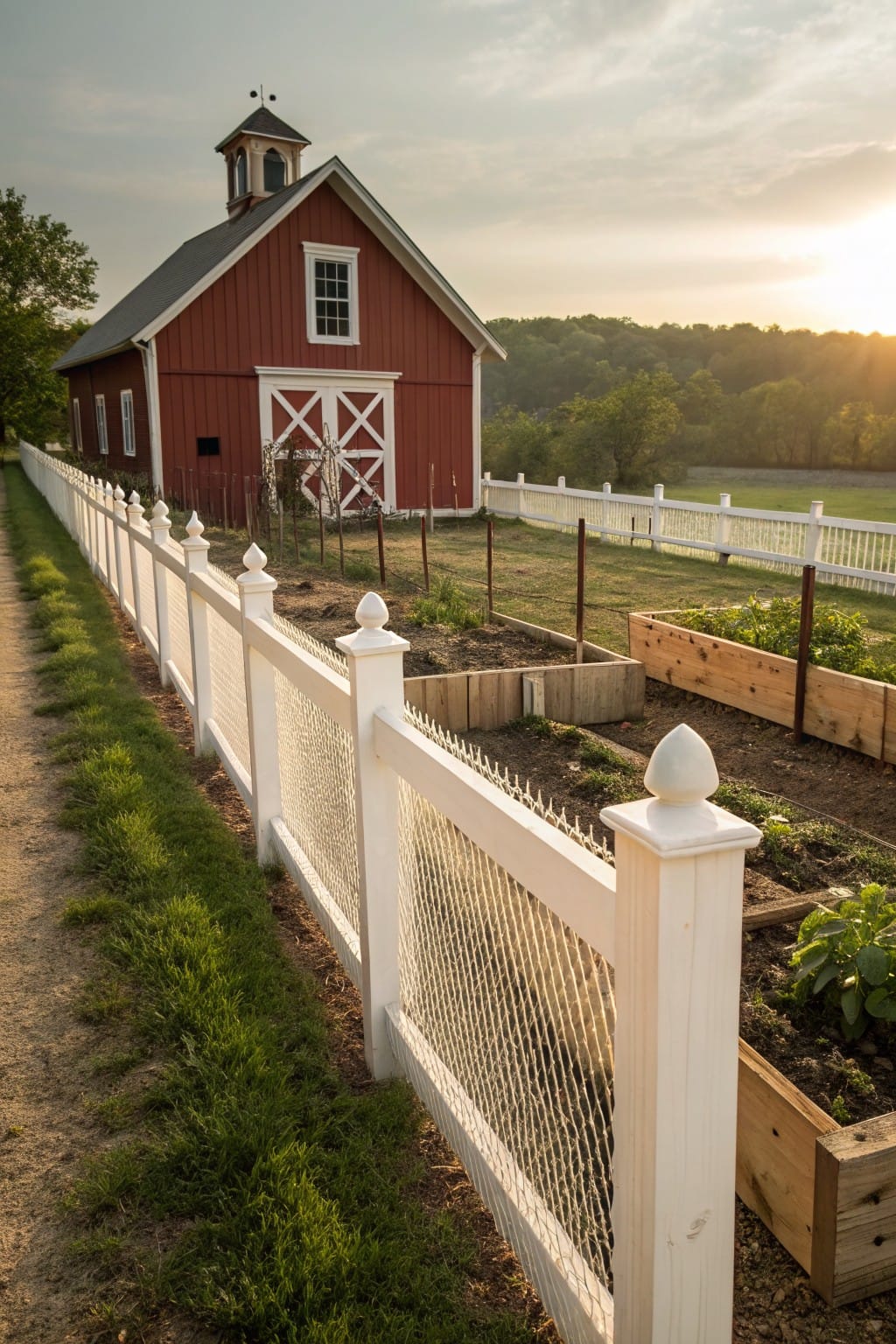
A white picket fence like this one works great around vegetable gardens. The classic style looks right at home in a yard, and the mesh netting inside keeps rabbits and deer from getting to your plants. Paired with raised beds, it makes the whole setup neat and protected without feeling too closed off.
Put this fence along one side of your garden beds, especially if you have a barn or open fields nearby. It suits country homes best, where you want charm plus real pest control. Go with vinyl to skip painting, and make sure the mesh goes all the way down.
Wrought Iron Fence on Stone Wall
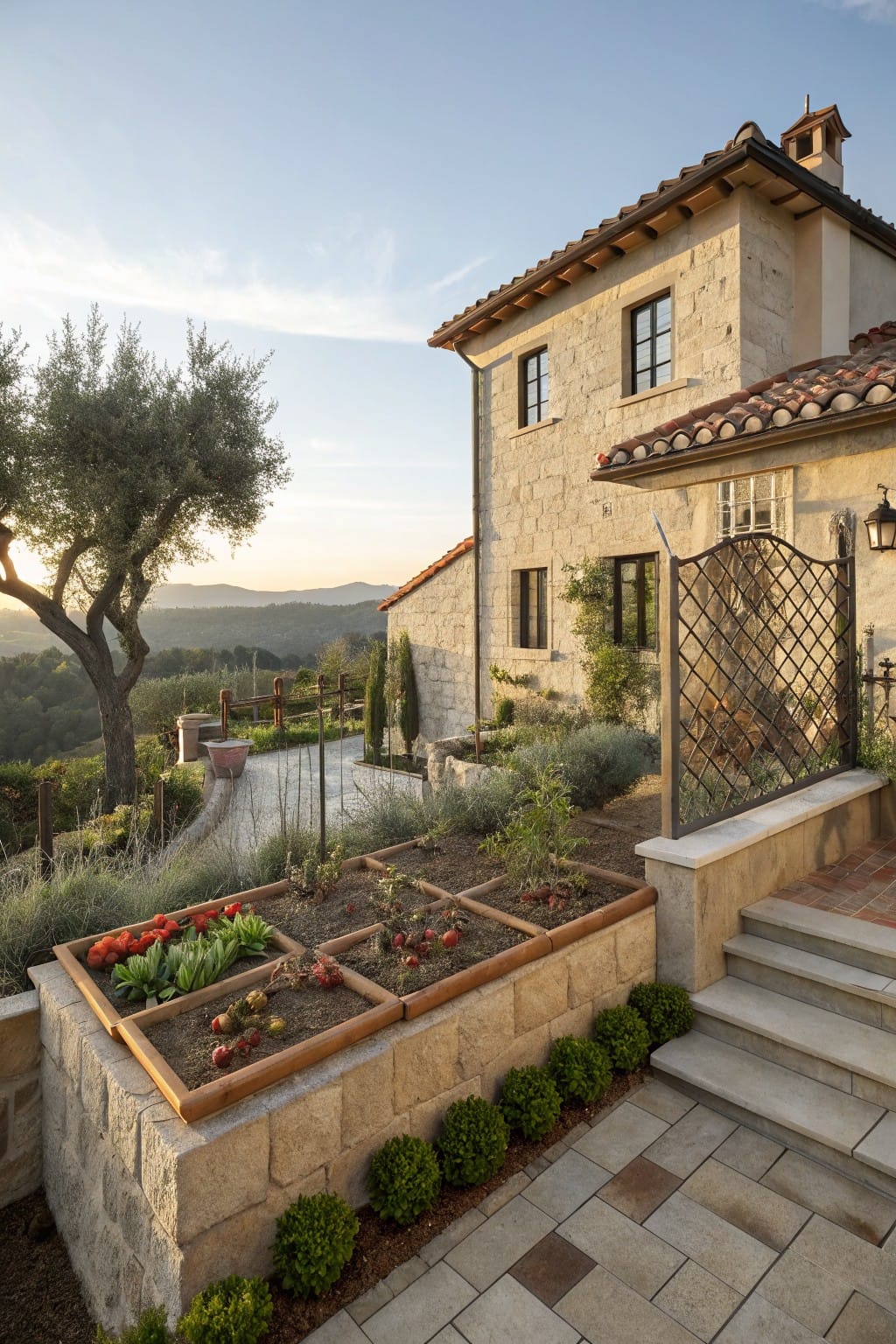
One practical way to protect your vegetable garden is setting a wrought iron fence right on top of a low stone wall. It keeps rabbits and deer away without blocking the view. The iron has that open grid look, so air and light get through to the plants. In this yard, the fence sits next to raised beds growing tomatoes and beets.
This works best on a slope, where the stone wall holds back soil anyway. Pair it with a stone or stucco house for a natural fit. Just check that the iron won’t rust in wet areas… powder coat it if needed. Easy to add gates for access too.
Protective Mesh Fencing for Raised Beds
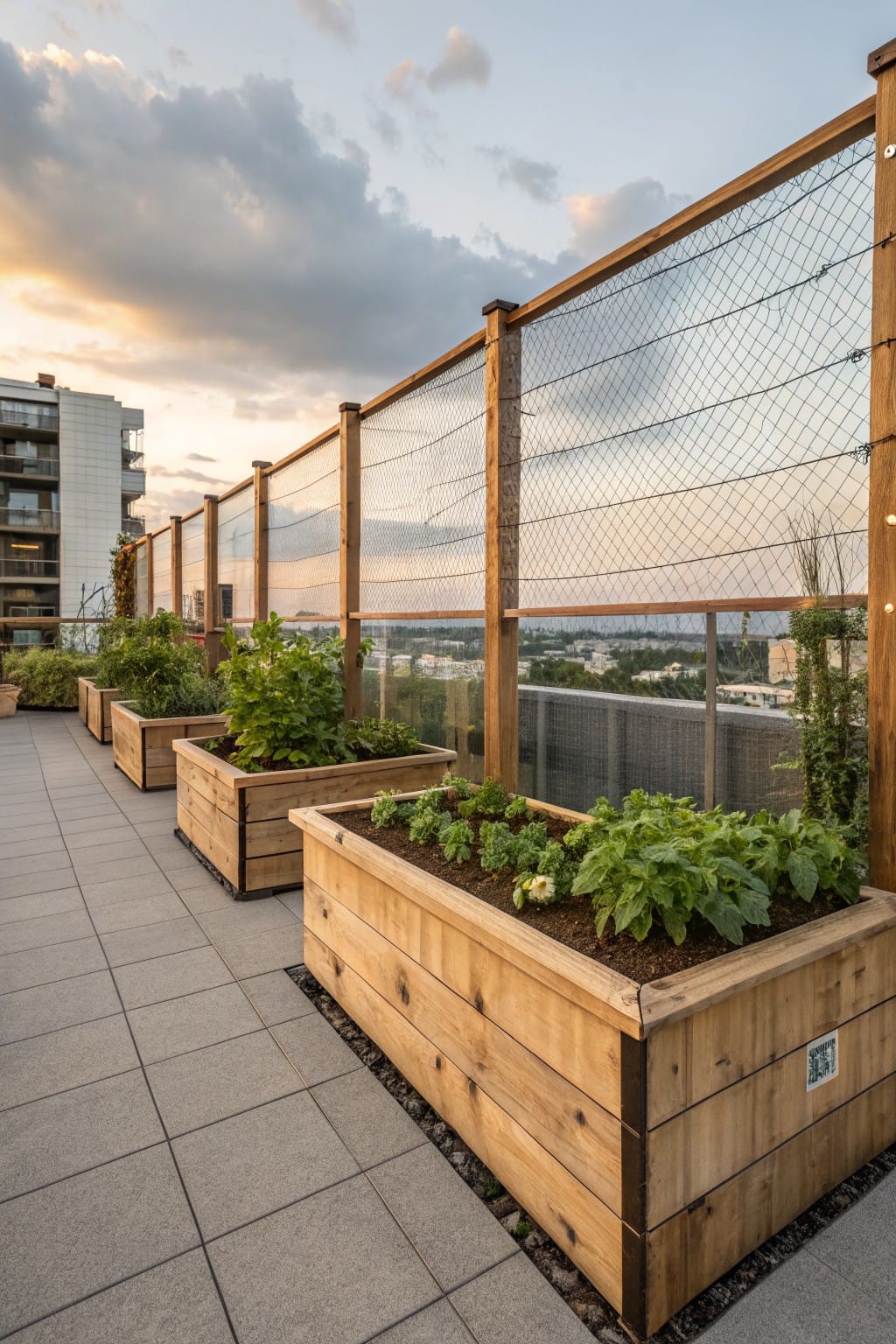
One practical way to keep your rooftop or balcony veggies safe is a simple wooden fence topped with mesh netting. Here you see sturdy raised beds planted with greens and herbs, all tucked behind wooden posts strung with chain link. That setup blocks wind gusts that can knock over plants up high. It also stops birds and bugs from getting in easy. Folks with limited ground space like this because it turns a plain deck into a real garden without much hassle.
You can put this on any apartment balcony or flat roof where space is tight. Go for pressure-treated wood that holds up to weather, and pick mesh fine enough to keep out pests but open for air flow. Watch the height though. Make sure it’s tall enough for safety if kids or pets are around, but not so bulky it blocks your view. It fits modern city homes best, but any yard with raised beds could use a version of it.
Woven Basket Fences for Garden Protection
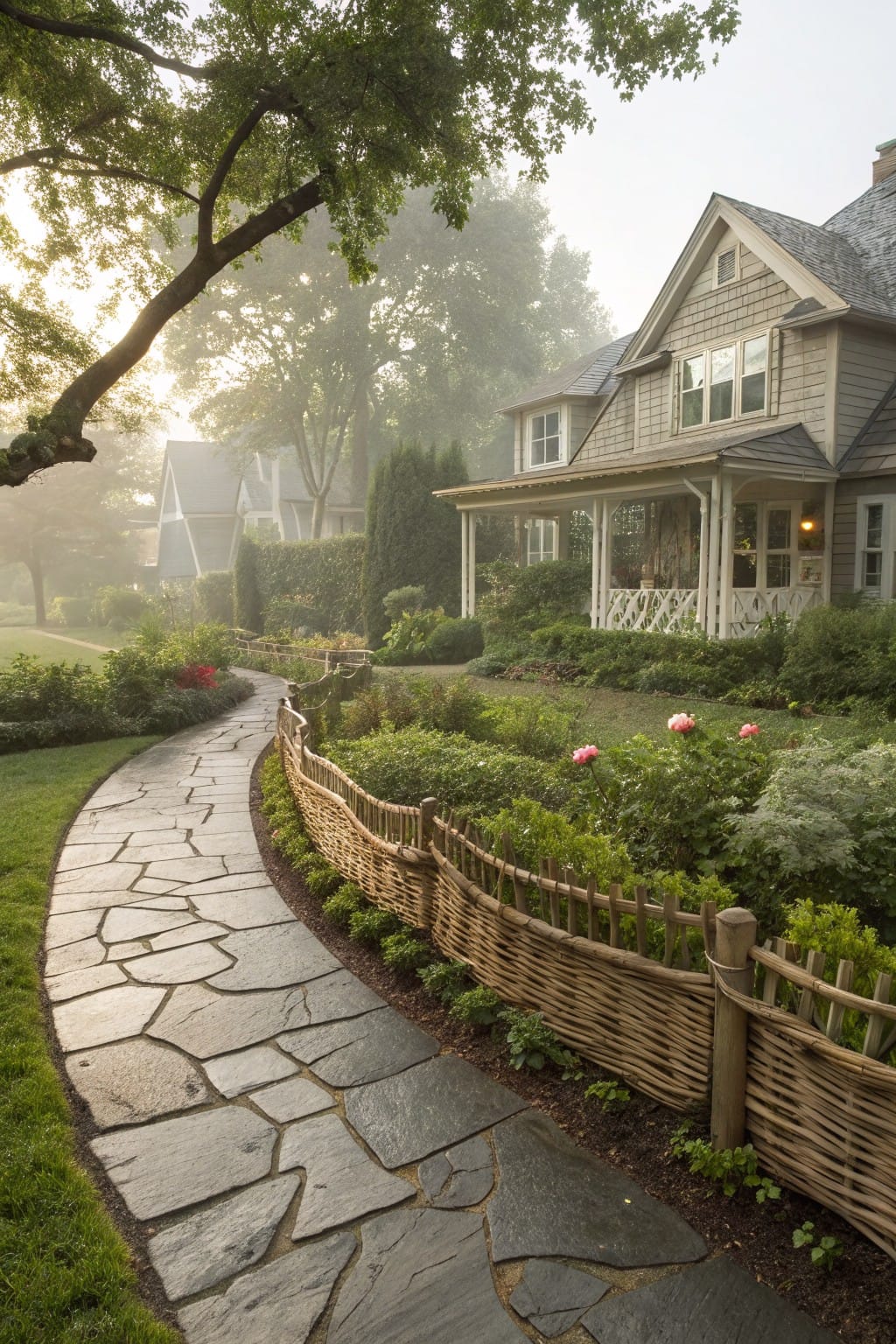
Low woven basket fences like this one offer a simple way to keep pests away from your vegetable plants. They sit right along the garden beds, low enough to see over but tall enough to stop rabbits or deer. Here the fence hugs a stone path through lush plantings, blending right in with the greenery.
Put these fences around raised beds or along paths in a backyard veggie patch. They suit cottage-style yards or spots near a house porch. Go with natural willow or bamboo for that look, and sink the posts deep so they hold up through seasons.
Terraced Stone Walls for Sloped Gardens
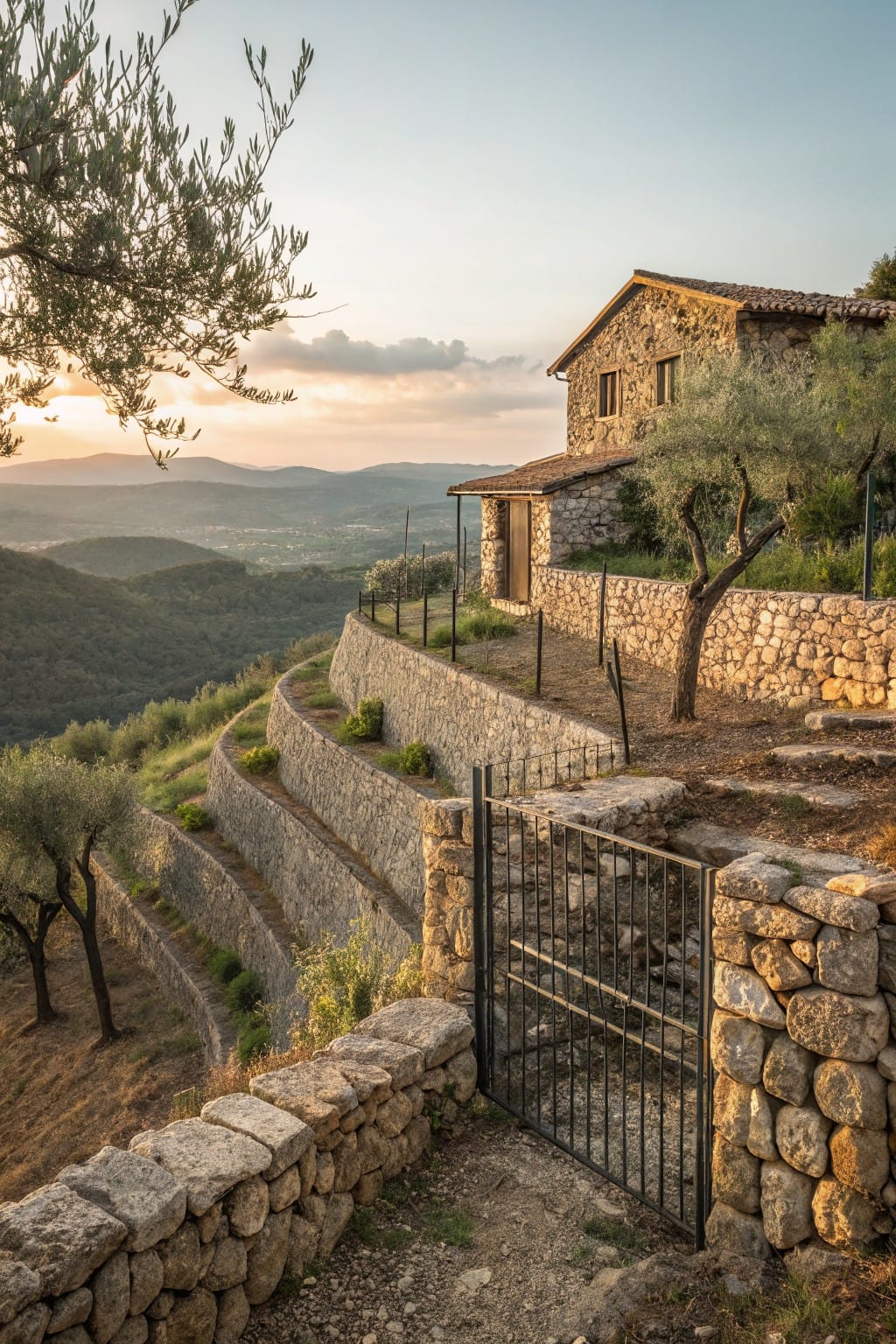
Terraced stone walls work well as fences for vegetable gardens on hills. They keep soil from washing away and block animals from getting to your plants. You see it here with the dry-stacked stones forming level beds, olive trees tucked along the edges.
Use local stone to build them. They fit older homes or rural yards best. Stack the rocks tight so they hold up over time. Skip mortar if you want that natural feel, but check for stability first.
Simple Fences for Garden Paths
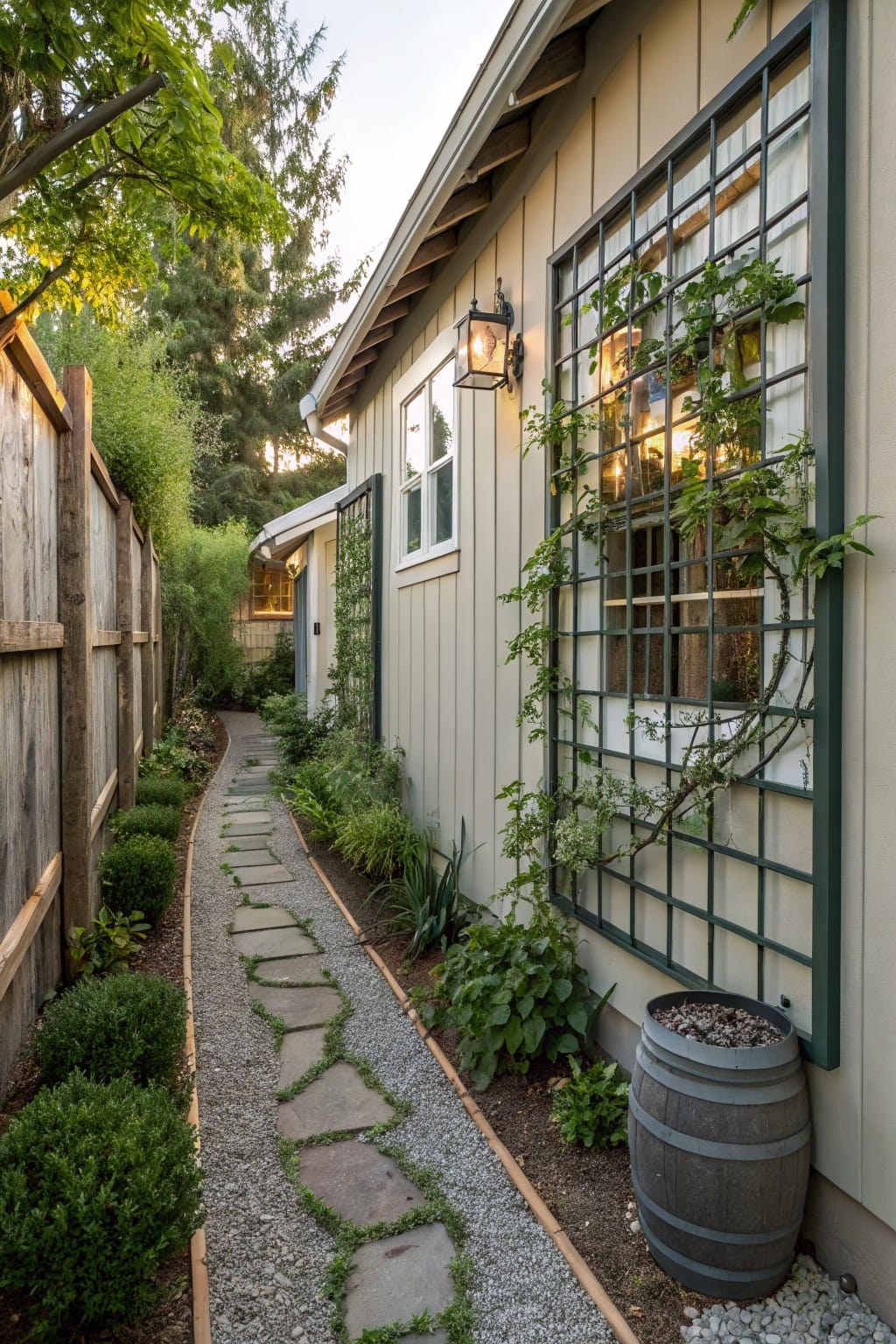
One straightforward way to keep pests and critters away from your vegetables is to run simple wooden fences right along your garden paths. These fences create a clear boundary that protects plants without taking up much space. In this setup, the fences stand tall enough to block rabbits or deer, and you can let vines climb over them for extra cover. Folks like how it turns a plain walkway into a secure little garden tunnel.
Put these fences in narrow side yards or between raised beds where you want to walk through without brushing plants. They work best on smaller lots, pairing well with gravel and stepping stones to keep things neat. Just make sure the wood is treated for outdoors, and leave a gate if you need easy access. Watch the growth too, so vines don’t block your path over time.
Horizontal Slat Fences Around Raised Beds
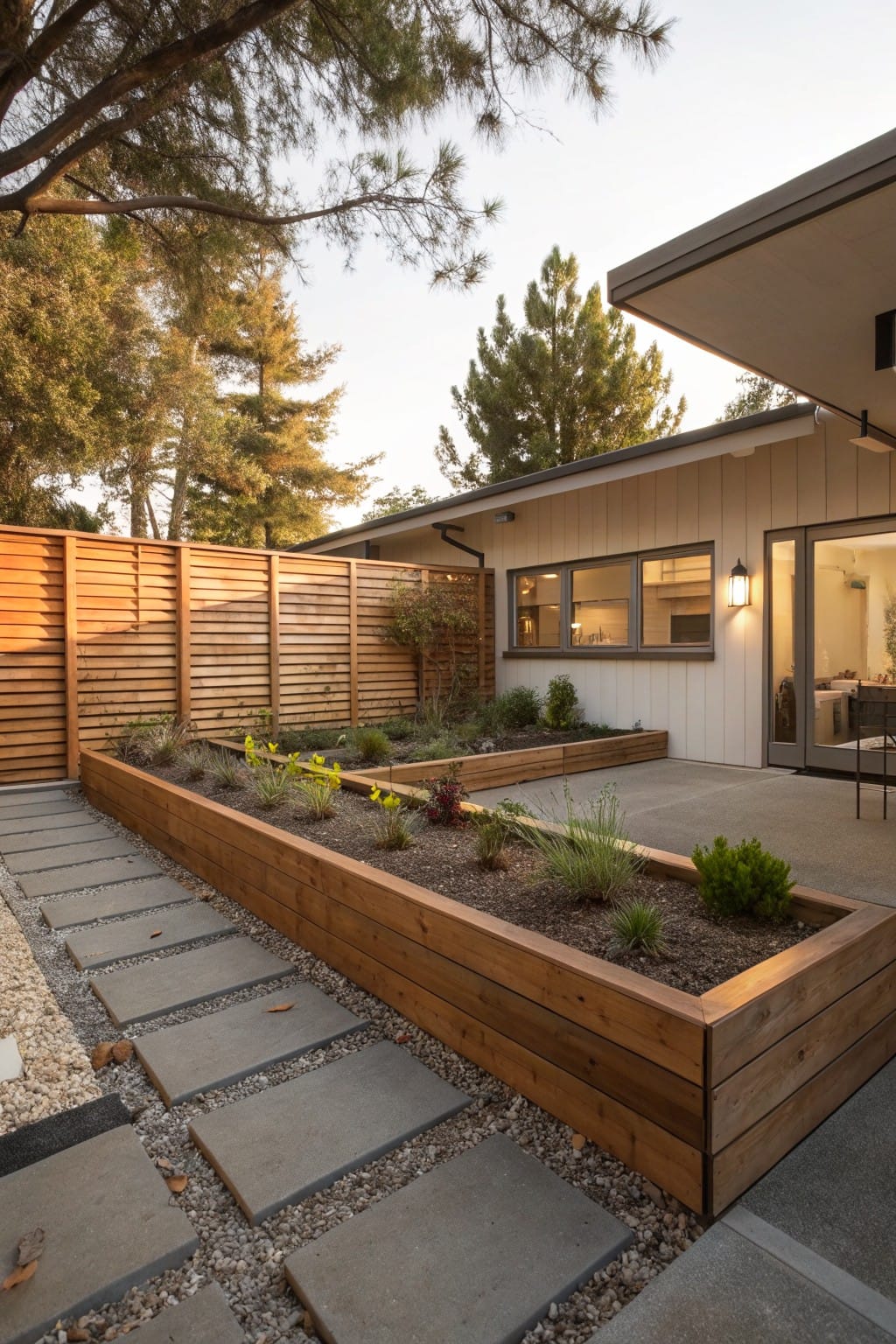
Horizontal slat fences make a simple way to protect vegetable gardens. They go right around raised beds like these, keeping rabbits and deer from munching your plants. The gaps let in light and breeze, so nothing feels too closed off. Wood like cedar holds up well outside.
Put this in a side yard or along a patio where you want some privacy too. It fits modern houses or older ones with clean lines. Just make sure the slats are close enough to block small animals, and stain the wood every couple years to keep it looking good.
Wire Mesh Fencing on Stone Walls
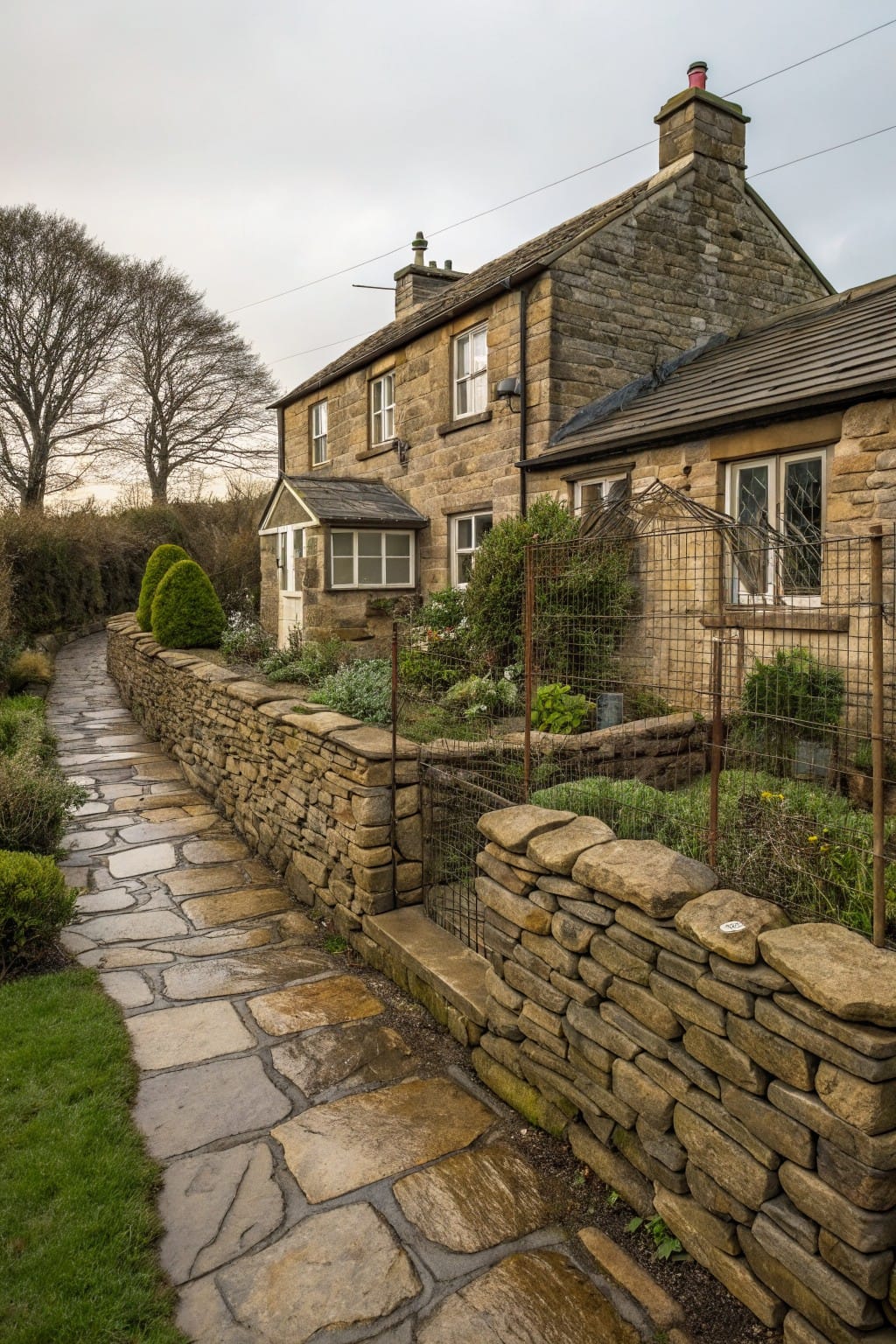
One practical fence idea for vegetable gardens is wire mesh panels set right against a low stone wall. It does a good job keeping pests like rabbits away while letting you see the plants. The mesh blends in with the rustic look and doesn’t take up extra yard space.
This setup fits cottage gardens or rural spots with existing dry stone walls. Bolt or wire the mesh panels in place, then fill the area with veggies or herbs. Pick galvanized mesh to avoid quick rusting, especially if it’s exposed like this.
Corrugated Metal Fences Shield Garden Beds
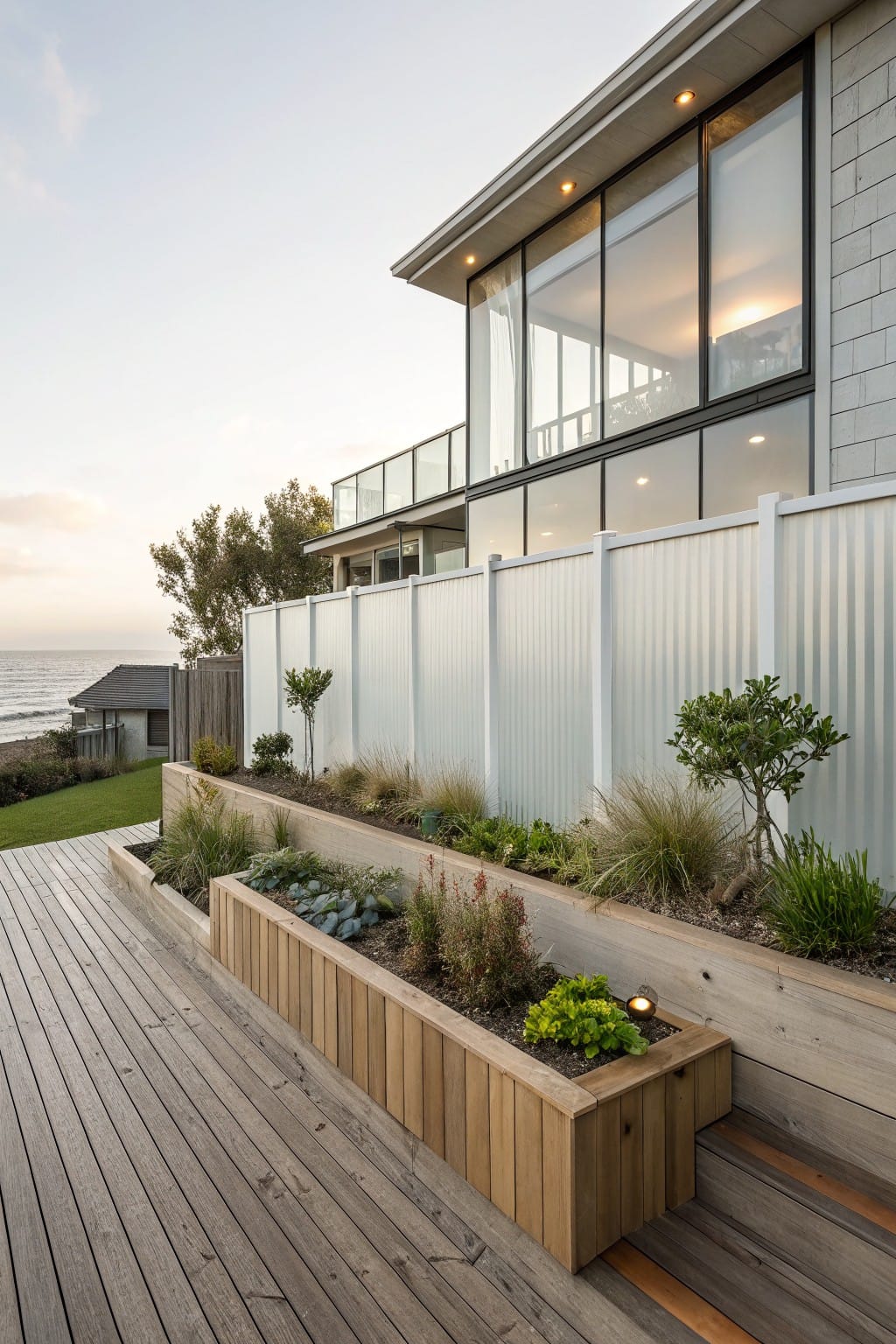
This kind of fence uses vertical corrugated panels in a neutral white shade. It blocks wind and prying eyes without cutting off all the light that plants need. You see it here running along raised beds full of tough grasses and low plants. In a coastal spot like this it holds up well against salt air and holds the sloped yard together.
Put one around your vegetable patch if you deal with steady breezes or nosy neighbors. It works on modern homes or simple backyards with a bit of slope. Go for panels about six feet tall and pair them with timber beds for easy planting access. Just make sure the material matches your local weather so it doesn’t rust over time.
Arched Trellis for Garden Entries
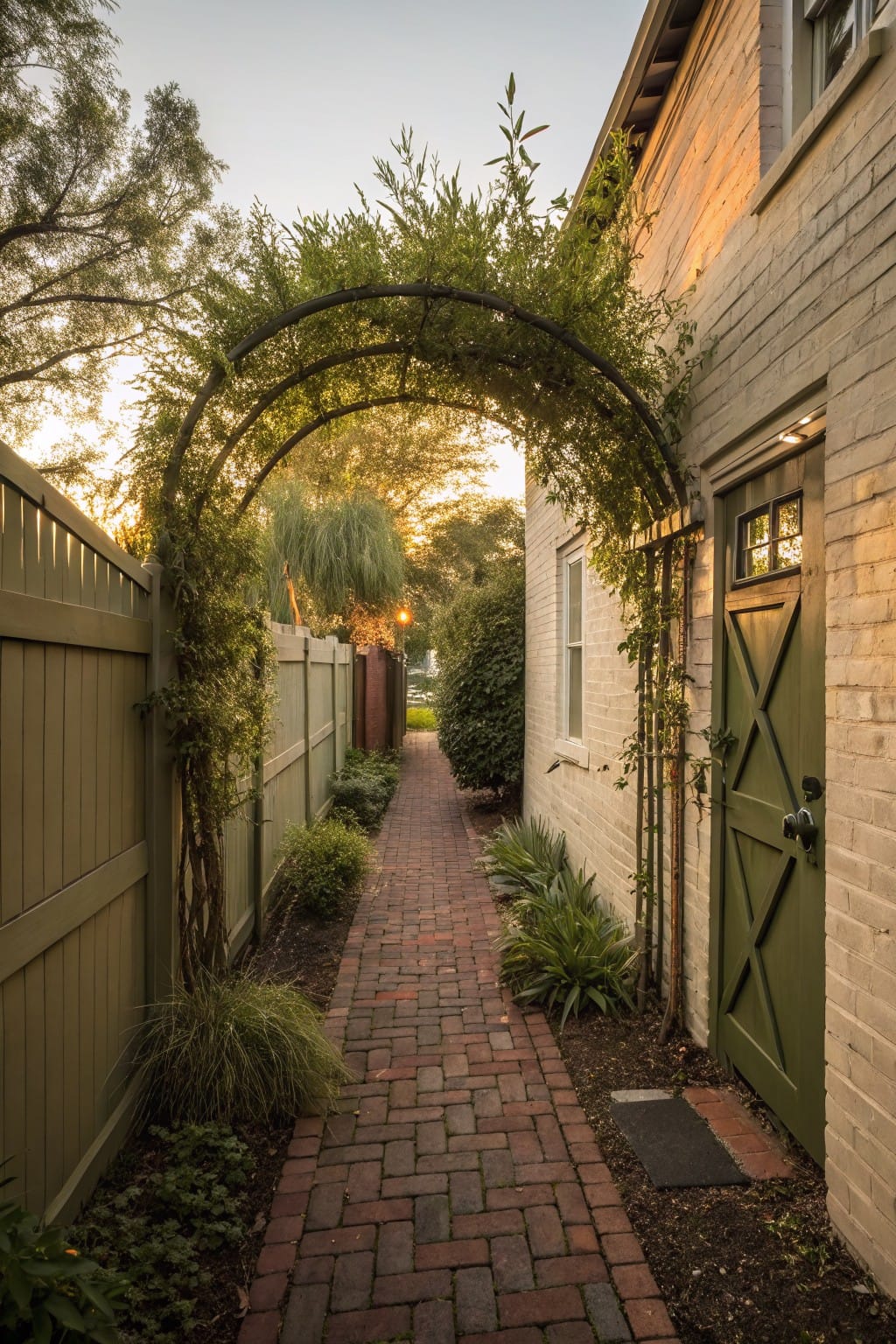
One simple way to upgrade a fenced vegetable garden is adding an arched trellis at the entry. It turns a plain pathway into something welcoming, and the climbing vines give extra protection by shading plants and blocking wind. Folks like how it keeps the space private without feeling closed off.
This works best along a side yard or narrow backyard run. Build the arch from wood or metal to match your fence, then plant vining veggies like beans or peas right on it. Keep the fence tall enough for critter control, and paint everything a soft green so it blends with the garden. Watch the vine growth though…it can take over quick.
Split-Rail Fences with Post Lights
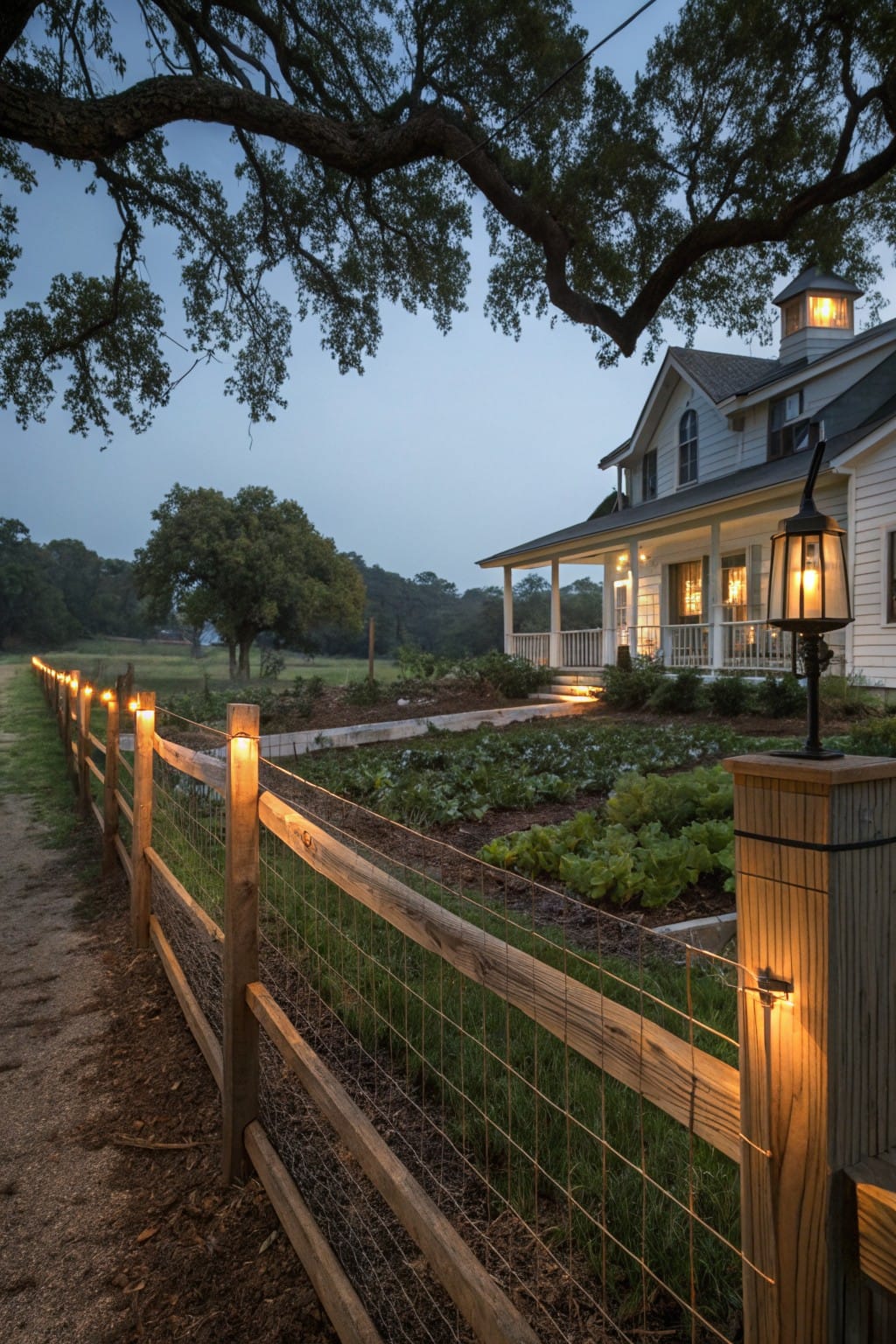
A split-rail wooden fence makes a solid barrier around vegetable beds. Add small lights to the posts, and you get protection plus a soft glow at dusk. Folks like it because it keeps deer and rabbits away without looking too closed off. The open rails let you see your plants from the yard.
Put this along a path near the house, like heading to a porch. It suits farmhouses or homes with bigger lots. Go for solar lights to keep wiring simple. Just watch the post height so the lights clear the crops.
Protective Black Mesh Fencing
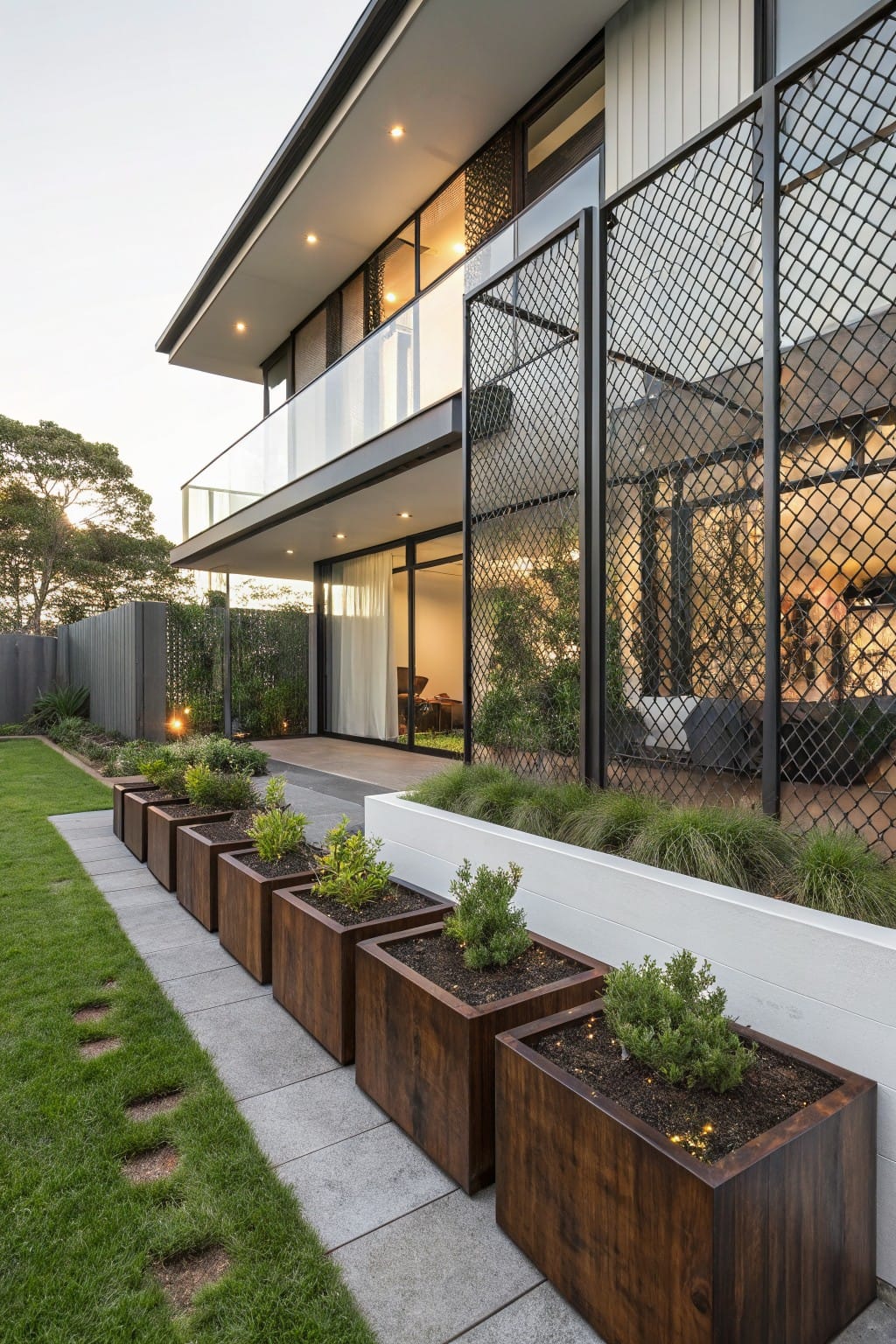
One smart way to shield your vegetable garden shows up in setups like this. Tall black metal mesh panels run along the yard edge and up to balcony level. They stop rabbits and deer from hopping in to snack on your plants. Yet the open grid lets plenty of sun and breeze reach the beds. No more losing crops to critters.
Set these panels on sturdy posts next to raised wooden planters or along paths. They fit right in modern or simple backyards close to the house. Watch the scale though. Too short and pests slip under. Keep it about six feet high for real protection.
Low Stone Walls for Veggie Beds
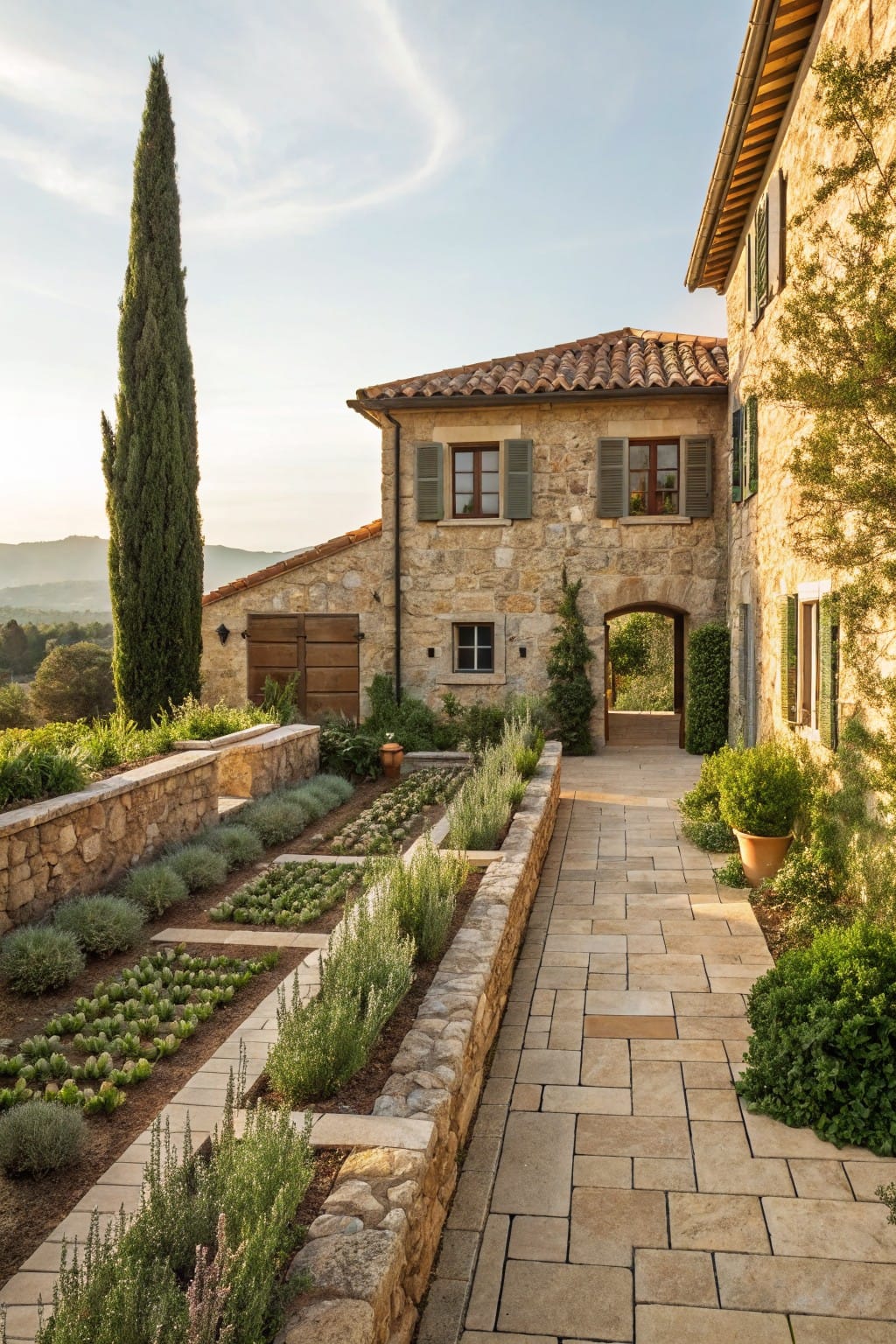
One simple way to fence in your vegetable garden is with low stone walls that double as raised beds. They keep rabbits and other critters out while giving plants a sturdy edge to grow against. In this yard, the walls match the house stone exactly, so the garden feels like part of the home instead of an add-on. Lavender and rosemary tucked along the top add a nice touch too.
These work best next to a house or patio where you want easy access for picking. Pick stones from your area to save money and fit the look. They’re good for sloped yards since they hold soil in place. Just make sure the walls are thick enough at the base so they don’t tip over when you lean in to harvest.
Brick Edging Along Chain Link Fences
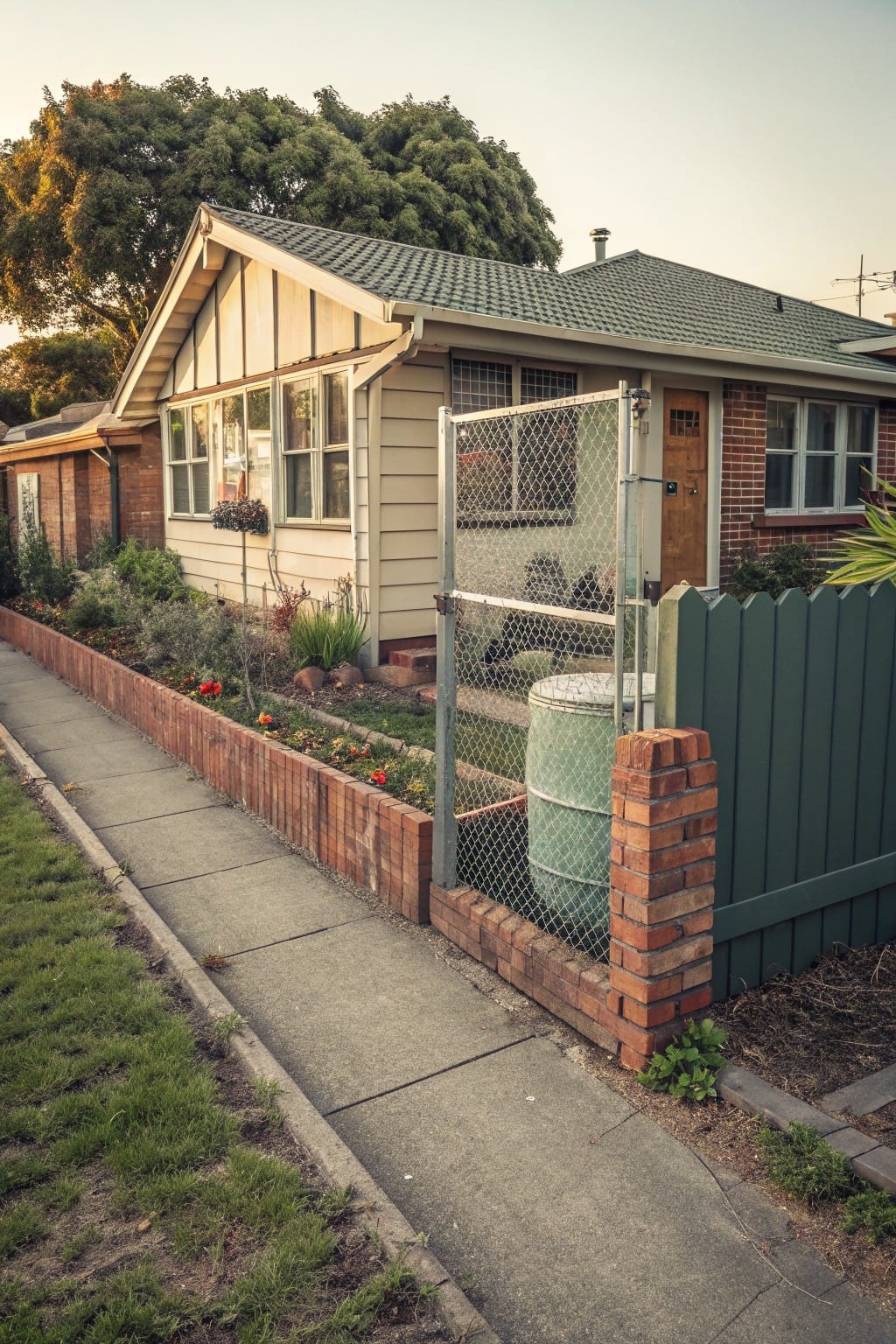
A simple way to protect your vegetable garden starts with chain link fencing topped off by a low brick border right along the sidewalk. Those red flowers tucked into the brick bed show how it holds soil in place and stops plants from spilling out onto the path. It makes the whole yard feel contained without looking too closed off.
This works best in front yards close to the street or where you need something tough but not too tall. Stack bricks a couple courses high on a solid base, then let the chain link do the heavy keeping-out work. Skip it if your soil shifts a lot. Keeps rabbits and kids at bay pretty well.
Bamboo Fencing for Garden Protection
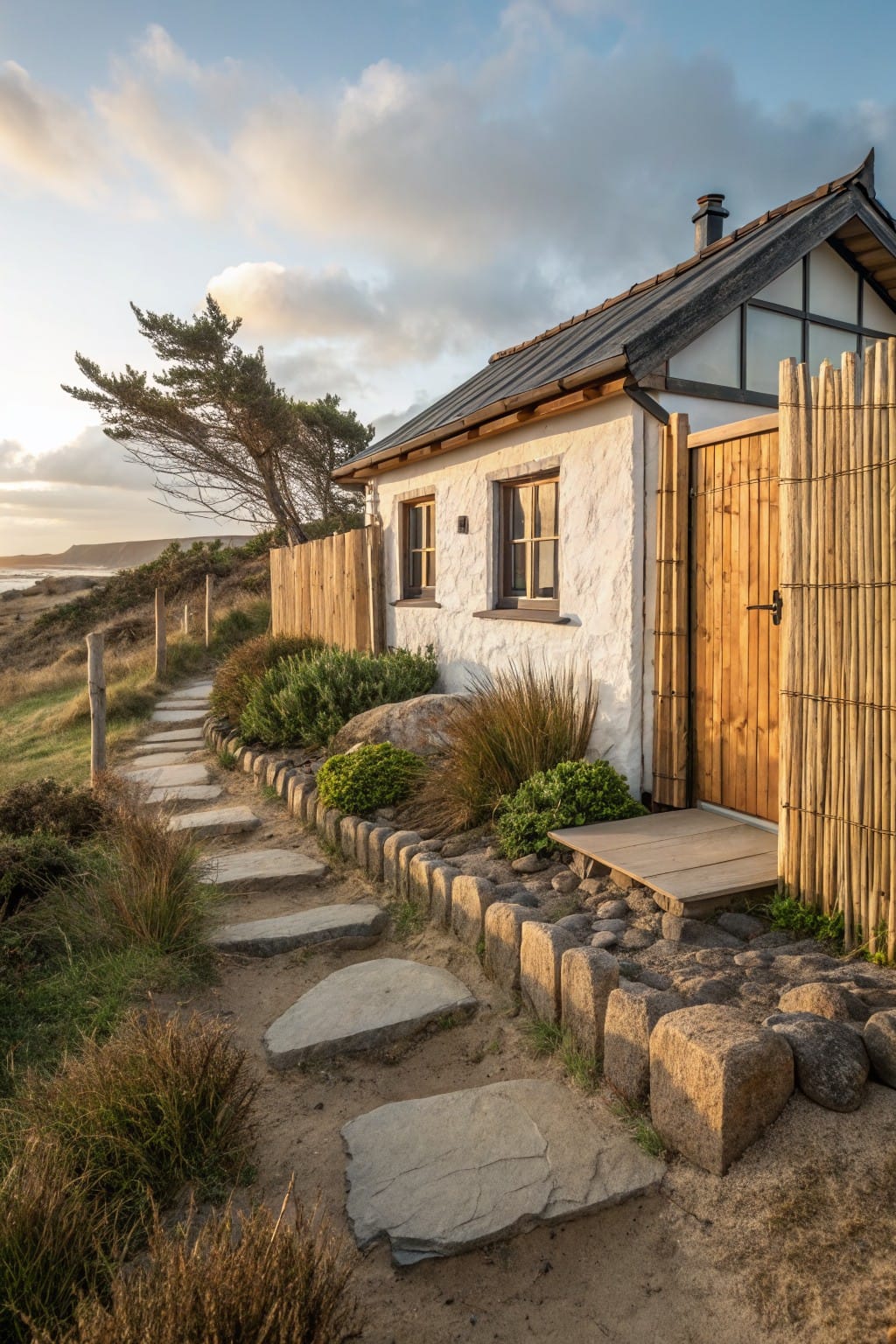
Tall bamboo fencing works well to shield vegetable gardens from wind and critters. In this yard, it runs along the house and borders plantings, letting you grow things safely without blocking the view too much. The natural look fits right into coastal or rural spots where you deal with breezes off the water.
Try it around raised beds or along slopes. It holds up in tough weather if you secure the panels well to posts. Pairs nice with stone borders at the base to keep soil in place. Just check your local supply for bamboo that matches your climate.
Vertical Vegetable Planters on a Fence
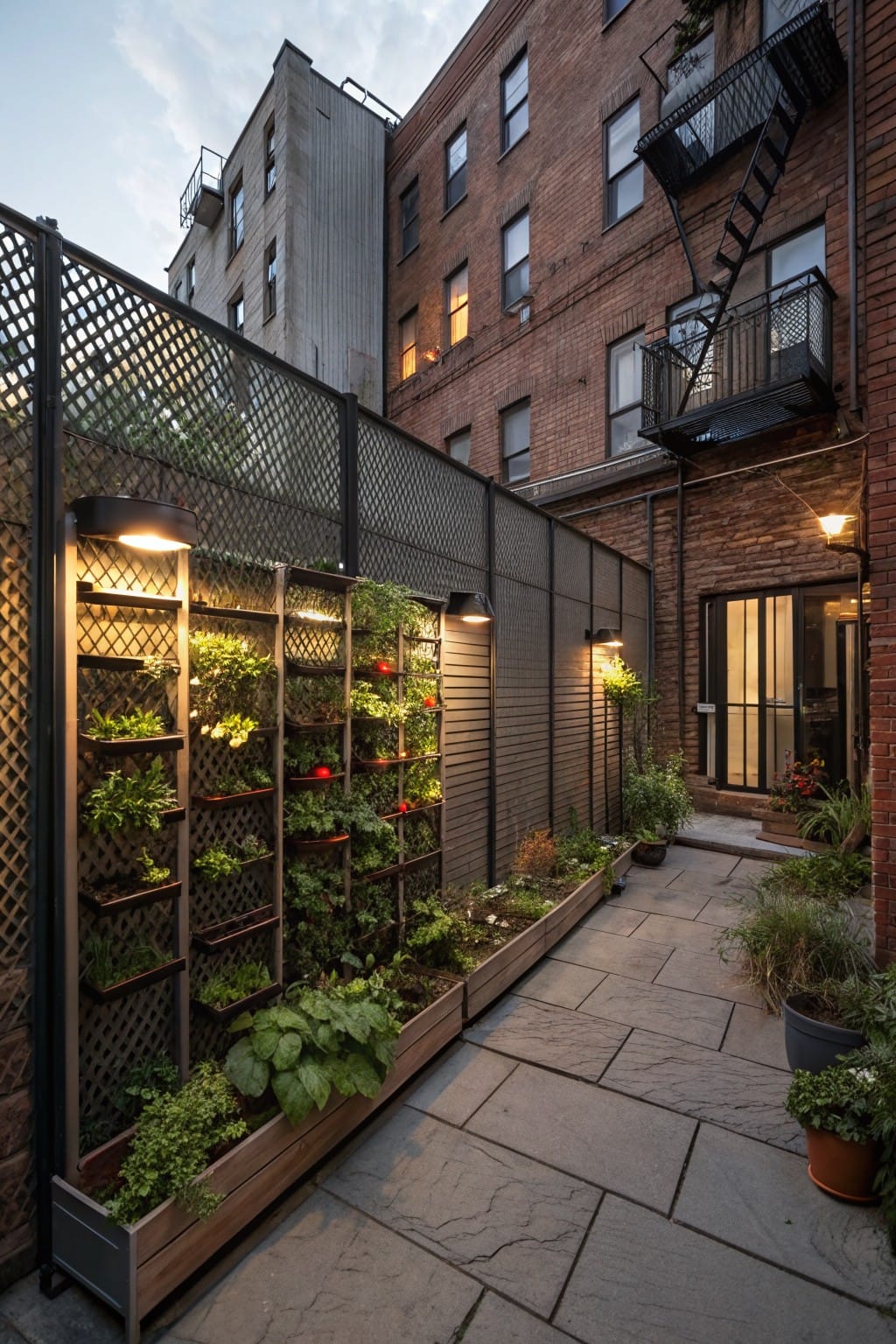
One smart way to fit more veggies into a tight yard is to turn your fence into a growing wall. These metal shelves and pockets hold tomatoes, herbs, and greens right on the mesh panels. It saves ground space and keeps plants up off the soil where bugs and animals have a harder time reaching them. Plus the fence gives some privacy in close urban spots.
You can try this on any sturdy fence facing south for sun. It works great in city backyards or side yards like this one next to brick buildings. Just make sure the frame can handle the weight when pots are full of water. Add drip lines to keep soil moist without mess on the path below.
Simple Post and Rail Garden Fencing
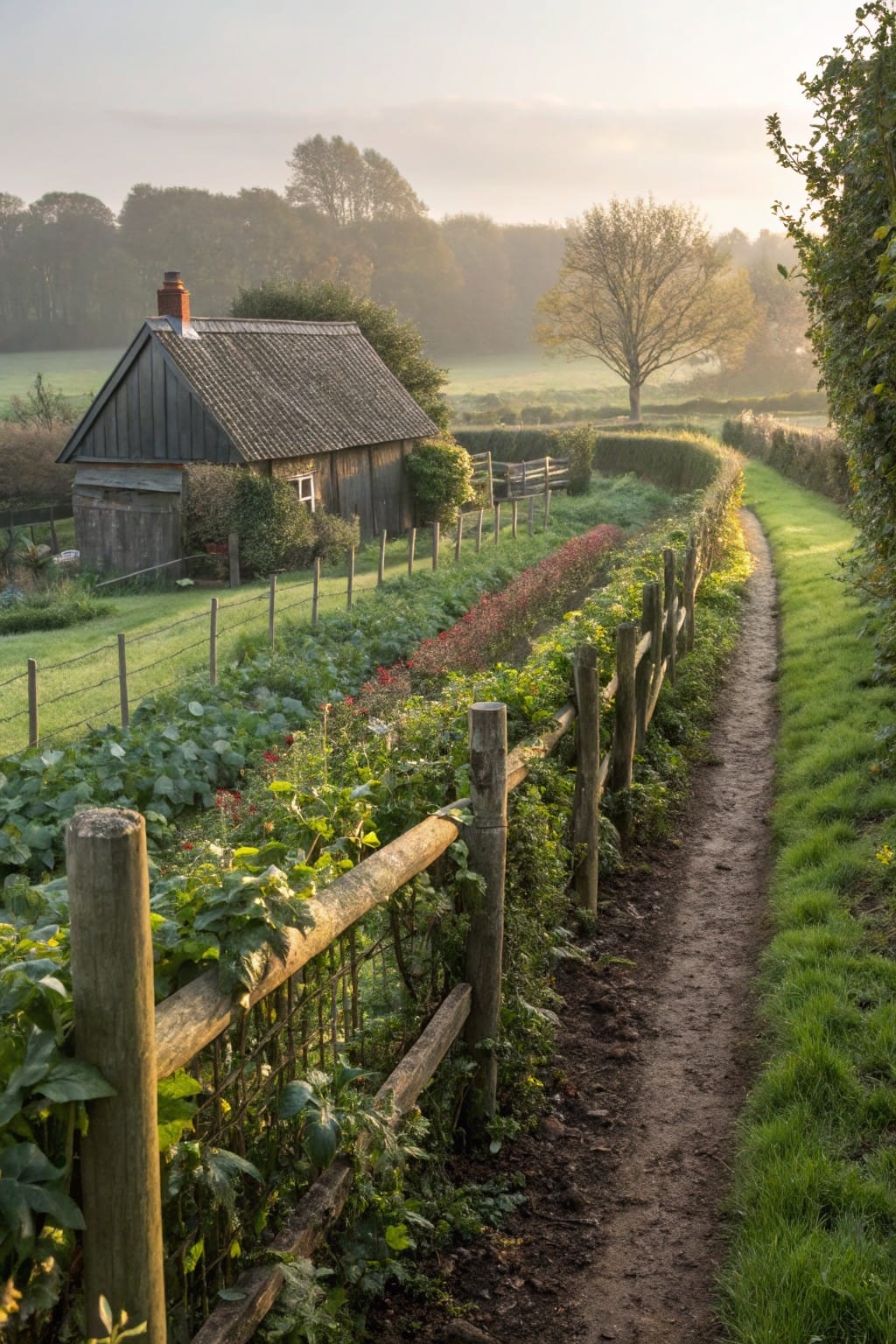
A basic post and rail fence like this one keeps rabbits and deer away from your vegetables without blocking the view. The rough wood posts and rails run right along garden beds, and here climbing beans use it for support. Folks like how it looks natural, almost part of the yard.
Set it up around raised beds or paths in a backyard veggie plot. It suits older farmhouses or any spot with room for rows of crops. Watch for rot at ground level, though. Treat the bottoms.
Vertical Trellis on the Garden Fence
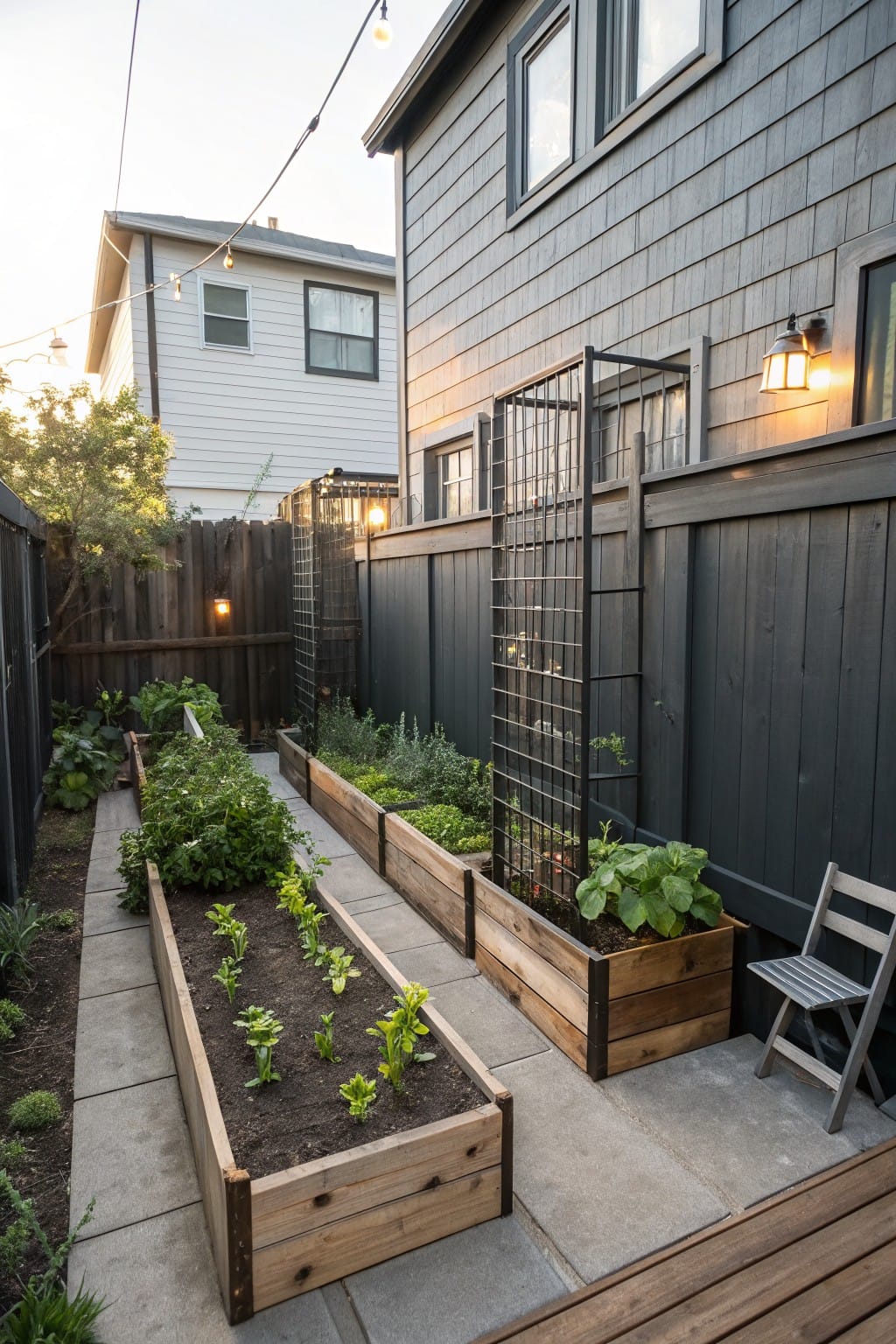
A tall metal trellis mounted right against the backyard fence is a simple way to protect vegetable plants while letting climbers grow up. It blocks rabbits and deer without taking up bed space, and the black grid here matches the dark wood fence nicely. Vining crops like beans or tomatoes fill it out fast.
This setup fits tight urban yards or any spot with a solid fence for privacy. Bolt the trellis securely at least six feet high, plant at the base, and train the vines. Skip it if your fence is shaky… it needs good support to hold up.
Picket Fence Vegetable Garden Enclosure
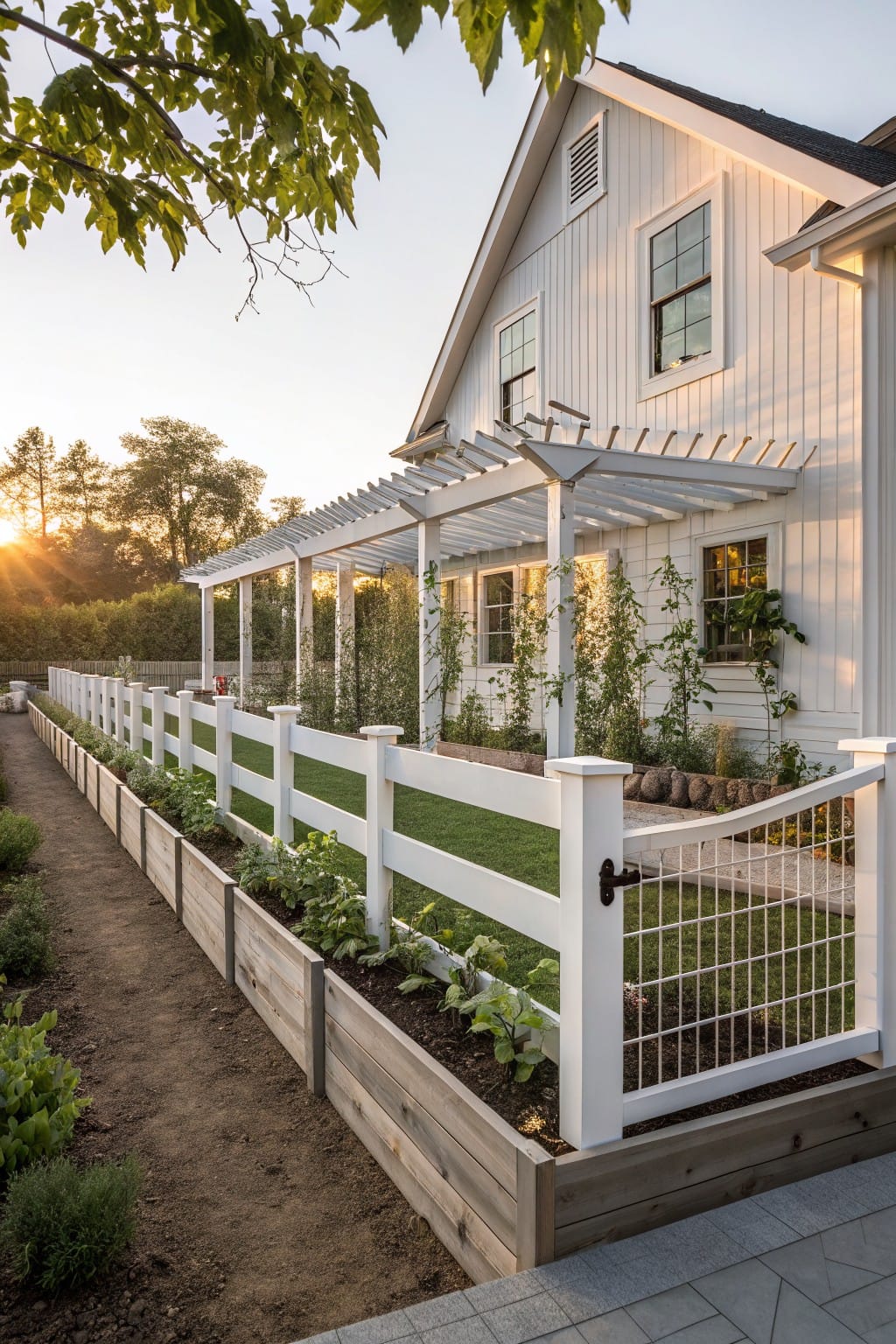
A white picket fence makes a perfect boundary for a vegetable garden. It keeps rabbits and other critters out while giving the space that friendly farmstead feel. In this setup, raised beds sit right along the fence, packed with young greens and vines. The plants spill over a bit, but the fence holds everything in place nicely.
Put this along the side of your house or in a side yard where you have a narrow strip of sun. It suits older homes or cottages with a bit of lawn. Go for pressure-treated wood on the beds and fence so they last through wet seasons. Watch the height, though. Too low, and deer might still peek over.
Frequently Asked Questions
Q: How do I stop rabbits from digging under my new fence?
A: Dig a trench about a foot deep around the garden edge. Drop in some chicken wire or hardware cloth, then bend it outward in an L shape underground. Rabbits hit that barrier and give up fast.
Q: What’s a quick fix for deer on a budget?
A: String up some fishing line in layers from knee-high to chest-high around your plants. Deer touch it with their noses, freak out, and bounce. It works until you upgrade to something sturdier.
Q: Can I use recycled stuff for these fences?
A: Grab old pallets or scrap wood from your garage. Nail them together into panels and stake them in. They hold up fine and save you cash.
Q: Will birds still peck at my veggies through the fence?
A: Birds squeeze through big gaps easy. Overlap your netting or slats tight, and drape bird netting over the top if needed. Problem solved.
