

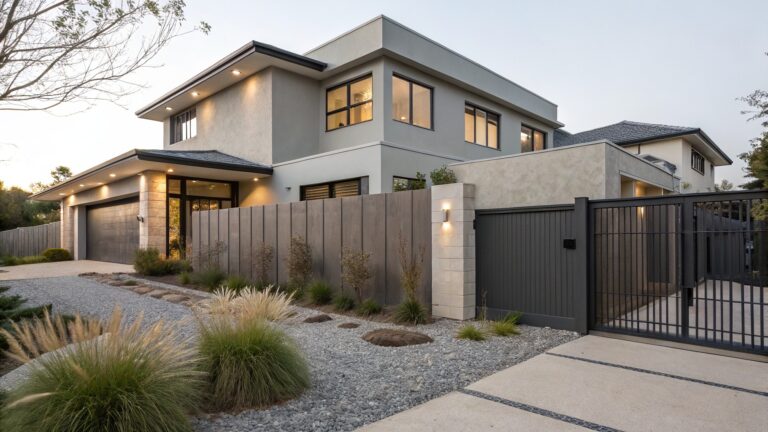
I’ve tinkered with garden fences for years to stop deer from munching my flowers and veggies. The cheap wire ones I started with always gave way fast under rain or a nudge from antlers. Durable setups win out when they combine tall heights with tough materials like galvanized steel or thick timber that blends into the landscape. I keep coming back to a simple arched willow weave that my neighbor uses because it looks natural and shrugs off winter ice. A handful of these hold real promise for any yard.
Modern Horizontal Bar Gate
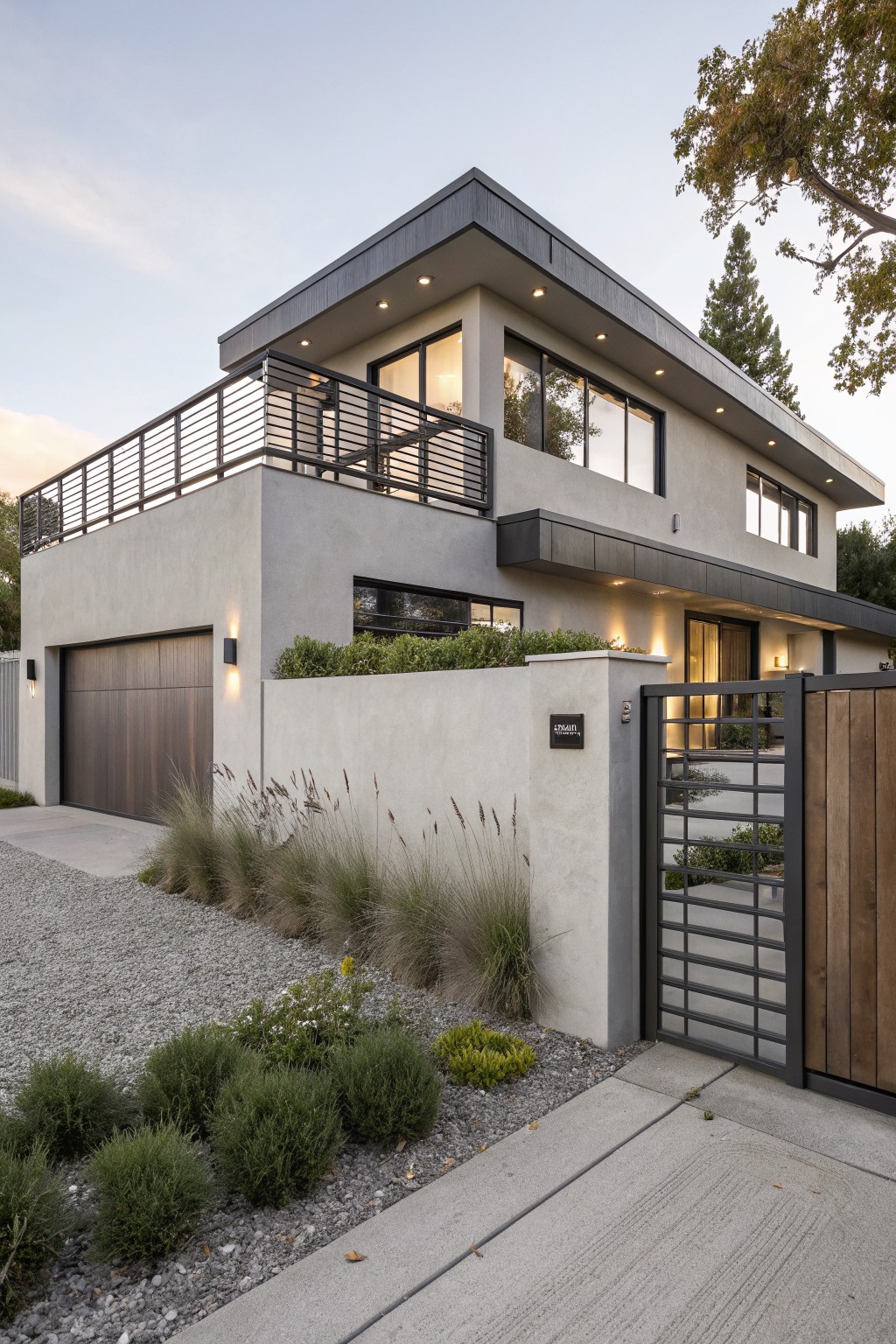
This kind of gate uses slim horizontal metal bars spaced tight enough to keep deer from squeezing through or jumping over. You see it here set into a plain stucco wall, with a wood accent on one side for a bit of warmth. It’s tough, low-maintenance, and doesn’t block the view like a solid fence would. Deer hate it because there’s no foothold to climb.
Pair it with a matching wall around your garden beds or driveway. It fits clean modern houses best, especially in deer country like California hillsides. Go for galvanized or powder-coated steel to fight rust, and aim for seven feet high minimum. Plant tall grasses nearby if you want, but skip anything deer love.
Raised Garden Beds with Wire Fencing
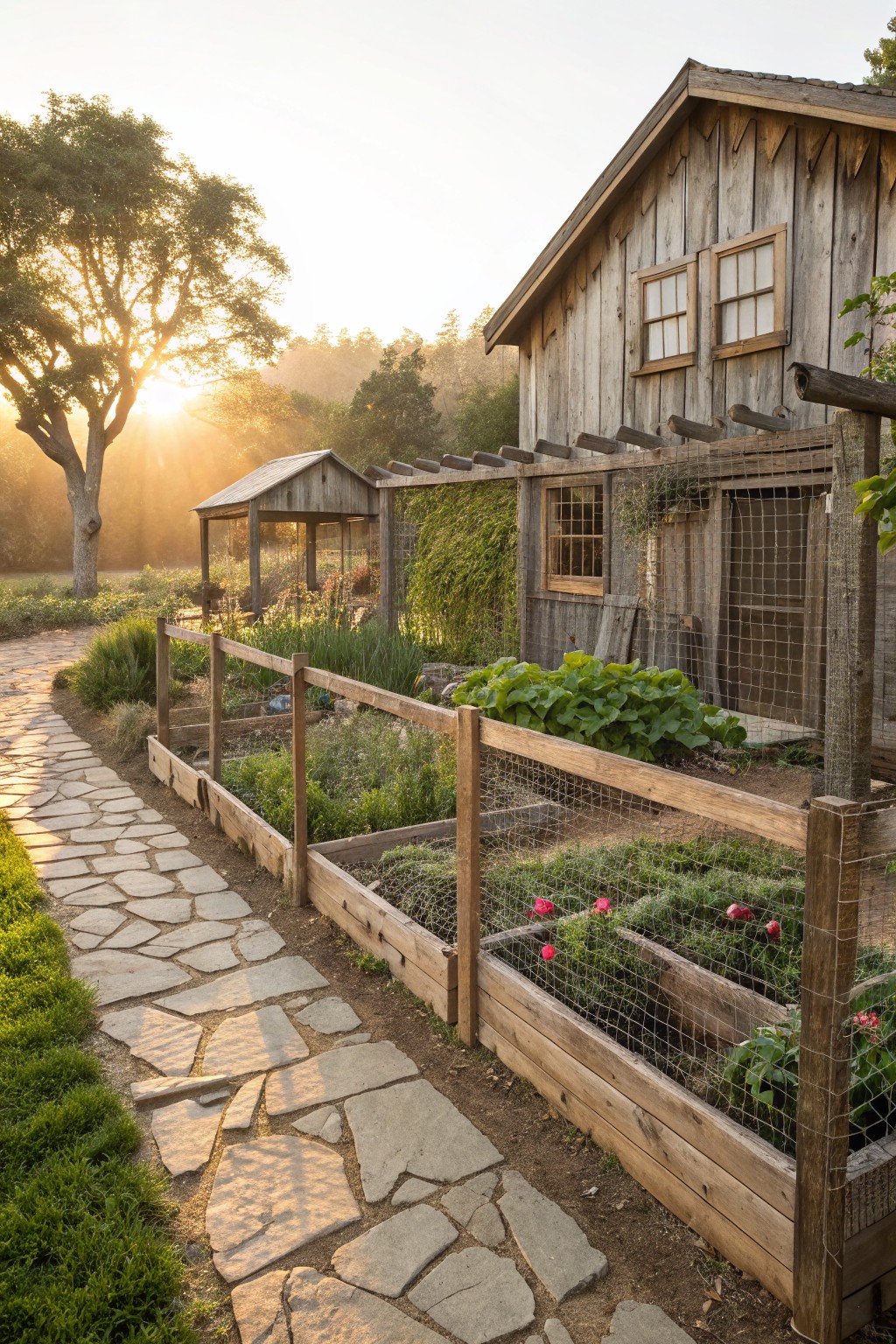
Raised garden beds like these work great for keeping deer away. The simple wire mesh stretched over wooden frames lets you grow veggies and flowers safely. It stands up to nibbling without blocking the view of your plants or looking out of place next to a shed or barn.
Put them along a path or yard edge where deer wander in. They suit sloped spots or small yards. Use rot-resistant wood and tight wire. Just check for gaps at ground level… deer are sneaky.
Split-Rail Fences with Wire Mesh
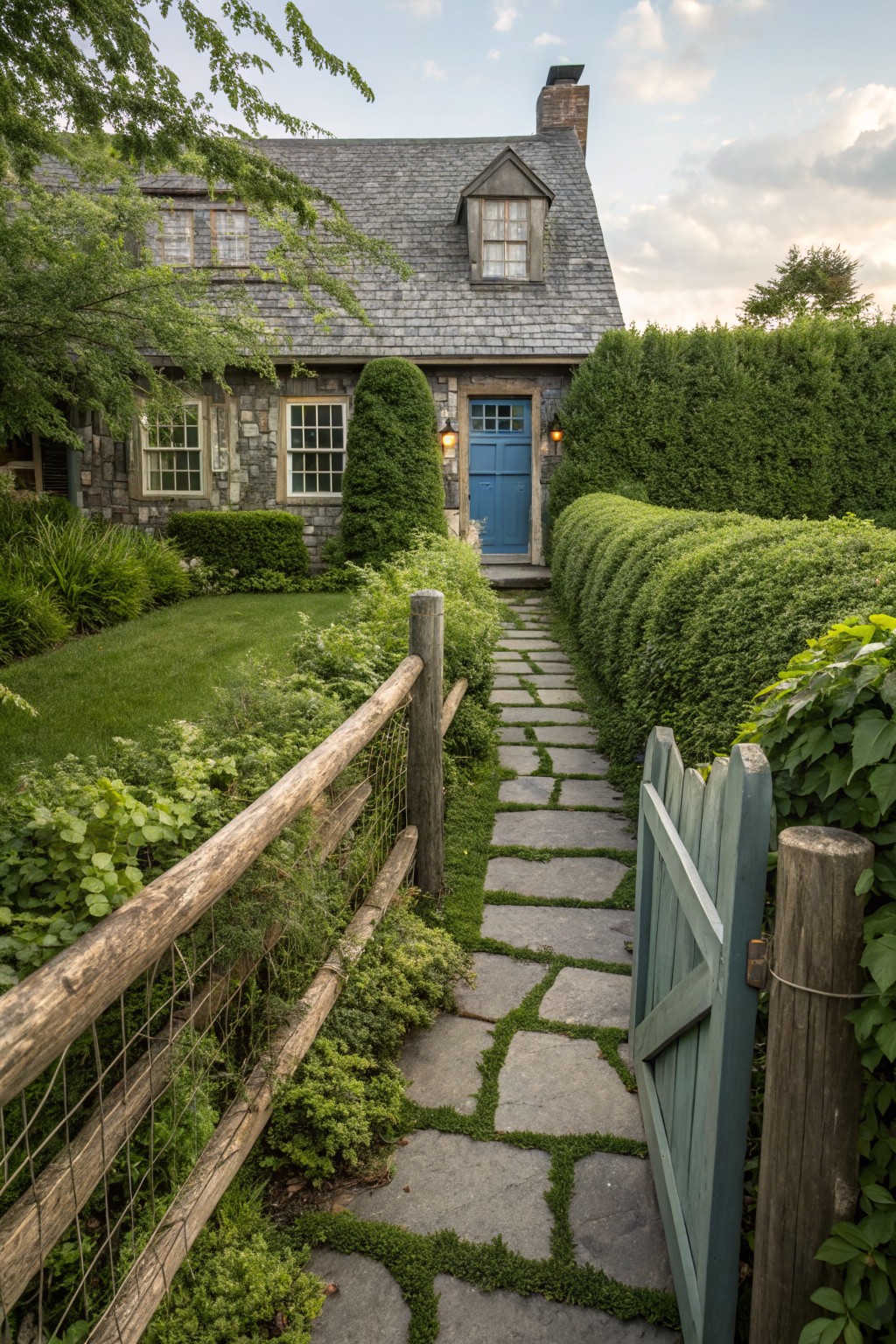
Old split-rail fences like this one work great for keeping deer away from the garden. The rough wooden rails give that country look folks have used for years, and the chicken wire or mesh along the sides stops deer from pushing through or jumping over. Plants grow right up to it, so it doesn’t stick out like some metal fence would. In this setup, it runs along a stone path leading back to the house.
You can use these around vegetable patches or flower beds where deer like to browse. They suit older homes or any yard with a natural feel, especially if you’ve got some slope or trees nearby. The simple wooden gate here lets you walk through easy. Keep an eye on the wire for rust, and maybe add taller posts if your deer are jumpers.
Tall Metal Mesh Screens
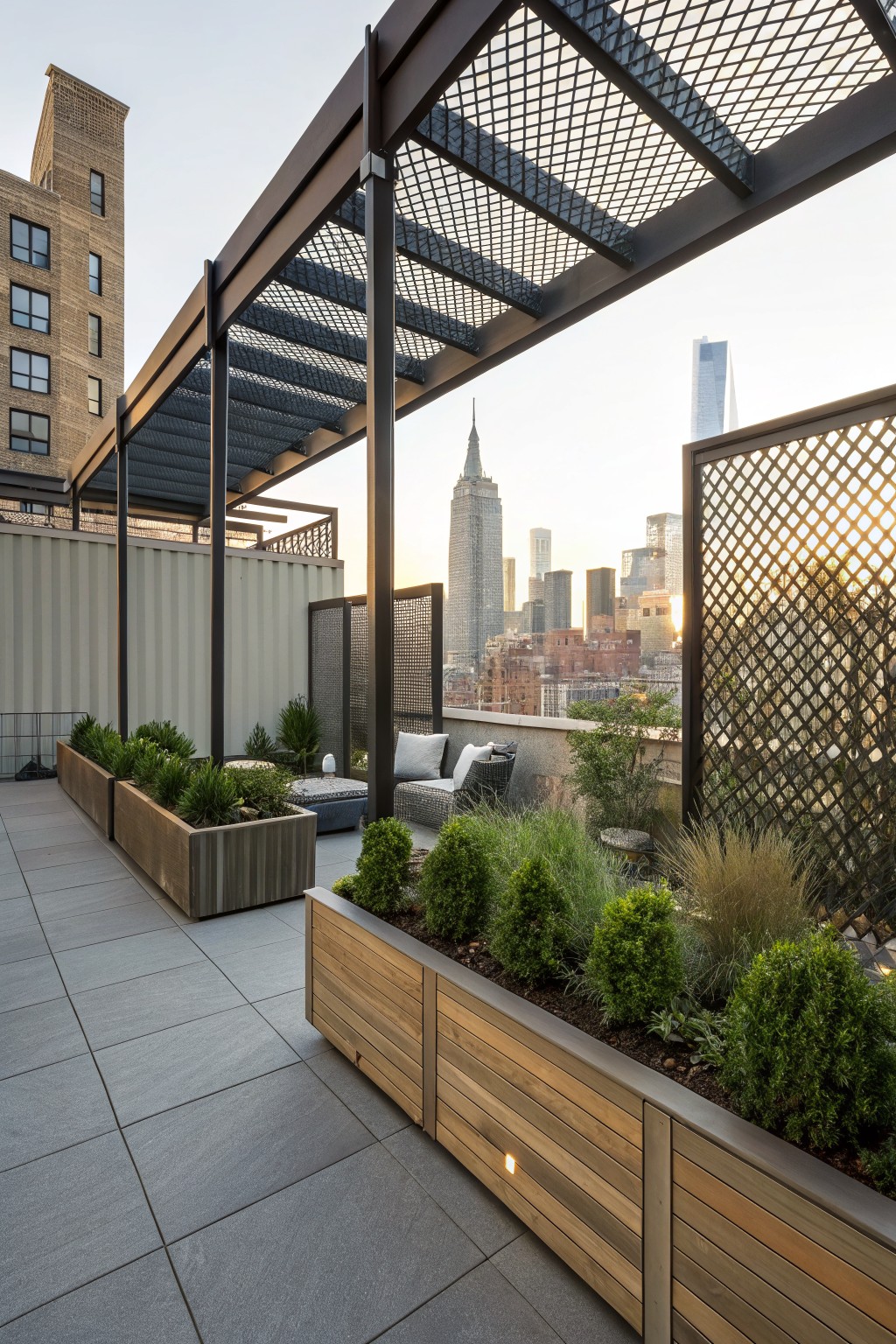
These screens stand tall around the edges of a rooftop terrace, forming a simple fence that deer can’t push through or jump over. Made from sturdy black metal lattice, they block animals while letting light filter in for healthy plants below. Paired with wooden planters full of shrubs, they create a clean boundary without feeling closed off.
They’re perfect for city rooftops, balconies, or any raised garden where space is tight. Powder-coat the metal to fight rust, and set them on sturdy posts. Works best around seating areas… just make sure they’re at least eight feet high in deer country.
Chain Link Fence with Deer Netting
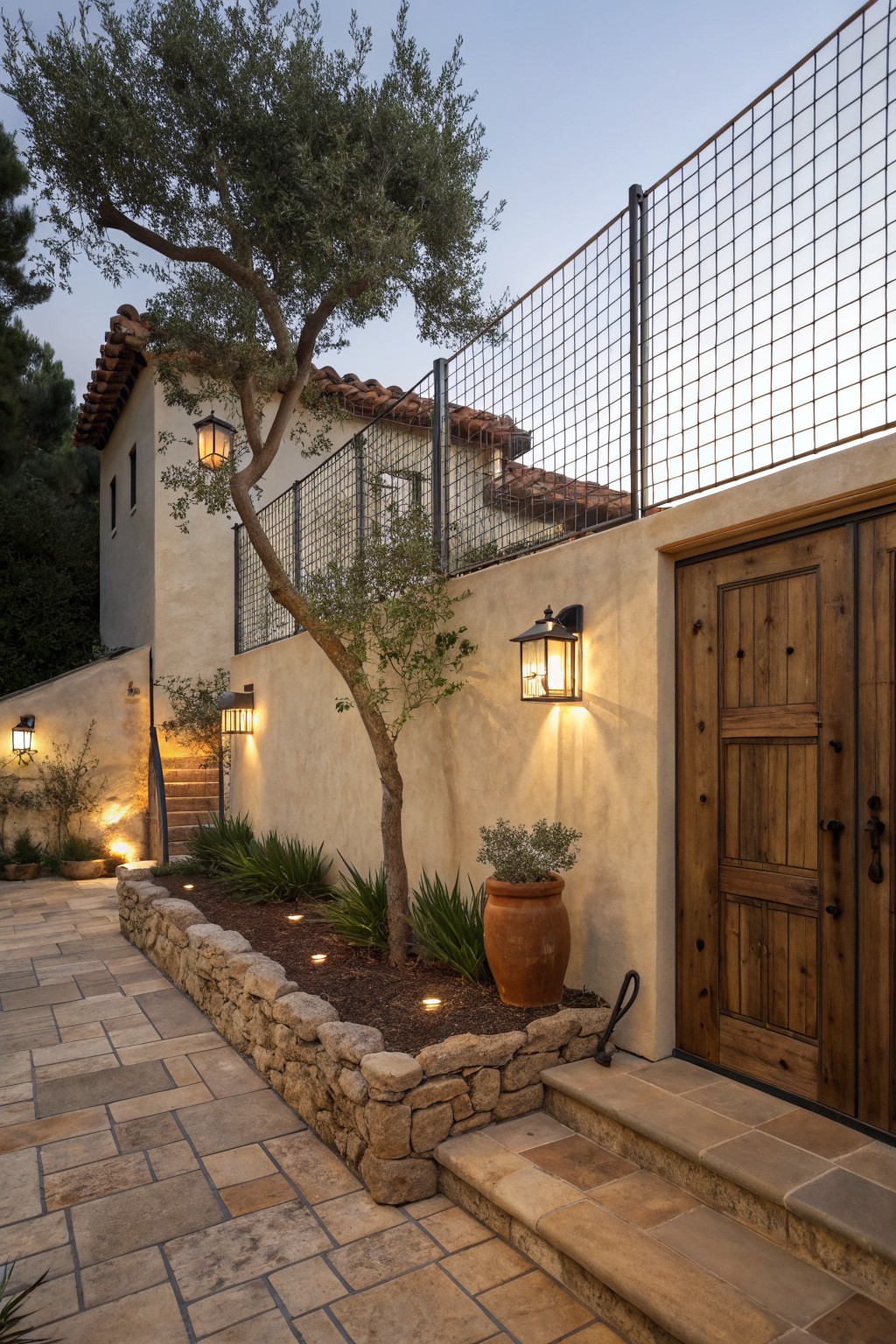
One straightforward way to protect garden plants from deer is chain link fencing topped with green mesh netting. You see it here running along a raised bed full of small trees and ground cover. The metal fence holds up for years in any weather, and the netting stops deer from jumping over or pushing through. It’s not fancy, but it gets the job done without blocking the view too much.
Put this kind of fence around planting beds near the house or along yard edges where deer wander in. It fits sloped lots like this one, with steps and paths nearby. Go for heavy gauge chain link, at least 6 feet high, and stretch the netting tight on top. Keep gates secure too. Watch for sagging over time… just tighten as needed.
Perforated Metal Garden Fence
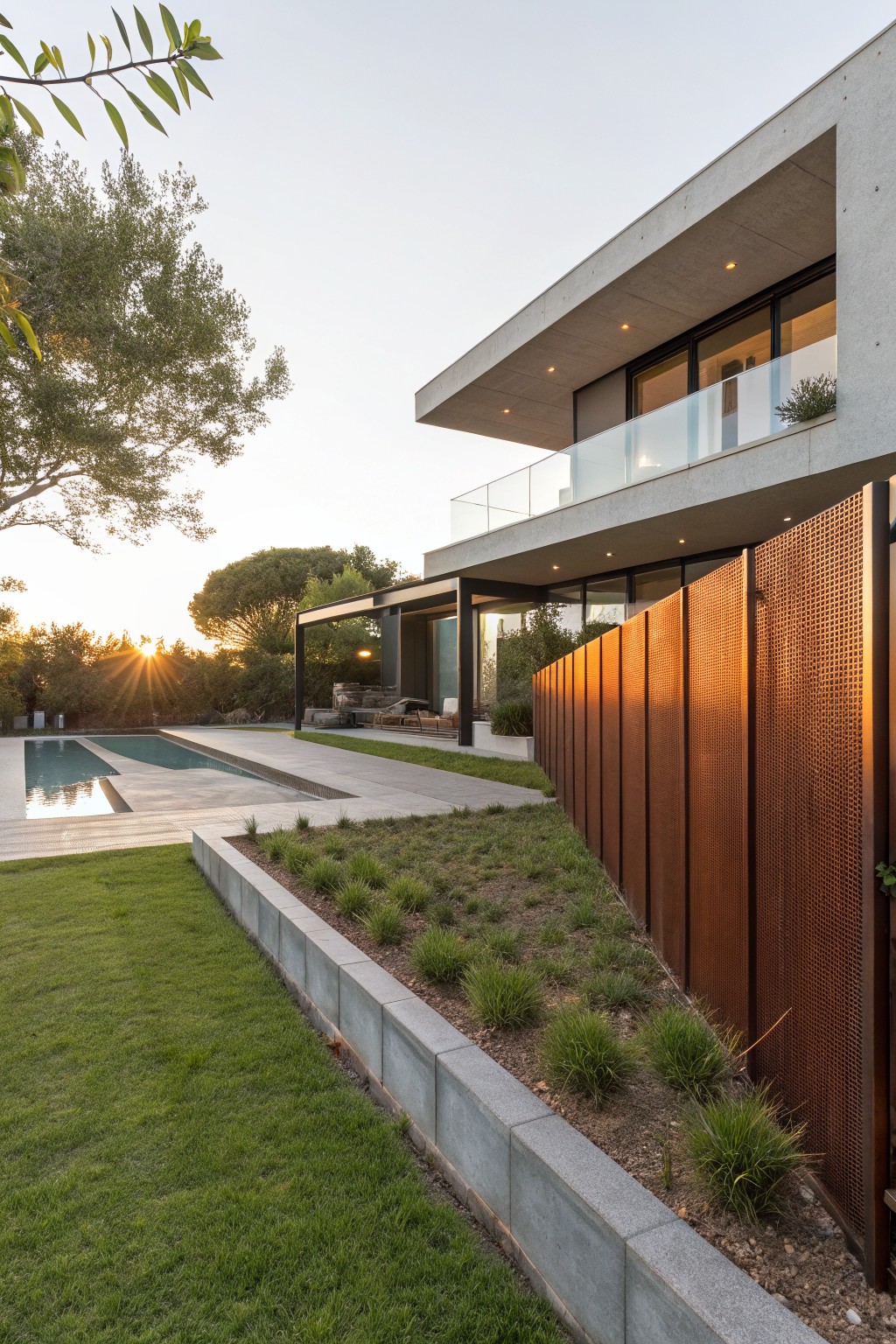
This kind of fence uses tall panels made from perforated metal with a rusted bronze finish. Deer can’t jump it or push through, but the pattern of holes lets some light and air pass while keeping things private enough. It fits right in with the concrete walls and pool deck here, and the color warms up over time without much upkeep.
You can run these panels along garden edges or yard boundaries where deer roam. They suit sloped yards or spots next to patios, especially on modern homes. Just make sure the posts are set deep for wind, and pick panels tall enough, around six feet or more.
Thick Hedges as a Deer-Proof Garden Fence
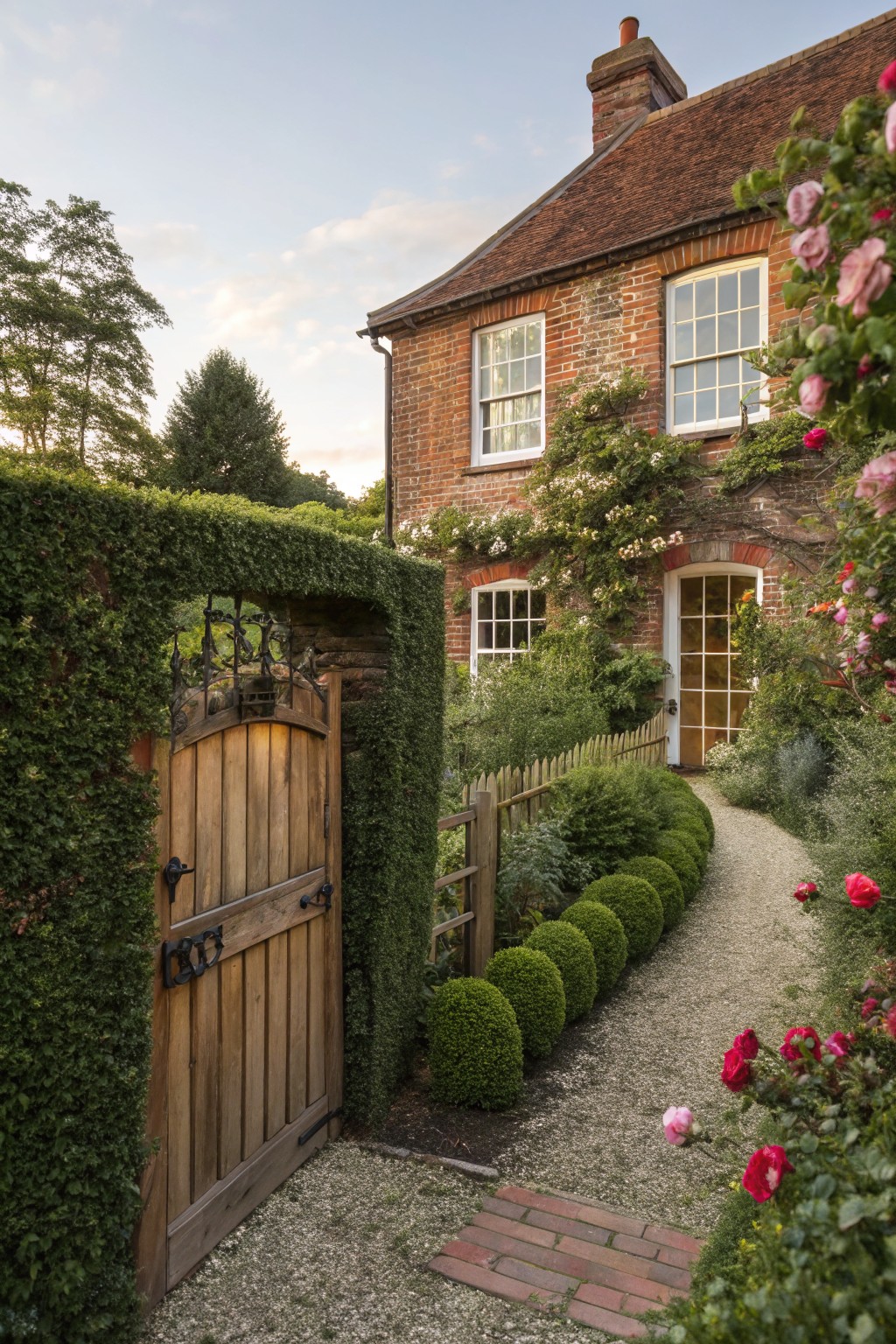
One solid way to keep deer out is planting a thick hedge wall around your garden. This setup uses fast-growing evergreens like ivy or yew that fill in dense and tall enough to block deer from jumping over or pushing through. In the photo you see it framing a wooden gate just right. It works because deer hate squeezing past clipped branches, and it lasts for years without much fuss.
Put this fence around veggie patches or flower beds where deer roam. It fits older homes with cottage gardens best, or any yard wanting a natural look. Plant starters close together, clip them regular to stay tight. Watch for hedge trimmers wearing out, but that’s small work for real protection.
Wire Mesh Fence on Wooden Posts
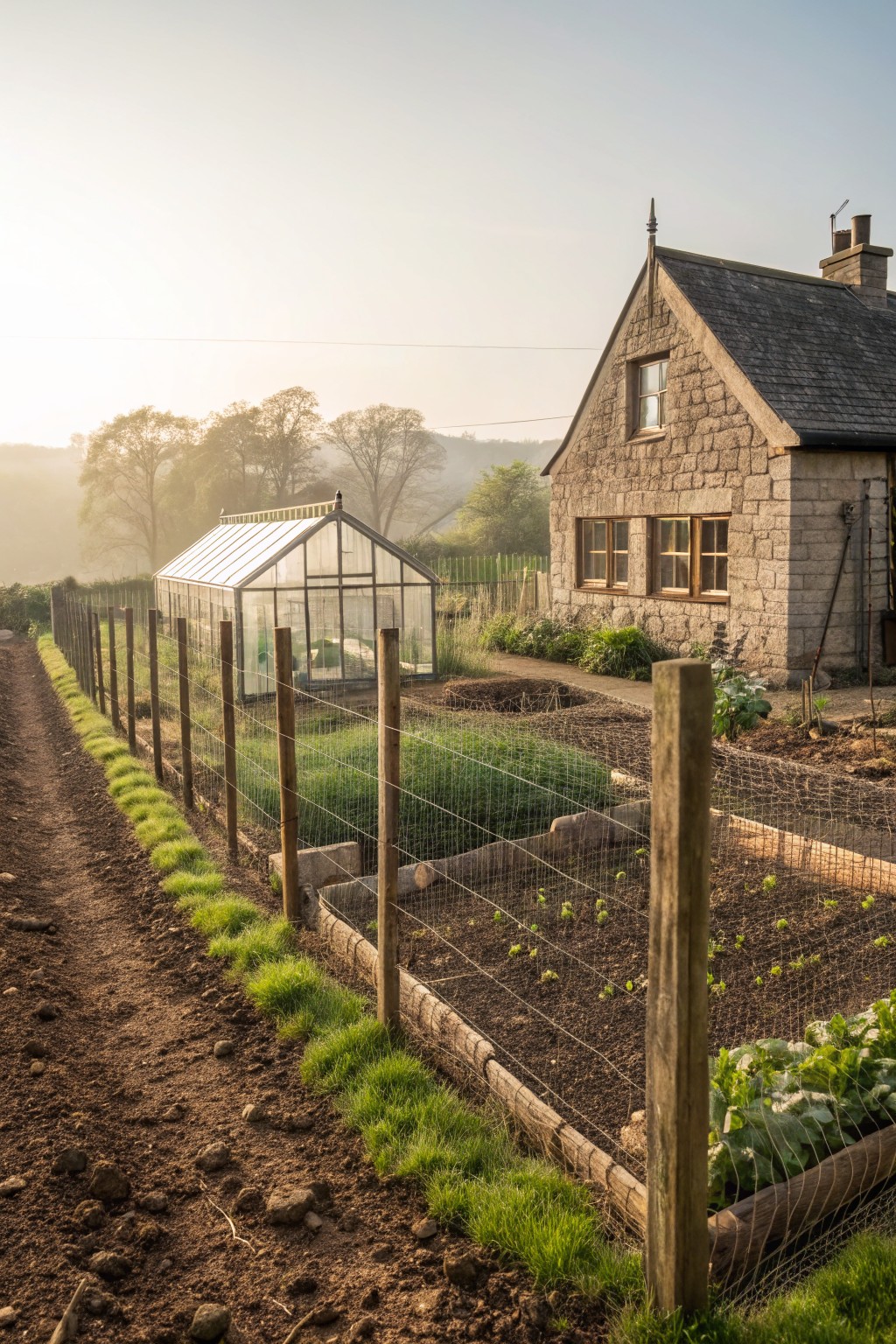
A simple wire mesh fence stretched tight between sturdy wooden posts makes a reliable deer barrier for garden beds. It holds up year after year without much upkeep, and the open weave lets sun and rain reach the plants inside. In this yard, it runs along raised beds full of young veggies, keeping everything safe right next to the house.
Put it to work around any veggie plot or orchard where deer roam. Pressure-treated posts last longest in damp spots. Bury the bottom edge six inches to stop rabbits too. Fits best with country homes or cottages, not fancy suburbs.
Vertical Slat Garden Fences
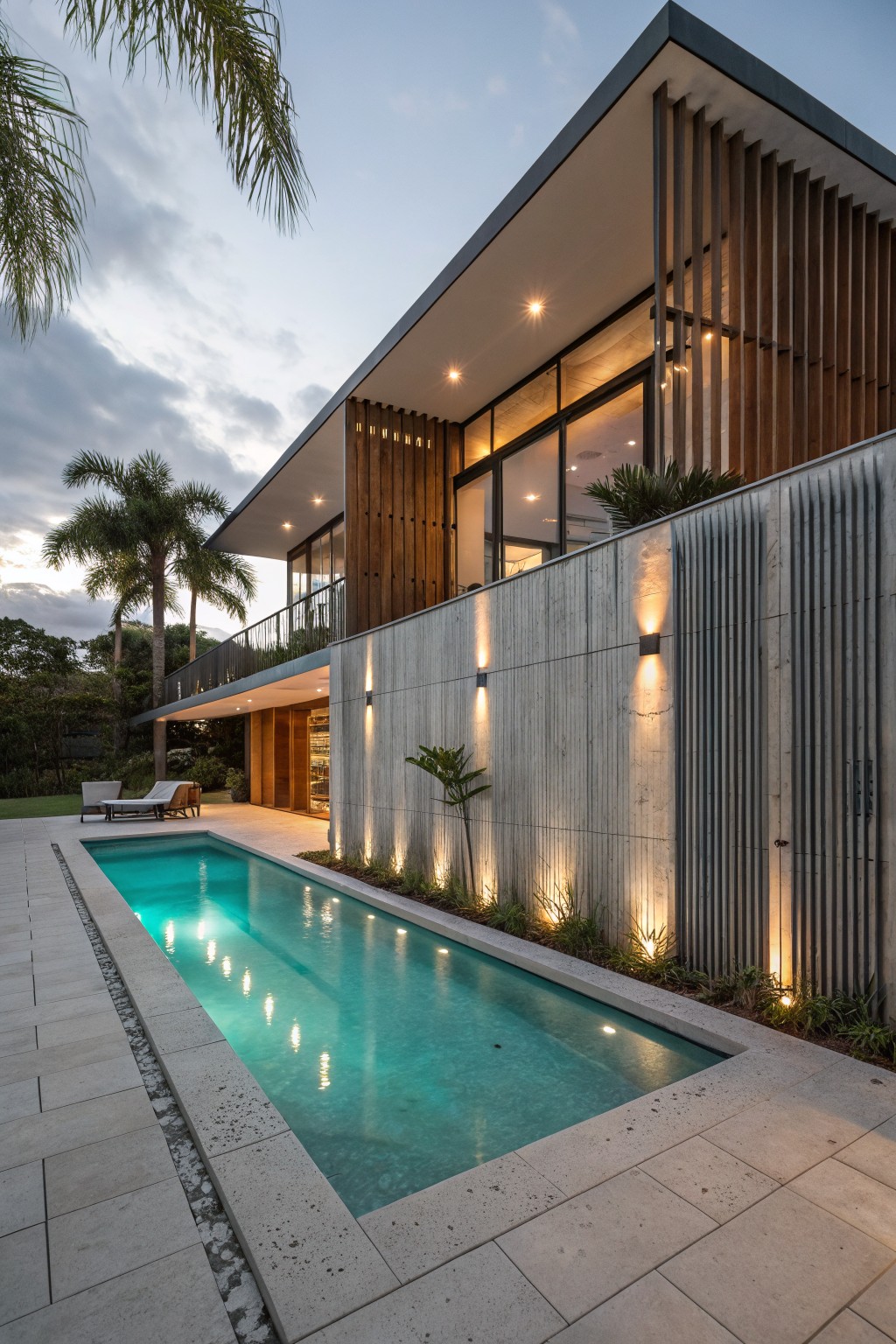
Vertical slat fences work well because the narrow gaps keep deer from pushing through or jumping over. You see them here along a concrete wall by the pool. Made from timber or metal they hold up to weather and animals without much upkeep. Folks like how they let some light filter in but still block views from outside.
Put these around pools or garden edges where deer roam. They suit flat yards or sloped ones with modern houses. Skip wide gaps or low heights or deer will find a way in. Just check local codes for height.
Vinyl Fences with Spindle Tops
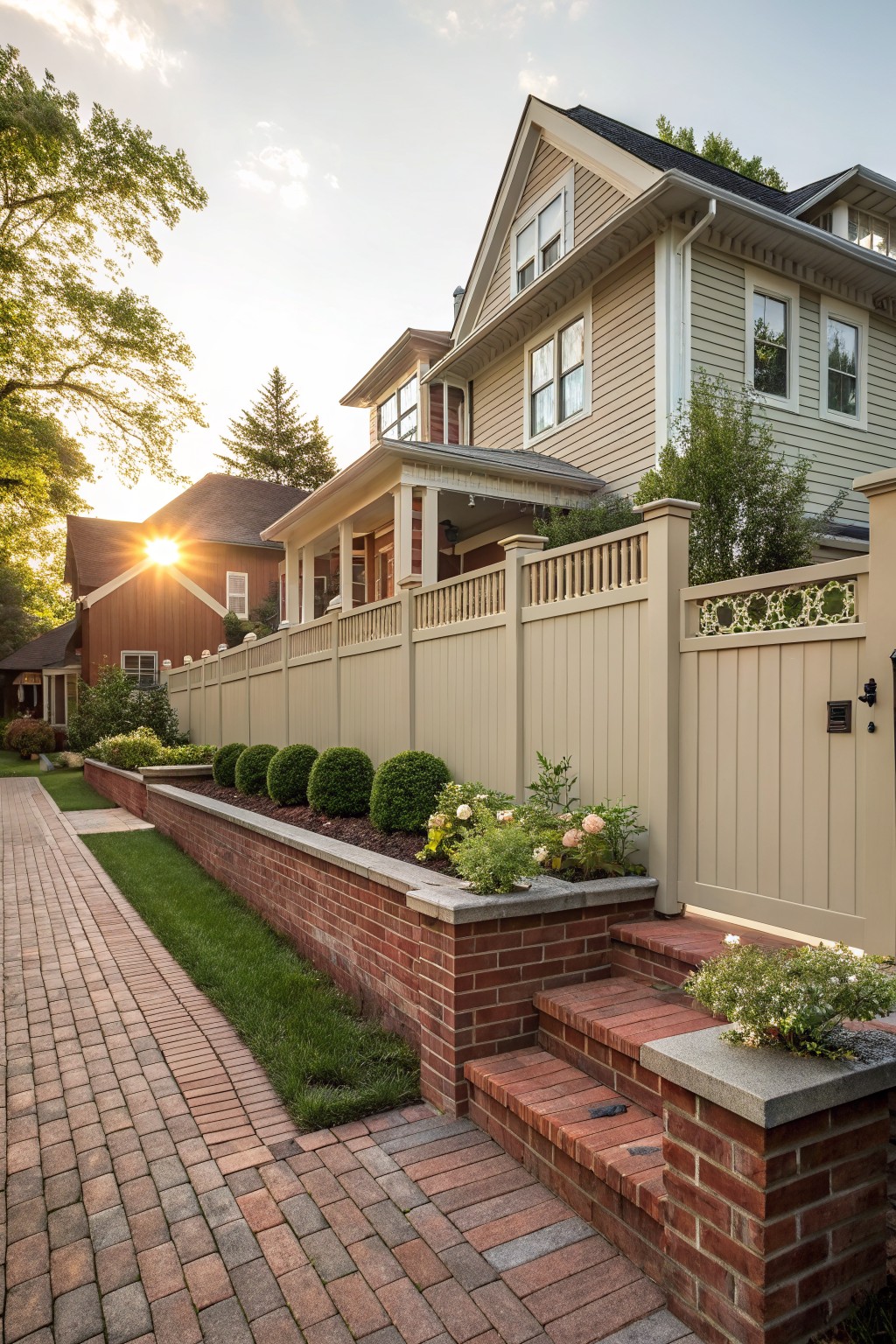
Vinyl fences like this one give you solid privacy and keep deer from jumping in. They’re tall enough to do the job, usually six feet or more, and the spindle tops add a touch of style that fits older homes. You get that wood look without the upkeep, and the beige color blends right into garden plantings.
Put them along pathways or yard edges where you want to define the space. They work best with traditional houses and brick accents. Line the base with boxwoods or low flowers to hide any gaps, and deer won’t even bother trying. Just make sure the posts are set deep for wind.
Green Mesh Fencing for Garden Protection
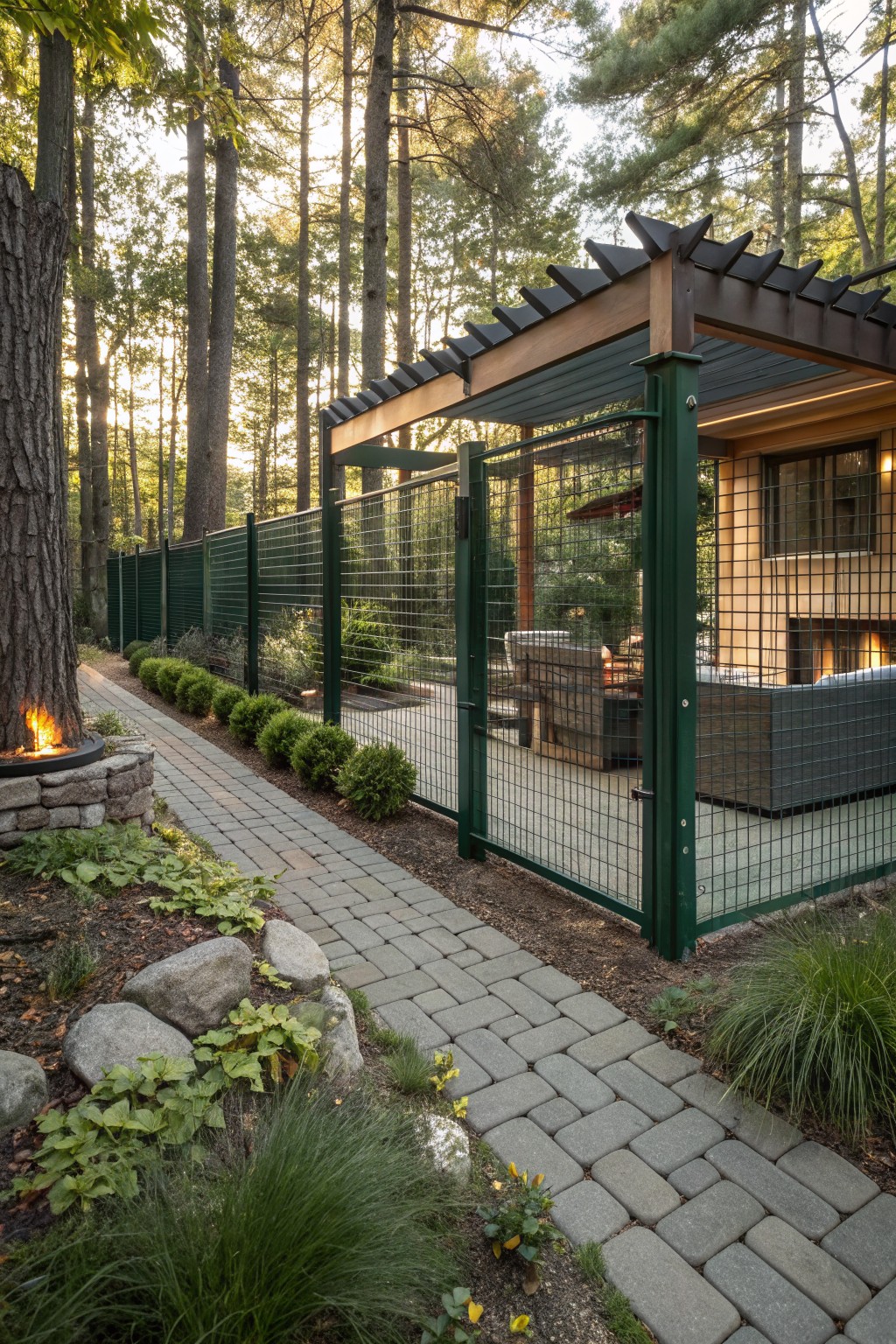
A green metal mesh fence like this one makes a solid deer barrier without shutting out the yard views. The color matches the trees and shrubs so it fades right into the landscape. Folks in wooded areas like this find it keeps the deer away from patios and plantings but still lets light and air through.
Use it to enclose outdoor seating or a fire pit area. It suits homes backed up to forests where deer roam. Set the posts in concrete for strength, and pair it with a simple gate. One thing… check local codes on height.
Terraced Stone Walls for Sloped Yards
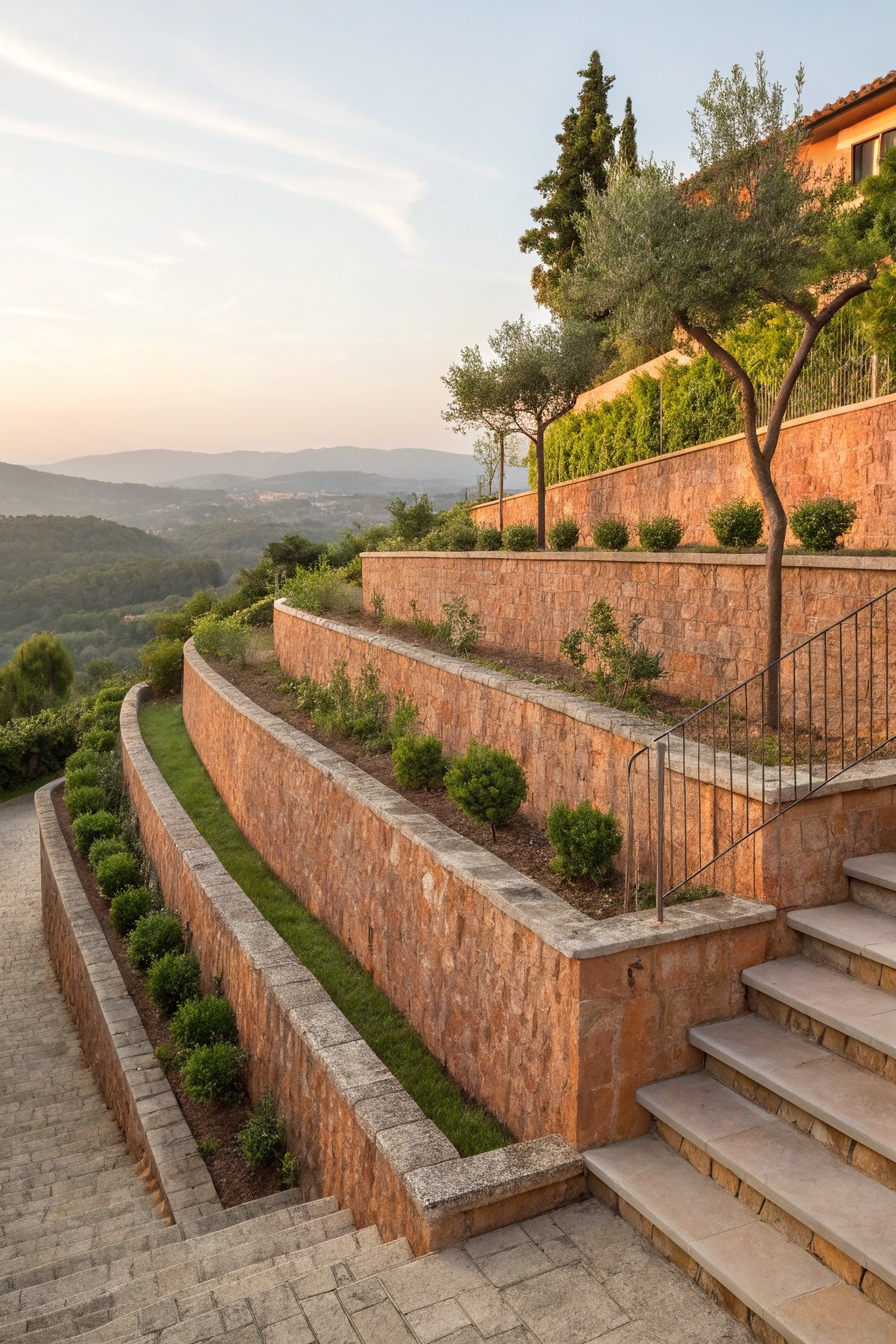
Slopes can be tough for gardens. These terraced stone walls fix that by carving out flat planting beds one level at a time. Built from rugged brick or local stone, they stand solid against erosion and keep deer out since the heights and dense shrubs make jumping hard. Olive trees and boxwoods tucked into the tops add green without much upkeep.
Put them to work on any hillside lot where flat ground is short. Wide steps with iron rails connect the levels for easy access. They suit older homes with a rustic look. Just plan for good drainage at the base or water buildup could weaken things over time.
Tall Metal Mesh Garden Fences
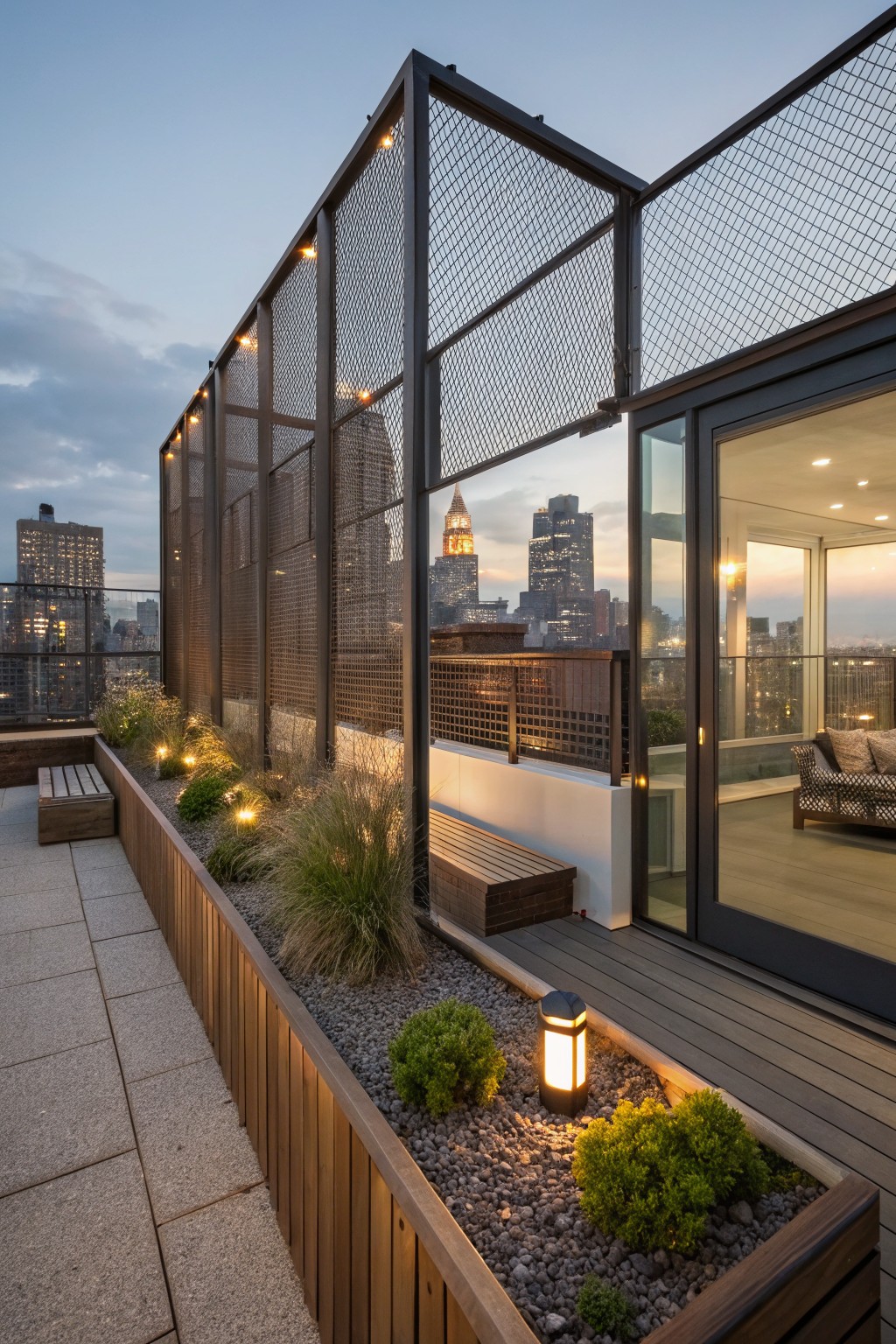
One solid way to keep deer from your plants is tall metal mesh fencing like this. The heavy black panels stand up to pushing and jumping but leave gaps so you still get views and light. They run right along raised wood planters filled with grasses, making the whole edge feel like part of the garden instead of just a barrier.
Put these up around rooftop terraces, balconies, or any open yard spot where deer roam close. They work best with low-maintenance plants tucked in at the base. Just make sure the mesh is at least 8 feet high and anchored deep if you’re in a windy area.
Stone Pillars with Split-Rail Fencing
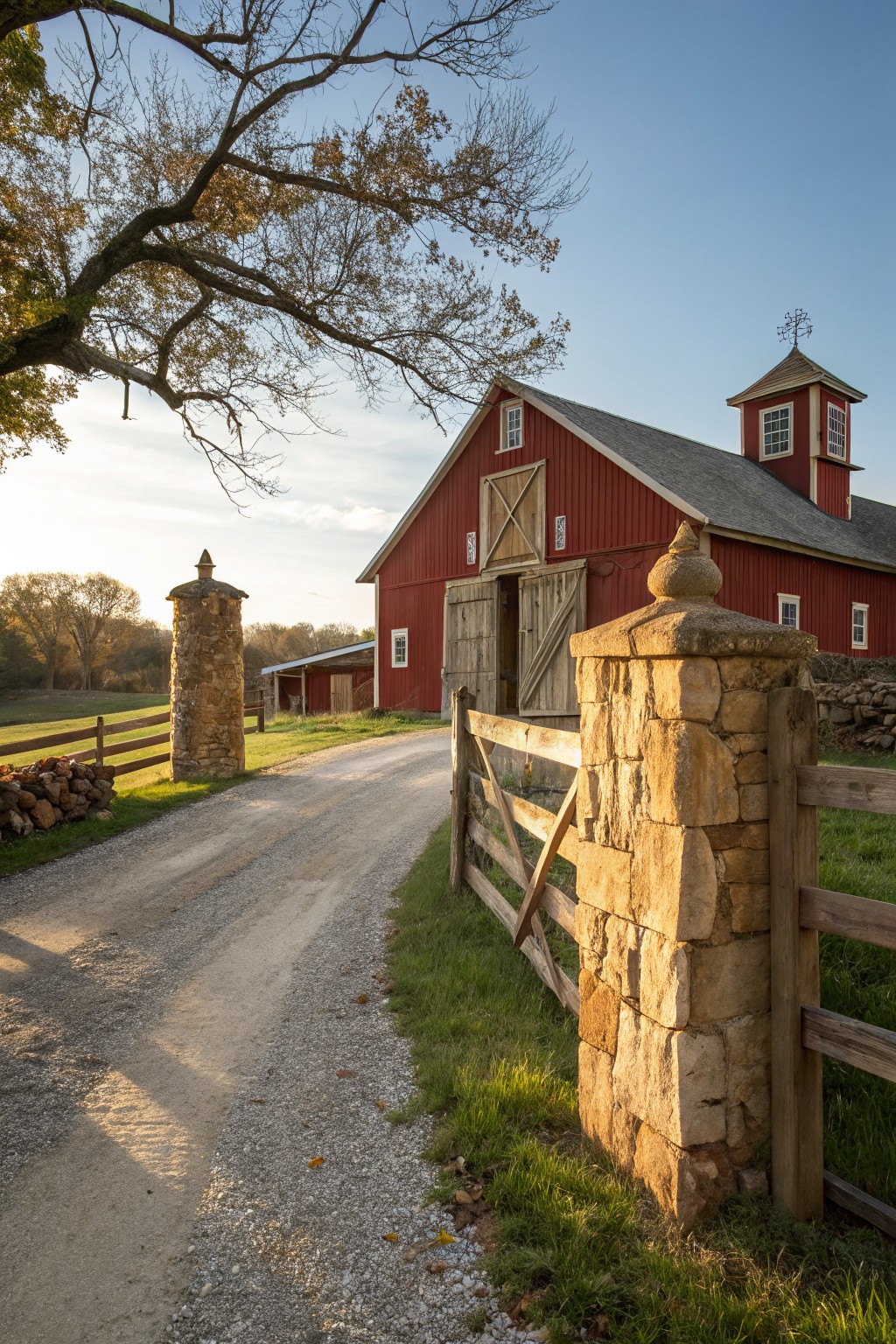
One solid way to keep deer out of your garden is tall stone pillars holding up a simple split-rail fence. The stone makes the posts strong and hard for deer to knock over or jump, while the wooden rails stop them from squeezing through. Folks like this look because it fits right into a country yard without feeling too fancy.
Put these around bigger gardens or fields where deer roam a lot. They suit older farmhouses best, maybe along a driveway like this one with its gravel path. Stone costs more upfront, so stack local rocks if you can to save some money.
Perforated Metal Garden Fence
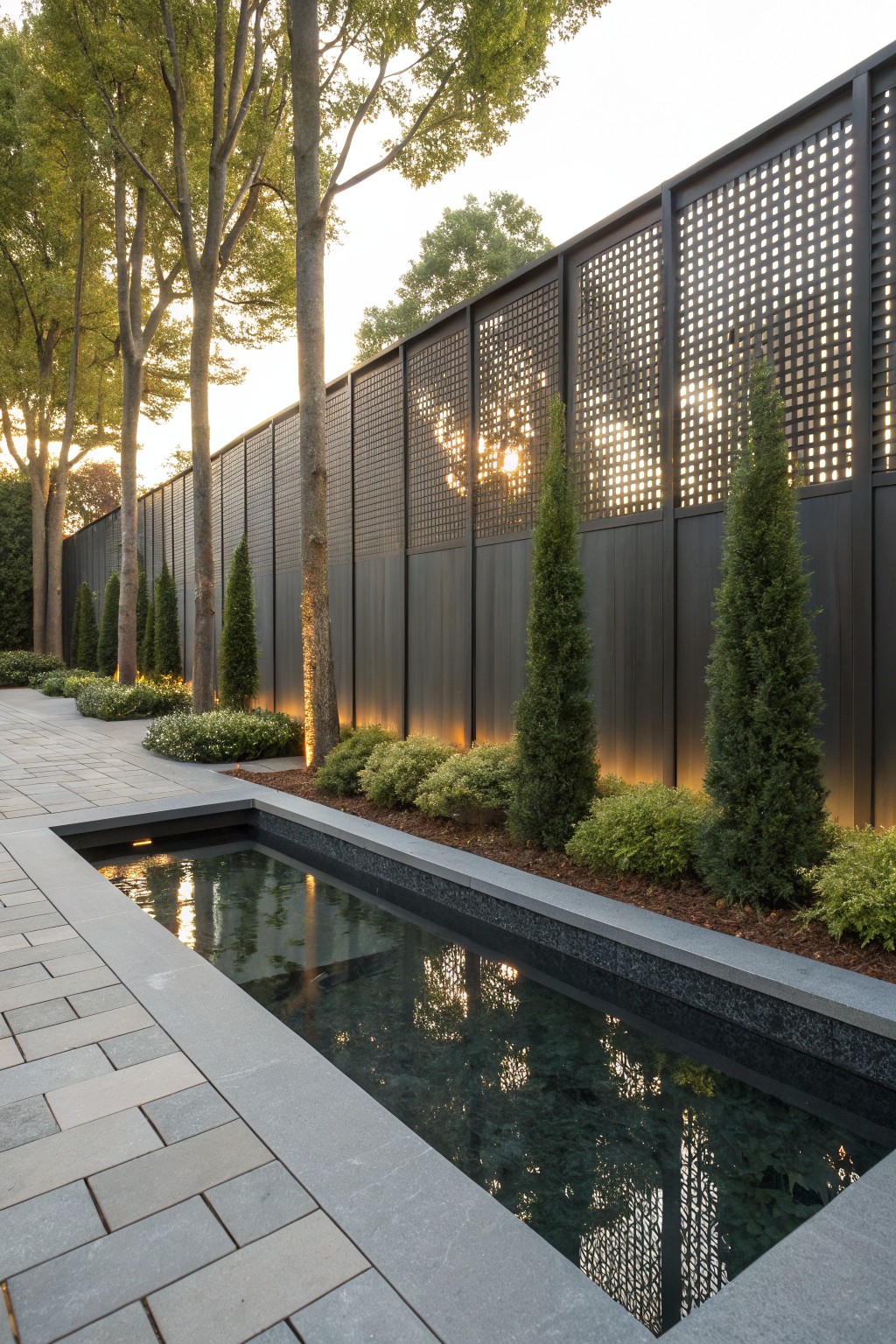
This kind of fence uses tall black metal panels punched with a simple grid pattern. It’s tough enough to stop deer from jumping over or pushing through, yet the perforations let dappled light filter into the yard. No wood to chew, just solid metal that holds up year after year. The clean lines make it fit right in with evergreens planted close by.
Put one along a walkway or property edge where you need privacy without blocking everything out. Suits flat yards or sloped ones with deer pressure. Line the base with tough shrubs for extra screening. Skip it if your style runs too cottagey… might feel out of place there.
Tall Privacy Fences Along Paths
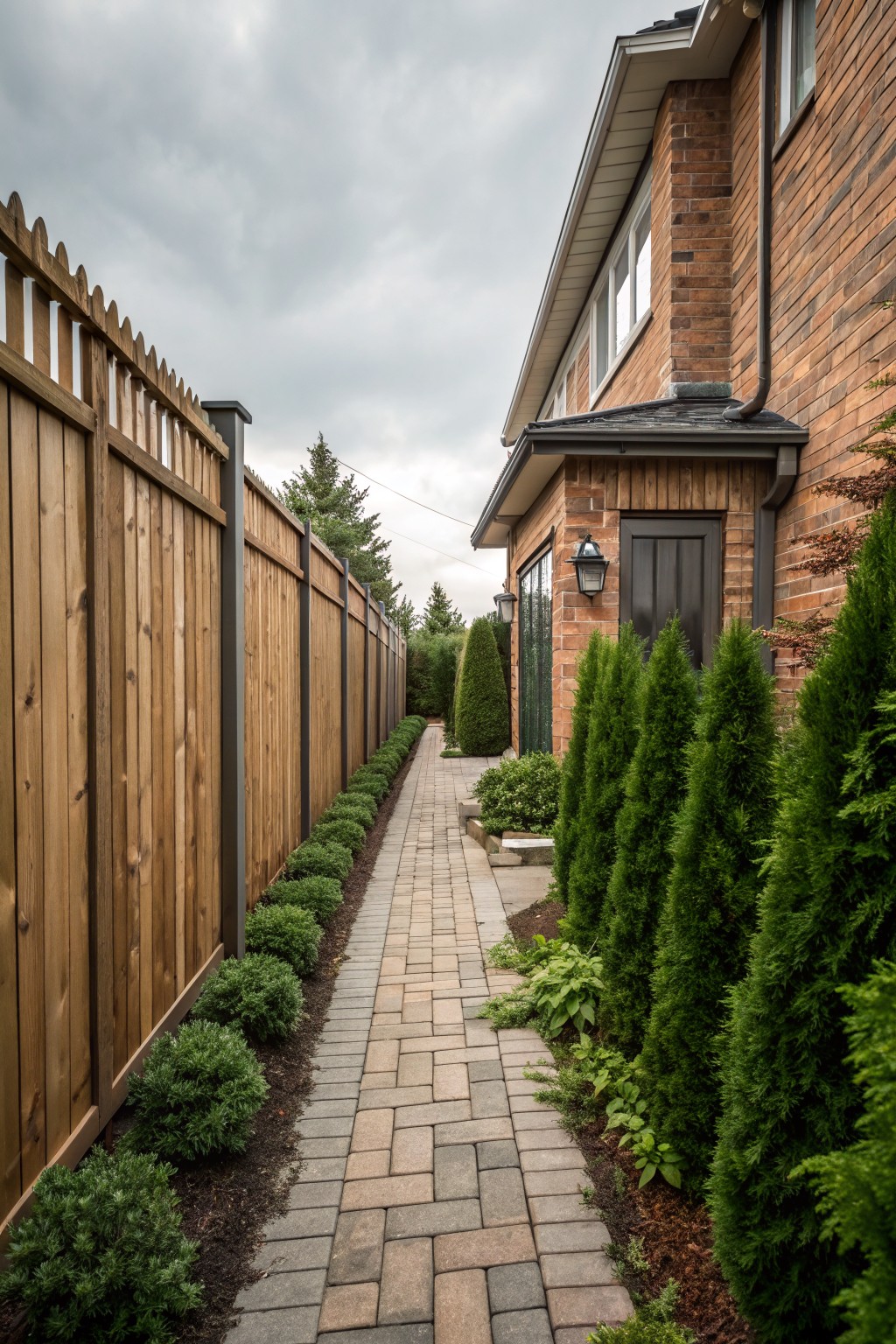
Tall wooden privacy fences like this one do a real good job keeping deer out of garden spots. The solid panels go high enough that deer can’t jump over, and the sturdy metal posts hold up year after year. Paired with dense shrubs on the other side of the path, it makes a secure walkway without feeling closed in.
Put this setup in side yards or narrow areas leading to a door. Cedar boards work best for weather resistance. Plant deer-resistant evergreens opposite the fence to fill out the space. Just make sure the fence meets your local height limits… usually 6 to 8 feet does it.
Wrought Iron Fences on Stone Walls

Tall wrought iron fences like this one, set right on top of a sturdy stone wall, make a solid deer barrier that lasts for years. The spear-like tops keep deer from jumping over, and the stone below bumps up the height without looking bulky. It fits old stone houses perfectly and doesn’t block the view of the garden or house behind it.
Put this setup around formal yards or along driveways where you want protection but still some openness. It works best with traditional homes, maybe paired with low box hedges along the base for a neat edge. Keep an eye on the iron for rust, especially in wet areas… a coat of paint now and then does the trick.
Low Stone Retaining Walls with Grasses
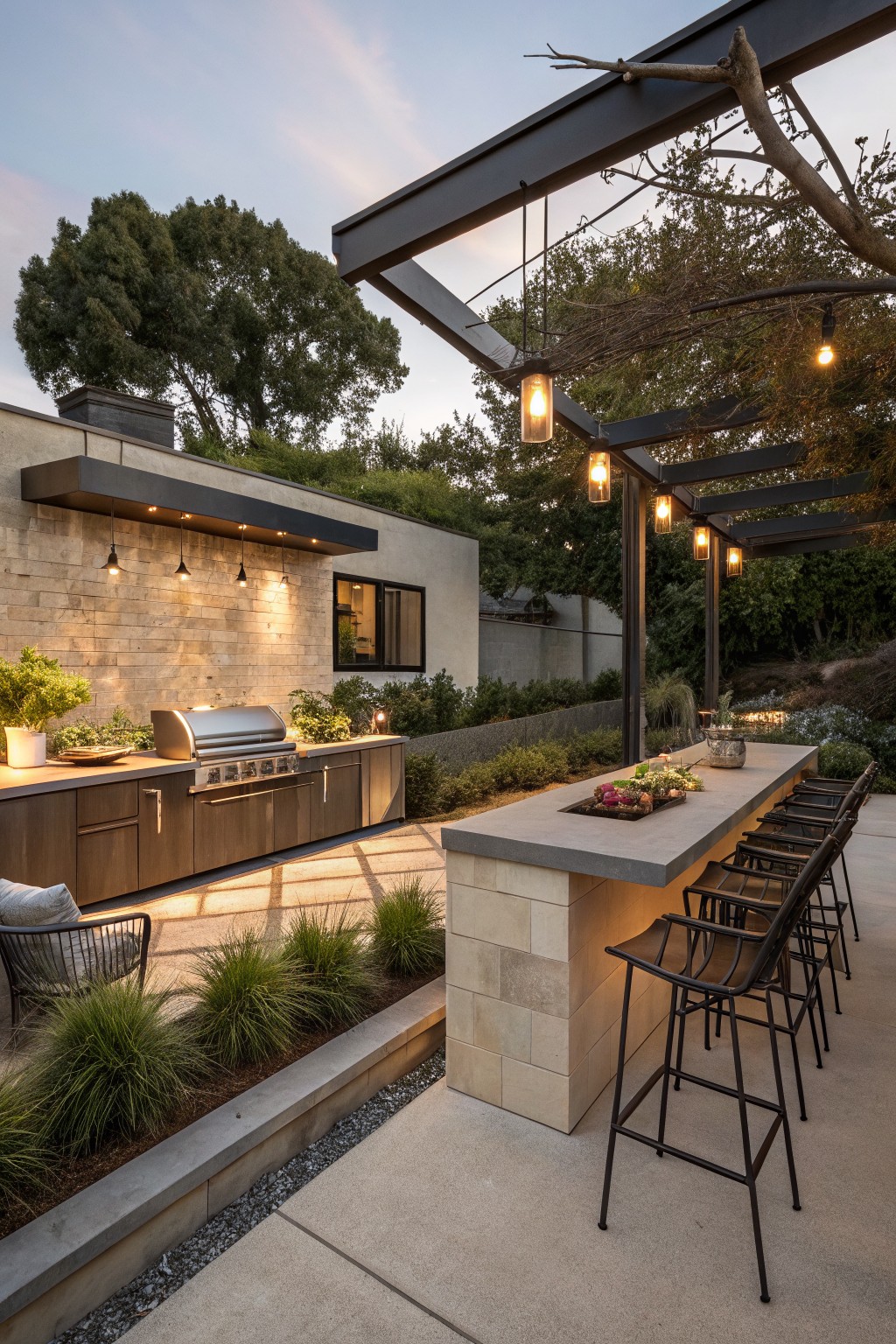
One simple way to edge a garden or patio is with low stone retaining walls planted right along the top with tough grasses. In this setup, the pale stone holds back soil and plants while the grasses fill in soft and natural. It works well because deer tend to skip over grasses like these feathery ones. They aren’t their favorite snack. Plus, the wall adds enough height to discourage jumping into beds.
These walls suit sloped yards or spots next to patios and outdoor kitchens. Use local stone for a good match, stack it dry or with thin mortar, and pick grasses that grow in your zone. Keep them trimmed back from paths. Watch for weeds in the joints, but overall it’s low fuss and lasts years.
Terraced Wood Fences on Slopes
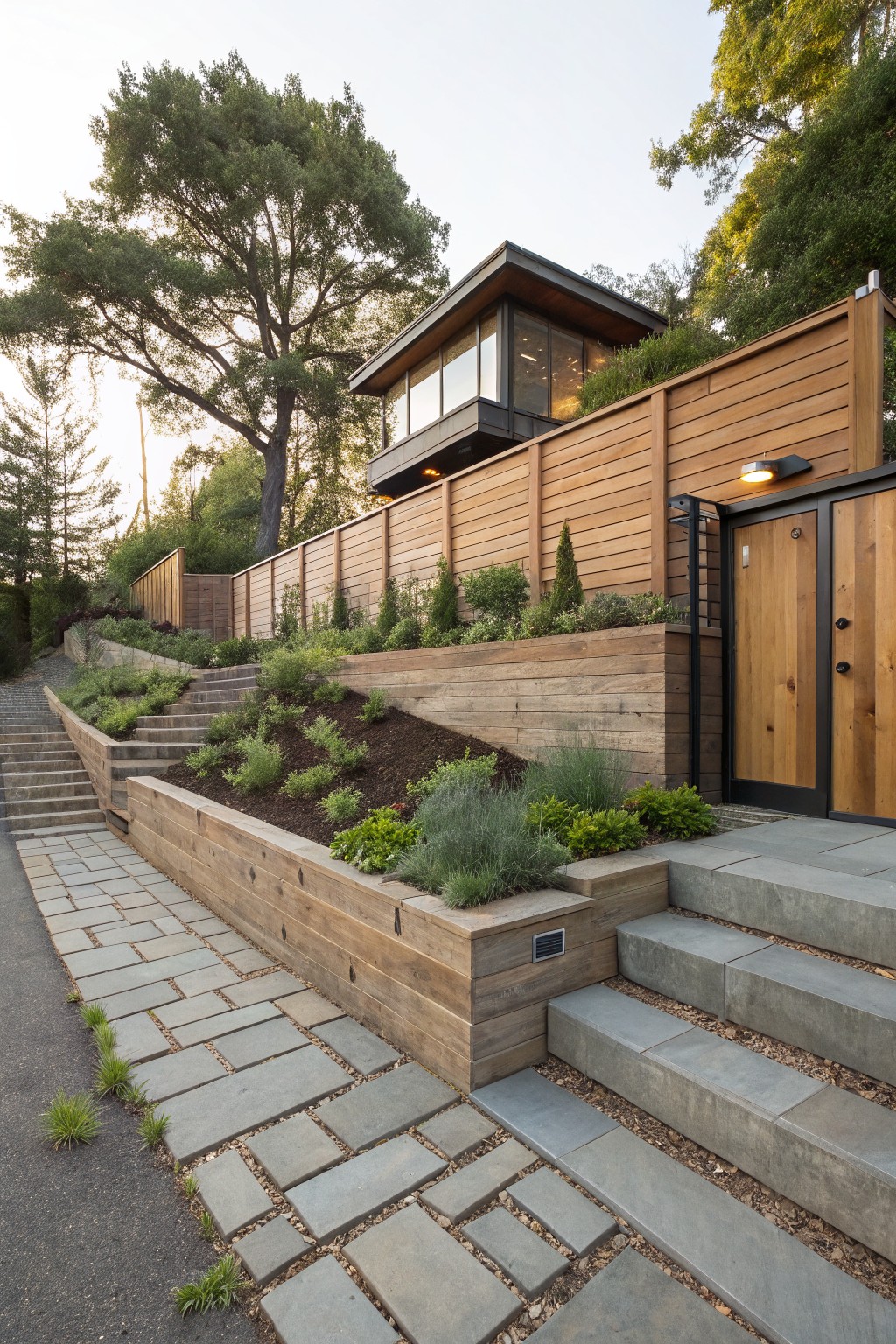
Wooden fences like this work double duty on hillsides. They hold back the soil as retaining walls and keep deer out with solid horizontal boards. No gaps for jumping. The plants along the top fill it out naturally, and the whole thing fits right with big trees nearby.
Put these where your yard drops off sharp. Cedar holds up best outside. Stack them two or three high for real height against deer. Good for any house style, especially if you have steps leading up to the door.
Frequently Asked Questions
Q: How tall does a deer fence really need to be?
A: Shoot for 8 feet minimum. Deer clear 6 or 7 feet without breaking a sweat, so go higher or angle the top outward. That stops jumps every time.
Q: Can I skip digging post holes for these fences?
A: Absolutely, use tension wire or heavy poly netting stretched between T-posts you hammer in. Stake the bottom tight to the ground with rebar every 10 feet. Sets up in an afternoon, no shovel needed.
Q: What about rabbits or other garden pests?
A: Add a 12-inch chicken wire apron buried or pinned flat along the base of your deer fence. It blocks diggers while the height handles leapers. One fix covers most critters…
Q: How do I make the fence blend into my yard?
A: Train deer-resistant climbers like honeysuckle up the outside panels right away. Trim them to fill gaps without overwhelming. And yeah, it’ll look natural by next summer.
