

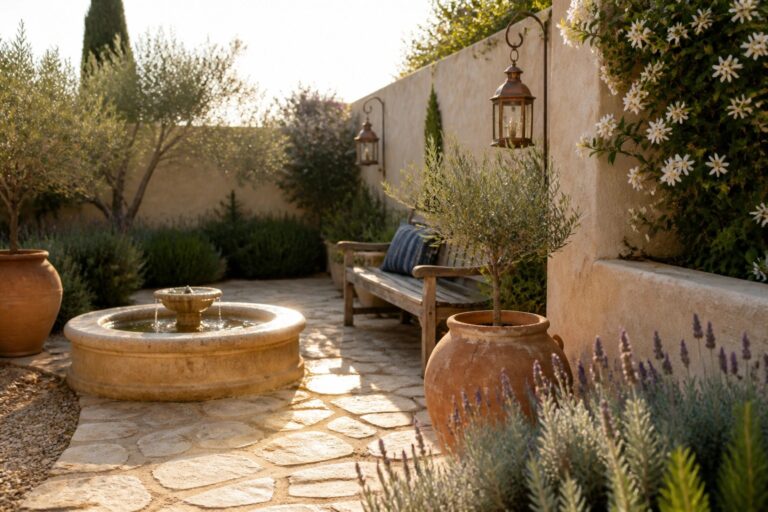
I have found that backyard gardens tend to feel more settled when the planting beds and paths are planned together from the start instead of added one at a time.
People often notice first whether they can move through the space without stepping around plants or squeezing past furniture.
Some setups simply work better once you walk them in person.
I usually test a new bench placement or a short stretch of edging before deciding on any larger changes to the beds.
The designs that hold up are the ones that leave room for plants to grow into the layout over a few seasons.
Anchor a Patio with a Small Fountain
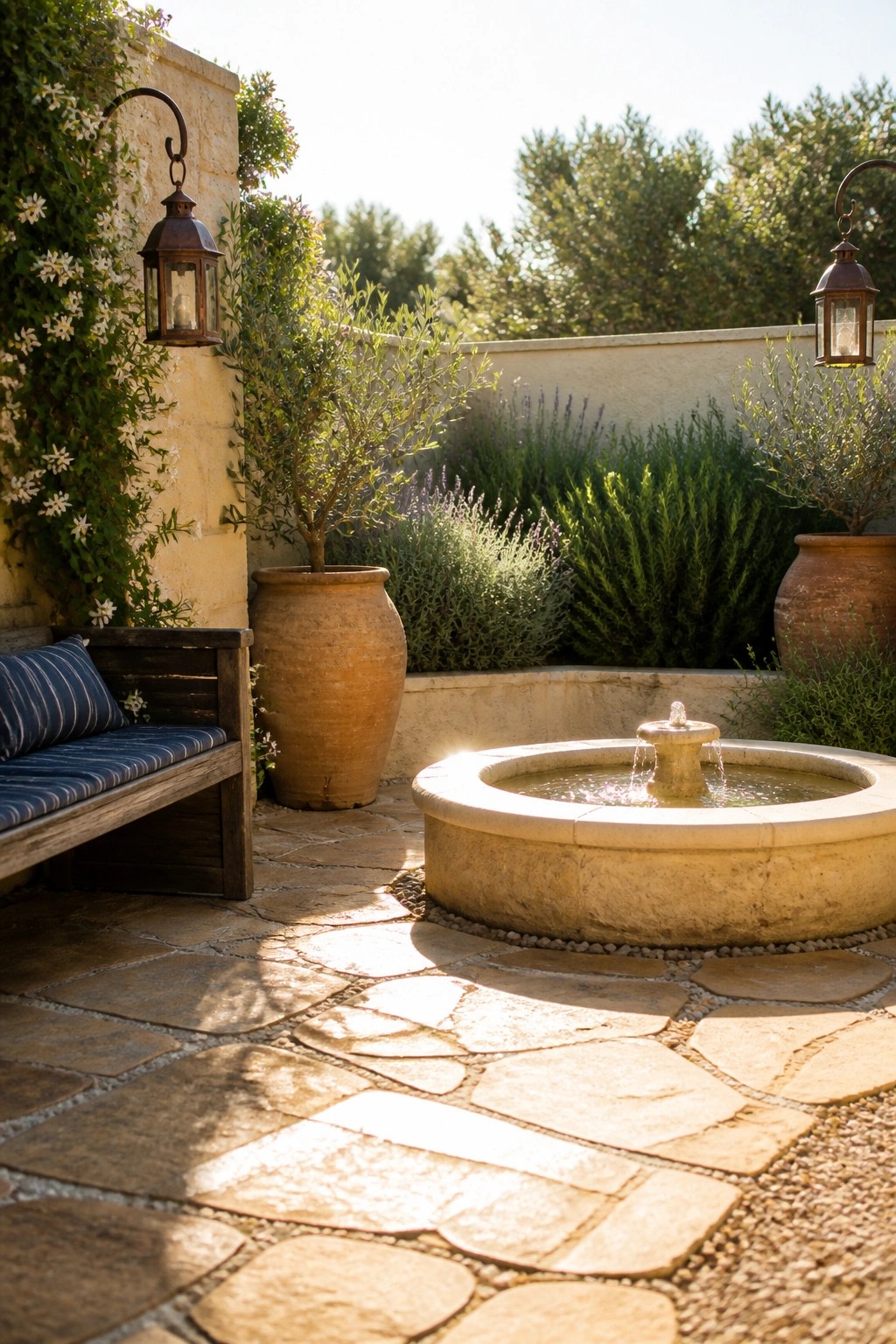
A small fountain gives a patio a clear center point and brings in the sound of moving water. That simple addition turns an open area into a spot that feels more settled and easier to spend time in.
This works best on a modest patio or in a corner of the yard where you already have seating. Keep the pots and plants around it fairly low so the fountain stays the main feature and does not get crowded.
Curved Stone Paths For Natural Flow
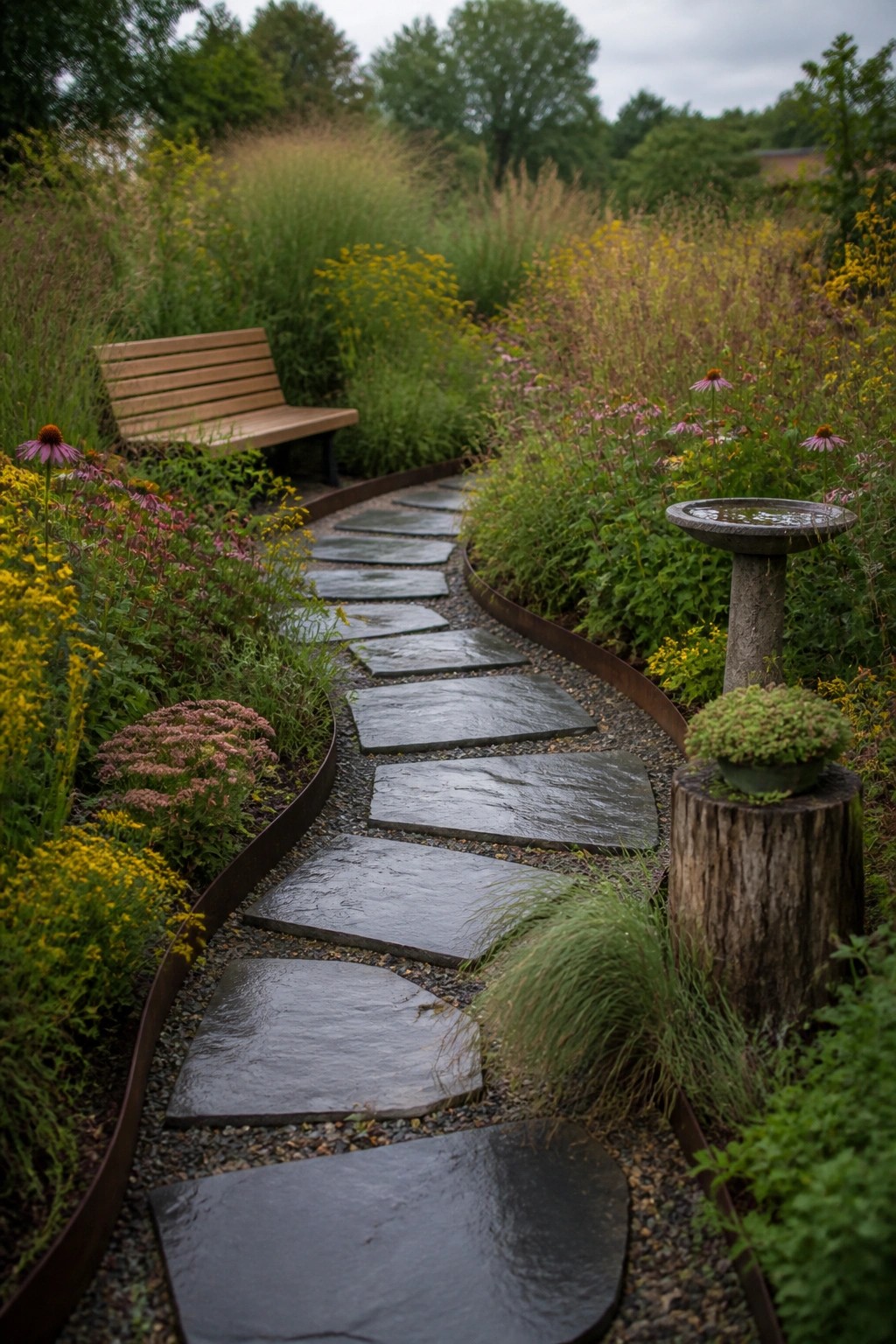
A winding path through the garden breaks up straight lines and makes the space feel more relaxed. The stones sit low in gravel with a simple metal edge that keeps everything tidy while letting plants spill over naturally.
This layout works well in mid-sized yards where you want to slow down the walk and show off different plantings along the way. Use it where the garden has some depth so the curve can lead toward a bench or focal point without feeling forced.
Low Hedges And Gravel Give A Garden Clear Structure
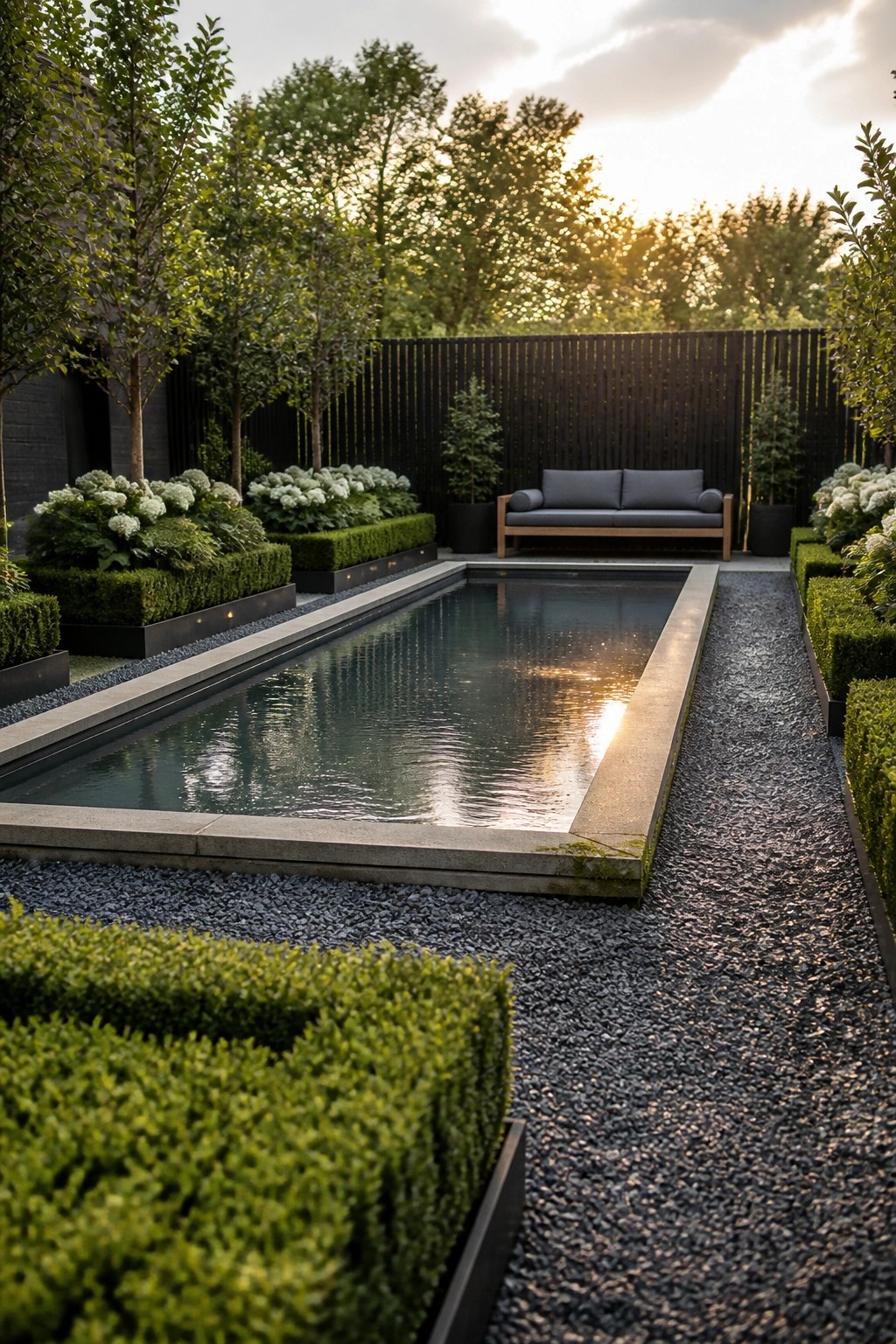
Low hedges planted along gravel paths bring order to a backyard without making it feel rigid. The repeated shapes guide movement through the space and keep beds looking intentional rather than scattered. This works especially well around a long pool where you want the eye to travel the length of the yard.
It suits smaller gardens that need to feel organized and larger ones that risk looking empty. Keep the hedges simple
A Simple Potting Table Next to the Beds
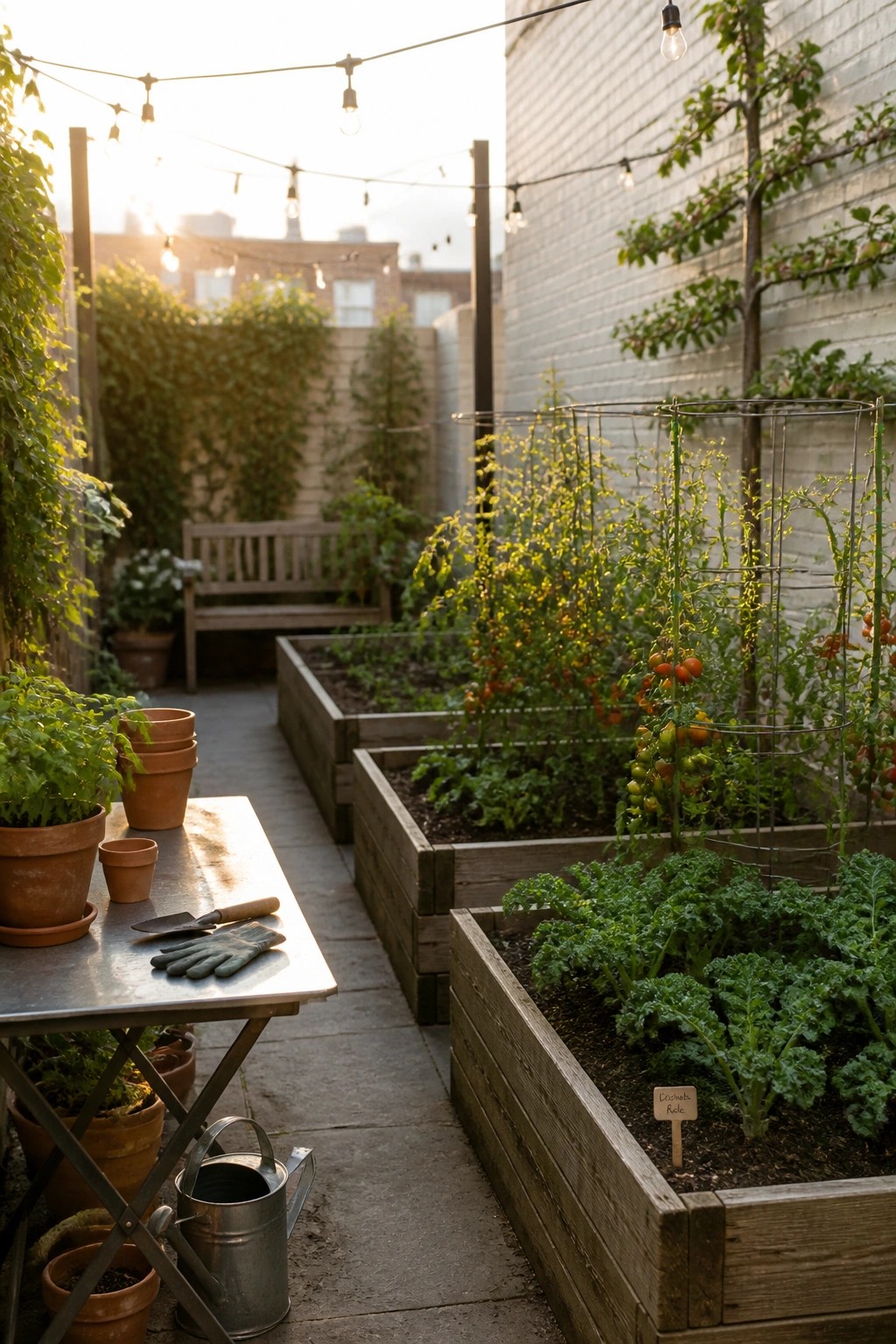
A potting table placed right beside the beds makes daily garden work much easier. You can set down tools, mix soil, or move seedlings without walking back and forth across the yard. It keeps everything in one spot so the process feels less scattered.
This setup works well in smaller yards or narrow side gardens where space is limited. Use a sturdy table that can handle dirt and water, and keep basic tools within reach. Just make sure it does not block the path or crowd the beds.
Winding Stone Paths Through The Garden
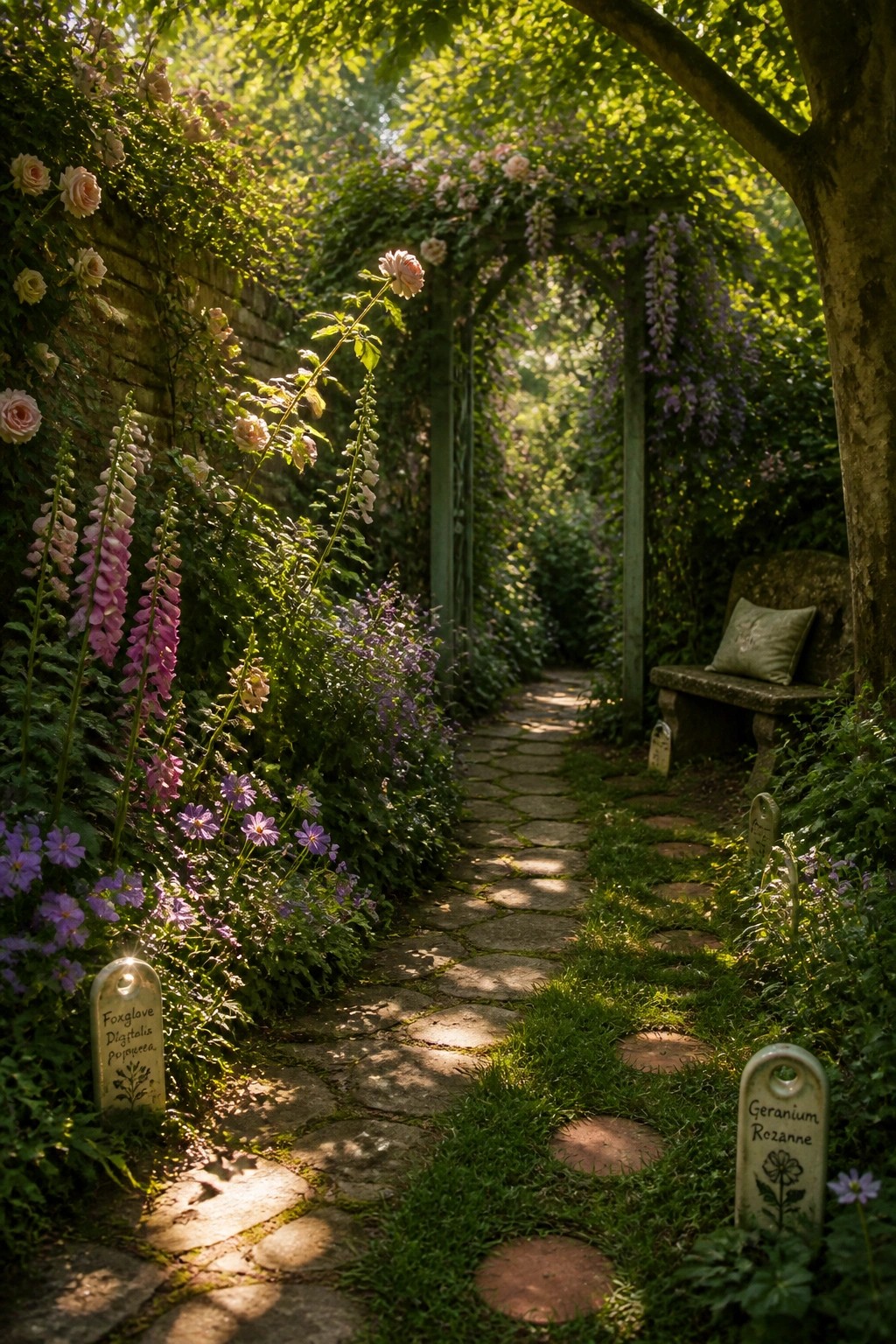
A winding stone path gives a garden a clear sense of direction while still letting the plants feel full and natural. It turns the space into something you can stroll through instead of just looking at from the edge.
This layout works best in smaller yards where you want to slow the walk down and enjoy the flowers up close. Keep the stones uneven in shape and let the planting spill over the sides a little so the path feels settled rather than new.
Stepping Stone Paths Through Gravel
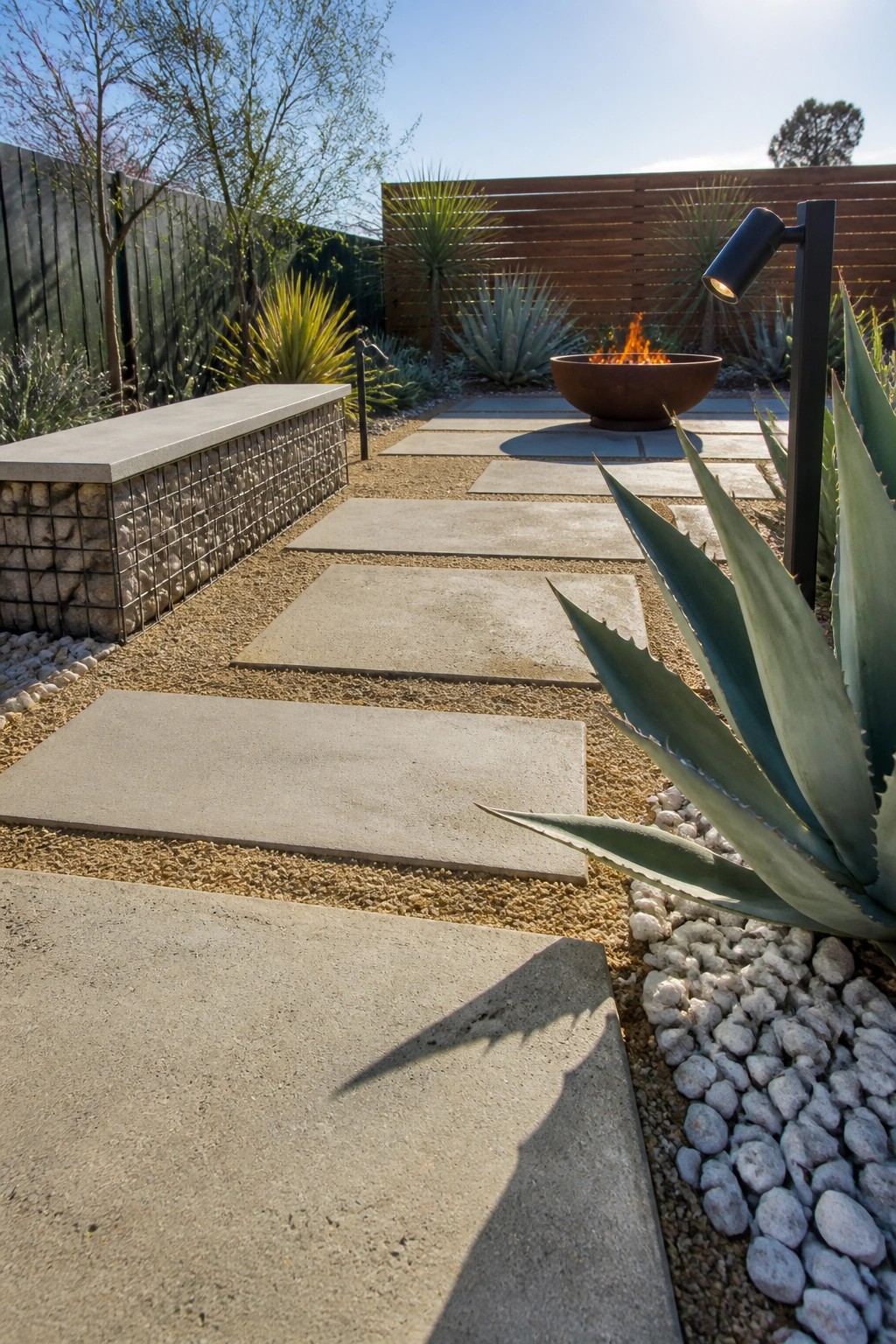
A path of large concrete pavers set into gravel creates a simple way to move through the garden while keeping the surface soft underfoot. The gaps filled with gravel let water drain easily and give the planting room to feel natural on either side.
This layout works best in dry-climate gardens or smaller yards where you want clear movement without covering everything in solid paving. It pairs well with succulents and low-water plants and keeps the whole space looking open rather than crowded.
Stone Steps For Sloped Yards
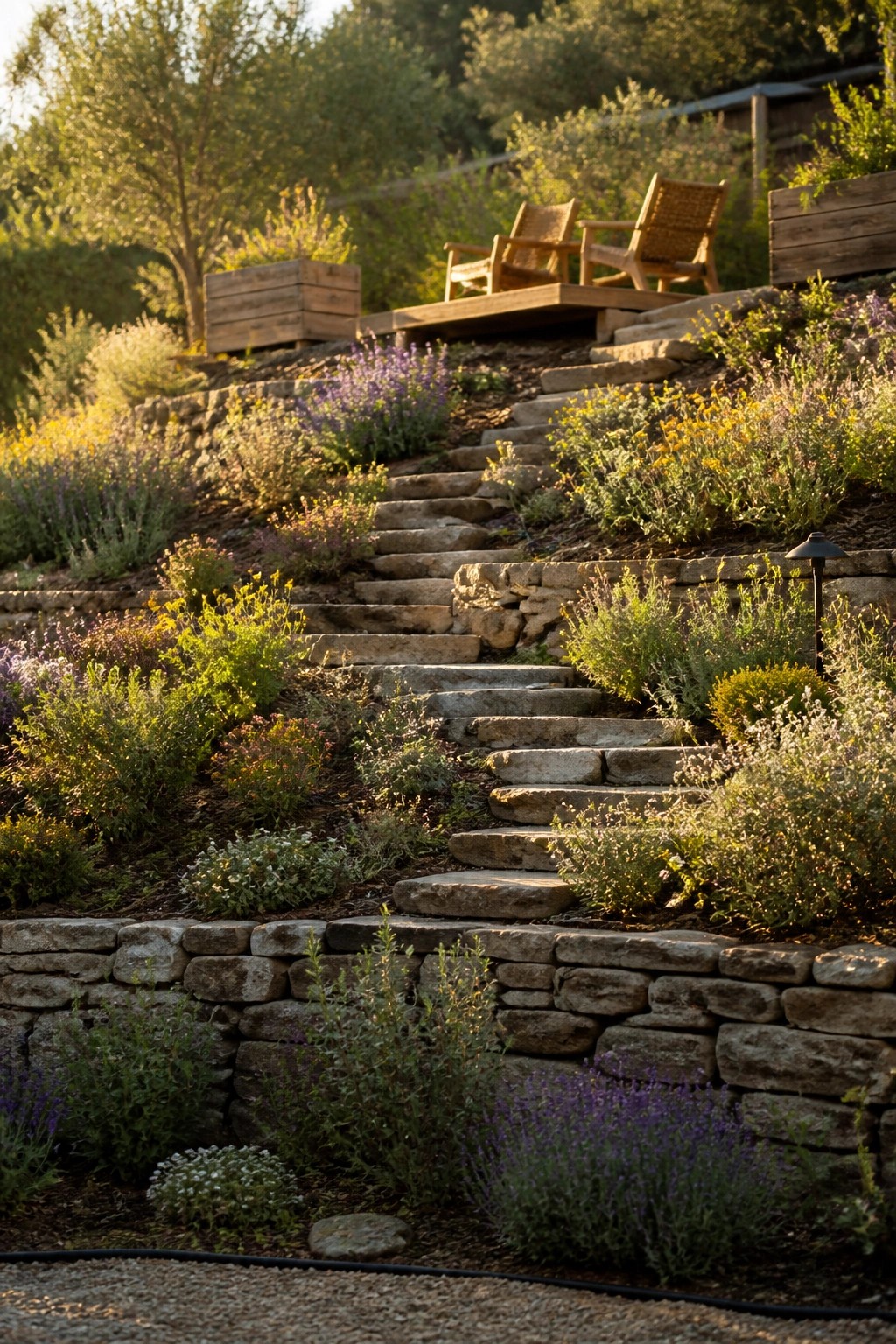
Stone steps work well on sloped yards because they turn a steep drop into a series of small terraces. Each level gives plants a stable spot to grow while still letting people walk through the garden without fighting the hill.
This layout suits homes with elevation changes where a flat path would not fit. Keep the steps wide enough for easy footing and let the planting spill over the edges a bit so the stone does not feel too harsh.
Stepping Stones Along A Garden Pond
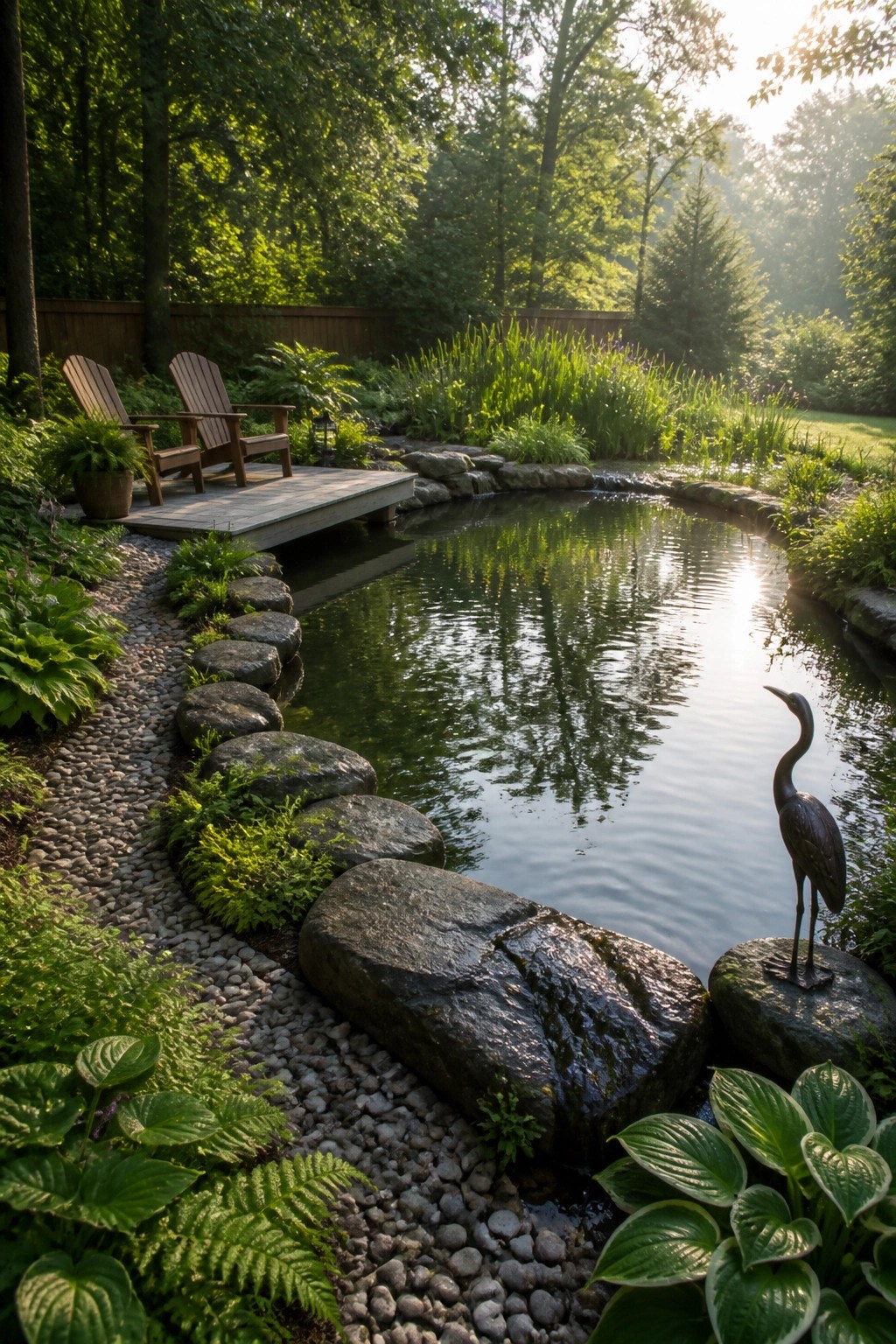
A row of flat stones set along the water gives people a simple way to walk right beside the pond. It turns the edge into a usable path instead of leaving a strip of grass or mulch that gets muddy or hard to maintain.
This approach works well in smaller yards where the garden needs to feel connected rather than divided into separate zones. Place the stones close enough for easy steps and let nearby plants grow in around them so the path does not stand out too sharply.
Curved Paths With Brick Edging
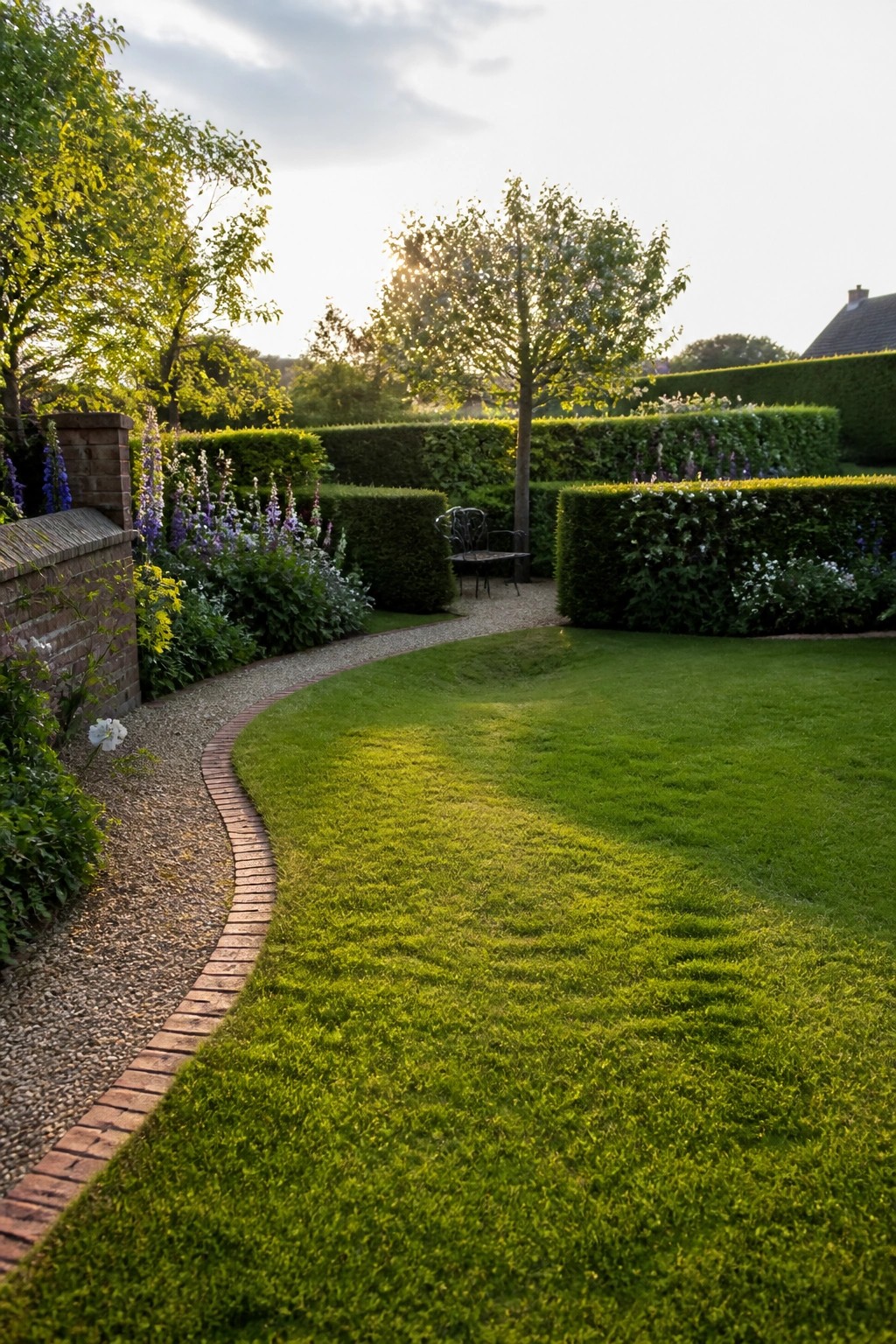
A curved gravel path with brick edging gives a garden some easy movement and keeps the lawn from feeling like one big flat space. The edging holds everything in place and creates a clear but soft line between the grass and the planted beds.
This layout works best in medium to large yards where you want to wander without straight lines taking over. It suits homes that already have some established hedges or trees, since the path can curve around them rather than cutting through. Keep the curve gentle so it feels like it belongs.
Group Pots Around a Small Fountain
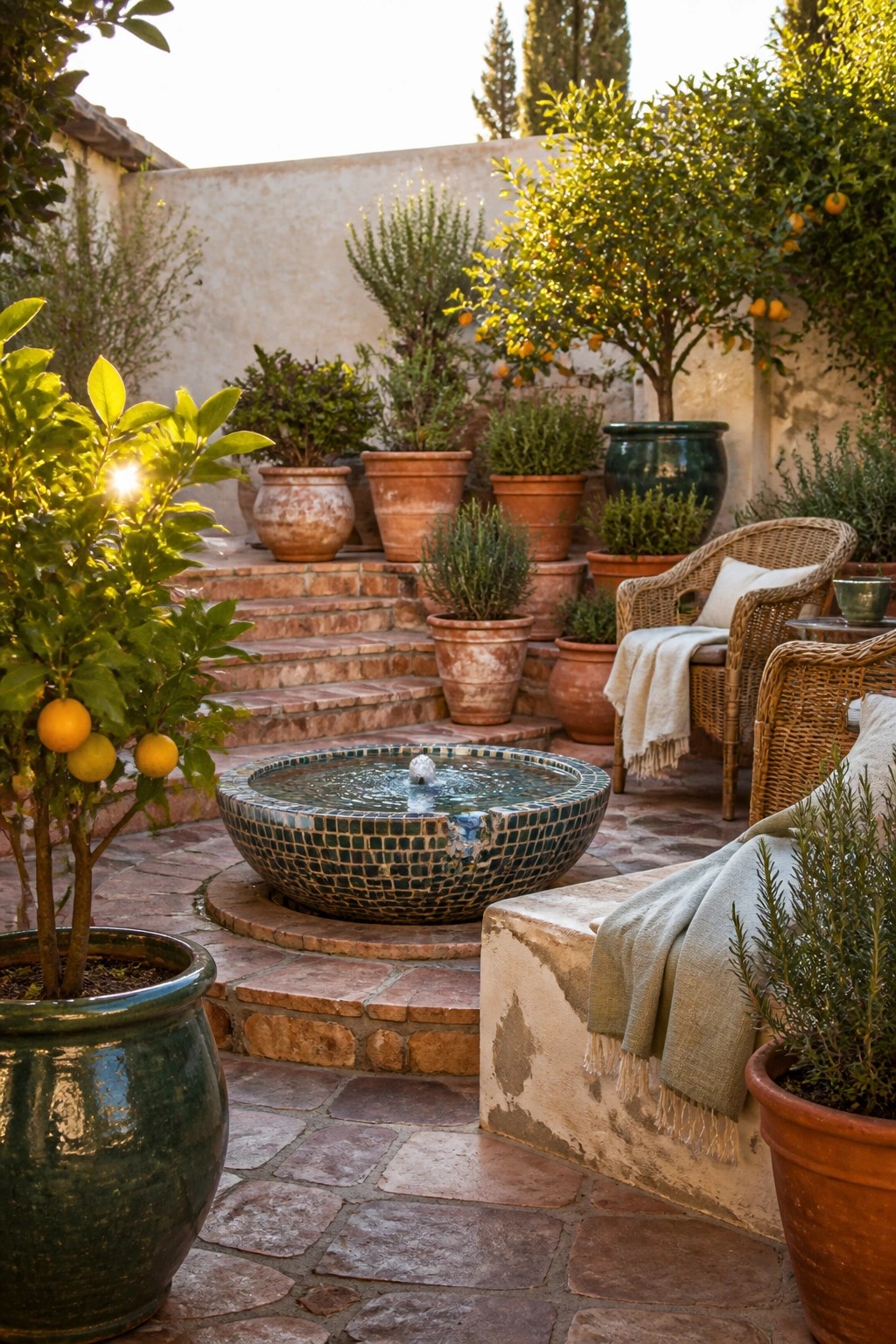
A few large pots placed near seating can make a stone patio feel more inviting without any major construction. The mix of citrus trees and smaller herbs brings scent and movement close to where you actually sit and relax.
This approach works best on paved surfaces where in-ground beds are not an option. Move the pots as needed for sun or shade, and keep the fountain as the steady center so the whole area feels settled.
Stepping Stone Paths For Natural Garden Flow
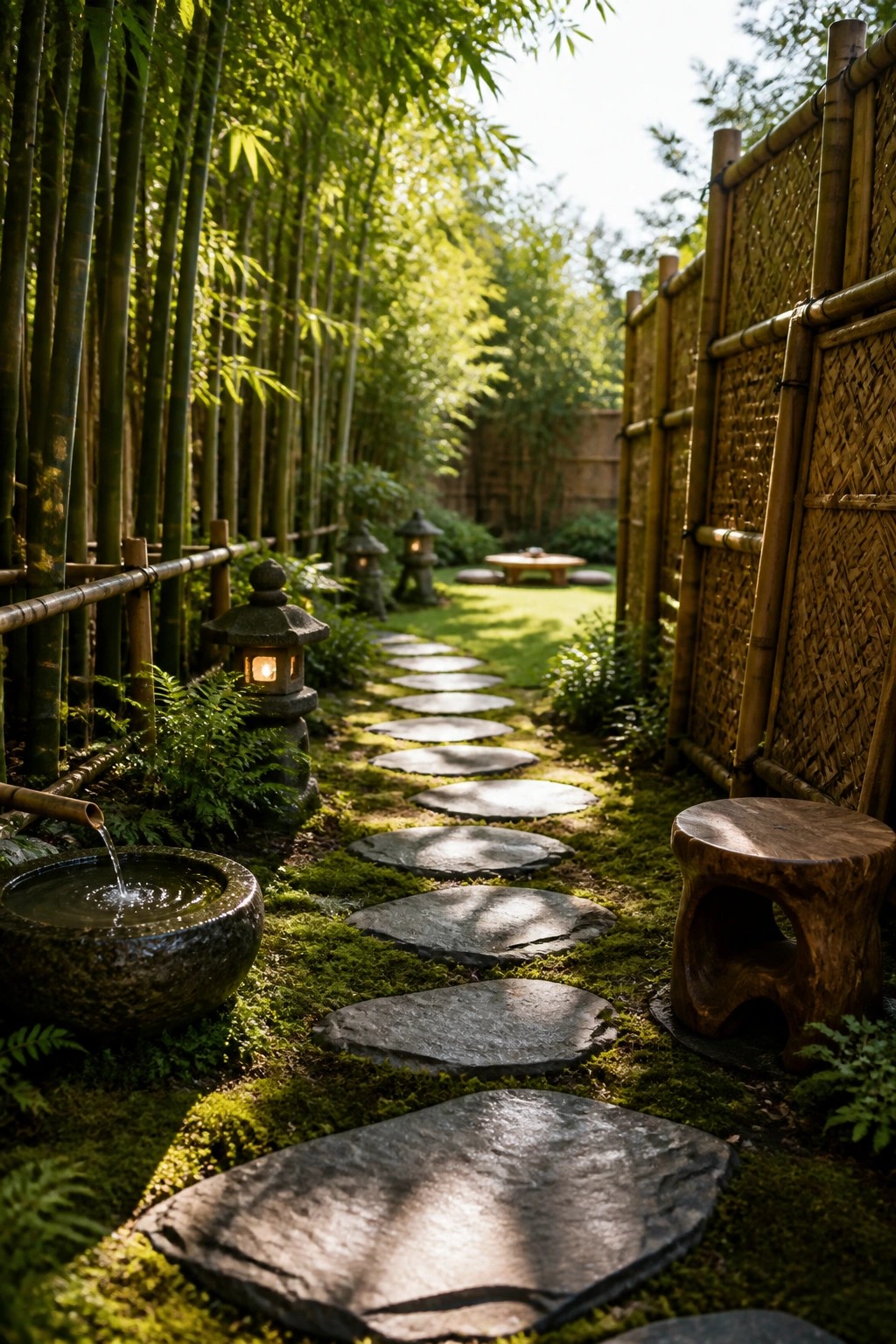
Stepping stones set into moss give a garden path that feels relaxed instead of rigid. The stones sit low so the ground cover grows right up to the edges and the walkway blends into the planting around it.
This layout works well in smaller or partly shaded yards where you want people to slow down. It suits gardens with bamboo or ferns because the stones keep the ground usable while still letting the planting stay loose and natural.
Raised Metal Planters To Shape Garden Flow
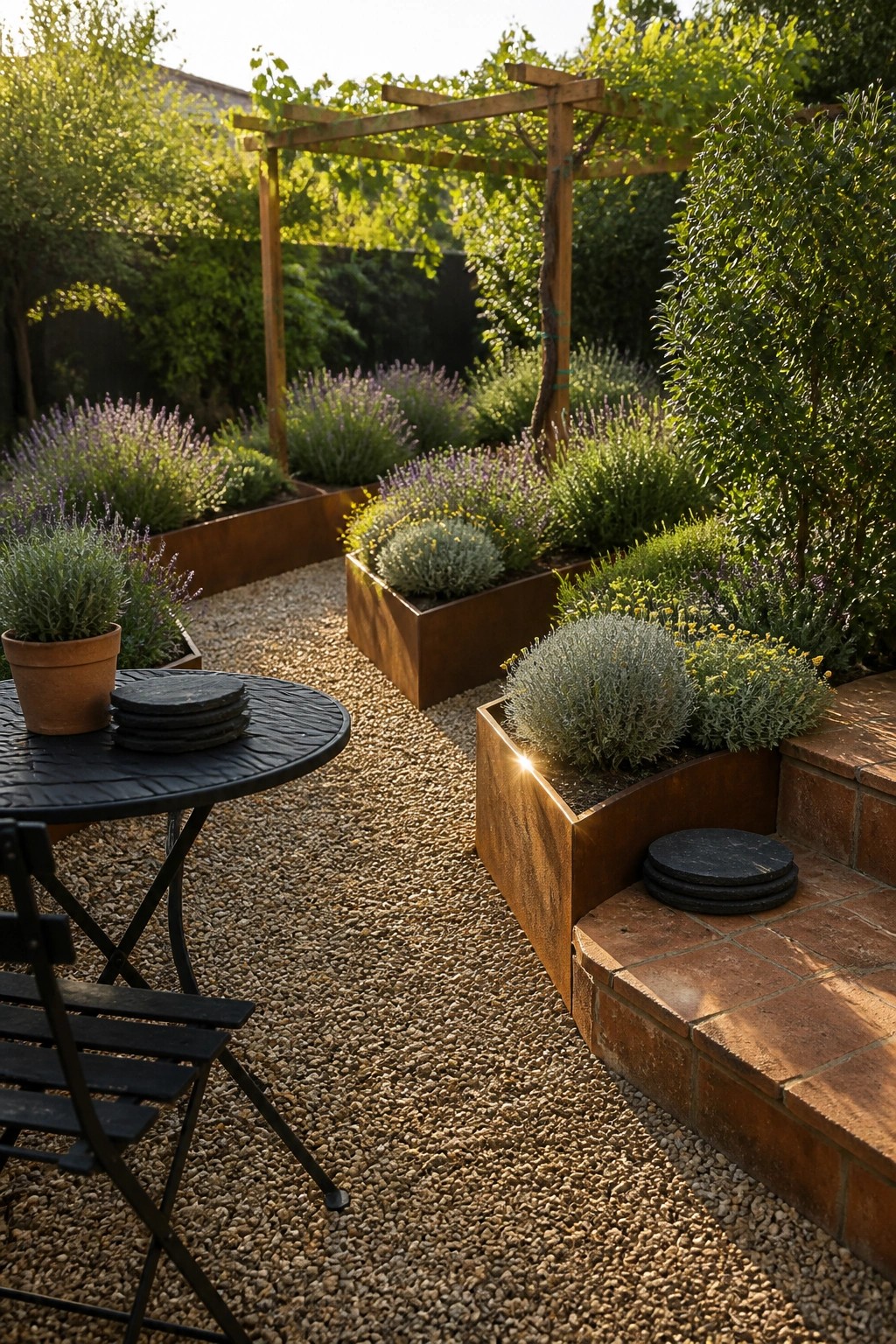
Raised metal planters give you a simple way to keep planting areas defined without adding a lot of extra edging or borders. They hold the soil neatly in place and let different plants sit at a comfortable height, which makes the whole garden feel more structured while still allowing room to move through it.
This approach works best in smaller yards or along side paths where you want clear walking space but still need room for flowers and shrubs. Set the planters in a line next to gravel or stone, and keep the beds at a similar height so the layout stays easy to follow year after year.
A Central Fire Pit for Gathering
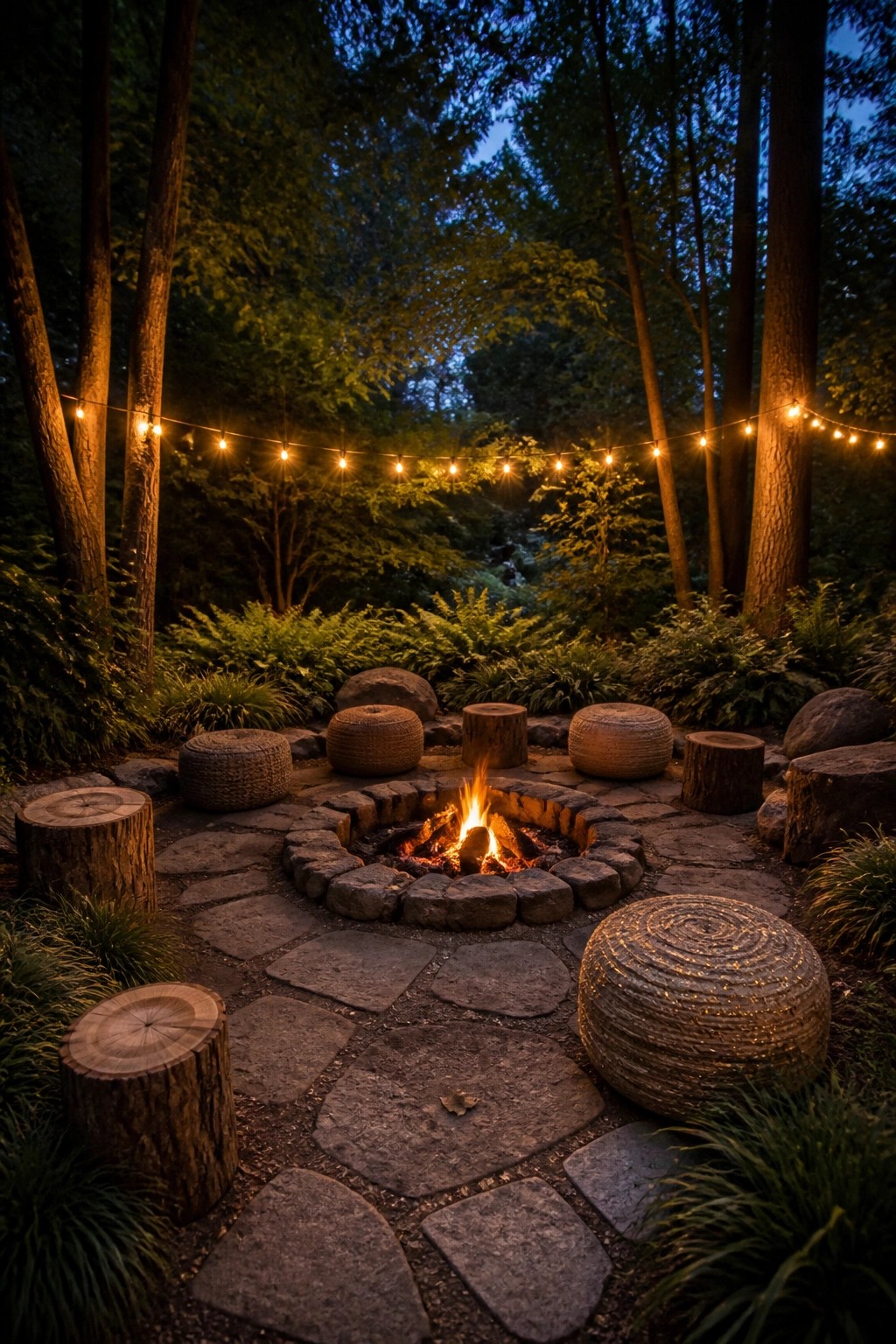
A fire pit works well when it sits at the center of the space instead of off to the side. People tend to gather more naturally when the fire is easy to reach from every seat, and the simple stone ring keeps the setup from feeling fussy.
This layout suits yards with trees or existing plantings around the edges. Use low, sturdy seats like stumps or flat stones so nothing blocks the view of the flames, and leave enough open ground between the pit and any nearby greenery.
Place a Lounge Area Right Beside the Pool
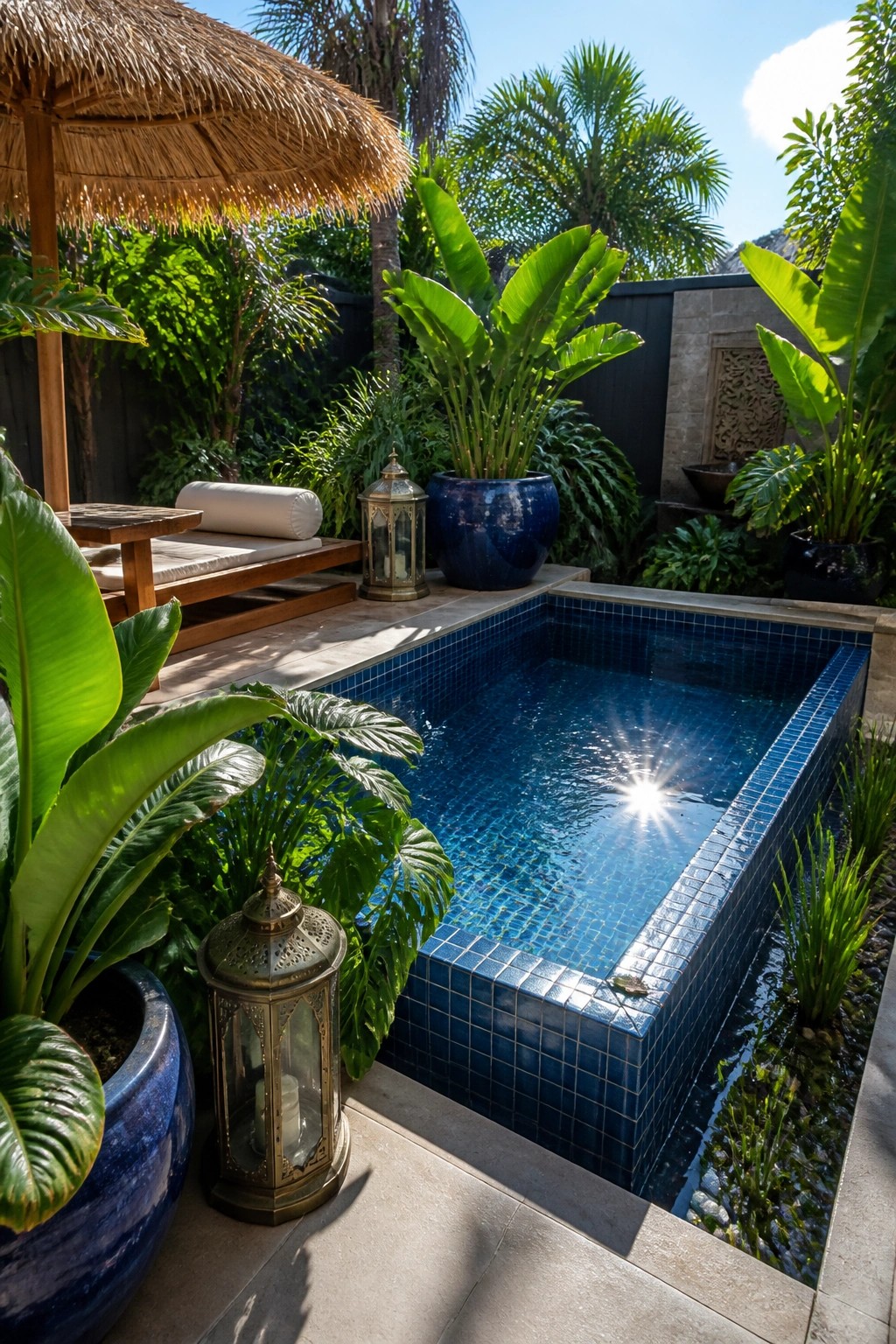
A shaded seating spot next to the water turns a basic pool into a place where people actually spend time. The thatched umbrella and low wooden bench create an easy spot to rest without going far from the water. Large potted plants around the edges add privacy and soften the hard surfaces.
This setup works well in smaller yards where space is limited. Keep the seating low and simple so it does not compete with the pool. Make sure the shade covers at least one or two chairs so the area stays comfortable during the hottest part of the day.
Boulders For Casual Garden Seating
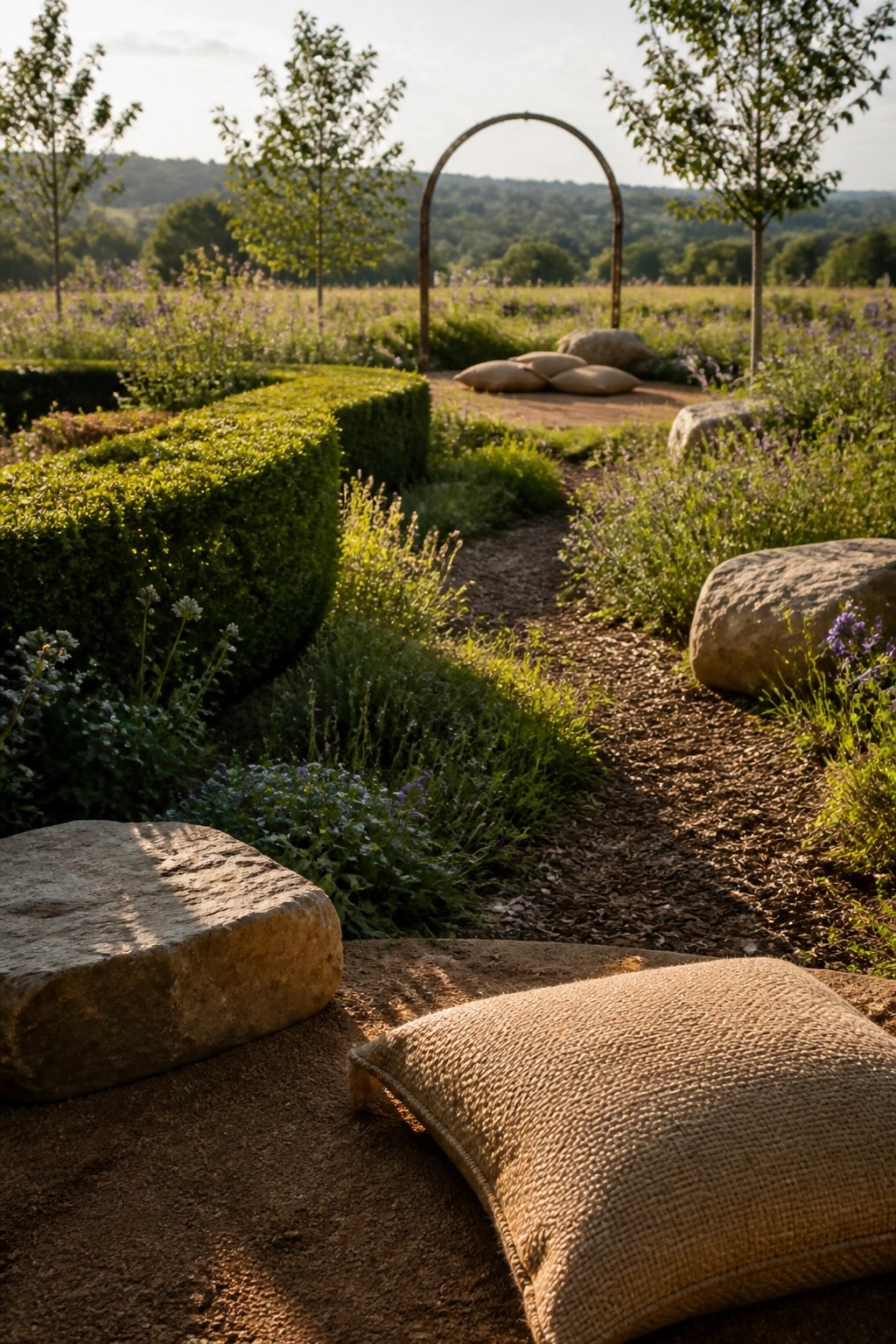
Large stones make good anchors for seating in a garden because they feel like they belong there already. They sit low to the ground and do not compete with the plants around them.
Set a few cushions or pads beside the stones so people can sit comfortably without bringing out chairs. This works well along paths in informal gardens where the layout already mixes trimmed hedges with looser plantings.
Add a Linear Water Feature Along the Path
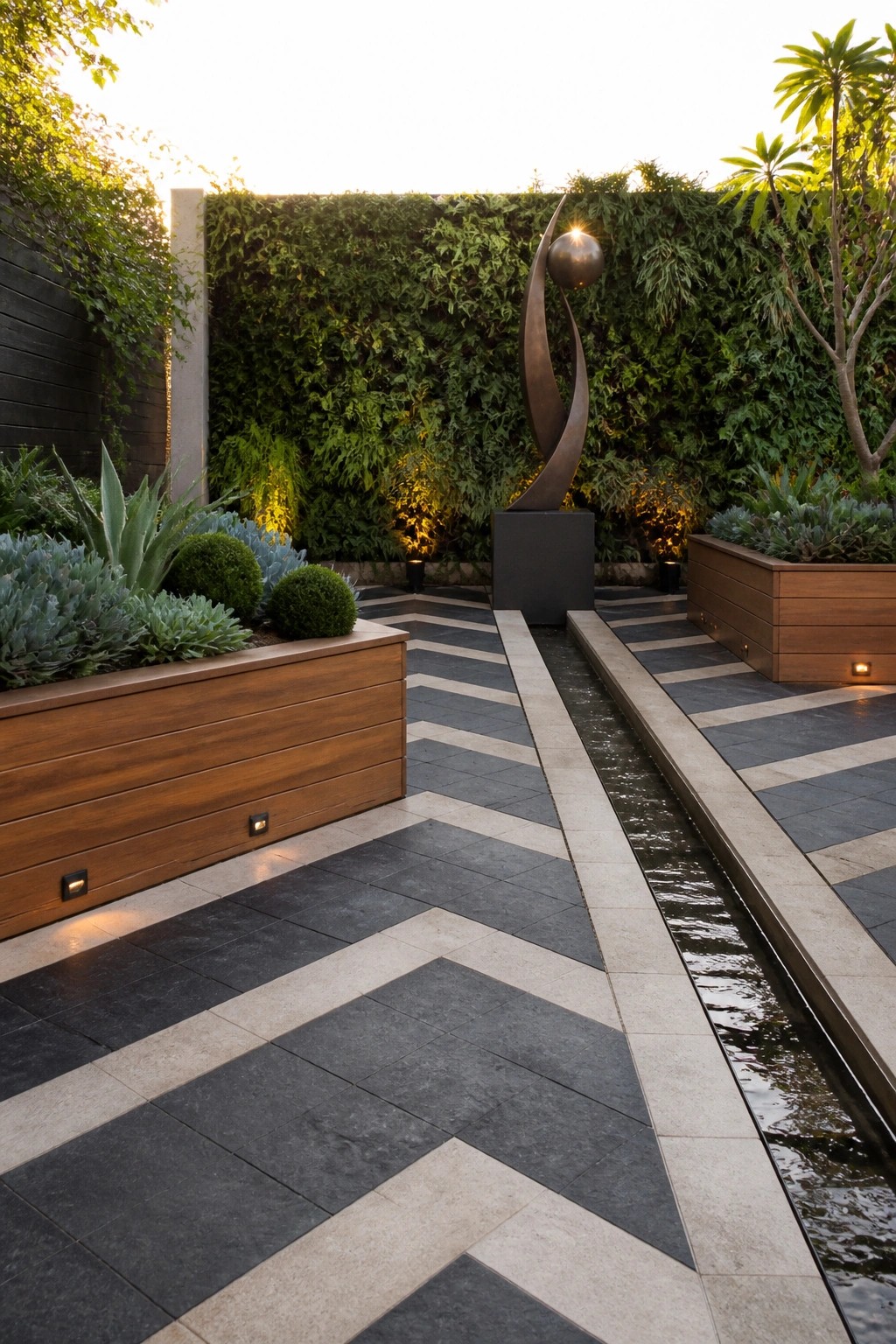
A narrow water channel set into the garden path gives the space a steady sense of movement. It works well when the surrounding paving stays simple so the water can stand out and guide the eye forward without extra decoration.
This layout suits larger backyards that need a clear line from one area to another. Keep the channel shallow and the edges straight so it stays easy to clean and does not fight with nearby planting beds.
Curving Gravel Paths
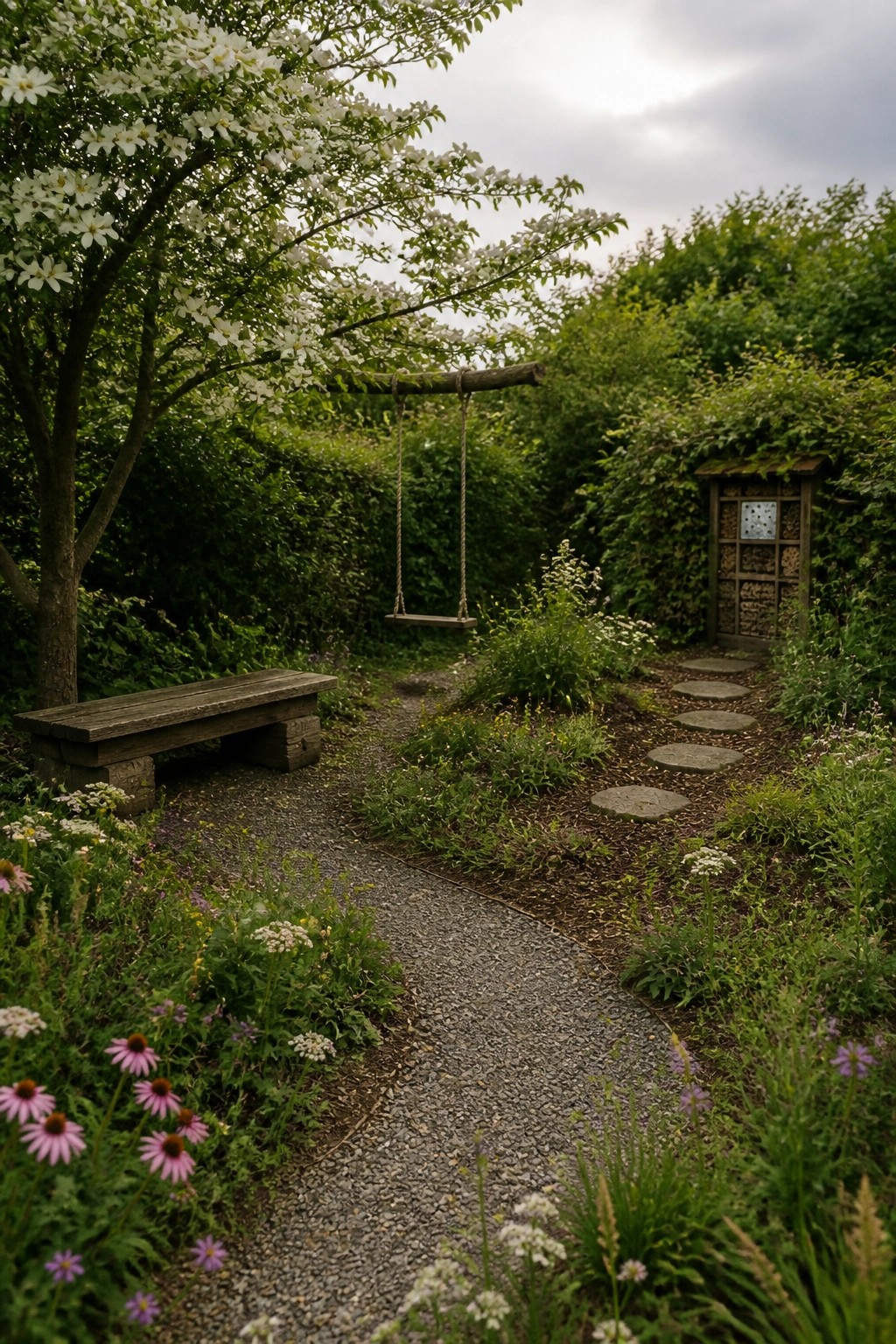
A curving path gives the garden a relaxed flow that feels natural rather than planned. It lets you wander through the space instead of rushing straight from one end to the other, and it works especially well when the garden is filled with layered planting.
Gravel is a good choice because it is easy to lay and softens the look of the beds on either side. Keep the curve gentle so the path still feels practical, and use stepping stones only where you need a firmer surface near seating or main planting areas.
Line a Narrow Path With Low Lights
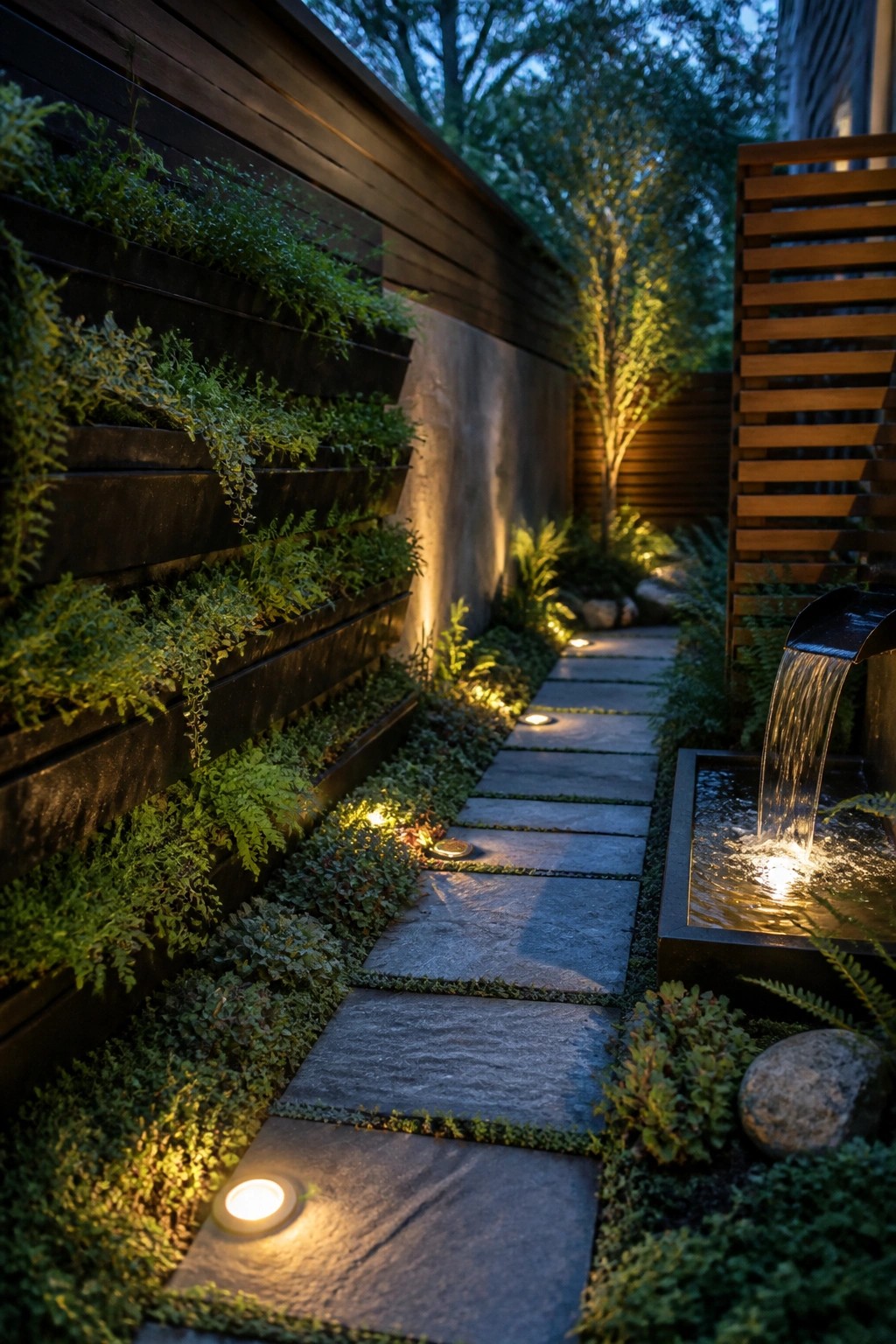
A simple row of recessed lights set into the stone turns a narrow garden walk into something you actually want to use after dark. The lights stay low so they guide your steps without flooding the space or washing out the plants around them.
This works especially well in tight side yards or between a wall and a fence where you need both direction and a sense of width. Keep the fixtures spaced evenly, choose a warm bulb, and let the surrounding greenery stay a little wild so the path feels like part of the garden instead of a separate strip.
Metal Containers As Raised Beds
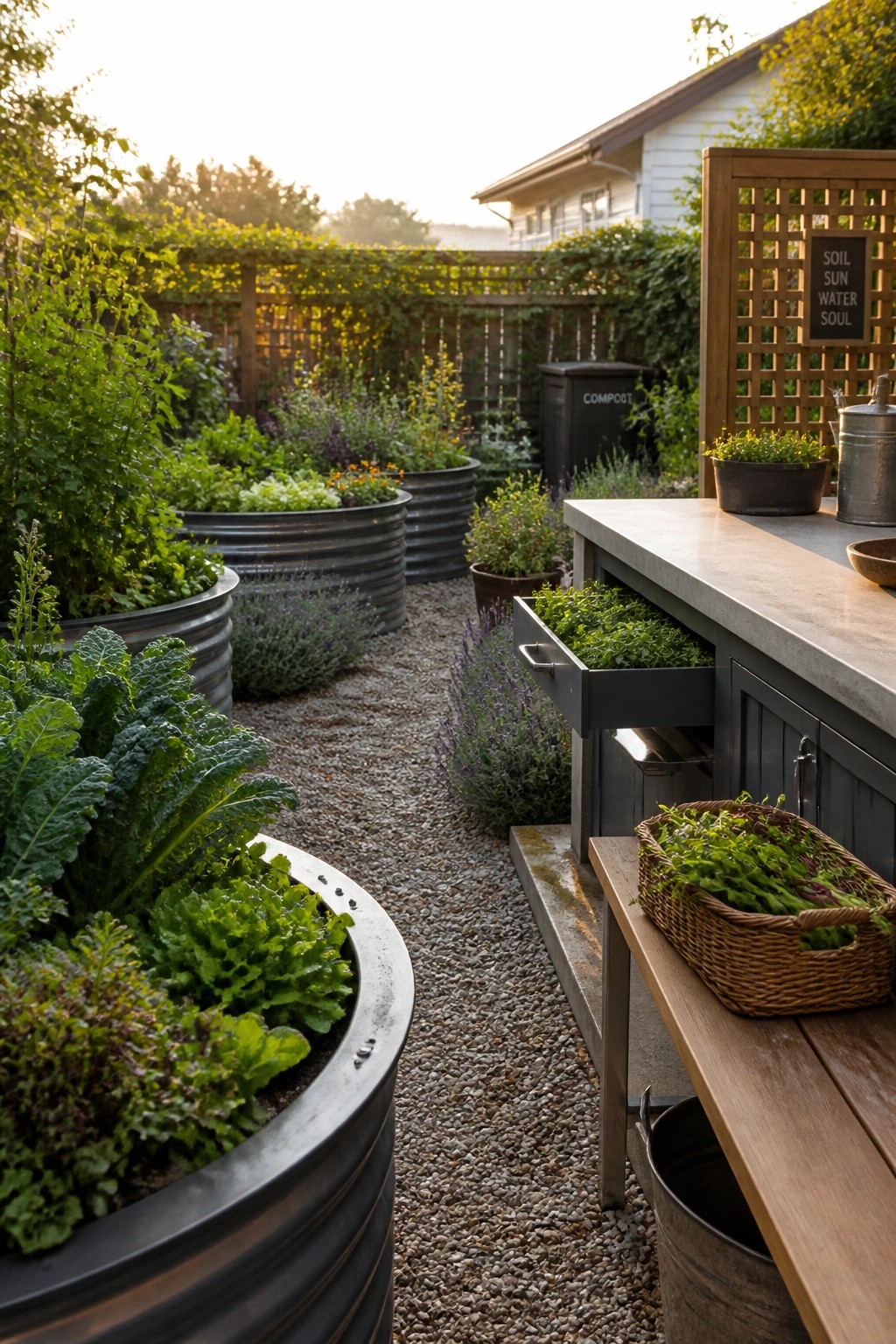
Many gardeners turn to large metal tubs because they last for years without much upkeep. They create clear planting zones along a path and keep soil contained even in a small yard.
Place them on gravel so water drains away from the bases. Fill them with a mix of vegetables and herbs that you use often, and leave enough space between the tubs for easy walking and weeding.
Winding Paths Help Gardens Feel More Open
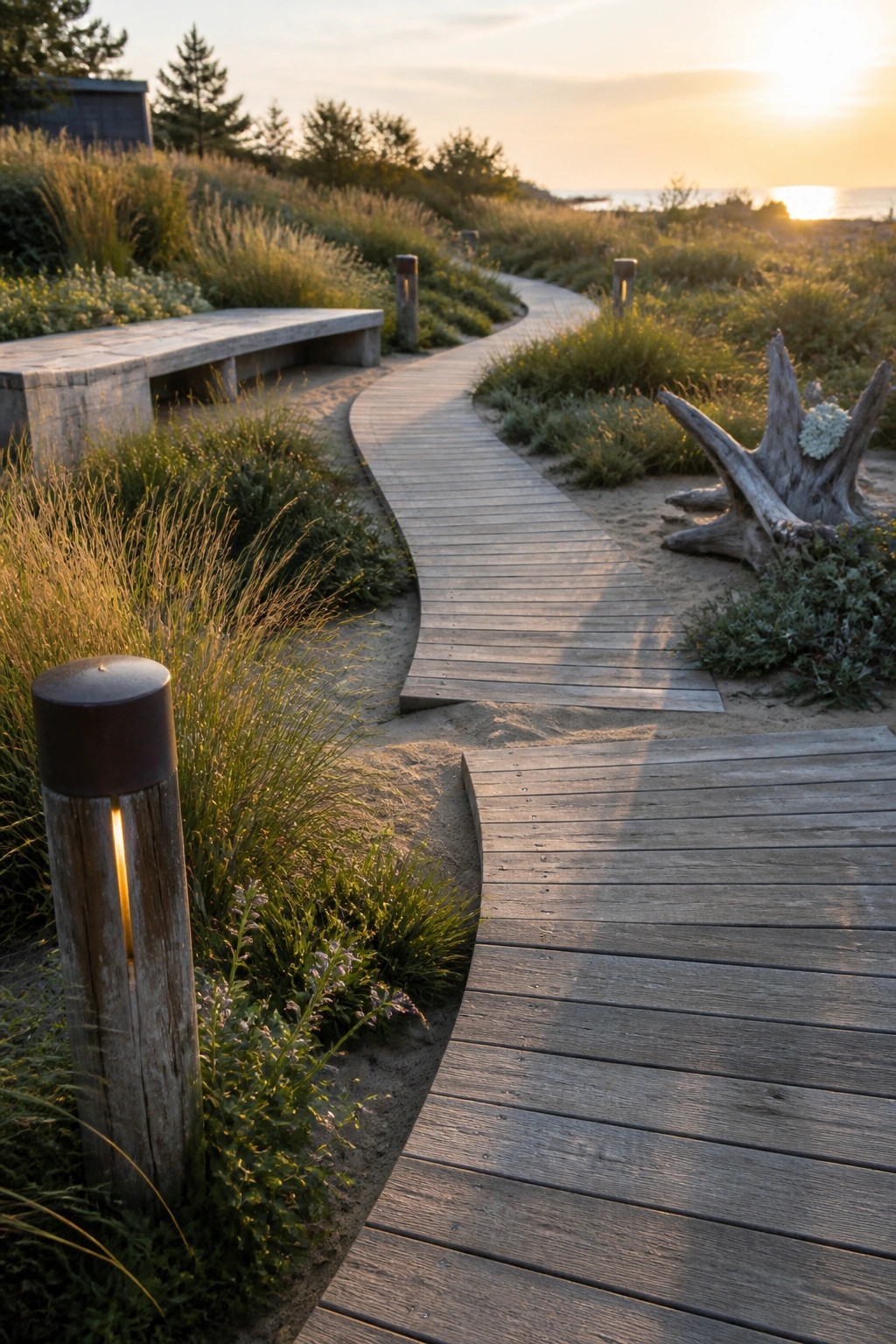
A winding boardwalk keeps the eye moving and makes even a modest garden feel bigger. The simple curve draws you forward without any sharp turns or busy details, and it lets the surrounding grasses and low plants do most of the work.
This layout works best in open or coastal yards where you want a clear route without adding walls or heavy structures. Use pressure-treated wood or similar materials that age naturally, and keep the edges soft with planting so the path feels like part of the landscape rather than an addition to it.
Centering A Patio Around A Fire Pit
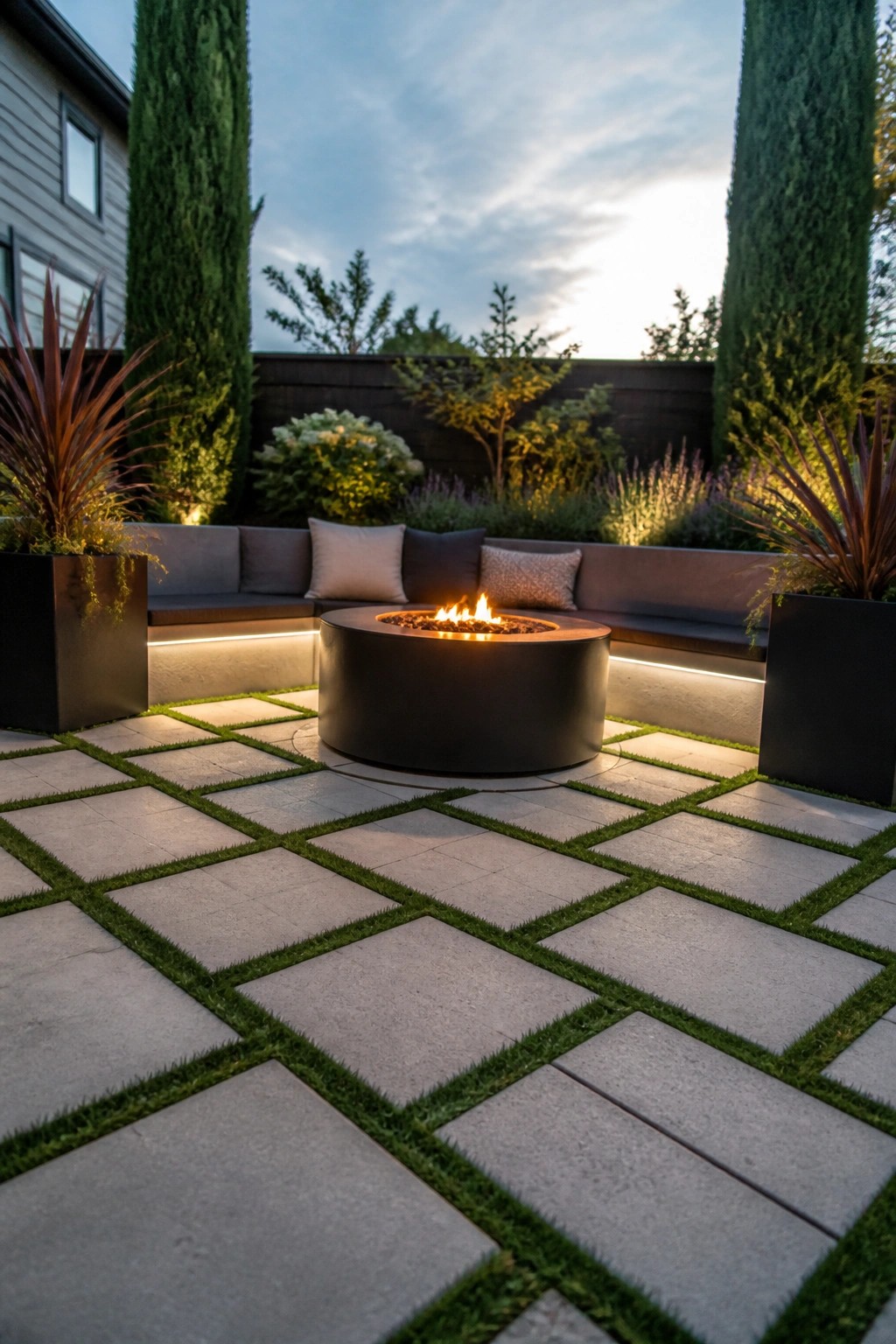
A fire pit placed right in the middle of the patio gives the whole space a clear purpose. It pulls seating toward it and makes the area feel finished without needing a lot of extra pieces.
This setup works well on smaller or medium patios where you want one main spot for evenings. Use sturdy paving that can take the heat and leave enough room around the edges so people can walk past without crowding the fire.
Stepping Stone Paths Through Gravel
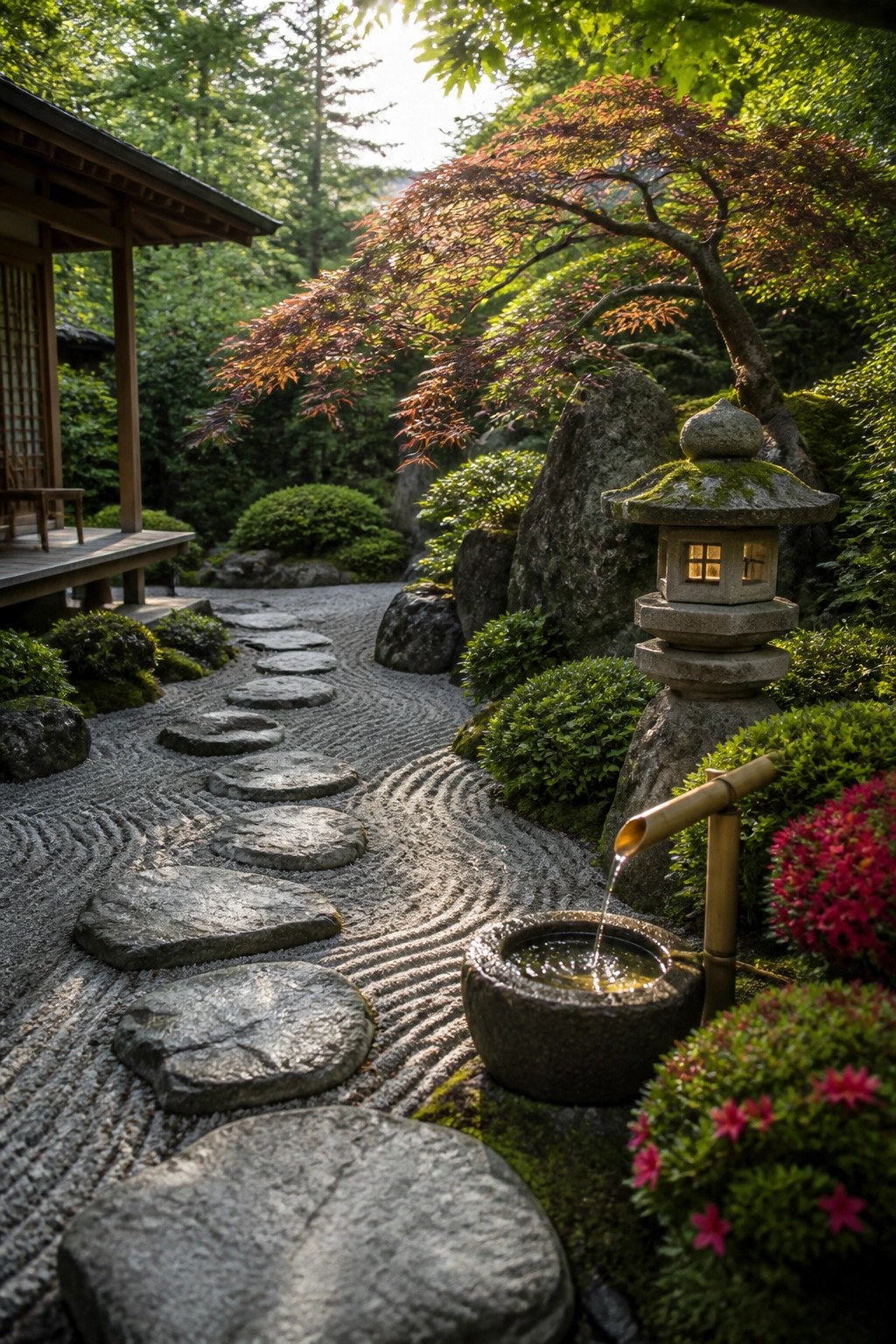
Stepping stones set into raked gravel make a garden path feel calm and easy to follow. The stones give a clear route without covering the whole ground, so the space stays open and simple to walk through.
This layout works best in smaller gardens or along the side of a house where you want gentle movement rather than a wide walkway. Use larger stones spaced for natural steps and keep the gravel raked in soft curves so the path stays low maintenance over time.
Frequently Asked Questions
Q: How do I carve out a quiet spot to unwind when my backyard has no natural shade?
A: Place a low bench against an existing fence or wall and plant a couple of tall grasses or shrubs behind it. The greenery blocks wind and noise while the seat stays simple. You end up with a pocket that feels sheltered without extra structures.
Q: What if the plants I like all bloom at the same time and leave bare spots later?
A: Mix in a few evergreens and some late-season perennials right from the start. They fill the gaps once the early flowers fade and keep the beds looking full as you move through the space.
Q: My yard is flat and open. How do I add flow without building raised beds everywhere?
A: Lay a winding path of stepping stones that curves toward the far corner. Plant lower flowers along the edges so the eye follows the route naturally.
