

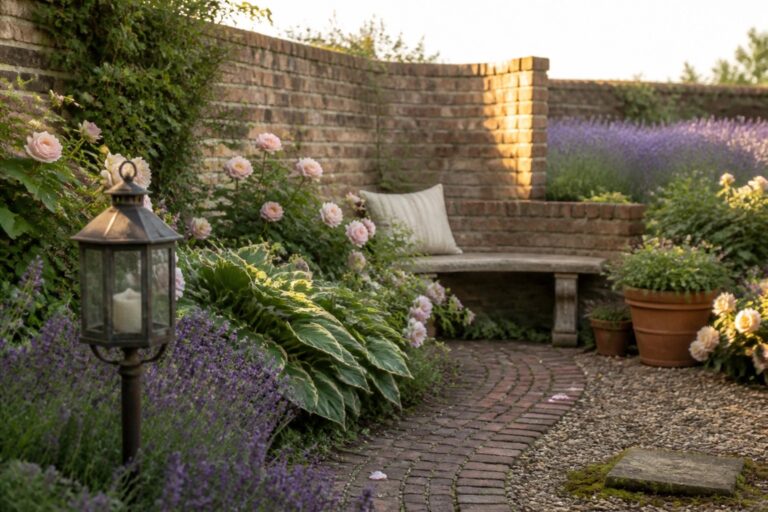
I often notice that the best garden corners develop when the planting layers build a sense of enclosure over time rather than all at once.
Over the seasons I have learned that paths and edges guide how you actually move through the space and where you end up pausing.
Small changes in layout make the biggest difference here.
A bench tends to feel comfortable only once the plants around it have grown enough to give some shade and privacy.
Trying one seating idea at a time shows me which locations get real use instead of staying unused.
Tuck a Bench Into a Corner With Layered Planting
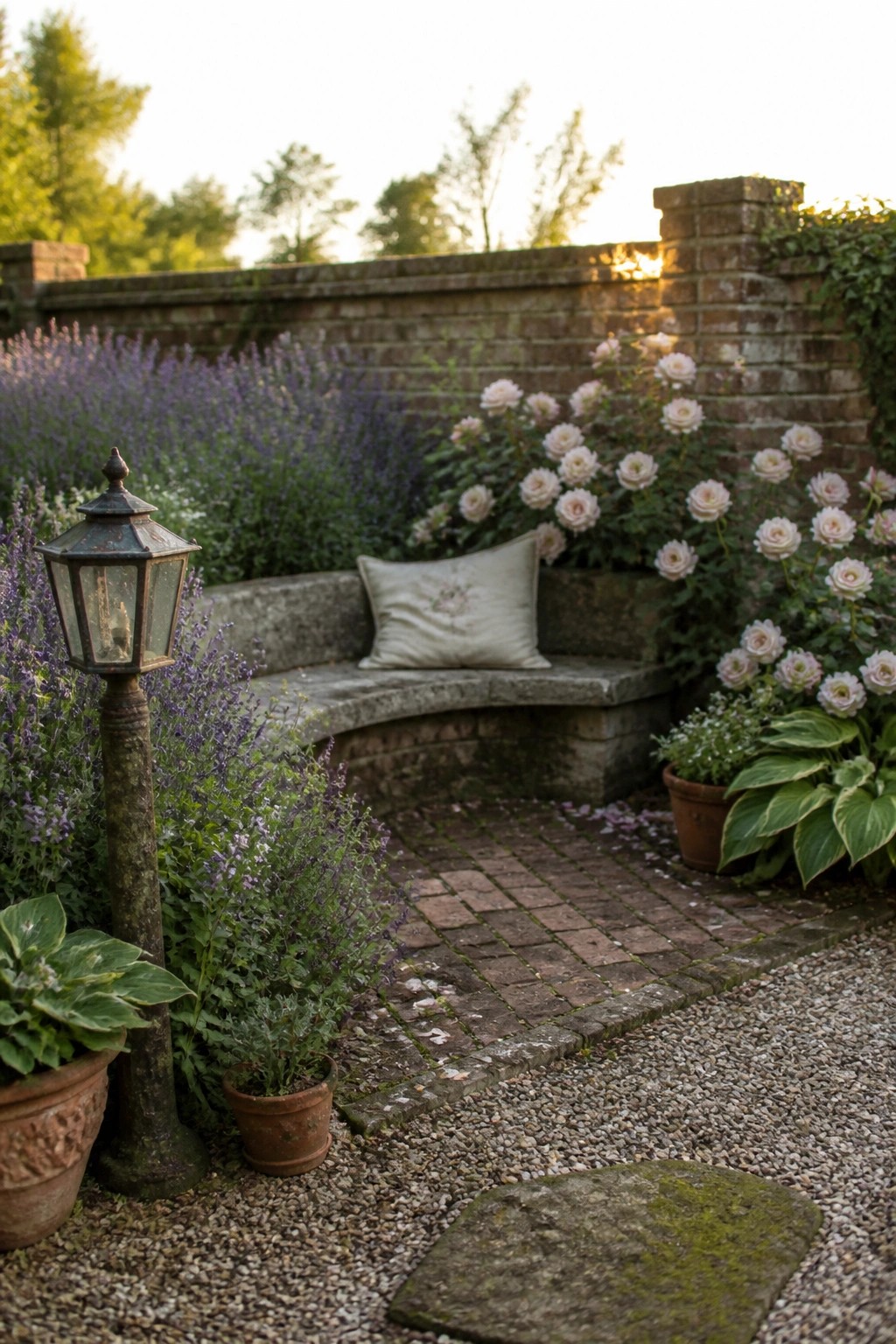
Placing a bench right against a wall lets the planting do the work of creating a quiet spot. The flowers grow up and around it, softening the hard surfaces and giving the area a sheltered feel without adding screens or structures.
This approach suits smaller gardens or side yards where space is tight. Use taller shrubs like roses at the back and lower plants in front to build depth, and keep the bench simple so it blends in rather than standing out.
Install a Wall Fountain for Soothing Garden Sound
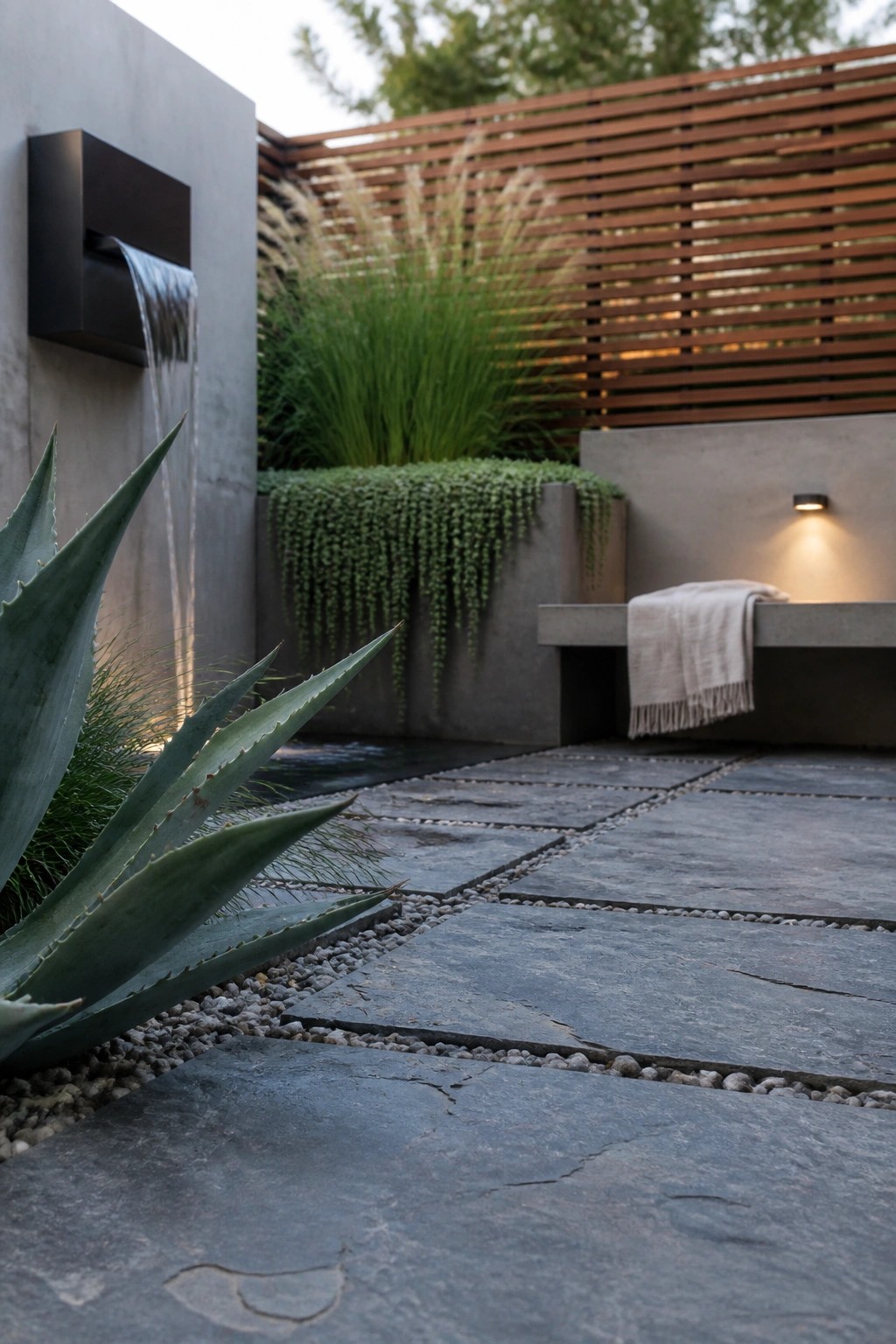
A wall fountain adds a steady, quiet sound that makes a garden corner feel more private and restful. It works best when the planting around it is layered so the water blends into the greenery rather than standing out on its own.
This idea suits smaller side yards or back corners where you want something simple to enjoy without adding furniture or big structures. Match the fountain material to nearby walls or paving so the whole spot stays calm and connected.
Stone Paths in the Garden
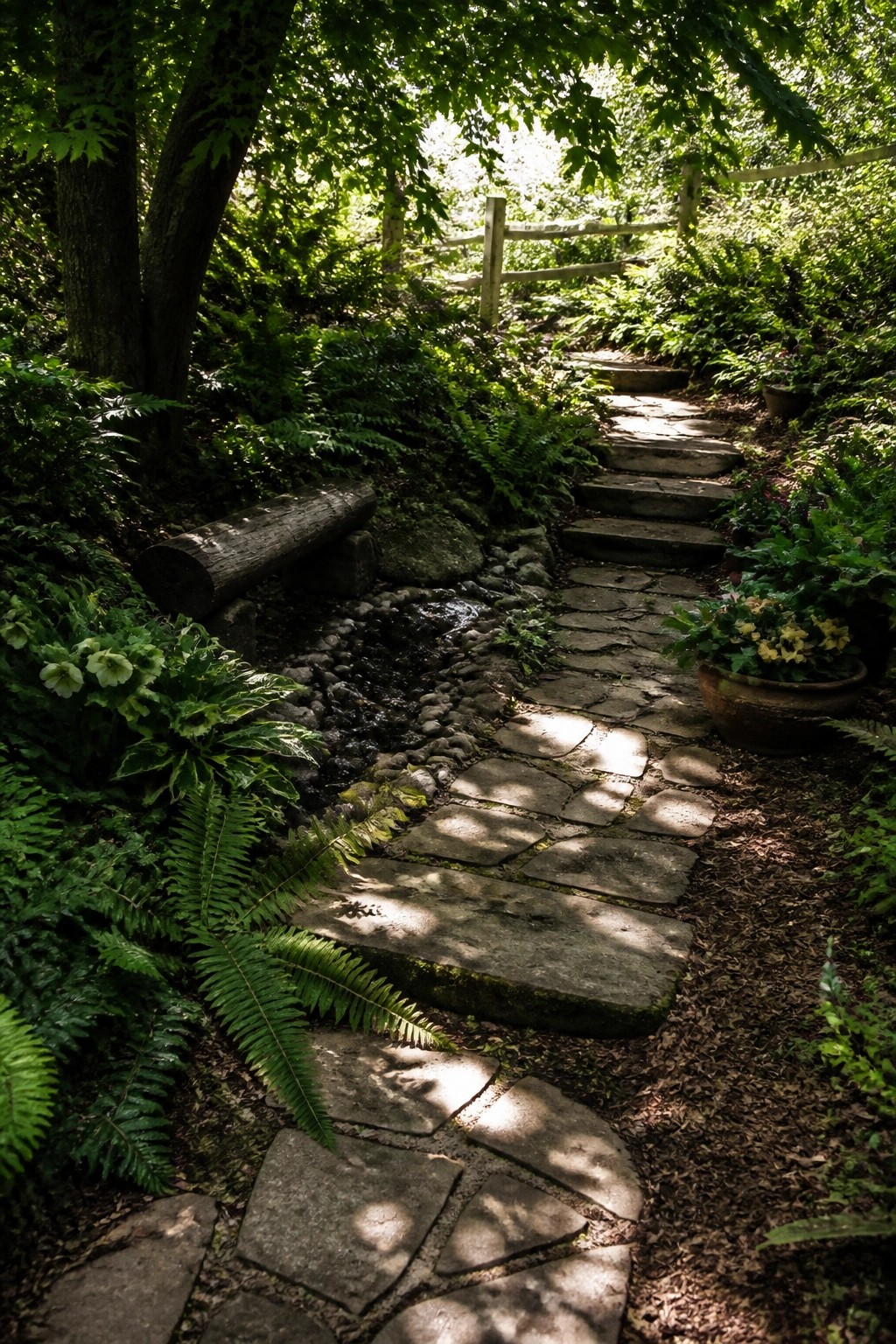
Stone paths give a garden a clear way through without making it feel too formal. They work especially well in shady or wooded spots where you want to keep the focus on the plants rather than on a hard surface.
Use irregular stones and let the edges soften with moss or ferns. This approach suits older gardens or any space where you want the path to feel like it has always been there.
Adding Climbing Vines to a Garden Pergola
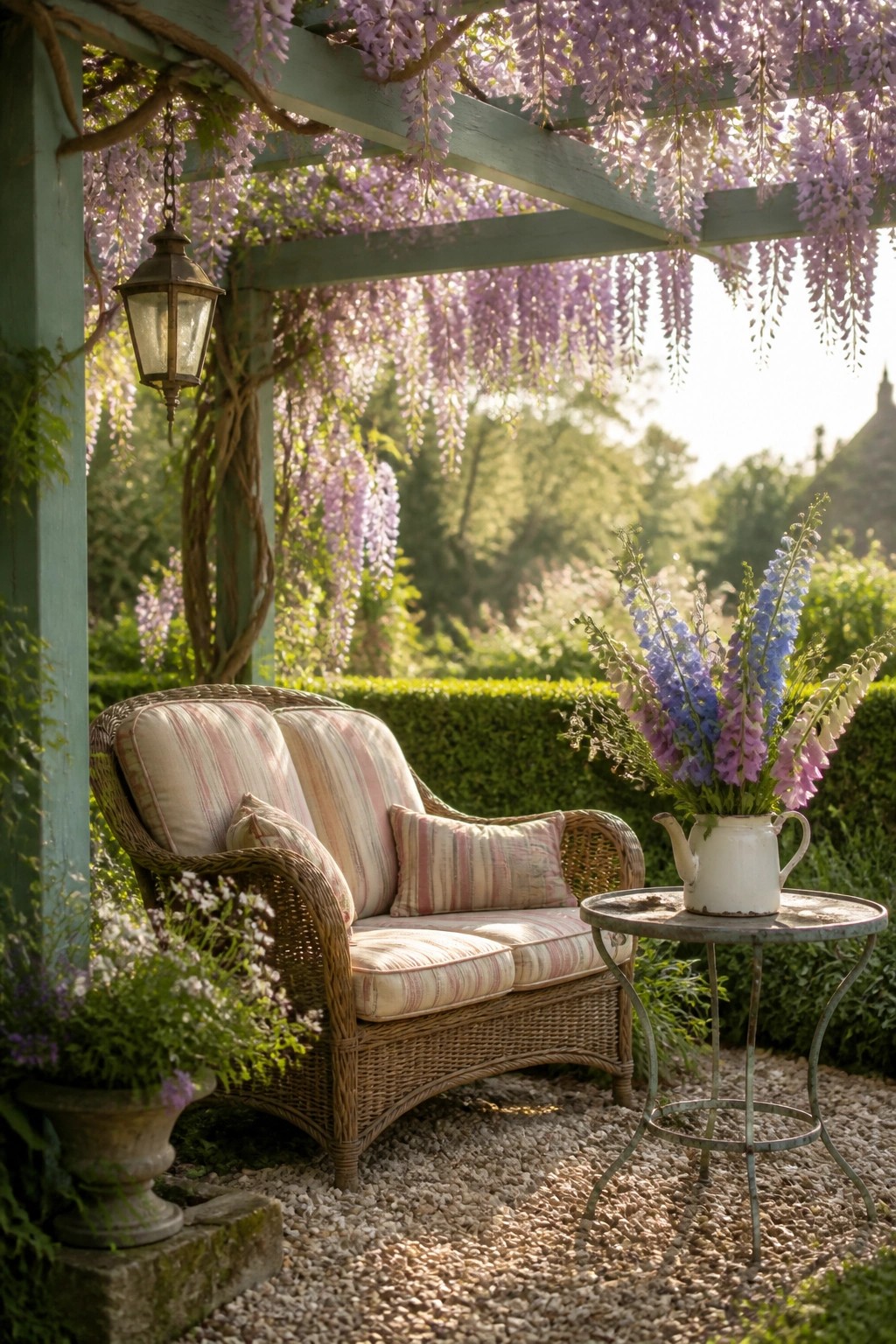
A pergola becomes much more useful when covered in something like wisteria. The hanging blooms create natural shade and turn a basic seating spot into a place that feels tucked away without needing walls or heavy screens.
This works best in a side garden or back corner where you already have room for a bench or sofa. Keep the structure simple and let the vines do most of the work over a season or two. Just make sure the posts are sturdy enough once the growth gets thick.
Sandy Paths With Stepping Stones
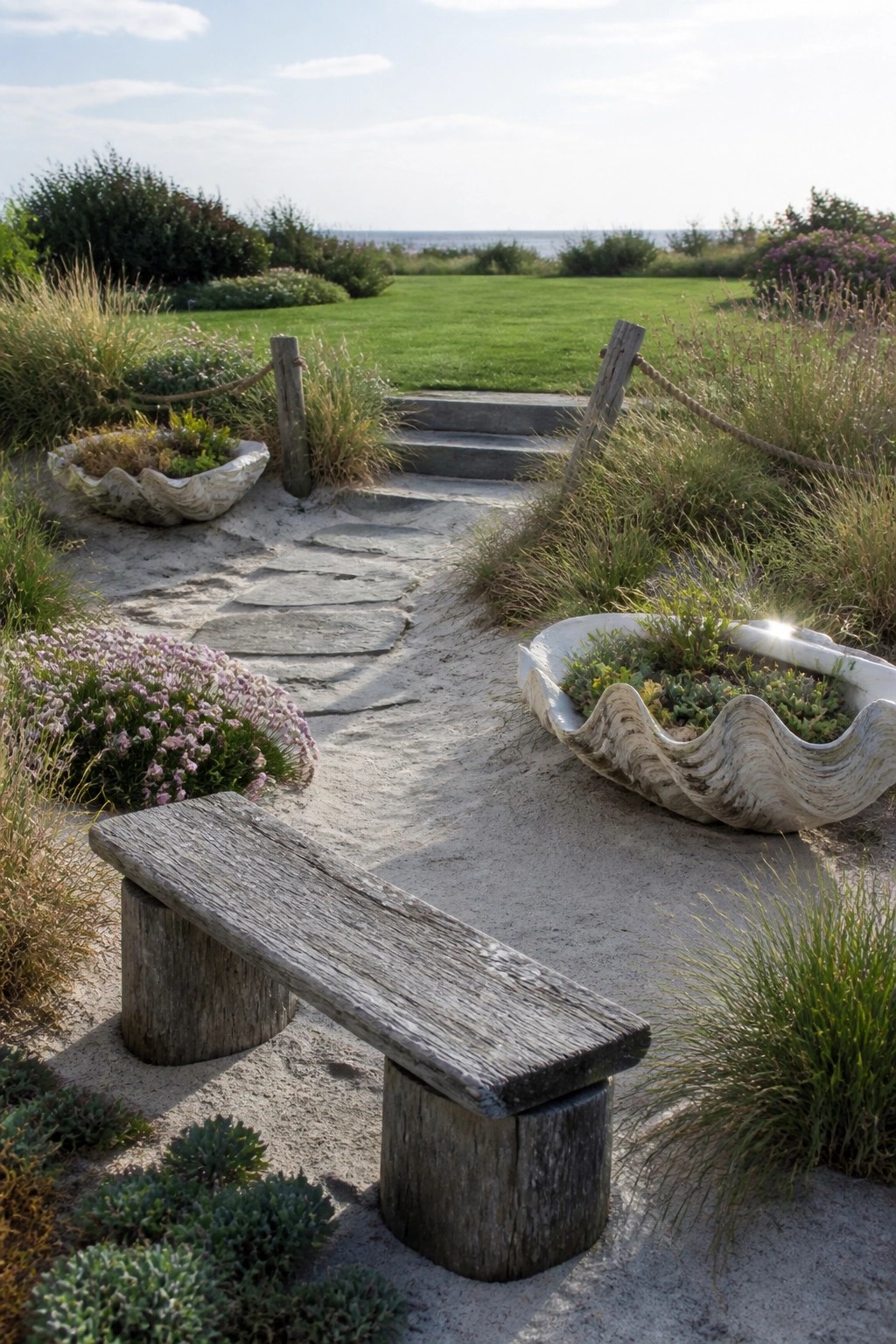
A sandy path with stepping stones keeps a garden feeling open and easy. It avoids the stiffness of a solid walkway and lets the surrounding plants take the lead.
This works best in larger yards or near the coast where the ground stays dry enough. Keep the stones uneven and let low plants grow close to the edges so the path feels like part of the landscape instead of something added on top.
Stepping Stone Paths For Quiet Garden Corners
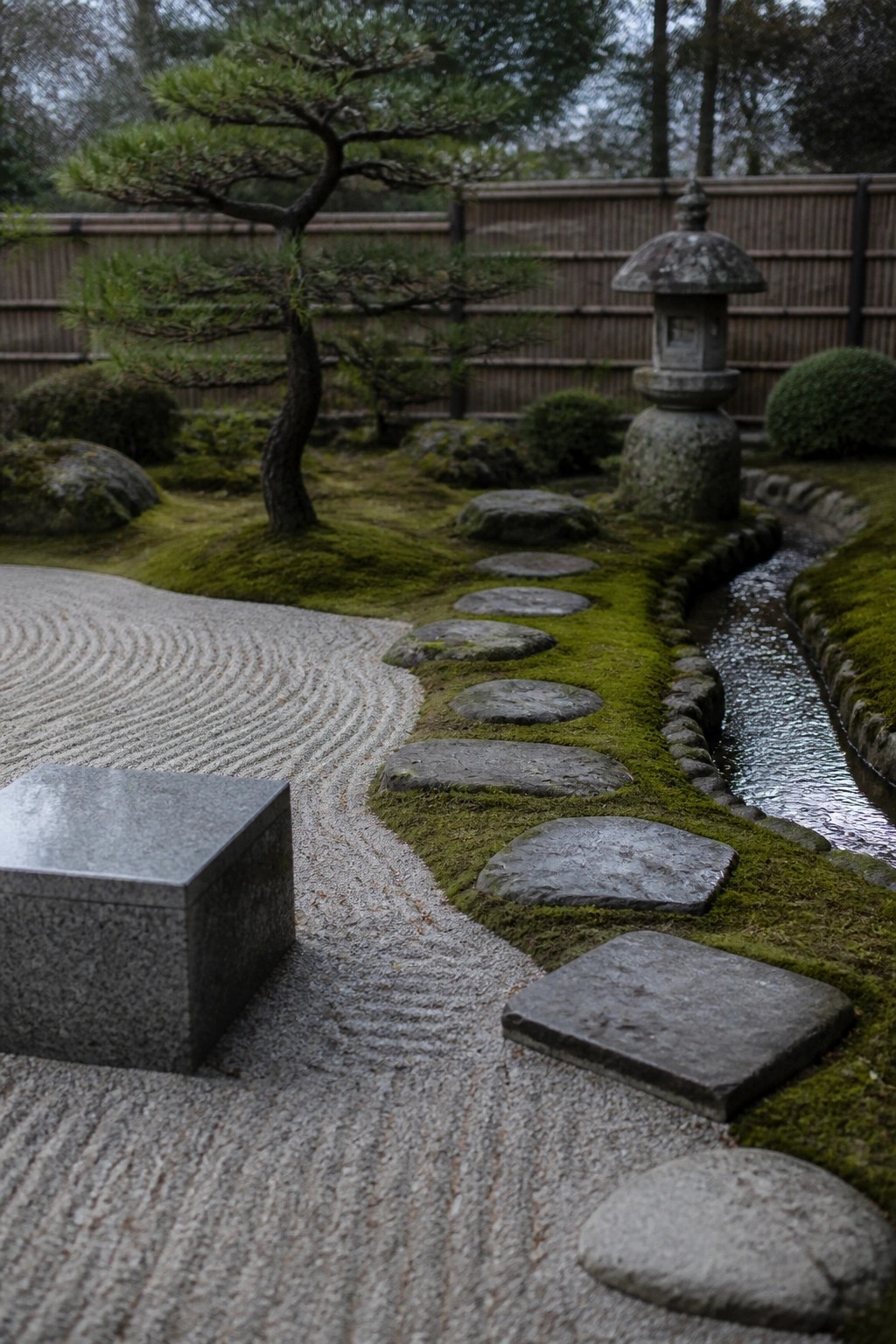
Stepping stones give a garden a gentle way to move through it without making the path feel like a hard line. They sit low in the ground and let moss or gravel run right up to the edges, so the whole area stays soft and connected.
This works best in smaller side gardens or tucked-away spots where you want people to slow down. Keep the stones uneven in shape and spacing, and pair them with low ground cover so the path blends into the planting instead of standing out.
Small Table Seating On A Balcony
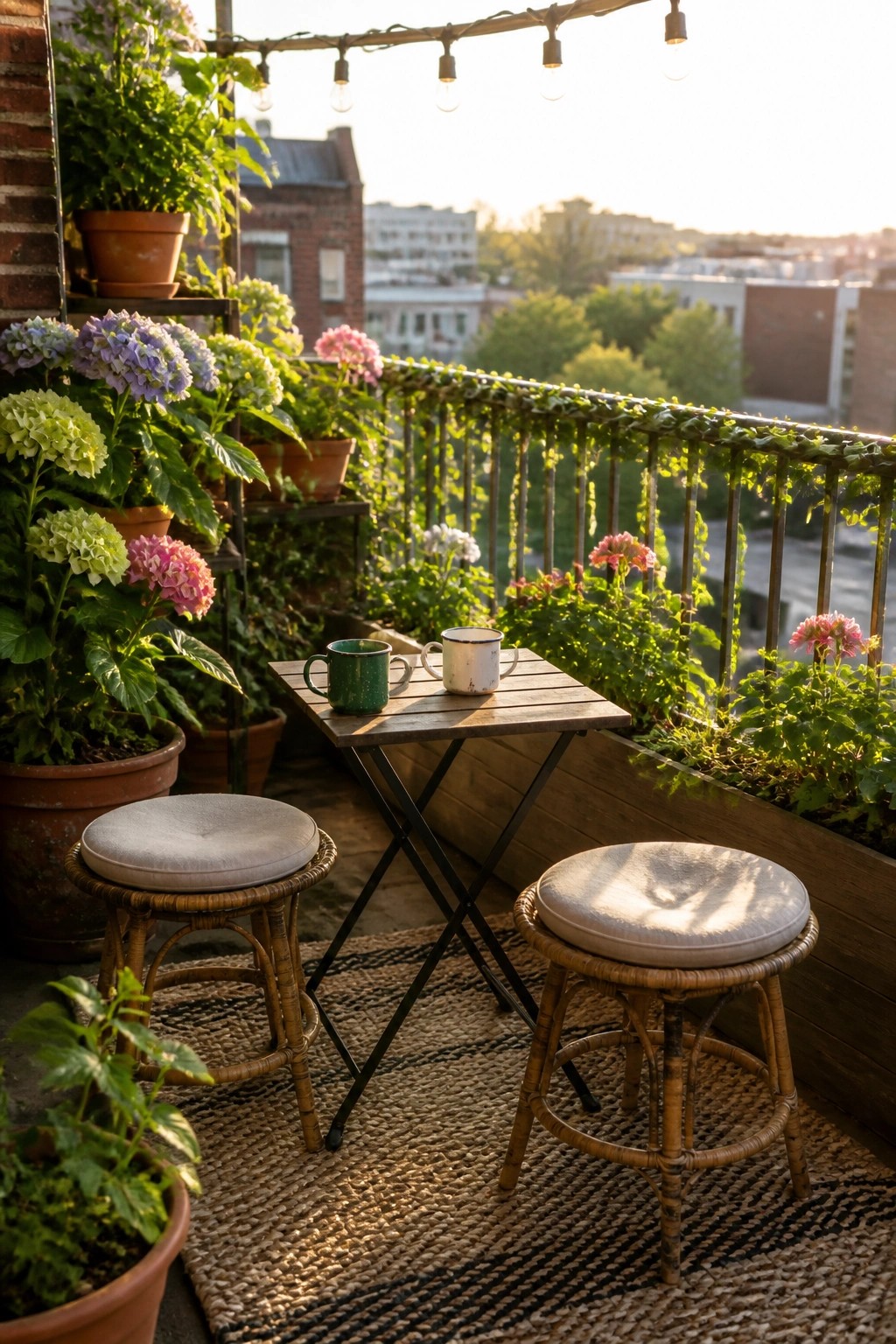
A small folding table with a couple of stools can turn even a narrow balcony into a spot where you actually want to sit. It keeps the floor clear when you need the space and gives you an easy place for coffee or a quick meal without crowding everything in.
This works best on urban balconies or small terraces where bigger furniture would feel too heavy. Use lightweight stools so you can tuck them away, and keep the table simple so the focus stays on the plants around the edges.
Stepping Stone Paths Through Flowers
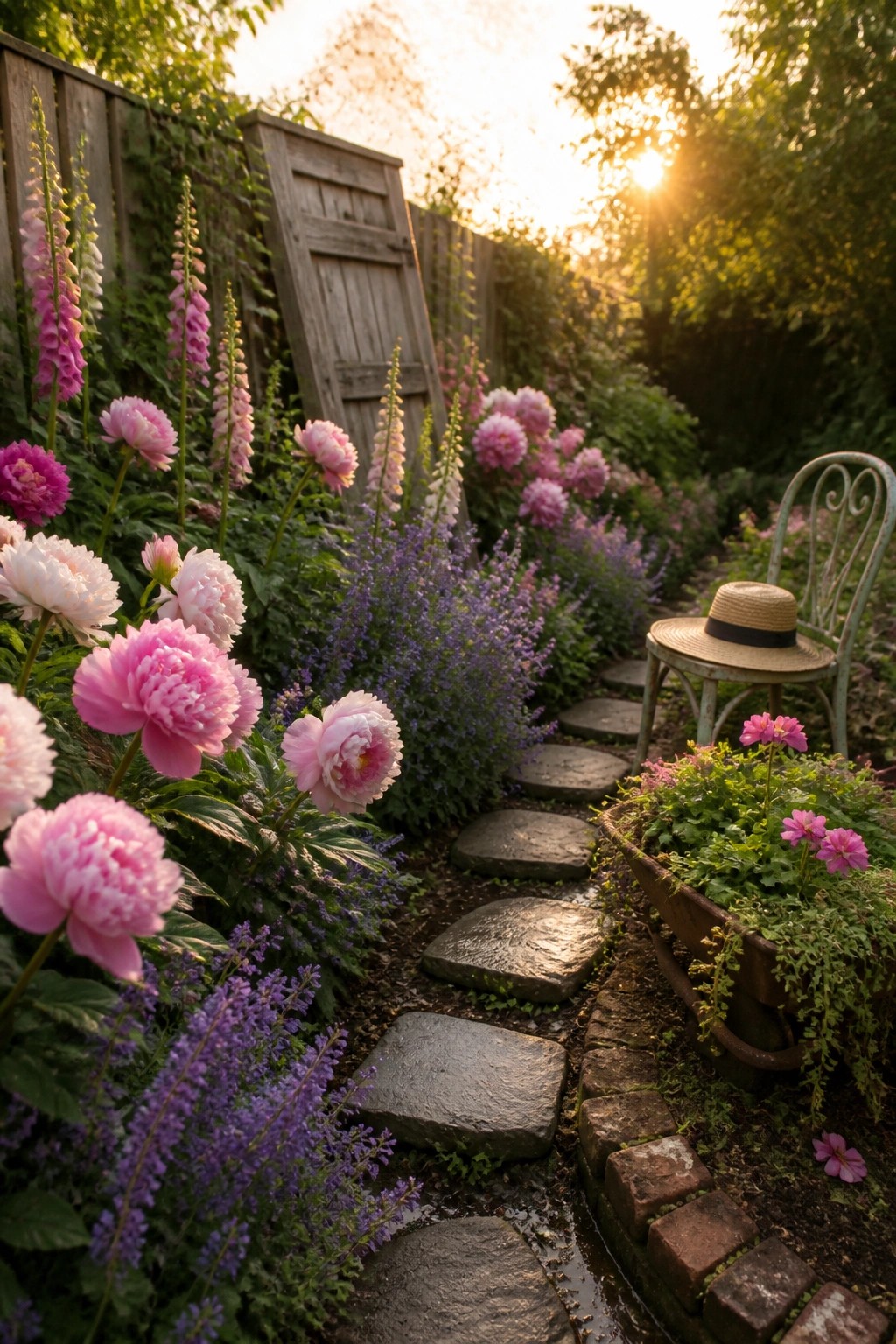
A path made of uneven stepping stones gives a garden a relaxed feel without needing much space. It lets the flowers grow right up to the edges and creates a slow walk that feels natural rather than formal.
This works best in smaller side gardens or back corners where you want to reach a single chair or bench. Keep the stones slightly irregular and let the planting spill over the sides a little so the path feels tucked in rather than stark.
Built-In Benches For Garden Corners
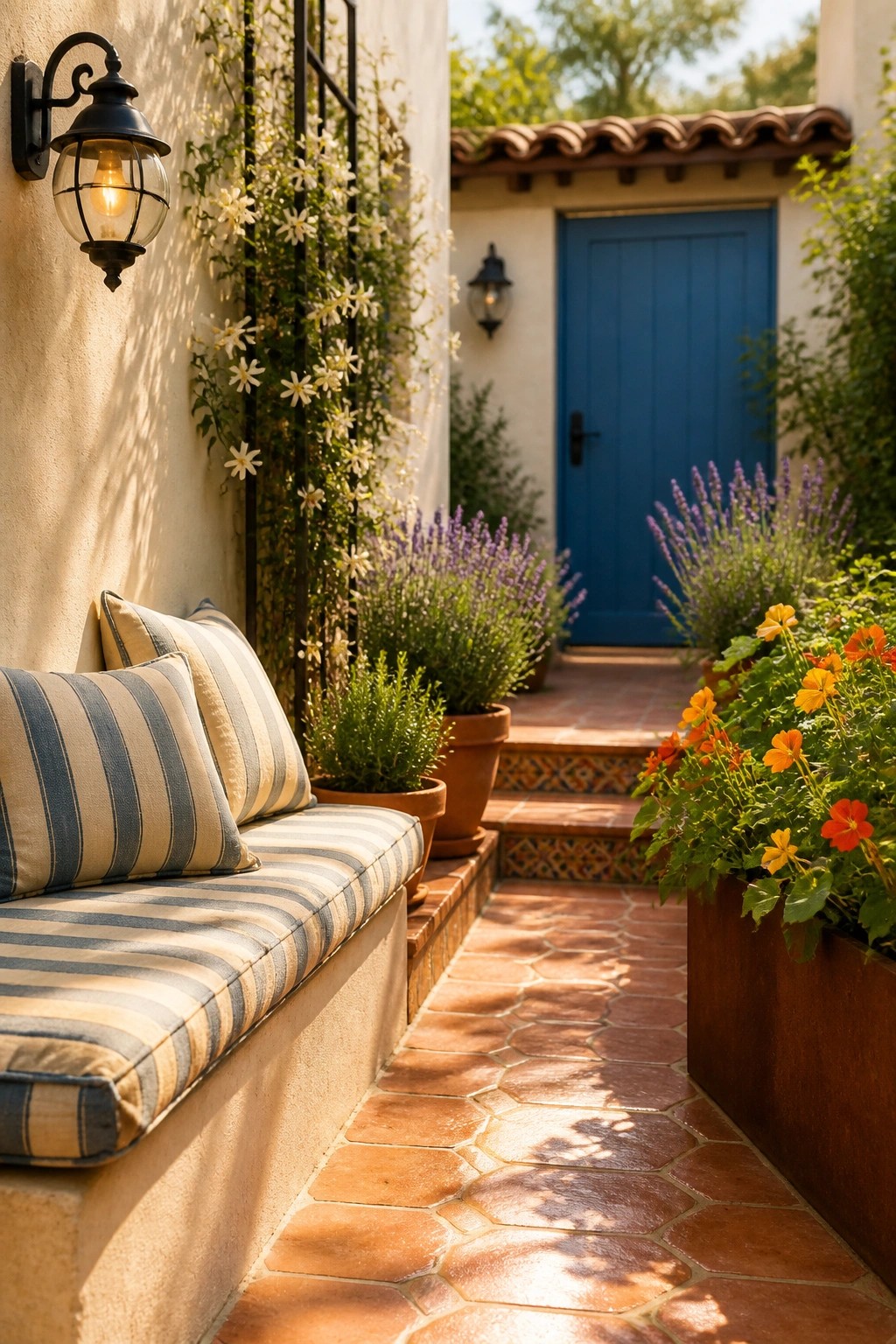
A built-in bench along a wall turns a narrow outdoor spot into a place to sit without crowding the area. It works especially well in side yards or small patios where freestanding furniture would get in the way.
Add simple cushions and set a few pots of flowers nearby. This approach suits homes that already have a solid wall or fence and need an easy way to create seating without major construction.
Stone Paths Through the Garden
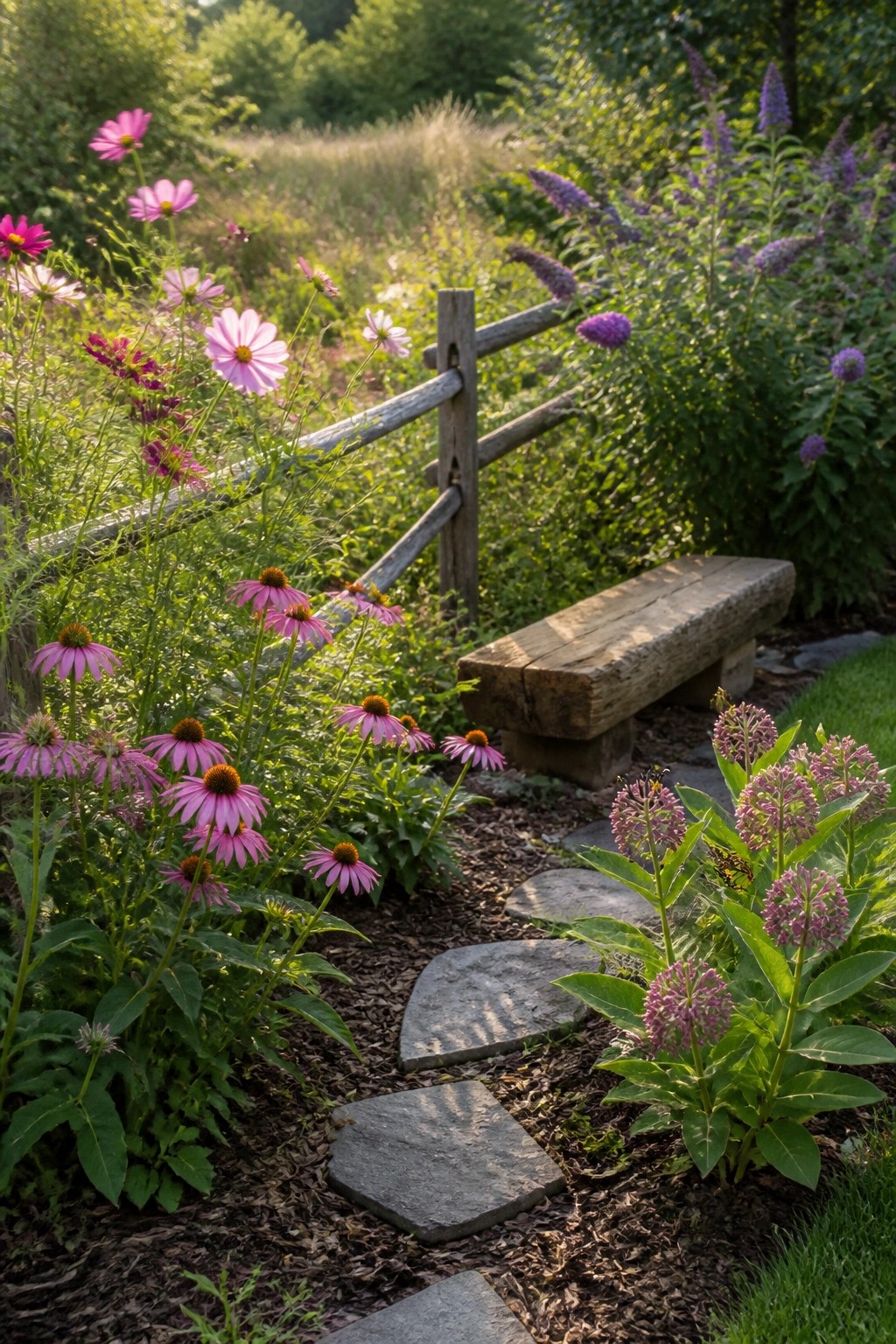
A stone path gives the garden a clear way to move without crowding the plants. The flat stones sit low and let the flowers grow close on both sides, which keeps the whole space feeling open and easy to walk through.
This works best in smaller yards or side gardens where you want a gentle route rather than a wide walkway. Use irregular stones and let the planting soften the edges so the path feels like part of the beds instead of something separate.
Grouping Seating Around a Fire Pit
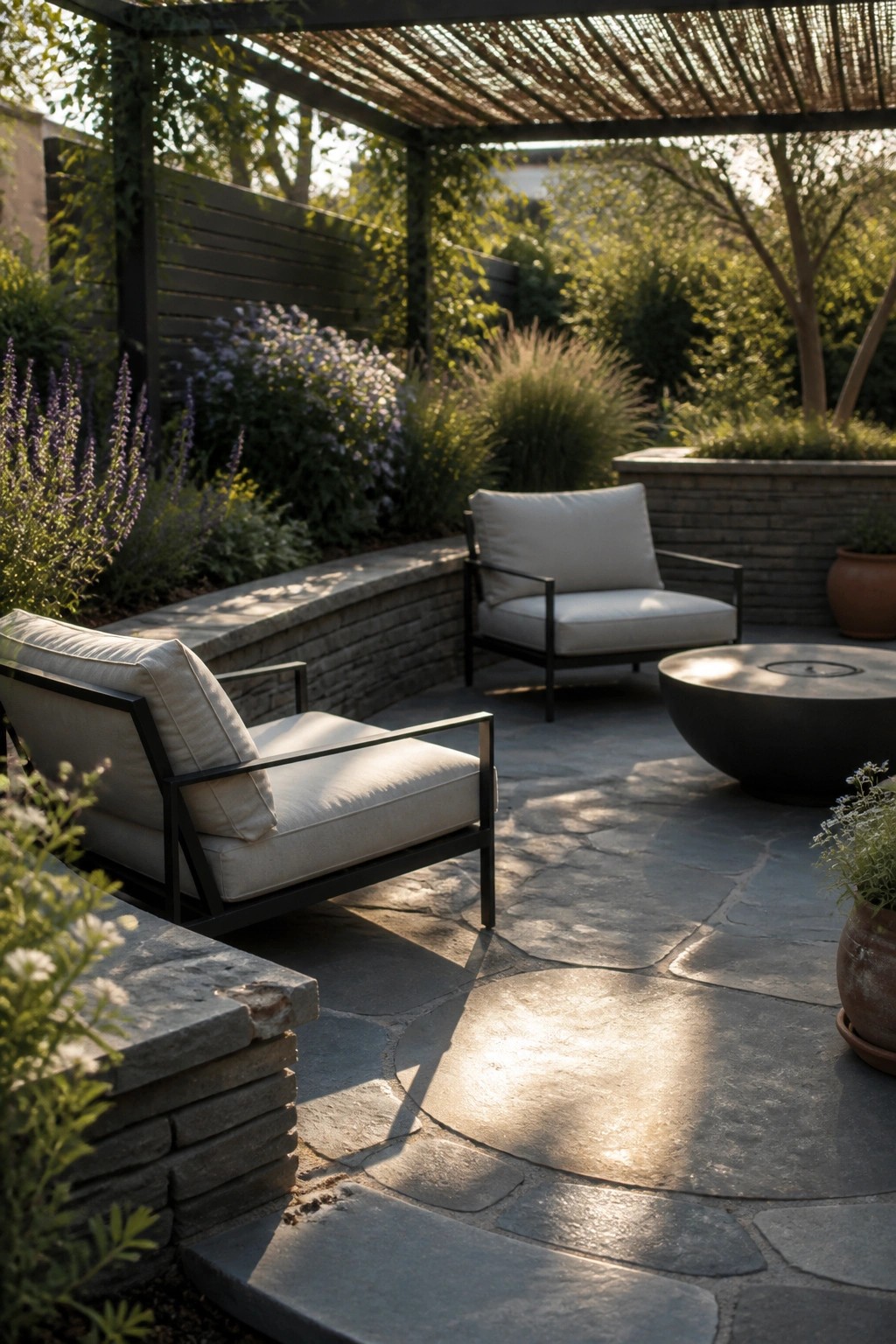
Placing a couple of chairs around a fire pit turns a plain patio into a spot people actually want to use. The round shape keeps everyone facing each other, and the low seating makes the whole area feel relaxed instead of formal.
This layout works on most paved surfaces and fits homes that want an easy evening space without a lot of extra furniture. Keep the surrounding plants from crowding the edges so the seating area stays open and simple to walk through.
Curved Gravel Paths Through The Planting

A gently curving gravel path makes a garden feel softer and more welcoming. It avoids the stiffness of straight lines and lets the flowers and grasses shape the space on their own.
This works best in open or meadow-style gardens where you want a simple route that still feels part of the planting. Keep the edging low and natural so the path blends in rather than standing out.
A Path That Leads To A Pool
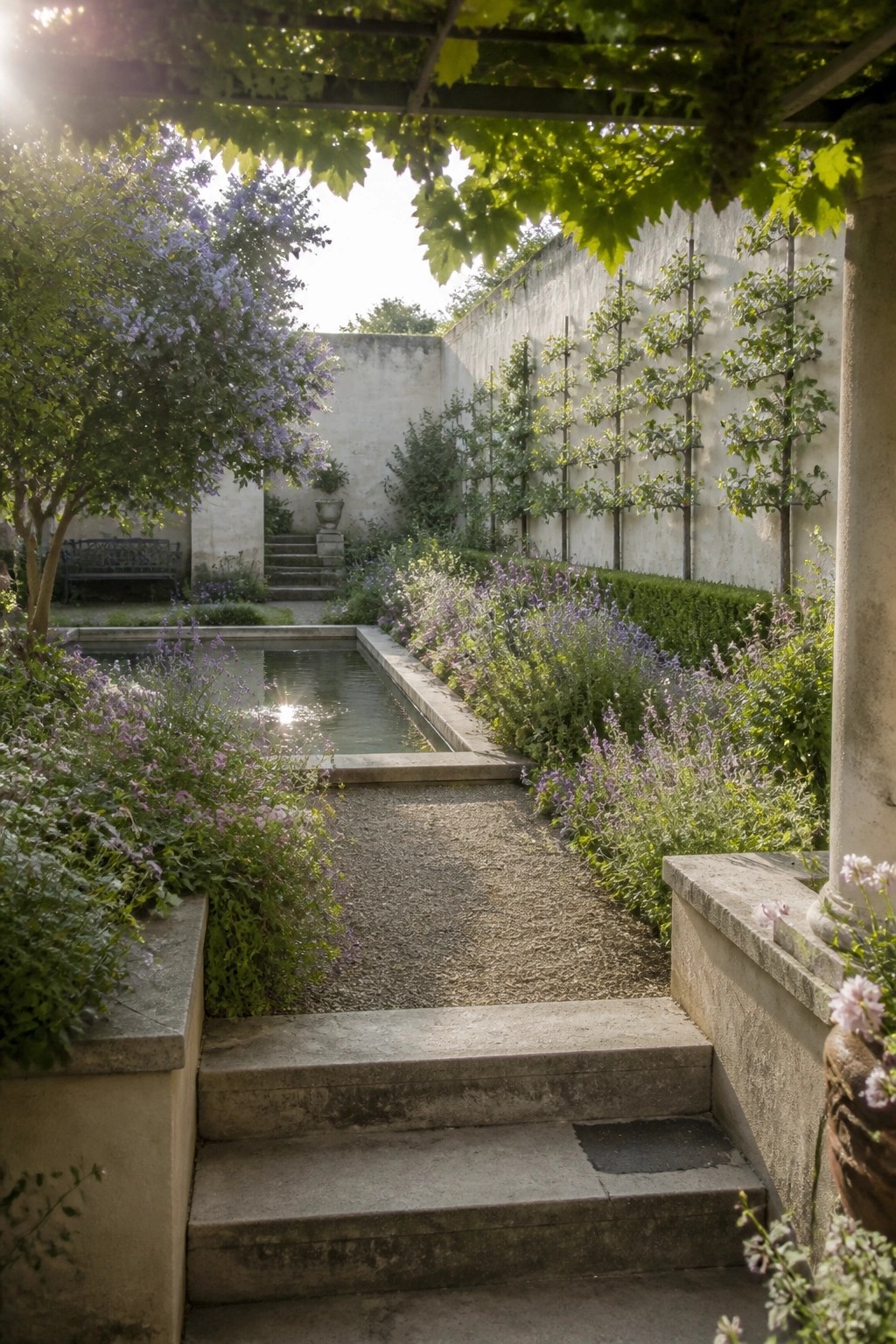
A straight path that ends at a long pool gives the garden a clear sense of direction. The water acts as a quiet focal point, and the borders on either side keep the walk feeling enclosed without making it feel closed in. This setup works especially well in smaller or walled gardens where you want something to draw the eye forward.
Try placing the pool at the far end of a gravel or stone path, then fill the edges with a mix of taller shrubs and lower flowering plants. It suits older homes or simple layouts where the planting can spill over a little. Just keep the path clear and the pool narrow enough to fit the space.
Adding Seating Along A Garden Path
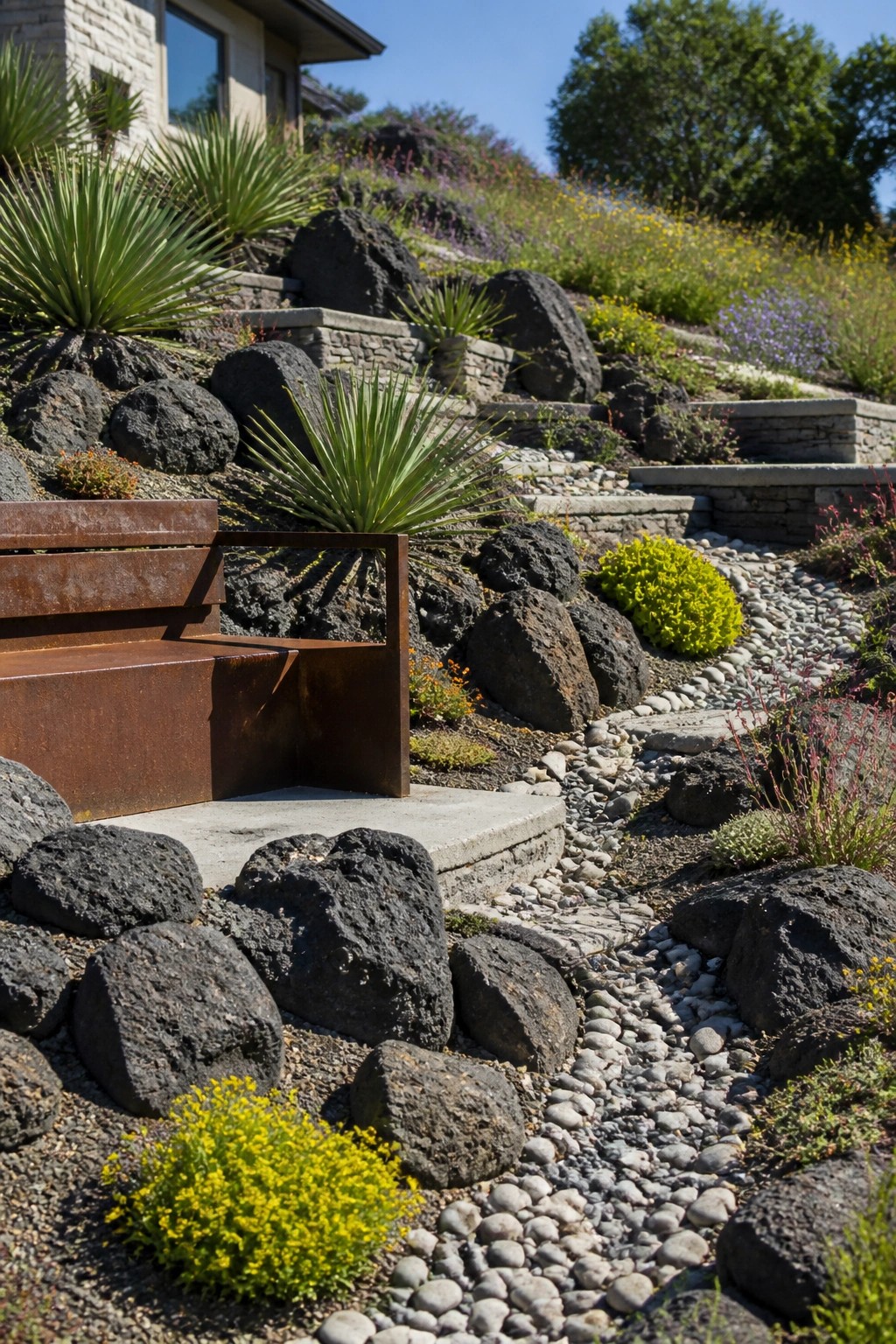
A bench set right into the flow of a path turns a simple walkway into a place where you can pause. It keeps the garden feeling natural while giving you a spot to rest without carving out a whole separate area.
This approach suits sloped or rocky yards where the path already moves between stones and beds. Choose a material that weathers over time so the bench settles in with the gravel and surrounding plants instead of standing apart.
Brick Benches In Garden Corners
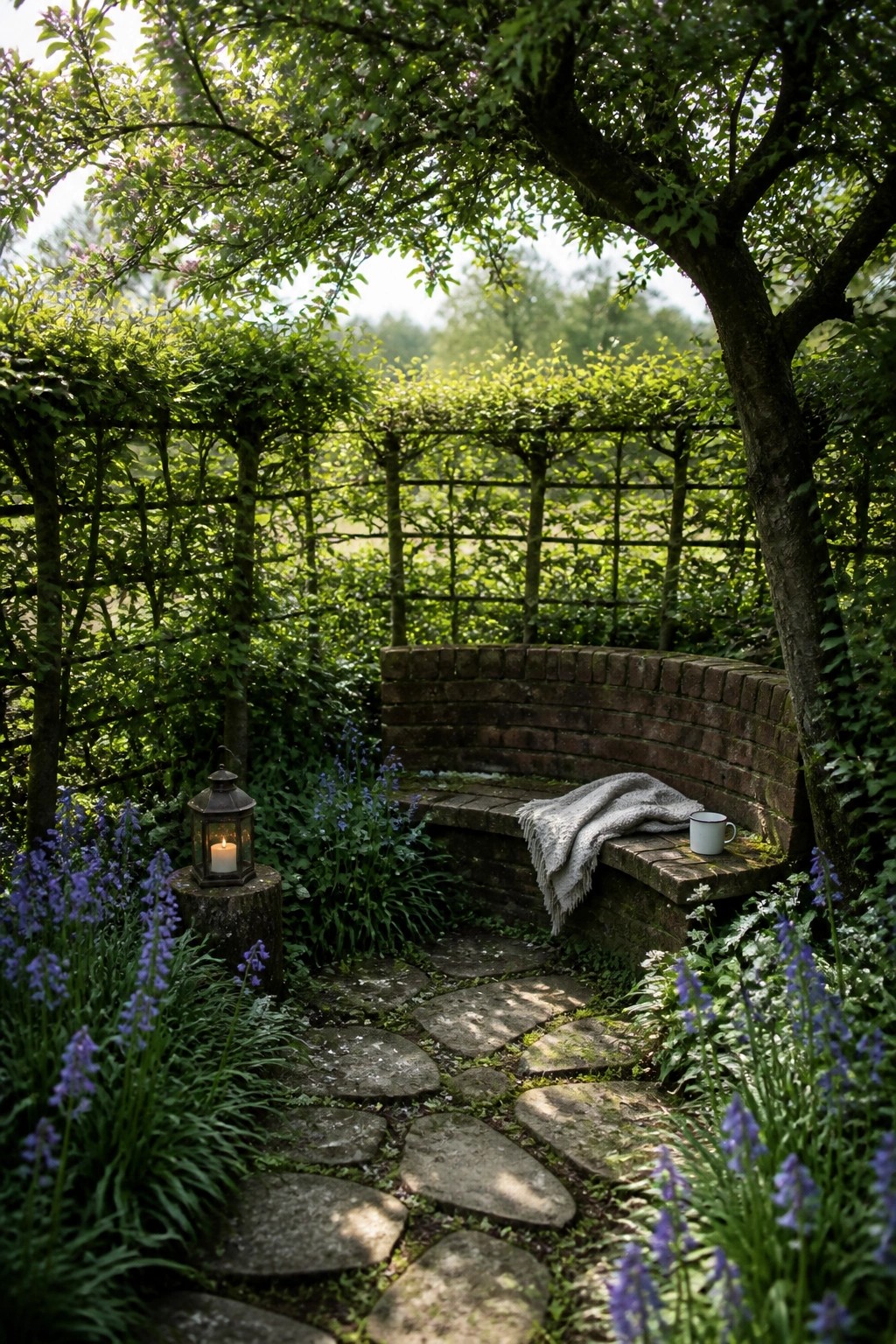
A low brick bench built right into the garden gives you a place to sit without needing extra furniture. It blends into the planting and holds up well over time. The curve here helps it fit the space and feel more welcoming than a straight line would.
This works best in smaller gardens or side areas where you want a spot to pause. Keep the bench low so it does not block views, and let flowers and paths lead up to it. Avoid making the bench too wide or it can start to feel like a wall instead of a seat.
Natural Overhead Covers Create Comfortable Outdoor Spots
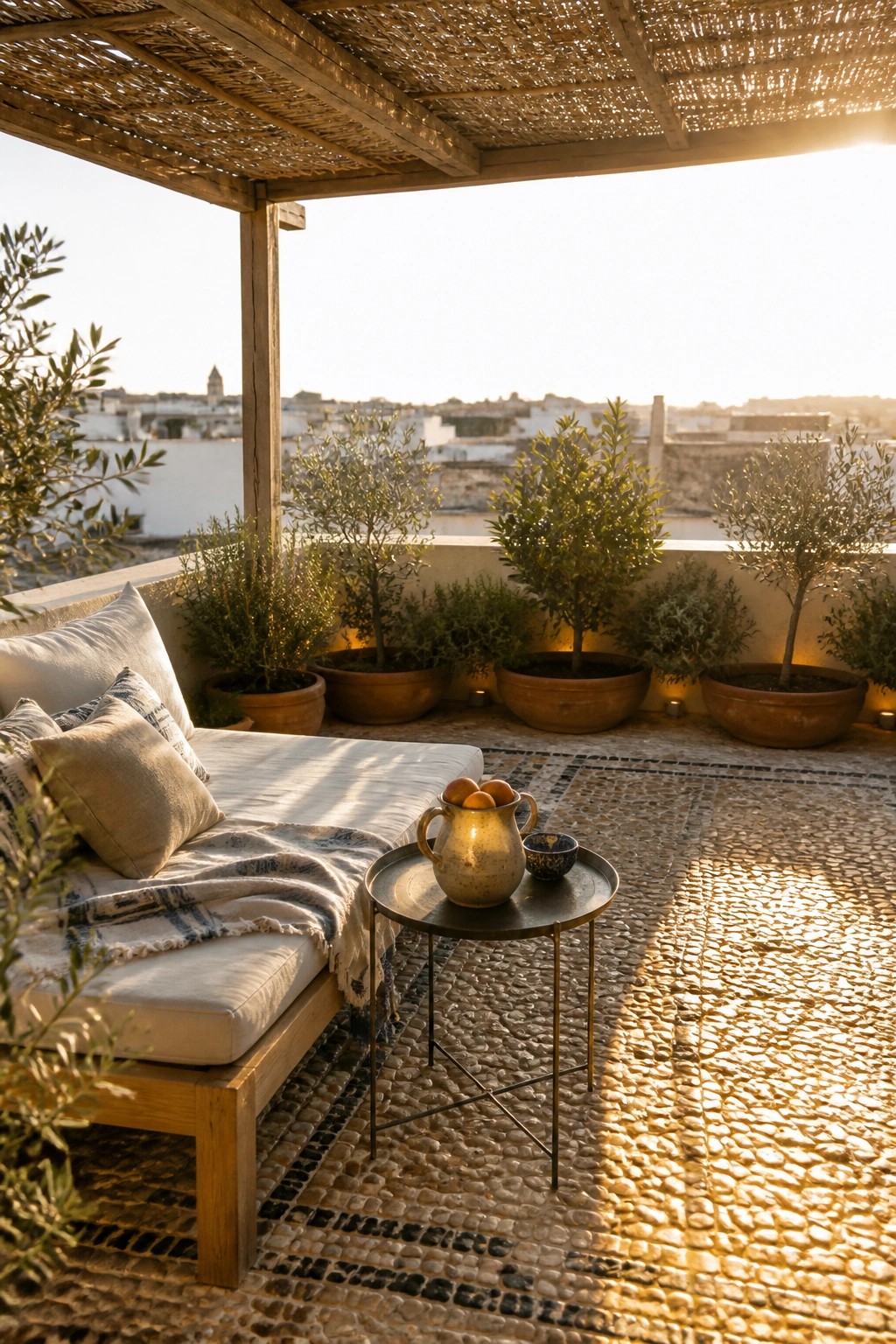
A simple woven roof overhead changes how a terrace feels during the day. It blocks harsh sun while still letting in enough light to keep the space bright. The material adds a soft texture that pairs well with potted plants and basic seating.
This approach works best on rooftops or open patios where full shade is needed but a solid roof would feel too heavy. Use it in warm climates where people want to sit outside longer without direct sun. Keep the structure light so air can still move through.
Layered Planting Along Narrow Paths
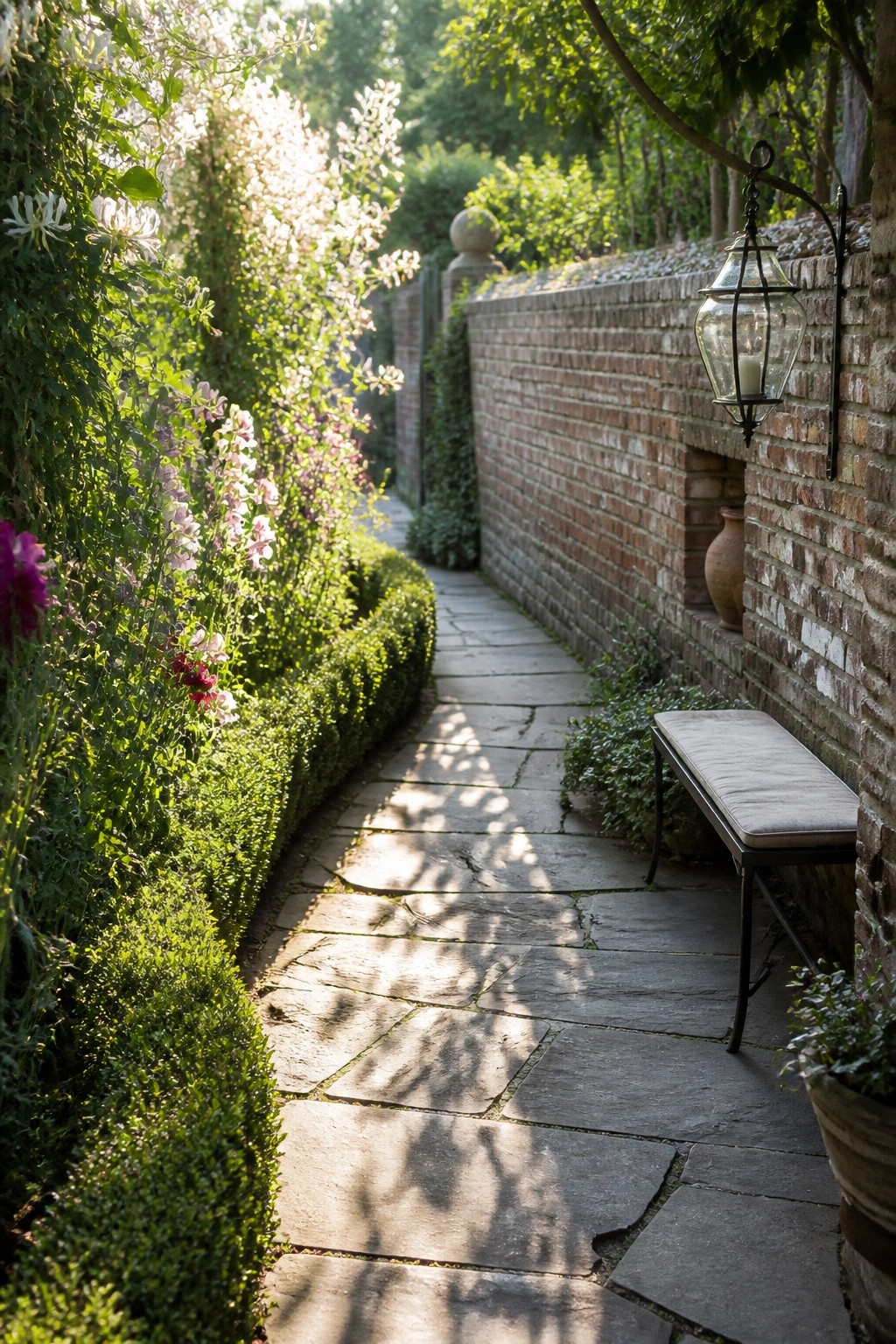
A narrow path gains a lot when both sides are filled with layered planting. The mix of taller flowers and lower shrubs creates a soft edge that makes the walk feel more sheltered and calm.
This approach suits side yards or long garden strips where space is limited. Keep the path material simple so the planting does the main work, and add a bench against a wall if you want a spot to rest.
Stone Paths That Reach A Bench
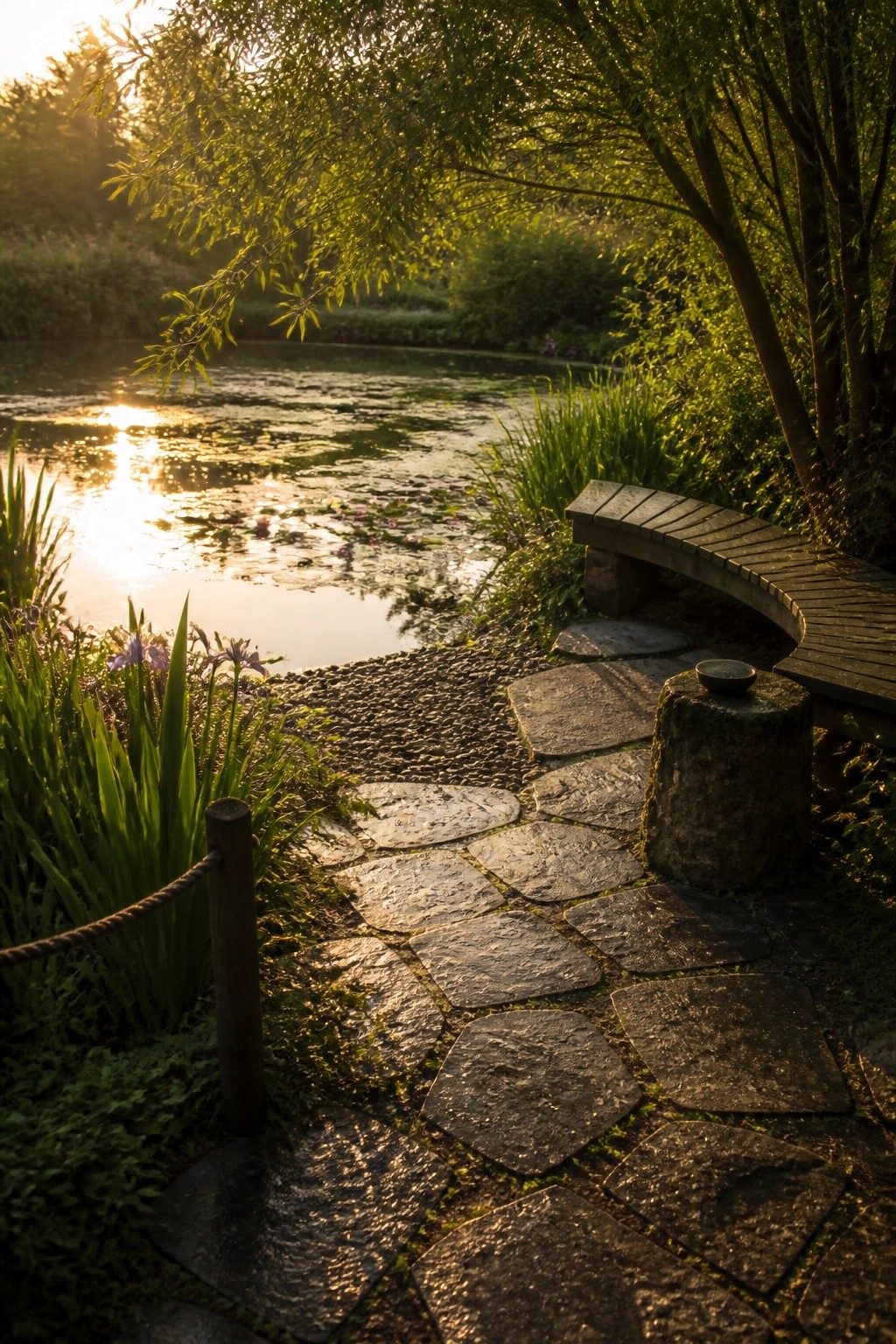
A simple path of uneven stones makes it easy to reach a quiet spot without making the garden feel too planned. The stones sit low in the ground and let grass and moss grow between them, so the walk feels soft underfoot and blends right into the planting around it.
This kind of path works best in smaller gardens where you want one clear place to sit. Keep the bench plain and low, and let the stones curve gently rather than run in a straight line. The less formal the layout, the more the corner feels like a natural pause instead of a designed feature.
Frequently Asked Questions
Q: Which flowers actually stay soft looking once summer heat hits?
A: Go for varieties like lavender or cosmos that keep a loose shape even when things warm up. Plant them in groups of three or five so they fill out without looking sparse. Water deeply once a week rather than every day to encourage stronger stems.
Q: How do I carve out a quiet corner when my yard has no natural shade?
A: Set a bench against an existing fence or wall and let climbing vines cover the back. This creates a simple screen without building anything new. Add one or two potted ferns at the sides to soften the edges right away.
Q: Can old seating pieces really work or do they feel out of place?
A: Sand and repaint a wooden chair you already own so it blends with the flowers nearby. Place it on a couple of flat stones to keep the legs from sinking into grass. The slight wear adds to the relaxed feel without extra cost.
Q: What if the spot I picked feels too open at first?
A: Start with just the seating and one cluster of blooms to test the layout. Move things around after a week once you see how the light shifts through the day.
