

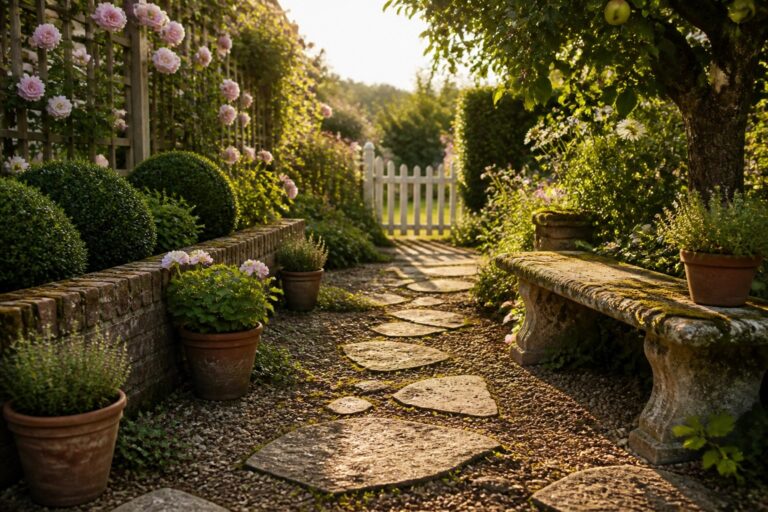
I have noticed that paths end up shaping how the whole garden gets used day to day, especially once the plants start to fill in around the edges.
Gravel settles into a softer look over time while stone stays more defined, and each choice changes how water moves after a heavy rain.
Testing a short stretch first usually shows what will actually hold up.
Flower borders work best when they match the path width so the space does not feel cramped once everything grows.
Over the years I have learned to leave a little extra room at the sides for roots and mulch rather than trying to squeeze plants right against the edge.
Stepping Stones Set In Gravel
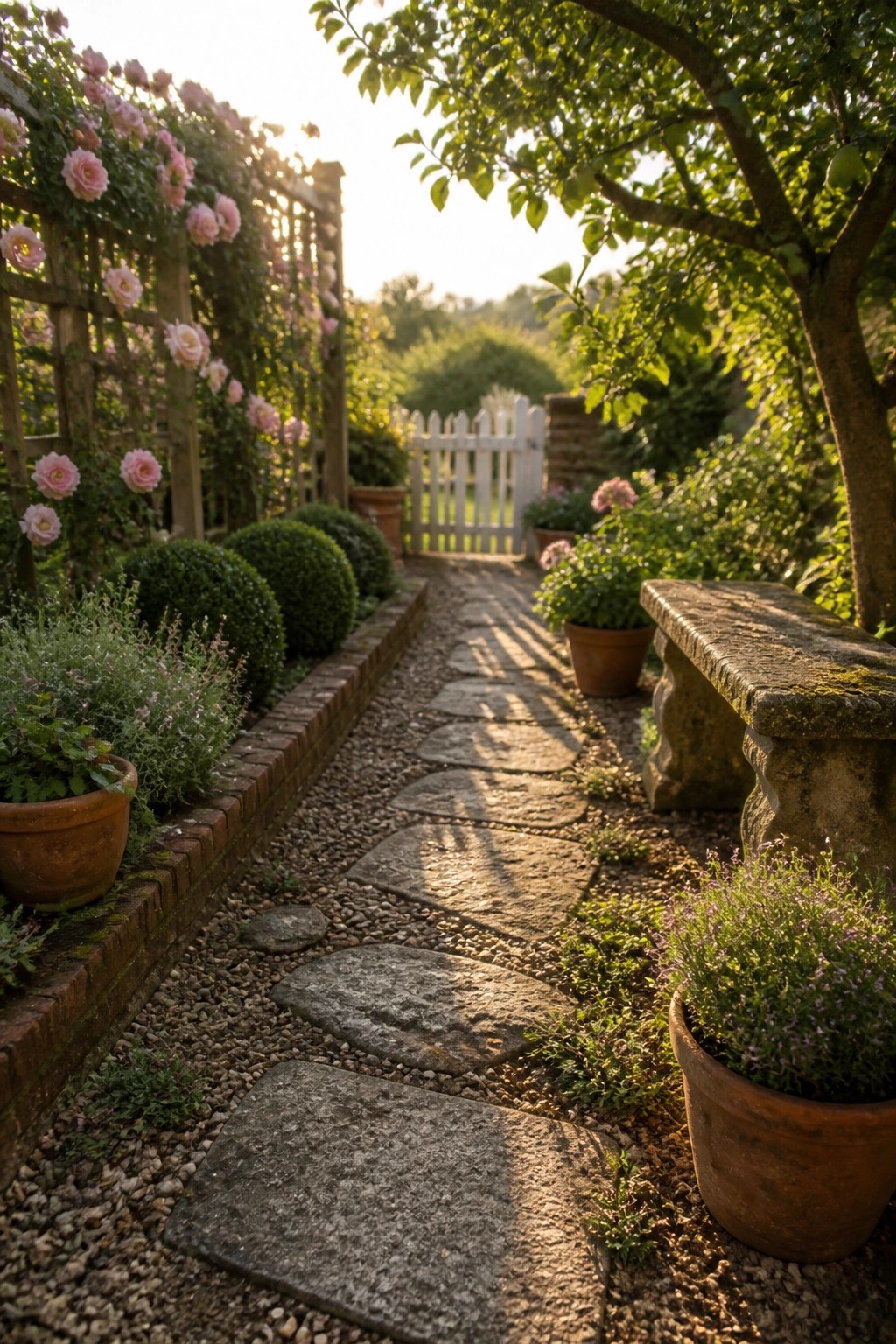
A path made of flat stones set into gravel gives a garden a relaxed, natural feel without looking too formal. The stones provide solid footing while the gravel fills the gaps and handles drainage well.
This approach works best in smaller gardens or along the side of a house where you want a simple route that does not dominate the space. Space the stones for an easy walking stride and keep the edges soft with low plants or pots.
Stone Slabs Set in Gravel for a Simple Path
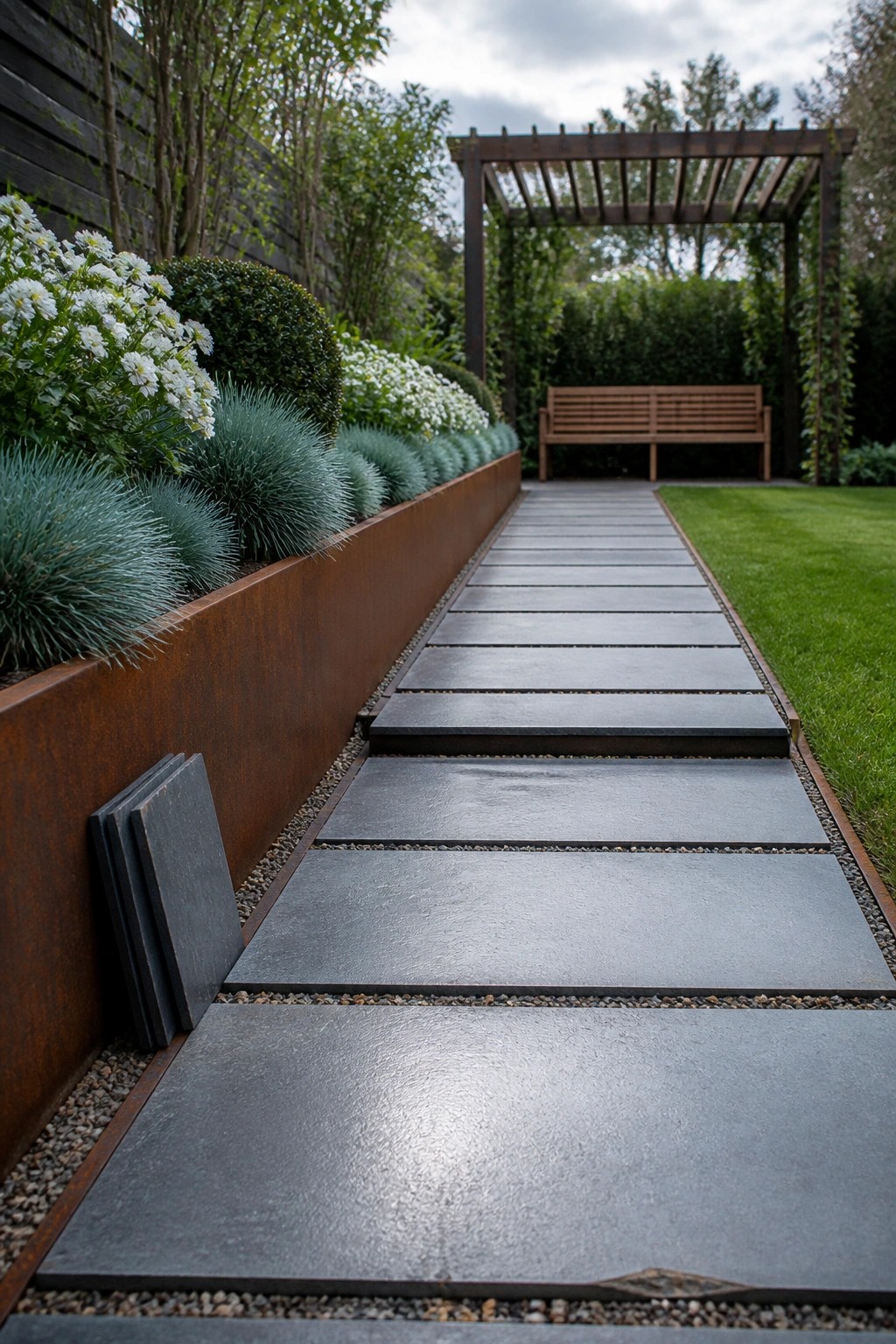
Large stone slabs laid in a straight line with gravel between them give a path that feels solid underfoot and easy to keep clean. The gravel helps with drainage and keeps the look from getting too formal, while the slabs do most of the work for walking.
This layout suits narrow side gardens or long stretches where you want something low maintenance. Pairing the path with a raised metal border filled with grasses and flowers helps contain the planting and adds a clear edge without extra fuss.
Stone Pavers Set in Gravel for Garden Paths
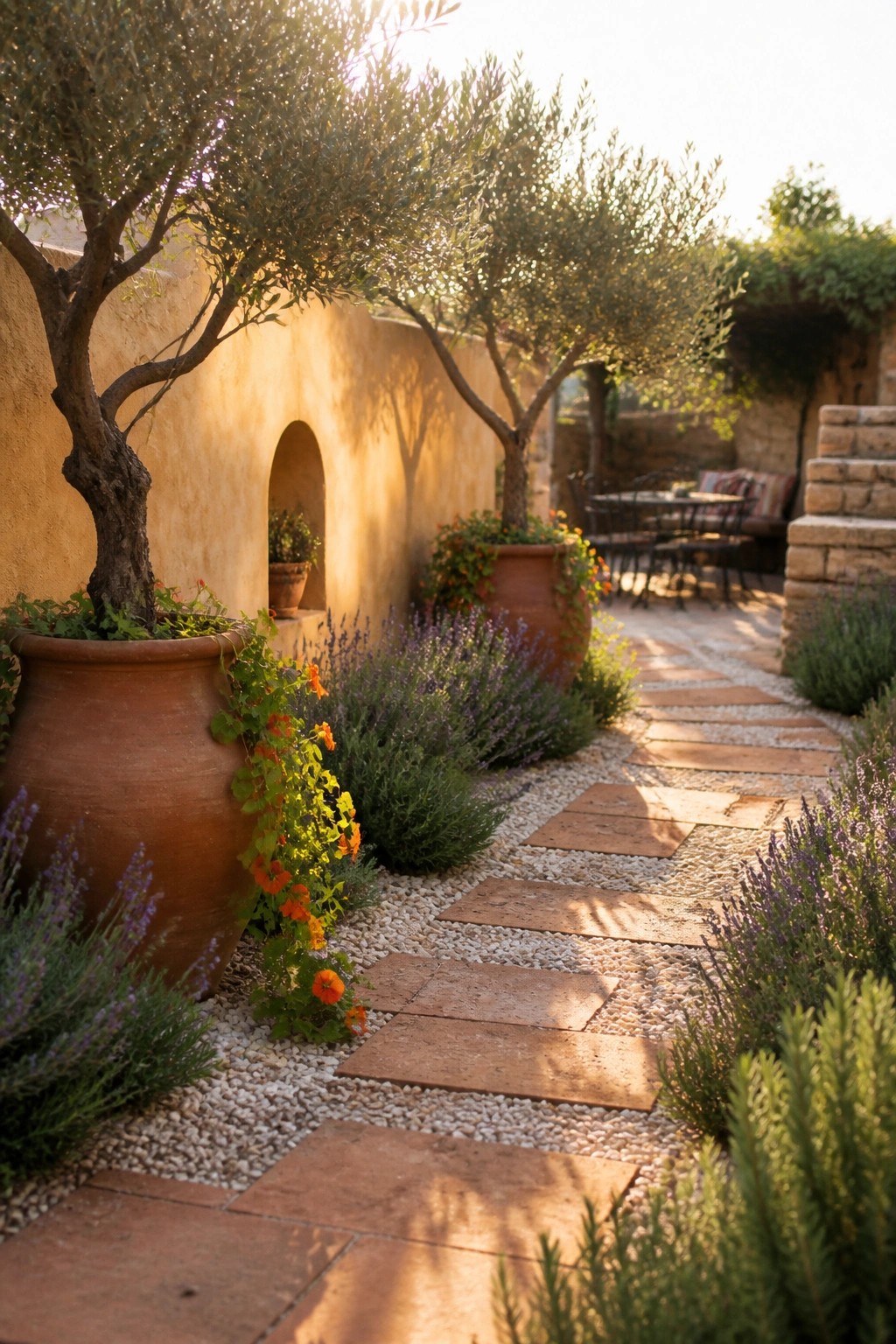
Large stone pavers laid into a bed of gravel give a path that feels solid underfoot while still letting water drain easily. The look stays simple and works well when you want something that does not require constant weeding or mowing between the stones.
This approach suits sunny yards and Mediterranean style gardens where drought tolerant plants can spill along the edges. Keep the gravel layer thick enough to stay level over time and choose pavers that are wide enough for comfortable walking.
Stepping Stones Set Into Moss
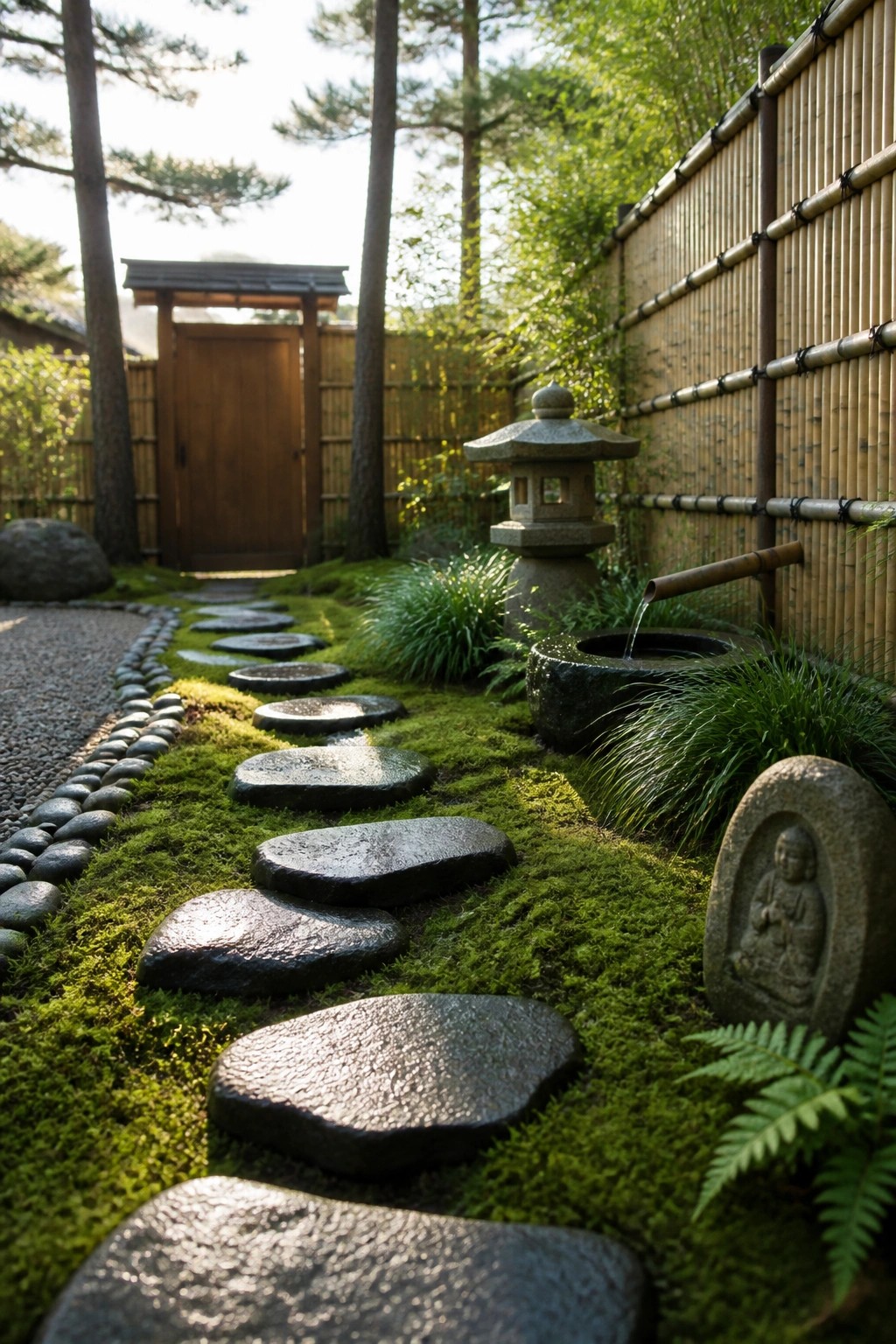
This kind of path feels softer than gravel or concrete because the stones sit right in a living carpet of moss. The moss fills the gaps, keeps the surface from looking too hard, and gives the whole walkway a settled, quiet look that works especially well in shaded gardens.
It suits smaller side yards or entries where you want something low and simple. Space the stones so your stride lands comfortably, and make sure the area stays moist enough for the moss to hold. A light gravel border on one side helps keep everything neat without adding much work.
Gravel Paths With Brick Edging
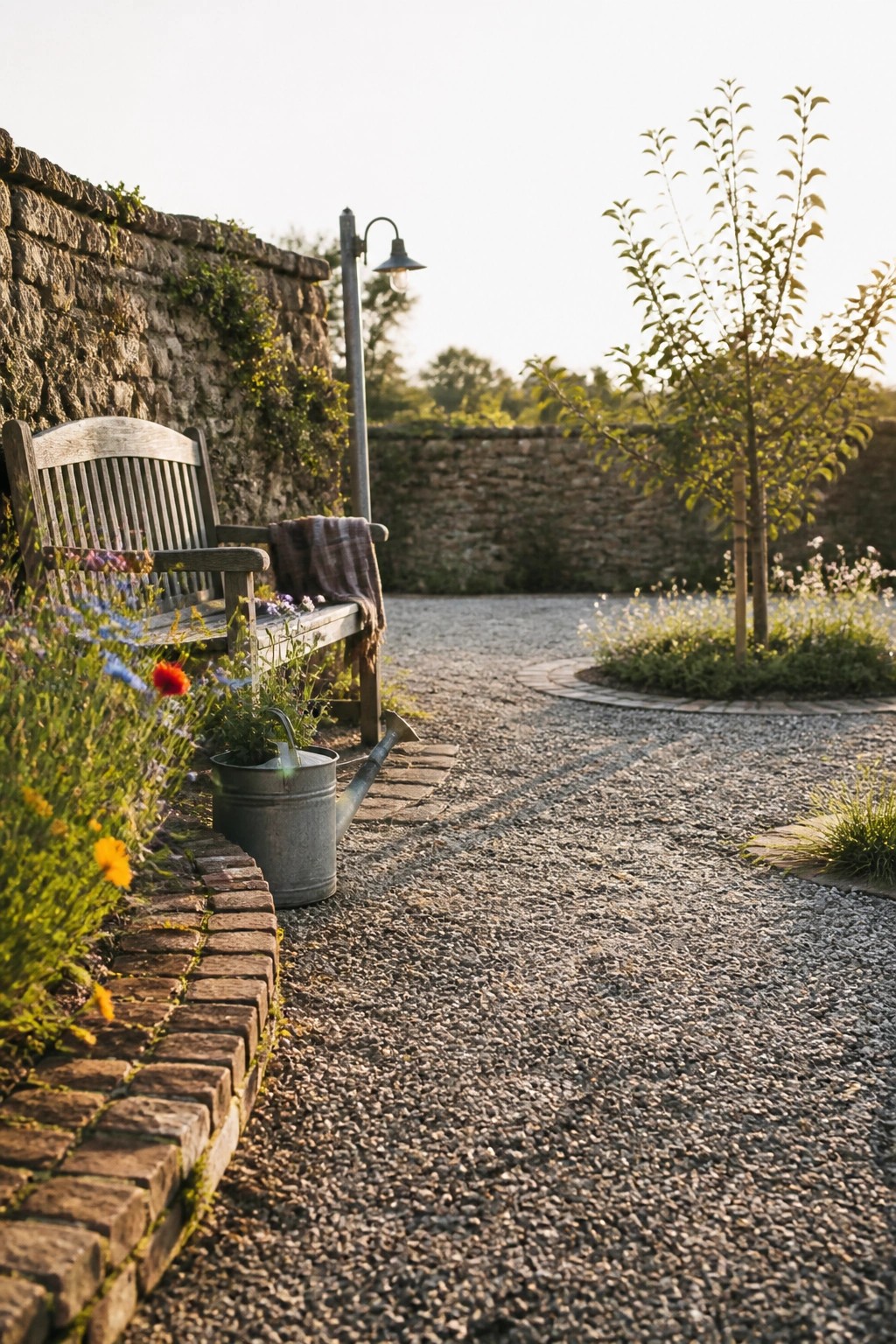
Gravel paths give a garden an easy, unfussy feel that works in many settings. The brick edging keeps the gravel contained while adding a simple line that guides the eye and separates the walkway from the planting beds.
This approach suits older homes or cottage gardens where you want something practical but not too formal. It helps if the gravel layer is thick enough to stay put and the edging sits level so mowing or walking stays straightforward.
Gravel Paths With Stone Edging
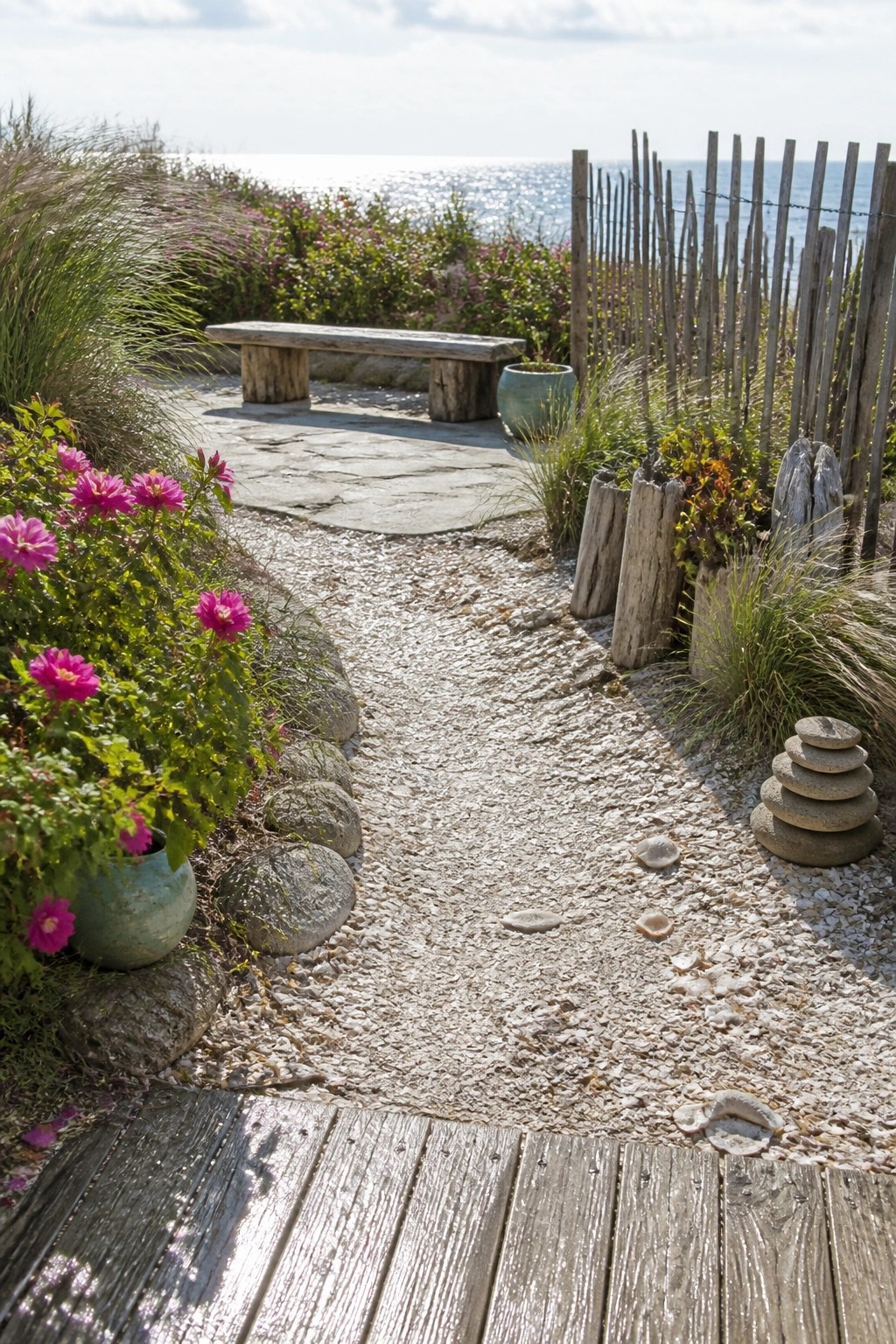
Gravel paths feel easy and natural in a garden. The loose surface drains well and the rounded stones along the sides keep everything neat without needing a lot of extra work.
This style works best in informal yards or coastal settings where you want a simple walkway that blends with the planting. Keep the borders low and let flowers spill over the edges a bit for a relaxed look.
Gravel Paths With Stone Edging
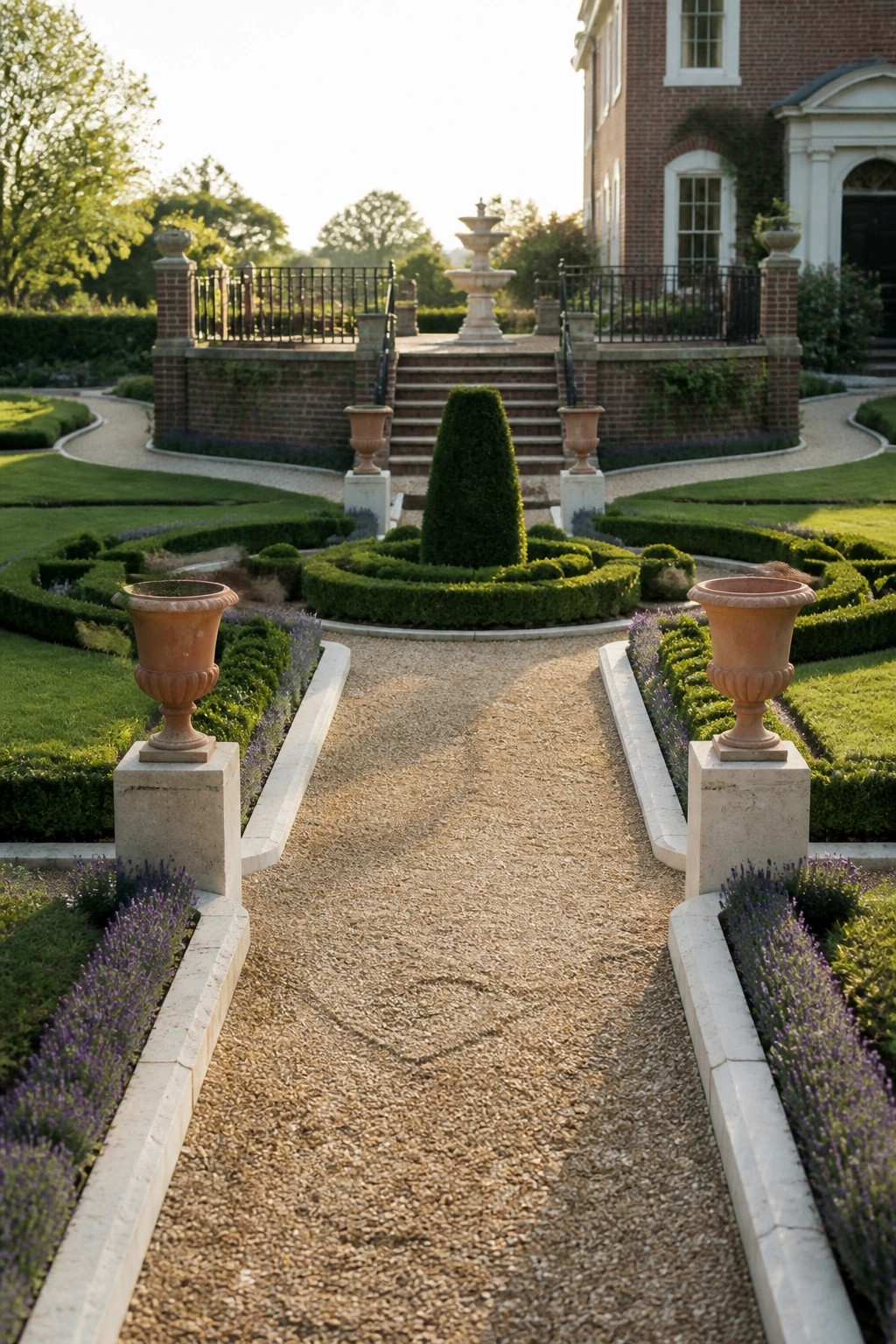
Gravel paths work well when they need to feel both practical and neat. The stone edging holds the gravel in place while giving the walkway a clear shape that stands out against the surrounding lawn and planting.
This approach suits larger gardens where you want a main route that still feels open. Keep the side borders low and simple so the path stays easy to follow and does not compete with other features.
Stepping Stones With Rock Borders
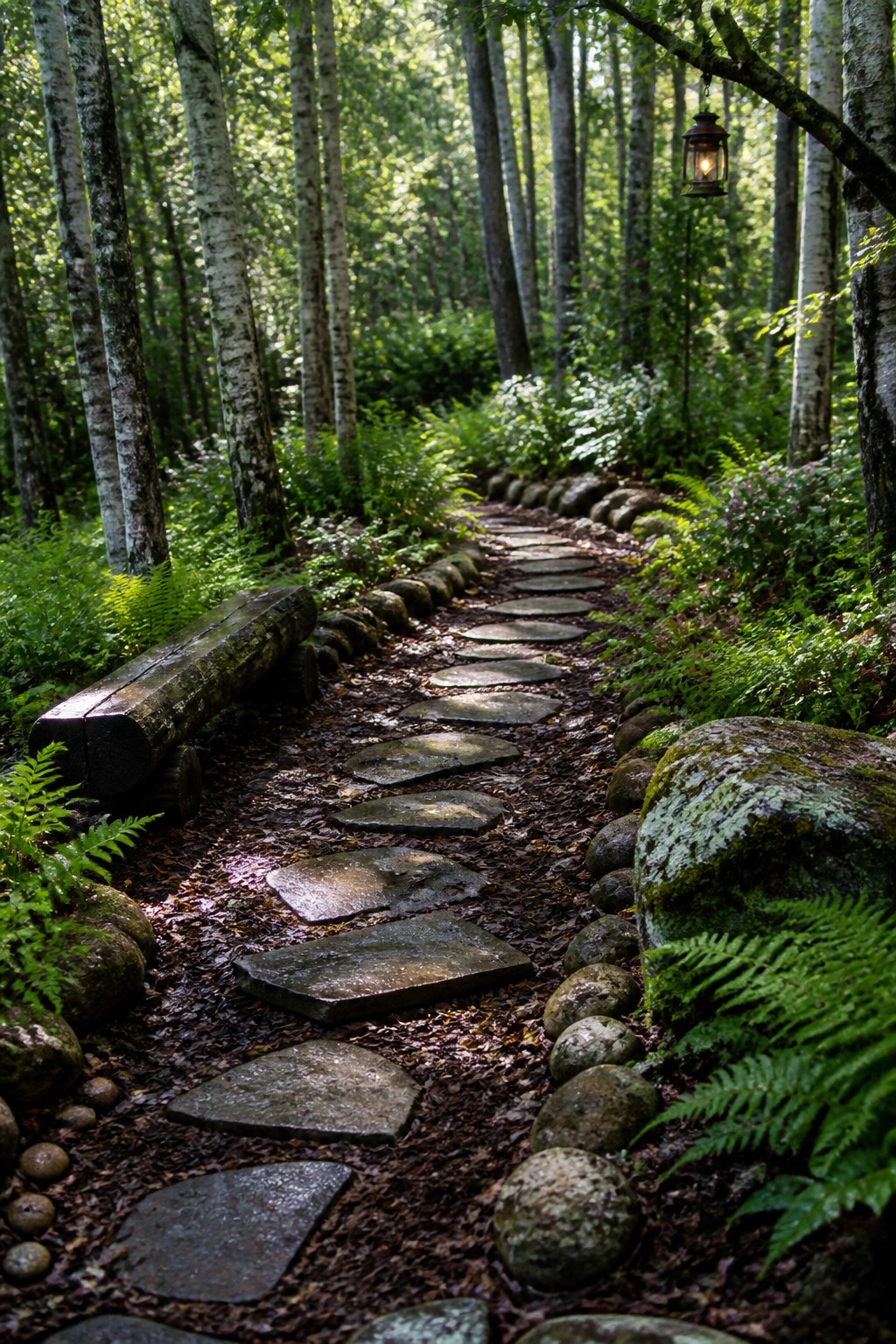
Stepping stones give a garden path a relaxed feel that works especially well in wooded spots. The flat slabs sit low to the ground so the surrounding ferns and trees stay the main focus instead of the walkway itself.
This layout suits homes with shade and existing trees. Use stones big enough for steady footing and line the edges with rounded rocks to keep soil and leaves from spilling onto the path.
Stepping Stones Over Gravel

A path made from large flat stones set into gravel keeps things simple and easy to walk on. The stones stay stable while the gravel drains well and cuts down on weeds, which makes this a practical choice for many yards.
It works best in sunny spots with low water plants along the sides. Keep the stones spaced evenly for comfortable steps and use a metal edge to hold the gravel in place over time.
Stone Steps With Gravel And Flower Borders

Stone steps set into gravel make a path feel more natural on a slope. The steps give firm footing while the gravel keeps the surface loose and easy to walk on. Flower borders along the edges help hold the soil and add color without needing much extra structure.
This works best on hillsides or terraced yards where a flat path would not fit. Use local stone so it blends with the ground, and choose low plants that will not overgrow the steps. Keep the gravel layer thin enough to stay level between the stones.
Stone Paths With Gravel Borders
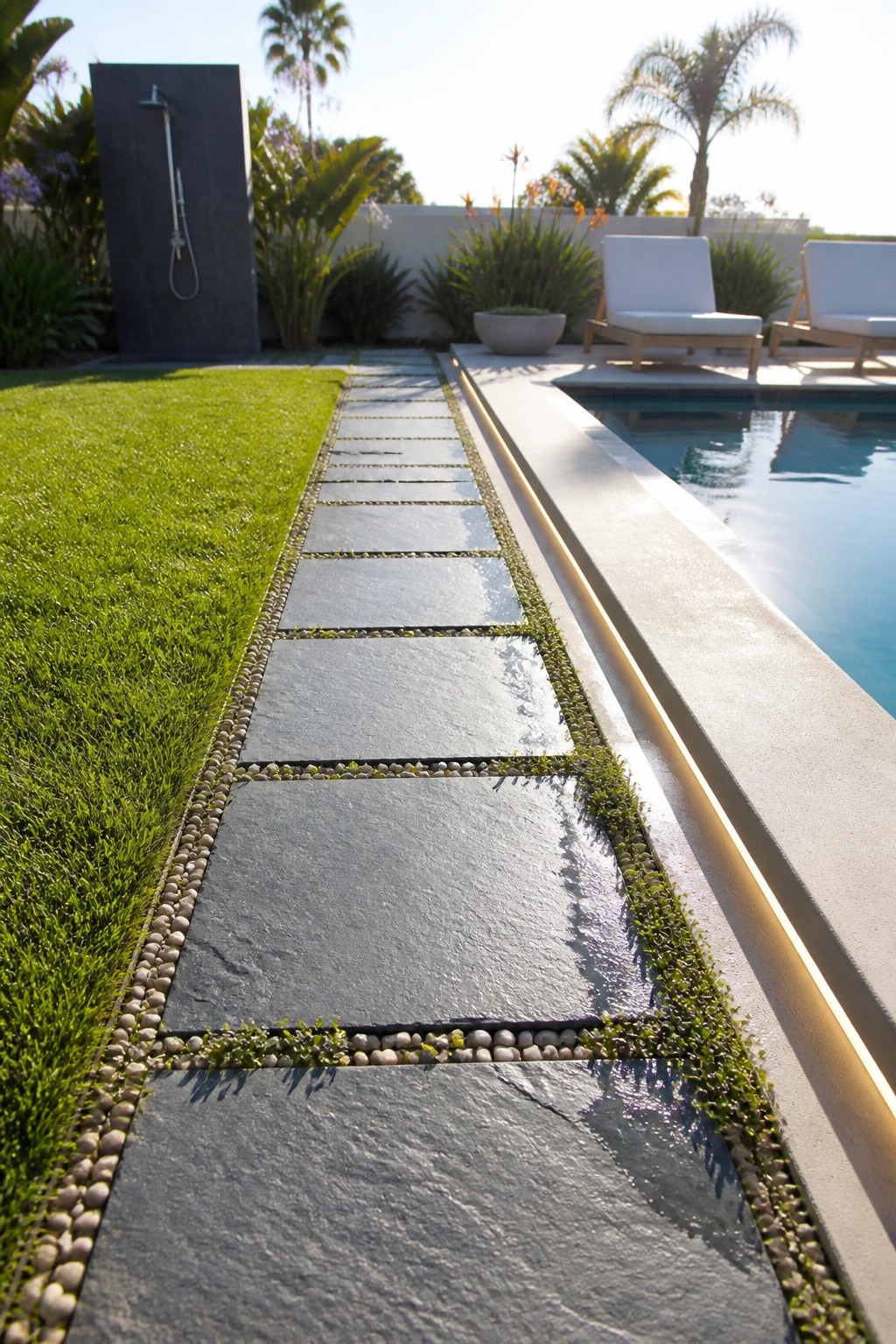
A path made from large stone slabs set in gravel gives a garden a clean but natural look. The stones create solid stepping areas while the gravel fills gaps and helps water drain away without pooling.
This style works best in sunny side yards or pool areas where you want low upkeep. Use a thin gravel layer and low edging plants so the path stays easy to walk on and does not feel overgrown over time.
Stone Slabs With Gravel For A Simple Path

Large stone slabs set with gravel between them make a path that feels solid underfoot but still lets water drain away. This setup works especially well in narrow side yards or between buildings where you want something low maintenance that does not look too formal.
It suits homes with modern or minimalist gardens. Lay the slabs level and use a consistent gravel size so the path stays easy to walk on and simple to sweep.
Natural Stone Paths With Flower Borders
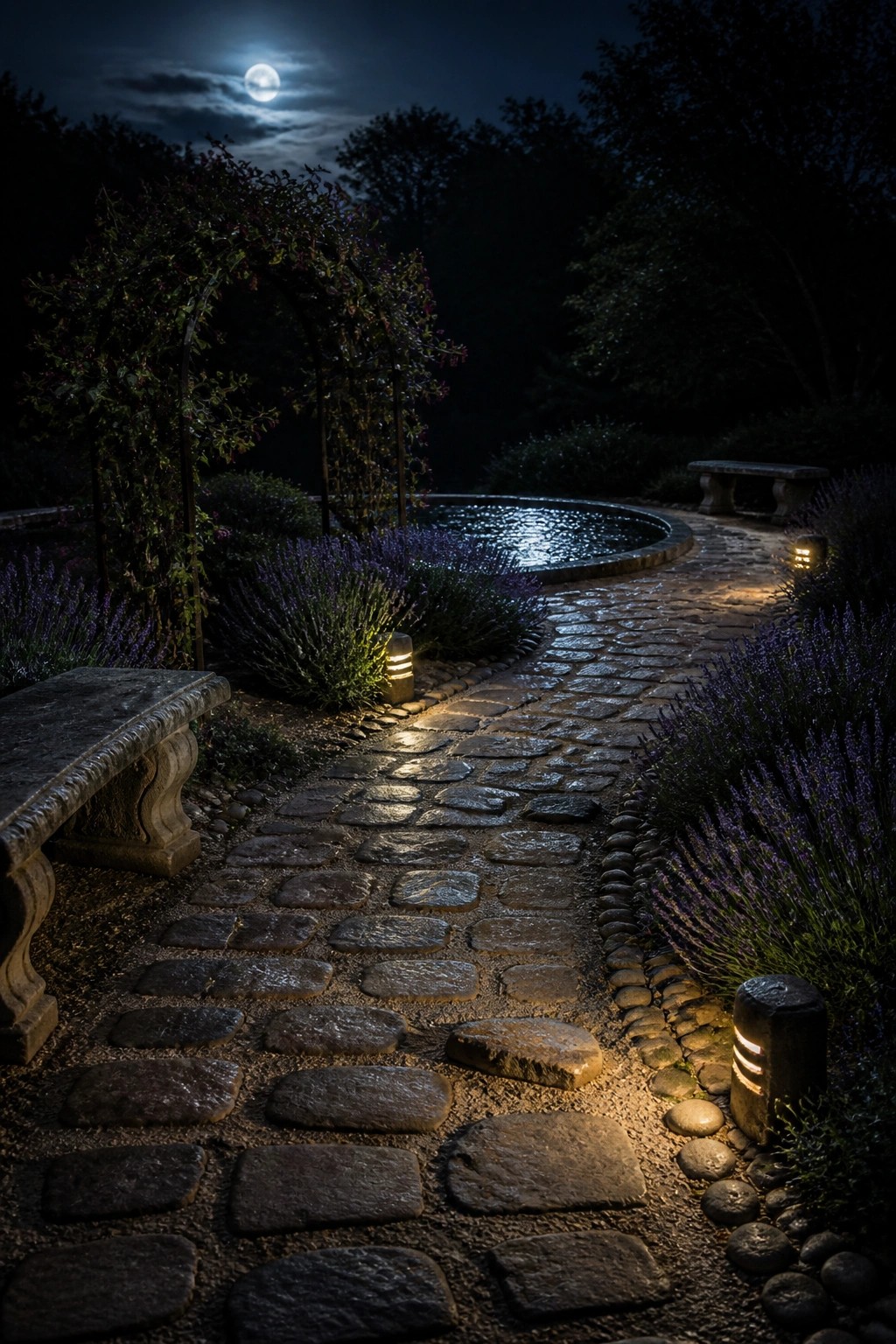
Stone paths made from irregular pavers give a garden a settled, natural feel that gravel alone often lacks. The uneven shapes let the path curve gently around beds, and low plants like lavender soften the edges without hiding the stone.
This layout works best in larger yards where you want the path to lead somewhere rather than just mark a straight line. Keep the lights low and spaced evenly so they guide the way without overpowering the plants at night.
Stepping Stone Paths Through Gravel
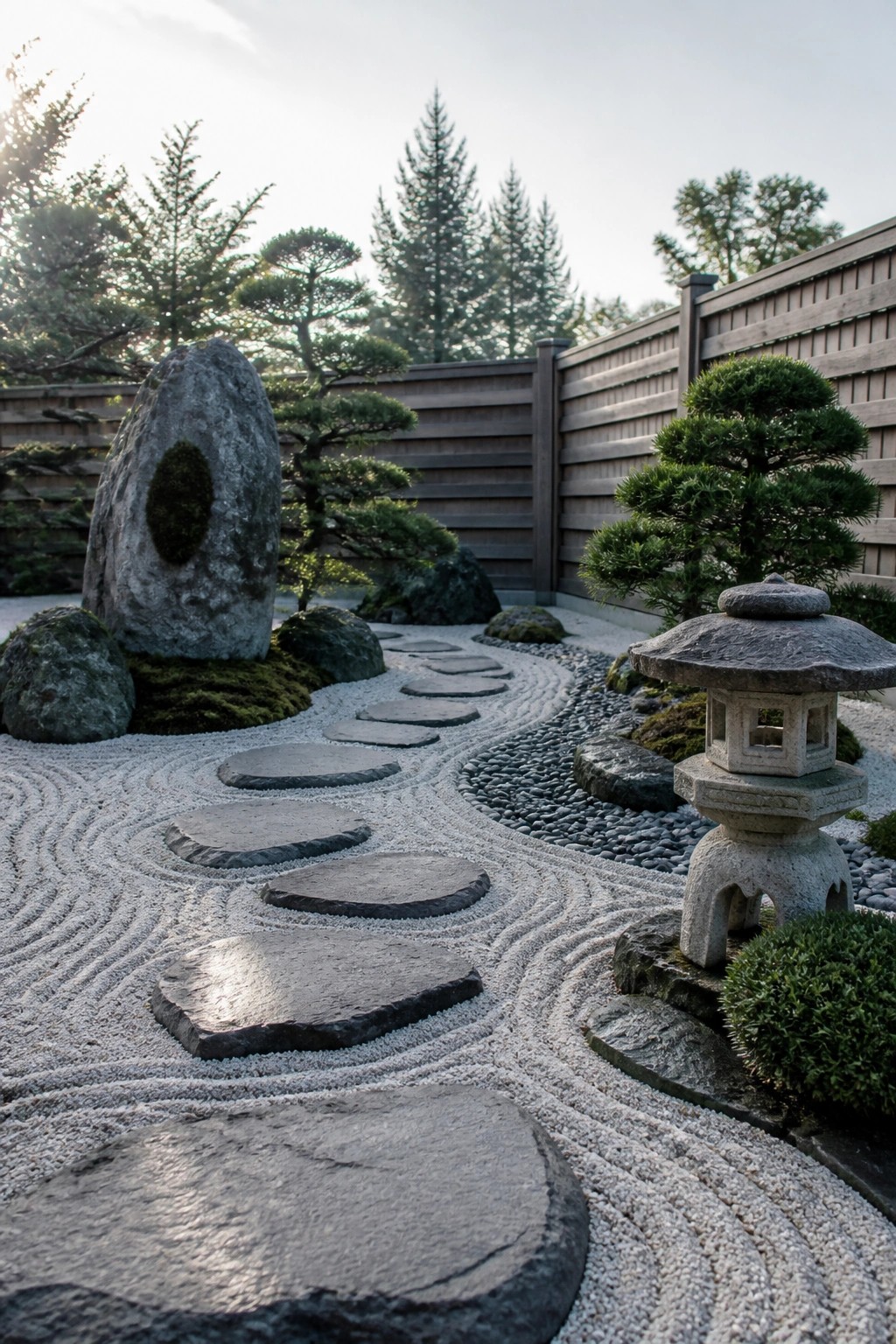
Flat stones set into raked gravel make a simple path that curves naturally through the garden. The look stays light because the gravel fills the space between the stones instead of using a solid surface. This approach feels relaxed and works without making the yard look too formal.
It suits smaller gardens or spaces where you want a clear route but still need to keep things open. Space the stones so they feel comfortable to walk on and rake the gravel regularly to keep the lines clean. Large rocks along the edges can help hold the gravel in place.
Cobblestone Paths With Brick Edging
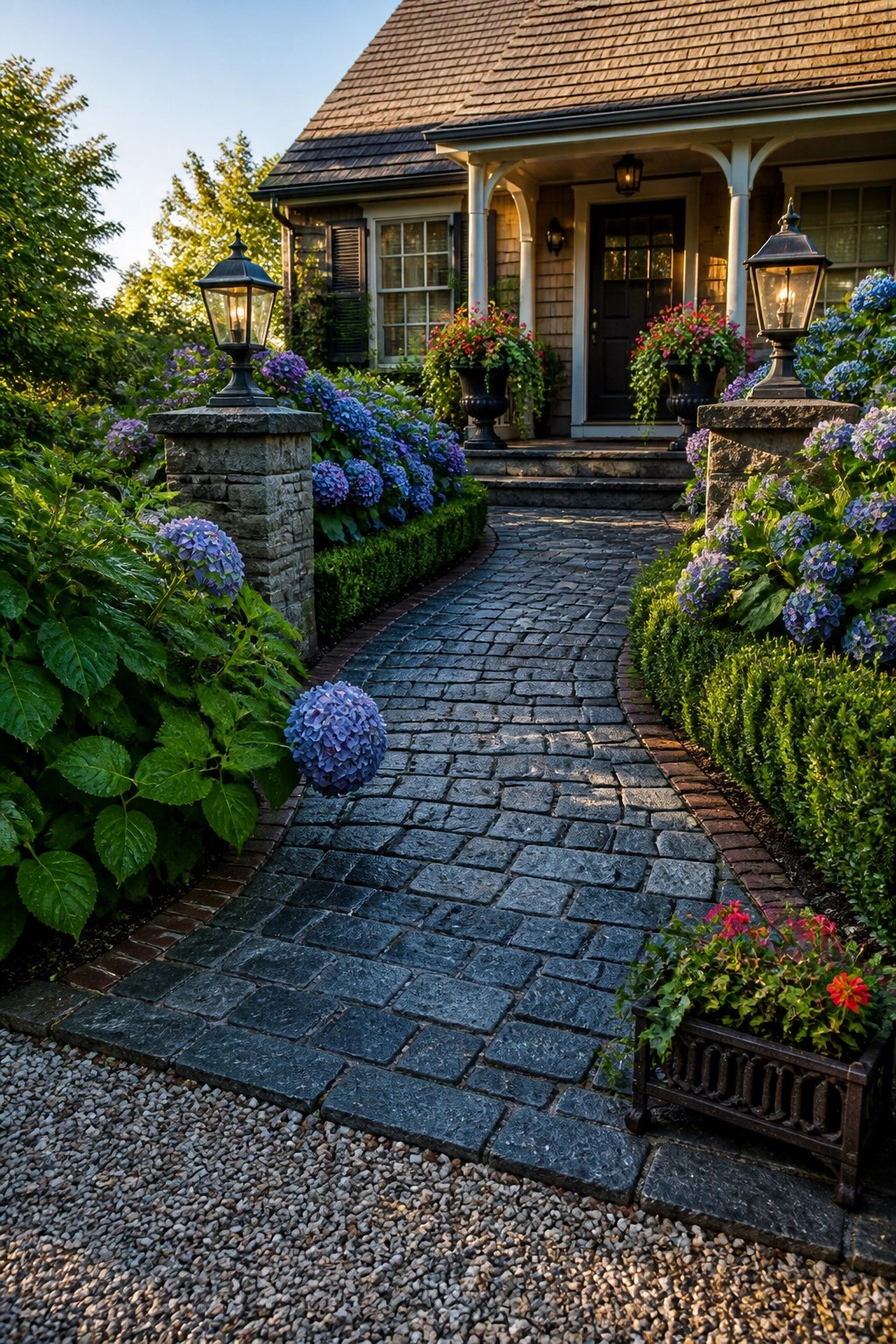
A cobblestone path feels sturdy and lasting in a garden setting. The uneven stones give texture underfoot while the brick edging keeps everything neat and contained. Flower borders on both sides help the path blend into the landscape instead of cutting through it.
This approach works best on properties with a gentle slope or a slight curve in the layout. Keep the plantings dense and low near the edges so they spill over just a little without blocking the walk. Gravel sections at the start or sides can make the transition from driveway or lawn feel more natural.
Stone Pavers Set In Gravel

This combination creates a path that feels relaxed while still giving solid places to step. The larger flat stones keep the walkway comfortable underfoot, and the gravel fills the gaps to handle water and add texture.
It suits courtyard gardens or sunny side yards where you want something simple and low maintenance. Keep the stones fairly level and add a few potted plants along the edges to soften the look without crowding the walkway.
Stone Paths With Wildflower Edges
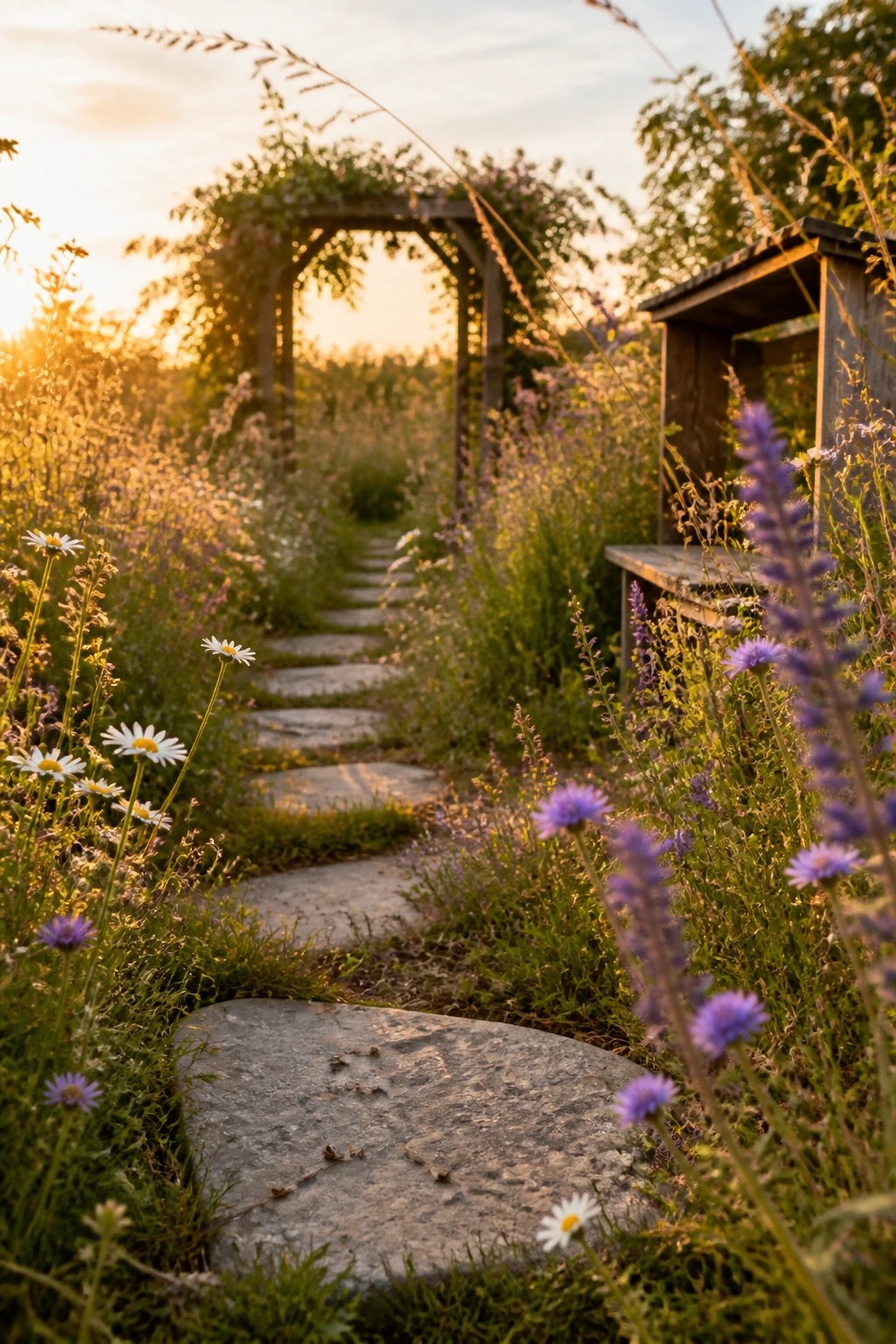
A stone path set into grass and flowers gives a garden an easy, natural feel. The slabs sit low enough that the plants can grow right up to the edges without looking messy or forced.
This works best in larger yards or cottage style gardens where you want the path to blend in rather than stand out. Use irregular stones and let the flowers vary in height so the whole thing stays soft and low maintenance.
Gravel Paths With Stone Stepping Stones

A gravel path broken up by flat stone pavers gives you a surface that drains well and feels softer underfoot than solid paving. The stones create steady places to walk while the gravel fills in the rest, keeping the look relaxed and practical for a working garden.
This approach works best in larger beds or productive gardens where you want clear walking lines without covering everything in concrete. Keep the stone pieces spaced evenly so people can step naturally, and use sturdy edging like wood to hold the gravel in place over time.
Frequently Asked Questions
Q: How do I keep weeds from popping up in my gravel path?
A: Spread a thick layer of landscape fabric before adding the gravel. Pull any weeds that do appear right away before they set roots. This keeps the path clean with less effort over time.
Q: Is it hard to mix flower borders with stone paths?
A: Start with a clear edge between the stones and soil. Plant flowers that stay compact so they do not spill over the path. Water them separately to avoid soaking the stone area.
Q: What size gravel works best for walking comfort?
A: Choose pieces about half an inch across. They pack down nicely underfoot without shifting too much.
