

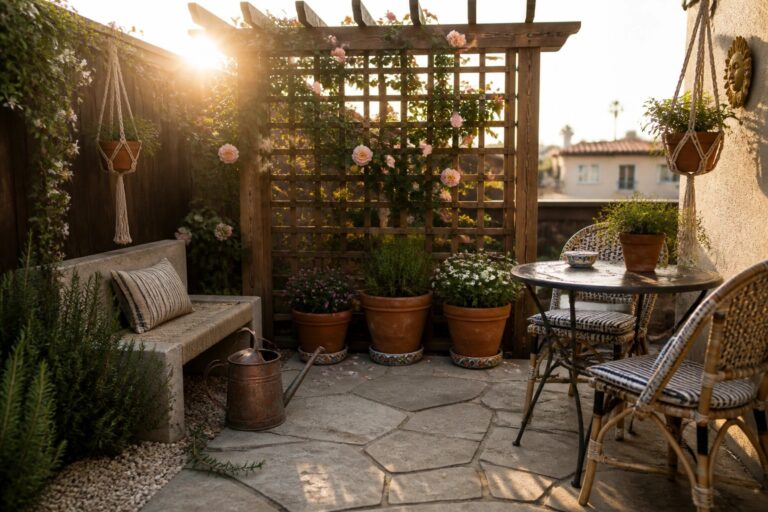
I have found that patios tend to work best when the additions fit the way the space actually gets used rather than just filling empty corners.
Many setups look promising on paper but end up in the way once people start spending real time outside with chairs and tables in place.
Small adjustments often change that.
When I consider ideas built around basic planters or trellises I usually picture how the layout would hold up once the weather shifts and the area needs to stay practical for daily use.
Trying one or two of these on a limited scale first has shown me which ones match the way we move through the yard.
Add a Trellis for Climbing Plants
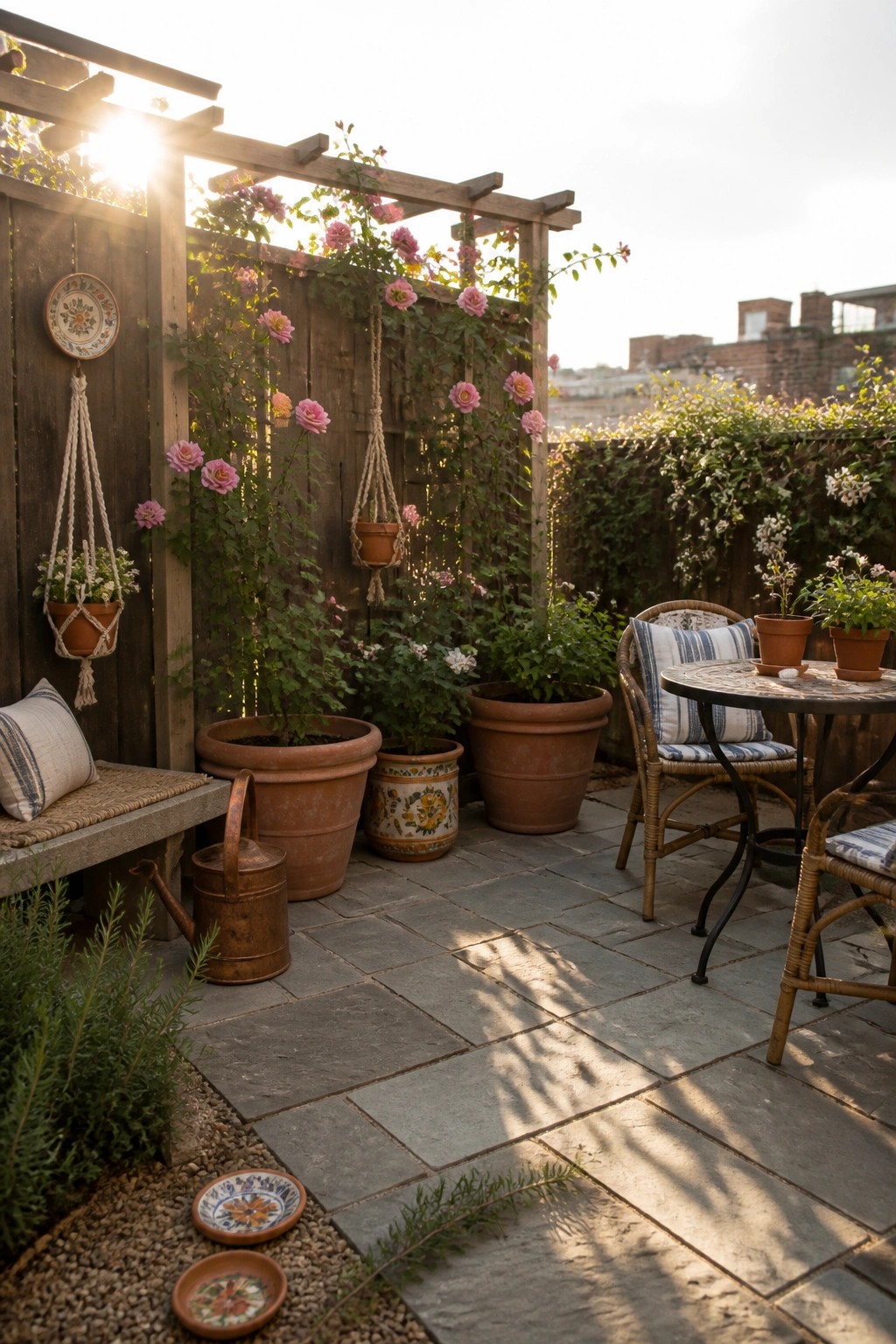
A trellis adds height and structure to a patio garden without crowding the floor space. It turns a plain wall or fence into a green backdrop and lets you grow more plants in a small area.
Mount a simple wooden frame and choose easy climbers like roses to cover it over a season or two. This works best on compact patios where you want vertical interest but still need room to move around the seating.
Create A Vertical Herb Garden Using A Pallet
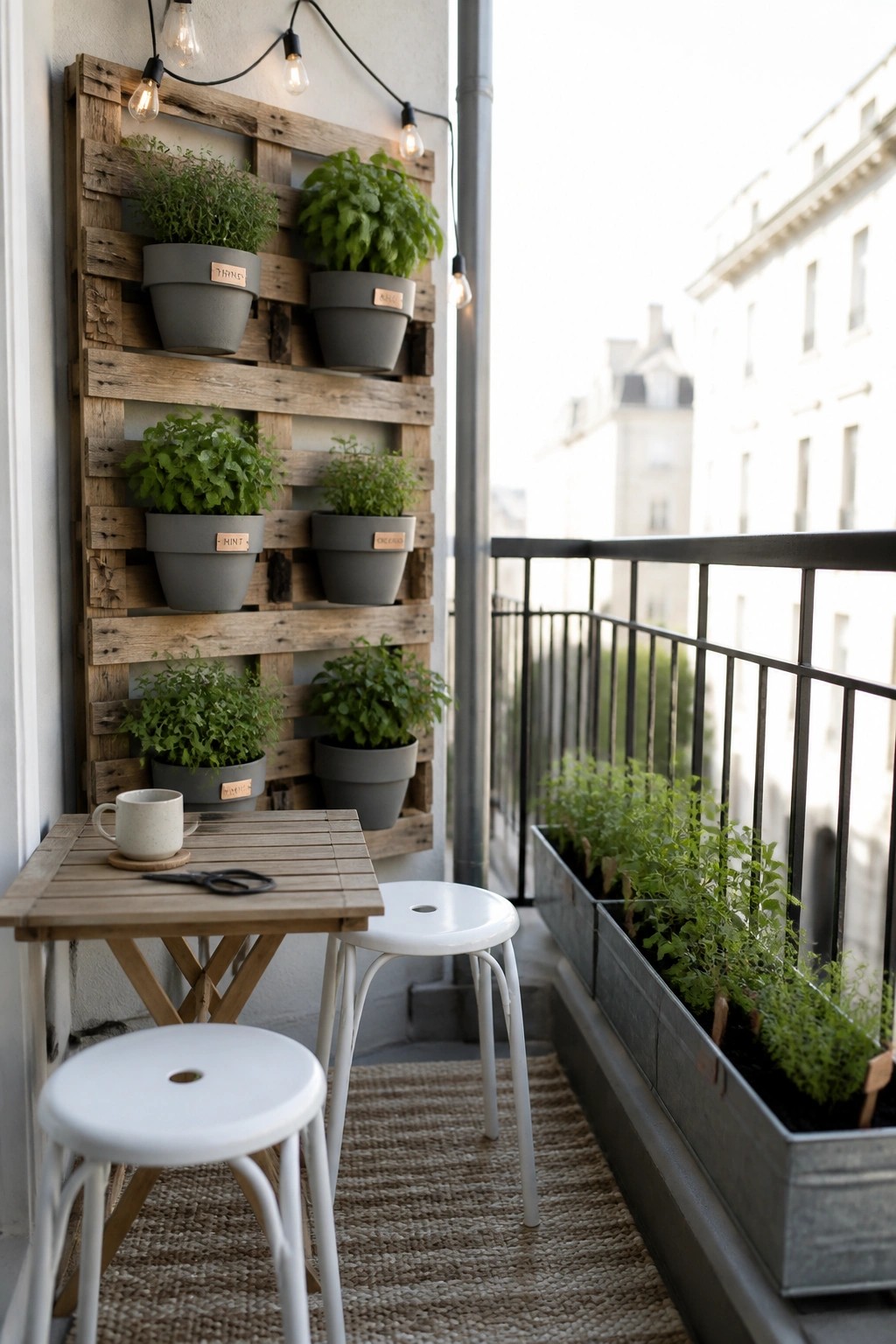
A pallet mounted on the wall turns a narrow balcony into a productive spot for herbs. It keeps the plants off the floor and makes watering and picking easier in a small space.
Screw or wire small pots to the slats and choose herbs that grow well together. This works best on balconies or patios where ground space is limited and you still want fresh herbs within reach.
Hang Baskets From Your Patio Structure
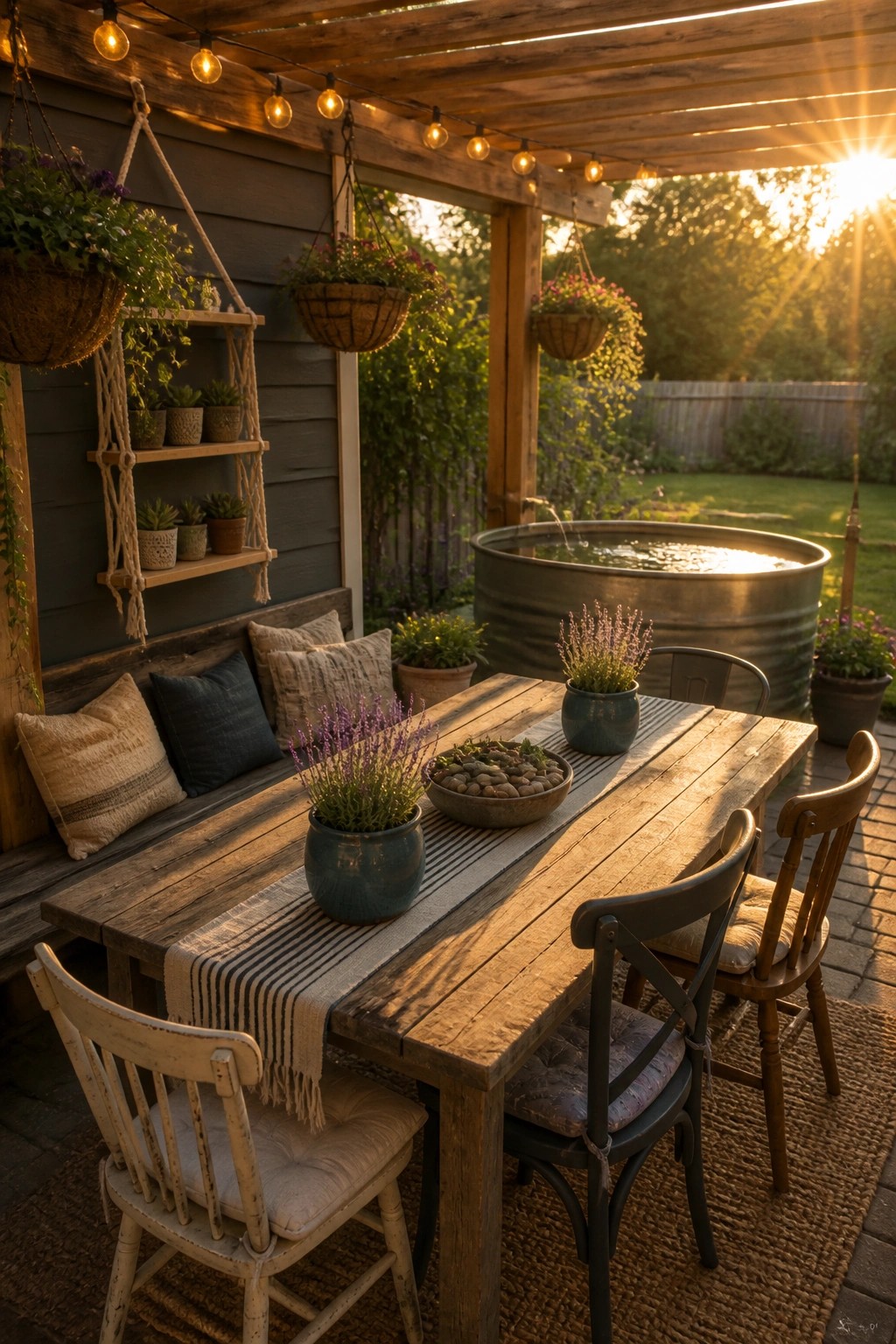
Hanging planters let you bring in plenty of greenery without crowding the floor or table space on a patio. They work especially well over a dining table or seating area because the plants stay out of the way while still making the space feel softer and more finished. A few baskets at different heights can turn a plain pergola or post into a simple garden feature.
This approach suits small patios or decks where floor room is limited. Use lightweight baskets and sturdy hooks so you can swap plants with the seasons. Just keep the number of baskets modest so the area does not feel overloaded.
Raised Beds With Trellises
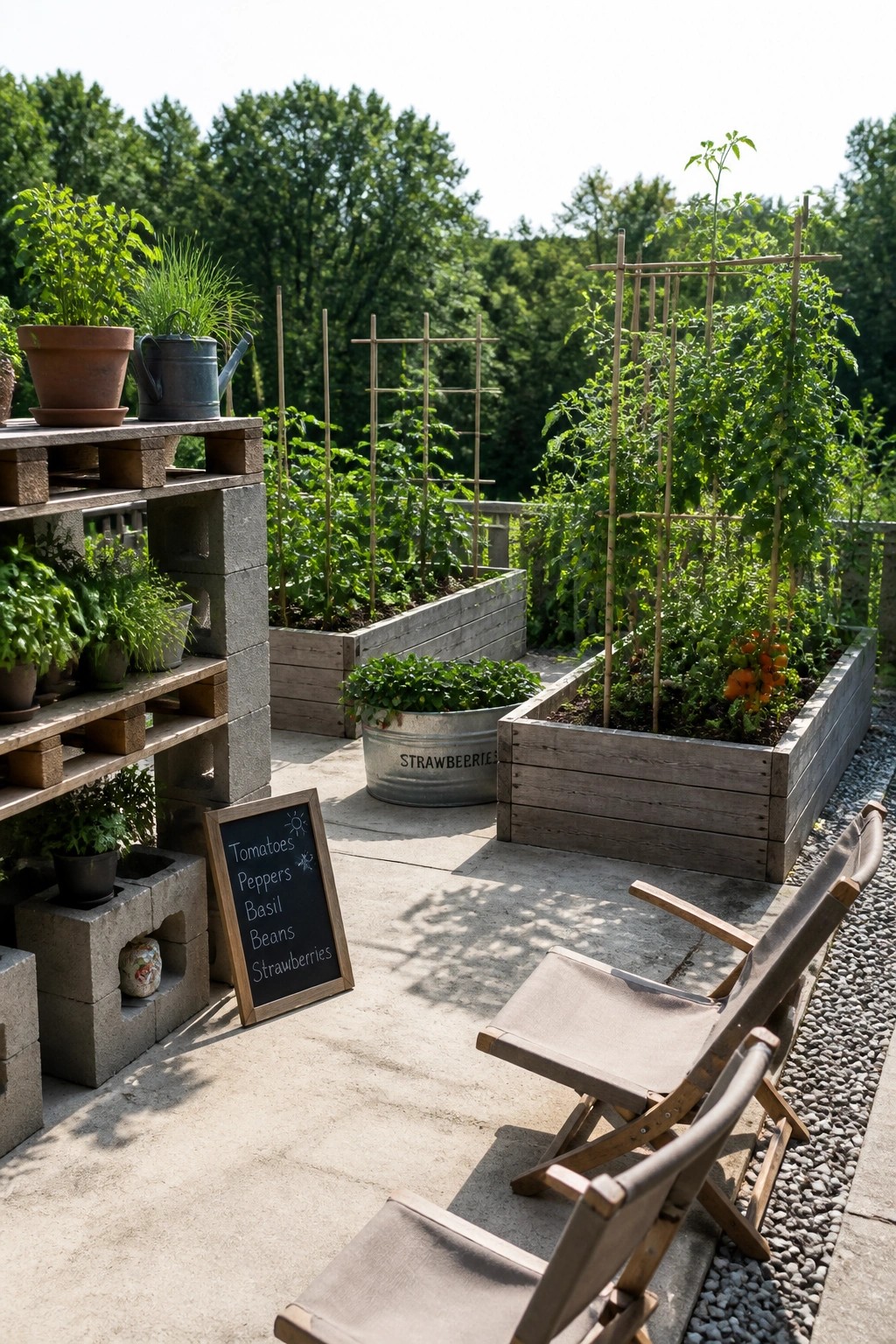
Raised beds paired with simple trellises give you a clean way to grow tomatoes, beans, and peppers right on a patio. The wood frames keep soil contained and the vertical supports let plants climb without taking over the whole space. It is an easy setup that works in smaller outdoor areas where in-ground planting is not an option.
You can build both the beds and the trellises in a weekend using basic lumber and stakes. Place them along the edge of the patio so the plants get good sun and do not block walking paths. The style suits homes with limited yard space and still leaves room for a couple of chairs nearby.
Use Pallets And Hanging Jars For Vertical Planting
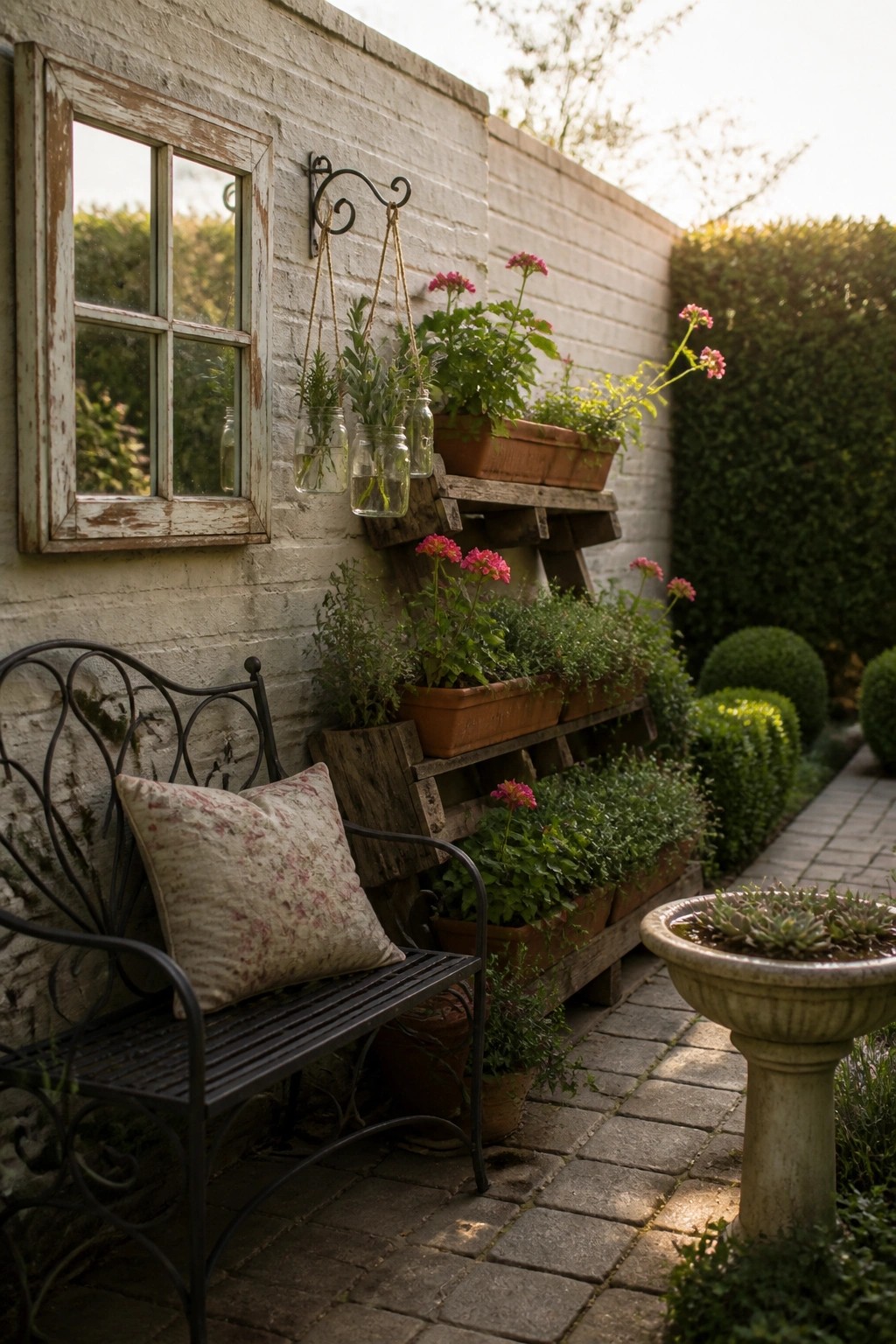
Old pallets can turn a blank wall into a working garden without taking up floor space. Stacking them into simple tiers gives you room for several planters at different heights, while jars hung from hooks add even more spots for herbs or small flowers. This setup keeps things off the ground and makes watering easier too.
It works best on a small patio or along a side wall where you need more growing room. Start with one or two pallets and add jars only where they fit naturally. The look stays casual and the materials are easy to find or reuse.
Build a Bench Into Your Planter
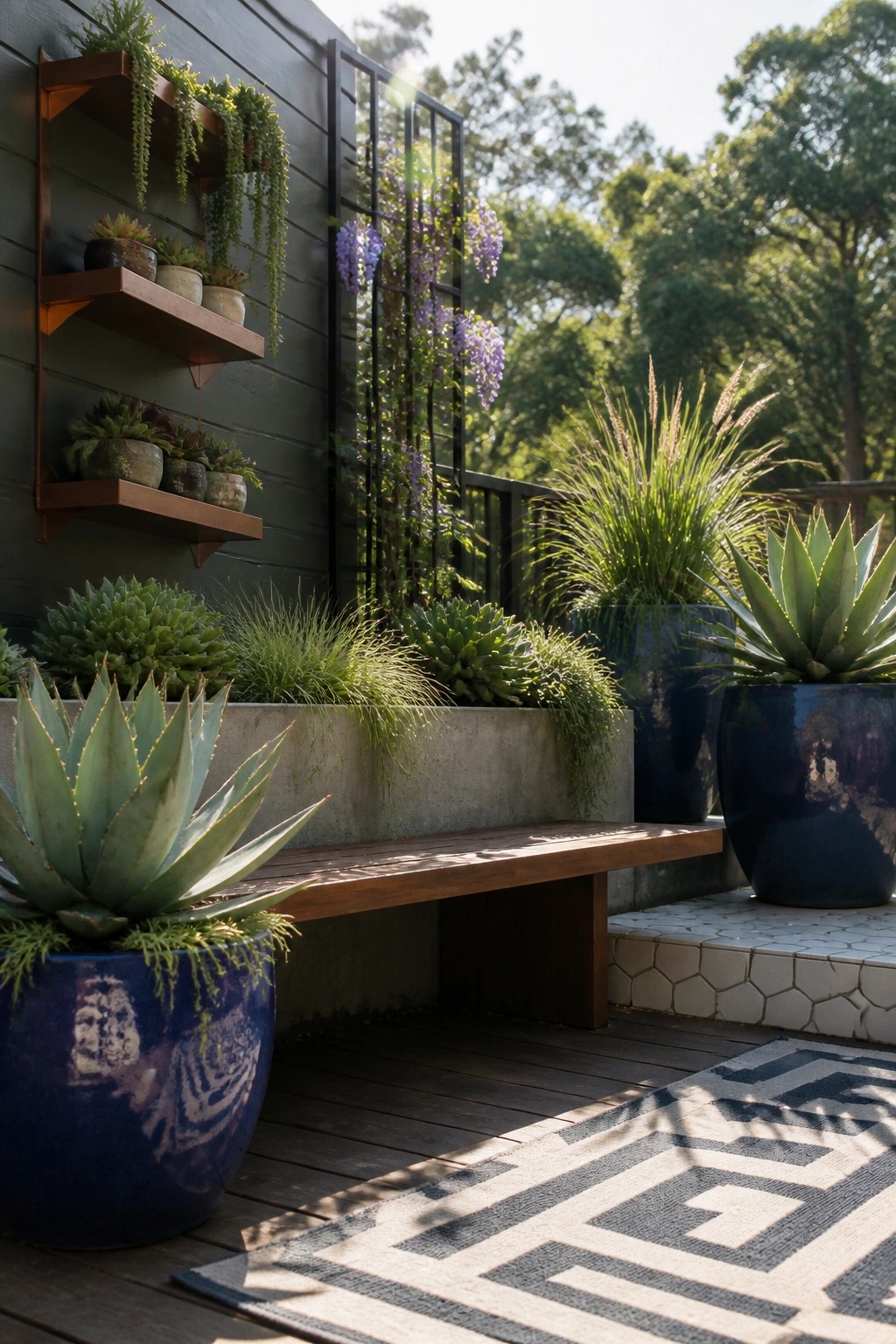
One easy way to add seating on a patio is to run a simple bench right along the front of a planter box. It turns the planter into a useful backrest and keeps the space from feeling crowded with extra furniture. The plants stay close at hand, and you get a place to sit without needing a separate bench taking up floor space.
This setup works well on smaller decks or patios where every inch counts. Use a basic wood bench and attach it to the front of a concrete or wood planter, then fill the box with easy plants that spill over the edge. It suits homes that already have some decking or a flat outdoor area and needs only basic tools for a weekend build.
Add a Trellis to Raised Beds
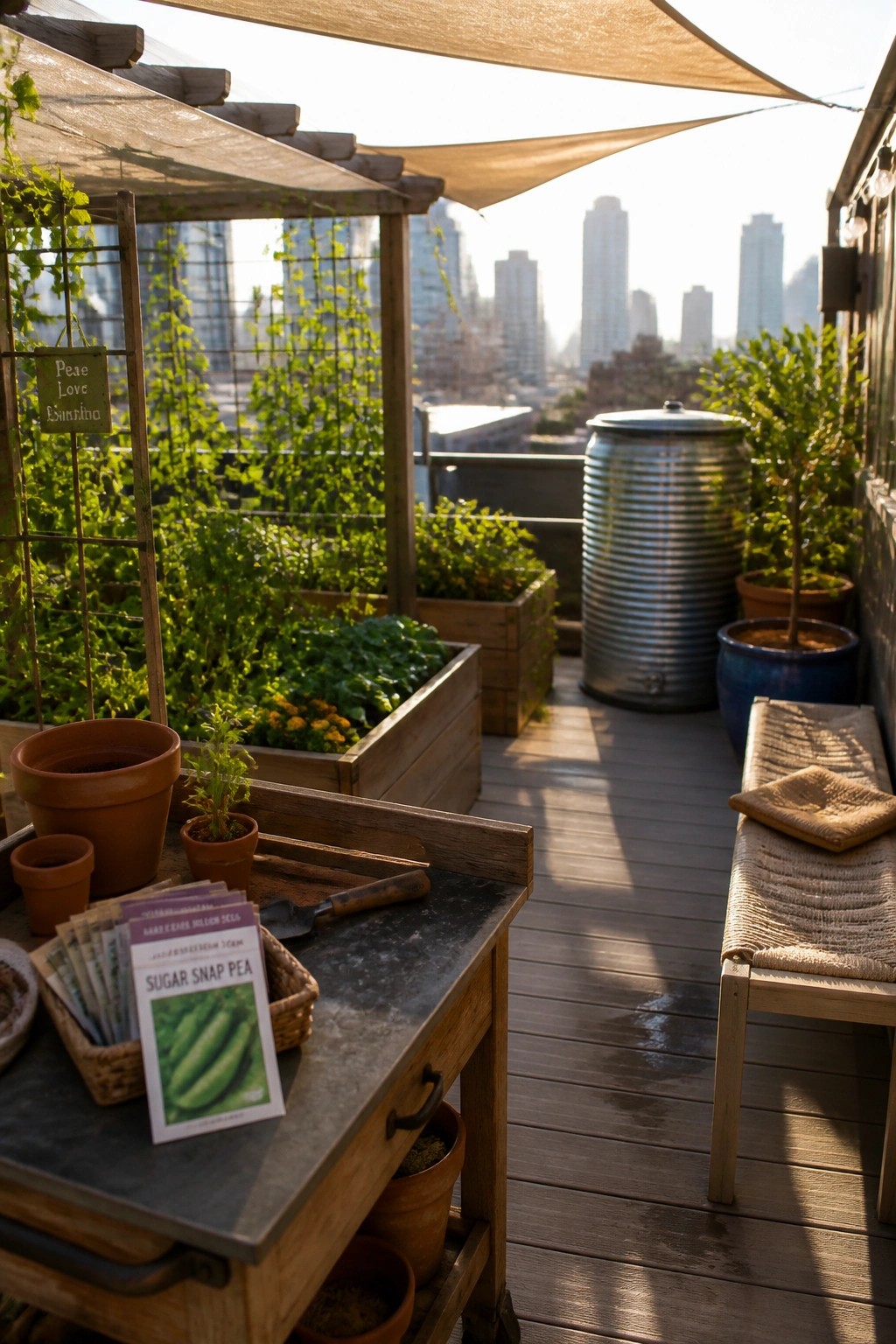
A trellis attached to a raised planter gives climbing vegetables like peas plenty of room to grow without taking over the floor space. It turns a basic box into a productive vertical garden and keeps the plants off the ground so they stay healthier. Many people like this setup because it works well even on small decks or balconies where horizontal room is limited.
You can build a simple wood frame and secure it to the back of the planter with a few screws. This approach suits urban patios or rooftops that get good sun. Just make sure the trellis is sturdy enough to handle the weight of the vines once they fill in.
Repurpose A Crate As A Patio Coffee Table
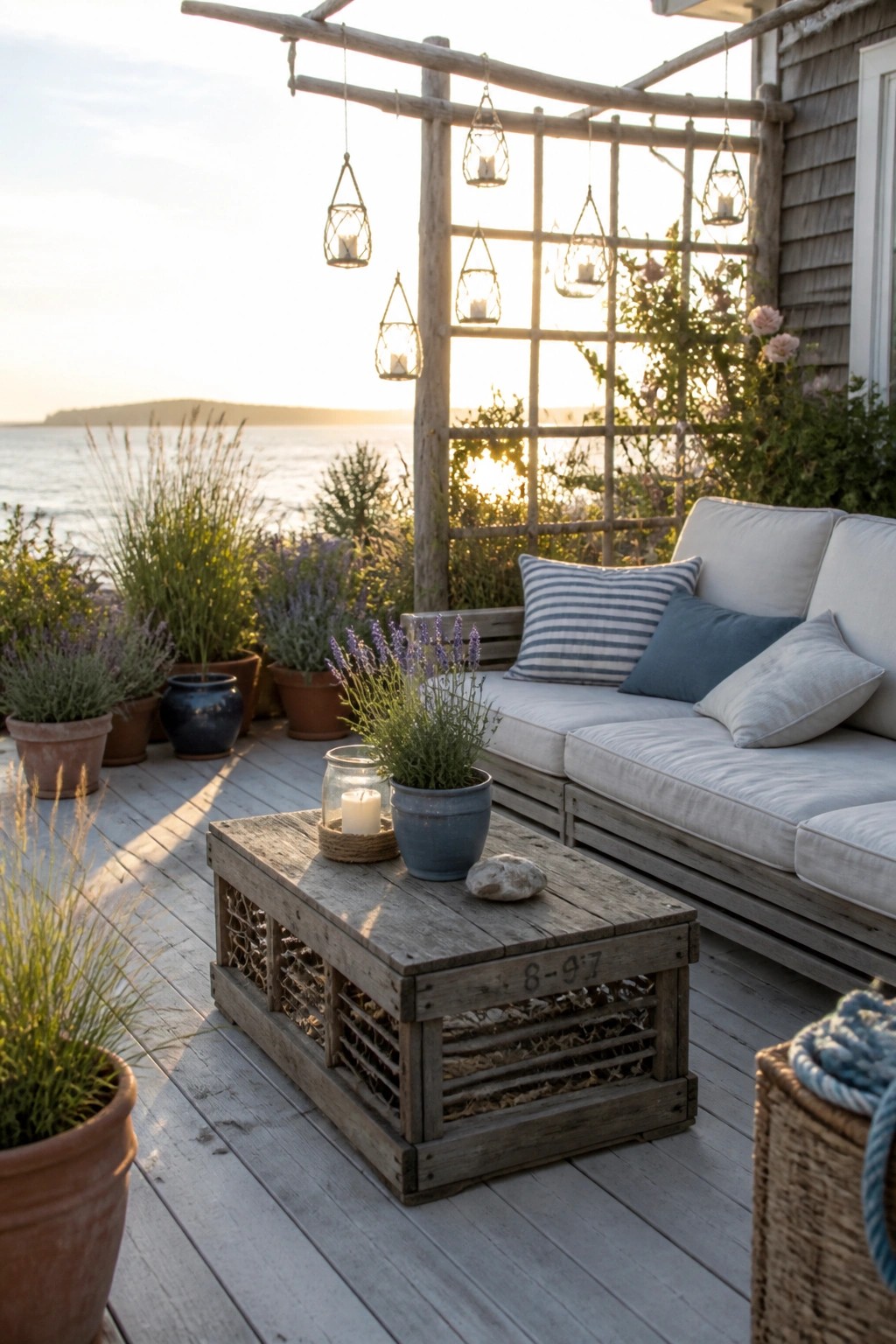
A wooden crate works well as a patio table because it is sturdy, low cost, and already has the right height for seating areas. It brings a simple rustic look that fits right in with cushions, potted plants, and basic deck flooring without needing much else.
Place one near a bench or sofa set and add a tray on top if you want a smoother surface. This idea suits small decks or weekend builds where you want something useful without buying new furniture. Just check that the crate is solid and treated for outdoor use so it lasts.
Trellis with String Lights
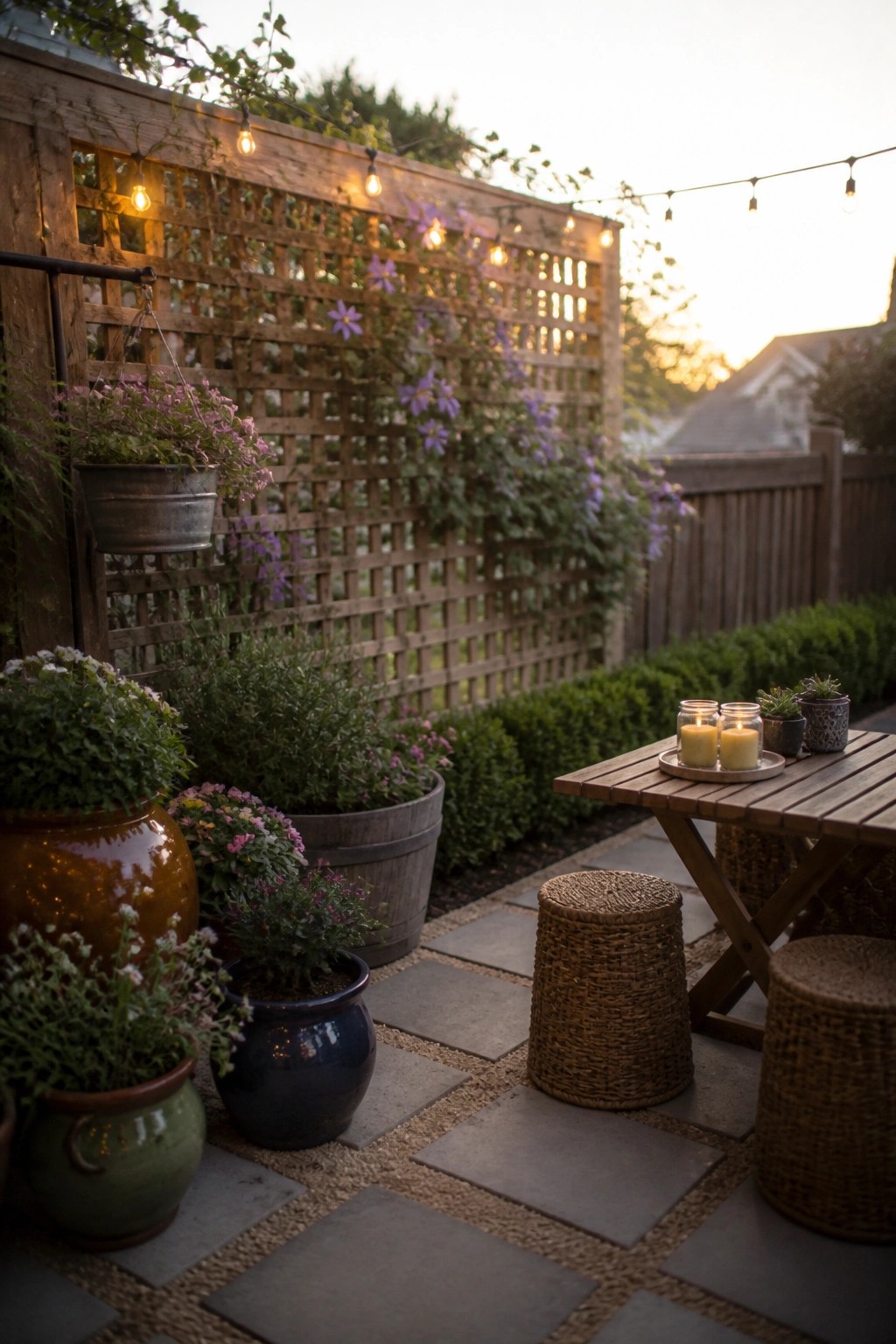
A trellis gives you an easy way to add height and structure to a patio without much work. String lights along the top and let a few climbing plants fill in the gaps. The result feels finished even when the rest of the space is still simple.
This works well on small patios or along a fence where you need a bit of privacy and light at night. Use a basic wood lattice, run the lights on a timer, and choose one or two vines that grow fast in your area. Keep the rest of the planting in pots so you can move things around as needed.
Use A Trellis To Shape Your Patio Garden
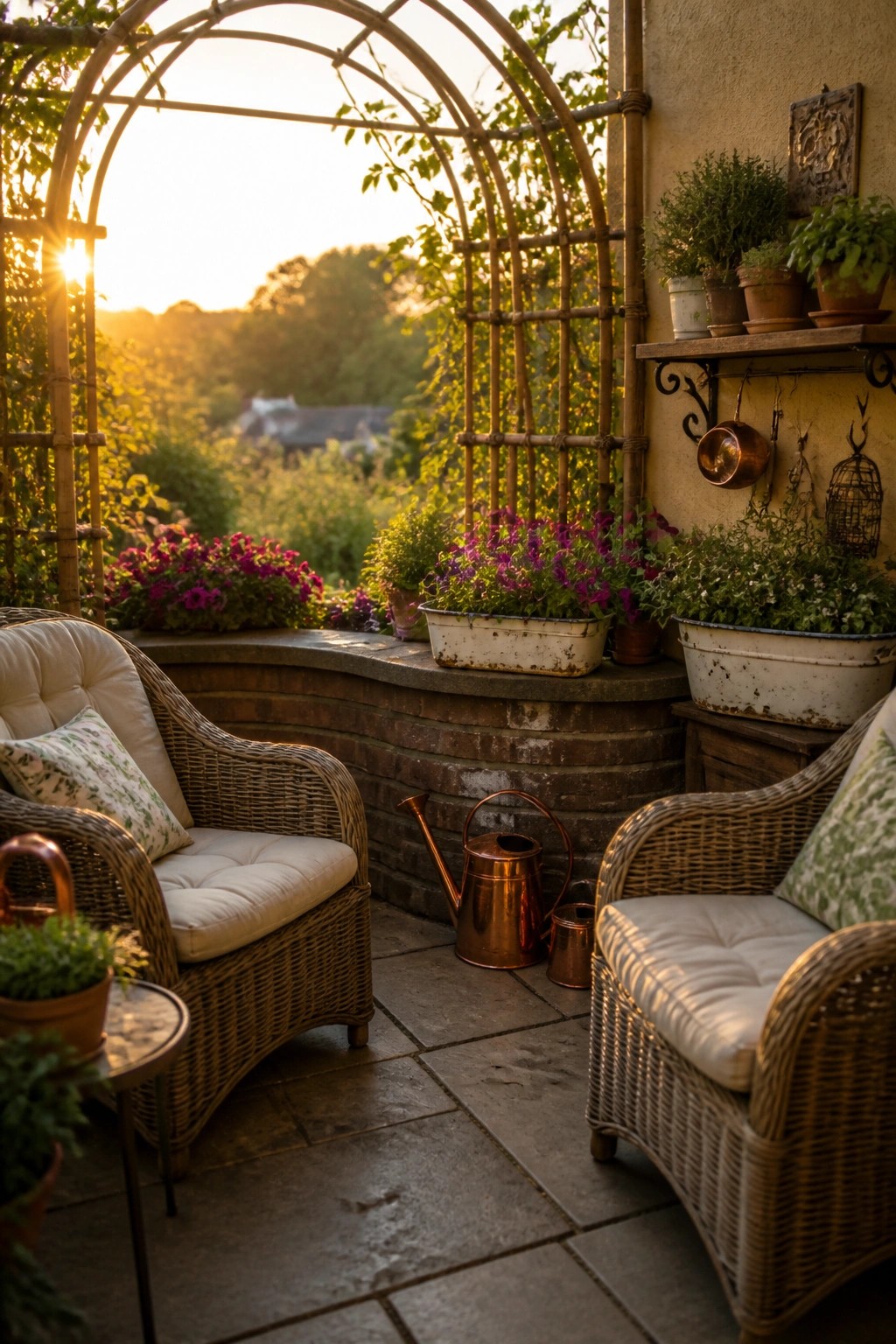
A trellis arch gives a patio seating area some height and structure without much work. It turns an open corner into a clearer garden spot, especially when you add a few planters along the base or on a nearby ledge. The climbing vines fill in over time and make the space feel more enclosed.
This works well on small patios or decks where you want a bit of separation from the rest of the yard. A simple wood or bamboo version is easy to put up in a weekend and pairs with basic pots or old containers. Just keep the scale modest so it does not crowd the chairs.
Add a Concrete Fire Pit for Easy Outdoor Gatherings
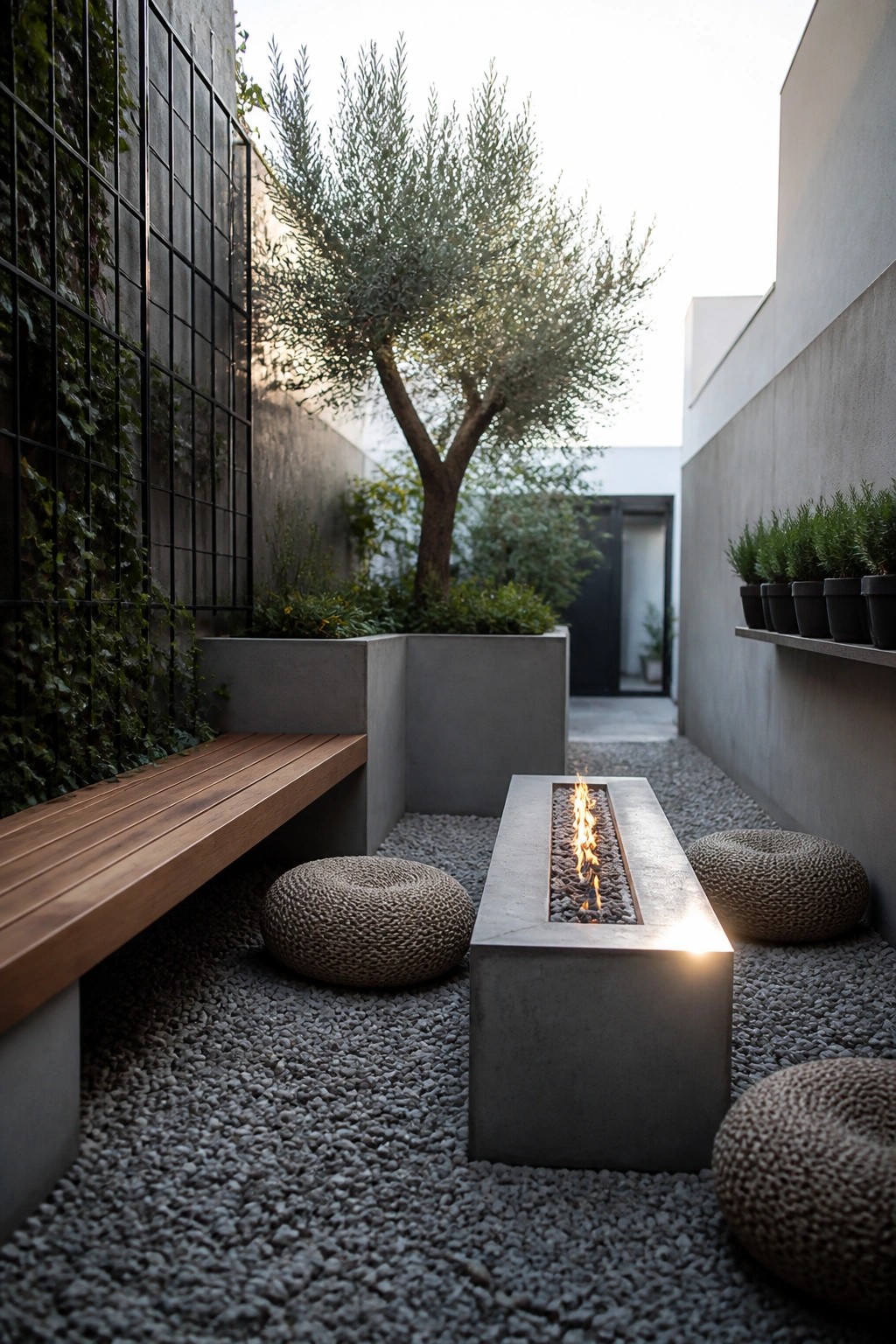
A concrete fire pit works well as the center of a small patio because it stays low and simple. The rectangular shape blends into gravel and lets seating stay flexible around it without needing extra furniture.
This approach suits compact side yards or courtyard spaces where you want a weekend project that does not require much maintenance. Keep the surrounding area open so people can pull up stools or cushions as needed.
Train Fruit Trees Flat Against a Wall
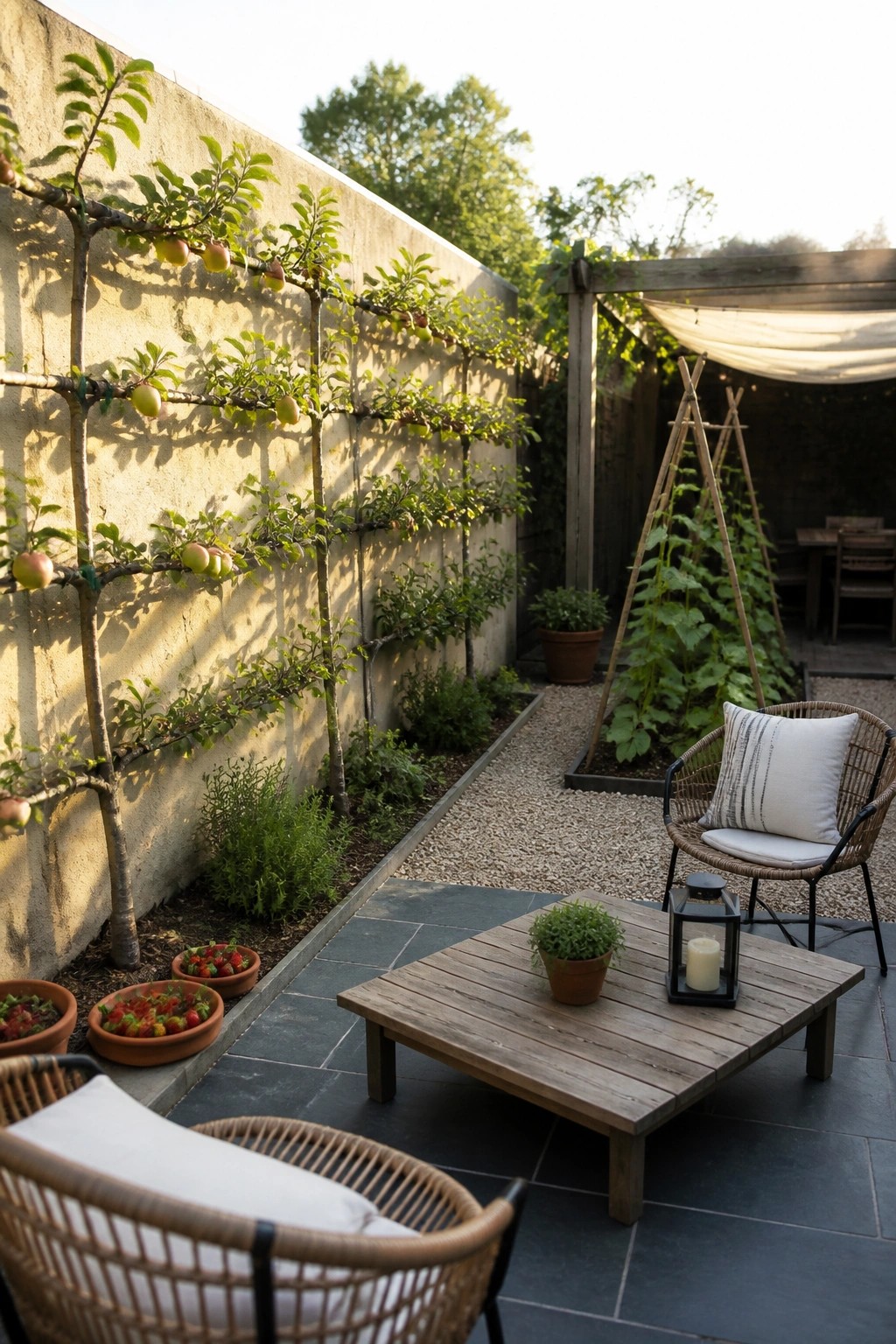
Training fruit trees to grow flat against a wall gives you a garden even when space is tight. The branches stay neat and close to the surface, so you get fruit without taking up much room on the ground.
This idea works best on a patio or small courtyard with a solid fence or wall to use as support. Start with young trees and prune them a couple times a year to hold the shape.
Try a Tiered Planter Stand on Your Patio
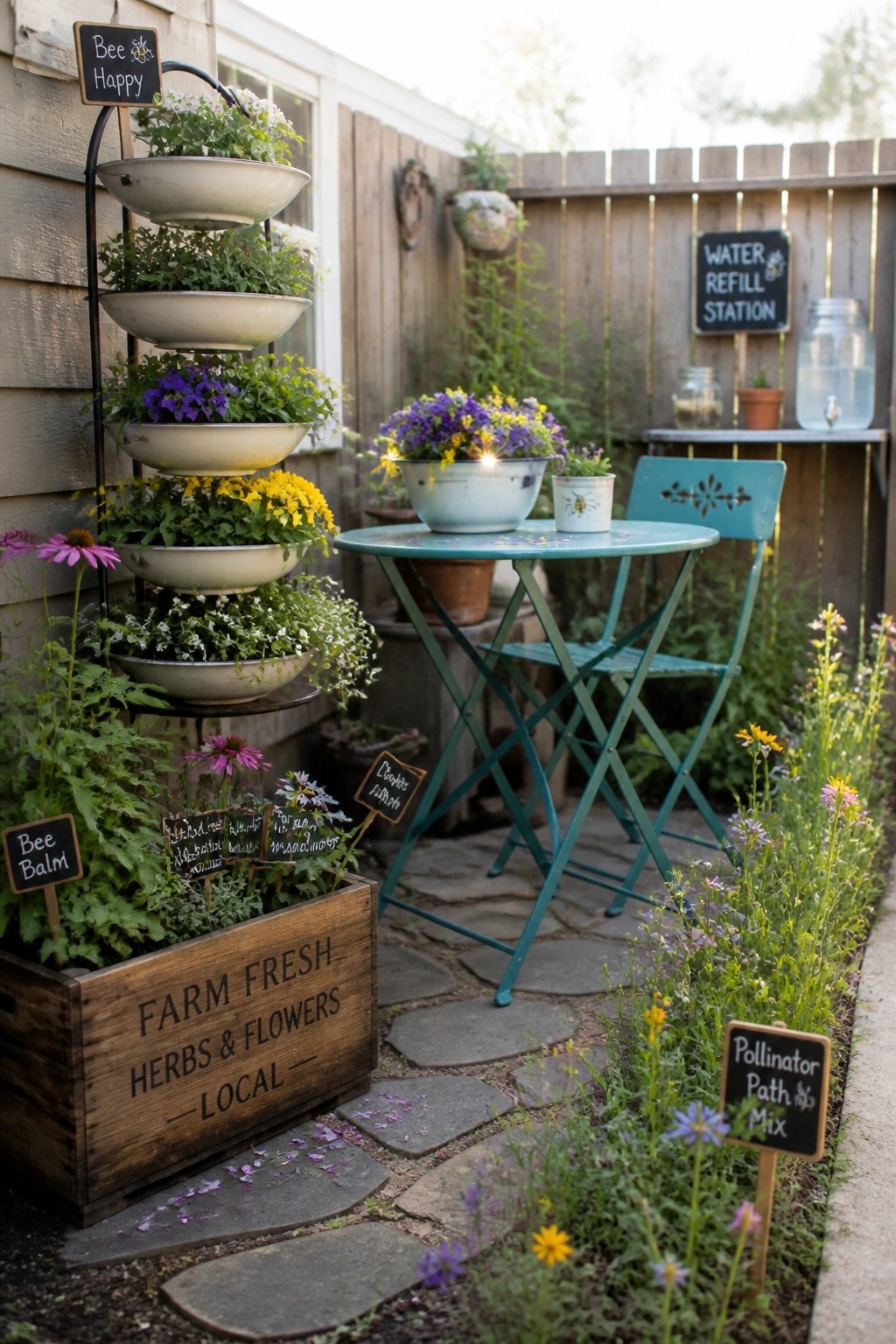
A tiered planter stand lets you fit more plants into a small patio without taking over the floor space. It keeps the area open for a table and chairs while still giving you plenty of flowers and herbs close by.
Set the stand right next to your seating so the plants feel part of the spot. This works especially well on stone patios or in small yards where you want more greenery but need to keep walking room clear.
Hang Planters from a Simple Trellis
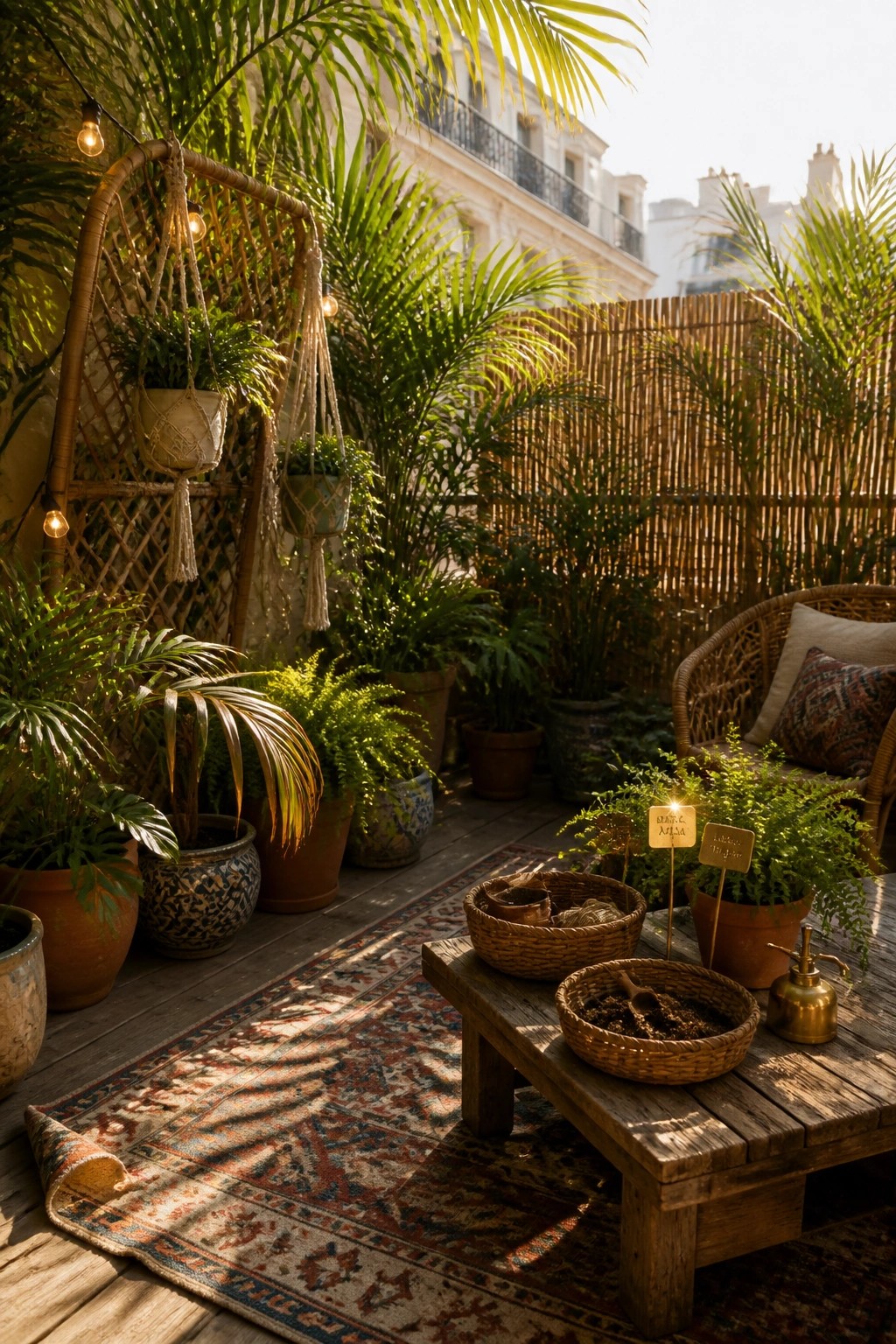
A trellis gives you an easy way to add height and more plants on a small patio. It turns an open wall or corner into a green backdrop without needing raised beds or big changes. The setup works well with basic lumber and a few hooks, and it keeps things off the floor so the space stays open.
This idea suits decks and balconies where floor space is limited. Place the trellis against a fence or wall, add a few hanging pots, and you have a weekend project that feels finished. Just make sure the frame is sturdy enough for the weight once the pots are full.
Create a Vertical Garden Using Wall Planters
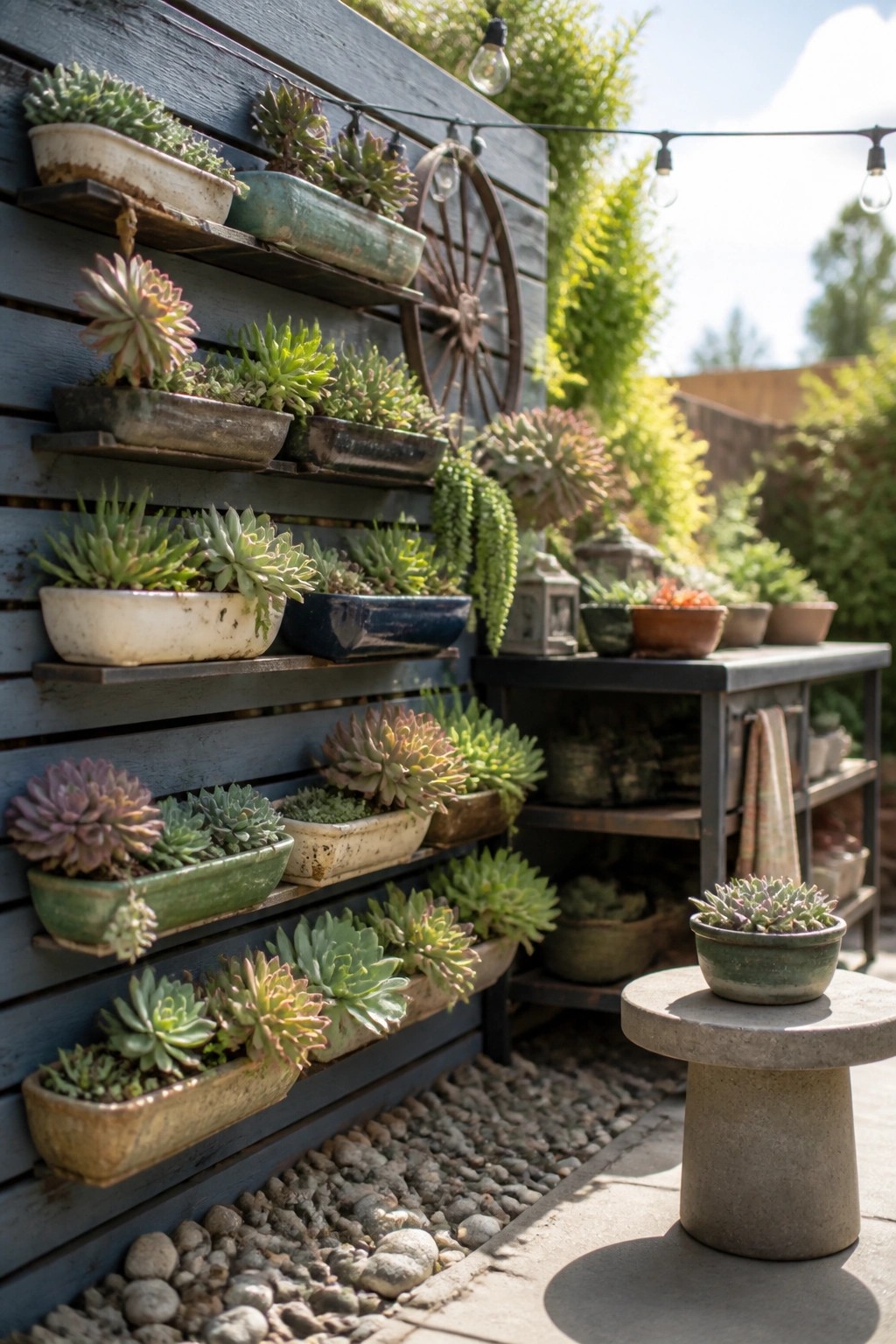
Mounting planters directly on a wall gives you room for more plants without crowding the ground. It works especially well with succulents because they stay compact and need little soil. A simple wooden wall like this one can hold several rows without looking cluttered.
This setup suits small patios or side yards where floor space is tight. Use sturdy brackets rated for outdoor weight and pick containers with drainage so water does not collect behind them.
Add a Simple Trellis for Climbing Vines
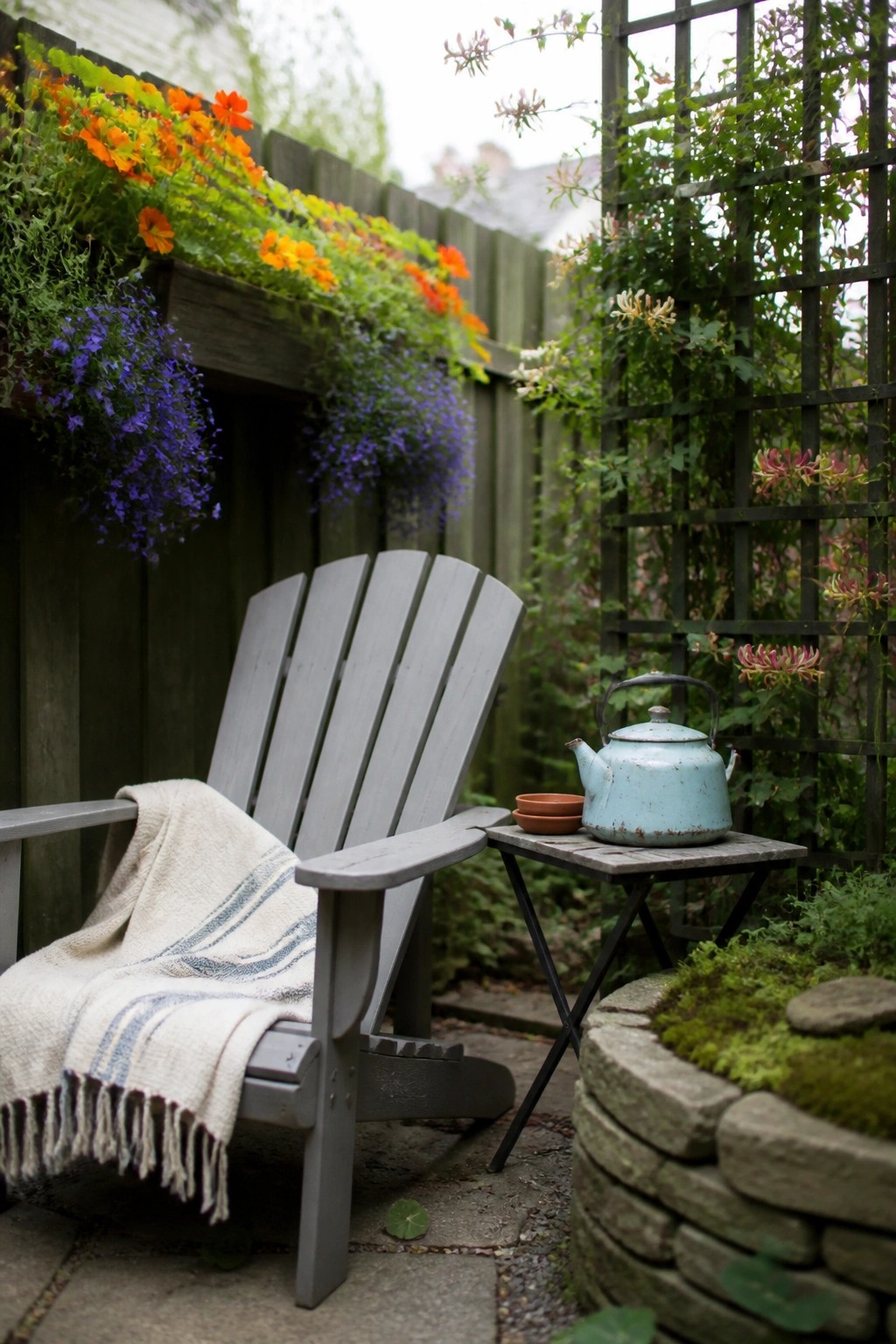
A trellis gives climbing plants something to hold onto and turns a plain fence or wall into a green backdrop. It adds height and texture without crowding the ground, which makes a small seating area feel more finished.
Set one up right behind a chair or bench so the vines grow around the spot where you sit. It works best on a patio or deck with a fence already in place, and it stays low effort once the plants get going.
Cover a Pergola With Vines for Natural Shade
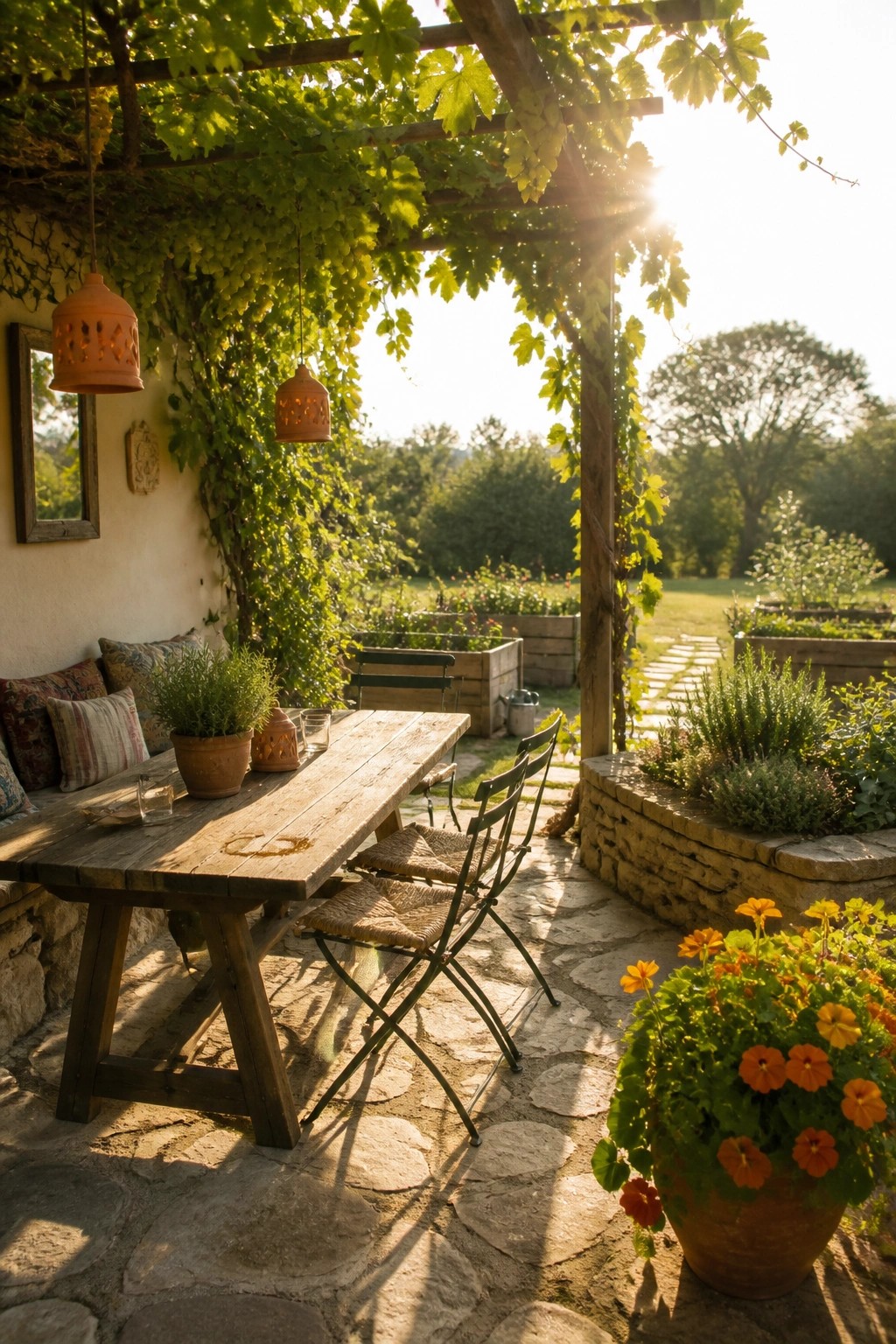
A pergola with climbing vines overhead can turn an ordinary patio into a shaded spot that feels connected to the garden. The vines filter sunlight instead of blocking it completely, which keeps the space cooler while still letting some light through.
This setup works well on patios that get strong afternoon sun. Use a simple wooden frame and pick vines that grow quickly in your area. Just watch how dense the cover gets over the first couple of seasons so the table stays usable.
Repurposed Spool Tables For Casual Patio Seating
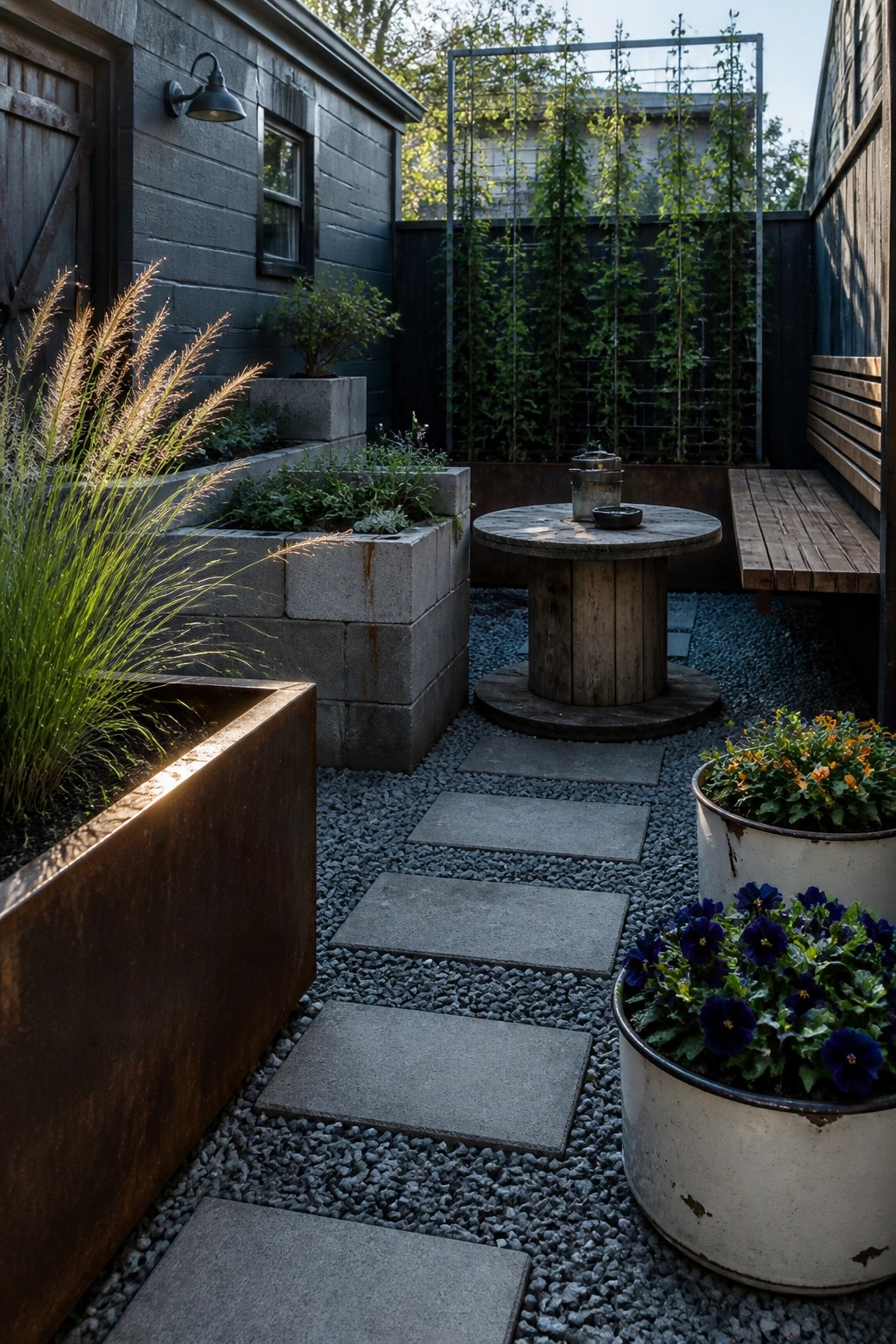
A wooden cable spool makes a quick table for a small patio without needing much building skill. It already has the right height and a solid top, so you can set it right on gravel or pavers and have a place for drinks or a few pots in one afternoon.
This works best in tight backyard corners or side yards where you want seating but do not want to buy new furniture. Sand the wood, add a coat of sealant if it will stay outside, and pair it with simple raised planters to keep the whole setup low cost and easy to move later.
Painted Cinder Block Planters For Tiered Gardens
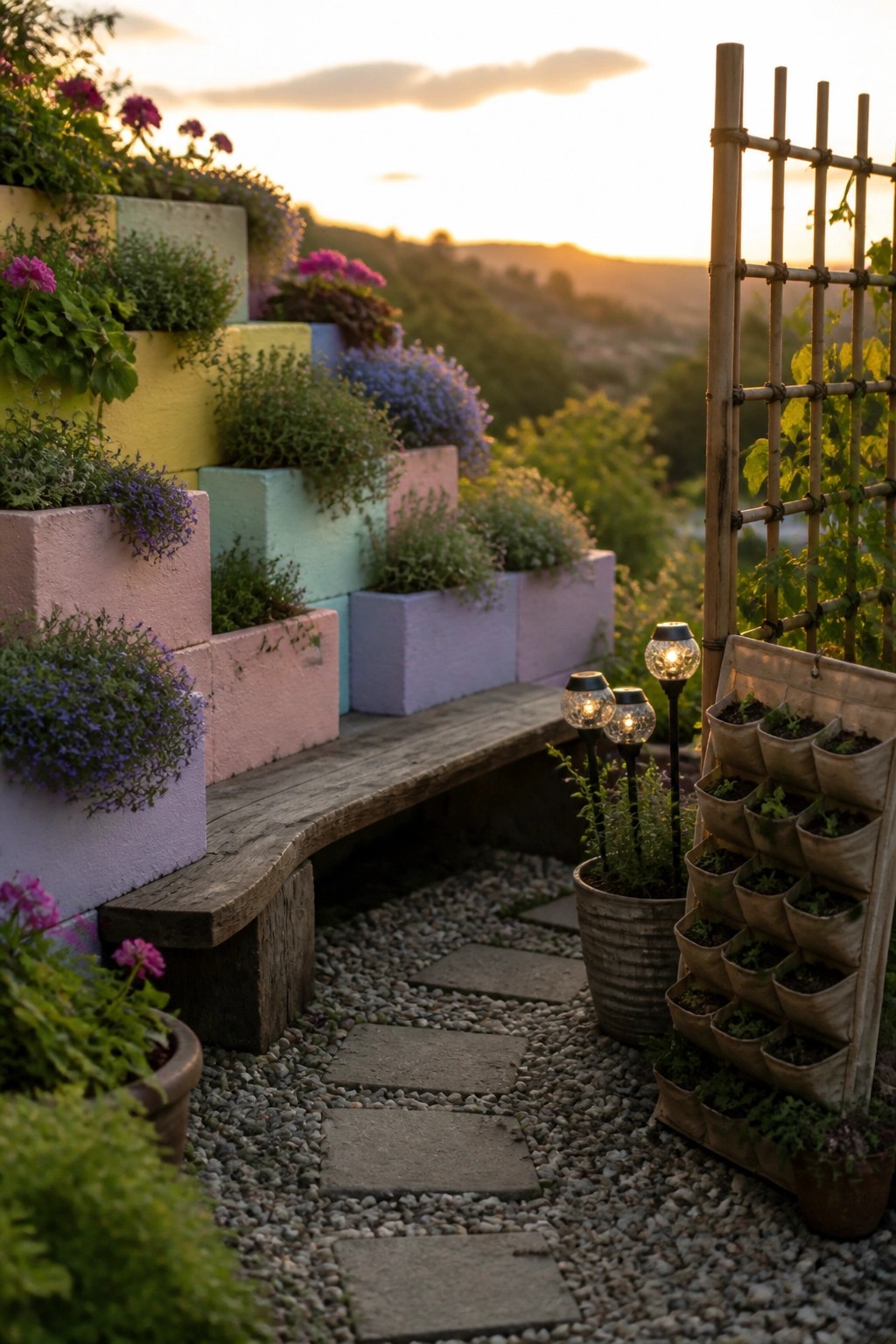
Many people turn to painted cinder blocks when they want simple raised planters that add height without a big budget. The blocks stack easily into steps or tiers, which works well on a slope or along a fence line where flat ground is limited.
This setup suits small yards or side gardens where you need more planting space but still want to keep things low maintenance. Paint the blocks first in a few colors, let them dry, then stack and fill. Check that the ground underneath is fairly level so the whole thing stays solid after a rain.
Mount a Trellis for Vertical Pots
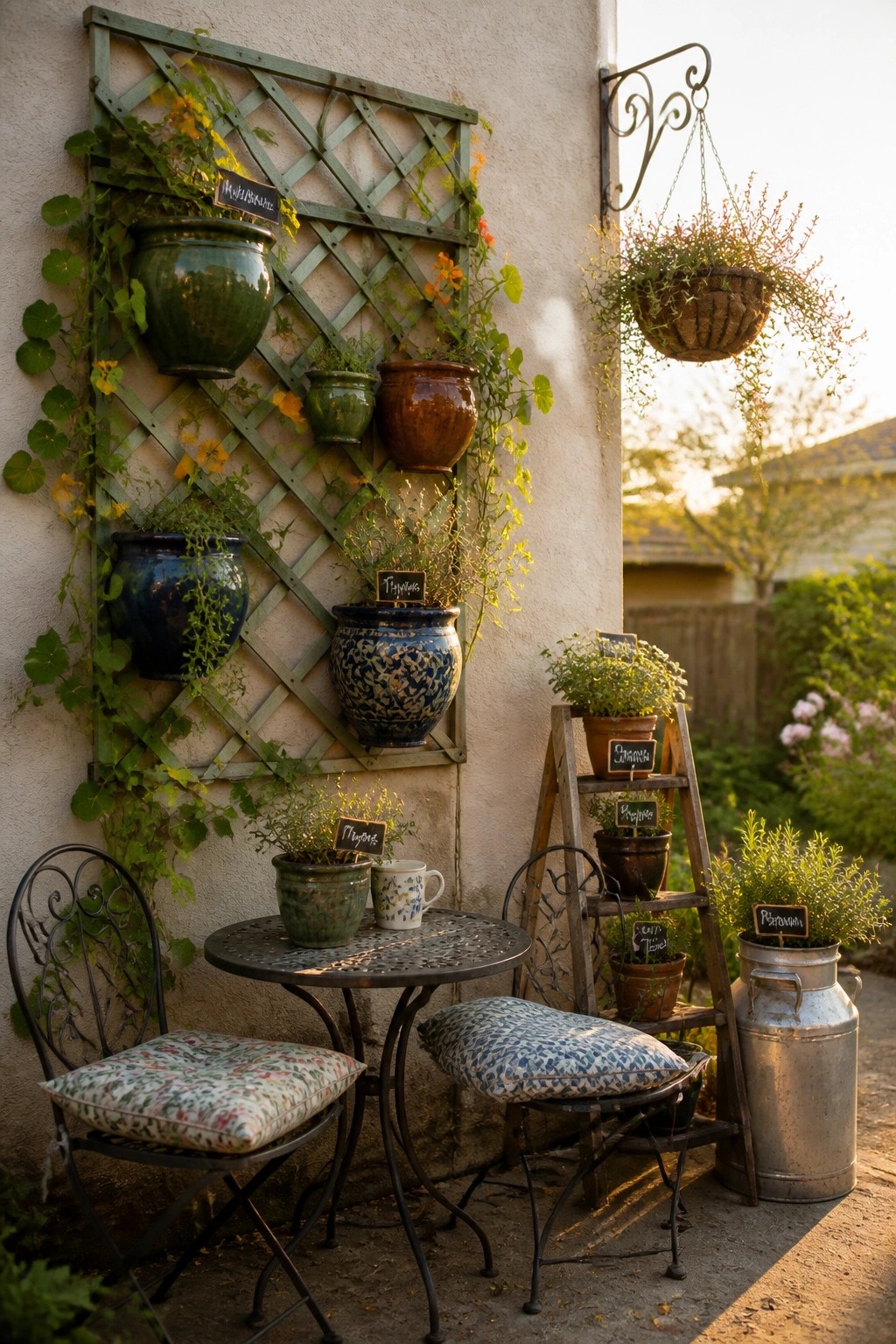
A simple wall trellis lets you stack pots at different heights without crowding the floor. It works especially well on patios that have limited space but plenty of wall area. The structure also gives vines and trailing plants something to climb, so the whole corner feels fuller with less effort.
This approach suits small urban patios or side yards where you want more plants but still need room to move around. Use a basic wood or metal lattice, secure it firmly, and attach pots with sturdy hooks or brackets. Keep heavier pots near the bottom so the frame stays stable.
Build a Vertical Planter Wall for Small Patios
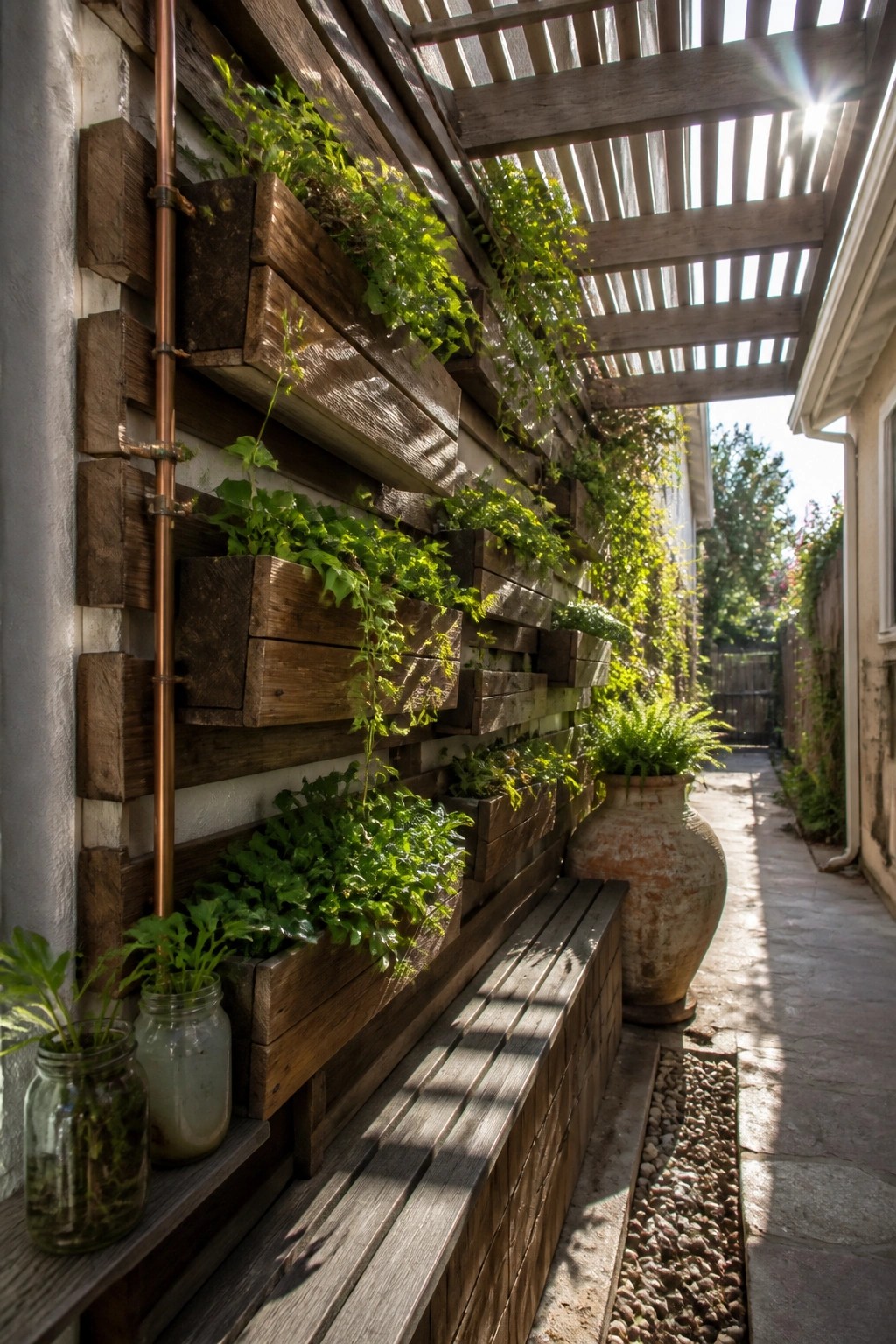
Mounting wooden boxes directly on the wall gives you room for plenty of plants without eating up floor space. It works well in narrow side yards or along a covered walkway where a regular garden bed would get in the way. The staggered layout also lets vines spill down naturally and softens the look of the wall over time.
This approach suits homes with limited patio room or anyone who wants an easy weekend project using basic lumber. Keep the boxes shallow enough to stay light and make sure they are secured firmly so they can handle watering and growth.
Frame A Garden Path With An Arbor
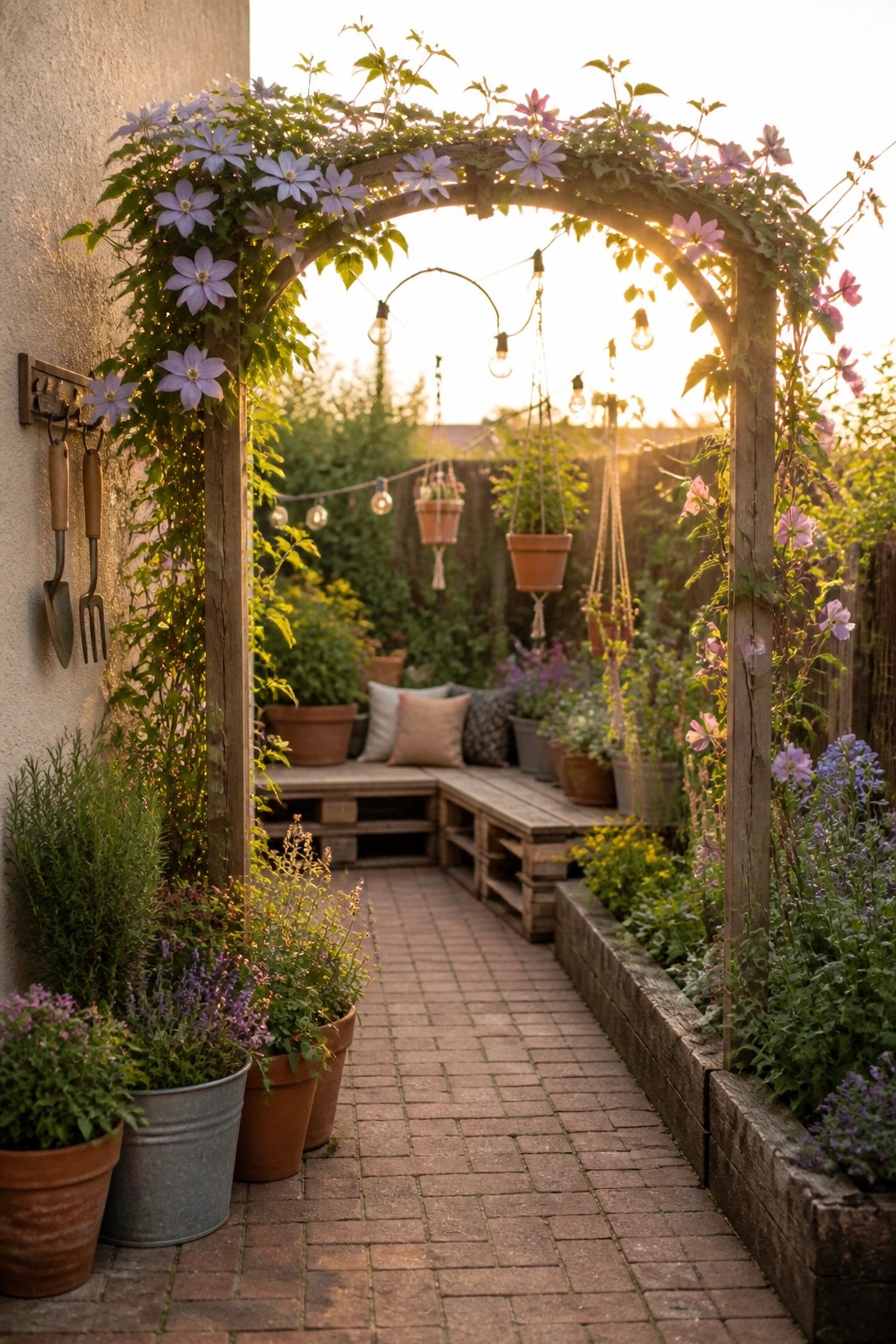
An arbor gives a garden path some clear structure and a place for climbing plants to grow. It turns an ordinary walkway into a more intentional part of the yard, especially when you let vines cover the wood and add pots along the edges.
This works best in smaller gardens or narrow side areas where you want a simple vertical element. Use a basic wooden frame, train a fast grower like clematis, and keep the path material consistent so the arbor stays the main feature.
Frequently Asked Questions
Q: What plants work if my patio bakes in the sun most afternoons?
A: Go with succulents or Mediterranean herbs like rosemary and thyme. They handle heat without much fuss once established. Water deeply once a week and skip the daily sprinkling.
Q: How do I keep a trellis from tipping over once the vines start growing?
A: Sink the legs into sturdy planters filled with gravel at the base before adding soil. This anchors everything without extra hardware. Check the fit after the first month of growth and adjust as needed.
Q: Can these weekend projects handle a sudden rainstorm or light frost?
A: Most hold up fine if you use treated wood or sealed containers. Move smaller planters under cover when storms hit hard. Skip anything delicate like certain annuals if frost is common in your area.
Q: I have zero building skills. Which ideas still make sense to try?
A: Start with simple stackable planters or hanging baskets from the store. They need no tools beyond a hook and some soil. Add one vine or flower at a time so nothing feels overwhelming.
