

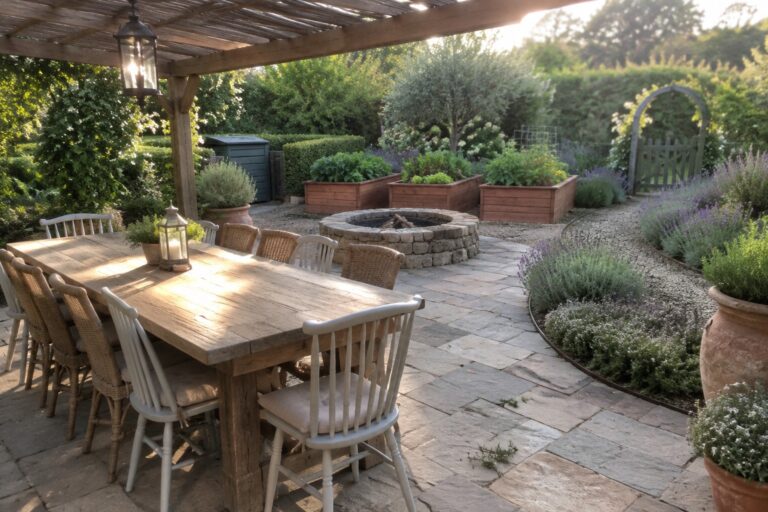
Backyards tend to work better when the place for meals sits separate from the planting beds so nothing gets trampled or mixed up.
Paths and low dividers can guide the eye and the feet without making the whole space feel chopped into tiny pieces.
Division matters more than most people expect.
I often sketch out zones on graph paper before digging because it reveals whether the dining spot will actually get morning light or stay too shaded by taller crops.
Over the seasons these choices shape how often the garden gets used versus how much time goes into fixing problems that a better layout would have avoided.
Keep Dining and Garden Zones Separate
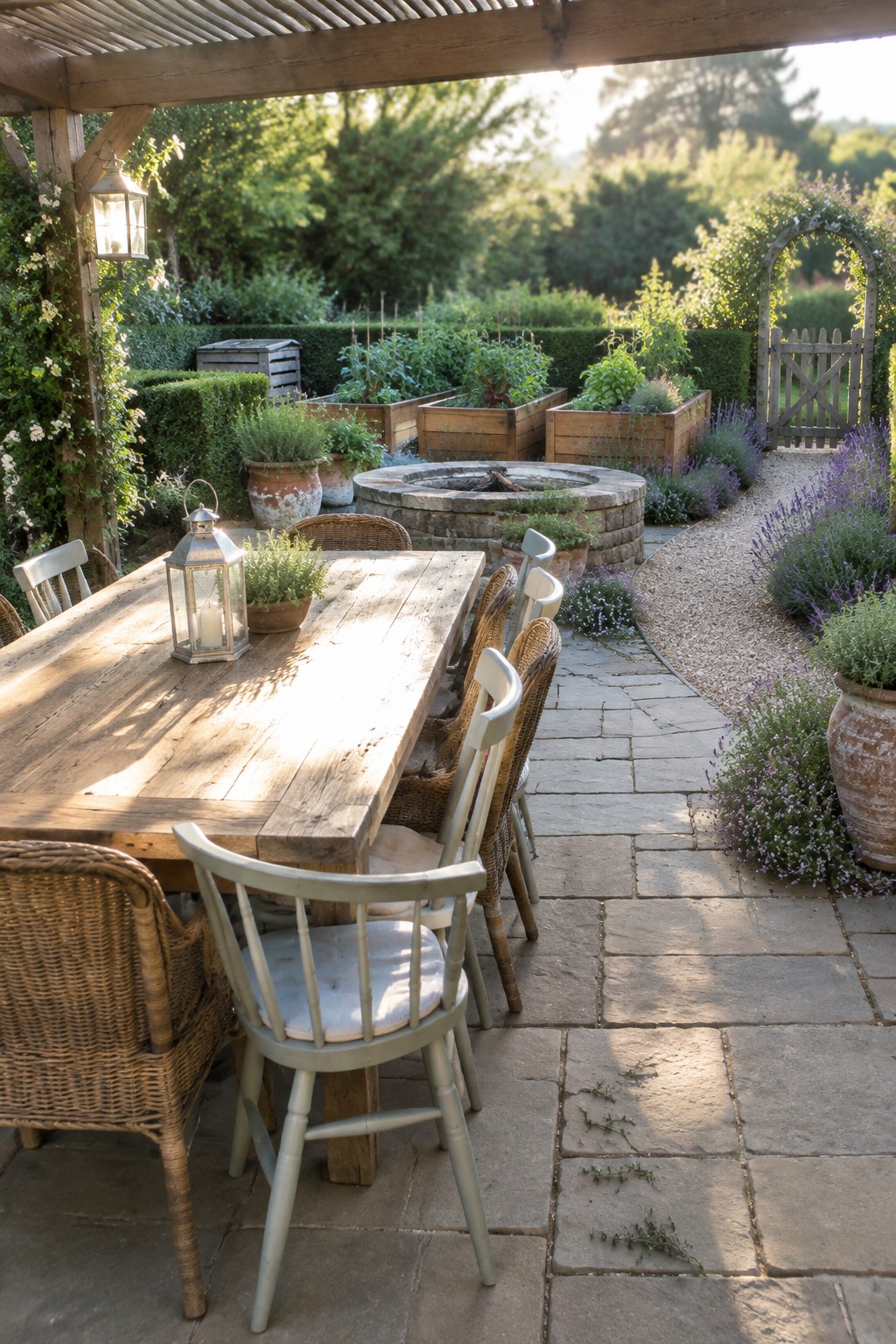
One of the simplest ways to make a backyard feel more usable is to give the dining area its own clear space instead of letting it blend into the planting beds. A solid surface like stone or pavers under the table and chairs helps mark the spot for meals, while the garden beds stay just beyond that edge. This keeps dirt and watering away from the seating without losing the connection to the plants.
The setup works best in yards that have room for both functions but not enough space for full separation. Place the dining table on a hard surface near the house or under cover, then let the beds and paths take over the outer edges. Raised beds make the boundary even clearer and keep the growing area easy to reach without stepping through the seating zone.
Separate the Dining Area From the Garden Beds
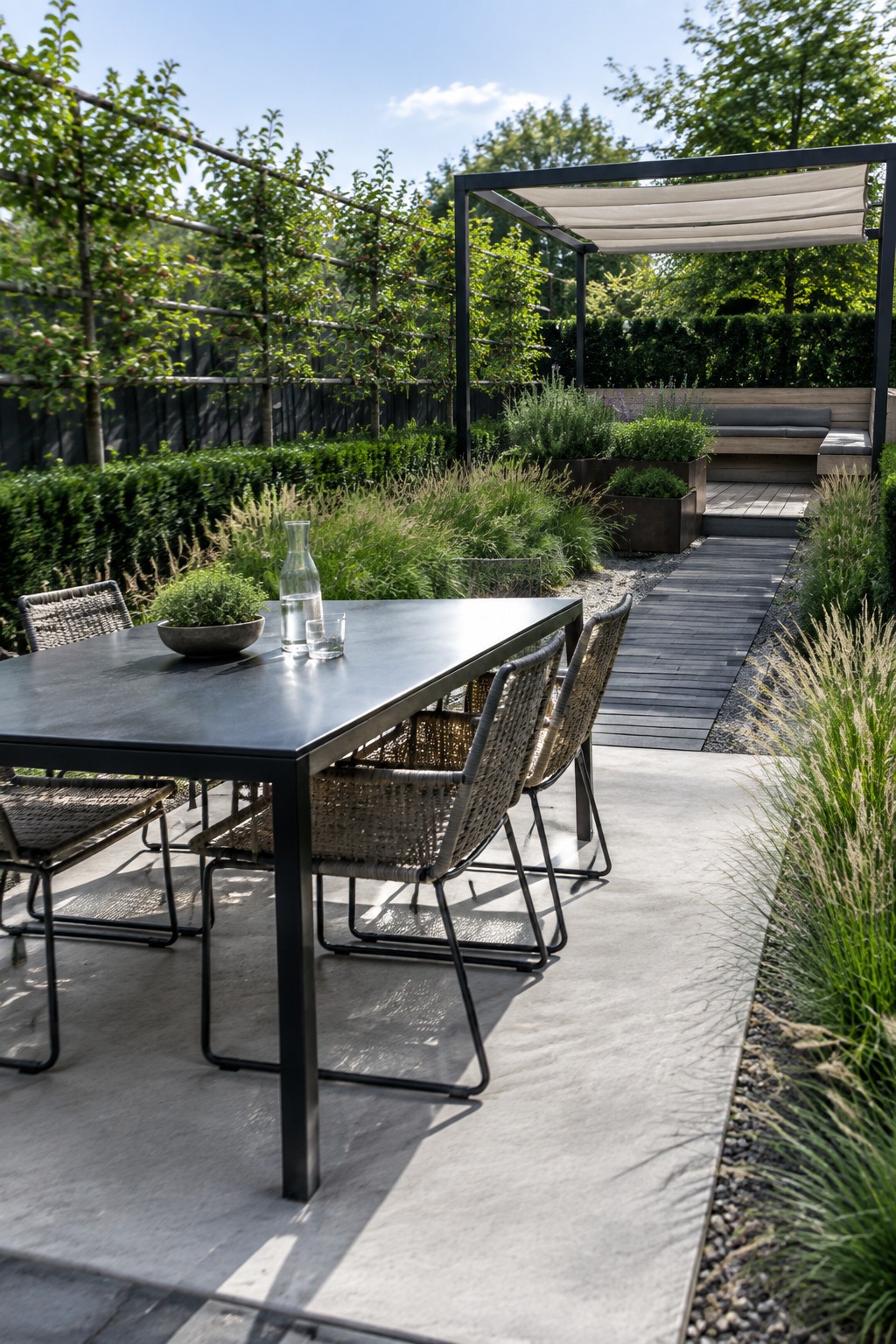
One simple way to make a backyard feel organized is to set the dining table on its own hard surface while keeping all the planting in separate beds and borders. This keeps food, chairs, and feet away from soil and mulch, and it makes both areas easier to use at the same time.
It suits most medium yards that need room for meals as well as some growing space. Lay a concrete or stone pad for the table and chairs, then edge the planting beds with gravel paths or low borders so the two zones stay clearly apart without any extra walls or screens.
Keep Dining Areas Separate From Planting Beds
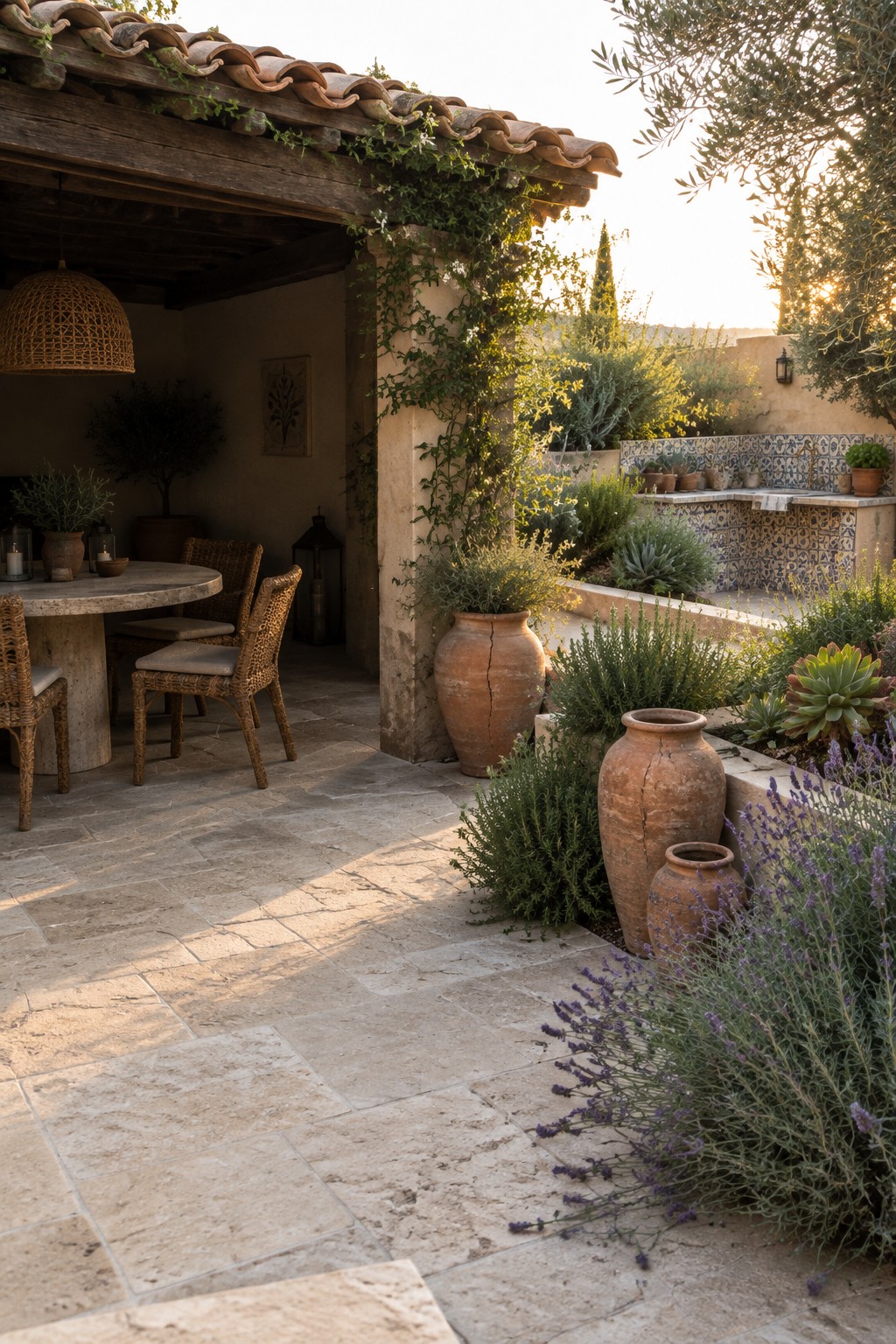
One simple way to organize a backyard is to give the dining spot its own paved area while keeping the planting in beds and pots along the edges. This keeps the table clear for meals and lets the garden feel like its own zone rather than something that crowds the seating.
The approach works well in smaller yards where space is shared. Put the dining table on stone or concrete and let the plants fill the borders with pots or low beds so the two uses stay distinct without needing walls or fences.
Keep Dining and Planting Zones Separate
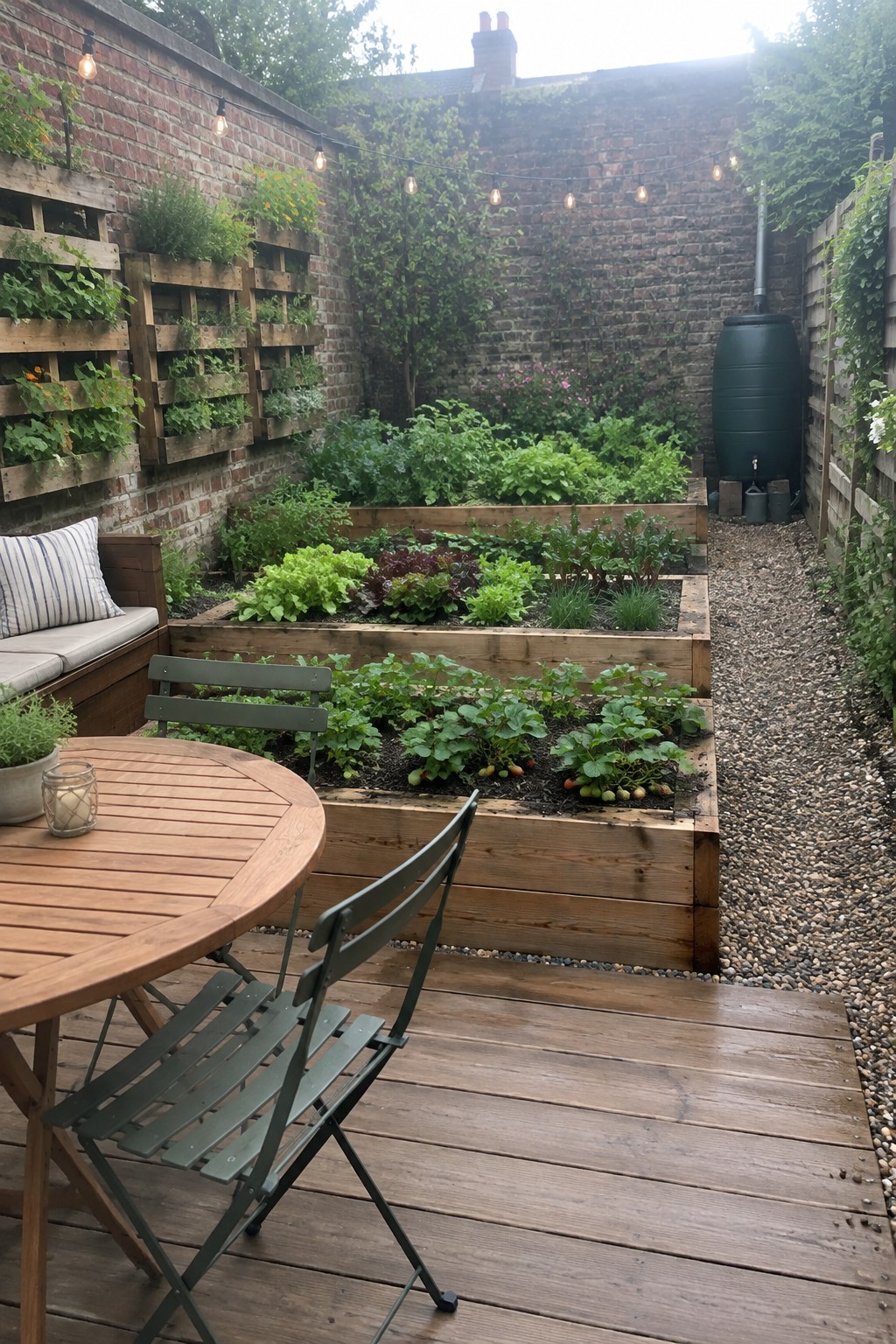
One simple way to make a small backyard work better is to put the dining area on its own surface right next to the garden beds. This keeps the table and chairs out of the dirt while still letting you sit close to the plants.
A low wooden deck works well for the seating zone because it creates a flat, dry spot that feels separate from the soil. Raised beds help contain the growing area and make the two uses feel distinct without needing a fence or wall between them. This kind of layout suits compact yards where you want both a place to eat and space to grow vegetables.
Separate Dining And Planting Zones With Brick Paths
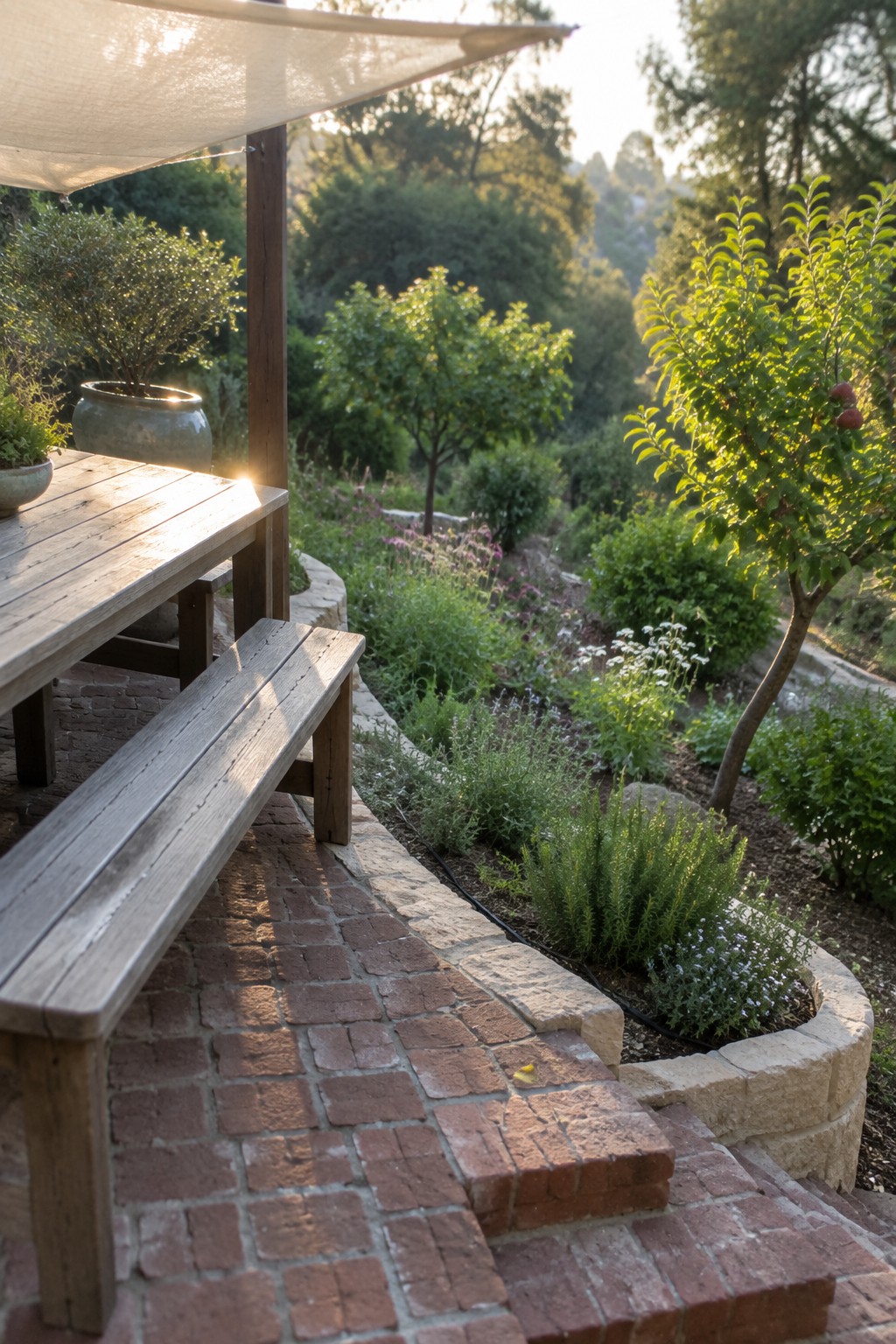
A brick path makes a clean break between the dining area and the garden beds. It keeps feet out of the soil while still letting the two zones feel connected.
This layout works well on sloped yards or smaller lots where space is tight. Lay the path first, then shape the beds around it so the dining table has its own solid ground and the plants stay contained.
Separate Dining And Planting With A Gravel Divider

A gravel strip makes a clean break between a low dining deck and the rest of the garden. The line keeps cushions and food off the planting beds while still letting both areas feel connected.
This works well in smaller yards where you want a table outside but do not want it to crowd the plants. Keep the gravel narrow so it reads as an edge rather than a walkway, and let the planting grow right up to it on one side.
Separate Dining and Planting Zones with a Low Concrete Edge
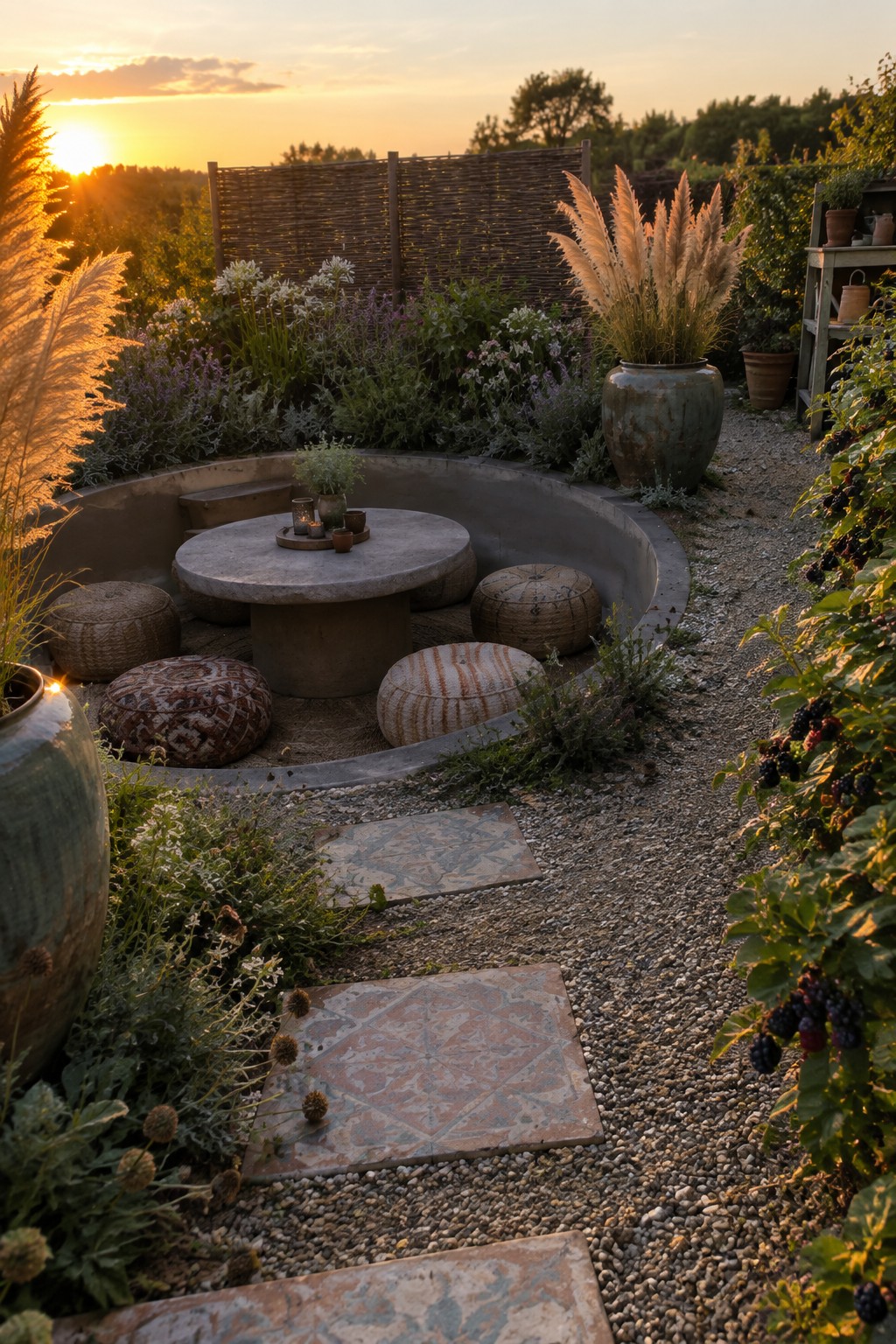
A low concrete border lets you set aside a clear spot for meals without losing the garden feel around it. The curve keeps the seating area defined while the plants stay in their own beds just outside the edge.
This works best in medium backyards where you want both growing space and a place to sit. Keep the circle size practical for your table and seats, then use gravel paths to connect it to the rest of the garden.
Separate Dining From Planting With Clear Zones
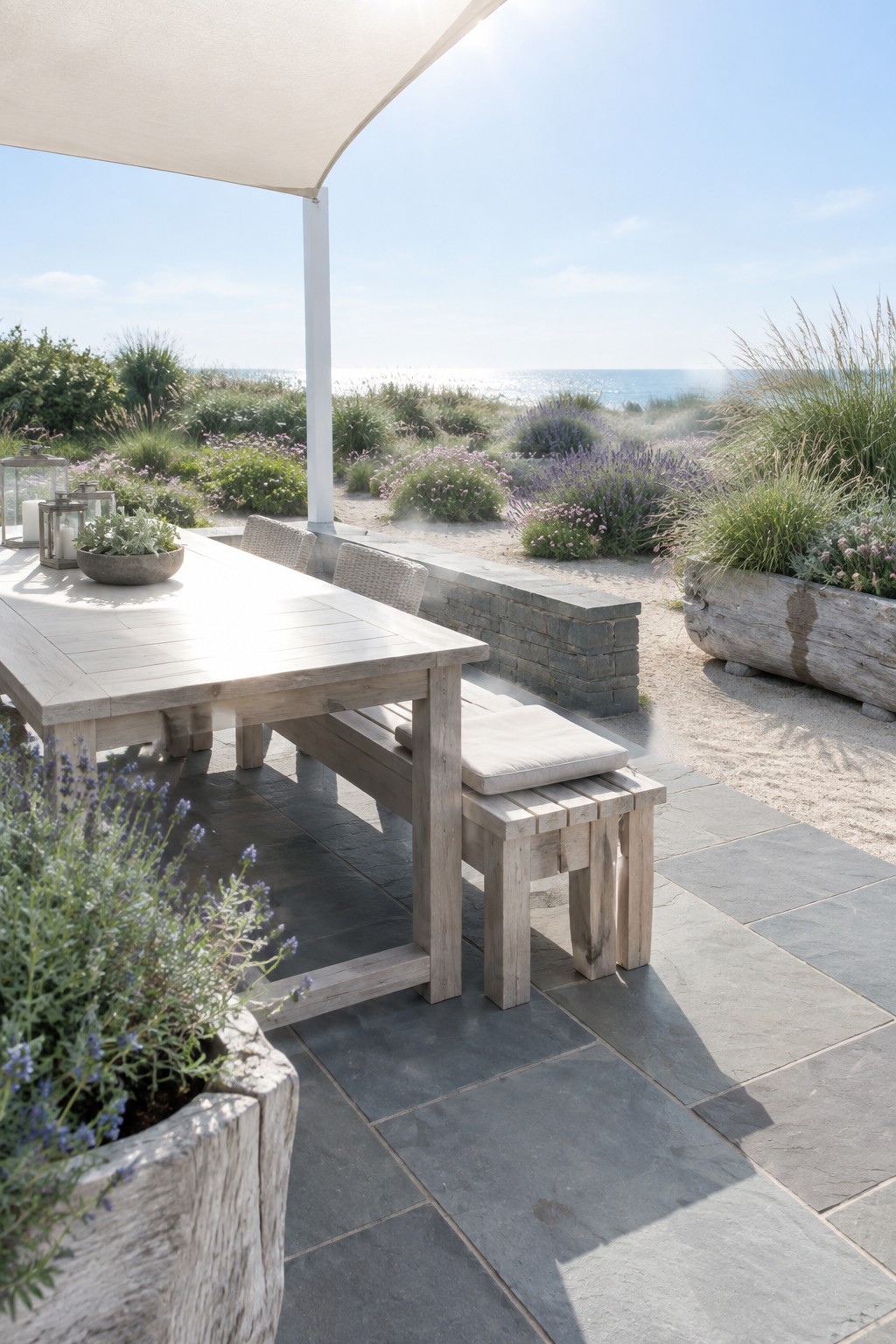
One simple way to organize a backyard is to give the dining area its own spot on hardscaping while keeping plants in their own beds and containers. This keeps the eating space open and easy to use without plants creeping into the walkway or table area.
It works best on patios or terraces that already have a solid surface for furniture. Use low walls or large trough planters to mark the edge of the garden so the two zones stay distinct even in a smaller yard.
Divide Dining And Planting Areas With A Low Wall
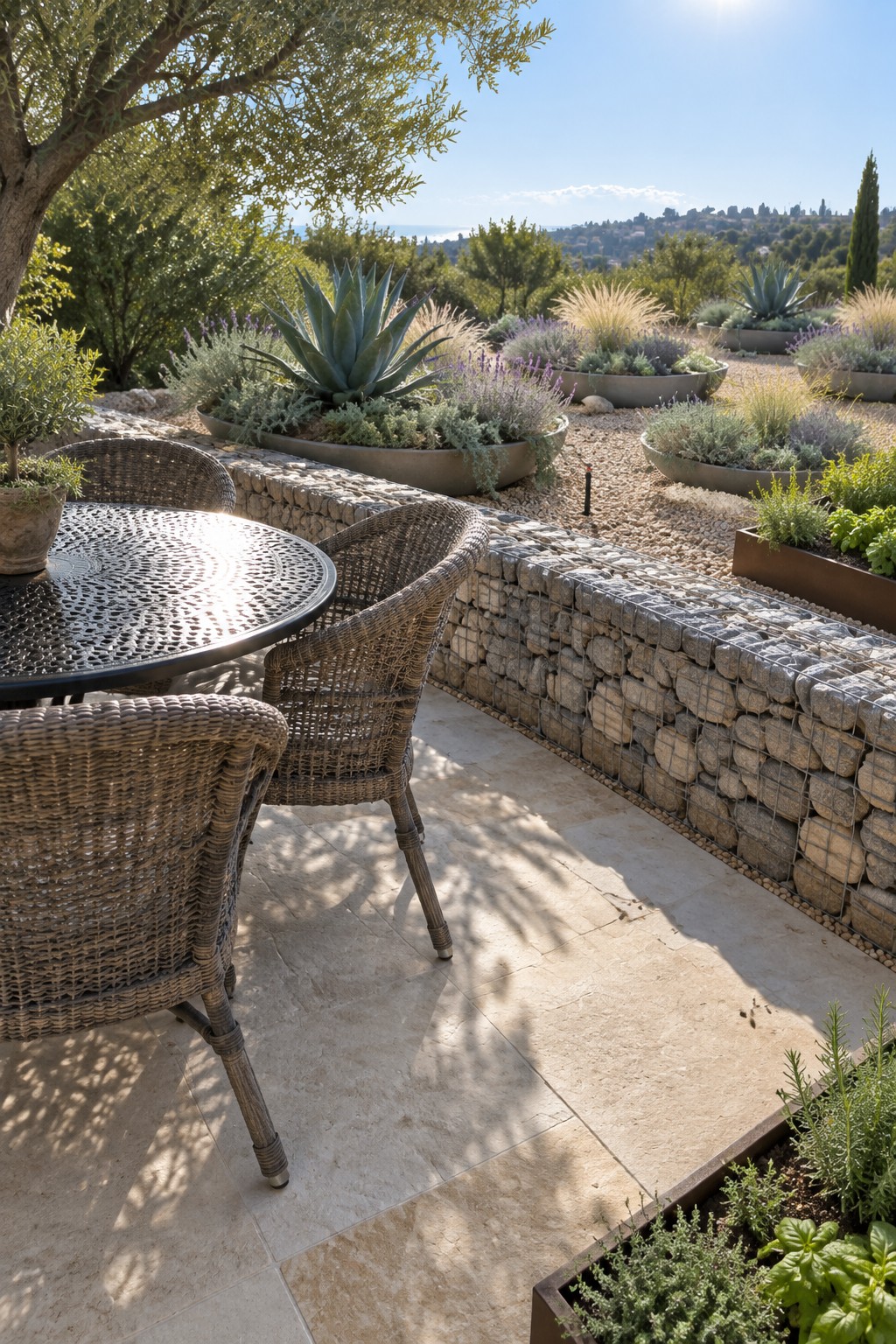
A low wall makes a simple divider that keeps the dining area separate from the garden beds. It gives the patio a clear edge while still letting the plants feel close by. Many people like this because it stops the whole space from looking like one big open patch.
This works best on a level spot or gentle slope where you want room to sit and eat without stepping into the soil. Try it with a stone or wire wall that matches your hardscaping, and keep the height around knee level so the zones stay connected visually.
Separate Dining And Planting Areas With Brick
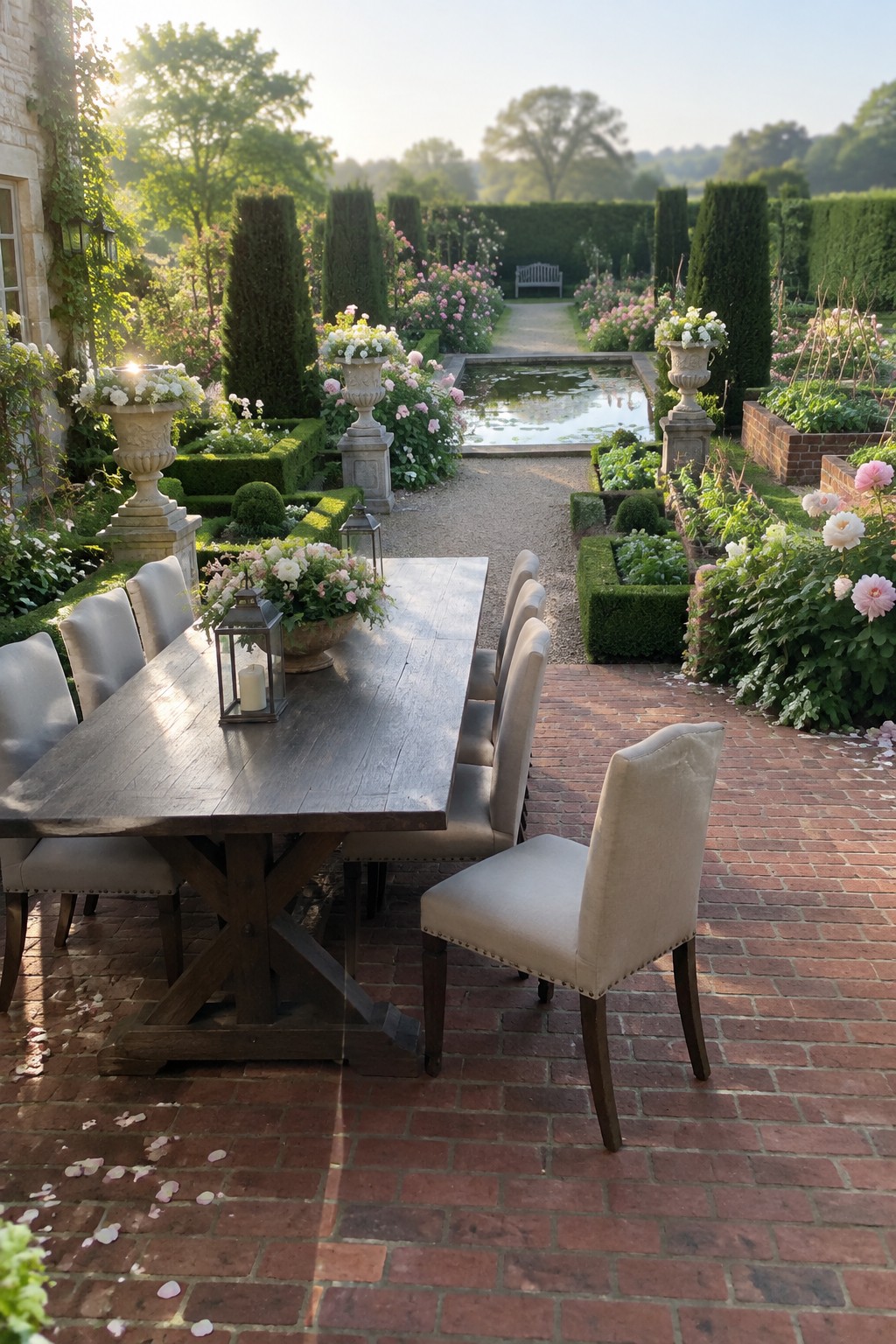
Putting the table on a brick patio creates a clear break between where you eat and where the garden grows. The hard surface keeps chairs stable and gives the dining spot its own footprint without spilling into the beds or paths.
This layout suits bigger backyards that already have structured planting. Keep the patio size generous enough for chairs to move freely, and let the surrounding hedges and borders stay as the planting zone so the two areas do not blend together.
Separate Your Outdoor Dining Area From the Garden Beds
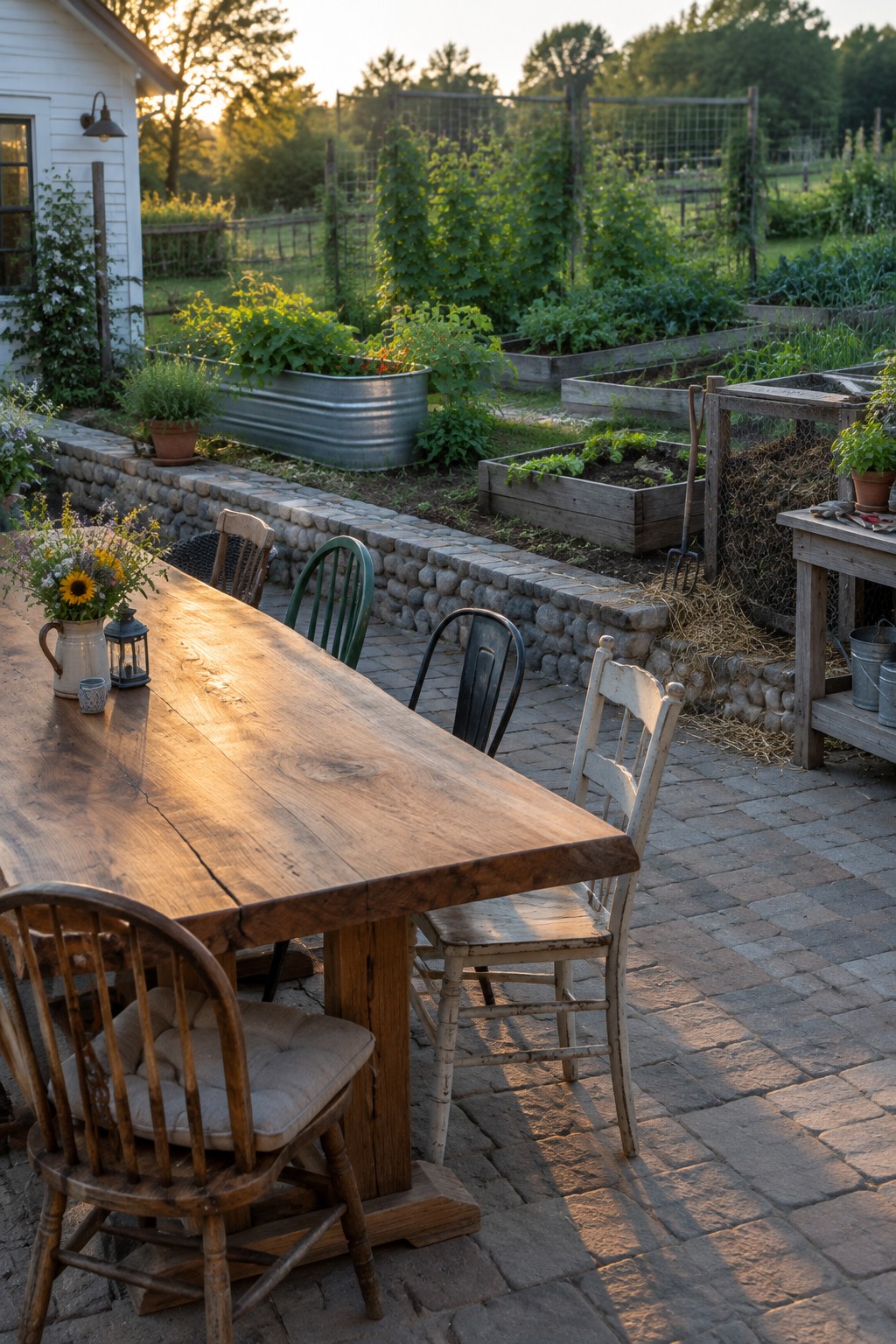
Placing the dining table on a paved surface keeps the eating area clean and easy to use while the planting stays in its own space. This simple split prevents soil, mulch, and garden tools from mixing with the seating zone and makes both parts feel more intentional.
The approach works best in smaller yards where space is tight. Use a low wall, a change in paving, or even a narrow gravel strip to mark the boundary. Raised beds on one side and a solid table on the other keep the layout practical without needing extra fencing or screens.
Separate Dining And Planting Zones
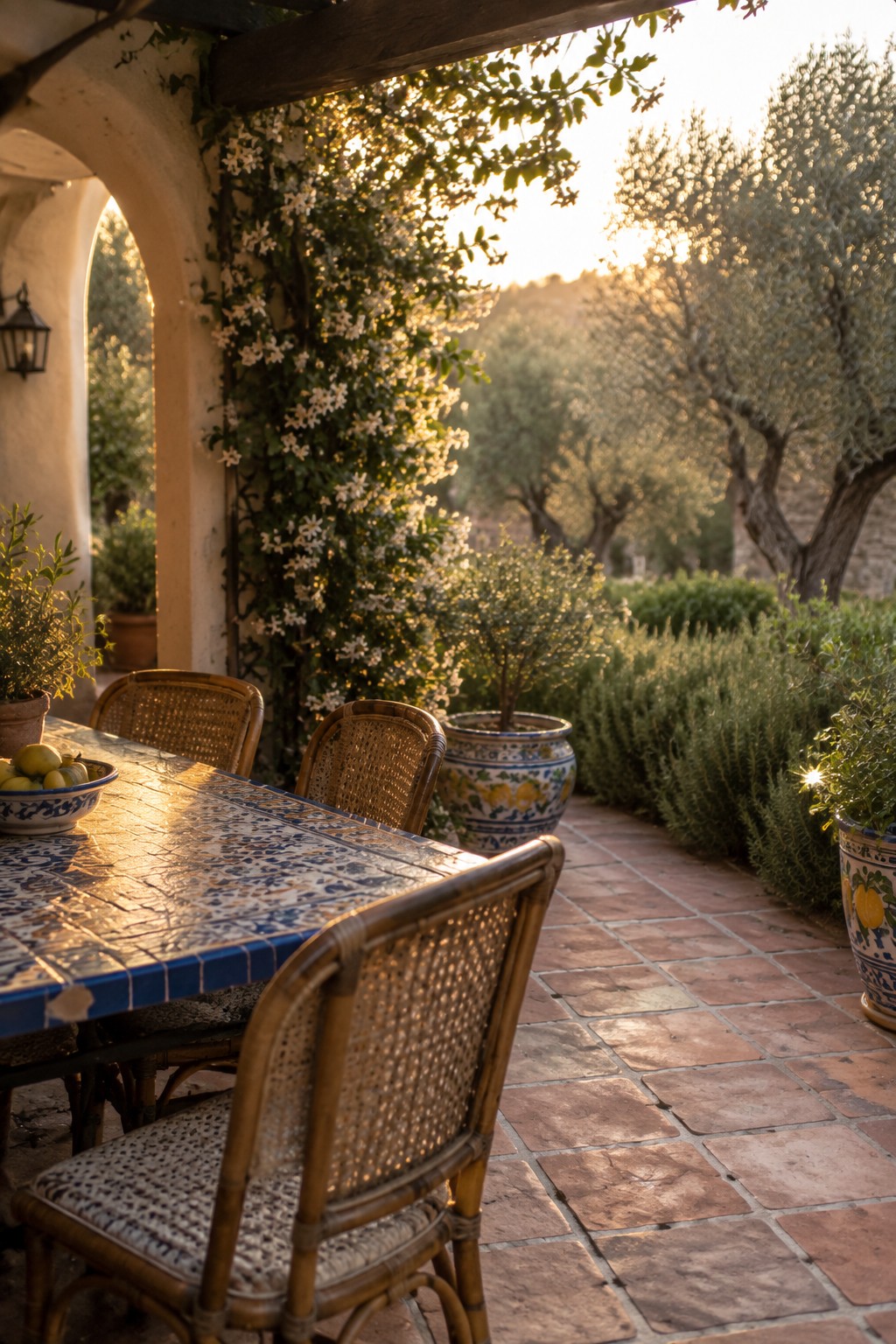
One useful way to lay out a backyard is to keep the dining area on its own patch of hard surface while the planting stays in pots and beds around the edges. This keeps the table free for meals and lets the greenery act as a soft border instead of mixing right into the seating.
It works best on a patio or terrace where you can place a few large pots and some climbing vines to mark the change in use. The setup suits homes with limited space because it avoids crowding the table with plants while still giving the whole area a garden feel.
Separate Dining and Planting With a Water Channel
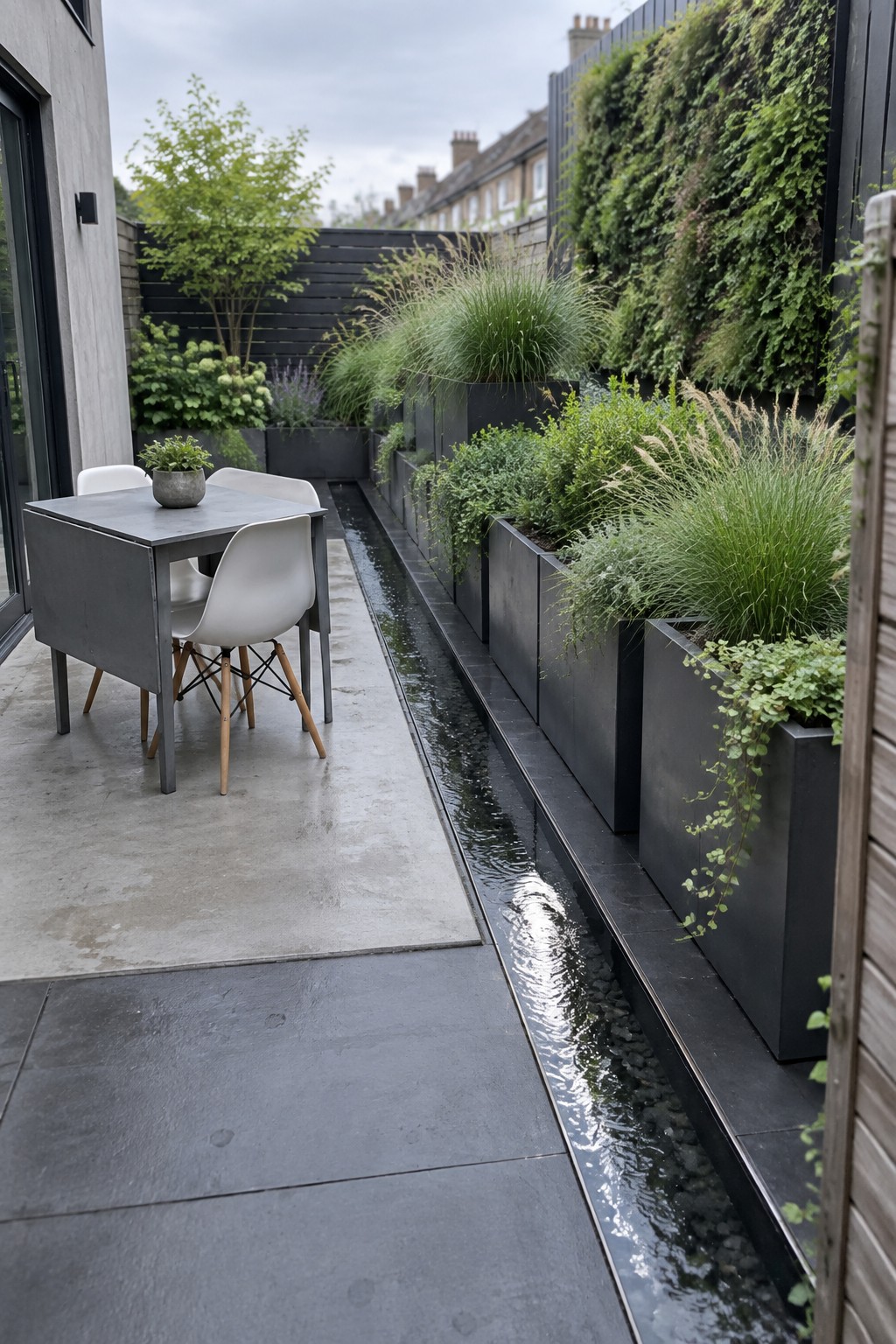
A narrow water feature can do a good job of splitting a small backyard into two clear areas. One side stays open for a table and chairs while the other side holds the planting in a straight row of containers. The water keeps the zones from blending together without adding a solid wall or fence.
This layout suits long, tight spaces where you want both eating space and greenery. Keep the dining side simple with a small table and a few chairs, then use matching planters along the water to hold taller grasses and trailing plants. It stays low maintenance as long as the channel is easy to clean and the planters have good drainage.
Create Separate Zones for Outdoor Dining and Planting
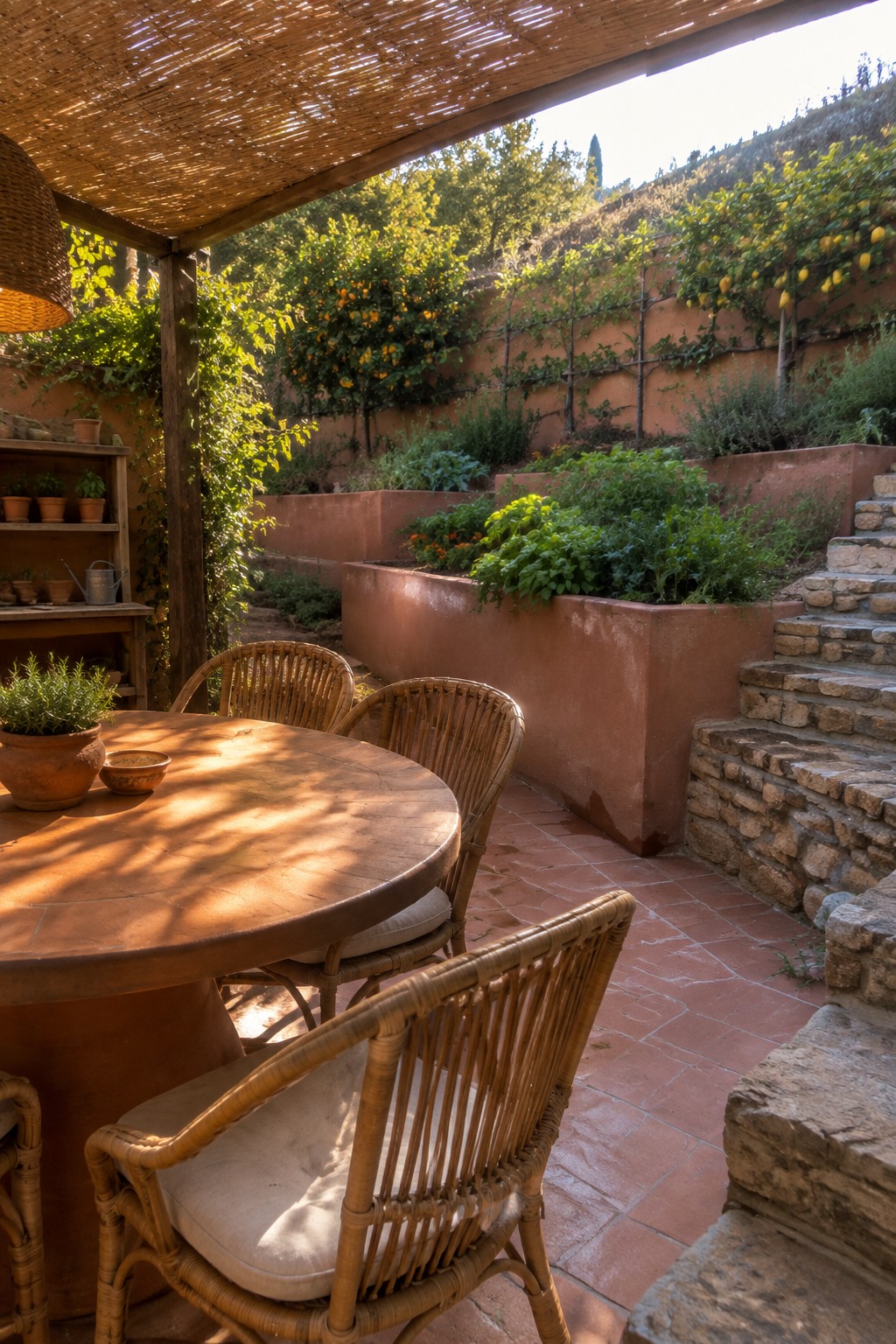
One way to keep a backyard feeling organized is to give the dining area its own space while placing the planting beds nearby but clearly apart. This keeps the table and chairs from getting crowded by plants and makes both areas easier to use day to day.
Raised beds work well for this because they mark the planting zone without blocking access or views. They suit homes with slopes or modest yards where you want room to grow but still need a place to sit outside.
Separate the Dining Area with a Gravel Patio

A gravel surface gives the dining spot its own clear boundary without needing walls or fences. It keeps the table and stools in one defined area while the planting stays in the beds beyond the edge. This works especially well when the garden has lots of loose planting that could otherwise feel too close during meals.
Try this in a medium or large backyard where you want both zones to feel intentional. Keep the gravel contained with edging so it stays put, and choose simple seating that can handle weather. The round table and metal stools in the photo show how little furniture you actually need once the zone is marked out.
Keep Dining and Planting Zones Separate
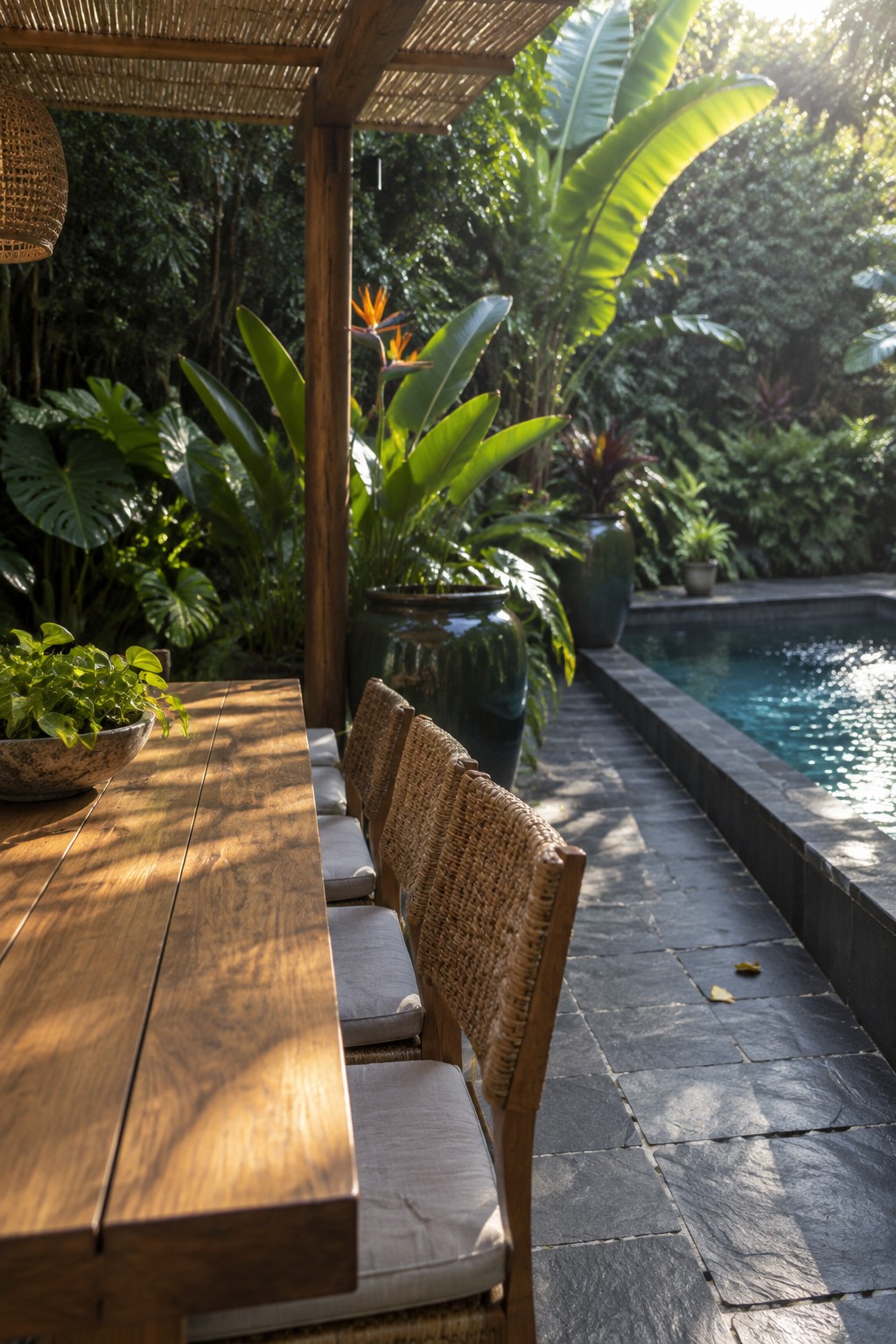
One simple way to make a backyard garden feel more usable is to give the dining area its own clear spot instead of letting tables and chairs drift into the planting. A paved section with a long table and chairs keeps the seating zone distinct while still sitting right next to the greenery.
This layout works best in yards that have room for both a pool or open path and some larger plants in pots or beds. Just keep the dining furniture on the hard surface so the planting stays contained and easier to maintain over time.
Use a Patio to Separate Dining From Planting Areas
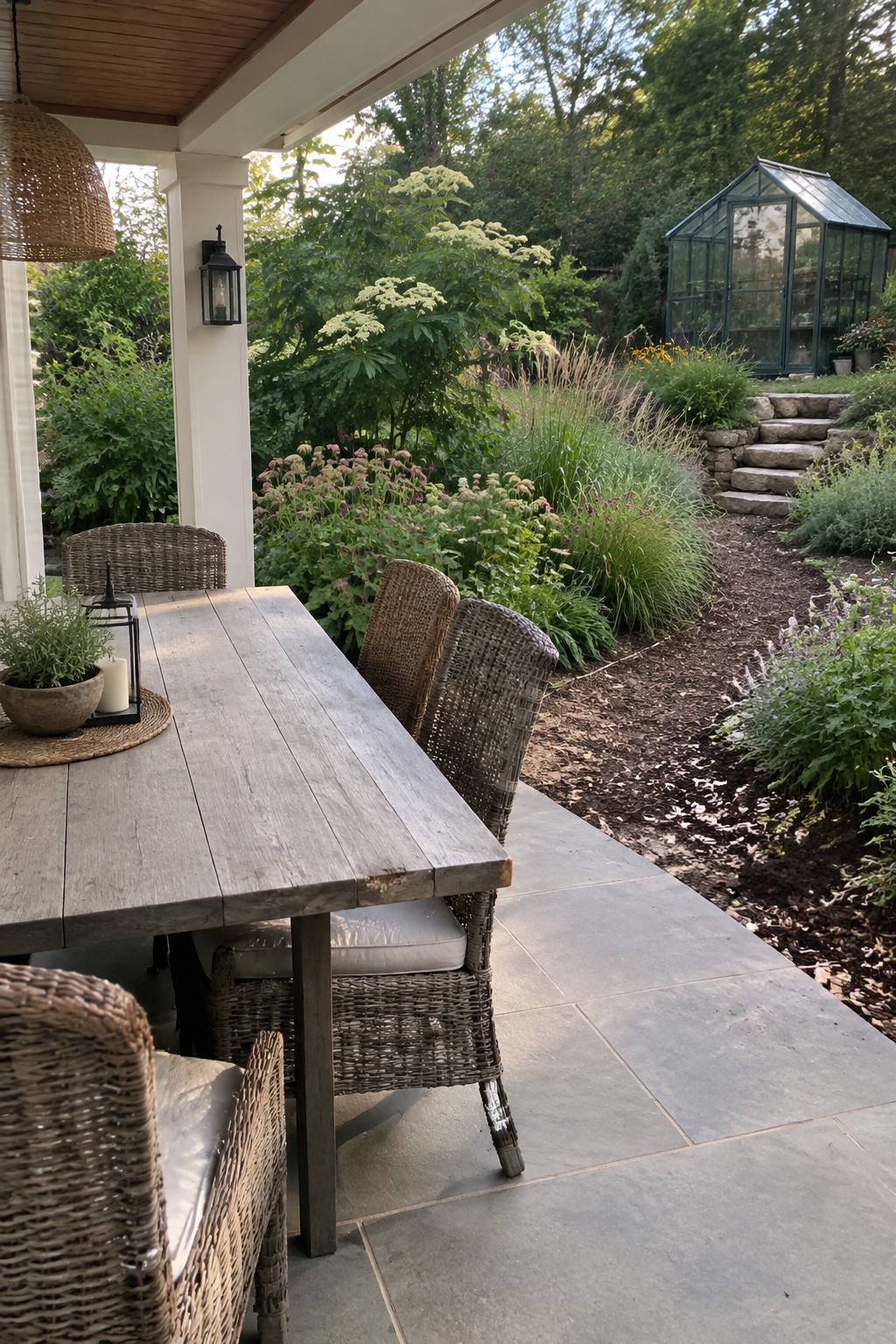
Putting the dining table on its own stone patio keeps the eating area clean and practical. The hard surface holds the chairs steady and gives you a clear spot for meals while the garden beds and path stay separate right beside it.
This setup suits homes where you want to move easily between the two zones without plants taking over the seating space. Keep the patio edge defined so the garden can grow full without spilling into the dining area.
Gravel Surfaces For Separate Dining Zones

A gravel patch under the table and chairs gives the dining area its own clear footprint. It keeps feet out of the dirt while making the seating feel intentional instead of scattered among the beds.
This works well in smaller yards where you want a place to eat without turning the whole garden into a patio. Keep the gravel contained with brick or stone edging so it stays neat and the planting beds can stay full and soft right up to the edge.
Keep Dining And Planting In Separate Zones
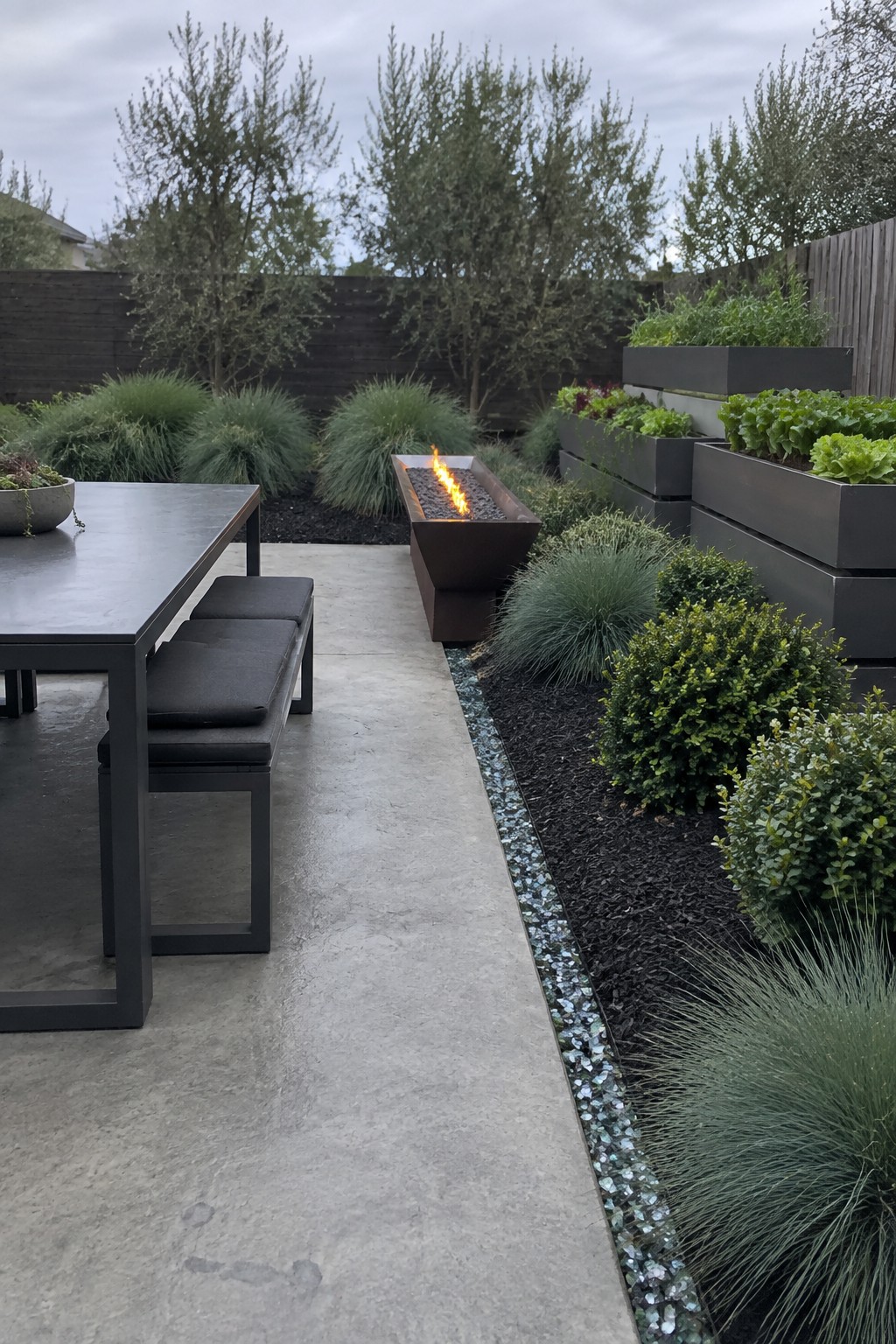
One simple way to organize a backyard is to give the dining area its own hard surface while keeping all the planting in raised beds and ground beds right beside it. This keeps the two uses from crowding each other and makes both feel more intentional.
The setup works best in medium-sized yards where you want room to eat outside without stepping into soil or mulch. A low divider like a fire pit or narrow path helps mark the change without blocking the view between the two areas.
Frequently Asked Questions
Q: How do I mark the boundary between my dining spot and the garden beds?
A: Lay down a row of pavers or old bricks to draw the line. This keeps foot traffic in the right place without any extra cost.
Q: Are there plants that won’t attract bugs to my outdoor table?
A: Choose herbs like basil and mint for the beds closest to dining. They smell great and actually help keep some pests away.
Q: What if the planting zone needs regular care while the dining zone stays neat?
A: But you can run a drip line under the beds on a timer. Watering happens on its own and your table area stays dry and clean.
