

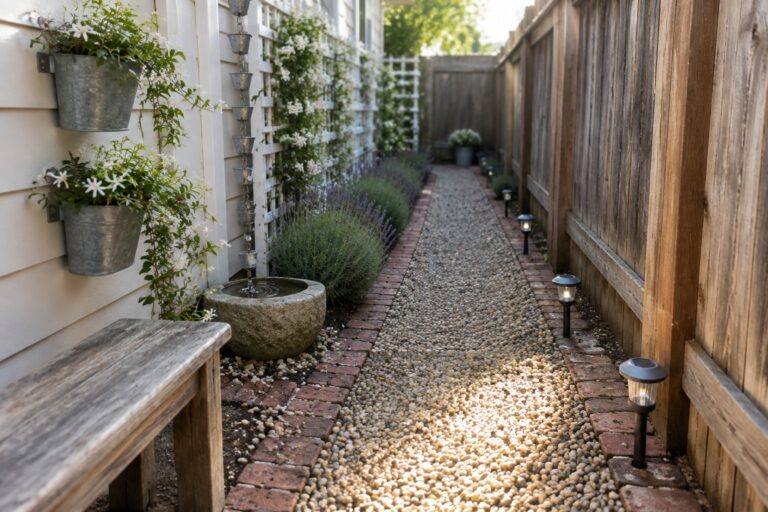
I often walk past narrow side yards that look like afterthoughts because nothing was planned for the limited width.
The real test comes when you try to add planting beds and a path without making the space feel even tighter.
Over the years I have learned that good structure starts with clear edging and plants chosen for their mature size rather than how they look in pots.
Scale matters more than color here.
That is why I keep coming back to ideas that build layers gradually instead of trying to fill every inch at once.
Gravel Paths With Brick Edging For Side Yards
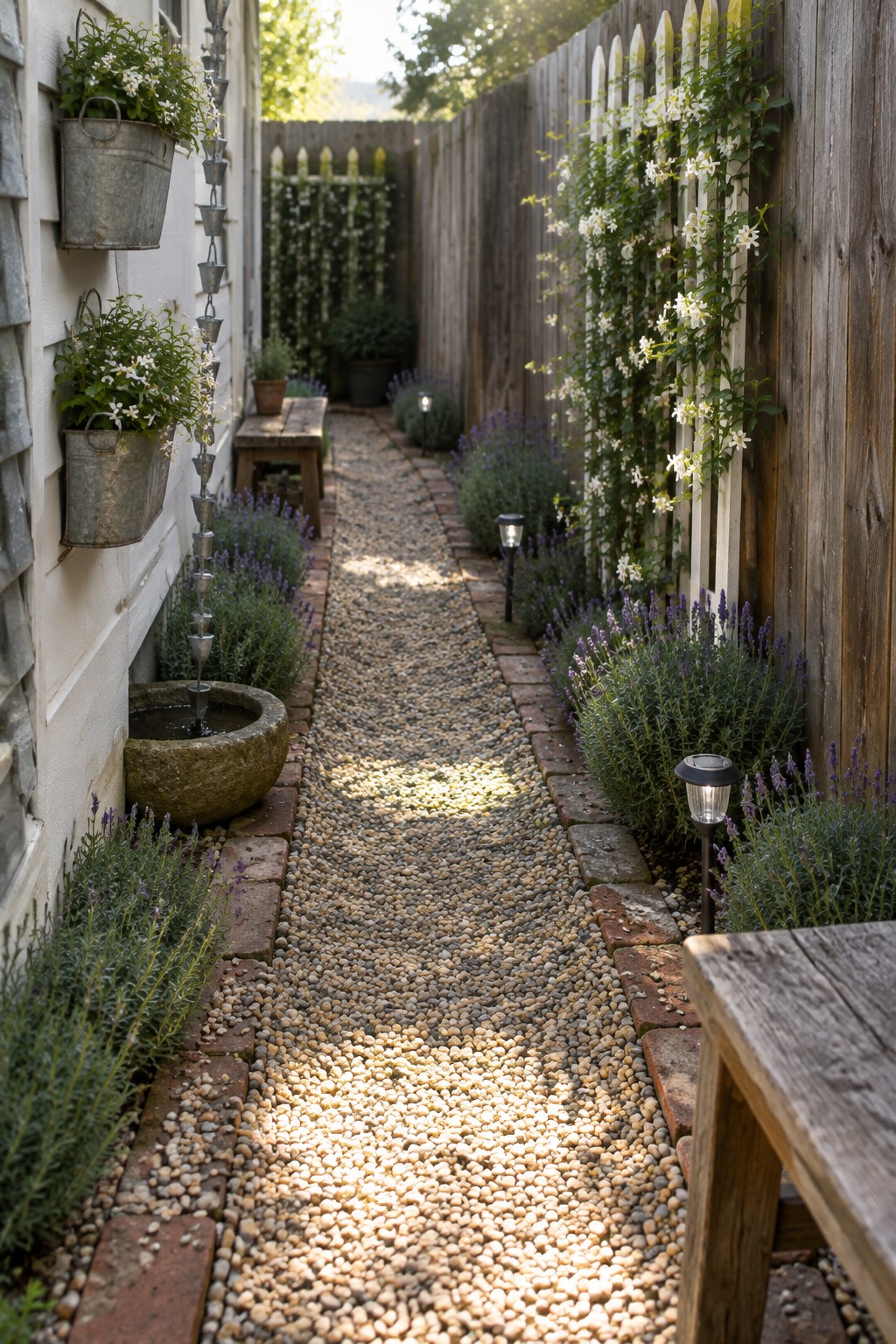
A gravel path works well in a narrow side yard because it fills the space without crowding it. The loose material feels softer than solid paving and lets water drain straight through, which helps keep the area from getting muddy after rain.
Brick edging holds everything in place and gives the path a finished look that pairs easily with low plants along the sides. This approach fits homes with tight corridors between the house and a fence, where a full lawn or patio would not work.
Stepping Stone Paths Through Gravel
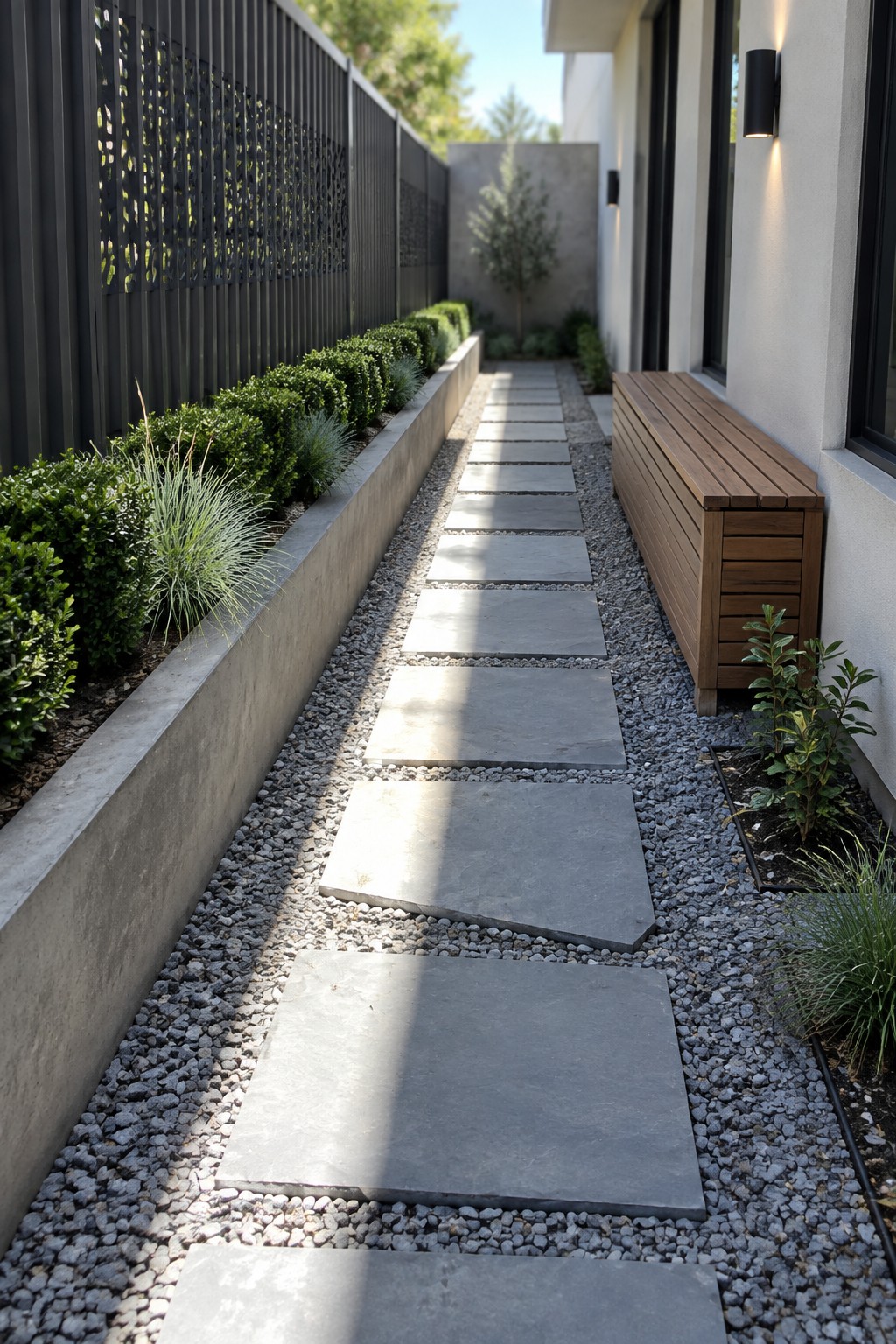
Many narrow side yards work better when you lay down large stepping stones in a bed of gravel instead of trying to force a solid walkway. The stones give you solid footing while the gravel fills the gaps, drains well, and keeps the whole area looking simple and tidy.
This setup suits homes with tight side corridors where grass would struggle and a full patio would feel cramped. Space the stones evenly so they feel natural to walk on, and keep the gravel layer thick enough to stay in place over time.
Mix Stone Pavers and Gravel for Side Yard Paths
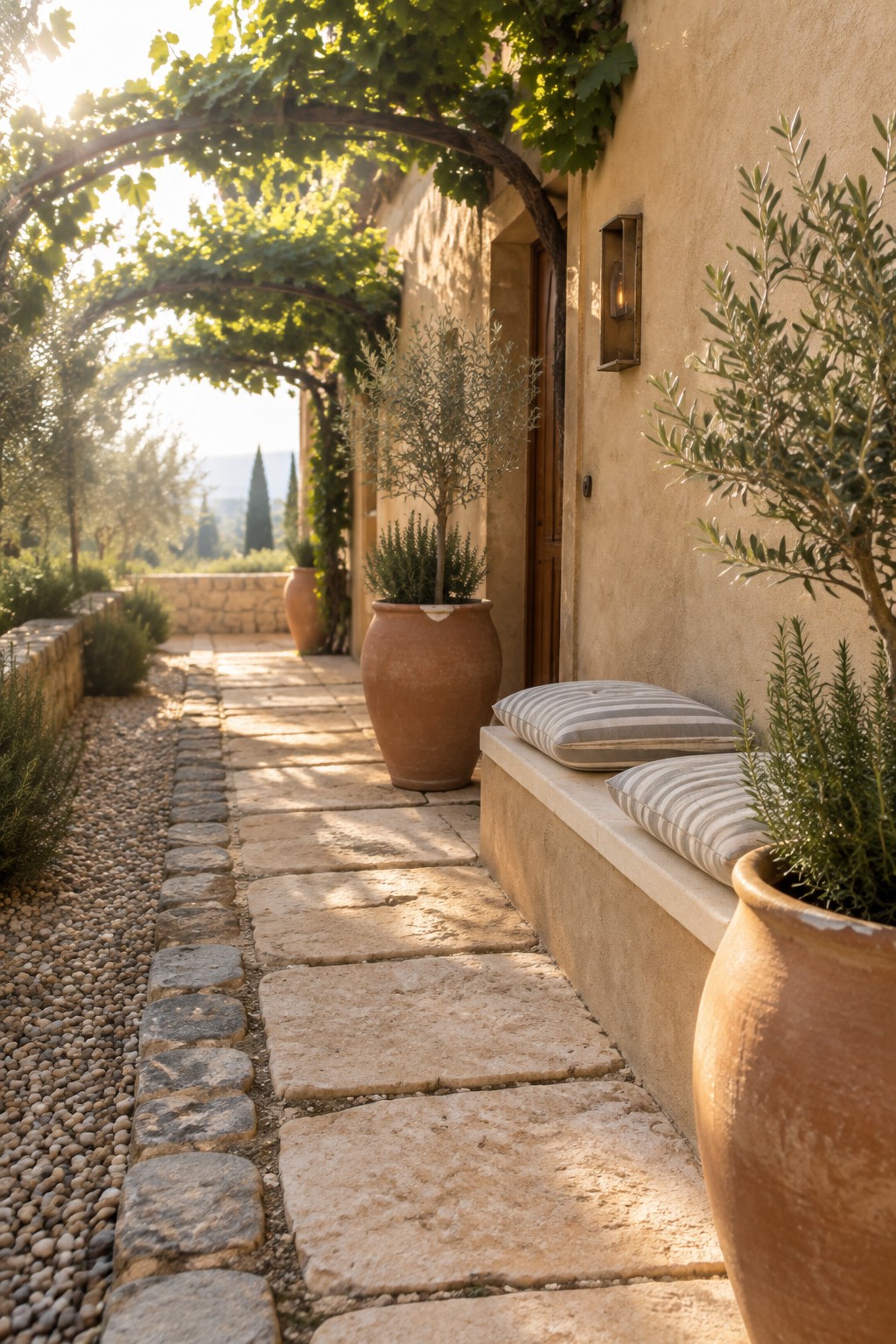
A mixed path like this keeps a narrow side yard from feeling like leftover space. The pavers create a clear walking surface while the gravel softens the edges and helps with drainage, so the whole corridor looks finished without taking up much width.
This approach works best on homes with long, tight passages between the house and a fence or property line. Keep the pavers in a simple running pattern, add a few large pots along one side for height, and the space starts to feel like a real garden route instead of just a utility strip.
Living Walls Add Greenery Without Taking Up Space
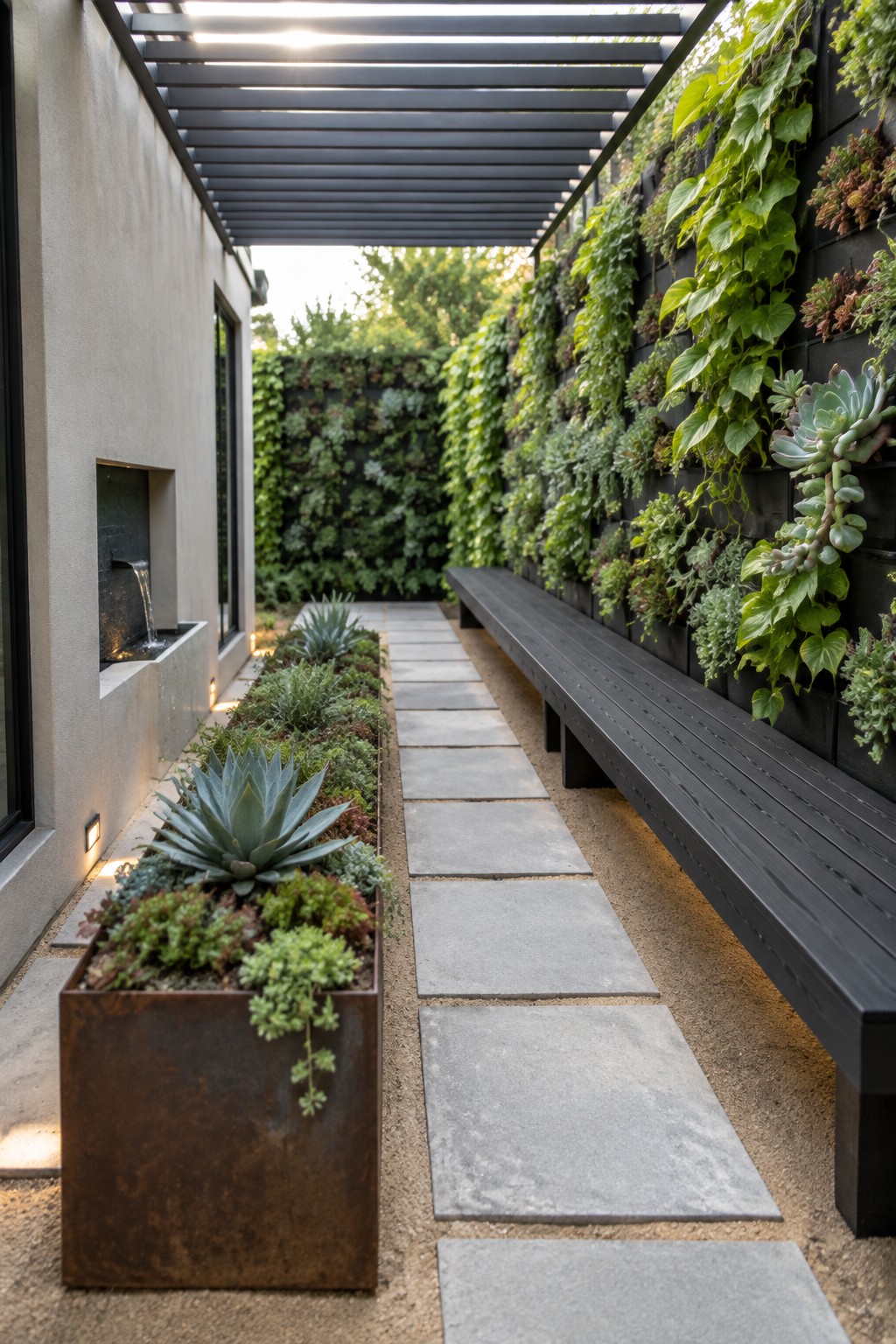
A living wall works especially well in narrow side yards because it turns the vertical surface into the main planting area. Instead of crowding the ground with wide beds, the plants grow upward in a modular system that stays contained and easy to maintain.
This approach suits homes with tight corridors between the house and a fence or neighboring wall. Keep the path clear for walking and add a simple bench if there is room, but let the wall carry most of the visual weight so the space does not feel cramped.
Stepping Stone Paths For Narrow Side Yards
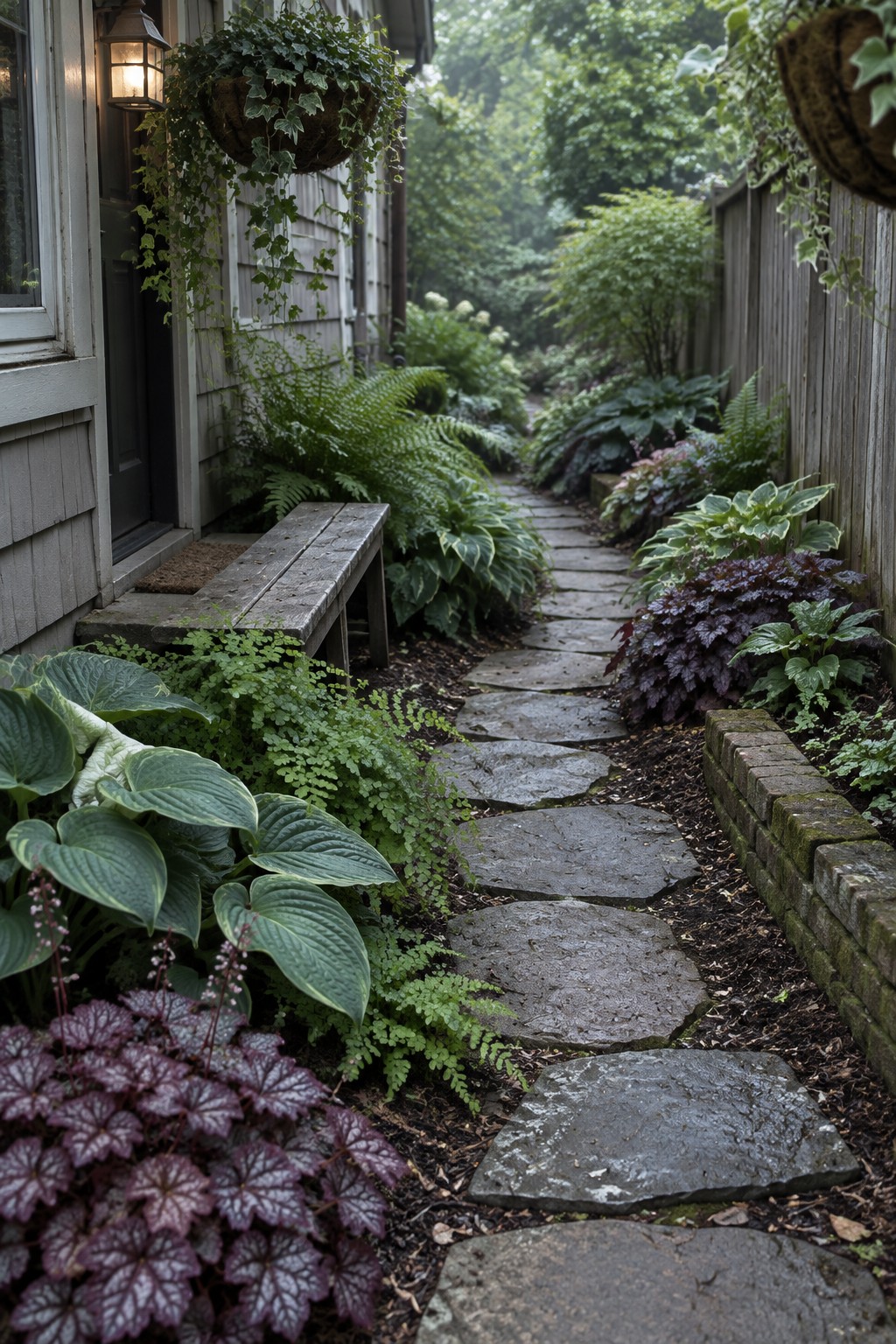
Stepping stones give you a way to walk through a tight side yard without crowding the space. They leave room for planting on both sides and keep the ground from turning muddy after rain.
This layout works best on homes where the side yard runs between the house wall and a fence or property line. Keep the stones uneven in size and set them slightly apart so the plants can fill in around the edges over time.
Large Rocks Edge Narrow Side Gardens
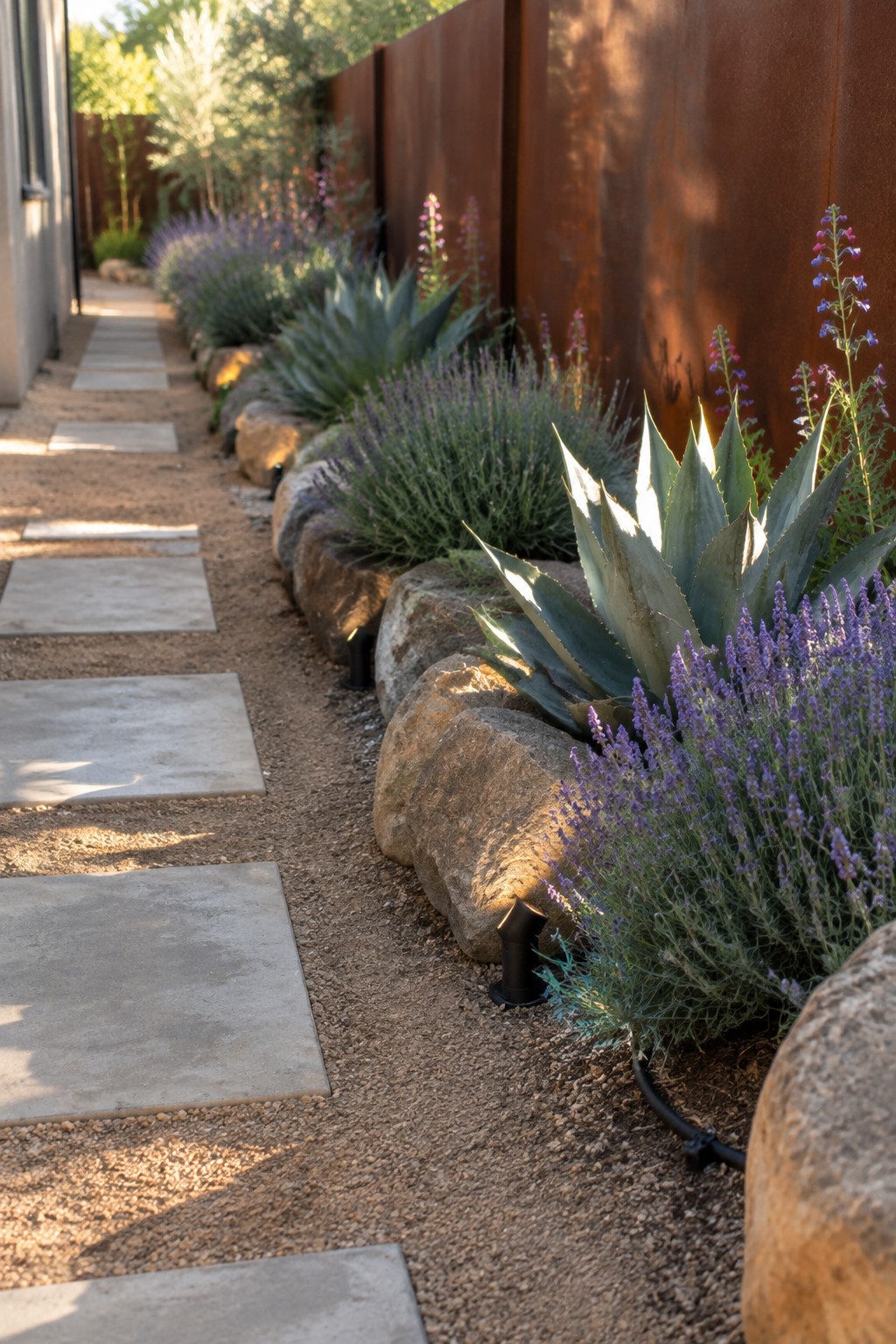
Large rocks work well as edging in a narrow side yard because they hold the planting beds in place without adding width. They also give the space a settled look that gravel and stepping stones alone cannot provide.
This setup works best along gravel paths where you want a clear line between walking space and plants. Set the boulders so they sit slightly into the bed rather than right on the path edge, and choose sizes that feel in scale with the fence and surrounding shrubs.
Use Raised Beds to Border a Brick Path
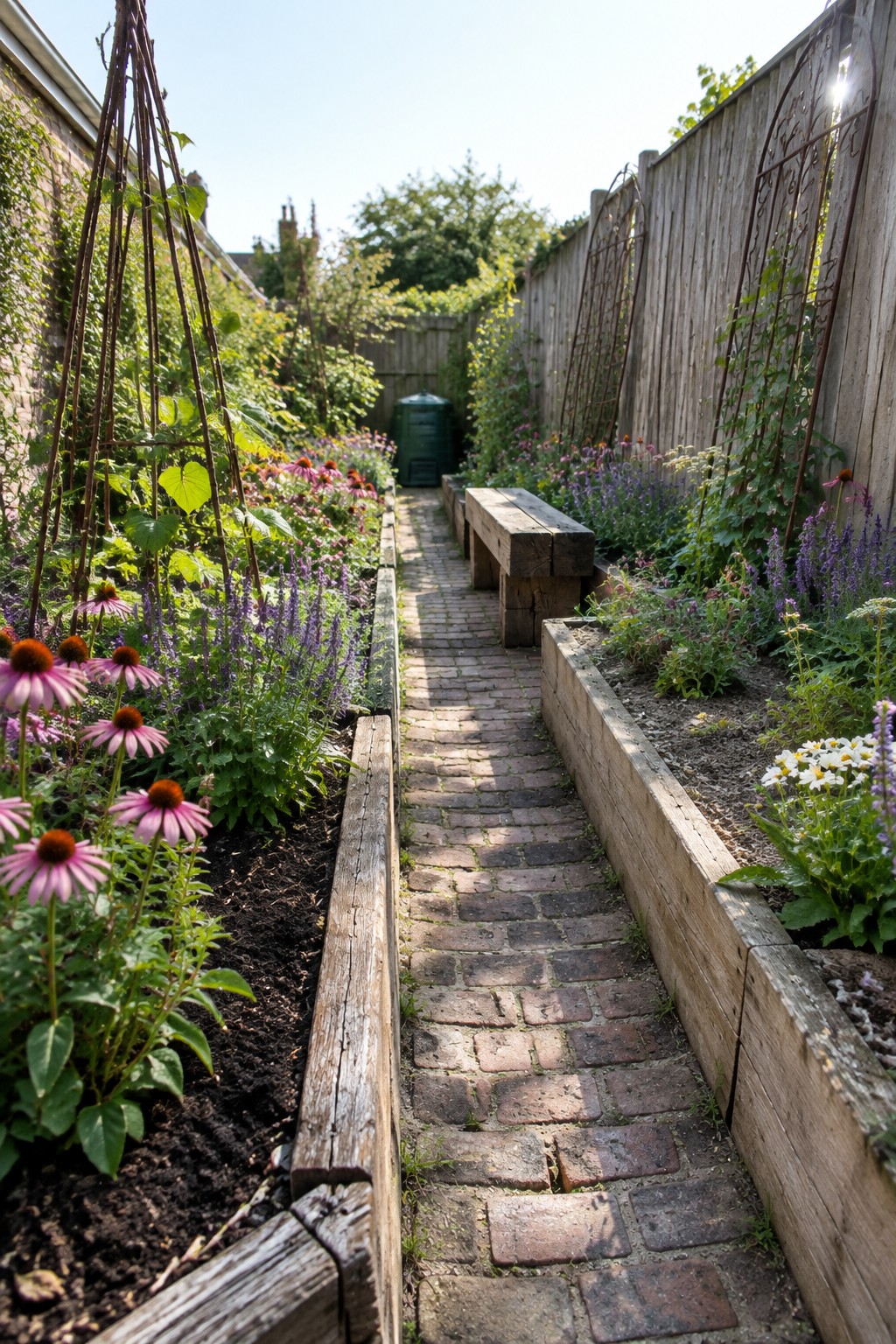
A narrow side yard often ends up as wasted space, but a simple brick path with raised beds on each side turns it into a real garden. The wood edges keep the soil contained and make the beds easy to reach without stepping on plants. This setup also keeps the path clear for walking through.
It works best in corridors that get some sun but stay protected from wind. Try matching the bed height to the path width so nothing feels cramped. Avoid filling the beds too full at first, since plants will spread and you want room to move along the walkway.
Raised Planters With Rope Railings For Narrow Paths
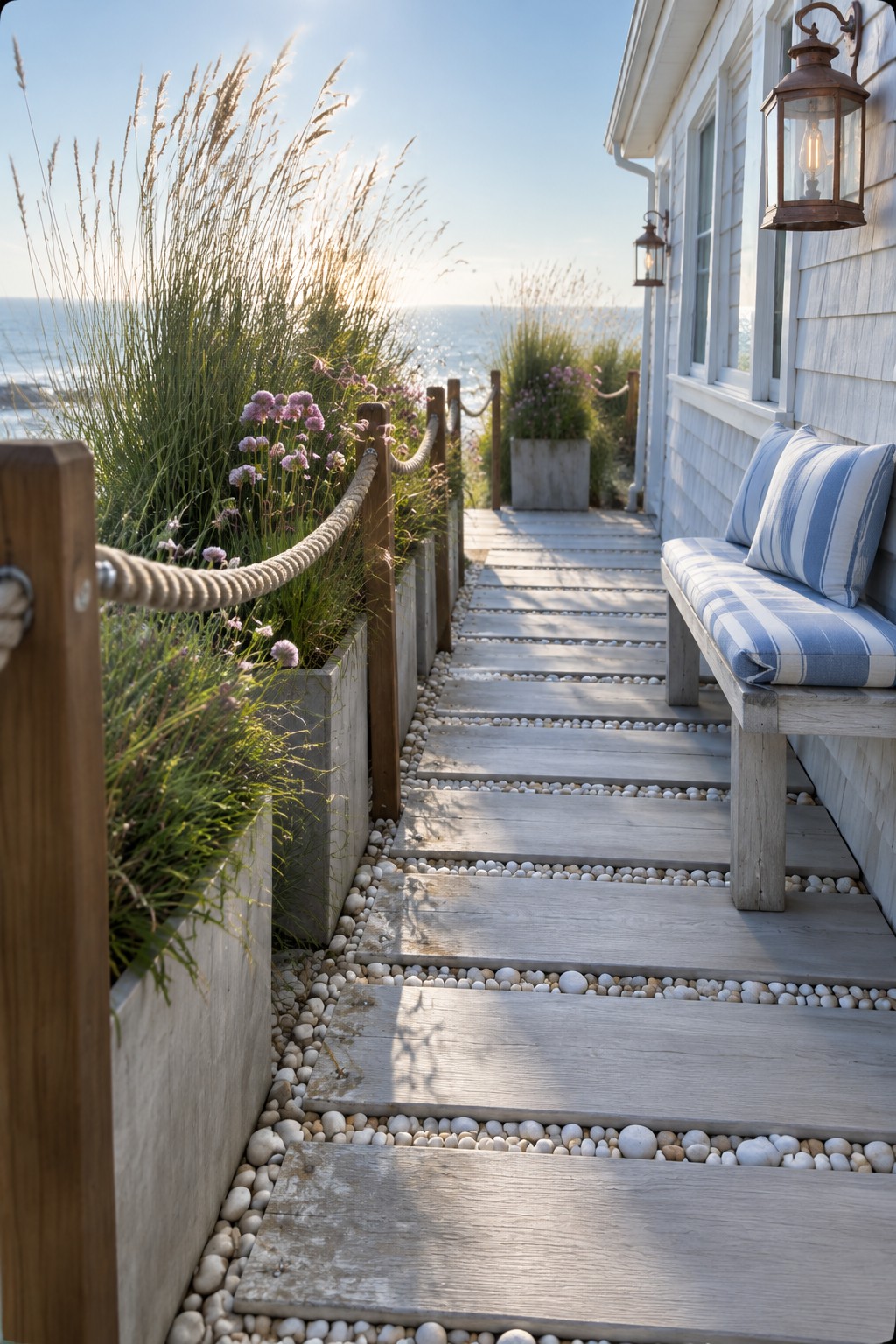
One simple way to handle a narrow side yard is to run a row of raised concrete planters along one edge. The rope strung between posts keeps the path defined and adds a bit of structure without crowding the space.
This setup works best on homes where the side corridor is tight but still needs to feel like a real walkway. Use it when you want room for taller grasses and flowers without losing walking space, and keep the planters at a height that makes watering easy from the path.
Add a Bench Into Narrow Planter Runs
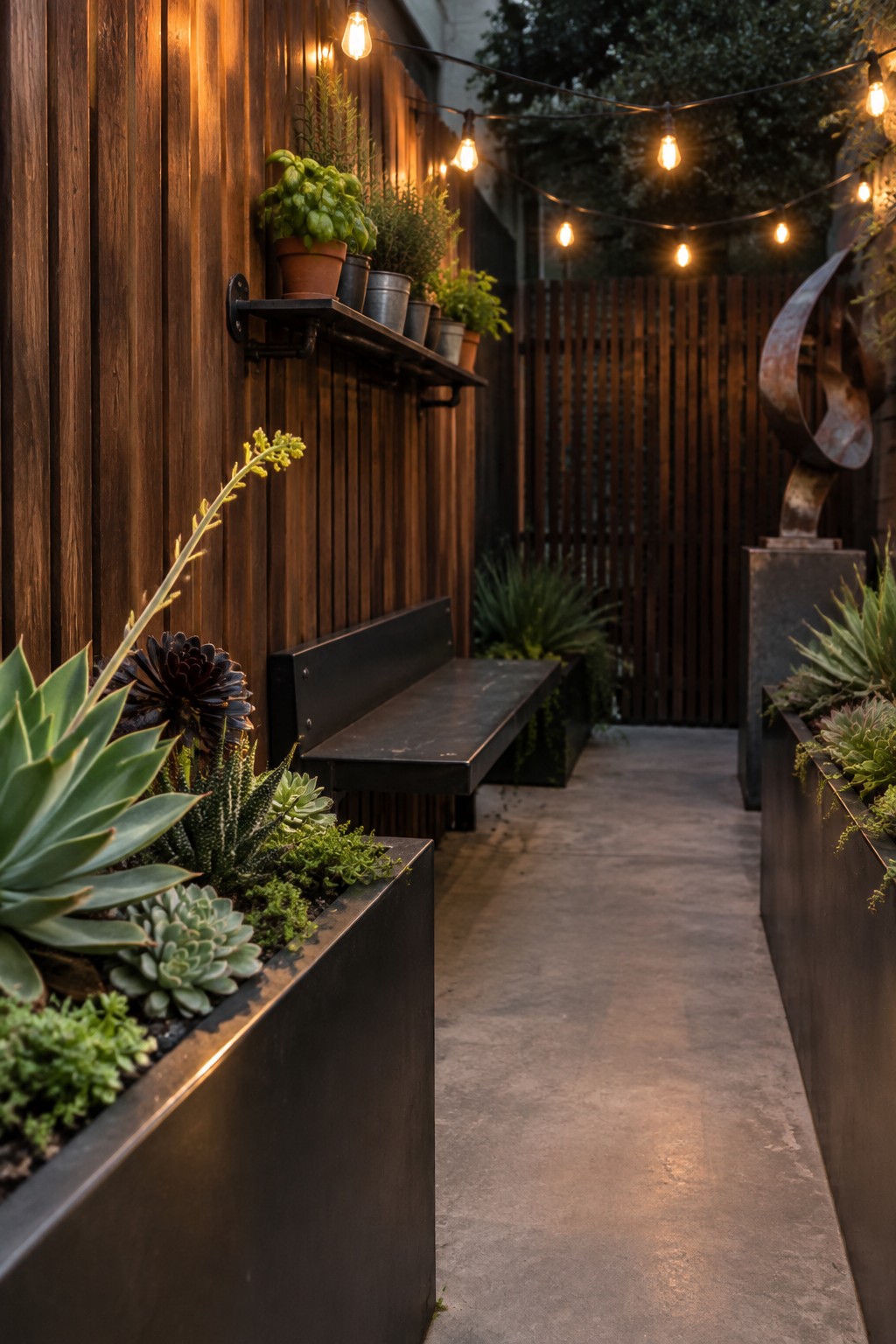
One useful way to turn a tight side yard into something more than a walkway is to build a bench right into the planter line. The bench gives you a place to sit without taking up extra floor space, and it keeps the whole setup feeling simple and connected.
This approach suits homes where the side passage is too narrow for separate furniture. Use long, low metal boxes so the bench can sit flush between them, and stick with tough plants like succulents that handle the conditions without much fuss.
Raised Beds Make Narrow Side Yards More Usable
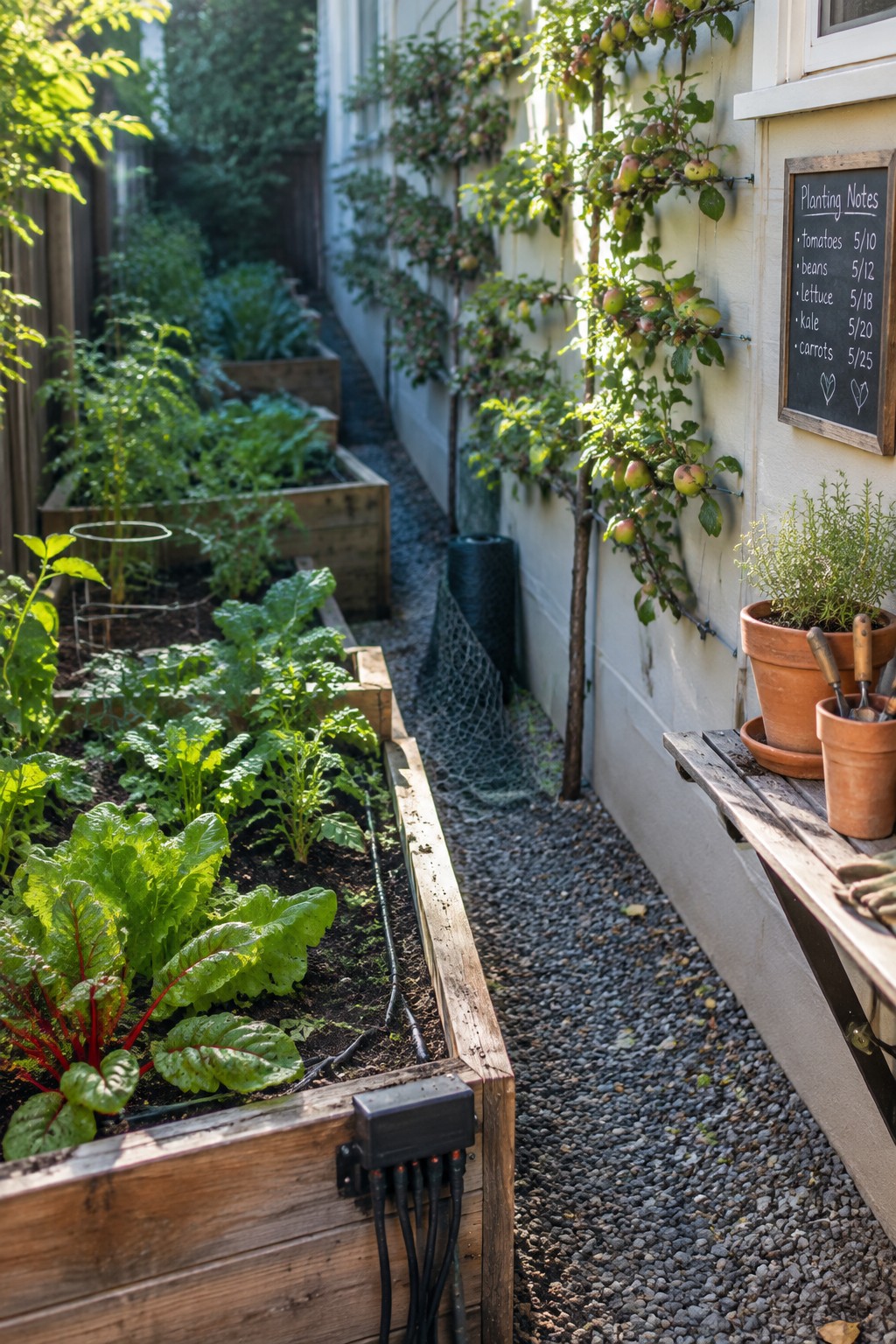
Raised beds give you a simple way to garden in a tight side yard without fighting poor soil or awkward ground levels. They keep the planting area contained so the gravel path stays clear and the whole space feels organized instead of cramped.
This setup works especially well on long, narrow lots next to the house. Build the beds at a comfortable width for reaching across, then train fruit trees flat against the wall to add height without taking up floor space. Just watch the drainage and make sure the beds sit level so water does not pool against the foundation.
Cover Narrow Walls With Climbing Vines
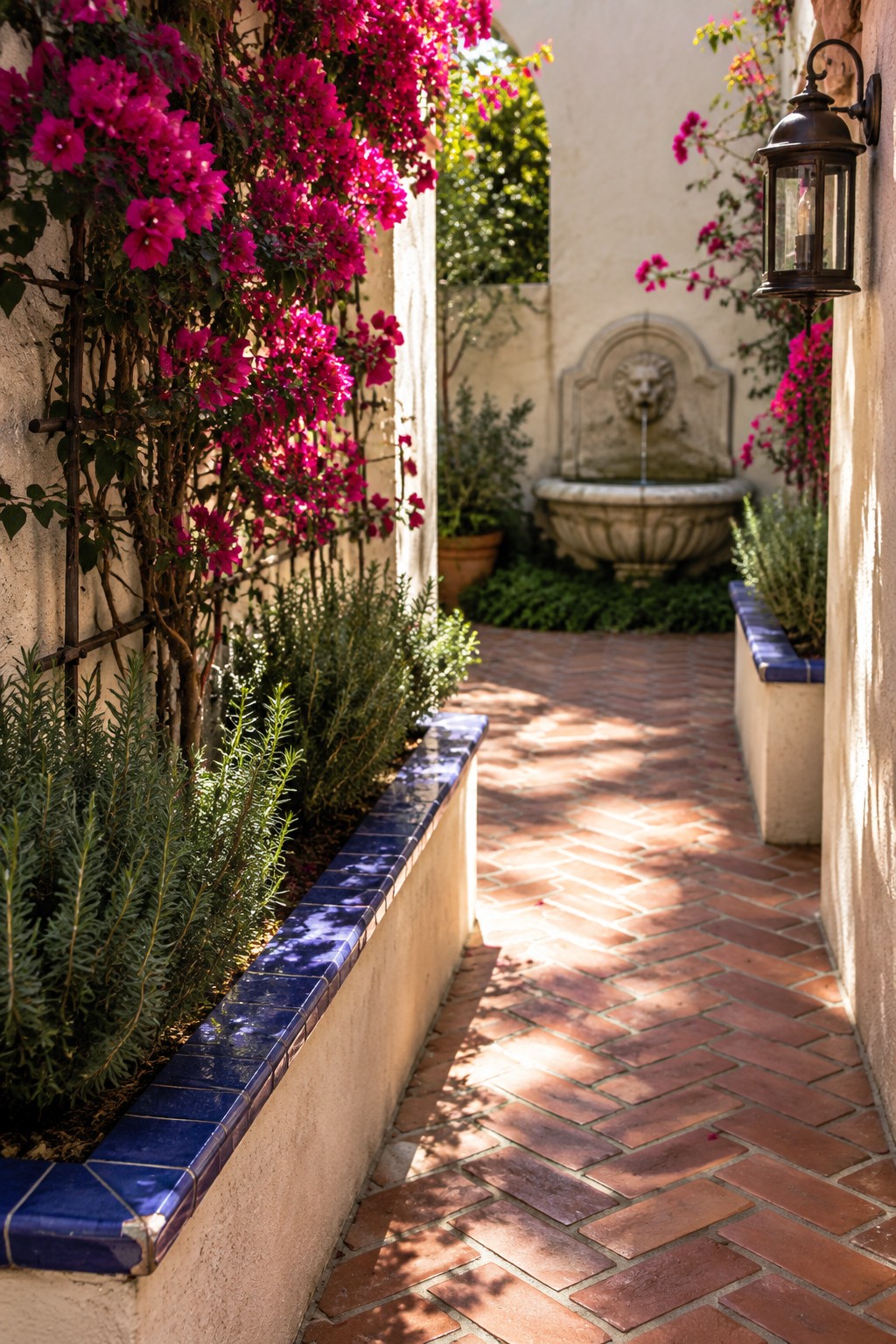
One simple way to bring life into a narrow side yard is to let flowering vines climb the walls. This adds height and color while keeping the path itself clear for walking.
It suits homes with long blank walls or stucco surfaces. A basic trellis gives the vines something to grip, and raised beds with a tiled edge keep the roots contained. Bougainvillea works especially well in sunny spots because it grows fast and blooms for months.
Lay Wooden Planks Over Gravel For A Narrow Path
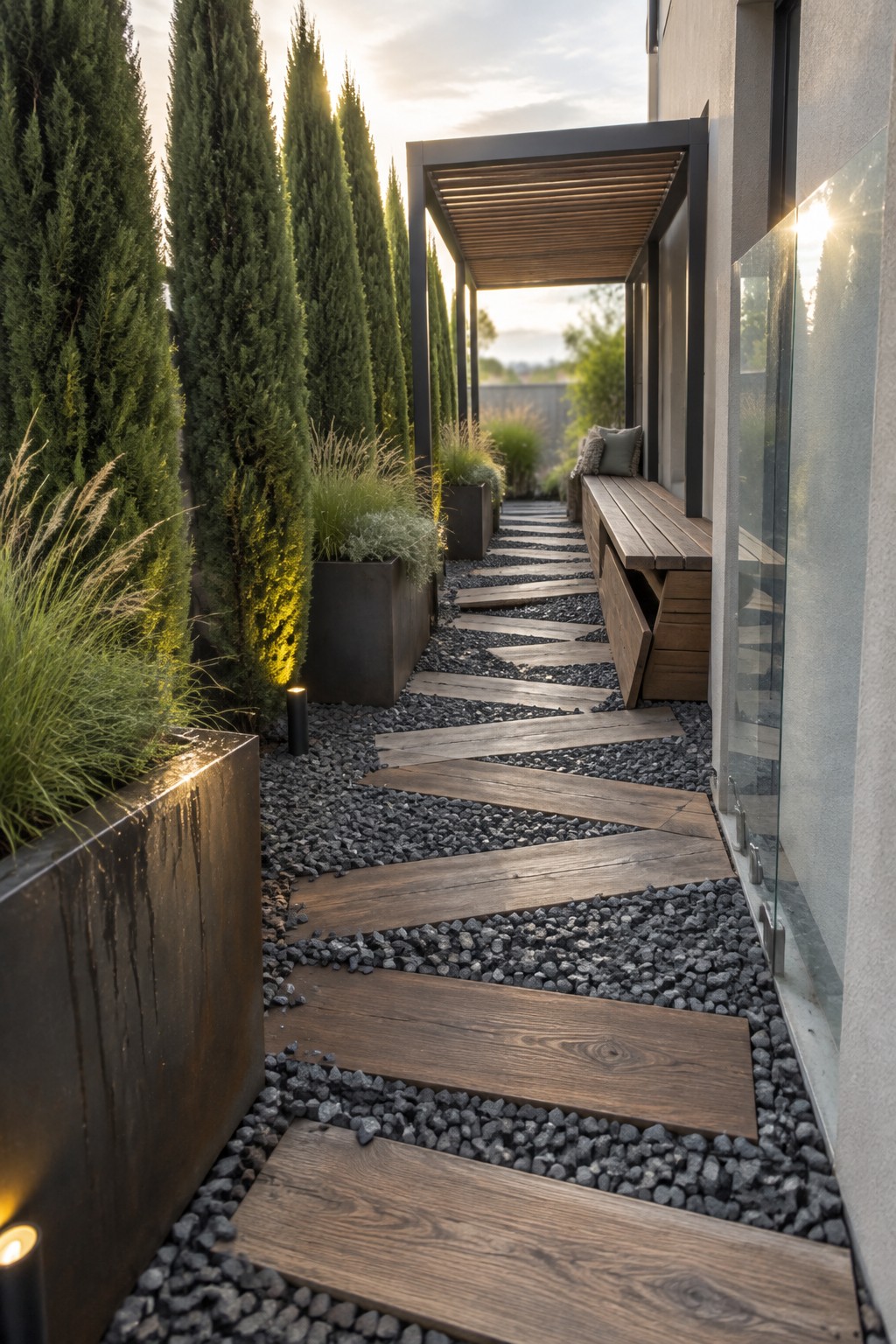
A plank path set into gravel works well in a tight side yard because it stays low and does not add bulk. The planks give solid footing while the gravel handles drainage and keeps the whole thing from feeling too built up.
This setup suits homes where the side corridor needs to stay open for access but still look intentional. Space the planks a little unevenly so the path feels natural rather than rigid, and keep any side planting in tall narrow containers so they do not crowd the walkway.
Stepping Stones Work Well in Narrow Side Yards
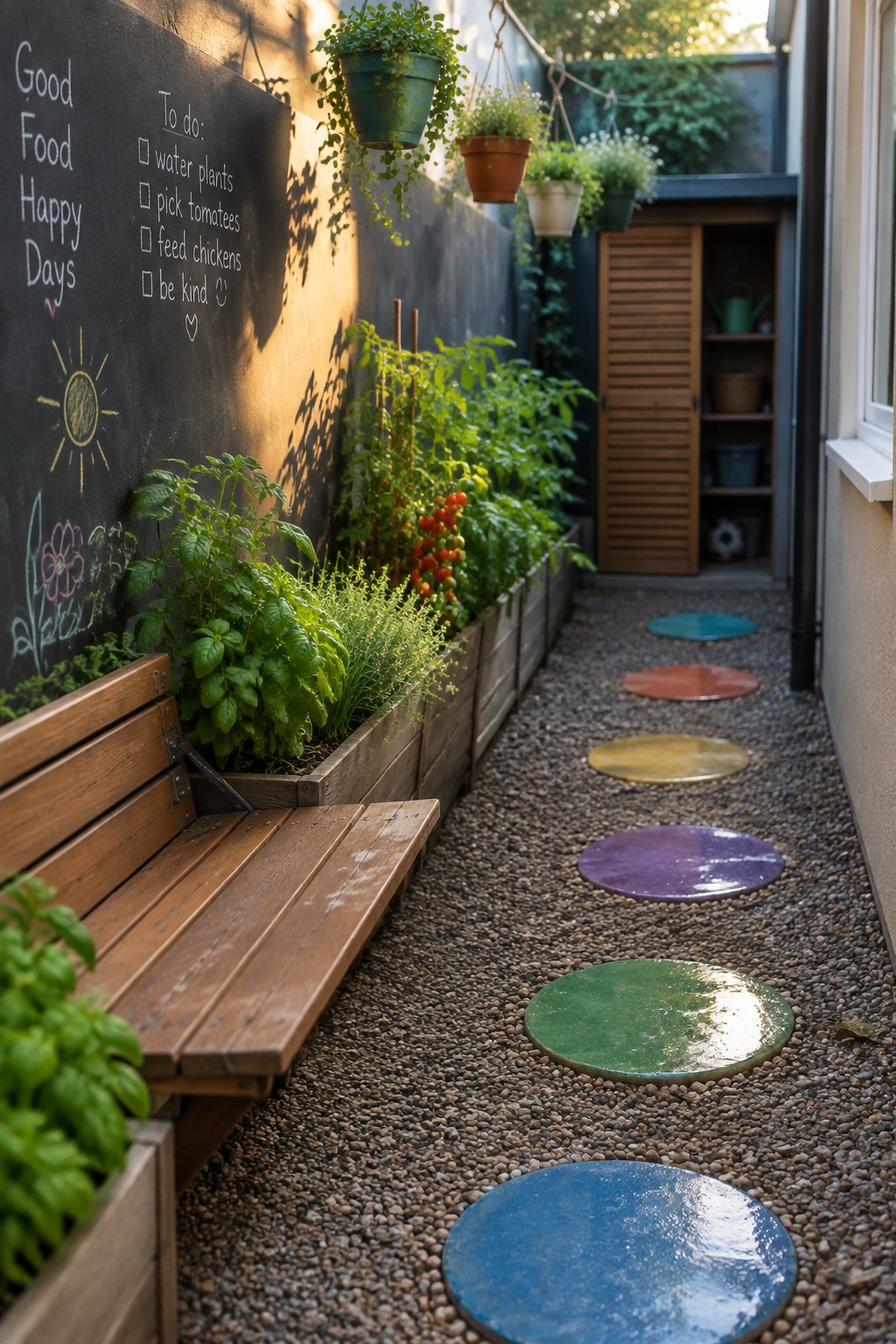
Stepping stones set into gravel give you a simple way to move through a tight side yard without covering the whole space in hard paving. The path stays narrow and functional while still letting plants and beds take up most of the room.
This approach works best when you run raised beds along one wall and keep the path clear on the other side. Space the stones evenly so walking feels natural, and choose colors that stand out against the gravel. It suits homes with long, skinny corridors where a full walkway would feel too heavy.
Line Narrow Corridors with a Long Planter Bed
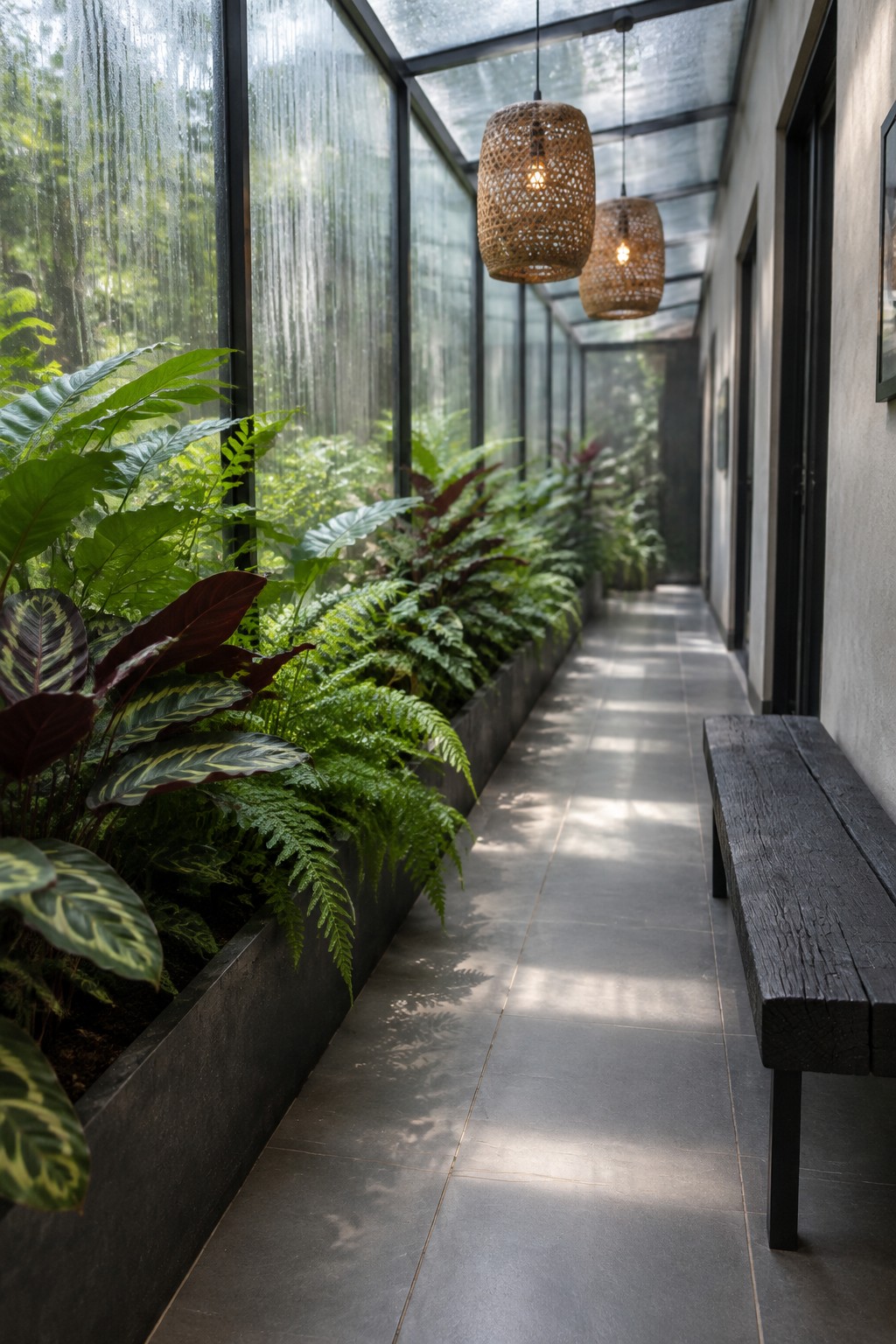
A continuous planter running the full length of a tight side passage keeps the walkway open while packing in plenty of greenery. The raised bed lets you grow ferns, broad leaves, and colorful foliage without crowding the floor space, and the plants soften the hard surfaces around them.
This setup works best on homes where the side yard is really just a covered walkway between walls. Keep the planter depth around 18 to 24 inches so roots have room, and choose plants that handle lower light if the roof is mostly glass or solid. A simple bench at one end gives the space a place to pause without adding clutter.
Wall-Mounted Planters Keep Narrow Paths Open
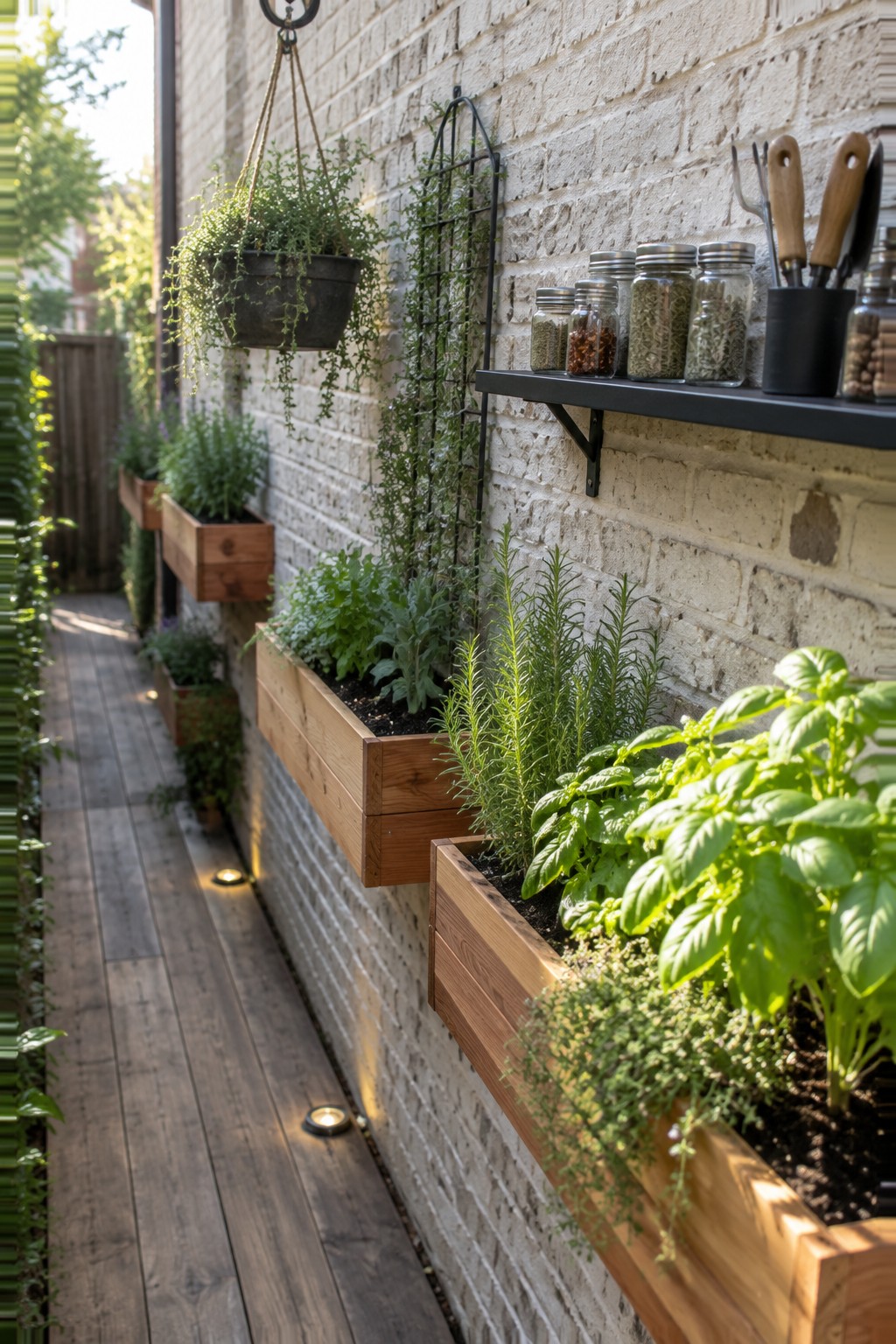
Narrow side yards often leave little room for ground beds without crowding the walkway. Mounting wooden planters straight onto the wall puts the plants at a usable height while leaving the ground clear for walking.
This setup works best along brick or fence walls where you can bolt boxes at staggered levels. Herbs do well in these spots because they stay compact and you can reach them easily for picking. Just make sure the boxes have good drainage so water does not run down the wall.
Frequently Asked Questions
Q: What plants suit a narrow corridor that gets little sun? A: Ferns and hostas thrive in shade and stay contained. They add lush greenery without spreading too wide. Water them regularly during dry spells to keep them healthy.
Q: How do I prevent the space from feeling like a tunnel? A: Layer plants at different heights along the sides. Tall grasses in back and low ground cover in front create depth. This draws the eye outward instead of straight down the path.
Q: Do I need to worry about drainage in a tight side yard? A: Slope the ground slightly away from the house. Add gravel at the base of beds to let water flow through.
