

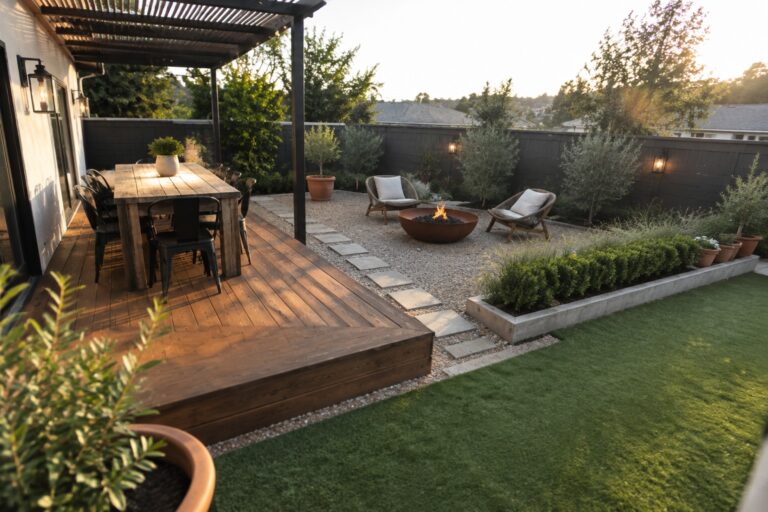
I spent a whole summer moving things around in my backyard before I understood that the real problem was the lack of any clear separation between different activities. Once I started thinking in terms of distinct zones for eating, relaxing, and gardening, the space suddenly felt much more practical instead of just open and empty.
Many people end up with yards that look fine at first glance but never get used because there is no structure to guide how you move through them. I have been looking at different ways to mark those boundaries without building walls, and a few of the approaches make a lot of sense for smaller lots like mine. Zones matter more than I expected.
Divide the Backyard Into Separate Activity Zones
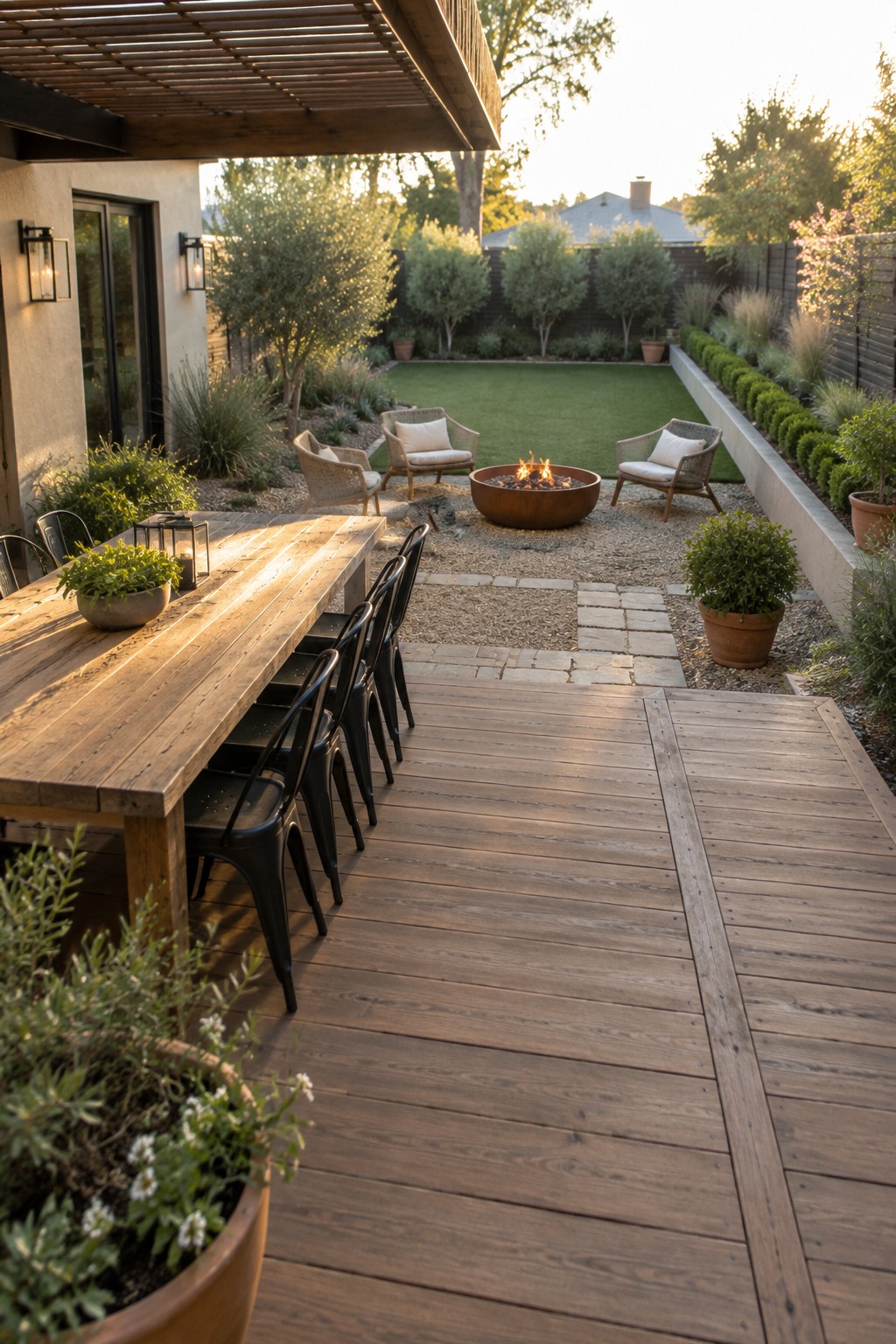
Many people get more use out of their yard when they split it into two or three clear spots instead of leaving it as one open area. A wooden deck can hold the dining table and chairs while a lower gravel patch nearby works for the fire pit and a few lounge seats.
This kind of split works best in medium-sized yards where you want space for meals and quiet evenings without everything happening in the same spot. Keep the zones connected by a short path so the whole area still feels like one backyard rather than two separate rooms.
Use Level Changes To Create Zones
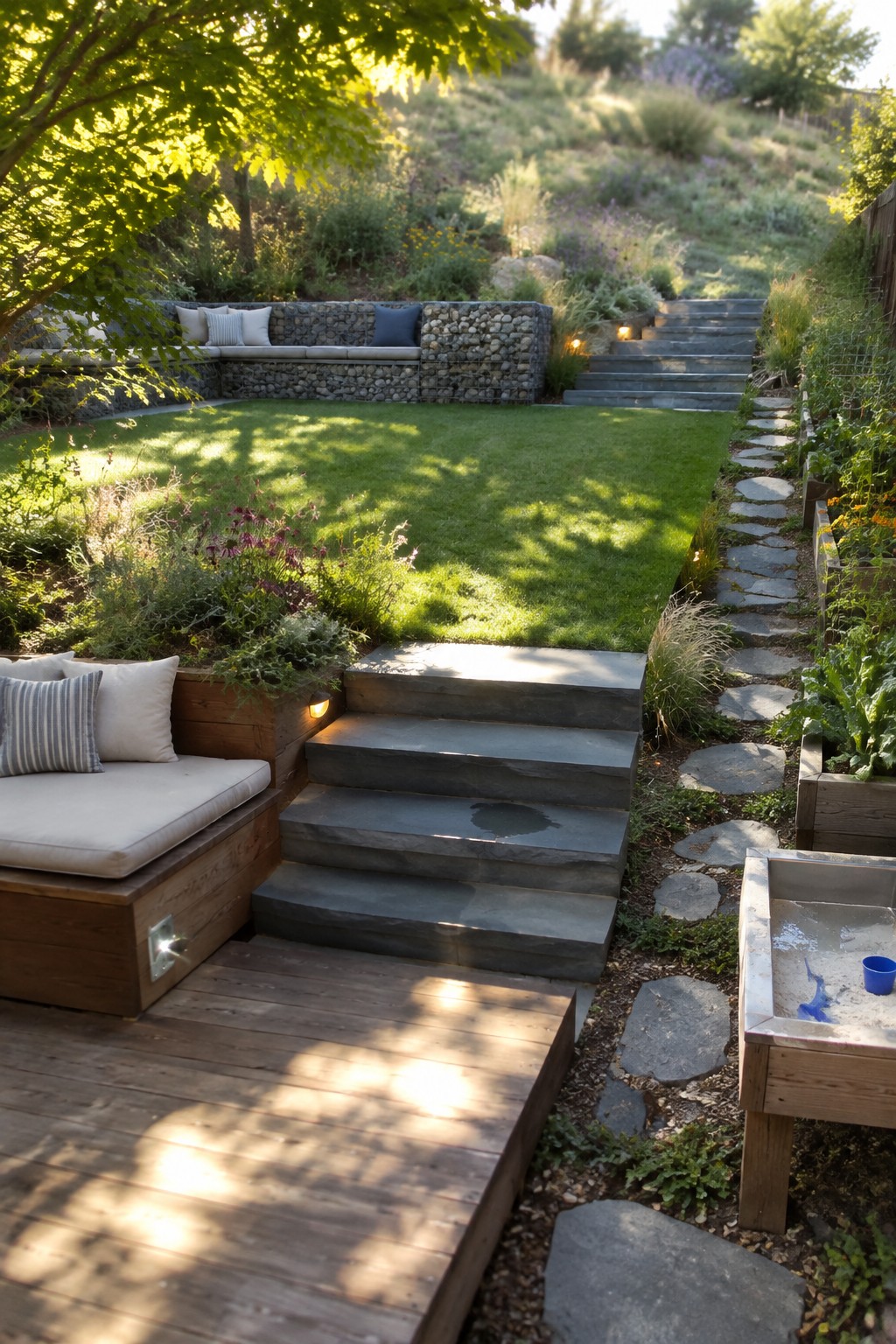
Many backyards end up feeling like one big open space with no clear purpose. Adding steps and slight elevation shifts helps break things into separate areas so each zone has its own feel and use.
This approach works especially well on gentle slopes or when you build a raised deck off the house. Keep the materials simple, like wood on one level and stone on the next, so the zones read as distinct without extra barriers.
Create Distinct Zones for Lounging and Dining
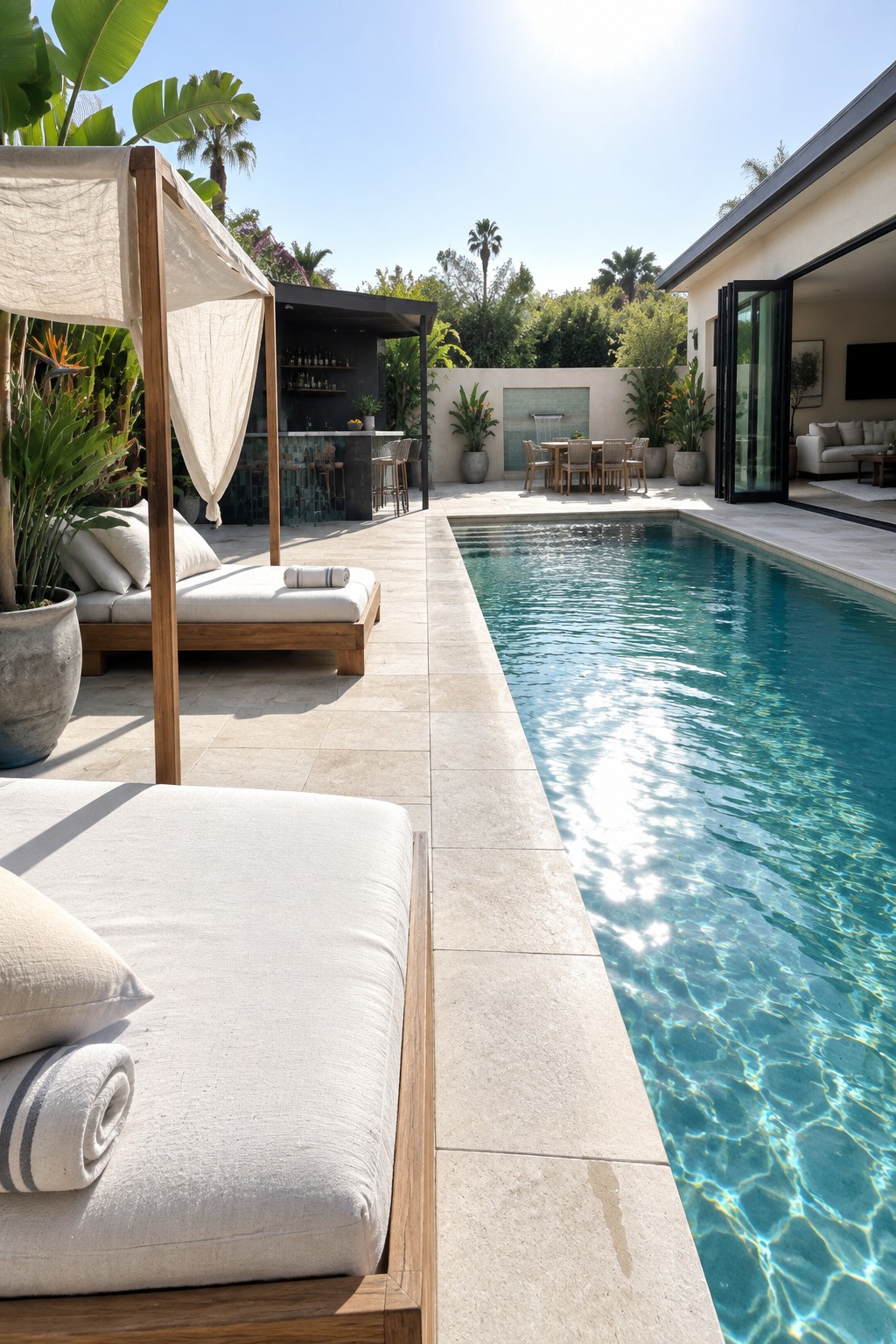
One of the easiest ways to make a backyard feel more usable is to split it into clear zones instead of leaving everything open. A shaded daybed area right next to the pool gives people a place to rest without mixing with the dining table or the bar setup. It keeps the space from feeling like one big open deck.
This works best on medium to large yards where you have room for more than one activity at once. Use simple structures like a canopy or a low wall to mark the lounging spot, and keep the dining area a few steps away. That small separation makes the whole yard feel more organized without adding much extra work.
Use a Porch to Mark Off a Seating Zone

Many backyards feel more usable when the porch itself becomes the seating area. The roof and the change in floor surface already set it apart from the open lawn, so the garden beds and grass read as their own separate space rather than one big open stretch.
This works best on homes where the porch looks out over the garden. Keep the furniture simple and low so the view stays open and the path to the lawn stays clear.
Use a Fountain to Define Separate Patio Zones

Placing a fountain toward the middle of a patio helps split the space into clear zones without adding extra structures. One side can handle dining while the other stays open for lounging, and the water feature keeps each area from feeling like it runs into the next.
This works best on medium to large patios where you have room for both a table and built-in seating. Keep the dining chairs and table grouped on one side and let the lounge area wrap around the opposite edge so the fountain acts as a soft divider.
Separate Outdoor Zones With Material Changes
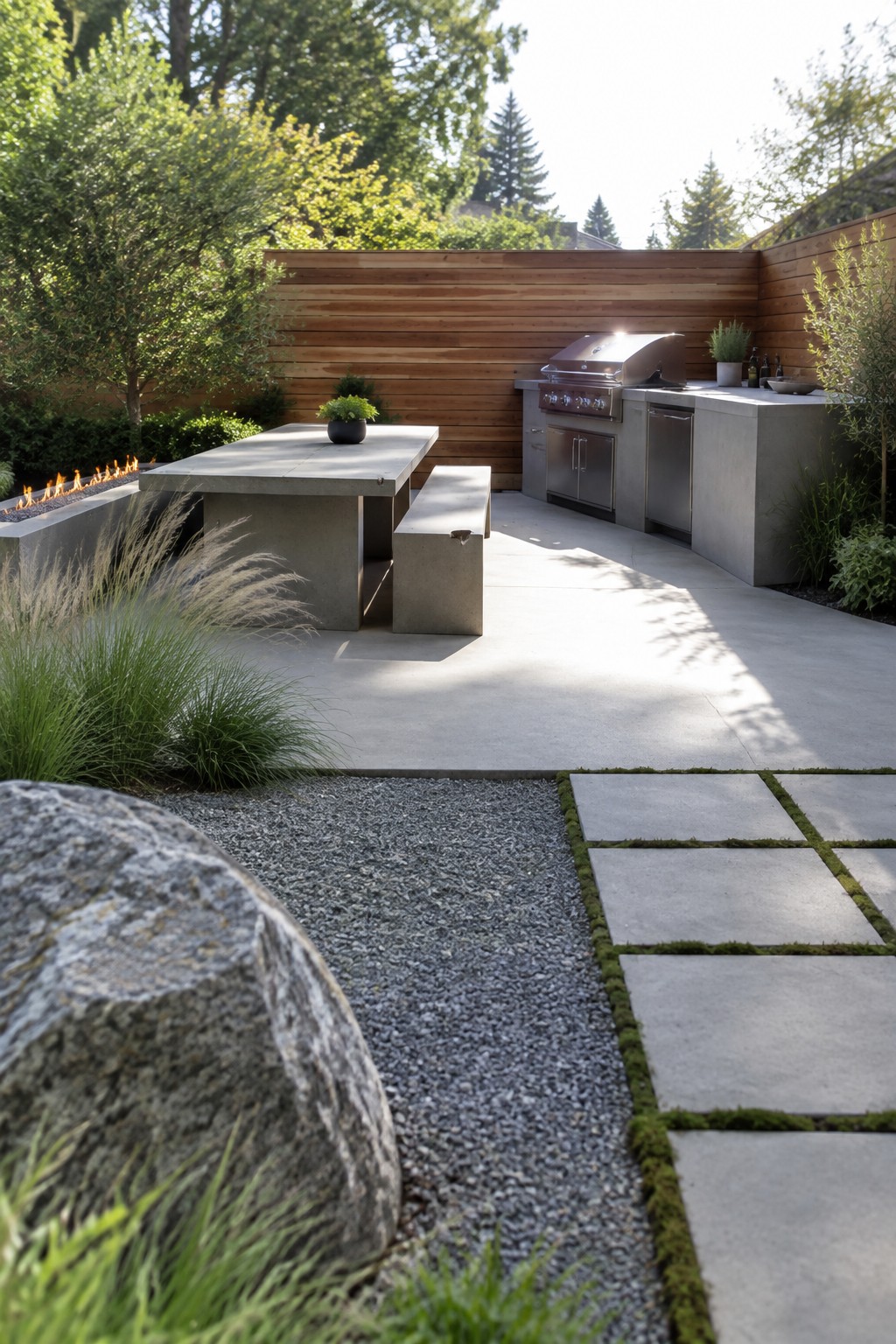
Switching the ground surface is one of the simplest ways to show where one backyard area ends and another begins. Here the smooth concrete slab clearly marks the dining and cooking space, while the gravel path and paver section signal a shift toward the garden edge.
This method works best in yards that have room for more than one use at once. It keeps the layout easy to read without needing extra walls or screens, and it holds up well in climates where you want good drainage between zones.
Create Multi-Purpose Backyard Zones for Dining, Recreation, and Gardening
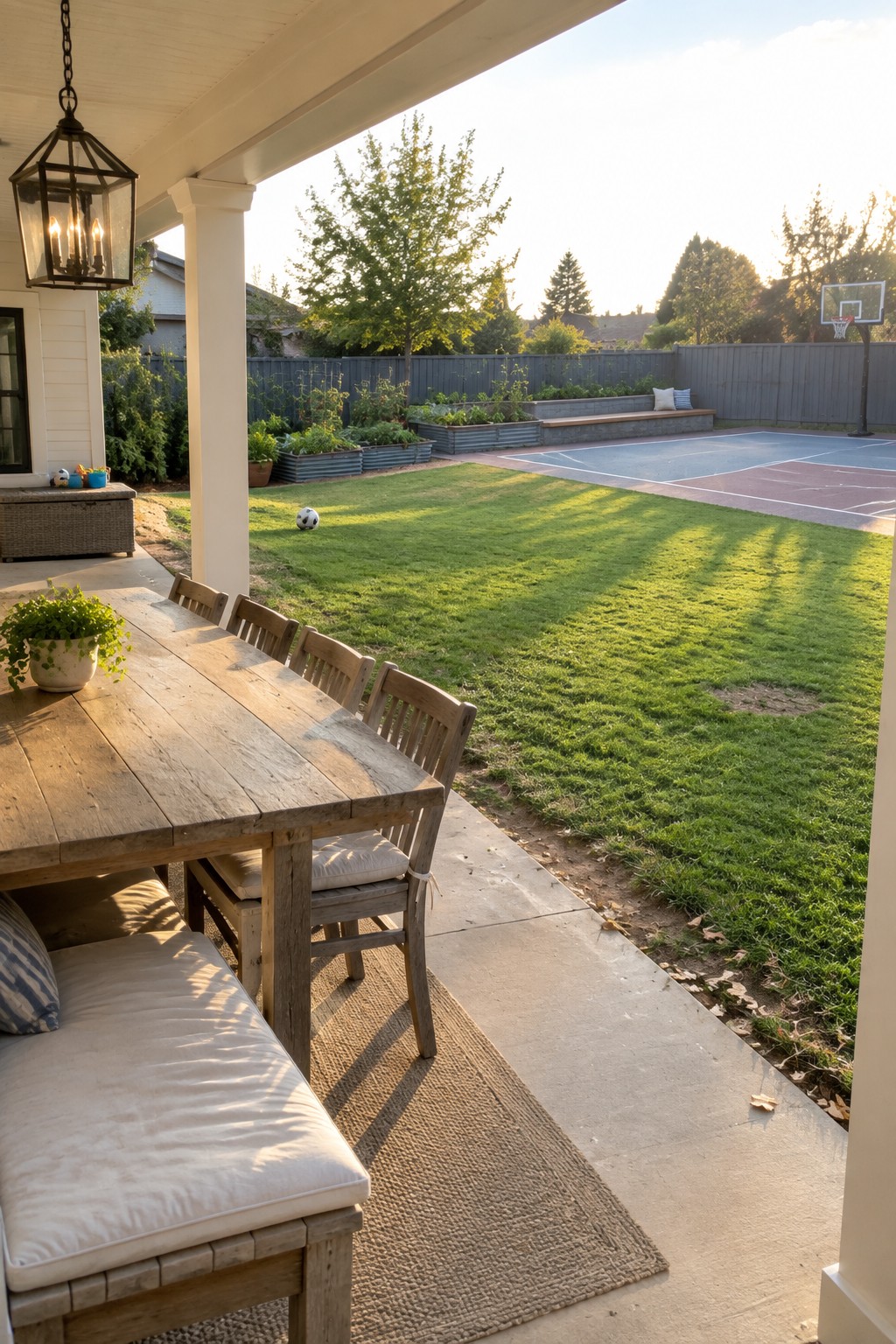
A simple way to make a big yard feel useful is to split it into clear zones. Here the covered porch holds a dining table while the lawn stretches out toward a sports court and raised beds in the distance.
This layout works best when the house sits close to one end of the yard. Place seating right by the back door, then let the open grass lead to whatever activity you use most.
Define a Dining Area With Paving
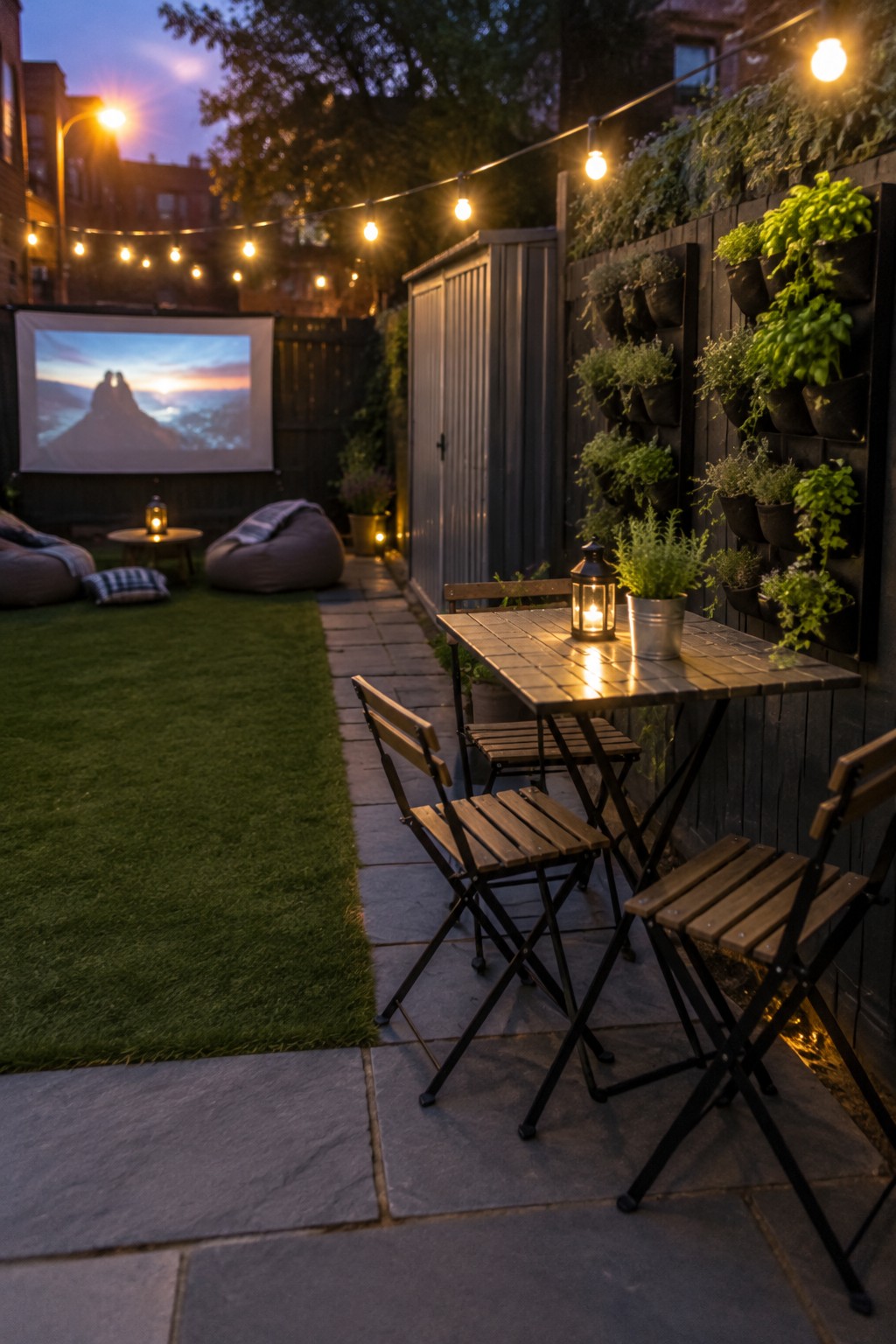
Laying pavers in one section of the yard creates a clear spot for a table and chairs without the whole space feeling like one big lawn. The hard surface makes the dining zone feel set apart and more usable on a regular basis.
This approach works best in medium or small backyards where you still want room for grass but need a stable place for meals. Keep the paved area modest so it does not take over the whole yard.
Separate Cooking And Seating Areas In Your Yard
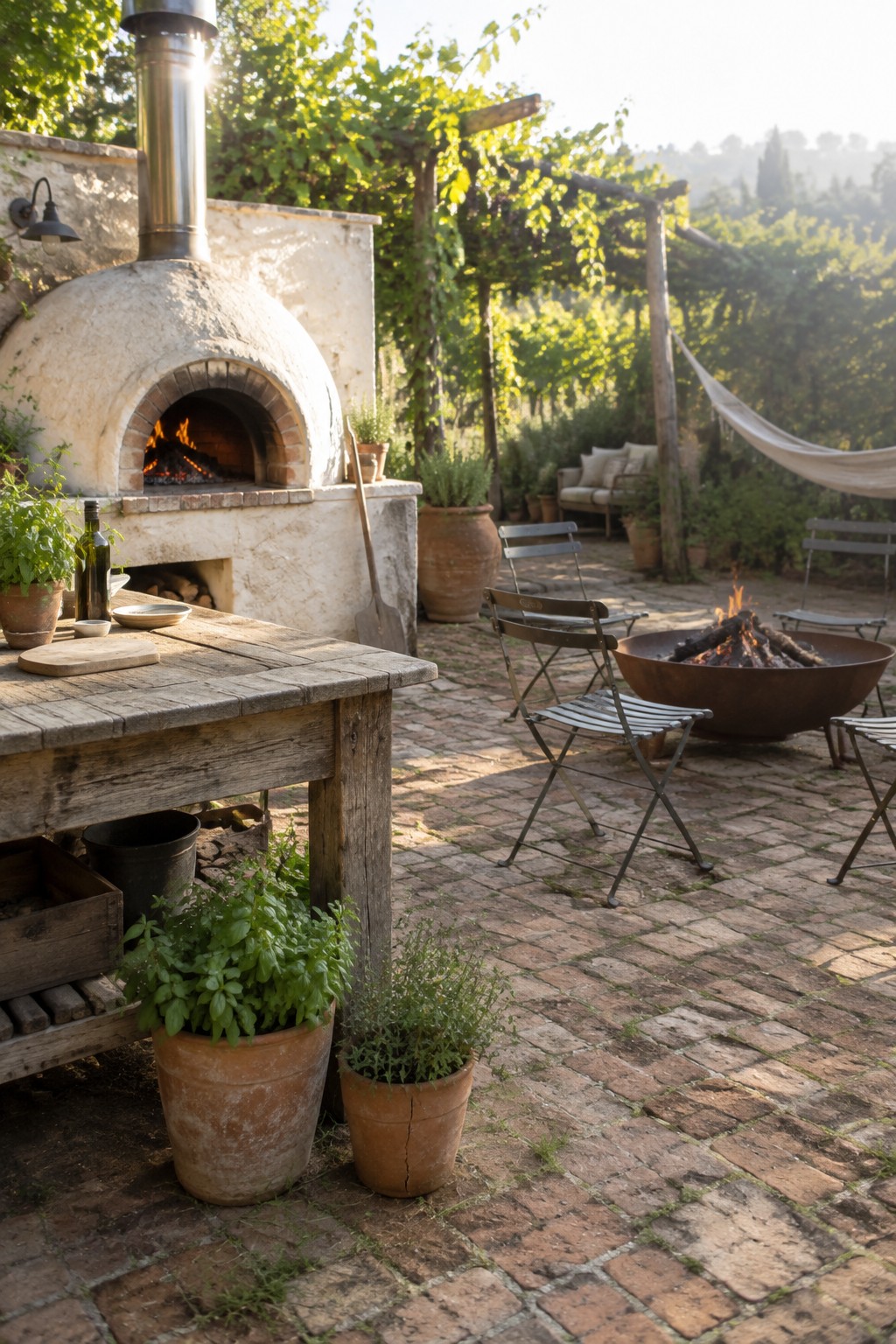
Many people like to keep the cooking spot and the main seating area apart so each one feels like its own place. A brick patio helps mark the transition, and having the oven on one side with the fire pit on the other makes the flow natural.
This layout works best on larger patios or yards where you have space to spread things out. Put the cooking zone close to the house doors and give the fire area room for chairs around it. Just make sure the zones are close enough to still feel connected.
Define Outdoor Zones With Area Rugs
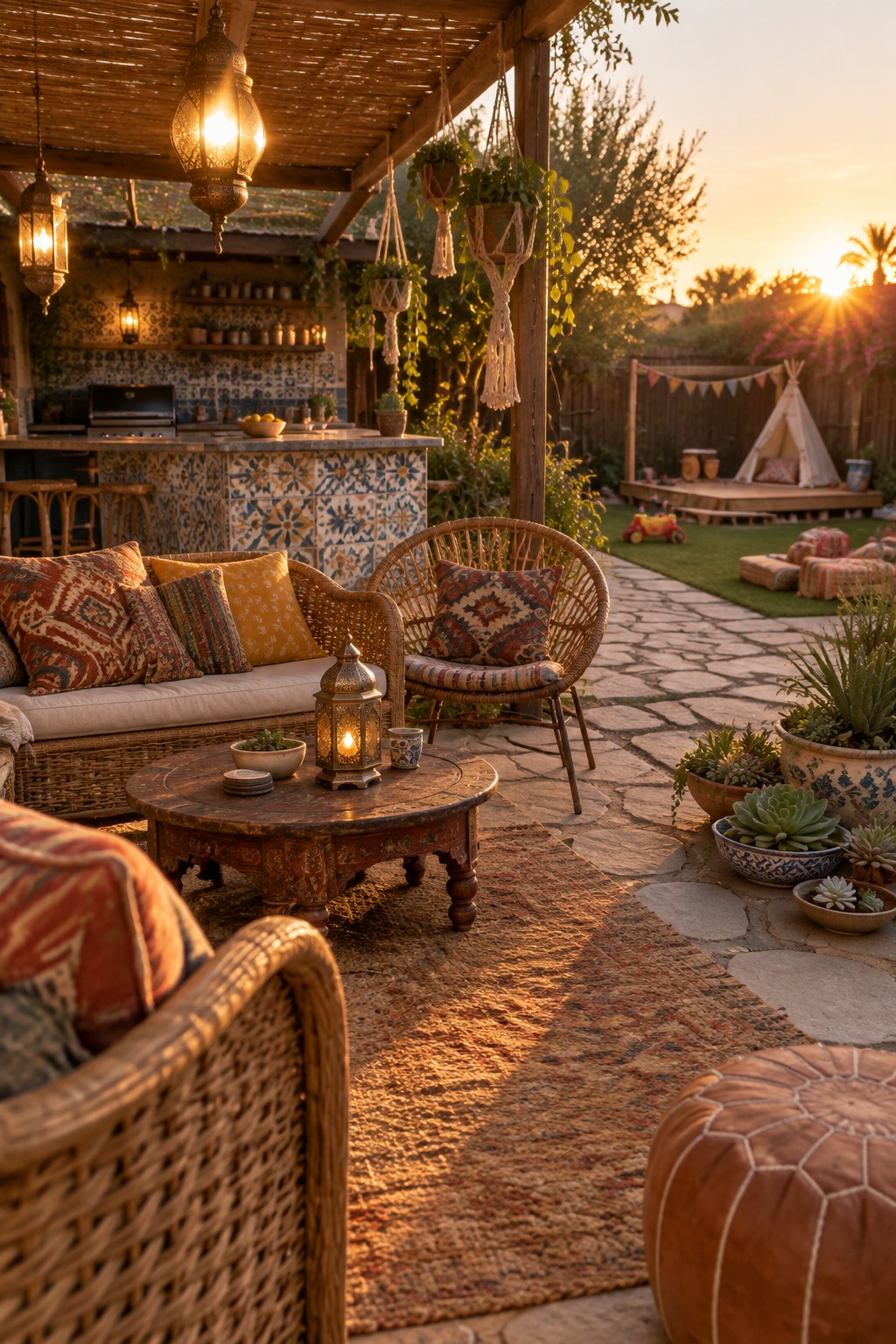
A large rug under the seating makes the patio feel like its own room instead of just part of the open yard. It pulls the chairs and table into one clear spot and keeps the space from blending into the lawn or play areas nearby.
This works best on homes with a stone or concrete patio where you want a defined lounge without adding walls or screens. Keep the rug big enough to fit all the furniture legs, use sturdy outdoor pieces, and leave the grass open for other activities so each zone stays easy to use.
Use Decks and Gravel to Create Distinct Backyard Areas
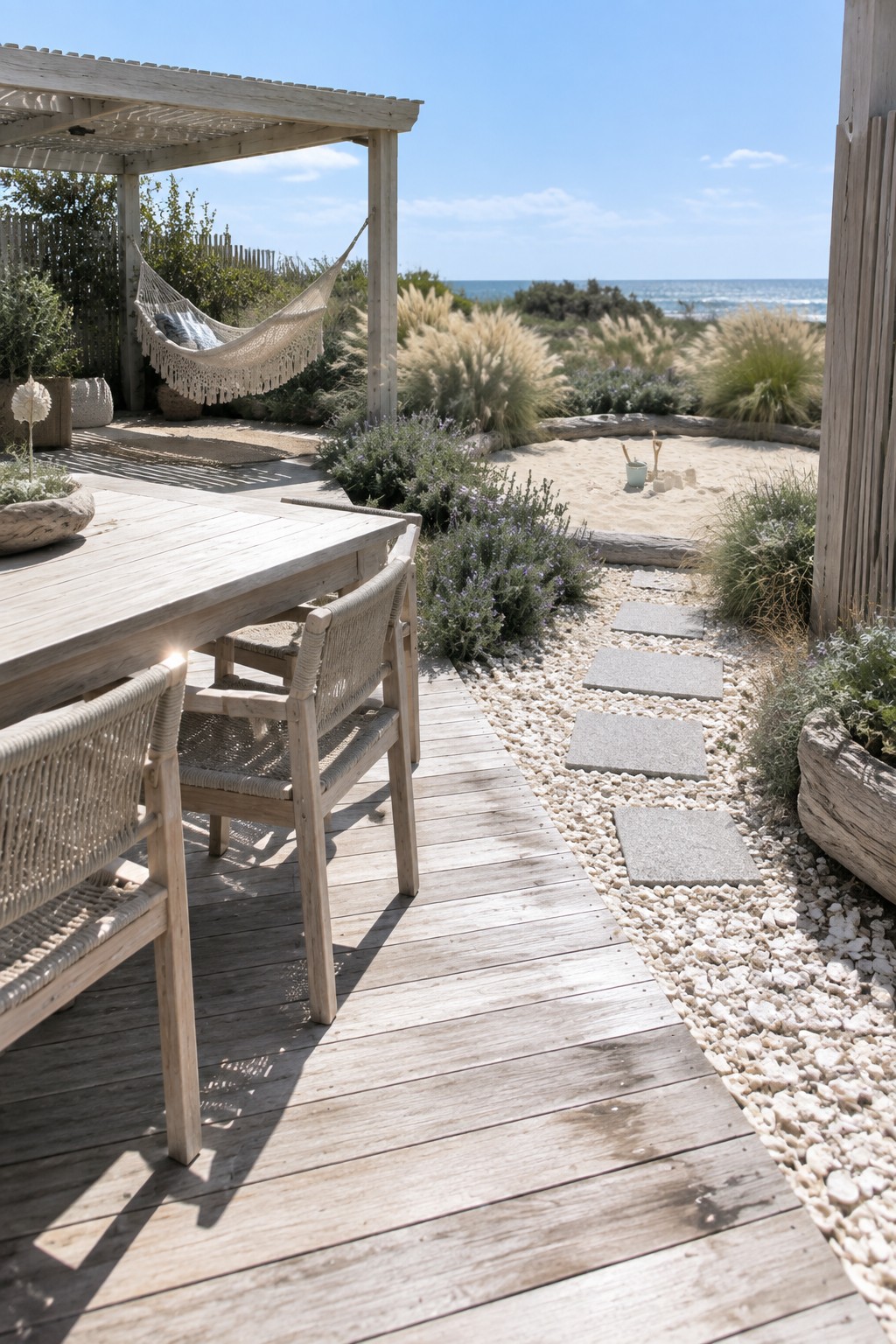
Changing the ground surface is one of the easiest ways to mark off different parts of a backyard without adding walls. A raised deck can hold a dining table and chairs while a gravel stretch with flat stones leads to another area meant for play or quiet sitting. The shift in texture makes it clear where one zone ends and the next begins.
This approach works best on lots that have room for more than one use, like eating near the house and a looser space farther out. Keep the path wide enough for comfortable walking and pick materials that match the local weather so the zones stay easy to maintain over time.
Define Separate Zones With A Sunken Fire Pit Lounge
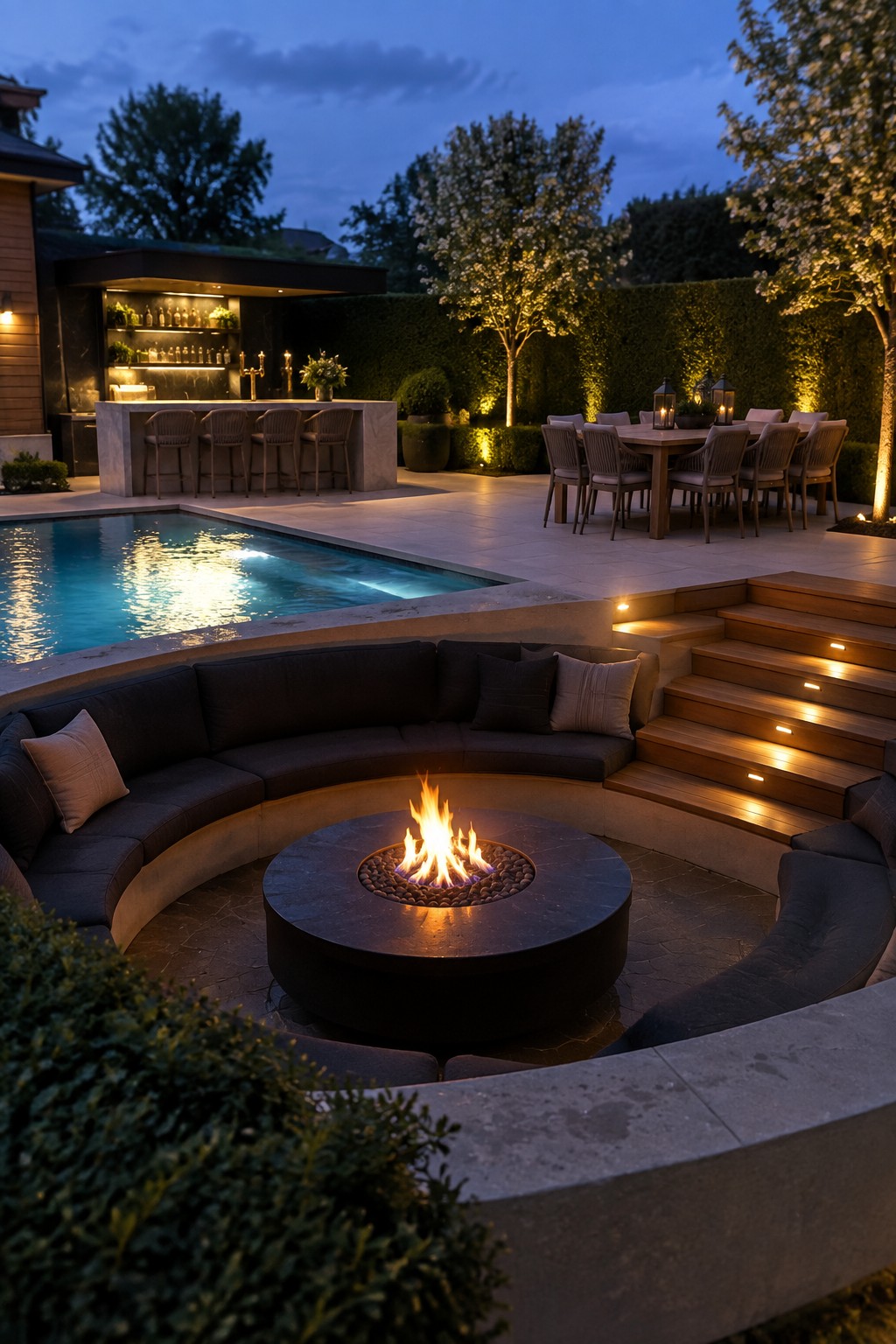
A sunken fire pit lounge carves out its own clear spot in the yard without needing walls or fences. The lowered seating ring keeps the area feeling set apart while still letting people see across to the pool or dining table nearby.
This layout works best in medium to large backyards that already have multiple uses planned. It helps keep the fire pit zone from blending into everything else and gives guests a natural place to gather at night.
Use Gravel Paths To Separate Lawn From Garden Beds
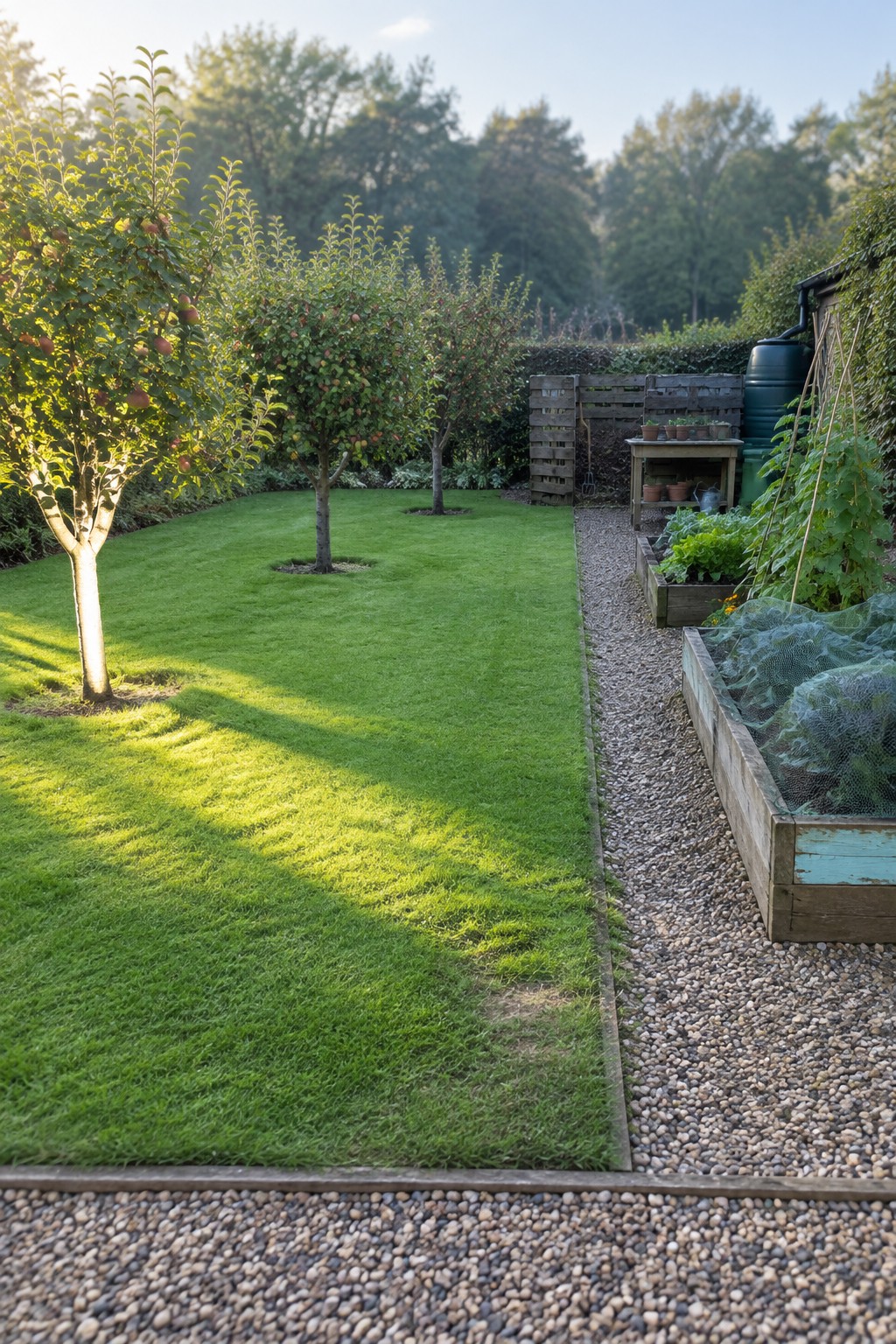
A gravel path gives the backyard a simple way to split the space into clear zones. One side stays open for grass and trees while the other holds raised beds and tools without looking messy or mixed together.
This setup works best in yards that need both a play area and a productive garden. Keep the path at least a couple of feet wide so it feels intentional and makes mowing easier along the edge.
Use Levels To Define Outdoor Zones

Raising one section of the patio above the rest is a simple way to mark off different areas without adding walls or screens. It keeps the dining space separate from the cooking zone and the lower garden beds, so each part feels like its own spot while still staying connected.
This approach works well on sloped lots or larger backyards where you want clear uses for each area. Keep the height difference modest so the whole space still feels open, and make sure the steps are wide enough for easy movement between levels.
Use a Linear Pond as a Boundary Between Backyard Zones
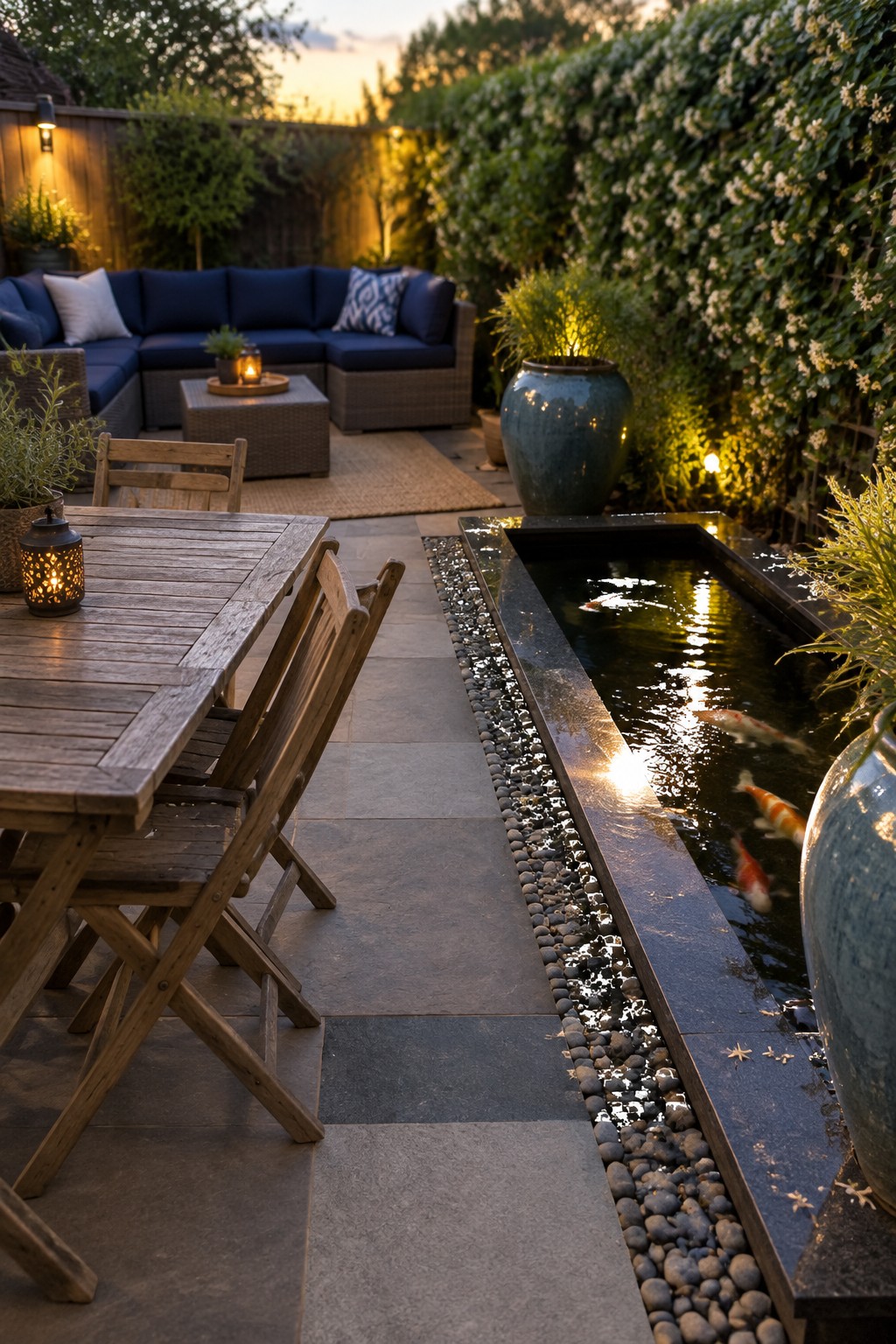
A long narrow pond can do a lot to keep different parts of a backyard from running into each other. It gives the dining area its own side while the lounge seating stays on the other, and the water itself becomes the boundary instead of extra fencing or plants.
This setup suits smaller yards that still need room for meals and relaxing at the same time. Keep the pond along one edge so the main patio stays open and the water adds calm without cutting off movement between the zones.
Define Zones With Gravel And Stepping Stones
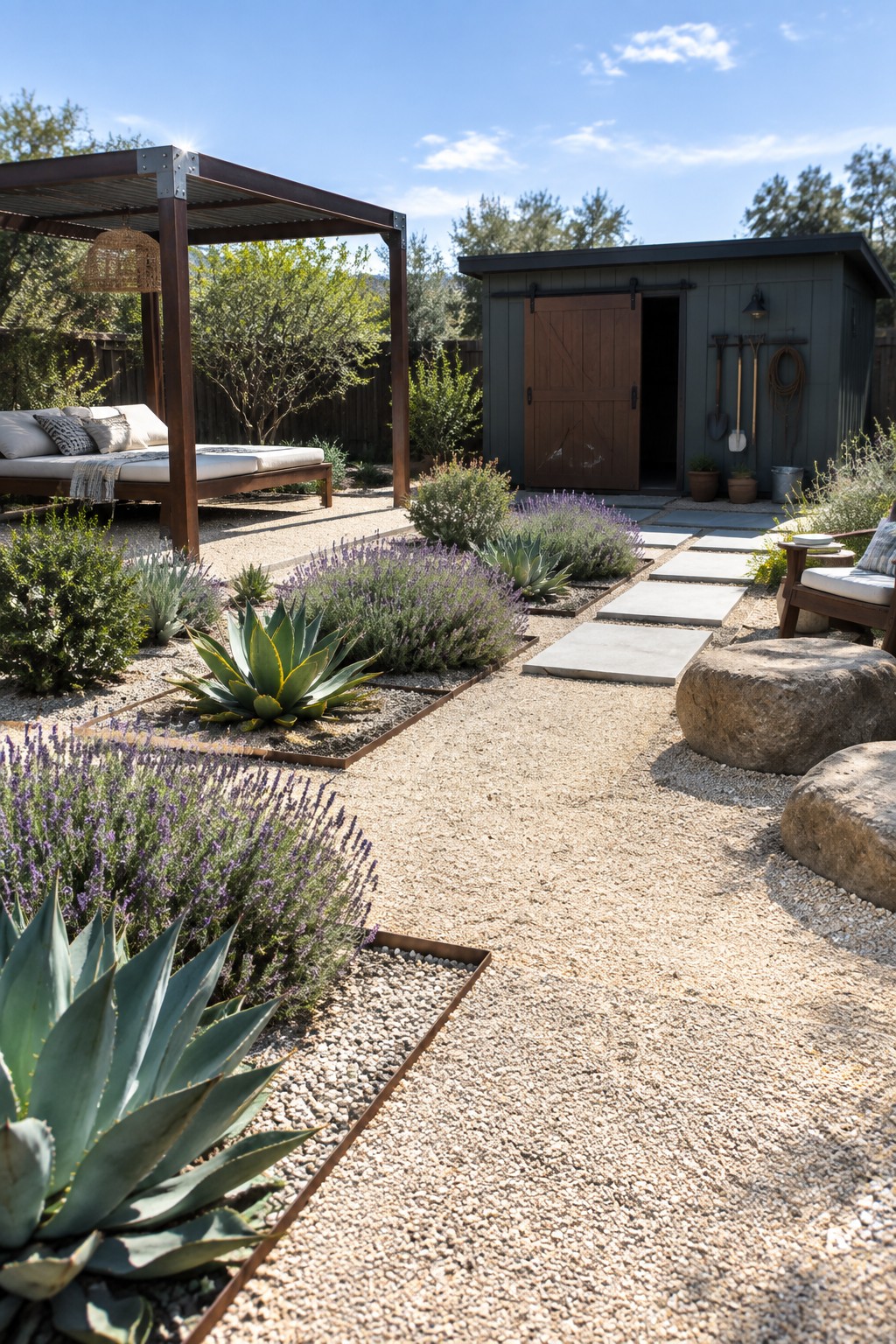
Gravel makes it easy to split a backyard into separate areas without building walls. The paths guide people from one spot to the next while the planted beds stay contained and distinct.
This works best in medium or smaller yards that need room for lounging, gardening, and storage all at once. Raised metal edges help keep the gravel from spilling into the beds and make mowing or sweeping simpler later on.
Separate Outdoor Zones With Flooring Changes
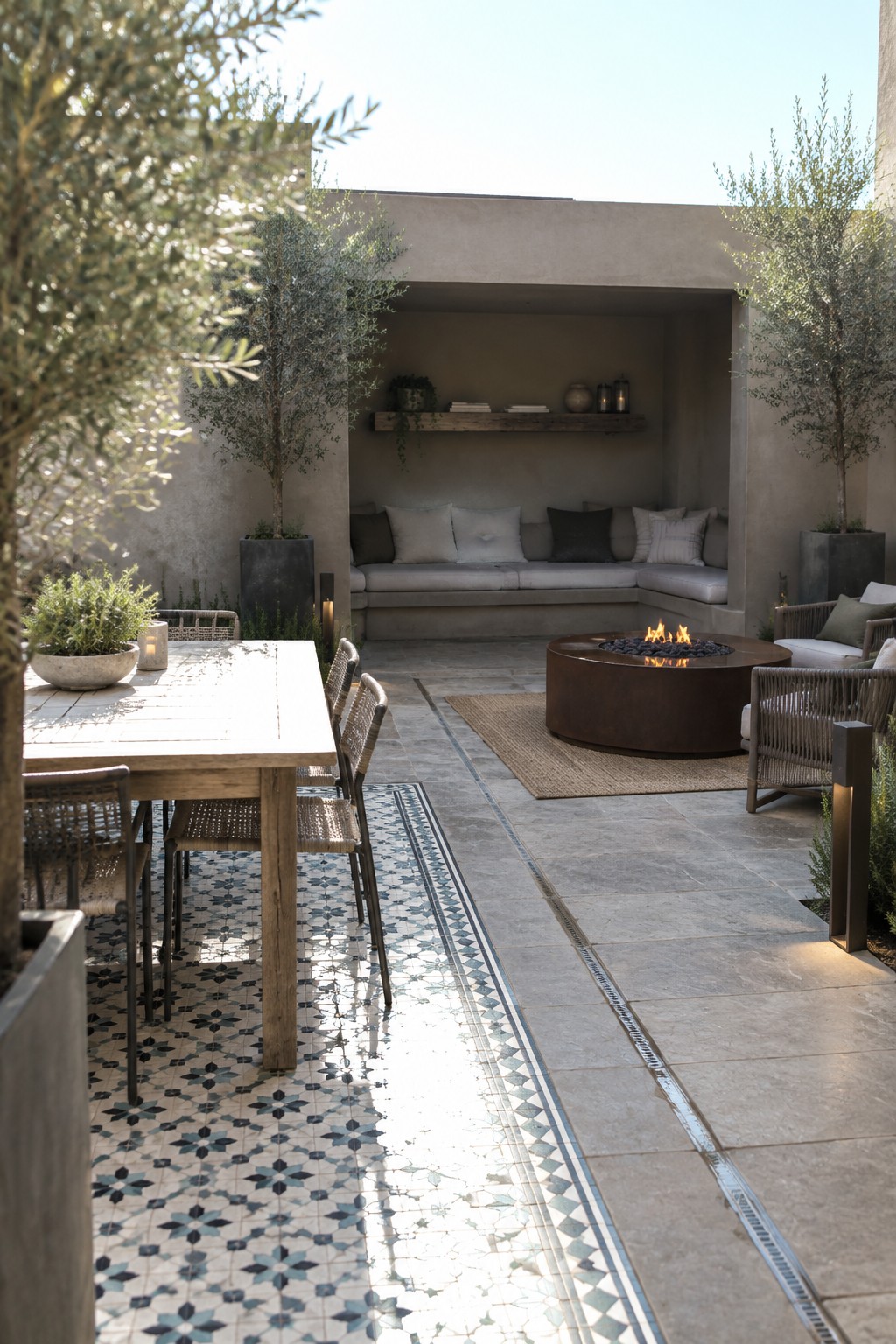
Changing the flooring material is one of the simplest ways to mark off different parts of a backyard without adding walls or dividers. In this setup the dining area sits on patterned tile while the lounge area uses large stone pavers. The shift in surface makes each zone feel separate even though they sit right next to each other.
This approach works well on patios or small yards where you want a clear spot for meals and another for relaxing by the fire. It keeps the space from feeling like one big open slab and makes it easier to furnish each area for its purpose. Just make sure the materials still match the overall style of the house so the zones look connected rather than random.
Use Contrasting Ground Surfaces to Mark Backyard Zones
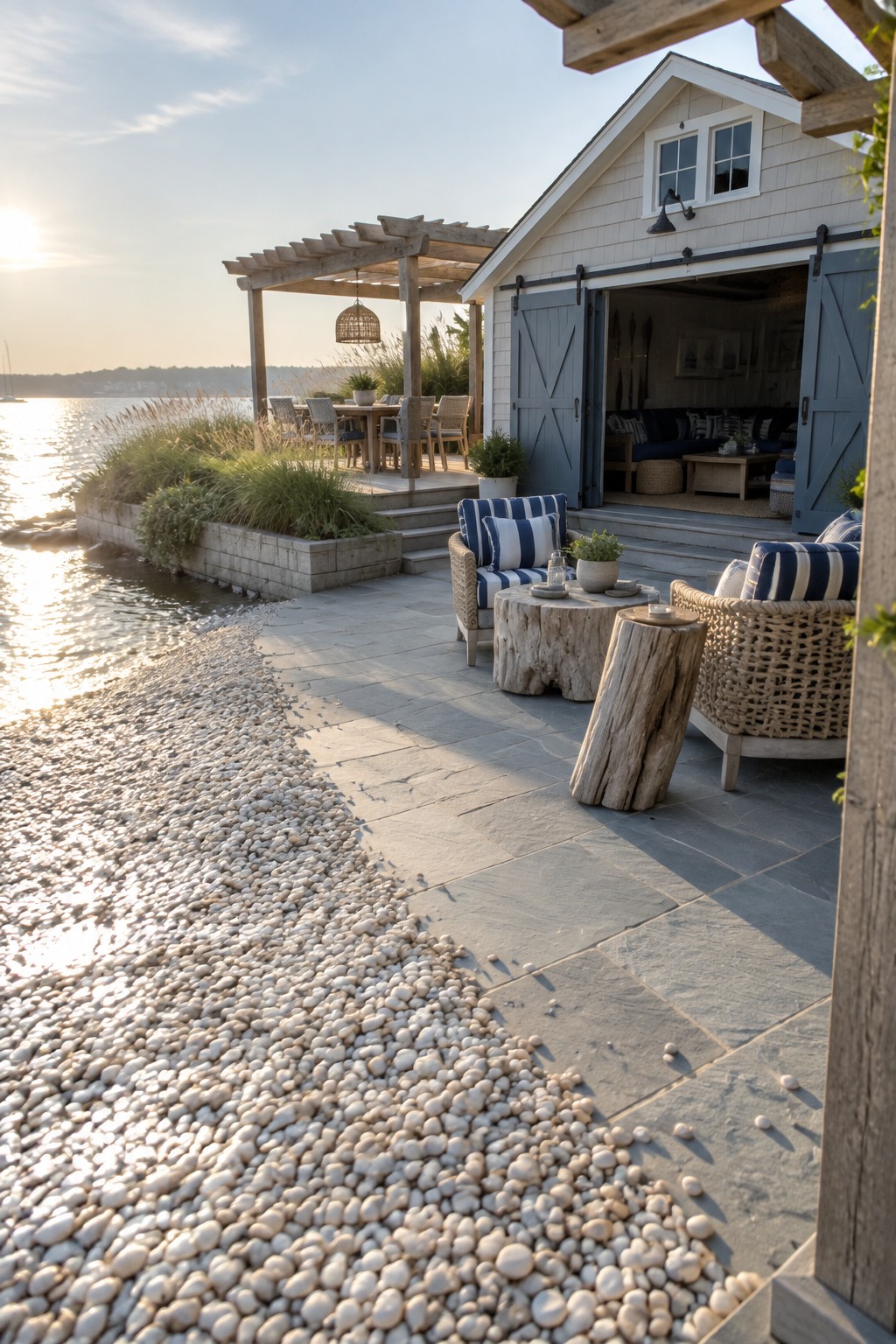
One simple way to organize a backyard is to switch the ground surface from one area to the next. Stone pavers can set off a main seating spot while a stretch of pebbles marks a more casual edge near the water.
This approach works best on lots that slope toward the shore or include a mix of hard and soft ground. It keeps each zone easy to use without adding extra structures or screens.
Frequently Asked Questions
Q: What if my yard is tiny and I still want multiple zones? A: Start by picking just two main spots like a seating area and a play spot. Use low plants or different ground covers to mark the change. This keeps things open while giving each part its own feel.
Q: How do paths fit into these zoned layouts? A: Lay simple stepping stones or gravel between zones so people move easily. Make the paths curve a bit to slow things down and add interest.
Q: Can I change the zones later if my needs shift? A: Yes most of these ideas use movable pieces like pots and rugs. Try them out for a season first. Then adjust as you see what works best for your family.
Q: Should I think about sun and shade when planning zones? A: Check where the sun hits at different times of day. Place the dining zone in shade if you eat outside a lot.
