

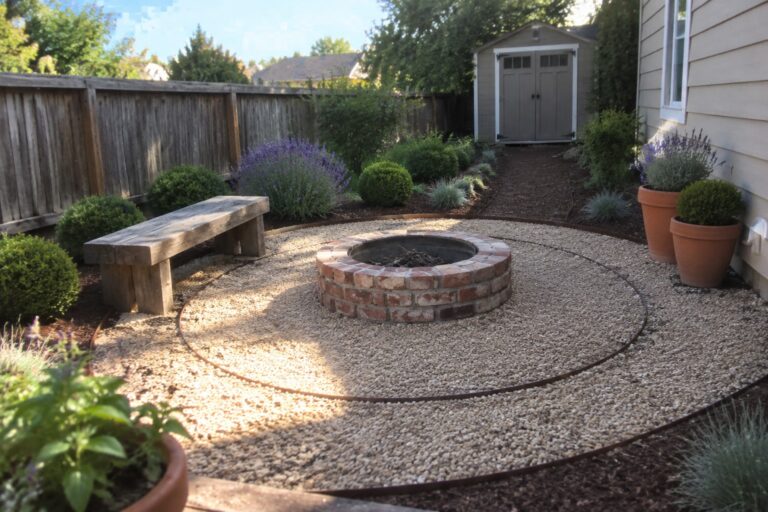
When I look at backyards that feel put together it is often the gravel paths and mulched beds that give the space its shape without a lot of effort.
These materials let you define areas for walking and for plants while managing weeds and keeping moisture in the soil.
I like to try one section at a time.
Over time the layout becomes clearer as the materials settle and show what works with the existing plants and slope of the yard.
Budget options like these make it easier to adjust things as the seasons change instead of committing to something permanent right away.
Separate Gravel Areas From Mulched Beds
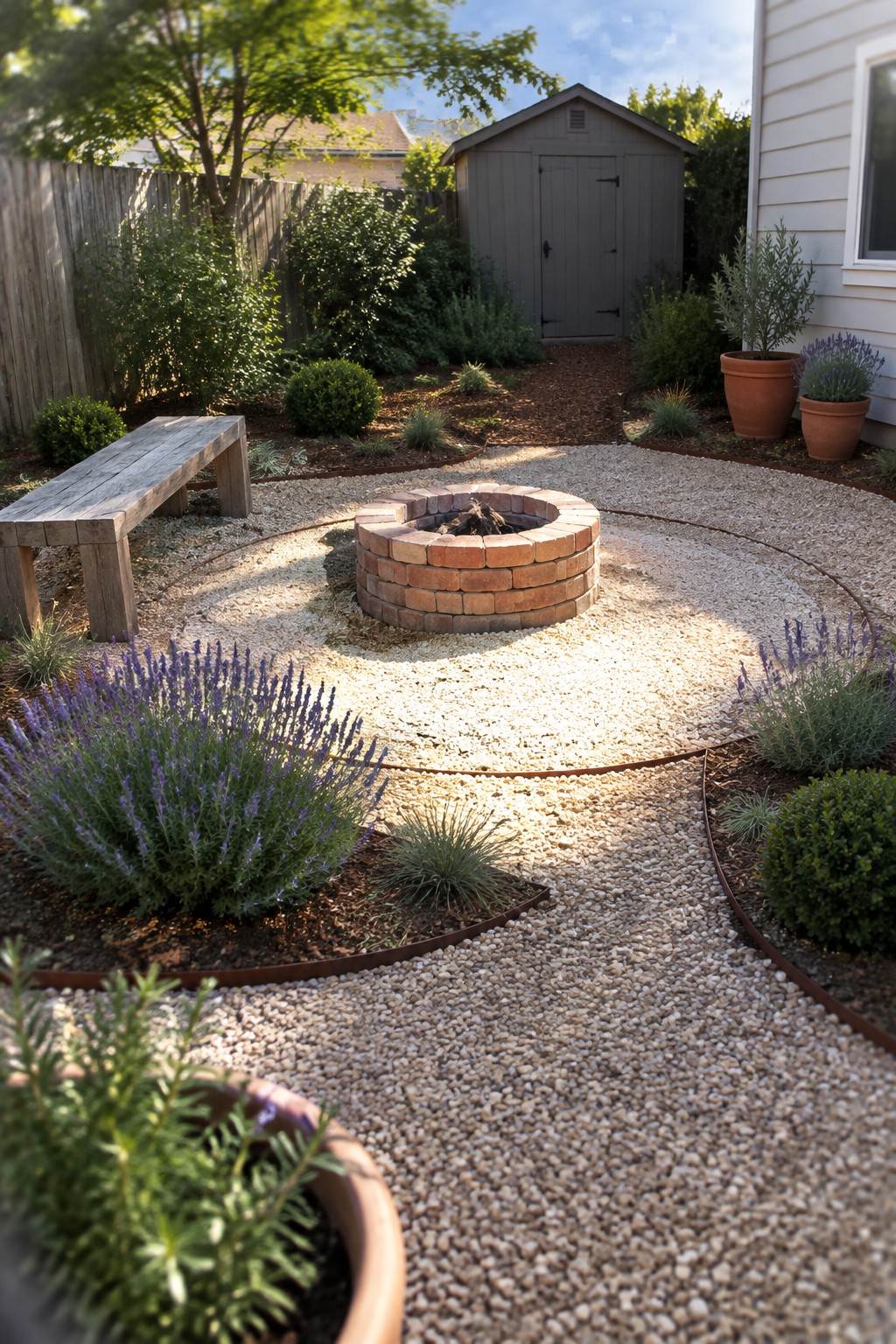
Gravel works best in open zones where people walk or gather, while mulch suits planted areas that need moisture and weed control. The metal edging between them keeps everything from mixing over time and gives the whole yard a tidy look without much cost.
This setup suits smaller backyards that need clear paths around a fire pit or seating spot. Just lay the gravel thick enough for foot traffic and use mulch only where plants are growing. The edging is the key piece that makes the two materials stay in their own spaces.
Gravel Paths With Mulch Borders
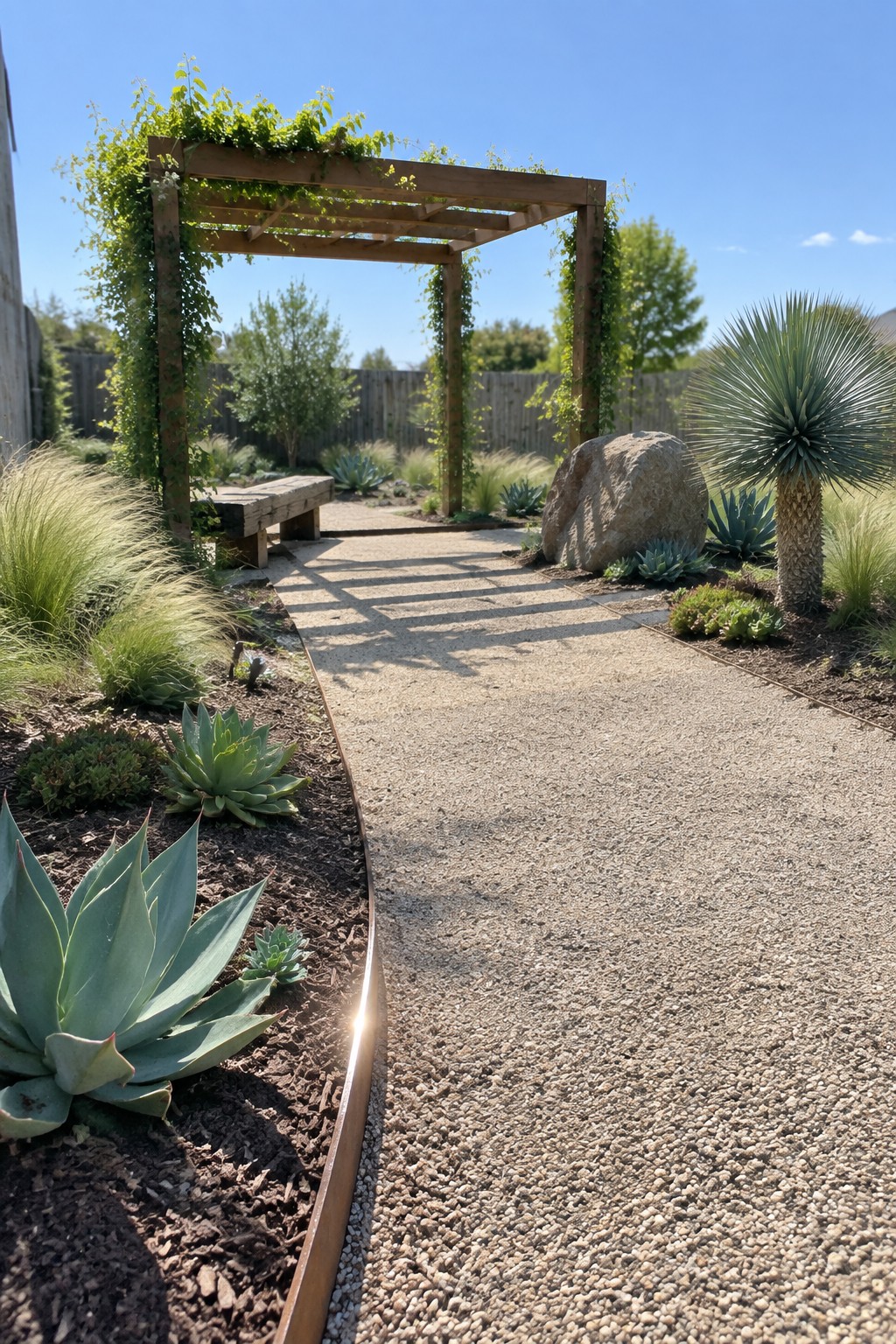
Gravel paths stand out in backyard landscaping because they handle foot traffic well and let water drain through without pooling. The look pairs easily with mulch in the beds, which helps control weeds and keeps the whole area from looking too bare.
Lay the gravel between simple metal edging so it stays in place, then spread mulch around the plants in the beds. This works best in sunny yards where you want low water use and minimal upkeep over time.
Gravel Walkways With Stone Borders

A gravel path keeps things simple and cheap while still looking tidy. The flat stones along the edges hold everything in place and stop the gravel from spreading into the beds, which makes mowing and weeding easier later on.
This setup works well in most backyard layouts because the materials are easy to find and replace if needed. It suits homes with uneven ground or narrow side yards where a poured surface would cost too much. Just make sure the path has a slight slope so water drains away from the house.
Gravel Paths With Concrete Pavers
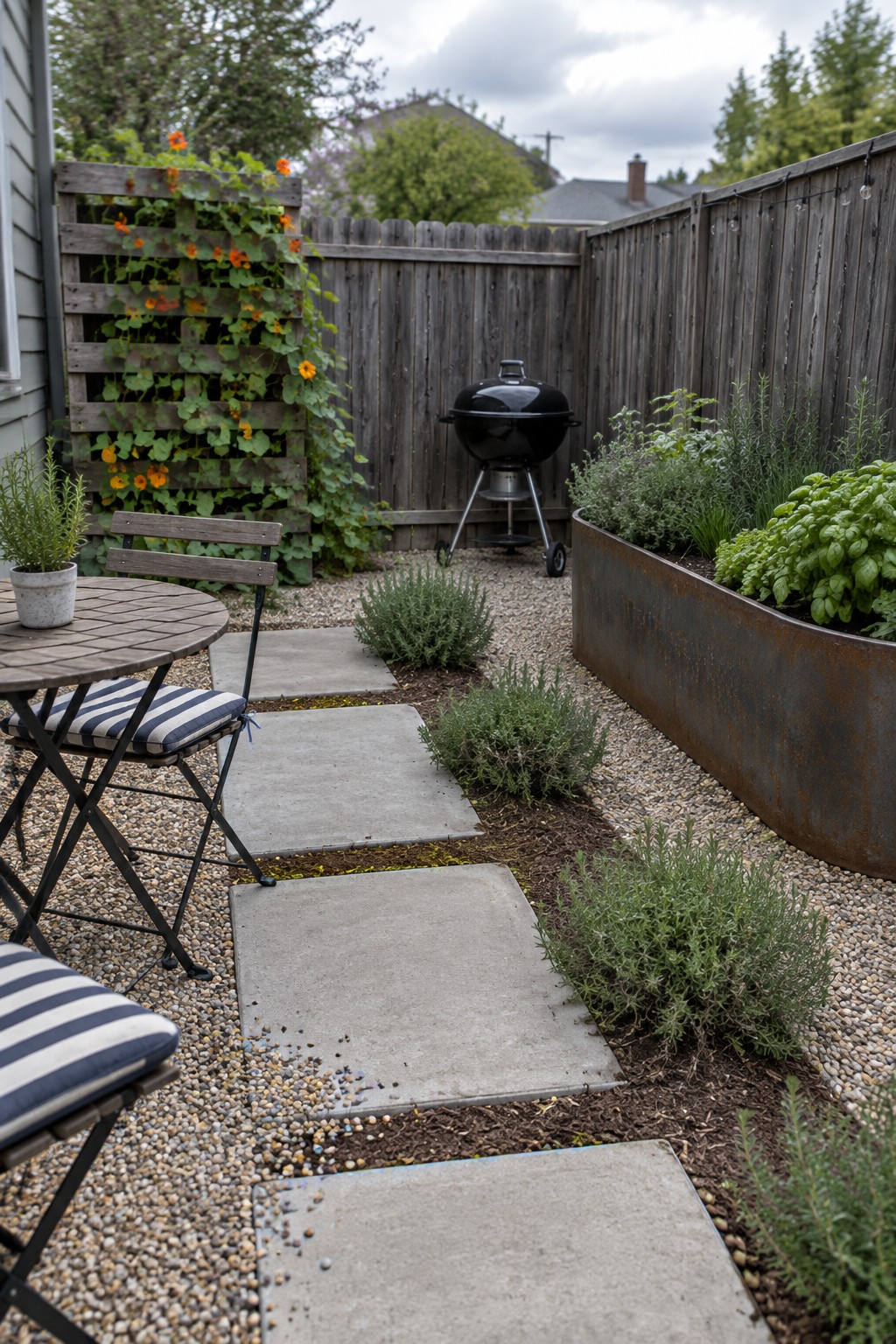
Mixing gravel with a few concrete pavers makes a simple path that stays dry and easy to walk on. The gravel fills in the spaces and keeps the whole area looking neat without needing much upkeep.
This works best in smaller yards where you want to separate planted beds from walking space. Lay the gravel first, then set the pavers so they sit level and spaced for a comfortable stride.
Gravel Paths With Mulch Beds
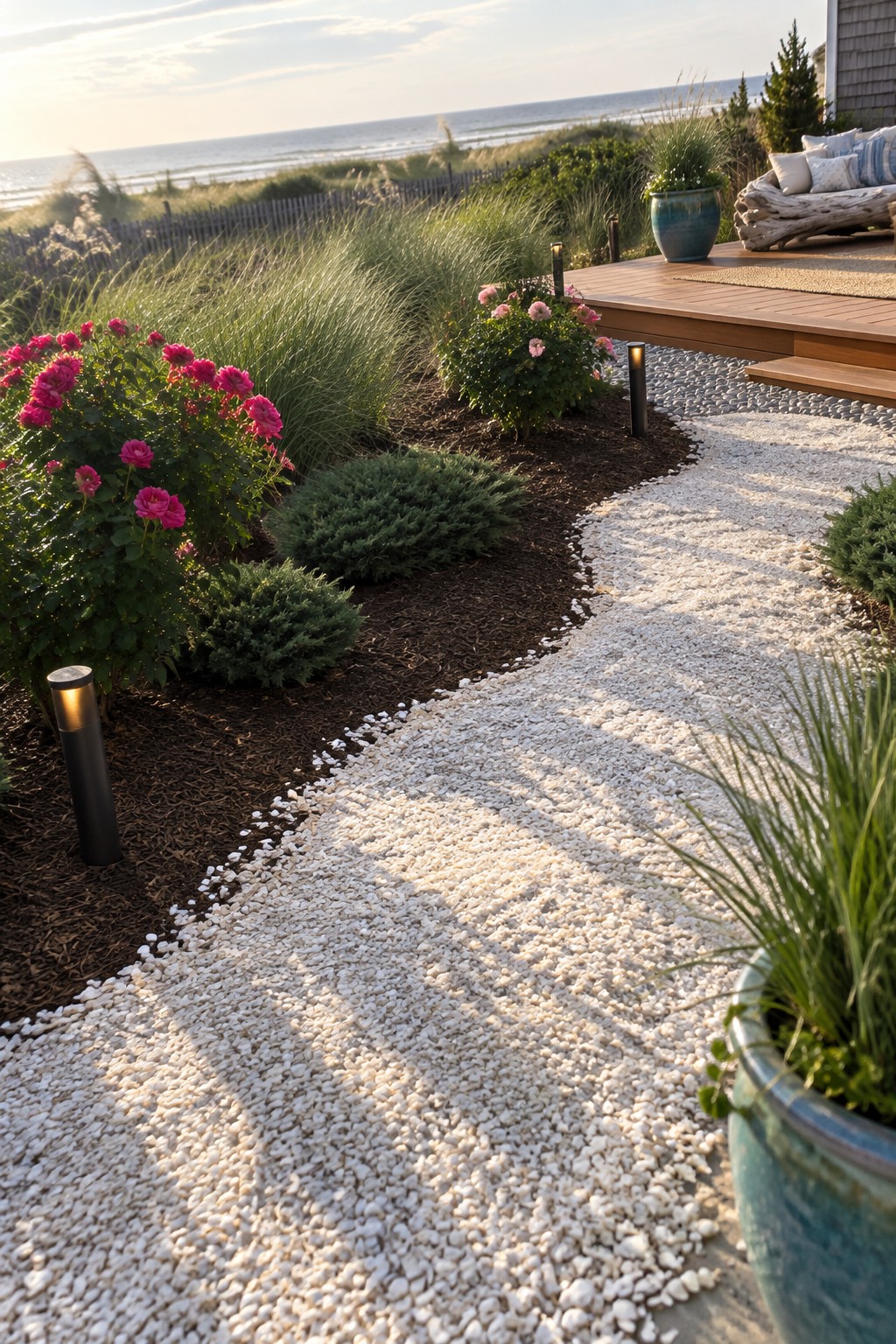
Gravel paths work well when you want to separate planting areas without spending much. The light color of the gravel stands out against dark mulch, which helps keep the beds looking tidy and makes weeding simpler over time.
This layout suits homes with gentle slopes or open backyard space where you need a clear walking route. Keep the path curves gentle so the gravel stays in place, and use the mulch to hold moisture around shrubs and flowers.
Gravel Play Zones
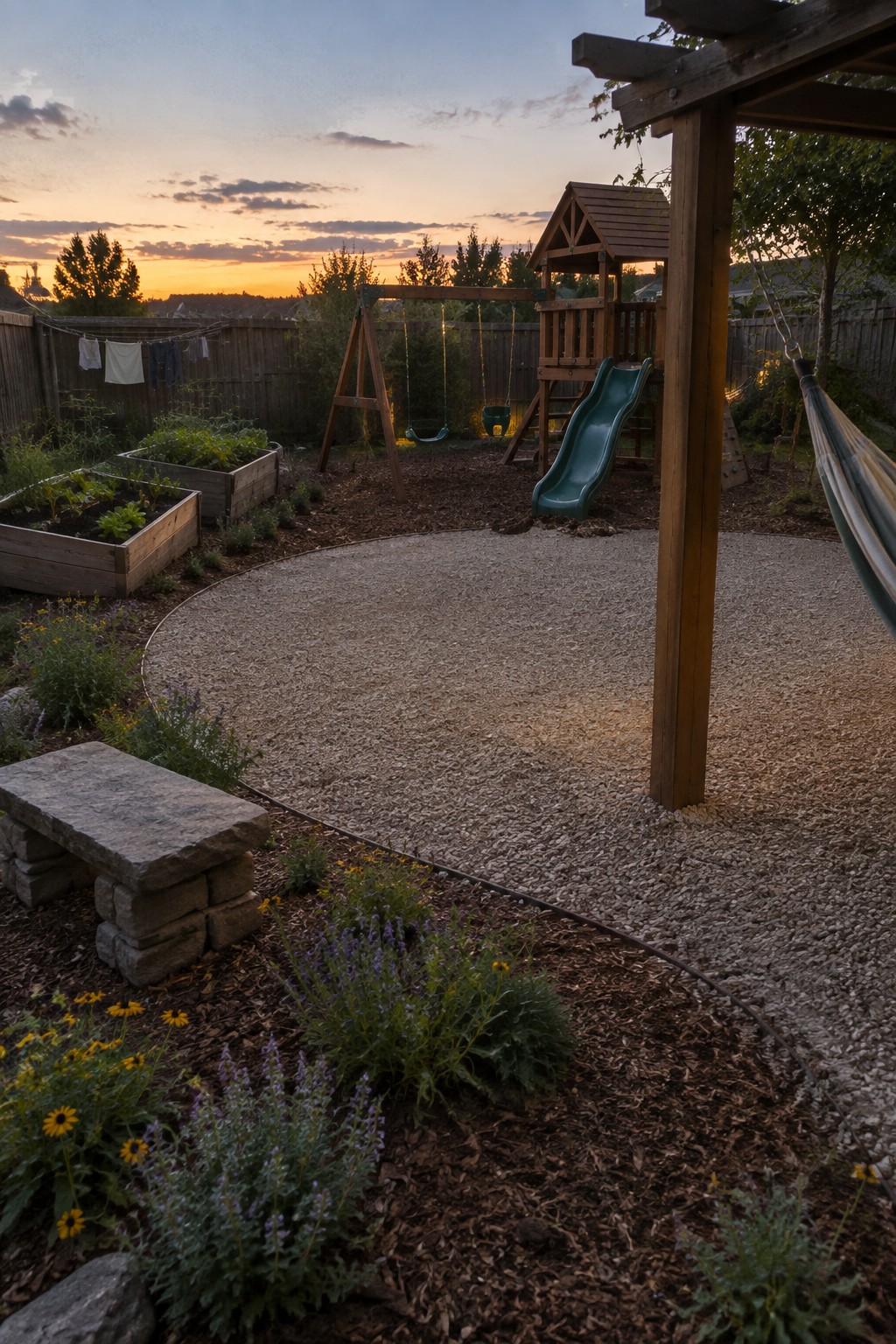
A big circle of gravel gives kids room to run and play without turning the whole yard into mud. It stays drier than grass after rain and needs almost no upkeep once it is down.
This works well in family yards where the swing set or slide takes up space. Lay landscape fabric first, spread the gravel thick, and keep the beds around it in mulch so the two materials stay neatly separated.
Gravel Paths With Stone Edging
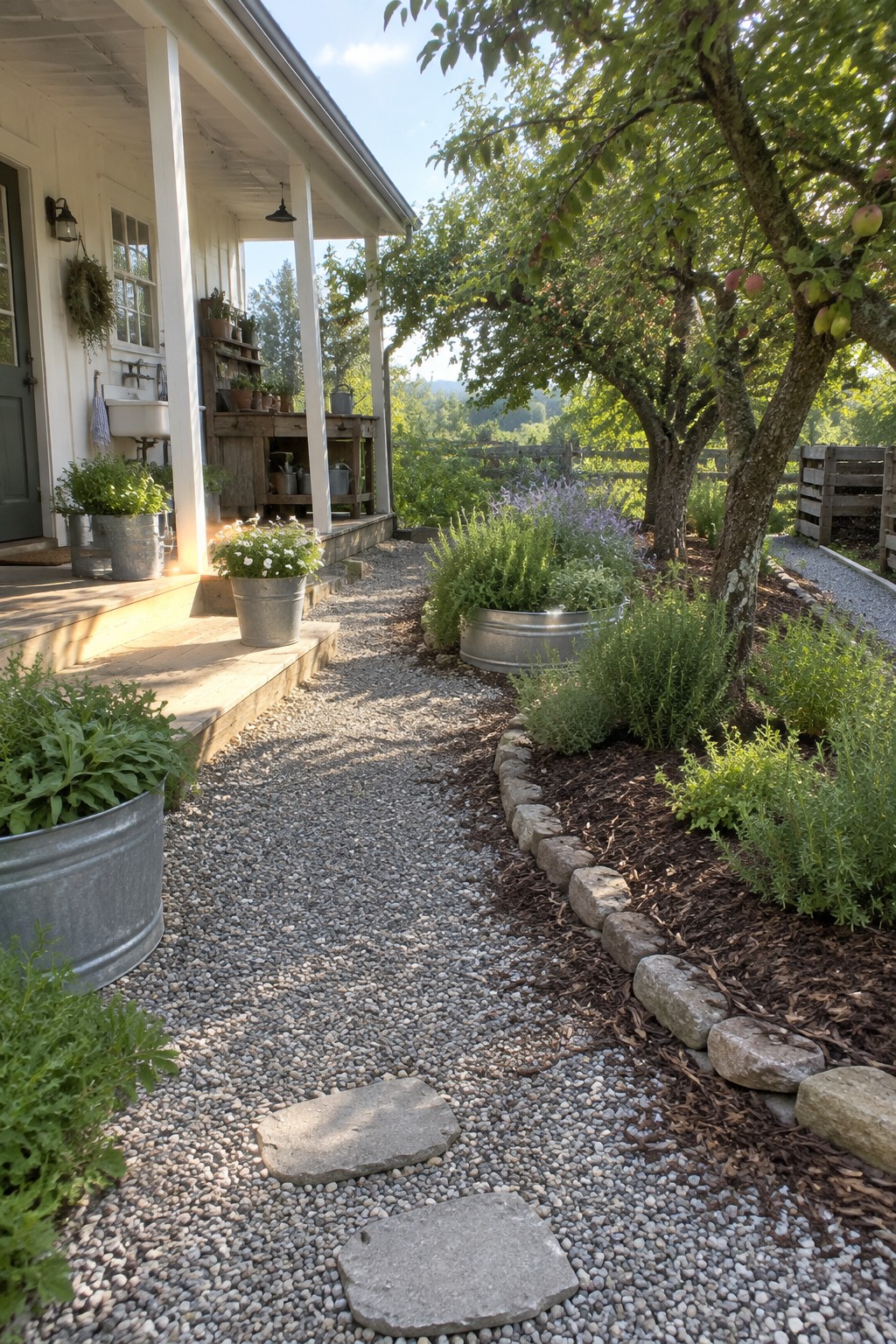
Gravel paths work well in backyard gardens because they drain quickly and cost less than pavers or concrete. The stone edging keeps mulch from washing onto the walkway and gives the beds a clean edge without much extra work.
This layout suits homes with side yards or narrow garden strips where you need a simple walking surface. Lay landscape fabric first, add the gravel, and use larger stones to hold the mulch in place around the plants.
Concrete Paver Stepping Paths Through Gravel
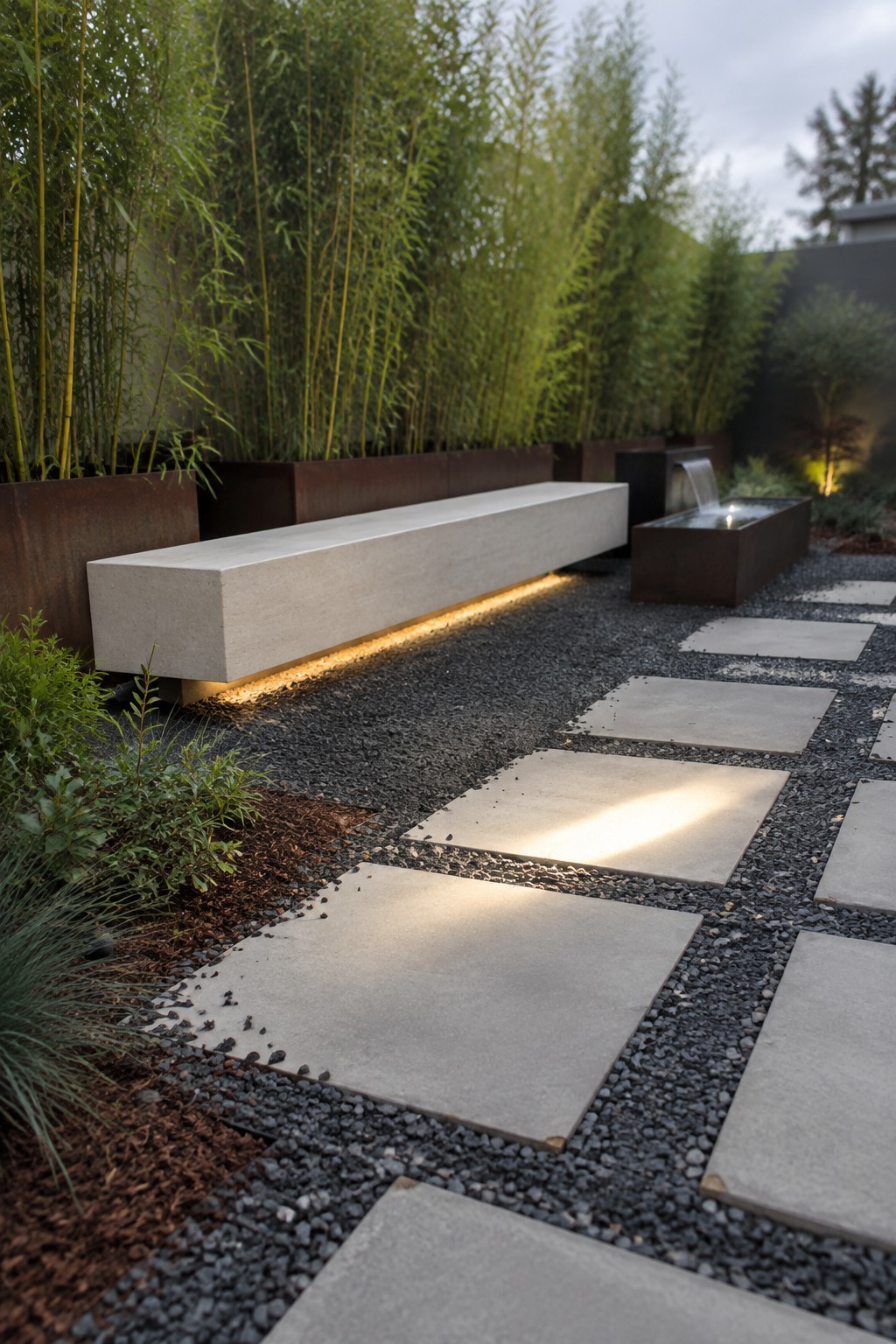
Gravel paths stay popular because they drain well and cost less than solid paving. Setting large concrete pavers into the gravel gives the walkway a firm surface while the gravel handles the rest of the ground. This mix keeps the look simple and avoids the need for heavy materials.
It works best in backyards where you want a clear route through planted beds without turning the whole area into a hard surface. Place mulch in the beds right beside the path to control weeds and hold moisture. Keep the gravel layer thick enough so it stays put after rain.
Gravel Paths With Stepping Stones
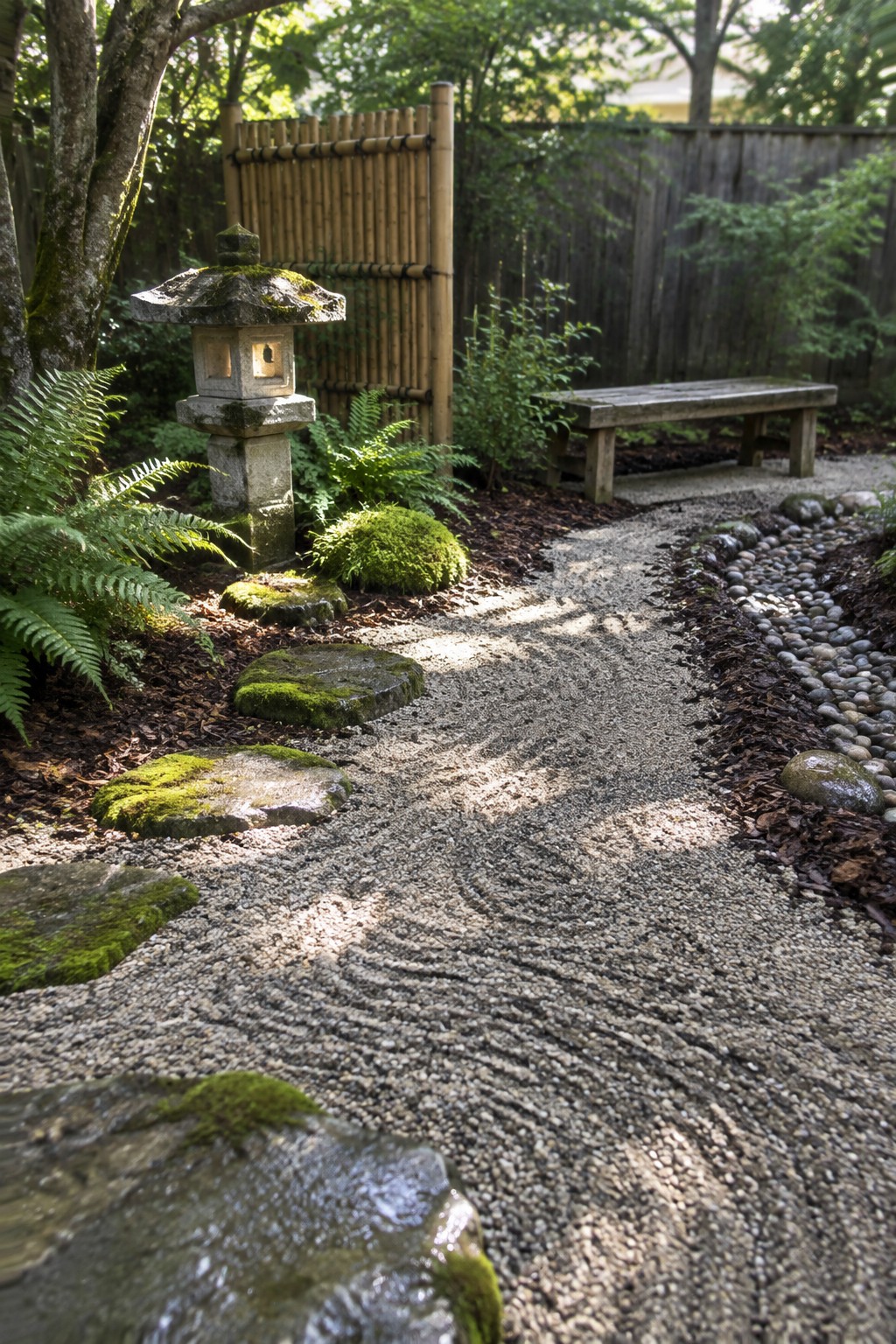
Gravel makes a practical choice for backyard paths because it costs little and handles rain without turning muddy. It also gives the garden a relaxed look that fits many styles of planting.
Lay the gravel in gentle curves and set flat stones where people will step most often. This works especially well in smaller yards or shady areas where grass would thin out, and the mulch borders help hold everything in place with minimal effort.\
Terrace a Slope With Wood Borders

Terracing a sloped yard with stacked wood boards turns an awkward hill into usable planting space. The flat beds make it easier to grow shrubs and perennials without constant erosion, and the wood edges keep gravel and mulch neatly separated.
This approach works well on modest hills where full retaining walls would cost too much. Keep the wood simple and untreated if you want a natural look over time, and use gravel in the open areas to cut down on weeding.
Gravel Defines a Casual Fire Pit Zone
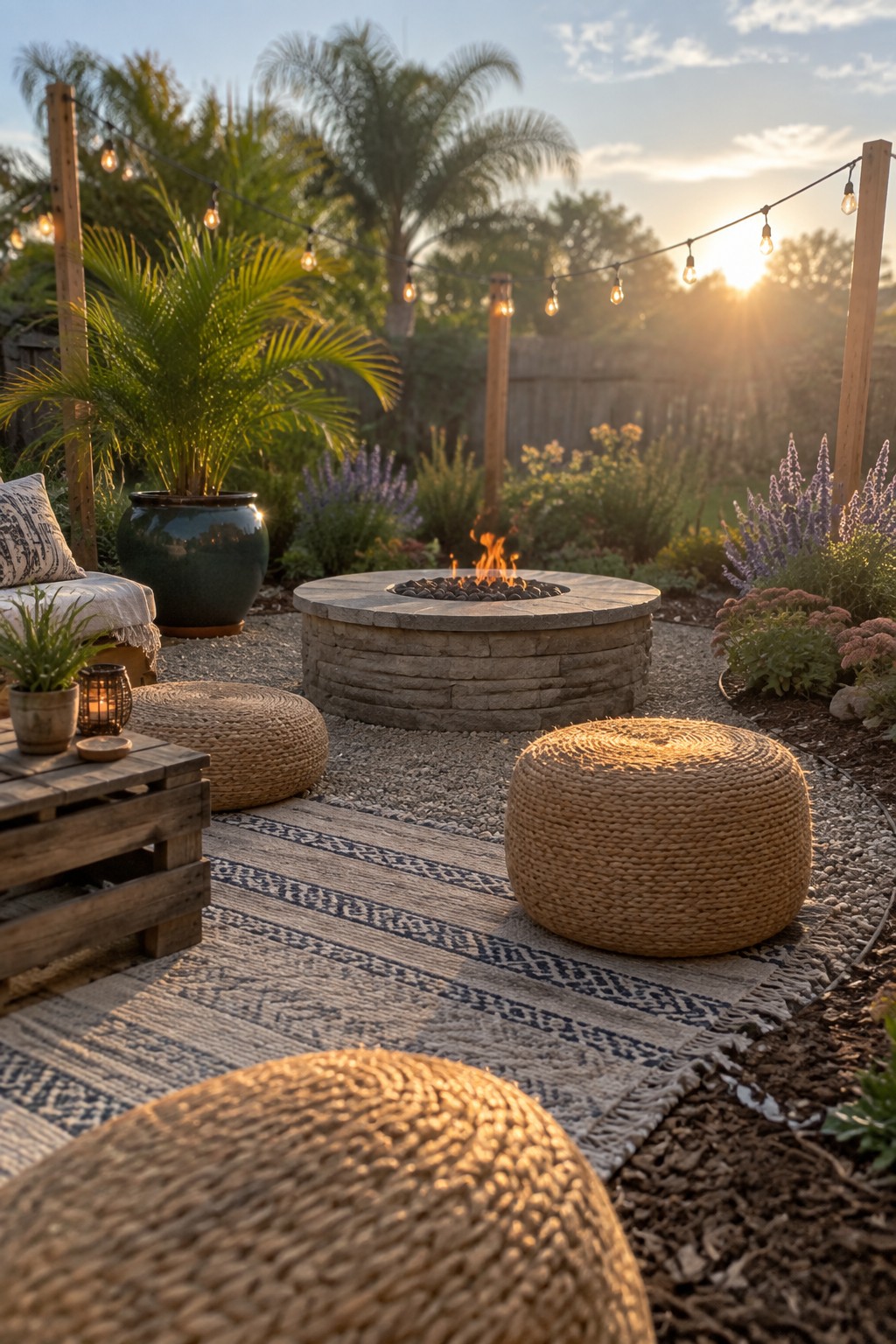
Gravel and mulch work well together when you want a fire pit spot that feels set apart without pouring concrete or laying pavers. The loose material keeps the area looking relaxed and lets water drain right through, which matters in most backyards.
Lay down fabric first, then spread gravel in the main sitting area and use mulch along the edges to hold everything in place. This setup suits smaller yards or homes that already have some planting beds, and it stays simple to refresh each season.
Gravel and Mulch Garden Paths for Small Yards
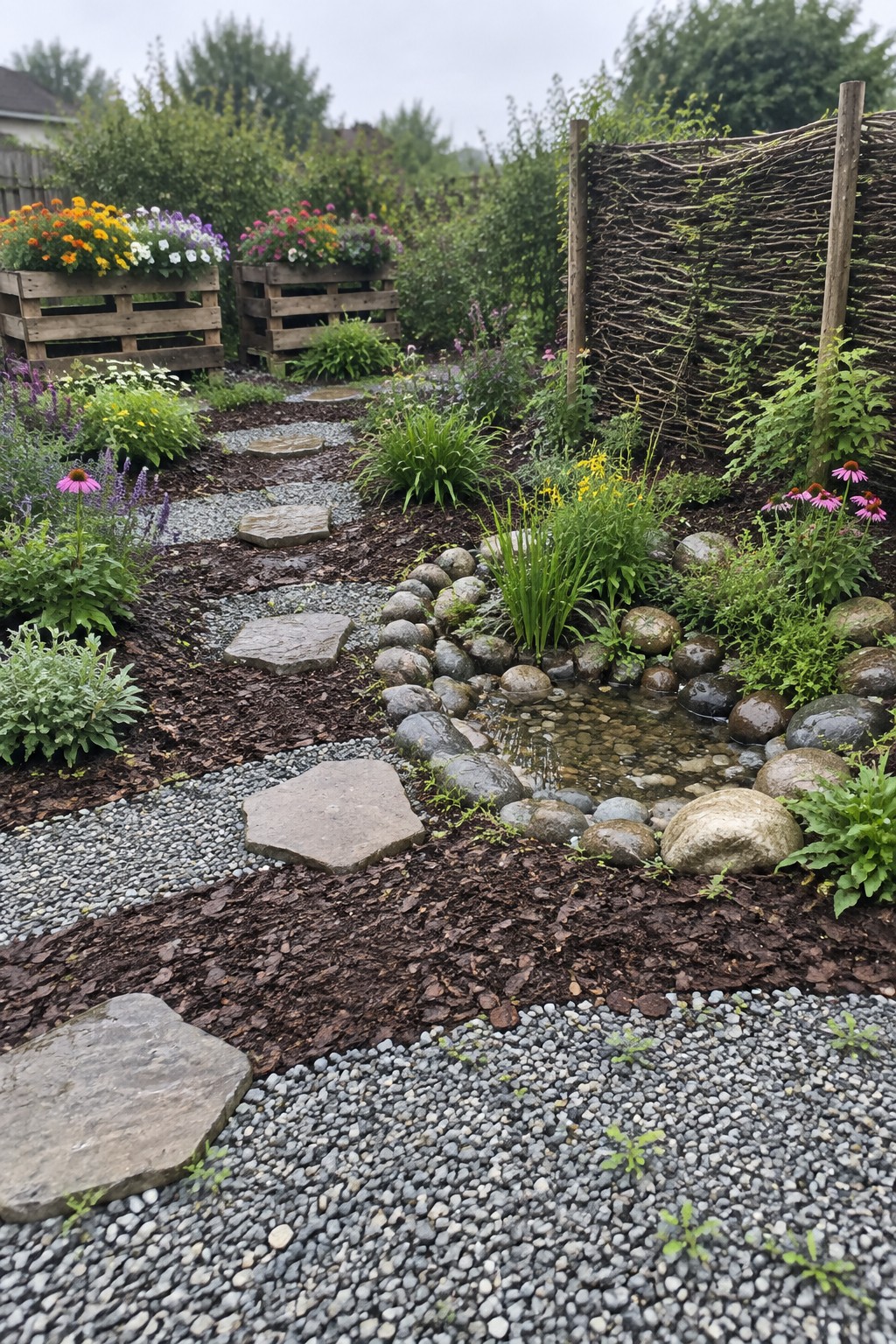
Gravel paths paired with mulched beds give a backyard a tidy structure without a big expense. The gravel handles foot traffic and drainage well, while the mulch keeps soil covered and weeds in check. This mix lets you define routes through the garden and still leave room for planting.
It works best in smaller yards or side areas where you want simple connections between beds. Use larger stones as steps where the path turns or dips, and keep the mulch layer a few inches thick so it stays put.
Gravel Paths Along Raised Mulch Beds
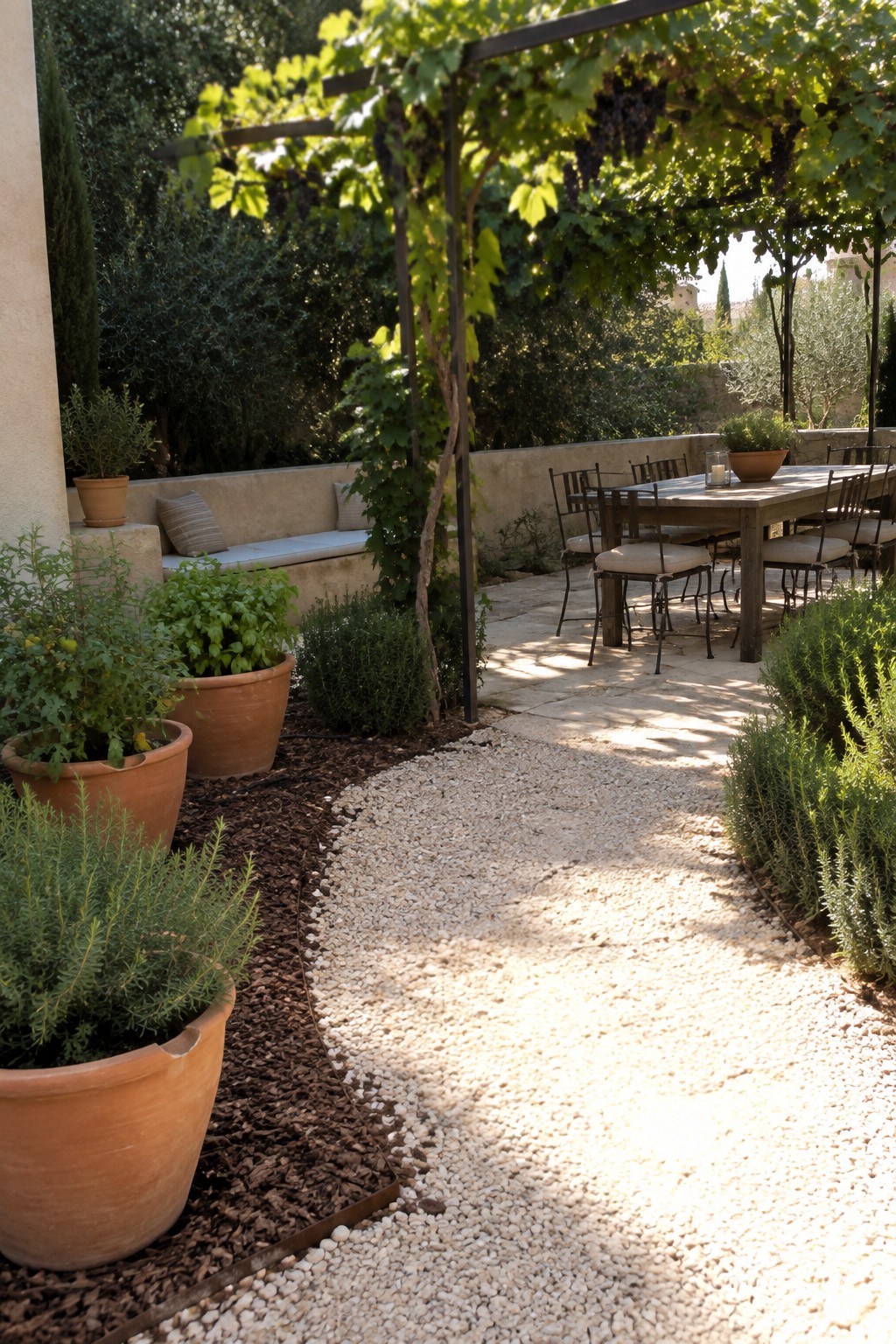
Gravel paths work nicely when they run right beside mulch beds. The two materials create a clear line that keeps the walkway from looking messy and helps hold the mulch in place around plants.
This approach suits most backyard gardens because it stays simple and cheap to maintain. Lay the gravel a few inches deep for a firm surface and keep the mulch beds slightly raised so water drains away from the path.
Gravel Paths Keep Yard Upkeep Simple
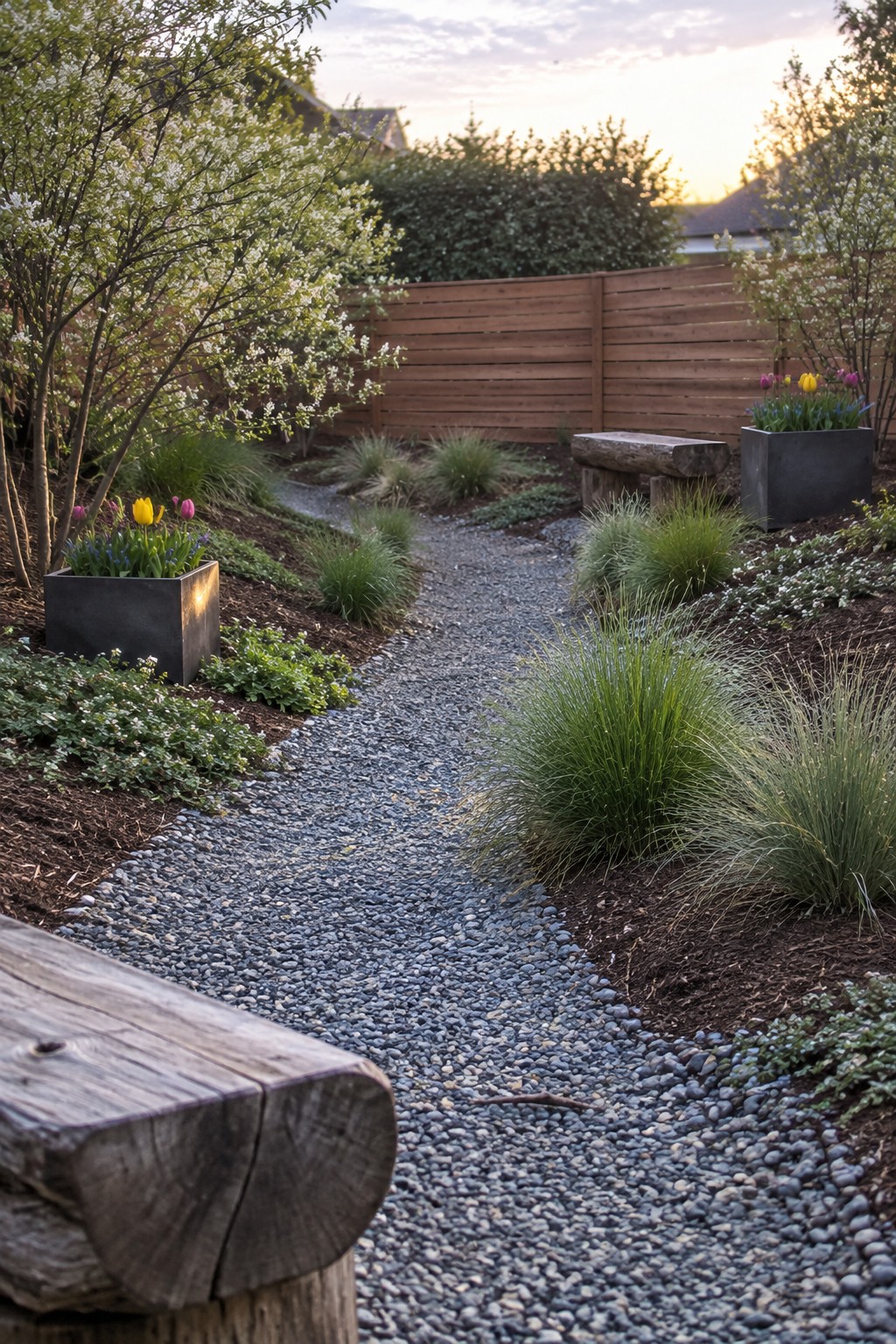
A gravel path gives the garden a clear route without costing much. It drains well and stays in place with basic edging, which works especially well when you pair it with mulch in the planting beds.
This idea suits homes with narrow side yards or back gardens that need a walkway but do not want the expense of pavers. Keep the gravel contained so it does not spill into the beds over time.
Define Garden Beds With Gravel Paths
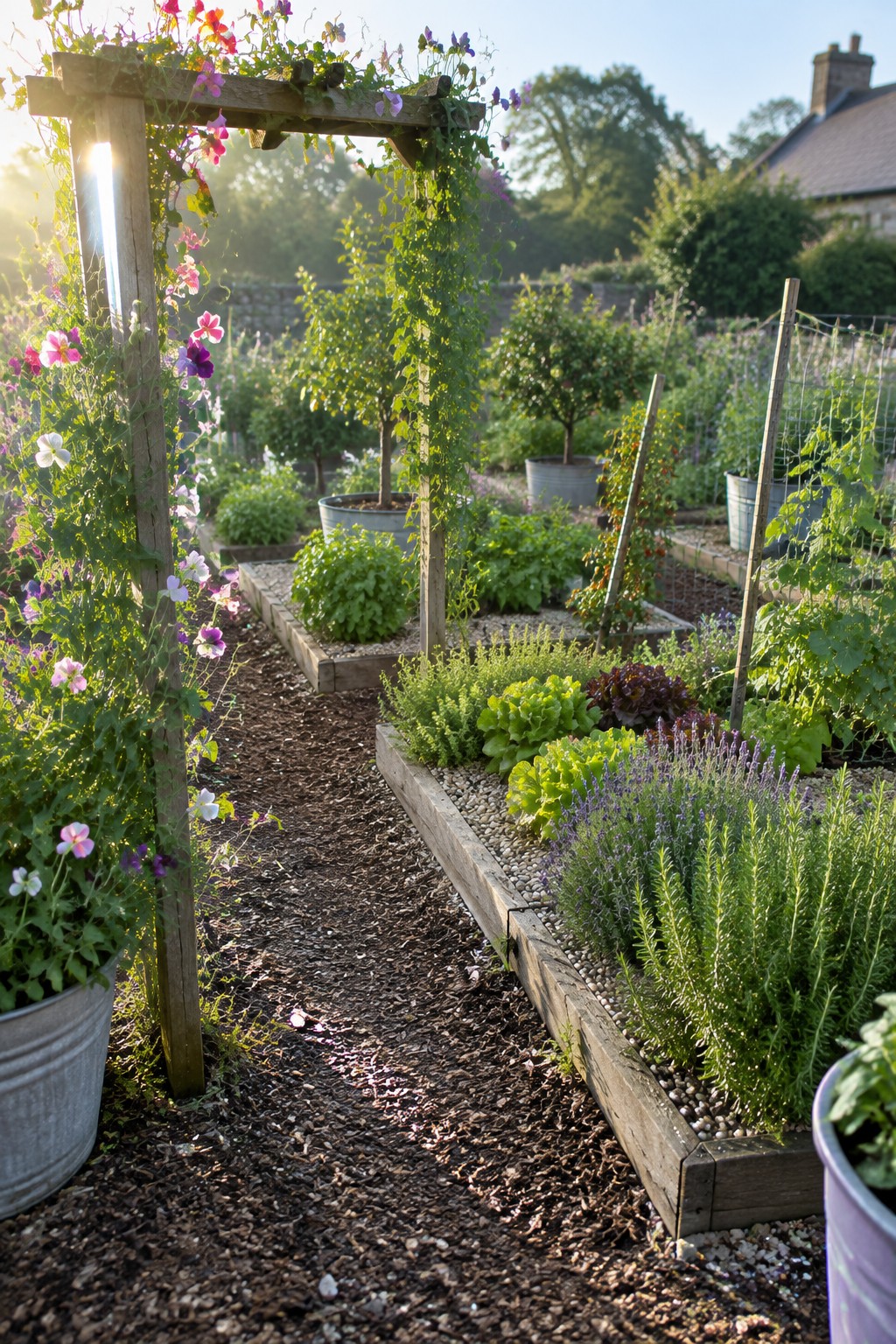
Gravel paths work well between raised beds because they drain fast and stay looking tidy with very little work. The light color also helps separate the planted areas so the whole garden feels more organized without needing fancy materials.
This approach suits small to medium backyards where you want clear walking space but do not want to pour concrete. Keep the gravel layer thin over landscape fabric and add a simple wood edge to hold everything in place.
Stepping Stone Gravel Walkways for Curved Garden Beds
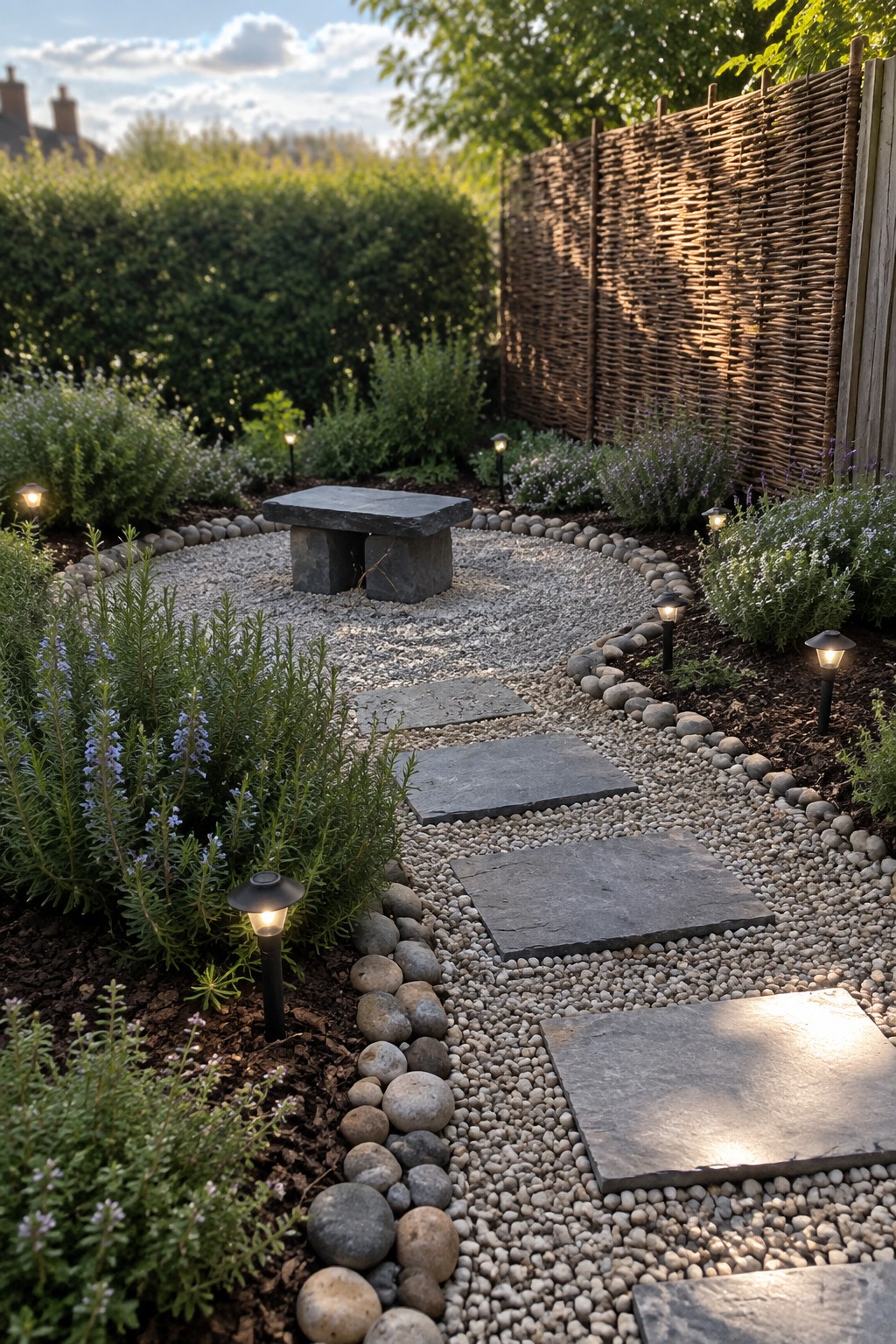
Gravel paths work well in backyard gardens because they stay affordable and let water drain straight through. Adding a few flat stepping stones gives you solid places to walk without turning the whole path into a hard surface.
This layout suits smaller yards or areas with curved beds where full paving would feel too heavy. Keep the gravel contained with a simple border of larger stones so it stays neat over time.
Use Gravel and Mulch to Separate Play Areas
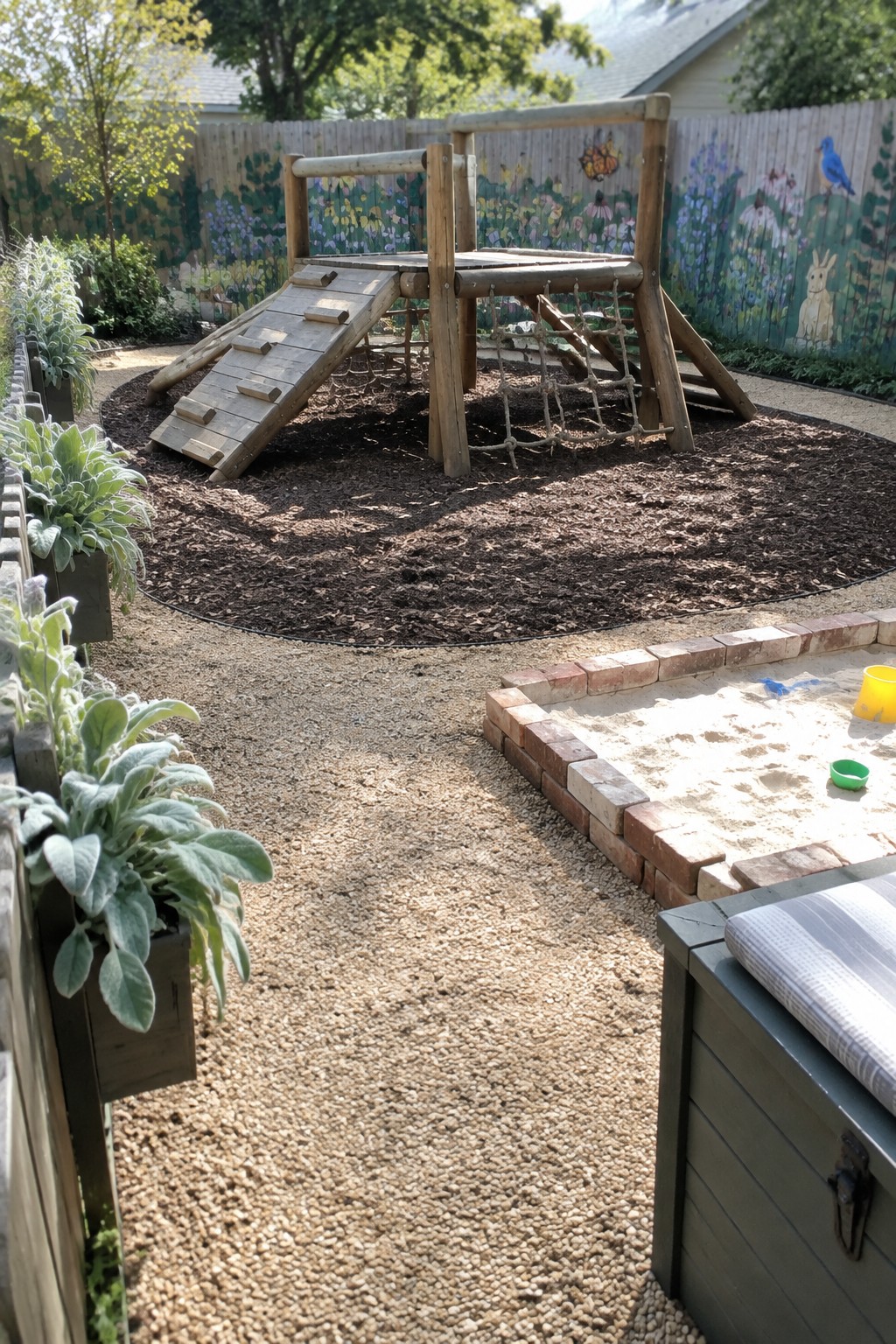
Gravel paths give structure to a backyard without costing much. They drain well, stay in place with simple edging, and make it easy to walk between different zones even after rain. Many people like how the light color of gravel contrasts with darker mulch beds.
Mulch works best right under swings and climbing frames because it softens falls and cuts down on weeds. This setup suits homes with children who use the yard daily. Just keep the mulch layer thick and rake it now and then to maintain coverage.
Gravel Paths Connecting Seating and Garden Zones
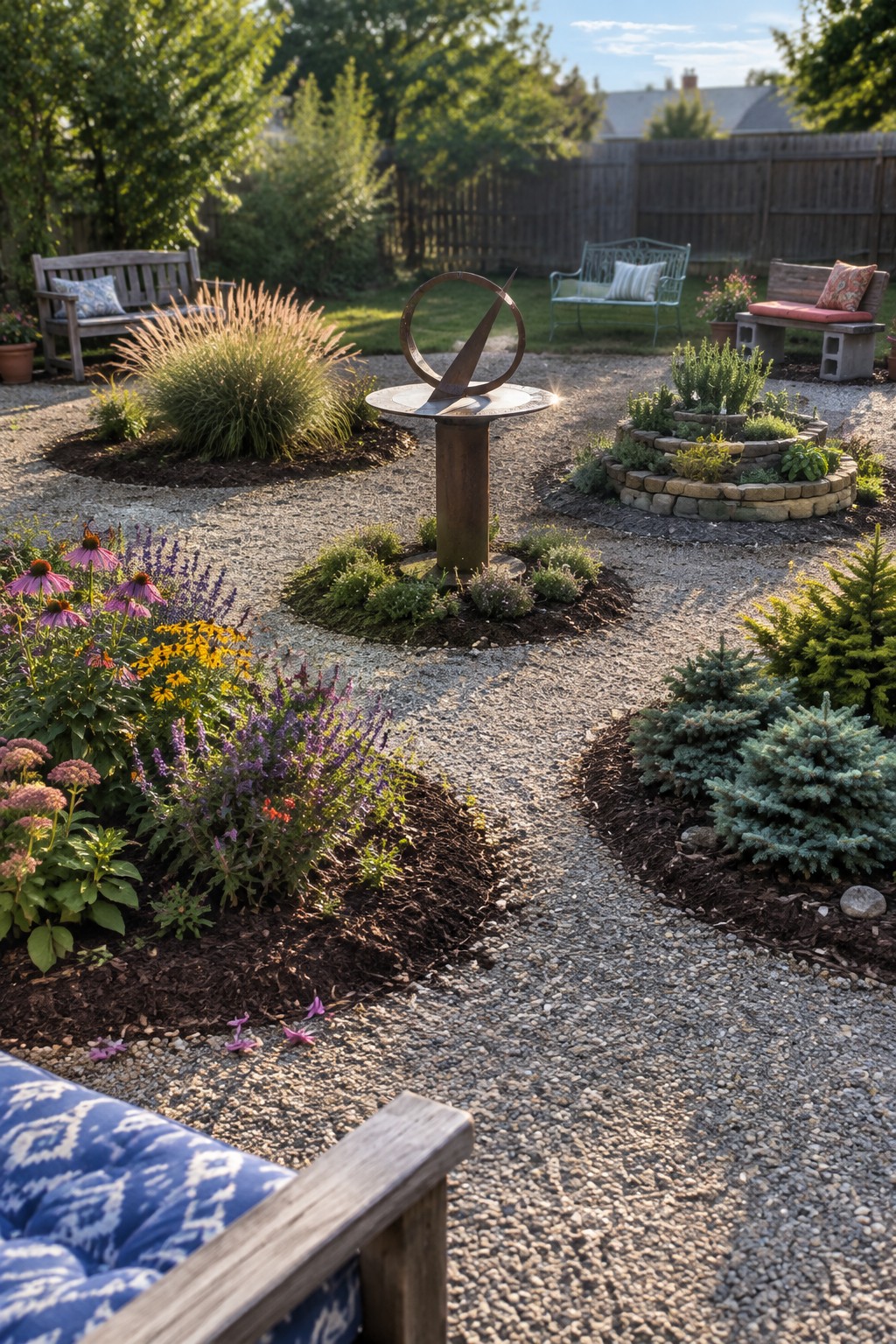
Gravel paths stand out when paired with mulch beds because they create clear walking routes while keeping planting areas simple to maintain. The loose materials work together to cut down on weeds and give the yard a tidy look without needing fancy edging or big expenses.
This approach works best in backyards where you want to connect different seating spots or garden zones. Keep the gravel at a consistent depth and refresh the mulch once a year to hold the shape of the beds.
Gravel Circles for Outdoor Dining Areas

Gravel makes a simple base for an outdoor table and chairs without the cost of a full patio. It drains well after rain and gives the space a casual, settled look that blends right into the surrounding beds.
Lay down landscape fabric first, then spread gravel in a loose circle or oval shape that fits your table size. This works especially well in smaller yards where you want seating next to planted areas without building permanent hardscaping.
Gravel Makes An Affordable Garden Path
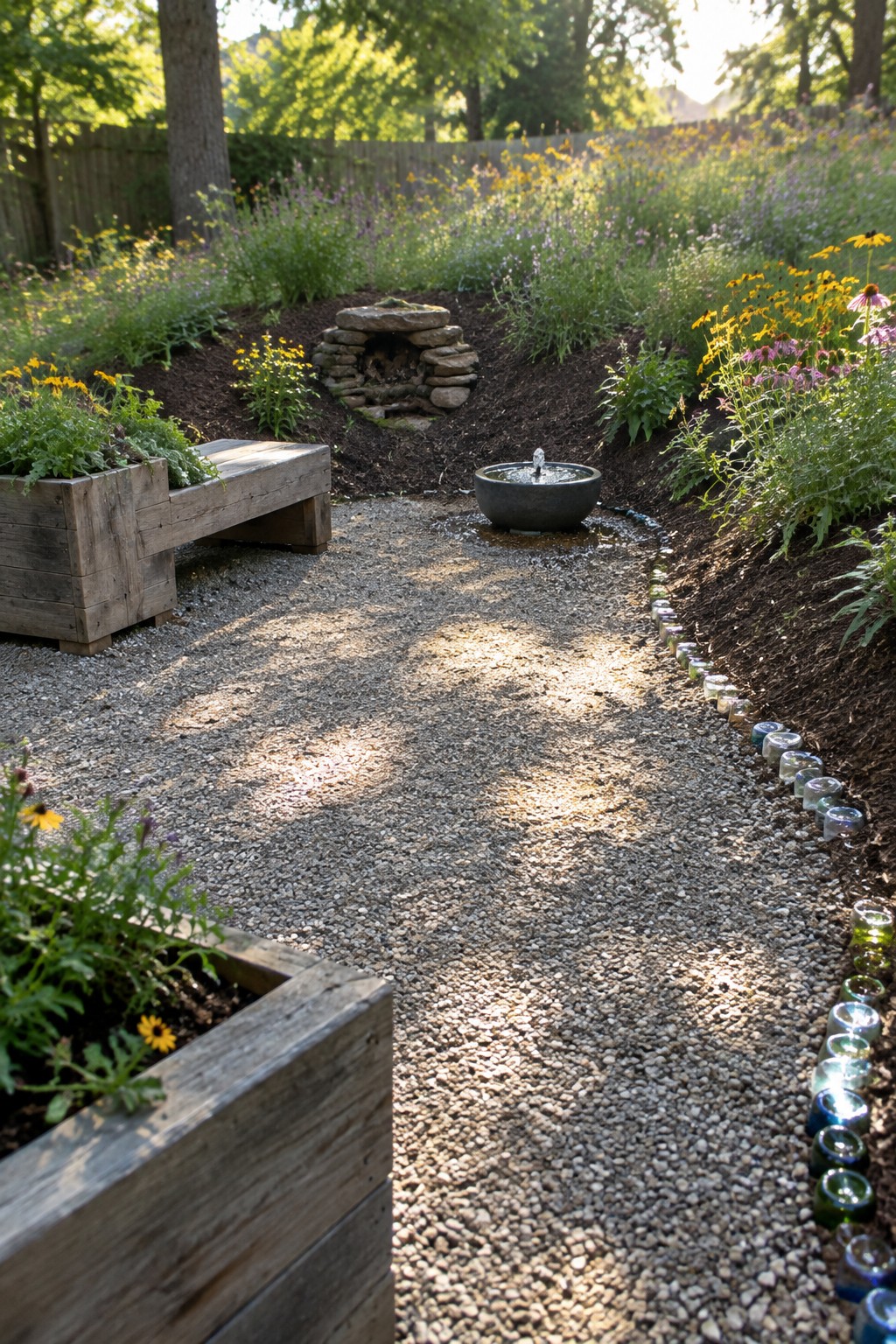
A gravel path gives the yard a clear route without costing much or needing fancy materials. It drains well after rain and stays cooler than concrete in summer, which makes it practical for most backyards.
Mulch beds along both sides help keep weeds down and hold moisture for the plants. This setup works best in smaller yards where you want to connect different planting areas without pouring a solid surface. Keep the gravel layer about three inches deep over landscape fabric so it stays in place.
Low-Maintenance Gravel Paths With Mulch Borders
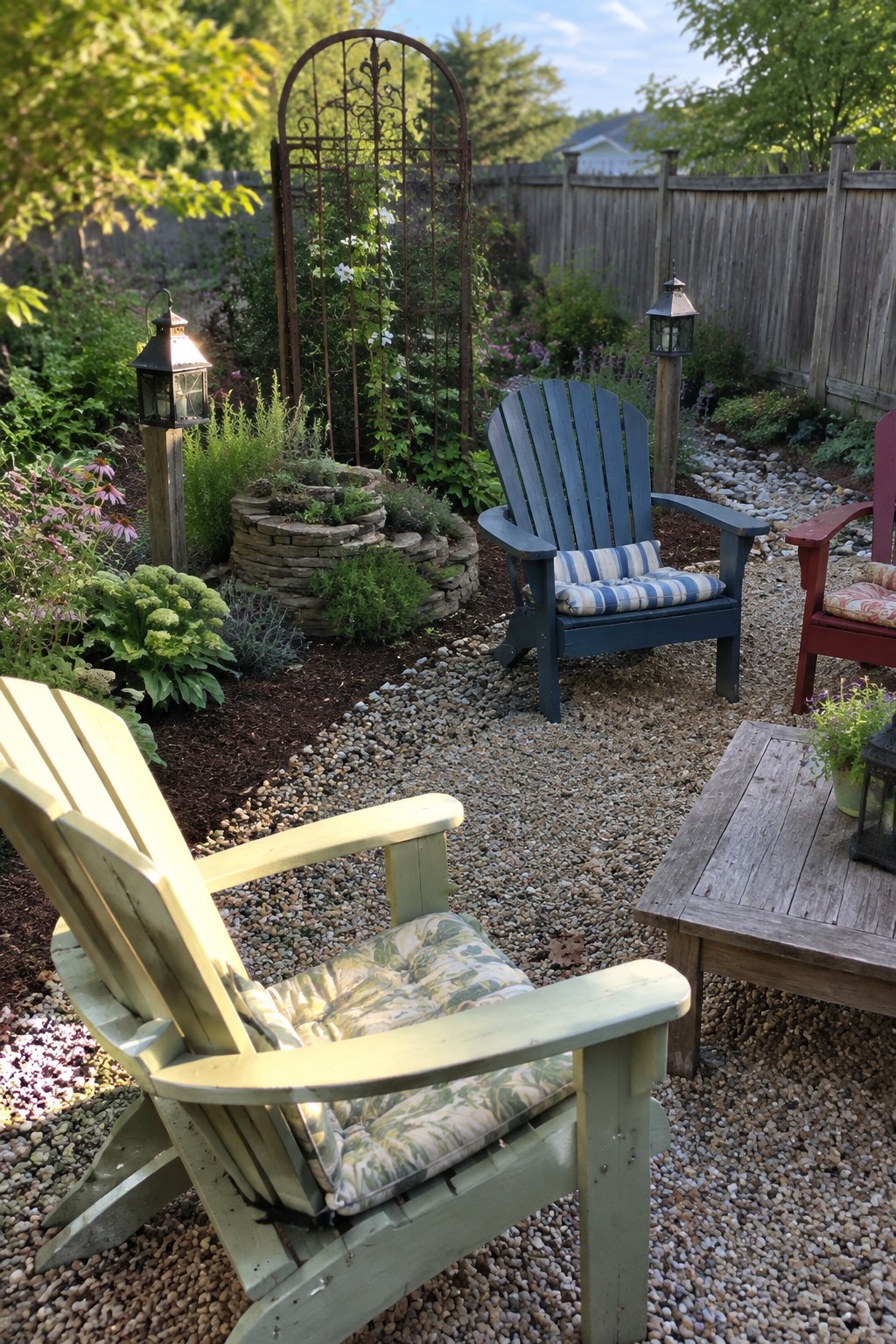
Gravel paths make a simple way to move through a backyard while keeping costs down. They drain well after rain and pair easily with mulch in the planting areas to hold moisture and cut back on weeds.
This setup works best in smaller yards or spots where you want low upkeep. Use a basic border like stones along the beds to hold the mulch in place and keep the gravel from spreading into the plants.
Frequently Asked Questions
Q: How do I keep weeds from coming through the mulch over time?
A: Lay down a layer of cardboard or newspaper first before you spread the mulch. This blocks light to the soil and cuts down on sprouts without needing chemicals. Check the area once a month and pull any that still show up early.
Q: What stops gravel from washing into my lawn after rain?
A: Dig a shallow trench along the edges and set in some cheap plastic or metal edging. Then fill the trench with the gravel so it stays put. Rake it back into place every couple of weeks if you notice any shift.
Q: How deep should I spread the mulch in flower beds?
A: Aim for about three inches across the whole bed. That amount blocks weeds well while still letting water reach the roots. Add a thin top-up each spring instead of starting over with a full load.
