

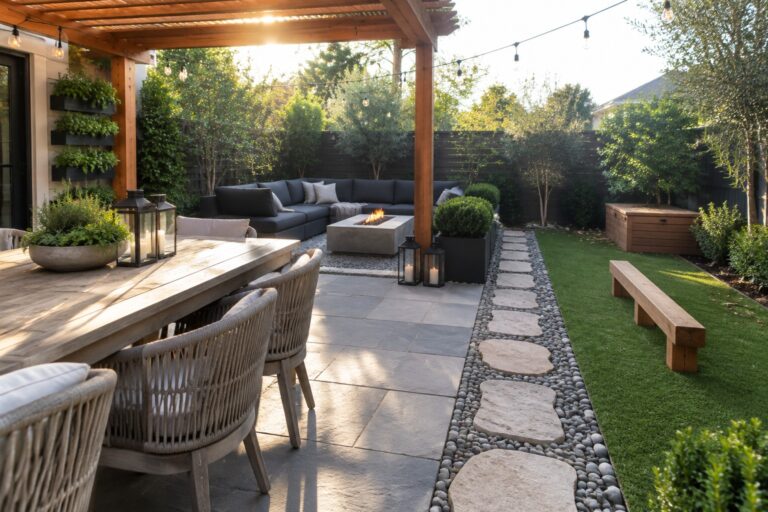
When I first tried dividing our backyard into separate spots for meals and play, the whole area felt scattered because nothing had a clear boundary that held up once people actually started using it.
Most homeowners notice first whether kids can run around without knocking over chairs or whether there is enough quiet space left for sitting with a book.
It rarely works that way in practice.
I have watched friends set up lounge chairs right next to a grill only to find the smoke and noise made the seating unusable by late afternoon.
A few zoning methods seem worth marking out with string first to see how the flow changes over a full weekend.
Use a Path to Divide Outdoor Zones
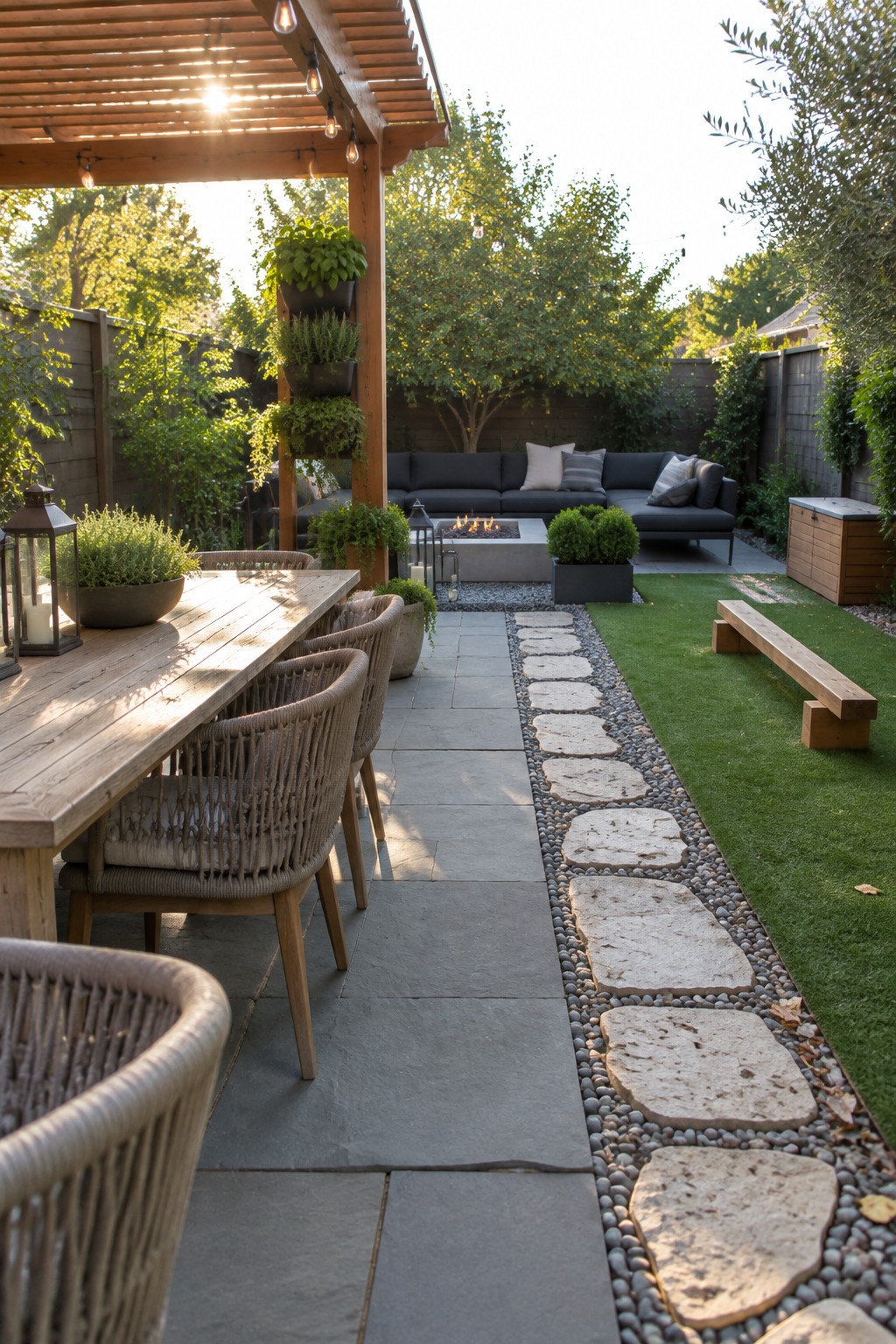
A straight path running between the dining area and the lounge space helps keep each zone feeling separate without cutting off the flow. It works especially well when you want people to move easily from meals to relaxing by the fire without the two areas bleeding into each other.
This layout suits medium to large yards where you have room for both a table and a seating area. Keep the path simple with stone or pavers and let the edges stay soft so it feels natural rather than too structured.
Define Dining Areas with Patio Flooring
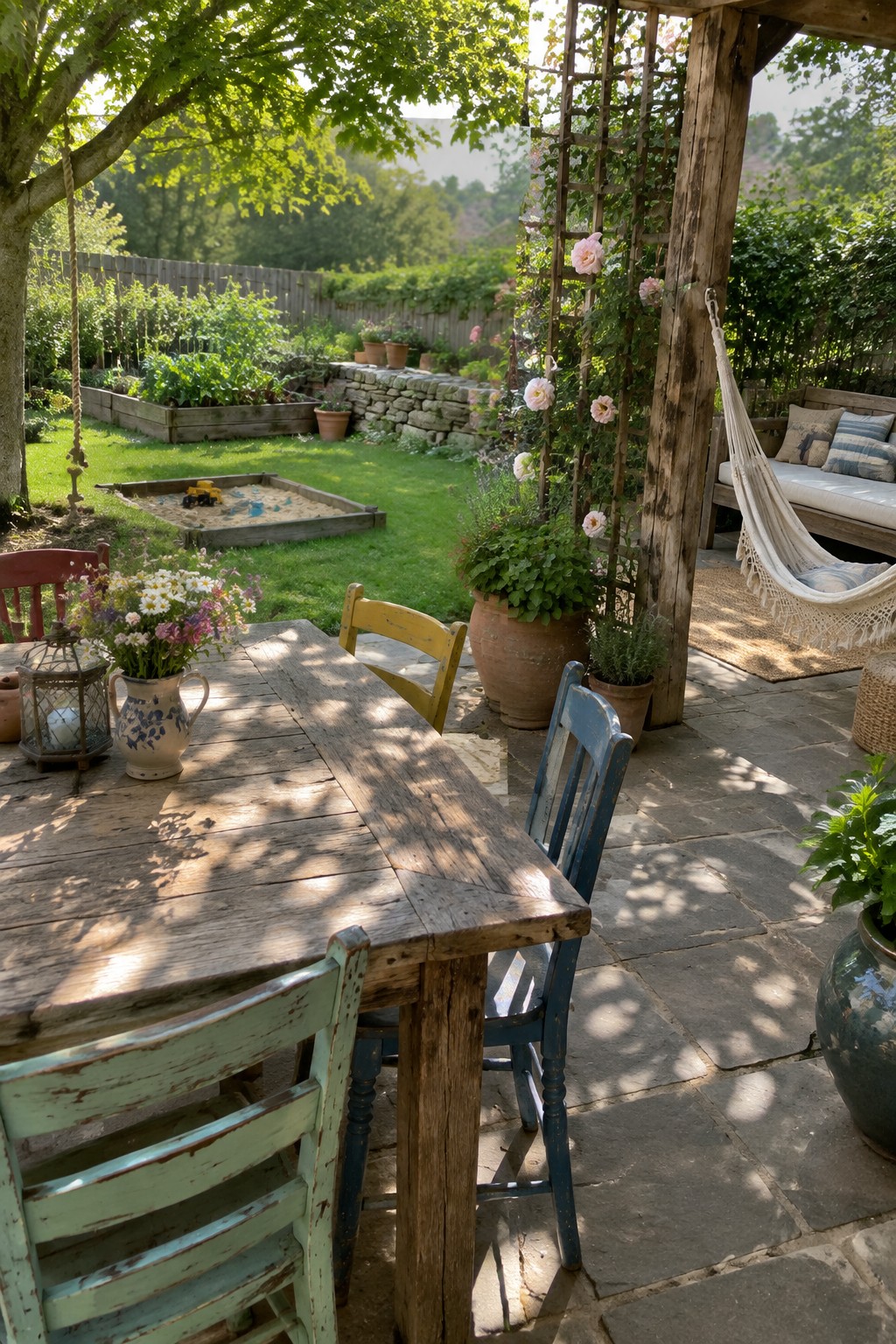
A stone patio gives you a clear way to mark off a dining zone without needing walls or fences. The solid surface keeps the table and chairs stable and makes the eating area feel separate from grass or garden beds nearby. It also helps contain spills and makes cleanup easier after meals.
This setup works well in backyards that need to handle dining, lounging, and play at the same time. Place the patio near the house or a seating spot like a hammock so people can move between zones without crossing soft ground. Just keep the paved section large enough for the table and chairs to sit comfortably.
Separate Your Deck Into Dining and Lounge Zones
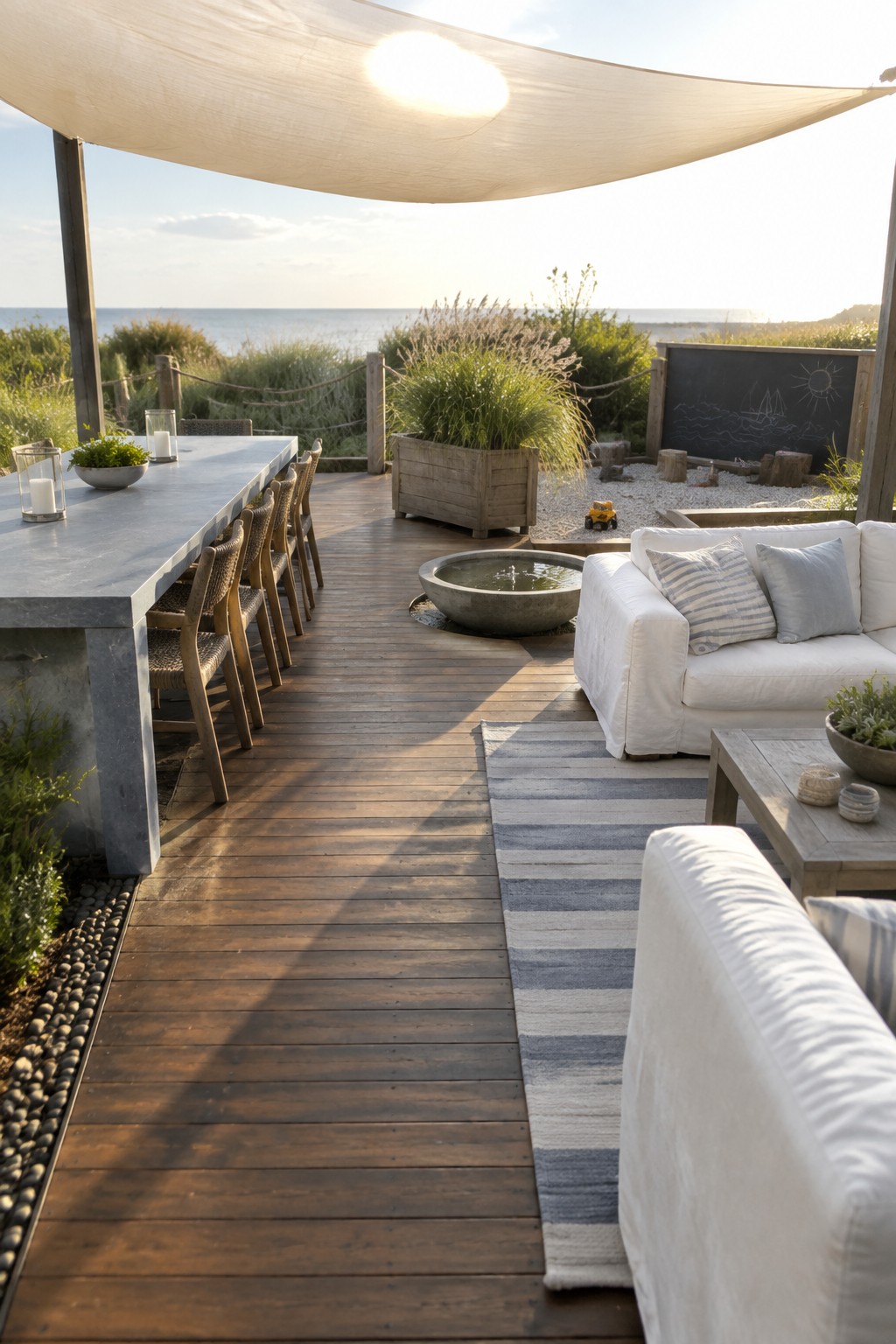
A long table along one side keeps meals contained while a set of sofas on the other side creates a clear spot for sitting back. The rug under the sofas helps mark that area as different from the main deck traffic, so the two uses do not run into each other.
This layout works well on medium to large decks where you want both functions without building walls. Keep the dining chairs simple and the lounge seating low so the zones stay visually open but still feel separate.
Separate Activity Zones with Paths and Plantings
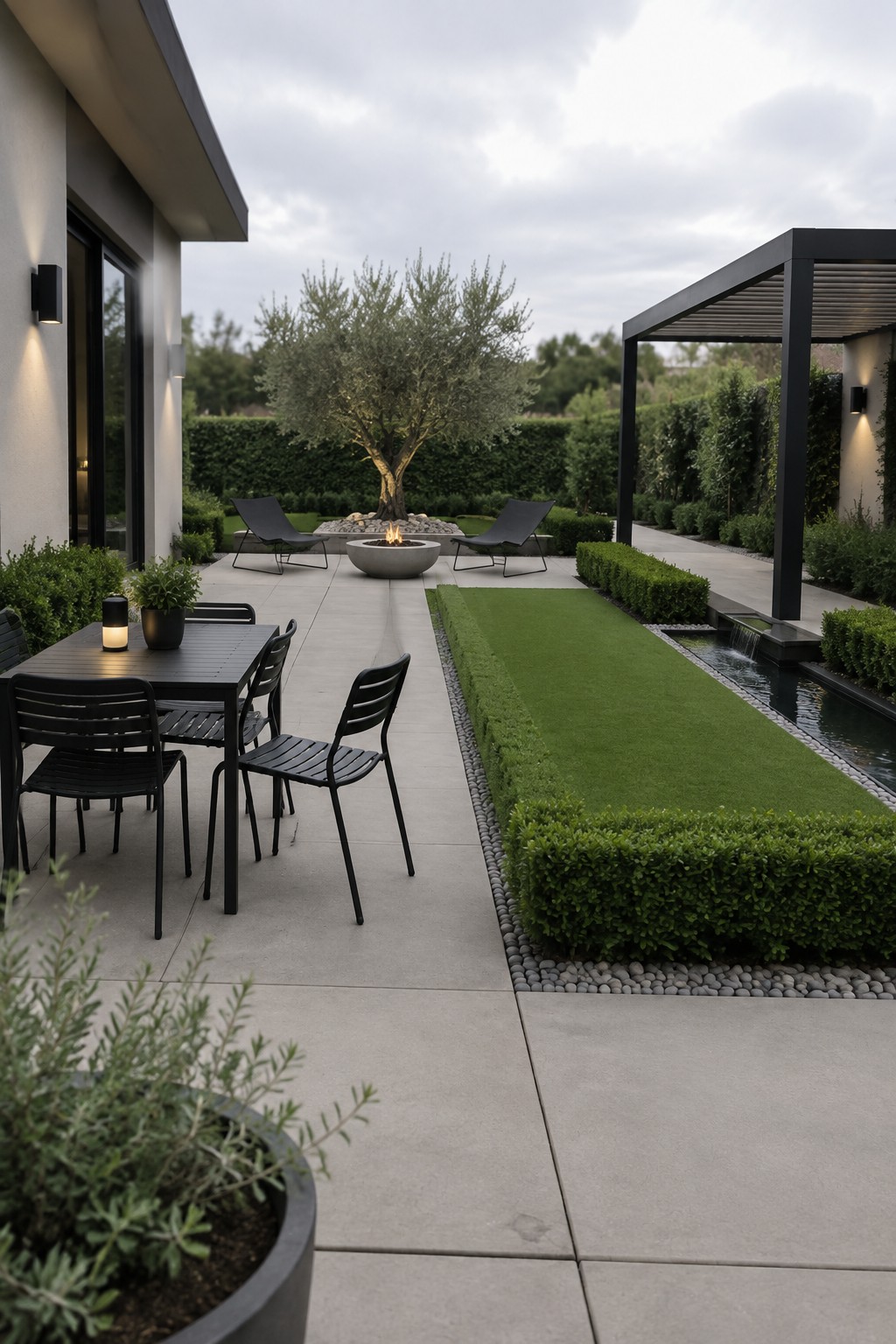
One of the simplest ways to make a backyard feel more useful is to split it into clear zones instead of leaving one big open space. In this layout, the dining table sits on a solid paved section while the fire pit area stays slightly apart, and a strip of lawn runs alongside a narrow water feature. The divisions come from the change in ground material and the low hedges that run along the edges.
This approach works well on medium to large yards where you want room for meals, quiet sitting, and maybe some light play without everything overlapping. Keep the zones connected by a single path so people can move between them easily, but let the surface and planting changes do the work of showing where one area ends and the next begins.
Define an Outdoor Dining Zone with a Pergola
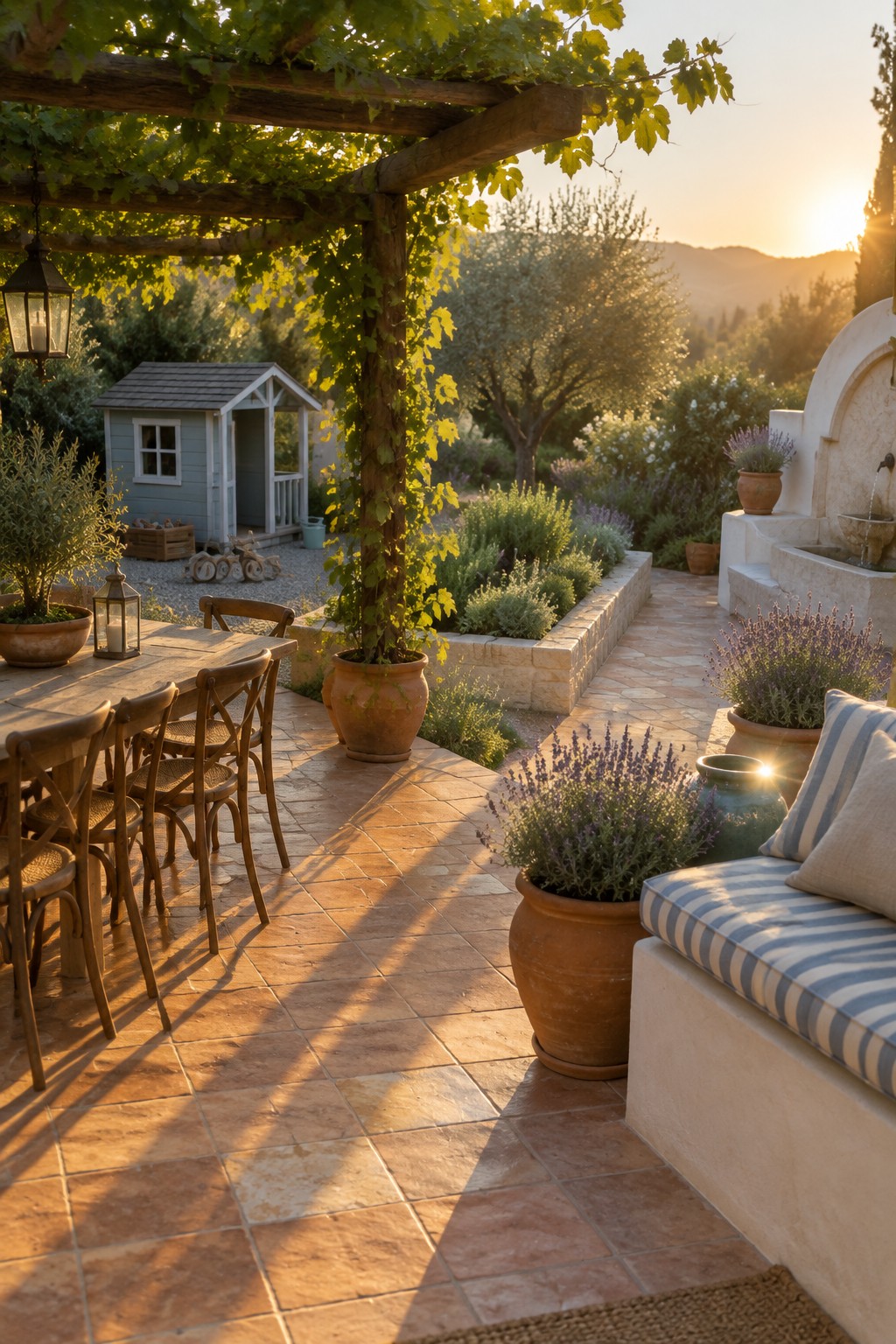
A pergola overhead gives the dining table its own clear spot without needing walls or fences. It turns part of the patio into a dedicated eating area while leaving room nearby for seating or play. The vines add a bit of shade and help the space feel set apart even when the rest of the yard stays open.
This setup works well on medium to large patios where you want meals in one place and lounging in another. Keep the table and chairs grouped directly under the beams so the zone reads as intentional. Avoid spreading furniture too wide or the separation starts to blur.
Create a Lounge Area Beside the Outdoor Kitchen
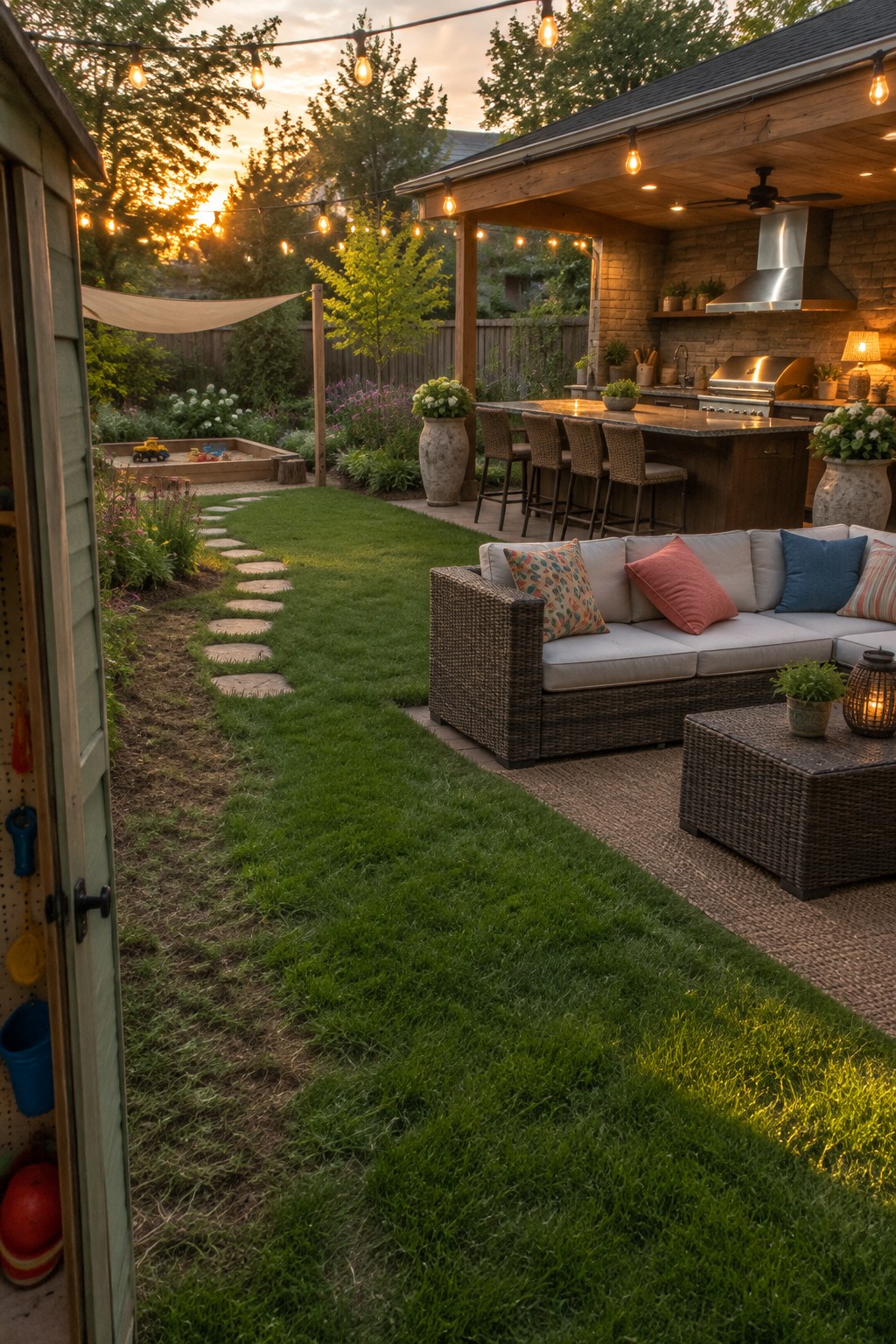
Placing a sofa and coffee table on the same paved surface as the outdoor kitchen keeps lounging and cooking in one connected spot. Guests can move easily between the grill and the seating without crossing grass or dirt, and the space feels more like an extra living room than a separate patio.
This setup works best in yards that also need room for play. Keep the lounge furniture on the hard surface and leave the lawn open for kids or pets. A simple path across the grass can lead to a play area without mixing the two zones.
Define Outdoor Zones With Rugs
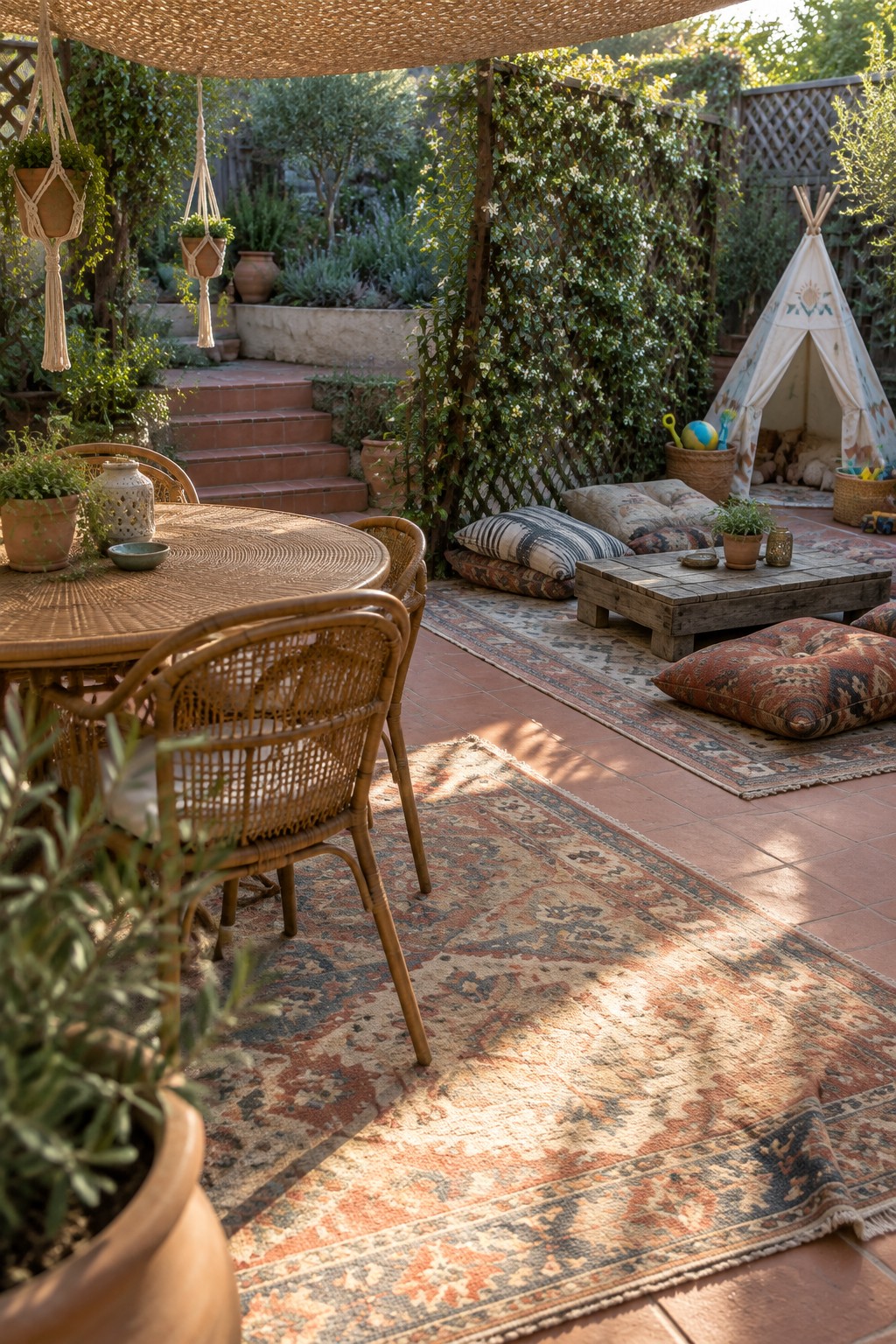
Rugs make it easy to split a patio into clear activity spots without adding walls or big structures. One rug can hold a dining setup while another marks a lower lounge area just a few feet away.
This approach works best on flat paved surfaces where you need quick visual boundaries. It suits smaller backyards that need to handle meals, relaxing, and play at the same time.
Create Distinct Zones With Flooring Changes
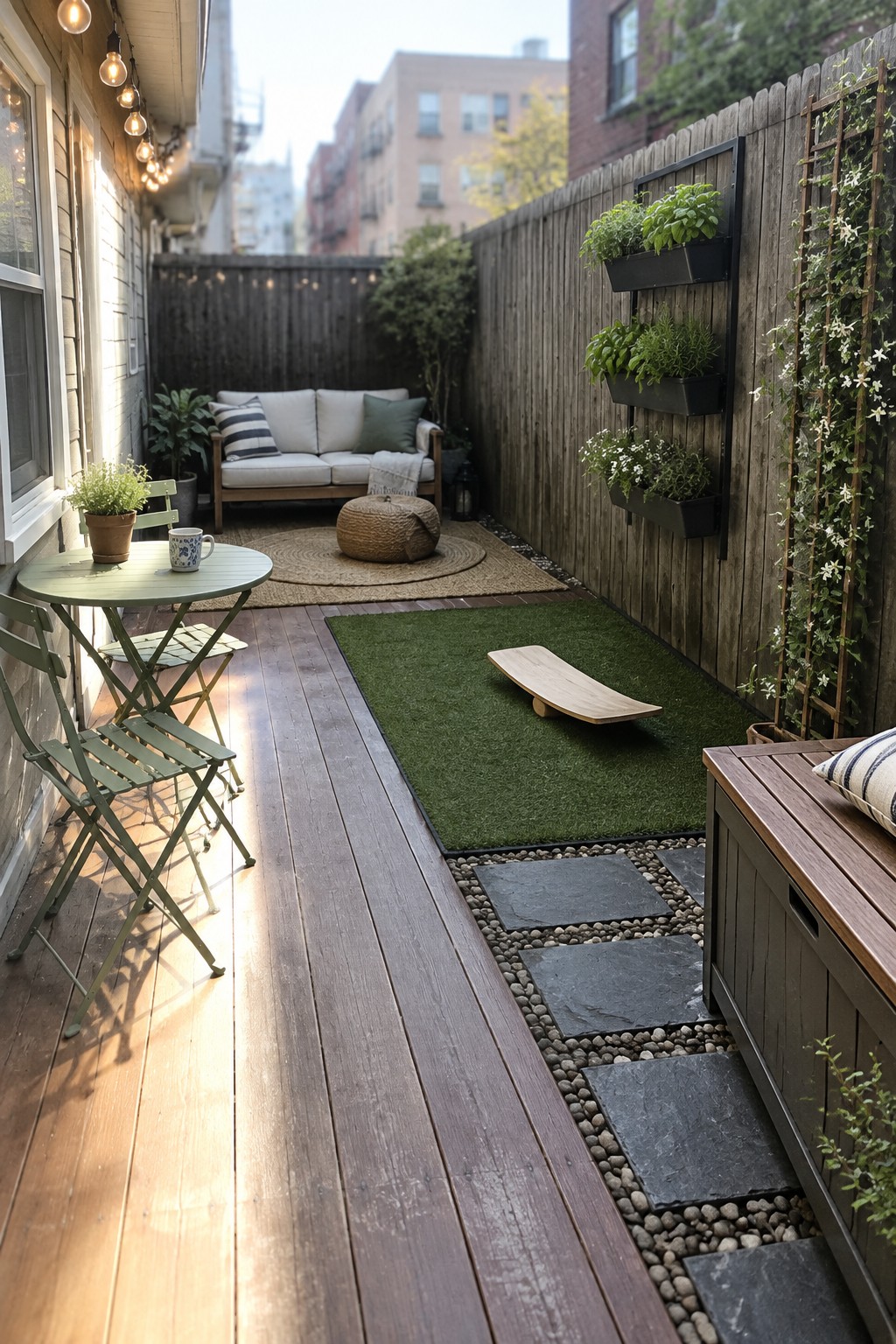
One simple way to organize a small backyard is to switch the ground surface from one area to the next. A wooden deck can hold a dining table and chairs while a section of artificial turf marks off a play spot or casual lounge area.
This works especially well in narrow city yards where every foot of space needs to serve more than one purpose. Keep the transitions clear but easy to walk across so the whole yard still feels connected.
Use Brick and Grass to Separate Dining From Play
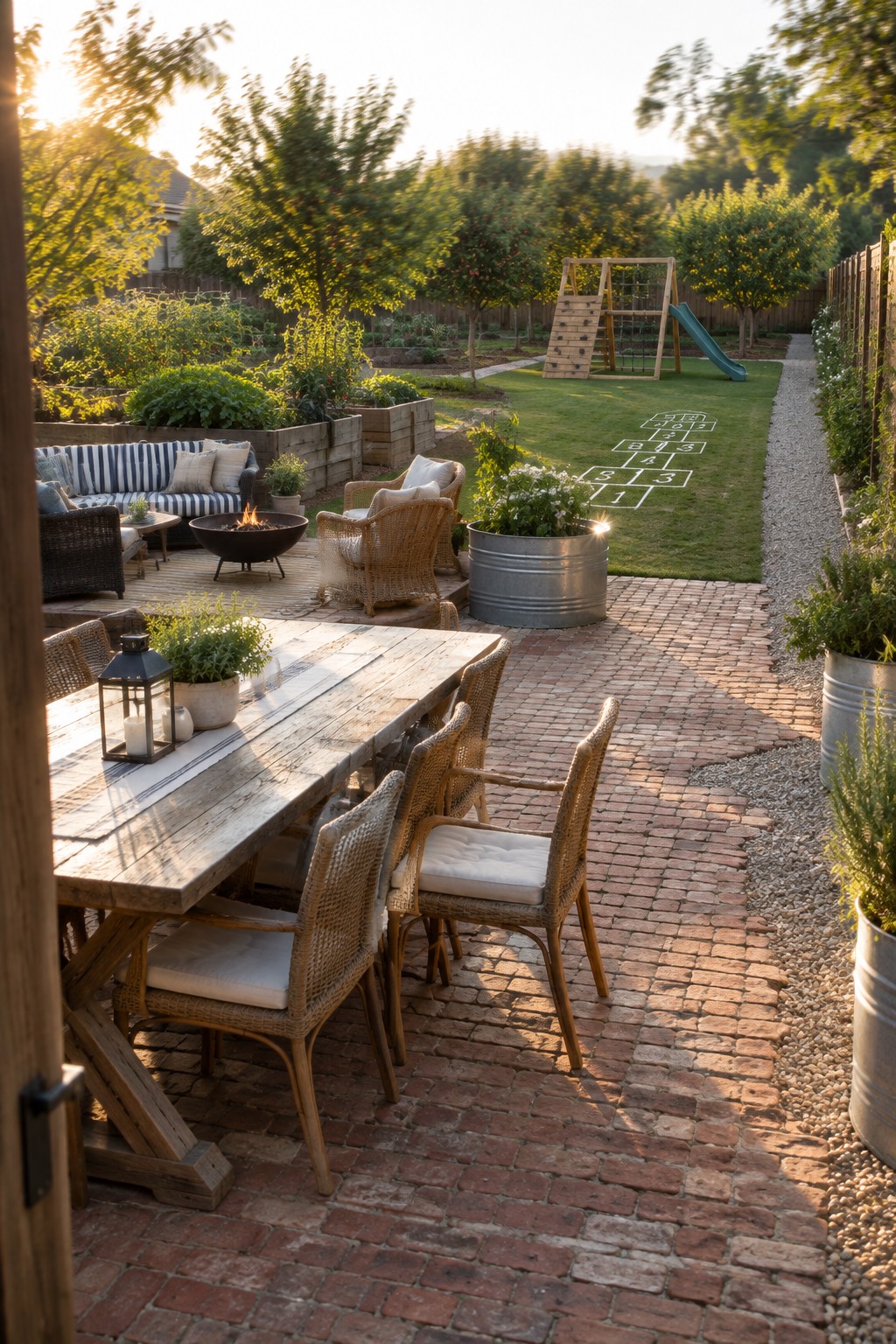
One simple way to make a backyard feel more usable is to switch up the ground surfaces for each main activity. Brick under the dining table keeps that area feeling settled and easy to clean, while grass or gravel marks off the play space and lounging spots so everything stays in its own place.
This approach works well in yards of almost any size. Keep the dining zone near the house for easy access, then let the play area sit farther back where running around will not get in the way of meals or quiet seating.
Create Distinct Zones With A Fire Pit
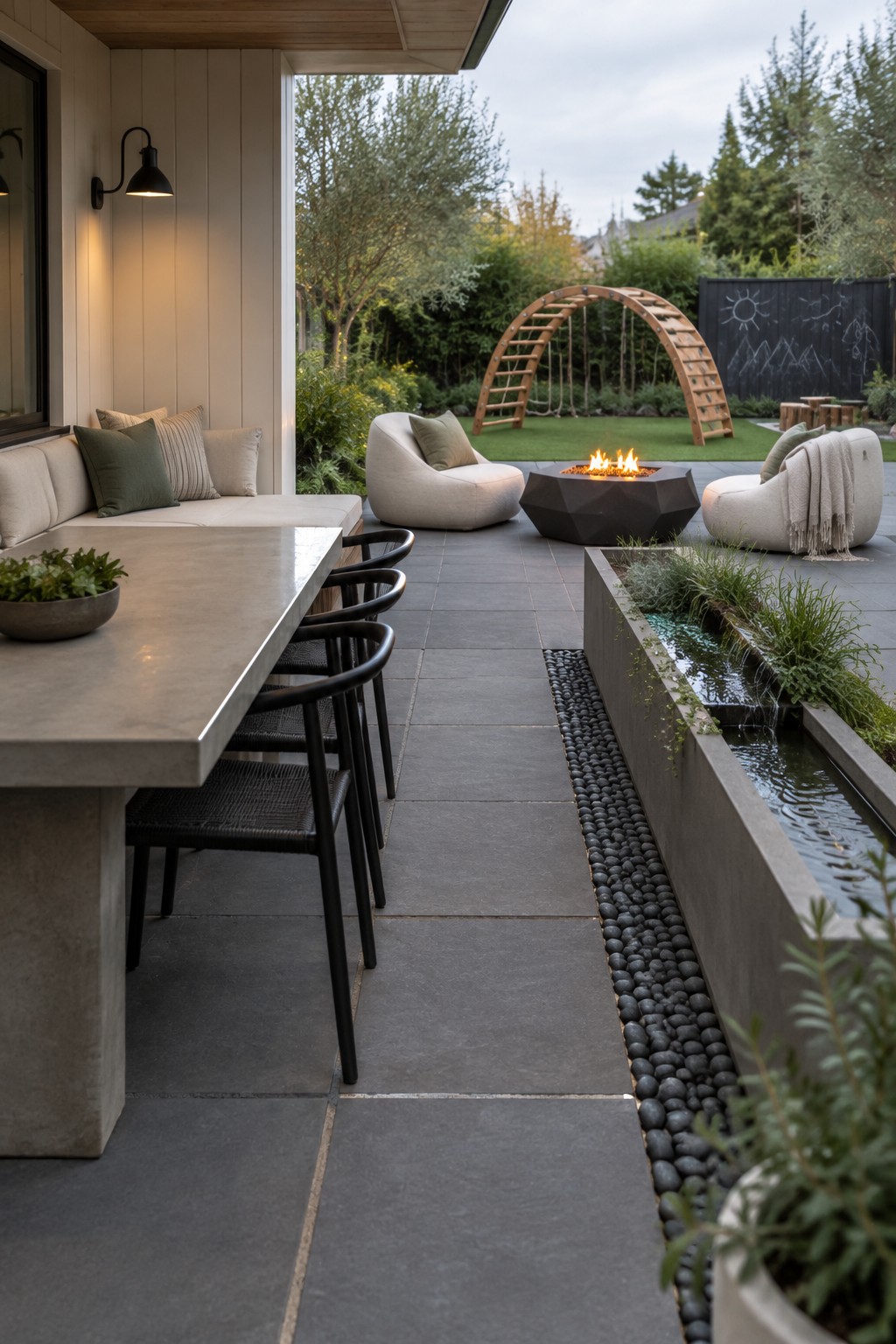
A fire pit makes a natural anchor for a lounging zone because it gives people a reason to gather in one spot without mixing with the dining area. Placing it a little farther out on the patio keeps the two uses from overlapping and lets each zone feel complete on its own.
This setup works best on medium to large patios where you have room to spread things out. Keep the dining table near the house for easy access to the kitchen and let the fire pit sit in the open space so the seating around it can stay casual and relaxed.
Terrace The Yard To Separate Activity Zones
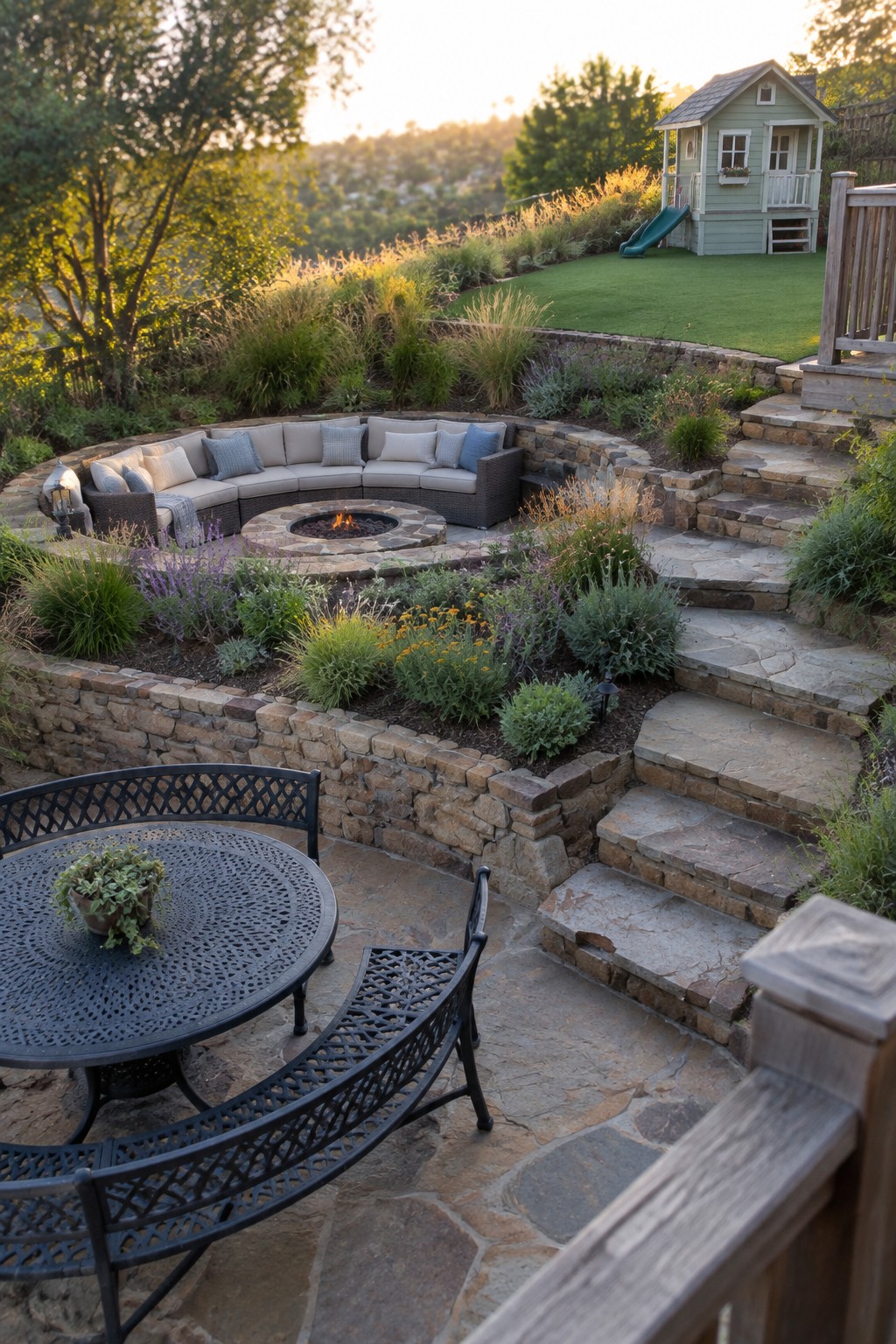
Terracing works well when you want a fire pit lounge to feel set apart from play areas or dining spots. The change in level keeps the seating area contained without needing tall fences or screens, and it gives the space a natural boundary that still feels open.
This approach suits sloped backyards best, especially on properties where you have room for both quiet seating and active play. Keep the upper level for grass or a play structure and use the lower terrace for the fire pit and surrounding chairs so the zones stay distinct even when everything is in use.
Use a Pergola to Separate Poolside Dining From Swimming Areas
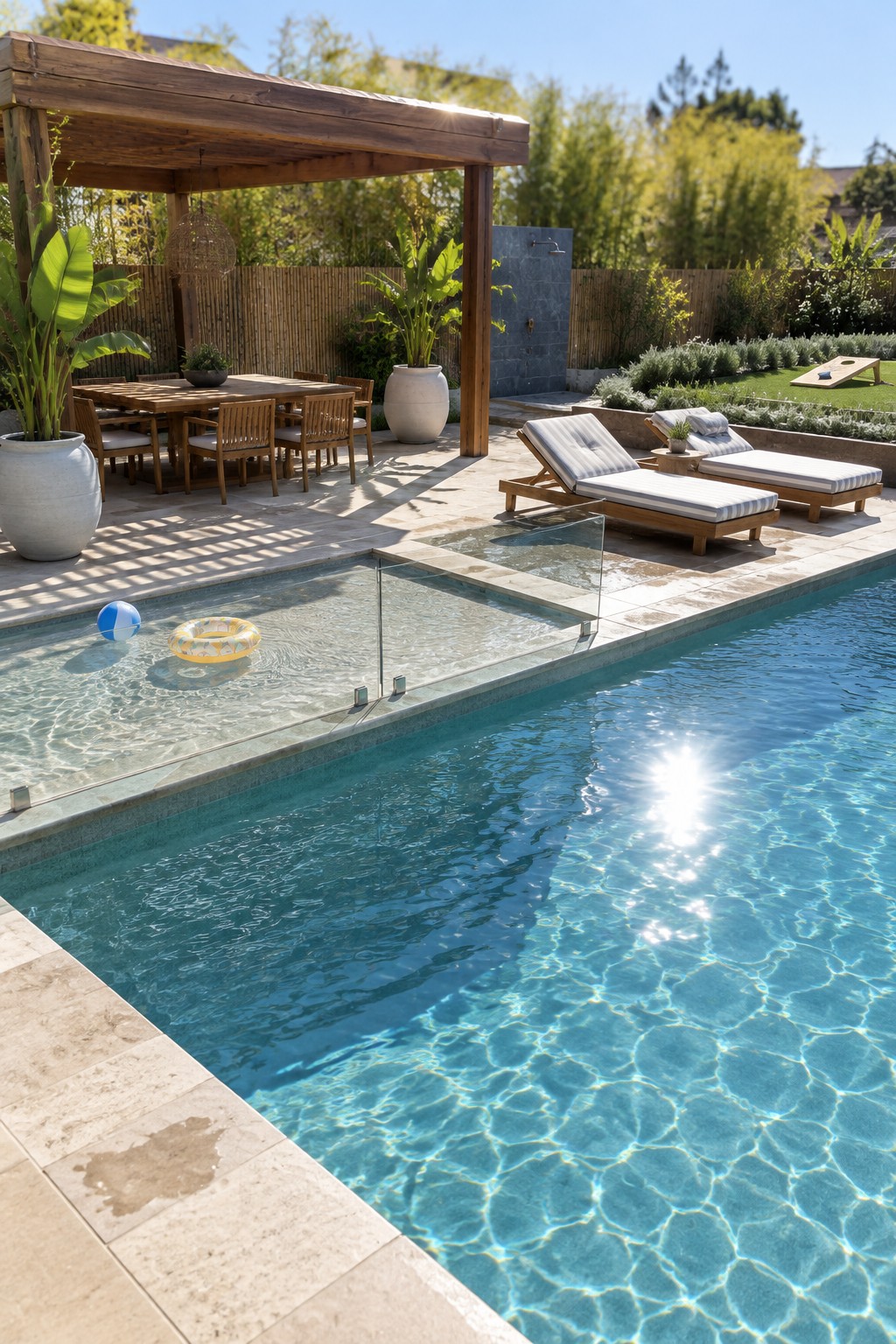
A pergola works well when you want the dining area to feel like its own spot instead of just another table on the patio. It gives shade and a clear boundary, so the space reads as separate from the lounging chairs or the pool deck. This keeps the flow simple even when the whole backyard is open.
It works best on a poolside patio where you already have room for a table and chairs. Place it at one end so people can move easily between eating and swimming without everything feeling jumbled. Just make sure the posts do not block the main walkway around the pool.
Create a Soft Lawn Zone Beside a Paved Dining Area
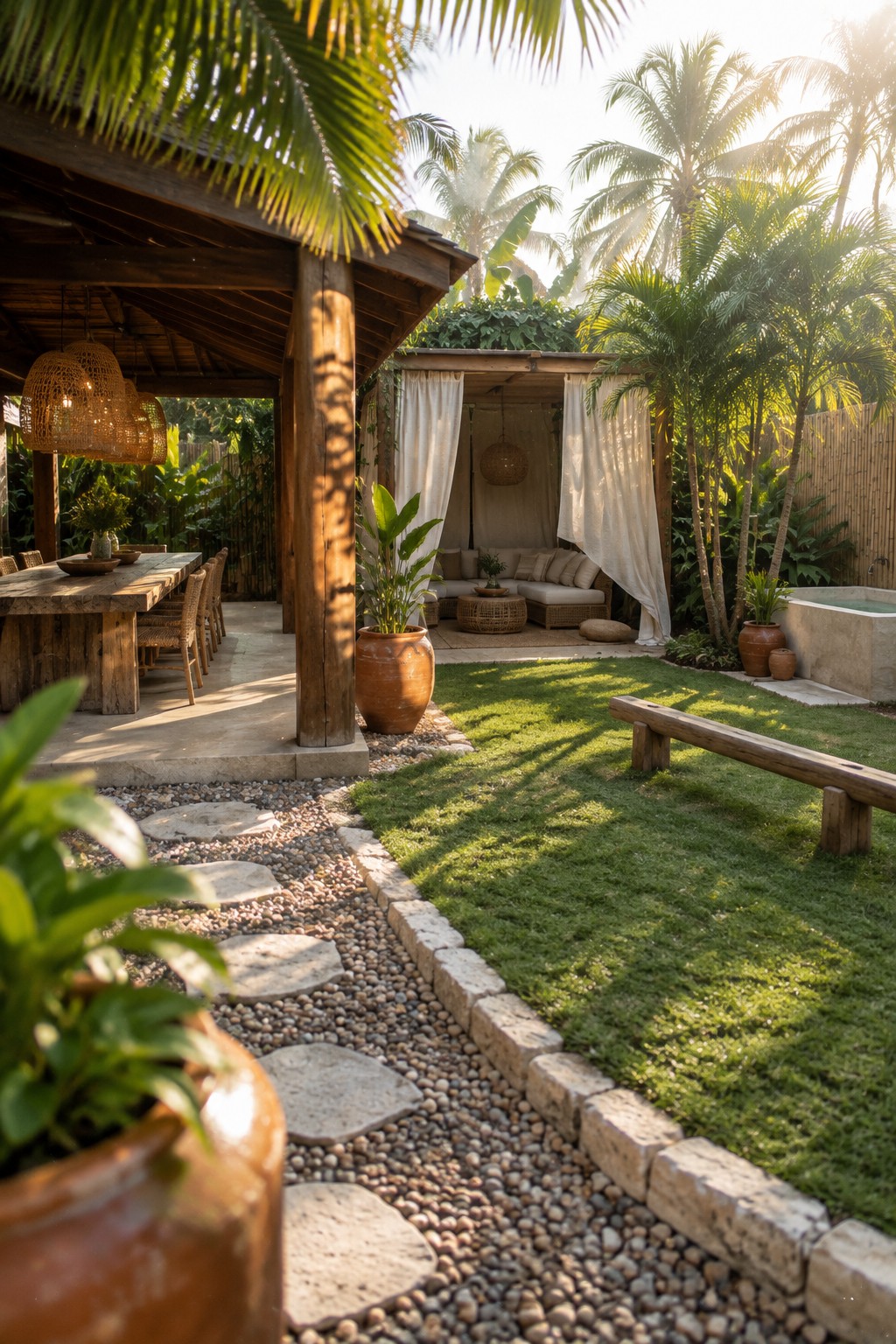
One simple way to keep a backyard from feeling scattered is to use different ground surfaces for different activities. A paved section under cover works well for dining because it stays clean and level for tables and chairs. Grass next to it gives a softer spot for lounging or play without mixing the two uses.
This approach works on most lots because it needs only basic edging and no major walls. Keep the paved area near the house for easy access to the kitchen, then let the lawn stretch out for seating or open space. Just make sure the path between zones stays wide enough for foot traffic so people move comfortably from one area to the next.
Use Gravel Paths To Define Backyard Zones
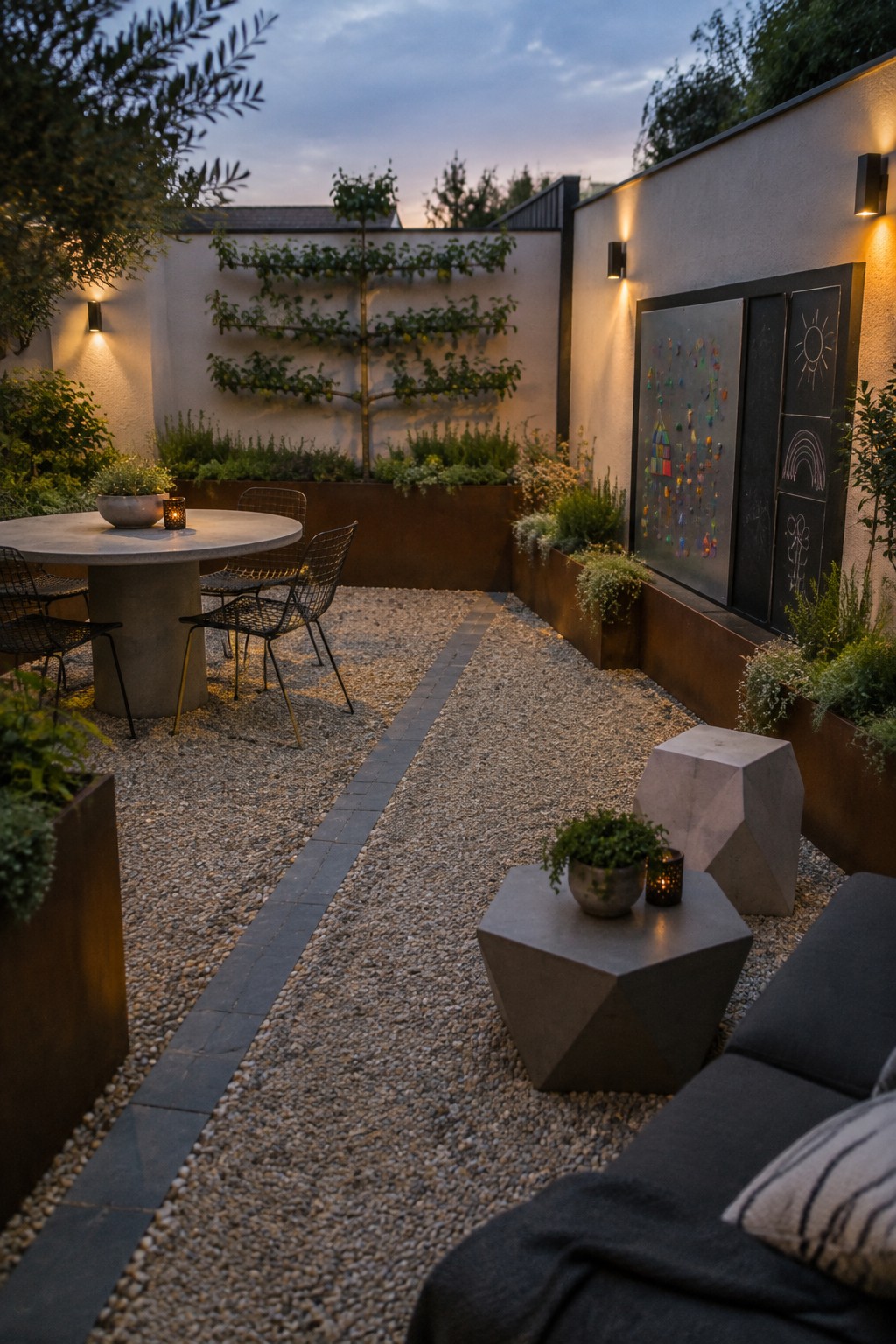
Gravel makes it easy to split a backyard into separate areas without adding walls or fences. The loose surface marks clear boundaries while still keeping the whole space feeling open and connected.
This works best in medium or small yards where you want room for both meals and lounging. Place a dining table on one side of the path and lounge seating on the other, then use low planters along the edges to hold the zones in place.
Frame a Brick Patio Dining Area With Raised Garden Beds
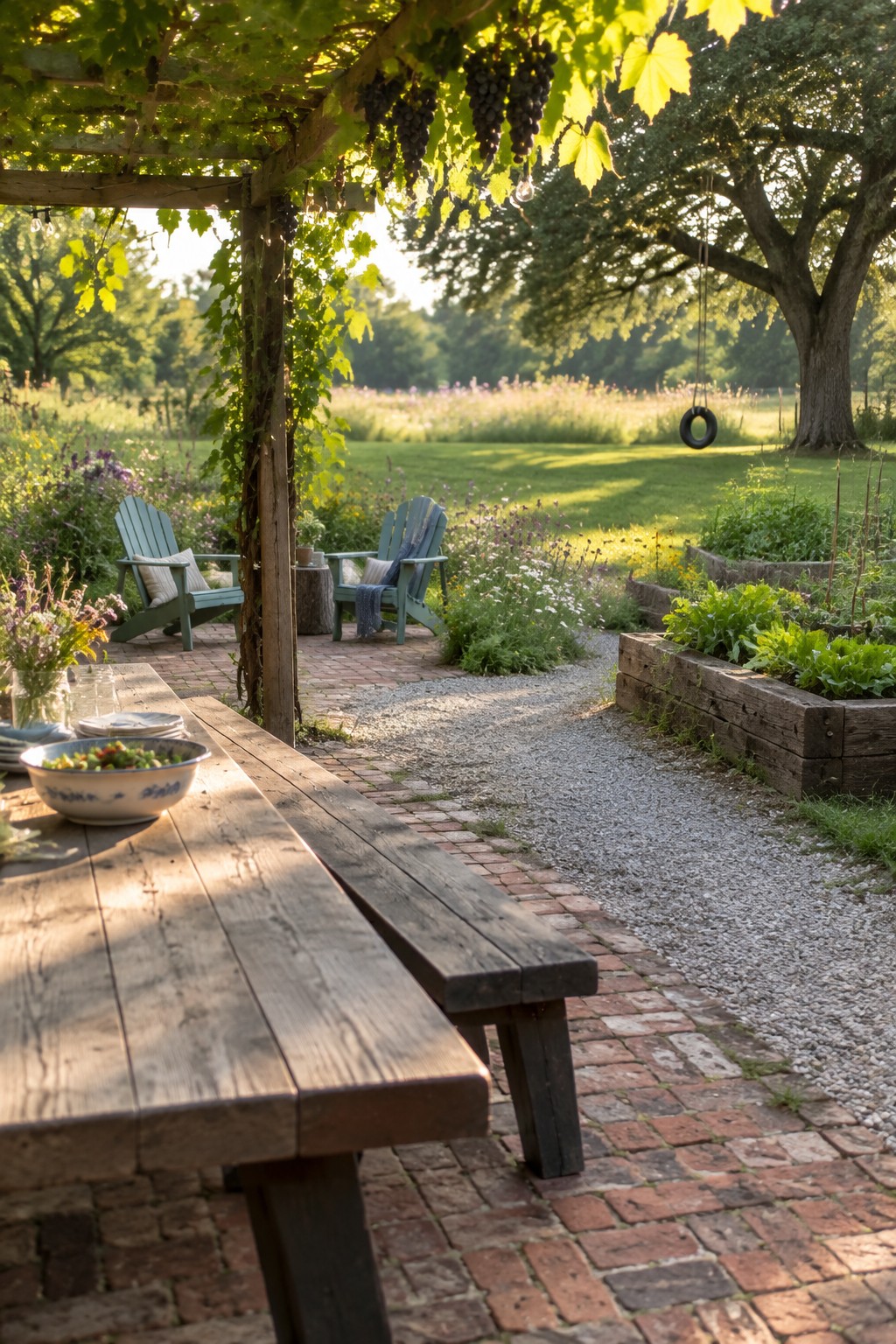
A pergola over a brick patio gives the dining table its own clear spot without closing off the rest of the yard. It turns an open stretch of grass into a usable room that feels separate from the garden beds and lawn beyond. People like it because the structure provides light shade and a sense of enclosure while still letting you see everything around you.
This setup works best in medium to large backyards where you want dining and lounging close but not mixed together. Keep the table and chairs on the paved section and let the open lawn or garden beds take over right at the edge. Raised beds right beside the patio help reinforce the division without adding fences.
Use Narrow Decking to Connect Separate Backyard Activity Areas
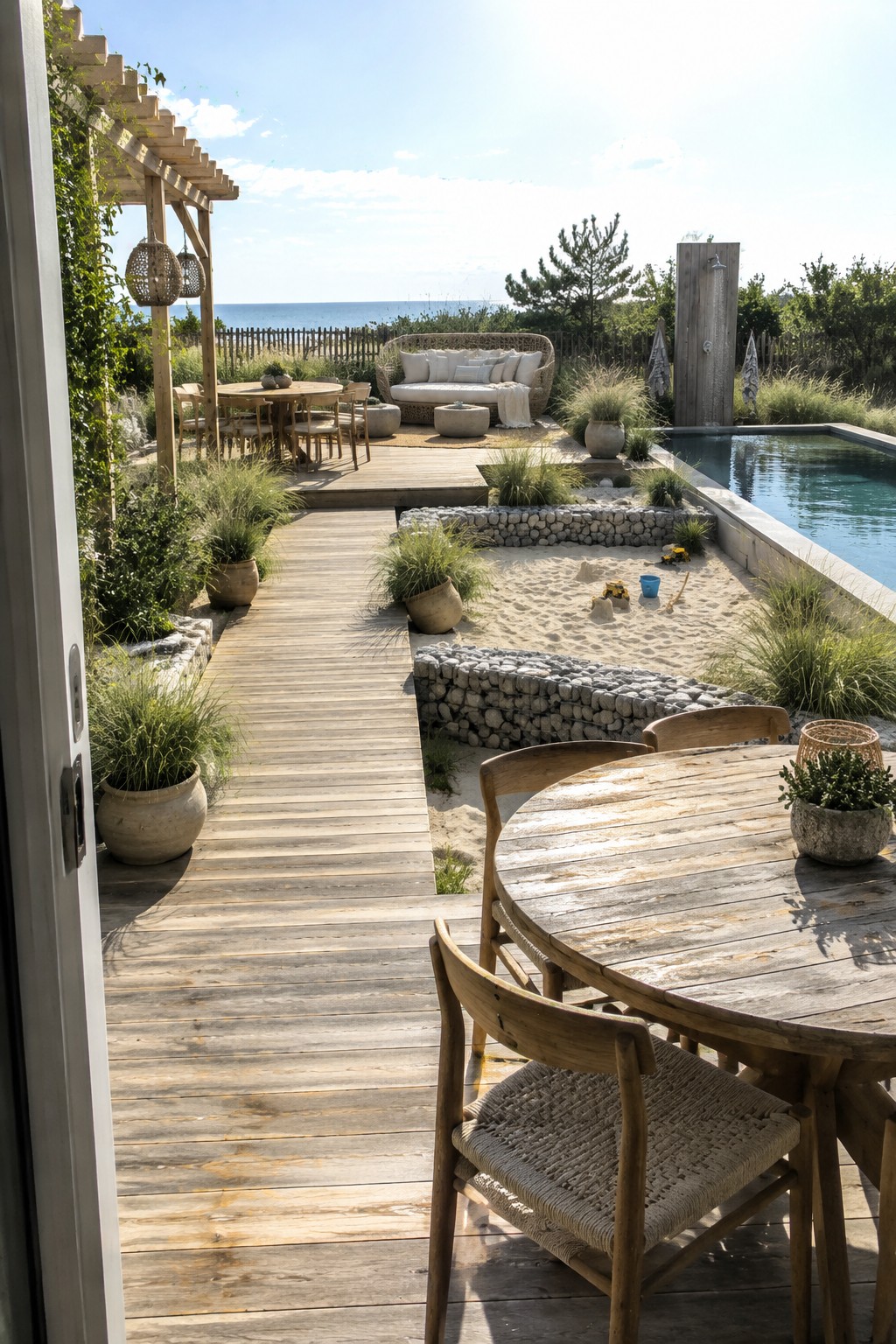
A simple wooden deck can do a lot to keep different parts of a backyard from running into each other. It gives you a clear walking path while also marking off where one activity ends and another begins, like moving from a dining spot into a play area or toward the pool.
This approach works best in medium to large yards that need to handle meals, lounging, and kids at the same time. Keep the deck narrow enough to feel like a path rather than a full floor, and let the surrounding surfaces change so each zone still has its own feel.
Combine Stone, Gravel, and Stepping Stones for a Layered Lounge Layout
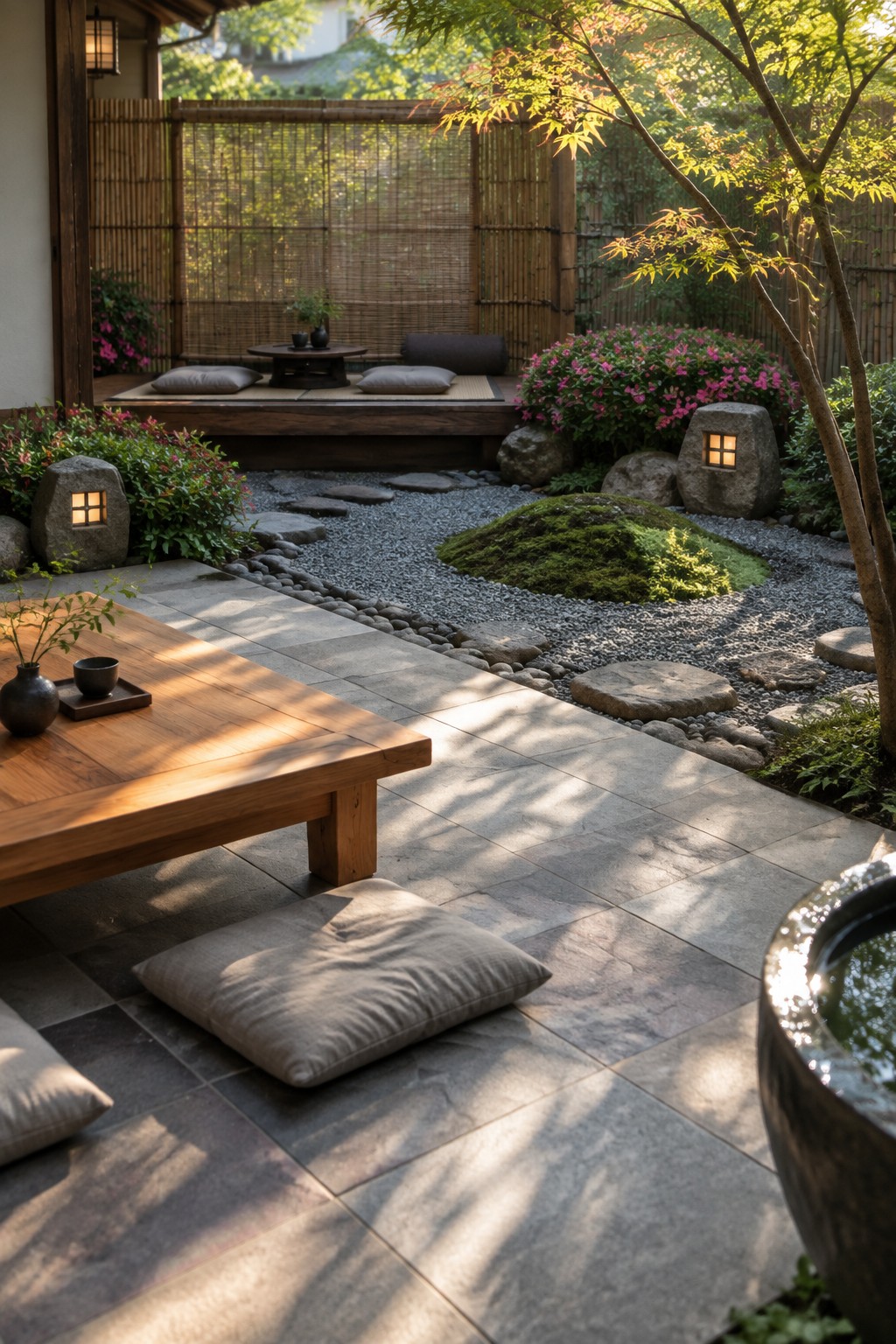
One of the easiest ways to give a backyard more than one use is to change the floor material from one spot to the next. The stone patio here feels like the main sitting area, while the gravel and stepping stones pull you toward a quieter raised platform. The shift keeps the spaces from running together and makes each one feel like its own small room.
This approach works well in medium to large yards where you want room for both casual meals and quieter moments. Keep the materials simple so the change reads as intentional rather than busy. Just watch the edges where the surfaces meet to make sure they stay level and easy to walk across.
Mark Separate Zones With Painted Patio Color
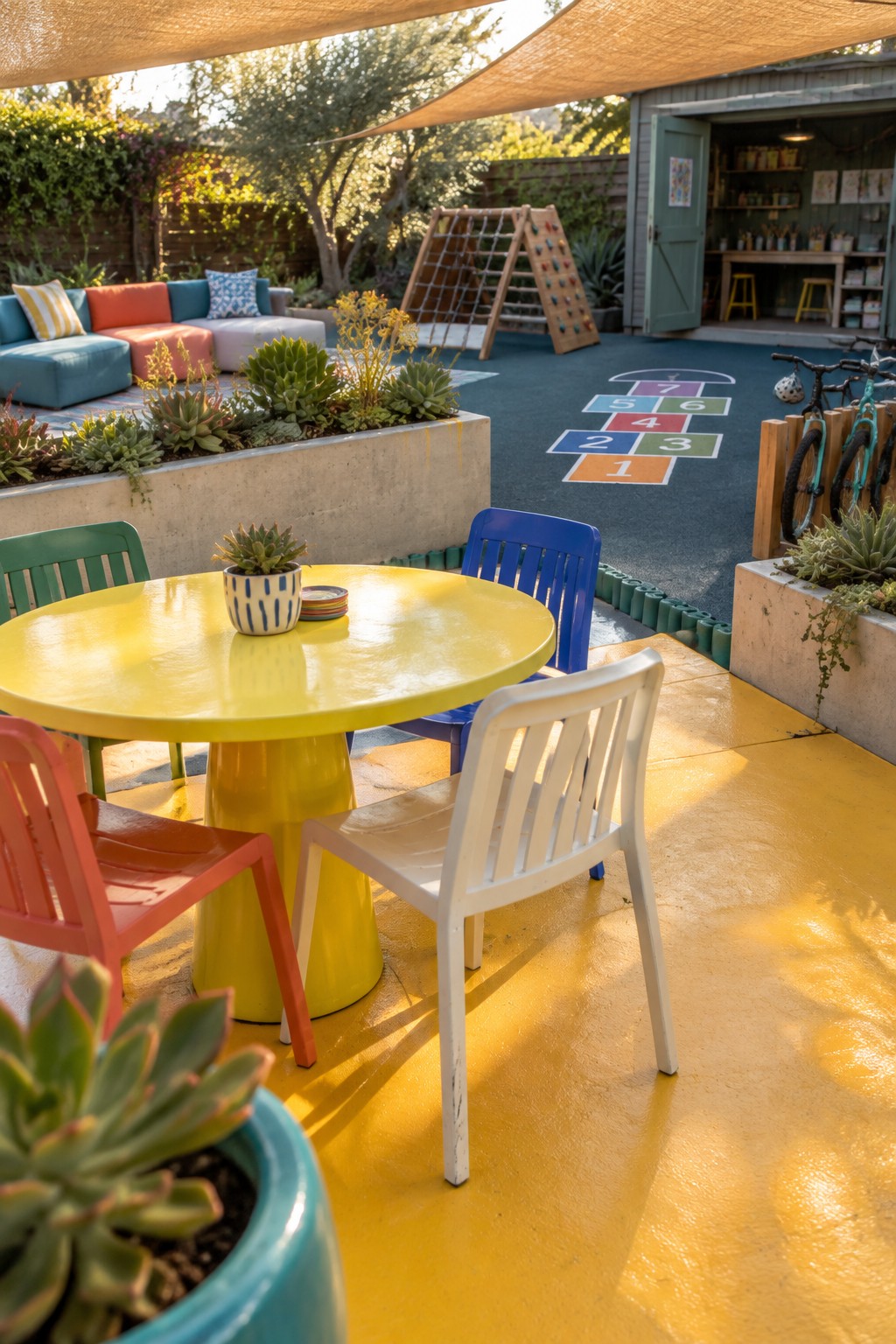
One simple way to keep a backyard from feeling scattered is to paint a section of the floor a solid bright color. It turns that spot into its own room without adding any structures or dividers.
This approach works best on concrete patios where you already have room for both dining and play. Choose a color that stands out clearly from the rest of the surface and keep the edges straight so the zone stays easy to read.
Separate the Lawn for Play with a Simple Border
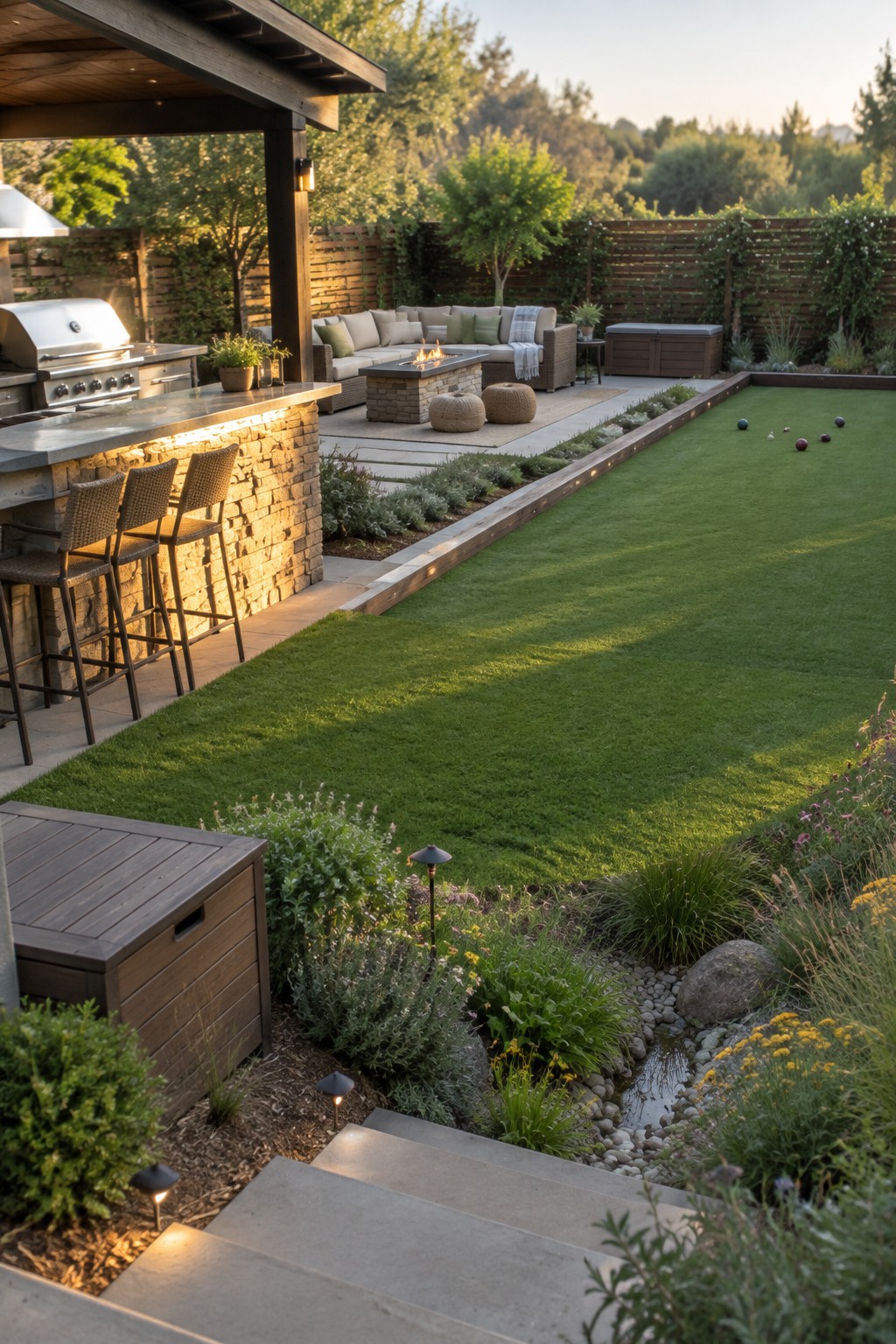
A clear edge between the seating area and the open lawn keeps the two spaces from bleeding into each other. The border gives the lounge zone a settled feel while leaving the grass free for games or just walking around without bumping into furniture.
This setup works best in medium-sized yards where you want both relaxation and room to move. Keep the edge low, run a few lights along it if you like, and make sure the lawn side stays wide enough for whatever games you actually play.
Frequently Asked Questions
Q: How do I stop the play zone from taking over the whole yard?
A: Mark off a clear corner with low edging like bricks or logs. Add some ground cover that holds up to feet and balls. This keeps the rest of the space open for other uses.
Q: What works if my yard gets a lot of afternoon sun?
A: Place the lounge area under a tree or add a simple shade sail. Move the dining table closer to the house where it stays cooler. People will actually use the space that way.
Q: Can I try this without buying new furniture?
A: Reuse what you already have and just shift pieces around. A picnic table can serve as both dining and extra seating for lounging. Add cushions from inside to make it feel different.
Q: How do I connect the zones without them blending together?
A: Use a path of stepping stones between them. Plant a few tall grasses along one side of the path. And that guides people while keeping each area its own.
