

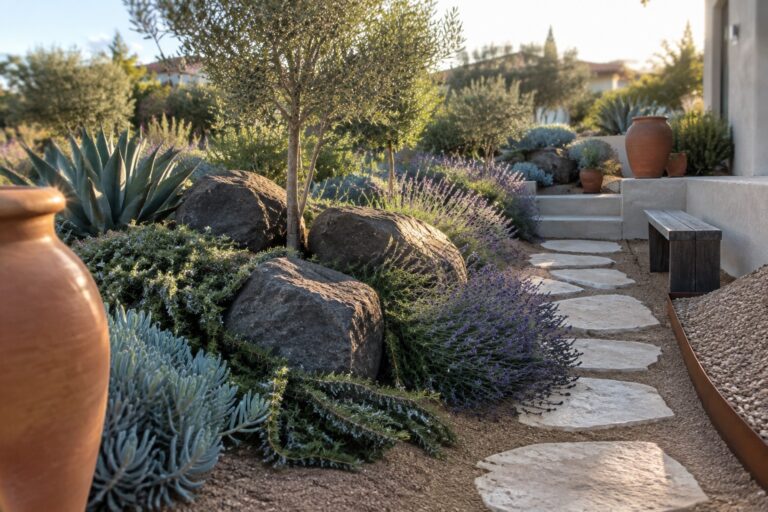
I always begin by checking how water moves across the yard after a rain because that determines where rocks should sit to prevent erosion.
Drought tolerant plants need pockets of soil that stay moist just long enough for roots to establish.
Rocks make the difference.
Choosing varieties that match the local climate has kept my garden looking fuller even during long dry spells.
Some of these setups show how simple groupings can create visual interest without adding extra features that demand upkeep.
Anchor Dry Gardens With Large Boulders
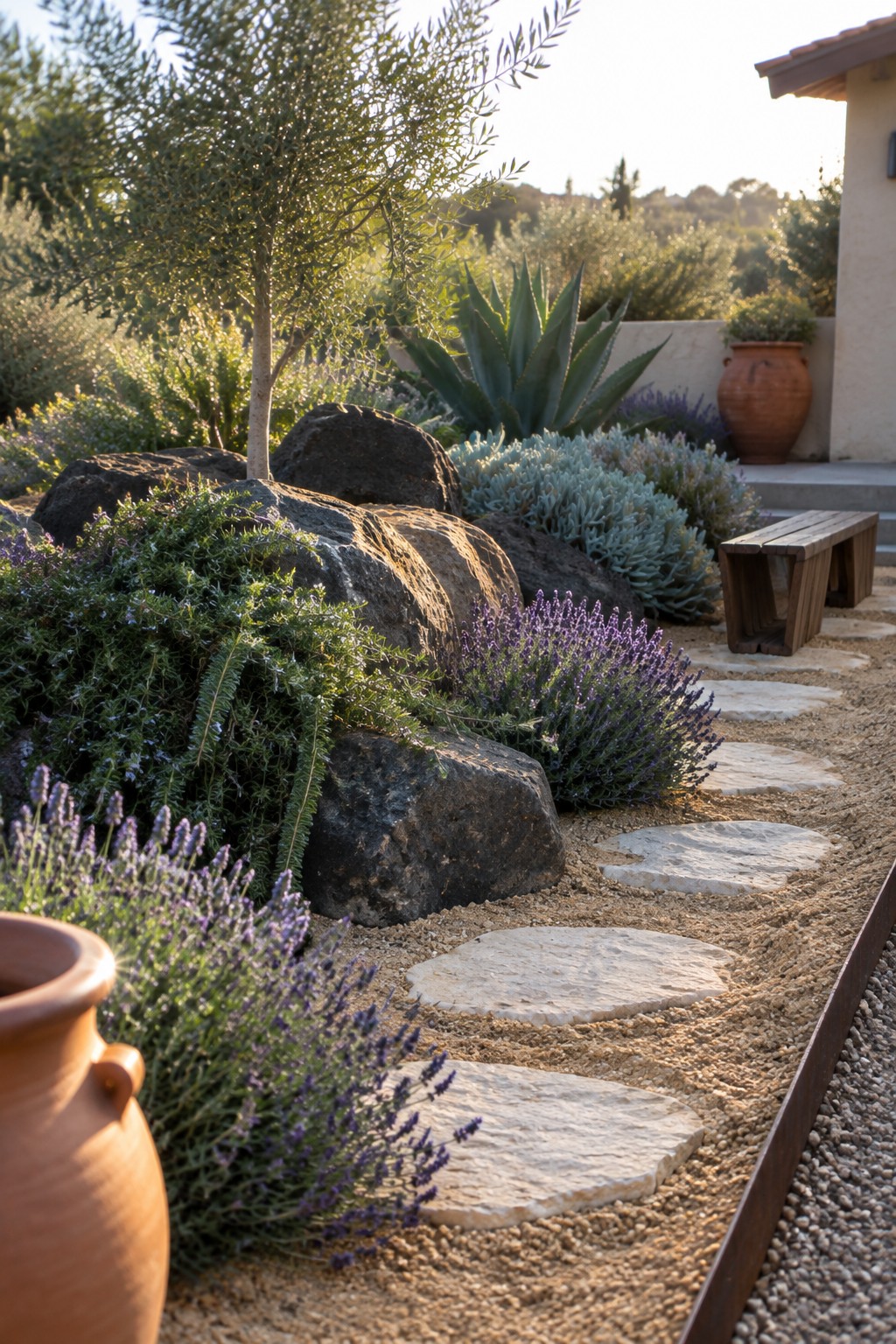
Large boulders give a dry garden real structure without much extra work. They break up flat ground and create sheltered spots where drought-tolerant plants can settle in and spread.
Set the rocks first, then fill around them with gravel and a few stepping stones to form a simple path. This setup suits sunny yards that need low water use and a natural look that still feels organized.
Create Terraces With Stone Retaining Walls
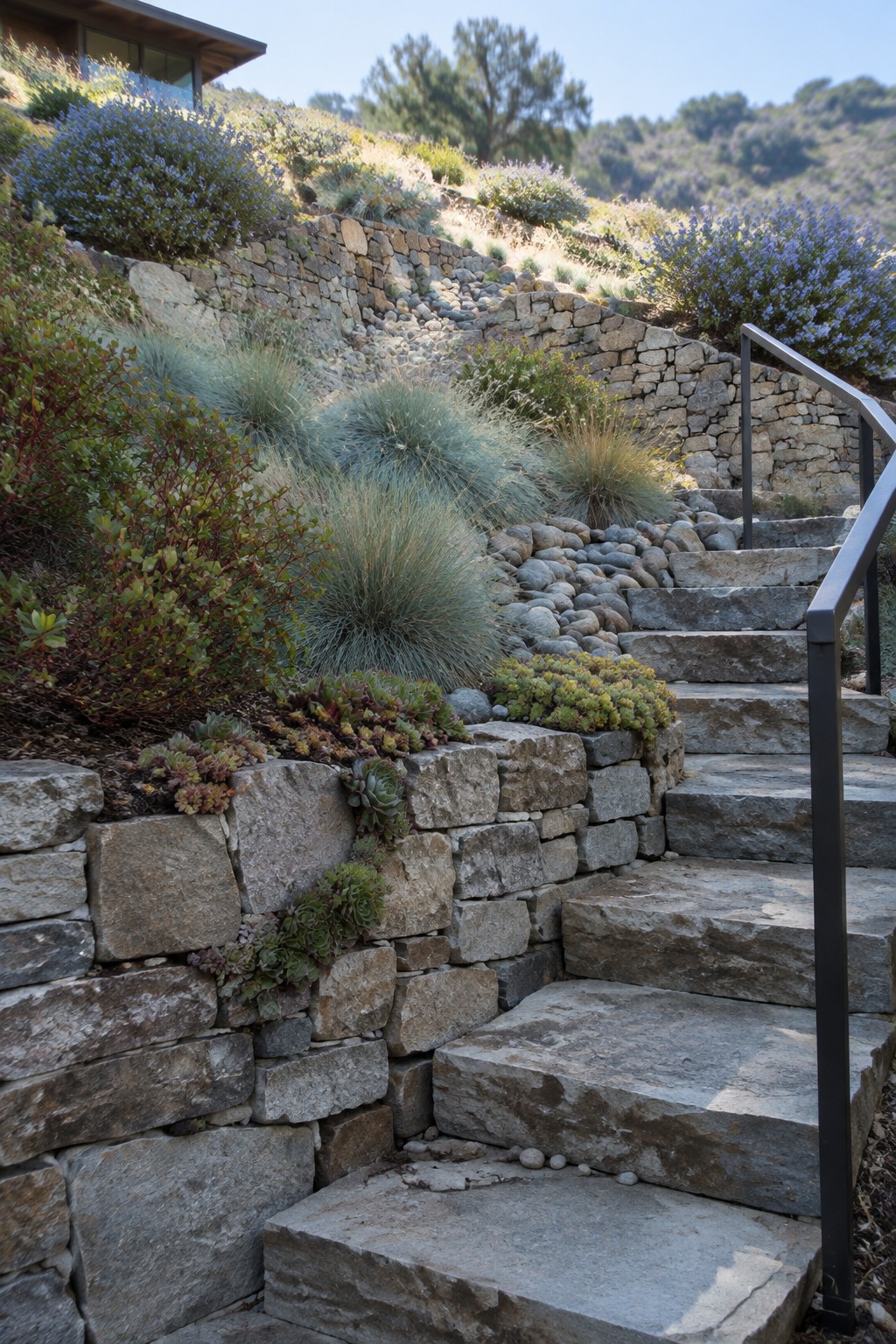
Stone retaining walls turn a steep hillside into flat planting beds that are easier to maintain and water. They keep soil from washing away while letting you group plants by how much moisture they need.
This setup works best on slopes where you want low-water plants like succulents and grasses. Tuck a few spilling varieties into the wall gaps so the stone feels softer over time, and use gravel paths to help with drainage between levels.
Raked Gravel For Defining Rock Garden Areas
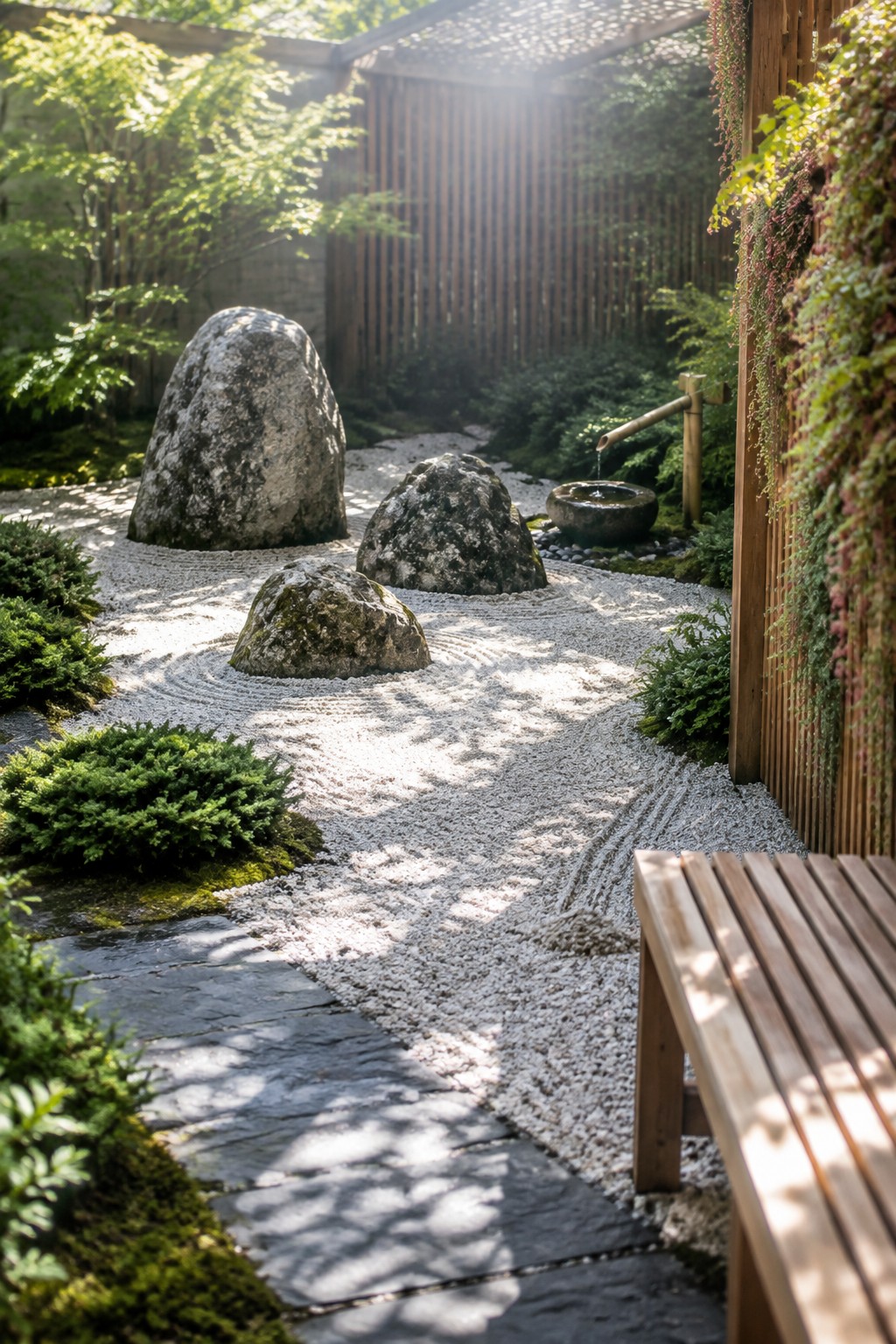
Raked gravel gives rock gardens a clean structure that holds up well in dry conditions. The patterns around larger boulders help separate planted zones from open space and keep the whole layout from looking scattered. It works especially well when you want fewer plants but still need something that feels finished.
Try this approach in smaller yards or along a side path where you need low maintenance. Keep the raked lines simple and repeat the same gravel type so the surface stays easy to refresh. Pair it with tough shrubs at the edges to soften the look without adding extra watering needs.
Mixing Pavers And Gravel In Rock Gardens
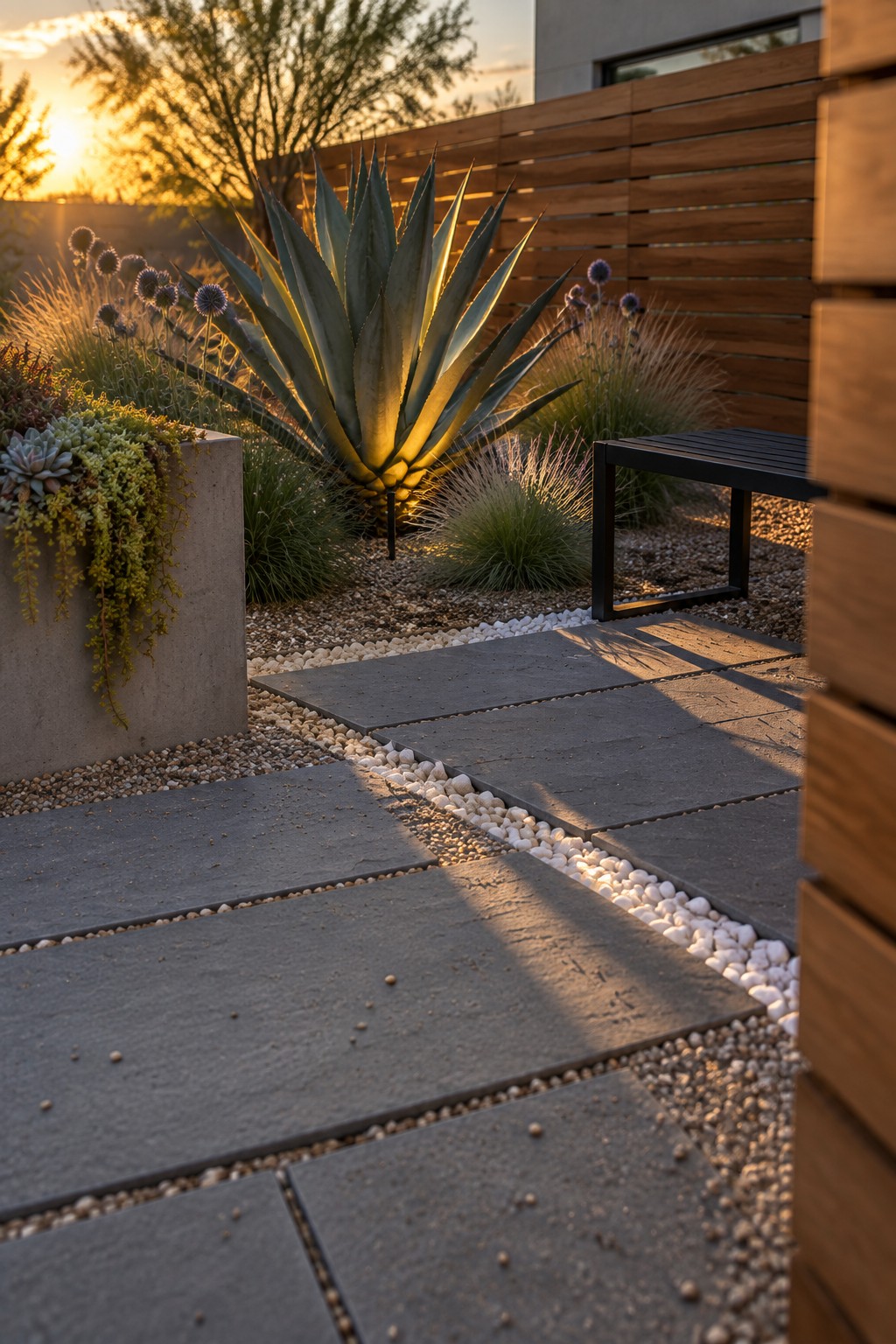
Stone pavers set into gravel create a simple, durable path that fits right into a rock garden. The contrast between the larger slabs and the smaller stones helps define the walkway without adding much work or water needs.
This approach suits dry climates and homes with sunny yards. Keep the beds planted with agaves, succulents, and grasses so the whole area stays low maintenance and still looks full.
Gabion Walls For Rock Gardens
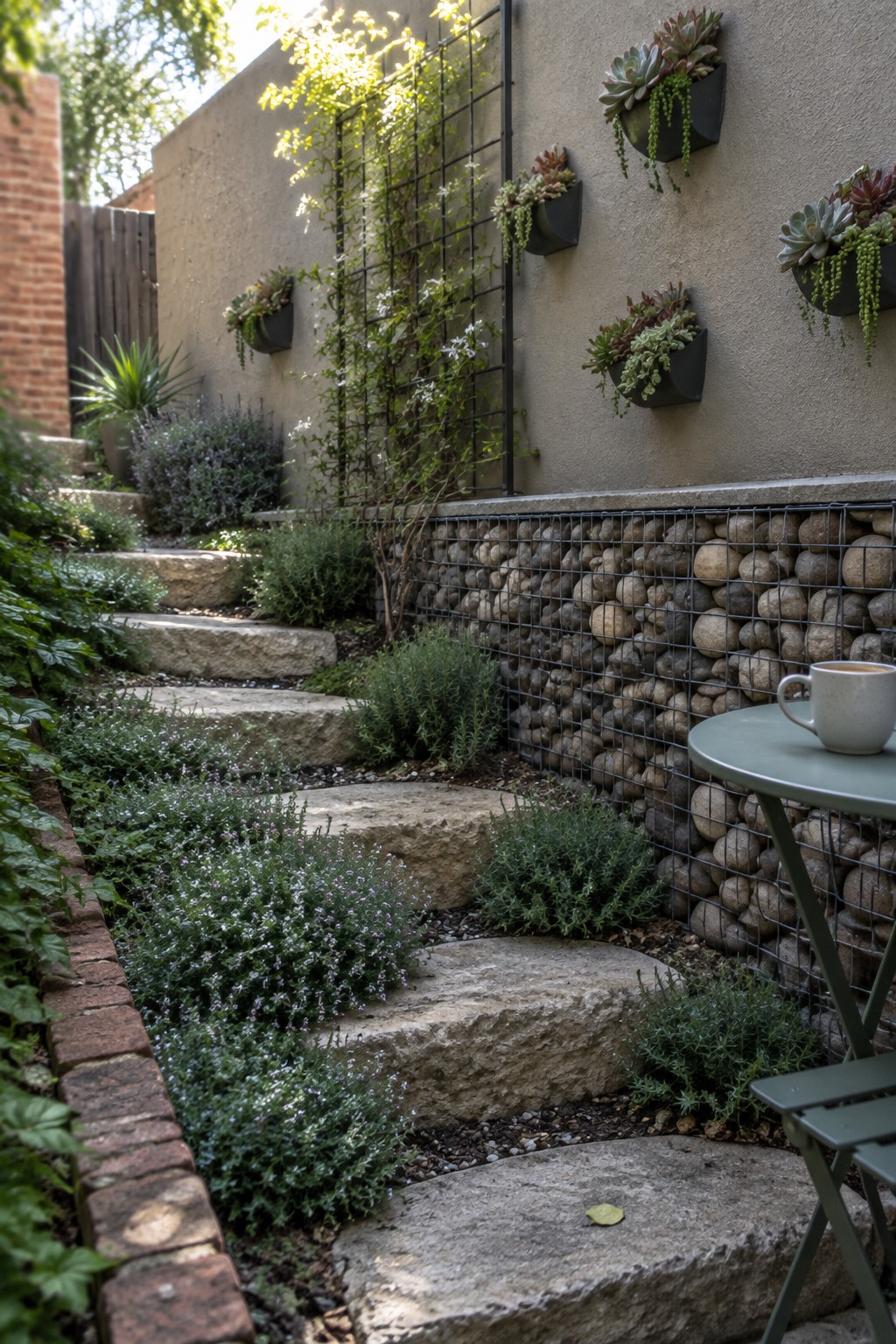
A gabion wall gives a rock garden clear structure without looking too formal. The wire cages hold stones in place and create a solid edge that works well on slopes or along paths. Drought tolerant plants can then be tucked into pockets or placed along the base so the whole area stays low maintenance.
This setup suits homes with dry summers or rocky soil where watering needs to stay minimal. Place the wall where it can double as a low seat or divider and fill it with local stone to help it blend in. Keep the planting simple with succulents or hardy ground covers so the rocks remain the main feature.
Combine Gravel With Succulents And Boulders
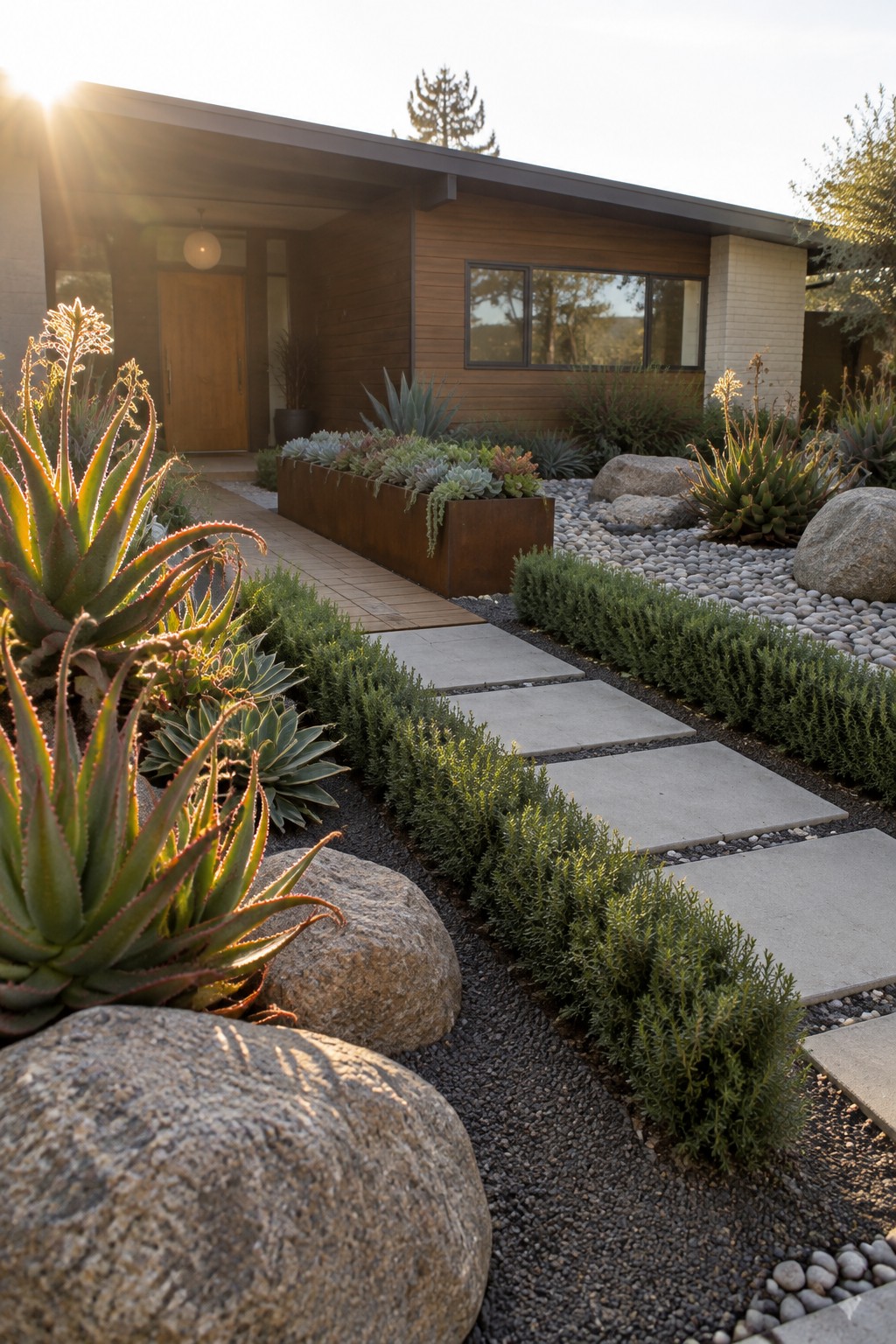
Gravel and large rocks give a rock garden a clean structure that stays neat with very little work. Succulents like agave and aloe sit well in these beds because they need almost no water once established and they handle heat without much fuss.
This approach works best in sunny front yards or side areas where you want low maintenance. Keep the gravel layer thick enough to block weeds and place the bigger boulders first so the plants can fill in around them naturally.
Raised Stone Borders With Drought Tolerant Plants
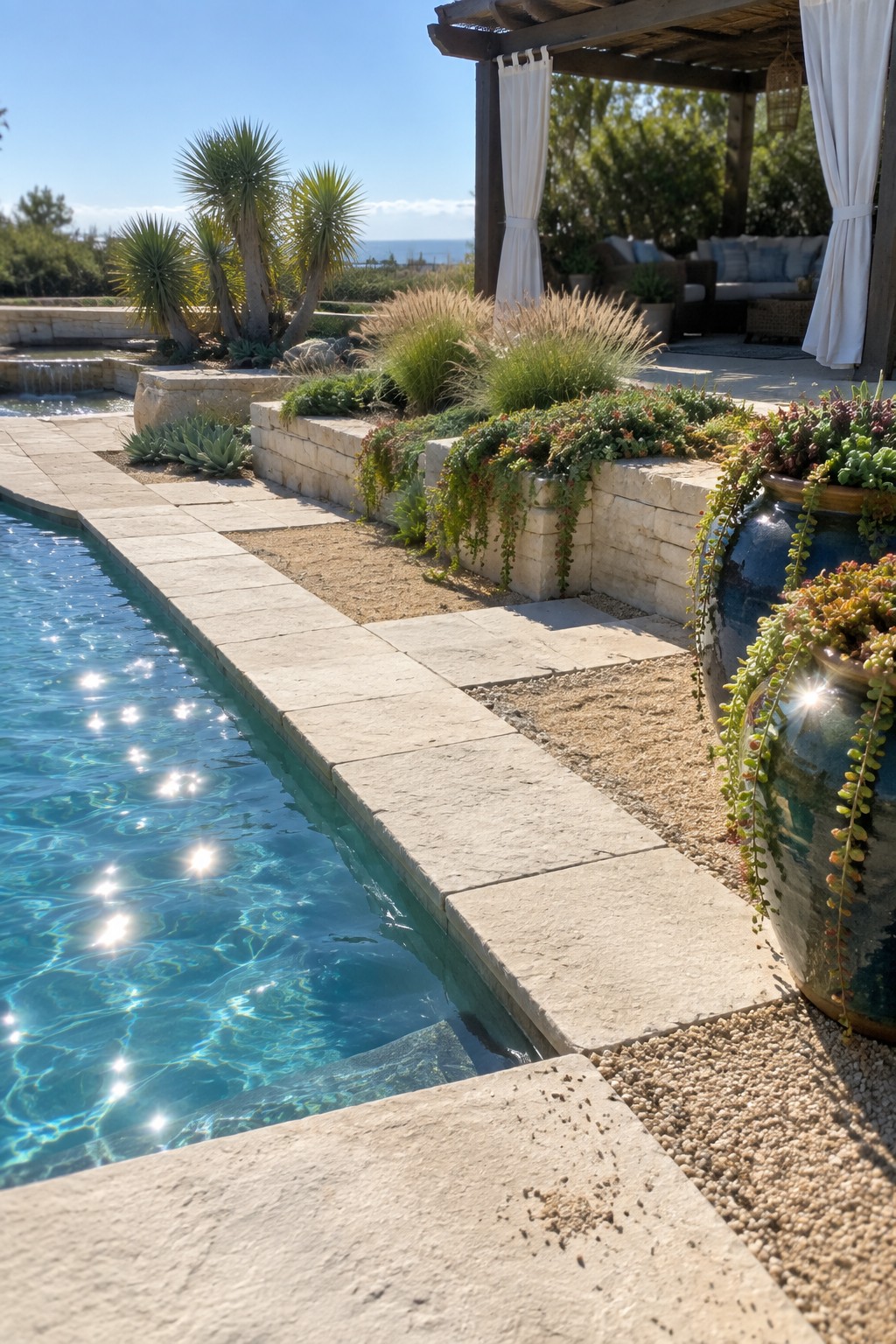
Raised stone borders give a garden clear lines while letting plants do most of the work. They keep soil contained, stop weeds from spreading into the beds, and create a simple backdrop for succulents and grasses that need little water.
This setup works best along paths, pool edges, or sunny slopes where drainage matters. Fill the beds with a mix of low succulents, trailing varieties, and taller grasses, then top the surrounding ground with gravel to cut down on maintenance.
Add Curves With River Rocks In Gravel Beds
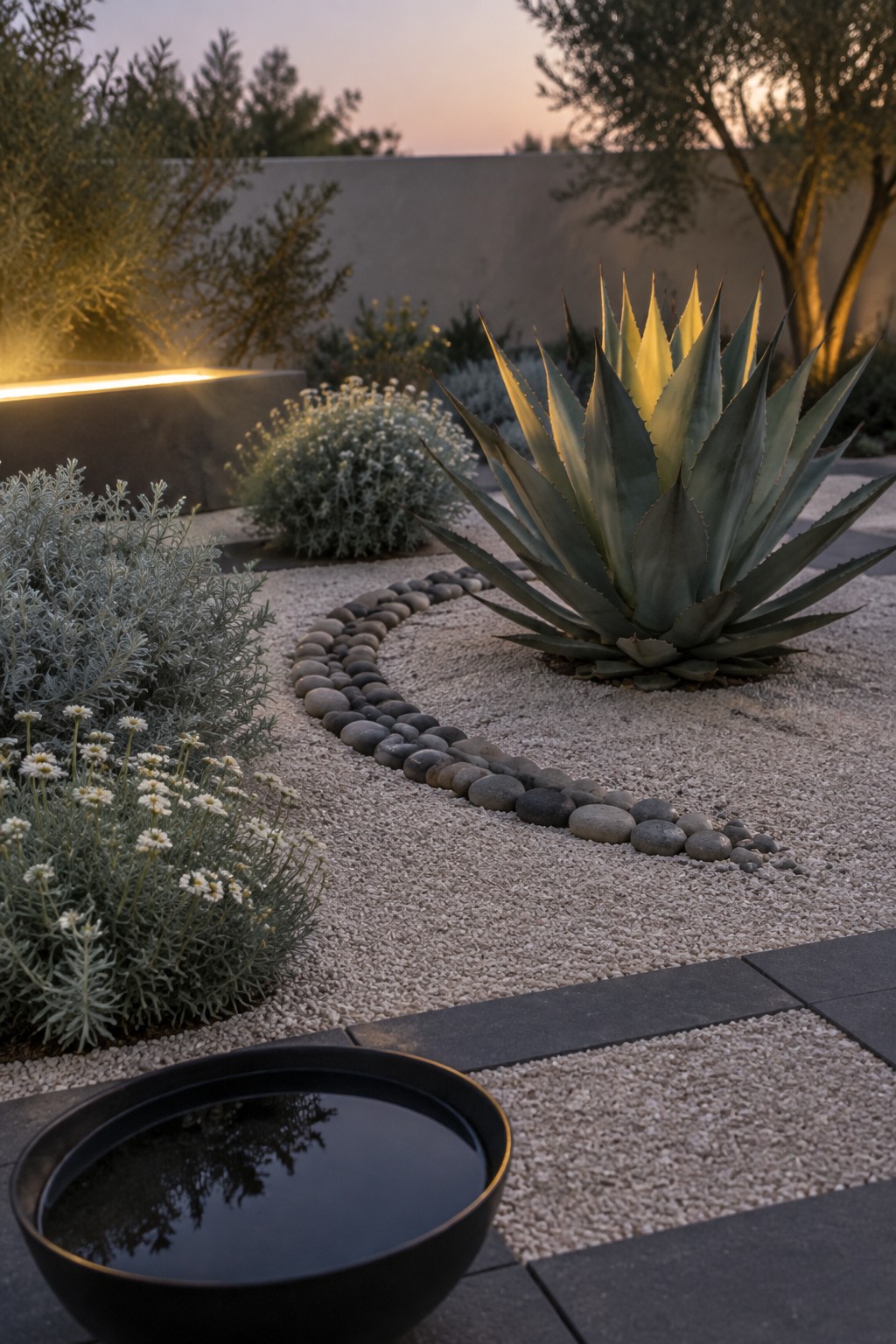
Laying smooth river rocks in a gentle curve through gravel gives a rock garden more shape without extra effort. The line helps separate planting areas and makes the space feel more thought out while still keeping things simple.
This works especially well in sunny yards that need low water use. Place the curve around a larger plant or let it wander between smaller shrubs to keep the layout easy to maintain over time.
Layer Drought Tolerant Plants Over Stone Walls
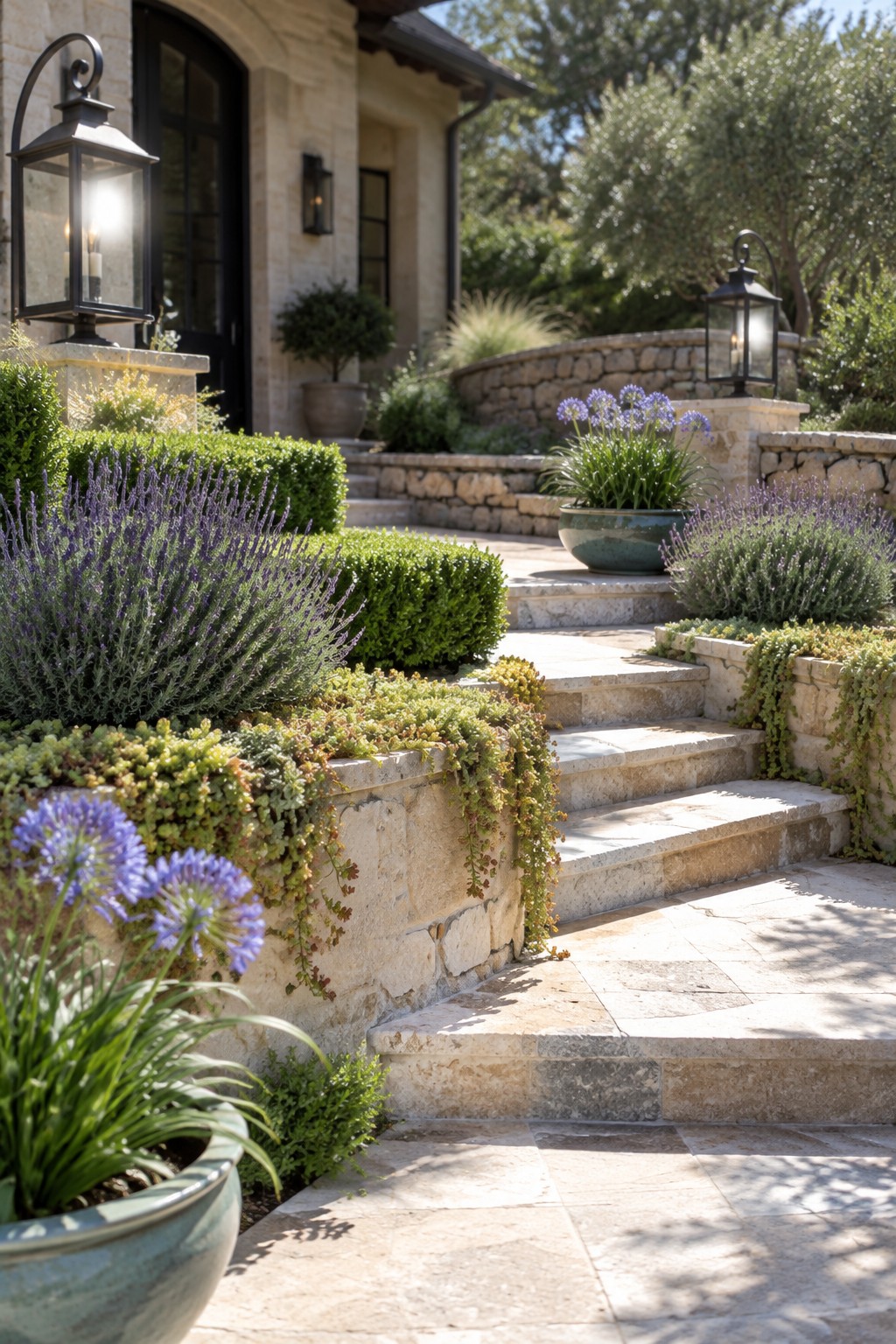
Stone walls and steps give a garden clear structure while letting plants spill and mound naturally. The mix of upright lavender and trailing succulents softens the hard edges and creates a full look that still feels simple.
This works best on sloped sites or around entries where you want low water use. Pick plants that handle dry spells, space them so they can fill in on their own, and keep the stone visible rather than trying to hide it completely.
Raised Concrete Planters For Succulent Gardens
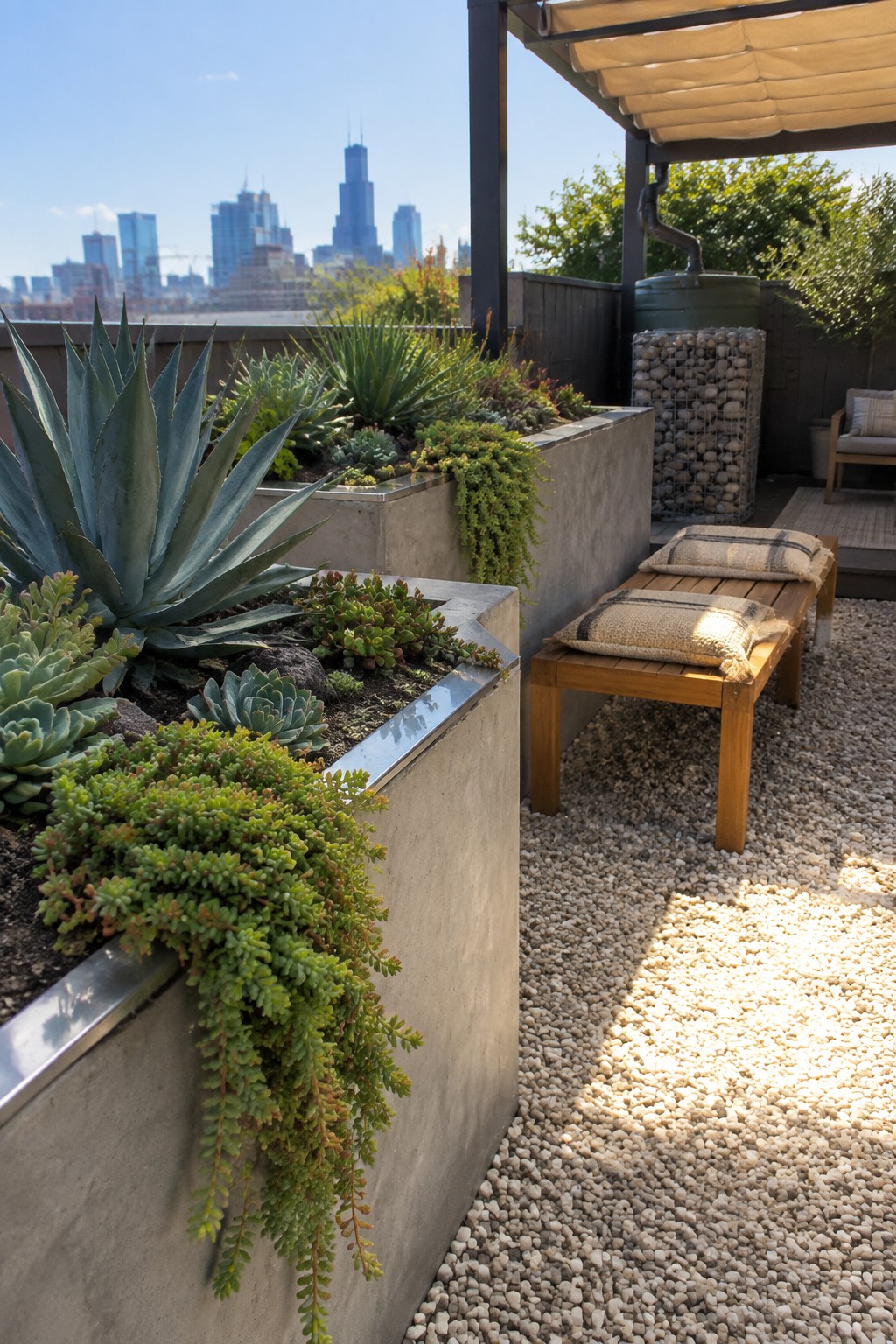
Raised concrete planters give you a clean way to grow succulents and other drought tolerant plants without worrying about soil spreading everywhere. The metal edging keeps everything looking tidy and helps the beds hold their shape over time. This setup works especially well when the ground is covered in gravel, since it creates good drainage and cuts down on weeds.
It suits rooftops, small yards, or any spot where you want low water use and minimal upkeep. Keep the plant mix simple, with a few taller varieties in the back and trailing ones along the edges. Make sure the planters have proper drainage holes so the roots stay healthy.
Rocks And Drought Tolerant Plants Create Low Maintenance Borders
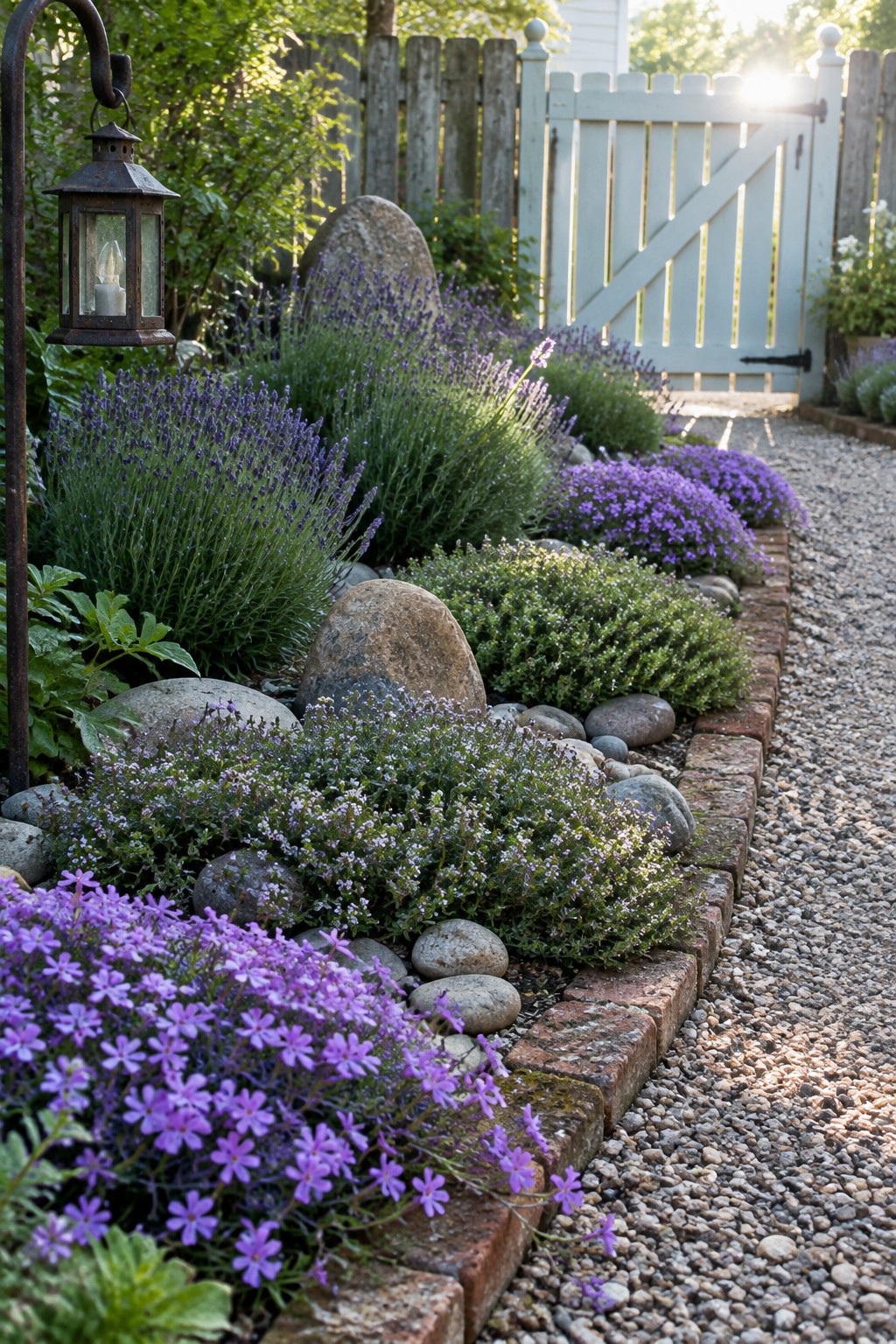
Mixing stones of different sizes with hardy plants gives a garden border that holds up without much work. The rocks help hold moisture in the soil while the plants fill in around them, cutting down on weeds and keeping the look full through dry spells.
This approach suits homes with gravel paths or sunny side yards where regular watering is not practical. Keep the stones varied in size and choose plants that spread low like lavender or creeping varieties so the bed stays covered and neat over time.
Layer Stone Steps Through Rock Gardens
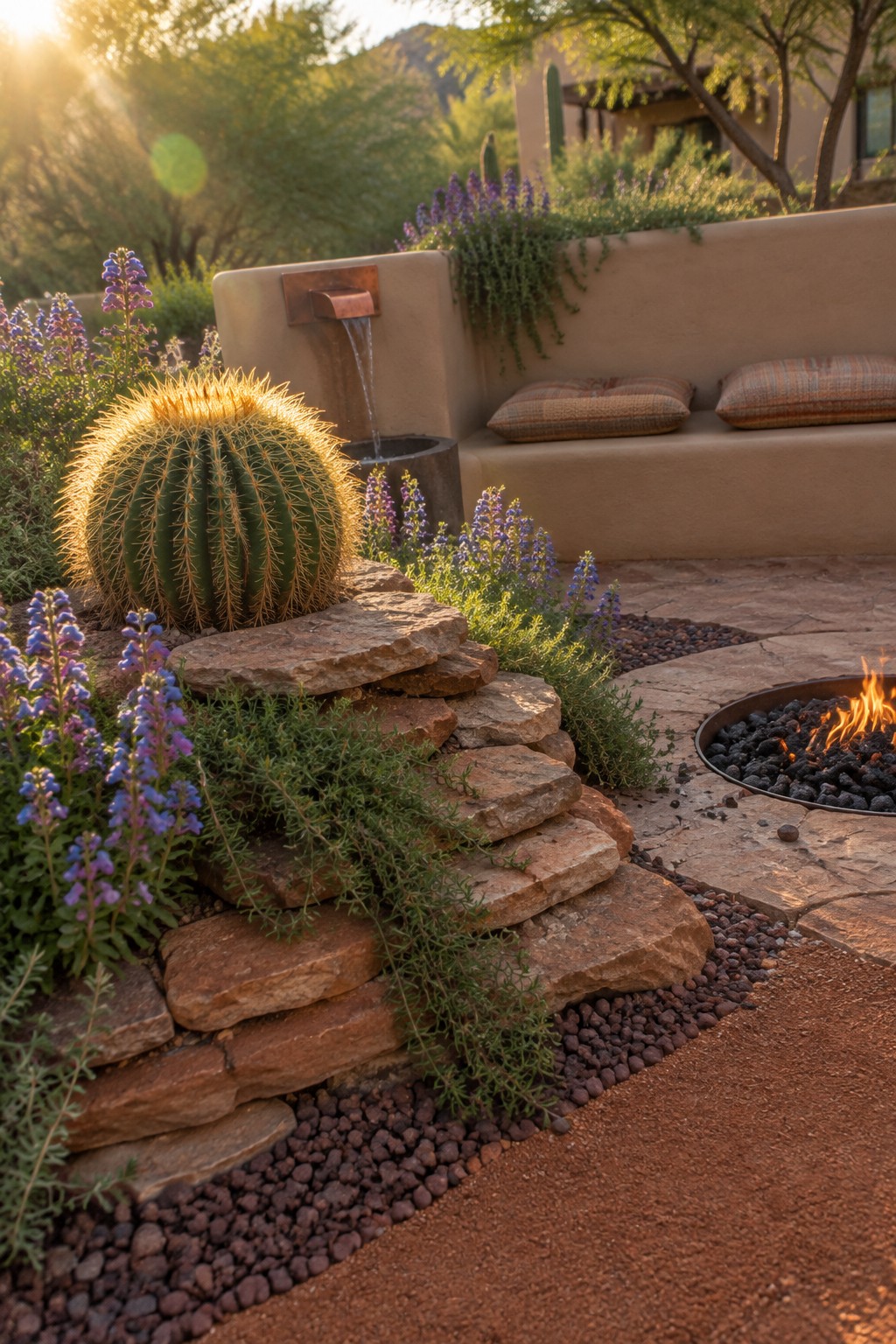
Stacked flat stones make a simple way to add height and structure to a rock garden without needing a lot of extra materials. The stones hold the soil in place, create small planting pockets, and let you work with a slope instead of fighting it. Gravel around the base keeps weeds down and helps water drain quickly, which pairs well with drought tolerant plants that do not like wet roots.
This approach works best in dry regions where you want low maintenance and a natural look. Start with larger stones at the bottom and work upward, leaving space between layers for ground cover or small shrubs. It suits homes with modest slopes or flat yards that need a bit more visual interest.
Layered Rock Terraces For Planting Pockets
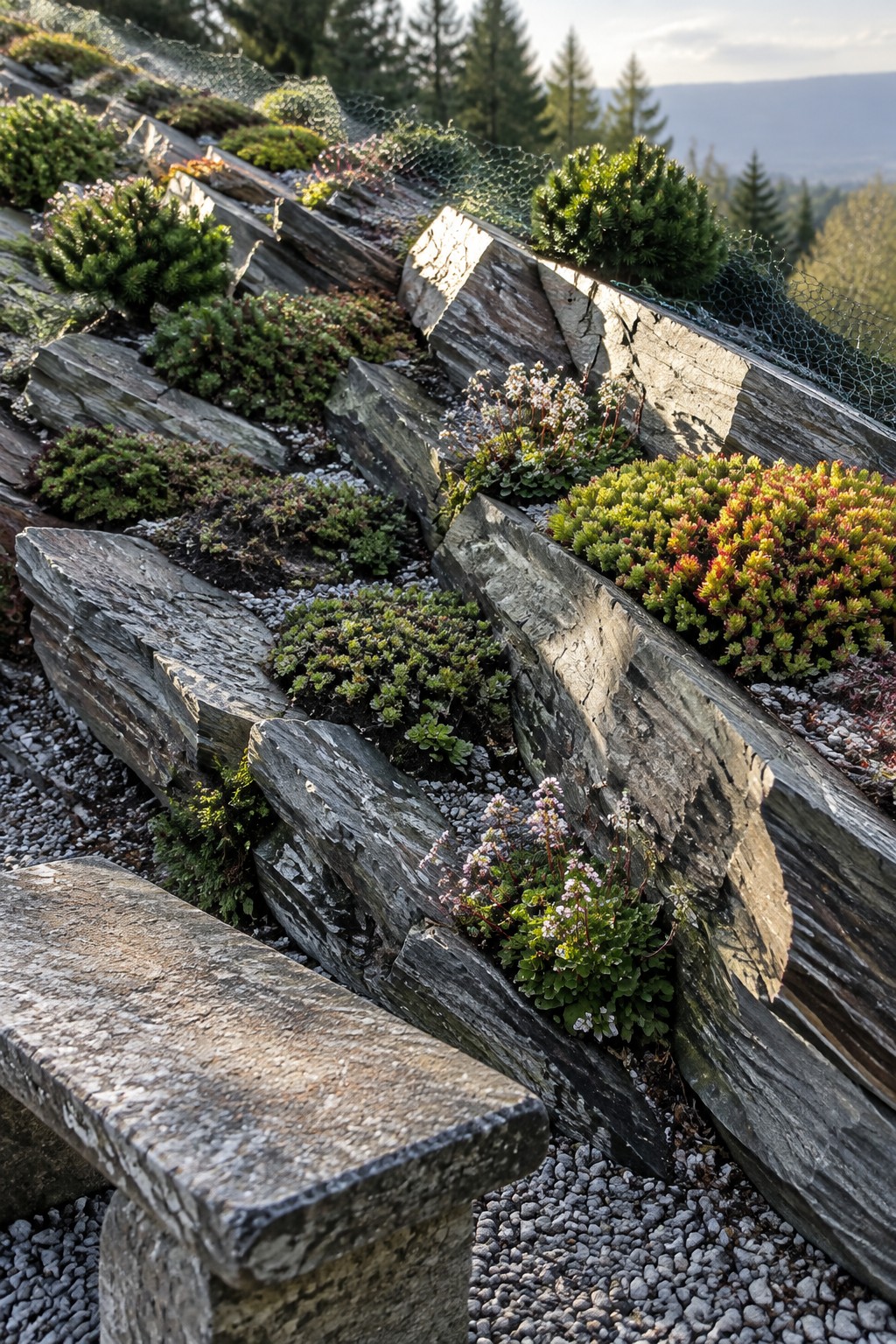
Stacking flat stones into low terraces gives you natural pockets of soil on a slope. The rocks hold everything in place while letting excess water drain away, which suits drought tolerant plants that do not like wet roots.
This setup works best on gentle hills where you want low maintenance beds without a lot of digging. Use the same kind of stone throughout so the terraces blend into the rest of the yard instead of standing out as separate walls.
Use Boulders For Natural Garden Edges
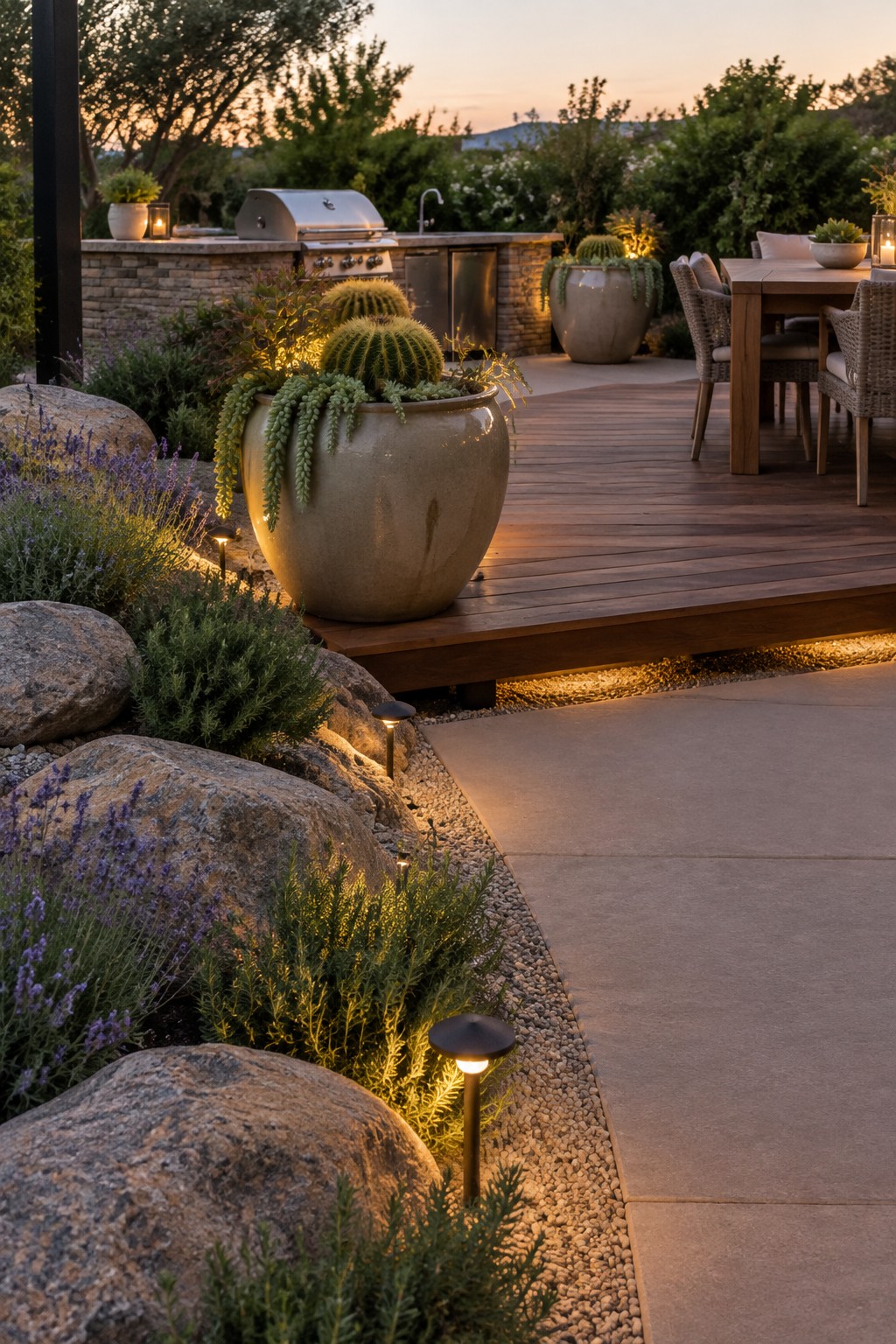
Large rocks give a rock garden real structure without a lot of extra work. They hold the beds in place, create contrast with the plants, and help the whole area feel settled rather than scattered.
Set the boulders where the planting meets a deck or path, then fill in with gravel and drought-tolerant plants around them. This approach works best in sunny yards where you want low water use and a clean look that still feels natural.
Frequently Asked Questions
Q: How often should I water the plants in my new rock garden?
A: Give everything a good soak right after you plant. Check the soil once a week for the first month and water only if it feels dry a few inches down. After that most drought-tolerant choices get by on rainfall alone.
Q: What if some of my rocks shift around over time?
A: Push them back where they belong when you spot the problem. A light layer of gravel along the edges usually keeps things from moving again.
Q: Can I add more plants later if the garden looks too bare at first?
A: Wait through one full season first. You will see exactly where the gaps are and can tuck in extras without crowding anything.
Q: Do these plants need fertilizer every year?
A: Skip it. Lean soil keeps them compact and healthy without extra feeding.
