

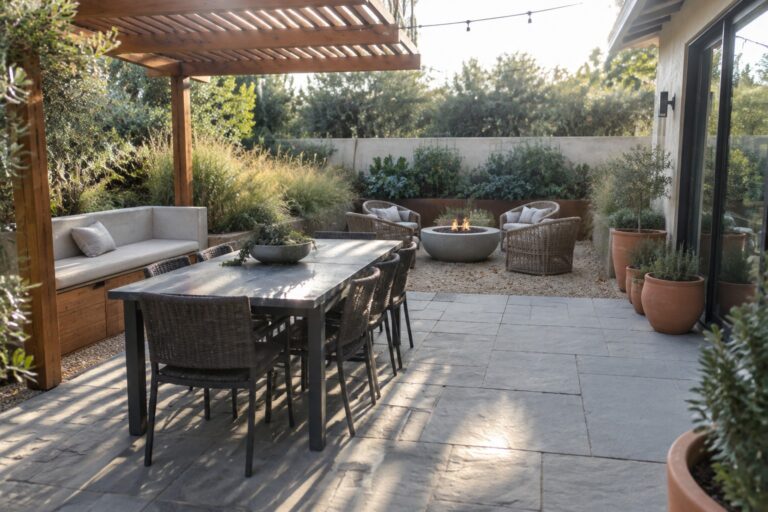
Backyards tend to feel more usable when the patio connects smoothly to the rest of the space through simple pathways and planted borders that guide movement.
I have learned that multi-use designs often fail if the surrounding plantings do not leave enough room for different setups like tables or lounge chairs without crowding.
Testing a few edging options early on usually shows me which materials hold up best against foot traffic and weather.
Layering shrubs at varying heights helps define the area over time without needing constant maintenance.
Some layouts I have tried make me want to spend more time outside because everything just works together better.
Create Separate Zones On A Large Patio
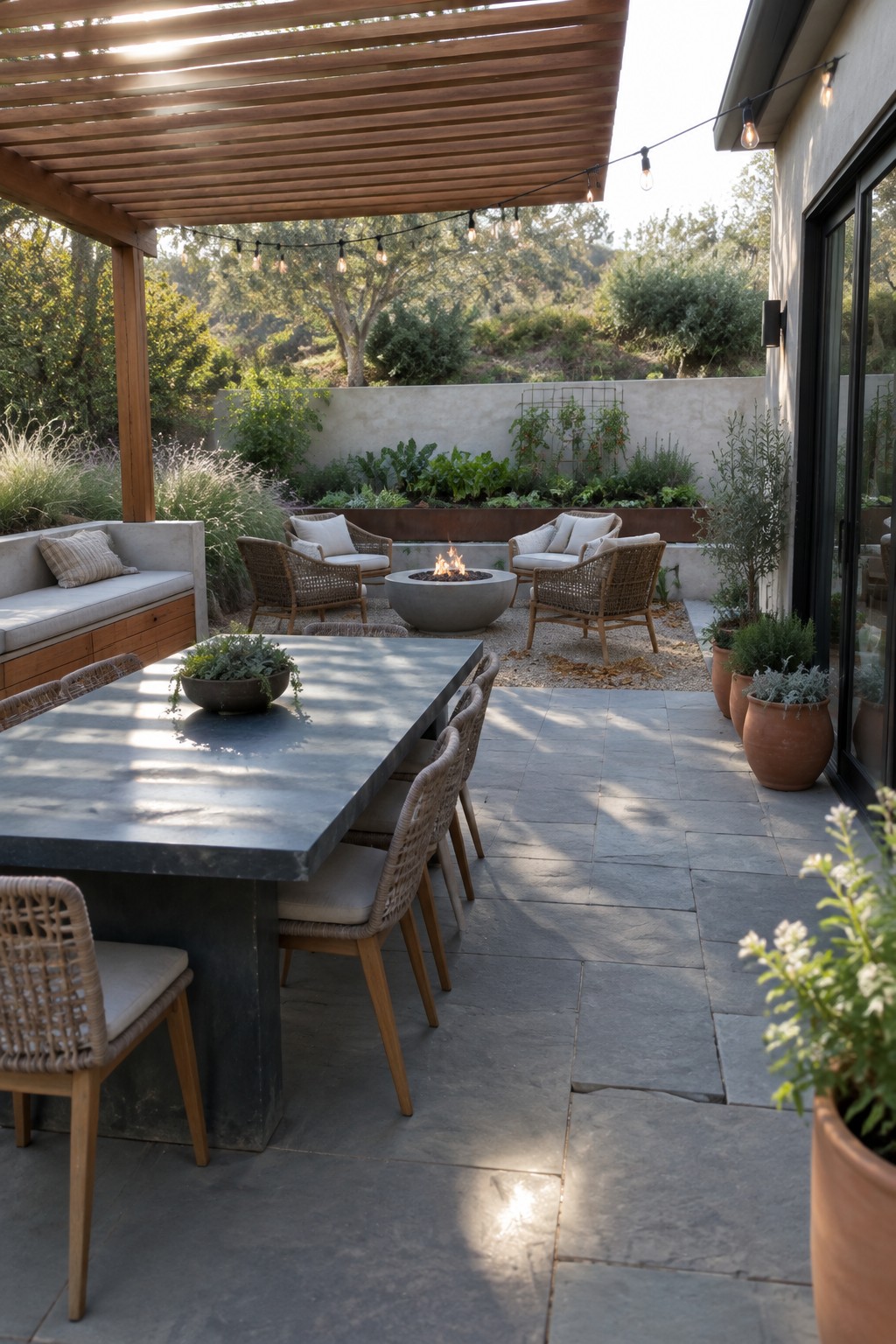
A single big patio surface can feel aimless if everything sits in one open stretch. Splitting it into clear zones keeps the space useful without adding walls or extra structures.
One side can hold a long table for meals while the other circles a fire pit for quieter evenings. This setup works best on patios that already have decent size and some overhead cover like a pergola.
Adding An Outdoor Kitchen To A Patio
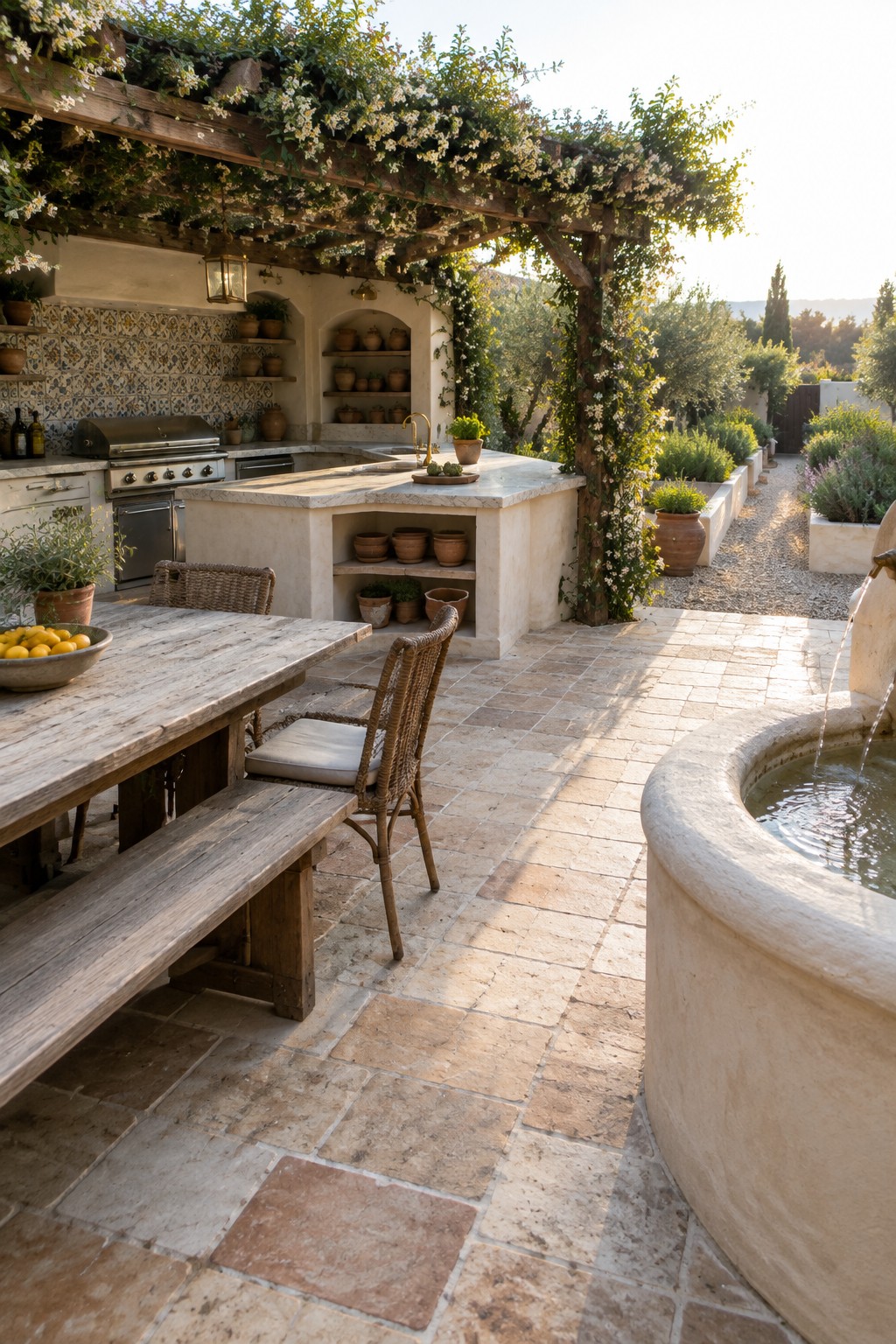
An outdoor kitchen gives a patio a clear purpose beyond just sitting outside. When the counter runs along one side and faces the dining table, the space starts to feel like an extension of the house rather than a separate spot. The built-in shelves underneath also keep serving pieces handy without cluttering the surface.
This setup works best in backyards that get regular use and have room for both cooking and seating. Choose durable stone or concrete for the counters and leave enough walking space around the table so the area does not feel cramped during meals.
Separate Dining and Lounging Areas on One Patio
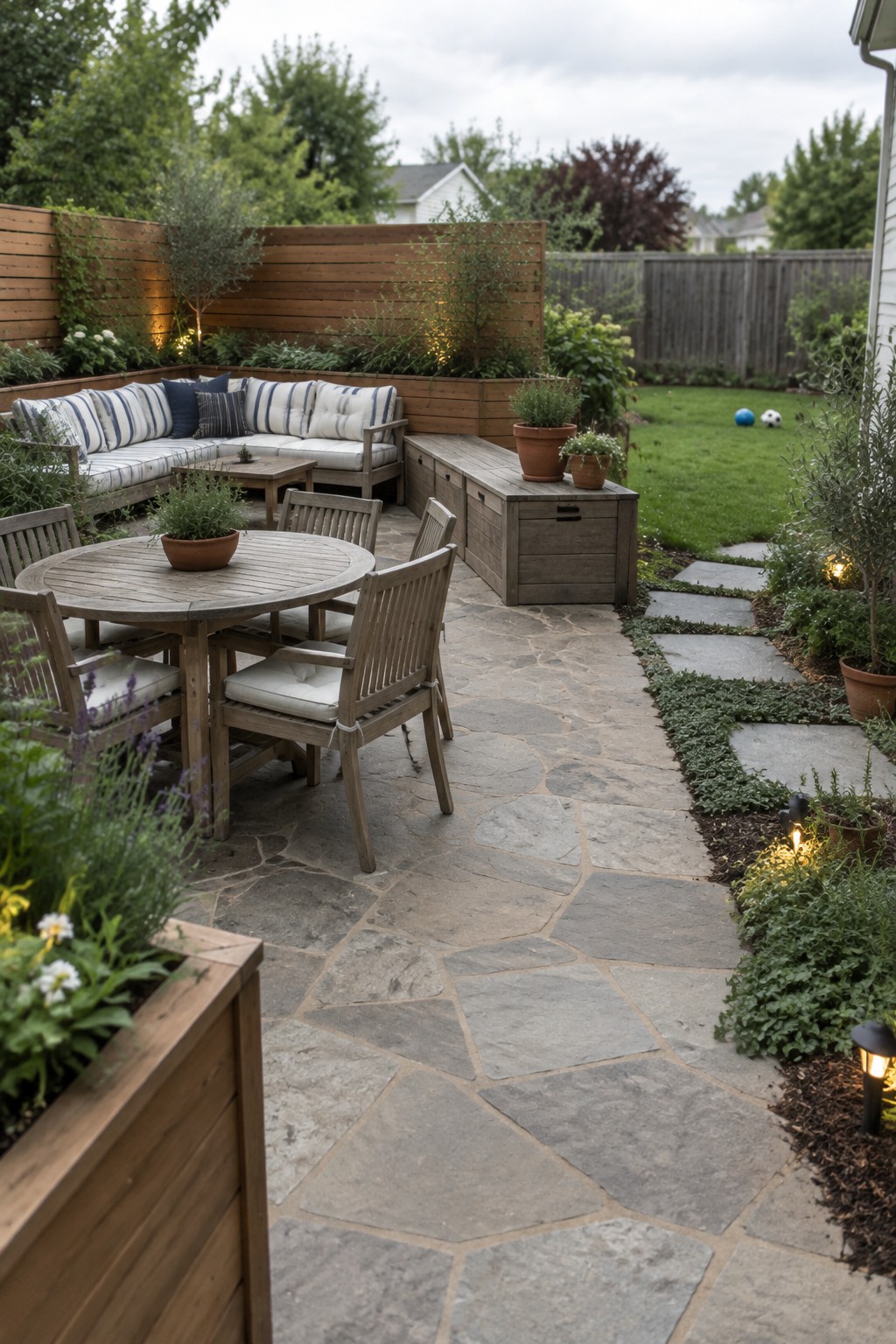
Many patios end up underused because everything gets crammed into one open space. Splitting the area into a dining zone and a lounge zone gives each activity its own spot without needing a bigger yard.
A built-in bench with storage works well along one edge to anchor the lounge side, while a table and chairs can sit nearby on the same paved surface. This setup suits homes with medium backyards where the patio needs to handle meals and casual seating on the same day.
Zoning a Patio Into Different Activity Areas
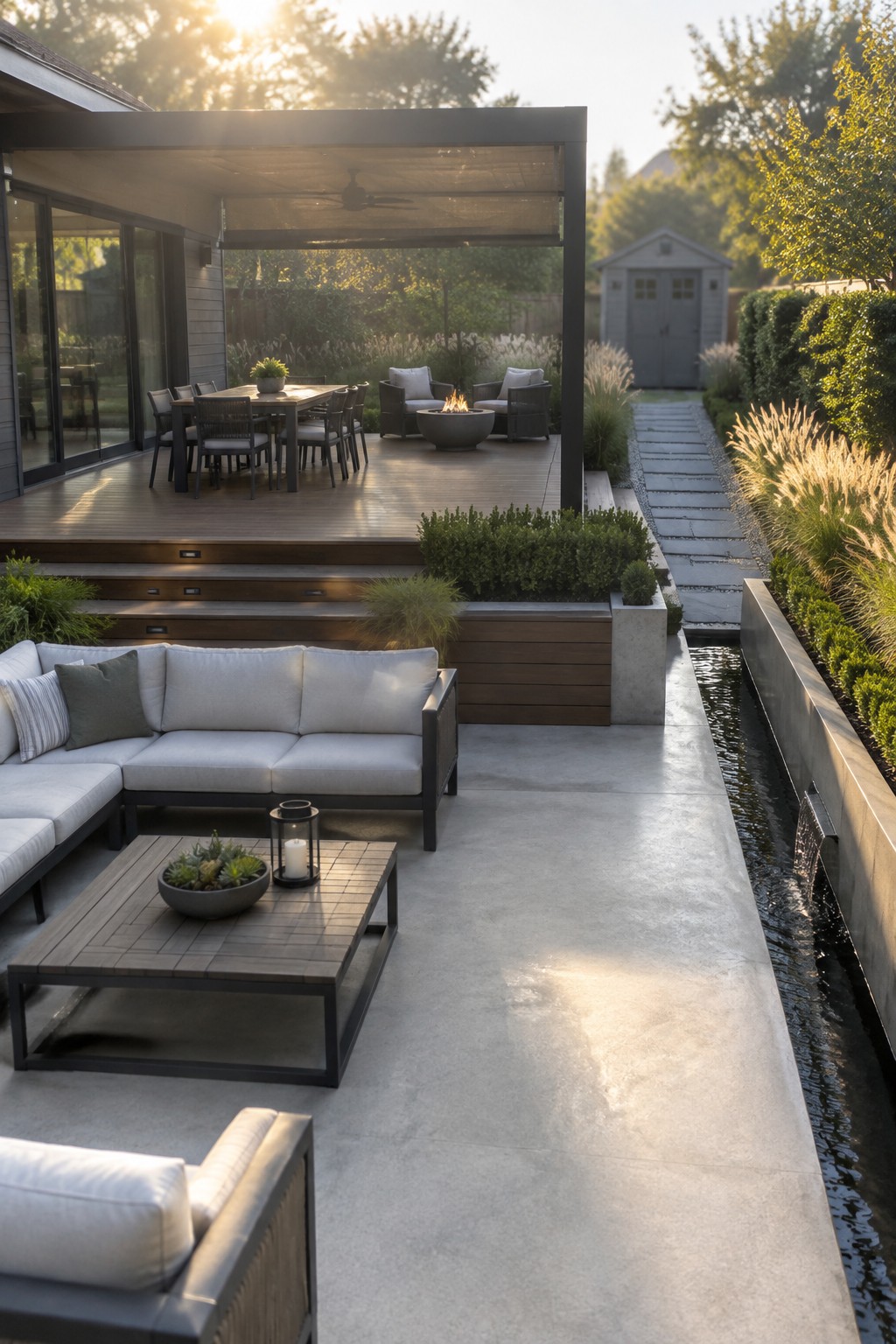
Many backyards feel more useful when the patio is split into clear zones instead of one big open space. A raised deck section can hold a dining table and chairs while the lower level keeps lounge seating and a fire pit. This setup lets people cook and eat in one spot while others relax nearby without everyone crowding the same area.
The approach works best on patios that already have a slight change in level or room to add steps. Keep the dining zone close to the house doors and place the fire pit farther out so smoke does not drift inside. A simple water feature along one edge can also help mark the boundary between zones without adding a wall.
Add Both Dining And Seating To Your Patio
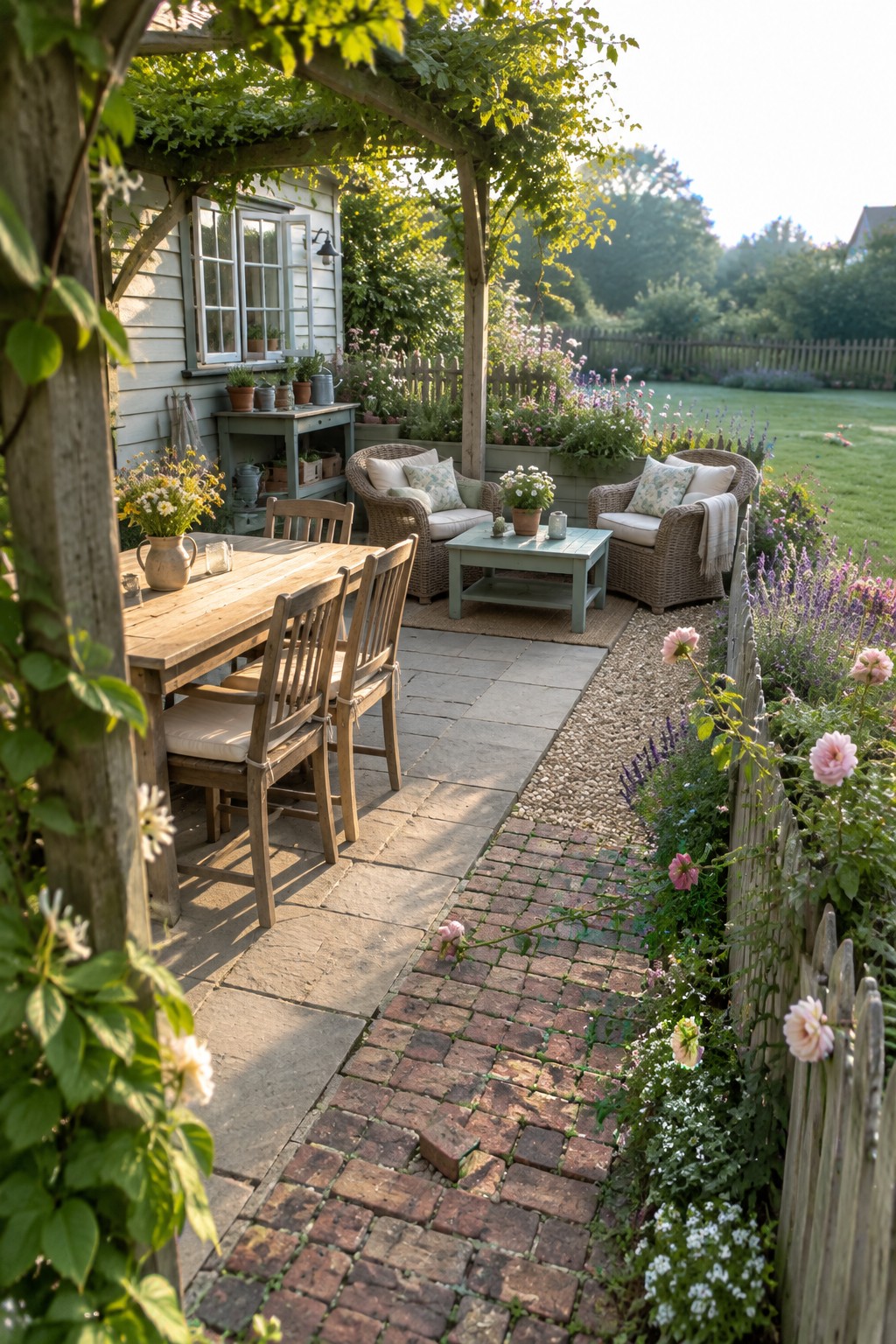
A patio feels more useful when it handles more than one job at once. Placing a full dining table alongside lounge chairs lets the same space work for meals and for sitting with a drink later. The layout stays open because the zones sit side by side rather than stacked on top of each other.
This setup works best on a medium-size backyard where the patio already has some shade. Keep the dining area near the house or kitchen door and set the lounge chairs a little farther out so traffic moves easily between them. Watch the scale of the furniture so neither zone crowds the other.
Zoning a Patio for Different Activities Next to the Pool
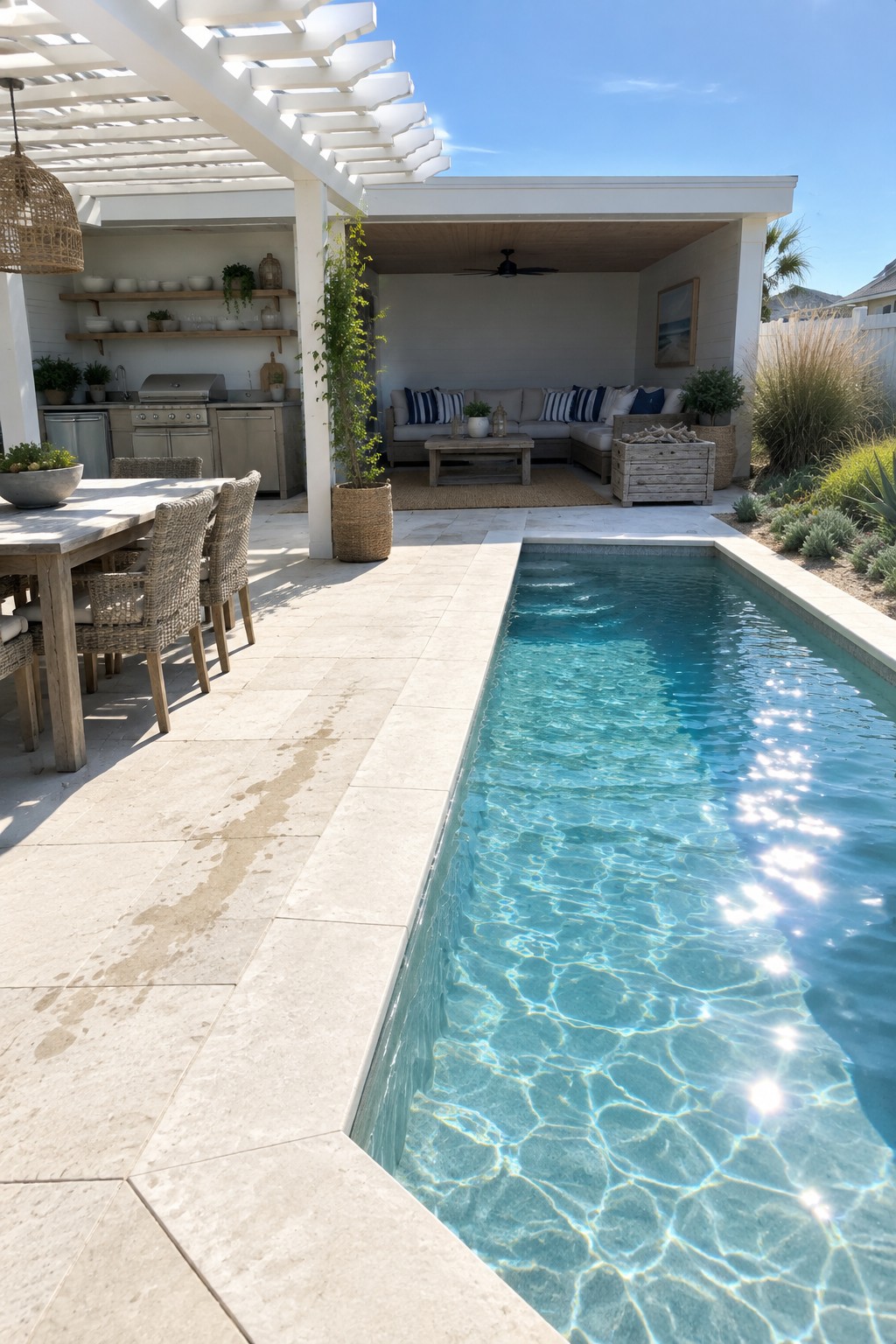
One useful approach is to line up separate activity areas along the side of a pool so everything stays connected on the same level. A dining spot, an outdoor kitchen, and a lounge area can sit side by side without feeling crowded or scattered.
This setup works best on longer lots where the pool runs parallel to the house. It keeps traffic simple and lets the space handle swimming, meals, and relaxing all at once. Just make sure the paving stays wide enough for chairs and foot traffic to move freely.
Brick Patios Built for Outdoor Meals
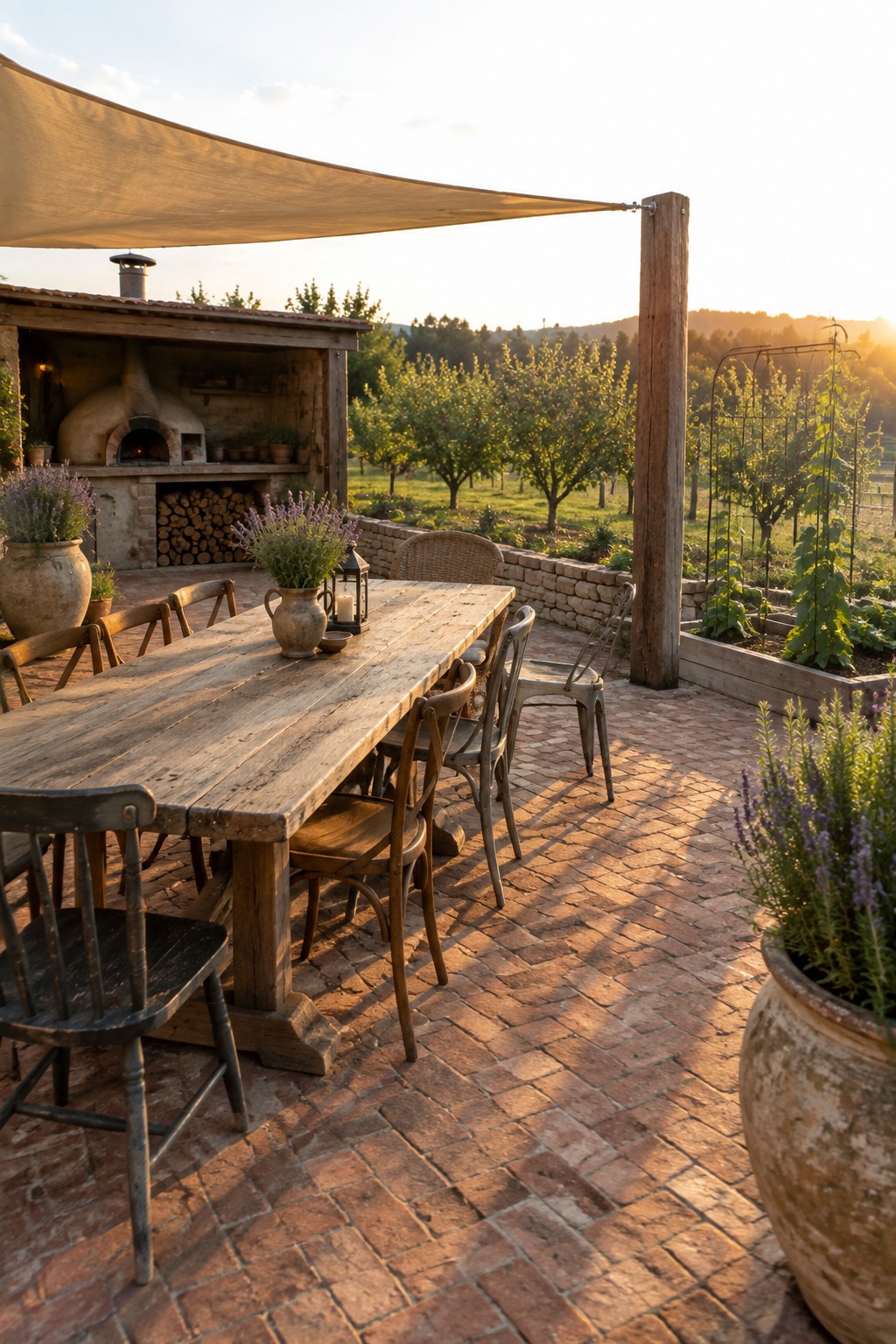
A brick patio gives you a solid surface that holds up to daily use while still feeling tied to the garden around it. It works especially well when you place a long table right in the middle so the space can shift easily from morning coffee to dinner with friends without needing extra furniture.
This setup suits homes where the backyard already has raised beds or planting areas nearby. Keep the paving simple and let the table do the main work. Just make sure the patio is large enough for chairs to pull out comfortably on all sides.
Use a Low Patio Platform Next to Water
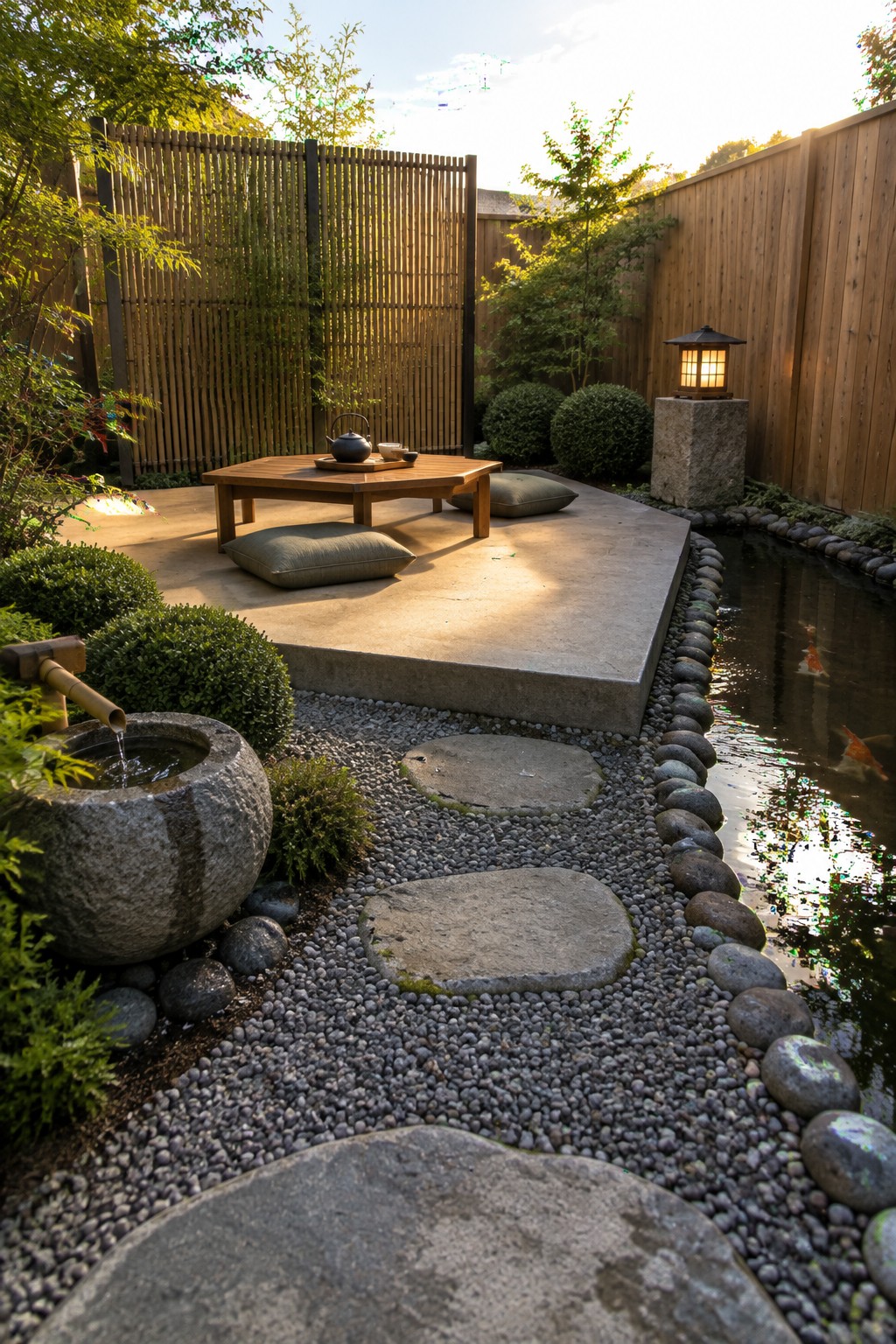
A low concrete patio gives you a solid spot for seating or small gatherings while keeping the rest of the yard open. It works especially well when placed beside a pond, since the flat surface stays easy to clean and the water adds a quiet feel without extra structures.
Set the patio at ground level or just a few inches up, then run stepping stones through gravel to connect it to the rest of the garden. This layout suits smaller yards or homes that want one main outdoor area for multiple uses instead of separate zones.
Built-In Benches Add Storage To Narrow Patios
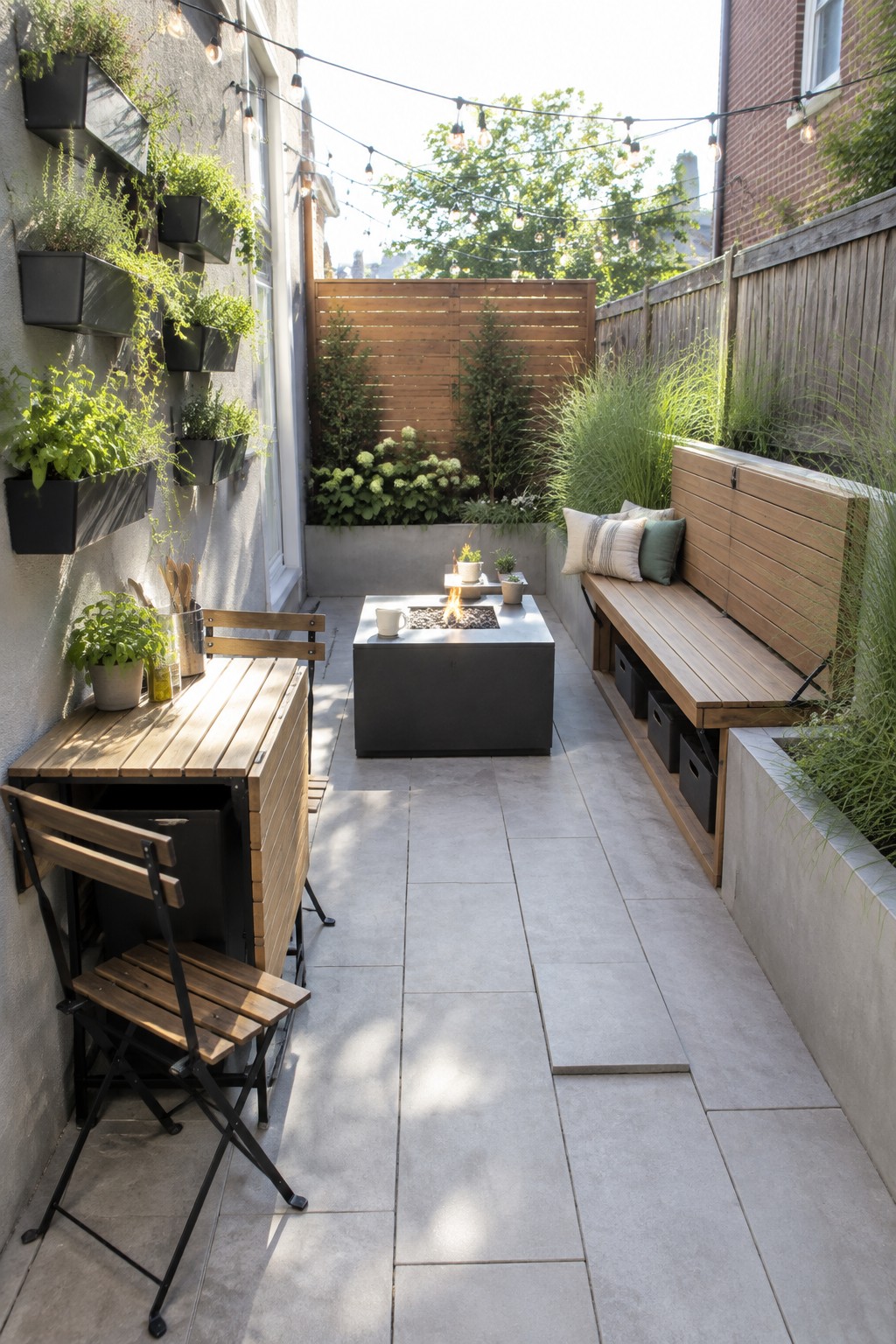
Small patios often end up cluttered because there is nowhere to put cushions, tools, or extra seating. A built-in bench with storage underneath solves this by turning the edge of the space into both seating and hidden cabinets at once.
This approach suits long, narrow yards best. Place the bench along one wall so it doubles as a backrest for the fire pit area while keeping the middle of the patio open for movement.
Zoning a Patio Into Separate Areas
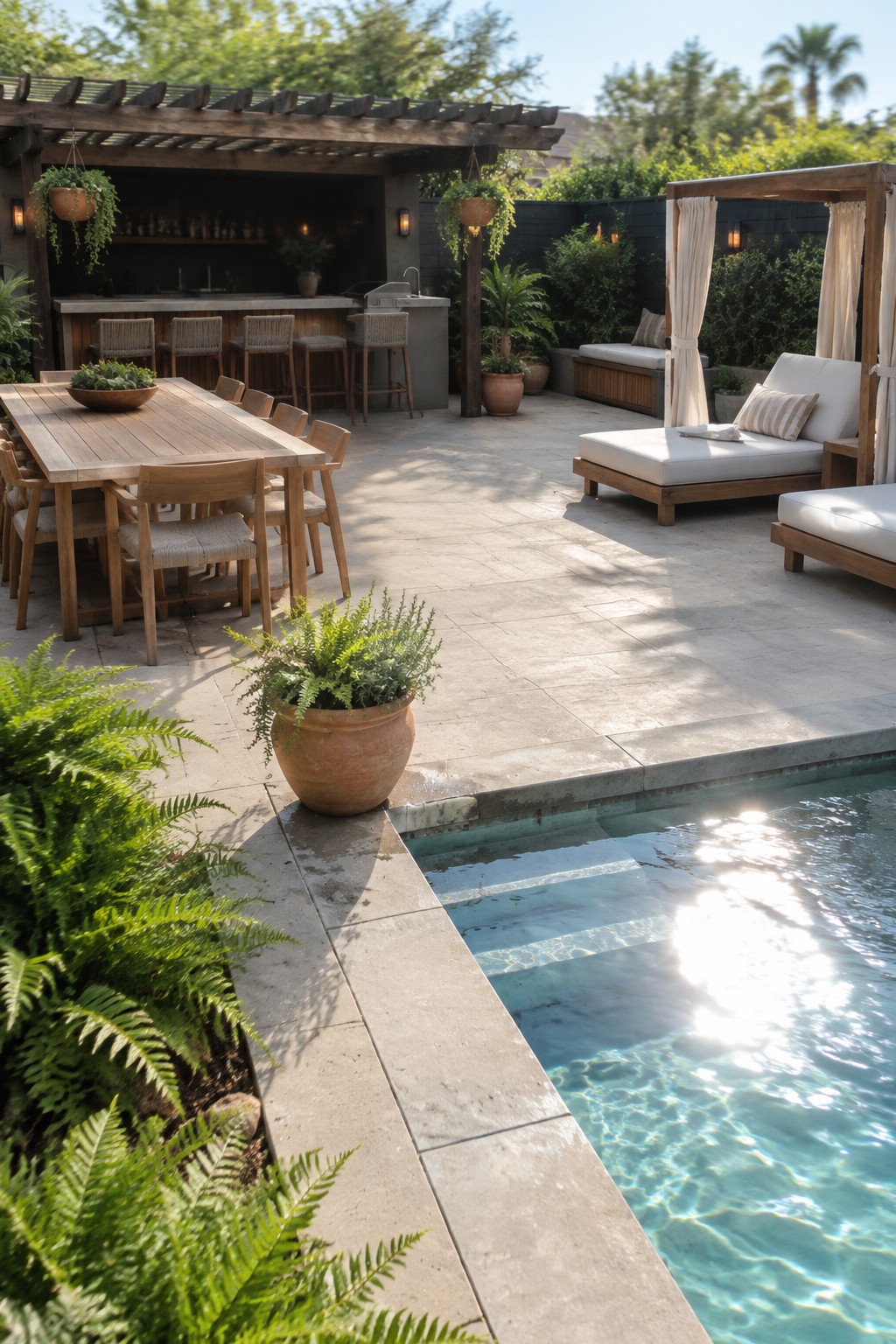
One way to get more use out of a backyard patio is to split it into clear zones instead of leaving it as one open space. A long dining table on one side and lounge chairs near the water on the other lets people eat in one spot and relax in another without everything feeling crowded together.
This setup works best on larger patios where the same paving runs throughout but furniture and a few plants mark the change between zones. It suits homes that want both meals and casual lounging near a pool, as long as the zones stay connected enough for easy movement.
Anchor the Patio With a Fireplace
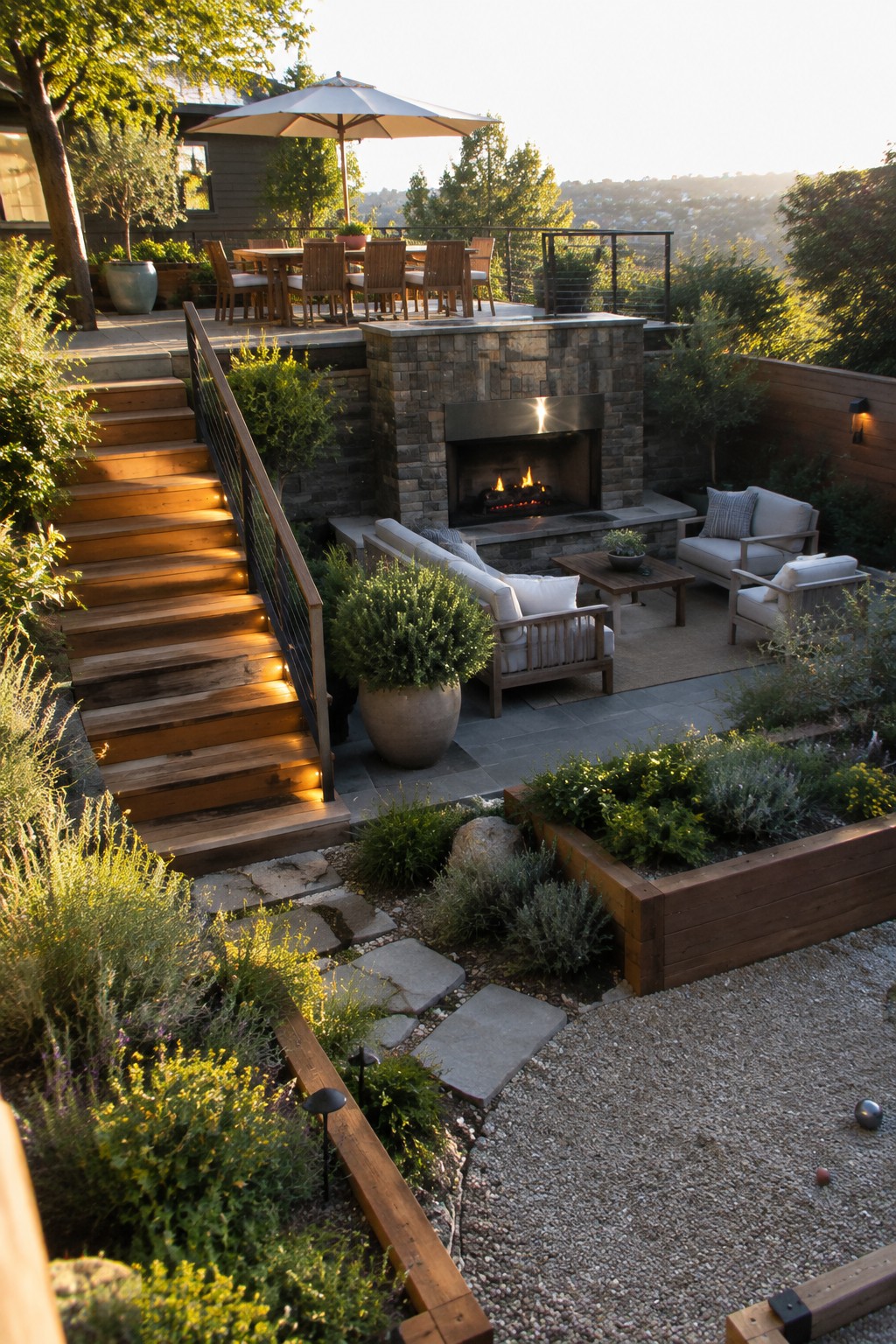
A fireplace placed right in the patio layout gives the whole space a natural center point. It splits the area into smaller seating spots without adding walls or screens, so people can gather close to the fire or sit a bit farther back depending on the weather.
This setup works best on patios that connect to garden beds or lower yard levels. Leave clear paths around the sides so the space stays easy to walk through, and keep the seating low and simple so the fire stays the main draw.
Set Up a Patio Table for Both Work and Daily Meals
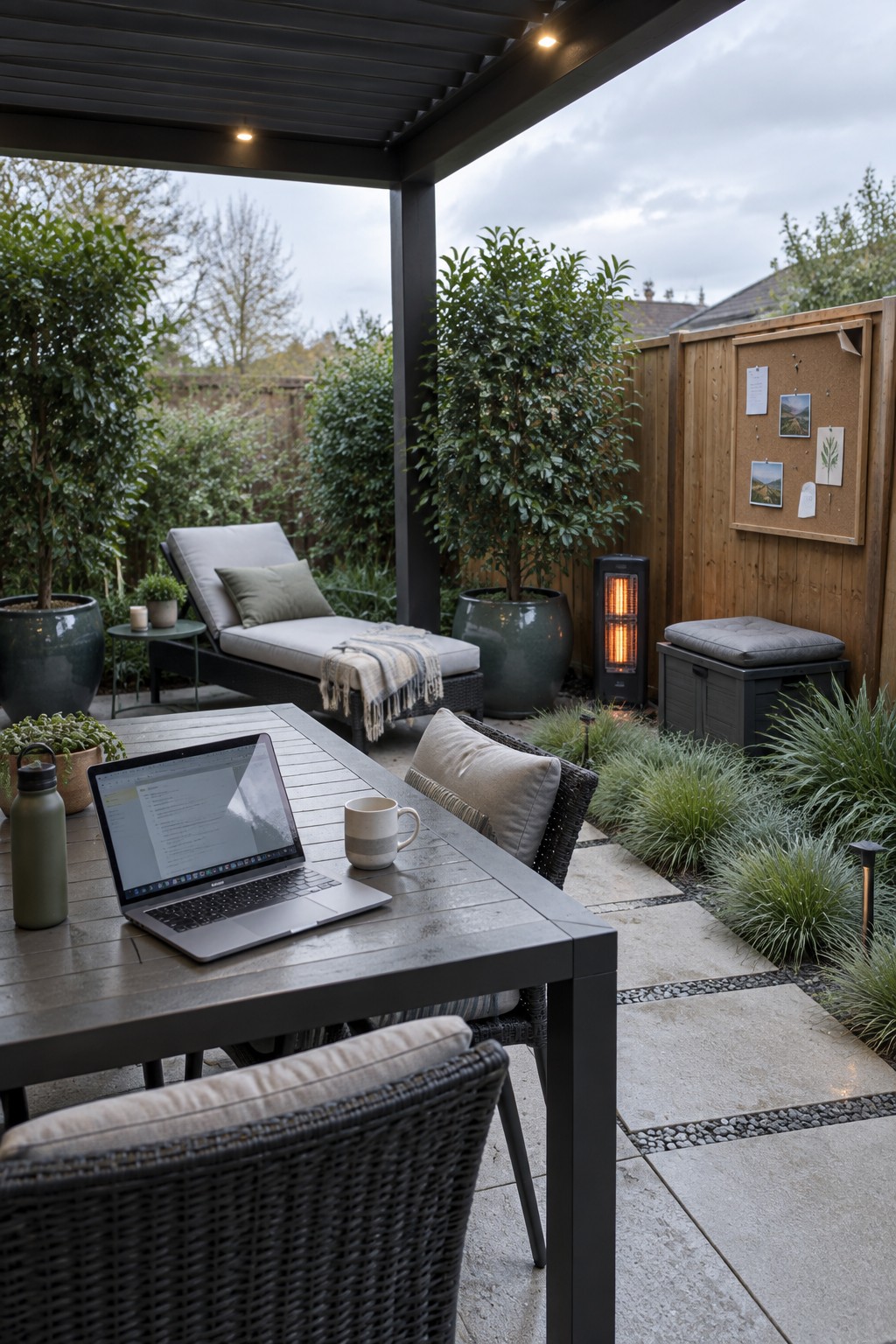
A solid outdoor table gives the patio a real purpose beyond just sitting. It lets you move work or meals outside without needing separate zones, which keeps the space practical and used more often.
This setup works best in backyards with some overhead cover and planting around the edges to create a sense of enclosure. Keep the table clear of clutter so it can switch between uses without much effort.
Fire Pit Placement for Multi-Use Patios
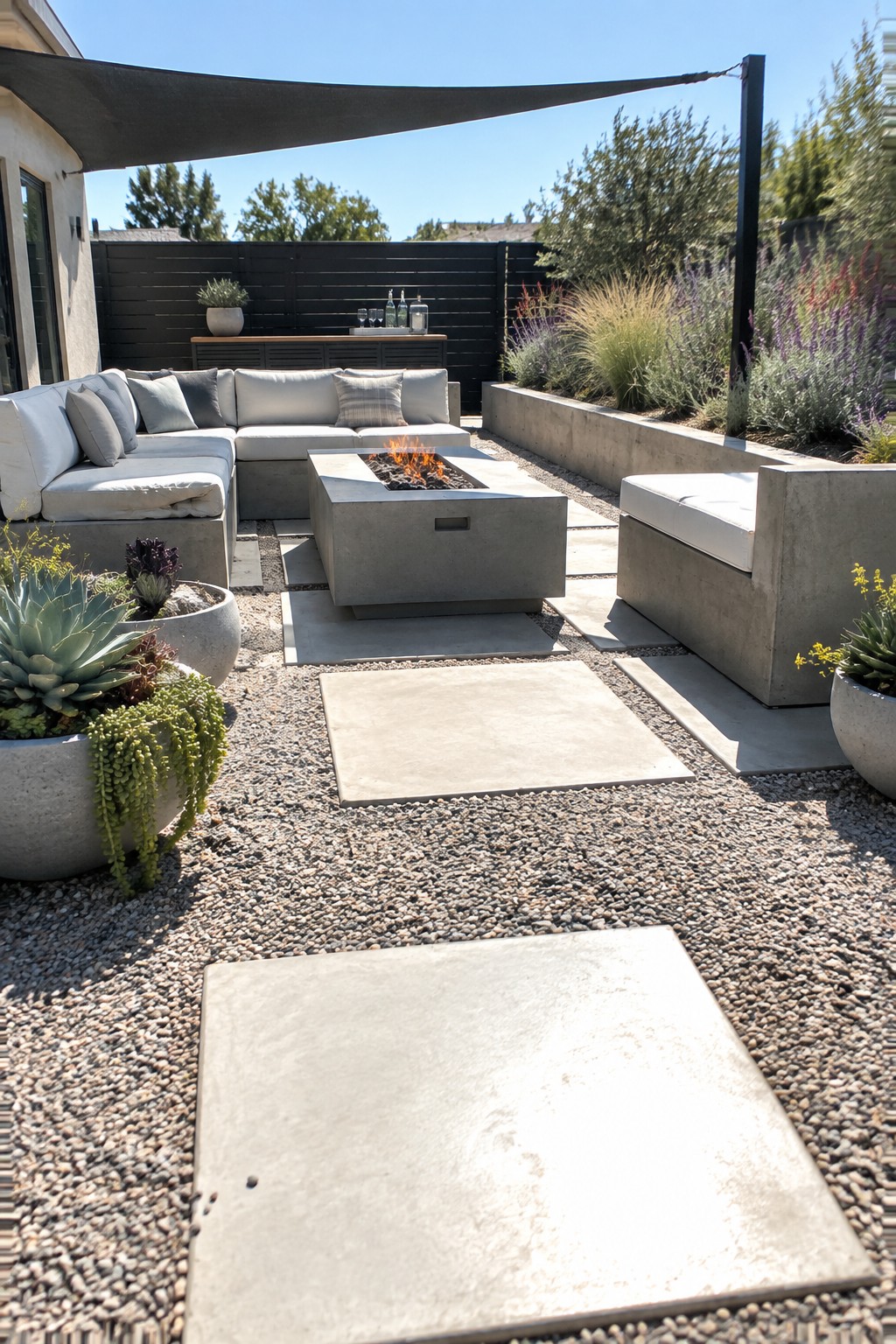
A central fire pit works well when the rest of the patio stays open and easy to move around. It gives people a reason to gather without locking the space into one fixed setup, and the surrounding seating can stay simple since the fire does most of the work.
This layout suits smaller backyards that need to handle both quiet evenings and larger groups. Keep the fire pit low and wide so it does not block views or paths, and use pavers set into gravel to define walking routes that can be adjusted later if needed.
Put the Outdoor Kitchen Right by the Pool
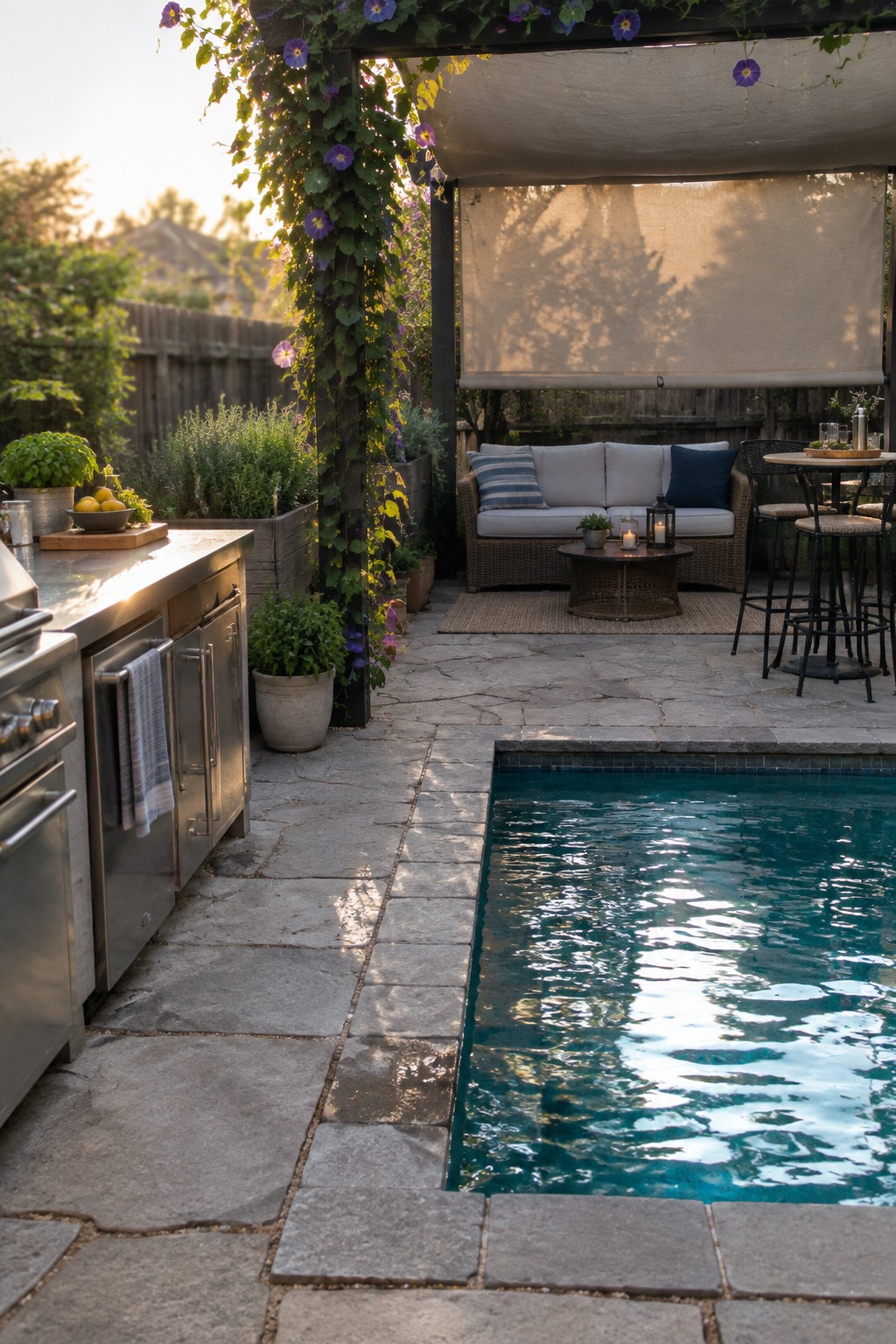
Placing the cooking area directly beside the pool turns the whole patio into one working space. It keeps food, drinks, and seating within a few steps of the water so people can move around without leaving the main area.
This works well on smaller lots where you want the pool to feel like part of daily life rather than something separate. Just keep the kitchen facing the lounge seats so the cook stays part of the group.
Create Multiple Activity Zones on One Patio
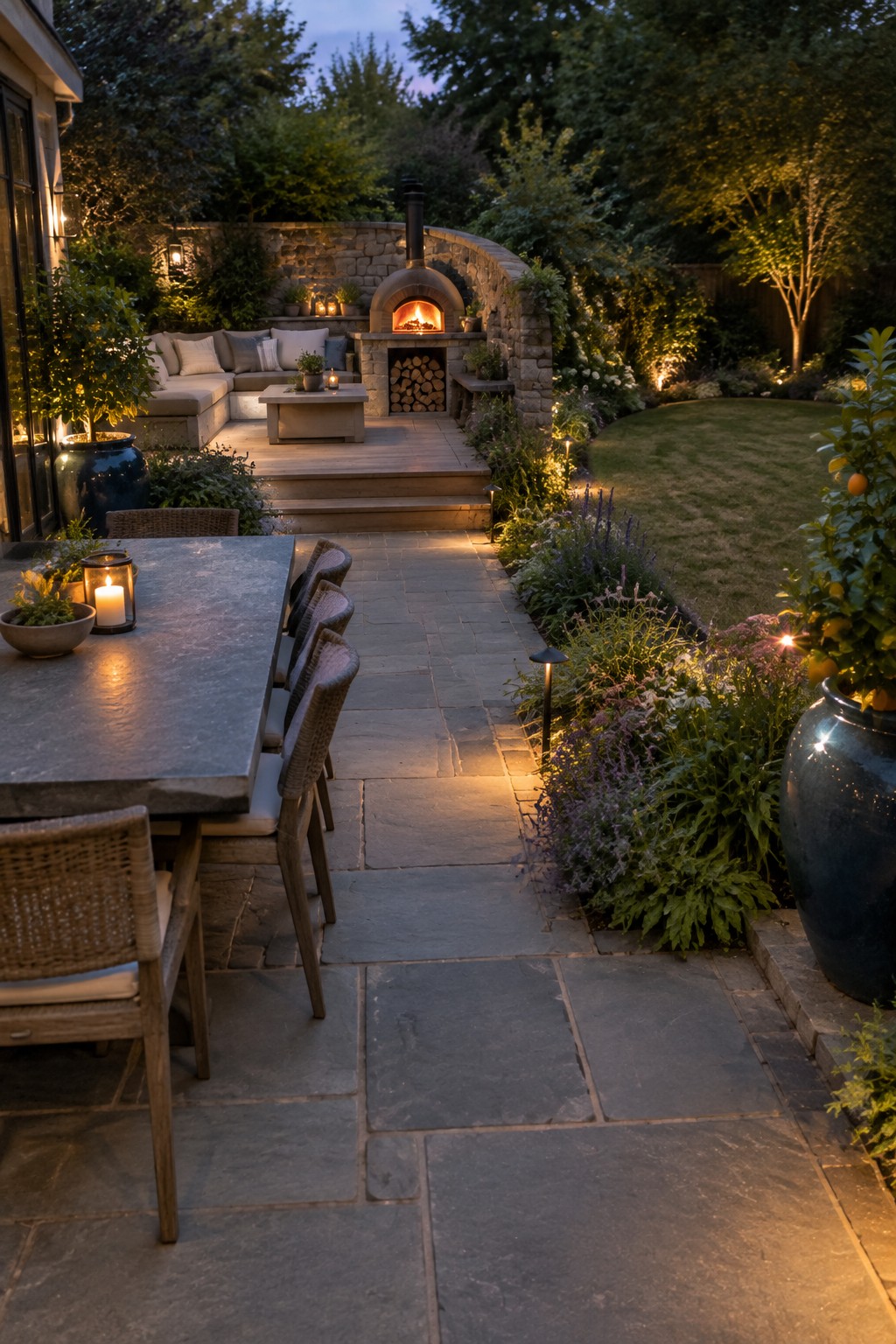
A single patio works better when it holds more than one purpose. In this layout the dining table sits close to the house while a separate lounge and fire area sit farther back, so people can eat in one spot and gather around the fire without crowding each other.
This approach suits most backyards that need both everyday meals and weekend entertaining. Keep the zones linked by a clear path so traffic moves easily between them, and size each area to fit the furniture you actually use instead of trying to fill every inch of space.
Layer Rugs to Define Patio Seating Areas
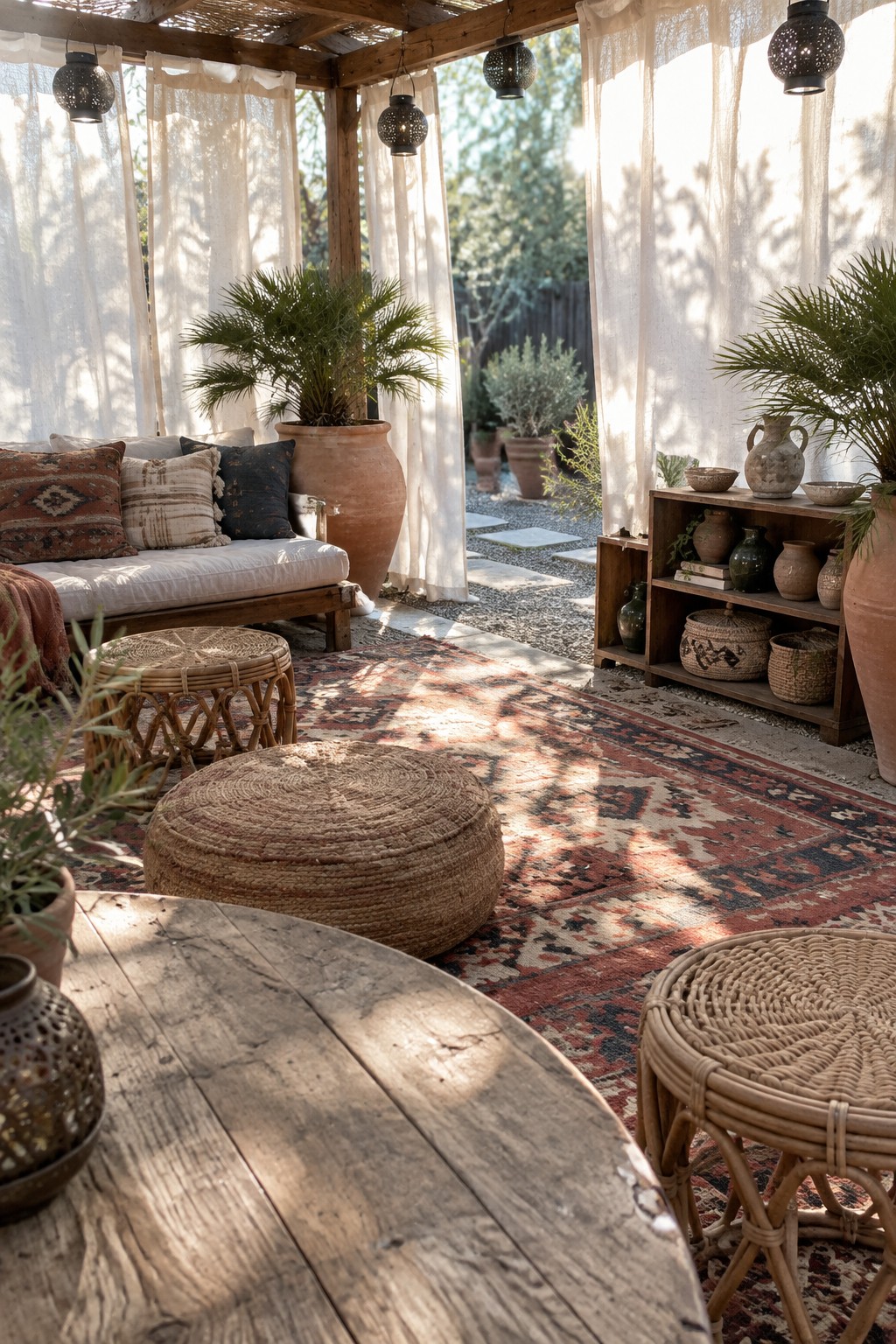
Rugs make a big difference on a patio because they turn an open surface into something that feels more like a room. A large patterned rug under the main seating pulls everything together and gives people a clear spot to gather without the space feeling scattered.
This works especially well on gravel or concrete patios where you want a softer, more comfortable base. Keep the rug size generous so it fits under the main furniture and a few extra seats, and choose one that can handle some weather. It also makes the area easier to rearrange when you need space for different activities.
Define Activity Zones With Furniture Placement
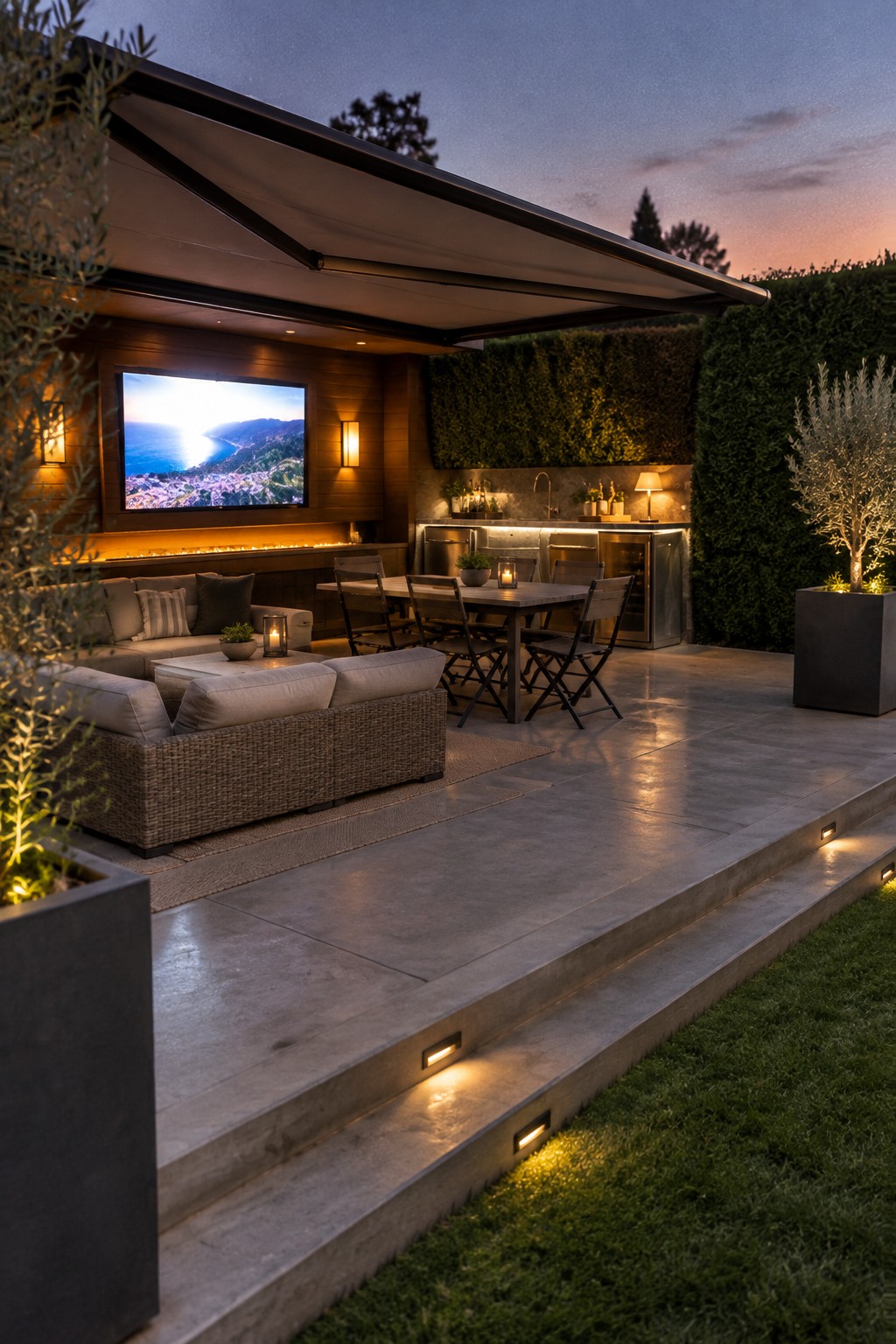
Placing a lounge area next to a dining setup on the same patio makes the space feel more useful throughout the day. The sofa section gives a spot to relax while the table and chairs stay ready for meals, and both stay under the same cover so people can move between them without much effort.
This layout works well on medium to large patios where you want to fit more than one activity. Keep the lounge closer to the house or a focal point like a television, and set the dining table nearer the outdoor kitchen so serving stays simple. Watch the flow between the two zones so chairs do not block the main walkway.
Zoning a Patio with Different Levels
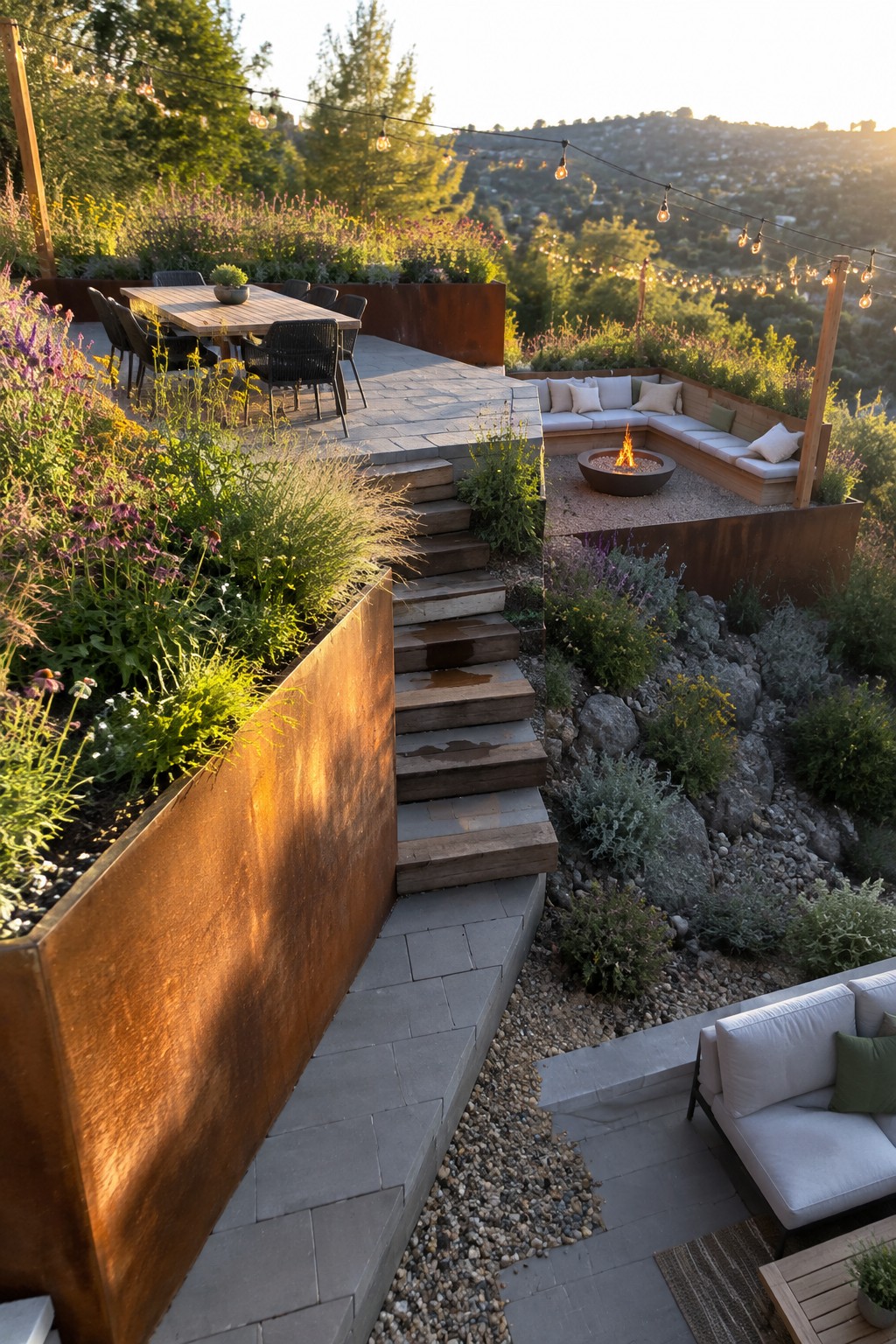
Using small level changes helps turn one patio into two or three useful spots without crowding everything together. The steps here keep the dining area slightly apart from the fire pit lounge, so each zone feels like its own place while still staying connected.
This works best on sloped lots or when you need room for both meals and quiet evenings. Keep the steps wide and match the paving materials so the whole area still feels like one backyard space instead of separate rooms.
Zoning a Patio for Multiple Uses
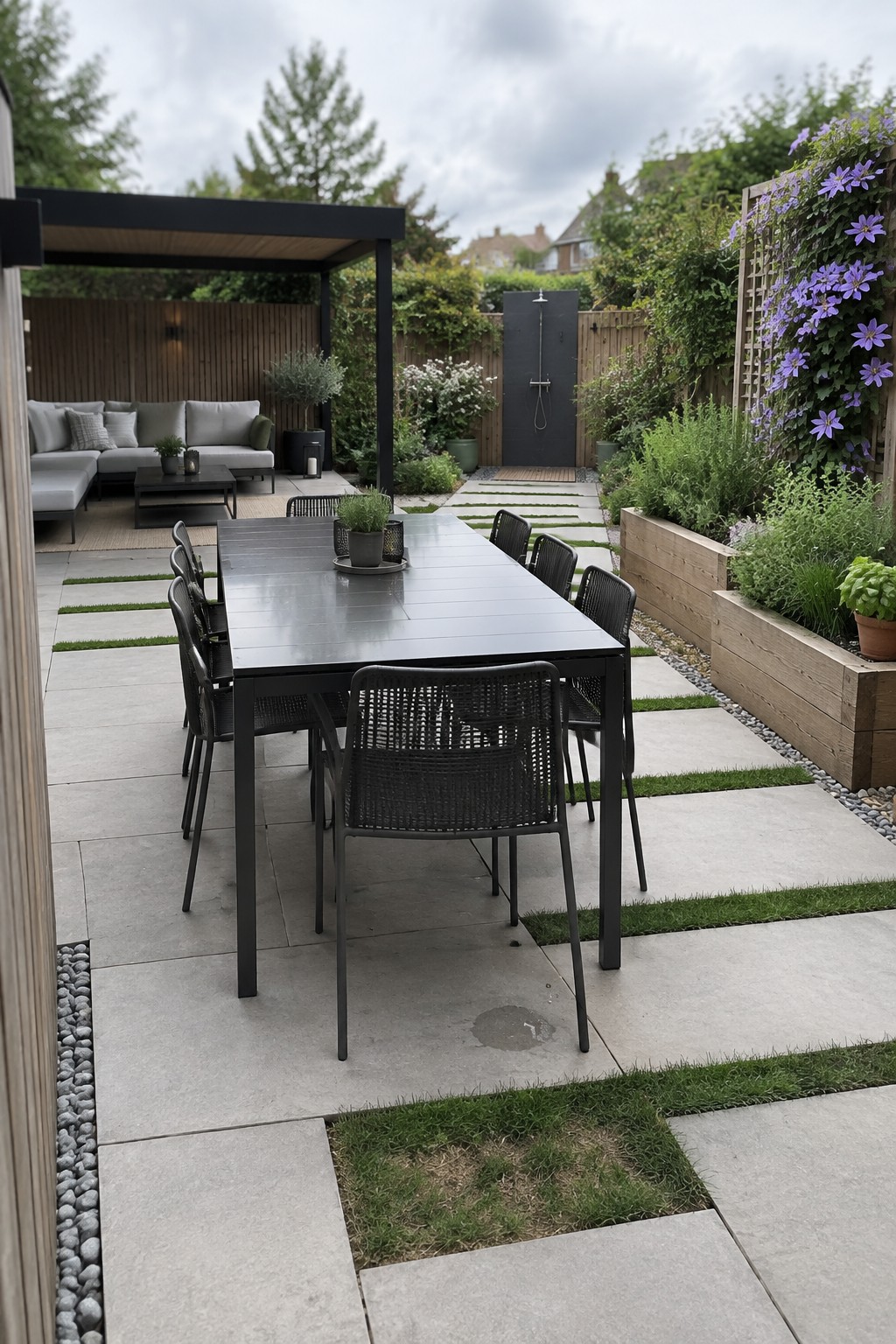
Splitting a patio into clear zones makes it easier to handle different activities at once. A covered lounge area next to an open dining space lets people relax or eat without one group taking over the whole surface.
This approach fits medium to large backyards that get regular use for meals and downtime. Keep the zones connected with matching paving so the space still feels like one patio rather than separate rooms.
Planting Beds That Shape Multi-Use Patios
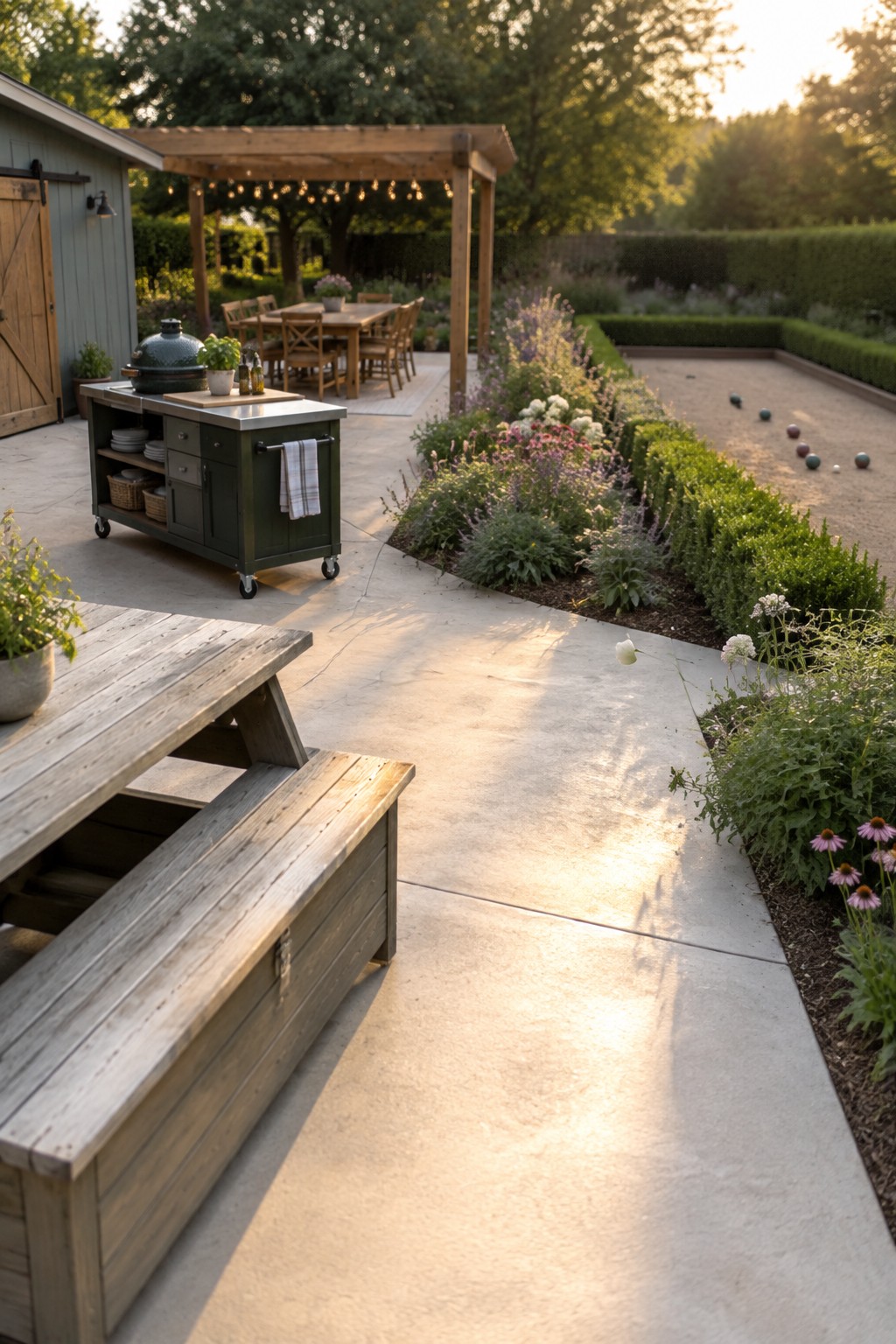
A wide concrete patio works better when planting beds run along the edges to mark off different spots for cooking, eating, and games. The beds keep the open area from feeling empty while still letting people move between zones without any walls or fences getting in the way.
This setup suits a backyard that already has room for a table and a simple game court. Keep the beds mixed in height and color so they add interest without blocking the view or requiring constant trimming.
Anchor the Patio With a Central Fire Pit
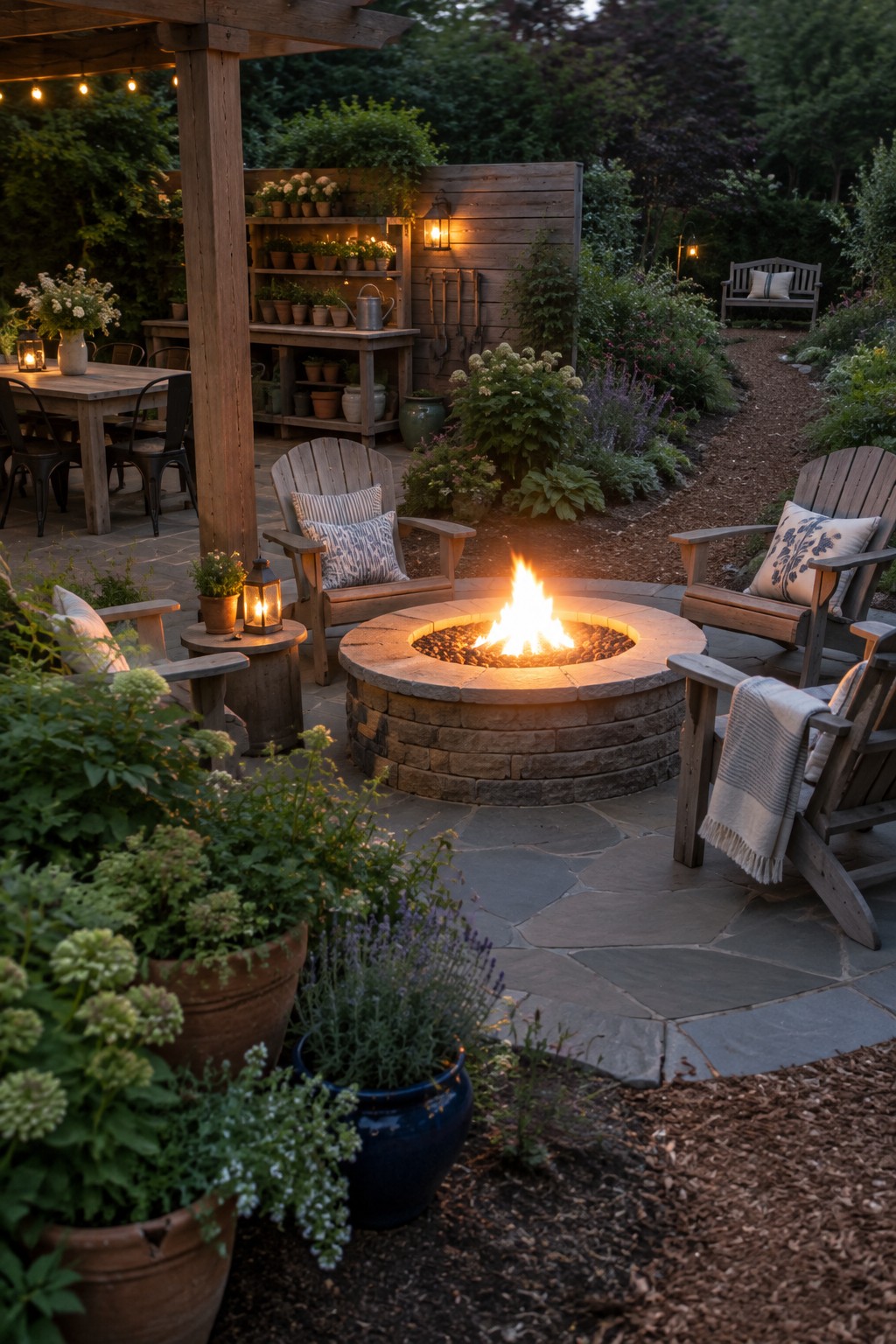
A fire pit set in the middle of the patio gives the whole area a clear purpose without overcomplicating the layout. It turns an open space into a spot where people naturally gather, whether for quiet evenings or larger groups.
This setup works best on patios that already have room for extra seating or a dining table nearby. Keep the surrounding area clear enough for chairs to move in and out, and choose a size that fits the scale of the space so it does not crowd the rest of the yard.
Add A Full Outdoor Kitchen To Your Patio
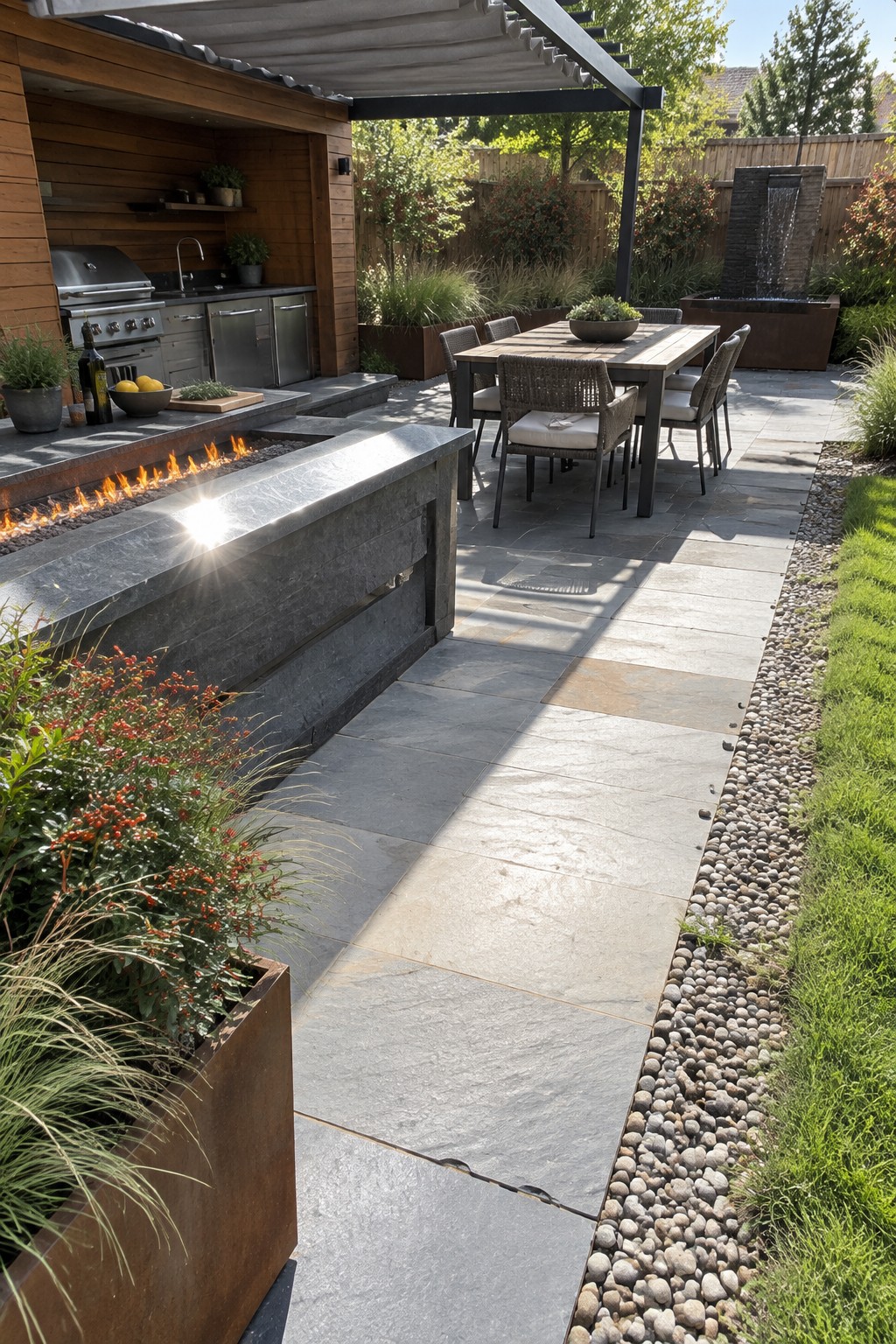
An outdoor kitchen changes how a patio gets used. When the cooking area sits right next to the dining space, people move between prepping food and sitting down without leaving the main area. The long counter with its built-in fire feature helps mark the edge while still keeping everything connected.
This setup works best on patios that already have decent size and a fairly flat layout. It suits homes where outdoor meals happen often. Make sure the path between the grill and the table stays clear so traffic does not feel cramped.
Frequently Asked Questions
Q: How much room should I leave between a dining table and a lounge area on the same patio?
A: Give the dining chairs at least three feet of clear space on all sides so people can pull them out without bumping anything. Set the lounge zone a little farther back with a low divider like potted plants or a bench. That keeps foot traffic flowing between the two spots.
Q: What if I want to add a grill without losing seating space?
A: Tuck the grill at one end of the patio near the house so smoke drifts away from the main seating. Use a narrow counter beside it for prep and keep the rest of the area open for chairs and tables. You can still fit both uses without crowding the middle.
Q: How do I keep plants from taking over the usable patio space?
A: Stick to one or two large planters along the outer edge instead of scattering small ones everywhere. Choose plants that stay compact and need little trimming. This leaves the center open for whatever activity you want that day.
