

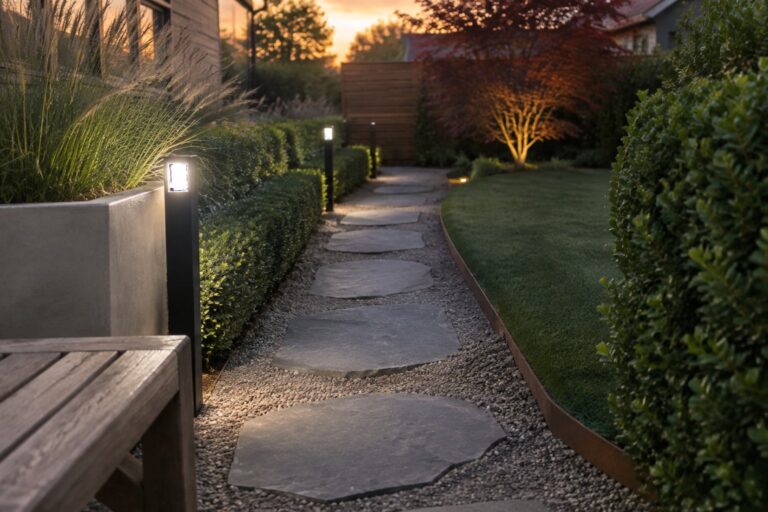
I often notice that backyards feel completely different once the light starts to fade and it becomes clear which areas actually work after dark.
Paths that stay dim turn into obstacles rather than easy routes.
When I plan lighting I focus first on making the main walking areas safe and then add softer glows where we like to sit or gather.
Some of the ideas worth trying involve simple fixtures that highlight edges without overwhelming the whole space.
Testing a couple of these in my own yard showed me which ones hold up once the weather changes.
Line Paths With Low Bollard Lights
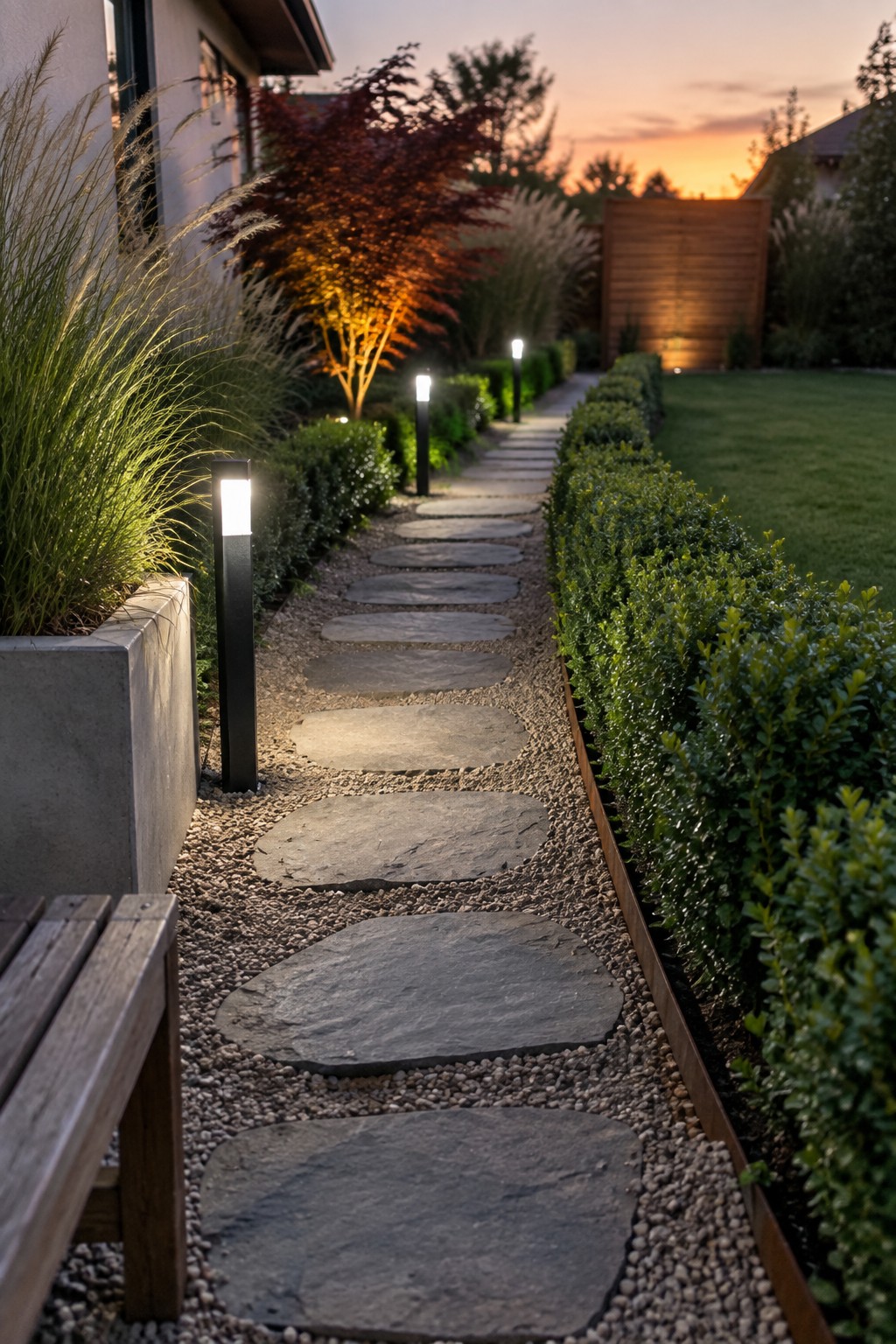
Low bollard lights give paths just enough glow to stay safe at night without flooding the whole yard. They sit low to the ground so the light stays focused on the walkway and does not shine into windows or wash out the plants nearby.
These lights work best on gravel or stone paths that run along the side of a house or through a garden bed. Space them every few steps so the light carries evenly, and keep the fixtures simple and dark so they blend in during the day.
Layer String Lights With Table Lanterns
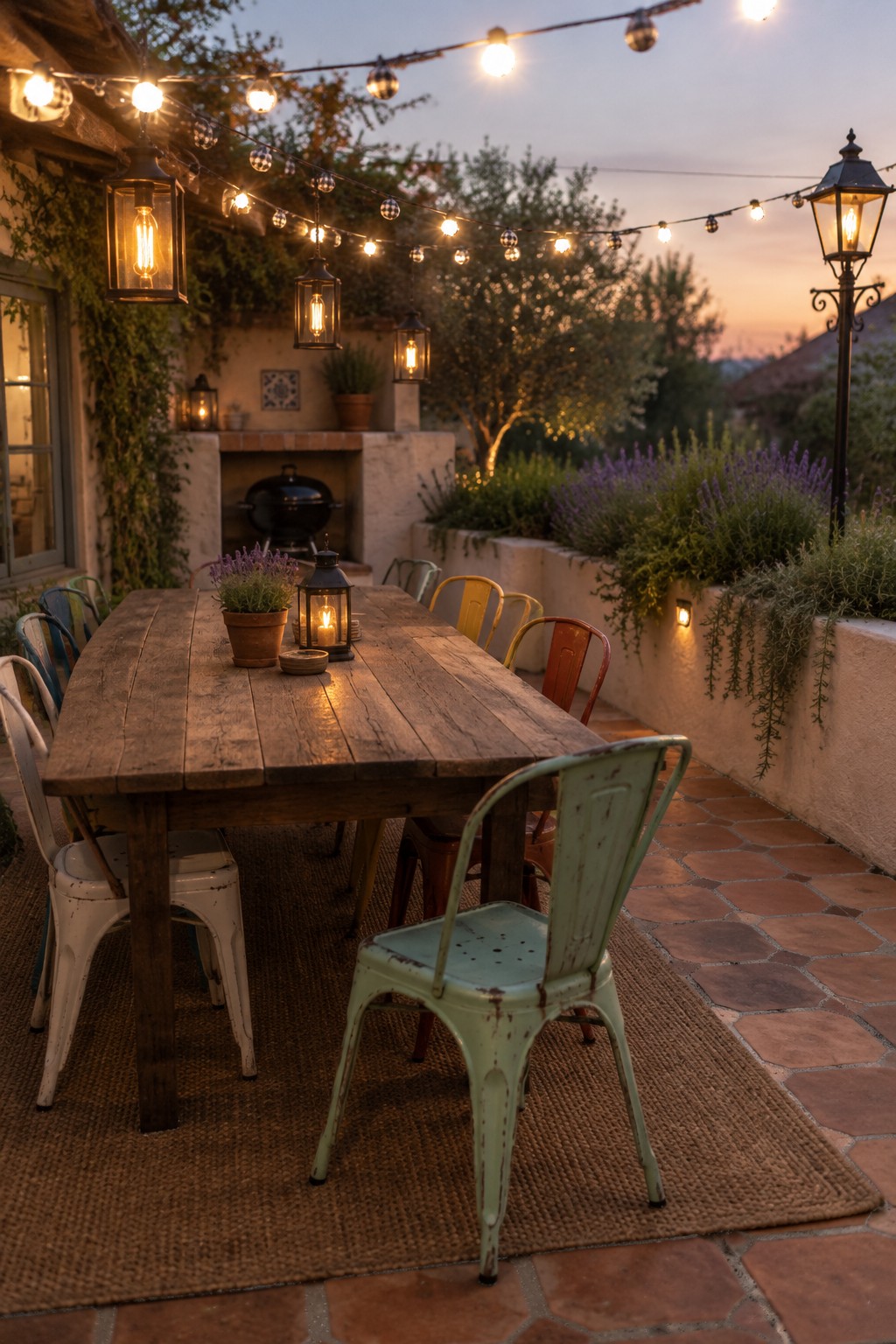
String lights give a soft overhead glow that makes an outdoor table feel ready for use after dark. Adding a few lanterns right on the table keeps the light focused where you need it most for plates and conversation.
This setup suits any patio or deck with a dining table that sees regular evening use. Space the strings so they do not hang too high, and choose lanterns that sit low enough not to get in the way.
Line Garden Paths With Low Solar Lights
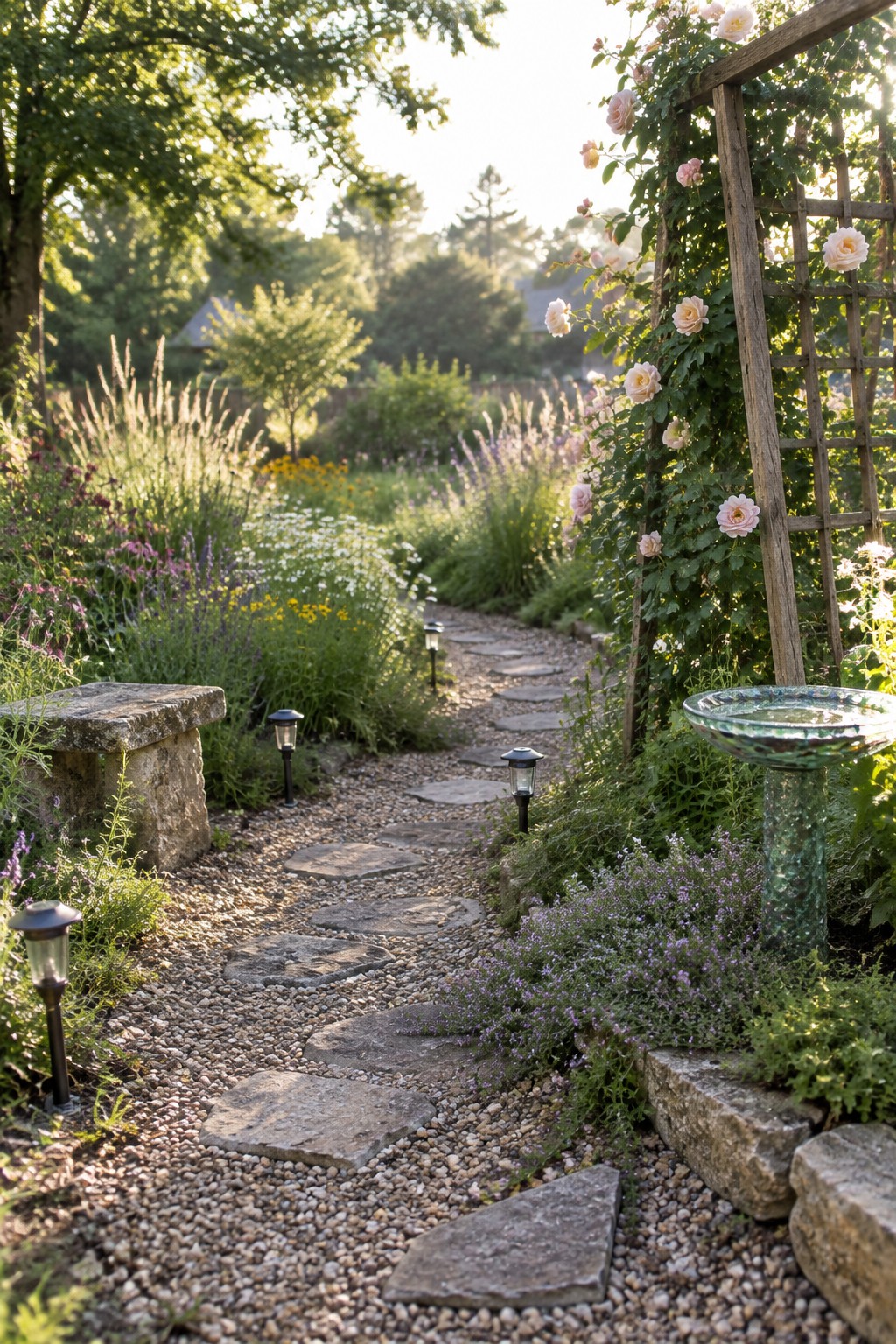
Small solar lights work well along garden paths because they give just enough light to follow the route without turning the whole yard bright. They also charge on their own during the day, so there is no extra wiring to run through the beds.
These lights suit any backyard with a gravel or stone path, especially where you want simple upkeep. Space them every few steps so the way stays clear after dark, and choose models that sit low enough not to block the plants.
Lanterns Along Garden Paths
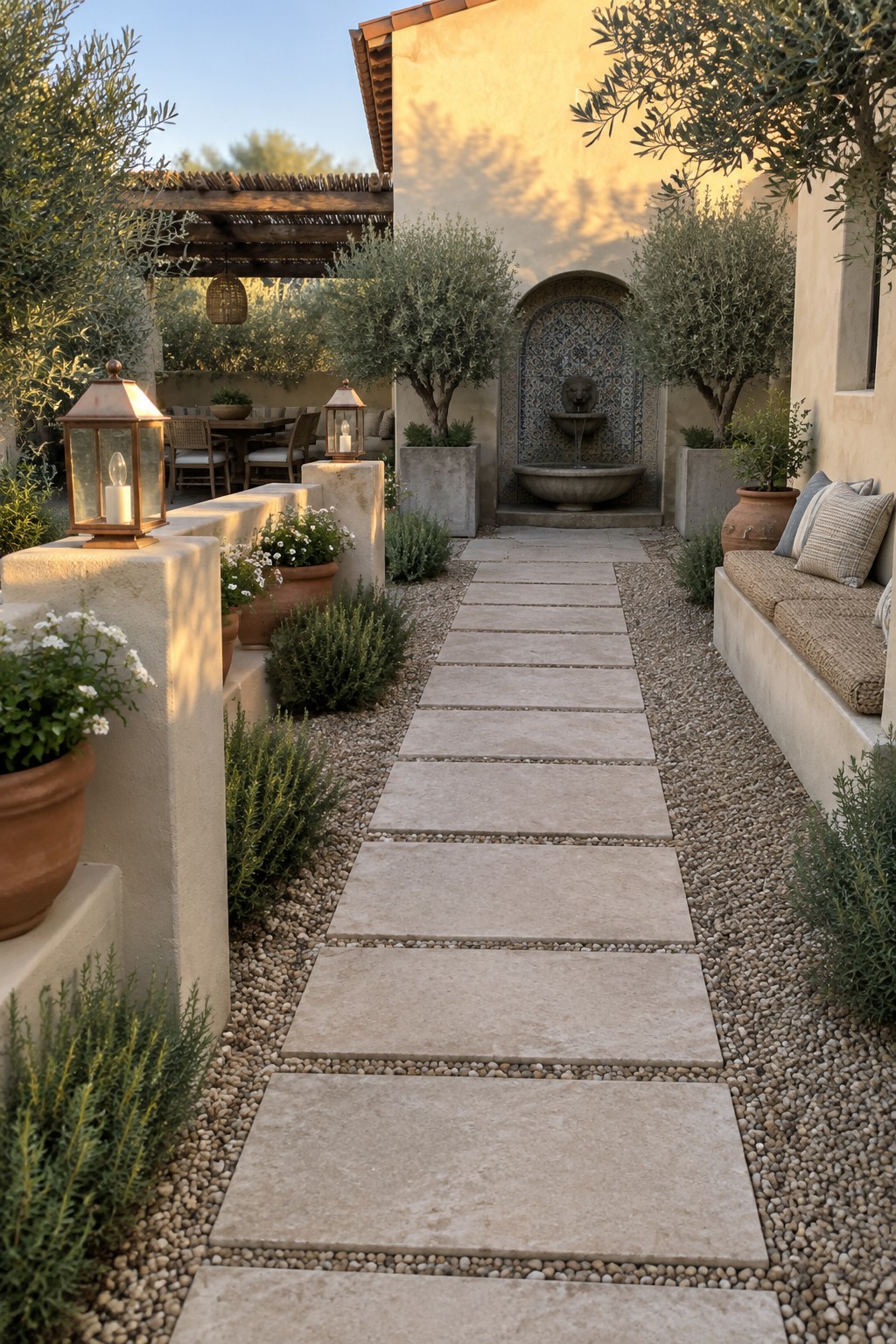
Placing lanterns on low walls or pillars gives a path steady light without needing overhead fixtures. The warm glow helps people walk safely at night while keeping the look simple and welcoming in a backyard.
This works well in gravel or stone paths where you want low level lighting that does not overwhelm the plants. Space the lanterns a few feet apart so the light overlaps just enough, and choose styles that match the overall garden materials.
Recessed Lights Along Stone Paths

Small recessed lights set into the paving give just enough glow to walk safely without flooding the whole area with brightness. They sit flush so nothing sticks up to trip over, and the light reflects nicely off the stone when it is damp.
This setup works best on patios that see evening use, especially around a fire pit where people move between seating and the house. Space the lights every few feet along the main route and match the color temperature to any other fixtures you already have.
Pool Edge Lighting
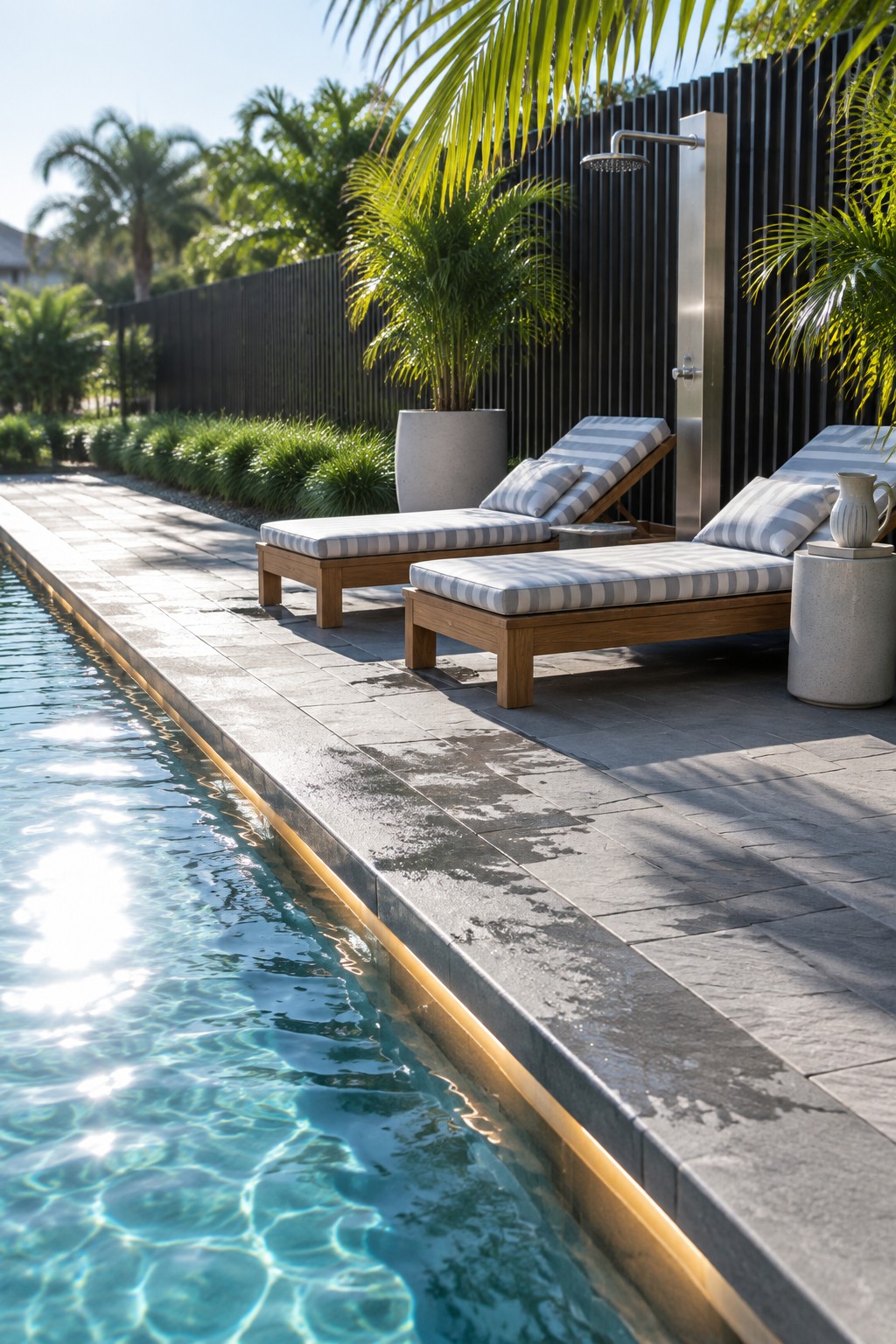
Running a low strip of light right along the pool coping gives the deck a clear boundary after dark. It helps people see the edge without needing tall lamps or bright overhead fixtures that can feel harsh in a backyard setting.
This approach works best on homes with existing pools or water features where the hardscape already forms a natural path. Waterproof LED strips tucked into the coping stay protected from splashes and create a gentle glow that guides movement around the seating area without overpowering the space.
Low Lanterns Along Garden Paths
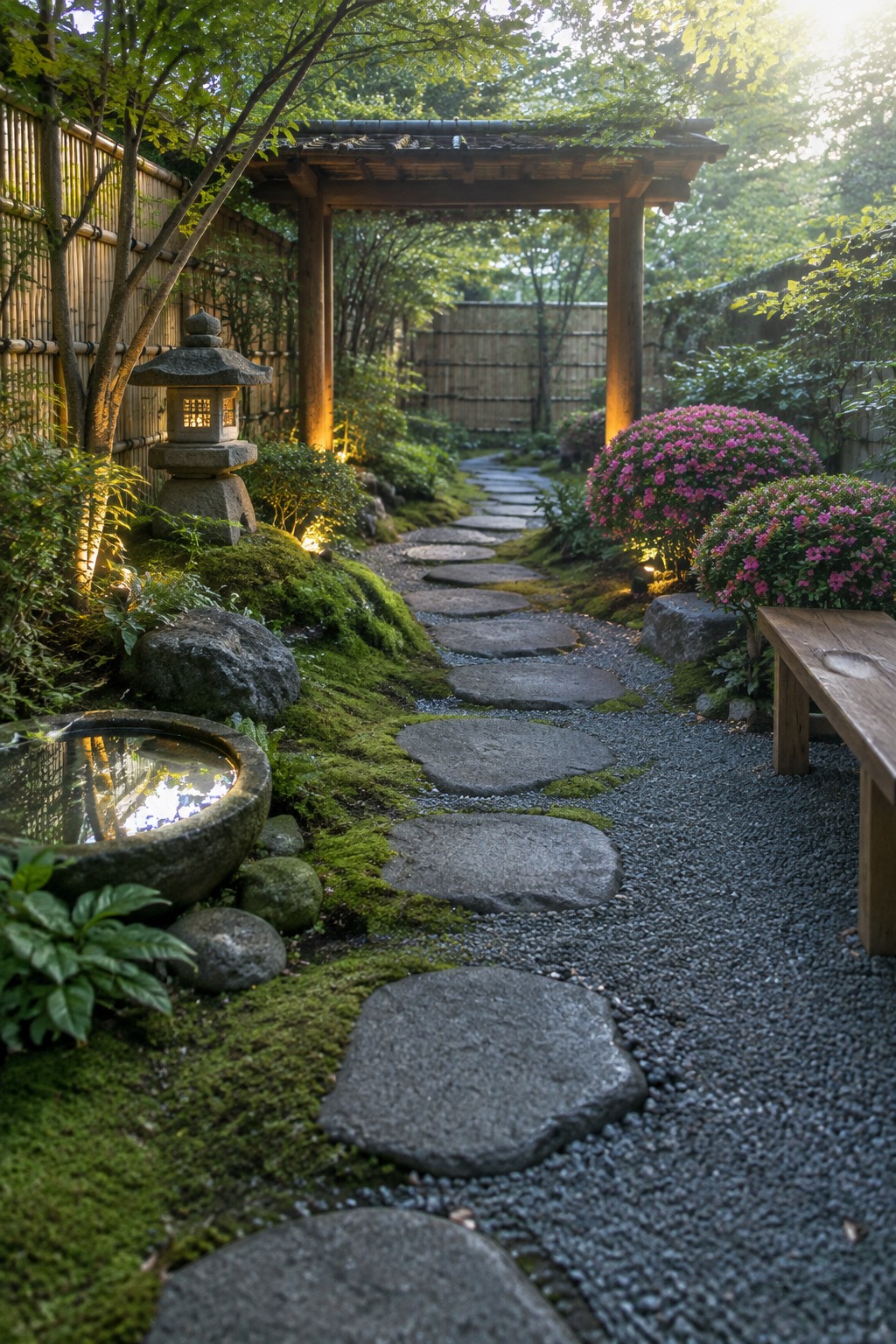
Many people like placing small lanterns along garden paths because they light the way without flooding the area with brightness. The gentle glow helps you see the stepping stones at night while keeping the plants and ground cover looking natural.
This works best on winding paths made of stone or gravel. Set the lanterns low and space them out so each one covers the next section ahead. It suits homes with established gardens where the goal is safe footing without turning the yard into a spotlight zone.
Line Paths With Low Stake Lights
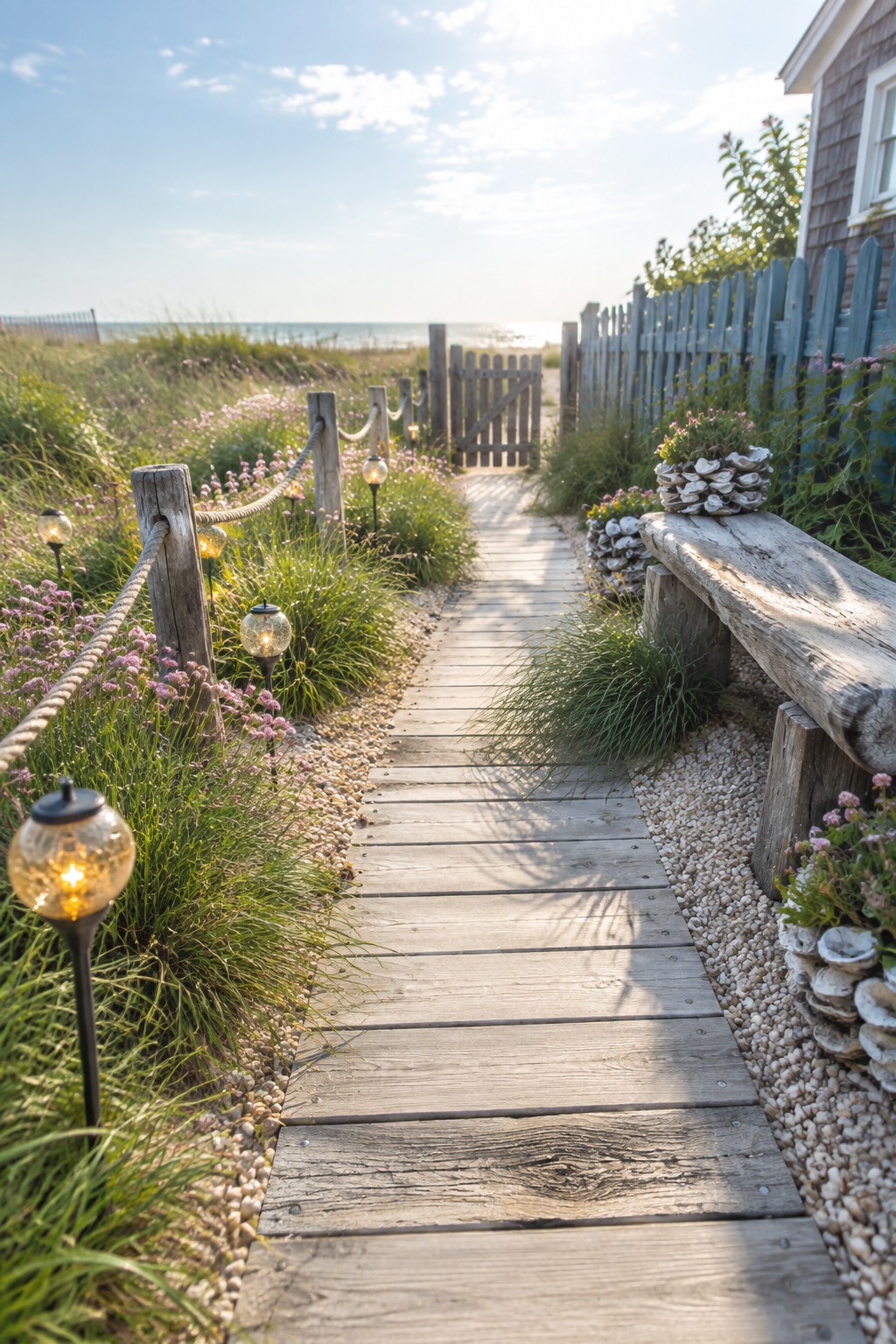
Low stake lights give paths just enough glow to stay safe at night without turning the whole yard into a spotlight. They sit low to the ground and blend into the planting so the light feels part of the garden instead of an added feature. This works especially well on wooden walkways or gravel routes where you want a soft edge rather than bright overhead fixtures.
Place them every few feet along the sides and use warm bulbs so the light stays gentle. They suit homes with natural landscaping and do not need wiring if you choose solar versions. Just keep the spacing even and avoid tall or fancy styles that draw attention away from the path itself.
Add Low Lights Along Garden Paths
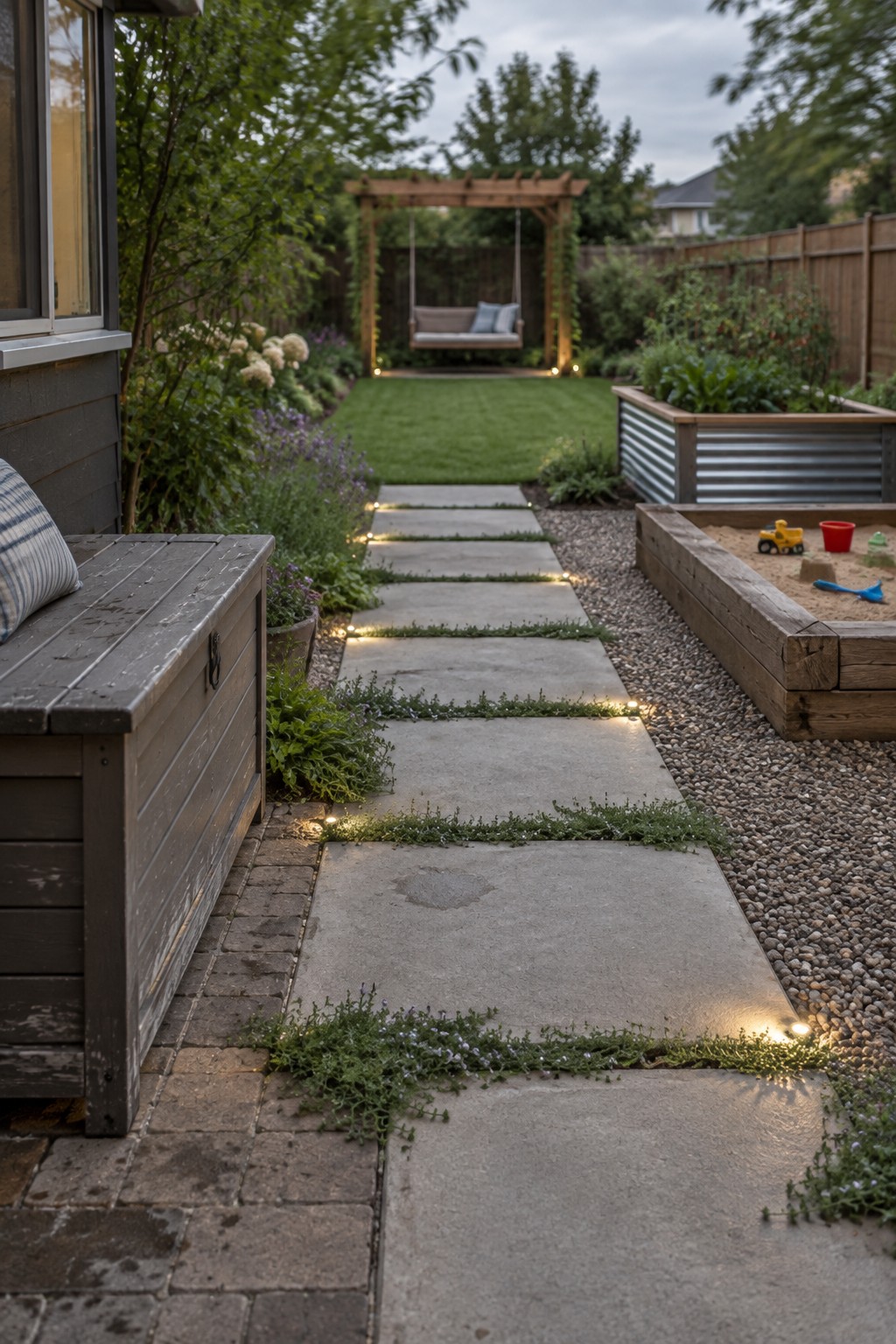
Many backyards feel more usable after dark when small lights run right along the edges of a path. This approach keeps the light low and focused so it guides feet without flooding the whole yard or creating glare.
It works best on straight or gently curving walkways made of pavers or stepping stones. Tuck the fixtures between the slabs or just outside the edge so the path stays visible while the surrounding beds and lawn stay calm.
Edge Lighting Along Garden Paths

One simple way to light a backyard path is to build the lights right into the borders instead of adding separate fixtures. Gabion walls with LED strips tucked inside the mesh give a steady low glow that marks the edge without taking up space or creating glare.
This approach works best on narrow side yards or straight runs between the house and garage where you need clear walking room but still want the path to feel defined at night. Keep the lights aimed low and use warm bulbs so the effect stays practical rather than dramatic.
Use Low Solar Lights Along Stone Paths
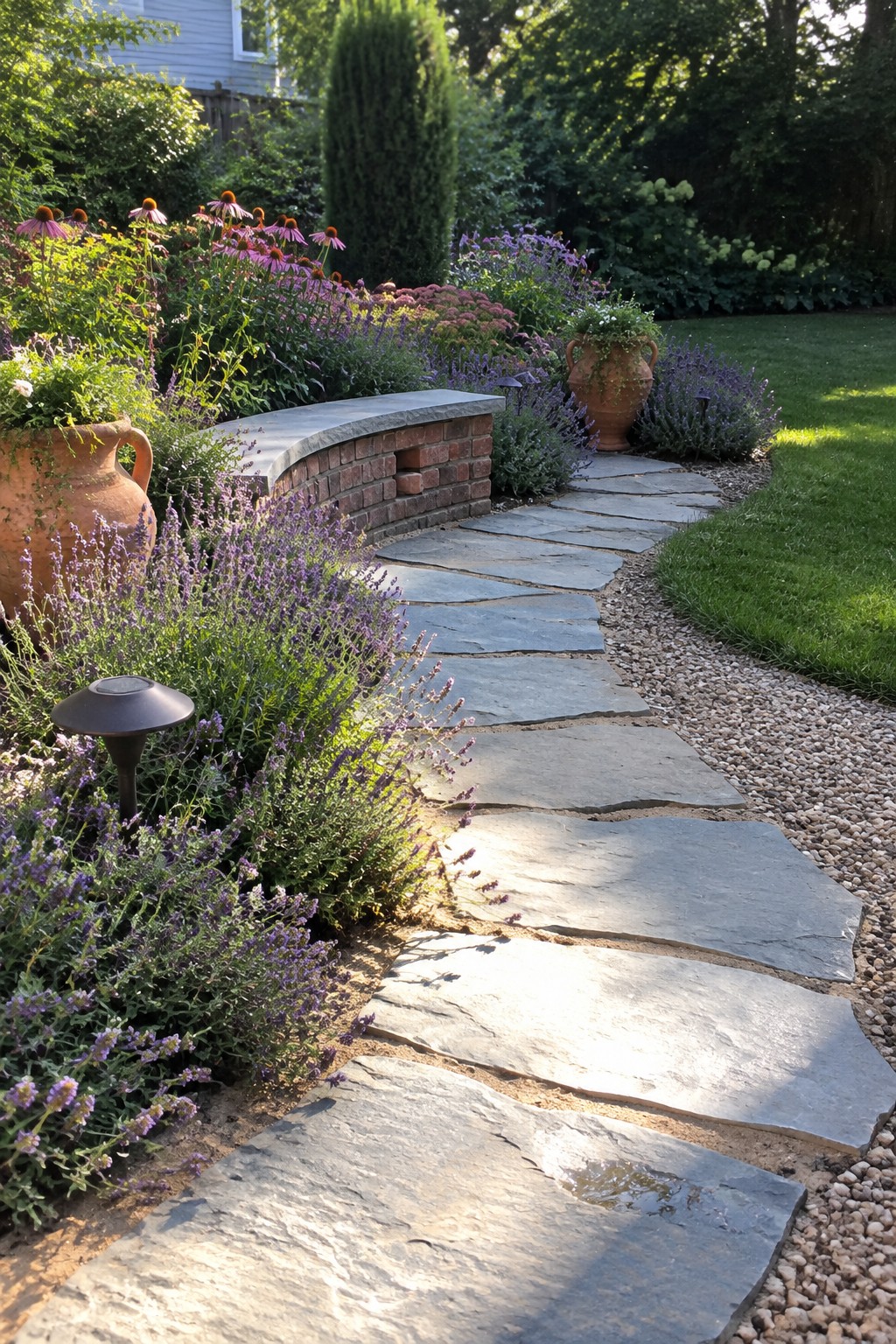
Low solar lights work well along garden paths because they stay small and simple while still marking the way at night. Tuck them into the planting beds so the light stays low and does not shine directly into your eyes.
This approach suits homes with natural stone paths and layered beds. Set the lights a few inches back from the edge so the path feels defined but not lined like a runway.
String Lights Over Outdoor Seating
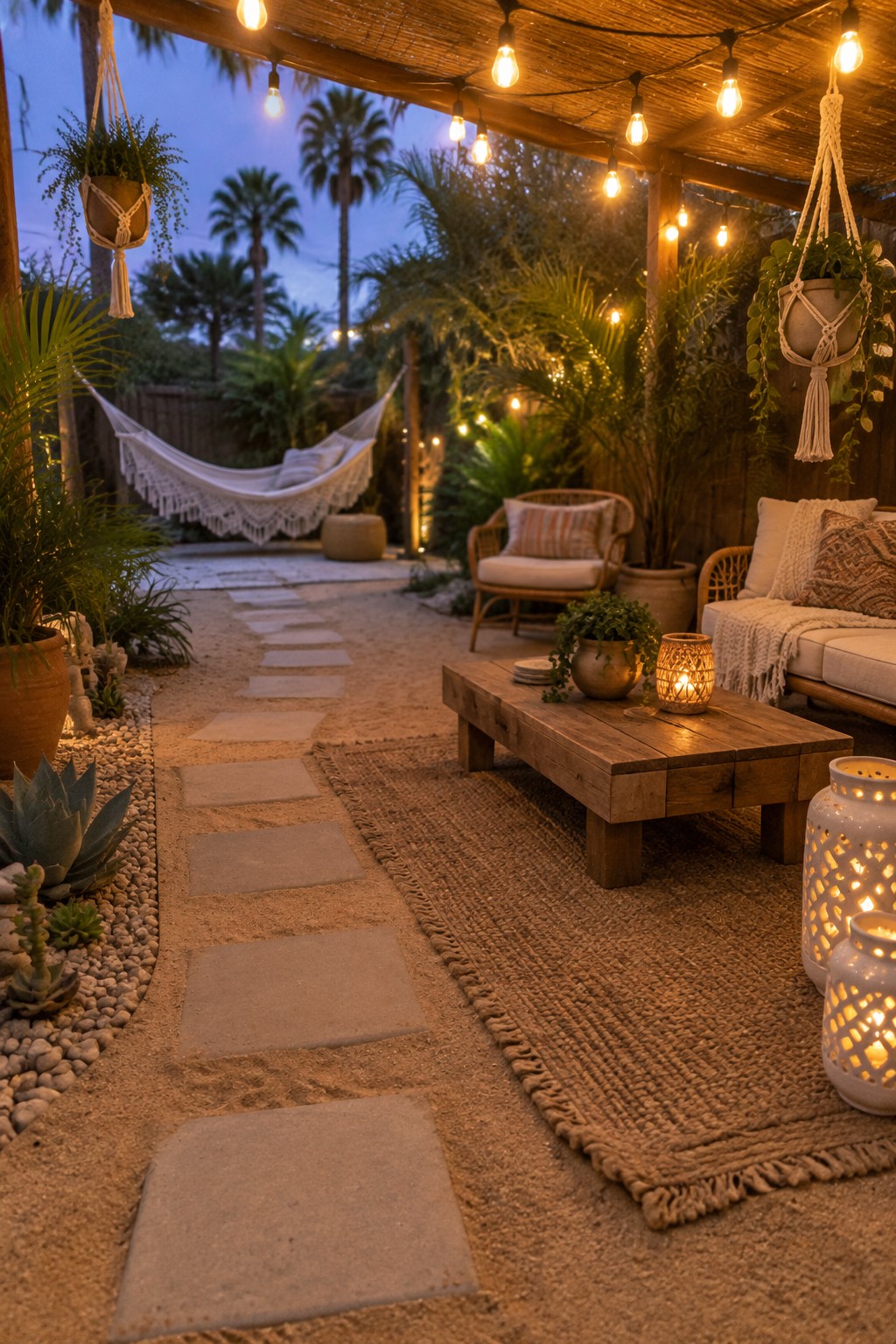
Running string lights above a seating area gives soft, usable light for evenings without making the space feel like a spotlight. Many people like this setup because it turns a basic patio into a spot that stays comfortable after sunset.
Pair the overhead lights with a few lanterns on tables or the ground to add lower glow where you need it most. This works well on patios or decks that get regular use and lets you tweak the brightness without much effort.
Path Lights Along Stone Steps
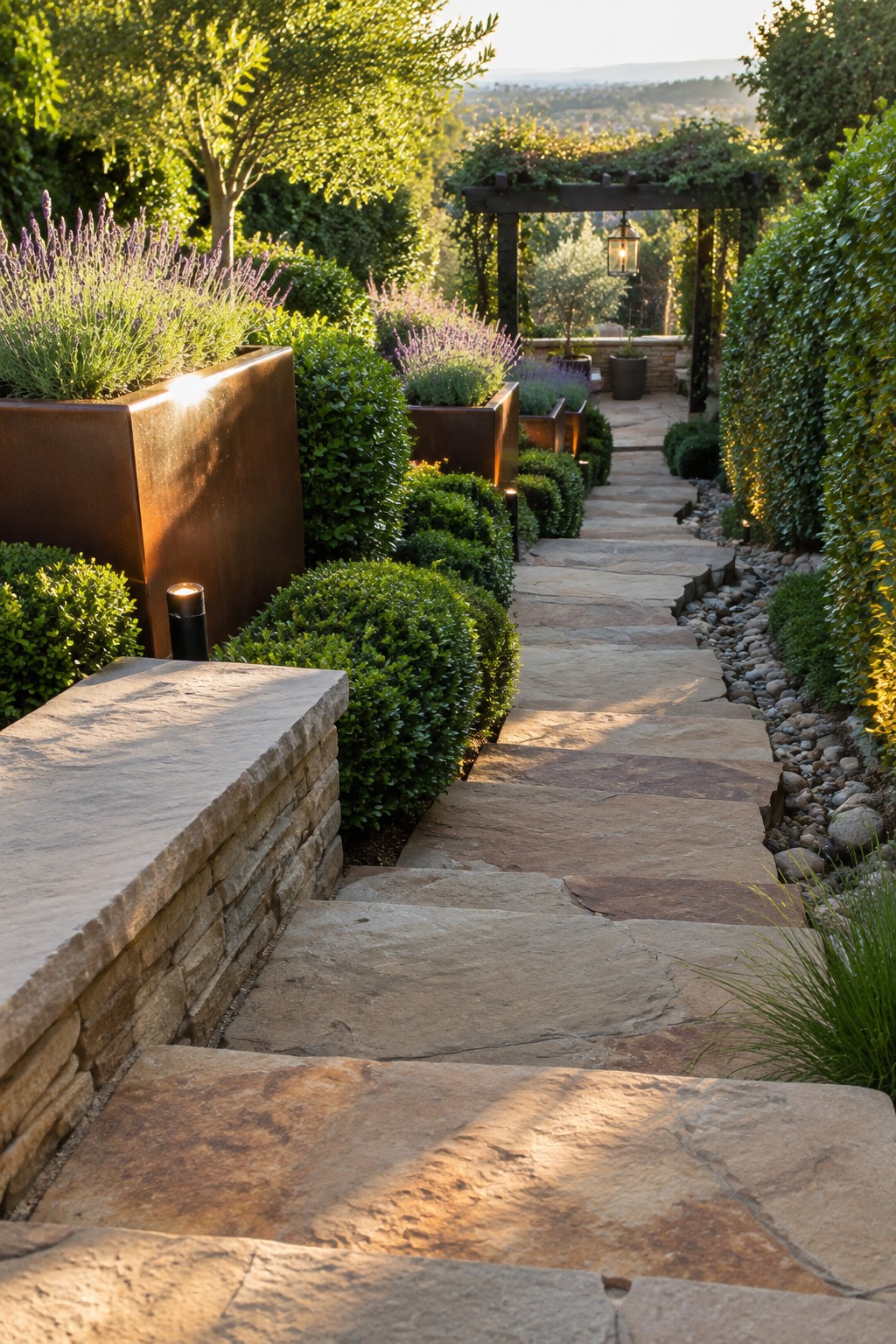
Stone steps can turn tricky after dark, so low path lights make the route safer without flooding the whole garden with light. These fixtures sit close to the ground and cast a gentle glow right where feet need it most.
This approach suits any sloped backyard or terraced garden where the path has changes in level. Space the lights every two or three steps, choose dark finishes so they disappear during the day, and keep the beam narrow to avoid lighting up nearby plants.
Hanging Lanterns Along Garden Paths
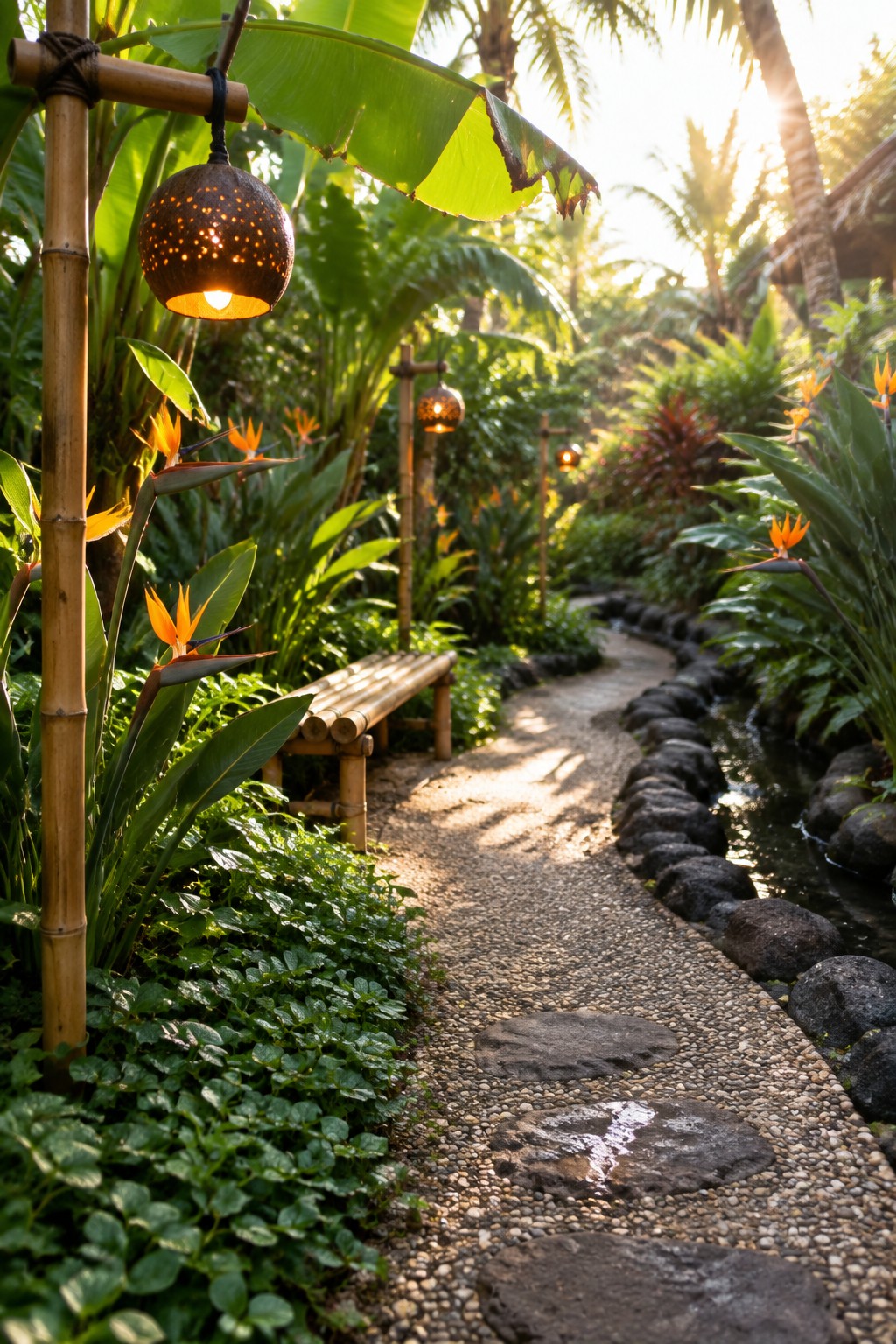
Hanging lanterns on simple bamboo poles work well for lighting a garden path because they cast a low, even glow right where you need it. The light stays soft and does not overpower the surrounding plants or hardscape.
They suit any backyard with a winding gravel or stone path. Space the poles every six to eight feet so the light guides footsteps without creating harsh spots, and choose lanterns that let just a little light through the sides.
Deck Edge Lighting
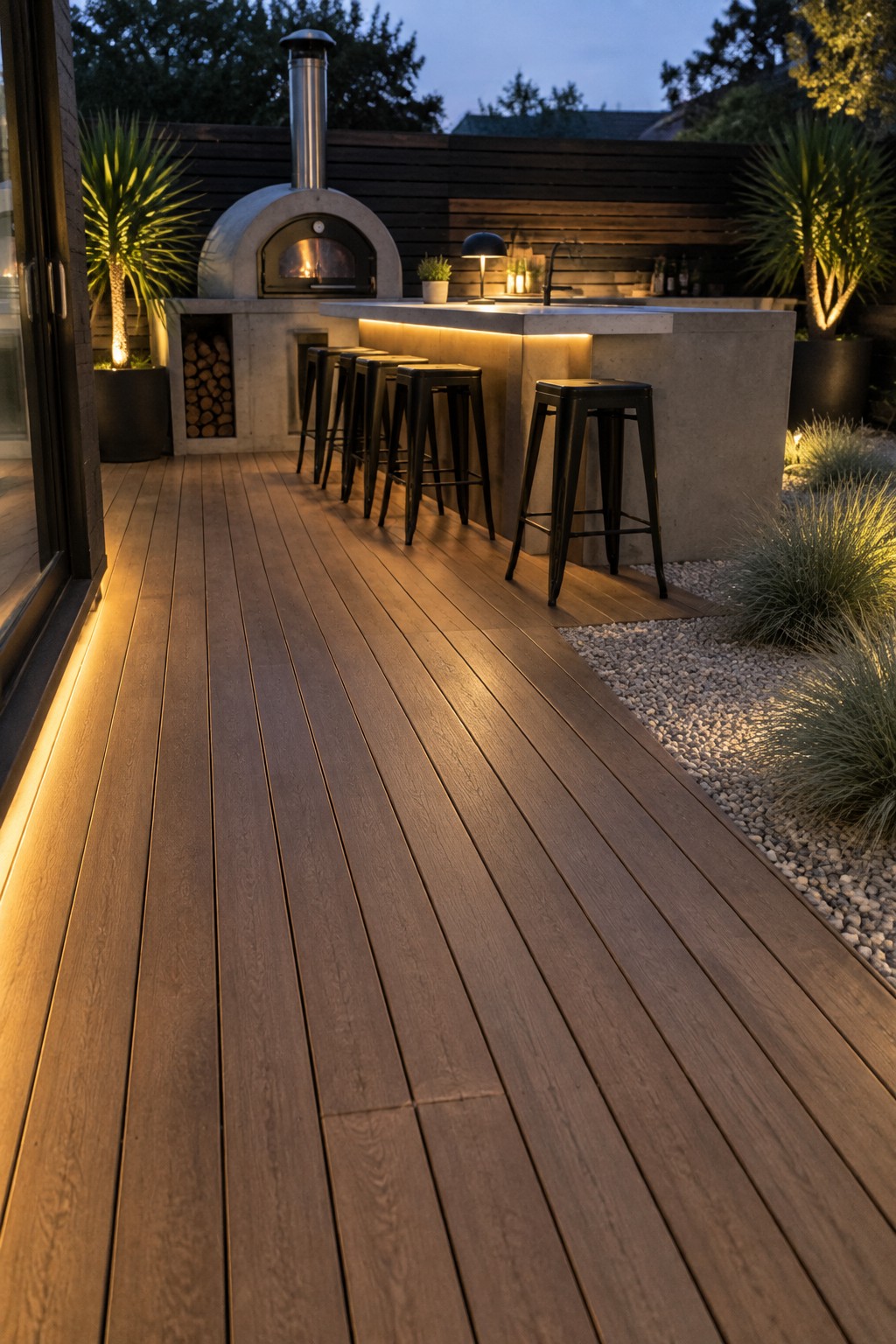
Running a line of lights along the edge of a deck makes the path easy to follow after dark. It keeps the surface visible without adding poles or tall fixtures that take up space.
This setup works best on decks that lead to seating or cooking areas. It suits homes where the outdoor zone gets regular use at night and you want simple, low maintenance lighting that stays out of the way.
Low Path Lights Along Brick Walkways
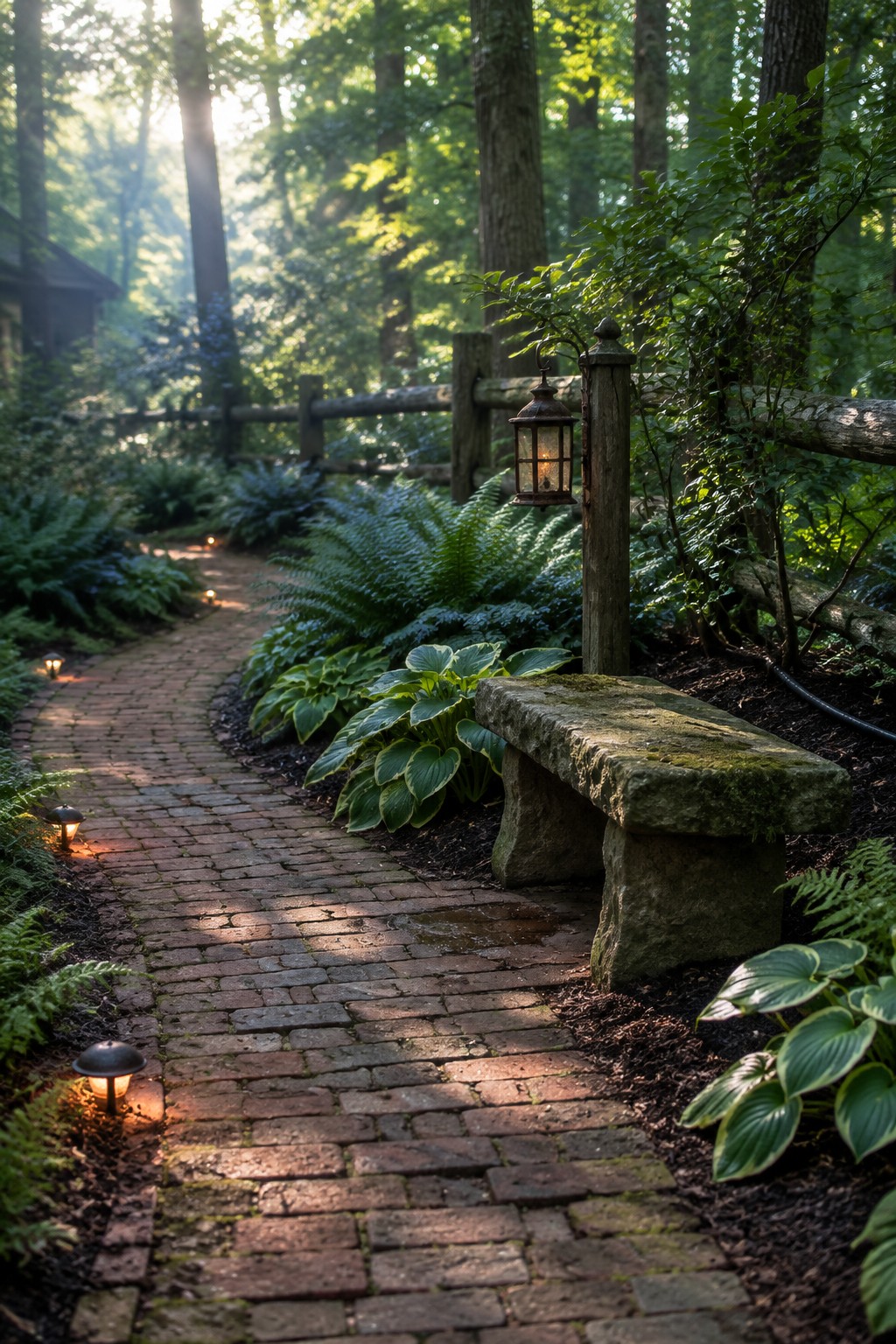
Low path lights keep garden walkways safe to use after dark without flooding the whole area with bright light. They sit low to the ground and follow the edges of the path so the light stays focused where it is needed most.
This setup works best on brick or gravel paths that wind through shaded yards or wooded spots. Space the lights a few feet apart and choose warm bulbs so the glow feels natural rather than harsh.
Path Lights Along Gravel Walkways

Path lights set right at the edge of a gravel path give just enough light to follow the route without flooding the whole garden. The low metal stakes keep the fixtures from competing with the plants and still mark the curve of the walkway clearly at night.
This setup works best on informal paths that wind through beds or around larger rocks. Space the lights a few feet apart so the glow overlaps slightly and avoids dark spots between steps.
Line Garden Paths With Low Path Lights
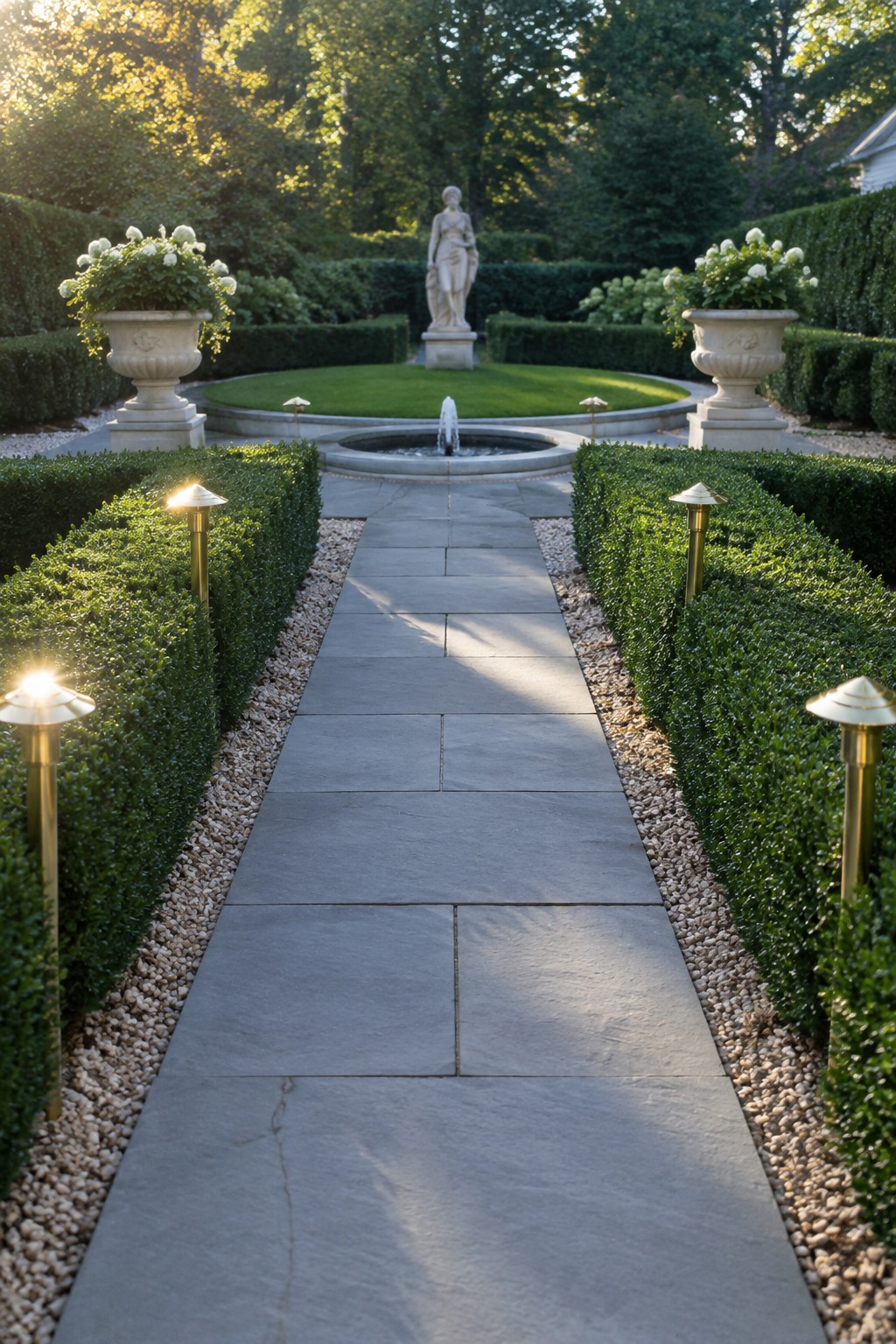
Low path lights keep walkways usable after dark without overpowering the garden. They sit low enough to light the surface underfoot while leaving the surrounding plants and hardscaping looking natural.
Set them along both edges of the path at regular intervals, especially near turns or changes in level. This approach suits both formal layouts with clipped hedges and simpler yards where the main goal is safe footing at night.
String Lights Over Outdoor Dining Areas
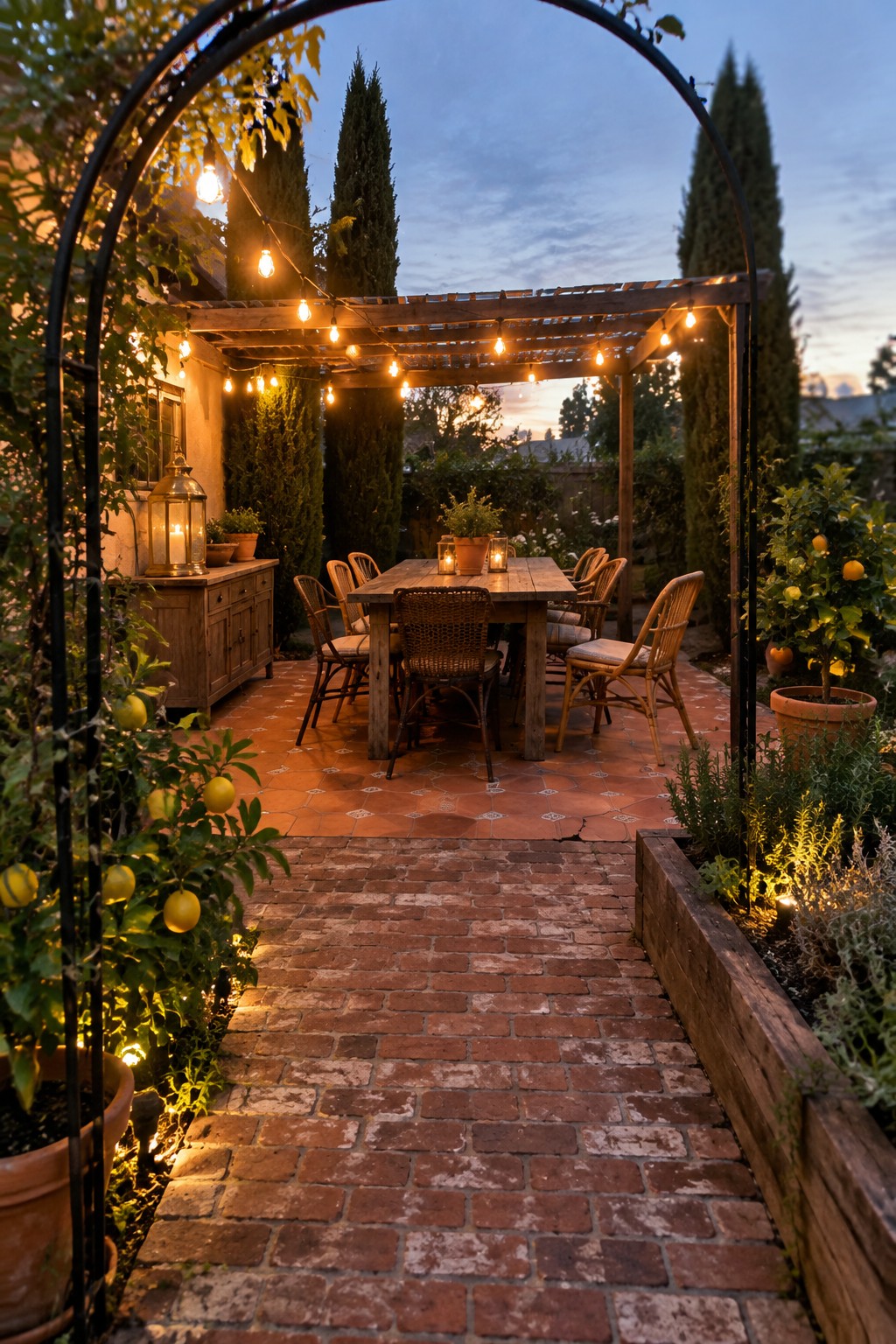
String lights hung across a pergola give steady light for meals without making the space feel like a work area. They sit high enough to clear heads but low enough to keep the glow focused on the table and chairs below.
This setup works best when the dining area sits at the end of a path so the same lights also help mark the way. Use warm bulbs and add a few small path lights at ground level to avoid dark spots between the house and the table.
Lighting Built Into Garden Steps
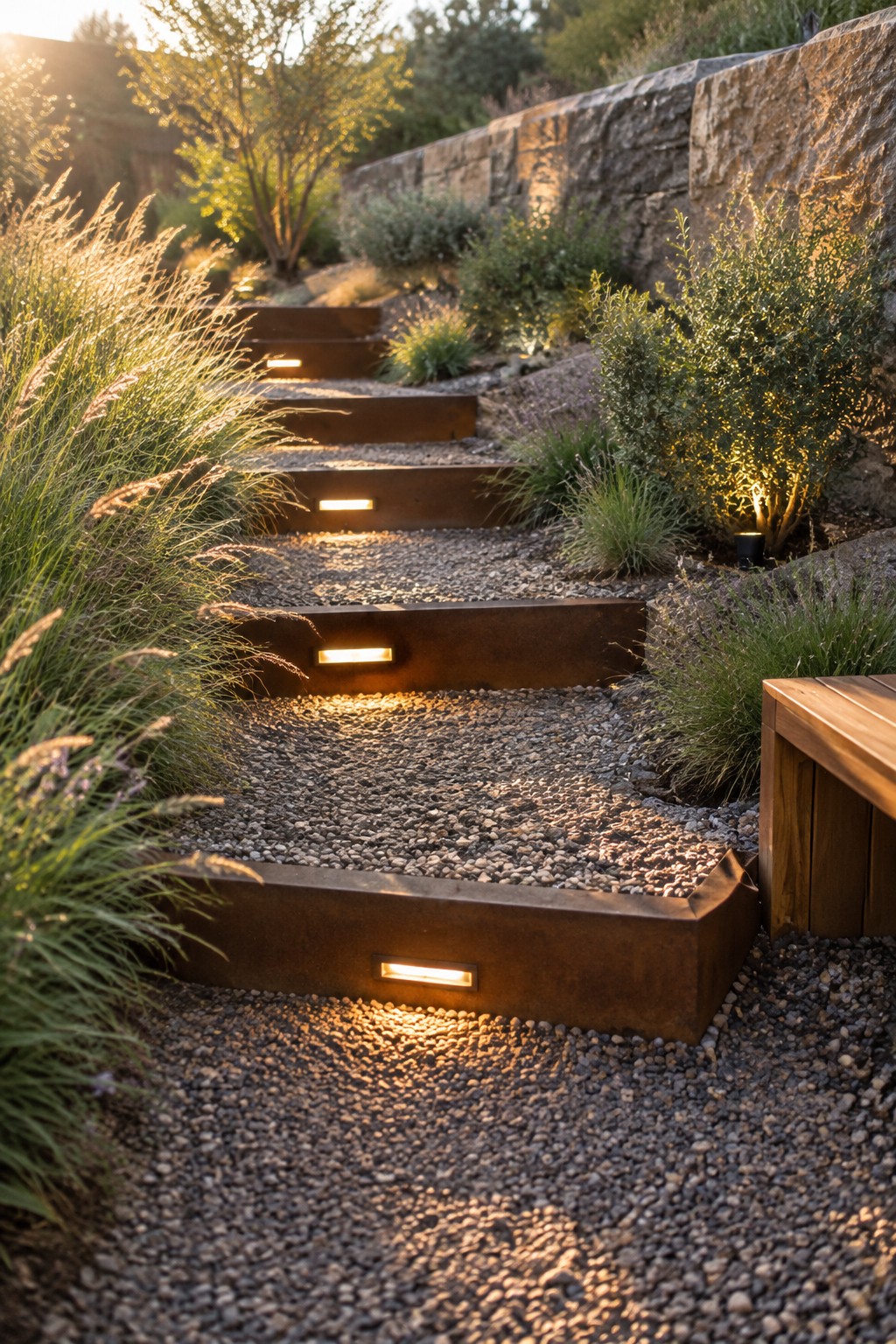
Putting lights directly into the risers of outdoor steps gives a path just enough glow without extra poles or fixtures. It keeps the focus on the plants and gravel while making the route easy to follow after dark.
This approach works best on sloped yards or side paths where safety matters at night. It pairs well with simple edging and low plants that do not block the light.
Low Path Lights Along Stone Walkways
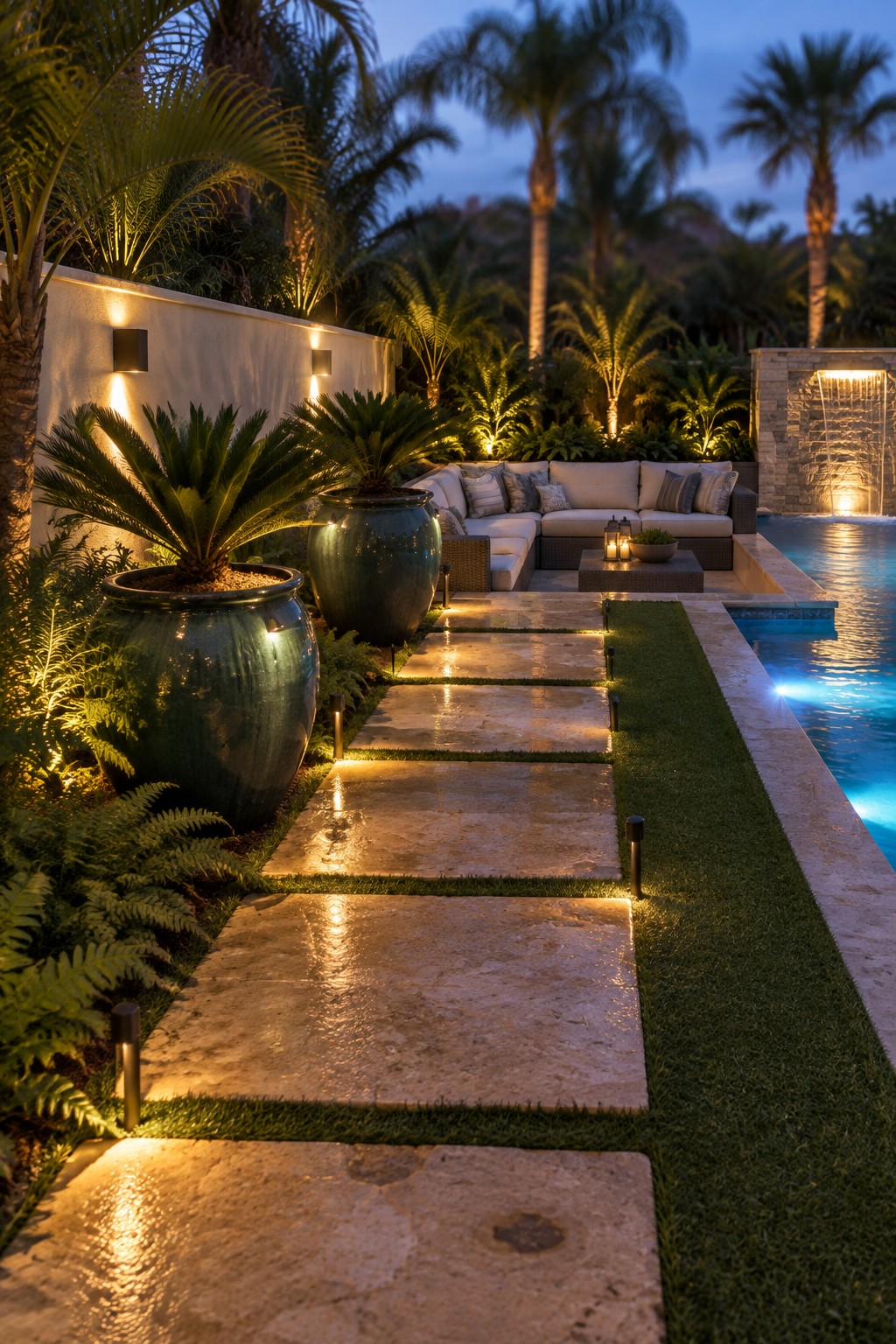
Low path lights keep the focus on the ground and make walkways easy to follow after dark. They cast just enough light to show the way without flooding the whole yard or competing with the plants.
This setup works best in gardens with clear paths between zones like seating areas and pools. Space the lights evenly along the edges so they guide movement while letting the surrounding foliage stay softly lit.
Lanterns Along Brick Garden Walkways
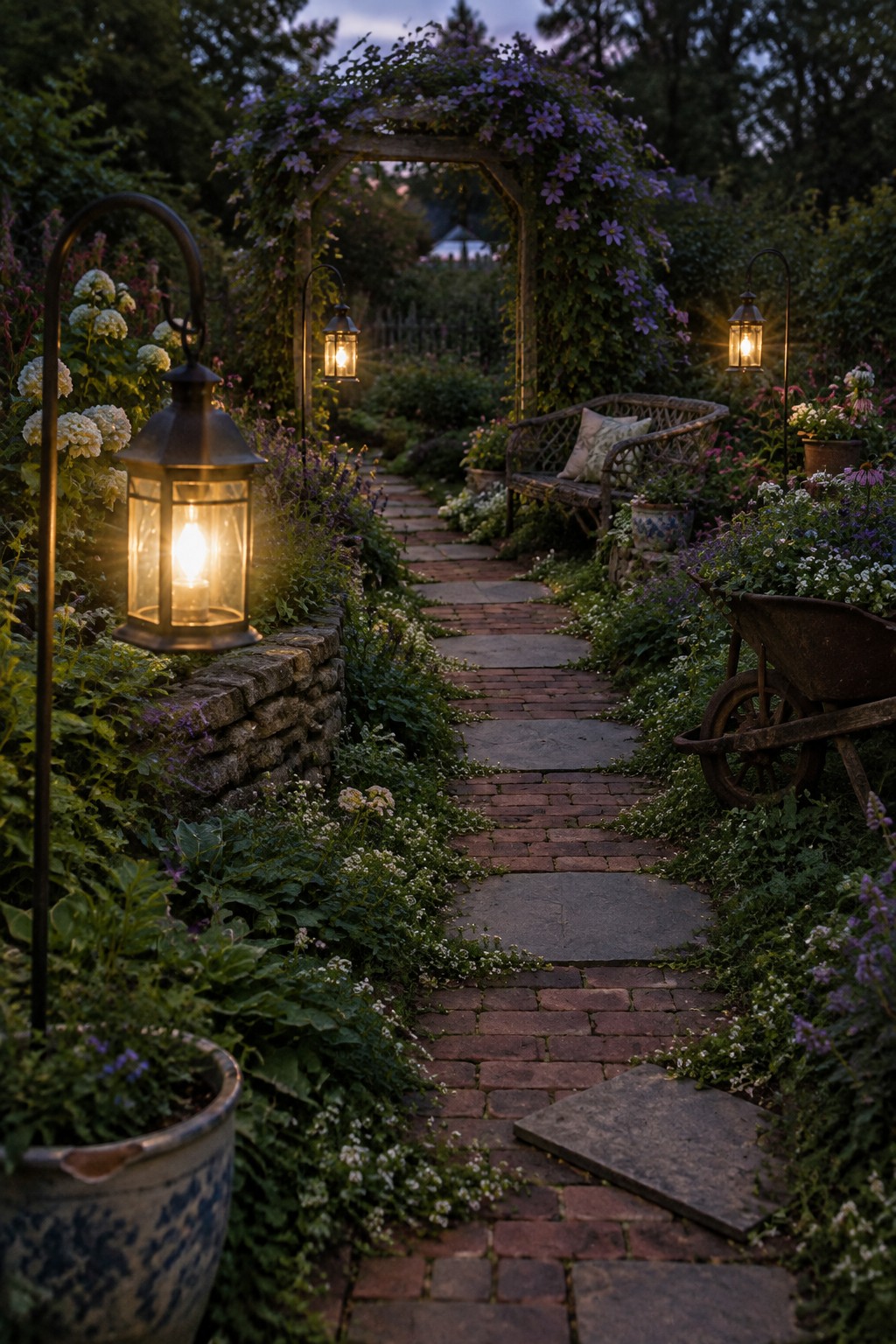
Lanterns give a soft, steady light that works especially well on garden paths. They sit nicely among the plants without taking over the space, and the warm glow helps mark the way at night.
This works best on brick or stone paths that wind through flower beds. Space the lanterns so the light overlaps slightly, and pick styles that match the plants and hardscaping you already have. Keep them a bit lower so the light stays focused on the path rather than shining into the house.
Frequently Asked Questions
Q: Will solar lights still work if part of my yard stays shady most of the day? A: Pick spots that get at least a few hours of direct sun each day. Test one or two lights first before adding more along the path. Some models hold power longer so you can swap them out if needed.
Q: How far apart do I space lights along a winding path? A: Space them every six to eight feet so the beams overlap just enough. Walk the path after dark and shift them until the ground looks even. This setup keeps things safe without extra glare.
Q: What happens if bugs swarm around my new outdoor lights? A: Warm white bulbs pull in fewer bugs than cool bright ones. Aim the lights downward toward the ground to cut the glow that draws them in.
