

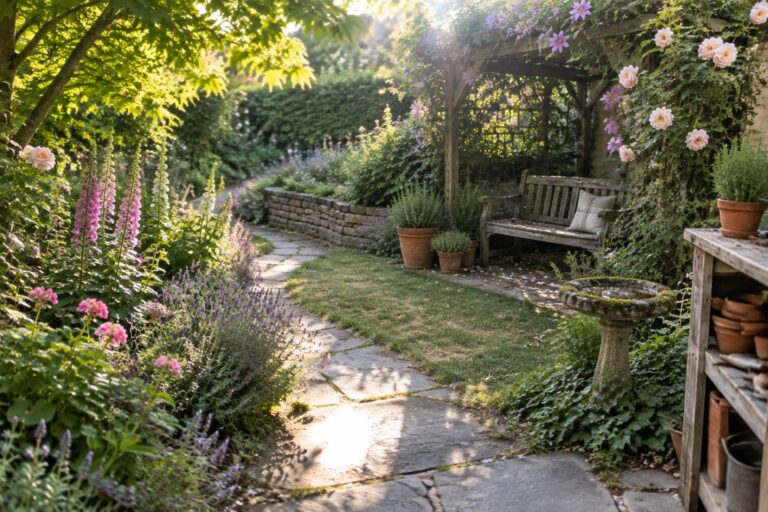
Backyard landscaping in a cottage style tends to work best when the plants are allowed to mingle naturally instead of being placed in rigid rows.
Over time those informal beds start to create their own rhythm and the whole space feels less like a project and more like a settled garden.
I have noticed that pathways matter more than people expect because they guide how you actually move through the yard and enjoy the planting.
Layout comes first.
I would probably try adapting one or two of these plant combinations in my own space first to see how they settle in.
Let An Informal Stone Path Weave Through The Beds
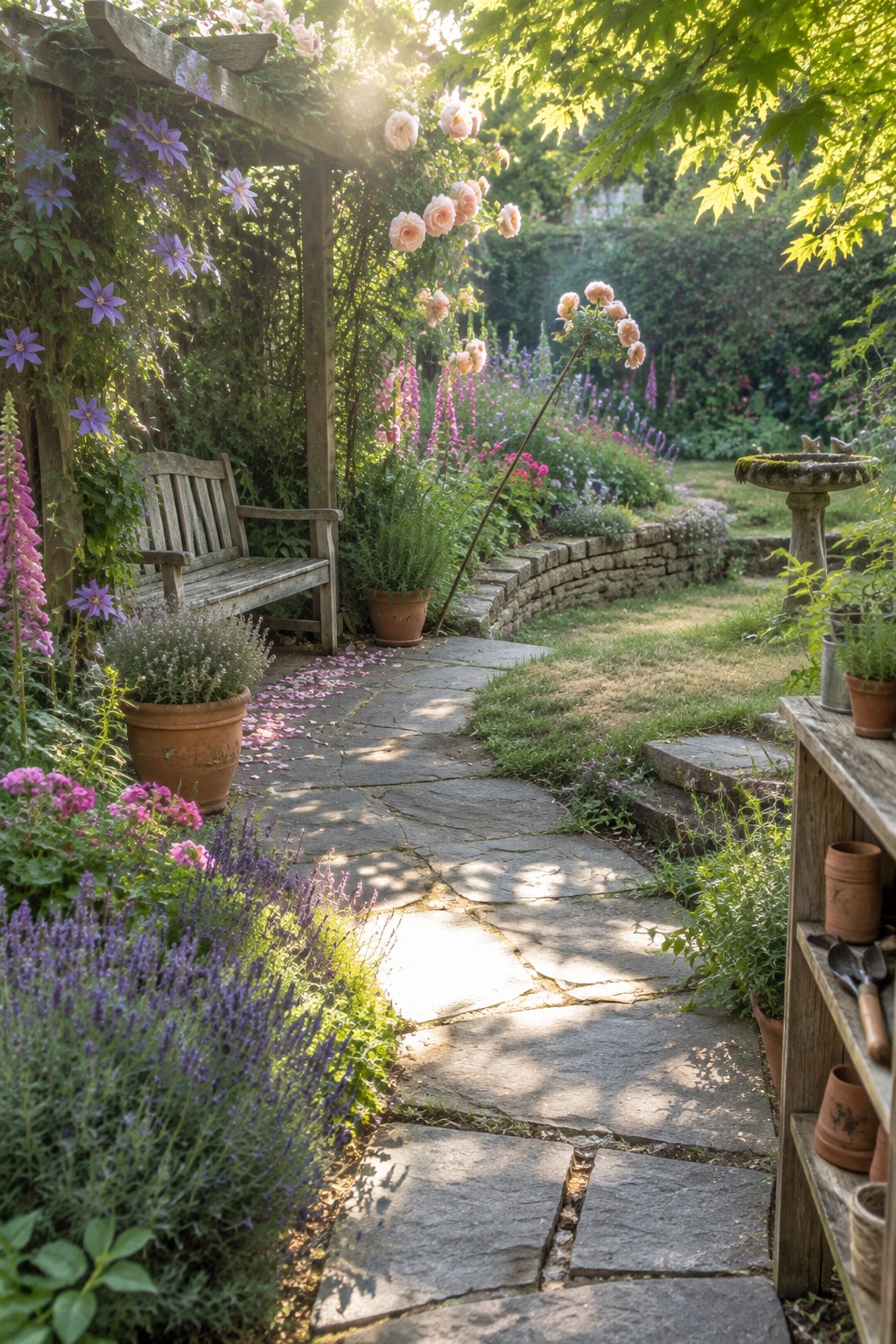
A simple path of uneven stone slabs keeps a cottage garden feeling open and easy to walk through. It breaks up the planting without adding straight lines or formal edges, so the flowers can spill over naturally and the whole space stays relaxed.
This approach works best in smaller yards where you want to move between different flower areas without crowding them. Lay the stones with gaps and let the plants grow right up to the edges. Avoid perfect spacing or matching sizes if you want that loose, lived-in look.
Gravel Keeps Cottage Seating Relaxed
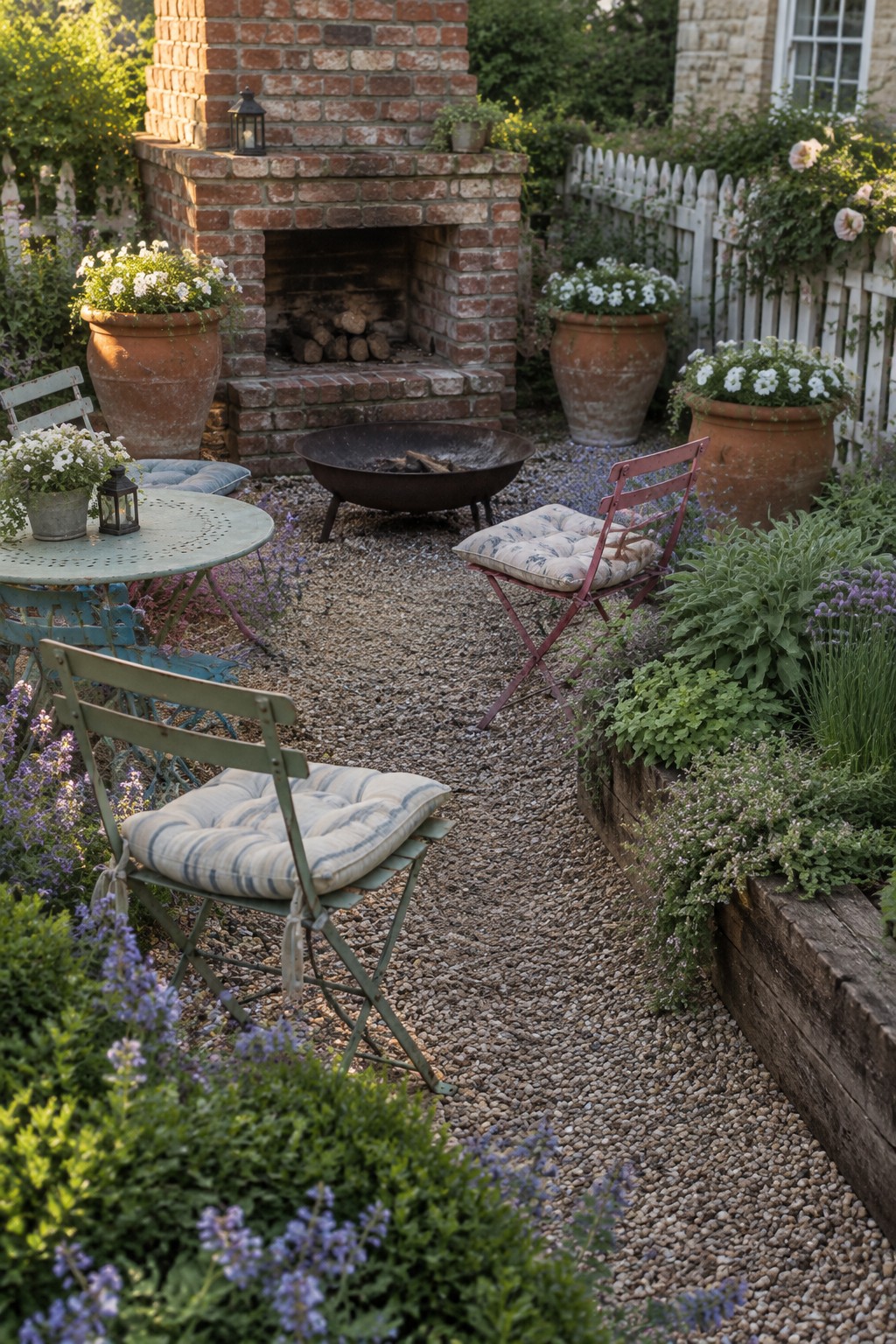
Gravel works nicely underfoot when you want an outdoor spot that feels easy rather than planned. It drains well, settles into the garden without hard edges, and lets you move chairs around as the season changes. The simple folding seats and scattered pots in this setup show how little structure is really needed.
Place the gravel where you already have decent sun and some existing beds nearby. Add a few large pots for height and keep the furniture light so the whole area stays open. It suits smaller backyards or older homes where a full patio would feel too formal.
Add A Stepping Stone Path
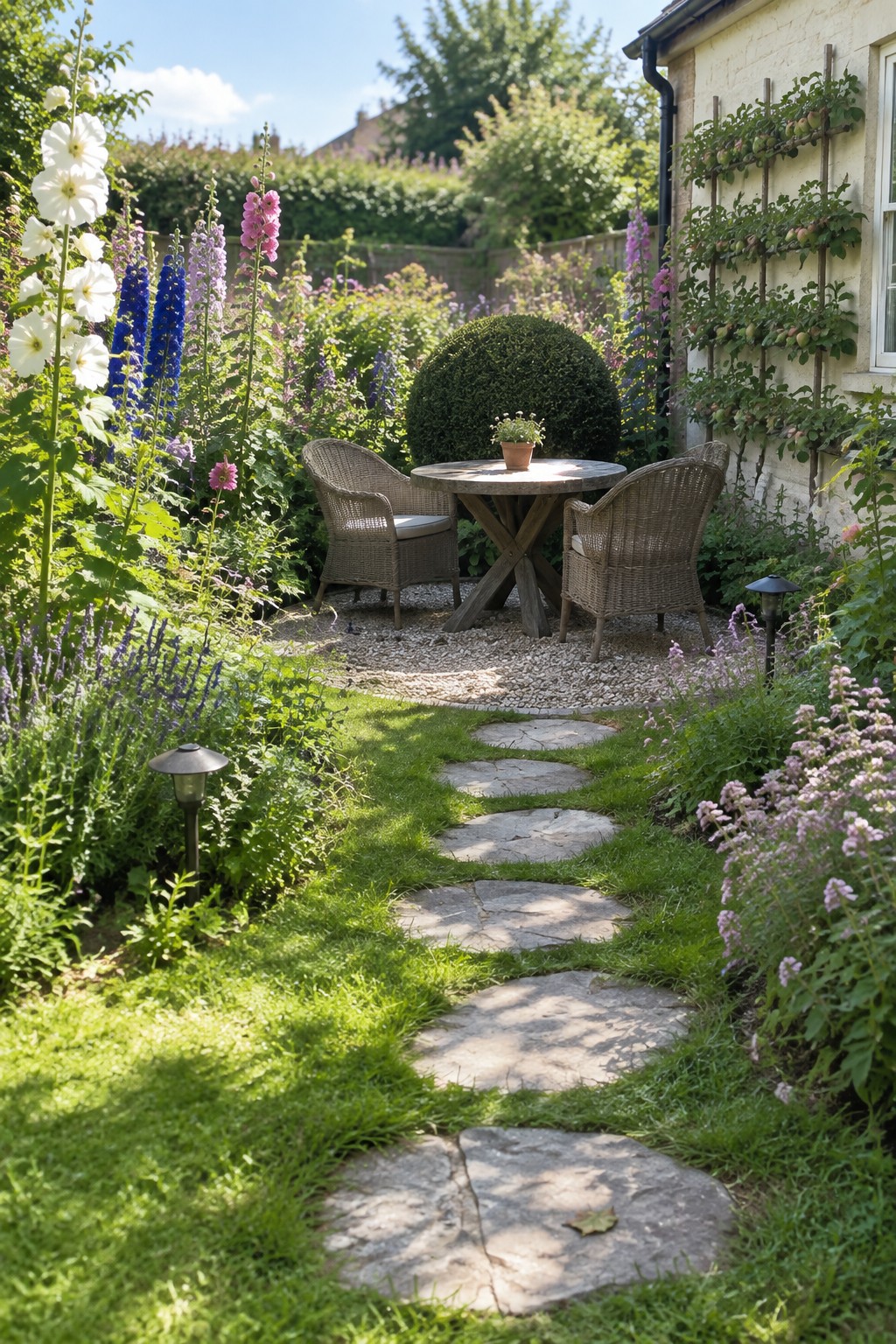
A stepping stone path gives the garden an easy way to move around while keeping the planting loose and natural. The stones sit right in the grass so the whole space still feels soft rather than formal.
This layout works well in smaller cottage gardens where you want to reach a seating area without carving out wide walkways. Space the stones a little unevenly and let the flowers grow close to the edges so the path blends in instead of standing out.
Gravel Paths For Informal Cottage Gardens

Gravel paths fit cottage gardens because they feel soft underfoot and let plants spill right over the edges without looking planned. The loose surface works with the mix of tall flowers and lower foliage, so nothing feels boxed in.
They suit smaller backyards or side areas where you want an easy route that still looks natural. Keep the gravel layer thick enough to stay dry after rain, and let a few plants self-seed along the sides for that relaxed cottage feel.
Group Potted Plants Around Outdoor Seating
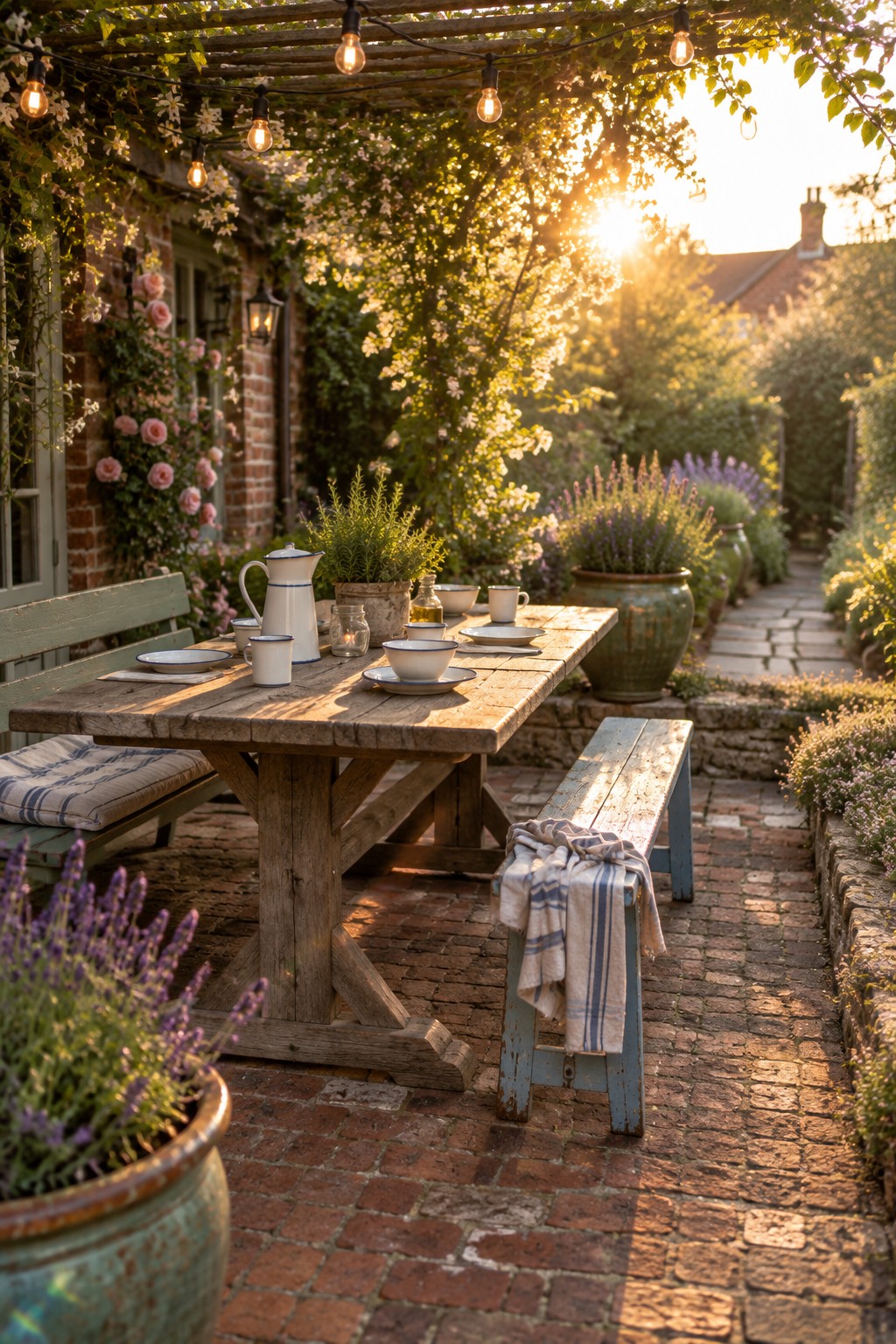
One simple way to get that cottage garden feel is to set several pots of flowers and herbs right next to the table and benches. The plants soften the hard edges of the seating area and make the whole spot feel more like part of the garden.
This works best on brick or stone patios where there is not much room for big beds. Use a mix of taller pots and smaller ones so the planting stays loose and changes with the seasons. Keep the pots close enough that you can reach them from the table but still leave space to walk around.
Raised Beds With Climbing Supports
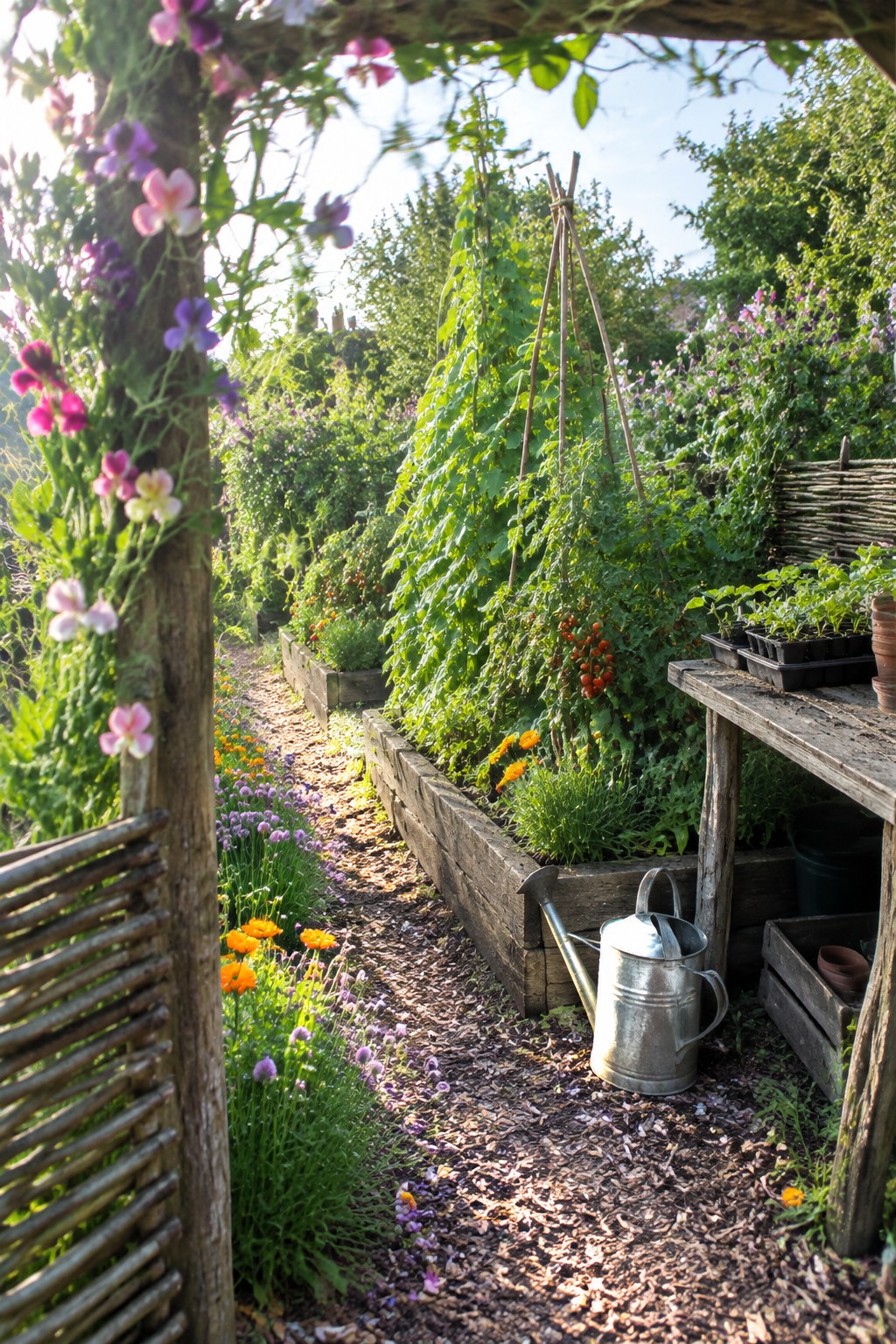
Raised beds give a loose cottage garden some needed structure without making it feel too planned. The wood edges hold the soil in place while letting plants spill over naturally along the paths.
Add simple poles or stakes inside the beds for beans, tomatoes, or sweet peas to climb. This approach works best in smaller yards where you want both flowers and vegetables growing together without a rigid layout.
Let Plants Spill Over Stone Walls
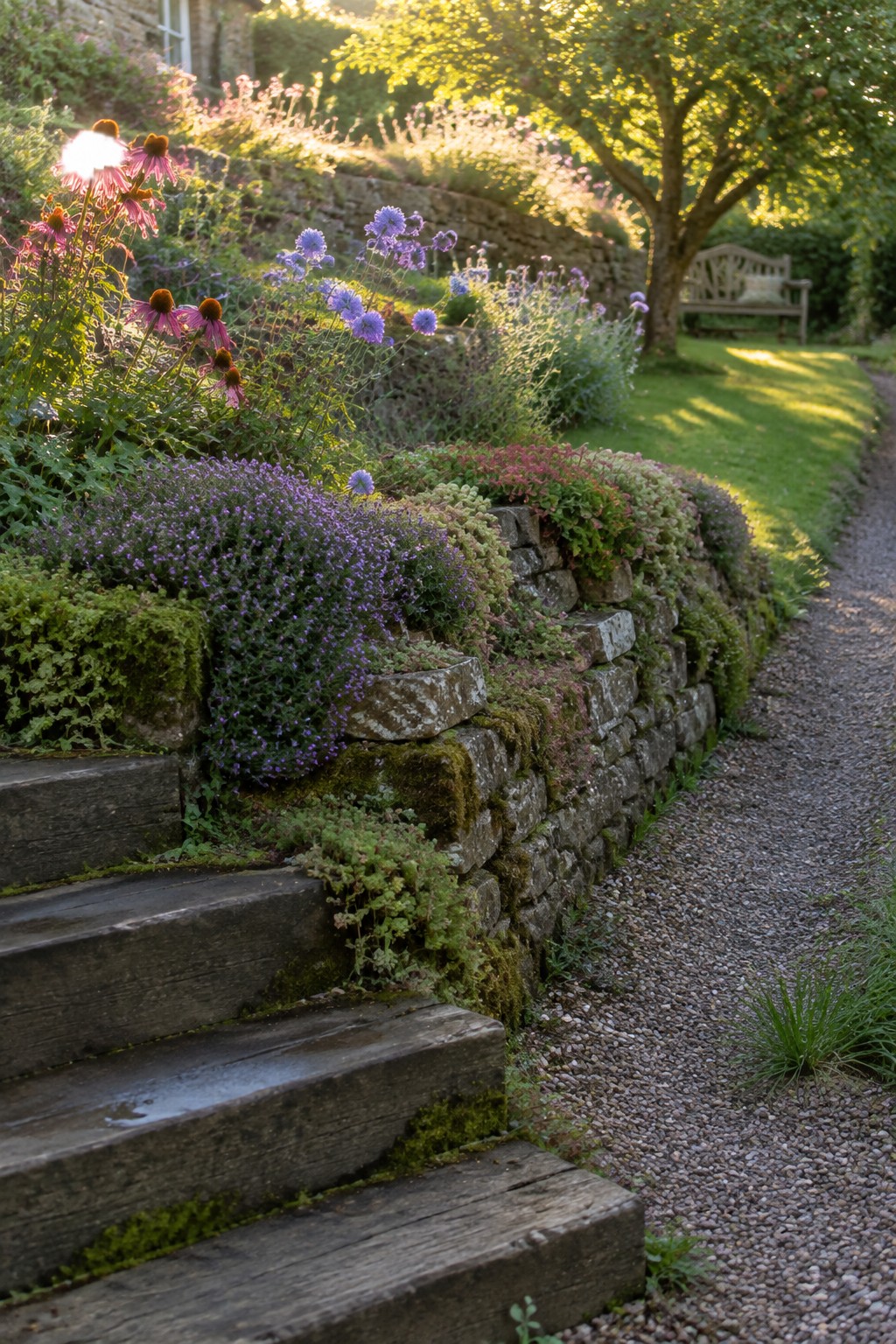
Stone walls give a garden clear lines and structure, but they can feel a bit stiff on their own. Letting plants tumble over the edges softens the look right away and gives the whole space that loose, cottage feel without much extra effort.
This works best along paths or changes in level where the wall is low enough for plants to reach the ground. Choose trailing perennials and low shrubs that can handle the conditions in your yard, and keep the planting loose rather than trying to make it perfectly even.
Let Plants Spill Right to the Pond Edge

A small pond works well in a cottage garden when the planting is allowed to grow right up to the water. Ferns, irises, and low blue flowers soften the stone edges and make the whole thing feel unplanned and natural.
This approach suits smaller backyards that need a quiet focal point without looking too formal. Keep the plant mix simple, choose things that like some moisture, and let them fill in over a season or two.
Let Informal Planting Edge the Patio

One of the easiest ways to give a backyard that cottage feel is to let the planting come right up to the edge of the stone patio. A gentle curve and a mix of flowers keep the hard surface from looking too stark and make the whole area feel like part of the garden instead of something set apart.
Try a low border of old tiles or bricks to hold the soil in place, then fill the bed with a loose mix of perennials and annuals that spill over a little. This works especially well in smaller yards where you want the seating area to feel cozy without needing tall screens or heavy structures.
Layer Potted Plants Along Walls
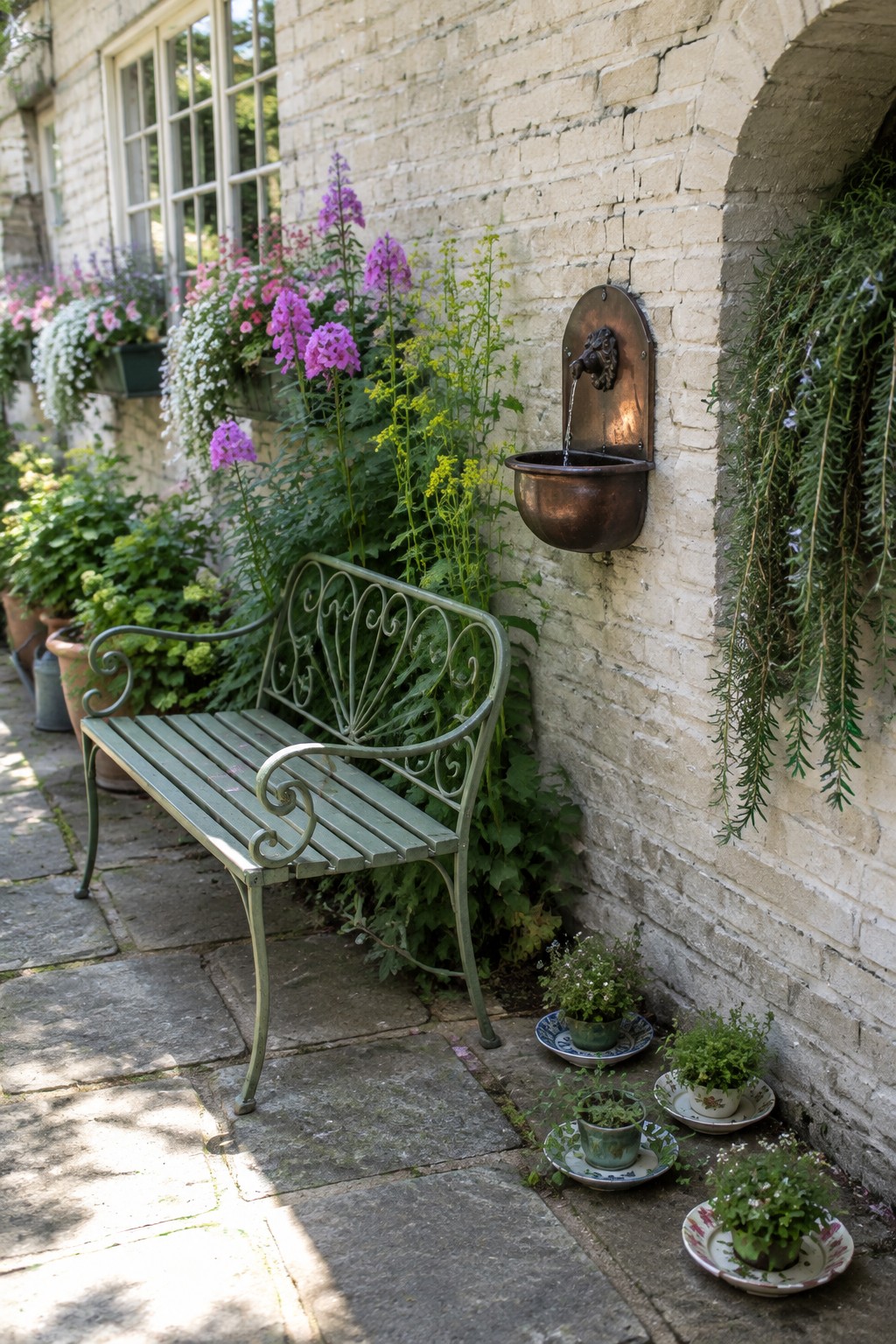
One simple way to build that loose cottage look is to set clusters of pots right at the base of a wall. It adds layers of planting without needing wide beds or heavy digging, and the pots can be swapped out as plants come and go.
This works especially well along paths or next to a bench where you want some softness without blocking the walkway. Use matching saucers underneath to keep the ground clean and make it easy to rearrange things when needed.
Mix Flower Heights For A Natural Border

Mixing tall spikes with lower spreading blooms gives a border that feels full without looking stiff. The lupines stand up tall while poppies and lavender fill in lower down, so the whole strip looks soft and full from early summer on.
This works best along a gravel path or beside a simple gate where you want color without a lot of fuss. Keep the planting loose, repeat a few colors, and let a few plants self-seed so the bed stays easy to care for year after year.
Raised Beds With Mixed Plantings
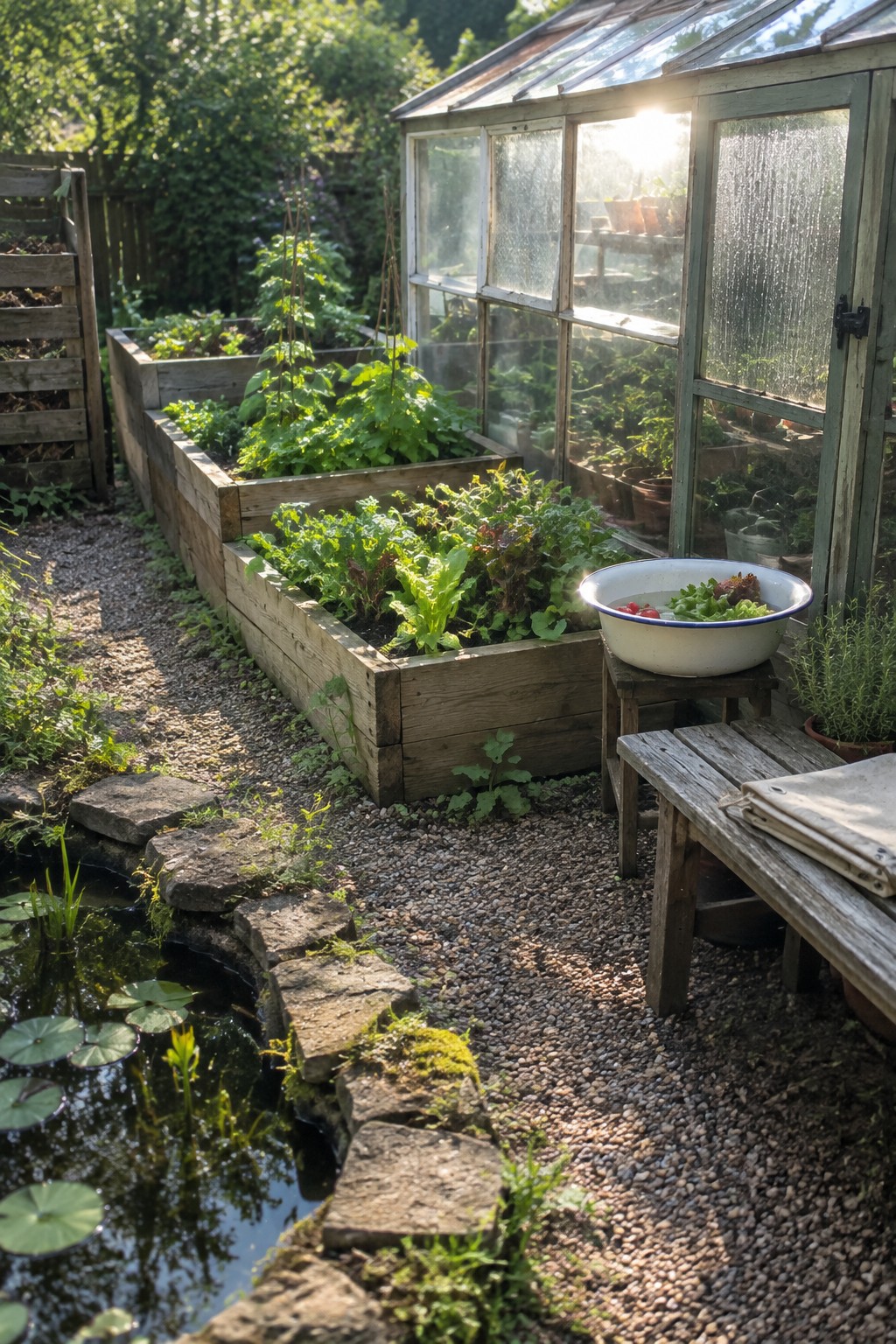
Raised beds give you a simple way to keep the garden looking productive without making it feel too neat. The wooden frames hold everything in place while still letting plants spill over the edges a bit, which fits the loose cottage style.
They work well in smaller yards or along a path because they keep soil contained and make weeding easier. Gravel around the beds helps with drainage and gives you a practical surface that does not compete with the plants.
Gravel Paths Suit Informal Cottage Gardens
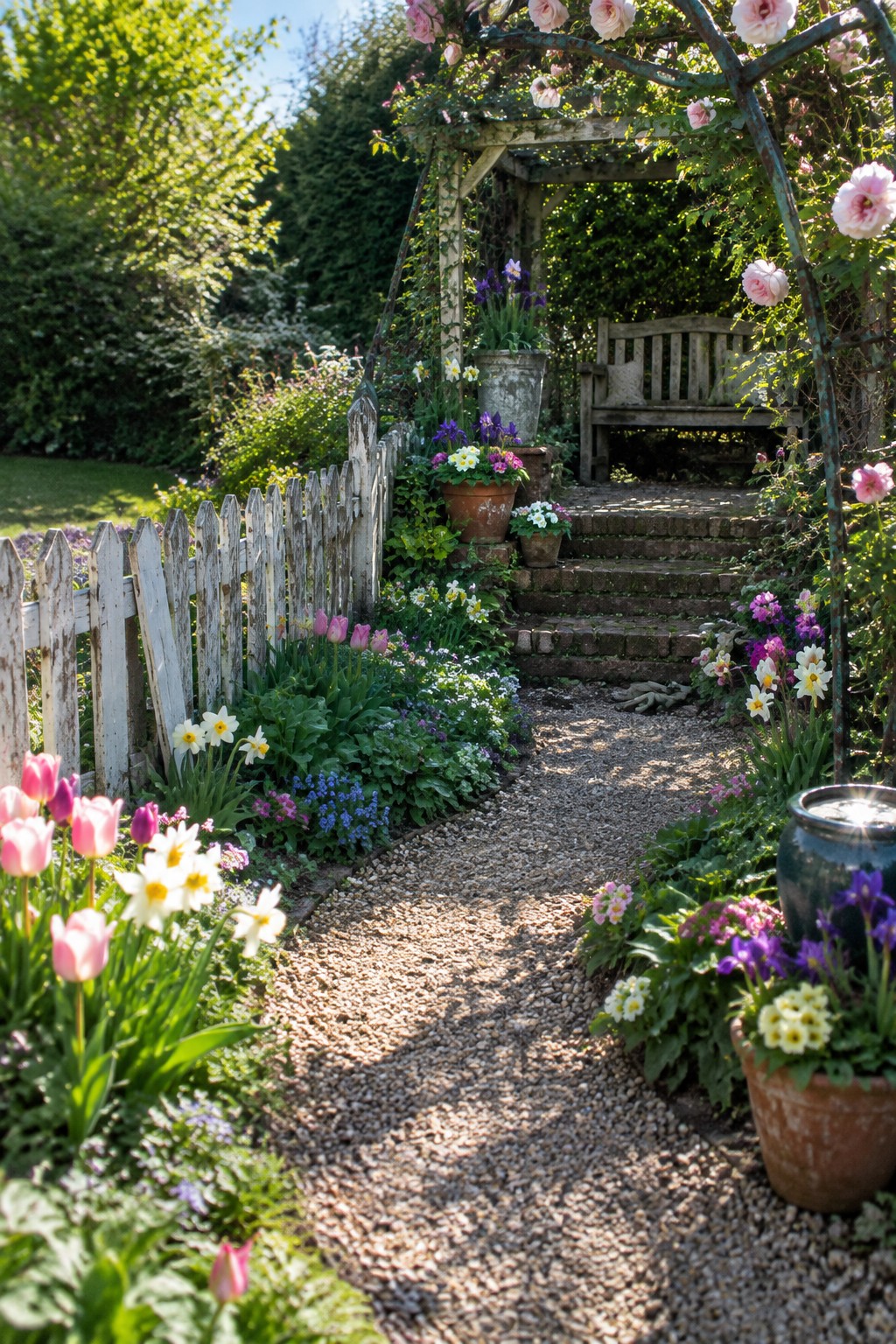
A gravel path gives cottage gardens an easy, relaxed structure without making them feel stiff or planned. It lets the plants spill over the edges naturally and keeps the whole space feeling open and welcoming.
This works best on smaller lots or in backyards where you want to connect different areas without adding formal paving. Just keep the path narrow and slightly curved so it follows the shape of the beds rather than cutting straight lines through them.
Gravel Paths With Informal Planting Edges
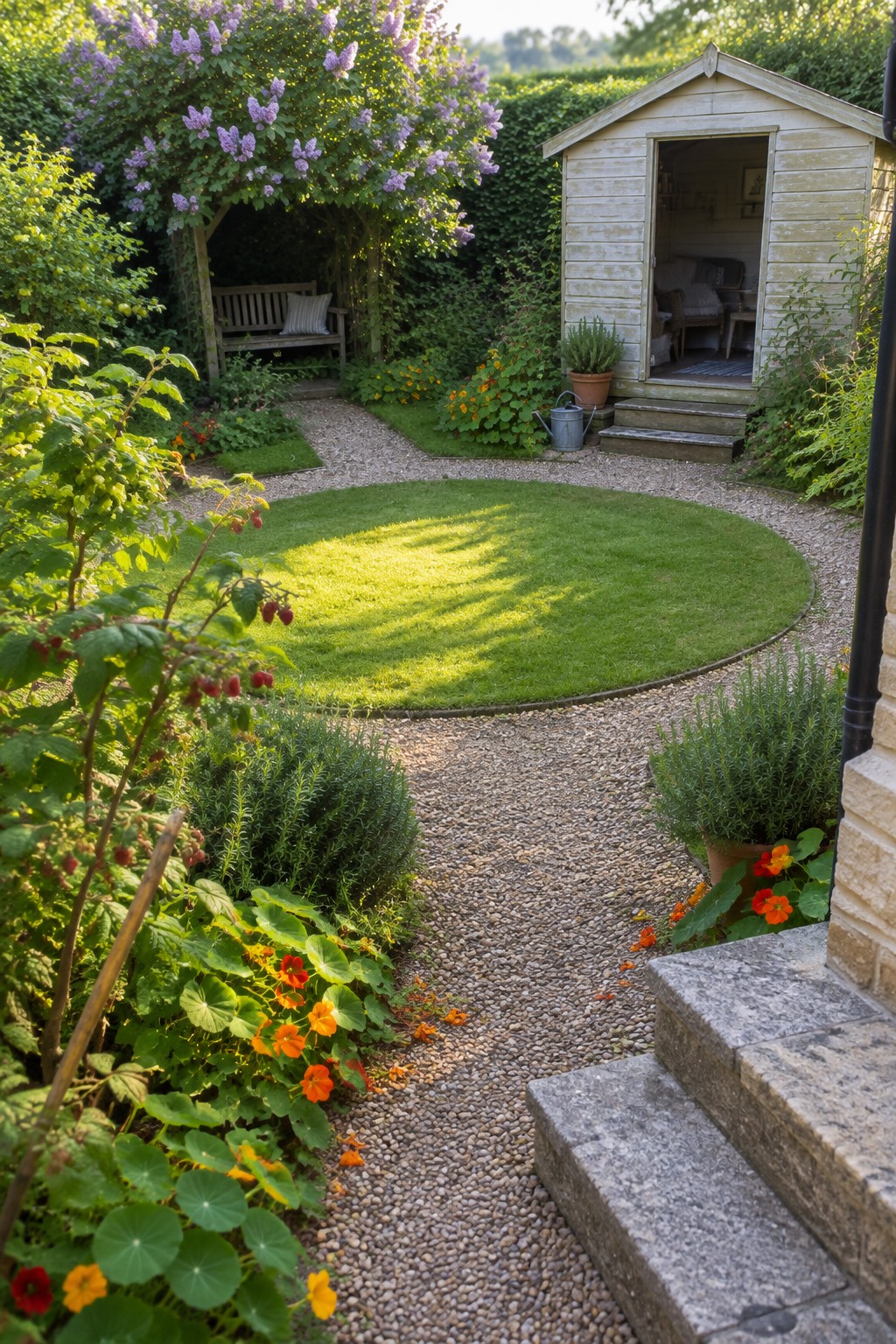
Gravel paths work well in cottage gardens because they feel relaxed and let the plants do most of the work. A simple base of gravel allows flowers and foliage to spill over the edges without looking messy, which keeps the whole space feeling natural rather than planned out.
This approach suits smaller backyards or side gardens where you want an easy walking surface that still blends with the planting. Use it where you need to link open lawn areas to sheds or seating spots, and choose low spreading plants that can handle a bit of foot traffic along the sides.
Blend Pots Into Garden Beds
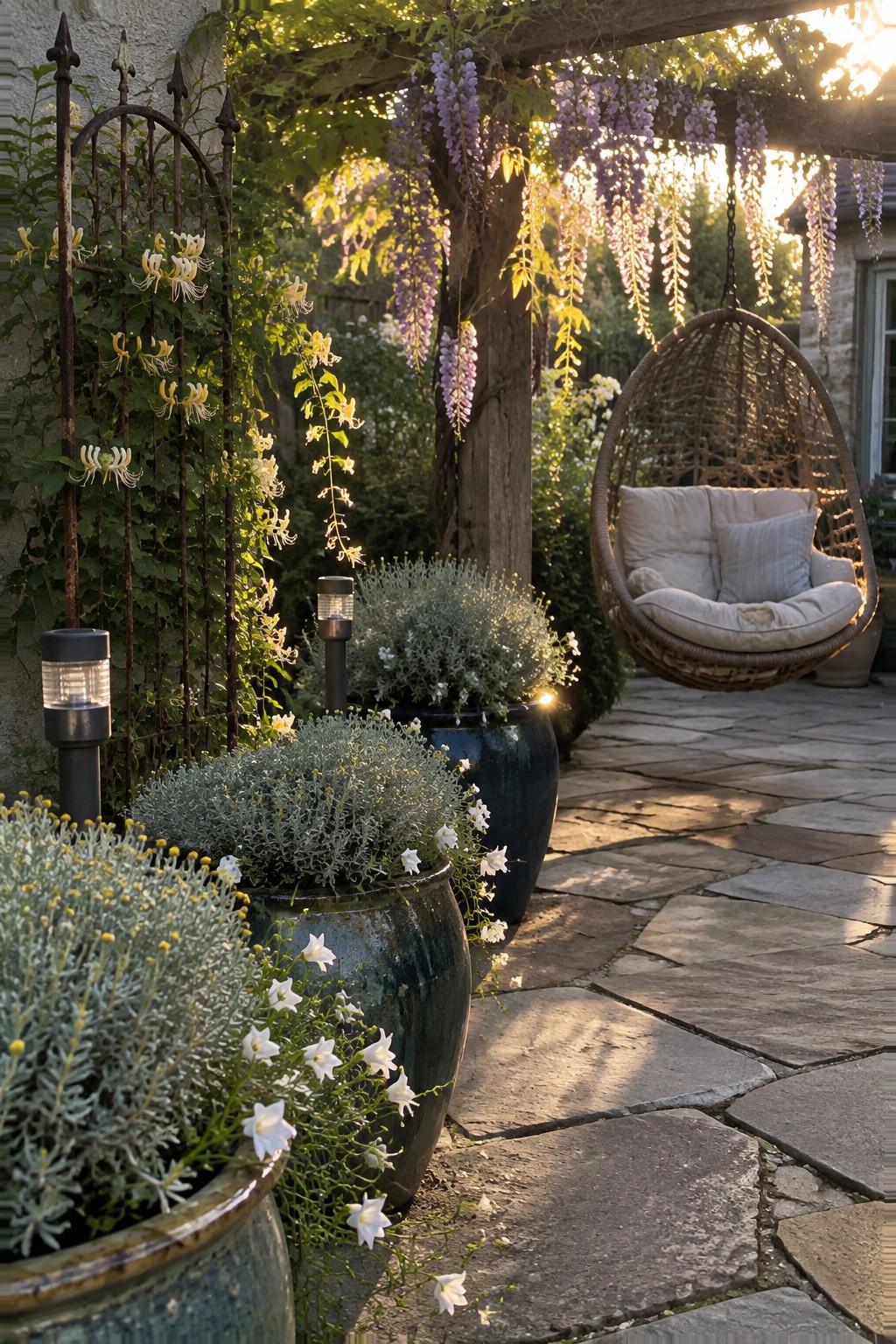
One easy way to get a relaxed cottage look is to set large pots straight into the planting beds along a path. The mix of container plants and in-ground layers softens the edges and gives you room to shift things around when plants need more sun or you want a fresh color.
This approach works well on narrower walkways or in smaller yards where a full border would feel crowded. Choose pots in similar tones, fill them with plants that spill over the rims, and let climbers run up nearby posts or trellises so everything feels connected.
Tuck Flowers Into Stone Walls

One simple way to get that cottage look is to work plants straight into the hardscape instead of keeping everything in tidy beds. Stone walls with small pockets or ledges give flowers a place to spill out naturally, and the mix of rough stone and soft blooms feels relaxed without much effort.
This works especially well around built-in seating because the plants soften the edges and make the whole spot feel like part of the garden. Try geraniums or other easy growers in the niches, then add a few pots at ground level if you need more color. It suits older homes or any backyard with stonework and keeps the planting looking casual rather than planned.
Fill Cottage Beds With a Loose Mix of Annuals
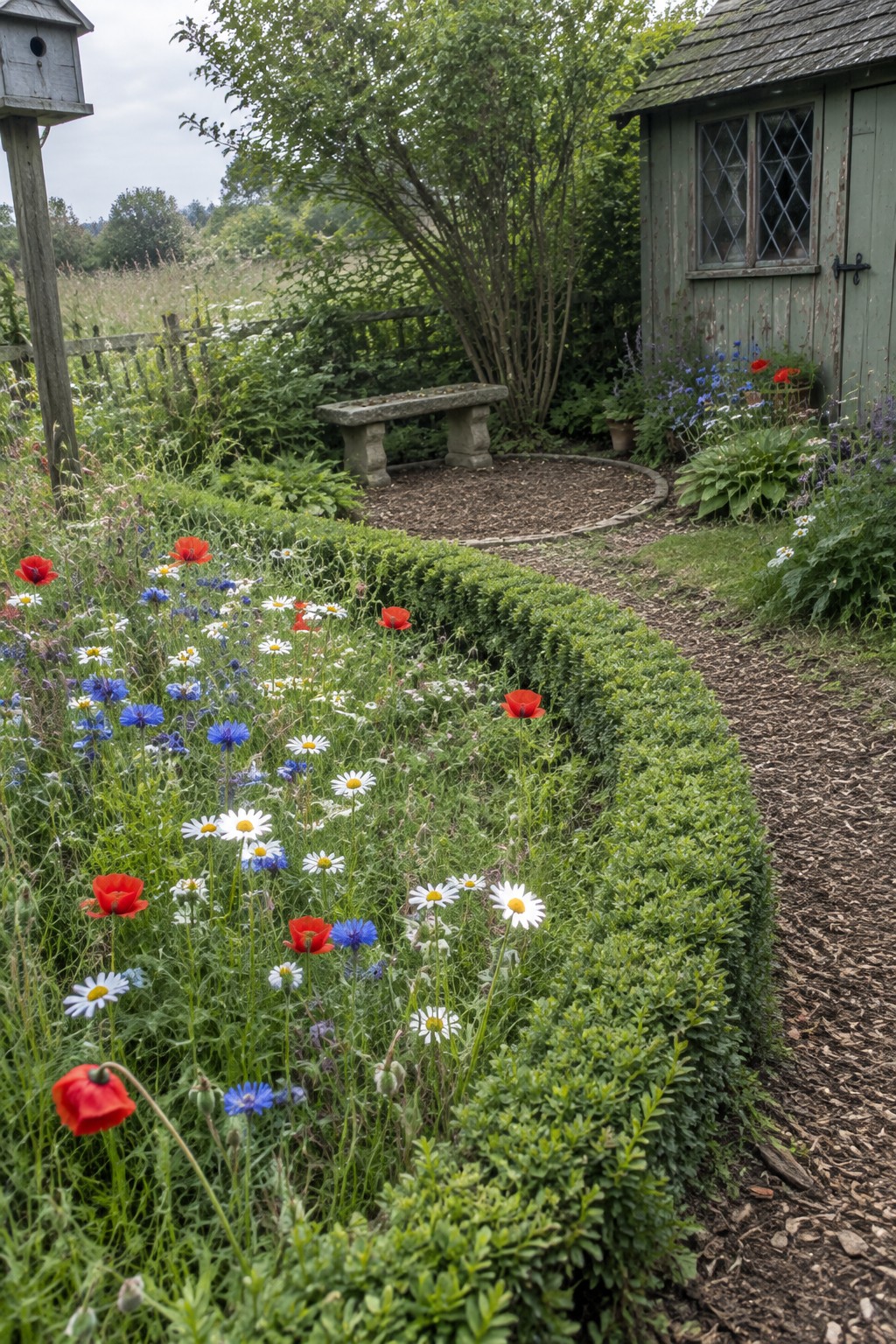
One simple way to get cottage style is to plant annuals in a free mix instead of neat rows. The poppies, daisies, and cornflowers here show how the colors blend without looking planned.
This works best in smaller yards or along a path where you want color but not a lot of upkeep. Keep the outer hedge trimmed and let the flowers do the rest inside the curve.
Brick Edging For A Garden Pond
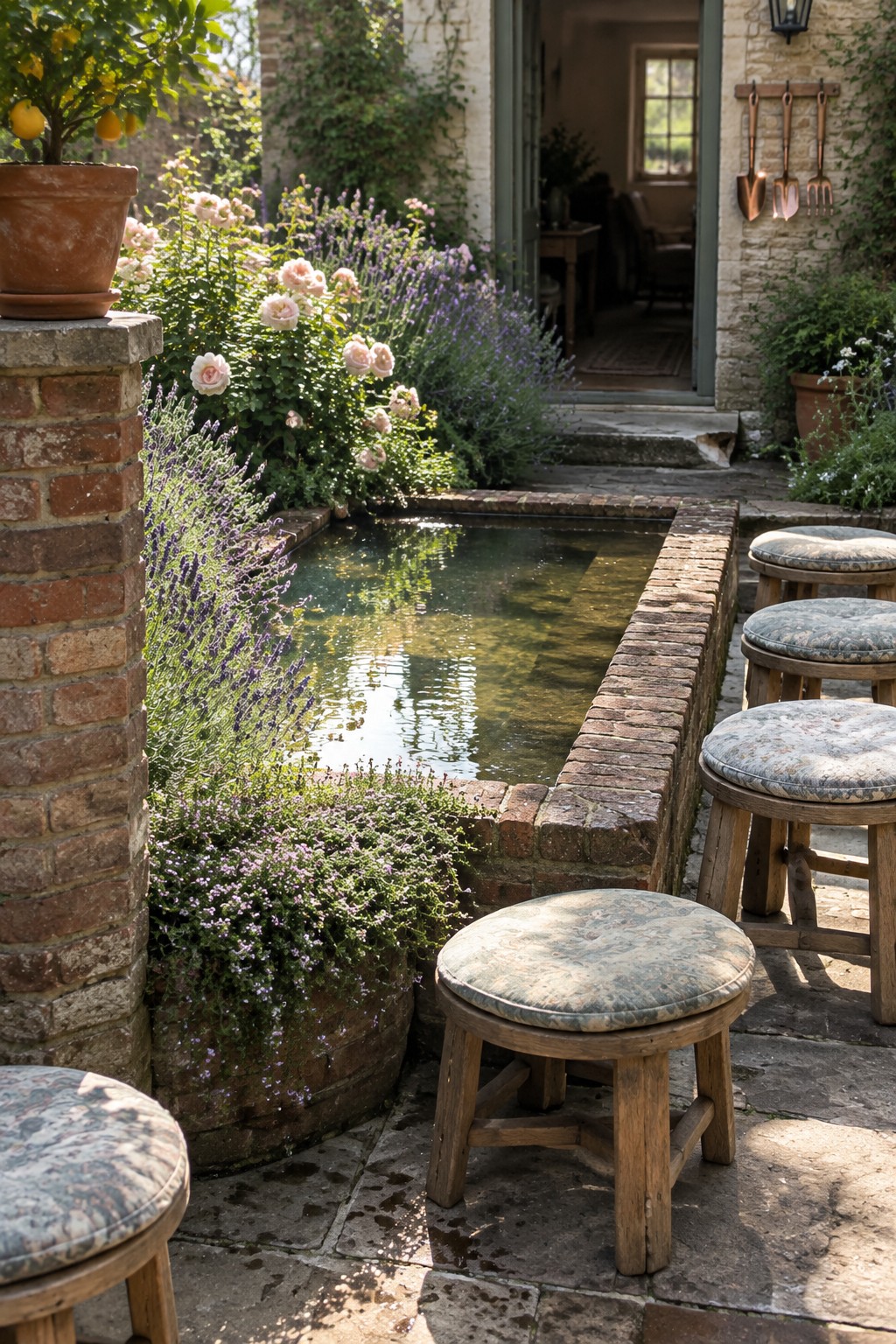
Brick edging gives a pond a clear shape without making the planting around it feel stiff. The straight lines hold everything in place while flowers and herbs can still spill over the sides in a loose way.
This works well in smaller cottage backyards where you want one defined water feature amid informal beds. Keep the bricks simple and slightly weathered so they blend with the rest of the garden rather than stand out.
Frame A Patio With Large Garden Pots
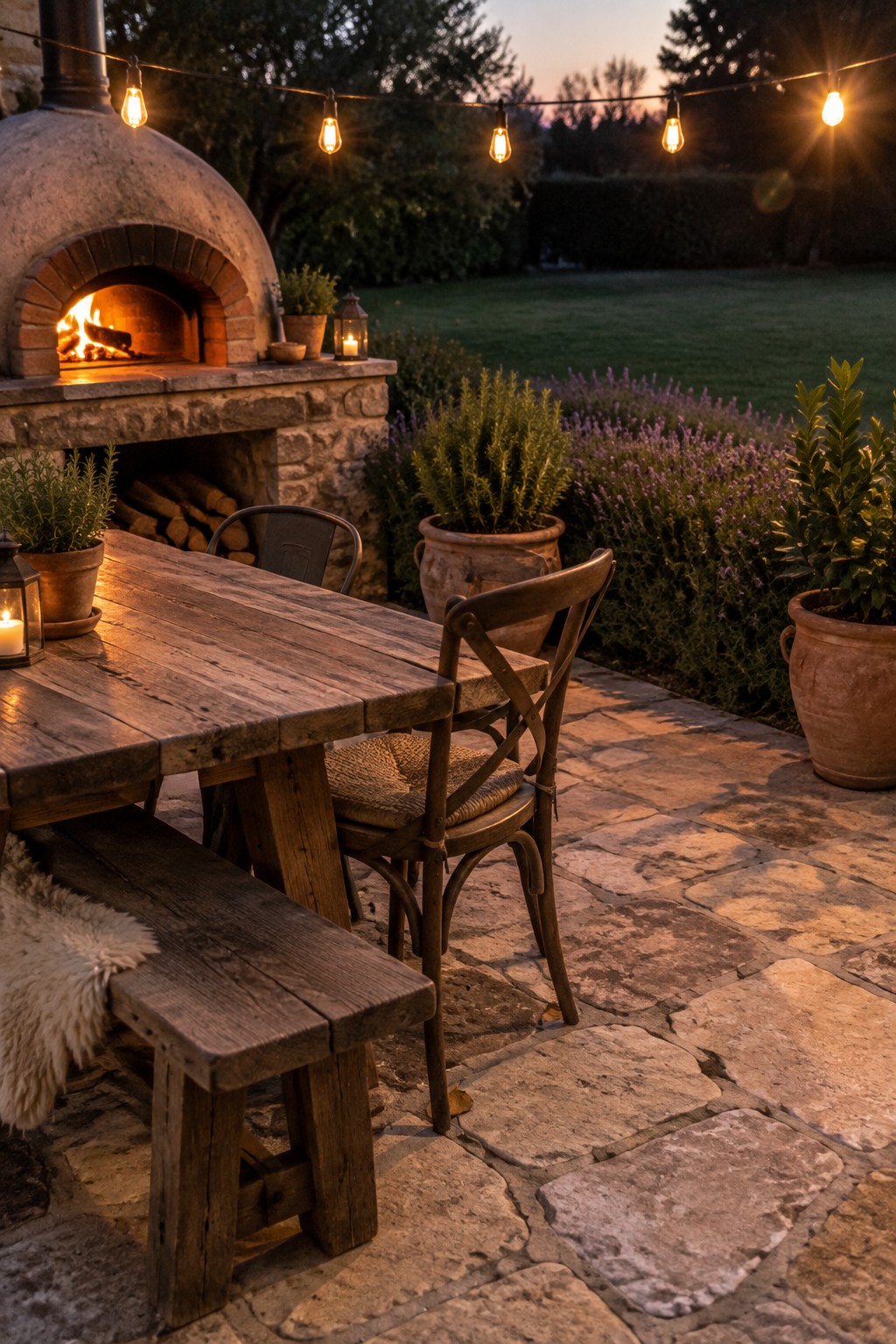
Large pots let you bring cottage planting right up to the edge of a seating area without needing big permanent beds. They add height, soften the hard surface, and make the whole space feel more like part of the garden instead of a separate zone.
Place them in clusters near the table and along the sides so the plants can spill over a little. This works especially well on stone or gravel patios where you want an informal look that still leaves room to move chairs around. Stick to herbs, lavender, and simple greenery if you want low upkeep and a relaxed cottage feel.
Gravel Paths With Potted Plants

Gravel works well in cottage gardens because it creates a simple transition between the house and the lawn without needing perfect edges. It lets you set down large pots right where you need them and move them around as the seasons change.
This setup suits smaller backyards or side areas where you want some hard surface but still keep things relaxed. Just keep the gravel layer thin and let the planting spill over the edges a bit so it does not feel too tidy.
Layer Informal Planting Along a Narrow Path
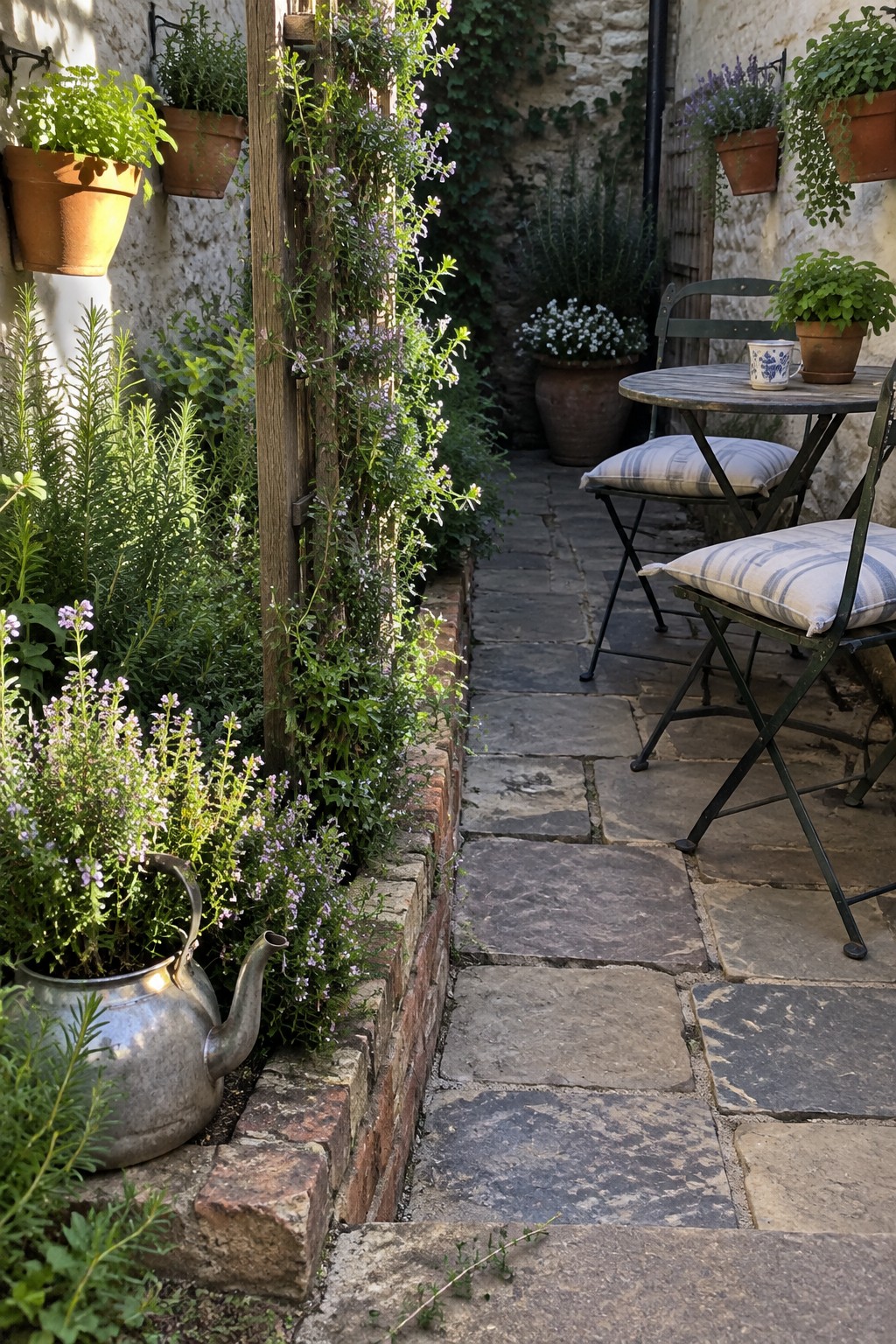
A narrow border next to a stone path gives you room for plenty of planting without taking over the whole yard. Mixing low herbs with taller climbers on a simple post or trellis keeps the look full and casual. The brick edge holds everything in place while still letting plants spill over a bit.
This works well in small backyards or side areas where space is tight. Stick to plants that like similar conditions and let some self-seed for that relaxed cottage feel. Keep the path clear but let the planting feel a little wild at the edges.
Stone Steps With Gravel For Cottage Paths

A path made from wide stone slabs set into gravel gives a cottage garden that relaxed, lived-in feel without looking too planned. The mix keeps things simple and lets the surrounding plants do most of the work. It also handles a slight slope or uneven ground better than a solid walkway.
This approach works well in smaller backyards or along the side of a house where you want a clear route but still need room for informal planting on both sides. Keep the gravel layer thin so it stays comfortable underfoot, and let low plants creep over the edges a little.
Simple Brick Edging For Cottage Beds
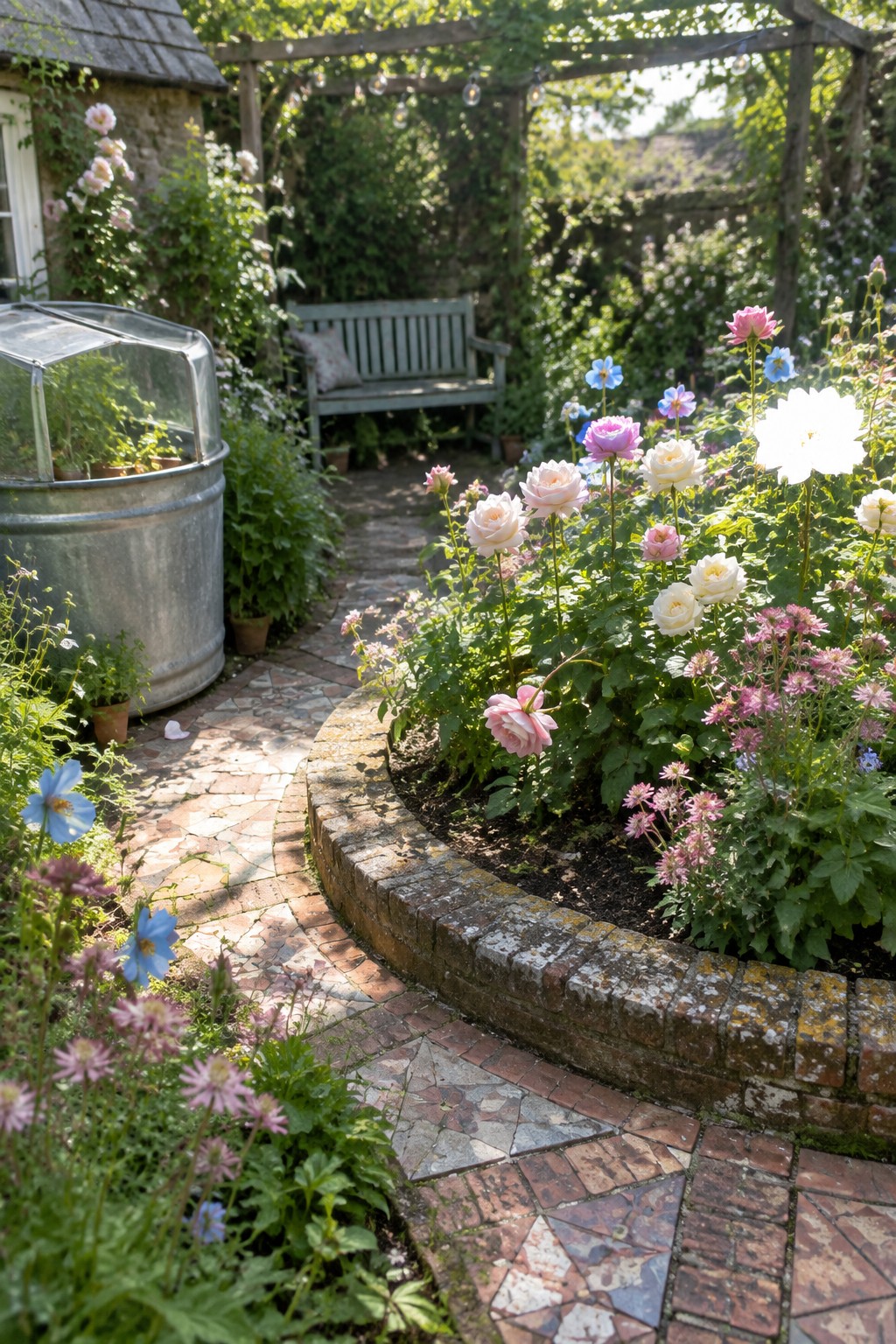
Brick edging gives cottage gardens a clear shape without making the planting feel stiff. The low border holds the soil in place while letting flowers spill over the edge in a relaxed way, which fits the informal style most people want in a backyard.
This approach works well along paths or around small beds where you want a mix of roses, perennials, and annuals without a lot of fuss. It suits older homes or any space where you need something durable that still looks soft and lived in.
Frequently Asked Questions
Q: How do I pick plants that look natural together without a lot of planning? A: Start with a few favorites like lavender and daisies that spill over paths. Let them mingle a bit so the beds feel relaxed. Watch how they grow the first season and move things around if needed.
Q: What about paths in a cottage backyard? A: Use stepping stones or gravel that wind around the plants instead of straight lines. This keeps the informal feel going strong.
Q: My soil is pretty heavy clay. Will cottage plants still work? A: Mix in compost to loosen it up before planting. Many cottage favorites like roses and foxgloves handle clay once it drains better. Test a small area first to see what takes hold.
Q: How do I stop it from looking overgrown after a few months? A: Cut back the tallest stems once they finish blooming to make room for shorter ones. This keeps the layers interesting without constant fuss. Focus on the edges near seating areas so everything stays inviting.
