

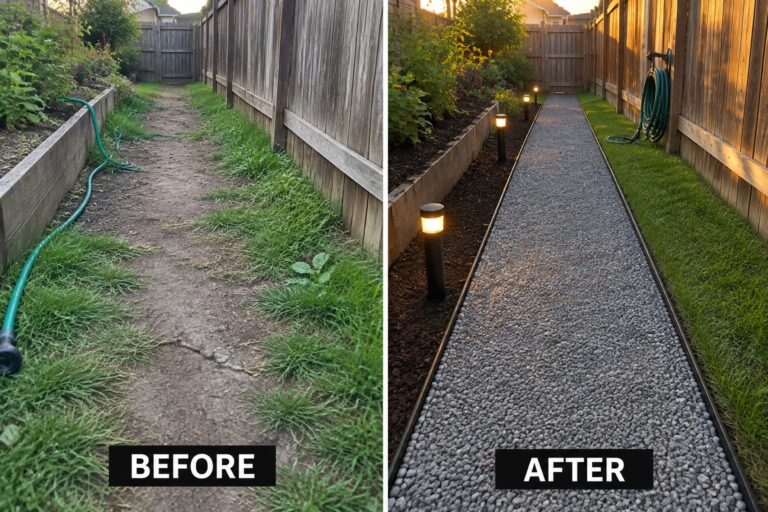
I have always noticed how backyard paths lose their shape once the edges start to fade into the surrounding lawn or beds.
Adding defined borders gives the route a clearer purpose and keeps foot traffic from spreading into planted areas.
In my own yard I learned that simple edging often matters more than fancy materials because it holds the layout together season after season.
Paths feel more usable once they stop looking like an afterthought and start guiding people through the space with intention.
A few of the border ideas here strike me as worth testing on a short stretch first to see how they settle into daily use.
Use Gravel And Edging To Define A Backyard Path
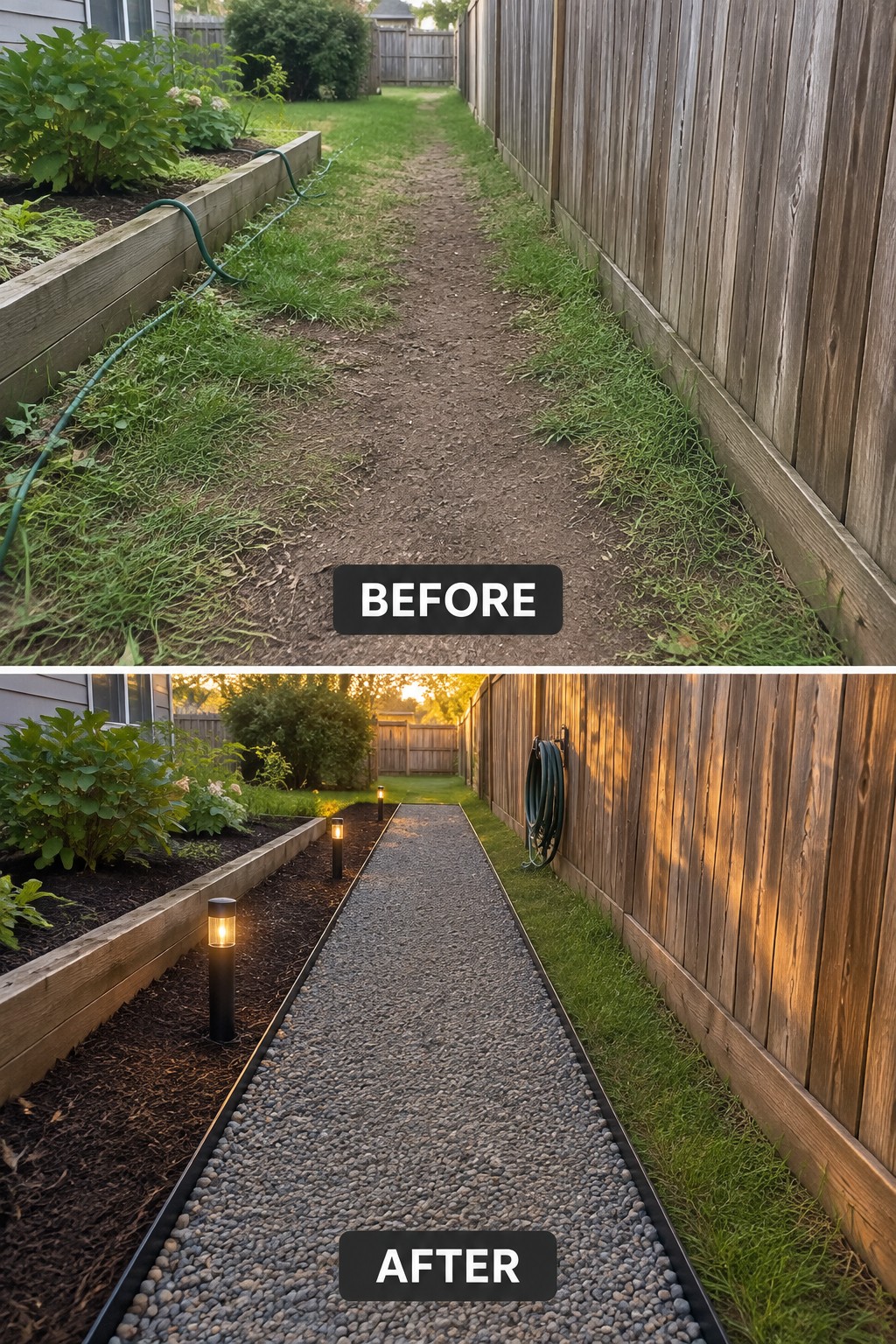
A dirt path that turns muddy after rain makes the side yard feel neglected and hard to use. Switching to a gravel path with metal edging gives the space a clear line and turns the narrow strip between the garden bed and fence into something you can actually walk on without tracking in dirt.
This idea works best in long, narrow yards where the path needs to serve as a simple connector rather than a big feature. Lay the edging first so the gravel stays contained, then keep the planting beds mulched on one side and the fence line clean on the other. The result is a low-maintenance walkway that still leaves room to mow the grass edges.
Add Defined Borders To A Backyard Pathway
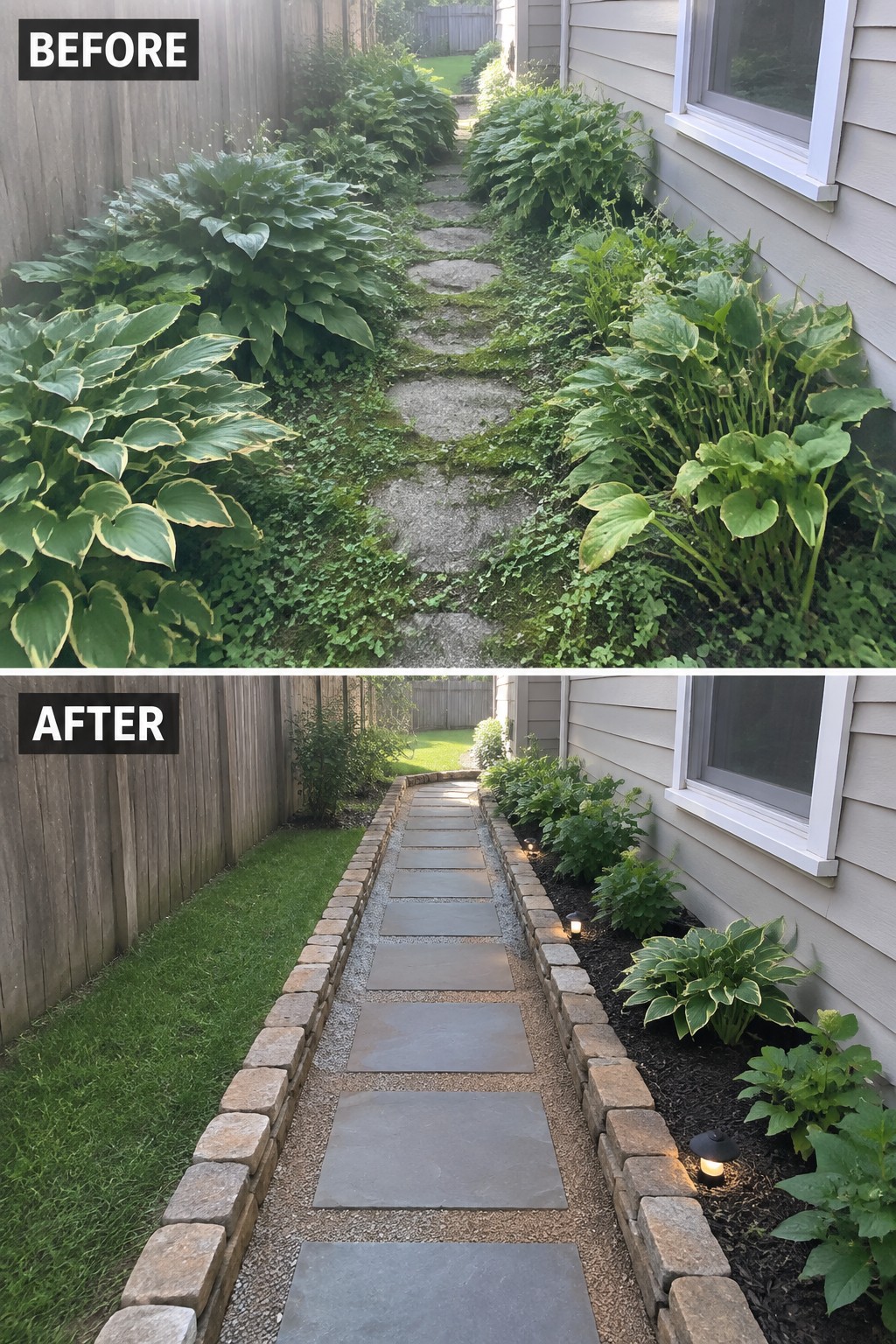
The main change here is the addition of solid brick borders that run the full length of the path. Before the update the walkway was hard to follow because plants and weeds had taken over the edges. Once the borders were set and the surface was filled in with pavers and gravel, the path became a clear route instead of a narrow gap between overgrown beds.
This idea works best in side yards or along the house where space is limited. Clean out the overgrowth first, then install the edging before laying the path material. The borders keep plants from creeping inward and make future maintenance much easier.
Add Brick Borders To Frame A Concrete Backyard Path
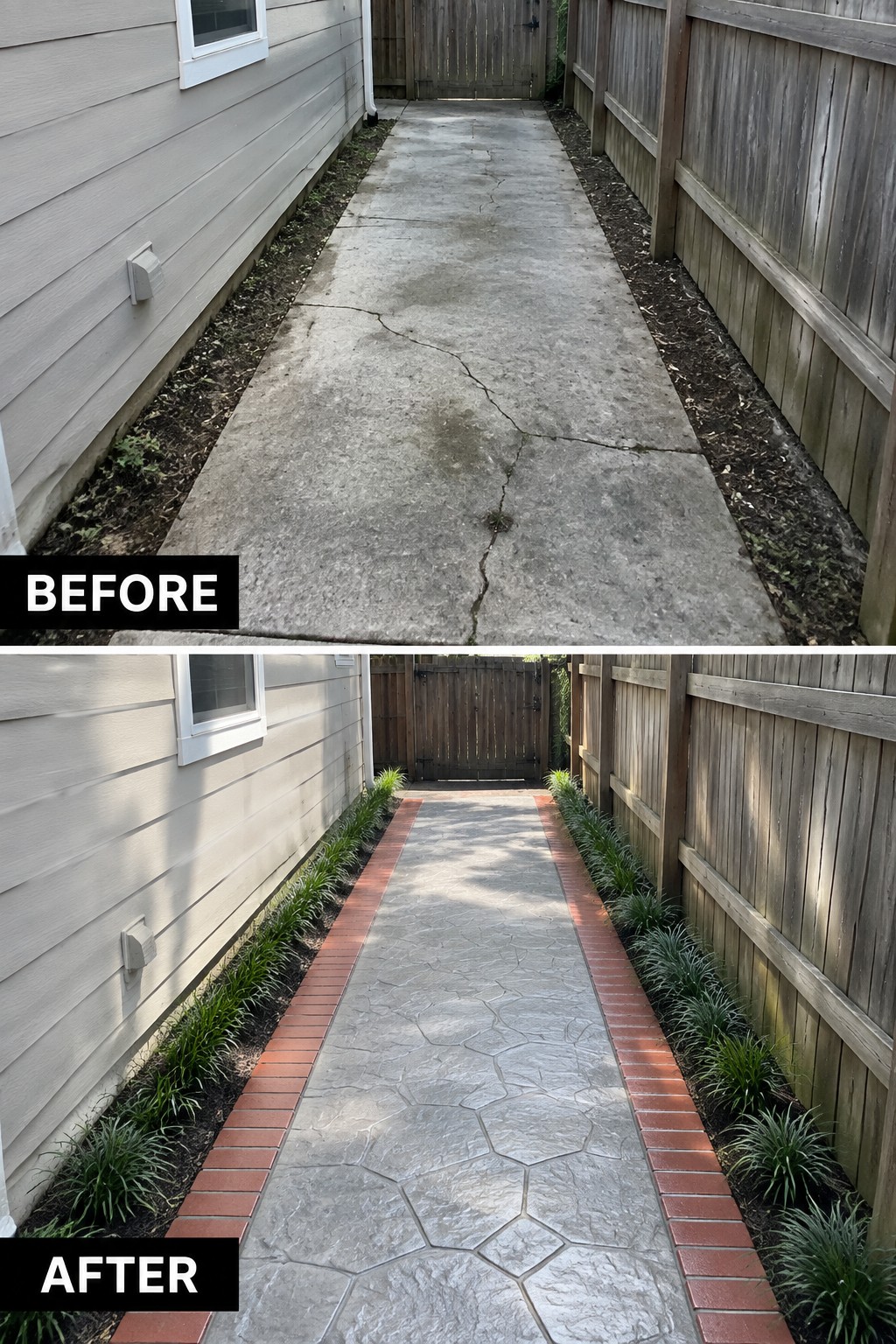
A plain concrete path often looks unfinished when it runs between a house and fence with no clear edges. Adding brick borders on both sides and a row of low plants turns the walkway into something that feels planned instead of just poured. The simple change gives the narrow space better shape and keeps grass and soil from spilling onto the surface.
This approach works best on side yards or back passages where the path needs to stay practical but could use more structure. Lay the edging first, keep the planting low and even, and make sure the borders leave enough room to walk comfortably. It suits older homes with existing concrete that still has good function but looks too bare on its own.
Define A Backyard Path With Raised Planter Boxes
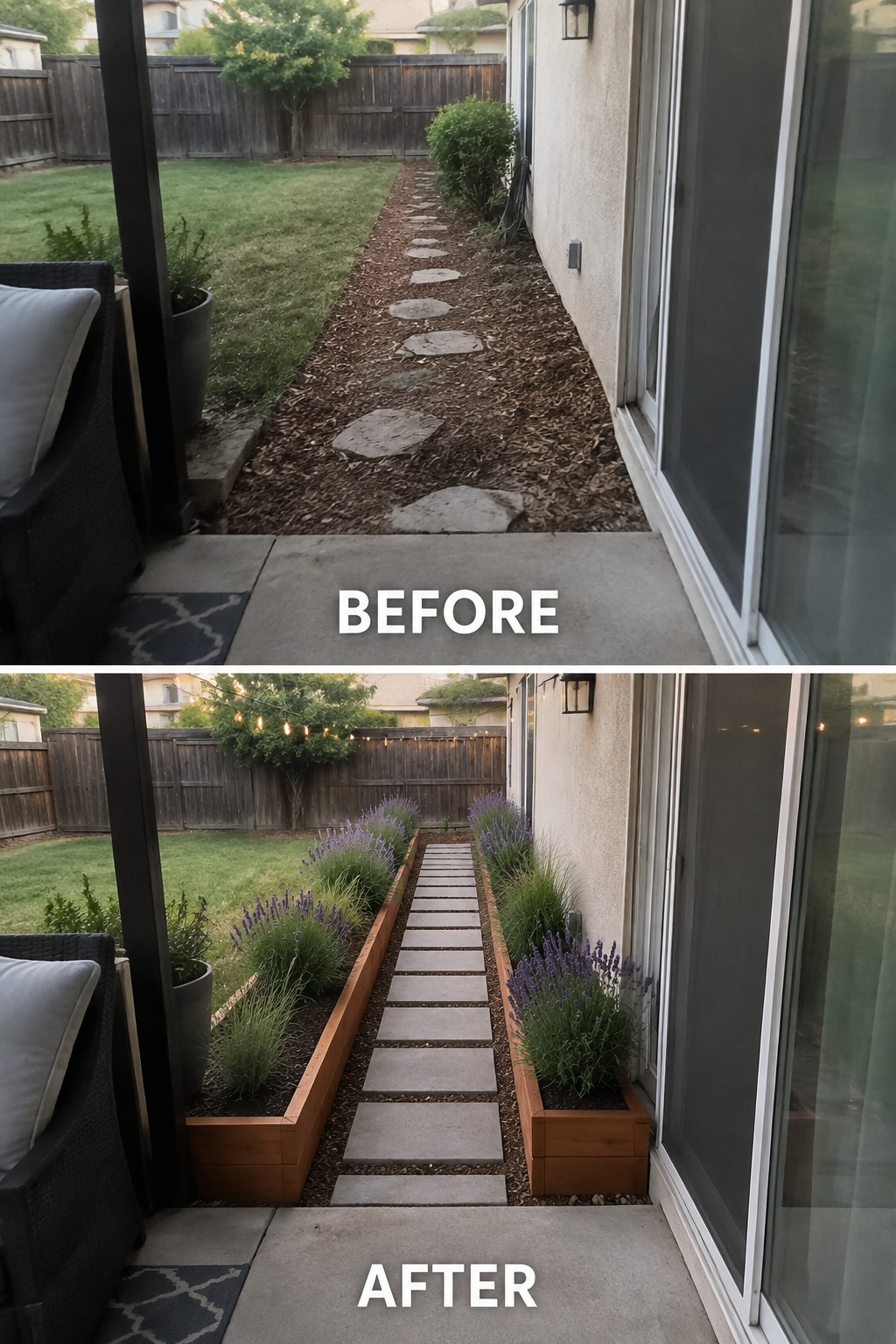
A simple stone path can start to feel aimless when it sits between bare mulch and open lawn. Adding raised cedar beds on both sides gives the walkway clear edges and turns it into a more deliberate route from the patio into the yard.
This idea works best in side yards or narrow stretches where you want structure without losing open space. Use weather-resistant wood, keep the beds at a comfortable height for weeding, and stick with plants that match your sun and water conditions so the look stays low-maintenance.
Add Brick Borders To Define A Gravel Path
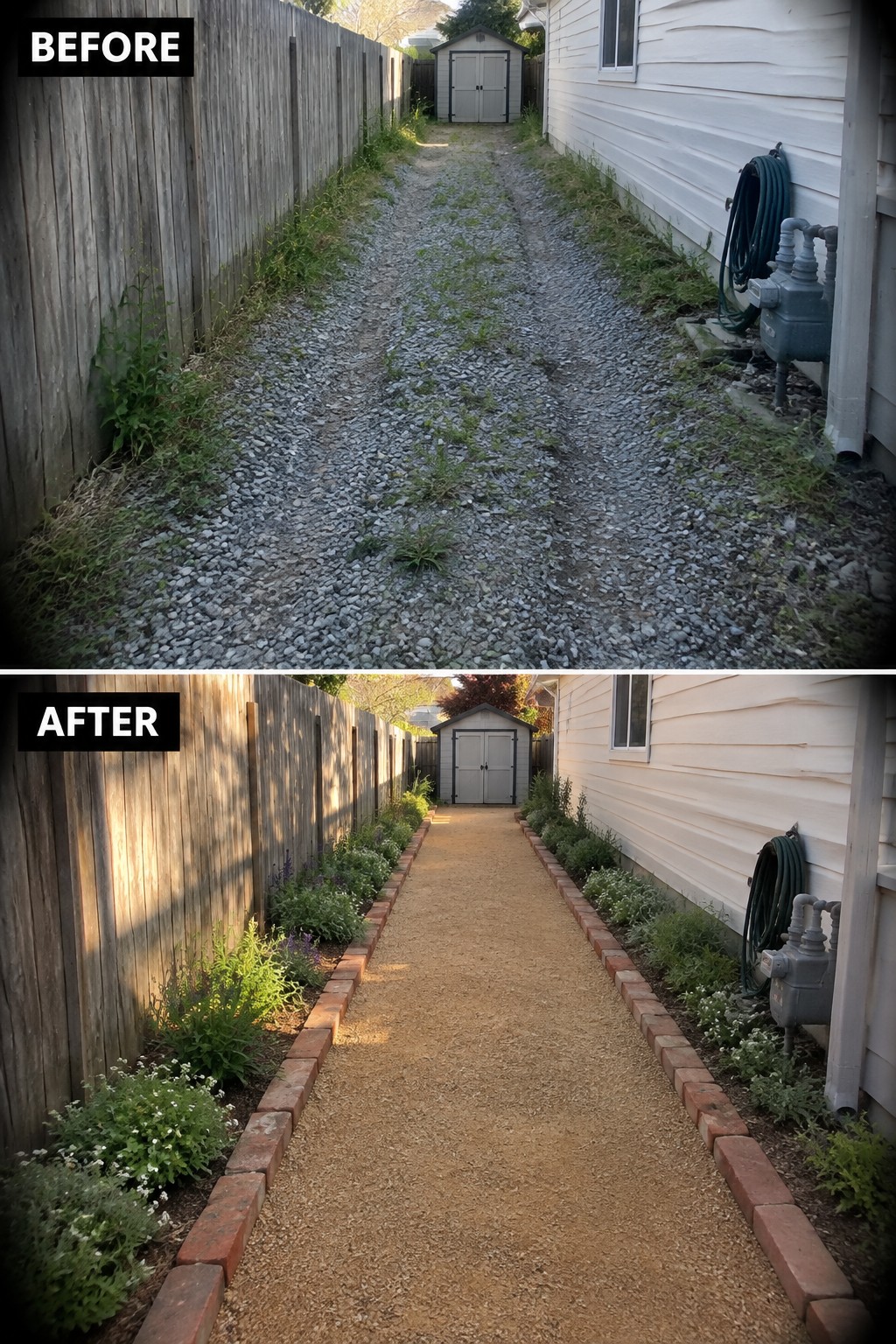
A loose gravel path often spreads and fills with weeds when it has no clear edge. Adding brick borders on both sides keeps the path material in place and creates a sharp line that separates the walkway from the planting areas.
This idea works best in narrow side yards or along fences where you already have a basic path but want it to feel more intentional. Lay the edging first so the shape stays consistent, then refresh the path surface and fill the new beds with low plants that can handle the light conditions. It keeps the yard looking neat without needing a full hardscape overhaul.
Define A Worn Yard Path With Stepping Stones And Borders
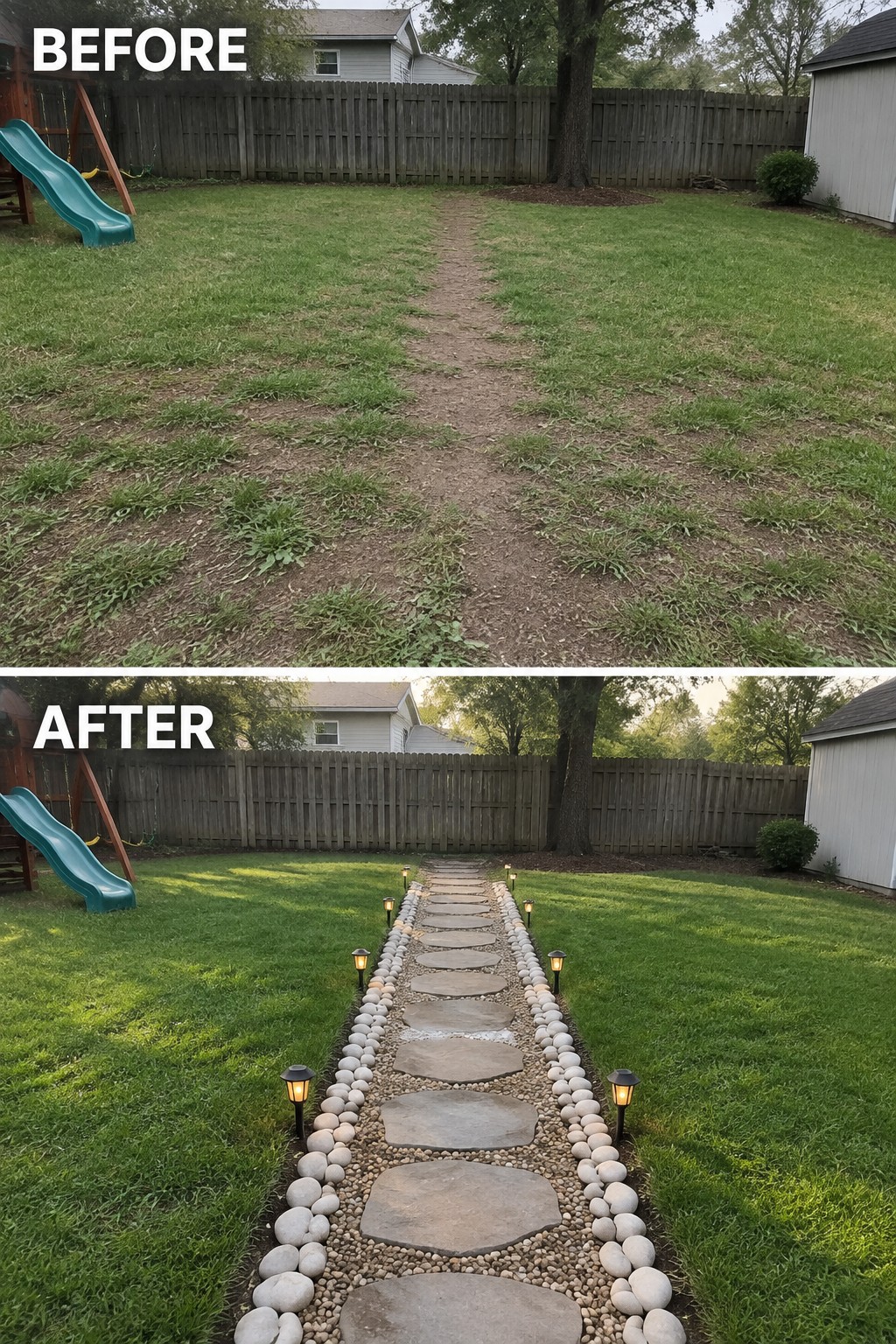
A dirt track through the grass makes a backyard feel unfinished and hard to navigate. Laying stepping stones down the center with a clean rock border on each side turns that rough path into something that actually guides people through the space. The simple edging keeps the lawn from spilling over and gives the whole yard a more settled look.
This idea works best in long, narrow yards where you want structure without covering everything in hardscape. Follow the route people already walk, then add the stones and border material in stages so you can adjust as you go. It stays practical even if the rest of the yard is still getting sorted out.
Define A Pathway With Clean Garden Borders
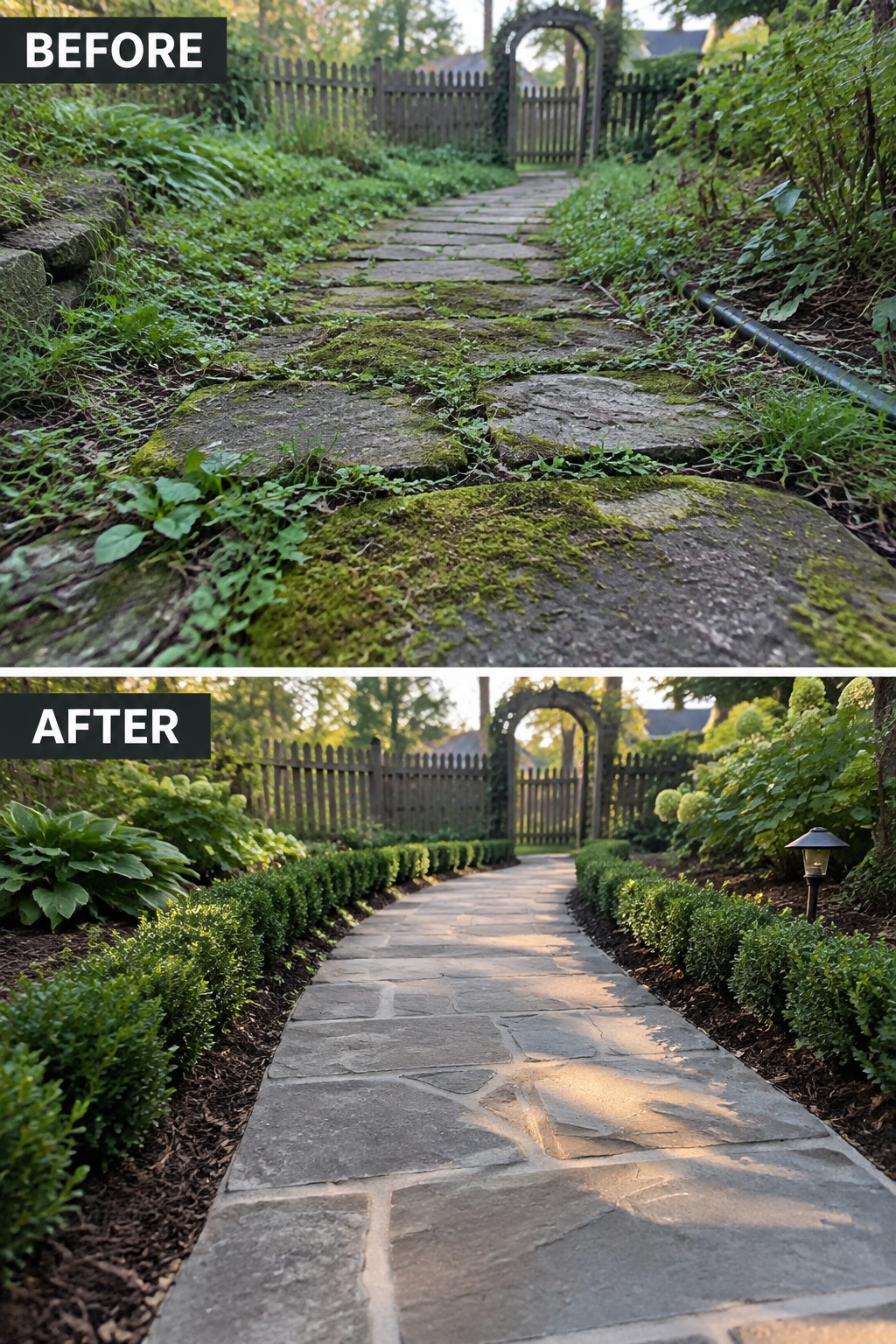
An overgrown stone path quickly starts to disappear when weeds and moss creep in from the sides. In this case the fix was straightforward. Clearing the overgrowth and adding low, clipped borders on both sides gave the path a clear shape and made the whole walkway feel intentional instead of forgotten.
This approach works well on any straight or gently curving path that has become hard to follow. Keep the borders low so they frame the stones without crowding them, and use mulch or gravel between the planting and the path to stop weeds from returning. The result is a simple, practical change that makes the yard feel more organized without needing major construction.
Add Defined Borders To Create A Practical Garden Path
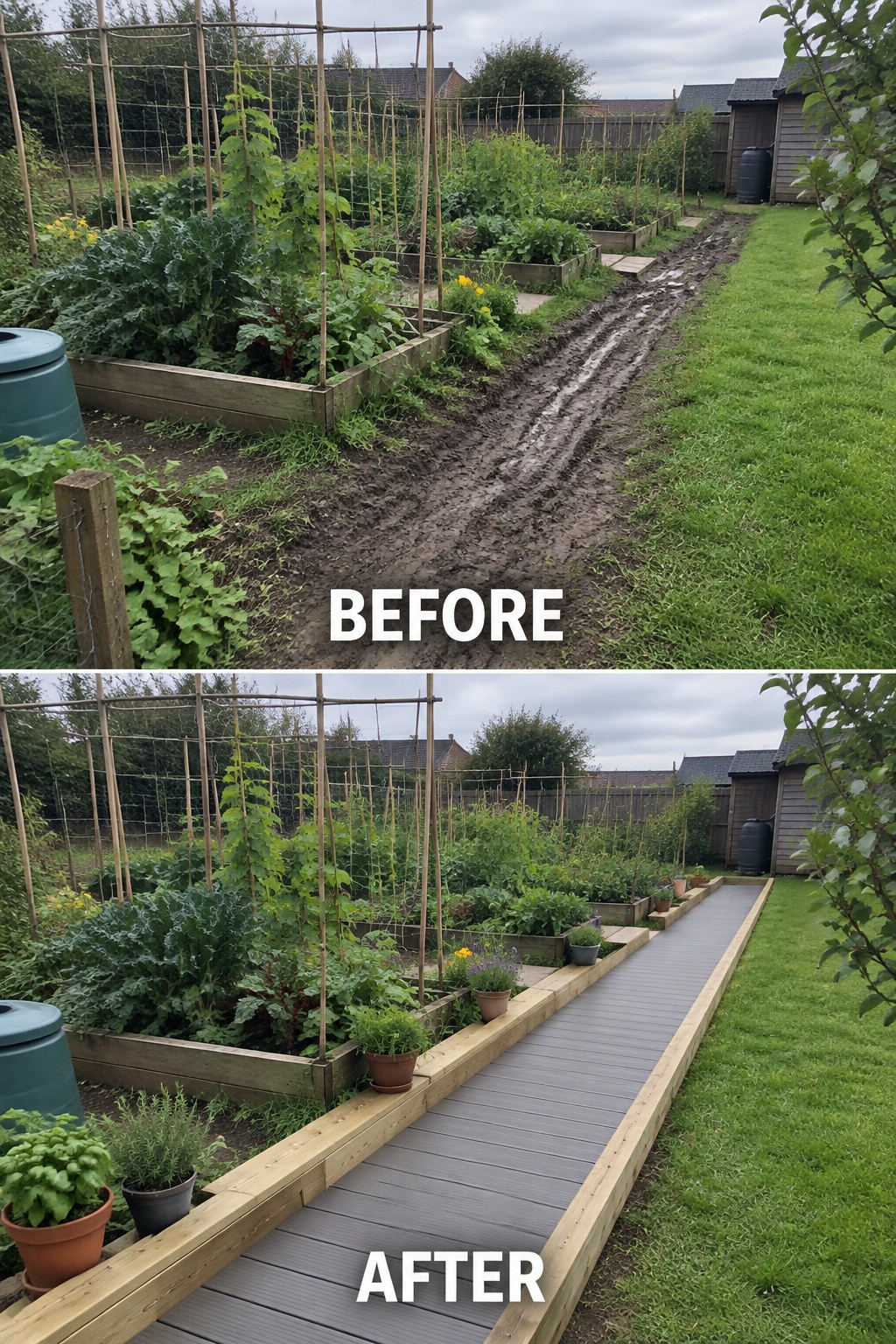
The muddy track between the raised beds turned into a slippery mess after any rain. A simple wooden deck path with matching raised borders replaced the dirt with a clean, stable walkway that keeps feet dry and gives the garden a clear structure.
This idea works best in backyards where you need to move through planting areas regularly. Lay out the path first, add the borders to hold everything in place, then choose a surface that matches your climate and budget.
Add A Defined Pathway To Structure Your Lawn
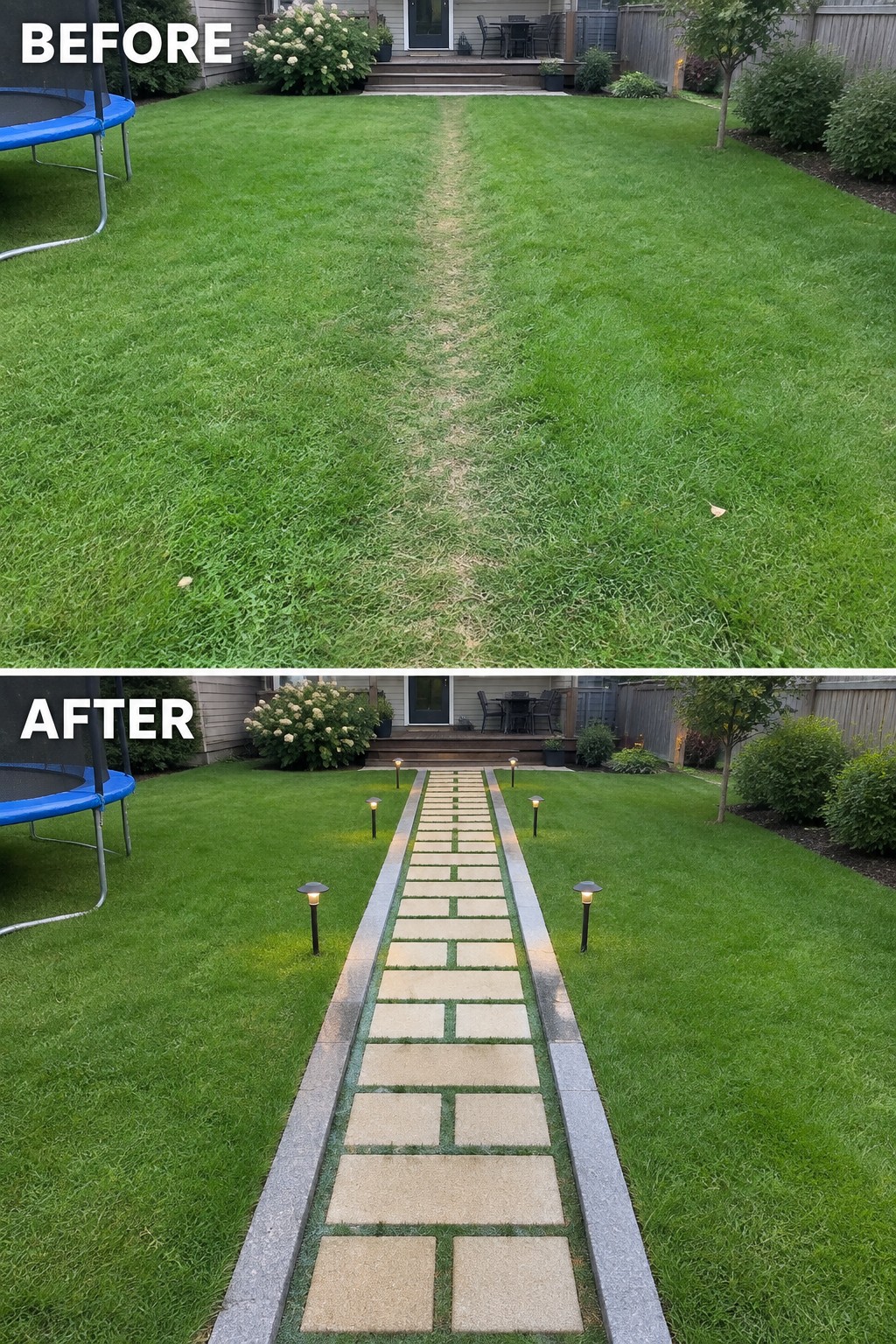
A simple stone path with clean borders turns a plain lawn into a more organized space. The worn strip of grass down the middle shows where people already walk, so the pavers follow that natural route and give the yard a clear direction instead of leaving it as one big open area.
This works best in backyards that feel wide or lack any real layout. Mark the path where traffic already happens, keep the pavers simple, and add edging so the lawn stays neat on both sides. Low lights along the edges help at night without needing a lot of extra features.
Replace A Mulch Path With A Solid Paved Walkway
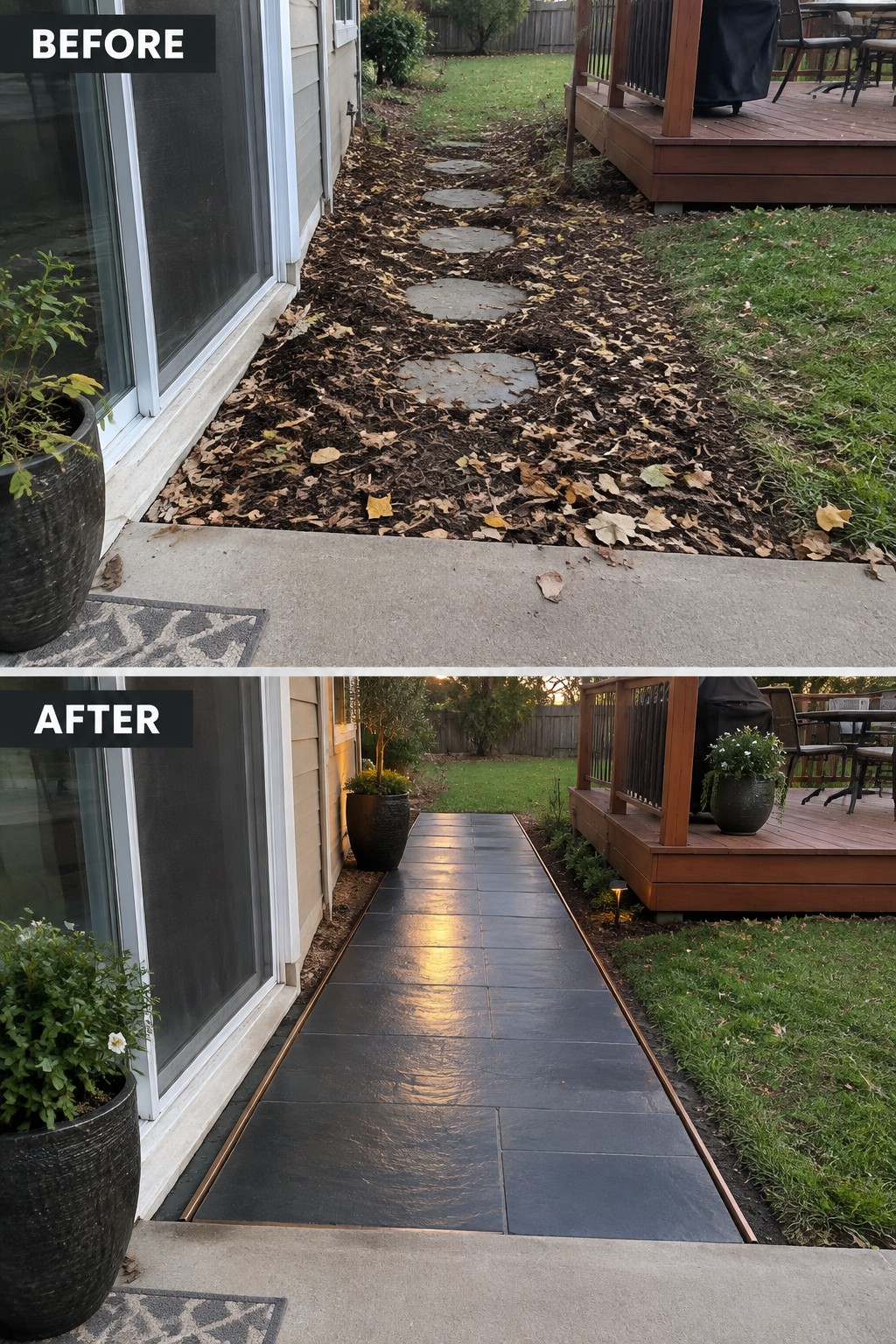
A path made of scattered stepping stones and loose mulch can quickly look messy, especially when leaves collect and the edges blur into the lawn. Replacing that with a solid paved walkway and clear borders turns the same route into something that feels intentional and easy to maintain. The change is mostly about structure. Once the path has straight edges and a consistent surface, the whole side yard reads as more organized without needing extra plants or decor.
This approach works well on narrow side yards or anywhere you need a direct route from the house to a deck or garden. Start by clearing the old material completely, then lay a base that will stay level over time. Metal or stone edging keeps the pavers in place and stops grass from creeping in, so the path stays looking clean with less ongoing work.
Add Defined Borders To A Garden Path
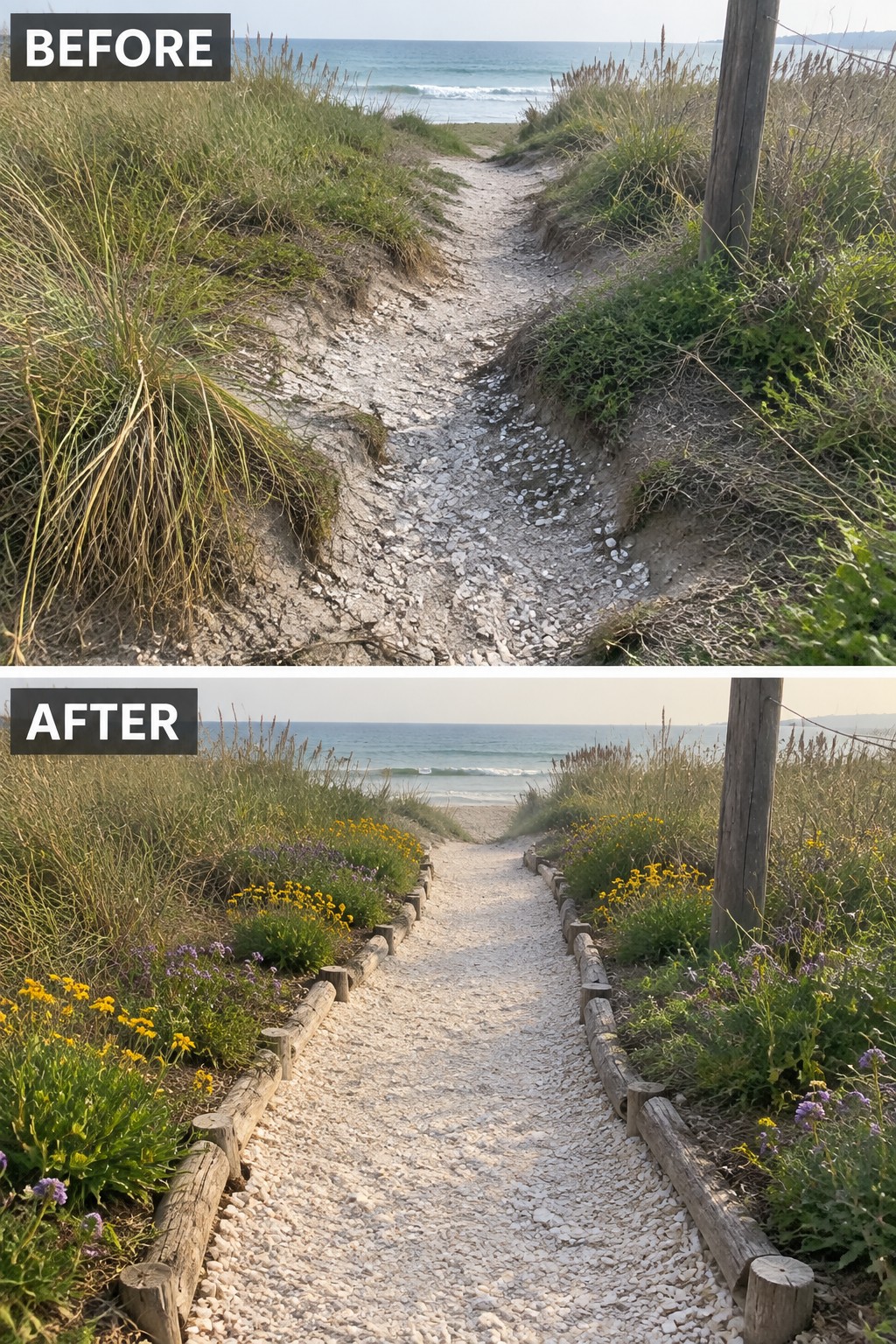
A worn path often looks messy because the edges blend into the surrounding grass and sand. Adding simple borders changes that by giving the path a clear shape and stopping the sides from creeping inward over time.
This idea works best on natural or gravel paths in backyards where you want structure without a full rebuild. Use logs, stones, or edging strips to hold the line, then plant low flowers or ground cover along the new beds to soften the look and fill the space.
Frame A Curved Garden Path With Solid Borders
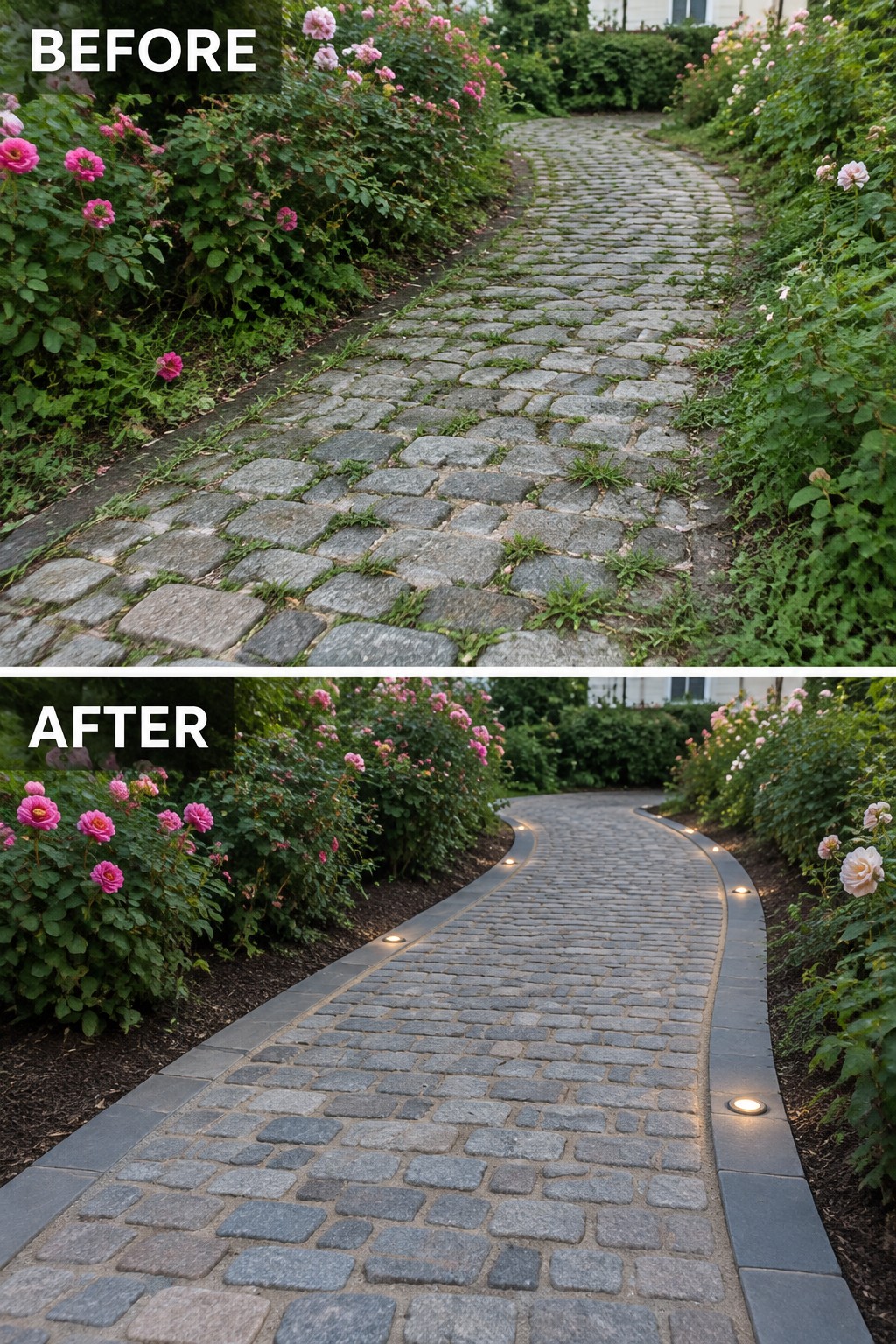
A garden path often looks neglected when grass and weeds start growing between the stones. Adding a solid border on both sides gives the walkway a clear shape and stops the surrounding plants from taking over. The change makes the path feel like a deliberate part of the yard instead of something that just happened to be there.
This idea works best on curved or winding paths where edges can get lost. Use a simple material like dark pavers or stone to frame the existing surface, then add low lights along the border if you want the path to stay usable at night. The result is easier to mow around and keeps the whole area looking cared for without major construction.
Add Metal Edging To Define A Dirt Garden Path
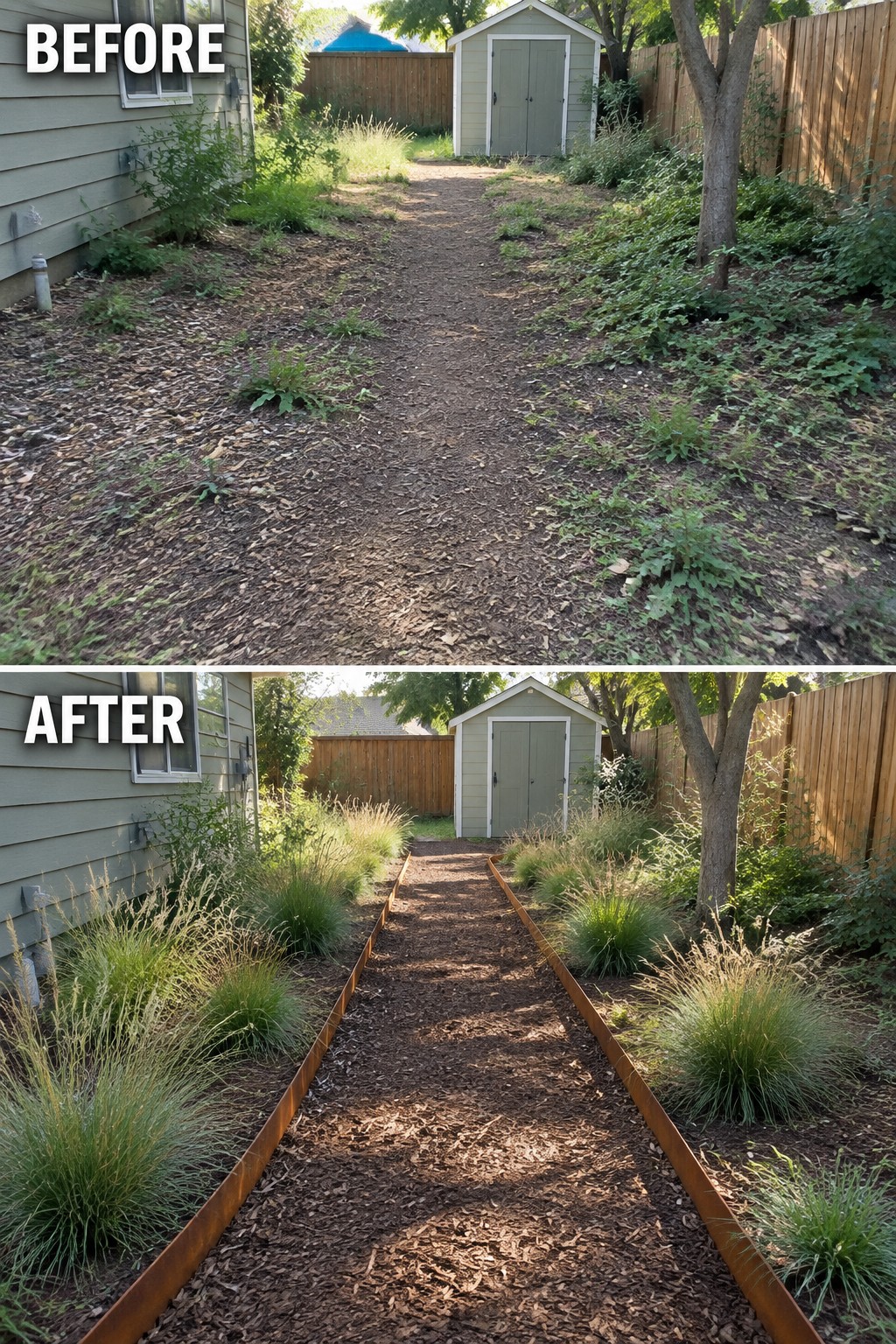
A loose dirt path often disappears into the surrounding weeds and grass, which makes the whole yard feel unplanned. Adding metal edging on both sides creates a clear boundary that holds the mulch in place and gives the path a finished shape. The grasses planted along the edges reinforce that line without crowding the walkway.
This approach works best in backyards where the path already exists but needs more definition. Put the edging in first, then add mulch and repeat the same grass in groups along the sides. It keeps the project simple and makes the path feel like an intentional part of the yard rather than just a worn trail.
Add Defined Borders To A Basic Pathway
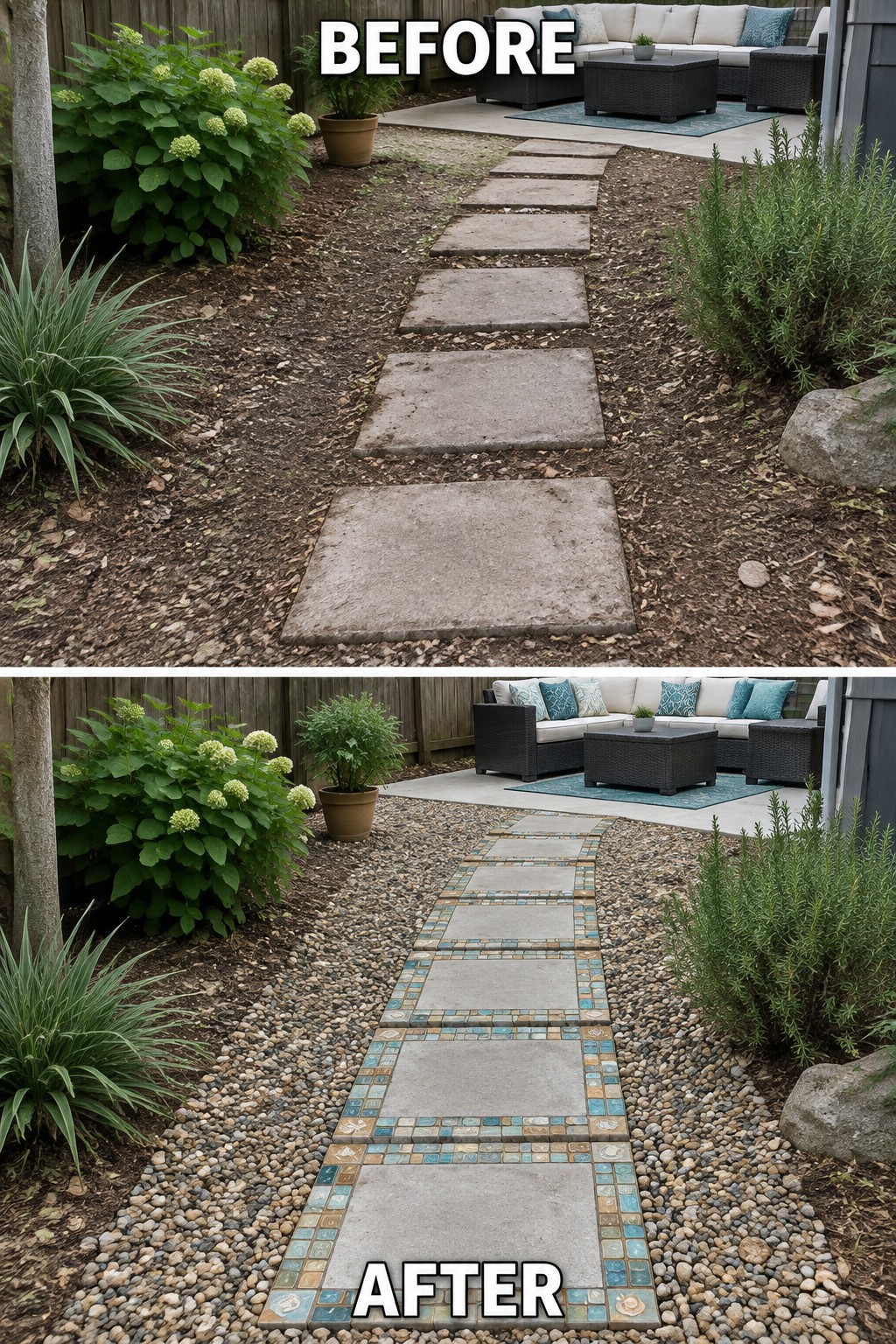
The biggest shift in this yard is the addition of a colorful tile border along the stepping stones. What was once a loose path on bare dirt now has clear edges, with gravel filling the gaps to keep things neat and dry underfoot.
This approach works best in smaller backyards where you already have a functional path but want it to feel more finished. Start by cleaning up the surrounding soil, then add a simple border material that can handle weather. It keeps the focus on the walkway itself without needing a full redesign.
Add Defined Borders To A Narrow Side Yard Path
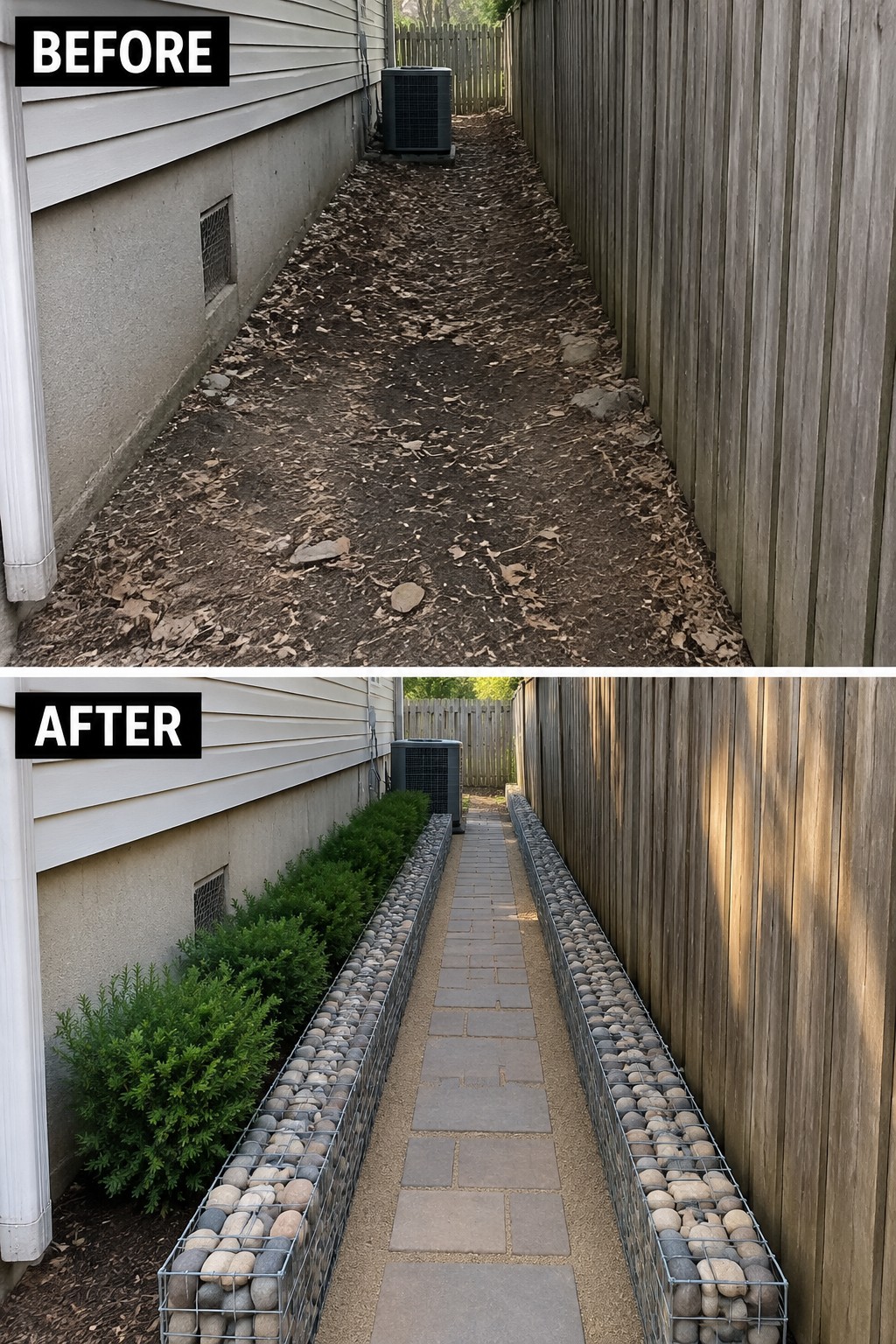
A narrow strip between the house and fence often turns into a catch-all for leaves and dirt because it has no clear edges. Installing low gabion walls filled with smooth river rock on both sides gives the space structure and turns the leftover ground into a real walkway. The pavers down the middle make it easy to walk through without tracking mud.
This approach works best in tight side yards where you want clean lines but do not have room for wide planting beds. Clear the area first, set the cages, then fill them before adding path material. It suits homes with long, narrow passages and keeps the look simple and lasting without constant upkeep.
Define A Backyard Path With Gravel And Borders
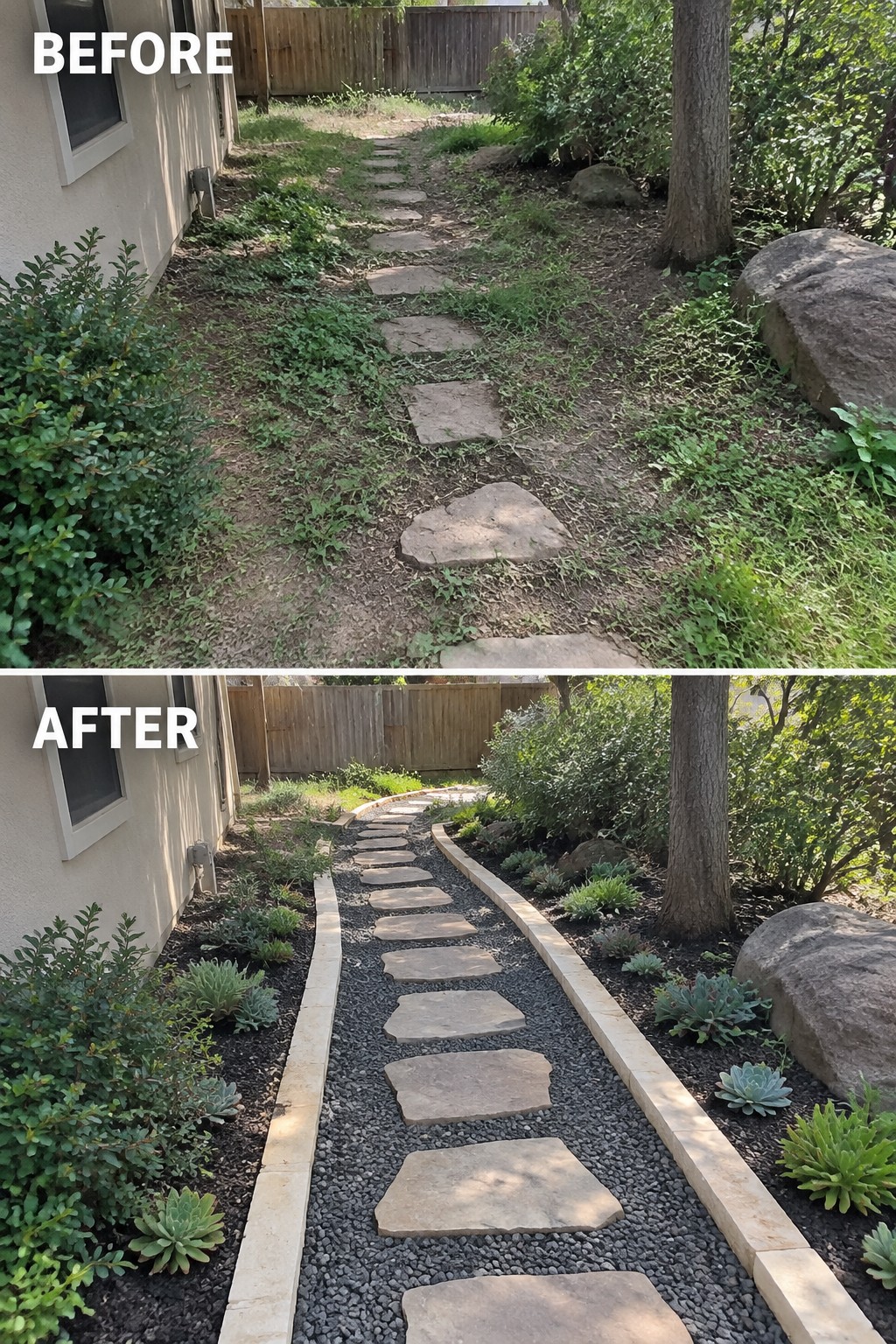
Adding gravel and simple stone borders turns a loose line of stepping stones into a path that actually feels intentional. The before version had stones scattered through weedy grass with no clear edges, while the after version uses light stone edging to hold the gravel in place and keep the walkway from blending into the surrounding ground.
This idea works especially well in narrow side yards or along the back of a house. Start by clearing the overgrowth, then install the borders before adding the gravel so the path stays defined even after a few seasons of rain and foot traffic.
Frequently Asked Questions
Q: How do I keep grass from creeping into the path edges? A: Pull stray shoots by hand every couple of weeks at the start. This trains the soil line so the borders stay sharp with less work later.
Q: What if the ground shifts after I finish the path? A: Walk the edges each spring and press any loose sections back down. A thin layer of soil packed behind the border stops most movement from rain or freeze.
Q: Can I use these border ideas on a gentle slope? A: Step the borders in short sections that follow the grade. Secure each piece firmly so water drains around rather than under the path.
