

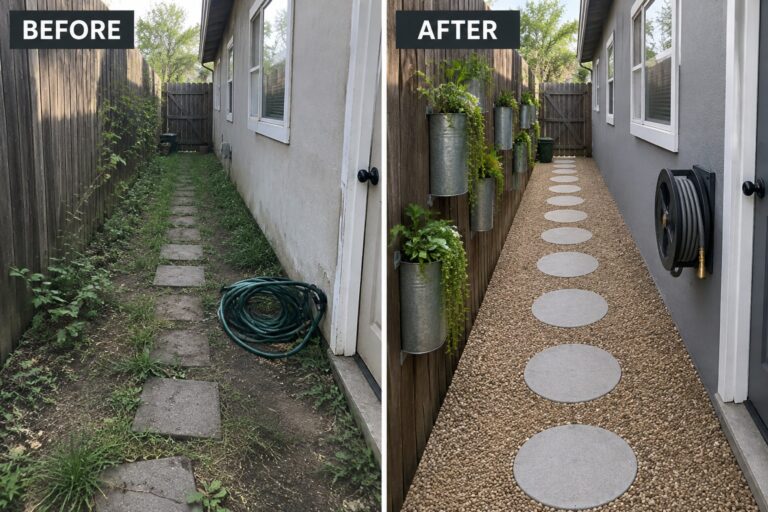
Narrow side yards often stay bare because the space feels awkward for regular use and nothing seems to fit without crowding the house.
A steady path with some thought to the edges pulls the area together and makes it less likely to collect weeds or mud.
I find that focusing on the walkway first rather than adding plants everywhere gives the space a clearer purpose from the start.
The right layout prevents that wasted feeling.
Over the seasons those choices turn the strip into something practical instead of an overlooked corner.
Define A Narrow Side Yard Path With Gravel And Stepping Stones
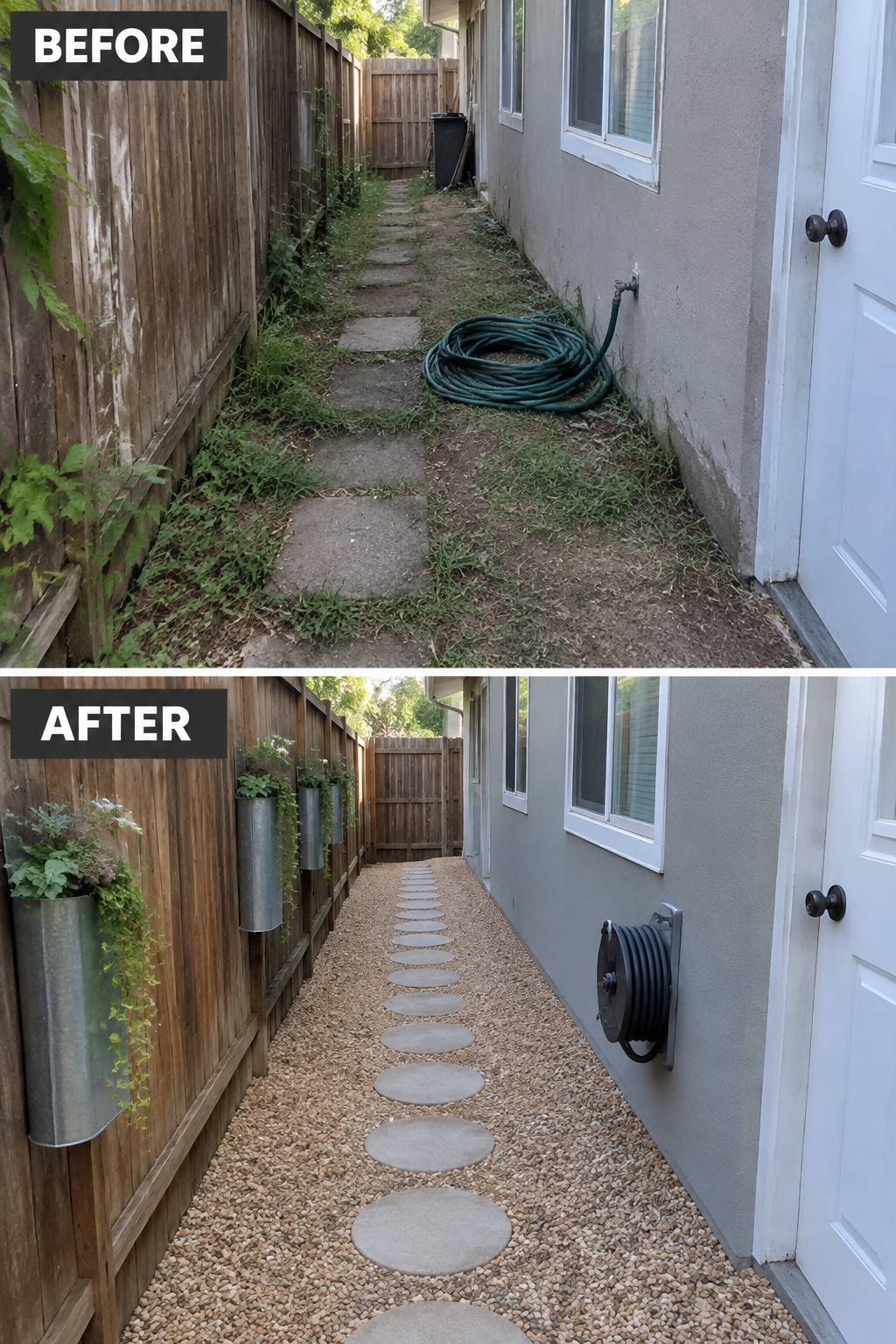
A narrow side yard often ends up as a weedy, uneven strip that no one wants to walk through. Laying down gravel and setting a straight line of round stepping stones gives the space a clear path and makes it feel intentional instead of forgotten. The wall planters add a bit of green without eating into the walking area.
This approach works well on any tight lot where the house sits close to the fence. Start by clearing out weeds and leveling the ground, then choose a gravel that packs down firmly so it stays put over time. Keep the stepping stones evenly spaced so the path feels comfortable to use every day.
Add Pavers And Borders To A Narrow Side Yard
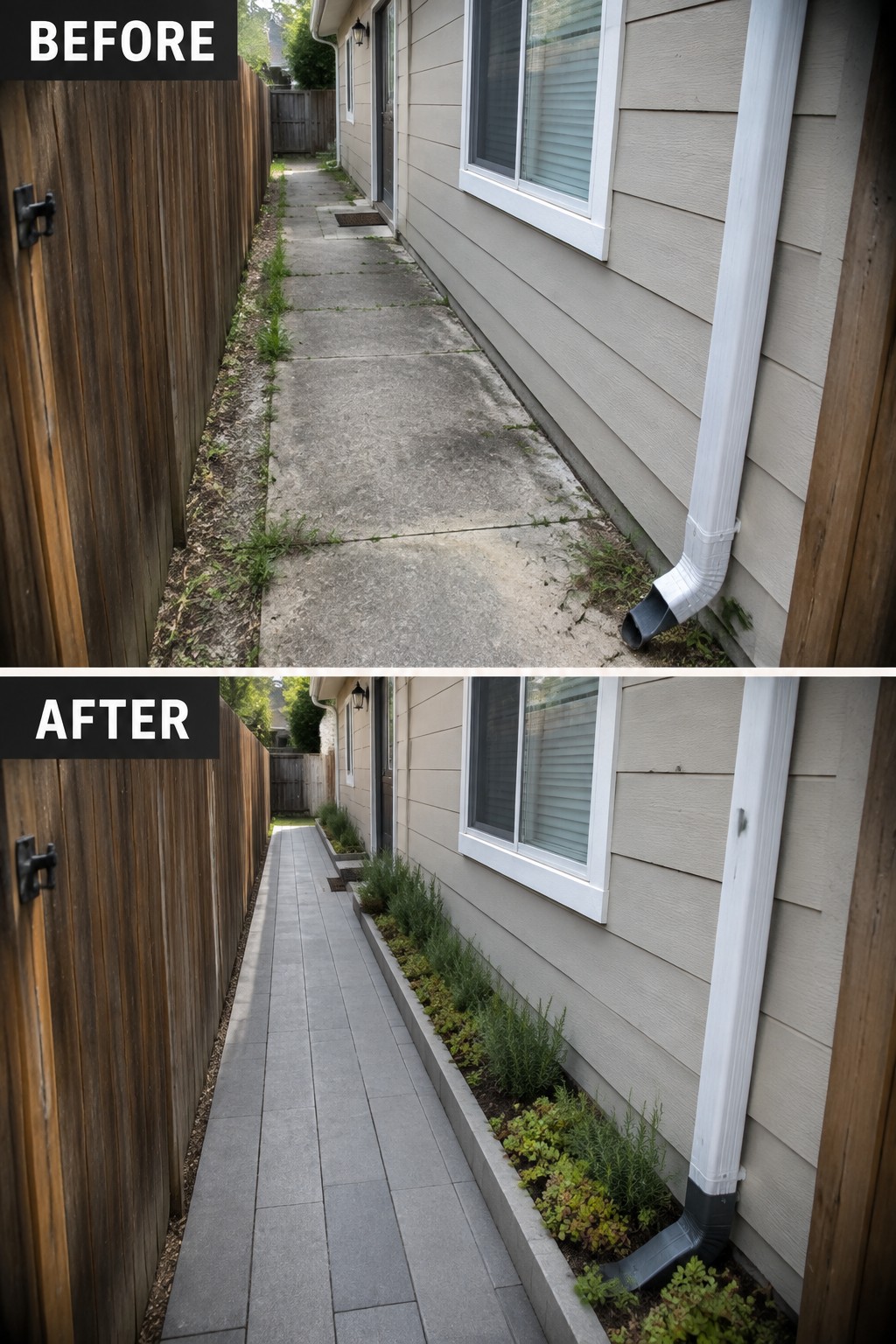
A narrow side yard often ends up as just a strip of cracked concrete with weeds along the edges. Switching to pavers and adding a low border with planting turns the space into a clear path that feels intentional instead of neglected. The planted bed along the house keeps the ground cover tidy and stops grass from creeping onto the walkway.
This idea works best on homes where the side yard is mainly used for access rather than sitting. Keep the border height low so it does not crowd the path, and pick plants that stay compact in limited soil. Make sure the pavers sit level and leave at least three feet of walking room down the middle.
Add A Boardwalk To A Narrow Side Yard
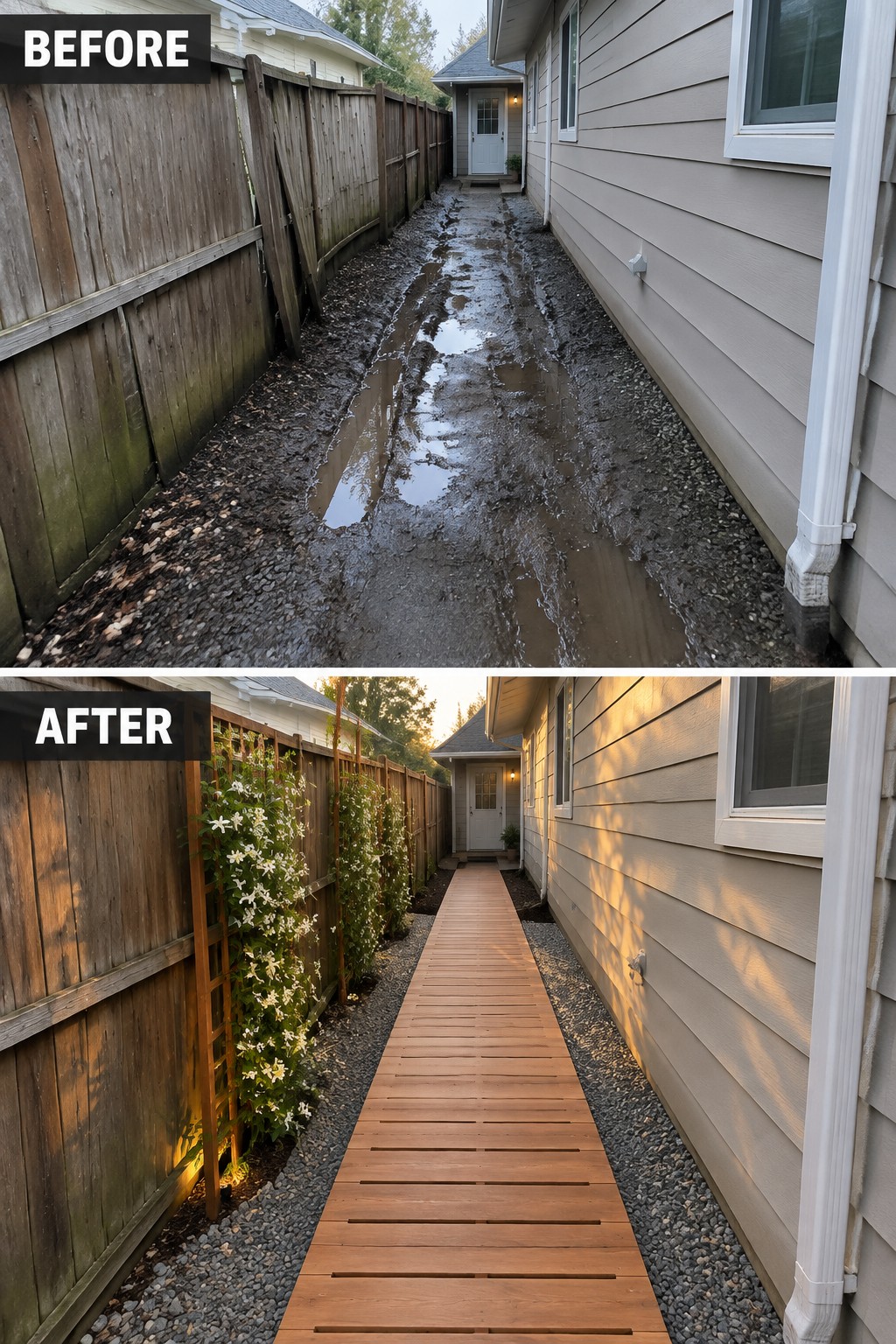
A muddy side path between the house and fence is one of the hardest spots to keep usable. Laying a simple wooden boardwalk with gravel on both sides solves the drainage problem and gives the narrow space a clear, walkable surface instead of a soggy mess.
This approach works well on tight lots where a full concrete path would feel cramped. Keep the boards narrow enough to leave room on either side, and use the fence for vertical plants so the area feels finished without adding width.
Use Stepping Stones To Soften A Narrow Side Path
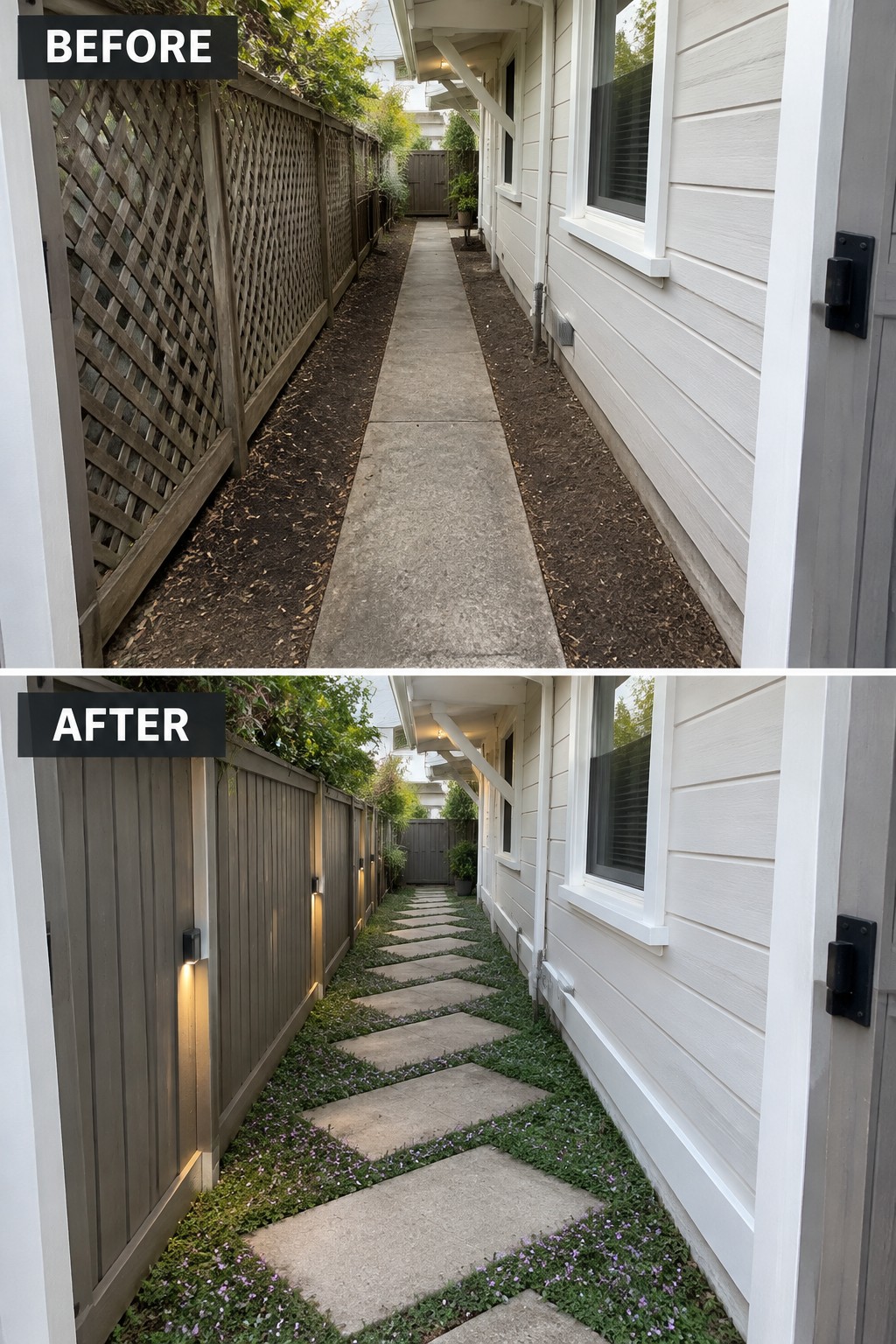
A straight concrete path with dirt on both sides often feels more like a service corridor than part of the garden. Switching to offset stepping stones set into low ground cover gives the space a gentler rhythm and makes the narrow strip feel wider and more intentional. The fence update and simple lights help too, but the stones do most of the work.
This approach works well on any tight side yard where you still need a clear walking route. Keep the stones large enough to feel stable underfoot and leave enough planting room between them so the ground cover can fill in without crowding the path. Start with the layout before you add lights or change the fence.
Add Built-In Storage To Organize A Narrow Walkway
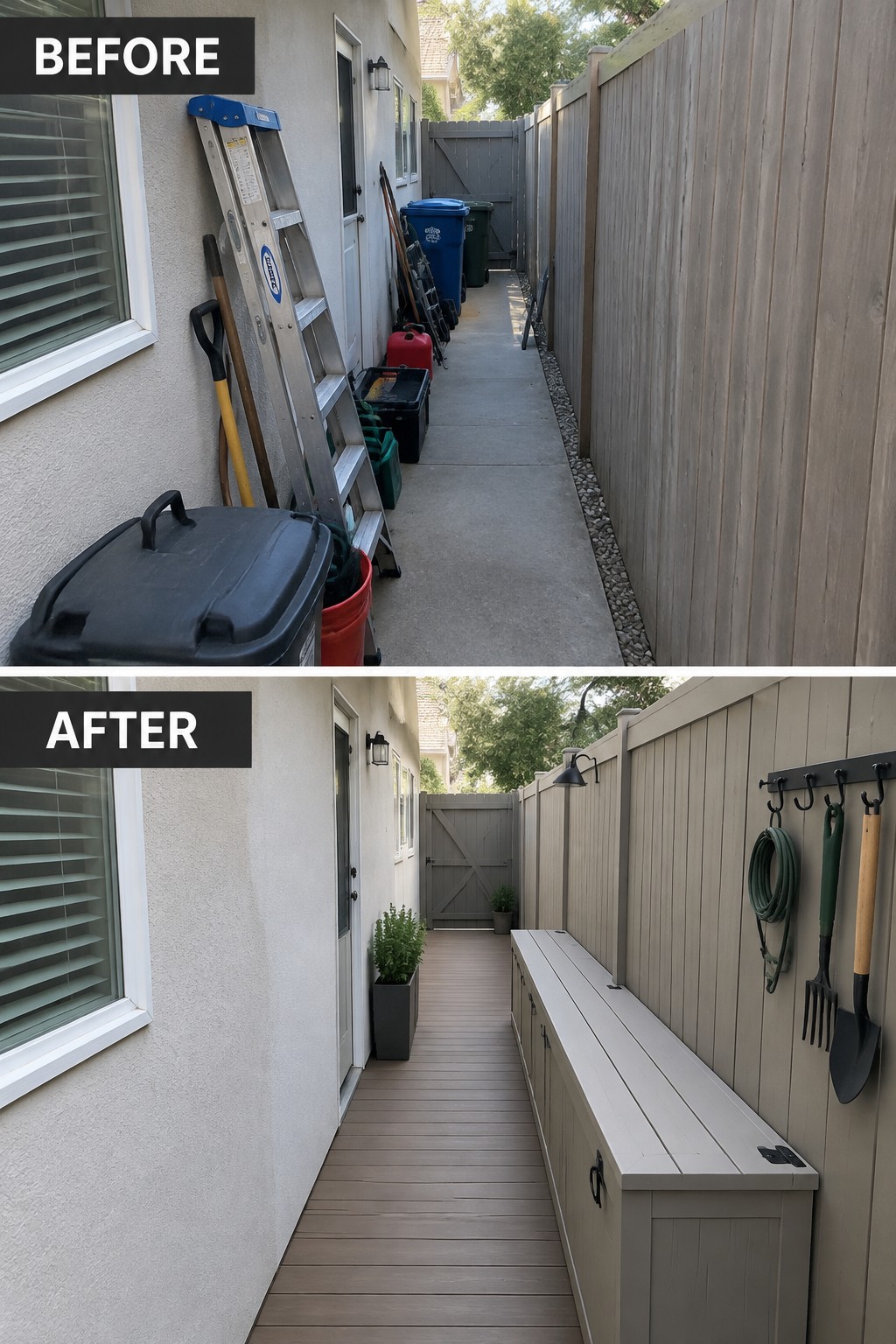
A narrow side yard often becomes a catch-all for tools, bins, and ladders because there is no good place to put anything. The simple fix here is a long storage bench built along the fence line. It gives everyday items a single home, clears the walking path, and turns the space from a messy corridor into something you can actually use.
This approach works best on side yards that are at least four feet wide. Keep the bench height low enough that it does not crowd the walkway, and choose a weatherproof finish so it holds up without constant upkeep. If the bench runs the full length of the fence, you can also add hooks above it for hanging tools and hoses, which keeps the floor completely clear.
Turn A Narrow Side Yard Into A Compact Seating Area
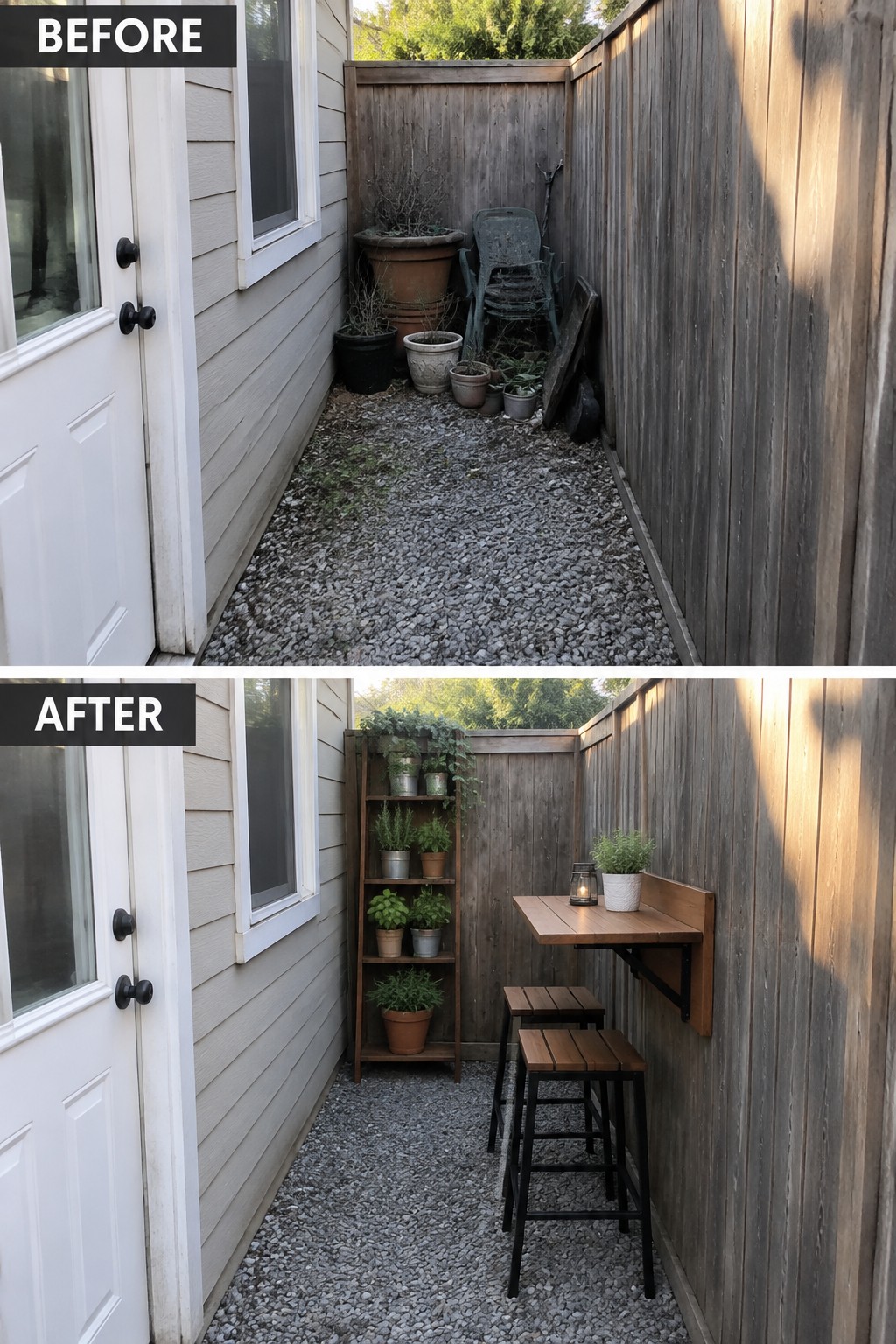
A narrow side yard often becomes a catch-all for old pots and leftover items because it feels too tight for real use. Adding a wall-mounted drop-down table with stools and a tall open shelf creates a defined spot for sitting without taking up the full width of the walkway.
This idea suits homes where the side yard is mainly a pass-through between the front and back. Mount the table at a comfortable height, keep the shelf narrow, and stick to weatherproof materials so the space stays practical year-round. Leave enough room on the gravel for easy foot traffic.
Use Pavers To Give A Narrow Side Yard A Clear Path
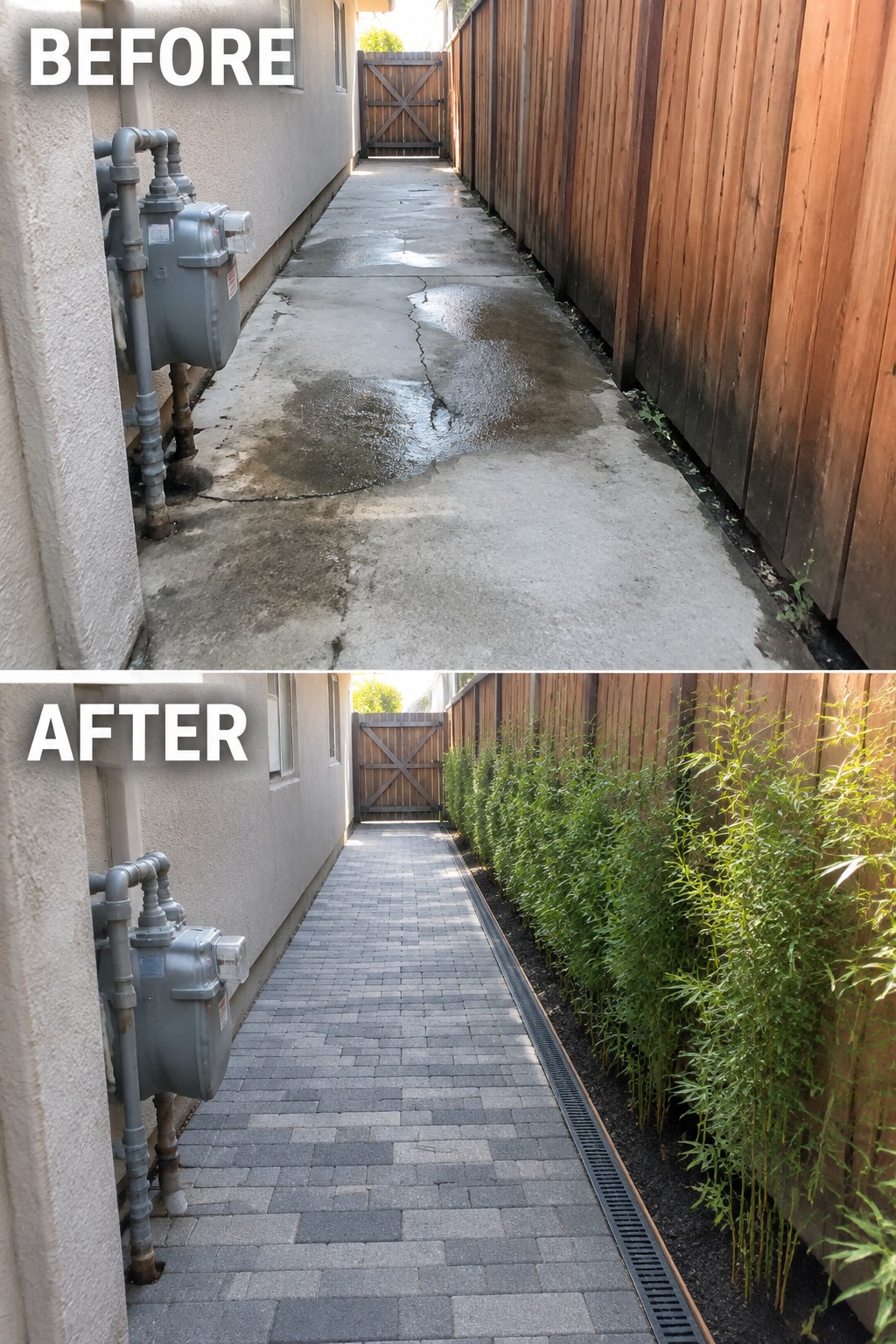
A cracked concrete walkway that held water made the narrow side yard feel neglected and hard to walk through. Switching to brick pavers with a built-in drainage channel fixed the pooling and gave the space a solid, even surface that actually directs water away.
This idea works best in tight side yards where you still need a usable path. Keep the planting simple and narrow so it does not crowd the walkway, and handle the paving and drainage before adding anything else.
Clean Up An Overgrown Side Yard Path
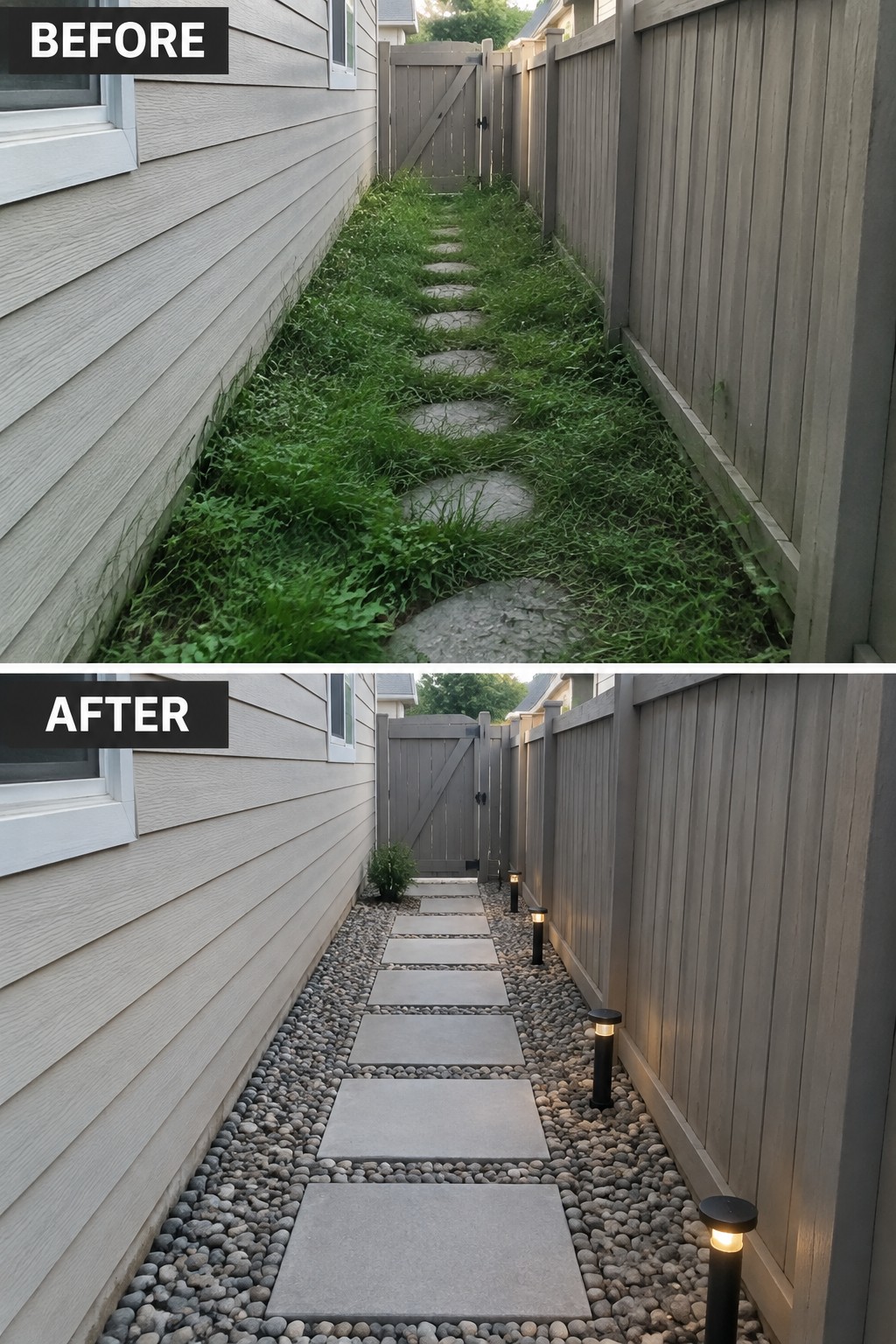
A narrow side yard often gets neglected because the grass takes over and the path disappears under weeds. Clearing that growth first and laying down gravel around the pavers creates a firm, easy-to-walk surface that stays neat without constant mowing or trimming.
This idea suits homes where the side yard is mainly a walkway rather than a seating area. Keep the gravel layer thin but even so water can drain, and place a few low lights along one side to mark the route after dark. The result feels intentional without crowding the limited space.
Define A Narrow Side Yard With Raised Beds
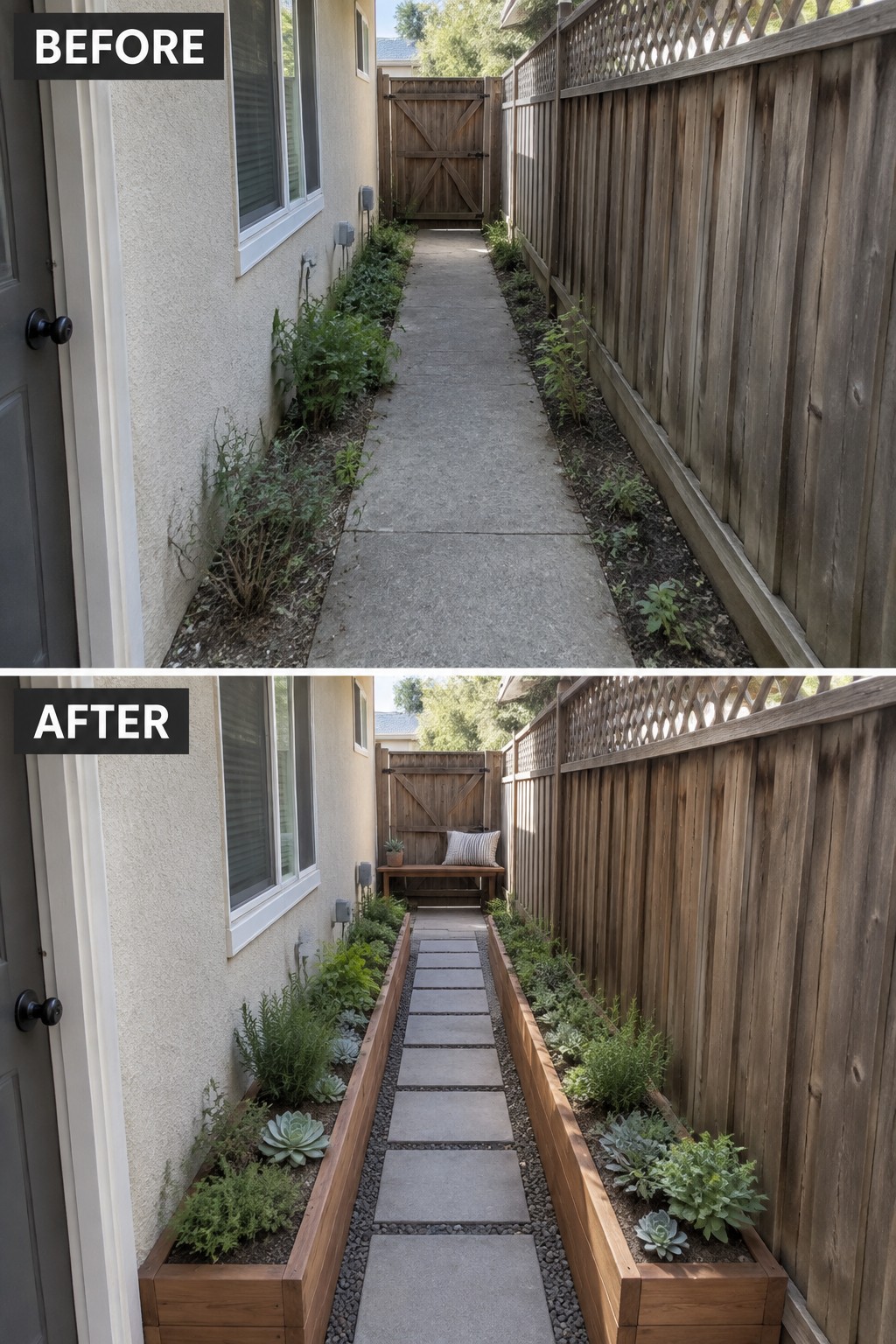
A narrow side yard often becomes a forgotten strip of concrete with weeds filling the edges. Raised wooden planters solve this by creating clear boundaries, turning the space into a deliberate path instead of an overgrown gap between the house and fence.
This idea suits tight lots where every inch needs to serve a purpose. Keep the beds low enough for easy maintenance, fill them with tough plants that handle the sun, and use gravel to separate the walkway from the planting areas so the path stays clean and usable year-round.
Mount Bikes On The Wall To Keep A Narrow Walkway Clear
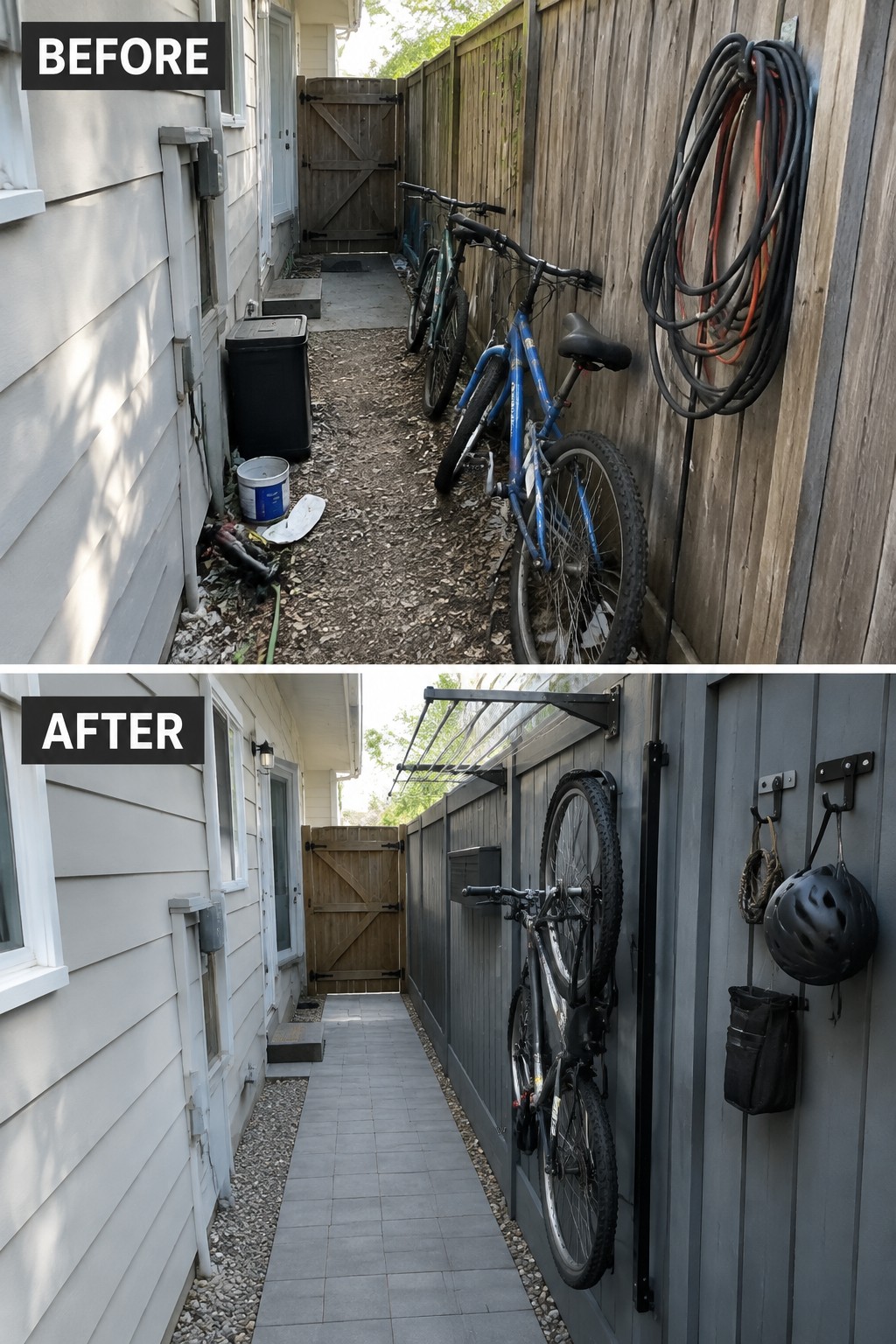
A narrow side yard often ends up as a dumping ground because there is no room for things on the ground. In this case the bikes took up most of the path, along with a trash can and random items. Once the bikes were hung vertically on the fence the walkway opened up and became easy to walk through again.
This approach works best on long, tight passages where every foot of ground space matters. Hang the bikes at a height that still lets people pass underneath, and keep only a few hooks or racks so the wall does not feel crowded. A simple coat of paint on the fence also helps the space feel less cramped without adding any new structures.
Add Decking With Built-In Storage To A Narrow Side Yard
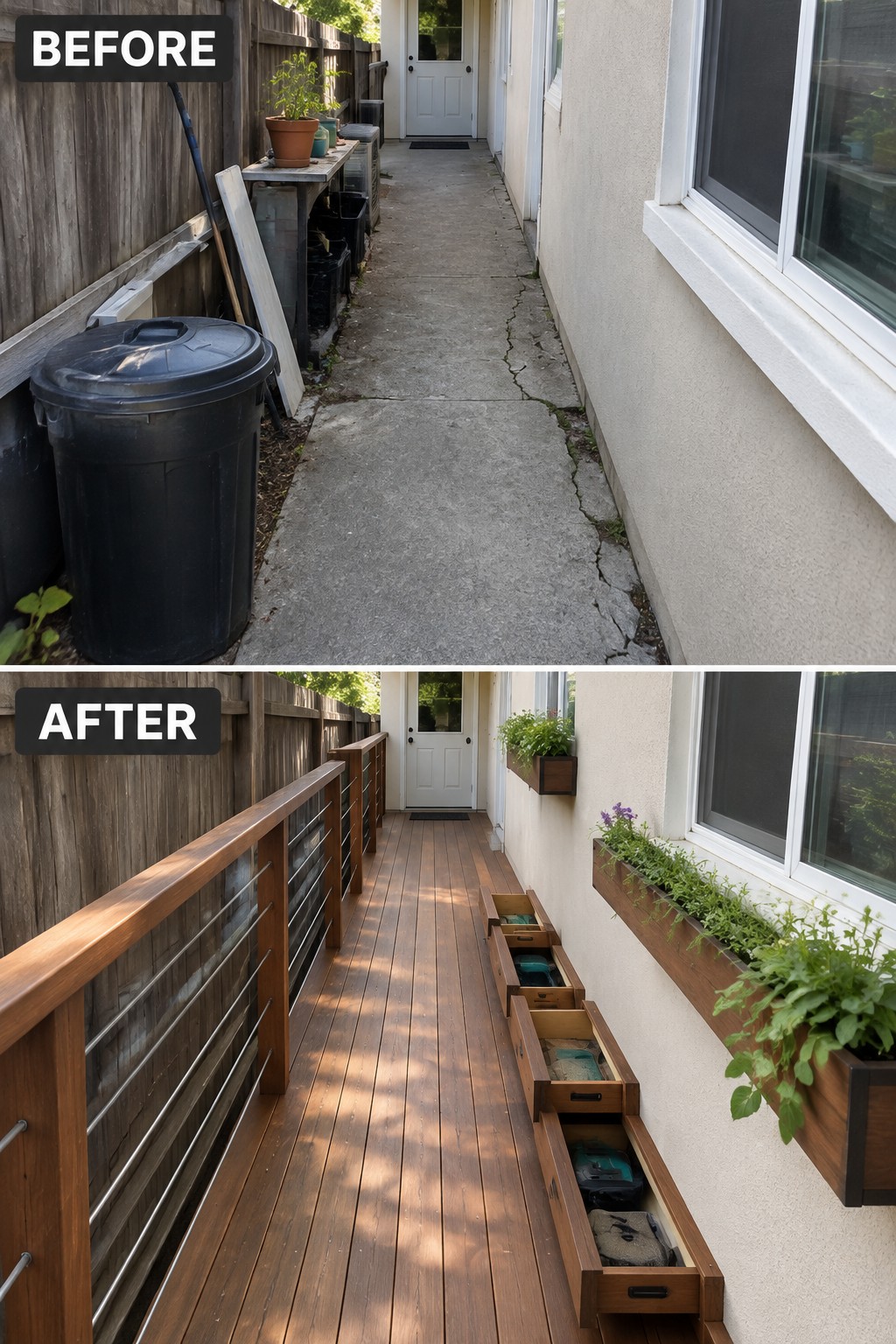
A narrow side yard often ends up as a forgotten strip of cracked concrete filled with bins and random items. Laying decking over that surface gives you a flat, usable path while the built-in drawers tuck away gear that used to sit out in the open.
This approach works best on homes where the gap between the house and fence is tight but still needs regular access. Keep the deck boards running lengthwise to make the space feel longer, and size the drawers to hold things you actually use, like hoses or yard tools. Just make sure the railing stays low enough that it does not crowd the walkway.
Build A Stepped Path With Side Planting Beds In A Narrow Yard
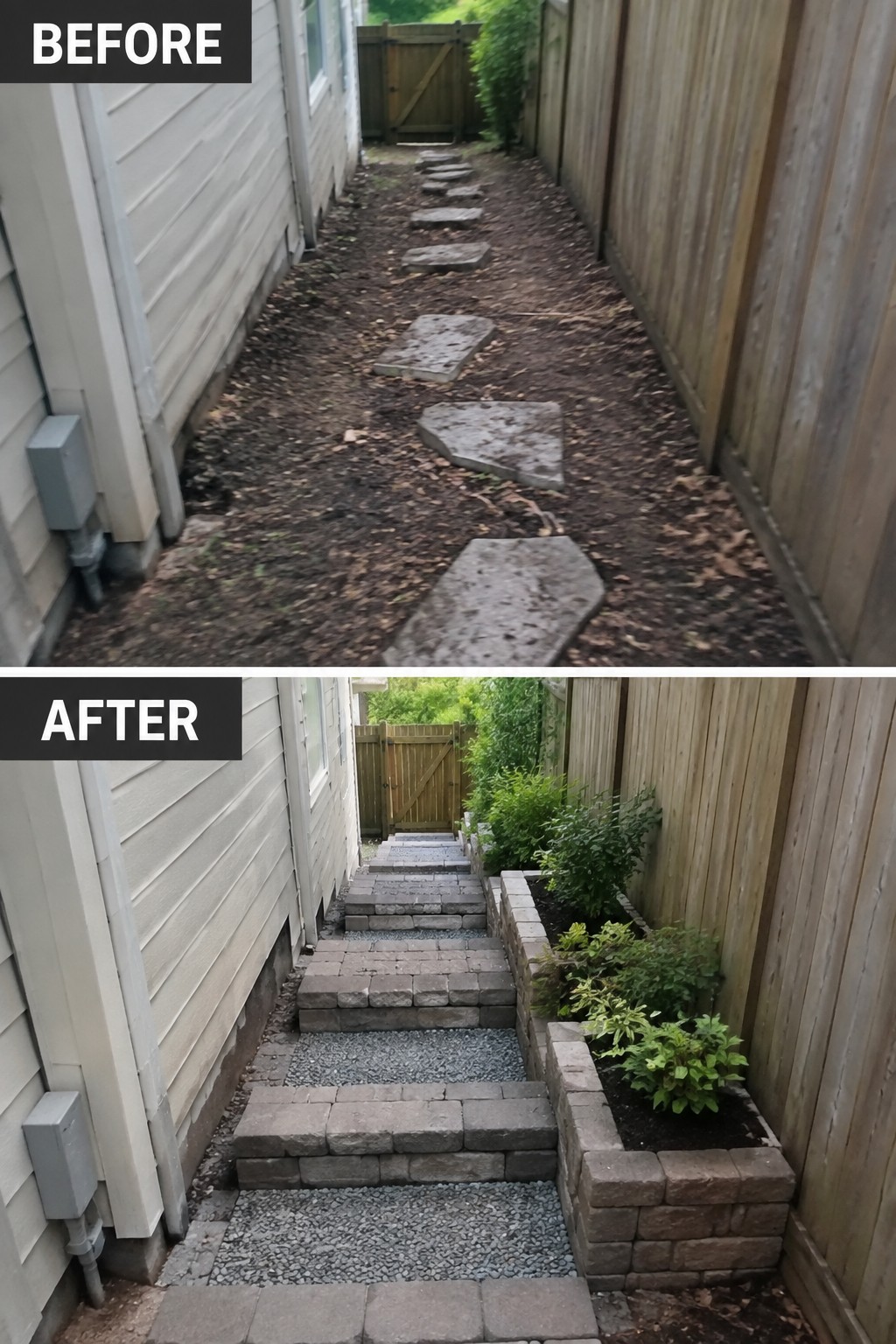
A narrow side yard often ends up as a strip of dirt with a few loose stones because there is not much room to work with. Adding a set of stone steps and sections of gravel gives the path a clear shape and makes it much easier to walk through, while the raised bed along one side keeps plants contained without crowding the walkway.
This approach works well on tight lots where you need both access and some greenery. The raised bed lets you add planting without taking up walking space, and the steps handle the slope so the path stays usable in any weather. Keep the bed width modest and choose low-maintenance plants if the area gets limited sun.
Define A Narrow Side Yard With A Tiled Path
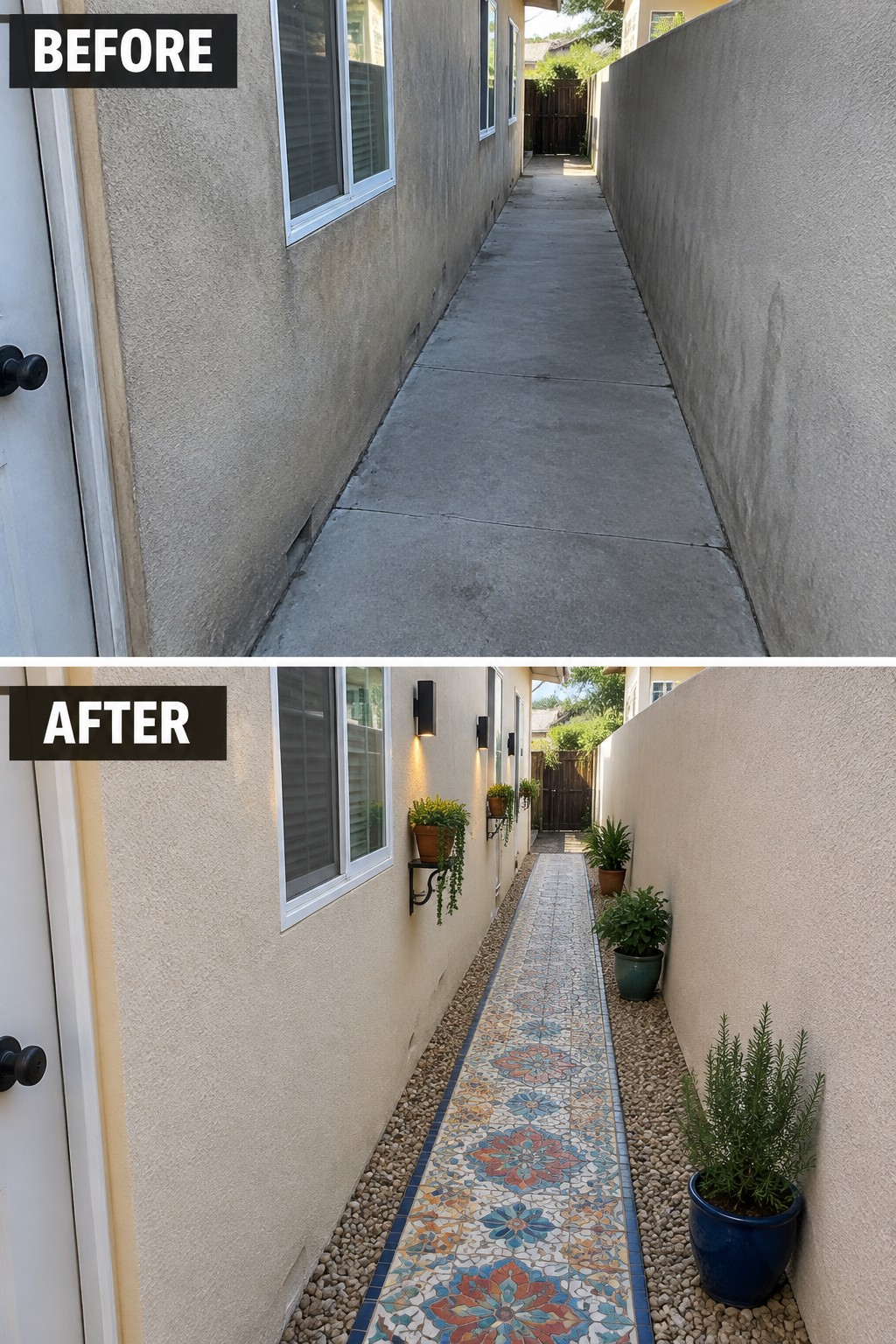
A plain concrete walkway often feels like wasted space, especially in a narrow side yard where there is little room to work with. Adding a long runner of patterned tiles down the center, with gravel filling the sides, gives the area a clear purpose and makes it look finished instead of forgotten.
This idea suits homes where the side yard is mainly used as a passage rather than a seating area. Keep the tile pattern consistent along the full length so the eye travels easily through the space. Use the same gravel and a few matching pots on both sides to hold the look together without crowding the path.
Add Pavers To Create A Clear Path In A Narrow Side Yard
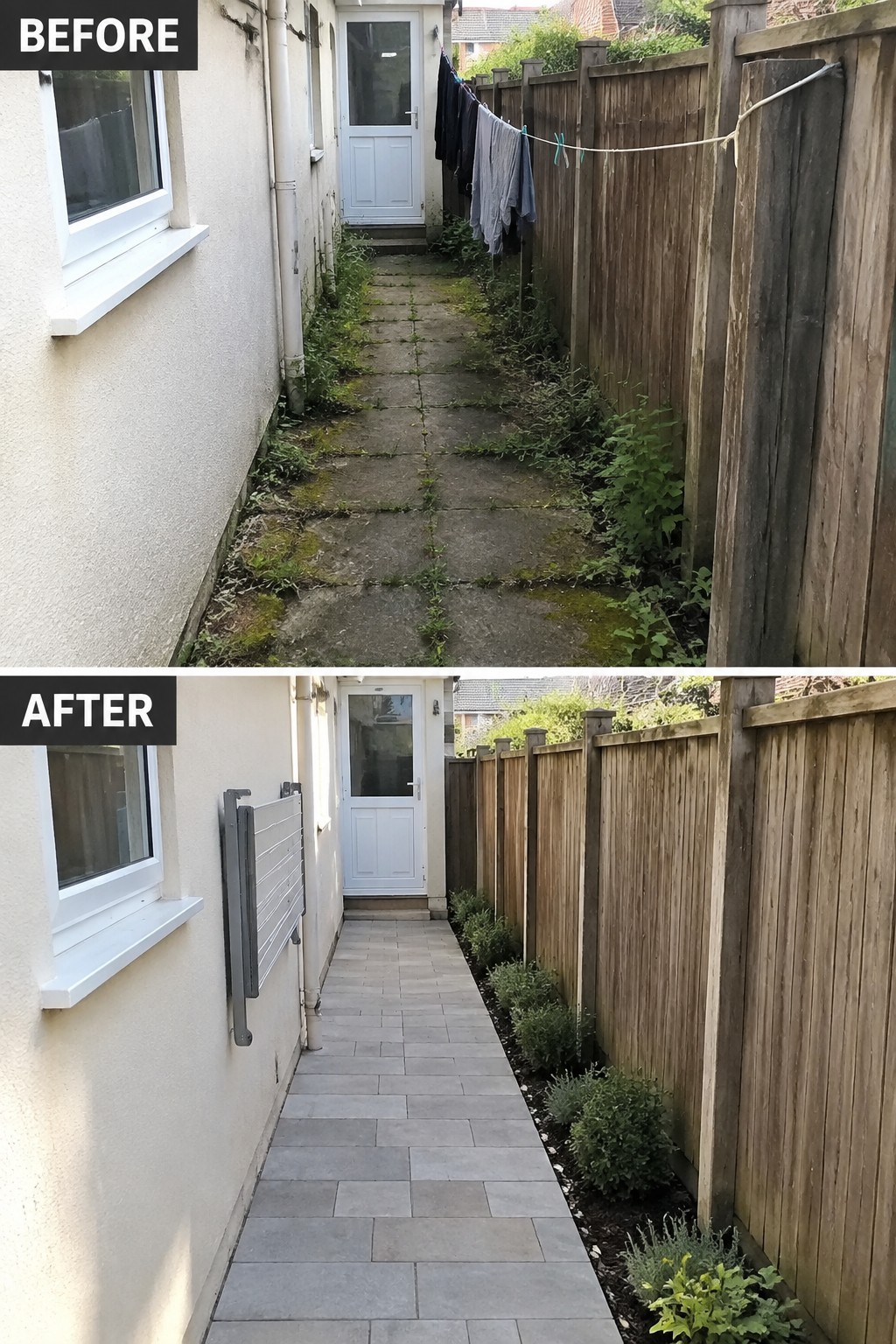
A narrow side yard often ends up as a strip of cracked concrete and weeds because there is little room to work with. Laying down new pavers turns the uneven ground into a flat, usable walkway and gives the whole space a sense of order.
This idea suits homes where the side passage is mainly for access rather than seating. Keep plants low and confined to one side so the path stays open, and choose pavers that sit level with the house wall to avoid tripping points.
Define A Narrow Side Yard With A Simple Path
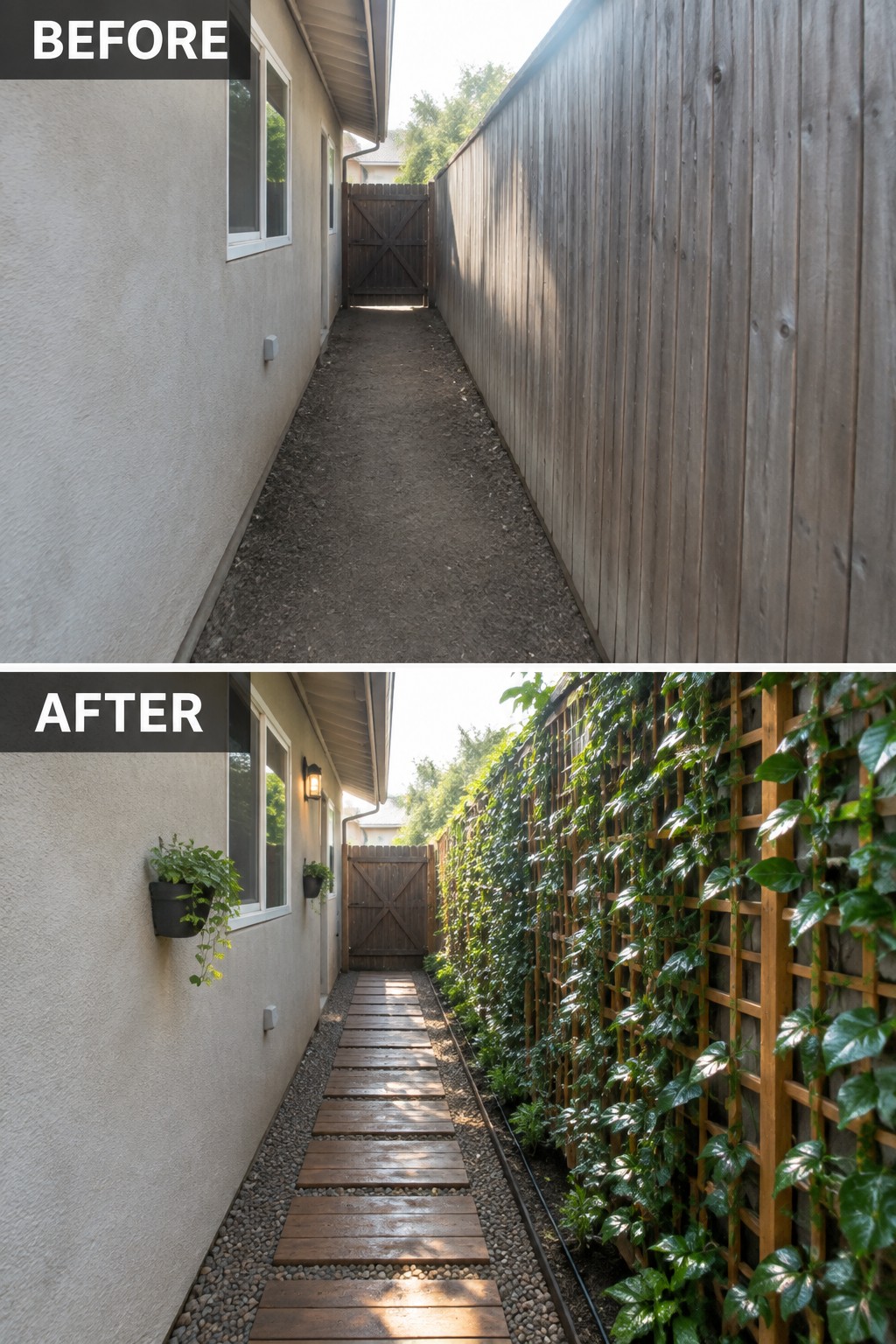
A narrow side yard often gets ignored because there is not much room to work with. Laying down a straight wooden path with gravel along the edges makes the space feel intentional and easy to walk through. The lattice panels on the fence with climbing vines add height and greenery without taking up floor space.
This idea suits homes where the side yard is mostly a utility strip. Keep the path narrow enough to leave room on both sides, and choose a material like wood or pavers that can handle foot traffic. Adding vertical planting along one wall keeps the area from feeling closed in while still giving it structure.
Define A Narrow Side Yard With Pavers And Gravel
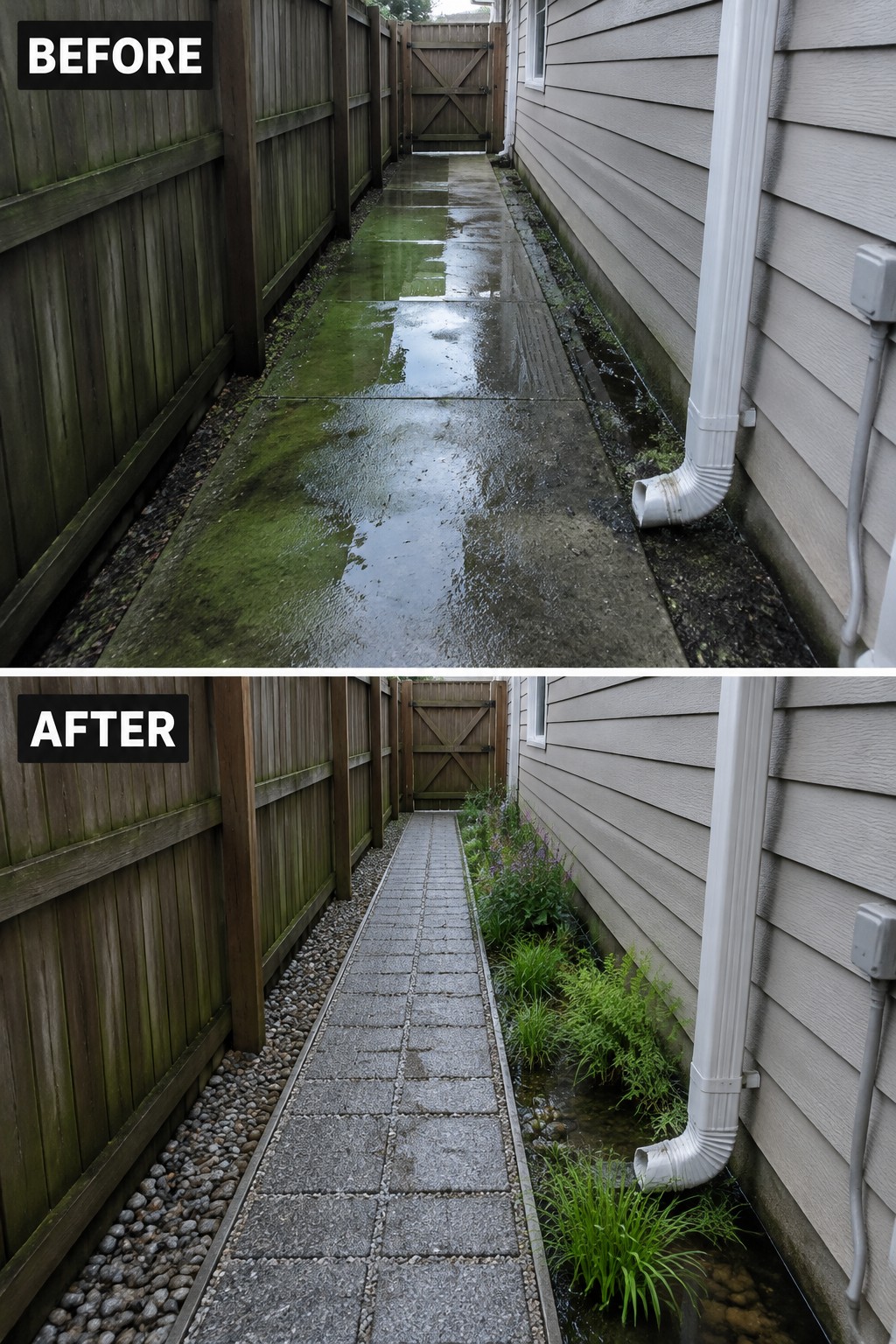
A narrow side yard often ends up as the forgotten strip between the house and the fence. In this case the concrete had turned slick with moss and standing water, making the whole space feel damp and unused. Switching to a paver path with gravel on both sides gave the area a clear route and helped water drain away instead of pooling.
This approach works well on any long, tight passage where you need a firm walking surface but do not want to widen the yard. Start with cleanup and a simple gravel base, then lay pavers down the center. Keep the planted edges narrow so they stay low and do not crowd the path. The result feels intentional without taking up extra room.
Turn A Narrow Side Yard Into A Usable Walkway
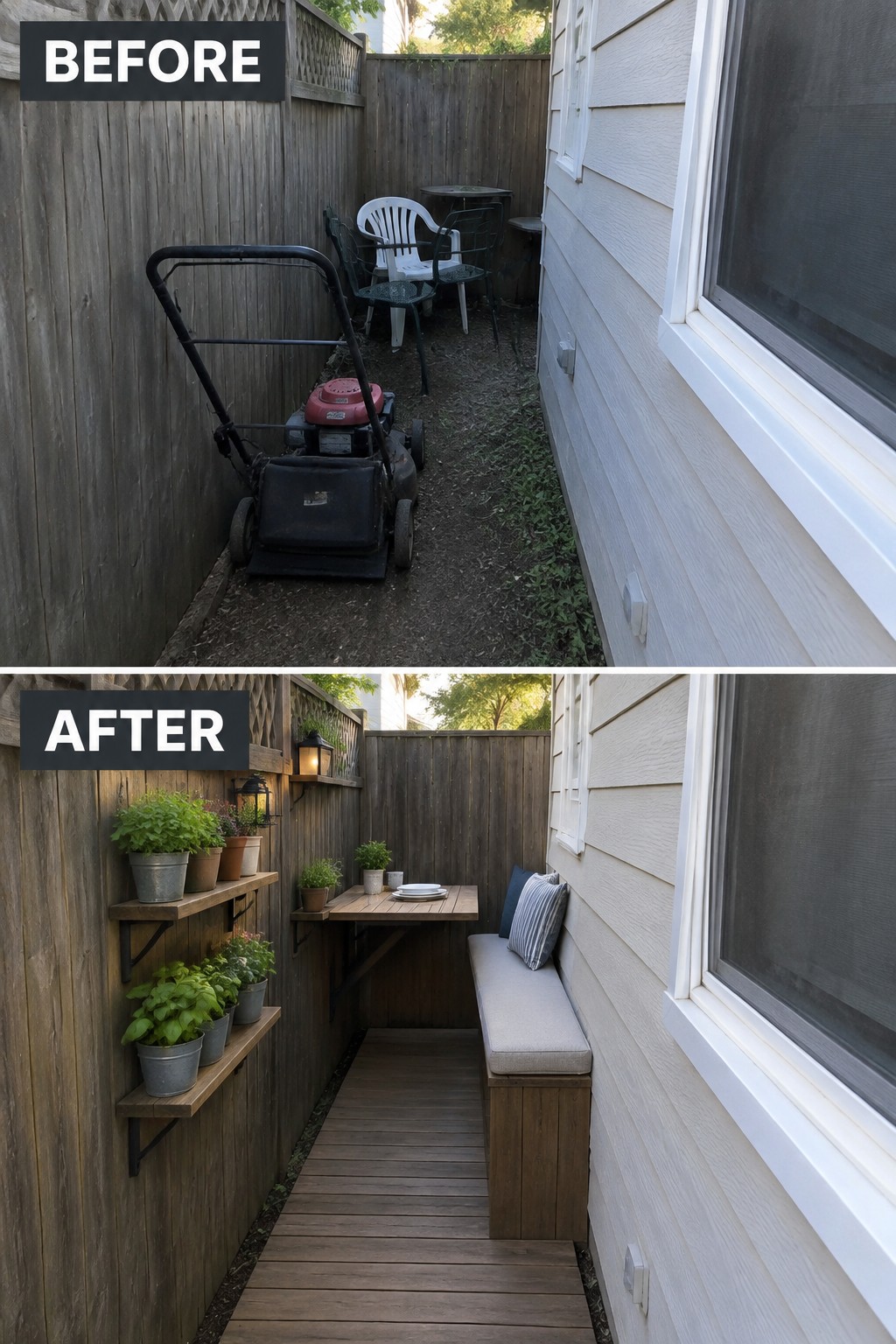
A narrow side yard often ends up as a forgotten strip where the mower sits and weeds take over. Laying a simple deck path through the space and adding a built-in bench along one wall instantly makes the area feel intentional instead of leftover. The bench doubles as both seating and a visual anchor without eating into the walking space.
This approach works best when the side yard sits between the house and a fence and needs to stay clear for foot traffic. Keep the bench depth shallow so it does not crowd the path, and use wall shelves for plants rather than floor planters. Weatherproof materials and a neutral cushion keep the area low-maintenance while still giving it purpose.
Define A Narrow Side Yard With Pavers
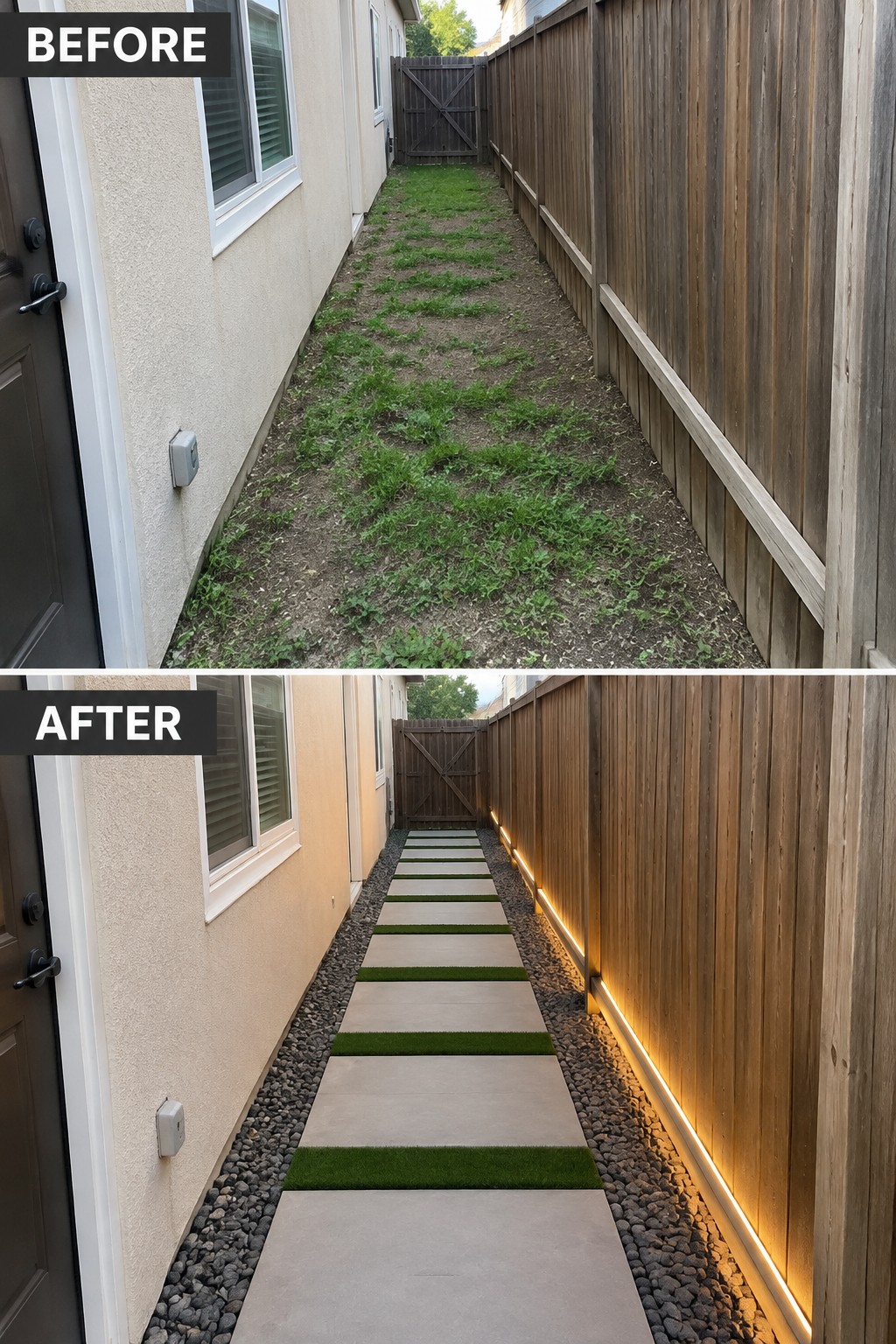
A narrow side yard often ends up as wasted space because it feels too tight for anything useful. Laying down a simple paver path with strips of turf between them gives the area a clear purpose and makes it easy to walk through without tracking mud or weeds into the house. The gravel edges keep the whole thing looking tidy and stop grass from creeping back in.
This approach works best on long, slim lots where you need a path but do not want to lose every inch to hard surface. Keep the pavers a neutral color so the space still feels open, and run low lighting along the fence to make the walkway safe after dark. The same layout can work on either side of the house as long as you leave enough room on both sides for basic maintenance.
Add Pavers And Raised Planters To A Narrow Side Yard
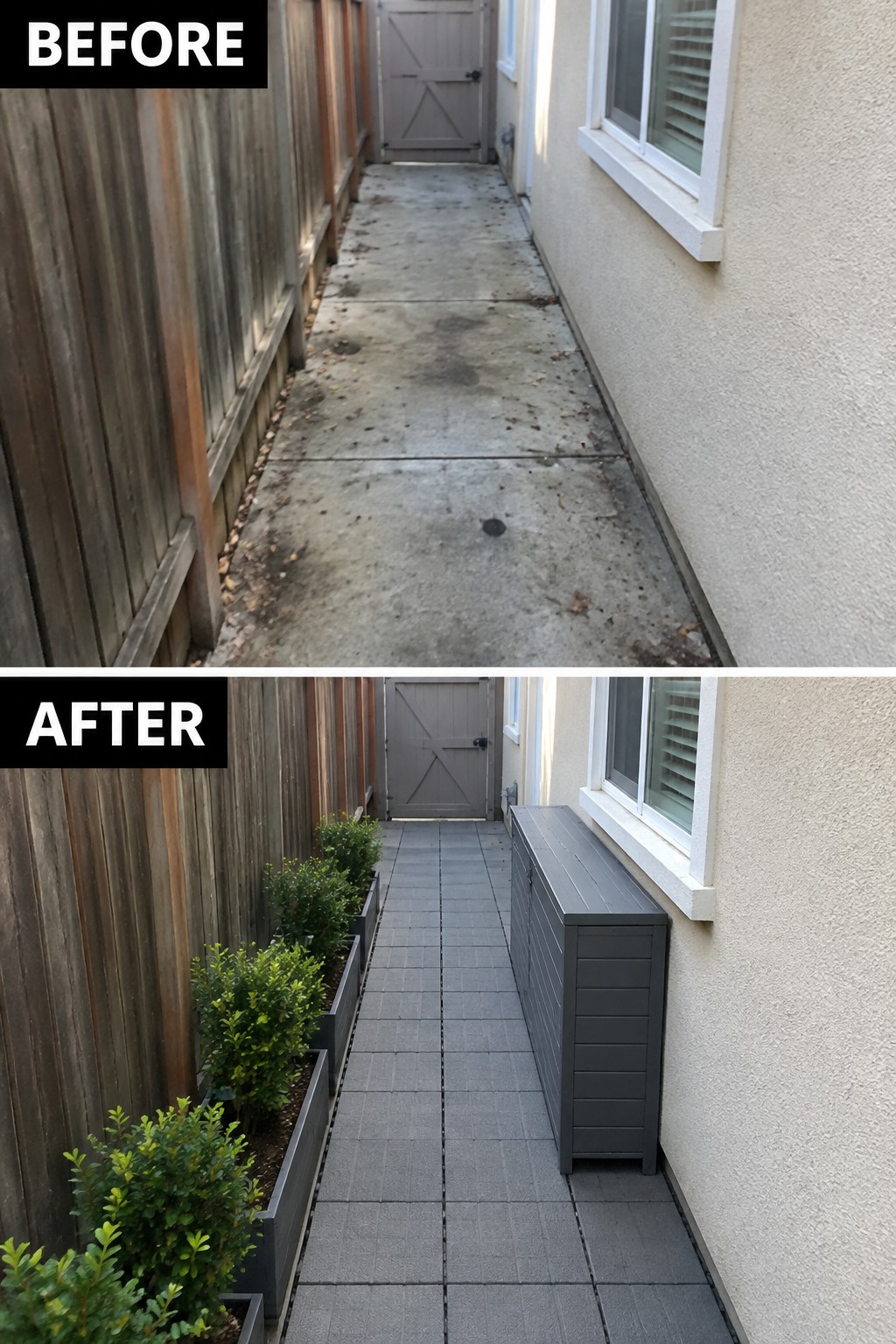
A bare concrete path next to a fence often feels like wasted space. Switching to pavers and adding a row of raised planters turns the same narrow strip into a clear, usable walkway while keeping plants contained.
This layout suits homes with tight side yards that still need foot traffic. Stick to slim beds on one side only, leave enough room to walk, and use simple gray pavers so the path stays bright and easy to maintain.
Define A Narrow Side Yard With Pavers And Lighting
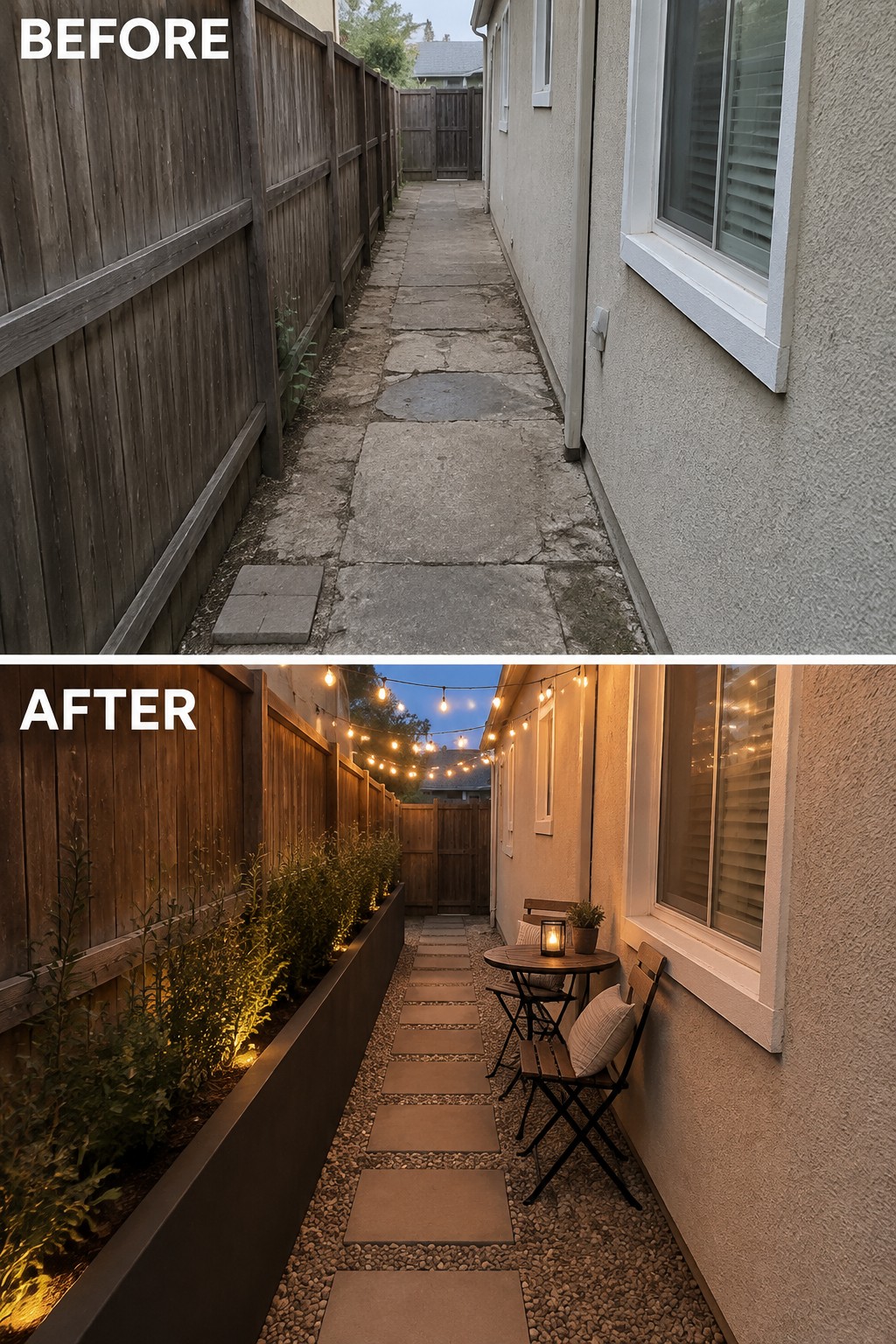
A cracked concrete path running between the house and fence does little to make the space feel intentional. Switching to a paver and gravel path with a raised planter along one side gives the walkway clear shape and purpose while still leaving room to move through it.
This approach works best in long, tight side yards where you want the area to feel finished without crowding the passage. Keep the planting low and the seating small so the path remains the main feature, and use simple string lights to extend the usable hours without adding bulk.
Add Path Lighting To A Narrow Side Yard
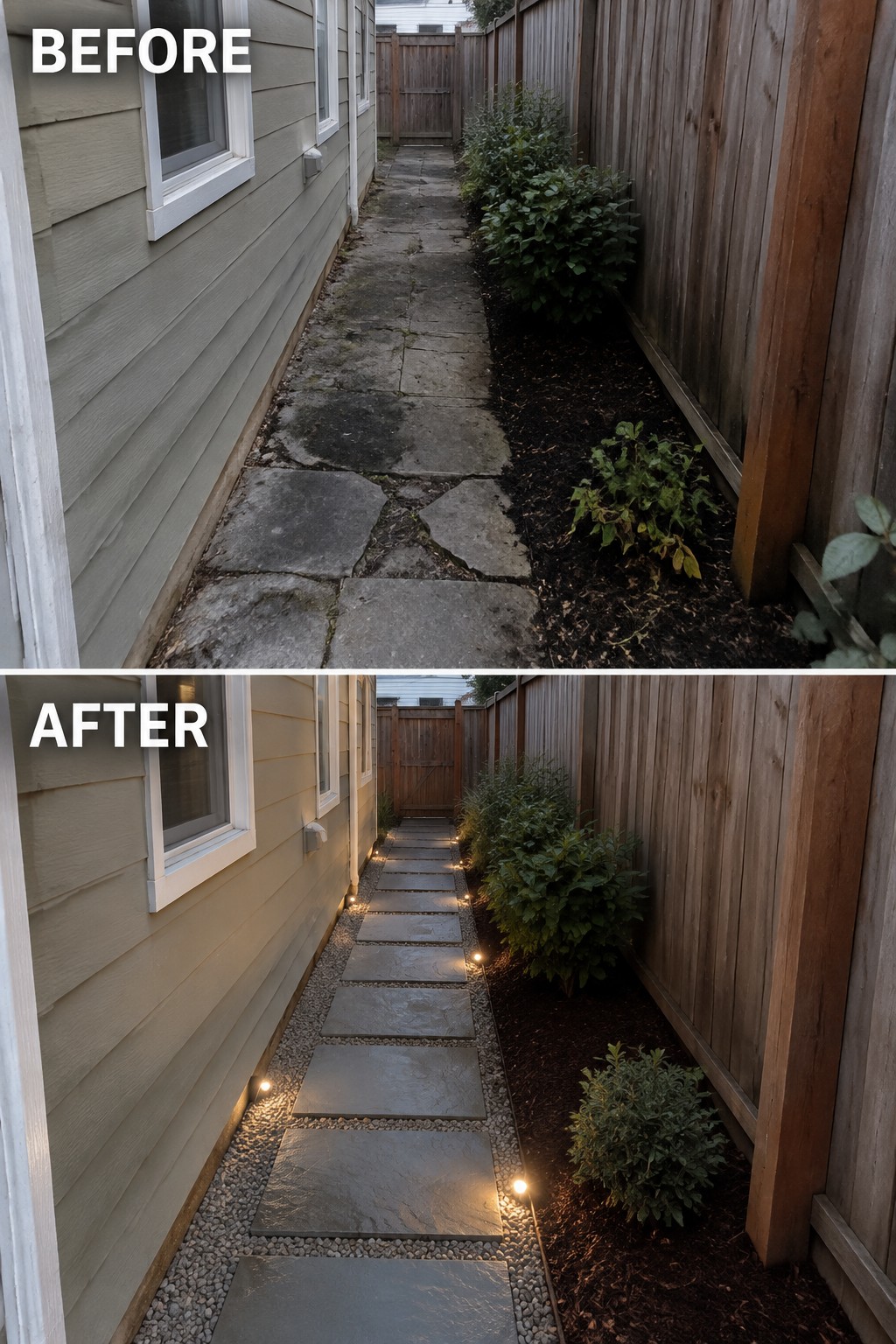
A narrow side path often stays dark and uneven because it gets little attention. Adding low lights along the edge and cleaning up the ground with gravel makes the walkway feel intentional and much easier to use at night. The lights mark the route clearly without crowding the tight space between the house and fence.
This approach works well on long, narrow passages where you want safety without adding bulk. Space the lights a few feet apart so the path stays visible from both ends. It suits homes that need a simple way to connect the front and back without major construction.
Mount Storage On The Wall To Keep A Narrow Side Yard Clear
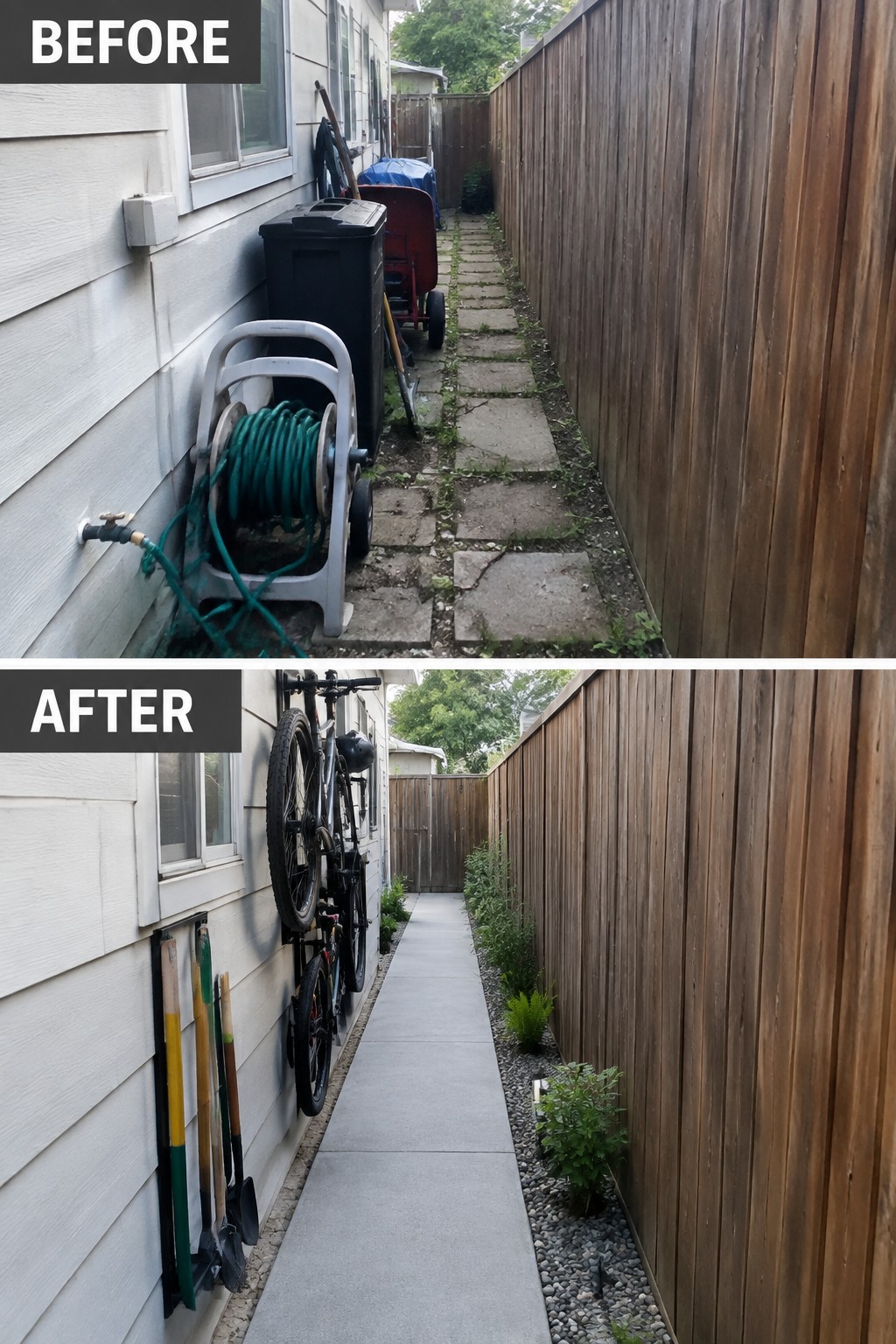
A cluttered side yard makes the whole space feel smaller and harder to use. In the before photo the path is blocked by a hose reel, trash cans, and tools scattered on the ground. Once everything is hung on the house wall the walkway opens up, the concrete stays clear, and the fence line can be edged with simple planting and gravel instead of random objects.
This approach works best on houses where the side yard is the main access route to the backyard. Start by clearing the ground completely, then add sturdy wall hooks or racks sized for bikes, shovels, and hoses. Keep the planted strip narrow so the path still feels open, and choose gravel or pavers that drain well. The goal is to store what you need without crowding the walking space.
Add Vertical Gardens To A Narrow Side Yard
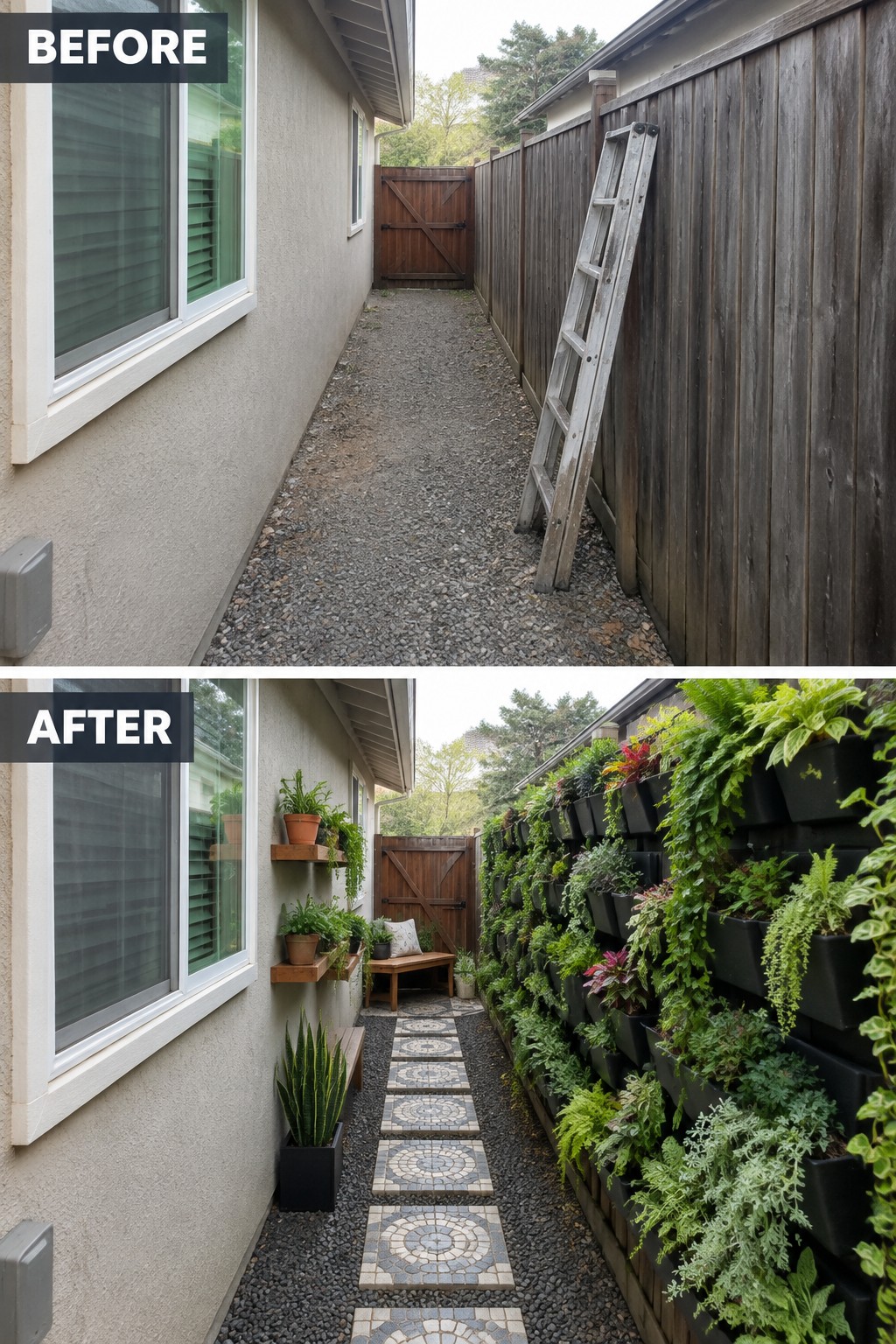
A narrow side yard often ends up as nothing more than a gravel strip between the house and the fence. The simple fix shown here is to cover the fence with stacked vertical planters instead of trying to squeeze in ground beds. The result turns a plain passage into a green walkway while keeping the path fully usable.
This idea works best on long, tight side yards where ground space is limited. Mount or stack planters that can handle outdoor conditions, pick a mix of ferns and trailing plants that fill in quickly, and add a few stepping stones so the path feels more finished. Keep the planting dense on the fence but leave enough room to walk through without brushing against the leaves.
Frequently Asked Questions
Q: How can I stop plants from taking over the narrow path?
A: Trim them back every few weeks during the growing season. Choose slow-growing varieties that stay compact without much fuss. That keeps the walkway clear and easy to walk through.
Q: Is it worth adding edging along the sides?
A: Edging holds loose materials like gravel in place. It also gives the path a clean border that looks neat. You can use simple metal strips or wood for a low profile.
Q: What if the side yard slopes steeply?
A: Build the walkway in sections with small steps. This prevents it from feeling like a ramp and makes it safer to use.
